User login
Official Newspaper of the American College of Surgeons
Eight states enact telemedicine law, commission to be created
Minnesota and Alabama have joined six other states in enacting a law that aims to expand the practice of telemedicine by streamlining physician licensure. Alabama Gov. Robert Bentley (R) and Minnesota Gov. Mark Dayton (D) on May 19 each signed into law the Interstate Medical Licensure Compact, model legislation developed by the Federation of State Medical Boards (FSMB).
Larry D. Dixon, executive director for the Alabama Board of Medical Examiners, said the law will help ease the physician shortage in rural and other underserved areas.

“Now that [eight] states have enacted the compact legislation, we can begin the real work of establishing the compact to ensure patients have access to quality health care services, while maintaining the highest level of patient protections,” Mr. Dixon said in a statement.
The FSMB also announced the creation of a commission that will meet later this year to discuss the management and administration of the compact. Members of the commission will include two voting representatives appointed by each member state. Commissioners will be selected from physicians appointed to a member board, executives of a member board, or members of the public appointed to a member board.
Under the compact legislation approved physicians would be under the jurisdiction of the state medical board in which the patient is located at the time of the medical interaction. State boards of medicine would retain their individual authority for discipline and oversight. Interested physicians would also need to complete a background check including biometric data (such as fingerprints) and pass all components of either the U.S. Medical Licensing Examination or the Comprehensive Osteopathic Medicine Licensing Examination within three attempts.
The model legislation has been introduced in nearly 20 state legislatures. Alabama and Minnesota join Idaho, Montana, South Dakota, Utah, West Virginia, and Wyoming in enacting the law.
Minnesota and Alabama have joined six other states in enacting a law that aims to expand the practice of telemedicine by streamlining physician licensure. Alabama Gov. Robert Bentley (R) and Minnesota Gov. Mark Dayton (D) on May 19 each signed into law the Interstate Medical Licensure Compact, model legislation developed by the Federation of State Medical Boards (FSMB).
Larry D. Dixon, executive director for the Alabama Board of Medical Examiners, said the law will help ease the physician shortage in rural and other underserved areas.
“Now that [eight] states have enacted the compact legislation, we can begin the real work of establishing the compact to ensure patients have access to quality health care services, while maintaining the highest level of patient protections,” Mr. Dixon said in a statement.
The FSMB also announced the creation of a commission that will meet later this year to discuss the management and administration of the compact. Members of the commission will include two voting representatives appointed by each member state. Commissioners will be selected from physicians appointed to a member board, executives of a member board, or members of the public appointed to a member board.
Under the compact legislation approved physicians would be under the jurisdiction of the state medical board in which the patient is located at the time of the medical interaction. State boards of medicine would retain their individual authority for discipline and oversight. Interested physicians would also need to complete a background check including biometric data (such as fingerprints) and pass all components of either the U.S. Medical Licensing Examination or the Comprehensive Osteopathic Medicine Licensing Examination within three attempts.
The model legislation has been introduced in nearly 20 state legislatures. Alabama and Minnesota join Idaho, Montana, South Dakota, Utah, West Virginia, and Wyoming in enacting the law.
Minnesota and Alabama have joined six other states in enacting a law that aims to expand the practice of telemedicine by streamlining physician licensure. Alabama Gov. Robert Bentley (R) and Minnesota Gov. Mark Dayton (D) on May 19 each signed into law the Interstate Medical Licensure Compact, model legislation developed by the Federation of State Medical Boards (FSMB).
Larry D. Dixon, executive director for the Alabama Board of Medical Examiners, said the law will help ease the physician shortage in rural and other underserved areas.
“Now that [eight] states have enacted the compact legislation, we can begin the real work of establishing the compact to ensure patients have access to quality health care services, while maintaining the highest level of patient protections,” Mr. Dixon said in a statement.
The FSMB also announced the creation of a commission that will meet later this year to discuss the management and administration of the compact. Members of the commission will include two voting representatives appointed by each member state. Commissioners will be selected from physicians appointed to a member board, executives of a member board, or members of the public appointed to a member board.
Under the compact legislation approved physicians would be under the jurisdiction of the state medical board in which the patient is located at the time of the medical interaction. State boards of medicine would retain their individual authority for discipline and oversight. Interested physicians would also need to complete a background check including biometric data (such as fingerprints) and pass all components of either the U.S. Medical Licensing Examination or the Comprehensive Osteopathic Medicine Licensing Examination within three attempts.
The model legislation has been introduced in nearly 20 state legislatures. Alabama and Minnesota join Idaho, Montana, South Dakota, Utah, West Virginia, and Wyoming in enacting the law.

Autar scale helps identify DVT risk, prevent DVT
The Autar scale is a successful tool for identifying orthopedic surgery patients at risk for deep vein thrombosis (DVT) – and can prevent DVT when patients follow prophylactic measures corresponding with their DVT risk level, according to researchers.
The study comprised 216 patients who were undergoing orthopedic surgery to the lower extremities in Henan, China. They were divided into a control group and an intervention group, consisting of 106 and 110 patients, respectively. Researchers used the Autar scale to assess the risk of a DVT occurring in all of the patients.
The scale is used mainly for evaluating the probability of DVT in a hospitalized patient undergoing surgery. It includes seven risk categories and 41 items, and is used to assign scores to patients indicating whether they are at no, low, moderate, or high risk of DVT.
Specific preventive measures were implemented among the intervention group’s members based on the Autar scale scores of each of these patients. The scores of patients in the control group were not used to implement DVT prophylaxis. Such patients, however, did receive routine nursing and mechanical and pharmacological prophylactic measures, if clinical experience and basic information caused their health care providers to identify them as being at high risk for DVT.
The Autar scale’s efficacy was confirmed by the fact that “the number of patients with DVT was in line with the number of high-risk patients in both groups,” according to Hui-Zhen Yin and Professor Ci-Ming Shan of Zhengzhou (China) University.
The numbers of DVTs that occurred in each group were significantly different from each other; 1.82% of patients in the intervention group got DVTs, compared to 9.43% of patients in the control group. Therefore, the study showed that the Autar scale is useful not only for predicting DVT, but also for preventing its incidence when patients receive the appropriate prophylactic and nursing interventions, the researchers noted.
They recommend wide use of the scale, because they believe it is “a comprehensive and valid instrument that improves the consistency of nursing assessment and creates a reference for preventing DVT in nursing practice.”
Read the full study in International Journal of Nursing Sciences (doi:10.1016/j.ijnss.2015.04.003).
The Autar scale is a successful tool for identifying orthopedic surgery patients at risk for deep vein thrombosis (DVT) – and can prevent DVT when patients follow prophylactic measures corresponding with their DVT risk level, according to researchers.
The study comprised 216 patients who were undergoing orthopedic surgery to the lower extremities in Henan, China. They were divided into a control group and an intervention group, consisting of 106 and 110 patients, respectively. Researchers used the Autar scale to assess the risk of a DVT occurring in all of the patients.
The scale is used mainly for evaluating the probability of DVT in a hospitalized patient undergoing surgery. It includes seven risk categories and 41 items, and is used to assign scores to patients indicating whether they are at no, low, moderate, or high risk of DVT.
Specific preventive measures were implemented among the intervention group’s members based on the Autar scale scores of each of these patients. The scores of patients in the control group were not used to implement DVT prophylaxis. Such patients, however, did receive routine nursing and mechanical and pharmacological prophylactic measures, if clinical experience and basic information caused their health care providers to identify them as being at high risk for DVT.
The Autar scale’s efficacy was confirmed by the fact that “the number of patients with DVT was in line with the number of high-risk patients in both groups,” according to Hui-Zhen Yin and Professor Ci-Ming Shan of Zhengzhou (China) University.
The numbers of DVTs that occurred in each group were significantly different from each other; 1.82% of patients in the intervention group got DVTs, compared to 9.43% of patients in the control group. Therefore, the study showed that the Autar scale is useful not only for predicting DVT, but also for preventing its incidence when patients receive the appropriate prophylactic and nursing interventions, the researchers noted.
They recommend wide use of the scale, because they believe it is “a comprehensive and valid instrument that improves the consistency of nursing assessment and creates a reference for preventing DVT in nursing practice.”
Read the full study in International Journal of Nursing Sciences (doi:10.1016/j.ijnss.2015.04.003).
The Autar scale is a successful tool for identifying orthopedic surgery patients at risk for deep vein thrombosis (DVT) – and can prevent DVT when patients follow prophylactic measures corresponding with their DVT risk level, according to researchers.
The study comprised 216 patients who were undergoing orthopedic surgery to the lower extremities in Henan, China. They were divided into a control group and an intervention group, consisting of 106 and 110 patients, respectively. Researchers used the Autar scale to assess the risk of a DVT occurring in all of the patients.
The scale is used mainly for evaluating the probability of DVT in a hospitalized patient undergoing surgery. It includes seven risk categories and 41 items, and is used to assign scores to patients indicating whether they are at no, low, moderate, or high risk of DVT.
Specific preventive measures were implemented among the intervention group’s members based on the Autar scale scores of each of these patients. The scores of patients in the control group were not used to implement DVT prophylaxis. Such patients, however, did receive routine nursing and mechanical and pharmacological prophylactic measures, if clinical experience and basic information caused their health care providers to identify them as being at high risk for DVT.
The Autar scale’s efficacy was confirmed by the fact that “the number of patients with DVT was in line with the number of high-risk patients in both groups,” according to Hui-Zhen Yin and Professor Ci-Ming Shan of Zhengzhou (China) University.
The numbers of DVTs that occurred in each group were significantly different from each other; 1.82% of patients in the intervention group got DVTs, compared to 9.43% of patients in the control group. Therefore, the study showed that the Autar scale is useful not only for predicting DVT, but also for preventing its incidence when patients receive the appropriate prophylactic and nursing interventions, the researchers noted.
They recommend wide use of the scale, because they believe it is “a comprehensive and valid instrument that improves the consistency of nursing assessment and creates a reference for preventing DVT in nursing practice.”
Read the full study in International Journal of Nursing Sciences (doi:10.1016/j.ijnss.2015.04.003).
Stricter DVT prophylaxis guidelines needed for cardiac and vascular surgery
Cardiac and vascular surgery patients should receive deep vein thrombosis (DVT) prophylaxis before and after surgery, say researchers who found a high incidence of postoperative DVT in these patients compared to general surgery patients.
The retrospective study of 2,669,772 surgery patients from the American College of Surgeons National Surgical Quality Improvement Program database found that 18,670 patients developed a DVT within 30 days of the operation.
The incidence of DVT according to the type of surgery was 2% for cardiac surgery, 0.99% for vascular surgery and 0.66% for general surgery, reported Dr. Faisal Aziz and his colleagues at Pennsylvania State University (Ann. Vasc. Surg. 2015; 29: 661-9).
Vascular surgery patients were at 1.5 times the risk of a postop DVT and cardiac surgery patients were at 3 times the risk compared with general surgery patients, a significant difference.
Preoperative factors associated with increased risk of developing DVT in the postoperative period included inpatient admission status (OR 7.8), general anesthesia (OR 2), and dyspnea at rest (OR 5).
“Despite the fact that most arterial surgery operations involve administration of therapeutic doses of anticoagulation therapy during the operations, incidence of postoperative DVT is high in these patients,” the study authors wrote.
“Intraoperative anticoagulation is not protective against development of DVT in the postoperative period” they said.
“Physicians should ensure adequate DVT prophylaxis in postoperative vascular surgery and cardiac surgery patients, according to established evidence based guidelines,” they concluded.
The authors did not report any financial disclosures.
Cardiac and vascular surgery patients should receive deep vein thrombosis (DVT) prophylaxis before and after surgery, say researchers who found a high incidence of postoperative DVT in these patients compared to general surgery patients.
The retrospective study of 2,669,772 surgery patients from the American College of Surgeons National Surgical Quality Improvement Program database found that 18,670 patients developed a DVT within 30 days of the operation.
The incidence of DVT according to the type of surgery was 2% for cardiac surgery, 0.99% for vascular surgery and 0.66% for general surgery, reported Dr. Faisal Aziz and his colleagues at Pennsylvania State University (Ann. Vasc. Surg. 2015; 29: 661-9).
Vascular surgery patients were at 1.5 times the risk of a postop DVT and cardiac surgery patients were at 3 times the risk compared with general surgery patients, a significant difference.
Preoperative factors associated with increased risk of developing DVT in the postoperative period included inpatient admission status (OR 7.8), general anesthesia (OR 2), and dyspnea at rest (OR 5).
“Despite the fact that most arterial surgery operations involve administration of therapeutic doses of anticoagulation therapy during the operations, incidence of postoperative DVT is high in these patients,” the study authors wrote.
“Intraoperative anticoagulation is not protective against development of DVT in the postoperative period” they said.
“Physicians should ensure adequate DVT prophylaxis in postoperative vascular surgery and cardiac surgery patients, according to established evidence based guidelines,” they concluded.
The authors did not report any financial disclosures.
Cardiac and vascular surgery patients should receive deep vein thrombosis (DVT) prophylaxis before and after surgery, say researchers who found a high incidence of postoperative DVT in these patients compared to general surgery patients.
The retrospective study of 2,669,772 surgery patients from the American College of Surgeons National Surgical Quality Improvement Program database found that 18,670 patients developed a DVT within 30 days of the operation.
The incidence of DVT according to the type of surgery was 2% for cardiac surgery, 0.99% for vascular surgery and 0.66% for general surgery, reported Dr. Faisal Aziz and his colleagues at Pennsylvania State University (Ann. Vasc. Surg. 2015; 29: 661-9).
Vascular surgery patients were at 1.5 times the risk of a postop DVT and cardiac surgery patients were at 3 times the risk compared with general surgery patients, a significant difference.
Preoperative factors associated with increased risk of developing DVT in the postoperative period included inpatient admission status (OR 7.8), general anesthesia (OR 2), and dyspnea at rest (OR 5).
“Despite the fact that most arterial surgery operations involve administration of therapeutic doses of anticoagulation therapy during the operations, incidence of postoperative DVT is high in these patients,” the study authors wrote.
“Intraoperative anticoagulation is not protective against development of DVT in the postoperative period” they said.
“Physicians should ensure adequate DVT prophylaxis in postoperative vascular surgery and cardiac surgery patients, according to established evidence based guidelines,” they concluded.
The authors did not report any financial disclosures.
FROM ANNALS OF VASCULAR SURGERY
Key clinical point: Intraoperative anticoagulation alone does not prevent DVT in patients undergoing vascular and cardiac surgery.
Major finding: The incidence of DVT according to the type of surgery was 2% for cardiac surgery, 0.99% for vascular surgery and 0.66% for general surgery.
Data source: Retrospective study of 2,669,772 surgery patients from the American College of Surgeons National Surgical Quality Improvement Program database.
Disclosures: The authors did not report any financial disclosures.
Trauma surgeons can safely manage many TBI patients
SAN DIEGO – Many patients with traumatic brain injury (TBI) can be safely managed by trauma surgeons or intensive care physicians, if a guideline-based individual protocol is followed. In a recent single-center study using this protocol, charges fell, repeat imaging decreased, and patient outcomes did not suffer when neurosurgery consults were reserved for individuals with more severe brain injuries.
Every year, emergency departments see 2.5 million visits for traumatic brain injuries ranging from concussions to devastating open injuries, and 11% of those seen are hospitalized. Still, only 10% of patients with TBI will require neurosurgical intervention, Dr. Bellal Joseph of the University of Arizona said at the annual meeting of the American Surgical Association.
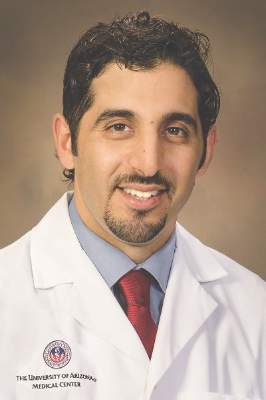
Finding a way to conserve resources is important, said Dr. Joseph, since the total number of emergency department visits for TBI is increasing, but resources remain constrained: neurosurgeons are in shorter supply than ever. Further, TBI management may not be changed by numerous repeat head CTs, which are costly and can expose patients to significant amounts of radiation.
Dr. Joseph and his coinvestigators at the University of Arizona had previously developed Brain Injury Guidelines (BIG), which would mandate repeat head CTs and neurosurgery consults only for larger intracranial bleeds and displaced skull fractures. The guidelines are used as part of an individualized protocol that includes overall clinical assessment and patient-specific factors, such as anticoagulation status and whether the patient was intoxicated at the time of injury.
After a period of education regarding the guidelines, the University of Arizona’s Level I trauma center – the only one in the state – implemented BIG use in 2012. For the 5-year period from 2009 to 2014 encompassing implementation of the guidelines, investigators followed all patients admitted for TBI and tracked use of hospital resources and patient outcomes during the study period.
A total of 2,184 patients with TBI were included in the study, divided into five cohorts by year of admission, and stratified by severity of brain injury. Patients were included if they were admitted for TBI from the emergency department and the initial head CT found a skull fracture or intracranial hemorrhage. Dr. Bellal and his colleagues collected data regarding the number of neurosurgery consults, repeat head CTs, and patient demographic and injury characteristics. They tracked patient outcomes including in-hospital mortality, any progression on repeat head CT, and patient disposition on discharge.
TBI injuries were classified by Glasgow Coma Scale scoring (13-15 for mild TBI; 9-12 for moderate; and less than 8 for severe).
Over time, the proportion of patients with severe brain injury who received repeat head CTs did not change significantly. However, scans for those with less severe injury declined significantly, with a marked drop in repeat head CTs seen at the time of implementation of the BIG guidelines (P < .001 for mild and P = .012 for moderate brain injuries).
Similarly, 100% of patients with severe TBI received a neurosurgical consult in each year of the study period, but the number of consults declined significantly for those with mild and moderate injuries (P < .001 for both mild and moderate injuries).
Hospital length of stay decreased from a mean 6.2 days to 4.7 at the end of the study period (P = .028), and total hospital costs fell by nearly half, from a total $8.1 million for the 2009-2010 cohort to $4.3 million for the 2013-2014 cohort (P < .001).
Mortality, discharge score on the Glasgow Coma scale, and the proportion of patients discharged to home after their hospital stay did not change significantly over the study period.
Study limitations included potential lack of generalizability to smaller or more rural centers, and the potential for confounding by changes in other institutional factors over the study period. The study did not track long-term neurologic or quality of life outcomes.
Discussant Dr. Karen Brasel of Oregon Health & Science University, Portland, said that the study is the latest in a series of reports in the TBI field that speak to the need to avoid “knee-jerk use of resources based on diagnosis alone.” She cautioned that it is still important to examine individual patient outcomes for the few patients who did not receive a neurosurgery consult but then deteriorated, to better evaluate who is at most risk for poor outcomes.
Still, said Dr. Joseph, a “guideline-based individualized protocol for traumatic brain injury can help reduce the burden on neurological services. Life changes, and so does medicine.”
The authors reported no conflicts of interest.
The complete manuscript of this study and its presentation at the American Surgical Association’s 135th Annual Meeting, April 2015, in San Diego, California, are anticipated to be published in the Annals of Surgery pending editorial review.
SAN DIEGO – Many patients with traumatic brain injury (TBI) can be safely managed by trauma surgeons or intensive care physicians, if a guideline-based individual protocol is followed. In a recent single-center study using this protocol, charges fell, repeat imaging decreased, and patient outcomes did not suffer when neurosurgery consults were reserved for individuals with more severe brain injuries.
Every year, emergency departments see 2.5 million visits for traumatic brain injuries ranging from concussions to devastating open injuries, and 11% of those seen are hospitalized. Still, only 10% of patients with TBI will require neurosurgical intervention, Dr. Bellal Joseph of the University of Arizona said at the annual meeting of the American Surgical Association.
Finding a way to conserve resources is important, said Dr. Joseph, since the total number of emergency department visits for TBI is increasing, but resources remain constrained: neurosurgeons are in shorter supply than ever. Further, TBI management may not be changed by numerous repeat head CTs, which are costly and can expose patients to significant amounts of radiation.
Dr. Joseph and his coinvestigators at the University of Arizona had previously developed Brain Injury Guidelines (BIG), which would mandate repeat head CTs and neurosurgery consults only for larger intracranial bleeds and displaced skull fractures. The guidelines are used as part of an individualized protocol that includes overall clinical assessment and patient-specific factors, such as anticoagulation status and whether the patient was intoxicated at the time of injury.
After a period of education regarding the guidelines, the University of Arizona’s Level I trauma center – the only one in the state – implemented BIG use in 2012. For the 5-year period from 2009 to 2014 encompassing implementation of the guidelines, investigators followed all patients admitted for TBI and tracked use of hospital resources and patient outcomes during the study period.
A total of 2,184 patients with TBI were included in the study, divided into five cohorts by year of admission, and stratified by severity of brain injury. Patients were included if they were admitted for TBI from the emergency department and the initial head CT found a skull fracture or intracranial hemorrhage. Dr. Bellal and his colleagues collected data regarding the number of neurosurgery consults, repeat head CTs, and patient demographic and injury characteristics. They tracked patient outcomes including in-hospital mortality, any progression on repeat head CT, and patient disposition on discharge.
TBI injuries were classified by Glasgow Coma Scale scoring (13-15 for mild TBI; 9-12 for moderate; and less than 8 for severe).
Over time, the proportion of patients with severe brain injury who received repeat head CTs did not change significantly. However, scans for those with less severe injury declined significantly, with a marked drop in repeat head CTs seen at the time of implementation of the BIG guidelines (P < .001 for mild and P = .012 for moderate brain injuries).
Similarly, 100% of patients with severe TBI received a neurosurgical consult in each year of the study period, but the number of consults declined significantly for those with mild and moderate injuries (P < .001 for both mild and moderate injuries).
Hospital length of stay decreased from a mean 6.2 days to 4.7 at the end of the study period (P = .028), and total hospital costs fell by nearly half, from a total $8.1 million for the 2009-2010 cohort to $4.3 million for the 2013-2014 cohort (P < .001).
Mortality, discharge score on the Glasgow Coma scale, and the proportion of patients discharged to home after their hospital stay did not change significantly over the study period.
Study limitations included potential lack of generalizability to smaller or more rural centers, and the potential for confounding by changes in other institutional factors over the study period. The study did not track long-term neurologic or quality of life outcomes.
Discussant Dr. Karen Brasel of Oregon Health & Science University, Portland, said that the study is the latest in a series of reports in the TBI field that speak to the need to avoid “knee-jerk use of resources based on diagnosis alone.” She cautioned that it is still important to examine individual patient outcomes for the few patients who did not receive a neurosurgery consult but then deteriorated, to better evaluate who is at most risk for poor outcomes.
Still, said Dr. Joseph, a “guideline-based individualized protocol for traumatic brain injury can help reduce the burden on neurological services. Life changes, and so does medicine.”
The authors reported no conflicts of interest.
The complete manuscript of this study and its presentation at the American Surgical Association’s 135th Annual Meeting, April 2015, in San Diego, California, are anticipated to be published in the Annals of Surgery pending editorial review.
SAN DIEGO – Many patients with traumatic brain injury (TBI) can be safely managed by trauma surgeons or intensive care physicians, if a guideline-based individual protocol is followed. In a recent single-center study using this protocol, charges fell, repeat imaging decreased, and patient outcomes did not suffer when neurosurgery consults were reserved for individuals with more severe brain injuries.
Every year, emergency departments see 2.5 million visits for traumatic brain injuries ranging from concussions to devastating open injuries, and 11% of those seen are hospitalized. Still, only 10% of patients with TBI will require neurosurgical intervention, Dr. Bellal Joseph of the University of Arizona said at the annual meeting of the American Surgical Association.
Finding a way to conserve resources is important, said Dr. Joseph, since the total number of emergency department visits for TBI is increasing, but resources remain constrained: neurosurgeons are in shorter supply than ever. Further, TBI management may not be changed by numerous repeat head CTs, which are costly and can expose patients to significant amounts of radiation.
Dr. Joseph and his coinvestigators at the University of Arizona had previously developed Brain Injury Guidelines (BIG), which would mandate repeat head CTs and neurosurgery consults only for larger intracranial bleeds and displaced skull fractures. The guidelines are used as part of an individualized protocol that includes overall clinical assessment and patient-specific factors, such as anticoagulation status and whether the patient was intoxicated at the time of injury.
After a period of education regarding the guidelines, the University of Arizona’s Level I trauma center – the only one in the state – implemented BIG use in 2012. For the 5-year period from 2009 to 2014 encompassing implementation of the guidelines, investigators followed all patients admitted for TBI and tracked use of hospital resources and patient outcomes during the study period.
A total of 2,184 patients with TBI were included in the study, divided into five cohorts by year of admission, and stratified by severity of brain injury. Patients were included if they were admitted for TBI from the emergency department and the initial head CT found a skull fracture or intracranial hemorrhage. Dr. Bellal and his colleagues collected data regarding the number of neurosurgery consults, repeat head CTs, and patient demographic and injury characteristics. They tracked patient outcomes including in-hospital mortality, any progression on repeat head CT, and patient disposition on discharge.
TBI injuries were classified by Glasgow Coma Scale scoring (13-15 for mild TBI; 9-12 for moderate; and less than 8 for severe).
Over time, the proportion of patients with severe brain injury who received repeat head CTs did not change significantly. However, scans for those with less severe injury declined significantly, with a marked drop in repeat head CTs seen at the time of implementation of the BIG guidelines (P < .001 for mild and P = .012 for moderate brain injuries).
Similarly, 100% of patients with severe TBI received a neurosurgical consult in each year of the study period, but the number of consults declined significantly for those with mild and moderate injuries (P < .001 for both mild and moderate injuries).
Hospital length of stay decreased from a mean 6.2 days to 4.7 at the end of the study period (P = .028), and total hospital costs fell by nearly half, from a total $8.1 million for the 2009-2010 cohort to $4.3 million for the 2013-2014 cohort (P < .001).
Mortality, discharge score on the Glasgow Coma scale, and the proportion of patients discharged to home after their hospital stay did not change significantly over the study period.
Study limitations included potential lack of generalizability to smaller or more rural centers, and the potential for confounding by changes in other institutional factors over the study period. The study did not track long-term neurologic or quality of life outcomes.
Discussant Dr. Karen Brasel of Oregon Health & Science University, Portland, said that the study is the latest in a series of reports in the TBI field that speak to the need to avoid “knee-jerk use of resources based on diagnosis alone.” She cautioned that it is still important to examine individual patient outcomes for the few patients who did not receive a neurosurgery consult but then deteriorated, to better evaluate who is at most risk for poor outcomes.
Still, said Dr. Joseph, a “guideline-based individualized protocol for traumatic brain injury can help reduce the burden on neurological services. Life changes, and so does medicine.”
The authors reported no conflicts of interest.
The complete manuscript of this study and its presentation at the American Surgical Association’s 135th Annual Meeting, April 2015, in San Diego, California, are anticipated to be published in the Annals of Surgery pending editorial review.
AT THE ASA ANNUAL MEETING
Key clinical point: Patients with less severe TBIs can be safely managed by intensivists or trauma surgeons.
Major finding: For TBI patients, hospital length of stay decreased from a mean 6.2 days to 4.7 (P = .028), and total hospital costs fell by nearly half, from $8.1 million for the 2009-2010 cohort to $4.3 million for the 2013-2014 cohort (P < .001).
Data source: Prospective single-center 5-year database of all TBI patients with positive imaging findings.
Disclosures: The authors reported no conflicts of interest.

Reconstruction, transplantation successful for gut failure after bariatric surgery
SAN DIEGO – Treating gut failure after bariatric surgery involves meeting patients’ nutritional needs while avoiding a recurrence of morbid obesity, according to Dr. Kareem Abu-Elmagd of the Cleveland Clinic.
Surgeons must be flexible, and should be familiar with a variety of reconstructive techniques to restore patients to nutritional autonomy while minimizing the need for visceral transplantation, he said.
Gut failure is a rare but serious and potentially life-threatening complication of bariatric surgery. When it occurs, the patient can no longer meet nutritional needs autonomously, but rather requires total parenteral nutrition (TPN). Although comprehensive medical management including TPN is necessary when gut failure occurs, reconstructive surgery or visceral transplantation is the only means to allow patients to regain nutritional autonomy.
Dr. Abu-Elmagd reported the results of 2 decades of experience with post–bariatric surgery gut failure at the Cleveland Clinic and the University of Pittsburgh Medical Center at the annual meeting of the American Surgical Association. He and his coinvestigators at the two facilities assessed a total of 131 patients who were referred for gut failure from 1995 to 2015. The number of referrals, said Dr. Abu-Elmagd, has been increasing sharply, with nearly two-thirds of patients referred over the past 5 years.
The study sought to identify the types and causes of gut failures seen, to describe surgical techniques used for repair or transplant, and to track outcomes for patients after surgical repair for gut failure. Of the 131 patients in the study, 100 had a Roux-en-Y or similar combined malabsorptive and restrictive surgery as their primary bariatric procedure. Overall, 85% of patients were female.
Dr. Abu-Elmagd classified gut failure into three major groups: 55 patients (42%) had type I or catastrophic gut loss, which included strangulation and vascular occlusion; 43 patients (33%) had type II gut failure, caused by technical complications such as loss of gut continuity, strictures, and fistulae; and 33 patients (25%) had type III gut failure, caused by dysfunctional syndromes such as dysmotility, restriction, or absorption.
Of the 131 patients referred, 116 went on to have a total of 317 restorative procedures. Most (n = 84, 72%) needed reversal of their primary bariatric procedure. Patients received a total of 198 autologous reconstruction procedures, while 10 intestinal-lengthening procedures and 25 visceral transplantations were performed.
Dr. Abu-Elmagd and his colleagues characterized the reconstruction procedures according to the embryonic origins of the structures repaired. Seventy-eight patients had major reconstruction of the foregut, “the most tedious and technically challenging procedure … to restore normal gut anatomy and physiology,” said Dr. Abu-Elmagd. Three other patients had gastroplasty to restore the foregut, and seven needed to have an alimentary conduit interposed in order to restore normal alimentary flow. Mid- and hindgut reconstructions (n = 110) were essential to maximize absorption and restore nutritional autonomy, he said.
If patients had less than 100 cm of small bowel remaining, they received serial transverse enteroplasty, an intestinal-lengthening procedure. The few patients who needed intestinal, liver-intestine, or multivisceral transplantations had ultrashort gut syndrome and could not be maintained on TPN.
Five-year cumulative survival for those receiving reconstruction or transplantation was 84%, and plateaued at 72% at 10 and 15 years post restoration. For the subset who received transplantation, the 5-year survival was 69%. Among the first 100 surviving surgical patients, 83% retained full nutritional autonomy.
Bariatric surgery, noted discussant Dr. Debra Sudan of Duke University, “is clearly the most effective treatment for obesity and has tremendous impact on comorbidities,” but, since it is an elective procedure, “it’s devastating when complications develop.” She asked what considerations were specific to the bariatric population when dealing with gut failure.
Bariatric patients, said Dr. Abu-Elmegd, have the advantage that they do not have an underlying disease process, and overall they have the ability to adapt and return to more normal gut function very quickly. From a surgical perspective, the solutions must be flexible and tailored to the patient. He said, “Whatever the patient has, you fix it.”
The authors reported no relevant financial disclosures.
SAN DIEGO – Treating gut failure after bariatric surgery involves meeting patients’ nutritional needs while avoiding a recurrence of morbid obesity, according to Dr. Kareem Abu-Elmagd of the Cleveland Clinic.
Surgeons must be flexible, and should be familiar with a variety of reconstructive techniques to restore patients to nutritional autonomy while minimizing the need for visceral transplantation, he said.
Gut failure is a rare but serious and potentially life-threatening complication of bariatric surgery. When it occurs, the patient can no longer meet nutritional needs autonomously, but rather requires total parenteral nutrition (TPN). Although comprehensive medical management including TPN is necessary when gut failure occurs, reconstructive surgery or visceral transplantation is the only means to allow patients to regain nutritional autonomy.
Dr. Abu-Elmagd reported the results of 2 decades of experience with post–bariatric surgery gut failure at the Cleveland Clinic and the University of Pittsburgh Medical Center at the annual meeting of the American Surgical Association. He and his coinvestigators at the two facilities assessed a total of 131 patients who were referred for gut failure from 1995 to 2015. The number of referrals, said Dr. Abu-Elmagd, has been increasing sharply, with nearly two-thirds of patients referred over the past 5 years.
The study sought to identify the types and causes of gut failures seen, to describe surgical techniques used for repair or transplant, and to track outcomes for patients after surgical repair for gut failure. Of the 131 patients in the study, 100 had a Roux-en-Y or similar combined malabsorptive and restrictive surgery as their primary bariatric procedure. Overall, 85% of patients were female.
Dr. Abu-Elmagd classified gut failure into three major groups: 55 patients (42%) had type I or catastrophic gut loss, which included strangulation and vascular occlusion; 43 patients (33%) had type II gut failure, caused by technical complications such as loss of gut continuity, strictures, and fistulae; and 33 patients (25%) had type III gut failure, caused by dysfunctional syndromes such as dysmotility, restriction, or absorption.
Of the 131 patients referred, 116 went on to have a total of 317 restorative procedures. Most (n = 84, 72%) needed reversal of their primary bariatric procedure. Patients received a total of 198 autologous reconstruction procedures, while 10 intestinal-lengthening procedures and 25 visceral transplantations were performed.
Dr. Abu-Elmagd and his colleagues characterized the reconstruction procedures according to the embryonic origins of the structures repaired. Seventy-eight patients had major reconstruction of the foregut, “the most tedious and technically challenging procedure … to restore normal gut anatomy and physiology,” said Dr. Abu-Elmagd. Three other patients had gastroplasty to restore the foregut, and seven needed to have an alimentary conduit interposed in order to restore normal alimentary flow. Mid- and hindgut reconstructions (n = 110) were essential to maximize absorption and restore nutritional autonomy, he said.
If patients had less than 100 cm of small bowel remaining, they received serial transverse enteroplasty, an intestinal-lengthening procedure. The few patients who needed intestinal, liver-intestine, or multivisceral transplantations had ultrashort gut syndrome and could not be maintained on TPN.
Five-year cumulative survival for those receiving reconstruction or transplantation was 84%, and plateaued at 72% at 10 and 15 years post restoration. For the subset who received transplantation, the 5-year survival was 69%. Among the first 100 surviving surgical patients, 83% retained full nutritional autonomy.
Bariatric surgery, noted discussant Dr. Debra Sudan of Duke University, “is clearly the most effective treatment for obesity and has tremendous impact on comorbidities,” but, since it is an elective procedure, “it’s devastating when complications develop.” She asked what considerations were specific to the bariatric population when dealing with gut failure.
Bariatric patients, said Dr. Abu-Elmegd, have the advantage that they do not have an underlying disease process, and overall they have the ability to adapt and return to more normal gut function very quickly. From a surgical perspective, the solutions must be flexible and tailored to the patient. He said, “Whatever the patient has, you fix it.”
The authors reported no relevant financial disclosures.
SAN DIEGO – Treating gut failure after bariatric surgery involves meeting patients’ nutritional needs while avoiding a recurrence of morbid obesity, according to Dr. Kareem Abu-Elmagd of the Cleveland Clinic.
Surgeons must be flexible, and should be familiar with a variety of reconstructive techniques to restore patients to nutritional autonomy while minimizing the need for visceral transplantation, he said.
Gut failure is a rare but serious and potentially life-threatening complication of bariatric surgery. When it occurs, the patient can no longer meet nutritional needs autonomously, but rather requires total parenteral nutrition (TPN). Although comprehensive medical management including TPN is necessary when gut failure occurs, reconstructive surgery or visceral transplantation is the only means to allow patients to regain nutritional autonomy.
Dr. Abu-Elmagd reported the results of 2 decades of experience with post–bariatric surgery gut failure at the Cleveland Clinic and the University of Pittsburgh Medical Center at the annual meeting of the American Surgical Association. He and his coinvestigators at the two facilities assessed a total of 131 patients who were referred for gut failure from 1995 to 2015. The number of referrals, said Dr. Abu-Elmagd, has been increasing sharply, with nearly two-thirds of patients referred over the past 5 years.
The study sought to identify the types and causes of gut failures seen, to describe surgical techniques used for repair or transplant, and to track outcomes for patients after surgical repair for gut failure. Of the 131 patients in the study, 100 had a Roux-en-Y or similar combined malabsorptive and restrictive surgery as their primary bariatric procedure. Overall, 85% of patients were female.
Dr. Abu-Elmagd classified gut failure into three major groups: 55 patients (42%) had type I or catastrophic gut loss, which included strangulation and vascular occlusion; 43 patients (33%) had type II gut failure, caused by technical complications such as loss of gut continuity, strictures, and fistulae; and 33 patients (25%) had type III gut failure, caused by dysfunctional syndromes such as dysmotility, restriction, or absorption.
Of the 131 patients referred, 116 went on to have a total of 317 restorative procedures. Most (n = 84, 72%) needed reversal of their primary bariatric procedure. Patients received a total of 198 autologous reconstruction procedures, while 10 intestinal-lengthening procedures and 25 visceral transplantations were performed.
Dr. Abu-Elmagd and his colleagues characterized the reconstruction procedures according to the embryonic origins of the structures repaired. Seventy-eight patients had major reconstruction of the foregut, “the most tedious and technically challenging procedure … to restore normal gut anatomy and physiology,” said Dr. Abu-Elmagd. Three other patients had gastroplasty to restore the foregut, and seven needed to have an alimentary conduit interposed in order to restore normal alimentary flow. Mid- and hindgut reconstructions (n = 110) were essential to maximize absorption and restore nutritional autonomy, he said.
If patients had less than 100 cm of small bowel remaining, they received serial transverse enteroplasty, an intestinal-lengthening procedure. The few patients who needed intestinal, liver-intestine, or multivisceral transplantations had ultrashort gut syndrome and could not be maintained on TPN.
Five-year cumulative survival for those receiving reconstruction or transplantation was 84%, and plateaued at 72% at 10 and 15 years post restoration. For the subset who received transplantation, the 5-year survival was 69%. Among the first 100 surviving surgical patients, 83% retained full nutritional autonomy.
Bariatric surgery, noted discussant Dr. Debra Sudan of Duke University, “is clearly the most effective treatment for obesity and has tremendous impact on comorbidities,” but, since it is an elective procedure, “it’s devastating when complications develop.” She asked what considerations were specific to the bariatric population when dealing with gut failure.
Bariatric patients, said Dr. Abu-Elmegd, have the advantage that they do not have an underlying disease process, and overall they have the ability to adapt and return to more normal gut function very quickly. From a surgical perspective, the solutions must be flexible and tailored to the patient. He said, “Whatever the patient has, you fix it.”
The authors reported no relevant financial disclosures.
AT THE ASA ANNUAL MEETING
Key clinical point: Gut failure after bariatric surgery was successfully repaired by a variety of surgical techniques in most patients.
Major findings: Autologous reconstruction or transplantation successfully repaired gut failure in nearly 90% of a series of 116 patients.
Data source: A retrospective study of 131 patients treated for post–bariatric surgery gut failure at tertiary referral centers.
Disclosures: The authors reported no relevant financial disclosures.
AUA: Very low-risk prostate cancers cause few deaths over 15 years
NEW ORLEANS – Long-term active surveillance seems to be a safe and effective way to avoid overtreatment in men with low- and very low-risk prostate cancer, while still offering a very good chance of catching progressive disease.
According to new data presented at the annual meeting of the American Urological Association, less than 3% of men developed metastatic disease or died from prostate cancer over 15 years of follow-up. The men’s risk of progression dramatically declined over time, decreasing by 30% after each annual, unchanged biopsy.
The findings should reassure both physicians and patients, all of whom want to balance the potential side effects of prostate cancer treatment with the risk of progressive disease, said Dr. Stacy Loeb of New York University, New York.
“Physicians in the U.S. have been slow to adopt the practice of active surveillance, which is much more common in other parts of the world,” said Dr. Loeb, who moderated the press briefing where the data were unveiled. She has worked with Swedish researchers, who determined that 84% of men with very low-risk cancers and 66% of those with low-risk cancers are being managed this way. “The question we have to ask is why we have been so slow to adopt this. Hopefully, studies like these, showing so many men free of disease even at 15 years, will encourage greater acceptance in this country.”
The briefing highlighted several studies on active surveillance; two of these were performed on the Johns Hopkins Active Surveillance Program cohort, which has enrolled about 1,300 men since 1995. Most (71%) have very low-risk cancer; the remainder have low-risk cancer.
The Hopkins protocol calls for a clinical exam and prostate specific antigen (PSA) test twice a year, annual prostate biopsy, and imaging every either year, said Dr. Jeffrey Tosoian, a urology resident at the university.
Triggers for treatment include a change in biopsy or patient decision. Changes in PSA and clinical exam alone don’t trigger treatment, but may prompt a stepped-up monitoring schedule or additional diagnostic studies.
The Hopkins cohort is a fairly typical prostate cancer group. The patients’ mean age at diagnosis is about 66 years, and their mean PSA level is 5.2 ng/mL. Mean follow-up time is now 5 years, but Dr. Tosoian also presented 10- and 15-year data.
At 5 years, 36% of the group had converted to some form of treatment. By 10 and 15 years, conversion had occurred in 50% and 56%, respectively. Not surprisingly, the rate of death from any cause increased as patients aged, from 4% by year 5, to 7% and 31% by years 10 and 15.
But the rate of prostate cancer-specific death was very low throughout the study period: 0.15% at year 5 and 1% at years 10 and 15. Over the entire 15 years, less than 1% of the men died from prostate cancer or developed metastatic disease.
These findings were somewhat more positive than those recently reported by a team at Sunnybrook University, Toronto (J. Clin. Oncol. 2015;33:272-7). That surveillance protocol is less stringent than the one at Hopkins, Dr. Tosoian said, with biopsies every 3-5 years, based on clinical findings and PSA levels.
In that cohort of 819 patients with a median follow-up of 6 years, 3% developed metastatic disease by 15 years and 1.5% died from it, but the men were nine times more likely to die from some other cause than their cancer.
“Certainly, our more intensive monitoring at Hopkins was associated with more treatment, but also with lower death and metastatic rates,” Dr. Tosoian said. “So there are still trade-offs in balancing overtreatment, but the real risk of cancer mortality is quite small.”
However, the question of how long must watchful waiting continue remains. Understandably, most men don’t want to commit to years and years of annual prostate biopsies, said Dr. Ridwan Alam, also of Johns Hopkins.
Dr. Alam presented 15-year data on 808 men who were completely compliant with the program (J. Urology 2015;193:1950-5). Restricting the cohort in this way gives a much more accurate prediction; he said up to 18% of men without disease progression will drop out of active surveillance because they find the process onerous, especially the biopsies.
For the first 2 years of follow-up, the rate of disease reclassification was nearly 0% in both low- and very low-risk groups. “But after that, there was a pretty big gap developing between the two, with the low-risk group doing worse,” Dr. Alam said. By 10 years, 60% of the very low-risk group still had no disease progression; that number remained stable throughout the remainder of the study period. Among low-risk men, however, 60% did have a disease stage reclassification by 7 years; by 10 years, nearly 80% had progressed.
Despite that, the overall risk of reclassification declined sharply over time, decreasing by 30% after every stable biopsy. “If a patient reached 7-9 years without a reclassification, his risk of disease by 15 years was virtually 0,” Dr. Alam said. “This may help reassure men and their doctors about the risks of surveillance, and also reduce the dropout rate by giving them a sense of security – a sense that we really can trust the data and make good decisions based on it.”
Neither Dr. Tosoian nor Dr. Alam had any financial disclosures.
On Twitter @alz_gal
NEW ORLEANS – Long-term active surveillance seems to be a safe and effective way to avoid overtreatment in men with low- and very low-risk prostate cancer, while still offering a very good chance of catching progressive disease.
According to new data presented at the annual meeting of the American Urological Association, less than 3% of men developed metastatic disease or died from prostate cancer over 15 years of follow-up. The men’s risk of progression dramatically declined over time, decreasing by 30% after each annual, unchanged biopsy.
The findings should reassure both physicians and patients, all of whom want to balance the potential side effects of prostate cancer treatment with the risk of progressive disease, said Dr. Stacy Loeb of New York University, New York.
“Physicians in the U.S. have been slow to adopt the practice of active surveillance, which is much more common in other parts of the world,” said Dr. Loeb, who moderated the press briefing where the data were unveiled. She has worked with Swedish researchers, who determined that 84% of men with very low-risk cancers and 66% of those with low-risk cancers are being managed this way. “The question we have to ask is why we have been so slow to adopt this. Hopefully, studies like these, showing so many men free of disease even at 15 years, will encourage greater acceptance in this country.”
The briefing highlighted several studies on active surveillance; two of these were performed on the Johns Hopkins Active Surveillance Program cohort, which has enrolled about 1,300 men since 1995. Most (71%) have very low-risk cancer; the remainder have low-risk cancer.
The Hopkins protocol calls for a clinical exam and prostate specific antigen (PSA) test twice a year, annual prostate biopsy, and imaging every either year, said Dr. Jeffrey Tosoian, a urology resident at the university.
Triggers for treatment include a change in biopsy or patient decision. Changes in PSA and clinical exam alone don’t trigger treatment, but may prompt a stepped-up monitoring schedule or additional diagnostic studies.
The Hopkins cohort is a fairly typical prostate cancer group. The patients’ mean age at diagnosis is about 66 years, and their mean PSA level is 5.2 ng/mL. Mean follow-up time is now 5 years, but Dr. Tosoian also presented 10- and 15-year data.
At 5 years, 36% of the group had converted to some form of treatment. By 10 and 15 years, conversion had occurred in 50% and 56%, respectively. Not surprisingly, the rate of death from any cause increased as patients aged, from 4% by year 5, to 7% and 31% by years 10 and 15.
But the rate of prostate cancer-specific death was very low throughout the study period: 0.15% at year 5 and 1% at years 10 and 15. Over the entire 15 years, less than 1% of the men died from prostate cancer or developed metastatic disease.
These findings were somewhat more positive than those recently reported by a team at Sunnybrook University, Toronto (J. Clin. Oncol. 2015;33:272-7). That surveillance protocol is less stringent than the one at Hopkins, Dr. Tosoian said, with biopsies every 3-5 years, based on clinical findings and PSA levels.
In that cohort of 819 patients with a median follow-up of 6 years, 3% developed metastatic disease by 15 years and 1.5% died from it, but the men were nine times more likely to die from some other cause than their cancer.
“Certainly, our more intensive monitoring at Hopkins was associated with more treatment, but also with lower death and metastatic rates,” Dr. Tosoian said. “So there are still trade-offs in balancing overtreatment, but the real risk of cancer mortality is quite small.”
However, the question of how long must watchful waiting continue remains. Understandably, most men don’t want to commit to years and years of annual prostate biopsies, said Dr. Ridwan Alam, also of Johns Hopkins.
Dr. Alam presented 15-year data on 808 men who were completely compliant with the program (J. Urology 2015;193:1950-5). Restricting the cohort in this way gives a much more accurate prediction; he said up to 18% of men without disease progression will drop out of active surveillance because they find the process onerous, especially the biopsies.
For the first 2 years of follow-up, the rate of disease reclassification was nearly 0% in both low- and very low-risk groups. “But after that, there was a pretty big gap developing between the two, with the low-risk group doing worse,” Dr. Alam said. By 10 years, 60% of the very low-risk group still had no disease progression; that number remained stable throughout the remainder of the study period. Among low-risk men, however, 60% did have a disease stage reclassification by 7 years; by 10 years, nearly 80% had progressed.
Despite that, the overall risk of reclassification declined sharply over time, decreasing by 30% after every stable biopsy. “If a patient reached 7-9 years without a reclassification, his risk of disease by 15 years was virtually 0,” Dr. Alam said. “This may help reassure men and their doctors about the risks of surveillance, and also reduce the dropout rate by giving them a sense of security – a sense that we really can trust the data and make good decisions based on it.”
Neither Dr. Tosoian nor Dr. Alam had any financial disclosures.
On Twitter @alz_gal
NEW ORLEANS – Long-term active surveillance seems to be a safe and effective way to avoid overtreatment in men with low- and very low-risk prostate cancer, while still offering a very good chance of catching progressive disease.
According to new data presented at the annual meeting of the American Urological Association, less than 3% of men developed metastatic disease or died from prostate cancer over 15 years of follow-up. The men’s risk of progression dramatically declined over time, decreasing by 30% after each annual, unchanged biopsy.
The findings should reassure both physicians and patients, all of whom want to balance the potential side effects of prostate cancer treatment with the risk of progressive disease, said Dr. Stacy Loeb of New York University, New York.
“Physicians in the U.S. have been slow to adopt the practice of active surveillance, which is much more common in other parts of the world,” said Dr. Loeb, who moderated the press briefing where the data were unveiled. She has worked with Swedish researchers, who determined that 84% of men with very low-risk cancers and 66% of those with low-risk cancers are being managed this way. “The question we have to ask is why we have been so slow to adopt this. Hopefully, studies like these, showing so many men free of disease even at 15 years, will encourage greater acceptance in this country.”
The briefing highlighted several studies on active surveillance; two of these were performed on the Johns Hopkins Active Surveillance Program cohort, which has enrolled about 1,300 men since 1995. Most (71%) have very low-risk cancer; the remainder have low-risk cancer.
The Hopkins protocol calls for a clinical exam and prostate specific antigen (PSA) test twice a year, annual prostate biopsy, and imaging every either year, said Dr. Jeffrey Tosoian, a urology resident at the university.
Triggers for treatment include a change in biopsy or patient decision. Changes in PSA and clinical exam alone don’t trigger treatment, but may prompt a stepped-up monitoring schedule or additional diagnostic studies.
The Hopkins cohort is a fairly typical prostate cancer group. The patients’ mean age at diagnosis is about 66 years, and their mean PSA level is 5.2 ng/mL. Mean follow-up time is now 5 years, but Dr. Tosoian also presented 10- and 15-year data.
At 5 years, 36% of the group had converted to some form of treatment. By 10 and 15 years, conversion had occurred in 50% and 56%, respectively. Not surprisingly, the rate of death from any cause increased as patients aged, from 4% by year 5, to 7% and 31% by years 10 and 15.
But the rate of prostate cancer-specific death was very low throughout the study period: 0.15% at year 5 and 1% at years 10 and 15. Over the entire 15 years, less than 1% of the men died from prostate cancer or developed metastatic disease.
These findings were somewhat more positive than those recently reported by a team at Sunnybrook University, Toronto (J. Clin. Oncol. 2015;33:272-7). That surveillance protocol is less stringent than the one at Hopkins, Dr. Tosoian said, with biopsies every 3-5 years, based on clinical findings and PSA levels.
In that cohort of 819 patients with a median follow-up of 6 years, 3% developed metastatic disease by 15 years and 1.5% died from it, but the men were nine times more likely to die from some other cause than their cancer.
“Certainly, our more intensive monitoring at Hopkins was associated with more treatment, but also with lower death and metastatic rates,” Dr. Tosoian said. “So there are still trade-offs in balancing overtreatment, but the real risk of cancer mortality is quite small.”
However, the question of how long must watchful waiting continue remains. Understandably, most men don’t want to commit to years and years of annual prostate biopsies, said Dr. Ridwan Alam, also of Johns Hopkins.
Dr. Alam presented 15-year data on 808 men who were completely compliant with the program (J. Urology 2015;193:1950-5). Restricting the cohort in this way gives a much more accurate prediction; he said up to 18% of men without disease progression will drop out of active surveillance because they find the process onerous, especially the biopsies.
For the first 2 years of follow-up, the rate of disease reclassification was nearly 0% in both low- and very low-risk groups. “But after that, there was a pretty big gap developing between the two, with the low-risk group doing worse,” Dr. Alam said. By 10 years, 60% of the very low-risk group still had no disease progression; that number remained stable throughout the remainder of the study period. Among low-risk men, however, 60% did have a disease stage reclassification by 7 years; by 10 years, nearly 80% had progressed.
Despite that, the overall risk of reclassification declined sharply over time, decreasing by 30% after every stable biopsy. “If a patient reached 7-9 years without a reclassification, his risk of disease by 15 years was virtually 0,” Dr. Alam said. “This may help reassure men and their doctors about the risks of surveillance, and also reduce the dropout rate by giving them a sense of security – a sense that we really can trust the data and make good decisions based on it.”
Neither Dr. Tosoian nor Dr. Alam had any financial disclosures.
On Twitter @alz_gal
AT THE AUA ANNUAL MEETING
Key clinical point: Active surveillance appears to be a safe and effective way to manage pateients with low- and very low-risk prostate cancer.
Major finding: Three percent or less of patients with low- or very low-risk prostate cancer experienced progression or died from the cancer; the risk of these outcomes declined 30% after each annual negative biopsy.
Data source: The Johns Hopkins Active Surveillance Program cohort, which comprises about 1,300 patients.
Disclosures: Neither Dr. Tosoian nor Dr. Alam had any financial disclosures.
FDA panel says duodenoscope reprocessing needs to be improved
SILVER SPRING, MD. – A Food and Drug Administration advisory panel unanimously agreed that duodenoscopes that are properly cleaned and disinfected based on current recommendations for reprocessing do not provide “reasonable assurance of safety and effectiveness,” at a meeting on May 15.
The Food and Drug Administration held a meeting of the agency’s gastroenterology and urology devices panel on May 14 and 15, to address recent concerns about duodenoscopes and several outbreaks in US hospitals of serious infections associated with these devices, used to perform endoscopic retrograde cholangiopancreatography (ERCP).
“Although the incidence of infections appears to be very low relative to the 500,000 to 600,000 cases of ERCP performed a year, there certainly have been infections traced to scopes despite apparent compliance with recommended guidelines for cleaning and disinfection,” said one of the panelists, Dr. Kenneth McQuaid, chief of gastroenterology, at the Veterans Affairs Medical Center, San Francisco.
More than two-thirds of the panel said that they should start to be sterilized, while others supported the continued use of high-level disinfection, which they believed worked well, if done properly. Most of the panel called for innovations in the design of duodenoscopes that make them easier to clean. However, none of the 16 panelists said that the risks of the duodenoscopes outweighed their benefits and should not be used. Halting the use of ERCP would be “catastrophic,” Dr McQuaid commented, noting that the infection risk is small and the benefits are “incredibly large.”

Other recommendations included ensuring the competency and proper training of the technicians involved in duodenoscope reprocessing and continuing to include manual cleaning of the devices, a step that was necessary, they said.
The panel did not officially vote on any of the questions.
In February 2015, the FDA issued safety alerts about the association with duodenoscopes and the transmission of multidrug-resistant bacterial infections in patients who had undergone ERCP procedures with duodenoscopes, despite proper cleaning and disinfection of the devices, pointing out to health care professionals that the “complex design” of duodenoscopes “may impede effective reprocessing. Reprocessing is defined by the FDA as “a detailed, multistep process to clean and disinfect or sterilize reusable devices.” In a March 4 update, the agency said that duodenoscope-associated infections had been reported for all three duodenoscope manufacturers in the United States, and on March 26, announced that Olympus had issued new manual reprocessing instructions for its TJF-Q180V duodenoscope, which had been associated with outbreaks, and was being marketed despite not having received clearance by the FDA for marketing (an application for clearance is now under review).
Among the other questions the panel was asked was what information about the risks of infection should be provided to patients before they undergo an ERCP. Dr. Karen Woods, a gastroenterologist at Baylor University, Houston, said that there should be a discussion with patients that there have been infections with highly resistant microorganisms associated with duodenoscopes. They should be informed if infections have occurred at the institution where they will undergo the procedure, and told what is being done about the problem, and this topic should be included in the written informed consent, she added.
From 2010 through 2014, 3,116,900 ERCP procedures were performed in the United States, including 668,800 in 2014, according to the FDA.
Duodenoscope manufacturers were invited to participate in the meeting but did not come, FDA officials said. The panelists had no disclosures related to the content of this meeting.
Any infections possibly related to duodenoscopes should be reported to the manufacturer and the FDA’s MedWatch program at 800-332-1088 or http://www.fda.gov/Safety/MedWatch/HowToReport/ucm2007306.htm.
emechcatie@frontlinemedcom.com
*CORRECTION 5/17/2015: An earlier version of this story misstated the photo caption information.
SILVER SPRING, MD. – A Food and Drug Administration advisory panel unanimously agreed that duodenoscopes that are properly cleaned and disinfected based on current recommendations for reprocessing do not provide “reasonable assurance of safety and effectiveness,” at a meeting on May 15.
The Food and Drug Administration held a meeting of the agency’s gastroenterology and urology devices panel on May 14 and 15, to address recent concerns about duodenoscopes and several outbreaks in US hospitals of serious infections associated with these devices, used to perform endoscopic retrograde cholangiopancreatography (ERCP).
“Although the incidence of infections appears to be very low relative to the 500,000 to 600,000 cases of ERCP performed a year, there certainly have been infections traced to scopes despite apparent compliance with recommended guidelines for cleaning and disinfection,” said one of the panelists, Dr. Kenneth McQuaid, chief of gastroenterology, at the Veterans Affairs Medical Center, San Francisco.
More than two-thirds of the panel said that they should start to be sterilized, while others supported the continued use of high-level disinfection, which they believed worked well, if done properly. Most of the panel called for innovations in the design of duodenoscopes that make them easier to clean. However, none of the 16 panelists said that the risks of the duodenoscopes outweighed their benefits and should not be used. Halting the use of ERCP would be “catastrophic,” Dr McQuaid commented, noting that the infection risk is small and the benefits are “incredibly large.”
Other recommendations included ensuring the competency and proper training of the technicians involved in duodenoscope reprocessing and continuing to include manual cleaning of the devices, a step that was necessary, they said.
The panel did not officially vote on any of the questions.
In February 2015, the FDA issued safety alerts about the association with duodenoscopes and the transmission of multidrug-resistant bacterial infections in patients who had undergone ERCP procedures with duodenoscopes, despite proper cleaning and disinfection of the devices, pointing out to health care professionals that the “complex design” of duodenoscopes “may impede effective reprocessing. Reprocessing is defined by the FDA as “a detailed, multistep process to clean and disinfect or sterilize reusable devices.” In a March 4 update, the agency said that duodenoscope-associated infections had been reported for all three duodenoscope manufacturers in the United States, and on March 26, announced that Olympus had issued new manual reprocessing instructions for its TJF-Q180V duodenoscope, which had been associated with outbreaks, and was being marketed despite not having received clearance by the FDA for marketing (an application for clearance is now under review).
Among the other questions the panel was asked was what information about the risks of infection should be provided to patients before they undergo an ERCP. Dr. Karen Woods, a gastroenterologist at Baylor University, Houston, said that there should be a discussion with patients that there have been infections with highly resistant microorganisms associated with duodenoscopes. They should be informed if infections have occurred at the institution where they will undergo the procedure, and told what is being done about the problem, and this topic should be included in the written informed consent, she added.
From 2010 through 2014, 3,116,900 ERCP procedures were performed in the United States, including 668,800 in 2014, according to the FDA.
Duodenoscope manufacturers were invited to participate in the meeting but did not come, FDA officials said. The panelists had no disclosures related to the content of this meeting.
Any infections possibly related to duodenoscopes should be reported to the manufacturer and the FDA’s MedWatch program at 800-332-1088 or http://www.fda.gov/Safety/MedWatch/HowToReport/ucm2007306.htm.
emechcatie@frontlinemedcom.com
*CORRECTION 5/17/2015: An earlier version of this story misstated the photo caption information.
SILVER SPRING, MD. – A Food and Drug Administration advisory panel unanimously agreed that duodenoscopes that are properly cleaned and disinfected based on current recommendations for reprocessing do not provide “reasonable assurance of safety and effectiveness,” at a meeting on May 15.
The Food and Drug Administration held a meeting of the agency’s gastroenterology and urology devices panel on May 14 and 15, to address recent concerns about duodenoscopes and several outbreaks in US hospitals of serious infections associated with these devices, used to perform endoscopic retrograde cholangiopancreatography (ERCP).
“Although the incidence of infections appears to be very low relative to the 500,000 to 600,000 cases of ERCP performed a year, there certainly have been infections traced to scopes despite apparent compliance with recommended guidelines for cleaning and disinfection,” said one of the panelists, Dr. Kenneth McQuaid, chief of gastroenterology, at the Veterans Affairs Medical Center, San Francisco.
More than two-thirds of the panel said that they should start to be sterilized, while others supported the continued use of high-level disinfection, which they believed worked well, if done properly. Most of the panel called for innovations in the design of duodenoscopes that make them easier to clean. However, none of the 16 panelists said that the risks of the duodenoscopes outweighed their benefits and should not be used. Halting the use of ERCP would be “catastrophic,” Dr McQuaid commented, noting that the infection risk is small and the benefits are “incredibly large.”
Other recommendations included ensuring the competency and proper training of the technicians involved in duodenoscope reprocessing and continuing to include manual cleaning of the devices, a step that was necessary, they said.
The panel did not officially vote on any of the questions.
In February 2015, the FDA issued safety alerts about the association with duodenoscopes and the transmission of multidrug-resistant bacterial infections in patients who had undergone ERCP procedures with duodenoscopes, despite proper cleaning and disinfection of the devices, pointing out to health care professionals that the “complex design” of duodenoscopes “may impede effective reprocessing. Reprocessing is defined by the FDA as “a detailed, multistep process to clean and disinfect or sterilize reusable devices.” In a March 4 update, the agency said that duodenoscope-associated infections had been reported for all three duodenoscope manufacturers in the United States, and on March 26, announced that Olympus had issued new manual reprocessing instructions for its TJF-Q180V duodenoscope, which had been associated with outbreaks, and was being marketed despite not having received clearance by the FDA for marketing (an application for clearance is now under review).
Among the other questions the panel was asked was what information about the risks of infection should be provided to patients before they undergo an ERCP. Dr. Karen Woods, a gastroenterologist at Baylor University, Houston, said that there should be a discussion with patients that there have been infections with highly resistant microorganisms associated with duodenoscopes. They should be informed if infections have occurred at the institution where they will undergo the procedure, and told what is being done about the problem, and this topic should be included in the written informed consent, she added.
From 2010 through 2014, 3,116,900 ERCP procedures were performed in the United States, including 668,800 in 2014, according to the FDA.
Duodenoscope manufacturers were invited to participate in the meeting but did not come, FDA officials said. The panelists had no disclosures related to the content of this meeting.
Any infections possibly related to duodenoscopes should be reported to the manufacturer and the FDA’s MedWatch program at 800-332-1088 or http://www.fda.gov/Safety/MedWatch/HowToReport/ucm2007306.htm.
emechcatie@frontlinemedcom.com
*CORRECTION 5/17/2015: An earlier version of this story misstated the photo caption information.
AT AN FDA ADVISORY COMMITTEE MEETING

Consider laser ablation therapy for treatment of benign thyroid nodules
NASHVILLE – Ultrasound-guided laser ablation therapy was found to be a clinically safe, effective, and well-tolerated option for the treatment of benign thyroid nodules, both solid and mixed, in a retrospective, multicenter study presented at the annual meeting of the American Association of Clinical Endocrinologists.
“We know that image-guided laser ablation of solid thyroid nodules has demonstrated favorable results in several prospective randomized trials,” said Dr. Enrico Papini of Regina Apostolorum Hospital in Rome. “However, these results were obtained in selected patients, with single treatments and fixed modalities of treatment; so the question is, what happens in a real. clinical practice?”
Dr. Papini explained that the aim of the study was to assess clinical efficacy and side effects of laser ablation therapy (LAT) in a large series of unselected benign thyroid nodules of variable structure and size, using data from centers who use LAT as a standard operating technique. Patients with solid or mixed nodules with up to 40% fluid composition, benign cytological findings, and normal thyroid function were included.
Clinical records of 1,534 thyroid nodules in 1,531 patients, all of whom were treated in the last 10 years, was collected from eight Italian thyroid referral centers. A total of 1,837 LAT procedures were performed on these nodules, of which 1,280 (83% of 1,534) were treated in a single session. All nodules were treated in no more than three consecutive sessions, with a fixed output power of 3 watts. According to Dr. Papini, the laser is only fired for up to 10 minutes.
Mean nodule volume significantly decreased following LAT from 27 ± 24 mL at baseline to 8 ± 8 mL at 12 months after treatment (P < .001), and mean nodule volume reduction was 72% ± 11%, with an overall range of 48%-100%. Mixed nodules experienced significantly larger decreases than solid ones. On average, mixed nodule volume decreased 79% ± 7%, versus 72% ± 11% for solid nodules (P < .001) because of fluid components being drained prior to LAT.
Symptoms decreased from 49% at baseline to 10% at 12 months post-treatment. Similarly robust reductions were also seen in cosmetic signs, which decreased 86% to 8% over 12 months. Only 17 patients experienced a complication, including 8 with a “major” complication of dysphonia, which resolved within 2-84 days, and 9 with “minor” complications, such as skin burn and hematoma.
“Laser ablation was performed in outpatient setting, with no hospital admission after treatment,” said Dr. Papini. “It was well-tolerated, and severe pain – requiring more than 3 days of analgesics – occurred in less than 2% of patients.”
Dr. Papini did not report any relevant financial disclosures.
NASHVILLE – Ultrasound-guided laser ablation therapy was found to be a clinically safe, effective, and well-tolerated option for the treatment of benign thyroid nodules, both solid and mixed, in a retrospective, multicenter study presented at the annual meeting of the American Association of Clinical Endocrinologists.
“We know that image-guided laser ablation of solid thyroid nodules has demonstrated favorable results in several prospective randomized trials,” said Dr. Enrico Papini of Regina Apostolorum Hospital in Rome. “However, these results were obtained in selected patients, with single treatments and fixed modalities of treatment; so the question is, what happens in a real. clinical practice?”
Dr. Papini explained that the aim of the study was to assess clinical efficacy and side effects of laser ablation therapy (LAT) in a large series of unselected benign thyroid nodules of variable structure and size, using data from centers who use LAT as a standard operating technique. Patients with solid or mixed nodules with up to 40% fluid composition, benign cytological findings, and normal thyroid function were included.
Clinical records of 1,534 thyroid nodules in 1,531 patients, all of whom were treated in the last 10 years, was collected from eight Italian thyroid referral centers. A total of 1,837 LAT procedures were performed on these nodules, of which 1,280 (83% of 1,534) were treated in a single session. All nodules were treated in no more than three consecutive sessions, with a fixed output power of 3 watts. According to Dr. Papini, the laser is only fired for up to 10 minutes.
Mean nodule volume significantly decreased following LAT from 27 ± 24 mL at baseline to 8 ± 8 mL at 12 months after treatment (P < .001), and mean nodule volume reduction was 72% ± 11%, with an overall range of 48%-100%. Mixed nodules experienced significantly larger decreases than solid ones. On average, mixed nodule volume decreased 79% ± 7%, versus 72% ± 11% for solid nodules (P < .001) because of fluid components being drained prior to LAT.
Symptoms decreased from 49% at baseline to 10% at 12 months post-treatment. Similarly robust reductions were also seen in cosmetic signs, which decreased 86% to 8% over 12 months. Only 17 patients experienced a complication, including 8 with a “major” complication of dysphonia, which resolved within 2-84 days, and 9 with “minor” complications, such as skin burn and hematoma.
“Laser ablation was performed in outpatient setting, with no hospital admission after treatment,” said Dr. Papini. “It was well-tolerated, and severe pain – requiring more than 3 days of analgesics – occurred in less than 2% of patients.”
Dr. Papini did not report any relevant financial disclosures.
NASHVILLE – Ultrasound-guided laser ablation therapy was found to be a clinically safe, effective, and well-tolerated option for the treatment of benign thyroid nodules, both solid and mixed, in a retrospective, multicenter study presented at the annual meeting of the American Association of Clinical Endocrinologists.
“We know that image-guided laser ablation of solid thyroid nodules has demonstrated favorable results in several prospective randomized trials,” said Dr. Enrico Papini of Regina Apostolorum Hospital in Rome. “However, these results were obtained in selected patients, with single treatments and fixed modalities of treatment; so the question is, what happens in a real. clinical practice?”
Dr. Papini explained that the aim of the study was to assess clinical efficacy and side effects of laser ablation therapy (LAT) in a large series of unselected benign thyroid nodules of variable structure and size, using data from centers who use LAT as a standard operating technique. Patients with solid or mixed nodules with up to 40% fluid composition, benign cytological findings, and normal thyroid function were included.
Clinical records of 1,534 thyroid nodules in 1,531 patients, all of whom were treated in the last 10 years, was collected from eight Italian thyroid referral centers. A total of 1,837 LAT procedures were performed on these nodules, of which 1,280 (83% of 1,534) were treated in a single session. All nodules were treated in no more than three consecutive sessions, with a fixed output power of 3 watts. According to Dr. Papini, the laser is only fired for up to 10 minutes.
Mean nodule volume significantly decreased following LAT from 27 ± 24 mL at baseline to 8 ± 8 mL at 12 months after treatment (P < .001), and mean nodule volume reduction was 72% ± 11%, with an overall range of 48%-100%. Mixed nodules experienced significantly larger decreases than solid ones. On average, mixed nodule volume decreased 79% ± 7%, versus 72% ± 11% for solid nodules (P < .001) because of fluid components being drained prior to LAT.
Symptoms decreased from 49% at baseline to 10% at 12 months post-treatment. Similarly robust reductions were also seen in cosmetic signs, which decreased 86% to 8% over 12 months. Only 17 patients experienced a complication, including 8 with a “major” complication of dysphonia, which resolved within 2-84 days, and 9 with “minor” complications, such as skin burn and hematoma.
“Laser ablation was performed in outpatient setting, with no hospital admission after treatment,” said Dr. Papini. “It was well-tolerated, and severe pain – requiring more than 3 days of analgesics – occurred in less than 2% of patients.”
Dr. Papini did not report any relevant financial disclosures.
AT AACE 2015
Key clinical point: Ultrasound-guided laser ablation therapy is a clinically effective and well-tolerated tool for treating benign solid and mixed thyroid nodules.
Major finding: In 1,837 treatments for 1,534 nodules, mean nodule volume decreased from 27 ± 24 mL at baseline to 8 ± 8 mL at 12 months after treatment (P < .001), and mean nodule volume reduction was 72% ± 11% (range 48%-100%).
Data source: Retrospective, multicenter study of 1,534 benign solid and mixed thyroid nodules.
Disclosures: Dr. Papini did not report any relevant financial disclosures.
UnitedHealth Group agrees to $11.5 million settlement
After nearly 15 years of litigation between UnitedHealth Group Inc. and a group of physicians, the health insurance giant agreed to pay $11.5 million to resolve allegations that it incorrectly paid and managed doctors’ billing claims.
UnitedHealth Group and its subsidiaries agreed to spend at least $9 million in enhancements to its provider self-service website to increase efficiency and reduce delays in managing of claims. The additional funds will go toward educational programs for medical society members pertaining to ICD-10-CM coding, CPT coding, medical review audits, appeals, and claims submission and processing. The settlement stems from lawsuits filed in 2001 by the Medical Society of the State of New York, the Connecticut State Medical Society, the North Carolina Medical Society, the Tennessee Medical Association, and several individual physicians.
Daryl Richard, UnitedHealth Group spokesman, said that the insurer was pleased to finally be ending the litigation, and that the company looks forward to new ways of collaborating with doctors.
“Physicians will have simpler and more comprehensive access to claims management information through enhancements we are making to our physician website,” Mr. Richard said in a statement.
Dr. Joseph Maldonado, president of the New York medical society, said the settlement was a significant victory for physicians.

“This settlement will improve access to information and the ability to adjust claims for all in-network physicians contracting with United and submitting claims, while providing certain benefits to member physicians,” he said in a statement.
The case was part of a series of lawsuits filed in the early 2000s alleging illegal business practices and corruption by Aetna, Cigna, UnitedHealthcare, Healthnet, Humana, PacifiCare, Prudential, and WellPoint. The suits alleged that the defendants engaged in a conspiracy to wrongfully and fraudulently pay doctors less than the amounts to which they were entitled. Several of the cases were consolidated into what is referred to in court documents as “the lead case.”
The medical societies’ litigation was halted pending the outcome of the lead case, according to the UnitedHealth Group settlement documents. Following a 2007 ruling for defendants in the lead case, plaintiffs in the medical societies’ case attempted to revive their litigation, and a lengthy court battle ensued. The parties tried unsuccessfully to negotiate a settlement for years.
Meanwhile, settlements were eventually reached in the lead case with insurers agreeing to change their business practices and reimburse the plaintiff physicians for hundreds of million dollars, according to a summary by the American Medical Association, a plaintiff in one of the original cases. In addition, the settlements required the insurers to disclose their coding edits, adopt certain CPT conventions, and clarify the criteria under which medical procedures will be deemed medically necessary.
In its settlement with the medical societies, UnitedHealth Group denied all allegations in the suit and admitted no wrongdoing. For their part, the medical societies stated the claims have merit, but that they will dismiss the suit following payment of the settlement, according to court documents.
The settlement will offer significant relief in the areas of claims management and claims resolution, said Edith Kallas, a New York–based attorney and legal counsel for plaintiffs.
“We applaud the medical societies and individual physicians for their commitment to obtaining a meaningful resolution of these issues,” she said in a statement.
On Twitter @legal_med
After nearly 15 years of litigation between UnitedHealth Group Inc. and a group of physicians, the health insurance giant agreed to pay $11.5 million to resolve allegations that it incorrectly paid and managed doctors’ billing claims.
UnitedHealth Group and its subsidiaries agreed to spend at least $9 million in enhancements to its provider self-service website to increase efficiency and reduce delays in managing of claims. The additional funds will go toward educational programs for medical society members pertaining to ICD-10-CM coding, CPT coding, medical review audits, appeals, and claims submission and processing. The settlement stems from lawsuits filed in 2001 by the Medical Society of the State of New York, the Connecticut State Medical Society, the North Carolina Medical Society, the Tennessee Medical Association, and several individual physicians.
Daryl Richard, UnitedHealth Group spokesman, said that the insurer was pleased to finally be ending the litigation, and that the company looks forward to new ways of collaborating with doctors.
“Physicians will have simpler and more comprehensive access to claims management information through enhancements we are making to our physician website,” Mr. Richard said in a statement.
Dr. Joseph Maldonado, president of the New York medical society, said the settlement was a significant victory for physicians.
“This settlement will improve access to information and the ability to adjust claims for all in-network physicians contracting with United and submitting claims, while providing certain benefits to member physicians,” he said in a statement.
The case was part of a series of lawsuits filed in the early 2000s alleging illegal business practices and corruption by Aetna, Cigna, UnitedHealthcare, Healthnet, Humana, PacifiCare, Prudential, and WellPoint. The suits alleged that the defendants engaged in a conspiracy to wrongfully and fraudulently pay doctors less than the amounts to which they were entitled. Several of the cases were consolidated into what is referred to in court documents as “the lead case.”
The medical societies’ litigation was halted pending the outcome of the lead case, according to the UnitedHealth Group settlement documents. Following a 2007 ruling for defendants in the lead case, plaintiffs in the medical societies’ case attempted to revive their litigation, and a lengthy court battle ensued. The parties tried unsuccessfully to negotiate a settlement for years.
Meanwhile, settlements were eventually reached in the lead case with insurers agreeing to change their business practices and reimburse the plaintiff physicians for hundreds of million dollars, according to a summary by the American Medical Association, a plaintiff in one of the original cases. In addition, the settlements required the insurers to disclose their coding edits, adopt certain CPT conventions, and clarify the criteria under which medical procedures will be deemed medically necessary.
In its settlement with the medical societies, UnitedHealth Group denied all allegations in the suit and admitted no wrongdoing. For their part, the medical societies stated the claims have merit, but that they will dismiss the suit following payment of the settlement, according to court documents.
The settlement will offer significant relief in the areas of claims management and claims resolution, said Edith Kallas, a New York–based attorney and legal counsel for plaintiffs.
“We applaud the medical societies and individual physicians for their commitment to obtaining a meaningful resolution of these issues,” she said in a statement.
On Twitter @legal_med
After nearly 15 years of litigation between UnitedHealth Group Inc. and a group of physicians, the health insurance giant agreed to pay $11.5 million to resolve allegations that it incorrectly paid and managed doctors’ billing claims.
UnitedHealth Group and its subsidiaries agreed to spend at least $9 million in enhancements to its provider self-service website to increase efficiency and reduce delays in managing of claims. The additional funds will go toward educational programs for medical society members pertaining to ICD-10-CM coding, CPT coding, medical review audits, appeals, and claims submission and processing. The settlement stems from lawsuits filed in 2001 by the Medical Society of the State of New York, the Connecticut State Medical Society, the North Carolina Medical Society, the Tennessee Medical Association, and several individual physicians.
Daryl Richard, UnitedHealth Group spokesman, said that the insurer was pleased to finally be ending the litigation, and that the company looks forward to new ways of collaborating with doctors.
“Physicians will have simpler and more comprehensive access to claims management information through enhancements we are making to our physician website,” Mr. Richard said in a statement.
Dr. Joseph Maldonado, president of the New York medical society, said the settlement was a significant victory for physicians.
“This settlement will improve access to information and the ability to adjust claims for all in-network physicians contracting with United and submitting claims, while providing certain benefits to member physicians,” he said in a statement.
The case was part of a series of lawsuits filed in the early 2000s alleging illegal business practices and corruption by Aetna, Cigna, UnitedHealthcare, Healthnet, Humana, PacifiCare, Prudential, and WellPoint. The suits alleged that the defendants engaged in a conspiracy to wrongfully and fraudulently pay doctors less than the amounts to which they were entitled. Several of the cases were consolidated into what is referred to in court documents as “the lead case.”
The medical societies’ litigation was halted pending the outcome of the lead case, according to the UnitedHealth Group settlement documents. Following a 2007 ruling for defendants in the lead case, plaintiffs in the medical societies’ case attempted to revive their litigation, and a lengthy court battle ensued. The parties tried unsuccessfully to negotiate a settlement for years.
Meanwhile, settlements were eventually reached in the lead case with insurers agreeing to change their business practices and reimburse the plaintiff physicians for hundreds of million dollars, according to a summary by the American Medical Association, a plaintiff in one of the original cases. In addition, the settlements required the insurers to disclose their coding edits, adopt certain CPT conventions, and clarify the criteria under which medical procedures will be deemed medically necessary.
In its settlement with the medical societies, UnitedHealth Group denied all allegations in the suit and admitted no wrongdoing. For their part, the medical societies stated the claims have merit, but that they will dismiss the suit following payment of the settlement, according to court documents.
The settlement will offer significant relief in the areas of claims management and claims resolution, said Edith Kallas, a New York–based attorney and legal counsel for plaintiffs.
“We applaud the medical societies and individual physicians for their commitment to obtaining a meaningful resolution of these issues,” she said in a statement.
On Twitter @legal_med

Do unto others...
In his most recent bestseller, Being Mortal, Dr. Atul Gawande has again raised social awareness of the inadequacies of our health care system in assisting patients with end-of-life decisions and care. In his treatise, he laments his own lack of training in medical school and residency regarding what he has emphasized should be a key component of any physician’s education.
To some degree, there has been a greater emphasis on palliative care training in our medical schools since Dr. Gawande graduated two decades or so ago. The subject of physician-patient communication, including those difficult discussions that should occur near the end of life, is now incorporated into most medical school curricula. Additionally, palliative care has become a respected and growing subspecialty within both medicine and surgery.* Despite these improvements, still far too many patients die while receiving futile end-of-life care in our nation’s intensive care units and hospital wards rather than in the comfort of their homes surrounded by loved ones. Although referrals have increased, too few patients are afforded the opportunity to utilize hospice care and, those that do, are often referred too late in the course of their terminal disease to obtain full benefit
Why are we not doing better? Two likely contributors include a physician mindset that only cure is success and death represents failure, and unrealistic expectations of patients as to what modern medicine can accomplish. A more fixable and probably more important factor is the failure of doctors to effectively communicate during these highly stressful circumstances. As emphasized by Gawande and from my own experience, the key to negotiating a sensible path in hopeless, end-of-life situations is frequent, reasonable, and realistic consultation with our patients.
Not only are the conversations usually difficult and demanding, but the choices of whether to pursue treatment or remove life-sustaining efforts are frequently not well-defined. While these challenging clinical scenarios are often painted as black and white in the lay press, any physician or surgeon who has cared for such patients realizes that there is a delicate and precarious balance between providing hope, administering appropriate aggressive treatment, and ensuring patient comfort. In a well-intentioned attempt to leave some remnant of hope, we physicians too frequently paint an unrealistic picture for our patients.
Advance patient directives have been promoted as one means for patients to avoid futile, uncomfortable, and unnecessary care during the last stage of their lives. Though I by no means wish to discourage these often useful legal documents, they should not be entered into naively. For example, aggressive life-sustaining care for a patient with extensive metastatic lung cancer is likely inappropriate. On the other hand, short-term ventilator assistance for an elderly unconscious person recovering from an automobile accident may result in many additional years of enjoyable and productive life. Patients need to understand that all grave clinical situations are not equal and that their advance directives should be flexible enough to cover a variety of circumstances.
It has been well established that most patients and families have selective hearing and understanding. Even when the details of a major operation with a greater likelihood of a negative rather than a positive outcome are carefully and clearly presented using lay language, the potential positive outcomes frequently push the more probable adverse consequences into hidden recesses of the brain. In my experience, the more desperate the situation, the more often it is that the possibility of an unsuccessful outcome will be masked or denied by patients or their family members. Even though in my practice I carefully explained the high probability of eventual recurrence when operating on patients with pancreatic cancer, many of them were surprised and some were even quite indignant when this disappointing consequence developed. In my opinion, the most effective means to avoid such misunderstandings is to always have the patient and/or family relate their comprehension of the just-completed conversation. It is then essential to re-emphasize the important details that they suppressed and pushed to the background from your initial explanation.
In these challenging end-of-life moments, what advice should we offer? One question that should almost never be asked of the patient or his/her representative is: “Would you like everything possible done?” Especially for a family member who may take on considerable guilt by answering in the negative, the response will nearly always be “yes” no matter how unlikely a successful outcome. Rather, I believe that recommending only reasonable options, including and possibly emphasizing the choice of comfort therapy alone despite the certainty of death, is our obligation. We should be cognizant of the fact that the decision made by the patient is often highly dependent on how the alternatives are presented by his/her doctor. After clearly presenting the therapeutic options and their likely consequences, it may be helpful to relate what you would do yourself for a loved one in the same circumstances.
As in many other aspects of our lives, a useful guidepost in these situations is the Golden Rule: “Do unto others as you would have done unto yourself.” Interestingly, most probably based on our intimate exposure to numerous unnecessarily complicated and uncomfortable deaths, there is evidence that we physicians choose to die differently than our patients. In a recent essay, Dr. Ken Murray presented data from the John Hopkins Precursors Study that suggested doctors are less likely than their patients to submit themselves to futile end-of-life care. (Murray K: Doctors really do die differently. Zocalopublicsquare.org; accessed March 29, 2015). The proof he presents is from a survey of graduates of Johns Hopkins School of Medicine between 1948 and 1964. It revealed that 65% of them had written their own advance directives in comparison to 20% for the public at large. In addition, only 10% of the graduates would opt for cardiopulmonary resuscitation if they were comatose, compared with 75% of the general population.
I suspect that most surgeons, desiring a dignified death for themselves, are not surprised by these statistics. Therefore, we owe it to our patients to be as compassionate and thoughtful in managing the last stage of their lives as we have traditionally been trained to do in earlier phases when cure was a realistic expectation.
Dr. Rikkers is Editor in Chief of ACS Surgery News.
*Recognizing the importance of end-of-life issues in a surgeon’s education, in 2012 ACS Surgery News initiated a series of articles on various aspects of palliative care.
In his most recent bestseller, Being Mortal, Dr. Atul Gawande has again raised social awareness of the inadequacies of our health care system in assisting patients with end-of-life decisions and care. In his treatise, he laments his own lack of training in medical school and residency regarding what he has emphasized should be a key component of any physician’s education.
To some degree, there has been a greater emphasis on palliative care training in our medical schools since Dr. Gawande graduated two decades or so ago. The subject of physician-patient communication, including those difficult discussions that should occur near the end of life, is now incorporated into most medical school curricula. Additionally, palliative care has become a respected and growing subspecialty within both medicine and surgery.* Despite these improvements, still far too many patients die while receiving futile end-of-life care in our nation’s intensive care units and hospital wards rather than in the comfort of their homes surrounded by loved ones. Although referrals have increased, too few patients are afforded the opportunity to utilize hospice care and, those that do, are often referred too late in the course of their terminal disease to obtain full benefit
Why are we not doing better? Two likely contributors include a physician mindset that only cure is success and death represents failure, and unrealistic expectations of patients as to what modern medicine can accomplish. A more fixable and probably more important factor is the failure of doctors to effectively communicate during these highly stressful circumstances. As emphasized by Gawande and from my own experience, the key to negotiating a sensible path in hopeless, end-of-life situations is frequent, reasonable, and realistic consultation with our patients.
Not only are the conversations usually difficult and demanding, but the choices of whether to pursue treatment or remove life-sustaining efforts are frequently not well-defined. While these challenging clinical scenarios are often painted as black and white in the lay press, any physician or surgeon who has cared for such patients realizes that there is a delicate and precarious balance between providing hope, administering appropriate aggressive treatment, and ensuring patient comfort. In a well-intentioned attempt to leave some remnant of hope, we physicians too frequently paint an unrealistic picture for our patients.
Advance patient directives have been promoted as one means for patients to avoid futile, uncomfortable, and unnecessary care during the last stage of their lives. Though I by no means wish to discourage these often useful legal documents, they should not be entered into naively. For example, aggressive life-sustaining care for a patient with extensive metastatic lung cancer is likely inappropriate. On the other hand, short-term ventilator assistance for an elderly unconscious person recovering from an automobile accident may result in many additional years of enjoyable and productive life. Patients need to understand that all grave clinical situations are not equal and that their advance directives should be flexible enough to cover a variety of circumstances.
It has been well established that most patients and families have selective hearing and understanding. Even when the details of a major operation with a greater likelihood of a negative rather than a positive outcome are carefully and clearly presented using lay language, the potential positive outcomes frequently push the more probable adverse consequences into hidden recesses of the brain. In my experience, the more desperate the situation, the more often it is that the possibility of an unsuccessful outcome will be masked or denied by patients or their family members. Even though in my practice I carefully explained the high probability of eventual recurrence when operating on patients with pancreatic cancer, many of them were surprised and some were even quite indignant when this disappointing consequence developed. In my opinion, the most effective means to avoid such misunderstandings is to always have the patient and/or family relate their comprehension of the just-completed conversation. It is then essential to re-emphasize the important details that they suppressed and pushed to the background from your initial explanation.
In these challenging end-of-life moments, what advice should we offer? One question that should almost never be asked of the patient or his/her representative is: “Would you like everything possible done?” Especially for a family member who may take on considerable guilt by answering in the negative, the response will nearly always be “yes” no matter how unlikely a successful outcome. Rather, I believe that recommending only reasonable options, including and possibly emphasizing the choice of comfort therapy alone despite the certainty of death, is our obligation. We should be cognizant of the fact that the decision made by the patient is often highly dependent on how the alternatives are presented by his/her doctor. After clearly presenting the therapeutic options and their likely consequences, it may be helpful to relate what you would do yourself for a loved one in the same circumstances.
As in many other aspects of our lives, a useful guidepost in these situations is the Golden Rule: “Do unto others as you would have done unto yourself.” Interestingly, most probably based on our intimate exposure to numerous unnecessarily complicated and uncomfortable deaths, there is evidence that we physicians choose to die differently than our patients. In a recent essay, Dr. Ken Murray presented data from the John Hopkins Precursors Study that suggested doctors are less likely than their patients to submit themselves to futile end-of-life care. (Murray K: Doctors really do die differently. Zocalopublicsquare.org; accessed March 29, 2015). The proof he presents is from a survey of graduates of Johns Hopkins School of Medicine between 1948 and 1964. It revealed that 65% of them had written their own advance directives in comparison to 20% for the public at large. In addition, only 10% of the graduates would opt for cardiopulmonary resuscitation if they were comatose, compared with 75% of the general population.
I suspect that most surgeons, desiring a dignified death for themselves, are not surprised by these statistics. Therefore, we owe it to our patients to be as compassionate and thoughtful in managing the last stage of their lives as we have traditionally been trained to do in earlier phases when cure was a realistic expectation.
Dr. Rikkers is Editor in Chief of ACS Surgery News.
*Recognizing the importance of end-of-life issues in a surgeon’s education, in 2012 ACS Surgery News initiated a series of articles on various aspects of palliative care.
In his most recent bestseller, Being Mortal, Dr. Atul Gawande has again raised social awareness of the inadequacies of our health care system in assisting patients with end-of-life decisions and care. In his treatise, he laments his own lack of training in medical school and residency regarding what he has emphasized should be a key component of any physician’s education.
To some degree, there has been a greater emphasis on palliative care training in our medical schools since Dr. Gawande graduated two decades or so ago. The subject of physician-patient communication, including those difficult discussions that should occur near the end of life, is now incorporated into most medical school curricula. Additionally, palliative care has become a respected and growing subspecialty within both medicine and surgery.* Despite these improvements, still far too many patients die while receiving futile end-of-life care in our nation’s intensive care units and hospital wards rather than in the comfort of their homes surrounded by loved ones. Although referrals have increased, too few patients are afforded the opportunity to utilize hospice care and, those that do, are often referred too late in the course of their terminal disease to obtain full benefit
Why are we not doing better? Two likely contributors include a physician mindset that only cure is success and death represents failure, and unrealistic expectations of patients as to what modern medicine can accomplish. A more fixable and probably more important factor is the failure of doctors to effectively communicate during these highly stressful circumstances. As emphasized by Gawande and from my own experience, the key to negotiating a sensible path in hopeless, end-of-life situations is frequent, reasonable, and realistic consultation with our patients.
Not only are the conversations usually difficult and demanding, but the choices of whether to pursue treatment or remove life-sustaining efforts are frequently not well-defined. While these challenging clinical scenarios are often painted as black and white in the lay press, any physician or surgeon who has cared for such patients realizes that there is a delicate and precarious balance between providing hope, administering appropriate aggressive treatment, and ensuring patient comfort. In a well-intentioned attempt to leave some remnant of hope, we physicians too frequently paint an unrealistic picture for our patients.
Advance patient directives have been promoted as one means for patients to avoid futile, uncomfortable, and unnecessary care during the last stage of their lives. Though I by no means wish to discourage these often useful legal documents, they should not be entered into naively. For example, aggressive life-sustaining care for a patient with extensive metastatic lung cancer is likely inappropriate. On the other hand, short-term ventilator assistance for an elderly unconscious person recovering from an automobile accident may result in many additional years of enjoyable and productive life. Patients need to understand that all grave clinical situations are not equal and that their advance directives should be flexible enough to cover a variety of circumstances.
It has been well established that most patients and families have selective hearing and understanding. Even when the details of a major operation with a greater likelihood of a negative rather than a positive outcome are carefully and clearly presented using lay language, the potential positive outcomes frequently push the more probable adverse consequences into hidden recesses of the brain. In my experience, the more desperate the situation, the more often it is that the possibility of an unsuccessful outcome will be masked or denied by patients or their family members. Even though in my practice I carefully explained the high probability of eventual recurrence when operating on patients with pancreatic cancer, many of them were surprised and some were even quite indignant when this disappointing consequence developed. In my opinion, the most effective means to avoid such misunderstandings is to always have the patient and/or family relate their comprehension of the just-completed conversation. It is then essential to re-emphasize the important details that they suppressed and pushed to the background from your initial explanation.
In these challenging end-of-life moments, what advice should we offer? One question that should almost never be asked of the patient or his/her representative is: “Would you like everything possible done?” Especially for a family member who may take on considerable guilt by answering in the negative, the response will nearly always be “yes” no matter how unlikely a successful outcome. Rather, I believe that recommending only reasonable options, including and possibly emphasizing the choice of comfort therapy alone despite the certainty of death, is our obligation. We should be cognizant of the fact that the decision made by the patient is often highly dependent on how the alternatives are presented by his/her doctor. After clearly presenting the therapeutic options and their likely consequences, it may be helpful to relate what you would do yourself for a loved one in the same circumstances.
As in many other aspects of our lives, a useful guidepost in these situations is the Golden Rule: “Do unto others as you would have done unto yourself.” Interestingly, most probably based on our intimate exposure to numerous unnecessarily complicated and uncomfortable deaths, there is evidence that we physicians choose to die differently than our patients. In a recent essay, Dr. Ken Murray presented data from the John Hopkins Precursors Study that suggested doctors are less likely than their patients to submit themselves to futile end-of-life care. (Murray K: Doctors really do die differently. Zocalopublicsquare.org; accessed March 29, 2015). The proof he presents is from a survey of graduates of Johns Hopkins School of Medicine between 1948 and 1964. It revealed that 65% of them had written their own advance directives in comparison to 20% for the public at large. In addition, only 10% of the graduates would opt for cardiopulmonary resuscitation if they were comatose, compared with 75% of the general population.
I suspect that most surgeons, desiring a dignified death for themselves, are not surprised by these statistics. Therefore, we owe it to our patients to be as compassionate and thoughtful in managing the last stage of their lives as we have traditionally been trained to do in earlier phases when cure was a realistic expectation.
Dr. Rikkers is Editor in Chief of ACS Surgery News.
*Recognizing the importance of end-of-life issues in a surgeon’s education, in 2012 ACS Surgery News initiated a series of articles on various aspects of palliative care.