User login
Official Newspaper of the American College of Surgeons
VIDEO: Tranexamic acid didn’t increase postop infections
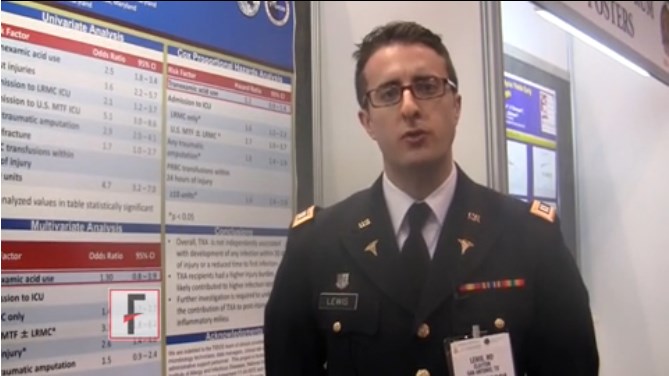
CHICAGO – Tranexamic acid was not independently associated with any infection within 30 days of injury in U.S. soldiers undergoing trauma surgery, a case-control study showed.
The antifibrinolytic has been used for years to reduce morbidity and the risk of death associated with hemorrhage in the military setting. Tranexamic acid (TXA) made its way into the civilian setting after the 2010 provocative CRASH-2 trial in adult trauma patients.
Because TXA (Cyklokapron, Lysteda) also has anti-inflammatory properties, Dr. Clayton Lewis of Brooke Army Medical Center in San Antonio and his colleagues decided to evaluate the effect of TXA on the development of posttraumatic infections, including time to first infection, in combat casualties.
The findings were presented at the annual clinical congress of the American College of Surgeons, where we caught up with Dr. Lewis for an interview.
Dr. Lewis reported having no relevant financial disclosures.
The video associated with this article is no longer available on this site. Please view all of our videos on the MDedge YouTube channel
CHICAGO – Tranexamic acid was not independently associated with any infection within 30 days of injury in U.S. soldiers undergoing trauma surgery, a case-control study showed.
The antifibrinolytic has been used for years to reduce morbidity and the risk of death associated with hemorrhage in the military setting. Tranexamic acid (TXA) made its way into the civilian setting after the 2010 provocative CRASH-2 trial in adult trauma patients.
Because TXA (Cyklokapron, Lysteda) also has anti-inflammatory properties, Dr. Clayton Lewis of Brooke Army Medical Center in San Antonio and his colleagues decided to evaluate the effect of TXA on the development of posttraumatic infections, including time to first infection, in combat casualties.
The findings were presented at the annual clinical congress of the American College of Surgeons, where we caught up with Dr. Lewis for an interview.
Dr. Lewis reported having no relevant financial disclosures.
The video associated with this article is no longer available on this site. Please view all of our videos on the MDedge YouTube channel
CHICAGO – Tranexamic acid was not independently associated with any infection within 30 days of injury in U.S. soldiers undergoing trauma surgery, a case-control study showed.
The antifibrinolytic has been used for years to reduce morbidity and the risk of death associated with hemorrhage in the military setting. Tranexamic acid (TXA) made its way into the civilian setting after the 2010 provocative CRASH-2 trial in adult trauma patients.
Because TXA (Cyklokapron, Lysteda) also has anti-inflammatory properties, Dr. Clayton Lewis of Brooke Army Medical Center in San Antonio and his colleagues decided to evaluate the effect of TXA on the development of posttraumatic infections, including time to first infection, in combat casualties.
The findings were presented at the annual clinical congress of the American College of Surgeons, where we caught up with Dr. Lewis for an interview.
Dr. Lewis reported having no relevant financial disclosures.
The video associated with this article is no longer available on this site. Please view all of our videos on the MDedge YouTube channel
AT THE ACS CLINICAL CONGRESS
Half of uninsured patients are eligible for Medicaid or ACA coverage
Nearly half of nonelderly uninsured patients are eligible for Medicaid or subsidized coverage through the Affordable Care Act (ACA) marketplace, according to a study released Oct. 13 by the Kaiser Family Foundation.
More than a quarter of uninsured patients at the start of 2015 were adults eligible for Medicaid or children eligible for Medicaid or the Children’s Health Insurance Program. One in five of the nonelderly uninsured population were eligible for premium tax credits to purchase coverage through the ACA marketplace.

For the study, Kaiser researchers analyzed data from the 2015 Current Population Survey Annual Social and Economic Supplement, which provides socioeconomic and demographic information for the United States population and specific subpopulations. Of 32 million uninsured patients at the start of 2015, 16 million (49%) were eligible for state or federal government assistance through Medicaid or the ACA. One in ten (3.1 million) fell into the coverage gap because of their state’s decision not to expand Medicaid, according to the study. About 15% of the uninsured (4.9 million) patients were undocumented immigrants ineligible for ACA coverage under federal law. The remainder of the uninsured were not eligible for assistance under the ACA because they have access to employer coverage or have incomes too high to qualify for Medicaid or marketplace subsidies.
The rate of uninsured patients eligible for either ACA-based coverage or Medicaid varied widely across states. In Nebraska and Texas, 35% of nonelderly uninsured patients were eligible for coverage, while in West Virginia, 75% of uninsured patients were eligible for coverage under Medicaid or the ACA. Five states account for 40% of the uninsured population that could receive Medicaid or subsidized private coverage under the ACA, including California (2 million), Texas (1.5 million), Florida (1 million), New York (865,000), and Pennsylvania (656,000).
The authors concluded that there are still significant opportunities for the government to increase the number of insured patients under the ACA by reaching these eligible patients before the 2016 open enrollment period begins on Nov. 1. However, the authors note that, in many cases, the uninsured will remain uninsured because they are either undocumented or live in states that have not expanded Medicaid.
On Twitter @legal_med
Nearly half of nonelderly uninsured patients are eligible for Medicaid or subsidized coverage through the Affordable Care Act (ACA) marketplace, according to a study released Oct. 13 by the Kaiser Family Foundation.
More than a quarter of uninsured patients at the start of 2015 were adults eligible for Medicaid or children eligible for Medicaid or the Children’s Health Insurance Program. One in five of the nonelderly uninsured population were eligible for premium tax credits to purchase coverage through the ACA marketplace.
For the study, Kaiser researchers analyzed data from the 2015 Current Population Survey Annual Social and Economic Supplement, which provides socioeconomic and demographic information for the United States population and specific subpopulations. Of 32 million uninsured patients at the start of 2015, 16 million (49%) were eligible for state or federal government assistance through Medicaid or the ACA. One in ten (3.1 million) fell into the coverage gap because of their state’s decision not to expand Medicaid, according to the study. About 15% of the uninsured (4.9 million) patients were undocumented immigrants ineligible for ACA coverage under federal law. The remainder of the uninsured were not eligible for assistance under the ACA because they have access to employer coverage or have incomes too high to qualify for Medicaid or marketplace subsidies.
The rate of uninsured patients eligible for either ACA-based coverage or Medicaid varied widely across states. In Nebraska and Texas, 35% of nonelderly uninsured patients were eligible for coverage, while in West Virginia, 75% of uninsured patients were eligible for coverage under Medicaid or the ACA. Five states account for 40% of the uninsured population that could receive Medicaid or subsidized private coverage under the ACA, including California (2 million), Texas (1.5 million), Florida (1 million), New York (865,000), and Pennsylvania (656,000).
The authors concluded that there are still significant opportunities for the government to increase the number of insured patients under the ACA by reaching these eligible patients before the 2016 open enrollment period begins on Nov. 1. However, the authors note that, in many cases, the uninsured will remain uninsured because they are either undocumented or live in states that have not expanded Medicaid.
On Twitter @legal_med
Nearly half of nonelderly uninsured patients are eligible for Medicaid or subsidized coverage through the Affordable Care Act (ACA) marketplace, according to a study released Oct. 13 by the Kaiser Family Foundation.
More than a quarter of uninsured patients at the start of 2015 were adults eligible for Medicaid or children eligible for Medicaid or the Children’s Health Insurance Program. One in five of the nonelderly uninsured population were eligible for premium tax credits to purchase coverage through the ACA marketplace.
For the study, Kaiser researchers analyzed data from the 2015 Current Population Survey Annual Social and Economic Supplement, which provides socioeconomic and demographic information for the United States population and specific subpopulations. Of 32 million uninsured patients at the start of 2015, 16 million (49%) were eligible for state or federal government assistance through Medicaid or the ACA. One in ten (3.1 million) fell into the coverage gap because of their state’s decision not to expand Medicaid, according to the study. About 15% of the uninsured (4.9 million) patients were undocumented immigrants ineligible for ACA coverage under federal law. The remainder of the uninsured were not eligible for assistance under the ACA because they have access to employer coverage or have incomes too high to qualify for Medicaid or marketplace subsidies.
The rate of uninsured patients eligible for either ACA-based coverage or Medicaid varied widely across states. In Nebraska and Texas, 35% of nonelderly uninsured patients were eligible for coverage, while in West Virginia, 75% of uninsured patients were eligible for coverage under Medicaid or the ACA. Five states account for 40% of the uninsured population that could receive Medicaid or subsidized private coverage under the ACA, including California (2 million), Texas (1.5 million), Florida (1 million), New York (865,000), and Pennsylvania (656,000).
The authors concluded that there are still significant opportunities for the government to increase the number of insured patients under the ACA by reaching these eligible patients before the 2016 open enrollment period begins on Nov. 1. However, the authors note that, in many cases, the uninsured will remain uninsured because they are either undocumented or live in states that have not expanded Medicaid.
On Twitter @legal_med

Hemorrhage control after pelvic fracture: Methods vary widely
LAS VEGAS – Methods for controlling hemorrhage from severe pelvic fractures vary widely across institutions, according to findings from a prospective observational study.
In particular, the findings from the 2-year multicenter study of 1,339 patients show that resuscitative endovascular balloon occlusion of the aorta (REBOA) is rarely used, despite its inclusion in recent management algorithms, Dr. Todd W. Costantini reported at the annual meeting of the American Association for the Surgery of Trauma (AAST).
The most common methods used for hemorrhage control were angioembolization alone and external fixator placement alone, used in 55 (4.1%) and 78 (5.8%) patients, respectively. These methods were also used in 19 (10.7%) and 17 (9.6%) of the 178 patients of the overall study population who presented in shock, said Dr. Costantini of the University of California San Diego Health System.

Other methods included preperitoneal pelvic packing alone in 20 patients overall and 6 patients in shock, embolization plus external fixator in 11 patients overall and 6 patients in shock, embolization and pelvic packing in 6 patients overall and 2 patients in shock, external fixator plus pelvic packing in 6 patients overall and 1 patient in shock, embolization plus external fixator plus pelvic packing in 5 patients overall and 1 patient in shock.
“As most pelvic fracture algorithms suggest the use of preperitoneal packing prior to embolization in patients who present with hemodynamic instability, we were interested to find that only two patients [in shock] were treated with this method,” Dr. Costantini said.
Further, REBOA with or without any other method was used in only five patients overall (0.4%) and five patients in shock (2.8%), and all of these were from only 1 of the 11 participating centers, he noted.
Study subjects were adults with a mean age of 47 years with pelvic fracture from blunt trauma, and 57% were men. The mean Injury Severity Score was high at 19.2 on a scale of 75. Associated injury was common; 32% had an abbreviated injury scale (AIS) score of 3 or higher (out of 6) for chest injury.
The average intensive care unit length of stay was 8.2 days, and the average hospital length of stay was 10.9 days. In-hospital mortality was 9%.
“Pelvic fractures are associated with significant disability, demonstrated by the fact that only 43% of patients were discharged home from the hospital after admission for pelvic fractures. The remainder required ongoing care in either skilled nursing facilities or acute rehab facilities,” he said.
Of the patients who met criteria for shock, the mean age was 44 years, 59% were men, and the mean ISS was 28.2, with nearly half having a chest AIS of 3 or greater, nearly 39% having a head AIS of 3 or greater, and 32% having an abdominal AIS of 3 or greater. The mean ICU stay was 11.6 days, and the mean hospital stay, 19.3 days. In-hospital mortality among those presenting in shock was 32%.
Most patients underwent computed tomography, and arterial blush was noted in 10% of cases. Angiography was used in 148 patients, and half of those were noted to have contrast extravasation.
Therapeutic angioembolization was used in 79 patients (5.9%) overall, and in 60% of those undergoing angiography. The most common indication for angiography was ongoing hemorrhage, hemodynamic instability, and blush on CT scan.
The findings demonstrate significant variability in the approach to hemorrhage control across participating institutions.
“We found that there is currently limited use of REBOA in the treatment of hemorrhage associated with pelvic fracture. However, this may change as management strategies evolve with advances in training and technology,” Dr. Costantini concluded.
As a discussant for Dr. Costantini’s paper, Dr. Walter Biffl of the University of Colorado, Denver, expressed concern regarding the lack of adherence to management algorithms, saying that the data suggest a lack of standardization and orderly application of principles that have been shown to reduce mortality.
“Only 19% had pelvic binding. In our algorithm, 100% get that. And 85% of those in shock had CT scans. In our algorithm that comes after all these other interventions,” he said. “This study clearly opens the door for further research. If we could start with a pelvic binder and hemostatic resuscitation and maybe add REBOA for the severely hypertensive patients, maybe we can begin to determine the goals and efficacy of more interventions,” he said.
Dr. Costantini’s study was supported by the AAST Multi-Institutional Trials Committee. He reported having no disclosures.
LAS VEGAS – Methods for controlling hemorrhage from severe pelvic fractures vary widely across institutions, according to findings from a prospective observational study.
In particular, the findings from the 2-year multicenter study of 1,339 patients show that resuscitative endovascular balloon occlusion of the aorta (REBOA) is rarely used, despite its inclusion in recent management algorithms, Dr. Todd W. Costantini reported at the annual meeting of the American Association for the Surgery of Trauma (AAST).
The most common methods used for hemorrhage control were angioembolization alone and external fixator placement alone, used in 55 (4.1%) and 78 (5.8%) patients, respectively. These methods were also used in 19 (10.7%) and 17 (9.6%) of the 178 patients of the overall study population who presented in shock, said Dr. Costantini of the University of California San Diego Health System.
Other methods included preperitoneal pelvic packing alone in 20 patients overall and 6 patients in shock, embolization plus external fixator in 11 patients overall and 6 patients in shock, embolization and pelvic packing in 6 patients overall and 2 patients in shock, external fixator plus pelvic packing in 6 patients overall and 1 patient in shock, embolization plus external fixator plus pelvic packing in 5 patients overall and 1 patient in shock.
“As most pelvic fracture algorithms suggest the use of preperitoneal packing prior to embolization in patients who present with hemodynamic instability, we were interested to find that only two patients [in shock] were treated with this method,” Dr. Costantini said.
Further, REBOA with or without any other method was used in only five patients overall (0.4%) and five patients in shock (2.8%), and all of these were from only 1 of the 11 participating centers, he noted.
Study subjects were adults with a mean age of 47 years with pelvic fracture from blunt trauma, and 57% were men. The mean Injury Severity Score was high at 19.2 on a scale of 75. Associated injury was common; 32% had an abbreviated injury scale (AIS) score of 3 or higher (out of 6) for chest injury.
The average intensive care unit length of stay was 8.2 days, and the average hospital length of stay was 10.9 days. In-hospital mortality was 9%.
“Pelvic fractures are associated with significant disability, demonstrated by the fact that only 43% of patients were discharged home from the hospital after admission for pelvic fractures. The remainder required ongoing care in either skilled nursing facilities or acute rehab facilities,” he said.
Of the patients who met criteria for shock, the mean age was 44 years, 59% were men, and the mean ISS was 28.2, with nearly half having a chest AIS of 3 or greater, nearly 39% having a head AIS of 3 or greater, and 32% having an abdominal AIS of 3 or greater. The mean ICU stay was 11.6 days, and the mean hospital stay, 19.3 days. In-hospital mortality among those presenting in shock was 32%.
Most patients underwent computed tomography, and arterial blush was noted in 10% of cases. Angiography was used in 148 patients, and half of those were noted to have contrast extravasation.
Therapeutic angioembolization was used in 79 patients (5.9%) overall, and in 60% of those undergoing angiography. The most common indication for angiography was ongoing hemorrhage, hemodynamic instability, and blush on CT scan.
The findings demonstrate significant variability in the approach to hemorrhage control across participating institutions.
“We found that there is currently limited use of REBOA in the treatment of hemorrhage associated with pelvic fracture. However, this may change as management strategies evolve with advances in training and technology,” Dr. Costantini concluded.
As a discussant for Dr. Costantini’s paper, Dr. Walter Biffl of the University of Colorado, Denver, expressed concern regarding the lack of adherence to management algorithms, saying that the data suggest a lack of standardization and orderly application of principles that have been shown to reduce mortality.
“Only 19% had pelvic binding. In our algorithm, 100% get that. And 85% of those in shock had CT scans. In our algorithm that comes after all these other interventions,” he said. “This study clearly opens the door for further research. If we could start with a pelvic binder and hemostatic resuscitation and maybe add REBOA for the severely hypertensive patients, maybe we can begin to determine the goals and efficacy of more interventions,” he said.
Dr. Costantini’s study was supported by the AAST Multi-Institutional Trials Committee. He reported having no disclosures.
LAS VEGAS – Methods for controlling hemorrhage from severe pelvic fractures vary widely across institutions, according to findings from a prospective observational study.
In particular, the findings from the 2-year multicenter study of 1,339 patients show that resuscitative endovascular balloon occlusion of the aorta (REBOA) is rarely used, despite its inclusion in recent management algorithms, Dr. Todd W. Costantini reported at the annual meeting of the American Association for the Surgery of Trauma (AAST).
The most common methods used for hemorrhage control were angioembolization alone and external fixator placement alone, used in 55 (4.1%) and 78 (5.8%) patients, respectively. These methods were also used in 19 (10.7%) and 17 (9.6%) of the 178 patients of the overall study population who presented in shock, said Dr. Costantini of the University of California San Diego Health System.
Other methods included preperitoneal pelvic packing alone in 20 patients overall and 6 patients in shock, embolization plus external fixator in 11 patients overall and 6 patients in shock, embolization and pelvic packing in 6 patients overall and 2 patients in shock, external fixator plus pelvic packing in 6 patients overall and 1 patient in shock, embolization plus external fixator plus pelvic packing in 5 patients overall and 1 patient in shock.
“As most pelvic fracture algorithms suggest the use of preperitoneal packing prior to embolization in patients who present with hemodynamic instability, we were interested to find that only two patients [in shock] were treated with this method,” Dr. Costantini said.
Further, REBOA with or without any other method was used in only five patients overall (0.4%) and five patients in shock (2.8%), and all of these were from only 1 of the 11 participating centers, he noted.
Study subjects were adults with a mean age of 47 years with pelvic fracture from blunt trauma, and 57% were men. The mean Injury Severity Score was high at 19.2 on a scale of 75. Associated injury was common; 32% had an abbreviated injury scale (AIS) score of 3 or higher (out of 6) for chest injury.
The average intensive care unit length of stay was 8.2 days, and the average hospital length of stay was 10.9 days. In-hospital mortality was 9%.
“Pelvic fractures are associated with significant disability, demonstrated by the fact that only 43% of patients were discharged home from the hospital after admission for pelvic fractures. The remainder required ongoing care in either skilled nursing facilities or acute rehab facilities,” he said.
Of the patients who met criteria for shock, the mean age was 44 years, 59% were men, and the mean ISS was 28.2, with nearly half having a chest AIS of 3 or greater, nearly 39% having a head AIS of 3 or greater, and 32% having an abdominal AIS of 3 or greater. The mean ICU stay was 11.6 days, and the mean hospital stay, 19.3 days. In-hospital mortality among those presenting in shock was 32%.
Most patients underwent computed tomography, and arterial blush was noted in 10% of cases. Angiography was used in 148 patients, and half of those were noted to have contrast extravasation.
Therapeutic angioembolization was used in 79 patients (5.9%) overall, and in 60% of those undergoing angiography. The most common indication for angiography was ongoing hemorrhage, hemodynamic instability, and blush on CT scan.
The findings demonstrate significant variability in the approach to hemorrhage control across participating institutions.
“We found that there is currently limited use of REBOA in the treatment of hemorrhage associated with pelvic fracture. However, this may change as management strategies evolve with advances in training and technology,” Dr. Costantini concluded.
As a discussant for Dr. Costantini’s paper, Dr. Walter Biffl of the University of Colorado, Denver, expressed concern regarding the lack of adherence to management algorithms, saying that the data suggest a lack of standardization and orderly application of principles that have been shown to reduce mortality.
“Only 19% had pelvic binding. In our algorithm, 100% get that. And 85% of those in shock had CT scans. In our algorithm that comes after all these other interventions,” he said. “This study clearly opens the door for further research. If we could start with a pelvic binder and hemostatic resuscitation and maybe add REBOA for the severely hypertensive patients, maybe we can begin to determine the goals and efficacy of more interventions,” he said.
Dr. Costantini’s study was supported by the AAST Multi-Institutional Trials Committee. He reported having no disclosures.
AT THE AAST ANNUAL MEETING
Key clinical point: Methods for controlling hemorrhage from severe pelvic fractures vary widely across institutions, according to findings from a prospective observational study.
Major finding: REBOA was used in five patients overall (0.4%) and five patients in shock (2.8%), all from 1 of the 11 participating centers.
Data source: A prospective, multicenter, observational study of 1,339 patients.
Disclosures: Dr. Costantini’s study was supported by the AAST Multi-Institutional Trials Committee. He reported having no disclosures.

SSI risk after cesarean is nearly double for Medicaid patients
SAN DIEGO – Medicaid patients were nearly twice as likely to develop surgical site infections after cesarean delivery than privately insured women, according to investigators from the Centers for Disease Control and Prevention.
The association remained even after researchers accounted for several demographic and clinical variables, Dr. Sarah Yi said in an interview at an annual scientific meeting on infectious diseases.

“If we can identify a population that is at higher risk for health care–associated infections, then maybe we can intervene at some level,” said Dr. Yi of the division of healthcare quality promotion at the CDC. “If we can elucidate the mechanism better, it will give us other clues about where we can prevent infections.”
More than 1.2 million cesareans were performed in the United States in 2012, and low transverse C-sections ranked fifth among all procedures performed during hospital stays, Dr. Yi noted. Post-cesarean surgical site infections (SSIs) remain a major cause of expense and morbidity, but not many studies have evaluated the relationship between insurance type and the risk of SSIs or other health care–associated infections, she added.
To explore the issue, Dr. Yi and her associates analyzed national health care safety data for 2,769 women who had a cesarean delivery in New York in 2010 or 2011 and had either Medicaid or private insurance at the time of their delivery. The Medicaid group included 1,763 women, while the privately insured group included 1,006 women. Medicaid patients were younger, more likely to be Hispanic, black, or homeless, and were more often treated at government and teaching facilities than privately insured patients were.

After researchers accounted for age, race, ethnicity, body mass index, facility type, American Society of Anesthesiologists score, emergency and labor status, use of anesthesia, duration of surgery, and wound classification, Medicaid patients still had nearly double the risk of an SSI after cesarean as did their counterparts with private insurance (risk ratio, 1.8; 95% confidence interval, 1.2-2.8; P = .02).
While homelessness could potentially increase the risk of SSI by limiting opportunities for self-care, social support, and clinical follow-up, Medicaid remained a significant predictor of SSI even after excluding homeless women from the analysis, Dr. Yi said.
But Medicaid might represent one, or several, factors that the model did not account for, such as socioeconomic status or prenatal care, said Dr. Yi.
Prenatal care, in particular, might have been lower among Medicaid patients for women who did not obtain coverage until after arriving at the hospital for delivery, she said. Inadequate prenatal care has been linked to complications after delivery, and the proportion of eligible women who are enrolled in Medicaid has been found to vary at different times during pregnancy, she added (MMWR Surveill Summ. 2015 Jun 19;64[4]:1-19).
The CDC investigators plan to continue the research by trying to validate the association in other populations, in other years, and in other states, Dr. Yi said.
IDWeek marks the combined annual meetings of the Infectious Diseases Society of America, the Society for Healthcare Epidemiology of America, the HIV Medicine Association, and the Pediatric Infectious Diseases Society.
The researchers reported having no financial disclosures.
SAN DIEGO – Medicaid patients were nearly twice as likely to develop surgical site infections after cesarean delivery than privately insured women, according to investigators from the Centers for Disease Control and Prevention.
The association remained even after researchers accounted for several demographic and clinical variables, Dr. Sarah Yi said in an interview at an annual scientific meeting on infectious diseases.
“If we can identify a population that is at higher risk for health care–associated infections, then maybe we can intervene at some level,” said Dr. Yi of the division of healthcare quality promotion at the CDC. “If we can elucidate the mechanism better, it will give us other clues about where we can prevent infections.”
More than 1.2 million cesareans were performed in the United States in 2012, and low transverse C-sections ranked fifth among all procedures performed during hospital stays, Dr. Yi noted. Post-cesarean surgical site infections (SSIs) remain a major cause of expense and morbidity, but not many studies have evaluated the relationship between insurance type and the risk of SSIs or other health care–associated infections, she added.
To explore the issue, Dr. Yi and her associates analyzed national health care safety data for 2,769 women who had a cesarean delivery in New York in 2010 or 2011 and had either Medicaid or private insurance at the time of their delivery. The Medicaid group included 1,763 women, while the privately insured group included 1,006 women. Medicaid patients were younger, more likely to be Hispanic, black, or homeless, and were more often treated at government and teaching facilities than privately insured patients were.
After researchers accounted for age, race, ethnicity, body mass index, facility type, American Society of Anesthesiologists score, emergency and labor status, use of anesthesia, duration of surgery, and wound classification, Medicaid patients still had nearly double the risk of an SSI after cesarean as did their counterparts with private insurance (risk ratio, 1.8; 95% confidence interval, 1.2-2.8; P = .02).
While homelessness could potentially increase the risk of SSI by limiting opportunities for self-care, social support, and clinical follow-up, Medicaid remained a significant predictor of SSI even after excluding homeless women from the analysis, Dr. Yi said.
But Medicaid might represent one, or several, factors that the model did not account for, such as socioeconomic status or prenatal care, said Dr. Yi.
Prenatal care, in particular, might have been lower among Medicaid patients for women who did not obtain coverage until after arriving at the hospital for delivery, she said. Inadequate prenatal care has been linked to complications after delivery, and the proportion of eligible women who are enrolled in Medicaid has been found to vary at different times during pregnancy, she added (MMWR Surveill Summ. 2015 Jun 19;64[4]:1-19).
The CDC investigators plan to continue the research by trying to validate the association in other populations, in other years, and in other states, Dr. Yi said.
IDWeek marks the combined annual meetings of the Infectious Diseases Society of America, the Society for Healthcare Epidemiology of America, the HIV Medicine Association, and the Pediatric Infectious Diseases Society.
The researchers reported having no financial disclosures.
SAN DIEGO – Medicaid patients were nearly twice as likely to develop surgical site infections after cesarean delivery than privately insured women, according to investigators from the Centers for Disease Control and Prevention.
The association remained even after researchers accounted for several demographic and clinical variables, Dr. Sarah Yi said in an interview at an annual scientific meeting on infectious diseases.
“If we can identify a population that is at higher risk for health care–associated infections, then maybe we can intervene at some level,” said Dr. Yi of the division of healthcare quality promotion at the CDC. “If we can elucidate the mechanism better, it will give us other clues about where we can prevent infections.”
More than 1.2 million cesareans were performed in the United States in 2012, and low transverse C-sections ranked fifth among all procedures performed during hospital stays, Dr. Yi noted. Post-cesarean surgical site infections (SSIs) remain a major cause of expense and morbidity, but not many studies have evaluated the relationship between insurance type and the risk of SSIs or other health care–associated infections, she added.
To explore the issue, Dr. Yi and her associates analyzed national health care safety data for 2,769 women who had a cesarean delivery in New York in 2010 or 2011 and had either Medicaid or private insurance at the time of their delivery. The Medicaid group included 1,763 women, while the privately insured group included 1,006 women. Medicaid patients were younger, more likely to be Hispanic, black, or homeless, and were more often treated at government and teaching facilities than privately insured patients were.
After researchers accounted for age, race, ethnicity, body mass index, facility type, American Society of Anesthesiologists score, emergency and labor status, use of anesthesia, duration of surgery, and wound classification, Medicaid patients still had nearly double the risk of an SSI after cesarean as did their counterparts with private insurance (risk ratio, 1.8; 95% confidence interval, 1.2-2.8; P = .02).
While homelessness could potentially increase the risk of SSI by limiting opportunities for self-care, social support, and clinical follow-up, Medicaid remained a significant predictor of SSI even after excluding homeless women from the analysis, Dr. Yi said.
But Medicaid might represent one, or several, factors that the model did not account for, such as socioeconomic status or prenatal care, said Dr. Yi.
Prenatal care, in particular, might have been lower among Medicaid patients for women who did not obtain coverage until after arriving at the hospital for delivery, she said. Inadequate prenatal care has been linked to complications after delivery, and the proportion of eligible women who are enrolled in Medicaid has been found to vary at different times during pregnancy, she added (MMWR Surveill Summ. 2015 Jun 19;64[4]:1-19).
The CDC investigators plan to continue the research by trying to validate the association in other populations, in other years, and in other states, Dr. Yi said.
IDWeek marks the combined annual meetings of the Infectious Diseases Society of America, the Society for Healthcare Epidemiology of America, the HIV Medicine Association, and the Pediatric Infectious Diseases Society.
The researchers reported having no financial disclosures.
AT IDWEEK 2015
Key clinical point: Medicaid patients had about a twofold higher risk of surgical site infections after cesarean delivery than did privately insured women.
Major finding: The association between Medicaid coverage and surgical site infections after cesarean delivery remained significant after researchers controlled for several potential confounders (risk ratio, 1.8; P = .02).
Data source: Analysis of national health care safety data for 2,769 women who had a cesarean in New York in 2010 or 2011.
Disclosures: The investigators reported having no financial disclosures.

VIDEO: Tomosynthesis soon to be standard of care for breast cancer screening
CHICAGO – The uptake of tomosynthesis has been fairly brisk among the nation’s breast cancer screening centers.
There are good reasons for that. In an interview at the annual clinical congress of the American College of Surgeons, Dr. Sarah Friedewald, division chief of breast and women’s imaging at Northwestern University, Chicago, explained the procedure; its pluses and minuses; and why it’s likely to be the standard of care for breast cancer screening within 5 years.
The video associated with this article is no longer available on this site. Please view all of our videos on the MDedge YouTube channel
CHICAGO – The uptake of tomosynthesis has been fairly brisk among the nation’s breast cancer screening centers.
There are good reasons for that. In an interview at the annual clinical congress of the American College of Surgeons, Dr. Sarah Friedewald, division chief of breast and women’s imaging at Northwestern University, Chicago, explained the procedure; its pluses and minuses; and why it’s likely to be the standard of care for breast cancer screening within 5 years.
The video associated with this article is no longer available on this site. Please view all of our videos on the MDedge YouTube channel
CHICAGO – The uptake of tomosynthesis has been fairly brisk among the nation’s breast cancer screening centers.
There are good reasons for that. In an interview at the annual clinical congress of the American College of Surgeons, Dr. Sarah Friedewald, division chief of breast and women’s imaging at Northwestern University, Chicago, explained the procedure; its pluses and minuses; and why it’s likely to be the standard of care for breast cancer screening within 5 years.
The video associated with this article is no longer available on this site. Please view all of our videos on the MDedge YouTube channel
EXPERT ANALYSIS FROM THE ACS CLINICAL CONGRESS

TCT: Radial PCI access as effective as femoral at 1 year
SAN FRANCISCO – Access site made no difference in major adverse events 1 year after percutaneous coronary intervention in patients randomized to transradial or transfemoral access, in a study of more than 1,700 Chinese patients.
The DRAGON trial (Determination of the Radial vs. Groin Coronary Angioplasty) also showed that the two types of access had virtually identical rates of bleeding complications a week after the intervention.
“This was an incredible study,” Dr. Roxana Mehran

At 25 surgery sites across China, patients who presented with the need for ad hoc percutaneous coronary intervention (PCI) were randomly assigned in a 2:1 fashion to have transradial or transfemoral access. In all, 1,212 PCI patients had transradial catheterization, while 527 were given transfemoral PCI. After 1 year, patients in both groups were found to have nearly identical major adverse cardiac or cerebrovascular event–free (MACCE-free) rates: 95.8% for transradial access vs. 95.5% for transfemoral access (P for noninferiority, less than .001). Bleeding complication rates at 7 days were also similar: 99.9% of patients who’d received transradial PCI were free of any access site bleeding event, as were 99.0% of all transfemoral PCI patients (P for superiority, less than .001). Nearly half of patients in the transfemoral access group also received a hemostatic intervention, and 40% of all patients required anticoagulation therapy, Dr. Shigeru Saito reported at the meeting, sponsored by the Cardiovascular Research Foundation.
While transradial access’s noninferiority to rates of site complications in transfemoral access is already supported in the literature, Dr. Saito, director of cardiology and catheterization laboratories at Shonan Kamakura General Hospital, Kanagawa, Japan, said he and his colleagues wanted to establish transradial PCI’s long-term efficacy so that it could become the standard internationally, unless the patient’s situation dictates otherwise.
Transradial access is considered routine in much of Asia and Europe, but in the United States, fewer than 20% of interventionalists currently use it, said Dr. Daniel I. Simon.

“[Radial access] is certainly increasing, but ... what I would hate to see happen is for our fellows and trainees to lose the femoral techniques that you need for some cases,” said Dr. Simon, professor of medicine at Case Western Reserve University, Cleveland. “Certainly, femoral access will be required for some procedures, but you can make the case for ST-segment elevation MI that transradial access should really be the standard, because that’s where the data is the most robust.” Dr. Simon was not involved in the study.
Dr. Saito, Dr. Mehran, and Dr. Simon had no relevant disclosures.
On Twitter @whitneymcknight
SAN FRANCISCO – Access site made no difference in major adverse events 1 year after percutaneous coronary intervention in patients randomized to transradial or transfemoral access, in a study of more than 1,700 Chinese patients.
The DRAGON trial (Determination of the Radial vs. Groin Coronary Angioplasty) also showed that the two types of access had virtually identical rates of bleeding complications a week after the intervention.
“This was an incredible study,” Dr. Roxana Mehran
At 25 surgery sites across China, patients who presented with the need for ad hoc percutaneous coronary intervention (PCI) were randomly assigned in a 2:1 fashion to have transradial or transfemoral access. In all, 1,212 PCI patients had transradial catheterization, while 527 were given transfemoral PCI. After 1 year, patients in both groups were found to have nearly identical major adverse cardiac or cerebrovascular event–free (MACCE-free) rates: 95.8% for transradial access vs. 95.5% for transfemoral access (P for noninferiority, less than .001). Bleeding complication rates at 7 days were also similar: 99.9% of patients who’d received transradial PCI were free of any access site bleeding event, as were 99.0% of all transfemoral PCI patients (P for superiority, less than .001). Nearly half of patients in the transfemoral access group also received a hemostatic intervention, and 40% of all patients required anticoagulation therapy, Dr. Shigeru Saito reported at the meeting, sponsored by the Cardiovascular Research Foundation.
While transradial access’s noninferiority to rates of site complications in transfemoral access is already supported in the literature, Dr. Saito, director of cardiology and catheterization laboratories at Shonan Kamakura General Hospital, Kanagawa, Japan, said he and his colleagues wanted to establish transradial PCI’s long-term efficacy so that it could become the standard internationally, unless the patient’s situation dictates otherwise.
Transradial access is considered routine in much of Asia and Europe, but in the United States, fewer than 20% of interventionalists currently use it, said Dr. Daniel I. Simon.
“[Radial access] is certainly increasing, but ... what I would hate to see happen is for our fellows and trainees to lose the femoral techniques that you need for some cases,” said Dr. Simon, professor of medicine at Case Western Reserve University, Cleveland. “Certainly, femoral access will be required for some procedures, but you can make the case for ST-segment elevation MI that transradial access should really be the standard, because that’s where the data is the most robust.” Dr. Simon was not involved in the study.
Dr. Saito, Dr. Mehran, and Dr. Simon had no relevant disclosures.
On Twitter @whitneymcknight
SAN FRANCISCO – Access site made no difference in major adverse events 1 year after percutaneous coronary intervention in patients randomized to transradial or transfemoral access, in a study of more than 1,700 Chinese patients.
The DRAGON trial (Determination of the Radial vs. Groin Coronary Angioplasty) also showed that the two types of access had virtually identical rates of bleeding complications a week after the intervention.
“This was an incredible study,” Dr. Roxana Mehran
At 25 surgery sites across China, patients who presented with the need for ad hoc percutaneous coronary intervention (PCI) were randomly assigned in a 2:1 fashion to have transradial or transfemoral access. In all, 1,212 PCI patients had transradial catheterization, while 527 were given transfemoral PCI. After 1 year, patients in both groups were found to have nearly identical major adverse cardiac or cerebrovascular event–free (MACCE-free) rates: 95.8% for transradial access vs. 95.5% for transfemoral access (P for noninferiority, less than .001). Bleeding complication rates at 7 days were also similar: 99.9% of patients who’d received transradial PCI were free of any access site bleeding event, as were 99.0% of all transfemoral PCI patients (P for superiority, less than .001). Nearly half of patients in the transfemoral access group also received a hemostatic intervention, and 40% of all patients required anticoagulation therapy, Dr. Shigeru Saito reported at the meeting, sponsored by the Cardiovascular Research Foundation.
While transradial access’s noninferiority to rates of site complications in transfemoral access is already supported in the literature, Dr. Saito, director of cardiology and catheterization laboratories at Shonan Kamakura General Hospital, Kanagawa, Japan, said he and his colleagues wanted to establish transradial PCI’s long-term efficacy so that it could become the standard internationally, unless the patient’s situation dictates otherwise.
Transradial access is considered routine in much of Asia and Europe, but in the United States, fewer than 20% of interventionalists currently use it, said Dr. Daniel I. Simon.
“[Radial access] is certainly increasing, but ... what I would hate to see happen is for our fellows and trainees to lose the femoral techniques that you need for some cases,” said Dr. Simon, professor of medicine at Case Western Reserve University, Cleveland. “Certainly, femoral access will be required for some procedures, but you can make the case for ST-segment elevation MI that transradial access should really be the standard, because that’s where the data is the most robust.” Dr. Simon was not involved in the study.
Dr. Saito, Dr. Mehran, and Dr. Simon had no relevant disclosures.
On Twitter @whitneymcknight
AT TCT 2015
Key clinical point: Transradial access for PCI is noninferior to femoral access in terms of MACCE at 1 year, and bleeding complications at 1 week post procedure.
Major finding: One-year MACCE-free rates were similar in transradial and transfemoral PCI: 95.8% vs. 95.5% (P for noninferiority, less than .001); bleeding complication rates at 1 week were also similar: 99.9% vs. 99.0% (P for superiority, less than .001).
Data source: Prospective, randomly controlled, multisite trial in China of 1,739 ad hoc PCI patients.
Disclosures: The presenter had no relevant disclosures.

The Art of Negotiation: Strategy for Success
As I maneuvered through the winding cobblestone roads of the Old City in Jerusalem, the smell of fresh bread intertwined with spices filled the air. Sensory overload blended with the multicultural flavor of the Holy City is a scene difficult to paint with words. In the hustle and bustle of the market, I can still vividly see the image of a lady negotiating over a bag of zaatar (thyme). As her kids pulled on her garb trying to move their mom along, I watched as the buyer and seller went back and forth on the final price of the herbs. This was negotiation as an art form! With both parties satisfied with the deal and parting with a smile, it was clearly a win-win outcome. But bargaining in a fashion so common in the souk (open air market) is not the norm in the United States.
In my household, I was taught to never accept the first offer, and therefore, negotiating in second nature to me. As I neared the end of my fellowship and began my job search, I began to really enjoy the negotiation process with potential employers. I was surprised to learn, however, that not only was this not common practice among my colleagues, but also at times discouraged. I heard remarks like, “Don’t worry about your first contract, it doesn’t really matter,” and “These contracts are all pretty standard,” or “You better not ask for too much or they will find someone else,” or “Negotiating will upset them.” While I was baffled by this attitude, it dawned on me that, despite our trainees spending more than a decade in surgical training, many clinicians are currently entering surgical practice unprepared to negotiate the best contract to meet their needs. Let me be clear, I do not claim to be an expert in negotiations. However, I offer my experiences as a hope that it might provide some insight and guidance to those entering the medical workforce.
This introductory article is one of three meant to provide insight when it comes to basic negotiating principles for those doctors heading out into the work world. In no way is it meant to be a comprehensive guide, yet I hope that it offers an idea of what to look for and how best to approach these formal discussions.
Often individuals can find the negotiation process uncomfortable and stressful. However, the ability to negotiate well is something that can be learned, and is not predicated on some innate ability. The key to reaching optimal outcomes really comes down to two things: 1) walking into the negotiation prepared; and 2) maintaining a high level of emotional intelligence that allows you to be disciplined at the table. With the medical community being relatively small, the process should be geared toward building a relationship, in hopes of meeting the interests of all stakeholders. The resulting relationship, whether good or bad, will have future ramifications. This applies to both the employer and employee. Your goal is not to “one-up” the other party, but to ensure you walk away with a solution that meets your needs based on your interest.
Walking in prepared
One of the first steps in making sure you are well prepared is taking the time to determine what your interests are and how you would prioritize them. Do your homework! Often we get caught up in the salary number while losing sight of a wide range of potential benefits that might be discussed (for example, research support, time protection, employment for spouse, moving costs, signing bonus, mentorship, support for advanced degrees) and included in your overall compensation package.
The ability to be creative and move past focusing on one number will enhance your ability to attain better outcomes. That creativity requires that you take time to research the position, speak to colleagues and mentors, evaluate national salaries based on your specialty and expertise, and attempt to understand the other parties’ interest. This preparation will allow you to leverage the acquired knowledge in order to reach an outcome that would be considered a win-win. Part of your preparation also requires you to determine your best alternative to a negotiated agreement is (BATNA), a term coined in 1981 by Roger Fisher and William L. Ury in their book “Getting to Yes.” The BATNA essentially means if one does not accept the agreement, what is the best walk-away. Not only should you evaluate your own BATNA, but also that of the other parties.
Maintaining discipline
The ability to sustain a high level of emotional intelligence, be an active listener, and maintain discipline in your response can be critical to a negotiation. This tends to be more problematic when you are negotiating in a team because you are not in control of all that is being communicated by your team members. When you are the sole negotiator, as is the case in many of these faculty contracts, one has the ability to minimize the risk of serious gaffe at the table.
Additionally, developing and understanding your goals prior to the negotiation and where they rank from a priority and preference standpoint can reduce errors. This discipline also allows you to develop a strategic approach to the negotiation process that will ensure a systematic and thoughtful process in reaching the desired outcome. Every so often you run into a situation in which you are not prepared to answer a question or may need more time to think about it. One might respond by saying “That is an interesting option; let me take some time to think about it.” It is important not to commit yourself in the midst of a negotiation if you are not 100% sure the option is right for you. Having to come back and retract something you agree to can break down trust between the parties, which is detrimental to the relationship.
Parting thoughts
Negotiating your first contract can be nerve-wracking. The importance of taking the emotion out of the business aspect should not be overlooked. As well-trained, competent surgeons, you deserve to reach an agreement that you not only deem fair, but one that also will set you up for future success. Making sure that you are prepared, and having a systematic strategy is critical in this process. Gut instinct is not a strategy.
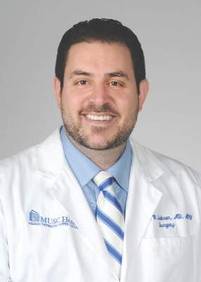
Dr. Sakran is an assistant profesor of surgery and Director of Global Health & Disaster Preparedness for the department of surgery at the Medical University of South Carolina. He is currently chair of the ACS Resident and Associate Society and recently finished a year at the Harvard Kennedy School of Government studying public policy, economics, and leadership development. He has no relevant disclosures.
As I maneuvered through the winding cobblestone roads of the Old City in Jerusalem, the smell of fresh bread intertwined with spices filled the air. Sensory overload blended with the multicultural flavor of the Holy City is a scene difficult to paint with words. In the hustle and bustle of the market, I can still vividly see the image of a lady negotiating over a bag of zaatar (thyme). As her kids pulled on her garb trying to move their mom along, I watched as the buyer and seller went back and forth on the final price of the herbs. This was negotiation as an art form! With both parties satisfied with the deal and parting with a smile, it was clearly a win-win outcome. But bargaining in a fashion so common in the souk (open air market) is not the norm in the United States.
In my household, I was taught to never accept the first offer, and therefore, negotiating in second nature to me. As I neared the end of my fellowship and began my job search, I began to really enjoy the negotiation process with potential employers. I was surprised to learn, however, that not only was this not common practice among my colleagues, but also at times discouraged. I heard remarks like, “Don’t worry about your first contract, it doesn’t really matter,” and “These contracts are all pretty standard,” or “You better not ask for too much or they will find someone else,” or “Negotiating will upset them.” While I was baffled by this attitude, it dawned on me that, despite our trainees spending more than a decade in surgical training, many clinicians are currently entering surgical practice unprepared to negotiate the best contract to meet their needs. Let me be clear, I do not claim to be an expert in negotiations. However, I offer my experiences as a hope that it might provide some insight and guidance to those entering the medical workforce.
This introductory article is one of three meant to provide insight when it comes to basic negotiating principles for those doctors heading out into the work world. In no way is it meant to be a comprehensive guide, yet I hope that it offers an idea of what to look for and how best to approach these formal discussions.
Often individuals can find the negotiation process uncomfortable and stressful. However, the ability to negotiate well is something that can be learned, and is not predicated on some innate ability. The key to reaching optimal outcomes really comes down to two things: 1) walking into the negotiation prepared; and 2) maintaining a high level of emotional intelligence that allows you to be disciplined at the table. With the medical community being relatively small, the process should be geared toward building a relationship, in hopes of meeting the interests of all stakeholders. The resulting relationship, whether good or bad, will have future ramifications. This applies to both the employer and employee. Your goal is not to “one-up” the other party, but to ensure you walk away with a solution that meets your needs based on your interest.
Walking in prepared
One of the first steps in making sure you are well prepared is taking the time to determine what your interests are and how you would prioritize them. Do your homework! Often we get caught up in the salary number while losing sight of a wide range of potential benefits that might be discussed (for example, research support, time protection, employment for spouse, moving costs, signing bonus, mentorship, support for advanced degrees) and included in your overall compensation package.
The ability to be creative and move past focusing on one number will enhance your ability to attain better outcomes. That creativity requires that you take time to research the position, speak to colleagues and mentors, evaluate national salaries based on your specialty and expertise, and attempt to understand the other parties’ interest. This preparation will allow you to leverage the acquired knowledge in order to reach an outcome that would be considered a win-win. Part of your preparation also requires you to determine your best alternative to a negotiated agreement is (BATNA), a term coined in 1981 by Roger Fisher and William L. Ury in their book “Getting to Yes.” The BATNA essentially means if one does not accept the agreement, what is the best walk-away. Not only should you evaluate your own BATNA, but also that of the other parties.
Maintaining discipline
The ability to sustain a high level of emotional intelligence, be an active listener, and maintain discipline in your response can be critical to a negotiation. This tends to be more problematic when you are negotiating in a team because you are not in control of all that is being communicated by your team members. When you are the sole negotiator, as is the case in many of these faculty contracts, one has the ability to minimize the risk of serious gaffe at the table.
Additionally, developing and understanding your goals prior to the negotiation and where they rank from a priority and preference standpoint can reduce errors. This discipline also allows you to develop a strategic approach to the negotiation process that will ensure a systematic and thoughtful process in reaching the desired outcome. Every so often you run into a situation in which you are not prepared to answer a question or may need more time to think about it. One might respond by saying “That is an interesting option; let me take some time to think about it.” It is important not to commit yourself in the midst of a negotiation if you are not 100% sure the option is right for you. Having to come back and retract something you agree to can break down trust between the parties, which is detrimental to the relationship.
Parting thoughts
Negotiating your first contract can be nerve-wracking. The importance of taking the emotion out of the business aspect should not be overlooked. As well-trained, competent surgeons, you deserve to reach an agreement that you not only deem fair, but one that also will set you up for future success. Making sure that you are prepared, and having a systematic strategy is critical in this process. Gut instinct is not a strategy.
Dr. Sakran is an assistant profesor of surgery and Director of Global Health & Disaster Preparedness for the department of surgery at the Medical University of South Carolina. He is currently chair of the ACS Resident and Associate Society and recently finished a year at the Harvard Kennedy School of Government studying public policy, economics, and leadership development. He has no relevant disclosures.
As I maneuvered through the winding cobblestone roads of the Old City in Jerusalem, the smell of fresh bread intertwined with spices filled the air. Sensory overload blended with the multicultural flavor of the Holy City is a scene difficult to paint with words. In the hustle and bustle of the market, I can still vividly see the image of a lady negotiating over a bag of zaatar (thyme). As her kids pulled on her garb trying to move their mom along, I watched as the buyer and seller went back and forth on the final price of the herbs. This was negotiation as an art form! With both parties satisfied with the deal and parting with a smile, it was clearly a win-win outcome. But bargaining in a fashion so common in the souk (open air market) is not the norm in the United States.
In my household, I was taught to never accept the first offer, and therefore, negotiating in second nature to me. As I neared the end of my fellowship and began my job search, I began to really enjoy the negotiation process with potential employers. I was surprised to learn, however, that not only was this not common practice among my colleagues, but also at times discouraged. I heard remarks like, “Don’t worry about your first contract, it doesn’t really matter,” and “These contracts are all pretty standard,” or “You better not ask for too much or they will find someone else,” or “Negotiating will upset them.” While I was baffled by this attitude, it dawned on me that, despite our trainees spending more than a decade in surgical training, many clinicians are currently entering surgical practice unprepared to negotiate the best contract to meet their needs. Let me be clear, I do not claim to be an expert in negotiations. However, I offer my experiences as a hope that it might provide some insight and guidance to those entering the medical workforce.
This introductory article is one of three meant to provide insight when it comes to basic negotiating principles for those doctors heading out into the work world. In no way is it meant to be a comprehensive guide, yet I hope that it offers an idea of what to look for and how best to approach these formal discussions.
Often individuals can find the negotiation process uncomfortable and stressful. However, the ability to negotiate well is something that can be learned, and is not predicated on some innate ability. The key to reaching optimal outcomes really comes down to two things: 1) walking into the negotiation prepared; and 2) maintaining a high level of emotional intelligence that allows you to be disciplined at the table. With the medical community being relatively small, the process should be geared toward building a relationship, in hopes of meeting the interests of all stakeholders. The resulting relationship, whether good or bad, will have future ramifications. This applies to both the employer and employee. Your goal is not to “one-up” the other party, but to ensure you walk away with a solution that meets your needs based on your interest.
Walking in prepared
One of the first steps in making sure you are well prepared is taking the time to determine what your interests are and how you would prioritize them. Do your homework! Often we get caught up in the salary number while losing sight of a wide range of potential benefits that might be discussed (for example, research support, time protection, employment for spouse, moving costs, signing bonus, mentorship, support for advanced degrees) and included in your overall compensation package.
The ability to be creative and move past focusing on one number will enhance your ability to attain better outcomes. That creativity requires that you take time to research the position, speak to colleagues and mentors, evaluate national salaries based on your specialty and expertise, and attempt to understand the other parties’ interest. This preparation will allow you to leverage the acquired knowledge in order to reach an outcome that would be considered a win-win. Part of your preparation also requires you to determine your best alternative to a negotiated agreement is (BATNA), a term coined in 1981 by Roger Fisher and William L. Ury in their book “Getting to Yes.” The BATNA essentially means if one does not accept the agreement, what is the best walk-away. Not only should you evaluate your own BATNA, but also that of the other parties.
Maintaining discipline
The ability to sustain a high level of emotional intelligence, be an active listener, and maintain discipline in your response can be critical to a negotiation. This tends to be more problematic when you are negotiating in a team because you are not in control of all that is being communicated by your team members. When you are the sole negotiator, as is the case in many of these faculty contracts, one has the ability to minimize the risk of serious gaffe at the table.
Additionally, developing and understanding your goals prior to the negotiation and where they rank from a priority and preference standpoint can reduce errors. This discipline also allows you to develop a strategic approach to the negotiation process that will ensure a systematic and thoughtful process in reaching the desired outcome. Every so often you run into a situation in which you are not prepared to answer a question or may need more time to think about it. One might respond by saying “That is an interesting option; let me take some time to think about it.” It is important not to commit yourself in the midst of a negotiation if you are not 100% sure the option is right for you. Having to come back and retract something you agree to can break down trust between the parties, which is detrimental to the relationship.
Parting thoughts
Negotiating your first contract can be nerve-wracking. The importance of taking the emotion out of the business aspect should not be overlooked. As well-trained, competent surgeons, you deserve to reach an agreement that you not only deem fair, but one that also will set you up for future success. Making sure that you are prepared, and having a systematic strategy is critical in this process. Gut instinct is not a strategy.
Dr. Sakran is an assistant profesor of surgery and Director of Global Health & Disaster Preparedness for the department of surgery at the Medical University of South Carolina. He is currently chair of the ACS Resident and Associate Society and recently finished a year at the Harvard Kennedy School of Government studying public policy, economics, and leadership development. He has no relevant disclosures.
The Surgical M&M Conference: Balancing a Blame-Free Environment with Individual Responsibility
The traditional Surgical Morbidity and Mortality Conference that I remember so well from my residency days has changed. Not everything has changed, however. Usually the most senior resident involved still presents the case along with a discussion of the operation performed and the complication. There is invariably a discussion of the central question, “What should have been done differently?” Residents still occasionally get nervous before presenting a case as I did years ago, and there is still the occasional disagreement over how a surgical issue was handled. But there are subtle differences notable in the M&M discussions of today.
Rather than focusing on who did something wrong, there is today more often a focus on the “systems issues” in the case. In other words, if a pneumothorax was missed after a central line placement, the discussion today is much more commonly focused on the systems that should have been in place to ensure that such an abnormality was noted and acted upon. In years past, the focus was squarely on identifying which resident shirked his or her responsibility to review the film.
This current “blame-free” environment is the hallmark of a “learning organization” that aims to use the review process to improve performance. Mistakes are viewed as opportunities for learning and improving the system. And the nonpunitive analysis goes a long way toward improving morale among the residents and certainly encourages teamwork and identification of mechanisms to avoid errors within a hospital or service. These are all good things. But I worry that perhaps there is a tendency to go too far with avoiding individual responsibility.
Sometimes it is easy to talk about things “just happening” in large medical systems of today. Many surgeons are accustomed to dictating operative reports in the passive voice. For example, I find myself routinely stating, “the patient was prepped and draped,” “an incision was made,” and “exposure was obtained.” All these statements suggest that things happened and, perhaps “mistakes were made,” but there is little attribution to a specific actor. Unfortunately, it can be easy to also talk about patient care in a similarly abstract manner in which it is hard to identify who did what to whom.
The central question, I believe, is whether this new focus on the system and the team is ultimately better for patient care. We do want all members of the operating room team, for example, to feel responsible for speaking up when something does not seem right. We want every person involved in a patient’s care to feel comfortable with stopping an incorrect intervention. Surgeons, in particular, should not be upset by having the medical student question which side of the patient is being operated upon. Hierarchy should never stand in the way of speaking up to avoid an error being made. Nevertheless, we must not completely eliminate the sense of personal responsibility that each individual caregiver should feel toward ensuring the well-being of the patient.
In 1937, Chicago surgeon Max Thorek, M.D., wrote a pioneering book entitled, Surgical Errors and Safeguards. Dr. Thorek wrote, “While it is human to err, it is inhuman not to try, if possible, to protect those who entrust their lives into our hands from avoidable failures and danger.” I believe that this philosophy continues to be embodied in the Surgical M&M conference.
One of the central components of the M&M discussion has not changed. After all of the discussion about systems and corporate responsibility, I believe that the most common statement that I have heard from the treating surgeon is, “My error was that I should have done ... ” Although some observers might see this ascription of the individual role of the surgeon to be anachronistic, I believe that it captures the reality of the situation that even though patients are operated upon by teams, it is most commonly an individual relationship with a specific surgeon that has prompted the patient to go ahead with the surgery. We must not lose sight of the importance of that individual relationship and the responsibility that the individual surgeon has in influencing patient choice. In many ways, although the tenor of the Surgical M&M conference has changed the old question of “What could I have done differently?” remains of central importance to ensuring that surgeons take responsibility for their patients’ well-being.
Dr. Angelos is an ACS Fellow; the Linda Kohler Anderson Professor of Surgery and Surgical Ethics; chief, endocrine surgery; and associate director of the MacLean Center for Clinical Medical Ethics at the University of Chicago.
The traditional Surgical Morbidity and Mortality Conference that I remember so well from my residency days has changed. Not everything has changed, however. Usually the most senior resident involved still presents the case along with a discussion of the operation performed and the complication. There is invariably a discussion of the central question, “What should have been done differently?” Residents still occasionally get nervous before presenting a case as I did years ago, and there is still the occasional disagreement over how a surgical issue was handled. But there are subtle differences notable in the M&M discussions of today.
Rather than focusing on who did something wrong, there is today more often a focus on the “systems issues” in the case. In other words, if a pneumothorax was missed after a central line placement, the discussion today is much more commonly focused on the systems that should have been in place to ensure that such an abnormality was noted and acted upon. In years past, the focus was squarely on identifying which resident shirked his or her responsibility to review the film.
This current “blame-free” environment is the hallmark of a “learning organization” that aims to use the review process to improve performance. Mistakes are viewed as opportunities for learning and improving the system. And the nonpunitive analysis goes a long way toward improving morale among the residents and certainly encourages teamwork and identification of mechanisms to avoid errors within a hospital or service. These are all good things. But I worry that perhaps there is a tendency to go too far with avoiding individual responsibility.
Sometimes it is easy to talk about things “just happening” in large medical systems of today. Many surgeons are accustomed to dictating operative reports in the passive voice. For example, I find myself routinely stating, “the patient was prepped and draped,” “an incision was made,” and “exposure was obtained.” All these statements suggest that things happened and, perhaps “mistakes were made,” but there is little attribution to a specific actor. Unfortunately, it can be easy to also talk about patient care in a similarly abstract manner in which it is hard to identify who did what to whom.
The central question, I believe, is whether this new focus on the system and the team is ultimately better for patient care. We do want all members of the operating room team, for example, to feel responsible for speaking up when something does not seem right. We want every person involved in a patient’s care to feel comfortable with stopping an incorrect intervention. Surgeons, in particular, should not be upset by having the medical student question which side of the patient is being operated upon. Hierarchy should never stand in the way of speaking up to avoid an error being made. Nevertheless, we must not completely eliminate the sense of personal responsibility that each individual caregiver should feel toward ensuring the well-being of the patient.
In 1937, Chicago surgeon Max Thorek, M.D., wrote a pioneering book entitled, Surgical Errors and Safeguards. Dr. Thorek wrote, “While it is human to err, it is inhuman not to try, if possible, to protect those who entrust their lives into our hands from avoidable failures and danger.” I believe that this philosophy continues to be embodied in the Surgical M&M conference.
One of the central components of the M&M discussion has not changed. After all of the discussion about systems and corporate responsibility, I believe that the most common statement that I have heard from the treating surgeon is, “My error was that I should have done ... ” Although some observers might see this ascription of the individual role of the surgeon to be anachronistic, I believe that it captures the reality of the situation that even though patients are operated upon by teams, it is most commonly an individual relationship with a specific surgeon that has prompted the patient to go ahead with the surgery. We must not lose sight of the importance of that individual relationship and the responsibility that the individual surgeon has in influencing patient choice. In many ways, although the tenor of the Surgical M&M conference has changed the old question of “What could I have done differently?” remains of central importance to ensuring that surgeons take responsibility for their patients’ well-being.
Dr. Angelos is an ACS Fellow; the Linda Kohler Anderson Professor of Surgery and Surgical Ethics; chief, endocrine surgery; and associate director of the MacLean Center for Clinical Medical Ethics at the University of Chicago.
The traditional Surgical Morbidity and Mortality Conference that I remember so well from my residency days has changed. Not everything has changed, however. Usually the most senior resident involved still presents the case along with a discussion of the operation performed and the complication. There is invariably a discussion of the central question, “What should have been done differently?” Residents still occasionally get nervous before presenting a case as I did years ago, and there is still the occasional disagreement over how a surgical issue was handled. But there are subtle differences notable in the M&M discussions of today.
Rather than focusing on who did something wrong, there is today more often a focus on the “systems issues” in the case. In other words, if a pneumothorax was missed after a central line placement, the discussion today is much more commonly focused on the systems that should have been in place to ensure that such an abnormality was noted and acted upon. In years past, the focus was squarely on identifying which resident shirked his or her responsibility to review the film.
This current “blame-free” environment is the hallmark of a “learning organization” that aims to use the review process to improve performance. Mistakes are viewed as opportunities for learning and improving the system. And the nonpunitive analysis goes a long way toward improving morale among the residents and certainly encourages teamwork and identification of mechanisms to avoid errors within a hospital or service. These are all good things. But I worry that perhaps there is a tendency to go too far with avoiding individual responsibility.
Sometimes it is easy to talk about things “just happening” in large medical systems of today. Many surgeons are accustomed to dictating operative reports in the passive voice. For example, I find myself routinely stating, “the patient was prepped and draped,” “an incision was made,” and “exposure was obtained.” All these statements suggest that things happened and, perhaps “mistakes were made,” but there is little attribution to a specific actor. Unfortunately, it can be easy to also talk about patient care in a similarly abstract manner in which it is hard to identify who did what to whom.
The central question, I believe, is whether this new focus on the system and the team is ultimately better for patient care. We do want all members of the operating room team, for example, to feel responsible for speaking up when something does not seem right. We want every person involved in a patient’s care to feel comfortable with stopping an incorrect intervention. Surgeons, in particular, should not be upset by having the medical student question which side of the patient is being operated upon. Hierarchy should never stand in the way of speaking up to avoid an error being made. Nevertheless, we must not completely eliminate the sense of personal responsibility that each individual caregiver should feel toward ensuring the well-being of the patient.
In 1937, Chicago surgeon Max Thorek, M.D., wrote a pioneering book entitled, Surgical Errors and Safeguards. Dr. Thorek wrote, “While it is human to err, it is inhuman not to try, if possible, to protect those who entrust their lives into our hands from avoidable failures and danger.” I believe that this philosophy continues to be embodied in the Surgical M&M conference.
One of the central components of the M&M discussion has not changed. After all of the discussion about systems and corporate responsibility, I believe that the most common statement that I have heard from the treating surgeon is, “My error was that I should have done ... ” Although some observers might see this ascription of the individual role of the surgeon to be anachronistic, I believe that it captures the reality of the situation that even though patients are operated upon by teams, it is most commonly an individual relationship with a specific surgeon that has prompted the patient to go ahead with the surgery. We must not lose sight of the importance of that individual relationship and the responsibility that the individual surgeon has in influencing patient choice. In many ways, although the tenor of the Surgical M&M conference has changed the old question of “What could I have done differently?” remains of central importance to ensuring that surgeons take responsibility for their patients’ well-being.
Dr. Angelos is an ACS Fellow; the Linda Kohler Anderson Professor of Surgery and Surgical Ethics; chief, endocrine surgery; and associate director of the MacLean Center for Clinical Medical Ethics at the University of Chicago.

Your College: A Remarkable Organization
Peering out from 28 floors above the busy, early morning streets of downtown Chicago, I was entranced by the view. The rising sun in the east created a shimmering, iridescent play of light on the waters of Lake Michigan that extended as far as the eye could see. The room I was in also commanded my attention. Several rows of desks, each with a computer screen, faced a single elevated line of chairs for the leaders of the deliberations that were about to take place. Above this row on the front wall of this imposing room is emblazoned the seal of our College with its mission statement, “The ACS is dedicated to improving the care of the surgical patient and to safeguarding standards of care in an optimal and ethical practice environment,” to remind those in the room of the ultimate purpose in serving this professional organization. So the Regents room and view appeared to me, a newcomer to these meetings of the leadership of the American College of Surgeons.
I hope I can convince you in the paragraphs that follow that this mission and its execution by Regents, Governors, and Fellows of the ACS, are every bit as noble as the architecture of the room and the view it affords.

I have been a Fellow of the American College of Surgeons since 1980. My membership in this extraordinary association has provided me many benefits and numerous opportunities. In the early years, I significantly expanded the knowledge base I had gained in residency by attending every fall Clinical Congress and consuming as many educational offerings as time would permit during this nearly week-long learning marathon. After a few years, I was granted the privilege of being on the instructor end of several of these educational exchanges. At that time in my career, it appeared to me that the ACS’s main and almost sole purpose was to provide continuing education for surgeons who attended the annual Clinical Congress. I have subsequently found that it is so much more.
In 2005, I was invited to represent one of my specialist surgical societies as a Governor. During my 6-year term, I came to realize that the key purpose of the Board of Governors (BOG) is to provide an effective communication conduit between the Fellows and the sole policy-making body of the ACS, the Board of Regents (BOR). In recent years, most of the Regents have attended the annual BOG meeting in order to facilitate this interaction.
In 2012, I was elected First Vice-President of the ACS. Now as an officer of the College, I was invited for 2 years to attend all BOR meetings and to be in the mainstream of all communications relating to strategy and policy. These opportunities provided me with an intimate, inside look at how this large organization of nearly 80,000 members functions to serve the entire surgical profession including each of its many specialties. What I learned about the internal workings of the leadership and those who dedicate their time to this work has reinforced my own commitment to the ACS. It is a remarkable organization.
This brings us back to the well-designed and impressive Regents’ room high above Chicago. The hum of numerous disjointed conversations ceased as the Chair of the ACS Board of Regents called the June 2012 meeting to order. My attention is now focused on the proceedings rather than on the beauty of Lake Michigan below. Although every surgical specialty is represented among the 22 Regents, all discussion was invariably directed toward the betterment of the surgical profession as a whole rather than about any specific specialty’s interests.
The Regents are dedicated servants of the ACS. In addition to three one-and-a-half day meetings annually, each of which requires hours of reading in preparation, most of the Regents serve on at least two committees of the Board. Regents are nominated by Fellows, advisory councils, and committees, and are elected by the much larger BOG which represents every state and Canadian province, several countries, and many surgery specialist societies. In addition to assuring that all surgical specialties are represented, bylaws of the ACS state that the President of the ACS and two Canadian Fellows must be among the BOR membership. Based on my 2-year experience, the BOG has exhibited considerable wisdom in their choice of Regents.
The officers of the ACS (President-Elect, First and Second Vice-Presidents and Vice-Presidents-Elect, Secretary, Treasurer), and the officers of the BOG (Chair, Vice-Chair, and Secretary/Treasurer) attend all BOR meetings and serve in an advisory capacity. Also in attendance and providing essential input are executive members of the ACS staff and, representing the younger ACS membership, the chairs of the Resident Associates Society (RAS) and the Young Fellows Association (YAF). Although only Regents can vote and are therefore responsible for establishing ACS policy, I discovered they welcome participation from all in attendance. I always felt that my contributions and those of other non-voting attendees were thoughtfully and carefully considered.
Much of the preparatory work for BOR meetings is done in the committees that meet just prior to the full Board meeting. I had the pleasure of being on the Honors Committee that selects Honorary Fellows of the ACS from regions throughout the world and selects Fellows for special awards such as the Distinguished Service Award, and on the Members Services Liaison Committee that concentrates on expanding ACS membership and on more fully informing the Fellows of BOR activities. Among several other important committees are the Central Judiciary Committee that is responsible for disciplining Fellows who breach the ethical standards of our College and the Finance Committee that assures responsible fiscal stewardship of the ACS. Deliberations of all of the committees are brought before the full Board for final approval
Although the BOR has been the policy-making body since the founding of the ACS 102 years ago, the structure of our society has evolved considerably, especially during the past 2 decades. The ACS is organized around five major Divisions: Advocacy and Health Policy, Education, Integrated Communications, Member Services, and Research and Optimal Patient Care. The Directors of these Divisions report on a regular basis to the BOR to keep the Regents’ knowledge up-to-date and to assist them in determining the strategic direction of the ACS. Much of the discussion, modifications, and innovations center around these Divisions, also represented as pillars in the recent BOG re-organization. I trust you are aware of the many achievements that have resulted: NSQIP, legislative elimination of the flawed Sustainable Growth Rate (SGR) formula, reorganization of the Clinical Congress, and a re-emphasis on global surgery and the Operation Giving Back Program to name but a few.
Finally, a key role of the BOR is to select the Executive Director of the ACS who manages the day-to-day operations of the College with the Board’s strategic guidance. The ACS has been blessed with a number of excellent Directors, none more visionary and competent than the present Director, David Hoyt, MD, FACS, who is 1 year into his second 5-year term.
I hope that this discussion provides you with a better understanding of the role and functioning of the BOR and the College of which you are a member. The grandeur of the BOR room appropriately parallels the excellence of what takes place within it.
Take time to visit the next time you are in Chicago. I am certain the ACS staff would be pleased and proud to meet you, show you around, and have you experience what I have tried to describe in this brief discourse.
Dr. Rikkers is Editor in Chief of ACS Surgery News.
Peering out from 28 floors above the busy, early morning streets of downtown Chicago, I was entranced by the view. The rising sun in the east created a shimmering, iridescent play of light on the waters of Lake Michigan that extended as far as the eye could see. The room I was in also commanded my attention. Several rows of desks, each with a computer screen, faced a single elevated line of chairs for the leaders of the deliberations that were about to take place. Above this row on the front wall of this imposing room is emblazoned the seal of our College with its mission statement, “The ACS is dedicated to improving the care of the surgical patient and to safeguarding standards of care in an optimal and ethical practice environment,” to remind those in the room of the ultimate purpose in serving this professional organization. So the Regents room and view appeared to me, a newcomer to these meetings of the leadership of the American College of Surgeons.
I hope I can convince you in the paragraphs that follow that this mission and its execution by Regents, Governors, and Fellows of the ACS, are every bit as noble as the architecture of the room and the view it affords.
I have been a Fellow of the American College of Surgeons since 1980. My membership in this extraordinary association has provided me many benefits and numerous opportunities. In the early years, I significantly expanded the knowledge base I had gained in residency by attending every fall Clinical Congress and consuming as many educational offerings as time would permit during this nearly week-long learning marathon. After a few years, I was granted the privilege of being on the instructor end of several of these educational exchanges. At that time in my career, it appeared to me that the ACS’s main and almost sole purpose was to provide continuing education for surgeons who attended the annual Clinical Congress. I have subsequently found that it is so much more.
In 2005, I was invited to represent one of my specialist surgical societies as a Governor. During my 6-year term, I came to realize that the key purpose of the Board of Governors (BOG) is to provide an effective communication conduit between the Fellows and the sole policy-making body of the ACS, the Board of Regents (BOR). In recent years, most of the Regents have attended the annual BOG meeting in order to facilitate this interaction.
In 2012, I was elected First Vice-President of the ACS. Now as an officer of the College, I was invited for 2 years to attend all BOR meetings and to be in the mainstream of all communications relating to strategy and policy. These opportunities provided me with an intimate, inside look at how this large organization of nearly 80,000 members functions to serve the entire surgical profession including each of its many specialties. What I learned about the internal workings of the leadership and those who dedicate their time to this work has reinforced my own commitment to the ACS. It is a remarkable organization.
This brings us back to the well-designed and impressive Regents’ room high above Chicago. The hum of numerous disjointed conversations ceased as the Chair of the ACS Board of Regents called the June 2012 meeting to order. My attention is now focused on the proceedings rather than on the beauty of Lake Michigan below. Although every surgical specialty is represented among the 22 Regents, all discussion was invariably directed toward the betterment of the surgical profession as a whole rather than about any specific specialty’s interests.
The Regents are dedicated servants of the ACS. In addition to three one-and-a-half day meetings annually, each of which requires hours of reading in preparation, most of the Regents serve on at least two committees of the Board. Regents are nominated by Fellows, advisory councils, and committees, and are elected by the much larger BOG which represents every state and Canadian province, several countries, and many surgery specialist societies. In addition to assuring that all surgical specialties are represented, bylaws of the ACS state that the President of the ACS and two Canadian Fellows must be among the BOR membership. Based on my 2-year experience, the BOG has exhibited considerable wisdom in their choice of Regents.
The officers of the ACS (President-Elect, First and Second Vice-Presidents and Vice-Presidents-Elect, Secretary, Treasurer), and the officers of the BOG (Chair, Vice-Chair, and Secretary/Treasurer) attend all BOR meetings and serve in an advisory capacity. Also in attendance and providing essential input are executive members of the ACS staff and, representing the younger ACS membership, the chairs of the Resident Associates Society (RAS) and the Young Fellows Association (YAF). Although only Regents can vote and are therefore responsible for establishing ACS policy, I discovered they welcome participation from all in attendance. I always felt that my contributions and those of other non-voting attendees were thoughtfully and carefully considered.
Much of the preparatory work for BOR meetings is done in the committees that meet just prior to the full Board meeting. I had the pleasure of being on the Honors Committee that selects Honorary Fellows of the ACS from regions throughout the world and selects Fellows for special awards such as the Distinguished Service Award, and on the Members Services Liaison Committee that concentrates on expanding ACS membership and on more fully informing the Fellows of BOR activities. Among several other important committees are the Central Judiciary Committee that is responsible for disciplining Fellows who breach the ethical standards of our College and the Finance Committee that assures responsible fiscal stewardship of the ACS. Deliberations of all of the committees are brought before the full Board for final approval
Although the BOR has been the policy-making body since the founding of the ACS 102 years ago, the structure of our society has evolved considerably, especially during the past 2 decades. The ACS is organized around five major Divisions: Advocacy and Health Policy, Education, Integrated Communications, Member Services, and Research and Optimal Patient Care. The Directors of these Divisions report on a regular basis to the BOR to keep the Regents’ knowledge up-to-date and to assist them in determining the strategic direction of the ACS. Much of the discussion, modifications, and innovations center around these Divisions, also represented as pillars in the recent BOG re-organization. I trust you are aware of the many achievements that have resulted: NSQIP, legislative elimination of the flawed Sustainable Growth Rate (SGR) formula, reorganization of the Clinical Congress, and a re-emphasis on global surgery and the Operation Giving Back Program to name but a few.
Finally, a key role of the BOR is to select the Executive Director of the ACS who manages the day-to-day operations of the College with the Board’s strategic guidance. The ACS has been blessed with a number of excellent Directors, none more visionary and competent than the present Director, David Hoyt, MD, FACS, who is 1 year into his second 5-year term.
I hope that this discussion provides you with a better understanding of the role and functioning of the BOR and the College of which you are a member. The grandeur of the BOR room appropriately parallels the excellence of what takes place within it.
Take time to visit the next time you are in Chicago. I am certain the ACS staff would be pleased and proud to meet you, show you around, and have you experience what I have tried to describe in this brief discourse.
Dr. Rikkers is Editor in Chief of ACS Surgery News.
Peering out from 28 floors above the busy, early morning streets of downtown Chicago, I was entranced by the view. The rising sun in the east created a shimmering, iridescent play of light on the waters of Lake Michigan that extended as far as the eye could see. The room I was in also commanded my attention. Several rows of desks, each with a computer screen, faced a single elevated line of chairs for the leaders of the deliberations that were about to take place. Above this row on the front wall of this imposing room is emblazoned the seal of our College with its mission statement, “The ACS is dedicated to improving the care of the surgical patient and to safeguarding standards of care in an optimal and ethical practice environment,” to remind those in the room of the ultimate purpose in serving this professional organization. So the Regents room and view appeared to me, a newcomer to these meetings of the leadership of the American College of Surgeons.
I hope I can convince you in the paragraphs that follow that this mission and its execution by Regents, Governors, and Fellows of the ACS, are every bit as noble as the architecture of the room and the view it affords.
I have been a Fellow of the American College of Surgeons since 1980. My membership in this extraordinary association has provided me many benefits and numerous opportunities. In the early years, I significantly expanded the knowledge base I had gained in residency by attending every fall Clinical Congress and consuming as many educational offerings as time would permit during this nearly week-long learning marathon. After a few years, I was granted the privilege of being on the instructor end of several of these educational exchanges. At that time in my career, it appeared to me that the ACS’s main and almost sole purpose was to provide continuing education for surgeons who attended the annual Clinical Congress. I have subsequently found that it is so much more.
In 2005, I was invited to represent one of my specialist surgical societies as a Governor. During my 6-year term, I came to realize that the key purpose of the Board of Governors (BOG) is to provide an effective communication conduit between the Fellows and the sole policy-making body of the ACS, the Board of Regents (BOR). In recent years, most of the Regents have attended the annual BOG meeting in order to facilitate this interaction.
In 2012, I was elected First Vice-President of the ACS. Now as an officer of the College, I was invited for 2 years to attend all BOR meetings and to be in the mainstream of all communications relating to strategy and policy. These opportunities provided me with an intimate, inside look at how this large organization of nearly 80,000 members functions to serve the entire surgical profession including each of its many specialties. What I learned about the internal workings of the leadership and those who dedicate their time to this work has reinforced my own commitment to the ACS. It is a remarkable organization.
This brings us back to the well-designed and impressive Regents’ room high above Chicago. The hum of numerous disjointed conversations ceased as the Chair of the ACS Board of Regents called the June 2012 meeting to order. My attention is now focused on the proceedings rather than on the beauty of Lake Michigan below. Although every surgical specialty is represented among the 22 Regents, all discussion was invariably directed toward the betterment of the surgical profession as a whole rather than about any specific specialty’s interests.
The Regents are dedicated servants of the ACS. In addition to three one-and-a-half day meetings annually, each of which requires hours of reading in preparation, most of the Regents serve on at least two committees of the Board. Regents are nominated by Fellows, advisory councils, and committees, and are elected by the much larger BOG which represents every state and Canadian province, several countries, and many surgery specialist societies. In addition to assuring that all surgical specialties are represented, bylaws of the ACS state that the President of the ACS and two Canadian Fellows must be among the BOR membership. Based on my 2-year experience, the BOG has exhibited considerable wisdom in their choice of Regents.
The officers of the ACS (President-Elect, First and Second Vice-Presidents and Vice-Presidents-Elect, Secretary, Treasurer), and the officers of the BOG (Chair, Vice-Chair, and Secretary/Treasurer) attend all BOR meetings and serve in an advisory capacity. Also in attendance and providing essential input are executive members of the ACS staff and, representing the younger ACS membership, the chairs of the Resident Associates Society (RAS) and the Young Fellows Association (YAF). Although only Regents can vote and are therefore responsible for establishing ACS policy, I discovered they welcome participation from all in attendance. I always felt that my contributions and those of other non-voting attendees were thoughtfully and carefully considered.
Much of the preparatory work for BOR meetings is done in the committees that meet just prior to the full Board meeting. I had the pleasure of being on the Honors Committee that selects Honorary Fellows of the ACS from regions throughout the world and selects Fellows for special awards such as the Distinguished Service Award, and on the Members Services Liaison Committee that concentrates on expanding ACS membership and on more fully informing the Fellows of BOR activities. Among several other important committees are the Central Judiciary Committee that is responsible for disciplining Fellows who breach the ethical standards of our College and the Finance Committee that assures responsible fiscal stewardship of the ACS. Deliberations of all of the committees are brought before the full Board for final approval
Although the BOR has been the policy-making body since the founding of the ACS 102 years ago, the structure of our society has evolved considerably, especially during the past 2 decades. The ACS is organized around five major Divisions: Advocacy and Health Policy, Education, Integrated Communications, Member Services, and Research and Optimal Patient Care. The Directors of these Divisions report on a regular basis to the BOR to keep the Regents’ knowledge up-to-date and to assist them in determining the strategic direction of the ACS. Much of the discussion, modifications, and innovations center around these Divisions, also represented as pillars in the recent BOG re-organization. I trust you are aware of the many achievements that have resulted: NSQIP, legislative elimination of the flawed Sustainable Growth Rate (SGR) formula, reorganization of the Clinical Congress, and a re-emphasis on global surgery and the Operation Giving Back Program to name but a few.
Finally, a key role of the BOR is to select the Executive Director of the ACS who manages the day-to-day operations of the College with the Board’s strategic guidance. The ACS has been blessed with a number of excellent Directors, none more visionary and competent than the present Director, David Hoyt, MD, FACS, who is 1 year into his second 5-year term.
I hope that this discussion provides you with a better understanding of the role and functioning of the BOR and the College of which you are a member. The grandeur of the BOR room appropriately parallels the excellence of what takes place within it.
Take time to visit the next time you are in Chicago. I am certain the ACS staff would be pleased and proud to meet you, show you around, and have you experience what I have tried to describe in this brief discourse.
Dr. Rikkers is Editor in Chief of ACS Surgery News.

From the Washington Office: Avoid Medicare Penalties
In the August edition of this column, I wrote at length about the requirement for surgeons to successfully report Medicare quality data in the current calendar year of 2015 in order to avoid Medicare payment penalties of up to 9 percent in 2017. It is absolutely imperative that surgeons take the time necessary to comply with the requirements of Medicare’s three current law quality programs in order to avoid the penalties associated with such.
Even though the MACRA legislation passed earlier this year mandates significant changes in the way Medicare payment updates to physicians are calculated, those changes will not go into effect until 2019. In the meantime, penalties remain in effect for Medicare’s three current law quality programs: PQRS (Physician Quality Reporting System), VBM (Value-Based Modifier) and EHR-MU (Electronic Health Record-Meaningful Use).

While it is certainly understandable that one could deem this requirement to be an unnecessary administrative burden taking time away from otherwise already busy and complex lives, successful compliance is not as daunting as one might imagine. Specifically, only one key action is necessary to avoid the Medicare penalties otherwise imposed by both PQRS and the VBM. That key action is compliance with the requirements of PQRS. Additionally, there are several resources available to you through the College’s website specifically designed to facilitate successful reporting in the most efficient way possible and minimize the time on task necessary to comply.
As was recently communicated to all Fellows in an e-mail communication from Dr. Hoyt, the ACS Surgeon Specific Registry (SSR) allows surgeons to track their cases and also facilitates compliance with the regulatory requirements of PQRS. Registration for the SSR can be found at: https://www.facs.org/quality-programs/ssr
The SSR allows surgeons to report on:
1) PQRS General Surgery Measures Group
2) PQRS Individual Measures
3) ACS SSR QCDR – Trauma Measures Option
Surgeons can utilize any of the three options to meet the requirements for PQRS compliance. A list of all the reportable measures available for each of the above can be found at: https://www.facs.org/quality-programs/ssr/pqrs/options.
For those surgeons for whom it could be applicable, the PQRS General Surgery Measure Group option is perhaps the least onerous. With this option, surgeons need to report on only twenty patients, eleven of whom must be Medicare Part B patients. Should this option be selected, Fellows need to be certain to complete the information by reporting on ALL seven of the included measures along with all nine risk factor variables for each of the twenty patients.
The deadline for submission of calendar year 2015 data into the SSR is January 31, 2016. The SSR will submit PQRS data on behalf of surgeons to Centers for Medicare and Medicaid Services (CMS).
The SSR is free of charge to ACS members.
Links to additional resources which provide further information include:
1) Glossary of Terms: https://www.facs.org/advocacy/regulatory/medicare-penalties/glossary
2) “How to Avoid Medicare Penalties” – summary document: https://www.facs.org/advocacy/regulatory/medicare-penalties
3) Step by Step Flowchart of Participation in Medicare Quality Programs: https://www.facs.org/advocacy/quality/medicare-programs
As always, ACS staff in both the Washington and Chicago offices are available to answer questions and assist members in participating in the 2015 PQRS program:
General PQRS questions: ACS Division of Advocacy and Health Policy, 202/337-6701 or QualityDC@facs.org.
Specific SSR questions: ACS Division of Research and Optimal Patient Care, 312/202-5000 or ssr@facs.org.
In closing, I will again highly encourage all Fellows to invest the time necessary to successfully comply with the PQRS requirement through the SSR and thereby avoid penalties of up to 9 percent in their 2017 Medicare payment.
Until next month...
Dr. Bailey is a pediatric surgeon and Medical Director, Advocacy for the Division of Advocacy and Health Policy in the ACS offices in Washington.
In the August edition of this column, I wrote at length about the requirement for surgeons to successfully report Medicare quality data in the current calendar year of 2015 in order to avoid Medicare payment penalties of up to 9 percent in 2017. It is absolutely imperative that surgeons take the time necessary to comply with the requirements of Medicare’s three current law quality programs in order to avoid the penalties associated with such.
Even though the MACRA legislation passed earlier this year mandates significant changes in the way Medicare payment updates to physicians are calculated, those changes will not go into effect until 2019. In the meantime, penalties remain in effect for Medicare’s three current law quality programs: PQRS (Physician Quality Reporting System), VBM (Value-Based Modifier) and EHR-MU (Electronic Health Record-Meaningful Use).
While it is certainly understandable that one could deem this requirement to be an unnecessary administrative burden taking time away from otherwise already busy and complex lives, successful compliance is not as daunting as one might imagine. Specifically, only one key action is necessary to avoid the Medicare penalties otherwise imposed by both PQRS and the VBM. That key action is compliance with the requirements of PQRS. Additionally, there are several resources available to you through the College’s website specifically designed to facilitate successful reporting in the most efficient way possible and minimize the time on task necessary to comply.
As was recently communicated to all Fellows in an e-mail communication from Dr. Hoyt, the ACS Surgeon Specific Registry (SSR) allows surgeons to track their cases and also facilitates compliance with the regulatory requirements of PQRS. Registration for the SSR can be found at: https://www.facs.org/quality-programs/ssr
The SSR allows surgeons to report on:
1) PQRS General Surgery Measures Group
2) PQRS Individual Measures
3) ACS SSR QCDR – Trauma Measures Option
Surgeons can utilize any of the three options to meet the requirements for PQRS compliance. A list of all the reportable measures available for each of the above can be found at: https://www.facs.org/quality-programs/ssr/pqrs/options.
For those surgeons for whom it could be applicable, the PQRS General Surgery Measure Group option is perhaps the least onerous. With this option, surgeons need to report on only twenty patients, eleven of whom must be Medicare Part B patients. Should this option be selected, Fellows need to be certain to complete the information by reporting on ALL seven of the included measures along with all nine risk factor variables for each of the twenty patients.
The deadline for submission of calendar year 2015 data into the SSR is January 31, 2016. The SSR will submit PQRS data on behalf of surgeons to Centers for Medicare and Medicaid Services (CMS).
The SSR is free of charge to ACS members.
Links to additional resources which provide further information include:
1) Glossary of Terms: https://www.facs.org/advocacy/regulatory/medicare-penalties/glossary
2) “How to Avoid Medicare Penalties” – summary document: https://www.facs.org/advocacy/regulatory/medicare-penalties
3) Step by Step Flowchart of Participation in Medicare Quality Programs: https://www.facs.org/advocacy/quality/medicare-programs
As always, ACS staff in both the Washington and Chicago offices are available to answer questions and assist members in participating in the 2015 PQRS program:
General PQRS questions: ACS Division of Advocacy and Health Policy, 202/337-6701 or QualityDC@facs.org.
Specific SSR questions: ACS Division of Research and Optimal Patient Care, 312/202-5000 or ssr@facs.org.
In closing, I will again highly encourage all Fellows to invest the time necessary to successfully comply with the PQRS requirement through the SSR and thereby avoid penalties of up to 9 percent in their 2017 Medicare payment.
Until next month...
Dr. Bailey is a pediatric surgeon and Medical Director, Advocacy for the Division of Advocacy and Health Policy in the ACS offices in Washington.
In the August edition of this column, I wrote at length about the requirement for surgeons to successfully report Medicare quality data in the current calendar year of 2015 in order to avoid Medicare payment penalties of up to 9 percent in 2017. It is absolutely imperative that surgeons take the time necessary to comply with the requirements of Medicare’s three current law quality programs in order to avoid the penalties associated with such.
Even though the MACRA legislation passed earlier this year mandates significant changes in the way Medicare payment updates to physicians are calculated, those changes will not go into effect until 2019. In the meantime, penalties remain in effect for Medicare’s three current law quality programs: PQRS (Physician Quality Reporting System), VBM (Value-Based Modifier) and EHR-MU (Electronic Health Record-Meaningful Use).
While it is certainly understandable that one could deem this requirement to be an unnecessary administrative burden taking time away from otherwise already busy and complex lives, successful compliance is not as daunting as one might imagine. Specifically, only one key action is necessary to avoid the Medicare penalties otherwise imposed by both PQRS and the VBM. That key action is compliance with the requirements of PQRS. Additionally, there are several resources available to you through the College’s website specifically designed to facilitate successful reporting in the most efficient way possible and minimize the time on task necessary to comply.
As was recently communicated to all Fellows in an e-mail communication from Dr. Hoyt, the ACS Surgeon Specific Registry (SSR) allows surgeons to track their cases and also facilitates compliance with the regulatory requirements of PQRS. Registration for the SSR can be found at: https://www.facs.org/quality-programs/ssr
The SSR allows surgeons to report on:
1) PQRS General Surgery Measures Group
2) PQRS Individual Measures
3) ACS SSR QCDR – Trauma Measures Option
Surgeons can utilize any of the three options to meet the requirements for PQRS compliance. A list of all the reportable measures available for each of the above can be found at: https://www.facs.org/quality-programs/ssr/pqrs/options.
For those surgeons for whom it could be applicable, the PQRS General Surgery Measure Group option is perhaps the least onerous. With this option, surgeons need to report on only twenty patients, eleven of whom must be Medicare Part B patients. Should this option be selected, Fellows need to be certain to complete the information by reporting on ALL seven of the included measures along with all nine risk factor variables for each of the twenty patients.
The deadline for submission of calendar year 2015 data into the SSR is January 31, 2016. The SSR will submit PQRS data on behalf of surgeons to Centers for Medicare and Medicaid Services (CMS).
The SSR is free of charge to ACS members.
Links to additional resources which provide further information include:
1) Glossary of Terms: https://www.facs.org/advocacy/regulatory/medicare-penalties/glossary
2) “How to Avoid Medicare Penalties” – summary document: https://www.facs.org/advocacy/regulatory/medicare-penalties
3) Step by Step Flowchart of Participation in Medicare Quality Programs: https://www.facs.org/advocacy/quality/medicare-programs
As always, ACS staff in both the Washington and Chicago offices are available to answer questions and assist members in participating in the 2015 PQRS program:
General PQRS questions: ACS Division of Advocacy and Health Policy, 202/337-6701 or QualityDC@facs.org.
Specific SSR questions: ACS Division of Research and Optimal Patient Care, 312/202-5000 or ssr@facs.org.
In closing, I will again highly encourage all Fellows to invest the time necessary to successfully comply with the PQRS requirement through the SSR and thereby avoid penalties of up to 9 percent in their 2017 Medicare payment.
Until next month...
Dr. Bailey is a pediatric surgeon and Medical Director, Advocacy for the Division of Advocacy and Health Policy in the ACS offices in Washington.