User login
Official Newspaper of the American College of Surgeons
We hold the pen, but who writes the story?
Mrs. J, a physically frail but mentally sharp 75-year-old with known metastatic gastric cancer was admitted to the hospital 2 days ago with a small bowel obstruction. Despite appropriate conservative management, her symptoms are worsening. Her prior cancer treatment consisted of gastric resection with reconstruction and chemo and radiation therapy. The probability of identifying a treatable cause for her bowel obstruction during exploratory laparotomy is believed to be small.
Mr. S, a debilitated 58-year-old previously treated with primary chemotherapy and radiation for cancer at the base of his tongue, presents to your office with severe pain due to recurrent disease. The cancer is potentially resectable, but it will require an extensive resection necessitating complex free flap reconstruction in this previously irradiated field.
Is an operation indicated in either/both of these patients? The risk of causing harm with these operations may outweigh the potential benefits, so how do you decide?
Surgery residents have a lot to learn during their residency training. Not only must they gain a mastery of the pathophysiology of surgical disease, they must learn a multitude of operations while they hone their manual dexterity skills. And they must learn how to take care of a multitude of patients.
Less understood and explicitly taught is how to determine whether an operation is appropriate for this specific patient. Understanding the pathophysiology of the patient’s illness is not enough; it requires an ability to effectively communicate with the patient, to understand that person’s hopes and goals, and then honestly determine whether an operation is in fact indicated. It may sound like the antithesis of surgical training, but learning when not to operate is as important as learning when to do so.
Sometimes it’s easy. When the underlying condition is easily treatable by an operation and without it the previously healthy patient will likely die, operation is usually warranted and accepted. For the critically ill patient who will not survive transfer to the operating room and induction of anesthesia, an operation would be impossible.
As illustrated by the patients described at the beginning of this piece, the decision making can be a bit more complicated.
These are the type of patients the surgeon intuitively believes will not do well, but they are referred for an operation and what surgeons do, is ... operate. “To cut is to cure,” is the old adage, not “To cut is to care.”
These are some of the toughest decisions a surgeon can make and are the ones surgeons seem to remember. The enormous responsibility that accompanies the decision to take someone to the operating room and through a potentially difficult postoperative period can be burdensome for the surgeon and potentially fraught with suffering for all.
Understanding how to address goals of care with patients and families can make these decisions easier. Yet these communication skills are not necessarily emphasized during surgical training, and in fact, they are not the forte of many physicians in general, which has led to the growth of the specialty of palliative medicine. Palliative medicine specialists are trained experts in these communication techniques.
One of the cardinal goals of palliative medicine is to help patients and families think about and clarify their treatment goals. Asking questions about “code status” is not the same as exploring someone’s overall treatment goals. Goals can range from wanting to stay alive no matter in what condition to wanting to be kept comfortable at home surrounded by loved ones even if it means a potentially shorter lifespan. By having patients clarify their ultimate goals it may become apparent that a high-risk operation is not the best way to proceed. Perhaps aggressive pain management and arranging effective home support better meets the patient’s overall goals.
You don’t have to be a palliative medicine specialist to have these conversations with patients, but it does require specific communication skills, which can be taught.
For example, many clinicians start their patient encounters by giving a brief overview of the current situation or skip straight to discussions concerning the various treatment options. But are you sure you and your patient are really starting from the same place? You can’t assume that the patient/family truly understands the medical condition, no matter what may be implied in the medical record or the referring physician’s notes. And you can’t assume a patient wants an operation just because he or she shows up in your office.
A more effective way to start the conversation is to begin by asking patients what they understand about their conditions. This will ensure your subsequent discussion corrects any misinformation and better clarifies their understanding of the situation. Starting your encounter in this fashion is critical and can avoid misunderstandings that can lead to treatments the patients do not actually want, and mistrust should complications arise.
An elective rotation with palliative medicine providers to learn these skills can be a great addition to surgical residency training. These conversations can be some of the most meaningful patient interactions a physician can experience. Incorporating an elective rotation with a palliative medicine team into surgical residency training can add value to residency training and have long-lasting benefit for future surgeons, and ultimately, for their patients, as they venture on in their surgical careers.
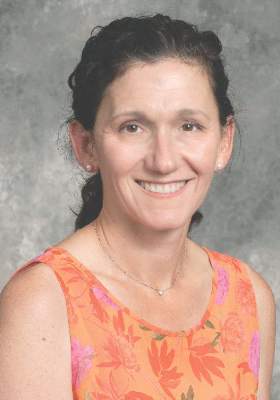
Nadine B. Semer, M.D., MPH, FACS, is board certified in general surgery, plastic surgery, and palliative medicine. As a reconstructive plastic surgeon, she has worked not only in the United States, but has had the privilege of taking her skills to underserved and resource-poor areas throughout the world. She currently is practicing palliative medicine full time, and is an assistant professor at UT Southwestern Medical School, in Dallas, based at Parkland Hospital.
Mrs. J, a physically frail but mentally sharp 75-year-old with known metastatic gastric cancer was admitted to the hospital 2 days ago with a small bowel obstruction. Despite appropriate conservative management, her symptoms are worsening. Her prior cancer treatment consisted of gastric resection with reconstruction and chemo and radiation therapy. The probability of identifying a treatable cause for her bowel obstruction during exploratory laparotomy is believed to be small.
Mr. S, a debilitated 58-year-old previously treated with primary chemotherapy and radiation for cancer at the base of his tongue, presents to your office with severe pain due to recurrent disease. The cancer is potentially resectable, but it will require an extensive resection necessitating complex free flap reconstruction in this previously irradiated field.
Is an operation indicated in either/both of these patients? The risk of causing harm with these operations may outweigh the potential benefits, so how do you decide?
Surgery residents have a lot to learn during their residency training. Not only must they gain a mastery of the pathophysiology of surgical disease, they must learn a multitude of operations while they hone their manual dexterity skills. And they must learn how to take care of a multitude of patients.
Less understood and explicitly taught is how to determine whether an operation is appropriate for this specific patient. Understanding the pathophysiology of the patient’s illness is not enough; it requires an ability to effectively communicate with the patient, to understand that person’s hopes and goals, and then honestly determine whether an operation is in fact indicated. It may sound like the antithesis of surgical training, but learning when not to operate is as important as learning when to do so.
Sometimes it’s easy. When the underlying condition is easily treatable by an operation and without it the previously healthy patient will likely die, operation is usually warranted and accepted. For the critically ill patient who will not survive transfer to the operating room and induction of anesthesia, an operation would be impossible.
As illustrated by the patients described at the beginning of this piece, the decision making can be a bit more complicated.
These are the type of patients the surgeon intuitively believes will not do well, but they are referred for an operation and what surgeons do, is ... operate. “To cut is to cure,” is the old adage, not “To cut is to care.”
These are some of the toughest decisions a surgeon can make and are the ones surgeons seem to remember. The enormous responsibility that accompanies the decision to take someone to the operating room and through a potentially difficult postoperative period can be burdensome for the surgeon and potentially fraught with suffering for all.
Understanding how to address goals of care with patients and families can make these decisions easier. Yet these communication skills are not necessarily emphasized during surgical training, and in fact, they are not the forte of many physicians in general, which has led to the growth of the specialty of palliative medicine. Palliative medicine specialists are trained experts in these communication techniques.
One of the cardinal goals of palliative medicine is to help patients and families think about and clarify their treatment goals. Asking questions about “code status” is not the same as exploring someone’s overall treatment goals. Goals can range from wanting to stay alive no matter in what condition to wanting to be kept comfortable at home surrounded by loved ones even if it means a potentially shorter lifespan. By having patients clarify their ultimate goals it may become apparent that a high-risk operation is not the best way to proceed. Perhaps aggressive pain management and arranging effective home support better meets the patient’s overall goals.
You don’t have to be a palliative medicine specialist to have these conversations with patients, but it does require specific communication skills, which can be taught.
For example, many clinicians start their patient encounters by giving a brief overview of the current situation or skip straight to discussions concerning the various treatment options. But are you sure you and your patient are really starting from the same place? You can’t assume that the patient/family truly understands the medical condition, no matter what may be implied in the medical record or the referring physician’s notes. And you can’t assume a patient wants an operation just because he or she shows up in your office.
A more effective way to start the conversation is to begin by asking patients what they understand about their conditions. This will ensure your subsequent discussion corrects any misinformation and better clarifies their understanding of the situation. Starting your encounter in this fashion is critical and can avoid misunderstandings that can lead to treatments the patients do not actually want, and mistrust should complications arise.
An elective rotation with palliative medicine providers to learn these skills can be a great addition to surgical residency training. These conversations can be some of the most meaningful patient interactions a physician can experience. Incorporating an elective rotation with a palliative medicine team into surgical residency training can add value to residency training and have long-lasting benefit for future surgeons, and ultimately, for their patients, as they venture on in their surgical careers.
Nadine B. Semer, M.D., MPH, FACS, is board certified in general surgery, plastic surgery, and palliative medicine. As a reconstructive plastic surgeon, she has worked not only in the United States, but has had the privilege of taking her skills to underserved and resource-poor areas throughout the world. She currently is practicing palliative medicine full time, and is an assistant professor at UT Southwestern Medical School, in Dallas, based at Parkland Hospital.
Mrs. J, a physically frail but mentally sharp 75-year-old with known metastatic gastric cancer was admitted to the hospital 2 days ago with a small bowel obstruction. Despite appropriate conservative management, her symptoms are worsening. Her prior cancer treatment consisted of gastric resection with reconstruction and chemo and radiation therapy. The probability of identifying a treatable cause for her bowel obstruction during exploratory laparotomy is believed to be small.
Mr. S, a debilitated 58-year-old previously treated with primary chemotherapy and radiation for cancer at the base of his tongue, presents to your office with severe pain due to recurrent disease. The cancer is potentially resectable, but it will require an extensive resection necessitating complex free flap reconstruction in this previously irradiated field.
Is an operation indicated in either/both of these patients? The risk of causing harm with these operations may outweigh the potential benefits, so how do you decide?
Surgery residents have a lot to learn during their residency training. Not only must they gain a mastery of the pathophysiology of surgical disease, they must learn a multitude of operations while they hone their manual dexterity skills. And they must learn how to take care of a multitude of patients.
Less understood and explicitly taught is how to determine whether an operation is appropriate for this specific patient. Understanding the pathophysiology of the patient’s illness is not enough; it requires an ability to effectively communicate with the patient, to understand that person’s hopes and goals, and then honestly determine whether an operation is in fact indicated. It may sound like the antithesis of surgical training, but learning when not to operate is as important as learning when to do so.
Sometimes it’s easy. When the underlying condition is easily treatable by an operation and without it the previously healthy patient will likely die, operation is usually warranted and accepted. For the critically ill patient who will not survive transfer to the operating room and induction of anesthesia, an operation would be impossible.
As illustrated by the patients described at the beginning of this piece, the decision making can be a bit more complicated.
These are the type of patients the surgeon intuitively believes will not do well, but they are referred for an operation and what surgeons do, is ... operate. “To cut is to cure,” is the old adage, not “To cut is to care.”
These are some of the toughest decisions a surgeon can make and are the ones surgeons seem to remember. The enormous responsibility that accompanies the decision to take someone to the operating room and through a potentially difficult postoperative period can be burdensome for the surgeon and potentially fraught with suffering for all.
Understanding how to address goals of care with patients and families can make these decisions easier. Yet these communication skills are not necessarily emphasized during surgical training, and in fact, they are not the forte of many physicians in general, which has led to the growth of the specialty of palliative medicine. Palliative medicine specialists are trained experts in these communication techniques.
One of the cardinal goals of palliative medicine is to help patients and families think about and clarify their treatment goals. Asking questions about “code status” is not the same as exploring someone’s overall treatment goals. Goals can range from wanting to stay alive no matter in what condition to wanting to be kept comfortable at home surrounded by loved ones even if it means a potentially shorter lifespan. By having patients clarify their ultimate goals it may become apparent that a high-risk operation is not the best way to proceed. Perhaps aggressive pain management and arranging effective home support better meets the patient’s overall goals.
You don’t have to be a palliative medicine specialist to have these conversations with patients, but it does require specific communication skills, which can be taught.
For example, many clinicians start their patient encounters by giving a brief overview of the current situation or skip straight to discussions concerning the various treatment options. But are you sure you and your patient are really starting from the same place? You can’t assume that the patient/family truly understands the medical condition, no matter what may be implied in the medical record or the referring physician’s notes. And you can’t assume a patient wants an operation just because he or she shows up in your office.
A more effective way to start the conversation is to begin by asking patients what they understand about their conditions. This will ensure your subsequent discussion corrects any misinformation and better clarifies their understanding of the situation. Starting your encounter in this fashion is critical and can avoid misunderstandings that can lead to treatments the patients do not actually want, and mistrust should complications arise.
An elective rotation with palliative medicine providers to learn these skills can be a great addition to surgical residency training. These conversations can be some of the most meaningful patient interactions a physician can experience. Incorporating an elective rotation with a palliative medicine team into surgical residency training can add value to residency training and have long-lasting benefit for future surgeons, and ultimately, for their patients, as they venture on in their surgical careers.
Nadine B. Semer, M.D., MPH, FACS, is board certified in general surgery, plastic surgery, and palliative medicine. As a reconstructive plastic surgeon, she has worked not only in the United States, but has had the privilege of taking her skills to underserved and resource-poor areas throughout the world. She currently is practicing palliative medicine full time, and is an assistant professor at UT Southwestern Medical School, in Dallas, based at Parkland Hospital.
Participate in Member Engagement Events at Clinical Congress 2015
When you register for Clinical Congress 2015, make plans to participate in these fun, engaging Member Engagement Events that will complement your educational experience:
ACS Taste of the City
Plan to join American College of Surgeons (ACS) leaders and staff for the free ACS Taste of the City, 5:00─7:00 pm Wednesday, October 7 at McCormick Place, Chicago, IL. This special event will showcase the diversity of Chicago restaurants and will feature music and other entertainment. To encourage a more relaxed environment after a full day of educational programming, participants are encouraged to dress casually and bring friends and family. The shuttle bus schedule will be extended to accommodate your participation in this event and allow family members to join you. Go to the ACS website to learn more about this and other Member Engagement activities at Clinical Congress.
Wake Up with ACS
The College will offer complimentary early morning Yoga and Zumba classes at the Hilton Hotel. Yoga classes will take place 6:00−7:00 am, Monday, October 5, and Zumba, 5:30−6:30 am, October 6. Advance registration is required due to space limitations. These classes are appropriate for all levels, and drinking water, yoga mats, and towels will be provided.
Visit the ACS website at https://www.facs.org/clincon2015/about/whats-new/member-engagement for updates in the coming weeks or contact ms@facs.org for more details.
When you register for Clinical Congress 2015, make plans to participate in these fun, engaging Member Engagement Events that will complement your educational experience:
ACS Taste of the City
Plan to join American College of Surgeons (ACS) leaders and staff for the free ACS Taste of the City, 5:00─7:00 pm Wednesday, October 7 at McCormick Place, Chicago, IL. This special event will showcase the diversity of Chicago restaurants and will feature music and other entertainment. To encourage a more relaxed environment after a full day of educational programming, participants are encouraged to dress casually and bring friends and family. The shuttle bus schedule will be extended to accommodate your participation in this event and allow family members to join you. Go to the ACS website to learn more about this and other Member Engagement activities at Clinical Congress.
Wake Up with ACS
The College will offer complimentary early morning Yoga and Zumba classes at the Hilton Hotel. Yoga classes will take place 6:00−7:00 am, Monday, October 5, and Zumba, 5:30−6:30 am, October 6. Advance registration is required due to space limitations. These classes are appropriate for all levels, and drinking water, yoga mats, and towels will be provided.
Visit the ACS website at https://www.facs.org/clincon2015/about/whats-new/member-engagement for updates in the coming weeks or contact ms@facs.org for more details.
When you register for Clinical Congress 2015, make plans to participate in these fun, engaging Member Engagement Events that will complement your educational experience:
ACS Taste of the City
Plan to join American College of Surgeons (ACS) leaders and staff for the free ACS Taste of the City, 5:00─7:00 pm Wednesday, October 7 at McCormick Place, Chicago, IL. This special event will showcase the diversity of Chicago restaurants and will feature music and other entertainment. To encourage a more relaxed environment after a full day of educational programming, participants are encouraged to dress casually and bring friends and family. The shuttle bus schedule will be extended to accommodate your participation in this event and allow family members to join you. Go to the ACS website to learn more about this and other Member Engagement activities at Clinical Congress.
Wake Up with ACS
The College will offer complimentary early morning Yoga and Zumba classes at the Hilton Hotel. Yoga classes will take place 6:00−7:00 am, Monday, October 5, and Zumba, 5:30−6:30 am, October 6. Advance registration is required due to space limitations. These classes are appropriate for all levels, and drinking water, yoga mats, and towels will be provided.
Visit the ACS website at https://www.facs.org/clincon2015/about/whats-new/member-engagement for updates in the coming weeks or contact ms@facs.org for more details.
Next Director of ACS Convention and Meetings selected
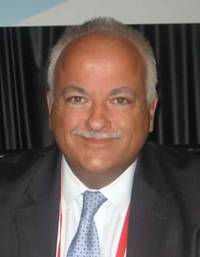
Robert J. Hope joined the American College of Surgeons (ACS) staff August 17 as the next Director of ACS Convention and Meetings. He will officially succeed Felix Niespodziewanski, who will retire in December after 25 years of service to the College. Mr. Hope, who has come on board now to ensure a smooth transition, most recently served as director of housing, registration, and travel services for the Radiological Society of North of America—a position he held for 17 years. Mr. Hope will be working closely with Mr. Niespodziewanski over the next few months to learn more about the ACS and the annual Clinical Congress. In addition, Jackie Mitchell has been promoted to Associate Director of ACS Convention and Meetings. Ms. Mitchell’s many years of experience with planning the Clinical Congress and other ACS events will further ease the change in leadership of ACS Convention and Meetings.
Robert J. Hope joined the American College of Surgeons (ACS) staff August 17 as the next Director of ACS Convention and Meetings. He will officially succeed Felix Niespodziewanski, who will retire in December after 25 years of service to the College. Mr. Hope, who has come on board now to ensure a smooth transition, most recently served as director of housing, registration, and travel services for the Radiological Society of North of America—a position he held for 17 years. Mr. Hope will be working closely with Mr. Niespodziewanski over the next few months to learn more about the ACS and the annual Clinical Congress. In addition, Jackie Mitchell has been promoted to Associate Director of ACS Convention and Meetings. Ms. Mitchell’s many years of experience with planning the Clinical Congress and other ACS events will further ease the change in leadership of ACS Convention and Meetings.
Robert J. Hope joined the American College of Surgeons (ACS) staff August 17 as the next Director of ACS Convention and Meetings. He will officially succeed Felix Niespodziewanski, who will retire in December after 25 years of service to the College. Mr. Hope, who has come on board now to ensure a smooth transition, most recently served as director of housing, registration, and travel services for the Radiological Society of North of America—a position he held for 17 years. Mr. Hope will be working closely with Mr. Niespodziewanski over the next few months to learn more about the ACS and the annual Clinical Congress. In addition, Jackie Mitchell has been promoted to Associate Director of ACS Convention and Meetings. Ms. Mitchell’s many years of experience with planning the Clinical Congress and other ACS events will further ease the change in leadership of ACS Convention and Meetings.
JACS receives highest impact factor to date
The Journal of the American College of Surgeons (JACS) recently learned of its 2014 Thompson-Reuters impact factor for 2014—5.122. This rating represents JACS’ highest impact factor to date and a 15 percent increase in impact from the previous year. JACS now ranks eighth of 198 surgery journals on the Thomson-Reuters list. Timothy J. Eberlein, MD, FACS, the Editor-in-Chief, credits the high impact factor to the dedication and hard work of the editors, staff, and hundreds of peer reviewers.
The impact factor of an academic journal is a measure reflecting the average number of citations to recent articles published in that journal, and is often used to gauge the relevance of a particular journal in its field. Thomson-Reuters ranks, evaluates, and compares journals within subject categories and publishes the results in Journal Citation Reports. The 2014 rating reflects the number of times articles published in a journal in 2012 and 2013 were cited. In other words, JACS papers published in 2012 and 2013 were cited an average of more than five times.
A strong impact factor can help to attract authors looking to publish their research in a journal that provides a maximum amount of exposure. JACS celebrates its position as one of the world’s top surgical journals and is dedicated to publishing high-quality scientific articles and provide surgeons with world-class content in timely and innovative ways.
The Journal of the American College of Surgeons (JACS) recently learned of its 2014 Thompson-Reuters impact factor for 2014—5.122. This rating represents JACS’ highest impact factor to date and a 15 percent increase in impact from the previous year. JACS now ranks eighth of 198 surgery journals on the Thomson-Reuters list. Timothy J. Eberlein, MD, FACS, the Editor-in-Chief, credits the high impact factor to the dedication and hard work of the editors, staff, and hundreds of peer reviewers.
The impact factor of an academic journal is a measure reflecting the average number of citations to recent articles published in that journal, and is often used to gauge the relevance of a particular journal in its field. Thomson-Reuters ranks, evaluates, and compares journals within subject categories and publishes the results in Journal Citation Reports. The 2014 rating reflects the number of times articles published in a journal in 2012 and 2013 were cited. In other words, JACS papers published in 2012 and 2013 were cited an average of more than five times.
A strong impact factor can help to attract authors looking to publish their research in a journal that provides a maximum amount of exposure. JACS celebrates its position as one of the world’s top surgical journals and is dedicated to publishing high-quality scientific articles and provide surgeons with world-class content in timely and innovative ways.
The Journal of the American College of Surgeons (JACS) recently learned of its 2014 Thompson-Reuters impact factor for 2014—5.122. This rating represents JACS’ highest impact factor to date and a 15 percent increase in impact from the previous year. JACS now ranks eighth of 198 surgery journals on the Thomson-Reuters list. Timothy J. Eberlein, MD, FACS, the Editor-in-Chief, credits the high impact factor to the dedication and hard work of the editors, staff, and hundreds of peer reviewers.
The impact factor of an academic journal is a measure reflecting the average number of citations to recent articles published in that journal, and is often used to gauge the relevance of a particular journal in its field. Thomson-Reuters ranks, evaluates, and compares journals within subject categories and publishes the results in Journal Citation Reports. The 2014 rating reflects the number of times articles published in a journal in 2012 and 2013 were cited. In other words, JACS papers published in 2012 and 2013 were cited an average of more than five times.
A strong impact factor can help to attract authors looking to publish their research in a journal that provides a maximum amount of exposure. JACS celebrates its position as one of the world’s top surgical journals and is dedicated to publishing high-quality scientific articles and provide surgeons with world-class content in timely and innovative ways.
Apply by December 1 for 2016 Nizar N. Oweida, MD, FACS, Scholarship
Surgeons who serve small communities are eligible to apply for the 2016 Nizar N. Oweida, MD, FACS, Scholarship of the American College of Surgeons (ACS). Completed applications are due December 15, 2015. The $5,000 Oweida Scholarship subsidizes the attendance of a Fellow or Associate Fellow to the annual ACS Clinical Congress.
This scholarship will help to defray travel expenses for the Clinical Congress, including Postgraduate Course fees, hotel costs, and per diem expenses. The scholar, who will receive preferential housing close to the Clinical Congress site, will be expected to make his or her own travel arrangements.
Basic Requirements
Oweida Scholarship applicants must meet the following requirements:
• Serves a small town or rural community in the U.S. or Canada
• Is a Fellow or Associate Fellow in good standing
• Is younger than 55 years of age on the date the application is filed
Activities
The Oweida Scholar will attend the ACS Clinical Congress 2016 in Washington, DC, October 16–20. At the annual meeting of the Scholarships Committee and the Rural Surgeons Forum, the scholar will meet with colleagues and receive the scholarship check.
The Executive Committee of the Board of Governors will select the scholar. Oweida Scholarship applicants should submit a single PDF consisting of the following items in this order:
• A one-page essay, discussing the following specific items:
• Why the applicant wants to receive the Oweida Scholarship
• Why the applicant believes he or she is qualified to receive the scholarship
• Why the applicant characterizes his or her practice as serving a small community
• One copy of the applicant’s current curriculum vitae
A scholar and an alternate will be selected, and all applicants will be notified of the outcome of the selection process by February 1, 2016.
The Oweida Scholar must attend the full week of the Clinical Congress in the year for which the award is designated; use of scholarship may not be postponed. The Oweida Scholar will provide a brief report on his or her experiences at the Clinical Congress for possible future publication in the Bulletin of the American College of Surgeons. The scholar also must submit a simple accounting for the award. These items will be due December 1, 2016.
Send applications for this scholarship to Kate Early, Scholarships Administrator, at kearly@facs.org, or mail to: Scholarships Sections, ACS, 633 N. Saint Clair St., Chicago, IL 60611-3211.
For more information, contact Ms. Early at 312-202-5281.
Surgeons who serve small communities are eligible to apply for the 2016 Nizar N. Oweida, MD, FACS, Scholarship of the American College of Surgeons (ACS). Completed applications are due December 15, 2015. The $5,000 Oweida Scholarship subsidizes the attendance of a Fellow or Associate Fellow to the annual ACS Clinical Congress.
This scholarship will help to defray travel expenses for the Clinical Congress, including Postgraduate Course fees, hotel costs, and per diem expenses. The scholar, who will receive preferential housing close to the Clinical Congress site, will be expected to make his or her own travel arrangements.
Basic Requirements
Oweida Scholarship applicants must meet the following requirements:
• Serves a small town or rural community in the U.S. or Canada
• Is a Fellow or Associate Fellow in good standing
• Is younger than 55 years of age on the date the application is filed
Activities
The Oweida Scholar will attend the ACS Clinical Congress 2016 in Washington, DC, October 16–20. At the annual meeting of the Scholarships Committee and the Rural Surgeons Forum, the scholar will meet with colleagues and receive the scholarship check.
The Executive Committee of the Board of Governors will select the scholar. Oweida Scholarship applicants should submit a single PDF consisting of the following items in this order:
• A one-page essay, discussing the following specific items:
• Why the applicant wants to receive the Oweida Scholarship
• Why the applicant believes he or she is qualified to receive the scholarship
• Why the applicant characterizes his or her practice as serving a small community
• One copy of the applicant’s current curriculum vitae
A scholar and an alternate will be selected, and all applicants will be notified of the outcome of the selection process by February 1, 2016.
The Oweida Scholar must attend the full week of the Clinical Congress in the year for which the award is designated; use of scholarship may not be postponed. The Oweida Scholar will provide a brief report on his or her experiences at the Clinical Congress for possible future publication in the Bulletin of the American College of Surgeons. The scholar also must submit a simple accounting for the award. These items will be due December 1, 2016.
Send applications for this scholarship to Kate Early, Scholarships Administrator, at kearly@facs.org, or mail to: Scholarships Sections, ACS, 633 N. Saint Clair St., Chicago, IL 60611-3211.
For more information, contact Ms. Early at 312-202-5281.
Surgeons who serve small communities are eligible to apply for the 2016 Nizar N. Oweida, MD, FACS, Scholarship of the American College of Surgeons (ACS). Completed applications are due December 15, 2015. The $5,000 Oweida Scholarship subsidizes the attendance of a Fellow or Associate Fellow to the annual ACS Clinical Congress.
This scholarship will help to defray travel expenses for the Clinical Congress, including Postgraduate Course fees, hotel costs, and per diem expenses. The scholar, who will receive preferential housing close to the Clinical Congress site, will be expected to make his or her own travel arrangements.
Basic Requirements
Oweida Scholarship applicants must meet the following requirements:
• Serves a small town or rural community in the U.S. or Canada
• Is a Fellow or Associate Fellow in good standing
• Is younger than 55 years of age on the date the application is filed
Activities
The Oweida Scholar will attend the ACS Clinical Congress 2016 in Washington, DC, October 16–20. At the annual meeting of the Scholarships Committee and the Rural Surgeons Forum, the scholar will meet with colleagues and receive the scholarship check.
The Executive Committee of the Board of Governors will select the scholar. Oweida Scholarship applicants should submit a single PDF consisting of the following items in this order:
• A one-page essay, discussing the following specific items:
• Why the applicant wants to receive the Oweida Scholarship
• Why the applicant believes he or she is qualified to receive the scholarship
• Why the applicant characterizes his or her practice as serving a small community
• One copy of the applicant’s current curriculum vitae
A scholar and an alternate will be selected, and all applicants will be notified of the outcome of the selection process by February 1, 2016.
The Oweida Scholar must attend the full week of the Clinical Congress in the year for which the award is designated; use of scholarship may not be postponed. The Oweida Scholar will provide a brief report on his or her experiences at the Clinical Congress for possible future publication in the Bulletin of the American College of Surgeons. The scholar also must submit a simple accounting for the award. These items will be due December 1, 2016.
Send applications for this scholarship to Kate Early, Scholarships Administrator, at kearly@facs.org, or mail to: Scholarships Sections, ACS, 633 N. Saint Clair St., Chicago, IL 60611-3211.
For more information, contact Ms. Early at 312-202-5281.
Register by November 2 for annual ACS-AEI Postgraduate Course
The 8th Annual American College of Surgeons-Accredited Education Institute (ACS-AEI) Postgraduate Course, November 13–14 at the department of surgery, Stanford School of Medicine, Palo Alto, CA, will focus on Surgical Education: Expanding Definitions of Simulation. Learn more about the course at https://www.facs.org/education/accreditation/aei/pgcourse.
On the first day, course attendees will learn how to better assess technical skills and how to conduct in situ simulation (simulation that takes place in the actual work environment). They also will learn how simulation is incorporated into credentialing and certification. They then will review issues of faculty and resident wellness, covering such concerns as physician burnout and life balance. The second day of the course will feature interactive games and a hands-on workshop on simulation-based inter-professional education. The session will conclude with a “scavenger hunt” of Stanford’s simulation centers and skills laboratories, giving participants a unique behind-the-scenes view of a pioneer in simulation-based learning.
In addition, participants will have ample opportunities to network with other AEI representatives as well as ACS-AEI program staff. The ACS-AEIs educate and train practicing surgeons, surgical residents, medical students, and members of the surgical team using simulation-based education.
For more information and to reserve your course attendance, visit the ACS website at https://www.facs.org/education/accreditation/aei/pgcourse. For additional information, contact Cathy Wojcik at cwojcik@facs.org.
The 8th Annual American College of Surgeons-Accredited Education Institute (ACS-AEI) Postgraduate Course, November 13–14 at the department of surgery, Stanford School of Medicine, Palo Alto, CA, will focus on Surgical Education: Expanding Definitions of Simulation. Learn more about the course at https://www.facs.org/education/accreditation/aei/pgcourse.
On the first day, course attendees will learn how to better assess technical skills and how to conduct in situ simulation (simulation that takes place in the actual work environment). They also will learn how simulation is incorporated into credentialing and certification. They then will review issues of faculty and resident wellness, covering such concerns as physician burnout and life balance. The second day of the course will feature interactive games and a hands-on workshop on simulation-based inter-professional education. The session will conclude with a “scavenger hunt” of Stanford’s simulation centers and skills laboratories, giving participants a unique behind-the-scenes view of a pioneer in simulation-based learning.
In addition, participants will have ample opportunities to network with other AEI representatives as well as ACS-AEI program staff. The ACS-AEIs educate and train practicing surgeons, surgical residents, medical students, and members of the surgical team using simulation-based education.
For more information and to reserve your course attendance, visit the ACS website at https://www.facs.org/education/accreditation/aei/pgcourse. For additional information, contact Cathy Wojcik at cwojcik@facs.org.
The 8th Annual American College of Surgeons-Accredited Education Institute (ACS-AEI) Postgraduate Course, November 13–14 at the department of surgery, Stanford School of Medicine, Palo Alto, CA, will focus on Surgical Education: Expanding Definitions of Simulation. Learn more about the course at https://www.facs.org/education/accreditation/aei/pgcourse.
On the first day, course attendees will learn how to better assess technical skills and how to conduct in situ simulation (simulation that takes place in the actual work environment). They also will learn how simulation is incorporated into credentialing and certification. They then will review issues of faculty and resident wellness, covering such concerns as physician burnout and life balance. The second day of the course will feature interactive games and a hands-on workshop on simulation-based inter-professional education. The session will conclude with a “scavenger hunt” of Stanford’s simulation centers and skills laboratories, giving participants a unique behind-the-scenes view of a pioneer in simulation-based learning.
In addition, participants will have ample opportunities to network with other AEI representatives as well as ACS-AEI program staff. The ACS-AEIs educate and train practicing surgeons, surgical residents, medical students, and members of the surgical team using simulation-based education.
For more information and to reserve your course attendance, visit the ACS website at https://www.facs.org/education/accreditation/aei/pgcourse. For additional information, contact Cathy Wojcik at cwojcik@facs.org.
Applications now being accepted for 2016-2018 Faculty Research Fellowships honoring ACS leaders
The American College of Surgeons (ACS) is offering two-year faculty research fellowships for surgeons entering academic careers in surgery or a surgical specialty. These 2016−2018 fellowships are supported through the generosity of Fellows, Chapters, and friends of the College. The closing date for receipt of completed applications and all supporting documents is November 2, 2015.
All of the fellowships are intended to assist a surgeon in the establishment of a new and independent research program. Applicants should have demonstrated their potential to work as independent investigators. The fellowship award is $40,000 per year for each of two years, to support the research.
There are five ACS Faculty Research Fellowships now available, and three of them have been established to honor an ACS leader:
• The Franklin H. Martin, MD, FACS, Faculty Research Fellowship of the American College of Surgeons, which honors the founder of the ACS
• The C. James Carrico, MD, FACS, Faculty Research Fellowship for the Study of Trauma and Critical Care
• The Thomas R. Russell, MD, FACS, Faculty Research Fellowship, which is designated to support research aimed at improving surgical outcomes
General guidelines
General policies covering the granting of the ACS Faculty Research Fellowships include the following:
• The fellowships are open to Fellows or Associate Fellows of the College who have: (1) completed the chief residency year or accredited fellowship training within the preceding five years; and (2) received a full-time faculty appointment in a department of surgery or a surgical specialty at a medical school accredited by the Liaison Committee on Medical Education in the U.S. or by the Committee for Accreditation of Canadian Medical Schools in Canada. Applicants who directly enter academic surgery following residency or fellowship will receive preference.
• Recipients may use the award to support their research or academic enrichment in any way deemed maximally supportive of their investigations. Each fellowship grant must support the research of the recipient and is not intended to diminish or replace the usual, expected compensation or benefits. Indirect costs are not paid to a recipient or to a recipient’s institution.
• Applications for these fellowships may be submitted even if comparable applications have been made to organizations such as the National Institutes of Health (NIH) or industry sources. If a recipient is offered a scholarship, fellowship, or research career development award from such an agency or organization, that individual is responsible for contacting the College’s Scholarships Administrator to request approval of the additional award.
• The Scholarship Committee reserves the right to review potentially overlapping awards and adjust its award accordingly.
• The College encourages each applicant to leverage the funds provided through one of these fellowships with time and monies provided by the applicant’s department. Formal statements of matching funds and time from the applicant’s department will promote favorable review by the College.
• Supporting letters from the head of the department of surgery (or the surgical specialty) and from the mentor supervising an applicant’s research effort must be submitted. This approval would involve a commitment to continuation of the academic position and the provision of research facilities. Only in exceptional circumstances will more than one fellowship be granted in a single year to applicants from the same institution.
• Each applicant must submit a research plan and budget for the two-year period of the respective fellowship, even though renewed approval by the Scholarships Committee of the College is required for the second year.
• A minimum of 50 percent of a Fellow’s time must be spent conducting the research proposed in the application. This percentage may run concurrently with the time requirements of NIH or other accepted funding.
• Faculty Research Fellows are expected to attend the ACS Clinical Congress in 2018 to present a report at the Surgical Forum and to receive a certificate at the annual meeting of the Scholarships Committee.
Application forms may be obtained from the College’s website: www.facs.org, or upon request from the Scholarships Administrator, at scholarships@facs.org.
The American College of Surgeons (ACS) is offering two-year faculty research fellowships for surgeons entering academic careers in surgery or a surgical specialty. These 2016−2018 fellowships are supported through the generosity of Fellows, Chapters, and friends of the College. The closing date for receipt of completed applications and all supporting documents is November 2, 2015.
All of the fellowships are intended to assist a surgeon in the establishment of a new and independent research program. Applicants should have demonstrated their potential to work as independent investigators. The fellowship award is $40,000 per year for each of two years, to support the research.
There are five ACS Faculty Research Fellowships now available, and three of them have been established to honor an ACS leader:
• The Franklin H. Martin, MD, FACS, Faculty Research Fellowship of the American College of Surgeons, which honors the founder of the ACS
• The C. James Carrico, MD, FACS, Faculty Research Fellowship for the Study of Trauma and Critical Care
• The Thomas R. Russell, MD, FACS, Faculty Research Fellowship, which is designated to support research aimed at improving surgical outcomes
General guidelines
General policies covering the granting of the ACS Faculty Research Fellowships include the following:
• The fellowships are open to Fellows or Associate Fellows of the College who have: (1) completed the chief residency year or accredited fellowship training within the preceding five years; and (2) received a full-time faculty appointment in a department of surgery or a surgical specialty at a medical school accredited by the Liaison Committee on Medical Education in the U.S. or by the Committee for Accreditation of Canadian Medical Schools in Canada. Applicants who directly enter academic surgery following residency or fellowship will receive preference.
• Recipients may use the award to support their research or academic enrichment in any way deemed maximally supportive of their investigations. Each fellowship grant must support the research of the recipient and is not intended to diminish or replace the usual, expected compensation or benefits. Indirect costs are not paid to a recipient or to a recipient’s institution.
• Applications for these fellowships may be submitted even if comparable applications have been made to organizations such as the National Institutes of Health (NIH) or industry sources. If a recipient is offered a scholarship, fellowship, or research career development award from such an agency or organization, that individual is responsible for contacting the College’s Scholarships Administrator to request approval of the additional award.
• The Scholarship Committee reserves the right to review potentially overlapping awards and adjust its award accordingly.
• The College encourages each applicant to leverage the funds provided through one of these fellowships with time and monies provided by the applicant’s department. Formal statements of matching funds and time from the applicant’s department will promote favorable review by the College.
• Supporting letters from the head of the department of surgery (or the surgical specialty) and from the mentor supervising an applicant’s research effort must be submitted. This approval would involve a commitment to continuation of the academic position and the provision of research facilities. Only in exceptional circumstances will more than one fellowship be granted in a single year to applicants from the same institution.
• Each applicant must submit a research plan and budget for the two-year period of the respective fellowship, even though renewed approval by the Scholarships Committee of the College is required for the second year.
• A minimum of 50 percent of a Fellow’s time must be spent conducting the research proposed in the application. This percentage may run concurrently with the time requirements of NIH or other accepted funding.
• Faculty Research Fellows are expected to attend the ACS Clinical Congress in 2018 to present a report at the Surgical Forum and to receive a certificate at the annual meeting of the Scholarships Committee.
Application forms may be obtained from the College’s website: www.facs.org, or upon request from the Scholarships Administrator, at scholarships@facs.org.
The American College of Surgeons (ACS) is offering two-year faculty research fellowships for surgeons entering academic careers in surgery or a surgical specialty. These 2016−2018 fellowships are supported through the generosity of Fellows, Chapters, and friends of the College. The closing date for receipt of completed applications and all supporting documents is November 2, 2015.
All of the fellowships are intended to assist a surgeon in the establishment of a new and independent research program. Applicants should have demonstrated their potential to work as independent investigators. The fellowship award is $40,000 per year for each of two years, to support the research.
There are five ACS Faculty Research Fellowships now available, and three of them have been established to honor an ACS leader:
• The Franklin H. Martin, MD, FACS, Faculty Research Fellowship of the American College of Surgeons, which honors the founder of the ACS
• The C. James Carrico, MD, FACS, Faculty Research Fellowship for the Study of Trauma and Critical Care
• The Thomas R. Russell, MD, FACS, Faculty Research Fellowship, which is designated to support research aimed at improving surgical outcomes
General guidelines
General policies covering the granting of the ACS Faculty Research Fellowships include the following:
• The fellowships are open to Fellows or Associate Fellows of the College who have: (1) completed the chief residency year or accredited fellowship training within the preceding five years; and (2) received a full-time faculty appointment in a department of surgery or a surgical specialty at a medical school accredited by the Liaison Committee on Medical Education in the U.S. or by the Committee for Accreditation of Canadian Medical Schools in Canada. Applicants who directly enter academic surgery following residency or fellowship will receive preference.
• Recipients may use the award to support their research or academic enrichment in any way deemed maximally supportive of their investigations. Each fellowship grant must support the research of the recipient and is not intended to diminish or replace the usual, expected compensation or benefits. Indirect costs are not paid to a recipient or to a recipient’s institution.
• Applications for these fellowships may be submitted even if comparable applications have been made to organizations such as the National Institutes of Health (NIH) or industry sources. If a recipient is offered a scholarship, fellowship, or research career development award from such an agency or organization, that individual is responsible for contacting the College’s Scholarships Administrator to request approval of the additional award.
• The Scholarship Committee reserves the right to review potentially overlapping awards and adjust its award accordingly.
• The College encourages each applicant to leverage the funds provided through one of these fellowships with time and monies provided by the applicant’s department. Formal statements of matching funds and time from the applicant’s department will promote favorable review by the College.
• Supporting letters from the head of the department of surgery (or the surgical specialty) and from the mentor supervising an applicant’s research effort must be submitted. This approval would involve a commitment to continuation of the academic position and the provision of research facilities. Only in exceptional circumstances will more than one fellowship be granted in a single year to applicants from the same institution.
• Each applicant must submit a research plan and budget for the two-year period of the respective fellowship, even though renewed approval by the Scholarships Committee of the College is required for the second year.
• A minimum of 50 percent of a Fellow’s time must be spent conducting the research proposed in the application. This percentage may run concurrently with the time requirements of NIH or other accepted funding.
• Faculty Research Fellows are expected to attend the ACS Clinical Congress in 2018 to present a report at the Surgical Forum and to receive a certificate at the annual meeting of the Scholarships Committee.
Application forms may be obtained from the College’s website: www.facs.org, or upon request from the Scholarships Administrator, at scholarships@facs.org.
TCT: Absorbable metal scaffold performs well in BIOSOLVE II
SAN FRANCISCO – Implantation of the novel DREAMS 2G sirolimus-eluting absorbable metal scaffold in patients with de novo coronary lesions was feasible and had favorable safety and performance outcomes at 6 months in the BIOSOLVE-II trial.
The findings of the prospective, nonrandomized, first-in-human trial suggest that the DREAMS 2G device – made from magnesium alloy with an absorption time of 12 months – could serve as an alternative to absorbable polymeric scaffolds for the treatment of obstructive coronary disease, Dr. Michael Haude of Medical Clinic I, Städtische Kliniken Neuss, Germany, reported at the Transcatheter Cardiovascular Therapeutics annual meeting.
In 120 patients with coronary target lesions who completed the trial and follow-up, the mean in-segment late lumen loss at 6 months – the primary endpoint of the study – was 0.27 mm, and in-scaffold late lumen loss was 0.44 mm. Discernable vasomotion was documented in 80% of a subgroup of 25 patients, he said at the meeting, which was sponsored by the Cardiovascular Research Foundation.
Among patients who underwent additional assessment, intravascular ultrasound showed preservation of the scaffold area (mean of 6.24 mm2 post procedure vs. 6.21 mm2 at 6 months) with a low mean neointimal area (0.08 mm2). No intraluminal mass was detected on optical coherence tomography, he noted.
Four patients (3%) experienced target lesion failure, and one died from cardiac death.
Periprocedural myocardial infarction occurred in one patient, and clinically driven target lesion revascularization was required in two patients (1.7%).
No definite or probable scaffold thrombosis was observed, Dr. Haude said.
Study subjects were enrolled during October 2013–May 2015 at centers in Belgium, Brazil, Denmark, Germany, Singapore, Spain, Switzerland, and the Netherlands. All had stable or unstable angina or documented silent ischemia and no more than two de novo lesions with a reference vessel diameter between 2.2 and 3.7 mm. The results were published online concurrently with Dr. Haude’s presentation (Lancet. 2015 Oct 12. doi:10.1016/S0140-6736[15]00447-X)
The findings demonstrate improved lumen loss with the DREAMS 2G device, compared with precursor devices, he said.
“If we compare this to the data that we have for the previous version, the bare version of the magnesium absorbable scaffold, the in-segment lumen loss was 0.83. That went down by 37% to the version with the paclitaxel elusion at 0.52, and then it decreased again by 48% to 0.27 ... without a single stent thrombosis case,” he said.
Absorbable metal scaffolds offer good radial strength, low acute recoil, and high compliance to the vessel geometry. Also, they can be implanted via a single step inflation, and thus can be implanted in a way similar to that of a permanent metal stent, he noted.
They can also be electropolished, which provides softer, round edges that allow for improved trackability and deliverability, he said, noting that the magnesium alloy stent provides the strength of metal, but also provides a potential long-term benefit with its ability to be absorbed over time.
Though limited by the nonrandomized trial design and lack of direct comparison with other permanent stents or scaffolds, as well as by the inclusion of only patients with straightforward de novo lesions and uncertainty about ideal follow-up time, DREAMS 2G offers a potential alternative to polymeric absorbable scaffolds, which are currently the scaffolds that are commercially available , Dr. Haude said.
BIOSOLVE-II was funded by Biotronik AG. Dr. Haude received study grants and lecture fees from Biotronik, Abbott Vascular, Cardiac dimensions, Medtronic, Volcano, and Lilly, as well as consulting fees/honoraria from Biotronik AG.
SAN FRANCISCO – Implantation of the novel DREAMS 2G sirolimus-eluting absorbable metal scaffold in patients with de novo coronary lesions was feasible and had favorable safety and performance outcomes at 6 months in the BIOSOLVE-II trial.
The findings of the prospective, nonrandomized, first-in-human trial suggest that the DREAMS 2G device – made from magnesium alloy with an absorption time of 12 months – could serve as an alternative to absorbable polymeric scaffolds for the treatment of obstructive coronary disease, Dr. Michael Haude of Medical Clinic I, Städtische Kliniken Neuss, Germany, reported at the Transcatheter Cardiovascular Therapeutics annual meeting.
In 120 patients with coronary target lesions who completed the trial and follow-up, the mean in-segment late lumen loss at 6 months – the primary endpoint of the study – was 0.27 mm, and in-scaffold late lumen loss was 0.44 mm. Discernable vasomotion was documented in 80% of a subgroup of 25 patients, he said at the meeting, which was sponsored by the Cardiovascular Research Foundation.
Among patients who underwent additional assessment, intravascular ultrasound showed preservation of the scaffold area (mean of 6.24 mm2 post procedure vs. 6.21 mm2 at 6 months) with a low mean neointimal area (0.08 mm2). No intraluminal mass was detected on optical coherence tomography, he noted.
Four patients (3%) experienced target lesion failure, and one died from cardiac death.
Periprocedural myocardial infarction occurred in one patient, and clinically driven target lesion revascularization was required in two patients (1.7%).
No definite or probable scaffold thrombosis was observed, Dr. Haude said.
Study subjects were enrolled during October 2013–May 2015 at centers in Belgium, Brazil, Denmark, Germany, Singapore, Spain, Switzerland, and the Netherlands. All had stable or unstable angina or documented silent ischemia and no more than two de novo lesions with a reference vessel diameter between 2.2 and 3.7 mm. The results were published online concurrently with Dr. Haude’s presentation (Lancet. 2015 Oct 12. doi:10.1016/S0140-6736[15]00447-X)
The findings demonstrate improved lumen loss with the DREAMS 2G device, compared with precursor devices, he said.
“If we compare this to the data that we have for the previous version, the bare version of the magnesium absorbable scaffold, the in-segment lumen loss was 0.83. That went down by 37% to the version with the paclitaxel elusion at 0.52, and then it decreased again by 48% to 0.27 ... without a single stent thrombosis case,” he said.
Absorbable metal scaffolds offer good radial strength, low acute recoil, and high compliance to the vessel geometry. Also, they can be implanted via a single step inflation, and thus can be implanted in a way similar to that of a permanent metal stent, he noted.
They can also be electropolished, which provides softer, round edges that allow for improved trackability and deliverability, he said, noting that the magnesium alloy stent provides the strength of metal, but also provides a potential long-term benefit with its ability to be absorbed over time.
Though limited by the nonrandomized trial design and lack of direct comparison with other permanent stents or scaffolds, as well as by the inclusion of only patients with straightforward de novo lesions and uncertainty about ideal follow-up time, DREAMS 2G offers a potential alternative to polymeric absorbable scaffolds, which are currently the scaffolds that are commercially available , Dr. Haude said.
BIOSOLVE-II was funded by Biotronik AG. Dr. Haude received study grants and lecture fees from Biotronik, Abbott Vascular, Cardiac dimensions, Medtronic, Volcano, and Lilly, as well as consulting fees/honoraria from Biotronik AG.
SAN FRANCISCO – Implantation of the novel DREAMS 2G sirolimus-eluting absorbable metal scaffold in patients with de novo coronary lesions was feasible and had favorable safety and performance outcomes at 6 months in the BIOSOLVE-II trial.
The findings of the prospective, nonrandomized, first-in-human trial suggest that the DREAMS 2G device – made from magnesium alloy with an absorption time of 12 months – could serve as an alternative to absorbable polymeric scaffolds for the treatment of obstructive coronary disease, Dr. Michael Haude of Medical Clinic I, Städtische Kliniken Neuss, Germany, reported at the Transcatheter Cardiovascular Therapeutics annual meeting.
In 120 patients with coronary target lesions who completed the trial and follow-up, the mean in-segment late lumen loss at 6 months – the primary endpoint of the study – was 0.27 mm, and in-scaffold late lumen loss was 0.44 mm. Discernable vasomotion was documented in 80% of a subgroup of 25 patients, he said at the meeting, which was sponsored by the Cardiovascular Research Foundation.
Among patients who underwent additional assessment, intravascular ultrasound showed preservation of the scaffold area (mean of 6.24 mm2 post procedure vs. 6.21 mm2 at 6 months) with a low mean neointimal area (0.08 mm2). No intraluminal mass was detected on optical coherence tomography, he noted.
Four patients (3%) experienced target lesion failure, and one died from cardiac death.
Periprocedural myocardial infarction occurred in one patient, and clinically driven target lesion revascularization was required in two patients (1.7%).
No definite or probable scaffold thrombosis was observed, Dr. Haude said.
Study subjects were enrolled during October 2013–May 2015 at centers in Belgium, Brazil, Denmark, Germany, Singapore, Spain, Switzerland, and the Netherlands. All had stable or unstable angina or documented silent ischemia and no more than two de novo lesions with a reference vessel diameter between 2.2 and 3.7 mm. The results were published online concurrently with Dr. Haude’s presentation (Lancet. 2015 Oct 12. doi:10.1016/S0140-6736[15]00447-X)
The findings demonstrate improved lumen loss with the DREAMS 2G device, compared with precursor devices, he said.
“If we compare this to the data that we have for the previous version, the bare version of the magnesium absorbable scaffold, the in-segment lumen loss was 0.83. That went down by 37% to the version with the paclitaxel elusion at 0.52, and then it decreased again by 48% to 0.27 ... without a single stent thrombosis case,” he said.
Absorbable metal scaffolds offer good radial strength, low acute recoil, and high compliance to the vessel geometry. Also, they can be implanted via a single step inflation, and thus can be implanted in a way similar to that of a permanent metal stent, he noted.
They can also be electropolished, which provides softer, round edges that allow for improved trackability and deliverability, he said, noting that the magnesium alloy stent provides the strength of metal, but also provides a potential long-term benefit with its ability to be absorbed over time.
Though limited by the nonrandomized trial design and lack of direct comparison with other permanent stents or scaffolds, as well as by the inclusion of only patients with straightforward de novo lesions and uncertainty about ideal follow-up time, DREAMS 2G offers a potential alternative to polymeric absorbable scaffolds, which are currently the scaffolds that are commercially available , Dr. Haude said.
BIOSOLVE-II was funded by Biotronik AG. Dr. Haude received study grants and lecture fees from Biotronik, Abbott Vascular, Cardiac dimensions, Medtronic, Volcano, and Lilly, as well as consulting fees/honoraria from Biotronik AG.
At TCT 2015
Key clinical point: Implantation of the novel DREAMS 2G sirolimus-eluting absorbable metal scaffold in patients with de novo coronary lesions was feasible and had favorable safety and performance outcomes at 6-months in the BIOSOLVE II trial.
Major finding: The mean in-segment late lumen loss at 6 months – the primary endpoint of the study – was 0.27 mm, compared with 0.83 mm for a bare metal precursor.
Data source: The prospective, nonrandomized, multicenter BIOSOLVE II trial of 120 patients.
Disclosures: BIOSOLVE II was funded by Biotronik AG. Dr. Haude received study grants and lecture fees from Biotronik, Abbott Vascular, Cardiac dimensions, Medtronic, Volcano, and Lilly, as well as consulting fees/honoraria from Biotronik AG.
Hospitals report inadequate duodenoscope reprocessing practices
SAN DIEGO – Less than a third of hospitals reprocessed duodenoscopes adequately to prevent potential transmission of carbapenem-resistant Enterobacteriaceae (CRE) and other pathogens, investigators reported at an annual scientific meeting on infectious diseases.
Moreover, only a third of facilities had conducted active surveillance for multidrug-resistant infections related to use of their duodenoscopes in the past year, reported Susan Beekmann of the Emerging Infections Network of the Infectious Diseases Society of America. “These findings suggest that endemic bacterial transmission associated with duodenoscopy may occur and may go unrecognized,” said Ms. Beekmann, program coordinator for EIN at the University of Iowa Carver College of Medicine in Iowa City.

Duodenoscopes, which are used in endoscopic retrograde cholangiopancreatography (ERCP), became a hot topic earlier this year after causing outbreaks of fatal CRE infections in Los Angeles County. The Food and Drug Administration has acknowledged that the “complex design of the devices makes it difficult to remove contaminants compared to other types of endoscopes,” and both the CDC and the FDA have recommended specific reprocessing and surveillance steps to reduce the chances that the scopes transmit serious infections.
To understand how hospitals were actually reprocessing and culturing the scopes at the time CDC released its guidance, Ms. Beekmann and her colleagues electronically surveyed 740 hospital epidemiologists through IDSA-EIN. They received responses from 378 physicians (52%), of which half said their facilities used duodenoscopes, Ms. Beekmann reported at the combined annual meetings of the Infectious Diseases Society of America, the Society for Healthcare Epidemiology of America, the HIV Medicine Association, and the Pediatric Infectious Diseases Society.
Only 55 (29%) of these respondents said their facilities reprocessed duodenoscopes to an extent that the IDSA researchers defined as adequate – that is, manual reprocessing with high-level disinfection, either alone or in combination with other options, Ms. Beekmann said. Furthermore, only a third of facilities had cultured their duodenoscopes or done any other surveillance for bacterial transmission after duodenoscopy in the past year, even though most said they reviewed their reprocessing policies and procedures more often than once a year.
Respondents also described widely varying methodologies for sampling and culturing, Ms. Beekmann said. “Although we did not ask about them, ten respondents mentioned ATP bioluminescence assays,” she added. Based on the findings, better reprocessing technologies and consistent, real-time strategies to monitor the effectiveness of scope reprocessing are “urgent patient safety needs,” she and her colleagues concluded.
Ms. Beekmann and her associates reported no relevant financial disclosures.
SAN DIEGO – Less than a third of hospitals reprocessed duodenoscopes adequately to prevent potential transmission of carbapenem-resistant Enterobacteriaceae (CRE) and other pathogens, investigators reported at an annual scientific meeting on infectious diseases.
Moreover, only a third of facilities had conducted active surveillance for multidrug-resistant infections related to use of their duodenoscopes in the past year, reported Susan Beekmann of the Emerging Infections Network of the Infectious Diseases Society of America. “These findings suggest that endemic bacterial transmission associated with duodenoscopy may occur and may go unrecognized,” said Ms. Beekmann, program coordinator for EIN at the University of Iowa Carver College of Medicine in Iowa City.
Duodenoscopes, which are used in endoscopic retrograde cholangiopancreatography (ERCP), became a hot topic earlier this year after causing outbreaks of fatal CRE infections in Los Angeles County. The Food and Drug Administration has acknowledged that the “complex design of the devices makes it difficult to remove contaminants compared to other types of endoscopes,” and both the CDC and the FDA have recommended specific reprocessing and surveillance steps to reduce the chances that the scopes transmit serious infections.
To understand how hospitals were actually reprocessing and culturing the scopes at the time CDC released its guidance, Ms. Beekmann and her colleagues electronically surveyed 740 hospital epidemiologists through IDSA-EIN. They received responses from 378 physicians (52%), of which half said their facilities used duodenoscopes, Ms. Beekmann reported at the combined annual meetings of the Infectious Diseases Society of America, the Society for Healthcare Epidemiology of America, the HIV Medicine Association, and the Pediatric Infectious Diseases Society.
Only 55 (29%) of these respondents said their facilities reprocessed duodenoscopes to an extent that the IDSA researchers defined as adequate – that is, manual reprocessing with high-level disinfection, either alone or in combination with other options, Ms. Beekmann said. Furthermore, only a third of facilities had cultured their duodenoscopes or done any other surveillance for bacterial transmission after duodenoscopy in the past year, even though most said they reviewed their reprocessing policies and procedures more often than once a year.
Respondents also described widely varying methodologies for sampling and culturing, Ms. Beekmann said. “Although we did not ask about them, ten respondents mentioned ATP bioluminescence assays,” she added. Based on the findings, better reprocessing technologies and consistent, real-time strategies to monitor the effectiveness of scope reprocessing are “urgent patient safety needs,” she and her colleagues concluded.
Ms. Beekmann and her associates reported no relevant financial disclosures.
SAN DIEGO – Less than a third of hospitals reprocessed duodenoscopes adequately to prevent potential transmission of carbapenem-resistant Enterobacteriaceae (CRE) and other pathogens, investigators reported at an annual scientific meeting on infectious diseases.
Moreover, only a third of facilities had conducted active surveillance for multidrug-resistant infections related to use of their duodenoscopes in the past year, reported Susan Beekmann of the Emerging Infections Network of the Infectious Diseases Society of America. “These findings suggest that endemic bacterial transmission associated with duodenoscopy may occur and may go unrecognized,” said Ms. Beekmann, program coordinator for EIN at the University of Iowa Carver College of Medicine in Iowa City.
Duodenoscopes, which are used in endoscopic retrograde cholangiopancreatography (ERCP), became a hot topic earlier this year after causing outbreaks of fatal CRE infections in Los Angeles County. The Food and Drug Administration has acknowledged that the “complex design of the devices makes it difficult to remove contaminants compared to other types of endoscopes,” and both the CDC and the FDA have recommended specific reprocessing and surveillance steps to reduce the chances that the scopes transmit serious infections.
To understand how hospitals were actually reprocessing and culturing the scopes at the time CDC released its guidance, Ms. Beekmann and her colleagues electronically surveyed 740 hospital epidemiologists through IDSA-EIN. They received responses from 378 physicians (52%), of which half said their facilities used duodenoscopes, Ms. Beekmann reported at the combined annual meetings of the Infectious Diseases Society of America, the Society for Healthcare Epidemiology of America, the HIV Medicine Association, and the Pediatric Infectious Diseases Society.
Only 55 (29%) of these respondents said their facilities reprocessed duodenoscopes to an extent that the IDSA researchers defined as adequate – that is, manual reprocessing with high-level disinfection, either alone or in combination with other options, Ms. Beekmann said. Furthermore, only a third of facilities had cultured their duodenoscopes or done any other surveillance for bacterial transmission after duodenoscopy in the past year, even though most said they reviewed their reprocessing policies and procedures more often than once a year.
Respondents also described widely varying methodologies for sampling and culturing, Ms. Beekmann said. “Although we did not ask about them, ten respondents mentioned ATP bioluminescence assays,” she added. Based on the findings, better reprocessing technologies and consistent, real-time strategies to monitor the effectiveness of scope reprocessing are “urgent patient safety needs,” she and her colleagues concluded.
Ms. Beekmann and her associates reported no relevant financial disclosures.
AT IDWEEK 2015
Key clinical point: Most hospitals did not reprocess duodenoscopes in a way that the Infectious Diseases Society of America considers adequate.
Major finding: Only 29% of facilities followed the minimum adequate practices.
Data source: A cross-sectional electronic survey of 378 physician members of the Emerging Infections Network of the Infectious Diseases Society of America.
Disclosures: Susan Beekmann reported no relevant financial disclosures.

Big declines seen in aspergillosis mortality
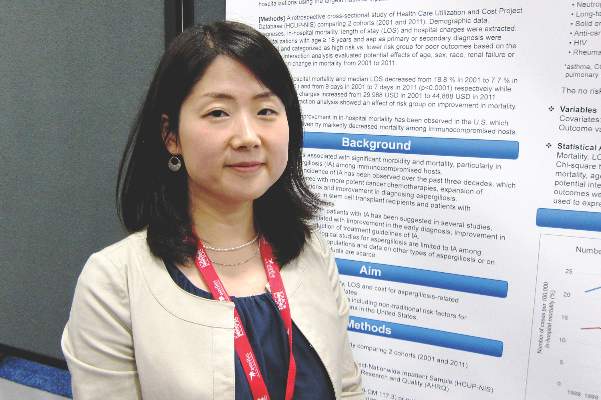
SAN DIEGO – In-hospital mortality in patients with aspergillosis plummeted nationally, according to data from 2001-2011, with the biggest improvement seen in immunocompromised patients traditionally considered at high mortality risk, Dr. Masako Mizusawa reported at the annual Interscience Conference on Antimicrobial Agents and Chemotherapy.
The decline in in-hospital mortality wasn’t linear. Rather, it followed a stepwise pattern, and those steps occurred in association with three major advances during the study years: Food and Drug Administration approval of voriconazole in 2002, the FDA’s 2003 approval of the galactomannan serologic assay allowing for speedier diagnosis of aspergillosis, and the 2008 Infectious Diseases Society of America clinical practice guidelines on the treatment of aspergillosis (Clin Infect Dis. 2008 Feb 1;46[3]:327-60).
“This was an observational study and we can’t actually say that these events are causative. But just looking at the time relationship, it certainly looks plausible,” Dr. Mizusawa said.
In addition, the median hospital length of stay decreased from 9 to 7 days in patients with this potentially life-threatening infection, noted Dr. Mizusawa of Tufts Medical Center, Boston.
She presented what she believes is the largest U.S. longitudinal study of hospital care for aspergillosis. The retrospective study used nationally representative data from the Agency for Healthcare Research and Quality’s Healthcare Utilization and Cost Project–Nationwide Inpatient Sample.
Dr. Mizusawa and coinvestigators defined aspergillosis patients as being at high mortality risk if they had established risk factors indicative of immunocompromise, including hematologic malignancy, neutropenia, recent stem cell or solid organ transplantation, HIV, or rheumatologic disease. Patients at lower mortality risk included those with asthma, COPD, diabetes, malnutrition, pulmonary tuberculosis, or non-TB mycobacterial infection.
The proportion of patients who were high risk climbed over the years, from 41% among the 892 patients with aspergillosis-related hospitalization in the 2001 sample to 50% among 1,420 patients in 2011. Yet in-hospital mortality in high-risk patients fell from 26.4% in 2001 to 9.1% in 2011. Meanwhile, the mortality rate in lower-risk patients improved from 14.6% to 6.6%. The overall in-hospital mortality rate went from 18.8% to 7.7%.
Of note, the proportion of aspergillosis patients with renal failure jumped from 9.8% in 2001 to 21.5% in 2011, even though the treatments for aspergillosis are relatively non-nephrotoxic, with the exception of amphotericin B. The outlook for these patients has improved greatly: In-hospital mortality for aspergillosis patients in renal failure went from 40.2% in 2001 to 16.1% in 2011.
While in-hospital mortality and length of stay were decreasing during the study years, total hospital charges for patients with aspergillosis were going up: from a median of $29,998 in 2001 to $44,888 in 2001 dollars a decade later. This cost-of-care increase was confined to patients at lower baseline risk or with no risk factors. Somewhat surprisingly, the high-risk group didn’t have a significant increase in hospital charges over the 10-year period.
“Maybe we’re just doing a better job of treating them, so they may not necessarily have to use a lot of resources,” Dr. Mizusawa offered as explanation.
She reported having no financial conflicts regarding this unfunded study.
SAN DIEGO – In-hospital mortality in patients with aspergillosis plummeted nationally, according to data from 2001-2011, with the biggest improvement seen in immunocompromised patients traditionally considered at high mortality risk, Dr. Masako Mizusawa reported at the annual Interscience Conference on Antimicrobial Agents and Chemotherapy.
The decline in in-hospital mortality wasn’t linear. Rather, it followed a stepwise pattern, and those steps occurred in association with three major advances during the study years: Food and Drug Administration approval of voriconazole in 2002, the FDA’s 2003 approval of the galactomannan serologic assay allowing for speedier diagnosis of aspergillosis, and the 2008 Infectious Diseases Society of America clinical practice guidelines on the treatment of aspergillosis (Clin Infect Dis. 2008 Feb 1;46[3]:327-60).
“This was an observational study and we can’t actually say that these events are causative. But just looking at the time relationship, it certainly looks plausible,” Dr. Mizusawa said.
In addition, the median hospital length of stay decreased from 9 to 7 days in patients with this potentially life-threatening infection, noted Dr. Mizusawa of Tufts Medical Center, Boston.
She presented what she believes is the largest U.S. longitudinal study of hospital care for aspergillosis. The retrospective study used nationally representative data from the Agency for Healthcare Research and Quality’s Healthcare Utilization and Cost Project–Nationwide Inpatient Sample.
Dr. Mizusawa and coinvestigators defined aspergillosis patients as being at high mortality risk if they had established risk factors indicative of immunocompromise, including hematologic malignancy, neutropenia, recent stem cell or solid organ transplantation, HIV, or rheumatologic disease. Patients at lower mortality risk included those with asthma, COPD, diabetes, malnutrition, pulmonary tuberculosis, or non-TB mycobacterial infection.
The proportion of patients who were high risk climbed over the years, from 41% among the 892 patients with aspergillosis-related hospitalization in the 2001 sample to 50% among 1,420 patients in 2011. Yet in-hospital mortality in high-risk patients fell from 26.4% in 2001 to 9.1% in 2011. Meanwhile, the mortality rate in lower-risk patients improved from 14.6% to 6.6%. The overall in-hospital mortality rate went from 18.8% to 7.7%.
Of note, the proportion of aspergillosis patients with renal failure jumped from 9.8% in 2001 to 21.5% in 2011, even though the treatments for aspergillosis are relatively non-nephrotoxic, with the exception of amphotericin B. The outlook for these patients has improved greatly: In-hospital mortality for aspergillosis patients in renal failure went from 40.2% in 2001 to 16.1% in 2011.
While in-hospital mortality and length of stay were decreasing during the study years, total hospital charges for patients with aspergillosis were going up: from a median of $29,998 in 2001 to $44,888 in 2001 dollars a decade later. This cost-of-care increase was confined to patients at lower baseline risk or with no risk factors. Somewhat surprisingly, the high-risk group didn’t have a significant increase in hospital charges over the 10-year period.
“Maybe we’re just doing a better job of treating them, so they may not necessarily have to use a lot of resources,” Dr. Mizusawa offered as explanation.
She reported having no financial conflicts regarding this unfunded study.
SAN DIEGO – In-hospital mortality in patients with aspergillosis plummeted nationally, according to data from 2001-2011, with the biggest improvement seen in immunocompromised patients traditionally considered at high mortality risk, Dr. Masako Mizusawa reported at the annual Interscience Conference on Antimicrobial Agents and Chemotherapy.
The decline in in-hospital mortality wasn’t linear. Rather, it followed a stepwise pattern, and those steps occurred in association with three major advances during the study years: Food and Drug Administration approval of voriconazole in 2002, the FDA’s 2003 approval of the galactomannan serologic assay allowing for speedier diagnosis of aspergillosis, and the 2008 Infectious Diseases Society of America clinical practice guidelines on the treatment of aspergillosis (Clin Infect Dis. 2008 Feb 1;46[3]:327-60).
“This was an observational study and we can’t actually say that these events are causative. But just looking at the time relationship, it certainly looks plausible,” Dr. Mizusawa said.
In addition, the median hospital length of stay decreased from 9 to 7 days in patients with this potentially life-threatening infection, noted Dr. Mizusawa of Tufts Medical Center, Boston.
She presented what she believes is the largest U.S. longitudinal study of hospital care for aspergillosis. The retrospective study used nationally representative data from the Agency for Healthcare Research and Quality’s Healthcare Utilization and Cost Project–Nationwide Inpatient Sample.
Dr. Mizusawa and coinvestigators defined aspergillosis patients as being at high mortality risk if they had established risk factors indicative of immunocompromise, including hematologic malignancy, neutropenia, recent stem cell or solid organ transplantation, HIV, or rheumatologic disease. Patients at lower mortality risk included those with asthma, COPD, diabetes, malnutrition, pulmonary tuberculosis, or non-TB mycobacterial infection.
The proportion of patients who were high risk climbed over the years, from 41% among the 892 patients with aspergillosis-related hospitalization in the 2001 sample to 50% among 1,420 patients in 2011. Yet in-hospital mortality in high-risk patients fell from 26.4% in 2001 to 9.1% in 2011. Meanwhile, the mortality rate in lower-risk patients improved from 14.6% to 6.6%. The overall in-hospital mortality rate went from 18.8% to 7.7%.
Of note, the proportion of aspergillosis patients with renal failure jumped from 9.8% in 2001 to 21.5% in 2011, even though the treatments for aspergillosis are relatively non-nephrotoxic, with the exception of amphotericin B. The outlook for these patients has improved greatly: In-hospital mortality for aspergillosis patients in renal failure went from 40.2% in 2001 to 16.1% in 2011.
While in-hospital mortality and length of stay were decreasing during the study years, total hospital charges for patients with aspergillosis were going up: from a median of $29,998 in 2001 to $44,888 in 2001 dollars a decade later. This cost-of-care increase was confined to patients at lower baseline risk or with no risk factors. Somewhat surprisingly, the high-risk group didn’t have a significant increase in hospital charges over the 10-year period.
“Maybe we’re just doing a better job of treating them, so they may not necessarily have to use a lot of resources,” Dr. Mizusawa offered as explanation.
She reported having no financial conflicts regarding this unfunded study.
AT ICAAC 2015
Key clinical point: In-hospital mortality has more than halved for patients with aspergillosis-related hospitalization during a recent 10-year period.
Major finding: In-hospital mortality among patients with an aspergillosis-related hospitalization fell nationally from 18.8% in 2001 to 7.7% in 2011, with the biggest drop occurring in those at high risk.
Data source: A retrospective study of nationally representative data from the Healthcare Utilization and Cost Project–Nationwide Inpatient Sample for 2001-2011.
Disclosures: The presenter reported having no financial conflicts regarding this unfunded study.