User login
Official Newspaper of the American College of Surgeons
Pain a common cause of revisits after same-day surgery
SAN DIEGO – Nearly one-third of pain-related emergency room visits or hospital readmissions following same-day surgery were attributable to inadequate pain management in the peridischarge period, a large single-center analysis demonstrated.
“Pain management in the perioperative period is largely an anesthesiologist responsibility, but maybe it would be helpful if it was a little bit more multispecialty, if we had more communication,” study author Dr. Martha O. Herbst said in an interview at the annual meeting of the American Society of Anesthesiologists.
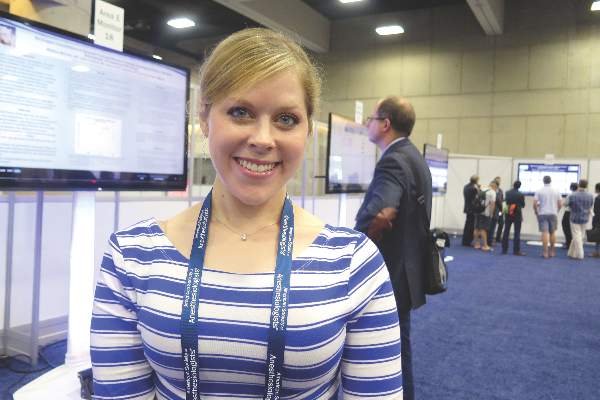
“There were some patients who came back for pain because they didn’t even receive prescriptions from their surgeon. Maybe a little better communication between the anesthesiologist and the surgeon on how to optimize specific patients and prevent those readmissions for pain would help,” she said.
Inspired by a similar study published in 2002 (J Clin Anesth. 2002;14[5]:349-53), Dr. Herbst, a fourth-year anesthesiology resident at Beaumont Hospital in Royal Oak, Mich., and her associates retrospectively evaluated the number of readmissions or revisits that occurred among 28,647 patients who underwent same-day surgery in the Beaumont Health system in 2012. A total of 1,559 revisits occurred during the study period. Of these, 621 (39.8%) were revisits related to the surgical procedure and 145 (9.3% overall and 23.3% of readmissions) were due to pain.
The researchers then stratified patients into one of six categories for readmission. These included all-cause pain (16%); surgical-related issues such as wound opening or reinfection (21%); medical issues such as exacerbation of chronic obstructive pulmonary disease (43%); bleeding complications such as hematuria, hemodialysis, and surgical site bleeding (6%); adverse medical reactions (2%); and other (12%).
Of the 145 patients who were readmitted for pain from the same-day surgery, 71% were deemed to have no pre-existing risk for readmission while 29% had at least one risk factor for readmission. These included opioid monotherapy during the procedure (11%), history of chronic pain (9%), no pain medication given during the procedure (4%), inadequate doses of analgesics used (3%), and discharge without a prescription for an analgesic (2%).
“There were people who got tiny doses of pain medications after a huge, painful procedure, so that was surprising,” Dr. Herbst said. “Maybe they weren’t optimally managed at the time of surgery.”
The findings, she concluded, underscore the need for a team-based approach to pain management in the same-day surgery population, with discharge planning focused on patient education, expectation management, multimodal analgesia optimization, and pain risk assessment.
The researchers reported having no financial disclosures.
SAN DIEGO – Nearly one-third of pain-related emergency room visits or hospital readmissions following same-day surgery were attributable to inadequate pain management in the peridischarge period, a large single-center analysis demonstrated.
“Pain management in the perioperative period is largely an anesthesiologist responsibility, but maybe it would be helpful if it was a little bit more multispecialty, if we had more communication,” study author Dr. Martha O. Herbst said in an interview at the annual meeting of the American Society of Anesthesiologists.
“There were some patients who came back for pain because they didn’t even receive prescriptions from their surgeon. Maybe a little better communication between the anesthesiologist and the surgeon on how to optimize specific patients and prevent those readmissions for pain would help,” she said.
Inspired by a similar study published in 2002 (J Clin Anesth. 2002;14[5]:349-53), Dr. Herbst, a fourth-year anesthesiology resident at Beaumont Hospital in Royal Oak, Mich., and her associates retrospectively evaluated the number of readmissions or revisits that occurred among 28,647 patients who underwent same-day surgery in the Beaumont Health system in 2012. A total of 1,559 revisits occurred during the study period. Of these, 621 (39.8%) were revisits related to the surgical procedure and 145 (9.3% overall and 23.3% of readmissions) were due to pain.
The researchers then stratified patients into one of six categories for readmission. These included all-cause pain (16%); surgical-related issues such as wound opening or reinfection (21%); medical issues such as exacerbation of chronic obstructive pulmonary disease (43%); bleeding complications such as hematuria, hemodialysis, and surgical site bleeding (6%); adverse medical reactions (2%); and other (12%).
Of the 145 patients who were readmitted for pain from the same-day surgery, 71% were deemed to have no pre-existing risk for readmission while 29% had at least one risk factor for readmission. These included opioid monotherapy during the procedure (11%), history of chronic pain (9%), no pain medication given during the procedure (4%), inadequate doses of analgesics used (3%), and discharge without a prescription for an analgesic (2%).
“There were people who got tiny doses of pain medications after a huge, painful procedure, so that was surprising,” Dr. Herbst said. “Maybe they weren’t optimally managed at the time of surgery.”
The findings, she concluded, underscore the need for a team-based approach to pain management in the same-day surgery population, with discharge planning focused on patient education, expectation management, multimodal analgesia optimization, and pain risk assessment.
The researchers reported having no financial disclosures.
SAN DIEGO – Nearly one-third of pain-related emergency room visits or hospital readmissions following same-day surgery were attributable to inadequate pain management in the peridischarge period, a large single-center analysis demonstrated.
“Pain management in the perioperative period is largely an anesthesiologist responsibility, but maybe it would be helpful if it was a little bit more multispecialty, if we had more communication,” study author Dr. Martha O. Herbst said in an interview at the annual meeting of the American Society of Anesthesiologists.
“There were some patients who came back for pain because they didn’t even receive prescriptions from their surgeon. Maybe a little better communication between the anesthesiologist and the surgeon on how to optimize specific patients and prevent those readmissions for pain would help,” she said.
Inspired by a similar study published in 2002 (J Clin Anesth. 2002;14[5]:349-53), Dr. Herbst, a fourth-year anesthesiology resident at Beaumont Hospital in Royal Oak, Mich., and her associates retrospectively evaluated the number of readmissions or revisits that occurred among 28,647 patients who underwent same-day surgery in the Beaumont Health system in 2012. A total of 1,559 revisits occurred during the study period. Of these, 621 (39.8%) were revisits related to the surgical procedure and 145 (9.3% overall and 23.3% of readmissions) were due to pain.
The researchers then stratified patients into one of six categories for readmission. These included all-cause pain (16%); surgical-related issues such as wound opening or reinfection (21%); medical issues such as exacerbation of chronic obstructive pulmonary disease (43%); bleeding complications such as hematuria, hemodialysis, and surgical site bleeding (6%); adverse medical reactions (2%); and other (12%).
Of the 145 patients who were readmitted for pain from the same-day surgery, 71% were deemed to have no pre-existing risk for readmission while 29% had at least one risk factor for readmission. These included opioid monotherapy during the procedure (11%), history of chronic pain (9%), no pain medication given during the procedure (4%), inadequate doses of analgesics used (3%), and discharge without a prescription for an analgesic (2%).
“There were people who got tiny doses of pain medications after a huge, painful procedure, so that was surprising,” Dr. Herbst said. “Maybe they weren’t optimally managed at the time of surgery.”
The findings, she concluded, underscore the need for a team-based approach to pain management in the same-day surgery population, with discharge planning focused on patient education, expectation management, multimodal analgesia optimization, and pain risk assessment.
The researchers reported having no financial disclosures.
AT THE ASA ANNUAL MEETING
Key clinical point: Among patients who underwent same-day surgery, pain was a significant cause of readmissions or revisits.
Major finding: Of 145 patients who were readmitted for pain following same-day surgery, 71% were deemed to have no pre-existing risk for readmission, while 29% had at least one risk factor for readmission.
Data source: A retrospective evaluation of the number of readmissions or revisits that occurred among 28,647 patients who underwent same-day surgery at a single health system in 2012.
Disclosures: The researchers reported having no financial disclosures.
Decision model shows prophylactic double mastectomy more costly to patients
CHICAGO – Contralateral prophylactic mastectomy is more expensive and provides a lower quality of life than unilateral mastectomy in younger women with sporadic breast cancer, a cost-effectiveness analysis shows.
“Unilateral mastectomy dominated contralateral prophylactic mastectomy in the treatment of unilateral, sporadic breast cancer,” Robert C. Keskey said at the annual clinical congress of the American College of Surgeons.

Among these women without a family history of breast cancer, unilateral mastectomy (UM) with 20 years of routine surveillance cost an average of $5,583 less than contralateral prophylactic mastectomy (CPM) ($13,703 vs. $19,286).
Women who chose UM also gained 0.21 quality adjusted life-years (QALYs), or about 2-3 months in perfect health (21.75 vs. 21.54).
Despite a decline in contralateral breast cancers, the national rate of CPM has risen from 9.7% to 24% in women 45 years of age or younger, due in part to the Angelina Jolie effect.
CPM reduces the risk of contralateral breast cancer by up to 95%, but has not been proven to provide a survival advantage and increases complications, Mr. Keskey of the University of Louisville (Ky.) said.
Discussant Dr. Judy Boughey of the Mayo Clinic in Rochester, Minn., observed that this is the third model to tackle this important issue and that all three came up with different results and conclusions.
“This probably highlights that our models are highly dependent on the assumptions made and the costs that are involved in building the model,” she said.
The first model developed at the Mayo Clinic by Dr. Boughey and others, reported that CPM is cost effective for women younger than 70 years. However, it did not take into account reconstruction and complications (J Clin Oncol. 2011;29:2993-3000), Mr. Keskey said during his talk.
The second model showed that CPM is cost saving, but provides a lower quality of life than UM in women younger than 50 years (Ann Surg Oncol. 2014 Jul;21:2209-17). This study only provided 10-year follow-up and overestimated reconstruction and complication rates, he said.
Dr. Boughey observed that the new model did not include symmetry, which was shown to be a big driver of CPM in a separate University of Michigan survey presented during the same session.
In addition, the quality-of-life assumptions used are the same as those in the second model, but significantly different from those in the Mayo model. In that analysis, if a patient felt that their quality of life was improved by a CPM, then the CPM was clearly cost effective, Dr. Boughey noted.
“So for a patient you see in the clinic who feels their quality of life is better with a CPM than without a CPM, does this model really apply?” she asked.
Mr. Keskey replied, “I think it still does in terms of the patient understanding what they’re going to face financially. It’s an important component of the puzzle. If they’re okay spending that money because they feel that either psychologically they are going to have a better quality of life or they feel their outcomes will be positive no matter what, then I think it’s important to understand this difference in cost and use that to make their decision.”
Study details
The investigators, led by Dr. Nicolas Ajkay, also of Louisville, created a decision tree using TreeAge Pro 2015 software to analyze the long-term costs of CPM vs. UM with routine surveillance in women aged 45 years and younger with sporadic breast cancer. The model included 16 event probabilities taken from the recent literature including complications with and without reconstruction, 5- and 10-year contralateral breast cancer risk, cancer stage, and hormone-receptor status.
Effectiveness was measured by QALYs taken from surveyed breast cancer patients. Medical costs were obtained from the 2014 Medicare physician fee schedule.
Because the physician fee schedule is not all inclusive, the investigators compared CPM and UM using costs from the Healthcare Cost and Utilization Project (HCUP), which contain total costs on hospital discharge after a procedure. When this was done, CPM cost an average of $15,425 more than UM and provided a lower quality of life, Mr. Keskey said.
The investigators also replaced yearly mammography in the unilateral mastectomy group with more expensive surveillance using breast magnetic resonance imaging. In this model, CPM actually saved about $300 ($19,286 vs. $19,560), but again provided a lower quality of life (21.54 vs. 21.75), he said. It resulted in a savings of $1,300 per QALY lost, which is not enough to be deemed cost effective.
“So even using a more expensive surveillance method, contralateral prophylactic mastectomy was still not cost effective,” Mr. Keskey said.
Finally, reconstruction rates were varied to see whether this would impact outcomes. The national reconstruction rate following unilateral mastectomy is about 28%, which resulted in a lifetime cost in the initial analysis model of about $13,703.
In order to make CPM less expensive than UM, the reconstruction rate following CPM would have to be dropped to 0% ($12,580) from the national rate of 75% ($19,286), he said. Further, even if the UM reconstruction rate was hiked to 100%, the lifetime costs associated with a unilateral mastectomy were cheaper at $19,275.
Limitations of the model include the subjective nature of QALYs, the cost-effectiveness analysis is a theoretical model, and its costs need to be validated against real-world numbers, Mr. Keskey said.
During a discussion of the study, however, an attendee expressed concern that the data will be used to deny insurance coverage for women seeking a prophylactic contralateral mastectomy.
The decision to undergo prophylactic mastectomy is very personal and needs to be individualized, despite the suggestion of increased cost and less quality of life in the study, according to senior author and colleague Dr. Nicolas Ajkay.
“For some patients, the thought of repeating breast cancer treatment, though a low probability, may be unacceptable; for others, imaging surveillance may not be a reasonable option; and a patient with preexisting breast asymmetry may consider bilateral mastectomy as a way to achieve symmetry and better cosmesis,” he said in an interview. “Our objective from the inception of the study, even before analyzing the results, was that this information could be part of a patient-physician discussion, never the main factor in the decision-making process.”
The authors and Dr. Boughey reported no conflicts of interest.
CHICAGO – Contralateral prophylactic mastectomy is more expensive and provides a lower quality of life than unilateral mastectomy in younger women with sporadic breast cancer, a cost-effectiveness analysis shows.
“Unilateral mastectomy dominated contralateral prophylactic mastectomy in the treatment of unilateral, sporadic breast cancer,” Robert C. Keskey said at the annual clinical congress of the American College of Surgeons.
Among these women without a family history of breast cancer, unilateral mastectomy (UM) with 20 years of routine surveillance cost an average of $5,583 less than contralateral prophylactic mastectomy (CPM) ($13,703 vs. $19,286).
Women who chose UM also gained 0.21 quality adjusted life-years (QALYs), or about 2-3 months in perfect health (21.75 vs. 21.54).
Despite a decline in contralateral breast cancers, the national rate of CPM has risen from 9.7% to 24% in women 45 years of age or younger, due in part to the Angelina Jolie effect.
CPM reduces the risk of contralateral breast cancer by up to 95%, but has not been proven to provide a survival advantage and increases complications, Mr. Keskey of the University of Louisville (Ky.) said.
Discussant Dr. Judy Boughey of the Mayo Clinic in Rochester, Minn., observed that this is the third model to tackle this important issue and that all three came up with different results and conclusions.
“This probably highlights that our models are highly dependent on the assumptions made and the costs that are involved in building the model,” she said.
The first model developed at the Mayo Clinic by Dr. Boughey and others, reported that CPM is cost effective for women younger than 70 years. However, it did not take into account reconstruction and complications (J Clin Oncol. 2011;29:2993-3000), Mr. Keskey said during his talk.
The second model showed that CPM is cost saving, but provides a lower quality of life than UM in women younger than 50 years (Ann Surg Oncol. 2014 Jul;21:2209-17). This study only provided 10-year follow-up and overestimated reconstruction and complication rates, he said.
Dr. Boughey observed that the new model did not include symmetry, which was shown to be a big driver of CPM in a separate University of Michigan survey presented during the same session.
In addition, the quality-of-life assumptions used are the same as those in the second model, but significantly different from those in the Mayo model. In that analysis, if a patient felt that their quality of life was improved by a CPM, then the CPM was clearly cost effective, Dr. Boughey noted.
“So for a patient you see in the clinic who feels their quality of life is better with a CPM than without a CPM, does this model really apply?” she asked.
Mr. Keskey replied, “I think it still does in terms of the patient understanding what they’re going to face financially. It’s an important component of the puzzle. If they’re okay spending that money because they feel that either psychologically they are going to have a better quality of life or they feel their outcomes will be positive no matter what, then I think it’s important to understand this difference in cost and use that to make their decision.”
Study details
The investigators, led by Dr. Nicolas Ajkay, also of Louisville, created a decision tree using TreeAge Pro 2015 software to analyze the long-term costs of CPM vs. UM with routine surveillance in women aged 45 years and younger with sporadic breast cancer. The model included 16 event probabilities taken from the recent literature including complications with and without reconstruction, 5- and 10-year contralateral breast cancer risk, cancer stage, and hormone-receptor status.
Effectiveness was measured by QALYs taken from surveyed breast cancer patients. Medical costs were obtained from the 2014 Medicare physician fee schedule.
Because the physician fee schedule is not all inclusive, the investigators compared CPM and UM using costs from the Healthcare Cost and Utilization Project (HCUP), which contain total costs on hospital discharge after a procedure. When this was done, CPM cost an average of $15,425 more than UM and provided a lower quality of life, Mr. Keskey said.
The investigators also replaced yearly mammography in the unilateral mastectomy group with more expensive surveillance using breast magnetic resonance imaging. In this model, CPM actually saved about $300 ($19,286 vs. $19,560), but again provided a lower quality of life (21.54 vs. 21.75), he said. It resulted in a savings of $1,300 per QALY lost, which is not enough to be deemed cost effective.
“So even using a more expensive surveillance method, contralateral prophylactic mastectomy was still not cost effective,” Mr. Keskey said.
Finally, reconstruction rates were varied to see whether this would impact outcomes. The national reconstruction rate following unilateral mastectomy is about 28%, which resulted in a lifetime cost in the initial analysis model of about $13,703.
In order to make CPM less expensive than UM, the reconstruction rate following CPM would have to be dropped to 0% ($12,580) from the national rate of 75% ($19,286), he said. Further, even if the UM reconstruction rate was hiked to 100%, the lifetime costs associated with a unilateral mastectomy were cheaper at $19,275.
Limitations of the model include the subjective nature of QALYs, the cost-effectiveness analysis is a theoretical model, and its costs need to be validated against real-world numbers, Mr. Keskey said.
During a discussion of the study, however, an attendee expressed concern that the data will be used to deny insurance coverage for women seeking a prophylactic contralateral mastectomy.
The decision to undergo prophylactic mastectomy is very personal and needs to be individualized, despite the suggestion of increased cost and less quality of life in the study, according to senior author and colleague Dr. Nicolas Ajkay.
“For some patients, the thought of repeating breast cancer treatment, though a low probability, may be unacceptable; for others, imaging surveillance may not be a reasonable option; and a patient with preexisting breast asymmetry may consider bilateral mastectomy as a way to achieve symmetry and better cosmesis,” he said in an interview. “Our objective from the inception of the study, even before analyzing the results, was that this information could be part of a patient-physician discussion, never the main factor in the decision-making process.”
The authors and Dr. Boughey reported no conflicts of interest.
CHICAGO – Contralateral prophylactic mastectomy is more expensive and provides a lower quality of life than unilateral mastectomy in younger women with sporadic breast cancer, a cost-effectiveness analysis shows.
“Unilateral mastectomy dominated contralateral prophylactic mastectomy in the treatment of unilateral, sporadic breast cancer,” Robert C. Keskey said at the annual clinical congress of the American College of Surgeons.
Among these women without a family history of breast cancer, unilateral mastectomy (UM) with 20 years of routine surveillance cost an average of $5,583 less than contralateral prophylactic mastectomy (CPM) ($13,703 vs. $19,286).
Women who chose UM also gained 0.21 quality adjusted life-years (QALYs), or about 2-3 months in perfect health (21.75 vs. 21.54).
Despite a decline in contralateral breast cancers, the national rate of CPM has risen from 9.7% to 24% in women 45 years of age or younger, due in part to the Angelina Jolie effect.
CPM reduces the risk of contralateral breast cancer by up to 95%, but has not been proven to provide a survival advantage and increases complications, Mr. Keskey of the University of Louisville (Ky.) said.
Discussant Dr. Judy Boughey of the Mayo Clinic in Rochester, Minn., observed that this is the third model to tackle this important issue and that all three came up with different results and conclusions.
“This probably highlights that our models are highly dependent on the assumptions made and the costs that are involved in building the model,” she said.
The first model developed at the Mayo Clinic by Dr. Boughey and others, reported that CPM is cost effective for women younger than 70 years. However, it did not take into account reconstruction and complications (J Clin Oncol. 2011;29:2993-3000), Mr. Keskey said during his talk.
The second model showed that CPM is cost saving, but provides a lower quality of life than UM in women younger than 50 years (Ann Surg Oncol. 2014 Jul;21:2209-17). This study only provided 10-year follow-up and overestimated reconstruction and complication rates, he said.
Dr. Boughey observed that the new model did not include symmetry, which was shown to be a big driver of CPM in a separate University of Michigan survey presented during the same session.
In addition, the quality-of-life assumptions used are the same as those in the second model, but significantly different from those in the Mayo model. In that analysis, if a patient felt that their quality of life was improved by a CPM, then the CPM was clearly cost effective, Dr. Boughey noted.
“So for a patient you see in the clinic who feels their quality of life is better with a CPM than without a CPM, does this model really apply?” she asked.
Mr. Keskey replied, “I think it still does in terms of the patient understanding what they’re going to face financially. It’s an important component of the puzzle. If they’re okay spending that money because they feel that either psychologically they are going to have a better quality of life or they feel their outcomes will be positive no matter what, then I think it’s important to understand this difference in cost and use that to make their decision.”
Study details
The investigators, led by Dr. Nicolas Ajkay, also of Louisville, created a decision tree using TreeAge Pro 2015 software to analyze the long-term costs of CPM vs. UM with routine surveillance in women aged 45 years and younger with sporadic breast cancer. The model included 16 event probabilities taken from the recent literature including complications with and without reconstruction, 5- and 10-year contralateral breast cancer risk, cancer stage, and hormone-receptor status.
Effectiveness was measured by QALYs taken from surveyed breast cancer patients. Medical costs were obtained from the 2014 Medicare physician fee schedule.
Because the physician fee schedule is not all inclusive, the investigators compared CPM and UM using costs from the Healthcare Cost and Utilization Project (HCUP), which contain total costs on hospital discharge after a procedure. When this was done, CPM cost an average of $15,425 more than UM and provided a lower quality of life, Mr. Keskey said.
The investigators also replaced yearly mammography in the unilateral mastectomy group with more expensive surveillance using breast magnetic resonance imaging. In this model, CPM actually saved about $300 ($19,286 vs. $19,560), but again provided a lower quality of life (21.54 vs. 21.75), he said. It resulted in a savings of $1,300 per QALY lost, which is not enough to be deemed cost effective.
“So even using a more expensive surveillance method, contralateral prophylactic mastectomy was still not cost effective,” Mr. Keskey said.
Finally, reconstruction rates were varied to see whether this would impact outcomes. The national reconstruction rate following unilateral mastectomy is about 28%, which resulted in a lifetime cost in the initial analysis model of about $13,703.
In order to make CPM less expensive than UM, the reconstruction rate following CPM would have to be dropped to 0% ($12,580) from the national rate of 75% ($19,286), he said. Further, even if the UM reconstruction rate was hiked to 100%, the lifetime costs associated with a unilateral mastectomy were cheaper at $19,275.
Limitations of the model include the subjective nature of QALYs, the cost-effectiveness analysis is a theoretical model, and its costs need to be validated against real-world numbers, Mr. Keskey said.
During a discussion of the study, however, an attendee expressed concern that the data will be used to deny insurance coverage for women seeking a prophylactic contralateral mastectomy.
The decision to undergo prophylactic mastectomy is very personal and needs to be individualized, despite the suggestion of increased cost and less quality of life in the study, according to senior author and colleague Dr. Nicolas Ajkay.
“For some patients, the thought of repeating breast cancer treatment, though a low probability, may be unacceptable; for others, imaging surveillance may not be a reasonable option; and a patient with preexisting breast asymmetry may consider bilateral mastectomy as a way to achieve symmetry and better cosmesis,” he said in an interview. “Our objective from the inception of the study, even before analyzing the results, was that this information could be part of a patient-physician discussion, never the main factor in the decision-making process.”
The authors and Dr. Boughey reported no conflicts of interest.
AT THE ACS CLINICAL CONGRESS
Key clinical point: Unilateral mastectomy costs less and provides better quality of life than contralateral prophylactic mastectomy in younger women with sporadic breast cancer.
Major finding: Unilateral mastectomy with routine surveillance cost on average $5,583 less than prophylactic contralateral mastectomy.
Data source: Cost-effectiveness analysis of contralateral prophylactic mastectomy.
Disclosures: The authors and Dr. Boughey reported no conflicts of interest.
Leadless pacemaker matches conventional transvenous outcomes
ORLANDO – A leadless transcatheter pacemaker rivals conventional transvenous pacemakers in terms of pacing capture and major complications, according to data presented at the American Heart Association scientific sessions and published simultaneously in the New England Journal of Medicine.
The prospective multicenter study involved 725 patients requiring ventricular pacing, of whom 719 were successful implanted with the leadless Micra Transcatheter Pacemaking System and followed for 6 months.
Of the 297 patients included in the primary efficacy analysis, 98.3% showed a 6-month pacing capture threshold of no greater than 2.0 V, with a mean pacing capture threshold at implantation of 0.63 V and 0.54 V at 6 months.
The leadless device also was associated with half the incidence of major complications, compared with data from a historical control cohort (4% vs. 7.4%; hazard ratio, 0.49; P = .001), as well as fewer hospitalizations and fewer system revisions due to complications.
“Complications that lead to death or that required invasive revision, termination of therapy, or hospitalization or extension of hospitalization occurred in 4% of the patients; this finding is in line with recent reports of transvenous systems and was significantly lower than the rate in the control group,” wrote Dr. Dwight Reynolds of the University of Oklahoma Health Sciences Center, Oklahoma City, and coauthors (N Engl J Med. Nov 9. doi: 10.1056/NEJMoa1511643).
The study was supported by Micra manufacturer Medtronic. Most authors reported personal fees, grants, and advisory board positions from private industry, including Medtronic. Two authors are Medtronic employees.
Pacemaker leads are the “Achilles’ heel” of pacing and defibrillation systems, so a self-contained, leadless pacemaker that can be placed directly into the heart is an appealing prospect.
Although newer devices such as this one can be used only for single-chamber ventricular pacing and therefore will have limited usefulness for the majority of pacemaker recipients, these encouraging short-term results show the promise of leadless pacing.
Dr. Mark S. Link is with the cardiac arrhythmia service at Tufts Medical Center, Boston. These comments were taken from an accompanying editorial (N Engl J Med. 2015, Nov 9. doi: 10.1056/NEJMe1513625). No conflicts of interest were declared.
Pacemaker leads are the “Achilles’ heel” of pacing and defibrillation systems, so a self-contained, leadless pacemaker that can be placed directly into the heart is an appealing prospect.
Although newer devices such as this one can be used only for single-chamber ventricular pacing and therefore will have limited usefulness for the majority of pacemaker recipients, these encouraging short-term results show the promise of leadless pacing.
Dr. Mark S. Link is with the cardiac arrhythmia service at Tufts Medical Center, Boston. These comments were taken from an accompanying editorial (N Engl J Med. 2015, Nov 9. doi: 10.1056/NEJMe1513625). No conflicts of interest were declared.
Pacemaker leads are the “Achilles’ heel” of pacing and defibrillation systems, so a self-contained, leadless pacemaker that can be placed directly into the heart is an appealing prospect.
Although newer devices such as this one can be used only for single-chamber ventricular pacing and therefore will have limited usefulness for the majority of pacemaker recipients, these encouraging short-term results show the promise of leadless pacing.
Dr. Mark S. Link is with the cardiac arrhythmia service at Tufts Medical Center, Boston. These comments were taken from an accompanying editorial (N Engl J Med. 2015, Nov 9. doi: 10.1056/NEJMe1513625). No conflicts of interest were declared.
ORLANDO – A leadless transcatheter pacemaker rivals conventional transvenous pacemakers in terms of pacing capture and major complications, according to data presented at the American Heart Association scientific sessions and published simultaneously in the New England Journal of Medicine.
The prospective multicenter study involved 725 patients requiring ventricular pacing, of whom 719 were successful implanted with the leadless Micra Transcatheter Pacemaking System and followed for 6 months.
Of the 297 patients included in the primary efficacy analysis, 98.3% showed a 6-month pacing capture threshold of no greater than 2.0 V, with a mean pacing capture threshold at implantation of 0.63 V and 0.54 V at 6 months.
The leadless device also was associated with half the incidence of major complications, compared with data from a historical control cohort (4% vs. 7.4%; hazard ratio, 0.49; P = .001), as well as fewer hospitalizations and fewer system revisions due to complications.
“Complications that lead to death or that required invasive revision, termination of therapy, or hospitalization or extension of hospitalization occurred in 4% of the patients; this finding is in line with recent reports of transvenous systems and was significantly lower than the rate in the control group,” wrote Dr. Dwight Reynolds of the University of Oklahoma Health Sciences Center, Oklahoma City, and coauthors (N Engl J Med. Nov 9. doi: 10.1056/NEJMoa1511643).
The study was supported by Micra manufacturer Medtronic. Most authors reported personal fees, grants, and advisory board positions from private industry, including Medtronic. Two authors are Medtronic employees.
ORLANDO – A leadless transcatheter pacemaker rivals conventional transvenous pacemakers in terms of pacing capture and major complications, according to data presented at the American Heart Association scientific sessions and published simultaneously in the New England Journal of Medicine.
The prospective multicenter study involved 725 patients requiring ventricular pacing, of whom 719 were successful implanted with the leadless Micra Transcatheter Pacemaking System and followed for 6 months.
Of the 297 patients included in the primary efficacy analysis, 98.3% showed a 6-month pacing capture threshold of no greater than 2.0 V, with a mean pacing capture threshold at implantation of 0.63 V and 0.54 V at 6 months.
The leadless device also was associated with half the incidence of major complications, compared with data from a historical control cohort (4% vs. 7.4%; hazard ratio, 0.49; P = .001), as well as fewer hospitalizations and fewer system revisions due to complications.
“Complications that lead to death or that required invasive revision, termination of therapy, or hospitalization or extension of hospitalization occurred in 4% of the patients; this finding is in line with recent reports of transvenous systems and was significantly lower than the rate in the control group,” wrote Dr. Dwight Reynolds of the University of Oklahoma Health Sciences Center, Oklahoma City, and coauthors (N Engl J Med. Nov 9. doi: 10.1056/NEJMoa1511643).
The study was supported by Micra manufacturer Medtronic. Most authors reported personal fees, grants, and advisory board positions from private industry, including Medtronic. Two authors are Medtronic employees.
AT THE AHA SCIENTIFIC SESSIONS
Key clinical point: A leadless transcatheter pacemaker has shown similar outcomes in terms of pacing capture and major complications to conventional transvenous pacemakers.
Major finding:A leadless transcatheter pacemaker achieved a 6-month pacing capture threshold no greater than 2.0 V in 98.3% of patients.
Data source: A prospective multicenter study involving 725 patients requiring ventricular pacing.
Disclosures: The study was supported by Micra manufacturer Medtronic. Most authors reported personal fees, grants, and advisory board positions from private industry, including Medtronic. Two authors are Medtronic employees.
AHA: Mixed results for mitral valve replacement vs. repair
Patients undergoing mitral valve replacement had a lower risk of regurgitation and heart failure–related adverse events at 2 years than those undergoing valve repair, according to the results of a trial presented at the American Heart Association scientific sessions and published simultaneously in the New England Journal of Medicine.
The results of the trial appear to associate mitral valve replacement with clinical advantages over mitral valve repair after 2 years of follow-up. However, replacement held no significant advantages over repair in the primary endpoint of left ventricular end-systolic volume index (LVESVI) or in overall survival, said Dr. Daniel Goldstein of the department of cardiothoracic surgery at Montefiore Medical Center, New York.
In the trial conducted by the Cardiothoracic Surgical Trials Network (CTSN), 251 patients with chronic severe ischemic mitral regurgitation were randomly assigned to undergo surgical repair of the mitral valve or to receive a mitral valve replacement with a prosthetic and procedure selected at the discretion of the surgeon.
In addition to the primary endpoint of LVESVI, the two approaches were also compared for survival, regurgitation recurrence, and heart failure events.
At 2 years, the mean change from baseline in LVESVI, a measure of remodeling, did not differ significantly between the repair and replacement arms (–9.0 vs. –6.5 mL/m2, respectively). In addition, although the 2-year mortality rate was numerically lower in the repair arm relative to the replacement arm (19% vs. 23.2%, respectively), it was also not statistically different (P = .39).
However, the rate of recurrence of moderate or severe mitral regurgitation favored replacement over repair and was significant (3.8% vs. 58.8%, respectively; P less than .001). In addition, the rate of cardiovascular readmissions was significantly lower in the replacement group (P = .01).
For those in the repair group, there were significant trends for more serious adverse events related to heart failure (P = .05) and for a lower quality of life improvement (P = .07) on the Minnesota Living With Heart Failure questionnaire. There were no significant differences in rates of all serious adverse events or overall readmissions.
All of the differences between groups observed at 2 years amplify differences previously reported after 12 months (N Engl J Med. 2014 Jan 2;370[1]:23-32). For example, the difference in the rate of moderate to severe regurgitation favoring replacement over repair was already significant at that time (2.3% vs. 32.6%, respectively; P less than .001), even though the mortality rates were then, as now, numerically lower in the repair group versus the replacement group (14.3% vs. 17.6%, respectively; P = .45).
Dr. Goldstein reported no relevant financial relationships.
Patients undergoing mitral valve replacement had a lower risk of regurgitation and heart failure–related adverse events at 2 years than those undergoing valve repair, according to the results of a trial presented at the American Heart Association scientific sessions and published simultaneously in the New England Journal of Medicine.
The results of the trial appear to associate mitral valve replacement with clinical advantages over mitral valve repair after 2 years of follow-up. However, replacement held no significant advantages over repair in the primary endpoint of left ventricular end-systolic volume index (LVESVI) or in overall survival, said Dr. Daniel Goldstein of the department of cardiothoracic surgery at Montefiore Medical Center, New York.
In the trial conducted by the Cardiothoracic Surgical Trials Network (CTSN), 251 patients with chronic severe ischemic mitral regurgitation were randomly assigned to undergo surgical repair of the mitral valve or to receive a mitral valve replacement with a prosthetic and procedure selected at the discretion of the surgeon.
In addition to the primary endpoint of LVESVI, the two approaches were also compared for survival, regurgitation recurrence, and heart failure events.
At 2 years, the mean change from baseline in LVESVI, a measure of remodeling, did not differ significantly between the repair and replacement arms (–9.0 vs. –6.5 mL/m2, respectively). In addition, although the 2-year mortality rate was numerically lower in the repair arm relative to the replacement arm (19% vs. 23.2%, respectively), it was also not statistically different (P = .39).
However, the rate of recurrence of moderate or severe mitral regurgitation favored replacement over repair and was significant (3.8% vs. 58.8%, respectively; P less than .001). In addition, the rate of cardiovascular readmissions was significantly lower in the replacement group (P = .01).
For those in the repair group, there were significant trends for more serious adverse events related to heart failure (P = .05) and for a lower quality of life improvement (P = .07) on the Minnesota Living With Heart Failure questionnaire. There were no significant differences in rates of all serious adverse events or overall readmissions.
All of the differences between groups observed at 2 years amplify differences previously reported after 12 months (N Engl J Med. 2014 Jan 2;370[1]:23-32). For example, the difference in the rate of moderate to severe regurgitation favoring replacement over repair was already significant at that time (2.3% vs. 32.6%, respectively; P less than .001), even though the mortality rates were then, as now, numerically lower in the repair group versus the replacement group (14.3% vs. 17.6%, respectively; P = .45).
Dr. Goldstein reported no relevant financial relationships.
Patients undergoing mitral valve replacement had a lower risk of regurgitation and heart failure–related adverse events at 2 years than those undergoing valve repair, according to the results of a trial presented at the American Heart Association scientific sessions and published simultaneously in the New England Journal of Medicine.
The results of the trial appear to associate mitral valve replacement with clinical advantages over mitral valve repair after 2 years of follow-up. However, replacement held no significant advantages over repair in the primary endpoint of left ventricular end-systolic volume index (LVESVI) or in overall survival, said Dr. Daniel Goldstein of the department of cardiothoracic surgery at Montefiore Medical Center, New York.
In the trial conducted by the Cardiothoracic Surgical Trials Network (CTSN), 251 patients with chronic severe ischemic mitral regurgitation were randomly assigned to undergo surgical repair of the mitral valve or to receive a mitral valve replacement with a prosthetic and procedure selected at the discretion of the surgeon.
In addition to the primary endpoint of LVESVI, the two approaches were also compared for survival, regurgitation recurrence, and heart failure events.
At 2 years, the mean change from baseline in LVESVI, a measure of remodeling, did not differ significantly between the repair and replacement arms (–9.0 vs. –6.5 mL/m2, respectively). In addition, although the 2-year mortality rate was numerically lower in the repair arm relative to the replacement arm (19% vs. 23.2%, respectively), it was also not statistically different (P = .39).
However, the rate of recurrence of moderate or severe mitral regurgitation favored replacement over repair and was significant (3.8% vs. 58.8%, respectively; P less than .001). In addition, the rate of cardiovascular readmissions was significantly lower in the replacement group (P = .01).
For those in the repair group, there were significant trends for more serious adverse events related to heart failure (P = .05) and for a lower quality of life improvement (P = .07) on the Minnesota Living With Heart Failure questionnaire. There were no significant differences in rates of all serious adverse events or overall readmissions.
All of the differences between groups observed at 2 years amplify differences previously reported after 12 months (N Engl J Med. 2014 Jan 2;370[1]:23-32). For example, the difference in the rate of moderate to severe regurgitation favoring replacement over repair was already significant at that time (2.3% vs. 32.6%, respectively; P less than .001), even though the mortality rates were then, as now, numerically lower in the repair group versus the replacement group (14.3% vs. 17.6%, respectively; P = .45).
Dr. Goldstein reported no relevant financial relationships.
FROM THE AHA SCIENTIFIC SESSIONS
Key clinical point: Mitral valve replacement reduced regurgitation better than valve repair, but it didn’t significantly improve left ventricular function or survival.
Major finding: In patients with severe ischemic mitral regurgitation, regurgitation occurred more frequently after mitral valve repair than after valve replacement (58.8% vs. 3.8%; P less than .001), but left ventricular end-systolic volume indexes and survival rates were not significantly different.
Data source: A randomized, multicenter trial with 251 patients.
Disclosures: Dr. Goldstein reported no relevant financial relationships.
Cautious optimism greets Medicare’s revised two-midnight hospital rule
The Centers for Medicare and Medicaid Services finalized a proposal to add more flexibility in reimbursing hospital stays under Medicare Part A if they do not cross the two-midnight threshold, a move that was met with cautious optimism.
“Hospitals appreciate the certainty that stays of at least two midnights are inpatient, with stays of less than two midnights also considered inpatient based on physician judgment,” American Hospital Association Executive Vice President Tom Nickels said in a statement.
For hospital stays for which physicians expect the patient will need fewer than two midnights of hospital care, an inpatient admission may still be payable under Medicare Part A on a case-by-case basis based on the admitting physician’s judgment, according to the final rule.

In addition, the agency does not plan to send recovery audit contractors (RACs) after doctors suspected of violating the two-midnight rule. Instead, CMS plans to use Beneficiary and Family Centered Care Quality Improvement Organizations to conduct initial medical reviews of claims for short-stay inpatient admissions. The claim reviews will focus on educating physicians and hospitals about the policy for inpatient admissions.
Only physicians with questionable practice patterns, such as high rates of claims denial after medical review, will be referred to auditors, according to CMS.
“We look forward to working with the [Quality Improvement Organizations] – which are not paid on a contingency fee basis like those bounty-hunter RACs – and to more fair auditing process,” Mr. Nickels added.
How the QIOs review claims is the part that will be closely monitored by stakeholders.
“CMS finalized the changes that were proposed, which are consistent with what the AAMC has been asking the agency to do,” the Association of American Medical Colleges said in a statement. “AAMC believes it is important that CMS monitor the QIO audits to ensure that they are working as anticipated, and that the QIOs audits do not produce the myriad of problems that the RAC audits produced.”
Even with the cautious optimism, there remains a sense that the new rule does not go far enough.
“Despite ongoing concerns with observation policy overall, we appreciate CMS’ efforts to modify the two-midnight rule to address widespread concerns and issues identified by the provider community, and SHM stands ready to help make it work,” the Society of Hospital Medicine said in a statement.
The organization called for further changes in response to CMS’ initial proposal for the increased flexibility. Those suggested changes included a revised definition of inpatient care to include all time spent in the hospital, better guidance on how audits will be conducted, more concrete guidance on short inpatient stays to minimize claims denials, and better alignment between hours spent in the hospital and the midnights crossed as part of a stay.
“SHM does not believe the two-midnight rule is the optimal policy for addressing the structural issues associated with observation status payment policy,” the organization noted. “However, we recognize this policy and the changes contained in the final rule were enacted with the goal of simplifying the inpatient admission decision, reducing the number of long hospital stays under observation status, and to strengthen deference to physician judgment.”
The Centers for Medicare and Medicaid Services finalized a proposal to add more flexibility in reimbursing hospital stays under Medicare Part A if they do not cross the two-midnight threshold, a move that was met with cautious optimism.
“Hospitals appreciate the certainty that stays of at least two midnights are inpatient, with stays of less than two midnights also considered inpatient based on physician judgment,” American Hospital Association Executive Vice President Tom Nickels said in a statement.
For hospital stays for which physicians expect the patient will need fewer than two midnights of hospital care, an inpatient admission may still be payable under Medicare Part A on a case-by-case basis based on the admitting physician’s judgment, according to the final rule.
In addition, the agency does not plan to send recovery audit contractors (RACs) after doctors suspected of violating the two-midnight rule. Instead, CMS plans to use Beneficiary and Family Centered Care Quality Improvement Organizations to conduct initial medical reviews of claims for short-stay inpatient admissions. The claim reviews will focus on educating physicians and hospitals about the policy for inpatient admissions.
Only physicians with questionable practice patterns, such as high rates of claims denial after medical review, will be referred to auditors, according to CMS.
“We look forward to working with the [Quality Improvement Organizations] – which are not paid on a contingency fee basis like those bounty-hunter RACs – and to more fair auditing process,” Mr. Nickels added.
How the QIOs review claims is the part that will be closely monitored by stakeholders.
“CMS finalized the changes that were proposed, which are consistent with what the AAMC has been asking the agency to do,” the Association of American Medical Colleges said in a statement. “AAMC believes it is important that CMS monitor the QIO audits to ensure that they are working as anticipated, and that the QIOs audits do not produce the myriad of problems that the RAC audits produced.”
Even with the cautious optimism, there remains a sense that the new rule does not go far enough.
“Despite ongoing concerns with observation policy overall, we appreciate CMS’ efforts to modify the two-midnight rule to address widespread concerns and issues identified by the provider community, and SHM stands ready to help make it work,” the Society of Hospital Medicine said in a statement.
The organization called for further changes in response to CMS’ initial proposal for the increased flexibility. Those suggested changes included a revised definition of inpatient care to include all time spent in the hospital, better guidance on how audits will be conducted, more concrete guidance on short inpatient stays to minimize claims denials, and better alignment between hours spent in the hospital and the midnights crossed as part of a stay.
“SHM does not believe the two-midnight rule is the optimal policy for addressing the structural issues associated with observation status payment policy,” the organization noted. “However, we recognize this policy and the changes contained in the final rule were enacted with the goal of simplifying the inpatient admission decision, reducing the number of long hospital stays under observation status, and to strengthen deference to physician judgment.”
The Centers for Medicare and Medicaid Services finalized a proposal to add more flexibility in reimbursing hospital stays under Medicare Part A if they do not cross the two-midnight threshold, a move that was met with cautious optimism.
“Hospitals appreciate the certainty that stays of at least two midnights are inpatient, with stays of less than two midnights also considered inpatient based on physician judgment,” American Hospital Association Executive Vice President Tom Nickels said in a statement.
For hospital stays for which physicians expect the patient will need fewer than two midnights of hospital care, an inpatient admission may still be payable under Medicare Part A on a case-by-case basis based on the admitting physician’s judgment, according to the final rule.
In addition, the agency does not plan to send recovery audit contractors (RACs) after doctors suspected of violating the two-midnight rule. Instead, CMS plans to use Beneficiary and Family Centered Care Quality Improvement Organizations to conduct initial medical reviews of claims for short-stay inpatient admissions. The claim reviews will focus on educating physicians and hospitals about the policy for inpatient admissions.
Only physicians with questionable practice patterns, such as high rates of claims denial after medical review, will be referred to auditors, according to CMS.
“We look forward to working with the [Quality Improvement Organizations] – which are not paid on a contingency fee basis like those bounty-hunter RACs – and to more fair auditing process,” Mr. Nickels added.
How the QIOs review claims is the part that will be closely monitored by stakeholders.
“CMS finalized the changes that were proposed, which are consistent with what the AAMC has been asking the agency to do,” the Association of American Medical Colleges said in a statement. “AAMC believes it is important that CMS monitor the QIO audits to ensure that they are working as anticipated, and that the QIOs audits do not produce the myriad of problems that the RAC audits produced.”
Even with the cautious optimism, there remains a sense that the new rule does not go far enough.
“Despite ongoing concerns with observation policy overall, we appreciate CMS’ efforts to modify the two-midnight rule to address widespread concerns and issues identified by the provider community, and SHM stands ready to help make it work,” the Society of Hospital Medicine said in a statement.
The organization called for further changes in response to CMS’ initial proposal for the increased flexibility. Those suggested changes included a revised definition of inpatient care to include all time spent in the hospital, better guidance on how audits will be conducted, more concrete guidance on short inpatient stays to minimize claims denials, and better alignment between hours spent in the hospital and the midnights crossed as part of a stay.
“SHM does not believe the two-midnight rule is the optimal policy for addressing the structural issues associated with observation status payment policy,” the organization noted. “However, we recognize this policy and the changes contained in the final rule were enacted with the goal of simplifying the inpatient admission decision, reducing the number of long hospital stays under observation status, and to strengthen deference to physician judgment.”

On post-call day, physicians’ reaction time, simple cognitive tasks suffer
SAN DIEGO – If you feel sleepy and out of sorts on a post-call day, compared with a normal work day, you’re not alone.
Anesthesiology faculty reported significant increases in feeling irritable, jittery, and sleepy, along with significant decreases in feeling confident, energetic, and talkative following an on-call period, according to a study presented at the annual meeting of the American Society of Anesthesiologists.
To date, most studies of partial sleep deprivation in health care settings have focused on residents and interns, and less on medical faculty, said lead study author Dr. Haleh Saadat of the department of anesthesiology and pain medicine at Nationwide Children’s Hospital in Columbus, Ohio. “Our call is 17 hours, from 3 p.m. to 7 a.m.; but the call period at most hospitals is 24 hours, and even longer at some private practices,” she said in an interview.
To examine the effects of partial sleep deprivation on reaction time, simple cognitive skills , and mood status in 21 anesthesiologists, Dr. Saadat and her associates obtained verbal consent from the study participants and measured reaction time, mood states, and eight subjective behavioral characteristics at two different time points: between 6:30 a.m. and 8 a.m. on a regular noncall day of work, and between 6:30 a.m. and 8 a.m. after an overnight call (a shift that runs from 3 p.m. to 7 a.m.). The behavioral characteristics included feeling alert, energetic, anxious, confident, irritable, jittery/nervous, sleepy, and talkative, and the researchers used paired t-tests to compare variable means between regular sleep days and post-call days.
Reaction time decreased in all 21 subjects after night call, indicating worse performance (P = 0.047), while total mood disturbance was significantly higher on post-call days, relative to noncall days (P less than 0.001).
Of the 21 anesthesiologists, 19 completed all simple cognitive task questions at both time points and reported significant increases in several of these parameters on post-call days, compared with normal work days.
Post-call observations found participants feeling more irritable, confident, energetic, sleepy (P less than .001), feeling more jittery (P = .003), and feeling less talkative (P less than .001) than on normal work days.
Coping strategies used to address their sleep deprivation were measured as well, with “most of our subjects using problem solving, followed by seeking social support and avoidance,” Dr. Saadat noted. “People who used avoidance had greater declines in reaction time on post-call days, compared with the rest of the study participants. It didn’t matter whether you were male, female, younger, or older.”
Dr. Saadat called for additional studies to evaluate the neurocognitive impact of partial sleep deprivation on physicians’ on-call duties.
“I would like to see if we can replicate the results in bigger centers,” she said. “If this is what is happening, we may need to pay more attention to faculty’s work hours in both academic and private practice settings – not only among anesthesiologists, but also in other specialties. These observations require a closer look at the potential implications for patients’ and professionals’ safety.”
The researchers reported no financial disclosures.
SAN DIEGO – If you feel sleepy and out of sorts on a post-call day, compared with a normal work day, you’re not alone.
Anesthesiology faculty reported significant increases in feeling irritable, jittery, and sleepy, along with significant decreases in feeling confident, energetic, and talkative following an on-call period, according to a study presented at the annual meeting of the American Society of Anesthesiologists.
To date, most studies of partial sleep deprivation in health care settings have focused on residents and interns, and less on medical faculty, said lead study author Dr. Haleh Saadat of the department of anesthesiology and pain medicine at Nationwide Children’s Hospital in Columbus, Ohio. “Our call is 17 hours, from 3 p.m. to 7 a.m.; but the call period at most hospitals is 24 hours, and even longer at some private practices,” she said in an interview.
To examine the effects of partial sleep deprivation on reaction time, simple cognitive skills , and mood status in 21 anesthesiologists, Dr. Saadat and her associates obtained verbal consent from the study participants and measured reaction time, mood states, and eight subjective behavioral characteristics at two different time points: between 6:30 a.m. and 8 a.m. on a regular noncall day of work, and between 6:30 a.m. and 8 a.m. after an overnight call (a shift that runs from 3 p.m. to 7 a.m.). The behavioral characteristics included feeling alert, energetic, anxious, confident, irritable, jittery/nervous, sleepy, and talkative, and the researchers used paired t-tests to compare variable means between regular sleep days and post-call days.
Reaction time decreased in all 21 subjects after night call, indicating worse performance (P = 0.047), while total mood disturbance was significantly higher on post-call days, relative to noncall days (P less than 0.001).
Of the 21 anesthesiologists, 19 completed all simple cognitive task questions at both time points and reported significant increases in several of these parameters on post-call days, compared with normal work days.
Post-call observations found participants feeling more irritable, confident, energetic, sleepy (P less than .001), feeling more jittery (P = .003), and feeling less talkative (P less than .001) than on normal work days.
Coping strategies used to address their sleep deprivation were measured as well, with “most of our subjects using problem solving, followed by seeking social support and avoidance,” Dr. Saadat noted. “People who used avoidance had greater declines in reaction time on post-call days, compared with the rest of the study participants. It didn’t matter whether you were male, female, younger, or older.”
Dr. Saadat called for additional studies to evaluate the neurocognitive impact of partial sleep deprivation on physicians’ on-call duties.
“I would like to see if we can replicate the results in bigger centers,” she said. “If this is what is happening, we may need to pay more attention to faculty’s work hours in both academic and private practice settings – not only among anesthesiologists, but also in other specialties. These observations require a closer look at the potential implications for patients’ and professionals’ safety.”
The researchers reported no financial disclosures.
SAN DIEGO – If you feel sleepy and out of sorts on a post-call day, compared with a normal work day, you’re not alone.
Anesthesiology faculty reported significant increases in feeling irritable, jittery, and sleepy, along with significant decreases in feeling confident, energetic, and talkative following an on-call period, according to a study presented at the annual meeting of the American Society of Anesthesiologists.
To date, most studies of partial sleep deprivation in health care settings have focused on residents and interns, and less on medical faculty, said lead study author Dr. Haleh Saadat of the department of anesthesiology and pain medicine at Nationwide Children’s Hospital in Columbus, Ohio. “Our call is 17 hours, from 3 p.m. to 7 a.m.; but the call period at most hospitals is 24 hours, and even longer at some private practices,” she said in an interview.
To examine the effects of partial sleep deprivation on reaction time, simple cognitive skills , and mood status in 21 anesthesiologists, Dr. Saadat and her associates obtained verbal consent from the study participants and measured reaction time, mood states, and eight subjective behavioral characteristics at two different time points: between 6:30 a.m. and 8 a.m. on a regular noncall day of work, and between 6:30 a.m. and 8 a.m. after an overnight call (a shift that runs from 3 p.m. to 7 a.m.). The behavioral characteristics included feeling alert, energetic, anxious, confident, irritable, jittery/nervous, sleepy, and talkative, and the researchers used paired t-tests to compare variable means between regular sleep days and post-call days.
Reaction time decreased in all 21 subjects after night call, indicating worse performance (P = 0.047), while total mood disturbance was significantly higher on post-call days, relative to noncall days (P less than 0.001).
Of the 21 anesthesiologists, 19 completed all simple cognitive task questions at both time points and reported significant increases in several of these parameters on post-call days, compared with normal work days.
Post-call observations found participants feeling more irritable, confident, energetic, sleepy (P less than .001), feeling more jittery (P = .003), and feeling less talkative (P less than .001) than on normal work days.
Coping strategies used to address their sleep deprivation were measured as well, with “most of our subjects using problem solving, followed by seeking social support and avoidance,” Dr. Saadat noted. “People who used avoidance had greater declines in reaction time on post-call days, compared with the rest of the study participants. It didn’t matter whether you were male, female, younger, or older.”
Dr. Saadat called for additional studies to evaluate the neurocognitive impact of partial sleep deprivation on physicians’ on-call duties.
“I would like to see if we can replicate the results in bigger centers,” she said. “If this is what is happening, we may need to pay more attention to faculty’s work hours in both academic and private practice settings – not only among anesthesiologists, but also in other specialties. These observations require a closer look at the potential implications for patients’ and professionals’ safety.”
The researchers reported no financial disclosures.
AT THE ASA ANNUAL MEETING
Key clinical point: Partial sleep deprivation can adversely impact a physician’s performance on a post-call day.
Major finding: Reaction time decreased in all 21 subjects after night call, indicating worse performance (P = .047), while total mood disturbance was significantly higher on post-call days, relative to noncall days (P less than .001).
Data source: A study of 21 anesthesiologists who were queried about the effects of partial sleep deprivation on reaction time, simple cognitive skills, and mood status.
Disclosures: The researchers reported having no financial disclosures.
Fish oil, aspirin didn’t reduce AVF failure in kidney disease
SAN DIEGO – Neither fish oil nor aspirin can be recommended for prevention of primary arteriovenous fistula failure in patients with advanced renal disease, a randomized trial showed.
“AVF failure increases patient morbidity and health provider costs,” Dr. Ashley B. Irish said during a press briefing at a meeting sponsored by the American Society of Nephrology. “Therefore, therapies to reduce AVF failure may reduce patient outcomes and reduce costs. But it remains uncertain whether targeting antiplatelet agents to affect thrombosis is going to improve the numbers of AVFs you can actually use.”
In a randomized trial known as Fish Oils and Aspirin in Vascular Access Outcomes in Renal Disease (FAVOURED), Dr. Irish and his associates set out to determine whether omega-3 polyunsaturated fatty acids (fish oil) can reduce new AVF access failure at 12 months. The secondary outcome was to determine if aspirin would have the same effect.

The intervention consisted of 12 weeks of fish oil 4 g or placebo (olive oil) divided in two doses. A subset of patients were randomized to aspirin 100 mg or matching placebo in addition to fish oil or placebo in a factorial design, said Dr, Irish, of the department of nephrology at Fiona Stanley Hospital, Perth, Australia. AVF failure was defined as AVF thrombosis and/or abandonment and/or cannulation formation.
The study was carried out at centers in Australia, Malaysia, and the United Kingdom, and included 567 patients with stage 4 or stage 5 chronic kidney disease who were either on dialysis or who were expected to start within 12 months. Their mean age was 55 years, 63% were male, 46% had diabetes, but only 16% were on vascular dialysis. “So, these patients were a little bit healthier than you might expect in usual populations of people on dialysis,” Dr. Irish said.
The researchers found that fish oil had no effect on preventing AVF failure. In fact, 47% of patients who received fish oil had a failed AVF at 12 months, compared with 47% of those who received placebo (relative risk after adjusting for aspirin use was 1.03).
“So, nearly half of all patients in this trial had no usable AVF at 12 months after surgery,” Dr. Irish said. “It didn’t matter whether you were old or young, had vascular disease, or were diabetic or not. Fish oil didn’t help.”
Aspirin didn’t work, either. In fact, 45% of those who received aspirin had a failed AVF at 12 months, compared with 43% of those who received placebo (RR, 1.05).
Dr. Irish noted that the proportion of serious adverse events was low and similar between patients who received fish oil and those who received or aspirin. “The treatment was safe; it just didn’t work,” he said.
“This study and others have shown that trying to prevent AVFs from clotting or promoting their development by inhibiting platelets and blood vessel changes is not effective,” Dr. Irish explained. “The focus might need to shift to other strategies, such as preserving blood vessels from damage, surgical techniques, and modification of vessel walls by infrared and other pharmacological treatments.”
Dr. Irish characterized the study results as “disappointing, because these therapies are cheap, safe, and readily available. But it’s not a waste of time, because now we know that this avenue of approach in research is not going to lead us anywhere. It’s time to move on. This information will help us inform practice and plan new trials.”
The researchers reported having no financial disclosures.
SAN DIEGO – Neither fish oil nor aspirin can be recommended for prevention of primary arteriovenous fistula failure in patients with advanced renal disease, a randomized trial showed.
“AVF failure increases patient morbidity and health provider costs,” Dr. Ashley B. Irish said during a press briefing at a meeting sponsored by the American Society of Nephrology. “Therefore, therapies to reduce AVF failure may reduce patient outcomes and reduce costs. But it remains uncertain whether targeting antiplatelet agents to affect thrombosis is going to improve the numbers of AVFs you can actually use.”
In a randomized trial known as Fish Oils and Aspirin in Vascular Access Outcomes in Renal Disease (FAVOURED), Dr. Irish and his associates set out to determine whether omega-3 polyunsaturated fatty acids (fish oil) can reduce new AVF access failure at 12 months. The secondary outcome was to determine if aspirin would have the same effect.
The intervention consisted of 12 weeks of fish oil 4 g or placebo (olive oil) divided in two doses. A subset of patients were randomized to aspirin 100 mg or matching placebo in addition to fish oil or placebo in a factorial design, said Dr, Irish, of the department of nephrology at Fiona Stanley Hospital, Perth, Australia. AVF failure was defined as AVF thrombosis and/or abandonment and/or cannulation formation.
The study was carried out at centers in Australia, Malaysia, and the United Kingdom, and included 567 patients with stage 4 or stage 5 chronic kidney disease who were either on dialysis or who were expected to start within 12 months. Their mean age was 55 years, 63% were male, 46% had diabetes, but only 16% were on vascular dialysis. “So, these patients were a little bit healthier than you might expect in usual populations of people on dialysis,” Dr. Irish said.
The researchers found that fish oil had no effect on preventing AVF failure. In fact, 47% of patients who received fish oil had a failed AVF at 12 months, compared with 47% of those who received placebo (relative risk after adjusting for aspirin use was 1.03).
“So, nearly half of all patients in this trial had no usable AVF at 12 months after surgery,” Dr. Irish said. “It didn’t matter whether you were old or young, had vascular disease, or were diabetic or not. Fish oil didn’t help.”
Aspirin didn’t work, either. In fact, 45% of those who received aspirin had a failed AVF at 12 months, compared with 43% of those who received placebo (RR, 1.05).
Dr. Irish noted that the proportion of serious adverse events was low and similar between patients who received fish oil and those who received or aspirin. “The treatment was safe; it just didn’t work,” he said.
“This study and others have shown that trying to prevent AVFs from clotting or promoting their development by inhibiting platelets and blood vessel changes is not effective,” Dr. Irish explained. “The focus might need to shift to other strategies, such as preserving blood vessels from damage, surgical techniques, and modification of vessel walls by infrared and other pharmacological treatments.”
Dr. Irish characterized the study results as “disappointing, because these therapies are cheap, safe, and readily available. But it’s not a waste of time, because now we know that this avenue of approach in research is not going to lead us anywhere. It’s time to move on. This information will help us inform practice and plan new trials.”
The researchers reported having no financial disclosures.
SAN DIEGO – Neither fish oil nor aspirin can be recommended for prevention of primary arteriovenous fistula failure in patients with advanced renal disease, a randomized trial showed.
“AVF failure increases patient morbidity and health provider costs,” Dr. Ashley B. Irish said during a press briefing at a meeting sponsored by the American Society of Nephrology. “Therefore, therapies to reduce AVF failure may reduce patient outcomes and reduce costs. But it remains uncertain whether targeting antiplatelet agents to affect thrombosis is going to improve the numbers of AVFs you can actually use.”
In a randomized trial known as Fish Oils and Aspirin in Vascular Access Outcomes in Renal Disease (FAVOURED), Dr. Irish and his associates set out to determine whether omega-3 polyunsaturated fatty acids (fish oil) can reduce new AVF access failure at 12 months. The secondary outcome was to determine if aspirin would have the same effect.
The intervention consisted of 12 weeks of fish oil 4 g or placebo (olive oil) divided in two doses. A subset of patients were randomized to aspirin 100 mg or matching placebo in addition to fish oil or placebo in a factorial design, said Dr, Irish, of the department of nephrology at Fiona Stanley Hospital, Perth, Australia. AVF failure was defined as AVF thrombosis and/or abandonment and/or cannulation formation.
The study was carried out at centers in Australia, Malaysia, and the United Kingdom, and included 567 patients with stage 4 or stage 5 chronic kidney disease who were either on dialysis or who were expected to start within 12 months. Their mean age was 55 years, 63% were male, 46% had diabetes, but only 16% were on vascular dialysis. “So, these patients were a little bit healthier than you might expect in usual populations of people on dialysis,” Dr. Irish said.
The researchers found that fish oil had no effect on preventing AVF failure. In fact, 47% of patients who received fish oil had a failed AVF at 12 months, compared with 47% of those who received placebo (relative risk after adjusting for aspirin use was 1.03).
“So, nearly half of all patients in this trial had no usable AVF at 12 months after surgery,” Dr. Irish said. “It didn’t matter whether you were old or young, had vascular disease, or were diabetic or not. Fish oil didn’t help.”
Aspirin didn’t work, either. In fact, 45% of those who received aspirin had a failed AVF at 12 months, compared with 43% of those who received placebo (RR, 1.05).
Dr. Irish noted that the proportion of serious adverse events was low and similar between patients who received fish oil and those who received or aspirin. “The treatment was safe; it just didn’t work,” he said.
“This study and others have shown that trying to prevent AVFs from clotting or promoting their development by inhibiting platelets and blood vessel changes is not effective,” Dr. Irish explained. “The focus might need to shift to other strategies, such as preserving blood vessels from damage, surgical techniques, and modification of vessel walls by infrared and other pharmacological treatments.”
Dr. Irish characterized the study results as “disappointing, because these therapies are cheap, safe, and readily available. But it’s not a waste of time, because now we know that this avenue of approach in research is not going to lead us anywhere. It’s time to move on. This information will help us inform practice and plan new trials.”
The researchers reported having no financial disclosures.
AT KIDNEY WEEK 2015
Key clinical point: Three months of fish oil or aspirin intake had no impact in reducing arteriovenous fistula failure at 12 months.
Major finding: Nearly half of patients who received fish oil (47%) had a failed AVF at 12 months, compared with 47% of those who received placebo (relative risk, 1.03). Results were similar for patients who received aspirin.
Data source: A study of 567 patients with stage 4 or stage 5 chronic kidney disease who were randomized to receive 12 weeks of fish oil 4 g or placebo (olive oil), or to aspirin 100 mg or matching placebo.
Disclosures: The researchers reported having no financial disclosures.

ACS: No clear answers to black patients’ worse rectal cancer outcomes
CHICAGO – Access to equal care decreases but does not eliminate the survival disparities between black and white patients with rectal cancer, according to investigators from the University of Cincinnati, Ohio.
After rigorous propensity score matching of thousands of black and white patients for patient, disease, and treatment characteristics, median survival was 109.6 months among white patients and 85.8 months among black patients (J Am Coll Surg. 2015 Nov [doi: 10.1016/j.jamcollsurg.2015.07.056]).
“Blacks have worse outcomes, but we don’t have a clear explanation,” explained investigator and surgery resident Dr. Meghan Nolan. For now, the findings suggest that it might be a good idea to start screening black patients before age 50 years, perhaps even as early as age 40 years.
“We are urging people to screen at a lower age in black patients,” Dr. Nolan said at the annual clinical congress of the American College of Surgeons.
Racial disparities in rectal cancer are well known. The investigators wanted to see if they simply are because of unequal access to care, so they analyzed 178,414 white and 18,385 black patients in the National Cancer Data Base from 1998 to 2006.
Mean 5-year survival for blacks was 50.7%, compared with 56.2% for whites, and black patients were more likely to present with stage IV disease. Such findings aren’t new, the investigators noted.
To account for the difference in late-stage presentation, the investigators limited their analysis to patients with stage I-III rectal cancer. But even then, 5-year survival was 66.7% among whites and 58.7% among blacks.
That might have had something to do with the fact 85% of white patients, but only 78% of black patients, had surgery for those potentially curable lower-stage tumors. Among those who didn’t undergo surgery, patient refusal was slightly more common among black patients than white patients, which suggests that “cultural factors may be playing a role” in the surgery disparity, Dr. Nolan said.
The investigators controlled for the different surgery rates by limiting their analysis to stage I-III patients who had appropriate operations. The survival gap narrowed but did not disappear: 65.8% of white patients were alive at 5 years, compared with 61% of black patients. Blacks were also more likely to have positive margins on pathology. “I’m not sure why. That was a surprise,” Dr. Nolan said.
The propensity score matching led the team to conclude that there’s more at work than differences in access to care. A total of 7,569 pairs of black and white patients were matched for age at diagnosis, gender, insurance coverage, income, education, facility type, tumor stage, Charlson-Deyo score, surgical management, margin status, and other potential confounders.
Every matched patient completed their recommended therapy, and there was no statistical difference between matched black and white patients who received appropriate, stage-specific chemoradiation. Still, the survival differences persisted.
Dr. Nolan had no relevant disclosures.
CHICAGO – Access to equal care decreases but does not eliminate the survival disparities between black and white patients with rectal cancer, according to investigators from the University of Cincinnati, Ohio.
After rigorous propensity score matching of thousands of black and white patients for patient, disease, and treatment characteristics, median survival was 109.6 months among white patients and 85.8 months among black patients (J Am Coll Surg. 2015 Nov [doi: 10.1016/j.jamcollsurg.2015.07.056]).
“Blacks have worse outcomes, but we don’t have a clear explanation,” explained investigator and surgery resident Dr. Meghan Nolan. For now, the findings suggest that it might be a good idea to start screening black patients before age 50 years, perhaps even as early as age 40 years.
“We are urging people to screen at a lower age in black patients,” Dr. Nolan said at the annual clinical congress of the American College of Surgeons.
Racial disparities in rectal cancer are well known. The investigators wanted to see if they simply are because of unequal access to care, so they analyzed 178,414 white and 18,385 black patients in the National Cancer Data Base from 1998 to 2006.
Mean 5-year survival for blacks was 50.7%, compared with 56.2% for whites, and black patients were more likely to present with stage IV disease. Such findings aren’t new, the investigators noted.
To account for the difference in late-stage presentation, the investigators limited their analysis to patients with stage I-III rectal cancer. But even then, 5-year survival was 66.7% among whites and 58.7% among blacks.
That might have had something to do with the fact 85% of white patients, but only 78% of black patients, had surgery for those potentially curable lower-stage tumors. Among those who didn’t undergo surgery, patient refusal was slightly more common among black patients than white patients, which suggests that “cultural factors may be playing a role” in the surgery disparity, Dr. Nolan said.
The investigators controlled for the different surgery rates by limiting their analysis to stage I-III patients who had appropriate operations. The survival gap narrowed but did not disappear: 65.8% of white patients were alive at 5 years, compared with 61% of black patients. Blacks were also more likely to have positive margins on pathology. “I’m not sure why. That was a surprise,” Dr. Nolan said.
The propensity score matching led the team to conclude that there’s more at work than differences in access to care. A total of 7,569 pairs of black and white patients were matched for age at diagnosis, gender, insurance coverage, income, education, facility type, tumor stage, Charlson-Deyo score, surgical management, margin status, and other potential confounders.
Every matched patient completed their recommended therapy, and there was no statistical difference between matched black and white patients who received appropriate, stage-specific chemoradiation. Still, the survival differences persisted.
Dr. Nolan had no relevant disclosures.
CHICAGO – Access to equal care decreases but does not eliminate the survival disparities between black and white patients with rectal cancer, according to investigators from the University of Cincinnati, Ohio.
After rigorous propensity score matching of thousands of black and white patients for patient, disease, and treatment characteristics, median survival was 109.6 months among white patients and 85.8 months among black patients (J Am Coll Surg. 2015 Nov [doi: 10.1016/j.jamcollsurg.2015.07.056]).
“Blacks have worse outcomes, but we don’t have a clear explanation,” explained investigator and surgery resident Dr. Meghan Nolan. For now, the findings suggest that it might be a good idea to start screening black patients before age 50 years, perhaps even as early as age 40 years.
“We are urging people to screen at a lower age in black patients,” Dr. Nolan said at the annual clinical congress of the American College of Surgeons.
Racial disparities in rectal cancer are well known. The investigators wanted to see if they simply are because of unequal access to care, so they analyzed 178,414 white and 18,385 black patients in the National Cancer Data Base from 1998 to 2006.
Mean 5-year survival for blacks was 50.7%, compared with 56.2% for whites, and black patients were more likely to present with stage IV disease. Such findings aren’t new, the investigators noted.
To account for the difference in late-stage presentation, the investigators limited their analysis to patients with stage I-III rectal cancer. But even then, 5-year survival was 66.7% among whites and 58.7% among blacks.
That might have had something to do with the fact 85% of white patients, but only 78% of black patients, had surgery for those potentially curable lower-stage tumors. Among those who didn’t undergo surgery, patient refusal was slightly more common among black patients than white patients, which suggests that “cultural factors may be playing a role” in the surgery disparity, Dr. Nolan said.
The investigators controlled for the different surgery rates by limiting their analysis to stage I-III patients who had appropriate operations. The survival gap narrowed but did not disappear: 65.8% of white patients were alive at 5 years, compared with 61% of black patients. Blacks were also more likely to have positive margins on pathology. “I’m not sure why. That was a surprise,” Dr. Nolan said.
The propensity score matching led the team to conclude that there’s more at work than differences in access to care. A total of 7,569 pairs of black and white patients were matched for age at diagnosis, gender, insurance coverage, income, education, facility type, tumor stage, Charlson-Deyo score, surgical management, margin status, and other potential confounders.
Every matched patient completed their recommended therapy, and there was no statistical difference between matched black and white patients who received appropriate, stage-specific chemoradiation. Still, the survival differences persisted.
Dr. Nolan had no relevant disclosures.
AT THE ACS CLINICAL CONGRESS
Key clinical point: Screen black patients for rectal cancer before the age of 50.
Major finding: Even with rigorous propensity score matching, median survival was 109.6 months among white patients and 85.8 months among black patients with rectal cancer.
Data source: Review of almost 200,000 rectal cancer patients in the National Cancer Data Base.
Disclosures: Dr. Nolan had no relevant disclosures.
Supreme Court agrees to hear ACA contraceptive mandate opt-out challenge
The U.S. Supreme Court is once again taking up a challenge to the Affordable Care Act – this time to determine whether a controversial exception under the law’s contraceptive mandate violates religious freedoms. The Nov. 6 decision to hear the debate comes just a year after justices ruled in Burwell v. Hobby Lobby Stores, in which the high court ruled that for-profit firms owned by religiously devout owners could not be forced to provide birth control coverage to their employees under the ACA.
This time, plaintiffs in seven cases argue that the birth control mandate’s accommodation process imposes substantial burdens on the exercise of religion in violation of the Religious Freedom Restoration Act. The accommodation clause refers to an exception for organizations that oppose coverage for contraceptives but are not exempted entities such as churches.

To get out of the ACA requirement to cover contraception as a preventive care service, companies must send their written objections to the federal government. Insurers and the government will then provide employees with coverage for birth control without the employer’s assistance.
The plaintiffs, including several religious groups and nonprofits, counter that the process serves as a “trigger” that enables contraceptive use and makes the groups complicit. The government argues the exception does impose a burden on the groups and that courts should not disregard the interest of employees who may not share employers’ religious beliefs.
The Supreme Court’s review will settle a split among circuit courts over the issue. The 8th U.S. Circuit Court of Appeals in September became the first circuit court to rule that the government’s religious freedom accommodation is not enough and that forcing organizations to offer contraceptive coverage – even indirectly – violates their religious rights. The court issued two decisions on Sept. 17 striking down the contraception mandate’s exception. The 8th Circuit decisions are at odds with rulings by the 2nd and 5th Circuits. Other judges have ruled that the accommodation relieves, rather than burdens, plaintiffs’ religious rights.
The high court has consolidated the seven cases for its evaluation. A hearing on the challenges is expected by late March.
On Twitter @legal_med
The U.S. Supreme Court is once again taking up a challenge to the Affordable Care Act – this time to determine whether a controversial exception under the law’s contraceptive mandate violates religious freedoms. The Nov. 6 decision to hear the debate comes just a year after justices ruled in Burwell v. Hobby Lobby Stores, in which the high court ruled that for-profit firms owned by religiously devout owners could not be forced to provide birth control coverage to their employees under the ACA.
This time, plaintiffs in seven cases argue that the birth control mandate’s accommodation process imposes substantial burdens on the exercise of religion in violation of the Religious Freedom Restoration Act. The accommodation clause refers to an exception for organizations that oppose coverage for contraceptives but are not exempted entities such as churches.
To get out of the ACA requirement to cover contraception as a preventive care service, companies must send their written objections to the federal government. Insurers and the government will then provide employees with coverage for birth control without the employer’s assistance.
The plaintiffs, including several religious groups and nonprofits, counter that the process serves as a “trigger” that enables contraceptive use and makes the groups complicit. The government argues the exception does impose a burden on the groups and that courts should not disregard the interest of employees who may not share employers’ religious beliefs.
The Supreme Court’s review will settle a split among circuit courts over the issue. The 8th U.S. Circuit Court of Appeals in September became the first circuit court to rule that the government’s religious freedom accommodation is not enough and that forcing organizations to offer contraceptive coverage – even indirectly – violates their religious rights. The court issued two decisions on Sept. 17 striking down the contraception mandate’s exception. The 8th Circuit decisions are at odds with rulings by the 2nd and 5th Circuits. Other judges have ruled that the accommodation relieves, rather than burdens, plaintiffs’ religious rights.
The high court has consolidated the seven cases for its evaluation. A hearing on the challenges is expected by late March.
On Twitter @legal_med
The U.S. Supreme Court is once again taking up a challenge to the Affordable Care Act – this time to determine whether a controversial exception under the law’s contraceptive mandate violates religious freedoms. The Nov. 6 decision to hear the debate comes just a year after justices ruled in Burwell v. Hobby Lobby Stores, in which the high court ruled that for-profit firms owned by religiously devout owners could not be forced to provide birth control coverage to their employees under the ACA.
This time, plaintiffs in seven cases argue that the birth control mandate’s accommodation process imposes substantial burdens on the exercise of religion in violation of the Religious Freedom Restoration Act. The accommodation clause refers to an exception for organizations that oppose coverage for contraceptives but are not exempted entities such as churches.
To get out of the ACA requirement to cover contraception as a preventive care service, companies must send their written objections to the federal government. Insurers and the government will then provide employees with coverage for birth control without the employer’s assistance.
The plaintiffs, including several religious groups and nonprofits, counter that the process serves as a “trigger” that enables contraceptive use and makes the groups complicit. The government argues the exception does impose a burden on the groups and that courts should not disregard the interest of employees who may not share employers’ religious beliefs.
The Supreme Court’s review will settle a split among circuit courts over the issue. The 8th U.S. Circuit Court of Appeals in September became the first circuit court to rule that the government’s religious freedom accommodation is not enough and that forcing organizations to offer contraceptive coverage – even indirectly – violates their religious rights. The court issued two decisions on Sept. 17 striking down the contraception mandate’s exception. The 8th Circuit decisions are at odds with rulings by the 2nd and 5th Circuits. Other judges have ruled that the accommodation relieves, rather than burdens, plaintiffs’ religious rights.
The high court has consolidated the seven cases for its evaluation. A hearing on the challenges is expected by late March.
On Twitter @legal_med

After bariatric surgery, pain and disability decline
LOS ANGELES – In the 3 years following bariatric surgery, 50%-70% of adults will experience clinically meaningful easing of bodily pain and improved physical function, a collaborative study shows.
Further, 75% of patients with severe knee and hip pain or disability had lessening of symptoms indicative of osteoarthritis, Wendy C. King, Ph.D., of the University of Pittsburgh Graduate School of Public Health, reported at Obesity Week 2015.

The study also sheds new light on several factors associated with easing of the debilitating joint pain and physical limitations that are common among patients undergoing bariatric surgery.
Previous studies have reported lessening of symptoms after surgery but had small sample sizes, short-term follow-up of 1 year or less, or used obsolete surgical procedures, she said.
The investigators followed 2,221 patients participating in the prospective, observational Longitudinal Assessment of Bariatric Surgery-2 (LABS-2) study who underwent weight-loss surgery at any of ten U.S. hospitals. Most (70%) had Roux-en-Y bypass, 25% laparoscopic adjustable gastric banding, and 5% other procedures. Their median age was 47 years, median body mass index 46 kg/m2, and 79% were female. Follow-up assessment with several validated measures was available in 1,724 (72%) of patients at 3 years.
Short Form Health Survey (SF-36) scores at years 1, 2, and 3 of follow-up were 57.6, 53.5, and 48.6 for bodily pain and 76.5, 74.2, and 70.2 for physical function, Dr. King said.
Knee pain scores on the Western Ontario and McMaster Universities Arthritis Index (WOMAC) were 75.1 at 1 year, 71.6 at year 2, and 71.3 at year 3.
In Poisson mixed models, younger age, higher household income, and fewer depressive symptoms before surgery were among the factors independently related to a higher likelihood of easing of pain and improvements in function, she said. In addition, greater weight loss and lessening of depressive symptoms after surgery predicted easing of pain and improved physical function.
Opioid use and mobility deficits after bariatric surgery, however, proved more thorny outcomes to alter, Dr. King acknowledged.
Less than half of the 353 patients who reported opioid pain medication use at baseline discontinued opioids at years 1, 2, and 3 of follow-up (42.2%, 40.2%, 45.7%).
Only younger age and higher household income at baseline predicted discontinuation, she said. When the SF-36 pain score was added to the model to account for perceived pain, only having less presurgical pain and a more significant postsurgical lessening of pain were related to postsurgical cessation of opioid use.
“It’s possible that the improvement in depressive symptoms and improvement in pain and function are bidirectional,” Dr. King said. “So if you have improvement in pain and function, you may have improvement in depressive symptoms. But I think it’s noteworthy that presurgery depressive symptoms predicted lower likelihood of improvement in pain, suggesting that depressive symptoms may contribute to pain perception in this population.”
Mobility deficits, defined as the inability to complete a timed 400-m walk in 7 minutes, were present in 836 patients (44%) at entry, with deficit remission rates holding steady at each year of follow-up (55.6%, 55.8%, 56.5%).
After controlling for factors related to pain and function (age, income, depressive symptoms, weight loss), baseline pain and easing of pain were related to improvement in function. Thus, effective pain management may also improve physical function in this population, Dr. King suggested.
“These findings may help clinicians identify patients likely to require additional intervention to address pain and physical limitations that may otherwise limit or reduce their quality of life and pose significant barriers to their ability to adopt an active lifestyle,” she said at the meeting, presented by the Obesity Society and the American Society for Metabolic and Bariatric Surgery. “There was some decline in the original improvement between year 1 and year 3, so I think it will be really important for us to get the 7-year data out there to see if that trend continues.”
This is a very-well-done study, but information is needed on how long participants were suffering presurgery, as this could be a confounding factor. While patients clearly had improvements in symptoms, this did not remain constant over follow-up and appeared to decline in year 3. For most measures, there wasn’t a significant difference between years 1 and 3, although SF-36 scores did drop off in a small percentage of patients, possibly because of aging or weight regain.
Dr. Richard M. Peterson is the director of the University of Texas Center for Bariatric and Metabolic Surgery in San Antonio. He was the discussant for the presentation at the meeting.
This is a very-well-done study, but information is needed on how long participants were suffering presurgery, as this could be a confounding factor. While patients clearly had improvements in symptoms, this did not remain constant over follow-up and appeared to decline in year 3. For most measures, there wasn’t a significant difference between years 1 and 3, although SF-36 scores did drop off in a small percentage of patients, possibly because of aging or weight regain.
Dr. Richard M. Peterson is the director of the University of Texas Center for Bariatric and Metabolic Surgery in San Antonio. He was the discussant for the presentation at the meeting.
This is a very-well-done study, but information is needed on how long participants were suffering presurgery, as this could be a confounding factor. While patients clearly had improvements in symptoms, this did not remain constant over follow-up and appeared to decline in year 3. For most measures, there wasn’t a significant difference between years 1 and 3, although SF-36 scores did drop off in a small percentage of patients, possibly because of aging or weight regain.
Dr. Richard M. Peterson is the director of the University of Texas Center for Bariatric and Metabolic Surgery in San Antonio. He was the discussant for the presentation at the meeting.
LOS ANGELES – In the 3 years following bariatric surgery, 50%-70% of adults will experience clinically meaningful easing of bodily pain and improved physical function, a collaborative study shows.
Further, 75% of patients with severe knee and hip pain or disability had lessening of symptoms indicative of osteoarthritis, Wendy C. King, Ph.D., of the University of Pittsburgh Graduate School of Public Health, reported at Obesity Week 2015.
The study also sheds new light on several factors associated with easing of the debilitating joint pain and physical limitations that are common among patients undergoing bariatric surgery.
Previous studies have reported lessening of symptoms after surgery but had small sample sizes, short-term follow-up of 1 year or less, or used obsolete surgical procedures, she said.
The investigators followed 2,221 patients participating in the prospective, observational Longitudinal Assessment of Bariatric Surgery-2 (LABS-2) study who underwent weight-loss surgery at any of ten U.S. hospitals. Most (70%) had Roux-en-Y bypass, 25% laparoscopic adjustable gastric banding, and 5% other procedures. Their median age was 47 years, median body mass index 46 kg/m2, and 79% were female. Follow-up assessment with several validated measures was available in 1,724 (72%) of patients at 3 years.
Short Form Health Survey (SF-36) scores at years 1, 2, and 3 of follow-up were 57.6, 53.5, and 48.6 for bodily pain and 76.5, 74.2, and 70.2 for physical function, Dr. King said.
Knee pain scores on the Western Ontario and McMaster Universities Arthritis Index (WOMAC) were 75.1 at 1 year, 71.6 at year 2, and 71.3 at year 3.
In Poisson mixed models, younger age, higher household income, and fewer depressive symptoms before surgery were among the factors independently related to a higher likelihood of easing of pain and improvements in function, she said. In addition, greater weight loss and lessening of depressive symptoms after surgery predicted easing of pain and improved physical function.
Opioid use and mobility deficits after bariatric surgery, however, proved more thorny outcomes to alter, Dr. King acknowledged.
Less than half of the 353 patients who reported opioid pain medication use at baseline discontinued opioids at years 1, 2, and 3 of follow-up (42.2%, 40.2%, 45.7%).
Only younger age and higher household income at baseline predicted discontinuation, she said. When the SF-36 pain score was added to the model to account for perceived pain, only having less presurgical pain and a more significant postsurgical lessening of pain were related to postsurgical cessation of opioid use.
“It’s possible that the improvement in depressive symptoms and improvement in pain and function are bidirectional,” Dr. King said. “So if you have improvement in pain and function, you may have improvement in depressive symptoms. But I think it’s noteworthy that presurgery depressive symptoms predicted lower likelihood of improvement in pain, suggesting that depressive symptoms may contribute to pain perception in this population.”
Mobility deficits, defined as the inability to complete a timed 400-m walk in 7 minutes, were present in 836 patients (44%) at entry, with deficit remission rates holding steady at each year of follow-up (55.6%, 55.8%, 56.5%).
After controlling for factors related to pain and function (age, income, depressive symptoms, weight loss), baseline pain and easing of pain were related to improvement in function. Thus, effective pain management may also improve physical function in this population, Dr. King suggested.
“These findings may help clinicians identify patients likely to require additional intervention to address pain and physical limitations that may otherwise limit or reduce their quality of life and pose significant barriers to their ability to adopt an active lifestyle,” she said at the meeting, presented by the Obesity Society and the American Society for Metabolic and Bariatric Surgery. “There was some decline in the original improvement between year 1 and year 3, so I think it will be really important for us to get the 7-year data out there to see if that trend continues.”
LOS ANGELES – In the 3 years following bariatric surgery, 50%-70% of adults will experience clinically meaningful easing of bodily pain and improved physical function, a collaborative study shows.
Further, 75% of patients with severe knee and hip pain or disability had lessening of symptoms indicative of osteoarthritis, Wendy C. King, Ph.D., of the University of Pittsburgh Graduate School of Public Health, reported at Obesity Week 2015.
The study also sheds new light on several factors associated with easing of the debilitating joint pain and physical limitations that are common among patients undergoing bariatric surgery.
Previous studies have reported lessening of symptoms after surgery but had small sample sizes, short-term follow-up of 1 year or less, or used obsolete surgical procedures, she said.
The investigators followed 2,221 patients participating in the prospective, observational Longitudinal Assessment of Bariatric Surgery-2 (LABS-2) study who underwent weight-loss surgery at any of ten U.S. hospitals. Most (70%) had Roux-en-Y bypass, 25% laparoscopic adjustable gastric banding, and 5% other procedures. Their median age was 47 years, median body mass index 46 kg/m2, and 79% were female. Follow-up assessment with several validated measures was available in 1,724 (72%) of patients at 3 years.
Short Form Health Survey (SF-36) scores at years 1, 2, and 3 of follow-up were 57.6, 53.5, and 48.6 for bodily pain and 76.5, 74.2, and 70.2 for physical function, Dr. King said.
Knee pain scores on the Western Ontario and McMaster Universities Arthritis Index (WOMAC) were 75.1 at 1 year, 71.6 at year 2, and 71.3 at year 3.
In Poisson mixed models, younger age, higher household income, and fewer depressive symptoms before surgery were among the factors independently related to a higher likelihood of easing of pain and improvements in function, she said. In addition, greater weight loss and lessening of depressive symptoms after surgery predicted easing of pain and improved physical function.
Opioid use and mobility deficits after bariatric surgery, however, proved more thorny outcomes to alter, Dr. King acknowledged.
Less than half of the 353 patients who reported opioid pain medication use at baseline discontinued opioids at years 1, 2, and 3 of follow-up (42.2%, 40.2%, 45.7%).
Only younger age and higher household income at baseline predicted discontinuation, she said. When the SF-36 pain score was added to the model to account for perceived pain, only having less presurgical pain and a more significant postsurgical lessening of pain were related to postsurgical cessation of opioid use.
“It’s possible that the improvement in depressive symptoms and improvement in pain and function are bidirectional,” Dr. King said. “So if you have improvement in pain and function, you may have improvement in depressive symptoms. But I think it’s noteworthy that presurgery depressive symptoms predicted lower likelihood of improvement in pain, suggesting that depressive symptoms may contribute to pain perception in this population.”
Mobility deficits, defined as the inability to complete a timed 400-m walk in 7 minutes, were present in 836 patients (44%) at entry, with deficit remission rates holding steady at each year of follow-up (55.6%, 55.8%, 56.5%).
After controlling for factors related to pain and function (age, income, depressive symptoms, weight loss), baseline pain and easing of pain were related to improvement in function. Thus, effective pain management may also improve physical function in this population, Dr. King suggested.
“These findings may help clinicians identify patients likely to require additional intervention to address pain and physical limitations that may otherwise limit or reduce their quality of life and pose significant barriers to their ability to adopt an active lifestyle,” she said at the meeting, presented by the Obesity Society and the American Society for Metabolic and Bariatric Surgery. “There was some decline in the original improvement between year 1 and year 3, so I think it will be really important for us to get the 7-year data out there to see if that trend continues.”
AT OBESITY WEEK 2015
Key clinical point: In the 3 years following bariatric surgery, most patients will have less pain and improved physical function.
Major finding: SF-36 scores for bodily pain at years 1, 2, and 3 were 57.6, 53.5, and 48.6.
Data source: Analysis of 2,221 severely obese adults.
Disclosures: The study was funded by the National Institute of Diabetes and Digestive and Kidney diseases. Dr. King reported having no disclosures.