User login
Most of us have had nightmares about failing exams we took at school or college. We wake up with a jolt, perspiring – and then have that delicious realization that it was all just a bad dream. We sigh and smile, roll over, and go back to sleep, secure in the knowledge that we are teachers, professors, engineers, lawyers, or doctors, after all.
Wait, did I include doctors? I apologize. Doctors are not included in that group of professionals who can rest easy at night when these dreams assail them. Medical school goes on forever. All the years of dedication to reach a certain level of knowledge and understanding of the body, disease, diagnosis, and treatment appear to have been in vain. For the last 20 years, American doctors alone have been required to take recertification examinations in their respective specialties. Our colleagues in other English-speaking countries shake their heads in bafflement, pity, and relief when they hear about it.
It doesn’t matter that we took more advanced exams in our specialties to get board certified after long and arduous residencies. And we are always attending conferences to keep up.
At first, after a bit of grumbling, we rationalized that maybe it wasn’t such a bad thing, especially as the American Board of Medical Specialties (ABMS) told us it was a way of assuring the public that we kept up to date – and anyway, we had no choice. There was a little disquiet, because these recertification requirements did not apply to everyone.
The older doctors were exempted and aptly called grandfathers. Quite a few people thought it didn’t make sense, because the grandfathers were the least likely to be up to date. How could that possibly be reassuring to the public? But the younger doctors couldn’t do much about it. It was like Animal Farm, where some animals were said to be more equal than others. But it was more mundane than that. An official with the American Board of Psychiatry and Neurology (ABPN) told us at a conference that there were threats of class action suits by the grandfathers and the board didn’t want the expense, which would be passed on to us, anyway.
As the years went by, there were more things we had to do to prove we could do our job of looking after patients, even though most of us were already doing it. The ABMS called these additional duties maintenance of certification, or MOC.
When we were not caring for our patients, we were busy with our MOC, attending more conferences, spending less time with our families and more money on various educational “products.” Ironically, one of the topics we had to study was “physician burnout,” because it could affect patient care. No one said that all these extra tests were one of the major causes of burnout.
Some thought it was a cruel joke and wondered whether MOC was short for mockery. It was all becoming too much, but the ABMS said these new requirements were for the benefit of our patients, and the vast majority of doctors care about their patients, so everyone was afraid to speak out.
Finally, a very brave doctor, Paul Teirstein, chief of cardiology and director of interventional cardiology at the Scripps Clinic at La Jolla, Calif., had had enough. He and his colleagues sent out a petition that nearly 20,000 doctors signed protesting the increasingly burdensome MOC requirements of his board, the ABIM (American Board of Internal Medicine). They formed a group called Physicians for Certification Change, making it clear that they wanted to keep up to date and be good doctors, but they believed that there were other ways to do it. They also pointed out that the ABIM, which said it was very important that everyone practiced evidence-based medicine, had no evidence that the new system made them better doctors. You can read Dr. Teirstein’s fine op-ed.
At first, ABIM board members refused to respond directly to the petition for more than a year. They issued edicts about the importance, validity, and necessity of their MOC process. Then suddenly in January of this year, to everyone’s surprise, Dr. Richard J. Baron, CEO of the ABIM, issued an apology, saying that the board had been wrong, had misjudged the situation, and had been out of touch with the will of the doctors it claimed to represent. The ABIM suspended its plans and price increases as well as its threats to name those not in compliance with its program for a period of 2 years, pending further review. It was as though the ABIM was fearful of a revolt and needed time to regroup.
Dr. Teirstein, who had sent the petition, had created the National Board of Physicians and Surgeons. (Another effort, called Change Board Recertification, is also gaining momentum.)
Within days, our own board, the ABPN, responded to the ABIM’s policy shift. Dr. Larry R. Faulkner, president and CEO, sent an e-mail to all diplomates on Feb. 10, 2015, assuring us all that the changes proposed by the ABIM were already in place at the ABPN, which believed, among other things, that MOC should be collaborative, not onerous. Finally, he proclaimed: “The ABPN is continually looking for more ways to improve its relevance and flexibility and to reduce the burden it places on our busy diplomates. As we have done in the past, we welcome any constructive recommendations in that regard.”
This was all very promising. And so I wrote to Dr. Faulkner to ask whether he could explain why diplomates in geriatric psychiatry were required to maintain their certification in general psychiatry when it was not required of child and adolescent psychiatrists.
The ABPN had told me that even though I recently had recertified in geriatric psychiatry, it would be invalidated if I did not recertify in general psychiatry in a year’s time. Apart from being onerous, this did not seem to be rational, fair, or collaborative. My e-mail went unanswered for a week, so I called the ABPN, and the person with whom I spoke promised to relay my message to Dr. Faulkner.
He responded the next day. It was, he wrote, an “interesting and complex issue,” but the matter had been decided by a consensus of opinion at a forum on crucial issues, although it could be revisited at some unspecified future date. Apparently, representatives of our subspecialty from the American Association for Geriatric Psychiatry (AAGP) had recommended that this policy be maintained, and he suggested that I approach them. I found it hard to believe that all senior members of the AAGP would sign on to such an irrational policy.
This was confirmed by an e-mail I received from the AAGP president, Dr. Susan Schultz, who thanked me for my advocacy and said she had found “very different perspectives” on the matter among members and had therefore arranged for a discussion about it at a meeting at the AAGP conference at the end of March 2015.
I concluded that the decision was not based on evidence, since the forum had breakout sessions at which decisions were based “on the sentiments of very experienced participants,” according to Dr. Faulkner. Even as an AAGP member, I was not aware of these meetings. One of the criticisms of the ABIM was that there was a lack of transparency and involvement by physicians in the whole process. Policy making by “sentiment” is an interesting, if troubling, concept.
Despite the ABPN’s pronouncements, it is not clear that the situation is much better with our own board. To date, I have not received a response to my additional questions regarding the “grandfathering “ issue with its contradictions.
There are still many unanswered questions about MOC. Does it benefit our patients and ourselves, or those who impose it and refuse to engage in meaningful dialogue about its shape, form, and content, not to mention its expense? Ah, the expense. We are fleeced for about $1,500 to sit and answer arcane multiple choice questions for 3 hours in these MOC exams. The aforementioned organizations questioning the MOC process obtained tax returns of the ABMS showing massive increases in revenues from recertification exams in recent years.
And what if we fail? Has the wand been waved to magically transform us from good to bad doctors? The cognitively distorted black and white landscape of multiple choice questions bears little resemblance to the gray reality of patient care where there are often no right answers. But that’s a whole other subject. Or is it?
A final word about our professional grandfathers is in order. If I have seemed harsh, it is only because of the sense of injustice. A more interesting question about the grandfathered generation is whether they were worse doctors without the onerous MOC regime we now all face? We stand, as it is said, on the shoulders of giants who did fine without MOC and recertification. Many critics have said that the boards have simply jumped on the bandwagon of overregulation, citing a faceless “public” that demands more “accountability” – a spurious claim, especially when you consider that to justify “grandfathering,” the boards must defend the paradox that MOC both is and is not necessary to ensure public safety.
As the boards seek to impose MOC on older physicians, many are considering, or are taking, early retirement. Was the ABMS’s intention to eliminate a wealth of clinical experience with MOC? Will our senior clinicians be there long enough to pass on their clinical expertise to the next generation? Can MOC adequately capture and quantify the loss of our older colleagues? They inspired us with dreams and a sense of possibility for our professional lives – even when they were dented by the constraints imposed on us by the insurance industry. Did anyone ever imagine that our own boards would adopt similar tactics?
If we are to sleep well and reclaim our dreams of looking after patients with the best information available, we will, as a group, have to ask these questions and insist on proper answers. But we will need a unified voice.
It took a concerted effort and 20,000 signatures – a grassroots movement – to get a response from the ABIM. Because any criticism of MOC is portrayed as laziness or irresponsibility, rather than a legitimate concern about its methods, there is little doubt that it will take a similar effort in psychiatry.
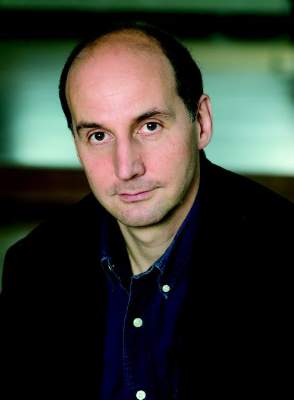
Dr. Rosin is clinical assistant professor of psychiatry at the University of British Columbia and a community geriatric psychiatrist in Vancouver.
Most of us have had nightmares about failing exams we took at school or college. We wake up with a jolt, perspiring – and then have that delicious realization that it was all just a bad dream. We sigh and smile, roll over, and go back to sleep, secure in the knowledge that we are teachers, professors, engineers, lawyers, or doctors, after all.
Wait, did I include doctors? I apologize. Doctors are not included in that group of professionals who can rest easy at night when these dreams assail them. Medical school goes on forever. All the years of dedication to reach a certain level of knowledge and understanding of the body, disease, diagnosis, and treatment appear to have been in vain. For the last 20 years, American doctors alone have been required to take recertification examinations in their respective specialties. Our colleagues in other English-speaking countries shake their heads in bafflement, pity, and relief when they hear about it.
It doesn’t matter that we took more advanced exams in our specialties to get board certified after long and arduous residencies. And we are always attending conferences to keep up.
At first, after a bit of grumbling, we rationalized that maybe it wasn’t such a bad thing, especially as the American Board of Medical Specialties (ABMS) told us it was a way of assuring the public that we kept up to date – and anyway, we had no choice. There was a little disquiet, because these recertification requirements did not apply to everyone.
The older doctors were exempted and aptly called grandfathers. Quite a few people thought it didn’t make sense, because the grandfathers were the least likely to be up to date. How could that possibly be reassuring to the public? But the younger doctors couldn’t do much about it. It was like Animal Farm, where some animals were said to be more equal than others. But it was more mundane than that. An official with the American Board of Psychiatry and Neurology (ABPN) told us at a conference that there were threats of class action suits by the grandfathers and the board didn’t want the expense, which would be passed on to us, anyway.
As the years went by, there were more things we had to do to prove we could do our job of looking after patients, even though most of us were already doing it. The ABMS called these additional duties maintenance of certification, or MOC.
When we were not caring for our patients, we were busy with our MOC, attending more conferences, spending less time with our families and more money on various educational “products.” Ironically, one of the topics we had to study was “physician burnout,” because it could affect patient care. No one said that all these extra tests were one of the major causes of burnout.
Some thought it was a cruel joke and wondered whether MOC was short for mockery. It was all becoming too much, but the ABMS said these new requirements were for the benefit of our patients, and the vast majority of doctors care about their patients, so everyone was afraid to speak out.
Finally, a very brave doctor, Paul Teirstein, chief of cardiology and director of interventional cardiology at the Scripps Clinic at La Jolla, Calif., had had enough. He and his colleagues sent out a petition that nearly 20,000 doctors signed protesting the increasingly burdensome MOC requirements of his board, the ABIM (American Board of Internal Medicine). They formed a group called Physicians for Certification Change, making it clear that they wanted to keep up to date and be good doctors, but they believed that there were other ways to do it. They also pointed out that the ABIM, which said it was very important that everyone practiced evidence-based medicine, had no evidence that the new system made them better doctors. You can read Dr. Teirstein’s fine op-ed.
At first, ABIM board members refused to respond directly to the petition for more than a year. They issued edicts about the importance, validity, and necessity of their MOC process. Then suddenly in January of this year, to everyone’s surprise, Dr. Richard J. Baron, CEO of the ABIM, issued an apology, saying that the board had been wrong, had misjudged the situation, and had been out of touch with the will of the doctors it claimed to represent. The ABIM suspended its plans and price increases as well as its threats to name those not in compliance with its program for a period of 2 years, pending further review. It was as though the ABIM was fearful of a revolt and needed time to regroup.
Dr. Teirstein, who had sent the petition, had created the National Board of Physicians and Surgeons. (Another effort, called Change Board Recertification, is also gaining momentum.)
Within days, our own board, the ABPN, responded to the ABIM’s policy shift. Dr. Larry R. Faulkner, president and CEO, sent an e-mail to all diplomates on Feb. 10, 2015, assuring us all that the changes proposed by the ABIM were already in place at the ABPN, which believed, among other things, that MOC should be collaborative, not onerous. Finally, he proclaimed: “The ABPN is continually looking for more ways to improve its relevance and flexibility and to reduce the burden it places on our busy diplomates. As we have done in the past, we welcome any constructive recommendations in that regard.”
This was all very promising. And so I wrote to Dr. Faulkner to ask whether he could explain why diplomates in geriatric psychiatry were required to maintain their certification in general psychiatry when it was not required of child and adolescent psychiatrists.
The ABPN had told me that even though I recently had recertified in geriatric psychiatry, it would be invalidated if I did not recertify in general psychiatry in a year’s time. Apart from being onerous, this did not seem to be rational, fair, or collaborative. My e-mail went unanswered for a week, so I called the ABPN, and the person with whom I spoke promised to relay my message to Dr. Faulkner.
He responded the next day. It was, he wrote, an “interesting and complex issue,” but the matter had been decided by a consensus of opinion at a forum on crucial issues, although it could be revisited at some unspecified future date. Apparently, representatives of our subspecialty from the American Association for Geriatric Psychiatry (AAGP) had recommended that this policy be maintained, and he suggested that I approach them. I found it hard to believe that all senior members of the AAGP would sign on to such an irrational policy.
This was confirmed by an e-mail I received from the AAGP president, Dr. Susan Schultz, who thanked me for my advocacy and said she had found “very different perspectives” on the matter among members and had therefore arranged for a discussion about it at a meeting at the AAGP conference at the end of March 2015.
I concluded that the decision was not based on evidence, since the forum had breakout sessions at which decisions were based “on the sentiments of very experienced participants,” according to Dr. Faulkner. Even as an AAGP member, I was not aware of these meetings. One of the criticisms of the ABIM was that there was a lack of transparency and involvement by physicians in the whole process. Policy making by “sentiment” is an interesting, if troubling, concept.
Despite the ABPN’s pronouncements, it is not clear that the situation is much better with our own board. To date, I have not received a response to my additional questions regarding the “grandfathering “ issue with its contradictions.
There are still many unanswered questions about MOC. Does it benefit our patients and ourselves, or those who impose it and refuse to engage in meaningful dialogue about its shape, form, and content, not to mention its expense? Ah, the expense. We are fleeced for about $1,500 to sit and answer arcane multiple choice questions for 3 hours in these MOC exams. The aforementioned organizations questioning the MOC process obtained tax returns of the ABMS showing massive increases in revenues from recertification exams in recent years.
And what if we fail? Has the wand been waved to magically transform us from good to bad doctors? The cognitively distorted black and white landscape of multiple choice questions bears little resemblance to the gray reality of patient care where there are often no right answers. But that’s a whole other subject. Or is it?
A final word about our professional grandfathers is in order. If I have seemed harsh, it is only because of the sense of injustice. A more interesting question about the grandfathered generation is whether they were worse doctors without the onerous MOC regime we now all face? We stand, as it is said, on the shoulders of giants who did fine without MOC and recertification. Many critics have said that the boards have simply jumped on the bandwagon of overregulation, citing a faceless “public” that demands more “accountability” – a spurious claim, especially when you consider that to justify “grandfathering,” the boards must defend the paradox that MOC both is and is not necessary to ensure public safety.
As the boards seek to impose MOC on older physicians, many are considering, or are taking, early retirement. Was the ABMS’s intention to eliminate a wealth of clinical experience with MOC? Will our senior clinicians be there long enough to pass on their clinical expertise to the next generation? Can MOC adequately capture and quantify the loss of our older colleagues? They inspired us with dreams and a sense of possibility for our professional lives – even when they were dented by the constraints imposed on us by the insurance industry. Did anyone ever imagine that our own boards would adopt similar tactics?
If we are to sleep well and reclaim our dreams of looking after patients with the best information available, we will, as a group, have to ask these questions and insist on proper answers. But we will need a unified voice.
It took a concerted effort and 20,000 signatures – a grassroots movement – to get a response from the ABIM. Because any criticism of MOC is portrayed as laziness or irresponsibility, rather than a legitimate concern about its methods, there is little doubt that it will take a similar effort in psychiatry.
Dr. Rosin is clinical assistant professor of psychiatry at the University of British Columbia and a community geriatric psychiatrist in Vancouver.
Most of us have had nightmares about failing exams we took at school or college. We wake up with a jolt, perspiring – and then have that delicious realization that it was all just a bad dream. We sigh and smile, roll over, and go back to sleep, secure in the knowledge that we are teachers, professors, engineers, lawyers, or doctors, after all.
Wait, did I include doctors? I apologize. Doctors are not included in that group of professionals who can rest easy at night when these dreams assail them. Medical school goes on forever. All the years of dedication to reach a certain level of knowledge and understanding of the body, disease, diagnosis, and treatment appear to have been in vain. For the last 20 years, American doctors alone have been required to take recertification examinations in their respective specialties. Our colleagues in other English-speaking countries shake their heads in bafflement, pity, and relief when they hear about it.
It doesn’t matter that we took more advanced exams in our specialties to get board certified after long and arduous residencies. And we are always attending conferences to keep up.
At first, after a bit of grumbling, we rationalized that maybe it wasn’t such a bad thing, especially as the American Board of Medical Specialties (ABMS) told us it was a way of assuring the public that we kept up to date – and anyway, we had no choice. There was a little disquiet, because these recertification requirements did not apply to everyone.
The older doctors were exempted and aptly called grandfathers. Quite a few people thought it didn’t make sense, because the grandfathers were the least likely to be up to date. How could that possibly be reassuring to the public? But the younger doctors couldn’t do much about it. It was like Animal Farm, where some animals were said to be more equal than others. But it was more mundane than that. An official with the American Board of Psychiatry and Neurology (ABPN) told us at a conference that there were threats of class action suits by the grandfathers and the board didn’t want the expense, which would be passed on to us, anyway.
As the years went by, there were more things we had to do to prove we could do our job of looking after patients, even though most of us were already doing it. The ABMS called these additional duties maintenance of certification, or MOC.
When we were not caring for our patients, we were busy with our MOC, attending more conferences, spending less time with our families and more money on various educational “products.” Ironically, one of the topics we had to study was “physician burnout,” because it could affect patient care. No one said that all these extra tests were one of the major causes of burnout.
Some thought it was a cruel joke and wondered whether MOC was short for mockery. It was all becoming too much, but the ABMS said these new requirements were for the benefit of our patients, and the vast majority of doctors care about their patients, so everyone was afraid to speak out.
Finally, a very brave doctor, Paul Teirstein, chief of cardiology and director of interventional cardiology at the Scripps Clinic at La Jolla, Calif., had had enough. He and his colleagues sent out a petition that nearly 20,000 doctors signed protesting the increasingly burdensome MOC requirements of his board, the ABIM (American Board of Internal Medicine). They formed a group called Physicians for Certification Change, making it clear that they wanted to keep up to date and be good doctors, but they believed that there were other ways to do it. They also pointed out that the ABIM, which said it was very important that everyone practiced evidence-based medicine, had no evidence that the new system made them better doctors. You can read Dr. Teirstein’s fine op-ed.
At first, ABIM board members refused to respond directly to the petition for more than a year. They issued edicts about the importance, validity, and necessity of their MOC process. Then suddenly in January of this year, to everyone’s surprise, Dr. Richard J. Baron, CEO of the ABIM, issued an apology, saying that the board had been wrong, had misjudged the situation, and had been out of touch with the will of the doctors it claimed to represent. The ABIM suspended its plans and price increases as well as its threats to name those not in compliance with its program for a period of 2 years, pending further review. It was as though the ABIM was fearful of a revolt and needed time to regroup.
Dr. Teirstein, who had sent the petition, had created the National Board of Physicians and Surgeons. (Another effort, called Change Board Recertification, is also gaining momentum.)
Within days, our own board, the ABPN, responded to the ABIM’s policy shift. Dr. Larry R. Faulkner, president and CEO, sent an e-mail to all diplomates on Feb. 10, 2015, assuring us all that the changes proposed by the ABIM were already in place at the ABPN, which believed, among other things, that MOC should be collaborative, not onerous. Finally, he proclaimed: “The ABPN is continually looking for more ways to improve its relevance and flexibility and to reduce the burden it places on our busy diplomates. As we have done in the past, we welcome any constructive recommendations in that regard.”
This was all very promising. And so I wrote to Dr. Faulkner to ask whether he could explain why diplomates in geriatric psychiatry were required to maintain their certification in general psychiatry when it was not required of child and adolescent psychiatrists.
The ABPN had told me that even though I recently had recertified in geriatric psychiatry, it would be invalidated if I did not recertify in general psychiatry in a year’s time. Apart from being onerous, this did not seem to be rational, fair, or collaborative. My e-mail went unanswered for a week, so I called the ABPN, and the person with whom I spoke promised to relay my message to Dr. Faulkner.
He responded the next day. It was, he wrote, an “interesting and complex issue,” but the matter had been decided by a consensus of opinion at a forum on crucial issues, although it could be revisited at some unspecified future date. Apparently, representatives of our subspecialty from the American Association for Geriatric Psychiatry (AAGP) had recommended that this policy be maintained, and he suggested that I approach them. I found it hard to believe that all senior members of the AAGP would sign on to such an irrational policy.
This was confirmed by an e-mail I received from the AAGP president, Dr. Susan Schultz, who thanked me for my advocacy and said she had found “very different perspectives” on the matter among members and had therefore arranged for a discussion about it at a meeting at the AAGP conference at the end of March 2015.
I concluded that the decision was not based on evidence, since the forum had breakout sessions at which decisions were based “on the sentiments of very experienced participants,” according to Dr. Faulkner. Even as an AAGP member, I was not aware of these meetings. One of the criticisms of the ABIM was that there was a lack of transparency and involvement by physicians in the whole process. Policy making by “sentiment” is an interesting, if troubling, concept.
Despite the ABPN’s pronouncements, it is not clear that the situation is much better with our own board. To date, I have not received a response to my additional questions regarding the “grandfathering “ issue with its contradictions.
There are still many unanswered questions about MOC. Does it benefit our patients and ourselves, or those who impose it and refuse to engage in meaningful dialogue about its shape, form, and content, not to mention its expense? Ah, the expense. We are fleeced for about $1,500 to sit and answer arcane multiple choice questions for 3 hours in these MOC exams. The aforementioned organizations questioning the MOC process obtained tax returns of the ABMS showing massive increases in revenues from recertification exams in recent years.
And what if we fail? Has the wand been waved to magically transform us from good to bad doctors? The cognitively distorted black and white landscape of multiple choice questions bears little resemblance to the gray reality of patient care where there are often no right answers. But that’s a whole other subject. Or is it?
A final word about our professional grandfathers is in order. If I have seemed harsh, it is only because of the sense of injustice. A more interesting question about the grandfathered generation is whether they were worse doctors without the onerous MOC regime we now all face? We stand, as it is said, on the shoulders of giants who did fine without MOC and recertification. Many critics have said that the boards have simply jumped on the bandwagon of overregulation, citing a faceless “public” that demands more “accountability” – a spurious claim, especially when you consider that to justify “grandfathering,” the boards must defend the paradox that MOC both is and is not necessary to ensure public safety.
As the boards seek to impose MOC on older physicians, many are considering, or are taking, early retirement. Was the ABMS’s intention to eliminate a wealth of clinical experience with MOC? Will our senior clinicians be there long enough to pass on their clinical expertise to the next generation? Can MOC adequately capture and quantify the loss of our older colleagues? They inspired us with dreams and a sense of possibility for our professional lives – even when they were dented by the constraints imposed on us by the insurance industry. Did anyone ever imagine that our own boards would adopt similar tactics?
If we are to sleep well and reclaim our dreams of looking after patients with the best information available, we will, as a group, have to ask these questions and insist on proper answers. But we will need a unified voice.
It took a concerted effort and 20,000 signatures – a grassroots movement – to get a response from the ABIM. Because any criticism of MOC is portrayed as laziness or irresponsibility, rather than a legitimate concern about its methods, there is little doubt that it will take a similar effort in psychiatry.
Dr. Rosin is clinical assistant professor of psychiatry at the University of British Columbia and a community geriatric psychiatrist in Vancouver.