User login
ROME - "No dermatologists wanted" was the apparent message sent by a task force that prepared a new set of recommendations for managing patients with psoriatic arthritis on behalf of the European League Against Rheumatism (EULAR).
By design, the panel that wrote the recommendations consisted entirely of rheumatologists, a fact proudly announced by French rheumatologist Laure Gossec as she gave the first public presentation of the recommendations during a session of the congress.
"Our goal was to develop easy-to-apply management recommendations for pharmacological, nontopical treatment from the rheumatologists point of view," according to Dr. Gossec, who is a rheumatologist at Cochin Hospital in Paris.
The parochial genesis of the new EULAR recommendations contrasts with another authoritative set of psoriatic arthritis (PsA) management recommendations published last year by the Group for Research and Assessment of Psoriasis and Psoriatic Arthritis (GRAPPA) (Ann. Rheum. Dis. 2009;68:1387-94), a document that involved participation by dermatologists.
The timing also raised questions on why the world needed a second guide to managing PsA so soon.
"We felt that the GRAPPA recommendations were rather complex to apply for rheumatologists. They require distinguishing mild, moderate, and severe disease and features of the disease," said Dr. Gossec.
In addition, creation of the GRAPPA recommendations, published in 2009, involved a high representation of dermatologists and were applicable to patients with high skin involvement, she said.
Drafting of the new EULAR recommendations began last January and finished in June, just days before Dr. Gossec presented them.

Some of this rationale is reasonable, said Dr. Christopher T. Ritchlin, a rheumatologist at the University of Rochester, N.Y., who chaired the GRAPPA panel that produced the 2009 treatment recommendations and was also a member of the EULAR task force that created the new guidelines.
"They're trying to be simple, which is fine. This is a great effort. I completely applaud trying to simplify, but that can be challenging because psoriatic arthritis is not only heterogeneous but can be complex within a patient. The GRAPPA recommendations are very complex; they took 2 years to develop. We worked with dermatologists because we felt there needs to be co-management for a large number of patients to effectively take care of their psoriatic disease. Interaction of the rheumatologist and dermatologist and even a psychologist or psychiatrist is critical for the successful management of a large number of cases. Not for every patient; some patients have no skin involvement. But there are a lot who have skin involvement."
Most dermatologists would likely agree.
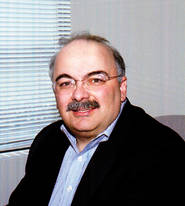
"I think it is important for dermatologists to have a seat at the table," said Dr. Craig L. Leonardi, a dermatologist and psoriasis specialist at St. Louis University. "Results from published studies show that roughly 70% of PsA patients have skin symptoms before joint symptoms and, on average, they had skin symptoms for 10 years. If patients are pursuing treatment for their psoriasis, it may be a dermatologist who detects early PsA first. As a consequence, recommendations for early diagnosis and treatment need to consider the dermatologist."
Dr. Leonardi acknowledged that "rheumatologists are the ones formally trained in managing inflammatory joint disease. But there are some things about managing psoriasis that rheumatologists may not be aware of. For example, psoriatic skin has a wide range of responses to the various tumor necrosis factor antagonists" which should play a role in drug selection, he said.
A more skeptical view of the need for a new set of recommendations so soon on the heels of the GRAPPA paper came from Dr. Dafna D. Gladman, another member of the GRAPPA panel who had no involvement with the EULAR task force. "The EULAR group didn't come up with any more papers than GRAPPA. I'm not sure we have more information here than in the GRAPPA recommendations. I feel the GRAPPA recommendations are more helpful to clinicians because they tell them exactly what to do" for PsA patients with very specific disease presentations, he said.
"I'm not impressed that these recommendations are anything new," said Dr. Gladman, professor of medicine at the University of Toronto and director of the psoriatic arthritis program at Toronto Western Hospital.
During the brief discussion of the new EULAR recommendations following Dr. Gossec's presentation, most attention focused on the role of methotrexate and tumor necrosis factor (TNF) inhibitors for treating PsA.
The recommendations "emphasize how much we need controlled trial data on methotrexate," said Dr. Ritchlin.
One of the 10 recommendations from the EULAR panel gave the green light to starting treatment with a TNF inhibitor "in patients with active arthritis and an inadequate response to at least one synthetic disease-modifying antirheumatic drug, such as methotrexate."
"We thought that there was not enough data to limit [TNF inhibitor treatment] to patients with a specific number of affected joints," Dr. Gossec said.
"We thought that there were not enough data to limit [TNF inhibitor treatment] to patients with a specific number of affected joints," Dr. Gossec said.
The 10 recommendations are as follows:
1. NSAIDs may be used to relieve musculoskeletal signs and symptoms.
2. Treatment with a DMARD such as methotrexate, sulfasalazine, or leflunomide should be considered at an early stage of active disease, especially when it involves many swollen joints, structural damage in the presence of inflammation, high erythrocyte sedimentation rate or C-reactive protein, or clinically relevant extra-articular manifestations.
3. Consider use of methotrexate or another DMARD that also improves psoriasis in patients with active PsA that involves clinically relevant psoriasis.
4. Local injections of corticosteroids should be considered as adjunctive therapy. Systemic steroids at the lowest effective dose may be used with caution.
5. Therapy with a TNF inhibitor should be initiated in patients with active arthritis that responds inadequately to at least one synthetic DMARD, such as methotrexate.
6. Patients with active enthesitis, dactylitis, or both and insufficient response to NSAIDs or local steroid injections should be considered for anti-TNF therapy.
7. Consider anti-TNF therapy in cases of active, predominantly axial disease that has not responded sufficiently to NSAIDs.
8. In exceptional cases, a patient with very active disease who had not yet been treated with a synthetic DMARD may be considered for treatment with an anti TNF agent, especially when the patient has many swollen joints; structural damage in the presence of inflammation; or clinically relevant extra-articular manifestations, especially extensive skin involvement.
9. Consider switching to a different anti-TNF agent if the patient fails to respond adequately to the first drug from this class.
10. When adjusting treatment, take into account factors beyond disease activity, including comorbidities and safety issues.
Dr. Gossec, Dr. Ritchlin, and Dr. Gladman said that they had no relevant disclosures. Dr. Leonardi has been a consultant to, speaker for, and has received research support from Abbott Laboratories, Amgen Inc., and Genentech Inc. He has been a consultant to and received research support from Genentech. He has been a speaker for Warner Chilcott. He has received research support from Allergan Inc., Altana AG, Alza Corp., Astellis Pharma US Inc., Bristol-Myers Squibb, Celgene Corp., CombinatoRx, Eli Lilly & Co., Galderma Laboratories, Genzyme Corp., Incyte Corp., Israel Pharmaceutical, Novartis AG, Perrigo Co., Pfizer Inc., RTL Group, Schering-Plough Corp., 3M, Vitae Pharmaceuticals Inc., and Wyeth.
ROME - "No dermatologists wanted" was the apparent message sent by a task force that prepared a new set of recommendations for managing patients with psoriatic arthritis on behalf of the European League Against Rheumatism (EULAR).
By design, the panel that wrote the recommendations consisted entirely of rheumatologists, a fact proudly announced by French rheumatologist Laure Gossec as she gave the first public presentation of the recommendations during a session of the congress.
"Our goal was to develop easy-to-apply management recommendations for pharmacological, nontopical treatment from the rheumatologists point of view," according to Dr. Gossec, who is a rheumatologist at Cochin Hospital in Paris.
The parochial genesis of the new EULAR recommendations contrasts with another authoritative set of psoriatic arthritis (PsA) management recommendations published last year by the Group for Research and Assessment of Psoriasis and Psoriatic Arthritis (GRAPPA) (Ann. Rheum. Dis. 2009;68:1387-94), a document that involved participation by dermatologists.
The timing also raised questions on why the world needed a second guide to managing PsA so soon.
"We felt that the GRAPPA recommendations were rather complex to apply for rheumatologists. They require distinguishing mild, moderate, and severe disease and features of the disease," said Dr. Gossec.
In addition, creation of the GRAPPA recommendations, published in 2009, involved a high representation of dermatologists and were applicable to patients with high skin involvement, she said.
Drafting of the new EULAR recommendations began last January and finished in June, just days before Dr. Gossec presented them.
Some of this rationale is reasonable, said Dr. Christopher T. Ritchlin, a rheumatologist at the University of Rochester, N.Y., who chaired the GRAPPA panel that produced the 2009 treatment recommendations and was also a member of the EULAR task force that created the new guidelines.
"They're trying to be simple, which is fine. This is a great effort. I completely applaud trying to simplify, but that can be challenging because psoriatic arthritis is not only heterogeneous but can be complex within a patient. The GRAPPA recommendations are very complex; they took 2 years to develop. We worked with dermatologists because we felt there needs to be co-management for a large number of patients to effectively take care of their psoriatic disease. Interaction of the rheumatologist and dermatologist and even a psychologist or psychiatrist is critical for the successful management of a large number of cases. Not for every patient; some patients have no skin involvement. But there are a lot who have skin involvement."
Most dermatologists would likely agree.
"I think it is important for dermatologists to have a seat at the table," said Dr. Craig L. Leonardi, a dermatologist and psoriasis specialist at St. Louis University. "Results from published studies show that roughly 70% of PsA patients have skin symptoms before joint symptoms and, on average, they had skin symptoms for 10 years. If patients are pursuing treatment for their psoriasis, it may be a dermatologist who detects early PsA first. As a consequence, recommendations for early diagnosis and treatment need to consider the dermatologist."
Dr. Leonardi acknowledged that "rheumatologists are the ones formally trained in managing inflammatory joint disease. But there are some things about managing psoriasis that rheumatologists may not be aware of. For example, psoriatic skin has a wide range of responses to the various tumor necrosis factor antagonists" which should play a role in drug selection, he said.
A more skeptical view of the need for a new set of recommendations so soon on the heels of the GRAPPA paper came from Dr. Dafna D. Gladman, another member of the GRAPPA panel who had no involvement with the EULAR task force. "The EULAR group didn't come up with any more papers than GRAPPA. I'm not sure we have more information here than in the GRAPPA recommendations. I feel the GRAPPA recommendations are more helpful to clinicians because they tell them exactly what to do" for PsA patients with very specific disease presentations, he said.
"I'm not impressed that these recommendations are anything new," said Dr. Gladman, professor of medicine at the University of Toronto and director of the psoriatic arthritis program at Toronto Western Hospital.
During the brief discussion of the new EULAR recommendations following Dr. Gossec's presentation, most attention focused on the role of methotrexate and tumor necrosis factor (TNF) inhibitors for treating PsA.
The recommendations "emphasize how much we need controlled trial data on methotrexate," said Dr. Ritchlin.
One of the 10 recommendations from the EULAR panel gave the green light to starting treatment with a TNF inhibitor "in patients with active arthritis and an inadequate response to at least one synthetic disease-modifying antirheumatic drug, such as methotrexate."
"We thought that there was not enough data to limit [TNF inhibitor treatment] to patients with a specific number of affected joints," Dr. Gossec said.
"We thought that there were not enough data to limit [TNF inhibitor treatment] to patients with a specific number of affected joints," Dr. Gossec said.
The 10 recommendations are as follows:
1. NSAIDs may be used to relieve musculoskeletal signs and symptoms.
2. Treatment with a DMARD such as methotrexate, sulfasalazine, or leflunomide should be considered at an early stage of active disease, especially when it involves many swollen joints, structural damage in the presence of inflammation, high erythrocyte sedimentation rate or C-reactive protein, or clinically relevant extra-articular manifestations.
3. Consider use of methotrexate or another DMARD that also improves psoriasis in patients with active PsA that involves clinically relevant psoriasis.
4. Local injections of corticosteroids should be considered as adjunctive therapy. Systemic steroids at the lowest effective dose may be used with caution.
5. Therapy with a TNF inhibitor should be initiated in patients with active arthritis that responds inadequately to at least one synthetic DMARD, such as methotrexate.
6. Patients with active enthesitis, dactylitis, or both and insufficient response to NSAIDs or local steroid injections should be considered for anti-TNF therapy.
7. Consider anti-TNF therapy in cases of active, predominantly axial disease that has not responded sufficiently to NSAIDs.
8. In exceptional cases, a patient with very active disease who had not yet been treated with a synthetic DMARD may be considered for treatment with an anti TNF agent, especially when the patient has many swollen joints; structural damage in the presence of inflammation; or clinically relevant extra-articular manifestations, especially extensive skin involvement.
9. Consider switching to a different anti-TNF agent if the patient fails to respond adequately to the first drug from this class.
10. When adjusting treatment, take into account factors beyond disease activity, including comorbidities and safety issues.
Dr. Gossec, Dr. Ritchlin, and Dr. Gladman said that they had no relevant disclosures. Dr. Leonardi has been a consultant to, speaker for, and has received research support from Abbott Laboratories, Amgen Inc., and Genentech Inc. He has been a consultant to and received research support from Genentech. He has been a speaker for Warner Chilcott. He has received research support from Allergan Inc., Altana AG, Alza Corp., Astellis Pharma US Inc., Bristol-Myers Squibb, Celgene Corp., CombinatoRx, Eli Lilly & Co., Galderma Laboratories, Genzyme Corp., Incyte Corp., Israel Pharmaceutical, Novartis AG, Perrigo Co., Pfizer Inc., RTL Group, Schering-Plough Corp., 3M, Vitae Pharmaceuticals Inc., and Wyeth.
ROME - "No dermatologists wanted" was the apparent message sent by a task force that prepared a new set of recommendations for managing patients with psoriatic arthritis on behalf of the European League Against Rheumatism (EULAR).
By design, the panel that wrote the recommendations consisted entirely of rheumatologists, a fact proudly announced by French rheumatologist Laure Gossec as she gave the first public presentation of the recommendations during a session of the congress.
"Our goal was to develop easy-to-apply management recommendations for pharmacological, nontopical treatment from the rheumatologists point of view," according to Dr. Gossec, who is a rheumatologist at Cochin Hospital in Paris.
The parochial genesis of the new EULAR recommendations contrasts with another authoritative set of psoriatic arthritis (PsA) management recommendations published last year by the Group for Research and Assessment of Psoriasis and Psoriatic Arthritis (GRAPPA) (Ann. Rheum. Dis. 2009;68:1387-94), a document that involved participation by dermatologists.
The timing also raised questions on why the world needed a second guide to managing PsA so soon.
"We felt that the GRAPPA recommendations were rather complex to apply for rheumatologists. They require distinguishing mild, moderate, and severe disease and features of the disease," said Dr. Gossec.
In addition, creation of the GRAPPA recommendations, published in 2009, involved a high representation of dermatologists and were applicable to patients with high skin involvement, she said.
Drafting of the new EULAR recommendations began last January and finished in June, just days before Dr. Gossec presented them.
Some of this rationale is reasonable, said Dr. Christopher T. Ritchlin, a rheumatologist at the University of Rochester, N.Y., who chaired the GRAPPA panel that produced the 2009 treatment recommendations and was also a member of the EULAR task force that created the new guidelines.
"They're trying to be simple, which is fine. This is a great effort. I completely applaud trying to simplify, but that can be challenging because psoriatic arthritis is not only heterogeneous but can be complex within a patient. The GRAPPA recommendations are very complex; they took 2 years to develop. We worked with dermatologists because we felt there needs to be co-management for a large number of patients to effectively take care of their psoriatic disease. Interaction of the rheumatologist and dermatologist and even a psychologist or psychiatrist is critical for the successful management of a large number of cases. Not for every patient; some patients have no skin involvement. But there are a lot who have skin involvement."
Most dermatologists would likely agree.
"I think it is important for dermatologists to have a seat at the table," said Dr. Craig L. Leonardi, a dermatologist and psoriasis specialist at St. Louis University. "Results from published studies show that roughly 70% of PsA patients have skin symptoms before joint symptoms and, on average, they had skin symptoms for 10 years. If patients are pursuing treatment for their psoriasis, it may be a dermatologist who detects early PsA first. As a consequence, recommendations for early diagnosis and treatment need to consider the dermatologist."
Dr. Leonardi acknowledged that "rheumatologists are the ones formally trained in managing inflammatory joint disease. But there are some things about managing psoriasis that rheumatologists may not be aware of. For example, psoriatic skin has a wide range of responses to the various tumor necrosis factor antagonists" which should play a role in drug selection, he said.
A more skeptical view of the need for a new set of recommendations so soon on the heels of the GRAPPA paper came from Dr. Dafna D. Gladman, another member of the GRAPPA panel who had no involvement with the EULAR task force. "The EULAR group didn't come up with any more papers than GRAPPA. I'm not sure we have more information here than in the GRAPPA recommendations. I feel the GRAPPA recommendations are more helpful to clinicians because they tell them exactly what to do" for PsA patients with very specific disease presentations, he said.
"I'm not impressed that these recommendations are anything new," said Dr. Gladman, professor of medicine at the University of Toronto and director of the psoriatic arthritis program at Toronto Western Hospital.
During the brief discussion of the new EULAR recommendations following Dr. Gossec's presentation, most attention focused on the role of methotrexate and tumor necrosis factor (TNF) inhibitors for treating PsA.
The recommendations "emphasize how much we need controlled trial data on methotrexate," said Dr. Ritchlin.
One of the 10 recommendations from the EULAR panel gave the green light to starting treatment with a TNF inhibitor "in patients with active arthritis and an inadequate response to at least one synthetic disease-modifying antirheumatic drug, such as methotrexate."
"We thought that there was not enough data to limit [TNF inhibitor treatment] to patients with a specific number of affected joints," Dr. Gossec said.
"We thought that there were not enough data to limit [TNF inhibitor treatment] to patients with a specific number of affected joints," Dr. Gossec said.
The 10 recommendations are as follows:
1. NSAIDs may be used to relieve musculoskeletal signs and symptoms.
2. Treatment with a DMARD such as methotrexate, sulfasalazine, or leflunomide should be considered at an early stage of active disease, especially when it involves many swollen joints, structural damage in the presence of inflammation, high erythrocyte sedimentation rate or C-reactive protein, or clinically relevant extra-articular manifestations.
3. Consider use of methotrexate or another DMARD that also improves psoriasis in patients with active PsA that involves clinically relevant psoriasis.
4. Local injections of corticosteroids should be considered as adjunctive therapy. Systemic steroids at the lowest effective dose may be used with caution.
5. Therapy with a TNF inhibitor should be initiated in patients with active arthritis that responds inadequately to at least one synthetic DMARD, such as methotrexate.
6. Patients with active enthesitis, dactylitis, or both and insufficient response to NSAIDs or local steroid injections should be considered for anti-TNF therapy.
7. Consider anti-TNF therapy in cases of active, predominantly axial disease that has not responded sufficiently to NSAIDs.
8. In exceptional cases, a patient with very active disease who had not yet been treated with a synthetic DMARD may be considered for treatment with an anti TNF agent, especially when the patient has many swollen joints; structural damage in the presence of inflammation; or clinically relevant extra-articular manifestations, especially extensive skin involvement.
9. Consider switching to a different anti-TNF agent if the patient fails to respond adequately to the first drug from this class.
10. When adjusting treatment, take into account factors beyond disease activity, including comorbidities and safety issues.
Dr. Gossec, Dr. Ritchlin, and Dr. Gladman said that they had no relevant disclosures. Dr. Leonardi has been a consultant to, speaker for, and has received research support from Abbott Laboratories, Amgen Inc., and Genentech Inc. He has been a consultant to and received research support from Genentech. He has been a speaker for Warner Chilcott. He has received research support from Allergan Inc., Altana AG, Alza Corp., Astellis Pharma US Inc., Bristol-Myers Squibb, Celgene Corp., CombinatoRx, Eli Lilly & Co., Galderma Laboratories, Genzyme Corp., Incyte Corp., Israel Pharmaceutical, Novartis AG, Perrigo Co., Pfizer Inc., RTL Group, Schering-Plough Corp., 3M, Vitae Pharmaceuticals Inc., and Wyeth.