User login
Sharon Worcester is an award-winning medical journalist for MDedge News. She has been with the company since 1996, first as the Southeast Bureau Chief (1996-2009) when the company was known as International Medical News Group, then as a freelance writer (2010-2015) before returning as a reporter in 2015. She previously worked as a daily newspaper reporter covering health and local government. Sharon currently reports primarily on oncology and hematology. She has a BA from Eckerd College and an MA in Mass Communication/Print Journalism from the University of Florida. Connect with her via LinkedIn and follow her on twitter @SW_MedReporter.
Tofacitinib Effective for RA in Phase III Study
The use of tofacitinib in combination with conventional background disease-modifying antirheumatic drugs is associated with rapid, significant, and clinically meaningful reductions in signs and symptoms of rheumatoid arthritis, as well as with improvement in physical function, according to findings from a phase III study.
The data were presented by Dr. Joel M. Kremer at a press briefing during the annual meeting of the European Congress of Rheumatology.
"The very rapid responses were sustained beyond 6 months to 12 months," Dr. Kremer noted.
The findings from the 12-month, placebo-controlled study are consistent with those from phase II studies and a phase III monotherapy study of the novel oral JAK inhibitor, and no new safety signals were detected, said Dr. Kremer, a rheumatologist and the Pfaff Family Professor of Medicine at Albany (N.Y.) Medical College.
In 792 patients with inadequate response to nonbiologic background DMARDs – most often methotrexate – who were randomized to receive either 5 mg or 10 mg of tofacitinib or placebo twice daily, tofacitinib was statistically superior to placebo for all primary efficacy end points, including an ACR 20 response (that is, an American College of Rheumatology score based on a 20% improvement in specified parameters), a DAS28-4(ESR) response (that is, a disease activity score based on a 28-joint count and the erythrocyte sedimentation rate) of less than 2.6 at month 6, and a change in HAQ-DI (Health and Quality of Life–Disability Index) at month 3.
In the 5-mg, 10-mg, and placebo groups, respectively, ACR 20 responses at 6 months were 52.7%, 58.3%, and 31.2%; DAS28-4(ESR) responses of less than 2.6 at 6 months were 11.0%, 14.8% and 2.7%; and changes in HAQ-DI at 3 months were –0.46, –0.56, and –0.21.
Significant differences between the treatment and placebo groups were seen by week 2, Dr. Kremer noted.
The most common adverse events included infections and infestations, which were generally mild. However, four deaths and four opportunistic infections occurred. Deaths included one from acute heart failure and one from respiratory failure in the 10-mg treatment group, and one from traumatic brain injury and one from RA in the 5-mg treatment group, both following discontinuation of treatment (at 22 and 42 days, respectively). Serious infectious events (including opportunistic infections, such as TB, Cryptococcus, and herpes zoster) occurred in two patients in the 5-mg group and in four patients in the 10-mg group during months 0-4, and in one patient in each group during months 3-6. Other adverse events included decreases in neutrophils, increases in LDL and HDL cholesterol levels, small increases in serum creatinine, and anemia.
Patients in the study were mostly women (81.4%) with a mean age in the treatment and placebo groups, respectively, of 50.8 and 53.3 years at baseline, and a mean disease duration of 8.1 and 10.2 years. Nonresponders in the placebo group at month 3 were advanced to tofacitinib, and all remaining patients in the placebo group were advanced at 6 months.
"This large, phase III trial adds to the body of evidence on the efficacy of tofacitinib," Dr. Kremer concluded.
There were four deaths but only one was thought to be treatment related, Dr. Kremer noted. The patient’s spouse refused to grant permission for an autopsy, he added.
Dr. Kremer reported receiving grant and/or research support from Pfizer Inc. and serving as a consultant for Pfizer. Other study authors disclosed having similar relationships with Pfizer, as well as serving on the speakers bureau and/or being a shareholder or employee of Pfizer.
The use of tofacitinib in combination with conventional background disease-modifying antirheumatic drugs is associated with rapid, significant, and clinically meaningful reductions in signs and symptoms of rheumatoid arthritis, as well as with improvement in physical function, according to findings from a phase III study.
The data were presented by Dr. Joel M. Kremer at a press briefing during the annual meeting of the European Congress of Rheumatology.
"The very rapid responses were sustained beyond 6 months to 12 months," Dr. Kremer noted.
The findings from the 12-month, placebo-controlled study are consistent with those from phase II studies and a phase III monotherapy study of the novel oral JAK inhibitor, and no new safety signals were detected, said Dr. Kremer, a rheumatologist and the Pfaff Family Professor of Medicine at Albany (N.Y.) Medical College.
In 792 patients with inadequate response to nonbiologic background DMARDs – most often methotrexate – who were randomized to receive either 5 mg or 10 mg of tofacitinib or placebo twice daily, tofacitinib was statistically superior to placebo for all primary efficacy end points, including an ACR 20 response (that is, an American College of Rheumatology score based on a 20% improvement in specified parameters), a DAS28-4(ESR) response (that is, a disease activity score based on a 28-joint count and the erythrocyte sedimentation rate) of less than 2.6 at month 6, and a change in HAQ-DI (Health and Quality of Life–Disability Index) at month 3.
In the 5-mg, 10-mg, and placebo groups, respectively, ACR 20 responses at 6 months were 52.7%, 58.3%, and 31.2%; DAS28-4(ESR) responses of less than 2.6 at 6 months were 11.0%, 14.8% and 2.7%; and changes in HAQ-DI at 3 months were –0.46, –0.56, and –0.21.
Significant differences between the treatment and placebo groups were seen by week 2, Dr. Kremer noted.
The most common adverse events included infections and infestations, which were generally mild. However, four deaths and four opportunistic infections occurred. Deaths included one from acute heart failure and one from respiratory failure in the 10-mg treatment group, and one from traumatic brain injury and one from RA in the 5-mg treatment group, both following discontinuation of treatment (at 22 and 42 days, respectively). Serious infectious events (including opportunistic infections, such as TB, Cryptococcus, and herpes zoster) occurred in two patients in the 5-mg group and in four patients in the 10-mg group during months 0-4, and in one patient in each group during months 3-6. Other adverse events included decreases in neutrophils, increases in LDL and HDL cholesterol levels, small increases in serum creatinine, and anemia.
Patients in the study were mostly women (81.4%) with a mean age in the treatment and placebo groups, respectively, of 50.8 and 53.3 years at baseline, and a mean disease duration of 8.1 and 10.2 years. Nonresponders in the placebo group at month 3 were advanced to tofacitinib, and all remaining patients in the placebo group were advanced at 6 months.
"This large, phase III trial adds to the body of evidence on the efficacy of tofacitinib," Dr. Kremer concluded.
There were four deaths but only one was thought to be treatment related, Dr. Kremer noted. The patient’s spouse refused to grant permission for an autopsy, he added.
Dr. Kremer reported receiving grant and/or research support from Pfizer Inc. and serving as a consultant for Pfizer. Other study authors disclosed having similar relationships with Pfizer, as well as serving on the speakers bureau and/or being a shareholder or employee of Pfizer.
The use of tofacitinib in combination with conventional background disease-modifying antirheumatic drugs is associated with rapid, significant, and clinically meaningful reductions in signs and symptoms of rheumatoid arthritis, as well as with improvement in physical function, according to findings from a phase III study.
The data were presented by Dr. Joel M. Kremer at a press briefing during the annual meeting of the European Congress of Rheumatology.
"The very rapid responses were sustained beyond 6 months to 12 months," Dr. Kremer noted.
The findings from the 12-month, placebo-controlled study are consistent with those from phase II studies and a phase III monotherapy study of the novel oral JAK inhibitor, and no new safety signals were detected, said Dr. Kremer, a rheumatologist and the Pfaff Family Professor of Medicine at Albany (N.Y.) Medical College.
In 792 patients with inadequate response to nonbiologic background DMARDs – most often methotrexate – who were randomized to receive either 5 mg or 10 mg of tofacitinib or placebo twice daily, tofacitinib was statistically superior to placebo for all primary efficacy end points, including an ACR 20 response (that is, an American College of Rheumatology score based on a 20% improvement in specified parameters), a DAS28-4(ESR) response (that is, a disease activity score based on a 28-joint count and the erythrocyte sedimentation rate) of less than 2.6 at month 6, and a change in HAQ-DI (Health and Quality of Life–Disability Index) at month 3.
In the 5-mg, 10-mg, and placebo groups, respectively, ACR 20 responses at 6 months were 52.7%, 58.3%, and 31.2%; DAS28-4(ESR) responses of less than 2.6 at 6 months were 11.0%, 14.8% and 2.7%; and changes in HAQ-DI at 3 months were –0.46, –0.56, and –0.21.
Significant differences between the treatment and placebo groups were seen by week 2, Dr. Kremer noted.
The most common adverse events included infections and infestations, which were generally mild. However, four deaths and four opportunistic infections occurred. Deaths included one from acute heart failure and one from respiratory failure in the 10-mg treatment group, and one from traumatic brain injury and one from RA in the 5-mg treatment group, both following discontinuation of treatment (at 22 and 42 days, respectively). Serious infectious events (including opportunistic infections, such as TB, Cryptococcus, and herpes zoster) occurred in two patients in the 5-mg group and in four patients in the 10-mg group during months 0-4, and in one patient in each group during months 3-6. Other adverse events included decreases in neutrophils, increases in LDL and HDL cholesterol levels, small increases in serum creatinine, and anemia.
Patients in the study were mostly women (81.4%) with a mean age in the treatment and placebo groups, respectively, of 50.8 and 53.3 years at baseline, and a mean disease duration of 8.1 and 10.2 years. Nonresponders in the placebo group at month 3 were advanced to tofacitinib, and all remaining patients in the placebo group were advanced at 6 months.
"This large, phase III trial adds to the body of evidence on the efficacy of tofacitinib," Dr. Kremer concluded.
There were four deaths but only one was thought to be treatment related, Dr. Kremer noted. The patient’s spouse refused to grant permission for an autopsy, he added.
Dr. Kremer reported receiving grant and/or research support from Pfizer Inc. and serving as a consultant for Pfizer. Other study authors disclosed having similar relationships with Pfizer, as well as serving on the speakers bureau and/or being a shareholder or employee of Pfizer.
FROM THE ANNUAL EUROPEAN CONGRESS OF RHEUMATOLOGY
Major Findings: In the 5-mg, 10-mg, and placebo groups,
respectively, ACR 20
responses at 6 months were 52.7%, 58.3%, and 31.2%; DAS28-4(ESR)
responses of less than 2.6 at 6 months were 11.0%, 14.8% and 2.7%; and
changes in HAQ-DI at 3 months were –0.46, –0.56, and –0.21. Significant
differences between the treatment and placebo groups were seen by week 2
Data Source:
A phase III 12-month, placebo-controlled study. A total of 792
patients with inadequate response to nonbiologic background DMARDs –
most often methotrexate – who were randomized to receive either 5 mg or
10 mg of tofacitinib or placebo twice daily.
Disclosures: Dr. Kremer reported receiving grant and/or research support from Pfizer
Inc. and serving as a consultant for Pfizer. Other study authors
disclosed having similar relationships with Pfizer, as well as serving
on the speakers bureau and/or being a shareholder or employee of Pfizer.
Aspirin, Methotrexate Are Adjunctive Therapy Options in GCA
CHICAGO – Glucocorticoids remain the cornerstone of therapy for giant cell arteritis, but aspirin and methotrexate can be useful as adjunctive therapies.
Infliximab, however, does not appear to be of benefit in this disease, said Dr. Philip Seo at a symposium sponsored by the American College of Rheumatology.

The benefits of aspirin were demonstrated in a 2004 retrospective study of 175 patients with giant cell arteritis (GCA), including 36 who were being treated with 100 mg/day of aspirin from the time of diagnosis and 139 who were not (Arthritis Rheum. 2004;50:1332-7). Aspirin was shown to be associated with a reduced risk of cranial ischemic events, including acute vision loss and cerebrovascular accident, said Dr. Seo, codirector of the vasculitis center at the Johns Hopkins University, Baltimore.
In that study, only 8% of patients who were treated with aspirin, compared with 29% of those not treated with aspirin, experienced a cranial ischemic event, and that was despite the fact that cerebrovascular risk factors were present in 38.9% and 20% of patients, respectively. In 166 patients from the study who were followed for at least 3 months, the findings were similar: In all, 2.7% of 73 patients treated with aspirin, compared with 12.9% of those not treated with aspirin, experienced a cerebral ischemic event during follow-up, despite 28.8% and 12.9% in the groups, respectively, having cerebrovascular risk factors.
Methotrexate has also been shown to provide some benefit as an adjunctive therapy in GCA, but the effect in studies has been modest at best, and treatment has been disappointing in practice, Dr. Seo said.
Three randomized, double-blind, placebo-controlled trials of methotrexate in this disease had three different results. A meta-analysis of the findings suggested that methotrexate reduced the probability of a first relapse modestly (hazard ratio, 0.65) during nearly 55 weeks of follow-up, and showed that it also reduced the corticosteroid cumulative dose by more than 800 mg on average over 48 weeks (Arthritis Rheum. 2007;56:2789-97). That reduction, however, was not associated with a reduction in steroid side effects, he said.
Still, the beneficial effects are more promising than those seen with infliximab, which has not been found to have benefit in GCA. In fact, a randomized, placebo-controlled, phase II trial that was scheduled to run for about 1 year closed after only 22 weeks because of lack of efficacy in the treatment group, Dr. Seo noted (Ann. Intern. Med. 2007;146:621-30).
Patients in that trial received prednisone/prednisolone and either placebo or 5 mg/kg infliximab infusions. The infusions were given at baseline and were planned for weeks 2, 6, 14, 22, 30, 38, and 46 (with prednisone tapering after randomization in both groups). At the time the study was discontinued, no difference was seen in the proportion of relapse-free subjects, time to first relapse, or cumulative prednisone dose between the two groups.
The findings were somewhat surprising, given that infliximab works so well for so many other forms of large vessel vasculitis, Dr. Seo said.
"Despite the fact that it should work, it doesn’t seem to for GCA," he said.
So for now, the best bet for adjunctive treatment in GCA is aspirin, which "seems to be a very good idea," he said, noting that although it is not yet the standard of care, it may eventually become so.
Methotrexate can be considered as an adjunctive therapeutic option based on the available data, but it has only a small impact, and the question of whether it should be standard remains controversial. Infliximab is "hard to recommend" in GCA, he said adding that the search continues for effective treatments.
Drugs under investigation for GCA include abatacept and tocilizumab, but it remains too early to say if these will be helpful, he noted.
Dr. Seo disclosed that he has received consulting fees and other remuneration from Genentech.
CHICAGO – Glucocorticoids remain the cornerstone of therapy for giant cell arteritis, but aspirin and methotrexate can be useful as adjunctive therapies.
Infliximab, however, does not appear to be of benefit in this disease, said Dr. Philip Seo at a symposium sponsored by the American College of Rheumatology.
The benefits of aspirin were demonstrated in a 2004 retrospective study of 175 patients with giant cell arteritis (GCA), including 36 who were being treated with 100 mg/day of aspirin from the time of diagnosis and 139 who were not (Arthritis Rheum. 2004;50:1332-7). Aspirin was shown to be associated with a reduced risk of cranial ischemic events, including acute vision loss and cerebrovascular accident, said Dr. Seo, codirector of the vasculitis center at the Johns Hopkins University, Baltimore.
In that study, only 8% of patients who were treated with aspirin, compared with 29% of those not treated with aspirin, experienced a cranial ischemic event, and that was despite the fact that cerebrovascular risk factors were present in 38.9% and 20% of patients, respectively. In 166 patients from the study who were followed for at least 3 months, the findings were similar: In all, 2.7% of 73 patients treated with aspirin, compared with 12.9% of those not treated with aspirin, experienced a cerebral ischemic event during follow-up, despite 28.8% and 12.9% in the groups, respectively, having cerebrovascular risk factors.
Methotrexate has also been shown to provide some benefit as an adjunctive therapy in GCA, but the effect in studies has been modest at best, and treatment has been disappointing in practice, Dr. Seo said.
Three randomized, double-blind, placebo-controlled trials of methotrexate in this disease had three different results. A meta-analysis of the findings suggested that methotrexate reduced the probability of a first relapse modestly (hazard ratio, 0.65) during nearly 55 weeks of follow-up, and showed that it also reduced the corticosteroid cumulative dose by more than 800 mg on average over 48 weeks (Arthritis Rheum. 2007;56:2789-97). That reduction, however, was not associated with a reduction in steroid side effects, he said.
Still, the beneficial effects are more promising than those seen with infliximab, which has not been found to have benefit in GCA. In fact, a randomized, placebo-controlled, phase II trial that was scheduled to run for about 1 year closed after only 22 weeks because of lack of efficacy in the treatment group, Dr. Seo noted (Ann. Intern. Med. 2007;146:621-30).
Patients in that trial received prednisone/prednisolone and either placebo or 5 mg/kg infliximab infusions. The infusions were given at baseline and were planned for weeks 2, 6, 14, 22, 30, 38, and 46 (with prednisone tapering after randomization in both groups). At the time the study was discontinued, no difference was seen in the proportion of relapse-free subjects, time to first relapse, or cumulative prednisone dose between the two groups.
The findings were somewhat surprising, given that infliximab works so well for so many other forms of large vessel vasculitis, Dr. Seo said.
"Despite the fact that it should work, it doesn’t seem to for GCA," he said.
So for now, the best bet for adjunctive treatment in GCA is aspirin, which "seems to be a very good idea," he said, noting that although it is not yet the standard of care, it may eventually become so.
Methotrexate can be considered as an adjunctive therapeutic option based on the available data, but it has only a small impact, and the question of whether it should be standard remains controversial. Infliximab is "hard to recommend" in GCA, he said adding that the search continues for effective treatments.
Drugs under investigation for GCA include abatacept and tocilizumab, but it remains too early to say if these will be helpful, he noted.
Dr. Seo disclosed that he has received consulting fees and other remuneration from Genentech.
CHICAGO – Glucocorticoids remain the cornerstone of therapy for giant cell arteritis, but aspirin and methotrexate can be useful as adjunctive therapies.
Infliximab, however, does not appear to be of benefit in this disease, said Dr. Philip Seo at a symposium sponsored by the American College of Rheumatology.
The benefits of aspirin were demonstrated in a 2004 retrospective study of 175 patients with giant cell arteritis (GCA), including 36 who were being treated with 100 mg/day of aspirin from the time of diagnosis and 139 who were not (Arthritis Rheum. 2004;50:1332-7). Aspirin was shown to be associated with a reduced risk of cranial ischemic events, including acute vision loss and cerebrovascular accident, said Dr. Seo, codirector of the vasculitis center at the Johns Hopkins University, Baltimore.
In that study, only 8% of patients who were treated with aspirin, compared with 29% of those not treated with aspirin, experienced a cranial ischemic event, and that was despite the fact that cerebrovascular risk factors were present in 38.9% and 20% of patients, respectively. In 166 patients from the study who were followed for at least 3 months, the findings were similar: In all, 2.7% of 73 patients treated with aspirin, compared with 12.9% of those not treated with aspirin, experienced a cerebral ischemic event during follow-up, despite 28.8% and 12.9% in the groups, respectively, having cerebrovascular risk factors.
Methotrexate has also been shown to provide some benefit as an adjunctive therapy in GCA, but the effect in studies has been modest at best, and treatment has been disappointing in practice, Dr. Seo said.
Three randomized, double-blind, placebo-controlled trials of methotrexate in this disease had three different results. A meta-analysis of the findings suggested that methotrexate reduced the probability of a first relapse modestly (hazard ratio, 0.65) during nearly 55 weeks of follow-up, and showed that it also reduced the corticosteroid cumulative dose by more than 800 mg on average over 48 weeks (Arthritis Rheum. 2007;56:2789-97). That reduction, however, was not associated with a reduction in steroid side effects, he said.
Still, the beneficial effects are more promising than those seen with infliximab, which has not been found to have benefit in GCA. In fact, a randomized, placebo-controlled, phase II trial that was scheduled to run for about 1 year closed after only 22 weeks because of lack of efficacy in the treatment group, Dr. Seo noted (Ann. Intern. Med. 2007;146:621-30).
Patients in that trial received prednisone/prednisolone and either placebo or 5 mg/kg infliximab infusions. The infusions were given at baseline and were planned for weeks 2, 6, 14, 22, 30, 38, and 46 (with prednisone tapering after randomization in both groups). At the time the study was discontinued, no difference was seen in the proportion of relapse-free subjects, time to first relapse, or cumulative prednisone dose between the two groups.
The findings were somewhat surprising, given that infliximab works so well for so many other forms of large vessel vasculitis, Dr. Seo said.
"Despite the fact that it should work, it doesn’t seem to for GCA," he said.
So for now, the best bet for adjunctive treatment in GCA is aspirin, which "seems to be a very good idea," he said, noting that although it is not yet the standard of care, it may eventually become so.
Methotrexate can be considered as an adjunctive therapeutic option based on the available data, but it has only a small impact, and the question of whether it should be standard remains controversial. Infliximab is "hard to recommend" in GCA, he said adding that the search continues for effective treatments.
Drugs under investigation for GCA include abatacept and tocilizumab, but it remains too early to say if these will be helpful, he noted.
Dr. Seo disclosed that he has received consulting fees and other remuneration from Genentech.
EXPERT ANALYSIS FROM A SYMPOSIUM SPONSORED BY THE AMERICAN COLLEGE OF RHEUMATOLOGY
Aspirin, Methotrexate Are Adjunctive Therapy Options in GCA
CHICAGO – Glucocorticoids remain the cornerstone of therapy for giant cell arteritis, but aspirin and methotrexate can be useful as adjunctive therapies.
Infliximab, however, does not appear to be of benefit in this disease, said Dr. Philip Seo at a symposium sponsored by the American College of Rheumatology.
The benefits of aspirin were demonstrated in a 2004 retrospective study of 175 patients with giant cell arteritis (GCA), including 36 who were being treated with 100 mg/day of aspirin from the time of diagnosis and 139 who were not (Arthritis Rheum. 2004;50:1332-7). Aspirin was shown to be associated with a reduced risk of cranial ischemic events, including acute vision loss and cerebrovascular accident, said Dr. Seo, codirector of the vasculitis center at the Johns Hopkins University, Baltimore.
In that study, only 8% of patients who were treated with aspirin, compared with 29% of those not treated with aspirin, experienced a cranial ischemic event, and that was despite the fact that cerebrovascular risk factors were present in 38.9% and 20% of patients, respectively. In 166 patients from the study who were followed for at least 3 months, the findings were similar: In all, 2.7% of 73 patients treated with aspirin, compared with 12.9% of those not treated with aspirin, experienced a cerebral ischemic event during follow-up, despite 28.8% and 12.9% in the groups, respectively, having cerebrovascular risk factors.
Methotrexate has also been shown to provide some benefit as an adjunctive therapy in GCA, but the effect in studies has been modest at best, and treatment has been disappointing in practice, Dr. Seo said.
Three randomized, double-blind, placebo-controlled trials of methotrexate in this disease had three different results. A meta-analysis of the findings suggested that methotrexate reduced the probability of a first relapse modestly (hazard ratio, 0.65) during nearly 55 weeks of follow-up, and showed that it also reduced the corticosteroid cumulative dose by more than 800 mg on average over 48 weeks (Arthritis Rheum. 2007;56:2789-97). That reduction, however, was not associated with a reduction in steroid side effects, he said.
Still, the beneficial effects are more promising than those seen with infliximab, which has not been found to have benefit in GCA. In fact, a randomized, placebo-controlled, phase II trial that was scheduled to run for about 1 year closed after only 22 weeks because of lack of efficacy in the treatment group, Dr. Seo noted (Ann. Intern. Med. 2007;146:621-30).
Patients in that trial received prednisone/prednisolone and either placebo or 5 mg/kg infliximab infusions. The infusions were given at baseline and were planned for weeks 2, 6, 14, 22, 30, 38, and 46 (with prednisone tapering after randomization in both groups). At the time the study was discontinued, no difference was seen in the proportion of relapse-free subjects, time to first relapse, or cumulative prednisone dose between the two groups.
The findings were somewhat surprising, given that infliximab works so well for so many other forms of large vessel vasculitis, Dr. Seo said.
"Despite the fact that it should work, it doesn’t seem to for GCA," he said.
So for now, the best bet for adjunctive treatment in GCA is aspirin, which "seems to be a very good idea," he said, noting that although it is not yet the standard of care, it may eventually become so.
Methotrexate can be considered as an adjunctive therapeutic option based on the available data, but it has only a small impact, and the question of whether it should be standard remains controversial. Infliximab is "hard to recommend" in GCA, he said adding that the search continues for effective treatments.
Drugs under investigation for GCA include abatacept and tocilizumab, but it remains too early to say if these will be helpful, he noted.
Dr. Seo disclosed that he has received consulting fees and other remuneration from Genentech.
CHICAGO – Glucocorticoids remain the cornerstone of therapy for giant cell arteritis, but aspirin and methotrexate can be useful as adjunctive therapies.
Infliximab, however, does not appear to be of benefit in this disease, said Dr. Philip Seo at a symposium sponsored by the American College of Rheumatology.
The benefits of aspirin were demonstrated in a 2004 retrospective study of 175 patients with giant cell arteritis (GCA), including 36 who were being treated with 100 mg/day of aspirin from the time of diagnosis and 139 who were not (Arthritis Rheum. 2004;50:1332-7). Aspirin was shown to be associated with a reduced risk of cranial ischemic events, including acute vision loss and cerebrovascular accident, said Dr. Seo, codirector of the vasculitis center at the Johns Hopkins University, Baltimore.
In that study, only 8% of patients who were treated with aspirin, compared with 29% of those not treated with aspirin, experienced a cranial ischemic event, and that was despite the fact that cerebrovascular risk factors were present in 38.9% and 20% of patients, respectively. In 166 patients from the study who were followed for at least 3 months, the findings were similar: In all, 2.7% of 73 patients treated with aspirin, compared with 12.9% of those not treated with aspirin, experienced a cerebral ischemic event during follow-up, despite 28.8% and 12.9% in the groups, respectively, having cerebrovascular risk factors.
Methotrexate has also been shown to provide some benefit as an adjunctive therapy in GCA, but the effect in studies has been modest at best, and treatment has been disappointing in practice, Dr. Seo said.
Three randomized, double-blind, placebo-controlled trials of methotrexate in this disease had three different results. A meta-analysis of the findings suggested that methotrexate reduced the probability of a first relapse modestly (hazard ratio, 0.65) during nearly 55 weeks of follow-up, and showed that it also reduced the corticosteroid cumulative dose by more than 800 mg on average over 48 weeks (Arthritis Rheum. 2007;56:2789-97). That reduction, however, was not associated with a reduction in steroid side effects, he said.
Still, the beneficial effects are more promising than those seen with infliximab, which has not been found to have benefit in GCA. In fact, a randomized, placebo-controlled, phase II trial that was scheduled to run for about 1 year closed after only 22 weeks because of lack of efficacy in the treatment group, Dr. Seo noted (Ann. Intern. Med. 2007;146:621-30).
Patients in that trial received prednisone/prednisolone and either placebo or 5 mg/kg infliximab infusions. The infusions were given at baseline and were planned for weeks 2, 6, 14, 22, 30, 38, and 46 (with prednisone tapering after randomization in both groups). At the time the study was discontinued, no difference was seen in the proportion of relapse-free subjects, time to first relapse, or cumulative prednisone dose between the two groups.
The findings were somewhat surprising, given that infliximab works so well for so many other forms of large vessel vasculitis, Dr. Seo said.
"Despite the fact that it should work, it doesn’t seem to for GCA," he said.
So for now, the best bet for adjunctive treatment in GCA is aspirin, which "seems to be a very good idea," he said, noting that although it is not yet the standard of care, it may eventually become so.
Methotrexate can be considered as an adjunctive therapeutic option based on the available data, but it has only a small impact, and the question of whether it should be standard remains controversial. Infliximab is "hard to recommend" in GCA, he said adding that the search continues for effective treatments.
Drugs under investigation for GCA include abatacept and tocilizumab, but it remains too early to say if these will be helpful, he noted.
Dr. Seo disclosed that he has received consulting fees and other remuneration from Genentech.
CHICAGO – Glucocorticoids remain the cornerstone of therapy for giant cell arteritis, but aspirin and methotrexate can be useful as adjunctive therapies.
Infliximab, however, does not appear to be of benefit in this disease, said Dr. Philip Seo at a symposium sponsored by the American College of Rheumatology.
The benefits of aspirin were demonstrated in a 2004 retrospective study of 175 patients with giant cell arteritis (GCA), including 36 who were being treated with 100 mg/day of aspirin from the time of diagnosis and 139 who were not (Arthritis Rheum. 2004;50:1332-7). Aspirin was shown to be associated with a reduced risk of cranial ischemic events, including acute vision loss and cerebrovascular accident, said Dr. Seo, codirector of the vasculitis center at the Johns Hopkins University, Baltimore.
In that study, only 8% of patients who were treated with aspirin, compared with 29% of those not treated with aspirin, experienced a cranial ischemic event, and that was despite the fact that cerebrovascular risk factors were present in 38.9% and 20% of patients, respectively. In 166 patients from the study who were followed for at least 3 months, the findings were similar: In all, 2.7% of 73 patients treated with aspirin, compared with 12.9% of those not treated with aspirin, experienced a cerebral ischemic event during follow-up, despite 28.8% and 12.9% in the groups, respectively, having cerebrovascular risk factors.
Methotrexate has also been shown to provide some benefit as an adjunctive therapy in GCA, but the effect in studies has been modest at best, and treatment has been disappointing in practice, Dr. Seo said.
Three randomized, double-blind, placebo-controlled trials of methotrexate in this disease had three different results. A meta-analysis of the findings suggested that methotrexate reduced the probability of a first relapse modestly (hazard ratio, 0.65) during nearly 55 weeks of follow-up, and showed that it also reduced the corticosteroid cumulative dose by more than 800 mg on average over 48 weeks (Arthritis Rheum. 2007;56:2789-97). That reduction, however, was not associated with a reduction in steroid side effects, he said.
Still, the beneficial effects are more promising than those seen with infliximab, which has not been found to have benefit in GCA. In fact, a randomized, placebo-controlled, phase II trial that was scheduled to run for about 1 year closed after only 22 weeks because of lack of efficacy in the treatment group, Dr. Seo noted (Ann. Intern. Med. 2007;146:621-30).
Patients in that trial received prednisone/prednisolone and either placebo or 5 mg/kg infliximab infusions. The infusions were given at baseline and were planned for weeks 2, 6, 14, 22, 30, 38, and 46 (with prednisone tapering after randomization in both groups). At the time the study was discontinued, no difference was seen in the proportion of relapse-free subjects, time to first relapse, or cumulative prednisone dose between the two groups.
The findings were somewhat surprising, given that infliximab works so well for so many other forms of large vessel vasculitis, Dr. Seo said.
"Despite the fact that it should work, it doesn’t seem to for GCA," he said.
So for now, the best bet for adjunctive treatment in GCA is aspirin, which "seems to be a very good idea," he said, noting that although it is not yet the standard of care, it may eventually become so.
Methotrexate can be considered as an adjunctive therapeutic option based on the available data, but it has only a small impact, and the question of whether it should be standard remains controversial. Infliximab is "hard to recommend" in GCA, he said adding that the search continues for effective treatments.
Drugs under investigation for GCA include abatacept and tocilizumab, but it remains too early to say if these will be helpful, he noted.
Dr. Seo disclosed that he has received consulting fees and other remuneration from Genentech.
EXPERT ANALYSIS FROM A SYMPOSIUM SPONSORED BY THE AMERICAN COLLEGE OF RHEUMATOLOGY
Treat Autoimmune Hepatitis Based on Natural History of Disease
CHICAGO – A diagnosis of autoimmune hepatitis does not necessarily mandate therapy.
Rather, a decision about therapy should be based on the natural history of the disease, Dr. Bruce Luxon said at a symposium sponsored by the American College of Rheumatology.
Patients for whom treatment is mandatory are those with aspartate aminotransferase (AST) levels greater than 10 times the upper limit of normal, or 5 times the upper limit of normal plus gamma globulin levels greater than twice the upper limit of normal. Data from the 1970s showed that patients with these disease characteristics had a 6-month mortality of 60%, said Dr. Luxon, professor and chair of the department of internal medicine at Georgetown University, Washington.
Similarly, treatment is needed when a biopsy shows "bridging" – or multilobular – necrosis, as studies have shown that progression to cirrhosis occurs in more than 80% of such patients, and 5-year mortality is about 45%.
"In contrast, there is a group of patients whose AST and [alanine transaminase (ALT)] were quite normal or very close to normal [less than twice the normal value]. Those people had a 10-year life expectancy greater than 80%," he said, noting that these patients generally don’t require treatment.
Cirrhotic patients with significant inflammation, on the other hand, might benefit from a 3-6 month trial of therapy to slow down progression, he said adding: "That’s really a decision for a hepatologist to make."
In those who will be treated, prednisone remains the mainstay of therapy, as it has for 50 years, he noted.
It is given initially at a high dose of 60 mg for the first week (or 30 mg plus 50 mg of azathioprine, which is usually given to allow lowering of the prednisone dose). Prednisone is lowered to 40 mg for week 2 (or 20 mg and 50 mg of prednisone and azathioprine, respectively), and to 30 mg for weeks 3 and 4 (or 15 mg and 50 mg of prednisone and azathioprine, respectively).
After week 4, the dose remains 20 mg (or 10 mg and 50 mg of prednisone and azathioprine, respectively) until the clinical end point is reached.
Use of the combination therapy is associated with a much lower occurrence of corticosteroid-related side effects (10% vs. 44%), but not all patients can tolerate the azathioprine. It is fine to give prednisone monotherapy in such patients, he said.
The typical side effects of steroid therapy can occur, including weight gain, unwanted hair growth, acne, and – importantly – bone disease.
"You really want to make sure they are on calcium and vitamin D," he said, noting bisphosphonates, rather than controversial estrogen replacement, are usually prescribed as well.
Azathioprine side effects can include gastrointestinal upset, drug-induced hepatitis in rare cases, and cancer in very rare cases.
The efficacy of treatment should be evaluated on a biochemical or histological basis. But keep in mind that while a failure to normalize liver enzymes suggests residual disease, about half of those who do have normalization will still go on to have significant liver fibrosis and inflammation on biopsy. "So it’s not sufficient to just normalize transaminases," he said.
Since biopsy improvement lags behind biochemical improvement by about 6 months, a repeat biopsy at that time is warranted.
These serial biopsies, which are important in this disease, can also predict whether a patient can be taken off therapy, he said.
Patients with a normal liver biopsy at follow-up will have only about a 15%-20% risk of relapse, so it is reasonable to take them off treatment, he noted.
Conversely, those with interface hepatitis and inflammation on follow-up biopsy will relapse about 90% of the time and require ongoing treatment.
In most cases, autoimmune hepatitis can be controlled, although ongoing treatment might be required. About 65% of patients will remit within 18 months, while only about 10% of patients will fail treatment altogether – and those patients typically have other contributing factors, such as excessive alcohol use, concurrent viral infection such as hepatitis B or C, or an overlap syndrome.
Another 10% of patients won’t tolerate treatment.
Among those who require treatment indefinitely because of relapse, maintenance therapy with 7.5 mg/day of prednisone and 2 mg per kg/day of azathioprine can be effective for maintaining control. In one study, 85% of patients who relapsed were managed effectively with this strategy at a mean follow-up of 149 months, Dr. Luxon noted.
These patients generally have survival similar to age- and gender-matched controls, so although they have to stay on these low doses of treatment for life, the treatment is quite effective.
In those who fail therapy, it might be useful to increase prednisone to 60 mg/day and azathioprine to 150 mg/day. If there is still no response, it is worth trying mycophenolate mofetil or a calcineurin inhibitor such as tacrolimus, although these have only been assessed in small pilot studies and haven’t proved very successful. Transplant is also an option that generally works well for autoimmune hepatitis in patients who don’t respond to medical therapy and can be considered, particularly in young patients with otherwise good health, Dr. Luxon said.
Dr. Luxon had no relevant disclosures to report.
CHICAGO – A diagnosis of autoimmune hepatitis does not necessarily mandate therapy.
Rather, a decision about therapy should be based on the natural history of the disease, Dr. Bruce Luxon said at a symposium sponsored by the American College of Rheumatology.
Patients for whom treatment is mandatory are those with aspartate aminotransferase (AST) levels greater than 10 times the upper limit of normal, or 5 times the upper limit of normal plus gamma globulin levels greater than twice the upper limit of normal. Data from the 1970s showed that patients with these disease characteristics had a 6-month mortality of 60%, said Dr. Luxon, professor and chair of the department of internal medicine at Georgetown University, Washington.
Similarly, treatment is needed when a biopsy shows "bridging" – or multilobular – necrosis, as studies have shown that progression to cirrhosis occurs in more than 80% of such patients, and 5-year mortality is about 45%.
"In contrast, there is a group of patients whose AST and [alanine transaminase (ALT)] were quite normal or very close to normal [less than twice the normal value]. Those people had a 10-year life expectancy greater than 80%," he said, noting that these patients generally don’t require treatment.
Cirrhotic patients with significant inflammation, on the other hand, might benefit from a 3-6 month trial of therapy to slow down progression, he said adding: "That’s really a decision for a hepatologist to make."
In those who will be treated, prednisone remains the mainstay of therapy, as it has for 50 years, he noted.
It is given initially at a high dose of 60 mg for the first week (or 30 mg plus 50 mg of azathioprine, which is usually given to allow lowering of the prednisone dose). Prednisone is lowered to 40 mg for week 2 (or 20 mg and 50 mg of prednisone and azathioprine, respectively), and to 30 mg for weeks 3 and 4 (or 15 mg and 50 mg of prednisone and azathioprine, respectively).
After week 4, the dose remains 20 mg (or 10 mg and 50 mg of prednisone and azathioprine, respectively) until the clinical end point is reached.
Use of the combination therapy is associated with a much lower occurrence of corticosteroid-related side effects (10% vs. 44%), but not all patients can tolerate the azathioprine. It is fine to give prednisone monotherapy in such patients, he said.
The typical side effects of steroid therapy can occur, including weight gain, unwanted hair growth, acne, and – importantly – bone disease.
"You really want to make sure they are on calcium and vitamin D," he said, noting bisphosphonates, rather than controversial estrogen replacement, are usually prescribed as well.
Azathioprine side effects can include gastrointestinal upset, drug-induced hepatitis in rare cases, and cancer in very rare cases.
The efficacy of treatment should be evaluated on a biochemical or histological basis. But keep in mind that while a failure to normalize liver enzymes suggests residual disease, about half of those who do have normalization will still go on to have significant liver fibrosis and inflammation on biopsy. "So it’s not sufficient to just normalize transaminases," he said.
Since biopsy improvement lags behind biochemical improvement by about 6 months, a repeat biopsy at that time is warranted.
These serial biopsies, which are important in this disease, can also predict whether a patient can be taken off therapy, he said.
Patients with a normal liver biopsy at follow-up will have only about a 15%-20% risk of relapse, so it is reasonable to take them off treatment, he noted.
Conversely, those with interface hepatitis and inflammation on follow-up biopsy will relapse about 90% of the time and require ongoing treatment.
In most cases, autoimmune hepatitis can be controlled, although ongoing treatment might be required. About 65% of patients will remit within 18 months, while only about 10% of patients will fail treatment altogether – and those patients typically have other contributing factors, such as excessive alcohol use, concurrent viral infection such as hepatitis B or C, or an overlap syndrome.
Another 10% of patients won’t tolerate treatment.
Among those who require treatment indefinitely because of relapse, maintenance therapy with 7.5 mg/day of prednisone and 2 mg per kg/day of azathioprine can be effective for maintaining control. In one study, 85% of patients who relapsed were managed effectively with this strategy at a mean follow-up of 149 months, Dr. Luxon noted.
These patients generally have survival similar to age- and gender-matched controls, so although they have to stay on these low doses of treatment for life, the treatment is quite effective.
In those who fail therapy, it might be useful to increase prednisone to 60 mg/day and azathioprine to 150 mg/day. If there is still no response, it is worth trying mycophenolate mofetil or a calcineurin inhibitor such as tacrolimus, although these have only been assessed in small pilot studies and haven’t proved very successful. Transplant is also an option that generally works well for autoimmune hepatitis in patients who don’t respond to medical therapy and can be considered, particularly in young patients with otherwise good health, Dr. Luxon said.
Dr. Luxon had no relevant disclosures to report.
CHICAGO – A diagnosis of autoimmune hepatitis does not necessarily mandate therapy.
Rather, a decision about therapy should be based on the natural history of the disease, Dr. Bruce Luxon said at a symposium sponsored by the American College of Rheumatology.
Patients for whom treatment is mandatory are those with aspartate aminotransferase (AST) levels greater than 10 times the upper limit of normal, or 5 times the upper limit of normal plus gamma globulin levels greater than twice the upper limit of normal. Data from the 1970s showed that patients with these disease characteristics had a 6-month mortality of 60%, said Dr. Luxon, professor and chair of the department of internal medicine at Georgetown University, Washington.
Similarly, treatment is needed when a biopsy shows "bridging" – or multilobular – necrosis, as studies have shown that progression to cirrhosis occurs in more than 80% of such patients, and 5-year mortality is about 45%.
"In contrast, there is a group of patients whose AST and [alanine transaminase (ALT)] were quite normal or very close to normal [less than twice the normal value]. Those people had a 10-year life expectancy greater than 80%," he said, noting that these patients generally don’t require treatment.
Cirrhotic patients with significant inflammation, on the other hand, might benefit from a 3-6 month trial of therapy to slow down progression, he said adding: "That’s really a decision for a hepatologist to make."
In those who will be treated, prednisone remains the mainstay of therapy, as it has for 50 years, he noted.
It is given initially at a high dose of 60 mg for the first week (or 30 mg plus 50 mg of azathioprine, which is usually given to allow lowering of the prednisone dose). Prednisone is lowered to 40 mg for week 2 (or 20 mg and 50 mg of prednisone and azathioprine, respectively), and to 30 mg for weeks 3 and 4 (or 15 mg and 50 mg of prednisone and azathioprine, respectively).
After week 4, the dose remains 20 mg (or 10 mg and 50 mg of prednisone and azathioprine, respectively) until the clinical end point is reached.
Use of the combination therapy is associated with a much lower occurrence of corticosteroid-related side effects (10% vs. 44%), but not all patients can tolerate the azathioprine. It is fine to give prednisone monotherapy in such patients, he said.
The typical side effects of steroid therapy can occur, including weight gain, unwanted hair growth, acne, and – importantly – bone disease.
"You really want to make sure they are on calcium and vitamin D," he said, noting bisphosphonates, rather than controversial estrogen replacement, are usually prescribed as well.
Azathioprine side effects can include gastrointestinal upset, drug-induced hepatitis in rare cases, and cancer in very rare cases.
The efficacy of treatment should be evaluated on a biochemical or histological basis. But keep in mind that while a failure to normalize liver enzymes suggests residual disease, about half of those who do have normalization will still go on to have significant liver fibrosis and inflammation on biopsy. "So it’s not sufficient to just normalize transaminases," he said.
Since biopsy improvement lags behind biochemical improvement by about 6 months, a repeat biopsy at that time is warranted.
These serial biopsies, which are important in this disease, can also predict whether a patient can be taken off therapy, he said.
Patients with a normal liver biopsy at follow-up will have only about a 15%-20% risk of relapse, so it is reasonable to take them off treatment, he noted.
Conversely, those with interface hepatitis and inflammation on follow-up biopsy will relapse about 90% of the time and require ongoing treatment.
In most cases, autoimmune hepatitis can be controlled, although ongoing treatment might be required. About 65% of patients will remit within 18 months, while only about 10% of patients will fail treatment altogether – and those patients typically have other contributing factors, such as excessive alcohol use, concurrent viral infection such as hepatitis B or C, or an overlap syndrome.
Another 10% of patients won’t tolerate treatment.
Among those who require treatment indefinitely because of relapse, maintenance therapy with 7.5 mg/day of prednisone and 2 mg per kg/day of azathioprine can be effective for maintaining control. In one study, 85% of patients who relapsed were managed effectively with this strategy at a mean follow-up of 149 months, Dr. Luxon noted.
These patients generally have survival similar to age- and gender-matched controls, so although they have to stay on these low doses of treatment for life, the treatment is quite effective.
In those who fail therapy, it might be useful to increase prednisone to 60 mg/day and azathioprine to 150 mg/day. If there is still no response, it is worth trying mycophenolate mofetil or a calcineurin inhibitor such as tacrolimus, although these have only been assessed in small pilot studies and haven’t proved very successful. Transplant is also an option that generally works well for autoimmune hepatitis in patients who don’t respond to medical therapy and can be considered, particularly in young patients with otherwise good health, Dr. Luxon said.
Dr. Luxon had no relevant disclosures to report.
FROM A SYMPOSIUM SPONSORED BY THE AMERICAN COLLEGE OF RHEUMATOLOGY
Treat Autoimmune Hepatitis Based on Natural History of Disease
CHICAGO – A diagnosis of autoimmune hepatitis does not necessarily mandate therapy.
Rather, a decision about therapy should be based on the natural history of the disease, Dr. Bruce Luxon said at a symposium sponsored by the American College of Rheumatology.
Patients for whom treatment is mandatory are those with aspartate aminotransferase (AST) levels greater than 10 times the upper limit of normal, or 5 times the upper limit of normal plus gamma globulin levels greater than twice the upper limit of normal. Data from the 1970s showed that patients with these disease characteristics had a 6-month mortality of 60%, said Dr. Luxon, professor and chair of the department of internal medicine at Georgetown University, Washington.
Similarly, treatment is needed when a biopsy shows "bridging" – or multilobular – necrosis, as studies have shown that progression to cirrhosis occurs in more than 80% of such patients, and 5-year mortality is about 45%.
"In contrast, there is a group of patients whose AST and [alanine transaminase (ALT)] were quite normal or very close to normal [less than twice the normal value]. Those people had a 10-year life expectancy greater than 80%," he said, noting that these patients generally don’t require treatment.
Cirrhotic patients with significant inflammation, on the other hand, might benefit from a 3-6 month trial of therapy to slow down progression, he said adding: "That’s really a decision for a hepatologist to make."
In those who will be treated, prednisone remains the mainstay of therapy, as it has for 50 years, he noted.
It is given initially at a high dose of 60 mg for the first week (or 30 mg plus 50 mg of azathioprine, which is usually given to allow lowering of the prednisone dose). Prednisone is lowered to 40 mg for week 2 (or 20 mg and 50 mg of prednisone and azathioprine, respectively), and to 30 mg for weeks 3 and 4 (or 15 mg and 50 mg of prednisone and azathioprine, respectively).
After week 4, the dose remains 20 mg (or 10 mg and 50 mg of prednisone and azathioprine, respectively) until the clinical end point is reached.
Use of the combination therapy is associated with a much lower occurrence of corticosteroid-related side effects (10% vs. 44%), but not all patients can tolerate the azathioprine. It is fine to give prednisone monotherapy in such patients, he said.
The typical side effects of steroid therapy can occur, including weight gain, unwanted hair growth, acne, and – importantly – bone disease.
"You really want to make sure they are on calcium and vitamin D," he said, noting bisphosphonates, rather than controversial estrogen replacement, are usually prescribed as well.
Azathioprine side effects can include gastrointestinal upset, drug-induced hepatitis in rare cases, and cancer in very rare cases.
The efficacy of treatment should be evaluated on a biochemical or histological basis. But keep in mind that while a failure to normalize liver enzymes suggests residual disease, about half of those who do have normalization will still go on to have significant liver fibrosis and inflammation on biopsy. "So it’s not sufficient to just normalize transaminases," he said.
Since biopsy improvement lags behind biochemical improvement by about 6 months, a repeat biopsy at that time is warranted.
These serial biopsies, which are important in this disease, can also predict whether a patient can be taken off therapy, he said.
Patients with a normal liver biopsy at follow-up will have only about a 15%-20% risk of relapse, so it is reasonable to take them off treatment, he noted.
Conversely, those with interface hepatitis and inflammation on follow-up biopsy will relapse about 90% of the time and require ongoing treatment.
In most cases, autoimmune hepatitis can be controlled, although ongoing treatment might be required. About 65% of patients will remit within 18 months, while only about 10% of patients will fail treatment altogether – and those patients typically have other contributing factors, such as excessive alcohol use, concurrent viral infection such as hepatitis B or C, or an overlap syndrome.
Another 10% of patients won’t tolerate treatment.
Among those who require treatment indefinitely because of relapse, maintenance therapy with 7.5 mg/day of prednisone and 2 mg per kg/day of azathioprine can be effective for maintaining control. In one study, 85% of patients who relapsed were managed effectively with this strategy at a mean follow-up of 149 months, Dr. Luxon noted.
These patients generally have survival similar to age- and gender-matched controls, so although they have to stay on these low doses of treatment for life, the treatment is quite effective.
In those who fail therapy, it might be useful to increase prednisone to 60 mg/day and azathioprine to 150 mg/day. If there is still no response, it is worth trying mycophenolate mofetil or a calcineurin inhibitor such as tacrolimus, although these have only been assessed in small pilot studies and haven’t proved very successful. Transplant is also an option that generally works well for autoimmune hepatitis in patients who don’t respond to medical therapy and can be considered, particularly in young patients with otherwise good health, Dr. Luxon said.
Dr. Luxon had no relevant disclosures to report.
CHICAGO – A diagnosis of autoimmune hepatitis does not necessarily mandate therapy.
Rather, a decision about therapy should be based on the natural history of the disease, Dr. Bruce Luxon said at a symposium sponsored by the American College of Rheumatology.
Patients for whom treatment is mandatory are those with aspartate aminotransferase (AST) levels greater than 10 times the upper limit of normal, or 5 times the upper limit of normal plus gamma globulin levels greater than twice the upper limit of normal. Data from the 1970s showed that patients with these disease characteristics had a 6-month mortality of 60%, said Dr. Luxon, professor and chair of the department of internal medicine at Georgetown University, Washington.
Similarly, treatment is needed when a biopsy shows "bridging" – or multilobular – necrosis, as studies have shown that progression to cirrhosis occurs in more than 80% of such patients, and 5-year mortality is about 45%.
"In contrast, there is a group of patients whose AST and [alanine transaminase (ALT)] were quite normal or very close to normal [less than twice the normal value]. Those people had a 10-year life expectancy greater than 80%," he said, noting that these patients generally don’t require treatment.
Cirrhotic patients with significant inflammation, on the other hand, might benefit from a 3-6 month trial of therapy to slow down progression, he said adding: "That’s really a decision for a hepatologist to make."
In those who will be treated, prednisone remains the mainstay of therapy, as it has for 50 years, he noted.
It is given initially at a high dose of 60 mg for the first week (or 30 mg plus 50 mg of azathioprine, which is usually given to allow lowering of the prednisone dose). Prednisone is lowered to 40 mg for week 2 (or 20 mg and 50 mg of prednisone and azathioprine, respectively), and to 30 mg for weeks 3 and 4 (or 15 mg and 50 mg of prednisone and azathioprine, respectively).
After week 4, the dose remains 20 mg (or 10 mg and 50 mg of prednisone and azathioprine, respectively) until the clinical end point is reached.
Use of the combination therapy is associated with a much lower occurrence of corticosteroid-related side effects (10% vs. 44%), but not all patients can tolerate the azathioprine. It is fine to give prednisone monotherapy in such patients, he said.
The typical side effects of steroid therapy can occur, including weight gain, unwanted hair growth, acne, and – importantly – bone disease.
"You really want to make sure they are on calcium and vitamin D," he said, noting bisphosphonates, rather than controversial estrogen replacement, are usually prescribed as well.
Azathioprine side effects can include gastrointestinal upset, drug-induced hepatitis in rare cases, and cancer in very rare cases.
The efficacy of treatment should be evaluated on a biochemical or histological basis. But keep in mind that while a failure to normalize liver enzymes suggests residual disease, about half of those who do have normalization will still go on to have significant liver fibrosis and inflammation on biopsy. "So it’s not sufficient to just normalize transaminases," he said.
Since biopsy improvement lags behind biochemical improvement by about 6 months, a repeat biopsy at that time is warranted.
These serial biopsies, which are important in this disease, can also predict whether a patient can be taken off therapy, he said.
Patients with a normal liver biopsy at follow-up will have only about a 15%-20% risk of relapse, so it is reasonable to take them off treatment, he noted.
Conversely, those with interface hepatitis and inflammation on follow-up biopsy will relapse about 90% of the time and require ongoing treatment.
In most cases, autoimmune hepatitis can be controlled, although ongoing treatment might be required. About 65% of patients will remit within 18 months, while only about 10% of patients will fail treatment altogether – and those patients typically have other contributing factors, such as excessive alcohol use, concurrent viral infection such as hepatitis B or C, or an overlap syndrome.
Another 10% of patients won’t tolerate treatment.
Among those who require treatment indefinitely because of relapse, maintenance therapy with 7.5 mg/day of prednisone and 2 mg per kg/day of azathioprine can be effective for maintaining control. In one study, 85% of patients who relapsed were managed effectively with this strategy at a mean follow-up of 149 months, Dr. Luxon noted.
These patients generally have survival similar to age- and gender-matched controls, so although they have to stay on these low doses of treatment for life, the treatment is quite effective.
In those who fail therapy, it might be useful to increase prednisone to 60 mg/day and azathioprine to 150 mg/day. If there is still no response, it is worth trying mycophenolate mofetil or a calcineurin inhibitor such as tacrolimus, although these have only been assessed in small pilot studies and haven’t proved very successful. Transplant is also an option that generally works well for autoimmune hepatitis in patients who don’t respond to medical therapy and can be considered, particularly in young patients with otherwise good health, Dr. Luxon said.
Dr. Luxon had no relevant disclosures to report.
CHICAGO – A diagnosis of autoimmune hepatitis does not necessarily mandate therapy.
Rather, a decision about therapy should be based on the natural history of the disease, Dr. Bruce Luxon said at a symposium sponsored by the American College of Rheumatology.
Patients for whom treatment is mandatory are those with aspartate aminotransferase (AST) levels greater than 10 times the upper limit of normal, or 5 times the upper limit of normal plus gamma globulin levels greater than twice the upper limit of normal. Data from the 1970s showed that patients with these disease characteristics had a 6-month mortality of 60%, said Dr. Luxon, professor and chair of the department of internal medicine at Georgetown University, Washington.
Similarly, treatment is needed when a biopsy shows "bridging" – or multilobular – necrosis, as studies have shown that progression to cirrhosis occurs in more than 80% of such patients, and 5-year mortality is about 45%.
"In contrast, there is a group of patients whose AST and [alanine transaminase (ALT)] were quite normal or very close to normal [less than twice the normal value]. Those people had a 10-year life expectancy greater than 80%," he said, noting that these patients generally don’t require treatment.
Cirrhotic patients with significant inflammation, on the other hand, might benefit from a 3-6 month trial of therapy to slow down progression, he said adding: "That’s really a decision for a hepatologist to make."
In those who will be treated, prednisone remains the mainstay of therapy, as it has for 50 years, he noted.
It is given initially at a high dose of 60 mg for the first week (or 30 mg plus 50 mg of azathioprine, which is usually given to allow lowering of the prednisone dose). Prednisone is lowered to 40 mg for week 2 (or 20 mg and 50 mg of prednisone and azathioprine, respectively), and to 30 mg for weeks 3 and 4 (or 15 mg and 50 mg of prednisone and azathioprine, respectively).
After week 4, the dose remains 20 mg (or 10 mg and 50 mg of prednisone and azathioprine, respectively) until the clinical end point is reached.
Use of the combination therapy is associated with a much lower occurrence of corticosteroid-related side effects (10% vs. 44%), but not all patients can tolerate the azathioprine. It is fine to give prednisone monotherapy in such patients, he said.
The typical side effects of steroid therapy can occur, including weight gain, unwanted hair growth, acne, and – importantly – bone disease.
"You really want to make sure they are on calcium and vitamin D," he said, noting bisphosphonates, rather than controversial estrogen replacement, are usually prescribed as well.
Azathioprine side effects can include gastrointestinal upset, drug-induced hepatitis in rare cases, and cancer in very rare cases.
The efficacy of treatment should be evaluated on a biochemical or histological basis. But keep in mind that while a failure to normalize liver enzymes suggests residual disease, about half of those who do have normalization will still go on to have significant liver fibrosis and inflammation on biopsy. "So it’s not sufficient to just normalize transaminases," he said.
Since biopsy improvement lags behind biochemical improvement by about 6 months, a repeat biopsy at that time is warranted.
These serial biopsies, which are important in this disease, can also predict whether a patient can be taken off therapy, he said.
Patients with a normal liver biopsy at follow-up will have only about a 15%-20% risk of relapse, so it is reasonable to take them off treatment, he noted.
Conversely, those with interface hepatitis and inflammation on follow-up biopsy will relapse about 90% of the time and require ongoing treatment.
In most cases, autoimmune hepatitis can be controlled, although ongoing treatment might be required. About 65% of patients will remit within 18 months, while only about 10% of patients will fail treatment altogether – and those patients typically have other contributing factors, such as excessive alcohol use, concurrent viral infection such as hepatitis B or C, or an overlap syndrome.
Another 10% of patients won’t tolerate treatment.
Among those who require treatment indefinitely because of relapse, maintenance therapy with 7.5 mg/day of prednisone and 2 mg per kg/day of azathioprine can be effective for maintaining control. In one study, 85% of patients who relapsed were managed effectively with this strategy at a mean follow-up of 149 months, Dr. Luxon noted.
These patients generally have survival similar to age- and gender-matched controls, so although they have to stay on these low doses of treatment for life, the treatment is quite effective.
In those who fail therapy, it might be useful to increase prednisone to 60 mg/day and azathioprine to 150 mg/day. If there is still no response, it is worth trying mycophenolate mofetil or a calcineurin inhibitor such as tacrolimus, although these have only been assessed in small pilot studies and haven’t proved very successful. Transplant is also an option that generally works well for autoimmune hepatitis in patients who don’t respond to medical therapy and can be considered, particularly in young patients with otherwise good health, Dr. Luxon said.
Dr. Luxon had no relevant disclosures to report.
FROM A SYMPOSIUM SPONSORED BY THE AMERICAN COLLEGE OF RHEUMATOLOGY
Interstitial and Obstructive Lung Disease Risk, Mortality Increased in RA Patients
CHICAGO – The risk of both interstitial and obstructive lung disease is increased in patients with rheumatoid arthritis, as is mortality in affected, compared with unaffected, arthritis patients.
In a cohort of rheumatoid arthritis (RA) patients from a single county in Minnesota who have been followed since 1955, the risk of developing interstitial lung disease is about 8%, compared with less than 1% in the general population, Dr. Eric Matteson reported at a symposium sponsored by the American College of Rheumatology.
"The hazard ratio for developing interstitial lung disease, compared to non-RA patients, is about a ninefold increase, so this is an enormous difference," said Dr. Matteson, professor of medicine and chair of the division of rheumatology and health sciences research at the Mayo Clinic, Rochester, Minn.
Furthermore, these patients with interstitial lung disease have much higher mortality than RA patients who do not have interstitial lung disease (hazard ratio 2.14), he said.
The findings compare well with those from a recently completed survey, which used National Center for Health Statistics data and suggested that, while mortality in RA in general has declined, the rates of interstitial lung disease are increasing.
"We’re probably seeing more [interstitial lung disease in RA patients] today than we did maybe 10, 20, and certainly 30 years ago," Dr. Matteson said.
It is possible that the declines in RA mortality overall are outpacing those from interstitial lung disease. Although biologics being used to treat RA are helping joint disease and other extra-articular manifestations of RA, there is no evidence that they influence the development of interstitial lung disease, he suggested.
Obstructive lung disease is also a concern in RA patients, and although the difference in incidence between RA patients and the general population is smaller than with interstitial lung disease, this finding may be more surprising, Dr. Matteson said, noting that this information from the Minnesota cohort was new to him.
"It appears that rheumatoid arthritis is a risk factor for obstructive lung disease," he said. After correcting for age, sex, and smoking status, there is about a 50% increase in the incidence of obstructive lung disease in RA patients, compared with the general population.
The reason for this is unclear, but "intriguing new data" suggest that the cystic fibrosis genes and some related genes are risk factors for developing bronchiolitis and other forms of obstructive disease in RA, so that may be part of the biologic answer, he said.
There is a biologic reason why these patients also may be at higher risk for obstructive lung disease as well as interstitial lung disease, he said.
And like interstitial lung disease, obstructive lung disease also adversely affects mortality in RA patients (hazard ratio of 1.87 for affected vs. nonaffected RA patients), he noted.
CHICAGO – The risk of both interstitial and obstructive lung disease is increased in patients with rheumatoid arthritis, as is mortality in affected, compared with unaffected, arthritis patients.
In a cohort of rheumatoid arthritis (RA) patients from a single county in Minnesota who have been followed since 1955, the risk of developing interstitial lung disease is about 8%, compared with less than 1% in the general population, Dr. Eric Matteson reported at a symposium sponsored by the American College of Rheumatology.
"The hazard ratio for developing interstitial lung disease, compared to non-RA patients, is about a ninefold increase, so this is an enormous difference," said Dr. Matteson, professor of medicine and chair of the division of rheumatology and health sciences research at the Mayo Clinic, Rochester, Minn.
Furthermore, these patients with interstitial lung disease have much higher mortality than RA patients who do not have interstitial lung disease (hazard ratio 2.14), he said.
The findings compare well with those from a recently completed survey, which used National Center for Health Statistics data and suggested that, while mortality in RA in general has declined, the rates of interstitial lung disease are increasing.
"We’re probably seeing more [interstitial lung disease in RA patients] today than we did maybe 10, 20, and certainly 30 years ago," Dr. Matteson said.
It is possible that the declines in RA mortality overall are outpacing those from interstitial lung disease. Although biologics being used to treat RA are helping joint disease and other extra-articular manifestations of RA, there is no evidence that they influence the development of interstitial lung disease, he suggested.
Obstructive lung disease is also a concern in RA patients, and although the difference in incidence between RA patients and the general population is smaller than with interstitial lung disease, this finding may be more surprising, Dr. Matteson said, noting that this information from the Minnesota cohort was new to him.
"It appears that rheumatoid arthritis is a risk factor for obstructive lung disease," he said. After correcting for age, sex, and smoking status, there is about a 50% increase in the incidence of obstructive lung disease in RA patients, compared with the general population.
The reason for this is unclear, but "intriguing new data" suggest that the cystic fibrosis genes and some related genes are risk factors for developing bronchiolitis and other forms of obstructive disease in RA, so that may be part of the biologic answer, he said.
There is a biologic reason why these patients also may be at higher risk for obstructive lung disease as well as interstitial lung disease, he said.
And like interstitial lung disease, obstructive lung disease also adversely affects mortality in RA patients (hazard ratio of 1.87 for affected vs. nonaffected RA patients), he noted.
CHICAGO – The risk of both interstitial and obstructive lung disease is increased in patients with rheumatoid arthritis, as is mortality in affected, compared with unaffected, arthritis patients.
In a cohort of rheumatoid arthritis (RA) patients from a single county in Minnesota who have been followed since 1955, the risk of developing interstitial lung disease is about 8%, compared with less than 1% in the general population, Dr. Eric Matteson reported at a symposium sponsored by the American College of Rheumatology.
"The hazard ratio for developing interstitial lung disease, compared to non-RA patients, is about a ninefold increase, so this is an enormous difference," said Dr. Matteson, professor of medicine and chair of the division of rheumatology and health sciences research at the Mayo Clinic, Rochester, Minn.
Furthermore, these patients with interstitial lung disease have much higher mortality than RA patients who do not have interstitial lung disease (hazard ratio 2.14), he said.
The findings compare well with those from a recently completed survey, which used National Center for Health Statistics data and suggested that, while mortality in RA in general has declined, the rates of interstitial lung disease are increasing.
"We’re probably seeing more [interstitial lung disease in RA patients] today than we did maybe 10, 20, and certainly 30 years ago," Dr. Matteson said.
It is possible that the declines in RA mortality overall are outpacing those from interstitial lung disease. Although biologics being used to treat RA are helping joint disease and other extra-articular manifestations of RA, there is no evidence that they influence the development of interstitial lung disease, he suggested.
Obstructive lung disease is also a concern in RA patients, and although the difference in incidence between RA patients and the general population is smaller than with interstitial lung disease, this finding may be more surprising, Dr. Matteson said, noting that this information from the Minnesota cohort was new to him.
"It appears that rheumatoid arthritis is a risk factor for obstructive lung disease," he said. After correcting for age, sex, and smoking status, there is about a 50% increase in the incidence of obstructive lung disease in RA patients, compared with the general population.
The reason for this is unclear, but "intriguing new data" suggest that the cystic fibrosis genes and some related genes are risk factors for developing bronchiolitis and other forms of obstructive disease in RA, so that may be part of the biologic answer, he said.
There is a biologic reason why these patients also may be at higher risk for obstructive lung disease as well as interstitial lung disease, he said.
And like interstitial lung disease, obstructive lung disease also adversely affects mortality in RA patients (hazard ratio of 1.87 for affected vs. nonaffected RA patients), he noted.
FROM A SYMPOSIUM SPONSORED BY THE AMERICAN COLLEGE OF RHEUMATOLOGY
Interstitial and Obstructive Lung Disease Risk, Mortality Increased in RA Patients
CHICAGO – The risk of both interstitial and obstructive lung disease is increased in patients with rheumatoid arthritis, as is mortality in affected, compared with unaffected, arthritis patients.
In a cohort of rheumatoid arthritis (RA) patients from a single county in Minnesota who have been followed since 1955, the risk of developing interstitial lung disease is about 8%, compared with less than 1% in the general population, Dr. Eric Matteson reported at a symposium sponsored by the American College of Rheumatology.
"The hazard ratio for developing interstitial lung disease, compared to non-RA patients, is about a ninefold increase, so this is an enormous difference," said Dr. Matteson, professor of medicine and chair of the division of rheumatology and health sciences research at the Mayo Clinic, Rochester, Minn.
Furthermore, these patients with interstitial lung disease have much higher mortality than RA patients who do not have interstitial lung disease (hazard ratio 2.14), he said.
The findings compare well with those from a recently completed survey, which used National Center for Health Statistics data and suggested that, while mortality in RA in general has declined, the rates of interstitial lung disease are increasing.
"We’re probably seeing more [interstitial lung disease in RA patients] today than we did maybe 10, 20, and certainly 30 years ago," Dr. Matteson said.
It is possible that the declines in RA mortality overall are outpacing those from interstitial lung disease. Although biologics being used to treat RA are helping joint disease and other extra-articular manifestations of RA, there is no evidence that they influence the development of interstitial lung disease, he suggested.
Obstructive lung disease is also a concern in RA patients, and although the difference in incidence between RA patients and the general population is smaller than with interstitial lung disease, this finding may be more surprising, Dr. Matteson said, noting that this information from the Minnesota cohort was new to him.
"It appears that rheumatoid arthritis is a risk factor for obstructive lung disease," he said. After correcting for age, sex, and smoking status, there is about a 50% increase in the incidence of obstructive lung disease in RA patients, compared with the general population.
The reason for this is unclear, but "intriguing new data" suggest that the cystic fibrosis genes and some related genes are risk factors for developing bronchiolitis and other forms of obstructive disease in RA, so that may be part of the biologic answer, he said.
There is a biologic reason why these patients also may be at higher risk for obstructive lung disease as well as interstitial lung disease, he said.
And like interstitial lung disease, obstructive lung disease also adversely affects mortality in RA patients (hazard ratio of 1.87 for affected vs. nonaffected RA patients), he noted.
CHICAGO – The risk of both interstitial and obstructive lung disease is increased in patients with rheumatoid arthritis, as is mortality in affected, compared with unaffected, arthritis patients.
In a cohort of rheumatoid arthritis (RA) patients from a single county in Minnesota who have been followed since 1955, the risk of developing interstitial lung disease is about 8%, compared with less than 1% in the general population, Dr. Eric Matteson reported at a symposium sponsored by the American College of Rheumatology.
"The hazard ratio for developing interstitial lung disease, compared to non-RA patients, is about a ninefold increase, so this is an enormous difference," said Dr. Matteson, professor of medicine and chair of the division of rheumatology and health sciences research at the Mayo Clinic, Rochester, Minn.
Furthermore, these patients with interstitial lung disease have much higher mortality than RA patients who do not have interstitial lung disease (hazard ratio 2.14), he said.
The findings compare well with those from a recently completed survey, which used National Center for Health Statistics data and suggested that, while mortality in RA in general has declined, the rates of interstitial lung disease are increasing.
"We’re probably seeing more [interstitial lung disease in RA patients] today than we did maybe 10, 20, and certainly 30 years ago," Dr. Matteson said.
It is possible that the declines in RA mortality overall are outpacing those from interstitial lung disease. Although biologics being used to treat RA are helping joint disease and other extra-articular manifestations of RA, there is no evidence that they influence the development of interstitial lung disease, he suggested.
Obstructive lung disease is also a concern in RA patients, and although the difference in incidence between RA patients and the general population is smaller than with interstitial lung disease, this finding may be more surprising, Dr. Matteson said, noting that this information from the Minnesota cohort was new to him.
"It appears that rheumatoid arthritis is a risk factor for obstructive lung disease," he said. After correcting for age, sex, and smoking status, there is about a 50% increase in the incidence of obstructive lung disease in RA patients, compared with the general population.
The reason for this is unclear, but "intriguing new data" suggest that the cystic fibrosis genes and some related genes are risk factors for developing bronchiolitis and other forms of obstructive disease in RA, so that may be part of the biologic answer, he said.
There is a biologic reason why these patients also may be at higher risk for obstructive lung disease as well as interstitial lung disease, he said.
And like interstitial lung disease, obstructive lung disease also adversely affects mortality in RA patients (hazard ratio of 1.87 for affected vs. nonaffected RA patients), he noted.
CHICAGO – The risk of both interstitial and obstructive lung disease is increased in patients with rheumatoid arthritis, as is mortality in affected, compared with unaffected, arthritis patients.
In a cohort of rheumatoid arthritis (RA) patients from a single county in Minnesota who have been followed since 1955, the risk of developing interstitial lung disease is about 8%, compared with less than 1% in the general population, Dr. Eric Matteson reported at a symposium sponsored by the American College of Rheumatology.
"The hazard ratio for developing interstitial lung disease, compared to non-RA patients, is about a ninefold increase, so this is an enormous difference," said Dr. Matteson, professor of medicine and chair of the division of rheumatology and health sciences research at the Mayo Clinic, Rochester, Minn.
Furthermore, these patients with interstitial lung disease have much higher mortality than RA patients who do not have interstitial lung disease (hazard ratio 2.14), he said.
The findings compare well with those from a recently completed survey, which used National Center for Health Statistics data and suggested that, while mortality in RA in general has declined, the rates of interstitial lung disease are increasing.
"We’re probably seeing more [interstitial lung disease in RA patients] today than we did maybe 10, 20, and certainly 30 years ago," Dr. Matteson said.
It is possible that the declines in RA mortality overall are outpacing those from interstitial lung disease. Although biologics being used to treat RA are helping joint disease and other extra-articular manifestations of RA, there is no evidence that they influence the development of interstitial lung disease, he suggested.
Obstructive lung disease is also a concern in RA patients, and although the difference in incidence between RA patients and the general population is smaller than with interstitial lung disease, this finding may be more surprising, Dr. Matteson said, noting that this information from the Minnesota cohort was new to him.
"It appears that rheumatoid arthritis is a risk factor for obstructive lung disease," he said. After correcting for age, sex, and smoking status, there is about a 50% increase in the incidence of obstructive lung disease in RA patients, compared with the general population.
The reason for this is unclear, but "intriguing new data" suggest that the cystic fibrosis genes and some related genes are risk factors for developing bronchiolitis and other forms of obstructive disease in RA, so that may be part of the biologic answer, he said.
There is a biologic reason why these patients also may be at higher risk for obstructive lung disease as well as interstitial lung disease, he said.
And like interstitial lung disease, obstructive lung disease also adversely affects mortality in RA patients (hazard ratio of 1.87 for affected vs. nonaffected RA patients), he noted.
FROM A SYMPOSIUM SPONSORED BY THE AMERICAN COLLEGE OF RHEUMATOLOGY
AS Treatments May Relieve Symptoms But Not Halt Progression
CHICAGO – Despite dramatic clinical benefit, the standard treatments for ankylosing spondylitis do not appear to alter the natural history of the disease.
"We’d like to believe we’re actually doing something substantial for our patients in addition to actually relieving symptoms," said Dr. Michael H. Weisman, adding that this is an area of "hot, current controversy."
Nonsteroidal anti-inflammatory drugs, for example, are clinically very useful for treating patients with ankylosing spondylitis (AS). In a study of NSAID treatment for AS and mechanical back pain, good clinical response occurred in 75% of the AS patients, compared with only about 15% of the patients with mechanical back pain (Rev. Rhum. Engl. Ed. 1995;62:10-5), Dr. Weisman said at a symposium sponsored by the American College of Rheumatology.
The response of AS patients to NSAIDs is so good, in fact, that it can be helpful for confirming the diagnosis. A greater complete response may indicate that AS is the cause of symptoms, he said.
Another study demonstrated that 70% of AS patients who received etoricoxib had a good clinical response, compared with about 20% who received placebo (Arthritis Rheum. 2005;52:1205-15).
However, the effects of NSAIDs on radiographic progression of disease are questionable, at best, said Dr. Weisman, director of the division of rheumatology and professor of medicine at Cedars-Sinai Medical Center, Los Angeles.
Although findings from one study showed that there was less radiographic progression of disease after 2 years in patients on continuous versus on-demand NSAIDs, with a mean change on the modified Stoke Ankylosing Spondylitis Spinal Score of 0.4 vs. 1.5, respectively (Arthritis Rheum. 2005;52:1756-65), most experts "take this particular study with a grain of salt," Dr. Weisman said.
That’s in part because the mean difference in dose between the continuous and on-demand patients was only 50 mg/day. It’s very difficult to believe that a difference of 50 mg in celecoxib could make a difference in actually reducing the amount of bone formation in AS, he said.
Tumor necrosis factor (TNF) blockers also provide excellent clinical benefit and are approved for use in AS. Patients experience tremendous response, perhaps to even a greater degree than do rheumatoid arthritis patients and, unlike RA patients, there appears to be no increased risk of serious infection with treatment, he noted.
In a recent meta-analysis of randomized, placebo-controlled studies of anti-TNF drugs in AS, no difference was seen in the rate of serious infections in those who received active treatment versus those who received placebo (Ann. Rheum. Dis. 2010; 69:1756-61).
However, while anti-TNF agents have the potential to alter the natural history and prognosis of AS, there is also no evidence in any studies of etanercept, infliximab, or adalimumab that treatment over 2 years inhibits radiographic progression of disease.
This is a source of frustration, Dr. Weisman said.
Disease progression in AS is generally very slow. Only about 25% of patients experience disease progression. Inflammation appears to play a role, with syndesmophytes developing significantly more frequently in vertebral corners in patients with inflammation versus those without inflammation (20% vs. 5% of patients in one study). Paradoxically, though, syndesmophytes develop more frequently in vertebral corners where inflammation has resolved than in those where it persisted after anti-TNF therapy, Dr. Weisman said.
This raises concerns about whether the control of inflammation using anti-TNF agents actually liberates bone formation in these patients, he noted.
In addition to the inflammation/syndesmophyte associations, syndesmophytes sometimes form in patients with normal x-rays or MRIs, he said.
"We really don’t know why syndesmophytes form in this disease," he added, noting that, while there has been some understanding of the fact that AS biology differs from RA biology (AS is a bone-forming disease, for example), new understanding of the biology is beginning to emerge. Perhaps this new understanding, along with the discovery of bone-related genes, will help define subsets of individual pathways that can be targeted, he suggested.
Dr. Weisman had no disclosures to report.
CHICAGO – Despite dramatic clinical benefit, the standard treatments for ankylosing spondylitis do not appear to alter the natural history of the disease.
"We’d like to believe we’re actually doing something substantial for our patients in addition to actually relieving symptoms," said Dr. Michael H. Weisman, adding that this is an area of "hot, current controversy."
Nonsteroidal anti-inflammatory drugs, for example, are clinically very useful for treating patients with ankylosing spondylitis (AS). In a study of NSAID treatment for AS and mechanical back pain, good clinical response occurred in 75% of the AS patients, compared with only about 15% of the patients with mechanical back pain (Rev. Rhum. Engl. Ed. 1995;62:10-5), Dr. Weisman said at a symposium sponsored by the American College of Rheumatology.
The response of AS patients to NSAIDs is so good, in fact, that it can be helpful for confirming the diagnosis. A greater complete response may indicate that AS is the cause of symptoms, he said.
Another study demonstrated that 70% of AS patients who received etoricoxib had a good clinical response, compared with about 20% who received placebo (Arthritis Rheum. 2005;52:1205-15).
However, the effects of NSAIDs on radiographic progression of disease are questionable, at best, said Dr. Weisman, director of the division of rheumatology and professor of medicine at Cedars-Sinai Medical Center, Los Angeles.
Although findings from one study showed that there was less radiographic progression of disease after 2 years in patients on continuous versus on-demand NSAIDs, with a mean change on the modified Stoke Ankylosing Spondylitis Spinal Score of 0.4 vs. 1.5, respectively (Arthritis Rheum. 2005;52:1756-65), most experts "take this particular study with a grain of salt," Dr. Weisman said.
That’s in part because the mean difference in dose between the continuous and on-demand patients was only 50 mg/day. It’s very difficult to believe that a difference of 50 mg in celecoxib could make a difference in actually reducing the amount of bone formation in AS, he said.
Tumor necrosis factor (TNF) blockers also provide excellent clinical benefit and are approved for use in AS. Patients experience tremendous response, perhaps to even a greater degree than do rheumatoid arthritis patients and, unlike RA patients, there appears to be no increased risk of serious infection with treatment, he noted.
In a recent meta-analysis of randomized, placebo-controlled studies of anti-TNF drugs in AS, no difference was seen in the rate of serious infections in those who received active treatment versus those who received placebo (Ann. Rheum. Dis. 2010; 69:1756-61).
However, while anti-TNF agents have the potential to alter the natural history and prognosis of AS, there is also no evidence in any studies of etanercept, infliximab, or adalimumab that treatment over 2 years inhibits radiographic progression of disease.
This is a source of frustration, Dr. Weisman said.
Disease progression in AS is generally very slow. Only about 25% of patients experience disease progression. Inflammation appears to play a role, with syndesmophytes developing significantly more frequently in vertebral corners in patients with inflammation versus those without inflammation (20% vs. 5% of patients in one study). Paradoxically, though, syndesmophytes develop more frequently in vertebral corners where inflammation has resolved than in those where it persisted after anti-TNF therapy, Dr. Weisman said.
This raises concerns about whether the control of inflammation using anti-TNF agents actually liberates bone formation in these patients, he noted.
In addition to the inflammation/syndesmophyte associations, syndesmophytes sometimes form in patients with normal x-rays or MRIs, he said.
"We really don’t know why syndesmophytes form in this disease," he added, noting that, while there has been some understanding of the fact that AS biology differs from RA biology (AS is a bone-forming disease, for example), new understanding of the biology is beginning to emerge. Perhaps this new understanding, along with the discovery of bone-related genes, will help define subsets of individual pathways that can be targeted, he suggested.
Dr. Weisman had no disclosures to report.
CHICAGO – Despite dramatic clinical benefit, the standard treatments for ankylosing spondylitis do not appear to alter the natural history of the disease.
"We’d like to believe we’re actually doing something substantial for our patients in addition to actually relieving symptoms," said Dr. Michael H. Weisman, adding that this is an area of "hot, current controversy."
Nonsteroidal anti-inflammatory drugs, for example, are clinically very useful for treating patients with ankylosing spondylitis (AS). In a study of NSAID treatment for AS and mechanical back pain, good clinical response occurred in 75% of the AS patients, compared with only about 15% of the patients with mechanical back pain (Rev. Rhum. Engl. Ed. 1995;62:10-5), Dr. Weisman said at a symposium sponsored by the American College of Rheumatology.
The response of AS patients to NSAIDs is so good, in fact, that it can be helpful for confirming the diagnosis. A greater complete response may indicate that AS is the cause of symptoms, he said.
Another study demonstrated that 70% of AS patients who received etoricoxib had a good clinical response, compared with about 20% who received placebo (Arthritis Rheum. 2005;52:1205-15).
However, the effects of NSAIDs on radiographic progression of disease are questionable, at best, said Dr. Weisman, director of the division of rheumatology and professor of medicine at Cedars-Sinai Medical Center, Los Angeles.
Although findings from one study showed that there was less radiographic progression of disease after 2 years in patients on continuous versus on-demand NSAIDs, with a mean change on the modified Stoke Ankylosing Spondylitis Spinal Score of 0.4 vs. 1.5, respectively (Arthritis Rheum. 2005;52:1756-65), most experts "take this particular study with a grain of salt," Dr. Weisman said.
That’s in part because the mean difference in dose between the continuous and on-demand patients was only 50 mg/day. It’s very difficult to believe that a difference of 50 mg in celecoxib could make a difference in actually reducing the amount of bone formation in AS, he said.
Tumor necrosis factor (TNF) blockers also provide excellent clinical benefit and are approved for use in AS. Patients experience tremendous response, perhaps to even a greater degree than do rheumatoid arthritis patients and, unlike RA patients, there appears to be no increased risk of serious infection with treatment, he noted.
In a recent meta-analysis of randomized, placebo-controlled studies of anti-TNF drugs in AS, no difference was seen in the rate of serious infections in those who received active treatment versus those who received placebo (Ann. Rheum. Dis. 2010; 69:1756-61).
However, while anti-TNF agents have the potential to alter the natural history and prognosis of AS, there is also no evidence in any studies of etanercept, infliximab, or adalimumab that treatment over 2 years inhibits radiographic progression of disease.
This is a source of frustration, Dr. Weisman said.
Disease progression in AS is generally very slow. Only about 25% of patients experience disease progression. Inflammation appears to play a role, with syndesmophytes developing significantly more frequently in vertebral corners in patients with inflammation versus those without inflammation (20% vs. 5% of patients in one study). Paradoxically, though, syndesmophytes develop more frequently in vertebral corners where inflammation has resolved than in those where it persisted after anti-TNF therapy, Dr. Weisman said.
This raises concerns about whether the control of inflammation using anti-TNF agents actually liberates bone formation in these patients, he noted.
In addition to the inflammation/syndesmophyte associations, syndesmophytes sometimes form in patients with normal x-rays or MRIs, he said.
"We really don’t know why syndesmophytes form in this disease," he added, noting that, while there has been some understanding of the fact that AS biology differs from RA biology (AS is a bone-forming disease, for example), new understanding of the biology is beginning to emerge. Perhaps this new understanding, along with the discovery of bone-related genes, will help define subsets of individual pathways that can be targeted, he suggested.
Dr. Weisman had no disclosures to report.
EXPERT ANALYSIS FROM A SYMPOSIUM SPONSORED BY THE AMERICAN COLLEGE OF RHEUMATOLOGY
AS Treatments May Relieve Symptoms But Not Halt Progression
CHICAGO – Despite dramatic clinical benefit, the standard treatments for ankylosing spondylitis do not appear to alter the natural history of the disease.
"We’d like to believe we’re actually doing something substantial for our patients in addition to actually relieving symptoms," said Dr. Michael H. Weisman, adding that this is an area of "hot, current controversy."
Nonsteroidal anti-inflammatory drugs, for example, are clinically very useful for treating patients with ankylosing spondylitis (AS). In a study of NSAID treatment for AS and mechanical back pain, good clinical response occurred in 75% of the AS patients, compared with only about 15% of the patients with mechanical back pain (Rev. Rhum. Engl. Ed. 1995;62:10-5), Dr. Weisman said at a symposium sponsored by the American College of Rheumatology.
The response of AS patients to NSAIDs is so good, in fact, that it can be helpful for confirming the diagnosis. A greater complete response may indicate that AS is the cause of symptoms, he said.
Another study demonstrated that 70% of AS patients who received etoricoxib had a good clinical response, compared with about 20% who received placebo (Arthritis Rheum. 2005;52:1205-15).
However, the effects of NSAIDs on radiographic progression of disease are questionable, at best, said Dr. Weisman, director of the division of rheumatology and professor of medicine at Cedars-Sinai Medical Center, Los Angeles.
Although findings from one study showed that there was less radiographic progression of disease after 2 years in patients on continuous versus on-demand NSAIDs, with a mean change on the modified Stoke Ankylosing Spondylitis Spinal Score of 0.4 vs. 1.5, respectively (Arthritis Rheum. 2005;52:1756-65), most experts "take this particular study with a grain of salt," Dr. Weisman said.
That’s in part because the mean difference in dose between the continuous and on-demand patients was only 50 mg/day. It’s very difficult to believe that a difference of 50 mg in celecoxib could make a difference in actually reducing the amount of bone formation in AS, he said.
Tumor necrosis factor (TNF) blockers also provide excellent clinical benefit and are approved for use in AS. Patients experience tremendous response, perhaps to even a greater degree than do rheumatoid arthritis patients and, unlike RA patients, there appears to be no increased risk of serious infection with treatment, he noted.
In a recent meta-analysis of randomized, placebo-controlled studies of anti-TNF drugs in AS, no difference was seen in the rate of serious infections in those who received active treatment versus those who received placebo (Ann. Rheum. Dis. 2010; 69:1756-61).
However, while anti-TNF agents have the potential to alter the natural history and prognosis of AS, there is also no evidence in any studies of etanercept, infliximab, or adalimumab that treatment over 2 years inhibits radiographic progression of disease.
This is a source of frustration, Dr. Weisman said.
Disease progression in AS is generally very slow. Only about 25% of patients experience disease progression. Inflammation appears to play a role, with syndesmophytes developing significantly more frequently in vertebral corners in patients with inflammation versus those without inflammation (20% vs. 5% of patients in one study). Paradoxically, though, syndesmophytes develop more frequently in vertebral corners where inflammation has resolved than in those where it persisted after anti-TNF therapy, Dr. Weisman said.
This raises concerns about whether the control of inflammation using anti-TNF agents actually liberates bone formation in these patients, he noted.
In addition to the inflammation/syndesmophyte associations, syndesmophytes sometimes form in patients with normal x-rays or MRIs, he said.
"We really don’t know why syndesmophytes form in this disease," he added, noting that, while there has been some understanding of the fact that AS biology differs from RA biology (AS is a bone-forming disease, for example), new understanding of the biology is beginning to emerge. Perhaps this new understanding, along with the discovery of bone-related genes, will help define subsets of individual pathways that can be targeted, he suggested.
Dr. Weisman had no disclosures to report.
CHICAGO – Despite dramatic clinical benefit, the standard treatments for ankylosing spondylitis do not appear to alter the natural history of the disease.
"We’d like to believe we’re actually doing something substantial for our patients in addition to actually relieving symptoms," said Dr. Michael H. Weisman, adding that this is an area of "hot, current controversy."
Nonsteroidal anti-inflammatory drugs, for example, are clinically very useful for treating patients with ankylosing spondylitis (AS). In a study of NSAID treatment for AS and mechanical back pain, good clinical response occurred in 75% of the AS patients, compared with only about 15% of the patients with mechanical back pain (Rev. Rhum. Engl. Ed. 1995;62:10-5), Dr. Weisman said at a symposium sponsored by the American College of Rheumatology.
The response of AS patients to NSAIDs is so good, in fact, that it can be helpful for confirming the diagnosis. A greater complete response may indicate that AS is the cause of symptoms, he said.
Another study demonstrated that 70% of AS patients who received etoricoxib had a good clinical response, compared with about 20% who received placebo (Arthritis Rheum. 2005;52:1205-15).
However, the effects of NSAIDs on radiographic progression of disease are questionable, at best, said Dr. Weisman, director of the division of rheumatology and professor of medicine at Cedars-Sinai Medical Center, Los Angeles.
Although findings from one study showed that there was less radiographic progression of disease after 2 years in patients on continuous versus on-demand NSAIDs, with a mean change on the modified Stoke Ankylosing Spondylitis Spinal Score of 0.4 vs. 1.5, respectively (Arthritis Rheum. 2005;52:1756-65), most experts "take this particular study with a grain of salt," Dr. Weisman said.
That’s in part because the mean difference in dose between the continuous and on-demand patients was only 50 mg/day. It’s very difficult to believe that a difference of 50 mg in celecoxib could make a difference in actually reducing the amount of bone formation in AS, he said.
Tumor necrosis factor (TNF) blockers also provide excellent clinical benefit and are approved for use in AS. Patients experience tremendous response, perhaps to even a greater degree than do rheumatoid arthritis patients and, unlike RA patients, there appears to be no increased risk of serious infection with treatment, he noted.
In a recent meta-analysis of randomized, placebo-controlled studies of anti-TNF drugs in AS, no difference was seen in the rate of serious infections in those who received active treatment versus those who received placebo (Ann. Rheum. Dis. 2010; 69:1756-61).
However, while anti-TNF agents have the potential to alter the natural history and prognosis of AS, there is also no evidence in any studies of etanercept, infliximab, or adalimumab that treatment over 2 years inhibits radiographic progression of disease.
This is a source of frustration, Dr. Weisman said.
Disease progression in AS is generally very slow. Only about 25% of patients experience disease progression. Inflammation appears to play a role, with syndesmophytes developing significantly more frequently in vertebral corners in patients with inflammation versus those without inflammation (20% vs. 5% of patients in one study). Paradoxically, though, syndesmophytes develop more frequently in vertebral corners where inflammation has resolved than in those where it persisted after anti-TNF therapy, Dr. Weisman said.
This raises concerns about whether the control of inflammation using anti-TNF agents actually liberates bone formation in these patients, he noted.
In addition to the inflammation/syndesmophyte associations, syndesmophytes sometimes form in patients with normal x-rays or MRIs, he said.
"We really don’t know why syndesmophytes form in this disease," he added, noting that, while there has been some understanding of the fact that AS biology differs from RA biology (AS is a bone-forming disease, for example), new understanding of the biology is beginning to emerge. Perhaps this new understanding, along with the discovery of bone-related genes, will help define subsets of individual pathways that can be targeted, he suggested.
Dr. Weisman had no disclosures to report.
CHICAGO – Despite dramatic clinical benefit, the standard treatments for ankylosing spondylitis do not appear to alter the natural history of the disease.
"We’d like to believe we’re actually doing something substantial for our patients in addition to actually relieving symptoms," said Dr. Michael H. Weisman, adding that this is an area of "hot, current controversy."
Nonsteroidal anti-inflammatory drugs, for example, are clinically very useful for treating patients with ankylosing spondylitis (AS). In a study of NSAID treatment for AS and mechanical back pain, good clinical response occurred in 75% of the AS patients, compared with only about 15% of the patients with mechanical back pain (Rev. Rhum. Engl. Ed. 1995;62:10-5), Dr. Weisman said at a symposium sponsored by the American College of Rheumatology.
The response of AS patients to NSAIDs is so good, in fact, that it can be helpful for confirming the diagnosis. A greater complete response may indicate that AS is the cause of symptoms, he said.
Another study demonstrated that 70% of AS patients who received etoricoxib had a good clinical response, compared with about 20% who received placebo (Arthritis Rheum. 2005;52:1205-15).
However, the effects of NSAIDs on radiographic progression of disease are questionable, at best, said Dr. Weisman, director of the division of rheumatology and professor of medicine at Cedars-Sinai Medical Center, Los Angeles.
Although findings from one study showed that there was less radiographic progression of disease after 2 years in patients on continuous versus on-demand NSAIDs, with a mean change on the modified Stoke Ankylosing Spondylitis Spinal Score of 0.4 vs. 1.5, respectively (Arthritis Rheum. 2005;52:1756-65), most experts "take this particular study with a grain of salt," Dr. Weisman said.
That’s in part because the mean difference in dose between the continuous and on-demand patients was only 50 mg/day. It’s very difficult to believe that a difference of 50 mg in celecoxib could make a difference in actually reducing the amount of bone formation in AS, he said.
Tumor necrosis factor (TNF) blockers also provide excellent clinical benefit and are approved for use in AS. Patients experience tremendous response, perhaps to even a greater degree than do rheumatoid arthritis patients and, unlike RA patients, there appears to be no increased risk of serious infection with treatment, he noted.
In a recent meta-analysis of randomized, placebo-controlled studies of anti-TNF drugs in AS, no difference was seen in the rate of serious infections in those who received active treatment versus those who received placebo (Ann. Rheum. Dis. 2010; 69:1756-61).
However, while anti-TNF agents have the potential to alter the natural history and prognosis of AS, there is also no evidence in any studies of etanercept, infliximab, or adalimumab that treatment over 2 years inhibits radiographic progression of disease.
This is a source of frustration, Dr. Weisman said.
Disease progression in AS is generally very slow. Only about 25% of patients experience disease progression. Inflammation appears to play a role, with syndesmophytes developing significantly more frequently in vertebral corners in patients with inflammation versus those without inflammation (20% vs. 5% of patients in one study). Paradoxically, though, syndesmophytes develop more frequently in vertebral corners where inflammation has resolved than in those where it persisted after anti-TNF therapy, Dr. Weisman said.
This raises concerns about whether the control of inflammation using anti-TNF agents actually liberates bone formation in these patients, he noted.
In addition to the inflammation/syndesmophyte associations, syndesmophytes sometimes form in patients with normal x-rays or MRIs, he said.
"We really don’t know why syndesmophytes form in this disease," he added, noting that, while there has been some understanding of the fact that AS biology differs from RA biology (AS is a bone-forming disease, for example), new understanding of the biology is beginning to emerge. Perhaps this new understanding, along with the discovery of bone-related genes, will help define subsets of individual pathways that can be targeted, he suggested.
Dr. Weisman had no disclosures to report.
EXPERT ANALYSIS FROM A SYMPOSIUM SPONSORED BY THE AMERICAN COLLEGE OF RHEUMATOLOGY
Amoxicillin-Clavulanic Acid Not as Effective as Appendectomy
The nonoperative management of acute uncomplicated appendicitis using amoxicillin plus clavulanic acid did not prove to be as effective as appendectomy in an open-label, randomized, noninferiority trial.
The rates of postintervention peritonitis in 243 patients randomized to receive either amoxicillin plus clavulanic acid (3 g) daily for 8-15 days or emergency appendectomy were 8% and 2% in the groups, respectively. The difference was statistically significant, Dr. Corrine Vons of the Hopital Jean Verdier, Bondy, France and her colleagues reported in the May 7 issue of The Lancet.
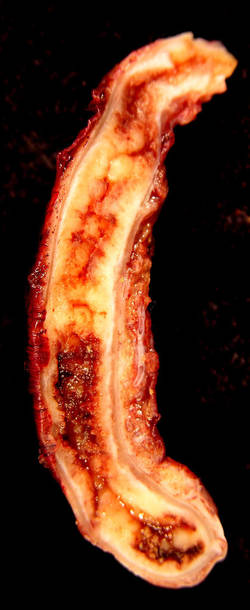
Furthermore, 14 (12%) of the 120 patients in the antibiotic group underwent an appendectomy in the first 30 days following intervention, and 30 (29%) of 102 patients followed beyond 30 days underwent appendectomy between 30 days and 12 months following intervention (at a median of 4.2 months); 26 of those patients had acute appendicitis, the investigators said (Lancet 2011;377:1573-9).
Patients in the multicenter study were adults aged 18-68 years with uncomplicated acute appendicitis on computed tomography who were enrolled between mid March 2004, and mid-January 2007. No differences were seen between the groups on secondary end points, including the median duration of severe pain, days in the hospital, or absence from work, nor were differences seen in the rate of postintervention complications in the groups.
"Overall, 81 (68%) of 120 patients did not need an [appendectomy] for acute appendicitis in the antibiotic group during the 1-year follow-up," the investigators noted.
However, antibiotic treatment was not shown to be noninferior, because the upper limit of the two-sided 95% confidence interval of 0.3-12.1 for the difference in rates was not lower than the prespecified limit of 10 percentage points, and the investigators thus concluded that emergency appendectomy remains the gold standard for acute uncomplicated appendicitis.
Acute appendicitis is the most common indication for surgical intervention among patients admitted to the hospital with acute abdominal pain, and 80% of cases are uncomplicated. Despite findings from several studies – including four randomized trials – indicating that nonoperative intervention with antibiotics might be acceptable, the approach to patients with acute appendicitis has not changed.
"Trials that show that acute appendicitis can be treated successfully with antibiotics were weakened by several design limitations," the investigators explained, noting that they attempted in the current study to avoid such design flaws.
For example, in the prior studies, diagnosis of uncomplicated appendicitis was not supported by systematic CT-scan assessment, but in the current study, CT scans were used to select patients with uncomplicated appendicitis before randomization. Despite the CT findings, however, 18% of 119 patients in the surgery group were found at the time of surgery to have complicated appendicitis.
The authors conceded that the finding that antibiotic treatment was inferior relative to appendectomy in patients with uncomplicated acute appendicitis in this study might be related to the proportion of patients with complicated disease who were erroneously included and randomized. They noted that it remains difficult to distinguish between uncomplicated and complicated appendicitis even with multiple-detector CT scans.
The findings could also be related to the increasingly common resistance of appendicitis, and in particular Escherichia coli, to amoxicillin plus clavulanic acid, they wrote.
Future studies should focus on the use of new diagnostic techniques for improved patient selection, and third-generation cephalosporins could be used, although they are not yet recommended, they wrote.
The study was funded by the French Ministry of Health, Programme Hospitalier de Recherche Clinique 2002. Dr. Vons and her colleagues declared having no relevant financial disclosures.
The findings of this study should not rule out the idea of nonoperative management of appendicitis, Dr. Rodney J. Mason said in an accompanying editorial.
Indeed, the inability to show noninferiority of antibiotic treatment to surgical treatment might be a result of study design and choice of antibiotic, he contended (Lancet. 2011;377:1545-6).
The noninferiority margin of 10%, while usual in comparisons of different drug treatments, is "probably too narrow when comparing a surgical option with a nonsurgical option, with very different risk-benefit ratios," he said.
"If a 15% margin had been chosen, which in my view is not unreasonable considering the risk associated with surgery, noninferiority would have been shown," he explained, adding that the overall rate of Escherichia coli nonsusceptibility to amoxicillin-clavulanic acid is much greater than the noninferiority margin chosen.
E. coli is the most common organism isolated from appendicitis patients, with resistance levels reaching 66% in some areas, and for this reason amoxicillin-clavulanic acid is not recommended for nonoperative appendicitis management, he said.
The findings are also biased by the use of different follow-up procedures in the two groups, he noted.
While Dr. Mason congratulated the investigators for "tackling this important, controversial, and relevant topic," he also stressed that he hopes their conclusions will be considered in the context of the biases inherent in their study, and that the conclusions will not overshadow recent advances toward conservative treatment of appendicitis.
"The fact that two-thirds of patients can be spared an operation deserves more attention," he concluded.
Dr. Mason is an associate professor of surgery at the Keck School of Medicine of the University of Southern California, Los Angeles. He declared having no relevant conflicts of interest.
The findings of this study should not rule out the idea of nonoperative management of appendicitis, Dr. Rodney J. Mason said in an accompanying editorial.
Indeed, the inability to show noninferiority of antibiotic treatment to surgical treatment might be a result of study design and choice of antibiotic, he contended (Lancet. 2011;377:1545-6).
The noninferiority margin of 10%, while usual in comparisons of different drug treatments, is "probably too narrow when comparing a surgical option with a nonsurgical option, with very different risk-benefit ratios," he said.
"If a 15% margin had been chosen, which in my view is not unreasonable considering the risk associated with surgery, noninferiority would have been shown," he explained, adding that the overall rate of Escherichia coli nonsusceptibility to amoxicillin-clavulanic acid is much greater than the noninferiority margin chosen.
E. coli is the most common organism isolated from appendicitis patients, with resistance levels reaching 66% in some areas, and for this reason amoxicillin-clavulanic acid is not recommended for nonoperative appendicitis management, he said.
The findings are also biased by the use of different follow-up procedures in the two groups, he noted.
While Dr. Mason congratulated the investigators for "tackling this important, controversial, and relevant topic," he also stressed that he hopes their conclusions will be considered in the context of the biases inherent in their study, and that the conclusions will not overshadow recent advances toward conservative treatment of appendicitis.
"The fact that two-thirds of patients can be spared an operation deserves more attention," he concluded.
Dr. Mason is an associate professor of surgery at the Keck School of Medicine of the University of Southern California, Los Angeles. He declared having no relevant conflicts of interest.
The findings of this study should not rule out the idea of nonoperative management of appendicitis, Dr. Rodney J. Mason said in an accompanying editorial.
Indeed, the inability to show noninferiority of antibiotic treatment to surgical treatment might be a result of study design and choice of antibiotic, he contended (Lancet. 2011;377:1545-6).
The noninferiority margin of 10%, while usual in comparisons of different drug treatments, is "probably too narrow when comparing a surgical option with a nonsurgical option, with very different risk-benefit ratios," he said.
"If a 15% margin had been chosen, which in my view is not unreasonable considering the risk associated with surgery, noninferiority would have been shown," he explained, adding that the overall rate of Escherichia coli nonsusceptibility to amoxicillin-clavulanic acid is much greater than the noninferiority margin chosen.
E. coli is the most common organism isolated from appendicitis patients, with resistance levels reaching 66% in some areas, and for this reason amoxicillin-clavulanic acid is not recommended for nonoperative appendicitis management, he said.
The findings are also biased by the use of different follow-up procedures in the two groups, he noted.
While Dr. Mason congratulated the investigators for "tackling this important, controversial, and relevant topic," he also stressed that he hopes their conclusions will be considered in the context of the biases inherent in their study, and that the conclusions will not overshadow recent advances toward conservative treatment of appendicitis.
"The fact that two-thirds of patients can be spared an operation deserves more attention," he concluded.
Dr. Mason is an associate professor of surgery at the Keck School of Medicine of the University of Southern California, Los Angeles. He declared having no relevant conflicts of interest.
The nonoperative management of acute uncomplicated appendicitis using amoxicillin plus clavulanic acid did not prove to be as effective as appendectomy in an open-label, randomized, noninferiority trial.
The rates of postintervention peritonitis in 243 patients randomized to receive either amoxicillin plus clavulanic acid (3 g) daily for 8-15 days or emergency appendectomy were 8% and 2% in the groups, respectively. The difference was statistically significant, Dr. Corrine Vons of the Hopital Jean Verdier, Bondy, France and her colleagues reported in the May 7 issue of The Lancet.
Furthermore, 14 (12%) of the 120 patients in the antibiotic group underwent an appendectomy in the first 30 days following intervention, and 30 (29%) of 102 patients followed beyond 30 days underwent appendectomy between 30 days and 12 months following intervention (at a median of 4.2 months); 26 of those patients had acute appendicitis, the investigators said (Lancet 2011;377:1573-9).
Patients in the multicenter study were adults aged 18-68 years with uncomplicated acute appendicitis on computed tomography who were enrolled between mid March 2004, and mid-January 2007. No differences were seen between the groups on secondary end points, including the median duration of severe pain, days in the hospital, or absence from work, nor were differences seen in the rate of postintervention complications in the groups.
"Overall, 81 (68%) of 120 patients did not need an [appendectomy] for acute appendicitis in the antibiotic group during the 1-year follow-up," the investigators noted.
However, antibiotic treatment was not shown to be noninferior, because the upper limit of the two-sided 95% confidence interval of 0.3-12.1 for the difference in rates was not lower than the prespecified limit of 10 percentage points, and the investigators thus concluded that emergency appendectomy remains the gold standard for acute uncomplicated appendicitis.
Acute appendicitis is the most common indication for surgical intervention among patients admitted to the hospital with acute abdominal pain, and 80% of cases are uncomplicated. Despite findings from several studies – including four randomized trials – indicating that nonoperative intervention with antibiotics might be acceptable, the approach to patients with acute appendicitis has not changed.
"Trials that show that acute appendicitis can be treated successfully with antibiotics were weakened by several design limitations," the investigators explained, noting that they attempted in the current study to avoid such design flaws.
For example, in the prior studies, diagnosis of uncomplicated appendicitis was not supported by systematic CT-scan assessment, but in the current study, CT scans were used to select patients with uncomplicated appendicitis before randomization. Despite the CT findings, however, 18% of 119 patients in the surgery group were found at the time of surgery to have complicated appendicitis.
The authors conceded that the finding that antibiotic treatment was inferior relative to appendectomy in patients with uncomplicated acute appendicitis in this study might be related to the proportion of patients with complicated disease who were erroneously included and randomized. They noted that it remains difficult to distinguish between uncomplicated and complicated appendicitis even with multiple-detector CT scans.
The findings could also be related to the increasingly common resistance of appendicitis, and in particular Escherichia coli, to amoxicillin plus clavulanic acid, they wrote.
Future studies should focus on the use of new diagnostic techniques for improved patient selection, and third-generation cephalosporins could be used, although they are not yet recommended, they wrote.
The study was funded by the French Ministry of Health, Programme Hospitalier de Recherche Clinique 2002. Dr. Vons and her colleagues declared having no relevant financial disclosures.
The nonoperative management of acute uncomplicated appendicitis using amoxicillin plus clavulanic acid did not prove to be as effective as appendectomy in an open-label, randomized, noninferiority trial.
The rates of postintervention peritonitis in 243 patients randomized to receive either amoxicillin plus clavulanic acid (3 g) daily for 8-15 days or emergency appendectomy were 8% and 2% in the groups, respectively. The difference was statistically significant, Dr. Corrine Vons of the Hopital Jean Verdier, Bondy, France and her colleagues reported in the May 7 issue of The Lancet.
Furthermore, 14 (12%) of the 120 patients in the antibiotic group underwent an appendectomy in the first 30 days following intervention, and 30 (29%) of 102 patients followed beyond 30 days underwent appendectomy between 30 days and 12 months following intervention (at a median of 4.2 months); 26 of those patients had acute appendicitis, the investigators said (Lancet 2011;377:1573-9).
Patients in the multicenter study were adults aged 18-68 years with uncomplicated acute appendicitis on computed tomography who were enrolled between mid March 2004, and mid-January 2007. No differences were seen between the groups on secondary end points, including the median duration of severe pain, days in the hospital, or absence from work, nor were differences seen in the rate of postintervention complications in the groups.
"Overall, 81 (68%) of 120 patients did not need an [appendectomy] for acute appendicitis in the antibiotic group during the 1-year follow-up," the investigators noted.
However, antibiotic treatment was not shown to be noninferior, because the upper limit of the two-sided 95% confidence interval of 0.3-12.1 for the difference in rates was not lower than the prespecified limit of 10 percentage points, and the investigators thus concluded that emergency appendectomy remains the gold standard for acute uncomplicated appendicitis.
Acute appendicitis is the most common indication for surgical intervention among patients admitted to the hospital with acute abdominal pain, and 80% of cases are uncomplicated. Despite findings from several studies – including four randomized trials – indicating that nonoperative intervention with antibiotics might be acceptable, the approach to patients with acute appendicitis has not changed.
"Trials that show that acute appendicitis can be treated successfully with antibiotics were weakened by several design limitations," the investigators explained, noting that they attempted in the current study to avoid such design flaws.
For example, in the prior studies, diagnosis of uncomplicated appendicitis was not supported by systematic CT-scan assessment, but in the current study, CT scans were used to select patients with uncomplicated appendicitis before randomization. Despite the CT findings, however, 18% of 119 patients in the surgery group were found at the time of surgery to have complicated appendicitis.
The authors conceded that the finding that antibiotic treatment was inferior relative to appendectomy in patients with uncomplicated acute appendicitis in this study might be related to the proportion of patients with complicated disease who were erroneously included and randomized. They noted that it remains difficult to distinguish between uncomplicated and complicated appendicitis even with multiple-detector CT scans.
The findings could also be related to the increasingly common resistance of appendicitis, and in particular Escherichia coli, to amoxicillin plus clavulanic acid, they wrote.
Future studies should focus on the use of new diagnostic techniques for improved patient selection, and third-generation cephalosporins could be used, although they are not yet recommended, they wrote.
The study was funded by the French Ministry of Health, Programme Hospitalier de Recherche Clinique 2002. Dr. Vons and her colleagues declared having no relevant financial disclosures.
FROM THE LANCET