User login
Sharon Worcester is an award-winning medical journalist for MDedge News. She has been with the company since 1996, first as the Southeast Bureau Chief (1996-2009) when the company was known as International Medical News Group, then as a freelance writer (2010-2015) before returning as a reporter in 2015. She previously worked as a daily newspaper reporter covering health and local government. Sharon currently reports primarily on oncology and hematology. She has a BA from Eckerd College and an MA in Mass Communication/Print Journalism from the University of Florida. Connect with her via LinkedIn and follow her on twitter @SW_MedReporter.
Study: Amoxicillin-Clavulanic Acid Not as Effective as Appendectomy
The nonoperative management of acute uncomplicated appendicitis using amoxicillin plus clavulanic acid did not prove to be as effective as appendectomy in an open-label, randomized, noninferiority trial.
The rates of postintervention peritonitis in 243 patients randomized to receive either amoxicillin plus clavulanic acid (3 g) daily for 8-15 days or emergency appendectomy were 8% and 2% in the groups, respectively. The difference was statistically significant, Dr. Corrine Vons of the Hopital Jean Verdier, Bondy, France and her colleagues reported in the May 7 issue of The Lancet.
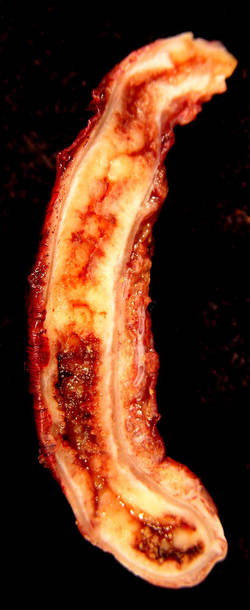
Furthermore, 14 (12%) of the 120 patients in the antibiotic group underwent an appendectomy in the first 30 days following intervention, and 30 (29%) of 102 patients followed beyond 30 days underwent appendectomy between 30 days and 12 months following intervention (at a median of 4.2 months); 26 of those patients had acute appendicitis, the investigators said (Lancet 2011;377:1573-9).
Patients in the multicenter study were adults aged 18-68 years with uncomplicated acute appendicitis on computed tomography who were enrolled between mid March 2004, and mid-January 2007. No differences were seen between the groups on secondary end points, including the median duration of severe pain, days in the hospital, or absence from work, nor were differences seen in the rate of postintervention complications in the groups.
"Overall, 81 (68%) of 120 patients did not need an [appendectomy] for acute appendicitis in the antibiotic group during the 1-year follow-up," the investigators noted.
However, antibiotic treatment was not shown to be noninferior, because the upper limit of the two-sided 95% confidence interval of 0.3-12.1 for the difference in rates was not lower than the prespecified limit of 10 percentage points, and the investigators thus concluded that emergency appendectomy remains the gold standard for acute uncomplicated appendicitis.
Acute appendicitis is the most common indication for surgical intervention among patients admitted to the hospital with acute abdominal pain, and 80% of cases are uncomplicated. Despite findings from several studies – including four randomized trials – indicating that nonoperative intervention with antibiotics might be acceptable, the approach to patients with acute appendicitis has not changed.
"Trials that show that acute appendicitis can be treated successfully with antibiotics were weakened by several design limitations," the investigators explained, noting that they attempted in the current study to avoid such design flaws.
For example, in the prior studies, diagnosis of uncomplicated appendicitis was not supported by systematic CT-scan assessment, but in the current study, CT scans were used to select patients with uncomplicated appendicitis before randomization. Despite the CT findings, however, 18% of 119 patients in the surgery group were found at the time of surgery to have complicated appendicitis.
The authors conceded that the finding that antibiotic treatment was inferior relative to appendectomy in patients with uncomplicated acute appendicitis in this study might be related to the proportion of patients with complicated disease who were erroneously included and randomized. They noted that it remains difficult to distinguish between uncomplicated and complicated appendicitis even with multiple-detector CT scans.
The findings could also be related to the increasingly common resistance of appendicitis, and in particular Escherichia coli, to amoxicillin plus clavulanic acid, they wrote.
Future studies should focus on the use of new diagnostic techniques for improved patient selection, and third-generation cephalosporins could be used, although they are not yet recommended, they wrote.
The study was funded by the French Ministry of Health, Programme Hospitalier de Recherche Clinique 2002. Dr. Vons and her colleagues declared having no relevant financial disclosures.
The findings of this study should not rule out the idea of nonoperative management of appendicitis, Dr. Rodney J. Mason said in an accompanying editorial.
Indeed, the inability to show noninferiority of antibiotic treatment to surgical treatment might be a result of study design and choice of antibiotic, he contended (Lancet. 2011;377:1545-6).
The noninferiority margin of 10%, while usual in comparisons of different drug treatments, is "probably too narrow when comparing a surgical option with a nonsurgical option, with very different risk-benefit ratios," he said.
"If a 15% margin had been chosen, which in my view is not unreasonable considering the risk associated with surgery, noninferiority would have been shown," he explained, adding that the overall rate of Escherichia coli nonsusceptibility to amoxicillin-clavulanic acid is much greater than the noninferiority margin chosen.
E. coli is the most common organism isolated from appendicitis patients, with resistance levels reaching 66% in some areas, and for this reason amoxicillin-clavulanic acid is not recommended for nonoperative appendicitis management, he said.
The findings are also biased by the use of different follow-up procedures in the two groups, he noted.
While Dr. Mason congratulated the investigators for "tackling this important, controversial, and relevant topic," he also stressed that he hopes their conclusions will be considered in the context of the biases inherent in their study, and that the conclusions will not overshadow recent advances toward conservative treatment of appendicitis.
"The fact that two-thirds of patients can be spared an operation deserves more attention," he concluded.
Dr. Mason is an associate professor of surgery at the Keck School of Medicine of the University of Southern California, Los Angeles. He declared having no relevant conflicts of interest.
The findings of this study should not rule out the idea of nonoperative management of appendicitis, Dr. Rodney J. Mason said in an accompanying editorial.
Indeed, the inability to show noninferiority of antibiotic treatment to surgical treatment might be a result of study design and choice of antibiotic, he contended (Lancet. 2011;377:1545-6).
The noninferiority margin of 10%, while usual in comparisons of different drug treatments, is "probably too narrow when comparing a surgical option with a nonsurgical option, with very different risk-benefit ratios," he said.
"If a 15% margin had been chosen, which in my view is not unreasonable considering the risk associated with surgery, noninferiority would have been shown," he explained, adding that the overall rate of Escherichia coli nonsusceptibility to amoxicillin-clavulanic acid is much greater than the noninferiority margin chosen.
E. coli is the most common organism isolated from appendicitis patients, with resistance levels reaching 66% in some areas, and for this reason amoxicillin-clavulanic acid is not recommended for nonoperative appendicitis management, he said.
The findings are also biased by the use of different follow-up procedures in the two groups, he noted.
While Dr. Mason congratulated the investigators for "tackling this important, controversial, and relevant topic," he also stressed that he hopes their conclusions will be considered in the context of the biases inherent in their study, and that the conclusions will not overshadow recent advances toward conservative treatment of appendicitis.
"The fact that two-thirds of patients can be spared an operation deserves more attention," he concluded.
Dr. Mason is an associate professor of surgery at the Keck School of Medicine of the University of Southern California, Los Angeles. He declared having no relevant conflicts of interest.
The findings of this study should not rule out the idea of nonoperative management of appendicitis, Dr. Rodney J. Mason said in an accompanying editorial.
Indeed, the inability to show noninferiority of antibiotic treatment to surgical treatment might be a result of study design and choice of antibiotic, he contended (Lancet. 2011;377:1545-6).
The noninferiority margin of 10%, while usual in comparisons of different drug treatments, is "probably too narrow when comparing a surgical option with a nonsurgical option, with very different risk-benefit ratios," he said.
"If a 15% margin had been chosen, which in my view is not unreasonable considering the risk associated with surgery, noninferiority would have been shown," he explained, adding that the overall rate of Escherichia coli nonsusceptibility to amoxicillin-clavulanic acid is much greater than the noninferiority margin chosen.
E. coli is the most common organism isolated from appendicitis patients, with resistance levels reaching 66% in some areas, and for this reason amoxicillin-clavulanic acid is not recommended for nonoperative appendicitis management, he said.
The findings are also biased by the use of different follow-up procedures in the two groups, he noted.
While Dr. Mason congratulated the investigators for "tackling this important, controversial, and relevant topic," he also stressed that he hopes their conclusions will be considered in the context of the biases inherent in their study, and that the conclusions will not overshadow recent advances toward conservative treatment of appendicitis.
"The fact that two-thirds of patients can be spared an operation deserves more attention," he concluded.
Dr. Mason is an associate professor of surgery at the Keck School of Medicine of the University of Southern California, Los Angeles. He declared having no relevant conflicts of interest.
The nonoperative management of acute uncomplicated appendicitis using amoxicillin plus clavulanic acid did not prove to be as effective as appendectomy in an open-label, randomized, noninferiority trial.
The rates of postintervention peritonitis in 243 patients randomized to receive either amoxicillin plus clavulanic acid (3 g) daily for 8-15 days or emergency appendectomy were 8% and 2% in the groups, respectively. The difference was statistically significant, Dr. Corrine Vons of the Hopital Jean Verdier, Bondy, France and her colleagues reported in the May 7 issue of The Lancet.
Furthermore, 14 (12%) of the 120 patients in the antibiotic group underwent an appendectomy in the first 30 days following intervention, and 30 (29%) of 102 patients followed beyond 30 days underwent appendectomy between 30 days and 12 months following intervention (at a median of 4.2 months); 26 of those patients had acute appendicitis, the investigators said (Lancet 2011;377:1573-9).
Patients in the multicenter study were adults aged 18-68 years with uncomplicated acute appendicitis on computed tomography who were enrolled between mid March 2004, and mid-January 2007. No differences were seen between the groups on secondary end points, including the median duration of severe pain, days in the hospital, or absence from work, nor were differences seen in the rate of postintervention complications in the groups.
"Overall, 81 (68%) of 120 patients did not need an [appendectomy] for acute appendicitis in the antibiotic group during the 1-year follow-up," the investigators noted.
However, antibiotic treatment was not shown to be noninferior, because the upper limit of the two-sided 95% confidence interval of 0.3-12.1 for the difference in rates was not lower than the prespecified limit of 10 percentage points, and the investigators thus concluded that emergency appendectomy remains the gold standard for acute uncomplicated appendicitis.
Acute appendicitis is the most common indication for surgical intervention among patients admitted to the hospital with acute abdominal pain, and 80% of cases are uncomplicated. Despite findings from several studies – including four randomized trials – indicating that nonoperative intervention with antibiotics might be acceptable, the approach to patients with acute appendicitis has not changed.
"Trials that show that acute appendicitis can be treated successfully with antibiotics were weakened by several design limitations," the investigators explained, noting that they attempted in the current study to avoid such design flaws.
For example, in the prior studies, diagnosis of uncomplicated appendicitis was not supported by systematic CT-scan assessment, but in the current study, CT scans were used to select patients with uncomplicated appendicitis before randomization. Despite the CT findings, however, 18% of 119 patients in the surgery group were found at the time of surgery to have complicated appendicitis.
The authors conceded that the finding that antibiotic treatment was inferior relative to appendectomy in patients with uncomplicated acute appendicitis in this study might be related to the proportion of patients with complicated disease who were erroneously included and randomized. They noted that it remains difficult to distinguish between uncomplicated and complicated appendicitis even with multiple-detector CT scans.
The findings could also be related to the increasingly common resistance of appendicitis, and in particular Escherichia coli, to amoxicillin plus clavulanic acid, they wrote.
Future studies should focus on the use of new diagnostic techniques for improved patient selection, and third-generation cephalosporins could be used, although they are not yet recommended, they wrote.
The study was funded by the French Ministry of Health, Programme Hospitalier de Recherche Clinique 2002. Dr. Vons and her colleagues declared having no relevant financial disclosures.
The nonoperative management of acute uncomplicated appendicitis using amoxicillin plus clavulanic acid did not prove to be as effective as appendectomy in an open-label, randomized, noninferiority trial.
The rates of postintervention peritonitis in 243 patients randomized to receive either amoxicillin plus clavulanic acid (3 g) daily for 8-15 days or emergency appendectomy were 8% and 2% in the groups, respectively. The difference was statistically significant, Dr. Corrine Vons of the Hopital Jean Verdier, Bondy, France and her colleagues reported in the May 7 issue of The Lancet.
Furthermore, 14 (12%) of the 120 patients in the antibiotic group underwent an appendectomy in the first 30 days following intervention, and 30 (29%) of 102 patients followed beyond 30 days underwent appendectomy between 30 days and 12 months following intervention (at a median of 4.2 months); 26 of those patients had acute appendicitis, the investigators said (Lancet 2011;377:1573-9).
Patients in the multicenter study were adults aged 18-68 years with uncomplicated acute appendicitis on computed tomography who were enrolled between mid March 2004, and mid-January 2007. No differences were seen between the groups on secondary end points, including the median duration of severe pain, days in the hospital, or absence from work, nor were differences seen in the rate of postintervention complications in the groups.
"Overall, 81 (68%) of 120 patients did not need an [appendectomy] for acute appendicitis in the antibiotic group during the 1-year follow-up," the investigators noted.
However, antibiotic treatment was not shown to be noninferior, because the upper limit of the two-sided 95% confidence interval of 0.3-12.1 for the difference in rates was not lower than the prespecified limit of 10 percentage points, and the investigators thus concluded that emergency appendectomy remains the gold standard for acute uncomplicated appendicitis.
Acute appendicitis is the most common indication for surgical intervention among patients admitted to the hospital with acute abdominal pain, and 80% of cases are uncomplicated. Despite findings from several studies – including four randomized trials – indicating that nonoperative intervention with antibiotics might be acceptable, the approach to patients with acute appendicitis has not changed.
"Trials that show that acute appendicitis can be treated successfully with antibiotics were weakened by several design limitations," the investigators explained, noting that they attempted in the current study to avoid such design flaws.
For example, in the prior studies, diagnosis of uncomplicated appendicitis was not supported by systematic CT-scan assessment, but in the current study, CT scans were used to select patients with uncomplicated appendicitis before randomization. Despite the CT findings, however, 18% of 119 patients in the surgery group were found at the time of surgery to have complicated appendicitis.
The authors conceded that the finding that antibiotic treatment was inferior relative to appendectomy in patients with uncomplicated acute appendicitis in this study might be related to the proportion of patients with complicated disease who were erroneously included and randomized. They noted that it remains difficult to distinguish between uncomplicated and complicated appendicitis even with multiple-detector CT scans.
The findings could also be related to the increasingly common resistance of appendicitis, and in particular Escherichia coli, to amoxicillin plus clavulanic acid, they wrote.
Future studies should focus on the use of new diagnostic techniques for improved patient selection, and third-generation cephalosporins could be used, although they are not yet recommended, they wrote.
The study was funded by the French Ministry of Health, Programme Hospitalier de Recherche Clinique 2002. Dr. Vons and her colleagues declared having no relevant financial disclosures.
FROM THE LANCET
Major Finding: Postintervention peritonitis was seen in 8% of patients who received 3 g of amoxicillin plus clavulanic acid daily for 8-15 days vs. in 2% who underwent emergency appendectomy. The difference was statistically significant.
Data Source: An open-label, noninferiority, randomized trial of 243 patients.
Disclosures: The study was funded by the French Ministry of Health, Programme Hospitalier de Recherche Clinique 2002. The authors declared having no relevant financial disclosures.
Beer Plus Genetic Variation Increases Gastric Cancer Risk
ORLANDO – Heavy long-term beer drinking is associated with an increased risk of gastric cancer, particularly in people with a variant in a cluster of genes that metabolize alcohol, according to findings from the European Prospective Investigation into Cancer and Nutrition study.
More than 521,000 people in 10 European studies were part of the observational cohort EPIC study. Total consumption of 60 g (vs. less than 5 g) of pure ethanol/alcohol per day from all beverage types over an average of about 8-10 years was associated with a 65% increase in the risk of gastric cancer.

The association was attributable to beer consumption, Eric J. Duell, Ph.D., reported at the annual meeting of the American Association for Cancer Research. That is, drinking 30 g of pure ethanol/alcohol per day strictly from beer (which equates to the alcohol level in about three beers) was associated with a 75% increase in risk. No significant increase in risk was seen with wine or liquor consumption.
Furthermore, an analysis of data from a nested case-control study within the EPIC cohort (the EurGast study) showed that in heavy beer drinkers with two copies of rs1230025 – an intergenic single nucleotide polymorphism (SNP) in the locus of the alcohol dehydrogenase gene cluster (ADH1) – the risk was increased by about 700%, compared with the risk in those who drank less and lacked the SNP (odds ratios, 8.72 and 1.29, respectively).
This interaction between the rs1230025 SNP (which itself confers a 30% increased risk of cancer) and beer consumption in relation to gastric cancer was statistically significant (P = .003), said Dr. Duell, senior epidemiologist in the cancer epidemiology research program at the Catalan Institute of Oncology in Barcelona.
The EPIC study enrolled adults aged 35-70 years from 1992 through 1998. Alcohol use and dietary factors were assessed by questionnaire. The current analysis included adjustment for age, center/country, sex, education level, smoking status, H. pylori infection (the main risk factor for gastric cancer, which is the second leading cause of death worldwide), diet, and total energy.
"This is the first study to see an association between this SNP and gastric cancer risk," Dr. Duell said, noting that although the findings need to be replicated in future studies, there are number of potential biological explanation for the associations.
For example, a build-up of acetaldehyde (a product of ethanol oxidation and a known carcinogen) in the stomach, excess nitrosamines (a known carcinogen found in beer), excess stomach bacteria resulting from atrophic gastritis (a known risk factor for gastric cancer), or a combination of these factors could be increasing risk, he said.
Dr. Duell had no relevant disclosures.
ORLANDO – Heavy long-term beer drinking is associated with an increased risk of gastric cancer, particularly in people with a variant in a cluster of genes that metabolize alcohol, according to findings from the European Prospective Investigation into Cancer and Nutrition study.
More than 521,000 people in 10 European studies were part of the observational cohort EPIC study. Total consumption of 60 g (vs. less than 5 g) of pure ethanol/alcohol per day from all beverage types over an average of about 8-10 years was associated with a 65% increase in the risk of gastric cancer.
The association was attributable to beer consumption, Eric J. Duell, Ph.D., reported at the annual meeting of the American Association for Cancer Research. That is, drinking 30 g of pure ethanol/alcohol per day strictly from beer (which equates to the alcohol level in about three beers) was associated with a 75% increase in risk. No significant increase in risk was seen with wine or liquor consumption.
Furthermore, an analysis of data from a nested case-control study within the EPIC cohort (the EurGast study) showed that in heavy beer drinkers with two copies of rs1230025 – an intergenic single nucleotide polymorphism (SNP) in the locus of the alcohol dehydrogenase gene cluster (ADH1) – the risk was increased by about 700%, compared with the risk in those who drank less and lacked the SNP (odds ratios, 8.72 and 1.29, respectively).
This interaction between the rs1230025 SNP (which itself confers a 30% increased risk of cancer) and beer consumption in relation to gastric cancer was statistically significant (P = .003), said Dr. Duell, senior epidemiologist in the cancer epidemiology research program at the Catalan Institute of Oncology in Barcelona.
The EPIC study enrolled adults aged 35-70 years from 1992 through 1998. Alcohol use and dietary factors were assessed by questionnaire. The current analysis included adjustment for age, center/country, sex, education level, smoking status, H. pylori infection (the main risk factor for gastric cancer, which is the second leading cause of death worldwide), diet, and total energy.
"This is the first study to see an association between this SNP and gastric cancer risk," Dr. Duell said, noting that although the findings need to be replicated in future studies, there are number of potential biological explanation for the associations.
For example, a build-up of acetaldehyde (a product of ethanol oxidation and a known carcinogen) in the stomach, excess nitrosamines (a known carcinogen found in beer), excess stomach bacteria resulting from atrophic gastritis (a known risk factor for gastric cancer), or a combination of these factors could be increasing risk, he said.
Dr. Duell had no relevant disclosures.
ORLANDO – Heavy long-term beer drinking is associated with an increased risk of gastric cancer, particularly in people with a variant in a cluster of genes that metabolize alcohol, according to findings from the European Prospective Investigation into Cancer and Nutrition study.
More than 521,000 people in 10 European studies were part of the observational cohort EPIC study. Total consumption of 60 g (vs. less than 5 g) of pure ethanol/alcohol per day from all beverage types over an average of about 8-10 years was associated with a 65% increase in the risk of gastric cancer.
The association was attributable to beer consumption, Eric J. Duell, Ph.D., reported at the annual meeting of the American Association for Cancer Research. That is, drinking 30 g of pure ethanol/alcohol per day strictly from beer (which equates to the alcohol level in about three beers) was associated with a 75% increase in risk. No significant increase in risk was seen with wine or liquor consumption.
Furthermore, an analysis of data from a nested case-control study within the EPIC cohort (the EurGast study) showed that in heavy beer drinkers with two copies of rs1230025 – an intergenic single nucleotide polymorphism (SNP) in the locus of the alcohol dehydrogenase gene cluster (ADH1) – the risk was increased by about 700%, compared with the risk in those who drank less and lacked the SNP (odds ratios, 8.72 and 1.29, respectively).
This interaction between the rs1230025 SNP (which itself confers a 30% increased risk of cancer) and beer consumption in relation to gastric cancer was statistically significant (P = .003), said Dr. Duell, senior epidemiologist in the cancer epidemiology research program at the Catalan Institute of Oncology in Barcelona.
The EPIC study enrolled adults aged 35-70 years from 1992 through 1998. Alcohol use and dietary factors were assessed by questionnaire. The current analysis included adjustment for age, center/country, sex, education level, smoking status, H. pylori infection (the main risk factor for gastric cancer, which is the second leading cause of death worldwide), diet, and total energy.
"This is the first study to see an association between this SNP and gastric cancer risk," Dr. Duell said, noting that although the findings need to be replicated in future studies, there are number of potential biological explanation for the associations.
For example, a build-up of acetaldehyde (a product of ethanol oxidation and a known carcinogen) in the stomach, excess nitrosamines (a known carcinogen found in beer), excess stomach bacteria resulting from atrophic gastritis (a known risk factor for gastric cancer), or a combination of these factors could be increasing risk, he said.
Dr. Duell had no relevant disclosures.
FROM THE ANNUAL MEETING OF THE AMERICAN ASSOCIATION FOR CANCER RESEARCH
Major Finding: In heavy beer drinkers with a variation in a cluster of genes that break down alcohol, the risk of gastric cancer increased by about 700%, compared with people who drank less and lacked the single nucleotide polymorphism.
Data Source: An analysis of data on 521,000 people from the EPIC cohort.
Disclosures: Dr. Duell had no relevant disclosures.
Beer Plus Genetic Variation Increases Gastric Cancer Risk
ORLANDO – Heavy long-term beer drinking is associated with an increased risk of gastric cancer, particularly in people with a variant in a cluster of genes that metabolize alcohol, according to findings from the European Prospective Investigation into Cancer and Nutrition study.
More than 521,000 people in 10 European studies were part of the observational cohort EPIC study. Total consumption of 60 g (vs. less than 5 g) of pure ethanol/alcohol per day from all beverage types over an average of about 8-10 years was associated with a 65% increase in the risk of gastric cancer.
The association was attributable to beer consumption, Eric J. Duell, Ph.D., reported at the annual meeting of the American Association for Cancer Research. That is, drinking 30 g of pure ethanol/alcohol per day strictly from beer (which equates to the alcohol level in about three beers) was associated with a 75% increase in risk. No significant increase in risk was seen with wine or liquor consumption.
Furthermore, an analysis of data from a nested case-control study within the EPIC cohort (the EurGast study) showed that in heavy beer drinkers with two copies of rs1230025 – an intergenic single nucleotide polymorphism (SNP) in the locus of the alcohol dehydrogenase gene cluster (ADH1) – the risk was increased by about 700%, compared with the risk in those who drank less and lacked the SNP (odds ratios, 8.72 and 1.29, respectively).
This interaction between the rs1230025 SNP (which itself confers a 30% increased risk of cancer) and beer consumption in relation to gastric cancer was statistically significant (P = .003), said Dr. Duell, senior epidemiologist in the cancer epidemiology research program at the Catalan Institute of Oncology in Barcelona.
The EPIC study enrolled adults aged 35-70 years from 1992 through 1998. Alcohol use and dietary factors were assessed by questionnaire. The current analysis included adjustment for age, center/country, sex, education level, smoking status, H. pylori infection (the main risk factor for gastric cancer, which is the second leading cause of death worldwide), diet, and total energy.
"This is the first study to see an association between this SNP and gastric cancer risk," Dr. Duell said, noting that although the findings need to be replicated in future studies, there are number of potential biological explanation for the associations.
For example, a build-up of acetaldehyde (a product of ethanol oxidation and a known carcinogen) in the stomach, excess nitrosamines (a known carcinogen found in beer), excess stomach bacteria resulting from atrophic gastritis (a known risk factor for gastric cancer), or a combination of these factors could be increasing risk, he said.
Dr. Duell had no relevant disclosures.
ORLANDO – Heavy long-term beer drinking is associated with an increased risk of gastric cancer, particularly in people with a variant in a cluster of genes that metabolize alcohol, according to findings from the European Prospective Investigation into Cancer and Nutrition study.
More than 521,000 people in 10 European studies were part of the observational cohort EPIC study. Total consumption of 60 g (vs. less than 5 g) of pure ethanol/alcohol per day from all beverage types over an average of about 8-10 years was associated with a 65% increase in the risk of gastric cancer.
The association was attributable to beer consumption, Eric J. Duell, Ph.D., reported at the annual meeting of the American Association for Cancer Research. That is, drinking 30 g of pure ethanol/alcohol per day strictly from beer (which equates to the alcohol level in about three beers) was associated with a 75% increase in risk. No significant increase in risk was seen with wine or liquor consumption.
Furthermore, an analysis of data from a nested case-control study within the EPIC cohort (the EurGast study) showed that in heavy beer drinkers with two copies of rs1230025 – an intergenic single nucleotide polymorphism (SNP) in the locus of the alcohol dehydrogenase gene cluster (ADH1) – the risk was increased by about 700%, compared with the risk in those who drank less and lacked the SNP (odds ratios, 8.72 and 1.29, respectively).
This interaction between the rs1230025 SNP (which itself confers a 30% increased risk of cancer) and beer consumption in relation to gastric cancer was statistically significant (P = .003), said Dr. Duell, senior epidemiologist in the cancer epidemiology research program at the Catalan Institute of Oncology in Barcelona.
The EPIC study enrolled adults aged 35-70 years from 1992 through 1998. Alcohol use and dietary factors were assessed by questionnaire. The current analysis included adjustment for age, center/country, sex, education level, smoking status, H. pylori infection (the main risk factor for gastric cancer, which is the second leading cause of death worldwide), diet, and total energy.
"This is the first study to see an association between this SNP and gastric cancer risk," Dr. Duell said, noting that although the findings need to be replicated in future studies, there are number of potential biological explanation for the associations.
For example, a build-up of acetaldehyde (a product of ethanol oxidation and a known carcinogen) in the stomach, excess nitrosamines (a known carcinogen found in beer), excess stomach bacteria resulting from atrophic gastritis (a known risk factor for gastric cancer), or a combination of these factors could be increasing risk, he said.
Dr. Duell had no relevant disclosures.
ORLANDO – Heavy long-term beer drinking is associated with an increased risk of gastric cancer, particularly in people with a variant in a cluster of genes that metabolize alcohol, according to findings from the European Prospective Investigation into Cancer and Nutrition study.
More than 521,000 people in 10 European studies were part of the observational cohort EPIC study. Total consumption of 60 g (vs. less than 5 g) of pure ethanol/alcohol per day from all beverage types over an average of about 8-10 years was associated with a 65% increase in the risk of gastric cancer.
The association was attributable to beer consumption, Eric J. Duell, Ph.D., reported at the annual meeting of the American Association for Cancer Research. That is, drinking 30 g of pure ethanol/alcohol per day strictly from beer (which equates to the alcohol level in about three beers) was associated with a 75% increase in risk. No significant increase in risk was seen with wine or liquor consumption.
Furthermore, an analysis of data from a nested case-control study within the EPIC cohort (the EurGast study) showed that in heavy beer drinkers with two copies of rs1230025 – an intergenic single nucleotide polymorphism (SNP) in the locus of the alcohol dehydrogenase gene cluster (ADH1) – the risk was increased by about 700%, compared with the risk in those who drank less and lacked the SNP (odds ratios, 8.72 and 1.29, respectively).
This interaction between the rs1230025 SNP (which itself confers a 30% increased risk of cancer) and beer consumption in relation to gastric cancer was statistically significant (P = .003), said Dr. Duell, senior epidemiologist in the cancer epidemiology research program at the Catalan Institute of Oncology in Barcelona.
The EPIC study enrolled adults aged 35-70 years from 1992 through 1998. Alcohol use and dietary factors were assessed by questionnaire. The current analysis included adjustment for age, center/country, sex, education level, smoking status, H. pylori infection (the main risk factor for gastric cancer, which is the second leading cause of death worldwide), diet, and total energy.
"This is the first study to see an association between this SNP and gastric cancer risk," Dr. Duell said, noting that although the findings need to be replicated in future studies, there are number of potential biological explanation for the associations.
For example, a build-up of acetaldehyde (a product of ethanol oxidation and a known carcinogen) in the stomach, excess nitrosamines (a known carcinogen found in beer), excess stomach bacteria resulting from atrophic gastritis (a known risk factor for gastric cancer), or a combination of these factors could be increasing risk, he said.
Dr. Duell had no relevant disclosures.
FROM THE ANNUAL MEETING OF THE AMERICAN ASSOCIATION FOR CANCER RESEARCH
Beer Plus Genetic Variation Increases Gastric Cancer Risk
ORLANDO – Heavy long-term beer drinking is associated with an increased risk of gastric cancer, particularly in people with a variant in a cluster of genes that metabolize alcohol, according to findings from the European Prospective Investigation into Cancer and Nutrition study.
More than 521,000 people in 10 European studies were part of the observational cohort EPIC study. Total consumption of 60 g (vs. less than 5 g) of pure ethanol/alcohol per day from all beverage types over an average of about 8-10 years was associated with a 65% increase in the risk of gastric cancer.
The association was attributable to beer consumption, Eric J. Duell, Ph.D., reported at the annual meeting of the American Association for Cancer Research. That is, drinking 30 g of pure ethanol/alcohol per day strictly from beer (which equates to the alcohol level in about three beers) was associated with a 75% increase in risk. No significant increase in risk was seen with wine or liquor consumption.
Furthermore, an analysis of data from a nested case-control study within the EPIC cohort (the EurGast study) showed that in heavy beer drinkers with two copies of rs1230025 – an intergenic single nucleotide polymorphism (SNP) in the locus of the alcohol dehydrogenase gene cluster (ADH1) – the risk was increased by about 700%, compared with the risk in those who drank less and lacked the SNP (odds ratios, 8.72 and 1.29, respectively).
This interaction between the rs1230025 SNP (which itself confers a 30% increased risk of cancer) and beer consumption in relation to gastric cancer was statistically significant (P = .003), said Dr. Duell, senior epidemiologist in the cancer epidemiology research program at the Catalan Institute of Oncology in Barcelona.
The EPIC study enrolled adults aged 35-70 years from 1992 through 1998. Alcohol use and dietary factors were assessed by questionnaire. The current analysis included adjustment for age, center/country, sex, education level, smoking status, H. pylori infection (the main risk factor for gastric cancer, which is the second leading cause of death worldwide), diet, and total energy.
"This is the first study to see an association between this SNP and gastric cancer risk," Dr. Duell said, noting that although the findings need to be replicated in future studies, there are number of potential biological explanation for the associations.
For example, a build-up of acetaldehyde (a product of ethanol oxidation and a known carcinogen) in the stomach, excess nitrosamines (a known carcinogen found in beer), excess stomach bacteria resulting from atrophic gastritis (a known risk factor for gastric cancer), or a combination of these factors could be increasing risk, he said.
Dr. Duell had no relevant disclosures.
ORLANDO – Heavy long-term beer drinking is associated with an increased risk of gastric cancer, particularly in people with a variant in a cluster of genes that metabolize alcohol, according to findings from the European Prospective Investigation into Cancer and Nutrition study.
More than 521,000 people in 10 European studies were part of the observational cohort EPIC study. Total consumption of 60 g (vs. less than 5 g) of pure ethanol/alcohol per day from all beverage types over an average of about 8-10 years was associated with a 65% increase in the risk of gastric cancer.
The association was attributable to beer consumption, Eric J. Duell, Ph.D., reported at the annual meeting of the American Association for Cancer Research. That is, drinking 30 g of pure ethanol/alcohol per day strictly from beer (which equates to the alcohol level in about three beers) was associated with a 75% increase in risk. No significant increase in risk was seen with wine or liquor consumption.
Furthermore, an analysis of data from a nested case-control study within the EPIC cohort (the EurGast study) showed that in heavy beer drinkers with two copies of rs1230025 – an intergenic single nucleotide polymorphism (SNP) in the locus of the alcohol dehydrogenase gene cluster (ADH1) – the risk was increased by about 700%, compared with the risk in those who drank less and lacked the SNP (odds ratios, 8.72 and 1.29, respectively).
This interaction between the rs1230025 SNP (which itself confers a 30% increased risk of cancer) and beer consumption in relation to gastric cancer was statistically significant (P = .003), said Dr. Duell, senior epidemiologist in the cancer epidemiology research program at the Catalan Institute of Oncology in Barcelona.
The EPIC study enrolled adults aged 35-70 years from 1992 through 1998. Alcohol use and dietary factors were assessed by questionnaire. The current analysis included adjustment for age, center/country, sex, education level, smoking status, H. pylori infection (the main risk factor for gastric cancer, which is the second leading cause of death worldwide), diet, and total energy.
"This is the first study to see an association between this SNP and gastric cancer risk," Dr. Duell said, noting that although the findings need to be replicated in future studies, there are number of potential biological explanation for the associations.
For example, a build-up of acetaldehyde (a product of ethanol oxidation and a known carcinogen) in the stomach, excess nitrosamines (a known carcinogen found in beer), excess stomach bacteria resulting from atrophic gastritis (a known risk factor for gastric cancer), or a combination of these factors could be increasing risk, he said.
Dr. Duell had no relevant disclosures.
ORLANDO – Heavy long-term beer drinking is associated with an increased risk of gastric cancer, particularly in people with a variant in a cluster of genes that metabolize alcohol, according to findings from the European Prospective Investigation into Cancer and Nutrition study.
More than 521,000 people in 10 European studies were part of the observational cohort EPIC study. Total consumption of 60 g (vs. less than 5 g) of pure ethanol/alcohol per day from all beverage types over an average of about 8-10 years was associated with a 65% increase in the risk of gastric cancer.
The association was attributable to beer consumption, Eric J. Duell, Ph.D., reported at the annual meeting of the American Association for Cancer Research. That is, drinking 30 g of pure ethanol/alcohol per day strictly from beer (which equates to the alcohol level in about three beers) was associated with a 75% increase in risk. No significant increase in risk was seen with wine or liquor consumption.
Furthermore, an analysis of data from a nested case-control study within the EPIC cohort (the EurGast study) showed that in heavy beer drinkers with two copies of rs1230025 – an intergenic single nucleotide polymorphism (SNP) in the locus of the alcohol dehydrogenase gene cluster (ADH1) – the risk was increased by about 700%, compared with the risk in those who drank less and lacked the SNP (odds ratios, 8.72 and 1.29, respectively).
This interaction between the rs1230025 SNP (which itself confers a 30% increased risk of cancer) and beer consumption in relation to gastric cancer was statistically significant (P = .003), said Dr. Duell, senior epidemiologist in the cancer epidemiology research program at the Catalan Institute of Oncology in Barcelona.
The EPIC study enrolled adults aged 35-70 years from 1992 through 1998. Alcohol use and dietary factors were assessed by questionnaire. The current analysis included adjustment for age, center/country, sex, education level, smoking status, H. pylori infection (the main risk factor for gastric cancer, which is the second leading cause of death worldwide), diet, and total energy.
"This is the first study to see an association between this SNP and gastric cancer risk," Dr. Duell said, noting that although the findings need to be replicated in future studies, there are number of potential biological explanation for the associations.
For example, a build-up of acetaldehyde (a product of ethanol oxidation and a known carcinogen) in the stomach, excess nitrosamines (a known carcinogen found in beer), excess stomach bacteria resulting from atrophic gastritis (a known risk factor for gastric cancer), or a combination of these factors could be increasing risk, he said.
Dr. Duell had no relevant disclosures.
FROM THE ANNUAL MEETING OF THE AMERICAN ASSOCIATION FOR CANCER RESEARCH
Major Finding: In heavy beer drinkers with a variation in a cluster of genes that break down alcohol, the risk of gastric cancer increased by about 700%, compared with people who drank less and lacked the single nucleotide polymorphism.
Data Source: An analysis of data on 521,000 people from the EPIC cohort.
Disclosures: Dr. Duell had no relevant disclosures.
Jury Out on Some Safety, Efficacy Issues With Rituximab for AAV
CHICAGO – A number of questions remain regarding the safety and efficacy of rituximab for severe antineutrophil cytoplasmic antibody–associated vasculitis, according to Dr. Phillip Seo.
For example, it remains unclear how the sickest patients – such as those with ANCA-associated vasculitis (AAV), plus renal or respiratory failure – should be managed, and it also remains to be seen what the true effects of the drop in immunoglobulin levels that are seen after several treatment cycles may be, said Dr. Seo said at a symposium sponsored by the American College of Rheumatology.
Rituximab, a chimeric monoclonal antibody against the protein CD20 that is primarily found on the surface of B cells, was first approved in the United States in 2006 for use in combination with methotrexate for adult rheumatoid arthritis patients who failed to respond adequately to TNF (tumor necrosis factor)–antagonist therapies. On April 19, it received a new U.S. Food and Drug Administration approval for use – along with a corticosteroid – in the treatment of Wegener’s granulomatosis and microscopic polyangiitis.
The new approval for these indications was based on findings from the 6-month remission-induction phase of the randomized, double-blind, multicenter, active-controlled RAVE (Rituximab in ANCA-Associated Vasculitis) trial. The RAVE findings demonstrated that rituximab is not inferior to cyclophosphamide for remission induction at 6 months in patients with these severe forms of ANCA-associated vasculitis. Data from an 18-month maintenance phase have not yet been published.
The remission-induction data are of particular interest for patients who fail to respond to cyclophosphamide, or who aren’t candidates for treatment with the cytotoxic agent, which has been the cornerstone of therapy in these diseases. In very young patients, for example, there may be concerns about future fertility that would preclude the use of cyclophosphamide. In the elderly, there may be concerns about bone marrow suppression, said Dr. Seo, codirector of the vasculitis center at Johns Hopkins University, Baltimore.
Indeed, data from the 1970s from the National Institutes of Health, which established cyclophosphamide as a mainstay of treatment for AAV, showed that about 25% of patients have an incomplete response even after 3-5 years of therapy. Intolerance is also an issue, particularly for those with hemorrhagic cystitis or bone marrow suppression resulting from prior exposures, he said.
The 6-month data from RAVE, which were published in July, provide some hope for such patients; the data showed that outcomes were statistically similar in 197 patients who were randomized to treatment with daily oral prednisone (1 mg/kg per day up to 80 mg/day) and either a "very standard course" of oral cyclophosphamide (2 mg/kg per day for 3-6 months, followed by azathioprine to maintain remission) plus rituximab placebo, or rituximab (375 mg/m2 infusions once weekly for 4 weeks) plus cyclophosphamide placebo (N. Engl. J. Med. 2010; 363:221-32), Dr. Seo said.
Not only was rituximab shown to be noninferior to cyclophosphamide for inducing complete remission with steroid taper, but treatment response did not differ significantly by disease type. However, patients with Wegener’s granulomatosis trended toward having a slightly better treatment response, he noted.
Treatment response was, however, significantly better with rituximab among those with severe disease flare at study baseline.
"Those [severe flare] patients do much better when they get rituximab ... and in fact this might highlight an important use for rituximab in the future," he said.
However, because patients with renal or respiratory failure were ineligible for the trial, it remains unclear whether rituximab is a viable option for these patients.
"So, although I think rituximab still might work, there’s not really any data with any of these patients," he said.
Also, long-term treatment may be a concern. Many patients receive multiple courses, and their immunoglobulin levels start to drop after about five cycles of rituximab.
"The data seem to indicate that this doesn’t matter and doesn’t seem to be associated with any increased risk of infection. Yet emotionally, I find that so hard to believe," Dr. Seo said, adding that this "is something I’m going to be watching for in the near future."
A final concern mentioned by Dr. Seo is the risk of progressive multifocal leukoencephalopathy (PML), which used to be a concern mainly in patients with HIV/AIDS or in patients receiving cancer chemotherapy. "Unfortunately we now have to talk about it as well," he said.
The majority of patients with rheumatic illness who develop PML after treatment with rituximab have received multiple courses of immunosuppression leading up to rituximab, and this likely explains the majority of cases, but it doesn’t explain all cases.
"So this is a story that continues to evolve," he said.
Dr. Seo disclosed that he has received consulting fees and other remuneration from Genentech.
CHICAGO – A number of questions remain regarding the safety and efficacy of rituximab for severe antineutrophil cytoplasmic antibody–associated vasculitis, according to Dr. Phillip Seo.
For example, it remains unclear how the sickest patients – such as those with ANCA-associated vasculitis (AAV), plus renal or respiratory failure – should be managed, and it also remains to be seen what the true effects of the drop in immunoglobulin levels that are seen after several treatment cycles may be, said Dr. Seo said at a symposium sponsored by the American College of Rheumatology.
Rituximab, a chimeric monoclonal antibody against the protein CD20 that is primarily found on the surface of B cells, was first approved in the United States in 2006 for use in combination with methotrexate for adult rheumatoid arthritis patients who failed to respond adequately to TNF (tumor necrosis factor)–antagonist therapies. On April 19, it received a new U.S. Food and Drug Administration approval for use – along with a corticosteroid – in the treatment of Wegener’s granulomatosis and microscopic polyangiitis.
The new approval for these indications was based on findings from the 6-month remission-induction phase of the randomized, double-blind, multicenter, active-controlled RAVE (Rituximab in ANCA-Associated Vasculitis) trial. The RAVE findings demonstrated that rituximab is not inferior to cyclophosphamide for remission induction at 6 months in patients with these severe forms of ANCA-associated vasculitis. Data from an 18-month maintenance phase have not yet been published.
The remission-induction data are of particular interest for patients who fail to respond to cyclophosphamide, or who aren’t candidates for treatment with the cytotoxic agent, which has been the cornerstone of therapy in these diseases. In very young patients, for example, there may be concerns about future fertility that would preclude the use of cyclophosphamide. In the elderly, there may be concerns about bone marrow suppression, said Dr. Seo, codirector of the vasculitis center at Johns Hopkins University, Baltimore.
Indeed, data from the 1970s from the National Institutes of Health, which established cyclophosphamide as a mainstay of treatment for AAV, showed that about 25% of patients have an incomplete response even after 3-5 years of therapy. Intolerance is also an issue, particularly for those with hemorrhagic cystitis or bone marrow suppression resulting from prior exposures, he said.
The 6-month data from RAVE, which were published in July, provide some hope for such patients; the data showed that outcomes were statistically similar in 197 patients who were randomized to treatment with daily oral prednisone (1 mg/kg per day up to 80 mg/day) and either a "very standard course" of oral cyclophosphamide (2 mg/kg per day for 3-6 months, followed by azathioprine to maintain remission) plus rituximab placebo, or rituximab (375 mg/m2 infusions once weekly for 4 weeks) plus cyclophosphamide placebo (N. Engl. J. Med. 2010; 363:221-32), Dr. Seo said.
Not only was rituximab shown to be noninferior to cyclophosphamide for inducing complete remission with steroid taper, but treatment response did not differ significantly by disease type. However, patients with Wegener’s granulomatosis trended toward having a slightly better treatment response, he noted.
Treatment response was, however, significantly better with rituximab among those with severe disease flare at study baseline.
"Those [severe flare] patients do much better when they get rituximab ... and in fact this might highlight an important use for rituximab in the future," he said.
However, because patients with renal or respiratory failure were ineligible for the trial, it remains unclear whether rituximab is a viable option for these patients.
"So, although I think rituximab still might work, there’s not really any data with any of these patients," he said.
Also, long-term treatment may be a concern. Many patients receive multiple courses, and their immunoglobulin levels start to drop after about five cycles of rituximab.
"The data seem to indicate that this doesn’t matter and doesn’t seem to be associated with any increased risk of infection. Yet emotionally, I find that so hard to believe," Dr. Seo said, adding that this "is something I’m going to be watching for in the near future."
A final concern mentioned by Dr. Seo is the risk of progressive multifocal leukoencephalopathy (PML), which used to be a concern mainly in patients with HIV/AIDS or in patients receiving cancer chemotherapy. "Unfortunately we now have to talk about it as well," he said.
The majority of patients with rheumatic illness who develop PML after treatment with rituximab have received multiple courses of immunosuppression leading up to rituximab, and this likely explains the majority of cases, but it doesn’t explain all cases.
"So this is a story that continues to evolve," he said.
Dr. Seo disclosed that he has received consulting fees and other remuneration from Genentech.
CHICAGO – A number of questions remain regarding the safety and efficacy of rituximab for severe antineutrophil cytoplasmic antibody–associated vasculitis, according to Dr. Phillip Seo.
For example, it remains unclear how the sickest patients – such as those with ANCA-associated vasculitis (AAV), plus renal or respiratory failure – should be managed, and it also remains to be seen what the true effects of the drop in immunoglobulin levels that are seen after several treatment cycles may be, said Dr. Seo said at a symposium sponsored by the American College of Rheumatology.
Rituximab, a chimeric monoclonal antibody against the protein CD20 that is primarily found on the surface of B cells, was first approved in the United States in 2006 for use in combination with methotrexate for adult rheumatoid arthritis patients who failed to respond adequately to TNF (tumor necrosis factor)–antagonist therapies. On April 19, it received a new U.S. Food and Drug Administration approval for use – along with a corticosteroid – in the treatment of Wegener’s granulomatosis and microscopic polyangiitis.
The new approval for these indications was based on findings from the 6-month remission-induction phase of the randomized, double-blind, multicenter, active-controlled RAVE (Rituximab in ANCA-Associated Vasculitis) trial. The RAVE findings demonstrated that rituximab is not inferior to cyclophosphamide for remission induction at 6 months in patients with these severe forms of ANCA-associated vasculitis. Data from an 18-month maintenance phase have not yet been published.
The remission-induction data are of particular interest for patients who fail to respond to cyclophosphamide, or who aren’t candidates for treatment with the cytotoxic agent, which has been the cornerstone of therapy in these diseases. In very young patients, for example, there may be concerns about future fertility that would preclude the use of cyclophosphamide. In the elderly, there may be concerns about bone marrow suppression, said Dr. Seo, codirector of the vasculitis center at Johns Hopkins University, Baltimore.
Indeed, data from the 1970s from the National Institutes of Health, which established cyclophosphamide as a mainstay of treatment for AAV, showed that about 25% of patients have an incomplete response even after 3-5 years of therapy. Intolerance is also an issue, particularly for those with hemorrhagic cystitis or bone marrow suppression resulting from prior exposures, he said.
The 6-month data from RAVE, which were published in July, provide some hope for such patients; the data showed that outcomes were statistically similar in 197 patients who were randomized to treatment with daily oral prednisone (1 mg/kg per day up to 80 mg/day) and either a "very standard course" of oral cyclophosphamide (2 mg/kg per day for 3-6 months, followed by azathioprine to maintain remission) plus rituximab placebo, or rituximab (375 mg/m2 infusions once weekly for 4 weeks) plus cyclophosphamide placebo (N. Engl. J. Med. 2010; 363:221-32), Dr. Seo said.
Not only was rituximab shown to be noninferior to cyclophosphamide for inducing complete remission with steroid taper, but treatment response did not differ significantly by disease type. However, patients with Wegener’s granulomatosis trended toward having a slightly better treatment response, he noted.
Treatment response was, however, significantly better with rituximab among those with severe disease flare at study baseline.
"Those [severe flare] patients do much better when they get rituximab ... and in fact this might highlight an important use for rituximab in the future," he said.
However, because patients with renal or respiratory failure were ineligible for the trial, it remains unclear whether rituximab is a viable option for these patients.
"So, although I think rituximab still might work, there’s not really any data with any of these patients," he said.
Also, long-term treatment may be a concern. Many patients receive multiple courses, and their immunoglobulin levels start to drop after about five cycles of rituximab.
"The data seem to indicate that this doesn’t matter and doesn’t seem to be associated with any increased risk of infection. Yet emotionally, I find that so hard to believe," Dr. Seo said, adding that this "is something I’m going to be watching for in the near future."
A final concern mentioned by Dr. Seo is the risk of progressive multifocal leukoencephalopathy (PML), which used to be a concern mainly in patients with HIV/AIDS or in patients receiving cancer chemotherapy. "Unfortunately we now have to talk about it as well," he said.
The majority of patients with rheumatic illness who develop PML after treatment with rituximab have received multiple courses of immunosuppression leading up to rituximab, and this likely explains the majority of cases, but it doesn’t explain all cases.
"So this is a story that continues to evolve," he said.
Dr. Seo disclosed that he has received consulting fees and other remuneration from Genentech.
EXPERT ANALYSIS FROM A SYMPOSIUM SPONSORED BY THE AMERICAN COLLEGE OF RHEUMATOLOGY
Presentation, Not Treatment, May Determine Cost in CLI
LAKE BUENA VISTA, FLA. - Endovascular treatment for critical limb ischemia offered no significant cost savings over open repair in a recent analysis of outcomes in 137 patients.
Of the 148 patients included in the retrospective review, 42% were treated with an endovascular procedure, 47% with an open procedure, and the remaining with a hybrid of the two. The mean costs were $49,802 for an endovascular hospitalization and $45,832 for an open repair hospitalization; these amounts were not significantly different, Dr. Nicholas Gargiulo III reported at the annual meeting of the Society for Clinical Vascular Surgery.
The mean lengths of stay were also similar, at 9.3 days and 10.4 days in the endovascular and open repair groups, respectively, said Dr. Gargiulo of Montefiore Medical Center, New York.
The percentage of patients discharged to a skilled nursing facility was 35% vs. 44% of endovascular and open repair patients, respectively. Although endovascular repair was associated with slightly increased likelihood of recovering enough function to be released to home upon hospital discharge, this difference also did not reach statistical significance.
Rates of readmission within 90 days were similar at 12% and 13% for the endovascular repair and open repair patients, respectively.
For hybrid repair patients, the hospitalization costs ($27,922) and length of stay (9.8 days) were lower, compared with the other groups. However, the readmission rate was much higher, at 50%, and the percentage discharged to home initially was lower at 28%.
The study included all of those patients who presented with critical limb ischemia at Montefiore Medical Center from January 1, 2007, through December 2007, for whom complete data were available. The patients, who had a mean age of 67 years and Rutherford Class 4 or 5 disease, underwent initial diagnostic evaluation with conventional arteriography, and the treatment approach was based on the anatomic TransAtlantic InterSociety Consensus II classification and adequate runoff.
A variety of endovascular interventions and open procedures were used. The perioperative mortality rate was 2.7%, and amputation-free survival was 94.6% at 1 year.
Most of the patients had hypertension and diabetes; a large variety of other comorbidities were seen as well.
About two-thirds of the cohort presented with rest pain, and the remainder presented with gangrene or ulceration. The hospitalization costs were higher in those who presented with gangrene and ulceration, Dr. Gargiulo said. Over the past year, more patients have been presenting with gangrene than with rest pain, and this is a concern, he added.
“Interestingly, the only thing that was different is that those with rest pain cost less than the patients with gangrene and ulceration … gangrene and ulceration increase the length of stay, increase readmission, and of course increase supplies and nursing services, resulting in an overall increase in mean cost,” Dr. Gargiulo said.
Possible cost-cutting measures include educational programs, new alliances with podiatry colleagues, prevention, and new trials, he added.
“In conclusion, endovascular and open procedures were equally cost effective in this diverse ethnic population of patients with critical limb ischemia, and patients with gangrene and ulceration have increased health care costs. It appears it's not the type of procedure which incurs cost, but the clinical presentation,” he said.
Dr. Gargiulo had no disclosures.
LAKE BUENA VISTA, FLA. - Endovascular treatment for critical limb ischemia offered no significant cost savings over open repair in a recent analysis of outcomes in 137 patients.
Of the 148 patients included in the retrospective review, 42% were treated with an endovascular procedure, 47% with an open procedure, and the remaining with a hybrid of the two. The mean costs were $49,802 for an endovascular hospitalization and $45,832 for an open repair hospitalization; these amounts were not significantly different, Dr. Nicholas Gargiulo III reported at the annual meeting of the Society for Clinical Vascular Surgery.
The mean lengths of stay were also similar, at 9.3 days and 10.4 days in the endovascular and open repair groups, respectively, said Dr. Gargiulo of Montefiore Medical Center, New York.
The percentage of patients discharged to a skilled nursing facility was 35% vs. 44% of endovascular and open repair patients, respectively. Although endovascular repair was associated with slightly increased likelihood of recovering enough function to be released to home upon hospital discharge, this difference also did not reach statistical significance.
Rates of readmission within 90 days were similar at 12% and 13% for the endovascular repair and open repair patients, respectively.
For hybrid repair patients, the hospitalization costs ($27,922) and length of stay (9.8 days) were lower, compared with the other groups. However, the readmission rate was much higher, at 50%, and the percentage discharged to home initially was lower at 28%.
The study included all of those patients who presented with critical limb ischemia at Montefiore Medical Center from January 1, 2007, through December 2007, for whom complete data were available. The patients, who had a mean age of 67 years and Rutherford Class 4 or 5 disease, underwent initial diagnostic evaluation with conventional arteriography, and the treatment approach was based on the anatomic TransAtlantic InterSociety Consensus II classification and adequate runoff.
A variety of endovascular interventions and open procedures were used. The perioperative mortality rate was 2.7%, and amputation-free survival was 94.6% at 1 year.
Most of the patients had hypertension and diabetes; a large variety of other comorbidities were seen as well.
About two-thirds of the cohort presented with rest pain, and the remainder presented with gangrene or ulceration. The hospitalization costs were higher in those who presented with gangrene and ulceration, Dr. Gargiulo said. Over the past year, more patients have been presenting with gangrene than with rest pain, and this is a concern, he added.
“Interestingly, the only thing that was different is that those with rest pain cost less than the patients with gangrene and ulceration … gangrene and ulceration increase the length of stay, increase readmission, and of course increase supplies and nursing services, resulting in an overall increase in mean cost,” Dr. Gargiulo said.
Possible cost-cutting measures include educational programs, new alliances with podiatry colleagues, prevention, and new trials, he added.
“In conclusion, endovascular and open procedures were equally cost effective in this diverse ethnic population of patients with critical limb ischemia, and patients with gangrene and ulceration have increased health care costs. It appears it's not the type of procedure which incurs cost, but the clinical presentation,” he said.
Dr. Gargiulo had no disclosures.
LAKE BUENA VISTA, FLA. - Endovascular treatment for critical limb ischemia offered no significant cost savings over open repair in a recent analysis of outcomes in 137 patients.
Of the 148 patients included in the retrospective review, 42% were treated with an endovascular procedure, 47% with an open procedure, and the remaining with a hybrid of the two. The mean costs were $49,802 for an endovascular hospitalization and $45,832 for an open repair hospitalization; these amounts were not significantly different, Dr. Nicholas Gargiulo III reported at the annual meeting of the Society for Clinical Vascular Surgery.
The mean lengths of stay were also similar, at 9.3 days and 10.4 days in the endovascular and open repair groups, respectively, said Dr. Gargiulo of Montefiore Medical Center, New York.
The percentage of patients discharged to a skilled nursing facility was 35% vs. 44% of endovascular and open repair patients, respectively. Although endovascular repair was associated with slightly increased likelihood of recovering enough function to be released to home upon hospital discharge, this difference also did not reach statistical significance.
Rates of readmission within 90 days were similar at 12% and 13% for the endovascular repair and open repair patients, respectively.
For hybrid repair patients, the hospitalization costs ($27,922) and length of stay (9.8 days) were lower, compared with the other groups. However, the readmission rate was much higher, at 50%, and the percentage discharged to home initially was lower at 28%.
The study included all of those patients who presented with critical limb ischemia at Montefiore Medical Center from January 1, 2007, through December 2007, for whom complete data were available. The patients, who had a mean age of 67 years and Rutherford Class 4 or 5 disease, underwent initial diagnostic evaluation with conventional arteriography, and the treatment approach was based on the anatomic TransAtlantic InterSociety Consensus II classification and adequate runoff.
A variety of endovascular interventions and open procedures were used. The perioperative mortality rate was 2.7%, and amputation-free survival was 94.6% at 1 year.
Most of the patients had hypertension and diabetes; a large variety of other comorbidities were seen as well.
About two-thirds of the cohort presented with rest pain, and the remainder presented with gangrene or ulceration. The hospitalization costs were higher in those who presented with gangrene and ulceration, Dr. Gargiulo said. Over the past year, more patients have been presenting with gangrene than with rest pain, and this is a concern, he added.
“Interestingly, the only thing that was different is that those with rest pain cost less than the patients with gangrene and ulceration … gangrene and ulceration increase the length of stay, increase readmission, and of course increase supplies and nursing services, resulting in an overall increase in mean cost,” Dr. Gargiulo said.
Possible cost-cutting measures include educational programs, new alliances with podiatry colleagues, prevention, and new trials, he added.
“In conclusion, endovascular and open procedures were equally cost effective in this diverse ethnic population of patients with critical limb ischemia, and patients with gangrene and ulceration have increased health care costs. It appears it's not the type of procedure which incurs cost, but the clinical presentation,” he said.
Dr. Gargiulo had no disclosures.
Study Shows Diabetes-Cancer Links by Site
Major Finding: Statistically significant associations were observed for cancers of the colon, rectum, and liver in both men and women (hazard ratios, 1.15, 1.28, and 2.40, respectively); for the pancreas and urinary bladder in men (HR, 1.47 and 1.10, respectively); and for the stomach, anus, and corpus and uterus in women (HR, 1.74, 2.44, and 1.20, respectively).
Data Source: The large, prospective NIH-AARP Diet and Health Study.
Disclosures: Dr. Lai said he had no relevant financial disclosures. The study was sponsored by the National Cancer Institute.
ORLANDO – Diabetes appears to be associated with an increased risk of several types of cancer and with an increased risk of cancer-related mortality in both men and women, findings from a large prospective study have shown.
Incidence rates for both diseases are increasing worldwide, and although prior research has demonstrated a decreased risk for prostate cancer in men with diabetes – perhaps due to the lower testosterone levels associated with diabetes – the association between diabetes and other cancers has not been well studied, Gabriel Lai, Ph.D., said at the meeting.
To better characterize the association between the two diseases, Dr. Lai and his colleagues analyzed data from the nearly 300,000 men and 200,000 women aged 50-71 years who participated in a diet and health study by the National Institutes of Health and AARP. After 11 years of follow-up, about 13,000 of the men and nearly 6,500 of the women in the study had died of cancer.
A modest inverse association between diabetes and total incident cancer was observed in men (hazard ratio, 0.96), but this stemmed largely from prostate cancer, as expected based on the prior research on diabetes and prostate cancer. In the current study, prostate cancer accounted for 42% of all the cancers in men, and when it was excluded from the analysis, diabetes was found to be positively associated with cancer in men (HR, 1.08) and with cancer mortality in men (HR, 1.20), said Dr. Lai, a cancer prevention fellow at the National Cancer Institute.
Diabetes also was found to have a modest association with cancer in women (HR, 1.06) and with cancer mortality in women (HR, 1.15).
Statistically significant associations were observed for cancers of the colon, rectum, and liver in both men and women (HR, 1.15, 1.28, and 2.40, respectively); for the pancreas and urinary bladder in men (HR, 1.47 and 1.10, respectively); and for the stomach, anus, and corpus and uterus in women (HR, 1.74, 2.44, and 1.20, respectively). The risk estimates for cancers of the pancreas and urinary bladder in women with diabetes were similar to those in men, and the risk estimate for stomach cancer in men was similar to that in women, but these did not reach statistical significance, Dr. Lai said.
No association between diabetes and lung, skin, or other cancers was observed, he noted.
Diabetes in the NIH-AARP study was assessed by self-report in the predominantly white, non-Hispanic cohort, and all analyses included adjustment for age, education, body mass index, smoking status, self-reported health status, physical activity, vitamin supplement use, alcohol intake, diet (fruit, vegetable, and meat consumption), family history of cancer, and – among women – hormonal therapy.
The findings provide additional evidence that abnormal insulin and glucose signaling contribute to cancer risk, and suggest that in addition to myriad other benefits, avoiding diabetes through diet, exercise, and maintenance of healthy body weight potentially reduces the risk for cancer development and mortality, Dr. Lai said.
Further study is needed to elucidate the biologic mechanisms of the association between diabetes and cancer, he concluded.
Major Finding: Statistically significant associations were observed for cancers of the colon, rectum, and liver in both men and women (hazard ratios, 1.15, 1.28, and 2.40, respectively); for the pancreas and urinary bladder in men (HR, 1.47 and 1.10, respectively); and for the stomach, anus, and corpus and uterus in women (HR, 1.74, 2.44, and 1.20, respectively).
Data Source: The large, prospective NIH-AARP Diet and Health Study.
Disclosures: Dr. Lai said he had no relevant financial disclosures. The study was sponsored by the National Cancer Institute.
ORLANDO – Diabetes appears to be associated with an increased risk of several types of cancer and with an increased risk of cancer-related mortality in both men and women, findings from a large prospective study have shown.
Incidence rates for both diseases are increasing worldwide, and although prior research has demonstrated a decreased risk for prostate cancer in men with diabetes – perhaps due to the lower testosterone levels associated with diabetes – the association between diabetes and other cancers has not been well studied, Gabriel Lai, Ph.D., said at the meeting.
To better characterize the association between the two diseases, Dr. Lai and his colleagues analyzed data from the nearly 300,000 men and 200,000 women aged 50-71 years who participated in a diet and health study by the National Institutes of Health and AARP. After 11 years of follow-up, about 13,000 of the men and nearly 6,500 of the women in the study had died of cancer.
A modest inverse association between diabetes and total incident cancer was observed in men (hazard ratio, 0.96), but this stemmed largely from prostate cancer, as expected based on the prior research on diabetes and prostate cancer. In the current study, prostate cancer accounted for 42% of all the cancers in men, and when it was excluded from the analysis, diabetes was found to be positively associated with cancer in men (HR, 1.08) and with cancer mortality in men (HR, 1.20), said Dr. Lai, a cancer prevention fellow at the National Cancer Institute.
Diabetes also was found to have a modest association with cancer in women (HR, 1.06) and with cancer mortality in women (HR, 1.15).
Statistically significant associations were observed for cancers of the colon, rectum, and liver in both men and women (HR, 1.15, 1.28, and 2.40, respectively); for the pancreas and urinary bladder in men (HR, 1.47 and 1.10, respectively); and for the stomach, anus, and corpus and uterus in women (HR, 1.74, 2.44, and 1.20, respectively). The risk estimates for cancers of the pancreas and urinary bladder in women with diabetes were similar to those in men, and the risk estimate for stomach cancer in men was similar to that in women, but these did not reach statistical significance, Dr. Lai said.
No association between diabetes and lung, skin, or other cancers was observed, he noted.
Diabetes in the NIH-AARP study was assessed by self-report in the predominantly white, non-Hispanic cohort, and all analyses included adjustment for age, education, body mass index, smoking status, self-reported health status, physical activity, vitamin supplement use, alcohol intake, diet (fruit, vegetable, and meat consumption), family history of cancer, and – among women – hormonal therapy.
The findings provide additional evidence that abnormal insulin and glucose signaling contribute to cancer risk, and suggest that in addition to myriad other benefits, avoiding diabetes through diet, exercise, and maintenance of healthy body weight potentially reduces the risk for cancer development and mortality, Dr. Lai said.
Further study is needed to elucidate the biologic mechanisms of the association between diabetes and cancer, he concluded.
Major Finding: Statistically significant associations were observed for cancers of the colon, rectum, and liver in both men and women (hazard ratios, 1.15, 1.28, and 2.40, respectively); for the pancreas and urinary bladder in men (HR, 1.47 and 1.10, respectively); and for the stomach, anus, and corpus and uterus in women (HR, 1.74, 2.44, and 1.20, respectively).
Data Source: The large, prospective NIH-AARP Diet and Health Study.
Disclosures: Dr. Lai said he had no relevant financial disclosures. The study was sponsored by the National Cancer Institute.
ORLANDO – Diabetes appears to be associated with an increased risk of several types of cancer and with an increased risk of cancer-related mortality in both men and women, findings from a large prospective study have shown.
Incidence rates for both diseases are increasing worldwide, and although prior research has demonstrated a decreased risk for prostate cancer in men with diabetes – perhaps due to the lower testosterone levels associated with diabetes – the association between diabetes and other cancers has not been well studied, Gabriel Lai, Ph.D., said at the meeting.
To better characterize the association between the two diseases, Dr. Lai and his colleagues analyzed data from the nearly 300,000 men and 200,000 women aged 50-71 years who participated in a diet and health study by the National Institutes of Health and AARP. After 11 years of follow-up, about 13,000 of the men and nearly 6,500 of the women in the study had died of cancer.
A modest inverse association between diabetes and total incident cancer was observed in men (hazard ratio, 0.96), but this stemmed largely from prostate cancer, as expected based on the prior research on diabetes and prostate cancer. In the current study, prostate cancer accounted for 42% of all the cancers in men, and when it was excluded from the analysis, diabetes was found to be positively associated with cancer in men (HR, 1.08) and with cancer mortality in men (HR, 1.20), said Dr. Lai, a cancer prevention fellow at the National Cancer Institute.
Diabetes also was found to have a modest association with cancer in women (HR, 1.06) and with cancer mortality in women (HR, 1.15).
Statistically significant associations were observed for cancers of the colon, rectum, and liver in both men and women (HR, 1.15, 1.28, and 2.40, respectively); for the pancreas and urinary bladder in men (HR, 1.47 and 1.10, respectively); and for the stomach, anus, and corpus and uterus in women (HR, 1.74, 2.44, and 1.20, respectively). The risk estimates for cancers of the pancreas and urinary bladder in women with diabetes were similar to those in men, and the risk estimate for stomach cancer in men was similar to that in women, but these did not reach statistical significance, Dr. Lai said.
No association between diabetes and lung, skin, or other cancers was observed, he noted.
Diabetes in the NIH-AARP study was assessed by self-report in the predominantly white, non-Hispanic cohort, and all analyses included adjustment for age, education, body mass index, smoking status, self-reported health status, physical activity, vitamin supplement use, alcohol intake, diet (fruit, vegetable, and meat consumption), family history of cancer, and – among women – hormonal therapy.
The findings provide additional evidence that abnormal insulin and glucose signaling contribute to cancer risk, and suggest that in addition to myriad other benefits, avoiding diabetes through diet, exercise, and maintenance of healthy body weight potentially reduces the risk for cancer development and mortality, Dr. Lai said.
Further study is needed to elucidate the biologic mechanisms of the association between diabetes and cancer, he concluded.
From the Annual Meeting of the American Association for Cancer Research
Study Finds 1 in 15 Late Preterm Births Could Be Avoidable
One in 15 neonates in a large, retrospective, observational study was delivered at 34–36 weeks' gestation for potentially avoidable or elective precursors for late preterm delivery, and those deliveries were associated with greater risk of neonatal morbidity and mortality than were deliveries at or after 37 weeks for the same indications.
The findings suggest that nearly 7% of late preterm births – and possibly their associated morbidity and mortality – could be avoided, according to Dr. S. Katherine Laughon of the Eunice Kennedy Shriver National Institute of Child Health and Human Development and her colleagues.
The investigators also found that different precursors for late preterm deliveries were associated with differing rates of neonatal morbidity in the study, a factor that has implications for counseling patients about the risks and benefits of late preterm delivery, they reported .
Nearly 66% of preterm deliveries were late preterm deliveries in this study, which compared 15,136 singleton gestations delivered late preterm (between 34 weeks and 36 weeks 6 days) vs. 170,593 gestations delivered between 37 weeks and 41 weeks 6 days. The investigators used data from the Consortium on Safe Labor, a study that included 228,668 deliveries from 12 clinical centers and 19 hospitals representing nine American College of Obstetricians and Gynecologists districts in 2002–2008.
Precursors for late preterm birth included spontaneous labor in 30% of cases, preterm premature rupture of membranes (PPROM) in 32% of cases, and medical indications for an obstetric, maternal, or fetal condition in 32% of cases. The cause of late preterm birth was unknown in 6% of cases, the investigators said (Obstet. Gynecol. 2001;116:1047–55).
The investigators found that among the “indicated” categories, 18% were for soft – or potentially avoidable – precursors. Additionally, in the “unknown” category there were 175 elective deliveries with no other maternal-fetal or obstetric complications, “and together these 1,044 soft or elective precursors made up 6.9%, or approximately 1 in 15, of all late preterm deliveries,” they noted, adding that the “adjusted risk of oxygen use, transient tachypnea of the newborn, mechanical ventilation, respiratory distress syndrome, pneumonia or newborn sepsis, and admission to the NICU all were significantly decreased for neonates with soft or elective precursors delivered at 37, 38, 39, and 40 weeks of gestation compared with late preterm.”
No increase in the risk of stillbirth or neonatal mortality was seen with expectant management of these soft precursors, suggesting that at least 1 in 15 of the deliveries with soft precursors could have been expectantly managed until 39 weeks' gestation, they said.
Furthermore, the differences in neonatal outcomes based on precursor type suggest that “the underlying pathology for precursors is an important determining factor in neonatal morbidity.” Based on these findings, the investigators recommended that elective deliveries be postponed until 39 weeks' gestation. “More prospective data are needed and guidelines should be developed to help providers and women decide which soft precursors can be managed expectantly,” they said.
Dr. Laughton and her associates said they had no relevant financial disclosures.
View on The News
Delay Delivery When Possible
These findings provide important information about the risks of delivery prior to term – including in the late preterm – and particularly in women with “soft” precursors for late preterm delivery, Dr. Erol Amon said in an interview.
Most research on complications associated with preterm delivery involves babies born before 32 weeks' gestation, he said, noting that because babies born in what is now known as the late preterm period (previously known as near term) typically do quite well, there is some complacency when it comes to delivering in this time period.
However, as this well-conducted study demonstrates, they don't always do well, and for that reason it is important to delay delivery when possible, he said.
The take-home message, he said, is that there is a great deal of physician intervention in this category of patients who have soft precursors for late preterm delivery, but that's not to say physicians are doing anything wrong.
“In the vast majority of cases they are doing the right thing,” Dr. Amon said.
The decision not to manage these patients expectantly may be an understandable result of concern regarding stillbirth, and although this study suggested that there was no increased risk of stillbirth with expectant management, it wasn't designed for that purpose, so that finding is not conclusive, he said.
Guideline development, as recommended by the authors, could indeed help with decision making in that small percentage of patients with soft or unknown indications for late preterm birth, in whom expectant management might be the best policy, he said.
DR. AMON is professor of obstetrics and gynecology, and director of maternal-fetal medicine at St. Louis University, Mo. Dr. Amon disclosed that he has received honoraria from Alere for speaking on late preterm birth.
One in 15 neonates in a large, retrospective, observational study was delivered at 34–36 weeks' gestation for potentially avoidable or elective precursors for late preterm delivery, and those deliveries were associated with greater risk of neonatal morbidity and mortality than were deliveries at or after 37 weeks for the same indications.
The findings suggest that nearly 7% of late preterm births – and possibly their associated morbidity and mortality – could be avoided, according to Dr. S. Katherine Laughon of the Eunice Kennedy Shriver National Institute of Child Health and Human Development and her colleagues.
The investigators also found that different precursors for late preterm deliveries were associated with differing rates of neonatal morbidity in the study, a factor that has implications for counseling patients about the risks and benefits of late preterm delivery, they reported .
Nearly 66% of preterm deliveries were late preterm deliveries in this study, which compared 15,136 singleton gestations delivered late preterm (between 34 weeks and 36 weeks 6 days) vs. 170,593 gestations delivered between 37 weeks and 41 weeks 6 days. The investigators used data from the Consortium on Safe Labor, a study that included 228,668 deliveries from 12 clinical centers and 19 hospitals representing nine American College of Obstetricians and Gynecologists districts in 2002–2008.
Precursors for late preterm birth included spontaneous labor in 30% of cases, preterm premature rupture of membranes (PPROM) in 32% of cases, and medical indications for an obstetric, maternal, or fetal condition in 32% of cases. The cause of late preterm birth was unknown in 6% of cases, the investigators said (Obstet. Gynecol. 2001;116:1047–55).
The investigators found that among the “indicated” categories, 18% were for soft – or potentially avoidable – precursors. Additionally, in the “unknown” category there were 175 elective deliveries with no other maternal-fetal or obstetric complications, “and together these 1,044 soft or elective precursors made up 6.9%, or approximately 1 in 15, of all late preterm deliveries,” they noted, adding that the “adjusted risk of oxygen use, transient tachypnea of the newborn, mechanical ventilation, respiratory distress syndrome, pneumonia or newborn sepsis, and admission to the NICU all were significantly decreased for neonates with soft or elective precursors delivered at 37, 38, 39, and 40 weeks of gestation compared with late preterm.”
No increase in the risk of stillbirth or neonatal mortality was seen with expectant management of these soft precursors, suggesting that at least 1 in 15 of the deliveries with soft precursors could have been expectantly managed until 39 weeks' gestation, they said.
Furthermore, the differences in neonatal outcomes based on precursor type suggest that “the underlying pathology for precursors is an important determining factor in neonatal morbidity.” Based on these findings, the investigators recommended that elective deliveries be postponed until 39 weeks' gestation. “More prospective data are needed and guidelines should be developed to help providers and women decide which soft precursors can be managed expectantly,” they said.
Dr. Laughton and her associates said they had no relevant financial disclosures.
View on The News
Delay Delivery When Possible
These findings provide important information about the risks of delivery prior to term – including in the late preterm – and particularly in women with “soft” precursors for late preterm delivery, Dr. Erol Amon said in an interview.
Most research on complications associated with preterm delivery involves babies born before 32 weeks' gestation, he said, noting that because babies born in what is now known as the late preterm period (previously known as near term) typically do quite well, there is some complacency when it comes to delivering in this time period.
However, as this well-conducted study demonstrates, they don't always do well, and for that reason it is important to delay delivery when possible, he said.
The take-home message, he said, is that there is a great deal of physician intervention in this category of patients who have soft precursors for late preterm delivery, but that's not to say physicians are doing anything wrong.
“In the vast majority of cases they are doing the right thing,” Dr. Amon said.
The decision not to manage these patients expectantly may be an understandable result of concern regarding stillbirth, and although this study suggested that there was no increased risk of stillbirth with expectant management, it wasn't designed for that purpose, so that finding is not conclusive, he said.
Guideline development, as recommended by the authors, could indeed help with decision making in that small percentage of patients with soft or unknown indications for late preterm birth, in whom expectant management might be the best policy, he said.
DR. AMON is professor of obstetrics and gynecology, and director of maternal-fetal medicine at St. Louis University, Mo. Dr. Amon disclosed that he has received honoraria from Alere for speaking on late preterm birth.
One in 15 neonates in a large, retrospective, observational study was delivered at 34–36 weeks' gestation for potentially avoidable or elective precursors for late preterm delivery, and those deliveries were associated with greater risk of neonatal morbidity and mortality than were deliveries at or after 37 weeks for the same indications.
The findings suggest that nearly 7% of late preterm births – and possibly their associated morbidity and mortality – could be avoided, according to Dr. S. Katherine Laughon of the Eunice Kennedy Shriver National Institute of Child Health and Human Development and her colleagues.
The investigators also found that different precursors for late preterm deliveries were associated with differing rates of neonatal morbidity in the study, a factor that has implications for counseling patients about the risks and benefits of late preterm delivery, they reported .
Nearly 66% of preterm deliveries were late preterm deliveries in this study, which compared 15,136 singleton gestations delivered late preterm (between 34 weeks and 36 weeks 6 days) vs. 170,593 gestations delivered between 37 weeks and 41 weeks 6 days. The investigators used data from the Consortium on Safe Labor, a study that included 228,668 deliveries from 12 clinical centers and 19 hospitals representing nine American College of Obstetricians and Gynecologists districts in 2002–2008.
Precursors for late preterm birth included spontaneous labor in 30% of cases, preterm premature rupture of membranes (PPROM) in 32% of cases, and medical indications for an obstetric, maternal, or fetal condition in 32% of cases. The cause of late preterm birth was unknown in 6% of cases, the investigators said (Obstet. Gynecol. 2001;116:1047–55).
The investigators found that among the “indicated” categories, 18% were for soft – or potentially avoidable – precursors. Additionally, in the “unknown” category there were 175 elective deliveries with no other maternal-fetal or obstetric complications, “and together these 1,044 soft or elective precursors made up 6.9%, or approximately 1 in 15, of all late preterm deliveries,” they noted, adding that the “adjusted risk of oxygen use, transient tachypnea of the newborn, mechanical ventilation, respiratory distress syndrome, pneumonia or newborn sepsis, and admission to the NICU all were significantly decreased for neonates with soft or elective precursors delivered at 37, 38, 39, and 40 weeks of gestation compared with late preterm.”
No increase in the risk of stillbirth or neonatal mortality was seen with expectant management of these soft precursors, suggesting that at least 1 in 15 of the deliveries with soft precursors could have been expectantly managed until 39 weeks' gestation, they said.
Furthermore, the differences in neonatal outcomes based on precursor type suggest that “the underlying pathology for precursors is an important determining factor in neonatal morbidity.” Based on these findings, the investigators recommended that elective deliveries be postponed until 39 weeks' gestation. “More prospective data are needed and guidelines should be developed to help providers and women decide which soft precursors can be managed expectantly,” they said.
Dr. Laughton and her associates said they had no relevant financial disclosures.
View on The News
Delay Delivery When Possible
These findings provide important information about the risks of delivery prior to term – including in the late preterm – and particularly in women with “soft” precursors for late preterm delivery, Dr. Erol Amon said in an interview.
Most research on complications associated with preterm delivery involves babies born before 32 weeks' gestation, he said, noting that because babies born in what is now known as the late preterm period (previously known as near term) typically do quite well, there is some complacency when it comes to delivering in this time period.
However, as this well-conducted study demonstrates, they don't always do well, and for that reason it is important to delay delivery when possible, he said.
The take-home message, he said, is that there is a great deal of physician intervention in this category of patients who have soft precursors for late preterm delivery, but that's not to say physicians are doing anything wrong.
“In the vast majority of cases they are doing the right thing,” Dr. Amon said.
The decision not to manage these patients expectantly may be an understandable result of concern regarding stillbirth, and although this study suggested that there was no increased risk of stillbirth with expectant management, it wasn't designed for that purpose, so that finding is not conclusive, he said.
Guideline development, as recommended by the authors, could indeed help with decision making in that small percentage of patients with soft or unknown indications for late preterm birth, in whom expectant management might be the best policy, he said.
DR. AMON is professor of obstetrics and gynecology, and director of maternal-fetal medicine at St. Louis University, Mo. Dr. Amon disclosed that he has received honoraria from Alere for speaking on late preterm birth.
From Obstetrics & Gynecology
Prevalence, Diagnosis of Ankylosing Spondylitis Still Elusive
CHICAGO – The prevalence of ankylosing spondylitis is greatly underestimated, and diagnosis is typically delayed, according to Dr. Michael Weisman.
A 1998 report by the National Arthritis Data Workgroup stated that there are an estimated 2.1 cases of ankylosing spondylitis (AS) per 1,000 individuals older than age 15 years. But this widely cited estimate that 0.21% of the U.S. population has AS was based on classification criteria that required radiographic evidence of AS, said Dr. Weisman, who is director of the division of rheumatology and professor of medicine at Cedars-Sinai Medical Center in Los Angeles.
“This was not a real epidemiologic survey. This was a grossly underestimated prevalence of AS” in the United States, he said, explaining that the researchers relied on the modified New York criteria for AS, which requires not only clinical features, but radiographic changes.
The problem is that radiographic changes take time, and there is a long preradiographic stage in AS during which patients have symptoms for years before developing x-ray changes in sacroiliac joints.
“So when you use modified New York criteria for classification, and you misuse it for diagnosis, you're going to grossly underestimate the frequency of this disease in the population,” he said.
Additionally, studies consistently show that there is an average delay in diagnosis of at least 7–9 years for AS, he said, noting that this is because AS is hidden from obvious view, imaging techniques are needed to make the diagnosis, and the disease is often not suspected because of “the whole ubiquitous idea of low back pain in the population” (Curr. Opin. Rheumatol. 2000;12:239–47).
Also, that study showed that diagnosis in women is delayed even more than in men, and other studies indicate that women have largely been underdiagnosed, Dr. Weisman said, noting that he was taught during training that AS occurs in a 10:1 male:female ratio. The latest data show that it is more like 3:1.
So how many people really have AS? There have been very few prevalence studies, but the latest compilation of data shows that newer prevalence estimates for AS and spondyloarthritis in general vary widely, from 0.52% to 1.3% in the United States, which suggests that the prevalence may be higher than the current estimated 0.6% prevalence of rheumatoid arthritis in the United States. The estimates of AS/spondyloarthritis in other parts of the world are even higher. The estimated prevalence in Norway, for example, ranges up to 6.7%.
A marked north/south gradient also exists in prevalence, and it mirrors the north/south gradient of HLA (human leukocyte antigen)–B27 gene prevalence in the indigenous populations worldwide, which is “tremendously variable.” HLA-B27 positivity is very high in northern areas, along with a higher prevalence of AS in northern areas.
These findings can be helpful for improving diagnosis, he said.
To make a correct – and earlier – diagnosis, use your perspective on inflammatory back pain, Dr. Weisman advised.
“Inflammatory back pain will be, for you, the greatest clue to be able to hone in on this diagnosis,” he said.
Onset at a young age, relatively long duration of pain, associated morning stiffness, awakening in the middle of the night, and no improvement with rest are classic signs of inflammatory back pain. In fact, at least one study has shown that among those with chronic back pain, about 5% will have AS; but in those with inflammatory back pain the probability is tripled to about 14%-15%. Adding other features can further improve diagnosis.
An emerging understanding of genetic influences, for example, is proving helpful for diagnosis. Heritability for AS is greater than 90%, with HLA-B serving as the major disease-associated locus. The HLA-B27 gene marker is present in about 90% of AS cases, although only about 5% of HLA-B27–positive individuals develop AS.
“So the current model is that AS is largely a monogenic disease with multiple modifying genes,” Dr. Weisman said at the meeting.
The ERAP1 and IL23R genes are other players.
If a frequency of a low AS prevalence estimate of 0.4% is assumed, HLA-B27 confers a probability of having AS of 3.6%. HLA-B27 along with ERAP1 increases that to about 10%, and the addition of both ERAP1 and IL23R increases it further to about 23%, Dr. Weisman said.
If patients with inflammatory back pain are considered, and a lower bound estimate of AS of about 10% is assumed in that population, the addition of B27 positivity increases AS likelihood to about 50%. The addition of ERAP1 and IL23R positivity increases AS likelihood to 80%-90%, he said.
However, these genes add only a small amount to the frequency of the genetic association in this disease, and there are certain caveats that must be considered, Dr. Weisman said. For example, the ERAP1 association with AS is not seen in the Chinese population, and the ERAP1 association is only found in those with HLA-B27 positivity, which implies a gene-gene interaction.
There remains a great deal of work to be done to define the genetic bases of AS, he said.
In the meantime, efforts to better determine AS prevalence based on newer classification criteria are underway.
Unlike the modified New York criteria, which used clear-cut radiographic sacroiliitis, new classification criteria for axial spondyloarthritis developed by the Assessments in Ankylosing Spondylitis Working Group uses additional features to increase sensitivity. One set of criteria uses HLA-B27 plus two additional features of spondyloarthritis for AS classification, and one uses sacroiliitis on imaging plus one spondyloarthritis feature to make a diagnosis. This increases sensitivity of screening to over 80%, he said (Ann. Rheum. Dis. 2009;68:777–83).
Furthermore, a screening questionnaire developed and published last year by Cedars-Sinai Medical Center to help improve diagnosis and to identify more patients on a population basis using various clinical features will be applied to National Health and Nutrition Examination Survey data for 2009–2010, which included a new survey on inflammatory back pain and spondyloarthritis. Together these seek to provide the first U.S. national inflammatory back pain estimate, and the first national U.S. study of HLA-B27 prevalence, Dr. Weisman said.
“With these two, we'll be able to find the lower bound of the true prevalence of ankylosing spondylitis in the United States,” he said.
Dr. Weisman had no financial disclosures to report.
CHICAGO – The prevalence of ankylosing spondylitis is greatly underestimated, and diagnosis is typically delayed, according to Dr. Michael Weisman.
A 1998 report by the National Arthritis Data Workgroup stated that there are an estimated 2.1 cases of ankylosing spondylitis (AS) per 1,000 individuals older than age 15 years. But this widely cited estimate that 0.21% of the U.S. population has AS was based on classification criteria that required radiographic evidence of AS, said Dr. Weisman, who is director of the division of rheumatology and professor of medicine at Cedars-Sinai Medical Center in Los Angeles.
“This was not a real epidemiologic survey. This was a grossly underestimated prevalence of AS” in the United States, he said, explaining that the researchers relied on the modified New York criteria for AS, which requires not only clinical features, but radiographic changes.
The problem is that radiographic changes take time, and there is a long preradiographic stage in AS during which patients have symptoms for years before developing x-ray changes in sacroiliac joints.
“So when you use modified New York criteria for classification, and you misuse it for diagnosis, you're going to grossly underestimate the frequency of this disease in the population,” he said.
Additionally, studies consistently show that there is an average delay in diagnosis of at least 7–9 years for AS, he said, noting that this is because AS is hidden from obvious view, imaging techniques are needed to make the diagnosis, and the disease is often not suspected because of “the whole ubiquitous idea of low back pain in the population” (Curr. Opin. Rheumatol. 2000;12:239–47).
Also, that study showed that diagnosis in women is delayed even more than in men, and other studies indicate that women have largely been underdiagnosed, Dr. Weisman said, noting that he was taught during training that AS occurs in a 10:1 male:female ratio. The latest data show that it is more like 3:1.
So how many people really have AS? There have been very few prevalence studies, but the latest compilation of data shows that newer prevalence estimates for AS and spondyloarthritis in general vary widely, from 0.52% to 1.3% in the United States, which suggests that the prevalence may be higher than the current estimated 0.6% prevalence of rheumatoid arthritis in the United States. The estimates of AS/spondyloarthritis in other parts of the world are even higher. The estimated prevalence in Norway, for example, ranges up to 6.7%.
A marked north/south gradient also exists in prevalence, and it mirrors the north/south gradient of HLA (human leukocyte antigen)–B27 gene prevalence in the indigenous populations worldwide, which is “tremendously variable.” HLA-B27 positivity is very high in northern areas, along with a higher prevalence of AS in northern areas.
These findings can be helpful for improving diagnosis, he said.
To make a correct – and earlier – diagnosis, use your perspective on inflammatory back pain, Dr. Weisman advised.
“Inflammatory back pain will be, for you, the greatest clue to be able to hone in on this diagnosis,” he said.
Onset at a young age, relatively long duration of pain, associated morning stiffness, awakening in the middle of the night, and no improvement with rest are classic signs of inflammatory back pain. In fact, at least one study has shown that among those with chronic back pain, about 5% will have AS; but in those with inflammatory back pain the probability is tripled to about 14%-15%. Adding other features can further improve diagnosis.
An emerging understanding of genetic influences, for example, is proving helpful for diagnosis. Heritability for AS is greater than 90%, with HLA-B serving as the major disease-associated locus. The HLA-B27 gene marker is present in about 90% of AS cases, although only about 5% of HLA-B27–positive individuals develop AS.
“So the current model is that AS is largely a monogenic disease with multiple modifying genes,” Dr. Weisman said at the meeting.
The ERAP1 and IL23R genes are other players.
If a frequency of a low AS prevalence estimate of 0.4% is assumed, HLA-B27 confers a probability of having AS of 3.6%. HLA-B27 along with ERAP1 increases that to about 10%, and the addition of both ERAP1 and IL23R increases it further to about 23%, Dr. Weisman said.
If patients with inflammatory back pain are considered, and a lower bound estimate of AS of about 10% is assumed in that population, the addition of B27 positivity increases AS likelihood to about 50%. The addition of ERAP1 and IL23R positivity increases AS likelihood to 80%-90%, he said.
However, these genes add only a small amount to the frequency of the genetic association in this disease, and there are certain caveats that must be considered, Dr. Weisman said. For example, the ERAP1 association with AS is not seen in the Chinese population, and the ERAP1 association is only found in those with HLA-B27 positivity, which implies a gene-gene interaction.
There remains a great deal of work to be done to define the genetic bases of AS, he said.
In the meantime, efforts to better determine AS prevalence based on newer classification criteria are underway.
Unlike the modified New York criteria, which used clear-cut radiographic sacroiliitis, new classification criteria for axial spondyloarthritis developed by the Assessments in Ankylosing Spondylitis Working Group uses additional features to increase sensitivity. One set of criteria uses HLA-B27 plus two additional features of spondyloarthritis for AS classification, and one uses sacroiliitis on imaging plus one spondyloarthritis feature to make a diagnosis. This increases sensitivity of screening to over 80%, he said (Ann. Rheum. Dis. 2009;68:777–83).
Furthermore, a screening questionnaire developed and published last year by Cedars-Sinai Medical Center to help improve diagnosis and to identify more patients on a population basis using various clinical features will be applied to National Health and Nutrition Examination Survey data for 2009–2010, which included a new survey on inflammatory back pain and spondyloarthritis. Together these seek to provide the first U.S. national inflammatory back pain estimate, and the first national U.S. study of HLA-B27 prevalence, Dr. Weisman said.
“With these two, we'll be able to find the lower bound of the true prevalence of ankylosing spondylitis in the United States,” he said.
Dr. Weisman had no financial disclosures to report.
CHICAGO – The prevalence of ankylosing spondylitis is greatly underestimated, and diagnosis is typically delayed, according to Dr. Michael Weisman.
A 1998 report by the National Arthritis Data Workgroup stated that there are an estimated 2.1 cases of ankylosing spondylitis (AS) per 1,000 individuals older than age 15 years. But this widely cited estimate that 0.21% of the U.S. population has AS was based on classification criteria that required radiographic evidence of AS, said Dr. Weisman, who is director of the division of rheumatology and professor of medicine at Cedars-Sinai Medical Center in Los Angeles.
“This was not a real epidemiologic survey. This was a grossly underestimated prevalence of AS” in the United States, he said, explaining that the researchers relied on the modified New York criteria for AS, which requires not only clinical features, but radiographic changes.
The problem is that radiographic changes take time, and there is a long preradiographic stage in AS during which patients have symptoms for years before developing x-ray changes in sacroiliac joints.
“So when you use modified New York criteria for classification, and you misuse it for diagnosis, you're going to grossly underestimate the frequency of this disease in the population,” he said.
Additionally, studies consistently show that there is an average delay in diagnosis of at least 7–9 years for AS, he said, noting that this is because AS is hidden from obvious view, imaging techniques are needed to make the diagnosis, and the disease is often not suspected because of “the whole ubiquitous idea of low back pain in the population” (Curr. Opin. Rheumatol. 2000;12:239–47).
Also, that study showed that diagnosis in women is delayed even more than in men, and other studies indicate that women have largely been underdiagnosed, Dr. Weisman said, noting that he was taught during training that AS occurs in a 10:1 male:female ratio. The latest data show that it is more like 3:1.
So how many people really have AS? There have been very few prevalence studies, but the latest compilation of data shows that newer prevalence estimates for AS and spondyloarthritis in general vary widely, from 0.52% to 1.3% in the United States, which suggests that the prevalence may be higher than the current estimated 0.6% prevalence of rheumatoid arthritis in the United States. The estimates of AS/spondyloarthritis in other parts of the world are even higher. The estimated prevalence in Norway, for example, ranges up to 6.7%.
A marked north/south gradient also exists in prevalence, and it mirrors the north/south gradient of HLA (human leukocyte antigen)–B27 gene prevalence in the indigenous populations worldwide, which is “tremendously variable.” HLA-B27 positivity is very high in northern areas, along with a higher prevalence of AS in northern areas.
These findings can be helpful for improving diagnosis, he said.
To make a correct – and earlier – diagnosis, use your perspective on inflammatory back pain, Dr. Weisman advised.
“Inflammatory back pain will be, for you, the greatest clue to be able to hone in on this diagnosis,” he said.
Onset at a young age, relatively long duration of pain, associated morning stiffness, awakening in the middle of the night, and no improvement with rest are classic signs of inflammatory back pain. In fact, at least one study has shown that among those with chronic back pain, about 5% will have AS; but in those with inflammatory back pain the probability is tripled to about 14%-15%. Adding other features can further improve diagnosis.
An emerging understanding of genetic influences, for example, is proving helpful for diagnosis. Heritability for AS is greater than 90%, with HLA-B serving as the major disease-associated locus. The HLA-B27 gene marker is present in about 90% of AS cases, although only about 5% of HLA-B27–positive individuals develop AS.
“So the current model is that AS is largely a monogenic disease with multiple modifying genes,” Dr. Weisman said at the meeting.
The ERAP1 and IL23R genes are other players.
If a frequency of a low AS prevalence estimate of 0.4% is assumed, HLA-B27 confers a probability of having AS of 3.6%. HLA-B27 along with ERAP1 increases that to about 10%, and the addition of both ERAP1 and IL23R increases it further to about 23%, Dr. Weisman said.
If patients with inflammatory back pain are considered, and a lower bound estimate of AS of about 10% is assumed in that population, the addition of B27 positivity increases AS likelihood to about 50%. The addition of ERAP1 and IL23R positivity increases AS likelihood to 80%-90%, he said.
However, these genes add only a small amount to the frequency of the genetic association in this disease, and there are certain caveats that must be considered, Dr. Weisman said. For example, the ERAP1 association with AS is not seen in the Chinese population, and the ERAP1 association is only found in those with HLA-B27 positivity, which implies a gene-gene interaction.
There remains a great deal of work to be done to define the genetic bases of AS, he said.
In the meantime, efforts to better determine AS prevalence based on newer classification criteria are underway.
Unlike the modified New York criteria, which used clear-cut radiographic sacroiliitis, new classification criteria for axial spondyloarthritis developed by the Assessments in Ankylosing Spondylitis Working Group uses additional features to increase sensitivity. One set of criteria uses HLA-B27 plus two additional features of spondyloarthritis for AS classification, and one uses sacroiliitis on imaging plus one spondyloarthritis feature to make a diagnosis. This increases sensitivity of screening to over 80%, he said (Ann. Rheum. Dis. 2009;68:777–83).
Furthermore, a screening questionnaire developed and published last year by Cedars-Sinai Medical Center to help improve diagnosis and to identify more patients on a population basis using various clinical features will be applied to National Health and Nutrition Examination Survey data for 2009–2010, which included a new survey on inflammatory back pain and spondyloarthritis. Together these seek to provide the first U.S. national inflammatory back pain estimate, and the first national U.S. study of HLA-B27 prevalence, Dr. Weisman said.
“With these two, we'll be able to find the lower bound of the true prevalence of ankylosing spondylitis in the United States,” he said.
Dr. Weisman had no financial disclosures to report.
AS Treatments Give Clinical but Not Radiographic Benefit
CHICAGO – Despite dramatic clinical benefit, the standard treatments for ankylosing spondylitis do not appear to alter the natural history of the disease.
“We'd like to believe we're actually doing something substantial for our patients in addition to actually relieving symptoms,” said Dr. Michael H. Weisman, adding that this is an area of “hot, current controversy.”
Nonsteroidal anti-inflammatory drugs, for example, are clinically very useful for treating patients with ankylosing spondylitis (AS). In a study of NSAID treatment for AS and mechanical back pain, good clinical response occurred in 75% of the AS patients, compared with only about 15% of the patients with mechanical back pain (Rev. Rheum. Engl. Ed. 1995;62:10–5), Dr. Weisman said.
The response of AS patients to NSAIDs is so good, in fact, that it can be helpful for confirming the diagnosis. A greater complete response may indicate that AS is the cause of symptoms, he said.
Another study demonstrated that 70% of AS patients who received etoricoxib had a good clinical response, compared with about 20% who received placebo (Arthritis Rheum. 2005;52:1205–15).
However, the effects of NSAIDs on radiographic progression of disease are questionable, at best, said Dr. Weisman, director of the division of rheumatology and professor of medicine at Cedars-Sinai Medical Center, Los Angeles.
Although findings from one study showed that there was less radiographic progression of disease after 2 years in patients on continuous versus on-demand NSAIDs, with a mean change on the modified Stoke Ankylosing Spondylitis Spinal Score of 0.4 vs. 1.5, respectively (Arthritis Rheum. 2005;52[6];1756–65) h most experts “take this particular study with a grain of salt,” Dr. Weisman said.
That's in part because the mean difference in dose between the continuous and on-demand patients was only 50 mg/day. It's very difficult to believe that a difference of 50 mg in celecoxib could make a difference in actually reducing the amount of bone formation in AS, he said.
Tumor necrosis factor (TNF) blockers also provide excellent clinical benefit and are approved for use in AS. Patients experience tremendous response, perhaps to even a greater degree than do rheumatoid arthritis patients and, unlike RA patients, there appears to be no increased risk of serious infection with treatment, he noted.
In a recent meta-analysis of randomized, placebo-controlled studies of anti-TNF drugs in AS, no difference was seen in the rate of serious infections in those who received active treatment versus those who received placebo (Ann. Rheum. Dis. 2010;69:1756–61).
However, while anti-TNF agents have the potential to alter the natural history and prognosis of AS, there is also no evidence in any studies of etanercept, infliximab, or adalimumab that treatment over 2 years inhibits radiographic progression of disease.
This is a source of frustration, Dr. Weisman said.
Disease progression in AS is generally very slow. Only about 25% of patients experience disease progression. Inflammation appears to play a role, with syndesmophytes developing significantly more frequently in vertebral corners in patients with inflammation versus those without inflammation (20% vs. 5% of patients in one study). Paradoxically, though, syndesmophytes develop more frequently in vertebral corners where inflammation has resolved than in those where it persisted after anti-TNF therapy, Dr. Weisman said.
This raises concerns about whether the control of inflammation using anti-TNF agents actually liberates bone formation in these patients, he noted.
In addition to the inflammation/syndesmophyte associations, syndesmophytes sometimes form in patients with normal x-rays or MRIs, he said.
“We really don't know why syndesmophytes form in this disease,” he added, noting that, while there has been some understanding of the fact that AS biology differs from RA biology (AS is a bone-forming disease, for example), new understanding of the biology is beginning to emerge. Perhaps this new understanding, along with the discovery of bone-related genes, will help define subsets of individual pathways that can be targeted, he suggested.
Dr. Weisman had no disclosures to report.
CHICAGO – Despite dramatic clinical benefit, the standard treatments for ankylosing spondylitis do not appear to alter the natural history of the disease.
“We'd like to believe we're actually doing something substantial for our patients in addition to actually relieving symptoms,” said Dr. Michael H. Weisman, adding that this is an area of “hot, current controversy.”
Nonsteroidal anti-inflammatory drugs, for example, are clinically very useful for treating patients with ankylosing spondylitis (AS). In a study of NSAID treatment for AS and mechanical back pain, good clinical response occurred in 75% of the AS patients, compared with only about 15% of the patients with mechanical back pain (Rev. Rheum. Engl. Ed. 1995;62:10–5), Dr. Weisman said.
The response of AS patients to NSAIDs is so good, in fact, that it can be helpful for confirming the diagnosis. A greater complete response may indicate that AS is the cause of symptoms, he said.
Another study demonstrated that 70% of AS patients who received etoricoxib had a good clinical response, compared with about 20% who received placebo (Arthritis Rheum. 2005;52:1205–15).
However, the effects of NSAIDs on radiographic progression of disease are questionable, at best, said Dr. Weisman, director of the division of rheumatology and professor of medicine at Cedars-Sinai Medical Center, Los Angeles.
Although findings from one study showed that there was less radiographic progression of disease after 2 years in patients on continuous versus on-demand NSAIDs, with a mean change on the modified Stoke Ankylosing Spondylitis Spinal Score of 0.4 vs. 1.5, respectively (Arthritis Rheum. 2005;52[6];1756–65) h most experts “take this particular study with a grain of salt,” Dr. Weisman said.
That's in part because the mean difference in dose between the continuous and on-demand patients was only 50 mg/day. It's very difficult to believe that a difference of 50 mg in celecoxib could make a difference in actually reducing the amount of bone formation in AS, he said.
Tumor necrosis factor (TNF) blockers also provide excellent clinical benefit and are approved for use in AS. Patients experience tremendous response, perhaps to even a greater degree than do rheumatoid arthritis patients and, unlike RA patients, there appears to be no increased risk of serious infection with treatment, he noted.
In a recent meta-analysis of randomized, placebo-controlled studies of anti-TNF drugs in AS, no difference was seen in the rate of serious infections in those who received active treatment versus those who received placebo (Ann. Rheum. Dis. 2010;69:1756–61).
However, while anti-TNF agents have the potential to alter the natural history and prognosis of AS, there is also no evidence in any studies of etanercept, infliximab, or adalimumab that treatment over 2 years inhibits radiographic progression of disease.
This is a source of frustration, Dr. Weisman said.
Disease progression in AS is generally very slow. Only about 25% of patients experience disease progression. Inflammation appears to play a role, with syndesmophytes developing significantly more frequently in vertebral corners in patients with inflammation versus those without inflammation (20% vs. 5% of patients in one study). Paradoxically, though, syndesmophytes develop more frequently in vertebral corners where inflammation has resolved than in those where it persisted after anti-TNF therapy, Dr. Weisman said.
This raises concerns about whether the control of inflammation using anti-TNF agents actually liberates bone formation in these patients, he noted.
In addition to the inflammation/syndesmophyte associations, syndesmophytes sometimes form in patients with normal x-rays or MRIs, he said.
“We really don't know why syndesmophytes form in this disease,” he added, noting that, while there has been some understanding of the fact that AS biology differs from RA biology (AS is a bone-forming disease, for example), new understanding of the biology is beginning to emerge. Perhaps this new understanding, along with the discovery of bone-related genes, will help define subsets of individual pathways that can be targeted, he suggested.
Dr. Weisman had no disclosures to report.
CHICAGO – Despite dramatic clinical benefit, the standard treatments for ankylosing spondylitis do not appear to alter the natural history of the disease.
“We'd like to believe we're actually doing something substantial for our patients in addition to actually relieving symptoms,” said Dr. Michael H. Weisman, adding that this is an area of “hot, current controversy.”
Nonsteroidal anti-inflammatory drugs, for example, are clinically very useful for treating patients with ankylosing spondylitis (AS). In a study of NSAID treatment for AS and mechanical back pain, good clinical response occurred in 75% of the AS patients, compared with only about 15% of the patients with mechanical back pain (Rev. Rheum. Engl. Ed. 1995;62:10–5), Dr. Weisman said.
The response of AS patients to NSAIDs is so good, in fact, that it can be helpful for confirming the diagnosis. A greater complete response may indicate that AS is the cause of symptoms, he said.
Another study demonstrated that 70% of AS patients who received etoricoxib had a good clinical response, compared with about 20% who received placebo (Arthritis Rheum. 2005;52:1205–15).
However, the effects of NSAIDs on radiographic progression of disease are questionable, at best, said Dr. Weisman, director of the division of rheumatology and professor of medicine at Cedars-Sinai Medical Center, Los Angeles.
Although findings from one study showed that there was less radiographic progression of disease after 2 years in patients on continuous versus on-demand NSAIDs, with a mean change on the modified Stoke Ankylosing Spondylitis Spinal Score of 0.4 vs. 1.5, respectively (Arthritis Rheum. 2005;52[6];1756–65) h most experts “take this particular study with a grain of salt,” Dr. Weisman said.
That's in part because the mean difference in dose between the continuous and on-demand patients was only 50 mg/day. It's very difficult to believe that a difference of 50 mg in celecoxib could make a difference in actually reducing the amount of bone formation in AS, he said.
Tumor necrosis factor (TNF) blockers also provide excellent clinical benefit and are approved for use in AS. Patients experience tremendous response, perhaps to even a greater degree than do rheumatoid arthritis patients and, unlike RA patients, there appears to be no increased risk of serious infection with treatment, he noted.
In a recent meta-analysis of randomized, placebo-controlled studies of anti-TNF drugs in AS, no difference was seen in the rate of serious infections in those who received active treatment versus those who received placebo (Ann. Rheum. Dis. 2010;69:1756–61).
However, while anti-TNF agents have the potential to alter the natural history and prognosis of AS, there is also no evidence in any studies of etanercept, infliximab, or adalimumab that treatment over 2 years inhibits radiographic progression of disease.
This is a source of frustration, Dr. Weisman said.
Disease progression in AS is generally very slow. Only about 25% of patients experience disease progression. Inflammation appears to play a role, with syndesmophytes developing significantly more frequently in vertebral corners in patients with inflammation versus those without inflammation (20% vs. 5% of patients in one study). Paradoxically, though, syndesmophytes develop more frequently in vertebral corners where inflammation has resolved than in those where it persisted after anti-TNF therapy, Dr. Weisman said.
This raises concerns about whether the control of inflammation using anti-TNF agents actually liberates bone formation in these patients, he noted.
In addition to the inflammation/syndesmophyte associations, syndesmophytes sometimes form in patients with normal x-rays or MRIs, he said.
“We really don't know why syndesmophytes form in this disease,” he added, noting that, while there has been some understanding of the fact that AS biology differs from RA biology (AS is a bone-forming disease, for example), new understanding of the biology is beginning to emerge. Perhaps this new understanding, along with the discovery of bone-related genes, will help define subsets of individual pathways that can be targeted, he suggested.
Dr. Weisman had no disclosures to report.