User login
VIDEO: Subclinical leaflet thrombosis frequent after TAVR, SAVR
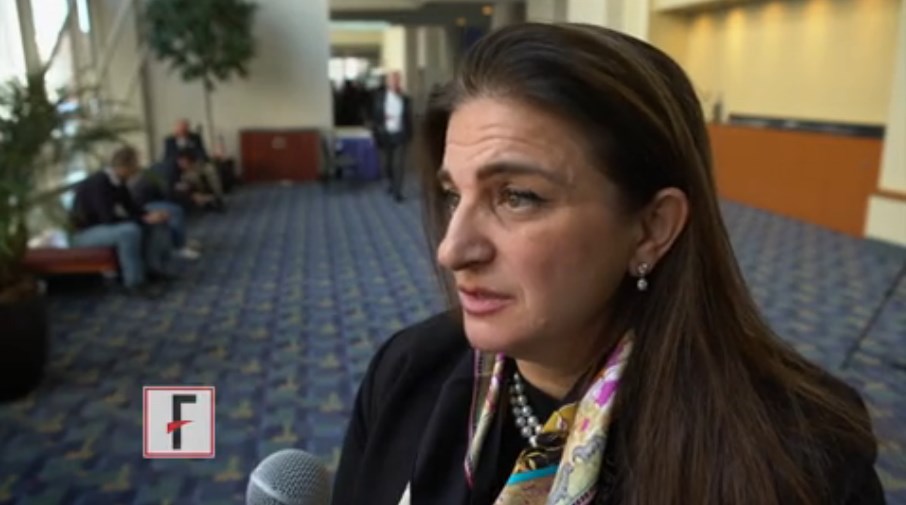
WASHINGTON – Subclinical leaflet thrombosis, as evidenced by reduced leaflet motion and corresponding hypoattenuating lesions on high-resolution CT, occurs frequently in bioprosthetic aortic valves implanted either by the transcatheter route or surgically, according to a report presented at the annual meeting of the American College of Cardiology and simultaneously published March 19 in the Lancet.
In an observational cohort study involving 890 patients enrolled in two single-center registries, reduced leaflet motion signaling the presence of thrombosis was detected in 106 patients (12%) by four-dimensional, volume-rendered CT. The thrombosis was hemodynamically silent and undetected by transthoracic echocardiograms done in a large subgroup of the study participants. Mean aortic valve gradients were numerically higher in affected patients, but still fell within the normal range in most of them, said Raj R. Makkar, MD, of Cedars-Sinai Heart Institute, Los Angeles.
The video associated with this article is no longer available on this site. Please view all of our videos on the MDedge YouTube channel
Dr. Makkar and his associates studied this issue by analyzing data in the RESOLVE (Assessment of Transcatheter and Surgical Aortic Bioprosthetic Valve Thrombosis and its Treatment with Anticoagulation) registry at Cedars-Sinai and the SAVORY (Subclinical Aortic Valve Biosprosthesis Thrombosis Assessed with Four-Dimensional CT) registry at the Rigshospitalet Heart Center in Copenhagen. Their study focused on enrolled patients who underwent either TAVR (626 patients) or SAVR (264 patients) and then had high-resolution CT scans done at various times after implantation. All the CT scans were analyzed in blinded fashion, and the study participants were followed for a mean of 540 days.
The prevalence of subclinical leaflet thrombosis was significantly higher in TAVR valves (13%) than in SAVR valves (4%). The severity of the thrombosis also was significantly higher in TAVR valves, when measured by the extent of leaflet motion restriction (71.0% vs. 56.9%).
One possible reason for this discrepancy is that traumatic injury to the pericardial leaflets, which theoretically could predispose to thrombus formation, may be more likely to occur during crimping and deployment of balloon-expandable and self-expanding stent valves in TAVR. Another possibility is that resection of the calcified native aortic valves during SAVR might improve flow dynamics after valve replacement, compared with leaving native aortic valve cusps in situ during TAVR. A third possibility is that inadvertent incomplete expansion or overexpansion of transcatheter valves might alter mechanical stress on the leaflets, predisposing them to thrombus formation, compared with the uniform expansion of valves placed surgically, the investigator said.
“Nevertheless, these findings should be interpreted in the context of findings from multiple randomized controlled trials showing similar mortality and stroke rates, better hemodynamics, and equivalent durability of transcatheter aortic valves at 5 years, compared with surgical valves,” he noted.
Patients taking novel oral anticoagulants (NOACs) or warfarin for anticoagulation before valve replacement were less likely to develop subclinical leaflet thrombosis than patients not taking those anticoagulants. And the thrombosis appeared to resolve in all patients treated with NOACs or warfarin for 30 days after it was found on CT, but it persisted or progressed in those not treated with anticoagulation. Thus, “anticoagulation with NOACs or warfarin was effective in prevention and treatment of reduced leaflet motion, but dual-antiplatelet therapy, which is the standard of care, was not,” the investigators said (Lancet 2017 Mar 19. doi: 10.1016/S0140-6736(17)30757-2.
“Our study challenges the American College of Cardiology and American Heart Association and European Society of Cardiology and European Association for Cardio-Thoracic Surgery guidelines, which recommend dual-antiplatelet therapy after TAVR and do not recommend routine anticoagulation after TAVR,” he noted.
However, routine anticoagulation for all TAVR and SAVR patients, or even for all who develop leaflet thrombosis, cannot be recommended on the basis of results from a single observational study. The benefit of anticoagulation may not offset the risk of bleeding in this predominantly elderly population with multiple comorbidities, he said.
There were no significant differences between patients who developed subclinical leaflet thrombosis and those who did not regarding rates of death, MI, or stroke. However, “reduced leaflet wall motion was significantly associated with increased rates of all TIAs [transient ischemic attacks], nonprocedural TIAs, and post-CT TIAs.” Dr. Makkar said.
Based on his new findings, Dr. Makkar suggested that clinicians keep possible leaflet thrombosis on a replaced aortic valve in mind if they see clinical evidence for it, such as an increase in the valve’s pressure gradient or development of a TIA or stroke.* These events should trigger further investigation of the valve with CT angiography, and if thrombosis is then confirmed, the patient should receive treatment with an anticoagulant, although the appropriate duration of anticoagulant treatment remains unclear, he said in a video interview. Dr. Makkar also said that trials are needed to determine whether routine CT angiography assessment or routine prophylactic treatment with an anticoagulant is warranted because the antiplatelet therapy that patients currently receive after aortic valve replacement seems unable to prevent leaflet thrombosis.
Since this was an observational study based on data from nonrandomized registries, the findings cannot prove causality but only an association between leaflet thrombosis and TIA. They must be substantiated in further studies, including “the current Food and Drug Administration–mandated imaging substudies in randomized clinical trials.”
Dr. Makkar has received consultant fees and/or honoraria from Abbott Vascular, Medtronic, Cordis, and Entourage Medical, and research grants from Edwards Lifesciences and St. Jude Medical.
Mitchel L. Zoler contributed to this report.
Correction, 3/20/17: An earlier version of this article misstated the clinical evidence for possible leaflet thrombosis on a replaced aortic valve.
The study by Dr. Makkar and his coinvestigators provides important new information to guide future research, but changing clinical practice or guidelines on the basis of this information would be premature.
In particular, whether to recommend anticoagulation therapy to TAVR and SAVR patients is unknown, given the risks of chronic anticoagulation. We do not yet know whether such a recommendation should be guided by CT or echocardiographic imaging, and, if so, at what intervals? We don’t yet know the optimal duration of anticoagulation treatment, or whether NOAC’s are as good as or better than warfarin in this setting. And we don’t yet know whether the risk of bleeding is offset by a reduction in stroke or any other meaningful clinical sequelae.
Jeroen J. Bax, MD, is in the department of cardiology at Leiden (the Netherlands) University Medical Center. Gregg W. Stone, MD, is at Columbia University Medical Center and the Cardiovascular Research Foundation, both in New York. Dr. Bax’s institution has received unrestricted research grants from Biotronik, Medtronic, Boston Scientific, and Edwards LifeScience; Dr. Stone reported ties to numerous industry sources. Dr. Bax and Dr. Stone made these remarks in an editorial accompanying the Lancet report (Lancet 2017 Mar 19. doi: 10.1016/S0140-6736(17)30757-2).
The study by Dr. Makkar and his coinvestigators provides important new information to guide future research, but changing clinical practice or guidelines on the basis of this information would be premature.
In particular, whether to recommend anticoagulation therapy to TAVR and SAVR patients is unknown, given the risks of chronic anticoagulation. We do not yet know whether such a recommendation should be guided by CT or echocardiographic imaging, and, if so, at what intervals? We don’t yet know the optimal duration of anticoagulation treatment, or whether NOAC’s are as good as or better than warfarin in this setting. And we don’t yet know whether the risk of bleeding is offset by a reduction in stroke or any other meaningful clinical sequelae.
Jeroen J. Bax, MD, is in the department of cardiology at Leiden (the Netherlands) University Medical Center. Gregg W. Stone, MD, is at Columbia University Medical Center and the Cardiovascular Research Foundation, both in New York. Dr. Bax’s institution has received unrestricted research grants from Biotronik, Medtronic, Boston Scientific, and Edwards LifeScience; Dr. Stone reported ties to numerous industry sources. Dr. Bax and Dr. Stone made these remarks in an editorial accompanying the Lancet report (Lancet 2017 Mar 19. doi: 10.1016/S0140-6736(17)30757-2).
The study by Dr. Makkar and his coinvestigators provides important new information to guide future research, but changing clinical practice or guidelines on the basis of this information would be premature.
In particular, whether to recommend anticoagulation therapy to TAVR and SAVR patients is unknown, given the risks of chronic anticoagulation. We do not yet know whether such a recommendation should be guided by CT or echocardiographic imaging, and, if so, at what intervals? We don’t yet know the optimal duration of anticoagulation treatment, or whether NOAC’s are as good as or better than warfarin in this setting. And we don’t yet know whether the risk of bleeding is offset by a reduction in stroke or any other meaningful clinical sequelae.
Jeroen J. Bax, MD, is in the department of cardiology at Leiden (the Netherlands) University Medical Center. Gregg W. Stone, MD, is at Columbia University Medical Center and the Cardiovascular Research Foundation, both in New York. Dr. Bax’s institution has received unrestricted research grants from Biotronik, Medtronic, Boston Scientific, and Edwards LifeScience; Dr. Stone reported ties to numerous industry sources. Dr. Bax and Dr. Stone made these remarks in an editorial accompanying the Lancet report (Lancet 2017 Mar 19. doi: 10.1016/S0140-6736(17)30757-2).
WASHINGTON – Subclinical leaflet thrombosis, as evidenced by reduced leaflet motion and corresponding hypoattenuating lesions on high-resolution CT, occurs frequently in bioprosthetic aortic valves implanted either by the transcatheter route or surgically, according to a report presented at the annual meeting of the American College of Cardiology and simultaneously published March 19 in the Lancet.
In an observational cohort study involving 890 patients enrolled in two single-center registries, reduced leaflet motion signaling the presence of thrombosis was detected in 106 patients (12%) by four-dimensional, volume-rendered CT. The thrombosis was hemodynamically silent and undetected by transthoracic echocardiograms done in a large subgroup of the study participants. Mean aortic valve gradients were numerically higher in affected patients, but still fell within the normal range in most of them, said Raj R. Makkar, MD, of Cedars-Sinai Heart Institute, Los Angeles.
The video associated with this article is no longer available on this site. Please view all of our videos on the MDedge YouTube channel
Dr. Makkar and his associates studied this issue by analyzing data in the RESOLVE (Assessment of Transcatheter and Surgical Aortic Bioprosthetic Valve Thrombosis and its Treatment with Anticoagulation) registry at Cedars-Sinai and the SAVORY (Subclinical Aortic Valve Biosprosthesis Thrombosis Assessed with Four-Dimensional CT) registry at the Rigshospitalet Heart Center in Copenhagen. Their study focused on enrolled patients who underwent either TAVR (626 patients) or SAVR (264 patients) and then had high-resolution CT scans done at various times after implantation. All the CT scans were analyzed in blinded fashion, and the study participants were followed for a mean of 540 days.
The prevalence of subclinical leaflet thrombosis was significantly higher in TAVR valves (13%) than in SAVR valves (4%). The severity of the thrombosis also was significantly higher in TAVR valves, when measured by the extent of leaflet motion restriction (71.0% vs. 56.9%).
One possible reason for this discrepancy is that traumatic injury to the pericardial leaflets, which theoretically could predispose to thrombus formation, may be more likely to occur during crimping and deployment of balloon-expandable and self-expanding stent valves in TAVR. Another possibility is that resection of the calcified native aortic valves during SAVR might improve flow dynamics after valve replacement, compared with leaving native aortic valve cusps in situ during TAVR. A third possibility is that inadvertent incomplete expansion or overexpansion of transcatheter valves might alter mechanical stress on the leaflets, predisposing them to thrombus formation, compared with the uniform expansion of valves placed surgically, the investigator said.
“Nevertheless, these findings should be interpreted in the context of findings from multiple randomized controlled trials showing similar mortality and stroke rates, better hemodynamics, and equivalent durability of transcatheter aortic valves at 5 years, compared with surgical valves,” he noted.
Patients taking novel oral anticoagulants (NOACs) or warfarin for anticoagulation before valve replacement were less likely to develop subclinical leaflet thrombosis than patients not taking those anticoagulants. And the thrombosis appeared to resolve in all patients treated with NOACs or warfarin for 30 days after it was found on CT, but it persisted or progressed in those not treated with anticoagulation. Thus, “anticoagulation with NOACs or warfarin was effective in prevention and treatment of reduced leaflet motion, but dual-antiplatelet therapy, which is the standard of care, was not,” the investigators said (Lancet 2017 Mar 19. doi: 10.1016/S0140-6736(17)30757-2.
“Our study challenges the American College of Cardiology and American Heart Association and European Society of Cardiology and European Association for Cardio-Thoracic Surgery guidelines, which recommend dual-antiplatelet therapy after TAVR and do not recommend routine anticoagulation after TAVR,” he noted.
However, routine anticoagulation for all TAVR and SAVR patients, or even for all who develop leaflet thrombosis, cannot be recommended on the basis of results from a single observational study. The benefit of anticoagulation may not offset the risk of bleeding in this predominantly elderly population with multiple comorbidities, he said.
There were no significant differences between patients who developed subclinical leaflet thrombosis and those who did not regarding rates of death, MI, or stroke. However, “reduced leaflet wall motion was significantly associated with increased rates of all TIAs [transient ischemic attacks], nonprocedural TIAs, and post-CT TIAs.” Dr. Makkar said.
Based on his new findings, Dr. Makkar suggested that clinicians keep possible leaflet thrombosis on a replaced aortic valve in mind if they see clinical evidence for it, such as an increase in the valve’s pressure gradient or development of a TIA or stroke.* These events should trigger further investigation of the valve with CT angiography, and if thrombosis is then confirmed, the patient should receive treatment with an anticoagulant, although the appropriate duration of anticoagulant treatment remains unclear, he said in a video interview. Dr. Makkar also said that trials are needed to determine whether routine CT angiography assessment or routine prophylactic treatment with an anticoagulant is warranted because the antiplatelet therapy that patients currently receive after aortic valve replacement seems unable to prevent leaflet thrombosis.
Since this was an observational study based on data from nonrandomized registries, the findings cannot prove causality but only an association between leaflet thrombosis and TIA. They must be substantiated in further studies, including “the current Food and Drug Administration–mandated imaging substudies in randomized clinical trials.”
Dr. Makkar has received consultant fees and/or honoraria from Abbott Vascular, Medtronic, Cordis, and Entourage Medical, and research grants from Edwards Lifesciences and St. Jude Medical.
Mitchel L. Zoler contributed to this report.
Correction, 3/20/17: An earlier version of this article misstated the clinical evidence for possible leaflet thrombosis on a replaced aortic valve.
WASHINGTON – Subclinical leaflet thrombosis, as evidenced by reduced leaflet motion and corresponding hypoattenuating lesions on high-resolution CT, occurs frequently in bioprosthetic aortic valves implanted either by the transcatheter route or surgically, according to a report presented at the annual meeting of the American College of Cardiology and simultaneously published March 19 in the Lancet.
In an observational cohort study involving 890 patients enrolled in two single-center registries, reduced leaflet motion signaling the presence of thrombosis was detected in 106 patients (12%) by four-dimensional, volume-rendered CT. The thrombosis was hemodynamically silent and undetected by transthoracic echocardiograms done in a large subgroup of the study participants. Mean aortic valve gradients were numerically higher in affected patients, but still fell within the normal range in most of them, said Raj R. Makkar, MD, of Cedars-Sinai Heart Institute, Los Angeles.
The video associated with this article is no longer available on this site. Please view all of our videos on the MDedge YouTube channel
Dr. Makkar and his associates studied this issue by analyzing data in the RESOLVE (Assessment of Transcatheter and Surgical Aortic Bioprosthetic Valve Thrombosis and its Treatment with Anticoagulation) registry at Cedars-Sinai and the SAVORY (Subclinical Aortic Valve Biosprosthesis Thrombosis Assessed with Four-Dimensional CT) registry at the Rigshospitalet Heart Center in Copenhagen. Their study focused on enrolled patients who underwent either TAVR (626 patients) or SAVR (264 patients) and then had high-resolution CT scans done at various times after implantation. All the CT scans were analyzed in blinded fashion, and the study participants were followed for a mean of 540 days.
The prevalence of subclinical leaflet thrombosis was significantly higher in TAVR valves (13%) than in SAVR valves (4%). The severity of the thrombosis also was significantly higher in TAVR valves, when measured by the extent of leaflet motion restriction (71.0% vs. 56.9%).
One possible reason for this discrepancy is that traumatic injury to the pericardial leaflets, which theoretically could predispose to thrombus formation, may be more likely to occur during crimping and deployment of balloon-expandable and self-expanding stent valves in TAVR. Another possibility is that resection of the calcified native aortic valves during SAVR might improve flow dynamics after valve replacement, compared with leaving native aortic valve cusps in situ during TAVR. A third possibility is that inadvertent incomplete expansion or overexpansion of transcatheter valves might alter mechanical stress on the leaflets, predisposing them to thrombus formation, compared with the uniform expansion of valves placed surgically, the investigator said.
“Nevertheless, these findings should be interpreted in the context of findings from multiple randomized controlled trials showing similar mortality and stroke rates, better hemodynamics, and equivalent durability of transcatheter aortic valves at 5 years, compared with surgical valves,” he noted.
Patients taking novel oral anticoagulants (NOACs) or warfarin for anticoagulation before valve replacement were less likely to develop subclinical leaflet thrombosis than patients not taking those anticoagulants. And the thrombosis appeared to resolve in all patients treated with NOACs or warfarin for 30 days after it was found on CT, but it persisted or progressed in those not treated with anticoagulation. Thus, “anticoagulation with NOACs or warfarin was effective in prevention and treatment of reduced leaflet motion, but dual-antiplatelet therapy, which is the standard of care, was not,” the investigators said (Lancet 2017 Mar 19. doi: 10.1016/S0140-6736(17)30757-2.
“Our study challenges the American College of Cardiology and American Heart Association and European Society of Cardiology and European Association for Cardio-Thoracic Surgery guidelines, which recommend dual-antiplatelet therapy after TAVR and do not recommend routine anticoagulation after TAVR,” he noted.
However, routine anticoagulation for all TAVR and SAVR patients, or even for all who develop leaflet thrombosis, cannot be recommended on the basis of results from a single observational study. The benefit of anticoagulation may not offset the risk of bleeding in this predominantly elderly population with multiple comorbidities, he said.
There were no significant differences between patients who developed subclinical leaflet thrombosis and those who did not regarding rates of death, MI, or stroke. However, “reduced leaflet wall motion was significantly associated with increased rates of all TIAs [transient ischemic attacks], nonprocedural TIAs, and post-CT TIAs.” Dr. Makkar said.
Based on his new findings, Dr. Makkar suggested that clinicians keep possible leaflet thrombosis on a replaced aortic valve in mind if they see clinical evidence for it, such as an increase in the valve’s pressure gradient or development of a TIA or stroke.* These events should trigger further investigation of the valve with CT angiography, and if thrombosis is then confirmed, the patient should receive treatment with an anticoagulant, although the appropriate duration of anticoagulant treatment remains unclear, he said in a video interview. Dr. Makkar also said that trials are needed to determine whether routine CT angiography assessment or routine prophylactic treatment with an anticoagulant is warranted because the antiplatelet therapy that patients currently receive after aortic valve replacement seems unable to prevent leaflet thrombosis.
Since this was an observational study based on data from nonrandomized registries, the findings cannot prove causality but only an association between leaflet thrombosis and TIA. They must be substantiated in further studies, including “the current Food and Drug Administration–mandated imaging substudies in randomized clinical trials.”
Dr. Makkar has received consultant fees and/or honoraria from Abbott Vascular, Medtronic, Cordis, and Entourage Medical, and research grants from Edwards Lifesciences and St. Jude Medical.
Mitchel L. Zoler contributed to this report.
Correction, 3/20/17: An earlier version of this article misstated the clinical evidence for possible leaflet thrombosis on a replaced aortic valve.
AT ACC 17
Key clinical point: Subclinical leaflet thrombosis occurs frequently in bioprosthetic aortic valves implanted either by the transcatheter route or surgically.
Major finding: Reduced leaflet motion signaling the presence of thrombosis was detected in 106 patients (12%).
Data source: An observational cohort study involving 890 patients enrolled in two registries who underwent high-resolution CT to detect leaflet thrombosis after either TAVR or SAVR.
Disclosures: The RESOLVE study was funded by Cedars-Sinai Heart Institute and the SAVORY study was funded by Rigshospitalet. Dr. Makkar has received consultant fees and/or honoraria from Abbott Vascular, Medtronic, Cordis, and Entourage Medical, and research grants from Edwards Lifesciences and St. Jude Medical.
VIDEO: iFR outperforms FFR in two major trials
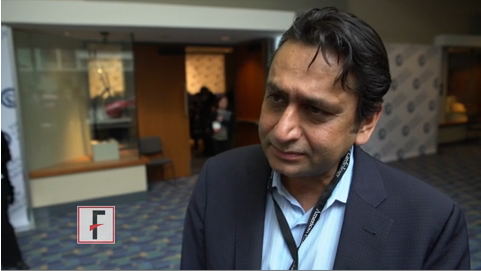
WASHINGTON – Instantaneous wave-free ratio (iFR) is the new evidence-based standard of care for invasive physiologic assessment of stable coronary lesions of intermediate angiographic severity, supplanting the older fractional flow reserve (FFR) technology, Matthias Gotberg, MD, said at the annual meeting of the American College of Cardiology.
The virtually identical results of these two trials should encourage more interventional cardiologists to incorporate physiologic assessment of stable coronary lesions into their clinical practice instead of relying solely on anatomic assessment by angiography, which abundant evidence shows is insufficiently accurate in identifying hemodynamically significant lesions warranting revascularization.
FFR never really caught on because of its limitations. DEFINE-FLAIR and iFR-SWEDEHEART show that iFR overcomes those limitations, said Dr. Gotberg, director of the cardiac catheterization laboratory at Skane University Hospital in Lund, Sweden.
The two studies showed that iFR was noninferior to FFR in the 1-year composite endpoint of all-cause mortality, nonfatal MI, or unplanned revascularization. And iFR was associated with significantly shorter procedure times, less stent utilization, and markedly less patient discomfort because, unlike FFR, it doesn’t require administration of adenosine to induce hyperemia.
Indeed, in iFR-SWEDEHEART, which included more than 2,000 randomized patients in three Scandinavian countries, only 3% of the iFR group reported experiencing chest pain, dyspnea, or other forms of discomfort during their procedure, compared with 68% of the FFR group, Dr. Gotberg explains in this video interview.[[{"fid":"192539","view_mode":"medstat_image_full_text","attributes":{"height":"390","width":"100%","class":"media-element file-medstat-image-full-text","data-delta":"1"},"fields":{"format":"medstat_image_full_text"},"type":"media","field_deltas":{"1":{"format":"medstat_image_full_text"}}}]]
WASHINGTON – Instantaneous wave-free ratio (iFR) is the new evidence-based standard of care for invasive physiologic assessment of stable coronary lesions of intermediate angiographic severity, supplanting the older fractional flow reserve (FFR) technology, Matthias Gotberg, MD, said at the annual meeting of the American College of Cardiology.
The virtually identical results of these two trials should encourage more interventional cardiologists to incorporate physiologic assessment of stable coronary lesions into their clinical practice instead of relying solely on anatomic assessment by angiography, which abundant evidence shows is insufficiently accurate in identifying hemodynamically significant lesions warranting revascularization.
FFR never really caught on because of its limitations. DEFINE-FLAIR and iFR-SWEDEHEART show that iFR overcomes those limitations, said Dr. Gotberg, director of the cardiac catheterization laboratory at Skane University Hospital in Lund, Sweden.
The two studies showed that iFR was noninferior to FFR in the 1-year composite endpoint of all-cause mortality, nonfatal MI, or unplanned revascularization. And iFR was associated with significantly shorter procedure times, less stent utilization, and markedly less patient discomfort because, unlike FFR, it doesn’t require administration of adenosine to induce hyperemia.
Indeed, in iFR-SWEDEHEART, which included more than 2,000 randomized patients in three Scandinavian countries, only 3% of the iFR group reported experiencing chest pain, dyspnea, or other forms of discomfort during their procedure, compared with 68% of the FFR group, Dr. Gotberg explains in this video interview.[[{"fid":"192539","view_mode":"medstat_image_full_text","attributes":{"height":"390","width":"100%","class":"media-element file-medstat-image-full-text","data-delta":"1"},"fields":{"format":"medstat_image_full_text"},"type":"media","field_deltas":{"1":{"format":"medstat_image_full_text"}}}]]
WASHINGTON – Instantaneous wave-free ratio (iFR) is the new evidence-based standard of care for invasive physiologic assessment of stable coronary lesions of intermediate angiographic severity, supplanting the older fractional flow reserve (FFR) technology, Matthias Gotberg, MD, said at the annual meeting of the American College of Cardiology.
The virtually identical results of these two trials should encourage more interventional cardiologists to incorporate physiologic assessment of stable coronary lesions into their clinical practice instead of relying solely on anatomic assessment by angiography, which abundant evidence shows is insufficiently accurate in identifying hemodynamically significant lesions warranting revascularization.
FFR never really caught on because of its limitations. DEFINE-FLAIR and iFR-SWEDEHEART show that iFR overcomes those limitations, said Dr. Gotberg, director of the cardiac catheterization laboratory at Skane University Hospital in Lund, Sweden.
The two studies showed that iFR was noninferior to FFR in the 1-year composite endpoint of all-cause mortality, nonfatal MI, or unplanned revascularization. And iFR was associated with significantly shorter procedure times, less stent utilization, and markedly less patient discomfort because, unlike FFR, it doesn’t require administration of adenosine to induce hyperemia.
Indeed, in iFR-SWEDEHEART, which included more than 2,000 randomized patients in three Scandinavian countries, only 3% of the iFR group reported experiencing chest pain, dyspnea, or other forms of discomfort during their procedure, compared with 68% of the FFR group, Dr. Gotberg explains in this video interview.[[{"fid":"192539","view_mode":"medstat_image_full_text","attributes":{"height":"390","width":"100%","class":"media-element file-medstat-image-full-text","data-delta":"1"},"fields":{"format":"medstat_image_full_text"},"type":"media","field_deltas":{"1":{"format":"medstat_image_full_text"}}}]]
AT ACC 17
VIDEO: Evolocumab caused no cognitive issues in FOURIER substudy
WASHINGTON – Don’t give the cognitive effects of evolocumab a second thought, results from a preplanned substudy of the landmark FOURIER study that assessed the impact of this PCSK9 inhibitor on memory or other measures of cognition in a random subgroup of 1,973 patients enrolled in the main study suggest.
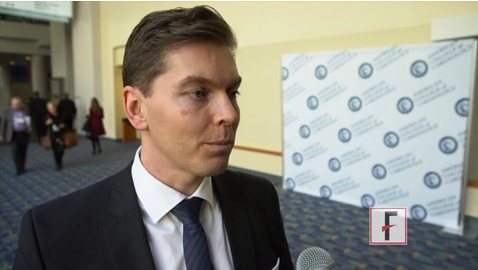
Based on these results “I wouldn’t be concerned about adverse cognitive effects” in patients treated with evolocumab (Repatha) or, for the time being, any other PCSK9 inhibitor, said Robert P. Giugliano, MD, in a video interview at the annual meeting of the American College of Cardiology”
Concerns about the cognitive effects of the drugs in this class of lipid-lowering drugs have lingered following suggestions of a possible problem that arose during earlier, much smaller studies of these agents as well as similar concerns that arose about statins that have been perpetuated through misleading posts on the Internet.
The battery of memory and cognition assessments used in EBBINGHAUS, the FOURIER substudy, should lay concerns about brain effects of evolocumab to rest, at least within the context of the median 26 months of treatment that patients in FOURIER received, said Dr. Giugliano, a cardiologist at Brigham and Women’s Hospital in Boston and lead investigator of the EBBINGHAUS substudy. Further analysis also showed that, even among patients who achieved LDL cholesterol levels of less than 25 mg/dL, treatment with evolocumab appeared to cause no deterioration of the measured mental functions.
The video associated with this article is no longer available on this site. Please view all of our videos on the MDedge YouTube channel
mzoler@frontlinemedcom.com
On Twitter @mitchelzoler
WASHINGTON – Don’t give the cognitive effects of evolocumab a second thought, results from a preplanned substudy of the landmark FOURIER study that assessed the impact of this PCSK9 inhibitor on memory or other measures of cognition in a random subgroup of 1,973 patients enrolled in the main study suggest.
Based on these results “I wouldn’t be concerned about adverse cognitive effects” in patients treated with evolocumab (Repatha) or, for the time being, any other PCSK9 inhibitor, said Robert P. Giugliano, MD, in a video interview at the annual meeting of the American College of Cardiology”
Concerns about the cognitive effects of the drugs in this class of lipid-lowering drugs have lingered following suggestions of a possible problem that arose during earlier, much smaller studies of these agents as well as similar concerns that arose about statins that have been perpetuated through misleading posts on the Internet.
The battery of memory and cognition assessments used in EBBINGHAUS, the FOURIER substudy, should lay concerns about brain effects of evolocumab to rest, at least within the context of the median 26 months of treatment that patients in FOURIER received, said Dr. Giugliano, a cardiologist at Brigham and Women’s Hospital in Boston and lead investigator of the EBBINGHAUS substudy. Further analysis also showed that, even among patients who achieved LDL cholesterol levels of less than 25 mg/dL, treatment with evolocumab appeared to cause no deterioration of the measured mental functions.
The video associated with this article is no longer available on this site. Please view all of our videos on the MDedge YouTube channel
mzoler@frontlinemedcom.com
On Twitter @mitchelzoler
WASHINGTON – Don’t give the cognitive effects of evolocumab a second thought, results from a preplanned substudy of the landmark FOURIER study that assessed the impact of this PCSK9 inhibitor on memory or other measures of cognition in a random subgroup of 1,973 patients enrolled in the main study suggest.
Based on these results “I wouldn’t be concerned about adverse cognitive effects” in patients treated with evolocumab (Repatha) or, for the time being, any other PCSK9 inhibitor, said Robert P. Giugliano, MD, in a video interview at the annual meeting of the American College of Cardiology”
Concerns about the cognitive effects of the drugs in this class of lipid-lowering drugs have lingered following suggestions of a possible problem that arose during earlier, much smaller studies of these agents as well as similar concerns that arose about statins that have been perpetuated through misleading posts on the Internet.
The battery of memory and cognition assessments used in EBBINGHAUS, the FOURIER substudy, should lay concerns about brain effects of evolocumab to rest, at least within the context of the median 26 months of treatment that patients in FOURIER received, said Dr. Giugliano, a cardiologist at Brigham and Women’s Hospital in Boston and lead investigator of the EBBINGHAUS substudy. Further analysis also showed that, even among patients who achieved LDL cholesterol levels of less than 25 mg/dL, treatment with evolocumab appeared to cause no deterioration of the measured mental functions.
The video associated with this article is no longer available on this site. Please view all of our videos on the MDedge YouTube channel
mzoler@frontlinemedcom.com
On Twitter @mitchelzoler
AT ACC 2017
VIDEO: Clear food labels may improve healthy habits
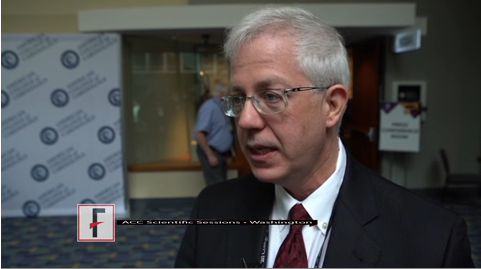
WASHINGTON – Application clear graphic nutrition labels on the front of packaged foods could help patients make healthier food choices, according to a study out of the George Institute of Global Health, Sydney.
Bruce Neal, PhD, senior director of the food policy division at the institute, and his colleagues asked 1,578 study participants to use a smart phone scanner to record the packaged foods they bought over the course of a week. Nutrition information from those scans was used to derive a nutrient profile score and plugged into four different food labeling systems on a randomized basis:
- Health Star Rating (HSR). A graphic label that gives the product from one to five stars.
- Multi-color Traffic Light (MTD). A graphic label that advises the participant to stop, use caution, or go.
- Daily Intake Guide (DIG). A graphic label that presents important nutrients in larger numbers.
- Nutrient Information Panel (NIP). A chart-based label listing nutrient values, similar to the U.S. Nutrition Facts label.
Nutrient information provided by HSR was found to be noninferior to the alternatives, Dr. Neal said at the annual meeting of the American College of Cardiology.
HSR earned a superiority score of 0.38, 0.1, and 0.23 when compared with MTL, DIG, and NIP labels, respectively, according to the study.
The video associated with this article is no longer available on this site. Please view all of our videos on the MDedge YouTube channel
Dr. Neal attributed the “unimpressive results” in part to the use of the smart phone interface.
“The trial used a smart phone design, which is a suboptimal surrogate, compared with printed on every pack. In the real world it would work better,” he said in a video interview.
While overall mean nutrition information was found to be not inferior, HSR scored significantly higher that the alternatives in user perception. In understandability, HSR scored 0.62 (P = .005), 1.02 (P less than .001), and 0.22 (P equal .32), compared with MTL, DIG, and NIP, respectively.
HSR also scored significantly higher among participants in “value of having on all food packs,” especially against DIG, scoring 0.70 (P = .002).
“It is absolutely clear that Health Star Rating is preferred to any of the other formats by consumers,” Dr. Neal said. “It is probably [also] fair to say Health Star is now the Australian government’s strongest choice.”
Participants were on average 38 years old, overwhelmingly female (84%), and well educated with 72% reporting a tertiary education or higher. Despite this more affluent and educated population, Dr. Neal and his colleagues believe that HSR can be used with any group.
“We are embarking on a project to roll out this smart phone application with a different interface suited to other, disadvantaged groups,” Dr. Neal said. “We are also working with the [Australian] state government to use Health Star for fast food restaurants and school canteens, as well as government procurement for use in hospitals and prisons.”
The study was limited by its reliance on participants to record their own purchases, Dr. Neal added.
ezimmerman@frontlinemedcom.com
On Twitter @EAZtweets
WASHINGTON – Application clear graphic nutrition labels on the front of packaged foods could help patients make healthier food choices, according to a study out of the George Institute of Global Health, Sydney.
Bruce Neal, PhD, senior director of the food policy division at the institute, and his colleagues asked 1,578 study participants to use a smart phone scanner to record the packaged foods they bought over the course of a week. Nutrition information from those scans was used to derive a nutrient profile score and plugged into four different food labeling systems on a randomized basis:
- Health Star Rating (HSR). A graphic label that gives the product from one to five stars.
- Multi-color Traffic Light (MTD). A graphic label that advises the participant to stop, use caution, or go.
- Daily Intake Guide (DIG). A graphic label that presents important nutrients in larger numbers.
- Nutrient Information Panel (NIP). A chart-based label listing nutrient values, similar to the U.S. Nutrition Facts label.
Nutrient information provided by HSR was found to be noninferior to the alternatives, Dr. Neal said at the annual meeting of the American College of Cardiology.
HSR earned a superiority score of 0.38, 0.1, and 0.23 when compared with MTL, DIG, and NIP labels, respectively, according to the study.
The video associated with this article is no longer available on this site. Please view all of our videos on the MDedge YouTube channel
Dr. Neal attributed the “unimpressive results” in part to the use of the smart phone interface.
“The trial used a smart phone design, which is a suboptimal surrogate, compared with printed on every pack. In the real world it would work better,” he said in a video interview.
While overall mean nutrition information was found to be not inferior, HSR scored significantly higher that the alternatives in user perception. In understandability, HSR scored 0.62 (P = .005), 1.02 (P less than .001), and 0.22 (P equal .32), compared with MTL, DIG, and NIP, respectively.
HSR also scored significantly higher among participants in “value of having on all food packs,” especially against DIG, scoring 0.70 (P = .002).
“It is absolutely clear that Health Star Rating is preferred to any of the other formats by consumers,” Dr. Neal said. “It is probably [also] fair to say Health Star is now the Australian government’s strongest choice.”
Participants were on average 38 years old, overwhelmingly female (84%), and well educated with 72% reporting a tertiary education or higher. Despite this more affluent and educated population, Dr. Neal and his colleagues believe that HSR can be used with any group.
“We are embarking on a project to roll out this smart phone application with a different interface suited to other, disadvantaged groups,” Dr. Neal said. “We are also working with the [Australian] state government to use Health Star for fast food restaurants and school canteens, as well as government procurement for use in hospitals and prisons.”
The study was limited by its reliance on participants to record their own purchases, Dr. Neal added.
ezimmerman@frontlinemedcom.com
On Twitter @EAZtweets
WASHINGTON – Application clear graphic nutrition labels on the front of packaged foods could help patients make healthier food choices, according to a study out of the George Institute of Global Health, Sydney.
Bruce Neal, PhD, senior director of the food policy division at the institute, and his colleagues asked 1,578 study participants to use a smart phone scanner to record the packaged foods they bought over the course of a week. Nutrition information from those scans was used to derive a nutrient profile score and plugged into four different food labeling systems on a randomized basis:
- Health Star Rating (HSR). A graphic label that gives the product from one to five stars.
- Multi-color Traffic Light (MTD). A graphic label that advises the participant to stop, use caution, or go.
- Daily Intake Guide (DIG). A graphic label that presents important nutrients in larger numbers.
- Nutrient Information Panel (NIP). A chart-based label listing nutrient values, similar to the U.S. Nutrition Facts label.
Nutrient information provided by HSR was found to be noninferior to the alternatives, Dr. Neal said at the annual meeting of the American College of Cardiology.
HSR earned a superiority score of 0.38, 0.1, and 0.23 when compared with MTL, DIG, and NIP labels, respectively, according to the study.
The video associated with this article is no longer available on this site. Please view all of our videos on the MDedge YouTube channel
Dr. Neal attributed the “unimpressive results” in part to the use of the smart phone interface.
“The trial used a smart phone design, which is a suboptimal surrogate, compared with printed on every pack. In the real world it would work better,” he said in a video interview.
While overall mean nutrition information was found to be not inferior, HSR scored significantly higher that the alternatives in user perception. In understandability, HSR scored 0.62 (P = .005), 1.02 (P less than .001), and 0.22 (P equal .32), compared with MTL, DIG, and NIP, respectively.
HSR also scored significantly higher among participants in “value of having on all food packs,” especially against DIG, scoring 0.70 (P = .002).
“It is absolutely clear that Health Star Rating is preferred to any of the other formats by consumers,” Dr. Neal said. “It is probably [also] fair to say Health Star is now the Australian government’s strongest choice.”
Participants were on average 38 years old, overwhelmingly female (84%), and well educated with 72% reporting a tertiary education or higher. Despite this more affluent and educated population, Dr. Neal and his colleagues believe that HSR can be used with any group.
“We are embarking on a project to roll out this smart phone application with a different interface suited to other, disadvantaged groups,” Dr. Neal said. “We are also working with the [Australian] state government to use Health Star for fast food restaurants and school canteens, as well as government procurement for use in hospitals and prisons.”
The study was limited by its reliance on participants to record their own purchases, Dr. Neal added.
ezimmerman@frontlinemedcom.com
On Twitter @EAZtweets
AT ACC 17
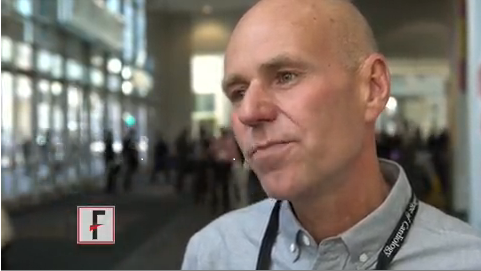
VIDEO: SURTAVI results ‘tremendously important’ for decision making
Washington – Heart teams will have more options when making treatment decisions for patients with severe aortic stenosis who are at intermediate risk, now that the results of the SURTAVI (Surgical Replacement and Transcatheter Aortic Valve Implantation) trial have been presented.
Those results showed that transcatheter aortic valve replacement (TAVR) in patients with severe aortic stenosis at intermediate risk was not only noninferior to surgical replacement, “but in my mind superior, because you don’t get your chest cracked, you get home earlier, and you have fewer strokes [in this trial], Roxana Mehran, MD, professor and director of interventional cardiovascular research at Mount Sinai Hospital in New York, said in a video interview at the annual meeting of the American College of Cardiology.
In SURTAVI, which used Medtronic’s self-expanding CoreValve and Evolut-R bioprostheses in 863 patients randomized to TAVR, 12.6% met the study’s primary endpoint – death from any cause or disabling stroke at 24 months – versus 14% of the 796 patients randomized to surgery, a statistically nonsignificant difference. Notably, the risk of any type of stroke at 30 days was statistically superior for TAVR, 3.4%, compared with 5.6% for surgical replacement.
“It’s tremendously important to see the change in how we’re going to be evaluating patients with aortic stenosis,” Dr. Mehran said.
The video associated with this article is no longer available on this site. Please view all of our videos on the MDedge YouTube channel
Washington – Heart teams will have more options when making treatment decisions for patients with severe aortic stenosis who are at intermediate risk, now that the results of the SURTAVI (Surgical Replacement and Transcatheter Aortic Valve Implantation) trial have been presented.
Those results showed that transcatheter aortic valve replacement (TAVR) in patients with severe aortic stenosis at intermediate risk was not only noninferior to surgical replacement, “but in my mind superior, because you don’t get your chest cracked, you get home earlier, and you have fewer strokes [in this trial], Roxana Mehran, MD, professor and director of interventional cardiovascular research at Mount Sinai Hospital in New York, said in a video interview at the annual meeting of the American College of Cardiology.
In SURTAVI, which used Medtronic’s self-expanding CoreValve and Evolut-R bioprostheses in 863 patients randomized to TAVR, 12.6% met the study’s primary endpoint – death from any cause or disabling stroke at 24 months – versus 14% of the 796 patients randomized to surgery, a statistically nonsignificant difference. Notably, the risk of any type of stroke at 30 days was statistically superior for TAVR, 3.4%, compared with 5.6% for surgical replacement.
“It’s tremendously important to see the change in how we’re going to be evaluating patients with aortic stenosis,” Dr. Mehran said.
The video associated with this article is no longer available on this site. Please view all of our videos on the MDedge YouTube channel
Washington – Heart teams will have more options when making treatment decisions for patients with severe aortic stenosis who are at intermediate risk, now that the results of the SURTAVI (Surgical Replacement and Transcatheter Aortic Valve Implantation) trial have been presented.
Those results showed that transcatheter aortic valve replacement (TAVR) in patients with severe aortic stenosis at intermediate risk was not only noninferior to surgical replacement, “but in my mind superior, because you don’t get your chest cracked, you get home earlier, and you have fewer strokes [in this trial], Roxana Mehran, MD, professor and director of interventional cardiovascular research at Mount Sinai Hospital in New York, said in a video interview at the annual meeting of the American College of Cardiology.
In SURTAVI, which used Medtronic’s self-expanding CoreValve and Evolut-R bioprostheses in 863 patients randomized to TAVR, 12.6% met the study’s primary endpoint – death from any cause or disabling stroke at 24 months – versus 14% of the 796 patients randomized to surgery, a statistically nonsignificant difference. Notably, the risk of any type of stroke at 30 days was statistically superior for TAVR, 3.4%, compared with 5.6% for surgical replacement.
“It’s tremendously important to see the change in how we’re going to be evaluating patients with aortic stenosis,” Dr. Mehran said.
The video associated with this article is no longer available on this site. Please view all of our videos on the MDedge YouTube channel
AT ACC 17