User login
Ocrelizumab May Be More Effective for Relapsing-Remitting MS Than Interferon
VANCOUVER—Ocrelizumab, a B-cell depleting humanized monoclonal antibody being developed by Hoffman–La Roche, consistently reduces relapses, disability progression, and new or enlarging lesions, compared with interferon beta-1a, in patients with relapsing-remitting multiple sclerosis (MS), according to two phase III trials reported at the 68th Annual Meeting of the American Academy of Neurology.
OPERA I and OPERA II
The identical trials, dubbed OPERA I and OPERA II, each included about 800 patients. Subjects were randomized one-to-one to 600 mg of IV ocrelizumab every 24 weeks or to 44 μg of subcutaneous interferon beta-1a three times weekly for 96 weeks. Patients had early disease, and a significant proportion was naive to MS treatments.
At 96 weeks, 47.9% and 47.5% of patients receiving ocrelizumab, respectively, had no evidence of disease activity (NEDA) versus 29.2% and 25.1% of patients receiving interferon. NEDA is a composite score defined as the absence of relapses, confirmed disability progression, and new or enlarging T2 or gadolinium-enhancing T1 lesions.
In both studies, relapses occurred in about 20% of patients receiving ocrelizumab versus about 35% of patients receiving interferon. About 10% of participants receiving ocrelizumab and about 15% of patients receiving interferon had clinical disease progression. Similarly, about 10% of patients receiving ocrelizumab developed new gadolinium-enhancing lesions, compared with about 35% of those receiving interferon. New or enlarging T2 lesions were found in about 40% of the ocrelizumab groups and in more than 60% of the interferon groups.
After week 24, 96% of patients receiving ocrelizumab, compared with between 60% and 70% of patients receiving interferon, were free of new or enlarging T2 lesions.
In short, ocrelizumab “resulted in greater achievement of NEDA versus [interferon] over 96 weeks, with elimination of new or enlarging T2 lesions in nearly all patients after week 24,” the researchers concluded.
Ocrelizumab Appears Safe
“These are very impressive numbers,” especially because ocrelizumab was compared with a standard treatment, said investigator Anthony Traboulsee, MD, a neurologist at the University of British Columbia in Vancouver, Canada. “There was a wonderful constancy of results” across the trials; “a very highly effective treatment is emerging for multiple sclerosis.” Many patients opted to stay on ocrelizumab at the end of the trials.

Roche plans to submit its approval package to the FDA in the first half of 2016. The FDA granted the biologic breakthrough, fast-track status for primary progressive MS based on the strength of an earlier phase III trial. At present, there are no MS agents indicated for primary progressive disease.
Patients in OPERA were 37 years old, on average, and two-thirds were women. The mean baseline score on the Extended Disability Status Scale was 2.77, and the mean time since diagnosis was about four years. Patients had had about 1.5 relapses in the first and second years before entering the studies.
An Alternative to Natalizumab?
The positive results and the increasing buzz about ocrelizumab in the MS community raise the question of how the treatment will fit into the MS armamentarium if it is approved. A review in Therapeutic Advances in Neurological Disorders addressed the issue in January, before the OPERA results were made public.
It’s unclear whether ocrelizumab will become the preferred option when patients have progression on first-line agents such as interferon and glatiramer acetate. Phase II data suggest that ocrelizumab’s “effect on clinical disease activity [seems] to be of the same magnitude, compared with that of fingolimod and natalizumab,” and that the treatment will likely be an alternative to natalizumab and alemtuzumab. “Ocrelizumab seems to have a more favorable risk–benefit profile, compared with natalizumab in [John Cunningham (JC)] virus antibody–positive patients, whereas natalizumab in JC virus antibody–negative patients appears safer. Hence, ocrelizumab could be an attractive option among second-line therapies in patients who are JC virus antibody–positive, whereas natalizumab, or, alternatively, oral fingolimod, would be the first choice among second-line therapies in JC virus antibody–negative patients,” said authors Per Soelberg Sorensen, MD, and Morten Blinkenberg, MD, PhD, both MS neurologists at the University of Copenhagen.
“It needs to be emphasized that long-term data on the safety of ocrelizumab in the treatment of MS is warranted, and therefore postmarketing safety programs will be needed,” they said. The risk of PML with long-term use is unknown. “Another unsolved question is whether ocrelizumab therapy should be applied at fixed intervals, eg, every six months [as in OPERA], or if retreatment should be guided by the recovery of CD19-positive B cells.”
In any case, infusion reactions with ocrelizumab should be less common than with rituximab, another B-cell depleter used off-label for MS, because ocrelizumab is a more humanized antibody, they concluded.
—M. Alexander Otto
Suggested Reading
Sorensen PS, Blinkenberg M. The potential role for ocrelizumab in the treatment of multiple sclerosis: current evidence and future prospects. Ther Adv Neurol Disord. 2016;9(1):44-52.
VANCOUVER—Ocrelizumab, a B-cell depleting humanized monoclonal antibody being developed by Hoffman–La Roche, consistently reduces relapses, disability progression, and new or enlarging lesions, compared with interferon beta-1a, in patients with relapsing-remitting multiple sclerosis (MS), according to two phase III trials reported at the 68th Annual Meeting of the American Academy of Neurology.
OPERA I and OPERA II
The identical trials, dubbed OPERA I and OPERA II, each included about 800 patients. Subjects were randomized one-to-one to 600 mg of IV ocrelizumab every 24 weeks or to 44 μg of subcutaneous interferon beta-1a three times weekly for 96 weeks. Patients had early disease, and a significant proportion was naive to MS treatments.
At 96 weeks, 47.9% and 47.5% of patients receiving ocrelizumab, respectively, had no evidence of disease activity (NEDA) versus 29.2% and 25.1% of patients receiving interferon. NEDA is a composite score defined as the absence of relapses, confirmed disability progression, and new or enlarging T2 or gadolinium-enhancing T1 lesions.
In both studies, relapses occurred in about 20% of patients receiving ocrelizumab versus about 35% of patients receiving interferon. About 10% of participants receiving ocrelizumab and about 15% of patients receiving interferon had clinical disease progression. Similarly, about 10% of patients receiving ocrelizumab developed new gadolinium-enhancing lesions, compared with about 35% of those receiving interferon. New or enlarging T2 lesions were found in about 40% of the ocrelizumab groups and in more than 60% of the interferon groups.
After week 24, 96% of patients receiving ocrelizumab, compared with between 60% and 70% of patients receiving interferon, were free of new or enlarging T2 lesions.
In short, ocrelizumab “resulted in greater achievement of NEDA versus [interferon] over 96 weeks, with elimination of new or enlarging T2 lesions in nearly all patients after week 24,” the researchers concluded.
Ocrelizumab Appears Safe
“These are very impressive numbers,” especially because ocrelizumab was compared with a standard treatment, said investigator Anthony Traboulsee, MD, a neurologist at the University of British Columbia in Vancouver, Canada. “There was a wonderful constancy of results” across the trials; “a very highly effective treatment is emerging for multiple sclerosis.” Many patients opted to stay on ocrelizumab at the end of the trials.
Roche plans to submit its approval package to the FDA in the first half of 2016. The FDA granted the biologic breakthrough, fast-track status for primary progressive MS based on the strength of an earlier phase III trial. At present, there are no MS agents indicated for primary progressive disease.
Patients in OPERA were 37 years old, on average, and two-thirds were women. The mean baseline score on the Extended Disability Status Scale was 2.77, and the mean time since diagnosis was about four years. Patients had had about 1.5 relapses in the first and second years before entering the studies.
An Alternative to Natalizumab?
The positive results and the increasing buzz about ocrelizumab in the MS community raise the question of how the treatment will fit into the MS armamentarium if it is approved. A review in Therapeutic Advances in Neurological Disorders addressed the issue in January, before the OPERA results were made public.
It’s unclear whether ocrelizumab will become the preferred option when patients have progression on first-line agents such as interferon and glatiramer acetate. Phase II data suggest that ocrelizumab’s “effect on clinical disease activity [seems] to be of the same magnitude, compared with that of fingolimod and natalizumab,” and that the treatment will likely be an alternative to natalizumab and alemtuzumab. “Ocrelizumab seems to have a more favorable risk–benefit profile, compared with natalizumab in [John Cunningham (JC)] virus antibody–positive patients, whereas natalizumab in JC virus antibody–negative patients appears safer. Hence, ocrelizumab could be an attractive option among second-line therapies in patients who are JC virus antibody–positive, whereas natalizumab, or, alternatively, oral fingolimod, would be the first choice among second-line therapies in JC virus antibody–negative patients,” said authors Per Soelberg Sorensen, MD, and Morten Blinkenberg, MD, PhD, both MS neurologists at the University of Copenhagen.
“It needs to be emphasized that long-term data on the safety of ocrelizumab in the treatment of MS is warranted, and therefore postmarketing safety programs will be needed,” they said. The risk of PML with long-term use is unknown. “Another unsolved question is whether ocrelizumab therapy should be applied at fixed intervals, eg, every six months [as in OPERA], or if retreatment should be guided by the recovery of CD19-positive B cells.”
In any case, infusion reactions with ocrelizumab should be less common than with rituximab, another B-cell depleter used off-label for MS, because ocrelizumab is a more humanized antibody, they concluded.
—M. Alexander Otto
VANCOUVER—Ocrelizumab, a B-cell depleting humanized monoclonal antibody being developed by Hoffman–La Roche, consistently reduces relapses, disability progression, and new or enlarging lesions, compared with interferon beta-1a, in patients with relapsing-remitting multiple sclerosis (MS), according to two phase III trials reported at the 68th Annual Meeting of the American Academy of Neurology.
OPERA I and OPERA II
The identical trials, dubbed OPERA I and OPERA II, each included about 800 patients. Subjects were randomized one-to-one to 600 mg of IV ocrelizumab every 24 weeks or to 44 μg of subcutaneous interferon beta-1a three times weekly for 96 weeks. Patients had early disease, and a significant proportion was naive to MS treatments.
At 96 weeks, 47.9% and 47.5% of patients receiving ocrelizumab, respectively, had no evidence of disease activity (NEDA) versus 29.2% and 25.1% of patients receiving interferon. NEDA is a composite score defined as the absence of relapses, confirmed disability progression, and new or enlarging T2 or gadolinium-enhancing T1 lesions.
In both studies, relapses occurred in about 20% of patients receiving ocrelizumab versus about 35% of patients receiving interferon. About 10% of participants receiving ocrelizumab and about 15% of patients receiving interferon had clinical disease progression. Similarly, about 10% of patients receiving ocrelizumab developed new gadolinium-enhancing lesions, compared with about 35% of those receiving interferon. New or enlarging T2 lesions were found in about 40% of the ocrelizumab groups and in more than 60% of the interferon groups.
After week 24, 96% of patients receiving ocrelizumab, compared with between 60% and 70% of patients receiving interferon, were free of new or enlarging T2 lesions.
In short, ocrelizumab “resulted in greater achievement of NEDA versus [interferon] over 96 weeks, with elimination of new or enlarging T2 lesions in nearly all patients after week 24,” the researchers concluded.
Ocrelizumab Appears Safe
“These are very impressive numbers,” especially because ocrelizumab was compared with a standard treatment, said investigator Anthony Traboulsee, MD, a neurologist at the University of British Columbia in Vancouver, Canada. “There was a wonderful constancy of results” across the trials; “a very highly effective treatment is emerging for multiple sclerosis.” Many patients opted to stay on ocrelizumab at the end of the trials.
Roche plans to submit its approval package to the FDA in the first half of 2016. The FDA granted the biologic breakthrough, fast-track status for primary progressive MS based on the strength of an earlier phase III trial. At present, there are no MS agents indicated for primary progressive disease.
Patients in OPERA were 37 years old, on average, and two-thirds were women. The mean baseline score on the Extended Disability Status Scale was 2.77, and the mean time since diagnosis was about four years. Patients had had about 1.5 relapses in the first and second years before entering the studies.
An Alternative to Natalizumab?
The positive results and the increasing buzz about ocrelizumab in the MS community raise the question of how the treatment will fit into the MS armamentarium if it is approved. A review in Therapeutic Advances in Neurological Disorders addressed the issue in January, before the OPERA results were made public.
It’s unclear whether ocrelizumab will become the preferred option when patients have progression on first-line agents such as interferon and glatiramer acetate. Phase II data suggest that ocrelizumab’s “effect on clinical disease activity [seems] to be of the same magnitude, compared with that of fingolimod and natalizumab,” and that the treatment will likely be an alternative to natalizumab and alemtuzumab. “Ocrelizumab seems to have a more favorable risk–benefit profile, compared with natalizumab in [John Cunningham (JC)] virus antibody–positive patients, whereas natalizumab in JC virus antibody–negative patients appears safer. Hence, ocrelizumab could be an attractive option among second-line therapies in patients who are JC virus antibody–positive, whereas natalizumab, or, alternatively, oral fingolimod, would be the first choice among second-line therapies in JC virus antibody–negative patients,” said authors Per Soelberg Sorensen, MD, and Morten Blinkenberg, MD, PhD, both MS neurologists at the University of Copenhagen.
“It needs to be emphasized that long-term data on the safety of ocrelizumab in the treatment of MS is warranted, and therefore postmarketing safety programs will be needed,” they said. The risk of PML with long-term use is unknown. “Another unsolved question is whether ocrelizumab therapy should be applied at fixed intervals, eg, every six months [as in OPERA], or if retreatment should be guided by the recovery of CD19-positive B cells.”
In any case, infusion reactions with ocrelizumab should be less common than with rituximab, another B-cell depleter used off-label for MS, because ocrelizumab is a more humanized antibody, they concluded.
—M. Alexander Otto
Suggested Reading
Sorensen PS, Blinkenberg M. The potential role for ocrelizumab in the treatment of multiple sclerosis: current evidence and future prospects. Ther Adv Neurol Disord. 2016;9(1):44-52.
Suggested Reading
Sorensen PS, Blinkenberg M. The potential role for ocrelizumab in the treatment of multiple sclerosis: current evidence and future prospects. Ther Adv Neurol Disord. 2016;9(1):44-52.

Choosing MS Treatments From the Therapeutic Armamentarium
VANCOUVER—When selecting a therapy for a patient with multiple sclerosis (MS), drug adherence, side effects, and the patient’s risk of aggressive disease are among the considerations that may influence treatment choice, said Scott Newsome, DO, Director of Neurology Outpatient Services and the Neurology Infusion Center at Johns Hopkins University School of Medicine in Baltimore. Patients’ risk tolerance, desire to pursue pregnancy, and John Cunningham virus (JCV) antibody status also can affect the treatment decision.

Scott Newsome, DO
“I wish we had a cookbook recipe. I wish we were able to say, … ‘This is what you’re going to go on, this is what we’re going to expect,’ but that’s not the case. Maybe one day it will be the case, but until then we have to look at many different factors in choosing therapies,” Dr. Newsome said at the 68th Annual Meeting of the American Academy of Neurology.
Two Decades of Advances
The FDA first approved an MS therapy, interferon beta-1b, in 1993. Now, more than 10 treatments with various routes of administration and mechanisms of action have FDA approval, including a new injectable agent approved in May. Additional promising therapies are on the horizon.
“The world of MS therapeutics is evolving and becoming more complicated,” and neurologists have an “ongoing need to balance efficacy, safety, and tolerability of therapeutic interventions for each patient,” Dr. Newsome said.
Dr. Newsome hopes that in the future, biomarkers will help clinicians identify which specific treatments are the best options for each patient. In addition, more research is needed to determine the best time to start a new drug after a patient develops lymphopenia on another MS therapy, and to better understand how prior treatment with other agents affects the risk of progressive multifocal leukoencephalopathy (PML) and other adverse outcomes, he said.
With current therapies, “treating early and having a low threshold to escalate therapy is very important,” Dr. Newsome said. Monitoring relapses and MRI activity may be helpful when evaluating the efficacy of a newly initiated therapy. If a patient has subclinical disease activity six to 12 months after starting a therapy, many clinicians switch therapies and consider treatments that have different mechanisms of action. If a patient develops one small T2 lesion a year out from starting a therapy, he or she does not necessarily need to switch therapies, however. “These drugs are not cures, so you have to look at various factors when you’re thinking about switching or escalating,” Dr. Newsome said. If a patient has a definite relapse, poor recovery from a relapse, disability progression, or robust MRI activity, even when the patient is asymptomatic, clinicians should consider switching therapies.
Risk of Aggressive Disease
Recommendations published in 2013 by the Canadian MS Working Group along with other groups have noted that patients who are male or African American, have an older age at MS onset, or have motor, cerebellar, sphincter, or brainstem involvement are more likely to have aggressive MS. Frequent relapses, poor recovery from relapses, high MRI lesion burden at presentation, brain atrophy, and a low level of vitamin D also are associated with more aggressive disease. Thus, if a patient is African American, does not recover well from a transverse myelitis attack, and has 15 lesions on MRI, including many that are gadolinium-enhancing, with a high spinal cord lesion load, the patient is at high risk of aggressive disease. “When I see this demographic, this phenotype, I’m thinking maybe we need to start with a stronger immune therapy,” said Dr. Newsome.
Based on a cross-comparison of results from the drugs’ pivotal trials, newer medications seem more effective. Head-to-head trials are the only way to establish drug equivalence or superiority, however. With newly diagnosed MS, especially aggressive MS, many clinicians first prescribe an oral agent or an IV therapy instead of an earlier injectable therapy, with the aim of preventing future disability, Dr. Newsome said.
Injectable, Oral, and IV Therapies
Injectable agents include interferon agents (IFN beta-1a, PEG IFN beta-1a, and IFN beta-1b) and glatiramer acetate. In phase III trials, the interferon agents and glatiramer acetate reduced relapses by about 30%, compared with placebo. They also affected MRI activity and had a modest effect on 12-week disability progression, as measured by the Expanded Disability Status Scale (EDSS), with reductions in the range of about 30% to 40%, compared with placebo.
More recently approved oral and infusion agents may be good options for patients who develop injection fatigue, which can affect adherence, or who have breakthrough disease activity on injectable therapies, Dr. Newsome said. Fingolimod, the first approved oral therapy, is given once daily. Teriflunomide is administered once daily, and two doses are available. Dimethyl fumarate, the newest oral medication, has a mechanism of action similar to that of glatiramer acetate, but also has a unique mechanism of action in that it activates a transcriptional pathway that may help with oxidative and metabolic stress in MS. It is given twice daily.
In clinical trials, fingolimod and dimethyl fumarate reduced patients’ annualized relapse rate by more than 50%, compared with placebo. The 14-mg dose of teriflunomide reduced relapses by 32%. The oral medications had a robust effect on MRI activity. They also reduced 12-week disability progression, compared with placebo (32% reduction with fingolimod, 30% with teriflunomide, and 38% with dimethyl fumarate).
Natalizumab, an IV therapy that targets VLA-4 antigen on immune cells, reduced patients’ annualized relapse rate by 68% and had a robust effect on MRI activity, compared with placebo, in a phase III trial. Treatment reduced 12-week disability progression by 42%. Alemtuzumab, another IV treatment, depletes mature B and T cells, and infusions are needed only once per year. Initial treatment is 12 mg/day for five consecutive days. The following year, patients receive the same dosing for three days. Afterwards, many clinicians monitor patients and do not treat patients further unless they observe relapses or MRI activity, Dr. Newsome said. In two phase III trials, treatment with alemtuzumab reduced relapses by about 50% and had a robust effect on MRI activity, compared with treatment with interferon beta-1a given three times per week. In addition, alemtuzumab significantly reduced disability progression in one of the phase III trials, Dr. Newsome said.
Daclizumab is a fully humanized monoclonal antibody that targets CD25 on T cells. The FDA approved the therapy, an injection administered by the patient monthly, on May 27. In a phase III trial, daclizumab reduced patients’ annualized relapse rate by 45%, compared with interferon beta-1a given once per week. It also reduced disability progression at six months by 27% and had a robust effect on MRI activity (65% reduction in new gadolinium-enhancing lesions), compared with interferon beta-1a.
The Importance of Laboratory Monitoring
“The higher the potency and efficacy of the drugs, the greater the risk” of adverse events, Dr. Newsome said. Laboratory monitoring is critical. “With all of the therapies that we have available today, with the exception maybe of glatiramer acetate, you need to check labs routinely,” he said. Complete blood counts with differential to monitor patients’ absolute lymphocyte counts and liver function tests “are the bare minimum” needed to monitor patients on most of these drugs, he said.
Certain therapies require additional safety monitoring. For example, patients treated with alemtuzumab require monthly blood work and urine tests. Patients must undergo cardiac monitoring when initiating treatment with fingolimod. With natalizumab, the serum JCV antibody test reliably stratifies patients’ risk of PML over time. Individual MS drugs are associated with a range of minor and major adverse events. Certain therapies may unmask or reactivate infections, cause secondary autoimmunity, or increase the risk of rare opportunistic infections.
The Future
Ocrelizumab, a fully humanized monoclonal antibody that targets CD20+ B cells, is a potential future therapy that is delivered as an infusion every six months. In two relapsing-remitting MS phase III trials, ocrelizumab reduced patients’ annualized relapse rate by close to 50%, compared with interferon beta-1a given three times per week. It also reduced disability progression by around 40% and had a robust effect on MRI activity (> 90% reduction in new gadolinium-enhancing lesions), compared with interferon beta-1a. Ocrelizumab was also found to reduce disability progression at three and six months (24% and 25%, respectively) and reduce worsening in walking speed in patients by 29% in primary progressive MS, compared with placebo.
Investigators also are evaluating strategies for remyelination. Despite the increasing number of available agents, more therapies are needed. “We need more medications and more interventions that impact neurodegeneration and have the potential to repair damage,” Dr. Newsome said.
—Jake Remaly
Suggested Reading
Butzkueven H, Calabresi PA. Is my MS patient failing treatment? Neurology. 2016 Jun 15 [Epub ahead of print].
Freedman MS, Selchen D, Arnold DL, et al. Treatment optimization in MS: Canadian MS Working Group updated recommendations. Can J Neurol Sci. 2013;40(3):307-323.
Lublin FD, Baier M, Cutter G. Effect of relapses on development of residual deficit in multiple sclerosis. Neurology. 2003;61(11):1528-1532.
VANCOUVER—When selecting a therapy for a patient with multiple sclerosis (MS), drug adherence, side effects, and the patient’s risk of aggressive disease are among the considerations that may influence treatment choice, said Scott Newsome, DO, Director of Neurology Outpatient Services and the Neurology Infusion Center at Johns Hopkins University School of Medicine in Baltimore. Patients’ risk tolerance, desire to pursue pregnancy, and John Cunningham virus (JCV) antibody status also can affect the treatment decision.
Scott Newsome, DO
“I wish we had a cookbook recipe. I wish we were able to say, … ‘This is what you’re going to go on, this is what we’re going to expect,’ but that’s not the case. Maybe one day it will be the case, but until then we have to look at many different factors in choosing therapies,” Dr. Newsome said at the 68th Annual Meeting of the American Academy of Neurology.
Two Decades of Advances
The FDA first approved an MS therapy, interferon beta-1b, in 1993. Now, more than 10 treatments with various routes of administration and mechanisms of action have FDA approval, including a new injectable agent approved in May. Additional promising therapies are on the horizon.
“The world of MS therapeutics is evolving and becoming more complicated,” and neurologists have an “ongoing need to balance efficacy, safety, and tolerability of therapeutic interventions for each patient,” Dr. Newsome said.
Dr. Newsome hopes that in the future, biomarkers will help clinicians identify which specific treatments are the best options for each patient. In addition, more research is needed to determine the best time to start a new drug after a patient develops lymphopenia on another MS therapy, and to better understand how prior treatment with other agents affects the risk of progressive multifocal leukoencephalopathy (PML) and other adverse outcomes, he said.
With current therapies, “treating early and having a low threshold to escalate therapy is very important,” Dr. Newsome said. Monitoring relapses and MRI activity may be helpful when evaluating the efficacy of a newly initiated therapy. If a patient has subclinical disease activity six to 12 months after starting a therapy, many clinicians switch therapies and consider treatments that have different mechanisms of action. If a patient develops one small T2 lesion a year out from starting a therapy, he or she does not necessarily need to switch therapies, however. “These drugs are not cures, so you have to look at various factors when you’re thinking about switching or escalating,” Dr. Newsome said. If a patient has a definite relapse, poor recovery from a relapse, disability progression, or robust MRI activity, even when the patient is asymptomatic, clinicians should consider switching therapies.
Risk of Aggressive Disease
Recommendations published in 2013 by the Canadian MS Working Group along with other groups have noted that patients who are male or African American, have an older age at MS onset, or have motor, cerebellar, sphincter, or brainstem involvement are more likely to have aggressive MS. Frequent relapses, poor recovery from relapses, high MRI lesion burden at presentation, brain atrophy, and a low level of vitamin D also are associated with more aggressive disease. Thus, if a patient is African American, does not recover well from a transverse myelitis attack, and has 15 lesions on MRI, including many that are gadolinium-enhancing, with a high spinal cord lesion load, the patient is at high risk of aggressive disease. “When I see this demographic, this phenotype, I’m thinking maybe we need to start with a stronger immune therapy,” said Dr. Newsome.
Based on a cross-comparison of results from the drugs’ pivotal trials, newer medications seem more effective. Head-to-head trials are the only way to establish drug equivalence or superiority, however. With newly diagnosed MS, especially aggressive MS, many clinicians first prescribe an oral agent or an IV therapy instead of an earlier injectable therapy, with the aim of preventing future disability, Dr. Newsome said.
Injectable, Oral, and IV Therapies
Injectable agents include interferon agents (IFN beta-1a, PEG IFN beta-1a, and IFN beta-1b) and glatiramer acetate. In phase III trials, the interferon agents and glatiramer acetate reduced relapses by about 30%, compared with placebo. They also affected MRI activity and had a modest effect on 12-week disability progression, as measured by the Expanded Disability Status Scale (EDSS), with reductions in the range of about 30% to 40%, compared with placebo.
More recently approved oral and infusion agents may be good options for patients who develop injection fatigue, which can affect adherence, or who have breakthrough disease activity on injectable therapies, Dr. Newsome said. Fingolimod, the first approved oral therapy, is given once daily. Teriflunomide is administered once daily, and two doses are available. Dimethyl fumarate, the newest oral medication, has a mechanism of action similar to that of glatiramer acetate, but also has a unique mechanism of action in that it activates a transcriptional pathway that may help with oxidative and metabolic stress in MS. It is given twice daily.
In clinical trials, fingolimod and dimethyl fumarate reduced patients’ annualized relapse rate by more than 50%, compared with placebo. The 14-mg dose of teriflunomide reduced relapses by 32%. The oral medications had a robust effect on MRI activity. They also reduced 12-week disability progression, compared with placebo (32% reduction with fingolimod, 30% with teriflunomide, and 38% with dimethyl fumarate).
Natalizumab, an IV therapy that targets VLA-4 antigen on immune cells, reduced patients’ annualized relapse rate by 68% and had a robust effect on MRI activity, compared with placebo, in a phase III trial. Treatment reduced 12-week disability progression by 42%. Alemtuzumab, another IV treatment, depletes mature B and T cells, and infusions are needed only once per year. Initial treatment is 12 mg/day for five consecutive days. The following year, patients receive the same dosing for three days. Afterwards, many clinicians monitor patients and do not treat patients further unless they observe relapses or MRI activity, Dr. Newsome said. In two phase III trials, treatment with alemtuzumab reduced relapses by about 50% and had a robust effect on MRI activity, compared with treatment with interferon beta-1a given three times per week. In addition, alemtuzumab significantly reduced disability progression in one of the phase III trials, Dr. Newsome said.
Daclizumab is a fully humanized monoclonal antibody that targets CD25 on T cells. The FDA approved the therapy, an injection administered by the patient monthly, on May 27. In a phase III trial, daclizumab reduced patients’ annualized relapse rate by 45%, compared with interferon beta-1a given once per week. It also reduced disability progression at six months by 27% and had a robust effect on MRI activity (65% reduction in new gadolinium-enhancing lesions), compared with interferon beta-1a.
The Importance of Laboratory Monitoring
“The higher the potency and efficacy of the drugs, the greater the risk” of adverse events, Dr. Newsome said. Laboratory monitoring is critical. “With all of the therapies that we have available today, with the exception maybe of glatiramer acetate, you need to check labs routinely,” he said. Complete blood counts with differential to monitor patients’ absolute lymphocyte counts and liver function tests “are the bare minimum” needed to monitor patients on most of these drugs, he said.
Certain therapies require additional safety monitoring. For example, patients treated with alemtuzumab require monthly blood work and urine tests. Patients must undergo cardiac monitoring when initiating treatment with fingolimod. With natalizumab, the serum JCV antibody test reliably stratifies patients’ risk of PML over time. Individual MS drugs are associated with a range of minor and major adverse events. Certain therapies may unmask or reactivate infections, cause secondary autoimmunity, or increase the risk of rare opportunistic infections.
The Future
Ocrelizumab, a fully humanized monoclonal antibody that targets CD20+ B cells, is a potential future therapy that is delivered as an infusion every six months. In two relapsing-remitting MS phase III trials, ocrelizumab reduced patients’ annualized relapse rate by close to 50%, compared with interferon beta-1a given three times per week. It also reduced disability progression by around 40% and had a robust effect on MRI activity (> 90% reduction in new gadolinium-enhancing lesions), compared with interferon beta-1a. Ocrelizumab was also found to reduce disability progression at three and six months (24% and 25%, respectively) and reduce worsening in walking speed in patients by 29% in primary progressive MS, compared with placebo.
Investigators also are evaluating strategies for remyelination. Despite the increasing number of available agents, more therapies are needed. “We need more medications and more interventions that impact neurodegeneration and have the potential to repair damage,” Dr. Newsome said.
—Jake Remaly
VANCOUVER—When selecting a therapy for a patient with multiple sclerosis (MS), drug adherence, side effects, and the patient’s risk of aggressive disease are among the considerations that may influence treatment choice, said Scott Newsome, DO, Director of Neurology Outpatient Services and the Neurology Infusion Center at Johns Hopkins University School of Medicine in Baltimore. Patients’ risk tolerance, desire to pursue pregnancy, and John Cunningham virus (JCV) antibody status also can affect the treatment decision.
Scott Newsome, DO
“I wish we had a cookbook recipe. I wish we were able to say, … ‘This is what you’re going to go on, this is what we’re going to expect,’ but that’s not the case. Maybe one day it will be the case, but until then we have to look at many different factors in choosing therapies,” Dr. Newsome said at the 68th Annual Meeting of the American Academy of Neurology.
Two Decades of Advances
The FDA first approved an MS therapy, interferon beta-1b, in 1993. Now, more than 10 treatments with various routes of administration and mechanisms of action have FDA approval, including a new injectable agent approved in May. Additional promising therapies are on the horizon.
“The world of MS therapeutics is evolving and becoming more complicated,” and neurologists have an “ongoing need to balance efficacy, safety, and tolerability of therapeutic interventions for each patient,” Dr. Newsome said.
Dr. Newsome hopes that in the future, biomarkers will help clinicians identify which specific treatments are the best options for each patient. In addition, more research is needed to determine the best time to start a new drug after a patient develops lymphopenia on another MS therapy, and to better understand how prior treatment with other agents affects the risk of progressive multifocal leukoencephalopathy (PML) and other adverse outcomes, he said.
With current therapies, “treating early and having a low threshold to escalate therapy is very important,” Dr. Newsome said. Monitoring relapses and MRI activity may be helpful when evaluating the efficacy of a newly initiated therapy. If a patient has subclinical disease activity six to 12 months after starting a therapy, many clinicians switch therapies and consider treatments that have different mechanisms of action. If a patient develops one small T2 lesion a year out from starting a therapy, he or she does not necessarily need to switch therapies, however. “These drugs are not cures, so you have to look at various factors when you’re thinking about switching or escalating,” Dr. Newsome said. If a patient has a definite relapse, poor recovery from a relapse, disability progression, or robust MRI activity, even when the patient is asymptomatic, clinicians should consider switching therapies.
Risk of Aggressive Disease
Recommendations published in 2013 by the Canadian MS Working Group along with other groups have noted that patients who are male or African American, have an older age at MS onset, or have motor, cerebellar, sphincter, or brainstem involvement are more likely to have aggressive MS. Frequent relapses, poor recovery from relapses, high MRI lesion burden at presentation, brain atrophy, and a low level of vitamin D also are associated with more aggressive disease. Thus, if a patient is African American, does not recover well from a transverse myelitis attack, and has 15 lesions on MRI, including many that are gadolinium-enhancing, with a high spinal cord lesion load, the patient is at high risk of aggressive disease. “When I see this demographic, this phenotype, I’m thinking maybe we need to start with a stronger immune therapy,” said Dr. Newsome.
Based on a cross-comparison of results from the drugs’ pivotal trials, newer medications seem more effective. Head-to-head trials are the only way to establish drug equivalence or superiority, however. With newly diagnosed MS, especially aggressive MS, many clinicians first prescribe an oral agent or an IV therapy instead of an earlier injectable therapy, with the aim of preventing future disability, Dr. Newsome said.
Injectable, Oral, and IV Therapies
Injectable agents include interferon agents (IFN beta-1a, PEG IFN beta-1a, and IFN beta-1b) and glatiramer acetate. In phase III trials, the interferon agents and glatiramer acetate reduced relapses by about 30%, compared with placebo. They also affected MRI activity and had a modest effect on 12-week disability progression, as measured by the Expanded Disability Status Scale (EDSS), with reductions in the range of about 30% to 40%, compared with placebo.
More recently approved oral and infusion agents may be good options for patients who develop injection fatigue, which can affect adherence, or who have breakthrough disease activity on injectable therapies, Dr. Newsome said. Fingolimod, the first approved oral therapy, is given once daily. Teriflunomide is administered once daily, and two doses are available. Dimethyl fumarate, the newest oral medication, has a mechanism of action similar to that of glatiramer acetate, but also has a unique mechanism of action in that it activates a transcriptional pathway that may help with oxidative and metabolic stress in MS. It is given twice daily.
In clinical trials, fingolimod and dimethyl fumarate reduced patients’ annualized relapse rate by more than 50%, compared with placebo. The 14-mg dose of teriflunomide reduced relapses by 32%. The oral medications had a robust effect on MRI activity. They also reduced 12-week disability progression, compared with placebo (32% reduction with fingolimod, 30% with teriflunomide, and 38% with dimethyl fumarate).
Natalizumab, an IV therapy that targets VLA-4 antigen on immune cells, reduced patients’ annualized relapse rate by 68% and had a robust effect on MRI activity, compared with placebo, in a phase III trial. Treatment reduced 12-week disability progression by 42%. Alemtuzumab, another IV treatment, depletes mature B and T cells, and infusions are needed only once per year. Initial treatment is 12 mg/day for five consecutive days. The following year, patients receive the same dosing for three days. Afterwards, many clinicians monitor patients and do not treat patients further unless they observe relapses or MRI activity, Dr. Newsome said. In two phase III trials, treatment with alemtuzumab reduced relapses by about 50% and had a robust effect on MRI activity, compared with treatment with interferon beta-1a given three times per week. In addition, alemtuzumab significantly reduced disability progression in one of the phase III trials, Dr. Newsome said.
Daclizumab is a fully humanized monoclonal antibody that targets CD25 on T cells. The FDA approved the therapy, an injection administered by the patient monthly, on May 27. In a phase III trial, daclizumab reduced patients’ annualized relapse rate by 45%, compared with interferon beta-1a given once per week. It also reduced disability progression at six months by 27% and had a robust effect on MRI activity (65% reduction in new gadolinium-enhancing lesions), compared with interferon beta-1a.
The Importance of Laboratory Monitoring
“The higher the potency and efficacy of the drugs, the greater the risk” of adverse events, Dr. Newsome said. Laboratory monitoring is critical. “With all of the therapies that we have available today, with the exception maybe of glatiramer acetate, you need to check labs routinely,” he said. Complete blood counts with differential to monitor patients’ absolute lymphocyte counts and liver function tests “are the bare minimum” needed to monitor patients on most of these drugs, he said.
Certain therapies require additional safety monitoring. For example, patients treated with alemtuzumab require monthly blood work and urine tests. Patients must undergo cardiac monitoring when initiating treatment with fingolimod. With natalizumab, the serum JCV antibody test reliably stratifies patients’ risk of PML over time. Individual MS drugs are associated with a range of minor and major adverse events. Certain therapies may unmask or reactivate infections, cause secondary autoimmunity, or increase the risk of rare opportunistic infections.
The Future
Ocrelizumab, a fully humanized monoclonal antibody that targets CD20+ B cells, is a potential future therapy that is delivered as an infusion every six months. In two relapsing-remitting MS phase III trials, ocrelizumab reduced patients’ annualized relapse rate by close to 50%, compared with interferon beta-1a given three times per week. It also reduced disability progression by around 40% and had a robust effect on MRI activity (> 90% reduction in new gadolinium-enhancing lesions), compared with interferon beta-1a. Ocrelizumab was also found to reduce disability progression at three and six months (24% and 25%, respectively) and reduce worsening in walking speed in patients by 29% in primary progressive MS, compared with placebo.
Investigators also are evaluating strategies for remyelination. Despite the increasing number of available agents, more therapies are needed. “We need more medications and more interventions that impact neurodegeneration and have the potential to repair damage,” Dr. Newsome said.
—Jake Remaly
Suggested Reading
Butzkueven H, Calabresi PA. Is my MS patient failing treatment? Neurology. 2016 Jun 15 [Epub ahead of print].
Freedman MS, Selchen D, Arnold DL, et al. Treatment optimization in MS: Canadian MS Working Group updated recommendations. Can J Neurol Sci. 2013;40(3):307-323.
Lublin FD, Baier M, Cutter G. Effect of relapses on development of residual deficit in multiple sclerosis. Neurology. 2003;61(11):1528-1532.
Suggested Reading
Butzkueven H, Calabresi PA. Is my MS patient failing treatment? Neurology. 2016 Jun 15 [Epub ahead of print].
Freedman MS, Selchen D, Arnold DL, et al. Treatment optimization in MS: Canadian MS Working Group updated recommendations. Can J Neurol Sci. 2013;40(3):307-323.
Lublin FD, Baier M, Cutter G. Effect of relapses on development of residual deficit in multiple sclerosis. Neurology. 2003;61(11):1528-1532.

Frederick Munschauer, MD
The video associated with this article is no longer available on this site. Please view all of our videos on the MDedge YouTube channel
The video associated with this article is no longer available on this site. Please view all of our videos on the MDedge YouTube channel
The video associated with this article is no longer available on this site. Please view all of our videos on the MDedge YouTube channel

Real-world MS relapse rate is low for dimethyl fumarate
NATIONAL HARBOR, MD. – A real-world comparison of relapse rates in multiple sclerosis (MS) patients for five disease-modifying therapies (DMTs) found the largest decrease for delayed-release dimethyl fumarate (DMF) followed by fingolimod. Patients were less likely to adhere to treatment involving teriflunomide, glatiramer acetate, or interferon-beta (IFN-beta).
Real-world outcome data have been limited, so these findings from nearly 6,400 patients presented as a poster at the annual meeting of the Consortium of Multiple Sclerosis Centers will likely be important in guiding decisions on therapy in the management of MS.

“We need real-world data to better understand the behavior of these drugs in our real-world patients. We learn a tremendous amount from phase II and III clinical trials. We attempt to look at clinical trial results and then extrapolate to our real-world patient. However, by virtue of their design, clinical trial populations represent an incomplete MS demographic,” said Dr. Aaron Boster of Riverside Methodist Hospital, Columbus, Ohio.
The retrospective study collected claims data from Truven Health MarketScan databases between January 2012 and September 2014 for adults with MS who commenced DMT with an oral or injectable drug. Annualized relapse rates (ARRs) and DMT adherence were compared for teriflunomide (n = 500), fingolimod (n = 579), IFN-beta (n = 884), glatiramer acetate (n = 1,057), and DMF (n = 3,352).
The primary outcome was ARR, which was determined before and after initiation of DMT, based on the number of MS-related relapses before and in the year following initiation of therapy. Adherence to therapy was measured using the proportion of days covered within the first year after therapy began.
The DMF cohort had the largest reduction in unadjusted ARR, from 0.425 prior to therapy to 0.296 after therapy began (–0.129; P less than .0001), followed by those treated with fingolimod, from 0.442 prior to therapy to 0.307 following therapy (–0.135; P less than .001).
After researchers adjusted for baseline demographics, clinical characteristics, and prior DMT exposure, DMF was associated with significantly lower ARR than was glatiramer acetate, IFN-beta, and teriflunomide. DMF remained better than fingolimod, but the difference was not significant.
Relative to the DMF cohort, the adjusted incidence rate ratio of ARR in the year after DMT began was 1.34 (95% confidence interval, 1.17-1.53) for glatiramer acetate, 1.27 (95% CI, 1.10-1.46) for IFN-beta, 1.23 (95% CI, 1.05-1.45) for teriflunomide, and 1.03 (95% CI, 0.88-1.21) for fingolimod.
“Despite differences in patient demographics and comorbidities between DMT clinical trial populations and these U.S. claims data, the real-world effectiveness reported here is consistent with previous mixed and indirect treatment comparisons based on clinical trial data,” Dr. Boster and his colleagues said.
The implied differences in the real-world comparative effectiveness of the various DMTs should be considered when making decisions about the best therapy to manage MS, according to the researchers.
Dr. Boster disclosed research funding from Genentech, Actelion, and Mallinckrodt, and has received consulting/speaking remuneration from Genzyme, Novartis, Teva, Biogen, and Medtronic. The other researchers have received compensation from or are employees of Biogen.
NATIONAL HARBOR, MD. – A real-world comparison of relapse rates in multiple sclerosis (MS) patients for five disease-modifying therapies (DMTs) found the largest decrease for delayed-release dimethyl fumarate (DMF) followed by fingolimod. Patients were less likely to adhere to treatment involving teriflunomide, glatiramer acetate, or interferon-beta (IFN-beta).
Real-world outcome data have been limited, so these findings from nearly 6,400 patients presented as a poster at the annual meeting of the Consortium of Multiple Sclerosis Centers will likely be important in guiding decisions on therapy in the management of MS.
“We need real-world data to better understand the behavior of these drugs in our real-world patients. We learn a tremendous amount from phase II and III clinical trials. We attempt to look at clinical trial results and then extrapolate to our real-world patient. However, by virtue of their design, clinical trial populations represent an incomplete MS demographic,” said Dr. Aaron Boster of Riverside Methodist Hospital, Columbus, Ohio.
The retrospective study collected claims data from Truven Health MarketScan databases between January 2012 and September 2014 for adults with MS who commenced DMT with an oral or injectable drug. Annualized relapse rates (ARRs) and DMT adherence were compared for teriflunomide (n = 500), fingolimod (n = 579), IFN-beta (n = 884), glatiramer acetate (n = 1,057), and DMF (n = 3,352).
The primary outcome was ARR, which was determined before and after initiation of DMT, based on the number of MS-related relapses before and in the year following initiation of therapy. Adherence to therapy was measured using the proportion of days covered within the first year after therapy began.
The DMF cohort had the largest reduction in unadjusted ARR, from 0.425 prior to therapy to 0.296 after therapy began (–0.129; P less than .0001), followed by those treated with fingolimod, from 0.442 prior to therapy to 0.307 following therapy (–0.135; P less than .001).
After researchers adjusted for baseline demographics, clinical characteristics, and prior DMT exposure, DMF was associated with significantly lower ARR than was glatiramer acetate, IFN-beta, and teriflunomide. DMF remained better than fingolimod, but the difference was not significant.
Relative to the DMF cohort, the adjusted incidence rate ratio of ARR in the year after DMT began was 1.34 (95% confidence interval, 1.17-1.53) for glatiramer acetate, 1.27 (95% CI, 1.10-1.46) for IFN-beta, 1.23 (95% CI, 1.05-1.45) for teriflunomide, and 1.03 (95% CI, 0.88-1.21) for fingolimod.
“Despite differences in patient demographics and comorbidities between DMT clinical trial populations and these U.S. claims data, the real-world effectiveness reported here is consistent with previous mixed and indirect treatment comparisons based on clinical trial data,” Dr. Boster and his colleagues said.
The implied differences in the real-world comparative effectiveness of the various DMTs should be considered when making decisions about the best therapy to manage MS, according to the researchers.
Dr. Boster disclosed research funding from Genentech, Actelion, and Mallinckrodt, and has received consulting/speaking remuneration from Genzyme, Novartis, Teva, Biogen, and Medtronic. The other researchers have received compensation from or are employees of Biogen.
NATIONAL HARBOR, MD. – A real-world comparison of relapse rates in multiple sclerosis (MS) patients for five disease-modifying therapies (DMTs) found the largest decrease for delayed-release dimethyl fumarate (DMF) followed by fingolimod. Patients were less likely to adhere to treatment involving teriflunomide, glatiramer acetate, or interferon-beta (IFN-beta).
Real-world outcome data have been limited, so these findings from nearly 6,400 patients presented as a poster at the annual meeting of the Consortium of Multiple Sclerosis Centers will likely be important in guiding decisions on therapy in the management of MS.
“We need real-world data to better understand the behavior of these drugs in our real-world patients. We learn a tremendous amount from phase II and III clinical trials. We attempt to look at clinical trial results and then extrapolate to our real-world patient. However, by virtue of their design, clinical trial populations represent an incomplete MS demographic,” said Dr. Aaron Boster of Riverside Methodist Hospital, Columbus, Ohio.
The retrospective study collected claims data from Truven Health MarketScan databases between January 2012 and September 2014 for adults with MS who commenced DMT with an oral or injectable drug. Annualized relapse rates (ARRs) and DMT adherence were compared for teriflunomide (n = 500), fingolimod (n = 579), IFN-beta (n = 884), glatiramer acetate (n = 1,057), and DMF (n = 3,352).
The primary outcome was ARR, which was determined before and after initiation of DMT, based on the number of MS-related relapses before and in the year following initiation of therapy. Adherence to therapy was measured using the proportion of days covered within the first year after therapy began.
The DMF cohort had the largest reduction in unadjusted ARR, from 0.425 prior to therapy to 0.296 after therapy began (–0.129; P less than .0001), followed by those treated with fingolimod, from 0.442 prior to therapy to 0.307 following therapy (–0.135; P less than .001).
After researchers adjusted for baseline demographics, clinical characteristics, and prior DMT exposure, DMF was associated with significantly lower ARR than was glatiramer acetate, IFN-beta, and teriflunomide. DMF remained better than fingolimod, but the difference was not significant.
Relative to the DMF cohort, the adjusted incidence rate ratio of ARR in the year after DMT began was 1.34 (95% confidence interval, 1.17-1.53) for glatiramer acetate, 1.27 (95% CI, 1.10-1.46) for IFN-beta, 1.23 (95% CI, 1.05-1.45) for teriflunomide, and 1.03 (95% CI, 0.88-1.21) for fingolimod.
“Despite differences in patient demographics and comorbidities between DMT clinical trial populations and these U.S. claims data, the real-world effectiveness reported here is consistent with previous mixed and indirect treatment comparisons based on clinical trial data,” Dr. Boster and his colleagues said.
The implied differences in the real-world comparative effectiveness of the various DMTs should be considered when making decisions about the best therapy to manage MS, according to the researchers.
Dr. Boster disclosed research funding from Genentech, Actelion, and Mallinckrodt, and has received consulting/speaking remuneration from Genzyme, Novartis, Teva, Biogen, and Medtronic. The other researchers have received compensation from or are employees of Biogen.
AT THE CMSC ANNUAL MEETING
Key clinical point: Comparison of five disease-modifying therapies for MS has revealed the lowest relapse rate for dimethyl fumarate, which should help guide management decisions.
Major finding: Dimethyl fumarate treatment was associated with an unadjusted annualized relapse rate of –0.129, with fingolimod also having a significantly decreased relapse rate.
Data source: Data from claims databases involving nearly 6,400 MS patients.
Disclosures: The study was funded by Biogen. Dr. Boster disclosed research funding from Genentech, Actelion, and Mallinckrodt, and has received consulting/speaking remuneration from Genzyme, Novartis, Teva, Biogen, and Medtronic.

Alemtuzumab beneficial for MS patients of African descent
NATIONAL HARBOR, MD. – A subgroup analysis of 46 patients of African descent with active relapsing-remitting multiple sclerosis (RRMS) from the CARE-MS I and CARE-MS II trials has demonstrated the efficacy of alemtuzumab over 5 years.
The long-term results implicate alemtuzumab as a valuable treatment option for RRMS patients of African descent. These patients are at higher risk of more severe disease.
“In patients of African descent, alemtuzumab had clinical and [magnetic resonance imaging] efficacy comparable with that observed in the overall CARE-MS study population. Efficacy was durable over 5 years, with the majority of patients not receiving alemtuzumab treatment after month 12,” Dr. Annette Okai of the Multiple Sclerosis Treatment Center of Dallas reported at the annual meeting of the Consortium of Multiple Sclerosis Centers.
Patients of African descent have a heightened risk of MS that is more severe and more rapidly debilitating than that of white patients. As well, disease-modifying therapies may not be as effective in this group. To seek a better treatment option, Dr. Okai and colleagues performed a subgroup analysis involving the alemtuzumab treatment arm of the CARE I and II phase III randomized trials.
In CARE-MS I and II, a total of 811 patients received two annual intravenous injections of 12 mg alemtuzumab during the 2-year core phase of the trial and as-needed treatment during the extension phase from years 3 to 5. The trial cohort comprised 46 patients of African descent (80% from the United States, 76% female). Thirty-two of the 46 patients entered the extension phase.
Of the 32 patients, 17 (53%) did not receive retreatment beginning in year 2, and 28 (88%) did not receive another disease-modifying treatment. The efficacy of alemtuzumab in the overall CARE-MS cohort and in patients of African descent was durable over the full 5 years of the study. In those of African descent, the cumulative 0- to 5-year annualized relapse rate was 0.16. Sixty percent of the patients of African descent were relapse free in years 3-5.
Disease severity as measured by Expanded Disability Status Scale scores did not change appreciably over the 5 years (mean change, +0.52). No evidence of disease activity (NEDA) was observed in 33% of alemtuzumab patients in years 0-2, compared with 13% of those in the subcutaneous interferon beta-1a arm of CARE-MS I and II. Rates of NEDA in year 3, 4, and 5 were 45%, 42%, and 56%, respectively, and NEDA was achieved by 25% of the patients of African descent from years 3 to 5.
There were no serious infusion-associated reactions in the patients of African descent and the safety profile was similar to the overall cohort.
The efficacy and durability of alemtuzumab in the overall cohort generally, and in the patients of African descent more particularly, could reflect immunomodulation that is linked to lymphocyte repopulation, Dr. Okai suggested.
“Based on these findings, alemtuzumab may provide a unique treatment approach with durable efficacy in this high-risk population,” she concluded.
The studies were sponsored by Genzyme and Bayer Healthcare Pharmaceuticals. Dr. Okai disclosed receiving consulting fees from Genzyme, Novartis, Teva, Genentech, Biogen, and EMD Serono.
NATIONAL HARBOR, MD. – A subgroup analysis of 46 patients of African descent with active relapsing-remitting multiple sclerosis (RRMS) from the CARE-MS I and CARE-MS II trials has demonstrated the efficacy of alemtuzumab over 5 years.
The long-term results implicate alemtuzumab as a valuable treatment option for RRMS patients of African descent. These patients are at higher risk of more severe disease.
“In patients of African descent, alemtuzumab had clinical and [magnetic resonance imaging] efficacy comparable with that observed in the overall CARE-MS study population. Efficacy was durable over 5 years, with the majority of patients not receiving alemtuzumab treatment after month 12,” Dr. Annette Okai of the Multiple Sclerosis Treatment Center of Dallas reported at the annual meeting of the Consortium of Multiple Sclerosis Centers.
Patients of African descent have a heightened risk of MS that is more severe and more rapidly debilitating than that of white patients. As well, disease-modifying therapies may not be as effective in this group. To seek a better treatment option, Dr. Okai and colleagues performed a subgroup analysis involving the alemtuzumab treatment arm of the CARE I and II phase III randomized trials.
In CARE-MS I and II, a total of 811 patients received two annual intravenous injections of 12 mg alemtuzumab during the 2-year core phase of the trial and as-needed treatment during the extension phase from years 3 to 5. The trial cohort comprised 46 patients of African descent (80% from the United States, 76% female). Thirty-two of the 46 patients entered the extension phase.
Of the 32 patients, 17 (53%) did not receive retreatment beginning in year 2, and 28 (88%) did not receive another disease-modifying treatment. The efficacy of alemtuzumab in the overall CARE-MS cohort and in patients of African descent was durable over the full 5 years of the study. In those of African descent, the cumulative 0- to 5-year annualized relapse rate was 0.16. Sixty percent of the patients of African descent were relapse free in years 3-5.
Disease severity as measured by Expanded Disability Status Scale scores did not change appreciably over the 5 years (mean change, +0.52). No evidence of disease activity (NEDA) was observed in 33% of alemtuzumab patients in years 0-2, compared with 13% of those in the subcutaneous interferon beta-1a arm of CARE-MS I and II. Rates of NEDA in year 3, 4, and 5 were 45%, 42%, and 56%, respectively, and NEDA was achieved by 25% of the patients of African descent from years 3 to 5.
There were no serious infusion-associated reactions in the patients of African descent and the safety profile was similar to the overall cohort.
The efficacy and durability of alemtuzumab in the overall cohort generally, and in the patients of African descent more particularly, could reflect immunomodulation that is linked to lymphocyte repopulation, Dr. Okai suggested.
“Based on these findings, alemtuzumab may provide a unique treatment approach with durable efficacy in this high-risk population,” she concluded.
The studies were sponsored by Genzyme and Bayer Healthcare Pharmaceuticals. Dr. Okai disclosed receiving consulting fees from Genzyme, Novartis, Teva, Genentech, Biogen, and EMD Serono.
NATIONAL HARBOR, MD. – A subgroup analysis of 46 patients of African descent with active relapsing-remitting multiple sclerosis (RRMS) from the CARE-MS I and CARE-MS II trials has demonstrated the efficacy of alemtuzumab over 5 years.
The long-term results implicate alemtuzumab as a valuable treatment option for RRMS patients of African descent. These patients are at higher risk of more severe disease.
“In patients of African descent, alemtuzumab had clinical and [magnetic resonance imaging] efficacy comparable with that observed in the overall CARE-MS study population. Efficacy was durable over 5 years, with the majority of patients not receiving alemtuzumab treatment after month 12,” Dr. Annette Okai of the Multiple Sclerosis Treatment Center of Dallas reported at the annual meeting of the Consortium of Multiple Sclerosis Centers.
Patients of African descent have a heightened risk of MS that is more severe and more rapidly debilitating than that of white patients. As well, disease-modifying therapies may not be as effective in this group. To seek a better treatment option, Dr. Okai and colleagues performed a subgroup analysis involving the alemtuzumab treatment arm of the CARE I and II phase III randomized trials.
In CARE-MS I and II, a total of 811 patients received two annual intravenous injections of 12 mg alemtuzumab during the 2-year core phase of the trial and as-needed treatment during the extension phase from years 3 to 5. The trial cohort comprised 46 patients of African descent (80% from the United States, 76% female). Thirty-two of the 46 patients entered the extension phase.
Of the 32 patients, 17 (53%) did not receive retreatment beginning in year 2, and 28 (88%) did not receive another disease-modifying treatment. The efficacy of alemtuzumab in the overall CARE-MS cohort and in patients of African descent was durable over the full 5 years of the study. In those of African descent, the cumulative 0- to 5-year annualized relapse rate was 0.16. Sixty percent of the patients of African descent were relapse free in years 3-5.
Disease severity as measured by Expanded Disability Status Scale scores did not change appreciably over the 5 years (mean change, +0.52). No evidence of disease activity (NEDA) was observed in 33% of alemtuzumab patients in years 0-2, compared with 13% of those in the subcutaneous interferon beta-1a arm of CARE-MS I and II. Rates of NEDA in year 3, 4, and 5 were 45%, 42%, and 56%, respectively, and NEDA was achieved by 25% of the patients of African descent from years 3 to 5.
There were no serious infusion-associated reactions in the patients of African descent and the safety profile was similar to the overall cohort.
The efficacy and durability of alemtuzumab in the overall cohort generally, and in the patients of African descent more particularly, could reflect immunomodulation that is linked to lymphocyte repopulation, Dr. Okai suggested.
“Based on these findings, alemtuzumab may provide a unique treatment approach with durable efficacy in this high-risk population,” she concluded.
The studies were sponsored by Genzyme and Bayer Healthcare Pharmaceuticals. Dr. Okai disclosed receiving consulting fees from Genzyme, Novartis, Teva, Genentech, Biogen, and EMD Serono.
AT THE CMSC ANNUAL MEETING
Key clinical point: Alemtuzumab had clinical and radiologic benefits in patients of African descent with active RRMS.
Major finding: No evidence of disease activity was evident in 33% of patients of African descent treated with alemtuzumab in the first 2 years of treatment, compared with 13% of patients treated with subcutaneous interferon beta-1a.
Data source: Data from the CARE-MS I and CARE-MS II phase III randomized controlled trials.
Disclosures: The studies were sponsored by Genzyme and Bayer Healthcare Pharmaceuticals. Dr. Okai disclosed receiving consulting fees from Genzyme, Novartis, Teva, Genentech, Biogen, and EMD Serono.
Exercise improves sleep and may improve cognitive/physical function in MS
NATIONAL HARBOR, MD. – A pair of studies by the same research team has clarified how poor sleep worsens cognitive and physical function in people with multiple sclerosis (MS) and how poor sleep can be improved by exercise.
Whether the better sleep directly relates to the cognitive and physical improvements was not shown conclusively. However, a link between exercise and transient cognitive improvement has been demonstrated by others.

“Exercise may be a nonpharmacological and an inexpensive method to address sleep symptoms,” said Catherine Siengsukon, Ph.D., of the University of Kansas Medical Center, Kansas City, at the annual meeting of the Consortium of Multiple Sclerosis Centers.
About half of all people with MS experience poor sleep that results from the disease itself, medications, anxiety/depression, or other causes. The fatigue and reduced physical and psychological function diminish the quality of life and can increase the risk of mortality. “But it is unknown if poor sleep quality may impact physical function in individuals with MS,” said Dr. Siengsukon.
In healthy individuals, cognitive aspects like attention, working and long-term memory, information processing, decision making, and problem solving can all be affected by poor sleep. “But which cognitive domains are associated with poor sleep quality in people with MS is unknown,” said Dr. Siengsukon.
In the first study, 40 people (36 females) with MS (mainly relapsing-remitting MS) were analyzed through a battery of established tests of sleep quality, cognitive function, physical function, depression, anxiety, and quality of life. The subjects had a disease duration of about 12 years. All were ambulatory without the need of assistance, and none had sleep apnea.
About 68% of the subjects were considered poor sleepers with the remainder being good sleepers. They were comparable in age, sex, type of MS, disease duration, and cognitive impairment.
Compared with good sleepers, poor sleepers were significantly impaired in visuospatial memory and questionnaire-assessed physical function, were more fatigued, were more prone to be anxious and depressed, and had a worse quality of life. Independent factors of poor sleep quality included state and trait anxiety (P = .003 and .02, respectively).
“Evidence demonstrates that sleep consolidates memory. Therefore, poor sleep may selectively impair memory while not impacting other cognitive domains,” said Dr. Siengsukon.
In the second study, the influence of supervised, moderate exercise and home exercise on sleep quality was assessed in 22 other MS patients. Most had relapsing-remitting MS. The inclusion and exclusion criteria were similar to those for the first study, with additional exclusion criteria concerning cardiovascular risk of exercise.
The supervised stretching and exercise program for 12 subjects was done at a social center and utilized recumbent exercise machines, with the home-based program for 10 subjects consisting of stretching and outdoor walking. Both exercise programs were done three times weekly for 12 weeks.
Both exercise programs were beneficial in improving sleep, with the moderate-intensity program being relatively more effective than home-based exercise in two measurement scales of sleep. The greater benefit of moderate exercise might reflect the mode of exercise, with subjects feeling safer and more relaxed using a recumbent exerciser, Dr. Siengsukon said. Offering the exercise in a social setting might have been another plus.
“The results suggest that moderate-intensity exercise may improve cardiovascular fitness in people with MS. While both groups experienced moderate to large effects on sleep quality, the mechanism for improvement in sleep quality remains to be determined, as the improvement was not related to change in cardiorespiratory fitness,” said Dr. Siengsukon.
A link between treadmill exercise and transient cognitive improvement has been reported.
The studies were supported by the National Institutes of Health and the National Multiple Sclerosis Society. Dr. Siengsukon disclosed grant support from the National Multiple Sclerosis Society.
NATIONAL HARBOR, MD. – A pair of studies by the same research team has clarified how poor sleep worsens cognitive and physical function in people with multiple sclerosis (MS) and how poor sleep can be improved by exercise.
Whether the better sleep directly relates to the cognitive and physical improvements was not shown conclusively. However, a link between exercise and transient cognitive improvement has been demonstrated by others.
“Exercise may be a nonpharmacological and an inexpensive method to address sleep symptoms,” said Catherine Siengsukon, Ph.D., of the University of Kansas Medical Center, Kansas City, at the annual meeting of the Consortium of Multiple Sclerosis Centers.
About half of all people with MS experience poor sleep that results from the disease itself, medications, anxiety/depression, or other causes. The fatigue and reduced physical and psychological function diminish the quality of life and can increase the risk of mortality. “But it is unknown if poor sleep quality may impact physical function in individuals with MS,” said Dr. Siengsukon.
In healthy individuals, cognitive aspects like attention, working and long-term memory, information processing, decision making, and problem solving can all be affected by poor sleep. “But which cognitive domains are associated with poor sleep quality in people with MS is unknown,” said Dr. Siengsukon.
In the first study, 40 people (36 females) with MS (mainly relapsing-remitting MS) were analyzed through a battery of established tests of sleep quality, cognitive function, physical function, depression, anxiety, and quality of life. The subjects had a disease duration of about 12 years. All were ambulatory without the need of assistance, and none had sleep apnea.
About 68% of the subjects were considered poor sleepers with the remainder being good sleepers. They were comparable in age, sex, type of MS, disease duration, and cognitive impairment.
Compared with good sleepers, poor sleepers were significantly impaired in visuospatial memory and questionnaire-assessed physical function, were more fatigued, were more prone to be anxious and depressed, and had a worse quality of life. Independent factors of poor sleep quality included state and trait anxiety (P = .003 and .02, respectively).
“Evidence demonstrates that sleep consolidates memory. Therefore, poor sleep may selectively impair memory while not impacting other cognitive domains,” said Dr. Siengsukon.
In the second study, the influence of supervised, moderate exercise and home exercise on sleep quality was assessed in 22 other MS patients. Most had relapsing-remitting MS. The inclusion and exclusion criteria were similar to those for the first study, with additional exclusion criteria concerning cardiovascular risk of exercise.
The supervised stretching and exercise program for 12 subjects was done at a social center and utilized recumbent exercise machines, with the home-based program for 10 subjects consisting of stretching and outdoor walking. Both exercise programs were done three times weekly for 12 weeks.
Both exercise programs were beneficial in improving sleep, with the moderate-intensity program being relatively more effective than home-based exercise in two measurement scales of sleep. The greater benefit of moderate exercise might reflect the mode of exercise, with subjects feeling safer and more relaxed using a recumbent exerciser, Dr. Siengsukon said. Offering the exercise in a social setting might have been another plus.
“The results suggest that moderate-intensity exercise may improve cardiovascular fitness in people with MS. While both groups experienced moderate to large effects on sleep quality, the mechanism for improvement in sleep quality remains to be determined, as the improvement was not related to change in cardiorespiratory fitness,” said Dr. Siengsukon.
A link between treadmill exercise and transient cognitive improvement has been reported.
The studies were supported by the National Institutes of Health and the National Multiple Sclerosis Society. Dr. Siengsukon disclosed grant support from the National Multiple Sclerosis Society.
NATIONAL HARBOR, MD. – A pair of studies by the same research team has clarified how poor sleep worsens cognitive and physical function in people with multiple sclerosis (MS) and how poor sleep can be improved by exercise.
Whether the better sleep directly relates to the cognitive and physical improvements was not shown conclusively. However, a link between exercise and transient cognitive improvement has been demonstrated by others.
“Exercise may be a nonpharmacological and an inexpensive method to address sleep symptoms,” said Catherine Siengsukon, Ph.D., of the University of Kansas Medical Center, Kansas City, at the annual meeting of the Consortium of Multiple Sclerosis Centers.
About half of all people with MS experience poor sleep that results from the disease itself, medications, anxiety/depression, or other causes. The fatigue and reduced physical and psychological function diminish the quality of life and can increase the risk of mortality. “But it is unknown if poor sleep quality may impact physical function in individuals with MS,” said Dr. Siengsukon.
In healthy individuals, cognitive aspects like attention, working and long-term memory, information processing, decision making, and problem solving can all be affected by poor sleep. “But which cognitive domains are associated with poor sleep quality in people with MS is unknown,” said Dr. Siengsukon.
In the first study, 40 people (36 females) with MS (mainly relapsing-remitting MS) were analyzed through a battery of established tests of sleep quality, cognitive function, physical function, depression, anxiety, and quality of life. The subjects had a disease duration of about 12 years. All were ambulatory without the need of assistance, and none had sleep apnea.
About 68% of the subjects were considered poor sleepers with the remainder being good sleepers. They were comparable in age, sex, type of MS, disease duration, and cognitive impairment.
Compared with good sleepers, poor sleepers were significantly impaired in visuospatial memory and questionnaire-assessed physical function, were more fatigued, were more prone to be anxious and depressed, and had a worse quality of life. Independent factors of poor sleep quality included state and trait anxiety (P = .003 and .02, respectively).
“Evidence demonstrates that sleep consolidates memory. Therefore, poor sleep may selectively impair memory while not impacting other cognitive domains,” said Dr. Siengsukon.
In the second study, the influence of supervised, moderate exercise and home exercise on sleep quality was assessed in 22 other MS patients. Most had relapsing-remitting MS. The inclusion and exclusion criteria were similar to those for the first study, with additional exclusion criteria concerning cardiovascular risk of exercise.
The supervised stretching and exercise program for 12 subjects was done at a social center and utilized recumbent exercise machines, with the home-based program for 10 subjects consisting of stretching and outdoor walking. Both exercise programs were done three times weekly for 12 weeks.
Both exercise programs were beneficial in improving sleep, with the moderate-intensity program being relatively more effective than home-based exercise in two measurement scales of sleep. The greater benefit of moderate exercise might reflect the mode of exercise, with subjects feeling safer and more relaxed using a recumbent exerciser, Dr. Siengsukon said. Offering the exercise in a social setting might have been another plus.
“The results suggest that moderate-intensity exercise may improve cardiovascular fitness in people with MS. While both groups experienced moderate to large effects on sleep quality, the mechanism for improvement in sleep quality remains to be determined, as the improvement was not related to change in cardiorespiratory fitness,” said Dr. Siengsukon.
A link between treadmill exercise and transient cognitive improvement has been reported.
The studies were supported by the National Institutes of Health and the National Multiple Sclerosis Society. Dr. Siengsukon disclosed grant support from the National Multiple Sclerosis Society.
AT THE CMSC ANNUAL MEETING
Key clinical point: Moderate-intensity exercise may benefit MS patients in terms of improved sleep and perhaps improved cognitive and physical function.
Major finding: Exercise, especially a structured regimen of moderate exercise, improves sleep, and better-quality sleep improves visuospatial cognition and physical functioning in MS patients.
Data source: Two small exercise-intervention studies from the same research team.
Disclosures: Funded by the National Institutes of Health and the National Multiple Sclerosis Society. Dr. Siengsukon disclosed grant support from the National Multiple Sclerosis Society.

Real-world data favor dimethyl fumarate, fingolimod for MS
VANCOUVER – Dimethyl fumarate and fingolimod appear to have an edge over other disease-modifying therapies for multiple sclerosis (MS) in real-world practice, according to a comparative effectiveness study reported at the annual meeting of the American Academy of Neurology.
Dr. Jacqueline A. Nicholas, a neuroimmunologist and MS specialist with the OhioHealth Multiple Sclerosis Center, Riverside Methodist Hospital, Columbus, and her colleagues analyzed claims data from 5,004 commercially insured adults with MS in the United States who started treatment with any of five oral and injectable disease-modifying therapies.
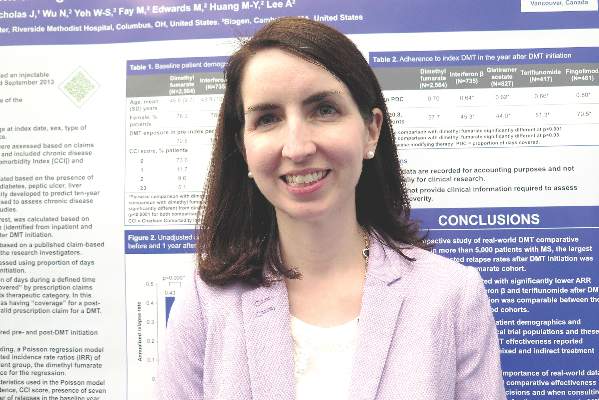
Findings reported at the meeting showed that dimethyl fumarate netted the greatest reduction in annualized relapse rate, at one-third, followed by fingolimod, at about one-fourth. The adjusted risk of relapse in the year after drug initiation was significantly higher for interferon-beta, glatiramer acetate, and teriflunomide, compared with dimethyl fumarate.
“Right now, a lot of the data that we have to use in the clinic is based on clinical trials data. That’s often not what we see in the real world, the MS centers, and even the outpatient neurology setting,” Dr. Nicholas said in an interview. “This study is nice just because it points out that when you look at real-world data, it shows, yes, that these drugs work, and that some of the initial benefit for the oral disease-modifying therapies is what we thought. Obviously, we don’t have cross-trial comparisons to make from the clinical trials, so this is real data that we can actually use in our clinic setting.”
The findings are also helpful given changing health care models and ongoing issues with reimbursement and obtaining insurance approval to use various drugs, she added. “These are things that we can show to those payers as to why it’s important that we have these therapies and that we be able to decide as MS specialists what’s going to be best for the patient.
“Right now, the biggest challenge in the MS world is that obviously, as an MS specialist, you have a lot of experience and knowledge. And based on poor prognostic factors, when somebody comes in, you may not want to go with an escalation model [of treatment], where you are starting with something that a payer may think we should start with, an injectable,” Dr. Nicholas added. “Somebody may have more aggressive disease, and maybe you are going to want to start with an oral or an IV drug. But the payers are the ones right now who have the say. So it’s a lot of time and a lot of work [getting insurance approval], and while you are fighting to get what you know your patient needs, your patient’s suffering, accumulating disability, and possibly having more relapses.”
For the study, the investigators analyzed administrative data from the Truven MarketScan Commercial Claims Databases for 2012 through 2014.
Analyses were based on 2,564 patients treated with dimethyl fumarate (brand name Tecfidera), 735 with interferon-beta (Rebif, Avonex, Betaseron, and Extavia), 827 with glatiramer acetate (Copaxone), 417 with teriflunomide (Aubagio), and 461 with fingolimod (Gilenya).
Comparing the year before and the year after drug initiation, only dimethyl fumarate and fingolimod were associated with significant reductions in the annualized relapse rate, according to findings reported in a poster session. The reductions were 33% and 27%, respectively.
In the postinitiation year and with dimethyl fumarate as the comparator, the adjusted incidence rate ratio for relapse was similar for fingolimod but significantly higher for glatiramer acetate (1.28), interferon-beta (1.25), and teriflunomide (1.28).
“I don’t think that these findings are surprising,” Dr. Nicholas said. “I work in a large MS center and I would say this is generally what I see clinically in terms of the effectiveness. So it’s more reassuring to me than anything.”
She acknowledged that safety and tolerability will also come into play when selecting among disease-modifying therapies. “Those data are incredibly important, and we certainly balance that. With a health care claims database, that’s hard data to pull unless you are looking at one specific [adverse effect], but that’s something that needs to be very carefully weighed with the efficacy data for the patient,” she said.
In a companion study also reported in the poster session, the investigators compared the impact of starting the same five drugs on health care costs and utilization.
Results of that study showed that total health care costs rose in the postinitiation year for all five drugs, with the increase ranging from $38,801 for dimethyl fumarate to $52,352 for fingolimod.
However, total nonprescription medical costs decreased across the board, apparently driven by both less use of outpatient services and fewer inpatient hospital stays, with the greatest reduction seen for dimethyl fumarate.
Dr. Nicholas disclosed that she has received research funding from Genzyme, Novartis, Teva, Biogen, and Alexion, and has received consulting and speaking honoraria from Genzyme, Novartis, Teva, Biogen, and Medtronic. The study was supported by Biogen.
VANCOUVER – Dimethyl fumarate and fingolimod appear to have an edge over other disease-modifying therapies for multiple sclerosis (MS) in real-world practice, according to a comparative effectiveness study reported at the annual meeting of the American Academy of Neurology.
Dr. Jacqueline A. Nicholas, a neuroimmunologist and MS specialist with the OhioHealth Multiple Sclerosis Center, Riverside Methodist Hospital, Columbus, and her colleagues analyzed claims data from 5,004 commercially insured adults with MS in the United States who started treatment with any of five oral and injectable disease-modifying therapies.
Findings reported at the meeting showed that dimethyl fumarate netted the greatest reduction in annualized relapse rate, at one-third, followed by fingolimod, at about one-fourth. The adjusted risk of relapse in the year after drug initiation was significantly higher for interferon-beta, glatiramer acetate, and teriflunomide, compared with dimethyl fumarate.
“Right now, a lot of the data that we have to use in the clinic is based on clinical trials data. That’s often not what we see in the real world, the MS centers, and even the outpatient neurology setting,” Dr. Nicholas said in an interview. “This study is nice just because it points out that when you look at real-world data, it shows, yes, that these drugs work, and that some of the initial benefit for the oral disease-modifying therapies is what we thought. Obviously, we don’t have cross-trial comparisons to make from the clinical trials, so this is real data that we can actually use in our clinic setting.”
The findings are also helpful given changing health care models and ongoing issues with reimbursement and obtaining insurance approval to use various drugs, she added. “These are things that we can show to those payers as to why it’s important that we have these therapies and that we be able to decide as MS specialists what’s going to be best for the patient.
“Right now, the biggest challenge in the MS world is that obviously, as an MS specialist, you have a lot of experience and knowledge. And based on poor prognostic factors, when somebody comes in, you may not want to go with an escalation model [of treatment], where you are starting with something that a payer may think we should start with, an injectable,” Dr. Nicholas added. “Somebody may have more aggressive disease, and maybe you are going to want to start with an oral or an IV drug. But the payers are the ones right now who have the say. So it’s a lot of time and a lot of work [getting insurance approval], and while you are fighting to get what you know your patient needs, your patient’s suffering, accumulating disability, and possibly having more relapses.”
For the study, the investigators analyzed administrative data from the Truven MarketScan Commercial Claims Databases for 2012 through 2014.
Analyses were based on 2,564 patients treated with dimethyl fumarate (brand name Tecfidera), 735 with interferon-beta (Rebif, Avonex, Betaseron, and Extavia), 827 with glatiramer acetate (Copaxone), 417 with teriflunomide (Aubagio), and 461 with fingolimod (Gilenya).
Comparing the year before and the year after drug initiation, only dimethyl fumarate and fingolimod were associated with significant reductions in the annualized relapse rate, according to findings reported in a poster session. The reductions were 33% and 27%, respectively.
In the postinitiation year and with dimethyl fumarate as the comparator, the adjusted incidence rate ratio for relapse was similar for fingolimod but significantly higher for glatiramer acetate (1.28), interferon-beta (1.25), and teriflunomide (1.28).
“I don’t think that these findings are surprising,” Dr. Nicholas said. “I work in a large MS center and I would say this is generally what I see clinically in terms of the effectiveness. So it’s more reassuring to me than anything.”
She acknowledged that safety and tolerability will also come into play when selecting among disease-modifying therapies. “Those data are incredibly important, and we certainly balance that. With a health care claims database, that’s hard data to pull unless you are looking at one specific [adverse effect], but that’s something that needs to be very carefully weighed with the efficacy data for the patient,” she said.
In a companion study also reported in the poster session, the investigators compared the impact of starting the same five drugs on health care costs and utilization.
Results of that study showed that total health care costs rose in the postinitiation year for all five drugs, with the increase ranging from $38,801 for dimethyl fumarate to $52,352 for fingolimod.
However, total nonprescription medical costs decreased across the board, apparently driven by both less use of outpatient services and fewer inpatient hospital stays, with the greatest reduction seen for dimethyl fumarate.
Dr. Nicholas disclosed that she has received research funding from Genzyme, Novartis, Teva, Biogen, and Alexion, and has received consulting and speaking honoraria from Genzyme, Novartis, Teva, Biogen, and Medtronic. The study was supported by Biogen.
VANCOUVER – Dimethyl fumarate and fingolimod appear to have an edge over other disease-modifying therapies for multiple sclerosis (MS) in real-world practice, according to a comparative effectiveness study reported at the annual meeting of the American Academy of Neurology.
Dr. Jacqueline A. Nicholas, a neuroimmunologist and MS specialist with the OhioHealth Multiple Sclerosis Center, Riverside Methodist Hospital, Columbus, and her colleagues analyzed claims data from 5,004 commercially insured adults with MS in the United States who started treatment with any of five oral and injectable disease-modifying therapies.
Findings reported at the meeting showed that dimethyl fumarate netted the greatest reduction in annualized relapse rate, at one-third, followed by fingolimod, at about one-fourth. The adjusted risk of relapse in the year after drug initiation was significantly higher for interferon-beta, glatiramer acetate, and teriflunomide, compared with dimethyl fumarate.
“Right now, a lot of the data that we have to use in the clinic is based on clinical trials data. That’s often not what we see in the real world, the MS centers, and even the outpatient neurology setting,” Dr. Nicholas said in an interview. “This study is nice just because it points out that when you look at real-world data, it shows, yes, that these drugs work, and that some of the initial benefit for the oral disease-modifying therapies is what we thought. Obviously, we don’t have cross-trial comparisons to make from the clinical trials, so this is real data that we can actually use in our clinic setting.”
The findings are also helpful given changing health care models and ongoing issues with reimbursement and obtaining insurance approval to use various drugs, she added. “These are things that we can show to those payers as to why it’s important that we have these therapies and that we be able to decide as MS specialists what’s going to be best for the patient.
“Right now, the biggest challenge in the MS world is that obviously, as an MS specialist, you have a lot of experience and knowledge. And based on poor prognostic factors, when somebody comes in, you may not want to go with an escalation model [of treatment], where you are starting with something that a payer may think we should start with, an injectable,” Dr. Nicholas added. “Somebody may have more aggressive disease, and maybe you are going to want to start with an oral or an IV drug. But the payers are the ones right now who have the say. So it’s a lot of time and a lot of work [getting insurance approval], and while you are fighting to get what you know your patient needs, your patient’s suffering, accumulating disability, and possibly having more relapses.”
For the study, the investigators analyzed administrative data from the Truven MarketScan Commercial Claims Databases for 2012 through 2014.
Analyses were based on 2,564 patients treated with dimethyl fumarate (brand name Tecfidera), 735 with interferon-beta (Rebif, Avonex, Betaseron, and Extavia), 827 with glatiramer acetate (Copaxone), 417 with teriflunomide (Aubagio), and 461 with fingolimod (Gilenya).
Comparing the year before and the year after drug initiation, only dimethyl fumarate and fingolimod were associated with significant reductions in the annualized relapse rate, according to findings reported in a poster session. The reductions were 33% and 27%, respectively.
In the postinitiation year and with dimethyl fumarate as the comparator, the adjusted incidence rate ratio for relapse was similar for fingolimod but significantly higher for glatiramer acetate (1.28), interferon-beta (1.25), and teriflunomide (1.28).
“I don’t think that these findings are surprising,” Dr. Nicholas said. “I work in a large MS center and I would say this is generally what I see clinically in terms of the effectiveness. So it’s more reassuring to me than anything.”
She acknowledged that safety and tolerability will also come into play when selecting among disease-modifying therapies. “Those data are incredibly important, and we certainly balance that. With a health care claims database, that’s hard data to pull unless you are looking at one specific [adverse effect], but that’s something that needs to be very carefully weighed with the efficacy data for the patient,” she said.
In a companion study also reported in the poster session, the investigators compared the impact of starting the same five drugs on health care costs and utilization.
Results of that study showed that total health care costs rose in the postinitiation year for all five drugs, with the increase ranging from $38,801 for dimethyl fumarate to $52,352 for fingolimod.
However, total nonprescription medical costs decreased across the board, apparently driven by both less use of outpatient services and fewer inpatient hospital stays, with the greatest reduction seen for dimethyl fumarate.
Dr. Nicholas disclosed that she has received research funding from Genzyme, Novartis, Teva, Biogen, and Alexion, and has received consulting and speaking honoraria from Genzyme, Novartis, Teva, Biogen, and Medtronic. The study was supported by Biogen.
AT THE AAN 2016 ANNUAL MEETING
Key clinical point: In real-world care, dimethyl fumarate and fingolimod appear more effective than other disease-modifying therapies for MS.
Major finding: Dimethyl fumarate and fingolimod were associated 33% and 27% reductions, respectively, in the annualized relapse rate in the year after initiation of therapy.
Data source: A retrospective cohort study of 5,004 patients with MS treated with five oral or injectable disease-modifying therapies in routine clinical care.
Disclosures: Dr. Nicholas disclosed that she has received research funding from Genzyme; Novartis, the maker of fingolimod (Gilenya); Teva; Biogen, the maker of dimethyl fumarate (Tecfidera); and Alexion. She has received consulting and speaking honoraria from Genzyme, Novartis, Teva, Biogen, and Medtronic. The study was supported by Biogen.
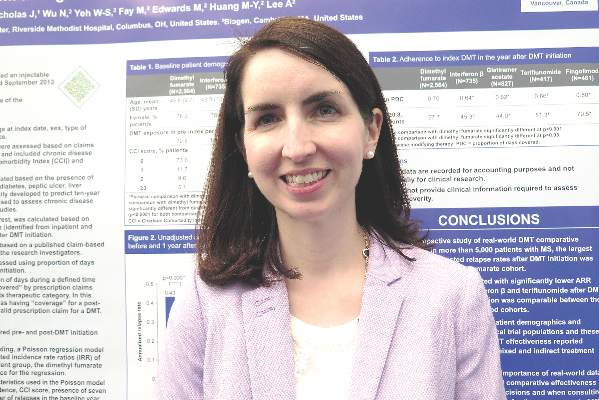
Oral contraceptive efficacy unaffected by dimethyl fumarate
NATIONAL HARBOR, MD. – Delayed-release dimethyl fumarate (DMF) coadministered with norgestimate/ethinyl estradiol, a commonly used progesterone-estrogen combination oral contraceptive, did not alter the OC’s pharmacokinetics or pharmacodynamics, according to the results of a small study.
The safety profile of the coadministered preparation is similar to the profile of DMF (Tecfidera, Biogen) alone, Dr. Bing Zhu said in a poster session at the annual meeting of the Consortium of Multiple Sclerosis Centers.

The findings indicate that women with relapsing-remitting multiple sclerosis (RRMS) who are of childbearing age and who are being treated with DMF can use OCs without having to modify the contraceptive dose, said Dr. Zhu, who is an employee of Biogen, Cambridge, Mass.
The study involved healthy women aged 18-45 years (mean age about 31 years) who were able to conceive. All received a daily OC (Ortho-Cyclen; 250 mcg norgestimate, 35 mcg ethinyl estradiol). After 28 days, those with progesterone levels less than 3 ng/mL were randomized to a 28-day regimen of either the daily dose of OC (n = 39) or OC along with DMF (240 mg twice daily), designated period 1, with crossover to the other treatment for a further 28 days (period 2). Blood samples were collected during the first 24 hours for pharmacokinetic measurements and at 2, 3, and 4 weeks for pharmacodynamic determinations.
The primary objective was the pharmacokinetics of norgestimate, as determined by measuring the levels of its main metabolite, norelgestromin. Secondary objectives included pharmacodynamics, as determined by the levels of serum progesterone and the safety/tolerability of DMF.

Plasma concentrations of norelgestromin and ethinyl estradiol were identical over time in the OC and OC + DMF groups in period 1, as was serum progesterone.
Treatment-emergent adverse events were similar in type and severity in both groups. Most were mild. The prevalent adverse events included flushing and gastrointestinal disorders accompanied by nausea and vomiting. Adverse events occurred in 10 of the 39 (26%) subjects who received the OC and in 26 of the 39 (67%) subjects who received the OC + DMF. Discontinuation because of adverse events occurred in 8% and 15% of subjects who received the OC and the OC + DMF, respectively. There were no deaths.
“The results suggest that women of childbearing potential treated with DMF are able to use a combined OC for contraception without dose modification,” said Dr. Zhu.
The study findings were recently published (Neurology. 2016 Apr 5;86:Suppl P2.097).
The study was funded by Biogen. Dr. Zhu is a Biogen employee.
NATIONAL HARBOR, MD. – Delayed-release dimethyl fumarate (DMF) coadministered with norgestimate/ethinyl estradiol, a commonly used progesterone-estrogen combination oral contraceptive, did not alter the OC’s pharmacokinetics or pharmacodynamics, according to the results of a small study.
The safety profile of the coadministered preparation is similar to the profile of DMF (Tecfidera, Biogen) alone, Dr. Bing Zhu said in a poster session at the annual meeting of the Consortium of Multiple Sclerosis Centers.
The findings indicate that women with relapsing-remitting multiple sclerosis (RRMS) who are of childbearing age and who are being treated with DMF can use OCs without having to modify the contraceptive dose, said Dr. Zhu, who is an employee of Biogen, Cambridge, Mass.
The study involved healthy women aged 18-45 years (mean age about 31 years) who were able to conceive. All received a daily OC (Ortho-Cyclen; 250 mcg norgestimate, 35 mcg ethinyl estradiol). After 28 days, those with progesterone levels less than 3 ng/mL were randomized to a 28-day regimen of either the daily dose of OC (n = 39) or OC along with DMF (240 mg twice daily), designated period 1, with crossover to the other treatment for a further 28 days (period 2). Blood samples were collected during the first 24 hours for pharmacokinetic measurements and at 2, 3, and 4 weeks for pharmacodynamic determinations.
The primary objective was the pharmacokinetics of norgestimate, as determined by measuring the levels of its main metabolite, norelgestromin. Secondary objectives included pharmacodynamics, as determined by the levels of serum progesterone and the safety/tolerability of DMF.
Plasma concentrations of norelgestromin and ethinyl estradiol were identical over time in the OC and OC + DMF groups in period 1, as was serum progesterone.
Treatment-emergent adverse events were similar in type and severity in both groups. Most were mild. The prevalent adverse events included flushing and gastrointestinal disorders accompanied by nausea and vomiting. Adverse events occurred in 10 of the 39 (26%) subjects who received the OC and in 26 of the 39 (67%) subjects who received the OC + DMF. Discontinuation because of adverse events occurred in 8% and 15% of subjects who received the OC and the OC + DMF, respectively. There were no deaths.
“The results suggest that women of childbearing potential treated with DMF are able to use a combined OC for contraception without dose modification,” said Dr. Zhu.
The study findings were recently published (Neurology. 2016 Apr 5;86:Suppl P2.097).
The study was funded by Biogen. Dr. Zhu is a Biogen employee.
NATIONAL HARBOR, MD. – Delayed-release dimethyl fumarate (DMF) coadministered with norgestimate/ethinyl estradiol, a commonly used progesterone-estrogen combination oral contraceptive, did not alter the OC’s pharmacokinetics or pharmacodynamics, according to the results of a small study.
The safety profile of the coadministered preparation is similar to the profile of DMF (Tecfidera, Biogen) alone, Dr. Bing Zhu said in a poster session at the annual meeting of the Consortium of Multiple Sclerosis Centers.
The findings indicate that women with relapsing-remitting multiple sclerosis (RRMS) who are of childbearing age and who are being treated with DMF can use OCs without having to modify the contraceptive dose, said Dr. Zhu, who is an employee of Biogen, Cambridge, Mass.
The study involved healthy women aged 18-45 years (mean age about 31 years) who were able to conceive. All received a daily OC (Ortho-Cyclen; 250 mcg norgestimate, 35 mcg ethinyl estradiol). After 28 days, those with progesterone levels less than 3 ng/mL were randomized to a 28-day regimen of either the daily dose of OC (n = 39) or OC along with DMF (240 mg twice daily), designated period 1, with crossover to the other treatment for a further 28 days (period 2). Blood samples were collected during the first 24 hours for pharmacokinetic measurements and at 2, 3, and 4 weeks for pharmacodynamic determinations.
The primary objective was the pharmacokinetics of norgestimate, as determined by measuring the levels of its main metabolite, norelgestromin. Secondary objectives included pharmacodynamics, as determined by the levels of serum progesterone and the safety/tolerability of DMF.
Plasma concentrations of norelgestromin and ethinyl estradiol were identical over time in the OC and OC + DMF groups in period 1, as was serum progesterone.
Treatment-emergent adverse events were similar in type and severity in both groups. Most were mild. The prevalent adverse events included flushing and gastrointestinal disorders accompanied by nausea and vomiting. Adverse events occurred in 10 of the 39 (26%) subjects who received the OC and in 26 of the 39 (67%) subjects who received the OC + DMF. Discontinuation because of adverse events occurred in 8% and 15% of subjects who received the OC and the OC + DMF, respectively. There were no deaths.
“The results suggest that women of childbearing potential treated with DMF are able to use a combined OC for contraception without dose modification,” said Dr. Zhu.
The study findings were recently published (Neurology. 2016 Apr 5;86:Suppl P2.097).
The study was funded by Biogen. Dr. Zhu is a Biogen employee.
AT THE CMSC ANNUAL MEETING
Key clinical point: Delayed-release dimethyl fumarate can be used in childbearing women with RRMS without fear of compromising the effect of a common oral contraceptive.
Major finding: DMF coadministered with a common oral contraceptive does not affect the pharmacokinetics and pharmacodynamics of the contraceptive.
Data source: Open-label, randomized, two-way crossover study involving 46 healthy women.
Disclosures: The study was funded by Biogen. Dr. Zhu is an employee of and stockholder in Biogen.

Teriflunomide effective for faster-advancing MS
NATIONAL HARBOR, MD. – The approved once-daily oral immunomodulator teriflunomide is effective in reducing relapse, and worsening of relapsing forms, of multiple sclerosis (RMS) in patients with faster-advancing disease.
The findings from a post hoc pooled subgroup analysis of patients in the TEMSO and TOWER randomized, double-blind, placebo-controlled phase III trials presented as a poster at the annual meeting of the Consortium of Multiple Sclerosis Centers expand the efficacy of teriflunomide to a broad spectrum of patients with RMS.

The pooled analysis examined the outcomes of treatment with two doses of teriflunomide in all patients (n = 2,257) and in a subgroup of patients with faster-advancing MS (n = 1,184) according to disease severity using a baseline Multiple Sclerosis Severity Score (MSSS) of 5 as a cutoff. The group with faster-advancing disease included 405 who received placebo, 396 treated with teriflunomide 7 mg, and 383 treated with teriflunomide 14 mg.
The 1,184 patients with faster-advancing MS were comparable to the other 1,073 patients in terms of age, sex, MS subtype, and number of relapses in the prior year. Baseline characteristics of the faster-advancing MS patients treated with placebo and both teriflunomide doses were comparable.
Relative to the placebo group, the annualized relapse rate in patients with faster-advancing MS was significantly reduced by both doses of teriflunomide, with a relative risk reduction of 30.3% for the 7-mg dose (P = .0002) and 37.5% for the 14-mg dose (P less than .0001). Time to first relapse was also reduced by teriflunomide 14 mg and 7 mg, with reductions in relapse risk of 43.2% (P less than .0001) and 28.8% (P = .0014), respectively, compared with placebo.
The higher dose of teriflunomide was effective in reducing the worsening of disability at greater than or equal to 12 weeks and 24 weeks, with reductions, compared with placebo, of 40.3% (P = .0076) and 46.1% (P = .0110), respectively.
The results were consistent with data reported in the individual TEMSO and TOWER trials, and prior analyses of the pooled data.
“These results indicate that teriflunomide is not only effective for MS patients with relatively mild disease, but also with rather more aggressive disease. Teriflunomide, a well-tolerated and convenient once-daily tablet, is a very reasonable option for this population,” said the presenter, Dr. Aaron E. Miller of the Icahn School of Medicine at Mount Sinai, New York.
Teriflunomide is approved for relapsing-remitting MS in many countries, including the United States and the European Union. The TEMSO and TOWER trials were pivotal in securing approval. The trials had a similar design, except for the absence of magnetic resonance imaging evaluation in TOWER.
The study was funded by Sanofi Genzyme. Dr. Miller disclosed consulting fees from Accordant Health Services, Acorda Therapeutics, Alkermes, Biogen, EMD Serono, Genentech, Genzyme, GlaxoSmithKline, Mallinckrodt Paharmaceuticals/Questor, Novartis, Roche, and Teva, and grant/research support from Biogen, Genentech, Novartis, Questor, Roche, and Sanofi.
NATIONAL HARBOR, MD. – The approved once-daily oral immunomodulator teriflunomide is effective in reducing relapse, and worsening of relapsing forms, of multiple sclerosis (RMS) in patients with faster-advancing disease.
The findings from a post hoc pooled subgroup analysis of patients in the TEMSO and TOWER randomized, double-blind, placebo-controlled phase III trials presented as a poster at the annual meeting of the Consortium of Multiple Sclerosis Centers expand the efficacy of teriflunomide to a broad spectrum of patients with RMS.
The pooled analysis examined the outcomes of treatment with two doses of teriflunomide in all patients (n = 2,257) and in a subgroup of patients with faster-advancing MS (n = 1,184) according to disease severity using a baseline Multiple Sclerosis Severity Score (MSSS) of 5 as a cutoff. The group with faster-advancing disease included 405 who received placebo, 396 treated with teriflunomide 7 mg, and 383 treated with teriflunomide 14 mg.
The 1,184 patients with faster-advancing MS were comparable to the other 1,073 patients in terms of age, sex, MS subtype, and number of relapses in the prior year. Baseline characteristics of the faster-advancing MS patients treated with placebo and both teriflunomide doses were comparable.
Relative to the placebo group, the annualized relapse rate in patients with faster-advancing MS was significantly reduced by both doses of teriflunomide, with a relative risk reduction of 30.3% for the 7-mg dose (P = .0002) and 37.5% for the 14-mg dose (P less than .0001). Time to first relapse was also reduced by teriflunomide 14 mg and 7 mg, with reductions in relapse risk of 43.2% (P less than .0001) and 28.8% (P = .0014), respectively, compared with placebo.
The higher dose of teriflunomide was effective in reducing the worsening of disability at greater than or equal to 12 weeks and 24 weeks, with reductions, compared with placebo, of 40.3% (P = .0076) and 46.1% (P = .0110), respectively.
The results were consistent with data reported in the individual TEMSO and TOWER trials, and prior analyses of the pooled data.
“These results indicate that teriflunomide is not only effective for MS patients with relatively mild disease, but also with rather more aggressive disease. Teriflunomide, a well-tolerated and convenient once-daily tablet, is a very reasonable option for this population,” said the presenter, Dr. Aaron E. Miller of the Icahn School of Medicine at Mount Sinai, New York.
Teriflunomide is approved for relapsing-remitting MS in many countries, including the United States and the European Union. The TEMSO and TOWER trials were pivotal in securing approval. The trials had a similar design, except for the absence of magnetic resonance imaging evaluation in TOWER.
The study was funded by Sanofi Genzyme. Dr. Miller disclosed consulting fees from Accordant Health Services, Acorda Therapeutics, Alkermes, Biogen, EMD Serono, Genentech, Genzyme, GlaxoSmithKline, Mallinckrodt Paharmaceuticals/Questor, Novartis, Roche, and Teva, and grant/research support from Biogen, Genentech, Novartis, Questor, Roche, and Sanofi.
NATIONAL HARBOR, MD. – The approved once-daily oral immunomodulator teriflunomide is effective in reducing relapse, and worsening of relapsing forms, of multiple sclerosis (RMS) in patients with faster-advancing disease.
The findings from a post hoc pooled subgroup analysis of patients in the TEMSO and TOWER randomized, double-blind, placebo-controlled phase III trials presented as a poster at the annual meeting of the Consortium of Multiple Sclerosis Centers expand the efficacy of teriflunomide to a broad spectrum of patients with RMS.
The pooled analysis examined the outcomes of treatment with two doses of teriflunomide in all patients (n = 2,257) and in a subgroup of patients with faster-advancing MS (n = 1,184) according to disease severity using a baseline Multiple Sclerosis Severity Score (MSSS) of 5 as a cutoff. The group with faster-advancing disease included 405 who received placebo, 396 treated with teriflunomide 7 mg, and 383 treated with teriflunomide 14 mg.
The 1,184 patients with faster-advancing MS were comparable to the other 1,073 patients in terms of age, sex, MS subtype, and number of relapses in the prior year. Baseline characteristics of the faster-advancing MS patients treated with placebo and both teriflunomide doses were comparable.
Relative to the placebo group, the annualized relapse rate in patients with faster-advancing MS was significantly reduced by both doses of teriflunomide, with a relative risk reduction of 30.3% for the 7-mg dose (P = .0002) and 37.5% for the 14-mg dose (P less than .0001). Time to first relapse was also reduced by teriflunomide 14 mg and 7 mg, with reductions in relapse risk of 43.2% (P less than .0001) and 28.8% (P = .0014), respectively, compared with placebo.
The higher dose of teriflunomide was effective in reducing the worsening of disability at greater than or equal to 12 weeks and 24 weeks, with reductions, compared with placebo, of 40.3% (P = .0076) and 46.1% (P = .0110), respectively.
The results were consistent with data reported in the individual TEMSO and TOWER trials, and prior analyses of the pooled data.
“These results indicate that teriflunomide is not only effective for MS patients with relatively mild disease, but also with rather more aggressive disease. Teriflunomide, a well-tolerated and convenient once-daily tablet, is a very reasonable option for this population,” said the presenter, Dr. Aaron E. Miller of the Icahn School of Medicine at Mount Sinai, New York.
Teriflunomide is approved for relapsing-remitting MS in many countries, including the United States and the European Union. The TEMSO and TOWER trials were pivotal in securing approval. The trials had a similar design, except for the absence of magnetic resonance imaging evaluation in TOWER.
The study was funded by Sanofi Genzyme. Dr. Miller disclosed consulting fees from Accordant Health Services, Acorda Therapeutics, Alkermes, Biogen, EMD Serono, Genentech, Genzyme, GlaxoSmithKline, Mallinckrodt Paharmaceuticals/Questor, Novartis, Roche, and Teva, and grant/research support from Biogen, Genentech, Novartis, Questor, Roche, and Sanofi.
AT THE CMSC ANNUAL MEETING
Key clinical point: Teriflunomide is effective for patients with faster-advancing MS.
Major finding: Teriflunomide at 14 mg and 7 mg reduced the annualized relapse rate of patients with fast-advancing relapsing-remitting MS (MSSS greater than 5) by 43.2% and 28.8%, respectively, compared with placebo.
Data source: A pooled analysis of patients from the TEMSO and TOWER randomized, double-blind, placebo-controlled phase III trials.
Disclosures: The study was funded by Sanofi Genzyme. Dr. Miller disclosed consulting fees from Accordant Health Services, Acorda Therapeutics, Alkermes, Biogen, EMD Serono, Genentech, Genzyme, GlaxoSmithKline, Mallinckrodt Paharmaceuticals/Questor, Novartis, Roche, and Teva, and grant/research support from Biogen, Genentech, Novartis, Questor, Roche, and Sanofi.

Smoking causes worse outcome in MS
NATIONAL HARBOR, MD. – Follow-up of a cohort of patients in the United Kingdom has demonstrated associations between smoking and a higher risk of development of multiple sclerosis (MS), progression of MS-related disability, higher risk of premature death, and shortened life expectancy.
The findings highlight the need for clinical trials of the effects of quitting smoking and provide data that will be useful in the development of effective intervention strategies.

Dr. Cris S. Constantinescu of the University of Nottingham (England) discussed findings from the Nottingham University Hospitals MS Clinics database at the annual meeting of the Consortium of Multiple Sclerosis Centers.
“Although smokers had higher levels of comorbid conditions, it appeared that the influence of smoking is independent of the presence of comorbid conditions. Those who gave up smoking could do as well as nonsmokers,” said Dr. Constantinescu.
While ample epidemiologic evidence indicates that smoking is a driver of the development and progression of MS, there are few hard data. To gain insight, the researchers analyzed data on over 1,200 MS patients throughout England who were followed up beginning in the mid-1990s. About 60% of the patients had relapsing-remitting MS. The duration of MS and smoking were both about 20 years. About 60% of men and 50% of women were current smokers.
Regular smokers were 64% more likely to develop MS than were nonsmokers. Having ever smoked carried a 44% increased risk of MS (both P less than .001). MS patients who grew up in a household where one parent smoked were 50% more likely to become regular smokers. The risk climbed to 85% if both parents were smokers.
No association was evident between smoking and the development of primary progressive MS, but current smokers were almost 2.5 times more likely to develop secondary progressive MS. Smoking correlated with more severe MS disability, compared with nonsmokers. Ex-smokers had risks similar to those of nonsmokers of developing secondary MS and in the level of disease severity.
Every year a person refrained from smoking decreased the risk of severe disability by 5%. Current and ex-smokers displayed increased psychological and physical detriments of MS.
In a subgroup of 923 patients, of whom 80 died, current smokers were almost 3 times and 1.5 times more likely to die, compared with never smokers and ex-smokers, respectively, and were twice as likely to die as were people without MS in the UK general population.
The findings have prompted studies into major aspects of smoking, such as the age when smoking begins, the success of various smoking cessation programs, and development of interventions. Some of the data discussed at the meeting were published in 2013 (Brain;136:2298-2304) and some are part of a manuscript in preparation.
NATIONAL HARBOR, MD. – Follow-up of a cohort of patients in the United Kingdom has demonstrated associations between smoking and a higher risk of development of multiple sclerosis (MS), progression of MS-related disability, higher risk of premature death, and shortened life expectancy.
The findings highlight the need for clinical trials of the effects of quitting smoking and provide data that will be useful in the development of effective intervention strategies.
Dr. Cris S. Constantinescu of the University of Nottingham (England) discussed findings from the Nottingham University Hospitals MS Clinics database at the annual meeting of the Consortium of Multiple Sclerosis Centers.
“Although smokers had higher levels of comorbid conditions, it appeared that the influence of smoking is independent of the presence of comorbid conditions. Those who gave up smoking could do as well as nonsmokers,” said Dr. Constantinescu.
While ample epidemiologic evidence indicates that smoking is a driver of the development and progression of MS, there are few hard data. To gain insight, the researchers analyzed data on over 1,200 MS patients throughout England who were followed up beginning in the mid-1990s. About 60% of the patients had relapsing-remitting MS. The duration of MS and smoking were both about 20 years. About 60% of men and 50% of women were current smokers.
Regular smokers were 64% more likely to develop MS than were nonsmokers. Having ever smoked carried a 44% increased risk of MS (both P less than .001). MS patients who grew up in a household where one parent smoked were 50% more likely to become regular smokers. The risk climbed to 85% if both parents were smokers.
No association was evident between smoking and the development of primary progressive MS, but current smokers were almost 2.5 times more likely to develop secondary progressive MS. Smoking correlated with more severe MS disability, compared with nonsmokers. Ex-smokers had risks similar to those of nonsmokers of developing secondary MS and in the level of disease severity.
Every year a person refrained from smoking decreased the risk of severe disability by 5%. Current and ex-smokers displayed increased psychological and physical detriments of MS.
In a subgroup of 923 patients, of whom 80 died, current smokers were almost 3 times and 1.5 times more likely to die, compared with never smokers and ex-smokers, respectively, and were twice as likely to die as were people without MS in the UK general population.
The findings have prompted studies into major aspects of smoking, such as the age when smoking begins, the success of various smoking cessation programs, and development of interventions. Some of the data discussed at the meeting were published in 2013 (Brain;136:2298-2304) and some are part of a manuscript in preparation.
NATIONAL HARBOR, MD. – Follow-up of a cohort of patients in the United Kingdom has demonstrated associations between smoking and a higher risk of development of multiple sclerosis (MS), progression of MS-related disability, higher risk of premature death, and shortened life expectancy.
The findings highlight the need for clinical trials of the effects of quitting smoking and provide data that will be useful in the development of effective intervention strategies.
Dr. Cris S. Constantinescu of the University of Nottingham (England) discussed findings from the Nottingham University Hospitals MS Clinics database at the annual meeting of the Consortium of Multiple Sclerosis Centers.
“Although smokers had higher levels of comorbid conditions, it appeared that the influence of smoking is independent of the presence of comorbid conditions. Those who gave up smoking could do as well as nonsmokers,” said Dr. Constantinescu.
While ample epidemiologic evidence indicates that smoking is a driver of the development and progression of MS, there are few hard data. To gain insight, the researchers analyzed data on over 1,200 MS patients throughout England who were followed up beginning in the mid-1990s. About 60% of the patients had relapsing-remitting MS. The duration of MS and smoking were both about 20 years. About 60% of men and 50% of women were current smokers.
Regular smokers were 64% more likely to develop MS than were nonsmokers. Having ever smoked carried a 44% increased risk of MS (both P less than .001). MS patients who grew up in a household where one parent smoked were 50% more likely to become regular smokers. The risk climbed to 85% if both parents were smokers.
No association was evident between smoking and the development of primary progressive MS, but current smokers were almost 2.5 times more likely to develop secondary progressive MS. Smoking correlated with more severe MS disability, compared with nonsmokers. Ex-smokers had risks similar to those of nonsmokers of developing secondary MS and in the level of disease severity.
Every year a person refrained from smoking decreased the risk of severe disability by 5%. Current and ex-smokers displayed increased psychological and physical detriments of MS.
In a subgroup of 923 patients, of whom 80 died, current smokers were almost 3 times and 1.5 times more likely to die, compared with never smokers and ex-smokers, respectively, and were twice as likely to die as were people without MS in the UK general population.
The findings have prompted studies into major aspects of smoking, such as the age when smoking begins, the success of various smoking cessation programs, and development of interventions. Some of the data discussed at the meeting were published in 2013 (Brain;136:2298-2304) and some are part of a manuscript in preparation.
AT THE CMSC ANNUAL MEETING
Key clinical point: Smoking increases the risk of developing multiple sclerosis and worsens the severity of the disease.
Major finding: Regular smokers are 64% more likely to develop MS than are nonsmokers.
Data source: Nottingham MS Clinic Study.
Disclosures: Dr. Constantinescu reported having no financial disclosures.