User login
NSCLC: Predicting benefit from immunotherapy plus chemo
In this edition of “How I will treat my next patient,” I highlight three studies presented at the World Conference on Lung Cancer (WCLC 2019) regarding the use of tissue biomarkers to predict benefit when immune checkpoint inhibitors (ICIs) are combined with chemotherapy in the treatment of stage IV non–small cell lung cancer (NSCLC) patients.
TMB in nonsquamous NSCLC

Marina C. Garassino, MD, and colleagues examined tumor mutation burden (TMB) to predict benefit from pembrolizumab in the KEYNOTE-189 study. KEYNOTE-189 was a double-blind comparison of first-line chemotherapy plus either pembrolizumab or placebo in 616 patients with stage IV nonsquamous NSCLC who were randomized 2:1 to the treatment arms.
Overall, adding pembrolizumab to pemetrexed and platinum significantly improved overall survival (hazard ratio, 0.49), progression-free survival (HR, 0.52), and overall response rate (47.6% vs. 18.9%). Benefit was observed in all analyzed subgroups, including patients with programmed death-ligand 1 (PD-L1) of less than 1%, 1%-49%, and 50% or greater.
In 293 patients – less than 50% of the total participants in the trial – with evaluable TMB data, TMB as a continuous variable showed no significant association with overall survival, progression-free survival, or overall response rate. There was no cut point at which TMB predicted outcome from treatment.
Similarly, Corey Langer, MD, and colleagues presented an exploratory analysis of the randomized, phase 2 KEYNOTE-021 trial (open label, pembrolizumab plus chemotherapy in 70 stage IV nonsquamous NSCLC patients). There was no association between tissue TMB and overall survival, progression-free survival, or overall response rate. In patients with tissue TMB greater than 175 mutations/exome and less than 175 mutations/exome, the overall response rate was 71% and 61%, respectively.
Both presenters recommended that tissue TMB not yet be used in therapeutic decision making.
How these results influence clinical practice
TMB has been associated with response to ICIs, but there is little information regarding whether TMB predicts for response to chemotherapy, either given alone or with ICIs. Logistical issues have limited the clinical utility of TMB. There are a variety of methodologies to measure TMB and no consensus on the ideal cut point for defining benefit from ICI therapy.
While TMB remains a marker of interest, the two presentations at WCLC 2019 demonstrate that additional research is needed to define whether TMB needs to be combined with other markers in an algorithm or matrix to guide decision making or whether we should focus entirely on identifying better biomarkers of immunogenicity.
PD-L1 expression and overall survival
Federico Cappuzzo, MD, and colleagues reported a subset analysis of IMpower131, a randomized, phase 3 trial of chemotherapy plus or minus atezolizumab as first-line therapy in 1,021 patients with stage IV squamous NSCLC. Patients were randomized to arm A (atezolizumab plus carboplatin plus paclitaxel), arm B (atezolizumab plus carboplatin plus nab-paclitaxel) or arm C (carboplatin plus nab-paclitaxel). Investigator-assessed progression-free survival, reported at the 2018 annual meeting of the American Society of Clinical Oncology, showed a small (about 21 days), but statistically significant, improvement in median progression-free survival in arm B versus arm C. The progression-free survival benefit was seen in all PD-L1-positive subgroups. At WCLC 2019, he reported the final overall survival results of arms B versus C.
Median overall survival in the intent-to-treat population was 14.2 months with atezolizumab versus 13.5 months without it (HR, 0.88). Patients with high PD-L1 expression (14% and 13% of patients in the groups, respectively), experienced dramatic, clinically important improvement in overall survival with atezolizumab plus chemotherapy, compared with chemotherapy alone (median of 23.4 vs. 10.2 months; HR, 0.48).
In IMpower 131, PD-L1-high expression was defined as TC3 or IC3 – expression on greater than 50% of tumor cells or greater than 10% of immune cells. Patients were also categorized as PD-L1 positive (TC 1/2/3 or IC 1/2/3 – expression of PD-L1 on 1% or greater of tumor cells or immune cells) or PD-LI negative (TC 0 or IC 0 – expression on less than 1% of cells). The PD-L1-positive and negative subsets did not demonstrate improved overall survival with atezolizumab.
How these results influence clinical practice
As noted above, in NSCLC patients (regardless of histology), we need biomarkers that predict benefit from ICIs alone and additive benefit when ICIs are combined with other, potentially toxic therapies. In the subset analysis of IMpower 131, despite clinically relevant differences in overall survival for the “PD-L1-high” patients, the PD-L1-positive patients did not benefit, so PD-L1 tumor proportion score remains an imperfect biomarker.
To put this report in its proper context, it will be important to analyze the details of the final manuscript of IMpower 131, particularly the comparison of arms A plus B versus C and the proportion of arm C patients who ultimately received an ICI in the second- or later-line setting. In the meantime, clinicians will select their ICI and chemotherapy regimen of choice, utilizing PD-L1 expression as an “eyebrow raiser,” but not an exclusionary criteria – as they did prior to WCLC 2019.
Dr. Lyss has been a community-based medical oncologist and clinical researcher for more than 35 years, practicing in St. Louis. His clinical and research interests are in the prevention, diagnosis, and treatment of breast and lung cancers and in expanding access to clinical trials to medically underserved populations.
In this edition of “How I will treat my next patient,” I highlight three studies presented at the World Conference on Lung Cancer (WCLC 2019) regarding the use of tissue biomarkers to predict benefit when immune checkpoint inhibitors (ICIs) are combined with chemotherapy in the treatment of stage IV non–small cell lung cancer (NSCLC) patients.
TMB in nonsquamous NSCLC
Marina C. Garassino, MD, and colleagues examined tumor mutation burden (TMB) to predict benefit from pembrolizumab in the KEYNOTE-189 study. KEYNOTE-189 was a double-blind comparison of first-line chemotherapy plus either pembrolizumab or placebo in 616 patients with stage IV nonsquamous NSCLC who were randomized 2:1 to the treatment arms.
Overall, adding pembrolizumab to pemetrexed and platinum significantly improved overall survival (hazard ratio, 0.49), progression-free survival (HR, 0.52), and overall response rate (47.6% vs. 18.9%). Benefit was observed in all analyzed subgroups, including patients with programmed death-ligand 1 (PD-L1) of less than 1%, 1%-49%, and 50% or greater.
In 293 patients – less than 50% of the total participants in the trial – with evaluable TMB data, TMB as a continuous variable showed no significant association with overall survival, progression-free survival, or overall response rate. There was no cut point at which TMB predicted outcome from treatment.
Similarly, Corey Langer, MD, and colleagues presented an exploratory analysis of the randomized, phase 2 KEYNOTE-021 trial (open label, pembrolizumab plus chemotherapy in 70 stage IV nonsquamous NSCLC patients). There was no association between tissue TMB and overall survival, progression-free survival, or overall response rate. In patients with tissue TMB greater than 175 mutations/exome and less than 175 mutations/exome, the overall response rate was 71% and 61%, respectively.
Both presenters recommended that tissue TMB not yet be used in therapeutic decision making.
How these results influence clinical practice
TMB has been associated with response to ICIs, but there is little information regarding whether TMB predicts for response to chemotherapy, either given alone or with ICIs. Logistical issues have limited the clinical utility of TMB. There are a variety of methodologies to measure TMB and no consensus on the ideal cut point for defining benefit from ICI therapy.
While TMB remains a marker of interest, the two presentations at WCLC 2019 demonstrate that additional research is needed to define whether TMB needs to be combined with other markers in an algorithm or matrix to guide decision making or whether we should focus entirely on identifying better biomarkers of immunogenicity.
PD-L1 expression and overall survival
Federico Cappuzzo, MD, and colleagues reported a subset analysis of IMpower131, a randomized, phase 3 trial of chemotherapy plus or minus atezolizumab as first-line therapy in 1,021 patients with stage IV squamous NSCLC. Patients were randomized to arm A (atezolizumab plus carboplatin plus paclitaxel), arm B (atezolizumab plus carboplatin plus nab-paclitaxel) or arm C (carboplatin plus nab-paclitaxel). Investigator-assessed progression-free survival, reported at the 2018 annual meeting of the American Society of Clinical Oncology, showed a small (about 21 days), but statistically significant, improvement in median progression-free survival in arm B versus arm C. The progression-free survival benefit was seen in all PD-L1-positive subgroups. At WCLC 2019, he reported the final overall survival results of arms B versus C.
Median overall survival in the intent-to-treat population was 14.2 months with atezolizumab versus 13.5 months without it (HR, 0.88). Patients with high PD-L1 expression (14% and 13% of patients in the groups, respectively), experienced dramatic, clinically important improvement in overall survival with atezolizumab plus chemotherapy, compared with chemotherapy alone (median of 23.4 vs. 10.2 months; HR, 0.48).
In IMpower 131, PD-L1-high expression was defined as TC3 or IC3 – expression on greater than 50% of tumor cells or greater than 10% of immune cells. Patients were also categorized as PD-L1 positive (TC 1/2/3 or IC 1/2/3 – expression of PD-L1 on 1% or greater of tumor cells or immune cells) or PD-LI negative (TC 0 or IC 0 – expression on less than 1% of cells). The PD-L1-positive and negative subsets did not demonstrate improved overall survival with atezolizumab.
How these results influence clinical practice
As noted above, in NSCLC patients (regardless of histology), we need biomarkers that predict benefit from ICIs alone and additive benefit when ICIs are combined with other, potentially toxic therapies. In the subset analysis of IMpower 131, despite clinically relevant differences in overall survival for the “PD-L1-high” patients, the PD-L1-positive patients did not benefit, so PD-L1 tumor proportion score remains an imperfect biomarker.
To put this report in its proper context, it will be important to analyze the details of the final manuscript of IMpower 131, particularly the comparison of arms A plus B versus C and the proportion of arm C patients who ultimately received an ICI in the second- or later-line setting. In the meantime, clinicians will select their ICI and chemotherapy regimen of choice, utilizing PD-L1 expression as an “eyebrow raiser,” but not an exclusionary criteria – as they did prior to WCLC 2019.
Dr. Lyss has been a community-based medical oncologist and clinical researcher for more than 35 years, practicing in St. Louis. His clinical and research interests are in the prevention, diagnosis, and treatment of breast and lung cancers and in expanding access to clinical trials to medically underserved populations.
In this edition of “How I will treat my next patient,” I highlight three studies presented at the World Conference on Lung Cancer (WCLC 2019) regarding the use of tissue biomarkers to predict benefit when immune checkpoint inhibitors (ICIs) are combined with chemotherapy in the treatment of stage IV non–small cell lung cancer (NSCLC) patients.
TMB in nonsquamous NSCLC
Marina C. Garassino, MD, and colleagues examined tumor mutation burden (TMB) to predict benefit from pembrolizumab in the KEYNOTE-189 study. KEYNOTE-189 was a double-blind comparison of first-line chemotherapy plus either pembrolizumab or placebo in 616 patients with stage IV nonsquamous NSCLC who were randomized 2:1 to the treatment arms.
Overall, adding pembrolizumab to pemetrexed and platinum significantly improved overall survival (hazard ratio, 0.49), progression-free survival (HR, 0.52), and overall response rate (47.6% vs. 18.9%). Benefit was observed in all analyzed subgroups, including patients with programmed death-ligand 1 (PD-L1) of less than 1%, 1%-49%, and 50% or greater.
In 293 patients – less than 50% of the total participants in the trial – with evaluable TMB data, TMB as a continuous variable showed no significant association with overall survival, progression-free survival, or overall response rate. There was no cut point at which TMB predicted outcome from treatment.
Similarly, Corey Langer, MD, and colleagues presented an exploratory analysis of the randomized, phase 2 KEYNOTE-021 trial (open label, pembrolizumab plus chemotherapy in 70 stage IV nonsquamous NSCLC patients). There was no association between tissue TMB and overall survival, progression-free survival, or overall response rate. In patients with tissue TMB greater than 175 mutations/exome and less than 175 mutations/exome, the overall response rate was 71% and 61%, respectively.
Both presenters recommended that tissue TMB not yet be used in therapeutic decision making.
How these results influence clinical practice
TMB has been associated with response to ICIs, but there is little information regarding whether TMB predicts for response to chemotherapy, either given alone or with ICIs. Logistical issues have limited the clinical utility of TMB. There are a variety of methodologies to measure TMB and no consensus on the ideal cut point for defining benefit from ICI therapy.
While TMB remains a marker of interest, the two presentations at WCLC 2019 demonstrate that additional research is needed to define whether TMB needs to be combined with other markers in an algorithm or matrix to guide decision making or whether we should focus entirely on identifying better biomarkers of immunogenicity.
PD-L1 expression and overall survival
Federico Cappuzzo, MD, and colleagues reported a subset analysis of IMpower131, a randomized, phase 3 trial of chemotherapy plus or minus atezolizumab as first-line therapy in 1,021 patients with stage IV squamous NSCLC. Patients were randomized to arm A (atezolizumab plus carboplatin plus paclitaxel), arm B (atezolizumab plus carboplatin plus nab-paclitaxel) or arm C (carboplatin plus nab-paclitaxel). Investigator-assessed progression-free survival, reported at the 2018 annual meeting of the American Society of Clinical Oncology, showed a small (about 21 days), but statistically significant, improvement in median progression-free survival in arm B versus arm C. The progression-free survival benefit was seen in all PD-L1-positive subgroups. At WCLC 2019, he reported the final overall survival results of arms B versus C.
Median overall survival in the intent-to-treat population was 14.2 months with atezolizumab versus 13.5 months without it (HR, 0.88). Patients with high PD-L1 expression (14% and 13% of patients in the groups, respectively), experienced dramatic, clinically important improvement in overall survival with atezolizumab plus chemotherapy, compared with chemotherapy alone (median of 23.4 vs. 10.2 months; HR, 0.48).
In IMpower 131, PD-L1-high expression was defined as TC3 or IC3 – expression on greater than 50% of tumor cells or greater than 10% of immune cells. Patients were also categorized as PD-L1 positive (TC 1/2/3 or IC 1/2/3 – expression of PD-L1 on 1% or greater of tumor cells or immune cells) or PD-LI negative (TC 0 or IC 0 – expression on less than 1% of cells). The PD-L1-positive and negative subsets did not demonstrate improved overall survival with atezolizumab.
How these results influence clinical practice
As noted above, in NSCLC patients (regardless of histology), we need biomarkers that predict benefit from ICIs alone and additive benefit when ICIs are combined with other, potentially toxic therapies. In the subset analysis of IMpower 131, despite clinically relevant differences in overall survival for the “PD-L1-high” patients, the PD-L1-positive patients did not benefit, so PD-L1 tumor proportion score remains an imperfect biomarker.
To put this report in its proper context, it will be important to analyze the details of the final manuscript of IMpower 131, particularly the comparison of arms A plus B versus C and the proportion of arm C patients who ultimately received an ICI in the second- or later-line setting. In the meantime, clinicians will select their ICI and chemotherapy regimen of choice, utilizing PD-L1 expression as an “eyebrow raiser,” but not an exclusionary criteria – as they did prior to WCLC 2019.
Dr. Lyss has been a community-based medical oncologist and clinical researcher for more than 35 years, practicing in St. Louis. His clinical and research interests are in the prevention, diagnosis, and treatment of breast and lung cancers and in expanding access to clinical trials to medically underserved populations.
Immunotherapy duo extends survival in first line for advanced NSCLC
BARCELONA – Patients with than patients treated with chemotherapy, reported investigators in the Checkmate 227 trial.
Among 793 patients with treatment-naive metastatic NSCLC with programmed death-ligand 1 (PD-L1) expression of at least 1%, median overall survival (OS) was 17.1 months for patients treated with the combination versus 14.9 months for patients treated with chemotherapy, a difference that translated into a hazard ratio with the combination of 0.79 (P = .007). Two-year overall survival rates were 40% and 32.8%, respectively.
The improvement in OS with the combination occurred regardless of PD-L1 status, suggesting that it can be a chemotherapy-free option for patients with previously untreated metastatic NSCLC, Solange Peters, MD, of Centre Hospitalier Universitaire Vaudois, Lausanne, Switzerland, said at the European Society for Medical Oncology Congress.
Checkmate 227 “is the first phase 3 study proving the concept in an evidence-based fashion of the combination of CTLA4 and anti–PD-1/PD-L1 in non–small cell lung cancer,” Dr. Peters said at a briefing prior to her presentation of the data in a symposium.
CheckMate 227 investigators enrolled patients with stage IV or recurrent NSCLC who had not received any treatment previously. Part one of the multipart study was designed to compare different nivolumab-based regimens versus chemotherapy in patients with PD-L1 expression of 1% or greater, or less than 1%.
The trial has two independent primary endpoints, the first of which, progression-free survival (PFS) with nivolumab and ipilimumab versus chemotherapy, was reported at the 2018 annual meeting of the American Association for Cancer Research.
Dr. Peters presented the overall survival endpoint at ESMO 2019. Results of the study were published simultaneously in the New England Journal of Medicine (2019 Sep 28. doi: 10.1056/NEJMoa1910231).
In part one of the trial, patients with PD-L1 expression of at least 1% (1,189 patients) were randomized on a 1:1:1 basis to one of three treatment options: nivolumab plus low-dose ipilimumab, nivolumab alone, or histology-based chemotherapy. Patients with PD-L1 expression less than 1% (550 patients) were randomized to nivolumab plus low-dose ipilimumab, nivolumab plus chemotherapy, or chemotherapy.
The survival benefit seen with the immunotherapy combination was durable, with 2-year OS rates of 40% for nivolumab/ipilimumab versus 32.8% for chemotherapy. The median durations of response were 23.2 months vs. 6.2 months, respectively.
Patients with low or no PD-L1 expression levels also benefited from the immunotherapy combination, with a median OS of 17.2 months with nivolumab plus ipilimumab, compared with 12.2 months with chemotherapy.
Among all enrolled patients, the median OS duration was 17.1 months with nivolumab plus ipilimumab versus 13.9 months with chemotherapy.
Grade 3 or 4 treatment-related adverse events in the overall study population occurred in 32.8% of patients treated with combined immunotherapy and in 36% of those treated with chemotherapy.
“A key question remains: Is the addition of ipilimumab providing additional benefit on top of nivolumab?” Dr. Peters asked. The answer to that question appears to be “yes,” she said, pointing to a comparison of OS among patients with PD-L1 expression below 1%. Although this subanalysis was not powered for statistical significance, the survival curves indicated a significant advantage for the combination, compared with nivolumab alone or chemotherapy, with respective median OS rates of 17.2, 15.2, and 12.2 months.
“What have we learned from Checkmate 227 so far? Caveat emptor – buyer beware. Beware of the adverse event profile for this doublet chemotherapy combination,” said Sanjay Popat, MD, PhD, of the Royal Marsden Hospital in London, who was the invited discussant at the symposium.
He noted that among PD-L1–positive patients, the OS benefit appears to be driven by patients with high levels of PD-L1 expression (50% or greater).
Additional questions that need addressing, he said, include how immune-related adverse events evolve over time; whether the combination can be made less toxic without impairing efficacy; and what is the optimum duration, dosing, and scheduling of ipilimumab.
“What is the promise of [Checkmate] 227? The promise of the 227 is to have long-lasting responses. That means long life for our patients with a chemo-sparing regimen,” commented Marina Garassino, MD, from the Istituto Nazionale dei Tumori in Milan, who was the invited discussant at the presymposium briefing.
“At the same time, we have to go back to the bench, to the scientists, and to ask the scientists to [help us] understand who are the patients to be treated with the combination of immunotherapy and immunotherapy, with the combination of chemotherapy and immunotherapy, and just with a single agent,” she said.
The study was funded by Bristol-Myers Squibb. Dr. Peters reported a consultant/advisory role, speakers bureau activity, and research support from BMS and others. Dr. Popat disclosed honoraria from BMS and others. Dr. Garrassino disclosed personal fees from BMS and others.
SOURCE: Hellmann MD et al. ESMO 2019. N Engl J Med. 2019 Sep 28. doi: 10.1056/NEJMoa1910231.
BARCELONA – Patients with than patients treated with chemotherapy, reported investigators in the Checkmate 227 trial.
Among 793 patients with treatment-naive metastatic NSCLC with programmed death-ligand 1 (PD-L1) expression of at least 1%, median overall survival (OS) was 17.1 months for patients treated with the combination versus 14.9 months for patients treated with chemotherapy, a difference that translated into a hazard ratio with the combination of 0.79 (P = .007). Two-year overall survival rates were 40% and 32.8%, respectively.
The improvement in OS with the combination occurred regardless of PD-L1 status, suggesting that it can be a chemotherapy-free option for patients with previously untreated metastatic NSCLC, Solange Peters, MD, of Centre Hospitalier Universitaire Vaudois, Lausanne, Switzerland, said at the European Society for Medical Oncology Congress.
Checkmate 227 “is the first phase 3 study proving the concept in an evidence-based fashion of the combination of CTLA4 and anti–PD-1/PD-L1 in non–small cell lung cancer,” Dr. Peters said at a briefing prior to her presentation of the data in a symposium.
CheckMate 227 investigators enrolled patients with stage IV or recurrent NSCLC who had not received any treatment previously. Part one of the multipart study was designed to compare different nivolumab-based regimens versus chemotherapy in patients with PD-L1 expression of 1% or greater, or less than 1%.
The trial has two independent primary endpoints, the first of which, progression-free survival (PFS) with nivolumab and ipilimumab versus chemotherapy, was reported at the 2018 annual meeting of the American Association for Cancer Research.
Dr. Peters presented the overall survival endpoint at ESMO 2019. Results of the study were published simultaneously in the New England Journal of Medicine (2019 Sep 28. doi: 10.1056/NEJMoa1910231).
In part one of the trial, patients with PD-L1 expression of at least 1% (1,189 patients) were randomized on a 1:1:1 basis to one of three treatment options: nivolumab plus low-dose ipilimumab, nivolumab alone, or histology-based chemotherapy. Patients with PD-L1 expression less than 1% (550 patients) were randomized to nivolumab plus low-dose ipilimumab, nivolumab plus chemotherapy, or chemotherapy.
The survival benefit seen with the immunotherapy combination was durable, with 2-year OS rates of 40% for nivolumab/ipilimumab versus 32.8% for chemotherapy. The median durations of response were 23.2 months vs. 6.2 months, respectively.
Patients with low or no PD-L1 expression levels also benefited from the immunotherapy combination, with a median OS of 17.2 months with nivolumab plus ipilimumab, compared with 12.2 months with chemotherapy.
Among all enrolled patients, the median OS duration was 17.1 months with nivolumab plus ipilimumab versus 13.9 months with chemotherapy.
Grade 3 or 4 treatment-related adverse events in the overall study population occurred in 32.8% of patients treated with combined immunotherapy and in 36% of those treated with chemotherapy.
“A key question remains: Is the addition of ipilimumab providing additional benefit on top of nivolumab?” Dr. Peters asked. The answer to that question appears to be “yes,” she said, pointing to a comparison of OS among patients with PD-L1 expression below 1%. Although this subanalysis was not powered for statistical significance, the survival curves indicated a significant advantage for the combination, compared with nivolumab alone or chemotherapy, with respective median OS rates of 17.2, 15.2, and 12.2 months.
“What have we learned from Checkmate 227 so far? Caveat emptor – buyer beware. Beware of the adverse event profile for this doublet chemotherapy combination,” said Sanjay Popat, MD, PhD, of the Royal Marsden Hospital in London, who was the invited discussant at the symposium.
He noted that among PD-L1–positive patients, the OS benefit appears to be driven by patients with high levels of PD-L1 expression (50% or greater).
Additional questions that need addressing, he said, include how immune-related adverse events evolve over time; whether the combination can be made less toxic without impairing efficacy; and what is the optimum duration, dosing, and scheduling of ipilimumab.
“What is the promise of [Checkmate] 227? The promise of the 227 is to have long-lasting responses. That means long life for our patients with a chemo-sparing regimen,” commented Marina Garassino, MD, from the Istituto Nazionale dei Tumori in Milan, who was the invited discussant at the presymposium briefing.
“At the same time, we have to go back to the bench, to the scientists, and to ask the scientists to [help us] understand who are the patients to be treated with the combination of immunotherapy and immunotherapy, with the combination of chemotherapy and immunotherapy, and just with a single agent,” she said.
The study was funded by Bristol-Myers Squibb. Dr. Peters reported a consultant/advisory role, speakers bureau activity, and research support from BMS and others. Dr. Popat disclosed honoraria from BMS and others. Dr. Garrassino disclosed personal fees from BMS and others.
SOURCE: Hellmann MD et al. ESMO 2019. N Engl J Med. 2019 Sep 28. doi: 10.1056/NEJMoa1910231.
BARCELONA – Patients with than patients treated with chemotherapy, reported investigators in the Checkmate 227 trial.
Among 793 patients with treatment-naive metastatic NSCLC with programmed death-ligand 1 (PD-L1) expression of at least 1%, median overall survival (OS) was 17.1 months for patients treated with the combination versus 14.9 months for patients treated with chemotherapy, a difference that translated into a hazard ratio with the combination of 0.79 (P = .007). Two-year overall survival rates were 40% and 32.8%, respectively.
The improvement in OS with the combination occurred regardless of PD-L1 status, suggesting that it can be a chemotherapy-free option for patients with previously untreated metastatic NSCLC, Solange Peters, MD, of Centre Hospitalier Universitaire Vaudois, Lausanne, Switzerland, said at the European Society for Medical Oncology Congress.
Checkmate 227 “is the first phase 3 study proving the concept in an evidence-based fashion of the combination of CTLA4 and anti–PD-1/PD-L1 in non–small cell lung cancer,” Dr. Peters said at a briefing prior to her presentation of the data in a symposium.
CheckMate 227 investigators enrolled patients with stage IV or recurrent NSCLC who had not received any treatment previously. Part one of the multipart study was designed to compare different nivolumab-based regimens versus chemotherapy in patients with PD-L1 expression of 1% or greater, or less than 1%.
The trial has two independent primary endpoints, the first of which, progression-free survival (PFS) with nivolumab and ipilimumab versus chemotherapy, was reported at the 2018 annual meeting of the American Association for Cancer Research.
Dr. Peters presented the overall survival endpoint at ESMO 2019. Results of the study were published simultaneously in the New England Journal of Medicine (2019 Sep 28. doi: 10.1056/NEJMoa1910231).
In part one of the trial, patients with PD-L1 expression of at least 1% (1,189 patients) were randomized on a 1:1:1 basis to one of three treatment options: nivolumab plus low-dose ipilimumab, nivolumab alone, or histology-based chemotherapy. Patients with PD-L1 expression less than 1% (550 patients) were randomized to nivolumab plus low-dose ipilimumab, nivolumab plus chemotherapy, or chemotherapy.
The survival benefit seen with the immunotherapy combination was durable, with 2-year OS rates of 40% for nivolumab/ipilimumab versus 32.8% for chemotherapy. The median durations of response were 23.2 months vs. 6.2 months, respectively.
Patients with low or no PD-L1 expression levels also benefited from the immunotherapy combination, with a median OS of 17.2 months with nivolumab plus ipilimumab, compared with 12.2 months with chemotherapy.
Among all enrolled patients, the median OS duration was 17.1 months with nivolumab plus ipilimumab versus 13.9 months with chemotherapy.
Grade 3 or 4 treatment-related adverse events in the overall study population occurred in 32.8% of patients treated with combined immunotherapy and in 36% of those treated with chemotherapy.
“A key question remains: Is the addition of ipilimumab providing additional benefit on top of nivolumab?” Dr. Peters asked. The answer to that question appears to be “yes,” she said, pointing to a comparison of OS among patients with PD-L1 expression below 1%. Although this subanalysis was not powered for statistical significance, the survival curves indicated a significant advantage for the combination, compared with nivolumab alone or chemotherapy, with respective median OS rates of 17.2, 15.2, and 12.2 months.
“What have we learned from Checkmate 227 so far? Caveat emptor – buyer beware. Beware of the adverse event profile for this doublet chemotherapy combination,” said Sanjay Popat, MD, PhD, of the Royal Marsden Hospital in London, who was the invited discussant at the symposium.
He noted that among PD-L1–positive patients, the OS benefit appears to be driven by patients with high levels of PD-L1 expression (50% or greater).
Additional questions that need addressing, he said, include how immune-related adverse events evolve over time; whether the combination can be made less toxic without impairing efficacy; and what is the optimum duration, dosing, and scheduling of ipilimumab.
“What is the promise of [Checkmate] 227? The promise of the 227 is to have long-lasting responses. That means long life for our patients with a chemo-sparing regimen,” commented Marina Garassino, MD, from the Istituto Nazionale dei Tumori in Milan, who was the invited discussant at the presymposium briefing.
“At the same time, we have to go back to the bench, to the scientists, and to ask the scientists to [help us] understand who are the patients to be treated with the combination of immunotherapy and immunotherapy, with the combination of chemotherapy and immunotherapy, and just with a single agent,” she said.
The study was funded by Bristol-Myers Squibb. Dr. Peters reported a consultant/advisory role, speakers bureau activity, and research support from BMS and others. Dr. Popat disclosed honoraria from BMS and others. Dr. Garrassino disclosed personal fees from BMS and others.
SOURCE: Hellmann MD et al. ESMO 2019. N Engl J Med. 2019 Sep 28. doi: 10.1056/NEJMoa1910231.
REPORTING FROM ESMO 2019
Cardiotoxicity after checkpoint inhibitor treatment seen early, linked to elevated biomarkers
PHILADELPHIA – , and occurred more frequently in patients with elevated biomarkers, in a retrospective cohort study reported at the annual scientific meeting of the Heart Failure Society of America.
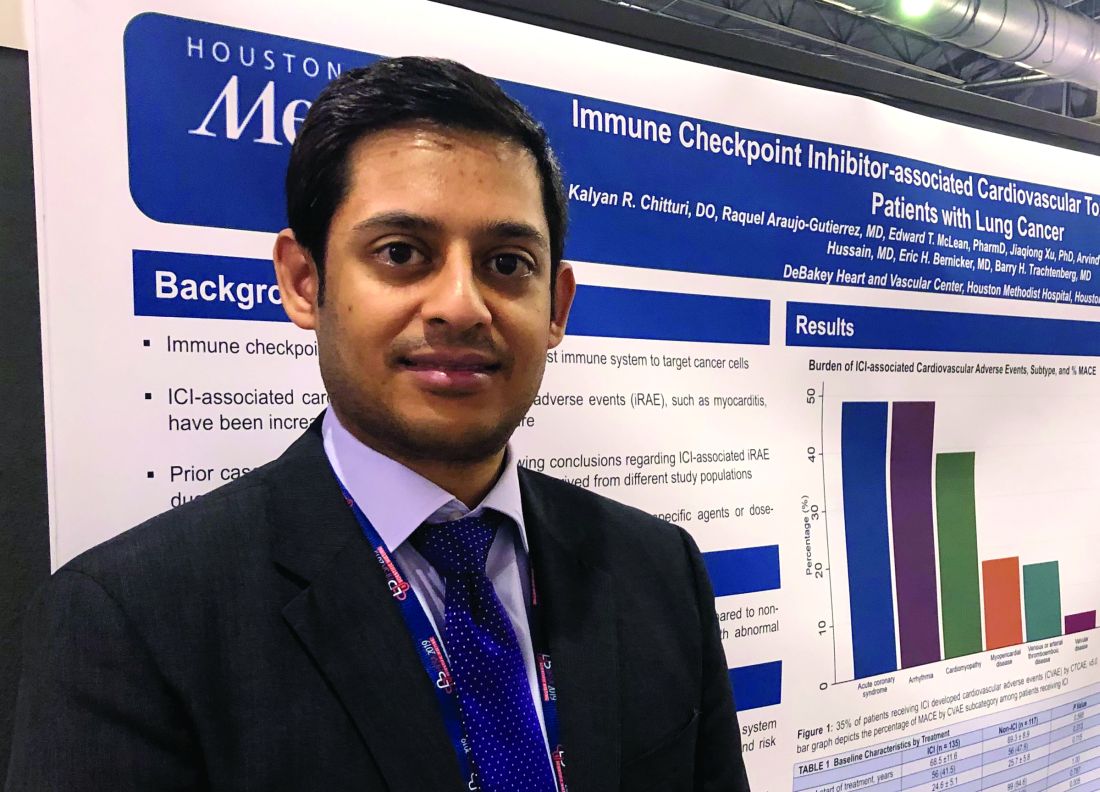
The findings support monitoring of cardiac biomarkers in the initial phase of checkpoint inhibitor treatment to identify patient at high cardiac risk, according to Kalyan R. Chitturi, DO, a resident physician with the DeBakey Heart and Vascular Center, Houston Methodist Hospital, who presented the results.
“It’s the early period that warrants the closest monitoring, as within the first 30-40 days, there’s higher risk,” Dr. Chitturi said in an interview. “When there was a biomarker elevation, it markedly increased the risk of MACE, warranting a closer vigilance during that time period.”
The retrospective study conducted by Dr. Chitturi and colleagues included a total of 252 patients with lung cancer who had been treated at one of seven different sites in Houston Methodist Cancer Center between Aug. 1, 2015, and Aug. 1, 2018.
Immune checkpoint inhibitors did not significantly increase the risk of MACE, compared with other lung cancer therapies, with incidences of 13.3% and 10.3%, respectively (P = .632), the investigators found.
However, MACE did occur earlier in the checkpoint inhibitor group, at a median time to event of 40 days, compared with 118 days in the patients not treated with checkpoint inhibitors, they found.
Risk of MACE with checkpoint inhibitor treatment was increased in patients with elevated troponin (hazard ratio, 2.48; 95% confidence interval, 1.18-5.21; P = .017) or elevated brain natriuretic peptide (HR, 5.77; 95% CI, 2.70-12.35; P less than .001), according to multivariate logistic regression analysis results.
These results suggest biomarkers such as cardiac troponin and brain natriuretic peptide are warranted to monitor patients in the early phase of checkpoint inhibitor treatment, according to Dr. Chitturi. “In the cost-benefit ratio of often-lethal MACE, it’s well worth it to collect these,” he said in the interview.
The results corroborate findings from some other recent studies, he noted. These include a recent study that linked elevated serum troponin to myocarditis in patients treated with immune checkpoint inhibitors (J Am Coll Cardiol. 2018 Apr 24;71[16]:1755-64).
Dr. Chitturi and coauthors reported no disclosures related to their presentation at the HFSA meeting.
SOURCE: Chitturi KR et al. HFSA 2019, Abstract 127.
PHILADELPHIA – , and occurred more frequently in patients with elevated biomarkers, in a retrospective cohort study reported at the annual scientific meeting of the Heart Failure Society of America.
The findings support monitoring of cardiac biomarkers in the initial phase of checkpoint inhibitor treatment to identify patient at high cardiac risk, according to Kalyan R. Chitturi, DO, a resident physician with the DeBakey Heart and Vascular Center, Houston Methodist Hospital, who presented the results.
“It’s the early period that warrants the closest monitoring, as within the first 30-40 days, there’s higher risk,” Dr. Chitturi said in an interview. “When there was a biomarker elevation, it markedly increased the risk of MACE, warranting a closer vigilance during that time period.”
The retrospective study conducted by Dr. Chitturi and colleagues included a total of 252 patients with lung cancer who had been treated at one of seven different sites in Houston Methodist Cancer Center between Aug. 1, 2015, and Aug. 1, 2018.
Immune checkpoint inhibitors did not significantly increase the risk of MACE, compared with other lung cancer therapies, with incidences of 13.3% and 10.3%, respectively (P = .632), the investigators found.
However, MACE did occur earlier in the checkpoint inhibitor group, at a median time to event of 40 days, compared with 118 days in the patients not treated with checkpoint inhibitors, they found.
Risk of MACE with checkpoint inhibitor treatment was increased in patients with elevated troponin (hazard ratio, 2.48; 95% confidence interval, 1.18-5.21; P = .017) or elevated brain natriuretic peptide (HR, 5.77; 95% CI, 2.70-12.35; P less than .001), according to multivariate logistic regression analysis results.
These results suggest biomarkers such as cardiac troponin and brain natriuretic peptide are warranted to monitor patients in the early phase of checkpoint inhibitor treatment, according to Dr. Chitturi. “In the cost-benefit ratio of often-lethal MACE, it’s well worth it to collect these,” he said in the interview.
The results corroborate findings from some other recent studies, he noted. These include a recent study that linked elevated serum troponin to myocarditis in patients treated with immune checkpoint inhibitors (J Am Coll Cardiol. 2018 Apr 24;71[16]:1755-64).
Dr. Chitturi and coauthors reported no disclosures related to their presentation at the HFSA meeting.
SOURCE: Chitturi KR et al. HFSA 2019, Abstract 127.
PHILADELPHIA – , and occurred more frequently in patients with elevated biomarkers, in a retrospective cohort study reported at the annual scientific meeting of the Heart Failure Society of America.
The findings support monitoring of cardiac biomarkers in the initial phase of checkpoint inhibitor treatment to identify patient at high cardiac risk, according to Kalyan R. Chitturi, DO, a resident physician with the DeBakey Heart and Vascular Center, Houston Methodist Hospital, who presented the results.
“It’s the early period that warrants the closest monitoring, as within the first 30-40 days, there’s higher risk,” Dr. Chitturi said in an interview. “When there was a biomarker elevation, it markedly increased the risk of MACE, warranting a closer vigilance during that time period.”
The retrospective study conducted by Dr. Chitturi and colleagues included a total of 252 patients with lung cancer who had been treated at one of seven different sites in Houston Methodist Cancer Center between Aug. 1, 2015, and Aug. 1, 2018.
Immune checkpoint inhibitors did not significantly increase the risk of MACE, compared with other lung cancer therapies, with incidences of 13.3% and 10.3%, respectively (P = .632), the investigators found.
However, MACE did occur earlier in the checkpoint inhibitor group, at a median time to event of 40 days, compared with 118 days in the patients not treated with checkpoint inhibitors, they found.
Risk of MACE with checkpoint inhibitor treatment was increased in patients with elevated troponin (hazard ratio, 2.48; 95% confidence interval, 1.18-5.21; P = .017) or elevated brain natriuretic peptide (HR, 5.77; 95% CI, 2.70-12.35; P less than .001), according to multivariate logistic regression analysis results.
These results suggest biomarkers such as cardiac troponin and brain natriuretic peptide are warranted to monitor patients in the early phase of checkpoint inhibitor treatment, according to Dr. Chitturi. “In the cost-benefit ratio of often-lethal MACE, it’s well worth it to collect these,” he said in the interview.
The results corroborate findings from some other recent studies, he noted. These include a recent study that linked elevated serum troponin to myocarditis in patients treated with immune checkpoint inhibitors (J Am Coll Cardiol. 2018 Apr 24;71[16]:1755-64).
Dr. Chitturi and coauthors reported no disclosures related to their presentation at the HFSA meeting.
SOURCE: Chitturi KR et al. HFSA 2019, Abstract 127.
REPORTING FROM HFSA 2019
Osimertinib improves survival in advanced NSCLC
BARCELONA – In patients with , compared with other agents targeted against NSCLC with epidermal growth factor–receptor (EGFR) mutations, investigators for the FLAURA trial reported.

After median follow-up ranging from 27 to 35.8 months, the median overall survival was 38.6 months for patients randomized to osimertinib, compared with 31.8 months for patients assigned to either of two comparator tyrosine kinase inhibitors (TKIs), gefitinib (Iressa) or erlotinib (Tarceva).
The hazard ratio for death with osimertinib was 0.799 (P = .0462), reported Suresh Ramalingam, MD, director of the lung cancer program at Winship Cancer Institute of Emory University, Atlanta.
“I’m excited that the new milestone accomplished with osimertinib in this trial will serve as the platform to build on in our efforts to improve the lives of patients with lung cancer,” he said at the European Society for Medical Oncology Congress.
Osimertinib is the first TKI to show improvement in overall survival over another TKI in the treatment of advanced stage cancers, he noted.
Overall survival was a secondary endpoint of the FLAURA trial. As previously reported, FLAURA met its primary endpoint of improvement in progression-free survival (PFS) in an interim analysis presented at ESMO 2017. In that analysis, osimertinib cut the risk of disease progression by 54%, compared with gefitinib or erlotinib.
Among 279 patients with EGFR-mutated locally advanced or metastatic NSCLC treated with osimertinib, the median PFS was 18.9 months, compared with 10.2 months for 277 patients treated with the standard of care, which translated into a HR of 0.46 (P less than .0001).
The FLAURA results supported Food and Drug Administration approval of osimertinib in April 2018 for first-line treatment of patients with metastatic NSCLC with EGFR mutations as detected by an FDA-approved test.
The current overall survival analysis, although not powered to show differences among patient subgroups, showed trends favoring osimertinib over a comparator TKI among both men and women, older and younger patients, patients with central nervous system metastases at trial entry, and patients with the EGFR exon 19 deletion at randomization.
The 31.8 month median overall survival for the control (comparator-TKI) arm is among the highest reported for patients with EGFR-mutated NSCLC, Dr. Ramalingam noted.
“That is because a lot of patients crossed over from the control group to receive osimertinib on progression,” he said, adding that the magnitude of benefit from osimertinib was greater among non-Asian patients, compared with Asians.
FLAURA details
In the phase 3 FLAURA trial, investigators stratified patients with previously untreated NSCLC positive for EGFR resistance mutations according to mutation status (exon 19 deletion or the L858R amino acid substitution in exon 21) and race (Asian or non-Asian).
Patients were randomly assigned to treatment with either oral osimertinib 80 mg daily or an EGFR TKI, either oral gefitinib 250 mg or erlotinib 150 mg daily.
The patients were assessed by Response Evaluation Criteria in Solid Tumors (RECIST) every 6 weeks until objective disease progression.
Patients assigned to the standard-of-care arm who had central confirmation of progression and T790M positivity were allowed to cross over to open-label osimertinib.
PFS, the primary endpoint, was also significantly better with osimertinib than with either of the comparator TKIs in patients with and without central nervous system metastases at study entry (HR, 0.47; P = .0009 for patients with CNS metastases; HR, 0.46; P less than .0001 for patients with no CNS metastases).
“For clinicians, for patients, and also for our health authorities, the results in terms of overall survival are really relevant, and this is why this study is so important, knowing this secondary endpoint from a statistical point of view. The study is statistically significant and clinically relevant,” commented Pilar Garrido, MD, from the department of medical oncology, Hospital Universitario Ramón y Cajal in Madrid, the invited discussant at a briefing where Dr. Ramalingam outlined the study findings prior to his presentation of the data in a symposium.
“What’s the future of EGFR mutant lung cancer? Well, I think we should be done with single-agent EGFR-TKI comparisons: We have a clear agent that’s associated with an improvement in survival. I think our focus needs to shift to building on or adding to osimertinib,” commented Pasi A Jänne, MD, PhD, director of the Lowe Center for Thoracic Oncology at Dana-Farber Cancer Institute in Boston, the invited discussant at the symposium.
He said that the challenge for clinicians will be to identify high- and low-risk EGFR-mutant NSCLC, and to determine which patients could be treated with a single agent, and which may require a combination therapy approach.
FLAURA was sponsored by AstraZeneca. Dr. Ramalingam disclosed honoraria, an advisory or consulting role, and research funding from that company and others. Dr. Garrido disclosed a speaker and advisory role for AstraZeneca and others. Dr. Jänne disclosed prior consulting for AstraZeneca.
SOURCE: Ramalingam S et al. ESMO 2019. Abstract LBA5_PR.
BARCELONA – In patients with , compared with other agents targeted against NSCLC with epidermal growth factor–receptor (EGFR) mutations, investigators for the FLAURA trial reported.
After median follow-up ranging from 27 to 35.8 months, the median overall survival was 38.6 months for patients randomized to osimertinib, compared with 31.8 months for patients assigned to either of two comparator tyrosine kinase inhibitors (TKIs), gefitinib (Iressa) or erlotinib (Tarceva).
The hazard ratio for death with osimertinib was 0.799 (P = .0462), reported Suresh Ramalingam, MD, director of the lung cancer program at Winship Cancer Institute of Emory University, Atlanta.
“I’m excited that the new milestone accomplished with osimertinib in this trial will serve as the platform to build on in our efforts to improve the lives of patients with lung cancer,” he said at the European Society for Medical Oncology Congress.
Osimertinib is the first TKI to show improvement in overall survival over another TKI in the treatment of advanced stage cancers, he noted.
Overall survival was a secondary endpoint of the FLAURA trial. As previously reported, FLAURA met its primary endpoint of improvement in progression-free survival (PFS) in an interim analysis presented at ESMO 2017. In that analysis, osimertinib cut the risk of disease progression by 54%, compared with gefitinib or erlotinib.
Among 279 patients with EGFR-mutated locally advanced or metastatic NSCLC treated with osimertinib, the median PFS was 18.9 months, compared with 10.2 months for 277 patients treated with the standard of care, which translated into a HR of 0.46 (P less than .0001).
The FLAURA results supported Food and Drug Administration approval of osimertinib in April 2018 for first-line treatment of patients with metastatic NSCLC with EGFR mutations as detected by an FDA-approved test.
The current overall survival analysis, although not powered to show differences among patient subgroups, showed trends favoring osimertinib over a comparator TKI among both men and women, older and younger patients, patients with central nervous system metastases at trial entry, and patients with the EGFR exon 19 deletion at randomization.
The 31.8 month median overall survival for the control (comparator-TKI) arm is among the highest reported for patients with EGFR-mutated NSCLC, Dr. Ramalingam noted.
“That is because a lot of patients crossed over from the control group to receive osimertinib on progression,” he said, adding that the magnitude of benefit from osimertinib was greater among non-Asian patients, compared with Asians.
FLAURA details
In the phase 3 FLAURA trial, investigators stratified patients with previously untreated NSCLC positive for EGFR resistance mutations according to mutation status (exon 19 deletion or the L858R amino acid substitution in exon 21) and race (Asian or non-Asian).
Patients were randomly assigned to treatment with either oral osimertinib 80 mg daily or an EGFR TKI, either oral gefitinib 250 mg or erlotinib 150 mg daily.
The patients were assessed by Response Evaluation Criteria in Solid Tumors (RECIST) every 6 weeks until objective disease progression.
Patients assigned to the standard-of-care arm who had central confirmation of progression and T790M positivity were allowed to cross over to open-label osimertinib.
PFS, the primary endpoint, was also significantly better with osimertinib than with either of the comparator TKIs in patients with and without central nervous system metastases at study entry (HR, 0.47; P = .0009 for patients with CNS metastases; HR, 0.46; P less than .0001 for patients with no CNS metastases).
“For clinicians, for patients, and also for our health authorities, the results in terms of overall survival are really relevant, and this is why this study is so important, knowing this secondary endpoint from a statistical point of view. The study is statistically significant and clinically relevant,” commented Pilar Garrido, MD, from the department of medical oncology, Hospital Universitario Ramón y Cajal in Madrid, the invited discussant at a briefing where Dr. Ramalingam outlined the study findings prior to his presentation of the data in a symposium.
“What’s the future of EGFR mutant lung cancer? Well, I think we should be done with single-agent EGFR-TKI comparisons: We have a clear agent that’s associated with an improvement in survival. I think our focus needs to shift to building on or adding to osimertinib,” commented Pasi A Jänne, MD, PhD, director of the Lowe Center for Thoracic Oncology at Dana-Farber Cancer Institute in Boston, the invited discussant at the symposium.
He said that the challenge for clinicians will be to identify high- and low-risk EGFR-mutant NSCLC, and to determine which patients could be treated with a single agent, and which may require a combination therapy approach.
FLAURA was sponsored by AstraZeneca. Dr. Ramalingam disclosed honoraria, an advisory or consulting role, and research funding from that company and others. Dr. Garrido disclosed a speaker and advisory role for AstraZeneca and others. Dr. Jänne disclosed prior consulting for AstraZeneca.
SOURCE: Ramalingam S et al. ESMO 2019. Abstract LBA5_PR.
BARCELONA – In patients with , compared with other agents targeted against NSCLC with epidermal growth factor–receptor (EGFR) mutations, investigators for the FLAURA trial reported.
After median follow-up ranging from 27 to 35.8 months, the median overall survival was 38.6 months for patients randomized to osimertinib, compared with 31.8 months for patients assigned to either of two comparator tyrosine kinase inhibitors (TKIs), gefitinib (Iressa) or erlotinib (Tarceva).
The hazard ratio for death with osimertinib was 0.799 (P = .0462), reported Suresh Ramalingam, MD, director of the lung cancer program at Winship Cancer Institute of Emory University, Atlanta.
“I’m excited that the new milestone accomplished with osimertinib in this trial will serve as the platform to build on in our efforts to improve the lives of patients with lung cancer,” he said at the European Society for Medical Oncology Congress.
Osimertinib is the first TKI to show improvement in overall survival over another TKI in the treatment of advanced stage cancers, he noted.
Overall survival was a secondary endpoint of the FLAURA trial. As previously reported, FLAURA met its primary endpoint of improvement in progression-free survival (PFS) in an interim analysis presented at ESMO 2017. In that analysis, osimertinib cut the risk of disease progression by 54%, compared with gefitinib or erlotinib.
Among 279 patients with EGFR-mutated locally advanced or metastatic NSCLC treated with osimertinib, the median PFS was 18.9 months, compared with 10.2 months for 277 patients treated with the standard of care, which translated into a HR of 0.46 (P less than .0001).
The FLAURA results supported Food and Drug Administration approval of osimertinib in April 2018 for first-line treatment of patients with metastatic NSCLC with EGFR mutations as detected by an FDA-approved test.
The current overall survival analysis, although not powered to show differences among patient subgroups, showed trends favoring osimertinib over a comparator TKI among both men and women, older and younger patients, patients with central nervous system metastases at trial entry, and patients with the EGFR exon 19 deletion at randomization.
The 31.8 month median overall survival for the control (comparator-TKI) arm is among the highest reported for patients with EGFR-mutated NSCLC, Dr. Ramalingam noted.
“That is because a lot of patients crossed over from the control group to receive osimertinib on progression,” he said, adding that the magnitude of benefit from osimertinib was greater among non-Asian patients, compared with Asians.
FLAURA details
In the phase 3 FLAURA trial, investigators stratified patients with previously untreated NSCLC positive for EGFR resistance mutations according to mutation status (exon 19 deletion or the L858R amino acid substitution in exon 21) and race (Asian or non-Asian).
Patients were randomly assigned to treatment with either oral osimertinib 80 mg daily or an EGFR TKI, either oral gefitinib 250 mg or erlotinib 150 mg daily.
The patients were assessed by Response Evaluation Criteria in Solid Tumors (RECIST) every 6 weeks until objective disease progression.
Patients assigned to the standard-of-care arm who had central confirmation of progression and T790M positivity were allowed to cross over to open-label osimertinib.
PFS, the primary endpoint, was also significantly better with osimertinib than with either of the comparator TKIs in patients with and without central nervous system metastases at study entry (HR, 0.47; P = .0009 for patients with CNS metastases; HR, 0.46; P less than .0001 for patients with no CNS metastases).
“For clinicians, for patients, and also for our health authorities, the results in terms of overall survival are really relevant, and this is why this study is so important, knowing this secondary endpoint from a statistical point of view. The study is statistically significant and clinically relevant,” commented Pilar Garrido, MD, from the department of medical oncology, Hospital Universitario Ramón y Cajal in Madrid, the invited discussant at a briefing where Dr. Ramalingam outlined the study findings prior to his presentation of the data in a symposium.
“What’s the future of EGFR mutant lung cancer? Well, I think we should be done with single-agent EGFR-TKI comparisons: We have a clear agent that’s associated with an improvement in survival. I think our focus needs to shift to building on or adding to osimertinib,” commented Pasi A Jänne, MD, PhD, director of the Lowe Center for Thoracic Oncology at Dana-Farber Cancer Institute in Boston, the invited discussant at the symposium.
He said that the challenge for clinicians will be to identify high- and low-risk EGFR-mutant NSCLC, and to determine which patients could be treated with a single agent, and which may require a combination therapy approach.
FLAURA was sponsored by AstraZeneca. Dr. Ramalingam disclosed honoraria, an advisory or consulting role, and research funding from that company and others. Dr. Garrido disclosed a speaker and advisory role for AstraZeneca and others. Dr. Jänne disclosed prior consulting for AstraZeneca.
SOURCE: Ramalingam S et al. ESMO 2019. Abstract LBA5_PR.
REPORTING FROM ESMO 2019
CheckMate 817: Nivo+ipi shows safety, efficacy across stage IV NSCLC subgroups
BARCELONA – First-line flat-dose nivolumab plus weight-based ipilimumab was safe and showed encouraging clinical activity both in general and in patients with poor performance status and comorbidities in the multicenter CheckMate 817 study of patients with advanced non–small cell lung cancer.
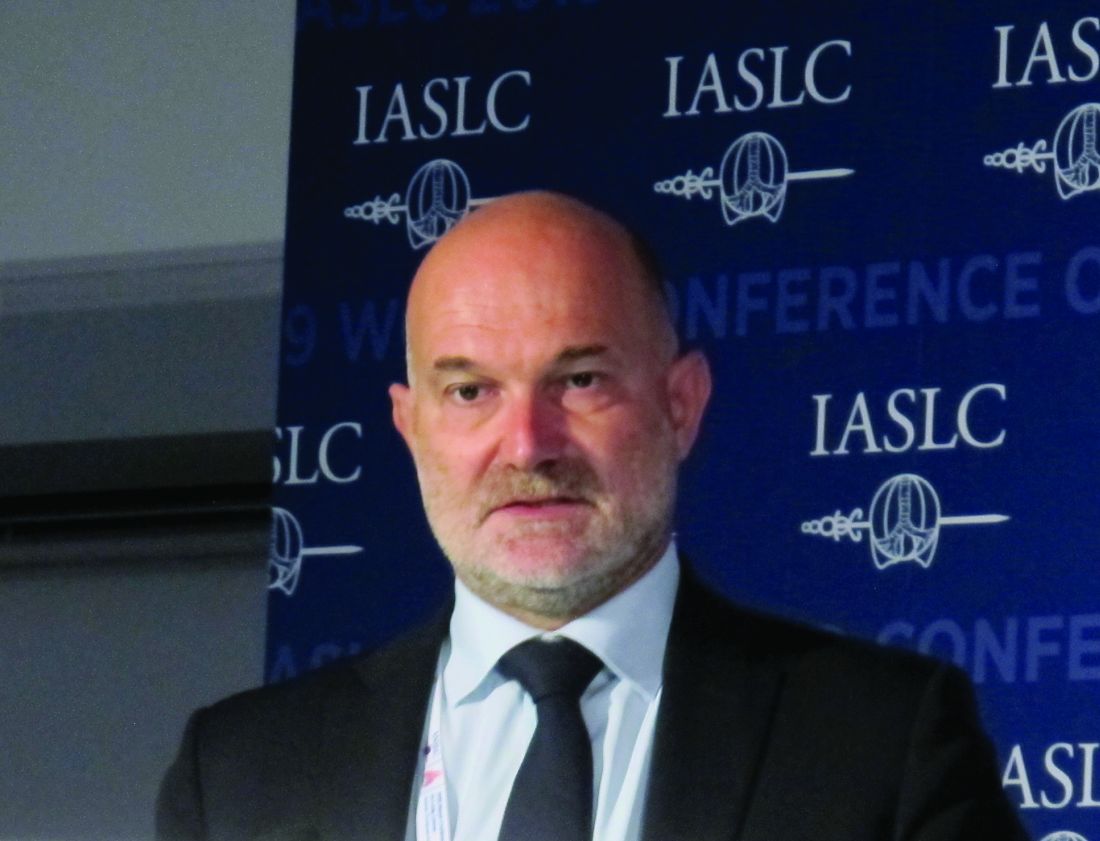
The treatment-related adverse event (TRAE) rate in 139 patients with Eastern Cooperative Oncology Group (ECOG) performance status (PS) score of 2, for example, was 63%, compared with 77% in 391 patients with good ECOG PS (score of 0-1), and the rates of grade 3-4 AEs in the groups, respectively, were 26% and 35%, Fabrice Barlesi, MD, reported at the World Conference on Lung Cancer.
In 59 patients with ECOG PS of 0-1 plus either asymptomatic untreated brain metastases, hepatic or renal impairment, or HIV infection, the overall TRAE and grade 3-4 TRAE rates were 78% and 34%.
The combined TRAE and grade 3-4 TRAE rates in the two “special populations” cohorts were 67% and 28%, respectively, Dr. Barlesi, of Aix-Marseille Universite and Assistance Publique Hôpitaux de Marseille, France, said at the conference, which was sponsored by the International Association for the Study of Lung Cancer.
The overall response rate (ORR) in the ECOG PS-2 and PS-01+comorbidity groups was 19% and 37%, respectively, compared with 36% in the good PS cohort, and median duration of response in the three groups was 14.2 months, 9.7 months, and at least 18 months (median not reached), respectively.
The 1-year PFS rates were 25%, 27%, and 35% respectively, and median PFS was 3.6, 4.2, and 5.8, he said.
Among the 198 special population patients, those with PD-L1 expression of 50% or greater, 1% or greater, or less than 1% had 1-yr PFS rates of 46%, 24%, and 29% (median, 9.6, 3.2, and 3.9 months), and in those with 10 or greater mut/Mb and less than 10 mut/Mb, they were 42% and 17% (median, 8.3 and 2.8 months), respectively.
The single-arm, nonrandomized CheckMate 817 study evaluated the programmed death-ligand 1 (PD-L1) inhibitor nivolumab at a flat dose of 240 mg given intravenously every 2 weeks plus the CTLA-4 inhibitor ipilimumab at 1 mg/kg IV every 6 weeks, with treatment until disease progression or unacceptable toxicity for up to 2 years. Participants had stage IV non–small cell lung cancer (NSCLC), had received no prior systemic therapy, and had no known sensitizing EGFR or ALK alterations.
“Nivolumab and ipilimumab are immune checkpoint inhibitors with distinct ... but complementary mechanisms of action,” Dr. Barlesi said, adding that in combination they have demonstrated clinical benefit vs. chemotherapy in the first-line treatment of NSCLC.
However, data are limited on safety and efficacy of immunotherapy in patients with advanced NSCLC with other comorbidities such as brain metastases, kidney and renal disease, and HIV, as such patients – despite comprising the majority of NSCLC patients at presentation – are typically ineligible for trial registration, he explained, adding that CheckMate 817 is a multicohort, nonrandomized, phase 3b study evaluating the safety and efficacy of nivolumab plus ipilimumab in such patients.
The findings show a safety profile “clearly comparable” to that observed in prior studies using weight-based nivolumab, he noted.
“Nivolumab plus ipilimumab showed clearly encouraging clinical activity in this special population, with an overall response rate of 24%,” he said. “As expected, unfortunately, the outcomes in these special populations were affected by poor performance status, however, despite the poor performance status or comorbidities, those patients were shown to achieve durable responses ... with [an overall] duration of response at 1 year, of 57%.”
CheckMate 817 was sponsored by Bristol-Myers Squibb. Dr. Barlesi disclosed financial relationships with Abbvie, ACEA, Amgen, Astra-Zeneca, Bayer, Bristol-Myers Squibb, Boehringer–Ingelheim, Eisai, Eli Lilly Oncology, F. Hoffmann–La Roche Ltd, Genentech, Ipsen, Ignyta, Innate Pharma, Loxo, Novartis, Medimmune, Merck, MSD, Pierre Fabre, Pfizer, Sanofi-Aventis, and Takeda.
SOURCE: Barlesi F et al. WCLC 2019: Abstract OA04.02.
BARCELONA – First-line flat-dose nivolumab plus weight-based ipilimumab was safe and showed encouraging clinical activity both in general and in patients with poor performance status and comorbidities in the multicenter CheckMate 817 study of patients with advanced non–small cell lung cancer.
The treatment-related adverse event (TRAE) rate in 139 patients with Eastern Cooperative Oncology Group (ECOG) performance status (PS) score of 2, for example, was 63%, compared with 77% in 391 patients with good ECOG PS (score of 0-1), and the rates of grade 3-4 AEs in the groups, respectively, were 26% and 35%, Fabrice Barlesi, MD, reported at the World Conference on Lung Cancer.
In 59 patients with ECOG PS of 0-1 plus either asymptomatic untreated brain metastases, hepatic or renal impairment, or HIV infection, the overall TRAE and grade 3-4 TRAE rates were 78% and 34%.
The combined TRAE and grade 3-4 TRAE rates in the two “special populations” cohorts were 67% and 28%, respectively, Dr. Barlesi, of Aix-Marseille Universite and Assistance Publique Hôpitaux de Marseille, France, said at the conference, which was sponsored by the International Association for the Study of Lung Cancer.
The overall response rate (ORR) in the ECOG PS-2 and PS-01+comorbidity groups was 19% and 37%, respectively, compared with 36% in the good PS cohort, and median duration of response in the three groups was 14.2 months, 9.7 months, and at least 18 months (median not reached), respectively.
The 1-year PFS rates were 25%, 27%, and 35% respectively, and median PFS was 3.6, 4.2, and 5.8, he said.
Among the 198 special population patients, those with PD-L1 expression of 50% or greater, 1% or greater, or less than 1% had 1-yr PFS rates of 46%, 24%, and 29% (median, 9.6, 3.2, and 3.9 months), and in those with 10 or greater mut/Mb and less than 10 mut/Mb, they were 42% and 17% (median, 8.3 and 2.8 months), respectively.
The single-arm, nonrandomized CheckMate 817 study evaluated the programmed death-ligand 1 (PD-L1) inhibitor nivolumab at a flat dose of 240 mg given intravenously every 2 weeks plus the CTLA-4 inhibitor ipilimumab at 1 mg/kg IV every 6 weeks, with treatment until disease progression or unacceptable toxicity for up to 2 years. Participants had stage IV non–small cell lung cancer (NSCLC), had received no prior systemic therapy, and had no known sensitizing EGFR or ALK alterations.
“Nivolumab and ipilimumab are immune checkpoint inhibitors with distinct ... but complementary mechanisms of action,” Dr. Barlesi said, adding that in combination they have demonstrated clinical benefit vs. chemotherapy in the first-line treatment of NSCLC.
However, data are limited on safety and efficacy of immunotherapy in patients with advanced NSCLC with other comorbidities such as brain metastases, kidney and renal disease, and HIV, as such patients – despite comprising the majority of NSCLC patients at presentation – are typically ineligible for trial registration, he explained, adding that CheckMate 817 is a multicohort, nonrandomized, phase 3b study evaluating the safety and efficacy of nivolumab plus ipilimumab in such patients.
The findings show a safety profile “clearly comparable” to that observed in prior studies using weight-based nivolumab, he noted.
“Nivolumab plus ipilimumab showed clearly encouraging clinical activity in this special population, with an overall response rate of 24%,” he said. “As expected, unfortunately, the outcomes in these special populations were affected by poor performance status, however, despite the poor performance status or comorbidities, those patients were shown to achieve durable responses ... with [an overall] duration of response at 1 year, of 57%.”
CheckMate 817 was sponsored by Bristol-Myers Squibb. Dr. Barlesi disclosed financial relationships with Abbvie, ACEA, Amgen, Astra-Zeneca, Bayer, Bristol-Myers Squibb, Boehringer–Ingelheim, Eisai, Eli Lilly Oncology, F. Hoffmann–La Roche Ltd, Genentech, Ipsen, Ignyta, Innate Pharma, Loxo, Novartis, Medimmune, Merck, MSD, Pierre Fabre, Pfizer, Sanofi-Aventis, and Takeda.
SOURCE: Barlesi F et al. WCLC 2019: Abstract OA04.02.
BARCELONA – First-line flat-dose nivolumab plus weight-based ipilimumab was safe and showed encouraging clinical activity both in general and in patients with poor performance status and comorbidities in the multicenter CheckMate 817 study of patients with advanced non–small cell lung cancer.
The treatment-related adverse event (TRAE) rate in 139 patients with Eastern Cooperative Oncology Group (ECOG) performance status (PS) score of 2, for example, was 63%, compared with 77% in 391 patients with good ECOG PS (score of 0-1), and the rates of grade 3-4 AEs in the groups, respectively, were 26% and 35%, Fabrice Barlesi, MD, reported at the World Conference on Lung Cancer.
In 59 patients with ECOG PS of 0-1 plus either asymptomatic untreated brain metastases, hepatic or renal impairment, or HIV infection, the overall TRAE and grade 3-4 TRAE rates were 78% and 34%.
The combined TRAE and grade 3-4 TRAE rates in the two “special populations” cohorts were 67% and 28%, respectively, Dr. Barlesi, of Aix-Marseille Universite and Assistance Publique Hôpitaux de Marseille, France, said at the conference, which was sponsored by the International Association for the Study of Lung Cancer.
The overall response rate (ORR) in the ECOG PS-2 and PS-01+comorbidity groups was 19% and 37%, respectively, compared with 36% in the good PS cohort, and median duration of response in the three groups was 14.2 months, 9.7 months, and at least 18 months (median not reached), respectively.
The 1-year PFS rates were 25%, 27%, and 35% respectively, and median PFS was 3.6, 4.2, and 5.8, he said.
Among the 198 special population patients, those with PD-L1 expression of 50% or greater, 1% or greater, or less than 1% had 1-yr PFS rates of 46%, 24%, and 29% (median, 9.6, 3.2, and 3.9 months), and in those with 10 or greater mut/Mb and less than 10 mut/Mb, they were 42% and 17% (median, 8.3 and 2.8 months), respectively.
The single-arm, nonrandomized CheckMate 817 study evaluated the programmed death-ligand 1 (PD-L1) inhibitor nivolumab at a flat dose of 240 mg given intravenously every 2 weeks plus the CTLA-4 inhibitor ipilimumab at 1 mg/kg IV every 6 weeks, with treatment until disease progression or unacceptable toxicity for up to 2 years. Participants had stage IV non–small cell lung cancer (NSCLC), had received no prior systemic therapy, and had no known sensitizing EGFR or ALK alterations.
“Nivolumab and ipilimumab are immune checkpoint inhibitors with distinct ... but complementary mechanisms of action,” Dr. Barlesi said, adding that in combination they have demonstrated clinical benefit vs. chemotherapy in the first-line treatment of NSCLC.
However, data are limited on safety and efficacy of immunotherapy in patients with advanced NSCLC with other comorbidities such as brain metastases, kidney and renal disease, and HIV, as such patients – despite comprising the majority of NSCLC patients at presentation – are typically ineligible for trial registration, he explained, adding that CheckMate 817 is a multicohort, nonrandomized, phase 3b study evaluating the safety and efficacy of nivolumab plus ipilimumab in such patients.
The findings show a safety profile “clearly comparable” to that observed in prior studies using weight-based nivolumab, he noted.
“Nivolumab plus ipilimumab showed clearly encouraging clinical activity in this special population, with an overall response rate of 24%,” he said. “As expected, unfortunately, the outcomes in these special populations were affected by poor performance status, however, despite the poor performance status or comorbidities, those patients were shown to achieve durable responses ... with [an overall] duration of response at 1 year, of 57%.”
CheckMate 817 was sponsored by Bristol-Myers Squibb. Dr. Barlesi disclosed financial relationships with Abbvie, ACEA, Amgen, Astra-Zeneca, Bayer, Bristol-Myers Squibb, Boehringer–Ingelheim, Eisai, Eli Lilly Oncology, F. Hoffmann–La Roche Ltd, Genentech, Ipsen, Ignyta, Innate Pharma, Loxo, Novartis, Medimmune, Merck, MSD, Pierre Fabre, Pfizer, Sanofi-Aventis, and Takeda.
SOURCE: Barlesi F et al. WCLC 2019: Abstract OA04.02.
REPORTING FROM WCLC 2019
Lung Cancer in the VA at a National Level
OS benefit with pembrolizumab endures long-term in advanced NSCLC
BARCELONA – First-line pembrolizumab provides a durable long-term overall survival (OS) benefit, compared with that of chemotherapy, in patients with advanced nonsquamous non–small cell lung cancer (NSCLC), according to 3-year data from the phase 3 Keynote-024 trial.
As previously reported, first-line treatment with the programmed death-1 (PD-1) inhibitor significantly improved progression-free survival (PFS) and OS, compared with those of platinum-based chemotherapy, and had fewer adverse events after a median of 11.2 months of follow-up in the open-label trial. In 305 patients with advanced NSCLC, high PD-L1 expression, and an absence of targetable epidermal growth factor or anaplastic lymphoma kinase gene alterations, median PFS was 10.3 months vs. 6.0 months, and estimated OS was 80.2% vs. 72.4% in the groups, respectively (hazard ratios, 0.50 and 0.60, respectively).
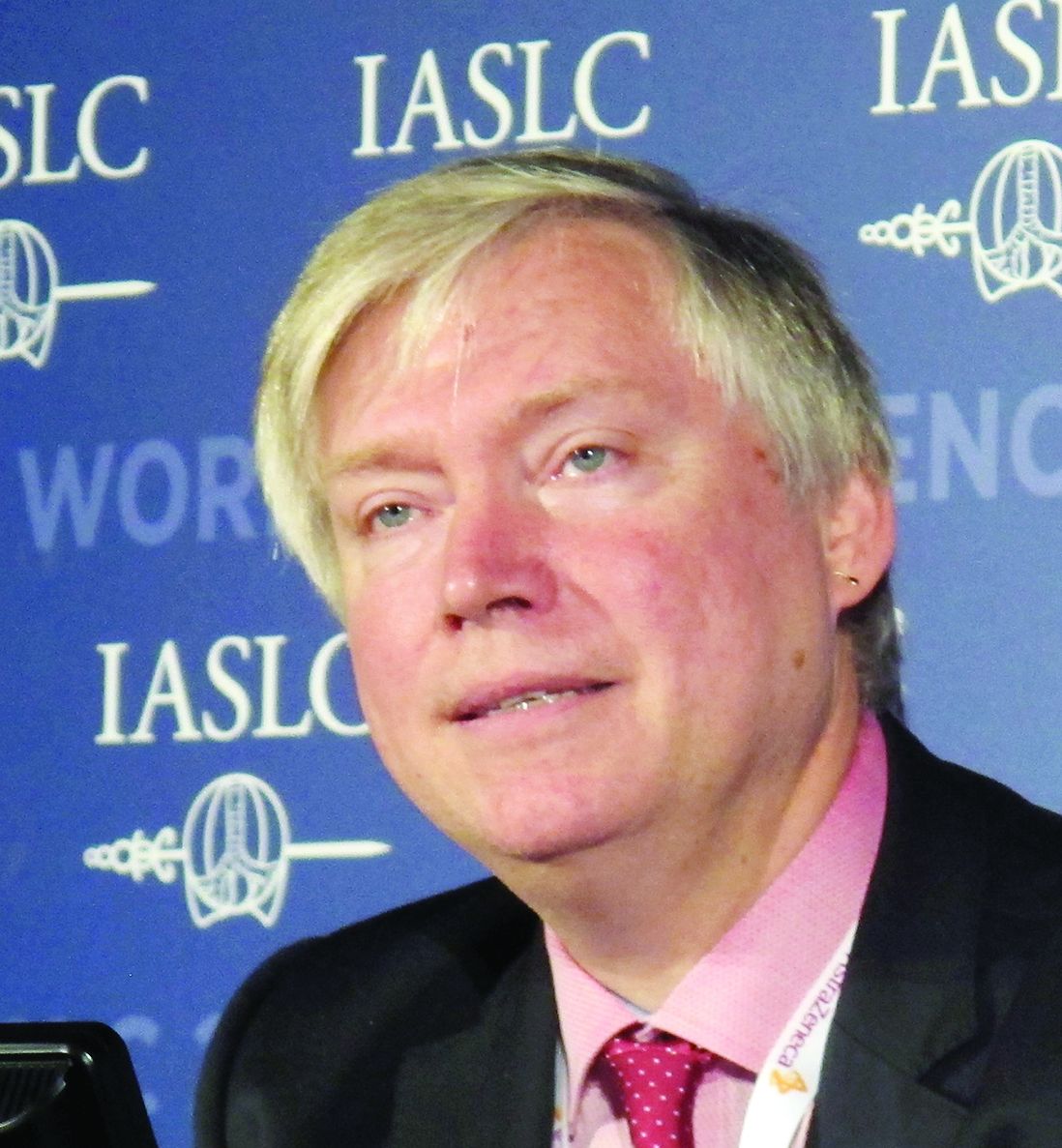
At 3 years after treatment initiation, median OS was 26.3 months vs. 14.2 months in patients treated with pembrolizumab or chemotherapy (HR, 0.65), respectively, and the OS rates were 43.7% and 24.9%, Martin Reck, MD, reported at the World Conference on Lung Cancer.
This was despite 98 of 151 patients assigned to chemotherapy crossing over to pembrolizumab, Dr. Reck, head of the department of thoracic oncology and the clinical trial department in the department of thoracic oncology at the Lung Clinic Grosshansdorf (Germany), noted at the conference, which was sponsored by the International Association for the Study of Lung Cancer.
Additionally, despite longer mean treatment duration in the pembrolizumab arm than in the chemotherapy arm (11.1 vs. 4.4 months), grade 3-5 treatment-related adverse events were less frequent with pembrolizumab than with chemotherapy (31.2% vs. 53.3%), he said.
Of 38 patients in the pembrolizumab arm who completed 2 years of therapy, 34 were alive at 3 years, and 31 (81.6%) had an objective response, including 2 who had a complete response. Median duration of response was not reached, and OS was 97.4%.
Grade 3-5 adverse events occurred in 5 (13.2%) of those patients; no fatal treatment-related adverse events occurred.
Of note, 7 of 10 patients who completed 2 years of treatment, but who subsequently progressed, experienced an objective response with a second course of pembrolizumab, and 8 remain alive, he said.
Patients in KEYNOTE-024 were randomized to receive 200 mg of pembrolizumab every 3 weeks for 2 years or investigator’s choice of platinum doublet for 4-6 cycles plus optional maintenance, with stratification by performance status, tumor histology, and region.
The findings confirm the long-term efficacy of pembrolizumab, compared with platinum-based chemotherapy, demonstrate “consistent benefit in overall survival ... despite a crossover of 65%,” and show the first signs of efficacy with reexposure to pembrolizumab at the time of progression.
“This is work in progress; currently we have data from 10 [reexposed] patients, but what we do see is clinical activity even after [reexposure] to pembrolizumab, so we do see a stabilization of response to the disease in 70% of the patients, and 50% are ongoing.”
The findings highlight a new reality: “There are really some patients who have this disease as a chronic disease induced by immunotherapy.” Dr. Reck said.
KEYNOTE-024 was funded by Merck Sharp & Dohme. Dr. Reck reported receiving personal fees/honoraria for consultancy and lectures from Amgen, AstraZeneca, Bristol-Myers Squibb, Boehringer Ingelheim, Celgene, Merck Sharp & Dohme, MSD, Eli Lilly, Pfizer, AbbVie, Roche, and Novartis.
SOURCE: Reck M et al. WCLC 2019, Abstract OA14.01.
BARCELONA – First-line pembrolizumab provides a durable long-term overall survival (OS) benefit, compared with that of chemotherapy, in patients with advanced nonsquamous non–small cell lung cancer (NSCLC), according to 3-year data from the phase 3 Keynote-024 trial.
As previously reported, first-line treatment with the programmed death-1 (PD-1) inhibitor significantly improved progression-free survival (PFS) and OS, compared with those of platinum-based chemotherapy, and had fewer adverse events after a median of 11.2 months of follow-up in the open-label trial. In 305 patients with advanced NSCLC, high PD-L1 expression, and an absence of targetable epidermal growth factor or anaplastic lymphoma kinase gene alterations, median PFS was 10.3 months vs. 6.0 months, and estimated OS was 80.2% vs. 72.4% in the groups, respectively (hazard ratios, 0.50 and 0.60, respectively).
At 3 years after treatment initiation, median OS was 26.3 months vs. 14.2 months in patients treated with pembrolizumab or chemotherapy (HR, 0.65), respectively, and the OS rates were 43.7% and 24.9%, Martin Reck, MD, reported at the World Conference on Lung Cancer.
This was despite 98 of 151 patients assigned to chemotherapy crossing over to pembrolizumab, Dr. Reck, head of the department of thoracic oncology and the clinical trial department in the department of thoracic oncology at the Lung Clinic Grosshansdorf (Germany), noted at the conference, which was sponsored by the International Association for the Study of Lung Cancer.
Additionally, despite longer mean treatment duration in the pembrolizumab arm than in the chemotherapy arm (11.1 vs. 4.4 months), grade 3-5 treatment-related adverse events were less frequent with pembrolizumab than with chemotherapy (31.2% vs. 53.3%), he said.
Of 38 patients in the pembrolizumab arm who completed 2 years of therapy, 34 were alive at 3 years, and 31 (81.6%) had an objective response, including 2 who had a complete response. Median duration of response was not reached, and OS was 97.4%.
Grade 3-5 adverse events occurred in 5 (13.2%) of those patients; no fatal treatment-related adverse events occurred.
Of note, 7 of 10 patients who completed 2 years of treatment, but who subsequently progressed, experienced an objective response with a second course of pembrolizumab, and 8 remain alive, he said.
Patients in KEYNOTE-024 were randomized to receive 200 mg of pembrolizumab every 3 weeks for 2 years or investigator’s choice of platinum doublet for 4-6 cycles plus optional maintenance, with stratification by performance status, tumor histology, and region.
The findings confirm the long-term efficacy of pembrolizumab, compared with platinum-based chemotherapy, demonstrate “consistent benefit in overall survival ... despite a crossover of 65%,” and show the first signs of efficacy with reexposure to pembrolizumab at the time of progression.
“This is work in progress; currently we have data from 10 [reexposed] patients, but what we do see is clinical activity even after [reexposure] to pembrolizumab, so we do see a stabilization of response to the disease in 70% of the patients, and 50% are ongoing.”
The findings highlight a new reality: “There are really some patients who have this disease as a chronic disease induced by immunotherapy.” Dr. Reck said.
KEYNOTE-024 was funded by Merck Sharp & Dohme. Dr. Reck reported receiving personal fees/honoraria for consultancy and lectures from Amgen, AstraZeneca, Bristol-Myers Squibb, Boehringer Ingelheim, Celgene, Merck Sharp & Dohme, MSD, Eli Lilly, Pfizer, AbbVie, Roche, and Novartis.
SOURCE: Reck M et al. WCLC 2019, Abstract OA14.01.
BARCELONA – First-line pembrolizumab provides a durable long-term overall survival (OS) benefit, compared with that of chemotherapy, in patients with advanced nonsquamous non–small cell lung cancer (NSCLC), according to 3-year data from the phase 3 Keynote-024 trial.
As previously reported, first-line treatment with the programmed death-1 (PD-1) inhibitor significantly improved progression-free survival (PFS) and OS, compared with those of platinum-based chemotherapy, and had fewer adverse events after a median of 11.2 months of follow-up in the open-label trial. In 305 patients with advanced NSCLC, high PD-L1 expression, and an absence of targetable epidermal growth factor or anaplastic lymphoma kinase gene alterations, median PFS was 10.3 months vs. 6.0 months, and estimated OS was 80.2% vs. 72.4% in the groups, respectively (hazard ratios, 0.50 and 0.60, respectively).
At 3 years after treatment initiation, median OS was 26.3 months vs. 14.2 months in patients treated with pembrolizumab or chemotherapy (HR, 0.65), respectively, and the OS rates were 43.7% and 24.9%, Martin Reck, MD, reported at the World Conference on Lung Cancer.
This was despite 98 of 151 patients assigned to chemotherapy crossing over to pembrolizumab, Dr. Reck, head of the department of thoracic oncology and the clinical trial department in the department of thoracic oncology at the Lung Clinic Grosshansdorf (Germany), noted at the conference, which was sponsored by the International Association for the Study of Lung Cancer.
Additionally, despite longer mean treatment duration in the pembrolizumab arm than in the chemotherapy arm (11.1 vs. 4.4 months), grade 3-5 treatment-related adverse events were less frequent with pembrolizumab than with chemotherapy (31.2% vs. 53.3%), he said.
Of 38 patients in the pembrolizumab arm who completed 2 years of therapy, 34 were alive at 3 years, and 31 (81.6%) had an objective response, including 2 who had a complete response. Median duration of response was not reached, and OS was 97.4%.
Grade 3-5 adverse events occurred in 5 (13.2%) of those patients; no fatal treatment-related adverse events occurred.
Of note, 7 of 10 patients who completed 2 years of treatment, but who subsequently progressed, experienced an objective response with a second course of pembrolizumab, and 8 remain alive, he said.
Patients in KEYNOTE-024 were randomized to receive 200 mg of pembrolizumab every 3 weeks for 2 years or investigator’s choice of platinum doublet for 4-6 cycles plus optional maintenance, with stratification by performance status, tumor histology, and region.
The findings confirm the long-term efficacy of pembrolizumab, compared with platinum-based chemotherapy, demonstrate “consistent benefit in overall survival ... despite a crossover of 65%,” and show the first signs of efficacy with reexposure to pembrolizumab at the time of progression.
“This is work in progress; currently we have data from 10 [reexposed] patients, but what we do see is clinical activity even after [reexposure] to pembrolizumab, so we do see a stabilization of response to the disease in 70% of the patients, and 50% are ongoing.”
The findings highlight a new reality: “There are really some patients who have this disease as a chronic disease induced by immunotherapy.” Dr. Reck said.
KEYNOTE-024 was funded by Merck Sharp & Dohme. Dr. Reck reported receiving personal fees/honoraria for consultancy and lectures from Amgen, AstraZeneca, Bristol-Myers Squibb, Boehringer Ingelheim, Celgene, Merck Sharp & Dohme, MSD, Eli Lilly, Pfizer, AbbVie, Roche, and Novartis.
SOURCE: Reck M et al. WCLC 2019, Abstract OA14.01.
REPORTING FROM WCLC 2019
PACIFIC: Patterns of lung cancer progression suggest role for local ablative therapy
Most patients with stage III non–small cell lung cancer (NSCLC) who have distant progression on standard therapy typically have one or two new lesions, often in the same organ, which suggests a role for local ablative therapy, according to investigators.

This conclusion was drawn from an exploratory analysis of the phase 3 PACIFIC trial, which previously showed that durvalumab prolonged survival among patients with NSCLC who did not progress after chemoradiotherapy, which turned the trial protocol into a new standard of care.
At the annual meeting of the American Society for Radiation Oncology, coauthor Andreas Rimner, MD, of the Memorial Sloan Kettering Cancer Center in New York presented findings.
“There were always questions regarding detailed patterns of failure and disease progression in [the PACIFIC] trial,” Dr. Rimner said. “This study ... focuses on these patterns of failure, including the type of first progression in the patients on the PACIFIC trial.”
During the trial, 713 patients with NSCLC were randomized in a 2:1 ratio to receive either durvalumab or placebo. After a median follow-up of 25.2 months, the superiority of durvalumab was clear, with a lower rate of progression (45.4% vs. 64.6%).
But the present analysis dug deeper into this finding by dividing patients into three groups based on site or sites of first progression: local (intrathoracic) progression only, distant (extrathoracic) progression only, or simultaneously local and distant progression. Scans were reviewed by an independent radiologist who was not involved in the original PACIFIC trial. In addition to spatial data, the investigators reported times until progression.
Regardless of site, durvalumab was associated with a longer time until progression or death. Although comparative values were not reached for distant or simultaneous spread, median time until local progression or death was reportable, at 25.2 months in the durvalumab group versus with 9.2 months in the placebo group.
These values were available, in part, because local spread was the most common type of progression: It occurred in 80.6% of patients who progressed on durvalumab and 74.5% of progressors in the placebo group.
Durvalumab reduced the rate of progression across the three spatial categories, compared with placebo, including local only (36.6% vs. 48.1%, respectively), distant only (6.9% vs. 13.1%), and simultaneously local and distant (1.9% vs. 3.4%). This means that, at first progression, new distant lesions were found in 8.8% of patients treated with durvalumab, compared with 16.5% of those treated with placebo. Of note, approximately two-thirds of patients with distant progression had only one or two distant lesions, often confined to one organ, most commonly the brain. This pattern of progression was observed in both treatment arms.
According to Dr. Rimner, this finding is clinically relevant because it suggests a potential role for local ablative therapy.

Expert perspective on the analysis was provided by Benjamin Movsas, MD, chair of radiation oncology at the Henry Ford Cancer Institute in Detroit.
“The PACIFIC trial has really transformed the standard of care for patients with locally advanced, inoperable non–small cell lung cancer by adding immunotherapy to the prior standard of care combining chemotherapy and radiation, and this has shown a dramatic improvement in survival,” Dr. Movsas said.
“By adding the immunotherapy durvalumab, you can reduce risk of local failure, you can reduce the risk of distant failure, and interestingly enough, when patients do fail distantly, and this is true in both arms, they tended to fail in only one or two spots, which is encouraging because that suggests maybe a window of opportunity to treat those one or two spots, and we have newer technologies that allow us to consider that. So we really have a new paradigm.”
The study was funded by AstraZeneca. The investigators disclosed additional relationships with Merck, Nanobiotix, Boehringer Ingelheim, and others.
SOURCE: Rimner A et al. ASTRO 2019, Abstract LBA6.
Most patients with stage III non–small cell lung cancer (NSCLC) who have distant progression on standard therapy typically have one or two new lesions, often in the same organ, which suggests a role for local ablative therapy, according to investigators.
This conclusion was drawn from an exploratory analysis of the phase 3 PACIFIC trial, which previously showed that durvalumab prolonged survival among patients with NSCLC who did not progress after chemoradiotherapy, which turned the trial protocol into a new standard of care.
At the annual meeting of the American Society for Radiation Oncology, coauthor Andreas Rimner, MD, of the Memorial Sloan Kettering Cancer Center in New York presented findings.
“There were always questions regarding detailed patterns of failure and disease progression in [the PACIFIC] trial,” Dr. Rimner said. “This study ... focuses on these patterns of failure, including the type of first progression in the patients on the PACIFIC trial.”
During the trial, 713 patients with NSCLC were randomized in a 2:1 ratio to receive either durvalumab or placebo. After a median follow-up of 25.2 months, the superiority of durvalumab was clear, with a lower rate of progression (45.4% vs. 64.6%).
But the present analysis dug deeper into this finding by dividing patients into three groups based on site or sites of first progression: local (intrathoracic) progression only, distant (extrathoracic) progression only, or simultaneously local and distant progression. Scans were reviewed by an independent radiologist who was not involved in the original PACIFIC trial. In addition to spatial data, the investigators reported times until progression.
Regardless of site, durvalumab was associated with a longer time until progression or death. Although comparative values were not reached for distant or simultaneous spread, median time until local progression or death was reportable, at 25.2 months in the durvalumab group versus with 9.2 months in the placebo group.
These values were available, in part, because local spread was the most common type of progression: It occurred in 80.6% of patients who progressed on durvalumab and 74.5% of progressors in the placebo group.
Durvalumab reduced the rate of progression across the three spatial categories, compared with placebo, including local only (36.6% vs. 48.1%, respectively), distant only (6.9% vs. 13.1%), and simultaneously local and distant (1.9% vs. 3.4%). This means that, at first progression, new distant lesions were found in 8.8% of patients treated with durvalumab, compared with 16.5% of those treated with placebo. Of note, approximately two-thirds of patients with distant progression had only one or two distant lesions, often confined to one organ, most commonly the brain. This pattern of progression was observed in both treatment arms.
According to Dr. Rimner, this finding is clinically relevant because it suggests a potential role for local ablative therapy.
Expert perspective on the analysis was provided by Benjamin Movsas, MD, chair of radiation oncology at the Henry Ford Cancer Institute in Detroit.
“The PACIFIC trial has really transformed the standard of care for patients with locally advanced, inoperable non–small cell lung cancer by adding immunotherapy to the prior standard of care combining chemotherapy and radiation, and this has shown a dramatic improvement in survival,” Dr. Movsas said.
“By adding the immunotherapy durvalumab, you can reduce risk of local failure, you can reduce the risk of distant failure, and interestingly enough, when patients do fail distantly, and this is true in both arms, they tended to fail in only one or two spots, which is encouraging because that suggests maybe a window of opportunity to treat those one or two spots, and we have newer technologies that allow us to consider that. So we really have a new paradigm.”
The study was funded by AstraZeneca. The investigators disclosed additional relationships with Merck, Nanobiotix, Boehringer Ingelheim, and others.
SOURCE: Rimner A et al. ASTRO 2019, Abstract LBA6.
Most patients with stage III non–small cell lung cancer (NSCLC) who have distant progression on standard therapy typically have one or two new lesions, often in the same organ, which suggests a role for local ablative therapy, according to investigators.
This conclusion was drawn from an exploratory analysis of the phase 3 PACIFIC trial, which previously showed that durvalumab prolonged survival among patients with NSCLC who did not progress after chemoradiotherapy, which turned the trial protocol into a new standard of care.
At the annual meeting of the American Society for Radiation Oncology, coauthor Andreas Rimner, MD, of the Memorial Sloan Kettering Cancer Center in New York presented findings.
“There were always questions regarding detailed patterns of failure and disease progression in [the PACIFIC] trial,” Dr. Rimner said. “This study ... focuses on these patterns of failure, including the type of first progression in the patients on the PACIFIC trial.”
During the trial, 713 patients with NSCLC were randomized in a 2:1 ratio to receive either durvalumab or placebo. After a median follow-up of 25.2 months, the superiority of durvalumab was clear, with a lower rate of progression (45.4% vs. 64.6%).
But the present analysis dug deeper into this finding by dividing patients into three groups based on site or sites of first progression: local (intrathoracic) progression only, distant (extrathoracic) progression only, or simultaneously local and distant progression. Scans were reviewed by an independent radiologist who was not involved in the original PACIFIC trial. In addition to spatial data, the investigators reported times until progression.
Regardless of site, durvalumab was associated with a longer time until progression or death. Although comparative values were not reached for distant or simultaneous spread, median time until local progression or death was reportable, at 25.2 months in the durvalumab group versus with 9.2 months in the placebo group.
These values were available, in part, because local spread was the most common type of progression: It occurred in 80.6% of patients who progressed on durvalumab and 74.5% of progressors in the placebo group.
Durvalumab reduced the rate of progression across the three spatial categories, compared with placebo, including local only (36.6% vs. 48.1%, respectively), distant only (6.9% vs. 13.1%), and simultaneously local and distant (1.9% vs. 3.4%). This means that, at first progression, new distant lesions were found in 8.8% of patients treated with durvalumab, compared with 16.5% of those treated with placebo. Of note, approximately two-thirds of patients with distant progression had only one or two distant lesions, often confined to one organ, most commonly the brain. This pattern of progression was observed in both treatment arms.
According to Dr. Rimner, this finding is clinically relevant because it suggests a potential role for local ablative therapy.
Expert perspective on the analysis was provided by Benjamin Movsas, MD, chair of radiation oncology at the Henry Ford Cancer Institute in Detroit.
“The PACIFIC trial has really transformed the standard of care for patients with locally advanced, inoperable non–small cell lung cancer by adding immunotherapy to the prior standard of care combining chemotherapy and radiation, and this has shown a dramatic improvement in survival,” Dr. Movsas said.
“By adding the immunotherapy durvalumab, you can reduce risk of local failure, you can reduce the risk of distant failure, and interestingly enough, when patients do fail distantly, and this is true in both arms, they tended to fail in only one or two spots, which is encouraging because that suggests maybe a window of opportunity to treat those one or two spots, and we have newer technologies that allow us to consider that. So we really have a new paradigm.”
The study was funded by AstraZeneca. The investigators disclosed additional relationships with Merck, Nanobiotix, Boehringer Ingelheim, and others.
SOURCE: Rimner A et al. ASTRO 2019, Abstract LBA6.
REPORTING FROM ASTRO 2019
Key clinical point: Most patients with stage 3 non–small cell lung cancer (NSCLC) who have distant progression on standard therapy typically have one or two new lesions, often in the same organ, which suggests a role for local ablative therapy.
Major finding: Approximately two-thirds of patients with distant progression had one or two new lesions.
Study details: An exploratory analysis of patterns of progression in the phase 3 PACIFIC trial, which involved 713 patients with stage III NSCLC that had not progressed after chemoradiotherapy.
Disclosures: The study was funded by AstraZeneca. The investigators disclosed additional relationships with Merck, Nanobiotix, Boehringer Ingelheim, and others.
Source: Rimner A et al. ASTRO 2019, Abstract LBA6.
Adding radiation to immunotherapy may extend PFS in progressive lung cancer
For patients with metastatic non–small cell lung cancer (NSCLC) who have disease progression on immunotherapy, adding stereotactic body radiotherapy (SBRT) could improve progression-free survival (PFS), according to investigators.
Patients with more CD8+ T cells in circulation, and those with higher tumor infiltrating lymphocyte (TIL) scores derived the most benefit from SBRT, lead author Allison Campbell, MD, PhD, of Yale Cancer Center in New Haven, Conn., and colleagues, reported at the annual meeting of the American Society for Radiation Oncology.
“In rare cases, adding radiation to immunotherapy has been shown to result in therapeutic synergy,” Dr. Campbell said. “When we give high-dose radiation to patients on immunotherapy, some tumors that were not targeted by the radiation can shrink, and this is called ‘the abscopal effect.’ ”
The investigators designed the phase 2 trial to determine if the abscopal effect would occur if high-dose radiation was delivered to a single site in patients who had progressed on checkpoint inhibitor therapy. Fifty-six patients were enrolled, all with at least two sites of metastatic NSCLC. Of these patients, 6 had already progressed on immunotherapy, while 50 were naive to immunotherapy and began pembrolizumab during the trial, with 16 eventually progressing; collectively, these 22 patients with disease progression were identified as candidates for SBRT. Almost all candidates (21 out of 22) completed SBRT, which was delivered in three or five high-dose fractions. Only one site was treated, while other sites were tracked over time with computed tomography (CT) to assess for the abscopal effect. In addition, blood was analyzed for circulating immune cell composition.
After a median follow-up of 15.2 months, the disease control rate was 57%, with some abscopal responses detected. Two patients (10%) achieved a partial response lasting more than 1 year, and 10 patients (48%) maintained stable disease after SBRT. Although programmed death-ligand 1 (PD-L1) positivity was associated with a trend toward increased PFS, this was not statistically significant. In contrast, TIL score was significantly correlated with PFS; patients with TIL scores of 2-3 had a median PFS of 6.7 months, compared with 2.2 months among those with TIL scores of 1 or less. Similarly, immune-related adverse events predicted outcome, with patients who experienced such events achieving longer median PFS than those who did not (6.5 vs 2.2 months). Furthermore, blood testing revealed that the best responders had more CD8+ killer T cells and fewer CD4+ regulatory T cells in peripheral blood compared with patients who responded poorly.
After Dr. Campbell’s presentation, Benjamin Movsas, MD, chair of radiation oncology at the Henry Ford Cancer Institute in Detroit, offered some expert insight. “[The findings from this study] suggest perhaps that radiation may be able to reinvigorate the immune system,” Dr. Movsas said. “Maybe we can get more mileage out of the immunotherapy with this approach. Could radiation kind of be like an immune vaccine of sorts? There’s a lot of exciting possibilities.”

Dr. Movsas also noted how biomarker findings may be able to guide treatment decisions, highlighting how T cell populations predicted outcomes. “This era of precision medicine is really helping us improve benefits,” he said. “The immune profile really matters.”
The investigators disclosed relationships with Genentech, AstraZeneca, Merck, and others.
SOURCE: Campbell et al. ASTRO 2019. Abstract 74.
For patients with metastatic non–small cell lung cancer (NSCLC) who have disease progression on immunotherapy, adding stereotactic body radiotherapy (SBRT) could improve progression-free survival (PFS), according to investigators.
Patients with more CD8+ T cells in circulation, and those with higher tumor infiltrating lymphocyte (TIL) scores derived the most benefit from SBRT, lead author Allison Campbell, MD, PhD, of Yale Cancer Center in New Haven, Conn., and colleagues, reported at the annual meeting of the American Society for Radiation Oncology.
“In rare cases, adding radiation to immunotherapy has been shown to result in therapeutic synergy,” Dr. Campbell said. “When we give high-dose radiation to patients on immunotherapy, some tumors that were not targeted by the radiation can shrink, and this is called ‘the abscopal effect.’ ”
The investigators designed the phase 2 trial to determine if the abscopal effect would occur if high-dose radiation was delivered to a single site in patients who had progressed on checkpoint inhibitor therapy. Fifty-six patients were enrolled, all with at least two sites of metastatic NSCLC. Of these patients, 6 had already progressed on immunotherapy, while 50 were naive to immunotherapy and began pembrolizumab during the trial, with 16 eventually progressing; collectively, these 22 patients with disease progression were identified as candidates for SBRT. Almost all candidates (21 out of 22) completed SBRT, which was delivered in three or five high-dose fractions. Only one site was treated, while other sites were tracked over time with computed tomography (CT) to assess for the abscopal effect. In addition, blood was analyzed for circulating immune cell composition.
After a median follow-up of 15.2 months, the disease control rate was 57%, with some abscopal responses detected. Two patients (10%) achieved a partial response lasting more than 1 year, and 10 patients (48%) maintained stable disease after SBRT. Although programmed death-ligand 1 (PD-L1) positivity was associated with a trend toward increased PFS, this was not statistically significant. In contrast, TIL score was significantly correlated with PFS; patients with TIL scores of 2-3 had a median PFS of 6.7 months, compared with 2.2 months among those with TIL scores of 1 or less. Similarly, immune-related adverse events predicted outcome, with patients who experienced such events achieving longer median PFS than those who did not (6.5 vs 2.2 months). Furthermore, blood testing revealed that the best responders had more CD8+ killer T cells and fewer CD4+ regulatory T cells in peripheral blood compared with patients who responded poorly.
After Dr. Campbell’s presentation, Benjamin Movsas, MD, chair of radiation oncology at the Henry Ford Cancer Institute in Detroit, offered some expert insight. “[The findings from this study] suggest perhaps that radiation may be able to reinvigorate the immune system,” Dr. Movsas said. “Maybe we can get more mileage out of the immunotherapy with this approach. Could radiation kind of be like an immune vaccine of sorts? There’s a lot of exciting possibilities.”
Dr. Movsas also noted how biomarker findings may be able to guide treatment decisions, highlighting how T cell populations predicted outcomes. “This era of precision medicine is really helping us improve benefits,” he said. “The immune profile really matters.”
The investigators disclosed relationships with Genentech, AstraZeneca, Merck, and others.
SOURCE: Campbell et al. ASTRO 2019. Abstract 74.
For patients with metastatic non–small cell lung cancer (NSCLC) who have disease progression on immunotherapy, adding stereotactic body radiotherapy (SBRT) could improve progression-free survival (PFS), according to investigators.
Patients with more CD8+ T cells in circulation, and those with higher tumor infiltrating lymphocyte (TIL) scores derived the most benefit from SBRT, lead author Allison Campbell, MD, PhD, of Yale Cancer Center in New Haven, Conn., and colleagues, reported at the annual meeting of the American Society for Radiation Oncology.
“In rare cases, adding radiation to immunotherapy has been shown to result in therapeutic synergy,” Dr. Campbell said. “When we give high-dose radiation to patients on immunotherapy, some tumors that were not targeted by the radiation can shrink, and this is called ‘the abscopal effect.’ ”
The investigators designed the phase 2 trial to determine if the abscopal effect would occur if high-dose radiation was delivered to a single site in patients who had progressed on checkpoint inhibitor therapy. Fifty-six patients were enrolled, all with at least two sites of metastatic NSCLC. Of these patients, 6 had already progressed on immunotherapy, while 50 were naive to immunotherapy and began pembrolizumab during the trial, with 16 eventually progressing; collectively, these 22 patients with disease progression were identified as candidates for SBRT. Almost all candidates (21 out of 22) completed SBRT, which was delivered in three or five high-dose fractions. Only one site was treated, while other sites were tracked over time with computed tomography (CT) to assess for the abscopal effect. In addition, blood was analyzed for circulating immune cell composition.
After a median follow-up of 15.2 months, the disease control rate was 57%, with some abscopal responses detected. Two patients (10%) achieved a partial response lasting more than 1 year, and 10 patients (48%) maintained stable disease after SBRT. Although programmed death-ligand 1 (PD-L1) positivity was associated with a trend toward increased PFS, this was not statistically significant. In contrast, TIL score was significantly correlated with PFS; patients with TIL scores of 2-3 had a median PFS of 6.7 months, compared with 2.2 months among those with TIL scores of 1 or less. Similarly, immune-related adverse events predicted outcome, with patients who experienced such events achieving longer median PFS than those who did not (6.5 vs 2.2 months). Furthermore, blood testing revealed that the best responders had more CD8+ killer T cells and fewer CD4+ regulatory T cells in peripheral blood compared with patients who responded poorly.
After Dr. Campbell’s presentation, Benjamin Movsas, MD, chair of radiation oncology at the Henry Ford Cancer Institute in Detroit, offered some expert insight. “[The findings from this study] suggest perhaps that radiation may be able to reinvigorate the immune system,” Dr. Movsas said. “Maybe we can get more mileage out of the immunotherapy with this approach. Could radiation kind of be like an immune vaccine of sorts? There’s a lot of exciting possibilities.”
Dr. Movsas also noted how biomarker findings may be able to guide treatment decisions, highlighting how T cell populations predicted outcomes. “This era of precision medicine is really helping us improve benefits,” he said. “The immune profile really matters.”
The investigators disclosed relationships with Genentech, AstraZeneca, Merck, and others.
SOURCE: Campbell et al. ASTRO 2019. Abstract 74.
REPORTING FROM ASTRO 2019
Many institutions exceed recommended radiation doses during lung cancer screening
according to a study published in JAMA Internal Medicine.

Various institutional characteristics, such as allowing any radiologist to establish CT scan protocols, are associated with a greater likelihood of using higher radiation doses. “Dose optimization practices may benefit from being tailored to specific practice types, as well as different organizational structures, to have a higher likelihood of meeting dose guidelines,” wrote Joshua Demb, PhD, MPH, a cancer epidemiologist at the University of California, San Diego, and colleagues.
Lung cancer screening benefits patients when low-dose CT is used, but not when high-dose CT is used, because radiation from higher doses may cause as many cancers as are detected by screening. The Centers for Medicare & Medicaid Services require institutions to use low-dose techniques and participate in a dose registry to be reimbursed for lung cancer screening. The American College of Radiology recommends that lung cancer screening scans have a volume CT dose index (CTDIvol) of 3 mGy or lower and an effective dose (ED) of 1 millisieverts (mSv) or lower.
A prospective study of registry data
Dr. Demb and colleagues conducted a study to describe CT radiation doses for lung cancer screening in current practice and to identify the factors that explain variation in doses between institutions. They prospectively collected lung cancer screening examination dose metrics from 2016 to 2017 at U.S. institutions participating in the University of California, San Francisco, International Dose Registry. Eligible institutions performed a minimum of 24 lung cancer screening scans during the study period. At baseline, the investigators surveyed institutions about their characteristics (for example, how they perform and oversee CT). Dr. Demb and colleagues estimated mixed-effects linear and logistic regression models using forward variable selection. They conducted their analysis between 2018 and 2019.
The researchers chose four outcome measures. The first was mean CTDIvol, reflecting the average radiation dose per slice. The second was mean ED, reflecting the total dose received and estimated future cancer risk. The third was the proportion of CT scans using radiation doses above ACR benchmarks. The fourth was the proportion of CT scans using radiation doses above the 75th percentile of registry doses (CTDIvol greater than 2.7 mGy and ED greater than 1.4 mSv).
Institutional characteristics associated with radiation dose
Dr. Demb and colleagues collected data from 72 institutions about 12,529 patients undergoing CT scans for lung cancer screening. Approximately 58% of patients were men, and the patients’ median age was 65 years. The mean CTDIvol, adjusted for patient size, was 2.4 mGy. The mean ED for lung cancer screening, adjusted for chest diameter, was 1.2 mSv.
A total of 15 institutions (21%) had a median adjusted CTDIvol value higher than the ACR guideline, and 47 (65%) had a median adjusted ED higher than the ACR guideline. Approximately 18% of CT scans had a CTDIvol higher than guidelines, and 50% had an ED higher than ACR guidelines.
Institutions that permitted any radiologist to establish CT protocols had 44% higher mean CTDIvol and 27% higher mean ED, compared with institutions that restricted who could establish protocols. Institutions that permitted any radiologist to establish protocols also had higher odds of conducting examinations that exceeded ACR CTDIvol guidelines (odds ratio, 12.0) and of being in the 75th percentile of the registry CTDIvol (OR, 19.0) or ED (OR, 8.5) values.
In contrast, having lead radiologists establish CT protocols resulted in lower odds of using doses that exceeded ACR ED guidelines (OR, 0.01). Employing external, rather than internal, medical physicists was associated with increased odds of exceeding ACR CTDIvol guidelines (OR, 6.1). Having medical physicists establish protocols was associated with decreased odds of exceeding the 75th percentile of the registry CTDIvol (OR, 0.09) values. Institutions that updated protocols as needed, rather than annually, had 27% higher mean CTDIvol.
“Although we cannot establish causality in this observational study, our results suggest that considering these factors (for example, allowing only lead radiologists to establish protocols) could have a meaningful impact on dose, and could be important areas to develop interventions to optimize doses of CT protocols” the investigators wrote.
The Patient Centered Outcomes Research Institute and the National Institutes of Health supported this research. The authors reported no conflicts of interest.
SOURCE: Demb J et al. JAMA Intern Med. 2019 Sep 23. doi: 10.1001/jamainternmed.2019.3893.
according to a study published in JAMA Internal Medicine.
Various institutional characteristics, such as allowing any radiologist to establish CT scan protocols, are associated with a greater likelihood of using higher radiation doses. “Dose optimization practices may benefit from being tailored to specific practice types, as well as different organizational structures, to have a higher likelihood of meeting dose guidelines,” wrote Joshua Demb, PhD, MPH, a cancer epidemiologist at the University of California, San Diego, and colleagues.
Lung cancer screening benefits patients when low-dose CT is used, but not when high-dose CT is used, because radiation from higher doses may cause as many cancers as are detected by screening. The Centers for Medicare & Medicaid Services require institutions to use low-dose techniques and participate in a dose registry to be reimbursed for lung cancer screening. The American College of Radiology recommends that lung cancer screening scans have a volume CT dose index (CTDIvol) of 3 mGy or lower and an effective dose (ED) of 1 millisieverts (mSv) or lower.
A prospective study of registry data
Dr. Demb and colleagues conducted a study to describe CT radiation doses for lung cancer screening in current practice and to identify the factors that explain variation in doses between institutions. They prospectively collected lung cancer screening examination dose metrics from 2016 to 2017 at U.S. institutions participating in the University of California, San Francisco, International Dose Registry. Eligible institutions performed a minimum of 24 lung cancer screening scans during the study period. At baseline, the investigators surveyed institutions about their characteristics (for example, how they perform and oversee CT). Dr. Demb and colleagues estimated mixed-effects linear and logistic regression models using forward variable selection. They conducted their analysis between 2018 and 2019.
The researchers chose four outcome measures. The first was mean CTDIvol, reflecting the average radiation dose per slice. The second was mean ED, reflecting the total dose received and estimated future cancer risk. The third was the proportion of CT scans using radiation doses above ACR benchmarks. The fourth was the proportion of CT scans using radiation doses above the 75th percentile of registry doses (CTDIvol greater than 2.7 mGy and ED greater than 1.4 mSv).
Institutional characteristics associated with radiation dose
Dr. Demb and colleagues collected data from 72 institutions about 12,529 patients undergoing CT scans for lung cancer screening. Approximately 58% of patients were men, and the patients’ median age was 65 years. The mean CTDIvol, adjusted for patient size, was 2.4 mGy. The mean ED for lung cancer screening, adjusted for chest diameter, was 1.2 mSv.
A total of 15 institutions (21%) had a median adjusted CTDIvol value higher than the ACR guideline, and 47 (65%) had a median adjusted ED higher than the ACR guideline. Approximately 18% of CT scans had a CTDIvol higher than guidelines, and 50% had an ED higher than ACR guidelines.
Institutions that permitted any radiologist to establish CT protocols had 44% higher mean CTDIvol and 27% higher mean ED, compared with institutions that restricted who could establish protocols. Institutions that permitted any radiologist to establish protocols also had higher odds of conducting examinations that exceeded ACR CTDIvol guidelines (odds ratio, 12.0) and of being in the 75th percentile of the registry CTDIvol (OR, 19.0) or ED (OR, 8.5) values.
In contrast, having lead radiologists establish CT protocols resulted in lower odds of using doses that exceeded ACR ED guidelines (OR, 0.01). Employing external, rather than internal, medical physicists was associated with increased odds of exceeding ACR CTDIvol guidelines (OR, 6.1). Having medical physicists establish protocols was associated with decreased odds of exceeding the 75th percentile of the registry CTDIvol (OR, 0.09) values. Institutions that updated protocols as needed, rather than annually, had 27% higher mean CTDIvol.
“Although we cannot establish causality in this observational study, our results suggest that considering these factors (for example, allowing only lead radiologists to establish protocols) could have a meaningful impact on dose, and could be important areas to develop interventions to optimize doses of CT protocols” the investigators wrote.
The Patient Centered Outcomes Research Institute and the National Institutes of Health supported this research. The authors reported no conflicts of interest.
SOURCE: Demb J et al. JAMA Intern Med. 2019 Sep 23. doi: 10.1001/jamainternmed.2019.3893.
according to a study published in JAMA Internal Medicine.
Various institutional characteristics, such as allowing any radiologist to establish CT scan protocols, are associated with a greater likelihood of using higher radiation doses. “Dose optimization practices may benefit from being tailored to specific practice types, as well as different organizational structures, to have a higher likelihood of meeting dose guidelines,” wrote Joshua Demb, PhD, MPH, a cancer epidemiologist at the University of California, San Diego, and colleagues.
Lung cancer screening benefits patients when low-dose CT is used, but not when high-dose CT is used, because radiation from higher doses may cause as many cancers as are detected by screening. The Centers for Medicare & Medicaid Services require institutions to use low-dose techniques and participate in a dose registry to be reimbursed for lung cancer screening. The American College of Radiology recommends that lung cancer screening scans have a volume CT dose index (CTDIvol) of 3 mGy or lower and an effective dose (ED) of 1 millisieverts (mSv) or lower.
A prospective study of registry data
Dr. Demb and colleagues conducted a study to describe CT radiation doses for lung cancer screening in current practice and to identify the factors that explain variation in doses between institutions. They prospectively collected lung cancer screening examination dose metrics from 2016 to 2017 at U.S. institutions participating in the University of California, San Francisco, International Dose Registry. Eligible institutions performed a minimum of 24 lung cancer screening scans during the study period. At baseline, the investigators surveyed institutions about their characteristics (for example, how they perform and oversee CT). Dr. Demb and colleagues estimated mixed-effects linear and logistic regression models using forward variable selection. They conducted their analysis between 2018 and 2019.
The researchers chose four outcome measures. The first was mean CTDIvol, reflecting the average radiation dose per slice. The second was mean ED, reflecting the total dose received and estimated future cancer risk. The third was the proportion of CT scans using radiation doses above ACR benchmarks. The fourth was the proportion of CT scans using radiation doses above the 75th percentile of registry doses (CTDIvol greater than 2.7 mGy and ED greater than 1.4 mSv).
Institutional characteristics associated with radiation dose
Dr. Demb and colleagues collected data from 72 institutions about 12,529 patients undergoing CT scans for lung cancer screening. Approximately 58% of patients were men, and the patients’ median age was 65 years. The mean CTDIvol, adjusted for patient size, was 2.4 mGy. The mean ED for lung cancer screening, adjusted for chest diameter, was 1.2 mSv.
A total of 15 institutions (21%) had a median adjusted CTDIvol value higher than the ACR guideline, and 47 (65%) had a median adjusted ED higher than the ACR guideline. Approximately 18% of CT scans had a CTDIvol higher than guidelines, and 50% had an ED higher than ACR guidelines.
Institutions that permitted any radiologist to establish CT protocols had 44% higher mean CTDIvol and 27% higher mean ED, compared with institutions that restricted who could establish protocols. Institutions that permitted any radiologist to establish protocols also had higher odds of conducting examinations that exceeded ACR CTDIvol guidelines (odds ratio, 12.0) and of being in the 75th percentile of the registry CTDIvol (OR, 19.0) or ED (OR, 8.5) values.
In contrast, having lead radiologists establish CT protocols resulted in lower odds of using doses that exceeded ACR ED guidelines (OR, 0.01). Employing external, rather than internal, medical physicists was associated with increased odds of exceeding ACR CTDIvol guidelines (OR, 6.1). Having medical physicists establish protocols was associated with decreased odds of exceeding the 75th percentile of the registry CTDIvol (OR, 0.09) values. Institutions that updated protocols as needed, rather than annually, had 27% higher mean CTDIvol.
“Although we cannot establish causality in this observational study, our results suggest that considering these factors (for example, allowing only lead radiologists to establish protocols) could have a meaningful impact on dose, and could be important areas to develop interventions to optimize doses of CT protocols” the investigators wrote.
The Patient Centered Outcomes Research Institute and the National Institutes of Health supported this research. The authors reported no conflicts of interest.
SOURCE: Demb J et al. JAMA Intern Med. 2019 Sep 23. doi: 10.1001/jamainternmed.2019.3893.
FROM JAMA INTERNAL MEDICINE
Key clinical point: A significant proportion of institutions exceed guideline-recommended dose levels for CT screening for lung cancer.
Major finding: About 21% of institutions have median volume CT dose index above American College of Radiology guidelines, and 65% have median effective dose above ACR guidelines.
Study details: A prospective study of data for 12,529 patients undergoing screening at 72 institutions.
Disclosures: The Patient Centered Outcomes Research Institute and the National Institutes of Health supported this research. The authors reported no conflicts of interest.
Source: Demb J et al. JAMA Intern Med. 2019 Sep 23. doi: 10.1001/jamainternmed.2019.3893.