User login
Long-term survival in stage IV NSCLC
In this edition of “How I will treat my next patient,” I highlight two studies addressing long-term survival for patients with stage IV non–small cell lung cancer (NSCLC). One summarizes survival of patients who received nivolumab therapy in the second- or later-line setting. The other is a retrospective database query regarding whether local consolidation (LC) improves survival after systemic treatment of patients with oligometastatic NSCLC.

Nivolumab therapy
Scott J. Antonia, MD, PhD, and colleagues sought to determine the frequency of long-term survival among advanced NSCLC patients who received nivolumab in the second-line or later settings (Lancet Oncol. 2019 Aug 14. doi: 10.1016/S1470-2045[19]30407-3). They aggregated the results of four trials. Checkmate 017 and 057 were phase 3 comparisons of nivolumab with docetaxel for nonsquamous and squamous NSCLC, respectively – with crossover from docetaxel to nivolumab permitted. Checkmate 003 was a dose-escalation trial and Checkmate 063 was a phase 2 study of nivolumab in advanced, refractory squamous NSCLC. A minimum follow-up of 4 years was required.
In total, 664 patients participated in the four trials, more than 85% of whom received the fairly standard dose of 3 mg/kg every 2 weeks. In a very data-dense analysis, among all patients who received nivolumab, the 4-year overall survival was 14% (95% confidence interval, 11%-17%). Four-year overall survival was higher (19%; 95% CI, 15%-24%) in patients with at least 1% programmed death-ligand 1 (PD-L1) expression. There was no difference by histology (squamous vs. nonsquamous). Patients with Eastern Cooperative Oncology Group (ECOG) Performance Status of 0, PD-L1 greater than 10%, and absence of liver metastases were more likely to achieve 4-year overall survival.
Although progression-free survival was low (8%, overall; 19% for patients achieving complete remission or partial remission), depth of response correlated with the 4-year overall survival rate. Those patients in complete or partial remission at 6 months had an overall survival at 4 years of 56%. Stable disease at 6 months showed an overall survival at 4 years of 19%, which was superior to the results for patients with partial disease as best response (4%).
There were two treatment-related deaths with nivolumab, with no unexpected safety signals. Despite allowing continuous treatment in three of the four studies, most potentially immune-related toxic events occurred in the first 2-3 years of therapy. In the two randomized studies (017 and 057), 4-year overall survival was higher with nivolumab (14%) than with docetaxel (5%), with no overlap in the 95% confidence intervals.
What this means in practice
British prime minister, Benjamin Disraeli (and, later, Mark Twain) said, “There are three kinds of lies: lies, damned lies, and statistics.” There are no lies in Dr. Antonia’s paper, but there are plenty of statistics – which oncologists love. The reported data enable us to put some boundaries on the figures we quote when patients ask us, “How well could I do with this treatment?” Dr. Antonia’s paper significantly assists with these very practical discussions. For patients who want more detail, the boundaries can be further refined. Dr. Antonia and colleagues have given us clinical (depth of response, performance status, sites of metastasis) and molecular (proportion of cells with PD-L1) refinements to personalize our consultations with patients.
Unfortunately, the data do not allow us to predict who should not receive an immune checkpoint inhibitor and, instead, receive late-line chemotherapy or early hospice referral. The data summarize well-executed clinical trials, but it is well known that (as reported at the Quality Care Symposium 2019) NSCLC patients participating in clinical trials have significantly improved survival rates – perhaps as much as two times – compared with those not enrolled in trials. These realities, however, should not obscure the fact that immune checkpoint inhibitors are a major advance for metastatic NSCLC patients, including those who have progressed after prior treatment. They offer hope for cancer-free or cancer-controlled survival that would have properly been placed in the category of “a miracle” just a few years ago.
Local consolidation
Johannes Uhlig, MD, and colleagues analyzed 6 years of National Cancer Database records, identifying 34,887 stage IV NSCLC patients who had fewer than two distant metastatic lesions in the liver, lung, brain, or bone (JAMA Netw Open. 2019 Aug 21. doi: 10.1001/jamanetworkopen.2019.9702). Treatment groups were divided into patients who received systemic therapy alone (70.3% of the total patients), had surgical resection of the primary site plus systemic therapy (2.4%), or received external beam radiation therapy or thermal ablation (EBRT/TA) of the primary site plus systemic therapy (27.3%). Multivariable Cox proportional hazards models, incorporating a number of clinical variables, were used to compare overall survival between the three groups at a median follow-up of approximately 39 months.
They found that patients treated with surgical consolidation had a 41% lower mortality, in comparison with systemic therapy alone. EBRT/TA was also associated with lower mortality (by 5%), in comparison with systemic therapy alone, but the benefit was more nuanced. For instance, patients with squamous cell histology with low tumor bulk, low nodal burden, and fewer distant sites of disease benefited, but patients with adenocarcinoma and bulkier disease or more than two distant sites did not benefit.
The discussion emphasized all of the caveats that would be appropriate for a retrospective, telescopic record review – patient selection factors; lack of detail about systemic therapy; small numbers of patients in various subsets; exclusion of patients who had consolidative treatment of metastatic sites; and the potential for unbalanced allocation of patients with various actionable, prognostically relevant mutations. Further research, including ongoing trials such as NRG-LU002, was encouraged.
How these results influence clinical practice
Ralph R. Weichselbaum, MD, in his Karnofsky lecture at the 2018 annual meeting of the American Society of Clinical Oncology highlighted the hypothesis that metastatic tumors are enriched differentially for oligometastatic or polymetastatic miRNAs and that these miRNAs could influence future clinical behavior (J Clin Oncol. 2018;36[32]:3240-50). This work, coupled with clinical features (number of sites of disease, pace of progression) could elucidate which oligometastatic NSCLC patients might benefit from aggressive local treatment and achieve long-term, disease-free survival.
As previously reported, Daniel R. Gomez, MD, and colleagues found improved median progression-free survival (14.2 vs. 4.4 months; P = .022) and overall survival (41.2 vs. 17.0 months; P = .017) among patients with oligometastatic NSCLC who were randomized to local consolidation versus standard maintenance therapy/observation (J Clin Oncol. 8 May 2019. doi: 10. 1200/JCO.19.00201). Joshua M. Bauml and colleagues reported impressive results for systemically treated stage IV NSCLC patients who received local consolidation and checkpoint inhibitors for “oligo-remnant disease” (JAMA Oncol. 2019 Jul 11. doi: 10.1001/jamaoncol.2019.1449).
At the present time, clinical practice should remain governed by the general tendency to discourage aggressive local treatment except in highly selected cases with poorly resolved or impending life-altering symptoms. The publication by Dr. Uhlig and colleagues and the previously reported phase 2 trials, support phase 3 randomized trials of local treatment of isolated sites in oligometastatic NSCLC patients, particularly in an era of immune-based systemic treatment that offers finite potential for long-term survival.
Dr. Lyss has been a community-based medical oncologist and clinical researcher for more than 35 years, practicing in St. Louis. His clinical and research interests are in the prevention, diagnosis, and treatment of breast and lung cancers and in expanding access to clinical trials to medically underserved populations.
In this edition of “How I will treat my next patient,” I highlight two studies addressing long-term survival for patients with stage IV non–small cell lung cancer (NSCLC). One summarizes survival of patients who received nivolumab therapy in the second- or later-line setting. The other is a retrospective database query regarding whether local consolidation (LC) improves survival after systemic treatment of patients with oligometastatic NSCLC.
Nivolumab therapy
Scott J. Antonia, MD, PhD, and colleagues sought to determine the frequency of long-term survival among advanced NSCLC patients who received nivolumab in the second-line or later settings (Lancet Oncol. 2019 Aug 14. doi: 10.1016/S1470-2045[19]30407-3). They aggregated the results of four trials. Checkmate 017 and 057 were phase 3 comparisons of nivolumab with docetaxel for nonsquamous and squamous NSCLC, respectively – with crossover from docetaxel to nivolumab permitted. Checkmate 003 was a dose-escalation trial and Checkmate 063 was a phase 2 study of nivolumab in advanced, refractory squamous NSCLC. A minimum follow-up of 4 years was required.
In total, 664 patients participated in the four trials, more than 85% of whom received the fairly standard dose of 3 mg/kg every 2 weeks. In a very data-dense analysis, among all patients who received nivolumab, the 4-year overall survival was 14% (95% confidence interval, 11%-17%). Four-year overall survival was higher (19%; 95% CI, 15%-24%) in patients with at least 1% programmed death-ligand 1 (PD-L1) expression. There was no difference by histology (squamous vs. nonsquamous). Patients with Eastern Cooperative Oncology Group (ECOG) Performance Status of 0, PD-L1 greater than 10%, and absence of liver metastases were more likely to achieve 4-year overall survival.
Although progression-free survival was low (8%, overall; 19% for patients achieving complete remission or partial remission), depth of response correlated with the 4-year overall survival rate. Those patients in complete or partial remission at 6 months had an overall survival at 4 years of 56%. Stable disease at 6 months showed an overall survival at 4 years of 19%, which was superior to the results for patients with partial disease as best response (4%).
There were two treatment-related deaths with nivolumab, with no unexpected safety signals. Despite allowing continuous treatment in three of the four studies, most potentially immune-related toxic events occurred in the first 2-3 years of therapy. In the two randomized studies (017 and 057), 4-year overall survival was higher with nivolumab (14%) than with docetaxel (5%), with no overlap in the 95% confidence intervals.
What this means in practice
British prime minister, Benjamin Disraeli (and, later, Mark Twain) said, “There are three kinds of lies: lies, damned lies, and statistics.” There are no lies in Dr. Antonia’s paper, but there are plenty of statistics – which oncologists love. The reported data enable us to put some boundaries on the figures we quote when patients ask us, “How well could I do with this treatment?” Dr. Antonia’s paper significantly assists with these very practical discussions. For patients who want more detail, the boundaries can be further refined. Dr. Antonia and colleagues have given us clinical (depth of response, performance status, sites of metastasis) and molecular (proportion of cells with PD-L1) refinements to personalize our consultations with patients.
Unfortunately, the data do not allow us to predict who should not receive an immune checkpoint inhibitor and, instead, receive late-line chemotherapy or early hospice referral. The data summarize well-executed clinical trials, but it is well known that (as reported at the Quality Care Symposium 2019) NSCLC patients participating in clinical trials have significantly improved survival rates – perhaps as much as two times – compared with those not enrolled in trials. These realities, however, should not obscure the fact that immune checkpoint inhibitors are a major advance for metastatic NSCLC patients, including those who have progressed after prior treatment. They offer hope for cancer-free or cancer-controlled survival that would have properly been placed in the category of “a miracle” just a few years ago.
Local consolidation
Johannes Uhlig, MD, and colleagues analyzed 6 years of National Cancer Database records, identifying 34,887 stage IV NSCLC patients who had fewer than two distant metastatic lesions in the liver, lung, brain, or bone (JAMA Netw Open. 2019 Aug 21. doi: 10.1001/jamanetworkopen.2019.9702). Treatment groups were divided into patients who received systemic therapy alone (70.3% of the total patients), had surgical resection of the primary site plus systemic therapy (2.4%), or received external beam radiation therapy or thermal ablation (EBRT/TA) of the primary site plus systemic therapy (27.3%). Multivariable Cox proportional hazards models, incorporating a number of clinical variables, were used to compare overall survival between the three groups at a median follow-up of approximately 39 months.
They found that patients treated with surgical consolidation had a 41% lower mortality, in comparison with systemic therapy alone. EBRT/TA was also associated with lower mortality (by 5%), in comparison with systemic therapy alone, but the benefit was more nuanced. For instance, patients with squamous cell histology with low tumor bulk, low nodal burden, and fewer distant sites of disease benefited, but patients with adenocarcinoma and bulkier disease or more than two distant sites did not benefit.
The discussion emphasized all of the caveats that would be appropriate for a retrospective, telescopic record review – patient selection factors; lack of detail about systemic therapy; small numbers of patients in various subsets; exclusion of patients who had consolidative treatment of metastatic sites; and the potential for unbalanced allocation of patients with various actionable, prognostically relevant mutations. Further research, including ongoing trials such as NRG-LU002, was encouraged.
How these results influence clinical practice
Ralph R. Weichselbaum, MD, in his Karnofsky lecture at the 2018 annual meeting of the American Society of Clinical Oncology highlighted the hypothesis that metastatic tumors are enriched differentially for oligometastatic or polymetastatic miRNAs and that these miRNAs could influence future clinical behavior (J Clin Oncol. 2018;36[32]:3240-50). This work, coupled with clinical features (number of sites of disease, pace of progression) could elucidate which oligometastatic NSCLC patients might benefit from aggressive local treatment and achieve long-term, disease-free survival.
As previously reported, Daniel R. Gomez, MD, and colleagues found improved median progression-free survival (14.2 vs. 4.4 months; P = .022) and overall survival (41.2 vs. 17.0 months; P = .017) among patients with oligometastatic NSCLC who were randomized to local consolidation versus standard maintenance therapy/observation (J Clin Oncol. 8 May 2019. doi: 10. 1200/JCO.19.00201). Joshua M. Bauml and colleagues reported impressive results for systemically treated stage IV NSCLC patients who received local consolidation and checkpoint inhibitors for “oligo-remnant disease” (JAMA Oncol. 2019 Jul 11. doi: 10.1001/jamaoncol.2019.1449).
At the present time, clinical practice should remain governed by the general tendency to discourage aggressive local treatment except in highly selected cases with poorly resolved or impending life-altering symptoms. The publication by Dr. Uhlig and colleagues and the previously reported phase 2 trials, support phase 3 randomized trials of local treatment of isolated sites in oligometastatic NSCLC patients, particularly in an era of immune-based systemic treatment that offers finite potential for long-term survival.
Dr. Lyss has been a community-based medical oncologist and clinical researcher for more than 35 years, practicing in St. Louis. His clinical and research interests are in the prevention, diagnosis, and treatment of breast and lung cancers and in expanding access to clinical trials to medically underserved populations.
In this edition of “How I will treat my next patient,” I highlight two studies addressing long-term survival for patients with stage IV non–small cell lung cancer (NSCLC). One summarizes survival of patients who received nivolumab therapy in the second- or later-line setting. The other is a retrospective database query regarding whether local consolidation (LC) improves survival after systemic treatment of patients with oligometastatic NSCLC.
Nivolumab therapy
Scott J. Antonia, MD, PhD, and colleagues sought to determine the frequency of long-term survival among advanced NSCLC patients who received nivolumab in the second-line or later settings (Lancet Oncol. 2019 Aug 14. doi: 10.1016/S1470-2045[19]30407-3). They aggregated the results of four trials. Checkmate 017 and 057 were phase 3 comparisons of nivolumab with docetaxel for nonsquamous and squamous NSCLC, respectively – with crossover from docetaxel to nivolumab permitted. Checkmate 003 was a dose-escalation trial and Checkmate 063 was a phase 2 study of nivolumab in advanced, refractory squamous NSCLC. A minimum follow-up of 4 years was required.
In total, 664 patients participated in the four trials, more than 85% of whom received the fairly standard dose of 3 mg/kg every 2 weeks. In a very data-dense analysis, among all patients who received nivolumab, the 4-year overall survival was 14% (95% confidence interval, 11%-17%). Four-year overall survival was higher (19%; 95% CI, 15%-24%) in patients with at least 1% programmed death-ligand 1 (PD-L1) expression. There was no difference by histology (squamous vs. nonsquamous). Patients with Eastern Cooperative Oncology Group (ECOG) Performance Status of 0, PD-L1 greater than 10%, and absence of liver metastases were more likely to achieve 4-year overall survival.
Although progression-free survival was low (8%, overall; 19% for patients achieving complete remission or partial remission), depth of response correlated with the 4-year overall survival rate. Those patients in complete or partial remission at 6 months had an overall survival at 4 years of 56%. Stable disease at 6 months showed an overall survival at 4 years of 19%, which was superior to the results for patients with partial disease as best response (4%).
There were two treatment-related deaths with nivolumab, with no unexpected safety signals. Despite allowing continuous treatment in three of the four studies, most potentially immune-related toxic events occurred in the first 2-3 years of therapy. In the two randomized studies (017 and 057), 4-year overall survival was higher with nivolumab (14%) than with docetaxel (5%), with no overlap in the 95% confidence intervals.
What this means in practice
British prime minister, Benjamin Disraeli (and, later, Mark Twain) said, “There are three kinds of lies: lies, damned lies, and statistics.” There are no lies in Dr. Antonia’s paper, but there are plenty of statistics – which oncologists love. The reported data enable us to put some boundaries on the figures we quote when patients ask us, “How well could I do with this treatment?” Dr. Antonia’s paper significantly assists with these very practical discussions. For patients who want more detail, the boundaries can be further refined. Dr. Antonia and colleagues have given us clinical (depth of response, performance status, sites of metastasis) and molecular (proportion of cells with PD-L1) refinements to personalize our consultations with patients.
Unfortunately, the data do not allow us to predict who should not receive an immune checkpoint inhibitor and, instead, receive late-line chemotherapy or early hospice referral. The data summarize well-executed clinical trials, but it is well known that (as reported at the Quality Care Symposium 2019) NSCLC patients participating in clinical trials have significantly improved survival rates – perhaps as much as two times – compared with those not enrolled in trials. These realities, however, should not obscure the fact that immune checkpoint inhibitors are a major advance for metastatic NSCLC patients, including those who have progressed after prior treatment. They offer hope for cancer-free or cancer-controlled survival that would have properly been placed in the category of “a miracle” just a few years ago.
Local consolidation
Johannes Uhlig, MD, and colleagues analyzed 6 years of National Cancer Database records, identifying 34,887 stage IV NSCLC patients who had fewer than two distant metastatic lesions in the liver, lung, brain, or bone (JAMA Netw Open. 2019 Aug 21. doi: 10.1001/jamanetworkopen.2019.9702). Treatment groups were divided into patients who received systemic therapy alone (70.3% of the total patients), had surgical resection of the primary site plus systemic therapy (2.4%), or received external beam radiation therapy or thermal ablation (EBRT/TA) of the primary site plus systemic therapy (27.3%). Multivariable Cox proportional hazards models, incorporating a number of clinical variables, were used to compare overall survival between the three groups at a median follow-up of approximately 39 months.
They found that patients treated with surgical consolidation had a 41% lower mortality, in comparison with systemic therapy alone. EBRT/TA was also associated with lower mortality (by 5%), in comparison with systemic therapy alone, but the benefit was more nuanced. For instance, patients with squamous cell histology with low tumor bulk, low nodal burden, and fewer distant sites of disease benefited, but patients with adenocarcinoma and bulkier disease or more than two distant sites did not benefit.
The discussion emphasized all of the caveats that would be appropriate for a retrospective, telescopic record review – patient selection factors; lack of detail about systemic therapy; small numbers of patients in various subsets; exclusion of patients who had consolidative treatment of metastatic sites; and the potential for unbalanced allocation of patients with various actionable, prognostically relevant mutations. Further research, including ongoing trials such as NRG-LU002, was encouraged.
How these results influence clinical practice
Ralph R. Weichselbaum, MD, in his Karnofsky lecture at the 2018 annual meeting of the American Society of Clinical Oncology highlighted the hypothesis that metastatic tumors are enriched differentially for oligometastatic or polymetastatic miRNAs and that these miRNAs could influence future clinical behavior (J Clin Oncol. 2018;36[32]:3240-50). This work, coupled with clinical features (number of sites of disease, pace of progression) could elucidate which oligometastatic NSCLC patients might benefit from aggressive local treatment and achieve long-term, disease-free survival.
As previously reported, Daniel R. Gomez, MD, and colleagues found improved median progression-free survival (14.2 vs. 4.4 months; P = .022) and overall survival (41.2 vs. 17.0 months; P = .017) among patients with oligometastatic NSCLC who were randomized to local consolidation versus standard maintenance therapy/observation (J Clin Oncol. 8 May 2019. doi: 10. 1200/JCO.19.00201). Joshua M. Bauml and colleagues reported impressive results for systemically treated stage IV NSCLC patients who received local consolidation and checkpoint inhibitors for “oligo-remnant disease” (JAMA Oncol. 2019 Jul 11. doi: 10.1001/jamaoncol.2019.1449).
At the present time, clinical practice should remain governed by the general tendency to discourage aggressive local treatment except in highly selected cases with poorly resolved or impending life-altering symptoms. The publication by Dr. Uhlig and colleagues and the previously reported phase 2 trials, support phase 3 randomized trials of local treatment of isolated sites in oligometastatic NSCLC patients, particularly in an era of immune-based systemic treatment that offers finite potential for long-term survival.
Dr. Lyss has been a community-based medical oncologist and clinical researcher for more than 35 years, practicing in St. Louis. His clinical and research interests are in the prevention, diagnosis, and treatment of breast and lung cancers and in expanding access to clinical trials to medically underserved populations.
IMpower131: Improvement in OS for stage IV NSCLC+high-PD-L1 expression
BARCELONA – Final overall survival (OS) did not differ significantly among patients with stage IV squamous non–small cell lung carcinoma who were treated with either first-line atezolizumab + chemotherapy or chemotherapy alone in the phase 3 IMpower131 trial.

Median OS in the intent-to-treat population was 14.2 months vs. 13.5 months with vs. without the programmed death-ligand 1 (PD-L1) inhibitor atezolizumab, respectively (hazard ratio, 0.88), Federico Cappuzzo, MD, director of medical oncology at Azienda Unità Sanitaria Locale della Romagna-Ravenna, Italy, reported at the World Conference on Lung Cancer.
However, patients with high PD-L1 expression (14% and 13% of patients in the groups, respectively), experienced a clinically meaningful improvement in OS with atezolizumab + chemotherapy vs. chemotherapy alone (median of 23.4 vs. 10.2 months; HR, 0.48), Dr. Cappuzzo said at the conference, which was sponsored by the International Association for the Study of Lung Cancer.
“This means we had a reduction in the risk of death that was more than 50%,” he said, adding that no new or unexpected safety signals were reported.
IMpower131 randomized 1,021 patients with a median age of 65 years 1:1:1 to receive either atezolizumab (1,200 mg) + carboplatin (area under the curve 6) + paclitaxel (200 mg/m2) every 3 weeks, or atezolizumab + carboplatin + nab-paclitaxel (100 mg/m2 every week), or carboplatin + nab-paclitaxel for four or six cycles. Patients in the first two arms (A and B) received atezolizumab maintenance therapy until loss of clinical benefit or progressive disease occurred, and those in latter arm (C) received best supportive care after completing the treatment cycles.
The current analysis compared only the OS outcomes for arms B and C. Results of the primary analysis of investigator-assessed progression-free survival (PFS) – a coprimary endpoint of the trial – were reported in 2018 at the annual meeting of the American Society of Clinical Oncology and showed a statistically significant improvement in median PFS in arm B vs. arm C (6.3 vs. 5.6 months; HR, 0.715). The PFS benefit was seen in all PD-L1-positive subgroups.
“This was a very incredible trial, because it was conducted in a group of patients in which we need additional therapies – patients with squamous histology,” Dr. Cappuzzo said during a press briefing at the conference. “IMpower131 is certainly a positive study; we had PFS, as an independent coprimary endpoint, improve significantly, with a meaningful survival difference in the group of patients with strongly positive PD-L1 tumors.
“So these data clearly suggest that [patients with high PD-L1 expression), specifically, may benefit from the combination of chemotherapy and atezolizumab.”
He further noted in a press statement that “the findings provide additional evidence of the efficacy of immunotherapy in patients with lung cancer, and highlight the relevance of biomarkers for patient selection.”
Dr. Cappuzzo reported having no disclosures.
SOURCE: Cappuzzo F et al. WCLC 2019, Abstract OS14.02 .
BARCELONA – Final overall survival (OS) did not differ significantly among patients with stage IV squamous non–small cell lung carcinoma who were treated with either first-line atezolizumab + chemotherapy or chemotherapy alone in the phase 3 IMpower131 trial.
Median OS in the intent-to-treat population was 14.2 months vs. 13.5 months with vs. without the programmed death-ligand 1 (PD-L1) inhibitor atezolizumab, respectively (hazard ratio, 0.88), Federico Cappuzzo, MD, director of medical oncology at Azienda Unità Sanitaria Locale della Romagna-Ravenna, Italy, reported at the World Conference on Lung Cancer.
However, patients with high PD-L1 expression (14% and 13% of patients in the groups, respectively), experienced a clinically meaningful improvement in OS with atezolizumab + chemotherapy vs. chemotherapy alone (median of 23.4 vs. 10.2 months; HR, 0.48), Dr. Cappuzzo said at the conference, which was sponsored by the International Association for the Study of Lung Cancer.
“This means we had a reduction in the risk of death that was more than 50%,” he said, adding that no new or unexpected safety signals were reported.
IMpower131 randomized 1,021 patients with a median age of 65 years 1:1:1 to receive either atezolizumab (1,200 mg) + carboplatin (area under the curve 6) + paclitaxel (200 mg/m2) every 3 weeks, or atezolizumab + carboplatin + nab-paclitaxel (100 mg/m2 every week), or carboplatin + nab-paclitaxel for four or six cycles. Patients in the first two arms (A and B) received atezolizumab maintenance therapy until loss of clinical benefit or progressive disease occurred, and those in latter arm (C) received best supportive care after completing the treatment cycles.
The current analysis compared only the OS outcomes for arms B and C. Results of the primary analysis of investigator-assessed progression-free survival (PFS) – a coprimary endpoint of the trial – were reported in 2018 at the annual meeting of the American Society of Clinical Oncology and showed a statistically significant improvement in median PFS in arm B vs. arm C (6.3 vs. 5.6 months; HR, 0.715). The PFS benefit was seen in all PD-L1-positive subgroups.
“This was a very incredible trial, because it was conducted in a group of patients in which we need additional therapies – patients with squamous histology,” Dr. Cappuzzo said during a press briefing at the conference. “IMpower131 is certainly a positive study; we had PFS, as an independent coprimary endpoint, improve significantly, with a meaningful survival difference in the group of patients with strongly positive PD-L1 tumors.
“So these data clearly suggest that [patients with high PD-L1 expression), specifically, may benefit from the combination of chemotherapy and atezolizumab.”
He further noted in a press statement that “the findings provide additional evidence of the efficacy of immunotherapy in patients with lung cancer, and highlight the relevance of biomarkers for patient selection.”
Dr. Cappuzzo reported having no disclosures.
SOURCE: Cappuzzo F et al. WCLC 2019, Abstract OS14.02 .
BARCELONA – Final overall survival (OS) did not differ significantly among patients with stage IV squamous non–small cell lung carcinoma who were treated with either first-line atezolizumab + chemotherapy or chemotherapy alone in the phase 3 IMpower131 trial.
Median OS in the intent-to-treat population was 14.2 months vs. 13.5 months with vs. without the programmed death-ligand 1 (PD-L1) inhibitor atezolizumab, respectively (hazard ratio, 0.88), Federico Cappuzzo, MD, director of medical oncology at Azienda Unità Sanitaria Locale della Romagna-Ravenna, Italy, reported at the World Conference on Lung Cancer.
However, patients with high PD-L1 expression (14% and 13% of patients in the groups, respectively), experienced a clinically meaningful improvement in OS with atezolizumab + chemotherapy vs. chemotherapy alone (median of 23.4 vs. 10.2 months; HR, 0.48), Dr. Cappuzzo said at the conference, which was sponsored by the International Association for the Study of Lung Cancer.
“This means we had a reduction in the risk of death that was more than 50%,” he said, adding that no new or unexpected safety signals were reported.
IMpower131 randomized 1,021 patients with a median age of 65 years 1:1:1 to receive either atezolizumab (1,200 mg) + carboplatin (area under the curve 6) + paclitaxel (200 mg/m2) every 3 weeks, or atezolizumab + carboplatin + nab-paclitaxel (100 mg/m2 every week), or carboplatin + nab-paclitaxel for four or six cycles. Patients in the first two arms (A and B) received atezolizumab maintenance therapy until loss of clinical benefit or progressive disease occurred, and those in latter arm (C) received best supportive care after completing the treatment cycles.
The current analysis compared only the OS outcomes for arms B and C. Results of the primary analysis of investigator-assessed progression-free survival (PFS) – a coprimary endpoint of the trial – were reported in 2018 at the annual meeting of the American Society of Clinical Oncology and showed a statistically significant improvement in median PFS in arm B vs. arm C (6.3 vs. 5.6 months; HR, 0.715). The PFS benefit was seen in all PD-L1-positive subgroups.
“This was a very incredible trial, because it was conducted in a group of patients in which we need additional therapies – patients with squamous histology,” Dr. Cappuzzo said during a press briefing at the conference. “IMpower131 is certainly a positive study; we had PFS, as an independent coprimary endpoint, improve significantly, with a meaningful survival difference in the group of patients with strongly positive PD-L1 tumors.
“So these data clearly suggest that [patients with high PD-L1 expression), specifically, may benefit from the combination of chemotherapy and atezolizumab.”
He further noted in a press statement that “the findings provide additional evidence of the efficacy of immunotherapy in patients with lung cancer, and highlight the relevance of biomarkers for patient selection.”
Dr. Cappuzzo reported having no disclosures.
SOURCE: Cappuzzo F et al. WCLC 2019, Abstract OS14.02 .
REPORTING FROM WCLC 2019
Prior antibiotic use lowers checkpoint inhibitor response and survival
Prior antibiotic use may be associated with a reduced treatment response to checkpoint inhibitors, and worse outcomes, in patients with cancer, according to investigators.
In a prospective cohort study, researchers followed 196 patients with cancer who were treated with immune checkpoint inhibitors in routine clinical practice.
A total of 22 patients had been treated with a 7-day or less course of broad-spectrum beta-lactam–based antibiotics in the 30 days prior to starting immune checkpoint inhibitor therapy, and 68 patients were concurrently taking broad-spectrum beta-lactam–based antibiotics with their checkpoint inhibitor therapy.
The analysis revealed that prior antibiotic therapy was associated with nearly a 100% greater likelihood of poor response to checkpoint inhibitor therapy (P less than .001) and significantly worse overall survival (2 vs. 26 months). Patients who had been on prior antibiotic therapy were also more likely to stop checkpoint inhibitor therapy because their disease had progressed, and were more likely to die of progressive disease while on checkpoint inhibitors.
However, concurrent antibiotic use did not appear to affect either treatment response to checkpoint inhibitors or overall survival.
The most common indication for both prior and concurrent antibiotic use was respiratory tract infections. Researchers examined whether cancer type might play a role in contributing to the association; for example, chronic airway disease in lung cancer might mean higher likelihood of antibiotic use but also lower treatment response and survival.
They found that the association between prior antibiotic therapy and overall survival was consistent across the 119 patients with non–small cell lung cancer, the 38 patients with melanoma, and the 39 patients with other tumor types.
The association was also independent of the class of antibiotic used, the patient’s performance status, and their corticosteroid use.
“Broad-spectrum ATB [antibiotic] use can cause prolonged disruption of the gut ecosystem and impair the effectiveness of the cytotoxic T-cell response against cancer, strengthening the biologic plausibility underlying the adverse effect of ATB therapy on immunotherapy outcomes,” wrote Dr. David J. Pinato, from Imperial College London, and coauthors in JAMA Oncology.
Addressing the question of whether comorbidities might be the mediating factor, the authors pointed out that the use of antibiotics during checkpoint inhibitor therapy – which was a potential indicator of patients’ status worsening during treatment – was not associated with reduced response to treatment or lower overall survival.
“Although provision of cATB [concurrent antibiotic] therapy appears to be safe in the context of immunotherapy, clinicians should carefully weigh the pros and cons of prescribing broad-spectrum ATBs prior to ICI [immune checkpoint inhibitor] treatment,” they wrote.
The study was supported by the Imperial College National Institute for Health Research Biomedical Research Centre, the Imperial College Tissue Bank, the Imperial Cancer Research U.K. Centre, the National Institute for Health Research, and the Wellcome Trust Strategic Fund. Two authors reported receiving grant funding and personal fees from the pharmaceutical sector unrelated to the study.
SOURCE: Pinato D et al. JAMA Oncol. 2019 Sep 12. doi: 10.1001/jamaoncol.2019.2785.
Prior antibiotic use may be associated with a reduced treatment response to checkpoint inhibitors, and worse outcomes, in patients with cancer, according to investigators.
In a prospective cohort study, researchers followed 196 patients with cancer who were treated with immune checkpoint inhibitors in routine clinical practice.
A total of 22 patients had been treated with a 7-day or less course of broad-spectrum beta-lactam–based antibiotics in the 30 days prior to starting immune checkpoint inhibitor therapy, and 68 patients were concurrently taking broad-spectrum beta-lactam–based antibiotics with their checkpoint inhibitor therapy.
The analysis revealed that prior antibiotic therapy was associated with nearly a 100% greater likelihood of poor response to checkpoint inhibitor therapy (P less than .001) and significantly worse overall survival (2 vs. 26 months). Patients who had been on prior antibiotic therapy were also more likely to stop checkpoint inhibitor therapy because their disease had progressed, and were more likely to die of progressive disease while on checkpoint inhibitors.
However, concurrent antibiotic use did not appear to affect either treatment response to checkpoint inhibitors or overall survival.
The most common indication for both prior and concurrent antibiotic use was respiratory tract infections. Researchers examined whether cancer type might play a role in contributing to the association; for example, chronic airway disease in lung cancer might mean higher likelihood of antibiotic use but also lower treatment response and survival.
They found that the association between prior antibiotic therapy and overall survival was consistent across the 119 patients with non–small cell lung cancer, the 38 patients with melanoma, and the 39 patients with other tumor types.
The association was also independent of the class of antibiotic used, the patient’s performance status, and their corticosteroid use.
“Broad-spectrum ATB [antibiotic] use can cause prolonged disruption of the gut ecosystem and impair the effectiveness of the cytotoxic T-cell response against cancer, strengthening the biologic plausibility underlying the adverse effect of ATB therapy on immunotherapy outcomes,” wrote Dr. David J. Pinato, from Imperial College London, and coauthors in JAMA Oncology.
Addressing the question of whether comorbidities might be the mediating factor, the authors pointed out that the use of antibiotics during checkpoint inhibitor therapy – which was a potential indicator of patients’ status worsening during treatment – was not associated with reduced response to treatment or lower overall survival.
“Although provision of cATB [concurrent antibiotic] therapy appears to be safe in the context of immunotherapy, clinicians should carefully weigh the pros and cons of prescribing broad-spectrum ATBs prior to ICI [immune checkpoint inhibitor] treatment,” they wrote.
The study was supported by the Imperial College National Institute for Health Research Biomedical Research Centre, the Imperial College Tissue Bank, the Imperial Cancer Research U.K. Centre, the National Institute for Health Research, and the Wellcome Trust Strategic Fund. Two authors reported receiving grant funding and personal fees from the pharmaceutical sector unrelated to the study.
SOURCE: Pinato D et al. JAMA Oncol. 2019 Sep 12. doi: 10.1001/jamaoncol.2019.2785.
Prior antibiotic use may be associated with a reduced treatment response to checkpoint inhibitors, and worse outcomes, in patients with cancer, according to investigators.
In a prospective cohort study, researchers followed 196 patients with cancer who were treated with immune checkpoint inhibitors in routine clinical practice.
A total of 22 patients had been treated with a 7-day or less course of broad-spectrum beta-lactam–based antibiotics in the 30 days prior to starting immune checkpoint inhibitor therapy, and 68 patients were concurrently taking broad-spectrum beta-lactam–based antibiotics with their checkpoint inhibitor therapy.
The analysis revealed that prior antibiotic therapy was associated with nearly a 100% greater likelihood of poor response to checkpoint inhibitor therapy (P less than .001) and significantly worse overall survival (2 vs. 26 months). Patients who had been on prior antibiotic therapy were also more likely to stop checkpoint inhibitor therapy because their disease had progressed, and were more likely to die of progressive disease while on checkpoint inhibitors.
However, concurrent antibiotic use did not appear to affect either treatment response to checkpoint inhibitors or overall survival.
The most common indication for both prior and concurrent antibiotic use was respiratory tract infections. Researchers examined whether cancer type might play a role in contributing to the association; for example, chronic airway disease in lung cancer might mean higher likelihood of antibiotic use but also lower treatment response and survival.
They found that the association between prior antibiotic therapy and overall survival was consistent across the 119 patients with non–small cell lung cancer, the 38 patients with melanoma, and the 39 patients with other tumor types.
The association was also independent of the class of antibiotic used, the patient’s performance status, and their corticosteroid use.
“Broad-spectrum ATB [antibiotic] use can cause prolonged disruption of the gut ecosystem and impair the effectiveness of the cytotoxic T-cell response against cancer, strengthening the biologic plausibility underlying the adverse effect of ATB therapy on immunotherapy outcomes,” wrote Dr. David J. Pinato, from Imperial College London, and coauthors in JAMA Oncology.
Addressing the question of whether comorbidities might be the mediating factor, the authors pointed out that the use of antibiotics during checkpoint inhibitor therapy – which was a potential indicator of patients’ status worsening during treatment – was not associated with reduced response to treatment or lower overall survival.
“Although provision of cATB [concurrent antibiotic] therapy appears to be safe in the context of immunotherapy, clinicians should carefully weigh the pros and cons of prescribing broad-spectrum ATBs prior to ICI [immune checkpoint inhibitor] treatment,” they wrote.
The study was supported by the Imperial College National Institute for Health Research Biomedical Research Centre, the Imperial College Tissue Bank, the Imperial Cancer Research U.K. Centre, the National Institute for Health Research, and the Wellcome Trust Strategic Fund. Two authors reported receiving grant funding and personal fees from the pharmaceutical sector unrelated to the study.
SOURCE: Pinato D et al. JAMA Oncol. 2019 Sep 12. doi: 10.1001/jamaoncol.2019.2785.
FROM JAMA ONCOLOGY
Key clinical point: People who take antibiotics prior to checkpoint inhibitor therapy have lower treatment response and overall survival.
Major finding: Prior antibiotic use is associated with a nearly a 100% greater likelihood of poor response to checkpoint inhibitor therapy.
Study details: A prospective cohort study involving 196 patients receiving checkpoint inhibitor therapy for cancer.
Disclosures: The study was supported by the Imperial College National Institute for Health Research Biomedical Research Centre, the Imperial College Tissue Bank, the Imperial Cancer Research U.K. Centre, the National Institute for Health Research, and the Wellcome Trust Strategic Fund. Two authors reported receiving grant funding and personal fees from the pharmaceutical sector unrelated to the study.
Source: Pinato D et al. JAMA Oncol. 2019 Sep 12. doi: 10.1001/jamaoncol.2019.2785.
Tissue TMB disappoints as treatment response biomarker in NSCLC
BARCELONA – Tissue tumor mutational burden (TMB) was not significantly associated with treatment efficacy in patients with metastatic nonsquamous non–small cell lung cancer (NSCLC) in the phase 3 KEYNOTE-189 study and the phase 2 KEYNOTE-021 study.
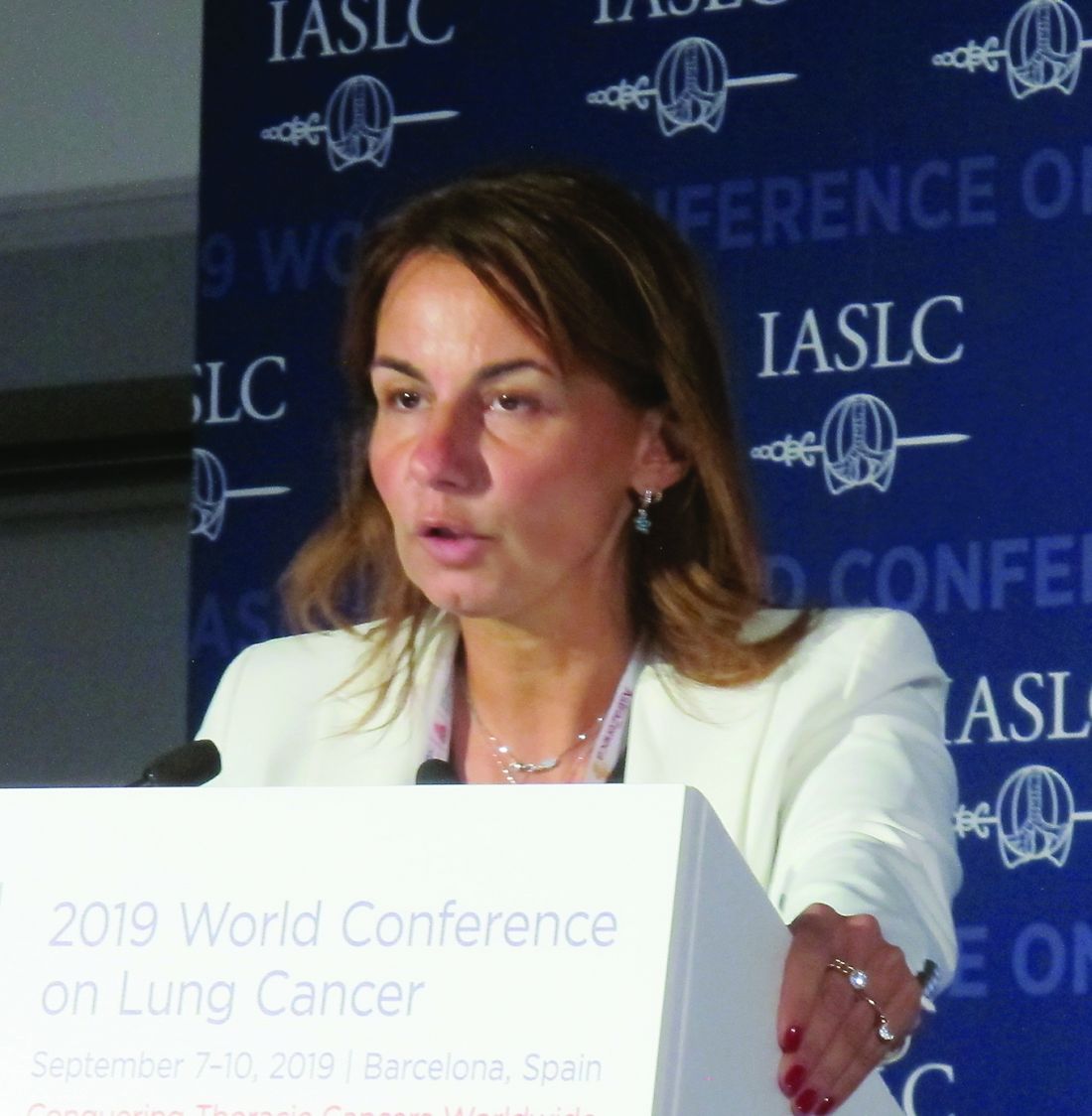
In 293 patients with evaluable TMB data in KEYNOTE-189, including 207 who were treated with pembrolizumab plus chemotherapy and 86 who received placebo plus chemotherapy, TMB as a continuous variable showed no significant association with either overall survival (OS), progression-free survival (PFS), or objective response rate (ORR), Marina C. Garassino, MD, of Fondazione IRCCS Istituto Nazionale dei Tumori, Milan, reported at the World Conference on Lung Cancer.
Pembrolizumab plus chemotherapy improved OS both in patients with TMB of 175 mutations/exome and greater and in those with TMB of fewer than 175 mutations/exome (hazard ratio for OS, 0.64 for both), and similar results were seen for PFS and ORR, Dr. Garassino said at the conference, which is sponsored by the International Association for the Study of Lung Cancer. Similar results were also seen for those with tissue TMB of 150 mutations/exome or greater and those with fewer than 150 mutations/exome, she noted.
The double-blind KEYNOTE-189 study compared first-line pembrolizumab plus chemotherapy with placebo plus chemotherapy in 616 patients who were randomized 2:1 to the treatment arms, respectively, and showed that adding pembrolizumab to pemetrexed and platinum significantly improved OS (HR, 0.49), PFS (HR, 0.52), and ORR (47.6% vs. 18.9%). Benefit was observed in all analyzed subgroups, including patients with programmed death-ligand 1 (PD-L1) Tissue Polypeptide-specific (TPS) antigen of less than 1%, 1-49%, and 50% or greater, she noted.
In the current analysis, performed to assess the effect of tissue TMB on response rates, a similar benefit was seen in both TMB-high and -low subgroups.
“Our data suggest that tissue TMB may not help select patients who would have better outcomes with pembrolizumab plus pemetrexed and a platinum given as first-line therapy for metastatic nonsquamous NSCLC,” she concluded.
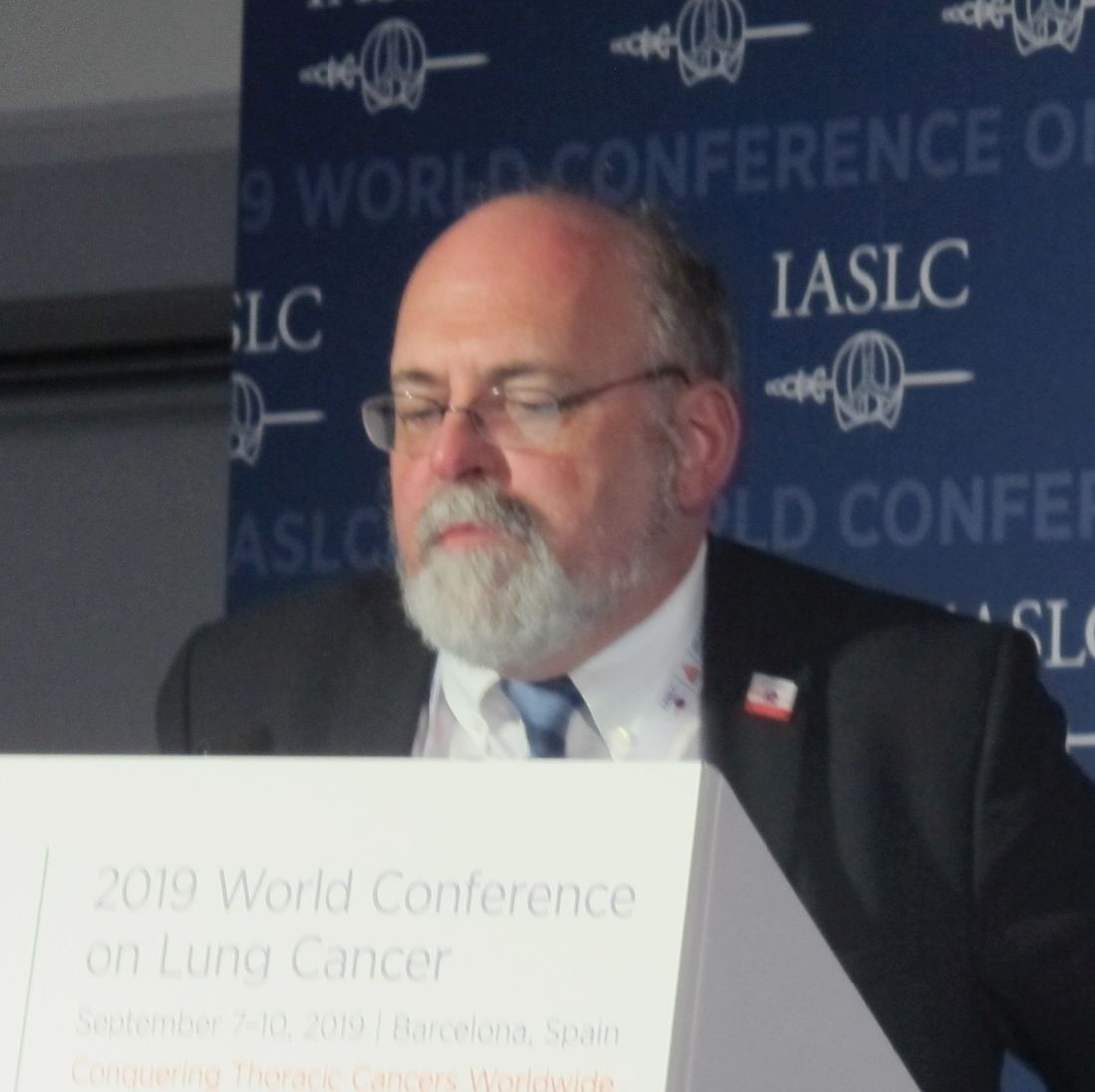
Similarly, an exploratory analysis of data from the open-label, phase 2 KEYNOTE-021 trial – the first trial to show the efficacy and safety of the anti–PD-1 immune checkpoint inhibitor pembrolizumab given with chemotherapy – showed no association between tissue TMB and OS, PFS, or ORR in 70 patients with metastatic nonsquamous NSCLC who were treated with either pembrolizumab plus carboplatin and pemetrexed or with carboplatin and pemetrexed alone, Corey Langer, MD, reported at the conference.
“As you’re well aware,TMB has been widely evaluated as a biomarker for immunotherapy in advanced [NSCLC] and may identify patients who are more likely to respond to immune checkpoint inhibitors,” said Dr. Langer, professor of medicine and director of thoracic surgery at the Hospital of the University of Pennsylvania, Philadelphia. “But we have very limited data on whether TMB is of any value as a biomarker for chemo, either alone or given with an immune checkpoint inhibitor.”
In this analysis, pembrolizumab plus chemotherapy was associated with a high response rate, regardless of tissue TMB status; in those with tissue TMB of 175 mutations/exome or greater and fewer than 175 mutations/exome, the response rates were 71% and 61%, respectively.
“So, tissue TMB assessed by whole-exome sequencing was not significantly associated with efficacy for pembro and combination pem-carbo, or for chemotherapy alone, for first-line treatment of patients with metastatic nonsquamous [NSCLC], nor was there any significant association with PD-L1 expression,” he said. “Obviously an analysis of much larger datasets is needed to assess whether the benefit of pembro plus chemo relative to chemo alone differs in patients with TMB-high or TMB-low tumors,” he said.
For now, tissue TMB should not be used – “at least not yet” – in therapeutic decision making, he said, adding that it is important to distinguish between blood TMB and tissue TMB because the latter “may be more reflective of the entire tumor.”
Dr. Langer noted that he still thinks TMB has a potential role.
“We just haven’t figured it out yet,” he said.
Both KEYNOTE-189 and KEYNOTE-021 were supported by Merck. Dr. Garassino and Dr. Langer reported relationships with several pharmaceutical companies.
SOURCES: Garassino MC et al. WCLC 2019, Abstract OA04.06; Langer C et al. WCLC 2019, Abstract OA04.05.
.
BARCELONA – Tissue tumor mutational burden (TMB) was not significantly associated with treatment efficacy in patients with metastatic nonsquamous non–small cell lung cancer (NSCLC) in the phase 3 KEYNOTE-189 study and the phase 2 KEYNOTE-021 study.
In 293 patients with evaluable TMB data in KEYNOTE-189, including 207 who were treated with pembrolizumab plus chemotherapy and 86 who received placebo plus chemotherapy, TMB as a continuous variable showed no significant association with either overall survival (OS), progression-free survival (PFS), or objective response rate (ORR), Marina C. Garassino, MD, of Fondazione IRCCS Istituto Nazionale dei Tumori, Milan, reported at the World Conference on Lung Cancer.
Pembrolizumab plus chemotherapy improved OS both in patients with TMB of 175 mutations/exome and greater and in those with TMB of fewer than 175 mutations/exome (hazard ratio for OS, 0.64 for both), and similar results were seen for PFS and ORR, Dr. Garassino said at the conference, which is sponsored by the International Association for the Study of Lung Cancer. Similar results were also seen for those with tissue TMB of 150 mutations/exome or greater and those with fewer than 150 mutations/exome, she noted.
The double-blind KEYNOTE-189 study compared first-line pembrolizumab plus chemotherapy with placebo plus chemotherapy in 616 patients who were randomized 2:1 to the treatment arms, respectively, and showed that adding pembrolizumab to pemetrexed and platinum significantly improved OS (HR, 0.49), PFS (HR, 0.52), and ORR (47.6% vs. 18.9%). Benefit was observed in all analyzed subgroups, including patients with programmed death-ligand 1 (PD-L1) Tissue Polypeptide-specific (TPS) antigen of less than 1%, 1-49%, and 50% or greater, she noted.
In the current analysis, performed to assess the effect of tissue TMB on response rates, a similar benefit was seen in both TMB-high and -low subgroups.
“Our data suggest that tissue TMB may not help select patients who would have better outcomes with pembrolizumab plus pemetrexed and a platinum given as first-line therapy for metastatic nonsquamous NSCLC,” she concluded.
Similarly, an exploratory analysis of data from the open-label, phase 2 KEYNOTE-021 trial – the first trial to show the efficacy and safety of the anti–PD-1 immune checkpoint inhibitor pembrolizumab given with chemotherapy – showed no association between tissue TMB and OS, PFS, or ORR in 70 patients with metastatic nonsquamous NSCLC who were treated with either pembrolizumab plus carboplatin and pemetrexed or with carboplatin and pemetrexed alone, Corey Langer, MD, reported at the conference.
“As you’re well aware,TMB has been widely evaluated as a biomarker for immunotherapy in advanced [NSCLC] and may identify patients who are more likely to respond to immune checkpoint inhibitors,” said Dr. Langer, professor of medicine and director of thoracic surgery at the Hospital of the University of Pennsylvania, Philadelphia. “But we have very limited data on whether TMB is of any value as a biomarker for chemo, either alone or given with an immune checkpoint inhibitor.”
In this analysis, pembrolizumab plus chemotherapy was associated with a high response rate, regardless of tissue TMB status; in those with tissue TMB of 175 mutations/exome or greater and fewer than 175 mutations/exome, the response rates were 71% and 61%, respectively.
“So, tissue TMB assessed by whole-exome sequencing was not significantly associated with efficacy for pembro and combination pem-carbo, or for chemotherapy alone, for first-line treatment of patients with metastatic nonsquamous [NSCLC], nor was there any significant association with PD-L1 expression,” he said. “Obviously an analysis of much larger datasets is needed to assess whether the benefit of pembro plus chemo relative to chemo alone differs in patients with TMB-high or TMB-low tumors,” he said.
For now, tissue TMB should not be used – “at least not yet” – in therapeutic decision making, he said, adding that it is important to distinguish between blood TMB and tissue TMB because the latter “may be more reflective of the entire tumor.”
Dr. Langer noted that he still thinks TMB has a potential role.
“We just haven’t figured it out yet,” he said.
Both KEYNOTE-189 and KEYNOTE-021 were supported by Merck. Dr. Garassino and Dr. Langer reported relationships with several pharmaceutical companies.
SOURCES: Garassino MC et al. WCLC 2019, Abstract OA04.06; Langer C et al. WCLC 2019, Abstract OA04.05.
.
BARCELONA – Tissue tumor mutational burden (TMB) was not significantly associated with treatment efficacy in patients with metastatic nonsquamous non–small cell lung cancer (NSCLC) in the phase 3 KEYNOTE-189 study and the phase 2 KEYNOTE-021 study.
In 293 patients with evaluable TMB data in KEYNOTE-189, including 207 who were treated with pembrolizumab plus chemotherapy and 86 who received placebo plus chemotherapy, TMB as a continuous variable showed no significant association with either overall survival (OS), progression-free survival (PFS), or objective response rate (ORR), Marina C. Garassino, MD, of Fondazione IRCCS Istituto Nazionale dei Tumori, Milan, reported at the World Conference on Lung Cancer.
Pembrolizumab plus chemotherapy improved OS both in patients with TMB of 175 mutations/exome and greater and in those with TMB of fewer than 175 mutations/exome (hazard ratio for OS, 0.64 for both), and similar results were seen for PFS and ORR, Dr. Garassino said at the conference, which is sponsored by the International Association for the Study of Lung Cancer. Similar results were also seen for those with tissue TMB of 150 mutations/exome or greater and those with fewer than 150 mutations/exome, she noted.
The double-blind KEYNOTE-189 study compared first-line pembrolizumab plus chemotherapy with placebo plus chemotherapy in 616 patients who were randomized 2:1 to the treatment arms, respectively, and showed that adding pembrolizumab to pemetrexed and platinum significantly improved OS (HR, 0.49), PFS (HR, 0.52), and ORR (47.6% vs. 18.9%). Benefit was observed in all analyzed subgroups, including patients with programmed death-ligand 1 (PD-L1) Tissue Polypeptide-specific (TPS) antigen of less than 1%, 1-49%, and 50% or greater, she noted.
In the current analysis, performed to assess the effect of tissue TMB on response rates, a similar benefit was seen in both TMB-high and -low subgroups.
“Our data suggest that tissue TMB may not help select patients who would have better outcomes with pembrolizumab plus pemetrexed and a platinum given as first-line therapy for metastatic nonsquamous NSCLC,” she concluded.
Similarly, an exploratory analysis of data from the open-label, phase 2 KEYNOTE-021 trial – the first trial to show the efficacy and safety of the anti–PD-1 immune checkpoint inhibitor pembrolizumab given with chemotherapy – showed no association between tissue TMB and OS, PFS, or ORR in 70 patients with metastatic nonsquamous NSCLC who were treated with either pembrolizumab plus carboplatin and pemetrexed or with carboplatin and pemetrexed alone, Corey Langer, MD, reported at the conference.
“As you’re well aware,TMB has been widely evaluated as a biomarker for immunotherapy in advanced [NSCLC] and may identify patients who are more likely to respond to immune checkpoint inhibitors,” said Dr. Langer, professor of medicine and director of thoracic surgery at the Hospital of the University of Pennsylvania, Philadelphia. “But we have very limited data on whether TMB is of any value as a biomarker for chemo, either alone or given with an immune checkpoint inhibitor.”
In this analysis, pembrolizumab plus chemotherapy was associated with a high response rate, regardless of tissue TMB status; in those with tissue TMB of 175 mutations/exome or greater and fewer than 175 mutations/exome, the response rates were 71% and 61%, respectively.
“So, tissue TMB assessed by whole-exome sequencing was not significantly associated with efficacy for pembro and combination pem-carbo, or for chemotherapy alone, for first-line treatment of patients with metastatic nonsquamous [NSCLC], nor was there any significant association with PD-L1 expression,” he said. “Obviously an analysis of much larger datasets is needed to assess whether the benefit of pembro plus chemo relative to chemo alone differs in patients with TMB-high or TMB-low tumors,” he said.
For now, tissue TMB should not be used – “at least not yet” – in therapeutic decision making, he said, adding that it is important to distinguish between blood TMB and tissue TMB because the latter “may be more reflective of the entire tumor.”
Dr. Langer noted that he still thinks TMB has a potential role.
“We just haven’t figured it out yet,” he said.
Both KEYNOTE-189 and KEYNOTE-021 were supported by Merck. Dr. Garassino and Dr. Langer reported relationships with several pharmaceutical companies.
SOURCES: Garassino MC et al. WCLC 2019, Abstract OA04.06; Langer C et al. WCLC 2019, Abstract OA04.05.
.
REPORTING FROM WCLC 2019
Metformin-TKI combo improves PFS in EGFR-mutated lung cancer
Combination metformin and epidermal growth factor receptor–tyrosine kinase inhibitor (EGFR-TKI) therapy improved progression-free survival in patients with EGFR-mutated lung adenocarcinoma, according to results from a phase 2 trial.
“This is the first study to prospectively show that the addition of metformin to standard EGFR-TKIs therapy in patients with advanced lung adenocarcinoma significantly improves PFS [progression-free survival],” wrote Oscar Arrieta, MD, of the Instituto Nacional de Cancerología, Mexico, and colleagues in JAMA Oncology.
The open-label, randomized study included 139 patients, 69 of whom were randomly assigned to receive metformin plus EGFR-TKI therapy and 70 of whom received EGFR-TKI monotherapy.
EGFR-TKI therapy was selected based on physician choice and consisted of either afatinib dimaleate, gefitinib, or erlotinib hydrochloride at regular doses. Study patients in the combination arm received metformin 500 mg twice daily.
The primary endpoint was PFS (intent-to-treat population). Secondary endpoints included overall survival (OS), objective response rate, and safety.
After analysis, the researchers found that the median PFS was 13.1 months with metformin-EGFR-TKI combination therapy and 9.9 months with EGFR-TKI monotherapy (hazard ratio, 0.60; P = .03).
In addition, the median OS was also significantly prolonged for patients receiving combined treatment (31.7 months vs. 17.5 months; P = .02).
“Multivariable analysis showed that treatment with metformin is independently associated with longer PFS and OS,” the researchers wrote.
With respect to safety, no significant rise in adverse events was observed, and toxicities were comparable across both treatment groups.
The researchers acknowledged that a key limitation of the study was the absence of a double-blinded design. As a result, various biases could have influenced the results.
“The results from this phase 2 study warrant the design of a larger, phase 3, placebo-controlled study to draw more robust conclusions,” they said.
The study was funded by the National Council for Science and Technology in Mexico. The authors reported financial affiliations with AbbVie, AstraZeneca, Boehringer Ingelheim, Lilly, Bristol-Myers Squibb, Merck, Pfizer, Roche, and several others.
SOURCE: Arrieta O et al. JAMA Oncol. 2019 Sep 5. doi: 10.1001/jamaoncol.2019.2553.
Combination metformin and epidermal growth factor receptor–tyrosine kinase inhibitor (EGFR-TKI) therapy improved progression-free survival in patients with EGFR-mutated lung adenocarcinoma, according to results from a phase 2 trial.
“This is the first study to prospectively show that the addition of metformin to standard EGFR-TKIs therapy in patients with advanced lung adenocarcinoma significantly improves PFS [progression-free survival],” wrote Oscar Arrieta, MD, of the Instituto Nacional de Cancerología, Mexico, and colleagues in JAMA Oncology.
The open-label, randomized study included 139 patients, 69 of whom were randomly assigned to receive metformin plus EGFR-TKI therapy and 70 of whom received EGFR-TKI monotherapy.
EGFR-TKI therapy was selected based on physician choice and consisted of either afatinib dimaleate, gefitinib, or erlotinib hydrochloride at regular doses. Study patients in the combination arm received metformin 500 mg twice daily.
The primary endpoint was PFS (intent-to-treat population). Secondary endpoints included overall survival (OS), objective response rate, and safety.
After analysis, the researchers found that the median PFS was 13.1 months with metformin-EGFR-TKI combination therapy and 9.9 months with EGFR-TKI monotherapy (hazard ratio, 0.60; P = .03).
In addition, the median OS was also significantly prolonged for patients receiving combined treatment (31.7 months vs. 17.5 months; P = .02).
“Multivariable analysis showed that treatment with metformin is independently associated with longer PFS and OS,” the researchers wrote.
With respect to safety, no significant rise in adverse events was observed, and toxicities were comparable across both treatment groups.
The researchers acknowledged that a key limitation of the study was the absence of a double-blinded design. As a result, various biases could have influenced the results.
“The results from this phase 2 study warrant the design of a larger, phase 3, placebo-controlled study to draw more robust conclusions,” they said.
The study was funded by the National Council for Science and Technology in Mexico. The authors reported financial affiliations with AbbVie, AstraZeneca, Boehringer Ingelheim, Lilly, Bristol-Myers Squibb, Merck, Pfizer, Roche, and several others.
SOURCE: Arrieta O et al. JAMA Oncol. 2019 Sep 5. doi: 10.1001/jamaoncol.2019.2553.
Combination metformin and epidermal growth factor receptor–tyrosine kinase inhibitor (EGFR-TKI) therapy improved progression-free survival in patients with EGFR-mutated lung adenocarcinoma, according to results from a phase 2 trial.
“This is the first study to prospectively show that the addition of metformin to standard EGFR-TKIs therapy in patients with advanced lung adenocarcinoma significantly improves PFS [progression-free survival],” wrote Oscar Arrieta, MD, of the Instituto Nacional de Cancerología, Mexico, and colleagues in JAMA Oncology.
The open-label, randomized study included 139 patients, 69 of whom were randomly assigned to receive metformin plus EGFR-TKI therapy and 70 of whom received EGFR-TKI monotherapy.
EGFR-TKI therapy was selected based on physician choice and consisted of either afatinib dimaleate, gefitinib, or erlotinib hydrochloride at regular doses. Study patients in the combination arm received metformin 500 mg twice daily.
The primary endpoint was PFS (intent-to-treat population). Secondary endpoints included overall survival (OS), objective response rate, and safety.
After analysis, the researchers found that the median PFS was 13.1 months with metformin-EGFR-TKI combination therapy and 9.9 months with EGFR-TKI monotherapy (hazard ratio, 0.60; P = .03).
In addition, the median OS was also significantly prolonged for patients receiving combined treatment (31.7 months vs. 17.5 months; P = .02).
“Multivariable analysis showed that treatment with metformin is independently associated with longer PFS and OS,” the researchers wrote.
With respect to safety, no significant rise in adverse events was observed, and toxicities were comparable across both treatment groups.
The researchers acknowledged that a key limitation of the study was the absence of a double-blinded design. As a result, various biases could have influenced the results.
“The results from this phase 2 study warrant the design of a larger, phase 3, placebo-controlled study to draw more robust conclusions,” they said.
The study was funded by the National Council for Science and Technology in Mexico. The authors reported financial affiliations with AbbVie, AstraZeneca, Boehringer Ingelheim, Lilly, Bristol-Myers Squibb, Merck, Pfizer, Roche, and several others.
SOURCE: Arrieta O et al. JAMA Oncol. 2019 Sep 5. doi: 10.1001/jamaoncol.2019.2553.
FROM JAMA ONCOLOGY
Mediastinal Staging for SBRT in Early NSCLC: Should it be Stratified by Tumor Size and Location?
Background: Stereotactic body radiotherapy (SBRT) is standard treatment for inoperable early-stage nonsmall cell lung cancer (NSCLC) . American College of Chest Physicians (ACCP) favors non-invasive mediastinal staging for peripheral Stage IA tumors for surgical patients. However, mediastinal staging guidelines for SBRT are still elusive and benefit of endobronchial ultrasound guided transbronchial needle biopsy (EBUS/ TBNA) in addition to positron emission tomographycomputed tomography (PET/CT) remains undefined for small peripheral NSCLC.
Purppose: To evaluate our SBRT- EBUS program by comparing survival and patterns of failure in SBRT patients staged with PET/CT and EBUS/TBNA vs. PET/ CT only for < 4cm peripheral NSCLC.
Methods: Patients with early NSCLC treated with Cyberknife (CK) from October 2010 to December 2016 were queried. Those treated definitively for single, < 4cm peripheral tumors were included. Local, regional, distant recurrences and survival outcomes were compared between patients staged with PET/CT and EBUS/TBNA vs. PET/CT only, using competing risk analysis.
Results: One hundred and fifty nine patients were treated during the study period. Mediastinum was staged using PET/CT only till 2013. Ninety one patients (mean age 69 years [64-78 years]; 99 [99%] males) had peripheral single tumors of < 4 cm2. Seventy two were staged with EBUS/TBNA and PET/CT( group I) and 19 with PET/CT only (group II). Patient ,tumor and treatment characteristics, except race, were not different. At median follow-up of 5.39 years, group I vs. group II pattern of recurrence was ;any recurrence 36.1%vs.36.1%, P=0.95; local recurrence 13.9%vs.21.1%, P=0.48; regional recurrence 13.9% vs.21.1%, P=0.48; distant recurrence 25% vs.15.8%, P=0.55 respectively .Median OS for group I and group II was 2.95 years (2.37-3.80 years, 95%CI ) and 4 years (2.01-7.08 years 95%CI); P=0.54 respectively.
Conclusion: Survival outcomes and pattern of failure were not different based on type of mediastinal staging. EBUS/TBNA use can be safely stratified based on tumor location and size in this population. Therefore, for patients with single, < 4 cm2, peripheral NSCLC, non-invasive mediastinal staging with PET/CT may suffice for definitive SBRT. Future prospective studies are needed to validate our findings.
Background: Stereotactic body radiotherapy (SBRT) is standard treatment for inoperable early-stage nonsmall cell lung cancer (NSCLC) . American College of Chest Physicians (ACCP) favors non-invasive mediastinal staging for peripheral Stage IA tumors for surgical patients. However, mediastinal staging guidelines for SBRT are still elusive and benefit of endobronchial ultrasound guided transbronchial needle biopsy (EBUS/ TBNA) in addition to positron emission tomographycomputed tomography (PET/CT) remains undefined for small peripheral NSCLC.
Purppose: To evaluate our SBRT- EBUS program by comparing survival and patterns of failure in SBRT patients staged with PET/CT and EBUS/TBNA vs. PET/ CT only for < 4cm peripheral NSCLC.
Methods: Patients with early NSCLC treated with Cyberknife (CK) from October 2010 to December 2016 were queried. Those treated definitively for single, < 4cm peripheral tumors were included. Local, regional, distant recurrences and survival outcomes were compared between patients staged with PET/CT and EBUS/TBNA vs. PET/CT only, using competing risk analysis.
Results: One hundred and fifty nine patients were treated during the study period. Mediastinum was staged using PET/CT only till 2013. Ninety one patients (mean age 69 years [64-78 years]; 99 [99%] males) had peripheral single tumors of < 4 cm2. Seventy two were staged with EBUS/TBNA and PET/CT( group I) and 19 with PET/CT only (group II). Patient ,tumor and treatment characteristics, except race, were not different. At median follow-up of 5.39 years, group I vs. group II pattern of recurrence was ;any recurrence 36.1%vs.36.1%, P=0.95; local recurrence 13.9%vs.21.1%, P=0.48; regional recurrence 13.9% vs.21.1%, P=0.48; distant recurrence 25% vs.15.8%, P=0.55 respectively .Median OS for group I and group II was 2.95 years (2.37-3.80 years, 95%CI ) and 4 years (2.01-7.08 years 95%CI); P=0.54 respectively.
Conclusion: Survival outcomes and pattern of failure were not different based on type of mediastinal staging. EBUS/TBNA use can be safely stratified based on tumor location and size in this population. Therefore, for patients with single, < 4 cm2, peripheral NSCLC, non-invasive mediastinal staging with PET/CT may suffice for definitive SBRT. Future prospective studies are needed to validate our findings.
Background: Stereotactic body radiotherapy (SBRT) is standard treatment for inoperable early-stage nonsmall cell lung cancer (NSCLC) . American College of Chest Physicians (ACCP) favors non-invasive mediastinal staging for peripheral Stage IA tumors for surgical patients. However, mediastinal staging guidelines for SBRT are still elusive and benefit of endobronchial ultrasound guided transbronchial needle biopsy (EBUS/ TBNA) in addition to positron emission tomographycomputed tomography (PET/CT) remains undefined for small peripheral NSCLC.
Purppose: To evaluate our SBRT- EBUS program by comparing survival and patterns of failure in SBRT patients staged with PET/CT and EBUS/TBNA vs. PET/ CT only for < 4cm peripheral NSCLC.
Methods: Patients with early NSCLC treated with Cyberknife (CK) from October 2010 to December 2016 were queried. Those treated definitively for single, < 4cm peripheral tumors were included. Local, regional, distant recurrences and survival outcomes were compared between patients staged with PET/CT and EBUS/TBNA vs. PET/CT only, using competing risk analysis.
Results: One hundred and fifty nine patients were treated during the study period. Mediastinum was staged using PET/CT only till 2013. Ninety one patients (mean age 69 years [64-78 years]; 99 [99%] males) had peripheral single tumors of < 4 cm2. Seventy two were staged with EBUS/TBNA and PET/CT( group I) and 19 with PET/CT only (group II). Patient ,tumor and treatment characteristics, except race, were not different. At median follow-up of 5.39 years, group I vs. group II pattern of recurrence was ;any recurrence 36.1%vs.36.1%, P=0.95; local recurrence 13.9%vs.21.1%, P=0.48; regional recurrence 13.9% vs.21.1%, P=0.48; distant recurrence 25% vs.15.8%, P=0.55 respectively .Median OS for group I and group II was 2.95 years (2.37-3.80 years, 95%CI ) and 4 years (2.01-7.08 years 95%CI); P=0.54 respectively.
Conclusion: Survival outcomes and pattern of failure were not different based on type of mediastinal staging. EBUS/TBNA use can be safely stratified based on tumor location and size in this population. Therefore, for patients with single, < 4 cm2, peripheral NSCLC, non-invasive mediastinal staging with PET/CT may suffice for definitive SBRT. Future prospective studies are needed to validate our findings.
LDCT plus miRNA bolsters prevention efforts
BARCELONA – Adding a blood microRNA (miRNA) assay to low-dose computed tomography (LDCT)–based lung cancer screening in heavy smokers bolsters lung cancer prevention efforts, according to findings from the prospective bioMILD trial.
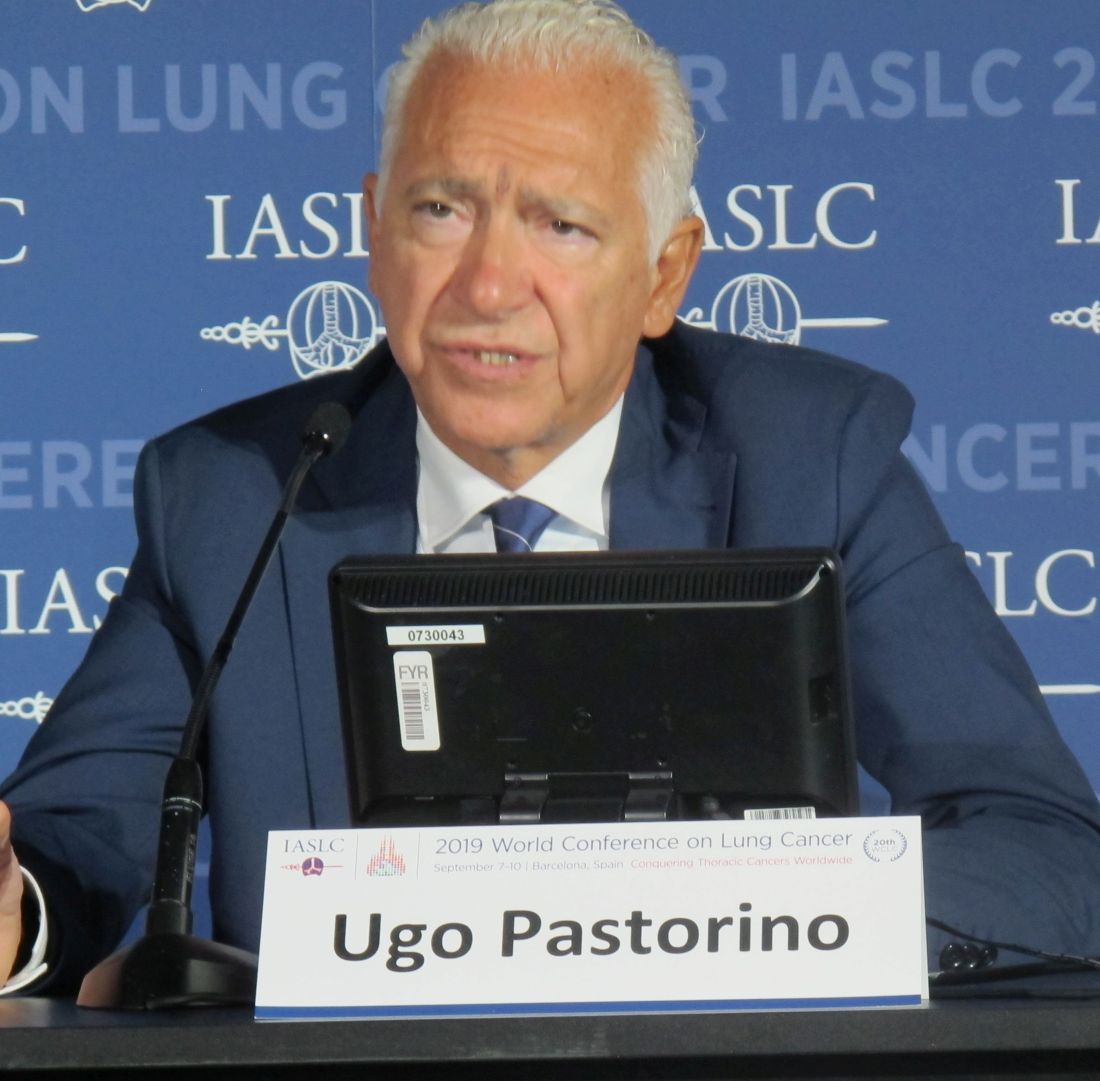
Specifically, the addition of the miRNA assay appears to reduce unnecessary repeat LDCT scans based on individual risk profiles without adversely affecting lung cancer detection or mortality, Ugo Pastorino, MD, director of thoracic surgery at the Istituto Nazionale dei Tumori Foundation, Milan, reported at the World Conference on Lung Cancer.
Of 4,119 volunteers with a median age of 60 years and a median of 42 pack-years who were enrolled between January 2013 and March 2016, 2,384 (58%) were assigned a 3-year LDCT repeat according to their double-negative baseline LDCT and miRNA profile, whereas 1,526 (37%) with a single-positive screen (either a positive miRNA or indeterminate/positive LDCT) and 209 (5%) with double positive (both a positive miRNA and indeterminate/positive LDCT) were assigned to annual or shorter LDCT repeat.
After four screening runs, a total of 115 lung cancers were diagnosed. The cumulative lung cancer rates “were enormously different” in the 3 groups, despite similar group composition with respect to age, gender, and tobacco consumption (0.6% for double-negative screening, 3.8% for single-positive screening, and 20.1% for double-positive screening), and lung cancer mortality was 0.1%, 0.6%, and 3.8% in the groups, respectively, Dr. Pastorino said at the conference, which is sponsored by the International Association for the Study of Lung Cancer.
However, no significant differences were seen in the proportion of stage I lung cancers, resection rates, or interval cancer incidence in subjects sent to 3-year LDCT repeat, he noted.
The bioMILD trial was designed in the wake of the National Lung Screening Trial (NLST), which showed that three annual LDCT rounds for lung cancer screening reduced lung cancer mortality, and the Multicentric Italian Lung Detection (MILD) trial, which provided additional evidence that intervention beyond 5 years with annual or biennial rounds enhanced the benefit of screening.
Dr. Pastorino, the lead author on the MILD trial, previously reported that miRNA expression profiles in tumors and in normal lung tissue indicate aggressive lung cancer development and that specific miRNA signatures can be identified in plasma samples up to 2 years before spiral-CT detection of the disease.
The bioMILD trial tested the additional value of an miRNA assay at the time of LDCT.
Subjects were current (79%) or former heavy smokers, and 39% were women.
The findings suggest that adding the miRNA assay to LDCT for lung cancer screening is a “valuable and safe tool to assess individual risk profile and reduce unnecessary LDCT repeats in lung cancer screening,” Dr. Pastorino said.
“But what is more important for us [is that] the knowledge of individual biologic risk can improve the efficacy of screening, but can [also] guide prevention strategies because the problem in a heavy smoker is not to just detect lung cancer, it’s to reduce mortality,” he said at a press conference highlighting the findings. “And so, personalized prevention is a real option now, and that means diagnosis, but also preventive measures [such as] smoking cessation and chemoprevention.”
Invited discussant Harry J. de Koning, MD, PhD, professor of public health and screening evaluation at Erasmus Medical Center, Rotterdam, the Netherlands, noted that no other studies have evaluated screening intervals longer than 2 years, but he agreed that “reducing regular follow-up scans based on additional risk information is a way forward.”
However, the approach would increase costs, he said, adding that large, prospective, randomized, controlled trials are needed to confirm the safety of such approaches in nationwide programs.
Dr. Pastorino and Dr. de Koning each reported having no disclosures.
SOURCE: Pastorino U et al. WCLC 2019, Abstract PL02.04
BARCELONA – Adding a blood microRNA (miRNA) assay to low-dose computed tomography (LDCT)–based lung cancer screening in heavy smokers bolsters lung cancer prevention efforts, according to findings from the prospective bioMILD trial.
Specifically, the addition of the miRNA assay appears to reduce unnecessary repeat LDCT scans based on individual risk profiles without adversely affecting lung cancer detection or mortality, Ugo Pastorino, MD, director of thoracic surgery at the Istituto Nazionale dei Tumori Foundation, Milan, reported at the World Conference on Lung Cancer.
Of 4,119 volunteers with a median age of 60 years and a median of 42 pack-years who were enrolled between January 2013 and March 2016, 2,384 (58%) were assigned a 3-year LDCT repeat according to their double-negative baseline LDCT and miRNA profile, whereas 1,526 (37%) with a single-positive screen (either a positive miRNA or indeterminate/positive LDCT) and 209 (5%) with double positive (both a positive miRNA and indeterminate/positive LDCT) were assigned to annual or shorter LDCT repeat.
After four screening runs, a total of 115 lung cancers were diagnosed. The cumulative lung cancer rates “were enormously different” in the 3 groups, despite similar group composition with respect to age, gender, and tobacco consumption (0.6% for double-negative screening, 3.8% for single-positive screening, and 20.1% for double-positive screening), and lung cancer mortality was 0.1%, 0.6%, and 3.8% in the groups, respectively, Dr. Pastorino said at the conference, which is sponsored by the International Association for the Study of Lung Cancer.
However, no significant differences were seen in the proportion of stage I lung cancers, resection rates, or interval cancer incidence in subjects sent to 3-year LDCT repeat, he noted.
The bioMILD trial was designed in the wake of the National Lung Screening Trial (NLST), which showed that three annual LDCT rounds for lung cancer screening reduced lung cancer mortality, and the Multicentric Italian Lung Detection (MILD) trial, which provided additional evidence that intervention beyond 5 years with annual or biennial rounds enhanced the benefit of screening.
Dr. Pastorino, the lead author on the MILD trial, previously reported that miRNA expression profiles in tumors and in normal lung tissue indicate aggressive lung cancer development and that specific miRNA signatures can be identified in plasma samples up to 2 years before spiral-CT detection of the disease.
The bioMILD trial tested the additional value of an miRNA assay at the time of LDCT.
Subjects were current (79%) or former heavy smokers, and 39% were women.
The findings suggest that adding the miRNA assay to LDCT for lung cancer screening is a “valuable and safe tool to assess individual risk profile and reduce unnecessary LDCT repeats in lung cancer screening,” Dr. Pastorino said.
“But what is more important for us [is that] the knowledge of individual biologic risk can improve the efficacy of screening, but can [also] guide prevention strategies because the problem in a heavy smoker is not to just detect lung cancer, it’s to reduce mortality,” he said at a press conference highlighting the findings. “And so, personalized prevention is a real option now, and that means diagnosis, but also preventive measures [such as] smoking cessation and chemoprevention.”
Invited discussant Harry J. de Koning, MD, PhD, professor of public health and screening evaluation at Erasmus Medical Center, Rotterdam, the Netherlands, noted that no other studies have evaluated screening intervals longer than 2 years, but he agreed that “reducing regular follow-up scans based on additional risk information is a way forward.”
However, the approach would increase costs, he said, adding that large, prospective, randomized, controlled trials are needed to confirm the safety of such approaches in nationwide programs.
Dr. Pastorino and Dr. de Koning each reported having no disclosures.
SOURCE: Pastorino U et al. WCLC 2019, Abstract PL02.04
BARCELONA – Adding a blood microRNA (miRNA) assay to low-dose computed tomography (LDCT)–based lung cancer screening in heavy smokers bolsters lung cancer prevention efforts, according to findings from the prospective bioMILD trial.
Specifically, the addition of the miRNA assay appears to reduce unnecessary repeat LDCT scans based on individual risk profiles without adversely affecting lung cancer detection or mortality, Ugo Pastorino, MD, director of thoracic surgery at the Istituto Nazionale dei Tumori Foundation, Milan, reported at the World Conference on Lung Cancer.
Of 4,119 volunteers with a median age of 60 years and a median of 42 pack-years who were enrolled between January 2013 and March 2016, 2,384 (58%) were assigned a 3-year LDCT repeat according to their double-negative baseline LDCT and miRNA profile, whereas 1,526 (37%) with a single-positive screen (either a positive miRNA or indeterminate/positive LDCT) and 209 (5%) with double positive (both a positive miRNA and indeterminate/positive LDCT) were assigned to annual or shorter LDCT repeat.
After four screening runs, a total of 115 lung cancers were diagnosed. The cumulative lung cancer rates “were enormously different” in the 3 groups, despite similar group composition with respect to age, gender, and tobacco consumption (0.6% for double-negative screening, 3.8% for single-positive screening, and 20.1% for double-positive screening), and lung cancer mortality was 0.1%, 0.6%, and 3.8% in the groups, respectively, Dr. Pastorino said at the conference, which is sponsored by the International Association for the Study of Lung Cancer.
However, no significant differences were seen in the proportion of stage I lung cancers, resection rates, or interval cancer incidence in subjects sent to 3-year LDCT repeat, he noted.
The bioMILD trial was designed in the wake of the National Lung Screening Trial (NLST), which showed that three annual LDCT rounds for lung cancer screening reduced lung cancer mortality, and the Multicentric Italian Lung Detection (MILD) trial, which provided additional evidence that intervention beyond 5 years with annual or biennial rounds enhanced the benefit of screening.
Dr. Pastorino, the lead author on the MILD trial, previously reported that miRNA expression profiles in tumors and in normal lung tissue indicate aggressive lung cancer development and that specific miRNA signatures can be identified in plasma samples up to 2 years before spiral-CT detection of the disease.
The bioMILD trial tested the additional value of an miRNA assay at the time of LDCT.
Subjects were current (79%) or former heavy smokers, and 39% were women.
The findings suggest that adding the miRNA assay to LDCT for lung cancer screening is a “valuable and safe tool to assess individual risk profile and reduce unnecessary LDCT repeats in lung cancer screening,” Dr. Pastorino said.
“But what is more important for us [is that] the knowledge of individual biologic risk can improve the efficacy of screening, but can [also] guide prevention strategies because the problem in a heavy smoker is not to just detect lung cancer, it’s to reduce mortality,” he said at a press conference highlighting the findings. “And so, personalized prevention is a real option now, and that means diagnosis, but also preventive measures [such as] smoking cessation and chemoprevention.”
Invited discussant Harry J. de Koning, MD, PhD, professor of public health and screening evaluation at Erasmus Medical Center, Rotterdam, the Netherlands, noted that no other studies have evaluated screening intervals longer than 2 years, but he agreed that “reducing regular follow-up scans based on additional risk information is a way forward.”
However, the approach would increase costs, he said, adding that large, prospective, randomized, controlled trials are needed to confirm the safety of such approaches in nationwide programs.
Dr. Pastorino and Dr. de Koning each reported having no disclosures.
SOURCE: Pastorino U et al. WCLC 2019, Abstract PL02.04
REPORTING FROM WCLC 2019
VHA-Wide Automated Assessment of EGFR Mutation Testing in Advanced Stage, Non-Squamous, Non-Small Cell Lung Cancer (nsNSCLC)
Purpose: To assess feasibility of implementing an automated method to identify patients who should have EGFR testing, and whether they have been tested, as a tool for quality improvement.
Background: Approximately 7% of veterans with metastatic, nsNSCLC have sensitizing mutation of EGFR, which predicts sensitivity to oral EGFR inhibitors. Prior studies have shown under testing for EGFR mutations in this population in VHA.
Methods: An endorsed quality measure (NQF and ASCO) for EGFR testing was utilized. Data to implement the measure were extracted from the cancer registry (ONC RAW), problem and encounter ICD codes, national oncology note template-generated health factors, laboratory test results, National Precision Oncology Program NGS testing, vital status, and pharmacy drug file to populate a SQL database. A dashboard in SharePoint allowed users to retrieve data based on national data access permissions. Descriptive statistics were used.
Results: The initial algorithm implementation was evaluated by comparison to manual review of patient records from one medical center. The second generation algorithm was then evaluated in the same manner at a second medical center (MC2). Among 117 cases identified during 2018, 68 (58%) were identified as having been tested and 49 (42%) not tested (31 living and 18 deceased patients). 48 of the non-tested samples were reviewed: 28 had not been tested, 14 had data documentation or coding problems (11 correctable by using the national note template), 1 correctable limitation of the national note template, and 5 limitations of the algorithm (all but 1 of which has been corrected). For stage 3 and stage VA-wide, there were 871 and 2832 cases, respectively, with documented testing rates of 26% and 36%, and a facility testing rate range of 0% to 100%.
Implications: The EGFR testing dashboard, in conjunction with appropriate structured documentation, has high accuracy of EGFR testing in patients with metastatic nsNSCLC. Current documented testing rates vary widely with a low system-wide rate, that can be improved through utilization of the dashboard.
Purpose: To assess feasibility of implementing an automated method to identify patients who should have EGFR testing, and whether they have been tested, as a tool for quality improvement.
Background: Approximately 7% of veterans with metastatic, nsNSCLC have sensitizing mutation of EGFR, which predicts sensitivity to oral EGFR inhibitors. Prior studies have shown under testing for EGFR mutations in this population in VHA.
Methods: An endorsed quality measure (NQF and ASCO) for EGFR testing was utilized. Data to implement the measure were extracted from the cancer registry (ONC RAW), problem and encounter ICD codes, national oncology note template-generated health factors, laboratory test results, National Precision Oncology Program NGS testing, vital status, and pharmacy drug file to populate a SQL database. A dashboard in SharePoint allowed users to retrieve data based on national data access permissions. Descriptive statistics were used.
Results: The initial algorithm implementation was evaluated by comparison to manual review of patient records from one medical center. The second generation algorithm was then evaluated in the same manner at a second medical center (MC2). Among 117 cases identified during 2018, 68 (58%) were identified as having been tested and 49 (42%) not tested (31 living and 18 deceased patients). 48 of the non-tested samples were reviewed: 28 had not been tested, 14 had data documentation or coding problems (11 correctable by using the national note template), 1 correctable limitation of the national note template, and 5 limitations of the algorithm (all but 1 of which has been corrected). For stage 3 and stage VA-wide, there were 871 and 2832 cases, respectively, with documented testing rates of 26% and 36%, and a facility testing rate range of 0% to 100%.
Implications: The EGFR testing dashboard, in conjunction with appropriate structured documentation, has high accuracy of EGFR testing in patients with metastatic nsNSCLC. Current documented testing rates vary widely with a low system-wide rate, that can be improved through utilization of the dashboard.
Purpose: To assess feasibility of implementing an automated method to identify patients who should have EGFR testing, and whether they have been tested, as a tool for quality improvement.
Background: Approximately 7% of veterans with metastatic, nsNSCLC have sensitizing mutation of EGFR, which predicts sensitivity to oral EGFR inhibitors. Prior studies have shown under testing for EGFR mutations in this population in VHA.
Methods: An endorsed quality measure (NQF and ASCO) for EGFR testing was utilized. Data to implement the measure were extracted from the cancer registry (ONC RAW), problem and encounter ICD codes, national oncology note template-generated health factors, laboratory test results, National Precision Oncology Program NGS testing, vital status, and pharmacy drug file to populate a SQL database. A dashboard in SharePoint allowed users to retrieve data based on national data access permissions. Descriptive statistics were used.
Results: The initial algorithm implementation was evaluated by comparison to manual review of patient records from one medical center. The second generation algorithm was then evaluated in the same manner at a second medical center (MC2). Among 117 cases identified during 2018, 68 (58%) were identified as having been tested and 49 (42%) not tested (31 living and 18 deceased patients). 48 of the non-tested samples were reviewed: 28 had not been tested, 14 had data documentation or coding problems (11 correctable by using the national note template), 1 correctable limitation of the national note template, and 5 limitations of the algorithm (all but 1 of which has been corrected). For stage 3 and stage VA-wide, there were 871 and 2832 cases, respectively, with documented testing rates of 26% and 36%, and a facility testing rate range of 0% to 100%.
Implications: The EGFR testing dashboard, in conjunction with appropriate structured documentation, has high accuracy of EGFR testing in patients with metastatic nsNSCLC. Current documented testing rates vary widely with a low system-wide rate, that can be improved through utilization of the dashboard.
Outcomes After Stereotactic Ablative Radiotherapy (SABR) of Early Stage Non-Small Cell Lung Cancers Without Biopsy Proven Disease
Purpose: SABR has become the standard of care for inoperable early stage non-small cell lung cancer. Many patients are unable to safely receive a biopsy given poor pulmonary function with underlying emphysema and thus are empirically treated with radiotherapy. This study was performed to evaluate the efficacy and safety of definitive SABR in this population.
Methods: 69 patients were analyzed with a median follow up of 18 months. Patient, tumor, radiation doses, pulmonary function tests (including subgroups with FEV1 < 1.0 L, FEV1 < 1.5 L, FEV1 < 30%, and FEV1 < 35%) and toxicity (acute ≤ 90 days and late > 90 days) were analyzed to find associations between overall survival (OS) on Kaplan-Meier log-rank testing and differences in the patient populations with Chi- Square and Mann-Whitney U tests.
Results: The median age was 71. Sixty two tumors were peripheral (88.6%). There were 4 local recurrences (5.7%), 10 regional (different lobe and nodal) failures (14.29%), 15 distant metastases (21.4%) and a median survival of 17 months. There were differences in OS based on operability status (P=0.031), acute toxicity (P=0.000), and acute grade 2 toxicity (P=0.003). Significant factors for differences in distribution among patients with and without acute toxicity were O2 dependence (P=0.047), long term toxicity (P=0.000), and long term grade 2 toxicity (P=0.000). In the acute grade 2 toxicity analysis, O2 dependence (P=0.003), central vs peripheral location (P=0.000), new O2 requirement (P=0.022), long term toxicity (P=0.004), and long term grade 2 toxicity P=0.010) were significant. There were no significant differences based on pulmonary function testing (FEV1, FVC, or DLCO) or the analyzed PFT subgroups.
Conclusion: Operability and acute toxicity are associated with differences in OS in those patients undergoing empiric SABR. O2 dependence prior to treatment and not PFT parameters were associated with acute toxicities.
Purpose: SABR has become the standard of care for inoperable early stage non-small cell lung cancer. Many patients are unable to safely receive a biopsy given poor pulmonary function with underlying emphysema and thus are empirically treated with radiotherapy. This study was performed to evaluate the efficacy and safety of definitive SABR in this population.
Methods: 69 patients were analyzed with a median follow up of 18 months. Patient, tumor, radiation doses, pulmonary function tests (including subgroups with FEV1 < 1.0 L, FEV1 < 1.5 L, FEV1 < 30%, and FEV1 < 35%) and toxicity (acute ≤ 90 days and late > 90 days) were analyzed to find associations between overall survival (OS) on Kaplan-Meier log-rank testing and differences in the patient populations with Chi- Square and Mann-Whitney U tests.
Results: The median age was 71. Sixty two tumors were peripheral (88.6%). There were 4 local recurrences (5.7%), 10 regional (different lobe and nodal) failures (14.29%), 15 distant metastases (21.4%) and a median survival of 17 months. There were differences in OS based on operability status (P=0.031), acute toxicity (P=0.000), and acute grade 2 toxicity (P=0.003). Significant factors for differences in distribution among patients with and without acute toxicity were O2 dependence (P=0.047), long term toxicity (P=0.000), and long term grade 2 toxicity (P=0.000). In the acute grade 2 toxicity analysis, O2 dependence (P=0.003), central vs peripheral location (P=0.000), new O2 requirement (P=0.022), long term toxicity (P=0.004), and long term grade 2 toxicity P=0.010) were significant. There were no significant differences based on pulmonary function testing (FEV1, FVC, or DLCO) or the analyzed PFT subgroups.
Conclusion: Operability and acute toxicity are associated with differences in OS in those patients undergoing empiric SABR. O2 dependence prior to treatment and not PFT parameters were associated with acute toxicities.
Purpose: SABR has become the standard of care for inoperable early stage non-small cell lung cancer. Many patients are unable to safely receive a biopsy given poor pulmonary function with underlying emphysema and thus are empirically treated with radiotherapy. This study was performed to evaluate the efficacy and safety of definitive SABR in this population.
Methods: 69 patients were analyzed with a median follow up of 18 months. Patient, tumor, radiation doses, pulmonary function tests (including subgroups with FEV1 < 1.0 L, FEV1 < 1.5 L, FEV1 < 30%, and FEV1 < 35%) and toxicity (acute ≤ 90 days and late > 90 days) were analyzed to find associations between overall survival (OS) on Kaplan-Meier log-rank testing and differences in the patient populations with Chi- Square and Mann-Whitney U tests.
Results: The median age was 71. Sixty two tumors were peripheral (88.6%). There were 4 local recurrences (5.7%), 10 regional (different lobe and nodal) failures (14.29%), 15 distant metastases (21.4%) and a median survival of 17 months. There were differences in OS based on operability status (P=0.031), acute toxicity (P=0.000), and acute grade 2 toxicity (P=0.003). Significant factors for differences in distribution among patients with and without acute toxicity were O2 dependence (P=0.047), long term toxicity (P=0.000), and long term grade 2 toxicity (P=0.000). In the acute grade 2 toxicity analysis, O2 dependence (P=0.003), central vs peripheral location (P=0.000), new O2 requirement (P=0.022), long term toxicity (P=0.004), and long term grade 2 toxicity P=0.010) were significant. There were no significant differences based on pulmonary function testing (FEV1, FVC, or DLCO) or the analyzed PFT subgroups.
Conclusion: Operability and acute toxicity are associated with differences in OS in those patients undergoing empiric SABR. O2 dependence prior to treatment and not PFT parameters were associated with acute toxicities.
MYSTIC trial analysis IDs mutations prognostic of mNSCLC outcomes
BARCELONA – Mutations in the tumor suppressor KEAP1 or STK11 genes in patients with metastatic non–small cell lung cancer (mNSCLC) in the randomized, phase 3 MYSTIC trial experienced poorer outcomes than did patients without the mutations, according to an exploratory analysis of trial data.
Mutations in ARID1a, however, were associated with improved overall survival (OS) among patients in the trial who were treated with durvalumab + tremelimumab.
Profiling of circulating tumor DNA from 943 evaluable baseline plasma specimens showed median OS of 7.4 vs. 12.9 months among 170 patients with KEAP1 mutations (m) vs. in 773 with KEAP1 wild type (hazard ratio, 1.64), and 6.8 vs. 12.6 months in patients with STK11m vs. 796 with STK11wt (HR, 1.52), Naiyer A. Rizvi, MD, the Price Family Professor of Medicine, director of Thoracic Oncology, and codirector of Cancer Immunotherapy at Columbia University Irving Medical Center, New York, reported at the World Conference on Lung Cancer.
Objective response rates (ORR) in the groups, respectively, were 17.6% vs. 27.7% for KEAP1m vs. KEAP1wt, and 16.3% vs. 27.6% for STK11m vs. STK11wt, Dr. Rizvi said at the conference, sponsored by the International Association for the Study of Lung Cancer.
This was regardless of MYSTIC trial treatment arm; the open-label, multicenter, global trial compared durvalumab monotherapy or durvalumab plus tremelimumab with platinum-based chemotherapy for the first-line treatment of patients with epidermal growth factor receptor and anaplastic lymphoma kinase wild-type, locally-advanced or metastatic NSCLC.
Mutations in the ARID1a gene, however, had no impact on OS (12.6 vs. 11.4 months in 114 vs. 829 patients with ARID1am vs. ARID1awt; HR, 0.94), and ORRs, respectively, were 35.1% vs. 24.6%.
When comparing outcomes by treatment arm, the ORRs with chemotherapy were 15.1% vs. 34% for KEAP1m vs. KEAP1wt, 12.2% vs. 33.6% for STK11m vs. STK1wt, and 28.1% vs. 31% for ARID1am vs. ARID1awt.
The ORRs in the durvalumab arm were 16.7% vs. 25.2% for KEAP1m vs. KEAP1st, 14.5% vs. 25.7% for STK11m vs. STK11wt and 25.6% vs. 23.4%, respectively, and in the durvalumab + tremelimumab arm they were 20.6% vs. 23.9% for KEAP1m vs. KEAP1wt, 21.6% vs. 23.6% for STK11m vs. STK11wt.
“The key finding here is really the ARID1a response,” Dr. Rizvi said, noting the “pretty impressive response rates” of 51.3% with ARID1am vs. 19.4% for ARID1awt.
The relationship between gene alterations and response to anti-programmed death-1 (PD-1) therapy with and without anti-CTLA-4 therapy is not well characterized. These findings, which suggest that KEAP1 and STK11 mutations are prognostic for OS in mNSCLC, and that ARID1am may be predictive of OS benefit in patients receiving durvalumab + tremelimumab, provide insights to the potential impact of specific mutations on response to immunotherapy, Dr. Rizvi said.
“STK11 and KEAP1 mutations ... are relatively common mutations – they are actually the third and fourth most common mutations in lung cancer after p53 and KRAS,” he said, adding that they influence outcomes and need to be factored in to analyses of outcomes in lung cancer. “ARID1am patients were about 10% of the population and they did particularly well with durvalumab and tremelimumab, and I think these exploratory analyses can help us think about how we use [tumor mutational burden] and outcomes among cancer patients in future trials.”
The MYSTIC trial was sponsored by AstraZeneca. Dr. Rizvi disclosed royalties related to intellectual property/patents filed by MSKCC and Personal Genome Diagnostics.
SOURCE: Rizvi N et al. WCLC 2019: Abstract OA04.07.
BARCELONA – Mutations in the tumor suppressor KEAP1 or STK11 genes in patients with metastatic non–small cell lung cancer (mNSCLC) in the randomized, phase 3 MYSTIC trial experienced poorer outcomes than did patients without the mutations, according to an exploratory analysis of trial data.
Mutations in ARID1a, however, were associated with improved overall survival (OS) among patients in the trial who were treated with durvalumab + tremelimumab.
Profiling of circulating tumor DNA from 943 evaluable baseline plasma specimens showed median OS of 7.4 vs. 12.9 months among 170 patients with KEAP1 mutations (m) vs. in 773 with KEAP1 wild type (hazard ratio, 1.64), and 6.8 vs. 12.6 months in patients with STK11m vs. 796 with STK11wt (HR, 1.52), Naiyer A. Rizvi, MD, the Price Family Professor of Medicine, director of Thoracic Oncology, and codirector of Cancer Immunotherapy at Columbia University Irving Medical Center, New York, reported at the World Conference on Lung Cancer.
Objective response rates (ORR) in the groups, respectively, were 17.6% vs. 27.7% for KEAP1m vs. KEAP1wt, and 16.3% vs. 27.6% for STK11m vs. STK11wt, Dr. Rizvi said at the conference, sponsored by the International Association for the Study of Lung Cancer.
This was regardless of MYSTIC trial treatment arm; the open-label, multicenter, global trial compared durvalumab monotherapy or durvalumab plus tremelimumab with platinum-based chemotherapy for the first-line treatment of patients with epidermal growth factor receptor and anaplastic lymphoma kinase wild-type, locally-advanced or metastatic NSCLC.
Mutations in the ARID1a gene, however, had no impact on OS (12.6 vs. 11.4 months in 114 vs. 829 patients with ARID1am vs. ARID1awt; HR, 0.94), and ORRs, respectively, were 35.1% vs. 24.6%.
When comparing outcomes by treatment arm, the ORRs with chemotherapy were 15.1% vs. 34% for KEAP1m vs. KEAP1wt, 12.2% vs. 33.6% for STK11m vs. STK1wt, and 28.1% vs. 31% for ARID1am vs. ARID1awt.
The ORRs in the durvalumab arm were 16.7% vs. 25.2% for KEAP1m vs. KEAP1st, 14.5% vs. 25.7% for STK11m vs. STK11wt and 25.6% vs. 23.4%, respectively, and in the durvalumab + tremelimumab arm they were 20.6% vs. 23.9% for KEAP1m vs. KEAP1wt, 21.6% vs. 23.6% for STK11m vs. STK11wt.
“The key finding here is really the ARID1a response,” Dr. Rizvi said, noting the “pretty impressive response rates” of 51.3% with ARID1am vs. 19.4% for ARID1awt.
The relationship between gene alterations and response to anti-programmed death-1 (PD-1) therapy with and without anti-CTLA-4 therapy is not well characterized. These findings, which suggest that KEAP1 and STK11 mutations are prognostic for OS in mNSCLC, and that ARID1am may be predictive of OS benefit in patients receiving durvalumab + tremelimumab, provide insights to the potential impact of specific mutations on response to immunotherapy, Dr. Rizvi said.
“STK11 and KEAP1 mutations ... are relatively common mutations – they are actually the third and fourth most common mutations in lung cancer after p53 and KRAS,” he said, adding that they influence outcomes and need to be factored in to analyses of outcomes in lung cancer. “ARID1am patients were about 10% of the population and they did particularly well with durvalumab and tremelimumab, and I think these exploratory analyses can help us think about how we use [tumor mutational burden] and outcomes among cancer patients in future trials.”
The MYSTIC trial was sponsored by AstraZeneca. Dr. Rizvi disclosed royalties related to intellectual property/patents filed by MSKCC and Personal Genome Diagnostics.
SOURCE: Rizvi N et al. WCLC 2019: Abstract OA04.07.
BARCELONA – Mutations in the tumor suppressor KEAP1 or STK11 genes in patients with metastatic non–small cell lung cancer (mNSCLC) in the randomized, phase 3 MYSTIC trial experienced poorer outcomes than did patients without the mutations, according to an exploratory analysis of trial data.
Mutations in ARID1a, however, were associated with improved overall survival (OS) among patients in the trial who were treated with durvalumab + tremelimumab.
Profiling of circulating tumor DNA from 943 evaluable baseline plasma specimens showed median OS of 7.4 vs. 12.9 months among 170 patients with KEAP1 mutations (m) vs. in 773 with KEAP1 wild type (hazard ratio, 1.64), and 6.8 vs. 12.6 months in patients with STK11m vs. 796 with STK11wt (HR, 1.52), Naiyer A. Rizvi, MD, the Price Family Professor of Medicine, director of Thoracic Oncology, and codirector of Cancer Immunotherapy at Columbia University Irving Medical Center, New York, reported at the World Conference on Lung Cancer.
Objective response rates (ORR) in the groups, respectively, were 17.6% vs. 27.7% for KEAP1m vs. KEAP1wt, and 16.3% vs. 27.6% for STK11m vs. STK11wt, Dr. Rizvi said at the conference, sponsored by the International Association for the Study of Lung Cancer.
This was regardless of MYSTIC trial treatment arm; the open-label, multicenter, global trial compared durvalumab monotherapy or durvalumab plus tremelimumab with platinum-based chemotherapy for the first-line treatment of patients with epidermal growth factor receptor and anaplastic lymphoma kinase wild-type, locally-advanced or metastatic NSCLC.
Mutations in the ARID1a gene, however, had no impact on OS (12.6 vs. 11.4 months in 114 vs. 829 patients with ARID1am vs. ARID1awt; HR, 0.94), and ORRs, respectively, were 35.1% vs. 24.6%.
When comparing outcomes by treatment arm, the ORRs with chemotherapy were 15.1% vs. 34% for KEAP1m vs. KEAP1wt, 12.2% vs. 33.6% for STK11m vs. STK1wt, and 28.1% vs. 31% for ARID1am vs. ARID1awt.
The ORRs in the durvalumab arm were 16.7% vs. 25.2% for KEAP1m vs. KEAP1st, 14.5% vs. 25.7% for STK11m vs. STK11wt and 25.6% vs. 23.4%, respectively, and in the durvalumab + tremelimumab arm they were 20.6% vs. 23.9% for KEAP1m vs. KEAP1wt, 21.6% vs. 23.6% for STK11m vs. STK11wt.
“The key finding here is really the ARID1a response,” Dr. Rizvi said, noting the “pretty impressive response rates” of 51.3% with ARID1am vs. 19.4% for ARID1awt.
The relationship between gene alterations and response to anti-programmed death-1 (PD-1) therapy with and without anti-CTLA-4 therapy is not well characterized. These findings, which suggest that KEAP1 and STK11 mutations are prognostic for OS in mNSCLC, and that ARID1am may be predictive of OS benefit in patients receiving durvalumab + tremelimumab, provide insights to the potential impact of specific mutations on response to immunotherapy, Dr. Rizvi said.
“STK11 and KEAP1 mutations ... are relatively common mutations – they are actually the third and fourth most common mutations in lung cancer after p53 and KRAS,” he said, adding that they influence outcomes and need to be factored in to analyses of outcomes in lung cancer. “ARID1am patients were about 10% of the population and they did particularly well with durvalumab and tremelimumab, and I think these exploratory analyses can help us think about how we use [tumor mutational burden] and outcomes among cancer patients in future trials.”
The MYSTIC trial was sponsored by AstraZeneca. Dr. Rizvi disclosed royalties related to intellectual property/patents filed by MSKCC and Personal Genome Diagnostics.
SOURCE: Rizvi N et al. WCLC 2019: Abstract OA04.07.
REPORTING FROM WCLC 2019