User login
ASH 2018 meeting wrap-up
In this special meetings edition of the MDedge Daily News we hear from Dr. Arok Khorana of the Cleveland Clinic on rivaroxaban for the prevention of VTE in cancer patients. We also hear from Dr. Ify Osunkwo of the Levine Cancer Institute on recent advances in sickle cell disease.
Amazon Alexa
Apple Podcasts
Google Podcasts
Spotify
In this special meetings edition of the MDedge Daily News we hear from Dr. Arok Khorana of the Cleveland Clinic on rivaroxaban for the prevention of VTE in cancer patients. We also hear from Dr. Ify Osunkwo of the Levine Cancer Institute on recent advances in sickle cell disease.
Amazon Alexa
Apple Podcasts
Google Podcasts
Spotify
In this special meetings edition of the MDedge Daily News we hear from Dr. Arok Khorana of the Cleveland Clinic on rivaroxaban for the prevention of VTE in cancer patients. We also hear from Dr. Ify Osunkwo of the Levine Cancer Institute on recent advances in sickle cell disease.
Amazon Alexa
Apple Podcasts
Google Podcasts
Spotify

Rapid test could solve Africa’s sickle cell screening problem
SAN DIEGO – An inexpensive, rapid, and easy-to-use blood test was more than 99% accurate in detecting sickle cell disease in young children in sub-Saharan Africa, according to research reported at the annual meeting of the American Society of Hematology.
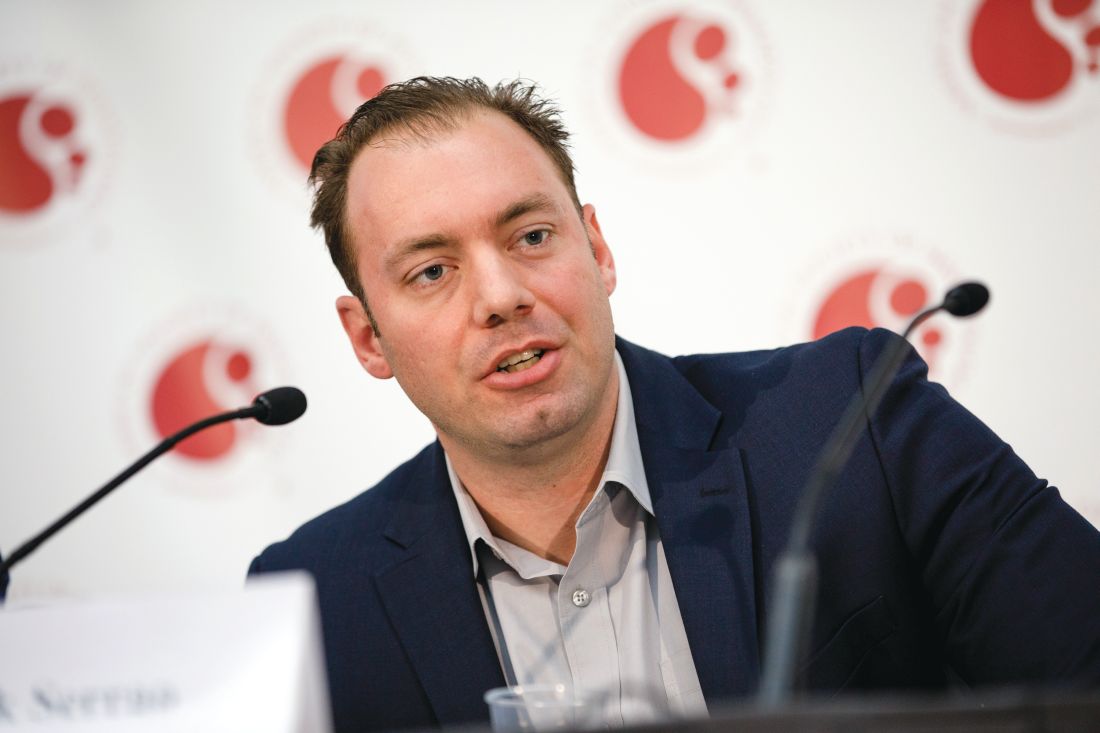
The test, called HemoTypeSC, uses monoclonal antibodies to detect hemoglobins A, S, and C in a drop of whole blood, said investigator Erik Serrao, PhD, of Silver Lake Research in Azusa, Calif.
Findings from the diagnostic accuracy trial, which included 1,000 children in Uganda, suggest that the immunoassay is a promising tool to enable newborn and general population screening in resource-constrained regions of high prevalence, such as Africa and India.
“Early screening plus treatment plus counseling equals saving millions of lives over the coming decades, and we believe HemoTypeSC can form an integral part of the initial part of this equation,” Dr. Serrao said during a late-breaking abstract session at the meeting.
Each test kit costs less than $2 to the end user; requires no electricity, special equipment, or training; and delivers results in about 10 minutes, he added.
Of all the late-breaking abstracts at ASH this year, the study by Dr. Serrao and his colleagues is the one with the potential to save the most lives, said Mark Crowther, MD, of McMaster University, Hamilton, Ont.
“The ability to diagnose sickle cell disease early and intervene early will result in potentially thousands of infants, who would otherwise die in infancy or early childhood, surviving into adulthood,” Dr. Crowther said during a press briefing.
Using current gold standard methods for diagnosing sickle cell disease is, at minimum, challenging and “frankly impossible” in many low-resource settings, because of the cost and the requirement for sophisticated equipment and reliable electricity, Dr. Crowther added.
In the study, investigators compared results of the HemoTypeSC test with hemoglobin electrophoresis for detection of the phenotypes HbAA (normal), HbAS (sickle cell trait), and HbSS (sickle cell disease). They compared these two testing methods in 1,000 children between the ages of 1 month and 5 years who were prospectively recruited from hospital wards and outpatient clinics in Uganda.
The immunoassay had an overall accuracy of 99.8%, correctly identifying 998 of 1,000 phenotypes as initially determined by electrophoresis. Specifically, the test correctly identified 100% of the 720 HbAA specimens, 100% of 182 HbAS specimens, and 98% of HbSS, or 96 of 98 specimens, leaving just 2 discordant samples, both of which HemoTypeSC identified as HbAS.
Investigators subsequently discovered that both of the individuals with the discordant samples had previously been diagnosed with sickle cell disease and had received recent transfusions. Both cases were subsequently confirmed as HbSS in review of previous diagnostic result reports, bringing the accuracy rate up to 100% in a secondary analysis also reported at the meeting.
Although this particular study excluded newborns, a different study of the immunoassay, recently published in the American Journal of Hematology, demonstrated 100% accuracy across multiple phenotypes in the setting of newborn screening (2018 Oct 5. doi: 10.1002/ajh.25305).
Sickle cell disease screening programs have been projected to be cost effective in Africa, Dr. Serrano said, and could even save money for governments over time as budgets are reallocated toward screening, with less money needed for treatment of patients presenting with severe complications in hospitals.
Dr. Serrao reported that he is an employee of Silver Lake Research, which funded the study, approved the study design, and donated HemoTypeSC tests.
On March 11, 2019, the editors of Blood, an ASH journal, retracted the abstract for this study. The second listed author on the abstract said that it was submitted without his consent or approval. The retraction makes no statement on the underlying science of the study, the editors noted.
This article was updated on 3/14/2019.
SOURCE: Serrao E et al. ASH 2018, Abstract LBA-3.
SAN DIEGO – An inexpensive, rapid, and easy-to-use blood test was more than 99% accurate in detecting sickle cell disease in young children in sub-Saharan Africa, according to research reported at the annual meeting of the American Society of Hematology.
The test, called HemoTypeSC, uses monoclonal antibodies to detect hemoglobins A, S, and C in a drop of whole blood, said investigator Erik Serrao, PhD, of Silver Lake Research in Azusa, Calif.
Findings from the diagnostic accuracy trial, which included 1,000 children in Uganda, suggest that the immunoassay is a promising tool to enable newborn and general population screening in resource-constrained regions of high prevalence, such as Africa and India.
“Early screening plus treatment plus counseling equals saving millions of lives over the coming decades, and we believe HemoTypeSC can form an integral part of the initial part of this equation,” Dr. Serrao said during a late-breaking abstract session at the meeting.
Each test kit costs less than $2 to the end user; requires no electricity, special equipment, or training; and delivers results in about 10 minutes, he added.
Of all the late-breaking abstracts at ASH this year, the study by Dr. Serrao and his colleagues is the one with the potential to save the most lives, said Mark Crowther, MD, of McMaster University, Hamilton, Ont.
“The ability to diagnose sickle cell disease early and intervene early will result in potentially thousands of infants, who would otherwise die in infancy or early childhood, surviving into adulthood,” Dr. Crowther said during a press briefing.
Using current gold standard methods for diagnosing sickle cell disease is, at minimum, challenging and “frankly impossible” in many low-resource settings, because of the cost and the requirement for sophisticated equipment and reliable electricity, Dr. Crowther added.
In the study, investigators compared results of the HemoTypeSC test with hemoglobin electrophoresis for detection of the phenotypes HbAA (normal), HbAS (sickle cell trait), and HbSS (sickle cell disease). They compared these two testing methods in 1,000 children between the ages of 1 month and 5 years who were prospectively recruited from hospital wards and outpatient clinics in Uganda.
The immunoassay had an overall accuracy of 99.8%, correctly identifying 998 of 1,000 phenotypes as initially determined by electrophoresis. Specifically, the test correctly identified 100% of the 720 HbAA specimens, 100% of 182 HbAS specimens, and 98% of HbSS, or 96 of 98 specimens, leaving just 2 discordant samples, both of which HemoTypeSC identified as HbAS.
Investigators subsequently discovered that both of the individuals with the discordant samples had previously been diagnosed with sickle cell disease and had received recent transfusions. Both cases were subsequently confirmed as HbSS in review of previous diagnostic result reports, bringing the accuracy rate up to 100% in a secondary analysis also reported at the meeting.
Although this particular study excluded newborns, a different study of the immunoassay, recently published in the American Journal of Hematology, demonstrated 100% accuracy across multiple phenotypes in the setting of newborn screening (2018 Oct 5. doi: 10.1002/ajh.25305).
Sickle cell disease screening programs have been projected to be cost effective in Africa, Dr. Serrano said, and could even save money for governments over time as budgets are reallocated toward screening, with less money needed for treatment of patients presenting with severe complications in hospitals.
Dr. Serrao reported that he is an employee of Silver Lake Research, which funded the study, approved the study design, and donated HemoTypeSC tests.
On March 11, 2019, the editors of Blood, an ASH journal, retracted the abstract for this study. The second listed author on the abstract said that it was submitted without his consent or approval. The retraction makes no statement on the underlying science of the study, the editors noted.
This article was updated on 3/14/2019.
SOURCE: Serrao E et al. ASH 2018, Abstract LBA-3.
SAN DIEGO – An inexpensive, rapid, and easy-to-use blood test was more than 99% accurate in detecting sickle cell disease in young children in sub-Saharan Africa, according to research reported at the annual meeting of the American Society of Hematology.
The test, called HemoTypeSC, uses monoclonal antibodies to detect hemoglobins A, S, and C in a drop of whole blood, said investigator Erik Serrao, PhD, of Silver Lake Research in Azusa, Calif.
Findings from the diagnostic accuracy trial, which included 1,000 children in Uganda, suggest that the immunoassay is a promising tool to enable newborn and general population screening in resource-constrained regions of high prevalence, such as Africa and India.
“Early screening plus treatment plus counseling equals saving millions of lives over the coming decades, and we believe HemoTypeSC can form an integral part of the initial part of this equation,” Dr. Serrao said during a late-breaking abstract session at the meeting.
Each test kit costs less than $2 to the end user; requires no electricity, special equipment, or training; and delivers results in about 10 minutes, he added.
Of all the late-breaking abstracts at ASH this year, the study by Dr. Serrao and his colleagues is the one with the potential to save the most lives, said Mark Crowther, MD, of McMaster University, Hamilton, Ont.
“The ability to diagnose sickle cell disease early and intervene early will result in potentially thousands of infants, who would otherwise die in infancy or early childhood, surviving into adulthood,” Dr. Crowther said during a press briefing.
Using current gold standard methods for diagnosing sickle cell disease is, at minimum, challenging and “frankly impossible” in many low-resource settings, because of the cost and the requirement for sophisticated equipment and reliable electricity, Dr. Crowther added.
In the study, investigators compared results of the HemoTypeSC test with hemoglobin electrophoresis for detection of the phenotypes HbAA (normal), HbAS (sickle cell trait), and HbSS (sickle cell disease). They compared these two testing methods in 1,000 children between the ages of 1 month and 5 years who were prospectively recruited from hospital wards and outpatient clinics in Uganda.
The immunoassay had an overall accuracy of 99.8%, correctly identifying 998 of 1,000 phenotypes as initially determined by electrophoresis. Specifically, the test correctly identified 100% of the 720 HbAA specimens, 100% of 182 HbAS specimens, and 98% of HbSS, or 96 of 98 specimens, leaving just 2 discordant samples, both of which HemoTypeSC identified as HbAS.
Investigators subsequently discovered that both of the individuals with the discordant samples had previously been diagnosed with sickle cell disease and had received recent transfusions. Both cases were subsequently confirmed as HbSS in review of previous diagnostic result reports, bringing the accuracy rate up to 100% in a secondary analysis also reported at the meeting.
Although this particular study excluded newborns, a different study of the immunoassay, recently published in the American Journal of Hematology, demonstrated 100% accuracy across multiple phenotypes in the setting of newborn screening (2018 Oct 5. doi: 10.1002/ajh.25305).
Sickle cell disease screening programs have been projected to be cost effective in Africa, Dr. Serrano said, and could even save money for governments over time as budgets are reallocated toward screening, with less money needed for treatment of patients presenting with severe complications in hospitals.
Dr. Serrao reported that he is an employee of Silver Lake Research, which funded the study, approved the study design, and donated HemoTypeSC tests.
On March 11, 2019, the editors of Blood, an ASH journal, retracted the abstract for this study. The second listed author on the abstract said that it was submitted without his consent or approval. The retraction makes no statement on the underlying science of the study, the editors noted.
This article was updated on 3/14/2019.
SOURCE: Serrao E et al. ASH 2018, Abstract LBA-3.
REPORTING FROM ASH 2018
Key clinical point:
Major finding: The assay had an overall accuracy of 99.8% in correctly identifying phenotypes as initially determined by hemoglobin electrophoresis.
Study details: A diagnostic accuracy study including 1,000 children aged 5 years and younger were prospectively recruited from hospitals and outpatient clinics in Uganda.
Disclosures: Dr. Serrao reported that he is an employee of Silver Lake Research, which funded the study and makes the test.
Source: Serrao E et al. ASH 2018, Abstract LBA-3.
Rivaroxaban may reduce VTE risk in cancer patients
SAN DIEGO – Prophylaxis with rivaroxaban significantly reduced the rate of venous thromboembolism and associated death in high-risk ambulatory cancer patients receiving systemic therapy, results of a randomized trial show.
The reduction in venous thromboembolism (VTE) or VTE-related death was not statistically significant in the primary analysis, in part because a large proportion of patients stopped taking the direct oral anticoagulant, according to investigator Alok A. Khorana, MD, of the Cleveland Clinic.
However, the reduction in events was significant in a prespecified secondary analysis limited to the on-treatment period, Dr. Khorana reported at the annual meeting of the American Society of Hematology, adding that rates of major and nonmajor bleeding were low.
Results are “eagerly awaited” from a different prophylaxis trial – the AVERT study – looking at another direct oral anticoagulant in high-risk cancer patients, Dr. Khorana said in a late-breaking abstracts session.
“If the findings of that trial are consistent with ours, then we certainly hope that these findings should inform future recommendations regarding thromboprophylaxis for high-risk ambulatory cancer patients, and then the landscape of anticoagulation in the cancer population should start to shift from management of events to primary prevention,” he said.
In the study by Dr. Khorana and his colleagues, known as CASSINI, 841 patients with various solid tumors and lymphomas were randomized to either rivaroxaban 10 mg or placebo once daily. The patients, enrolled at 143 study centers in 11 countries, all had a Khorana risk score of 2 or greater.
In the primary analysis period of 180 days, the composite endpoint of VTE or VTE-related death occurred in 5.95% of the rivaroxaban-treated group and 8.79% of the placebo group (hazard ratio, 0.66; 95% confidence interval, 0.40-1.09; P = .101). However, a total of 177 patients (43.7%) stopped rivaroxaban earlier than 180 days, and likewise, 203 patients (50.2%) stopped placebo early.
In a prespecified secondary analysis looking just at the period of time when patients were actually taking rivaroxaban or placebo, rivaroxaban did significantly reduce risk of VTE or VTE-related death, Dr. Khorana said. The composite endpoint occurred in 2.62% of the rivaroxaban patients and 6.41% of placebo patients in that on-treatment analysis (HR, 0.40; 95% CI, 0.20-0.80; P = .007).
Rates of major bleeding and clinically relevant nonmajor bleeding were not significantly different between groups, according to results of a safety analysis. Major bleeding occurred in eight rivaroxaban patients and four placebo patients, or 1.98% and 0.99%, respectively (P = .265).
CASSINI was sponsored by Bayer and Janssen. Dr. Khorana reported disclosures related to Janssen, Bayer, PAREXEL, Sanofi, Pfizer, TriSalus Life Sciences, Halozyme, Seattle Genetics, AngioDynamics, and others.
SAN DIEGO – Prophylaxis with rivaroxaban significantly reduced the rate of venous thromboembolism and associated death in high-risk ambulatory cancer patients receiving systemic therapy, results of a randomized trial show.
The reduction in venous thromboembolism (VTE) or VTE-related death was not statistically significant in the primary analysis, in part because a large proportion of patients stopped taking the direct oral anticoagulant, according to investigator Alok A. Khorana, MD, of the Cleveland Clinic.
However, the reduction in events was significant in a prespecified secondary analysis limited to the on-treatment period, Dr. Khorana reported at the annual meeting of the American Society of Hematology, adding that rates of major and nonmajor bleeding were low.
Results are “eagerly awaited” from a different prophylaxis trial – the AVERT study – looking at another direct oral anticoagulant in high-risk cancer patients, Dr. Khorana said in a late-breaking abstracts session.
“If the findings of that trial are consistent with ours, then we certainly hope that these findings should inform future recommendations regarding thromboprophylaxis for high-risk ambulatory cancer patients, and then the landscape of anticoagulation in the cancer population should start to shift from management of events to primary prevention,” he said.
In the study by Dr. Khorana and his colleagues, known as CASSINI, 841 patients with various solid tumors and lymphomas were randomized to either rivaroxaban 10 mg or placebo once daily. The patients, enrolled at 143 study centers in 11 countries, all had a Khorana risk score of 2 or greater.
In the primary analysis period of 180 days, the composite endpoint of VTE or VTE-related death occurred in 5.95% of the rivaroxaban-treated group and 8.79% of the placebo group (hazard ratio, 0.66; 95% confidence interval, 0.40-1.09; P = .101). However, a total of 177 patients (43.7%) stopped rivaroxaban earlier than 180 days, and likewise, 203 patients (50.2%) stopped placebo early.
In a prespecified secondary analysis looking just at the period of time when patients were actually taking rivaroxaban or placebo, rivaroxaban did significantly reduce risk of VTE or VTE-related death, Dr. Khorana said. The composite endpoint occurred in 2.62% of the rivaroxaban patients and 6.41% of placebo patients in that on-treatment analysis (HR, 0.40; 95% CI, 0.20-0.80; P = .007).
Rates of major bleeding and clinically relevant nonmajor bleeding were not significantly different between groups, according to results of a safety analysis. Major bleeding occurred in eight rivaroxaban patients and four placebo patients, or 1.98% and 0.99%, respectively (P = .265).
CASSINI was sponsored by Bayer and Janssen. Dr. Khorana reported disclosures related to Janssen, Bayer, PAREXEL, Sanofi, Pfizer, TriSalus Life Sciences, Halozyme, Seattle Genetics, AngioDynamics, and others.
SAN DIEGO – Prophylaxis with rivaroxaban significantly reduced the rate of venous thromboembolism and associated death in high-risk ambulatory cancer patients receiving systemic therapy, results of a randomized trial show.
The reduction in venous thromboembolism (VTE) or VTE-related death was not statistically significant in the primary analysis, in part because a large proportion of patients stopped taking the direct oral anticoagulant, according to investigator Alok A. Khorana, MD, of the Cleveland Clinic.
However, the reduction in events was significant in a prespecified secondary analysis limited to the on-treatment period, Dr. Khorana reported at the annual meeting of the American Society of Hematology, adding that rates of major and nonmajor bleeding were low.
Results are “eagerly awaited” from a different prophylaxis trial – the AVERT study – looking at another direct oral anticoagulant in high-risk cancer patients, Dr. Khorana said in a late-breaking abstracts session.
“If the findings of that trial are consistent with ours, then we certainly hope that these findings should inform future recommendations regarding thromboprophylaxis for high-risk ambulatory cancer patients, and then the landscape of anticoagulation in the cancer population should start to shift from management of events to primary prevention,” he said.
In the study by Dr. Khorana and his colleagues, known as CASSINI, 841 patients with various solid tumors and lymphomas were randomized to either rivaroxaban 10 mg or placebo once daily. The patients, enrolled at 143 study centers in 11 countries, all had a Khorana risk score of 2 or greater.
In the primary analysis period of 180 days, the composite endpoint of VTE or VTE-related death occurred in 5.95% of the rivaroxaban-treated group and 8.79% of the placebo group (hazard ratio, 0.66; 95% confidence interval, 0.40-1.09; P = .101). However, a total of 177 patients (43.7%) stopped rivaroxaban earlier than 180 days, and likewise, 203 patients (50.2%) stopped placebo early.
In a prespecified secondary analysis looking just at the period of time when patients were actually taking rivaroxaban or placebo, rivaroxaban did significantly reduce risk of VTE or VTE-related death, Dr. Khorana said. The composite endpoint occurred in 2.62% of the rivaroxaban patients and 6.41% of placebo patients in that on-treatment analysis (HR, 0.40; 95% CI, 0.20-0.80; P = .007).
Rates of major bleeding and clinically relevant nonmajor bleeding were not significantly different between groups, according to results of a safety analysis. Major bleeding occurred in eight rivaroxaban patients and four placebo patients, or 1.98% and 0.99%, respectively (P = .265).
CASSINI was sponsored by Bayer and Janssen. Dr. Khorana reported disclosures related to Janssen, Bayer, PAREXEL, Sanofi, Pfizer, TriSalus Life Sciences, Halozyme, Seattle Genetics, AngioDynamics, and others.
REPORTING FROM ASH 2018
Key clinical point:
Major finding: In an on-treatment analysis, the composite endpoint occurred in 2.62% of the rivaroxaban patients and 6.41% of placebo patients (hazard ratio, 0.40; 95% confidence interval, 0.20-0.80; P = .007).
Study details: The results from CASSINI included 841 patients with various solid tumors and lymphomas randomized to rivaroxaban or placebo daily.
Disclosures: CASSINI was sponsored by Bayer and Janssen. Dr. Khorana reported disclosures related to Janssen, Bayer, PAREXEL, Sanofi, Pfizer, TriSalus Life Sciences, Halozyme, Seattle Genetics, AngioDynamics, and others.
Anticoagulant choice, PPI cotherapy impact risk of upper GI bleeding
Patients receiving oral anticoagulant treatment had the lowest risk of gastrointestinal bleeding when taking apixaban, compared with rivaroxaban, dabigatran, and warfarin, according to a recent study.
Further, patients who received proton pump inhibitor (PPI) cotherapy had a lower overall risk of gastrointestinal bleeding, according to Wayne A. Ray, PhD, from the department of health policy at Vanderbilt University, Nashville, Tenn., and his colleagues.
“These findings indicate the potential benefits of a gastrointestinal bleeding risk assessment before initiating anticoagulant treatment,” Dr. Ray and his colleagues wrote in their study, which was published in JAMA.
Dr. Ray and his colleagues performed a retrospective, population-based study of 1,643,123 Medicare beneficiaries (mean age, 76.4 years) who received 1,713,183 new episodes of oral anticoagulant treatment between January 2011 and September 2015. They analyzed how patients reacted to apixaban, dabigatran, rivaroxaban, or warfarin both with and without PPI cotherapy.
Overall, the risk of gastrointestinal bleeding across 754,389 person-years without PPI therapy was 115 per 10,000 person-years (95% confidence interval, 112-118) in 7,119 patients. The researchers found the risk of gastrointestinal bleeding was highest in patients taking rivaroxaban (1,278 patients; 144 per 10,000 person-years; 95% CI, 136-152) and lowest when taking apixaban (279 patients; 120 per 10,000 person-years; incidence rate ratio, 1,97; 95% CI, 1.73-2.25), compared with dabigatran (629 patients; 120 per 10,000 person-years; IRR, 1.19; 95% CI, 1.08-1.32) and warfarin (4,933 patients; 113 per 10,000 person-years; IRR, 1.27; 95% CI, 1.19-1.35). There was a significantly lower incidence of gastrointestinal bleeding for apixaban, compared with warfarin (IRR, 0.64; 95% CI, 0.57-0.73) and dabigatran (IRR, 0.61; 95% CI, 0.52-0.70).
There was a lower overall incidence of gastrointestinal bleeding when receiving PPI cotherapy (264,447 person-years; 76 per 10,000 person-years), compared with patients who received anticoagulant treatment without PPI cotherapy (IRR, 0.66; 95% CI, 0.62-0.69). This reduced incidence of gastrointestinal bleeding was also seen in patients receiving PPI cotherapy and taking apixaban (IRR, 0.66; 95% CI, 0.52-0.85), dabigatran (IRR, 0.49; 95% CI, 0.41-0.59), rivaroxaban (IRR, 0.75; 95% CI, 0.68-0.84), and warfarin (IRR, 0.65; 95% CI, 0.62-0.69).
The researchers noted that limitations in this study included potential misclassification of anticoagulant treatment, PPI cotherapy, and NSAIDs because of a reliance on filled prescription data; confounding by unmeasured factors such as aspirin exposure or Helicobacter pylori infection; and gastrointestinal bleeding being measured using a disease risk score.
This study was supported by a grant from the National Heart, Lung, and Blood Institute. The authors reported no relevant conflicts of interest.
SOURCE: Ray WA et al. JAMA. 2018 Dec 4. doi: 10.1001/jama.2018.17242.
Patients receiving oral anticoagulant treatment had the lowest risk of gastrointestinal bleeding when taking apixaban, compared with rivaroxaban, dabigatran, and warfarin, according to a recent study.
Further, patients who received proton pump inhibitor (PPI) cotherapy had a lower overall risk of gastrointestinal bleeding, according to Wayne A. Ray, PhD, from the department of health policy at Vanderbilt University, Nashville, Tenn., and his colleagues.
“These findings indicate the potential benefits of a gastrointestinal bleeding risk assessment before initiating anticoagulant treatment,” Dr. Ray and his colleagues wrote in their study, which was published in JAMA.
Dr. Ray and his colleagues performed a retrospective, population-based study of 1,643,123 Medicare beneficiaries (mean age, 76.4 years) who received 1,713,183 new episodes of oral anticoagulant treatment between January 2011 and September 2015. They analyzed how patients reacted to apixaban, dabigatran, rivaroxaban, or warfarin both with and without PPI cotherapy.
Overall, the risk of gastrointestinal bleeding across 754,389 person-years without PPI therapy was 115 per 10,000 person-years (95% confidence interval, 112-118) in 7,119 patients. The researchers found the risk of gastrointestinal bleeding was highest in patients taking rivaroxaban (1,278 patients; 144 per 10,000 person-years; 95% CI, 136-152) and lowest when taking apixaban (279 patients; 120 per 10,000 person-years; incidence rate ratio, 1,97; 95% CI, 1.73-2.25), compared with dabigatran (629 patients; 120 per 10,000 person-years; IRR, 1.19; 95% CI, 1.08-1.32) and warfarin (4,933 patients; 113 per 10,000 person-years; IRR, 1.27; 95% CI, 1.19-1.35). There was a significantly lower incidence of gastrointestinal bleeding for apixaban, compared with warfarin (IRR, 0.64; 95% CI, 0.57-0.73) and dabigatran (IRR, 0.61; 95% CI, 0.52-0.70).
There was a lower overall incidence of gastrointestinal bleeding when receiving PPI cotherapy (264,447 person-years; 76 per 10,000 person-years), compared with patients who received anticoagulant treatment without PPI cotherapy (IRR, 0.66; 95% CI, 0.62-0.69). This reduced incidence of gastrointestinal bleeding was also seen in patients receiving PPI cotherapy and taking apixaban (IRR, 0.66; 95% CI, 0.52-0.85), dabigatran (IRR, 0.49; 95% CI, 0.41-0.59), rivaroxaban (IRR, 0.75; 95% CI, 0.68-0.84), and warfarin (IRR, 0.65; 95% CI, 0.62-0.69).
The researchers noted that limitations in this study included potential misclassification of anticoagulant treatment, PPI cotherapy, and NSAIDs because of a reliance on filled prescription data; confounding by unmeasured factors such as aspirin exposure or Helicobacter pylori infection; and gastrointestinal bleeding being measured using a disease risk score.
This study was supported by a grant from the National Heart, Lung, and Blood Institute. The authors reported no relevant conflicts of interest.
SOURCE: Ray WA et al. JAMA. 2018 Dec 4. doi: 10.1001/jama.2018.17242.
Patients receiving oral anticoagulant treatment had the lowest risk of gastrointestinal bleeding when taking apixaban, compared with rivaroxaban, dabigatran, and warfarin, according to a recent study.
Further, patients who received proton pump inhibitor (PPI) cotherapy had a lower overall risk of gastrointestinal bleeding, according to Wayne A. Ray, PhD, from the department of health policy at Vanderbilt University, Nashville, Tenn., and his colleagues.
“These findings indicate the potential benefits of a gastrointestinal bleeding risk assessment before initiating anticoagulant treatment,” Dr. Ray and his colleagues wrote in their study, which was published in JAMA.
Dr. Ray and his colleagues performed a retrospective, population-based study of 1,643,123 Medicare beneficiaries (mean age, 76.4 years) who received 1,713,183 new episodes of oral anticoagulant treatment between January 2011 and September 2015. They analyzed how patients reacted to apixaban, dabigatran, rivaroxaban, or warfarin both with and without PPI cotherapy.
Overall, the risk of gastrointestinal bleeding across 754,389 person-years without PPI therapy was 115 per 10,000 person-years (95% confidence interval, 112-118) in 7,119 patients. The researchers found the risk of gastrointestinal bleeding was highest in patients taking rivaroxaban (1,278 patients; 144 per 10,000 person-years; 95% CI, 136-152) and lowest when taking apixaban (279 patients; 120 per 10,000 person-years; incidence rate ratio, 1,97; 95% CI, 1.73-2.25), compared with dabigatran (629 patients; 120 per 10,000 person-years; IRR, 1.19; 95% CI, 1.08-1.32) and warfarin (4,933 patients; 113 per 10,000 person-years; IRR, 1.27; 95% CI, 1.19-1.35). There was a significantly lower incidence of gastrointestinal bleeding for apixaban, compared with warfarin (IRR, 0.64; 95% CI, 0.57-0.73) and dabigatran (IRR, 0.61; 95% CI, 0.52-0.70).
There was a lower overall incidence of gastrointestinal bleeding when receiving PPI cotherapy (264,447 person-years; 76 per 10,000 person-years), compared with patients who received anticoagulant treatment without PPI cotherapy (IRR, 0.66; 95% CI, 0.62-0.69). This reduced incidence of gastrointestinal bleeding was also seen in patients receiving PPI cotherapy and taking apixaban (IRR, 0.66; 95% CI, 0.52-0.85), dabigatran (IRR, 0.49; 95% CI, 0.41-0.59), rivaroxaban (IRR, 0.75; 95% CI, 0.68-0.84), and warfarin (IRR, 0.65; 95% CI, 0.62-0.69).
The researchers noted that limitations in this study included potential misclassification of anticoagulant treatment, PPI cotherapy, and NSAIDs because of a reliance on filled prescription data; confounding by unmeasured factors such as aspirin exposure or Helicobacter pylori infection; and gastrointestinal bleeding being measured using a disease risk score.
This study was supported by a grant from the National Heart, Lung, and Blood Institute. The authors reported no relevant conflicts of interest.
SOURCE: Ray WA et al. JAMA. 2018 Dec 4. doi: 10.1001/jama.2018.17242.
FROM JAMA
Key clinical point: In patients receiving oral anticoagulant treatment, risk of gastrointestinal bleeding was highest in patients taking rivaroxaban, lowest when taking apixaban, and there was a lower overall incidence of gastrointestinal bleeding when receiving proton pump inhibitor cotherapy.
Major finding: Per 10,000 person-years, the incidence rate of gastrointestinal bleeding was 144 for rivaroxaban, 73 for apixaban, 120 for dabigatran, and 113 for warfarin; there was a gastrointestinal bleeding incidence rate ratio of 0.66 for patients using protein pump inhibitor cotherapy.
Study details: A retrospective, population-based study of 1,643,123 Medicare beneficiaries who received oral anticoagulant treatment between January 2011 and September 2015.
Disclosures: This study was supported by a grant from the National Heart, Lung, and Blood Institute. The authors reported no relevant conflicts of interest.
Source: Ray WA et al. JAMA. 2018 Dec 4. doi: 10.1001/jama.2018.17242.
2018: A banner year for hematology drug approvals
SAN DIEGO – It was banner year for new hematology drug approvals, according to R. Angelo de Claro, MD, of the Food and Drug Administration.
, including 12 first-time approvals, 5 new biosimilars, and 15 new indications for previously approved drugs, Dr. de Claro, clinical team leader in the FDA’s division of hematology products in Silver Spring, Md., said during an overview of the approvals at the annual meeting of the American Society of Hematology.
These include six new approvals for first-line treatment, and eight for pediatric indications, he said.
Highlights were discussed at two ASH-FDA joint symposia at the meeting, including one focused on the malignant hematology approvals, and another on the nonmalignant hematology approvals. In a video interview, Dr. de Claro provides some additional insight into their importance and about what might lie ahead.
“I think what’s exciting is that you have drug development occurring in more common conditions such as chronic lymphocytic leukemia, as well as in rare conditions, including hairy cell leukemia – and the first-ever approval in hemophagocytic lymphohistiocytosis,” he said. “It’s been very busy at the FDA; stay tuned ... the year’s not done yet. There could be more coming and we certainly anticipate more applications in the future.”
Dr. de Claro is an FDA employee. He reported having no other relevant disclosures.
SAN DIEGO – It was banner year for new hematology drug approvals, according to R. Angelo de Claro, MD, of the Food and Drug Administration.
, including 12 first-time approvals, 5 new biosimilars, and 15 new indications for previously approved drugs, Dr. de Claro, clinical team leader in the FDA’s division of hematology products in Silver Spring, Md., said during an overview of the approvals at the annual meeting of the American Society of Hematology.
These include six new approvals for first-line treatment, and eight for pediatric indications, he said.
Highlights were discussed at two ASH-FDA joint symposia at the meeting, including one focused on the malignant hematology approvals, and another on the nonmalignant hematology approvals. In a video interview, Dr. de Claro provides some additional insight into their importance and about what might lie ahead.
“I think what’s exciting is that you have drug development occurring in more common conditions such as chronic lymphocytic leukemia, as well as in rare conditions, including hairy cell leukemia – and the first-ever approval in hemophagocytic lymphohistiocytosis,” he said. “It’s been very busy at the FDA; stay tuned ... the year’s not done yet. There could be more coming and we certainly anticipate more applications in the future.”
Dr. de Claro is an FDA employee. He reported having no other relevant disclosures.
SAN DIEGO – It was banner year for new hematology drug approvals, according to R. Angelo de Claro, MD, of the Food and Drug Administration.
, including 12 first-time approvals, 5 new biosimilars, and 15 new indications for previously approved drugs, Dr. de Claro, clinical team leader in the FDA’s division of hematology products in Silver Spring, Md., said during an overview of the approvals at the annual meeting of the American Society of Hematology.
These include six new approvals for first-line treatment, and eight for pediatric indications, he said.
Highlights were discussed at two ASH-FDA joint symposia at the meeting, including one focused on the malignant hematology approvals, and another on the nonmalignant hematology approvals. In a video interview, Dr. de Claro provides some additional insight into their importance and about what might lie ahead.
“I think what’s exciting is that you have drug development occurring in more common conditions such as chronic lymphocytic leukemia, as well as in rare conditions, including hairy cell leukemia – and the first-ever approval in hemophagocytic lymphohistiocytosis,” he said. “It’s been very busy at the FDA; stay tuned ... the year’s not done yet. There could be more coming and we certainly anticipate more applications in the future.”
Dr. de Claro is an FDA employee. He reported having no other relevant disclosures.
REPORTING FROM ASH 2018
Factor IX expression stable at up to 8 years with gene therapy
SAN DIEGO – according to interim follow-up data from a phase 1/2 dose-escalation study.
The therapy – a self-complementary adeno-associated virus vector containing a codon-optimized factor IX gene, under control of a synthetic liver specific promoter and pseudotyped with serotype 8 capsid (scAAV2/8-LP1-hFIXco) – was previously shown to result in a dose-dependent increase in plasma factor IX levels in all 10 patients enrolled in the study, and an earlier update showed stable factor IX activity for at least 3 years, Ulrike M. Reiss, MD, reported at the annual meeting of the American Society of Hematology.
However, declining factor IX expression over time remains a concern, because AAV-mediated transgene expression is mediated mainly by episomally retained viral genomes, which may be lost with natural turnover of hepatocytes, noted Dr. Reiss, director of the clinical hematology division and the Hemophilia Treatment Center at St. Jude Children’s Research Hospital in Memphis.
At the “halfway mark,” with a median follow-up of 6.7 years in 10 patients aged 18-64 years who were treated with doses of either 2 x 10¹¹, 6 x 10¹¹, or 2 x 10¹² vector genomes per kg (in 2, 2, and 6 patients, respectively), “factor IX expression has been persistent and stable in all participants after vector infusion,” she said.
“Factor IX expression was vector-dose dependent, achieving average levels of 1.9%-2.3% at the lower doses, and 5.1% at the high vector dose. All patients converted from having severe hemophilia to mild-moderate hemophilia,” she added.
The single significant adverse event observed during annual follow-up evaluations in the patients was a vector-related, immune-mediated liver inflammation occurring within 2-3 months of infusion in four of the six high-dose participants.
“There was complete resolution in all cases after a short course of corticosteroids over 8-12 weeks, including the taper. There were no late sequelae or any recurrence of transaminitis over time,” Dr. Reiss said. “We did not observe any new factor IX inhibitor or any late toxicity in any of these participants.”
Additionally, a comparison of average data across 3 years prior to gene therapy with the average data at 6.7 years after gene therapy showed that the annualized bleed rate decreased by 82% in the 10 participants and factor IX use decreased by 66%. In the high-dose group, the bleed rate decreased from 21 bleeds to 2 bleeds per year, and vector consumption was markedly reduced to a mean of 500 IU/kg per year from a mean of more than 2800 IU/kg per year. “Only one of the six patients in the high-dose group currently continues on prophylaxis treatment, whereas three in the low- and mid-dose groups are currently on prophylaxis,” she said. “In all [patients], the interval between prophylactic infusions has lengthened.”
Of note, Dr. Reiss and her colleagues explored the ability of using a modified, empty capsid-reduced vector preparation of the gene therapy to prevent the transaminitis seen in the 2-3 months after infusion. A new clinical preparation of scAAV2/8-LP1-hFIXco was manufactured with most of the empty particles removed by cesium chloride density centrifugation, but this approach provided no benefit in that regard.
“This further supports the observation that the anticapsid immune response is vector-dose dependent,” she said.
Additionally, the pattern of humoral response to AAV8 capsid was consistent with the primary immune response in participants.
“High IgG antibody titers have persisted for over 6 years; this finding is important because it will preclude these patients from any retreatment with the same vector or even potentially alternative AAV vectors of other serotypes with cross-reactive antigenicity,” she said.
Dr. Reiss reported having no relevant disclosures
SOURCE: Reiss UM et al. ASH 2018, Abstract 491.
SAN DIEGO – according to interim follow-up data from a phase 1/2 dose-escalation study.
The therapy – a self-complementary adeno-associated virus vector containing a codon-optimized factor IX gene, under control of a synthetic liver specific promoter and pseudotyped with serotype 8 capsid (scAAV2/8-LP1-hFIXco) – was previously shown to result in a dose-dependent increase in plasma factor IX levels in all 10 patients enrolled in the study, and an earlier update showed stable factor IX activity for at least 3 years, Ulrike M. Reiss, MD, reported at the annual meeting of the American Society of Hematology.
However, declining factor IX expression over time remains a concern, because AAV-mediated transgene expression is mediated mainly by episomally retained viral genomes, which may be lost with natural turnover of hepatocytes, noted Dr. Reiss, director of the clinical hematology division and the Hemophilia Treatment Center at St. Jude Children’s Research Hospital in Memphis.
At the “halfway mark,” with a median follow-up of 6.7 years in 10 patients aged 18-64 years who were treated with doses of either 2 x 10¹¹, 6 x 10¹¹, or 2 x 10¹² vector genomes per kg (in 2, 2, and 6 patients, respectively), “factor IX expression has been persistent and stable in all participants after vector infusion,” she said.
“Factor IX expression was vector-dose dependent, achieving average levels of 1.9%-2.3% at the lower doses, and 5.1% at the high vector dose. All patients converted from having severe hemophilia to mild-moderate hemophilia,” she added.
The single significant adverse event observed during annual follow-up evaluations in the patients was a vector-related, immune-mediated liver inflammation occurring within 2-3 months of infusion in four of the six high-dose participants.
“There was complete resolution in all cases after a short course of corticosteroids over 8-12 weeks, including the taper. There were no late sequelae or any recurrence of transaminitis over time,” Dr. Reiss said. “We did not observe any new factor IX inhibitor or any late toxicity in any of these participants.”
Additionally, a comparison of average data across 3 years prior to gene therapy with the average data at 6.7 years after gene therapy showed that the annualized bleed rate decreased by 82% in the 10 participants and factor IX use decreased by 66%. In the high-dose group, the bleed rate decreased from 21 bleeds to 2 bleeds per year, and vector consumption was markedly reduced to a mean of 500 IU/kg per year from a mean of more than 2800 IU/kg per year. “Only one of the six patients in the high-dose group currently continues on prophylaxis treatment, whereas three in the low- and mid-dose groups are currently on prophylaxis,” she said. “In all [patients], the interval between prophylactic infusions has lengthened.”
Of note, Dr. Reiss and her colleagues explored the ability of using a modified, empty capsid-reduced vector preparation of the gene therapy to prevent the transaminitis seen in the 2-3 months after infusion. A new clinical preparation of scAAV2/8-LP1-hFIXco was manufactured with most of the empty particles removed by cesium chloride density centrifugation, but this approach provided no benefit in that regard.
“This further supports the observation that the anticapsid immune response is vector-dose dependent,” she said.
Additionally, the pattern of humoral response to AAV8 capsid was consistent with the primary immune response in participants.
“High IgG antibody titers have persisted for over 6 years; this finding is important because it will preclude these patients from any retreatment with the same vector or even potentially alternative AAV vectors of other serotypes with cross-reactive antigenicity,” she said.
Dr. Reiss reported having no relevant disclosures
SOURCE: Reiss UM et al. ASH 2018, Abstract 491.
SAN DIEGO – according to interim follow-up data from a phase 1/2 dose-escalation study.
The therapy – a self-complementary adeno-associated virus vector containing a codon-optimized factor IX gene, under control of a synthetic liver specific promoter and pseudotyped with serotype 8 capsid (scAAV2/8-LP1-hFIXco) – was previously shown to result in a dose-dependent increase in plasma factor IX levels in all 10 patients enrolled in the study, and an earlier update showed stable factor IX activity for at least 3 years, Ulrike M. Reiss, MD, reported at the annual meeting of the American Society of Hematology.
However, declining factor IX expression over time remains a concern, because AAV-mediated transgene expression is mediated mainly by episomally retained viral genomes, which may be lost with natural turnover of hepatocytes, noted Dr. Reiss, director of the clinical hematology division and the Hemophilia Treatment Center at St. Jude Children’s Research Hospital in Memphis.
At the “halfway mark,” with a median follow-up of 6.7 years in 10 patients aged 18-64 years who were treated with doses of either 2 x 10¹¹, 6 x 10¹¹, or 2 x 10¹² vector genomes per kg (in 2, 2, and 6 patients, respectively), “factor IX expression has been persistent and stable in all participants after vector infusion,” she said.
“Factor IX expression was vector-dose dependent, achieving average levels of 1.9%-2.3% at the lower doses, and 5.1% at the high vector dose. All patients converted from having severe hemophilia to mild-moderate hemophilia,” she added.
The single significant adverse event observed during annual follow-up evaluations in the patients was a vector-related, immune-mediated liver inflammation occurring within 2-3 months of infusion in four of the six high-dose participants.
“There was complete resolution in all cases after a short course of corticosteroids over 8-12 weeks, including the taper. There were no late sequelae or any recurrence of transaminitis over time,” Dr. Reiss said. “We did not observe any new factor IX inhibitor or any late toxicity in any of these participants.”
Additionally, a comparison of average data across 3 years prior to gene therapy with the average data at 6.7 years after gene therapy showed that the annualized bleed rate decreased by 82% in the 10 participants and factor IX use decreased by 66%. In the high-dose group, the bleed rate decreased from 21 bleeds to 2 bleeds per year, and vector consumption was markedly reduced to a mean of 500 IU/kg per year from a mean of more than 2800 IU/kg per year. “Only one of the six patients in the high-dose group currently continues on prophylaxis treatment, whereas three in the low- and mid-dose groups are currently on prophylaxis,” she said. “In all [patients], the interval between prophylactic infusions has lengthened.”
Of note, Dr. Reiss and her colleagues explored the ability of using a modified, empty capsid-reduced vector preparation of the gene therapy to prevent the transaminitis seen in the 2-3 months after infusion. A new clinical preparation of scAAV2/8-LP1-hFIXco was manufactured with most of the empty particles removed by cesium chloride density centrifugation, but this approach provided no benefit in that regard.
“This further supports the observation that the anticapsid immune response is vector-dose dependent,” she said.
Additionally, the pattern of humoral response to AAV8 capsid was consistent with the primary immune response in participants.
“High IgG antibody titers have persisted for over 6 years; this finding is important because it will preclude these patients from any retreatment with the same vector or even potentially alternative AAV vectors of other serotypes with cross-reactive antigenicity,” she said.
Dr. Reiss reported having no relevant disclosures
SOURCE: Reiss UM et al. ASH 2018, Abstract 491.
REPORTING FROM ASH 2018
Key clinical point: With a median follow-up of 6.7 years in 10 patients aged 18-64 years who were treated with scAAV2/8-LP1-hFIX–comediated gene therapy, factor IX expression has been persistent and stable.
Major finding: Factor IX expression averaged 1.9%-2.3% at the lower doses, and 5.1% at the high dose at up to 8.6 years.
Study details: An interim follow-up data for 10 patients in a phase 1/2 study.
Disclosures: Dr. Reiss reported having no disclosures.
Source: Reiss UM et al. ASH 2018, Abstract 491.
DOAC pause yields favorable outcomes for AF patients
San Diego – In patients with atrial fibrillation who had direct oral anticoagulant (DOAC) interruption for an elective surgery, a simple and standardized management strategy yielded low rates of bleeding and thromboembolism, according to results of a prospective study of more than 3,000 patients.
Rates of major bleeding were less than 2% and rates of arterial thromboembolism were less than 1% in patients managed in accordance with the strategy, which foregoes heparin bridging and preoperative coagulation testing, according to investigator James D. Douketis, MD, of St. Joseph’s Healthcare and McMaster University, Hamilton, Ont.
“This is the first study to demonstrate the safety of a standardized perioperative management approach in a patients with atrial fibrillation who are taking a DOAC, and we hope will establish a standard and will have an effect on our clinical practice guidelines,” Dr. Douketis said during a press briefing at the annual meeting of the American Society of Hematology.
This trial offers the “most definitive evidence to date” that atrial fibrillation patients can – in an organized fashion based on bleeding risk – safely stop taking DOACs, said Mark Crowther, MD, chair and professor of medicine at McMaster University.
“This study will almost instantaneously establish a treatment practice and a treatment standard for the vast number of patients in North America and around the world who take these drugs,” added Dr. Crowther, who moderated the press briefing.
The PAUSE study included three parallel cohorts of atrial fibrillation patients taking DOACs (apixaban, dabigatran, or rivaroxaban) who required anticoagulant interruption for an elective surgery or procedure.
The DOAC interruptions were done using standardized protocols based on the pharmacokinetic properties of each DOAC, procedure-associated bleeding risk, and creatinine clearance, the investigators reported.
The interruptions occurred 1 day before and after low bleeding risk surgeries, and 2 days before and after high bleeding risk surgeries, while longer interruptions were used in patients receiving dabigatran who had a creatinine clearance below 50 mL/min.
A total of 3,007 patients at 23 sites in Canada, the United States, and Europe were managed by this approach in the PAUSE study – 1,257 patients receiving apixaban, 668 receiving dabigatran, and 1,082 receiving rivaroxaban – and were evaluated weekly for 30 days post-procedure.
PAUSE is the largest study to date that addresses how to manage the common problem of perioperative DOAC management. It is likely to have a practice-changing impact and will inform future practice guidelines in perioperative care.
The 30-day postoperative rate of major bleeding was low, according to investigators, at 1.35% (95% confidence interval, 0-2.00%) for apixaban, 0.90% (95% CI, 0-1.73%) for dabigatran, and 1.85% (95% CI, 0-2.65%) for rivaroxaban, Dr. Douketis reported.
Likewise, the rate of arterial thromboembolism was low at 0.16% (95% CI, 0-0.48%) for apixaban, 0.6% (95% CI, 0-1.33%) for dabigatran, and 0.37% (95% CI, 0-0.82%) for rivaroxaban, he said.
Most patients (greater than 90%) had minimal to no residual DOAC levels at the time of surgery, the investigator added.
The study was funded by the Canadian Institutes of Health Research and the H&S Foundation of Canada. Dr. Douketis reported disclosures related to Janssen, which makes rivaroxaban; Boehringer-Ingelheim, which makes dabigatran; and other companies. Dr. Crowther reported financial relationships with Bristol-Myers Squibb and other companies.
SOURCE: Douketis J et al. ASH 2018, Abstract LBA-5.
San Diego – In patients with atrial fibrillation who had direct oral anticoagulant (DOAC) interruption for an elective surgery, a simple and standardized management strategy yielded low rates of bleeding and thromboembolism, according to results of a prospective study of more than 3,000 patients.
Rates of major bleeding were less than 2% and rates of arterial thromboembolism were less than 1% in patients managed in accordance with the strategy, which foregoes heparin bridging and preoperative coagulation testing, according to investigator James D. Douketis, MD, of St. Joseph’s Healthcare and McMaster University, Hamilton, Ont.
“This is the first study to demonstrate the safety of a standardized perioperative management approach in a patients with atrial fibrillation who are taking a DOAC, and we hope will establish a standard and will have an effect on our clinical practice guidelines,” Dr. Douketis said during a press briefing at the annual meeting of the American Society of Hematology.
This trial offers the “most definitive evidence to date” that atrial fibrillation patients can – in an organized fashion based on bleeding risk – safely stop taking DOACs, said Mark Crowther, MD, chair and professor of medicine at McMaster University.
“This study will almost instantaneously establish a treatment practice and a treatment standard for the vast number of patients in North America and around the world who take these drugs,” added Dr. Crowther, who moderated the press briefing.
The PAUSE study included three parallel cohorts of atrial fibrillation patients taking DOACs (apixaban, dabigatran, or rivaroxaban) who required anticoagulant interruption for an elective surgery or procedure.
The DOAC interruptions were done using standardized protocols based on the pharmacokinetic properties of each DOAC, procedure-associated bleeding risk, and creatinine clearance, the investigators reported.
The interruptions occurred 1 day before and after low bleeding risk surgeries, and 2 days before and after high bleeding risk surgeries, while longer interruptions were used in patients receiving dabigatran who had a creatinine clearance below 50 mL/min.
A total of 3,007 patients at 23 sites in Canada, the United States, and Europe were managed by this approach in the PAUSE study – 1,257 patients receiving apixaban, 668 receiving dabigatran, and 1,082 receiving rivaroxaban – and were evaluated weekly for 30 days post-procedure.
PAUSE is the largest study to date that addresses how to manage the common problem of perioperative DOAC management. It is likely to have a practice-changing impact and will inform future practice guidelines in perioperative care.
The 30-day postoperative rate of major bleeding was low, according to investigators, at 1.35% (95% confidence interval, 0-2.00%) for apixaban, 0.90% (95% CI, 0-1.73%) for dabigatran, and 1.85% (95% CI, 0-2.65%) for rivaroxaban, Dr. Douketis reported.
Likewise, the rate of arterial thromboembolism was low at 0.16% (95% CI, 0-0.48%) for apixaban, 0.6% (95% CI, 0-1.33%) for dabigatran, and 0.37% (95% CI, 0-0.82%) for rivaroxaban, he said.
Most patients (greater than 90%) had minimal to no residual DOAC levels at the time of surgery, the investigator added.
The study was funded by the Canadian Institutes of Health Research and the H&S Foundation of Canada. Dr. Douketis reported disclosures related to Janssen, which makes rivaroxaban; Boehringer-Ingelheim, which makes dabigatran; and other companies. Dr. Crowther reported financial relationships with Bristol-Myers Squibb and other companies.
SOURCE: Douketis J et al. ASH 2018, Abstract LBA-5.
San Diego – In patients with atrial fibrillation who had direct oral anticoagulant (DOAC) interruption for an elective surgery, a simple and standardized management strategy yielded low rates of bleeding and thromboembolism, according to results of a prospective study of more than 3,000 patients.
Rates of major bleeding were less than 2% and rates of arterial thromboembolism were less than 1% in patients managed in accordance with the strategy, which foregoes heparin bridging and preoperative coagulation testing, according to investigator James D. Douketis, MD, of St. Joseph’s Healthcare and McMaster University, Hamilton, Ont.
“This is the first study to demonstrate the safety of a standardized perioperative management approach in a patients with atrial fibrillation who are taking a DOAC, and we hope will establish a standard and will have an effect on our clinical practice guidelines,” Dr. Douketis said during a press briefing at the annual meeting of the American Society of Hematology.
This trial offers the “most definitive evidence to date” that atrial fibrillation patients can – in an organized fashion based on bleeding risk – safely stop taking DOACs, said Mark Crowther, MD, chair and professor of medicine at McMaster University.
“This study will almost instantaneously establish a treatment practice and a treatment standard for the vast number of patients in North America and around the world who take these drugs,” added Dr. Crowther, who moderated the press briefing.
The PAUSE study included three parallel cohorts of atrial fibrillation patients taking DOACs (apixaban, dabigatran, or rivaroxaban) who required anticoagulant interruption for an elective surgery or procedure.
The DOAC interruptions were done using standardized protocols based on the pharmacokinetic properties of each DOAC, procedure-associated bleeding risk, and creatinine clearance, the investigators reported.
The interruptions occurred 1 day before and after low bleeding risk surgeries, and 2 days before and after high bleeding risk surgeries, while longer interruptions were used in patients receiving dabigatran who had a creatinine clearance below 50 mL/min.
A total of 3,007 patients at 23 sites in Canada, the United States, and Europe were managed by this approach in the PAUSE study – 1,257 patients receiving apixaban, 668 receiving dabigatran, and 1,082 receiving rivaroxaban – and were evaluated weekly for 30 days post-procedure.
PAUSE is the largest study to date that addresses how to manage the common problem of perioperative DOAC management. It is likely to have a practice-changing impact and will inform future practice guidelines in perioperative care.
The 30-day postoperative rate of major bleeding was low, according to investigators, at 1.35% (95% confidence interval, 0-2.00%) for apixaban, 0.90% (95% CI, 0-1.73%) for dabigatran, and 1.85% (95% CI, 0-2.65%) for rivaroxaban, Dr. Douketis reported.
Likewise, the rate of arterial thromboembolism was low at 0.16% (95% CI, 0-0.48%) for apixaban, 0.6% (95% CI, 0-1.33%) for dabigatran, and 0.37% (95% CI, 0-0.82%) for rivaroxaban, he said.
Most patients (greater than 90%) had minimal to no residual DOAC levels at the time of surgery, the investigator added.
The study was funded by the Canadian Institutes of Health Research and the H&S Foundation of Canada. Dr. Douketis reported disclosures related to Janssen, which makes rivaroxaban; Boehringer-Ingelheim, which makes dabigatran; and other companies. Dr. Crowther reported financial relationships with Bristol-Myers Squibb and other companies.
SOURCE: Douketis J et al. ASH 2018, Abstract LBA-5.
REPORTING FROM ASH 2018
Key clinical point:
Major finding: The 30-day postoperative rate of major bleeding was 1.35% (95% CI, 0-2.00%) for apixaban, 0.90% (95% CI, 0-1.73%) for dabigatran, and 1.85% (95% CI, 0-2.65%) for rivaroxaban.
Study details: A prospective study of more than 3,000 subjects with atrial fibrillation who underwent DOAC interruption due to an elective surgery or procedure.
Disclosures: The study was funded by the Canadian Institutes of Health Research and H&S Foundation of Canada. Dr. Douketis reported disclosures related to Janssen, which makes rivaroxaban; Boehringer-Ingelheim, which makes dabigatran; and other companies.
Source: Douketis J et al. ASH 2018, Abstract LBA-5.
Sickle cell disease guidelines release set for early 2019
, according to Robert Liem, MD, chair of the American Society of Hematology coordination panel for the initiative.
The new clinical practice recommendations will expand on 2014 guidelines published by the National Heart, Lung, and Blood Institute in a way that will help both hematologists and nonhematologists who take care of patients with sickle cell disease, Dr. Liem said in a video interview at the annual meeting of the American Society of Hematology.
Five different guidelines are under development to cover different aspects of acute and chronic complications of sickle cell disease, including pain, cardiopulmonary and kidney disease, cerebrovascular disease, transfusion support, and stem cell transplantation.
Watch the video to learn more about the guideline effort from the perspective of Dr. Liem, who is also the director of the Comprehensive Sickle Cell Program at the Ann & Robert H. Lurie Children’s Hospital of Chicago.
, according to Robert Liem, MD, chair of the American Society of Hematology coordination panel for the initiative.
The new clinical practice recommendations will expand on 2014 guidelines published by the National Heart, Lung, and Blood Institute in a way that will help both hematologists and nonhematologists who take care of patients with sickle cell disease, Dr. Liem said in a video interview at the annual meeting of the American Society of Hematology.
Five different guidelines are under development to cover different aspects of acute and chronic complications of sickle cell disease, including pain, cardiopulmonary and kidney disease, cerebrovascular disease, transfusion support, and stem cell transplantation.
Watch the video to learn more about the guideline effort from the perspective of Dr. Liem, who is also the director of the Comprehensive Sickle Cell Program at the Ann & Robert H. Lurie Children’s Hospital of Chicago.
, according to Robert Liem, MD, chair of the American Society of Hematology coordination panel for the initiative.
The new clinical practice recommendations will expand on 2014 guidelines published by the National Heart, Lung, and Blood Institute in a way that will help both hematologists and nonhematologists who take care of patients with sickle cell disease, Dr. Liem said in a video interview at the annual meeting of the American Society of Hematology.
Five different guidelines are under development to cover different aspects of acute and chronic complications of sickle cell disease, including pain, cardiopulmonary and kidney disease, cerebrovascular disease, transfusion support, and stem cell transplantation.
Watch the video to learn more about the guideline effort from the perspective of Dr. Liem, who is also the director of the Comprehensive Sickle Cell Program at the Ann & Robert H. Lurie Children’s Hospital of Chicago.
FROM ASH 2018
Emapalumab safe, effective in pediatric primary hemophagocytic lymphohistiocytosis
, according to Franco Locatelli, MD, of the department of pediatric hematology and oncology at Ospedale Pediatrico Bambino Gesù, Rome.
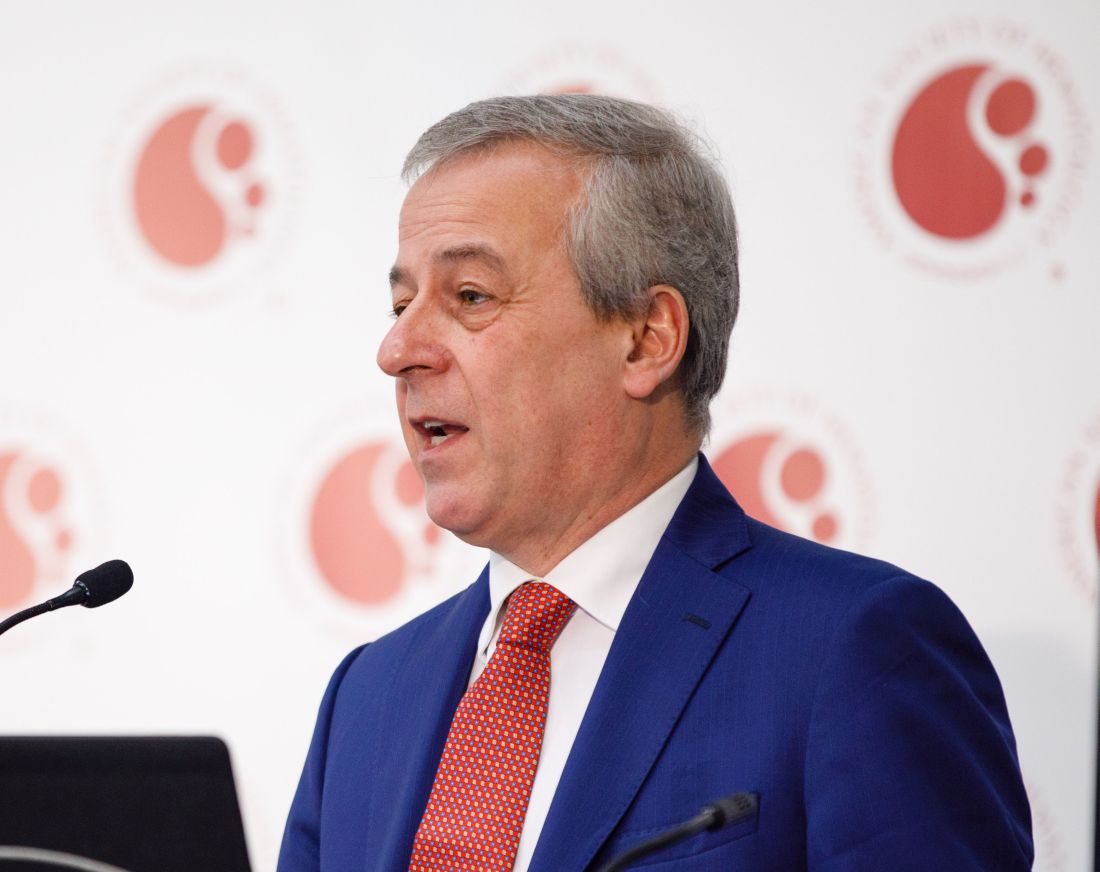
The recently approved agent should be considered a new therapeutic option for this rare and life-threatening syndrome because of its targeted mode of action, Dr. Locatelli and his coinvestigators reported at the annual meeting of the American Society of Hematology.
Multiple lines of evidence have pointed to interferon gamma as a “rational target” in this disease, and elevated levels of interferon gamma are consistently observed in patients with HLH, Dr. Locatelli said in a press conference at the meeting.
Emapalumab binds to its target with high affinity, recognizing both free and receptor-bound interferon gamma, he added.
Primary HLH is a rare, life-threatening syndrome of hyperinflammation, characterized by prolonged fever, cytopenias, and splenomegaly and hepatomegaly, among other clinical manifestations, Dr. Locatelli said.
In the open-label, single-arm, pivotal study, 34 children with primary HLH were treated: 7 who were treatment naive and 27 who had failed conventional HLH therapy.
The patients received emapalumab intravenously with concomitant dexamethasone for up to 8 weeks, or extended to the point of allogeneic hematopoietic stem cell transplantation (HSCT), if needed.
The study met its primary endpoint of overall response rate higher than 40%, Dr. Locatelli reported. The overall response rate was 64.7% for all 34 treated patients (95% confidence interval, 46% to 80%; P = .0031), and 63% for the 27 patients who had failed prior therapy (95% CI, 42% to 81%; P = .0134), reported data show.
Response was rapid, occurring at a median of 8 days after starting emapalumab, and patients were in response for a median of 75% of days during treatment, Dr. Locatelli said.
Common adverse events in the study included infections, infusion-related reactions, pyrexia, and hypertension, while one patient had disseminated histoplasmosis that resolved with appropriate treatment, according to investigators.
In light of these results, the Food and Drug Administration approved emapalumab on Nov. 20, 2018, for the treatment of pediatric and adult patients with primary HLH with refractory, recurrent or progressive disease, or intolerance to conventional HLH treatments.
There is “certainly room for enlarging the indication” to first-line treatment of HLH once a sufficient number of previously untreated patients have been treated with the monoclonal antibody, Dr. Locatelli said.
However, a randomized trial would not be feasible, he said. “It’s a very rare disease, and it would be almost impossible to run a prospective, randomized trial in a reasonable period of time.”
The study described by Dr. Locatelli was sponsored by Novimmune. Study authors provided disclosures related to Sobi, Novimmune, Rocket Pharmaceuticals, Inc., AB2Bio, Novartis, Eli Lilly, Sanofi, UCB, Pfizer, and Abbvie. Two authors reported employment with Novimmune.
SOURCE: Locatelli F et al. ASH 2018; Abstract LBA-6.
, according to Franco Locatelli, MD, of the department of pediatric hematology and oncology at Ospedale Pediatrico Bambino Gesù, Rome.
The recently approved agent should be considered a new therapeutic option for this rare and life-threatening syndrome because of its targeted mode of action, Dr. Locatelli and his coinvestigators reported at the annual meeting of the American Society of Hematology.
Multiple lines of evidence have pointed to interferon gamma as a “rational target” in this disease, and elevated levels of interferon gamma are consistently observed in patients with HLH, Dr. Locatelli said in a press conference at the meeting.
Emapalumab binds to its target with high affinity, recognizing both free and receptor-bound interferon gamma, he added.
Primary HLH is a rare, life-threatening syndrome of hyperinflammation, characterized by prolonged fever, cytopenias, and splenomegaly and hepatomegaly, among other clinical manifestations, Dr. Locatelli said.
In the open-label, single-arm, pivotal study, 34 children with primary HLH were treated: 7 who were treatment naive and 27 who had failed conventional HLH therapy.
The patients received emapalumab intravenously with concomitant dexamethasone for up to 8 weeks, or extended to the point of allogeneic hematopoietic stem cell transplantation (HSCT), if needed.
The study met its primary endpoint of overall response rate higher than 40%, Dr. Locatelli reported. The overall response rate was 64.7% for all 34 treated patients (95% confidence interval, 46% to 80%; P = .0031), and 63% for the 27 patients who had failed prior therapy (95% CI, 42% to 81%; P = .0134), reported data show.
Response was rapid, occurring at a median of 8 days after starting emapalumab, and patients were in response for a median of 75% of days during treatment, Dr. Locatelli said.
Common adverse events in the study included infections, infusion-related reactions, pyrexia, and hypertension, while one patient had disseminated histoplasmosis that resolved with appropriate treatment, according to investigators.
In light of these results, the Food and Drug Administration approved emapalumab on Nov. 20, 2018, for the treatment of pediatric and adult patients with primary HLH with refractory, recurrent or progressive disease, or intolerance to conventional HLH treatments.
There is “certainly room for enlarging the indication” to first-line treatment of HLH once a sufficient number of previously untreated patients have been treated with the monoclonal antibody, Dr. Locatelli said.
However, a randomized trial would not be feasible, he said. “It’s a very rare disease, and it would be almost impossible to run a prospective, randomized trial in a reasonable period of time.”
The study described by Dr. Locatelli was sponsored by Novimmune. Study authors provided disclosures related to Sobi, Novimmune, Rocket Pharmaceuticals, Inc., AB2Bio, Novartis, Eli Lilly, Sanofi, UCB, Pfizer, and Abbvie. Two authors reported employment with Novimmune.
SOURCE: Locatelli F et al. ASH 2018; Abstract LBA-6.
, according to Franco Locatelli, MD, of the department of pediatric hematology and oncology at Ospedale Pediatrico Bambino Gesù, Rome.
The recently approved agent should be considered a new therapeutic option for this rare and life-threatening syndrome because of its targeted mode of action, Dr. Locatelli and his coinvestigators reported at the annual meeting of the American Society of Hematology.
Multiple lines of evidence have pointed to interferon gamma as a “rational target” in this disease, and elevated levels of interferon gamma are consistently observed in patients with HLH, Dr. Locatelli said in a press conference at the meeting.
Emapalumab binds to its target with high affinity, recognizing both free and receptor-bound interferon gamma, he added.
Primary HLH is a rare, life-threatening syndrome of hyperinflammation, characterized by prolonged fever, cytopenias, and splenomegaly and hepatomegaly, among other clinical manifestations, Dr. Locatelli said.
In the open-label, single-arm, pivotal study, 34 children with primary HLH were treated: 7 who were treatment naive and 27 who had failed conventional HLH therapy.
The patients received emapalumab intravenously with concomitant dexamethasone for up to 8 weeks, or extended to the point of allogeneic hematopoietic stem cell transplantation (HSCT), if needed.
The study met its primary endpoint of overall response rate higher than 40%, Dr. Locatelli reported. The overall response rate was 64.7% for all 34 treated patients (95% confidence interval, 46% to 80%; P = .0031), and 63% for the 27 patients who had failed prior therapy (95% CI, 42% to 81%; P = .0134), reported data show.
Response was rapid, occurring at a median of 8 days after starting emapalumab, and patients were in response for a median of 75% of days during treatment, Dr. Locatelli said.
Common adverse events in the study included infections, infusion-related reactions, pyrexia, and hypertension, while one patient had disseminated histoplasmosis that resolved with appropriate treatment, according to investigators.
In light of these results, the Food and Drug Administration approved emapalumab on Nov. 20, 2018, for the treatment of pediatric and adult patients with primary HLH with refractory, recurrent or progressive disease, or intolerance to conventional HLH treatments.
There is “certainly room for enlarging the indication” to first-line treatment of HLH once a sufficient number of previously untreated patients have been treated with the monoclonal antibody, Dr. Locatelli said.
However, a randomized trial would not be feasible, he said. “It’s a very rare disease, and it would be almost impossible to run a prospective, randomized trial in a reasonable period of time.”
The study described by Dr. Locatelli was sponsored by Novimmune. Study authors provided disclosures related to Sobi, Novimmune, Rocket Pharmaceuticals, Inc., AB2Bio, Novartis, Eli Lilly, Sanofi, UCB, Pfizer, and Abbvie. Two authors reported employment with Novimmune.
SOURCE: Locatelli F et al. ASH 2018; Abstract LBA-6.
FROM ASH 2018
Key clinical point: Emapalumab, an interferon gamma-blocking antibody, controls disease activity and has a favorable safety profile in patients with primary hemophagocytic lymphohistiocytosis.
Major finding: The overall response rate was 64.7% for all 34 treated patients (95% CI, 46%-80%; P = .0031), and 63% for the 27 patients who had failed prior therapy (95% CI, 42%-81%; P = .0134).
Study details: In the open-label, single-arm, pivotal study, 34 children with primary HLH were treated: 7 who were treatment naive and 27 who had failed conventional HLH therapy.
Disclosures: The study described by Dr. Locatelli was sponsored by Novimmune. Study authors provided disclosures related to Sobi, Novimmune, Rocket Pharmaceuticals, AB2Bio, Novartis, Eli Lilly, Sanofi, UCB, Pfizer, and Abbvie. Two authors reported employment with Novimmune.
Source: Locatelli F et al. ASH 2018; Abstract LBA-6.
Lower-dose rituximab may be enough in acquired TTP
SAN DIEGO – Lower-than-usual doses of rituximab may be sufficient in patients with acquired thrombotic thrombocytopenic purpura (TTP), results of a recent pilot safety and efficacy study suggest.
Patients receiving just 100 mg/week for 4 weeks had rates of relapse and exacerbation that were favorable, compared with historical controls, according to investigator Jeffrey I. Zwicker, MD, of Beth Israel Deaconess Medical Center and Harvard Medical School, both in Boston. He presented the findings at the annual meeting of the American Society of Hematology.
However, the low-dose treatment was not without side effects, according to Dr. Zwicker, who described one case of acute respiratory failure out of the 19 patients enrolled in the ART (Adjuvant Rituximab in TTP) study.
“The likely benefit is cost savings, rather than less toxicity,” Dr. Zwicker said of the low-dose rituximab regimen.
Out of 19 patients enrolled in ART, 18 were eligible to receive the study treatment, which included low-dose rituximab plus standard plasma exchange and corticosteroids.
Following this initial therapy, all patients had a response, defined as a platelet count 150,000/mcL or greater for 2 consecutive days, with a median time to response of 5 days.
There were two exacerbations (12%) at 30 days after stopping plasma exchange and no cases of refractory TTP, which compared favorably to historical controls, Dr. Zwicker said.
The rate of relapse at 2 years was 28%, which again compared favorably with a historical control data repository in which the rate of relapse at 2 years was 51%.
One patient in the study suffered a case of acute respiratory failure requiring intubation during the third rituximab infusion and was ultimately placed on extracorporeal membrane oxygenation.
“The patient did survive, but this is just a reminder that there are potential side effects, even with lower doses of rituximab,” Dr. Zwicker said.
A few other serious adverse events – including central line infection and bacteremia in one patient – were more likely related to the plasma exchange, he added.
These results with low-dose rituximab are consistent with findings that rituximab 375 mg/m2 for four doses reduces the incidence of exacerbation and refractory disease and prevents or delays relapses, according to Dr. Zwicker and his coinvestigators, including J. Evan Sadler, MD, PhD, of Washington University, St. Louis, who initiated the study.
The typical TTP regimen of rituximab 375 mg/m2 for four weekly doses is borrowed from protocols for B-cell lymphomas; however, the B-cell mass in nonmalignant disease is likely to be much less than in lymphoproliferative disorders, Dr. Zwicker told attendees.
“The benefit, principally, of lower-dose rituximab is saving of thousands upon thousands of dollars,” Dr. Zwicker said.
This is not the only data set to suggest a potential role for lower-dose rituximab, he added, noting that a recently published retrospective analysis showed “fairly similar” treatment-free survival rates for standard rituximab and a reduced-dose regimen. There also are case series in other autoimmune cytopenias, namely idiopathic thrombocytopenic purpura and pure red cell aplasia, that provide evidence in support of low-dose rituximab, he added.
Dr. Zwicker reported research funding with Incyte and Quercegen, and consultancy with Parexel. Dr. Sadler reported consultancy with Ablynx.
SOURCE: Zwicker JI et al. ASH 2018, Abstract 374.
SAN DIEGO – Lower-than-usual doses of rituximab may be sufficient in patients with acquired thrombotic thrombocytopenic purpura (TTP), results of a recent pilot safety and efficacy study suggest.
Patients receiving just 100 mg/week for 4 weeks had rates of relapse and exacerbation that were favorable, compared with historical controls, according to investigator Jeffrey I. Zwicker, MD, of Beth Israel Deaconess Medical Center and Harvard Medical School, both in Boston. He presented the findings at the annual meeting of the American Society of Hematology.
However, the low-dose treatment was not without side effects, according to Dr. Zwicker, who described one case of acute respiratory failure out of the 19 patients enrolled in the ART (Adjuvant Rituximab in TTP) study.
“The likely benefit is cost savings, rather than less toxicity,” Dr. Zwicker said of the low-dose rituximab regimen.
Out of 19 patients enrolled in ART, 18 were eligible to receive the study treatment, which included low-dose rituximab plus standard plasma exchange and corticosteroids.
Following this initial therapy, all patients had a response, defined as a platelet count 150,000/mcL or greater for 2 consecutive days, with a median time to response of 5 days.
There were two exacerbations (12%) at 30 days after stopping plasma exchange and no cases of refractory TTP, which compared favorably to historical controls, Dr. Zwicker said.
The rate of relapse at 2 years was 28%, which again compared favorably with a historical control data repository in which the rate of relapse at 2 years was 51%.
One patient in the study suffered a case of acute respiratory failure requiring intubation during the third rituximab infusion and was ultimately placed on extracorporeal membrane oxygenation.
“The patient did survive, but this is just a reminder that there are potential side effects, even with lower doses of rituximab,” Dr. Zwicker said.
A few other serious adverse events – including central line infection and bacteremia in one patient – were more likely related to the plasma exchange, he added.
These results with low-dose rituximab are consistent with findings that rituximab 375 mg/m2 for four doses reduces the incidence of exacerbation and refractory disease and prevents or delays relapses, according to Dr. Zwicker and his coinvestigators, including J. Evan Sadler, MD, PhD, of Washington University, St. Louis, who initiated the study.
The typical TTP regimen of rituximab 375 mg/m2 for four weekly doses is borrowed from protocols for B-cell lymphomas; however, the B-cell mass in nonmalignant disease is likely to be much less than in lymphoproliferative disorders, Dr. Zwicker told attendees.
“The benefit, principally, of lower-dose rituximab is saving of thousands upon thousands of dollars,” Dr. Zwicker said.
This is not the only data set to suggest a potential role for lower-dose rituximab, he added, noting that a recently published retrospective analysis showed “fairly similar” treatment-free survival rates for standard rituximab and a reduced-dose regimen. There also are case series in other autoimmune cytopenias, namely idiopathic thrombocytopenic purpura and pure red cell aplasia, that provide evidence in support of low-dose rituximab, he added.
Dr. Zwicker reported research funding with Incyte and Quercegen, and consultancy with Parexel. Dr. Sadler reported consultancy with Ablynx.
SOURCE: Zwicker JI et al. ASH 2018, Abstract 374.
SAN DIEGO – Lower-than-usual doses of rituximab may be sufficient in patients with acquired thrombotic thrombocytopenic purpura (TTP), results of a recent pilot safety and efficacy study suggest.
Patients receiving just 100 mg/week for 4 weeks had rates of relapse and exacerbation that were favorable, compared with historical controls, according to investigator Jeffrey I. Zwicker, MD, of Beth Israel Deaconess Medical Center and Harvard Medical School, both in Boston. He presented the findings at the annual meeting of the American Society of Hematology.
However, the low-dose treatment was not without side effects, according to Dr. Zwicker, who described one case of acute respiratory failure out of the 19 patients enrolled in the ART (Adjuvant Rituximab in TTP) study.
“The likely benefit is cost savings, rather than less toxicity,” Dr. Zwicker said of the low-dose rituximab regimen.
Out of 19 patients enrolled in ART, 18 were eligible to receive the study treatment, which included low-dose rituximab plus standard plasma exchange and corticosteroids.
Following this initial therapy, all patients had a response, defined as a platelet count 150,000/mcL or greater for 2 consecutive days, with a median time to response of 5 days.
There were two exacerbations (12%) at 30 days after stopping plasma exchange and no cases of refractory TTP, which compared favorably to historical controls, Dr. Zwicker said.
The rate of relapse at 2 years was 28%, which again compared favorably with a historical control data repository in which the rate of relapse at 2 years was 51%.
One patient in the study suffered a case of acute respiratory failure requiring intubation during the third rituximab infusion and was ultimately placed on extracorporeal membrane oxygenation.
“The patient did survive, but this is just a reminder that there are potential side effects, even with lower doses of rituximab,” Dr. Zwicker said.
A few other serious adverse events – including central line infection and bacteremia in one patient – were more likely related to the plasma exchange, he added.
These results with low-dose rituximab are consistent with findings that rituximab 375 mg/m2 for four doses reduces the incidence of exacerbation and refractory disease and prevents or delays relapses, according to Dr. Zwicker and his coinvestigators, including J. Evan Sadler, MD, PhD, of Washington University, St. Louis, who initiated the study.
The typical TTP regimen of rituximab 375 mg/m2 for four weekly doses is borrowed from protocols for B-cell lymphomas; however, the B-cell mass in nonmalignant disease is likely to be much less than in lymphoproliferative disorders, Dr. Zwicker told attendees.
“The benefit, principally, of lower-dose rituximab is saving of thousands upon thousands of dollars,” Dr. Zwicker said.
This is not the only data set to suggest a potential role for lower-dose rituximab, he added, noting that a recently published retrospective analysis showed “fairly similar” treatment-free survival rates for standard rituximab and a reduced-dose regimen. There also are case series in other autoimmune cytopenias, namely idiopathic thrombocytopenic purpura and pure red cell aplasia, that provide evidence in support of low-dose rituximab, he added.
Dr. Zwicker reported research funding with Incyte and Quercegen, and consultancy with Parexel. Dr. Sadler reported consultancy with Ablynx.
SOURCE: Zwicker JI et al. ASH 2018, Abstract 374.
REPORTING FROM ASH 2018
Key clinical point:
Major finding: After low-dose rituximab plus standard plasma exchange and corticosteroids, the rate of relapse at 2 years was 28%, versus 51% in a historical control data set.
Study details: Findings of the ART (Adjuvant Rituximab in TTP) study including 19 patients with acquired TTP.
Disclosures: Dr. Zwicker reported research funding with Incyte and Quercegen, and consultancy with Parexel. Dr. Sadler reported consultancy with Ablynx.
Source: Zwicker JI et al. ASH 2018, Abstract 374.