User login
MS Reactivation After NTZ Discontinuation: The Predictors
Key clinical point: The discontinuation of natalizumab (NTZ) therapy may lead to a marked reactivation of multiple sclerosis (MS); high disease activity and a high level of disability before NTZ initiation predicted multiple sclerosis reactivation.
Major finding: Clinical reactivation was reported in 20.2% of patients within 6 months after NTZ discontinuation. A higher number of relapses during the year before NTZ initiation was significantly associated with an increased risk of reactivation at 6 and 12 months. At 6 months, an Expanded Disability Status Scale (EDSS) of 5.5 or higher before NTZ initiation was associated with a higher reactivation risk.
Study details: The findings are based on the results of a retrospective study of 89 patients with MS who had discontinued NTZ treatment.
Disclosures: The study was in part supported by a VTR grant from Kuopio University Hospital and personal grants from Ilkka Rauma, MD, from Orion Research Foundation and The Finnish Medical Foundation.
Citation: Mustonen T BM et al. Mult Scler Relat Disord. 2019 Nov 5. doi: 10.1016/j.msard.2019.101498.
Key clinical point: The discontinuation of natalizumab (NTZ) therapy may lead to a marked reactivation of multiple sclerosis (MS); high disease activity and a high level of disability before NTZ initiation predicted multiple sclerosis reactivation.
Major finding: Clinical reactivation was reported in 20.2% of patients within 6 months after NTZ discontinuation. A higher number of relapses during the year before NTZ initiation was significantly associated with an increased risk of reactivation at 6 and 12 months. At 6 months, an Expanded Disability Status Scale (EDSS) of 5.5 or higher before NTZ initiation was associated with a higher reactivation risk.
Study details: The findings are based on the results of a retrospective study of 89 patients with MS who had discontinued NTZ treatment.
Disclosures: The study was in part supported by a VTR grant from Kuopio University Hospital and personal grants from Ilkka Rauma, MD, from Orion Research Foundation and The Finnish Medical Foundation.
Citation: Mustonen T BM et al. Mult Scler Relat Disord. 2019 Nov 5. doi: 10.1016/j.msard.2019.101498.
Key clinical point: The discontinuation of natalizumab (NTZ) therapy may lead to a marked reactivation of multiple sclerosis (MS); high disease activity and a high level of disability before NTZ initiation predicted multiple sclerosis reactivation.
Major finding: Clinical reactivation was reported in 20.2% of patients within 6 months after NTZ discontinuation. A higher number of relapses during the year before NTZ initiation was significantly associated with an increased risk of reactivation at 6 and 12 months. At 6 months, an Expanded Disability Status Scale (EDSS) of 5.5 or higher before NTZ initiation was associated with a higher reactivation risk.
Study details: The findings are based on the results of a retrospective study of 89 patients with MS who had discontinued NTZ treatment.
Disclosures: The study was in part supported by a VTR grant from Kuopio University Hospital and personal grants from Ilkka Rauma, MD, from Orion Research Foundation and The Finnish Medical Foundation.
Citation: Mustonen T BM et al. Mult Scler Relat Disord. 2019 Nov 5. doi: 10.1016/j.msard.2019.101498.
Disease Activity May Correlate With Disability Progression in MS
Key clinical point: Older age at onset and presence of clinical or radiological disease activity was found to correlate with disability progression in patients with primary progressive multiple sclerosis (MS).
Major finding: The analysis of age at onset showed that for every 10-year increase, the risk of reaching Expanded Disability Status Scale (EDSS) scores of 4 and 6 increased by 26% and 31%, respectively. Patients with clinical exacerbations reached EDSS scores of 6, 7, and 8 faster than those without associated exacerbations; patients with gadolinium-enhancing lesions reached EDSS scores of 7 earlier.
Study details: A retrospective study conducted at 2 multiple sclerosis clinics in Argentina that included 178 patients with a median age of MS onset of 42 years.
Disclosures: This study was partially financed by an unrestricted grant from Merck Argentina (JC) and supported by internal funds from the Neuroimmunology Department of Fleni. The corresponding author is a board member of Merck-Serono Argentina, Biogen-Idec LATAM, and Merck-Serono LATAM.
Citation: Marrodan M, et al. Mult Scler Relat Disord. 2019 Dec 14. doi: 10.1016/j.msard.2019.101892.
Key clinical point: Older age at onset and presence of clinical or radiological disease activity was found to correlate with disability progression in patients with primary progressive multiple sclerosis (MS).
Major finding: The analysis of age at onset showed that for every 10-year increase, the risk of reaching Expanded Disability Status Scale (EDSS) scores of 4 and 6 increased by 26% and 31%, respectively. Patients with clinical exacerbations reached EDSS scores of 6, 7, and 8 faster than those without associated exacerbations; patients with gadolinium-enhancing lesions reached EDSS scores of 7 earlier.
Study details: A retrospective study conducted at 2 multiple sclerosis clinics in Argentina that included 178 patients with a median age of MS onset of 42 years.
Disclosures: This study was partially financed by an unrestricted grant from Merck Argentina (JC) and supported by internal funds from the Neuroimmunology Department of Fleni. The corresponding author is a board member of Merck-Serono Argentina, Biogen-Idec LATAM, and Merck-Serono LATAM.
Citation: Marrodan M, et al. Mult Scler Relat Disord. 2019 Dec 14. doi: 10.1016/j.msard.2019.101892.
Key clinical point: Older age at onset and presence of clinical or radiological disease activity was found to correlate with disability progression in patients with primary progressive multiple sclerosis (MS).
Major finding: The analysis of age at onset showed that for every 10-year increase, the risk of reaching Expanded Disability Status Scale (EDSS) scores of 4 and 6 increased by 26% and 31%, respectively. Patients with clinical exacerbations reached EDSS scores of 6, 7, and 8 faster than those without associated exacerbations; patients with gadolinium-enhancing lesions reached EDSS scores of 7 earlier.
Study details: A retrospective study conducted at 2 multiple sclerosis clinics in Argentina that included 178 patients with a median age of MS onset of 42 years.
Disclosures: This study was partially financed by an unrestricted grant from Merck Argentina (JC) and supported by internal funds from the Neuroimmunology Department of Fleni. The corresponding author is a board member of Merck-Serono Argentina, Biogen-Idec LATAM, and Merck-Serono LATAM.
Citation: Marrodan M, et al. Mult Scler Relat Disord. 2019 Dec 14. doi: 10.1016/j.msard.2019.101892.
Poor Sleep Common in Patients With MS
Key clinical point: Poor sleep and sleep disorders are prevalent in patients with mild to moderately severe multiple sclerosis (MS) and are associated with other comorbidities.
Main finding: Poor sleep was reported in 66% of patients with MS, sleep apnea in 31%, insomnia in 29%, and restless legs in 26%. Poor sleep and insomnia were independent predictors of fatigue (odds ratio, 2.63; P = .046) and depression (odds ratio, 5.62; P = .003), respectively.
Study details: A sleep substudy of a randomized controlled trial, including 111 adults with MS and an expanded disability status scale score between 2 and 6.
Disclosures: The study was supported by a grant from the National Health and Medical Research Council-Motor Impairment Program.
Citation: Hensen HA, et al. Sleep Med. 2019 Dec 16. doi: 10.1016/j.sleep.2019.11.415.
Key clinical point: Poor sleep and sleep disorders are prevalent in patients with mild to moderately severe multiple sclerosis (MS) and are associated with other comorbidities.
Main finding: Poor sleep was reported in 66% of patients with MS, sleep apnea in 31%, insomnia in 29%, and restless legs in 26%. Poor sleep and insomnia were independent predictors of fatigue (odds ratio, 2.63; P = .046) and depression (odds ratio, 5.62; P = .003), respectively.
Study details: A sleep substudy of a randomized controlled trial, including 111 adults with MS and an expanded disability status scale score between 2 and 6.
Disclosures: The study was supported by a grant from the National Health and Medical Research Council-Motor Impairment Program.
Citation: Hensen HA, et al. Sleep Med. 2019 Dec 16. doi: 10.1016/j.sleep.2019.11.415.
Key clinical point: Poor sleep and sleep disorders are prevalent in patients with mild to moderately severe multiple sclerosis (MS) and are associated with other comorbidities.
Main finding: Poor sleep was reported in 66% of patients with MS, sleep apnea in 31%, insomnia in 29%, and restless legs in 26%. Poor sleep and insomnia were independent predictors of fatigue (odds ratio, 2.63; P = .046) and depression (odds ratio, 5.62; P = .003), respectively.
Study details: A sleep substudy of a randomized controlled trial, including 111 adults with MS and an expanded disability status scale score between 2 and 6.
Disclosures: The study was supported by a grant from the National Health and Medical Research Council-Motor Impairment Program.
Citation: Hensen HA, et al. Sleep Med. 2019 Dec 16. doi: 10.1016/j.sleep.2019.11.415.
Learning a Second Language May Increase Grey Matter in MS Patients
Key clinical point: Learning a second language may increase the grey matter volume in patients with multiple sclerosis (MS) and consequently improve mental health and health-related quality of life.
Major finding: Training in a second language was associated with a significant increase of grey matter volume in the right hippocampus, parahippocampus, and putamen region of the brain in patients with MS.
Study details: A prospective evaluation of second language training in patients with MS (n = 11) and healthy controls (n = 12).
Disclosures: The study was funded by Merck Austria, without any other external funding. None of the authors was affiliated with Merck Austria.
Citation: Ehling R, et al. PLoS One. 2019 Dec 23. doi: 10.1371/journal.pone.0226525.
Key clinical point: Learning a second language may increase the grey matter volume in patients with multiple sclerosis (MS) and consequently improve mental health and health-related quality of life.
Major finding: Training in a second language was associated with a significant increase of grey matter volume in the right hippocampus, parahippocampus, and putamen region of the brain in patients with MS.
Study details: A prospective evaluation of second language training in patients with MS (n = 11) and healthy controls (n = 12).
Disclosures: The study was funded by Merck Austria, without any other external funding. None of the authors was affiliated with Merck Austria.
Citation: Ehling R, et al. PLoS One. 2019 Dec 23. doi: 10.1371/journal.pone.0226525.
Key clinical point: Learning a second language may increase the grey matter volume in patients with multiple sclerosis (MS) and consequently improve mental health and health-related quality of life.
Major finding: Training in a second language was associated with a significant increase of grey matter volume in the right hippocampus, parahippocampus, and putamen region of the brain in patients with MS.
Study details: A prospective evaluation of second language training in patients with MS (n = 11) and healthy controls (n = 12).
Disclosures: The study was funded by Merck Austria, without any other external funding. None of the authors was affiliated with Merck Austria.
Citation: Ehling R, et al. PLoS One. 2019 Dec 23. doi: 10.1371/journal.pone.0226525.
Dalfampridine Holds Potential for MS-Related Balance Impairment
Key clinical point: Dalfampridine may be a treatment option for balance impairment associated with multiple sclerosis (MS).
Major finding: The dalfampridine treated group demonstrated better balance in both single- (quiet standing test) and dual-task (Stroop test) conditions than the placebo group; however, the benefits of dalfampridine were not retained beyond 4 weeks after discontinuation of treatment.
Study details: A substudy of a randomized, double-blind, placebo-controlled trial in which patients received dalfampridine 10 mg (27 patients) or placebo (14 patients) twice a day for 12 weeks.
Disclosures: The original trial was funded by Biogen. The corresponding author disclosed consultancy with Almirall, Biogen, Novartis, Genzyme, Roche, and Teva and research funding from Associazione Italiana Sclerosi Multipla and Genzyme.
Citation: Prosperini L, et al. Neurotherapeutics. 2019 Dec 9. doi: 10.1007/s13311-019-00813-5.
Key clinical point: Dalfampridine may be a treatment option for balance impairment associated with multiple sclerosis (MS).
Major finding: The dalfampridine treated group demonstrated better balance in both single- (quiet standing test) and dual-task (Stroop test) conditions than the placebo group; however, the benefits of dalfampridine were not retained beyond 4 weeks after discontinuation of treatment.
Study details: A substudy of a randomized, double-blind, placebo-controlled trial in which patients received dalfampridine 10 mg (27 patients) or placebo (14 patients) twice a day for 12 weeks.
Disclosures: The original trial was funded by Biogen. The corresponding author disclosed consultancy with Almirall, Biogen, Novartis, Genzyme, Roche, and Teva and research funding from Associazione Italiana Sclerosi Multipla and Genzyme.
Citation: Prosperini L, et al. Neurotherapeutics. 2019 Dec 9. doi: 10.1007/s13311-019-00813-5.
Key clinical point: Dalfampridine may be a treatment option for balance impairment associated with multiple sclerosis (MS).
Major finding: The dalfampridine treated group demonstrated better balance in both single- (quiet standing test) and dual-task (Stroop test) conditions than the placebo group; however, the benefits of dalfampridine were not retained beyond 4 weeks after discontinuation of treatment.
Study details: A substudy of a randomized, double-blind, placebo-controlled trial in which patients received dalfampridine 10 mg (27 patients) or placebo (14 patients) twice a day for 12 weeks.
Disclosures: The original trial was funded by Biogen. The corresponding author disclosed consultancy with Almirall, Biogen, Novartis, Genzyme, Roche, and Teva and research funding from Associazione Italiana Sclerosi Multipla and Genzyme.
Citation: Prosperini L, et al. Neurotherapeutics. 2019 Dec 9. doi: 10.1007/s13311-019-00813-5.
Sun Exposure May Play a Role in MS Risk
Key clinical point: Low sun exposure increases the risk of multiple sclerosis (MS) both directly and indirectly, which impacts vitamin D levels. Low sun exposure and vitamin D deficiency may be different risk factors acting synergistically.
Major finding: Low exposure to sunlight was associated with a 26% and 10% higher risk for MS through direct and indirect effects on the vitamin D levels, respectively. About 30% of the total effect of low sun exposure-related MS risk was mediated by vitamin D deficiency.
Study details: The data were obtained from two population-based case–control studies (7,069 cases; 6,632 matched controls).
Disclosures: The research was supported by grants received from the Swedish Medical Research Council, the Swedish Research Council for Health, Working Life and Welfare, the Swedish Brain Foundation, and the Swedish Society for Medical Research. Some of the investigators reported receiving grants and personal fees from multiple pharmaceutical companies.
Citation: Hedström AK, et al. J Neurol. 2019 Dec 12. doi: 10.1007/s00415-019-09677-3.
Key clinical point: Low sun exposure increases the risk of multiple sclerosis (MS) both directly and indirectly, which impacts vitamin D levels. Low sun exposure and vitamin D deficiency may be different risk factors acting synergistically.
Major finding: Low exposure to sunlight was associated with a 26% and 10% higher risk for MS through direct and indirect effects on the vitamin D levels, respectively. About 30% of the total effect of low sun exposure-related MS risk was mediated by vitamin D deficiency.
Study details: The data were obtained from two population-based case–control studies (7,069 cases; 6,632 matched controls).
Disclosures: The research was supported by grants received from the Swedish Medical Research Council, the Swedish Research Council for Health, Working Life and Welfare, the Swedish Brain Foundation, and the Swedish Society for Medical Research. Some of the investigators reported receiving grants and personal fees from multiple pharmaceutical companies.
Citation: Hedström AK, et al. J Neurol. 2019 Dec 12. doi: 10.1007/s00415-019-09677-3.
Key clinical point: Low sun exposure increases the risk of multiple sclerosis (MS) both directly and indirectly, which impacts vitamin D levels. Low sun exposure and vitamin D deficiency may be different risk factors acting synergistically.
Major finding: Low exposure to sunlight was associated with a 26% and 10% higher risk for MS through direct and indirect effects on the vitamin D levels, respectively. About 30% of the total effect of low sun exposure-related MS risk was mediated by vitamin D deficiency.
Study details: The data were obtained from two population-based case–control studies (7,069 cases; 6,632 matched controls).
Disclosures: The research was supported by grants received from the Swedish Medical Research Council, the Swedish Research Council for Health, Working Life and Welfare, the Swedish Brain Foundation, and the Swedish Society for Medical Research. Some of the investigators reported receiving grants and personal fees from multiple pharmaceutical companies.
Citation: Hedström AK, et al. J Neurol. 2019 Dec 12. doi: 10.1007/s00415-019-09677-3.
MS: Breastfeeding May Offer Protection Against Postpartum Relapse
Key clinical point: Breastfeeding may prevent postpartum relapses in women with multiple sclerosis (MS). Major finding: Women with MS who breastfed had a 37% lower risk of postpartum relapse, compared with those who did not breastfeed (P = .006); exclusive breastfeeding had a greater benefit than nonexclusive breastfeeding.
Study details: A systematic review and meta-analysis of 24 studies, including 2,974 women.
Disclosures: The National Multiple Sclerosis Society supported the study through a Sylvia Lawry Physician Fellowship awarded to Dr. Krysko.
Citation: Krysko KM, et al. JAMA Neurol. 2019 Dec 9. doi: 10.1001/jamaneurol.2019.4173.
Key clinical point: Breastfeeding may prevent postpartum relapses in women with multiple sclerosis (MS). Major finding: Women with MS who breastfed had a 37% lower risk of postpartum relapse, compared with those who did not breastfeed (P = .006); exclusive breastfeeding had a greater benefit than nonexclusive breastfeeding.
Study details: A systematic review and meta-analysis of 24 studies, including 2,974 women.
Disclosures: The National Multiple Sclerosis Society supported the study through a Sylvia Lawry Physician Fellowship awarded to Dr. Krysko.
Citation: Krysko KM, et al. JAMA Neurol. 2019 Dec 9. doi: 10.1001/jamaneurol.2019.4173.
Key clinical point: Breastfeeding may prevent postpartum relapses in women with multiple sclerosis (MS). Major finding: Women with MS who breastfed had a 37% lower risk of postpartum relapse, compared with those who did not breastfeed (P = .006); exclusive breastfeeding had a greater benefit than nonexclusive breastfeeding.
Study details: A systematic review and meta-analysis of 24 studies, including 2,974 women.
Disclosures: The National Multiple Sclerosis Society supported the study through a Sylvia Lawry Physician Fellowship awarded to Dr. Krysko.
Citation: Krysko KM, et al. JAMA Neurol. 2019 Dec 9. doi: 10.1001/jamaneurol.2019.4173.
Efficacy and safety of lowering dupilumab frequency for AD
Patients with moderate to severe atopic dermatitis who responded well to the approved dupilumab regimen of 300 mg every 2 weeks in pivotal phase 3 monotherapy trials were more likely to have a continued response over the longer term if they maintained this regimen rather than switching to longer dosing intervals or discontinuing the medication.
This finding comes from a 36-week, randomized, double-blind, placebo-controlled trial that enrolled 422 – SOLO 1 and SOLO 2.
The new international study – SOLO-CONTINUE – randomized these patients to continue the original regimen (weekly or every 2 weeks), to receive 300 mg of the biologic medication every 4 or 8 weeks, or to receive placebo.
Patients who continued the original regimen had the most consistent maintenance of treatment effect, while patients on longer dosage intervals or placebo had a dose-dependent reduction in response and no safety advantage. The incidence of treatment-emergent antidrug antibody was lowest with dupilumab weekly or every 2 weeks, and slightly higher with less-frequent dosing intervals, reported Margitta Worm, MD, of the Charité Universitätsmedizin Berlin, and coinvestigators.
“Because administration every 4 weeks or every 8 weeks did not provide an additional safety advantage and was numerically outperformed by administration weekly or every 2 weeks, we believe that it is prudent to adhere to the approved every 2 weeks regimen for adults and avoid less frequent treatment regimens (every 4 weeks or every 8 weeks) for long-term maintenance of efficacy,” they wrote in JAMA Dermatology.
Treatment success in the original SOLO trials was defined as having achieved an Investigator’s Global Assessment score of 0-1, or 75% improvement in Eczema Area and Severity Index Scores (EASI-75). As primary endpoints, SOLO-CONTINUE looked at the mean percentage change in EASI score over the course of the trial, and the percentage of patients who maintained EASI-75 at week 36.
Patients in the SOLO-CONTINUE trial who were randomized to receive dupilumab weekly or every 2 weeks had a mean percent change in EASI score of –0.06%. In contrast, patients assigned to the placebo group had a 21.7% decrease, and those taking the medication at 4- and 8-week intervals had mean changes of –3.84% and –6.84%, respectively. Post hoc analyses showed no apparent difference between dupilumab weekly and every 2 weeks in the maintenance of clinical response, the investigators reported.
Among patients with EASI-75 response at baseline, significantly more patients maintained this response at week 36 than patients receiving placebo, and there was again an apparent dose-dependent response. The percentage with EASI-75 at week 36 was 71.6% with the weekly or every-2-weeks regimen, 58.3% with the 4-week regimen, 54.9% with the 8-week regimen, and 30.4% in the placebo group.
Continuing treatment with 300 mg weekly or every 2 weeks resulted in greater maintenance of response across multiple other clinical endpoints and patient-reported outcomes as well (such as pruritus, atopic dermatitis symptoms, sleep, pain or discomfort, quality of life, and symptoms of anxiety and depression).
The more-frequent regimens also conferred no greater risk than less-frequent administration, and there were no new safety signals over the 36-week trial. Treatment-emergent adverse events (the most common were headache, nasopharyngitis, injection-site reactions, and herpes simplex virus infection) occurred in 70.7% of patients in the weekly or every-2-weeks group, 73.6% in the 4-week group, 75% in the 8-week group, and 81.7% in the placebo group.
Unlike earlier studies, the incidence of conjunctivitis was low (less than 6%) across all treatment groups, possibly because patients in the SOLO-CONTINUE trial were all high-level responders who tend to have conjunctivitis less frequently, the authors wrote.
Patients receiving less-frequent doses of dupilumab, particularly every 8 weeks, had greater rates of skin infections, flares, and rescue medication use than patients receiving doses weekly or every 2 weeks, the investigators reported. Treatment-emergent antidrug antibody incidence was slightly higher with less-frequent doses (11.7% and 6% in the 8-week and 4-week groups, respectively, compared with 4.3% and 1.2% in the every-2-weeks and weekly groups), which indicates a “higher incidence of immunogenicity with less-frequent dosage intervals” and is “consistent with other biologics,” they wrote.
Dupilumab is a human monoclonal antibody against the interleukin-4 receptor alpha that inhibits signaling of IL-4 and IL-13. The study was conducted at 185 sites in North America, Europe, Asia, and Japan. Patients had a mean age of 38.2 years; 53.8% were male.
While the trial suggests that the approved regimen of 300 mg every 2 weeks is best for long-term treatment, “therapeutic decisions are often influenced by cost-benefit considerations, in which case practitioners and other stakeholders involved in these decisions should carefully balance potential savings against suboptimal efficacy and long-term risks associated with discontinuous treatment regimens,” the investigators wrote.
The SOLO-CONTINUE trial was funded by Sanofi and Regeneron, the companies that market dupilumab. Dr. Worm reported receiving honoraria for consulting and lecture activity from Regeneron and Sanofi during and outside the conduct of the study, among other disclosures. The other authors had multiple disclosures related to these and multiple other pharmaceutical companies, or were employees of Sanofi or Regeneron.
SOURCE: Worm M et al. JAMA Dermatol. 2019 Dec 26. doi: 10.1001/jamadermatol.2019.3617.
The desire to decrease or stop a therapy such as dupilumab may be motivated by cost, current and potential adverse effects, and individual needs. Because atopic dermatitis is a waxing-and-waning disease with a predilection for cycles of escalation, there is some thought a priori that reduced treatment schedules or discontinued use of a drug may be possible in a state of low disease activity.
The investigators of the SOLO-CONTINUE trial found, however, that continuous treatment with the dosage used in the original SOLO trials (300 mg weekly or every 2 weeks) resulted in a better maintenance of response than a less-frequent dosage and was significantly better than placebo for all endpoints. The less-frequent dosage regimens (every 4 weeks and every 8 weeks), on the other hand, produced some dose-dependent reduction in efficacy.
The development of antidrug antibodies was found in approximately 11% of individuals who received placebo or dupilumab every 8 weeks, 6% of the monthly treatment group, and only 1% in the weekly group, suggesting that less-frequent administration results in higher immunogenicity. However, most of the antidrug antibody levels were low and did not seem to have any clinical effect, making this finding of uncertain relevance to patient care.
The study is valuable because, as more patients are exposed to the drug, more will want or need to reduce the dosage or stop use over time – and although it seems optimal to continue an every-2-weeks treatment regimen, this may not always be feasible. As we integrate new therapies and learn more about atopic dermatitis, it is important that we understand the options and implications around decreasing the dosage of dupilumab. This newly concluded trial is helpful in this regard.
Peter A. Lio, MD, is with the department of dermatology at Northwestern University, Chicago, and the Chicago Integrative Eczema Center. He reported receiving grants and personal fees from Regeneron, Sanofi Genzyme, and other companies, as well as other disclosures. His comments appear in JAMA Dermatology (2019 Dec 26. doi: 10.1001/jamadermatol.2019.3331).
The desire to decrease or stop a therapy such as dupilumab may be motivated by cost, current and potential adverse effects, and individual needs. Because atopic dermatitis is a waxing-and-waning disease with a predilection for cycles of escalation, there is some thought a priori that reduced treatment schedules or discontinued use of a drug may be possible in a state of low disease activity.
The investigators of the SOLO-CONTINUE trial found, however, that continuous treatment with the dosage used in the original SOLO trials (300 mg weekly or every 2 weeks) resulted in a better maintenance of response than a less-frequent dosage and was significantly better than placebo for all endpoints. The less-frequent dosage regimens (every 4 weeks and every 8 weeks), on the other hand, produced some dose-dependent reduction in efficacy.
The development of antidrug antibodies was found in approximately 11% of individuals who received placebo or dupilumab every 8 weeks, 6% of the monthly treatment group, and only 1% in the weekly group, suggesting that less-frequent administration results in higher immunogenicity. However, most of the antidrug antibody levels were low and did not seem to have any clinical effect, making this finding of uncertain relevance to patient care.
The study is valuable because, as more patients are exposed to the drug, more will want or need to reduce the dosage or stop use over time – and although it seems optimal to continue an every-2-weeks treatment regimen, this may not always be feasible. As we integrate new therapies and learn more about atopic dermatitis, it is important that we understand the options and implications around decreasing the dosage of dupilumab. This newly concluded trial is helpful in this regard.
Peter A. Lio, MD, is with the department of dermatology at Northwestern University, Chicago, and the Chicago Integrative Eczema Center. He reported receiving grants and personal fees from Regeneron, Sanofi Genzyme, and other companies, as well as other disclosures. His comments appear in JAMA Dermatology (2019 Dec 26. doi: 10.1001/jamadermatol.2019.3331).
The desire to decrease or stop a therapy such as dupilumab may be motivated by cost, current and potential adverse effects, and individual needs. Because atopic dermatitis is a waxing-and-waning disease with a predilection for cycles of escalation, there is some thought a priori that reduced treatment schedules or discontinued use of a drug may be possible in a state of low disease activity.
The investigators of the SOLO-CONTINUE trial found, however, that continuous treatment with the dosage used in the original SOLO trials (300 mg weekly or every 2 weeks) resulted in a better maintenance of response than a less-frequent dosage and was significantly better than placebo for all endpoints. The less-frequent dosage regimens (every 4 weeks and every 8 weeks), on the other hand, produced some dose-dependent reduction in efficacy.
The development of antidrug antibodies was found in approximately 11% of individuals who received placebo or dupilumab every 8 weeks, 6% of the monthly treatment group, and only 1% in the weekly group, suggesting that less-frequent administration results in higher immunogenicity. However, most of the antidrug antibody levels were low and did not seem to have any clinical effect, making this finding of uncertain relevance to patient care.
The study is valuable because, as more patients are exposed to the drug, more will want or need to reduce the dosage or stop use over time – and although it seems optimal to continue an every-2-weeks treatment regimen, this may not always be feasible. As we integrate new therapies and learn more about atopic dermatitis, it is important that we understand the options and implications around decreasing the dosage of dupilumab. This newly concluded trial is helpful in this regard.
Peter A. Lio, MD, is with the department of dermatology at Northwestern University, Chicago, and the Chicago Integrative Eczema Center. He reported receiving grants and personal fees from Regeneron, Sanofi Genzyme, and other companies, as well as other disclosures. His comments appear in JAMA Dermatology (2019 Dec 26. doi: 10.1001/jamadermatol.2019.3331).
Patients with moderate to severe atopic dermatitis who responded well to the approved dupilumab regimen of 300 mg every 2 weeks in pivotal phase 3 monotherapy trials were more likely to have a continued response over the longer term if they maintained this regimen rather than switching to longer dosing intervals or discontinuing the medication.
This finding comes from a 36-week, randomized, double-blind, placebo-controlled trial that enrolled 422 – SOLO 1 and SOLO 2.
The new international study – SOLO-CONTINUE – randomized these patients to continue the original regimen (weekly or every 2 weeks), to receive 300 mg of the biologic medication every 4 or 8 weeks, or to receive placebo.
Patients who continued the original regimen had the most consistent maintenance of treatment effect, while patients on longer dosage intervals or placebo had a dose-dependent reduction in response and no safety advantage. The incidence of treatment-emergent antidrug antibody was lowest with dupilumab weekly or every 2 weeks, and slightly higher with less-frequent dosing intervals, reported Margitta Worm, MD, of the Charité Universitätsmedizin Berlin, and coinvestigators.
“Because administration every 4 weeks or every 8 weeks did not provide an additional safety advantage and was numerically outperformed by administration weekly or every 2 weeks, we believe that it is prudent to adhere to the approved every 2 weeks regimen for adults and avoid less frequent treatment regimens (every 4 weeks or every 8 weeks) for long-term maintenance of efficacy,” they wrote in JAMA Dermatology.
Treatment success in the original SOLO trials was defined as having achieved an Investigator’s Global Assessment score of 0-1, or 75% improvement in Eczema Area and Severity Index Scores (EASI-75). As primary endpoints, SOLO-CONTINUE looked at the mean percentage change in EASI score over the course of the trial, and the percentage of patients who maintained EASI-75 at week 36.
Patients in the SOLO-CONTINUE trial who were randomized to receive dupilumab weekly or every 2 weeks had a mean percent change in EASI score of –0.06%. In contrast, patients assigned to the placebo group had a 21.7% decrease, and those taking the medication at 4- and 8-week intervals had mean changes of –3.84% and –6.84%, respectively. Post hoc analyses showed no apparent difference between dupilumab weekly and every 2 weeks in the maintenance of clinical response, the investigators reported.
Among patients with EASI-75 response at baseline, significantly more patients maintained this response at week 36 than patients receiving placebo, and there was again an apparent dose-dependent response. The percentage with EASI-75 at week 36 was 71.6% with the weekly or every-2-weeks regimen, 58.3% with the 4-week regimen, 54.9% with the 8-week regimen, and 30.4% in the placebo group.
Continuing treatment with 300 mg weekly or every 2 weeks resulted in greater maintenance of response across multiple other clinical endpoints and patient-reported outcomes as well (such as pruritus, atopic dermatitis symptoms, sleep, pain or discomfort, quality of life, and symptoms of anxiety and depression).
The more-frequent regimens also conferred no greater risk than less-frequent administration, and there were no new safety signals over the 36-week trial. Treatment-emergent adverse events (the most common were headache, nasopharyngitis, injection-site reactions, and herpes simplex virus infection) occurred in 70.7% of patients in the weekly or every-2-weeks group, 73.6% in the 4-week group, 75% in the 8-week group, and 81.7% in the placebo group.
Unlike earlier studies, the incidence of conjunctivitis was low (less than 6%) across all treatment groups, possibly because patients in the SOLO-CONTINUE trial were all high-level responders who tend to have conjunctivitis less frequently, the authors wrote.
Patients receiving less-frequent doses of dupilumab, particularly every 8 weeks, had greater rates of skin infections, flares, and rescue medication use than patients receiving doses weekly or every 2 weeks, the investigators reported. Treatment-emergent antidrug antibody incidence was slightly higher with less-frequent doses (11.7% and 6% in the 8-week and 4-week groups, respectively, compared with 4.3% and 1.2% in the every-2-weeks and weekly groups), which indicates a “higher incidence of immunogenicity with less-frequent dosage intervals” and is “consistent with other biologics,” they wrote.
Dupilumab is a human monoclonal antibody against the interleukin-4 receptor alpha that inhibits signaling of IL-4 and IL-13. The study was conducted at 185 sites in North America, Europe, Asia, and Japan. Patients had a mean age of 38.2 years; 53.8% were male.
While the trial suggests that the approved regimen of 300 mg every 2 weeks is best for long-term treatment, “therapeutic decisions are often influenced by cost-benefit considerations, in which case practitioners and other stakeholders involved in these decisions should carefully balance potential savings against suboptimal efficacy and long-term risks associated with discontinuous treatment regimens,” the investigators wrote.
The SOLO-CONTINUE trial was funded by Sanofi and Regeneron, the companies that market dupilumab. Dr. Worm reported receiving honoraria for consulting and lecture activity from Regeneron and Sanofi during and outside the conduct of the study, among other disclosures. The other authors had multiple disclosures related to these and multiple other pharmaceutical companies, or were employees of Sanofi or Regeneron.
SOURCE: Worm M et al. JAMA Dermatol. 2019 Dec 26. doi: 10.1001/jamadermatol.2019.3617.
Patients with moderate to severe atopic dermatitis who responded well to the approved dupilumab regimen of 300 mg every 2 weeks in pivotal phase 3 monotherapy trials were more likely to have a continued response over the longer term if they maintained this regimen rather than switching to longer dosing intervals or discontinuing the medication.
This finding comes from a 36-week, randomized, double-blind, placebo-controlled trial that enrolled 422 – SOLO 1 and SOLO 2.
The new international study – SOLO-CONTINUE – randomized these patients to continue the original regimen (weekly or every 2 weeks), to receive 300 mg of the biologic medication every 4 or 8 weeks, or to receive placebo.
Patients who continued the original regimen had the most consistent maintenance of treatment effect, while patients on longer dosage intervals or placebo had a dose-dependent reduction in response and no safety advantage. The incidence of treatment-emergent antidrug antibody was lowest with dupilumab weekly or every 2 weeks, and slightly higher with less-frequent dosing intervals, reported Margitta Worm, MD, of the Charité Universitätsmedizin Berlin, and coinvestigators.
“Because administration every 4 weeks or every 8 weeks did not provide an additional safety advantage and was numerically outperformed by administration weekly or every 2 weeks, we believe that it is prudent to adhere to the approved every 2 weeks regimen for adults and avoid less frequent treatment regimens (every 4 weeks or every 8 weeks) for long-term maintenance of efficacy,” they wrote in JAMA Dermatology.
Treatment success in the original SOLO trials was defined as having achieved an Investigator’s Global Assessment score of 0-1, or 75% improvement in Eczema Area and Severity Index Scores (EASI-75). As primary endpoints, SOLO-CONTINUE looked at the mean percentage change in EASI score over the course of the trial, and the percentage of patients who maintained EASI-75 at week 36.
Patients in the SOLO-CONTINUE trial who were randomized to receive dupilumab weekly or every 2 weeks had a mean percent change in EASI score of –0.06%. In contrast, patients assigned to the placebo group had a 21.7% decrease, and those taking the medication at 4- and 8-week intervals had mean changes of –3.84% and –6.84%, respectively. Post hoc analyses showed no apparent difference between dupilumab weekly and every 2 weeks in the maintenance of clinical response, the investigators reported.
Among patients with EASI-75 response at baseline, significantly more patients maintained this response at week 36 than patients receiving placebo, and there was again an apparent dose-dependent response. The percentage with EASI-75 at week 36 was 71.6% with the weekly or every-2-weeks regimen, 58.3% with the 4-week regimen, 54.9% with the 8-week regimen, and 30.4% in the placebo group.
Continuing treatment with 300 mg weekly or every 2 weeks resulted in greater maintenance of response across multiple other clinical endpoints and patient-reported outcomes as well (such as pruritus, atopic dermatitis symptoms, sleep, pain or discomfort, quality of life, and symptoms of anxiety and depression).
The more-frequent regimens also conferred no greater risk than less-frequent administration, and there were no new safety signals over the 36-week trial. Treatment-emergent adverse events (the most common were headache, nasopharyngitis, injection-site reactions, and herpes simplex virus infection) occurred in 70.7% of patients in the weekly or every-2-weeks group, 73.6% in the 4-week group, 75% in the 8-week group, and 81.7% in the placebo group.
Unlike earlier studies, the incidence of conjunctivitis was low (less than 6%) across all treatment groups, possibly because patients in the SOLO-CONTINUE trial were all high-level responders who tend to have conjunctivitis less frequently, the authors wrote.
Patients receiving less-frequent doses of dupilumab, particularly every 8 weeks, had greater rates of skin infections, flares, and rescue medication use than patients receiving doses weekly or every 2 weeks, the investigators reported. Treatment-emergent antidrug antibody incidence was slightly higher with less-frequent doses (11.7% and 6% in the 8-week and 4-week groups, respectively, compared with 4.3% and 1.2% in the every-2-weeks and weekly groups), which indicates a “higher incidence of immunogenicity with less-frequent dosage intervals” and is “consistent with other biologics,” they wrote.
Dupilumab is a human monoclonal antibody against the interleukin-4 receptor alpha that inhibits signaling of IL-4 and IL-13. The study was conducted at 185 sites in North America, Europe, Asia, and Japan. Patients had a mean age of 38.2 years; 53.8% were male.
While the trial suggests that the approved regimen of 300 mg every 2 weeks is best for long-term treatment, “therapeutic decisions are often influenced by cost-benefit considerations, in which case practitioners and other stakeholders involved in these decisions should carefully balance potential savings against suboptimal efficacy and long-term risks associated with discontinuous treatment regimens,” the investigators wrote.
The SOLO-CONTINUE trial was funded by Sanofi and Regeneron, the companies that market dupilumab. Dr. Worm reported receiving honoraria for consulting and lecture activity from Regeneron and Sanofi during and outside the conduct of the study, among other disclosures. The other authors had multiple disclosures related to these and multiple other pharmaceutical companies, or were employees of Sanofi or Regeneron.
SOURCE: Worm M et al. JAMA Dermatol. 2019 Dec 26. doi: 10.1001/jamadermatol.2019.3617.
FROM JAMA DERMATOLOGY
Nearly 25% of U.S. adults take an obesogenic prescription drug
LAS VEGAS – based on national U.S. data collected during 2013-2016.
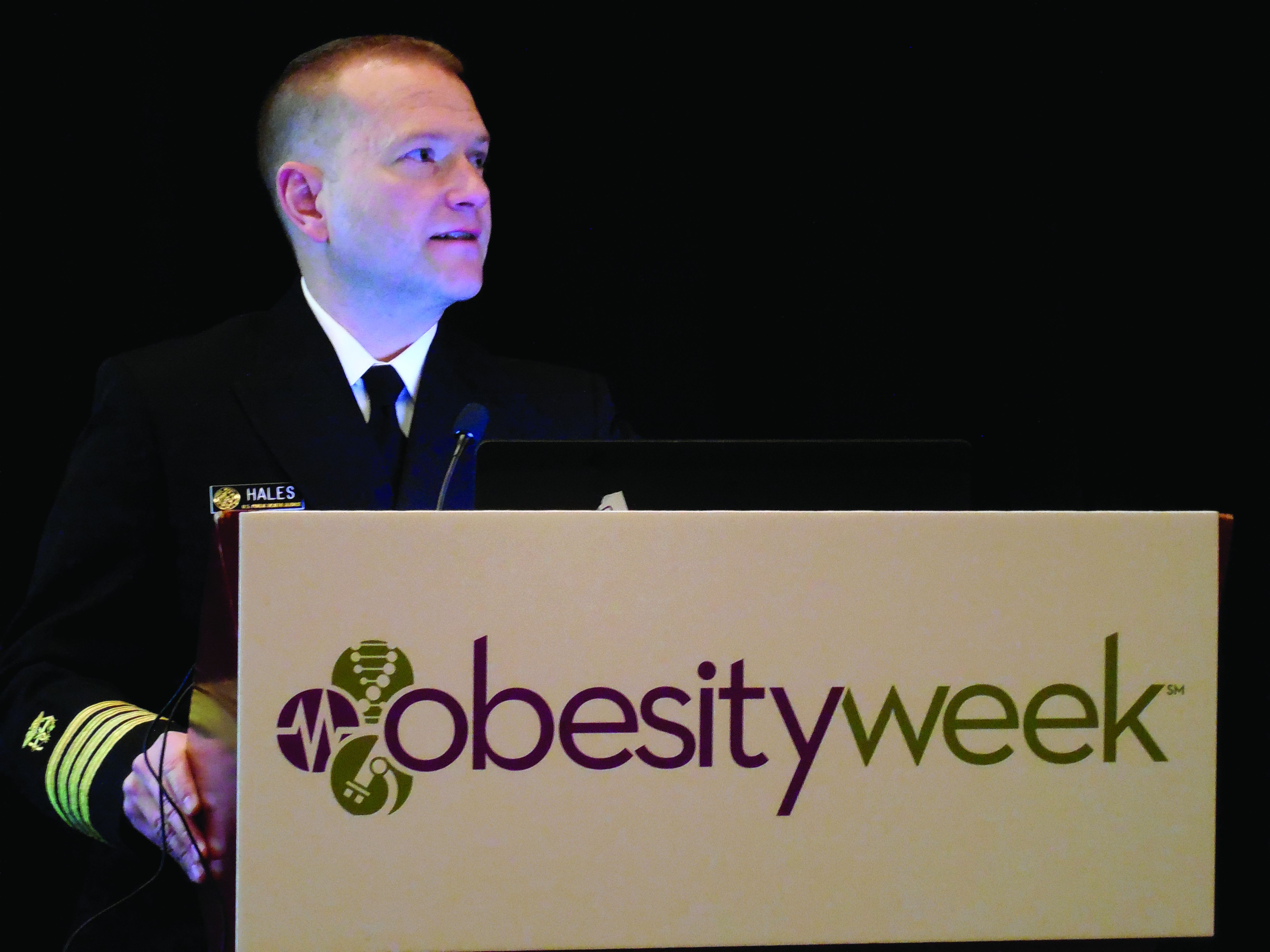
The Endocrine Society, the STOP Obesity Alliance, and other medical societies have recommended that clinicians try to minimize use of obesogenic drugs and focus on prescribing agents that are weight neutral or that trigger weight loss when those options are available and appropriate, and the new findings add further evidence that clinicians need to be more mindful of this issue, Craig M. Hales, MD, said at a meeting presented by the Obesity Society and the American Society for Metabolic and Bariatric Surgery.
Among the American adults interviewed for the survey, 40% of those on at least one prescription medication were on at least one drug that is considered obesogenic, said Dr. Hales, a medical epidemiologist at the Centers for Disease Control and Prevention in Hyattsville, Md.
According to practice guidelines published by the Endocrine Society, all drugs in the classes of glucocorticoids, beta-blockers, and antihistamines are obesogenic, as well as selected agents in the classes of antidepressant drugs, antipsychotics, antidepressants, antidiabetics, and contraceptives that are progestin only, said Dr. Hales (J Clin Endocrinol Metab. 2015 Feb;100[2]:342-62).
The data he reported came from the National Health and Nutrition Examination Survey (NHANES) run by the CDC during 2013-2016 that included 11,055 adults who were at least 20 years old. The findings showed that 23% of those adults had taken at least one drug that was considered obesogenic during the 30 days preceding the survey date. By comparison, 35% of the same adults had taken any type of prescription drug during the previous 30 days. That meant that overall, 40% of surveyed adults who had recently used any prescription medication had taken an obesogenic drug.
The 23% prevalence of recent obesogenic drug use was fairly stable at that level during several preceding NHANES surveys going back to 2001, suggesting that the increasing use of obesogenic drugs during the period since 2001 was not a factor in the recent increased prevalence of obesity among U.S. residents, added Dr. Hales.
The 2013-2016 analysis also showed a strong link between obesogenic drug use and increasing obesity severity. Among survey participants with a body mass index (BMI) in the normal range (18.5-24 kg/m2), 16% had recent use of an obesogenic drug. This prevalence increased to 22% among those who were overweight (BMI, 25-29 kg/m2), 29% among those with class 1 or 2 obesity (BMI, 30-39 kg/m2), and 33% among those with class 3 obesity (BMI, 40 kg/m2 or greater).
In contrast, recent use of prescription medications that do not contribute to obesity showed no significant relationship with BMI, with rates that ranged from 34% among those with a normal BMI, to 37% among those with class 3 obesity.
As an example of this relationship for a specific obesogenic drug class, the prevalence of beta-blocker use was about 7% among people with a normal BMI, about 10% among those who were overweight, about 14% among people with class 1 or 2 obesity, and about 17% among people with class 3 obesity, a statistically significant link suggesting that the relationship between use of obesogenic drugs and obesity is “bidirectional,” Dr. Hales said, in that increasing obesogenic drug use likely contributes to obesity, while simultaneously, the more obese people become, the more likely they are to take additional prescription drugs, particularly those that are obesogenic.
NHANES is run by the CDC and receives no commercial funding. The authors reported no conflicts of interest.
SOURCE: Hales CM et al. Obesity Week 2019, Abstract T-OR-2037.
LAS VEGAS – based on national U.S. data collected during 2013-2016.
The Endocrine Society, the STOP Obesity Alliance, and other medical societies have recommended that clinicians try to minimize use of obesogenic drugs and focus on prescribing agents that are weight neutral or that trigger weight loss when those options are available and appropriate, and the new findings add further evidence that clinicians need to be more mindful of this issue, Craig M. Hales, MD, said at a meeting presented by the Obesity Society and the American Society for Metabolic and Bariatric Surgery.
Among the American adults interviewed for the survey, 40% of those on at least one prescription medication were on at least one drug that is considered obesogenic, said Dr. Hales, a medical epidemiologist at the Centers for Disease Control and Prevention in Hyattsville, Md.
According to practice guidelines published by the Endocrine Society, all drugs in the classes of glucocorticoids, beta-blockers, and antihistamines are obesogenic, as well as selected agents in the classes of antidepressant drugs, antipsychotics, antidepressants, antidiabetics, and contraceptives that are progestin only, said Dr. Hales (J Clin Endocrinol Metab. 2015 Feb;100[2]:342-62).
The data he reported came from the National Health and Nutrition Examination Survey (NHANES) run by the CDC during 2013-2016 that included 11,055 adults who were at least 20 years old. The findings showed that 23% of those adults had taken at least one drug that was considered obesogenic during the 30 days preceding the survey date. By comparison, 35% of the same adults had taken any type of prescription drug during the previous 30 days. That meant that overall, 40% of surveyed adults who had recently used any prescription medication had taken an obesogenic drug.
The 23% prevalence of recent obesogenic drug use was fairly stable at that level during several preceding NHANES surveys going back to 2001, suggesting that the increasing use of obesogenic drugs during the period since 2001 was not a factor in the recent increased prevalence of obesity among U.S. residents, added Dr. Hales.
The 2013-2016 analysis also showed a strong link between obesogenic drug use and increasing obesity severity. Among survey participants with a body mass index (BMI) in the normal range (18.5-24 kg/m2), 16% had recent use of an obesogenic drug. This prevalence increased to 22% among those who were overweight (BMI, 25-29 kg/m2), 29% among those with class 1 or 2 obesity (BMI, 30-39 kg/m2), and 33% among those with class 3 obesity (BMI, 40 kg/m2 or greater).
In contrast, recent use of prescription medications that do not contribute to obesity showed no significant relationship with BMI, with rates that ranged from 34% among those with a normal BMI, to 37% among those with class 3 obesity.
As an example of this relationship for a specific obesogenic drug class, the prevalence of beta-blocker use was about 7% among people with a normal BMI, about 10% among those who were overweight, about 14% among people with class 1 or 2 obesity, and about 17% among people with class 3 obesity, a statistically significant link suggesting that the relationship between use of obesogenic drugs and obesity is “bidirectional,” Dr. Hales said, in that increasing obesogenic drug use likely contributes to obesity, while simultaneously, the more obese people become, the more likely they are to take additional prescription drugs, particularly those that are obesogenic.
NHANES is run by the CDC and receives no commercial funding. The authors reported no conflicts of interest.
SOURCE: Hales CM et al. Obesity Week 2019, Abstract T-OR-2037.
LAS VEGAS – based on national U.S. data collected during 2013-2016.
The Endocrine Society, the STOP Obesity Alliance, and other medical societies have recommended that clinicians try to minimize use of obesogenic drugs and focus on prescribing agents that are weight neutral or that trigger weight loss when those options are available and appropriate, and the new findings add further evidence that clinicians need to be more mindful of this issue, Craig M. Hales, MD, said at a meeting presented by the Obesity Society and the American Society for Metabolic and Bariatric Surgery.
Among the American adults interviewed for the survey, 40% of those on at least one prescription medication were on at least one drug that is considered obesogenic, said Dr. Hales, a medical epidemiologist at the Centers for Disease Control and Prevention in Hyattsville, Md.
According to practice guidelines published by the Endocrine Society, all drugs in the classes of glucocorticoids, beta-blockers, and antihistamines are obesogenic, as well as selected agents in the classes of antidepressant drugs, antipsychotics, antidepressants, antidiabetics, and contraceptives that are progestin only, said Dr. Hales (J Clin Endocrinol Metab. 2015 Feb;100[2]:342-62).
The data he reported came from the National Health and Nutrition Examination Survey (NHANES) run by the CDC during 2013-2016 that included 11,055 adults who were at least 20 years old. The findings showed that 23% of those adults had taken at least one drug that was considered obesogenic during the 30 days preceding the survey date. By comparison, 35% of the same adults had taken any type of prescription drug during the previous 30 days. That meant that overall, 40% of surveyed adults who had recently used any prescription medication had taken an obesogenic drug.
The 23% prevalence of recent obesogenic drug use was fairly stable at that level during several preceding NHANES surveys going back to 2001, suggesting that the increasing use of obesogenic drugs during the period since 2001 was not a factor in the recent increased prevalence of obesity among U.S. residents, added Dr. Hales.
The 2013-2016 analysis also showed a strong link between obesogenic drug use and increasing obesity severity. Among survey participants with a body mass index (BMI) in the normal range (18.5-24 kg/m2), 16% had recent use of an obesogenic drug. This prevalence increased to 22% among those who were overweight (BMI, 25-29 kg/m2), 29% among those with class 1 or 2 obesity (BMI, 30-39 kg/m2), and 33% among those with class 3 obesity (BMI, 40 kg/m2 or greater).
In contrast, recent use of prescription medications that do not contribute to obesity showed no significant relationship with BMI, with rates that ranged from 34% among those with a normal BMI, to 37% among those with class 3 obesity.
As an example of this relationship for a specific obesogenic drug class, the prevalence of beta-blocker use was about 7% among people with a normal BMI, about 10% among those who were overweight, about 14% among people with class 1 or 2 obesity, and about 17% among people with class 3 obesity, a statistically significant link suggesting that the relationship between use of obesogenic drugs and obesity is “bidirectional,” Dr. Hales said, in that increasing obesogenic drug use likely contributes to obesity, while simultaneously, the more obese people become, the more likely they are to take additional prescription drugs, particularly those that are obesogenic.
NHANES is run by the CDC and receives no commercial funding. The authors reported no conflicts of interest.
SOURCE: Hales CM et al. Obesity Week 2019, Abstract T-OR-2037.
REPORTING FROM OBESITY WEEK 2019

Flu records most active December since 2003
The 2019-2020 flu season took a big jump in severity during the last full week of 2019, according to the Centers for Disease Control and Prevention.
For the week ending Dec. 28, 6.9% of all outpatient visits to health care providers were for influenza-like illness (ILI), the CDC’s influenza division reported Jan. 3. That is up from 5.1% the previous week and is the highest rate recorded in December since 2003. During the flu pandemic season of 2009-2010, the rate peaked in October and dropped to relatively normal levels by the end of November, CDC data show.
This marks the eighth consecutive week that the outpatient visit rate has been at or above the nation’s baseline level of 2.4%, but the data for this week “may in part be influenced by changes in healthcare-seeking behavior that can occur during the holidays,” the CDC suggested.
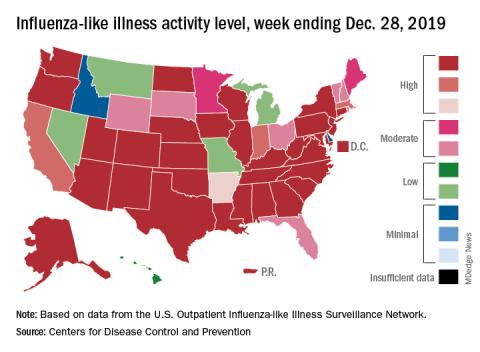
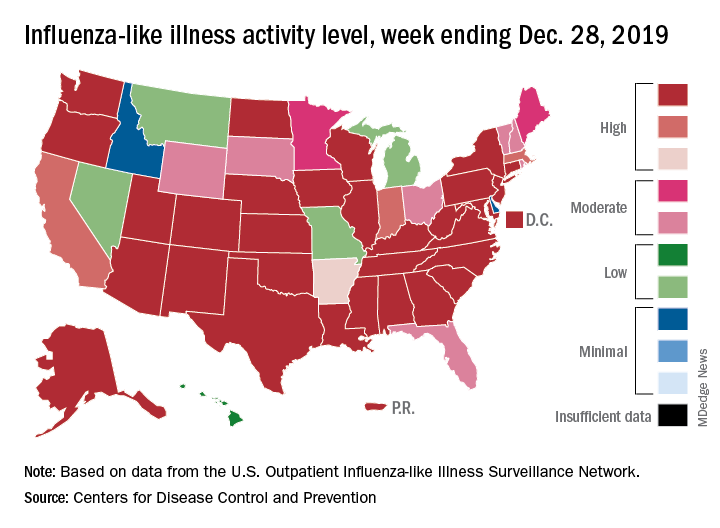
All those outpatient visits mean that the ILI activity map is getting quite red. Thirty states, as well as the District of Columbia and Puerto Rico, were at the highest level on the CDC’s 1-10 activity scale during the week ending Dec. 28, compared with 20 the week before. Four states were categorized in the “high” range with activity levels of 8 and 9.
There have been approximately 6.4 million flu illnesses so far this season, the CDC estimated, along with 55,000 hospitalizations, although the ILI admission rate of 9.2 per 100,000 population is fairly typical for this time of year.
The week of Dec. 28 also brought reports of five more ILI-related pediatric deaths, which all occurred in the two previous weeks. A total of 27 children have died from the flu so far during the 2019-2020 season, the CDC said.
The 2019-2020 flu season took a big jump in severity during the last full week of 2019, according to the Centers for Disease Control and Prevention.
For the week ending Dec. 28, 6.9% of all outpatient visits to health care providers were for influenza-like illness (ILI), the CDC’s influenza division reported Jan. 3. That is up from 5.1% the previous week and is the highest rate recorded in December since 2003. During the flu pandemic season of 2009-2010, the rate peaked in October and dropped to relatively normal levels by the end of November, CDC data show.
This marks the eighth consecutive week that the outpatient visit rate has been at or above the nation’s baseline level of 2.4%, but the data for this week “may in part be influenced by changes in healthcare-seeking behavior that can occur during the holidays,” the CDC suggested.
All those outpatient visits mean that the ILI activity map is getting quite red. Thirty states, as well as the District of Columbia and Puerto Rico, were at the highest level on the CDC’s 1-10 activity scale during the week ending Dec. 28, compared with 20 the week before. Four states were categorized in the “high” range with activity levels of 8 and 9.
There have been approximately 6.4 million flu illnesses so far this season, the CDC estimated, along with 55,000 hospitalizations, although the ILI admission rate of 9.2 per 100,000 population is fairly typical for this time of year.
The week of Dec. 28 also brought reports of five more ILI-related pediatric deaths, which all occurred in the two previous weeks. A total of 27 children have died from the flu so far during the 2019-2020 season, the CDC said.
The 2019-2020 flu season took a big jump in severity during the last full week of 2019, according to the Centers for Disease Control and Prevention.
For the week ending Dec. 28, 6.9% of all outpatient visits to health care providers were for influenza-like illness (ILI), the CDC’s influenza division reported Jan. 3. That is up from 5.1% the previous week and is the highest rate recorded in December since 2003. During the flu pandemic season of 2009-2010, the rate peaked in October and dropped to relatively normal levels by the end of November, CDC data show.
This marks the eighth consecutive week that the outpatient visit rate has been at or above the nation’s baseline level of 2.4%, but the data for this week “may in part be influenced by changes in healthcare-seeking behavior that can occur during the holidays,” the CDC suggested.
All those outpatient visits mean that the ILI activity map is getting quite red. Thirty states, as well as the District of Columbia and Puerto Rico, were at the highest level on the CDC’s 1-10 activity scale during the week ending Dec. 28, compared with 20 the week before. Four states were categorized in the “high” range with activity levels of 8 and 9.
There have been approximately 6.4 million flu illnesses so far this season, the CDC estimated, along with 55,000 hospitalizations, although the ILI admission rate of 9.2 per 100,000 population is fairly typical for this time of year.
The week of Dec. 28 also brought reports of five more ILI-related pediatric deaths, which all occurred in the two previous weeks. A total of 27 children have died from the flu so far during the 2019-2020 season, the CDC said.