User login
AHA report highlights CVD burden, declines in smoking, sleep importance
Almost half of U.S. adults now have some form of cardiovascular disease, according to the latest annual statistical update from the American Heart Association.
The prevalence is driven in part by the recently changed definition of hypertension, from 140/90 to 130/80 mm Hg, said authors of the American Heart Association Heart Disease and Stroke Statistics–2019 Update.
Cardiovascular disease (CVD) deaths are up, though smoking rates continue to decline, and adults are getting more exercise (Circulation. 2019;139. doi: 10.1161/CIR.0000000000000659).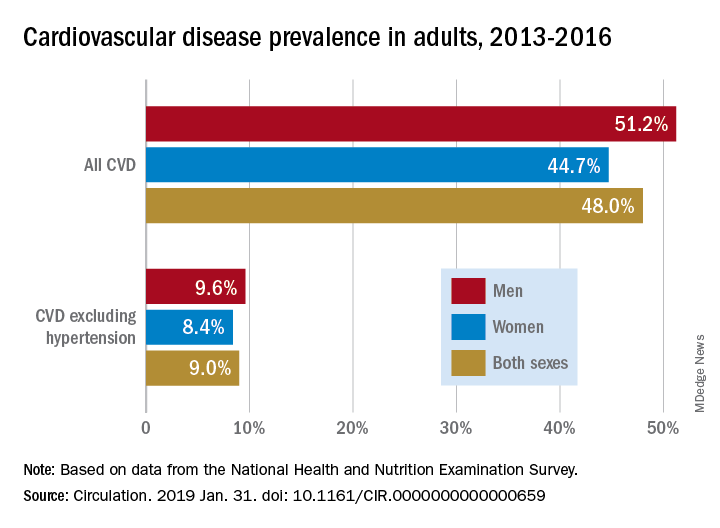
The update includes a new section on sleep and cardiovascular health, an enhanced focus on social determinants of health, and further evidence-based approaches to behavior change, according to the update’s authors, led by chair Emelia J. Benjamin, MD, professor of medicine and epidemiology at Boston University, and vice chair Paul Muntner, PhD, professor of epidemiology at the University of Alabama, Birmingham.
High blood pressure is an “overwhelming presence” that drives heart disease and stroke and can’t be dismissed in the fight against cardiovascular disease, AHA President Ivor J. Benjamin, MD, said in a statement. “Eliminating high blood pressure could have a larger impact on CVD deaths than the elimination of all other risk factors among women, and all except smoking among men.”
Using data from 2013 to 2016, 46% of adults in the United States had hypertension, and in 2016 there were 82,735 deaths attributable primarily to high blood pressure, according to the update.
Total direct costs of hypertension could approach $221 billion by 2035, according to projections in the report.
After decades of decline, U.S. cardiovascular disease deaths increased to 840,678 in 2016, up from 836,546 in 2015, the report says.
Smoking rate declines represent some of the most significant improvements outlined in the report, according to an AHA news release.
Ninety-four percent of adolescents were nonsmokers in the 2015-2016 period, which is up from 76% in 1999-2000, according to the report. The proportion of adult nonsmokers increased to 79% in 2015-2016, up from 73% in 1999-2000.
The new chapter on the importance of sleep cites data from the Centers for Disease Control and Prevention that only 65.2% of Americans have a healthy sleep duration (at least 7 hours), with even lower rates among non-Hispanic blacks, native Hawaiians and Pacific Islanders, and multiracial non-Hispanic individuals.
Short sleep duration is associated with a higher risk of all-cause mortality, total CVD, and coronary heart disease, according to a meta-analysis cited in the report. Long sleep duration, defined as greater than 8 hours, also was associated with higher risk of all-cause mortality, total CVD, coronary heart disease, and stroke.
Members of the statistical update writing group reported disclosures related to the American Heart Association, National Institutes of Health, Amgen, Sanofi, Roche, Abbott, Biogen, Medtronic, and others.
SOURCE: Benjamin EJ et al. Circulation. 2019 Jan 31.
The latest statistics on heart disease and stroke include some metrics that indicate progress, and others that suggest opportunities for improvement.
Tobacco use continues to decline; however, among high school students, e-cigarette use is up to 11.3%, which is concerning.
One bright spot is that the proportion of inactive adults has dropped to 30% in 2016, down from 40% in 2007. Despite that improvement, however, the prevalence of obesity increased significantly over the decade, to the point where nearly 40% of adults are obese and 7.7% are severely obese.

Although 48% of U.S. adults now have cardiovascular disease, according to this latest update, the number drops to just 9% when hypertension is excluded. Even so, 9% represents more than 24.3 million Americans who have coronary artery disease, stroke, or heart failure.
The cost of cardiovascular disease is astronomical, exceeding $351 billion in 2014-1205, with costs projected to increase sharply for older adults over the next few decades.
Starting in 2020, the AHA will begin charting progress in CVD using a metric called health-adjusted life expectancy (HALE), which relies on morbidity and mortality patterns to reflect the number of years a person can expect to live. Patients and the general public may find this metric more understandable than statistics about death rates and cardiovascular risk factors.
Mariell Jessup, MD, is chief science and medical officer for the American Heart Association. Her view on the latest statistical update was derived from a commentary that accompanied the update.
The latest statistics on heart disease and stroke include some metrics that indicate progress, and others that suggest opportunities for improvement.
Tobacco use continues to decline; however, among high school students, e-cigarette use is up to 11.3%, which is concerning.
One bright spot is that the proportion of inactive adults has dropped to 30% in 2016, down from 40% in 2007. Despite that improvement, however, the prevalence of obesity increased significantly over the decade, to the point where nearly 40% of adults are obese and 7.7% are severely obese.
Although 48% of U.S. adults now have cardiovascular disease, according to this latest update, the number drops to just 9% when hypertension is excluded. Even so, 9% represents more than 24.3 million Americans who have coronary artery disease, stroke, or heart failure.
The cost of cardiovascular disease is astronomical, exceeding $351 billion in 2014-1205, with costs projected to increase sharply for older adults over the next few decades.
Starting in 2020, the AHA will begin charting progress in CVD using a metric called health-adjusted life expectancy (HALE), which relies on morbidity and mortality patterns to reflect the number of years a person can expect to live. Patients and the general public may find this metric more understandable than statistics about death rates and cardiovascular risk factors.
Mariell Jessup, MD, is chief science and medical officer for the American Heart Association. Her view on the latest statistical update was derived from a commentary that accompanied the update.
The latest statistics on heart disease and stroke include some metrics that indicate progress, and others that suggest opportunities for improvement.
Tobacco use continues to decline; however, among high school students, e-cigarette use is up to 11.3%, which is concerning.
One bright spot is that the proportion of inactive adults has dropped to 30% in 2016, down from 40% in 2007. Despite that improvement, however, the prevalence of obesity increased significantly over the decade, to the point where nearly 40% of adults are obese and 7.7% are severely obese.
Although 48% of U.S. adults now have cardiovascular disease, according to this latest update, the number drops to just 9% when hypertension is excluded. Even so, 9% represents more than 24.3 million Americans who have coronary artery disease, stroke, or heart failure.
The cost of cardiovascular disease is astronomical, exceeding $351 billion in 2014-1205, with costs projected to increase sharply for older adults over the next few decades.
Starting in 2020, the AHA will begin charting progress in CVD using a metric called health-adjusted life expectancy (HALE), which relies on morbidity and mortality patterns to reflect the number of years a person can expect to live. Patients and the general public may find this metric more understandable than statistics about death rates and cardiovascular risk factors.
Mariell Jessup, MD, is chief science and medical officer for the American Heart Association. Her view on the latest statistical update was derived from a commentary that accompanied the update.
Almost half of U.S. adults now have some form of cardiovascular disease, according to the latest annual statistical update from the American Heart Association.
The prevalence is driven in part by the recently changed definition of hypertension, from 140/90 to 130/80 mm Hg, said authors of the American Heart Association Heart Disease and Stroke Statistics–2019 Update.
Cardiovascular disease (CVD) deaths are up, though smoking rates continue to decline, and adults are getting more exercise (Circulation. 2019;139. doi: 10.1161/CIR.0000000000000659).
The update includes a new section on sleep and cardiovascular health, an enhanced focus on social determinants of health, and further evidence-based approaches to behavior change, according to the update’s authors, led by chair Emelia J. Benjamin, MD, professor of medicine and epidemiology at Boston University, and vice chair Paul Muntner, PhD, professor of epidemiology at the University of Alabama, Birmingham.
High blood pressure is an “overwhelming presence” that drives heart disease and stroke and can’t be dismissed in the fight against cardiovascular disease, AHA President Ivor J. Benjamin, MD, said in a statement. “Eliminating high blood pressure could have a larger impact on CVD deaths than the elimination of all other risk factors among women, and all except smoking among men.”
Using data from 2013 to 2016, 46% of adults in the United States had hypertension, and in 2016 there were 82,735 deaths attributable primarily to high blood pressure, according to the update.
Total direct costs of hypertension could approach $221 billion by 2035, according to projections in the report.
After decades of decline, U.S. cardiovascular disease deaths increased to 840,678 in 2016, up from 836,546 in 2015, the report says.
Smoking rate declines represent some of the most significant improvements outlined in the report, according to an AHA news release.
Ninety-four percent of adolescents were nonsmokers in the 2015-2016 period, which is up from 76% in 1999-2000, according to the report. The proportion of adult nonsmokers increased to 79% in 2015-2016, up from 73% in 1999-2000.
The new chapter on the importance of sleep cites data from the Centers for Disease Control and Prevention that only 65.2% of Americans have a healthy sleep duration (at least 7 hours), with even lower rates among non-Hispanic blacks, native Hawaiians and Pacific Islanders, and multiracial non-Hispanic individuals.
Short sleep duration is associated with a higher risk of all-cause mortality, total CVD, and coronary heart disease, according to a meta-analysis cited in the report. Long sleep duration, defined as greater than 8 hours, also was associated with higher risk of all-cause mortality, total CVD, coronary heart disease, and stroke.
Members of the statistical update writing group reported disclosures related to the American Heart Association, National Institutes of Health, Amgen, Sanofi, Roche, Abbott, Biogen, Medtronic, and others.
SOURCE: Benjamin EJ et al. Circulation. 2019 Jan 31.
Almost half of U.S. adults now have some form of cardiovascular disease, according to the latest annual statistical update from the American Heart Association.
The prevalence is driven in part by the recently changed definition of hypertension, from 140/90 to 130/80 mm Hg, said authors of the American Heart Association Heart Disease and Stroke Statistics–2019 Update.
Cardiovascular disease (CVD) deaths are up, though smoking rates continue to decline, and adults are getting more exercise (Circulation. 2019;139. doi: 10.1161/CIR.0000000000000659).
The update includes a new section on sleep and cardiovascular health, an enhanced focus on social determinants of health, and further evidence-based approaches to behavior change, according to the update’s authors, led by chair Emelia J. Benjamin, MD, professor of medicine and epidemiology at Boston University, and vice chair Paul Muntner, PhD, professor of epidemiology at the University of Alabama, Birmingham.
High blood pressure is an “overwhelming presence” that drives heart disease and stroke and can’t be dismissed in the fight against cardiovascular disease, AHA President Ivor J. Benjamin, MD, said in a statement. “Eliminating high blood pressure could have a larger impact on CVD deaths than the elimination of all other risk factors among women, and all except smoking among men.”
Using data from 2013 to 2016, 46% of adults in the United States had hypertension, and in 2016 there were 82,735 deaths attributable primarily to high blood pressure, according to the update.
Total direct costs of hypertension could approach $221 billion by 2035, according to projections in the report.
After decades of decline, U.S. cardiovascular disease deaths increased to 840,678 in 2016, up from 836,546 in 2015, the report says.
Smoking rate declines represent some of the most significant improvements outlined in the report, according to an AHA news release.
Ninety-four percent of adolescents were nonsmokers in the 2015-2016 period, which is up from 76% in 1999-2000, according to the report. The proportion of adult nonsmokers increased to 79% in 2015-2016, up from 73% in 1999-2000.
The new chapter on the importance of sleep cites data from the Centers for Disease Control and Prevention that only 65.2% of Americans have a healthy sleep duration (at least 7 hours), with even lower rates among non-Hispanic blacks, native Hawaiians and Pacific Islanders, and multiracial non-Hispanic individuals.
Short sleep duration is associated with a higher risk of all-cause mortality, total CVD, and coronary heart disease, according to a meta-analysis cited in the report. Long sleep duration, defined as greater than 8 hours, also was associated with higher risk of all-cause mortality, total CVD, coronary heart disease, and stroke.
Members of the statistical update writing group reported disclosures related to the American Heart Association, National Institutes of Health, Amgen, Sanofi, Roche, Abbott, Biogen, Medtronic, and others.
SOURCE: Benjamin EJ et al. Circulation. 2019 Jan 31.
FROM CIRCULATION
Mild OSA spontaneously resolves in about one-third of young children
CORONADO, CALIF. – results from a single-center study showed.
“OSA affects up to 6% of the pediatric population, and diagnosis of young children can be particularly challenging due to the heterogeneity of presenting symptoms,” Douglas C. von Allmen, MD, said at the Triological Society’s Combined Sections Meeting. “While school-age children may present with snoring, that’s less common in the younger population. Up to one-quarter of infants may have noisy breathing, which may mimic obstructive events throughout the first 3 years of life. Additionally, long-term clinical implications of mild sleep apnea in very young children is unclear.”
According to Dr. von Allmen, a fifth-year otolaryngology resident at the University of Cincinnati, management strategies of children with OSA can include a period of observation, particularly when there’s an absence of concerning findings on polysomnography (PSG), such as hypoventilation or significant hypoxia, or when the primary etiology of the OSA is unknown. “Additionally, few studies at this point have attempted to characterize the natural history of mild OSA in pediatric patients under 3 years of age,” he said.
In an effort to assess the effects of observation on the PSG outcomes of children under 3 years with mild OSA, Dr. Von Allmen and his colleagues performed a retrospective review of 26 children who had an overnight PSG with a follow-up PSG performed 3-12 months later. They excluded patients with neuromuscular disease, tracheostomy, or interstitial lung disease. All PSGs were performed at the Cincinnati Children’s Hospital Medical Center between 2012 and 2017 and were scored by a board-certified sleep physician. The researchers defined mild OSA as at least one, but fewer than five, events per hour. The mean age of the 26 patients was 7 months, 65% were male, 92% were white, and their median body mass index was in the 39th percentile. Comorbidities include laryngomalacia (40%), cardiac disease (40%), allergies (34%), asthma (23%), and Down syndrome (11%).
Between baseline and follow-up, the apnea-hypoapnea index (AHI) trended downward from 4.3 to 3.4 events per hour (P = .19), the obstructive AHI decreased significantly from 2.7 to 1.3 events per hour (P = .013), while the central apnea index also trended downward from 1.4 to 1.2 events per hour (P = .60). The oxyhemoglobin nadir and sleep efficiency did not change significantly, but there was a decrease in the arousal index (from 14.7 to 13 events per hour; P = .027) and in the percentage of REM sleep (from 33% to 30%; P = .008).
As for postobservation OSA severity outcomes, eight patients (31%) resolved spontaneously, one patient progressed from mild to moderate OSA, and the rest remained in their mild OSA state. Subanalysis revealed that OSA resolution rate was 36% in patients with laryngomalacia, compared with 27% in those with no laryngomalacia, a difference that did not reach statistical significance (P = .98).
Dr. von Allmen pointed out that the study cohort had comorbidities which may have contributed to the persistence of OSA. He also acknowledged certain limitations of the study, including its retrospective nature, the potential for selection bias, the small sample size, and the fact that it did not include a control sample of normal children. “The presence of laryngomalacia did not affect the resolution rate in our cohort, but we’ll need larger studies to better elucidate the factors that do affect persistent disease and to identify the optimal timing of intervention in children with mild OSA,” he said.
Dr. von Allmen reported having no financial disclosures. The study received a resident research award at the meeting, which was jointly sponsored by the Triological Society and the American College of Surgeons.
SOURCE: von Allmen DC et al. Triological CSM, Abstracts.
CORONADO, CALIF. – results from a single-center study showed.
“OSA affects up to 6% of the pediatric population, and diagnosis of young children can be particularly challenging due to the heterogeneity of presenting symptoms,” Douglas C. von Allmen, MD, said at the Triological Society’s Combined Sections Meeting. “While school-age children may present with snoring, that’s less common in the younger population. Up to one-quarter of infants may have noisy breathing, which may mimic obstructive events throughout the first 3 years of life. Additionally, long-term clinical implications of mild sleep apnea in very young children is unclear.”
According to Dr. von Allmen, a fifth-year otolaryngology resident at the University of Cincinnati, management strategies of children with OSA can include a period of observation, particularly when there’s an absence of concerning findings on polysomnography (PSG), such as hypoventilation or significant hypoxia, or when the primary etiology of the OSA is unknown. “Additionally, few studies at this point have attempted to characterize the natural history of mild OSA in pediatric patients under 3 years of age,” he said.
In an effort to assess the effects of observation on the PSG outcomes of children under 3 years with mild OSA, Dr. Von Allmen and his colleagues performed a retrospective review of 26 children who had an overnight PSG with a follow-up PSG performed 3-12 months later. They excluded patients with neuromuscular disease, tracheostomy, or interstitial lung disease. All PSGs were performed at the Cincinnati Children’s Hospital Medical Center between 2012 and 2017 and were scored by a board-certified sleep physician. The researchers defined mild OSA as at least one, but fewer than five, events per hour. The mean age of the 26 patients was 7 months, 65% were male, 92% were white, and their median body mass index was in the 39th percentile. Comorbidities include laryngomalacia (40%), cardiac disease (40%), allergies (34%), asthma (23%), and Down syndrome (11%).
Between baseline and follow-up, the apnea-hypoapnea index (AHI) trended downward from 4.3 to 3.4 events per hour (P = .19), the obstructive AHI decreased significantly from 2.7 to 1.3 events per hour (P = .013), while the central apnea index also trended downward from 1.4 to 1.2 events per hour (P = .60). The oxyhemoglobin nadir and sleep efficiency did not change significantly, but there was a decrease in the arousal index (from 14.7 to 13 events per hour; P = .027) and in the percentage of REM sleep (from 33% to 30%; P = .008).
As for postobservation OSA severity outcomes, eight patients (31%) resolved spontaneously, one patient progressed from mild to moderate OSA, and the rest remained in their mild OSA state. Subanalysis revealed that OSA resolution rate was 36% in patients with laryngomalacia, compared with 27% in those with no laryngomalacia, a difference that did not reach statistical significance (P = .98).
Dr. von Allmen pointed out that the study cohort had comorbidities which may have contributed to the persistence of OSA. He also acknowledged certain limitations of the study, including its retrospective nature, the potential for selection bias, the small sample size, and the fact that it did not include a control sample of normal children. “The presence of laryngomalacia did not affect the resolution rate in our cohort, but we’ll need larger studies to better elucidate the factors that do affect persistent disease and to identify the optimal timing of intervention in children with mild OSA,” he said.
Dr. von Allmen reported having no financial disclosures. The study received a resident research award at the meeting, which was jointly sponsored by the Triological Society and the American College of Surgeons.
SOURCE: von Allmen DC et al. Triological CSM, Abstracts.
CORONADO, CALIF. – results from a single-center study showed.
“OSA affects up to 6% of the pediatric population, and diagnosis of young children can be particularly challenging due to the heterogeneity of presenting symptoms,” Douglas C. von Allmen, MD, said at the Triological Society’s Combined Sections Meeting. “While school-age children may present with snoring, that’s less common in the younger population. Up to one-quarter of infants may have noisy breathing, which may mimic obstructive events throughout the first 3 years of life. Additionally, long-term clinical implications of mild sleep apnea in very young children is unclear.”
According to Dr. von Allmen, a fifth-year otolaryngology resident at the University of Cincinnati, management strategies of children with OSA can include a period of observation, particularly when there’s an absence of concerning findings on polysomnography (PSG), such as hypoventilation or significant hypoxia, or when the primary etiology of the OSA is unknown. “Additionally, few studies at this point have attempted to characterize the natural history of mild OSA in pediatric patients under 3 years of age,” he said.
In an effort to assess the effects of observation on the PSG outcomes of children under 3 years with mild OSA, Dr. Von Allmen and his colleagues performed a retrospective review of 26 children who had an overnight PSG with a follow-up PSG performed 3-12 months later. They excluded patients with neuromuscular disease, tracheostomy, or interstitial lung disease. All PSGs were performed at the Cincinnati Children’s Hospital Medical Center between 2012 and 2017 and were scored by a board-certified sleep physician. The researchers defined mild OSA as at least one, but fewer than five, events per hour. The mean age of the 26 patients was 7 months, 65% were male, 92% were white, and their median body mass index was in the 39th percentile. Comorbidities include laryngomalacia (40%), cardiac disease (40%), allergies (34%), asthma (23%), and Down syndrome (11%).
Between baseline and follow-up, the apnea-hypoapnea index (AHI) trended downward from 4.3 to 3.4 events per hour (P = .19), the obstructive AHI decreased significantly from 2.7 to 1.3 events per hour (P = .013), while the central apnea index also trended downward from 1.4 to 1.2 events per hour (P = .60). The oxyhemoglobin nadir and sleep efficiency did not change significantly, but there was a decrease in the arousal index (from 14.7 to 13 events per hour; P = .027) and in the percentage of REM sleep (from 33% to 30%; P = .008).
As for postobservation OSA severity outcomes, eight patients (31%) resolved spontaneously, one patient progressed from mild to moderate OSA, and the rest remained in their mild OSA state. Subanalysis revealed that OSA resolution rate was 36% in patients with laryngomalacia, compared with 27% in those with no laryngomalacia, a difference that did not reach statistical significance (P = .98).
Dr. von Allmen pointed out that the study cohort had comorbidities which may have contributed to the persistence of OSA. He also acknowledged certain limitations of the study, including its retrospective nature, the potential for selection bias, the small sample size, and the fact that it did not include a control sample of normal children. “The presence of laryngomalacia did not affect the resolution rate in our cohort, but we’ll need larger studies to better elucidate the factors that do affect persistent disease and to identify the optimal timing of intervention in children with mild OSA,” he said.
Dr. von Allmen reported having no financial disclosures. The study received a resident research award at the meeting, which was jointly sponsored by the Triological Society and the American College of Surgeons.
SOURCE: von Allmen DC et al. Triological CSM, Abstracts.
REPORTING FROM THE TRIOLOGICAL CSM
Key clinical point: Comorbidities may contribute to the persistence of OSA in young children.
Major finding: OSA spontaneously resolved in 31% of patients.
Study details: A retrospective analysis of 26 children under age 3 years.
Disclosures: The researchers reported having no financial disclosures.
Source: Von Allmen et al. Triological CSM, Abstracts.
Diagnosing OSA: Polysomnography beats Fitbit, apps
CORONADO, CALIF. –

“Currently, the gold standard for diagnosis is a polysomnography (PSG), which is basically a sleep study test,” one of the study authors, Daniel Chung, MD, said in an interview in advance of the Triological Society’s Combined Sections Meeting. “While it is very thorough, it is expensive, intrusive, and gives data on only 1 night of sleep and cannot give information on a patient’s sleep pattern over several days. Using wrist-worn devices such as Fitbit products or smartphone applications such as Sleep Cycle would be much cheaper alternatives with little distraction that can provide continuous data over several days if accurate.”
According to Dr. Chung, an otolaryngology head and neck surgery resident in the department of surgery at the George Washington University, Washington, previous studies about this topic are inconclusive.
“Most have been studied only in the pediatric population, and in general, show that Fitbit overestimates PSG measurements,” he said. “Also, prior studies have looked into 20-60 patients, depending on the study.”
In an effort to address these limitations, he and his colleagues prospectively evaluated 180 adult patients who were already scheduled to undergo a PSG with or without CPAP testing from the sleep lab. The overnight test was performed with a Fitbit Alta HR on their wrist of choice and a smartphone at their bedside. Each smartphone was randomly assigned and had a popular sleep application installed, with Sleep as Android on the Android phone and Sleep Cycle on the Apple iPhone. For the main outcomes of interest, the researchers collected the total sleep time, sleep efficiency, and apnea-hypopnea index (AHI) from the PSG and compared them with their equivalents from Fitbit and smartphone applications. For statistical analysis, they performed Bland-Altman plots, paired t-tests, and regression lines to assess R2, slope, and Y-intercept.
Dr. Chung and his colleagues found that both Fitbit Alta HR (P = .0014) and smartphone applications (P less than .0001) significantly overestimated the total sleep time, compared with PSG, while moderate correlation for sleep efficiency was observed between PSG and Fitbit (r = 0.38). Other findings of note were that the number of times awake recorded by Fitbit significantly underestimated the PSG AHI (P less than .0001), the snoring noise measurements from Sleep as Android had strong associations with PSG AHI (R2 = 0.43), and those from Sleep Cycle had modest associations with PSG AHI (R2 = 0.12). However, Bland-Altman plots showed wide limits of agreement for total sleep time and sleep efficiency, though as sleep efficiency approached 100%, the discrepancy between the PSG and Fitbit decreased.
“While there are various tools out right now that claim to measure sleep in a more comforting setting, we cannot recommend any product to act as a screening device or replacement for the PSG at this time,” Dr. Chung said.
He acknowledged certain limitations of the study, including the fact that Fitbit is unable to fully record sleep data if the wearer is asleep for fewer than 3 hours, which can happen in patients with severe OSA. In addition, the smartphone applications require the user to begin and conclude the recording. “This was performed only by the sleep technicians and not the patients, and can be a significant source of error, particularly with the Sleep as Android application, as it had a less intuitive interface,” he noted. “This lead to multiple unusable data points. There were also incidences where the Fitbit Alta HR failed to record sleep data even though it was fully charged and correctly placed, which led to only a smaller number of patients having both measurements at the same time.”
Dr. Chung reported having no financial disclosures. The meeting was jointly sponsored by the Triological Society and the American College of Surgeons.
SOURCE: Chung D et al. Triological CSM, Abstracts.
CORONADO, CALIF. –
“Currently, the gold standard for diagnosis is a polysomnography (PSG), which is basically a sleep study test,” one of the study authors, Daniel Chung, MD, said in an interview in advance of the Triological Society’s Combined Sections Meeting. “While it is very thorough, it is expensive, intrusive, and gives data on only 1 night of sleep and cannot give information on a patient’s sleep pattern over several days. Using wrist-worn devices such as Fitbit products or smartphone applications such as Sleep Cycle would be much cheaper alternatives with little distraction that can provide continuous data over several days if accurate.”
According to Dr. Chung, an otolaryngology head and neck surgery resident in the department of surgery at the George Washington University, Washington, previous studies about this topic are inconclusive.
“Most have been studied only in the pediatric population, and in general, show that Fitbit overestimates PSG measurements,” he said. “Also, prior studies have looked into 20-60 patients, depending on the study.”
In an effort to address these limitations, he and his colleagues prospectively evaluated 180 adult patients who were already scheduled to undergo a PSG with or without CPAP testing from the sleep lab. The overnight test was performed with a Fitbit Alta HR on their wrist of choice and a smartphone at their bedside. Each smartphone was randomly assigned and had a popular sleep application installed, with Sleep as Android on the Android phone and Sleep Cycle on the Apple iPhone. For the main outcomes of interest, the researchers collected the total sleep time, sleep efficiency, and apnea-hypopnea index (AHI) from the PSG and compared them with their equivalents from Fitbit and smartphone applications. For statistical analysis, they performed Bland-Altman plots, paired t-tests, and regression lines to assess R2, slope, and Y-intercept.
Dr. Chung and his colleagues found that both Fitbit Alta HR (P = .0014) and smartphone applications (P less than .0001) significantly overestimated the total sleep time, compared with PSG, while moderate correlation for sleep efficiency was observed between PSG and Fitbit (r = 0.38). Other findings of note were that the number of times awake recorded by Fitbit significantly underestimated the PSG AHI (P less than .0001), the snoring noise measurements from Sleep as Android had strong associations with PSG AHI (R2 = 0.43), and those from Sleep Cycle had modest associations with PSG AHI (R2 = 0.12). However, Bland-Altman plots showed wide limits of agreement for total sleep time and sleep efficiency, though as sleep efficiency approached 100%, the discrepancy between the PSG and Fitbit decreased.
“While there are various tools out right now that claim to measure sleep in a more comforting setting, we cannot recommend any product to act as a screening device or replacement for the PSG at this time,” Dr. Chung said.
He acknowledged certain limitations of the study, including the fact that Fitbit is unable to fully record sleep data if the wearer is asleep for fewer than 3 hours, which can happen in patients with severe OSA. In addition, the smartphone applications require the user to begin and conclude the recording. “This was performed only by the sleep technicians and not the patients, and can be a significant source of error, particularly with the Sleep as Android application, as it had a less intuitive interface,” he noted. “This lead to multiple unusable data points. There were also incidences where the Fitbit Alta HR failed to record sleep data even though it was fully charged and correctly placed, which led to only a smaller number of patients having both measurements at the same time.”
Dr. Chung reported having no financial disclosures. The meeting was jointly sponsored by the Triological Society and the American College of Surgeons.
SOURCE: Chung D et al. Triological CSM, Abstracts.
CORONADO, CALIF. –
“Currently, the gold standard for diagnosis is a polysomnography (PSG), which is basically a sleep study test,” one of the study authors, Daniel Chung, MD, said in an interview in advance of the Triological Society’s Combined Sections Meeting. “While it is very thorough, it is expensive, intrusive, and gives data on only 1 night of sleep and cannot give information on a patient’s sleep pattern over several days. Using wrist-worn devices such as Fitbit products or smartphone applications such as Sleep Cycle would be much cheaper alternatives with little distraction that can provide continuous data over several days if accurate.”
According to Dr. Chung, an otolaryngology head and neck surgery resident in the department of surgery at the George Washington University, Washington, previous studies about this topic are inconclusive.
“Most have been studied only in the pediatric population, and in general, show that Fitbit overestimates PSG measurements,” he said. “Also, prior studies have looked into 20-60 patients, depending on the study.”
In an effort to address these limitations, he and his colleagues prospectively evaluated 180 adult patients who were already scheduled to undergo a PSG with or without CPAP testing from the sleep lab. The overnight test was performed with a Fitbit Alta HR on their wrist of choice and a smartphone at their bedside. Each smartphone was randomly assigned and had a popular sleep application installed, with Sleep as Android on the Android phone and Sleep Cycle on the Apple iPhone. For the main outcomes of interest, the researchers collected the total sleep time, sleep efficiency, and apnea-hypopnea index (AHI) from the PSG and compared them with their equivalents from Fitbit and smartphone applications. For statistical analysis, they performed Bland-Altman plots, paired t-tests, and regression lines to assess R2, slope, and Y-intercept.
Dr. Chung and his colleagues found that both Fitbit Alta HR (P = .0014) and smartphone applications (P less than .0001) significantly overestimated the total sleep time, compared with PSG, while moderate correlation for sleep efficiency was observed between PSG and Fitbit (r = 0.38). Other findings of note were that the number of times awake recorded by Fitbit significantly underestimated the PSG AHI (P less than .0001), the snoring noise measurements from Sleep as Android had strong associations with PSG AHI (R2 = 0.43), and those from Sleep Cycle had modest associations with PSG AHI (R2 = 0.12). However, Bland-Altman plots showed wide limits of agreement for total sleep time and sleep efficiency, though as sleep efficiency approached 100%, the discrepancy between the PSG and Fitbit decreased.
“While there are various tools out right now that claim to measure sleep in a more comforting setting, we cannot recommend any product to act as a screening device or replacement for the PSG at this time,” Dr. Chung said.
He acknowledged certain limitations of the study, including the fact that Fitbit is unable to fully record sleep data if the wearer is asleep for fewer than 3 hours, which can happen in patients with severe OSA. In addition, the smartphone applications require the user to begin and conclude the recording. “This was performed only by the sleep technicians and not the patients, and can be a significant source of error, particularly with the Sleep as Android application, as it had a less intuitive interface,” he noted. “This lead to multiple unusable data points. There were also incidences where the Fitbit Alta HR failed to record sleep data even though it was fully charged and correctly placed, which led to only a smaller number of patients having both measurements at the same time.”
Dr. Chung reported having no financial disclosures. The meeting was jointly sponsored by the Triological Society and the American College of Surgeons.
SOURCE: Chung D et al. Triological CSM, Abstracts.
REPORTING FROM THE TRIOLOGICAL CSM
Key clinical point: To date, no wrist-worn device or smartphone app can be recommended as a replacement for polysomnography to diagnose OSA.
Major finding: Both Fitbit Alta HR (P = .0014) and smart phone applications (P less than .0001) significantly overestimated the total sleep time, compared to PSG.
Study details: A prospective study of 180 adult patients.
Disclosures: Dr. Chung reported having no financial disclosures.
Source: Chung D et al. Triological CSM, Abstracts.
SNOT-22 may help identify patients with undiagnosed OSA
CORONADO, CALIF. – results from a retrospective analysis demonstrated.

“We know based on experience and prior studies that there is significant overlap in symptoms for obstructive sleep apnea and chronic rhinosinusitis [CRS], which are two common conditions in the general population,” one of the study authors, David W. Jang, MD, said in an interview in advance of the Triological Society’s Combined Sections Meeting. “Therefore, it is important to identify patients with undiagnosed OSA who may present to the physician with nose- and sinus-related symptoms.”
Dr. Jang, assistant professor of rhinology and endoscopic skull surgery in the department of surgery at Duke University, Durham, N.C., and his colleagues conducted a 3-year retrospective analysis of 165 adults who presented with a rhinologic chief complaint and completed the SNOT-22 survey. The researchers compared SNOT-22 survey results between patients with untreated OSA confirmed on polysomnography without chronic rhinosinusitis and a control group of CRS patients. A chi-square test with Bonferroni correction was used for analysis.
Of the 165 patients, 41 met criteria for untreated OSA, based on a mean apnea-hypopnea index of 29.3, while 124 were included in the CRS control group. Sleep and psychological domain scores were not significantly different between the two groups, although patients in the OSA group were more likely to choose a sleep-related symptom as their most important complaint (MIC) (P less than .001). As for the cardinal symptoms of CRS, nasal discharge and loss of smell were significantly higher in the CRS group (P less than .001), while facial pain and nasal obstruction were not significantly different (P = .117 and P = .198, respectively). Facial pain and nasal obstruction were the most common MICs in the rhinologic domain for OSA patients; thick nasal discharge and postnasal discharge were the most common MICs reported by patients in the CRS group.
“It was surprising that, for the cardinal symptoms of CRS, only two of the four were significantly worse for the CRS group and predictive of CRS [nasal discharge and loss of smell],” Dr. Jang said. “Nasal obstruction and facial pain scores were similar between the two groups. Also, there was no significant difference in each of the sleep-related questions when comparing the CRS and OSA groups.”
He concluded that the findings further underscore the “significant overlap in symptoms between CRS and OSA. The SNOT-22 questionnaire may help identify patients with undiagnosed OSA.”
Dr. Jang acknowledged certain limitations of the study, including its retrospective design and relatively small sample size. He reported receiving research funding from Olympus.
The meeting was jointly sponsored by the Triological Society and the American College of Surgeons.
CORONADO, CALIF. – results from a retrospective analysis demonstrated.
“We know based on experience and prior studies that there is significant overlap in symptoms for obstructive sleep apnea and chronic rhinosinusitis [CRS], which are two common conditions in the general population,” one of the study authors, David W. Jang, MD, said in an interview in advance of the Triological Society’s Combined Sections Meeting. “Therefore, it is important to identify patients with undiagnosed OSA who may present to the physician with nose- and sinus-related symptoms.”
Dr. Jang, assistant professor of rhinology and endoscopic skull surgery in the department of surgery at Duke University, Durham, N.C., and his colleagues conducted a 3-year retrospective analysis of 165 adults who presented with a rhinologic chief complaint and completed the SNOT-22 survey. The researchers compared SNOT-22 survey results between patients with untreated OSA confirmed on polysomnography without chronic rhinosinusitis and a control group of CRS patients. A chi-square test with Bonferroni correction was used for analysis.
Of the 165 patients, 41 met criteria for untreated OSA, based on a mean apnea-hypopnea index of 29.3, while 124 were included in the CRS control group. Sleep and psychological domain scores were not significantly different between the two groups, although patients in the OSA group were more likely to choose a sleep-related symptom as their most important complaint (MIC) (P less than .001). As for the cardinal symptoms of CRS, nasal discharge and loss of smell were significantly higher in the CRS group (P less than .001), while facial pain and nasal obstruction were not significantly different (P = .117 and P = .198, respectively). Facial pain and nasal obstruction were the most common MICs in the rhinologic domain for OSA patients; thick nasal discharge and postnasal discharge were the most common MICs reported by patients in the CRS group.
“It was surprising that, for the cardinal symptoms of CRS, only two of the four were significantly worse for the CRS group and predictive of CRS [nasal discharge and loss of smell],” Dr. Jang said. “Nasal obstruction and facial pain scores were similar between the two groups. Also, there was no significant difference in each of the sleep-related questions when comparing the CRS and OSA groups.”
He concluded that the findings further underscore the “significant overlap in symptoms between CRS and OSA. The SNOT-22 questionnaire may help identify patients with undiagnosed OSA.”
Dr. Jang acknowledged certain limitations of the study, including its retrospective design and relatively small sample size. He reported receiving research funding from Olympus.
The meeting was jointly sponsored by the Triological Society and the American College of Surgeons.
CORONADO, CALIF. – results from a retrospective analysis demonstrated.
“We know based on experience and prior studies that there is significant overlap in symptoms for obstructive sleep apnea and chronic rhinosinusitis [CRS], which are two common conditions in the general population,” one of the study authors, David W. Jang, MD, said in an interview in advance of the Triological Society’s Combined Sections Meeting. “Therefore, it is important to identify patients with undiagnosed OSA who may present to the physician with nose- and sinus-related symptoms.”
Dr. Jang, assistant professor of rhinology and endoscopic skull surgery in the department of surgery at Duke University, Durham, N.C., and his colleagues conducted a 3-year retrospective analysis of 165 adults who presented with a rhinologic chief complaint and completed the SNOT-22 survey. The researchers compared SNOT-22 survey results between patients with untreated OSA confirmed on polysomnography without chronic rhinosinusitis and a control group of CRS patients. A chi-square test with Bonferroni correction was used for analysis.
Of the 165 patients, 41 met criteria for untreated OSA, based on a mean apnea-hypopnea index of 29.3, while 124 were included in the CRS control group. Sleep and psychological domain scores were not significantly different between the two groups, although patients in the OSA group were more likely to choose a sleep-related symptom as their most important complaint (MIC) (P less than .001). As for the cardinal symptoms of CRS, nasal discharge and loss of smell were significantly higher in the CRS group (P less than .001), while facial pain and nasal obstruction were not significantly different (P = .117 and P = .198, respectively). Facial pain and nasal obstruction were the most common MICs in the rhinologic domain for OSA patients; thick nasal discharge and postnasal discharge were the most common MICs reported by patients in the CRS group.
“It was surprising that, for the cardinal symptoms of CRS, only two of the four were significantly worse for the CRS group and predictive of CRS [nasal discharge and loss of smell],” Dr. Jang said. “Nasal obstruction and facial pain scores were similar between the two groups. Also, there was no significant difference in each of the sleep-related questions when comparing the CRS and OSA groups.”
He concluded that the findings further underscore the “significant overlap in symptoms between CRS and OSA. The SNOT-22 questionnaire may help identify patients with undiagnosed OSA.”
Dr. Jang acknowledged certain limitations of the study, including its retrospective design and relatively small sample size. He reported receiving research funding from Olympus.
The meeting was jointly sponsored by the Triological Society and the American College of Surgeons.
REPORTING FROM THE TRIOLOGICAL CSM
Key clinical point: Obstructive sleep apnea (OSA) should be suspected in patients with sleep dysfunction as their primary complaint without the significant nasal drainage and anosmia that characterizes chronic rhinosinusitis.
Major finding: Sleep and psychological domain scores on the SNOT-22 were not significantly different between patients with chronic rhinosinusitis and those with OSA, although OSA patients were more likely to choose a sleep-related symptom as their most important complaint (P less than .001).
Study details: A retrospective analysis of 165 adults who presented with a rhinologic chief complaint and completed the SNOT-22 survey.
Disclosures: Dr. Jang reported receiving research funding from Olympus.
New study determines factors that can send flu patients to the ICU
Numerous independent factors – including a history of obstructive/central sleep apnea syndrome (OSAS/CSAS) or myocardial infarction, along with a body mass index greater than 30 g/m2 – could be related to ICU admission and subsequent high mortality rates in influenza patients, according to an analysis of patients in the Netherlands who were treated during the influenza epidemic of 2015-2016.
Along with determining these factors, lead author M.C. Beumer, of Radboud University Medical Center, the Netherlands, and his coauthors found that “coinfections with bacterial, fungal, and viral pathogens developed more often in patients who were admitted to the ICU.” The study was published in the Journal of Critical Care.
The coauthors reviewed 199 influenza patients who were admitted to two medical centers in the Netherlands during October 2015–April 2016. Of those patients, 45 (23%) were admitted to the ICU, primarily because of respiratory failure, and their mortality rate was 17/45 (38%) versus an overall mortality rate of 18/199 (9%).
Compared with patients in the normal ward, patients admitted to the ICU more frequently had a history of OSAS/CSAS (11% vs. 3%; P = .03) and MI (20% vs. 6%; P = .007), along with a BMI higher than 30 g/m2 (30% vs. 15%; P = .04) and dyspnea as a symptom (77% vs. 48%,; P = .001). In addition, more ICU-admitted patients had influenza A rather than influenza B, compared with those not admitted (87% vs. 66%; P = .009).
Pulmonary coinfections – including bacterial, fungal, and viral pathogens – were also proportionally higher among the 45 ICU patients (56% vs. 20%; P less than .0001). The most common bacterial pathogens were Staphylococcus aureus (11%) and Streptococcus pneumoniae (7%) while Aspergillus fumigatus (18%) and Pneumocystis jirovecii (7%) topped the fungal pathogens.
Mr. Beumer and his colleagues noted potential limitations of their work, including the selection of patients from among the “most severely ill” contributing to an ICU admission rate that surpassed the 5%-10% described elsewhere. They also admitted that their study relied on a “relatively small sample size,” focusing on one seasonal influenza outbreak. However, “despite the limited validity,” they reiterated that “the identified factors may contribute to a complicated disease course and could represent a tool for early recognition of the influenza patients at risk for a complicated disease course.”
The authors reported no conflicts of interest.
SOURCE: Beumer MC et al. J Crit Care. 2019;50:59-65.
.
Numerous independent factors – including a history of obstructive/central sleep apnea syndrome (OSAS/CSAS) or myocardial infarction, along with a body mass index greater than 30 g/m2 – could be related to ICU admission and subsequent high mortality rates in influenza patients, according to an analysis of patients in the Netherlands who were treated during the influenza epidemic of 2015-2016.
Along with determining these factors, lead author M.C. Beumer, of Radboud University Medical Center, the Netherlands, and his coauthors found that “coinfections with bacterial, fungal, and viral pathogens developed more often in patients who were admitted to the ICU.” The study was published in the Journal of Critical Care.
The coauthors reviewed 199 influenza patients who were admitted to two medical centers in the Netherlands during October 2015–April 2016. Of those patients, 45 (23%) were admitted to the ICU, primarily because of respiratory failure, and their mortality rate was 17/45 (38%) versus an overall mortality rate of 18/199 (9%).
Compared with patients in the normal ward, patients admitted to the ICU more frequently had a history of OSAS/CSAS (11% vs. 3%; P = .03) and MI (20% vs. 6%; P = .007), along with a BMI higher than 30 g/m2 (30% vs. 15%; P = .04) and dyspnea as a symptom (77% vs. 48%,; P = .001). In addition, more ICU-admitted patients had influenza A rather than influenza B, compared with those not admitted (87% vs. 66%; P = .009).
Pulmonary coinfections – including bacterial, fungal, and viral pathogens – were also proportionally higher among the 45 ICU patients (56% vs. 20%; P less than .0001). The most common bacterial pathogens were Staphylococcus aureus (11%) and Streptococcus pneumoniae (7%) while Aspergillus fumigatus (18%) and Pneumocystis jirovecii (7%) topped the fungal pathogens.
Mr. Beumer and his colleagues noted potential limitations of their work, including the selection of patients from among the “most severely ill” contributing to an ICU admission rate that surpassed the 5%-10% described elsewhere. They also admitted that their study relied on a “relatively small sample size,” focusing on one seasonal influenza outbreak. However, “despite the limited validity,” they reiterated that “the identified factors may contribute to a complicated disease course and could represent a tool for early recognition of the influenza patients at risk for a complicated disease course.”
The authors reported no conflicts of interest.
SOURCE: Beumer MC et al. J Crit Care. 2019;50:59-65.
.
Numerous independent factors – including a history of obstructive/central sleep apnea syndrome (OSAS/CSAS) or myocardial infarction, along with a body mass index greater than 30 g/m2 – could be related to ICU admission and subsequent high mortality rates in influenza patients, according to an analysis of patients in the Netherlands who were treated during the influenza epidemic of 2015-2016.
Along with determining these factors, lead author M.C. Beumer, of Radboud University Medical Center, the Netherlands, and his coauthors found that “coinfections with bacterial, fungal, and viral pathogens developed more often in patients who were admitted to the ICU.” The study was published in the Journal of Critical Care.
The coauthors reviewed 199 influenza patients who were admitted to two medical centers in the Netherlands during October 2015–April 2016. Of those patients, 45 (23%) were admitted to the ICU, primarily because of respiratory failure, and their mortality rate was 17/45 (38%) versus an overall mortality rate of 18/199 (9%).
Compared with patients in the normal ward, patients admitted to the ICU more frequently had a history of OSAS/CSAS (11% vs. 3%; P = .03) and MI (20% vs. 6%; P = .007), along with a BMI higher than 30 g/m2 (30% vs. 15%; P = .04) and dyspnea as a symptom (77% vs. 48%,; P = .001). In addition, more ICU-admitted patients had influenza A rather than influenza B, compared with those not admitted (87% vs. 66%; P = .009).
Pulmonary coinfections – including bacterial, fungal, and viral pathogens – were also proportionally higher among the 45 ICU patients (56% vs. 20%; P less than .0001). The most common bacterial pathogens were Staphylococcus aureus (11%) and Streptococcus pneumoniae (7%) while Aspergillus fumigatus (18%) and Pneumocystis jirovecii (7%) topped the fungal pathogens.
Mr. Beumer and his colleagues noted potential limitations of their work, including the selection of patients from among the “most severely ill” contributing to an ICU admission rate that surpassed the 5%-10% described elsewhere. They also admitted that their study relied on a “relatively small sample size,” focusing on one seasonal influenza outbreak. However, “despite the limited validity,” they reiterated that “the identified factors may contribute to a complicated disease course and could represent a tool for early recognition of the influenza patients at risk for a complicated disease course.”
The authors reported no conflicts of interest.
SOURCE: Beumer MC et al. J Crit Care. 2019;50:59-65.
.
FROM THE JOURNAL OF CRITICAL CARE
Key clinical point:
Major finding: Flu patients in the ICU more frequently had a history of obstructive/central sleep apnea syndrome (11% vs. 3%; P = .03) and MI (20% vs. 6%; P = .007), compared with non-ICU flu patients.
Study details: A retrospective cohort study of 199 flu patients who were admitted to two academic hospitals in the Netherlands.
Disclosures: The authors reported no conflicts of interest.
Source: Beumer MC et al. J Crit Care. 2019; 50:59-65.
Courts stop contraceptive mandate
Too much sleep and too little sleep are linked to atherosclerosis, there is no drop in gout prevalence, but there isn’t an increase either, and back pain persists in one in five patients.
Amazon Alexa
Apple Podcasts
Google Podcasts
Spotify
Too much sleep and too little sleep are linked to atherosclerosis, there is no drop in gout prevalence, but there isn’t an increase either, and back pain persists in one in five patients.
Amazon Alexa
Apple Podcasts
Google Podcasts
Spotify
Too much sleep and too little sleep are linked to atherosclerosis, there is no drop in gout prevalence, but there isn’t an increase either, and back pain persists in one in five patients.
Amazon Alexa
Apple Podcasts
Google Podcasts
Spotify

Too much, too little sleep linked to atherosclerosis
in healthy middle-aged men and women in a Spanish investigation of bank employees.

“Overall, our findings support the potential role of healthy sleeping in protecting against atherosclerosis. Thus, recommending a good sleep hygiene” – 7-8 hours a night – “should be part of the lifestyle modifications provided in our daily clinical practice,” said investigators led by Fernando Domínguez, MD, PhD, of Centro Nacional de Investigaciones Cardiovasculares Carlos III (CNIC), Madrid. The report is in the Journal of the American College of Cardiology.
Studies have linked sleep problems to increased cardiovascular risk before, but the investigations tended to focus on patients with obstructive sleep apnea (OSA) and other problems, and often relied on patient self-report. The investors wanted to see if the relationship held in healthy adults, using an objective measure.
The participants – all with no known cardiovascular disease – wore Acti Trainers accelerometers (Actigraph, Pensacola, Fla.) around their waists for 7 days to record sleep duration and quality. Subjects also had their plaque burdens assessed by 3-dimensional vascular ultrasound (VUS) at their carotid and femoral arteries bilaterally. Cardiac CT was used to assess coronary artery calcification as a surrogate for coronary artery atherosclerosis.
The 3,974 participants had a mean age of 46 years, and a third were women; they had a low prevalence of both hypertension and diabetes. OSA patients were excluded from the study. Overall, 27% had very short sleep duration (VSSD), less than 6 hours a night; 38% had short sleep duration (SSD), 31% slept from 7 to 8 hours per night, and served as the reference group for healthy sleep habits; and 4% had long sleep duration (LSD), greater than 8 hours.
After adjustment for a wide range of cardiovascular risk factors, including body mass index, hypertension, and smoking, VSSD was independently associated with a higher atherosclerotic burden, compared to the reference group (odds ratio, 1.27; 95% confidence interval, 1.06-1.52; P = 0.008). Participants in the highest quintile of sleep fragmentation were more likely to have plaques at multiple sites (OR, 1.34; 95% CI, 1.09-1.64; P = 0.006). The Framingham risk score at both 10 and 30 years was significantly higher in participants with VSSD or SSD, and in the highest quintiles of sleep fragmentation.
LSD was also associated with a higher plaque burden, which reached statistical significance in women. “Too-long sleep duration may not be healthy either ... Recommendations should be restricted to 7 to 8 hours,” the investigators said.
Sleep duration and quality were not associated with inflammation markers or coronary artery calcification. The investigators noted that CT for coronary artery calcification might not be as sensitive as VUS for picking up subclinical atherosclerosis.
Short sleepers tended to have higher intakes of alcohol and caffeine than did those in the 7- to 8-hour group.
The work was funded by CNIC and Banco Santander, among others. Dr. Domínguez had no disclosures. Investigator Hector Bueno, MD, PhD, reported research funding and fees from a number of companies, including AstraZeneca and Novartis. The second author, Valentín Fuster, MD, PhD, is the editor of the Journal of the American College of Cardiology, which published the report.
SOURCE: Domínguez F et al. J Am Coll Cardiol 2019;73:134-44.
This study extends the published reports on sleep duration and vascular disease to an early middle-aged cohort by using an objective measure of sleep duration and sensitive measures of atherosclerosis in multiple vascular territories.
Ultimately, studies of sleep extension are needed to determine whether modification of sleep behaviors will improve vascular health outcomes. The potentially enormous impact of sleep deprivation and disruption on population health, reinforced by the present study, is ample justification for such trials, which are needed to place sleep with confidence alongside diet and exercise as a key pillar of a healthy lifestyle.
However, both hypertension and diabetes were more common in the group sleeping fewer than 6 hours per night, but neither blood pressure nor glucose metabolism was assessed with sufficiently comprehensive measures to explore these factors as potential effect mediators.
More importantly, the causes of short sleep duration and sleep fragmentation in this cohort are unknown. It is unclear to what extent short sleep duration in this cohort reflects voluntary behaviors that limit time available for sleep versus insomnia. Insomnia is itself associated with increased risk of vascular disease.
Deepak Bhatt , MD, professor of cardiovascular medicine, and Daniel Gottlieb , MD, an associate professor of medicine at Harvard Medical School, Boston, made these comments in an accompanying editorial ( J Am Coll Cardiol. 2019 Jan 14;73[2]:145-7 ). Dr. Gottlieb is also the director of the Boston Veterans Affairs Sleep Disorders Center. Dr. Bhatt reported research funding and income from a number of companies, including Abbott, Boehringer Ingelheim, and Medtronic.
This study extends the published reports on sleep duration and vascular disease to an early middle-aged cohort by using an objective measure of sleep duration and sensitive measures of atherosclerosis in multiple vascular territories.
Ultimately, studies of sleep extension are needed to determine whether modification of sleep behaviors will improve vascular health outcomes. The potentially enormous impact of sleep deprivation and disruption on population health, reinforced by the present study, is ample justification for such trials, which are needed to place sleep with confidence alongside diet and exercise as a key pillar of a healthy lifestyle.
However, both hypertension and diabetes were more common in the group sleeping fewer than 6 hours per night, but neither blood pressure nor glucose metabolism was assessed with sufficiently comprehensive measures to explore these factors as potential effect mediators.
More importantly, the causes of short sleep duration and sleep fragmentation in this cohort are unknown. It is unclear to what extent short sleep duration in this cohort reflects voluntary behaviors that limit time available for sleep versus insomnia. Insomnia is itself associated with increased risk of vascular disease.
Deepak Bhatt , MD, professor of cardiovascular medicine, and Daniel Gottlieb , MD, an associate professor of medicine at Harvard Medical School, Boston, made these comments in an accompanying editorial ( J Am Coll Cardiol. 2019 Jan 14;73[2]:145-7 ). Dr. Gottlieb is also the director of the Boston Veterans Affairs Sleep Disorders Center. Dr. Bhatt reported research funding and income from a number of companies, including Abbott, Boehringer Ingelheim, and Medtronic.
This study extends the published reports on sleep duration and vascular disease to an early middle-aged cohort by using an objective measure of sleep duration and sensitive measures of atherosclerosis in multiple vascular territories.
Ultimately, studies of sleep extension are needed to determine whether modification of sleep behaviors will improve vascular health outcomes. The potentially enormous impact of sleep deprivation and disruption on population health, reinforced by the present study, is ample justification for such trials, which are needed to place sleep with confidence alongside diet and exercise as a key pillar of a healthy lifestyle.
However, both hypertension and diabetes were more common in the group sleeping fewer than 6 hours per night, but neither blood pressure nor glucose metabolism was assessed with sufficiently comprehensive measures to explore these factors as potential effect mediators.
More importantly, the causes of short sleep duration and sleep fragmentation in this cohort are unknown. It is unclear to what extent short sleep duration in this cohort reflects voluntary behaviors that limit time available for sleep versus insomnia. Insomnia is itself associated with increased risk of vascular disease.
Deepak Bhatt , MD, professor of cardiovascular medicine, and Daniel Gottlieb , MD, an associate professor of medicine at Harvard Medical School, Boston, made these comments in an accompanying editorial ( J Am Coll Cardiol. 2019 Jan 14;73[2]:145-7 ). Dr. Gottlieb is also the director of the Boston Veterans Affairs Sleep Disorders Center. Dr. Bhatt reported research funding and income from a number of companies, including Abbott, Boehringer Ingelheim, and Medtronic.
in healthy middle-aged men and women in a Spanish investigation of bank employees.
“Overall, our findings support the potential role of healthy sleeping in protecting against atherosclerosis. Thus, recommending a good sleep hygiene” – 7-8 hours a night – “should be part of the lifestyle modifications provided in our daily clinical practice,” said investigators led by Fernando Domínguez, MD, PhD, of Centro Nacional de Investigaciones Cardiovasculares Carlos III (CNIC), Madrid. The report is in the Journal of the American College of Cardiology.
Studies have linked sleep problems to increased cardiovascular risk before, but the investigations tended to focus on patients with obstructive sleep apnea (OSA) and other problems, and often relied on patient self-report. The investors wanted to see if the relationship held in healthy adults, using an objective measure.
The participants – all with no known cardiovascular disease – wore Acti Trainers accelerometers (Actigraph, Pensacola, Fla.) around their waists for 7 days to record sleep duration and quality. Subjects also had their plaque burdens assessed by 3-dimensional vascular ultrasound (VUS) at their carotid and femoral arteries bilaterally. Cardiac CT was used to assess coronary artery calcification as a surrogate for coronary artery atherosclerosis.
The 3,974 participants had a mean age of 46 years, and a third were women; they had a low prevalence of both hypertension and diabetes. OSA patients were excluded from the study. Overall, 27% had very short sleep duration (VSSD), less than 6 hours a night; 38% had short sleep duration (SSD), 31% slept from 7 to 8 hours per night, and served as the reference group for healthy sleep habits; and 4% had long sleep duration (LSD), greater than 8 hours.
After adjustment for a wide range of cardiovascular risk factors, including body mass index, hypertension, and smoking, VSSD was independently associated with a higher atherosclerotic burden, compared to the reference group (odds ratio, 1.27; 95% confidence interval, 1.06-1.52; P = 0.008). Participants in the highest quintile of sleep fragmentation were more likely to have plaques at multiple sites (OR, 1.34; 95% CI, 1.09-1.64; P = 0.006). The Framingham risk score at both 10 and 30 years was significantly higher in participants with VSSD or SSD, and in the highest quintiles of sleep fragmentation.
LSD was also associated with a higher plaque burden, which reached statistical significance in women. “Too-long sleep duration may not be healthy either ... Recommendations should be restricted to 7 to 8 hours,” the investigators said.
Sleep duration and quality were not associated with inflammation markers or coronary artery calcification. The investigators noted that CT for coronary artery calcification might not be as sensitive as VUS for picking up subclinical atherosclerosis.
Short sleepers tended to have higher intakes of alcohol and caffeine than did those in the 7- to 8-hour group.
The work was funded by CNIC and Banco Santander, among others. Dr. Domínguez had no disclosures. Investigator Hector Bueno, MD, PhD, reported research funding and fees from a number of companies, including AstraZeneca and Novartis. The second author, Valentín Fuster, MD, PhD, is the editor of the Journal of the American College of Cardiology, which published the report.
SOURCE: Domínguez F et al. J Am Coll Cardiol 2019;73:134-44.
in healthy middle-aged men and women in a Spanish investigation of bank employees.
“Overall, our findings support the potential role of healthy sleeping in protecting against atherosclerosis. Thus, recommending a good sleep hygiene” – 7-8 hours a night – “should be part of the lifestyle modifications provided in our daily clinical practice,” said investigators led by Fernando Domínguez, MD, PhD, of Centro Nacional de Investigaciones Cardiovasculares Carlos III (CNIC), Madrid. The report is in the Journal of the American College of Cardiology.
Studies have linked sleep problems to increased cardiovascular risk before, but the investigations tended to focus on patients with obstructive sleep apnea (OSA) and other problems, and often relied on patient self-report. The investors wanted to see if the relationship held in healthy adults, using an objective measure.
The participants – all with no known cardiovascular disease – wore Acti Trainers accelerometers (Actigraph, Pensacola, Fla.) around their waists for 7 days to record sleep duration and quality. Subjects also had their plaque burdens assessed by 3-dimensional vascular ultrasound (VUS) at their carotid and femoral arteries bilaterally. Cardiac CT was used to assess coronary artery calcification as a surrogate for coronary artery atherosclerosis.
The 3,974 participants had a mean age of 46 years, and a third were women; they had a low prevalence of both hypertension and diabetes. OSA patients were excluded from the study. Overall, 27% had very short sleep duration (VSSD), less than 6 hours a night; 38% had short sleep duration (SSD), 31% slept from 7 to 8 hours per night, and served as the reference group for healthy sleep habits; and 4% had long sleep duration (LSD), greater than 8 hours.
After adjustment for a wide range of cardiovascular risk factors, including body mass index, hypertension, and smoking, VSSD was independently associated with a higher atherosclerotic burden, compared to the reference group (odds ratio, 1.27; 95% confidence interval, 1.06-1.52; P = 0.008). Participants in the highest quintile of sleep fragmentation were more likely to have plaques at multiple sites (OR, 1.34; 95% CI, 1.09-1.64; P = 0.006). The Framingham risk score at both 10 and 30 years was significantly higher in participants with VSSD or SSD, and in the highest quintiles of sleep fragmentation.
LSD was also associated with a higher plaque burden, which reached statistical significance in women. “Too-long sleep duration may not be healthy either ... Recommendations should be restricted to 7 to 8 hours,” the investigators said.
Sleep duration and quality were not associated with inflammation markers or coronary artery calcification. The investigators noted that CT for coronary artery calcification might not be as sensitive as VUS for picking up subclinical atherosclerosis.
Short sleepers tended to have higher intakes of alcohol and caffeine than did those in the 7- to 8-hour group.
The work was funded by CNIC and Banco Santander, among others. Dr. Domínguez had no disclosures. Investigator Hector Bueno, MD, PhD, reported research funding and fees from a number of companies, including AstraZeneca and Novartis. The second author, Valentín Fuster, MD, PhD, is the editor of the Journal of the American College of Cardiology, which published the report.
SOURCE: Domínguez F et al. J Am Coll Cardiol 2019;73:134-44.
FROM THE JOURNAL OF THE AMERICAN COLLEGE OF CARDIOLOGY
Key clinical point: Even among healthy men and women, both too much and too little sleep are associated with atherosclerosis.
Major finding: Sleeping less than 6 hours a night was independently associated with a higher noncardiac atherosclerotic burden (OR ,1.27; 95% CI, 1.06-1.52; P = .008)
Study details: Spanish study of 3,974 bank employees.
Disclosures: The work was funded by CNIC and Banco Santander, among others. The study lead had no disclosures. Investigator Hector Bueno, MD, PhD, reported research funding and fees from a number of companies, including AstraZeneca and Novartis. The second author, Valentín Fuster, MD, PhD, is the editor of the Journal of the American College of Cardiology, which published the report.
Source: Domínguez F et al. J Am Coll Cardiol. 2019;73:134-44.
The Emerging Role of Sleep in the Development of Alzheimer Disease
More than 5 million Americans are living with Alzheimer disease (AD), making this the leading cause of dementia in the United States. This number is projected to nearly triple to 14 million people by 2060 (Matthews KA, et al. Alzheimers Dement. 2018 Sep 17. doi: 10.1016/j.jalz.2018.06.3063. [Epub ahead of print]).
Experts predict estimated costs related to AD to be more than $500 billion annually starting in 2040 (Hurd MD, et al. N Engl J Med. 2013;368[14]:1326). AD is a neurodegenerative disorder characterized by gradual, progressive decline in memory along with other cognitive functions, eventually leading to impairment in activities of daily living. Most current treatments for AD are symptomatic and only minimally slow progression of disease. The increasing prevalence, overwhelming costs to society, and the absence of a cure for AD have created an impending national health crisis.
As the dementia progresses, sleep also tends to worsen. Currently, clinicians improve sleep in patients already diagnosed with AD through diagnosis and treatment of sleep disorders, such as insomnia and sleep apnea to improve overall functioning and quality of life. Treatment of obstructive sleep apnea (OSA) with continuous positive airway pressure (CPAP) in patients diagnosed with AD has shown to improve cognition and other neurocognitive measures (Ancoli-Israel S, et al. J Am Geriatr Soc. 2008;56[11]:2076).
However, there is mounting interest in evaluating how poor sleep could lead to future development of AD or serve as a marker for AD disease in preclinical or asymptomatic populations. Sleep symptoms can be a precursor of other neurological diseases; for example, dream enactment (REM sleep behavior disorder) can precede onset of neurodegenerative disease (Parkinson disease) by decades. Increasing evidence suggests that sleep disruption seen in early or even preclinical AD contributes to its onset and progression. In response to this growing body of research, in June 2018, the American Academy of Sleep Medicine (AASM) issued a health advisory to patients and providers to consider early intervention to ensure sufficient sleep and to treat sleep disorders to assist prevention or delaying onset of AD.
Poor Sleep as a Risk Factor for Alzheimer Disease
Epidemiologic studies (both cross-sectional and prospective studies) have demonstrated that fragmented sleep in cognitively normal individuals is a risk factor for the future development of symptomatic AD (Bubu OM, et al. Sleep. 2017[Jan]:1;40). The pathogenesis of AD includes abnormal accumulation of the protein, amyloid-β (Aβ), in the brain as insoluble extracellular plaques followed by intracellular aggregation of tau, neuronal loss, and cognitive dysfunction. Aβ deposition in the brain begins approximately15 to 20 years before the onset of cognitive impairment and serves as an early biomarker of AD. Accumulation of Aβ results from imbalance between production and clearance of the protein from the central nervous system.
Numerous studies have demonstrated that people with disrupted sleep may show early evidence of AD disease, such as Aβ deposition compared with healthy sleepers. In one study, cognitively normal people with Aβ plaque disease had worse sleep efficiency and increased nap frequency measured by actigraphy as compared with cognitively normal individuals without Aβ plaques (Ju YE, et al. JAMA Neurol. 2013 [May];70[5]:587). Further, a recent study found that self-reported daytime sleepiness was associated with
Possible Mechanisms
Possible mechanisms have been suggested to explain how poor sleep may lead to AD. Over the past 10 years, sleep deprivation was found to increase Aβ concentrations in both a mouse model (Kang JE, et al. Science. 2009; 326:1005) and humans, most likely through increased production and/or release of Aβ (Lucey BP, et al. Ann Neurol. 2018; 83[1]:197). Sleep also appears to increase clearance of proteins and other molecules via bulk fluid flow (“glymphatic” clearance). Glymphatic clearance may enable the removal of interstitial toxic proteins, such as Aβ, through a dynamic interaction between the cerebrospinal fluid and the interstitial fluid, where astrocytes facilitate extracellular fluid transit though the brain during sleep (Xie L, et al. Science. 2013;342:373). Since Aβ deposition in the brain is concentration-dependent, higher Aβ levels from sleep disturbance could lead to greater deposition in the brain.
Circadian Rhythm and Alzheimer Disease
Another mechanism linking sleep to the pathogenesis of AD includes disruption of the circadian rhythm, which is commonly seen in patients with AD. Studies have linked populations who suffer from circadian rhythm disorders to higher rates of dementia (Tranah GJ, et al. Ann Neurol. 2011;70[5]:722). Circadian disruption may predispose the brain to neurodegenerative conditions by altering immune function, disrupting endocrine function, increasing inflammation and oxidative stress, or affecting neurogenesis (in specific areas such as the hippocampus). Thus, inadequate sleep could prime the brain for neurodegeneration by multiple pathways.
Obstructive Sleep Apnea and Alzheimer’s Disease
Sleep disruption and chronic intermittent hypoxia secondary to untreated OSA has also been associated with AD. Numerous studies have shown that sleep-disordered breathing is associated with AD risk and that AD patients have higher rates of OSA. For instance, a study in older women found that moderate and severe sleep-disordered breathing was associated with an increased risk of future cognitive impairment and dementia (Yaffe K, et al. JAMA. 2011[Aug]:10;306[6]:613). In addition to sleep disruption from sleep apnea affecting Aβ as detailed above, hypoxia from sleep apnea may also alter risk of future AD.
Future Directions
Studies support a clear bidirectional relationship between AD and sleep. As researchers continue to investigate sleep as a marker for AD, others are exploring the implications of using sleep interventions to prevent and/or delay the onset of AD. Patients with poor and disrupted sleep may be the ideal candidates for sleep interventions to lower the risk of AD, such as treating OSA with CPAP therapy or insomnia with hypnotic medication or cognitive behavioral therapy. These therapies are already well-studied and approved for human use, allowing for rapid translation to future intervention trials.
Dr. Malhotra is Associate Professor, Sleep Medicine Section; and Dr. Lucey is Assistant Professor, Director-Sleep Medicine Section; Department of Neurology, Washington University School of Medicine, St Louis, Missouri.
More than 5 million Americans are living with Alzheimer disease (AD), making this the leading cause of dementia in the United States. This number is projected to nearly triple to 14 million people by 2060 (Matthews KA, et al. Alzheimers Dement. 2018 Sep 17. doi: 10.1016/j.jalz.2018.06.3063. [Epub ahead of print]).
Experts predict estimated costs related to AD to be more than $500 billion annually starting in 2040 (Hurd MD, et al. N Engl J Med. 2013;368[14]:1326). AD is a neurodegenerative disorder characterized by gradual, progressive decline in memory along with other cognitive functions, eventually leading to impairment in activities of daily living. Most current treatments for AD are symptomatic and only minimally slow progression of disease. The increasing prevalence, overwhelming costs to society, and the absence of a cure for AD have created an impending national health crisis.
As the dementia progresses, sleep also tends to worsen. Currently, clinicians improve sleep in patients already diagnosed with AD through diagnosis and treatment of sleep disorders, such as insomnia and sleep apnea to improve overall functioning and quality of life. Treatment of obstructive sleep apnea (OSA) with continuous positive airway pressure (CPAP) in patients diagnosed with AD has shown to improve cognition and other neurocognitive measures (Ancoli-Israel S, et al. J Am Geriatr Soc. 2008;56[11]:2076).
However, there is mounting interest in evaluating how poor sleep could lead to future development of AD or serve as a marker for AD disease in preclinical or asymptomatic populations. Sleep symptoms can be a precursor of other neurological diseases; for example, dream enactment (REM sleep behavior disorder) can precede onset of neurodegenerative disease (Parkinson disease) by decades. Increasing evidence suggests that sleep disruption seen in early or even preclinical AD contributes to its onset and progression. In response to this growing body of research, in June 2018, the American Academy of Sleep Medicine (AASM) issued a health advisory to patients and providers to consider early intervention to ensure sufficient sleep and to treat sleep disorders to assist prevention or delaying onset of AD.
Poor Sleep as a Risk Factor for Alzheimer Disease
Epidemiologic studies (both cross-sectional and prospective studies) have demonstrated that fragmented sleep in cognitively normal individuals is a risk factor for the future development of symptomatic AD (Bubu OM, et al. Sleep. 2017[Jan]:1;40). The pathogenesis of AD includes abnormal accumulation of the protein, amyloid-β (Aβ), in the brain as insoluble extracellular plaques followed by intracellular aggregation of tau, neuronal loss, and cognitive dysfunction. Aβ deposition in the brain begins approximately15 to 20 years before the onset of cognitive impairment and serves as an early biomarker of AD. Accumulation of Aβ results from imbalance between production and clearance of the protein from the central nervous system.
Numerous studies have demonstrated that people with disrupted sleep may show early evidence of AD disease, such as Aβ deposition compared with healthy sleepers. In one study, cognitively normal people with Aβ plaque disease had worse sleep efficiency and increased nap frequency measured by actigraphy as compared with cognitively normal individuals without Aβ plaques (Ju YE, et al. JAMA Neurol. 2013 [May];70[5]:587). Further, a recent study found that self-reported daytime sleepiness was associated with
Possible Mechanisms
Possible mechanisms have been suggested to explain how poor sleep may lead to AD. Over the past 10 years, sleep deprivation was found to increase Aβ concentrations in both a mouse model (Kang JE, et al. Science. 2009; 326:1005) and humans, most likely through increased production and/or release of Aβ (Lucey BP, et al. Ann Neurol. 2018; 83[1]:197). Sleep also appears to increase clearance of proteins and other molecules via bulk fluid flow (“glymphatic” clearance). Glymphatic clearance may enable the removal of interstitial toxic proteins, such as Aβ, through a dynamic interaction between the cerebrospinal fluid and the interstitial fluid, where astrocytes facilitate extracellular fluid transit though the brain during sleep (Xie L, et al. Science. 2013;342:373). Since Aβ deposition in the brain is concentration-dependent, higher Aβ levels from sleep disturbance could lead to greater deposition in the brain.
Circadian Rhythm and Alzheimer Disease
Another mechanism linking sleep to the pathogenesis of AD includes disruption of the circadian rhythm, which is commonly seen in patients with AD. Studies have linked populations who suffer from circadian rhythm disorders to higher rates of dementia (Tranah GJ, et al. Ann Neurol. 2011;70[5]:722). Circadian disruption may predispose the brain to neurodegenerative conditions by altering immune function, disrupting endocrine function, increasing inflammation and oxidative stress, or affecting neurogenesis (in specific areas such as the hippocampus). Thus, inadequate sleep could prime the brain for neurodegeneration by multiple pathways.
Obstructive Sleep Apnea and Alzheimer’s Disease
Sleep disruption and chronic intermittent hypoxia secondary to untreated OSA has also been associated with AD. Numerous studies have shown that sleep-disordered breathing is associated with AD risk and that AD patients have higher rates of OSA. For instance, a study in older women found that moderate and severe sleep-disordered breathing was associated with an increased risk of future cognitive impairment and dementia (Yaffe K, et al. JAMA. 2011[Aug]:10;306[6]:613). In addition to sleep disruption from sleep apnea affecting Aβ as detailed above, hypoxia from sleep apnea may also alter risk of future AD.
Future Directions
Studies support a clear bidirectional relationship between AD and sleep. As researchers continue to investigate sleep as a marker for AD, others are exploring the implications of using sleep interventions to prevent and/or delay the onset of AD. Patients with poor and disrupted sleep may be the ideal candidates for sleep interventions to lower the risk of AD, such as treating OSA with CPAP therapy or insomnia with hypnotic medication or cognitive behavioral therapy. These therapies are already well-studied and approved for human use, allowing for rapid translation to future intervention trials.
Dr. Malhotra is Associate Professor, Sleep Medicine Section; and Dr. Lucey is Assistant Professor, Director-Sleep Medicine Section; Department of Neurology, Washington University School of Medicine, St Louis, Missouri.
More than 5 million Americans are living with Alzheimer disease (AD), making this the leading cause of dementia in the United States. This number is projected to nearly triple to 14 million people by 2060 (Matthews KA, et al. Alzheimers Dement. 2018 Sep 17. doi: 10.1016/j.jalz.2018.06.3063. [Epub ahead of print]).
Experts predict estimated costs related to AD to be more than $500 billion annually starting in 2040 (Hurd MD, et al. N Engl J Med. 2013;368[14]:1326). AD is a neurodegenerative disorder characterized by gradual, progressive decline in memory along with other cognitive functions, eventually leading to impairment in activities of daily living. Most current treatments for AD are symptomatic and only minimally slow progression of disease. The increasing prevalence, overwhelming costs to society, and the absence of a cure for AD have created an impending national health crisis.
As the dementia progresses, sleep also tends to worsen. Currently, clinicians improve sleep in patients already diagnosed with AD through diagnosis and treatment of sleep disorders, such as insomnia and sleep apnea to improve overall functioning and quality of life. Treatment of obstructive sleep apnea (OSA) with continuous positive airway pressure (CPAP) in patients diagnosed with AD has shown to improve cognition and other neurocognitive measures (Ancoli-Israel S, et al. J Am Geriatr Soc. 2008;56[11]:2076).
However, there is mounting interest in evaluating how poor sleep could lead to future development of AD or serve as a marker for AD disease in preclinical or asymptomatic populations. Sleep symptoms can be a precursor of other neurological diseases; for example, dream enactment (REM sleep behavior disorder) can precede onset of neurodegenerative disease (Parkinson disease) by decades. Increasing evidence suggests that sleep disruption seen in early or even preclinical AD contributes to its onset and progression. In response to this growing body of research, in June 2018, the American Academy of Sleep Medicine (AASM) issued a health advisory to patients and providers to consider early intervention to ensure sufficient sleep and to treat sleep disorders to assist prevention or delaying onset of AD.
Poor Sleep as a Risk Factor for Alzheimer Disease
Epidemiologic studies (both cross-sectional and prospective studies) have demonstrated that fragmented sleep in cognitively normal individuals is a risk factor for the future development of symptomatic AD (Bubu OM, et al. Sleep. 2017[Jan]:1;40). The pathogenesis of AD includes abnormal accumulation of the protein, amyloid-β (Aβ), in the brain as insoluble extracellular plaques followed by intracellular aggregation of tau, neuronal loss, and cognitive dysfunction. Aβ deposition in the brain begins approximately15 to 20 years before the onset of cognitive impairment and serves as an early biomarker of AD. Accumulation of Aβ results from imbalance between production and clearance of the protein from the central nervous system.
Numerous studies have demonstrated that people with disrupted sleep may show early evidence of AD disease, such as Aβ deposition compared with healthy sleepers. In one study, cognitively normal people with Aβ plaque disease had worse sleep efficiency and increased nap frequency measured by actigraphy as compared with cognitively normal individuals without Aβ plaques (Ju YE, et al. JAMA Neurol. 2013 [May];70[5]:587). Further, a recent study found that self-reported daytime sleepiness was associated with
Possible Mechanisms
Possible mechanisms have been suggested to explain how poor sleep may lead to AD. Over the past 10 years, sleep deprivation was found to increase Aβ concentrations in both a mouse model (Kang JE, et al. Science. 2009; 326:1005) and humans, most likely through increased production and/or release of Aβ (Lucey BP, et al. Ann Neurol. 2018; 83[1]:197). Sleep also appears to increase clearance of proteins and other molecules via bulk fluid flow (“glymphatic” clearance). Glymphatic clearance may enable the removal of interstitial toxic proteins, such as Aβ, through a dynamic interaction between the cerebrospinal fluid and the interstitial fluid, where astrocytes facilitate extracellular fluid transit though the brain during sleep (Xie L, et al. Science. 2013;342:373). Since Aβ deposition in the brain is concentration-dependent, higher Aβ levels from sleep disturbance could lead to greater deposition in the brain.
Circadian Rhythm and Alzheimer Disease
Another mechanism linking sleep to the pathogenesis of AD includes disruption of the circadian rhythm, which is commonly seen in patients with AD. Studies have linked populations who suffer from circadian rhythm disorders to higher rates of dementia (Tranah GJ, et al. Ann Neurol. 2011;70[5]:722). Circadian disruption may predispose the brain to neurodegenerative conditions by altering immune function, disrupting endocrine function, increasing inflammation and oxidative stress, or affecting neurogenesis (in specific areas such as the hippocampus). Thus, inadequate sleep could prime the brain for neurodegeneration by multiple pathways.
Obstructive Sleep Apnea and Alzheimer’s Disease
Sleep disruption and chronic intermittent hypoxia secondary to untreated OSA has also been associated with AD. Numerous studies have shown that sleep-disordered breathing is associated with AD risk and that AD patients have higher rates of OSA. For instance, a study in older women found that moderate and severe sleep-disordered breathing was associated with an increased risk of future cognitive impairment and dementia (Yaffe K, et al. JAMA. 2011[Aug]:10;306[6]:613). In addition to sleep disruption from sleep apnea affecting Aβ as detailed above, hypoxia from sleep apnea may also alter risk of future AD.
Future Directions
Studies support a clear bidirectional relationship between AD and sleep. As researchers continue to investigate sleep as a marker for AD, others are exploring the implications of using sleep interventions to prevent and/or delay the onset of AD. Patients with poor and disrupted sleep may be the ideal candidates for sleep interventions to lower the risk of AD, such as treating OSA with CPAP therapy or insomnia with hypnotic medication or cognitive behavioral therapy. These therapies are already well-studied and approved for human use, allowing for rapid translation to future intervention trials.
Dr. Malhotra is Associate Professor, Sleep Medicine Section; and Dr. Lucey is Assistant Professor, Director-Sleep Medicine Section; Department of Neurology, Washington University School of Medicine, St Louis, Missouri.
New hypopnea criteria ID unique OSA patient subset
The latest recommended criteria for hypopnea define a distinct group of patients who report substantial daytime sleepiness but with no significant cardiovascular risk, investigators reported in a retrospective, cross-sectional analysis.

The number of obstructive sleep apnea (OSA) diagnoses increased by nearly 13% when using the 2012 American Academy of Sleep Medicine (AASM) criteria of ≥ 3% desaturation or arousal, instead of the 2007 criteria of ≥ 4% desaturation, according to investigators.
While cardiovascular disease risk did not appear to be elevated in those with an OSA diagnosis based on the newer, more inclusive criteria, reported lead author Christine H.J. Won, MD, of Yale University, New Haven, Conn., and her coinvestigators.
“Our findings suggest [that] a more inclusive hypopnea definition alters OSA severity categorization, identifies a new symptomatic group of patients with predominantly mild OSA without increased cardiovascular odds, and does not ameliorate the increased odds predicted by severe OSA for arrhythmias,” the investigators wrote in the Journal of Clinical Sleep Medicine.
The analysis by Dr. Won and her colleagues included 1,400 veterans who had polysomnography for suspected sleep-disordered breathing. Of those veterans, two-thirds (932; 66%) had an OSA diagnosis based on the ≥ 4% desaturation criteria.
With the newer criteria of ≥ 3% desaturation or arousal, another 175 OSA diagnoses were captured out of the remaining 468 previously negative studies, meaning that more than 37% of those patients would be recategorized as having OSA, Dr. Won and her coauthors said.
Compared with individuals with OSA classified by the older, more restrictive criteria, the 175 individuals in this “new OSA” group were younger and less likely to be obese, though they were still more likely to be obese, compared with individuals with no OSA diagnosis, according to the authors.
The new OSA group had more disrupted sleep architecture, significantly worse oxygen saturations, and more self-reported sleepiness on the Epworth Sleepiness Scale as compared with those with no OSA, they added.
Adding in the new OSA group redistributed disease severity, with a relative increase of 21.4% for mild and 21.3% for moderate OSA, but just 15.3% for severe OSA. “Most of the [new OSA] category consisted of mild sleep-disordered breathing,” said Dr. Won and her coauthors in the report.
While there was a statistically significant increase in odds ratio for arrhythmias using the older criteria, reclassifying OSA severity using the newer definition meant that mild and moderate disease lost predictive value. However, severe OSA by the new criteria remained a significant predictor of arrhythmias, the authors said.
Odds ratios for ischemic heart disease and heart failure were numerically higher in the new OSA group versus the no OSA group, though no statistically significant differences were found, according to investigators.
This is thought to be the first study to describe a unique group of patients who escape OSA diagnosis based on the ≥ 4% desaturation criteria but are captured ≥ 3% desaturation or arousal criteria, Dr. Won and her coauthors said.
Further studies would be helpful to evaluate other polysomnographic features in this group to see how they affect cardiovascular or other health risks, they added.
“It would also be important to assess whether treatment in any of these groups leads to improved cardiovascular health, or whether treatment of the [new OSA] group leads to improved daytime sleepiness or quality of life,” they said in the report.
The researchers reported no conflicts of interest related to their work, which was performed at the Veterans Affairs Healthcare System in West Haven, Conn.; Indianapolis; and Cleveland.
SOURCE: Won CHJ et al. J Clin Sleep Med. 2018 Dec 15;14[12]:1987-94.
The study by Won and colleagues provides a “useful perspective” on how hypopnea is defined by including outcome data based on the two different scoring criteria, according to Kenneth R. Casey, MD, MPH, and Rachna Tiwari, MBBS.
Results of the study suggest a rationale for using both the 2007 American Academy of Sleep Medicine hypopnea criteria based on ≥ 4% desaturation, and the updated 2012 AASM criteria based on ≥ 3% desaturation or arousal in the evaluation of polysomnography results, Dr. Casey and Dr. Tiwari said in a commentary accompanying the study.
“This perspective may ultimately be the solution to the confusion caused by competing functional definitions of hypopnea,” they said in the commentary published in the Journal of Clinical Sleep Medicine.
The 2007 recommended criteria of ≥ 4% desaturation seemed reasonable based on available evidence at the time, but was not rigorously based by today’s standards, the authors said.
At that time, they also proposed the new alternative criteria based on ≥ 3% desaturation or an arousal, which in 2012 became elevated to a recommended rule. However, the previous recommended rule was kept to accommodate patients who required Centers for Medicare & Medicaid Services reimbursement, according to Dr. Casey and Dr. Tiwari.
Subsequent studies demonstrated “significant differences” in apnea-hypopnea index results, depending on which scoring criteria were used, they added.
“This confusing, vacillating definition has created a rather bizarre, and perhaps unsettling, situation wherein the severity of the diagnosis of sleep-disordered breathing, and perhaps its presence or absence, is determined by the patient’s insurance coverage,” they said in the commentary.
Dr. Casey and Dr. Tiwari are with the University of Wisconsin and William S. Middleton Memorial Veterans Hospital, both in Madison. They reported no conflicts of interest related to their editorial, which appears in the Journal of Clinical Sleep Medicine.
The study by Won and colleagues provides a “useful perspective” on how hypopnea is defined by including outcome data based on the two different scoring criteria, according to Kenneth R. Casey, MD, MPH, and Rachna Tiwari, MBBS.
Results of the study suggest a rationale for using both the 2007 American Academy of Sleep Medicine hypopnea criteria based on ≥ 4% desaturation, and the updated 2012 AASM criteria based on ≥ 3% desaturation or arousal in the evaluation of polysomnography results, Dr. Casey and Dr. Tiwari said in a commentary accompanying the study.
“This perspective may ultimately be the solution to the confusion caused by competing functional definitions of hypopnea,” they said in the commentary published in the Journal of Clinical Sleep Medicine.
The 2007 recommended criteria of ≥ 4% desaturation seemed reasonable based on available evidence at the time, but was not rigorously based by today’s standards, the authors said.
At that time, they also proposed the new alternative criteria based on ≥ 3% desaturation or an arousal, which in 2012 became elevated to a recommended rule. However, the previous recommended rule was kept to accommodate patients who required Centers for Medicare & Medicaid Services reimbursement, according to Dr. Casey and Dr. Tiwari.
Subsequent studies demonstrated “significant differences” in apnea-hypopnea index results, depending on which scoring criteria were used, they added.
“This confusing, vacillating definition has created a rather bizarre, and perhaps unsettling, situation wherein the severity of the diagnosis of sleep-disordered breathing, and perhaps its presence or absence, is determined by the patient’s insurance coverage,” they said in the commentary.
Dr. Casey and Dr. Tiwari are with the University of Wisconsin and William S. Middleton Memorial Veterans Hospital, both in Madison. They reported no conflicts of interest related to their editorial, which appears in the Journal of Clinical Sleep Medicine.
The study by Won and colleagues provides a “useful perspective” on how hypopnea is defined by including outcome data based on the two different scoring criteria, according to Kenneth R. Casey, MD, MPH, and Rachna Tiwari, MBBS.
Results of the study suggest a rationale for using both the 2007 American Academy of Sleep Medicine hypopnea criteria based on ≥ 4% desaturation, and the updated 2012 AASM criteria based on ≥ 3% desaturation or arousal in the evaluation of polysomnography results, Dr. Casey and Dr. Tiwari said in a commentary accompanying the study.
“This perspective may ultimately be the solution to the confusion caused by competing functional definitions of hypopnea,” they said in the commentary published in the Journal of Clinical Sleep Medicine.
The 2007 recommended criteria of ≥ 4% desaturation seemed reasonable based on available evidence at the time, but was not rigorously based by today’s standards, the authors said.
At that time, they also proposed the new alternative criteria based on ≥ 3% desaturation or an arousal, which in 2012 became elevated to a recommended rule. However, the previous recommended rule was kept to accommodate patients who required Centers for Medicare & Medicaid Services reimbursement, according to Dr. Casey and Dr. Tiwari.
Subsequent studies demonstrated “significant differences” in apnea-hypopnea index results, depending on which scoring criteria were used, they added.
“This confusing, vacillating definition has created a rather bizarre, and perhaps unsettling, situation wherein the severity of the diagnosis of sleep-disordered breathing, and perhaps its presence or absence, is determined by the patient’s insurance coverage,” they said in the commentary.
Dr. Casey and Dr. Tiwari are with the University of Wisconsin and William S. Middleton Memorial Veterans Hospital, both in Madison. They reported no conflicts of interest related to their editorial, which appears in the Journal of Clinical Sleep Medicine.
The latest recommended criteria for hypopnea define a distinct group of patients who report substantial daytime sleepiness but with no significant cardiovascular risk, investigators reported in a retrospective, cross-sectional analysis.
The number of obstructive sleep apnea (OSA) diagnoses increased by nearly 13% when using the 2012 American Academy of Sleep Medicine (AASM) criteria of ≥ 3% desaturation or arousal, instead of the 2007 criteria of ≥ 4% desaturation, according to investigators.
While cardiovascular disease risk did not appear to be elevated in those with an OSA diagnosis based on the newer, more inclusive criteria, reported lead author Christine H.J. Won, MD, of Yale University, New Haven, Conn., and her coinvestigators.
“Our findings suggest [that] a more inclusive hypopnea definition alters OSA severity categorization, identifies a new symptomatic group of patients with predominantly mild OSA without increased cardiovascular odds, and does not ameliorate the increased odds predicted by severe OSA for arrhythmias,” the investigators wrote in the Journal of Clinical Sleep Medicine.
The analysis by Dr. Won and her colleagues included 1,400 veterans who had polysomnography for suspected sleep-disordered breathing. Of those veterans, two-thirds (932; 66%) had an OSA diagnosis based on the ≥ 4% desaturation criteria.
With the newer criteria of ≥ 3% desaturation or arousal, another 175 OSA diagnoses were captured out of the remaining 468 previously negative studies, meaning that more than 37% of those patients would be recategorized as having OSA, Dr. Won and her coauthors said.
Compared with individuals with OSA classified by the older, more restrictive criteria, the 175 individuals in this “new OSA” group were younger and less likely to be obese, though they were still more likely to be obese, compared with individuals with no OSA diagnosis, according to the authors.
The new OSA group had more disrupted sleep architecture, significantly worse oxygen saturations, and more self-reported sleepiness on the Epworth Sleepiness Scale as compared with those with no OSA, they added.
Adding in the new OSA group redistributed disease severity, with a relative increase of 21.4% for mild and 21.3% for moderate OSA, but just 15.3% for severe OSA. “Most of the [new OSA] category consisted of mild sleep-disordered breathing,” said Dr. Won and her coauthors in the report.
While there was a statistically significant increase in odds ratio for arrhythmias using the older criteria, reclassifying OSA severity using the newer definition meant that mild and moderate disease lost predictive value. However, severe OSA by the new criteria remained a significant predictor of arrhythmias, the authors said.
Odds ratios for ischemic heart disease and heart failure were numerically higher in the new OSA group versus the no OSA group, though no statistically significant differences were found, according to investigators.
This is thought to be the first study to describe a unique group of patients who escape OSA diagnosis based on the ≥ 4% desaturation criteria but are captured ≥ 3% desaturation or arousal criteria, Dr. Won and her coauthors said.
Further studies would be helpful to evaluate other polysomnographic features in this group to see how they affect cardiovascular or other health risks, they added.
“It would also be important to assess whether treatment in any of these groups leads to improved cardiovascular health, or whether treatment of the [new OSA] group leads to improved daytime sleepiness or quality of life,” they said in the report.
The researchers reported no conflicts of interest related to their work, which was performed at the Veterans Affairs Healthcare System in West Haven, Conn.; Indianapolis; and Cleveland.
SOURCE: Won CHJ et al. J Clin Sleep Med. 2018 Dec 15;14[12]:1987-94.
The latest recommended criteria for hypopnea define a distinct group of patients who report substantial daytime sleepiness but with no significant cardiovascular risk, investigators reported in a retrospective, cross-sectional analysis.
The number of obstructive sleep apnea (OSA) diagnoses increased by nearly 13% when using the 2012 American Academy of Sleep Medicine (AASM) criteria of ≥ 3% desaturation or arousal, instead of the 2007 criteria of ≥ 4% desaturation, according to investigators.
While cardiovascular disease risk did not appear to be elevated in those with an OSA diagnosis based on the newer, more inclusive criteria, reported lead author Christine H.J. Won, MD, of Yale University, New Haven, Conn., and her coinvestigators.
“Our findings suggest [that] a more inclusive hypopnea definition alters OSA severity categorization, identifies a new symptomatic group of patients with predominantly mild OSA without increased cardiovascular odds, and does not ameliorate the increased odds predicted by severe OSA for arrhythmias,” the investigators wrote in the Journal of Clinical Sleep Medicine.
The analysis by Dr. Won and her colleagues included 1,400 veterans who had polysomnography for suspected sleep-disordered breathing. Of those veterans, two-thirds (932; 66%) had an OSA diagnosis based on the ≥ 4% desaturation criteria.
With the newer criteria of ≥ 3% desaturation or arousal, another 175 OSA diagnoses were captured out of the remaining 468 previously negative studies, meaning that more than 37% of those patients would be recategorized as having OSA, Dr. Won and her coauthors said.
Compared with individuals with OSA classified by the older, more restrictive criteria, the 175 individuals in this “new OSA” group were younger and less likely to be obese, though they were still more likely to be obese, compared with individuals with no OSA diagnosis, according to the authors.
The new OSA group had more disrupted sleep architecture, significantly worse oxygen saturations, and more self-reported sleepiness on the Epworth Sleepiness Scale as compared with those with no OSA, they added.
Adding in the new OSA group redistributed disease severity, with a relative increase of 21.4% for mild and 21.3% for moderate OSA, but just 15.3% for severe OSA. “Most of the [new OSA] category consisted of mild sleep-disordered breathing,” said Dr. Won and her coauthors in the report.
While there was a statistically significant increase in odds ratio for arrhythmias using the older criteria, reclassifying OSA severity using the newer definition meant that mild and moderate disease lost predictive value. However, severe OSA by the new criteria remained a significant predictor of arrhythmias, the authors said.
Odds ratios for ischemic heart disease and heart failure were numerically higher in the new OSA group versus the no OSA group, though no statistically significant differences were found, according to investigators.
This is thought to be the first study to describe a unique group of patients who escape OSA diagnosis based on the ≥ 4% desaturation criteria but are captured ≥ 3% desaturation or arousal criteria, Dr. Won and her coauthors said.
Further studies would be helpful to evaluate other polysomnographic features in this group to see how they affect cardiovascular or other health risks, they added.
“It would also be important to assess whether treatment in any of these groups leads to improved cardiovascular health, or whether treatment of the [new OSA] group leads to improved daytime sleepiness or quality of life,” they said in the report.
The researchers reported no conflicts of interest related to their work, which was performed at the Veterans Affairs Healthcare System in West Haven, Conn.; Indianapolis; and Cleveland.
SOURCE: Won CHJ et al. J Clin Sleep Med. 2018 Dec 15;14[12]:1987-94.
FROM THE CLINICAL JOURNAL OF SLEEP MEDICINE
Key clinical point: The latest AASM criteria for hypopnea identify a subset of obstructive sleep apnea patients with substantial daytime sleepiness but no apparent significant increase in cardiovascular risk.
Major finding: The number of obstructive sleep apnea (OSA) diagnoses increased by nearly 13% when using the 2012 AASM criteria of ≥ 3% desaturation or an arousal, instead of the 2007 criteria of ≥ 4% desaturation.
Study details: Retrospective, cross-sectional, observational study that includes 1,400 veterans evaluated for suspected sleep-disordered breathing.
Disclosures: Authors reported no conflicts of interest.
Source: Won CHJ et al. J Clin Sleep Med. 2018 Dec 15;14(12):1987-94.
Deep sleep decreases, Alzheimer’s increases
Also today, physician groups are pushing back on Part B of the drug reimbursement proposal, dabigatran matches aspirin for second stroke prevention, and reassurance for pregnancy in atopic dermatitis.
Amazon Alexa
Apple Podcasts
Google Podcasts
Spotify
Also today, physician groups are pushing back on Part B of the drug reimbursement proposal, dabigatran matches aspirin for second stroke prevention, and reassurance for pregnancy in atopic dermatitis.
Amazon Alexa
Apple Podcasts
Google Podcasts
Spotify
Also today, physician groups are pushing back on Part B of the drug reimbursement proposal, dabigatran matches aspirin for second stroke prevention, and reassurance for pregnancy in atopic dermatitis.
Amazon Alexa
Apple Podcasts
Google Podcasts
Spotify