User login
Skin of Color: Dermatosis Papulosa Nigra Removal
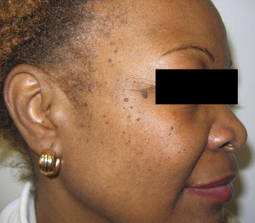
Dermatosis papulosa nigra, also known as DPN, are small, soft brown papules that may occur on the face and neck of patients of African, Latin, Indian, or Asian descent. While they may not reach the size of their histologically similar seborrheic keratosis counterparts, the lesions do represent a sign of aging in darker skinned patients. However, the lesions can be safely, easily, and effectively removed.
Electrodesiccation with a hyfrecator or destruction with the KTP (532 nm) laser are my favorite methods for DPN removal. I prefer not to use curettage or cryotherapy because of the risk for dyspigmentation in darker skinned patients. Case reports of success with fractional photothermolyis (1,550 nm) and Nd:YAG lasers (1,064 nm) have been published.
If electrodesiccation is performed, the application of topical anesthetic prior to the procedure helps make the patient more comfortable. For larger lesions, injection of 1% lidocaine with 1:100,000 epinephrine may be used.
Also, with electrodesiccation, conservative settings (0.6-2.0 W on the low setting) should be used; the lesions are desiccated using a blunt tip for a few seconds until they turn grayish.
Care is taken not to touch the surrounding skin. A sharp tip may be used with very small (less than 1 mm) lesions for more accurate precision. I wipe the tip from time to time with gauze to avoid char accumulation.
Larger or pedunculated lesions may be treated with electrodesiccation or snipped off with gradle scissors.
With the KTP laser, topical anesthesia is usually not required. I use a smaller spot size than the lesion itself to avoid targeting and potentially causing dyspigmentation of the surrounding skin.
A spot size of 1 mm is typically used, with 6-10 ms and 10-15 j/cm2. The laser tip is held approximately 1 cm away from the skin at a 90 degree angle. I start off with the lowest fluence and adjust it higher until the lesions turn grayish and a light popping sound is heard with the laser pulse.
A split-face study published in the American Journal of Dermatologic Surgery in 2009 showed that both electrodesiccation and KTP have comparable efficacy in removal of DPN. Without use of anesthetics, the KTP laser was preferred for patient comfort.
Immediately after treatment, patients can expect the treated lesions to become red and swollen - similar to insect bite reactions - for about an hour. Antibiotic ointment or aquaphor is applied to soothe the skin.
Patients are then told to leave the lesions alone, to avoid picking, and to avoid sun exposure. Patients are also advised to avoid alpha-hydroxy acids and other "anti-aging" products until healed. If the cheeks were treated, make-up (foundation, blush) may be applied in 3 to 4 days. Lesions typically fall off within a week.
If needed, repeat treatment may be performed in 2 to 4 weeks.
If you have any DPN removal tips, please feel free to share!
-Naissan Wesley, M.D.
Do you have questions about treating patients with darker skin? If so, send them to sknews@elsevier.com.
Dermatosis papulosa nigra, also known as DPN, are small, soft brown papules that may occur on the face and neck of patients of African, Latin, Indian, or Asian descent. While they may not reach the size of their histologically similar seborrheic keratosis counterparts, the lesions do represent a sign of aging in darker skinned patients. However, the lesions can be safely, easily, and effectively removed.
Electrodesiccation with a hyfrecator or destruction with the KTP (532 nm) laser are my favorite methods for DPN removal. I prefer not to use curettage or cryotherapy because of the risk for dyspigmentation in darker skinned patients. Case reports of success with fractional photothermolyis (1,550 nm) and Nd:YAG lasers (1,064 nm) have been published.
If electrodesiccation is performed, the application of topical anesthetic prior to the procedure helps make the patient more comfortable. For larger lesions, injection of 1% lidocaine with 1:100,000 epinephrine may be used.
Also, with electrodesiccation, conservative settings (0.6-2.0 W on the low setting) should be used; the lesions are desiccated using a blunt tip for a few seconds until they turn grayish.
Care is taken not to touch the surrounding skin. A sharp tip may be used with very small (less than 1 mm) lesions for more accurate precision. I wipe the tip from time to time with gauze to avoid char accumulation.
Larger or pedunculated lesions may be treated with electrodesiccation or snipped off with gradle scissors.
With the KTP laser, topical anesthesia is usually not required. I use a smaller spot size than the lesion itself to avoid targeting and potentially causing dyspigmentation of the surrounding skin.
A spot size of 1 mm is typically used, with 6-10 ms and 10-15 j/cm2. The laser tip is held approximately 1 cm away from the skin at a 90 degree angle. I start off with the lowest fluence and adjust it higher until the lesions turn grayish and a light popping sound is heard with the laser pulse.
A split-face study published in the American Journal of Dermatologic Surgery in 2009 showed that both electrodesiccation and KTP have comparable efficacy in removal of DPN. Without use of anesthetics, the KTP laser was preferred for patient comfort.
Immediately after treatment, patients can expect the treated lesions to become red and swollen - similar to insect bite reactions - for about an hour. Antibiotic ointment or aquaphor is applied to soothe the skin.
Patients are then told to leave the lesions alone, to avoid picking, and to avoid sun exposure. Patients are also advised to avoid alpha-hydroxy acids and other "anti-aging" products until healed. If the cheeks were treated, make-up (foundation, blush) may be applied in 3 to 4 days. Lesions typically fall off within a week.
If needed, repeat treatment may be performed in 2 to 4 weeks.
If you have any DPN removal tips, please feel free to share!
-Naissan Wesley, M.D.
Do you have questions about treating patients with darker skin? If so, send them to sknews@elsevier.com.
Dermatosis papulosa nigra, also known as DPN, are small, soft brown papules that may occur on the face and neck of patients of African, Latin, Indian, or Asian descent. While they may not reach the size of their histologically similar seborrheic keratosis counterparts, the lesions do represent a sign of aging in darker skinned patients. However, the lesions can be safely, easily, and effectively removed.
Electrodesiccation with a hyfrecator or destruction with the KTP (532 nm) laser are my favorite methods for DPN removal. I prefer not to use curettage or cryotherapy because of the risk for dyspigmentation in darker skinned patients. Case reports of success with fractional photothermolyis (1,550 nm) and Nd:YAG lasers (1,064 nm) have been published.
If electrodesiccation is performed, the application of topical anesthetic prior to the procedure helps make the patient more comfortable. For larger lesions, injection of 1% lidocaine with 1:100,000 epinephrine may be used.
Also, with electrodesiccation, conservative settings (0.6-2.0 W on the low setting) should be used; the lesions are desiccated using a blunt tip for a few seconds until they turn grayish.
Care is taken not to touch the surrounding skin. A sharp tip may be used with very small (less than 1 mm) lesions for more accurate precision. I wipe the tip from time to time with gauze to avoid char accumulation.
Larger or pedunculated lesions may be treated with electrodesiccation or snipped off with gradle scissors.
With the KTP laser, topical anesthesia is usually not required. I use a smaller spot size than the lesion itself to avoid targeting and potentially causing dyspigmentation of the surrounding skin.
A spot size of 1 mm is typically used, with 6-10 ms and 10-15 j/cm2. The laser tip is held approximately 1 cm away from the skin at a 90 degree angle. I start off with the lowest fluence and adjust it higher until the lesions turn grayish and a light popping sound is heard with the laser pulse.
A split-face study published in the American Journal of Dermatologic Surgery in 2009 showed that both electrodesiccation and KTP have comparable efficacy in removal of DPN. Without use of anesthetics, the KTP laser was preferred for patient comfort.
Immediately after treatment, patients can expect the treated lesions to become red and swollen - similar to insect bite reactions - for about an hour. Antibiotic ointment or aquaphor is applied to soothe the skin.
Patients are then told to leave the lesions alone, to avoid picking, and to avoid sun exposure. Patients are also advised to avoid alpha-hydroxy acids and other "anti-aging" products until healed. If the cheeks were treated, make-up (foundation, blush) may be applied in 3 to 4 days. Lesions typically fall off within a week.
If needed, repeat treatment may be performed in 2 to 4 weeks.
If you have any DPN removal tips, please feel free to share!
-Naissan Wesley, M.D.
Do you have questions about treating patients with darker skin? If so, send them to sknews@elsevier.com.
Hyperpigmentation and Hirsutism of Untreated Skin After Application of Bimatoprost Solution
Lasers and Light Devices for Psoriasis, Part 2: PDL, Nd:YAG Laser, CO2 Laser, and PDT
Depigmentation Therapy for Vitiligo in Patients With Fitzpatrick Skin Type VI
Skin of Color: Masking Imperfections
Psychological distress from dyspigmentation in skin of color is highly prevalent. Disorders of pigmentation such as vitiligo have a significant impact on a patient’s quality of life. Similarly, in skin of color patients, melasma, acne scars, and post-inflammatory hypo- and hyperpigmentation are often hard to treat.
Skin camouflage is a great way to help patients overcome the distress of their pigmentary disorders. However, I have found in my practice that patients under use these masking products.
Once they are on board, remind patients that there is a big difference between over-the-counter corrective makeup and skin camouflage products. For instance, skin camouflage products are designed to last 8-16 hours and are significantly water resistant. They are also more durable, blend better with natural skin tone, and last longer than OTC corrective makeup.
The products are applied by blending a fine layer of camouflage cream followed by a setting powder.Standard makeup and sunscreen can then be applied over the camouflage products.
Choosing the right brand can be confusing to patients. Several lines of products can be bought at department stores and through mail order. And each brand varies in texture, durability, coverage, sun protection, and color.
In the U.S. many department stores carry skin camouflage brands. Although these products reside in the "cosmetic" section, they are not referred to as makeup, so as not to create distress for patients who do not normally wear cosmetics.
In my experience Dermablend, Covermark, and Dermacolor work well. However, there are several other brands available to experiment with.
I encourage my patients with dyspigmentation to look into these well-developed camouflage products. Often times I encourage testing of the product on their skin by an experienced company representative.
Understanding the art of skin camouflage can help many of our patients cover their skin imperfections and regain their self-confidence.
-Lily Talakoub, M.D.
Psychological distress from dyspigmentation in skin of color is highly prevalent. Disorders of pigmentation such as vitiligo have a significant impact on a patient’s quality of life. Similarly, in skin of color patients, melasma, acne scars, and post-inflammatory hypo- and hyperpigmentation are often hard to treat.
Skin camouflage is a great way to help patients overcome the distress of their pigmentary disorders. However, I have found in my practice that patients under use these masking products.
Once they are on board, remind patients that there is a big difference between over-the-counter corrective makeup and skin camouflage products. For instance, skin camouflage products are designed to last 8-16 hours and are significantly water resistant. They are also more durable, blend better with natural skin tone, and last longer than OTC corrective makeup.
The products are applied by blending a fine layer of camouflage cream followed by a setting powder.Standard makeup and sunscreen can then be applied over the camouflage products.
Choosing the right brand can be confusing to patients. Several lines of products can be bought at department stores and through mail order. And each brand varies in texture, durability, coverage, sun protection, and color.
In the U.S. many department stores carry skin camouflage brands. Although these products reside in the "cosmetic" section, they are not referred to as makeup, so as not to create distress for patients who do not normally wear cosmetics.
In my experience Dermablend, Covermark, and Dermacolor work well. However, there are several other brands available to experiment with.
I encourage my patients with dyspigmentation to look into these well-developed camouflage products. Often times I encourage testing of the product on their skin by an experienced company representative.
Understanding the art of skin camouflage can help many of our patients cover their skin imperfections and regain their self-confidence.
-Lily Talakoub, M.D.
Psychological distress from dyspigmentation in skin of color is highly prevalent. Disorders of pigmentation such as vitiligo have a significant impact on a patient’s quality of life. Similarly, in skin of color patients, melasma, acne scars, and post-inflammatory hypo- and hyperpigmentation are often hard to treat.
Skin camouflage is a great way to help patients overcome the distress of their pigmentary disorders. However, I have found in my practice that patients under use these masking products.
Once they are on board, remind patients that there is a big difference between over-the-counter corrective makeup and skin camouflage products. For instance, skin camouflage products are designed to last 8-16 hours and are significantly water resistant. They are also more durable, blend better with natural skin tone, and last longer than OTC corrective makeup.
The products are applied by blending a fine layer of camouflage cream followed by a setting powder.Standard makeup and sunscreen can then be applied over the camouflage products.
Choosing the right brand can be confusing to patients. Several lines of products can be bought at department stores and through mail order. And each brand varies in texture, durability, coverage, sun protection, and color.
In the U.S. many department stores carry skin camouflage brands. Although these products reside in the "cosmetic" section, they are not referred to as makeup, so as not to create distress for patients who do not normally wear cosmetics.
In my experience Dermablend, Covermark, and Dermacolor work well. However, there are several other brands available to experiment with.
I encourage my patients with dyspigmentation to look into these well-developed camouflage products. Often times I encourage testing of the product on their skin by an experienced company representative.
Understanding the art of skin camouflage can help many of our patients cover their skin imperfections and regain their self-confidence.
-Lily Talakoub, M.D.
Blog: Top 10 Stories of 2011
For those of you who have had a busy year and haven't had the chance to regularly read the latest dermatology news on Skin and Allergy News Digital Network, we have you covered. As we ring in the new year, here's a rundown of last year's most-viewed stories:
10. Experts: Medical Dermatology Is Losing Ground, By Bruce Jancin: Experts in medical dermatology predicted the specialty will become narrower and less medically oriented by 2020. As we enter 2012, some experts said they were concerned about the emphasis on aesthetic dermatology and dermatologic surgery.

9. Mohs Surgery in Medicare Patients Skyrocketing, By Sherry Boschert: Several Mohs surgery experts found that the rate of Mohs surgery per 1,000 Medicare beneficiaries increased by 236% between 1999 and 2009. Dr. Matthew Donaldson and his associates presented the data at the annual meeting of the American College of Mohs Surgery.
8. Blog: New Isotretinoin Drug May Address Safety Concerns, By Amy Pfeiffer: This much-viewed blog post highlighted an investigational isotretinoin drug that may eliminate safety concerns associated with the drug, like IBD and depression. The gelatin capsules of CIP-iisotretinoin help reduce GI irritation and the drug is less food dependent.
7. Dosing Isotretinoin: Go Big to Avoid Second Course, By Jeffrey Eisenberg: In another isotretinoin study, investigators found that patients receiving a higher cumulative dose of the drug were no less likely to experience an acne relapse than those who received a lower cumulative dose. However, the investigators found that patients treated with a higher dose were less likely to need a second course of treatment.
6. Knifelike Vulvar Ulcers May Signal Crohn's Disease, By Kate Johnson: Knifelike vulvar ulcers could be a sign of Crohn's disease in women, according to experts at a conference on vulvovaginal diseases. For some patients, ulcers may be the only manifestation of the disorder.
5. Biologics Up Cardiovascular Risk, New Analysis Finds, By Sherry Boschert: Biologic therapies used to treat psoriasis have been linked to an increase in major cardiovascular events, according to researchers. One patient on placebo developed a major cardiovascular event in a study of etanercept. Five patients on ustekinumab, five on briakinumab, and one on adalimumab also developed major cardiovascular events.
4. Future Technologies Hold Promise for Hair Restoration, By Damian McNamara: At an annual meeting of dermatologic surgeons, Dr. Ricardo Mejia discussed technological advancements in hair restoration. He said the future for hair restoration could include technologies like robotic hair transfer, hair cloning, and technologies to optimize new growth.
3. AAD: Potential Doxycycline, IBD Link Considered Worrisome, By Bruce Jancin: In more acne news, a retrospective cohort study linked tetracycline-class antibiotics with an increase in inflammatory bowel disease. The highly controversial findings were one of the hottest topics at the annual meeting of the American Academy of Dermatology and on this website.
2. Bimatoprost Repigments Vitiligo Patient Skin, By Bruce Jancin: A topical bimatoprost ophthalmic solution could serve as treatment for focal vitiligo, according to a pilot study presented at the World Congress of Dermatology. Researchers said 7 out of 10 patients exhibited pronounced repigmentation after 2 months of treatment.
1. Marijuana Allergies "Fairly Common," Expert Says, By M. Alexander Otto: A heads up to physicians: allergy experts said marijuana allergies are more common than most people think. Patients with with a marijuana allergy exhibit symptoms including wheezing, sinusitis, throat swelling, and inhalation issues.
Best wishes for 2012!
-- Frances Correa (FMCReporting)
For those of you who have had a busy year and haven't had the chance to regularly read the latest dermatology news on Skin and Allergy News Digital Network, we have you covered. As we ring in the new year, here's a rundown of last year's most-viewed stories:
10. Experts: Medical Dermatology Is Losing Ground, By Bruce Jancin: Experts in medical dermatology predicted the specialty will become narrower and less medically oriented by 2020. As we enter 2012, some experts said they were concerned about the emphasis on aesthetic dermatology and dermatologic surgery.
9. Mohs Surgery in Medicare Patients Skyrocketing, By Sherry Boschert: Several Mohs surgery experts found that the rate of Mohs surgery per 1,000 Medicare beneficiaries increased by 236% between 1999 and 2009. Dr. Matthew Donaldson and his associates presented the data at the annual meeting of the American College of Mohs Surgery.
8. Blog: New Isotretinoin Drug May Address Safety Concerns, By Amy Pfeiffer: This much-viewed blog post highlighted an investigational isotretinoin drug that may eliminate safety concerns associated with the drug, like IBD and depression. The gelatin capsules of CIP-iisotretinoin help reduce GI irritation and the drug is less food dependent.
7. Dosing Isotretinoin: Go Big to Avoid Second Course, By Jeffrey Eisenberg: In another isotretinoin study, investigators found that patients receiving a higher cumulative dose of the drug were no less likely to experience an acne relapse than those who received a lower cumulative dose. However, the investigators found that patients treated with a higher dose were less likely to need a second course of treatment.
6. Knifelike Vulvar Ulcers May Signal Crohn's Disease, By Kate Johnson: Knifelike vulvar ulcers could be a sign of Crohn's disease in women, according to experts at a conference on vulvovaginal diseases. For some patients, ulcers may be the only manifestation of the disorder.
5. Biologics Up Cardiovascular Risk, New Analysis Finds, By Sherry Boschert: Biologic therapies used to treat psoriasis have been linked to an increase in major cardiovascular events, according to researchers. One patient on placebo developed a major cardiovascular event in a study of etanercept. Five patients on ustekinumab, five on briakinumab, and one on adalimumab also developed major cardiovascular events.
4. Future Technologies Hold Promise for Hair Restoration, By Damian McNamara: At an annual meeting of dermatologic surgeons, Dr. Ricardo Mejia discussed technological advancements in hair restoration. He said the future for hair restoration could include technologies like robotic hair transfer, hair cloning, and technologies to optimize new growth.
3. AAD: Potential Doxycycline, IBD Link Considered Worrisome, By Bruce Jancin: In more acne news, a retrospective cohort study linked tetracycline-class antibiotics with an increase in inflammatory bowel disease. The highly controversial findings were one of the hottest topics at the annual meeting of the American Academy of Dermatology and on this website.
2. Bimatoprost Repigments Vitiligo Patient Skin, By Bruce Jancin: A topical bimatoprost ophthalmic solution could serve as treatment for focal vitiligo, according to a pilot study presented at the World Congress of Dermatology. Researchers said 7 out of 10 patients exhibited pronounced repigmentation after 2 months of treatment.
1. Marijuana Allergies "Fairly Common," Expert Says, By M. Alexander Otto: A heads up to physicians: allergy experts said marijuana allergies are more common than most people think. Patients with with a marijuana allergy exhibit symptoms including wheezing, sinusitis, throat swelling, and inhalation issues.
Best wishes for 2012!
-- Frances Correa (FMCReporting)
For those of you who have had a busy year and haven't had the chance to regularly read the latest dermatology news on Skin and Allergy News Digital Network, we have you covered. As we ring in the new year, here's a rundown of last year's most-viewed stories:
10. Experts: Medical Dermatology Is Losing Ground, By Bruce Jancin: Experts in medical dermatology predicted the specialty will become narrower and less medically oriented by 2020. As we enter 2012, some experts said they were concerned about the emphasis on aesthetic dermatology and dermatologic surgery.
9. Mohs Surgery in Medicare Patients Skyrocketing, By Sherry Boschert: Several Mohs surgery experts found that the rate of Mohs surgery per 1,000 Medicare beneficiaries increased by 236% between 1999 and 2009. Dr. Matthew Donaldson and his associates presented the data at the annual meeting of the American College of Mohs Surgery.
8. Blog: New Isotretinoin Drug May Address Safety Concerns, By Amy Pfeiffer: This much-viewed blog post highlighted an investigational isotretinoin drug that may eliminate safety concerns associated with the drug, like IBD and depression. The gelatin capsules of CIP-iisotretinoin help reduce GI irritation and the drug is less food dependent.
7. Dosing Isotretinoin: Go Big to Avoid Second Course, By Jeffrey Eisenberg: In another isotretinoin study, investigators found that patients receiving a higher cumulative dose of the drug were no less likely to experience an acne relapse than those who received a lower cumulative dose. However, the investigators found that patients treated with a higher dose were less likely to need a second course of treatment.
6. Knifelike Vulvar Ulcers May Signal Crohn's Disease, By Kate Johnson: Knifelike vulvar ulcers could be a sign of Crohn's disease in women, according to experts at a conference on vulvovaginal diseases. For some patients, ulcers may be the only manifestation of the disorder.
5. Biologics Up Cardiovascular Risk, New Analysis Finds, By Sherry Boschert: Biologic therapies used to treat psoriasis have been linked to an increase in major cardiovascular events, according to researchers. One patient on placebo developed a major cardiovascular event in a study of etanercept. Five patients on ustekinumab, five on briakinumab, and one on adalimumab also developed major cardiovascular events.
4. Future Technologies Hold Promise for Hair Restoration, By Damian McNamara: At an annual meeting of dermatologic surgeons, Dr. Ricardo Mejia discussed technological advancements in hair restoration. He said the future for hair restoration could include technologies like robotic hair transfer, hair cloning, and technologies to optimize new growth.
3. AAD: Potential Doxycycline, IBD Link Considered Worrisome, By Bruce Jancin: In more acne news, a retrospective cohort study linked tetracycline-class antibiotics with an increase in inflammatory bowel disease. The highly controversial findings were one of the hottest topics at the annual meeting of the American Academy of Dermatology and on this website.
2. Bimatoprost Repigments Vitiligo Patient Skin, By Bruce Jancin: A topical bimatoprost ophthalmic solution could serve as treatment for focal vitiligo, according to a pilot study presented at the World Congress of Dermatology. Researchers said 7 out of 10 patients exhibited pronounced repigmentation after 2 months of treatment.
1. Marijuana Allergies "Fairly Common," Expert Says, By M. Alexander Otto: A heads up to physicians: allergy experts said marijuana allergies are more common than most people think. Patients with with a marijuana allergy exhibit symptoms including wheezing, sinusitis, throat swelling, and inhalation issues.
Best wishes for 2012!
-- Frances Correa (FMCReporting)
Role of Phototherapy in Patients with Skin of Color
Zain U. Syed, MD, and Iltefat H. Hamzavi, MD
Phototherapy has proven to be one of the most versatile and effective treatment options for a variety of inflammatory and pigmentary skin diseases. However, the use of these treatment modalities in patients of color requires some special considerations. The modality chosen, the dosing of the treatment and duration of treatment are all issues to be considered for patients of color treated with ultraviolet phototherapy. In addition, there are some diseases which are more commonly seen in patients of color. These diseases may have better treatment outcomes using newer phototherapeutic options such as the long pulsed Nd:YAG laser or UVA1. As our population in the United States becomes more diverse it would behoove all dermatologists to acquaint themselves with the special circumstances of treating ethnic patients with phototherapy.
*For a PDF of the full article, click on the link to the left of this introduction.
Zain U. Syed, MD, and Iltefat H. Hamzavi, MD
Phototherapy has proven to be one of the most versatile and effective treatment options for a variety of inflammatory and pigmentary skin diseases. However, the use of these treatment modalities in patients of color requires some special considerations. The modality chosen, the dosing of the treatment and duration of treatment are all issues to be considered for patients of color treated with ultraviolet phototherapy. In addition, there are some diseases which are more commonly seen in patients of color. These diseases may have better treatment outcomes using newer phototherapeutic options such as the long pulsed Nd:YAG laser or UVA1. As our population in the United States becomes more diverse it would behoove all dermatologists to acquaint themselves with the special circumstances of treating ethnic patients with phototherapy.
*For a PDF of the full article, click on the link to the left of this introduction.
Zain U. Syed, MD, and Iltefat H. Hamzavi, MD
Phototherapy has proven to be one of the most versatile and effective treatment options for a variety of inflammatory and pigmentary skin diseases. However, the use of these treatment modalities in patients of color requires some special considerations. The modality chosen, the dosing of the treatment and duration of treatment are all issues to be considered for patients of color treated with ultraviolet phototherapy. In addition, there are some diseases which are more commonly seen in patients of color. These diseases may have better treatment outcomes using newer phototherapeutic options such as the long pulsed Nd:YAG laser or UVA1. As our population in the United States becomes more diverse it would behoove all dermatologists to acquaint themselves with the special circumstances of treating ethnic patients with phototherapy.
*For a PDF of the full article, click on the link to the left of this introduction.