User login
ASCO: Combo therapy results end reign of single-drug therapy in melanoma
CHICAGO – Nivolumab and nivolumab plus ipilimumab are superior to ipilimumab alone in first-line metastatic melanoma, results from the phase III CheckMate 067 study suggest.
After a minimum of 9 months follow-up, the risk of disease progression or death was reduced by 43% with nivolumab versus ipilimumab (hazard ratio, 0.57; P value < .001) and by 58% with nivolumab plus ipilimumab vs. ipilimumab (HR, 0.42; P < .001).
The study was not powered to compare nivolumab (Opdivo) plus ipilimumab (Yervoy) with nivolumab.
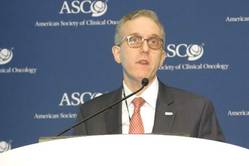
Median progression-free survival was 11.5 months with nivolumab plus ipilimumab, 6.9 months with nivolumab, and 2.9 months with ipilimumab alone, Dr. Jedd Wolchok said at the annual meeting of the American Society of Clinical Oncology.
Overall, 43.7% of patients in the nivolumab arm, 57.6% in the combination arm, and 19% in the ipilimumab arm had objective responses assessed by RECIST version 1.1. Complete responses were more common in the combination arm (11.5%) than in the nivolumab (9%) or ipilimumab (2.2%) arms, as were partial responses (46.2% vs. 34.8% vs. 16.8%).
The median duration of response has not been reached in any group, Dr. Wolchok, chief of melanoma and immunotherapeutics at Memorial Sloan-Kettering Cancer Center, New York, reported in the plenary session. The results were also simultaneously published in the New England Journal of Medicine (doi:10.1056/NEJMoa1504030).
Dr. Michael B. Atkins, deputy director of the Georgetown-Lombardi Comprehensive Cancer Center in Washington, who was invited to discuss CheckMate 067, said the principal take-home message is that, “Ipilimumab can no longer be considered as standard first-line immunotherapy for patients with advanced melanoma. This clearly has important implications for the field and for our patients.”
Combination nivolumab and ipilimumab, however, is “expensive treatment” and raises legitimate concerns about cost and value, he added. Judgment about whether the combination is worth it will need to be withheld until it’s determined if it “can produce more long-term responses or cures, which may reduce the need for other therapies. Further, because of its early toxicity, in contrast to the long duration of monotherapy, the combination may actually involve less treatment and expense.”
Ipilimumab, an anticytotoxic T-lymphocyte–associated antigen 4 (CTLA-4) antibody, revolutionized the treatment of advanced melanoma just 5 years ago. But the landscape has changed with the 2014 approval of nivolumab and pembrolizumab (Keytruda), two anti–programmed death (PD-1) antibodies, and with recent phase III results reporting that pembrolizumab is superior to ipilimumab in advanced melanoma.
There are no clear-cut distinctions in efficacy or toxicity between nivolumab and pembrolizumab, so therefore, treatment decisions will be largely based on other factors such as dosing schedule, marketing cost, and experience, Dr. Atkins said. Pembrolizumab is FDA approved at 2 mg/kg every 3 weeks, while nivolumab is approved at 3 mg/kg every 2 weeks.
CheckMate 067 randomly assigned 945 previously untreated patients with unresectable stage III or IV melanoma to nivolumab 3 mg/kg every 2 weeks or nivolumab 1 mg/kg plus ipilimumab 3 mg/kg every 3 weeks for four doses then nivolumab 3 mg/kg every 2 weeks, or ipilimumab 3 mg/kg every 3 weeks for four doses. Patients were stratified at baseline by PD-ligand 1 expression, BRAF status, and American Joint Commission on Cancer M stage.
The impact of PD-L1 expression
As seen in other studies, PD-L1 expression enriched response. Objective response rates in patients with tumors showing less than 5% PD-L1 expression were 41.3% with nivolumab, 54.% with nivolumab plus ipilimumab, and 17.8% with ipilimumab. This increased to 57.5%, 72.1%, and 21.3% in patients with at least 5% PD-L1 expression in their tumors, Dr. Wolchok said.
In patients with PD-L1–negative tumors, median progression-free survival was 5.3 months with nivolumab, 11.2 months with nivolumab plus ipilimumab, and 2.8 months with ipilimumab. In patients with PD-L1–positive tumors, the median PFS was 14 months in both nivolumab groups and 3.9 months in the ipilimumab group.
The results suggest that nivolumab alone may have comparable efficacy to nivolumab plus ipilimumab in PD-L1–positive patients, Dr. Atkins said, but added several caveats. Notably, that median PFS is not the optimal way to evaluate immunotherapy because it can be compounded by pseudo progression. Better measures include overall survival and response duration, but those data are immature. Further, only 25%-28% of patients in the study were PD-L1 positive and two-thirds of responders to nivolumab alone were PD-L1 negative.
“PD-L1 expression is a weak biomarker,” he said.
Greater efficacy, greater toxicity
Both Dr. Wolchok and Dr. Atkins agreed that combining the two immunotherapies increased treatment-related adverse events, but that most events were manageable. Moreover, treatment interruption did not prevent tumor response, with 67.5% of patients who discontinued the nivolumab-ipilimumab combination because of a treatment-related adverse event developing a response.
Grade 3-4 events were reported in 55% of the combination group, 16.3% of the nivolumab-alone group, and 27.3% of the ipilimumab-alone group. The most common of these events were diarrhea in 2.2% of patients in the nivolumab group, 9.3% of the combination group and 6.1% of the ipilimumab group, colitis (0.6%, 7.7%, 8.7%) and increased alanine aminotransferase levels (1.3%, 8.3%, 1.6%).
“There is no signature adverse event for the combination,” Dr. Wolchok said. “With the use of immune-modulating agents, the majority of grade 3 and 4 select adverse events resolved in all of the groups with the use of established algorithms. However, as we observed in prior studies, most endocrine events did not.”
There was one treatment-related death due to neutropenia in the nivolumab group, one due to cardiac arrest in the ipilimumab group, and none in the combination group.
An expanded access program is available for the combination of nivolumab and ipilimumab through the study sponsor, Bristol-Myers Squibb, Dr. Wolchok noted.
On Twitter@pwendl
CHICAGO – Nivolumab and nivolumab plus ipilimumab are superior to ipilimumab alone in first-line metastatic melanoma, results from the phase III CheckMate 067 study suggest.
After a minimum of 9 months follow-up, the risk of disease progression or death was reduced by 43% with nivolumab versus ipilimumab (hazard ratio, 0.57; P value < .001) and by 58% with nivolumab plus ipilimumab vs. ipilimumab (HR, 0.42; P < .001).
The study was not powered to compare nivolumab (Opdivo) plus ipilimumab (Yervoy) with nivolumab.
Median progression-free survival was 11.5 months with nivolumab plus ipilimumab, 6.9 months with nivolumab, and 2.9 months with ipilimumab alone, Dr. Jedd Wolchok said at the annual meeting of the American Society of Clinical Oncology.
Overall, 43.7% of patients in the nivolumab arm, 57.6% in the combination arm, and 19% in the ipilimumab arm had objective responses assessed by RECIST version 1.1. Complete responses were more common in the combination arm (11.5%) than in the nivolumab (9%) or ipilimumab (2.2%) arms, as were partial responses (46.2% vs. 34.8% vs. 16.8%).
The median duration of response has not been reached in any group, Dr. Wolchok, chief of melanoma and immunotherapeutics at Memorial Sloan-Kettering Cancer Center, New York, reported in the plenary session. The results were also simultaneously published in the New England Journal of Medicine (doi:10.1056/NEJMoa1504030).
Dr. Michael B. Atkins, deputy director of the Georgetown-Lombardi Comprehensive Cancer Center in Washington, who was invited to discuss CheckMate 067, said the principal take-home message is that, “Ipilimumab can no longer be considered as standard first-line immunotherapy for patients with advanced melanoma. This clearly has important implications for the field and for our patients.”
Combination nivolumab and ipilimumab, however, is “expensive treatment” and raises legitimate concerns about cost and value, he added. Judgment about whether the combination is worth it will need to be withheld until it’s determined if it “can produce more long-term responses or cures, which may reduce the need for other therapies. Further, because of its early toxicity, in contrast to the long duration of monotherapy, the combination may actually involve less treatment and expense.”
Ipilimumab, an anticytotoxic T-lymphocyte–associated antigen 4 (CTLA-4) antibody, revolutionized the treatment of advanced melanoma just 5 years ago. But the landscape has changed with the 2014 approval of nivolumab and pembrolizumab (Keytruda), two anti–programmed death (PD-1) antibodies, and with recent phase III results reporting that pembrolizumab is superior to ipilimumab in advanced melanoma.
There are no clear-cut distinctions in efficacy or toxicity between nivolumab and pembrolizumab, so therefore, treatment decisions will be largely based on other factors such as dosing schedule, marketing cost, and experience, Dr. Atkins said. Pembrolizumab is FDA approved at 2 mg/kg every 3 weeks, while nivolumab is approved at 3 mg/kg every 2 weeks.
CheckMate 067 randomly assigned 945 previously untreated patients with unresectable stage III or IV melanoma to nivolumab 3 mg/kg every 2 weeks or nivolumab 1 mg/kg plus ipilimumab 3 mg/kg every 3 weeks for four doses then nivolumab 3 mg/kg every 2 weeks, or ipilimumab 3 mg/kg every 3 weeks for four doses. Patients were stratified at baseline by PD-ligand 1 expression, BRAF status, and American Joint Commission on Cancer M stage.
The impact of PD-L1 expression
As seen in other studies, PD-L1 expression enriched response. Objective response rates in patients with tumors showing less than 5% PD-L1 expression were 41.3% with nivolumab, 54.% with nivolumab plus ipilimumab, and 17.8% with ipilimumab. This increased to 57.5%, 72.1%, and 21.3% in patients with at least 5% PD-L1 expression in their tumors, Dr. Wolchok said.
In patients with PD-L1–negative tumors, median progression-free survival was 5.3 months with nivolumab, 11.2 months with nivolumab plus ipilimumab, and 2.8 months with ipilimumab. In patients with PD-L1–positive tumors, the median PFS was 14 months in both nivolumab groups and 3.9 months in the ipilimumab group.
The results suggest that nivolumab alone may have comparable efficacy to nivolumab plus ipilimumab in PD-L1–positive patients, Dr. Atkins said, but added several caveats. Notably, that median PFS is not the optimal way to evaluate immunotherapy because it can be compounded by pseudo progression. Better measures include overall survival and response duration, but those data are immature. Further, only 25%-28% of patients in the study were PD-L1 positive and two-thirds of responders to nivolumab alone were PD-L1 negative.
“PD-L1 expression is a weak biomarker,” he said.
Greater efficacy, greater toxicity
Both Dr. Wolchok and Dr. Atkins agreed that combining the two immunotherapies increased treatment-related adverse events, but that most events were manageable. Moreover, treatment interruption did not prevent tumor response, with 67.5% of patients who discontinued the nivolumab-ipilimumab combination because of a treatment-related adverse event developing a response.
Grade 3-4 events were reported in 55% of the combination group, 16.3% of the nivolumab-alone group, and 27.3% of the ipilimumab-alone group. The most common of these events were diarrhea in 2.2% of patients in the nivolumab group, 9.3% of the combination group and 6.1% of the ipilimumab group, colitis (0.6%, 7.7%, 8.7%) and increased alanine aminotransferase levels (1.3%, 8.3%, 1.6%).
“There is no signature adverse event for the combination,” Dr. Wolchok said. “With the use of immune-modulating agents, the majority of grade 3 and 4 select adverse events resolved in all of the groups with the use of established algorithms. However, as we observed in prior studies, most endocrine events did not.”
There was one treatment-related death due to neutropenia in the nivolumab group, one due to cardiac arrest in the ipilimumab group, and none in the combination group.
An expanded access program is available for the combination of nivolumab and ipilimumab through the study sponsor, Bristol-Myers Squibb, Dr. Wolchok noted.
On Twitter@pwendl
CHICAGO – Nivolumab and nivolumab plus ipilimumab are superior to ipilimumab alone in first-line metastatic melanoma, results from the phase III CheckMate 067 study suggest.
After a minimum of 9 months follow-up, the risk of disease progression or death was reduced by 43% with nivolumab versus ipilimumab (hazard ratio, 0.57; P value < .001) and by 58% with nivolumab plus ipilimumab vs. ipilimumab (HR, 0.42; P < .001).
The study was not powered to compare nivolumab (Opdivo) plus ipilimumab (Yervoy) with nivolumab.
Median progression-free survival was 11.5 months with nivolumab plus ipilimumab, 6.9 months with nivolumab, and 2.9 months with ipilimumab alone, Dr. Jedd Wolchok said at the annual meeting of the American Society of Clinical Oncology.
Overall, 43.7% of patients in the nivolumab arm, 57.6% in the combination arm, and 19% in the ipilimumab arm had objective responses assessed by RECIST version 1.1. Complete responses were more common in the combination arm (11.5%) than in the nivolumab (9%) or ipilimumab (2.2%) arms, as were partial responses (46.2% vs. 34.8% vs. 16.8%).
The median duration of response has not been reached in any group, Dr. Wolchok, chief of melanoma and immunotherapeutics at Memorial Sloan-Kettering Cancer Center, New York, reported in the plenary session. The results were also simultaneously published in the New England Journal of Medicine (doi:10.1056/NEJMoa1504030).
Dr. Michael B. Atkins, deputy director of the Georgetown-Lombardi Comprehensive Cancer Center in Washington, who was invited to discuss CheckMate 067, said the principal take-home message is that, “Ipilimumab can no longer be considered as standard first-line immunotherapy for patients with advanced melanoma. This clearly has important implications for the field and for our patients.”
Combination nivolumab and ipilimumab, however, is “expensive treatment” and raises legitimate concerns about cost and value, he added. Judgment about whether the combination is worth it will need to be withheld until it’s determined if it “can produce more long-term responses or cures, which may reduce the need for other therapies. Further, because of its early toxicity, in contrast to the long duration of monotherapy, the combination may actually involve less treatment and expense.”
Ipilimumab, an anticytotoxic T-lymphocyte–associated antigen 4 (CTLA-4) antibody, revolutionized the treatment of advanced melanoma just 5 years ago. But the landscape has changed with the 2014 approval of nivolumab and pembrolizumab (Keytruda), two anti–programmed death (PD-1) antibodies, and with recent phase III results reporting that pembrolizumab is superior to ipilimumab in advanced melanoma.
There are no clear-cut distinctions in efficacy or toxicity between nivolumab and pembrolizumab, so therefore, treatment decisions will be largely based on other factors such as dosing schedule, marketing cost, and experience, Dr. Atkins said. Pembrolizumab is FDA approved at 2 mg/kg every 3 weeks, while nivolumab is approved at 3 mg/kg every 2 weeks.
CheckMate 067 randomly assigned 945 previously untreated patients with unresectable stage III or IV melanoma to nivolumab 3 mg/kg every 2 weeks or nivolumab 1 mg/kg plus ipilimumab 3 mg/kg every 3 weeks for four doses then nivolumab 3 mg/kg every 2 weeks, or ipilimumab 3 mg/kg every 3 weeks for four doses. Patients were stratified at baseline by PD-ligand 1 expression, BRAF status, and American Joint Commission on Cancer M stage.
The impact of PD-L1 expression
As seen in other studies, PD-L1 expression enriched response. Objective response rates in patients with tumors showing less than 5% PD-L1 expression were 41.3% with nivolumab, 54.% with nivolumab plus ipilimumab, and 17.8% with ipilimumab. This increased to 57.5%, 72.1%, and 21.3% in patients with at least 5% PD-L1 expression in their tumors, Dr. Wolchok said.
In patients with PD-L1–negative tumors, median progression-free survival was 5.3 months with nivolumab, 11.2 months with nivolumab plus ipilimumab, and 2.8 months with ipilimumab. In patients with PD-L1–positive tumors, the median PFS was 14 months in both nivolumab groups and 3.9 months in the ipilimumab group.
The results suggest that nivolumab alone may have comparable efficacy to nivolumab plus ipilimumab in PD-L1–positive patients, Dr. Atkins said, but added several caveats. Notably, that median PFS is not the optimal way to evaluate immunotherapy because it can be compounded by pseudo progression. Better measures include overall survival and response duration, but those data are immature. Further, only 25%-28% of patients in the study were PD-L1 positive and two-thirds of responders to nivolumab alone were PD-L1 negative.
“PD-L1 expression is a weak biomarker,” he said.
Greater efficacy, greater toxicity
Both Dr. Wolchok and Dr. Atkins agreed that combining the two immunotherapies increased treatment-related adverse events, but that most events were manageable. Moreover, treatment interruption did not prevent tumor response, with 67.5% of patients who discontinued the nivolumab-ipilimumab combination because of a treatment-related adverse event developing a response.
Grade 3-4 events were reported in 55% of the combination group, 16.3% of the nivolumab-alone group, and 27.3% of the ipilimumab-alone group. The most common of these events were diarrhea in 2.2% of patients in the nivolumab group, 9.3% of the combination group and 6.1% of the ipilimumab group, colitis (0.6%, 7.7%, 8.7%) and increased alanine aminotransferase levels (1.3%, 8.3%, 1.6%).
“There is no signature adverse event for the combination,” Dr. Wolchok said. “With the use of immune-modulating agents, the majority of grade 3 and 4 select adverse events resolved in all of the groups with the use of established algorithms. However, as we observed in prior studies, most endocrine events did not.”
There was one treatment-related death due to neutropenia in the nivolumab group, one due to cardiac arrest in the ipilimumab group, and none in the combination group.
An expanded access program is available for the combination of nivolumab and ipilimumab through the study sponsor, Bristol-Myers Squibb, Dr. Wolchok noted.
On Twitter@pwendl
AT THE ASCO ANNUAL MEETING 2015
Key clinical point: Nivolumab alone or combined with ipilimumab significantly improves progression-free survival and objective response rates compared with ipilimumab alone in previously untreated metastatic melanoma.
Major finding: Median progression-free survival was 11.5 months with nivolumab plus ipilimumab, 6.9 months with nivolumab, and 2.9 months with ipilimumab.
Data source: Phase III, double-blind randomized trial in 945 patients with previously untreated metastatic melanoma.
Disclosures: The study was funded by Bristol-Myers Squibb. Dr. Wolchok reported financial relationships with several firms including research funding from and consulting or advising for Bristol-Myers Squibb.
VIDEO: Dual immunotherapy more powerful in melanoma, but where do we go from here?
CHICAGO – Combining the immunotherapy antibodies nivolumab and ipilimumab induced more robust responses in untreated advanced melanoma when used together than as single agents, according to phase III results reported at the annual meeting of the American Society of Clinical Oncology.
In an interview at the meeting, Dr. Steven O’Day, whose ipilimumab research rocked ASCO audiences just 5 years ago, gives his insights into the results, what they mean for the future of ipilimumab, and what clinicians may possibly see at ASCO 2016.
The study was sponsored by Bristol-Myers Squibb. The lead investigator, Dr. Jedd D. Wolchok, reported financial relationships with BMS and several other firms.
The video associated with this article is no longer available on this site. Please view all of our videos on the MDedge YouTube channel
On Twitter @pwendl
CHICAGO – Combining the immunotherapy antibodies nivolumab and ipilimumab induced more robust responses in untreated advanced melanoma when used together than as single agents, according to phase III results reported at the annual meeting of the American Society of Clinical Oncology.
In an interview at the meeting, Dr. Steven O’Day, whose ipilimumab research rocked ASCO audiences just 5 years ago, gives his insights into the results, what they mean for the future of ipilimumab, and what clinicians may possibly see at ASCO 2016.
The study was sponsored by Bristol-Myers Squibb. The lead investigator, Dr. Jedd D. Wolchok, reported financial relationships with BMS and several other firms.
The video associated with this article is no longer available on this site. Please view all of our videos on the MDedge YouTube channel
On Twitter @pwendl
CHICAGO – Combining the immunotherapy antibodies nivolumab and ipilimumab induced more robust responses in untreated advanced melanoma when used together than as single agents, according to phase III results reported at the annual meeting of the American Society of Clinical Oncology.
In an interview at the meeting, Dr. Steven O’Day, whose ipilimumab research rocked ASCO audiences just 5 years ago, gives his insights into the results, what they mean for the future of ipilimumab, and what clinicians may possibly see at ASCO 2016.
The study was sponsored by Bristol-Myers Squibb. The lead investigator, Dr. Jedd D. Wolchok, reported financial relationships with BMS and several other firms.
The video associated with this article is no longer available on this site. Please view all of our videos on the MDedge YouTube channel
On Twitter @pwendl
AT THE ASCO ANNUAL MEETING 2015

ASCO: German trial argues against complete nodal dissection for SLN-positive melanoma
CHICAGO – The case against performing a complete lymph node dissection in patients with melanoma who have micrometastases in their sentinel lymph node just got stronger in light of findings from a randomized, phase III clinical trial conducted by the German Dermatologic Cooperative Oncology Group (DeCOG).
With 483 patients studied and a median follow-up approaching 3 years, the rate of distant metastasis–free survival did not differ significantly between those who had a complete lymph node dissection and those who had simple watchful waiting, with just 0.3% separating the groups, the investigators reported at the annual meeting of the American Society of Clinical Oncology. Most other key outcomes were likewise statistically indistinguishable between groups.
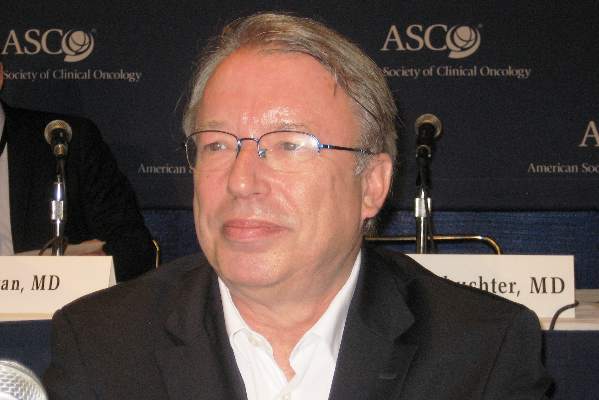
“This is the first study which tested the general recommendation of complete lymphadenectomy in patients with positive nodes,” senior investigator Dr. Claus Garbe, a professor of dermatology at the University of Tübingen (Germany), said in a press briefing. “We cannot confirm this recommendation, and we expect that the surgical [practice] will change.”
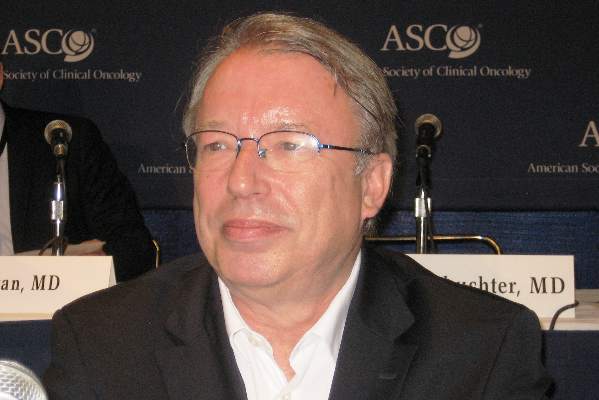
However, Dr. Lynn Schuchter, an ASCO expert, as well as chief of hematology oncology and the C. Willard Robinson Professor of Hematology-Oncology at Penn Medicine in Philadelphia, took a more cautious view, saying that the findings require confirmation before being widely adopted into clinical practice.
“I would say this is a really important study. However, it’s a relatively small study, and I don’t think we would make a complete change in our recommendations yet based upon this study,” she commented.
The ongoing international Multicenter Selective Lymphadenectomy Trial II (MSLT-II), which has a target enrollment of about 1,900 patients and is designed to detect a smaller difference between groups, will provide further information on this issue, according to Dr. Schuchter. “So I think we’ll wait in terms of making definitive changes in our management, for the results of another, larger study with longer follow-up,” she said. “But [the German study] gives us, in that patient who is very concerned about lymphedema ... pertinent information to feel comfortable considering more of a watch-and-wait approach, in terms of monitoring somebody and not doing that surgery.”
Dr. Garbe and colleagues enrolled in their trial patients who underwent resection of a primary cutaneous melanoma of the trunk or extremities at least 1.00 mm in thickness and were determined to have stage III disease with a positive sentinel node containing individual tumor cells or micrometastases. They were randomly assigned to observation only or complete lymph node dissection. Both groups had a lymph node ultrasound exam every 3 months and CT/MRI or PET scans every 6 months.
With a median follow-up of 35 months, patients who had the complete lymph node dissection were about half as likely to develop regional metastases as peers who had watchful waiting (8.3% vs. 14.6%). But the groups did not differ significantly with respect to 3- and 5-year rates of recurrence-free survival, distant metastasis–free survival (the trial’s primary endpoint), and melanoma-specific survival.
The investigators plan to repeat their analysis in 3 years but do not expect the findings will change, according to Dr. Garbe, as the large majority of melanoma recurrences happen in the first 3 years after initial diagnosis.
Dr. Garbe disclosed ties to Amgen, Bristol-Myers Squibb, GlaxoSmithKline, Merck, Novartis, and Roche Pharma AG. The trial was funded by German Cancer Aid.
CHICAGO – The case against performing a complete lymph node dissection in patients with melanoma who have micrometastases in their sentinel lymph node just got stronger in light of findings from a randomized, phase III clinical trial conducted by the German Dermatologic Cooperative Oncology Group (DeCOG).
With 483 patients studied and a median follow-up approaching 3 years, the rate of distant metastasis–free survival did not differ significantly between those who had a complete lymph node dissection and those who had simple watchful waiting, with just 0.3% separating the groups, the investigators reported at the annual meeting of the American Society of Clinical Oncology. Most other key outcomes were likewise statistically indistinguishable between groups.
“This is the first study which tested the general recommendation of complete lymphadenectomy in patients with positive nodes,” senior investigator Dr. Claus Garbe, a professor of dermatology at the University of Tübingen (Germany), said in a press briefing. “We cannot confirm this recommendation, and we expect that the surgical [practice] will change.”
However, Dr. Lynn Schuchter, an ASCO expert, as well as chief of hematology oncology and the C. Willard Robinson Professor of Hematology-Oncology at Penn Medicine in Philadelphia, took a more cautious view, saying that the findings require confirmation before being widely adopted into clinical practice.
“I would say this is a really important study. However, it’s a relatively small study, and I don’t think we would make a complete change in our recommendations yet based upon this study,” she commented.
The ongoing international Multicenter Selective Lymphadenectomy Trial II (MSLT-II), which has a target enrollment of about 1,900 patients and is designed to detect a smaller difference between groups, will provide further information on this issue, according to Dr. Schuchter. “So I think we’ll wait in terms of making definitive changes in our management, for the results of another, larger study with longer follow-up,” she said. “But [the German study] gives us, in that patient who is very concerned about lymphedema ... pertinent information to feel comfortable considering more of a watch-and-wait approach, in terms of monitoring somebody and not doing that surgery.”
Dr. Garbe and colleagues enrolled in their trial patients who underwent resection of a primary cutaneous melanoma of the trunk or extremities at least 1.00 mm in thickness and were determined to have stage III disease with a positive sentinel node containing individual tumor cells or micrometastases. They were randomly assigned to observation only or complete lymph node dissection. Both groups had a lymph node ultrasound exam every 3 months and CT/MRI or PET scans every 6 months.
With a median follow-up of 35 months, patients who had the complete lymph node dissection were about half as likely to develop regional metastases as peers who had watchful waiting (8.3% vs. 14.6%). But the groups did not differ significantly with respect to 3- and 5-year rates of recurrence-free survival, distant metastasis–free survival (the trial’s primary endpoint), and melanoma-specific survival.
The investigators plan to repeat their analysis in 3 years but do not expect the findings will change, according to Dr. Garbe, as the large majority of melanoma recurrences happen in the first 3 years after initial diagnosis.
Dr. Garbe disclosed ties to Amgen, Bristol-Myers Squibb, GlaxoSmithKline, Merck, Novartis, and Roche Pharma AG. The trial was funded by German Cancer Aid.
CHICAGO – The case against performing a complete lymph node dissection in patients with melanoma who have micrometastases in their sentinel lymph node just got stronger in light of findings from a randomized, phase III clinical trial conducted by the German Dermatologic Cooperative Oncology Group (DeCOG).
With 483 patients studied and a median follow-up approaching 3 years, the rate of distant metastasis–free survival did not differ significantly between those who had a complete lymph node dissection and those who had simple watchful waiting, with just 0.3% separating the groups, the investigators reported at the annual meeting of the American Society of Clinical Oncology. Most other key outcomes were likewise statistically indistinguishable between groups.
“This is the first study which tested the general recommendation of complete lymphadenectomy in patients with positive nodes,” senior investigator Dr. Claus Garbe, a professor of dermatology at the University of Tübingen (Germany), said in a press briefing. “We cannot confirm this recommendation, and we expect that the surgical [practice] will change.”
However, Dr. Lynn Schuchter, an ASCO expert, as well as chief of hematology oncology and the C. Willard Robinson Professor of Hematology-Oncology at Penn Medicine in Philadelphia, took a more cautious view, saying that the findings require confirmation before being widely adopted into clinical practice.
“I would say this is a really important study. However, it’s a relatively small study, and I don’t think we would make a complete change in our recommendations yet based upon this study,” she commented.
The ongoing international Multicenter Selective Lymphadenectomy Trial II (MSLT-II), which has a target enrollment of about 1,900 patients and is designed to detect a smaller difference between groups, will provide further information on this issue, according to Dr. Schuchter. “So I think we’ll wait in terms of making definitive changes in our management, for the results of another, larger study with longer follow-up,” she said. “But [the German study] gives us, in that patient who is very concerned about lymphedema ... pertinent information to feel comfortable considering more of a watch-and-wait approach, in terms of monitoring somebody and not doing that surgery.”
Dr. Garbe and colleagues enrolled in their trial patients who underwent resection of a primary cutaneous melanoma of the trunk or extremities at least 1.00 mm in thickness and were determined to have stage III disease with a positive sentinel node containing individual tumor cells or micrometastases. They were randomly assigned to observation only or complete lymph node dissection. Both groups had a lymph node ultrasound exam every 3 months and CT/MRI or PET scans every 6 months.
With a median follow-up of 35 months, patients who had the complete lymph node dissection were about half as likely to develop regional metastases as peers who had watchful waiting (8.3% vs. 14.6%). But the groups did not differ significantly with respect to 3- and 5-year rates of recurrence-free survival, distant metastasis–free survival (the trial’s primary endpoint), and melanoma-specific survival.
The investigators plan to repeat their analysis in 3 years but do not expect the findings will change, according to Dr. Garbe, as the large majority of melanoma recurrences happen in the first 3 years after initial diagnosis.
Dr. Garbe disclosed ties to Amgen, Bristol-Myers Squibb, GlaxoSmithKline, Merck, Novartis, and Roche Pharma AG. The trial was funded by German Cancer Aid.
AT ASCO 2015
Key clinical point: Complete nodal dissection fails to reduce distant metastasis in patients with melanoma who have micrometastases in sentinel nodes.
Major finding: Patients who did and did not undergo complete lymph node dissection were statistically indistinguishable with respect to distant metastases–free survival, recurrence-free survival, and melanoma-specific survival.
Data source: A randomized, phase III trial in 483 patients with stage III melanoma and micrometastases in their sentinel nodes.
Disclosures: Dr. Garbe disclosed ties to Amgen, Bristol-Myers Squibb, GlaxoSmithKline, Merck, Novartis, and Roche Pharma AG. The trial was funded by German Cancer Aid.
VIDEO: Lymphadenectomies don’t boost survival in melanoma with SLN micrometastases
CHICAGO – Complete lymph node dissection did not improve survival in a prospective, randomized trial of 483 patients with stage III melanoma and micrometastases in their sentinel lymph node biopsies.
After nearly 3 years of follow-up, the point at which 80% of melanoma recurrences take place, patients in an observation group had outcomes similar to those of patients who underwent complete lymph node dissection.
The findings mark “the beginning of the end” for complete lymph node dissection in melanoma patients with micrometastases in sentinal lymph nodes, Dr. Claus Garbe said at the annual meeting of the American Society for Clinical Oncology.
Watch our video interview to learn more about the study and its likely impact on clinical guidelines for patients with melanoma and micrometastases.
The video associated with this article is no longer available on this site. Please view all of our videos on the MDedge YouTube channel
CHICAGO – Complete lymph node dissection did not improve survival in a prospective, randomized trial of 483 patients with stage III melanoma and micrometastases in their sentinel lymph node biopsies.
After nearly 3 years of follow-up, the point at which 80% of melanoma recurrences take place, patients in an observation group had outcomes similar to those of patients who underwent complete lymph node dissection.
The findings mark “the beginning of the end” for complete lymph node dissection in melanoma patients with micrometastases in sentinal lymph nodes, Dr. Claus Garbe said at the annual meeting of the American Society for Clinical Oncology.
Watch our video interview to learn more about the study and its likely impact on clinical guidelines for patients with melanoma and micrometastases.
The video associated with this article is no longer available on this site. Please view all of our videos on the MDedge YouTube channel
CHICAGO – Complete lymph node dissection did not improve survival in a prospective, randomized trial of 483 patients with stage III melanoma and micrometastases in their sentinel lymph node biopsies.
After nearly 3 years of follow-up, the point at which 80% of melanoma recurrences take place, patients in an observation group had outcomes similar to those of patients who underwent complete lymph node dissection.
The findings mark “the beginning of the end” for complete lymph node dissection in melanoma patients with micrometastases in sentinal lymph nodes, Dr. Claus Garbe said at the annual meeting of the American Society for Clinical Oncology.
Watch our video interview to learn more about the study and its likely impact on clinical guidelines for patients with melanoma and micrometastases.
The video associated with this article is no longer available on this site. Please view all of our videos on the MDedge YouTube channel
T-VEC improved durable response rate in advanced melanoma
Treatment with the oncolytic immunotherapy talimogene laherparepvec (T-VEC) resulted in significantly longer rates of durable response and overall response, compared with subcutaneous granulocyte-macrophage colony-stimulating factor (GM-CSF), according to results from the phase III OPTiM trial reported in the Journal of Clinical Oncology.
“To our knowledge, OPTiM is the first randomized, controlled, phase III study evaluating an oncolytic immunotherapy to demonstrate a therapeutic benefit in melanoma,” wrote Dr. Robert Andtbacka, of the Huntsman Cancer Institute, University of Utah, Salt Lake City, and colleagues (J. Clin. Onc. 2015 May 26 [doi:10.1200/JCO.2014.58.3377]).
Patients who received T-VEC vs. subcutaneous GM-CSF had significantly improved rates of durable response, defined as responses lasting 6 months or more, (16.3% vs. 2.1%; P < .001), as well as improved overall response rates (26.4% vs. 5.7% ; P < .001). Complete responses were achieved in 10.8% of the T-VEC arm (32 patients) and < 1% (1 patient) in the GM-CSF arm. Median overall survival was 23.3 months for T-VEC and 18.9 months for GM-CSF (P = .051).
Differences in durable response rates and overall response rates between the T-VEC and GM-CSF arms were greater among patients with stage IIIb or IIIC (33% vs. 0%) and IVM1a disease (16% vs. 2%) than in patients with stage IVM1b (3% vs. 4%) or IVM1c disease (7% vs. 3%). This may be because of insufficient time for the immunotherapy to benefit patients with visceral disease, or because injection of T-VEC into dermal, subcutaneous, and nodal metastases may activate an immune response that preferentially targets metastases in similar anatomic sites.
Among patients in the T-VEC arm who achieved a response, 54% had disease progression prior to response. This pseudoprogression is consistent with other immunotherapies and illustrates the importance of continuing treatment in stable patients despite increasing lesions, the investigators noted.
Based on a modified herpes simplex virus type 1, T-VEC is an oncolytic virus designed to replicate in and lyse tumor cells while promoting an antitumor immune response.
Adverse events more frequently observed in the T-VEC group were flu-like symptoms, including chills, pyrexia, nausea, and fatigue. Incidence of grade 3 or 4 adverse events was 11% for T-VEC and 5% for GM-CSF. The tolerable safety profile of T-VEC is an important factor in considering combined immunotherapy approaches, wrote Dr. Robert Andtbacka and associates.
“The evidence of local and systemic immune responses with T-VEC supports combinations with other immunotherapies as a rational approach. A phase 1b/2 study of T-VEC and ipilimumab is evaluating the safety and efficacy of this combination,” they wrote.
Treatment with the oncolytic immunotherapy talimogene laherparepvec (T-VEC) resulted in significantly longer rates of durable response and overall response, compared with subcutaneous granulocyte-macrophage colony-stimulating factor (GM-CSF), according to results from the phase III OPTiM trial reported in the Journal of Clinical Oncology.
“To our knowledge, OPTiM is the first randomized, controlled, phase III study evaluating an oncolytic immunotherapy to demonstrate a therapeutic benefit in melanoma,” wrote Dr. Robert Andtbacka, of the Huntsman Cancer Institute, University of Utah, Salt Lake City, and colleagues (J. Clin. Onc. 2015 May 26 [doi:10.1200/JCO.2014.58.3377]).
Patients who received T-VEC vs. subcutaneous GM-CSF had significantly improved rates of durable response, defined as responses lasting 6 months or more, (16.3% vs. 2.1%; P < .001), as well as improved overall response rates (26.4% vs. 5.7% ; P < .001). Complete responses were achieved in 10.8% of the T-VEC arm (32 patients) and < 1% (1 patient) in the GM-CSF arm. Median overall survival was 23.3 months for T-VEC and 18.9 months for GM-CSF (P = .051).
Differences in durable response rates and overall response rates between the T-VEC and GM-CSF arms were greater among patients with stage IIIb or IIIC (33% vs. 0%) and IVM1a disease (16% vs. 2%) than in patients with stage IVM1b (3% vs. 4%) or IVM1c disease (7% vs. 3%). This may be because of insufficient time for the immunotherapy to benefit patients with visceral disease, or because injection of T-VEC into dermal, subcutaneous, and nodal metastases may activate an immune response that preferentially targets metastases in similar anatomic sites.
Among patients in the T-VEC arm who achieved a response, 54% had disease progression prior to response. This pseudoprogression is consistent with other immunotherapies and illustrates the importance of continuing treatment in stable patients despite increasing lesions, the investigators noted.
Based on a modified herpes simplex virus type 1, T-VEC is an oncolytic virus designed to replicate in and lyse tumor cells while promoting an antitumor immune response.
Adverse events more frequently observed in the T-VEC group were flu-like symptoms, including chills, pyrexia, nausea, and fatigue. Incidence of grade 3 or 4 adverse events was 11% for T-VEC and 5% for GM-CSF. The tolerable safety profile of T-VEC is an important factor in considering combined immunotherapy approaches, wrote Dr. Robert Andtbacka and associates.
“The evidence of local and systemic immune responses with T-VEC supports combinations with other immunotherapies as a rational approach. A phase 1b/2 study of T-VEC and ipilimumab is evaluating the safety and efficacy of this combination,” they wrote.
Treatment with the oncolytic immunotherapy talimogene laherparepvec (T-VEC) resulted in significantly longer rates of durable response and overall response, compared with subcutaneous granulocyte-macrophage colony-stimulating factor (GM-CSF), according to results from the phase III OPTiM trial reported in the Journal of Clinical Oncology.
“To our knowledge, OPTiM is the first randomized, controlled, phase III study evaluating an oncolytic immunotherapy to demonstrate a therapeutic benefit in melanoma,” wrote Dr. Robert Andtbacka, of the Huntsman Cancer Institute, University of Utah, Salt Lake City, and colleagues (J. Clin. Onc. 2015 May 26 [doi:10.1200/JCO.2014.58.3377]).
Patients who received T-VEC vs. subcutaneous GM-CSF had significantly improved rates of durable response, defined as responses lasting 6 months or more, (16.3% vs. 2.1%; P < .001), as well as improved overall response rates (26.4% vs. 5.7% ; P < .001). Complete responses were achieved in 10.8% of the T-VEC arm (32 patients) and < 1% (1 patient) in the GM-CSF arm. Median overall survival was 23.3 months for T-VEC and 18.9 months for GM-CSF (P = .051).
Differences in durable response rates and overall response rates between the T-VEC and GM-CSF arms were greater among patients with stage IIIb or IIIC (33% vs. 0%) and IVM1a disease (16% vs. 2%) than in patients with stage IVM1b (3% vs. 4%) or IVM1c disease (7% vs. 3%). This may be because of insufficient time for the immunotherapy to benefit patients with visceral disease, or because injection of T-VEC into dermal, subcutaneous, and nodal metastases may activate an immune response that preferentially targets metastases in similar anatomic sites.
Among patients in the T-VEC arm who achieved a response, 54% had disease progression prior to response. This pseudoprogression is consistent with other immunotherapies and illustrates the importance of continuing treatment in stable patients despite increasing lesions, the investigators noted.
Based on a modified herpes simplex virus type 1, T-VEC is an oncolytic virus designed to replicate in and lyse tumor cells while promoting an antitumor immune response.
Adverse events more frequently observed in the T-VEC group were flu-like symptoms, including chills, pyrexia, nausea, and fatigue. Incidence of grade 3 or 4 adverse events was 11% for T-VEC and 5% for GM-CSF. The tolerable safety profile of T-VEC is an important factor in considering combined immunotherapy approaches, wrote Dr. Robert Andtbacka and associates.
“The evidence of local and systemic immune responses with T-VEC supports combinations with other immunotherapies as a rational approach. A phase 1b/2 study of T-VEC and ipilimumab is evaluating the safety and efficacy of this combination,” they wrote.
FROM JOURNAL OF CLINICAL ONCOLOGY
Key clinical point: Compared with granulocyte-macrophage colony-stimulating factor, talimogene laherparepvec significantly improved durable response rates and overall response rates in patients with advanced melanoma.
Major finding: Durable response rates in the T-VEC vs. GM-CSF arms were 16.3% vs. 2.1% (P < .001). Overall response rates were 26.4% vs. 5.7% (P < .001).
Data source: The randomized open-label phase III trial included 437 patients with nonresectable stage IIIB to IV melanoma who received T-VEC (n = 291) or GM-CSF (n = 127).
Disclosures: The study was funded by Amgen. Dr. Andtbacka reported having financial relationships with Amgen, Novartis, Merck, Takeda Pharmaceuticals, and Viralytics. Many of his coauthors reported having financial relationships with industry.
Nicotinamide cuts rate of nonmelanoma skin cancer in those at high risk
Nicotinamide, an inexpensive, over-the-counter form of vitamin B3, is safe and efficacious for the chemoprevention of nonmelanoma skin cancer in patients at high risk, according to data from the Australian Oral Nicotinamide to Reduce Actinic Cancer (ONTRAC) Study.
Results reported in a press briefing held before the annual meeting of the American Society of Clinical Oncology showed that patients taking nicotinamide were about one-fourth less likely than peers taking a placebo to develop new basal cell and squamous cell skin cancers. They also had a smaller reduction in new actinic keratoses.
“Nicotinamide, vitamin B3, significantly reduced nonmelanoma skin cancers and keratoses in just 12 months in a group of pretty high-risk patients. It’s safe, it’s almost obscenely inexpensive, and it’s already widely commercially available, so this one’s ready to go straight into the clinic,” commented senior investigator Dr. Diona Damian, professor of dermatology at the University of Sydney.
She cautioned that the results apply only to the population studied: adults who had experienced two or more nonmelanoma skin cancers in the past 5 years.
“These are the people we’d be recommending it for – people who have already got a skin cancer track record. It’s not something that we’d recommend at this stage for the general population,” she said. Likewise, the findings do not speak to patients at the other end of the spectrum who are in treatment for advanced or metastatic skin cancer, as they also were excluded.
That said, the researchers are planning additional studies in other populations, such patients who are at high risk because they have immunosuppression, according to Dr. Damian.
“We still need the overall skin cancer prevention strategies of sun-safe behavior, sunscreen, and regular skin surveillance,” she stressed, “but we now have an additional exciting opportunity for affordable skin cancer chemoprevention which we can instantly translate into clinical practice.”
Dr. Peter Paul Yu, ASCO President and a medical oncologist and hematologist who is director of cancer research at the Palo Alto Medical Foundation, Sunnyvale, Calif., commented, “This is a very exciting prevention trial. We all know that we clamor for preventing rather than treating diseases, and this is a major advance for us.”
Exposure to ultraviolet light packs a one-two punch to the skin, both damaging cellular DNA and suppressing the skin’s immune response, according to Dr. Damian. The investigators opted to test nicotinamide as it counters both of these events.
The 386 patients in ONTRAC had heavily sun damaged skin, with a mean of 8 nonmelanoma skin cancers in the past 5 years and 50 keratoses at baseline. They were randomized evenly to receive nicotinamide (500 mg twice daily) or placebo for 12 months.
Results showed that the average number of new nonmelanoma skin cancers per patient during the treatment period was 1.77 in the nicotinamide group and 2.42 in the placebo group. The difference translated to a 23% lower rate of new cancers with the vitamin.
“There were comparable reductions seen for both basal and squamous cell carcinomas,” Dr. Damian noted. “Interestingly, this reduction in skin cancers seemed to start as early as the first 3-month visit. And then when people stopped taking their tablets after 12 months, the benefit was no longer seen. In other words, you need to continue taking the tablets in order for them to be effective.”
The nicotinamide group also had a roughly 15% lower rate of new actinic keratoses, compared with the placebo group.
“Nicotinamide was very well tolerated. There was no difference in adverse events, blood parameters, or blood pressure in the two arms” of the study, reported Dr. Damian. She stressed that it is critically important to distinguish nicotinamide from niacin (nicotinic acid), another form of vitamin B3 that has a host of side effects such as headache and flushing.
“One of the great things about [nicotinamide] is that it really has hardly any drug interactions, which means that elderly patients who may be taking a whole cocktail of medications for their heart disease and their hypertension, and whatever else, the nicotinamide won’t interact with those,” she added.
Some evidence also has shown nonsteroidal anti-inflammatory drugs to reduce the risk of skin cancer. “The advantage of nicotinamide is that it doesn’t have the potential gastrointestinal bleeding or renal side effects of nonsteroidals, so it may be suitable for a group of people who aren’t suitable for taking nonsteroidals,” she said. “In our ONTRAC study, we didn’t find synergy or additional benefit in people who were coincidentally taking nonsteroidals for other indications.”
The trial’s results should be generalizable to similar high-risk patients in less sunny parts of the world, Dr. Damian said. “If their skin has shown that degree of damage to get skin cancer, then we suspect nicotinamide would offer benefits to them as well.”
Dr. Damian disclosed no relevant conflicts of interest. The study was funded by the National Health & Medical Research Council.
Nicotinamide, an inexpensive, over-the-counter form of vitamin B3, is safe and efficacious for the chemoprevention of nonmelanoma skin cancer in patients at high risk, according to data from the Australian Oral Nicotinamide to Reduce Actinic Cancer (ONTRAC) Study.
Results reported in a press briefing held before the annual meeting of the American Society of Clinical Oncology showed that patients taking nicotinamide were about one-fourth less likely than peers taking a placebo to develop new basal cell and squamous cell skin cancers. They also had a smaller reduction in new actinic keratoses.
“Nicotinamide, vitamin B3, significantly reduced nonmelanoma skin cancers and keratoses in just 12 months in a group of pretty high-risk patients. It’s safe, it’s almost obscenely inexpensive, and it’s already widely commercially available, so this one’s ready to go straight into the clinic,” commented senior investigator Dr. Diona Damian, professor of dermatology at the University of Sydney.
She cautioned that the results apply only to the population studied: adults who had experienced two or more nonmelanoma skin cancers in the past 5 years.
“These are the people we’d be recommending it for – people who have already got a skin cancer track record. It’s not something that we’d recommend at this stage for the general population,” she said. Likewise, the findings do not speak to patients at the other end of the spectrum who are in treatment for advanced or metastatic skin cancer, as they also were excluded.
That said, the researchers are planning additional studies in other populations, such patients who are at high risk because they have immunosuppression, according to Dr. Damian.
“We still need the overall skin cancer prevention strategies of sun-safe behavior, sunscreen, and regular skin surveillance,” she stressed, “but we now have an additional exciting opportunity for affordable skin cancer chemoprevention which we can instantly translate into clinical practice.”
Dr. Peter Paul Yu, ASCO President and a medical oncologist and hematologist who is director of cancer research at the Palo Alto Medical Foundation, Sunnyvale, Calif., commented, “This is a very exciting prevention trial. We all know that we clamor for preventing rather than treating diseases, and this is a major advance for us.”
Exposure to ultraviolet light packs a one-two punch to the skin, both damaging cellular DNA and suppressing the skin’s immune response, according to Dr. Damian. The investigators opted to test nicotinamide as it counters both of these events.
The 386 patients in ONTRAC had heavily sun damaged skin, with a mean of 8 nonmelanoma skin cancers in the past 5 years and 50 keratoses at baseline. They were randomized evenly to receive nicotinamide (500 mg twice daily) or placebo for 12 months.
Results showed that the average number of new nonmelanoma skin cancers per patient during the treatment period was 1.77 in the nicotinamide group and 2.42 in the placebo group. The difference translated to a 23% lower rate of new cancers with the vitamin.
“There were comparable reductions seen for both basal and squamous cell carcinomas,” Dr. Damian noted. “Interestingly, this reduction in skin cancers seemed to start as early as the first 3-month visit. And then when people stopped taking their tablets after 12 months, the benefit was no longer seen. In other words, you need to continue taking the tablets in order for them to be effective.”
The nicotinamide group also had a roughly 15% lower rate of new actinic keratoses, compared with the placebo group.
“Nicotinamide was very well tolerated. There was no difference in adverse events, blood parameters, or blood pressure in the two arms” of the study, reported Dr. Damian. She stressed that it is critically important to distinguish nicotinamide from niacin (nicotinic acid), another form of vitamin B3 that has a host of side effects such as headache and flushing.
“One of the great things about [nicotinamide] is that it really has hardly any drug interactions, which means that elderly patients who may be taking a whole cocktail of medications for their heart disease and their hypertension, and whatever else, the nicotinamide won’t interact with those,” she added.
Some evidence also has shown nonsteroidal anti-inflammatory drugs to reduce the risk of skin cancer. “The advantage of nicotinamide is that it doesn’t have the potential gastrointestinal bleeding or renal side effects of nonsteroidals, so it may be suitable for a group of people who aren’t suitable for taking nonsteroidals,” she said. “In our ONTRAC study, we didn’t find synergy or additional benefit in people who were coincidentally taking nonsteroidals for other indications.”
The trial’s results should be generalizable to similar high-risk patients in less sunny parts of the world, Dr. Damian said. “If their skin has shown that degree of damage to get skin cancer, then we suspect nicotinamide would offer benefits to them as well.”
Dr. Damian disclosed no relevant conflicts of interest. The study was funded by the National Health & Medical Research Council.
Nicotinamide, an inexpensive, over-the-counter form of vitamin B3, is safe and efficacious for the chemoprevention of nonmelanoma skin cancer in patients at high risk, according to data from the Australian Oral Nicotinamide to Reduce Actinic Cancer (ONTRAC) Study.
Results reported in a press briefing held before the annual meeting of the American Society of Clinical Oncology showed that patients taking nicotinamide were about one-fourth less likely than peers taking a placebo to develop new basal cell and squamous cell skin cancers. They also had a smaller reduction in new actinic keratoses.
“Nicotinamide, vitamin B3, significantly reduced nonmelanoma skin cancers and keratoses in just 12 months in a group of pretty high-risk patients. It’s safe, it’s almost obscenely inexpensive, and it’s already widely commercially available, so this one’s ready to go straight into the clinic,” commented senior investigator Dr. Diona Damian, professor of dermatology at the University of Sydney.
She cautioned that the results apply only to the population studied: adults who had experienced two or more nonmelanoma skin cancers in the past 5 years.
“These are the people we’d be recommending it for – people who have already got a skin cancer track record. It’s not something that we’d recommend at this stage for the general population,” she said. Likewise, the findings do not speak to patients at the other end of the spectrum who are in treatment for advanced or metastatic skin cancer, as they also were excluded.
That said, the researchers are planning additional studies in other populations, such patients who are at high risk because they have immunosuppression, according to Dr. Damian.
“We still need the overall skin cancer prevention strategies of sun-safe behavior, sunscreen, and regular skin surveillance,” she stressed, “but we now have an additional exciting opportunity for affordable skin cancer chemoprevention which we can instantly translate into clinical practice.”
Dr. Peter Paul Yu, ASCO President and a medical oncologist and hematologist who is director of cancer research at the Palo Alto Medical Foundation, Sunnyvale, Calif., commented, “This is a very exciting prevention trial. We all know that we clamor for preventing rather than treating diseases, and this is a major advance for us.”
Exposure to ultraviolet light packs a one-two punch to the skin, both damaging cellular DNA and suppressing the skin’s immune response, according to Dr. Damian. The investigators opted to test nicotinamide as it counters both of these events.
The 386 patients in ONTRAC had heavily sun damaged skin, with a mean of 8 nonmelanoma skin cancers in the past 5 years and 50 keratoses at baseline. They were randomized evenly to receive nicotinamide (500 mg twice daily) or placebo for 12 months.
Results showed that the average number of new nonmelanoma skin cancers per patient during the treatment period was 1.77 in the nicotinamide group and 2.42 in the placebo group. The difference translated to a 23% lower rate of new cancers with the vitamin.
“There were comparable reductions seen for both basal and squamous cell carcinomas,” Dr. Damian noted. “Interestingly, this reduction in skin cancers seemed to start as early as the first 3-month visit. And then when people stopped taking their tablets after 12 months, the benefit was no longer seen. In other words, you need to continue taking the tablets in order for them to be effective.”
The nicotinamide group also had a roughly 15% lower rate of new actinic keratoses, compared with the placebo group.
“Nicotinamide was very well tolerated. There was no difference in adverse events, blood parameters, or blood pressure in the two arms” of the study, reported Dr. Damian. She stressed that it is critically important to distinguish nicotinamide from niacin (nicotinic acid), another form of vitamin B3 that has a host of side effects such as headache and flushing.
“One of the great things about [nicotinamide] is that it really has hardly any drug interactions, which means that elderly patients who may be taking a whole cocktail of medications for their heart disease and their hypertension, and whatever else, the nicotinamide won’t interact with those,” she added.
Some evidence also has shown nonsteroidal anti-inflammatory drugs to reduce the risk of skin cancer. “The advantage of nicotinamide is that it doesn’t have the potential gastrointestinal bleeding or renal side effects of nonsteroidals, so it may be suitable for a group of people who aren’t suitable for taking nonsteroidals,” she said. “In our ONTRAC study, we didn’t find synergy or additional benefit in people who were coincidentally taking nonsteroidals for other indications.”
The trial’s results should be generalizable to similar high-risk patients in less sunny parts of the world, Dr. Damian said. “If their skin has shown that degree of damage to get skin cancer, then we suspect nicotinamide would offer benefits to them as well.”
Dr. Damian disclosed no relevant conflicts of interest. The study was funded by the National Health & Medical Research Council.
FROM THE ASCO 2015 PRESSCAST
Key clinical point: Nicotinamide, an inexpensive oral vitamin, protects against nonmelanoma skin cancer in patients at high risk.
Major finding: Patients taking nicotinamide had a 23% lower rate of new basal cell and squamous cell carcinomas.
Data source: A randomized, placebo-controlled phase III trial among 386 patients with past nonmelanoma skin cancers.
Disclosures: Dr. Damian disclosed no relevant conflicts of interest. The study was funded by the National Health & Medical Research Council.
Watch Your Back: AAD Emphasizes Prevention and Detection of Melanoma on the Back
The back is the most common site for melanoma but is a difficult area for patients to self-inspect. In recognition of skin cancer awareness month in May, the American Academy of Dermatology (AAD) has released a new infographic emphasizing sun protection and examination of suspicious lesions on the back.
Melanoma has a high cure rate when spotted early, but research has shown that thicker melanomas, which can require more advanced treatment, are more frequently found on parts of the body that are difficult to self-inspect such as the back. Results from a 2015 survey conducted by the AAD indicated that many people do not regularly check the back for suspicious lesions. Only 36% of 1019 survey respondents said they examined the back for signs of skin cancer at least once a year, and only 35% asked someone else to help them examine hard-to-see areas of the body.
Sun protection on the back also is commonly neglected because this area can be difficult to reach, according to the AAD. Survey results indicated that 37% of respondents rarely or never applied sunscreen on the back during sun exposure, and 43% rarely or never asked someone else to help them apply sunscreen on the back. Although 1 of 3 melanomas in men is found on the back, survey results indicated that men were less likely than women to use sunscreen on the back or ask someone else to help them apply sunscreen.
In their patient education campaign “Who’s Got Your Back?” the AAD recommends checking all areas of the skin regularly and asking a family member or friend to help examine the back and other hard-to-see areas. Also, apply a broad-spectrum, water-resistant, SPF 30+ sunscreen on the back with the help of a family member or friend.
If there is no one else around to help apply sunscreen on the back, Dr. Vincent A. DeLeo, Cutis Editor-in-Chief, suggests using spray sunscreens that work when held in an upside-down position or applying sunscreen to gauze or a cloth pad that can be attached to a back scratcher or wooden spoon to act as an extension of the arm. Photoprotective clothing also is important, according to Dr. DeLeo. “It doesn’t have to be specially made clothing. Just a T-shirt with a close weave. Hold it up to the light, and if you can’t see light through it, it will probably block UV rays,” he notes.
Throughout the year, remind your patients to watch their back. Share the new AAD infographic with them, which can be obtained on the AAD Web site.
The back is the most common site for melanoma but is a difficult area for patients to self-inspect. In recognition of skin cancer awareness month in May, the American Academy of Dermatology (AAD) has released a new infographic emphasizing sun protection and examination of suspicious lesions on the back.
Melanoma has a high cure rate when spotted early, but research has shown that thicker melanomas, which can require more advanced treatment, are more frequently found on parts of the body that are difficult to self-inspect such as the back. Results from a 2015 survey conducted by the AAD indicated that many people do not regularly check the back for suspicious lesions. Only 36% of 1019 survey respondents said they examined the back for signs of skin cancer at least once a year, and only 35% asked someone else to help them examine hard-to-see areas of the body.
Sun protection on the back also is commonly neglected because this area can be difficult to reach, according to the AAD. Survey results indicated that 37% of respondents rarely or never applied sunscreen on the back during sun exposure, and 43% rarely or never asked someone else to help them apply sunscreen on the back. Although 1 of 3 melanomas in men is found on the back, survey results indicated that men were less likely than women to use sunscreen on the back or ask someone else to help them apply sunscreen.
In their patient education campaign “Who’s Got Your Back?” the AAD recommends checking all areas of the skin regularly and asking a family member or friend to help examine the back and other hard-to-see areas. Also, apply a broad-spectrum, water-resistant, SPF 30+ sunscreen on the back with the help of a family member or friend.
If there is no one else around to help apply sunscreen on the back, Dr. Vincent A. DeLeo, Cutis Editor-in-Chief, suggests using spray sunscreens that work when held in an upside-down position or applying sunscreen to gauze or a cloth pad that can be attached to a back scratcher or wooden spoon to act as an extension of the arm. Photoprotective clothing also is important, according to Dr. DeLeo. “It doesn’t have to be specially made clothing. Just a T-shirt with a close weave. Hold it up to the light, and if you can’t see light through it, it will probably block UV rays,” he notes.
Throughout the year, remind your patients to watch their back. Share the new AAD infographic with them, which can be obtained on the AAD Web site.
The back is the most common site for melanoma but is a difficult area for patients to self-inspect. In recognition of skin cancer awareness month in May, the American Academy of Dermatology (AAD) has released a new infographic emphasizing sun protection and examination of suspicious lesions on the back.
Melanoma has a high cure rate when spotted early, but research has shown that thicker melanomas, which can require more advanced treatment, are more frequently found on parts of the body that are difficult to self-inspect such as the back. Results from a 2015 survey conducted by the AAD indicated that many people do not regularly check the back for suspicious lesions. Only 36% of 1019 survey respondents said they examined the back for signs of skin cancer at least once a year, and only 35% asked someone else to help them examine hard-to-see areas of the body.
Sun protection on the back also is commonly neglected because this area can be difficult to reach, according to the AAD. Survey results indicated that 37% of respondents rarely or never applied sunscreen on the back during sun exposure, and 43% rarely or never asked someone else to help them apply sunscreen on the back. Although 1 of 3 melanomas in men is found on the back, survey results indicated that men were less likely than women to use sunscreen on the back or ask someone else to help them apply sunscreen.
In their patient education campaign “Who’s Got Your Back?” the AAD recommends checking all areas of the skin regularly and asking a family member or friend to help examine the back and other hard-to-see areas. Also, apply a broad-spectrum, water-resistant, SPF 30+ sunscreen on the back with the help of a family member or friend.
If there is no one else around to help apply sunscreen on the back, Dr. Vincent A. DeLeo, Cutis Editor-in-Chief, suggests using spray sunscreens that work when held in an upside-down position or applying sunscreen to gauze or a cloth pad that can be attached to a back scratcher or wooden spoon to act as an extension of the arm. Photoprotective clothing also is important, according to Dr. DeLeo. “It doesn’t have to be specially made clothing. Just a T-shirt with a close weave. Hold it up to the light, and if you can’t see light through it, it will probably block UV rays,” he notes.
Throughout the year, remind your patients to watch their back. Share the new AAD infographic with them, which can be obtained on the AAD Web site.

AACR: IMCgp100 activity eyed in ocular melanoma
The first-in-class immunotherapy IMCgp100 was active in late-stage melanoma, particularly ocular melanoma, in an ongoing, phase I/IIa trial.
Four of 14 patients treated with a weekly regimen in the phase IIa portion of the trial had a partial or complete response by RECIST 1.1, including two partial responses persisting more than 18 months.

Responses were observed across a variety of anatomical sites including liver and lung, and in patients refractory to ipilimumab (Yervoy) and pembrolizumab (Keytruda), “suggesting efficacy beyond the use of emerging and licensed treatments for melanoma,” principal investigator Dr. Mark Middleton said at the annual meeting of the American Association for Cancer Research.
The two shorter-lived responses – a partial response for 5.9 months and a complete response for 4.7 months – were in patients with ocular melanoma. One had been treated with surgery only, but the other had significant prior therapy and progressed through surgery, chemotherapy, radiation, and ipilimumab, he said. A third uveal melanoma patient left the trial after receiving what was later determined to be a nontolerated dose.
Progression-free survival in the two ocular melanoma responders was 9 months and 12 months, which bears up very well, compared with chemotherapy and data reported last year with MEK inhibition (JAMA 2014;311:2397-2405), said Dr. Middleton of the University of Oxford, England.
Invited discussant Dr. Antoni Ribas of the University of California Los Angeles Jonsson Comprehensive Cancer Center, commented that the responses were impressive.
“Anyone who’s treated ocular melanoma knows that if there’s a bad disease out there, this is one,” Dr. Ribas said. “It’s the subtype of melanoma that would not respond to any of the other immunotherapies and now we’re seeing responses here.”
The study enrolled patients with stage IV or unresectable stage III melanoma who were HLA-A2 (human leukocyte antigen-A2) positive and had no standard therapeutic options or had an appropriate window between alternative therapeutic options.
Patients had an ECOG (Eastern Cooperative Oncology Group) performance status of 0 or 1, three-fourths had M1c disease, and 16 had prior exposure to immunotherapy.
The phase I portion of the trial was designed to determine the maximum tolerated dose (MTD) of IMCgp100, with results reported at last year’s AACR.
IMCgp100 was dosed using a weekly regimen or a high-intensity regimen consisting of four consecutive daily doses in 3-week cycles. The maximum tolerated dose (MTD) for weekly administration was 600 nanograms/kilogram, which was converted to a flat dose of 50 mcg. Dose escalation of the high-intensity regimen is ongoing.
IMCgp100 contains an enhanced T-cell receptor and an anti-CD3 antibody fragment and is designed to redirect T cells to kill gp100-positive melanoma cells.
There is no clear correlation as yet between gp100 expression as measured by immunohistochemistry in the tumors because one patient who measured negative has a response at one of the lower dose levels, Dr. Middleton said.
“This isn’t a CLIA [Clinical Laboratory Improvement Amendments]-validated test, so the value of this, in particular, when taking relatively small samples is uncertain, and our working hypothesis has to be that gp100 expression is required in order to see an effective therapeutic response, albeit the ability to measure it remains uncertain,” he said.
Four dose-limiting toxicities, predominantly grade 3 or 4 hypotension, have been reported and emerged first at the 405 mg/kg dose. Most events resolved within 1-3 days.
One grade 4 hypotension was associated with associated acute respiratory distress syndrome and severe dyspnea in a patient on the MTD and resolved after intensive supportive care. With additional experience managing the potential for hypotension, however, there has been no significant hypotension at the MTD in the expansion phase, Dr. Middleton observed.
A phase 1b/II trial is being planned to evaluate IMCgp100 in combination with the anti–programmed death ligand-1 antibody MEDI4736 and/or the anti-CTLA-4 antibody tremelimumab in metastatic melanoma, according to a recent joint statement from Immunocore, developer of IMCgp100, and MedImmune.
On Twitter @pwendl
The first-in-class immunotherapy IMCgp100 was active in late-stage melanoma, particularly ocular melanoma, in an ongoing, phase I/IIa trial.
Four of 14 patients treated with a weekly regimen in the phase IIa portion of the trial had a partial or complete response by RECIST 1.1, including two partial responses persisting more than 18 months.
Responses were observed across a variety of anatomical sites including liver and lung, and in patients refractory to ipilimumab (Yervoy) and pembrolizumab (Keytruda), “suggesting efficacy beyond the use of emerging and licensed treatments for melanoma,” principal investigator Dr. Mark Middleton said at the annual meeting of the American Association for Cancer Research.
The two shorter-lived responses – a partial response for 5.9 months and a complete response for 4.7 months – were in patients with ocular melanoma. One had been treated with surgery only, but the other had significant prior therapy and progressed through surgery, chemotherapy, radiation, and ipilimumab, he said. A third uveal melanoma patient left the trial after receiving what was later determined to be a nontolerated dose.
Progression-free survival in the two ocular melanoma responders was 9 months and 12 months, which bears up very well, compared with chemotherapy and data reported last year with MEK inhibition (JAMA 2014;311:2397-2405), said Dr. Middleton of the University of Oxford, England.
Invited discussant Dr. Antoni Ribas of the University of California Los Angeles Jonsson Comprehensive Cancer Center, commented that the responses were impressive.
“Anyone who’s treated ocular melanoma knows that if there’s a bad disease out there, this is one,” Dr. Ribas said. “It’s the subtype of melanoma that would not respond to any of the other immunotherapies and now we’re seeing responses here.”
The study enrolled patients with stage IV or unresectable stage III melanoma who were HLA-A2 (human leukocyte antigen-A2) positive and had no standard therapeutic options or had an appropriate window between alternative therapeutic options.
Patients had an ECOG (Eastern Cooperative Oncology Group) performance status of 0 or 1, three-fourths had M1c disease, and 16 had prior exposure to immunotherapy.
The phase I portion of the trial was designed to determine the maximum tolerated dose (MTD) of IMCgp100, with results reported at last year’s AACR.
IMCgp100 was dosed using a weekly regimen or a high-intensity regimen consisting of four consecutive daily doses in 3-week cycles. The maximum tolerated dose (MTD) for weekly administration was 600 nanograms/kilogram, which was converted to a flat dose of 50 mcg. Dose escalation of the high-intensity regimen is ongoing.
IMCgp100 contains an enhanced T-cell receptor and an anti-CD3 antibody fragment and is designed to redirect T cells to kill gp100-positive melanoma cells.
There is no clear correlation as yet between gp100 expression as measured by immunohistochemistry in the tumors because one patient who measured negative has a response at one of the lower dose levels, Dr. Middleton said.
“This isn’t a CLIA [Clinical Laboratory Improvement Amendments]-validated test, so the value of this, in particular, when taking relatively small samples is uncertain, and our working hypothesis has to be that gp100 expression is required in order to see an effective therapeutic response, albeit the ability to measure it remains uncertain,” he said.
Four dose-limiting toxicities, predominantly grade 3 or 4 hypotension, have been reported and emerged first at the 405 mg/kg dose. Most events resolved within 1-3 days.
One grade 4 hypotension was associated with associated acute respiratory distress syndrome and severe dyspnea in a patient on the MTD and resolved after intensive supportive care. With additional experience managing the potential for hypotension, however, there has been no significant hypotension at the MTD in the expansion phase, Dr. Middleton observed.
A phase 1b/II trial is being planned to evaluate IMCgp100 in combination with the anti–programmed death ligand-1 antibody MEDI4736 and/or the anti-CTLA-4 antibody tremelimumab in metastatic melanoma, according to a recent joint statement from Immunocore, developer of IMCgp100, and MedImmune.
On Twitter @pwendl
The first-in-class immunotherapy IMCgp100 was active in late-stage melanoma, particularly ocular melanoma, in an ongoing, phase I/IIa trial.
Four of 14 patients treated with a weekly regimen in the phase IIa portion of the trial had a partial or complete response by RECIST 1.1, including two partial responses persisting more than 18 months.
Responses were observed across a variety of anatomical sites including liver and lung, and in patients refractory to ipilimumab (Yervoy) and pembrolizumab (Keytruda), “suggesting efficacy beyond the use of emerging and licensed treatments for melanoma,” principal investigator Dr. Mark Middleton said at the annual meeting of the American Association for Cancer Research.
The two shorter-lived responses – a partial response for 5.9 months and a complete response for 4.7 months – were in patients with ocular melanoma. One had been treated with surgery only, but the other had significant prior therapy and progressed through surgery, chemotherapy, radiation, and ipilimumab, he said. A third uveal melanoma patient left the trial after receiving what was later determined to be a nontolerated dose.
Progression-free survival in the two ocular melanoma responders was 9 months and 12 months, which bears up very well, compared with chemotherapy and data reported last year with MEK inhibition (JAMA 2014;311:2397-2405), said Dr. Middleton of the University of Oxford, England.
Invited discussant Dr. Antoni Ribas of the University of California Los Angeles Jonsson Comprehensive Cancer Center, commented that the responses were impressive.
“Anyone who’s treated ocular melanoma knows that if there’s a bad disease out there, this is one,” Dr. Ribas said. “It’s the subtype of melanoma that would not respond to any of the other immunotherapies and now we’re seeing responses here.”
The study enrolled patients with stage IV or unresectable stage III melanoma who were HLA-A2 (human leukocyte antigen-A2) positive and had no standard therapeutic options or had an appropriate window between alternative therapeutic options.
Patients had an ECOG (Eastern Cooperative Oncology Group) performance status of 0 or 1, three-fourths had M1c disease, and 16 had prior exposure to immunotherapy.
The phase I portion of the trial was designed to determine the maximum tolerated dose (MTD) of IMCgp100, with results reported at last year’s AACR.
IMCgp100 was dosed using a weekly regimen or a high-intensity regimen consisting of four consecutive daily doses in 3-week cycles. The maximum tolerated dose (MTD) for weekly administration was 600 nanograms/kilogram, which was converted to a flat dose of 50 mcg. Dose escalation of the high-intensity regimen is ongoing.
IMCgp100 contains an enhanced T-cell receptor and an anti-CD3 antibody fragment and is designed to redirect T cells to kill gp100-positive melanoma cells.
There is no clear correlation as yet between gp100 expression as measured by immunohistochemistry in the tumors because one patient who measured negative has a response at one of the lower dose levels, Dr. Middleton said.
“This isn’t a CLIA [Clinical Laboratory Improvement Amendments]-validated test, so the value of this, in particular, when taking relatively small samples is uncertain, and our working hypothesis has to be that gp100 expression is required in order to see an effective therapeutic response, albeit the ability to measure it remains uncertain,” he said.
Four dose-limiting toxicities, predominantly grade 3 or 4 hypotension, have been reported and emerged first at the 405 mg/kg dose. Most events resolved within 1-3 days.
One grade 4 hypotension was associated with associated acute respiratory distress syndrome and severe dyspnea in a patient on the MTD and resolved after intensive supportive care. With additional experience managing the potential for hypotension, however, there has been no significant hypotension at the MTD in the expansion phase, Dr. Middleton observed.
A phase 1b/II trial is being planned to evaluate IMCgp100 in combination with the anti–programmed death ligand-1 antibody MEDI4736 and/or the anti-CTLA-4 antibody tremelimumab in metastatic melanoma, according to a recent joint statement from Immunocore, developer of IMCgp100, and MedImmune.
On Twitter @pwendl
FROM THE AACR ANNUAL MEETING
Key clinical point: IMCgp100 is clinically active in advanced melanoma, including ocular melanoma and patients refractory to immunotherapy.
Major finding: Four of 14 patients responded to IMCgp100.
Data source: Phase I/IIa trial in 17 patients with late-stage melanoma.
Disclosures: The study was funded by Immunocore. Dr. Middleton reported consulting for Amgen, AstraZeneca, Bristol-Myers Squibb, GlaxoSmithKline, Millenium, and Roche, and research support to his institution from several drug companies including Immuocore. Dr. Ribas reported stock in Kite Pharma.

VIDEO: Updating the immune response to nonmelanoma skin cancer
ASHEVILLE, N.C. – Recent advances in basic science have shown how the local immune environment in tissue surrounding nonmelanoma skin cancer compares to adjacent normal tissue.
New Mexico Health Sciences Center’s Dr. Andrew Ondo reviewed the latest research in an interview at the annual meeting of the Noah Worcester Dermatological Society. “Each step along the way is a possible target for the treatment of squamous cell carcinoma,” said Dr. Ondo, who indicated that he had no financial conflicts to disclose.
The video associated with this article is no longer available on this site. Please view all of our videos on the MDedge YouTube channel
ASHEVILLE, N.C. – Recent advances in basic science have shown how the local immune environment in tissue surrounding nonmelanoma skin cancer compares to adjacent normal tissue.
New Mexico Health Sciences Center’s Dr. Andrew Ondo reviewed the latest research in an interview at the annual meeting of the Noah Worcester Dermatological Society. “Each step along the way is a possible target for the treatment of squamous cell carcinoma,” said Dr. Ondo, who indicated that he had no financial conflicts to disclose.
The video associated with this article is no longer available on this site. Please view all of our videos on the MDedge YouTube channel
ASHEVILLE, N.C. – Recent advances in basic science have shown how the local immune environment in tissue surrounding nonmelanoma skin cancer compares to adjacent normal tissue.
New Mexico Health Sciences Center’s Dr. Andrew Ondo reviewed the latest research in an interview at the annual meeting of the Noah Worcester Dermatological Society. “Each step along the way is a possible target for the treatment of squamous cell carcinoma,” said Dr. Ondo, who indicated that he had no financial conflicts to disclose.
The video associated with this article is no longer available on this site. Please view all of our videos on the MDedge YouTube channel
EXPERT ANALYSIS FROM NOAH 57

VIDEO: Larger lentigo maligna lesions increase risk
ASHEVILLE, N.C. – What are the risk factors for invasive melanoma in patients with lentigo maligna? Size, for one thing, according to Dr. Suzanne M. Olbricht.
In an interview at the annual meeting of the Noah Worcester Dermatological Society, Dr. Olbricht of the Lahey Hospital and Medical Center in Burlington, Mass., reviewed evidence suggesting that the recurrence rate is highest for large lesions. “This is important information that helps us think about the treatments we can use,” she said.
Dr. Olbricht had no financial conflicts to disclose.
The video associated with this article is no longer available on this site. Please view all of our videos on the MDedge YouTube channel
ASHEVILLE, N.C. – What are the risk factors for invasive melanoma in patients with lentigo maligna? Size, for one thing, according to Dr. Suzanne M. Olbricht.
In an interview at the annual meeting of the Noah Worcester Dermatological Society, Dr. Olbricht of the Lahey Hospital and Medical Center in Burlington, Mass., reviewed evidence suggesting that the recurrence rate is highest for large lesions. “This is important information that helps us think about the treatments we can use,” she said.
Dr. Olbricht had no financial conflicts to disclose.
The video associated with this article is no longer available on this site. Please view all of our videos on the MDedge YouTube channel
ASHEVILLE, N.C. – What are the risk factors for invasive melanoma in patients with lentigo maligna? Size, for one thing, according to Dr. Suzanne M. Olbricht.
In an interview at the annual meeting of the Noah Worcester Dermatological Society, Dr. Olbricht of the Lahey Hospital and Medical Center in Burlington, Mass., reviewed evidence suggesting that the recurrence rate is highest for large lesions. “This is important information that helps us think about the treatments we can use,” she said.
Dr. Olbricht had no financial conflicts to disclose.
The video associated with this article is no longer available on this site. Please view all of our videos on the MDedge YouTube channel
AT NOAH 57