User login
A Rare Case of Seronegative Cat Scratch Disease Masquerading as Relapsed Hodgkin Lymphoma
Background: Cat scratch disease is a benign, self-limiting but rare condition that causes significant lymphadenopathy. There is less than 1 case per 100,000 cases per year, mostly in children. Even rarer are cases presenting in association with malignancies, usually non-Hodgkin lymphoma. Our review of the literature revealed only 1 case of cat scratch disease as-sociated with Hodgkin lymphoma. We describe here a case of a 43-year-old white man who presented with a clinical picture of recurrent Hodgkin lymphoma but with negative serology for Bartonella antibodies, responding to a short course of antibiotic treatment.
Methods: This 43-year-old patient initially presented with stage IA Hodgkin lymphoma in January 2011. He had a me-diastinal mass, which was resected and followed by 4 cycles of ABVD (doxorubicin, bleomycin, vincristine, dexameth-asone) chemotherapy. In July 2011, he went into complete remission after 4 cycles of chemotherapy and remained so until October 2014, when he noted increasing left-sided in-guinal adenopathy accompanied by a constant stabbing pain. He had no other symptoms. On positron emission tomogra-phy/computed tomography (PET/CT) scanning he had sev-eral hypermetabolic splenic lesions and enlarged tonsillar, retroperitoneal, pelvic, axillary, and inguinal lymph nodes. His complete blood count and chemistries were normal. His sedimentation rate was also normal. Bilateral bone marrow biopsies were negative for Hodgkin disease recurrence. Bi-opsy of one of his inguinal nodes was positive for necrotiz-ing granulomas and stained positive for CD2, CD3, and CD5 with areas of high Ki-67 proliferation. Hodgkin disease, how-ever, was not confirmed. He mentioned a family history of cat scratch disease a decade ago when his 2 young children were diagnosed with cat scratch disease and treated with oral antibiotics, resulting in complete resolution of symptoms. Se-rologic testing for Bartonella antibodies was ordered for him but came back negative. An infectious disease consult was re-quested, and he was treated empirically with a 5-day course of azithromycin.
Results: After 2 months, he was seen in the clinic and found to have no palpable inguinal adenopathy. A repeat PET/CT scan at 3 months showed resolution of all areas of lymphadenop-athy with the exception of the left inguinal node basin. At 5 months, all areas of hypermetabolic adenopathy had resolved. A repeat serology for Bartonella antibodies remained negative.
Conclusions: Cat scratch disease is extremely rare but can occur in a patient with known hematologic malignancies. In this case, it was mistaken as a recurrent case of relapsed Hodgkin disease but fortunately resolved quickly. The pre-sentation can be acute; patients can have negative serologies for Bartonellosis, yet achievement of a complete clinical and radiographic response with a short course of oral antibiotics was successful.
Background: Cat scratch disease is a benign, self-limiting but rare condition that causes significant lymphadenopathy. There is less than 1 case per 100,000 cases per year, mostly in children. Even rarer are cases presenting in association with malignancies, usually non-Hodgkin lymphoma. Our review of the literature revealed only 1 case of cat scratch disease as-sociated with Hodgkin lymphoma. We describe here a case of a 43-year-old white man who presented with a clinical picture of recurrent Hodgkin lymphoma but with negative serology for Bartonella antibodies, responding to a short course of antibiotic treatment.
Methods: This 43-year-old patient initially presented with stage IA Hodgkin lymphoma in January 2011. He had a me-diastinal mass, which was resected and followed by 4 cycles of ABVD (doxorubicin, bleomycin, vincristine, dexameth-asone) chemotherapy. In July 2011, he went into complete remission after 4 cycles of chemotherapy and remained so until October 2014, when he noted increasing left-sided in-guinal adenopathy accompanied by a constant stabbing pain. He had no other symptoms. On positron emission tomogra-phy/computed tomography (PET/CT) scanning he had sev-eral hypermetabolic splenic lesions and enlarged tonsillar, retroperitoneal, pelvic, axillary, and inguinal lymph nodes. His complete blood count and chemistries were normal. His sedimentation rate was also normal. Bilateral bone marrow biopsies were negative for Hodgkin disease recurrence. Bi-opsy of one of his inguinal nodes was positive for necrotiz-ing granulomas and stained positive for CD2, CD3, and CD5 with areas of high Ki-67 proliferation. Hodgkin disease, how-ever, was not confirmed. He mentioned a family history of cat scratch disease a decade ago when his 2 young children were diagnosed with cat scratch disease and treated with oral antibiotics, resulting in complete resolution of symptoms. Se-rologic testing for Bartonella antibodies was ordered for him but came back negative. An infectious disease consult was re-quested, and he was treated empirically with a 5-day course of azithromycin.
Results: After 2 months, he was seen in the clinic and found to have no palpable inguinal adenopathy. A repeat PET/CT scan at 3 months showed resolution of all areas of lymphadenop-athy with the exception of the left inguinal node basin. At 5 months, all areas of hypermetabolic adenopathy had resolved. A repeat serology for Bartonella antibodies remained negative.
Conclusions: Cat scratch disease is extremely rare but can occur in a patient with known hematologic malignancies. In this case, it was mistaken as a recurrent case of relapsed Hodgkin disease but fortunately resolved quickly. The pre-sentation can be acute; patients can have negative serologies for Bartonellosis, yet achievement of a complete clinical and radiographic response with a short course of oral antibiotics was successful.
Background: Cat scratch disease is a benign, self-limiting but rare condition that causes significant lymphadenopathy. There is less than 1 case per 100,000 cases per year, mostly in children. Even rarer are cases presenting in association with malignancies, usually non-Hodgkin lymphoma. Our review of the literature revealed only 1 case of cat scratch disease as-sociated with Hodgkin lymphoma. We describe here a case of a 43-year-old white man who presented with a clinical picture of recurrent Hodgkin lymphoma but with negative serology for Bartonella antibodies, responding to a short course of antibiotic treatment.
Methods: This 43-year-old patient initially presented with stage IA Hodgkin lymphoma in January 2011. He had a me-diastinal mass, which was resected and followed by 4 cycles of ABVD (doxorubicin, bleomycin, vincristine, dexameth-asone) chemotherapy. In July 2011, he went into complete remission after 4 cycles of chemotherapy and remained so until October 2014, when he noted increasing left-sided in-guinal adenopathy accompanied by a constant stabbing pain. He had no other symptoms. On positron emission tomogra-phy/computed tomography (PET/CT) scanning he had sev-eral hypermetabolic splenic lesions and enlarged tonsillar, retroperitoneal, pelvic, axillary, and inguinal lymph nodes. His complete blood count and chemistries were normal. His sedimentation rate was also normal. Bilateral bone marrow biopsies were negative for Hodgkin disease recurrence. Bi-opsy of one of his inguinal nodes was positive for necrotiz-ing granulomas and stained positive for CD2, CD3, and CD5 with areas of high Ki-67 proliferation. Hodgkin disease, how-ever, was not confirmed. He mentioned a family history of cat scratch disease a decade ago when his 2 young children were diagnosed with cat scratch disease and treated with oral antibiotics, resulting in complete resolution of symptoms. Se-rologic testing for Bartonella antibodies was ordered for him but came back negative. An infectious disease consult was re-quested, and he was treated empirically with a 5-day course of azithromycin.
Results: After 2 months, he was seen in the clinic and found to have no palpable inguinal adenopathy. A repeat PET/CT scan at 3 months showed resolution of all areas of lymphadenop-athy with the exception of the left inguinal node basin. At 5 months, all areas of hypermetabolic adenopathy had resolved. A repeat serology for Bartonella antibodies remained negative.
Conclusions: Cat scratch disease is extremely rare but can occur in a patient with known hematologic malignancies. In this case, it was mistaken as a recurrent case of relapsed Hodgkin disease but fortunately resolved quickly. The pre-sentation can be acute; patients can have negative serologies for Bartonellosis, yet achievement of a complete clinical and radiographic response with a short course of oral antibiotics was successful.
A Retrospective Analysis of the Association of Dioxin (Agent Orange) Exposure and Cutaneous T-Cell Lymphoma
Background: The purpose of this study was to identify an association between dioxin (Agent Orange) exposure and development of cutaneous T-cell lymphoma (CTCL) in U.S. veterans. Cutaneous lymphomas are cancers characterized by malignant transformation of lymphocytes, or white blood cells, which affect the skin. Definitive causative factors of CTCL have not been identified, although there have been reports linking CTCL to dioxin exposure. However, these studies have been small and unsubstantiated. During military service, many soldiers were exposed to dioxin during the Korean and Vietnam conflicts. Significantly, despite CTCL being a very rare lymphoma, there are 37 veterans diagnosed with CTCL in the VA system, which is probably an underestimation, considering the difficulty in diagnosis.
Methods: We performed a retrospective chart analysis of 37 veterans with cutaneous T-cell lymphoma, identified via the VA Informatics and Computing Infrastructure (VINCI) database, and cross-referenced these individuals with the Agent Orange Registry to characterize extent and duration of dioxin exposure. These patients were compared with Vietnam-era patients with hepatitis C.
Conclusions: The association of CTCL with dioxin exposure allowed for the identification of veterans with dioxin exposure and history of chronic dermatitis such that they can be monitored prospectively for earlier diagnosis of CTCL; early detection of CTCL translates to early treatment and potential prevention of disease progression.
Background: The purpose of this study was to identify an association between dioxin (Agent Orange) exposure and development of cutaneous T-cell lymphoma (CTCL) in U.S. veterans. Cutaneous lymphomas are cancers characterized by malignant transformation of lymphocytes, or white blood cells, which affect the skin. Definitive causative factors of CTCL have not been identified, although there have been reports linking CTCL to dioxin exposure. However, these studies have been small and unsubstantiated. During military service, many soldiers were exposed to dioxin during the Korean and Vietnam conflicts. Significantly, despite CTCL being a very rare lymphoma, there are 37 veterans diagnosed with CTCL in the VA system, which is probably an underestimation, considering the difficulty in diagnosis.
Methods: We performed a retrospective chart analysis of 37 veterans with cutaneous T-cell lymphoma, identified via the VA Informatics and Computing Infrastructure (VINCI) database, and cross-referenced these individuals with the Agent Orange Registry to characterize extent and duration of dioxin exposure. These patients were compared with Vietnam-era patients with hepatitis C.
Conclusions: The association of CTCL with dioxin exposure allowed for the identification of veterans with dioxin exposure and history of chronic dermatitis such that they can be monitored prospectively for earlier diagnosis of CTCL; early detection of CTCL translates to early treatment and potential prevention of disease progression.
Background: The purpose of this study was to identify an association between dioxin (Agent Orange) exposure and development of cutaneous T-cell lymphoma (CTCL) in U.S. veterans. Cutaneous lymphomas are cancers characterized by malignant transformation of lymphocytes, or white blood cells, which affect the skin. Definitive causative factors of CTCL have not been identified, although there have been reports linking CTCL to dioxin exposure. However, these studies have been small and unsubstantiated. During military service, many soldiers were exposed to dioxin during the Korean and Vietnam conflicts. Significantly, despite CTCL being a very rare lymphoma, there are 37 veterans diagnosed with CTCL in the VA system, which is probably an underestimation, considering the difficulty in diagnosis.
Methods: We performed a retrospective chart analysis of 37 veterans with cutaneous T-cell lymphoma, identified via the VA Informatics and Computing Infrastructure (VINCI) database, and cross-referenced these individuals with the Agent Orange Registry to characterize extent and duration of dioxin exposure. These patients were compared with Vietnam-era patients with hepatitis C.
Conclusions: The association of CTCL with dioxin exposure allowed for the identification of veterans with dioxin exposure and history of chronic dermatitis such that they can be monitored prospectively for earlier diagnosis of CTCL; early detection of CTCL translates to early treatment and potential prevention of disease progression.
Impact of Treatment Sequencing on Outcomes and Costs in Relapsed Low-Grade or Follicular B-Cell Non-Hodgkin Lymphoma
Purpose: Today, patients with relapsed low-grade or follicular B-cell non-Hodgkin lymphoma have more treatment options available to them than ever. These therapies include infused chemotherapy regimens, radioimmunotherapy, and oral agents. There is limited information available about the impact of available treatment sequences on clinical outcomes and costs.
Methods: A budget impact model was developed to represent the current treatment pathways for relapsed low-grade or follicular B-cell non-Hodgkin lymphoma. First-line treatment regimens were selected based on the Category 1 recommendations from the National Comprehensive Cancer Network guidelines for follicular lymphoma. Those included were the most commonly used: BR, RCHOP, and RCVP. For purposes of this model, the second-line regimens included Y90 ibritumomab (Y90), rituximab monotherapy with 4 weekly doses, and idelalisib. Treatment outcomes were based on the published literature that summarized the overall response rate, median duration of response (DOR), and toxicity. Total costs per treatment regimen were based on medical care, drugs administered, and associated adverse effects. The 2015 Medicare fee schedule rates were used to estimate the medical care costs. Total DOR and costs were determined for each treatment regimen.
Results: The treatment sequence, BR followed by Y90 at the time of relapse, had the longest predicted DOR (7.2 years). The associated treatment sequence costs were $157,712 for BR followed by Y90, compared with $224,628 and $145,047 for BR followed by idelalisib and BR followed by rituximab monotherapy, respectively, with a predicted DOR of 6.7 years. The predicted DOR for treatment sequences starting with RCVP and RCHOP and followed by Y90 was about 3 years less than BR followed by Y90 at a cost increase of $11,102 and $37,866, respectively. The use of idelalisib after RCVP or RCHOP had a predicted DOR of 3.6 years, respectively, with associated costs that were greater than BR followed by Y90.
Conclusions: The use of Y90 ibritumomab after BR demonstrated the optimal patient outcomes at one of the lowest cost profiles.
Purpose: Today, patients with relapsed low-grade or follicular B-cell non-Hodgkin lymphoma have more treatment options available to them than ever. These therapies include infused chemotherapy regimens, radioimmunotherapy, and oral agents. There is limited information available about the impact of available treatment sequences on clinical outcomes and costs.
Methods: A budget impact model was developed to represent the current treatment pathways for relapsed low-grade or follicular B-cell non-Hodgkin lymphoma. First-line treatment regimens were selected based on the Category 1 recommendations from the National Comprehensive Cancer Network guidelines for follicular lymphoma. Those included were the most commonly used: BR, RCHOP, and RCVP. For purposes of this model, the second-line regimens included Y90 ibritumomab (Y90), rituximab monotherapy with 4 weekly doses, and idelalisib. Treatment outcomes were based on the published literature that summarized the overall response rate, median duration of response (DOR), and toxicity. Total costs per treatment regimen were based on medical care, drugs administered, and associated adverse effects. The 2015 Medicare fee schedule rates were used to estimate the medical care costs. Total DOR and costs were determined for each treatment regimen.
Results: The treatment sequence, BR followed by Y90 at the time of relapse, had the longest predicted DOR (7.2 years). The associated treatment sequence costs were $157,712 for BR followed by Y90, compared with $224,628 and $145,047 for BR followed by idelalisib and BR followed by rituximab monotherapy, respectively, with a predicted DOR of 6.7 years. The predicted DOR for treatment sequences starting with RCVP and RCHOP and followed by Y90 was about 3 years less than BR followed by Y90 at a cost increase of $11,102 and $37,866, respectively. The use of idelalisib after RCVP or RCHOP had a predicted DOR of 3.6 years, respectively, with associated costs that were greater than BR followed by Y90.
Conclusions: The use of Y90 ibritumomab after BR demonstrated the optimal patient outcomes at one of the lowest cost profiles.
Purpose: Today, patients with relapsed low-grade or follicular B-cell non-Hodgkin lymphoma have more treatment options available to them than ever. These therapies include infused chemotherapy regimens, radioimmunotherapy, and oral agents. There is limited information available about the impact of available treatment sequences on clinical outcomes and costs.
Methods: A budget impact model was developed to represent the current treatment pathways for relapsed low-grade or follicular B-cell non-Hodgkin lymphoma. First-line treatment regimens were selected based on the Category 1 recommendations from the National Comprehensive Cancer Network guidelines for follicular lymphoma. Those included were the most commonly used: BR, RCHOP, and RCVP. For purposes of this model, the second-line regimens included Y90 ibritumomab (Y90), rituximab monotherapy with 4 weekly doses, and idelalisib. Treatment outcomes were based on the published literature that summarized the overall response rate, median duration of response (DOR), and toxicity. Total costs per treatment regimen were based on medical care, drugs administered, and associated adverse effects. The 2015 Medicare fee schedule rates were used to estimate the medical care costs. Total DOR and costs were determined for each treatment regimen.
Results: The treatment sequence, BR followed by Y90 at the time of relapse, had the longest predicted DOR (7.2 years). The associated treatment sequence costs were $157,712 for BR followed by Y90, compared with $224,628 and $145,047 for BR followed by idelalisib and BR followed by rituximab monotherapy, respectively, with a predicted DOR of 6.7 years. The predicted DOR for treatment sequences starting with RCVP and RCHOP and followed by Y90 was about 3 years less than BR followed by Y90 at a cost increase of $11,102 and $37,866, respectively. The use of idelalisib after RCVP or RCHOP had a predicted DOR of 3.6 years, respectively, with associated costs that were greater than BR followed by Y90.
Conclusions: The use of Y90 ibritumomab after BR demonstrated the optimal patient outcomes at one of the lowest cost profiles.
First-line BV can produce high response rate in older HL patients
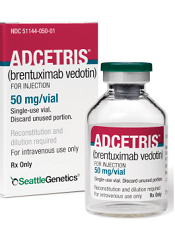
Photo from Business Wire
First-line treatment with brentuximab vedotin (BV) can produce a high response rate in older Hodgkin lymphoma (HL) patients who are unfit for chemotherapy, according to research published in Blood.
In this small study, single-agent BV produced an overall response rate of 92% and a complete response rate of 73%.
However, the drug also produced a high rate of peripheral sensory neuropathy (78%), which was the most common adverse event.
This phase 2 trial is the first to assess BV as front-line treatment. The study was funded by Seattle Genetics, Inc., which is developing BV in collaboration with Takeda Pharmaceutical Company.
Andres Forero-Torres, MD, of the University of Alabama at Birmingham, and his colleagues conducted the research, enrolling 27 HL patients (ages 64 to 92) in the trial.
The patients were either ineligible for conventional chemotherapy or declined treatment after receiving information about its risks.
They received 1.8 mg/kg of intravenous BV every 3 weeks for up to 16 doses. Those who benefitted from the drug could continue beyond this time period until disease progression, unacceptable toxicity, or study closure.
Patients received a median of 8 cycles, with 4 patients completing 16 cycles and 1 patient completing 23 cycles.
Peripheral neuropathy was the primary adverse event leading to dose modifications. Fourteen patients (52%) had dose delays, typically lasting a week (range, 1 to 3). But 11 patients (41%) had permanent dose reductions to 1.2 mg/kg.
Safety
All 27 patients were evaluable for safety, and all experienced at least 1 adverse event. The most commonly reported events were peripheral sensory neuropathy (n=21, 78%), fatigue (n=12, 44%), and nausea (n=12, 44%).
Treatment-emergent grade 3 adverse events included peripheral sensory neuropathy (n=7, 26%), rash (n=2, 7%), urinary tract infection (n=1, 4%), and maculopapular rash (n=1, 4%)
There were 2 grade 4 events—hyperuricemia and drug hypersensitivity to anesthesia—considered unrelated to BV.
Efficacy
Twenty-six patients were evaluable for efficacy. One patient was found to have nodular lymphocyte predominant HL and was therefore excluded.
The overall response rate was 92%. Nineteen patients had a complete response, 5 had a partial response, and 2 had stable disease.
The median duration of response was about 9.1 months (range, 2.8 to 20.9+ months).
The median progression-free survival was 10.5 months (range, 2.6+ to 22.3+ months), and the median overall survival had not been reached at the time of analysis (range, 4.6+ to 24.9+ months).
“While we observed promising responses,” Dr Forero-Torres said, “the next step is to evaluate this drug in combination with additional chemotherapy or immunotherapies that might allow us to prolong the response without relapse.” 
Photo from Business Wire
First-line treatment with brentuximab vedotin (BV) can produce a high response rate in older Hodgkin lymphoma (HL) patients who are unfit for chemotherapy, according to research published in Blood.
In this small study, single-agent BV produced an overall response rate of 92% and a complete response rate of 73%.
However, the drug also produced a high rate of peripheral sensory neuropathy (78%), which was the most common adverse event.
This phase 2 trial is the first to assess BV as front-line treatment. The study was funded by Seattle Genetics, Inc., which is developing BV in collaboration with Takeda Pharmaceutical Company.
Andres Forero-Torres, MD, of the University of Alabama at Birmingham, and his colleagues conducted the research, enrolling 27 HL patients (ages 64 to 92) in the trial.
The patients were either ineligible for conventional chemotherapy or declined treatment after receiving information about its risks.
They received 1.8 mg/kg of intravenous BV every 3 weeks for up to 16 doses. Those who benefitted from the drug could continue beyond this time period until disease progression, unacceptable toxicity, or study closure.
Patients received a median of 8 cycles, with 4 patients completing 16 cycles and 1 patient completing 23 cycles.
Peripheral neuropathy was the primary adverse event leading to dose modifications. Fourteen patients (52%) had dose delays, typically lasting a week (range, 1 to 3). But 11 patients (41%) had permanent dose reductions to 1.2 mg/kg.
Safety
All 27 patients were evaluable for safety, and all experienced at least 1 adverse event. The most commonly reported events were peripheral sensory neuropathy (n=21, 78%), fatigue (n=12, 44%), and nausea (n=12, 44%).
Treatment-emergent grade 3 adverse events included peripheral sensory neuropathy (n=7, 26%), rash (n=2, 7%), urinary tract infection (n=1, 4%), and maculopapular rash (n=1, 4%)
There were 2 grade 4 events—hyperuricemia and drug hypersensitivity to anesthesia—considered unrelated to BV.
Efficacy
Twenty-six patients were evaluable for efficacy. One patient was found to have nodular lymphocyte predominant HL and was therefore excluded.
The overall response rate was 92%. Nineteen patients had a complete response, 5 had a partial response, and 2 had stable disease.
The median duration of response was about 9.1 months (range, 2.8 to 20.9+ months).
The median progression-free survival was 10.5 months (range, 2.6+ to 22.3+ months), and the median overall survival had not been reached at the time of analysis (range, 4.6+ to 24.9+ months).
“While we observed promising responses,” Dr Forero-Torres said, “the next step is to evaluate this drug in combination with additional chemotherapy or immunotherapies that might allow us to prolong the response without relapse.”
Photo from Business Wire
First-line treatment with brentuximab vedotin (BV) can produce a high response rate in older Hodgkin lymphoma (HL) patients who are unfit for chemotherapy, according to research published in Blood.
In this small study, single-agent BV produced an overall response rate of 92% and a complete response rate of 73%.
However, the drug also produced a high rate of peripheral sensory neuropathy (78%), which was the most common adverse event.
This phase 2 trial is the first to assess BV as front-line treatment. The study was funded by Seattle Genetics, Inc., which is developing BV in collaboration with Takeda Pharmaceutical Company.
Andres Forero-Torres, MD, of the University of Alabama at Birmingham, and his colleagues conducted the research, enrolling 27 HL patients (ages 64 to 92) in the trial.
The patients were either ineligible for conventional chemotherapy or declined treatment after receiving information about its risks.
They received 1.8 mg/kg of intravenous BV every 3 weeks for up to 16 doses. Those who benefitted from the drug could continue beyond this time period until disease progression, unacceptable toxicity, or study closure.
Patients received a median of 8 cycles, with 4 patients completing 16 cycles and 1 patient completing 23 cycles.
Peripheral neuropathy was the primary adverse event leading to dose modifications. Fourteen patients (52%) had dose delays, typically lasting a week (range, 1 to 3). But 11 patients (41%) had permanent dose reductions to 1.2 mg/kg.
Safety
All 27 patients were evaluable for safety, and all experienced at least 1 adverse event. The most commonly reported events were peripheral sensory neuropathy (n=21, 78%), fatigue (n=12, 44%), and nausea (n=12, 44%).
Treatment-emergent grade 3 adverse events included peripheral sensory neuropathy (n=7, 26%), rash (n=2, 7%), urinary tract infection (n=1, 4%), and maculopapular rash (n=1, 4%)
There were 2 grade 4 events—hyperuricemia and drug hypersensitivity to anesthesia—considered unrelated to BV.
Efficacy
Twenty-six patients were evaluable for efficacy. One patient was found to have nodular lymphocyte predominant HL and was therefore excluded.
The overall response rate was 92%. Nineteen patients had a complete response, 5 had a partial response, and 2 had stable disease.
The median duration of response was about 9.1 months (range, 2.8 to 20.9+ months).
The median progression-free survival was 10.5 months (range, 2.6+ to 22.3+ months), and the median overall survival had not been reached at the time of analysis (range, 4.6+ to 24.9+ months).
“While we observed promising responses,” Dr Forero-Torres said, “the next step is to evaluate this drug in combination with additional chemotherapy or immunotherapies that might allow us to prolong the response without relapse.”
mAb gets priority review as maintenance in CLL

Photo by Linda Bartlett
The US Food and Drug Administration (FDA) has granted priority review for an application for ofatumumab (Arzerra) as maintenance therapy in
patients with relapsed chronic lymphocytic leukemia (CLL).
The FDA grants priority review to investigational therapies that, if approved, may offer significant improvements in the treatment, prevention, or diagnosis of a serious condition.
The designation shortens the review period from 10 months to 6 months.
Ofatumumab is a human monoclonal antibody (mAb) designed to target CD20 on the surface of CLL cells and normal B lymphocytes.
The mAb is already FDA-approved to treat patients with CLL that is refractory to fludarabine and alemtuzumab. Ofatumumab is also approved for use in combination with chlorambucil to treat previously untreated patients with CLL for whom fludarabine-based therapy is considered inappropriate.
The FDA said it aims to complete its review of the application for ofatumumab as maintenance therapy in relapsed CLL by January 21, 2016.
PROLONG trial
The application for ofatumumab as maintenance is based on interim results from the phase 3 PROLONG (OMB112517) trial, which were presented at ASH 2014.
In this trial, researchers compared ofatumumab maintenance to no further treatment in patients with a complete or partial response after second-
or third-line treatment for CLL.
Interim results suggested that ofatumumab significantly improves progression-free survival but not overall survival.
The median progression-free survival was about 29 months in patients who received ofatumumab and about 15 months for patients who did not receive
maintenance (P<0.0001).
There was no significant difference in the median overall survival, which was not reached in either treatment arm.
Ofatumumab development
Ofatumumab is approved in more than 50 countries worldwide as monotherapy for CLL patients who are refractory to fludarabine and alemtuzumab.
In the European Union, ofatumumab is approved for use in combination with chlorambucil or bendamustine to treat CLL patients who have not received prior therapy and who are not eligible for fludarabine-based therapy.
Ofatumumab is not approved anywhere in the world as maintenance therapy for relapsed CLL. The drug is being developed by Genmab and Novartis.
Photo by Linda Bartlett
The US Food and Drug Administration (FDA) has granted priority review for an application for ofatumumab (Arzerra) as maintenance therapy in
patients with relapsed chronic lymphocytic leukemia (CLL).
The FDA grants priority review to investigational therapies that, if approved, may offer significant improvements in the treatment, prevention, or diagnosis of a serious condition.
The designation shortens the review period from 10 months to 6 months.
Ofatumumab is a human monoclonal antibody (mAb) designed to target CD20 on the surface of CLL cells and normal B lymphocytes.
The mAb is already FDA-approved to treat patients with CLL that is refractory to fludarabine and alemtuzumab. Ofatumumab is also approved for use in combination with chlorambucil to treat previously untreated patients with CLL for whom fludarabine-based therapy is considered inappropriate.
The FDA said it aims to complete its review of the application for ofatumumab as maintenance therapy in relapsed CLL by January 21, 2016.
PROLONG trial
The application for ofatumumab as maintenance is based on interim results from the phase 3 PROLONG (OMB112517) trial, which were presented at ASH 2014.
In this trial, researchers compared ofatumumab maintenance to no further treatment in patients with a complete or partial response after second-
or third-line treatment for CLL.
Interim results suggested that ofatumumab significantly improves progression-free survival but not overall survival.
The median progression-free survival was about 29 months in patients who received ofatumumab and about 15 months for patients who did not receive
maintenance (P<0.0001).
There was no significant difference in the median overall survival, which was not reached in either treatment arm.
Ofatumumab development
Ofatumumab is approved in more than 50 countries worldwide as monotherapy for CLL patients who are refractory to fludarabine and alemtuzumab.
In the European Union, ofatumumab is approved for use in combination with chlorambucil or bendamustine to treat CLL patients who have not received prior therapy and who are not eligible for fludarabine-based therapy.
Ofatumumab is not approved anywhere in the world as maintenance therapy for relapsed CLL. The drug is being developed by Genmab and Novartis.
Photo by Linda Bartlett
The US Food and Drug Administration (FDA) has granted priority review for an application for ofatumumab (Arzerra) as maintenance therapy in
patients with relapsed chronic lymphocytic leukemia (CLL).
The FDA grants priority review to investigational therapies that, if approved, may offer significant improvements in the treatment, prevention, or diagnosis of a serious condition.
The designation shortens the review period from 10 months to 6 months.
Ofatumumab is a human monoclonal antibody (mAb) designed to target CD20 on the surface of CLL cells and normal B lymphocytes.
The mAb is already FDA-approved to treat patients with CLL that is refractory to fludarabine and alemtuzumab. Ofatumumab is also approved for use in combination with chlorambucil to treat previously untreated patients with CLL for whom fludarabine-based therapy is considered inappropriate.
The FDA said it aims to complete its review of the application for ofatumumab as maintenance therapy in relapsed CLL by January 21, 2016.
PROLONG trial
The application for ofatumumab as maintenance is based on interim results from the phase 3 PROLONG (OMB112517) trial, which were presented at ASH 2014.
In this trial, researchers compared ofatumumab maintenance to no further treatment in patients with a complete or partial response after second-
or third-line treatment for CLL.
Interim results suggested that ofatumumab significantly improves progression-free survival but not overall survival.
The median progression-free survival was about 29 months in patients who received ofatumumab and about 15 months for patients who did not receive
maintenance (P<0.0001).
There was no significant difference in the median overall survival, which was not reached in either treatment arm.
Ofatumumab development
Ofatumumab is approved in more than 50 countries worldwide as monotherapy for CLL patients who are refractory to fludarabine and alemtuzumab.
In the European Union, ofatumumab is approved for use in combination with chlorambucil or bendamustine to treat CLL patients who have not received prior therapy and who are not eligible for fludarabine-based therapy.
Ofatumumab is not approved anywhere in the world as maintenance therapy for relapsed CLL. The drug is being developed by Genmab and Novartis.
CDK inhibitor active against lymphoma too
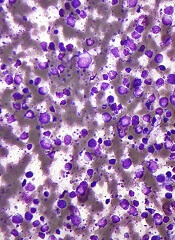
HOUSTON—Preclinical data suggest the second-generation cyclin-dependent kinase (CDK) inhibitor CYC065 is active against lymphomas as well as leukemias.
Previous research showed that CYC065 can fight acute myeloid leukemia (AML) in vitro and in vivo.
New research shows that CYC065 can decrease cell viability in a range of B-cell lymphoma cell lines, and the drug synergizes with both venetoclax and cytarabine.
Sheelagh Frame, PhD, and her colleagues presented these results at the SOHO 2015 Annual Meeting (poster 213). All of the investigators involved in the research are employees of Cyclacel Ltd., the company developing CYC065.
The investigators analyzed the anticancer activity of CYC065 in a range of cell lines and found that CYC065 induced apoptosis by inhibiting the expression of CDK9-dependent oncogenic transcripts, including Mcl-1, c-Myc, Hoxa9, and Meis1.
Results in AML
Experiments in the AML-MLL cell line MOLM-13 showed that short pulses of CYC065 (6 hours), rather than continuous treatment, were sufficient to achieve maximal cytotoxicity.
CYC065 induced apoptosis, in a dose-dependent manner, in other AML cell lines as well, including EOL-1 (MLL-PTD), MV4-11 (MLL-AF4, FLT3-ITD, and trisomy chr 8), HL60 (Myc amplified), and Kasumi-1.
The investigators noted that AML cell lines with MLL rearrangements were especially sensitive to CYC065, and the reliance of AML on Mcl-1 confers sensitivity to CYC065.
They also found evidence to suggest that Bak and Bcl-xL levels may be predictive of CYC065 response in AML. Cell lines that were less sensitive to treatment had high levels of Bcl-xL and negligible levels of Bak.
B-cell lymphomas
In B-cell lymphoma cell lines, the investigators observed a dose-dependent reduction in cell viability after CYC065 treatment (8-hour pulses).
CYC065 proved most effective in cell lines without genomic alterations associated with poor prognosis (HT and U-698-M) and in cell lines with Myc rearrangements (SU-DHL-8 and WILL-1).
The drug also decreased cell viability—but to a lesser degree—in cell lines with Bcl-2 rearrangements (SU-DHL-4 and U2932) and in double-hit lymphoma cell lines (MAVER-1, RI-1, SC-1, and SU-DHL-10).
The investigators therefore theorized that combining CYC065 with a Bcl-2 inhibitor might prove more effective in these cell lines.
CYC065 in combination
CYC065 synergized with the Bcl-2 inhibitor venetoclax in all B-cell lymphoma cell lines tested. The drugs were “strongly synergistic” in U2932 and RI-1 cell lines but simply “synergistic” in SU-CHL-4 and MAVER-1 cell lines.
CYC065 also synergized with cytarabine to fight AML. The combination proved synergistic at a range of doses in the HL60 and MV4-11 cell lines.
Considering these results together, the investigators concluded that CYC065 has shown potential for treating a range of leukemias and lymphomas with unmet clinical need, including MLL-rearranged leukemia and Myc-driven lymphoma.
And the drug might prove effective in combination with standard cytotoxic agents or agents targeting apoptotic regulators.
HOUSTON—Preclinical data suggest the second-generation cyclin-dependent kinase (CDK) inhibitor CYC065 is active against lymphomas as well as leukemias.
Previous research showed that CYC065 can fight acute myeloid leukemia (AML) in vitro and in vivo.
New research shows that CYC065 can decrease cell viability in a range of B-cell lymphoma cell lines, and the drug synergizes with both venetoclax and cytarabine.
Sheelagh Frame, PhD, and her colleagues presented these results at the SOHO 2015 Annual Meeting (poster 213). All of the investigators involved in the research are employees of Cyclacel Ltd., the company developing CYC065.
The investigators analyzed the anticancer activity of CYC065 in a range of cell lines and found that CYC065 induced apoptosis by inhibiting the expression of CDK9-dependent oncogenic transcripts, including Mcl-1, c-Myc, Hoxa9, and Meis1.
Results in AML
Experiments in the AML-MLL cell line MOLM-13 showed that short pulses of CYC065 (6 hours), rather than continuous treatment, were sufficient to achieve maximal cytotoxicity.
CYC065 induced apoptosis, in a dose-dependent manner, in other AML cell lines as well, including EOL-1 (MLL-PTD), MV4-11 (MLL-AF4, FLT3-ITD, and trisomy chr 8), HL60 (Myc amplified), and Kasumi-1.
The investigators noted that AML cell lines with MLL rearrangements were especially sensitive to CYC065, and the reliance of AML on Mcl-1 confers sensitivity to CYC065.
They also found evidence to suggest that Bak and Bcl-xL levels may be predictive of CYC065 response in AML. Cell lines that were less sensitive to treatment had high levels of Bcl-xL and negligible levels of Bak.
B-cell lymphomas
In B-cell lymphoma cell lines, the investigators observed a dose-dependent reduction in cell viability after CYC065 treatment (8-hour pulses).
CYC065 proved most effective in cell lines without genomic alterations associated with poor prognosis (HT and U-698-M) and in cell lines with Myc rearrangements (SU-DHL-8 and WILL-1).
The drug also decreased cell viability—but to a lesser degree—in cell lines with Bcl-2 rearrangements (SU-DHL-4 and U2932) and in double-hit lymphoma cell lines (MAVER-1, RI-1, SC-1, and SU-DHL-10).
The investigators therefore theorized that combining CYC065 with a Bcl-2 inhibitor might prove more effective in these cell lines.
CYC065 in combination
CYC065 synergized with the Bcl-2 inhibitor venetoclax in all B-cell lymphoma cell lines tested. The drugs were “strongly synergistic” in U2932 and RI-1 cell lines but simply “synergistic” in SU-CHL-4 and MAVER-1 cell lines.
CYC065 also synergized with cytarabine to fight AML. The combination proved synergistic at a range of doses in the HL60 and MV4-11 cell lines.
Considering these results together, the investigators concluded that CYC065 has shown potential for treating a range of leukemias and lymphomas with unmet clinical need, including MLL-rearranged leukemia and Myc-driven lymphoma.
And the drug might prove effective in combination with standard cytotoxic agents or agents targeting apoptotic regulators.
HOUSTON—Preclinical data suggest the second-generation cyclin-dependent kinase (CDK) inhibitor CYC065 is active against lymphomas as well as leukemias.
Previous research showed that CYC065 can fight acute myeloid leukemia (AML) in vitro and in vivo.
New research shows that CYC065 can decrease cell viability in a range of B-cell lymphoma cell lines, and the drug synergizes with both venetoclax and cytarabine.
Sheelagh Frame, PhD, and her colleagues presented these results at the SOHO 2015 Annual Meeting (poster 213). All of the investigators involved in the research are employees of Cyclacel Ltd., the company developing CYC065.
The investigators analyzed the anticancer activity of CYC065 in a range of cell lines and found that CYC065 induced apoptosis by inhibiting the expression of CDK9-dependent oncogenic transcripts, including Mcl-1, c-Myc, Hoxa9, and Meis1.
Results in AML
Experiments in the AML-MLL cell line MOLM-13 showed that short pulses of CYC065 (6 hours), rather than continuous treatment, were sufficient to achieve maximal cytotoxicity.
CYC065 induced apoptosis, in a dose-dependent manner, in other AML cell lines as well, including EOL-1 (MLL-PTD), MV4-11 (MLL-AF4, FLT3-ITD, and trisomy chr 8), HL60 (Myc amplified), and Kasumi-1.
The investigators noted that AML cell lines with MLL rearrangements were especially sensitive to CYC065, and the reliance of AML on Mcl-1 confers sensitivity to CYC065.
They also found evidence to suggest that Bak and Bcl-xL levels may be predictive of CYC065 response in AML. Cell lines that were less sensitive to treatment had high levels of Bcl-xL and negligible levels of Bak.
B-cell lymphomas
In B-cell lymphoma cell lines, the investigators observed a dose-dependent reduction in cell viability after CYC065 treatment (8-hour pulses).
CYC065 proved most effective in cell lines without genomic alterations associated with poor prognosis (HT and U-698-M) and in cell lines with Myc rearrangements (SU-DHL-8 and WILL-1).
The drug also decreased cell viability—but to a lesser degree—in cell lines with Bcl-2 rearrangements (SU-DHL-4 and U2932) and in double-hit lymphoma cell lines (MAVER-1, RI-1, SC-1, and SU-DHL-10).
The investigators therefore theorized that combining CYC065 with a Bcl-2 inhibitor might prove more effective in these cell lines.
CYC065 in combination
CYC065 synergized with the Bcl-2 inhibitor venetoclax in all B-cell lymphoma cell lines tested. The drugs were “strongly synergistic” in U2932 and RI-1 cell lines but simply “synergistic” in SU-CHL-4 and MAVER-1 cell lines.
CYC065 also synergized with cytarabine to fight AML. The combination proved synergistic at a range of doses in the HL60 and MV4-11 cell lines.
Considering these results together, the investigators concluded that CYC065 has shown potential for treating a range of leukemias and lymphomas with unmet clinical need, including MLL-rearranged leukemia and Myc-driven lymphoma.
And the drug might prove effective in combination with standard cytotoxic agents or agents targeting apoptotic regulators.
HELIOS trial: Ibrutinib safely boosts survival in CLL/SLL
CHICAGO – Adding ibrutinib to bendamustine and rituximab improved outcomes without significantly reducing safety in patients with chronic lymphocytic leukemia/small lymphocytic lymphoma (CLL/SLL) in the randomized, placebo-controlled, phase III HELIOS trial.
Efficacy results from the double-blind HELIOS trial, as reported by Dr. Asher Alban Chanan-Khan at the 2015 meeting of the American Society of Clinical Oncology, showed that adding ibrutinib to bendamustine and rituximab (BR) significantly extended progression-free survival, compared with BR plus placebo, in patients with CLL/SLL; the risk of progression and death was reduced by 80%.
The current findings, reported by Dr. Chanan-Khan at the American Society of Hematology Meeting on Hematologic Malignancies, demonstrate that this improvement was achieved without sacrificing safety, and they characterize the management of adverse events.
In 578 patients with active chronic CLL/SLL following at least one prior line of systemic therapy who were randomized to receive 420 mg of ibrutinib plus BR or placebo plus BR for six cycles, exposure was 14.7 months and 12.8 months, respectively. Infection rates were similar in the two groups, but exposure-adjusted analysis showed an overall lower infection rate in the ibrutinib group, compared with the placebo group (10.3/100 vs. 11.2/100 patient months), and the rates of grade 3 or higher infections was similar in the groups, said Dr. Chanan-Khan of the Mayo Clinic, Jacksonville, Fla.
The rates of all-grade and grade 3/4 anemia were 22.3% and 3.5%, respectively, in the ibrutinib group, and 28.9% and 8.0%, respectively, in the BR group. The ibrutinib patients also required fewer transfusions – most often red blood cell transfusions (23% vs. 29% in the BR group).This may have been a reflection of restoration of the hematopoietic system in the ibrutinib group, said Dr. Chanan-Khan.
Grade 3/4 neutropenia was similar in the groups (53.7% and 50.5%), but fewer patients discontinued treatment due to treatment-related neutropenia with ibrutinib (1% vs. 2.8%), he noted.
Thrombocytopenia occurred slightly more often in the ibrutinib group (30.7% vs. 24%), but grade 3/4 events occurred in 15% of patients in each group.
Atrial fibrillation (AF) occurred in a small number of patients, but was observed more often with ibrutinib (7.3% vs. 2.8% overall, and 2.8% vs. 0.7% for grade 3/4 AF). Only seven patients required dose interruption – for a median duration of 7 days – to manage AF.
“No dose reductions were required,” said Dr. Chanan-Khan, adding that four patients, all with grade 3/4 AF and all in the ibrutinib group, discontinued therapy because of AF.
“We then analyzed our data to identify potential risk factors for predisposition to AF ... no one baseline risk factor could be identified as causative. However, most patients who developed AF had a known risk factor,” he said.
He added that among those with a prior history of AF, 28% on the ibrutinib arm, and only 9% on the placebo arm, developed AF.
Baseline cardiac comorbidities also were found to have no effect on progression-free survival in either arm.
“We therefore concluded that the risk of AF is low at around 5%, it does not impact progression-free survival, prior history of AF is not a contraindication in the absence of any great freak event, ibrutinib dose interruption or reduction is not warranted, and you should treat CLL patients first for CLL and manage AF second,” he said.
Another important factor that often impacts clinical decision making is the use of anticoagulants or antiplatelet agents and the bleeding risk with ibrutinib, he said, noting that more than 40% of patients in the ibrutinib arm were using such agents.
“We did not see any impact on the progression-free survival outcomes on either of the arms in patients who were on anticoagulant or antiplatelet therapy,” he said.
Bleeding occurred in 31% and 14.6% of patients in the ibrutinib and placebo groups, respectively, and most cases involved grade 1 bruises and contusions. Only four patients discontinued therapy because of bleeding.
The rates of grade 3/4 major bleeding and major hemorrhage events were low in both groups, at less than 4%, and two patients discontinued therapy because of major bleeding. Two patients in the ibrutinib arm died because of major bleeding, including one who had a large preexisting abdominal aortic aneurysm, and one who experienced a large postsurgical intestinal perforation.
“Overall, these data support the use of ibrutinib in patients on concurrent anticoagulant or antiplatelet therapy, with no significantly increased major risk of bleeding with ibrutinib vs. placebo, and most bleeding events being grade 1 in nature,” said Dr. Chanan-Khan.
The rate of treatment-related lymphocytosis – a known pharmacodynamic effect of ibrutinib – occurred in 7% and 5.9% of the ibrutinib and placebo group patients, and most cases resolved within 2 weeks.
Based on the results of the 2014 phase III RESONATE trial and others looking at ibrutinib as a single-agent treatment for CLL, the agent is considered a new standard of care in patients with previously treated CLL/SLL. HELIOS was the first study to investigate ibrutinib in combination with BR.
“Considering the significant improvement in progression-free survival and overall survival, ibrutinib has a strong overall risk-benefit profile,” Dr. Chanan-Khan concluded.
The HELIOS study was sponsored by Janssen Pharmaceuticals. Dr. Chanan-Khan reported having no disclosures.
CHICAGO – Adding ibrutinib to bendamustine and rituximab improved outcomes without significantly reducing safety in patients with chronic lymphocytic leukemia/small lymphocytic lymphoma (CLL/SLL) in the randomized, placebo-controlled, phase III HELIOS trial.
Efficacy results from the double-blind HELIOS trial, as reported by Dr. Asher Alban Chanan-Khan at the 2015 meeting of the American Society of Clinical Oncology, showed that adding ibrutinib to bendamustine and rituximab (BR) significantly extended progression-free survival, compared with BR plus placebo, in patients with CLL/SLL; the risk of progression and death was reduced by 80%.
The current findings, reported by Dr. Chanan-Khan at the American Society of Hematology Meeting on Hematologic Malignancies, demonstrate that this improvement was achieved without sacrificing safety, and they characterize the management of adverse events.
In 578 patients with active chronic CLL/SLL following at least one prior line of systemic therapy who were randomized to receive 420 mg of ibrutinib plus BR or placebo plus BR for six cycles, exposure was 14.7 months and 12.8 months, respectively. Infection rates were similar in the two groups, but exposure-adjusted analysis showed an overall lower infection rate in the ibrutinib group, compared with the placebo group (10.3/100 vs. 11.2/100 patient months), and the rates of grade 3 or higher infections was similar in the groups, said Dr. Chanan-Khan of the Mayo Clinic, Jacksonville, Fla.
The rates of all-grade and grade 3/4 anemia were 22.3% and 3.5%, respectively, in the ibrutinib group, and 28.9% and 8.0%, respectively, in the BR group. The ibrutinib patients also required fewer transfusions – most often red blood cell transfusions (23% vs. 29% in the BR group).This may have been a reflection of restoration of the hematopoietic system in the ibrutinib group, said Dr. Chanan-Khan.
Grade 3/4 neutropenia was similar in the groups (53.7% and 50.5%), but fewer patients discontinued treatment due to treatment-related neutropenia with ibrutinib (1% vs. 2.8%), he noted.
Thrombocytopenia occurred slightly more often in the ibrutinib group (30.7% vs. 24%), but grade 3/4 events occurred in 15% of patients in each group.
Atrial fibrillation (AF) occurred in a small number of patients, but was observed more often with ibrutinib (7.3% vs. 2.8% overall, and 2.8% vs. 0.7% for grade 3/4 AF). Only seven patients required dose interruption – for a median duration of 7 days – to manage AF.
“No dose reductions were required,” said Dr. Chanan-Khan, adding that four patients, all with grade 3/4 AF and all in the ibrutinib group, discontinued therapy because of AF.
“We then analyzed our data to identify potential risk factors for predisposition to AF ... no one baseline risk factor could be identified as causative. However, most patients who developed AF had a known risk factor,” he said.
He added that among those with a prior history of AF, 28% on the ibrutinib arm, and only 9% on the placebo arm, developed AF.
Baseline cardiac comorbidities also were found to have no effect on progression-free survival in either arm.
“We therefore concluded that the risk of AF is low at around 5%, it does not impact progression-free survival, prior history of AF is not a contraindication in the absence of any great freak event, ibrutinib dose interruption or reduction is not warranted, and you should treat CLL patients first for CLL and manage AF second,” he said.
Another important factor that often impacts clinical decision making is the use of anticoagulants or antiplatelet agents and the bleeding risk with ibrutinib, he said, noting that more than 40% of patients in the ibrutinib arm were using such agents.
“We did not see any impact on the progression-free survival outcomes on either of the arms in patients who were on anticoagulant or antiplatelet therapy,” he said.
Bleeding occurred in 31% and 14.6% of patients in the ibrutinib and placebo groups, respectively, and most cases involved grade 1 bruises and contusions. Only four patients discontinued therapy because of bleeding.
The rates of grade 3/4 major bleeding and major hemorrhage events were low in both groups, at less than 4%, and two patients discontinued therapy because of major bleeding. Two patients in the ibrutinib arm died because of major bleeding, including one who had a large preexisting abdominal aortic aneurysm, and one who experienced a large postsurgical intestinal perforation.
“Overall, these data support the use of ibrutinib in patients on concurrent anticoagulant or antiplatelet therapy, with no significantly increased major risk of bleeding with ibrutinib vs. placebo, and most bleeding events being grade 1 in nature,” said Dr. Chanan-Khan.
The rate of treatment-related lymphocytosis – a known pharmacodynamic effect of ibrutinib – occurred in 7% and 5.9% of the ibrutinib and placebo group patients, and most cases resolved within 2 weeks.
Based on the results of the 2014 phase III RESONATE trial and others looking at ibrutinib as a single-agent treatment for CLL, the agent is considered a new standard of care in patients with previously treated CLL/SLL. HELIOS was the first study to investigate ibrutinib in combination with BR.
“Considering the significant improvement in progression-free survival and overall survival, ibrutinib has a strong overall risk-benefit profile,” Dr. Chanan-Khan concluded.
The HELIOS study was sponsored by Janssen Pharmaceuticals. Dr. Chanan-Khan reported having no disclosures.
CHICAGO – Adding ibrutinib to bendamustine and rituximab improved outcomes without significantly reducing safety in patients with chronic lymphocytic leukemia/small lymphocytic lymphoma (CLL/SLL) in the randomized, placebo-controlled, phase III HELIOS trial.
Efficacy results from the double-blind HELIOS trial, as reported by Dr. Asher Alban Chanan-Khan at the 2015 meeting of the American Society of Clinical Oncology, showed that adding ibrutinib to bendamustine and rituximab (BR) significantly extended progression-free survival, compared with BR plus placebo, in patients with CLL/SLL; the risk of progression and death was reduced by 80%.
The current findings, reported by Dr. Chanan-Khan at the American Society of Hematology Meeting on Hematologic Malignancies, demonstrate that this improvement was achieved without sacrificing safety, and they characterize the management of adverse events.
In 578 patients with active chronic CLL/SLL following at least one prior line of systemic therapy who were randomized to receive 420 mg of ibrutinib plus BR or placebo plus BR for six cycles, exposure was 14.7 months and 12.8 months, respectively. Infection rates were similar in the two groups, but exposure-adjusted analysis showed an overall lower infection rate in the ibrutinib group, compared with the placebo group (10.3/100 vs. 11.2/100 patient months), and the rates of grade 3 or higher infections was similar in the groups, said Dr. Chanan-Khan of the Mayo Clinic, Jacksonville, Fla.
The rates of all-grade and grade 3/4 anemia were 22.3% and 3.5%, respectively, in the ibrutinib group, and 28.9% and 8.0%, respectively, in the BR group. The ibrutinib patients also required fewer transfusions – most often red blood cell transfusions (23% vs. 29% in the BR group).This may have been a reflection of restoration of the hematopoietic system in the ibrutinib group, said Dr. Chanan-Khan.
Grade 3/4 neutropenia was similar in the groups (53.7% and 50.5%), but fewer patients discontinued treatment due to treatment-related neutropenia with ibrutinib (1% vs. 2.8%), he noted.
Thrombocytopenia occurred slightly more often in the ibrutinib group (30.7% vs. 24%), but grade 3/4 events occurred in 15% of patients in each group.
Atrial fibrillation (AF) occurred in a small number of patients, but was observed more often with ibrutinib (7.3% vs. 2.8% overall, and 2.8% vs. 0.7% for grade 3/4 AF). Only seven patients required dose interruption – for a median duration of 7 days – to manage AF.
“No dose reductions were required,” said Dr. Chanan-Khan, adding that four patients, all with grade 3/4 AF and all in the ibrutinib group, discontinued therapy because of AF.
“We then analyzed our data to identify potential risk factors for predisposition to AF ... no one baseline risk factor could be identified as causative. However, most patients who developed AF had a known risk factor,” he said.
He added that among those with a prior history of AF, 28% on the ibrutinib arm, and only 9% on the placebo arm, developed AF.
Baseline cardiac comorbidities also were found to have no effect on progression-free survival in either arm.
“We therefore concluded that the risk of AF is low at around 5%, it does not impact progression-free survival, prior history of AF is not a contraindication in the absence of any great freak event, ibrutinib dose interruption or reduction is not warranted, and you should treat CLL patients first for CLL and manage AF second,” he said.
Another important factor that often impacts clinical decision making is the use of anticoagulants or antiplatelet agents and the bleeding risk with ibrutinib, he said, noting that more than 40% of patients in the ibrutinib arm were using such agents.
“We did not see any impact on the progression-free survival outcomes on either of the arms in patients who were on anticoagulant or antiplatelet therapy,” he said.
Bleeding occurred in 31% and 14.6% of patients in the ibrutinib and placebo groups, respectively, and most cases involved grade 1 bruises and contusions. Only four patients discontinued therapy because of bleeding.
The rates of grade 3/4 major bleeding and major hemorrhage events were low in both groups, at less than 4%, and two patients discontinued therapy because of major bleeding. Two patients in the ibrutinib arm died because of major bleeding, including one who had a large preexisting abdominal aortic aneurysm, and one who experienced a large postsurgical intestinal perforation.
“Overall, these data support the use of ibrutinib in patients on concurrent anticoagulant or antiplatelet therapy, with no significantly increased major risk of bleeding with ibrutinib vs. placebo, and most bleeding events being grade 1 in nature,” said Dr. Chanan-Khan.
The rate of treatment-related lymphocytosis – a known pharmacodynamic effect of ibrutinib – occurred in 7% and 5.9% of the ibrutinib and placebo group patients, and most cases resolved within 2 weeks.
Based on the results of the 2014 phase III RESONATE trial and others looking at ibrutinib as a single-agent treatment for CLL, the agent is considered a new standard of care in patients with previously treated CLL/SLL. HELIOS was the first study to investigate ibrutinib in combination with BR.
“Considering the significant improvement in progression-free survival and overall survival, ibrutinib has a strong overall risk-benefit profile,” Dr. Chanan-Khan concluded.
The HELIOS study was sponsored by Janssen Pharmaceuticals. Dr. Chanan-Khan reported having no disclosures.
AT MHM 2015
Key clinical point: Adding ibrutinib to bendamustine and rituximab improved outcomes without significantly reducing safety in patients with chronic lymphocytic leukemia/small lymphocytic lymphoma (CLL/SLL).
Major finding: The overall infection rate was lower in the ibrutinib group than in the placebo group (10.3/100 vs. 11.2/100 patient months).
Data source: The phase III HELIOS study involving 578 patients.
Disclosures: Janssen Pharmaceuticals sponsored the study. Dr. Chanan-Khan reported having no disclosures.
Brentuximab Vedotin in a Patient With Aggressive Systemic Mastocytosis and Pure Red Cell Aplasia
Backround: Mastocytosis is a rare disease with a variable clinical course. Pure red cell aplasia has not been frequently reported in association with aggressive systemic mastocytosis. CD30 is often expressed on mast cells in systemic mastocytosis. The CD30-directed antibody-drug conjugate brentuximab vedotin has shown in vitro activity against CD30-positive neoplastic mast cells. We describe a case of systemic mastocytosis with the development of severe hemolytic anemia, pure red cell aplasia, and evidence of weak bone marrow CD30 positivity. Brentuximab vedotin was administered with some evidence of clinical benefit.
Patient: A 64-year-old man presented with fatigue and a 20 pound weight loss. He was found to have transfusion-dependent anemia, a low reticulocyte count, and splenomegaly. Evaluation for gastrointestinal blood loss was unremarkable. Bone marrow biopsy showed mast cell aggregates, spindle-shaped mast cells, CD-2 and CD25-positivity, increased myelopoiesis and dysmegakaryopoiesis, red cell aplasia, eosinophilia, and increased reticulin fibrosis. The D816V c-kit mutation was present, and serum tryptase level was elevated at 114 ng/mL. He later developed Coombs-positive hemolysis and direct hyperbilirubinemia, concerning for mast cell liver infiltration.
Intervention: The patient received high-dose steroids and red blood cell transfusions. Interferon alpha and cladribine were contraindicated, given severe liver dysfunction. He was started on hydroxyurea. He received a dose of brentuximab vedotin 1.8 mg/kg IV. Thirteen days after starting steroids and 10 days after brentuximab, haptoglobin became detectable, and total bilirubin decreased to 18.4 mg/dL from 40.5 mg/dL. Red blood cell transfusion requirements decreased. He then developed severe neutropenia, pneumonia with sepsis, and respiratory failure, requiring intubation, maximal pressor support, and broad-spectrum antibiotics. Despite these measures, he expired.
Discussion/Conclusion: This is a rare case of pure red cellaplasia in the setting of aggressive systemic mastocytosis. Therapeutic options were limited in the setting of liver dysfunction, and therapy with brentuximab vedotin resulted in initial clinical benefit. Brentuximab vedotin is being investigated in patients with advanced systemic mastocytosis or mast cell leukemia.
Backround: Mastocytosis is a rare disease with a variable clinical course. Pure red cell aplasia has not been frequently reported in association with aggressive systemic mastocytosis. CD30 is often expressed on mast cells in systemic mastocytosis. The CD30-directed antibody-drug conjugate brentuximab vedotin has shown in vitro activity against CD30-positive neoplastic mast cells. We describe a case of systemic mastocytosis with the development of severe hemolytic anemia, pure red cell aplasia, and evidence of weak bone marrow CD30 positivity. Brentuximab vedotin was administered with some evidence of clinical benefit.
Patient: A 64-year-old man presented with fatigue and a 20 pound weight loss. He was found to have transfusion-dependent anemia, a low reticulocyte count, and splenomegaly. Evaluation for gastrointestinal blood loss was unremarkable. Bone marrow biopsy showed mast cell aggregates, spindle-shaped mast cells, CD-2 and CD25-positivity, increased myelopoiesis and dysmegakaryopoiesis, red cell aplasia, eosinophilia, and increased reticulin fibrosis. The D816V c-kit mutation was present, and serum tryptase level was elevated at 114 ng/mL. He later developed Coombs-positive hemolysis and direct hyperbilirubinemia, concerning for mast cell liver infiltration.
Intervention: The patient received high-dose steroids and red blood cell transfusions. Interferon alpha and cladribine were contraindicated, given severe liver dysfunction. He was started on hydroxyurea. He received a dose of brentuximab vedotin 1.8 mg/kg IV. Thirteen days after starting steroids and 10 days after brentuximab, haptoglobin became detectable, and total bilirubin decreased to 18.4 mg/dL from 40.5 mg/dL. Red blood cell transfusion requirements decreased. He then developed severe neutropenia, pneumonia with sepsis, and respiratory failure, requiring intubation, maximal pressor support, and broad-spectrum antibiotics. Despite these measures, he expired.
Discussion/Conclusion: This is a rare case of pure red cellaplasia in the setting of aggressive systemic mastocytosis. Therapeutic options were limited in the setting of liver dysfunction, and therapy with brentuximab vedotin resulted in initial clinical benefit. Brentuximab vedotin is being investigated in patients with advanced systemic mastocytosis or mast cell leukemia.
Backround: Mastocytosis is a rare disease with a variable clinical course. Pure red cell aplasia has not been frequently reported in association with aggressive systemic mastocytosis. CD30 is often expressed on mast cells in systemic mastocytosis. The CD30-directed antibody-drug conjugate brentuximab vedotin has shown in vitro activity against CD30-positive neoplastic mast cells. We describe a case of systemic mastocytosis with the development of severe hemolytic anemia, pure red cell aplasia, and evidence of weak bone marrow CD30 positivity. Brentuximab vedotin was administered with some evidence of clinical benefit.
Patient: A 64-year-old man presented with fatigue and a 20 pound weight loss. He was found to have transfusion-dependent anemia, a low reticulocyte count, and splenomegaly. Evaluation for gastrointestinal blood loss was unremarkable. Bone marrow biopsy showed mast cell aggregates, spindle-shaped mast cells, CD-2 and CD25-positivity, increased myelopoiesis and dysmegakaryopoiesis, red cell aplasia, eosinophilia, and increased reticulin fibrosis. The D816V c-kit mutation was present, and serum tryptase level was elevated at 114 ng/mL. He later developed Coombs-positive hemolysis and direct hyperbilirubinemia, concerning for mast cell liver infiltration.
Intervention: The patient received high-dose steroids and red blood cell transfusions. Interferon alpha and cladribine were contraindicated, given severe liver dysfunction. He was started on hydroxyurea. He received a dose of brentuximab vedotin 1.8 mg/kg IV. Thirteen days after starting steroids and 10 days after brentuximab, haptoglobin became detectable, and total bilirubin decreased to 18.4 mg/dL from 40.5 mg/dL. Red blood cell transfusion requirements decreased. He then developed severe neutropenia, pneumonia with sepsis, and respiratory failure, requiring intubation, maximal pressor support, and broad-spectrum antibiotics. Despite these measures, he expired.
Discussion/Conclusion: This is a rare case of pure red cellaplasia in the setting of aggressive systemic mastocytosis. Therapeutic options were limited in the setting of liver dysfunction, and therapy with brentuximab vedotin resulted in initial clinical benefit. Brentuximab vedotin is being investigated in patients with advanced systemic mastocytosis or mast cell leukemia.
Statins curb skeletal events in multiple myeloma
CHICAGO – Statin use is associated with a decrease in the prevalence of skeletal-related events in patients with stage I multiple myeloma, findings from a review of 120 cases suggest.
The prevalence of skeletal-related events (SREs) was 35% in 54 patients who had been treated with statins, compared with 56% in 66 statin-naive patients. The difference between the groups remained significant after adjusting for bisphosphonate use, calcium and vitamin D supplementation, history of osteoporosis, and second malignancy, Dr. Fernando Vargas of the University of Miami reported in a poster at the American Society of Hematology Meeting on Hematologic Malignancies.
Study subjects were adults with multiple myeloma seen at a single institution between 2007 and 2012. Those with statin use prior to the development of SREs – defined as pathologic fractures, necessity of orthopedic intervention, radiation therapy, or spinal cord compression – were included. Patients with smoldering myeloma or monoclonal gammopathy of indeterminate significance were excluded.
The statin-experienced and statin-naive groups were similar with respect to smoking history, alcohol abuse, documented diagnosis of osteoporosis, coexistent malignancy, hypothyroidsim, Paget’s disease of the bone, and use of bisphosphonates or calcium plus vitamin D supplementation. The groups also were similar with respect to distribution of cancer staging, and after correcting for International Surgical Staging stage, the SRE risk reduction associated with statin use was significant only in patients with stage I multiple myeloma. One patient with stage I disease (10%) in the statin-experienced group developed SREs, compared with 6 (62%) in the statin-naive group, Dr. Vargas said.
SREs are associated with significant morbidity and mortality in patients with multiple myeloma, and the results of studies assessing the effect of statins on overall disease response in myeloma patients undergoing chemotherapy have been conflicting, he explained, noting that “this analysis was proposed on the grounds that statins inhibit the mevalonic acid pathway upstream from the site of action of bisphosphonates (i.e. famesyl diphosphate synthase blockade), an integral part of multiple myeloma supportive treatment.”
He and his colleagues hypothesized that, given their site of action, statins would have bone protective effects.
Indeed, statins were found to be associated with a decrease in the prevalence of SREs in patients with stage I multiple myeloma, he said.
“Given the well documented safety profile of statins and their ease of use, we suggest that a prospective study be done to further assess their role in the prevention of SREs in multiple myeloma patients,” he concluded, noting that the findings in ISS stage I patients also suggest a possible role for statin use in patients with high-risk smoldering myeloma.
Dr. Vargas reported having no disclosures.
CHICAGO – Statin use is associated with a decrease in the prevalence of skeletal-related events in patients with stage I multiple myeloma, findings from a review of 120 cases suggest.
The prevalence of skeletal-related events (SREs) was 35% in 54 patients who had been treated with statins, compared with 56% in 66 statin-naive patients. The difference between the groups remained significant after adjusting for bisphosphonate use, calcium and vitamin D supplementation, history of osteoporosis, and second malignancy, Dr. Fernando Vargas of the University of Miami reported in a poster at the American Society of Hematology Meeting on Hematologic Malignancies.
Study subjects were adults with multiple myeloma seen at a single institution between 2007 and 2012. Those with statin use prior to the development of SREs – defined as pathologic fractures, necessity of orthopedic intervention, radiation therapy, or spinal cord compression – were included. Patients with smoldering myeloma or monoclonal gammopathy of indeterminate significance were excluded.
The statin-experienced and statin-naive groups were similar with respect to smoking history, alcohol abuse, documented diagnosis of osteoporosis, coexistent malignancy, hypothyroidsim, Paget’s disease of the bone, and use of bisphosphonates or calcium plus vitamin D supplementation. The groups also were similar with respect to distribution of cancer staging, and after correcting for International Surgical Staging stage, the SRE risk reduction associated with statin use was significant only in patients with stage I multiple myeloma. One patient with stage I disease (10%) in the statin-experienced group developed SREs, compared with 6 (62%) in the statin-naive group, Dr. Vargas said.
SREs are associated with significant morbidity and mortality in patients with multiple myeloma, and the results of studies assessing the effect of statins on overall disease response in myeloma patients undergoing chemotherapy have been conflicting, he explained, noting that “this analysis was proposed on the grounds that statins inhibit the mevalonic acid pathway upstream from the site of action of bisphosphonates (i.e. famesyl diphosphate synthase blockade), an integral part of multiple myeloma supportive treatment.”
He and his colleagues hypothesized that, given their site of action, statins would have bone protective effects.
Indeed, statins were found to be associated with a decrease in the prevalence of SREs in patients with stage I multiple myeloma, he said.
“Given the well documented safety profile of statins and their ease of use, we suggest that a prospective study be done to further assess their role in the prevention of SREs in multiple myeloma patients,” he concluded, noting that the findings in ISS stage I patients also suggest a possible role for statin use in patients with high-risk smoldering myeloma.
Dr. Vargas reported having no disclosures.
CHICAGO – Statin use is associated with a decrease in the prevalence of skeletal-related events in patients with stage I multiple myeloma, findings from a review of 120 cases suggest.
The prevalence of skeletal-related events (SREs) was 35% in 54 patients who had been treated with statins, compared with 56% in 66 statin-naive patients. The difference between the groups remained significant after adjusting for bisphosphonate use, calcium and vitamin D supplementation, history of osteoporosis, and second malignancy, Dr. Fernando Vargas of the University of Miami reported in a poster at the American Society of Hematology Meeting on Hematologic Malignancies.
Study subjects were adults with multiple myeloma seen at a single institution between 2007 and 2012. Those with statin use prior to the development of SREs – defined as pathologic fractures, necessity of orthopedic intervention, radiation therapy, or spinal cord compression – were included. Patients with smoldering myeloma or monoclonal gammopathy of indeterminate significance were excluded.
The statin-experienced and statin-naive groups were similar with respect to smoking history, alcohol abuse, documented diagnosis of osteoporosis, coexistent malignancy, hypothyroidsim, Paget’s disease of the bone, and use of bisphosphonates or calcium plus vitamin D supplementation. The groups also were similar with respect to distribution of cancer staging, and after correcting for International Surgical Staging stage, the SRE risk reduction associated with statin use was significant only in patients with stage I multiple myeloma. One patient with stage I disease (10%) in the statin-experienced group developed SREs, compared with 6 (62%) in the statin-naive group, Dr. Vargas said.
SREs are associated with significant morbidity and mortality in patients with multiple myeloma, and the results of studies assessing the effect of statins on overall disease response in myeloma patients undergoing chemotherapy have been conflicting, he explained, noting that “this analysis was proposed on the grounds that statins inhibit the mevalonic acid pathway upstream from the site of action of bisphosphonates (i.e. famesyl diphosphate synthase blockade), an integral part of multiple myeloma supportive treatment.”
He and his colleagues hypothesized that, given their site of action, statins would have bone protective effects.
Indeed, statins were found to be associated with a decrease in the prevalence of SREs in patients with stage I multiple myeloma, he said.
“Given the well documented safety profile of statins and their ease of use, we suggest that a prospective study be done to further assess their role in the prevention of SREs in multiple myeloma patients,” he concluded, noting that the findings in ISS stage I patients also suggest a possible role for statin use in patients with high-risk smoldering myeloma.
Dr. Vargas reported having no disclosures.
AT MHM 2015
Key clinical point: Statin use may reduce the risk of skeletal-related events in patients with stage I multiple myeloma.
Major finding: The prevalence of skeletal-related events was 35% in statin-experienced patients and 56% in statin-naive patients.
Data source: A retrospective cohort study of 120 cases.
Disclosures: Dr. Vargas reported having no disclosures.
Hypercalcemia in Diffuse Large B-cell Lymphoma
Purpose: Review the clinical presentation and pathophysiology of hypercalcemia in diffuse large B-cell lymphoma.
Methods: Case study of a 59-year-old man with untreateddiffuse large B-cell lymphoma (DLBCL) who presented with anorexia, constipation, and weight loss in the setting of a fungating breast mass.
Results: The patient presented to an outside hospital 1.5 years prior for a left breast mass biopsy that was diagnosed as triple-hit DLBCL. However, he deferred treatment at that time. He subsequently experienced anorexia, nausea, vomiting, consti-pation, and a 20-pound unintentional weight loss. At hospital presentation, a physical examination revealed enlargement of the left breast mass measuring 8 x 14 cm with central ulceration and malodorous purulent discharge and a proximal 7 x 4 cm firm axillary mass. The patient reported no abdominal pain or fever. He was found to have acute kidney injury (creatinine 2.9 mg/dL); hyperuricemia (13.3 mg/dL); and corrected hypercalcemia (17.4 mg/dL). Empiric treatment for tumor lysis syndrome with rasburicase, allopurinol, and aggressive IV hydration was initiated. Further evaluation revealed normal lactate dehydrogenase and K+.The patient was found to have an elevated vitamin D 1,25-OH (244 pg/mL) but low parathyroid hormone (PTH) (6.4 pg/mL); normal PTH-rP; mild hyperphosphatemia (5.5 mg/dL); and negative serum protein electrophoresis/urine protein electrophoresis. Clinical presentation was suggestive of vitamin D-mediated hypercalcemia. The patient received pamidronate and aggressive IV hydration. Electrolyte abnormalities and renal function gradually improved. Computed tomography and positron emission tomography imaging revealed masses localized to the left chest wall with ipsilateral axillary lymphadenopathy. Surgical biopsy of the mass reconfirmed DLBCL ultimately staged as IIE. Following stabilization, the patient declined more aggressive chemotherapy and received R-CHOP with a complete response.
Conclusions: The patient presented with vitamin D-mediated hypercalcemia in the setting of aggressive triple-hit DLBCL. Vitamin D-mediated hypercalcemia occurs in < 1% of lymphomas, and < 0.5% of breast tumors are primary lymphomas. This case study presents a rare constellation of findings at diagnosis. The patient responded to IV hydration and pamidronate and subsequently received R-CHOP for stage IIE DLBCL. While hypercalcemia in the setting of malignancy is associated with poor prognosis, treatment of hypercalcemia does not improve survival.
Purpose: Review the clinical presentation and pathophysiology of hypercalcemia in diffuse large B-cell lymphoma.
Methods: Case study of a 59-year-old man with untreateddiffuse large B-cell lymphoma (DLBCL) who presented with anorexia, constipation, and weight loss in the setting of a fungating breast mass.
Results: The patient presented to an outside hospital 1.5 years prior for a left breast mass biopsy that was diagnosed as triple-hit DLBCL. However, he deferred treatment at that time. He subsequently experienced anorexia, nausea, vomiting, consti-pation, and a 20-pound unintentional weight loss. At hospital presentation, a physical examination revealed enlargement of the left breast mass measuring 8 x 14 cm with central ulceration and malodorous purulent discharge and a proximal 7 x 4 cm firm axillary mass. The patient reported no abdominal pain or fever. He was found to have acute kidney injury (creatinine 2.9 mg/dL); hyperuricemia (13.3 mg/dL); and corrected hypercalcemia (17.4 mg/dL). Empiric treatment for tumor lysis syndrome with rasburicase, allopurinol, and aggressive IV hydration was initiated. Further evaluation revealed normal lactate dehydrogenase and K+.The patient was found to have an elevated vitamin D 1,25-OH (244 pg/mL) but low parathyroid hormone (PTH) (6.4 pg/mL); normal PTH-rP; mild hyperphosphatemia (5.5 mg/dL); and negative serum protein electrophoresis/urine protein electrophoresis. Clinical presentation was suggestive of vitamin D-mediated hypercalcemia. The patient received pamidronate and aggressive IV hydration. Electrolyte abnormalities and renal function gradually improved. Computed tomography and positron emission tomography imaging revealed masses localized to the left chest wall with ipsilateral axillary lymphadenopathy. Surgical biopsy of the mass reconfirmed DLBCL ultimately staged as IIE. Following stabilization, the patient declined more aggressive chemotherapy and received R-CHOP with a complete response.
Conclusions: The patient presented with vitamin D-mediated hypercalcemia in the setting of aggressive triple-hit DLBCL. Vitamin D-mediated hypercalcemia occurs in < 1% of lymphomas, and < 0.5% of breast tumors are primary lymphomas. This case study presents a rare constellation of findings at diagnosis. The patient responded to IV hydration and pamidronate and subsequently received R-CHOP for stage IIE DLBCL. While hypercalcemia in the setting of malignancy is associated with poor prognosis, treatment of hypercalcemia does not improve survival.
Purpose: Review the clinical presentation and pathophysiology of hypercalcemia in diffuse large B-cell lymphoma.
Methods: Case study of a 59-year-old man with untreateddiffuse large B-cell lymphoma (DLBCL) who presented with anorexia, constipation, and weight loss in the setting of a fungating breast mass.
Results: The patient presented to an outside hospital 1.5 years prior for a left breast mass biopsy that was diagnosed as triple-hit DLBCL. However, he deferred treatment at that time. He subsequently experienced anorexia, nausea, vomiting, consti-pation, and a 20-pound unintentional weight loss. At hospital presentation, a physical examination revealed enlargement of the left breast mass measuring 8 x 14 cm with central ulceration and malodorous purulent discharge and a proximal 7 x 4 cm firm axillary mass. The patient reported no abdominal pain or fever. He was found to have acute kidney injury (creatinine 2.9 mg/dL); hyperuricemia (13.3 mg/dL); and corrected hypercalcemia (17.4 mg/dL). Empiric treatment for tumor lysis syndrome with rasburicase, allopurinol, and aggressive IV hydration was initiated. Further evaluation revealed normal lactate dehydrogenase and K+.The patient was found to have an elevated vitamin D 1,25-OH (244 pg/mL) but low parathyroid hormone (PTH) (6.4 pg/mL); normal PTH-rP; mild hyperphosphatemia (5.5 mg/dL); and negative serum protein electrophoresis/urine protein electrophoresis. Clinical presentation was suggestive of vitamin D-mediated hypercalcemia. The patient received pamidronate and aggressive IV hydration. Electrolyte abnormalities and renal function gradually improved. Computed tomography and positron emission tomography imaging revealed masses localized to the left chest wall with ipsilateral axillary lymphadenopathy. Surgical biopsy of the mass reconfirmed DLBCL ultimately staged as IIE. Following stabilization, the patient declined more aggressive chemotherapy and received R-CHOP with a complete response.
Conclusions: The patient presented with vitamin D-mediated hypercalcemia in the setting of aggressive triple-hit DLBCL. Vitamin D-mediated hypercalcemia occurs in < 1% of lymphomas, and < 0.5% of breast tumors are primary lymphomas. This case study presents a rare constellation of findings at diagnosis. The patient responded to IV hydration and pamidronate and subsequently received R-CHOP for stage IIE DLBCL. While hypercalcemia in the setting of malignancy is associated with poor prognosis, treatment of hypercalcemia does not improve survival.