User login
Continuous Rd again beat MPT for transplant-ineligible multiple myeloma
Individuals with newly diagnosed multiple myeloma who were ineligible for stem cell transplantation were 31% less likely to die or progress on continuous lenalidomide plus low-dose dexamethasone (Rd continuous) than were those on melphalan, prednisone, and thalidomide (MPT), according to an extended follow-up of patients from the FIRST trial.
In addition, Rd continuous was associated with a statistically significant 20% decrease in risk of death or disease progression, compared with MPT among patients older than 75 years, reported Dr. Cyrille Hulin of Bordeaux (France) Hospital University Center and associates. The finding “establishes continuous treatment with Rd until disease progression as a new standard of care for patients with newly diagnosed multiple myeloma who are ineligible for stem cell transplantation, regardless of age. With proper monitoring and dose adjustment, Rd continuous is an effective and tolerable treatment option for even the most elderly patients,” they wrote online June 20 in the Journal of Clinical Oncology.
FIRST (Frontline Investigation of Revlimid Plus Dexamethasone Versus Standard Thalidomide) was an international, randomized, phase III open-label study of patients with untreated symptomatic multiple myeloma enrolled between 2008 and 2011. Patients were randomly assigned to Rd continuous, 72 weeks/18 cycles of Rd (Rd18), or MPT. The primary endpoint was progression-free survival (PFS). In the original analysis, Rd continuous led to a 28% lower risk of progression or death, compared with MPT, for a statistically significant hazard ratio (HR) of 0.72. The current study involved longer follow-up, with an updated data cutoff that was 3 years after the end of recruitment, the researchers said (J Clin Oncol. 2016 Jun 20. doi: 10.1200/JCO.2016.66.7295).
The cohort included 1,623 patients, of whom 567 (35%) were older than 75 years. The intention-to-treat populations included 535 Rd continuous patients, 541 Rd18 patients, and 547 MPT patients. Survivors were followed for a median of 45.5 months. As in the earlier analysis of FIRST data, the PFS was longer with Rd continuous than with MPT. For the overall intention-to-treat group, the median PFS was 26 months with Rd continuous, and 21.9 months with MPT (HR, 0.69; 95% confidence interval, 0.59-0.80). Among patients aged 75 years and younger, the median PFS was 28.1 months and 22.4 months, respectively (HR, 0.64; 95% CI, 0.53-0.77). Among patients over age 75 years, the median PFS was 20.3 months and 19.8 months, respectively (HR, 0.80, 95% CI, 0.62-1.03). In addition, the 4-year PFS “was more than doubled with Rd continuous versus MPT, regardless of age,” the investigators said. In contrast, Rd18 and MPT led to a similar median PFS, regardless of age.
As in the prior FIRST analysis, MPT was more often linked to grade 3 and 4 neutropenia (40% and 47% of older and younger patients, respectively, versus about 28% of Rd continuous patients), while Rd more often led to grade 3 and 4 infections (about 30% of Rd continuous patients, about 22% of Rd18 patients, and 16%-20% of MPT patients).
A total of 40% of younger Rd patients remained at their starting lenalidomide dose at 72 weeks, while only 16% of MPT patients stayed at their starting thalidomide dose. Similarly, 30% of older Rd continuous patients remained on their starting dose at 72 weeks, compared with 19% of older MPT patients.
Older age was associated with International Staging System stage III disease, renal impairment, and more comorbidities, but not with high-risk cytogenetics (that is, del[17p] and t[4;14]). “Although chronologic age is not necessarily an indicator of frailty, FIRST trial results did show greater PFS and OS [overall survival] benefits with Rd continuous versus MPT therapy, regardless of age,” the researchers commented.
The study was funded by Intergroupe Francophone du Myélome and Celgene. Dr. Hulin disclosed honoraria from Celgene, Amgen, Bristol-Myers Squibb, and Novartis.
Individuals with newly diagnosed multiple myeloma who were ineligible for stem cell transplantation were 31% less likely to die or progress on continuous lenalidomide plus low-dose dexamethasone (Rd continuous) than were those on melphalan, prednisone, and thalidomide (MPT), according to an extended follow-up of patients from the FIRST trial.
In addition, Rd continuous was associated with a statistically significant 20% decrease in risk of death or disease progression, compared with MPT among patients older than 75 years, reported Dr. Cyrille Hulin of Bordeaux (France) Hospital University Center and associates. The finding “establishes continuous treatment with Rd until disease progression as a new standard of care for patients with newly diagnosed multiple myeloma who are ineligible for stem cell transplantation, regardless of age. With proper monitoring and dose adjustment, Rd continuous is an effective and tolerable treatment option for even the most elderly patients,” they wrote online June 20 in the Journal of Clinical Oncology.
FIRST (Frontline Investigation of Revlimid Plus Dexamethasone Versus Standard Thalidomide) was an international, randomized, phase III open-label study of patients with untreated symptomatic multiple myeloma enrolled between 2008 and 2011. Patients were randomly assigned to Rd continuous, 72 weeks/18 cycles of Rd (Rd18), or MPT. The primary endpoint was progression-free survival (PFS). In the original analysis, Rd continuous led to a 28% lower risk of progression or death, compared with MPT, for a statistically significant hazard ratio (HR) of 0.72. The current study involved longer follow-up, with an updated data cutoff that was 3 years after the end of recruitment, the researchers said (J Clin Oncol. 2016 Jun 20. doi: 10.1200/JCO.2016.66.7295).
The cohort included 1,623 patients, of whom 567 (35%) were older than 75 years. The intention-to-treat populations included 535 Rd continuous patients, 541 Rd18 patients, and 547 MPT patients. Survivors were followed for a median of 45.5 months. As in the earlier analysis of FIRST data, the PFS was longer with Rd continuous than with MPT. For the overall intention-to-treat group, the median PFS was 26 months with Rd continuous, and 21.9 months with MPT (HR, 0.69; 95% confidence interval, 0.59-0.80). Among patients aged 75 years and younger, the median PFS was 28.1 months and 22.4 months, respectively (HR, 0.64; 95% CI, 0.53-0.77). Among patients over age 75 years, the median PFS was 20.3 months and 19.8 months, respectively (HR, 0.80, 95% CI, 0.62-1.03). In addition, the 4-year PFS “was more than doubled with Rd continuous versus MPT, regardless of age,” the investigators said. In contrast, Rd18 and MPT led to a similar median PFS, regardless of age.
As in the prior FIRST analysis, MPT was more often linked to grade 3 and 4 neutropenia (40% and 47% of older and younger patients, respectively, versus about 28% of Rd continuous patients), while Rd more often led to grade 3 and 4 infections (about 30% of Rd continuous patients, about 22% of Rd18 patients, and 16%-20% of MPT patients).
A total of 40% of younger Rd patients remained at their starting lenalidomide dose at 72 weeks, while only 16% of MPT patients stayed at their starting thalidomide dose. Similarly, 30% of older Rd continuous patients remained on their starting dose at 72 weeks, compared with 19% of older MPT patients.
Older age was associated with International Staging System stage III disease, renal impairment, and more comorbidities, but not with high-risk cytogenetics (that is, del[17p] and t[4;14]). “Although chronologic age is not necessarily an indicator of frailty, FIRST trial results did show greater PFS and OS [overall survival] benefits with Rd continuous versus MPT therapy, regardless of age,” the researchers commented.
The study was funded by Intergroupe Francophone du Myélome and Celgene. Dr. Hulin disclosed honoraria from Celgene, Amgen, Bristol-Myers Squibb, and Novartis.
Individuals with newly diagnosed multiple myeloma who were ineligible for stem cell transplantation were 31% less likely to die or progress on continuous lenalidomide plus low-dose dexamethasone (Rd continuous) than were those on melphalan, prednisone, and thalidomide (MPT), according to an extended follow-up of patients from the FIRST trial.
In addition, Rd continuous was associated with a statistically significant 20% decrease in risk of death or disease progression, compared with MPT among patients older than 75 years, reported Dr. Cyrille Hulin of Bordeaux (France) Hospital University Center and associates. The finding “establishes continuous treatment with Rd until disease progression as a new standard of care for patients with newly diagnosed multiple myeloma who are ineligible for stem cell transplantation, regardless of age. With proper monitoring and dose adjustment, Rd continuous is an effective and tolerable treatment option for even the most elderly patients,” they wrote online June 20 in the Journal of Clinical Oncology.
FIRST (Frontline Investigation of Revlimid Plus Dexamethasone Versus Standard Thalidomide) was an international, randomized, phase III open-label study of patients with untreated symptomatic multiple myeloma enrolled between 2008 and 2011. Patients were randomly assigned to Rd continuous, 72 weeks/18 cycles of Rd (Rd18), or MPT. The primary endpoint was progression-free survival (PFS). In the original analysis, Rd continuous led to a 28% lower risk of progression or death, compared with MPT, for a statistically significant hazard ratio (HR) of 0.72. The current study involved longer follow-up, with an updated data cutoff that was 3 years after the end of recruitment, the researchers said (J Clin Oncol. 2016 Jun 20. doi: 10.1200/JCO.2016.66.7295).
The cohort included 1,623 patients, of whom 567 (35%) were older than 75 years. The intention-to-treat populations included 535 Rd continuous patients, 541 Rd18 patients, and 547 MPT patients. Survivors were followed for a median of 45.5 months. As in the earlier analysis of FIRST data, the PFS was longer with Rd continuous than with MPT. For the overall intention-to-treat group, the median PFS was 26 months with Rd continuous, and 21.9 months with MPT (HR, 0.69; 95% confidence interval, 0.59-0.80). Among patients aged 75 years and younger, the median PFS was 28.1 months and 22.4 months, respectively (HR, 0.64; 95% CI, 0.53-0.77). Among patients over age 75 years, the median PFS was 20.3 months and 19.8 months, respectively (HR, 0.80, 95% CI, 0.62-1.03). In addition, the 4-year PFS “was more than doubled with Rd continuous versus MPT, regardless of age,” the investigators said. In contrast, Rd18 and MPT led to a similar median PFS, regardless of age.
As in the prior FIRST analysis, MPT was more often linked to grade 3 and 4 neutropenia (40% and 47% of older and younger patients, respectively, versus about 28% of Rd continuous patients), while Rd more often led to grade 3 and 4 infections (about 30% of Rd continuous patients, about 22% of Rd18 patients, and 16%-20% of MPT patients).
A total of 40% of younger Rd patients remained at their starting lenalidomide dose at 72 weeks, while only 16% of MPT patients stayed at their starting thalidomide dose. Similarly, 30% of older Rd continuous patients remained on their starting dose at 72 weeks, compared with 19% of older MPT patients.
Older age was associated with International Staging System stage III disease, renal impairment, and more comorbidities, but not with high-risk cytogenetics (that is, del[17p] and t[4;14]). “Although chronologic age is not necessarily an indicator of frailty, FIRST trial results did show greater PFS and OS [overall survival] benefits with Rd continuous versus MPT therapy, regardless of age,” the researchers commented.
The study was funded by Intergroupe Francophone du Myélome and Celgene. Dr. Hulin disclosed honoraria from Celgene, Amgen, Bristol-Myers Squibb, and Novartis.
FROM THE JOURNAL OF CLINICAL ONCOLOGY
Key clinical point: For patients with newly diagnosed multiple myeloma who were ineligible for transplant, including older patients, continuous lenalidomide plus low-dose dexamethasone (Rd continuous) was associated with significantly longer progression-free survival than was treatment with melphalan, prednisone, and thalidomide (MPT).
Major finding: Continuous Rd was associated with a 31% lower risk of death or progression in the overall intention-to-treat analysis, a 36% decrease among patients aged 75 years or younger, and a 20% decrease among patients older than 75 years.
Data source: An updated analysis of 1,623 patients from the FIRST trial.
Disclosures: The study was funded by Intergroupe Francophone du Myélome and Celgene. Dr. Hulin disclosed honoraria from Celgene, Amgen, Bristol-Myers Squibb, and Novartis.
Obinutuzumab approved to treat FL
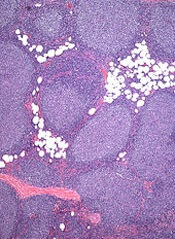
The European Commission (EC) has approved the use of obinutuzumab (Gazyvaro), an anti-CD20 monoclonal antibody, in patients with follicular lymphoma (FL).
The approval means obinutuzumab can be given, first in combination with bendamustine and then alone as maintenance therapy, to FL patients who did not respond to, progressed during, or progressed up to 6 months after treatment with rituximab or a rituximab-containing regimen.
Obinutuzumab was previously granted approval by the EC for use in combination with chlorambucil to treat patients with previously untreated chronic lymphocytic leukemia and comorbidities that make them unsuitable for full-dose fludarabine-based therapy.
Obinutuzumab is being developed by Roche. The drug is marketed as Gazyvaro in the European Union and Switzerland but as Gazyva in the rest of the world.
GADOLIN trial
The EC’s approval of obinutuzumab in FL is based on results from the phase 3 GADOLIN trial. The study included 413 patients with rituximab-refractory non-Hodgkin lymphoma, including 321 patients with FL, 46 with marginal zone lymphoma, and 28 with small lymphocytic lymphoma.
The patients were randomized to receive bendamustine alone (control arm) or a combination of bendamustine and obinutuzumab followed by obinutuzumab maintenance (every 2 months for 2 years or until progression).
The primary endpoint of the study was progression-free survival (PFS), as assessed by an independent review committee (IRC). The secondary endpoints were PFS assessed by investigator review, best overall response, complete response (CR), partial response (PR), duration of response, overall survival, and safety profile.
Among patients with FL, the obinutuzumab regimen improved PFS compared to bendamustine alone, as assessed by the IRC (hazard ratio [HR]=0.48, P<0.0001). The median PFS was not reached in patients receiving the obinutuzumab regimen but was 13.8 months in those receiving bendamustine alone.
Investigator-assessed PFS was consistent with IRC-assessed PFS. Investigators said the median PFS with the obinutuzumab regimen was more than double that with bendamustine alone—29.2 months vs 13.7 months (HR=0.48, P<0.0001).
The best overall response for patients receiving the obinutuzumab regimen was 78.7% (15.5% CR, 63.2% PR), compared to 74.7% (18.7% CR, 56% PR) for those receiving bendamustine alone, as assessed by the IRC.
The median duration of response was not reached for patients receiving the obinutuzumab regimen and was 11.6 months for those receiving bendamustine alone.
The median overall survival has not yet been reached in either study arm.
The most common grade 3/4 adverse events observed in patients receiving the obinutuzumab regimen were neutropenia (33%), infusion reactions (11%), and thrombocytopenia (10%).
The most common adverse events of any grade were infusion reactions (69%), neutropenia (35%), nausea (54%), fatigue (39%), cough (26%), diarrhea (27%), constipation (19%), fever (18%), thrombocytopenia (15%), vomiting (22%), upper respiratory tract infection (13%), decreased appetite (18%), joint or muscle pain (12%), sinusitis (12%), anemia (12%), general weakness (11%), and urinary tract infection (10%). 
The European Commission (EC) has approved the use of obinutuzumab (Gazyvaro), an anti-CD20 monoclonal antibody, in patients with follicular lymphoma (FL).
The approval means obinutuzumab can be given, first in combination with bendamustine and then alone as maintenance therapy, to FL patients who did not respond to, progressed during, or progressed up to 6 months after treatment with rituximab or a rituximab-containing regimen.
Obinutuzumab was previously granted approval by the EC for use in combination with chlorambucil to treat patients with previously untreated chronic lymphocytic leukemia and comorbidities that make them unsuitable for full-dose fludarabine-based therapy.
Obinutuzumab is being developed by Roche. The drug is marketed as Gazyvaro in the European Union and Switzerland but as Gazyva in the rest of the world.
GADOLIN trial
The EC’s approval of obinutuzumab in FL is based on results from the phase 3 GADOLIN trial. The study included 413 patients with rituximab-refractory non-Hodgkin lymphoma, including 321 patients with FL, 46 with marginal zone lymphoma, and 28 with small lymphocytic lymphoma.
The patients were randomized to receive bendamustine alone (control arm) or a combination of bendamustine and obinutuzumab followed by obinutuzumab maintenance (every 2 months for 2 years or until progression).
The primary endpoint of the study was progression-free survival (PFS), as assessed by an independent review committee (IRC). The secondary endpoints were PFS assessed by investigator review, best overall response, complete response (CR), partial response (PR), duration of response, overall survival, and safety profile.
Among patients with FL, the obinutuzumab regimen improved PFS compared to bendamustine alone, as assessed by the IRC (hazard ratio [HR]=0.48, P<0.0001). The median PFS was not reached in patients receiving the obinutuzumab regimen but was 13.8 months in those receiving bendamustine alone.
Investigator-assessed PFS was consistent with IRC-assessed PFS. Investigators said the median PFS with the obinutuzumab regimen was more than double that with bendamustine alone—29.2 months vs 13.7 months (HR=0.48, P<0.0001).
The best overall response for patients receiving the obinutuzumab regimen was 78.7% (15.5% CR, 63.2% PR), compared to 74.7% (18.7% CR, 56% PR) for those receiving bendamustine alone, as assessed by the IRC.
The median duration of response was not reached for patients receiving the obinutuzumab regimen and was 11.6 months for those receiving bendamustine alone.
The median overall survival has not yet been reached in either study arm.
The most common grade 3/4 adverse events observed in patients receiving the obinutuzumab regimen were neutropenia (33%), infusion reactions (11%), and thrombocytopenia (10%).
The most common adverse events of any grade were infusion reactions (69%), neutropenia (35%), nausea (54%), fatigue (39%), cough (26%), diarrhea (27%), constipation (19%), fever (18%), thrombocytopenia (15%), vomiting (22%), upper respiratory tract infection (13%), decreased appetite (18%), joint or muscle pain (12%), sinusitis (12%), anemia (12%), general weakness (11%), and urinary tract infection (10%).
The European Commission (EC) has approved the use of obinutuzumab (Gazyvaro), an anti-CD20 monoclonal antibody, in patients with follicular lymphoma (FL).
The approval means obinutuzumab can be given, first in combination with bendamustine and then alone as maintenance therapy, to FL patients who did not respond to, progressed during, or progressed up to 6 months after treatment with rituximab or a rituximab-containing regimen.
Obinutuzumab was previously granted approval by the EC for use in combination with chlorambucil to treat patients with previously untreated chronic lymphocytic leukemia and comorbidities that make them unsuitable for full-dose fludarabine-based therapy.
Obinutuzumab is being developed by Roche. The drug is marketed as Gazyvaro in the European Union and Switzerland but as Gazyva in the rest of the world.
GADOLIN trial
The EC’s approval of obinutuzumab in FL is based on results from the phase 3 GADOLIN trial. The study included 413 patients with rituximab-refractory non-Hodgkin lymphoma, including 321 patients with FL, 46 with marginal zone lymphoma, and 28 with small lymphocytic lymphoma.
The patients were randomized to receive bendamustine alone (control arm) or a combination of bendamustine and obinutuzumab followed by obinutuzumab maintenance (every 2 months for 2 years or until progression).
The primary endpoint of the study was progression-free survival (PFS), as assessed by an independent review committee (IRC). The secondary endpoints were PFS assessed by investigator review, best overall response, complete response (CR), partial response (PR), duration of response, overall survival, and safety profile.
Among patients with FL, the obinutuzumab regimen improved PFS compared to bendamustine alone, as assessed by the IRC (hazard ratio [HR]=0.48, P<0.0001). The median PFS was not reached in patients receiving the obinutuzumab regimen but was 13.8 months in those receiving bendamustine alone.
Investigator-assessed PFS was consistent with IRC-assessed PFS. Investigators said the median PFS with the obinutuzumab regimen was more than double that with bendamustine alone—29.2 months vs 13.7 months (HR=0.48, P<0.0001).
The best overall response for patients receiving the obinutuzumab regimen was 78.7% (15.5% CR, 63.2% PR), compared to 74.7% (18.7% CR, 56% PR) for those receiving bendamustine alone, as assessed by the IRC.
The median duration of response was not reached for patients receiving the obinutuzumab regimen and was 11.6 months for those receiving bendamustine alone.
The median overall survival has not yet been reached in either study arm.
The most common grade 3/4 adverse events observed in patients receiving the obinutuzumab regimen were neutropenia (33%), infusion reactions (11%), and thrombocytopenia (10%).
The most common adverse events of any grade were infusion reactions (69%), neutropenia (35%), nausea (54%), fatigue (39%), cough (26%), diarrhea (27%), constipation (19%), fever (18%), thrombocytopenia (15%), vomiting (22%), upper respiratory tract infection (13%), decreased appetite (18%), joint or muscle pain (12%), sinusitis (12%), anemia (12%), general weakness (11%), and urinary tract infection (10%).
Drug can address unmet need in cHL, doc says
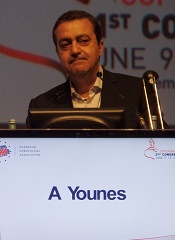
COPENHAGEN—The PD-1 checkpoint inhibitor nivolumab can address an unmet need in patients with classical Hodgkin lymphoma (cHL) who have progressive or relapsed disease, according to a speaker at the 21st Congress of the European Hematology Association.
In the phase 2 Checkmate-205 trial, nivolumab produced an objective response rate of 66% in cHL patients who had relapsed or progressed after autologous hematopoietic stem cell transplant (HSCT) and subsequent brentuximab vedotin.
The median duration of response was 7.8 months, and most patients had a response that was ongoing at the time of analysis.
Although the safety profile of nivolumab was considered “acceptable” by researchers, the drug has been linked to serious complications, including death, among patients who proceeded to allogeneic HSCT after receiving nivolumab.
Still, nivolumab is “an important new therapy to meet the unmet need” in cHL, according to Anas Younes, MD, of Memorial Sloan Kettering Cancer Center in New York, New York.
Dr Younes presented results with nivolumab from cohort B of the Checkmate-205 trial as abstract S793. Checkmate-205 was sponsored by Bristol-Myers Squibb.
Cohort B included 80 cHL patients who had relapsed or progressed after autologous HSCT and post-transplant brentuximab vedotin. (Cohort A included patients who had not previously received brentuximab vedotin.)
The patients’ median age was 37 (range, 18-72), and 64% were male. The median number of prior lines of therapy was 4 (range, 3-15), and 49% of patients had received at least 5 previous lines of therapy.
Seventy-four percent of patients had previously received radiation, 93% had received 1 prior autologous HSCT, and 8% had received 2. All patients had received brentuximab vedotin after transplant, and 54% had not responded to that treatment.
Study treatment
Patients received nivolumab at 3 mg/kg intravenously every 2 weeks until disease progression or unacceptable toxicity.
At a median follow-up of 8.9 months (range, 1.9-11.7), 36% of patients had come off treatment—16% due to disease progression, 5% due to toxicity, 8% because they had gone on to allogeneic HSCT, and 8% for other reasons (the patient’s request, the investigator’s decision, the patient was lost to follow-up, or the reason was not reported).
Dr Younes noted that all patients who stopped nivolumab to undergo HSCT were still alive at the data cut-off.
Efficacy
The objective response rate, per an independent radiologic review committee, was 66%. Nine percent of patients achieved a complete response, 58% had a partial response, 23% had stable disease, and 8% had progressive disease. The committee was unable to determine the status of 4% of patients.
The median time to response was 2.1 months, and the estimated median duration of response was 7.8 months.
“Keep in mind that the majority of patients are still on therapy, so this is expected to improve with time,” Dr Younes said.
The majority of responses (62%) were ongoing at the time of analysis. In an exploratory analysis, the researchers observed that 72% of patients who did not respond to their most recent prior brentuximab vedotin treatment did respond to nivolumab.
At 6 months, the progression-free survival rate was 77%, and the overall survival rate was 99%. The median progression-free survival was 10 months, and the median overall survival has not been reached.
Dr Younes said that, although the follow-up is short, the survival data are “still impressive.”
Safety
Adverse events (AEs) occurred in 99% of patients, grade 3/4 AEs occurred in 40% of patients, and there was 1 grade 5 AE (multi-organ failure due to Epstein-Barr-virus-positive T-cell lymphoma).
Treatment-related AEs occurred in 90% of patients. The most common of these were fatigue (25%), infusion-related reactions (20%), rash (16%), arthralgia (14%), pyrexia (14%), nausea (13%), diarrhea (10%), and pruritus (10%).
Treatment-related serious AEs occurred in 6% of patients and included pyrexia, tumor progression, arrhythmia, infusion reactions, septic meningitis, and pneumonia.
Extended safety follow-up of cHL patients treated in the nivolumab clinical trial program who were subsequently treated with allogeneic HSCT (n=17) revealed complications, including fatal events.
A warning about such complications has been added to the US prescribing information for nivolumab, which was recently granted accelerated approval from the US Food and Drug Administration (FDA) to treat patients with relapsed or refractory cHL who have received an autologous HSCT and post-transplant brentuximab vedotin.
Because of these transplant-related deaths, the FDA has advised that healthcare professionals follow patients closely for early evidence of transplant-related complications, such as hyperacute graft-versus-host disease, severe acute graft-versus-host disease, steroid-requiring febrile syndrome, hepatic veno-occlusive disease, and other immune-mediated adverse reactions.
The FDA has also required that Bristol-Myers Squibb further study the safety of allogeneic HSCT after nivolumab.
COPENHAGEN—The PD-1 checkpoint inhibitor nivolumab can address an unmet need in patients with classical Hodgkin lymphoma (cHL) who have progressive or relapsed disease, according to a speaker at the 21st Congress of the European Hematology Association.
In the phase 2 Checkmate-205 trial, nivolumab produced an objective response rate of 66% in cHL patients who had relapsed or progressed after autologous hematopoietic stem cell transplant (HSCT) and subsequent brentuximab vedotin.
The median duration of response was 7.8 months, and most patients had a response that was ongoing at the time of analysis.
Although the safety profile of nivolumab was considered “acceptable” by researchers, the drug has been linked to serious complications, including death, among patients who proceeded to allogeneic HSCT after receiving nivolumab.
Still, nivolumab is “an important new therapy to meet the unmet need” in cHL, according to Anas Younes, MD, of Memorial Sloan Kettering Cancer Center in New York, New York.
Dr Younes presented results with nivolumab from cohort B of the Checkmate-205 trial as abstract S793. Checkmate-205 was sponsored by Bristol-Myers Squibb.
Cohort B included 80 cHL patients who had relapsed or progressed after autologous HSCT and post-transplant brentuximab vedotin. (Cohort A included patients who had not previously received brentuximab vedotin.)
The patients’ median age was 37 (range, 18-72), and 64% were male. The median number of prior lines of therapy was 4 (range, 3-15), and 49% of patients had received at least 5 previous lines of therapy.
Seventy-four percent of patients had previously received radiation, 93% had received 1 prior autologous HSCT, and 8% had received 2. All patients had received brentuximab vedotin after transplant, and 54% had not responded to that treatment.
Study treatment
Patients received nivolumab at 3 mg/kg intravenously every 2 weeks until disease progression or unacceptable toxicity.
At a median follow-up of 8.9 months (range, 1.9-11.7), 36% of patients had come off treatment—16% due to disease progression, 5% due to toxicity, 8% because they had gone on to allogeneic HSCT, and 8% for other reasons (the patient’s request, the investigator’s decision, the patient was lost to follow-up, or the reason was not reported).
Dr Younes noted that all patients who stopped nivolumab to undergo HSCT were still alive at the data cut-off.
Efficacy
The objective response rate, per an independent radiologic review committee, was 66%. Nine percent of patients achieved a complete response, 58% had a partial response, 23% had stable disease, and 8% had progressive disease. The committee was unable to determine the status of 4% of patients.
The median time to response was 2.1 months, and the estimated median duration of response was 7.8 months.
“Keep in mind that the majority of patients are still on therapy, so this is expected to improve with time,” Dr Younes said.
The majority of responses (62%) were ongoing at the time of analysis. In an exploratory analysis, the researchers observed that 72% of patients who did not respond to their most recent prior brentuximab vedotin treatment did respond to nivolumab.
At 6 months, the progression-free survival rate was 77%, and the overall survival rate was 99%. The median progression-free survival was 10 months, and the median overall survival has not been reached.
Dr Younes said that, although the follow-up is short, the survival data are “still impressive.”
Safety
Adverse events (AEs) occurred in 99% of patients, grade 3/4 AEs occurred in 40% of patients, and there was 1 grade 5 AE (multi-organ failure due to Epstein-Barr-virus-positive T-cell lymphoma).
Treatment-related AEs occurred in 90% of patients. The most common of these were fatigue (25%), infusion-related reactions (20%), rash (16%), arthralgia (14%), pyrexia (14%), nausea (13%), diarrhea (10%), and pruritus (10%).
Treatment-related serious AEs occurred in 6% of patients and included pyrexia, tumor progression, arrhythmia, infusion reactions, septic meningitis, and pneumonia.
Extended safety follow-up of cHL patients treated in the nivolumab clinical trial program who were subsequently treated with allogeneic HSCT (n=17) revealed complications, including fatal events.
A warning about such complications has been added to the US prescribing information for nivolumab, which was recently granted accelerated approval from the US Food and Drug Administration (FDA) to treat patients with relapsed or refractory cHL who have received an autologous HSCT and post-transplant brentuximab vedotin.
Because of these transplant-related deaths, the FDA has advised that healthcare professionals follow patients closely for early evidence of transplant-related complications, such as hyperacute graft-versus-host disease, severe acute graft-versus-host disease, steroid-requiring febrile syndrome, hepatic veno-occlusive disease, and other immune-mediated adverse reactions.
The FDA has also required that Bristol-Myers Squibb further study the safety of allogeneic HSCT after nivolumab.
COPENHAGEN—The PD-1 checkpoint inhibitor nivolumab can address an unmet need in patients with classical Hodgkin lymphoma (cHL) who have progressive or relapsed disease, according to a speaker at the 21st Congress of the European Hematology Association.
In the phase 2 Checkmate-205 trial, nivolumab produced an objective response rate of 66% in cHL patients who had relapsed or progressed after autologous hematopoietic stem cell transplant (HSCT) and subsequent brentuximab vedotin.
The median duration of response was 7.8 months, and most patients had a response that was ongoing at the time of analysis.
Although the safety profile of nivolumab was considered “acceptable” by researchers, the drug has been linked to serious complications, including death, among patients who proceeded to allogeneic HSCT after receiving nivolumab.
Still, nivolumab is “an important new therapy to meet the unmet need” in cHL, according to Anas Younes, MD, of Memorial Sloan Kettering Cancer Center in New York, New York.
Dr Younes presented results with nivolumab from cohort B of the Checkmate-205 trial as abstract S793. Checkmate-205 was sponsored by Bristol-Myers Squibb.
Cohort B included 80 cHL patients who had relapsed or progressed after autologous HSCT and post-transplant brentuximab vedotin. (Cohort A included patients who had not previously received brentuximab vedotin.)
The patients’ median age was 37 (range, 18-72), and 64% were male. The median number of prior lines of therapy was 4 (range, 3-15), and 49% of patients had received at least 5 previous lines of therapy.
Seventy-four percent of patients had previously received radiation, 93% had received 1 prior autologous HSCT, and 8% had received 2. All patients had received brentuximab vedotin after transplant, and 54% had not responded to that treatment.
Study treatment
Patients received nivolumab at 3 mg/kg intravenously every 2 weeks until disease progression or unacceptable toxicity.
At a median follow-up of 8.9 months (range, 1.9-11.7), 36% of patients had come off treatment—16% due to disease progression, 5% due to toxicity, 8% because they had gone on to allogeneic HSCT, and 8% for other reasons (the patient’s request, the investigator’s decision, the patient was lost to follow-up, or the reason was not reported).
Dr Younes noted that all patients who stopped nivolumab to undergo HSCT were still alive at the data cut-off.
Efficacy
The objective response rate, per an independent radiologic review committee, was 66%. Nine percent of patients achieved a complete response, 58% had a partial response, 23% had stable disease, and 8% had progressive disease. The committee was unable to determine the status of 4% of patients.
The median time to response was 2.1 months, and the estimated median duration of response was 7.8 months.
“Keep in mind that the majority of patients are still on therapy, so this is expected to improve with time,” Dr Younes said.
The majority of responses (62%) were ongoing at the time of analysis. In an exploratory analysis, the researchers observed that 72% of patients who did not respond to their most recent prior brentuximab vedotin treatment did respond to nivolumab.
At 6 months, the progression-free survival rate was 77%, and the overall survival rate was 99%. The median progression-free survival was 10 months, and the median overall survival has not been reached.
Dr Younes said that, although the follow-up is short, the survival data are “still impressive.”
Safety
Adverse events (AEs) occurred in 99% of patients, grade 3/4 AEs occurred in 40% of patients, and there was 1 grade 5 AE (multi-organ failure due to Epstein-Barr-virus-positive T-cell lymphoma).
Treatment-related AEs occurred in 90% of patients. The most common of these were fatigue (25%), infusion-related reactions (20%), rash (16%), arthralgia (14%), pyrexia (14%), nausea (13%), diarrhea (10%), and pruritus (10%).
Treatment-related serious AEs occurred in 6% of patients and included pyrexia, tumor progression, arrhythmia, infusion reactions, septic meningitis, and pneumonia.
Extended safety follow-up of cHL patients treated in the nivolumab clinical trial program who were subsequently treated with allogeneic HSCT (n=17) revealed complications, including fatal events.
A warning about such complications has been added to the US prescribing information for nivolumab, which was recently granted accelerated approval from the US Food and Drug Administration (FDA) to treat patients with relapsed or refractory cHL who have received an autologous HSCT and post-transplant brentuximab vedotin.
Because of these transplant-related deaths, the FDA has advised that healthcare professionals follow patients closely for early evidence of transplant-related complications, such as hyperacute graft-versus-host disease, severe acute graft-versus-host disease, steroid-requiring febrile syndrome, hepatic veno-occlusive disease, and other immune-mediated adverse reactions.
The FDA has also required that Bristol-Myers Squibb further study the safety of allogeneic HSCT after nivolumab.
HIV not a contraindication for transplant in lymphoma

cultured lymphocyte
Image courtesy of CDC
With the advent of effective anti-retroviral therapy, patients with HIV-related lymphoma receive standard therapeutic regimens and achieve outcomes comparable to those of non-HIV-infected individuals.
Based on results of a multicenter phase 2 study, this now extends to treatment with autologous stem cell transplant (ASCT).
Researchers found that outcomes were not significantly different between HIV-infected patients who received ASCT and matched controls.
“These findings are remarkably important for a group of patients who, up until now, have been inconsistently treated,” said lead study author Joseph C. Alvarnas, MD, of City of Hope National Medical Center in Duarte, California.
“Based on our data, autologous stem cell transplant should be considered the standard of care for patients with HIV-related lymphomas for the same indications and under the same circumstances that we would use it in patients without HIV infection.”
To arrive at this recommendation, investigators enrolled 43 HIV-infected patients with relapsed or persistent non-Hodgkin lymphoma (NHL) or classical Hodgkin lymphoma (HL) onto the Blood and Marrow Transplant Clinical Trials Network (BMT CTN) 0803/AIDS Malignancy Consortium (AMC) 071 study.
They reported their findings in Blood.
Eligibility
Patients had to be 15 years or older, have documented evidence of HIV infection, and have a Karnofsky performance status of greater than 70%.
They had to have persistent or recurrent diffuse large B-cell lymphoma, immunoblastic lymphoma, plasmablastic lymphoma, Burkitt lymphoma, Burkitt-like NHL, or classic HL.
Patients could have had no more than 3 prior treatment regimens or 2 or fewer salvage regimens.
They had to have adequate organ function, fewer than 10% blasts in their marrow, no prior autologous or allogeneic transplant, and adequate hematopoietic progenitor cell mobilization of more than 1.5 x 10⁶ CD34+ cells/kg to be eligible.
Transplant regimen
Patients received the BEAM (carmustine, etoposide, cytarabine, and melphalan) transplant regimen on day 0. They did not receive antiretroviral therapy from the time of the start of BEAM until 7 days after completion of the preparative regimen.
Efavirenz was held for 2 weeks prior to BEAM initiation, and an alternative agent was substituted during this time period. Zidovudine was prohibited following transplant because of its myelosuppressive effects.
Patients received growth factor, transfusion, and antimicrobial supportive care according to institutional standards of the transplant center.
Patient characteristics
Of the original 43 patients enrolled, 3 patients experienced disease progression prior to the conditioning regimen and did not undergo transplant. Therefore, investigators did not include them in the study analysis.
Forty patients received ASCT at 16 different transplant centers. They were a median age of 46.9 (range, 22.5–62.2), and 35 were male.
All patients received peripheral blood stem cell grafts at a median dose of 3.9 x 10⁶ CD34+ cells/kg (range, 1.6–11.0). And all patients were able to mobilize hematopoietic progenitor cells in a median of 2 apheresis collections (range, 1–5).
Most patients (n=32; 80%) had a pre-transplant HIV viral load that was undetectable. The median viral load for those 8 patients with detectable disease was 80 copies/mL (range, 50–17,455).
Patients had a median pre-transplant CD4+ T-cell count of 249.0 CD4+/μL (range, 39–797).
Investigators followed the patients for a median of 24.8 months (range, 2.8–27.2).
Response
Seven patients died during the follow-up period, 5 within 1 year of transplant. Four of the deaths within 1 year of transplant were due to relapse or disease progression.
One-year transplant-related mortality (TRM) was 5.2%.
The 1-year overall survival (OS) probability was 87.3%, and, at 2 years, it was 82%. The 2-year progression-free survival (PFS) was 79.8%, and the cumulative incidence of relapse/progression at 2 years was 12.5%.
The probabilities for OS and PFS at 2 years were comparable for both NHL and HL patients.
The median time to post-transplant neutrophil recovery was 11 days, and 97.5% of patients recovered their neutrophil counts by day 28.
The median time to platelet recovery was 18 days, and 92.5% of patients recovered their platelet counts by day 100.
At 100 days post-transplant, 28.9% of the evaluable patients (11/38) had recovered hematologic function. And at 1 year, 74.2% (23/31) had recovered hematologic function.
Adverse events
A little more than half (55%) the patients had at least 1 infectious event within a year of transplant, including 11 who had a severe infection.
Of the 57 infections that occurred post-transplant, 25 were due to bacteria, 22 to viruses, 6 to fungal organisms, 2 to protozoa, and 2 to other organisms. No patient developed Pneumocystis jiroveci pneumonia after transplant.
Nine patients experienced a total of 13 grade 3–5 adverse events. This included infection/sepsis (5 events), venous thromboembolism (2 events), and 1 event each for esophageal candidiasis, enteritis, hyperglycemia, hypernatremia, acute appendicitis, and acute coronary syndrome.
Sixteen patients had to be re-admitted to the hospital after the transplant, for a total of 34 readmissions. Infection (18) and fever (6) were the most common reasons for readmission.
Data comparison
The investigators compared the OS and PFS results to a control group identified through the Center for International Bone Marrow Transplant Research (CIBMTR).
One hundred fifty-one controls matched for age, performance status, primary disease, and disease status at transplant were identified for the 40 HIV-lymphoma cases.
The 1-year OS for the control group was 87.7%, and the 2-year PFS was 69.5%. This compared with the 87.3% and 79.8% for OS and PFS, respectively, for the HIV-lymphoma patients.
These results, the investigators wrote, were not significantly different from outcomes of CIBMTR controls, with a hazard ratio for overall mortality in the HIV-lymphoma patients of 0.67 (95% CI: 0.30–1.50, P=0.33) compared to controls.
And the hazard ratio for treatment failure in the HIV-lymphoma patients was 0.52 (95% CI: 0.2927–1.03, P=0.06) compared to controls.
The investigators concluded that HIV infection alone should not be considered a contraindication to ASCT for patients who otherwise meet transplant inclusion criteria. And ASCT should be considered the standard of care for patients with HIV-related lymphoma, provided that the HIV infection is treatment-responsive.
The team added that these patients should also be considered “appropriate potential participants” for future ASCT clinical trials.
cultured lymphocyte
Image courtesy of CDC
With the advent of effective anti-retroviral therapy, patients with HIV-related lymphoma receive standard therapeutic regimens and achieve outcomes comparable to those of non-HIV-infected individuals.
Based on results of a multicenter phase 2 study, this now extends to treatment with autologous stem cell transplant (ASCT).
Researchers found that outcomes were not significantly different between HIV-infected patients who received ASCT and matched controls.
“These findings are remarkably important for a group of patients who, up until now, have been inconsistently treated,” said lead study author Joseph C. Alvarnas, MD, of City of Hope National Medical Center in Duarte, California.
“Based on our data, autologous stem cell transplant should be considered the standard of care for patients with HIV-related lymphomas for the same indications and under the same circumstances that we would use it in patients without HIV infection.”
To arrive at this recommendation, investigators enrolled 43 HIV-infected patients with relapsed or persistent non-Hodgkin lymphoma (NHL) or classical Hodgkin lymphoma (HL) onto the Blood and Marrow Transplant Clinical Trials Network (BMT CTN) 0803/AIDS Malignancy Consortium (AMC) 071 study.
They reported their findings in Blood.
Eligibility
Patients had to be 15 years or older, have documented evidence of HIV infection, and have a Karnofsky performance status of greater than 70%.
They had to have persistent or recurrent diffuse large B-cell lymphoma, immunoblastic lymphoma, plasmablastic lymphoma, Burkitt lymphoma, Burkitt-like NHL, or classic HL.
Patients could have had no more than 3 prior treatment regimens or 2 or fewer salvage regimens.
They had to have adequate organ function, fewer than 10% blasts in their marrow, no prior autologous or allogeneic transplant, and adequate hematopoietic progenitor cell mobilization of more than 1.5 x 10⁶ CD34+ cells/kg to be eligible.
Transplant regimen
Patients received the BEAM (carmustine, etoposide, cytarabine, and melphalan) transplant regimen on day 0. They did not receive antiretroviral therapy from the time of the start of BEAM until 7 days after completion of the preparative regimen.
Efavirenz was held for 2 weeks prior to BEAM initiation, and an alternative agent was substituted during this time period. Zidovudine was prohibited following transplant because of its myelosuppressive effects.
Patients received growth factor, transfusion, and antimicrobial supportive care according to institutional standards of the transplant center.
Patient characteristics
Of the original 43 patients enrolled, 3 patients experienced disease progression prior to the conditioning regimen and did not undergo transplant. Therefore, investigators did not include them in the study analysis.
Forty patients received ASCT at 16 different transplant centers. They were a median age of 46.9 (range, 22.5–62.2), and 35 were male.
All patients received peripheral blood stem cell grafts at a median dose of 3.9 x 10⁶ CD34+ cells/kg (range, 1.6–11.0). And all patients were able to mobilize hematopoietic progenitor cells in a median of 2 apheresis collections (range, 1–5).
Most patients (n=32; 80%) had a pre-transplant HIV viral load that was undetectable. The median viral load for those 8 patients with detectable disease was 80 copies/mL (range, 50–17,455).
Patients had a median pre-transplant CD4+ T-cell count of 249.0 CD4+/μL (range, 39–797).
Investigators followed the patients for a median of 24.8 months (range, 2.8–27.2).
Response
Seven patients died during the follow-up period, 5 within 1 year of transplant. Four of the deaths within 1 year of transplant were due to relapse or disease progression.
One-year transplant-related mortality (TRM) was 5.2%.
The 1-year overall survival (OS) probability was 87.3%, and, at 2 years, it was 82%. The 2-year progression-free survival (PFS) was 79.8%, and the cumulative incidence of relapse/progression at 2 years was 12.5%.
The probabilities for OS and PFS at 2 years were comparable for both NHL and HL patients.
The median time to post-transplant neutrophil recovery was 11 days, and 97.5% of patients recovered their neutrophil counts by day 28.
The median time to platelet recovery was 18 days, and 92.5% of patients recovered their platelet counts by day 100.
At 100 days post-transplant, 28.9% of the evaluable patients (11/38) had recovered hematologic function. And at 1 year, 74.2% (23/31) had recovered hematologic function.
Adverse events
A little more than half (55%) the patients had at least 1 infectious event within a year of transplant, including 11 who had a severe infection.
Of the 57 infections that occurred post-transplant, 25 were due to bacteria, 22 to viruses, 6 to fungal organisms, 2 to protozoa, and 2 to other organisms. No patient developed Pneumocystis jiroveci pneumonia after transplant.
Nine patients experienced a total of 13 grade 3–5 adverse events. This included infection/sepsis (5 events), venous thromboembolism (2 events), and 1 event each for esophageal candidiasis, enteritis, hyperglycemia, hypernatremia, acute appendicitis, and acute coronary syndrome.
Sixteen patients had to be re-admitted to the hospital after the transplant, for a total of 34 readmissions. Infection (18) and fever (6) were the most common reasons for readmission.
Data comparison
The investigators compared the OS and PFS results to a control group identified through the Center for International Bone Marrow Transplant Research (CIBMTR).
One hundred fifty-one controls matched for age, performance status, primary disease, and disease status at transplant were identified for the 40 HIV-lymphoma cases.
The 1-year OS for the control group was 87.7%, and the 2-year PFS was 69.5%. This compared with the 87.3% and 79.8% for OS and PFS, respectively, for the HIV-lymphoma patients.
These results, the investigators wrote, were not significantly different from outcomes of CIBMTR controls, with a hazard ratio for overall mortality in the HIV-lymphoma patients of 0.67 (95% CI: 0.30–1.50, P=0.33) compared to controls.
And the hazard ratio for treatment failure in the HIV-lymphoma patients was 0.52 (95% CI: 0.2927–1.03, P=0.06) compared to controls.
The investigators concluded that HIV infection alone should not be considered a contraindication to ASCT for patients who otherwise meet transplant inclusion criteria. And ASCT should be considered the standard of care for patients with HIV-related lymphoma, provided that the HIV infection is treatment-responsive.
The team added that these patients should also be considered “appropriate potential participants” for future ASCT clinical trials.
cultured lymphocyte
Image courtesy of CDC
With the advent of effective anti-retroviral therapy, patients with HIV-related lymphoma receive standard therapeutic regimens and achieve outcomes comparable to those of non-HIV-infected individuals.
Based on results of a multicenter phase 2 study, this now extends to treatment with autologous stem cell transplant (ASCT).
Researchers found that outcomes were not significantly different between HIV-infected patients who received ASCT and matched controls.
“These findings are remarkably important for a group of patients who, up until now, have been inconsistently treated,” said lead study author Joseph C. Alvarnas, MD, of City of Hope National Medical Center in Duarte, California.
“Based on our data, autologous stem cell transplant should be considered the standard of care for patients with HIV-related lymphomas for the same indications and under the same circumstances that we would use it in patients without HIV infection.”
To arrive at this recommendation, investigators enrolled 43 HIV-infected patients with relapsed or persistent non-Hodgkin lymphoma (NHL) or classical Hodgkin lymphoma (HL) onto the Blood and Marrow Transplant Clinical Trials Network (BMT CTN) 0803/AIDS Malignancy Consortium (AMC) 071 study.
They reported their findings in Blood.
Eligibility
Patients had to be 15 years or older, have documented evidence of HIV infection, and have a Karnofsky performance status of greater than 70%.
They had to have persistent or recurrent diffuse large B-cell lymphoma, immunoblastic lymphoma, plasmablastic lymphoma, Burkitt lymphoma, Burkitt-like NHL, or classic HL.
Patients could have had no more than 3 prior treatment regimens or 2 or fewer salvage regimens.
They had to have adequate organ function, fewer than 10% blasts in their marrow, no prior autologous or allogeneic transplant, and adequate hematopoietic progenitor cell mobilization of more than 1.5 x 10⁶ CD34+ cells/kg to be eligible.
Transplant regimen
Patients received the BEAM (carmustine, etoposide, cytarabine, and melphalan) transplant regimen on day 0. They did not receive antiretroviral therapy from the time of the start of BEAM until 7 days after completion of the preparative regimen.
Efavirenz was held for 2 weeks prior to BEAM initiation, and an alternative agent was substituted during this time period. Zidovudine was prohibited following transplant because of its myelosuppressive effects.
Patients received growth factor, transfusion, and antimicrobial supportive care according to institutional standards of the transplant center.
Patient characteristics
Of the original 43 patients enrolled, 3 patients experienced disease progression prior to the conditioning regimen and did not undergo transplant. Therefore, investigators did not include them in the study analysis.
Forty patients received ASCT at 16 different transplant centers. They were a median age of 46.9 (range, 22.5–62.2), and 35 were male.
All patients received peripheral blood stem cell grafts at a median dose of 3.9 x 10⁶ CD34+ cells/kg (range, 1.6–11.0). And all patients were able to mobilize hematopoietic progenitor cells in a median of 2 apheresis collections (range, 1–5).
Most patients (n=32; 80%) had a pre-transplant HIV viral load that was undetectable. The median viral load for those 8 patients with detectable disease was 80 copies/mL (range, 50–17,455).
Patients had a median pre-transplant CD4+ T-cell count of 249.0 CD4+/μL (range, 39–797).
Investigators followed the patients for a median of 24.8 months (range, 2.8–27.2).
Response
Seven patients died during the follow-up period, 5 within 1 year of transplant. Four of the deaths within 1 year of transplant were due to relapse or disease progression.
One-year transplant-related mortality (TRM) was 5.2%.
The 1-year overall survival (OS) probability was 87.3%, and, at 2 years, it was 82%. The 2-year progression-free survival (PFS) was 79.8%, and the cumulative incidence of relapse/progression at 2 years was 12.5%.
The probabilities for OS and PFS at 2 years were comparable for both NHL and HL patients.
The median time to post-transplant neutrophil recovery was 11 days, and 97.5% of patients recovered their neutrophil counts by day 28.
The median time to platelet recovery was 18 days, and 92.5% of patients recovered their platelet counts by day 100.
At 100 days post-transplant, 28.9% of the evaluable patients (11/38) had recovered hematologic function. And at 1 year, 74.2% (23/31) had recovered hematologic function.
Adverse events
A little more than half (55%) the patients had at least 1 infectious event within a year of transplant, including 11 who had a severe infection.
Of the 57 infections that occurred post-transplant, 25 were due to bacteria, 22 to viruses, 6 to fungal organisms, 2 to protozoa, and 2 to other organisms. No patient developed Pneumocystis jiroveci pneumonia after transplant.
Nine patients experienced a total of 13 grade 3–5 adverse events. This included infection/sepsis (5 events), venous thromboembolism (2 events), and 1 event each for esophageal candidiasis, enteritis, hyperglycemia, hypernatremia, acute appendicitis, and acute coronary syndrome.
Sixteen patients had to be re-admitted to the hospital after the transplant, for a total of 34 readmissions. Infection (18) and fever (6) were the most common reasons for readmission.
Data comparison
The investigators compared the OS and PFS results to a control group identified through the Center for International Bone Marrow Transplant Research (CIBMTR).
One hundred fifty-one controls matched for age, performance status, primary disease, and disease status at transplant were identified for the 40 HIV-lymphoma cases.
The 1-year OS for the control group was 87.7%, and the 2-year PFS was 69.5%. This compared with the 87.3% and 79.8% for OS and PFS, respectively, for the HIV-lymphoma patients.
These results, the investigators wrote, were not significantly different from outcomes of CIBMTR controls, with a hazard ratio for overall mortality in the HIV-lymphoma patients of 0.67 (95% CI: 0.30–1.50, P=0.33) compared to controls.
And the hazard ratio for treatment failure in the HIV-lymphoma patients was 0.52 (95% CI: 0.2927–1.03, P=0.06) compared to controls.
The investigators concluded that HIV infection alone should not be considered a contraindication to ASCT for patients who otherwise meet transplant inclusion criteria. And ASCT should be considered the standard of care for patients with HIV-related lymphoma, provided that the HIV infection is treatment-responsive.
The team added that these patients should also be considered “appropriate potential participants” for future ASCT clinical trials.
‘Impressive’ responses with nivolumab in relapsed Hodgkin lymphoma
COPENHAGEN – Nivolumab may be an effective salvage therapy option for adults with Hodgkin lymphoma whose disease has progressed despite transplant and treatment with brentuximab vedotin, investigators reported.
In a subcohort of patients from the Checkmate 205 phase II trial, 80 patients with Hodgkin lymphoma who had disease progression following autologous stem cell transplant (ASCT) and brentuximab vedotin (Adcetris), nivolumab (Opdivo) therapy was associated with a 53% objective response rate according to independent reviewers, reported Dr. Anas Younes, chief of the lymphoma service at Memorial Sloan Kettering Cancer Center, New York.
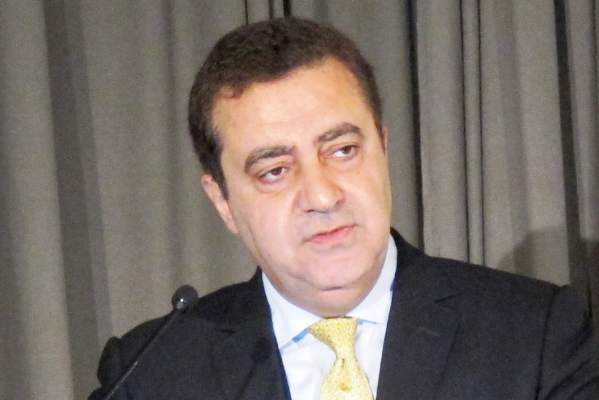
“The PD-1 checkpoint inhibitor nivolumab is an important new treatment to address unmet needs in patients with classical Hodgkin lymphoma with progressive disease and limited treatment options, especially after autologous transplant,” he said at a briefing at the annual congress of the European Hematology Association.
Objective response rates as determined by both investigators and independent reviewers were “impressive,” and had “encouraging durability,” he added. The median duration of response at time of data cutoff was 7.8 months, and the majority of patients had ongoing responses at the time of the analysis, Dr. Younes said.
Nivolumab was recently approved by the Food and Drug Administration for the treatment of classical Hodgkin lymphoma that has relapsed or progressed after ASCT followed by brentuximab vedotin.
In the Checkmate 205 registrational trial, 80 patients (median age 37, range 18-72 years) were assigned to receive nivolumab 3 mg/kg intravenously every 2 weeks. Patients were evaluated for response by both an independent radiologic review committee (IRRC) and investigators, using 2007 International Working Group response criteria. After a median follow-up of 8.9 months, the IRRC-rated objective response rate, the primary endpoint, was 66%, including 8.8% complete remissions (CR), and 57.5% partial remissions (PR).
Dr. Younes showed a waterfall plot indicating that nearly all patients had some degree of tumor regression, and all but one patient among the responders had tumor reductions of 50% or greater from baseline.
Among 43 patients who had had no response to brentuximab vedotin, subsequent treatment with nivolumab was associated with an IRRC-rated objective response rate of 72%. As noted, the median duration of response was 7.8 months, and the median time to response was 2.1 months.
As of the last follow-up, 33 of the 53 patients with IRRC-rated responses had retained response. The IRRC-determined 6-month progression-free survival rate was 77%, and the overall survival rate was 99%.
In all, 72 patients (90%) had a treatment-related adverse event. The most common events occurring in 15% or more of patients were fatigue, infusion-related reactions, and rash. Most of the immune-mediated adverse events were of low grade and manageable, and there were no treatment-related deaths, Dr. Younes said.
Briefing moderator Dr. Anton Hagenbeek, professor of hematology at the University of Amsterdam, who was not involved in the study, asked whether nivolumab can be considered as a bridge to other therapies in this population.
Dr. Younes said that the “natural progression of a single-agent therapy that has efficacy is to combine it with other active agents, or use maybe in the adjuvant or maintenance setting in certain circumstances.”
“I don’t expect single-agent nivolumab to cure our patients,” he added.
A similarly designed clinical trial, MK-3457-087/KEYNOTE-087, is exploring the use of pembrolizumab (Keytruda). This trial is ongoing but does not have published data as yet.
Checkmate 205 is sponsored by Bristol-Myers Squibb. Dr. Younes has served as a consultant/advisor, received honoraria and/or research funding from Gilead Sciences, Curis, Incyte, Janssen, Seattle Genetics, Novartis, Celgene, Millennium, and Sanofi. Dr. Hagenbeek reported no relevant disclosures.
COPENHAGEN – Nivolumab may be an effective salvage therapy option for adults with Hodgkin lymphoma whose disease has progressed despite transplant and treatment with brentuximab vedotin, investigators reported.
In a subcohort of patients from the Checkmate 205 phase II trial, 80 patients with Hodgkin lymphoma who had disease progression following autologous stem cell transplant (ASCT) and brentuximab vedotin (Adcetris), nivolumab (Opdivo) therapy was associated with a 53% objective response rate according to independent reviewers, reported Dr. Anas Younes, chief of the lymphoma service at Memorial Sloan Kettering Cancer Center, New York.
“The PD-1 checkpoint inhibitor nivolumab is an important new treatment to address unmet needs in patients with classical Hodgkin lymphoma with progressive disease and limited treatment options, especially after autologous transplant,” he said at a briefing at the annual congress of the European Hematology Association.
Objective response rates as determined by both investigators and independent reviewers were “impressive,” and had “encouraging durability,” he added. The median duration of response at time of data cutoff was 7.8 months, and the majority of patients had ongoing responses at the time of the analysis, Dr. Younes said.
Nivolumab was recently approved by the Food and Drug Administration for the treatment of classical Hodgkin lymphoma that has relapsed or progressed after ASCT followed by brentuximab vedotin.
In the Checkmate 205 registrational trial, 80 patients (median age 37, range 18-72 years) were assigned to receive nivolumab 3 mg/kg intravenously every 2 weeks. Patients were evaluated for response by both an independent radiologic review committee (IRRC) and investigators, using 2007 International Working Group response criteria. After a median follow-up of 8.9 months, the IRRC-rated objective response rate, the primary endpoint, was 66%, including 8.8% complete remissions (CR), and 57.5% partial remissions (PR).
Dr. Younes showed a waterfall plot indicating that nearly all patients had some degree of tumor regression, and all but one patient among the responders had tumor reductions of 50% or greater from baseline.
Among 43 patients who had had no response to brentuximab vedotin, subsequent treatment with nivolumab was associated with an IRRC-rated objective response rate of 72%. As noted, the median duration of response was 7.8 months, and the median time to response was 2.1 months.
As of the last follow-up, 33 of the 53 patients with IRRC-rated responses had retained response. The IRRC-determined 6-month progression-free survival rate was 77%, and the overall survival rate was 99%.
In all, 72 patients (90%) had a treatment-related adverse event. The most common events occurring in 15% or more of patients were fatigue, infusion-related reactions, and rash. Most of the immune-mediated adverse events were of low grade and manageable, and there were no treatment-related deaths, Dr. Younes said.
Briefing moderator Dr. Anton Hagenbeek, professor of hematology at the University of Amsterdam, who was not involved in the study, asked whether nivolumab can be considered as a bridge to other therapies in this population.
Dr. Younes said that the “natural progression of a single-agent therapy that has efficacy is to combine it with other active agents, or use maybe in the adjuvant or maintenance setting in certain circumstances.”
“I don’t expect single-agent nivolumab to cure our patients,” he added.
A similarly designed clinical trial, MK-3457-087/KEYNOTE-087, is exploring the use of pembrolizumab (Keytruda). This trial is ongoing but does not have published data as yet.
Checkmate 205 is sponsored by Bristol-Myers Squibb. Dr. Younes has served as a consultant/advisor, received honoraria and/or research funding from Gilead Sciences, Curis, Incyte, Janssen, Seattle Genetics, Novartis, Celgene, Millennium, and Sanofi. Dr. Hagenbeek reported no relevant disclosures.
COPENHAGEN – Nivolumab may be an effective salvage therapy option for adults with Hodgkin lymphoma whose disease has progressed despite transplant and treatment with brentuximab vedotin, investigators reported.
In a subcohort of patients from the Checkmate 205 phase II trial, 80 patients with Hodgkin lymphoma who had disease progression following autologous stem cell transplant (ASCT) and brentuximab vedotin (Adcetris), nivolumab (Opdivo) therapy was associated with a 53% objective response rate according to independent reviewers, reported Dr. Anas Younes, chief of the lymphoma service at Memorial Sloan Kettering Cancer Center, New York.
“The PD-1 checkpoint inhibitor nivolumab is an important new treatment to address unmet needs in patients with classical Hodgkin lymphoma with progressive disease and limited treatment options, especially after autologous transplant,” he said at a briefing at the annual congress of the European Hematology Association.
Objective response rates as determined by both investigators and independent reviewers were “impressive,” and had “encouraging durability,” he added. The median duration of response at time of data cutoff was 7.8 months, and the majority of patients had ongoing responses at the time of the analysis, Dr. Younes said.
Nivolumab was recently approved by the Food and Drug Administration for the treatment of classical Hodgkin lymphoma that has relapsed or progressed after ASCT followed by brentuximab vedotin.
In the Checkmate 205 registrational trial, 80 patients (median age 37, range 18-72 years) were assigned to receive nivolumab 3 mg/kg intravenously every 2 weeks. Patients were evaluated for response by both an independent radiologic review committee (IRRC) and investigators, using 2007 International Working Group response criteria. After a median follow-up of 8.9 months, the IRRC-rated objective response rate, the primary endpoint, was 66%, including 8.8% complete remissions (CR), and 57.5% partial remissions (PR).
Dr. Younes showed a waterfall plot indicating that nearly all patients had some degree of tumor regression, and all but one patient among the responders had tumor reductions of 50% or greater from baseline.
Among 43 patients who had had no response to brentuximab vedotin, subsequent treatment with nivolumab was associated with an IRRC-rated objective response rate of 72%. As noted, the median duration of response was 7.8 months, and the median time to response was 2.1 months.
As of the last follow-up, 33 of the 53 patients with IRRC-rated responses had retained response. The IRRC-determined 6-month progression-free survival rate was 77%, and the overall survival rate was 99%.
In all, 72 patients (90%) had a treatment-related adverse event. The most common events occurring in 15% or more of patients were fatigue, infusion-related reactions, and rash. Most of the immune-mediated adverse events were of low grade and manageable, and there were no treatment-related deaths, Dr. Younes said.
Briefing moderator Dr. Anton Hagenbeek, professor of hematology at the University of Amsterdam, who was not involved in the study, asked whether nivolumab can be considered as a bridge to other therapies in this population.
Dr. Younes said that the “natural progression of a single-agent therapy that has efficacy is to combine it with other active agents, or use maybe in the adjuvant or maintenance setting in certain circumstances.”
“I don’t expect single-agent nivolumab to cure our patients,” he added.
A similarly designed clinical trial, MK-3457-087/KEYNOTE-087, is exploring the use of pembrolizumab (Keytruda). This trial is ongoing but does not have published data as yet.
Checkmate 205 is sponsored by Bristol-Myers Squibb. Dr. Younes has served as a consultant/advisor, received honoraria and/or research funding from Gilead Sciences, Curis, Incyte, Janssen, Seattle Genetics, Novartis, Celgene, Millennium, and Sanofi. Dr. Hagenbeek reported no relevant disclosures.
AT THE EHA CONGRESS
Key clinical point:. Nivolumab may be an effective salvage therapy option for patients with Hodgkin lymphoma that has progressed after transplant and brentuximab vedotin therapy.
Major finding: The independent radiologic review committee–rated objective response rate was 53%.
Data source: Registration trial of nivolumab in 80 patients with Hodgkin lymphoma relapsed/refractory after autologous stem cell transplant and brentuximab vedotin.
Disclosures: Checkmate 205 is sponsored by Bristol-Myers Squibb. Dr. Younes has served as a consultant/advisor, received honoraria and/or research funding from Gilead Sciences, Curis, Incyte, Janssen, Seattle Genetics, Novartis, Celgene, Millennium, and Sanofi. Dr. Hagenbeek reported no relevant disclosures.
Daratumumab plus len-dex stalls myeloma progression in POLLUX trial
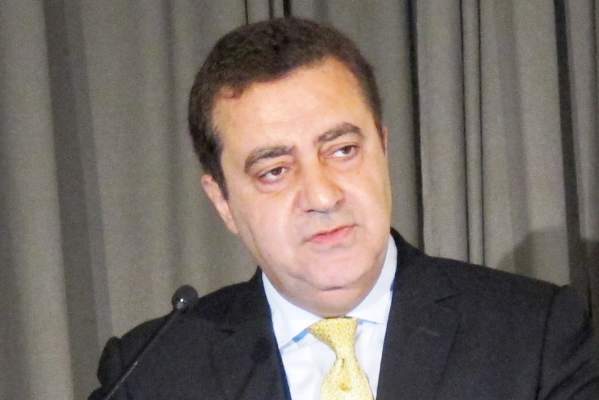
COPENHAGEN – In a classic case of clinical sibling rivalry, results of the POLLUX trial support the benefits of adding daratumumab to lenalidomide and dexamethasone in patients with relapsed/refractory multiple myeloma, echoing results reported a few days earlier by investigators in the twin (and archly named) CASTOR trial
Among 569 patients with relapsed/refractory multiple myeloma, the addition of the anti-CD38 monoclonal antibody daratumumab (Darzalex) to lenalidomide (Revlimid) and dexamethasone was associated with a 63% reduction in the risk of disease progress or death, compared with len-dex alone, reported Dr. Meletios A Dimopoulos of the National and Kapodistrian University of Athens.
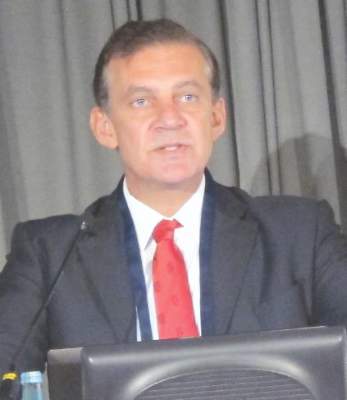
With daratumumab and len-dex, “there is the highest-ever response rate seen in relapsed or refractory myeloma; 93% of the patients achieved at least a partial response, and more importantly, 43% of the patients achieved a complete response,” he said at a briefing prior to his presentation of the data at the annual congress of the European Hematology Association.
“The addition of daratumumab to lenalidomide and dexamethasone induces deep and durable responses. Data indicate that we can achieve minimal residual disease negativity status in a significant number of patients,” he added.
The trial was halted on May 20, 2016, after a preplanned interim analysis showed a significant improvement in the primary endpoint of a progression-free survival, compared with len-dex alone.
Dizygotic twins
Like their mythologic namesakes, who were twin sons from different fathers, the CASTOR and POLLUX trials differed somewhat in the patient populations treated and in trial design. The CASTOR trial is looking at the addition of daratumumab to bortezomib (Velcade) and dexamethasone, and excludes patients resistant to bortezomib. The POLLUX trial includes bortezomib-resistant patients, but excludes lenalidomide-resistant patients.
In addition, in CASTOR, patients were treated with the assigned regimen for a specified number of courses, followed by daratumumab maintenance, whereas patients in both arms in POLLUX continued on their assigned therapy until disease progression or unacceptable toxicity occurred.
POLLUX was a multicenter, randomized, open-label phase III trial in patients with relapsed/refractory multiple myeloma following one or more prior lines of therapy. They were randomized on a 1:1 basis to either len-dex (283 patients) or len-dex plus intravenous daratumumab at a dose of 16 mg/kg once a week during treatment cycles 1 and 2, every 2 weeks during cycles 3-6, and once only on day 1 of subsequent cycles.
After a median follow-up of 13.5 months, the median progression-free survival for patients treated with len-dex alone was 18.4 months, but the median was not yet reached among patients treated with daratumumab. The difference translated into a hazard ratio for progression-free survival with daratumumab of 0.37 (P less than .0001).
In addition, the antibody was associated with a significantly better overall response rate (93% for daratumumab vs. 76% for len-dex only; P less than .0001), as well as better rates of complete responses (43% vs. 19%, respectively; P less than .0001), and very good partial responses or better (76% vs. 44%, P less than .0001).
The combination was generally well tolerated, with adverse events consistent with the known safety profile of len-dex. Infusion reactions with daratumumab were generally mild, and tended to occur during the first infusion, Dr. Dimopoulos said.

Dr. Anton Hagenbeek, professor of hematology at the University of Amsterdam (the Netherlands), who moderated the briefing, commented that the progression-free survival curves with daratumumab appeared to plateau, and asked whether any patients in the trial could be considered to have been “cured.”
Dr. Dimopoulos replied that “although we believe that in the relapsed setting of myeloma, it is unlikely to achieve the cure rate, we are optimistic that there will be a sizable number of patients that will remain without progression for many months. Already from single-agent daratumumab where this patient population is far more heavily pretreated, there are patients who are without progression for several years.”
Dr. Dimopoulos has previously disclosed honoraria from Janssen, maker of daratumumab. Dr. Hagenbeek disclosed serving on an advisory board for Takeda, maker of bortezomib.
COPENHAGEN – In a classic case of clinical sibling rivalry, results of the POLLUX trial support the benefits of adding daratumumab to lenalidomide and dexamethasone in patients with relapsed/refractory multiple myeloma, echoing results reported a few days earlier by investigators in the twin (and archly named) CASTOR trial
Among 569 patients with relapsed/refractory multiple myeloma, the addition of the anti-CD38 monoclonal antibody daratumumab (Darzalex) to lenalidomide (Revlimid) and dexamethasone was associated with a 63% reduction in the risk of disease progress or death, compared with len-dex alone, reported Dr. Meletios A Dimopoulos of the National and Kapodistrian University of Athens.
With daratumumab and len-dex, “there is the highest-ever response rate seen in relapsed or refractory myeloma; 93% of the patients achieved at least a partial response, and more importantly, 43% of the patients achieved a complete response,” he said at a briefing prior to his presentation of the data at the annual congress of the European Hematology Association.
“The addition of daratumumab to lenalidomide and dexamethasone induces deep and durable responses. Data indicate that we can achieve minimal residual disease negativity status in a significant number of patients,” he added.
The trial was halted on May 20, 2016, after a preplanned interim analysis showed a significant improvement in the primary endpoint of a progression-free survival, compared with len-dex alone.
Dizygotic twins
Like their mythologic namesakes, who were twin sons from different fathers, the CASTOR and POLLUX trials differed somewhat in the patient populations treated and in trial design. The CASTOR trial is looking at the addition of daratumumab to bortezomib (Velcade) and dexamethasone, and excludes patients resistant to bortezomib. The POLLUX trial includes bortezomib-resistant patients, but excludes lenalidomide-resistant patients.
In addition, in CASTOR, patients were treated with the assigned regimen for a specified number of courses, followed by daratumumab maintenance, whereas patients in both arms in POLLUX continued on their assigned therapy until disease progression or unacceptable toxicity occurred.
POLLUX was a multicenter, randomized, open-label phase III trial in patients with relapsed/refractory multiple myeloma following one or more prior lines of therapy. They were randomized on a 1:1 basis to either len-dex (283 patients) or len-dex plus intravenous daratumumab at a dose of 16 mg/kg once a week during treatment cycles 1 and 2, every 2 weeks during cycles 3-6, and once only on day 1 of subsequent cycles.
After a median follow-up of 13.5 months, the median progression-free survival for patients treated with len-dex alone was 18.4 months, but the median was not yet reached among patients treated with daratumumab. The difference translated into a hazard ratio for progression-free survival with daratumumab of 0.37 (P less than .0001).
In addition, the antibody was associated with a significantly better overall response rate (93% for daratumumab vs. 76% for len-dex only; P less than .0001), as well as better rates of complete responses (43% vs. 19%, respectively; P less than .0001), and very good partial responses or better (76% vs. 44%, P less than .0001).
The combination was generally well tolerated, with adverse events consistent with the known safety profile of len-dex. Infusion reactions with daratumumab were generally mild, and tended to occur during the first infusion, Dr. Dimopoulos said.
Dr. Anton Hagenbeek, professor of hematology at the University of Amsterdam (the Netherlands), who moderated the briefing, commented that the progression-free survival curves with daratumumab appeared to plateau, and asked whether any patients in the trial could be considered to have been “cured.”
Dr. Dimopoulos replied that “although we believe that in the relapsed setting of myeloma, it is unlikely to achieve the cure rate, we are optimistic that there will be a sizable number of patients that will remain without progression for many months. Already from single-agent daratumumab where this patient population is far more heavily pretreated, there are patients who are without progression for several years.”
Dr. Dimopoulos has previously disclosed honoraria from Janssen, maker of daratumumab. Dr. Hagenbeek disclosed serving on an advisory board for Takeda, maker of bortezomib.
COPENHAGEN – In a classic case of clinical sibling rivalry, results of the POLLUX trial support the benefits of adding daratumumab to lenalidomide and dexamethasone in patients with relapsed/refractory multiple myeloma, echoing results reported a few days earlier by investigators in the twin (and archly named) CASTOR trial
Among 569 patients with relapsed/refractory multiple myeloma, the addition of the anti-CD38 monoclonal antibody daratumumab (Darzalex) to lenalidomide (Revlimid) and dexamethasone was associated with a 63% reduction in the risk of disease progress or death, compared with len-dex alone, reported Dr. Meletios A Dimopoulos of the National and Kapodistrian University of Athens.
With daratumumab and len-dex, “there is the highest-ever response rate seen in relapsed or refractory myeloma; 93% of the patients achieved at least a partial response, and more importantly, 43% of the patients achieved a complete response,” he said at a briefing prior to his presentation of the data at the annual congress of the European Hematology Association.
“The addition of daratumumab to lenalidomide and dexamethasone induces deep and durable responses. Data indicate that we can achieve minimal residual disease negativity status in a significant number of patients,” he added.
The trial was halted on May 20, 2016, after a preplanned interim analysis showed a significant improvement in the primary endpoint of a progression-free survival, compared with len-dex alone.
Dizygotic twins
Like their mythologic namesakes, who were twin sons from different fathers, the CASTOR and POLLUX trials differed somewhat in the patient populations treated and in trial design. The CASTOR trial is looking at the addition of daratumumab to bortezomib (Velcade) and dexamethasone, and excludes patients resistant to bortezomib. The POLLUX trial includes bortezomib-resistant patients, but excludes lenalidomide-resistant patients.
In addition, in CASTOR, patients were treated with the assigned regimen for a specified number of courses, followed by daratumumab maintenance, whereas patients in both arms in POLLUX continued on their assigned therapy until disease progression or unacceptable toxicity occurred.
POLLUX was a multicenter, randomized, open-label phase III trial in patients with relapsed/refractory multiple myeloma following one or more prior lines of therapy. They were randomized on a 1:1 basis to either len-dex (283 patients) or len-dex plus intravenous daratumumab at a dose of 16 mg/kg once a week during treatment cycles 1 and 2, every 2 weeks during cycles 3-6, and once only on day 1 of subsequent cycles.
After a median follow-up of 13.5 months, the median progression-free survival for patients treated with len-dex alone was 18.4 months, but the median was not yet reached among patients treated with daratumumab. The difference translated into a hazard ratio for progression-free survival with daratumumab of 0.37 (P less than .0001).
In addition, the antibody was associated with a significantly better overall response rate (93% for daratumumab vs. 76% for len-dex only; P less than .0001), as well as better rates of complete responses (43% vs. 19%, respectively; P less than .0001), and very good partial responses or better (76% vs. 44%, P less than .0001).
The combination was generally well tolerated, with adverse events consistent with the known safety profile of len-dex. Infusion reactions with daratumumab were generally mild, and tended to occur during the first infusion, Dr. Dimopoulos said.
Dr. Anton Hagenbeek, professor of hematology at the University of Amsterdam (the Netherlands), who moderated the briefing, commented that the progression-free survival curves with daratumumab appeared to plateau, and asked whether any patients in the trial could be considered to have been “cured.”
Dr. Dimopoulos replied that “although we believe that in the relapsed setting of myeloma, it is unlikely to achieve the cure rate, we are optimistic that there will be a sizable number of patients that will remain without progression for many months. Already from single-agent daratumumab where this patient population is far more heavily pretreated, there are patients who are without progression for several years.”
Dr. Dimopoulos has previously disclosed honoraria from Janssen, maker of daratumumab. Dr. Hagenbeek disclosed serving on an advisory board for Takeda, maker of bortezomib.
AT THE EHA CONGRESS
Key clinical point: The anti-CD38 monoclonal antibody daratumumab added to lenalidomide/dexamethasone improved progression-free survival in relapsed/refractory multiple myeloma.
Major finding: The hazard ratio for PFS with daratumumab plus len-dex was 0.37, compared with len-dex alone (P less than .0001).
Data source: An open-label phase III trial in 569 patients with relapsed or refractory multiple myeloma after one or more prior lines of therapy.
Disclosures: Dr. Dimopoulos has previously disclosed honoraria from Janssen, maker of daratumumab. Dr. Hagenbeek disclosed serving on an advisory board for Takeda, maker of bortezomib.
Follicular lymphoma with histologic transformation may merit ASCT
Among patients with high tumor burden follicular lymphoma (FL) that responded to rituximab chemotherapy but then underwent histologic transformation, median overall survival was not reached when patients received autologous stem cell transplantation (ASCT), but was only 1.7 years otherwise, based on results of an ancillary study of a clinical trial.
In contrast, ASCT did not affect overall survival when patients progressed to untransformed FL, said Dr. Clémentine Sarkozy of Centre Hospitalier Lyon-Sud in Pierre Bénite, France, and her associates. Fully 58% of histologic transformations occurred in the first year of follow-up, highlighting “the necessity for biopsy at the first recurrence of FL,” they wrote online June 13 in the Journal of Clinical Oncology.
Histologic transformation in FL signifies progression to aggressive lymphoma. Studies of histologic transformation and subsequent overall survival in the rituximab era have been retrospective, with variable patient populations and initial management regimens, according to the investigators. Therefore, they followed 1,018 patients from the multicenter, randomized, phase III PRIMA (Primary Rituximab and Maintenance) trial, which evaluated maintenance rituximab therapy among patients with symptomatic FL who had responded to induction chemotherapy plus rituximab (J Clin Oncol. 2016 Jun. doi: 10.1200/JCO.2015.65.7163).
A total of 463 patients (45.5%) experienced disease recurrence or progression, and 194 (42%) were biopsied over a median follow-up time of 6 years. A total of 40 (20.6%) biopsies showed histologic transformation, while 154 (79.4%) had untransformed FL. Median time to recurrence was 9.6 months for patients with histologic transformation and 22.8 months for patients with untransformed FL (P = .02). Median overall survival with histologic transformation was worse than with untransformed FL (3.8 years vs. 6.4 years; hazard ratio, 3.9; 95% confidence interval, 2.2-6.9; P = .001). Furthermore, among patients who progressed within 12 months, median overall survival with histologic transformation was 2 years, compared with 6.4 years for patients with untransformed FL (P = .007).
After salvage therapy, 17 (42%) patients with histologic transformation underwent consolidation with high-dose chemotherapy and ASCT. Median overall survival for these patients was not reached, versus 1.7 years when they did not undergo ASCT. In contrast, ASCT did not improve overall survival among patients with untransformed FL. Results were similar after excluding patients with early progression and patients who were older than 65 years, the investigators reported.
Risk factors for histologic transformation in the univariate analysis included performance status, anemia, high lactate dehydrogenase level, “B” symptoms, histologic grade 3a, and high Follicular Lymphoma International Prognostic Index scores at diagnosis. However, only Eastern Cooperative Oncology Group performance status of 2 to 4 (HR, 5.6; 95% CI, 1.7-17.7), and anemia (HR, 3.7; 95% CI, 1.4-9.7) remained significant in the multivariate analysis. Neither the choice of induction regimen nor the quality of response seemed to affect the likelihood of histologic transformation, and rituximab maintenance therapy did not seem to alter response to salvage treatment or survival after histologic transformation. By necessity, the study excluded patients who did not respond to initial immunochemotherapy, which could have limited the generalizability of the findings, the investigators noted.
The study was funded by Sandoz and Takeda Pharmaceuticals. Dr. Sarkozy disclosed research funding from Sandoz and Takeda Pharmaceuticals and honoraria from Gilead Sciences. Twelve coinvestigators also disclosed ties to Takeda and a number of other pharmaceutical companies. The other seven coinvestigators had no disclosures.
In just 3 years, prospective observational studies and [this] clever ancillary analysis of a prospective clinical trial have better informed the lymphoma community about the expected incidence and timing of transformation in patients with follicular lymphoma after being treated with modern management strategies. But we are still limited by clumsy predictive tools for identifying patients at highest risk. Deeper understanding of biologic and genetic factors of FL subclonal populations as well as the tumor microenvironment will allow for more precise identification of patients truly at risk and potentially will provide actionable targets for abrogating that risk. Future [studies of] transformed lymphoma will hopefully replace variables such as anthracyclines, the Follicular Lymphoma International Prognostic Index, lactate dehydrogenase, and ASCT with promising new variables such as IRF-4, miR-31, bcl-2, pleuripotency, and nuclear factor kappa B pathway genes or new therapies that target these variables. Future analyses should not simply prognosticate who is at risk for transformation, but should predict a specific intervention to either prevent or treat such an event.
Dr. Brian K. Link is at the University of Iowa, Iowa City. He reported ties to AbbVie, Gilead Sciences, Genentech, Sandoz, Pharmacyclics, Millennium Pharmaceuticals, Genentech, Kite Pharma, Seattle Genetics, and Dynavax Technologies. These comments are from his editorial accompanying the report (J Clin Oncol. 2016 Jun. doi: 10.1200/JCO.2016.67.4234).
In just 3 years, prospective observational studies and [this] clever ancillary analysis of a prospective clinical trial have better informed the lymphoma community about the expected incidence and timing of transformation in patients with follicular lymphoma after being treated with modern management strategies. But we are still limited by clumsy predictive tools for identifying patients at highest risk. Deeper understanding of biologic and genetic factors of FL subclonal populations as well as the tumor microenvironment will allow for more precise identification of patients truly at risk and potentially will provide actionable targets for abrogating that risk. Future [studies of] transformed lymphoma will hopefully replace variables such as anthracyclines, the Follicular Lymphoma International Prognostic Index, lactate dehydrogenase, and ASCT with promising new variables such as IRF-4, miR-31, bcl-2, pleuripotency, and nuclear factor kappa B pathway genes or new therapies that target these variables. Future analyses should not simply prognosticate who is at risk for transformation, but should predict a specific intervention to either prevent or treat such an event.
Dr. Brian K. Link is at the University of Iowa, Iowa City. He reported ties to AbbVie, Gilead Sciences, Genentech, Sandoz, Pharmacyclics, Millennium Pharmaceuticals, Genentech, Kite Pharma, Seattle Genetics, and Dynavax Technologies. These comments are from his editorial accompanying the report (J Clin Oncol. 2016 Jun. doi: 10.1200/JCO.2016.67.4234).
In just 3 years, prospective observational studies and [this] clever ancillary analysis of a prospective clinical trial have better informed the lymphoma community about the expected incidence and timing of transformation in patients with follicular lymphoma after being treated with modern management strategies. But we are still limited by clumsy predictive tools for identifying patients at highest risk. Deeper understanding of biologic and genetic factors of FL subclonal populations as well as the tumor microenvironment will allow for more precise identification of patients truly at risk and potentially will provide actionable targets for abrogating that risk. Future [studies of] transformed lymphoma will hopefully replace variables such as anthracyclines, the Follicular Lymphoma International Prognostic Index, lactate dehydrogenase, and ASCT with promising new variables such as IRF-4, miR-31, bcl-2, pleuripotency, and nuclear factor kappa B pathway genes or new therapies that target these variables. Future analyses should not simply prognosticate who is at risk for transformation, but should predict a specific intervention to either prevent or treat such an event.
Dr. Brian K. Link is at the University of Iowa, Iowa City. He reported ties to AbbVie, Gilead Sciences, Genentech, Sandoz, Pharmacyclics, Millennium Pharmaceuticals, Genentech, Kite Pharma, Seattle Genetics, and Dynavax Technologies. These comments are from his editorial accompanying the report (J Clin Oncol. 2016 Jun. doi: 10.1200/JCO.2016.67.4234).
Among patients with high tumor burden follicular lymphoma (FL) that responded to rituximab chemotherapy but then underwent histologic transformation, median overall survival was not reached when patients received autologous stem cell transplantation (ASCT), but was only 1.7 years otherwise, based on results of an ancillary study of a clinical trial.
In contrast, ASCT did not affect overall survival when patients progressed to untransformed FL, said Dr. Clémentine Sarkozy of Centre Hospitalier Lyon-Sud in Pierre Bénite, France, and her associates. Fully 58% of histologic transformations occurred in the first year of follow-up, highlighting “the necessity for biopsy at the first recurrence of FL,” they wrote online June 13 in the Journal of Clinical Oncology.
Histologic transformation in FL signifies progression to aggressive lymphoma. Studies of histologic transformation and subsequent overall survival in the rituximab era have been retrospective, with variable patient populations and initial management regimens, according to the investigators. Therefore, they followed 1,018 patients from the multicenter, randomized, phase III PRIMA (Primary Rituximab and Maintenance) trial, which evaluated maintenance rituximab therapy among patients with symptomatic FL who had responded to induction chemotherapy plus rituximab (J Clin Oncol. 2016 Jun. doi: 10.1200/JCO.2015.65.7163).
A total of 463 patients (45.5%) experienced disease recurrence or progression, and 194 (42%) were biopsied over a median follow-up time of 6 years. A total of 40 (20.6%) biopsies showed histologic transformation, while 154 (79.4%) had untransformed FL. Median time to recurrence was 9.6 months for patients with histologic transformation and 22.8 months for patients with untransformed FL (P = .02). Median overall survival with histologic transformation was worse than with untransformed FL (3.8 years vs. 6.4 years; hazard ratio, 3.9; 95% confidence interval, 2.2-6.9; P = .001). Furthermore, among patients who progressed within 12 months, median overall survival with histologic transformation was 2 years, compared with 6.4 years for patients with untransformed FL (P = .007).
After salvage therapy, 17 (42%) patients with histologic transformation underwent consolidation with high-dose chemotherapy and ASCT. Median overall survival for these patients was not reached, versus 1.7 years when they did not undergo ASCT. In contrast, ASCT did not improve overall survival among patients with untransformed FL. Results were similar after excluding patients with early progression and patients who were older than 65 years, the investigators reported.
Risk factors for histologic transformation in the univariate analysis included performance status, anemia, high lactate dehydrogenase level, “B” symptoms, histologic grade 3a, and high Follicular Lymphoma International Prognostic Index scores at diagnosis. However, only Eastern Cooperative Oncology Group performance status of 2 to 4 (HR, 5.6; 95% CI, 1.7-17.7), and anemia (HR, 3.7; 95% CI, 1.4-9.7) remained significant in the multivariate analysis. Neither the choice of induction regimen nor the quality of response seemed to affect the likelihood of histologic transformation, and rituximab maintenance therapy did not seem to alter response to salvage treatment or survival after histologic transformation. By necessity, the study excluded patients who did not respond to initial immunochemotherapy, which could have limited the generalizability of the findings, the investigators noted.
The study was funded by Sandoz and Takeda Pharmaceuticals. Dr. Sarkozy disclosed research funding from Sandoz and Takeda Pharmaceuticals and honoraria from Gilead Sciences. Twelve coinvestigators also disclosed ties to Takeda and a number of other pharmaceutical companies. The other seven coinvestigators had no disclosures.
Among patients with high tumor burden follicular lymphoma (FL) that responded to rituximab chemotherapy but then underwent histologic transformation, median overall survival was not reached when patients received autologous stem cell transplantation (ASCT), but was only 1.7 years otherwise, based on results of an ancillary study of a clinical trial.
In contrast, ASCT did not affect overall survival when patients progressed to untransformed FL, said Dr. Clémentine Sarkozy of Centre Hospitalier Lyon-Sud in Pierre Bénite, France, and her associates. Fully 58% of histologic transformations occurred in the first year of follow-up, highlighting “the necessity for biopsy at the first recurrence of FL,” they wrote online June 13 in the Journal of Clinical Oncology.
Histologic transformation in FL signifies progression to aggressive lymphoma. Studies of histologic transformation and subsequent overall survival in the rituximab era have been retrospective, with variable patient populations and initial management regimens, according to the investigators. Therefore, they followed 1,018 patients from the multicenter, randomized, phase III PRIMA (Primary Rituximab and Maintenance) trial, which evaluated maintenance rituximab therapy among patients with symptomatic FL who had responded to induction chemotherapy plus rituximab (J Clin Oncol. 2016 Jun. doi: 10.1200/JCO.2015.65.7163).
A total of 463 patients (45.5%) experienced disease recurrence or progression, and 194 (42%) were biopsied over a median follow-up time of 6 years. A total of 40 (20.6%) biopsies showed histologic transformation, while 154 (79.4%) had untransformed FL. Median time to recurrence was 9.6 months for patients with histologic transformation and 22.8 months for patients with untransformed FL (P = .02). Median overall survival with histologic transformation was worse than with untransformed FL (3.8 years vs. 6.4 years; hazard ratio, 3.9; 95% confidence interval, 2.2-6.9; P = .001). Furthermore, among patients who progressed within 12 months, median overall survival with histologic transformation was 2 years, compared with 6.4 years for patients with untransformed FL (P = .007).
After salvage therapy, 17 (42%) patients with histologic transformation underwent consolidation with high-dose chemotherapy and ASCT. Median overall survival for these patients was not reached, versus 1.7 years when they did not undergo ASCT. In contrast, ASCT did not improve overall survival among patients with untransformed FL. Results were similar after excluding patients with early progression and patients who were older than 65 years, the investigators reported.
Risk factors for histologic transformation in the univariate analysis included performance status, anemia, high lactate dehydrogenase level, “B” symptoms, histologic grade 3a, and high Follicular Lymphoma International Prognostic Index scores at diagnosis. However, only Eastern Cooperative Oncology Group performance status of 2 to 4 (HR, 5.6; 95% CI, 1.7-17.7), and anemia (HR, 3.7; 95% CI, 1.4-9.7) remained significant in the multivariate analysis. Neither the choice of induction regimen nor the quality of response seemed to affect the likelihood of histologic transformation, and rituximab maintenance therapy did not seem to alter response to salvage treatment or survival after histologic transformation. By necessity, the study excluded patients who did not respond to initial immunochemotherapy, which could have limited the generalizability of the findings, the investigators noted.
The study was funded by Sandoz and Takeda Pharmaceuticals. Dr. Sarkozy disclosed research funding from Sandoz and Takeda Pharmaceuticals and honoraria from Gilead Sciences. Twelve coinvestigators also disclosed ties to Takeda and a number of other pharmaceutical companies. The other seven coinvestigators had no disclosures.
FROM THE JOURNAL OF CLINICAL ONCOLOGY
Key clinical point: Histologic transformation of follicular lymphoma tends to occur early and may merit intensive salvage with autologous stem cell transplantation.
Major finding: Median overall survival was not reached among patients who received ASCT and was 1.7 years in those who didn’t have ASCT.
Data source: A study of 1,018 patients from the multicenter, randomized, phase III PRIMA (Primary Rituximab and Maintenance) trial.
Disclosures: The study was funded by Sandoz and Takeda Pharmaceuticals. Dr. Sarkozy disclosed research funding from Sandoz and Takeda Pharmaceuticals and honoraria from Gilead Sciences. Twelve coinvestigators also disclosed ties to Takeda and a number of other pharmaceutical companies. The other seven coinvestigators had no disclosures.
Increased lymphoma risk in patients with PIDD

© ASCO/Zach Boyden-Holmes
CHICAGO—Investigators have found an increased risk in cancer incidence for patients with primary immunodeficiency diseases (PIDD), and in particular, a significant increase in lymphoma cases.
Investigators reviewed records of patients registered in the United States Immune Deficiency Network (USIDNET) and found they had a 42% increase in cancer incidence overall compared to the general population in the Surveillance, Epidemiology and End Results (SEER) database.
And lymphoma incidence was 10 times higher among men and 8 times higher among women in the USIDNET registry.
The USIDNET registry collects information, including clinical, laboratory, and outcome data, on patients affected by PIDD. Site-specific cancer incidence rates are included in the registry.
Investigators compared data from the 2 registries based on age and gender. They abstracted data on 3665 patients from the USIDNET Registry from 2003 to 2015 and generated site-specific incidence rates for them. They also generated age adjusted incidence rates using the SEER database for comparison.
The investigators observed a 1.34-fold excess relative risk of cancer (P<0.001) in patients with PIDD compared to the age-adjusted SEER population.
They also discovered that in men, the relative risk increased to 1.8-fold (P<0.001), while in women, the excess relative risk of cancer was not significant.
Men also had a statistically significant increase in skin cancer (4.45-fold excess relative risk, P<0.001) and thyroid cancer (4-fold excess relative risk, P=0.002).
Women had a statistically significant increase in skin (3.19-fold excess relative risk, P<0.001) and stomach cancer (3-fold excess relative risk, P=0.015).
And both men and women had a statistically significant increase in lymphoma, at a significance of P<0.001 for each gender.
“This study found that patients with primary immunodeficiency disorders have a modest increase in overall cancer incidence,” senior author, Brahm Segal, MD, of Roswell Park Cancer Institute in Buffalo, New York, said, “driven by specific primary immunodeficiency disorders predisposing to specific cancers, particularly lymphoma.”
The investigators did not observe an increased risk for the most common solid tumor cancers, including breast, lung, prostate, and colon.
The investigators believe the findings point to a “restricted role of the immune system in protecting from specific cancers and question the role of immunosurveillance in incident risk of common solid tumor cancers.”
They reported their findings at the 2016 ASCO Annual Meeting as abstract 1520.
© ASCO/Zach Boyden-Holmes
CHICAGO—Investigators have found an increased risk in cancer incidence for patients with primary immunodeficiency diseases (PIDD), and in particular, a significant increase in lymphoma cases.
Investigators reviewed records of patients registered in the United States Immune Deficiency Network (USIDNET) and found they had a 42% increase in cancer incidence overall compared to the general population in the Surveillance, Epidemiology and End Results (SEER) database.
And lymphoma incidence was 10 times higher among men and 8 times higher among women in the USIDNET registry.
The USIDNET registry collects information, including clinical, laboratory, and outcome data, on patients affected by PIDD. Site-specific cancer incidence rates are included in the registry.
Investigators compared data from the 2 registries based on age and gender. They abstracted data on 3665 patients from the USIDNET Registry from 2003 to 2015 and generated site-specific incidence rates for them. They also generated age adjusted incidence rates using the SEER database for comparison.
The investigators observed a 1.34-fold excess relative risk of cancer (P<0.001) in patients with PIDD compared to the age-adjusted SEER population.
They also discovered that in men, the relative risk increased to 1.8-fold (P<0.001), while in women, the excess relative risk of cancer was not significant.
Men also had a statistically significant increase in skin cancer (4.45-fold excess relative risk, P<0.001) and thyroid cancer (4-fold excess relative risk, P=0.002).
Women had a statistically significant increase in skin (3.19-fold excess relative risk, P<0.001) and stomach cancer (3-fold excess relative risk, P=0.015).
And both men and women had a statistically significant increase in lymphoma, at a significance of P<0.001 for each gender.
“This study found that patients with primary immunodeficiency disorders have a modest increase in overall cancer incidence,” senior author, Brahm Segal, MD, of Roswell Park Cancer Institute in Buffalo, New York, said, “driven by specific primary immunodeficiency disorders predisposing to specific cancers, particularly lymphoma.”
The investigators did not observe an increased risk for the most common solid tumor cancers, including breast, lung, prostate, and colon.
The investigators believe the findings point to a “restricted role of the immune system in protecting from specific cancers and question the role of immunosurveillance in incident risk of common solid tumor cancers.”
They reported their findings at the 2016 ASCO Annual Meeting as abstract 1520.
© ASCO/Zach Boyden-Holmes
CHICAGO—Investigators have found an increased risk in cancer incidence for patients with primary immunodeficiency diseases (PIDD), and in particular, a significant increase in lymphoma cases.
Investigators reviewed records of patients registered in the United States Immune Deficiency Network (USIDNET) and found they had a 42% increase in cancer incidence overall compared to the general population in the Surveillance, Epidemiology and End Results (SEER) database.
And lymphoma incidence was 10 times higher among men and 8 times higher among women in the USIDNET registry.
The USIDNET registry collects information, including clinical, laboratory, and outcome data, on patients affected by PIDD. Site-specific cancer incidence rates are included in the registry.
Investigators compared data from the 2 registries based on age and gender. They abstracted data on 3665 patients from the USIDNET Registry from 2003 to 2015 and generated site-specific incidence rates for them. They also generated age adjusted incidence rates using the SEER database for comparison.
The investigators observed a 1.34-fold excess relative risk of cancer (P<0.001) in patients with PIDD compared to the age-adjusted SEER population.
They also discovered that in men, the relative risk increased to 1.8-fold (P<0.001), while in women, the excess relative risk of cancer was not significant.
Men also had a statistically significant increase in skin cancer (4.45-fold excess relative risk, P<0.001) and thyroid cancer (4-fold excess relative risk, P=0.002).
Women had a statistically significant increase in skin (3.19-fold excess relative risk, P<0.001) and stomach cancer (3-fold excess relative risk, P=0.015).
And both men and women had a statistically significant increase in lymphoma, at a significance of P<0.001 for each gender.
“This study found that patients with primary immunodeficiency disorders have a modest increase in overall cancer incidence,” senior author, Brahm Segal, MD, of Roswell Park Cancer Institute in Buffalo, New York, said, “driven by specific primary immunodeficiency disorders predisposing to specific cancers, particularly lymphoma.”
The investigators did not observe an increased risk for the most common solid tumor cancers, including breast, lung, prostate, and colon.
The investigators believe the findings point to a “restricted role of the immune system in protecting from specific cancers and question the role of immunosurveillance in incident risk of common solid tumor cancers.”
They reported their findings at the 2016 ASCO Annual Meeting as abstract 1520.
Mogamulizumab achieves objective responses in relapsed/refractory adult T-cell leukemia-lymphoma
CHICAGO – The anti-CCR4 monoclonal antibody mogamulizumab was superior to other investigator-selected therapies for the treatment of patients with relapsed/refractory adult T-cell leukemia-lymphoma (ATL), based on results from 71 patients in a prospective, multicenter, randomized study reported at the annual meeting of the American Society of Clinical Oncology.
Commonly used cytotoxic regimens provided limited therapeutic benefit for these patients, but mogamulizumab resulted in an objective response rate that supports its therapeutic potential in this setting, reported Dr. Adrienne Alise Phillips of New York Presbyterian/Weill Cornell Medical College, New York.
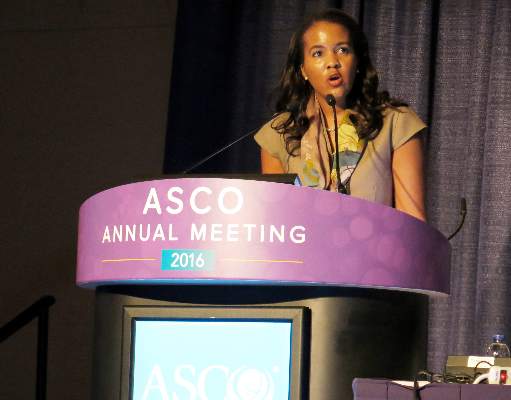
A malignancy of T-cells infected with HTLV-1, ATL has a poor prognosis with a median overall survival of less than 3 months in patients with relapsed/refractory disease. CCR4 is expressed in over 90% of ATL patients, and mogamulizumab is approved in Japan for ATL as well as for peripheral T-cell lymphoma and cutaneous T-cell lymphoma.
The 71 patients in the study were from the United States, the European Union and Latin America. The study is the largest randomized clinical trial of relapsed/refractory adult T-cell leukemia-lymphoma thus far conducted. The patients were randomized in 2:1 fashion 47:24 patients) to mogamulizumab, 1.0 mg/kg, given weekly for the first 4-week cycle and then biweekly, or to one of three investigator choice regimens [gemcitabine and oxaliplatin, DHAP (dexamethasone, high-dose cytarabine, and cisplatin), or pralatrexate]. Patients who were in the investigator-choice arm and whose disease progressed were permitted to cross over to mogamulizumab.
The primary endpoint was objective response rate based on modified Tsukasaki criteria and assessed by the treating investigator and in blinded fashion by independent review.
The objective response rate in the mogamulizumab-treated group was 23.4% (11 of 47) by independent review and 34% (16 of 47) by the treating investigator. In the investigator choice group, the overall response rate was 2 of 24 by independent review and 0 of 24 by the treating investigator.
The confirmed objective response rate after 1 month in the mogamulizumab-treated group was 10.6% by independent review and 14.9% by the treating investigator; there were no confirmed responses in the investigator-choice arm. Of 18 patients who crossed over to mogamulizumab, 3 responded. The median duration of response for mogamulizumab was 5 months; one patient had a complete response that lasted over 9 months and the survival data are not yet mature.
Mogamulizumab had few drug-related adverse events, primarily infusion reactions (46.8%), rash/drug eruption (25.5%) and infections (14.9%).
Dr. Phillips disclosed ties to Celgene, Genentech, and Takeda, as well as research funding from Kyowa Hakko Kirin, the sponsor of the study.
On Twitter @maryjodales
|
| Mary Jo Dales/Frontline Medical News Dr. Sonali M. Smith |
Mogamulizumab was superior to investigator’s choice therapy in the largest prospective randomized trial of this very rare disease. Approximately one-third of patients responded, while the response to investigator’s choice therapies was zero. The potential impact of mogamulizumab on T-cell regulation is intriguing. Could it have applications in other T-cell non-Hodgkin’s lymphomas and cutaneous T-cell lymphomas?
Dr. Sonali M. Smith is with the University of Chicago and was the invited discussant of the study.
|
|
| Mary Jo Dales/Frontline Medical News Dr. Sonali M. Smith |
Mogamulizumab was superior to investigator’s choice therapy in the largest prospective randomized trial of this very rare disease. Approximately one-third of patients responded, while the response to investigator’s choice therapies was zero. The potential impact of mogamulizumab on T-cell regulation is intriguing. Could it have applications in other T-cell non-Hodgkin’s lymphomas and cutaneous T-cell lymphomas?
Dr. Sonali M. Smith is with the University of Chicago and was the invited discussant of the study.
|
|
| Mary Jo Dales/Frontline Medical News Dr. Sonali M. Smith |
Mogamulizumab was superior to investigator’s choice therapy in the largest prospective randomized trial of this very rare disease. Approximately one-third of patients responded, while the response to investigator’s choice therapies was zero. The potential impact of mogamulizumab on T-cell regulation is intriguing. Could it have applications in other T-cell non-Hodgkin’s lymphomas and cutaneous T-cell lymphomas?
Dr. Sonali M. Smith is with the University of Chicago and was the invited discussant of the study.
CHICAGO – The anti-CCR4 monoclonal antibody mogamulizumab was superior to other investigator-selected therapies for the treatment of patients with relapsed/refractory adult T-cell leukemia-lymphoma (ATL), based on results from 71 patients in a prospective, multicenter, randomized study reported at the annual meeting of the American Society of Clinical Oncology.
Commonly used cytotoxic regimens provided limited therapeutic benefit for these patients, but mogamulizumab resulted in an objective response rate that supports its therapeutic potential in this setting, reported Dr. Adrienne Alise Phillips of New York Presbyterian/Weill Cornell Medical College, New York.
A malignancy of T-cells infected with HTLV-1, ATL has a poor prognosis with a median overall survival of less than 3 months in patients with relapsed/refractory disease. CCR4 is expressed in over 90% of ATL patients, and mogamulizumab is approved in Japan for ATL as well as for peripheral T-cell lymphoma and cutaneous T-cell lymphoma.
The 71 patients in the study were from the United States, the European Union and Latin America. The study is the largest randomized clinical trial of relapsed/refractory adult T-cell leukemia-lymphoma thus far conducted. The patients were randomized in 2:1 fashion 47:24 patients) to mogamulizumab, 1.0 mg/kg, given weekly for the first 4-week cycle and then biweekly, or to one of three investigator choice regimens [gemcitabine and oxaliplatin, DHAP (dexamethasone, high-dose cytarabine, and cisplatin), or pralatrexate]. Patients who were in the investigator-choice arm and whose disease progressed were permitted to cross over to mogamulizumab.
The primary endpoint was objective response rate based on modified Tsukasaki criteria and assessed by the treating investigator and in blinded fashion by independent review.
The objective response rate in the mogamulizumab-treated group was 23.4% (11 of 47) by independent review and 34% (16 of 47) by the treating investigator. In the investigator choice group, the overall response rate was 2 of 24 by independent review and 0 of 24 by the treating investigator.
The confirmed objective response rate after 1 month in the mogamulizumab-treated group was 10.6% by independent review and 14.9% by the treating investigator; there were no confirmed responses in the investigator-choice arm. Of 18 patients who crossed over to mogamulizumab, 3 responded. The median duration of response for mogamulizumab was 5 months; one patient had a complete response that lasted over 9 months and the survival data are not yet mature.
Mogamulizumab had few drug-related adverse events, primarily infusion reactions (46.8%), rash/drug eruption (25.5%) and infections (14.9%).
Dr. Phillips disclosed ties to Celgene, Genentech, and Takeda, as well as research funding from Kyowa Hakko Kirin, the sponsor of the study.
On Twitter @maryjodales
CHICAGO – The anti-CCR4 monoclonal antibody mogamulizumab was superior to other investigator-selected therapies for the treatment of patients with relapsed/refractory adult T-cell leukemia-lymphoma (ATL), based on results from 71 patients in a prospective, multicenter, randomized study reported at the annual meeting of the American Society of Clinical Oncology.
Commonly used cytotoxic regimens provided limited therapeutic benefit for these patients, but mogamulizumab resulted in an objective response rate that supports its therapeutic potential in this setting, reported Dr. Adrienne Alise Phillips of New York Presbyterian/Weill Cornell Medical College, New York.
A malignancy of T-cells infected with HTLV-1, ATL has a poor prognosis with a median overall survival of less than 3 months in patients with relapsed/refractory disease. CCR4 is expressed in over 90% of ATL patients, and mogamulizumab is approved in Japan for ATL as well as for peripheral T-cell lymphoma and cutaneous T-cell lymphoma.
The 71 patients in the study were from the United States, the European Union and Latin America. The study is the largest randomized clinical trial of relapsed/refractory adult T-cell leukemia-lymphoma thus far conducted. The patients were randomized in 2:1 fashion 47:24 patients) to mogamulizumab, 1.0 mg/kg, given weekly for the first 4-week cycle and then biweekly, or to one of three investigator choice regimens [gemcitabine and oxaliplatin, DHAP (dexamethasone, high-dose cytarabine, and cisplatin), or pralatrexate]. Patients who were in the investigator-choice arm and whose disease progressed were permitted to cross over to mogamulizumab.
The primary endpoint was objective response rate based on modified Tsukasaki criteria and assessed by the treating investigator and in blinded fashion by independent review.
The objective response rate in the mogamulizumab-treated group was 23.4% (11 of 47) by independent review and 34% (16 of 47) by the treating investigator. In the investigator choice group, the overall response rate was 2 of 24 by independent review and 0 of 24 by the treating investigator.
The confirmed objective response rate after 1 month in the mogamulizumab-treated group was 10.6% by independent review and 14.9% by the treating investigator; there were no confirmed responses in the investigator-choice arm. Of 18 patients who crossed over to mogamulizumab, 3 responded. The median duration of response for mogamulizumab was 5 months; one patient had a complete response that lasted over 9 months and the survival data are not yet mature.
Mogamulizumab had few drug-related adverse events, primarily infusion reactions (46.8%), rash/drug eruption (25.5%) and infections (14.9%).
Dr. Phillips disclosed ties to Celgene, Genentech, and Takeda, as well as research funding from Kyowa Hakko Kirin, the sponsor of the study.
On Twitter @maryjodales
AT THE 2016 ASCO ANNUAL MEETING
Key clinical point: The anti-CCR4 monoclonal antibody mogamulizumab was superior to other investigator-selected therapies for the treatment of patients with relapsed/refractory adult T-cell leukemia-lymphoma.
Major finding: The confirmed objective response rate after 1 month in the mogamulizumab-treated group was 10.6% by independent review and 14.9% by the treating investigator; there were no confirmed responses in the investigator-choice arm.
Data source: Prospective, multicenter, randomized study of 71 patients from the United States, the European Union, and Latin America.
Disclosures: Dr. Phillips disclosed ties to Celgene, Genentech, and Takeda, as well as research funding from Kyowa Hakko Kirin, the sponsor of the study.
Daratumumab yields “unprecedented” PFS benefit in refractory myeloma
CHICAGO – Adding daratumumab to the current two-drug standard of care for relapsed or refractory multiple myeloma dramatically improves outcomes, according to results of an interim analysis of the phase III CASTOR trial.
When added to bortezomib and dexamethasone, the anti-CD38 antibody, which has both direct and indirect antimyeloma activity, reduced the risk of progression or death by 61%, with little increase in toxicity, investigators reported in a plenary session and press briefing at the annual meeting of the American Society of Clinical Oncology.
This magnitude of benefit is “unprecedented in randomized studies that compare novel treatments for relapsed, refractory multiple myeloma,” contended lead investigator Dr. Antonio Palumbo, chief of the multiple myeloma unit at the University of Torino, Italy.
“We hope this [daratumumab combination for myeloma] will be the translation of R-CHOP for lymphoma,” he added, referring to the addition of rituximab to an established backbone regimen. “Daratumumab-DVd [bortezomib-dexamethasone] might be considered today a new standard of care for relapsed and refractory multiple myeloma.”
At present, daratumumab is approved by the Food and Drug Administration for use only after patients have received at least three other therapies, Dr. Palumbo said.
“This study will open the opportunity to have a combination approach after diagnosis, therefore, at first relapse,” he commented, while noting that sufficient evidence should be obtained before using a drug for a new indication. “It’s very important to move as fast as we can this combination into the early phases of disease, where there is the major impact, even from a cost-efficacy point of view.”
The CASTOR findings add to evidence suggesting that daratumumab is synergistic with other myeloma therapies, according to invited discussant Dr. Paul G. Richardson, the R.J. Corman Professor of Medicine, Harvard Medical School, Boston, and the clinical program leader and director of clinical research at the Jerome Lipper Multiple Myeloma Center, Dana-Farber Cancer Institute, Boston.
“What I think is particularly impressive is the effect on the one-prior-line-of-treatment stratum,” he said, where the reduction in risk of progression or death was 69% with the addition of daratumumab.
Findings from the POLLUX trial, soon to be presented at another meeting, show a similar benefit when daratumumab is added to lenalidomide and dexamethasone in this setting, yielding a 63% reduction in the risk of events, according to Dr. Richardson. Additionally, other anti-CD38 antibodies and immune checkpoint inhibitors are being studied in this disease.
“I would first and foremost emphasize that this is not a zero-sum game. We need all of these drugs and all of these combinations to fight this disease,” he maintained, reviewing the many options now available. “But truly, the advent of the monoclonal antibody platform in this setting has resulted in hazard ratios that are unprecedented,” he agreed.
In CASTOR, 498 patients were randomized evenly to eight cycles of bortezomib (Velcade) plus dexamethasone, either alone or with the addition of daratumumab (Darzalex) given concurrently and then as monotherapy after completion of those cycles.
In the interim analysis, conducted at a median follow-up of about 7 months, the trial met its primary endpoint of progression-free survival: the median time to an event had not been reached with the daratumumab three-drug therapy but was 7.2 months with the standard two-drug therapy (hazard ratio, 0.39; P less than .0001). The difference translated to a more than doubling of the 1-year rate of progression-free survival (60.7% vs. 26.9%).
Benefit was generally consistent across patient subgroups stratified by disease characteristics and previous treatments, although greater impact was seen among the subgroups having earlier-stage or less heavily pretreated disease.
On the basis of these interim findings, patients in the standard therapy arm were allowed to cross over to get daratumumab, according to Dr. Palumbo.
The triple regimen was also associated with a higher overall response rate (83% vs. 63%; P less than .0001) as well as deeper responses, with a doubling in rates of both very good partial response (VGPR) or better and complete response (CR) or better.
“More patients do achieve a profound cytoreduction,” Dr. Palumbo said. “The remission duration is almost [tripled] in patients with a CR or VGPR versus patients with a minimal response or partial response.”
Data for overall survival are not yet mature, but at the time of the analysis, there was also a trend toward fewer deaths with daratumumab than without it (hazard ratio, 0.77).
“Daratumumab did not significantly increase any toxicity that was already present with the combination of bortezomib and dexamethasone,” Dr. Palumbo reported.
The three-drug regimen yielded somewhat higher rates of treatment-emergent thrombocytopenia (59% vs. 44%) and sensory peripheral neuropathy (47% vs. 38%). However, “this was mainly due to the fact that the experimental arm was longer exposed to bortezomib in comparison to the control arm that had a higher proportion of early progressions,” he explained. Additionally, the increase in thrombocytopenia did not translate into increased bleeding.
Forty-five percent of patients in the daratumumab arm had an infusion-related reaction, but nearly all reactions were limited to the first infusion.
The rate of discontinuation because of treatment-emergent adverse events was 7% with daratumumab and 9% without it.
Dr. Palumbo disclosed that he has a consulting or advisory role with and receives honoraria and research funding (institutional) from Genmab, Janssen-Cilag, and Takeda. The trial was sponsored by Janssen Research & Development.
CHICAGO – Adding daratumumab to the current two-drug standard of care for relapsed or refractory multiple myeloma dramatically improves outcomes, according to results of an interim analysis of the phase III CASTOR trial.
When added to bortezomib and dexamethasone, the anti-CD38 antibody, which has both direct and indirect antimyeloma activity, reduced the risk of progression or death by 61%, with little increase in toxicity, investigators reported in a plenary session and press briefing at the annual meeting of the American Society of Clinical Oncology.
This magnitude of benefit is “unprecedented in randomized studies that compare novel treatments for relapsed, refractory multiple myeloma,” contended lead investigator Dr. Antonio Palumbo, chief of the multiple myeloma unit at the University of Torino, Italy.
“We hope this [daratumumab combination for myeloma] will be the translation of R-CHOP for lymphoma,” he added, referring to the addition of rituximab to an established backbone regimen. “Daratumumab-DVd [bortezomib-dexamethasone] might be considered today a new standard of care for relapsed and refractory multiple myeloma.”
At present, daratumumab is approved by the Food and Drug Administration for use only after patients have received at least three other therapies, Dr. Palumbo said.
“This study will open the opportunity to have a combination approach after diagnosis, therefore, at first relapse,” he commented, while noting that sufficient evidence should be obtained before using a drug for a new indication. “It’s very important to move as fast as we can this combination into the early phases of disease, where there is the major impact, even from a cost-efficacy point of view.”
The CASTOR findings add to evidence suggesting that daratumumab is synergistic with other myeloma therapies, according to invited discussant Dr. Paul G. Richardson, the R.J. Corman Professor of Medicine, Harvard Medical School, Boston, and the clinical program leader and director of clinical research at the Jerome Lipper Multiple Myeloma Center, Dana-Farber Cancer Institute, Boston.
“What I think is particularly impressive is the effect on the one-prior-line-of-treatment stratum,” he said, where the reduction in risk of progression or death was 69% with the addition of daratumumab.
Findings from the POLLUX trial, soon to be presented at another meeting, show a similar benefit when daratumumab is added to lenalidomide and dexamethasone in this setting, yielding a 63% reduction in the risk of events, according to Dr. Richardson. Additionally, other anti-CD38 antibodies and immune checkpoint inhibitors are being studied in this disease.
“I would first and foremost emphasize that this is not a zero-sum game. We need all of these drugs and all of these combinations to fight this disease,” he maintained, reviewing the many options now available. “But truly, the advent of the monoclonal antibody platform in this setting has resulted in hazard ratios that are unprecedented,” he agreed.
In CASTOR, 498 patients were randomized evenly to eight cycles of bortezomib (Velcade) plus dexamethasone, either alone or with the addition of daratumumab (Darzalex) given concurrently and then as monotherapy after completion of those cycles.
In the interim analysis, conducted at a median follow-up of about 7 months, the trial met its primary endpoint of progression-free survival: the median time to an event had not been reached with the daratumumab three-drug therapy but was 7.2 months with the standard two-drug therapy (hazard ratio, 0.39; P less than .0001). The difference translated to a more than doubling of the 1-year rate of progression-free survival (60.7% vs. 26.9%).
Benefit was generally consistent across patient subgroups stratified by disease characteristics and previous treatments, although greater impact was seen among the subgroups having earlier-stage or less heavily pretreated disease.
On the basis of these interim findings, patients in the standard therapy arm were allowed to cross over to get daratumumab, according to Dr. Palumbo.
The triple regimen was also associated with a higher overall response rate (83% vs. 63%; P less than .0001) as well as deeper responses, with a doubling in rates of both very good partial response (VGPR) or better and complete response (CR) or better.
“More patients do achieve a profound cytoreduction,” Dr. Palumbo said. “The remission duration is almost [tripled] in patients with a CR or VGPR versus patients with a minimal response or partial response.”
Data for overall survival are not yet mature, but at the time of the analysis, there was also a trend toward fewer deaths with daratumumab than without it (hazard ratio, 0.77).
“Daratumumab did not significantly increase any toxicity that was already present with the combination of bortezomib and dexamethasone,” Dr. Palumbo reported.
The three-drug regimen yielded somewhat higher rates of treatment-emergent thrombocytopenia (59% vs. 44%) and sensory peripheral neuropathy (47% vs. 38%). However, “this was mainly due to the fact that the experimental arm was longer exposed to bortezomib in comparison to the control arm that had a higher proportion of early progressions,” he explained. Additionally, the increase in thrombocytopenia did not translate into increased bleeding.
Forty-five percent of patients in the daratumumab arm had an infusion-related reaction, but nearly all reactions were limited to the first infusion.
The rate of discontinuation because of treatment-emergent adverse events was 7% with daratumumab and 9% without it.
Dr. Palumbo disclosed that he has a consulting or advisory role with and receives honoraria and research funding (institutional) from Genmab, Janssen-Cilag, and Takeda. The trial was sponsored by Janssen Research & Development.
CHICAGO – Adding daratumumab to the current two-drug standard of care for relapsed or refractory multiple myeloma dramatically improves outcomes, according to results of an interim analysis of the phase III CASTOR trial.
When added to bortezomib and dexamethasone, the anti-CD38 antibody, which has both direct and indirect antimyeloma activity, reduced the risk of progression or death by 61%, with little increase in toxicity, investigators reported in a plenary session and press briefing at the annual meeting of the American Society of Clinical Oncology.
This magnitude of benefit is “unprecedented in randomized studies that compare novel treatments for relapsed, refractory multiple myeloma,” contended lead investigator Dr. Antonio Palumbo, chief of the multiple myeloma unit at the University of Torino, Italy.
“We hope this [daratumumab combination for myeloma] will be the translation of R-CHOP for lymphoma,” he added, referring to the addition of rituximab to an established backbone regimen. “Daratumumab-DVd [bortezomib-dexamethasone] might be considered today a new standard of care for relapsed and refractory multiple myeloma.”
At present, daratumumab is approved by the Food and Drug Administration for use only after patients have received at least three other therapies, Dr. Palumbo said.
“This study will open the opportunity to have a combination approach after diagnosis, therefore, at first relapse,” he commented, while noting that sufficient evidence should be obtained before using a drug for a new indication. “It’s very important to move as fast as we can this combination into the early phases of disease, where there is the major impact, even from a cost-efficacy point of view.”
The CASTOR findings add to evidence suggesting that daratumumab is synergistic with other myeloma therapies, according to invited discussant Dr. Paul G. Richardson, the R.J. Corman Professor of Medicine, Harvard Medical School, Boston, and the clinical program leader and director of clinical research at the Jerome Lipper Multiple Myeloma Center, Dana-Farber Cancer Institute, Boston.
“What I think is particularly impressive is the effect on the one-prior-line-of-treatment stratum,” he said, where the reduction in risk of progression or death was 69% with the addition of daratumumab.
Findings from the POLLUX trial, soon to be presented at another meeting, show a similar benefit when daratumumab is added to lenalidomide and dexamethasone in this setting, yielding a 63% reduction in the risk of events, according to Dr. Richardson. Additionally, other anti-CD38 antibodies and immune checkpoint inhibitors are being studied in this disease.
“I would first and foremost emphasize that this is not a zero-sum game. We need all of these drugs and all of these combinations to fight this disease,” he maintained, reviewing the many options now available. “But truly, the advent of the monoclonal antibody platform in this setting has resulted in hazard ratios that are unprecedented,” he agreed.
In CASTOR, 498 patients were randomized evenly to eight cycles of bortezomib (Velcade) plus dexamethasone, either alone or with the addition of daratumumab (Darzalex) given concurrently and then as monotherapy after completion of those cycles.
In the interim analysis, conducted at a median follow-up of about 7 months, the trial met its primary endpoint of progression-free survival: the median time to an event had not been reached with the daratumumab three-drug therapy but was 7.2 months with the standard two-drug therapy (hazard ratio, 0.39; P less than .0001). The difference translated to a more than doubling of the 1-year rate of progression-free survival (60.7% vs. 26.9%).
Benefit was generally consistent across patient subgroups stratified by disease characteristics and previous treatments, although greater impact was seen among the subgroups having earlier-stage or less heavily pretreated disease.
On the basis of these interim findings, patients in the standard therapy arm were allowed to cross over to get daratumumab, according to Dr. Palumbo.
The triple regimen was also associated with a higher overall response rate (83% vs. 63%; P less than .0001) as well as deeper responses, with a doubling in rates of both very good partial response (VGPR) or better and complete response (CR) or better.
“More patients do achieve a profound cytoreduction,” Dr. Palumbo said. “The remission duration is almost [tripled] in patients with a CR or VGPR versus patients with a minimal response or partial response.”
Data for overall survival are not yet mature, but at the time of the analysis, there was also a trend toward fewer deaths with daratumumab than without it (hazard ratio, 0.77).
“Daratumumab did not significantly increase any toxicity that was already present with the combination of bortezomib and dexamethasone,” Dr. Palumbo reported.
The three-drug regimen yielded somewhat higher rates of treatment-emergent thrombocytopenia (59% vs. 44%) and sensory peripheral neuropathy (47% vs. 38%). However, “this was mainly due to the fact that the experimental arm was longer exposed to bortezomib in comparison to the control arm that had a higher proportion of early progressions,” he explained. Additionally, the increase in thrombocytopenia did not translate into increased bleeding.
Forty-five percent of patients in the daratumumab arm had an infusion-related reaction, but nearly all reactions were limited to the first infusion.
The rate of discontinuation because of treatment-emergent adverse events was 7% with daratumumab and 9% without it.
Dr. Palumbo disclosed that he has a consulting or advisory role with and receives honoraria and research funding (institutional) from Genmab, Janssen-Cilag, and Takeda. The trial was sponsored by Janssen Research & Development.
AT THE 2016 ASCO ANNUAL MEETING
Key clinical point: Daratumumab improves outcomes when added to the current standard of care in relapsed or refractory myeloma.
Major finding: Adding daratumumab to bortezomib and dexamethasone reduced the risk of progression or death by 61%.
Data source: An open-label randomized phase III trial among 498 patients with relapsed or refractory multiple myeloma.
Disclosures: Dr. Palumbo disclosed that he has a consulting or advisory role with and receives honoraria and research funding (institutional) from Genmab, Janssen-Cilag, and Takeda. The trial was sponsored by Janssen Research & Development.