User login
Investigators report new risk loci for CLL
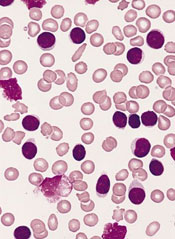
Investigators say they have identified 9 new risk loci for chronic lymphocytic leukemia (CLL).
The team says the research, published in Nature Communications, provides additional evidence for genetic susceptibility to CLL and sheds new light on the biological basis of CLL development.
They also believe their findings could aid the development of new drugs for CLL or help in selecting existing therapies for CLL
patients.
“We knew people were more likely to develop chronic lymphocytic leukemia if someone in their family had suffered from the disease, but our new research takes a big step towards explaining the underlying genetics,” said study author Richard Houlston, MD, PhD, of The Institute of Cancer Research in London, UK.
“CLL is essentially a disease of the immune system, and it’s fascinating that so many of the new genetic variants we have uncovered seem to directly affect the behavior of white blood cells and their ability to fight disease. Understanding the genetics of CLL can point us towards new treatments for the disease and help us to use existing targeted drugs more effectively.”
For this study, Dr Houlston and his colleagues analyzed data from 8 studies involving a total of 6200 CLL patients and 17,598 controls.
From this, the team identified 9 CLL risk loci:
- 1p36.11 (rs34676223, P=5.04 × 10⁻¹³)
- 1q42.13 (rs41271473, P=1.06 × 10⁻¹⁰)
- 4q24 (rs71597109, P=1.37 × 10⁻¹⁰)
- 4q35.1 (rs57214277, P=3.69 × 10⁻⁸)
- 6p21.31 (rs3800461, P=1.97 × 10⁻⁸)
- 11q23.2 (rs61904987, P=2.64 × 10⁻¹¹)
- 18q21.1 (rs1036935, P=3.27 × 10⁻⁸)
- 19p13.3 (rs7254272, P=4.67 × 10⁻⁸)
- 22q13.33 (rs140522, P=2.70 × 10⁻⁹).
The investigators noted that the 4q24 association marked by rs71597109 maps to intron 1 of the gene encoding BANK1 (B-cell scaffold protein with ankyrin repeats 1). BANK1 is only ever activated in B cells and is linked to the autoimmune disease lupus.
The team also pointed out that the 19p13.3 association marked by rs7254272 maps 2.5 kb 5′ to ZBTB7A (zinc finger and BTB domain-containing protein 7a), which is a master regulator of B versus T lymphoid fate. So errors in ZBTB7A could lead to too many B cells in the bloodstream and bone marrow.
And rs140522 maps to 22q13.33, which has been linked to the development of multiple sclerosis. The investigators noted that this region of linkage disequilibrium contains 4 genes. One of them, NCAPH2 (non-SMC condensin II complex subunit H2), is differentially expressed in CLL and normal B cells.
“This fascinating study makes a link between genetic variants in the immune system and the development of leukemia and implicates regions of DNA which are also involved in autoimmune diseases,” said Paul Workman, PhD, chief executive and president of The Institute of Cancer Research, who was not involved in this research.
“The findings could point us towards new ways of treating leukemia or better ways of using existing treatments—potentially including immunotherapies.” 
Investigators say they have identified 9 new risk loci for chronic lymphocytic leukemia (CLL).
The team says the research, published in Nature Communications, provides additional evidence for genetic susceptibility to CLL and sheds new light on the biological basis of CLL development.
They also believe their findings could aid the development of new drugs for CLL or help in selecting existing therapies for CLL
patients.
“We knew people were more likely to develop chronic lymphocytic leukemia if someone in their family had suffered from the disease, but our new research takes a big step towards explaining the underlying genetics,” said study author Richard Houlston, MD, PhD, of The Institute of Cancer Research in London, UK.
“CLL is essentially a disease of the immune system, and it’s fascinating that so many of the new genetic variants we have uncovered seem to directly affect the behavior of white blood cells and their ability to fight disease. Understanding the genetics of CLL can point us towards new treatments for the disease and help us to use existing targeted drugs more effectively.”
For this study, Dr Houlston and his colleagues analyzed data from 8 studies involving a total of 6200 CLL patients and 17,598 controls.
From this, the team identified 9 CLL risk loci:
- 1p36.11 (rs34676223, P=5.04 × 10⁻¹³)
- 1q42.13 (rs41271473, P=1.06 × 10⁻¹⁰)
- 4q24 (rs71597109, P=1.37 × 10⁻¹⁰)
- 4q35.1 (rs57214277, P=3.69 × 10⁻⁸)
- 6p21.31 (rs3800461, P=1.97 × 10⁻⁸)
- 11q23.2 (rs61904987, P=2.64 × 10⁻¹¹)
- 18q21.1 (rs1036935, P=3.27 × 10⁻⁸)
- 19p13.3 (rs7254272, P=4.67 × 10⁻⁸)
- 22q13.33 (rs140522, P=2.70 × 10⁻⁹).
The investigators noted that the 4q24 association marked by rs71597109 maps to intron 1 of the gene encoding BANK1 (B-cell scaffold protein with ankyrin repeats 1). BANK1 is only ever activated in B cells and is linked to the autoimmune disease lupus.
The team also pointed out that the 19p13.3 association marked by rs7254272 maps 2.5 kb 5′ to ZBTB7A (zinc finger and BTB domain-containing protein 7a), which is a master regulator of B versus T lymphoid fate. So errors in ZBTB7A could lead to too many B cells in the bloodstream and bone marrow.
And rs140522 maps to 22q13.33, which has been linked to the development of multiple sclerosis. The investigators noted that this region of linkage disequilibrium contains 4 genes. One of them, NCAPH2 (non-SMC condensin II complex subunit H2), is differentially expressed in CLL and normal B cells.
“This fascinating study makes a link between genetic variants in the immune system and the development of leukemia and implicates regions of DNA which are also involved in autoimmune diseases,” said Paul Workman, PhD, chief executive and president of The Institute of Cancer Research, who was not involved in this research.
“The findings could point us towards new ways of treating leukemia or better ways of using existing treatments—potentially including immunotherapies.”
Investigators say they have identified 9 new risk loci for chronic lymphocytic leukemia (CLL).
The team says the research, published in Nature Communications, provides additional evidence for genetic susceptibility to CLL and sheds new light on the biological basis of CLL development.
They also believe their findings could aid the development of new drugs for CLL or help in selecting existing therapies for CLL
patients.
“We knew people were more likely to develop chronic lymphocytic leukemia if someone in their family had suffered from the disease, but our new research takes a big step towards explaining the underlying genetics,” said study author Richard Houlston, MD, PhD, of The Institute of Cancer Research in London, UK.
“CLL is essentially a disease of the immune system, and it’s fascinating that so many of the new genetic variants we have uncovered seem to directly affect the behavior of white blood cells and their ability to fight disease. Understanding the genetics of CLL can point us towards new treatments for the disease and help us to use existing targeted drugs more effectively.”
For this study, Dr Houlston and his colleagues analyzed data from 8 studies involving a total of 6200 CLL patients and 17,598 controls.
From this, the team identified 9 CLL risk loci:
- 1p36.11 (rs34676223, P=5.04 × 10⁻¹³)
- 1q42.13 (rs41271473, P=1.06 × 10⁻¹⁰)
- 4q24 (rs71597109, P=1.37 × 10⁻¹⁰)
- 4q35.1 (rs57214277, P=3.69 × 10⁻⁸)
- 6p21.31 (rs3800461, P=1.97 × 10⁻⁸)
- 11q23.2 (rs61904987, P=2.64 × 10⁻¹¹)
- 18q21.1 (rs1036935, P=3.27 × 10⁻⁸)
- 19p13.3 (rs7254272, P=4.67 × 10⁻⁸)
- 22q13.33 (rs140522, P=2.70 × 10⁻⁹).
The investigators noted that the 4q24 association marked by rs71597109 maps to intron 1 of the gene encoding BANK1 (B-cell scaffold protein with ankyrin repeats 1). BANK1 is only ever activated in B cells and is linked to the autoimmune disease lupus.
The team also pointed out that the 19p13.3 association marked by rs7254272 maps 2.5 kb 5′ to ZBTB7A (zinc finger and BTB domain-containing protein 7a), which is a master regulator of B versus T lymphoid fate. So errors in ZBTB7A could lead to too many B cells in the bloodstream and bone marrow.
And rs140522 maps to 22q13.33, which has been linked to the development of multiple sclerosis. The investigators noted that this region of linkage disequilibrium contains 4 genes. One of them, NCAPH2 (non-SMC condensin II complex subunit H2), is differentially expressed in CLL and normal B cells.
“This fascinating study makes a link between genetic variants in the immune system and the development of leukemia and implicates regions of DNA which are also involved in autoimmune diseases,” said Paul Workman, PhD, chief executive and president of The Institute of Cancer Research, who was not involved in this research.
“The findings could point us towards new ways of treating leukemia or better ways of using existing treatments—potentially including immunotherapies.”
Ibrutinib, palbociclib yield durable complete responses in pretreated mantle cell lymphoma
SAN DIEGO – A “mechanism-based” combination of ibrutinib and palbociclib was reasonably well tolerated and induced complete responses in 44% of patients with previously treated mantle cell lymphoma, Peter Martin, MD, reported at the annual meeting of the American Society of Hematology.
Fully 67% of patients remained alive and progression-free after a median of 11 months of follow-up, and no responders progressed during this phase I trial, added Dr. Martin of Weill Cornell Medical College in New York. These rates “appear better than those reported in studies of single-agent ibrutinib, although the number of patients was very small,” he acknowledged. Most patients tolerated therapy, although 25% developed dose-limiting toxicities or stopped treatment because of adverse effects. Based on these results, the investigators are studying biomarkers for resistance and are planning a phase II, multicenter trial to evaluate time to progression.
Single-agent ibrutinib (Imbruvica) has shown promise in mantle cell lymphoma, but treatment failure affects about half of patients within 1 year, Dr. Martin noted. The CDK4/6 inhibitor palbociclib (Ibrance) induces prolonged arrest early in the G1 phase of the cell cycle, which overcame ibrutinib resistance in mantle cell lymphoma cell lines in a prior study (Cancer Discov. 2014;4[9]:1022-35).
To test the maximum tolerated dose of combination therapy, Dr. Martin and his associates enrolled 20 adults with previously treated mantle cell lymphoma who were naive to ibrutinib and CD4/6 inhibitors. The patients had received a median of one and up to five prior lines of therapy, and six (30%) were refractory to their most recent therapy. They received ibrutinib daily and palbociclib on the first 21 days of each 28-day treatment cycle. Dosing began at one of five levels, ranging from 280 mg ibrutinib/75 mg palbociclib to 560 mg ibrutinib/125 mg palbociclib. Doses were escalated based on a standard phase I 3+3 design.
Among 18 patients evaluated, 12 (67%) responded to treatment, and 8 (44%) had a complete response. Median time to complete response was three cycles. The most common grade 1-2 adverse events were diarrhea, fatigue, rash, and bruising. Three patients (15%) developed dose-limiting toxicities. These included one case of grade 4 thrombocytopenia at 420 mg ibrutinib/100 mg palbociclib and two cases of grade 3 rash at 560 mg ibrutinib/125 mg palbociclib. The grade 3 rashes led to dose reductions, and six patients needed dose interruptions. Also, four patients stopped treatment because of disease progression, two did so because of elevated liver enzymes or prolonged cytopenia, and one did so to undergo allogeneic stem cell transplantation.
The National Cancer Institute sponsored the study. Dr. Martin disclosed ties to Janssen, which makes ibrutinib, and to Celgene, Gilead, Novartis, Acerta, and Teva. Senior author John P. Leonard, MD, and one of 10 coinvestigators disclosed ties to several pharmaceutical companies.
SAN DIEGO – A “mechanism-based” combination of ibrutinib and palbociclib was reasonably well tolerated and induced complete responses in 44% of patients with previously treated mantle cell lymphoma, Peter Martin, MD, reported at the annual meeting of the American Society of Hematology.
Fully 67% of patients remained alive and progression-free after a median of 11 months of follow-up, and no responders progressed during this phase I trial, added Dr. Martin of Weill Cornell Medical College in New York. These rates “appear better than those reported in studies of single-agent ibrutinib, although the number of patients was very small,” he acknowledged. Most patients tolerated therapy, although 25% developed dose-limiting toxicities or stopped treatment because of adverse effects. Based on these results, the investigators are studying biomarkers for resistance and are planning a phase II, multicenter trial to evaluate time to progression.
Single-agent ibrutinib (Imbruvica) has shown promise in mantle cell lymphoma, but treatment failure affects about half of patients within 1 year, Dr. Martin noted. The CDK4/6 inhibitor palbociclib (Ibrance) induces prolonged arrest early in the G1 phase of the cell cycle, which overcame ibrutinib resistance in mantle cell lymphoma cell lines in a prior study (Cancer Discov. 2014;4[9]:1022-35).
To test the maximum tolerated dose of combination therapy, Dr. Martin and his associates enrolled 20 adults with previously treated mantle cell lymphoma who were naive to ibrutinib and CD4/6 inhibitors. The patients had received a median of one and up to five prior lines of therapy, and six (30%) were refractory to their most recent therapy. They received ibrutinib daily and palbociclib on the first 21 days of each 28-day treatment cycle. Dosing began at one of five levels, ranging from 280 mg ibrutinib/75 mg palbociclib to 560 mg ibrutinib/125 mg palbociclib. Doses were escalated based on a standard phase I 3+3 design.
Among 18 patients evaluated, 12 (67%) responded to treatment, and 8 (44%) had a complete response. Median time to complete response was three cycles. The most common grade 1-2 adverse events were diarrhea, fatigue, rash, and bruising. Three patients (15%) developed dose-limiting toxicities. These included one case of grade 4 thrombocytopenia at 420 mg ibrutinib/100 mg palbociclib and two cases of grade 3 rash at 560 mg ibrutinib/125 mg palbociclib. The grade 3 rashes led to dose reductions, and six patients needed dose interruptions. Also, four patients stopped treatment because of disease progression, two did so because of elevated liver enzymes or prolonged cytopenia, and one did so to undergo allogeneic stem cell transplantation.
The National Cancer Institute sponsored the study. Dr. Martin disclosed ties to Janssen, which makes ibrutinib, and to Celgene, Gilead, Novartis, Acerta, and Teva. Senior author John P. Leonard, MD, and one of 10 coinvestigators disclosed ties to several pharmaceutical companies.
SAN DIEGO – A “mechanism-based” combination of ibrutinib and palbociclib was reasonably well tolerated and induced complete responses in 44% of patients with previously treated mantle cell lymphoma, Peter Martin, MD, reported at the annual meeting of the American Society of Hematology.
Fully 67% of patients remained alive and progression-free after a median of 11 months of follow-up, and no responders progressed during this phase I trial, added Dr. Martin of Weill Cornell Medical College in New York. These rates “appear better than those reported in studies of single-agent ibrutinib, although the number of patients was very small,” he acknowledged. Most patients tolerated therapy, although 25% developed dose-limiting toxicities or stopped treatment because of adverse effects. Based on these results, the investigators are studying biomarkers for resistance and are planning a phase II, multicenter trial to evaluate time to progression.
Single-agent ibrutinib (Imbruvica) has shown promise in mantle cell lymphoma, but treatment failure affects about half of patients within 1 year, Dr. Martin noted. The CDK4/6 inhibitor palbociclib (Ibrance) induces prolonged arrest early in the G1 phase of the cell cycle, which overcame ibrutinib resistance in mantle cell lymphoma cell lines in a prior study (Cancer Discov. 2014;4[9]:1022-35).
To test the maximum tolerated dose of combination therapy, Dr. Martin and his associates enrolled 20 adults with previously treated mantle cell lymphoma who were naive to ibrutinib and CD4/6 inhibitors. The patients had received a median of one and up to five prior lines of therapy, and six (30%) were refractory to their most recent therapy. They received ibrutinib daily and palbociclib on the first 21 days of each 28-day treatment cycle. Dosing began at one of five levels, ranging from 280 mg ibrutinib/75 mg palbociclib to 560 mg ibrutinib/125 mg palbociclib. Doses were escalated based on a standard phase I 3+3 design.
Among 18 patients evaluated, 12 (67%) responded to treatment, and 8 (44%) had a complete response. Median time to complete response was three cycles. The most common grade 1-2 adverse events were diarrhea, fatigue, rash, and bruising. Three patients (15%) developed dose-limiting toxicities. These included one case of grade 4 thrombocytopenia at 420 mg ibrutinib/100 mg palbociclib and two cases of grade 3 rash at 560 mg ibrutinib/125 mg palbociclib. The grade 3 rashes led to dose reductions, and six patients needed dose interruptions. Also, four patients stopped treatment because of disease progression, two did so because of elevated liver enzymes or prolonged cytopenia, and one did so to undergo allogeneic stem cell transplantation.
The National Cancer Institute sponsored the study. Dr. Martin disclosed ties to Janssen, which makes ibrutinib, and to Celgene, Gilead, Novartis, Acerta, and Teva. Senior author John P. Leonard, MD, and one of 10 coinvestigators disclosed ties to several pharmaceutical companies.
AT ASH 2016
Key clinical point: Combination therapy with ibrutinib and palbociclib was generally well tolerated and induced complete responses in patients with pretreated mantle cell lymphoma.
Major finding: A total of 44% of patients had complete responses, and 67% remained alive and progression-free after a median of 11 months of follow-up. Severe rashes occurred at the highest dose studied (420 mg ibrutinib/100 mg palbociclib).
Data source: A phase I trial of 20 patients with previously treated mantle cell lymphoma.
Disclosures: The National Cancer Institute sponsored the study. Dr. Martin disclosed ties to Janssen, which makes ibrutinib, and to Celgene, Gilead, Novartis, Acerta, and Teva. Senior author John P. Leonard, MD, and one of 10 coinvestigators disclosed ties to several pharmaceutical companies.
Obinutuzumab approved to treat FL in Canada
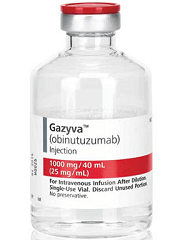
Health Canada has approved the use of obinutuzumab (Gazyva®), an anti-CD20 monoclonal antibody, in patients with follicular lymphoma (FL).
The approval means obinutuzumab can be given, first in combination with bendamustine and then alone as maintenance therapy, to FL patients who relapsed after, or are refractory to, a rituximab-containing regimen.
Obinutuzumab is also approved in Canada for use in combination with chlorambucil to treat patients with previously untreated chronic lymphocytic leukemia.
Obinutuzumab is a product of Roche.
Health Canada’s approval of obinutuzumab in FL is based on results from the phase 3 GADOLIN trial.
The study included 413 patients with rituximab-refractory non-Hodgkin lymphoma, including 321 patients with FL, 46 with marginal zone lymphoma, and 28 with small lymphocytic lymphoma.
The patients were randomized to receive bendamustine alone (control arm) or a combination of bendamustine and obinutuzumab followed by obinutuzumab maintenance (every 2 months for 2 years or until progression).
The primary endpoint of the study was progression-free survival (PFS), as assessed by an independent review committee (IRC). The secondary endpoints were PFS assessed by investigator review, best overall response, complete response (CR), partial response (PR), duration of response, overall survival, and safety profile.
Among patients with FL, the obinutuzumab regimen improved PFS compared to bendamustine alone, as assessed by the IRC (hazard ratio [HR]=0.48, P<0.0001). The median PFS was not reached in patients receiving the obinutuzumab regimen but was 13.8 months in those receiving bendamustine alone.
Investigator-assessed PFS was consistent with IRC-assessed PFS. Investigators said the median PFS with the obinutuzumab regimen was more than double that with bendamustine alone—29.2 months vs 13.7 months (HR=0.48, P<0.0001).
The best overall response for patients receiving the obinutuzumab regimen was 78.7% (15.5% CR, 63.2% PR), compared to 74.7% (18.7% CR, 56% PR) for those receiving bendamustine alone, as assessed by the IRC.
The median duration of response was not reached for patients receiving the obinutuzumab regimen and was 11.6 months for those receiving bendamustine alone.
At last follow-up, the median overall survival had not been reached in either study arm.
The most common grade 3/4 adverse events observed in patients receiving the obinutuzumab regimen were neutropenia (33%), infusion reactions (11%), and thrombocytopenia (10%).
The most common adverse events of any grade were infusion reactions (69%), neutropenia (35%), nausea (54%), fatigue (39%), cough (26%), diarrhea (27%), constipation (19%), fever (18%), thrombocytopenia (15%), vomiting (22%), upper respiratory tract infection (13%), decreased appetite (18%), joint or muscle pain (12%), sinusitis (12%), anemia (12%), general weakness (11%), and urinary tract infection (10%).
Health Canada has approved the use of obinutuzumab (Gazyva®), an anti-CD20 monoclonal antibody, in patients with follicular lymphoma (FL).
The approval means obinutuzumab can be given, first in combination with bendamustine and then alone as maintenance therapy, to FL patients who relapsed after, or are refractory to, a rituximab-containing regimen.
Obinutuzumab is also approved in Canada for use in combination with chlorambucil to treat patients with previously untreated chronic lymphocytic leukemia.
Obinutuzumab is a product of Roche.
Health Canada’s approval of obinutuzumab in FL is based on results from the phase 3 GADOLIN trial.
The study included 413 patients with rituximab-refractory non-Hodgkin lymphoma, including 321 patients with FL, 46 with marginal zone lymphoma, and 28 with small lymphocytic lymphoma.
The patients were randomized to receive bendamustine alone (control arm) or a combination of bendamustine and obinutuzumab followed by obinutuzumab maintenance (every 2 months for 2 years or until progression).
The primary endpoint of the study was progression-free survival (PFS), as assessed by an independent review committee (IRC). The secondary endpoints were PFS assessed by investigator review, best overall response, complete response (CR), partial response (PR), duration of response, overall survival, and safety profile.
Among patients with FL, the obinutuzumab regimen improved PFS compared to bendamustine alone, as assessed by the IRC (hazard ratio [HR]=0.48, P<0.0001). The median PFS was not reached in patients receiving the obinutuzumab regimen but was 13.8 months in those receiving bendamustine alone.
Investigator-assessed PFS was consistent with IRC-assessed PFS. Investigators said the median PFS with the obinutuzumab regimen was more than double that with bendamustine alone—29.2 months vs 13.7 months (HR=0.48, P<0.0001).
The best overall response for patients receiving the obinutuzumab regimen was 78.7% (15.5% CR, 63.2% PR), compared to 74.7% (18.7% CR, 56% PR) for those receiving bendamustine alone, as assessed by the IRC.
The median duration of response was not reached for patients receiving the obinutuzumab regimen and was 11.6 months for those receiving bendamustine alone.
At last follow-up, the median overall survival had not been reached in either study arm.
The most common grade 3/4 adverse events observed in patients receiving the obinutuzumab regimen were neutropenia (33%), infusion reactions (11%), and thrombocytopenia (10%).
The most common adverse events of any grade were infusion reactions (69%), neutropenia (35%), nausea (54%), fatigue (39%), cough (26%), diarrhea (27%), constipation (19%), fever (18%), thrombocytopenia (15%), vomiting (22%), upper respiratory tract infection (13%), decreased appetite (18%), joint or muscle pain (12%), sinusitis (12%), anemia (12%), general weakness (11%), and urinary tract infection (10%).
Health Canada has approved the use of obinutuzumab (Gazyva®), an anti-CD20 monoclonal antibody, in patients with follicular lymphoma (FL).
The approval means obinutuzumab can be given, first in combination with bendamustine and then alone as maintenance therapy, to FL patients who relapsed after, or are refractory to, a rituximab-containing regimen.
Obinutuzumab is also approved in Canada for use in combination with chlorambucil to treat patients with previously untreated chronic lymphocytic leukemia.
Obinutuzumab is a product of Roche.
Health Canada’s approval of obinutuzumab in FL is based on results from the phase 3 GADOLIN trial.
The study included 413 patients with rituximab-refractory non-Hodgkin lymphoma, including 321 patients with FL, 46 with marginal zone lymphoma, and 28 with small lymphocytic lymphoma.
The patients were randomized to receive bendamustine alone (control arm) or a combination of bendamustine and obinutuzumab followed by obinutuzumab maintenance (every 2 months for 2 years or until progression).
The primary endpoint of the study was progression-free survival (PFS), as assessed by an independent review committee (IRC). The secondary endpoints were PFS assessed by investigator review, best overall response, complete response (CR), partial response (PR), duration of response, overall survival, and safety profile.
Among patients with FL, the obinutuzumab regimen improved PFS compared to bendamustine alone, as assessed by the IRC (hazard ratio [HR]=0.48, P<0.0001). The median PFS was not reached in patients receiving the obinutuzumab regimen but was 13.8 months in those receiving bendamustine alone.
Investigator-assessed PFS was consistent with IRC-assessed PFS. Investigators said the median PFS with the obinutuzumab regimen was more than double that with bendamustine alone—29.2 months vs 13.7 months (HR=0.48, P<0.0001).
The best overall response for patients receiving the obinutuzumab regimen was 78.7% (15.5% CR, 63.2% PR), compared to 74.7% (18.7% CR, 56% PR) for those receiving bendamustine alone, as assessed by the IRC.
The median duration of response was not reached for patients receiving the obinutuzumab regimen and was 11.6 months for those receiving bendamustine alone.
At last follow-up, the median overall survival had not been reached in either study arm.
The most common grade 3/4 adverse events observed in patients receiving the obinutuzumab regimen were neutropenia (33%), infusion reactions (11%), and thrombocytopenia (10%).
The most common adverse events of any grade were infusion reactions (69%), neutropenia (35%), nausea (54%), fatigue (39%), cough (26%), diarrhea (27%), constipation (19%), fever (18%), thrombocytopenia (15%), vomiting (22%), upper respiratory tract infection (13%), decreased appetite (18%), joint or muscle pain (12%), sinusitis (12%), anemia (12%), general weakness (11%), and urinary tract infection (10%).
NCCN releases patient guidelines for WM/LPL
The National Comprehensive Cancer Network® (NCCN) has published a set of
guidelines for patients with
Waldenström’s macroglobulinemia/ lymphoplasmacytic lymphoma (WM/LPL).
This resource describes what WM is and how it develops,
explains testing for WM, and provides information on the treatment of
primary, relapsed, and refractory WM.
NCCN Guidelines for Patients are adaptations of the
NCCN Clinical Practice Guidelines in Oncology.
The NCCN also publishes Quick Guide™ sheets, which are 1-page summaries of key points in the patient guidelines.
Both patient resources are available free of charge at NCCN.org/patients as well as on the NCCN Patient Guides for Cancer mobile app.
“The treatment approach to patients with Waldenström’s macroglobulinemia has significantly changed in the recent years with better understanding of the disease biology and its natural history and availability of new drugs, allowing for a more individualized approach,” said Shaji Kumar, MD, of the Mayo Clinic in Rochester, Minnesota.
“The revised guidelines reflect these changes and will be a valuable guide for patients in shared decision-making with their oncologists.”
NCCN Guidelines for Patients are based on the same clinical practice guidelines used by healthcare professionals to determine the best way to treat a patient with cancer.
Each resource features expert guidance from US cancer centers designed to help people living with cancer talk to their physicians about the best treatment options for their disease.
The Guidelines for Patients and Quick Guide sheets are written in plain language and include patient-friendly elements, such as “questions to ask your doctor,” a glossary of terms, and medical illustrations of anatomy, tests, and treatment.
NCCN currently offers NCCN Guidelines for Patients covering the following topics: brain, breast, colon esophageal, kidney, non-small cell lung, ovarian, pancreatic, prostate, and stomach cancers; acute lymphoblastic leukemia; adolescents and young adults with cancer; chronic lymphocytic leukemia; chronic myelogenous leukemia; Hodgkin lymphoma; lung cancer screening; malignant pleural mesothelioma; melanoma; multiple myeloma; nausea and vomiting; non-Hodgkin lymphomas; soft tissue sarcoma; and WM/LPL.
The National Comprehensive Cancer Network® (NCCN) has published a set of
guidelines for patients with
Waldenström’s macroglobulinemia/ lymphoplasmacytic lymphoma (WM/LPL).
This resource describes what WM is and how it develops,
explains testing for WM, and provides information on the treatment of
primary, relapsed, and refractory WM.
NCCN Guidelines for Patients are adaptations of the
NCCN Clinical Practice Guidelines in Oncology.
The NCCN also publishes Quick Guide™ sheets, which are 1-page summaries of key points in the patient guidelines.
Both patient resources are available free of charge at NCCN.org/patients as well as on the NCCN Patient Guides for Cancer mobile app.
“The treatment approach to patients with Waldenström’s macroglobulinemia has significantly changed in the recent years with better understanding of the disease biology and its natural history and availability of new drugs, allowing for a more individualized approach,” said Shaji Kumar, MD, of the Mayo Clinic in Rochester, Minnesota.
“The revised guidelines reflect these changes and will be a valuable guide for patients in shared decision-making with their oncologists.”
NCCN Guidelines for Patients are based on the same clinical practice guidelines used by healthcare professionals to determine the best way to treat a patient with cancer.
Each resource features expert guidance from US cancer centers designed to help people living with cancer talk to their physicians about the best treatment options for their disease.
The Guidelines for Patients and Quick Guide sheets are written in plain language and include patient-friendly elements, such as “questions to ask your doctor,” a glossary of terms, and medical illustrations of anatomy, tests, and treatment.
NCCN currently offers NCCN Guidelines for Patients covering the following topics: brain, breast, colon esophageal, kidney, non-small cell lung, ovarian, pancreatic, prostate, and stomach cancers; acute lymphoblastic leukemia; adolescents and young adults with cancer; chronic lymphocytic leukemia; chronic myelogenous leukemia; Hodgkin lymphoma; lung cancer screening; malignant pleural mesothelioma; melanoma; multiple myeloma; nausea and vomiting; non-Hodgkin lymphomas; soft tissue sarcoma; and WM/LPL.
The National Comprehensive Cancer Network® (NCCN) has published a set of
guidelines for patients with
Waldenström’s macroglobulinemia/ lymphoplasmacytic lymphoma (WM/LPL).
This resource describes what WM is and how it develops,
explains testing for WM, and provides information on the treatment of
primary, relapsed, and refractory WM.
NCCN Guidelines for Patients are adaptations of the
NCCN Clinical Practice Guidelines in Oncology.
The NCCN also publishes Quick Guide™ sheets, which are 1-page summaries of key points in the patient guidelines.
Both patient resources are available free of charge at NCCN.org/patients as well as on the NCCN Patient Guides for Cancer mobile app.
“The treatment approach to patients with Waldenström’s macroglobulinemia has significantly changed in the recent years with better understanding of the disease biology and its natural history and availability of new drugs, allowing for a more individualized approach,” said Shaji Kumar, MD, of the Mayo Clinic in Rochester, Minnesota.
“The revised guidelines reflect these changes and will be a valuable guide for patients in shared decision-making with their oncologists.”
NCCN Guidelines for Patients are based on the same clinical practice guidelines used by healthcare professionals to determine the best way to treat a patient with cancer.
Each resource features expert guidance from US cancer centers designed to help people living with cancer talk to their physicians about the best treatment options for their disease.
The Guidelines for Patients and Quick Guide sheets are written in plain language and include patient-friendly elements, such as “questions to ask your doctor,” a glossary of terms, and medical illustrations of anatomy, tests, and treatment.
NCCN currently offers NCCN Guidelines for Patients covering the following topics: brain, breast, colon esophageal, kidney, non-small cell lung, ovarian, pancreatic, prostate, and stomach cancers; acute lymphoblastic leukemia; adolescents and young adults with cancer; chronic lymphocytic leukemia; chronic myelogenous leukemia; Hodgkin lymphoma; lung cancer screening; malignant pleural mesothelioma; melanoma; multiple myeloma; nausea and vomiting; non-Hodgkin lymphomas; soft tissue sarcoma; and WM/LPL.
Bortezomib-based regimen led to durable remissions in mantle cell lymphoma
SAN DIEGO – For adults with mantle cell lymphoma, adding bortezomib to a modified hyper-CVAD (VcR-CVAD) regimen followed by rituximab maintenance induced durable remissions at rates resembling those seen with more intensive chemotherapy followed by autologous hematopoietic stem cell transplantation, according to long-term results from a multicenter phase II trial.
Two-thirds of patients were alive and 50% remained in remission after a median follow-up period of 7.8 years, said Julie E. Chang, MD, who reported the results of the study at the annual meeting of the American Society of Hematology. “VcR-CVAD is a moderate-intensity chemotherapy regimen that is tolerable for many older and less fit adult patients as first-line therapy of mantle cell lymphoma,” she emphasized.
Mantle cell lymphoma lacks a clear standard first-line therapy, noted Dr. Chang of the University of Wisconsin in Madison. “We hypothesized that the addition of bortezomib would improve the complete response rate, and maintenance rituximab would improve the remission duration,” she said.
To test that idea, she and her associates enrolled 30 adults with histologically confirmed mantle cell lymphoma who had received either no treatment or just one cycle of CHOP or CHOP-like chemotherapy.
Patients received six 21-day cycles of VcR-CVAD induction chemotherapy. This regimen consisted of rituximab (375 mg/m2 IV) on day 1; bortezomib (1.3 mg/m2 IV) on days 1 and 4; cyclophosphamide (300 mg/m2 IV every 12 hours) on days 1 through 3; doxorubicin (50 mg/m2 IV given as a continuous infusion) on days 1 and 2; vincristine (1 mg IV) on day 3; and dexamethasone (40 mg orally) on days 1 through 4.
Patients were permitted all supportive care measures, including prophylaxis for tumor lysis syndrome, transfusions, and antibiotics. Those with at least a partial response received rituximab consolidation (375 mg/m2 IV per week for 4 weeks) followed by rituximab maintenance (375 mg/m2 IV every 12 weeks for 5 years).
Median age was 61 years (range, 48-74 years), 80% of patients were male, all had advanced-stage disease, 60% were mantle cell lymphoma international prognostic index (MIPI) medium or high risk, and six had blastic morphology, the researchers noted.
Estimated 6-year rates of progression-free and overall survival were 53% (95% confidence interval, 38%-75%) and 70% (95% CI, 55%-84%), respectively. Neither age nor MIPI score significantly affected the chances of progression-free or overall survival, but there was a trend toward worse survival among MIPI high-risk patients.
The 10 deaths included 5 from progressive disease, 3 from complications after allogeneic transplant, and 2 from unrelated causes. No patients who remained progression free for 5 years subsequently relapsed, nor were there late toxicities related to treatment.
A recent phase III trial (N Engl J Med. 2015 Mar 5;372[10]:944-53) confirmed the benefits of adding bortezomib to standard immunochemotherapy in mantle cell lymphoma, Dr. Chang noted. “VcR-CVAD remains an effective therapy choice for initial treatment of MCL, both in younger and older MCL populations,” she concluded.
Dr. Chang had no relevant disclosures. Senior author Brad S. Kahl, MD, disclosed ties to Celgene, Gilead, Infinity, Juno, Pharmacyclics, and Seattle Genetics.
SAN DIEGO – For adults with mantle cell lymphoma, adding bortezomib to a modified hyper-CVAD (VcR-CVAD) regimen followed by rituximab maintenance induced durable remissions at rates resembling those seen with more intensive chemotherapy followed by autologous hematopoietic stem cell transplantation, according to long-term results from a multicenter phase II trial.
Two-thirds of patients were alive and 50% remained in remission after a median follow-up period of 7.8 years, said Julie E. Chang, MD, who reported the results of the study at the annual meeting of the American Society of Hematology. “VcR-CVAD is a moderate-intensity chemotherapy regimen that is tolerable for many older and less fit adult patients as first-line therapy of mantle cell lymphoma,” she emphasized.
Mantle cell lymphoma lacks a clear standard first-line therapy, noted Dr. Chang of the University of Wisconsin in Madison. “We hypothesized that the addition of bortezomib would improve the complete response rate, and maintenance rituximab would improve the remission duration,” she said.
To test that idea, she and her associates enrolled 30 adults with histologically confirmed mantle cell lymphoma who had received either no treatment or just one cycle of CHOP or CHOP-like chemotherapy.
Patients received six 21-day cycles of VcR-CVAD induction chemotherapy. This regimen consisted of rituximab (375 mg/m2 IV) on day 1; bortezomib (1.3 mg/m2 IV) on days 1 and 4; cyclophosphamide (300 mg/m2 IV every 12 hours) on days 1 through 3; doxorubicin (50 mg/m2 IV given as a continuous infusion) on days 1 and 2; vincristine (1 mg IV) on day 3; and dexamethasone (40 mg orally) on days 1 through 4.
Patients were permitted all supportive care measures, including prophylaxis for tumor lysis syndrome, transfusions, and antibiotics. Those with at least a partial response received rituximab consolidation (375 mg/m2 IV per week for 4 weeks) followed by rituximab maintenance (375 mg/m2 IV every 12 weeks for 5 years).
Median age was 61 years (range, 48-74 years), 80% of patients were male, all had advanced-stage disease, 60% were mantle cell lymphoma international prognostic index (MIPI) medium or high risk, and six had blastic morphology, the researchers noted.
Estimated 6-year rates of progression-free and overall survival were 53% (95% confidence interval, 38%-75%) and 70% (95% CI, 55%-84%), respectively. Neither age nor MIPI score significantly affected the chances of progression-free or overall survival, but there was a trend toward worse survival among MIPI high-risk patients.
The 10 deaths included 5 from progressive disease, 3 from complications after allogeneic transplant, and 2 from unrelated causes. No patients who remained progression free for 5 years subsequently relapsed, nor were there late toxicities related to treatment.
A recent phase III trial (N Engl J Med. 2015 Mar 5;372[10]:944-53) confirmed the benefits of adding bortezomib to standard immunochemotherapy in mantle cell lymphoma, Dr. Chang noted. “VcR-CVAD remains an effective therapy choice for initial treatment of MCL, both in younger and older MCL populations,” she concluded.
Dr. Chang had no relevant disclosures. Senior author Brad S. Kahl, MD, disclosed ties to Celgene, Gilead, Infinity, Juno, Pharmacyclics, and Seattle Genetics.
SAN DIEGO – For adults with mantle cell lymphoma, adding bortezomib to a modified hyper-CVAD (VcR-CVAD) regimen followed by rituximab maintenance induced durable remissions at rates resembling those seen with more intensive chemotherapy followed by autologous hematopoietic stem cell transplantation, according to long-term results from a multicenter phase II trial.
Two-thirds of patients were alive and 50% remained in remission after a median follow-up period of 7.8 years, said Julie E. Chang, MD, who reported the results of the study at the annual meeting of the American Society of Hematology. “VcR-CVAD is a moderate-intensity chemotherapy regimen that is tolerable for many older and less fit adult patients as first-line therapy of mantle cell lymphoma,” she emphasized.
Mantle cell lymphoma lacks a clear standard first-line therapy, noted Dr. Chang of the University of Wisconsin in Madison. “We hypothesized that the addition of bortezomib would improve the complete response rate, and maintenance rituximab would improve the remission duration,” she said.
To test that idea, she and her associates enrolled 30 adults with histologically confirmed mantle cell lymphoma who had received either no treatment or just one cycle of CHOP or CHOP-like chemotherapy.
Patients received six 21-day cycles of VcR-CVAD induction chemotherapy. This regimen consisted of rituximab (375 mg/m2 IV) on day 1; bortezomib (1.3 mg/m2 IV) on days 1 and 4; cyclophosphamide (300 mg/m2 IV every 12 hours) on days 1 through 3; doxorubicin (50 mg/m2 IV given as a continuous infusion) on days 1 and 2; vincristine (1 mg IV) on day 3; and dexamethasone (40 mg orally) on days 1 through 4.
Patients were permitted all supportive care measures, including prophylaxis for tumor lysis syndrome, transfusions, and antibiotics. Those with at least a partial response received rituximab consolidation (375 mg/m2 IV per week for 4 weeks) followed by rituximab maintenance (375 mg/m2 IV every 12 weeks for 5 years).
Median age was 61 years (range, 48-74 years), 80% of patients were male, all had advanced-stage disease, 60% were mantle cell lymphoma international prognostic index (MIPI) medium or high risk, and six had blastic morphology, the researchers noted.
Estimated 6-year rates of progression-free and overall survival were 53% (95% confidence interval, 38%-75%) and 70% (95% CI, 55%-84%), respectively. Neither age nor MIPI score significantly affected the chances of progression-free or overall survival, but there was a trend toward worse survival among MIPI high-risk patients.
The 10 deaths included 5 from progressive disease, 3 from complications after allogeneic transplant, and 2 from unrelated causes. No patients who remained progression free for 5 years subsequently relapsed, nor were there late toxicities related to treatment.
A recent phase III trial (N Engl J Med. 2015 Mar 5;372[10]:944-53) confirmed the benefits of adding bortezomib to standard immunochemotherapy in mantle cell lymphoma, Dr. Chang noted. “VcR-CVAD remains an effective therapy choice for initial treatment of MCL, both in younger and older MCL populations,” she concluded.
Dr. Chang had no relevant disclosures. Senior author Brad S. Kahl, MD, disclosed ties to Celgene, Gilead, Infinity, Juno, Pharmacyclics, and Seattle Genetics.
Key clinical point: First-line therapy with bortezomib plus modified hyper-CVAD followed by rituximab maintenance induced durable remissions in mantle cell lymphoma.
Major finding: Two-thirds of patients were alive and 50% remained in remission after a median follow-up period of 7.8 years.
Data source: A multicenter phase II trial of 30 adults with mantle cell lymphoma who were treatment-naïve or had received only one cycle of CHOP or CHOP-like chemotherapy.
Disclosures: Dr. Chang had no relevant disclosures. Senior author Brad S. Kahl, MD, disclosed ties to Celgene, Gilead, Infinity, Juno, Pharmacyclics, and Seattle Genetics.
Company reports third death in SL-401 trial
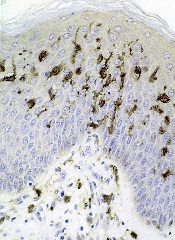
Stemline Therapeutics, Inc. has announced another patient death in its ongoing phase 2 trial of SL-401 in patients with blastic plasmacytoid dendritic cell neoplasm (BPDCN) and acute myeloid leukemia (AML).
The company became aware of this death, in a patient with BPDCN, on January 18.
The cause of death has not been determined, but the patient had developed capillary leak syndrome (CLS), a sometimes fatal and well-documented side effect of SL-401.
There have been 2 other deaths reported in patients with CLS in this trial. One of these deaths occurred in a patient with BPDCN and the other in a patient with AML.
Stemline said this study is ongoing, patient enrollment is ahead of schedule, and patients continue to receive SL-401 in the trial. Timelines for study completion and biologics licensing application submission remain on track.
The fact that CLS is an expected complication of SL-401 administration has been noted in filings with the Securities and Exchange Commission and US Food and Drug Administration (FDA), as well as in the study’s informed consent forms and other information provided to investigators.
Stemline said it has and will continue to report data to the FDA in accordance with the study protocol and applicable regulations. The company plans to provide a clinical and safety update on this cohort when the cohort and data are complete.
SL-410 in BPDCN
SL-401 is a targeted therapy directed to the interleukin-3 receptor (IL-3R), which is present in BPDCN and other hematologic malignancies. SL-401 is composed of human IL-3 coupled to a truncated diphtheria toxin payload that inhibits protein synthesis.
SL-401 is being tested in several clinical trials. Results from the phase 2 trial in BPDCN and AML patients were presented at the 2016 ASH Annual Meeting (abstract 342). However, the presentation only included data on the patients with BPDCN.
The trial consists of a lead-in dose-escalation stage (stage 1) and subsequent expansion stage (stage 2). In stage 1, patients received SL-401 as a daily intravenous infusion for up to 5 days (7, 9, 12, or 16 μg/kg/day) every 21 days. In stage 2, patients received SL-401 at the optimal stage 1 dose—12 μg/kg.
As of October 7, 2016, 32 BPDCN patients had been treated—9 in stage 1 and 23 in stage 2. Nineteen patients received SL-401 as first-line treatment, and 13 had relapsed/refractory disease. (Fourteen patients with relapsed/refractory AML were treated in stage 1.)
Efficacy
Of the 19 first-line BPDCN patients, 16 received the optimal dose (12 μg/kg). The overall response rate was 95% among all first-line patients (18/19) and 100% among those who received the optimal dose (16/16).
The complete response rates were 74% (14/19) and 81% (13/16), respectively. Six patients (all who received the optimal dose) proceeded to transplant (autologous and allogeneic).
All 13 relapsed/refractory BPDCN patients received the optimal dose. The overall response rate was 69% (9/13), and the complete response rate was 31% (4/13). One patient proceeded to allogeneic transplant.
Eleven first-line patients, including the 6 who went on to transplant, have ongoing responses. Six relapsed/refractory patients, including the patient who went on to transplant, have ongoing responses.
Among first-line patients treated at the optimal dose, the median progression-free and overall survival have not been reached. Among relapsed/refractory patients (all of whom were treated at the optimal dose), the median progression-free and overall survival are 8.5 months.
Safety
The most common treatment-related adverse events were transaminase elevation (52%), hypoalbuminemia (39%), chills (31%), pyrexia (27%), nausea (23%), fatigue (23%), peripheral edema (23%), thrombocytopenia (19%), hypotension (19%), weight increase (19%), anemia (19%), decreased appetite (19%), and CLS (19%).
In stage 1, two BPDCN patients had CLS—one grade 5 (7 μg/kg) and one grade 4 (12 μg/kg). After this, safety precautions were implemented to minimize the risk of severe CLS.
A second CLS-related death occurred in stage 1 in a patient with relapsed/refractory AML (16 μg/kg).
The other death in a BPDCN patient with CLS was reported after the ASH presentation. Stemline became aware of the death on January 18 and disclosed it to the public on February 2.
Stemline Therapeutics, Inc. has announced another patient death in its ongoing phase 2 trial of SL-401 in patients with blastic plasmacytoid dendritic cell neoplasm (BPDCN) and acute myeloid leukemia (AML).
The company became aware of this death, in a patient with BPDCN, on January 18.
The cause of death has not been determined, but the patient had developed capillary leak syndrome (CLS), a sometimes fatal and well-documented side effect of SL-401.
There have been 2 other deaths reported in patients with CLS in this trial. One of these deaths occurred in a patient with BPDCN and the other in a patient with AML.
Stemline said this study is ongoing, patient enrollment is ahead of schedule, and patients continue to receive SL-401 in the trial. Timelines for study completion and biologics licensing application submission remain on track.
The fact that CLS is an expected complication of SL-401 administration has been noted in filings with the Securities and Exchange Commission and US Food and Drug Administration (FDA), as well as in the study’s informed consent forms and other information provided to investigators.
Stemline said it has and will continue to report data to the FDA in accordance with the study protocol and applicable regulations. The company plans to provide a clinical and safety update on this cohort when the cohort and data are complete.
SL-410 in BPDCN
SL-401 is a targeted therapy directed to the interleukin-3 receptor (IL-3R), which is present in BPDCN and other hematologic malignancies. SL-401 is composed of human IL-3 coupled to a truncated diphtheria toxin payload that inhibits protein synthesis.
SL-401 is being tested in several clinical trials. Results from the phase 2 trial in BPDCN and AML patients were presented at the 2016 ASH Annual Meeting (abstract 342). However, the presentation only included data on the patients with BPDCN.
The trial consists of a lead-in dose-escalation stage (stage 1) and subsequent expansion stage (stage 2). In stage 1, patients received SL-401 as a daily intravenous infusion for up to 5 days (7, 9, 12, or 16 μg/kg/day) every 21 days. In stage 2, patients received SL-401 at the optimal stage 1 dose—12 μg/kg.
As of October 7, 2016, 32 BPDCN patients had been treated—9 in stage 1 and 23 in stage 2. Nineteen patients received SL-401 as first-line treatment, and 13 had relapsed/refractory disease. (Fourteen patients with relapsed/refractory AML were treated in stage 1.)
Efficacy
Of the 19 first-line BPDCN patients, 16 received the optimal dose (12 μg/kg). The overall response rate was 95% among all first-line patients (18/19) and 100% among those who received the optimal dose (16/16).
The complete response rates were 74% (14/19) and 81% (13/16), respectively. Six patients (all who received the optimal dose) proceeded to transplant (autologous and allogeneic).
All 13 relapsed/refractory BPDCN patients received the optimal dose. The overall response rate was 69% (9/13), and the complete response rate was 31% (4/13). One patient proceeded to allogeneic transplant.
Eleven first-line patients, including the 6 who went on to transplant, have ongoing responses. Six relapsed/refractory patients, including the patient who went on to transplant, have ongoing responses.
Among first-line patients treated at the optimal dose, the median progression-free and overall survival have not been reached. Among relapsed/refractory patients (all of whom were treated at the optimal dose), the median progression-free and overall survival are 8.5 months.
Safety
The most common treatment-related adverse events were transaminase elevation (52%), hypoalbuminemia (39%), chills (31%), pyrexia (27%), nausea (23%), fatigue (23%), peripheral edema (23%), thrombocytopenia (19%), hypotension (19%), weight increase (19%), anemia (19%), decreased appetite (19%), and CLS (19%).
In stage 1, two BPDCN patients had CLS—one grade 5 (7 μg/kg) and one grade 4 (12 μg/kg). After this, safety precautions were implemented to minimize the risk of severe CLS.
A second CLS-related death occurred in stage 1 in a patient with relapsed/refractory AML (16 μg/kg).
The other death in a BPDCN patient with CLS was reported after the ASH presentation. Stemline became aware of the death on January 18 and disclosed it to the public on February 2.
Stemline Therapeutics, Inc. has announced another patient death in its ongoing phase 2 trial of SL-401 in patients with blastic plasmacytoid dendritic cell neoplasm (BPDCN) and acute myeloid leukemia (AML).
The company became aware of this death, in a patient with BPDCN, on January 18.
The cause of death has not been determined, but the patient had developed capillary leak syndrome (CLS), a sometimes fatal and well-documented side effect of SL-401.
There have been 2 other deaths reported in patients with CLS in this trial. One of these deaths occurred in a patient with BPDCN and the other in a patient with AML.
Stemline said this study is ongoing, patient enrollment is ahead of schedule, and patients continue to receive SL-401 in the trial. Timelines for study completion and biologics licensing application submission remain on track.
The fact that CLS is an expected complication of SL-401 administration has been noted in filings with the Securities and Exchange Commission and US Food and Drug Administration (FDA), as well as in the study’s informed consent forms and other information provided to investigators.
Stemline said it has and will continue to report data to the FDA in accordance with the study protocol and applicable regulations. The company plans to provide a clinical and safety update on this cohort when the cohort and data are complete.
SL-410 in BPDCN
SL-401 is a targeted therapy directed to the interleukin-3 receptor (IL-3R), which is present in BPDCN and other hematologic malignancies. SL-401 is composed of human IL-3 coupled to a truncated diphtheria toxin payload that inhibits protein synthesis.
SL-401 is being tested in several clinical trials. Results from the phase 2 trial in BPDCN and AML patients were presented at the 2016 ASH Annual Meeting (abstract 342). However, the presentation only included data on the patients with BPDCN.
The trial consists of a lead-in dose-escalation stage (stage 1) and subsequent expansion stage (stage 2). In stage 1, patients received SL-401 as a daily intravenous infusion for up to 5 days (7, 9, 12, or 16 μg/kg/day) every 21 days. In stage 2, patients received SL-401 at the optimal stage 1 dose—12 μg/kg.
As of October 7, 2016, 32 BPDCN patients had been treated—9 in stage 1 and 23 in stage 2. Nineteen patients received SL-401 as first-line treatment, and 13 had relapsed/refractory disease. (Fourteen patients with relapsed/refractory AML were treated in stage 1.)
Efficacy
Of the 19 first-line BPDCN patients, 16 received the optimal dose (12 μg/kg). The overall response rate was 95% among all first-line patients (18/19) and 100% among those who received the optimal dose (16/16).
The complete response rates were 74% (14/19) and 81% (13/16), respectively. Six patients (all who received the optimal dose) proceeded to transplant (autologous and allogeneic).
All 13 relapsed/refractory BPDCN patients received the optimal dose. The overall response rate was 69% (9/13), and the complete response rate was 31% (4/13). One patient proceeded to allogeneic transplant.
Eleven first-line patients, including the 6 who went on to transplant, have ongoing responses. Six relapsed/refractory patients, including the patient who went on to transplant, have ongoing responses.
Among first-line patients treated at the optimal dose, the median progression-free and overall survival have not been reached. Among relapsed/refractory patients (all of whom were treated at the optimal dose), the median progression-free and overall survival are 8.5 months.
Safety
The most common treatment-related adverse events were transaminase elevation (52%), hypoalbuminemia (39%), chills (31%), pyrexia (27%), nausea (23%), fatigue (23%), peripheral edema (23%), thrombocytopenia (19%), hypotension (19%), weight increase (19%), anemia (19%), decreased appetite (19%), and CLS (19%).
In stage 1, two BPDCN patients had CLS—one grade 5 (7 μg/kg) and one grade 4 (12 μg/kg). After this, safety precautions were implemented to minimize the risk of severe CLS.
A second CLS-related death occurred in stage 1 in a patient with relapsed/refractory AML (16 μg/kg).
The other death in a BPDCN patient with CLS was reported after the ASH presentation. Stemline became aware of the death on January 18 and disclosed it to the public on February 2.
OS is worse with refractory vs relapsed PTCL

Photo by Larry Young
SAN FRANCISCO—Patients with refractory peripheral T-cell lymphoma (PTCL) have significantly worse overall survival (OS) than patients with relapsed PTCL, according to data from the COMPLETE registry.
The data also showed that patients treated with a curative intent had significantly better OS than patients who received palliative care.
However, there was no significant difference in OS according to disease subtype or between patients who received conventional chemotherapy and those who received novel agents.
Frederick Lansigan, MD, of Dartmouth-Hitchcock Medical Center in Lebanon, New Hampshire, presented these data at the 9th Annual T-cell Lymphoma Forum. Data were also presented at the 2016 ASH Annual Meeting (abstract 4150).
Dr Lansigan and his colleagues analyzed COMPLETE data on patients with mature T-cell lymphomas, focusing on patients in first relapse and those with primary refractory disease.
Refractory disease was defined as no response to initial treatment or disease progression during or within 1 month of completing front-line therapy.
Relapsed disease was defined as progression more than 1 month after completing induction therapy in patients who initially achieved a complete response (CR) or partial response (PR).
Patients
There were 138 patients in the analysis—58 with relapsed disease and 80 with refractory disease.
The median time from informed consent to diagnosis of relapsed disease was 11.4 months, and the time to diagnosis of refractory disease was 2.2 months.
Disease subtypes included:
- PTCL not otherwise specified (NOS)—35% of relapsed and 28% of refractory patients
- Angioimmunoblastic T-cell lymphoma—22% and 16%
- ALK- anaplastic large-cell lymphoma (ALCL)—10% and 14%
- ALK+ ALCL—3% and 4%
- Natural killer/T-cell lymphoma, nasal type—9% and 8%
- Enteropathy-associated T-cell lymphoma—5% and 3%
- Hepatosplenic T-cell lymphoma—3% and 5%
- Adult T-cell leukemia/lymphoma—2% and 5%
- Transformed mycosis fungoides—0% and 10%
- “Other”—10% and 9%.
Treatment
Most patients received combination regimens as front-line therapy—81% in the relapsed group and 68% in the refractory group. Nineteen and 32%, respectively, received single-agent treatment.
A majority of patients in both groups received chemotherapy or novel agents as second-line therapy—65% in the relapsed group and 71% in the refractory group. (Novel agents include histone deacetylase inhibitors, monoclonal antibodies, immunoconjugates, pralatrexate, bendamustine, denileukin diftitox, alisertib, and lenalidomide.)
Fifteen percent of relapsed patients and 16% of refractory patients received palliative care/best supportive care/observation as second-line therapy. Fifteen percent and 7%, respectively, had a transplant. Four percent and 6%, respectively, received chemotherapy and radiotherapy.
Of the patients who received systemic therapy second-line, 53% of relapsed patients received novel therapies, and 47% received conventional chemotherapy. Twenty-five percent of the refractory patients received novel therapies, and 75% received chemotherapy (P=0.005 for relapsed/refractory comparison of novel vs traditional therapy).
Most patients with relapsed disease received single agents (74%) rather than multi-agent regimens (26%) as second-line therapy. However, single-agent treatment was about as common as multi-agent regimens for refractory patients—53% and 47%, respectively (P=0.03 for relapsed/refractory comparison).
The objective response rates to second-line therapy were 61% for relapsed patients and 37% for refractory patients (P=0.02). The CR rates were 37% and 12%, respectively (P=0.003).
Survival
The median OS was significantly better for patients with relapsed PTCL—15.7 months, compared to 6.1 months for refractory patients (P=0.0237).
OS was also significantly better for patients who achieved a CR. The median OS was not reached for patients with a CR, 14.6 months for those with a PR, 13.7 months for those with stable disease, and 3.2 months for those who progressed (P<0.0001).
There was no significant difference in median OS for patients who received novel agents and those who received traditional chemotherapy—14.6 months and 11.1 months, respectively (P=0.2362).
Disease subtype
There was no significant difference in OS between patients who had PTCL-NOS, ALCL, or another PTCL subtype.
For relapsed patients, the median OS was 26 months for those with ALCL, 34 months for those with PTCL-NOS, and 35 months for those with other subtypes (P=0.82).
For refractory patients, the median OS was 31 months for those with ALCL, 7 months for those with PTCL-NOS, and 11 months for those with other subtypes (P=0.36).
Treatment intent
There was a significant difference in OS according to the intent of treatment.
Among relapsed patients, the median OS was not reached for those treated with curative intent and was 17 months for those who received palliative care (P=0.001).
Among refractory patients, the median OS was 15 months for those treated with curative intent and 5 months for those who received palliative care (P=0.005).
Dr Lansigan noted that the better outcomes in patients treated with curative intent may reflect a host of things, such as performance status, fitness for treatment, and transplant eligibility.
Treatment type
In relapsed patients, there was no significant difference in median OS between patients who underwent a transplant (not reached), those who received chemotherapy (24.4 months), and those who received best supportive care (20.9 months).
In refractory patients, the differences were significant. The median OS was not reached in patients who underwent a transplant, 11.6 months in those who received chemotherapy, and 3.5 months in those who received best supportive care (P=0.001).
In closing, Dr Lansigan noted that, in addition to showing a difference in OS between patients with relapsed and refractory PTCL, the COMPLETE registry highlights differences in practice patterns.
“The refractory group was treated more aggressively with traditional combination salvage regimens, but this does not appear to be better than single-agent chemo,” he said. “Of course, selection bias does play a role here, but this is hypothesis-generating.”
“In the relapsed PTCL group, novel, single-agent chemo was used more often, with good effect, with high response rates and long-term survival outcomes. So novel single agents can be considered as salvage therapy for both relapsed and refractory PTCL. Clinical trials are needed to improve outcomes in this poor-risk subgroup.”
Photo by Larry Young
SAN FRANCISCO—Patients with refractory peripheral T-cell lymphoma (PTCL) have significantly worse overall survival (OS) than patients with relapsed PTCL, according to data from the COMPLETE registry.
The data also showed that patients treated with a curative intent had significantly better OS than patients who received palliative care.
However, there was no significant difference in OS according to disease subtype or between patients who received conventional chemotherapy and those who received novel agents.
Frederick Lansigan, MD, of Dartmouth-Hitchcock Medical Center in Lebanon, New Hampshire, presented these data at the 9th Annual T-cell Lymphoma Forum. Data were also presented at the 2016 ASH Annual Meeting (abstract 4150).
Dr Lansigan and his colleagues analyzed COMPLETE data on patients with mature T-cell lymphomas, focusing on patients in first relapse and those with primary refractory disease.
Refractory disease was defined as no response to initial treatment or disease progression during or within 1 month of completing front-line therapy.
Relapsed disease was defined as progression more than 1 month after completing induction therapy in patients who initially achieved a complete response (CR) or partial response (PR).
Patients
There were 138 patients in the analysis—58 with relapsed disease and 80 with refractory disease.
The median time from informed consent to diagnosis of relapsed disease was 11.4 months, and the time to diagnosis of refractory disease was 2.2 months.
Disease subtypes included:
- PTCL not otherwise specified (NOS)—35% of relapsed and 28% of refractory patients
- Angioimmunoblastic T-cell lymphoma—22% and 16%
- ALK- anaplastic large-cell lymphoma (ALCL)—10% and 14%
- ALK+ ALCL—3% and 4%
- Natural killer/T-cell lymphoma, nasal type—9% and 8%
- Enteropathy-associated T-cell lymphoma—5% and 3%
- Hepatosplenic T-cell lymphoma—3% and 5%
- Adult T-cell leukemia/lymphoma—2% and 5%
- Transformed mycosis fungoides—0% and 10%
- “Other”—10% and 9%.
Treatment
Most patients received combination regimens as front-line therapy—81% in the relapsed group and 68% in the refractory group. Nineteen and 32%, respectively, received single-agent treatment.
A majority of patients in both groups received chemotherapy or novel agents as second-line therapy—65% in the relapsed group and 71% in the refractory group. (Novel agents include histone deacetylase inhibitors, monoclonal antibodies, immunoconjugates, pralatrexate, bendamustine, denileukin diftitox, alisertib, and lenalidomide.)
Fifteen percent of relapsed patients and 16% of refractory patients received palliative care/best supportive care/observation as second-line therapy. Fifteen percent and 7%, respectively, had a transplant. Four percent and 6%, respectively, received chemotherapy and radiotherapy.
Of the patients who received systemic therapy second-line, 53% of relapsed patients received novel therapies, and 47% received conventional chemotherapy. Twenty-five percent of the refractory patients received novel therapies, and 75% received chemotherapy (P=0.005 for relapsed/refractory comparison of novel vs traditional therapy).
Most patients with relapsed disease received single agents (74%) rather than multi-agent regimens (26%) as second-line therapy. However, single-agent treatment was about as common as multi-agent regimens for refractory patients—53% and 47%, respectively (P=0.03 for relapsed/refractory comparison).
The objective response rates to second-line therapy were 61% for relapsed patients and 37% for refractory patients (P=0.02). The CR rates were 37% and 12%, respectively (P=0.003).
Survival
The median OS was significantly better for patients with relapsed PTCL—15.7 months, compared to 6.1 months for refractory patients (P=0.0237).
OS was also significantly better for patients who achieved a CR. The median OS was not reached for patients with a CR, 14.6 months for those with a PR, 13.7 months for those with stable disease, and 3.2 months for those who progressed (P<0.0001).
There was no significant difference in median OS for patients who received novel agents and those who received traditional chemotherapy—14.6 months and 11.1 months, respectively (P=0.2362).
Disease subtype
There was no significant difference in OS between patients who had PTCL-NOS, ALCL, or another PTCL subtype.
For relapsed patients, the median OS was 26 months for those with ALCL, 34 months for those with PTCL-NOS, and 35 months for those with other subtypes (P=0.82).
For refractory patients, the median OS was 31 months for those with ALCL, 7 months for those with PTCL-NOS, and 11 months for those with other subtypes (P=0.36).
Treatment intent
There was a significant difference in OS according to the intent of treatment.
Among relapsed patients, the median OS was not reached for those treated with curative intent and was 17 months for those who received palliative care (P=0.001).
Among refractory patients, the median OS was 15 months for those treated with curative intent and 5 months for those who received palliative care (P=0.005).
Dr Lansigan noted that the better outcomes in patients treated with curative intent may reflect a host of things, such as performance status, fitness for treatment, and transplant eligibility.
Treatment type
In relapsed patients, there was no significant difference in median OS between patients who underwent a transplant (not reached), those who received chemotherapy (24.4 months), and those who received best supportive care (20.9 months).
In refractory patients, the differences were significant. The median OS was not reached in patients who underwent a transplant, 11.6 months in those who received chemotherapy, and 3.5 months in those who received best supportive care (P=0.001).
In closing, Dr Lansigan noted that, in addition to showing a difference in OS between patients with relapsed and refractory PTCL, the COMPLETE registry highlights differences in practice patterns.
“The refractory group was treated more aggressively with traditional combination salvage regimens, but this does not appear to be better than single-agent chemo,” he said. “Of course, selection bias does play a role here, but this is hypothesis-generating.”
“In the relapsed PTCL group, novel, single-agent chemo was used more often, with good effect, with high response rates and long-term survival outcomes. So novel single agents can be considered as salvage therapy for both relapsed and refractory PTCL. Clinical trials are needed to improve outcomes in this poor-risk subgroup.”
Photo by Larry Young
SAN FRANCISCO—Patients with refractory peripheral T-cell lymphoma (PTCL) have significantly worse overall survival (OS) than patients with relapsed PTCL, according to data from the COMPLETE registry.
The data also showed that patients treated with a curative intent had significantly better OS than patients who received palliative care.
However, there was no significant difference in OS according to disease subtype or between patients who received conventional chemotherapy and those who received novel agents.
Frederick Lansigan, MD, of Dartmouth-Hitchcock Medical Center in Lebanon, New Hampshire, presented these data at the 9th Annual T-cell Lymphoma Forum. Data were also presented at the 2016 ASH Annual Meeting (abstract 4150).
Dr Lansigan and his colleagues analyzed COMPLETE data on patients with mature T-cell lymphomas, focusing on patients in first relapse and those with primary refractory disease.
Refractory disease was defined as no response to initial treatment or disease progression during or within 1 month of completing front-line therapy.
Relapsed disease was defined as progression more than 1 month after completing induction therapy in patients who initially achieved a complete response (CR) or partial response (PR).
Patients
There were 138 patients in the analysis—58 with relapsed disease and 80 with refractory disease.
The median time from informed consent to diagnosis of relapsed disease was 11.4 months, and the time to diagnosis of refractory disease was 2.2 months.
Disease subtypes included:
- PTCL not otherwise specified (NOS)—35% of relapsed and 28% of refractory patients
- Angioimmunoblastic T-cell lymphoma—22% and 16%
- ALK- anaplastic large-cell lymphoma (ALCL)—10% and 14%
- ALK+ ALCL—3% and 4%
- Natural killer/T-cell lymphoma, nasal type—9% and 8%
- Enteropathy-associated T-cell lymphoma—5% and 3%
- Hepatosplenic T-cell lymphoma—3% and 5%
- Adult T-cell leukemia/lymphoma—2% and 5%
- Transformed mycosis fungoides—0% and 10%
- “Other”—10% and 9%.
Treatment
Most patients received combination regimens as front-line therapy—81% in the relapsed group and 68% in the refractory group. Nineteen and 32%, respectively, received single-agent treatment.
A majority of patients in both groups received chemotherapy or novel agents as second-line therapy—65% in the relapsed group and 71% in the refractory group. (Novel agents include histone deacetylase inhibitors, monoclonal antibodies, immunoconjugates, pralatrexate, bendamustine, denileukin diftitox, alisertib, and lenalidomide.)
Fifteen percent of relapsed patients and 16% of refractory patients received palliative care/best supportive care/observation as second-line therapy. Fifteen percent and 7%, respectively, had a transplant. Four percent and 6%, respectively, received chemotherapy and radiotherapy.
Of the patients who received systemic therapy second-line, 53% of relapsed patients received novel therapies, and 47% received conventional chemotherapy. Twenty-five percent of the refractory patients received novel therapies, and 75% received chemotherapy (P=0.005 for relapsed/refractory comparison of novel vs traditional therapy).
Most patients with relapsed disease received single agents (74%) rather than multi-agent regimens (26%) as second-line therapy. However, single-agent treatment was about as common as multi-agent regimens for refractory patients—53% and 47%, respectively (P=0.03 for relapsed/refractory comparison).
The objective response rates to second-line therapy were 61% for relapsed patients and 37% for refractory patients (P=0.02). The CR rates were 37% and 12%, respectively (P=0.003).
Survival
The median OS was significantly better for patients with relapsed PTCL—15.7 months, compared to 6.1 months for refractory patients (P=0.0237).
OS was also significantly better for patients who achieved a CR. The median OS was not reached for patients with a CR, 14.6 months for those with a PR, 13.7 months for those with stable disease, and 3.2 months for those who progressed (P<0.0001).
There was no significant difference in median OS for patients who received novel agents and those who received traditional chemotherapy—14.6 months and 11.1 months, respectively (P=0.2362).
Disease subtype
There was no significant difference in OS between patients who had PTCL-NOS, ALCL, or another PTCL subtype.
For relapsed patients, the median OS was 26 months for those with ALCL, 34 months for those with PTCL-NOS, and 35 months for those with other subtypes (P=0.82).
For refractory patients, the median OS was 31 months for those with ALCL, 7 months for those with PTCL-NOS, and 11 months for those with other subtypes (P=0.36).
Treatment intent
There was a significant difference in OS according to the intent of treatment.
Among relapsed patients, the median OS was not reached for those treated with curative intent and was 17 months for those who received palliative care (P=0.001).
Among refractory patients, the median OS was 15 months for those treated with curative intent and 5 months for those who received palliative care (P=0.005).
Dr Lansigan noted that the better outcomes in patients treated with curative intent may reflect a host of things, such as performance status, fitness for treatment, and transplant eligibility.
Treatment type
In relapsed patients, there was no significant difference in median OS between patients who underwent a transplant (not reached), those who received chemotherapy (24.4 months), and those who received best supportive care (20.9 months).
In refractory patients, the differences were significant. The median OS was not reached in patients who underwent a transplant, 11.6 months in those who received chemotherapy, and 3.5 months in those who received best supportive care (P=0.001).
In closing, Dr Lansigan noted that, in addition to showing a difference in OS between patients with relapsed and refractory PTCL, the COMPLETE registry highlights differences in practice patterns.
“The refractory group was treated more aggressively with traditional combination salvage regimens, but this does not appear to be better than single-agent chemo,” he said. “Of course, selection bias does play a role here, but this is hypothesis-generating.”
“In the relapsed PTCL group, novel, single-agent chemo was used more often, with good effect, with high response rates and long-term survival outcomes. So novel single agents can be considered as salvage therapy for both relapsed and refractory PTCL. Clinical trials are needed to improve outcomes in this poor-risk subgroup.”
Therapy granted PIM designation for CTCL

mycosis fungoides
The UK’s Medicines and Healthcare Products Regulatory Agency (MHRA) has granted SGX301 (synthetic hypericin) Promising Innovative Medicine (PIM) designation for the treatment of cutaneous T-cell lymphoma (CTCL).
The PIM designation is the first step toward inclusion in the Early Access to Medicines Scheme (EAMS).
EAMS provides early access to new medicines for patients with life-threatening and seriously debilitating conditions.
PIM status is awarded following an assessment of early nonclinical and clinical data by the MHRA.
PIM designation has been created as an early signal to companies that a product’s development plan is appropriate and indicates that a product could be a candidate for the second phase of the EAMS scheme once further development work has been conducted.
In the second phase, the product is made available to UK patients before a marketing authorization is approved.
The requirements for PIM designation are:
- The condition should be life-threatening or seriously debilitating with a high unmet medical need (ie, there is no method of treatment, diagnosis, or prevention available, or existing methods have serious limitations).
- The medicinal product is likely to offer a major advantage over methods currently used in the UK.
- The potential adverse effects of the medicinal product are likely to be outweighed by the benefits, allowing for the reasonable expectation of a positive benefit-risk balance. A positive benefit-risk balance should be based on preliminary scientific evidence, as justified by the applicant.
About SGX301
SGX301 is a photodynamic therapy utilizing safe, visible light for activation. The active ingredient in SGX301 is synthetic hypericin, a photosensitizer that is applied to skin lesions and then activated by fluorescent light 16 to 24 hours later.
Combined with photoactivation, hypericin has demonstrated significant antiproliferative effects on activated, normal human lymphoid cells and inhibited the growth of malignant T cells isolated from CTCL patients. Topical hypericin has also proven safe in a phase 1 study of healthy volunteers.
In a phase 2 trial of patients with CTCL (mycosis fungoides only) or psoriasis, topical hypericin conferred a significant improvement over placebo. Among CTCL patients, the treatment prompted a response rate of 58.3%, compared to an 8.3% response rate for placebo (P≤0.04).
Topical hypericin was also well tolerated in this trial. There were no deaths or serious adverse events related to the treatment. However, there were reports of mild to moderate burning, itching, erythema, and pruritus at the application site.
A phase 3 trial of SGX301 is currently recruiting patients. SGX301 is under development by Soligenix, Inc.
mycosis fungoides
The UK’s Medicines and Healthcare Products Regulatory Agency (MHRA) has granted SGX301 (synthetic hypericin) Promising Innovative Medicine (PIM) designation for the treatment of cutaneous T-cell lymphoma (CTCL).
The PIM designation is the first step toward inclusion in the Early Access to Medicines Scheme (EAMS).
EAMS provides early access to new medicines for patients with life-threatening and seriously debilitating conditions.
PIM status is awarded following an assessment of early nonclinical and clinical data by the MHRA.
PIM designation has been created as an early signal to companies that a product’s development plan is appropriate and indicates that a product could be a candidate for the second phase of the EAMS scheme once further development work has been conducted.
In the second phase, the product is made available to UK patients before a marketing authorization is approved.
The requirements for PIM designation are:
- The condition should be life-threatening or seriously debilitating with a high unmet medical need (ie, there is no method of treatment, diagnosis, or prevention available, or existing methods have serious limitations).
- The medicinal product is likely to offer a major advantage over methods currently used in the UK.
- The potential adverse effects of the medicinal product are likely to be outweighed by the benefits, allowing for the reasonable expectation of a positive benefit-risk balance. A positive benefit-risk balance should be based on preliminary scientific evidence, as justified by the applicant.
About SGX301
SGX301 is a photodynamic therapy utilizing safe, visible light for activation. The active ingredient in SGX301 is synthetic hypericin, a photosensitizer that is applied to skin lesions and then activated by fluorescent light 16 to 24 hours later.
Combined with photoactivation, hypericin has demonstrated significant antiproliferative effects on activated, normal human lymphoid cells and inhibited the growth of malignant T cells isolated from CTCL patients. Topical hypericin has also proven safe in a phase 1 study of healthy volunteers.
In a phase 2 trial of patients with CTCL (mycosis fungoides only) or psoriasis, topical hypericin conferred a significant improvement over placebo. Among CTCL patients, the treatment prompted a response rate of 58.3%, compared to an 8.3% response rate for placebo (P≤0.04).
Topical hypericin was also well tolerated in this trial. There were no deaths or serious adverse events related to the treatment. However, there were reports of mild to moderate burning, itching, erythema, and pruritus at the application site.
A phase 3 trial of SGX301 is currently recruiting patients. SGX301 is under development by Soligenix, Inc.
mycosis fungoides
The UK’s Medicines and Healthcare Products Regulatory Agency (MHRA) has granted SGX301 (synthetic hypericin) Promising Innovative Medicine (PIM) designation for the treatment of cutaneous T-cell lymphoma (CTCL).
The PIM designation is the first step toward inclusion in the Early Access to Medicines Scheme (EAMS).
EAMS provides early access to new medicines for patients with life-threatening and seriously debilitating conditions.
PIM status is awarded following an assessment of early nonclinical and clinical data by the MHRA.
PIM designation has been created as an early signal to companies that a product’s development plan is appropriate and indicates that a product could be a candidate for the second phase of the EAMS scheme once further development work has been conducted.
In the second phase, the product is made available to UK patients before a marketing authorization is approved.
The requirements for PIM designation are:
- The condition should be life-threatening or seriously debilitating with a high unmet medical need (ie, there is no method of treatment, diagnosis, or prevention available, or existing methods have serious limitations).
- The medicinal product is likely to offer a major advantage over methods currently used in the UK.
- The potential adverse effects of the medicinal product are likely to be outweighed by the benefits, allowing for the reasonable expectation of a positive benefit-risk balance. A positive benefit-risk balance should be based on preliminary scientific evidence, as justified by the applicant.
About SGX301
SGX301 is a photodynamic therapy utilizing safe, visible light for activation. The active ingredient in SGX301 is synthetic hypericin, a photosensitizer that is applied to skin lesions and then activated by fluorescent light 16 to 24 hours later.
Combined with photoactivation, hypericin has demonstrated significant antiproliferative effects on activated, normal human lymphoid cells and inhibited the growth of malignant T cells isolated from CTCL patients. Topical hypericin has also proven safe in a phase 1 study of healthy volunteers.
In a phase 2 trial of patients with CTCL (mycosis fungoides only) or psoriasis, topical hypericin conferred a significant improvement over placebo. Among CTCL patients, the treatment prompted a response rate of 58.3%, compared to an 8.3% response rate for placebo (P≤0.04).
Topical hypericin was also well tolerated in this trial. There were no deaths or serious adverse events related to the treatment. However, there were reports of mild to moderate burning, itching, erythema, and pruritus at the application site.
A phase 3 trial of SGX301 is currently recruiting patients. SGX301 is under development by Soligenix, Inc.
Regimens seem similarly effective in ENKTL
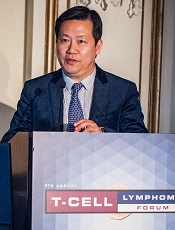
Photo by Larry Young
SAN FRANCISCO—Interim results of a phase 3 trial suggest 2 treatment regimens may provide comparable efficacy in patients with extranodal natural killer/T-cell lymphoma (ENKTL), though 1 regimen appears more toxic than the other.
In this ongoing trial, investigators are comparing pegaspargase, gemcitabine, oxaliplatin, and thalidomide (P-Gemox+Thal) to pegaspargase, methotrexate, calcium folinate, and dexamethasone (AspaMetDex).
In some patients, either regimen may be followed by extensive involved-field radiotherapy (EIFRT) or autologous hematopoietic stem cell transplant (ASCT).
Thus far, P-Gemox+Thal and AspaMetDex have proven similarly effective for patients with newly diagnosed, stage I/II ENKTL.
And both regimens have produced unsatisfying survival outcomes in patients with advanced or relapsed/refractory ENKTL, according to investigator Huiqiang Huang, MD, of Sun Yat-sen Institute of Hematology in Guangzhou, China.
In addition, P-Gemox+Thal seems to be less toxic, overall, than AspaMetDex.
However, Dr Huang said it is still too early to draw any firm conclusions about these regimens.
He presented results from this trial at the 9th Annual T-cell Lymphoma Forum. Results were previously presented at the 2016 ASH Annual Meeting (abstract 1819).
Dr Huang noted that AspaMetDex and SMILE (dexamethasone, methotrexate, ifosfamide, lL-asparaginase, and etoposide) are frequently administered to patients with ENKTL. And P-Gemox is recommended in the 2016 NCCN guidelines.
“But optimal regimens still have not been fully defined,” he said.
Therefore, he and his colleagues decided to compare AspaMetDex to P-Gemox+Thal in this non-inferiority trial, which has enrolled 110 patients from 12 centers in China.
Treatment
Fifty-six patients have been randomized to receive P-Gemox+Thal. Every 3 weeks, they received pegaspargase at 2000 U/m2 on day 1, gemcitabine at 1000 mg/m2 on days 1 and 8, and oxaliplatin at 130 mg/m2 on days 1 and 8. They also received thalidomide at 100 mg every day for 1 year.
Fifty-four patients have been randomized to receive AspaMetDex. Every 3 weeks, they received pegaspargase at 2000 U/m2 on day 1, methotrexate at 3000 mg/m2 on day 1, calcium folinate at 30 mg every 6 hours until a safe serum methotrexate concentration was reached, and dexamethasone at 40 mg every day on days 1 to 4.
Newly diagnosed patients with stage I/II disease received either regimen as induction for a maximum of 4 cycles. Responders went on to receive EIFRT at 56 Gy in 28 fractions over 4 weeks.
Patients with newly diagnosed, stage III/IV ENKTL or relapsed/refractory ENKTL received either chemotherapy regimen for a maximum of 6 cycles. If they achieved a complete response (CR), these patients could proceed to ASCT.
Stage I/II ENKTL
Of the 63 stage I/II patients, 33 were randomized to P-Gemox+Thal, and 30 received AspaMetDex. In both arms, most patients were male (69.7% and 70%, respectively) and younger than 60 (78.8% and 90%, respectively).
Ninety-seven percent of patients in the P-Gemox+Thal arm had an ECOG status of 0-1, as did 100% of patients in the AspaMetDex arm.
The overall response rate (ORR) was 85.2% in the P-Gemox+Thal arm and 81.5% in the AspaMetDex arm. The CR rate was 59.3% in both arms. The rate of stable disease was 3.7% in the P-Gemox+Thal arm and 11.1% in the AspaMetDex arm.
After EIFRT, the ORR increased to 92.6% in the P-Gemox+Thal arm, and the CR rate increased to 88.8%. In the AspaMetDex arm, the ORR increased to 88.8%, and the CR rate increased to 85.1%.
At a median follow-up of 13.5 months, the 2-year progression-free survival rate was 82.9% in the P-Gemox+Thal arm and 84.5% in the AspaMetDex arm (P=0.791).
The 2-year overall survival rates were 95.0% in the P-Gemox+Thal arm and 75.8% in the AspaMetDex arm (P=0.089).
Advanced, rel/ref ENKTL
Of the 47 patients with stage III/IV or relapsed/refractory ENKTL, 24 were randomized to P-Gemox+Thal, and 23 to AspaMetDex. In both arms, most patients were male (75% and 87%, respectively) and younger than 60 (95.8% and 91.3%, respectively).
ECOG status was 0 for 62.5% of patients in the P-Gemox+Thal arm and 73.9% of those in the AspaMetDex arm. ECOG status was 1 for 33.3% and 17.4%, respectively.
The ORR was 86.3% in the P-Gemox+Thal arm and 70% in the AspaMetDex arm. The CR rate was 50% in both arms.
The partial response rate was 36.3% in the P-Gemox+Thal arm and 20% in the AspaMetDex arm. And the rate of stable disease was 13.6% and 15%, respectively.
Three patients in each treatment arm went on to ASCT after CR. A total of 3 patients relapsed within 6 months of ASCT—2 in the P-Gemox+Thal arm and 1 in the AspaMetDex arm. Two patients died of disease progression.
At a median follow-up of 14.5 months, the 2-year progression-free survival was 12.2 months in the P-Gemox+Thal arm and 7.6 months in the AspaMetDex arm (P=0.365).
The 2-year overall survival was 52.5% in the P-Gemox+Thal arm and 48.9% in the AspaMetDex arm (P=0.935).
Overall safety
Rates of leukopenia, thrombocytopenia, and ALT/AST increase were all significantly higher with P-Gemox+Thal than with AspaMetDex—100% vs 66.7% (P<0.001), 64.2% vs 35.2% (P=0.005), and 69.6% vs 64.8% (P=0.004), respectively.
Rates of anemia and edema were significantly higher with AspaMetDex than with P-Gemox+Thal—51.8% vs 77.8% (P=0.005) and 37.5% vs 66.7% (P=0.003), respectively.
There were 3 treatment-related deaths in the AspaMetDex arm but none in the P-Gemox+Thal arm. Two of the treatment-related deaths—from severe acute renal failure and sepsis—occurred in the first cycle, and 1 death—due to severe sepsis—occurred in the third cycle.
The median hospitalization time was significantly shorter in the P-Gemox+Thal arm than the AspaMetDex arm—1.9 days and 4.9 days, respectively (P<0.01).
Based on these results, Dr Huang said P-Gemox+Thal may be more tolerable and provide more convenient administration than AspaMetDex.
Photo by Larry Young
SAN FRANCISCO—Interim results of a phase 3 trial suggest 2 treatment regimens may provide comparable efficacy in patients with extranodal natural killer/T-cell lymphoma (ENKTL), though 1 regimen appears more toxic than the other.
In this ongoing trial, investigators are comparing pegaspargase, gemcitabine, oxaliplatin, and thalidomide (P-Gemox+Thal) to pegaspargase, methotrexate, calcium folinate, and dexamethasone (AspaMetDex).
In some patients, either regimen may be followed by extensive involved-field radiotherapy (EIFRT) or autologous hematopoietic stem cell transplant (ASCT).
Thus far, P-Gemox+Thal and AspaMetDex have proven similarly effective for patients with newly diagnosed, stage I/II ENKTL.
And both regimens have produced unsatisfying survival outcomes in patients with advanced or relapsed/refractory ENKTL, according to investigator Huiqiang Huang, MD, of Sun Yat-sen Institute of Hematology in Guangzhou, China.
In addition, P-Gemox+Thal seems to be less toxic, overall, than AspaMetDex.
However, Dr Huang said it is still too early to draw any firm conclusions about these regimens.
He presented results from this trial at the 9th Annual T-cell Lymphoma Forum. Results were previously presented at the 2016 ASH Annual Meeting (abstract 1819).
Dr Huang noted that AspaMetDex and SMILE (dexamethasone, methotrexate, ifosfamide, lL-asparaginase, and etoposide) are frequently administered to patients with ENKTL. And P-Gemox is recommended in the 2016 NCCN guidelines.
“But optimal regimens still have not been fully defined,” he said.
Therefore, he and his colleagues decided to compare AspaMetDex to P-Gemox+Thal in this non-inferiority trial, which has enrolled 110 patients from 12 centers in China.
Treatment
Fifty-six patients have been randomized to receive P-Gemox+Thal. Every 3 weeks, they received pegaspargase at 2000 U/m2 on day 1, gemcitabine at 1000 mg/m2 on days 1 and 8, and oxaliplatin at 130 mg/m2 on days 1 and 8. They also received thalidomide at 100 mg every day for 1 year.
Fifty-four patients have been randomized to receive AspaMetDex. Every 3 weeks, they received pegaspargase at 2000 U/m2 on day 1, methotrexate at 3000 mg/m2 on day 1, calcium folinate at 30 mg every 6 hours until a safe serum methotrexate concentration was reached, and dexamethasone at 40 mg every day on days 1 to 4.
Newly diagnosed patients with stage I/II disease received either regimen as induction for a maximum of 4 cycles. Responders went on to receive EIFRT at 56 Gy in 28 fractions over 4 weeks.
Patients with newly diagnosed, stage III/IV ENKTL or relapsed/refractory ENKTL received either chemotherapy regimen for a maximum of 6 cycles. If they achieved a complete response (CR), these patients could proceed to ASCT.
Stage I/II ENKTL
Of the 63 stage I/II patients, 33 were randomized to P-Gemox+Thal, and 30 received AspaMetDex. In both arms, most patients were male (69.7% and 70%, respectively) and younger than 60 (78.8% and 90%, respectively).
Ninety-seven percent of patients in the P-Gemox+Thal arm had an ECOG status of 0-1, as did 100% of patients in the AspaMetDex arm.
The overall response rate (ORR) was 85.2% in the P-Gemox+Thal arm and 81.5% in the AspaMetDex arm. The CR rate was 59.3% in both arms. The rate of stable disease was 3.7% in the P-Gemox+Thal arm and 11.1% in the AspaMetDex arm.
After EIFRT, the ORR increased to 92.6% in the P-Gemox+Thal arm, and the CR rate increased to 88.8%. In the AspaMetDex arm, the ORR increased to 88.8%, and the CR rate increased to 85.1%.
At a median follow-up of 13.5 months, the 2-year progression-free survival rate was 82.9% in the P-Gemox+Thal arm and 84.5% in the AspaMetDex arm (P=0.791).
The 2-year overall survival rates were 95.0% in the P-Gemox+Thal arm and 75.8% in the AspaMetDex arm (P=0.089).
Advanced, rel/ref ENKTL
Of the 47 patients with stage III/IV or relapsed/refractory ENKTL, 24 were randomized to P-Gemox+Thal, and 23 to AspaMetDex. In both arms, most patients were male (75% and 87%, respectively) and younger than 60 (95.8% and 91.3%, respectively).
ECOG status was 0 for 62.5% of patients in the P-Gemox+Thal arm and 73.9% of those in the AspaMetDex arm. ECOG status was 1 for 33.3% and 17.4%, respectively.
The ORR was 86.3% in the P-Gemox+Thal arm and 70% in the AspaMetDex arm. The CR rate was 50% in both arms.
The partial response rate was 36.3% in the P-Gemox+Thal arm and 20% in the AspaMetDex arm. And the rate of stable disease was 13.6% and 15%, respectively.
Three patients in each treatment arm went on to ASCT after CR. A total of 3 patients relapsed within 6 months of ASCT—2 in the P-Gemox+Thal arm and 1 in the AspaMetDex arm. Two patients died of disease progression.
At a median follow-up of 14.5 months, the 2-year progression-free survival was 12.2 months in the P-Gemox+Thal arm and 7.6 months in the AspaMetDex arm (P=0.365).
The 2-year overall survival was 52.5% in the P-Gemox+Thal arm and 48.9% in the AspaMetDex arm (P=0.935).
Overall safety
Rates of leukopenia, thrombocytopenia, and ALT/AST increase were all significantly higher with P-Gemox+Thal than with AspaMetDex—100% vs 66.7% (P<0.001), 64.2% vs 35.2% (P=0.005), and 69.6% vs 64.8% (P=0.004), respectively.
Rates of anemia and edema were significantly higher with AspaMetDex than with P-Gemox+Thal—51.8% vs 77.8% (P=0.005) and 37.5% vs 66.7% (P=0.003), respectively.
There were 3 treatment-related deaths in the AspaMetDex arm but none in the P-Gemox+Thal arm. Two of the treatment-related deaths—from severe acute renal failure and sepsis—occurred in the first cycle, and 1 death—due to severe sepsis—occurred in the third cycle.
The median hospitalization time was significantly shorter in the P-Gemox+Thal arm than the AspaMetDex arm—1.9 days and 4.9 days, respectively (P<0.01).
Based on these results, Dr Huang said P-Gemox+Thal may be more tolerable and provide more convenient administration than AspaMetDex.
Photo by Larry Young
SAN FRANCISCO—Interim results of a phase 3 trial suggest 2 treatment regimens may provide comparable efficacy in patients with extranodal natural killer/T-cell lymphoma (ENKTL), though 1 regimen appears more toxic than the other.
In this ongoing trial, investigators are comparing pegaspargase, gemcitabine, oxaliplatin, and thalidomide (P-Gemox+Thal) to pegaspargase, methotrexate, calcium folinate, and dexamethasone (AspaMetDex).
In some patients, either regimen may be followed by extensive involved-field radiotherapy (EIFRT) or autologous hematopoietic stem cell transplant (ASCT).
Thus far, P-Gemox+Thal and AspaMetDex have proven similarly effective for patients with newly diagnosed, stage I/II ENKTL.
And both regimens have produced unsatisfying survival outcomes in patients with advanced or relapsed/refractory ENKTL, according to investigator Huiqiang Huang, MD, of Sun Yat-sen Institute of Hematology in Guangzhou, China.
In addition, P-Gemox+Thal seems to be less toxic, overall, than AspaMetDex.
However, Dr Huang said it is still too early to draw any firm conclusions about these regimens.
He presented results from this trial at the 9th Annual T-cell Lymphoma Forum. Results were previously presented at the 2016 ASH Annual Meeting (abstract 1819).
Dr Huang noted that AspaMetDex and SMILE (dexamethasone, methotrexate, ifosfamide, lL-asparaginase, and etoposide) are frequently administered to patients with ENKTL. And P-Gemox is recommended in the 2016 NCCN guidelines.
“But optimal regimens still have not been fully defined,” he said.
Therefore, he and his colleagues decided to compare AspaMetDex to P-Gemox+Thal in this non-inferiority trial, which has enrolled 110 patients from 12 centers in China.
Treatment
Fifty-six patients have been randomized to receive P-Gemox+Thal. Every 3 weeks, they received pegaspargase at 2000 U/m2 on day 1, gemcitabine at 1000 mg/m2 on days 1 and 8, and oxaliplatin at 130 mg/m2 on days 1 and 8. They also received thalidomide at 100 mg every day for 1 year.
Fifty-four patients have been randomized to receive AspaMetDex. Every 3 weeks, they received pegaspargase at 2000 U/m2 on day 1, methotrexate at 3000 mg/m2 on day 1, calcium folinate at 30 mg every 6 hours until a safe serum methotrexate concentration was reached, and dexamethasone at 40 mg every day on days 1 to 4.
Newly diagnosed patients with stage I/II disease received either regimen as induction for a maximum of 4 cycles. Responders went on to receive EIFRT at 56 Gy in 28 fractions over 4 weeks.
Patients with newly diagnosed, stage III/IV ENKTL or relapsed/refractory ENKTL received either chemotherapy regimen for a maximum of 6 cycles. If they achieved a complete response (CR), these patients could proceed to ASCT.
Stage I/II ENKTL
Of the 63 stage I/II patients, 33 were randomized to P-Gemox+Thal, and 30 received AspaMetDex. In both arms, most patients were male (69.7% and 70%, respectively) and younger than 60 (78.8% and 90%, respectively).
Ninety-seven percent of patients in the P-Gemox+Thal arm had an ECOG status of 0-1, as did 100% of patients in the AspaMetDex arm.
The overall response rate (ORR) was 85.2% in the P-Gemox+Thal arm and 81.5% in the AspaMetDex arm. The CR rate was 59.3% in both arms. The rate of stable disease was 3.7% in the P-Gemox+Thal arm and 11.1% in the AspaMetDex arm.
After EIFRT, the ORR increased to 92.6% in the P-Gemox+Thal arm, and the CR rate increased to 88.8%. In the AspaMetDex arm, the ORR increased to 88.8%, and the CR rate increased to 85.1%.
At a median follow-up of 13.5 months, the 2-year progression-free survival rate was 82.9% in the P-Gemox+Thal arm and 84.5% in the AspaMetDex arm (P=0.791).
The 2-year overall survival rates were 95.0% in the P-Gemox+Thal arm and 75.8% in the AspaMetDex arm (P=0.089).
Advanced, rel/ref ENKTL
Of the 47 patients with stage III/IV or relapsed/refractory ENKTL, 24 were randomized to P-Gemox+Thal, and 23 to AspaMetDex. In both arms, most patients were male (75% and 87%, respectively) and younger than 60 (95.8% and 91.3%, respectively).
ECOG status was 0 for 62.5% of patients in the P-Gemox+Thal arm and 73.9% of those in the AspaMetDex arm. ECOG status was 1 for 33.3% and 17.4%, respectively.
The ORR was 86.3% in the P-Gemox+Thal arm and 70% in the AspaMetDex arm. The CR rate was 50% in both arms.
The partial response rate was 36.3% in the P-Gemox+Thal arm and 20% in the AspaMetDex arm. And the rate of stable disease was 13.6% and 15%, respectively.
Three patients in each treatment arm went on to ASCT after CR. A total of 3 patients relapsed within 6 months of ASCT—2 in the P-Gemox+Thal arm and 1 in the AspaMetDex arm. Two patients died of disease progression.
At a median follow-up of 14.5 months, the 2-year progression-free survival was 12.2 months in the P-Gemox+Thal arm and 7.6 months in the AspaMetDex arm (P=0.365).
The 2-year overall survival was 52.5% in the P-Gemox+Thal arm and 48.9% in the AspaMetDex arm (P=0.935).
Overall safety
Rates of leukopenia, thrombocytopenia, and ALT/AST increase were all significantly higher with P-Gemox+Thal than with AspaMetDex—100% vs 66.7% (P<0.001), 64.2% vs 35.2% (P=0.005), and 69.6% vs 64.8% (P=0.004), respectively.
Rates of anemia and edema were significantly higher with AspaMetDex than with P-Gemox+Thal—51.8% vs 77.8% (P=0.005) and 37.5% vs 66.7% (P=0.003), respectively.
There were 3 treatment-related deaths in the AspaMetDex arm but none in the P-Gemox+Thal arm. Two of the treatment-related deaths—from severe acute renal failure and sepsis—occurred in the first cycle, and 1 death—due to severe sepsis—occurred in the third cycle.
The median hospitalization time was significantly shorter in the P-Gemox+Thal arm than the AspaMetDex arm—1.9 days and 4.9 days, respectively (P<0.01).
Based on these results, Dr Huang said P-Gemox+Thal may be more tolerable and provide more convenient administration than AspaMetDex.
Cheap manufacture of generic cancer drugs is feasible, study shows

Photo courtesy of FDA
AMSTERDAM—New research suggests some generic cancer drugs could be manufactured for less than 1% of the prices currently charged in the US and UK.
For example, researchers calculated that manufacturing a 400 mg tablet of imatinib costs $0.92.
Charging $1.04 per tablet would cover costs and allow for a 10% profit margin.
However, the current price of imatinib is $84.36 per tablet in the UK and $247.74 per tablet in the US.
Melissa Barber, of the London School of Hygiene and Tropical Medicine in the UK, reported these findings at ECCO 2017: European Cancer Congress (abstract 1032).
Barber and her colleagues collected data on per-kilogram costs of exported active pharmaceutical ingredients (APIs) from an online database of Indian export logs.
The team then estimated generic prices for tablets through an established costing algorithm. They calculated per-dose API costs and added excipient costs of $2.63 per kg of finished pharmaceutical product and per-tablet costs of production of $0.01, plus a 10% profit margin accounting for a 26.6% average tax on profits (assuming manufacture in India.)
Finally, the researchers compared the calculated price to current unit prices in the US, UK, Spain, and India.
For imatinib, the team determined the cost of the API to be $2284 per kg and the API cost per tablet to be $0.91. They then added excipient cost ($0.002 per tablet), conversion cost ($0.01 per tablet), and a 10% profit margin accounting for a 26.6% tax on profits.
This resulted in the estimated generic price of $1.04 per tablet. The per-tablet price is below the estimated price in India ($0.22) but much higher than the estimated price in Spain ($57.53), the UK ($84.36), and the US ($247.74).
Barber noted that, according to her group’s calculations, imatinib could be produced for $54 a month.
Another drug that could be produced for a low cost is etoposide. Barber and her colleagues calculated a generic price for etoposide of $0.97 per 100 mg tablet.
However, the per-tablet price is $1.50 in India, $8.65 in Spain, $11.34 in the UK, and $87.14 in the US.
The researchers calculated a generic price for mercaptopurine of $0.03 per 50 mg tablet, which is the same as the per-tablet price in India. However, a 50 mg mercaptopurine tablet costs $3.14 in Spain, $2.56 in the UK, and $0.40 in the US.
“Showing that certain cancers could be treated for very low prices could transform the future of people with these cancers in very low-income countries where there are usually few or no treatment options,” Barber said.
Photo courtesy of FDA
AMSTERDAM—New research suggests some generic cancer drugs could be manufactured for less than 1% of the prices currently charged in the US and UK.
For example, researchers calculated that manufacturing a 400 mg tablet of imatinib costs $0.92.
Charging $1.04 per tablet would cover costs and allow for a 10% profit margin.
However, the current price of imatinib is $84.36 per tablet in the UK and $247.74 per tablet in the US.
Melissa Barber, of the London School of Hygiene and Tropical Medicine in the UK, reported these findings at ECCO 2017: European Cancer Congress (abstract 1032).
Barber and her colleagues collected data on per-kilogram costs of exported active pharmaceutical ingredients (APIs) from an online database of Indian export logs.
The team then estimated generic prices for tablets through an established costing algorithm. They calculated per-dose API costs and added excipient costs of $2.63 per kg of finished pharmaceutical product and per-tablet costs of production of $0.01, plus a 10% profit margin accounting for a 26.6% average tax on profits (assuming manufacture in India.)
Finally, the researchers compared the calculated price to current unit prices in the US, UK, Spain, and India.
For imatinib, the team determined the cost of the API to be $2284 per kg and the API cost per tablet to be $0.91. They then added excipient cost ($0.002 per tablet), conversion cost ($0.01 per tablet), and a 10% profit margin accounting for a 26.6% tax on profits.
This resulted in the estimated generic price of $1.04 per tablet. The per-tablet price is below the estimated price in India ($0.22) but much higher than the estimated price in Spain ($57.53), the UK ($84.36), and the US ($247.74).
Barber noted that, according to her group’s calculations, imatinib could be produced for $54 a month.
Another drug that could be produced for a low cost is etoposide. Barber and her colleagues calculated a generic price for etoposide of $0.97 per 100 mg tablet.
However, the per-tablet price is $1.50 in India, $8.65 in Spain, $11.34 in the UK, and $87.14 in the US.
The researchers calculated a generic price for mercaptopurine of $0.03 per 50 mg tablet, which is the same as the per-tablet price in India. However, a 50 mg mercaptopurine tablet costs $3.14 in Spain, $2.56 in the UK, and $0.40 in the US.
“Showing that certain cancers could be treated for very low prices could transform the future of people with these cancers in very low-income countries where there are usually few or no treatment options,” Barber said.
Photo courtesy of FDA
AMSTERDAM—New research suggests some generic cancer drugs could be manufactured for less than 1% of the prices currently charged in the US and UK.
For example, researchers calculated that manufacturing a 400 mg tablet of imatinib costs $0.92.
Charging $1.04 per tablet would cover costs and allow for a 10% profit margin.
However, the current price of imatinib is $84.36 per tablet in the UK and $247.74 per tablet in the US.
Melissa Barber, of the London School of Hygiene and Tropical Medicine in the UK, reported these findings at ECCO 2017: European Cancer Congress (abstract 1032).
Barber and her colleagues collected data on per-kilogram costs of exported active pharmaceutical ingredients (APIs) from an online database of Indian export logs.
The team then estimated generic prices for tablets through an established costing algorithm. They calculated per-dose API costs and added excipient costs of $2.63 per kg of finished pharmaceutical product and per-tablet costs of production of $0.01, plus a 10% profit margin accounting for a 26.6% average tax on profits (assuming manufacture in India.)
Finally, the researchers compared the calculated price to current unit prices in the US, UK, Spain, and India.
For imatinib, the team determined the cost of the API to be $2284 per kg and the API cost per tablet to be $0.91. They then added excipient cost ($0.002 per tablet), conversion cost ($0.01 per tablet), and a 10% profit margin accounting for a 26.6% tax on profits.
This resulted in the estimated generic price of $1.04 per tablet. The per-tablet price is below the estimated price in India ($0.22) but much higher than the estimated price in Spain ($57.53), the UK ($84.36), and the US ($247.74).
Barber noted that, according to her group’s calculations, imatinib could be produced for $54 a month.
Another drug that could be produced for a low cost is etoposide. Barber and her colleagues calculated a generic price for etoposide of $0.97 per 100 mg tablet.
However, the per-tablet price is $1.50 in India, $8.65 in Spain, $11.34 in the UK, and $87.14 in the US.
The researchers calculated a generic price for mercaptopurine of $0.03 per 50 mg tablet, which is the same as the per-tablet price in India. However, a 50 mg mercaptopurine tablet costs $3.14 in Spain, $2.56 in the UK, and $0.40 in the US.
“Showing that certain cancers could be treated for very low prices could transform the future of people with these cancers in very low-income countries where there are usually few or no treatment options,” Barber said.