User login
Leukemic breast tumors may cause resistance in AML, ALL
SAN DIEGO—One woman’s curiosity and self-described “aggressive” approach to research have led to some unexpected discoveries about acute leukemias.
Isabel Cunningham, MD, of Columbia University in New York, has found evidence to suggest that treatment resistance in leukemia patients may sometimes result from an interaction between leukemic cells and the breast.
She discovered that leukemic cells in extramedullary niches can adopt a tumor phenotype similar to breast cancer.
And many genes are similarly upregulated in leukemic and epithelial breast tumors.
Her research indicates that a new approach to resistant leukemias that incorporates the principles of solid-tumor treatment—scans to identify any tumors and surgery to remove them—could decrease marrow relapse and death.
Dr Cunningham and her colleagues presented these findings in a poster at the AACR Annual Meeting 2014 (abstract 3996*).
“Chemotherapy resistance is our main problem in treating leukemia,” Dr Cunningham said. “It’s been known for a long time that, occasionally, leukemia forms tumors in an organ, but there’s never been a unified approach to treatment, except for leukemia that occurs in the testis and the meninges.”
Dr Cunningham had encountered many patients with resistant leukemia throughout her career, but her research actually began with a patient she had never met. A case study of a leukemia patient with a breast tumor sparked Dr Cunningham’s interest, and she emailed the study’s author to find out what ultimately became of the patient.
The response she received peaked her curiosity further. So she began seeking more of these cases, contacting authors, and collecting information on this phenomenon.
“I took this on as sort of a hobby,” Dr Cunningham said. “I never had any idea where this was going to lead.”
Eventually, she had amassed information on 235 cases—163 patients with acute myeloid leukemia (AML) and 72 with acute lymphoblastic leukemia (ALL)—who ranged from 1 year to 75 years of age. And an analysis of these cases led to some surprising discoveries.
Clinical findings
Dr Cunningham found these leukemic breast tumors can occur before, during, or after marrow leukemia. And, clinically, they resemble breast cancer. Most tumors were palpable, and some were detected only on routine mammograms.
There were single or multiple nodules that may have involved the entire breast. Sixty percent of cases were unilateral on presentation, but, often, the other breast became involved. Seventy percent of cases exhibited axillary lymphadenopathy that was ipsilateral.
Most tumors grew rapidly, to as large as 12 cm. The tumor behavior was similar in AML and ALL. And the tumors had a metastatic pattern similar to lobular breast cancer—spreading to the contralateral breast, the abdomen or pelvis, the meninges, and culminating in death.
However, some patients did survive. Four percent of patients who were treated only with chemotherapy were alive at 4 years. Twenty-five percent of patients had their tumors excised prior to chemotherapy and were alive anywhere from 3 years to more than 26 years after treatment.
Histology and gene expression
To build upon these findings, Dr Cunningham set her sights on patient samples. She was able to obtain paraffin blocks of leukemic breast tumors from 25 patients and perform immunohistochemical staining.
“It became clear that the leukemic tumors—which are marked by leukemic markers and not breast cancer markers—look, histologically, like breast cancer, specifically, lobular breast cancer,” Dr Cunningham said. “An additional pathologic finding was a specific type of desmoplastic fibrosis seen in all 25 contributed biopsies.”
Dr Cunningham also performed gene expression studies on 3 of the tumors (2 ALL and 1 AML), which were collected 8 months to 22 months after diagnosis, while marrows were in remission. The analyses revealed that a number of genes are significantly upregulated in both leukemic breast tumors and breast cancer.
These include genes involved in adhesion and interactions with the extracellular matrix (ADAM8, COMP, and CDH22), genes involved in the ubiquitin-proteasome pathway (UBE2S, USP32, MDM2, and UBE2C), genes encoding for kinases (MAP4K1, PIM1, and NEK2), and genes involved in RAS signaling (RANBP1 and RAB10).
Conclusions and next steps
“It seems that there’s some kind of crosstalk between the organ microenvironment and leukemic cells that make the leukemic cells have the phenotype of breast cancer,” Dr Cunningham said. “And it may well be that relapse sometimes results from the presence of an undiagnosed collection of these cells.”
Therefore, Dr Cunningham suggests performing scans in treatment-resistant leukemia patients. If a patient relapses, and particularly if lactic dehydrogenase levels are increased, a scan might be in order.
“If we can recognize these tumors and cut them out, the patient could be cured, because we’re successful at treating the bone marrow,” Dr Cunningham said. “We’ve had very good bone marrow drugs for 50 years.”
For her part, Dr Cunningham is delving further into this phenomenon. She is now conducting gene expression studies on the rest of the 25 leukemic breast tumor samples and comparing these tumors to breast cancer to identify the most significant dysregulated genes in both entities. The long-term goal is to find a way to predict which patients will develop leukemic breast tumors. 
*Information in the abstract differs from that presented at the meeting.
SAN DIEGO—One woman’s curiosity and self-described “aggressive” approach to research have led to some unexpected discoveries about acute leukemias.
Isabel Cunningham, MD, of Columbia University in New York, has found evidence to suggest that treatment resistance in leukemia patients may sometimes result from an interaction between leukemic cells and the breast.
She discovered that leukemic cells in extramedullary niches can adopt a tumor phenotype similar to breast cancer.
And many genes are similarly upregulated in leukemic and epithelial breast tumors.
Her research indicates that a new approach to resistant leukemias that incorporates the principles of solid-tumor treatment—scans to identify any tumors and surgery to remove them—could decrease marrow relapse and death.
Dr Cunningham and her colleagues presented these findings in a poster at the AACR Annual Meeting 2014 (abstract 3996*).
“Chemotherapy resistance is our main problem in treating leukemia,” Dr Cunningham said. “It’s been known for a long time that, occasionally, leukemia forms tumors in an organ, but there’s never been a unified approach to treatment, except for leukemia that occurs in the testis and the meninges.”
Dr Cunningham had encountered many patients with resistant leukemia throughout her career, but her research actually began with a patient she had never met. A case study of a leukemia patient with a breast tumor sparked Dr Cunningham’s interest, and she emailed the study’s author to find out what ultimately became of the patient.
The response she received peaked her curiosity further. So she began seeking more of these cases, contacting authors, and collecting information on this phenomenon.
“I took this on as sort of a hobby,” Dr Cunningham said. “I never had any idea where this was going to lead.”
Eventually, she had amassed information on 235 cases—163 patients with acute myeloid leukemia (AML) and 72 with acute lymphoblastic leukemia (ALL)—who ranged from 1 year to 75 years of age. And an analysis of these cases led to some surprising discoveries.
Clinical findings
Dr Cunningham found these leukemic breast tumors can occur before, during, or after marrow leukemia. And, clinically, they resemble breast cancer. Most tumors were palpable, and some were detected only on routine mammograms.
There were single or multiple nodules that may have involved the entire breast. Sixty percent of cases were unilateral on presentation, but, often, the other breast became involved. Seventy percent of cases exhibited axillary lymphadenopathy that was ipsilateral.
Most tumors grew rapidly, to as large as 12 cm. The tumor behavior was similar in AML and ALL. And the tumors had a metastatic pattern similar to lobular breast cancer—spreading to the contralateral breast, the abdomen or pelvis, the meninges, and culminating in death.
However, some patients did survive. Four percent of patients who were treated only with chemotherapy were alive at 4 years. Twenty-five percent of patients had their tumors excised prior to chemotherapy and were alive anywhere from 3 years to more than 26 years after treatment.
Histology and gene expression
To build upon these findings, Dr Cunningham set her sights on patient samples. She was able to obtain paraffin blocks of leukemic breast tumors from 25 patients and perform immunohistochemical staining.
“It became clear that the leukemic tumors—which are marked by leukemic markers and not breast cancer markers—look, histologically, like breast cancer, specifically, lobular breast cancer,” Dr Cunningham said. “An additional pathologic finding was a specific type of desmoplastic fibrosis seen in all 25 contributed biopsies.”
Dr Cunningham also performed gene expression studies on 3 of the tumors (2 ALL and 1 AML), which were collected 8 months to 22 months after diagnosis, while marrows were in remission. The analyses revealed that a number of genes are significantly upregulated in both leukemic breast tumors and breast cancer.
These include genes involved in adhesion and interactions with the extracellular matrix (ADAM8, COMP, and CDH22), genes involved in the ubiquitin-proteasome pathway (UBE2S, USP32, MDM2, and UBE2C), genes encoding for kinases (MAP4K1, PIM1, and NEK2), and genes involved in RAS signaling (RANBP1 and RAB10).
Conclusions and next steps
“It seems that there’s some kind of crosstalk between the organ microenvironment and leukemic cells that make the leukemic cells have the phenotype of breast cancer,” Dr Cunningham said. “And it may well be that relapse sometimes results from the presence of an undiagnosed collection of these cells.”
Therefore, Dr Cunningham suggests performing scans in treatment-resistant leukemia patients. If a patient relapses, and particularly if lactic dehydrogenase levels are increased, a scan might be in order.
“If we can recognize these tumors and cut them out, the patient could be cured, because we’re successful at treating the bone marrow,” Dr Cunningham said. “We’ve had very good bone marrow drugs for 50 years.”
For her part, Dr Cunningham is delving further into this phenomenon. She is now conducting gene expression studies on the rest of the 25 leukemic breast tumor samples and comparing these tumors to breast cancer to identify the most significant dysregulated genes in both entities. The long-term goal is to find a way to predict which patients will develop leukemic breast tumors.
*Information in the abstract differs from that presented at the meeting.
SAN DIEGO—One woman’s curiosity and self-described “aggressive” approach to research have led to some unexpected discoveries about acute leukemias.
Isabel Cunningham, MD, of Columbia University in New York, has found evidence to suggest that treatment resistance in leukemia patients may sometimes result from an interaction between leukemic cells and the breast.
She discovered that leukemic cells in extramedullary niches can adopt a tumor phenotype similar to breast cancer.
And many genes are similarly upregulated in leukemic and epithelial breast tumors.
Her research indicates that a new approach to resistant leukemias that incorporates the principles of solid-tumor treatment—scans to identify any tumors and surgery to remove them—could decrease marrow relapse and death.
Dr Cunningham and her colleagues presented these findings in a poster at the AACR Annual Meeting 2014 (abstract 3996*).
“Chemotherapy resistance is our main problem in treating leukemia,” Dr Cunningham said. “It’s been known for a long time that, occasionally, leukemia forms tumors in an organ, but there’s never been a unified approach to treatment, except for leukemia that occurs in the testis and the meninges.”
Dr Cunningham had encountered many patients with resistant leukemia throughout her career, but her research actually began with a patient she had never met. A case study of a leukemia patient with a breast tumor sparked Dr Cunningham’s interest, and she emailed the study’s author to find out what ultimately became of the patient.
The response she received peaked her curiosity further. So she began seeking more of these cases, contacting authors, and collecting information on this phenomenon.
“I took this on as sort of a hobby,” Dr Cunningham said. “I never had any idea where this was going to lead.”
Eventually, she had amassed information on 235 cases—163 patients with acute myeloid leukemia (AML) and 72 with acute lymphoblastic leukemia (ALL)—who ranged from 1 year to 75 years of age. And an analysis of these cases led to some surprising discoveries.
Clinical findings
Dr Cunningham found these leukemic breast tumors can occur before, during, or after marrow leukemia. And, clinically, they resemble breast cancer. Most tumors were palpable, and some were detected only on routine mammograms.
There were single or multiple nodules that may have involved the entire breast. Sixty percent of cases were unilateral on presentation, but, often, the other breast became involved. Seventy percent of cases exhibited axillary lymphadenopathy that was ipsilateral.
Most tumors grew rapidly, to as large as 12 cm. The tumor behavior was similar in AML and ALL. And the tumors had a metastatic pattern similar to lobular breast cancer—spreading to the contralateral breast, the abdomen or pelvis, the meninges, and culminating in death.
However, some patients did survive. Four percent of patients who were treated only with chemotherapy were alive at 4 years. Twenty-five percent of patients had their tumors excised prior to chemotherapy and were alive anywhere from 3 years to more than 26 years after treatment.
Histology and gene expression
To build upon these findings, Dr Cunningham set her sights on patient samples. She was able to obtain paraffin blocks of leukemic breast tumors from 25 patients and perform immunohistochemical staining.
“It became clear that the leukemic tumors—which are marked by leukemic markers and not breast cancer markers—look, histologically, like breast cancer, specifically, lobular breast cancer,” Dr Cunningham said. “An additional pathologic finding was a specific type of desmoplastic fibrosis seen in all 25 contributed biopsies.”
Dr Cunningham also performed gene expression studies on 3 of the tumors (2 ALL and 1 AML), which were collected 8 months to 22 months after diagnosis, while marrows were in remission. The analyses revealed that a number of genes are significantly upregulated in both leukemic breast tumors and breast cancer.
These include genes involved in adhesion and interactions with the extracellular matrix (ADAM8, COMP, and CDH22), genes involved in the ubiquitin-proteasome pathway (UBE2S, USP32, MDM2, and UBE2C), genes encoding for kinases (MAP4K1, PIM1, and NEK2), and genes involved in RAS signaling (RANBP1 and RAB10).
Conclusions and next steps
“It seems that there’s some kind of crosstalk between the organ microenvironment and leukemic cells that make the leukemic cells have the phenotype of breast cancer,” Dr Cunningham said. “And it may well be that relapse sometimes results from the presence of an undiagnosed collection of these cells.”
Therefore, Dr Cunningham suggests performing scans in treatment-resistant leukemia patients. If a patient relapses, and particularly if lactic dehydrogenase levels are increased, a scan might be in order.
“If we can recognize these tumors and cut them out, the patient could be cured, because we’re successful at treating the bone marrow,” Dr Cunningham said. “We’ve had very good bone marrow drugs for 50 years.”
For her part, Dr Cunningham is delving further into this phenomenon. She is now conducting gene expression studies on the rest of the 25 leukemic breast tumor samples and comparing these tumors to breast cancer to identify the most significant dysregulated genes in both entities. The long-term goal is to find a way to predict which patients will develop leukemic breast tumors.
*Information in the abstract differs from that presented at the meeting.
Embedded miRNA, not its host, drives AML, group says
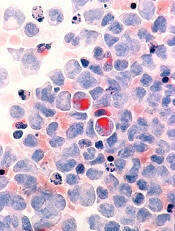
Credit: Lance Liotta
A small gene embedded in a larger gene appears to be the driving force behind acute myeloid leukemia (AML) development, according to research published in Science Signaling.
The smaller gene, microRNA-3151 (miR-3151), is embedded in intron 1 of the larger gene, BAALC.
As both genes have been associated with poor prognosis in AML, researchers wanted to determine the degree to which each of the genes contributes to AML.
“We discovered that the smaller microRNA gene, and not the larger host gene, is the major oncogenic driver of the 2 molecules in AML,” said principal investigator Albert de la Chapelle, MD, PhD, of The Ohio State University Comprehensive Cancer Center (OSUCCC) in Columbus.
“When both genes are highly expressed, it means a bad prognosis for patients, but our experiments indicate that it is high expression of miR-3151 that really matters. Overexpression of BAALC alone had only limited cancer-causing activity.”
Dr de la Chapelle and his colleagues used AML cells derived from patients, AML cell lines, and an animal model of the disease to investigate the role of miR-3151 and BAALC in older patients with cytogenetically normal AML.
The team found that miR-3151 promotes leukemia development by targeting the tumor suppressor TP53 and 7 other genes in the TP53 pathway.
“When miR-3151 blocks TP53 in the tumor cells, it enables the cells to survive, divide, and grow faster,” said study author Clara D. Bloomfield, MD, of OSUCCC.
Experiments also showed that overexpressing miR-3151 promotes AML cell growth. BAALC overexpression enhances that effect, but blocking miR-3151 or overexpressing TP53 reverses it.
In mice, miR-3151 alone and in combination with BAALC promoted leukemia development.
Finally, the researchers discovered that miR-3151 overexpression can be inhibited by the proteasome inhibitor bortezomib, which suggests a possible therapy for miR-3151 overexpression.
“About one-third of the several hundred known human microRNAs are encoded in host genes,” said study author Ann-Kathrin Eisfeld, MD, of OSUCCC.
“We know very little about how microRNAs located within introns are regulated and how they interact with their host genes. These findings provide an important example of that interaction.”
Credit: Lance Liotta
A small gene embedded in a larger gene appears to be the driving force behind acute myeloid leukemia (AML) development, according to research published in Science Signaling.
The smaller gene, microRNA-3151 (miR-3151), is embedded in intron 1 of the larger gene, BAALC.
As both genes have been associated with poor prognosis in AML, researchers wanted to determine the degree to which each of the genes contributes to AML.
“We discovered that the smaller microRNA gene, and not the larger host gene, is the major oncogenic driver of the 2 molecules in AML,” said principal investigator Albert de la Chapelle, MD, PhD, of The Ohio State University Comprehensive Cancer Center (OSUCCC) in Columbus.
“When both genes are highly expressed, it means a bad prognosis for patients, but our experiments indicate that it is high expression of miR-3151 that really matters. Overexpression of BAALC alone had only limited cancer-causing activity.”
Dr de la Chapelle and his colleagues used AML cells derived from patients, AML cell lines, and an animal model of the disease to investigate the role of miR-3151 and BAALC in older patients with cytogenetically normal AML.
The team found that miR-3151 promotes leukemia development by targeting the tumor suppressor TP53 and 7 other genes in the TP53 pathway.
“When miR-3151 blocks TP53 in the tumor cells, it enables the cells to survive, divide, and grow faster,” said study author Clara D. Bloomfield, MD, of OSUCCC.
Experiments also showed that overexpressing miR-3151 promotes AML cell growth. BAALC overexpression enhances that effect, but blocking miR-3151 or overexpressing TP53 reverses it.
In mice, miR-3151 alone and in combination with BAALC promoted leukemia development.
Finally, the researchers discovered that miR-3151 overexpression can be inhibited by the proteasome inhibitor bortezomib, which suggests a possible therapy for miR-3151 overexpression.
“About one-third of the several hundred known human microRNAs are encoded in host genes,” said study author Ann-Kathrin Eisfeld, MD, of OSUCCC.
“We know very little about how microRNAs located within introns are regulated and how they interact with their host genes. These findings provide an important example of that interaction.”
Credit: Lance Liotta
A small gene embedded in a larger gene appears to be the driving force behind acute myeloid leukemia (AML) development, according to research published in Science Signaling.
The smaller gene, microRNA-3151 (miR-3151), is embedded in intron 1 of the larger gene, BAALC.
As both genes have been associated with poor prognosis in AML, researchers wanted to determine the degree to which each of the genes contributes to AML.
“We discovered that the smaller microRNA gene, and not the larger host gene, is the major oncogenic driver of the 2 molecules in AML,” said principal investigator Albert de la Chapelle, MD, PhD, of The Ohio State University Comprehensive Cancer Center (OSUCCC) in Columbus.
“When both genes are highly expressed, it means a bad prognosis for patients, but our experiments indicate that it is high expression of miR-3151 that really matters. Overexpression of BAALC alone had only limited cancer-causing activity.”
Dr de la Chapelle and his colleagues used AML cells derived from patients, AML cell lines, and an animal model of the disease to investigate the role of miR-3151 and BAALC in older patients with cytogenetically normal AML.
The team found that miR-3151 promotes leukemia development by targeting the tumor suppressor TP53 and 7 other genes in the TP53 pathway.
“When miR-3151 blocks TP53 in the tumor cells, it enables the cells to survive, divide, and grow faster,” said study author Clara D. Bloomfield, MD, of OSUCCC.
Experiments also showed that overexpressing miR-3151 promotes AML cell growth. BAALC overexpression enhances that effect, but blocking miR-3151 or overexpressing TP53 reverses it.
In mice, miR-3151 alone and in combination with BAALC promoted leukemia development.
Finally, the researchers discovered that miR-3151 overexpression can be inhibited by the proteasome inhibitor bortezomib, which suggests a possible therapy for miR-3151 overexpression.
“About one-third of the several hundred known human microRNAs are encoded in host genes,” said study author Ann-Kathrin Eisfeld, MD, of OSUCCC.
“We know very little about how microRNAs located within introns are regulated and how they interact with their host genes. These findings provide an important example of that interaction.”
Protein helps HSP90 inhibitors fight cancers
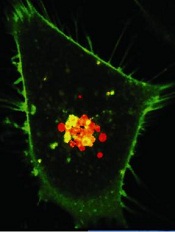
Credit: PNAS
Researchers have discovered how a molecule called CUL5 helps HSP90 inhibitors kill cancer cells, according to a study published in Proceedings of the National Academy of Sciences.
The team found that CUL5 is required for the degradation of proteins that promote cancer cell proliferation, and CUL5 works in opposition to HSP90.
When cancer cells are treated with HSP90 inhibitors, CUL5 immediately steps in to help dispose of the proliferation-promoting proteins.
Based on these findings, the researchers speculate that some patients may be resistant to HSP90 inhibitors if their cancer cells have lower amounts of CUL5. And conversely, the drugs may work better in patients with higher CUL5 levels.
Paul Workman, PhD, of The Institute of Cancer Research in London, UK, and his colleagues conducted this research in cell lines of melanoma, as well as colon, breast, and lung cancers.
They first tested the HSP90 inhibitor 17-AAG in HT29 cells and found that CUL5 is involved in the drug-induced degradation of several protein kinase clients of HSP90.
Then, the researchers assessed the effects of silencing CUL5 and discovered that it delays the abrogation of protein signaling caused by an HSP90 inhibitor.
Furthermore, silencing CUL5 reduced cellular sensitivity to 3 different HSP90 inhibitors across the 4 different cancer types studied, which, as the researchers pointed out, are driven by different protein kinases.
So the team believes this research could apply to a number of different cancers. HSP90 inhibitors have proven effective against a range of malignancies, including leukemias, lymphomas, and multiple myeloma.
“We’ve known for some time that drugs that block HSP90 have great potential as treatments for cancers . . . , and we had an initial clue that the protein CUL5 may be involved in some way in how these drugs work,” Dr Workman said.
“Our new research shows that CUL5 is not only vital in the response of cancer cells to HSP90 inhibitors but also reveals surprising insights into precisely how it works by acting at several different levels. What also surprised us was that CUL5 gets rid of many more of the cancer-causing proteins than we’d previously imagined and that it’s effective across several types of tumor.”
“This suggests that a test for CUL5 in patients could help us tell whether they might respond to HSP90-blocking drugs, as well as pointing to new targets to develop more effective drugs.”
Credit: PNAS
Researchers have discovered how a molecule called CUL5 helps HSP90 inhibitors kill cancer cells, according to a study published in Proceedings of the National Academy of Sciences.
The team found that CUL5 is required for the degradation of proteins that promote cancer cell proliferation, and CUL5 works in opposition to HSP90.
When cancer cells are treated with HSP90 inhibitors, CUL5 immediately steps in to help dispose of the proliferation-promoting proteins.
Based on these findings, the researchers speculate that some patients may be resistant to HSP90 inhibitors if their cancer cells have lower amounts of CUL5. And conversely, the drugs may work better in patients with higher CUL5 levels.
Paul Workman, PhD, of The Institute of Cancer Research in London, UK, and his colleagues conducted this research in cell lines of melanoma, as well as colon, breast, and lung cancers.
They first tested the HSP90 inhibitor 17-AAG in HT29 cells and found that CUL5 is involved in the drug-induced degradation of several protein kinase clients of HSP90.
Then, the researchers assessed the effects of silencing CUL5 and discovered that it delays the abrogation of protein signaling caused by an HSP90 inhibitor.
Furthermore, silencing CUL5 reduced cellular sensitivity to 3 different HSP90 inhibitors across the 4 different cancer types studied, which, as the researchers pointed out, are driven by different protein kinases.
So the team believes this research could apply to a number of different cancers. HSP90 inhibitors have proven effective against a range of malignancies, including leukemias, lymphomas, and multiple myeloma.
“We’ve known for some time that drugs that block HSP90 have great potential as treatments for cancers . . . , and we had an initial clue that the protein CUL5 may be involved in some way in how these drugs work,” Dr Workman said.
“Our new research shows that CUL5 is not only vital in the response of cancer cells to HSP90 inhibitors but also reveals surprising insights into precisely how it works by acting at several different levels. What also surprised us was that CUL5 gets rid of many more of the cancer-causing proteins than we’d previously imagined and that it’s effective across several types of tumor.”
“This suggests that a test for CUL5 in patients could help us tell whether they might respond to HSP90-blocking drugs, as well as pointing to new targets to develop more effective drugs.”
Credit: PNAS
Researchers have discovered how a molecule called CUL5 helps HSP90 inhibitors kill cancer cells, according to a study published in Proceedings of the National Academy of Sciences.
The team found that CUL5 is required for the degradation of proteins that promote cancer cell proliferation, and CUL5 works in opposition to HSP90.
When cancer cells are treated with HSP90 inhibitors, CUL5 immediately steps in to help dispose of the proliferation-promoting proteins.
Based on these findings, the researchers speculate that some patients may be resistant to HSP90 inhibitors if their cancer cells have lower amounts of CUL5. And conversely, the drugs may work better in patients with higher CUL5 levels.
Paul Workman, PhD, of The Institute of Cancer Research in London, UK, and his colleagues conducted this research in cell lines of melanoma, as well as colon, breast, and lung cancers.
They first tested the HSP90 inhibitor 17-AAG in HT29 cells and found that CUL5 is involved in the drug-induced degradation of several protein kinase clients of HSP90.
Then, the researchers assessed the effects of silencing CUL5 and discovered that it delays the abrogation of protein signaling caused by an HSP90 inhibitor.
Furthermore, silencing CUL5 reduced cellular sensitivity to 3 different HSP90 inhibitors across the 4 different cancer types studied, which, as the researchers pointed out, are driven by different protein kinases.
So the team believes this research could apply to a number of different cancers. HSP90 inhibitors have proven effective against a range of malignancies, including leukemias, lymphomas, and multiple myeloma.
“We’ve known for some time that drugs that block HSP90 have great potential as treatments for cancers . . . , and we had an initial clue that the protein CUL5 may be involved in some way in how these drugs work,” Dr Workman said.
“Our new research shows that CUL5 is not only vital in the response of cancer cells to HSP90 inhibitors but also reveals surprising insights into precisely how it works by acting at several different levels. What also surprised us was that CUL5 gets rid of many more of the cancer-causing proteins than we’d previously imagined and that it’s effective across several types of tumor.”
“This suggests that a test for CUL5 in patients could help us tell whether they might respond to HSP90-blocking drugs, as well as pointing to new targets to develop more effective drugs.”
Obinutuzumab for previously untreated chronic lymphocytic leukemia
Click on the PDF icon at the top of this introduction to read the full article.
Click on the PDF icon at the top of this introduction to read the full article.
Click on the PDF icon at the top of this introduction to read the full article.
Team identifies potential treatment for FLT3-ITD AML
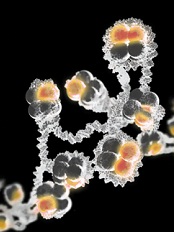
Credit: Eric Smith
Researchers have presented evidence to support the use of a BET protein antagonist in FLT3-ITD-mutated acute myeloid leukemia (AML).
The group’s experiments showed the antagonist, JQ1, was active against FLT3-ITD-expressing AML cells in vitro and in vivo.
The agent also demonstrated synergy with the tyrosine kinase inhibitor (TKI) AC220 and the histone deacetylase (HDAC) inhibitor panobinostat.
In fact, JQ1 and panobinostat in combination induced apoptosis in a TKI-resistant cell line.
Melissa Rodriguez, MD, PhD, of the Houston Methodist Research Institute in Texas, and her colleagues presented these findings at the AACR Annual Meeting 2014 as abstract 1721.
The BET protein family members, including BRD4, bind to acetylated lysines on histone proteins, help assemble transcriptional regulators at the target gene promoters and enhancers, and regulate the expression of oncogenes such as MYC and BCL-2.
JQ1 interferes with BRD4 binding to acetylated lysines on histone proteins, resulting in the displacement of the BET proteins. This, in turn, disrupts transcription initiation and elongation factors situated on the chromatin, thereby inhibiting expressions of c-MYC and BCL-2 and their target genes. And this leads to growth arrest and the induction of apoptosis in AML cells.
Dr Rodriguez and her colleagues found that JQ1 alone induced apoptosis in cultured mouse lymphoid cells such as Ba/F3/FLT3-ITD but also Ba/F3/FLT3-ITD that expressed the FLT3-TKI-resistant mutations F691L and D835V.
JQ1 also attenuated the expression of c-MYC, BCL2, and CDK6 oncogenes; induced the expression of p21, p27, and BIM; and cleaved PARP levels.
Furthermore, JQ1 dose-dependently induced apoptosis in MOLM13 and MV4-11 cell lines, as well as in primary AML cells that all expressed FLT3-ITD but had not become resistant to TKIs.
In SCID mice that received non-TKI-treated MOLM13 xenografts, JQ1 alone significantly improved survival compared to vehicle controls. And the researchers observed no toxicity in the treated mice.
JQ1 plus AC220 or panobinostat synergistically induced apoptosis in MV4-11 cells, MOLM13 cells, and primary AML cells expressing FLT3-ITD.
In testing MOLM13/TKIR cells, which had a greater than 50-fold resistance to AC220 over the other cell lines tested, the researchers discovered these cells express higher levels of BRD4, c-MYC, and class I HDACs. They were also significantly more sensitive to JQ1-induced apoptosis.
In this AC220-resistant cell line, JQ1 and panobinostat synergistically induced apoptosis. But, as expected, the same effect did not occur when JQ1 was administered with AC220.
The synergistic apoptotic response of panobinostat and JQ1 was associated with the down-regulation of c-MYC and demonstrated JQ1’s ability to overcome AC220-induced TKI resistance in FLT3-ITD-expressing cells.
The researchers said these findings support future in vivo testing of BRD4 antagonists such as JQ1 in combination with TKIs such as AC220 or HDAC inhibitors such as panobinostat against FLT3-TKI-sensitive cell lines. The research also supports using BRD4 antagonists in combination with panobinostat against TKI-resistant, FLT3-ITD-mutated AML.
Credit: Eric Smith
Researchers have presented evidence to support the use of a BET protein antagonist in FLT3-ITD-mutated acute myeloid leukemia (AML).
The group’s experiments showed the antagonist, JQ1, was active against FLT3-ITD-expressing AML cells in vitro and in vivo.
The agent also demonstrated synergy with the tyrosine kinase inhibitor (TKI) AC220 and the histone deacetylase (HDAC) inhibitor panobinostat.
In fact, JQ1 and panobinostat in combination induced apoptosis in a TKI-resistant cell line.
Melissa Rodriguez, MD, PhD, of the Houston Methodist Research Institute in Texas, and her colleagues presented these findings at the AACR Annual Meeting 2014 as abstract 1721.
The BET protein family members, including BRD4, bind to acetylated lysines on histone proteins, help assemble transcriptional regulators at the target gene promoters and enhancers, and regulate the expression of oncogenes such as MYC and BCL-2.
JQ1 interferes with BRD4 binding to acetylated lysines on histone proteins, resulting in the displacement of the BET proteins. This, in turn, disrupts transcription initiation and elongation factors situated on the chromatin, thereby inhibiting expressions of c-MYC and BCL-2 and their target genes. And this leads to growth arrest and the induction of apoptosis in AML cells.
Dr Rodriguez and her colleagues found that JQ1 alone induced apoptosis in cultured mouse lymphoid cells such as Ba/F3/FLT3-ITD but also Ba/F3/FLT3-ITD that expressed the FLT3-TKI-resistant mutations F691L and D835V.
JQ1 also attenuated the expression of c-MYC, BCL2, and CDK6 oncogenes; induced the expression of p21, p27, and BIM; and cleaved PARP levels.
Furthermore, JQ1 dose-dependently induced apoptosis in MOLM13 and MV4-11 cell lines, as well as in primary AML cells that all expressed FLT3-ITD but had not become resistant to TKIs.
In SCID mice that received non-TKI-treated MOLM13 xenografts, JQ1 alone significantly improved survival compared to vehicle controls. And the researchers observed no toxicity in the treated mice.
JQ1 plus AC220 or panobinostat synergistically induced apoptosis in MV4-11 cells, MOLM13 cells, and primary AML cells expressing FLT3-ITD.
In testing MOLM13/TKIR cells, which had a greater than 50-fold resistance to AC220 over the other cell lines tested, the researchers discovered these cells express higher levels of BRD4, c-MYC, and class I HDACs. They were also significantly more sensitive to JQ1-induced apoptosis.
In this AC220-resistant cell line, JQ1 and panobinostat synergistically induced apoptosis. But, as expected, the same effect did not occur when JQ1 was administered with AC220.
The synergistic apoptotic response of panobinostat and JQ1 was associated with the down-regulation of c-MYC and demonstrated JQ1’s ability to overcome AC220-induced TKI resistance in FLT3-ITD-expressing cells.
The researchers said these findings support future in vivo testing of BRD4 antagonists such as JQ1 in combination with TKIs such as AC220 or HDAC inhibitors such as panobinostat against FLT3-TKI-sensitive cell lines. The research also supports using BRD4 antagonists in combination with panobinostat against TKI-resistant, FLT3-ITD-mutated AML.
Credit: Eric Smith
Researchers have presented evidence to support the use of a BET protein antagonist in FLT3-ITD-mutated acute myeloid leukemia (AML).
The group’s experiments showed the antagonist, JQ1, was active against FLT3-ITD-expressing AML cells in vitro and in vivo.
The agent also demonstrated synergy with the tyrosine kinase inhibitor (TKI) AC220 and the histone deacetylase (HDAC) inhibitor panobinostat.
In fact, JQ1 and panobinostat in combination induced apoptosis in a TKI-resistant cell line.
Melissa Rodriguez, MD, PhD, of the Houston Methodist Research Institute in Texas, and her colleagues presented these findings at the AACR Annual Meeting 2014 as abstract 1721.
The BET protein family members, including BRD4, bind to acetylated lysines on histone proteins, help assemble transcriptional regulators at the target gene promoters and enhancers, and regulate the expression of oncogenes such as MYC and BCL-2.
JQ1 interferes with BRD4 binding to acetylated lysines on histone proteins, resulting in the displacement of the BET proteins. This, in turn, disrupts transcription initiation and elongation factors situated on the chromatin, thereby inhibiting expressions of c-MYC and BCL-2 and their target genes. And this leads to growth arrest and the induction of apoptosis in AML cells.
Dr Rodriguez and her colleagues found that JQ1 alone induced apoptosis in cultured mouse lymphoid cells such as Ba/F3/FLT3-ITD but also Ba/F3/FLT3-ITD that expressed the FLT3-TKI-resistant mutations F691L and D835V.
JQ1 also attenuated the expression of c-MYC, BCL2, and CDK6 oncogenes; induced the expression of p21, p27, and BIM; and cleaved PARP levels.
Furthermore, JQ1 dose-dependently induced apoptosis in MOLM13 and MV4-11 cell lines, as well as in primary AML cells that all expressed FLT3-ITD but had not become resistant to TKIs.
In SCID mice that received non-TKI-treated MOLM13 xenografts, JQ1 alone significantly improved survival compared to vehicle controls. And the researchers observed no toxicity in the treated mice.
JQ1 plus AC220 or panobinostat synergistically induced apoptosis in MV4-11 cells, MOLM13 cells, and primary AML cells expressing FLT3-ITD.
In testing MOLM13/TKIR cells, which had a greater than 50-fold resistance to AC220 over the other cell lines tested, the researchers discovered these cells express higher levels of BRD4, c-MYC, and class I HDACs. They were also significantly more sensitive to JQ1-induced apoptosis.
In this AC220-resistant cell line, JQ1 and panobinostat synergistically induced apoptosis. But, as expected, the same effect did not occur when JQ1 was administered with AC220.
The synergistic apoptotic response of panobinostat and JQ1 was associated with the down-regulation of c-MYC and demonstrated JQ1’s ability to overcome AC220-induced TKI resistance in FLT3-ITD-expressing cells.
The researchers said these findings support future in vivo testing of BRD4 antagonists such as JQ1 in combination with TKIs such as AC220 or HDAC inhibitors such as panobinostat against FLT3-TKI-sensitive cell lines. The research also supports using BRD4 antagonists in combination with panobinostat against TKI-resistant, FLT3-ITD-mutated AML.
Drug gets orphan designation for AML

Credit: NIH
The US Food and Drug Administration and the European Commission have granted volasertib orphan designation for the treatment of acute myeloid leukemia (AML).
Volasertib, an investigational inhibitor of polo-like kinase 1 (Plk1), works by arresting the cell cycle and inducing apoptosis.
The drug is under evaluation as a potential treatment for patients aged 65 or older with previously untreated AML who are ineligible for intensive remission induction therapy.
In both the US and the European Union, orphan designation is awarded for drugs intended to treat rare conditions for which no authorized treatment exists. The designation gives the company developing volasertib, Boehringer Ingelheim, regulatory support and incentives to help the development and authorization process.
Volasertib has already been tested in a phase 1/2 trial of patients with newly diagnosed AML who were considered ineligible for intensive remission induction therapy. The results were presented at the 2012 ASH Annual Meeting as abstract 411.
In this study, volasertib in combination with low-dose cytarabine (LDAC) elicited higher rates of objective response and an improvement in event-free survival, when compared to LDAC alone.
Eighty-seven AML patients were assigned to receive volasertib + LDAC (n=42) or LDAC alone (n=45). Patient characteristics were similar between the 2 groups.
The objective response rate was 31% among patients who received volasertib + LDAC and 11.1% in those who received LDAC alone. The complete response rates were 16.7% and 6.7%, respectively.
The median event-free survival was 169 days for patients who received volasertib + LDAC and 69 days for patients who received LDAC alone.
Grade 3 or higher adverse events were more common in the volasertib + LDAC arm than the LDAC-alone arm—95.2% vs 68.9%.
The most frequent adverse events of any grade occurring in the volasertib + LDAC arm were febrile neutropenia (50%), constipation (45.2%), nausea (40.5%), and anemia (40.5%).
In the LDAC-alone arm, the most common adverse events were nausea (33.3%), anemia (28.9%), pyrexia (28.9%), constipation (26.7%), asthenia (26.7%), and diarrhea (26.7%).
Based on these results, researchers initiated a phase 3 study, called POLO-AML-2, comparing volasertib plus LDAC to LDAC plus placebo in older AML patients.
Credit: NIH
The US Food and Drug Administration and the European Commission have granted volasertib orphan designation for the treatment of acute myeloid leukemia (AML).
Volasertib, an investigational inhibitor of polo-like kinase 1 (Plk1), works by arresting the cell cycle and inducing apoptosis.
The drug is under evaluation as a potential treatment for patients aged 65 or older with previously untreated AML who are ineligible for intensive remission induction therapy.
In both the US and the European Union, orphan designation is awarded for drugs intended to treat rare conditions for which no authorized treatment exists. The designation gives the company developing volasertib, Boehringer Ingelheim, regulatory support and incentives to help the development and authorization process.
Volasertib has already been tested in a phase 1/2 trial of patients with newly diagnosed AML who were considered ineligible for intensive remission induction therapy. The results were presented at the 2012 ASH Annual Meeting as abstract 411.
In this study, volasertib in combination with low-dose cytarabine (LDAC) elicited higher rates of objective response and an improvement in event-free survival, when compared to LDAC alone.
Eighty-seven AML patients were assigned to receive volasertib + LDAC (n=42) or LDAC alone (n=45). Patient characteristics were similar between the 2 groups.
The objective response rate was 31% among patients who received volasertib + LDAC and 11.1% in those who received LDAC alone. The complete response rates were 16.7% and 6.7%, respectively.
The median event-free survival was 169 days for patients who received volasertib + LDAC and 69 days for patients who received LDAC alone.
Grade 3 or higher adverse events were more common in the volasertib + LDAC arm than the LDAC-alone arm—95.2% vs 68.9%.
The most frequent adverse events of any grade occurring in the volasertib + LDAC arm were febrile neutropenia (50%), constipation (45.2%), nausea (40.5%), and anemia (40.5%).
In the LDAC-alone arm, the most common adverse events were nausea (33.3%), anemia (28.9%), pyrexia (28.9%), constipation (26.7%), asthenia (26.7%), and diarrhea (26.7%).
Based on these results, researchers initiated a phase 3 study, called POLO-AML-2, comparing volasertib plus LDAC to LDAC plus placebo in older AML patients.
Credit: NIH
The US Food and Drug Administration and the European Commission have granted volasertib orphan designation for the treatment of acute myeloid leukemia (AML).
Volasertib, an investigational inhibitor of polo-like kinase 1 (Plk1), works by arresting the cell cycle and inducing apoptosis.
The drug is under evaluation as a potential treatment for patients aged 65 or older with previously untreated AML who are ineligible for intensive remission induction therapy.
In both the US and the European Union, orphan designation is awarded for drugs intended to treat rare conditions for which no authorized treatment exists. The designation gives the company developing volasertib, Boehringer Ingelheim, regulatory support and incentives to help the development and authorization process.
Volasertib has already been tested in a phase 1/2 trial of patients with newly diagnosed AML who were considered ineligible for intensive remission induction therapy. The results were presented at the 2012 ASH Annual Meeting as abstract 411.
In this study, volasertib in combination with low-dose cytarabine (LDAC) elicited higher rates of objective response and an improvement in event-free survival, when compared to LDAC alone.
Eighty-seven AML patients were assigned to receive volasertib + LDAC (n=42) or LDAC alone (n=45). Patient characteristics were similar between the 2 groups.
The objective response rate was 31% among patients who received volasertib + LDAC and 11.1% in those who received LDAC alone. The complete response rates were 16.7% and 6.7%, respectively.
The median event-free survival was 169 days for patients who received volasertib + LDAC and 69 days for patients who received LDAC alone.
Grade 3 or higher adverse events were more common in the volasertib + LDAC arm than the LDAC-alone arm—95.2% vs 68.9%.
The most frequent adverse events of any grade occurring in the volasertib + LDAC arm were febrile neutropenia (50%), constipation (45.2%), nausea (40.5%), and anemia (40.5%).
In the LDAC-alone arm, the most common adverse events were nausea (33.3%), anemia (28.9%), pyrexia (28.9%), constipation (26.7%), asthenia (26.7%), and diarrhea (26.7%).
Based on these results, researchers initiated a phase 3 study, called POLO-AML-2, comparing volasertib plus LDAC to LDAC plus placebo in older AML patients.
FDA lifts clinical hold on CAR T-cell study

Credit: MSKCC
The US Food and Drug Administration (FDA) has lifted a clinical hold placed on a trial of chimeric antigen receptor (CAR) T-cell therapy, according to one of the study’s investigators.
The study is an evaluation of 19-28z CAR T cells in patients with B-cell acute lymphoblastic leukemia.
Trial enrollment was halted after 2 patients died from complications related to cytokine release syndrome, within 2 weeks of receiving CAR T-cell therapy.
Investigator Michel Sadelain, MD, PhD, of Memorial Sloan-Kettering Cancer Center (MSKCC) in New York, said these deaths have been reviewed, trial enrollment criteria have been changed, and the clinical hold has been lifted.
The FDA put the trial on hold last month, after researchers at MSKCC notified the agency of the deaths and had decided to halt trial enrollment themselves.
Though several other patients have died on this study, only 2 of the deaths had unexpected causes and prompted additional investigation. One of these patients died of cardiovascular disease, and the other died following “persistent seizure activity.”
So MSKCC conducted a review of these cases. And the results prompted them to amend trial enrollment criteria and dosing recommendations. Now, patients with cardiac disease are ineligible to receive 19-28z CAR T cells.
And the T-cell dose a patient receives will depend on the extent of his or her disease. The hope is that this will reduce the risk of cytokine release syndrome and any resulting seizures.
The researchers also noted that the monoclonal antibody tocilizumab has proven effective in treating cytokine release syndrome.
Credit: MSKCC
The US Food and Drug Administration (FDA) has lifted a clinical hold placed on a trial of chimeric antigen receptor (CAR) T-cell therapy, according to one of the study’s investigators.
The study is an evaluation of 19-28z CAR T cells in patients with B-cell acute lymphoblastic leukemia.
Trial enrollment was halted after 2 patients died from complications related to cytokine release syndrome, within 2 weeks of receiving CAR T-cell therapy.
Investigator Michel Sadelain, MD, PhD, of Memorial Sloan-Kettering Cancer Center (MSKCC) in New York, said these deaths have been reviewed, trial enrollment criteria have been changed, and the clinical hold has been lifted.
The FDA put the trial on hold last month, after researchers at MSKCC notified the agency of the deaths and had decided to halt trial enrollment themselves.
Though several other patients have died on this study, only 2 of the deaths had unexpected causes and prompted additional investigation. One of these patients died of cardiovascular disease, and the other died following “persistent seizure activity.”
So MSKCC conducted a review of these cases. And the results prompted them to amend trial enrollment criteria and dosing recommendations. Now, patients with cardiac disease are ineligible to receive 19-28z CAR T cells.
And the T-cell dose a patient receives will depend on the extent of his or her disease. The hope is that this will reduce the risk of cytokine release syndrome and any resulting seizures.
The researchers also noted that the monoclonal antibody tocilizumab has proven effective in treating cytokine release syndrome.
Credit: MSKCC
The US Food and Drug Administration (FDA) has lifted a clinical hold placed on a trial of chimeric antigen receptor (CAR) T-cell therapy, according to one of the study’s investigators.
The study is an evaluation of 19-28z CAR T cells in patients with B-cell acute lymphoblastic leukemia.
Trial enrollment was halted after 2 patients died from complications related to cytokine release syndrome, within 2 weeks of receiving CAR T-cell therapy.
Investigator Michel Sadelain, MD, PhD, of Memorial Sloan-Kettering Cancer Center (MSKCC) in New York, said these deaths have been reviewed, trial enrollment criteria have been changed, and the clinical hold has been lifted.
The FDA put the trial on hold last month, after researchers at MSKCC notified the agency of the deaths and had decided to halt trial enrollment themselves.
Though several other patients have died on this study, only 2 of the deaths had unexpected causes and prompted additional investigation. One of these patients died of cardiovascular disease, and the other died following “persistent seizure activity.”
So MSKCC conducted a review of these cases. And the results prompted them to amend trial enrollment criteria and dosing recommendations. Now, patients with cardiac disease are ineligible to receive 19-28z CAR T cells.
And the T-cell dose a patient receives will depend on the extent of his or her disease. The hope is that this will reduce the risk of cytokine release syndrome and any resulting seizures.
The researchers also noted that the monoclonal antibody tocilizumab has proven effective in treating cytokine release syndrome.
Explaining the link between Down syndrome and B-ALL

Credit: Aaron Logan
Investigators believe they’ve uncovered information that explains the connection between Down syndrome and B-cell acute lymphoblastic leukemia (B-ALL).
In a letter to Nature Genetics, the team described how they tracked the chain of events that links a chromosomal abnormality in Down syndrome to the cellular havoc that occurs in B-cell ALL.
Experiments in mice and patient samples revealed that the gene HMGN1 turns off the function of PRC2, which prompts B-cell proliferation.
“For 80 years, it hasn’t been clear why children with Down syndrome face a sharply elevated risk of ALL,” said the study’s lead author, Andrew Lane, MD, PhD, of Dana-Farber Cancer Institute in Boston.
“Advances in technology—which make it possible to study blood cells and leukemias that model Down syndrome in the laboratory—have enabled us to make that link.”
To trace the link between Down syndrome and B-ALL, the investigators acquired a strain of mice that carry an extra copy of 31 genes found on chromosome 21. B cells from these mice were abnormal and grew uncontrollably, just as they do in B-ALL patients.
The team set out to characterize the pattern of gene activity that distinguishes these abnormal B cells from normal B cells. They found the chief difference was that, in the abnormal cells, PRC2 proteins did not function. Somehow, the loss of PRC2 was spurring the B cells to divide and proliferate before they were fully mature.
To confirm that a shutdown of PRC2 is critical to the formation of B-ALL in Down syndrome patients, the investigators focused on the genes controlled by PRC2. Using 2 sets of B-ALL cell samples—1 from patients with Down syndrome and 1 from patients without it—they measured the activity of thousands of different genes, looking for differences between the 2 sets.
About 100 genes were much more active in the Down syndrome group, and all of them were under the control of PRC2. When PRC2 is silenced, those 100 genes respond with a burst of activity, driving cell growth and division.
The investigators then wondered what gene or group of genes was stifling PRC2 in Down syndrome patients’ B cells. Using cells from the mouse models, the team systematically switched off each of the 31 genes to determine its effect on the cells. When they turned off HMGN1, the cells stopped growing and died.
“We concluded that the extra copy of HMGN1 is important for turning off PRC2, and that, in turn, increases the cell proliferation,” Dr Lane said. “This provides the long-sought-after molecular link between Down syndrome and the development of B-cell ALL.”
Although there are currently no drugs that target HMGN1, the investigators suggest HDAC inhibitors that switch on PRC2 could have an antileukemic effect in patients with Down syndrome. Work is under way to improve these drugs so they can be tested in preclinical experiments.
As other forms of B-ALL also have the same 100-gene signature as the one discovered for B-ALL associated with Down syndrome, agents that target PRC2 might be effective in those cancers as well, Dr Lane noted.
Credit: Aaron Logan
Investigators believe they’ve uncovered information that explains the connection between Down syndrome and B-cell acute lymphoblastic leukemia (B-ALL).
In a letter to Nature Genetics, the team described how they tracked the chain of events that links a chromosomal abnormality in Down syndrome to the cellular havoc that occurs in B-cell ALL.
Experiments in mice and patient samples revealed that the gene HMGN1 turns off the function of PRC2, which prompts B-cell proliferation.
“For 80 years, it hasn’t been clear why children with Down syndrome face a sharply elevated risk of ALL,” said the study’s lead author, Andrew Lane, MD, PhD, of Dana-Farber Cancer Institute in Boston.
“Advances in technology—which make it possible to study blood cells and leukemias that model Down syndrome in the laboratory—have enabled us to make that link.”
To trace the link between Down syndrome and B-ALL, the investigators acquired a strain of mice that carry an extra copy of 31 genes found on chromosome 21. B cells from these mice were abnormal and grew uncontrollably, just as they do in B-ALL patients.
The team set out to characterize the pattern of gene activity that distinguishes these abnormal B cells from normal B cells. They found the chief difference was that, in the abnormal cells, PRC2 proteins did not function. Somehow, the loss of PRC2 was spurring the B cells to divide and proliferate before they were fully mature.
To confirm that a shutdown of PRC2 is critical to the formation of B-ALL in Down syndrome patients, the investigators focused on the genes controlled by PRC2. Using 2 sets of B-ALL cell samples—1 from patients with Down syndrome and 1 from patients without it—they measured the activity of thousands of different genes, looking for differences between the 2 sets.
About 100 genes were much more active in the Down syndrome group, and all of them were under the control of PRC2. When PRC2 is silenced, those 100 genes respond with a burst of activity, driving cell growth and division.
The investigators then wondered what gene or group of genes was stifling PRC2 in Down syndrome patients’ B cells. Using cells from the mouse models, the team systematically switched off each of the 31 genes to determine its effect on the cells. When they turned off HMGN1, the cells stopped growing and died.
“We concluded that the extra copy of HMGN1 is important for turning off PRC2, and that, in turn, increases the cell proliferation,” Dr Lane said. “This provides the long-sought-after molecular link between Down syndrome and the development of B-cell ALL.”
Although there are currently no drugs that target HMGN1, the investigators suggest HDAC inhibitors that switch on PRC2 could have an antileukemic effect in patients with Down syndrome. Work is under way to improve these drugs so they can be tested in preclinical experiments.
As other forms of B-ALL also have the same 100-gene signature as the one discovered for B-ALL associated with Down syndrome, agents that target PRC2 might be effective in those cancers as well, Dr Lane noted.
Credit: Aaron Logan
Investigators believe they’ve uncovered information that explains the connection between Down syndrome and B-cell acute lymphoblastic leukemia (B-ALL).
In a letter to Nature Genetics, the team described how they tracked the chain of events that links a chromosomal abnormality in Down syndrome to the cellular havoc that occurs in B-cell ALL.
Experiments in mice and patient samples revealed that the gene HMGN1 turns off the function of PRC2, which prompts B-cell proliferation.
“For 80 years, it hasn’t been clear why children with Down syndrome face a sharply elevated risk of ALL,” said the study’s lead author, Andrew Lane, MD, PhD, of Dana-Farber Cancer Institute in Boston.
“Advances in technology—which make it possible to study blood cells and leukemias that model Down syndrome in the laboratory—have enabled us to make that link.”
To trace the link between Down syndrome and B-ALL, the investigators acquired a strain of mice that carry an extra copy of 31 genes found on chromosome 21. B cells from these mice were abnormal and grew uncontrollably, just as they do in B-ALL patients.
The team set out to characterize the pattern of gene activity that distinguishes these abnormal B cells from normal B cells. They found the chief difference was that, in the abnormal cells, PRC2 proteins did not function. Somehow, the loss of PRC2 was spurring the B cells to divide and proliferate before they were fully mature.
To confirm that a shutdown of PRC2 is critical to the formation of B-ALL in Down syndrome patients, the investigators focused on the genes controlled by PRC2. Using 2 sets of B-ALL cell samples—1 from patients with Down syndrome and 1 from patients without it—they measured the activity of thousands of different genes, looking for differences between the 2 sets.
About 100 genes were much more active in the Down syndrome group, and all of them were under the control of PRC2. When PRC2 is silenced, those 100 genes respond with a burst of activity, driving cell growth and division.
The investigators then wondered what gene or group of genes was stifling PRC2 in Down syndrome patients’ B cells. Using cells from the mouse models, the team systematically switched off each of the 31 genes to determine its effect on the cells. When they turned off HMGN1, the cells stopped growing and died.
“We concluded that the extra copy of HMGN1 is important for turning off PRC2, and that, in turn, increases the cell proliferation,” Dr Lane said. “This provides the long-sought-after molecular link between Down syndrome and the development of B-cell ALL.”
Although there are currently no drugs that target HMGN1, the investigators suggest HDAC inhibitors that switch on PRC2 could have an antileukemic effect in patients with Down syndrome. Work is under way to improve these drugs so they can be tested in preclinical experiments.
As other forms of B-ALL also have the same 100-gene signature as the one discovered for B-ALL associated with Down syndrome, agents that target PRC2 might be effective in those cancers as well, Dr Lane noted.
Molecule shows preclinical activity in leukemias, lymphomas
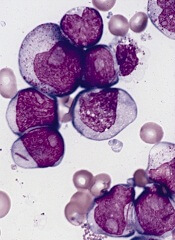
SAN DIEGO—A small molecule that has previously proven effective against solid tumors exhibits activity against leukemias and lymphomas, preclinical research suggests.
The molecule, LOR-253, showed antiproliferative activity in a range of leukemia and lymphoma cell lines, induced apoptosis in acute myeloid leukemia (AML) in vitro, and demonstrated synergy with chemotherapeutic agents.
Ronnie Lum, PhD, and colleagues at Lorus Therapeutics, Inc., the Toronto, Canada-based company developing LOR-253, presented these results at the AACR Annual Meeting 2014 (abstract 4544).
LOR-253 acts through induction of the innate tumor suppressor KLF4. Recent research has suggested that upregulation of the transcription factor CDX2 drives the development or progression of leukemic disease. And CDX2 has been shown to silence KLF4, which is reported to be a critical oncogenic event in AML.
Wih this in mind, the researchers decided to test LOR-253’s activity against AML and other hematologic malignancies in vitro.
Experiments revealed that LOR-253 exerts antiproliferative activity against a range of leukemia and lymphoma cell lines, including Ramos, Raji, K-562, Jurkat, MOLT-4, CCRF-CEM, HEL92.1.7, MOLM-13, THP-1, MV411, NB4, HL-60, KG-1, NOMO-1, SKM-1, OCI-AML-2, EOL-1, and Kasumi-1.
IC50 values were substantially lower in these cell lines than in melanoma cell lines, as well as lines of lung, bladder, colon, prostate, and breast cancers.
The researchers also found that LOR-253 induces KLF4 mRNA expression in the AML cell lines HL60 and THP1. This prompts increased expression of p21, a cyclin-dependent kinase inhibitor that is transcriptionally regulated by KLF4.
Consistent with these results, LOR-253 induced cell-cycle arrest and apoptosis in the AML cell lines, which suggests the molecule acted through its intended mechanism of action.
LOR-253 also showed “strong anticancer synergy” in HL60 cells when delivered in combination with daunorubicin, azacitidine, decitabine, or cytarabine.
When LOR-253 was delivered concurrently with chemotherapy, cell viability decreased the most with cytarabine, followed by decitabine, azacitidine, and daunorubicin. With sequential treatment, cell viability decreased the most when LOR-253 was delivered with decitabine, followed by azacitidine, cytarabine, and daunorubicin.
The researchers said these results suggest LOR-253 could provide a new approach to treat AML and, possibly, other hematologic malignancies.
They are now conducting studies to further characterize the pathway that mediates KLF4 induction by LOR-253, to characterize the effects of LOR-253 in combination with approved chemotherapies for AML, and to assess the efficacy of LOR-253 in animal models of AML.
Lorus Therapeutics is also planning a dose-escalating, phase 1b trial of LOR-253 as monotherapy in AML, myelodysplastic syndromes, and other hematologic malignancies. The company expects to begin the trial this summer.
SAN DIEGO—A small molecule that has previously proven effective against solid tumors exhibits activity against leukemias and lymphomas, preclinical research suggests.
The molecule, LOR-253, showed antiproliferative activity in a range of leukemia and lymphoma cell lines, induced apoptosis in acute myeloid leukemia (AML) in vitro, and demonstrated synergy with chemotherapeutic agents.
Ronnie Lum, PhD, and colleagues at Lorus Therapeutics, Inc., the Toronto, Canada-based company developing LOR-253, presented these results at the AACR Annual Meeting 2014 (abstract 4544).
LOR-253 acts through induction of the innate tumor suppressor KLF4. Recent research has suggested that upregulation of the transcription factor CDX2 drives the development or progression of leukemic disease. And CDX2 has been shown to silence KLF4, which is reported to be a critical oncogenic event in AML.
Wih this in mind, the researchers decided to test LOR-253’s activity against AML and other hematologic malignancies in vitro.
Experiments revealed that LOR-253 exerts antiproliferative activity against a range of leukemia and lymphoma cell lines, including Ramos, Raji, K-562, Jurkat, MOLT-4, CCRF-CEM, HEL92.1.7, MOLM-13, THP-1, MV411, NB4, HL-60, KG-1, NOMO-1, SKM-1, OCI-AML-2, EOL-1, and Kasumi-1.
IC50 values were substantially lower in these cell lines than in melanoma cell lines, as well as lines of lung, bladder, colon, prostate, and breast cancers.
The researchers also found that LOR-253 induces KLF4 mRNA expression in the AML cell lines HL60 and THP1. This prompts increased expression of p21, a cyclin-dependent kinase inhibitor that is transcriptionally regulated by KLF4.
Consistent with these results, LOR-253 induced cell-cycle arrest and apoptosis in the AML cell lines, which suggests the molecule acted through its intended mechanism of action.
LOR-253 also showed “strong anticancer synergy” in HL60 cells when delivered in combination with daunorubicin, azacitidine, decitabine, or cytarabine.
When LOR-253 was delivered concurrently with chemotherapy, cell viability decreased the most with cytarabine, followed by decitabine, azacitidine, and daunorubicin. With sequential treatment, cell viability decreased the most when LOR-253 was delivered with decitabine, followed by azacitidine, cytarabine, and daunorubicin.
The researchers said these results suggest LOR-253 could provide a new approach to treat AML and, possibly, other hematologic malignancies.
They are now conducting studies to further characterize the pathway that mediates KLF4 induction by LOR-253, to characterize the effects of LOR-253 in combination with approved chemotherapies for AML, and to assess the efficacy of LOR-253 in animal models of AML.
Lorus Therapeutics is also planning a dose-escalating, phase 1b trial of LOR-253 as monotherapy in AML, myelodysplastic syndromes, and other hematologic malignancies. The company expects to begin the trial this summer.
SAN DIEGO—A small molecule that has previously proven effective against solid tumors exhibits activity against leukemias and lymphomas, preclinical research suggests.
The molecule, LOR-253, showed antiproliferative activity in a range of leukemia and lymphoma cell lines, induced apoptosis in acute myeloid leukemia (AML) in vitro, and demonstrated synergy with chemotherapeutic agents.
Ronnie Lum, PhD, and colleagues at Lorus Therapeutics, Inc., the Toronto, Canada-based company developing LOR-253, presented these results at the AACR Annual Meeting 2014 (abstract 4544).
LOR-253 acts through induction of the innate tumor suppressor KLF4. Recent research has suggested that upregulation of the transcription factor CDX2 drives the development or progression of leukemic disease. And CDX2 has been shown to silence KLF4, which is reported to be a critical oncogenic event in AML.
Wih this in mind, the researchers decided to test LOR-253’s activity against AML and other hematologic malignancies in vitro.
Experiments revealed that LOR-253 exerts antiproliferative activity against a range of leukemia and lymphoma cell lines, including Ramos, Raji, K-562, Jurkat, MOLT-4, CCRF-CEM, HEL92.1.7, MOLM-13, THP-1, MV411, NB4, HL-60, KG-1, NOMO-1, SKM-1, OCI-AML-2, EOL-1, and Kasumi-1.
IC50 values were substantially lower in these cell lines than in melanoma cell lines, as well as lines of lung, bladder, colon, prostate, and breast cancers.
The researchers also found that LOR-253 induces KLF4 mRNA expression in the AML cell lines HL60 and THP1. This prompts increased expression of p21, a cyclin-dependent kinase inhibitor that is transcriptionally regulated by KLF4.
Consistent with these results, LOR-253 induced cell-cycle arrest and apoptosis in the AML cell lines, which suggests the molecule acted through its intended mechanism of action.
LOR-253 also showed “strong anticancer synergy” in HL60 cells when delivered in combination with daunorubicin, azacitidine, decitabine, or cytarabine.
When LOR-253 was delivered concurrently with chemotherapy, cell viability decreased the most with cytarabine, followed by decitabine, azacitidine, and daunorubicin. With sequential treatment, cell viability decreased the most when LOR-253 was delivered with decitabine, followed by azacitidine, cytarabine, and daunorubicin.
The researchers said these results suggest LOR-253 could provide a new approach to treat AML and, possibly, other hematologic malignancies.
They are now conducting studies to further characterize the pathway that mediates KLF4 induction by LOR-253, to characterize the effects of LOR-253 in combination with approved chemotherapies for AML, and to assess the efficacy of LOR-253 in animal models of AML.
Lorus Therapeutics is also planning a dose-escalating, phase 1b trial of LOR-253 as monotherapy in AML, myelodysplastic syndromes, and other hematologic malignancies. The company expects to begin the trial this summer.
FDA approves ofatumumab in combination for CLL

Credit: Linda Bartlett
The US Food and Drug Administration (FDA) has approved ofatumumab (Arzerra) in combination with chlorambucil for previously untreated patients with chronic lymphocytic leukemia (CLL) who should not receive fludarabine-based therapy.
Ofatumumab, a CD20-directed monoclonal antibody, is already FDA-approved as monotherapy for CLL patients who are refractory to fludarabine and alemtuzumab.
The latest approval was based on results of the phase 3 COMPLEMENT 1 trial.
In this randomized trial, researchers compared single-agent chlorambucil to chlorambucil plus ofatumumab. They enrolled 447 patients for whom fludarabine-based therapy was considered inappropriate (due to factors such as advanced age or comorbidities).
In the overall trial population, the median age was 69 years (range, 35 to 92). Seventy-two percent of patients had 2 or more comorbidities, and 48% of patients had a creatinine clearance of less than 70 mL/min.
The researchers randomized 221 patients to receive chlorambucil plus ofatumumab and 226 patients to receive chlorambucil alone.
Patients in the ofatumumab arm received the drug as an intravenous infusion according to the following schedule: 300 mg in cycle 1 on day 1, 1000 mg in cycle 1 on day 8, and 1000 mg administered on day 1 of all subsequent 28-day cycles.
In both arms, patients received chlorambucil at a dose of 10 mg/m2 orally on days 1 to 7, every 28 days.
Prior to each infusion of ofatumumab, patients received acetaminophen, an antihistamine, and a glucocorticoid.
The primary endpoint of the trial was progression-free survival, as assessed by a blinded independent review committee using the 2008 International Workshop on Chronic Lymphocytic Leukemia update of the National Cancer Institute Working Group guidelines.
The median progression-free survival was 22.4 months for patients receiving ofatumumab and chlorambucil, compared to 13.1 months for patients receiving chlorambucil alone. The hazard ratio was 0.57 (P<0.001).
The most common adverse reactions observed in patients receiving ofatumumab and chlorambucil (at least 2% more than in the control arm) were infusion reactions, neutropenia, asthenia, headache, leukopenia, herpes simplex, lower respiratory tract infection, arthralgia, and upper abdominal pain.
Overall, 67% of patients who received ofatumumab experienced 1 or more symptoms of infusion reaction. Ten percent of patients experienced a grade 3 or greater infusion reaction.
The drug’s label carries a boxed warning detailing the risk of hepatitis B virus reactivation—which can result in fulminant hepatitis, hepatic failure, and death—as well as the risk of progressive multifocal leukoencephalopathy—which can result in death.
The recommended dose and schedule for ofatumumab in previously untreated CLL is 300 mg on day 1, followed 1 week later by 1000 mg on day 8 (cycle 1), followed by 1000 mg on day 1 of subsequent 28-day cycles, for a minimum of 3 cycles until best response or a maximum of 12 cycles.
Ofatumumab is under development by GlaxoSmithKline and GenMab. For more details on the drug, see the full prescribing information.
Credit: Linda Bartlett
The US Food and Drug Administration (FDA) has approved ofatumumab (Arzerra) in combination with chlorambucil for previously untreated patients with chronic lymphocytic leukemia (CLL) who should not receive fludarabine-based therapy.
Ofatumumab, a CD20-directed monoclonal antibody, is already FDA-approved as monotherapy for CLL patients who are refractory to fludarabine and alemtuzumab.
The latest approval was based on results of the phase 3 COMPLEMENT 1 trial.
In this randomized trial, researchers compared single-agent chlorambucil to chlorambucil plus ofatumumab. They enrolled 447 patients for whom fludarabine-based therapy was considered inappropriate (due to factors such as advanced age or comorbidities).
In the overall trial population, the median age was 69 years (range, 35 to 92). Seventy-two percent of patients had 2 or more comorbidities, and 48% of patients had a creatinine clearance of less than 70 mL/min.
The researchers randomized 221 patients to receive chlorambucil plus ofatumumab and 226 patients to receive chlorambucil alone.
Patients in the ofatumumab arm received the drug as an intravenous infusion according to the following schedule: 300 mg in cycle 1 on day 1, 1000 mg in cycle 1 on day 8, and 1000 mg administered on day 1 of all subsequent 28-day cycles.
In both arms, patients received chlorambucil at a dose of 10 mg/m2 orally on days 1 to 7, every 28 days.
Prior to each infusion of ofatumumab, patients received acetaminophen, an antihistamine, and a glucocorticoid.
The primary endpoint of the trial was progression-free survival, as assessed by a blinded independent review committee using the 2008 International Workshop on Chronic Lymphocytic Leukemia update of the National Cancer Institute Working Group guidelines.
The median progression-free survival was 22.4 months for patients receiving ofatumumab and chlorambucil, compared to 13.1 months for patients receiving chlorambucil alone. The hazard ratio was 0.57 (P<0.001).
The most common adverse reactions observed in patients receiving ofatumumab and chlorambucil (at least 2% more than in the control arm) were infusion reactions, neutropenia, asthenia, headache, leukopenia, herpes simplex, lower respiratory tract infection, arthralgia, and upper abdominal pain.
Overall, 67% of patients who received ofatumumab experienced 1 or more symptoms of infusion reaction. Ten percent of patients experienced a grade 3 or greater infusion reaction.
The drug’s label carries a boxed warning detailing the risk of hepatitis B virus reactivation—which can result in fulminant hepatitis, hepatic failure, and death—as well as the risk of progressive multifocal leukoencephalopathy—which can result in death.
The recommended dose and schedule for ofatumumab in previously untreated CLL is 300 mg on day 1, followed 1 week later by 1000 mg on day 8 (cycle 1), followed by 1000 mg on day 1 of subsequent 28-day cycles, for a minimum of 3 cycles until best response or a maximum of 12 cycles.
Ofatumumab is under development by GlaxoSmithKline and GenMab. For more details on the drug, see the full prescribing information.
Credit: Linda Bartlett
The US Food and Drug Administration (FDA) has approved ofatumumab (Arzerra) in combination with chlorambucil for previously untreated patients with chronic lymphocytic leukemia (CLL) who should not receive fludarabine-based therapy.
Ofatumumab, a CD20-directed monoclonal antibody, is already FDA-approved as monotherapy for CLL patients who are refractory to fludarabine and alemtuzumab.
The latest approval was based on results of the phase 3 COMPLEMENT 1 trial.
In this randomized trial, researchers compared single-agent chlorambucil to chlorambucil plus ofatumumab. They enrolled 447 patients for whom fludarabine-based therapy was considered inappropriate (due to factors such as advanced age or comorbidities).
In the overall trial population, the median age was 69 years (range, 35 to 92). Seventy-two percent of patients had 2 or more comorbidities, and 48% of patients had a creatinine clearance of less than 70 mL/min.
The researchers randomized 221 patients to receive chlorambucil plus ofatumumab and 226 patients to receive chlorambucil alone.
Patients in the ofatumumab arm received the drug as an intravenous infusion according to the following schedule: 300 mg in cycle 1 on day 1, 1000 mg in cycle 1 on day 8, and 1000 mg administered on day 1 of all subsequent 28-day cycles.
In both arms, patients received chlorambucil at a dose of 10 mg/m2 orally on days 1 to 7, every 28 days.
Prior to each infusion of ofatumumab, patients received acetaminophen, an antihistamine, and a glucocorticoid.
The primary endpoint of the trial was progression-free survival, as assessed by a blinded independent review committee using the 2008 International Workshop on Chronic Lymphocytic Leukemia update of the National Cancer Institute Working Group guidelines.
The median progression-free survival was 22.4 months for patients receiving ofatumumab and chlorambucil, compared to 13.1 months for patients receiving chlorambucil alone. The hazard ratio was 0.57 (P<0.001).
The most common adverse reactions observed in patients receiving ofatumumab and chlorambucil (at least 2% more than in the control arm) were infusion reactions, neutropenia, asthenia, headache, leukopenia, herpes simplex, lower respiratory tract infection, arthralgia, and upper abdominal pain.
Overall, 67% of patients who received ofatumumab experienced 1 or more symptoms of infusion reaction. Ten percent of patients experienced a grade 3 or greater infusion reaction.
The drug’s label carries a boxed warning detailing the risk of hepatitis B virus reactivation—which can result in fulminant hepatitis, hepatic failure, and death—as well as the risk of progressive multifocal leukoencephalopathy—which can result in death.
The recommended dose and schedule for ofatumumab in previously untreated CLL is 300 mg on day 1, followed 1 week later by 1000 mg on day 8 (cycle 1), followed by 1000 mg on day 1 of subsequent 28-day cycles, for a minimum of 3 cycles until best response or a maximum of 12 cycles.
Ofatumumab is under development by GlaxoSmithKline and GenMab. For more details on the drug, see the full prescribing information.