User login
P13K inhibitors TGR-1202, duvelisib found clinically active in CLL
VIENNA – The investigational P13K-delta inhibitor TGR-1202 was clinically active in relapsed or refractory chronic lymphocytic leukemia and other hematologic malignancies in an ongoing phase I trial.
TGR-1202 is entering an increasingly crowded field of P13 kinase inhibitors including idelalisib (Zydelig) and duvelisib, but a more benign safety profile may separate it from the pack.
“It has a different AE [adverse event] profile, compared with some of the other agents, with a little less on the hepatotoxicity side and, at least to date, we actually haven’t seen any evidence of colitis,” Dr. Owen O’Connor said at the annual congress of the European Hematology Association.
Citing recently reported data, grade 3/4 diarrhea/colitis occurs in 10%-22% of patients treated with idelalisib, idelalisib plus ofatumumab, or duvelisib versus just 1% of all 137 patients treated in TGR-1202 studies to date, he noted.
TGR-1202 also has less grade 3/4 pneumonia (4%) and elevated liver enzymes (2%), compared with rates of 13%-16% and 13%-17%, respectively, for the other P13K therapies.
Further, just 4% of all patients have discontinued TGR-1202 because of adverse events vs. 12% on idelalisib, 31% on idelalisib plus ofatumumab, and 33% on duvelisib.
“I think this may bode well as we think about how to combine P13 kinase inhibitors into other regimens to try to look at various combination regimens,” said Dr. O’Connor, director of the Center for Lymphoid Malignancies at Columbia University in New York.

He presented data on 66 patients with relapsed or refractory B- or T-cell malignancies including non-Hodgkin lymphoma, chronic lymphocytic leukemia (CLL)/small lymphocytic leukemia and Hodgkin lymphoma. More than half (55%) had received at least three prior therapies (range 1-14) and 52% were refractory to the most recent regimen.
The dose-escalation study evaluated TGR-1202 once-daily at doses of 50 mg to 1,800 mg and a micronized formulation dosed at 200 mg to 1,800 mg.
The most common adverse event of any grade was nausea (41%), diarrhea and fatigue (32% each), headache and vomiting (23% each), and cough (21%), Dr. O’Connor said. Grade 3 or 4 adverse events were neutropenia (11%), anemia (8%), hypokalemia and dyspnea (5% each), and diarrhea and constipation (2% each).
A strong dose-response relationship was observed among 51 patients evaluable for efficacy, with higher doses of TGR-1202 (1,200-mg initial formulation or ≥ 600 mg micronized) demonstrating rapid and profound responses, he said.
In the CLL subgroup, 14 of 16 patients (88%) achieved a nodal partial response and 10 (63%) achieved a response per International Workshop on CLL (iwCLL) criteria.
Of the 12 evaluable patients with follicular lymphoma, 5 achieved a partial response (nodal reduction > 50%), with 3 of the 6 patients treated at higher doses reaching a partial response.
A heavily pretreated patient with Hodgkin lymphoma also achieved a near-complete response, Dr. O’Connor said.
At the time of the analysis, 37 of 66 patients had received micronized TGR-1202 at doses ≥ 800 mg. Of these, 25 remain on study and have reached a median progression-free survival of 9.5 months.
Expansion cohorts are enrolling at 800 mg and 1,200 mg of the micronized formulation, and are the targeted doses for phase II studies in development, he said.
Duvelisib
In a separate presentation during the same session, phase I results showed twice-daily duvelisib 25 mg resulted in an overall response rate of 88%, including 15 partial responses in 17 evaluable patients with treatment-naive CLL.

All but one of nine patients with a deleterious P53 mutation or 17p deletion achieved a partial response, Dr. Susan O’Brien of University of California, Irvine, reported.
“The advantage of duvelisib is that responses are more rapid than with other single agent B-cell receptors,” she said in an interview.
The median time to iwCLL response was 3.7 months, with 7 of the 15 responses occurring by the first assessment (cycle 3, day 1).
Pharmacodynamic and mechanism of action studies show duvelisib, an oral P13K-delta/gamma inhibitor, produces rapid inhibition of phosphorylation of AKT (pAKT) sustained through cycle 2, day 1 and near-complete inhibition of CLL proliferation (Ki67) following 1 cycle of duvelisib.
Key serum chemokines and cytokines known to contribute to CLL growth and survival also decreased following duvelisib, suggesting modulation of the tumor microenvironment, Dr. O’Brien said.
Of the 18 patients treated in the CLL expansion cohort, 10 remain on treatment and 8 discontinued treatment, including 6 patients who discontinued treatment because of adverse events. The median time on treatment was 14 months (range 1-20 months). Adverse events were mostly grade 1 or 2, reversible, and clinically manageable, she said.
The most common grade 3 adverse events were diarrhea (22%) and liver enzyme elevations (17%), with grade 4 neutropenia occurring in 28%.
In 16 patients with baseline computed tomography assessments, 88% achieved a nodal response (≥ 50% reduction in measurable area of disease) and all had a PR per iwCLL.
Median progression-free and overall survival had not been reached, with a 92% PFS rate and 94% survival rate at 18 months, Dr. O’Brien said. One patient died during follow-up, about 5 months after the last duvelisib dose.
Based on the pharmacodynamic/pharmacokinetic profile and clinical activity, the 25-mg twice-daily dose has been selected for phase III evaluation, she said.
On Twitter@pwendl
VIENNA – The investigational P13K-delta inhibitor TGR-1202 was clinically active in relapsed or refractory chronic lymphocytic leukemia and other hematologic malignancies in an ongoing phase I trial.
TGR-1202 is entering an increasingly crowded field of P13 kinase inhibitors including idelalisib (Zydelig) and duvelisib, but a more benign safety profile may separate it from the pack.
“It has a different AE [adverse event] profile, compared with some of the other agents, with a little less on the hepatotoxicity side and, at least to date, we actually haven’t seen any evidence of colitis,” Dr. Owen O’Connor said at the annual congress of the European Hematology Association.
Citing recently reported data, grade 3/4 diarrhea/colitis occurs in 10%-22% of patients treated with idelalisib, idelalisib plus ofatumumab, or duvelisib versus just 1% of all 137 patients treated in TGR-1202 studies to date, he noted.
TGR-1202 also has less grade 3/4 pneumonia (4%) and elevated liver enzymes (2%), compared with rates of 13%-16% and 13%-17%, respectively, for the other P13K therapies.
Further, just 4% of all patients have discontinued TGR-1202 because of adverse events vs. 12% on idelalisib, 31% on idelalisib plus ofatumumab, and 33% on duvelisib.
“I think this may bode well as we think about how to combine P13 kinase inhibitors into other regimens to try to look at various combination regimens,” said Dr. O’Connor, director of the Center for Lymphoid Malignancies at Columbia University in New York.
He presented data on 66 patients with relapsed or refractory B- or T-cell malignancies including non-Hodgkin lymphoma, chronic lymphocytic leukemia (CLL)/small lymphocytic leukemia and Hodgkin lymphoma. More than half (55%) had received at least three prior therapies (range 1-14) and 52% were refractory to the most recent regimen.
The dose-escalation study evaluated TGR-1202 once-daily at doses of 50 mg to 1,800 mg and a micronized formulation dosed at 200 mg to 1,800 mg.
The most common adverse event of any grade was nausea (41%), diarrhea and fatigue (32% each), headache and vomiting (23% each), and cough (21%), Dr. O’Connor said. Grade 3 or 4 adverse events were neutropenia (11%), anemia (8%), hypokalemia and dyspnea (5% each), and diarrhea and constipation (2% each).
A strong dose-response relationship was observed among 51 patients evaluable for efficacy, with higher doses of TGR-1202 (1,200-mg initial formulation or ≥ 600 mg micronized) demonstrating rapid and profound responses, he said.
In the CLL subgroup, 14 of 16 patients (88%) achieved a nodal partial response and 10 (63%) achieved a response per International Workshop on CLL (iwCLL) criteria.
Of the 12 evaluable patients with follicular lymphoma, 5 achieved a partial response (nodal reduction > 50%), with 3 of the 6 patients treated at higher doses reaching a partial response.
A heavily pretreated patient with Hodgkin lymphoma also achieved a near-complete response, Dr. O’Connor said.
At the time of the analysis, 37 of 66 patients had received micronized TGR-1202 at doses ≥ 800 mg. Of these, 25 remain on study and have reached a median progression-free survival of 9.5 months.
Expansion cohorts are enrolling at 800 mg and 1,200 mg of the micronized formulation, and are the targeted doses for phase II studies in development, he said.
Duvelisib
In a separate presentation during the same session, phase I results showed twice-daily duvelisib 25 mg resulted in an overall response rate of 88%, including 15 partial responses in 17 evaluable patients with treatment-naive CLL.
All but one of nine patients with a deleterious P53 mutation or 17p deletion achieved a partial response, Dr. Susan O’Brien of University of California, Irvine, reported.
“The advantage of duvelisib is that responses are more rapid than with other single agent B-cell receptors,” she said in an interview.
The median time to iwCLL response was 3.7 months, with 7 of the 15 responses occurring by the first assessment (cycle 3, day 1).
Pharmacodynamic and mechanism of action studies show duvelisib, an oral P13K-delta/gamma inhibitor, produces rapid inhibition of phosphorylation of AKT (pAKT) sustained through cycle 2, day 1 and near-complete inhibition of CLL proliferation (Ki67) following 1 cycle of duvelisib.
Key serum chemokines and cytokines known to contribute to CLL growth and survival also decreased following duvelisib, suggesting modulation of the tumor microenvironment, Dr. O’Brien said.
Of the 18 patients treated in the CLL expansion cohort, 10 remain on treatment and 8 discontinued treatment, including 6 patients who discontinued treatment because of adverse events. The median time on treatment was 14 months (range 1-20 months). Adverse events were mostly grade 1 or 2, reversible, and clinically manageable, she said.
The most common grade 3 adverse events were diarrhea (22%) and liver enzyme elevations (17%), with grade 4 neutropenia occurring in 28%.
In 16 patients with baseline computed tomography assessments, 88% achieved a nodal response (≥ 50% reduction in measurable area of disease) and all had a PR per iwCLL.
Median progression-free and overall survival had not been reached, with a 92% PFS rate and 94% survival rate at 18 months, Dr. O’Brien said. One patient died during follow-up, about 5 months after the last duvelisib dose.
Based on the pharmacodynamic/pharmacokinetic profile and clinical activity, the 25-mg twice-daily dose has been selected for phase III evaluation, she said.
On Twitter@pwendl
VIENNA – The investigational P13K-delta inhibitor TGR-1202 was clinically active in relapsed or refractory chronic lymphocytic leukemia and other hematologic malignancies in an ongoing phase I trial.
TGR-1202 is entering an increasingly crowded field of P13 kinase inhibitors including idelalisib (Zydelig) and duvelisib, but a more benign safety profile may separate it from the pack.
“It has a different AE [adverse event] profile, compared with some of the other agents, with a little less on the hepatotoxicity side and, at least to date, we actually haven’t seen any evidence of colitis,” Dr. Owen O’Connor said at the annual congress of the European Hematology Association.
Citing recently reported data, grade 3/4 diarrhea/colitis occurs in 10%-22% of patients treated with idelalisib, idelalisib plus ofatumumab, or duvelisib versus just 1% of all 137 patients treated in TGR-1202 studies to date, he noted.
TGR-1202 also has less grade 3/4 pneumonia (4%) and elevated liver enzymes (2%), compared with rates of 13%-16% and 13%-17%, respectively, for the other P13K therapies.
Further, just 4% of all patients have discontinued TGR-1202 because of adverse events vs. 12% on idelalisib, 31% on idelalisib plus ofatumumab, and 33% on duvelisib.
“I think this may bode well as we think about how to combine P13 kinase inhibitors into other regimens to try to look at various combination regimens,” said Dr. O’Connor, director of the Center for Lymphoid Malignancies at Columbia University in New York.
He presented data on 66 patients with relapsed or refractory B- or T-cell malignancies including non-Hodgkin lymphoma, chronic lymphocytic leukemia (CLL)/small lymphocytic leukemia and Hodgkin lymphoma. More than half (55%) had received at least three prior therapies (range 1-14) and 52% were refractory to the most recent regimen.
The dose-escalation study evaluated TGR-1202 once-daily at doses of 50 mg to 1,800 mg and a micronized formulation dosed at 200 mg to 1,800 mg.
The most common adverse event of any grade was nausea (41%), diarrhea and fatigue (32% each), headache and vomiting (23% each), and cough (21%), Dr. O’Connor said. Grade 3 or 4 adverse events were neutropenia (11%), anemia (8%), hypokalemia and dyspnea (5% each), and diarrhea and constipation (2% each).
A strong dose-response relationship was observed among 51 patients evaluable for efficacy, with higher doses of TGR-1202 (1,200-mg initial formulation or ≥ 600 mg micronized) demonstrating rapid and profound responses, he said.
In the CLL subgroup, 14 of 16 patients (88%) achieved a nodal partial response and 10 (63%) achieved a response per International Workshop on CLL (iwCLL) criteria.
Of the 12 evaluable patients with follicular lymphoma, 5 achieved a partial response (nodal reduction > 50%), with 3 of the 6 patients treated at higher doses reaching a partial response.
A heavily pretreated patient with Hodgkin lymphoma also achieved a near-complete response, Dr. O’Connor said.
At the time of the analysis, 37 of 66 patients had received micronized TGR-1202 at doses ≥ 800 mg. Of these, 25 remain on study and have reached a median progression-free survival of 9.5 months.
Expansion cohorts are enrolling at 800 mg and 1,200 mg of the micronized formulation, and are the targeted doses for phase II studies in development, he said.
Duvelisib
In a separate presentation during the same session, phase I results showed twice-daily duvelisib 25 mg resulted in an overall response rate of 88%, including 15 partial responses in 17 evaluable patients with treatment-naive CLL.
All but one of nine patients with a deleterious P53 mutation or 17p deletion achieved a partial response, Dr. Susan O’Brien of University of California, Irvine, reported.
“The advantage of duvelisib is that responses are more rapid than with other single agent B-cell receptors,” she said in an interview.
The median time to iwCLL response was 3.7 months, with 7 of the 15 responses occurring by the first assessment (cycle 3, day 1).
Pharmacodynamic and mechanism of action studies show duvelisib, an oral P13K-delta/gamma inhibitor, produces rapid inhibition of phosphorylation of AKT (pAKT) sustained through cycle 2, day 1 and near-complete inhibition of CLL proliferation (Ki67) following 1 cycle of duvelisib.
Key serum chemokines and cytokines known to contribute to CLL growth and survival also decreased following duvelisib, suggesting modulation of the tumor microenvironment, Dr. O’Brien said.
Of the 18 patients treated in the CLL expansion cohort, 10 remain on treatment and 8 discontinued treatment, including 6 patients who discontinued treatment because of adverse events. The median time on treatment was 14 months (range 1-20 months). Adverse events were mostly grade 1 or 2, reversible, and clinically manageable, she said.
The most common grade 3 adverse events were diarrhea (22%) and liver enzyme elevations (17%), with grade 4 neutropenia occurring in 28%.
In 16 patients with baseline computed tomography assessments, 88% achieved a nodal response (≥ 50% reduction in measurable area of disease) and all had a PR per iwCLL.
Median progression-free and overall survival had not been reached, with a 92% PFS rate and 94% survival rate at 18 months, Dr. O’Brien said. One patient died during follow-up, about 5 months after the last duvelisib dose.
Based on the pharmacodynamic/pharmacokinetic profile and clinical activity, the 25-mg twice-daily dose has been selected for phase III evaluation, she said.
On Twitter@pwendl
AT THE EHA CONGRESS
Key clinical point: The investigational P13K inhibitors TGR-1202 and duvelisib were clinically active in phase I trials.
Major finding: TGR-1202 prompted an iwCLL response in 63% of 16 patients with relapsed or refractory CLL, while duvelisib did so in 88% of 17 treatment-naive CLL patients.
Data source: Two phase I studies in CLL and other hematologic malignancies.
Disclosures: TG Therapeutics sponsored the TGR-1202 study. Dr. Owen and several co-authors reported financial ties with TG Therapeutics. Infinity Pharmaceuticals sponsored the duvelisib study. Dr. O’Brien disclosed that eight coinvestigators are employees of Infinity.

Advanced age no barrier to continuous myeloma regimen
VIENNA – Elderly patients over age 75 with newly diagnosed multiple myeloma derive the same survival benefits from continuous lenalidomide and low-dose dexamethasone as those under 75, according to a new analysis of the pivotal phase III FIRST trial.
In those older than 75 years, continuous lenalidomide (Revlimid) and low-dose dexamethasone demonstrated a 14-month overall survival advantage (hazard ratio, 0.72; 95% confidence interval, 0.54-0.96) and 20% reduction in the risk of progression or death (HR, 0.80; 95% CI, 0.62-1.03) compared with melphalan (Alkeran) plus prednisone and thalidomide (MPT).
“With dose adjustment and monitoring, this continuous len-dex arm was effective and safe, even in very elderly and frail patients. This [trial] establishes this regimen as a global standard of care for transplant-ineligible patients,” Dr. Thierry Facon said at the annual congress of the European Hematology Association.

FIRST is the largest randomized trial in this setting and allocated 1,623 patients to lenalidomide plus low-dose dexamethasone in 28-day cycles until disease progression (Rd continuous) or 18 cycles of the same regimen for 72 weeks (Rd 18) or 12 cycles of MPT for 72 weeks.
In an interim analysis published in the New England Journal of Medicine (2014 [doi:10.1056/nejmoa1402551]) treatment with Rd continuous reduced the risk of progression or death by 28% and the risk of death by 22%, compared with MPT, a standard therapy for transplant-ineligible patients.
The new analysis is important because it is the first to examine the impact of age on the efficacy and safety of Rd continuous. Multiple myeloma is a disease of the elderly, with roughly one-third of patients diagnosed at more than 75 years, according to Dr. Facon of University Hospital Huriez, Lille, France.
Overall, 567 patients were older than 75 years (median 79 years) and 1,056 were 75 years or less (median 70 years). Starting doses for the very elderly group were reduced from 40 mg to 20 mg for dexamethasone; from 200 mg to 100 mg for thalidomide; and from 0.25 mg/kg to 0.20 mg/kg for melphalan. In patients with low blood count or impaired renal function, melphalan dose was reduced from 0.125 kg/mg to 0.10 mg/kg. All patients received thromboprophylaxis.
Median progression-free survival (PFS) in the 75-year and younger group was 28.1 months with Rd continuous, 21.6 months with Rd 18, and 22.4 months with MPT (Rd continuous vs. MPT: HR, 0.64; 95% CI, 0.53-0.77). The 4-year PFS rates were 37%, 15%, and 13%, Dr. Facon said.
In the very elderly group, median PFS reached 20.3 months, 19.4 months, and 19.8 months (HR, 0.80, also noted above), with 4-year PFS rates of 26%, 10%, and 11%.
“This is something quite important, illustrating the benefit of continuous therapy in terms of PFS,” he said.
Of note, median PFS in the interim analysis was similar at 25.5 months for Rd continuous, 20.7 months for Rd 18, and 21.2 months for MPT.
In the new analysis, overall survival in the 75 years and younger group was 60.9 months with Rd continuous, 60.6 months with Rd 18, and 55.3 months with MPT (Rd continuous vs. MPT: HR, 0.76, 95% CI, 0.60-0.96). The 4-year overall survival (OS) rates were 64%, 61%, and 57%.
Among the very elderly, median OS was 52.3 months with Rd continuous, 45.7 with Rd 18, and 37.8 months with MPT (HR, 0.72, also noted above), with 4-year OS rates of 52%, 48%, and 39%.
Duration of response was improved with Rd continuous treatment, irrespective of age, Dr. Facon said. The median duration for Rd continuous was 37 months in those aged 75 years and younger and 27 months in the very elderly, compared with 21-22 months for all other treatments.
Dose reductions due to adverse events were less common in those aged 75 years and under for Rd continuous than for MPT (37% vs. 52%), as were treatment discontinuations (21% vs. 26%). More very elderly patients required dose reductions for Rd continuous than MPT (44% vs. 36%), but fewer went on to discontinue Rd continuous (26% vs 29%), he said.
Rates of grade 3/4 neutropenia, the most common hematologic adverse event occurring in at least 5% of patients, were lower with Rd continuous and Rd 18 than with MPT in those aged 75 years and younger (28% vs. 25% vs. 47%) and in the very elderly (29% vs. 29% vs. 40%).
There is possibly a difference in cardiac events, which moved from 6% with MPT to 12% with Rd continuous in patients aged 75 years and younger and from 13% with MPT to 12% with Rd continuous in the very elderly, “but otherwise the results were quite similar, especially for neurologic toxicity and thromboembolic events,” he said.
During a discussion of the results, Dr. Facon acknowledged that the survival difference between the Rd continuous and Rd 18 groups was marginal and said additional insights will come from the final survival analysis as well as the recently published quality of life analyses.
When asked whether he would prefer Rd to VMP (bortezomib, melphalan, and prednisone), Dr. Facon said both regimens are standards of care in transplant-ineligible myeloma patients and cautioned against making cross-trial comparisons between FIRST and the older VISTA study of VMP.
“I would just say that these two regimens are effective and safe regimens, and it is also a discussion with your patients,” he said. “You may say that’s an easy answer, but I think it’s a fair answer.”
In February, the Food and Drug Administration expanded the indication for lenalidomide in combination with dexamethasone to include patients with newly diagnosed multiple myeloma.
FIRST was funded by Intergroupe Francophone du Myélome and Celgene. Dr. Facon reported consulting for and honoraria from Celgene.
On Twitter @pwendl
VIENNA – Elderly patients over age 75 with newly diagnosed multiple myeloma derive the same survival benefits from continuous lenalidomide and low-dose dexamethasone as those under 75, according to a new analysis of the pivotal phase III FIRST trial.
In those older than 75 years, continuous lenalidomide (Revlimid) and low-dose dexamethasone demonstrated a 14-month overall survival advantage (hazard ratio, 0.72; 95% confidence interval, 0.54-0.96) and 20% reduction in the risk of progression or death (HR, 0.80; 95% CI, 0.62-1.03) compared with melphalan (Alkeran) plus prednisone and thalidomide (MPT).
“With dose adjustment and monitoring, this continuous len-dex arm was effective and safe, even in very elderly and frail patients. This [trial] establishes this regimen as a global standard of care for transplant-ineligible patients,” Dr. Thierry Facon said at the annual congress of the European Hematology Association.
FIRST is the largest randomized trial in this setting and allocated 1,623 patients to lenalidomide plus low-dose dexamethasone in 28-day cycles until disease progression (Rd continuous) or 18 cycles of the same regimen for 72 weeks (Rd 18) or 12 cycles of MPT for 72 weeks.
In an interim analysis published in the New England Journal of Medicine (2014 [doi:10.1056/nejmoa1402551]) treatment with Rd continuous reduced the risk of progression or death by 28% and the risk of death by 22%, compared with MPT, a standard therapy for transplant-ineligible patients.
The new analysis is important because it is the first to examine the impact of age on the efficacy and safety of Rd continuous. Multiple myeloma is a disease of the elderly, with roughly one-third of patients diagnosed at more than 75 years, according to Dr. Facon of University Hospital Huriez, Lille, France.
Overall, 567 patients were older than 75 years (median 79 years) and 1,056 were 75 years or less (median 70 years). Starting doses for the very elderly group were reduced from 40 mg to 20 mg for dexamethasone; from 200 mg to 100 mg for thalidomide; and from 0.25 mg/kg to 0.20 mg/kg for melphalan. In patients with low blood count or impaired renal function, melphalan dose was reduced from 0.125 kg/mg to 0.10 mg/kg. All patients received thromboprophylaxis.
Median progression-free survival (PFS) in the 75-year and younger group was 28.1 months with Rd continuous, 21.6 months with Rd 18, and 22.4 months with MPT (Rd continuous vs. MPT: HR, 0.64; 95% CI, 0.53-0.77). The 4-year PFS rates were 37%, 15%, and 13%, Dr. Facon said.
In the very elderly group, median PFS reached 20.3 months, 19.4 months, and 19.8 months (HR, 0.80, also noted above), with 4-year PFS rates of 26%, 10%, and 11%.
“This is something quite important, illustrating the benefit of continuous therapy in terms of PFS,” he said.
Of note, median PFS in the interim analysis was similar at 25.5 months for Rd continuous, 20.7 months for Rd 18, and 21.2 months for MPT.
In the new analysis, overall survival in the 75 years and younger group was 60.9 months with Rd continuous, 60.6 months with Rd 18, and 55.3 months with MPT (Rd continuous vs. MPT: HR, 0.76, 95% CI, 0.60-0.96). The 4-year overall survival (OS) rates were 64%, 61%, and 57%.
Among the very elderly, median OS was 52.3 months with Rd continuous, 45.7 with Rd 18, and 37.8 months with MPT (HR, 0.72, also noted above), with 4-year OS rates of 52%, 48%, and 39%.
Duration of response was improved with Rd continuous treatment, irrespective of age, Dr. Facon said. The median duration for Rd continuous was 37 months in those aged 75 years and younger and 27 months in the very elderly, compared with 21-22 months for all other treatments.
Dose reductions due to adverse events were less common in those aged 75 years and under for Rd continuous than for MPT (37% vs. 52%), as were treatment discontinuations (21% vs. 26%). More very elderly patients required dose reductions for Rd continuous than MPT (44% vs. 36%), but fewer went on to discontinue Rd continuous (26% vs 29%), he said.
Rates of grade 3/4 neutropenia, the most common hematologic adverse event occurring in at least 5% of patients, were lower with Rd continuous and Rd 18 than with MPT in those aged 75 years and younger (28% vs. 25% vs. 47%) and in the very elderly (29% vs. 29% vs. 40%).
There is possibly a difference in cardiac events, which moved from 6% with MPT to 12% with Rd continuous in patients aged 75 years and younger and from 13% with MPT to 12% with Rd continuous in the very elderly, “but otherwise the results were quite similar, especially for neurologic toxicity and thromboembolic events,” he said.
During a discussion of the results, Dr. Facon acknowledged that the survival difference between the Rd continuous and Rd 18 groups was marginal and said additional insights will come from the final survival analysis as well as the recently published quality of life analyses.
When asked whether he would prefer Rd to VMP (bortezomib, melphalan, and prednisone), Dr. Facon said both regimens are standards of care in transplant-ineligible myeloma patients and cautioned against making cross-trial comparisons between FIRST and the older VISTA study of VMP.
“I would just say that these two regimens are effective and safe regimens, and it is also a discussion with your patients,” he said. “You may say that’s an easy answer, but I think it’s a fair answer.”
In February, the Food and Drug Administration expanded the indication for lenalidomide in combination with dexamethasone to include patients with newly diagnosed multiple myeloma.
FIRST was funded by Intergroupe Francophone du Myélome and Celgene. Dr. Facon reported consulting for and honoraria from Celgene.
On Twitter @pwendl
VIENNA – Elderly patients over age 75 with newly diagnosed multiple myeloma derive the same survival benefits from continuous lenalidomide and low-dose dexamethasone as those under 75, according to a new analysis of the pivotal phase III FIRST trial.
In those older than 75 years, continuous lenalidomide (Revlimid) and low-dose dexamethasone demonstrated a 14-month overall survival advantage (hazard ratio, 0.72; 95% confidence interval, 0.54-0.96) and 20% reduction in the risk of progression or death (HR, 0.80; 95% CI, 0.62-1.03) compared with melphalan (Alkeran) plus prednisone and thalidomide (MPT).
“With dose adjustment and monitoring, this continuous len-dex arm was effective and safe, even in very elderly and frail patients. This [trial] establishes this regimen as a global standard of care for transplant-ineligible patients,” Dr. Thierry Facon said at the annual congress of the European Hematology Association.
FIRST is the largest randomized trial in this setting and allocated 1,623 patients to lenalidomide plus low-dose dexamethasone in 28-day cycles until disease progression (Rd continuous) or 18 cycles of the same regimen for 72 weeks (Rd 18) or 12 cycles of MPT for 72 weeks.
In an interim analysis published in the New England Journal of Medicine (2014 [doi:10.1056/nejmoa1402551]) treatment with Rd continuous reduced the risk of progression or death by 28% and the risk of death by 22%, compared with MPT, a standard therapy for transplant-ineligible patients.
The new analysis is important because it is the first to examine the impact of age on the efficacy and safety of Rd continuous. Multiple myeloma is a disease of the elderly, with roughly one-third of patients diagnosed at more than 75 years, according to Dr. Facon of University Hospital Huriez, Lille, France.
Overall, 567 patients were older than 75 years (median 79 years) and 1,056 were 75 years or less (median 70 years). Starting doses for the very elderly group were reduced from 40 mg to 20 mg for dexamethasone; from 200 mg to 100 mg for thalidomide; and from 0.25 mg/kg to 0.20 mg/kg for melphalan. In patients with low blood count or impaired renal function, melphalan dose was reduced from 0.125 kg/mg to 0.10 mg/kg. All patients received thromboprophylaxis.
Median progression-free survival (PFS) in the 75-year and younger group was 28.1 months with Rd continuous, 21.6 months with Rd 18, and 22.4 months with MPT (Rd continuous vs. MPT: HR, 0.64; 95% CI, 0.53-0.77). The 4-year PFS rates were 37%, 15%, and 13%, Dr. Facon said.
In the very elderly group, median PFS reached 20.3 months, 19.4 months, and 19.8 months (HR, 0.80, also noted above), with 4-year PFS rates of 26%, 10%, and 11%.
“This is something quite important, illustrating the benefit of continuous therapy in terms of PFS,” he said.
Of note, median PFS in the interim analysis was similar at 25.5 months for Rd continuous, 20.7 months for Rd 18, and 21.2 months for MPT.
In the new analysis, overall survival in the 75 years and younger group was 60.9 months with Rd continuous, 60.6 months with Rd 18, and 55.3 months with MPT (Rd continuous vs. MPT: HR, 0.76, 95% CI, 0.60-0.96). The 4-year overall survival (OS) rates were 64%, 61%, and 57%.
Among the very elderly, median OS was 52.3 months with Rd continuous, 45.7 with Rd 18, and 37.8 months with MPT (HR, 0.72, also noted above), with 4-year OS rates of 52%, 48%, and 39%.
Duration of response was improved with Rd continuous treatment, irrespective of age, Dr. Facon said. The median duration for Rd continuous was 37 months in those aged 75 years and younger and 27 months in the very elderly, compared with 21-22 months for all other treatments.
Dose reductions due to adverse events were less common in those aged 75 years and under for Rd continuous than for MPT (37% vs. 52%), as were treatment discontinuations (21% vs. 26%). More very elderly patients required dose reductions for Rd continuous than MPT (44% vs. 36%), but fewer went on to discontinue Rd continuous (26% vs 29%), he said.
Rates of grade 3/4 neutropenia, the most common hematologic adverse event occurring in at least 5% of patients, were lower with Rd continuous and Rd 18 than with MPT in those aged 75 years and younger (28% vs. 25% vs. 47%) and in the very elderly (29% vs. 29% vs. 40%).
There is possibly a difference in cardiac events, which moved from 6% with MPT to 12% with Rd continuous in patients aged 75 years and younger and from 13% with MPT to 12% with Rd continuous in the very elderly, “but otherwise the results were quite similar, especially for neurologic toxicity and thromboembolic events,” he said.
During a discussion of the results, Dr. Facon acknowledged that the survival difference between the Rd continuous and Rd 18 groups was marginal and said additional insights will come from the final survival analysis as well as the recently published quality of life analyses.
When asked whether he would prefer Rd to VMP (bortezomib, melphalan, and prednisone), Dr. Facon said both regimens are standards of care in transplant-ineligible myeloma patients and cautioned against making cross-trial comparisons between FIRST and the older VISTA study of VMP.
“I would just say that these two regimens are effective and safe regimens, and it is also a discussion with your patients,” he said. “You may say that’s an easy answer, but I think it’s a fair answer.”
In February, the Food and Drug Administration expanded the indication for lenalidomide in combination with dexamethasone to include patients with newly diagnosed multiple myeloma.
FIRST was funded by Intergroupe Francophone du Myélome and Celgene. Dr. Facon reported consulting for and honoraria from Celgene.
On Twitter @pwendl
AT THE EHA CONGRESS
Key clinical point: Patients over age 75 draw the same survival benefit with continuous lenalidomide plus low-dose dexamethasone over MPT as their younger counterparts.
Major finding: Continuous lenalidomide plus low-dose dexamethasone provided a 14-month overall survival advantage and 20% reduction in the risk of progression or death, compared with MPT in patients over age 75.
Data source: Phase III trial in 1,623 transplant-ineligible patients with newly diagnosed multiple myeloma.
Disclosures: FIRST was funded by Intergroupe Francophone du Myélome and Celgene. Dr. Facon reported consulting for and honoraria from Celgene.

Approach could build bridge to HSCT in T-PLL

Photo by Chad McNeeley
A treatment approach that combines epigenetics and immunotherapy could provide a bridge to transplant in patients with T-cell prolymphocytic leukemia (T-PLL), according to researchers.
In a pilot study, the team found that combining alemtuzumab with epigenetic agents could override alemtuzumab resistance in T-PLL.
The approach produced complete responses (CRs) in 7 of 8 patients. The eighth patient achieved a partial response (PR).
However, 5 of the patients ultimately died of persistent disease, and 2 are alive in early relapse. One patient remains in remission after allogeneic hematopoietic stem cell transplant (HSCT).
“There’s been a revolution in the last few years seeing success with immunotherapy, and people speculated that, perhaps, if you combined epigenetic and immunotherapy, that might be even more spectacular,” said Thomas P. Loughran Jr, MD, of the University of Virginia Cancer Center in Charlottesville. “This is proof of principle that this might be true.”
Dr Loughran and his colleagues described this research in Science Translational Medicine.
The researchers evaluated 8 patients with T-PLL, 4 of whom were previously untreated (patients 3, 4, 5, and 6).
Patient 2 presented with alemtuzumab-resistant disease but achieved a CR after receiving the drug along with cladribine and vorinostat. He achieved PRs with the same regimen after a second and third relapse but ultimately progressed and died.
“It was unbelievable, really, seeing a patient who had already failed [alemtuzumab] literally going back into remission,” Dr Loughran said.
Patients 1, 4, 6, and 8 achieved a CR with cladribine and alemtuzumab, and patient 3 achieved a PR on the same regimen.
Patient 7 received cladribine and alemtuzumab as well but only achieved a CR with the addition of valproic acid. Patient 5 achieved a CR with cladribine, alemtuzumab, and vorinostat.
Patients 3, 4, and 5 ultimately died. Patient 4 experienced a grade 5 intracranial hemorrhage that may have been treatment-related.
Patients 7 and 8 are in relapse, but they are receiving treatment and are under consideration for HSCT. Patient 6 went on to HSCT after achieving a CR and has been in remission for 4 years.
Major adverse events in this study include neutropenia (5 grade 4, 3 grade 3), thrombocytopenia (2 grade 4, 1 grade 3), anemia (1 grade 2, 2 grade 3), grade 3 febrile neutropenia (n=2), grade 2 lung infection (n=2), grade 1 CMV reactivation (n=1), grade 3 oral mucositis (n=1), grade 3 skin infection (n=1), and grade 5 intracranial hemorrhage (n=1). 
Photo by Chad McNeeley
A treatment approach that combines epigenetics and immunotherapy could provide a bridge to transplant in patients with T-cell prolymphocytic leukemia (T-PLL), according to researchers.
In a pilot study, the team found that combining alemtuzumab with epigenetic agents could override alemtuzumab resistance in T-PLL.
The approach produced complete responses (CRs) in 7 of 8 patients. The eighth patient achieved a partial response (PR).
However, 5 of the patients ultimately died of persistent disease, and 2 are alive in early relapse. One patient remains in remission after allogeneic hematopoietic stem cell transplant (HSCT).
“There’s been a revolution in the last few years seeing success with immunotherapy, and people speculated that, perhaps, if you combined epigenetic and immunotherapy, that might be even more spectacular,” said Thomas P. Loughran Jr, MD, of the University of Virginia Cancer Center in Charlottesville. “This is proof of principle that this might be true.”
Dr Loughran and his colleagues described this research in Science Translational Medicine.
The researchers evaluated 8 patients with T-PLL, 4 of whom were previously untreated (patients 3, 4, 5, and 6).
Patient 2 presented with alemtuzumab-resistant disease but achieved a CR after receiving the drug along with cladribine and vorinostat. He achieved PRs with the same regimen after a second and third relapse but ultimately progressed and died.
“It was unbelievable, really, seeing a patient who had already failed [alemtuzumab] literally going back into remission,” Dr Loughran said.
Patients 1, 4, 6, and 8 achieved a CR with cladribine and alemtuzumab, and patient 3 achieved a PR on the same regimen.
Patient 7 received cladribine and alemtuzumab as well but only achieved a CR with the addition of valproic acid. Patient 5 achieved a CR with cladribine, alemtuzumab, and vorinostat.
Patients 3, 4, and 5 ultimately died. Patient 4 experienced a grade 5 intracranial hemorrhage that may have been treatment-related.
Patients 7 and 8 are in relapse, but they are receiving treatment and are under consideration for HSCT. Patient 6 went on to HSCT after achieving a CR and has been in remission for 4 years.
Major adverse events in this study include neutropenia (5 grade 4, 3 grade 3), thrombocytopenia (2 grade 4, 1 grade 3), anemia (1 grade 2, 2 grade 3), grade 3 febrile neutropenia (n=2), grade 2 lung infection (n=2), grade 1 CMV reactivation (n=1), grade 3 oral mucositis (n=1), grade 3 skin infection (n=1), and grade 5 intracranial hemorrhage (n=1).
Photo by Chad McNeeley
A treatment approach that combines epigenetics and immunotherapy could provide a bridge to transplant in patients with T-cell prolymphocytic leukemia (T-PLL), according to researchers.
In a pilot study, the team found that combining alemtuzumab with epigenetic agents could override alemtuzumab resistance in T-PLL.
The approach produced complete responses (CRs) in 7 of 8 patients. The eighth patient achieved a partial response (PR).
However, 5 of the patients ultimately died of persistent disease, and 2 are alive in early relapse. One patient remains in remission after allogeneic hematopoietic stem cell transplant (HSCT).
“There’s been a revolution in the last few years seeing success with immunotherapy, and people speculated that, perhaps, if you combined epigenetic and immunotherapy, that might be even more spectacular,” said Thomas P. Loughran Jr, MD, of the University of Virginia Cancer Center in Charlottesville. “This is proof of principle that this might be true.”
Dr Loughran and his colleagues described this research in Science Translational Medicine.
The researchers evaluated 8 patients with T-PLL, 4 of whom were previously untreated (patients 3, 4, 5, and 6).
Patient 2 presented with alemtuzumab-resistant disease but achieved a CR after receiving the drug along with cladribine and vorinostat. He achieved PRs with the same regimen after a second and third relapse but ultimately progressed and died.
“It was unbelievable, really, seeing a patient who had already failed [alemtuzumab] literally going back into remission,” Dr Loughran said.
Patients 1, 4, 6, and 8 achieved a CR with cladribine and alemtuzumab, and patient 3 achieved a PR on the same regimen.
Patient 7 received cladribine and alemtuzumab as well but only achieved a CR with the addition of valproic acid. Patient 5 achieved a CR with cladribine, alemtuzumab, and vorinostat.
Patients 3, 4, and 5 ultimately died. Patient 4 experienced a grade 5 intracranial hemorrhage that may have been treatment-related.
Patients 7 and 8 are in relapse, but they are receiving treatment and are under consideration for HSCT. Patient 6 went on to HSCT after achieving a CR and has been in remission for 4 years.
Major adverse events in this study include neutropenia (5 grade 4, 3 grade 3), thrombocytopenia (2 grade 4, 1 grade 3), anemia (1 grade 2, 2 grade 3), grade 3 febrile neutropenia (n=2), grade 2 lung infection (n=2), grade 1 CMV reactivation (n=1), grade 3 oral mucositis (n=1), grade 3 skin infection (n=1), and grade 5 intracranial hemorrhage (n=1).
Nivolumab produces ‘dramatic’ responses in HL

Photo courtesy of UCLA
LUGANO—The PD-1 checkpoint inhibitor nivolumab produces rapid, durable, and, in some cases, “dramatic” responses in Hodgkin lymphoma (HL), according to a speaker at the 13th International Congress on Malignant Lymphoma.
The drug has also produced durable responses in follicular lymphoma (FL), cutaneous T-cell lymphoma (CTCL), and peripheral T-cell lymphoma (PTCL), although patient numbers for these malignancies are small.
John Timmerman, MD, of the University of California, Los Angeles, presented these results from a phase 1 study of patients with relapsed or refractory lymphoid malignancies and chronic HL (abstract 010).
Bristol-Myers Squibb and Ono Pharmaceutical Company are sponsors of the trial.
Original results of the study, with a data cutoff of June 2014, were reported at ASH 2014, with 40 weeks of median follow-up.
The update presented at 13-ICML, with a data lock in April 2015, includes an additional 10 months of data, for a median follow-up of 76 weeks.
Investigators enrolled 105 patients in this dose-escalation study to receive nivolumab at 1 mg/kg, then 3 mg/kg, every 2 weeks for 2 years.
Twenty-three patients had HL. Thirty-one had B-cell non-Hodgkin lymphoma (NHL), including 11 with FL and 10 with diffuse large B-cell lymphoma (DLBCL).
Twenty-three patients had T-cell NHL, including 5 with PTCL and 13 with CTCL/mycosis fungoides (MF). Twenty-seven patients had multiple myeloma (MM), and 1 had chronic myeloid leukemia.
Patients were heavily pretreated. Seventy-eight percent of HL patients and 26% of T-NHL patients had prior brentuximab vedotin. And 78% (HL), 14% (B-NHL), 9% (T-NHL), and 56% (MM) of patients had a prior autologous transplant.
The median number of prior therapies was 5 (range, 2-15) for HL patients and ranged from 1 to 16 for all patients.
The study’s primary endpoint was safety and tolerability, and the secondary endpoint was efficacy.
Safety and tolerability
Ninety-seven percent of patients had an adverse event, 69% of them related to study treatment and 21% of them treatment-related grade 3-4 events.
Fifteen patients (14%) discontinued treatment due to a related adverse event, including 3 with pneumonitis and 1 each with enteritis, stomatitis, pancreatitis, rash, conjunctivitis, sepsis, diplopia, myositis, neutropenia, myelodysplastic syndrome, increased creatinine phosphokinase, and peripheral neuropathy.
“Immune-related adverse events were generally seen early on and generally of low grade,” Dr Timmerman said. “However, it is notable that there were several grade 3 immune-related adverse events that can be seen as far as 6 months out after the start of therapy.”
These included skin, gastrointestinal, and pulmonary events. Most immune-related adverse events (83%) were resolved using protocol-prescribed procedures.
Efficacy
The overall response rate was 87% for HL, 36% for DLBCL, 40% for FL, 15% for CTCL/MF, 40% for PTCL, and 4% for MM.
Dr Timmerman pointed out that, since ASH, 2 additional conversions from partial response (PR) to complete response (CR) occurred in patients with HL. To date, 6 of 23 HL patients have achieved a CR and 14 a PR.
In B-cell NHL, there were additional conversions from PR to CR in DLBCL, while responses remained the same in FL and in the 4 responders with T-cell lymphomas.
“Intriguingly, there has been 1 late CR in the multiple myeloma cohort, which previously had shown no responses,” Dr Timmerman said.
Durability of response
This study suggests PD-1 blockade can produce durable responses in hematologic malignancies, as it does in melanoma and renal cell carcinoma.
In HL, the median response duration at a median follow-up of 86 weeks has not yet been reached, and half (n=10) of the responses are still ongoing.
In FL, CTCL, and PTCL, the median response duration has not been reached at a median follow-up of 81, 43, and 31 weeks, respectively. Of note, there are ongoing responses in at least half of patients in these tumor types.
In HL, none of the 6 patients in CR has progressed, although there have been some progressions in the PR group.
The rapidity of responses is also notable, Dr Timmerman said.
“[I]t’s very interesting that some patients have resolution of symptoms and improvement of symptoms within even 1 day of starting nivolumab therapy,” he said.
And responses to nivolumab in HL “can be very dramatic,” he added, as illustrated in the following case from the Mayo Clinic.
A patient with multiple sites of bulky FDG-avid tumors was scheduled to enter hospice. But first, he entered the nivolumab trial. Within 6 weeks of initiating treatment, he had achieved a near-CR. This response has been maintained for 2 years.
“The occurrence of very durable responses in the PR and CR groups has led us to question whether patients should go on to allogeneic stem cell transplantation after achieving responses with nivolumab or, rather, continue on nivolumab as long as their response remains,” Dr Timmerman said.
He added that an international, phase 2 trial in HL is underway and is accruing briskly.
Nivolumab was awarded breakthrough designation by the US Food and Drug Administration last year. Breakthrough designation is intended to expedite the development and review of drugs for serious or life-threatening conditions.
Photo courtesy of UCLA
LUGANO—The PD-1 checkpoint inhibitor nivolumab produces rapid, durable, and, in some cases, “dramatic” responses in Hodgkin lymphoma (HL), according to a speaker at the 13th International Congress on Malignant Lymphoma.
The drug has also produced durable responses in follicular lymphoma (FL), cutaneous T-cell lymphoma (CTCL), and peripheral T-cell lymphoma (PTCL), although patient numbers for these malignancies are small.
John Timmerman, MD, of the University of California, Los Angeles, presented these results from a phase 1 study of patients with relapsed or refractory lymphoid malignancies and chronic HL (abstract 010).
Bristol-Myers Squibb and Ono Pharmaceutical Company are sponsors of the trial.
Original results of the study, with a data cutoff of June 2014, were reported at ASH 2014, with 40 weeks of median follow-up.
The update presented at 13-ICML, with a data lock in April 2015, includes an additional 10 months of data, for a median follow-up of 76 weeks.
Investigators enrolled 105 patients in this dose-escalation study to receive nivolumab at 1 mg/kg, then 3 mg/kg, every 2 weeks for 2 years.
Twenty-three patients had HL. Thirty-one had B-cell non-Hodgkin lymphoma (NHL), including 11 with FL and 10 with diffuse large B-cell lymphoma (DLBCL).
Twenty-three patients had T-cell NHL, including 5 with PTCL and 13 with CTCL/mycosis fungoides (MF). Twenty-seven patients had multiple myeloma (MM), and 1 had chronic myeloid leukemia.
Patients were heavily pretreated. Seventy-eight percent of HL patients and 26% of T-NHL patients had prior brentuximab vedotin. And 78% (HL), 14% (B-NHL), 9% (T-NHL), and 56% (MM) of patients had a prior autologous transplant.
The median number of prior therapies was 5 (range, 2-15) for HL patients and ranged from 1 to 16 for all patients.
The study’s primary endpoint was safety and tolerability, and the secondary endpoint was efficacy.
Safety and tolerability
Ninety-seven percent of patients had an adverse event, 69% of them related to study treatment and 21% of them treatment-related grade 3-4 events.
Fifteen patients (14%) discontinued treatment due to a related adverse event, including 3 with pneumonitis and 1 each with enteritis, stomatitis, pancreatitis, rash, conjunctivitis, sepsis, diplopia, myositis, neutropenia, myelodysplastic syndrome, increased creatinine phosphokinase, and peripheral neuropathy.
“Immune-related adverse events were generally seen early on and generally of low grade,” Dr Timmerman said. “However, it is notable that there were several grade 3 immune-related adverse events that can be seen as far as 6 months out after the start of therapy.”
These included skin, gastrointestinal, and pulmonary events. Most immune-related adverse events (83%) were resolved using protocol-prescribed procedures.
Efficacy
The overall response rate was 87% for HL, 36% for DLBCL, 40% for FL, 15% for CTCL/MF, 40% for PTCL, and 4% for MM.
Dr Timmerman pointed out that, since ASH, 2 additional conversions from partial response (PR) to complete response (CR) occurred in patients with HL. To date, 6 of 23 HL patients have achieved a CR and 14 a PR.
In B-cell NHL, there were additional conversions from PR to CR in DLBCL, while responses remained the same in FL and in the 4 responders with T-cell lymphomas.
“Intriguingly, there has been 1 late CR in the multiple myeloma cohort, which previously had shown no responses,” Dr Timmerman said.
Durability of response
This study suggests PD-1 blockade can produce durable responses in hematologic malignancies, as it does in melanoma and renal cell carcinoma.
In HL, the median response duration at a median follow-up of 86 weeks has not yet been reached, and half (n=10) of the responses are still ongoing.
In FL, CTCL, and PTCL, the median response duration has not been reached at a median follow-up of 81, 43, and 31 weeks, respectively. Of note, there are ongoing responses in at least half of patients in these tumor types.
In HL, none of the 6 patients in CR has progressed, although there have been some progressions in the PR group.
The rapidity of responses is also notable, Dr Timmerman said.
“[I]t’s very interesting that some patients have resolution of symptoms and improvement of symptoms within even 1 day of starting nivolumab therapy,” he said.
And responses to nivolumab in HL “can be very dramatic,” he added, as illustrated in the following case from the Mayo Clinic.
A patient with multiple sites of bulky FDG-avid tumors was scheduled to enter hospice. But first, he entered the nivolumab trial. Within 6 weeks of initiating treatment, he had achieved a near-CR. This response has been maintained for 2 years.
“The occurrence of very durable responses in the PR and CR groups has led us to question whether patients should go on to allogeneic stem cell transplantation after achieving responses with nivolumab or, rather, continue on nivolumab as long as their response remains,” Dr Timmerman said.
He added that an international, phase 2 trial in HL is underway and is accruing briskly.
Nivolumab was awarded breakthrough designation by the US Food and Drug Administration last year. Breakthrough designation is intended to expedite the development and review of drugs for serious or life-threatening conditions.
Photo courtesy of UCLA
LUGANO—The PD-1 checkpoint inhibitor nivolumab produces rapid, durable, and, in some cases, “dramatic” responses in Hodgkin lymphoma (HL), according to a speaker at the 13th International Congress on Malignant Lymphoma.
The drug has also produced durable responses in follicular lymphoma (FL), cutaneous T-cell lymphoma (CTCL), and peripheral T-cell lymphoma (PTCL), although patient numbers for these malignancies are small.
John Timmerman, MD, of the University of California, Los Angeles, presented these results from a phase 1 study of patients with relapsed or refractory lymphoid malignancies and chronic HL (abstract 010).
Bristol-Myers Squibb and Ono Pharmaceutical Company are sponsors of the trial.
Original results of the study, with a data cutoff of June 2014, were reported at ASH 2014, with 40 weeks of median follow-up.
The update presented at 13-ICML, with a data lock in April 2015, includes an additional 10 months of data, for a median follow-up of 76 weeks.
Investigators enrolled 105 patients in this dose-escalation study to receive nivolumab at 1 mg/kg, then 3 mg/kg, every 2 weeks for 2 years.
Twenty-three patients had HL. Thirty-one had B-cell non-Hodgkin lymphoma (NHL), including 11 with FL and 10 with diffuse large B-cell lymphoma (DLBCL).
Twenty-three patients had T-cell NHL, including 5 with PTCL and 13 with CTCL/mycosis fungoides (MF). Twenty-seven patients had multiple myeloma (MM), and 1 had chronic myeloid leukemia.
Patients were heavily pretreated. Seventy-eight percent of HL patients and 26% of T-NHL patients had prior brentuximab vedotin. And 78% (HL), 14% (B-NHL), 9% (T-NHL), and 56% (MM) of patients had a prior autologous transplant.
The median number of prior therapies was 5 (range, 2-15) for HL patients and ranged from 1 to 16 for all patients.
The study’s primary endpoint was safety and tolerability, and the secondary endpoint was efficacy.
Safety and tolerability
Ninety-seven percent of patients had an adverse event, 69% of them related to study treatment and 21% of them treatment-related grade 3-4 events.
Fifteen patients (14%) discontinued treatment due to a related adverse event, including 3 with pneumonitis and 1 each with enteritis, stomatitis, pancreatitis, rash, conjunctivitis, sepsis, diplopia, myositis, neutropenia, myelodysplastic syndrome, increased creatinine phosphokinase, and peripheral neuropathy.
“Immune-related adverse events were generally seen early on and generally of low grade,” Dr Timmerman said. “However, it is notable that there were several grade 3 immune-related adverse events that can be seen as far as 6 months out after the start of therapy.”
These included skin, gastrointestinal, and pulmonary events. Most immune-related adverse events (83%) were resolved using protocol-prescribed procedures.
Efficacy
The overall response rate was 87% for HL, 36% for DLBCL, 40% for FL, 15% for CTCL/MF, 40% for PTCL, and 4% for MM.
Dr Timmerman pointed out that, since ASH, 2 additional conversions from partial response (PR) to complete response (CR) occurred in patients with HL. To date, 6 of 23 HL patients have achieved a CR and 14 a PR.
In B-cell NHL, there were additional conversions from PR to CR in DLBCL, while responses remained the same in FL and in the 4 responders with T-cell lymphomas.
“Intriguingly, there has been 1 late CR in the multiple myeloma cohort, which previously had shown no responses,” Dr Timmerman said.
Durability of response
This study suggests PD-1 blockade can produce durable responses in hematologic malignancies, as it does in melanoma and renal cell carcinoma.
In HL, the median response duration at a median follow-up of 86 weeks has not yet been reached, and half (n=10) of the responses are still ongoing.
In FL, CTCL, and PTCL, the median response duration has not been reached at a median follow-up of 81, 43, and 31 weeks, respectively. Of note, there are ongoing responses in at least half of patients in these tumor types.
In HL, none of the 6 patients in CR has progressed, although there have been some progressions in the PR group.
The rapidity of responses is also notable, Dr Timmerman said.
“[I]t’s very interesting that some patients have resolution of symptoms and improvement of symptoms within even 1 day of starting nivolumab therapy,” he said.
And responses to nivolumab in HL “can be very dramatic,” he added, as illustrated in the following case from the Mayo Clinic.
A patient with multiple sites of bulky FDG-avid tumors was scheduled to enter hospice. But first, he entered the nivolumab trial. Within 6 weeks of initiating treatment, he had achieved a near-CR. This response has been maintained for 2 years.
“The occurrence of very durable responses in the PR and CR groups has led us to question whether patients should go on to allogeneic stem cell transplantation after achieving responses with nivolumab or, rather, continue on nivolumab as long as their response remains,” Dr Timmerman said.
He added that an international, phase 2 trial in HL is underway and is accruing briskly.
Nivolumab was awarded breakthrough designation by the US Food and Drug Administration last year. Breakthrough designation is intended to expedite the development and review of drugs for serious or life-threatening conditions.
Inactivating an enzyme can eradicate T-ALL

Preclinical research suggests that inactivating a single enzyme could eradicate or prevent T-cell acute lymphoblastic leukemia (T-ALL).
The researchers knew that T-ALL onset is linked to microRNAs, and most are generated with the help of the enzyme Dicer1.
Now, the team has found evidence to suggest that Dicer1 is crucial for the development of T-ALL, and inhibiting Dicer1 can actually prevent the disease altogether.
They reported these findings in Blood.
The researchers used mice that were genetically modified to develop T-ALL and in which Dicer1 could be abrogated. The team “switched off” Dicer1 in the mice at different stages of T-ALL development to see what role the enzyme plays in disease evolution.
Switching Dicer1 off at an early stage completely prevented T-ALL. In mice where Dicer1 was completely abrogated, T-ALL cells were entirely eliminated, allowing all the mice to survive.
The researchers were able to confirm this effect by monitoring the few residual leukemic cells taken from these animals.
“You can actually see the cancer cells dying off after Dicer1 has been abrogated,” said study author Freddy Radtke, PhD, of Ecole Polytechnique Fédérale de Lausanne in Lausanne, Switzerland.
He and his colleagues found that the key to this cell death is Dicer1’s role in producing microRNAs. The team discovered that a previously unrecognized microRNA, miR-21, was deregulated in both mouse and human T-ALL.
In the context of T-ALL, miR-21 inhibits the tumor suppressor gene Pdcd4. Without Dicer1, there is no miR-21 to do this, which allows Pdcd4 to fight the disease.
This study is the first to conclusively demonstrate that Dicer1 plays a role in T-ALL, the researchers said. The work paves the way for a new set of treatment for this malignancy and possibly others.
However, the team also noted that it can be challenging to target cells of interest when dealing with molecules that are so fundamental to the cell’s life.
“We can’t just go shutting down Dicer1 across the board,” Dr Radtke explained. “Otherwise, we’ll end up killing healthy cells as well.”
His lab is now focused on tackling this obstacle.
Preclinical research suggests that inactivating a single enzyme could eradicate or prevent T-cell acute lymphoblastic leukemia (T-ALL).
The researchers knew that T-ALL onset is linked to microRNAs, and most are generated with the help of the enzyme Dicer1.
Now, the team has found evidence to suggest that Dicer1 is crucial for the development of T-ALL, and inhibiting Dicer1 can actually prevent the disease altogether.
They reported these findings in Blood.
The researchers used mice that were genetically modified to develop T-ALL and in which Dicer1 could be abrogated. The team “switched off” Dicer1 in the mice at different stages of T-ALL development to see what role the enzyme plays in disease evolution.
Switching Dicer1 off at an early stage completely prevented T-ALL. In mice where Dicer1 was completely abrogated, T-ALL cells were entirely eliminated, allowing all the mice to survive.
The researchers were able to confirm this effect by monitoring the few residual leukemic cells taken from these animals.
“You can actually see the cancer cells dying off after Dicer1 has been abrogated,” said study author Freddy Radtke, PhD, of Ecole Polytechnique Fédérale de Lausanne in Lausanne, Switzerland.
He and his colleagues found that the key to this cell death is Dicer1’s role in producing microRNAs. The team discovered that a previously unrecognized microRNA, miR-21, was deregulated in both mouse and human T-ALL.
In the context of T-ALL, miR-21 inhibits the tumor suppressor gene Pdcd4. Without Dicer1, there is no miR-21 to do this, which allows Pdcd4 to fight the disease.
This study is the first to conclusively demonstrate that Dicer1 plays a role in T-ALL, the researchers said. The work paves the way for a new set of treatment for this malignancy and possibly others.
However, the team also noted that it can be challenging to target cells of interest when dealing with molecules that are so fundamental to the cell’s life.
“We can’t just go shutting down Dicer1 across the board,” Dr Radtke explained. “Otherwise, we’ll end up killing healthy cells as well.”
His lab is now focused on tackling this obstacle.
Preclinical research suggests that inactivating a single enzyme could eradicate or prevent T-cell acute lymphoblastic leukemia (T-ALL).
The researchers knew that T-ALL onset is linked to microRNAs, and most are generated with the help of the enzyme Dicer1.
Now, the team has found evidence to suggest that Dicer1 is crucial for the development of T-ALL, and inhibiting Dicer1 can actually prevent the disease altogether.
They reported these findings in Blood.
The researchers used mice that were genetically modified to develop T-ALL and in which Dicer1 could be abrogated. The team “switched off” Dicer1 in the mice at different stages of T-ALL development to see what role the enzyme plays in disease evolution.
Switching Dicer1 off at an early stage completely prevented T-ALL. In mice where Dicer1 was completely abrogated, T-ALL cells were entirely eliminated, allowing all the mice to survive.
The researchers were able to confirm this effect by monitoring the few residual leukemic cells taken from these animals.
“You can actually see the cancer cells dying off after Dicer1 has been abrogated,” said study author Freddy Radtke, PhD, of Ecole Polytechnique Fédérale de Lausanne in Lausanne, Switzerland.
He and his colleagues found that the key to this cell death is Dicer1’s role in producing microRNAs. The team discovered that a previously unrecognized microRNA, miR-21, was deregulated in both mouse and human T-ALL.
In the context of T-ALL, miR-21 inhibits the tumor suppressor gene Pdcd4. Without Dicer1, there is no miR-21 to do this, which allows Pdcd4 to fight the disease.
This study is the first to conclusively demonstrate that Dicer1 plays a role in T-ALL, the researchers said. The work paves the way for a new set of treatment for this malignancy and possibly others.
However, the team also noted that it can be challenging to target cells of interest when dealing with molecules that are so fundamental to the cell’s life.
“We can’t just go shutting down Dicer1 across the board,” Dr Radtke explained. “Otherwise, we’ll end up killing healthy cells as well.”
His lab is now focused on tackling this obstacle.
Cardiovascular disease in oncology
Click on the PDF icon at the top of this introduction to read the full article.
Click on the PDF icon at the top of this introduction to read the full article.
Click on the PDF icon at the top of this introduction to read the full article.
New insight into blood production

in the bone marrow
Scientists say they have identified a family of multipotent progenitor (MPP) cells that are the first to arise from hematopoietic stem cells (HSCs).
The team said their discovery, published in Cell Stem Cell, raises the possibility that, by manipulating the fates of MPPs or HSCs, researchers could one day help overcome imbalances and deficiencies that can arise in the blood system due to aging or leukemia.
Similar imbalances can render patients vulnerable immediately following HSC transplants, especially following umbilical cord transplants, said study author Emmanuelle Passegué, PhD, of the University of California San Francisco.
Via experiments in mice, Dr Passegué and her colleagues found that HSCs “make educated decisions” when it comes time to differentiate.
“Previously, researchers thought that the developmental paths of daughter cells were randomly specified by the HSC, but we conclude that the HSC normally responds appropriately to signals in the environment, making the different MPPs in parallel, but at different speeds and in different amounts to meet the body’s needs,” Dr Passegué said.
To uncover these findings, she and her colleagues investigated patterns of gene expression and cell signaling that determine which developmental paths are favored when relatively rare HSCs spin off daughter cells. The team also explored HSCs’ responses during transplant.
The researchers found that the first daughter cells that arise from HSCs are already distinct, favoring the development of different specialized cell lineages.
The team identified two types of daughter cells, MPP2 and MPP3, which, under normal conditions, are rare. These cells work together with more common daughter cells, MPP4 cells, to control blood production.
MPP2 cells favor the production of platelets and red blood cells, while MPP3 cells favor production of inflammatory cells.
MPP4 cells are the main producers of lymphocytes that fight specific disease pathogens, but the researchers showed that MPP4 cells can easily be re-educated to make many inflammatory cells when regenerative needs are high, as they are following a transplant.
The team found that, during transplant, regenerating HSCs limit their own self-renewal and instead go to work overproducing MPP2 and MPP3 cells that quickly produce needed red blood cells, platelets, and inflammatory cells. Only later does MPP4 production return to normal, enabling the immune system to replenish lymphocytes.
“It will be compelling to test whether the developmental pathways leading to cell specialization can be manipulated to favor production of specific lineage-biased MPPs in order to optimize blood recovery following hematopoietic injury or to rebalance the output of various cell lineages in an aging or deregulated blood system,” Dr Passegué said.
in the bone marrow
Scientists say they have identified a family of multipotent progenitor (MPP) cells that are the first to arise from hematopoietic stem cells (HSCs).
The team said their discovery, published in Cell Stem Cell, raises the possibility that, by manipulating the fates of MPPs or HSCs, researchers could one day help overcome imbalances and deficiencies that can arise in the blood system due to aging or leukemia.
Similar imbalances can render patients vulnerable immediately following HSC transplants, especially following umbilical cord transplants, said study author Emmanuelle Passegué, PhD, of the University of California San Francisco.
Via experiments in mice, Dr Passegué and her colleagues found that HSCs “make educated decisions” when it comes time to differentiate.
“Previously, researchers thought that the developmental paths of daughter cells were randomly specified by the HSC, but we conclude that the HSC normally responds appropriately to signals in the environment, making the different MPPs in parallel, but at different speeds and in different amounts to meet the body’s needs,” Dr Passegué said.
To uncover these findings, she and her colleagues investigated patterns of gene expression and cell signaling that determine which developmental paths are favored when relatively rare HSCs spin off daughter cells. The team also explored HSCs’ responses during transplant.
The researchers found that the first daughter cells that arise from HSCs are already distinct, favoring the development of different specialized cell lineages.
The team identified two types of daughter cells, MPP2 and MPP3, which, under normal conditions, are rare. These cells work together with more common daughter cells, MPP4 cells, to control blood production.
MPP2 cells favor the production of platelets and red blood cells, while MPP3 cells favor production of inflammatory cells.
MPP4 cells are the main producers of lymphocytes that fight specific disease pathogens, but the researchers showed that MPP4 cells can easily be re-educated to make many inflammatory cells when regenerative needs are high, as they are following a transplant.
The team found that, during transplant, regenerating HSCs limit their own self-renewal and instead go to work overproducing MPP2 and MPP3 cells that quickly produce needed red blood cells, platelets, and inflammatory cells. Only later does MPP4 production return to normal, enabling the immune system to replenish lymphocytes.
“It will be compelling to test whether the developmental pathways leading to cell specialization can be manipulated to favor production of specific lineage-biased MPPs in order to optimize blood recovery following hematopoietic injury or to rebalance the output of various cell lineages in an aging or deregulated blood system,” Dr Passegué said.
in the bone marrow
Scientists say they have identified a family of multipotent progenitor (MPP) cells that are the first to arise from hematopoietic stem cells (HSCs).
The team said their discovery, published in Cell Stem Cell, raises the possibility that, by manipulating the fates of MPPs or HSCs, researchers could one day help overcome imbalances and deficiencies that can arise in the blood system due to aging or leukemia.
Similar imbalances can render patients vulnerable immediately following HSC transplants, especially following umbilical cord transplants, said study author Emmanuelle Passegué, PhD, of the University of California San Francisco.
Via experiments in mice, Dr Passegué and her colleagues found that HSCs “make educated decisions” when it comes time to differentiate.
“Previously, researchers thought that the developmental paths of daughter cells were randomly specified by the HSC, but we conclude that the HSC normally responds appropriately to signals in the environment, making the different MPPs in parallel, but at different speeds and in different amounts to meet the body’s needs,” Dr Passegué said.
To uncover these findings, she and her colleagues investigated patterns of gene expression and cell signaling that determine which developmental paths are favored when relatively rare HSCs spin off daughter cells. The team also explored HSCs’ responses during transplant.
The researchers found that the first daughter cells that arise from HSCs are already distinct, favoring the development of different specialized cell lineages.
The team identified two types of daughter cells, MPP2 and MPP3, which, under normal conditions, are rare. These cells work together with more common daughter cells, MPP4 cells, to control blood production.
MPP2 cells favor the production of platelets and red blood cells, while MPP3 cells favor production of inflammatory cells.
MPP4 cells are the main producers of lymphocytes that fight specific disease pathogens, but the researchers showed that MPP4 cells can easily be re-educated to make many inflammatory cells when regenerative needs are high, as they are following a transplant.
The team found that, during transplant, regenerating HSCs limit their own self-renewal and instead go to work overproducing MPP2 and MPP3 cells that quickly produce needed red blood cells, platelets, and inflammatory cells. Only later does MPP4 production return to normal, enabling the immune system to replenish lymphocytes.
“It will be compelling to test whether the developmental pathways leading to cell specialization can be manipulated to favor production of specific lineage-biased MPPs in order to optimize blood recovery following hematopoietic injury or to rebalance the output of various cell lineages in an aging or deregulated blood system,” Dr Passegué said.
Jury still out on combo for elderly AML

Photo courtesy of NIH
VIENNA—A 2-drug combination can produce complete responses (CRs) in elderly patients with newly diagnosed acute myeloid leukemia (AML), but whether the treatment confers a survival benefit remains to be seen.
The combination consists of the HDAC inhibitor pracinostat and the antineoplastic agent azacitidine.
In a phase 2 study, the treatment produced CRs in nearly a third of AML patients, and follow-up has shown that responses improve over time.
However, the median overall survival has not been reached.
“The combination of pracinostat and azacitidine continues to demonstrate compelling clinical activity in these elderly patients with newly diagnosed AML,” said Daniel P. Gold, PhD, President and Chief Executive Officer of MEI Pharma, the company developing pracinostat.
“While the overall survival trend in this study is encouraging, we believe that longer follow-up is needed to gain an accurate survival estimate. Ultimately, this survival estimate will be critical in determining the development path forward for this combination. We look forward to providing an update when these data mature, which we expect to occur later this year.”
The current data were presented at the 20th Congress of the European Hematology Association (abstract P568*). The trial was sponsored by MEI Pharma.
The study included 50 patients who had a median age of 75 (range, 66-84). Sixty-six percent of patients had de novo AML, and 34% had secondary AML. Fifty-four percent of patients had intermediate-risk cytogenetics, 42% had high-risk, and 4% were not evaluable.
The patients received pracinostat at 60 mg orally on days 1, 3, and 5 of each week for 21 days of each 28-day cycle. They received azacitidine subcutaneously or intravenously on days 1-7 or days 1-5 and 8-9 (per site preference) of each 28-day cycle.
To date, half of patients have discontinued treatment, 8% due to death, 36% because of progressive disease, 32% due to adverse events, and 24% for other reasons.
Response and survival
Thus far, 54% of patients (n=27) have achieved the primary endpoint of CR plus CR with incomplete count recovery (CRi) plus morphologic leukemia-free state (MLFS).
Thirty-two percent of patients had a CR, 14% had a CRi, 8% achieved MLFS, and 6% had a partial response (PR) or PR with incomplete count recovery (PRi).
Among the 27 patients with intermediate-risk cytogenetics, 63% achieved a CR/CRi/MLFS, and 7% had a PR/PRi. Among the 21 patients with high-risk cytogenetics, 48% achieved a CR/CRi/MLFS, and none had a PR/PRi.
The researchers said these response rates compare favorably with previous studies of azacitidine alone in this patient population. In this trial, most responses occurred within the first 2 cycles of therapy and continued to improve with ongoing therapy.
The median overall survival has not yet been reached. Sixty-four percent of patients (n=32) are still being followed (range, 6-15 months).
The survival rate of patients with intermediate-risk cytogenetics appears greater than that for patients with high-risk cytogenetics, though neither subset of patients has reached median survival.
The 60-day mortality rate was 10% (n=5).
Safety and tolerability
The most common treatment-emergent adverse events (AEs) were nausea (66%), constipation (58%), fatigue (48%), febrile neutropenia (40%), thrombocytopenia (32%), diarrhea (30%), vomiting (28%), decreased appetite (28%), anemia (26%), hypokalemia (26%), neutropenia (24%), pyrexia (24%), dizziness (24%), dyspnea (24%), and rash (20%).
Treatment-emergent AEs led to discontinuation in 8 patients. Two of these patients developed sepsis that proved fatal.
The other events included grade 3 peripheral motor neuropathy (which was resolved), grade 3 parainfluenza (resolved with sequelae), grade 3 prolonged QTc/atrial fibrillation (resolved), grade 2 failure to thrive (not resolved), grade 3 mucositis (not resolved), and grade 2 fatigue (not resolved).
AEs resulting in dose reductions were frequently due to disease, according to the researchers.
The team also noted that nearly half of the patients in this study (n=22) have received pracinostat and azacitidine beyond 6 months, and 5 patients have received it for more than a year, which reflects long-term tolerability.
*Information in the abstract differs from that presented at the meeting.
Photo courtesy of NIH
VIENNA—A 2-drug combination can produce complete responses (CRs) in elderly patients with newly diagnosed acute myeloid leukemia (AML), but whether the treatment confers a survival benefit remains to be seen.
The combination consists of the HDAC inhibitor pracinostat and the antineoplastic agent azacitidine.
In a phase 2 study, the treatment produced CRs in nearly a third of AML patients, and follow-up has shown that responses improve over time.
However, the median overall survival has not been reached.
“The combination of pracinostat and azacitidine continues to demonstrate compelling clinical activity in these elderly patients with newly diagnosed AML,” said Daniel P. Gold, PhD, President and Chief Executive Officer of MEI Pharma, the company developing pracinostat.
“While the overall survival trend in this study is encouraging, we believe that longer follow-up is needed to gain an accurate survival estimate. Ultimately, this survival estimate will be critical in determining the development path forward for this combination. We look forward to providing an update when these data mature, which we expect to occur later this year.”
The current data were presented at the 20th Congress of the European Hematology Association (abstract P568*). The trial was sponsored by MEI Pharma.
The study included 50 patients who had a median age of 75 (range, 66-84). Sixty-six percent of patients had de novo AML, and 34% had secondary AML. Fifty-four percent of patients had intermediate-risk cytogenetics, 42% had high-risk, and 4% were not evaluable.
The patients received pracinostat at 60 mg orally on days 1, 3, and 5 of each week for 21 days of each 28-day cycle. They received azacitidine subcutaneously or intravenously on days 1-7 or days 1-5 and 8-9 (per site preference) of each 28-day cycle.
To date, half of patients have discontinued treatment, 8% due to death, 36% because of progressive disease, 32% due to adverse events, and 24% for other reasons.
Response and survival
Thus far, 54% of patients (n=27) have achieved the primary endpoint of CR plus CR with incomplete count recovery (CRi) plus morphologic leukemia-free state (MLFS).
Thirty-two percent of patients had a CR, 14% had a CRi, 8% achieved MLFS, and 6% had a partial response (PR) or PR with incomplete count recovery (PRi).
Among the 27 patients with intermediate-risk cytogenetics, 63% achieved a CR/CRi/MLFS, and 7% had a PR/PRi. Among the 21 patients with high-risk cytogenetics, 48% achieved a CR/CRi/MLFS, and none had a PR/PRi.
The researchers said these response rates compare favorably with previous studies of azacitidine alone in this patient population. In this trial, most responses occurred within the first 2 cycles of therapy and continued to improve with ongoing therapy.
The median overall survival has not yet been reached. Sixty-four percent of patients (n=32) are still being followed (range, 6-15 months).
The survival rate of patients with intermediate-risk cytogenetics appears greater than that for patients with high-risk cytogenetics, though neither subset of patients has reached median survival.
The 60-day mortality rate was 10% (n=5).
Safety and tolerability
The most common treatment-emergent adverse events (AEs) were nausea (66%), constipation (58%), fatigue (48%), febrile neutropenia (40%), thrombocytopenia (32%), diarrhea (30%), vomiting (28%), decreased appetite (28%), anemia (26%), hypokalemia (26%), neutropenia (24%), pyrexia (24%), dizziness (24%), dyspnea (24%), and rash (20%).
Treatment-emergent AEs led to discontinuation in 8 patients. Two of these patients developed sepsis that proved fatal.
The other events included grade 3 peripheral motor neuropathy (which was resolved), grade 3 parainfluenza (resolved with sequelae), grade 3 prolonged QTc/atrial fibrillation (resolved), grade 2 failure to thrive (not resolved), grade 3 mucositis (not resolved), and grade 2 fatigue (not resolved).
AEs resulting in dose reductions were frequently due to disease, according to the researchers.
The team also noted that nearly half of the patients in this study (n=22) have received pracinostat and azacitidine beyond 6 months, and 5 patients have received it for more than a year, which reflects long-term tolerability.
*Information in the abstract differs from that presented at the meeting.
Photo courtesy of NIH
VIENNA—A 2-drug combination can produce complete responses (CRs) in elderly patients with newly diagnosed acute myeloid leukemia (AML), but whether the treatment confers a survival benefit remains to be seen.
The combination consists of the HDAC inhibitor pracinostat and the antineoplastic agent azacitidine.
In a phase 2 study, the treatment produced CRs in nearly a third of AML patients, and follow-up has shown that responses improve over time.
However, the median overall survival has not been reached.
“The combination of pracinostat and azacitidine continues to demonstrate compelling clinical activity in these elderly patients with newly diagnosed AML,” said Daniel P. Gold, PhD, President and Chief Executive Officer of MEI Pharma, the company developing pracinostat.
“While the overall survival trend in this study is encouraging, we believe that longer follow-up is needed to gain an accurate survival estimate. Ultimately, this survival estimate will be critical in determining the development path forward for this combination. We look forward to providing an update when these data mature, which we expect to occur later this year.”
The current data were presented at the 20th Congress of the European Hematology Association (abstract P568*). The trial was sponsored by MEI Pharma.
The study included 50 patients who had a median age of 75 (range, 66-84). Sixty-six percent of patients had de novo AML, and 34% had secondary AML. Fifty-four percent of patients had intermediate-risk cytogenetics, 42% had high-risk, and 4% were not evaluable.
The patients received pracinostat at 60 mg orally on days 1, 3, and 5 of each week for 21 days of each 28-day cycle. They received azacitidine subcutaneously or intravenously on days 1-7 or days 1-5 and 8-9 (per site preference) of each 28-day cycle.
To date, half of patients have discontinued treatment, 8% due to death, 36% because of progressive disease, 32% due to adverse events, and 24% for other reasons.
Response and survival
Thus far, 54% of patients (n=27) have achieved the primary endpoint of CR plus CR with incomplete count recovery (CRi) plus morphologic leukemia-free state (MLFS).
Thirty-two percent of patients had a CR, 14% had a CRi, 8% achieved MLFS, and 6% had a partial response (PR) or PR with incomplete count recovery (PRi).
Among the 27 patients with intermediate-risk cytogenetics, 63% achieved a CR/CRi/MLFS, and 7% had a PR/PRi. Among the 21 patients with high-risk cytogenetics, 48% achieved a CR/CRi/MLFS, and none had a PR/PRi.
The researchers said these response rates compare favorably with previous studies of azacitidine alone in this patient population. In this trial, most responses occurred within the first 2 cycles of therapy and continued to improve with ongoing therapy.
The median overall survival has not yet been reached. Sixty-four percent of patients (n=32) are still being followed (range, 6-15 months).
The survival rate of patients with intermediate-risk cytogenetics appears greater than that for patients with high-risk cytogenetics, though neither subset of patients has reached median survival.
The 60-day mortality rate was 10% (n=5).
Safety and tolerability
The most common treatment-emergent adverse events (AEs) were nausea (66%), constipation (58%), fatigue (48%), febrile neutropenia (40%), thrombocytopenia (32%), diarrhea (30%), vomiting (28%), decreased appetite (28%), anemia (26%), hypokalemia (26%), neutropenia (24%), pyrexia (24%), dizziness (24%), dyspnea (24%), and rash (20%).
Treatment-emergent AEs led to discontinuation in 8 patients. Two of these patients developed sepsis that proved fatal.
The other events included grade 3 peripheral motor neuropathy (which was resolved), grade 3 parainfluenza (resolved with sequelae), grade 3 prolonged QTc/atrial fibrillation (resolved), grade 2 failure to thrive (not resolved), grade 3 mucositis (not resolved), and grade 2 fatigue (not resolved).
AEs resulting in dose reductions were frequently due to disease, according to the researchers.
The team also noted that nearly half of the patients in this study (n=22) have received pracinostat and azacitidine beyond 6 months, and 5 patients have received it for more than a year, which reflects long-term tolerability.
*Information in the abstract differs from that presented at the meeting.
VIDEO: Ibrutinib should be therapy ‘backbone’ in relapsed CLL
CHICAGO – Combining ibrutinib with standard chemoimmunotherapy extended progression-free survival in patients with relapsed chronic lymphocytic leukemia (CLL), according to interim results from the HELIOS trial.
In fact, while median progression-free survival was approximately 13 months in the placebo arm, the median progression-free survival had not been reached yet in the study’s ibrutinib arm, explained lead study author Dr. Asher Chanan-Khan.
“I believe that ibrutinib has now become the backbone of treatment of patients with relapsed CLL,” said Dr. Chanan-Khan, professor of medicine at the Mayo Clinic in Jacksonville, Fla.
In a video interview at the annual meeting of the American Society of Clinical Oncology, Dr. Chanan-Khan discussed ibrutinib’s significant impact on the risk of progression and death, even in the presence of factors associated with aggressive disease or poor outcome.
The video associated with this article is no longer available on this site. Please view all of our videos on the MDedge YouTube channel
CHICAGO – Combining ibrutinib with standard chemoimmunotherapy extended progression-free survival in patients with relapsed chronic lymphocytic leukemia (CLL), according to interim results from the HELIOS trial.
In fact, while median progression-free survival was approximately 13 months in the placebo arm, the median progression-free survival had not been reached yet in the study’s ibrutinib arm, explained lead study author Dr. Asher Chanan-Khan.
“I believe that ibrutinib has now become the backbone of treatment of patients with relapsed CLL,” said Dr. Chanan-Khan, professor of medicine at the Mayo Clinic in Jacksonville, Fla.
In a video interview at the annual meeting of the American Society of Clinical Oncology, Dr. Chanan-Khan discussed ibrutinib’s significant impact on the risk of progression and death, even in the presence of factors associated with aggressive disease or poor outcome.
The video associated with this article is no longer available on this site. Please view all of our videos on the MDedge YouTube channel
CHICAGO – Combining ibrutinib with standard chemoimmunotherapy extended progression-free survival in patients with relapsed chronic lymphocytic leukemia (CLL), according to interim results from the HELIOS trial.
In fact, while median progression-free survival was approximately 13 months in the placebo arm, the median progression-free survival had not been reached yet in the study’s ibrutinib arm, explained lead study author Dr. Asher Chanan-Khan.
“I believe that ibrutinib has now become the backbone of treatment of patients with relapsed CLL,” said Dr. Chanan-Khan, professor of medicine at the Mayo Clinic in Jacksonville, Fla.
In a video interview at the annual meeting of the American Society of Clinical Oncology, Dr. Chanan-Khan discussed ibrutinib’s significant impact on the risk of progression and death, even in the presence of factors associated with aggressive disease or poor outcome.
The video associated with this article is no longer available on this site. Please view all of our videos on the MDedge YouTube channel
AT THE 2015 ASCO ANNUAL MEETING

Combo delays progression in relapsed CLL
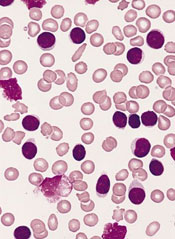
VIENNA—Results of the COMPLEMENT 2 trial indicate that adding ofatumumab to treatment with fludarabine and cyclophosphamide (OFC) can improve some outcome measures in patients with relapsed chronic lymphocytic leukemia (CLL), when compared to fludarabine and cyclophosphamide alone (FC).
Patients who received OFC had a significantly higher overall response rate and longer median progression-free survival than patients who received FC.
On the other hand, there was no significant difference between the treatment arms with regard to response duration or overall survival. And there were more grade 3 or higher adverse events (AEs) in the 3-drug arm than the 2-drug arm.
“There are limited treatment options for patients who have stopped responding to current CLL treatments, which happens in many patients with this disease over time,” said study investigator Tadeusz Robak, MD, PhD, of the Medical University of Lodz and Copernicus Memorial Hospital in Lodz, Poland.
“These data showed that the addition of ofatumumab to fludarabine and cyclophosphamide extended the amount of time before a patient’s CLL progressed, and further add to the body of evidence supporting the potential use of ofatumumab for these patients.”
The data were presented at the 20th Congress of the European Hematology Association (abstract LB219). The study was sponsored by GlaxoSmithKline and Genmab, which were previously co-developing ofatumumab. The drug is now an asset of Novartis AG.
Efficacy data
COMPLEMENT 2 is a phase 3 trial of 365 patients with relapsed CLL. Patients were randomized 1:1 to receive treatment with up to 6 cycles of OFC or FC. Baseline characteristics were well-balanced between the treatment arms.
The overall response rate was higher in the OFC arm than the FC arm—84% and 68%, respectively (P=0.0003)—as was the complete response rate—27% and 7%, respectively.
However, there was no significant difference in time to response or response duration. The median duration of response was 29.6 months in the OFC arm and 24.9 months in the FC arm (P=0.0878). And the median time to response was 0.99 months in both arms (P=0.449).
Still, patients in the OFC arm experienced a 54% improvement in progression-free survival. The median progression-free survival was 28.9 months in the OFC arm and 18.8 months in the FC arm (P=0.0032). And time to progression was 42.1 months and 26.8 months, respectively (P=0.0036).
But there was no significant difference in overall survival or time to next cancer treatment between the arms. The median overall survival was 56.4 months in the OFC arm and 45.8 months in the FC arm (P=0.1410). The median time to next therapy was 48.13 months and 40.08 months, respectively (P=0.0735).
Safety data
The rate of treatment-related AEs was 93% in the OFC arm and 85% in the FC arm. The rate of grade 3 or higher AEs was 74% and 69%, respectively.
The most common treatment-related AEs occurring in the OFC and FC arms, respectively, were neutropenia (58% vs 41%), thrombocytopenia (26% vs 32%), anemia (15% vs 26%), nausea (19% in both), leukopenia (14% vs 6%), vomiting (7% vs 10%), pyrexia (10% vs 3%), rash (10% vs 2%), fatigue (6% vs 4%), and pneumonia (6% vs 4%).
Treatment-related infections occurred in 20% of patients in the OFC arm and 15% in the FC arm. Infusion reactions occurred in 60% and 28% of patients, respectively.
VIENNA—Results of the COMPLEMENT 2 trial indicate that adding ofatumumab to treatment with fludarabine and cyclophosphamide (OFC) can improve some outcome measures in patients with relapsed chronic lymphocytic leukemia (CLL), when compared to fludarabine and cyclophosphamide alone (FC).
Patients who received OFC had a significantly higher overall response rate and longer median progression-free survival than patients who received FC.
On the other hand, there was no significant difference between the treatment arms with regard to response duration or overall survival. And there were more grade 3 or higher adverse events (AEs) in the 3-drug arm than the 2-drug arm.
“There are limited treatment options for patients who have stopped responding to current CLL treatments, which happens in many patients with this disease over time,” said study investigator Tadeusz Robak, MD, PhD, of the Medical University of Lodz and Copernicus Memorial Hospital in Lodz, Poland.
“These data showed that the addition of ofatumumab to fludarabine and cyclophosphamide extended the amount of time before a patient’s CLL progressed, and further add to the body of evidence supporting the potential use of ofatumumab for these patients.”
The data were presented at the 20th Congress of the European Hematology Association (abstract LB219). The study was sponsored by GlaxoSmithKline and Genmab, which were previously co-developing ofatumumab. The drug is now an asset of Novartis AG.
Efficacy data
COMPLEMENT 2 is a phase 3 trial of 365 patients with relapsed CLL. Patients were randomized 1:1 to receive treatment with up to 6 cycles of OFC or FC. Baseline characteristics were well-balanced between the treatment arms.
The overall response rate was higher in the OFC arm than the FC arm—84% and 68%, respectively (P=0.0003)—as was the complete response rate—27% and 7%, respectively.
However, there was no significant difference in time to response or response duration. The median duration of response was 29.6 months in the OFC arm and 24.9 months in the FC arm (P=0.0878). And the median time to response was 0.99 months in both arms (P=0.449).
Still, patients in the OFC arm experienced a 54% improvement in progression-free survival. The median progression-free survival was 28.9 months in the OFC arm and 18.8 months in the FC arm (P=0.0032). And time to progression was 42.1 months and 26.8 months, respectively (P=0.0036).
But there was no significant difference in overall survival or time to next cancer treatment between the arms. The median overall survival was 56.4 months in the OFC arm and 45.8 months in the FC arm (P=0.1410). The median time to next therapy was 48.13 months and 40.08 months, respectively (P=0.0735).
Safety data
The rate of treatment-related AEs was 93% in the OFC arm and 85% in the FC arm. The rate of grade 3 or higher AEs was 74% and 69%, respectively.
The most common treatment-related AEs occurring in the OFC and FC arms, respectively, were neutropenia (58% vs 41%), thrombocytopenia (26% vs 32%), anemia (15% vs 26%), nausea (19% in both), leukopenia (14% vs 6%), vomiting (7% vs 10%), pyrexia (10% vs 3%), rash (10% vs 2%), fatigue (6% vs 4%), and pneumonia (6% vs 4%).
Treatment-related infections occurred in 20% of patients in the OFC arm and 15% in the FC arm. Infusion reactions occurred in 60% and 28% of patients, respectively.
VIENNA—Results of the COMPLEMENT 2 trial indicate that adding ofatumumab to treatment with fludarabine and cyclophosphamide (OFC) can improve some outcome measures in patients with relapsed chronic lymphocytic leukemia (CLL), when compared to fludarabine and cyclophosphamide alone (FC).
Patients who received OFC had a significantly higher overall response rate and longer median progression-free survival than patients who received FC.
On the other hand, there was no significant difference between the treatment arms with regard to response duration or overall survival. And there were more grade 3 or higher adverse events (AEs) in the 3-drug arm than the 2-drug arm.
“There are limited treatment options for patients who have stopped responding to current CLL treatments, which happens in many patients with this disease over time,” said study investigator Tadeusz Robak, MD, PhD, of the Medical University of Lodz and Copernicus Memorial Hospital in Lodz, Poland.
“These data showed that the addition of ofatumumab to fludarabine and cyclophosphamide extended the amount of time before a patient’s CLL progressed, and further add to the body of evidence supporting the potential use of ofatumumab for these patients.”
The data were presented at the 20th Congress of the European Hematology Association (abstract LB219). The study was sponsored by GlaxoSmithKline and Genmab, which were previously co-developing ofatumumab. The drug is now an asset of Novartis AG.
Efficacy data
COMPLEMENT 2 is a phase 3 trial of 365 patients with relapsed CLL. Patients were randomized 1:1 to receive treatment with up to 6 cycles of OFC or FC. Baseline characteristics were well-balanced between the treatment arms.
The overall response rate was higher in the OFC arm than the FC arm—84% and 68%, respectively (P=0.0003)—as was the complete response rate—27% and 7%, respectively.
However, there was no significant difference in time to response or response duration. The median duration of response was 29.6 months in the OFC arm and 24.9 months in the FC arm (P=0.0878). And the median time to response was 0.99 months in both arms (P=0.449).
Still, patients in the OFC arm experienced a 54% improvement in progression-free survival. The median progression-free survival was 28.9 months in the OFC arm and 18.8 months in the FC arm (P=0.0032). And time to progression was 42.1 months and 26.8 months, respectively (P=0.0036).
But there was no significant difference in overall survival or time to next cancer treatment between the arms. The median overall survival was 56.4 months in the OFC arm and 45.8 months in the FC arm (P=0.1410). The median time to next therapy was 48.13 months and 40.08 months, respectively (P=0.0735).
Safety data
The rate of treatment-related AEs was 93% in the OFC arm and 85% in the FC arm. The rate of grade 3 or higher AEs was 74% and 69%, respectively.
The most common treatment-related AEs occurring in the OFC and FC arms, respectively, were neutropenia (58% vs 41%), thrombocytopenia (26% vs 32%), anemia (15% vs 26%), nausea (19% in both), leukopenia (14% vs 6%), vomiting (7% vs 10%), pyrexia (10% vs 3%), rash (10% vs 2%), fatigue (6% vs 4%), and pneumonia (6% vs 4%).
Treatment-related infections occurred in 20% of patients in the OFC arm and 15% in the FC arm. Infusion reactions occurred in 60% and 28% of patients, respectively.