User login
Drug worth pursuing as T-ALL therapy, researchers say

Photo courtesy of
Children’s Cancer Institute
A drug that previously fell short of expectations holds promise for treating T-cell acute lymphoblastic leukemia (T-ALL), according to researchers.
The drug, PR-104, was originally designed to target hypoxic cells in solid tumors, but it showed less activity than expected in clinical trials, and its development was suspended.
Now, preclinical research has shown that PR-104 can be activated by AKR1C3, an enzyme that is overexpressed in T-ALL.
The researchers described this work in Blood.
“We were so encouraged by our first results with PR-104 that we undertook additional studies which showed the drug to be preferentially active against T-ALL . . . ,” said study author Richard B. Lock, PhD, of the Children’s Cancer Institute in Sydney, New South Wales, Australia.
“We believe that PR-104 might be an effective drug for patients who have initially benefited from conventional treatment for T-ALL but who have subsequently relapsed.”
Developing PR-104: A rocky road
PR-104 is a phosphate ester of the nitrogen mustard prodrug PR-104A. It was invented by William R. Wilson, PhD, of the University of Auckland (UoA) in New Zealand, and licensed to a UoA start-up company called Proacta Inc.
In a phase 1 study of patients with solid tumor malignancies, PR-104 failed to produce responses. The drug did elicit responses in a phase 1/2 trial of patients with advanced ALL or acute myeloid leukemia, but results fell short of expectations, and Proacta suspended development of PR-104.
Another drug Proacta was developing, PR-610, also failed to meet expectations. Because of these setbacks, the company closed its doors.
“As a fragile start-up, [Proacta] could not survive two serial ‘failures’ in phase 1/2,” Dr Wilson said. “Arguably . . . , the failure was more to do with the attempt to develop these compounds without biomarker support . . . than lack of potential of the compounds. Interestingly, PR-610 has subsequently been licensed by UoA to Threshold Pharmaceuticals, who are continuing its development (with biomarker support) as TH-4000.”
“We have a more challenging problem with PR-104 because the original patents have lapsed thanks to the decision of the UoA to not maintain the national phase filings after Proacta pulled the plug. [However,] as a result of [Dr Lock’s] work, it is now clear that PR-104 has exciting potential in leukemias with high activity of
AKR1C3.”
Results in T-ALL
Dr Lock and his colleagues tested PR-104 in a panel of 7 patient-derived pediatric ALL xenografts. Two weekly doses of PR-104 at 200 mg/kg significantly delayed progression in both T-ALL (n=4) and B-cell-precursor (BCP) ALL (n=3) xenografts.
The delay ranged from 10.3 days to 59.2 days and was significantly longer for the T-ALL xenografts (P=0.03).
PR-104 produced objective responses in all 4 T-ALL xenografts, including 2 complete responses. The drug also produced complete responses in 2 of the 3 BCP-ALL xenografts, but the third exhibited progressive disease.
Additional experiments showed that AKR1C3 expression was significantly higher in T-ALL than BCP-ALL, and AKR1C3 was “a major determinant” of sensitivity to PR-104, both in vitro and in vivo.
The researchers confirmed this by overexpressing AKR1C3 in a resistant BCP-ALL xenograft. Once AKR1C3 was overexpressed, the team observed “dramatic sensitization” to PR-104.
The path ahead
Now, Dr Lock and his colleagues are trying to determine why T-ALL cells express high levels of AKR1C3.
“If we can work out what activates this enzyme in T cells, we might find a way of activating it in B cells, making the B-cell disease sensitive to the drug as well,” Dr Lock said. “Obviously, it would be ideal if we could extend this drug’s reach to include all acute lymphoblastic leukemia patients.”
“In the meantime, we can envisage using PR-104 to target highly aggressive T-ALLs that express high levels of AKR1C3. We are in the process of working with our clinician colleagues in Australia and the US to organize a clinical trial of PR-104 in T-ALL.”
Dr Wilson noted that finding a path forward for PR-104 will be challenging due to the lack of patent support.
“[But] there are two reasons that make me think it is worth trying to do so,” he said. “One is the proximate concern that there are kids with high-AKR1C3 leukemias (adults too) who could benefit from this opportunity. The other is that this problem links to a looming paradigm shift in drug development. As we dissect cancer based on molecular analysis . . . , the commercial model will have to change.”
“There will still be ‘blockbuster’ drugs from time to time that address very high numbers of cancers . . . , but my expectation is that most cancer control in the future will depend on understanding the peculiarities of individual tumors and matching these with drugs that exploit these features. PR-104 is currently stuck in the past but could be a poster child for that future.” 
Photo courtesy of
Children’s Cancer Institute
A drug that previously fell short of expectations holds promise for treating T-cell acute lymphoblastic leukemia (T-ALL), according to researchers.
The drug, PR-104, was originally designed to target hypoxic cells in solid tumors, but it showed less activity than expected in clinical trials, and its development was suspended.
Now, preclinical research has shown that PR-104 can be activated by AKR1C3, an enzyme that is overexpressed in T-ALL.
The researchers described this work in Blood.
“We were so encouraged by our first results with PR-104 that we undertook additional studies which showed the drug to be preferentially active against T-ALL . . . ,” said study author Richard B. Lock, PhD, of the Children’s Cancer Institute in Sydney, New South Wales, Australia.
“We believe that PR-104 might be an effective drug for patients who have initially benefited from conventional treatment for T-ALL but who have subsequently relapsed.”
Developing PR-104: A rocky road
PR-104 is a phosphate ester of the nitrogen mustard prodrug PR-104A. It was invented by William R. Wilson, PhD, of the University of Auckland (UoA) in New Zealand, and licensed to a UoA start-up company called Proacta Inc.
In a phase 1 study of patients with solid tumor malignancies, PR-104 failed to produce responses. The drug did elicit responses in a phase 1/2 trial of patients with advanced ALL or acute myeloid leukemia, but results fell short of expectations, and Proacta suspended development of PR-104.
Another drug Proacta was developing, PR-610, also failed to meet expectations. Because of these setbacks, the company closed its doors.
“As a fragile start-up, [Proacta] could not survive two serial ‘failures’ in phase 1/2,” Dr Wilson said. “Arguably . . . , the failure was more to do with the attempt to develop these compounds without biomarker support . . . than lack of potential of the compounds. Interestingly, PR-610 has subsequently been licensed by UoA to Threshold Pharmaceuticals, who are continuing its development (with biomarker support) as TH-4000.”
“We have a more challenging problem with PR-104 because the original patents have lapsed thanks to the decision of the UoA to not maintain the national phase filings after Proacta pulled the plug. [However,] as a result of [Dr Lock’s] work, it is now clear that PR-104 has exciting potential in leukemias with high activity of
AKR1C3.”
Results in T-ALL
Dr Lock and his colleagues tested PR-104 in a panel of 7 patient-derived pediatric ALL xenografts. Two weekly doses of PR-104 at 200 mg/kg significantly delayed progression in both T-ALL (n=4) and B-cell-precursor (BCP) ALL (n=3) xenografts.
The delay ranged from 10.3 days to 59.2 days and was significantly longer for the T-ALL xenografts (P=0.03).
PR-104 produced objective responses in all 4 T-ALL xenografts, including 2 complete responses. The drug also produced complete responses in 2 of the 3 BCP-ALL xenografts, but the third exhibited progressive disease.
Additional experiments showed that AKR1C3 expression was significantly higher in T-ALL than BCP-ALL, and AKR1C3 was “a major determinant” of sensitivity to PR-104, both in vitro and in vivo.
The researchers confirmed this by overexpressing AKR1C3 in a resistant BCP-ALL xenograft. Once AKR1C3 was overexpressed, the team observed “dramatic sensitization” to PR-104.
The path ahead
Now, Dr Lock and his colleagues are trying to determine why T-ALL cells express high levels of AKR1C3.
“If we can work out what activates this enzyme in T cells, we might find a way of activating it in B cells, making the B-cell disease sensitive to the drug as well,” Dr Lock said. “Obviously, it would be ideal if we could extend this drug’s reach to include all acute lymphoblastic leukemia patients.”
“In the meantime, we can envisage using PR-104 to target highly aggressive T-ALLs that express high levels of AKR1C3. We are in the process of working with our clinician colleagues in Australia and the US to organize a clinical trial of PR-104 in T-ALL.”
Dr Wilson noted that finding a path forward for PR-104 will be challenging due to the lack of patent support.
“[But] there are two reasons that make me think it is worth trying to do so,” he said. “One is the proximate concern that there are kids with high-AKR1C3 leukemias (adults too) who could benefit from this opportunity. The other is that this problem links to a looming paradigm shift in drug development. As we dissect cancer based on molecular analysis . . . , the commercial model will have to change.”
“There will still be ‘blockbuster’ drugs from time to time that address very high numbers of cancers . . . , but my expectation is that most cancer control in the future will depend on understanding the peculiarities of individual tumors and matching these with drugs that exploit these features. PR-104 is currently stuck in the past but could be a poster child for that future.”
Photo courtesy of
Children’s Cancer Institute
A drug that previously fell short of expectations holds promise for treating T-cell acute lymphoblastic leukemia (T-ALL), according to researchers.
The drug, PR-104, was originally designed to target hypoxic cells in solid tumors, but it showed less activity than expected in clinical trials, and its development was suspended.
Now, preclinical research has shown that PR-104 can be activated by AKR1C3, an enzyme that is overexpressed in T-ALL.
The researchers described this work in Blood.
“We were so encouraged by our first results with PR-104 that we undertook additional studies which showed the drug to be preferentially active against T-ALL . . . ,” said study author Richard B. Lock, PhD, of the Children’s Cancer Institute in Sydney, New South Wales, Australia.
“We believe that PR-104 might be an effective drug for patients who have initially benefited from conventional treatment for T-ALL but who have subsequently relapsed.”
Developing PR-104: A rocky road
PR-104 is a phosphate ester of the nitrogen mustard prodrug PR-104A. It was invented by William R. Wilson, PhD, of the University of Auckland (UoA) in New Zealand, and licensed to a UoA start-up company called Proacta Inc.
In a phase 1 study of patients with solid tumor malignancies, PR-104 failed to produce responses. The drug did elicit responses in a phase 1/2 trial of patients with advanced ALL or acute myeloid leukemia, but results fell short of expectations, and Proacta suspended development of PR-104.
Another drug Proacta was developing, PR-610, also failed to meet expectations. Because of these setbacks, the company closed its doors.
“As a fragile start-up, [Proacta] could not survive two serial ‘failures’ in phase 1/2,” Dr Wilson said. “Arguably . . . , the failure was more to do with the attempt to develop these compounds without biomarker support . . . than lack of potential of the compounds. Interestingly, PR-610 has subsequently been licensed by UoA to Threshold Pharmaceuticals, who are continuing its development (with biomarker support) as TH-4000.”
“We have a more challenging problem with PR-104 because the original patents have lapsed thanks to the decision of the UoA to not maintain the national phase filings after Proacta pulled the plug. [However,] as a result of [Dr Lock’s] work, it is now clear that PR-104 has exciting potential in leukemias with high activity of
AKR1C3.”
Results in T-ALL
Dr Lock and his colleagues tested PR-104 in a panel of 7 patient-derived pediatric ALL xenografts. Two weekly doses of PR-104 at 200 mg/kg significantly delayed progression in both T-ALL (n=4) and B-cell-precursor (BCP) ALL (n=3) xenografts.
The delay ranged from 10.3 days to 59.2 days and was significantly longer for the T-ALL xenografts (P=0.03).
PR-104 produced objective responses in all 4 T-ALL xenografts, including 2 complete responses. The drug also produced complete responses in 2 of the 3 BCP-ALL xenografts, but the third exhibited progressive disease.
Additional experiments showed that AKR1C3 expression was significantly higher in T-ALL than BCP-ALL, and AKR1C3 was “a major determinant” of sensitivity to PR-104, both in vitro and in vivo.
The researchers confirmed this by overexpressing AKR1C3 in a resistant BCP-ALL xenograft. Once AKR1C3 was overexpressed, the team observed “dramatic sensitization” to PR-104.
The path ahead
Now, Dr Lock and his colleagues are trying to determine why T-ALL cells express high levels of AKR1C3.
“If we can work out what activates this enzyme in T cells, we might find a way of activating it in B cells, making the B-cell disease sensitive to the drug as well,” Dr Lock said. “Obviously, it would be ideal if we could extend this drug’s reach to include all acute lymphoblastic leukemia patients.”
“In the meantime, we can envisage using PR-104 to target highly aggressive T-ALLs that express high levels of AKR1C3. We are in the process of working with our clinician colleagues in Australia and the US to organize a clinical trial of PR-104 in T-ALL.”
Dr Wilson noted that finding a path forward for PR-104 will be challenging due to the lack of patent support.
“[But] there are two reasons that make me think it is worth trying to do so,” he said. “One is the proximate concern that there are kids with high-AKR1C3 leukemias (adults too) who could benefit from this opportunity. The other is that this problem links to a looming paradigm shift in drug development. As we dissect cancer based on molecular analysis . . . , the commercial model will have to change.”
“There will still be ‘blockbuster’ drugs from time to time that address very high numbers of cancers . . . , but my expectation is that most cancer control in the future will depend on understanding the peculiarities of individual tumors and matching these with drugs that exploit these features. PR-104 is currently stuck in the past but could be a poster child for that future.”
Adopting may be more difficult for cancer survivors

by Vera Kratochvil
Cancer survivors may face more challenges when trying to adopt a child than individuals without a history of cancer, according to a new study.
Investigators found the sizable upfront costs associated with adoption and requirements regarding a prospective parent’s health could work against cancer survivors trying to adopt.
However, the study also suggested that birth mothers might be receptive to cancer survivors as adoptive parents.
The research was published in Cancer.
Little is known about the rate at which cancer survivors successfully adopt a child or about their experiences during the adoption process. So Gwendolyn Quinn, PhD, of the Moffitt Cancer Center in Tampa, Florida, and her colleagues conducted a study to gain some insight.
The investigators asked oncology nurses who were participating in a training program to conduct interviews with adoption agencies. Seventy-seven nurses across 15 states provided summaries of their interviews.
The nurses reported that adoption fees ranged from $3000 to $75,000. They noted that the upfront costs of adoption could deter cancer survivors who already have “a huge financial burden” due to treatment costs.
Not all of the adoption agencies contacted kept records on whether prospective adoptive parents were cancer survivors. But agencies that did track this reported an average of 10 former cancer patients a year seeking adoption.
A few agencies reported that a cancer history in an adoptive parent could be discouraging for a birth mother. But most reported the opposite—that birth mothers might feel confident in choosing a parent who has overcome hardships and has an appreciation for life.
Agencies usually required prospective parents to provide a letter from a physician regarding their health and medical history. In some cases, agencies required cancer survivors to be disease-free for 5 years before they could adopt a child.
In addition, international adoptions had greater restrictions for prospective parents with a cancer history (compared to US adoptions).
Dr Quinn said these are potentially discriminatory practices akin to restricting employment opportunities for people with disabilities.
“[P]erhaps this data will bring to light the need for policy revisions in adoption processes . . . ,” she added.
by Vera Kratochvil
Cancer survivors may face more challenges when trying to adopt a child than individuals without a history of cancer, according to a new study.
Investigators found the sizable upfront costs associated with adoption and requirements regarding a prospective parent’s health could work against cancer survivors trying to adopt.
However, the study also suggested that birth mothers might be receptive to cancer survivors as adoptive parents.
The research was published in Cancer.
Little is known about the rate at which cancer survivors successfully adopt a child or about their experiences during the adoption process. So Gwendolyn Quinn, PhD, of the Moffitt Cancer Center in Tampa, Florida, and her colleagues conducted a study to gain some insight.
The investigators asked oncology nurses who were participating in a training program to conduct interviews with adoption agencies. Seventy-seven nurses across 15 states provided summaries of their interviews.
The nurses reported that adoption fees ranged from $3000 to $75,000. They noted that the upfront costs of adoption could deter cancer survivors who already have “a huge financial burden” due to treatment costs.
Not all of the adoption agencies contacted kept records on whether prospective adoptive parents were cancer survivors. But agencies that did track this reported an average of 10 former cancer patients a year seeking adoption.
A few agencies reported that a cancer history in an adoptive parent could be discouraging for a birth mother. But most reported the opposite—that birth mothers might feel confident in choosing a parent who has overcome hardships and has an appreciation for life.
Agencies usually required prospective parents to provide a letter from a physician regarding their health and medical history. In some cases, agencies required cancer survivors to be disease-free for 5 years before they could adopt a child.
In addition, international adoptions had greater restrictions for prospective parents with a cancer history (compared to US adoptions).
Dr Quinn said these are potentially discriminatory practices akin to restricting employment opportunities for people with disabilities.
“[P]erhaps this data will bring to light the need for policy revisions in adoption processes . . . ,” she added.
by Vera Kratochvil
Cancer survivors may face more challenges when trying to adopt a child than individuals without a history of cancer, according to a new study.
Investigators found the sizable upfront costs associated with adoption and requirements regarding a prospective parent’s health could work against cancer survivors trying to adopt.
However, the study also suggested that birth mothers might be receptive to cancer survivors as adoptive parents.
The research was published in Cancer.
Little is known about the rate at which cancer survivors successfully adopt a child or about their experiences during the adoption process. So Gwendolyn Quinn, PhD, of the Moffitt Cancer Center in Tampa, Florida, and her colleagues conducted a study to gain some insight.
The investigators asked oncology nurses who were participating in a training program to conduct interviews with adoption agencies. Seventy-seven nurses across 15 states provided summaries of their interviews.
The nurses reported that adoption fees ranged from $3000 to $75,000. They noted that the upfront costs of adoption could deter cancer survivors who already have “a huge financial burden” due to treatment costs.
Not all of the adoption agencies contacted kept records on whether prospective adoptive parents were cancer survivors. But agencies that did track this reported an average of 10 former cancer patients a year seeking adoption.
A few agencies reported that a cancer history in an adoptive parent could be discouraging for a birth mother. But most reported the opposite—that birth mothers might feel confident in choosing a parent who has overcome hardships and has an appreciation for life.
Agencies usually required prospective parents to provide a letter from a physician regarding their health and medical history. In some cases, agencies required cancer survivors to be disease-free for 5 years before they could adopt a child.
In addition, international adoptions had greater restrictions for prospective parents with a cancer history (compared to US adoptions).
Dr Quinn said these are potentially discriminatory practices akin to restricting employment opportunities for people with disabilities.
“[P]erhaps this data will bring to light the need for policy revisions in adoption processes . . . ,” she added.
Older cancer patients under-utilize advanced care planning

Photo courtesy of NCI
and Mathews Media Group
Survey results suggest the use of aggressive treatment at the end of life is on the rise among older cancer patients, and these patients often fail to employ advanced care planning measures.
Researchers reviewed nearly 2000 surveys of people whose loved ones died of cancer and found that, from 2000 to 2012, there was a 51% increase in reports that patients received “all care possible” at the end of life.
There was a 22% increase in power-of-attorney assignment over the same period, but the use of living wills and discussions about end-of-life preferences decreased slightly.
“Although more cancer patients are assigning power-of-attorney privileges to someone they know and trust to make their medical decisions when they can’t, this practice may be the least helpful among advanced care planning tactics because it may be least associated with treatment intensity at the end of life,” said Amol Narang, MD, of The Johns Hopkins Hospital in Baltimore, Maryland.
Dr Narang and his colleagues described this research in JAMA Oncology.
The team analyzed survey data from 1985 next-of-kin surrogates of cancer patients. The patients were older than 50 years of age, had taken part in the Health and Retirement Study, and died between 2000 and 2012.
The data included in-depth “exit” interviews conducted with the surrogates after a patient died. Seventy-nine percent of exit survey respondents said they were the primary decision-maker in the patient’s medical care.
The data showed a significant increase in power-of-attorney assignments, from 52% in 2000 to 74% in 2012 (P=0.03). But the use of living wills decreased slightly, from 49% to 40% (P=0.63), as did discussions about end-of-life preferences, which fell from 68% to 60% (P=0.62).
“We found that many cancer patients still do not communicate their preferences for end-of-life care, despite the potential benefits to patients’ quality of life and caregiver bereavement,” Dr Narang said.
Survey results also suggested a significant increase in the percentage of patients who received “all care possible” at the end of life, from 7% in 2000 to 58% in 2012 (P=0.004). But there was no significant change in the rates of terminal hospitalizations, which fell from 29% to 27% (P=0.70).
The researchers found that granting power-of-attorney privileges significantly decreased the odds that patients would die in the hospital as opposed to hospice or their homes (adjusted odds ratio [AOR]=0.70, P<0.05). However, granting power of attorney was not associated with a significant change in limiting or withholding treatment at the end of life (AOR=1.52).
On the other hand, patients who created living wills or had end-of-life discussions were significantly more likely than their peers to limit or withhold certain treatments. The AOR was 2.51 for living wills (P<0.001) and 1.93 for end-of-life discussions (P=0.002).
The researchers said they observed the same trends regardless of who completed the exit survey.
Dr Narang noted that this study had its limitations. The survey questions were subjective, answers could have been hampered by a respondent’s lapse in memory, and answers could be biased by a respondent’s desire to meet social norms.
“But we were looking at trends over time,” he said, “so respondents’ bias would not likely change over time.”
Photo courtesy of NCI
and Mathews Media Group
Survey results suggest the use of aggressive treatment at the end of life is on the rise among older cancer patients, and these patients often fail to employ advanced care planning measures.
Researchers reviewed nearly 2000 surveys of people whose loved ones died of cancer and found that, from 2000 to 2012, there was a 51% increase in reports that patients received “all care possible” at the end of life.
There was a 22% increase in power-of-attorney assignment over the same period, but the use of living wills and discussions about end-of-life preferences decreased slightly.
“Although more cancer patients are assigning power-of-attorney privileges to someone they know and trust to make their medical decisions when they can’t, this practice may be the least helpful among advanced care planning tactics because it may be least associated with treatment intensity at the end of life,” said Amol Narang, MD, of The Johns Hopkins Hospital in Baltimore, Maryland.
Dr Narang and his colleagues described this research in JAMA Oncology.
The team analyzed survey data from 1985 next-of-kin surrogates of cancer patients. The patients were older than 50 years of age, had taken part in the Health and Retirement Study, and died between 2000 and 2012.
The data included in-depth “exit” interviews conducted with the surrogates after a patient died. Seventy-nine percent of exit survey respondents said they were the primary decision-maker in the patient’s medical care.
The data showed a significant increase in power-of-attorney assignments, from 52% in 2000 to 74% in 2012 (P=0.03). But the use of living wills decreased slightly, from 49% to 40% (P=0.63), as did discussions about end-of-life preferences, which fell from 68% to 60% (P=0.62).
“We found that many cancer patients still do not communicate their preferences for end-of-life care, despite the potential benefits to patients’ quality of life and caregiver bereavement,” Dr Narang said.
Survey results also suggested a significant increase in the percentage of patients who received “all care possible” at the end of life, from 7% in 2000 to 58% in 2012 (P=0.004). But there was no significant change in the rates of terminal hospitalizations, which fell from 29% to 27% (P=0.70).
The researchers found that granting power-of-attorney privileges significantly decreased the odds that patients would die in the hospital as opposed to hospice or their homes (adjusted odds ratio [AOR]=0.70, P<0.05). However, granting power of attorney was not associated with a significant change in limiting or withholding treatment at the end of life (AOR=1.52).
On the other hand, patients who created living wills or had end-of-life discussions were significantly more likely than their peers to limit or withhold certain treatments. The AOR was 2.51 for living wills (P<0.001) and 1.93 for end-of-life discussions (P=0.002).
The researchers said they observed the same trends regardless of who completed the exit survey.
Dr Narang noted that this study had its limitations. The survey questions were subjective, answers could have been hampered by a respondent’s lapse in memory, and answers could be biased by a respondent’s desire to meet social norms.
“But we were looking at trends over time,” he said, “so respondents’ bias would not likely change over time.”
Photo courtesy of NCI
and Mathews Media Group
Survey results suggest the use of aggressive treatment at the end of life is on the rise among older cancer patients, and these patients often fail to employ advanced care planning measures.
Researchers reviewed nearly 2000 surveys of people whose loved ones died of cancer and found that, from 2000 to 2012, there was a 51% increase in reports that patients received “all care possible” at the end of life.
There was a 22% increase in power-of-attorney assignment over the same period, but the use of living wills and discussions about end-of-life preferences decreased slightly.
“Although more cancer patients are assigning power-of-attorney privileges to someone they know and trust to make their medical decisions when they can’t, this practice may be the least helpful among advanced care planning tactics because it may be least associated with treatment intensity at the end of life,” said Amol Narang, MD, of The Johns Hopkins Hospital in Baltimore, Maryland.
Dr Narang and his colleagues described this research in JAMA Oncology.
The team analyzed survey data from 1985 next-of-kin surrogates of cancer patients. The patients were older than 50 years of age, had taken part in the Health and Retirement Study, and died between 2000 and 2012.
The data included in-depth “exit” interviews conducted with the surrogates after a patient died. Seventy-nine percent of exit survey respondents said they were the primary decision-maker in the patient’s medical care.
The data showed a significant increase in power-of-attorney assignments, from 52% in 2000 to 74% in 2012 (P=0.03). But the use of living wills decreased slightly, from 49% to 40% (P=0.63), as did discussions about end-of-life preferences, which fell from 68% to 60% (P=0.62).
“We found that many cancer patients still do not communicate their preferences for end-of-life care, despite the potential benefits to patients’ quality of life and caregiver bereavement,” Dr Narang said.
Survey results also suggested a significant increase in the percentage of patients who received “all care possible” at the end of life, from 7% in 2000 to 58% in 2012 (P=0.004). But there was no significant change in the rates of terminal hospitalizations, which fell from 29% to 27% (P=0.70).
The researchers found that granting power-of-attorney privileges significantly decreased the odds that patients would die in the hospital as opposed to hospice or their homes (adjusted odds ratio [AOR]=0.70, P<0.05). However, granting power of attorney was not associated with a significant change in limiting or withholding treatment at the end of life (AOR=1.52).
On the other hand, patients who created living wills or had end-of-life discussions were significantly more likely than their peers to limit or withhold certain treatments. The AOR was 2.51 for living wills (P<0.001) and 1.93 for end-of-life discussions (P=0.002).
The researchers said they observed the same trends regardless of who completed the exit survey.
Dr Narang noted that this study had its limitations. The survey questions were subjective, answers could have been hampered by a respondent’s lapse in memory, and answers could be biased by a respondent’s desire to meet social norms.
“But we were looking at trends over time,” he said, “so respondents’ bias would not likely change over time.”
AYAs with cancer receive aggressive EOL care

patient and her father
Photo by Rhoda Baer
In a retrospective study, a majority of adolescents and young adults (AYAs) with terminal cancer received aggressive end-of-life (EOL) care.
Investigators looked at the use of intensive care, emergency room visits, chemotherapy use, and hospitalization among more than 600 AYAs with cancer who were treated at Kaiser Permanente in California.
Nearly 70% of patients made use of at least one of these measures in the last month of their life.
The investigators noted that their findings, which were published in JAMA Oncology, may not reflect care for the wider US population. But the study does suggest a need for more research into whether this
pattern reflects AYA cancer patients’ preferences for EOL care.
“A young person facing the end of life is a particularly difficult issue,” said study author Jennifer Mack, MD, MPH, of the Dana-Farber Cancer Institute in Boston, Massachusetts.
“While use of aggressive measures might be an informed decision by young people who would do anything they could to live longer, some interventions come with a cost, which is a poorer quality of life. This study raises questions about what kind of care they’re getting and how we can get them to the best quality of life at the end of their lives.”
The study included 633 patients, ages 15 to 39, who died of cancer between 2001 and 2010. The patients, who received care at Kaiser Permanente Southern California, had either been diagnosed with stage IV cancer or had a recurrence of stage I-III cancer. An initial review of a subset of 111 patients showed that death had been anticipated in 98% of cases.
The most common cancer diagnosis was gastrointestinal cancer (17%), while other common diagnoses were breast cancer (15%), genitourinary cancers (11%), leukemia (14%), and lymphoma (10%).
The investigators measured the use of 4 aggressive treatment measures—intensive care, emergency room visits, chemotherapy, and hospitalization—in patients’ last month of life.
Overall, 68% of patients (449/663) received at least one of these medically intensive EOL care measures. Eleven percent of patients (72/663) received chemotherapy, 22% (144/663) were admitted to the intensive care unit, 22% (147/663) had more than one emergency department visit, and 62% (413/663) were hospitalized.
Rates of hospitalization were higher among patients diagnosed with stage IV disease (66%) than among patients with stage I to III disease—66% and 58%, respectively (P=0.04).
The percentage of patients who received at least one medically intensive EOL care measure was higher in the stage IV cohort as well—71% and 63%, respectively (P=0.03). But there were no significant differences between the cohorts with regard to the other measures.
The investigators said these findings suggest the need to better understand EOL care preferences and decision-making in AYAs with cancer.
“We should think about talking with younger patients earlier about their prognoses, identifying their preferences, and working with them to deliver care that reflects those preferences,” Dr Mack said. “It may be that aggressive care is what they want, but they may end up on this pathway without thoughtful conversation and may be without recognition that they are dying.”
patient and her father
Photo by Rhoda Baer
In a retrospective study, a majority of adolescents and young adults (AYAs) with terminal cancer received aggressive end-of-life (EOL) care.
Investigators looked at the use of intensive care, emergency room visits, chemotherapy use, and hospitalization among more than 600 AYAs with cancer who were treated at Kaiser Permanente in California.
Nearly 70% of patients made use of at least one of these measures in the last month of their life.
The investigators noted that their findings, which were published in JAMA Oncology, may not reflect care for the wider US population. But the study does suggest a need for more research into whether this
pattern reflects AYA cancer patients’ preferences for EOL care.
“A young person facing the end of life is a particularly difficult issue,” said study author Jennifer Mack, MD, MPH, of the Dana-Farber Cancer Institute in Boston, Massachusetts.
“While use of aggressive measures might be an informed decision by young people who would do anything they could to live longer, some interventions come with a cost, which is a poorer quality of life. This study raises questions about what kind of care they’re getting and how we can get them to the best quality of life at the end of their lives.”
The study included 633 patients, ages 15 to 39, who died of cancer between 2001 and 2010. The patients, who received care at Kaiser Permanente Southern California, had either been diagnosed with stage IV cancer or had a recurrence of stage I-III cancer. An initial review of a subset of 111 patients showed that death had been anticipated in 98% of cases.
The most common cancer diagnosis was gastrointestinal cancer (17%), while other common diagnoses were breast cancer (15%), genitourinary cancers (11%), leukemia (14%), and lymphoma (10%).
The investigators measured the use of 4 aggressive treatment measures—intensive care, emergency room visits, chemotherapy, and hospitalization—in patients’ last month of life.
Overall, 68% of patients (449/663) received at least one of these medically intensive EOL care measures. Eleven percent of patients (72/663) received chemotherapy, 22% (144/663) were admitted to the intensive care unit, 22% (147/663) had more than one emergency department visit, and 62% (413/663) were hospitalized.
Rates of hospitalization were higher among patients diagnosed with stage IV disease (66%) than among patients with stage I to III disease—66% and 58%, respectively (P=0.04).
The percentage of patients who received at least one medically intensive EOL care measure was higher in the stage IV cohort as well—71% and 63%, respectively (P=0.03). But there were no significant differences between the cohorts with regard to the other measures.
The investigators said these findings suggest the need to better understand EOL care preferences and decision-making in AYAs with cancer.
“We should think about talking with younger patients earlier about their prognoses, identifying their preferences, and working with them to deliver care that reflects those preferences,” Dr Mack said. “It may be that aggressive care is what they want, but they may end up on this pathway without thoughtful conversation and may be without recognition that they are dying.”
patient and her father
Photo by Rhoda Baer
In a retrospective study, a majority of adolescents and young adults (AYAs) with terminal cancer received aggressive end-of-life (EOL) care.
Investigators looked at the use of intensive care, emergency room visits, chemotherapy use, and hospitalization among more than 600 AYAs with cancer who were treated at Kaiser Permanente in California.
Nearly 70% of patients made use of at least one of these measures in the last month of their life.
The investigators noted that their findings, which were published in JAMA Oncology, may not reflect care for the wider US population. But the study does suggest a need for more research into whether this
pattern reflects AYA cancer patients’ preferences for EOL care.
“A young person facing the end of life is a particularly difficult issue,” said study author Jennifer Mack, MD, MPH, of the Dana-Farber Cancer Institute in Boston, Massachusetts.
“While use of aggressive measures might be an informed decision by young people who would do anything they could to live longer, some interventions come with a cost, which is a poorer quality of life. This study raises questions about what kind of care they’re getting and how we can get them to the best quality of life at the end of their lives.”
The study included 633 patients, ages 15 to 39, who died of cancer between 2001 and 2010. The patients, who received care at Kaiser Permanente Southern California, had either been diagnosed with stage IV cancer or had a recurrence of stage I-III cancer. An initial review of a subset of 111 patients showed that death had been anticipated in 98% of cases.
The most common cancer diagnosis was gastrointestinal cancer (17%), while other common diagnoses were breast cancer (15%), genitourinary cancers (11%), leukemia (14%), and lymphoma (10%).
The investigators measured the use of 4 aggressive treatment measures—intensive care, emergency room visits, chemotherapy, and hospitalization—in patients’ last month of life.
Overall, 68% of patients (449/663) received at least one of these medically intensive EOL care measures. Eleven percent of patients (72/663) received chemotherapy, 22% (144/663) were admitted to the intensive care unit, 22% (147/663) had more than one emergency department visit, and 62% (413/663) were hospitalized.
Rates of hospitalization were higher among patients diagnosed with stage IV disease (66%) than among patients with stage I to III disease—66% and 58%, respectively (P=0.04).
The percentage of patients who received at least one medically intensive EOL care measure was higher in the stage IV cohort as well—71% and 63%, respectively (P=0.03). But there were no significant differences between the cohorts with regard to the other measures.
The investigators said these findings suggest the need to better understand EOL care preferences and decision-making in AYAs with cancer.
“We should think about talking with younger patients earlier about their prognoses, identifying their preferences, and working with them to deliver care that reflects those preferences,” Dr Mack said. “It may be that aggressive care is what they want, but they may end up on this pathway without thoughtful conversation and may be without recognition that they are dying.”
Index discriminates prognostic groups in CLL
An international prognostic index for patients with chronic lymphocytic leukemia (CLL) may help to inform treatment decisions, based on a meta-analysis presented at the International Congress on Malignant Lymphoma in Lugano, Switzerland.
The International Prognostic Index for patients with CLL (CLL-IPI) combines the most important genetic risk factors and traditional clinical stage, age, and serum beta-2-microglobulin measures. By discriminating between prognostic groups, the index may aid in informing treatment of CLL patients, Dr. Jasmin Bahlo of the University Hospital Cologne, Köln, Germany, said.
The CLL-IPI consists of five risk factors – age, clinical stage, IgHV (immunoglobulin heavy-chain variable-region) gene mutation status, serum beta-2-microglobulin measure, and the presence of del(17p) and/or TP53 mutation, Dr. Bahlo said.
To develop the index, Dr. Bahlo and colleagues performed an analysis of 26 possible prognostic factors by using data from eight phase III trials from France, Germany, the United Kingdom, the United States, and Poland. The data included a full analysis set of 3,742 previously untreated patients at early and advanced stages of disease. The median age of the patients was 61 years, the median observation time was 80 months, and the main endpoint was overall survival.
From the 26 variables, the researchers identified five independent predictors for overall survival: age (65 years or more), clinical stage (Binet A/Rai 0 vs. Binet B-C/Rai I-IV), del(17p) and/or TP53 mutation status, IgHV mutation status, and serum beta-2-microglobulin measure (3.5 mg/L or more).
The index was used to identify four risk groups – low risk (score 0-1), intermediate (score 2-3), high (score 4-6), and very high (score 7-10)) – with significantly different overall survival rates at 5 years of 93%, 79%, 64%, and 23%, respectively.
The value of the index was then confirmed in 575 patients, with a 5-year overall survival rate of 91%, 80%, 52%, and 19%, respectively.
Similar findings were seen in an external data set of patients from the Mayo Clinic data set, with 5-year overall survivals of 97%, 91%, 68%, and 21%, respectively. The CLL-IPI also provided accurate estimation regarding time to first treatment; 81%, 47%, 30%, and 19% of patients in the respective risk groups were free from treatment at 5 years.
In the era of more effective treatments for CLL, the established clinical staging systems (Rai and Binet) do not accurately discriminate between prognostic groups because they do not integrate the major clinical, biologic, and genetic variables into one widely accepted prognostic system, Dr. Bahlo noted. The CLL-IPI is, therefore, an important contribution to management of this condition.
The researchers had no relevant financial disclosures.
Until very recently, most treatment decisions in CLL have been based on age, overall fitness of the patient and presence of cytopenias. Biologic prognostic markers have been delineated, but not acted upon, with the recent exception of del17p given the advent of effective novel agents in this setting. This is an admirable attempt to establish a better prognostic index, building upon prior German CLL group data (Pflug et al Blood 2014), but it has limitations. It is a weighted score, heavily dependent on p53 mutation/del17p, which is uncommon at initial diagnosis, and today such patients should be receiving a targeted agent. It would be useful to have a CLL-IPI for patients without del17p. Further, while its ability to predict time to require therapy will remain useful, its survival predictions are likely already outdated given the array of new agents already, or soon to be, available.
Until very recently, most treatment decisions in CLL have been based on age, overall fitness of the patient and presence of cytopenias. Biologic prognostic markers have been delineated, but not acted upon, with the recent exception of del17p given the advent of effective novel agents in this setting. This is an admirable attempt to establish a better prognostic index, building upon prior German CLL group data (Pflug et al Blood 2014), but it has limitations. It is a weighted score, heavily dependent on p53 mutation/del17p, which is uncommon at initial diagnosis, and today such patients should be receiving a targeted agent. It would be useful to have a CLL-IPI for patients without del17p. Further, while its ability to predict time to require therapy will remain useful, its survival predictions are likely already outdated given the array of new agents already, or soon to be, available.
Until very recently, most treatment decisions in CLL have been based on age, overall fitness of the patient and presence of cytopenias. Biologic prognostic markers have been delineated, but not acted upon, with the recent exception of del17p given the advent of effective novel agents in this setting. This is an admirable attempt to establish a better prognostic index, building upon prior German CLL group data (Pflug et al Blood 2014), but it has limitations. It is a weighted score, heavily dependent on p53 mutation/del17p, which is uncommon at initial diagnosis, and today such patients should be receiving a targeted agent. It would be useful to have a CLL-IPI for patients without del17p. Further, while its ability to predict time to require therapy will remain useful, its survival predictions are likely already outdated given the array of new agents already, or soon to be, available.
An international prognostic index for patients with chronic lymphocytic leukemia (CLL) may help to inform treatment decisions, based on a meta-analysis presented at the International Congress on Malignant Lymphoma in Lugano, Switzerland.
The International Prognostic Index for patients with CLL (CLL-IPI) combines the most important genetic risk factors and traditional clinical stage, age, and serum beta-2-microglobulin measures. By discriminating between prognostic groups, the index may aid in informing treatment of CLL patients, Dr. Jasmin Bahlo of the University Hospital Cologne, Köln, Germany, said.
The CLL-IPI consists of five risk factors – age, clinical stage, IgHV (immunoglobulin heavy-chain variable-region) gene mutation status, serum beta-2-microglobulin measure, and the presence of del(17p) and/or TP53 mutation, Dr. Bahlo said.
To develop the index, Dr. Bahlo and colleagues performed an analysis of 26 possible prognostic factors by using data from eight phase III trials from France, Germany, the United Kingdom, the United States, and Poland. The data included a full analysis set of 3,742 previously untreated patients at early and advanced stages of disease. The median age of the patients was 61 years, the median observation time was 80 months, and the main endpoint was overall survival.
From the 26 variables, the researchers identified five independent predictors for overall survival: age (65 years or more), clinical stage (Binet A/Rai 0 vs. Binet B-C/Rai I-IV), del(17p) and/or TP53 mutation status, IgHV mutation status, and serum beta-2-microglobulin measure (3.5 mg/L or more).
The index was used to identify four risk groups – low risk (score 0-1), intermediate (score 2-3), high (score 4-6), and very high (score 7-10)) – with significantly different overall survival rates at 5 years of 93%, 79%, 64%, and 23%, respectively.
The value of the index was then confirmed in 575 patients, with a 5-year overall survival rate of 91%, 80%, 52%, and 19%, respectively.
Similar findings were seen in an external data set of patients from the Mayo Clinic data set, with 5-year overall survivals of 97%, 91%, 68%, and 21%, respectively. The CLL-IPI also provided accurate estimation regarding time to first treatment; 81%, 47%, 30%, and 19% of patients in the respective risk groups were free from treatment at 5 years.
In the era of more effective treatments for CLL, the established clinical staging systems (Rai and Binet) do not accurately discriminate between prognostic groups because they do not integrate the major clinical, biologic, and genetic variables into one widely accepted prognostic system, Dr. Bahlo noted. The CLL-IPI is, therefore, an important contribution to management of this condition.
The researchers had no relevant financial disclosures.
An international prognostic index for patients with chronic lymphocytic leukemia (CLL) may help to inform treatment decisions, based on a meta-analysis presented at the International Congress on Malignant Lymphoma in Lugano, Switzerland.
The International Prognostic Index for patients with CLL (CLL-IPI) combines the most important genetic risk factors and traditional clinical stage, age, and serum beta-2-microglobulin measures. By discriminating between prognostic groups, the index may aid in informing treatment of CLL patients, Dr. Jasmin Bahlo of the University Hospital Cologne, Köln, Germany, said.
The CLL-IPI consists of five risk factors – age, clinical stage, IgHV (immunoglobulin heavy-chain variable-region) gene mutation status, serum beta-2-microglobulin measure, and the presence of del(17p) and/or TP53 mutation, Dr. Bahlo said.
To develop the index, Dr. Bahlo and colleagues performed an analysis of 26 possible prognostic factors by using data from eight phase III trials from France, Germany, the United Kingdom, the United States, and Poland. The data included a full analysis set of 3,742 previously untreated patients at early and advanced stages of disease. The median age of the patients was 61 years, the median observation time was 80 months, and the main endpoint was overall survival.
From the 26 variables, the researchers identified five independent predictors for overall survival: age (65 years or more), clinical stage (Binet A/Rai 0 vs. Binet B-C/Rai I-IV), del(17p) and/or TP53 mutation status, IgHV mutation status, and serum beta-2-microglobulin measure (3.5 mg/L or more).
The index was used to identify four risk groups – low risk (score 0-1), intermediate (score 2-3), high (score 4-6), and very high (score 7-10)) – with significantly different overall survival rates at 5 years of 93%, 79%, 64%, and 23%, respectively.
The value of the index was then confirmed in 575 patients, with a 5-year overall survival rate of 91%, 80%, 52%, and 19%, respectively.
Similar findings were seen in an external data set of patients from the Mayo Clinic data set, with 5-year overall survivals of 97%, 91%, 68%, and 21%, respectively. The CLL-IPI also provided accurate estimation regarding time to first treatment; 81%, 47%, 30%, and 19% of patients in the respective risk groups were free from treatment at 5 years.
In the era of more effective treatments for CLL, the established clinical staging systems (Rai and Binet) do not accurately discriminate between prognostic groups because they do not integrate the major clinical, biologic, and genetic variables into one widely accepted prognostic system, Dr. Bahlo noted. The CLL-IPI is, therefore, an important contribution to management of this condition.
The researchers had no relevant financial disclosures.
FROM 13-ICML
Key clinical point: An international prognostic index for patients with chronic lymphocytic leukemia may help to inform treatment decisions.
Major finding: The index was used to identify four risk groups – low risk (score 0-1), intermediate (score 2-3), high (score 4-6), and very high (score 7-10)) – with significantly different overall survival rates at 5 years of 93%, 79%, 64%, and 23%, respectively.
Data source: A multivariate analysis of 3,742 previously untreated patients at early and advanced CLL stages.
Disclosures: The researchers had no relevant financial disclosures.
NICE wants more info on PI3Kδ inhibitor

The UK’s National Institute for Health and Care Excellence (NICE) has opened a consultation on a preliminary draft guidance for the PI3Kδ inhibitor idelalisib (Zydelig).
The agency has requested additional information from Gilead Sciences, the company developing idelalisib, to inform a decision on the use of this drug
in combination with rituximab for adults with chronic lymphocytic
leukemia (CLL).
NICE said it has questions about the cost-effectiveness of this treatment that have not been answered. Idelalisib costs £3114.75 for sixty 150-mg tablets, and the mean cost of a 1-year treatment course is £37,922.
Until NICE receives the requested information, the agency said it cannot recommend idelalisib plus rituximab for adults with untreated CLL who have 17p deletion or TP53 mutation, adults with relapsed CLL, or adults whose CLL is refractory and retreatment with previous regimens is not considered appropriate.
“The independent appraisal committee, which is developing the guidance on behalf of NICE, considered evidence from the company, clinical experts, and patient representatives,” said Carole Longson, NICE Health Technology Evaluation Centre Director.
“It concluded there were still questions to be answered about the cost-effectiveness of the treatment. We have requested further analysis from the company. We want to ensure we have as much information as possible to make an informed recommendation.”
Specifically, NICE has requested:
- A revised cost-effectiveness analysis for the comparison of idelalisib plus rituximab with rituximab alone, best supportive care, and ofatumumab
- A sensitivity analysis exploring the length of treatment benefit of idelalisib plus rituximab from treatment discontinuation up to 5 years
- A sensitivity analysis exploring the effects of reducing the proportion of non-responders having intravenous immunoglobulin from 45% to 20% or less and increasing the number of responders having intravenous immunoglobulin from 0% to 20%
- A sensitivity analysis exploring the effect of using clinical effectiveness data from the subgroup of people in Study 116 whose disease is refractory.
The independent appraisal committee will review this information and develop further draft guidance.
Until final guidance is issued, National Health Service bodies should make decisions locally on the funding of specific treatments. Once NICE issues its final guidance on a technology, it replaces local recommendations.
The UK’s National Institute for Health and Care Excellence (NICE) has opened a consultation on a preliminary draft guidance for the PI3Kδ inhibitor idelalisib (Zydelig).
The agency has requested additional information from Gilead Sciences, the company developing idelalisib, to inform a decision on the use of this drug
in combination with rituximab for adults with chronic lymphocytic
leukemia (CLL).
NICE said it has questions about the cost-effectiveness of this treatment that have not been answered. Idelalisib costs £3114.75 for sixty 150-mg tablets, and the mean cost of a 1-year treatment course is £37,922.
Until NICE receives the requested information, the agency said it cannot recommend idelalisib plus rituximab for adults with untreated CLL who have 17p deletion or TP53 mutation, adults with relapsed CLL, or adults whose CLL is refractory and retreatment with previous regimens is not considered appropriate.
“The independent appraisal committee, which is developing the guidance on behalf of NICE, considered evidence from the company, clinical experts, and patient representatives,” said Carole Longson, NICE Health Technology Evaluation Centre Director.
“It concluded there were still questions to be answered about the cost-effectiveness of the treatment. We have requested further analysis from the company. We want to ensure we have as much information as possible to make an informed recommendation.”
Specifically, NICE has requested:
- A revised cost-effectiveness analysis for the comparison of idelalisib plus rituximab with rituximab alone, best supportive care, and ofatumumab
- A sensitivity analysis exploring the length of treatment benefit of idelalisib plus rituximab from treatment discontinuation up to 5 years
- A sensitivity analysis exploring the effects of reducing the proportion of non-responders having intravenous immunoglobulin from 45% to 20% or less and increasing the number of responders having intravenous immunoglobulin from 0% to 20%
- A sensitivity analysis exploring the effect of using clinical effectiveness data from the subgroup of people in Study 116 whose disease is refractory.
The independent appraisal committee will review this information and develop further draft guidance.
Until final guidance is issued, National Health Service bodies should make decisions locally on the funding of specific treatments. Once NICE issues its final guidance on a technology, it replaces local recommendations.
The UK’s National Institute for Health and Care Excellence (NICE) has opened a consultation on a preliminary draft guidance for the PI3Kδ inhibitor idelalisib (Zydelig).
The agency has requested additional information from Gilead Sciences, the company developing idelalisib, to inform a decision on the use of this drug
in combination with rituximab for adults with chronic lymphocytic
leukemia (CLL).
NICE said it has questions about the cost-effectiveness of this treatment that have not been answered. Idelalisib costs £3114.75 for sixty 150-mg tablets, and the mean cost of a 1-year treatment course is £37,922.
Until NICE receives the requested information, the agency said it cannot recommend idelalisib plus rituximab for adults with untreated CLL who have 17p deletion or TP53 mutation, adults with relapsed CLL, or adults whose CLL is refractory and retreatment with previous regimens is not considered appropriate.
“The independent appraisal committee, which is developing the guidance on behalf of NICE, considered evidence from the company, clinical experts, and patient representatives,” said Carole Longson, NICE Health Technology Evaluation Centre Director.
“It concluded there were still questions to be answered about the cost-effectiveness of the treatment. We have requested further analysis from the company. We want to ensure we have as much information as possible to make an informed recommendation.”
Specifically, NICE has requested:
- A revised cost-effectiveness analysis for the comparison of idelalisib plus rituximab with rituximab alone, best supportive care, and ofatumumab
- A sensitivity analysis exploring the length of treatment benefit of idelalisib plus rituximab from treatment discontinuation up to 5 years
- A sensitivity analysis exploring the effects of reducing the proportion of non-responders having intravenous immunoglobulin from 45% to 20% or less and increasing the number of responders having intravenous immunoglobulin from 0% to 20%
- A sensitivity analysis exploring the effect of using clinical effectiveness data from the subgroup of people in Study 116 whose disease is refractory.
The independent appraisal committee will review this information and develop further draft guidance.
Until final guidance is issued, National Health Service bodies should make decisions locally on the funding of specific treatments. Once NICE issues its final guidance on a technology, it replaces local recommendations.
PI3K inhibitors may promote cancer spread

Photo courtesy of
The Wistar Institute
Although PI3K inhibitors have been designed to treat cancer, new research indicates these drugs may actually exacerbate the disease.
Researchers found evidence to suggest that treatment with PI3K inhibitors alone can promote more aggressive tumor cell behavior and increase the likelihood that cancer will spread.
PI3K inhibitors appeared to reprogram the mitochondria of tumor cells and move them to “strategic” positions for invasion.
However, the researchers believe that targeting mitochondrial function along with PI3K could prevent this effect.
Dario C. Altieri, MD, of The Wistar Institute in Philadelphia, Pennsylvania, and his colleagues described these findings in PNAS.
The researchers decided to investigate how mitochondria are reprogrammed when exposed to PI3K inhibition and how mitochondria might prevent targeted agents from being as effective as expected.
“Our prior studies have confirmed that tumor cells rely on energy produced by mitochondria more significantly than previously thought,” Dr Altieri said.
“What we have shown in this study is that, in somewhat of a paradox, treatment with a PI3K inhibitor causes a tumor cell’s mitochondria to produce energy in a localized manner, promoting a far more aggressive and invasive phenotype. The treatment appears to be doing the opposite of its intended effect.”
The study showed that treatment with a PI3K inhibitor causes the mitochondria to migrate to the peripheral cytoskeleton of the tumor cells.
While the mitochondria in untreated cells cluster around the cell’s nucleus, exposure of tumor cells to PI3K therapy causes the mitochondria to move to specialized regions of the cell’s membrane implicated in cell motility and invasion.
In this “strategic” position, tumor mitochondria are ideally positioned to provide a concentrated source of energy to support an increase in cell migration and invasion.
However, the researchers said the dependence of this response on mitochondrial function may offer a new therapeutic angle.
Dr Altieri and his team have shown that targeting mitochondrial functions for tumor therapy is feasible and dramatically enhances the anticancer activity of PI3K inhibitors when used in combination.
“These findings continue to support the idea that the mitochondria of tumor cells are crucial to tumor survival and proliferation,” Dr Altieri said. “It’s certainly counterintuitive that a drug designed to fight cancer may in actuality help it spread, but by identifying why this is happening, we can develop better strategies that allow these drugs to treat tumors the way they should.”
Photo courtesy of
The Wistar Institute
Although PI3K inhibitors have been designed to treat cancer, new research indicates these drugs may actually exacerbate the disease.
Researchers found evidence to suggest that treatment with PI3K inhibitors alone can promote more aggressive tumor cell behavior and increase the likelihood that cancer will spread.
PI3K inhibitors appeared to reprogram the mitochondria of tumor cells and move them to “strategic” positions for invasion.
However, the researchers believe that targeting mitochondrial function along with PI3K could prevent this effect.
Dario C. Altieri, MD, of The Wistar Institute in Philadelphia, Pennsylvania, and his colleagues described these findings in PNAS.
The researchers decided to investigate how mitochondria are reprogrammed when exposed to PI3K inhibition and how mitochondria might prevent targeted agents from being as effective as expected.
“Our prior studies have confirmed that tumor cells rely on energy produced by mitochondria more significantly than previously thought,” Dr Altieri said.
“What we have shown in this study is that, in somewhat of a paradox, treatment with a PI3K inhibitor causes a tumor cell’s mitochondria to produce energy in a localized manner, promoting a far more aggressive and invasive phenotype. The treatment appears to be doing the opposite of its intended effect.”
The study showed that treatment with a PI3K inhibitor causes the mitochondria to migrate to the peripheral cytoskeleton of the tumor cells.
While the mitochondria in untreated cells cluster around the cell’s nucleus, exposure of tumor cells to PI3K therapy causes the mitochondria to move to specialized regions of the cell’s membrane implicated in cell motility and invasion.
In this “strategic” position, tumor mitochondria are ideally positioned to provide a concentrated source of energy to support an increase in cell migration and invasion.
However, the researchers said the dependence of this response on mitochondrial function may offer a new therapeutic angle.
Dr Altieri and his team have shown that targeting mitochondrial functions for tumor therapy is feasible and dramatically enhances the anticancer activity of PI3K inhibitors when used in combination.
“These findings continue to support the idea that the mitochondria of tumor cells are crucial to tumor survival and proliferation,” Dr Altieri said. “It’s certainly counterintuitive that a drug designed to fight cancer may in actuality help it spread, but by identifying why this is happening, we can develop better strategies that allow these drugs to treat tumors the way they should.”
Photo courtesy of
The Wistar Institute
Although PI3K inhibitors have been designed to treat cancer, new research indicates these drugs may actually exacerbate the disease.
Researchers found evidence to suggest that treatment with PI3K inhibitors alone can promote more aggressive tumor cell behavior and increase the likelihood that cancer will spread.
PI3K inhibitors appeared to reprogram the mitochondria of tumor cells and move them to “strategic” positions for invasion.
However, the researchers believe that targeting mitochondrial function along with PI3K could prevent this effect.
Dario C. Altieri, MD, of The Wistar Institute in Philadelphia, Pennsylvania, and his colleagues described these findings in PNAS.
The researchers decided to investigate how mitochondria are reprogrammed when exposed to PI3K inhibition and how mitochondria might prevent targeted agents from being as effective as expected.
“Our prior studies have confirmed that tumor cells rely on energy produced by mitochondria more significantly than previously thought,” Dr Altieri said.
“What we have shown in this study is that, in somewhat of a paradox, treatment with a PI3K inhibitor causes a tumor cell’s mitochondria to produce energy in a localized manner, promoting a far more aggressive and invasive phenotype. The treatment appears to be doing the opposite of its intended effect.”
The study showed that treatment with a PI3K inhibitor causes the mitochondria to migrate to the peripheral cytoskeleton of the tumor cells.
While the mitochondria in untreated cells cluster around the cell’s nucleus, exposure of tumor cells to PI3K therapy causes the mitochondria to move to specialized regions of the cell’s membrane implicated in cell motility and invasion.
In this “strategic” position, tumor mitochondria are ideally positioned to provide a concentrated source of energy to support an increase in cell migration and invasion.
However, the researchers said the dependence of this response on mitochondrial function may offer a new therapeutic angle.
Dr Altieri and his team have shown that targeting mitochondrial functions for tumor therapy is feasible and dramatically enhances the anticancer activity of PI3K inhibitors when used in combination.
“These findings continue to support the idea that the mitochondria of tumor cells are crucial to tumor survival and proliferation,” Dr Altieri said. “It’s certainly counterintuitive that a drug designed to fight cancer may in actuality help it spread, but by identifying why this is happening, we can develop better strategies that allow these drugs to treat tumors the way they should.”
PI3Kδ/γ inhibitor generates rapid responses in CLL
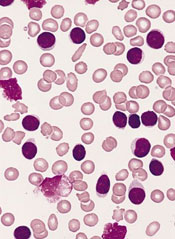
VIENNA—New research indicates that duvelisib, a dual inhibitor of PI3Kδ and PI3Kγ, can generate rapid partial responses in treatment-naïve patients with chronic lymphocytic leukemia (CLL).
The 18 patients in the expansion cohort of a phase 1 study of duvelisib had a median time to response of 3.7 months, according to iwCLL response criteria.
And 47% of the responses occurred by the first assessment on day 1 of cycle 3.
“One thing that does seem to be different with this drug is that you’re getting your [partial responses] a bit faster than you see with some of the other drugs,” said Susan O’Brien, MD, of UC Irvine Health in Orange, California.
“[W]hat that means in the long run is not completely clear, but there’s no question that the responses are very rapid.”
Dr O’Brien presented these findings at the 20th Congress of the European Hematology Association (abstract S434*). The research was funded by Infinity Pharmaceuticals, Inc., the company developing duvelisib.
Older CLL patients with comorbidities and patients with high-risk genomic alterations, such as 17p deletion and TP53 mutations, often don’t fare well on the standard chemoimmunotherapy. Duvelisib is being developed as a potential alternative for these patients and others with hematologic malignancies.
In the dose-escalation portion of this phase 1 study, duvelisib at 25 mg twice daily was well-tolerated and exhibited clinical activity in relapsed/refractory CLL, even in those patients with TP53 mutations and 17p deletion.
So investigators conducted the expansion cohort with 18 patients who received duvelisib at the same dose in 28-day cycles. Duvelisib is given continuously until patients have an adverse event or lose their response.
Patient demographics
Dr O’Brien said there was nothing unusual about the demographics of the study population, except the risk factors: 83% of the patients were over 65, “which is very different from what you would see in a chemoimmunotherapy trial.”
She noted that the patients’ median age was 74, and 56% of patients had either a 17p deletion or TP53 mutation.
“And that’s very unusual because . . . the percentage of patients with that abnormality in frontline CLL is about 5% to 10%,” she added.
Patients were a median of 3 years (range, 0–9) from their initial diagnosis, 47% had Rai stage 3 or greater disease, 44% had splenomegaly, and 11% had grade 4 cytopenia.
Response
Patients stayed on treatment for a median of 14 months (range, 1–20). Eight (44%) discontinued treatment—6 (33%) due to an adverse event, 1 withdrew consent, and 1 discontinued for other reasons.
The best overall response rate was 88%, which consisted of 15 partial responses. Two patients (12%) had stable disease, and there were no complete responses or cases of progressive disease.
One patient with a TP53 mutation/17p deletion withdrew consent prior to the first efficacy assessment.
“There’s no upfront progression,” Dr O’Brien said, “and the response rate was identical for patients with high-risk disease or 17p deletion.”
The median progression-free survival was not yet reached, and the rate was 92% at 18 months. One patient progressed at cycle 13.
The median overall survival was also not reached, with a 94% survival rate at 18 months. One patient died of progressive disease approximately 5 months after the last dose.
Adverse events
The most frequent adverse events (AEs) occurring in more than 25% of patients were, in order of frequency, diarrhea, rash, cough, neutropenia, peripheral edema, fatigue, nausea, pyrexia, ALT/AST increase, anemia, and dizziness.
Grade 3 AEs included diarrhea (22%), ALT/AST increase (17%), rash (11%), neutropenia (6%), fatigue (6%), and anemia (6%). The only grade 4 AE was neutropenia (28%).
Serious AEs in more than 1 patient included diarrhea (n=3), colitis (n=2), dehydration (n=2), pneumonia (n=2), and pneumonitis (n=2).
The AEs leading to treatment discontinuation were increased ALT/AST, dehydration, and spinal stenosis (all in 1 patient), as well as arthritis, pneumonitis, colitis, diarrhea, and stomatitis.
“We tend to see the transaminitis and the pneumonitis earlier, and then the late toxicity tends to be the diarrhea and colitis,” Dr O’ Brien said. “The one toxicity where I would not be inclined to try and re-treat a patient is pneumonitis, but I do think colitis can be successfully re-treated.”
Pharmacodynamic studies show very rapid inhibition of phosphorylated AKT following treatment, which is sustained throughout the whole first cycle. And following 1 cycle of duvelisib, there is near-complete inhibition of CLL proliferation, as evidenced by the reduction in Ki67.
Given these data, the investigators recommended further development of duvelisib in treatment-naïve CLL.
*Information in the abstract differs from that presented at the meeting.
VIENNA—New research indicates that duvelisib, a dual inhibitor of PI3Kδ and PI3Kγ, can generate rapid partial responses in treatment-naïve patients with chronic lymphocytic leukemia (CLL).
The 18 patients in the expansion cohort of a phase 1 study of duvelisib had a median time to response of 3.7 months, according to iwCLL response criteria.
And 47% of the responses occurred by the first assessment on day 1 of cycle 3.
“One thing that does seem to be different with this drug is that you’re getting your [partial responses] a bit faster than you see with some of the other drugs,” said Susan O’Brien, MD, of UC Irvine Health in Orange, California.
“[W]hat that means in the long run is not completely clear, but there’s no question that the responses are very rapid.”
Dr O’Brien presented these findings at the 20th Congress of the European Hematology Association (abstract S434*). The research was funded by Infinity Pharmaceuticals, Inc., the company developing duvelisib.
Older CLL patients with comorbidities and patients with high-risk genomic alterations, such as 17p deletion and TP53 mutations, often don’t fare well on the standard chemoimmunotherapy. Duvelisib is being developed as a potential alternative for these patients and others with hematologic malignancies.
In the dose-escalation portion of this phase 1 study, duvelisib at 25 mg twice daily was well-tolerated and exhibited clinical activity in relapsed/refractory CLL, even in those patients with TP53 mutations and 17p deletion.
So investigators conducted the expansion cohort with 18 patients who received duvelisib at the same dose in 28-day cycles. Duvelisib is given continuously until patients have an adverse event or lose their response.
Patient demographics
Dr O’Brien said there was nothing unusual about the demographics of the study population, except the risk factors: 83% of the patients were over 65, “which is very different from what you would see in a chemoimmunotherapy trial.”
She noted that the patients’ median age was 74, and 56% of patients had either a 17p deletion or TP53 mutation.
“And that’s very unusual because . . . the percentage of patients with that abnormality in frontline CLL is about 5% to 10%,” she added.
Patients were a median of 3 years (range, 0–9) from their initial diagnosis, 47% had Rai stage 3 or greater disease, 44% had splenomegaly, and 11% had grade 4 cytopenia.
Response
Patients stayed on treatment for a median of 14 months (range, 1–20). Eight (44%) discontinued treatment—6 (33%) due to an adverse event, 1 withdrew consent, and 1 discontinued for other reasons.
The best overall response rate was 88%, which consisted of 15 partial responses. Two patients (12%) had stable disease, and there were no complete responses or cases of progressive disease.
One patient with a TP53 mutation/17p deletion withdrew consent prior to the first efficacy assessment.
“There’s no upfront progression,” Dr O’Brien said, “and the response rate was identical for patients with high-risk disease or 17p deletion.”
The median progression-free survival was not yet reached, and the rate was 92% at 18 months. One patient progressed at cycle 13.
The median overall survival was also not reached, with a 94% survival rate at 18 months. One patient died of progressive disease approximately 5 months after the last dose.
Adverse events
The most frequent adverse events (AEs) occurring in more than 25% of patients were, in order of frequency, diarrhea, rash, cough, neutropenia, peripheral edema, fatigue, nausea, pyrexia, ALT/AST increase, anemia, and dizziness.
Grade 3 AEs included diarrhea (22%), ALT/AST increase (17%), rash (11%), neutropenia (6%), fatigue (6%), and anemia (6%). The only grade 4 AE was neutropenia (28%).
Serious AEs in more than 1 patient included diarrhea (n=3), colitis (n=2), dehydration (n=2), pneumonia (n=2), and pneumonitis (n=2).
The AEs leading to treatment discontinuation were increased ALT/AST, dehydration, and spinal stenosis (all in 1 patient), as well as arthritis, pneumonitis, colitis, diarrhea, and stomatitis.
“We tend to see the transaminitis and the pneumonitis earlier, and then the late toxicity tends to be the diarrhea and colitis,” Dr O’ Brien said. “The one toxicity where I would not be inclined to try and re-treat a patient is pneumonitis, but I do think colitis can be successfully re-treated.”
Pharmacodynamic studies show very rapid inhibition of phosphorylated AKT following treatment, which is sustained throughout the whole first cycle. And following 1 cycle of duvelisib, there is near-complete inhibition of CLL proliferation, as evidenced by the reduction in Ki67.
Given these data, the investigators recommended further development of duvelisib in treatment-naïve CLL.
*Information in the abstract differs from that presented at the meeting.
VIENNA—New research indicates that duvelisib, a dual inhibitor of PI3Kδ and PI3Kγ, can generate rapid partial responses in treatment-naïve patients with chronic lymphocytic leukemia (CLL).
The 18 patients in the expansion cohort of a phase 1 study of duvelisib had a median time to response of 3.7 months, according to iwCLL response criteria.
And 47% of the responses occurred by the first assessment on day 1 of cycle 3.
“One thing that does seem to be different with this drug is that you’re getting your [partial responses] a bit faster than you see with some of the other drugs,” said Susan O’Brien, MD, of UC Irvine Health in Orange, California.
“[W]hat that means in the long run is not completely clear, but there’s no question that the responses are very rapid.”
Dr O’Brien presented these findings at the 20th Congress of the European Hematology Association (abstract S434*). The research was funded by Infinity Pharmaceuticals, Inc., the company developing duvelisib.
Older CLL patients with comorbidities and patients with high-risk genomic alterations, such as 17p deletion and TP53 mutations, often don’t fare well on the standard chemoimmunotherapy. Duvelisib is being developed as a potential alternative for these patients and others with hematologic malignancies.
In the dose-escalation portion of this phase 1 study, duvelisib at 25 mg twice daily was well-tolerated and exhibited clinical activity in relapsed/refractory CLL, even in those patients with TP53 mutations and 17p deletion.
So investigators conducted the expansion cohort with 18 patients who received duvelisib at the same dose in 28-day cycles. Duvelisib is given continuously until patients have an adverse event or lose their response.
Patient demographics
Dr O’Brien said there was nothing unusual about the demographics of the study population, except the risk factors: 83% of the patients were over 65, “which is very different from what you would see in a chemoimmunotherapy trial.”
She noted that the patients’ median age was 74, and 56% of patients had either a 17p deletion or TP53 mutation.
“And that’s very unusual because . . . the percentage of patients with that abnormality in frontline CLL is about 5% to 10%,” she added.
Patients were a median of 3 years (range, 0–9) from their initial diagnosis, 47% had Rai stage 3 or greater disease, 44% had splenomegaly, and 11% had grade 4 cytopenia.
Response
Patients stayed on treatment for a median of 14 months (range, 1–20). Eight (44%) discontinued treatment—6 (33%) due to an adverse event, 1 withdrew consent, and 1 discontinued for other reasons.
The best overall response rate was 88%, which consisted of 15 partial responses. Two patients (12%) had stable disease, and there were no complete responses or cases of progressive disease.
One patient with a TP53 mutation/17p deletion withdrew consent prior to the first efficacy assessment.
“There’s no upfront progression,” Dr O’Brien said, “and the response rate was identical for patients with high-risk disease or 17p deletion.”
The median progression-free survival was not yet reached, and the rate was 92% at 18 months. One patient progressed at cycle 13.
The median overall survival was also not reached, with a 94% survival rate at 18 months. One patient died of progressive disease approximately 5 months after the last dose.
Adverse events
The most frequent adverse events (AEs) occurring in more than 25% of patients were, in order of frequency, diarrhea, rash, cough, neutropenia, peripheral edema, fatigue, nausea, pyrexia, ALT/AST increase, anemia, and dizziness.
Grade 3 AEs included diarrhea (22%), ALT/AST increase (17%), rash (11%), neutropenia (6%), fatigue (6%), and anemia (6%). The only grade 4 AE was neutropenia (28%).
Serious AEs in more than 1 patient included diarrhea (n=3), colitis (n=2), dehydration (n=2), pneumonia (n=2), and pneumonitis (n=2).
The AEs leading to treatment discontinuation were increased ALT/AST, dehydration, and spinal stenosis (all in 1 patient), as well as arthritis, pneumonitis, colitis, diarrhea, and stomatitis.
“We tend to see the transaminitis and the pneumonitis earlier, and then the late toxicity tends to be the diarrhea and colitis,” Dr O’ Brien said. “The one toxicity where I would not be inclined to try and re-treat a patient is pneumonitis, but I do think colitis can be successfully re-treated.”
Pharmacodynamic studies show very rapid inhibition of phosphorylated AKT following treatment, which is sustained throughout the whole first cycle. And following 1 cycle of duvelisib, there is near-complete inhibition of CLL proliferation, as evidenced by the reduction in Ki67.
Given these data, the investigators recommended further development of duvelisib in treatment-naïve CLL.
*Information in the abstract differs from that presented at the meeting.
Chronic Myeloid Leukemia
The first connection between cancer and a patient’s genome was documented by Peter Nowell and David Hungerford when they identified a unique chromosome in the metaphase spread of 7 patients diagnosed with chronic myeloid leukemia (CML). In 1973, renowned cytopathologist Janet Rowley determined that this chromosome is part of a chromosomal translocation between chromosome 9 and chromosome 22. Further delineation of this translocation showed that the gene ABL1, normally located on chromosome 9, is translocated to the Philadelphia (Ph+) chromosome in patients with CML. ABL1 was found to be located downstream of a specific genetic region in each patient, and this region became known as the BCR, or “breakpoint cluster region.” The BCR-ABL1 translocation found in patients with CML creates a constitutively active tyrosine kinase necessary for cellular transformation.
To read the full article in PDF:
The first connection between cancer and a patient’s genome was documented by Peter Nowell and David Hungerford when they identified a unique chromosome in the metaphase spread of 7 patients diagnosed with chronic myeloid leukemia (CML). In 1973, renowned cytopathologist Janet Rowley determined that this chromosome is part of a chromosomal translocation between chromosome 9 and chromosome 22. Further delineation of this translocation showed that the gene ABL1, normally located on chromosome 9, is translocated to the Philadelphia (Ph+) chromosome in patients with CML. ABL1 was found to be located downstream of a specific genetic region in each patient, and this region became known as the BCR, or “breakpoint cluster region.” The BCR-ABL1 translocation found in patients with CML creates a constitutively active tyrosine kinase necessary for cellular transformation.
To read the full article in PDF:
The first connection between cancer and a patient’s genome was documented by Peter Nowell and David Hungerford when they identified a unique chromosome in the metaphase spread of 7 patients diagnosed with chronic myeloid leukemia (CML). In 1973, renowned cytopathologist Janet Rowley determined that this chromosome is part of a chromosomal translocation between chromosome 9 and chromosome 22. Further delineation of this translocation showed that the gene ABL1, normally located on chromosome 9, is translocated to the Philadelphia (Ph+) chromosome in patients with CML. ABL1 was found to be located downstream of a specific genetic region in each patient, and this region became known as the BCR, or “breakpoint cluster region.” The BCR-ABL1 translocation found in patients with CML creates a constitutively active tyrosine kinase necessary for cellular transformation.
To read the full article in PDF:
‘Radically different’ PI3Kδ inhibitor lacks hepatotoxicity

Photo by Larry Young
LUGANO—Updated phase 1 results with TGR-1202 suggest this next-generation PI3kδ inhibitor lacks the hepatotoxicity associated with other PI3Kδ inhibitors.
Investigators also confirmed that no case of colitis has been reported to date with TGR-1202, and only 2% of evaluable patients on this trial have experienced grade 3-4 diarrhea.
The study is an ongoing, first-in-human trial in patients with relapsed or refractory hematologic malignancies.
Owen O’Connor, MD, PhD, of Columbia University Medical Center in New York, New York, shared results from this trial at the 13th International Congress on Malignant Lymphoma (abstract 038*). The trial is sponsored by TG Therapeutics, Inc., the company developing TGR-1202.
“TGR-1202 is a radically different sort of PI3kδ inhibitor,” Dr O’Connor said. “[I]t’s really a unique chemical entity that is different from the previous 2 structures [idelalisib and duvelisib] that you’ve probably heard something about.”
Study design
This ongoing trial of TGR-1202 is open to patients with hematologic malignancies who relapsed after or were refractory to at least 1 prior treatment regimen. Patients are eligible if they have an ECOG performance status of 2 or less with adequate organ system function, including absolute neutrophil count of 750/μL or greater and platelets of 50,000/μL or greater.
TGR-1202 is dosed orally, once a day in continuous, 28-day cycles. The original dose-escalation portion of the study was a classic 3+3 design, starting at 50 mg and increasing to 1800 mg. Patients who received prior therapy with a PI3K and/or mTOR inhibitor were excluded from the dose-escalation cohorts but were allowed in the expansion cohorts.
Dr O’Connor pointed out that, through cohort 5, TGR-1202 was taken in the fasting state. However, pharmacokinetic studies performed in the fed state revealed that the area under the curve (AUC) and Cmax could be doubled by taking the drug with food. So the expansions in the ongoing 800 mg and 1200 mg cohorts are being conducted in the fed state.
Dr O’Connor also noted that a subsequent, micronized version of TGR-1202 was developed. The micronization “essentially increases the surface area of the formulation, allowing for better bioavailability and markedly increases the AUC and Cmax exposure,” he said.
So the investigators conducted a second escalation with the micronized formulation, starting at 200 mg and increasing to 800 mg. At present, they are enrolling patients to the 800 mg and 1200 mg cohorts conducted in the fed state with the micronized formulation.
Demographics
Dr O’Connor presented data on 66 patients who were evaluable for safety and 51 for efficacy. The patients’ median age was 66 (range, 22–85), and 46 were male.
In all, there were 20 patients with chronic lymphocytic leukemia (CLL), 17 with follicular lymphoma, 10 with diffuse large B-cell lymphoma, 9 with Hodgkin lymphoma, 5 with mantle cell lymphoma, 3 with marginal zone lymphoma, 1 with Waldenström’s macroglobulinemia, and 1 with hairy cell leukemia.
Patients had received a median of 3 prior therapies (range, 1–14), and 36 (55%) had 3 or more prior therapies. Thirty-four patients (52%) were refractory to their prior therapy.
Efficacy
Dr O’Connor reported that higher doses of TGR-1202—1200 mg of the initial formulation and 600 mg or more of the micronized version—demonstrated rapid and profound responses in CLL, follicular lymphoma, and marginal zone lymphoma.
Responses have been limited in diffuse large B-cell lymphoma, Hodgkin lymphoma, and mantle cell lymphoma.
Eighty-eight percent of CLL patients achieved a nodal partial remission, and 63% achieved a response according to iwCLL criteria (Hallek 2008).
Safety and tolerability
Adverse events occurring in more than 10% of patients included nausea (41%), diarrhea (32%), fatigue (32%), headache (23%), vomiting (23%), cough (21%), decreased appetite (17%), rash (17%), constipation (14%), hypokalemia (14%), anemia, dizziness, dyspnea, neutropenia, and pyrexia (12% each), and abdominal pain (11%).
The most common grade 3-4 toxicity was neutropenia, occurring in 11% of patients.
“But other than that, the bulk of the toxicities in terms of grade 3-4 events were relatively modest,” Dr O’Connor said. “[I]t’s worth pointing out that diarrhea grade 3-4 only occurred in about 2% of patients in the population.”
Approximately 50% of patients (n=31) have been on study for more than 6 months, and approximately 30% taking a higher dose level have been on study for 6 months or more. Twenty-five of 37 patients exposed to 800 mg or more of the micronized formulation currently remain on study.
“So this gives you a sense that it is a very well-tolerated drug, with patients staying on for extended periods of time,” Dr O’Connor said.
He added that time on study becomes relevant in assessing some of the gastrointestinal toxicities seen with other PI3Kδ inhibitors, where it seems the median time to gastrointestinal toxicity is beyond 6 months.
“So far, and I’m willing to concede it’s early, but with half the patients being treated for over 6 months, [diarrhea/colitis] seems to be much lower than the experience with the other PI3 kinase inhibitors,” Dr O’Connor said.
“I think one of the more important features of [TGR-1202], and one that allows me to think we might be able to integrate this drug a little more readily into various combination regimens, are the discontinuations due to other adverse events.”
“Only 4% treated with [TGR-1202] had discontinuations secondary to adverse events. [A]nd it looks like the efficacy is in line with what we’d expect with some of the other drugs, but this [study] is actively accruing still.”
*Information in the abstract differs from that presented at the meeting.
Photo by Larry Young
LUGANO—Updated phase 1 results with TGR-1202 suggest this next-generation PI3kδ inhibitor lacks the hepatotoxicity associated with other PI3Kδ inhibitors.
Investigators also confirmed that no case of colitis has been reported to date with TGR-1202, and only 2% of evaluable patients on this trial have experienced grade 3-4 diarrhea.
The study is an ongoing, first-in-human trial in patients with relapsed or refractory hematologic malignancies.
Owen O’Connor, MD, PhD, of Columbia University Medical Center in New York, New York, shared results from this trial at the 13th International Congress on Malignant Lymphoma (abstract 038*). The trial is sponsored by TG Therapeutics, Inc., the company developing TGR-1202.
“TGR-1202 is a radically different sort of PI3kδ inhibitor,” Dr O’Connor said. “[I]t’s really a unique chemical entity that is different from the previous 2 structures [idelalisib and duvelisib] that you’ve probably heard something about.”
Study design
This ongoing trial of TGR-1202 is open to patients with hematologic malignancies who relapsed after or were refractory to at least 1 prior treatment regimen. Patients are eligible if they have an ECOG performance status of 2 or less with adequate organ system function, including absolute neutrophil count of 750/μL or greater and platelets of 50,000/μL or greater.
TGR-1202 is dosed orally, once a day in continuous, 28-day cycles. The original dose-escalation portion of the study was a classic 3+3 design, starting at 50 mg and increasing to 1800 mg. Patients who received prior therapy with a PI3K and/or mTOR inhibitor were excluded from the dose-escalation cohorts but were allowed in the expansion cohorts.
Dr O’Connor pointed out that, through cohort 5, TGR-1202 was taken in the fasting state. However, pharmacokinetic studies performed in the fed state revealed that the area under the curve (AUC) and Cmax could be doubled by taking the drug with food. So the expansions in the ongoing 800 mg and 1200 mg cohorts are being conducted in the fed state.
Dr O’Connor also noted that a subsequent, micronized version of TGR-1202 was developed. The micronization “essentially increases the surface area of the formulation, allowing for better bioavailability and markedly increases the AUC and Cmax exposure,” he said.
So the investigators conducted a second escalation with the micronized formulation, starting at 200 mg and increasing to 800 mg. At present, they are enrolling patients to the 800 mg and 1200 mg cohorts conducted in the fed state with the micronized formulation.
Demographics
Dr O’Connor presented data on 66 patients who were evaluable for safety and 51 for efficacy. The patients’ median age was 66 (range, 22–85), and 46 were male.
In all, there were 20 patients with chronic lymphocytic leukemia (CLL), 17 with follicular lymphoma, 10 with diffuse large B-cell lymphoma, 9 with Hodgkin lymphoma, 5 with mantle cell lymphoma, 3 with marginal zone lymphoma, 1 with Waldenström’s macroglobulinemia, and 1 with hairy cell leukemia.
Patients had received a median of 3 prior therapies (range, 1–14), and 36 (55%) had 3 or more prior therapies. Thirty-four patients (52%) were refractory to their prior therapy.
Efficacy
Dr O’Connor reported that higher doses of TGR-1202—1200 mg of the initial formulation and 600 mg or more of the micronized version—demonstrated rapid and profound responses in CLL, follicular lymphoma, and marginal zone lymphoma.
Responses have been limited in diffuse large B-cell lymphoma, Hodgkin lymphoma, and mantle cell lymphoma.
Eighty-eight percent of CLL patients achieved a nodal partial remission, and 63% achieved a response according to iwCLL criteria (Hallek 2008).
Safety and tolerability
Adverse events occurring in more than 10% of patients included nausea (41%), diarrhea (32%), fatigue (32%), headache (23%), vomiting (23%), cough (21%), decreased appetite (17%), rash (17%), constipation (14%), hypokalemia (14%), anemia, dizziness, dyspnea, neutropenia, and pyrexia (12% each), and abdominal pain (11%).
The most common grade 3-4 toxicity was neutropenia, occurring in 11% of patients.
“But other than that, the bulk of the toxicities in terms of grade 3-4 events were relatively modest,” Dr O’Connor said. “[I]t’s worth pointing out that diarrhea grade 3-4 only occurred in about 2% of patients in the population.”
Approximately 50% of patients (n=31) have been on study for more than 6 months, and approximately 30% taking a higher dose level have been on study for 6 months or more. Twenty-five of 37 patients exposed to 800 mg or more of the micronized formulation currently remain on study.
“So this gives you a sense that it is a very well-tolerated drug, with patients staying on for extended periods of time,” Dr O’Connor said.
He added that time on study becomes relevant in assessing some of the gastrointestinal toxicities seen with other PI3Kδ inhibitors, where it seems the median time to gastrointestinal toxicity is beyond 6 months.
“So far, and I’m willing to concede it’s early, but with half the patients being treated for over 6 months, [diarrhea/colitis] seems to be much lower than the experience with the other PI3 kinase inhibitors,” Dr O’Connor said.
“I think one of the more important features of [TGR-1202], and one that allows me to think we might be able to integrate this drug a little more readily into various combination regimens, are the discontinuations due to other adverse events.”
“Only 4% treated with [TGR-1202] had discontinuations secondary to adverse events. [A]nd it looks like the efficacy is in line with what we’d expect with some of the other drugs, but this [study] is actively accruing still.”
*Information in the abstract differs from that presented at the meeting.
Photo by Larry Young
LUGANO—Updated phase 1 results with TGR-1202 suggest this next-generation PI3kδ inhibitor lacks the hepatotoxicity associated with other PI3Kδ inhibitors.
Investigators also confirmed that no case of colitis has been reported to date with TGR-1202, and only 2% of evaluable patients on this trial have experienced grade 3-4 diarrhea.
The study is an ongoing, first-in-human trial in patients with relapsed or refractory hematologic malignancies.
Owen O’Connor, MD, PhD, of Columbia University Medical Center in New York, New York, shared results from this trial at the 13th International Congress on Malignant Lymphoma (abstract 038*). The trial is sponsored by TG Therapeutics, Inc., the company developing TGR-1202.
“TGR-1202 is a radically different sort of PI3kδ inhibitor,” Dr O’Connor said. “[I]t’s really a unique chemical entity that is different from the previous 2 structures [idelalisib and duvelisib] that you’ve probably heard something about.”
Study design
This ongoing trial of TGR-1202 is open to patients with hematologic malignancies who relapsed after or were refractory to at least 1 prior treatment regimen. Patients are eligible if they have an ECOG performance status of 2 or less with adequate organ system function, including absolute neutrophil count of 750/μL or greater and platelets of 50,000/μL or greater.
TGR-1202 is dosed orally, once a day in continuous, 28-day cycles. The original dose-escalation portion of the study was a classic 3+3 design, starting at 50 mg and increasing to 1800 mg. Patients who received prior therapy with a PI3K and/or mTOR inhibitor were excluded from the dose-escalation cohorts but were allowed in the expansion cohorts.
Dr O’Connor pointed out that, through cohort 5, TGR-1202 was taken in the fasting state. However, pharmacokinetic studies performed in the fed state revealed that the area under the curve (AUC) and Cmax could be doubled by taking the drug with food. So the expansions in the ongoing 800 mg and 1200 mg cohorts are being conducted in the fed state.
Dr O’Connor also noted that a subsequent, micronized version of TGR-1202 was developed. The micronization “essentially increases the surface area of the formulation, allowing for better bioavailability and markedly increases the AUC and Cmax exposure,” he said.
So the investigators conducted a second escalation with the micronized formulation, starting at 200 mg and increasing to 800 mg. At present, they are enrolling patients to the 800 mg and 1200 mg cohorts conducted in the fed state with the micronized formulation.
Demographics
Dr O’Connor presented data on 66 patients who were evaluable for safety and 51 for efficacy. The patients’ median age was 66 (range, 22–85), and 46 were male.
In all, there were 20 patients with chronic lymphocytic leukemia (CLL), 17 with follicular lymphoma, 10 with diffuse large B-cell lymphoma, 9 with Hodgkin lymphoma, 5 with mantle cell lymphoma, 3 with marginal zone lymphoma, 1 with Waldenström’s macroglobulinemia, and 1 with hairy cell leukemia.
Patients had received a median of 3 prior therapies (range, 1–14), and 36 (55%) had 3 or more prior therapies. Thirty-four patients (52%) were refractory to their prior therapy.
Efficacy
Dr O’Connor reported that higher doses of TGR-1202—1200 mg of the initial formulation and 600 mg or more of the micronized version—demonstrated rapid and profound responses in CLL, follicular lymphoma, and marginal zone lymphoma.
Responses have been limited in diffuse large B-cell lymphoma, Hodgkin lymphoma, and mantle cell lymphoma.
Eighty-eight percent of CLL patients achieved a nodal partial remission, and 63% achieved a response according to iwCLL criteria (Hallek 2008).
Safety and tolerability
Adverse events occurring in more than 10% of patients included nausea (41%), diarrhea (32%), fatigue (32%), headache (23%), vomiting (23%), cough (21%), decreased appetite (17%), rash (17%), constipation (14%), hypokalemia (14%), anemia, dizziness, dyspnea, neutropenia, and pyrexia (12% each), and abdominal pain (11%).
The most common grade 3-4 toxicity was neutropenia, occurring in 11% of patients.
“But other than that, the bulk of the toxicities in terms of grade 3-4 events were relatively modest,” Dr O’Connor said. “[I]t’s worth pointing out that diarrhea grade 3-4 only occurred in about 2% of patients in the population.”
Approximately 50% of patients (n=31) have been on study for more than 6 months, and approximately 30% taking a higher dose level have been on study for 6 months or more. Twenty-five of 37 patients exposed to 800 mg or more of the micronized formulation currently remain on study.
“So this gives you a sense that it is a very well-tolerated drug, with patients staying on for extended periods of time,” Dr O’Connor said.
He added that time on study becomes relevant in assessing some of the gastrointestinal toxicities seen with other PI3Kδ inhibitors, where it seems the median time to gastrointestinal toxicity is beyond 6 months.
“So far, and I’m willing to concede it’s early, but with half the patients being treated for over 6 months, [diarrhea/colitis] seems to be much lower than the experience with the other PI3 kinase inhibitors,” Dr O’Connor said.
“I think one of the more important features of [TGR-1202], and one that allows me to think we might be able to integrate this drug a little more readily into various combination regimens, are the discontinuations due to other adverse events.”
“Only 4% treated with [TGR-1202] had discontinuations secondary to adverse events. [A]nd it looks like the efficacy is in line with what we’d expect with some of the other drugs, but this [study] is actively accruing still.”
*Information in the abstract differs from that presented at the meeting.