User login
Dose reductions make ponatinib safer for CP-CML

VIENNA—Administering ponatinib at lower doses can reduce the risk of arterial occlusive events (AOE) without hindering responses in patients with chronic-phase chronic myeloid leukemia (CP-CML), data from the PACE trial suggest.
When earlier results of this phase 2 study showed that ponatinib can cause AOEs, trials of the drug were put on partial clinical hold. Enrollment was stalled temporarily, and investigators began reducing ponatinib doses.
Now, updated data from the PACE trial suggest ponatinib can be administered safely and effectively in certain patients with CP-CML.
At a median follow-up of about 3.5 years, 95% of CP-CML patients who underwent dose reductions maintained a major cytogenetic response (MCyR). And AOEs occurred in 7% of patients who underwent dose reductions, compared to 13% of patients who did not.
“These continued responses . . . in such a heavily pretreated patient population are very encouraging,” said study investigator Jorge E. Cortes, MD, of The University of Texas MD Anderson Cancer Center in Houston.
“Careful assessment of the benefit and risk of initiating ponatinib therapy, particularly in patients who may be at increased risk for arterial occlusive events, can help identify patients with refractory, Ph+ leukemias who can benefit most from this treatment.”
Dr Cortes and his colleagues presented data from the PACE trial at the 20th Congress of the European Hematology Association as abstract P234*. The study was sponsored by Ariad Pharmaceuticals, the company developing ponatinib.
Updated results
The trial included patients with resistant or intolerant CML or Philadelphia chromosome-positive acute lymphoblastic leukemia. A total of 449 patients received ponatinib at a starting dose of 45 mg/day.
Ninety-three percent of patients had previously received 2 or more approved tyrosine kinase inhibitors (TKI), and 55% had previously received 3 or more approved TKIs.
Dr Cortes and his colleagues presented data on 270 CP-CML patients. At a median follow-up of 42.3 months (data as of February 2, 2015), 114 patients (42%) continue to receive ponatinib.
Eighteen percent of patients discontinued treatment due to adverse events (AEs), 10% due to disease progression, 3% due to death, and 27% for other reasons.
Fifty-nine percent of CP-CML patients achieved an MCyR at any time during the study, and 83% of responders are estimated to remain in MCyR at 3 years. Thirty-nine percent of patients achieved a major molecular response (MMR).
The estimated progression-free survival at 3 years is 60%, and the estimated overall survival is 81%.
Twenty-three percent of CP-CML patients experienced an AOE designated a serious AE, and 28% experienced any AOE. The median time to onset for AOEs was 14.1 months (range, 0.3–44.0).
Four percent of CP-CML patients experienced a venous thromboembolism (VTE) that was considered an serious AE, and 5% experienced any VTE.
The most common all-grade, treatment-emergent AEs occurring in at least 40% of CP-CML patients were abdominal pain (46%), rash (46%), thrombocytopenia (45%), headache (43%), constipation (41%), and dry skin (41%).
Outcomes after dose reductions
On October 10, 2013, Ariad provided dose-reduction recommendations to investigators for patients remaining on the PACE trial. The following dose reductions were recommended, unless the benefit-risk analysis warranted treatment with a higher dose:
- CP-CML patients who already achieved an MCyR should have their ponatinib dose reduced to 15 mg/day
- CP-CML patients who had not already achieved an MCyR should have their dose reduced to 30 mg/day
- Advanced-phase patients should have their dose reduced to 30 mg/day.
As of February 2015, with 1.3 years (16 months) of follow-up after these recommendations, 95% of CP-CML patients maintained their response, whether or not they underwent prospective dose reductions.
Of the patients who were in MCyR as of October 10, 2013, and had a prospective dose reduction, 95% (61/64) maintained their response at 1.3 years. Of the patients who were in MMR as of October 10, 2013, and had a prospective dose reduction, 94% (44/47) maintained their response at 1.3 years.
Forty-two patients in MCyR did not undergo prospective dose reductions (the majority of which were already at a reduced dose of 30 mg or 15 mg as of October 10, 2013). Of these patients, 93% (n=39) maintained an MCyR after 1.3 more years of ponatinib treatment.
Twenty-four patients in MMR did not undergo prospective dose reductions, and 96% of these patients (n=22) maintained their response at 1.3 years.
Seven percent (5/71) of patients without prior AOEs who underwent dose reductions had a new AOE during the 1.3-year interval after dose reduction.
Thirteen percent (9/67) of patients without prior AOEs who did not undergo dose reductions had a new AOE in the same time interval. 
*Information in the abstract differs from that presented at the meeting.
VIENNA—Administering ponatinib at lower doses can reduce the risk of arterial occlusive events (AOE) without hindering responses in patients with chronic-phase chronic myeloid leukemia (CP-CML), data from the PACE trial suggest.
When earlier results of this phase 2 study showed that ponatinib can cause AOEs, trials of the drug were put on partial clinical hold. Enrollment was stalled temporarily, and investigators began reducing ponatinib doses.
Now, updated data from the PACE trial suggest ponatinib can be administered safely and effectively in certain patients with CP-CML.
At a median follow-up of about 3.5 years, 95% of CP-CML patients who underwent dose reductions maintained a major cytogenetic response (MCyR). And AOEs occurred in 7% of patients who underwent dose reductions, compared to 13% of patients who did not.
“These continued responses . . . in such a heavily pretreated patient population are very encouraging,” said study investigator Jorge E. Cortes, MD, of The University of Texas MD Anderson Cancer Center in Houston.
“Careful assessment of the benefit and risk of initiating ponatinib therapy, particularly in patients who may be at increased risk for arterial occlusive events, can help identify patients with refractory, Ph+ leukemias who can benefit most from this treatment.”
Dr Cortes and his colleagues presented data from the PACE trial at the 20th Congress of the European Hematology Association as abstract P234*. The study was sponsored by Ariad Pharmaceuticals, the company developing ponatinib.
Updated results
The trial included patients with resistant or intolerant CML or Philadelphia chromosome-positive acute lymphoblastic leukemia. A total of 449 patients received ponatinib at a starting dose of 45 mg/day.
Ninety-three percent of patients had previously received 2 or more approved tyrosine kinase inhibitors (TKI), and 55% had previously received 3 or more approved TKIs.
Dr Cortes and his colleagues presented data on 270 CP-CML patients. At a median follow-up of 42.3 months (data as of February 2, 2015), 114 patients (42%) continue to receive ponatinib.
Eighteen percent of patients discontinued treatment due to adverse events (AEs), 10% due to disease progression, 3% due to death, and 27% for other reasons.
Fifty-nine percent of CP-CML patients achieved an MCyR at any time during the study, and 83% of responders are estimated to remain in MCyR at 3 years. Thirty-nine percent of patients achieved a major molecular response (MMR).
The estimated progression-free survival at 3 years is 60%, and the estimated overall survival is 81%.
Twenty-three percent of CP-CML patients experienced an AOE designated a serious AE, and 28% experienced any AOE. The median time to onset for AOEs was 14.1 months (range, 0.3–44.0).
Four percent of CP-CML patients experienced a venous thromboembolism (VTE) that was considered an serious AE, and 5% experienced any VTE.
The most common all-grade, treatment-emergent AEs occurring in at least 40% of CP-CML patients were abdominal pain (46%), rash (46%), thrombocytopenia (45%), headache (43%), constipation (41%), and dry skin (41%).
Outcomes after dose reductions
On October 10, 2013, Ariad provided dose-reduction recommendations to investigators for patients remaining on the PACE trial. The following dose reductions were recommended, unless the benefit-risk analysis warranted treatment with a higher dose:
- CP-CML patients who already achieved an MCyR should have their ponatinib dose reduced to 15 mg/day
- CP-CML patients who had not already achieved an MCyR should have their dose reduced to 30 mg/day
- Advanced-phase patients should have their dose reduced to 30 mg/day.
As of February 2015, with 1.3 years (16 months) of follow-up after these recommendations, 95% of CP-CML patients maintained their response, whether or not they underwent prospective dose reductions.
Of the patients who were in MCyR as of October 10, 2013, and had a prospective dose reduction, 95% (61/64) maintained their response at 1.3 years. Of the patients who were in MMR as of October 10, 2013, and had a prospective dose reduction, 94% (44/47) maintained their response at 1.3 years.
Forty-two patients in MCyR did not undergo prospective dose reductions (the majority of which were already at a reduced dose of 30 mg or 15 mg as of October 10, 2013). Of these patients, 93% (n=39) maintained an MCyR after 1.3 more years of ponatinib treatment.
Twenty-four patients in MMR did not undergo prospective dose reductions, and 96% of these patients (n=22) maintained their response at 1.3 years.
Seven percent (5/71) of patients without prior AOEs who underwent dose reductions had a new AOE during the 1.3-year interval after dose reduction.
Thirteen percent (9/67) of patients without prior AOEs who did not undergo dose reductions had a new AOE in the same time interval.
*Information in the abstract differs from that presented at the meeting.
VIENNA—Administering ponatinib at lower doses can reduce the risk of arterial occlusive events (AOE) without hindering responses in patients with chronic-phase chronic myeloid leukemia (CP-CML), data from the PACE trial suggest.
When earlier results of this phase 2 study showed that ponatinib can cause AOEs, trials of the drug were put on partial clinical hold. Enrollment was stalled temporarily, and investigators began reducing ponatinib doses.
Now, updated data from the PACE trial suggest ponatinib can be administered safely and effectively in certain patients with CP-CML.
At a median follow-up of about 3.5 years, 95% of CP-CML patients who underwent dose reductions maintained a major cytogenetic response (MCyR). And AOEs occurred in 7% of patients who underwent dose reductions, compared to 13% of patients who did not.
“These continued responses . . . in such a heavily pretreated patient population are very encouraging,” said study investigator Jorge E. Cortes, MD, of The University of Texas MD Anderson Cancer Center in Houston.
“Careful assessment of the benefit and risk of initiating ponatinib therapy, particularly in patients who may be at increased risk for arterial occlusive events, can help identify patients with refractory, Ph+ leukemias who can benefit most from this treatment.”
Dr Cortes and his colleagues presented data from the PACE trial at the 20th Congress of the European Hematology Association as abstract P234*. The study was sponsored by Ariad Pharmaceuticals, the company developing ponatinib.
Updated results
The trial included patients with resistant or intolerant CML or Philadelphia chromosome-positive acute lymphoblastic leukemia. A total of 449 patients received ponatinib at a starting dose of 45 mg/day.
Ninety-three percent of patients had previously received 2 or more approved tyrosine kinase inhibitors (TKI), and 55% had previously received 3 or more approved TKIs.
Dr Cortes and his colleagues presented data on 270 CP-CML patients. At a median follow-up of 42.3 months (data as of February 2, 2015), 114 patients (42%) continue to receive ponatinib.
Eighteen percent of patients discontinued treatment due to adverse events (AEs), 10% due to disease progression, 3% due to death, and 27% for other reasons.
Fifty-nine percent of CP-CML patients achieved an MCyR at any time during the study, and 83% of responders are estimated to remain in MCyR at 3 years. Thirty-nine percent of patients achieved a major molecular response (MMR).
The estimated progression-free survival at 3 years is 60%, and the estimated overall survival is 81%.
Twenty-three percent of CP-CML patients experienced an AOE designated a serious AE, and 28% experienced any AOE. The median time to onset for AOEs was 14.1 months (range, 0.3–44.0).
Four percent of CP-CML patients experienced a venous thromboembolism (VTE) that was considered an serious AE, and 5% experienced any VTE.
The most common all-grade, treatment-emergent AEs occurring in at least 40% of CP-CML patients were abdominal pain (46%), rash (46%), thrombocytopenia (45%), headache (43%), constipation (41%), and dry skin (41%).
Outcomes after dose reductions
On October 10, 2013, Ariad provided dose-reduction recommendations to investigators for patients remaining on the PACE trial. The following dose reductions were recommended, unless the benefit-risk analysis warranted treatment with a higher dose:
- CP-CML patients who already achieved an MCyR should have their ponatinib dose reduced to 15 mg/day
- CP-CML patients who had not already achieved an MCyR should have their dose reduced to 30 mg/day
- Advanced-phase patients should have their dose reduced to 30 mg/day.
As of February 2015, with 1.3 years (16 months) of follow-up after these recommendations, 95% of CP-CML patients maintained their response, whether or not they underwent prospective dose reductions.
Of the patients who were in MCyR as of October 10, 2013, and had a prospective dose reduction, 95% (61/64) maintained their response at 1.3 years. Of the patients who were in MMR as of October 10, 2013, and had a prospective dose reduction, 94% (44/47) maintained their response at 1.3 years.
Forty-two patients in MCyR did not undergo prospective dose reductions (the majority of which were already at a reduced dose of 30 mg or 15 mg as of October 10, 2013). Of these patients, 93% (n=39) maintained an MCyR after 1.3 more years of ponatinib treatment.
Twenty-four patients in MMR did not undergo prospective dose reductions, and 96% of these patients (n=22) maintained their response at 1.3 years.
Seven percent (5/71) of patients without prior AOEs who underwent dose reductions had a new AOE during the 1.3-year interval after dose reduction.
Thirteen percent (9/67) of patients without prior AOEs who did not undergo dose reductions had a new AOE in the same time interval.
*Information in the abstract differs from that presented at the meeting.
Drug may be ‘important treatment option’ for AML

Photo courtesy of ASH
VIENNA—Adding the anticancer quinolone derivative vosaroxin to treatment with cytarabine can improve outcomes for some older patients with relapsed/refractory acute myeloid leukemia (AML), results of the phase 3 VALOR trial suggest.
AML patients age 60 and older with refractory and early relapse disease had improved survival rates when they received vosaroxin and cytarabine, compared to patients who received cytarabine and placebo.
However, for older patients with late-relapse AML, the addition of vosaroxin had no significant impact on survival.
Farhad Ravandi, MD, of the University of Texas MD Anderson Cancer Center in Houston, and his colleagues presented these result at the 20th Congress of the European Hematology Association (abstract P197*). The trial was sponsored by Sunesis Pharmaceuticals, the company developing vosaroxin.
“AML is a disease that primarily affects older patients, and clinical outcomes among these patients is abysmal,” Dr Ravandi noted. “These patients have had few options outside of clinical trial enrollment.”
“Results from the analyses presented today show compelling survival and durable responses, with comparable early mortality, for the vosaroxin and cytarabine treatment arm in the older refractory and early relapse patients. Given these results, I believe vosaroxin represents an important new treatment option.”
VALOR is a randomized, double-blind, phase 3 trial that enrolled 711 adult patients with relapsed or refractory AML. Patients were stratified for age, geographic region, and disease status, then randomized 1:1 to receive vosaroxin and cytarabine or placebo and cytarabine.
Dr Ravandi and his colleagues presented results from the subgroups of patients age 60 years and older (451/711) with late-relapse disease (n=87) and refractory or early relapse disease (combined n=364).
Late-relapse disease
Patients with late-relapse disease had a significantly higher complete response (CR) rate if they received vosaroxin/cytarabine rather than placebo/cytarabine. The rates were 57% and 28%, respectively (P=0.0064).
However, there was no significant difference between the treatment arms with regard to overall survival (OS), leukemia-free survival (LFS), or event-free survival (EFS).
The median OS was 9.2 months in the vosaroxin/cytarabine arm and 9.8 months in the placebo/cytarabine arm (hazard ratio [HR]=1.06, P=0.82). The median OS, censored for transplant, was 9.1 months in both arms (HR=0.92, P=0.78).
The median LFS was 10.3 months in the vosaroxin/cytarabine arm and 8.7 months in the placebo/cytarabine arm (HR=1.16, P=0.77). And the median EFS was 5.5 months and 2.3 months, respectively (HR=0.65, P=0.0852).
Thirty-day all-cause mortality was 11% the vosaroxin/cytarabine arm and 2% in the placebo/cytarabine arm. Sixty-day all-cause mortality was 18% and 14%, respectively.
Refractory/early relapse disease
Patients with refractory AML (n=210) and those with early relapse disease (n=154) had significant improvements in CR and survival when they received vosaroxin and cytarabine. The CR rate was 26% in the vosaroxin/cytarabine arm and 10% in the placebo/cytarabine arm (P=0.0001).
The median OS was 6.5 months in the vosaroxin/cytarabine arm and 3.9 months in the placebo/cytarabine arm (HR=0.69, P=0.0008). The median OS, censored for transplant, was 6.2 months and 3.9 months, respectively (HR=0.71, P=0.0048).
The median LFS was 9.7 months in the vosaroxin/cytarabine arm and 5.5 months in the placebo/cytarabine arm (HR=0.50, P=0.0424). And the median EFS was 1.7 months and 1.3 months, respectively (HR=0.59, P<0.0001).
Rates of all-cause mortality were comparable between the arms. Thirty-day all-cause mortality was 10% in the vosaroxin/cytarabine arm and 11% in the placebo/cytarabine arm. Sixty-day all-cause mortality was 21% and 25%, respectively.
Adverse events
Ninety-four percent of patients in the vosaroxin/cytarabine arm and 86% of those in the placebo/cytarabine arm experienced a grade 3 or higher adverse event (AE). The rate of treatment-related, grade 3 or higher AEs was 74% and 60%, respectively.
The most common grade 3 or higher AEs—occurring in at least 10% of patients in the vosaroxin/cytarabine and placebo/cytarabine arms, respectively—were febrile neutropenia (43% vs 30%), thrombocytopenia (24% vs 25%), anemia (23% vs 24%), neutropenia (19% vs 14%), hypokalemia (15% vs 7%), stomatitis (16% vs 4%), sepsis (12% vs 6%), and pneumonia (11% vs 8%).
*Information in the abstract differs from that presented at the meeting.
Photo courtesy of ASH
VIENNA—Adding the anticancer quinolone derivative vosaroxin to treatment with cytarabine can improve outcomes for some older patients with relapsed/refractory acute myeloid leukemia (AML), results of the phase 3 VALOR trial suggest.
AML patients age 60 and older with refractory and early relapse disease had improved survival rates when they received vosaroxin and cytarabine, compared to patients who received cytarabine and placebo.
However, for older patients with late-relapse AML, the addition of vosaroxin had no significant impact on survival.
Farhad Ravandi, MD, of the University of Texas MD Anderson Cancer Center in Houston, and his colleagues presented these result at the 20th Congress of the European Hematology Association (abstract P197*). The trial was sponsored by Sunesis Pharmaceuticals, the company developing vosaroxin.
“AML is a disease that primarily affects older patients, and clinical outcomes among these patients is abysmal,” Dr Ravandi noted. “These patients have had few options outside of clinical trial enrollment.”
“Results from the analyses presented today show compelling survival and durable responses, with comparable early mortality, for the vosaroxin and cytarabine treatment arm in the older refractory and early relapse patients. Given these results, I believe vosaroxin represents an important new treatment option.”
VALOR is a randomized, double-blind, phase 3 trial that enrolled 711 adult patients with relapsed or refractory AML. Patients were stratified for age, geographic region, and disease status, then randomized 1:1 to receive vosaroxin and cytarabine or placebo and cytarabine.
Dr Ravandi and his colleagues presented results from the subgroups of patients age 60 years and older (451/711) with late-relapse disease (n=87) and refractory or early relapse disease (combined n=364).
Late-relapse disease
Patients with late-relapse disease had a significantly higher complete response (CR) rate if they received vosaroxin/cytarabine rather than placebo/cytarabine. The rates were 57% and 28%, respectively (P=0.0064).
However, there was no significant difference between the treatment arms with regard to overall survival (OS), leukemia-free survival (LFS), or event-free survival (EFS).
The median OS was 9.2 months in the vosaroxin/cytarabine arm and 9.8 months in the placebo/cytarabine arm (hazard ratio [HR]=1.06, P=0.82). The median OS, censored for transplant, was 9.1 months in both arms (HR=0.92, P=0.78).
The median LFS was 10.3 months in the vosaroxin/cytarabine arm and 8.7 months in the placebo/cytarabine arm (HR=1.16, P=0.77). And the median EFS was 5.5 months and 2.3 months, respectively (HR=0.65, P=0.0852).
Thirty-day all-cause mortality was 11% the vosaroxin/cytarabine arm and 2% in the placebo/cytarabine arm. Sixty-day all-cause mortality was 18% and 14%, respectively.
Refractory/early relapse disease
Patients with refractory AML (n=210) and those with early relapse disease (n=154) had significant improvements in CR and survival when they received vosaroxin and cytarabine. The CR rate was 26% in the vosaroxin/cytarabine arm and 10% in the placebo/cytarabine arm (P=0.0001).
The median OS was 6.5 months in the vosaroxin/cytarabine arm and 3.9 months in the placebo/cytarabine arm (HR=0.69, P=0.0008). The median OS, censored for transplant, was 6.2 months and 3.9 months, respectively (HR=0.71, P=0.0048).
The median LFS was 9.7 months in the vosaroxin/cytarabine arm and 5.5 months in the placebo/cytarabine arm (HR=0.50, P=0.0424). And the median EFS was 1.7 months and 1.3 months, respectively (HR=0.59, P<0.0001).
Rates of all-cause mortality were comparable between the arms. Thirty-day all-cause mortality was 10% in the vosaroxin/cytarabine arm and 11% in the placebo/cytarabine arm. Sixty-day all-cause mortality was 21% and 25%, respectively.
Adverse events
Ninety-four percent of patients in the vosaroxin/cytarabine arm and 86% of those in the placebo/cytarabine arm experienced a grade 3 or higher adverse event (AE). The rate of treatment-related, grade 3 or higher AEs was 74% and 60%, respectively.
The most common grade 3 or higher AEs—occurring in at least 10% of patients in the vosaroxin/cytarabine and placebo/cytarabine arms, respectively—were febrile neutropenia (43% vs 30%), thrombocytopenia (24% vs 25%), anemia (23% vs 24%), neutropenia (19% vs 14%), hypokalemia (15% vs 7%), stomatitis (16% vs 4%), sepsis (12% vs 6%), and pneumonia (11% vs 8%).
*Information in the abstract differs from that presented at the meeting.
Photo courtesy of ASH
VIENNA—Adding the anticancer quinolone derivative vosaroxin to treatment with cytarabine can improve outcomes for some older patients with relapsed/refractory acute myeloid leukemia (AML), results of the phase 3 VALOR trial suggest.
AML patients age 60 and older with refractory and early relapse disease had improved survival rates when they received vosaroxin and cytarabine, compared to patients who received cytarabine and placebo.
However, for older patients with late-relapse AML, the addition of vosaroxin had no significant impact on survival.
Farhad Ravandi, MD, of the University of Texas MD Anderson Cancer Center in Houston, and his colleagues presented these result at the 20th Congress of the European Hematology Association (abstract P197*). The trial was sponsored by Sunesis Pharmaceuticals, the company developing vosaroxin.
“AML is a disease that primarily affects older patients, and clinical outcomes among these patients is abysmal,” Dr Ravandi noted. “These patients have had few options outside of clinical trial enrollment.”
“Results from the analyses presented today show compelling survival and durable responses, with comparable early mortality, for the vosaroxin and cytarabine treatment arm in the older refractory and early relapse patients. Given these results, I believe vosaroxin represents an important new treatment option.”
VALOR is a randomized, double-blind, phase 3 trial that enrolled 711 adult patients with relapsed or refractory AML. Patients were stratified for age, geographic region, and disease status, then randomized 1:1 to receive vosaroxin and cytarabine or placebo and cytarabine.
Dr Ravandi and his colleagues presented results from the subgroups of patients age 60 years and older (451/711) with late-relapse disease (n=87) and refractory or early relapse disease (combined n=364).
Late-relapse disease
Patients with late-relapse disease had a significantly higher complete response (CR) rate if they received vosaroxin/cytarabine rather than placebo/cytarabine. The rates were 57% and 28%, respectively (P=0.0064).
However, there was no significant difference between the treatment arms with regard to overall survival (OS), leukemia-free survival (LFS), or event-free survival (EFS).
The median OS was 9.2 months in the vosaroxin/cytarabine arm and 9.8 months in the placebo/cytarabine arm (hazard ratio [HR]=1.06, P=0.82). The median OS, censored for transplant, was 9.1 months in both arms (HR=0.92, P=0.78).
The median LFS was 10.3 months in the vosaroxin/cytarabine arm and 8.7 months in the placebo/cytarabine arm (HR=1.16, P=0.77). And the median EFS was 5.5 months and 2.3 months, respectively (HR=0.65, P=0.0852).
Thirty-day all-cause mortality was 11% the vosaroxin/cytarabine arm and 2% in the placebo/cytarabine arm. Sixty-day all-cause mortality was 18% and 14%, respectively.
Refractory/early relapse disease
Patients with refractory AML (n=210) and those with early relapse disease (n=154) had significant improvements in CR and survival when they received vosaroxin and cytarabine. The CR rate was 26% in the vosaroxin/cytarabine arm and 10% in the placebo/cytarabine arm (P=0.0001).
The median OS was 6.5 months in the vosaroxin/cytarabine arm and 3.9 months in the placebo/cytarabine arm (HR=0.69, P=0.0008). The median OS, censored for transplant, was 6.2 months and 3.9 months, respectively (HR=0.71, P=0.0048).
The median LFS was 9.7 months in the vosaroxin/cytarabine arm and 5.5 months in the placebo/cytarabine arm (HR=0.50, P=0.0424). And the median EFS was 1.7 months and 1.3 months, respectively (HR=0.59, P<0.0001).
Rates of all-cause mortality were comparable between the arms. Thirty-day all-cause mortality was 10% in the vosaroxin/cytarabine arm and 11% in the placebo/cytarabine arm. Sixty-day all-cause mortality was 21% and 25%, respectively.
Adverse events
Ninety-four percent of patients in the vosaroxin/cytarabine arm and 86% of those in the placebo/cytarabine arm experienced a grade 3 or higher adverse event (AE). The rate of treatment-related, grade 3 or higher AEs was 74% and 60%, respectively.
The most common grade 3 or higher AEs—occurring in at least 10% of patients in the vosaroxin/cytarabine and placebo/cytarabine arms, respectively—were febrile neutropenia (43% vs 30%), thrombocytopenia (24% vs 25%), anemia (23% vs 24%), neutropenia (19% vs 14%), hypokalemia (15% vs 7%), stomatitis (16% vs 4%), sepsis (12% vs 6%), and pneumonia (11% vs 8%).
*Information in the abstract differs from that presented at the meeting.
Avocado-derived compound could treat AML

lab, surrounded by avocados
Photo by Light Imaging/
University of Waterloo
A compound derived from avocados could be effective in treating acute myeloid leukemia (AML), according to a study published in Cancer Research.
Investigators discovered that avocatin B, a lipid found in avocados, combats AML by targeting leukemia stem cells.
In in vitro experiments, avocatin B proved cytotoxic to AML stem and progenitor cells but did not affect normal hematopoietic stem cells.
“We’ve performed many rounds of testing to determine how this new drug works at a molecular level and confirmed that it targets stem cells selectively, leaving healthy cells unharmed,” said study author Paul Spagnuolo, PhD, of the University of Waterloo in Ontario, Canada.
Dr Spagnuolo and his colleagues performed a screen of a natural health product library to identify avocatin B. Subsequent experiments showed that avocatin B employs a novel mechanism to induce death in leukemic cells.
Avocatin B induces mitochondria-mediated apoptosis. The mitochondrial localization of avocatin B inhibits fatty acid oxidation and decreases levels of nicotinamide adenine dinucleotide phosphate, which results in elevated reactive oxygen species and leads to apoptosis.
Next steps
Through a partnership with the Centre for Commercialization of Regenerative Medicine, Dr Spagnuolo has filed a patent application for the use of avocatin B to treat AML. He is also performing experiments to prepare the drug for a phase 1 trial.
Dr Spagnuolo said there are other potential applications for avocatin B beyond oncology, and the drug is one of several compounds he and his team have isolated from a library of nutraceuticals. Some labs use food or plant extracts to develop nutraceuticals, but Dr Spagnuolo said he prefers the precision of using nutraceuticals with defined structures.
“Extracts are less refined,” he said. “The contents of an extract can vary from plant to plant and year to year, depending on lots of factors—on the soil, the location, the amount of sunlight, the rain.”
“Evaluating a nutraceutical as a potential clinical drug requires in-depth evaluation at the molecular level. This approach provides a clearer understanding of how the nutraceutical works, and it means we can reproduce the effects more accurately and consistently. This is critical to safely translating our lab work into a reliable drug that could be used in oncology clinics.”
lab, surrounded by avocados
Photo by Light Imaging/
University of Waterloo
A compound derived from avocados could be effective in treating acute myeloid leukemia (AML), according to a study published in Cancer Research.
Investigators discovered that avocatin B, a lipid found in avocados, combats AML by targeting leukemia stem cells.
In in vitro experiments, avocatin B proved cytotoxic to AML stem and progenitor cells but did not affect normal hematopoietic stem cells.
“We’ve performed many rounds of testing to determine how this new drug works at a molecular level and confirmed that it targets stem cells selectively, leaving healthy cells unharmed,” said study author Paul Spagnuolo, PhD, of the University of Waterloo in Ontario, Canada.
Dr Spagnuolo and his colleagues performed a screen of a natural health product library to identify avocatin B. Subsequent experiments showed that avocatin B employs a novel mechanism to induce death in leukemic cells.
Avocatin B induces mitochondria-mediated apoptosis. The mitochondrial localization of avocatin B inhibits fatty acid oxidation and decreases levels of nicotinamide adenine dinucleotide phosphate, which results in elevated reactive oxygen species and leads to apoptosis.
Next steps
Through a partnership with the Centre for Commercialization of Regenerative Medicine, Dr Spagnuolo has filed a patent application for the use of avocatin B to treat AML. He is also performing experiments to prepare the drug for a phase 1 trial.
Dr Spagnuolo said there are other potential applications for avocatin B beyond oncology, and the drug is one of several compounds he and his team have isolated from a library of nutraceuticals. Some labs use food or plant extracts to develop nutraceuticals, but Dr Spagnuolo said he prefers the precision of using nutraceuticals with defined structures.
“Extracts are less refined,” he said. “The contents of an extract can vary from plant to plant and year to year, depending on lots of factors—on the soil, the location, the amount of sunlight, the rain.”
“Evaluating a nutraceutical as a potential clinical drug requires in-depth evaluation at the molecular level. This approach provides a clearer understanding of how the nutraceutical works, and it means we can reproduce the effects more accurately and consistently. This is critical to safely translating our lab work into a reliable drug that could be used in oncology clinics.”
lab, surrounded by avocados
Photo by Light Imaging/
University of Waterloo
A compound derived from avocados could be effective in treating acute myeloid leukemia (AML), according to a study published in Cancer Research.
Investigators discovered that avocatin B, a lipid found in avocados, combats AML by targeting leukemia stem cells.
In in vitro experiments, avocatin B proved cytotoxic to AML stem and progenitor cells but did not affect normal hematopoietic stem cells.
“We’ve performed many rounds of testing to determine how this new drug works at a molecular level and confirmed that it targets stem cells selectively, leaving healthy cells unharmed,” said study author Paul Spagnuolo, PhD, of the University of Waterloo in Ontario, Canada.
Dr Spagnuolo and his colleagues performed a screen of a natural health product library to identify avocatin B. Subsequent experiments showed that avocatin B employs a novel mechanism to induce death in leukemic cells.
Avocatin B induces mitochondria-mediated apoptosis. The mitochondrial localization of avocatin B inhibits fatty acid oxidation and decreases levels of nicotinamide adenine dinucleotide phosphate, which results in elevated reactive oxygen species and leads to apoptosis.
Next steps
Through a partnership with the Centre for Commercialization of Regenerative Medicine, Dr Spagnuolo has filed a patent application for the use of avocatin B to treat AML. He is also performing experiments to prepare the drug for a phase 1 trial.
Dr Spagnuolo said there are other potential applications for avocatin B beyond oncology, and the drug is one of several compounds he and his team have isolated from a library of nutraceuticals. Some labs use food or plant extracts to develop nutraceuticals, but Dr Spagnuolo said he prefers the precision of using nutraceuticals with defined structures.
“Extracts are less refined,” he said. “The contents of an extract can vary from plant to plant and year to year, depending on lots of factors—on the soil, the location, the amount of sunlight, the rain.”
“Evaluating a nutraceutical as a potential clinical drug requires in-depth evaluation at the molecular level. This approach provides a clearer understanding of how the nutraceutical works, and it means we can reproduce the effects more accurately and consistently. This is critical to safely translating our lab work into a reliable drug that could be used in oncology clinics.”
IDH1 inhibitor gets orphan designation for AML
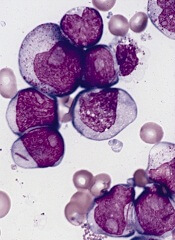
The US Food and Drug Administration (FDA) has granted orphan designation for AG-120 to treat patients with acute myeloid leukemia (AML) who harbor an isocitrate dehydrogenase-1 (IDH1) mutation.
AG-120 is an oral, selective inhibitor of the mutated IDH1 protein that is under investigation in two phase 1 clinical trials, one in hematologic malignancies and one in advanced solid tumors.
The FDA granted AG-120 fast track designation last month.
“Receiving orphan drug designation for AG-120 is an important milestone as we continue to move this program to late-stage development,” said Chris Bowden, MD, chief medical officer of Agios Pharmaceuticals, Inc., the company developing AG-120.
“We are pleased with the progress we are making in the clinic and look forward to presenting new data from our ongoing phase 1 study of AG-120 at the Congress of the European Hematology Association later this week.”
Phase 1 trial
Results from the phase 1 study of AG-120 in patients with hematologic malignancies were previously presented at the EORTC-NCI-AACR symposium in November 2014.
The data included 17 patients with relapsed and/or refractory AML who had received a median of 2 prior treatments. The patients were scheduled to receive AG-120 in 1 of 4 dose groups: 100 mg twice a day, 300 mg once a day, 500 mg once a day, and 800 mg once a day over continuous, 28-day cycles.
Of the 14 patients evaluable for response, 7 responded. Four patients achieved a complete response, 2 had a complete response in the marrow, and 1 had a partial response.
Responses occurred at all the dose levels tested. The maximum-tolerated dose was not reached. All responding patients were still on AG-120 at the time of presentation, and 1 patient with stable disease remained on the drug.
Researchers said AG-120 was generally well-tolerated. The majority of adverse events were grade 1 and 2. The most common of these were nausea, fatigue, and dyspnea.
Eight patients experienced serious adverse events, but these were primarily related to disease progression.
One patient experienced a dose-limiting toxicity of asymptomatic grade 3 QT prolongation at the highest dose tested, which improved to grade 1 with dose reduction. The patient was in complete remission and remained on AG-120 at the time of presentation.
There were 6 patient deaths, all unrelated to AG-120. Five deaths occurred after patients discontinued treatment due to progressive disease, and 1 patient died due to disease-related intracranial hemorrhage while on treatment.
About orphan designation
The FDA grants orphan designation to encourage companies to develop therapies for diseases that affect fewer than 200,000 individuals in the US.
Orphan designation provides a company with research and development tax credits, an opportunity to obtain grant funding, exemption from FDA application fees, and other benefits.
If the FDA approves AG-120 to treat patients with AML, orphan designation will provide Agios with 7 years of marketing exclusivity in the US.
The US Food and Drug Administration (FDA) has granted orphan designation for AG-120 to treat patients with acute myeloid leukemia (AML) who harbor an isocitrate dehydrogenase-1 (IDH1) mutation.
AG-120 is an oral, selective inhibitor of the mutated IDH1 protein that is under investigation in two phase 1 clinical trials, one in hematologic malignancies and one in advanced solid tumors.
The FDA granted AG-120 fast track designation last month.
“Receiving orphan drug designation for AG-120 is an important milestone as we continue to move this program to late-stage development,” said Chris Bowden, MD, chief medical officer of Agios Pharmaceuticals, Inc., the company developing AG-120.
“We are pleased with the progress we are making in the clinic and look forward to presenting new data from our ongoing phase 1 study of AG-120 at the Congress of the European Hematology Association later this week.”
Phase 1 trial
Results from the phase 1 study of AG-120 in patients with hematologic malignancies were previously presented at the EORTC-NCI-AACR symposium in November 2014.
The data included 17 patients with relapsed and/or refractory AML who had received a median of 2 prior treatments. The patients were scheduled to receive AG-120 in 1 of 4 dose groups: 100 mg twice a day, 300 mg once a day, 500 mg once a day, and 800 mg once a day over continuous, 28-day cycles.
Of the 14 patients evaluable for response, 7 responded. Four patients achieved a complete response, 2 had a complete response in the marrow, and 1 had a partial response.
Responses occurred at all the dose levels tested. The maximum-tolerated dose was not reached. All responding patients were still on AG-120 at the time of presentation, and 1 patient with stable disease remained on the drug.
Researchers said AG-120 was generally well-tolerated. The majority of adverse events were grade 1 and 2. The most common of these were nausea, fatigue, and dyspnea.
Eight patients experienced serious adverse events, but these were primarily related to disease progression.
One patient experienced a dose-limiting toxicity of asymptomatic grade 3 QT prolongation at the highest dose tested, which improved to grade 1 with dose reduction. The patient was in complete remission and remained on AG-120 at the time of presentation.
There were 6 patient deaths, all unrelated to AG-120. Five deaths occurred after patients discontinued treatment due to progressive disease, and 1 patient died due to disease-related intracranial hemorrhage while on treatment.
About orphan designation
The FDA grants orphan designation to encourage companies to develop therapies for diseases that affect fewer than 200,000 individuals in the US.
Orphan designation provides a company with research and development tax credits, an opportunity to obtain grant funding, exemption from FDA application fees, and other benefits.
If the FDA approves AG-120 to treat patients with AML, orphan designation will provide Agios with 7 years of marketing exclusivity in the US.
The US Food and Drug Administration (FDA) has granted orphan designation for AG-120 to treat patients with acute myeloid leukemia (AML) who harbor an isocitrate dehydrogenase-1 (IDH1) mutation.
AG-120 is an oral, selective inhibitor of the mutated IDH1 protein that is under investigation in two phase 1 clinical trials, one in hematologic malignancies and one in advanced solid tumors.
The FDA granted AG-120 fast track designation last month.
“Receiving orphan drug designation for AG-120 is an important milestone as we continue to move this program to late-stage development,” said Chris Bowden, MD, chief medical officer of Agios Pharmaceuticals, Inc., the company developing AG-120.
“We are pleased with the progress we are making in the clinic and look forward to presenting new data from our ongoing phase 1 study of AG-120 at the Congress of the European Hematology Association later this week.”
Phase 1 trial
Results from the phase 1 study of AG-120 in patients with hematologic malignancies were previously presented at the EORTC-NCI-AACR symposium in November 2014.
The data included 17 patients with relapsed and/or refractory AML who had received a median of 2 prior treatments. The patients were scheduled to receive AG-120 in 1 of 4 dose groups: 100 mg twice a day, 300 mg once a day, 500 mg once a day, and 800 mg once a day over continuous, 28-day cycles.
Of the 14 patients evaluable for response, 7 responded. Four patients achieved a complete response, 2 had a complete response in the marrow, and 1 had a partial response.
Responses occurred at all the dose levels tested. The maximum-tolerated dose was not reached. All responding patients were still on AG-120 at the time of presentation, and 1 patient with stable disease remained on the drug.
Researchers said AG-120 was generally well-tolerated. The majority of adverse events were grade 1 and 2. The most common of these were nausea, fatigue, and dyspnea.
Eight patients experienced serious adverse events, but these were primarily related to disease progression.
One patient experienced a dose-limiting toxicity of asymptomatic grade 3 QT prolongation at the highest dose tested, which improved to grade 1 with dose reduction. The patient was in complete remission and remained on AG-120 at the time of presentation.
There were 6 patient deaths, all unrelated to AG-120. Five deaths occurred after patients discontinued treatment due to progressive disease, and 1 patient died due to disease-related intracranial hemorrhage while on treatment.
About orphan designation
The FDA grants orphan designation to encourage companies to develop therapies for diseases that affect fewer than 200,000 individuals in the US.
Orphan designation provides a company with research and development tax credits, an opportunity to obtain grant funding, exemption from FDA application fees, and other benefits.
If the FDA approves AG-120 to treat patients with AML, orphan designation will provide Agios with 7 years of marketing exclusivity in the US.
Pathway may play key role in FLT3-ITD AML

Results of preclinical research suggest the Hedgehog signaling pathway works with FLT3-ITD mutations to accelerate the development of acute myeloid leukemia (AML).
This finding prompted investigators to look at Hedgehog signaling as a possible second target for treatment in FLT3-ITD AML.
By combining the FLT3 inhibitor sorafenib with the Hedgehog pathway inhibitor IPI-926 (saridegib), the team found they could limit AML growth in vitro and in vivo.
William Matsui, MD, of the Johns Hopkins University School of Medicine in Baltimore, Maryland, and his colleagues conducted this research and disclosed the results in Science Translational Medicine.
The investigators began this work with the goal of discovering why FLT3 inhibitors have fallen short in treating AML. They analyzed gene expression profiles from AML patients and found abnormally enhanced activity in the Hedgehog signaling pathway.
This pathway, which normally regulates embryonic development, is known to fuel many cancer types, but its role in AML has, thus far, remained unresolved.
In experiments with mice, the investigators found the Hedgehog pathway seemed to work together with FLT3 to accelerate AML development and earlier death.
When the team activated Hedgehog signaling in mice expressing FLT3-ITD, they observed enhanced STAT5 signaling, myeloid progenitor proliferation, and AML development.
“From our data, it appears that Hedgehog signaling is like an accelerator,” Dr Matsui said. “It facilitates the cellular events that lead to cancer, but it itself is not the driver of the whole process.”
The investigators also found that mice with both the FLT3 mutation and Hedgehog activity had a significantly shorter lifespan than mice with FLT3-ITD only—an average of 12 weeks and 40 weeks, respectively.
To build upon these findings, the team tested IPI-926 and sorafenib, both alone and in combination, in mice with AML. They found that mice treated with the combination had significantly fewer leukemic cells in the blood and bone marrow than mice treated with either drug alone.
In addition, 3 of the 5 mice treated with the combination survived past the 16 days of the experiment without any further treatment, but none of the mice treated with sorafenib or IPI-926 alone survived that long.
“When we treat mice that have leukemia with both drugs, they live longer than with either drug alone, and there is a portion of them that don’t die at all,” Dr Matsui noted.
He said it’s likely that Hedgehog signaling is involved in the progression of a number of cancers, and “this study brings home the idea that, in treating these cancers, clinicians may need to inhibit Hedgehog along with specific gene mutations.”
Dr Matsui and his colleagues have begun investigating how Hedgehog inhibitors work when combined with newer drugs that target FLT3 more precisely than sorafenib. If these tests continue to show signs that the two types of inhibitors can fight AML, the investigators think such combination therapy could move on to clinical trials.
Results of preclinical research suggest the Hedgehog signaling pathway works with FLT3-ITD mutations to accelerate the development of acute myeloid leukemia (AML).
This finding prompted investigators to look at Hedgehog signaling as a possible second target for treatment in FLT3-ITD AML.
By combining the FLT3 inhibitor sorafenib with the Hedgehog pathway inhibitor IPI-926 (saridegib), the team found they could limit AML growth in vitro and in vivo.
William Matsui, MD, of the Johns Hopkins University School of Medicine in Baltimore, Maryland, and his colleagues conducted this research and disclosed the results in Science Translational Medicine.
The investigators began this work with the goal of discovering why FLT3 inhibitors have fallen short in treating AML. They analyzed gene expression profiles from AML patients and found abnormally enhanced activity in the Hedgehog signaling pathway.
This pathway, which normally regulates embryonic development, is known to fuel many cancer types, but its role in AML has, thus far, remained unresolved.
In experiments with mice, the investigators found the Hedgehog pathway seemed to work together with FLT3 to accelerate AML development and earlier death.
When the team activated Hedgehog signaling in mice expressing FLT3-ITD, they observed enhanced STAT5 signaling, myeloid progenitor proliferation, and AML development.
“From our data, it appears that Hedgehog signaling is like an accelerator,” Dr Matsui said. “It facilitates the cellular events that lead to cancer, but it itself is not the driver of the whole process.”
The investigators also found that mice with both the FLT3 mutation and Hedgehog activity had a significantly shorter lifespan than mice with FLT3-ITD only—an average of 12 weeks and 40 weeks, respectively.
To build upon these findings, the team tested IPI-926 and sorafenib, both alone and in combination, in mice with AML. They found that mice treated with the combination had significantly fewer leukemic cells in the blood and bone marrow than mice treated with either drug alone.
In addition, 3 of the 5 mice treated with the combination survived past the 16 days of the experiment without any further treatment, but none of the mice treated with sorafenib or IPI-926 alone survived that long.
“When we treat mice that have leukemia with both drugs, they live longer than with either drug alone, and there is a portion of them that don’t die at all,” Dr Matsui noted.
He said it’s likely that Hedgehog signaling is involved in the progression of a number of cancers, and “this study brings home the idea that, in treating these cancers, clinicians may need to inhibit Hedgehog along with specific gene mutations.”
Dr Matsui and his colleagues have begun investigating how Hedgehog inhibitors work when combined with newer drugs that target FLT3 more precisely than sorafenib. If these tests continue to show signs that the two types of inhibitors can fight AML, the investigators think such combination therapy could move on to clinical trials.
Results of preclinical research suggest the Hedgehog signaling pathway works with FLT3-ITD mutations to accelerate the development of acute myeloid leukemia (AML).
This finding prompted investigators to look at Hedgehog signaling as a possible second target for treatment in FLT3-ITD AML.
By combining the FLT3 inhibitor sorafenib with the Hedgehog pathway inhibitor IPI-926 (saridegib), the team found they could limit AML growth in vitro and in vivo.
William Matsui, MD, of the Johns Hopkins University School of Medicine in Baltimore, Maryland, and his colleagues conducted this research and disclosed the results in Science Translational Medicine.
The investigators began this work with the goal of discovering why FLT3 inhibitors have fallen short in treating AML. They analyzed gene expression profiles from AML patients and found abnormally enhanced activity in the Hedgehog signaling pathway.
This pathway, which normally regulates embryonic development, is known to fuel many cancer types, but its role in AML has, thus far, remained unresolved.
In experiments with mice, the investigators found the Hedgehog pathway seemed to work together with FLT3 to accelerate AML development and earlier death.
When the team activated Hedgehog signaling in mice expressing FLT3-ITD, they observed enhanced STAT5 signaling, myeloid progenitor proliferation, and AML development.
“From our data, it appears that Hedgehog signaling is like an accelerator,” Dr Matsui said. “It facilitates the cellular events that lead to cancer, but it itself is not the driver of the whole process.”
The investigators also found that mice with both the FLT3 mutation and Hedgehog activity had a significantly shorter lifespan than mice with FLT3-ITD only—an average of 12 weeks and 40 weeks, respectively.
To build upon these findings, the team tested IPI-926 and sorafenib, both alone and in combination, in mice with AML. They found that mice treated with the combination had significantly fewer leukemic cells in the blood and bone marrow than mice treated with either drug alone.
In addition, 3 of the 5 mice treated with the combination survived past the 16 days of the experiment without any further treatment, but none of the mice treated with sorafenib or IPI-926 alone survived that long.
“When we treat mice that have leukemia with both drugs, they live longer than with either drug alone, and there is a portion of them that don’t die at all,” Dr Matsui noted.
He said it’s likely that Hedgehog signaling is involved in the progression of a number of cancers, and “this study brings home the idea that, in treating these cancers, clinicians may need to inhibit Hedgehog along with specific gene mutations.”
Dr Matsui and his colleagues have begun investigating how Hedgehog inhibitors work when combined with newer drugs that target FLT3 more precisely than sorafenib. If these tests continue to show signs that the two types of inhibitors can fight AML, the investigators think such combination therapy could move on to clinical trials.
Harnessing immune defense to treat Candida infection

An upset in the body’s natural balance of gut bacteria that may lead to life-threatening bloodstream infections can be reversed by enhancing an
immune response, according to research published in Nature Medicine.
Researchers found that a transcription factor known as HIF-1α works with LL-37, a naturally occurring antibiotic, to kill the infection-causing fungi Candida albicans.
And this response can be enhanced with a drug called L-mimosine.
The researchers noted that Candida albicans can be lethal if it invades the bloodstream from the gut. And stem cell transplant recipients and immunosuppressed cancer patients have a high risk for this type of infection.
“For a cancer patient with a Candida bloodstream infection, the fatality rate is about 30%, [and] Candida is the number 1 fungal pathogen,” said study author Andrew Koh, MD, of the University of Texas Southwestern Medical Center in Dallas.
With that in mind, he and his colleagues set out to determine how the body’s natural immune defense system might be enhanced to fight a Candida infection. By studying how mice infected with Candida responded in different scenarios, the team found their answer.
“The commensal bacteria stimulate gut tissue to make a transcription factor and a natural antibiotic, which then kills the Candida fungus,” Dr Koh explained.
“When we gave the mice a pharmacologic agent called L-mimosine that stimulates the transcription factor, the agent knocked down Candida 100-fold, which translated into a 50% reduction in mortality from invasive Candida infection.”
Specifically, the researchers found that enhancing the transcription factor HIF-1α with L-mimosine led to increased production of the natural antibiotic peptide LL-37, which, in turn, killed the fungi. L-mimosine is a natural product derived from seeds of the koa haole tree that is known to boost HIF-1α activity.
The study also suggested that certain gut bacteria—Clostridial Firmicutes and Bacteroidetes—may be important in producing short-chain fatty acids that help fight infection.
The researchers said more work is needed to pinpoint the optimal method of inducing the body’s gut defense system, whether through use of an agent like L-mimosine or by administering short-chain fatty acids such as vinegar.
“Can we modulate the gut system to maintain balance so that it never gets to the point of pathogens invading the bloodstream?” Dr Koh asked. “Boosting [gastrointestinal] mucosal immune effectors to reduce fungal burden may be the key to tipping the balance back toward normal and preventing invasive fungal disease.”
An upset in the body’s natural balance of gut bacteria that may lead to life-threatening bloodstream infections can be reversed by enhancing an
immune response, according to research published in Nature Medicine.
Researchers found that a transcription factor known as HIF-1α works with LL-37, a naturally occurring antibiotic, to kill the infection-causing fungi Candida albicans.
And this response can be enhanced with a drug called L-mimosine.
The researchers noted that Candida albicans can be lethal if it invades the bloodstream from the gut. And stem cell transplant recipients and immunosuppressed cancer patients have a high risk for this type of infection.
“For a cancer patient with a Candida bloodstream infection, the fatality rate is about 30%, [and] Candida is the number 1 fungal pathogen,” said study author Andrew Koh, MD, of the University of Texas Southwestern Medical Center in Dallas.
With that in mind, he and his colleagues set out to determine how the body’s natural immune defense system might be enhanced to fight a Candida infection. By studying how mice infected with Candida responded in different scenarios, the team found their answer.
“The commensal bacteria stimulate gut tissue to make a transcription factor and a natural antibiotic, which then kills the Candida fungus,” Dr Koh explained.
“When we gave the mice a pharmacologic agent called L-mimosine that stimulates the transcription factor, the agent knocked down Candida 100-fold, which translated into a 50% reduction in mortality from invasive Candida infection.”
Specifically, the researchers found that enhancing the transcription factor HIF-1α with L-mimosine led to increased production of the natural antibiotic peptide LL-37, which, in turn, killed the fungi. L-mimosine is a natural product derived from seeds of the koa haole tree that is known to boost HIF-1α activity.
The study also suggested that certain gut bacteria—Clostridial Firmicutes and Bacteroidetes—may be important in producing short-chain fatty acids that help fight infection.
The researchers said more work is needed to pinpoint the optimal method of inducing the body’s gut defense system, whether through use of an agent like L-mimosine or by administering short-chain fatty acids such as vinegar.
“Can we modulate the gut system to maintain balance so that it never gets to the point of pathogens invading the bloodstream?” Dr Koh asked. “Boosting [gastrointestinal] mucosal immune effectors to reduce fungal burden may be the key to tipping the balance back toward normal and preventing invasive fungal disease.”
An upset in the body’s natural balance of gut bacteria that may lead to life-threatening bloodstream infections can be reversed by enhancing an
immune response, according to research published in Nature Medicine.
Researchers found that a transcription factor known as HIF-1α works with LL-37, a naturally occurring antibiotic, to kill the infection-causing fungi Candida albicans.
And this response can be enhanced with a drug called L-mimosine.
The researchers noted that Candida albicans can be lethal if it invades the bloodstream from the gut. And stem cell transplant recipients and immunosuppressed cancer patients have a high risk for this type of infection.
“For a cancer patient with a Candida bloodstream infection, the fatality rate is about 30%, [and] Candida is the number 1 fungal pathogen,” said study author Andrew Koh, MD, of the University of Texas Southwestern Medical Center in Dallas.
With that in mind, he and his colleagues set out to determine how the body’s natural immune defense system might be enhanced to fight a Candida infection. By studying how mice infected with Candida responded in different scenarios, the team found their answer.
“The commensal bacteria stimulate gut tissue to make a transcription factor and a natural antibiotic, which then kills the Candida fungus,” Dr Koh explained.
“When we gave the mice a pharmacologic agent called L-mimosine that stimulates the transcription factor, the agent knocked down Candida 100-fold, which translated into a 50% reduction in mortality from invasive Candida infection.”
Specifically, the researchers found that enhancing the transcription factor HIF-1α with L-mimosine led to increased production of the natural antibiotic peptide LL-37, which, in turn, killed the fungi. L-mimosine is a natural product derived from seeds of the koa haole tree that is known to boost HIF-1α activity.
The study also suggested that certain gut bacteria—Clostridial Firmicutes and Bacteroidetes—may be important in producing short-chain fatty acids that help fight infection.
The researchers said more work is needed to pinpoint the optimal method of inducing the body’s gut defense system, whether through use of an agent like L-mimosine or by administering short-chain fatty acids such as vinegar.
“Can we modulate the gut system to maintain balance so that it never gets to the point of pathogens invading the bloodstream?” Dr Koh asked. “Boosting [gastrointestinal] mucosal immune effectors to reduce fungal burden may be the key to tipping the balance back toward normal and preventing invasive fungal disease.”
A better FLT3 inhibitor for AML?
© ASCO/Scott Morgan
CHICAGO—A dual inhibitor of FLT3 and Axl may produce more durable responses than other FLT3 inhibitors and improve survival in patients with FLT3-positive, relapsed or refractory acute myeloid leukemia (AML), according to a speaker at the 2015 ASCO Annual Meeting.
The FLT3/Axl inhibitor, ASP2215, has not been compared against other FLT3 inhibitors directly, and the data presented were from a phase 1/2 study.
However, the speaker said ASP2215 provided “potent and sustained” inhibition of FLT3 and produced an overall response rate (ORR) of 52% among FLT3-positive patients.
The median duration of response for these patients was 18 weeks, and their median overall survival was about 27 weeks.
Mark J. Levis, MD, PhD, of the Sidney Kimmel Comprehensive Cancer Center at Johns Hopkins in Baltimore, Maryland, presented these results at ASCO as abstract 7003.*
“We’ve been studying FLT3 inhibitors for a number of years now,” Dr Levis began, “and we think they show significant clinical promise, [but] they also have problems.”
He noted that some of these drugs haven’t been particularly safe or well-tolerated. They can cause gastrointestinal toxicity, hand-foot syndrome, QT prolongation, and myelosuppression.
However, the most intriguing problem with FLT3 inhibitors, according to Dr Levis, is the emergence of resistance-conferring point mutations observed in studies of some of the newer drugs, such as sorafenib and quizartinib.
“So in that context, here we have ASP2215,” Dr Levis said. “This is a type 1 FLT3 tyrosine kinase inhibitor, and, as such, it has activity against not only wild-type and ITD-mutated FLT3 but also against those resistance-conferring point mutations typically found in the activation loop at the so-called gatekeeper residue (F691L).”
With this in mind, he and his colleagues conducted a phase 1/2 trial of ASP2215. The study was sponsored by Astellas Pharma Global Development, Inc., the company developing ASP2215.
The trial was open to patients with relapsed or refractory AML, irrespective of their FLT3 mutation status. The researchers’ goal was to identify a safe, tolerable dose of ASP2215 that fully inhibited FLT3.
The team used a standard 3+3 design, with dose levels ranging from 20 mg to 450 mg once daily. They expanded every cohort until they reached a dose-limiting toxicity.
In all, the trial enrolled 198 patients, 24 in the dose-escalation cohorts and 174 in the dose-expansion cohorts. The patients’ median age was 62 (range, 21-90), and 53.1% were male.
Nearly 66% of patients had FLT3 mutations, 29.4% were FLT3-negative, and 5.2% had unknown FLT3 status. About 35% of patients had received 1 prior line of therapy, 26.3% had 2, 33.5% had 3 or more, and 5.7% had an unknown number of prior therapies.
Safety results
In the 194 patients who were evaluable for safety, treatment-emergent adverse events included diarrhea (13.4%), fatigue (12.4%), AST increase (11.3%), ALT increase (9.3%), thrombocytopenia (7.7%), anemia (7.2%), peripheral edema (7.2%), constipation (6.7%), nausea (6.7%), dizziness (6.2%), vomiting (5.7%), and dysgeusia (5.2%).
Serious adverse events included febrile neutropenia (27.3%), sepsis (11.9%), disease progression (10.3%), pneumonia (8.8%), hypotension (5.7%), and respiratory failure (5.7%).
“The kinds of side effects we saw were typical for a relapsed/refractory AML population,” Dr Levis said. “Nothing really stood out. Any trial of relapsed/refractory AML is going to have febrile neutropenia and sepsis, and those were our dominant, serious adverse events. There was no real safety signal here that was unique to the drug, we felt.”
The researchers said the maximum-tolerated dose of ASP2215 was 300 mg, as 2 patients who received the 450 mg dose experienced dose-limiting toxicities. One was grade 3 diarrhea, and the other was grade 3 AST elevation.
Response and survival
Among the 127 patients who were FLT3-positive, the ORR was 52% (n=66). The complete response (CR) rate was 6.3% (n=8). The composite CR rate, which includes CRs with incomplete hematologic recovery (CRi) and incomplete platelet recovery (CRp), was 40.9% (n=52). And the partial response (PR) rate was 11% (n=14).
“As we scale up the dose, the PRs shift on over to CRis, and the dominant response is, in fact, a complete response with incomplete count recovery,” Dr Levis said. “The categories where we had the largest number of responses were the 120 mg and 200 mg categories. We didn’t really have enough patients in the 300 mg category to comment on it. ”
For the FLT3-positive patients, the median duration of response was 126 days.
“The duration of response really stood out here,” Dr Levis said. “It’s over 4 months. That is something we really didn’t see with the other drugs, and I suspect that is a reflection of the suppression of the outgrowth of these resistance mutations.”
Unfortunately, FLT3-wild-type patients did not fare as well. The ORR among these patients was 8.8%. None of the patients achieved a CR, 3 had a composite CR (5.3%), and 2 had a PR (3.5%).
Among the FLT3-positive patients, the median overall survival was about 27 weeks. It was 128 days in the 20 mg dose cohort (n=13), 105.5 days in the 40 mg cohort (n=8), 201 days in the 80 mg cohort (n=12), 199 days in the 120 mg cohort (n=40), and 161 days in the 200 mg cohort (n=45). Dr Levis did not present survival data for the 300 mg or 450 mg cohorts, which included 7 and 2 patients, respectively.
“[Relapsed/refractory AML] is a population that has a median survival of about 3 months with conventional therapy, at least by historical publications,” Dr Levis noted. “If you look at survival in this trial, patients treated at the FLT3-inhibitory doses [had a] greater than 6-month median survival.”
He added that studies of ASP2215 in combination with other agents are ongoing in patients with newly diagnosed AML. And phase 3 trials of ASP2215 at the 120 mg dose, with the option of scaling up to 200 mg, are planned.
*Information in the abstract differs from that presented at the meeting.
© ASCO/Scott Morgan
CHICAGO—A dual inhibitor of FLT3 and Axl may produce more durable responses than other FLT3 inhibitors and improve survival in patients with FLT3-positive, relapsed or refractory acute myeloid leukemia (AML), according to a speaker at the 2015 ASCO Annual Meeting.
The FLT3/Axl inhibitor, ASP2215, has not been compared against other FLT3 inhibitors directly, and the data presented were from a phase 1/2 study.
However, the speaker said ASP2215 provided “potent and sustained” inhibition of FLT3 and produced an overall response rate (ORR) of 52% among FLT3-positive patients.
The median duration of response for these patients was 18 weeks, and their median overall survival was about 27 weeks.
Mark J. Levis, MD, PhD, of the Sidney Kimmel Comprehensive Cancer Center at Johns Hopkins in Baltimore, Maryland, presented these results at ASCO as abstract 7003.*
“We’ve been studying FLT3 inhibitors for a number of years now,” Dr Levis began, “and we think they show significant clinical promise, [but] they also have problems.”
He noted that some of these drugs haven’t been particularly safe or well-tolerated. They can cause gastrointestinal toxicity, hand-foot syndrome, QT prolongation, and myelosuppression.
However, the most intriguing problem with FLT3 inhibitors, according to Dr Levis, is the emergence of resistance-conferring point mutations observed in studies of some of the newer drugs, such as sorafenib and quizartinib.
“So in that context, here we have ASP2215,” Dr Levis said. “This is a type 1 FLT3 tyrosine kinase inhibitor, and, as such, it has activity against not only wild-type and ITD-mutated FLT3 but also against those resistance-conferring point mutations typically found in the activation loop at the so-called gatekeeper residue (F691L).”
With this in mind, he and his colleagues conducted a phase 1/2 trial of ASP2215. The study was sponsored by Astellas Pharma Global Development, Inc., the company developing ASP2215.
The trial was open to patients with relapsed or refractory AML, irrespective of their FLT3 mutation status. The researchers’ goal was to identify a safe, tolerable dose of ASP2215 that fully inhibited FLT3.
The team used a standard 3+3 design, with dose levels ranging from 20 mg to 450 mg once daily. They expanded every cohort until they reached a dose-limiting toxicity.
In all, the trial enrolled 198 patients, 24 in the dose-escalation cohorts and 174 in the dose-expansion cohorts. The patients’ median age was 62 (range, 21-90), and 53.1% were male.
Nearly 66% of patients had FLT3 mutations, 29.4% were FLT3-negative, and 5.2% had unknown FLT3 status. About 35% of patients had received 1 prior line of therapy, 26.3% had 2, 33.5% had 3 or more, and 5.7% had an unknown number of prior therapies.
Safety results
In the 194 patients who were evaluable for safety, treatment-emergent adverse events included diarrhea (13.4%), fatigue (12.4%), AST increase (11.3%), ALT increase (9.3%), thrombocytopenia (7.7%), anemia (7.2%), peripheral edema (7.2%), constipation (6.7%), nausea (6.7%), dizziness (6.2%), vomiting (5.7%), and dysgeusia (5.2%).
Serious adverse events included febrile neutropenia (27.3%), sepsis (11.9%), disease progression (10.3%), pneumonia (8.8%), hypotension (5.7%), and respiratory failure (5.7%).
“The kinds of side effects we saw were typical for a relapsed/refractory AML population,” Dr Levis said. “Nothing really stood out. Any trial of relapsed/refractory AML is going to have febrile neutropenia and sepsis, and those were our dominant, serious adverse events. There was no real safety signal here that was unique to the drug, we felt.”
The researchers said the maximum-tolerated dose of ASP2215 was 300 mg, as 2 patients who received the 450 mg dose experienced dose-limiting toxicities. One was grade 3 diarrhea, and the other was grade 3 AST elevation.
Response and survival
Among the 127 patients who were FLT3-positive, the ORR was 52% (n=66). The complete response (CR) rate was 6.3% (n=8). The composite CR rate, which includes CRs with incomplete hematologic recovery (CRi) and incomplete platelet recovery (CRp), was 40.9% (n=52). And the partial response (PR) rate was 11% (n=14).
“As we scale up the dose, the PRs shift on over to CRis, and the dominant response is, in fact, a complete response with incomplete count recovery,” Dr Levis said. “The categories where we had the largest number of responses were the 120 mg and 200 mg categories. We didn’t really have enough patients in the 300 mg category to comment on it. ”
For the FLT3-positive patients, the median duration of response was 126 days.
“The duration of response really stood out here,” Dr Levis said. “It’s over 4 months. That is something we really didn’t see with the other drugs, and I suspect that is a reflection of the suppression of the outgrowth of these resistance mutations.”
Unfortunately, FLT3-wild-type patients did not fare as well. The ORR among these patients was 8.8%. None of the patients achieved a CR, 3 had a composite CR (5.3%), and 2 had a PR (3.5%).
Among the FLT3-positive patients, the median overall survival was about 27 weeks. It was 128 days in the 20 mg dose cohort (n=13), 105.5 days in the 40 mg cohort (n=8), 201 days in the 80 mg cohort (n=12), 199 days in the 120 mg cohort (n=40), and 161 days in the 200 mg cohort (n=45). Dr Levis did not present survival data for the 300 mg or 450 mg cohorts, which included 7 and 2 patients, respectively.
“[Relapsed/refractory AML] is a population that has a median survival of about 3 months with conventional therapy, at least by historical publications,” Dr Levis noted. “If you look at survival in this trial, patients treated at the FLT3-inhibitory doses [had a] greater than 6-month median survival.”
He added that studies of ASP2215 in combination with other agents are ongoing in patients with newly diagnosed AML. And phase 3 trials of ASP2215 at the 120 mg dose, with the option of scaling up to 200 mg, are planned.
*Information in the abstract differs from that presented at the meeting.
© ASCO/Scott Morgan
CHICAGO—A dual inhibitor of FLT3 and Axl may produce more durable responses than other FLT3 inhibitors and improve survival in patients with FLT3-positive, relapsed or refractory acute myeloid leukemia (AML), according to a speaker at the 2015 ASCO Annual Meeting.
The FLT3/Axl inhibitor, ASP2215, has not been compared against other FLT3 inhibitors directly, and the data presented were from a phase 1/2 study.
However, the speaker said ASP2215 provided “potent and sustained” inhibition of FLT3 and produced an overall response rate (ORR) of 52% among FLT3-positive patients.
The median duration of response for these patients was 18 weeks, and their median overall survival was about 27 weeks.
Mark J. Levis, MD, PhD, of the Sidney Kimmel Comprehensive Cancer Center at Johns Hopkins in Baltimore, Maryland, presented these results at ASCO as abstract 7003.*
“We’ve been studying FLT3 inhibitors for a number of years now,” Dr Levis began, “and we think they show significant clinical promise, [but] they also have problems.”
He noted that some of these drugs haven’t been particularly safe or well-tolerated. They can cause gastrointestinal toxicity, hand-foot syndrome, QT prolongation, and myelosuppression.
However, the most intriguing problem with FLT3 inhibitors, according to Dr Levis, is the emergence of resistance-conferring point mutations observed in studies of some of the newer drugs, such as sorafenib and quizartinib.
“So in that context, here we have ASP2215,” Dr Levis said. “This is a type 1 FLT3 tyrosine kinase inhibitor, and, as such, it has activity against not only wild-type and ITD-mutated FLT3 but also against those resistance-conferring point mutations typically found in the activation loop at the so-called gatekeeper residue (F691L).”
With this in mind, he and his colleagues conducted a phase 1/2 trial of ASP2215. The study was sponsored by Astellas Pharma Global Development, Inc., the company developing ASP2215.
The trial was open to patients with relapsed or refractory AML, irrespective of their FLT3 mutation status. The researchers’ goal was to identify a safe, tolerable dose of ASP2215 that fully inhibited FLT3.
The team used a standard 3+3 design, with dose levels ranging from 20 mg to 450 mg once daily. They expanded every cohort until they reached a dose-limiting toxicity.
In all, the trial enrolled 198 patients, 24 in the dose-escalation cohorts and 174 in the dose-expansion cohorts. The patients’ median age was 62 (range, 21-90), and 53.1% were male.
Nearly 66% of patients had FLT3 mutations, 29.4% were FLT3-negative, and 5.2% had unknown FLT3 status. About 35% of patients had received 1 prior line of therapy, 26.3% had 2, 33.5% had 3 or more, and 5.7% had an unknown number of prior therapies.
Safety results
In the 194 patients who were evaluable for safety, treatment-emergent adverse events included diarrhea (13.4%), fatigue (12.4%), AST increase (11.3%), ALT increase (9.3%), thrombocytopenia (7.7%), anemia (7.2%), peripheral edema (7.2%), constipation (6.7%), nausea (6.7%), dizziness (6.2%), vomiting (5.7%), and dysgeusia (5.2%).
Serious adverse events included febrile neutropenia (27.3%), sepsis (11.9%), disease progression (10.3%), pneumonia (8.8%), hypotension (5.7%), and respiratory failure (5.7%).
“The kinds of side effects we saw were typical for a relapsed/refractory AML population,” Dr Levis said. “Nothing really stood out. Any trial of relapsed/refractory AML is going to have febrile neutropenia and sepsis, and those were our dominant, serious adverse events. There was no real safety signal here that was unique to the drug, we felt.”
The researchers said the maximum-tolerated dose of ASP2215 was 300 mg, as 2 patients who received the 450 mg dose experienced dose-limiting toxicities. One was grade 3 diarrhea, and the other was grade 3 AST elevation.
Response and survival
Among the 127 patients who were FLT3-positive, the ORR was 52% (n=66). The complete response (CR) rate was 6.3% (n=8). The composite CR rate, which includes CRs with incomplete hematologic recovery (CRi) and incomplete platelet recovery (CRp), was 40.9% (n=52). And the partial response (PR) rate was 11% (n=14).
“As we scale up the dose, the PRs shift on over to CRis, and the dominant response is, in fact, a complete response with incomplete count recovery,” Dr Levis said. “The categories where we had the largest number of responses were the 120 mg and 200 mg categories. We didn’t really have enough patients in the 300 mg category to comment on it. ”
For the FLT3-positive patients, the median duration of response was 126 days.
“The duration of response really stood out here,” Dr Levis said. “It’s over 4 months. That is something we really didn’t see with the other drugs, and I suspect that is a reflection of the suppression of the outgrowth of these resistance mutations.”
Unfortunately, FLT3-wild-type patients did not fare as well. The ORR among these patients was 8.8%. None of the patients achieved a CR, 3 had a composite CR (5.3%), and 2 had a PR (3.5%).
Among the FLT3-positive patients, the median overall survival was about 27 weeks. It was 128 days in the 20 mg dose cohort (n=13), 105.5 days in the 40 mg cohort (n=8), 201 days in the 80 mg cohort (n=12), 199 days in the 120 mg cohort (n=40), and 161 days in the 200 mg cohort (n=45). Dr Levis did not present survival data for the 300 mg or 450 mg cohorts, which included 7 and 2 patients, respectively.
“[Relapsed/refractory AML] is a population that has a median survival of about 3 months with conventional therapy, at least by historical publications,” Dr Levis noted. “If you look at survival in this trial, patients treated at the FLT3-inhibitory doses [had a] greater than 6-month median survival.”
He added that studies of ASP2215 in combination with other agents are ongoing in patients with newly diagnosed AML. And phase 3 trials of ASP2215 at the 120 mg dose, with the option of scaling up to 200 mg, are planned.
*Information in the abstract differs from that presented at the meeting.
Study reveals potential target for T-ALL

Photo by Rhoda Baer
Targeting CXCL12/CXCR4 signaling could be a “powerful” approach to treating T-cell acute lymphoblastic leukemia (T-ALL), according to researchers.
Results of their preclinical experiments indicate that deleting CXCL12 from vascular endothelial cells can stall T-ALL progression.
And inhibiting or deleting CXCR4 can halt tumor growth and induce remission in mice with T-ALL.
The researchers reported these findings in Cancer Cell.
“Our experiments showed that blocking CXCR4 decimated leukemia cells,” said study author Susan Schwab, PhD, of the New York University School of Medicine in New York, New York.
This suggests CXCR4 antagonists could treat T-ALL, she added, noting that such drugs are already in preliminary testing for myeloid leukemia and have proven well-tolerated thus far.
Dr Schwab and her colleagues conducted this research to build upon previous work, which showed that leukemia-initiating cells concentrate in the bone marrow near CXCL12-producing blood vessels.
This finding inspired the researchers to investigate the expression and function of CXCR4 because it binds to CXCL12, as well as the role CXCR4-CXCL12 molecular signaling plays in disease growth.
With this study, the team found that T-ALL cells are in direct, stable contact with CXCL12-producing bone marrow stroma.
They showed that deleting CXCL12 in vascular endothelial cells suppressed T-ALL. But they did not observe the same benefit when they deleted CXCL12 from perivascular cells.
The researchers also found that T-ALL cells express high surface levels of CXCR4, and deleting CXCR4 can produce sustained remission in mice with T-ALL.
Similarly, a small-molecule inhibitor of CXCR4, AMD3465, exhibited antileukemic activity in murine T-ALL and human xenografts.
Experiments with CXCR4-deficient T-ALL cells showed that CXCR4 expression and signaling influences leukemic cell localization and survival. And further investigation revealed that the loss of CXCR4 expression is associated with decreased levels of MYC.
The researchers said additional work is needed to determine exactly how CXCR4 is able to promote and sustain T-ALL.
Photo by Rhoda Baer
Targeting CXCL12/CXCR4 signaling could be a “powerful” approach to treating T-cell acute lymphoblastic leukemia (T-ALL), according to researchers.
Results of their preclinical experiments indicate that deleting CXCL12 from vascular endothelial cells can stall T-ALL progression.
And inhibiting or deleting CXCR4 can halt tumor growth and induce remission in mice with T-ALL.
The researchers reported these findings in Cancer Cell.
“Our experiments showed that blocking CXCR4 decimated leukemia cells,” said study author Susan Schwab, PhD, of the New York University School of Medicine in New York, New York.
This suggests CXCR4 antagonists could treat T-ALL, she added, noting that such drugs are already in preliminary testing for myeloid leukemia and have proven well-tolerated thus far.
Dr Schwab and her colleagues conducted this research to build upon previous work, which showed that leukemia-initiating cells concentrate in the bone marrow near CXCL12-producing blood vessels.
This finding inspired the researchers to investigate the expression and function of CXCR4 because it binds to CXCL12, as well as the role CXCR4-CXCL12 molecular signaling plays in disease growth.
With this study, the team found that T-ALL cells are in direct, stable contact with CXCL12-producing bone marrow stroma.
They showed that deleting CXCL12 in vascular endothelial cells suppressed T-ALL. But they did not observe the same benefit when they deleted CXCL12 from perivascular cells.
The researchers also found that T-ALL cells express high surface levels of CXCR4, and deleting CXCR4 can produce sustained remission in mice with T-ALL.
Similarly, a small-molecule inhibitor of CXCR4, AMD3465, exhibited antileukemic activity in murine T-ALL and human xenografts.
Experiments with CXCR4-deficient T-ALL cells showed that CXCR4 expression and signaling influences leukemic cell localization and survival. And further investigation revealed that the loss of CXCR4 expression is associated with decreased levels of MYC.
The researchers said additional work is needed to determine exactly how CXCR4 is able to promote and sustain T-ALL.
Photo by Rhoda Baer
Targeting CXCL12/CXCR4 signaling could be a “powerful” approach to treating T-cell acute lymphoblastic leukemia (T-ALL), according to researchers.
Results of their preclinical experiments indicate that deleting CXCL12 from vascular endothelial cells can stall T-ALL progression.
And inhibiting or deleting CXCR4 can halt tumor growth and induce remission in mice with T-ALL.
The researchers reported these findings in Cancer Cell.
“Our experiments showed that blocking CXCR4 decimated leukemia cells,” said study author Susan Schwab, PhD, of the New York University School of Medicine in New York, New York.
This suggests CXCR4 antagonists could treat T-ALL, she added, noting that such drugs are already in preliminary testing for myeloid leukemia and have proven well-tolerated thus far.
Dr Schwab and her colleagues conducted this research to build upon previous work, which showed that leukemia-initiating cells concentrate in the bone marrow near CXCL12-producing blood vessels.
This finding inspired the researchers to investigate the expression and function of CXCR4 because it binds to CXCL12, as well as the role CXCR4-CXCL12 molecular signaling plays in disease growth.
With this study, the team found that T-ALL cells are in direct, stable contact with CXCL12-producing bone marrow stroma.
They showed that deleting CXCL12 in vascular endothelial cells suppressed T-ALL. But they did not observe the same benefit when they deleted CXCL12 from perivascular cells.
The researchers also found that T-ALL cells express high surface levels of CXCR4, and deleting CXCR4 can produce sustained remission in mice with T-ALL.
Similarly, a small-molecule inhibitor of CXCR4, AMD3465, exhibited antileukemic activity in murine T-ALL and human xenografts.
Experiments with CXCR4-deficient T-ALL cells showed that CXCR4 expression and signaling influences leukemic cell localization and survival. And further investigation revealed that the loss of CXCR4 expression is associated with decreased levels of MYC.
The researchers said additional work is needed to determine exactly how CXCR4 is able to promote and sustain T-ALL.
CAR produces high CR rate in adults with rel/ref ALL

the 2015 ASCO Annual Meeting
© ASCO/Max Gersh
CHICAGO—A CD19-targeted chimeric antigen receptor (CAR) T-cell therapy can provide durable complete responses (CRs) or a bridge to allogeneic transplant in adults with relapsed or refractory acute lymphoblastic leukemia (ALL), updated results of a phase 1 study suggest.
The therapy, JCAR015, produced a CR rate of 87%, and 33% of these patients went on to transplant.
The median duration of response or relapse-free survival was 5.3 months. The median overall survival was 8.5 months.
Nearly a quarter of patients developed severe cytokine release syndrome (CRS), and nearly 30% experienced neurological toxicities. But researchers said these effects were largely treatable and reversible.
This study was temporarily placed on clinical hold last year, after 2 patients died from complications related to CRS. But the hold was soon lifted and enrollment and dosing criteria were changed in an attempt to prevent severe CRS.
Jae H. Park, MD, of Memorial Sloan Kettering Cancer Center in New York, presented updated results of this trial (NCT01044069) at the 2015 ASCO Annual Meeting (abstract 7010*). The study is sponsored by Memorial Sloan Kettering, but funding has also been provided by Juno Therapeutics, the company developing JCAR015.
Results from this trial have previously been reported in Science Translational Medicine (Davila et al 2014; Brentjens et al 2013), at AACR 2014, and at ASH 2014.
At ASCO, Dr Park presented results in 39 patients with relapsed/refractory, CD19+ ALL. All of them were evaluable for toxicity assessment, and 38 were evaluable for response with at least 1 month of follow-up.
There were 29 males, and the patients’ median age was 45 (range, 22-74). Thirty-three percent had Ph+ ALL, and 11% had the T315I mutation.
Forty-nine percent of patients had received 2 prior therapies, 23% had received 3, and 28% had received 4 or more. Thirty-six percent of patients had a prior allogeneic hematopoietic stem cell transplant (HSCT).
For this study, patients first underwent leukapheresis. While their T cells were being manufactured, they were allowed to receive salvage chemotherapy. Patients underwent repeat bone marrow biopsy to assess their disease status immediately prior to T-cell infusion.
Fifty-four percent of patients (n=21) had morphologic disease (>5% blasts in the bone marrow, median 52%) immediately prior to JCAR015 infusion, and the remaining patients (n=18) had minimal residual disease (MRD).
Two days after conditioning with cyclophosphamide, patients received an infusion of 1-3 x 10⁶ CAR T cells/kg. At day 28, the researchers assessed patients’ disease with a repeat bone marrow biopsy.
Treatment results
The median follow-up was 5.6 months (1 to >38 months). Six patients had more than a year of follow-up.
The CR rate was 87% (33/38), and 81% of evaluable patients (26/32) were MRD-negative. The median time to CR was 23 days, and the median duration of response or relapse-free survival was 5.3 months.
“We examined the CR rates by different subgroup,” Dr Park noted. “We looked at whether patients had a pre-T-cell disease burden: morphologic disease vs minimal residual disease, whether they had an allogeneic bone marrow transplant prior to CAR T-cell infusion, their Ph+ status, age at infusion, and prior lines of therapy. And there was no [significant] difference between these groups for CRs and MRD-negative CR rate.”
At the time of presentation, 14 patients were disease-free, 10 of whom had not gone on to HSCT. In all, 11 patients went on to allogeneic HSCT.
Fourteen patients relapsed during follow-up, 3 after HSCT. Two of these patients had CD19-negative bone marrow blasts.
The median overall survival was 8.5 months in all patients and 10.8 months in patients who were MRD-negative. The median overall survival was 9.9 months in patients who underwent allogeneic HSCT and 8.5 months in patients who did not.
Dr Park said key adverse events were CRS—clinically manifested by fever, hypotension, and respiratory insufficiency—and neurological changes such as delirium, global encephalopathy, aphasia, and seizures.
Twenty-three percent of patients (n=9) developed severe CRS, 28% (n=11) had grade 3/4 neurotoxicity, and 8% (n=3) had grade 5 toxicity. The patients with grade 5 toxicities died of ventricular arrhythmia, sepsis, and an unknown cause (although this patient suffered a seizure).
The severity of CRS correlated with disease burden, and CRS was managed with an IL-6R inhibitor (n=4), a steroid (n=2), or both (n=9). Neurological symptoms were reversible and could occur independently of CRS, Dr Park said.
*Information in the abstract differs from that presented at the meeting.
the 2015 ASCO Annual Meeting
© ASCO/Max Gersh
CHICAGO—A CD19-targeted chimeric antigen receptor (CAR) T-cell therapy can provide durable complete responses (CRs) or a bridge to allogeneic transplant in adults with relapsed or refractory acute lymphoblastic leukemia (ALL), updated results of a phase 1 study suggest.
The therapy, JCAR015, produced a CR rate of 87%, and 33% of these patients went on to transplant.
The median duration of response or relapse-free survival was 5.3 months. The median overall survival was 8.5 months.
Nearly a quarter of patients developed severe cytokine release syndrome (CRS), and nearly 30% experienced neurological toxicities. But researchers said these effects were largely treatable and reversible.
This study was temporarily placed on clinical hold last year, after 2 patients died from complications related to CRS. But the hold was soon lifted and enrollment and dosing criteria were changed in an attempt to prevent severe CRS.
Jae H. Park, MD, of Memorial Sloan Kettering Cancer Center in New York, presented updated results of this trial (NCT01044069) at the 2015 ASCO Annual Meeting (abstract 7010*). The study is sponsored by Memorial Sloan Kettering, but funding has also been provided by Juno Therapeutics, the company developing JCAR015.
Results from this trial have previously been reported in Science Translational Medicine (Davila et al 2014; Brentjens et al 2013), at AACR 2014, and at ASH 2014.
At ASCO, Dr Park presented results in 39 patients with relapsed/refractory, CD19+ ALL. All of them were evaluable for toxicity assessment, and 38 were evaluable for response with at least 1 month of follow-up.
There were 29 males, and the patients’ median age was 45 (range, 22-74). Thirty-three percent had Ph+ ALL, and 11% had the T315I mutation.
Forty-nine percent of patients had received 2 prior therapies, 23% had received 3, and 28% had received 4 or more. Thirty-six percent of patients had a prior allogeneic hematopoietic stem cell transplant (HSCT).
For this study, patients first underwent leukapheresis. While their T cells were being manufactured, they were allowed to receive salvage chemotherapy. Patients underwent repeat bone marrow biopsy to assess their disease status immediately prior to T-cell infusion.
Fifty-four percent of patients (n=21) had morphologic disease (>5% blasts in the bone marrow, median 52%) immediately prior to JCAR015 infusion, and the remaining patients (n=18) had minimal residual disease (MRD).
Two days after conditioning with cyclophosphamide, patients received an infusion of 1-3 x 10⁶ CAR T cells/kg. At day 28, the researchers assessed patients’ disease with a repeat bone marrow biopsy.
Treatment results
The median follow-up was 5.6 months (1 to >38 months). Six patients had more than a year of follow-up.
The CR rate was 87% (33/38), and 81% of evaluable patients (26/32) were MRD-negative. The median time to CR was 23 days, and the median duration of response or relapse-free survival was 5.3 months.
“We examined the CR rates by different subgroup,” Dr Park noted. “We looked at whether patients had a pre-T-cell disease burden: morphologic disease vs minimal residual disease, whether they had an allogeneic bone marrow transplant prior to CAR T-cell infusion, their Ph+ status, age at infusion, and prior lines of therapy. And there was no [significant] difference between these groups for CRs and MRD-negative CR rate.”
At the time of presentation, 14 patients were disease-free, 10 of whom had not gone on to HSCT. In all, 11 patients went on to allogeneic HSCT.
Fourteen patients relapsed during follow-up, 3 after HSCT. Two of these patients had CD19-negative bone marrow blasts.
The median overall survival was 8.5 months in all patients and 10.8 months in patients who were MRD-negative. The median overall survival was 9.9 months in patients who underwent allogeneic HSCT and 8.5 months in patients who did not.
Dr Park said key adverse events were CRS—clinically manifested by fever, hypotension, and respiratory insufficiency—and neurological changes such as delirium, global encephalopathy, aphasia, and seizures.
Twenty-three percent of patients (n=9) developed severe CRS, 28% (n=11) had grade 3/4 neurotoxicity, and 8% (n=3) had grade 5 toxicity. The patients with grade 5 toxicities died of ventricular arrhythmia, sepsis, and an unknown cause (although this patient suffered a seizure).
The severity of CRS correlated with disease burden, and CRS was managed with an IL-6R inhibitor (n=4), a steroid (n=2), or both (n=9). Neurological symptoms were reversible and could occur independently of CRS, Dr Park said.
*Information in the abstract differs from that presented at the meeting.
the 2015 ASCO Annual Meeting
© ASCO/Max Gersh
CHICAGO—A CD19-targeted chimeric antigen receptor (CAR) T-cell therapy can provide durable complete responses (CRs) or a bridge to allogeneic transplant in adults with relapsed or refractory acute lymphoblastic leukemia (ALL), updated results of a phase 1 study suggest.
The therapy, JCAR015, produced a CR rate of 87%, and 33% of these patients went on to transplant.
The median duration of response or relapse-free survival was 5.3 months. The median overall survival was 8.5 months.
Nearly a quarter of patients developed severe cytokine release syndrome (CRS), and nearly 30% experienced neurological toxicities. But researchers said these effects were largely treatable and reversible.
This study was temporarily placed on clinical hold last year, after 2 patients died from complications related to CRS. But the hold was soon lifted and enrollment and dosing criteria were changed in an attempt to prevent severe CRS.
Jae H. Park, MD, of Memorial Sloan Kettering Cancer Center in New York, presented updated results of this trial (NCT01044069) at the 2015 ASCO Annual Meeting (abstract 7010*). The study is sponsored by Memorial Sloan Kettering, but funding has also been provided by Juno Therapeutics, the company developing JCAR015.
Results from this trial have previously been reported in Science Translational Medicine (Davila et al 2014; Brentjens et al 2013), at AACR 2014, and at ASH 2014.
At ASCO, Dr Park presented results in 39 patients with relapsed/refractory, CD19+ ALL. All of them were evaluable for toxicity assessment, and 38 were evaluable for response with at least 1 month of follow-up.
There were 29 males, and the patients’ median age was 45 (range, 22-74). Thirty-three percent had Ph+ ALL, and 11% had the T315I mutation.
Forty-nine percent of patients had received 2 prior therapies, 23% had received 3, and 28% had received 4 or more. Thirty-six percent of patients had a prior allogeneic hematopoietic stem cell transplant (HSCT).
For this study, patients first underwent leukapheresis. While their T cells were being manufactured, they were allowed to receive salvage chemotherapy. Patients underwent repeat bone marrow biopsy to assess their disease status immediately prior to T-cell infusion.
Fifty-four percent of patients (n=21) had morphologic disease (>5% blasts in the bone marrow, median 52%) immediately prior to JCAR015 infusion, and the remaining patients (n=18) had minimal residual disease (MRD).
Two days after conditioning with cyclophosphamide, patients received an infusion of 1-3 x 10⁶ CAR T cells/kg. At day 28, the researchers assessed patients’ disease with a repeat bone marrow biopsy.
Treatment results
The median follow-up was 5.6 months (1 to >38 months). Six patients had more than a year of follow-up.
The CR rate was 87% (33/38), and 81% of evaluable patients (26/32) were MRD-negative. The median time to CR was 23 days, and the median duration of response or relapse-free survival was 5.3 months.
“We examined the CR rates by different subgroup,” Dr Park noted. “We looked at whether patients had a pre-T-cell disease burden: morphologic disease vs minimal residual disease, whether they had an allogeneic bone marrow transplant prior to CAR T-cell infusion, their Ph+ status, age at infusion, and prior lines of therapy. And there was no [significant] difference between these groups for CRs and MRD-negative CR rate.”
At the time of presentation, 14 patients were disease-free, 10 of whom had not gone on to HSCT. In all, 11 patients went on to allogeneic HSCT.
Fourteen patients relapsed during follow-up, 3 after HSCT. Two of these patients had CD19-negative bone marrow blasts.
The median overall survival was 8.5 months in all patients and 10.8 months in patients who were MRD-negative. The median overall survival was 9.9 months in patients who underwent allogeneic HSCT and 8.5 months in patients who did not.
Dr Park said key adverse events were CRS—clinically manifested by fever, hypotension, and respiratory insufficiency—and neurological changes such as delirium, global encephalopathy, aphasia, and seizures.
Twenty-three percent of patients (n=9) developed severe CRS, 28% (n=11) had grade 3/4 neurotoxicity, and 8% (n=3) had grade 5 toxicity. The patients with grade 5 toxicities died of ventricular arrhythmia, sepsis, and an unknown cause (although this patient suffered a seizure).
The severity of CRS correlated with disease burden, and CRS was managed with an IL-6R inhibitor (n=4), a steroid (n=2), or both (n=9). Neurological symptoms were reversible and could occur independently of CRS, Dr Park said.
*Information in the abstract differs from that presented at the meeting.
Triplet shows early promise for relapsed CLL, NHL

©ASCO/Rodney White
CHICAGO—A 3-drug combination is safe and highly active in certain patients with relapsed B-cell malignancies, according to a speaker at the 2015 ASCO Annual Meeting.
The combination consists of the anti-CD20 monoclonal antibody ublituximab, the PI3Kδ inhibitor TGR-1202, and the BTK inhibitor ibrutinib.
In a small, phase 1 study, the triplet produced an overall response rate of 62%. It was particularly active in patients with chronic lymphocytic leukemia/small lymphocytic lymphoma (CLL/SLL) and those with mantle cell lymphoma (MCL).
The most common adverse events were infusion reactions, gastrointestinal events, rash, and fatigue. Grade 3 neutropenia and leukopenia occurred in 1 patient each.
Nathan Fowler, MD, of MD Anderson Cancer Center in Houston, Texas, presented these results at the meeting as abstract 8501.*
The trial enrolled 16 patients with CLL/SLL or non-Hodgkin lymphoma (NHL). Four had CLL, 1 had SLL, and 1 had Richter’s transformation. Four patients had follicular lymphoma (FL), 3 had diffuse large B-cell lymphoma (DLBCL), 2 had mantle cell lymphoma (MCL), and 1 had marginal zone lymphoma (MZL).
The patients’ median age was 63, and their median number of prior treatment regimens was 4 (range, 1-5). Fifty percent of patients (n=8) were refractory to prior therapy.
Treatment consisted of 900 mg of ublituximab, ibrutinib at either 420 mg (CLL/SLL) or 560 mg (NHL), and TGR-1202 at 3 different doses: 400 mg, 600 mg, or 800 mg. Ibrutinib and TGR-1202 were given once-daily beginning on day 1 of each cycle. Ublituximab was given on days 1, 8, and 15 of cycles 1 and 2, then on day 1 of cycles 4, 6, 9, and 12.
Safety and efficacy
Sixteen patients were evaluable for safety and 13 for efficacy. One of the patients was removed from the efficacy analysis at the discretion of the investigators, and it was too early to evaluate the other 2 patients.
The median time on study was 4 months (range, 1-9 months). The 5 CLL/SLL patients received TGR-1202 at 400 mg. One of these patients had a dose-limiting toxicity—reactivation of varicella zoster.
Of the NHL patients, 3 received TGR-1202 at 400 mg, 4 received 600 mg, and 4 received 800 mg. There were no dose-limiting toxicities in any of these patients.
Adverse events that were considered possibly related to treatment included infusion reactions (25%), diarrhea (19%), nausea (19%), fatigue (19%), rash (19%), anemia (13%), neutropenia (13%), leukopenia (13%), and insomnia (13%). Grade 3 events included neutropenia and leukopenia (6% each), and there were no grade 4 events.
“The majority of patients have demonstrated a response to the therapy,” Dr Fowler said. “All of the patients that have responded continue on treatment, and the longest [treatment duration] is about 10 months.”
The only complete response occurred in a patient with MCL. Partial responses occurred in all 3 CLL patients, 2 FL patients, the SLL patient, the MZL patient, and 1 MCL patient. One patient with FL, 2 with DLBCL, and 1 with Richter’s transformation did not respond to treatment.
In closing, Dr Fowler said this treatment was well-tolerated and showed significant early activity in this heavily pretreated patient population. Dose-escalation with TGR-1202 continues at 800 mg, and phase 2 studies of the triplet are planned.
*Information in the abstract differs from that presented at the meeting.
©ASCO/Rodney White
CHICAGO—A 3-drug combination is safe and highly active in certain patients with relapsed B-cell malignancies, according to a speaker at the 2015 ASCO Annual Meeting.
The combination consists of the anti-CD20 monoclonal antibody ublituximab, the PI3Kδ inhibitor TGR-1202, and the BTK inhibitor ibrutinib.
In a small, phase 1 study, the triplet produced an overall response rate of 62%. It was particularly active in patients with chronic lymphocytic leukemia/small lymphocytic lymphoma (CLL/SLL) and those with mantle cell lymphoma (MCL).
The most common adverse events were infusion reactions, gastrointestinal events, rash, and fatigue. Grade 3 neutropenia and leukopenia occurred in 1 patient each.
Nathan Fowler, MD, of MD Anderson Cancer Center in Houston, Texas, presented these results at the meeting as abstract 8501.*
The trial enrolled 16 patients with CLL/SLL or non-Hodgkin lymphoma (NHL). Four had CLL, 1 had SLL, and 1 had Richter’s transformation. Four patients had follicular lymphoma (FL), 3 had diffuse large B-cell lymphoma (DLBCL), 2 had mantle cell lymphoma (MCL), and 1 had marginal zone lymphoma (MZL).
The patients’ median age was 63, and their median number of prior treatment regimens was 4 (range, 1-5). Fifty percent of patients (n=8) were refractory to prior therapy.
Treatment consisted of 900 mg of ublituximab, ibrutinib at either 420 mg (CLL/SLL) or 560 mg (NHL), and TGR-1202 at 3 different doses: 400 mg, 600 mg, or 800 mg. Ibrutinib and TGR-1202 were given once-daily beginning on day 1 of each cycle. Ublituximab was given on days 1, 8, and 15 of cycles 1 and 2, then on day 1 of cycles 4, 6, 9, and 12.
Safety and efficacy
Sixteen patients were evaluable for safety and 13 for efficacy. One of the patients was removed from the efficacy analysis at the discretion of the investigators, and it was too early to evaluate the other 2 patients.
The median time on study was 4 months (range, 1-9 months). The 5 CLL/SLL patients received TGR-1202 at 400 mg. One of these patients had a dose-limiting toxicity—reactivation of varicella zoster.
Of the NHL patients, 3 received TGR-1202 at 400 mg, 4 received 600 mg, and 4 received 800 mg. There were no dose-limiting toxicities in any of these patients.
Adverse events that were considered possibly related to treatment included infusion reactions (25%), diarrhea (19%), nausea (19%), fatigue (19%), rash (19%), anemia (13%), neutropenia (13%), leukopenia (13%), and insomnia (13%). Grade 3 events included neutropenia and leukopenia (6% each), and there were no grade 4 events.
“The majority of patients have demonstrated a response to the therapy,” Dr Fowler said. “All of the patients that have responded continue on treatment, and the longest [treatment duration] is about 10 months.”
The only complete response occurred in a patient with MCL. Partial responses occurred in all 3 CLL patients, 2 FL patients, the SLL patient, the MZL patient, and 1 MCL patient. One patient with FL, 2 with DLBCL, and 1 with Richter’s transformation did not respond to treatment.
In closing, Dr Fowler said this treatment was well-tolerated and showed significant early activity in this heavily pretreated patient population. Dose-escalation with TGR-1202 continues at 800 mg, and phase 2 studies of the triplet are planned.
*Information in the abstract differs from that presented at the meeting.
©ASCO/Rodney White
CHICAGO—A 3-drug combination is safe and highly active in certain patients with relapsed B-cell malignancies, according to a speaker at the 2015 ASCO Annual Meeting.
The combination consists of the anti-CD20 monoclonal antibody ublituximab, the PI3Kδ inhibitor TGR-1202, and the BTK inhibitor ibrutinib.
In a small, phase 1 study, the triplet produced an overall response rate of 62%. It was particularly active in patients with chronic lymphocytic leukemia/small lymphocytic lymphoma (CLL/SLL) and those with mantle cell lymphoma (MCL).
The most common adverse events were infusion reactions, gastrointestinal events, rash, and fatigue. Grade 3 neutropenia and leukopenia occurred in 1 patient each.
Nathan Fowler, MD, of MD Anderson Cancer Center in Houston, Texas, presented these results at the meeting as abstract 8501.*
The trial enrolled 16 patients with CLL/SLL or non-Hodgkin lymphoma (NHL). Four had CLL, 1 had SLL, and 1 had Richter’s transformation. Four patients had follicular lymphoma (FL), 3 had diffuse large B-cell lymphoma (DLBCL), 2 had mantle cell lymphoma (MCL), and 1 had marginal zone lymphoma (MZL).
The patients’ median age was 63, and their median number of prior treatment regimens was 4 (range, 1-5). Fifty percent of patients (n=8) were refractory to prior therapy.
Treatment consisted of 900 mg of ublituximab, ibrutinib at either 420 mg (CLL/SLL) or 560 mg (NHL), and TGR-1202 at 3 different doses: 400 mg, 600 mg, or 800 mg. Ibrutinib and TGR-1202 were given once-daily beginning on day 1 of each cycle. Ublituximab was given on days 1, 8, and 15 of cycles 1 and 2, then on day 1 of cycles 4, 6, 9, and 12.
Safety and efficacy
Sixteen patients were evaluable for safety and 13 for efficacy. One of the patients was removed from the efficacy analysis at the discretion of the investigators, and it was too early to evaluate the other 2 patients.
The median time on study was 4 months (range, 1-9 months). The 5 CLL/SLL patients received TGR-1202 at 400 mg. One of these patients had a dose-limiting toxicity—reactivation of varicella zoster.
Of the NHL patients, 3 received TGR-1202 at 400 mg, 4 received 600 mg, and 4 received 800 mg. There were no dose-limiting toxicities in any of these patients.
Adverse events that were considered possibly related to treatment included infusion reactions (25%), diarrhea (19%), nausea (19%), fatigue (19%), rash (19%), anemia (13%), neutropenia (13%), leukopenia (13%), and insomnia (13%). Grade 3 events included neutropenia and leukopenia (6% each), and there were no grade 4 events.
“The majority of patients have demonstrated a response to the therapy,” Dr Fowler said. “All of the patients that have responded continue on treatment, and the longest [treatment duration] is about 10 months.”
The only complete response occurred in a patient with MCL. Partial responses occurred in all 3 CLL patients, 2 FL patients, the SLL patient, the MZL patient, and 1 MCL patient. One patient with FL, 2 with DLBCL, and 1 with Richter’s transformation did not respond to treatment.
In closing, Dr Fowler said this treatment was well-tolerated and showed significant early activity in this heavily pretreated patient population. Dose-escalation with TGR-1202 continues at 800 mg, and phase 2 studies of the triplet are planned.
*Information in the abstract differs from that presented at the meeting.