User login
Neonatal ICU stay found ‘protective’ against risk for developing atopic dermatitis
AUSTIN – The

“While more time in the NICU is associated with a lesser risk of developing atopic dermatitis, we certainly do not want to keep infants in the NICU longer in order to lower their risk of atopic dermatitis,” the study’s first author, Jennifer J. Schoch, MD, said in an interview prior to the annual meeting of the Society for Pediatric Dermatology. “Instead, we need to work on understanding the mechanisms behind this relationship. For example, are there certain exposures in the NICU that influence the cutaneous immunity to ultimately reduce the risk of atopic dermatitis?”
According to Dr. Schoch, a pediatric dermatologist at the University of Florida, Gainesville, the medical literature has been conflicted regarding the relationship between prematurity and eczema. A recent meta-analysis of 18 studies found an association between very preterm birth and a decreased risk of eczema, yet the risk became insignificant among children born moderately preterm (J Am Acad Dermatol. 2018;78[6]:1142-8). However, the factors contributing to this relationship are not well understood.
In an effort to explore the infant, maternal, and environmental factors of infants who developed AD, compared with infants who did not, Dr. Schoch and colleagues evaluated infants who were born at University of Florida Health from June 1, 2011, to April 30, 2017; had at least two well-child visits; and had at least one visit at 300 days old or later. The researchers included 4,016 mother-infant dyads in the study. Atopic dermatitis was diagnosed in 26.5% of the infants. Factors significantly associated with the incidence of AD were delivery mode (P = .0127), NICU stay (P = .0001), gestational age (P = .0006), and birth weight (P = .0020). Specifically, infants had a higher risk of developing AD if they were delivered vaginally, did not stay in the NICU, had a higher gestational age, or had a higher birth weight. Extremely preterm (less than 28 weeks’ gestation) and very preterm (28 to less than 32 weeks’ gestation) infants had the lowest rates of AD, at 10.9% and 19%, respectively.
When the researchers adjusted for other variables to their model, only length of stay in the NICU was related to the development of AD. Specifically, infants who spent more time in the NICU had a lower risk of developing atopic dermatitis (P = .0039).
“We were surprised to find that the length of stay in the neonatal intensive care unit was the strongest protective factor against the future development of eczema,” Dr. Schoch said. “Instead of this relationship being mediated by gestational age or birth weight, it was how much time the infants spent in the NICU that seemed to ‘protect’ from future eczema.”
She acknowledged certain limitations of the study, including its retrospective design with data gathered from electronic medical records. Also, “diagnosis was determined by ICD-9 or ICD-10 code, and not confirmed by dermatologists,” she said.
In their abstract, the researchers wrote that the finding highlights “the importance of early life interactions between the microbiome, developing cutaneous immunity, and the evolving skin barrier of the preterm infant. The skin microbiome of premature infants differs from full-term infants, in that the premature infant cutaneous microbiome is dominated by Staphylococcus species” (Microbiome. 2018;6[1]:98). They added that “the early presence of Staphylococcus on the skin may confer protection.”
Dr. Schoch reported having no relevant financial disclosures.
SOURCE: Schoch J et al. SPD 2019, Poster 2.
AUSTIN – The
“While more time in the NICU is associated with a lesser risk of developing atopic dermatitis, we certainly do not want to keep infants in the NICU longer in order to lower their risk of atopic dermatitis,” the study’s first author, Jennifer J. Schoch, MD, said in an interview prior to the annual meeting of the Society for Pediatric Dermatology. “Instead, we need to work on understanding the mechanisms behind this relationship. For example, are there certain exposures in the NICU that influence the cutaneous immunity to ultimately reduce the risk of atopic dermatitis?”
According to Dr. Schoch, a pediatric dermatologist at the University of Florida, Gainesville, the medical literature has been conflicted regarding the relationship between prematurity and eczema. A recent meta-analysis of 18 studies found an association between very preterm birth and a decreased risk of eczema, yet the risk became insignificant among children born moderately preterm (J Am Acad Dermatol. 2018;78[6]:1142-8). However, the factors contributing to this relationship are not well understood.
In an effort to explore the infant, maternal, and environmental factors of infants who developed AD, compared with infants who did not, Dr. Schoch and colleagues evaluated infants who were born at University of Florida Health from June 1, 2011, to April 30, 2017; had at least two well-child visits; and had at least one visit at 300 days old or later. The researchers included 4,016 mother-infant dyads in the study. Atopic dermatitis was diagnosed in 26.5% of the infants. Factors significantly associated with the incidence of AD were delivery mode (P = .0127), NICU stay (P = .0001), gestational age (P = .0006), and birth weight (P = .0020). Specifically, infants had a higher risk of developing AD if they were delivered vaginally, did not stay in the NICU, had a higher gestational age, or had a higher birth weight. Extremely preterm (less than 28 weeks’ gestation) and very preterm (28 to less than 32 weeks’ gestation) infants had the lowest rates of AD, at 10.9% and 19%, respectively.
When the researchers adjusted for other variables to their model, only length of stay in the NICU was related to the development of AD. Specifically, infants who spent more time in the NICU had a lower risk of developing atopic dermatitis (P = .0039).
“We were surprised to find that the length of stay in the neonatal intensive care unit was the strongest protective factor against the future development of eczema,” Dr. Schoch said. “Instead of this relationship being mediated by gestational age or birth weight, it was how much time the infants spent in the NICU that seemed to ‘protect’ from future eczema.”
She acknowledged certain limitations of the study, including its retrospective design with data gathered from electronic medical records. Also, “diagnosis was determined by ICD-9 or ICD-10 code, and not confirmed by dermatologists,” she said.
In their abstract, the researchers wrote that the finding highlights “the importance of early life interactions between the microbiome, developing cutaneous immunity, and the evolving skin barrier of the preterm infant. The skin microbiome of premature infants differs from full-term infants, in that the premature infant cutaneous microbiome is dominated by Staphylococcus species” (Microbiome. 2018;6[1]:98). They added that “the early presence of Staphylococcus on the skin may confer protection.”
Dr. Schoch reported having no relevant financial disclosures.
SOURCE: Schoch J et al. SPD 2019, Poster 2.
AUSTIN – The
“While more time in the NICU is associated with a lesser risk of developing atopic dermatitis, we certainly do not want to keep infants in the NICU longer in order to lower their risk of atopic dermatitis,” the study’s first author, Jennifer J. Schoch, MD, said in an interview prior to the annual meeting of the Society for Pediatric Dermatology. “Instead, we need to work on understanding the mechanisms behind this relationship. For example, are there certain exposures in the NICU that influence the cutaneous immunity to ultimately reduce the risk of atopic dermatitis?”
According to Dr. Schoch, a pediatric dermatologist at the University of Florida, Gainesville, the medical literature has been conflicted regarding the relationship between prematurity and eczema. A recent meta-analysis of 18 studies found an association between very preterm birth and a decreased risk of eczema, yet the risk became insignificant among children born moderately preterm (J Am Acad Dermatol. 2018;78[6]:1142-8). However, the factors contributing to this relationship are not well understood.
In an effort to explore the infant, maternal, and environmental factors of infants who developed AD, compared with infants who did not, Dr. Schoch and colleagues evaluated infants who were born at University of Florida Health from June 1, 2011, to April 30, 2017; had at least two well-child visits; and had at least one visit at 300 days old or later. The researchers included 4,016 mother-infant dyads in the study. Atopic dermatitis was diagnosed in 26.5% of the infants. Factors significantly associated with the incidence of AD were delivery mode (P = .0127), NICU stay (P = .0001), gestational age (P = .0006), and birth weight (P = .0020). Specifically, infants had a higher risk of developing AD if they were delivered vaginally, did not stay in the NICU, had a higher gestational age, or had a higher birth weight. Extremely preterm (less than 28 weeks’ gestation) and very preterm (28 to less than 32 weeks’ gestation) infants had the lowest rates of AD, at 10.9% and 19%, respectively.
When the researchers adjusted for other variables to their model, only length of stay in the NICU was related to the development of AD. Specifically, infants who spent more time in the NICU had a lower risk of developing atopic dermatitis (P = .0039).
“We were surprised to find that the length of stay in the neonatal intensive care unit was the strongest protective factor against the future development of eczema,” Dr. Schoch said. “Instead of this relationship being mediated by gestational age or birth weight, it was how much time the infants spent in the NICU that seemed to ‘protect’ from future eczema.”
She acknowledged certain limitations of the study, including its retrospective design with data gathered from electronic medical records. Also, “diagnosis was determined by ICD-9 or ICD-10 code, and not confirmed by dermatologists,” she said.
In their abstract, the researchers wrote that the finding highlights “the importance of early life interactions between the microbiome, developing cutaneous immunity, and the evolving skin barrier of the preterm infant. The skin microbiome of premature infants differs from full-term infants, in that the premature infant cutaneous microbiome is dominated by Staphylococcus species” (Microbiome. 2018;6[1]:98). They added that “the early presence of Staphylococcus on the skin may confer protection.”
Dr. Schoch reported having no relevant financial disclosures.
SOURCE: Schoch J et al. SPD 2019, Poster 2.
REPORTING FROM SPD 2019
Key clinical point: Preterm infants develop atopic dermatitis less often than full term infants.
Major finding: Infants that spent more time in the neonatal ICU had a lower risk of developing atopic dermatitis (P = .0039).
Study details: A single-center study of 4,016 mother-infant dyads.
Disclosures: Dr. Schoch reported having no relevant financial disclosures.
Source: Schoch J et al. SPD 2019, Poster 2.
Rash over homemade tattoo
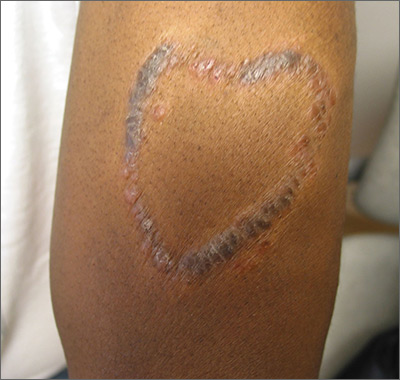
Although the FP had never seen anything like this before, he was aware that dyes in tattoos could cause an allergic reaction. His research also suggested that sarcoidosis could occur in a tattoo, so this was part of his differential diagnosis written on the pathology form. He suggested a 4 mm punch biopsy to determine what was going on.
(See the Watch & Learn video on “Punch biopsy.”)
The pathology came back consistent with sarcoidosis. On the follow-up visit, the FP explained the diagnosis and suggested that the patient have a chest x-ray. The chest x-ray showed bilateral hilar adenopathy consistent with stage I sarcoidosis. The FP prescribed a 15-g tube of 0.05% clobetasol to treat the lesion and referred the patient to Dermatology and Pulmonology.
When the patient visited Dermatology 2 months later, most of the sarcoid plaques were flat but some remained raised and pruritic. The dermatologist offered intralesional triamcinolone for the stubborn plaques, and the patient consented. This intralesional steroid in conjunction with the topical steroid provided a good result that treated the itching and flattened the lesions. The remaining tattoo and color of the skin were not normal, but the patient was happy with the result. She had no pulmonary symptoms, and her pulmonary function tests showed a mild decrease in her diffusing capacity. She continued to see the dermatologist and pulmonologist for ongoing care of her sarcoidosis.
Photo courtesy of Amor Khachemoune, MD, and text for Photo Rounds Friday courtesy of Richard P. Usatine, MD. This case was adapted from: Bae E, Bae Y, Sarabi K, et al. Sarcoidosis. In: Usatine R, Smith M, Mayeaux EJ, et al. Color Atlas and Synopsis of Family Medicine. 3rd ed. New York, NY: McGraw-Hill; 2019:1153-1160.
To learn more about the newest 3rd edition of the Color Atlas and Synopsis of Family Medicine, see: https://www.amazon.com/Color-Atlas-Synopsis-Family-Medicine/dp/1259862046/
You can get the Color Atlas of Family Medicine app by clicking on this link: usatinemedia.com
Although the FP had never seen anything like this before, he was aware that dyes in tattoos could cause an allergic reaction. His research also suggested that sarcoidosis could occur in a tattoo, so this was part of his differential diagnosis written on the pathology form. He suggested a 4 mm punch biopsy to determine what was going on.
(See the Watch & Learn video on “Punch biopsy.”)
The pathology came back consistent with sarcoidosis. On the follow-up visit, the FP explained the diagnosis and suggested that the patient have a chest x-ray. The chest x-ray showed bilateral hilar adenopathy consistent with stage I sarcoidosis. The FP prescribed a 15-g tube of 0.05% clobetasol to treat the lesion and referred the patient to Dermatology and Pulmonology.
When the patient visited Dermatology 2 months later, most of the sarcoid plaques were flat but some remained raised and pruritic. The dermatologist offered intralesional triamcinolone for the stubborn plaques, and the patient consented. This intralesional steroid in conjunction with the topical steroid provided a good result that treated the itching and flattened the lesions. The remaining tattoo and color of the skin were not normal, but the patient was happy with the result. She had no pulmonary symptoms, and her pulmonary function tests showed a mild decrease in her diffusing capacity. She continued to see the dermatologist and pulmonologist for ongoing care of her sarcoidosis.
Photo courtesy of Amor Khachemoune, MD, and text for Photo Rounds Friday courtesy of Richard P. Usatine, MD. This case was adapted from: Bae E, Bae Y, Sarabi K, et al. Sarcoidosis. In: Usatine R, Smith M, Mayeaux EJ, et al. Color Atlas and Synopsis of Family Medicine. 3rd ed. New York, NY: McGraw-Hill; 2019:1153-1160.
To learn more about the newest 3rd edition of the Color Atlas and Synopsis of Family Medicine, see: https://www.amazon.com/Color-Atlas-Synopsis-Family-Medicine/dp/1259862046/
You can get the Color Atlas of Family Medicine app by clicking on this link: usatinemedia.com
Although the FP had never seen anything like this before, he was aware that dyes in tattoos could cause an allergic reaction. His research also suggested that sarcoidosis could occur in a tattoo, so this was part of his differential diagnosis written on the pathology form. He suggested a 4 mm punch biopsy to determine what was going on.
(See the Watch & Learn video on “Punch biopsy.”)
The pathology came back consistent with sarcoidosis. On the follow-up visit, the FP explained the diagnosis and suggested that the patient have a chest x-ray. The chest x-ray showed bilateral hilar adenopathy consistent with stage I sarcoidosis. The FP prescribed a 15-g tube of 0.05% clobetasol to treat the lesion and referred the patient to Dermatology and Pulmonology.
When the patient visited Dermatology 2 months later, most of the sarcoid plaques were flat but some remained raised and pruritic. The dermatologist offered intralesional triamcinolone for the stubborn plaques, and the patient consented. This intralesional steroid in conjunction with the topical steroid provided a good result that treated the itching and flattened the lesions. The remaining tattoo and color of the skin were not normal, but the patient was happy with the result. She had no pulmonary symptoms, and her pulmonary function tests showed a mild decrease in her diffusing capacity. She continued to see the dermatologist and pulmonologist for ongoing care of her sarcoidosis.
Photo courtesy of Amor Khachemoune, MD, and text for Photo Rounds Friday courtesy of Richard P. Usatine, MD. This case was adapted from: Bae E, Bae Y, Sarabi K, et al. Sarcoidosis. In: Usatine R, Smith M, Mayeaux EJ, et al. Color Atlas and Synopsis of Family Medicine. 3rd ed. New York, NY: McGraw-Hill; 2019:1153-1160.
To learn more about the newest 3rd edition of the Color Atlas and Synopsis of Family Medicine, see: https://www.amazon.com/Color-Atlas-Synopsis-Family-Medicine/dp/1259862046/
You can get the Color Atlas of Family Medicine app by clicking on this link: usatinemedia.com
Novel topical psoriasis treatment targets nerve pathways
MILAN – A novel topical nonsteroidal treatment for psoriasis showed sufficient efficacy in phase 2b clinical trials to proceed to phase 3 studies, with improvements in severity, pain, and burning in adults with mild to moderate psoriasis.
At the end of 12 weeks of treatment, 29% of patients receiving the medication – which targets nerve pathways – experienced a decrease of at least 2 grades on the 5-point Investigator’s Global Assessment (IGA) scale, compared with 13% of those receiving the topical vehicle only (P = .036). A similar proportion of patients achieved 75% improvement on the Psoriasis Area and Severity Index (PASI-75)compared with those on vehicle alone (27% versus 13%; P = .045).
, said Paul F. Lizzul, MD, PhD, presenting the findings during a late-breaking abstract session at the World Congress of Dermatology.
Pruritus severity also dropped by about 60%, but the decrease did not differ significantly from the change seen with vehicle alone, said Dr. Lizzul, chief medical officer for Sienna Biopharmaceuticals, Westlake Village, Calif., which funded the study. He and his coinvestigators found this “interesting, surprising, and different from what we had seen previously,” he said. “We think a few things happened here,” including intensive querying on itch by means of daily diaries, a different approach than had been taken in the investigator’s earlier SNA-120 trials. “We think in this way we probably biased patients’ expectations, altering reporting on this subjective measure,” he added.
“There’s been really a lack of innovation in the topical world in developing nonsteroidal therapies for the majority of patients who are treated with topicals, said Dr. Lizzul. Keratinocytes within psoriatic plaques are known to have elevated levels of nerve growth factor (NGF), he explained. Together with tropomyosin receptor kinase A (TrkA), NGF is implicated in the pathogenesis of psoriasis; it stimulates keratinocyte hyperproliferation, is a factor in neurogenic inflammation, and contributes to pruritus. Upregulation of TrkA expression is seen in nerve fibers within pruritic psoriasis plaques as well, said Dr. Lizzul, senior author of the study. (The first author was Kristina Callis Duffin, MD, cochair of the dermatology department at the University of Utah, Salt Lake City.)
In fact, the pruritus that plagues many psoriasis patients, said Dr. Lizzul, may “serve as a clinical biomarker for elevated NGF/TrkA expression.” And certain clinical phenomena observed in psoriasis, such as the Koebner phenomenon and plaque resolution along the path of damaged nerves, provide other clues. “Clearly, astute clinicians going back many, many years have recognized the very important role that nerves and neuropeptides play in psoriasis,” he added.
SNA-120 targets NGF TrKA activity, and “achieves high local drug concentration in the skin, with low systemic availability,” he said.
The randomized, double-blind, vehicle-controlled study enrolled 208 adults with mild to moderate psoriasis (scores of 2 or 3 on the IGA), with pruritus of at least moderate intensity (5 or higher on a 10-point itch numeric rating scale, or I-NRS). The mean age of the patients was 50 years, and about half were male. Most (84%-90% across study arms) were white. At baseline, the mean I-NRS was 7.3-7.4, and the mean PASI score at baseline ranged from 5.9 to 6.5.
Patients were randomized to receive SNA-120 twice daily at either 0.05% (70 patients) or 0.5% (69 patients) in an ointment formulation, or vehicle alone twice daily (69 patients). Efficacy was tracked by measuring decrease in IGA by one or two grades, the number of patients achieving PASI-50 and PASI-75, reduction in itch, and a composite of a decrease of at least 2 grades on the IGA and having clear or almost clear skin.
The investigators also tracked reduction in burning and pain as measured on a 10-point numeric rating scale. Though itch scores didn’t differ significantly from reductions seen with the topical vehicle alone, pain and burning were both reduced significantly compared with vehicle by week 12 of the study (P = .033 for pain; P = .043 for burning).
All improvements were seen only with the lower dose, not the 0.5% dose of SNA-120, noted Dr. Lizzul, adding: “This is not necessarily surprising in the world of kinase inhibitors, where you can see these J-shaped or inverse dose-response curves.”
In addition to recording adverse events, the researchers assessed safety by obtaining laboratory values and electrocardiograms. Plasma SNA-120 levels at study weeks 2, 4, and 8 were obtained for pharmacokinetic analysis. Systemic uptake was virtually nil, and the safety profile overall was good, said Dr. Lizzul.
Next steps are phase 3 clinical trials that will evaluate global improvement as well as pain, burning, and itch in psoriasis, he noted.
Dr. Lizzul is an employee of Sienna Biopharmaceuticals, which is developing SNA-120.
MILAN – A novel topical nonsteroidal treatment for psoriasis showed sufficient efficacy in phase 2b clinical trials to proceed to phase 3 studies, with improvements in severity, pain, and burning in adults with mild to moderate psoriasis.
At the end of 12 weeks of treatment, 29% of patients receiving the medication – which targets nerve pathways – experienced a decrease of at least 2 grades on the 5-point Investigator’s Global Assessment (IGA) scale, compared with 13% of those receiving the topical vehicle only (P = .036). A similar proportion of patients achieved 75% improvement on the Psoriasis Area and Severity Index (PASI-75)compared with those on vehicle alone (27% versus 13%; P = .045).
, said Paul F. Lizzul, MD, PhD, presenting the findings during a late-breaking abstract session at the World Congress of Dermatology.
Pruritus severity also dropped by about 60%, but the decrease did not differ significantly from the change seen with vehicle alone, said Dr. Lizzul, chief medical officer for Sienna Biopharmaceuticals, Westlake Village, Calif., which funded the study. He and his coinvestigators found this “interesting, surprising, and different from what we had seen previously,” he said. “We think a few things happened here,” including intensive querying on itch by means of daily diaries, a different approach than had been taken in the investigator’s earlier SNA-120 trials. “We think in this way we probably biased patients’ expectations, altering reporting on this subjective measure,” he added.
“There’s been really a lack of innovation in the topical world in developing nonsteroidal therapies for the majority of patients who are treated with topicals, said Dr. Lizzul. Keratinocytes within psoriatic plaques are known to have elevated levels of nerve growth factor (NGF), he explained. Together with tropomyosin receptor kinase A (TrkA), NGF is implicated in the pathogenesis of psoriasis; it stimulates keratinocyte hyperproliferation, is a factor in neurogenic inflammation, and contributes to pruritus. Upregulation of TrkA expression is seen in nerve fibers within pruritic psoriasis plaques as well, said Dr. Lizzul, senior author of the study. (The first author was Kristina Callis Duffin, MD, cochair of the dermatology department at the University of Utah, Salt Lake City.)
In fact, the pruritus that plagues many psoriasis patients, said Dr. Lizzul, may “serve as a clinical biomarker for elevated NGF/TrkA expression.” And certain clinical phenomena observed in psoriasis, such as the Koebner phenomenon and plaque resolution along the path of damaged nerves, provide other clues. “Clearly, astute clinicians going back many, many years have recognized the very important role that nerves and neuropeptides play in psoriasis,” he added.
SNA-120 targets NGF TrKA activity, and “achieves high local drug concentration in the skin, with low systemic availability,” he said.
The randomized, double-blind, vehicle-controlled study enrolled 208 adults with mild to moderate psoriasis (scores of 2 or 3 on the IGA), with pruritus of at least moderate intensity (5 or higher on a 10-point itch numeric rating scale, or I-NRS). The mean age of the patients was 50 years, and about half were male. Most (84%-90% across study arms) were white. At baseline, the mean I-NRS was 7.3-7.4, and the mean PASI score at baseline ranged from 5.9 to 6.5.
Patients were randomized to receive SNA-120 twice daily at either 0.05% (70 patients) or 0.5% (69 patients) in an ointment formulation, or vehicle alone twice daily (69 patients). Efficacy was tracked by measuring decrease in IGA by one or two grades, the number of patients achieving PASI-50 and PASI-75, reduction in itch, and a composite of a decrease of at least 2 grades on the IGA and having clear or almost clear skin.
The investigators also tracked reduction in burning and pain as measured on a 10-point numeric rating scale. Though itch scores didn’t differ significantly from reductions seen with the topical vehicle alone, pain and burning were both reduced significantly compared with vehicle by week 12 of the study (P = .033 for pain; P = .043 for burning).
All improvements were seen only with the lower dose, not the 0.5% dose of SNA-120, noted Dr. Lizzul, adding: “This is not necessarily surprising in the world of kinase inhibitors, where you can see these J-shaped or inverse dose-response curves.”
In addition to recording adverse events, the researchers assessed safety by obtaining laboratory values and electrocardiograms. Plasma SNA-120 levels at study weeks 2, 4, and 8 were obtained for pharmacokinetic analysis. Systemic uptake was virtually nil, and the safety profile overall was good, said Dr. Lizzul.
Next steps are phase 3 clinical trials that will evaluate global improvement as well as pain, burning, and itch in psoriasis, he noted.
Dr. Lizzul is an employee of Sienna Biopharmaceuticals, which is developing SNA-120.
MILAN – A novel topical nonsteroidal treatment for psoriasis showed sufficient efficacy in phase 2b clinical trials to proceed to phase 3 studies, with improvements in severity, pain, and burning in adults with mild to moderate psoriasis.
At the end of 12 weeks of treatment, 29% of patients receiving the medication – which targets nerve pathways – experienced a decrease of at least 2 grades on the 5-point Investigator’s Global Assessment (IGA) scale, compared with 13% of those receiving the topical vehicle only (P = .036). A similar proportion of patients achieved 75% improvement on the Psoriasis Area and Severity Index (PASI-75)compared with those on vehicle alone (27% versus 13%; P = .045).
, said Paul F. Lizzul, MD, PhD, presenting the findings during a late-breaking abstract session at the World Congress of Dermatology.
Pruritus severity also dropped by about 60%, but the decrease did not differ significantly from the change seen with vehicle alone, said Dr. Lizzul, chief medical officer for Sienna Biopharmaceuticals, Westlake Village, Calif., which funded the study. He and his coinvestigators found this “interesting, surprising, and different from what we had seen previously,” he said. “We think a few things happened here,” including intensive querying on itch by means of daily diaries, a different approach than had been taken in the investigator’s earlier SNA-120 trials. “We think in this way we probably biased patients’ expectations, altering reporting on this subjective measure,” he added.
“There’s been really a lack of innovation in the topical world in developing nonsteroidal therapies for the majority of patients who are treated with topicals, said Dr. Lizzul. Keratinocytes within psoriatic plaques are known to have elevated levels of nerve growth factor (NGF), he explained. Together with tropomyosin receptor kinase A (TrkA), NGF is implicated in the pathogenesis of psoriasis; it stimulates keratinocyte hyperproliferation, is a factor in neurogenic inflammation, and contributes to pruritus. Upregulation of TrkA expression is seen in nerve fibers within pruritic psoriasis plaques as well, said Dr. Lizzul, senior author of the study. (The first author was Kristina Callis Duffin, MD, cochair of the dermatology department at the University of Utah, Salt Lake City.)
In fact, the pruritus that plagues many psoriasis patients, said Dr. Lizzul, may “serve as a clinical biomarker for elevated NGF/TrkA expression.” And certain clinical phenomena observed in psoriasis, such as the Koebner phenomenon and plaque resolution along the path of damaged nerves, provide other clues. “Clearly, astute clinicians going back many, many years have recognized the very important role that nerves and neuropeptides play in psoriasis,” he added.
SNA-120 targets NGF TrKA activity, and “achieves high local drug concentration in the skin, with low systemic availability,” he said.
The randomized, double-blind, vehicle-controlled study enrolled 208 adults with mild to moderate psoriasis (scores of 2 or 3 on the IGA), with pruritus of at least moderate intensity (5 or higher on a 10-point itch numeric rating scale, or I-NRS). The mean age of the patients was 50 years, and about half were male. Most (84%-90% across study arms) were white. At baseline, the mean I-NRS was 7.3-7.4, and the mean PASI score at baseline ranged from 5.9 to 6.5.
Patients were randomized to receive SNA-120 twice daily at either 0.05% (70 patients) or 0.5% (69 patients) in an ointment formulation, or vehicle alone twice daily (69 patients). Efficacy was tracked by measuring decrease in IGA by one or two grades, the number of patients achieving PASI-50 and PASI-75, reduction in itch, and a composite of a decrease of at least 2 grades on the IGA and having clear or almost clear skin.
The investigators also tracked reduction in burning and pain as measured on a 10-point numeric rating scale. Though itch scores didn’t differ significantly from reductions seen with the topical vehicle alone, pain and burning were both reduced significantly compared with vehicle by week 12 of the study (P = .033 for pain; P = .043 for burning).
All improvements were seen only with the lower dose, not the 0.5% dose of SNA-120, noted Dr. Lizzul, adding: “This is not necessarily surprising in the world of kinase inhibitors, where you can see these J-shaped or inverse dose-response curves.”
In addition to recording adverse events, the researchers assessed safety by obtaining laboratory values and electrocardiograms. Plasma SNA-120 levels at study weeks 2, 4, and 8 were obtained for pharmacokinetic analysis. Systemic uptake was virtually nil, and the safety profile overall was good, said Dr. Lizzul.
Next steps are phase 3 clinical trials that will evaluate global improvement as well as pain, burning, and itch in psoriasis, he noted.
Dr. Lizzul is an employee of Sienna Biopharmaceuticals, which is developing SNA-120.
REPORTING FROM WCD2019
Polyester. Plywood. Pizza. Skin allergens lurk in unusual places
NEWPORT BEACH, CALIF. – , according to dermatologist Jennifer H. Perryman, MD.
Here’s a closer look at the allergens highlighted by Dr. Perryman in a presentation at Skin Disease Education Foundation’s Women’s & Pediatric Dermatology Seminar:
Formaldehyde: It’s everywhere
“In general, formaldehyde is found on everyone in this room in two different places: preservatives in skin care products and in a lot of our clothing,” said Dr. Perryman, who practices in Greeley and Fort Collins, Colo.
The preservative is used in an even wider variety of products, including fluids used in industry (such as metalworking) and topical medications. But people are especially likely to encounter it in clothing – via formaldehyde textile resins – as well as in cosmetics, soaps, and lotions.
On the clothing front, Dr. Perryman said, formaldehyde textile resins have been used since the 1930s. They’re used to treat blends of synthetic and cotton fibers and bed sheets. Beware of “wrinkle resistant” and “permanent press” clothing (although not all have been treated with this resin). “Newer formaldehyde textile resins have less formaldehyde release, but they may be more expensive, and some industries may not use them,” she said.
Avoiding formaldehyde textile resins isn’t a simple matter.” You have to go out of your way to stay away from a polyester-cotton blend,” she said. “And don’t forget bedsheets,” she added, noting that the packaging on some sheets include information about cotton count, “but when you flip over the label it says it’s ‘50% cotton and 50% polyester or other.’ ”
Some patients will bring their own bedsheets to hotels so they don’t experience flares from hotel bedsheets, she added.
Other products can trigger this skin allergy. Beware, Dr. Perryman said, of formaldehyde exposure from paper, cardboard, cigarette smoke, processed wood products like plywood, foam housing and industrial insulation, embalming fluid and tissue fixatives, and some paints and adhesives.
What are the signs that someone may have a case of formaldehyde allergy? It may cause patchy generalized dermatitis, erythroderma, and nummular dermatitis. It may spare the hands, feet, and face because those parts of the body have less exposure to clothing, and it’s likely to especially affect body areas where clothing is tight. And for unknown reasons, this allergy is more common in the elderly, Dr. Perryman said.
Textile dye: Beware polyester
This allergy is mainly triggered by synthetic fabrics like polyester, rayon, and acetate, she noted. Darker colors are more allergenic. Clothes made of natural fibers such as cotton, silk, linen, and wool are alternatives. These are not dyed with these dyes, she said, adding that a reaction to wool will be from irritation, not from the dye.
Paraphenylenediamine: Keep an eye out for this dye ingredient
Paraphenylenediamine, which can trigger allergic reactions, is found in leather dye, fur dye, and some (but not all) hair dyes. Be aware that it can cross-react with other allergens like sulfonamide medications.
If a patch test turns up a reaction to “Black-Rubber Mix,” which includes paraphenylenediamine, consider whether the patient has exposure to the rubber in tires. Car mechanics may be affected by this allergy, Dr. Perryman said.
Neomycin: A drop of trouble
Allergy to the antibiotic neomycin can be triggered by exposure to gentamicin and tobramycin eye drops. Patients may believe they have an infection, Dr. Perryman said, so consider getting a culture. In some cases, an allergic reaction to neomycin may be incorrectly diagnosed as cellulitis.
Nickel: Not just a jewelry hazard
Jewelry and coins can trigger nickel allergies, but be aware that systemic nickel allergy can also trigger skin problems from a patient’s diet. It may be necessary to put patients on a low-nickel diet that avoids foods such as healthy grains, greens (especially spinach), nuts, legumes, and chocolate. “I always feel bad” putting patients on a restrictive diet, Dr. Perryman said, but it can be helpful to take 500 mg of vitamin C three times a day since it binds to nickel.
Cobalt: Watch the chocolate and coffee
Jewelry with cobalt can cause an allergic reaction. Dr. Perryman tells patients to buy an inexpensive “spot test” product online that detects whether jewelry has nickel or cobalt. Cobalt allergy can also trigger symptoms in patients exposed to “hard metal” industrial tools, cement, and masonry. Workers in the plastics and dye industries may be exposed too.
Like nickel, Dr. Perryman said, systemic cobalt allergy related to diet is also possible. The list of foods that contain higher levels of cobalt is long, and includes apricots, beans, beer, chocolate, coffee, nuts, tea, and whole-grain flour.
Dr. Perryman also mentioned several other allergens to keep in mind:
- Chromate can trigger reactions in people who wear leather shoes (the metal can be used in tanning). It can also cause problems in workers exposed to it via cement, bricks, drywall, and metal plating.
- Chromium picolinate, an over-the-counter supplement, can cause systemic dermatitis.
- Gold in jewelry can trigger an allergic reaction. Talk to patients about replating their jewelry, Dr. Perryman said.
- Rubber can trigger reactions due to exposure to rubber bands, makeup sponges, and rubber gloves (even nitrile ones). Be aware that both rubber and latex allergies may coexist and consider a blood test for latex allergy.
- Systemic balsam allergy related to an individual’s diet is possible. Tomato is an especially big villain on this front, along with citrus fruits, spices, cola, chili, and chocolate.
Dr. Perryman disclosed consulting work for IntraDerm. SDEF and this news organization are owned by the same parent company.
NEWPORT BEACH, CALIF. – , according to dermatologist Jennifer H. Perryman, MD.
Here’s a closer look at the allergens highlighted by Dr. Perryman in a presentation at Skin Disease Education Foundation’s Women’s & Pediatric Dermatology Seminar:
Formaldehyde: It’s everywhere
“In general, formaldehyde is found on everyone in this room in two different places: preservatives in skin care products and in a lot of our clothing,” said Dr. Perryman, who practices in Greeley and Fort Collins, Colo.
The preservative is used in an even wider variety of products, including fluids used in industry (such as metalworking) and topical medications. But people are especially likely to encounter it in clothing – via formaldehyde textile resins – as well as in cosmetics, soaps, and lotions.
On the clothing front, Dr. Perryman said, formaldehyde textile resins have been used since the 1930s. They’re used to treat blends of synthetic and cotton fibers and bed sheets. Beware of “wrinkle resistant” and “permanent press” clothing (although not all have been treated with this resin). “Newer formaldehyde textile resins have less formaldehyde release, but they may be more expensive, and some industries may not use them,” she said.
Avoiding formaldehyde textile resins isn’t a simple matter.” You have to go out of your way to stay away from a polyester-cotton blend,” she said. “And don’t forget bedsheets,” she added, noting that the packaging on some sheets include information about cotton count, “but when you flip over the label it says it’s ‘50% cotton and 50% polyester or other.’ ”
Some patients will bring their own bedsheets to hotels so they don’t experience flares from hotel bedsheets, she added.
Other products can trigger this skin allergy. Beware, Dr. Perryman said, of formaldehyde exposure from paper, cardboard, cigarette smoke, processed wood products like plywood, foam housing and industrial insulation, embalming fluid and tissue fixatives, and some paints and adhesives.
What are the signs that someone may have a case of formaldehyde allergy? It may cause patchy generalized dermatitis, erythroderma, and nummular dermatitis. It may spare the hands, feet, and face because those parts of the body have less exposure to clothing, and it’s likely to especially affect body areas where clothing is tight. And for unknown reasons, this allergy is more common in the elderly, Dr. Perryman said.
Textile dye: Beware polyester
This allergy is mainly triggered by synthetic fabrics like polyester, rayon, and acetate, she noted. Darker colors are more allergenic. Clothes made of natural fibers such as cotton, silk, linen, and wool are alternatives. These are not dyed with these dyes, she said, adding that a reaction to wool will be from irritation, not from the dye.
Paraphenylenediamine: Keep an eye out for this dye ingredient
Paraphenylenediamine, which can trigger allergic reactions, is found in leather dye, fur dye, and some (but not all) hair dyes. Be aware that it can cross-react with other allergens like sulfonamide medications.
If a patch test turns up a reaction to “Black-Rubber Mix,” which includes paraphenylenediamine, consider whether the patient has exposure to the rubber in tires. Car mechanics may be affected by this allergy, Dr. Perryman said.
Neomycin: A drop of trouble
Allergy to the antibiotic neomycin can be triggered by exposure to gentamicin and tobramycin eye drops. Patients may believe they have an infection, Dr. Perryman said, so consider getting a culture. In some cases, an allergic reaction to neomycin may be incorrectly diagnosed as cellulitis.
Nickel: Not just a jewelry hazard
Jewelry and coins can trigger nickel allergies, but be aware that systemic nickel allergy can also trigger skin problems from a patient’s diet. It may be necessary to put patients on a low-nickel diet that avoids foods such as healthy grains, greens (especially spinach), nuts, legumes, and chocolate. “I always feel bad” putting patients on a restrictive diet, Dr. Perryman said, but it can be helpful to take 500 mg of vitamin C three times a day since it binds to nickel.
Cobalt: Watch the chocolate and coffee
Jewelry with cobalt can cause an allergic reaction. Dr. Perryman tells patients to buy an inexpensive “spot test” product online that detects whether jewelry has nickel or cobalt. Cobalt allergy can also trigger symptoms in patients exposed to “hard metal” industrial tools, cement, and masonry. Workers in the plastics and dye industries may be exposed too.
Like nickel, Dr. Perryman said, systemic cobalt allergy related to diet is also possible. The list of foods that contain higher levels of cobalt is long, and includes apricots, beans, beer, chocolate, coffee, nuts, tea, and whole-grain flour.
Dr. Perryman also mentioned several other allergens to keep in mind:
- Chromate can trigger reactions in people who wear leather shoes (the metal can be used in tanning). It can also cause problems in workers exposed to it via cement, bricks, drywall, and metal plating.
- Chromium picolinate, an over-the-counter supplement, can cause systemic dermatitis.
- Gold in jewelry can trigger an allergic reaction. Talk to patients about replating their jewelry, Dr. Perryman said.
- Rubber can trigger reactions due to exposure to rubber bands, makeup sponges, and rubber gloves (even nitrile ones). Be aware that both rubber and latex allergies may coexist and consider a blood test for latex allergy.
- Systemic balsam allergy related to an individual’s diet is possible. Tomato is an especially big villain on this front, along with citrus fruits, spices, cola, chili, and chocolate.
Dr. Perryman disclosed consulting work for IntraDerm. SDEF and this news organization are owned by the same parent company.
NEWPORT BEACH, CALIF. – , according to dermatologist Jennifer H. Perryman, MD.
Here’s a closer look at the allergens highlighted by Dr. Perryman in a presentation at Skin Disease Education Foundation’s Women’s & Pediatric Dermatology Seminar:
Formaldehyde: It’s everywhere
“In general, formaldehyde is found on everyone in this room in two different places: preservatives in skin care products and in a lot of our clothing,” said Dr. Perryman, who practices in Greeley and Fort Collins, Colo.
The preservative is used in an even wider variety of products, including fluids used in industry (such as metalworking) and topical medications. But people are especially likely to encounter it in clothing – via formaldehyde textile resins – as well as in cosmetics, soaps, and lotions.
On the clothing front, Dr. Perryman said, formaldehyde textile resins have been used since the 1930s. They’re used to treat blends of synthetic and cotton fibers and bed sheets. Beware of “wrinkle resistant” and “permanent press” clothing (although not all have been treated with this resin). “Newer formaldehyde textile resins have less formaldehyde release, but they may be more expensive, and some industries may not use them,” she said.
Avoiding formaldehyde textile resins isn’t a simple matter.” You have to go out of your way to stay away from a polyester-cotton blend,” she said. “And don’t forget bedsheets,” she added, noting that the packaging on some sheets include information about cotton count, “but when you flip over the label it says it’s ‘50% cotton and 50% polyester or other.’ ”
Some patients will bring their own bedsheets to hotels so they don’t experience flares from hotel bedsheets, she added.
Other products can trigger this skin allergy. Beware, Dr. Perryman said, of formaldehyde exposure from paper, cardboard, cigarette smoke, processed wood products like plywood, foam housing and industrial insulation, embalming fluid and tissue fixatives, and some paints and adhesives.
What are the signs that someone may have a case of formaldehyde allergy? It may cause patchy generalized dermatitis, erythroderma, and nummular dermatitis. It may spare the hands, feet, and face because those parts of the body have less exposure to clothing, and it’s likely to especially affect body areas where clothing is tight. And for unknown reasons, this allergy is more common in the elderly, Dr. Perryman said.
Textile dye: Beware polyester
This allergy is mainly triggered by synthetic fabrics like polyester, rayon, and acetate, she noted. Darker colors are more allergenic. Clothes made of natural fibers such as cotton, silk, linen, and wool are alternatives. These are not dyed with these dyes, she said, adding that a reaction to wool will be from irritation, not from the dye.
Paraphenylenediamine: Keep an eye out for this dye ingredient
Paraphenylenediamine, which can trigger allergic reactions, is found in leather dye, fur dye, and some (but not all) hair dyes. Be aware that it can cross-react with other allergens like sulfonamide medications.
If a patch test turns up a reaction to “Black-Rubber Mix,” which includes paraphenylenediamine, consider whether the patient has exposure to the rubber in tires. Car mechanics may be affected by this allergy, Dr. Perryman said.
Neomycin: A drop of trouble
Allergy to the antibiotic neomycin can be triggered by exposure to gentamicin and tobramycin eye drops. Patients may believe they have an infection, Dr. Perryman said, so consider getting a culture. In some cases, an allergic reaction to neomycin may be incorrectly diagnosed as cellulitis.
Nickel: Not just a jewelry hazard
Jewelry and coins can trigger nickel allergies, but be aware that systemic nickel allergy can also trigger skin problems from a patient’s diet. It may be necessary to put patients on a low-nickel diet that avoids foods such as healthy grains, greens (especially spinach), nuts, legumes, and chocolate. “I always feel bad” putting patients on a restrictive diet, Dr. Perryman said, but it can be helpful to take 500 mg of vitamin C three times a day since it binds to nickel.
Cobalt: Watch the chocolate and coffee
Jewelry with cobalt can cause an allergic reaction. Dr. Perryman tells patients to buy an inexpensive “spot test” product online that detects whether jewelry has nickel or cobalt. Cobalt allergy can also trigger symptoms in patients exposed to “hard metal” industrial tools, cement, and masonry. Workers in the plastics and dye industries may be exposed too.
Like nickel, Dr. Perryman said, systemic cobalt allergy related to diet is also possible. The list of foods that contain higher levels of cobalt is long, and includes apricots, beans, beer, chocolate, coffee, nuts, tea, and whole-grain flour.
Dr. Perryman also mentioned several other allergens to keep in mind:
- Chromate can trigger reactions in people who wear leather shoes (the metal can be used in tanning). It can also cause problems in workers exposed to it via cement, bricks, drywall, and metal plating.
- Chromium picolinate, an over-the-counter supplement, can cause systemic dermatitis.
- Gold in jewelry can trigger an allergic reaction. Talk to patients about replating their jewelry, Dr. Perryman said.
- Rubber can trigger reactions due to exposure to rubber bands, makeup sponges, and rubber gloves (even nitrile ones). Be aware that both rubber and latex allergies may coexist and consider a blood test for latex allergy.
- Systemic balsam allergy related to an individual’s diet is possible. Tomato is an especially big villain on this front, along with citrus fruits, spices, cola, chili, and chocolate.
Dr. Perryman disclosed consulting work for IntraDerm. SDEF and this news organization are owned by the same parent company.
REPORTING FROM SDEF WOMEN’S & PEDIATRIC DERMATOLOGY SEMINAR
Round 1: Biologics, JAK inhibitors training up for atopic dermatitis ‘boxing match’
MILAN – Get ready for a “boxing match” (AD), Thomas Bieber, MD, PhD, said in an oral presentation at the World Congress of Dermatology.
“In one corner of the ring you will have the biologics, and in the other corner of the ring, you will have the Janus kinase (JAK) inhibitors and some other small molecules,” said Dr. Bieber, medical director of dermatology and allergy, at University Hospital Bonn, Germany.
There will be no winner-take-all scenario, since AD is a heterogeneous disease for which a variety of treatments will be needed, Dr. Bieber noted. However, he said, there are clear differences in mode of action, safety, mode of application, price, and more that will be important as dermatologists weigh the choice of biologics versus JAK inhibitors for a specific patient.
“Currently, dupilumab is the only one that is on the market (in the European Union) and this molecule is really a revolution for us,” Dr. Bieber said at the meeting. “But we will see in the next years, many, many other molecules coming up.”
Beyond dupilumab (Dupixent), the interleukin-4 (IL-4) receptor alpha antagonist approved by the Food and Drug Administration in 2017, biologics under development include tralokinumab, lebrikizumab, and nemolizumab, among others. Development on the small molecule side includes agents such as ZPL-389, a histamine H4 receptor agonist, but is dominated by JAK inhibitors such as baricitinib(Olumiant), approved by the FDA in 2018 for rheumatoid arthritis; upadacitinib; and abrocitinib, according to Dr. Bieber.
There are advantages and disadvantages to each class of molecule, he said. For example, JAK inhibitors act very rapidly to control itch and improve exacerbations, while biologics are “much slower” and provide delayed control of inflammation, he said. In terms of safety, by contrast, biologics probably offer a “better” benefit-to-risk ratio, with no risk for drug-drug interactions and no monitoring needed, while JAK inhibitors appear to have a “narrow” therapeutic window, with a risk for drug-drug interactions and a need for some monitoring, he said.
JAK inhibitors come in a tablet formulation, which, from the patient perspective, may be more convenient and acceptable compared with repeated injections of biologics every 2 or 4 weeks, Dr. Bieber noted. Another point potentially in favor of JAK inhibitors is price: “I think the current situation tells us clearly that the biologics are the more expensive drugs, while the small molecules typically are much less expensive,” he said.
One theoretical advantage of biologics, he said, is the potential for disease modification, while the disease-modifying potential of JAK inhibitors is unclear, as of yet. “We have not had enough experience with all these molecules in order to understand how we can do that particular job, in terms of switching off the disease,” he said.
In terms of the need for patient stratification in the future, it’s a draw between biologics and JAK inhibitors, Dr. Bieber said. “You will not see any of these drugs doing 100 percent of the job in 100 percent of the patients, so to me, currently from my understanding of this disease, there is no one-size-fits-all molecule.”
Toward that end, machine learning and artificial intelligence may aid in evaluating large amounts of data to better understand AD phenotypes. “That’s really something that is a particular kind of challenge in the next years, in order to improve at-the-end drug development, and the management of our patients,” he concluded.
Dr. Bieber reported disclosures related to LEO Pharmaceuticals, Regeneron, and Sanofi.
MILAN – Get ready for a “boxing match” (AD), Thomas Bieber, MD, PhD, said in an oral presentation at the World Congress of Dermatology.
“In one corner of the ring you will have the biologics, and in the other corner of the ring, you will have the Janus kinase (JAK) inhibitors and some other small molecules,” said Dr. Bieber, medical director of dermatology and allergy, at University Hospital Bonn, Germany.
There will be no winner-take-all scenario, since AD is a heterogeneous disease for which a variety of treatments will be needed, Dr. Bieber noted. However, he said, there are clear differences in mode of action, safety, mode of application, price, and more that will be important as dermatologists weigh the choice of biologics versus JAK inhibitors for a specific patient.
“Currently, dupilumab is the only one that is on the market (in the European Union) and this molecule is really a revolution for us,” Dr. Bieber said at the meeting. “But we will see in the next years, many, many other molecules coming up.”
Beyond dupilumab (Dupixent), the interleukin-4 (IL-4) receptor alpha antagonist approved by the Food and Drug Administration in 2017, biologics under development include tralokinumab, lebrikizumab, and nemolizumab, among others. Development on the small molecule side includes agents such as ZPL-389, a histamine H4 receptor agonist, but is dominated by JAK inhibitors such as baricitinib(Olumiant), approved by the FDA in 2018 for rheumatoid arthritis; upadacitinib; and abrocitinib, according to Dr. Bieber.
There are advantages and disadvantages to each class of molecule, he said. For example, JAK inhibitors act very rapidly to control itch and improve exacerbations, while biologics are “much slower” and provide delayed control of inflammation, he said. In terms of safety, by contrast, biologics probably offer a “better” benefit-to-risk ratio, with no risk for drug-drug interactions and no monitoring needed, while JAK inhibitors appear to have a “narrow” therapeutic window, with a risk for drug-drug interactions and a need for some monitoring, he said.
JAK inhibitors come in a tablet formulation, which, from the patient perspective, may be more convenient and acceptable compared with repeated injections of biologics every 2 or 4 weeks, Dr. Bieber noted. Another point potentially in favor of JAK inhibitors is price: “I think the current situation tells us clearly that the biologics are the more expensive drugs, while the small molecules typically are much less expensive,” he said.
One theoretical advantage of biologics, he said, is the potential for disease modification, while the disease-modifying potential of JAK inhibitors is unclear, as of yet. “We have not had enough experience with all these molecules in order to understand how we can do that particular job, in terms of switching off the disease,” he said.
In terms of the need for patient stratification in the future, it’s a draw between biologics and JAK inhibitors, Dr. Bieber said. “You will not see any of these drugs doing 100 percent of the job in 100 percent of the patients, so to me, currently from my understanding of this disease, there is no one-size-fits-all molecule.”
Toward that end, machine learning and artificial intelligence may aid in evaluating large amounts of data to better understand AD phenotypes. “That’s really something that is a particular kind of challenge in the next years, in order to improve at-the-end drug development, and the management of our patients,” he concluded.
Dr. Bieber reported disclosures related to LEO Pharmaceuticals, Regeneron, and Sanofi.
MILAN – Get ready for a “boxing match” (AD), Thomas Bieber, MD, PhD, said in an oral presentation at the World Congress of Dermatology.
“In one corner of the ring you will have the biologics, and in the other corner of the ring, you will have the Janus kinase (JAK) inhibitors and some other small molecules,” said Dr. Bieber, medical director of dermatology and allergy, at University Hospital Bonn, Germany.
There will be no winner-take-all scenario, since AD is a heterogeneous disease for which a variety of treatments will be needed, Dr. Bieber noted. However, he said, there are clear differences in mode of action, safety, mode of application, price, and more that will be important as dermatologists weigh the choice of biologics versus JAK inhibitors for a specific patient.
“Currently, dupilumab is the only one that is on the market (in the European Union) and this molecule is really a revolution for us,” Dr. Bieber said at the meeting. “But we will see in the next years, many, many other molecules coming up.”
Beyond dupilumab (Dupixent), the interleukin-4 (IL-4) receptor alpha antagonist approved by the Food and Drug Administration in 2017, biologics under development include tralokinumab, lebrikizumab, and nemolizumab, among others. Development on the small molecule side includes agents such as ZPL-389, a histamine H4 receptor agonist, but is dominated by JAK inhibitors such as baricitinib(Olumiant), approved by the FDA in 2018 for rheumatoid arthritis; upadacitinib; and abrocitinib, according to Dr. Bieber.
There are advantages and disadvantages to each class of molecule, he said. For example, JAK inhibitors act very rapidly to control itch and improve exacerbations, while biologics are “much slower” and provide delayed control of inflammation, he said. In terms of safety, by contrast, biologics probably offer a “better” benefit-to-risk ratio, with no risk for drug-drug interactions and no monitoring needed, while JAK inhibitors appear to have a “narrow” therapeutic window, with a risk for drug-drug interactions and a need for some monitoring, he said.
JAK inhibitors come in a tablet formulation, which, from the patient perspective, may be more convenient and acceptable compared with repeated injections of biologics every 2 or 4 weeks, Dr. Bieber noted. Another point potentially in favor of JAK inhibitors is price: “I think the current situation tells us clearly that the biologics are the more expensive drugs, while the small molecules typically are much less expensive,” he said.
One theoretical advantage of biologics, he said, is the potential for disease modification, while the disease-modifying potential of JAK inhibitors is unclear, as of yet. “We have not had enough experience with all these molecules in order to understand how we can do that particular job, in terms of switching off the disease,” he said.
In terms of the need for patient stratification in the future, it’s a draw between biologics and JAK inhibitors, Dr. Bieber said. “You will not see any of these drugs doing 100 percent of the job in 100 percent of the patients, so to me, currently from my understanding of this disease, there is no one-size-fits-all molecule.”
Toward that end, machine learning and artificial intelligence may aid in evaluating large amounts of data to better understand AD phenotypes. “That’s really something that is a particular kind of challenge in the next years, in order to improve at-the-end drug development, and the management of our patients,” he concluded.
Dr. Bieber reported disclosures related to LEO Pharmaceuticals, Regeneron, and Sanofi.
EXPERT ANALYSIS FROM WCD2019
Acne in women: What new insights tell us
NEWPORT BEACH, CALIF. – When it comes to acne in adult women, look past the jawline, beyond traditional medications, and toward greater control. That’s the message of a dermatologist who spoke at Skin Disease Education Foundation’s Women’s & Pediatric Dermatology Seminar.

“We should be aiming to get our patients to clear or almost clear, and we have the tools necessary to help that happen,” said Linda Stein Gold, MD, director of dermatology research at Henry Ford Hospital in Detroit.
she noted. Acne appears to affect 51% of women aged 20-29 years, she said, and prevalence dips to 15% in women older than 50 years.
About 80% of cases continue from adolescence, compared with about 20% that are new-onset during adulthood, she said. According to studies, she added, “most adult women have acne on multiple different areas of their face, not just the jawline. It’s similar to what we see in the adolescent population.”
Dr. Stein Gold offered these tips about treatment in this group of patients:
Inflammation
Researchers now consider that “all acne is inflammatory acne.” Be aggressive with anti-inflammatory treatment, and “continue even after the lesion is resolved” if needed to prevent scarring.
Oral contraceptives (OCs)
OCs can be helpful, but “we have to proceed with caution,” she said. A 2012 Cochrane Library review of 31 trials found that six combination OCs (COCs) “evaluated in placebo-controlled trials are effective in reducing inflammatory and noninflammatory facial acne lesions. Few important and consistent differences were found between COC types in their effectiveness for treating acne,” the review concluded (Cochrane Database Syst Rev. 2012 Jul 11;[7]:CD004425).
Results take time, however, and it “can take 3 months to see an effect, and 6 months for full effect,” Dr. Stein Gold noted.
There are multiple contraindications to the use of OCs, and they’ve been linked – controversially – to an increased risk of blood clots and breast cancer. However, risk of thrombosis also spikes – to significantly higher levels than with OC use – during pregnancy and the postpartum period, she said.
Spironolactone
This antihypertensive drug can be helpful, Dr. Stein Gold noted, although the one study in a 2009 Cochrane review that had acne as an outcome failed to find evidence of efficacy versus placebo (Cochrane Database Syst Rev. 2009 Apr 15;[2]:CD000194). Be aware of the boxed warning about links to cancer in rat studies, and consider the risk of potassium elevation in certain populations, she added. Watch the dose: fewer side effects are seen at 50-100 mg daily, although they’re still common, and it can take 3 months or more for improvements to appear, she said.
Truncal acne
Patients may be hesitant to mention they have acne on their chest and back. “They may not tell you about it, and you may not ask about it but [some patients] expect you to know about it and treat it,” Dr. Stein Gold said. She referred to trifarotene, a topical retinoid cream that, although not yet approved, appears to be safe and effective in treating acne on the face and trunk in phase 3 studies.
“Some people will say the trunk will get too irritated if you put a retinoid on it. But it absolutely can be used on the chest and back. The first thing I say to my patients is to expect to have redness and scaling for first 2 weeks. People pay money for that. It’s a chemical peel! It’s okay to have some sloughing; use an oil-free moisturizer.”
Dr. Stein Gold disclosed relationships with Galderma, Foamix, and Sol Gel (investigator, consultant); Valeant (consultant, speaker); and Dermira (investigator, speaker).
SDEF and this news organization are owned by the same parent company.
NEWPORT BEACH, CALIF. – When it comes to acne in adult women, look past the jawline, beyond traditional medications, and toward greater control. That’s the message of a dermatologist who spoke at Skin Disease Education Foundation’s Women’s & Pediatric Dermatology Seminar.
“We should be aiming to get our patients to clear or almost clear, and we have the tools necessary to help that happen,” said Linda Stein Gold, MD, director of dermatology research at Henry Ford Hospital in Detroit.
she noted. Acne appears to affect 51% of women aged 20-29 years, she said, and prevalence dips to 15% in women older than 50 years.
About 80% of cases continue from adolescence, compared with about 20% that are new-onset during adulthood, she said. According to studies, she added, “most adult women have acne on multiple different areas of their face, not just the jawline. It’s similar to what we see in the adolescent population.”
Dr. Stein Gold offered these tips about treatment in this group of patients:
Inflammation
Researchers now consider that “all acne is inflammatory acne.” Be aggressive with anti-inflammatory treatment, and “continue even after the lesion is resolved” if needed to prevent scarring.
Oral contraceptives (OCs)
OCs can be helpful, but “we have to proceed with caution,” she said. A 2012 Cochrane Library review of 31 trials found that six combination OCs (COCs) “evaluated in placebo-controlled trials are effective in reducing inflammatory and noninflammatory facial acne lesions. Few important and consistent differences were found between COC types in their effectiveness for treating acne,” the review concluded (Cochrane Database Syst Rev. 2012 Jul 11;[7]:CD004425).
Results take time, however, and it “can take 3 months to see an effect, and 6 months for full effect,” Dr. Stein Gold noted.
There are multiple contraindications to the use of OCs, and they’ve been linked – controversially – to an increased risk of blood clots and breast cancer. However, risk of thrombosis also spikes – to significantly higher levels than with OC use – during pregnancy and the postpartum period, she said.
Spironolactone
This antihypertensive drug can be helpful, Dr. Stein Gold noted, although the one study in a 2009 Cochrane review that had acne as an outcome failed to find evidence of efficacy versus placebo (Cochrane Database Syst Rev. 2009 Apr 15;[2]:CD000194). Be aware of the boxed warning about links to cancer in rat studies, and consider the risk of potassium elevation in certain populations, she added. Watch the dose: fewer side effects are seen at 50-100 mg daily, although they’re still common, and it can take 3 months or more for improvements to appear, she said.
Truncal acne
Patients may be hesitant to mention they have acne on their chest and back. “They may not tell you about it, and you may not ask about it but [some patients] expect you to know about it and treat it,” Dr. Stein Gold said. She referred to trifarotene, a topical retinoid cream that, although not yet approved, appears to be safe and effective in treating acne on the face and trunk in phase 3 studies.
“Some people will say the trunk will get too irritated if you put a retinoid on it. But it absolutely can be used on the chest and back. The first thing I say to my patients is to expect to have redness and scaling for first 2 weeks. People pay money for that. It’s a chemical peel! It’s okay to have some sloughing; use an oil-free moisturizer.”
Dr. Stein Gold disclosed relationships with Galderma, Foamix, and Sol Gel (investigator, consultant); Valeant (consultant, speaker); and Dermira (investigator, speaker).
SDEF and this news organization are owned by the same parent company.
NEWPORT BEACH, CALIF. – When it comes to acne in adult women, look past the jawline, beyond traditional medications, and toward greater control. That’s the message of a dermatologist who spoke at Skin Disease Education Foundation’s Women’s & Pediatric Dermatology Seminar.
“We should be aiming to get our patients to clear or almost clear, and we have the tools necessary to help that happen,” said Linda Stein Gold, MD, director of dermatology research at Henry Ford Hospital in Detroit.
she noted. Acne appears to affect 51% of women aged 20-29 years, she said, and prevalence dips to 15% in women older than 50 years.
About 80% of cases continue from adolescence, compared with about 20% that are new-onset during adulthood, she said. According to studies, she added, “most adult women have acne on multiple different areas of their face, not just the jawline. It’s similar to what we see in the adolescent population.”
Dr. Stein Gold offered these tips about treatment in this group of patients:
Inflammation
Researchers now consider that “all acne is inflammatory acne.” Be aggressive with anti-inflammatory treatment, and “continue even after the lesion is resolved” if needed to prevent scarring.
Oral contraceptives (OCs)
OCs can be helpful, but “we have to proceed with caution,” she said. A 2012 Cochrane Library review of 31 trials found that six combination OCs (COCs) “evaluated in placebo-controlled trials are effective in reducing inflammatory and noninflammatory facial acne lesions. Few important and consistent differences were found between COC types in their effectiveness for treating acne,” the review concluded (Cochrane Database Syst Rev. 2012 Jul 11;[7]:CD004425).
Results take time, however, and it “can take 3 months to see an effect, and 6 months for full effect,” Dr. Stein Gold noted.
There are multiple contraindications to the use of OCs, and they’ve been linked – controversially – to an increased risk of blood clots and breast cancer. However, risk of thrombosis also spikes – to significantly higher levels than with OC use – during pregnancy and the postpartum period, she said.
Spironolactone
This antihypertensive drug can be helpful, Dr. Stein Gold noted, although the one study in a 2009 Cochrane review that had acne as an outcome failed to find evidence of efficacy versus placebo (Cochrane Database Syst Rev. 2009 Apr 15;[2]:CD000194). Be aware of the boxed warning about links to cancer in rat studies, and consider the risk of potassium elevation in certain populations, she added. Watch the dose: fewer side effects are seen at 50-100 mg daily, although they’re still common, and it can take 3 months or more for improvements to appear, she said.
Truncal acne
Patients may be hesitant to mention they have acne on their chest and back. “They may not tell you about it, and you may not ask about it but [some patients] expect you to know about it and treat it,” Dr. Stein Gold said. She referred to trifarotene, a topical retinoid cream that, although not yet approved, appears to be safe and effective in treating acne on the face and trunk in phase 3 studies.
“Some people will say the trunk will get too irritated if you put a retinoid on it. But it absolutely can be used on the chest and back. The first thing I say to my patients is to expect to have redness and scaling for first 2 weeks. People pay money for that. It’s a chemical peel! It’s okay to have some sloughing; use an oil-free moisturizer.”
Dr. Stein Gold disclosed relationships with Galderma, Foamix, and Sol Gel (investigator, consultant); Valeant (consultant, speaker); and Dermira (investigator, speaker).
SDEF and this news organization are owned by the same parent company.
EXPERT ANALYSIS FROM SDEF WOMEN’S & PEDIATRIC DERMATOLOGY SEMINAR
Consider cutaneous endometriosis in women with umbilical lesions
according to Liza Raffi of the University of Southern California, Los Angeles, and associates.

The report, published in the International Journal of Women’s Dermatology, detailed a case of a woman aged 41 years who presented with a 5-month history of a painful firm subcutaneous nodule in the umbilicus and flares of pain during menstrual periods. Her past history indicated a missed miscarriage (removed by dilation and curettage) and laparoscopic left salpingectomy for a ruptured ectopic pregnancy.
At presentation, the woman reported undergoing fertility treatments including subcutaneous injections of follitropin beta and choriogonadotropin alfa.
Because of the patient’s history of salpingectomy and painful menstrual periods, her physicians suspected cutaneous endometriosis. An ultrasound was performed to rule out fistula, and then a punch biopsy of the nodule was performed. The biopsy showed endometrial glands with encompassing fibrotic stroma, which was consistent with cutaneous endometriosis, likely transplanted during the laparoscopic port site entry during salpingectomy.
The patient chose to undergo surgery for excision of the nodule, declining hormonal therapy because she was undergoing fertility treatment.
“The differential diagnosis of umbilical lesions with similar presentation includes keloid, dermatofibroma, dermatofibrosarcoma protuberans, and cutaneous metastasis of cancer,” the investigators wrote. “Ultimately, patients should be referred to obstetrics & gynecology if they describe classic symptoms including pain with menses, dyspareunia, and infertility and wish to explore diagnostic and therapeutic options.”
Ms. Raffi and associates reported they had no conflicts of interest. There was no external funding.
SOURCE: Raffi L et al. Int J Womens Dermatol. 2019 Jul 2. doi: 10.1016/j.ijwd.2019.06.025.
according to Liza Raffi of the University of Southern California, Los Angeles, and associates.
The report, published in the International Journal of Women’s Dermatology, detailed a case of a woman aged 41 years who presented with a 5-month history of a painful firm subcutaneous nodule in the umbilicus and flares of pain during menstrual periods. Her past history indicated a missed miscarriage (removed by dilation and curettage) and laparoscopic left salpingectomy for a ruptured ectopic pregnancy.
At presentation, the woman reported undergoing fertility treatments including subcutaneous injections of follitropin beta and choriogonadotropin alfa.
Because of the patient’s history of salpingectomy and painful menstrual periods, her physicians suspected cutaneous endometriosis. An ultrasound was performed to rule out fistula, and then a punch biopsy of the nodule was performed. The biopsy showed endometrial glands with encompassing fibrotic stroma, which was consistent with cutaneous endometriosis, likely transplanted during the laparoscopic port site entry during salpingectomy.
The patient chose to undergo surgery for excision of the nodule, declining hormonal therapy because she was undergoing fertility treatment.
“The differential diagnosis of umbilical lesions with similar presentation includes keloid, dermatofibroma, dermatofibrosarcoma protuberans, and cutaneous metastasis of cancer,” the investigators wrote. “Ultimately, patients should be referred to obstetrics & gynecology if they describe classic symptoms including pain with menses, dyspareunia, and infertility and wish to explore diagnostic and therapeutic options.”
Ms. Raffi and associates reported they had no conflicts of interest. There was no external funding.
SOURCE: Raffi L et al. Int J Womens Dermatol. 2019 Jul 2. doi: 10.1016/j.ijwd.2019.06.025.
according to Liza Raffi of the University of Southern California, Los Angeles, and associates.
The report, published in the International Journal of Women’s Dermatology, detailed a case of a woman aged 41 years who presented with a 5-month history of a painful firm subcutaneous nodule in the umbilicus and flares of pain during menstrual periods. Her past history indicated a missed miscarriage (removed by dilation and curettage) and laparoscopic left salpingectomy for a ruptured ectopic pregnancy.
At presentation, the woman reported undergoing fertility treatments including subcutaneous injections of follitropin beta and choriogonadotropin alfa.
Because of the patient’s history of salpingectomy and painful menstrual periods, her physicians suspected cutaneous endometriosis. An ultrasound was performed to rule out fistula, and then a punch biopsy of the nodule was performed. The biopsy showed endometrial glands with encompassing fibrotic stroma, which was consistent with cutaneous endometriosis, likely transplanted during the laparoscopic port site entry during salpingectomy.
The patient chose to undergo surgery for excision of the nodule, declining hormonal therapy because she was undergoing fertility treatment.
“The differential diagnosis of umbilical lesions with similar presentation includes keloid, dermatofibroma, dermatofibrosarcoma protuberans, and cutaneous metastasis of cancer,” the investigators wrote. “Ultimately, patients should be referred to obstetrics & gynecology if they describe classic symptoms including pain with menses, dyspareunia, and infertility and wish to explore diagnostic and therapeutic options.”
Ms. Raffi and associates reported they had no conflicts of interest. There was no external funding.
SOURCE: Raffi L et al. Int J Womens Dermatol. 2019 Jul 2. doi: 10.1016/j.ijwd.2019.06.025.
FROM THE INTERNATIONAL JOURNAL OF WOMEN’S DERMATOLOGY
No increased risk of psychiatric problems tied to isotretinoin
Isotretinoin use may increase vulnerability to psychiatric conditions, but available evidence does not support a causal relationship, on the basis of data from a retrospective study of 17,829 psychiatric adverse events reported to the Food and Drug Administration over 2 decades.
“Although one study highlighted consistent reporting of depression and suicide in patients taking isotretinoin in the United States from 1982 to 2000, few studies have examined reports of psychiatric adverse events at the national level since 2000,” wrote Sean Singer of Harvard University, Boston, and his colleagues.
In a study published in JAMA Dermatology, the researchers reviewed data from the FDA’s Adverse Event Reporting System between 1997 and 2017.
A total of 17,829 psychiatric adverse events in which isotretinoin was the primary suspect drug were reported during the study period. The researchers classified the events into 12 categories; the most common were depressive disorders (42%), emotional lability (17%), and anxiety (14%). The number of reported psychiatric adverse events was similar between men and women (8,936 and 8,362 events, respectively).
The researchers also identified 2,278 reports of suicidal ideation, 602 reports of attempted suicide, and 368 reports of completed suicide.
In addition, the researchers examined data from the iPLEDGE program and found completed suicide rates of 8.4 per 100,000 patients in 2009 and 5.6 per 100,000 patients in 2010. However, these rates were lower than national suicide rates in the general population of 11.8 per 100,000 people in 2009 and 12.1 per 100,000 people in 2010.
Patient age was available for 13,553 adverse event reports, and patients aged 10-19 years accounted for 53% of the reports overall and 58% of completed suicides for which age was reported.
The high number of psychiatric adverse events in the youngest age group “could reflect more isotretinoin prescriptions in this age group or may suggest that teenagers are particularly vulnerable to psychiatric adverse events while taking isotretinoin,” the researchers said.
The findings were limited by several factors, including the reliance on proper clinician reports to the Adverse Event Reporting System database and the separation of some psychiatric terms into categories that may reflect symptoms of other psychiatric diagnoses, the researchers said.
However, “Our data showed high numbers of reports of emotional lability, anxiety disorders, insomnia, self-injurious behavior, and psychotic disorders with isotretinoin as the primary suspect drug,” they noted.
“Although no causal link has been established between isotretinoin and psychiatric adverse events, it is important to recognize that there are data that suggest patients using this drug may be vulnerable to a number of psychiatric conditions” and that monthly iPLEDGE visits are an opportunity to screen patients for these conditions, they said.
They also stressed that “the risk of psychiatric adverse events in patients taking isotretinoin must be considered in the context of a known increased risk of suicidal ideation in patients with acne independent of isotretinoin therapy.”
Mr. Singer had no financial conflicts to disclose. Study coauthor John S. Barbieri, MD, disclosed partial salary support from Pfizer and grand support from the National Institute of Arthritis and Musculoskeletal and Skin Diseases, and Arash Mostaghimi, MD, disclosed personal fees from Pfizer.
SOURCE: Singer S et al. JAMA Dermatol. 2019. Jul 3. doi: 10.1001/jamadermatol.2019.1416.
Isotretinoin use may increase vulnerability to psychiatric conditions, but available evidence does not support a causal relationship, on the basis of data from a retrospective study of 17,829 psychiatric adverse events reported to the Food and Drug Administration over 2 decades.
“Although one study highlighted consistent reporting of depression and suicide in patients taking isotretinoin in the United States from 1982 to 2000, few studies have examined reports of psychiatric adverse events at the national level since 2000,” wrote Sean Singer of Harvard University, Boston, and his colleagues.
In a study published in JAMA Dermatology, the researchers reviewed data from the FDA’s Adverse Event Reporting System between 1997 and 2017.
A total of 17,829 psychiatric adverse events in which isotretinoin was the primary suspect drug were reported during the study period. The researchers classified the events into 12 categories; the most common were depressive disorders (42%), emotional lability (17%), and anxiety (14%). The number of reported psychiatric adverse events was similar between men and women (8,936 and 8,362 events, respectively).
The researchers also identified 2,278 reports of suicidal ideation, 602 reports of attempted suicide, and 368 reports of completed suicide.
In addition, the researchers examined data from the iPLEDGE program and found completed suicide rates of 8.4 per 100,000 patients in 2009 and 5.6 per 100,000 patients in 2010. However, these rates were lower than national suicide rates in the general population of 11.8 per 100,000 people in 2009 and 12.1 per 100,000 people in 2010.
Patient age was available for 13,553 adverse event reports, and patients aged 10-19 years accounted for 53% of the reports overall and 58% of completed suicides for which age was reported.
The high number of psychiatric adverse events in the youngest age group “could reflect more isotretinoin prescriptions in this age group or may suggest that teenagers are particularly vulnerable to psychiatric adverse events while taking isotretinoin,” the researchers said.
The findings were limited by several factors, including the reliance on proper clinician reports to the Adverse Event Reporting System database and the separation of some psychiatric terms into categories that may reflect symptoms of other psychiatric diagnoses, the researchers said.
However, “Our data showed high numbers of reports of emotional lability, anxiety disorders, insomnia, self-injurious behavior, and psychotic disorders with isotretinoin as the primary suspect drug,” they noted.
“Although no causal link has been established between isotretinoin and psychiatric adverse events, it is important to recognize that there are data that suggest patients using this drug may be vulnerable to a number of psychiatric conditions” and that monthly iPLEDGE visits are an opportunity to screen patients for these conditions, they said.
They also stressed that “the risk of psychiatric adverse events in patients taking isotretinoin must be considered in the context of a known increased risk of suicidal ideation in patients with acne independent of isotretinoin therapy.”
Mr. Singer had no financial conflicts to disclose. Study coauthor John S. Barbieri, MD, disclosed partial salary support from Pfizer and grand support from the National Institute of Arthritis and Musculoskeletal and Skin Diseases, and Arash Mostaghimi, MD, disclosed personal fees from Pfizer.
SOURCE: Singer S et al. JAMA Dermatol. 2019. Jul 3. doi: 10.1001/jamadermatol.2019.1416.
Isotretinoin use may increase vulnerability to psychiatric conditions, but available evidence does not support a causal relationship, on the basis of data from a retrospective study of 17,829 psychiatric adverse events reported to the Food and Drug Administration over 2 decades.
“Although one study highlighted consistent reporting of depression and suicide in patients taking isotretinoin in the United States from 1982 to 2000, few studies have examined reports of psychiatric adverse events at the national level since 2000,” wrote Sean Singer of Harvard University, Boston, and his colleagues.
In a study published in JAMA Dermatology, the researchers reviewed data from the FDA’s Adverse Event Reporting System between 1997 and 2017.
A total of 17,829 psychiatric adverse events in which isotretinoin was the primary suspect drug were reported during the study period. The researchers classified the events into 12 categories; the most common were depressive disorders (42%), emotional lability (17%), and anxiety (14%). The number of reported psychiatric adverse events was similar between men and women (8,936 and 8,362 events, respectively).
The researchers also identified 2,278 reports of suicidal ideation, 602 reports of attempted suicide, and 368 reports of completed suicide.
In addition, the researchers examined data from the iPLEDGE program and found completed suicide rates of 8.4 per 100,000 patients in 2009 and 5.6 per 100,000 patients in 2010. However, these rates were lower than national suicide rates in the general population of 11.8 per 100,000 people in 2009 and 12.1 per 100,000 people in 2010.
Patient age was available for 13,553 adverse event reports, and patients aged 10-19 years accounted for 53% of the reports overall and 58% of completed suicides for which age was reported.
The high number of psychiatric adverse events in the youngest age group “could reflect more isotretinoin prescriptions in this age group or may suggest that teenagers are particularly vulnerable to psychiatric adverse events while taking isotretinoin,” the researchers said.
The findings were limited by several factors, including the reliance on proper clinician reports to the Adverse Event Reporting System database and the separation of some psychiatric terms into categories that may reflect symptoms of other psychiatric diagnoses, the researchers said.
However, “Our data showed high numbers of reports of emotional lability, anxiety disorders, insomnia, self-injurious behavior, and psychotic disorders with isotretinoin as the primary suspect drug,” they noted.
“Although no causal link has been established between isotretinoin and psychiatric adverse events, it is important to recognize that there are data that suggest patients using this drug may be vulnerable to a number of psychiatric conditions” and that monthly iPLEDGE visits are an opportunity to screen patients for these conditions, they said.
They also stressed that “the risk of psychiatric adverse events in patients taking isotretinoin must be considered in the context of a known increased risk of suicidal ideation in patients with acne independent of isotretinoin therapy.”
Mr. Singer had no financial conflicts to disclose. Study coauthor John S. Barbieri, MD, disclosed partial salary support from Pfizer and grand support from the National Institute of Arthritis and Musculoskeletal and Skin Diseases, and Arash Mostaghimi, MD, disclosed personal fees from Pfizer.
SOURCE: Singer S et al. JAMA Dermatol. 2019. Jul 3. doi: 10.1001/jamadermatol.2019.1416.
FROM JAMA DERMATOLOGY
Lesions on face, arms, and legs
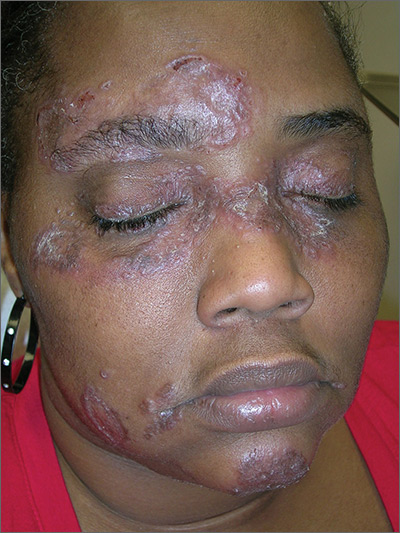
The FP suspected that the patient had sarcoidosis, based on the infiltrated plaques and their distribution on her face. The appearance of the lesions was similar to images he’d seen online of lupus pernio, a pathognomonic finding of sarcoidosis. The FP recommended a punch biopsy of one of the lesions, and the patient consented.
(See the Watch & Learn video on “Punch biopsy.”)
The FP also sent the patient for a chest x-ray, which showed bilateral hilar adenopathy consistent with sarcoidosis. Histopathology of the biopsy also showed sarcoidosis. Chest radiographic involvement is seen in almost 90% of patients with sarcoidosis and is used in staging the disease. Stage I disease shows bilateral hilar lymphadenopathy (BHL). Stage II disease shows BHL plus pulmonary infiltrates. Stage III disease shows pulmonary infiltrates without BHL. Stage IV disease shows pulmonary fibrosis. In this case, the patient had stage I disease.
The FP prescribed topical 0.1% triamcinolone ointment in an 80 g tube and instructed the patient to apply it to all of the areas involved. Although this medication typically comes in a 15 g or 30 g tube, the FP knew that these quantities would be insufficient. He had also read that a mid-potency steroid would be permissible on the face for this diagnosis. Not having any experience with sarcoidosis, the FP referred the patient to Dermatology and Pulmonology.
The dermatologist started the patient on oral prednisone 40 mg/d and awaited the completion of the patient’s baseline labs before beginning a steroid sparing agent such as methotrexate. Treatments for sarcoidosis include topical steroids, systemic steroids, methotrexate, azathioprine, and biologics (with adalimumab and infliximab having the greatest evidence for effectiveness).
Photos and text for Photo Rounds Friday courtesy of Richard P. Usatine, MD. This case was adapted from: Bae E, Bae Y, Sarabi K, et al. Sarcoidosis. In: Usatine R, Smith M, Mayeaux EJ, et al. Color Atlas and Synopsis of Family Medicine. 3rd ed. New York, NY: McGraw-Hill; 2019:1153-1160.
To learn more about the newest 3rd edition of the Color Atlas and Synopsis of Family Medicine, see: https://www.amazon.com/Color-Atlas-Synopsis-Family-Medicine/dp/1259862046/
You can get the Color Atlas of Family Medicine app by clicking on this link: usatinemedia.com
The FP suspected that the patient had sarcoidosis, based on the infiltrated plaques and their distribution on her face. The appearance of the lesions was similar to images he’d seen online of lupus pernio, a pathognomonic finding of sarcoidosis. The FP recommended a punch biopsy of one of the lesions, and the patient consented.
(See the Watch & Learn video on “Punch biopsy.”)
The FP also sent the patient for a chest x-ray, which showed bilateral hilar adenopathy consistent with sarcoidosis. Histopathology of the biopsy also showed sarcoidosis. Chest radiographic involvement is seen in almost 90% of patients with sarcoidosis and is used in staging the disease. Stage I disease shows bilateral hilar lymphadenopathy (BHL). Stage II disease shows BHL plus pulmonary infiltrates. Stage III disease shows pulmonary infiltrates without BHL. Stage IV disease shows pulmonary fibrosis. In this case, the patient had stage I disease.
The FP prescribed topical 0.1% triamcinolone ointment in an 80 g tube and instructed the patient to apply it to all of the areas involved. Although this medication typically comes in a 15 g or 30 g tube, the FP knew that these quantities would be insufficient. He had also read that a mid-potency steroid would be permissible on the face for this diagnosis. Not having any experience with sarcoidosis, the FP referred the patient to Dermatology and Pulmonology.
The dermatologist started the patient on oral prednisone 40 mg/d and awaited the completion of the patient’s baseline labs before beginning a steroid sparing agent such as methotrexate. Treatments for sarcoidosis include topical steroids, systemic steroids, methotrexate, azathioprine, and biologics (with adalimumab and infliximab having the greatest evidence for effectiveness).
Photos and text for Photo Rounds Friday courtesy of Richard P. Usatine, MD. This case was adapted from: Bae E, Bae Y, Sarabi K, et al. Sarcoidosis. In: Usatine R, Smith M, Mayeaux EJ, et al. Color Atlas and Synopsis of Family Medicine. 3rd ed. New York, NY: McGraw-Hill; 2019:1153-1160.
To learn more about the newest 3rd edition of the Color Atlas and Synopsis of Family Medicine, see: https://www.amazon.com/Color-Atlas-Synopsis-Family-Medicine/dp/1259862046/
You can get the Color Atlas of Family Medicine app by clicking on this link: usatinemedia.com
The FP suspected that the patient had sarcoidosis, based on the infiltrated plaques and their distribution on her face. The appearance of the lesions was similar to images he’d seen online of lupus pernio, a pathognomonic finding of sarcoidosis. The FP recommended a punch biopsy of one of the lesions, and the patient consented.
(See the Watch & Learn video on “Punch biopsy.”)
The FP also sent the patient for a chest x-ray, which showed bilateral hilar adenopathy consistent with sarcoidosis. Histopathology of the biopsy also showed sarcoidosis. Chest radiographic involvement is seen in almost 90% of patients with sarcoidosis and is used in staging the disease. Stage I disease shows bilateral hilar lymphadenopathy (BHL). Stage II disease shows BHL plus pulmonary infiltrates. Stage III disease shows pulmonary infiltrates without BHL. Stage IV disease shows pulmonary fibrosis. In this case, the patient had stage I disease.
The FP prescribed topical 0.1% triamcinolone ointment in an 80 g tube and instructed the patient to apply it to all of the areas involved. Although this medication typically comes in a 15 g or 30 g tube, the FP knew that these quantities would be insufficient. He had also read that a mid-potency steroid would be permissible on the face for this diagnosis. Not having any experience with sarcoidosis, the FP referred the patient to Dermatology and Pulmonology.
The dermatologist started the patient on oral prednisone 40 mg/d and awaited the completion of the patient’s baseline labs before beginning a steroid sparing agent such as methotrexate. Treatments for sarcoidosis include topical steroids, systemic steroids, methotrexate, azathioprine, and biologics (with adalimumab and infliximab having the greatest evidence for effectiveness).
Photos and text for Photo Rounds Friday courtesy of Richard P. Usatine, MD. This case was adapted from: Bae E, Bae Y, Sarabi K, et al. Sarcoidosis. In: Usatine R, Smith M, Mayeaux EJ, et al. Color Atlas and Synopsis of Family Medicine. 3rd ed. New York, NY: McGraw-Hill; 2019:1153-1160.
To learn more about the newest 3rd edition of the Color Atlas and Synopsis of Family Medicine, see: https://www.amazon.com/Color-Atlas-Synopsis-Family-Medicine/dp/1259862046/
You can get the Color Atlas of Family Medicine app by clicking on this link: usatinemedia.com
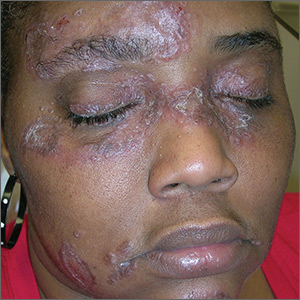
Can You Put Your Finger on the Diagnosis?
An 8-year-old boy is brought in for evaluation of a collection of blisters on his finger, near the nail. The problem manifested about 6 days ago. The affected area is tender to touch. The child reportedly feels well, with no fever or malaise.
The patient has an extensive personal and family history of atopy. Since birth, he has had dry, sensitive skin and has experienced episodes of eczema, seasonal allergies, and asthma. Three months ago, he was admitted to the hospital with eczema herpeticum and successfully treated with IV acyclovir.
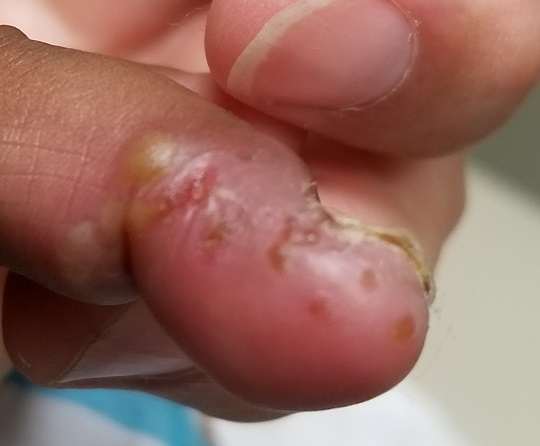
EXAMINATION
A cluster of vesicles is seen in the lateral perionychial area of the left third finger. Very modest erythema surrounds the vesicles, which contain cloudy yellow fluid suggestive of pus. There is a palpable lymph node in the left epitrochlear area.
The child is afebrile and in no distress. Patches of mild eczema are seen on the extremities and trunk.
What’s the diagnosis?
DISCUSSION
The lesion on this child’s finger is a herpetic whitlow. Patients with atopy are often susceptible to all types of skin infections: bacterial, fungal, and viral. In fact, human papillomavirus infection manifesting as multiple warts is not uncommon in this population. Nor is herpes simplex virus (HSV) infection, of which this case represents 1 manifestation.
A culture could have been done to confirm the diagnosis, but that would entail opening a vesicle to collect the fluid and then waiting at least 2 weeks for the results. By then, this whitlow would have long since resolved.
As with all HSV infections in the immunocompetent, treatment with acyclovir must be started in the first 2 to 3 days to have any effect—so such treatment in this case would be useless. If the herpetic whitlow were to recur in the same location, prompt treatment could be initiated, which would likely shorten the disease course and reduce symptoms.
Another HSV infection seen almost exclusively in atopic patients is eczema herpeticum (also known as Kaposi varicelliform eruption). This diffuse infection comprises dozens of tiny papulovesicular lesions, mostly concentrated on the face but often spilling down onto the chest. Patients with Darier disease or seborrheic dermatitis can also acquire it.
TAKE-HOME LEARNING POINTS
- Patients with atopy, especially children, are susceptible to all kinds of skin infections—fungal, bacterial, and viral.
- Herpes simplex virus (HSV) can appear in almost any location, including on fingers, but can also manifest as diffuse papulovesicular lesions on the face and chest of atopic patients.
- The blisters/vesicles of HSV are often pus-filled and usually provoke regional adenopathy.
- If diagnosed early enough, herpetic whitlows can be successfully treated with oral acyclovir; this doesn’t provide a cure but does stop the particular episode.
An 8-year-old boy is brought in for evaluation of a collection of blisters on his finger, near the nail. The problem manifested about 6 days ago. The affected area is tender to touch. The child reportedly feels well, with no fever or malaise.
The patient has an extensive personal and family history of atopy. Since birth, he has had dry, sensitive skin and has experienced episodes of eczema, seasonal allergies, and asthma. Three months ago, he was admitted to the hospital with eczema herpeticum and successfully treated with IV acyclovir.
EXAMINATION
A cluster of vesicles is seen in the lateral perionychial area of the left third finger. Very modest erythema surrounds the vesicles, which contain cloudy yellow fluid suggestive of pus. There is a palpable lymph node in the left epitrochlear area.
The child is afebrile and in no distress. Patches of mild eczema are seen on the extremities and trunk.
What’s the diagnosis?
DISCUSSION
The lesion on this child’s finger is a herpetic whitlow. Patients with atopy are often susceptible to all types of skin infections: bacterial, fungal, and viral. In fact, human papillomavirus infection manifesting as multiple warts is not uncommon in this population. Nor is herpes simplex virus (HSV) infection, of which this case represents 1 manifestation.
A culture could have been done to confirm the diagnosis, but that would entail opening a vesicle to collect the fluid and then waiting at least 2 weeks for the results. By then, this whitlow would have long since resolved.
As with all HSV infections in the immunocompetent, treatment with acyclovir must be started in the first 2 to 3 days to have any effect—so such treatment in this case would be useless. If the herpetic whitlow were to recur in the same location, prompt treatment could be initiated, which would likely shorten the disease course and reduce symptoms.
Another HSV infection seen almost exclusively in atopic patients is eczema herpeticum (also known as Kaposi varicelliform eruption). This diffuse infection comprises dozens of tiny papulovesicular lesions, mostly concentrated on the face but often spilling down onto the chest. Patients with Darier disease or seborrheic dermatitis can also acquire it.
TAKE-HOME LEARNING POINTS
- Patients with atopy, especially children, are susceptible to all kinds of skin infections—fungal, bacterial, and viral.
- Herpes simplex virus (HSV) can appear in almost any location, including on fingers, but can also manifest as diffuse papulovesicular lesions on the face and chest of atopic patients.
- The blisters/vesicles of HSV are often pus-filled and usually provoke regional adenopathy.
- If diagnosed early enough, herpetic whitlows can be successfully treated with oral acyclovir; this doesn’t provide a cure but does stop the particular episode.
An 8-year-old boy is brought in for evaluation of a collection of blisters on his finger, near the nail. The problem manifested about 6 days ago. The affected area is tender to touch. The child reportedly feels well, with no fever or malaise.
The patient has an extensive personal and family history of atopy. Since birth, he has had dry, sensitive skin and has experienced episodes of eczema, seasonal allergies, and asthma. Three months ago, he was admitted to the hospital with eczema herpeticum and successfully treated with IV acyclovir.
EXAMINATION
A cluster of vesicles is seen in the lateral perionychial area of the left third finger. Very modest erythema surrounds the vesicles, which contain cloudy yellow fluid suggestive of pus. There is a palpable lymph node in the left epitrochlear area.
The child is afebrile and in no distress. Patches of mild eczema are seen on the extremities and trunk.
What’s the diagnosis?
DISCUSSION
The lesion on this child’s finger is a herpetic whitlow. Patients with atopy are often susceptible to all types of skin infections: bacterial, fungal, and viral. In fact, human papillomavirus infection manifesting as multiple warts is not uncommon in this population. Nor is herpes simplex virus (HSV) infection, of which this case represents 1 manifestation.
A culture could have been done to confirm the diagnosis, but that would entail opening a vesicle to collect the fluid and then waiting at least 2 weeks for the results. By then, this whitlow would have long since resolved.
As with all HSV infections in the immunocompetent, treatment with acyclovir must be started in the first 2 to 3 days to have any effect—so such treatment in this case would be useless. If the herpetic whitlow were to recur in the same location, prompt treatment could be initiated, which would likely shorten the disease course and reduce symptoms.
Another HSV infection seen almost exclusively in atopic patients is eczema herpeticum (also known as Kaposi varicelliform eruption). This diffuse infection comprises dozens of tiny papulovesicular lesions, mostly concentrated on the face but often spilling down onto the chest. Patients with Darier disease or seborrheic dermatitis can also acquire it.
TAKE-HOME LEARNING POINTS
- Patients with atopy, especially children, are susceptible to all kinds of skin infections—fungal, bacterial, and viral.
- Herpes simplex virus (HSV) can appear in almost any location, including on fingers, but can also manifest as diffuse papulovesicular lesions on the face and chest of atopic patients.
- The blisters/vesicles of HSV are often pus-filled and usually provoke regional adenopathy.
- If diagnosed early enough, herpetic whitlows can be successfully treated with oral acyclovir; this doesn’t provide a cure but does stop the particular episode.