User login
Combination Therapy With Fillers for Facial Rejuvenation
Dr. Hu discusses fillers and laser or light therapies used in combination for facial rejuvenation. For more information, read Dr. Hu's article in the April 2012 issue, "Pearls on Fillers and Combination Cosmetic Therapy."

Dr. Hu discusses fillers and laser or light therapies used in combination for facial rejuvenation. For more information, read Dr. Hu's article in the April 2012 issue, "Pearls on Fillers and Combination Cosmetic Therapy."
Dr. Hu discusses fillers and laser or light therapies used in combination for facial rejuvenation. For more information, read Dr. Hu's article in the April 2012 issue, "Pearls on Fillers and Combination Cosmetic Therapy."

Industry Buzz
Laser Treatment of Scars and Keloids
Hypertrophic Scars and Keloids, Part 1: Conventional Treatments
Novel Cosmeceutical Delivery Methods
Skin of Color: Dry Shampoo
Ethnic hair can become dry, brittle, and fractured when exposed to harsh solvents, heat, and repeat chemical treatments. To combat these issues, consider discussing the use of dry shampoo with your patients.
Dry shampoo is a powdered substance used to absorb oil in hair when traditional shampoo is not available, or for use with hair that dries out after repeat washings.
The ingredients in dry shampoo are called "absorbing agents," which soak up excess oil and dirt on the scalp. The most common absorbing agents are Oryza sativa starch, aluminum starch octenylsuccinate, zea mays starch, and silica.
There are two types of dry shampoo: those that come in a loose powder form and those that come in an aerosol form.
Powder dry shampoo can be applied directly to the scalp from the bottle and either brushed through or massaged in. Dry shampoo aerosol can be sprayed directly onto the scalp from a few inches away.
Recent advances in dry shampoos have instituted different coloring agents to help match the hair, as well as fragrances to mask any odor.
Many of these products can be found on www.dryshampoo.com.
- Lily Talakoub, M.D.
Do you have questions about treating patients with darker skin? If so, send them to sknews@elsevier.com.
Ethnic hair can become dry, brittle, and fractured when exposed to harsh solvents, heat, and repeat chemical treatments. To combat these issues, consider discussing the use of dry shampoo with your patients.
Dry shampoo is a powdered substance used to absorb oil in hair when traditional shampoo is not available, or for use with hair that dries out after repeat washings.
The ingredients in dry shampoo are called "absorbing agents," which soak up excess oil and dirt on the scalp. The most common absorbing agents are Oryza sativa starch, aluminum starch octenylsuccinate, zea mays starch, and silica.
There are two types of dry shampoo: those that come in a loose powder form and those that come in an aerosol form.
Powder dry shampoo can be applied directly to the scalp from the bottle and either brushed through or massaged in. Dry shampoo aerosol can be sprayed directly onto the scalp from a few inches away.
Recent advances in dry shampoos have instituted different coloring agents to help match the hair, as well as fragrances to mask any odor.
Many of these products can be found on www.dryshampoo.com.
- Lily Talakoub, M.D.
Do you have questions about treating patients with darker skin? If so, send them to sknews@elsevier.com.
Ethnic hair can become dry, brittle, and fractured when exposed to harsh solvents, heat, and repeat chemical treatments. To combat these issues, consider discussing the use of dry shampoo with your patients.
Dry shampoo is a powdered substance used to absorb oil in hair when traditional shampoo is not available, or for use with hair that dries out after repeat washings.
The ingredients in dry shampoo are called "absorbing agents," which soak up excess oil and dirt on the scalp. The most common absorbing agents are Oryza sativa starch, aluminum starch octenylsuccinate, zea mays starch, and silica.
There are two types of dry shampoo: those that come in a loose powder form and those that come in an aerosol form.
Powder dry shampoo can be applied directly to the scalp from the bottle and either brushed through or massaged in. Dry shampoo aerosol can be sprayed directly onto the scalp from a few inches away.
Recent advances in dry shampoos have instituted different coloring agents to help match the hair, as well as fragrances to mask any odor.
Many of these products can be found on www.dryshampoo.com.
- Lily Talakoub, M.D.
Do you have questions about treating patients with darker skin? If so, send them to sknews@elsevier.com.
Facial Filler Preferences Depend on Treatment Area
Dr. Joel L. Cohen shared his preferences among facial fillers for different areas of the face, and outlined his favorite techniques for achieving the best results at the SDEF Summit in Aesthetic Medicine in Dana Point, Calif.
For instance, he said that he prefers Restylane and Perlane for the periocular area below the eyes.
Dr. Cohen is in private practice in Englewood, Colo. He reported serving as a consultant or trial investigator for Allergan, Galderma, Medicis, and Merz. SDEF and this news organization are owned by Elsevier.
Dr. Joel L. Cohen shared his preferences among facial fillers for different areas of the face, and outlined his favorite techniques for achieving the best results at the SDEF Summit in Aesthetic Medicine in Dana Point, Calif.
For instance, he said that he prefers Restylane and Perlane for the periocular area below the eyes.
Dr. Cohen is in private practice in Englewood, Colo. He reported serving as a consultant or trial investigator for Allergan, Galderma, Medicis, and Merz. SDEF and this news organization are owned by Elsevier.
Dr. Joel L. Cohen shared his preferences among facial fillers for different areas of the face, and outlined his favorite techniques for achieving the best results at the SDEF Summit in Aesthetic Medicine in Dana Point, Calif.
For instance, he said that he prefers Restylane and Perlane for the periocular area below the eyes.
Dr. Cohen is in private practice in Englewood, Colo. He reported serving as a consultant or trial investigator for Allergan, Galderma, Medicis, and Merz. SDEF and this news organization are owned by Elsevier.
ATX-101 Nearing End of Pipeline
DANA POINT, CALIF. – No longer just a pipe dream, a novel injectable treatment effective at reducing fat is approaching the end of the drug development process.
The product is a non–animal derived, pharmaceutical grade sodium deoxycholate that "acts much like a detergent. It attacks the cell membranes of fat, disrupting and disintegrating its membranes. Thereafter, fat cell contents are released and the subsequent host response, including inflammation, macrophage scavenging, and subclinical fibrosis, may confer a long-lasting fat-removal effect. It doesn’t shrink the fat cell; it ablates the fat it encounters," said, Dr. Adam M. Rotunda.
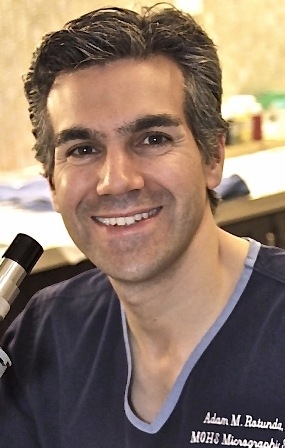
Phase III trials of an injectable form of sodium deoxycholate for the reduction of submental fat have begun in the United States, building on the previous success of four phase I, three phase II, and two phase III European studies of the product, known as ATX-101, noted Dr. Rotunda at the Summit in Aesthetic Medicine sponsored by the Skin Disease Education Foundation (SDEF).
In the 1990s, compounded phosphatidylcholine/deoxycholate injections (PC/DC), or lipodissolve, caused harm to some patients because "essentially everything about that experience was wrong: the wrong dose (too much volume, too high concentration); wrong depth (injections at times were too superficial. For example, cellulite, which was erroneously believed to improve from the injections, was injected intradermally); wrong indication (injections in places that shouldn’t have been injected); and wrong formulation," said Dr. Rotunda, who practices dermatology in Newport Beach, Calif. "These compounds were [derived] from animal sources and their sterility and purity could be called into question."
As a result, the FDA and other regulatory agencies around the world warned against or banned the use of unapproved PC/DC for aesthetic purposes. But in 2003, sodium deoxycholate was identified as the major component producing fat cell lysis in compounded PC/DC formulations, said Dr. Rotunda, who is also with the department of dermatology at the University of California, Los Angeles. "It’s taken many years to get that message across," he said.
ATX-101, which is being developed by Kythera Biopharmaceuticals, "is very different from the DC in compounded formulations, which was derived from cow bile," he said. "ATX-101 is being studied for very small volumes of fat relatively small for the submental area, which is really an ideal area to observe the desired effect of this product."
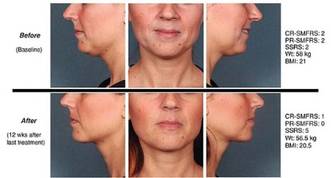
Phase I histology studies revealed that ATX-101 causes rapid adipocytolysis on day 1. On day 28 "there’s septal thickening and macrophage infiltration, which removes cellular debris and triglycerides, cleared via the lymphatic system," Dr. Rotunda said, adding that before and after MRIs have quantitatively confirmed the volume reductions.
Tissue surrounding the fatty treatment area, he continued, "has relatively high protein content. This protein (such as albumin) binds and inactivates deoxycholate, making subcutaneous injections relatively safe and fat specific. There’s an inverse relationship: the higher the protein content of certain tissue, such as muscle, tendon, and dermis, the lower the lytic activity of the deoxycholate. Less activity means less damage to that tissue. In fat, however, we want maximal damage, and it works out well because fat has relatively low protein content."
The administration of ATX-101 involves the use of a 30g needle, a 1-mL syringe, and placement of a temporary tattoo grid to the submental fat to control spacing of injections. "The distribution of the grid and how much is injected depends on the patient’s configuration and neck fat volume," Dr. Rotunda said. During the clinical trials, up to 10 mL of medication was used in each session, with up to four monthly treatments.
Most adverse events in clinical trials to date have been mild to moderate. "This is not a lunchtime procedure," he said. "It will be associated with local swelling and tenderness that may last days to several weeks, depending on the amount of ATX-101 injected or the volume of fat treated."
He concluded his remarks by noting that ATX-101 may become a novel approach that complements but does not compete with other fat-reduction therapies.
Dr. Rotunda disclosed that he, along with Dr. Michael S. Kolodney, are coinventors of ATX-101. He is a consultant to Kythera and holds stock in the company. He also is a consultant to Lithera and Allergan.
SDEF and this news organization are owned by Elsevier.
DANA POINT, CALIF. – No longer just a pipe dream, a novel injectable treatment effective at reducing fat is approaching the end of the drug development process.
The product is a non–animal derived, pharmaceutical grade sodium deoxycholate that "acts much like a detergent. It attacks the cell membranes of fat, disrupting and disintegrating its membranes. Thereafter, fat cell contents are released and the subsequent host response, including inflammation, macrophage scavenging, and subclinical fibrosis, may confer a long-lasting fat-removal effect. It doesn’t shrink the fat cell; it ablates the fat it encounters," said, Dr. Adam M. Rotunda.
Phase III trials of an injectable form of sodium deoxycholate for the reduction of submental fat have begun in the United States, building on the previous success of four phase I, three phase II, and two phase III European studies of the product, known as ATX-101, noted Dr. Rotunda at the Summit in Aesthetic Medicine sponsored by the Skin Disease Education Foundation (SDEF).
In the 1990s, compounded phosphatidylcholine/deoxycholate injections (PC/DC), or lipodissolve, caused harm to some patients because "essentially everything about that experience was wrong: the wrong dose (too much volume, too high concentration); wrong depth (injections at times were too superficial. For example, cellulite, which was erroneously believed to improve from the injections, was injected intradermally); wrong indication (injections in places that shouldn’t have been injected); and wrong formulation," said Dr. Rotunda, who practices dermatology in Newport Beach, Calif. "These compounds were [derived] from animal sources and their sterility and purity could be called into question."
As a result, the FDA and other regulatory agencies around the world warned against or banned the use of unapproved PC/DC for aesthetic purposes. But in 2003, sodium deoxycholate was identified as the major component producing fat cell lysis in compounded PC/DC formulations, said Dr. Rotunda, who is also with the department of dermatology at the University of California, Los Angeles. "It’s taken many years to get that message across," he said.
ATX-101, which is being developed by Kythera Biopharmaceuticals, "is very different from the DC in compounded formulations, which was derived from cow bile," he said. "ATX-101 is being studied for very small volumes of fat relatively small for the submental area, which is really an ideal area to observe the desired effect of this product."
Phase I histology studies revealed that ATX-101 causes rapid adipocytolysis on day 1. On day 28 "there’s septal thickening and macrophage infiltration, which removes cellular debris and triglycerides, cleared via the lymphatic system," Dr. Rotunda said, adding that before and after MRIs have quantitatively confirmed the volume reductions.
Tissue surrounding the fatty treatment area, he continued, "has relatively high protein content. This protein (such as albumin) binds and inactivates deoxycholate, making subcutaneous injections relatively safe and fat specific. There’s an inverse relationship: the higher the protein content of certain tissue, such as muscle, tendon, and dermis, the lower the lytic activity of the deoxycholate. Less activity means less damage to that tissue. In fat, however, we want maximal damage, and it works out well because fat has relatively low protein content."
The administration of ATX-101 involves the use of a 30g needle, a 1-mL syringe, and placement of a temporary tattoo grid to the submental fat to control spacing of injections. "The distribution of the grid and how much is injected depends on the patient’s configuration and neck fat volume," Dr. Rotunda said. During the clinical trials, up to 10 mL of medication was used in each session, with up to four monthly treatments.
Most adverse events in clinical trials to date have been mild to moderate. "This is not a lunchtime procedure," he said. "It will be associated with local swelling and tenderness that may last days to several weeks, depending on the amount of ATX-101 injected or the volume of fat treated."
He concluded his remarks by noting that ATX-101 may become a novel approach that complements but does not compete with other fat-reduction therapies.
Dr. Rotunda disclosed that he, along with Dr. Michael S. Kolodney, are coinventors of ATX-101. He is a consultant to Kythera and holds stock in the company. He also is a consultant to Lithera and Allergan.
SDEF and this news organization are owned by Elsevier.
DANA POINT, CALIF. – No longer just a pipe dream, a novel injectable treatment effective at reducing fat is approaching the end of the drug development process.
The product is a non–animal derived, pharmaceutical grade sodium deoxycholate that "acts much like a detergent. It attacks the cell membranes of fat, disrupting and disintegrating its membranes. Thereafter, fat cell contents are released and the subsequent host response, including inflammation, macrophage scavenging, and subclinical fibrosis, may confer a long-lasting fat-removal effect. It doesn’t shrink the fat cell; it ablates the fat it encounters," said, Dr. Adam M. Rotunda.
Phase III trials of an injectable form of sodium deoxycholate for the reduction of submental fat have begun in the United States, building on the previous success of four phase I, three phase II, and two phase III European studies of the product, known as ATX-101, noted Dr. Rotunda at the Summit in Aesthetic Medicine sponsored by the Skin Disease Education Foundation (SDEF).
In the 1990s, compounded phosphatidylcholine/deoxycholate injections (PC/DC), or lipodissolve, caused harm to some patients because "essentially everything about that experience was wrong: the wrong dose (too much volume, too high concentration); wrong depth (injections at times were too superficial. For example, cellulite, which was erroneously believed to improve from the injections, was injected intradermally); wrong indication (injections in places that shouldn’t have been injected); and wrong formulation," said Dr. Rotunda, who practices dermatology in Newport Beach, Calif. "These compounds were [derived] from animal sources and their sterility and purity could be called into question."
As a result, the FDA and other regulatory agencies around the world warned against or banned the use of unapproved PC/DC for aesthetic purposes. But in 2003, sodium deoxycholate was identified as the major component producing fat cell lysis in compounded PC/DC formulations, said Dr. Rotunda, who is also with the department of dermatology at the University of California, Los Angeles. "It’s taken many years to get that message across," he said.
ATX-101, which is being developed by Kythera Biopharmaceuticals, "is very different from the DC in compounded formulations, which was derived from cow bile," he said. "ATX-101 is being studied for very small volumes of fat relatively small for the submental area, which is really an ideal area to observe the desired effect of this product."
Phase I histology studies revealed that ATX-101 causes rapid adipocytolysis on day 1. On day 28 "there’s septal thickening and macrophage infiltration, which removes cellular debris and triglycerides, cleared via the lymphatic system," Dr. Rotunda said, adding that before and after MRIs have quantitatively confirmed the volume reductions.
Tissue surrounding the fatty treatment area, he continued, "has relatively high protein content. This protein (such as albumin) binds and inactivates deoxycholate, making subcutaneous injections relatively safe and fat specific. There’s an inverse relationship: the higher the protein content of certain tissue, such as muscle, tendon, and dermis, the lower the lytic activity of the deoxycholate. Less activity means less damage to that tissue. In fat, however, we want maximal damage, and it works out well because fat has relatively low protein content."
The administration of ATX-101 involves the use of a 30g needle, a 1-mL syringe, and placement of a temporary tattoo grid to the submental fat to control spacing of injections. "The distribution of the grid and how much is injected depends on the patient’s configuration and neck fat volume," Dr. Rotunda said. During the clinical trials, up to 10 mL of medication was used in each session, with up to four monthly treatments.
Most adverse events in clinical trials to date have been mild to moderate. "This is not a lunchtime procedure," he said. "It will be associated with local swelling and tenderness that may last days to several weeks, depending on the amount of ATX-101 injected or the volume of fat treated."
He concluded his remarks by noting that ATX-101 may become a novel approach that complements but does not compete with other fat-reduction therapies.
Dr. Rotunda disclosed that he, along with Dr. Michael S. Kolodney, are coinventors of ATX-101. He is a consultant to Kythera and holds stock in the company. He also is a consultant to Lithera and Allergan.
SDEF and this news organization are owned by Elsevier.
EXPERT ANALYSIS FROM THE SDEF SUMMIT IN AESTHETIC MEDICINE
Baggy Eye Solutions: The Skinny Podcast
In this month's program, Miami dermatologist Dr. Jill Waibel shares her excitement about the effectiveness of fractional lasers to treat burn scars.
Then, Dr. Brett Coldiron, president of the American College of Mohs Surgery, explains why Mohs surgery rates are on the rise.

Health and Human Services Secretary Kathleen Sebelius asks for help and support in implementing the affordable care act.
And finally, Cosmetic Counter host Dr. Lily Talakoub offers tips for treating under-eye circles.
Don't miss another episode of The Skinny Podcast; subscribe on iTunes!
In this month's program, Miami dermatologist Dr. Jill Waibel shares her excitement about the effectiveness of fractional lasers to treat burn scars.
Then, Dr. Brett Coldiron, president of the American College of Mohs Surgery, explains why Mohs surgery rates are on the rise.
Health and Human Services Secretary Kathleen Sebelius asks for help and support in implementing the affordable care act.
And finally, Cosmetic Counter host Dr. Lily Talakoub offers tips for treating under-eye circles.
Don't miss another episode of The Skinny Podcast; subscribe on iTunes!
In this month's program, Miami dermatologist Dr. Jill Waibel shares her excitement about the effectiveness of fractional lasers to treat burn scars.
Then, Dr. Brett Coldiron, president of the American College of Mohs Surgery, explains why Mohs surgery rates are on the rise.
Health and Human Services Secretary Kathleen Sebelius asks for help and support in implementing the affordable care act.
And finally, Cosmetic Counter host Dr. Lily Talakoub offers tips for treating under-eye circles.
Don't miss another episode of The Skinny Podcast; subscribe on iTunes!
More Evidence Cryolipolysis Freezes Away Fat
DANA POINT, CALIF. – A growing body of evidence-based research supports the efficacy of cryolipolysis for noninvasive fat reduction in the abdomen and flanks.
At the Summit in Aesthetic Medicine sponsored by Skin Disease Education Foundation (SDEF), Dr. Lawrence S. Bass highlighted results from several recent studies that support its use.
In the first study, presented by Dr. Christine C. Dierickx at the 2012 American Society for Laser Medicine and Surgery (ASLMS) meeting, researchers cataloged side effects in a phone review conducted with patients 1 month following cryolipolysis. All interviewed patients reported erythema that lasted about 1 hour and paresthesia that lasted for up to 1 month after treatment. Other reported side effects were ecchymosis (4%), vasovagal reactions from treatments on the abdomen (2.1%), induration/edema (0.9% and lasting 2-5 weeks), and severe pain (0.6% and lasting for a maximum of 1 month).
A separate study, presented by Dr. Gerald Boey at the 2012 ASLMS meeting, found an amplified fat reduction when concomitant massage was used. For the trial, 10 patients underwent 2 minutes of massage to one side only after cryolipolysis treatment. Ultrasound evaluation revealed that an additional 68% reduction in fat was achieved on the massaged side.
A safety and efficacy trial, carried out at 16 centers and involving 314 patients, was presented by Dr. A. Jay Burns at the 2010 ASLMS meeting. The study found no serious side effects and no skin damage or pigment change from the procedure. Minor side effects included transient bruising, minor pain, reduced sensation, erythema, and edema – all of which resolved spontaneously.
Of 41 patients in the study who underwent ultrasound measurement, the average reduction in fat was 21% after a single procedure. "That’s a consistent number you see in many studies," said Dr. Bass, of the plastic surgery department at New York University School of Medicine.
In a separate study also presented at the 2010 ASLMS meeting, researchers led by Dr. Ivan A. Rosales-Berber investigated the effect of consecutive cryolipolysis treatments separated by 2-3 months. The second treatment resulted in a similar proportion of fat reduction as the first treatment (14.6% vs. 16.5%, respectively).
Three months after the second procedure, the fat layer reduction exceeded 25%. This "means that there is repeatability [with cryolipolysis]," Dr. Bass said. "That’s important, because unfortunately a lot of patients have more than one body contouring emergency in their lives."
An earlier published study determined that cryolipolysis associated with modest reversible short-term changes in peripheral nerve function (Aesthetic Plast. Surg. 2009;33:482-8). Ten patients underwent a thorough neurological evaluation at baseline and weekly after the procedure. All patients returned to baseline peripheral nerve function in an average of 3.6 weeks. The study also found that mean fat reduction by ultrasound was 20.4% at 2 months and 25.5% at 6 months. "Even though we think it takes about 90 days for this whole apoptotic process to resolve, there may be something ongoing, or some tissue consolidation taking place for a longer period of time, allowing patients to continue to improve," Dr. Bass noted.
He concluded his remarks by explaining how he stratifies candidates for liposuction or cryolipolysis. "The patient who wants the maximum improvement or who wants it in one step is definitely going to line up on the liposuction side," he said. "The patient who either needs a small change that’s very localized or prioritizes a quick recovery over the extent of the result is going to line up on the cryolipolysis side."
Dr. Bass disclosed that he is a member of the advisory board for Allergan, Kythera, and Merz Aesthetics. He is also an investigator for Kythera and a consultant to Palomar and Sanuwave.
SDEF and this news organization are owned by Elsevier.
DANA POINT, CALIF. – A growing body of evidence-based research supports the efficacy of cryolipolysis for noninvasive fat reduction in the abdomen and flanks.
At the Summit in Aesthetic Medicine sponsored by Skin Disease Education Foundation (SDEF), Dr. Lawrence S. Bass highlighted results from several recent studies that support its use.
In the first study, presented by Dr. Christine C. Dierickx at the 2012 American Society for Laser Medicine and Surgery (ASLMS) meeting, researchers cataloged side effects in a phone review conducted with patients 1 month following cryolipolysis. All interviewed patients reported erythema that lasted about 1 hour and paresthesia that lasted for up to 1 month after treatment. Other reported side effects were ecchymosis (4%), vasovagal reactions from treatments on the abdomen (2.1%), induration/edema (0.9% and lasting 2-5 weeks), and severe pain (0.6% and lasting for a maximum of 1 month).
A separate study, presented by Dr. Gerald Boey at the 2012 ASLMS meeting, found an amplified fat reduction when concomitant massage was used. For the trial, 10 patients underwent 2 minutes of massage to one side only after cryolipolysis treatment. Ultrasound evaluation revealed that an additional 68% reduction in fat was achieved on the massaged side.
A safety and efficacy trial, carried out at 16 centers and involving 314 patients, was presented by Dr. A. Jay Burns at the 2010 ASLMS meeting. The study found no serious side effects and no skin damage or pigment change from the procedure. Minor side effects included transient bruising, minor pain, reduced sensation, erythema, and edema – all of which resolved spontaneously.
Of 41 patients in the study who underwent ultrasound measurement, the average reduction in fat was 21% after a single procedure. "That’s a consistent number you see in many studies," said Dr. Bass, of the plastic surgery department at New York University School of Medicine.
In a separate study also presented at the 2010 ASLMS meeting, researchers led by Dr. Ivan A. Rosales-Berber investigated the effect of consecutive cryolipolysis treatments separated by 2-3 months. The second treatment resulted in a similar proportion of fat reduction as the first treatment (14.6% vs. 16.5%, respectively).
Three months after the second procedure, the fat layer reduction exceeded 25%. This "means that there is repeatability [with cryolipolysis]," Dr. Bass said. "That’s important, because unfortunately a lot of patients have more than one body contouring emergency in their lives."
An earlier published study determined that cryolipolysis associated with modest reversible short-term changes in peripheral nerve function (Aesthetic Plast. Surg. 2009;33:482-8). Ten patients underwent a thorough neurological evaluation at baseline and weekly after the procedure. All patients returned to baseline peripheral nerve function in an average of 3.6 weeks. The study also found that mean fat reduction by ultrasound was 20.4% at 2 months and 25.5% at 6 months. "Even though we think it takes about 90 days for this whole apoptotic process to resolve, there may be something ongoing, or some tissue consolidation taking place for a longer period of time, allowing patients to continue to improve," Dr. Bass noted.
He concluded his remarks by explaining how he stratifies candidates for liposuction or cryolipolysis. "The patient who wants the maximum improvement or who wants it in one step is definitely going to line up on the liposuction side," he said. "The patient who either needs a small change that’s very localized or prioritizes a quick recovery over the extent of the result is going to line up on the cryolipolysis side."
Dr. Bass disclosed that he is a member of the advisory board for Allergan, Kythera, and Merz Aesthetics. He is also an investigator for Kythera and a consultant to Palomar and Sanuwave.
SDEF and this news organization are owned by Elsevier.
DANA POINT, CALIF. – A growing body of evidence-based research supports the efficacy of cryolipolysis for noninvasive fat reduction in the abdomen and flanks.
At the Summit in Aesthetic Medicine sponsored by Skin Disease Education Foundation (SDEF), Dr. Lawrence S. Bass highlighted results from several recent studies that support its use.
In the first study, presented by Dr. Christine C. Dierickx at the 2012 American Society for Laser Medicine and Surgery (ASLMS) meeting, researchers cataloged side effects in a phone review conducted with patients 1 month following cryolipolysis. All interviewed patients reported erythema that lasted about 1 hour and paresthesia that lasted for up to 1 month after treatment. Other reported side effects were ecchymosis (4%), vasovagal reactions from treatments on the abdomen (2.1%), induration/edema (0.9% and lasting 2-5 weeks), and severe pain (0.6% and lasting for a maximum of 1 month).
A separate study, presented by Dr. Gerald Boey at the 2012 ASLMS meeting, found an amplified fat reduction when concomitant massage was used. For the trial, 10 patients underwent 2 minutes of massage to one side only after cryolipolysis treatment. Ultrasound evaluation revealed that an additional 68% reduction in fat was achieved on the massaged side.
A safety and efficacy trial, carried out at 16 centers and involving 314 patients, was presented by Dr. A. Jay Burns at the 2010 ASLMS meeting. The study found no serious side effects and no skin damage or pigment change from the procedure. Minor side effects included transient bruising, minor pain, reduced sensation, erythema, and edema – all of which resolved spontaneously.
Of 41 patients in the study who underwent ultrasound measurement, the average reduction in fat was 21% after a single procedure. "That’s a consistent number you see in many studies," said Dr. Bass, of the plastic surgery department at New York University School of Medicine.
In a separate study also presented at the 2010 ASLMS meeting, researchers led by Dr. Ivan A. Rosales-Berber investigated the effect of consecutive cryolipolysis treatments separated by 2-3 months. The second treatment resulted in a similar proportion of fat reduction as the first treatment (14.6% vs. 16.5%, respectively).
Three months after the second procedure, the fat layer reduction exceeded 25%. This "means that there is repeatability [with cryolipolysis]," Dr. Bass said. "That’s important, because unfortunately a lot of patients have more than one body contouring emergency in their lives."
An earlier published study determined that cryolipolysis associated with modest reversible short-term changes in peripheral nerve function (Aesthetic Plast. Surg. 2009;33:482-8). Ten patients underwent a thorough neurological evaluation at baseline and weekly after the procedure. All patients returned to baseline peripheral nerve function in an average of 3.6 weeks. The study also found that mean fat reduction by ultrasound was 20.4% at 2 months and 25.5% at 6 months. "Even though we think it takes about 90 days for this whole apoptotic process to resolve, there may be something ongoing, or some tissue consolidation taking place for a longer period of time, allowing patients to continue to improve," Dr. Bass noted.
He concluded his remarks by explaining how he stratifies candidates for liposuction or cryolipolysis. "The patient who wants the maximum improvement or who wants it in one step is definitely going to line up on the liposuction side," he said. "The patient who either needs a small change that’s very localized or prioritizes a quick recovery over the extent of the result is going to line up on the cryolipolysis side."
Dr. Bass disclosed that he is a member of the advisory board for Allergan, Kythera, and Merz Aesthetics. He is also an investigator for Kythera and a consultant to Palomar and Sanuwave.
SDEF and this news organization are owned by Elsevier.
EXPERT ANALYSIS FROM THE SDEF SUMMIT IN AESTHETIC MEDICINE