User login
State e-cigarette laws linked to reduced youth use
Several state regulations governing the sales or use of e-cigarettes and related products were associated with lower proportions of youth trying or regularly using vaping products, a new study found.
Restricting sales of electronic vapor products to minors, however, was not linked to a lower risk of vaping among teens.

Dr. Keim and her associates investigated possible associations between various state laws related to vaping products, all passed before 2015, and youth use of the products. They relied on 2015 data from 35 state-specific surveys of youth regarding use of vaping products and from the Youth Risk Behavior Survey from the Centers for Disease Control and Prevention, a nationally representative, biannual survey of students in grades 9-12. The Tobacco Control Laws Database of the American Nonsmokers’ Rights Foundation provided information on state laws related to electronic vapor products.
Among the 200,513 teens whose responses were included in the study, 44% had ever used any kind of electronic vapor product. Rates were similar between girls and boys for ever having tried one or currently using one, Dr. Keim reported at the Pediatric Academic Societies annual meeting.

The researchers looked at associations with each of the following types of laws:
• Statewide prohibition of vaping products on school property or in workplaces, which includes Arizona, New Hampshire, Vermont, and Virginia for schools and North Dakota for workplaces.
• Prohibition of sales to minors under age 18 years, present in 24 states.
• Prohibition or restriction of sales of e-cigarette products from vending machines, present in 17 states.
• Prohibition or restriction of self-service displays of vaping products, present in 11 states.
• Prohibition or restriction of sampling of electronic vapor products, present in Arizona, Delaware, Kentucky, Maryland, New Hampshire, North Carolina, Oklahoma, and South Carolina.
For most of the regulations, teens had a reduced likelihood of trying or currently using vaping products after adjusting for age, ethnicity, grade level, race, region, and sex. Risk of ever trying a vaping product was 12% lower in states that prohibited their use on school grounds or in workplaces, 6% lower in states that barred sales to those under age 18, and 7% lower in states that restricted or prohibited self-service vaping displays.
The risk of youth currently using electronic vapor products was 5% lower in states with the school grounds and workplace restrictions, and 13% lower in states that restricted self-service displays. Laws restricting minor sales were unrelated to the risk of current vaping among youth. Restricting vending machine sales of vaping products had no association with the risk of a teen ever trying vaping, but it was linked to a 7% lower risk of current use of the products among teens. All these associations were statistically significant based on confidence interval values.
Interestingly, a statistically significant risk increase in vaping use occurred for teens in states that restricted or outlawed sampling of vaping products. The risk was 8% higher for ever trying a product and 20% higher for current use. But those findings also could indicate the possibility of reverse causation.
“It’s possible that states that were particularly concerned about sampling had the worst problems – were the ones more likely to institute a ban on that practice, and that would generate the counterintuitive finding,” Dr. Keim said in an interview. “With the data currently available, we can’t look at teen use both before and after the restrictions, just afterwards, but with more data for 2017, it would provide a clearer picture of all of the associations we examined.”
Aside from these laws, other interventions have the potential to reduce vaping among teens as well.
“Restrictions on use in various types of public places and on school grounds may be additional helpful approaches, similar to what has been done with cigarettes,” Dr. Keim said. Although their analysis included laws that prohibited use on school grounds, only four states have one of these laws.

Several state regulations governing the sales or use of e-cigarettes and related products were associated with lower proportions of youth trying or regularly using vaping products, a new study found.
Restricting sales of electronic vapor products to minors, however, was not linked to a lower risk of vaping among teens.
Dr. Keim and her associates investigated possible associations between various state laws related to vaping products, all passed before 2015, and youth use of the products. They relied on 2015 data from 35 state-specific surveys of youth regarding use of vaping products and from the Youth Risk Behavior Survey from the Centers for Disease Control and Prevention, a nationally representative, biannual survey of students in grades 9-12. The Tobacco Control Laws Database of the American Nonsmokers’ Rights Foundation provided information on state laws related to electronic vapor products.
Among the 200,513 teens whose responses were included in the study, 44% had ever used any kind of electronic vapor product. Rates were similar between girls and boys for ever having tried one or currently using one, Dr. Keim reported at the Pediatric Academic Societies annual meeting.
The researchers looked at associations with each of the following types of laws:
• Statewide prohibition of vaping products on school property or in workplaces, which includes Arizona, New Hampshire, Vermont, and Virginia for schools and North Dakota for workplaces.
• Prohibition of sales to minors under age 18 years, present in 24 states.
• Prohibition or restriction of sales of e-cigarette products from vending machines, present in 17 states.
• Prohibition or restriction of self-service displays of vaping products, present in 11 states.
• Prohibition or restriction of sampling of electronic vapor products, present in Arizona, Delaware, Kentucky, Maryland, New Hampshire, North Carolina, Oklahoma, and South Carolina.
For most of the regulations, teens had a reduced likelihood of trying or currently using vaping products after adjusting for age, ethnicity, grade level, race, region, and sex. Risk of ever trying a vaping product was 12% lower in states that prohibited their use on school grounds or in workplaces, 6% lower in states that barred sales to those under age 18, and 7% lower in states that restricted or prohibited self-service vaping displays.
The risk of youth currently using electronic vapor products was 5% lower in states with the school grounds and workplace restrictions, and 13% lower in states that restricted self-service displays. Laws restricting minor sales were unrelated to the risk of current vaping among youth. Restricting vending machine sales of vaping products had no association with the risk of a teen ever trying vaping, but it was linked to a 7% lower risk of current use of the products among teens. All these associations were statistically significant based on confidence interval values.
Interestingly, a statistically significant risk increase in vaping use occurred for teens in states that restricted or outlawed sampling of vaping products. The risk was 8% higher for ever trying a product and 20% higher for current use. But those findings also could indicate the possibility of reverse causation.
“It’s possible that states that were particularly concerned about sampling had the worst problems – were the ones more likely to institute a ban on that practice, and that would generate the counterintuitive finding,” Dr. Keim said in an interview. “With the data currently available, we can’t look at teen use both before and after the restrictions, just afterwards, but with more data for 2017, it would provide a clearer picture of all of the associations we examined.”
Aside from these laws, other interventions have the potential to reduce vaping among teens as well.
“Restrictions on use in various types of public places and on school grounds may be additional helpful approaches, similar to what has been done with cigarettes,” Dr. Keim said. Although their analysis included laws that prohibited use on school grounds, only four states have one of these laws.
Several state regulations governing the sales or use of e-cigarettes and related products were associated with lower proportions of youth trying or regularly using vaping products, a new study found.
Restricting sales of electronic vapor products to minors, however, was not linked to a lower risk of vaping among teens.
Dr. Keim and her associates investigated possible associations between various state laws related to vaping products, all passed before 2015, and youth use of the products. They relied on 2015 data from 35 state-specific surveys of youth regarding use of vaping products and from the Youth Risk Behavior Survey from the Centers for Disease Control and Prevention, a nationally representative, biannual survey of students in grades 9-12. The Tobacco Control Laws Database of the American Nonsmokers’ Rights Foundation provided information on state laws related to electronic vapor products.
Among the 200,513 teens whose responses were included in the study, 44% had ever used any kind of electronic vapor product. Rates were similar between girls and boys for ever having tried one or currently using one, Dr. Keim reported at the Pediatric Academic Societies annual meeting.
The researchers looked at associations with each of the following types of laws:
• Statewide prohibition of vaping products on school property or in workplaces, which includes Arizona, New Hampshire, Vermont, and Virginia for schools and North Dakota for workplaces.
• Prohibition of sales to minors under age 18 years, present in 24 states.
• Prohibition or restriction of sales of e-cigarette products from vending machines, present in 17 states.
• Prohibition or restriction of self-service displays of vaping products, present in 11 states.
• Prohibition or restriction of sampling of electronic vapor products, present in Arizona, Delaware, Kentucky, Maryland, New Hampshire, North Carolina, Oklahoma, and South Carolina.
For most of the regulations, teens had a reduced likelihood of trying or currently using vaping products after adjusting for age, ethnicity, grade level, race, region, and sex. Risk of ever trying a vaping product was 12% lower in states that prohibited their use on school grounds or in workplaces, 6% lower in states that barred sales to those under age 18, and 7% lower in states that restricted or prohibited self-service vaping displays.
The risk of youth currently using electronic vapor products was 5% lower in states with the school grounds and workplace restrictions, and 13% lower in states that restricted self-service displays. Laws restricting minor sales were unrelated to the risk of current vaping among youth. Restricting vending machine sales of vaping products had no association with the risk of a teen ever trying vaping, but it was linked to a 7% lower risk of current use of the products among teens. All these associations were statistically significant based on confidence interval values.
Interestingly, a statistically significant risk increase in vaping use occurred for teens in states that restricted or outlawed sampling of vaping products. The risk was 8% higher for ever trying a product and 20% higher for current use. But those findings also could indicate the possibility of reverse causation.
“It’s possible that states that were particularly concerned about sampling had the worst problems – were the ones more likely to institute a ban on that practice, and that would generate the counterintuitive finding,” Dr. Keim said in an interview. “With the data currently available, we can’t look at teen use both before and after the restrictions, just afterwards, but with more data for 2017, it would provide a clearer picture of all of the associations we examined.”
Aside from these laws, other interventions have the potential to reduce vaping among teens as well.
“Restrictions on use in various types of public places and on school grounds may be additional helpful approaches, similar to what has been done with cigarettes,” Dr. Keim said. Although their analysis included laws that prohibited use on school grounds, only four states have one of these laws.
FROM PAS 2017
Key clinical point: The two state laws associated with lower risks of teens trying or currently using e-cigarette products were prohibiting their use at school or work and prohibiting or restricting self-service displays.
Major finding: , depending on the law.
Data source: The findings are based on an analysis of 200,513 high school students’ use of electronic vapor products and their states’ laws regarding vaping use, marketing, or sales.
Disclosures: The research did not use any external funding, and Dr. Keim had no relevant financial disclosures.
Long-Term Effects of Concussive TBI
What are the long-term clinical effects of wartime traumatic brain injuries (TBIs)? Most are mild, but in general all are incompletely described, say researchers from University of Washington in Seattle and Washington University in St. Louis, Missouri. However, their own study found that service members with even mild concussive TBI often “experienced evolution, not resolution” of symptoms.
The researchers compared the results of 1-year and 5-year clinical evaluations of 50 active-duty U.S. military with acute to subacute concussive blast injury and 44 deployed but uninjured service members. The evaluations included neurobehavioral and neuropsychological performance and mental health burden.
At 5 years, global disability, satisfaction with life, neurobehavioral symptom severity, psychiatric symptom severity, and sleep impairment were significantly worse in patients with concussive blast TBI. Of the patients with concussive blast TBI, 36 (72%) showed decline, compared with only 5 of the combat-deployed group (11%). The researchers also found symptoms of PTSD and depression worsened in the concussive TBI patients. Performance on cognitive measures was no different between the 2 groups. A combination of factors, including neurobehavioral symptom severity, walking ability, and verbal fluency at 1 year after injury, was highly predictive of poor outcomes 5 years later.
“This is one of the first studies to connect the dots from injury to longer term outcomes and it shows that even mild concussions can lead to long-term impairment and continued decline in satisfaction with life,” said lead author Christine L. Mac Donald, PhD. “Most physicians believe that patients will stabilize 6 to 12 months postinjury, but this study challenges that.”
What are the long-term clinical effects of wartime traumatic brain injuries (TBIs)? Most are mild, but in general all are incompletely described, say researchers from University of Washington in Seattle and Washington University in St. Louis, Missouri. However, their own study found that service members with even mild concussive TBI often “experienced evolution, not resolution” of symptoms.
The researchers compared the results of 1-year and 5-year clinical evaluations of 50 active-duty U.S. military with acute to subacute concussive blast injury and 44 deployed but uninjured service members. The evaluations included neurobehavioral and neuropsychological performance and mental health burden.
At 5 years, global disability, satisfaction with life, neurobehavioral symptom severity, psychiatric symptom severity, and sleep impairment were significantly worse in patients with concussive blast TBI. Of the patients with concussive blast TBI, 36 (72%) showed decline, compared with only 5 of the combat-deployed group (11%). The researchers also found symptoms of PTSD and depression worsened in the concussive TBI patients. Performance on cognitive measures was no different between the 2 groups. A combination of factors, including neurobehavioral symptom severity, walking ability, and verbal fluency at 1 year after injury, was highly predictive of poor outcomes 5 years later.
“This is one of the first studies to connect the dots from injury to longer term outcomes and it shows that even mild concussions can lead to long-term impairment and continued decline in satisfaction with life,” said lead author Christine L. Mac Donald, PhD. “Most physicians believe that patients will stabilize 6 to 12 months postinjury, but this study challenges that.”
What are the long-term clinical effects of wartime traumatic brain injuries (TBIs)? Most are mild, but in general all are incompletely described, say researchers from University of Washington in Seattle and Washington University in St. Louis, Missouri. However, their own study found that service members with even mild concussive TBI often “experienced evolution, not resolution” of symptoms.
The researchers compared the results of 1-year and 5-year clinical evaluations of 50 active-duty U.S. military with acute to subacute concussive blast injury and 44 deployed but uninjured service members. The evaluations included neurobehavioral and neuropsychological performance and mental health burden.
At 5 years, global disability, satisfaction with life, neurobehavioral symptom severity, psychiatric symptom severity, and sleep impairment were significantly worse in patients with concussive blast TBI. Of the patients with concussive blast TBI, 36 (72%) showed decline, compared with only 5 of the combat-deployed group (11%). The researchers also found symptoms of PTSD and depression worsened in the concussive TBI patients. Performance on cognitive measures was no different between the 2 groups. A combination of factors, including neurobehavioral symptom severity, walking ability, and verbal fluency at 1 year after injury, was highly predictive of poor outcomes 5 years later.
“This is one of the first studies to connect the dots from injury to longer term outcomes and it shows that even mild concussions can lead to long-term impairment and continued decline in satisfaction with life,” said lead author Christine L. Mac Donald, PhD. “Most physicians believe that patients will stabilize 6 to 12 months postinjury, but this study challenges that.”
Study: Antibiotic monotherapy fails 25% of CAP patients
WASHINGTON – A substantial failure rate of antibiotic monotherapy was found in patients with community acquired pneumonia (CAP), according to a presentation given at an international conference of the American Thoracic Society.
In a study of 413,801 patient records with confirmed CAP, an average of 25% of patients reported treatment failure, according to James A McKinnell, MD, an infectious disease specialist at LA BioMed and an assistant professor at the University of California, Los Angeles.
Adult outpatient records with a diagnosis of CAP and a prescription for antibiotics were gathered from the period of 2012-2015, with treatment failure defined as a refill or change in the medication prescribed, a visit to the emergency department, or a hospitalization, according to Dr. McKinnell and the other investigators.
When broken down, the failure rates in patients given beta-lactams (25.7%), macrolides (22.9%), tetracycline (22.5%), and fluoroquinolones (20.8%), were all found to increase when patients’ Charlson Comorbidity Index (CCI) score increased (odds ration [OR] = 1.16 [1.13-1.20] for CCI = 1, OR = 1.22 [1.18-1.26], for CCI = 2, OR = 1.44 [1.39-1.49], for CCI greater than or equal to 3).
These medications have been shown to be effective through the usual array of controlled tests. While these trials do confirm overall efficacy, they are not always accurate in predicting how they will affect individual patients, Dr. McKinnell noted.
“I want to know the best drug for my patient, [and] unfortunately randomized clinical trials are not completely generalizable,” Dr. McKinnell said during his presentation. “Pathogen distribution and resistance is different in a clinical trial compared to the patients we see, and there’s a measuring bias, so there’s a lot of limitations when just using clinical trials.”
When analyzing failure endpoints, the investigators found 79%, 73.4%, 80.8%, and 64% of patients switched their antibiotics while taking beta-lactams, macrolides, tetracycline, or fluoroquinolones, respectively. The investigators interpreted this as a sign that patient treatment plans must be better fitted for their personal circumstances.
This is where the idea of “big data” would apply; using large-scale, “real-world” data of current and previous CAP patients could be instrumental to test the benefits and limitations of certain treatment options on patients with certain comorbidities, according to Dr. McKinnell and his fellow investigators.
When breaking down comorbidities among patients, the investigators found that many of the comorbid conditions had a “significant predictor value” of treatment failure, according to Dr. McKinnell.
Investigators were not surprised that hemiplegia or paraplegia, which increased the odds of antibiotic failure by 33%, were independent factors; however, comorbidities such as peptic ulcer disease (OR: 1.15) was less expected, Dr. McKinnell noted.
When looking at the mortality rate of patients 18 years of age and older with treatment failure, 18.1% (10,087) died (P less than .0001), with an even higher mortality rate of 24.3% (3,299) among those at least 65 years of age, he said.
If big data studies could decrease the number of treatment failures, the implications would be significant in decreasing the number of mortalities, the investigators noted.
“Prescribers should be aware of those CAP patients most at risk for poor outcomes and consider these factors to guide a comprehensive treatment plan,” said Dr. McKinnell.
Cempra Pharmaceuticals funded the study. The researchers did not report any conflicts of interest during their presentation.
ezimmerman@frontlinemedcom.com
On Twitter @eaztweets
WASHINGTON – A substantial failure rate of antibiotic monotherapy was found in patients with community acquired pneumonia (CAP), according to a presentation given at an international conference of the American Thoracic Society.
In a study of 413,801 patient records with confirmed CAP, an average of 25% of patients reported treatment failure, according to James A McKinnell, MD, an infectious disease specialist at LA BioMed and an assistant professor at the University of California, Los Angeles.
Adult outpatient records with a diagnosis of CAP and a prescription for antibiotics were gathered from the period of 2012-2015, with treatment failure defined as a refill or change in the medication prescribed, a visit to the emergency department, or a hospitalization, according to Dr. McKinnell and the other investigators.
When broken down, the failure rates in patients given beta-lactams (25.7%), macrolides (22.9%), tetracycline (22.5%), and fluoroquinolones (20.8%), were all found to increase when patients’ Charlson Comorbidity Index (CCI) score increased (odds ration [OR] = 1.16 [1.13-1.20] for CCI = 1, OR = 1.22 [1.18-1.26], for CCI = 2, OR = 1.44 [1.39-1.49], for CCI greater than or equal to 3).
These medications have been shown to be effective through the usual array of controlled tests. While these trials do confirm overall efficacy, they are not always accurate in predicting how they will affect individual patients, Dr. McKinnell noted.
“I want to know the best drug for my patient, [and] unfortunately randomized clinical trials are not completely generalizable,” Dr. McKinnell said during his presentation. “Pathogen distribution and resistance is different in a clinical trial compared to the patients we see, and there’s a measuring bias, so there’s a lot of limitations when just using clinical trials.”
When analyzing failure endpoints, the investigators found 79%, 73.4%, 80.8%, and 64% of patients switched their antibiotics while taking beta-lactams, macrolides, tetracycline, or fluoroquinolones, respectively. The investigators interpreted this as a sign that patient treatment plans must be better fitted for their personal circumstances.
This is where the idea of “big data” would apply; using large-scale, “real-world” data of current and previous CAP patients could be instrumental to test the benefits and limitations of certain treatment options on patients with certain comorbidities, according to Dr. McKinnell and his fellow investigators.
When breaking down comorbidities among patients, the investigators found that many of the comorbid conditions had a “significant predictor value” of treatment failure, according to Dr. McKinnell.
Investigators were not surprised that hemiplegia or paraplegia, which increased the odds of antibiotic failure by 33%, were independent factors; however, comorbidities such as peptic ulcer disease (OR: 1.15) was less expected, Dr. McKinnell noted.
When looking at the mortality rate of patients 18 years of age and older with treatment failure, 18.1% (10,087) died (P less than .0001), with an even higher mortality rate of 24.3% (3,299) among those at least 65 years of age, he said.
If big data studies could decrease the number of treatment failures, the implications would be significant in decreasing the number of mortalities, the investigators noted.
“Prescribers should be aware of those CAP patients most at risk for poor outcomes and consider these factors to guide a comprehensive treatment plan,” said Dr. McKinnell.
Cempra Pharmaceuticals funded the study. The researchers did not report any conflicts of interest during their presentation.
ezimmerman@frontlinemedcom.com
On Twitter @eaztweets
WASHINGTON – A substantial failure rate of antibiotic monotherapy was found in patients with community acquired pneumonia (CAP), according to a presentation given at an international conference of the American Thoracic Society.
In a study of 413,801 patient records with confirmed CAP, an average of 25% of patients reported treatment failure, according to James A McKinnell, MD, an infectious disease specialist at LA BioMed and an assistant professor at the University of California, Los Angeles.
Adult outpatient records with a diagnosis of CAP and a prescription for antibiotics were gathered from the period of 2012-2015, with treatment failure defined as a refill or change in the medication prescribed, a visit to the emergency department, or a hospitalization, according to Dr. McKinnell and the other investigators.
When broken down, the failure rates in patients given beta-lactams (25.7%), macrolides (22.9%), tetracycline (22.5%), and fluoroquinolones (20.8%), were all found to increase when patients’ Charlson Comorbidity Index (CCI) score increased (odds ration [OR] = 1.16 [1.13-1.20] for CCI = 1, OR = 1.22 [1.18-1.26], for CCI = 2, OR = 1.44 [1.39-1.49], for CCI greater than or equal to 3).
These medications have been shown to be effective through the usual array of controlled tests. While these trials do confirm overall efficacy, they are not always accurate in predicting how they will affect individual patients, Dr. McKinnell noted.
“I want to know the best drug for my patient, [and] unfortunately randomized clinical trials are not completely generalizable,” Dr. McKinnell said during his presentation. “Pathogen distribution and resistance is different in a clinical trial compared to the patients we see, and there’s a measuring bias, so there’s a lot of limitations when just using clinical trials.”
When analyzing failure endpoints, the investigators found 79%, 73.4%, 80.8%, and 64% of patients switched their antibiotics while taking beta-lactams, macrolides, tetracycline, or fluoroquinolones, respectively. The investigators interpreted this as a sign that patient treatment plans must be better fitted for their personal circumstances.
This is where the idea of “big data” would apply; using large-scale, “real-world” data of current and previous CAP patients could be instrumental to test the benefits and limitations of certain treatment options on patients with certain comorbidities, according to Dr. McKinnell and his fellow investigators.
When breaking down comorbidities among patients, the investigators found that many of the comorbid conditions had a “significant predictor value” of treatment failure, according to Dr. McKinnell.
Investigators were not surprised that hemiplegia or paraplegia, which increased the odds of antibiotic failure by 33%, were independent factors; however, comorbidities such as peptic ulcer disease (OR: 1.15) was less expected, Dr. McKinnell noted.
When looking at the mortality rate of patients 18 years of age and older with treatment failure, 18.1% (10,087) died (P less than .0001), with an even higher mortality rate of 24.3% (3,299) among those at least 65 years of age, he said.
If big data studies could decrease the number of treatment failures, the implications would be significant in decreasing the number of mortalities, the investigators noted.
“Prescribers should be aware of those CAP patients most at risk for poor outcomes and consider these factors to guide a comprehensive treatment plan,” said Dr. McKinnell.
Cempra Pharmaceuticals funded the study. The researchers did not report any conflicts of interest during their presentation.
ezimmerman@frontlinemedcom.com
On Twitter @eaztweets
FROM ATS 2017
Key clinical point:
Major finding: On average, 25% of patients experienced treatment failure for antibiotic monotherapy, which was exacerbated by increasing Charlson comorbidity index scores (OR = 1.16 [1.13-1.20] for CCI = 1, OR = 1.22 [1.18-1.26] for CCI = 2, OR = 1.44 [1.39-1.49] for CCI greater than or equal to 3).
Data source: Retrospective study of 413,801 patients with CAP gathered from the commercial claims encounters database and the Medicare supplemental coordination benefits database between January 2011 and December 2015.
Disclosures: Cempra Pharmaceuticals funded the study. The researchers did not report any conflicts of interest during their presentation.
VIDEO: Software predicts septic shock in hospitalized patients
WASHINGTON – Researchers have devised a program that can predict severe sepsis or septic shock about 12-30 hours in advance of its onset in hospitalized patients, a feat they hope will allow them to apply early interventions to stave off impending sepsis.
“We’d love to see a change in sepsis mortality. Will earlier recognition and implementation of the sepsis bundle – fluids, antibiotics, etc. – improve outcomes?” wondered Heather M. Giannini, MD, in a video interview at an international conference of the American Thoracic Society.
The computer program works by monitoring all the data that enter a patient’s electronic health record during hospitalization. Researchers developed it and designed it specifically for inpatients who are not in the intensive care unit or emergency department.
Results from initial testing during October-December 2015 in 10,448 patients hospitalized at one of three participating Philadelphia hospitals showed the program predicted subsequent severe sepsis or septic shock with a sensitivity of 26% and a specificity of 98%, reported Dr. Giannini, a researcher in the Center for Evidence-Based Practice at the University of Pennsylvania in Philadelphia. Analysis also showed a positive likelihood ratio of 13 for severe sepsis or septic shock actually occurring following an alert generated by the computer program, a level indicating a “very strong” ability to predict sepsis, she said.
Dr. Giannini and her associates developed the prediction program using a technique called “computational machine learning,” an alternative to standard logistic regression modeling that is better suited to analyzing large data sets and can better integrate outlier data points. They took EHR data for all non-ICU, non-ED inpatients at three Philadelphia hospitals during a 3-year period during 2011-2014 and had the program focus particularly on EHR data gleaned from the nearly 1,000 patients who developed severe sepsis or septic shock during the 12 hours preceding the start of these sepsis events. The analysis identified patients as having developed severe sepsis or shock if they had a blood draw positive for infection at the same time as having a blood lactate level above 2.2 mmol/L or a systolic blood pressure below 90 mm Hg.
To create the algorithm the machine-learning device compared the EHR entries for patients who developed severe sepsis or septic shock with EHR data from patients who did not, a process that involved hundred of thousands of data points, Dr. Giannini said. This identified 587 individual types of relevant EHR data entries and ranked them from most important to least important. Important, novel determinants of impending severe sepsis identified this way included anion gap, blood urea nitrogen, and platelet count. The development process also confirmed an important role for many classic markers of septic shock, such as respiration rate, heart rate, and temperature.
The researchers designed the algorithm to have a moderate level of sensitivity to avoid “alert fatigue” from generating too many alarms for impending severe sepsis. Their goal was for clinicians to receive no more than about 10 alerts per day for each hospital.
“We are satisfied with the sensitivity. We felt it was better to have too few alerts rather than overwhelm clinicians. About 10 alerts a day is reasonable,” Dr. Giannini explained. During initial 2015 testing, the system generated a daily average of 11 alerts.
The video associated with this article is no longer available on this site. Please view all of our videos on the MDedge YouTube channel
mzoler@frontlinemedcom.com
On Twitter @mitchelzoler
Development of this algorithm is tremendously important and exciting. It is an example of how researchers can use big data to predict patient outcomes and use that information to help deliver better patient care.
The algorithm’s performance so far is laudable and extremely promising, and has great potential to help deliver better care to patients when they need it, but it requires further validation. The potential importance of earlier identification of septic shock is huge.

Michelle N. Gong, MD, is professor of medicine and chief of research in the division of critical care at Albert Einstein College of Medicine and Montefiore Medical Center in New York. She had no disclosures. She made these comments in an interview.
Development of this algorithm is tremendously important and exciting. It is an example of how researchers can use big data to predict patient outcomes and use that information to help deliver better patient care.
The algorithm’s performance so far is laudable and extremely promising, and has great potential to help deliver better care to patients when they need it, but it requires further validation. The potential importance of earlier identification of septic shock is huge.
Michelle N. Gong, MD, is professor of medicine and chief of research in the division of critical care at Albert Einstein College of Medicine and Montefiore Medical Center in New York. She had no disclosures. She made these comments in an interview.
Development of this algorithm is tremendously important and exciting. It is an example of how researchers can use big data to predict patient outcomes and use that information to help deliver better patient care.
The algorithm’s performance so far is laudable and extremely promising, and has great potential to help deliver better care to patients when they need it, but it requires further validation. The potential importance of earlier identification of septic shock is huge.
Michelle N. Gong, MD, is professor of medicine and chief of research in the division of critical care at Albert Einstein College of Medicine and Montefiore Medical Center in New York. She had no disclosures. She made these comments in an interview.
WASHINGTON – Researchers have devised a program that can predict severe sepsis or septic shock about 12-30 hours in advance of its onset in hospitalized patients, a feat they hope will allow them to apply early interventions to stave off impending sepsis.
“We’d love to see a change in sepsis mortality. Will earlier recognition and implementation of the sepsis bundle – fluids, antibiotics, etc. – improve outcomes?” wondered Heather M. Giannini, MD, in a video interview at an international conference of the American Thoracic Society.
The computer program works by monitoring all the data that enter a patient’s electronic health record during hospitalization. Researchers developed it and designed it specifically for inpatients who are not in the intensive care unit or emergency department.
Results from initial testing during October-December 2015 in 10,448 patients hospitalized at one of three participating Philadelphia hospitals showed the program predicted subsequent severe sepsis or septic shock with a sensitivity of 26% and a specificity of 98%, reported Dr. Giannini, a researcher in the Center for Evidence-Based Practice at the University of Pennsylvania in Philadelphia. Analysis also showed a positive likelihood ratio of 13 for severe sepsis or septic shock actually occurring following an alert generated by the computer program, a level indicating a “very strong” ability to predict sepsis, she said.
Dr. Giannini and her associates developed the prediction program using a technique called “computational machine learning,” an alternative to standard logistic regression modeling that is better suited to analyzing large data sets and can better integrate outlier data points. They took EHR data for all non-ICU, non-ED inpatients at three Philadelphia hospitals during a 3-year period during 2011-2014 and had the program focus particularly on EHR data gleaned from the nearly 1,000 patients who developed severe sepsis or septic shock during the 12 hours preceding the start of these sepsis events. The analysis identified patients as having developed severe sepsis or shock if they had a blood draw positive for infection at the same time as having a blood lactate level above 2.2 mmol/L or a systolic blood pressure below 90 mm Hg.
To create the algorithm the machine-learning device compared the EHR entries for patients who developed severe sepsis or septic shock with EHR data from patients who did not, a process that involved hundred of thousands of data points, Dr. Giannini said. This identified 587 individual types of relevant EHR data entries and ranked them from most important to least important. Important, novel determinants of impending severe sepsis identified this way included anion gap, blood urea nitrogen, and platelet count. The development process also confirmed an important role for many classic markers of septic shock, such as respiration rate, heart rate, and temperature.
The researchers designed the algorithm to have a moderate level of sensitivity to avoid “alert fatigue” from generating too many alarms for impending severe sepsis. Their goal was for clinicians to receive no more than about 10 alerts per day for each hospital.
“We are satisfied with the sensitivity. We felt it was better to have too few alerts rather than overwhelm clinicians. About 10 alerts a day is reasonable,” Dr. Giannini explained. During initial 2015 testing, the system generated a daily average of 11 alerts.
The video associated with this article is no longer available on this site. Please view all of our videos on the MDedge YouTube channel
mzoler@frontlinemedcom.com
On Twitter @mitchelzoler
WASHINGTON – Researchers have devised a program that can predict severe sepsis or septic shock about 12-30 hours in advance of its onset in hospitalized patients, a feat they hope will allow them to apply early interventions to stave off impending sepsis.
“We’d love to see a change in sepsis mortality. Will earlier recognition and implementation of the sepsis bundle – fluids, antibiotics, etc. – improve outcomes?” wondered Heather M. Giannini, MD, in a video interview at an international conference of the American Thoracic Society.
The computer program works by monitoring all the data that enter a patient’s electronic health record during hospitalization. Researchers developed it and designed it specifically for inpatients who are not in the intensive care unit or emergency department.
Results from initial testing during October-December 2015 in 10,448 patients hospitalized at one of three participating Philadelphia hospitals showed the program predicted subsequent severe sepsis or septic shock with a sensitivity of 26% and a specificity of 98%, reported Dr. Giannini, a researcher in the Center for Evidence-Based Practice at the University of Pennsylvania in Philadelphia. Analysis also showed a positive likelihood ratio of 13 for severe sepsis or septic shock actually occurring following an alert generated by the computer program, a level indicating a “very strong” ability to predict sepsis, she said.
Dr. Giannini and her associates developed the prediction program using a technique called “computational machine learning,” an alternative to standard logistic regression modeling that is better suited to analyzing large data sets and can better integrate outlier data points. They took EHR data for all non-ICU, non-ED inpatients at three Philadelphia hospitals during a 3-year period during 2011-2014 and had the program focus particularly on EHR data gleaned from the nearly 1,000 patients who developed severe sepsis or septic shock during the 12 hours preceding the start of these sepsis events. The analysis identified patients as having developed severe sepsis or shock if they had a blood draw positive for infection at the same time as having a blood lactate level above 2.2 mmol/L or a systolic blood pressure below 90 mm Hg.
To create the algorithm the machine-learning device compared the EHR entries for patients who developed severe sepsis or septic shock with EHR data from patients who did not, a process that involved hundred of thousands of data points, Dr. Giannini said. This identified 587 individual types of relevant EHR data entries and ranked them from most important to least important. Important, novel determinants of impending severe sepsis identified this way included anion gap, blood urea nitrogen, and platelet count. The development process also confirmed an important role for many classic markers of septic shock, such as respiration rate, heart rate, and temperature.
The researchers designed the algorithm to have a moderate level of sensitivity to avoid “alert fatigue” from generating too many alarms for impending severe sepsis. Their goal was for clinicians to receive no more than about 10 alerts per day for each hospital.
“We are satisfied with the sensitivity. We felt it was better to have too few alerts rather than overwhelm clinicians. About 10 alerts a day is reasonable,” Dr. Giannini explained. During initial 2015 testing, the system generated a daily average of 11 alerts.
The video associated with this article is no longer available on this site. Please view all of our videos on the MDedge YouTube channel
mzoler@frontlinemedcom.com
On Twitter @mitchelzoler
AT ATS 2017
Key clinical point:
Major finding: The program predicted severe sepsis with a sensitivity of 26% and specificity of 98%.
Data source: A total of 10,448 inpatients at three Philadelphia hospitals during October-December 2015.
Disclosures: Dr. Giannini had no disclosures.
Diabetes Programs: Referral Isn’t Enough
Many patients who could benefit from intensive lifestyle interventions to reduce and prevent diabetes may not be getting the opportunity, according to researchers at Montefiore Health System (MHS).
Beginning in 2010, MHS partnered with the YMCA of Greater New York to provide the YMCA’s 1-year Diabetes Prevention Program (DPP) to patients in Bronx-based primary care clinics. During an office visit, eligible patients were told of their risk for developing diabetes and asked whether they were interested in participating. Physicians referred patients who said yes. Schedule and location for 16 core sessions were based on availability of coaches, space for the sessions, and patient demand.
Over the study period, 1,249 patients were referred to the DPP. For up to 1 year after referral, MHS placed patients in 66 core groups. “Placed” meant they were scheduled to attend a session. Patients who attended ≥ 3 sessions were considered “enrolled.” Of MHS patients referred to the YMCA’s DPP, only 34% were placed. Of those, 47% attended ≥ 3 sessions.
More than half (53%) of placed patients were never enrolled. But when they do enroll the study shows patients have good results. One-third of patients lost ≥ 5% of their body weight during their enrollment. The average weight loss was 3.4%.
The study points to some areas for improvement, the researchers say. Reducing the lag time between referral and the start of the sessions, for instance, would maximize the likelihood of enrollment. Patients who started their sessions within 2 months of their referral date were more often enrolled compared with those who had to wait ≥ 4 months (54% vs 22%). The researchers also note that the timing of referrals and sessions are important considerations, and efforts should be made to coordinate them.
Targeting younger patients and Spanish-speaking adults also would help. Attrition among younger participants is of “particular concern,” the researchers say, given that about 26% of adults aged < 60 years have prediabetes. Patients aged 18 to 44 years, the bulk of the patients referred, were least often placed compared with patients aged ≥ 45 years. Patients who preferred sessions in Spanish were less often placed than those who preferred English.
Finally, the researchers point out that health care providers have an important role in placing patients: The number of referrals that a provider made was associated with whether or not the patient was placed.
Many patients who could benefit from intensive lifestyle interventions to reduce and prevent diabetes may not be getting the opportunity, according to researchers at Montefiore Health System (MHS).
Beginning in 2010, MHS partnered with the YMCA of Greater New York to provide the YMCA’s 1-year Diabetes Prevention Program (DPP) to patients in Bronx-based primary care clinics. During an office visit, eligible patients were told of their risk for developing diabetes and asked whether they were interested in participating. Physicians referred patients who said yes. Schedule and location for 16 core sessions were based on availability of coaches, space for the sessions, and patient demand.
Over the study period, 1,249 patients were referred to the DPP. For up to 1 year after referral, MHS placed patients in 66 core groups. “Placed” meant they were scheduled to attend a session. Patients who attended ≥ 3 sessions were considered “enrolled.” Of MHS patients referred to the YMCA’s DPP, only 34% were placed. Of those, 47% attended ≥ 3 sessions.
More than half (53%) of placed patients were never enrolled. But when they do enroll the study shows patients have good results. One-third of patients lost ≥ 5% of their body weight during their enrollment. The average weight loss was 3.4%.
The study points to some areas for improvement, the researchers say. Reducing the lag time between referral and the start of the sessions, for instance, would maximize the likelihood of enrollment. Patients who started their sessions within 2 months of their referral date were more often enrolled compared with those who had to wait ≥ 4 months (54% vs 22%). The researchers also note that the timing of referrals and sessions are important considerations, and efforts should be made to coordinate them.
Targeting younger patients and Spanish-speaking adults also would help. Attrition among younger participants is of “particular concern,” the researchers say, given that about 26% of adults aged < 60 years have prediabetes. Patients aged 18 to 44 years, the bulk of the patients referred, were least often placed compared with patients aged ≥ 45 years. Patients who preferred sessions in Spanish were less often placed than those who preferred English.
Finally, the researchers point out that health care providers have an important role in placing patients: The number of referrals that a provider made was associated with whether or not the patient was placed.
Many patients who could benefit from intensive lifestyle interventions to reduce and prevent diabetes may not be getting the opportunity, according to researchers at Montefiore Health System (MHS).
Beginning in 2010, MHS partnered with the YMCA of Greater New York to provide the YMCA’s 1-year Diabetes Prevention Program (DPP) to patients in Bronx-based primary care clinics. During an office visit, eligible patients were told of their risk for developing diabetes and asked whether they were interested in participating. Physicians referred patients who said yes. Schedule and location for 16 core sessions were based on availability of coaches, space for the sessions, and patient demand.
Over the study period, 1,249 patients were referred to the DPP. For up to 1 year after referral, MHS placed patients in 66 core groups. “Placed” meant they were scheduled to attend a session. Patients who attended ≥ 3 sessions were considered “enrolled.” Of MHS patients referred to the YMCA’s DPP, only 34% were placed. Of those, 47% attended ≥ 3 sessions.
More than half (53%) of placed patients were never enrolled. But when they do enroll the study shows patients have good results. One-third of patients lost ≥ 5% of their body weight during their enrollment. The average weight loss was 3.4%.
The study points to some areas for improvement, the researchers say. Reducing the lag time between referral and the start of the sessions, for instance, would maximize the likelihood of enrollment. Patients who started their sessions within 2 months of their referral date were more often enrolled compared with those who had to wait ≥ 4 months (54% vs 22%). The researchers also note that the timing of referrals and sessions are important considerations, and efforts should be made to coordinate them.
Targeting younger patients and Spanish-speaking adults also would help. Attrition among younger participants is of “particular concern,” the researchers say, given that about 26% of adults aged < 60 years have prediabetes. Patients aged 18 to 44 years, the bulk of the patients referred, were least often placed compared with patients aged ≥ 45 years. Patients who preferred sessions in Spanish were less often placed than those who preferred English.
Finally, the researchers point out that health care providers have an important role in placing patients: The number of referrals that a provider made was associated with whether or not the patient was placed.
Examining How the Body Responds to Ebola
“Unprecedented detail” was observed about how a patient’s clinical condition changes in response to Ebola virus disease and treatment. That’s what NIH researchers who analyzed daily gene activation found in a 26-day study of 1 patient.
The patient, who was admitted to the NIH Clinical Center on day 7 of illness, received intensive supportive care, including fluids and electrolytes, but did not receive any experimental Ebola drugs. The researchers took blood samples daily to measure the rise and decline of virus replication and to track the timing, intensity, and duration of expression of numerous immune system genes. They correlated changes in gene expression with subsequent alterations in the patient’s clinical condition, such as development and resolution of blood-clotting dysfunction.
The researchers pinpointed “key transition points” in the response to infection, NIH says. For example, they observed a marked decline in antiviral responses that correlated with clearance of virus from white blood cells. The researchers also found that most host responses shifted rapidly from activating genes involved in cell damage and inflammation toward those linked to promotion of cellular and organ repair—a “pivot” that came before the patient began showing signs of clinical improvement.
Although the study centered on only 1 patient, the researchers say it may help inform the development of treatments designed to boost or accelerate host factors that counter the virus and promote healing.
“Unprecedented detail” was observed about how a patient’s clinical condition changes in response to Ebola virus disease and treatment. That’s what NIH researchers who analyzed daily gene activation found in a 26-day study of 1 patient.
The patient, who was admitted to the NIH Clinical Center on day 7 of illness, received intensive supportive care, including fluids and electrolytes, but did not receive any experimental Ebola drugs. The researchers took blood samples daily to measure the rise and decline of virus replication and to track the timing, intensity, and duration of expression of numerous immune system genes. They correlated changes in gene expression with subsequent alterations in the patient’s clinical condition, such as development and resolution of blood-clotting dysfunction.
The researchers pinpointed “key transition points” in the response to infection, NIH says. For example, they observed a marked decline in antiviral responses that correlated with clearance of virus from white blood cells. The researchers also found that most host responses shifted rapidly from activating genes involved in cell damage and inflammation toward those linked to promotion of cellular and organ repair—a “pivot” that came before the patient began showing signs of clinical improvement.
Although the study centered on only 1 patient, the researchers say it may help inform the development of treatments designed to boost or accelerate host factors that counter the virus and promote healing.
“Unprecedented detail” was observed about how a patient’s clinical condition changes in response to Ebola virus disease and treatment. That’s what NIH researchers who analyzed daily gene activation found in a 26-day study of 1 patient.
The patient, who was admitted to the NIH Clinical Center on day 7 of illness, received intensive supportive care, including fluids and electrolytes, but did not receive any experimental Ebola drugs. The researchers took blood samples daily to measure the rise and decline of virus replication and to track the timing, intensity, and duration of expression of numerous immune system genes. They correlated changes in gene expression with subsequent alterations in the patient’s clinical condition, such as development and resolution of blood-clotting dysfunction.
The researchers pinpointed “key transition points” in the response to infection, NIH says. For example, they observed a marked decline in antiviral responses that correlated with clearance of virus from white blood cells. The researchers also found that most host responses shifted rapidly from activating genes involved in cell damage and inflammation toward those linked to promotion of cellular and organ repair—a “pivot” that came before the patient began showing signs of clinical improvement.
Although the study centered on only 1 patient, the researchers say it may help inform the development of treatments designed to boost or accelerate host factors that counter the virus and promote healing.
6MWTs improved following online pulmonary rehab
WASHINGTON – An online pulmonary rehabilitation program for patients with chronic obstructive pulmonary disease (COPD) was not inferior to an in-person program, according to study findings presented at an international conference of the American Thoracic Society, Tuesday.
In a walking test conducted after all patients completed a 7-week program, participants in the online program, on average, increased their 6MWT (6-minute walking test) score by 23.8 m (P = .098) from baseline; this amount of improvement is much greater than the noninferiority threshold for this study. COPD assessment, hospital anxiety, respiratory function, and modified medical research council dyspnea scores of patients who participated in the online program were also not inferior to the scores of patients who participated in the in-person program.
If found to be a viable option, online options for COPD patients could be useful for treatment in those who would otherwise not have access to in-person rehabilitation sessions, said Tom Wilkinson, MD, PhD, of the University of Southhampton (England), in his presentation.
“The challenges for patients with COPD are quite real; there are factors which are limiting the access of treatments ... in the way of geography of where our patients live,” said Dr. Wilkinson. “[Also] some patients may be housebound or have social anxiety but would benefit from using programs more regularly.”
The study’s 90 participants were assigned to participate either in an online program designed as an in-home guide for pulmonary rehabilitation or in pulmonary rehabilitation sessions at a local facility, after a baseline 6-minute walking test, according to Dr. Wilkinson.
The average age of patients participating in the face-to-face program was 71 years, while the average age for the online group was 69 years. Both groups were predominantly male and former smokers.
Investigators designed the online program to mimic face-to-face sessions by integrating advice on exercises, and information about a patient’s condition, into the program. While the online program included five sessions per week of either exercise or education, the program for patients in the control group involved two facility sessions per week.
Dr. Wilkinson said the online form of rehabilitation used in this study would not only benefit patients, but would help hospitals financially.
An online application could be a helpful supplement for facilities that do not have the resources to hire additional workers or do not have the proper facility to conduct these sessions, he added.
Attendees expressed concern that the learning curve of an online platform could make participating in the program difficult for COPD patients.
Dr. Wilkinson said he and his team had taken that potential learning curve into account when designing the program, by including digital literacy programs and a service hotline.
This study was funded by a grant awarded through the U.K. small business research initiative. The investigators reported no relevant financial disclosures.
ezimmerman@frontlinemedcom.com
On Twitter @eaztweets

WASHINGTON – An online pulmonary rehabilitation program for patients with chronic obstructive pulmonary disease (COPD) was not inferior to an in-person program, according to study findings presented at an international conference of the American Thoracic Society, Tuesday.
In a walking test conducted after all patients completed a 7-week program, participants in the online program, on average, increased their 6MWT (6-minute walking test) score by 23.8 m (P = .098) from baseline; this amount of improvement is much greater than the noninferiority threshold for this study. COPD assessment, hospital anxiety, respiratory function, and modified medical research council dyspnea scores of patients who participated in the online program were also not inferior to the scores of patients who participated in the in-person program.
If found to be a viable option, online options for COPD patients could be useful for treatment in those who would otherwise not have access to in-person rehabilitation sessions, said Tom Wilkinson, MD, PhD, of the University of Southhampton (England), in his presentation.
“The challenges for patients with COPD are quite real; there are factors which are limiting the access of treatments ... in the way of geography of where our patients live,” said Dr. Wilkinson. “[Also] some patients may be housebound or have social anxiety but would benefit from using programs more regularly.”
The study’s 90 participants were assigned to participate either in an online program designed as an in-home guide for pulmonary rehabilitation or in pulmonary rehabilitation sessions at a local facility, after a baseline 6-minute walking test, according to Dr. Wilkinson.
The average age of patients participating in the face-to-face program was 71 years, while the average age for the online group was 69 years. Both groups were predominantly male and former smokers.
Investigators designed the online program to mimic face-to-face sessions by integrating advice on exercises, and information about a patient’s condition, into the program. While the online program included five sessions per week of either exercise or education, the program for patients in the control group involved two facility sessions per week.
Dr. Wilkinson said the online form of rehabilitation used in this study would not only benefit patients, but would help hospitals financially.
An online application could be a helpful supplement for facilities that do not have the resources to hire additional workers or do not have the proper facility to conduct these sessions, he added.
Attendees expressed concern that the learning curve of an online platform could make participating in the program difficult for COPD patients.
Dr. Wilkinson said he and his team had taken that potential learning curve into account when designing the program, by including digital literacy programs and a service hotline.
This study was funded by a grant awarded through the U.K. small business research initiative. The investigators reported no relevant financial disclosures.
ezimmerman@frontlinemedcom.com
On Twitter @eaztweets
WASHINGTON – An online pulmonary rehabilitation program for patients with chronic obstructive pulmonary disease (COPD) was not inferior to an in-person program, according to study findings presented at an international conference of the American Thoracic Society, Tuesday.
In a walking test conducted after all patients completed a 7-week program, participants in the online program, on average, increased their 6MWT (6-minute walking test) score by 23.8 m (P = .098) from baseline; this amount of improvement is much greater than the noninferiority threshold for this study. COPD assessment, hospital anxiety, respiratory function, and modified medical research council dyspnea scores of patients who participated in the online program were also not inferior to the scores of patients who participated in the in-person program.
If found to be a viable option, online options for COPD patients could be useful for treatment in those who would otherwise not have access to in-person rehabilitation sessions, said Tom Wilkinson, MD, PhD, of the University of Southhampton (England), in his presentation.
“The challenges for patients with COPD are quite real; there are factors which are limiting the access of treatments ... in the way of geography of where our patients live,” said Dr. Wilkinson. “[Also] some patients may be housebound or have social anxiety but would benefit from using programs more regularly.”
The study’s 90 participants were assigned to participate either in an online program designed as an in-home guide for pulmonary rehabilitation or in pulmonary rehabilitation sessions at a local facility, after a baseline 6-minute walking test, according to Dr. Wilkinson.
The average age of patients participating in the face-to-face program was 71 years, while the average age for the online group was 69 years. Both groups were predominantly male and former smokers.
Investigators designed the online program to mimic face-to-face sessions by integrating advice on exercises, and information about a patient’s condition, into the program. While the online program included five sessions per week of either exercise or education, the program for patients in the control group involved two facility sessions per week.
Dr. Wilkinson said the online form of rehabilitation used in this study would not only benefit patients, but would help hospitals financially.
An online application could be a helpful supplement for facilities that do not have the resources to hire additional workers or do not have the proper facility to conduct these sessions, he added.
Attendees expressed concern that the learning curve of an online platform could make participating in the program difficult for COPD patients.
Dr. Wilkinson said he and his team had taken that potential learning curve into account when designing the program, by including digital literacy programs and a service hotline.
This study was funded by a grant awarded through the U.K. small business research initiative. The investigators reported no relevant financial disclosures.
ezimmerman@frontlinemedcom.com
On Twitter @eaztweets
Key clinical point:
Major finding: The 6-minute walking test scores for patients participating in an online pulmonary rehabilitation program improved by 23.8 m, on average (P = .098).
Data source: A single-blind, randomized controlled trial of 90 patients conducted through the Portsmouth Hospital.
Disclosures: This study was funded by a grant awarded through the U.K. small business research initiative. Investigators reported no relevant financial disclosures.
VA Nurses Advocate for Best Care
The Nurses Organization of Veterans Affairs (NOVA) is a national nonprofit professional organization whose members are VA nurses working at VHA facilities throughout the country and caring for America’s heroes. For more than 35 years, NOVA has been the voice of VA nurses. Speaking strongly on behalf of its more than 3,000 members, NOVA leaders recently met in Washington, DC, for the annual Capitol Hill meetings and Legislative Roundtable.
With the elections over and new members taking their seats in the 115th Congress, NOVA leadership spoke candidly about ongoing VA transformation, choice, recruitment and retention, and access to care with respect to the new advanced practice registered nurse (APRN) regulation being implemented across VHA facilities. The APRN regulation allowing APRNs to practice to their full authority within the VA cleared in December. It grants 3 of the 4 APRN roles (nurse practitioners, certified nurse-midwives, and clinical nurse specialists) the ability to practice to the full extent of their education and training.
Armed with copies of the organization’s 2017 Legislative Priority Goals, NOVA leadership met with congressional members and staff of the House and Senate VA committees. Among NOVA’s priorities for the 115th Congress are the following:
- Effects of the federal hiring freeze
- VA transformation
- CHOICE/community-integrated health care
- Information technology
- Retention/recruitment and staffing
For a complete list of the 2017 Legislative Priority Goals, visit vanurse.org
Committee members were eager to hear the opinions of NOVA experts on the Choice Act and on the status of hiring initiatives at their facilities. A key staffing provision of the Veterans Access, Choice, and Accountability Act included an increase in hiring authority and a more generous loan repayment for those looking to work at the VA. In addition, Congress authorized $5 million in funding to hire more medical professionals. A VA internal audit found that the need for additional doctors, nurses, and specialty care was the highest barrier or challenge to providing access to care. NOVA testified on this issue before the 114th Congress.
Staff of House and Senate VA Committees shared other legislative priorities, including the reauthorization of the Choice Act and continued oversight of many areas within the VA, to include a sharp look at access and coordination of care and accountability.
The meeting concluded with the NOVA Legislative Roundtable discussion. Held at the Washington, DC, offices of the Disabled American Veterans service organization, the roundtable was attended by more than 25 organizations that have a stake in veterans’ health care. Leaders from various professional nursing organizations, veterans service organizations, VA Office of Nursing Services, the American Federation of Government Employees, and staff from both the House and Senate VA committees were in attendance.
A lively discussion was held regarding the future of VA health care, APRN implementation, workforce/ retention and recruitment issues, as well as telehealth and the opioid epidemic as it relates to VA patients. The release of the President’s proposed budget also was discussed. As is often the case with a new administration, a “skinny” or outline of a budget proposal is released in advance of an actual detailed budget, which included a substantial 10% increase in VA’s anticipated budget for overall discretionary items (over FY 2017) and an 8.3% increase for medical care (over FY 2017).
For more information about NOVA or to become a member, visit vanurse.org.
The Nurses Organization of Veterans Affairs (NOVA) is a national nonprofit professional organization whose members are VA nurses working at VHA facilities throughout the country and caring for America’s heroes. For more than 35 years, NOVA has been the voice of VA nurses. Speaking strongly on behalf of its more than 3,000 members, NOVA leaders recently met in Washington, DC, for the annual Capitol Hill meetings and Legislative Roundtable.
With the elections over and new members taking their seats in the 115th Congress, NOVA leadership spoke candidly about ongoing VA transformation, choice, recruitment and retention, and access to care with respect to the new advanced practice registered nurse (APRN) regulation being implemented across VHA facilities. The APRN regulation allowing APRNs to practice to their full authority within the VA cleared in December. It grants 3 of the 4 APRN roles (nurse practitioners, certified nurse-midwives, and clinical nurse specialists) the ability to practice to the full extent of their education and training.
Armed with copies of the organization’s 2017 Legislative Priority Goals, NOVA leadership met with congressional members and staff of the House and Senate VA committees. Among NOVA’s priorities for the 115th Congress are the following:
- Effects of the federal hiring freeze
- VA transformation
- CHOICE/community-integrated health care
- Information technology
- Retention/recruitment and staffing
For a complete list of the 2017 Legislative Priority Goals, visit vanurse.org
Committee members were eager to hear the opinions of NOVA experts on the Choice Act and on the status of hiring initiatives at their facilities. A key staffing provision of the Veterans Access, Choice, and Accountability Act included an increase in hiring authority and a more generous loan repayment for those looking to work at the VA. In addition, Congress authorized $5 million in funding to hire more medical professionals. A VA internal audit found that the need for additional doctors, nurses, and specialty care was the highest barrier or challenge to providing access to care. NOVA testified on this issue before the 114th Congress.
Staff of House and Senate VA Committees shared other legislative priorities, including the reauthorization of the Choice Act and continued oversight of many areas within the VA, to include a sharp look at access and coordination of care and accountability.
The meeting concluded with the NOVA Legislative Roundtable discussion. Held at the Washington, DC, offices of the Disabled American Veterans service organization, the roundtable was attended by more than 25 organizations that have a stake in veterans’ health care. Leaders from various professional nursing organizations, veterans service organizations, VA Office of Nursing Services, the American Federation of Government Employees, and staff from both the House and Senate VA committees were in attendance.
A lively discussion was held regarding the future of VA health care, APRN implementation, workforce/ retention and recruitment issues, as well as telehealth and the opioid epidemic as it relates to VA patients. The release of the President’s proposed budget also was discussed. As is often the case with a new administration, a “skinny” or outline of a budget proposal is released in advance of an actual detailed budget, which included a substantial 10% increase in VA’s anticipated budget for overall discretionary items (over FY 2017) and an 8.3% increase for medical care (over FY 2017).
For more information about NOVA or to become a member, visit vanurse.org.
The Nurses Organization of Veterans Affairs (NOVA) is a national nonprofit professional organization whose members are VA nurses working at VHA facilities throughout the country and caring for America’s heroes. For more than 35 years, NOVA has been the voice of VA nurses. Speaking strongly on behalf of its more than 3,000 members, NOVA leaders recently met in Washington, DC, for the annual Capitol Hill meetings and Legislative Roundtable.
With the elections over and new members taking their seats in the 115th Congress, NOVA leadership spoke candidly about ongoing VA transformation, choice, recruitment and retention, and access to care with respect to the new advanced practice registered nurse (APRN) regulation being implemented across VHA facilities. The APRN regulation allowing APRNs to practice to their full authority within the VA cleared in December. It grants 3 of the 4 APRN roles (nurse practitioners, certified nurse-midwives, and clinical nurse specialists) the ability to practice to the full extent of their education and training.
Armed with copies of the organization’s 2017 Legislative Priority Goals, NOVA leadership met with congressional members and staff of the House and Senate VA committees. Among NOVA’s priorities for the 115th Congress are the following:
- Effects of the federal hiring freeze
- VA transformation
- CHOICE/community-integrated health care
- Information technology
- Retention/recruitment and staffing
For a complete list of the 2017 Legislative Priority Goals, visit vanurse.org
Committee members were eager to hear the opinions of NOVA experts on the Choice Act and on the status of hiring initiatives at their facilities. A key staffing provision of the Veterans Access, Choice, and Accountability Act included an increase in hiring authority and a more generous loan repayment for those looking to work at the VA. In addition, Congress authorized $5 million in funding to hire more medical professionals. A VA internal audit found that the need for additional doctors, nurses, and specialty care was the highest barrier or challenge to providing access to care. NOVA testified on this issue before the 114th Congress.
Staff of House and Senate VA Committees shared other legislative priorities, including the reauthorization of the Choice Act and continued oversight of many areas within the VA, to include a sharp look at access and coordination of care and accountability.
The meeting concluded with the NOVA Legislative Roundtable discussion. Held at the Washington, DC, offices of the Disabled American Veterans service organization, the roundtable was attended by more than 25 organizations that have a stake in veterans’ health care. Leaders from various professional nursing organizations, veterans service organizations, VA Office of Nursing Services, the American Federation of Government Employees, and staff from both the House and Senate VA committees were in attendance.
A lively discussion was held regarding the future of VA health care, APRN implementation, workforce/ retention and recruitment issues, as well as telehealth and the opioid epidemic as it relates to VA patients. The release of the President’s proposed budget also was discussed. As is often the case with a new administration, a “skinny” or outline of a budget proposal is released in advance of an actual detailed budget, which included a substantial 10% increase in VA’s anticipated budget for overall discretionary items (over FY 2017) and an 8.3% increase for medical care (over FY 2017).
For more information about NOVA or to become a member, visit vanurse.org.
NIH releases COPD National Action Plan
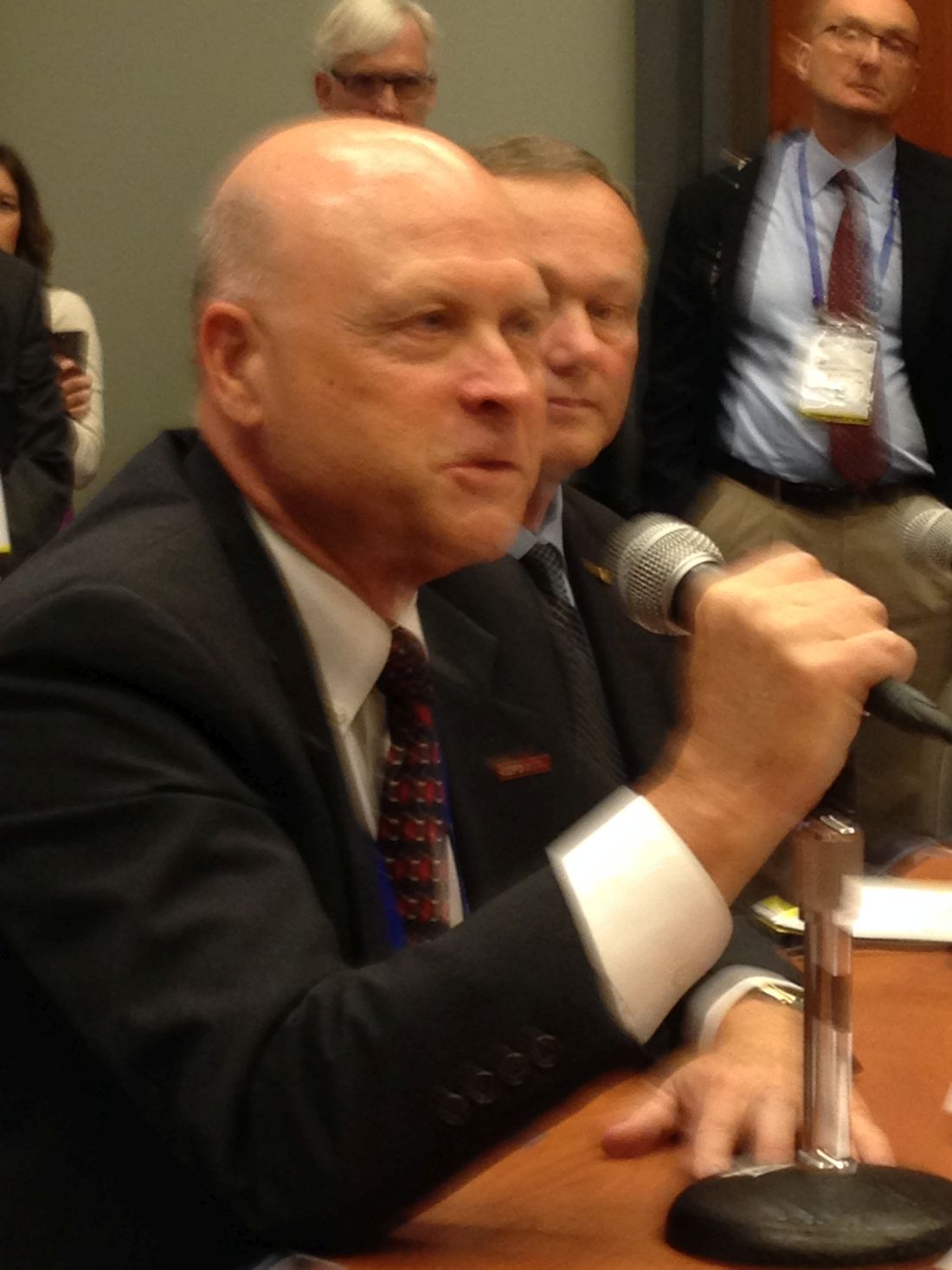
WASHINGTON – The National Institutes of Health on Monday released its first COPD National Action Plan, a five-point initiative to reduce the burden of chronic obstructive pulmonary disease and increase research into prevention and treatment.
On the same day, the National Heart, Lung, and Blood Institute and other supporters of the plan described its evolution and why they thought the plan’s implementation was important.
The plan’s five goals are:
- Empower people with COPD, their families, and caregivers to recognize and reduce the burden of COPD.
- Improve the prevention, diagnosis, treatment, and management of COPD by increasing the quality of care delivered across the health care continuum.
- Collect, analyze, report, and disseminate COPD-related public health data that drive change and track progress.
- Increase and sustain research to better understand the prevention, pathogenesis, diagnosis, treatment, and management of COPD.
- Translate national policy, educational, and program recommendations into research and public health care actions.
“Chronic obstructive pulmonary disease is the third-leading cause of death in this country; it’s just behind heart disease and cancer,” Dr. Kiley noted. “What’s really disappointing and discouraging is it’s the only cause of death in this country where the numbers are not declining.”
COPD “got the attention of Congress a number of years ago,” he added. “They encouraged the National Institutes of Health to work with the community stakeholders and other federal agencies to develop a national action plan to respond to the growing burden of this disease.”
COPD’s stakeholder community, the federal government, and other partners worked together to develop a set of core goals that the National Action Plan would address, Dr. Kiley continued. “It was meant to obtain the broadest amount of input possible so that we could get it right from the start.”
Another of the plan’s advocates, MeiLan Han, MD, medical director of the women’s respiratory health program at the University of Michigan, Ann Arbor, illustrated the need to increase and sustain COPD research related to the disease.
[polldaddy:9806142]
“I see the suffering and disease toll that this takes on my patients, and I can’t convince you enough of the level of frustration that I have as a physician in not being able to provide the level of care that I want to be able to provide,” said Dr. Han, who served as a panelist at the press conference.
“We face some serious barriers to being able to provide adequate care for patients,” she added. Those barriers include lack of access to providers who are knowledgeable about COPD, as well as lack of access to affordable and conveniently located pulmonology rehabilitation and education materials. From a research standpoint, Dr. Han added, medicine still doesn’t know enough about the disease. “We certainly have good treatments, but we need better treatments,” she said.
“What’s clear is that we as society can no longer afford to brush this under the table and ignore this problem,” Dr. Han added.
The National Action Plan and information about how to get involved are available at copd.nih.gov.
WASHINGTON – The National Institutes of Health on Monday released its first COPD National Action Plan, a five-point initiative to reduce the burden of chronic obstructive pulmonary disease and increase research into prevention and treatment.
On the same day, the National Heart, Lung, and Blood Institute and other supporters of the plan described its evolution and why they thought the plan’s implementation was important.
The plan’s five goals are:
- Empower people with COPD, their families, and caregivers to recognize and reduce the burden of COPD.
- Improve the prevention, diagnosis, treatment, and management of COPD by increasing the quality of care delivered across the health care continuum.
- Collect, analyze, report, and disseminate COPD-related public health data that drive change and track progress.
- Increase and sustain research to better understand the prevention, pathogenesis, diagnosis, treatment, and management of COPD.
- Translate national policy, educational, and program recommendations into research and public health care actions.
“Chronic obstructive pulmonary disease is the third-leading cause of death in this country; it’s just behind heart disease and cancer,” Dr. Kiley noted. “What’s really disappointing and discouraging is it’s the only cause of death in this country where the numbers are not declining.”
COPD “got the attention of Congress a number of years ago,” he added. “They encouraged the National Institutes of Health to work with the community stakeholders and other federal agencies to develop a national action plan to respond to the growing burden of this disease.”
COPD’s stakeholder community, the federal government, and other partners worked together to develop a set of core goals that the National Action Plan would address, Dr. Kiley continued. “It was meant to obtain the broadest amount of input possible so that we could get it right from the start.”
Another of the plan’s advocates, MeiLan Han, MD, medical director of the women’s respiratory health program at the University of Michigan, Ann Arbor, illustrated the need to increase and sustain COPD research related to the disease.
[polldaddy:9806142]
“I see the suffering and disease toll that this takes on my patients, and I can’t convince you enough of the level of frustration that I have as a physician in not being able to provide the level of care that I want to be able to provide,” said Dr. Han, who served as a panelist at the press conference.
“We face some serious barriers to being able to provide adequate care for patients,” she added. Those barriers include lack of access to providers who are knowledgeable about COPD, as well as lack of access to affordable and conveniently located pulmonology rehabilitation and education materials. From a research standpoint, Dr. Han added, medicine still doesn’t know enough about the disease. “We certainly have good treatments, but we need better treatments,” she said.
“What’s clear is that we as society can no longer afford to brush this under the table and ignore this problem,” Dr. Han added.
The National Action Plan and information about how to get involved are available at copd.nih.gov.
WASHINGTON – The National Institutes of Health on Monday released its first COPD National Action Plan, a five-point initiative to reduce the burden of chronic obstructive pulmonary disease and increase research into prevention and treatment.
On the same day, the National Heart, Lung, and Blood Institute and other supporters of the plan described its evolution and why they thought the plan’s implementation was important.
The plan’s five goals are:
- Empower people with COPD, their families, and caregivers to recognize and reduce the burden of COPD.
- Improve the prevention, diagnosis, treatment, and management of COPD by increasing the quality of care delivered across the health care continuum.
- Collect, analyze, report, and disseminate COPD-related public health data that drive change and track progress.
- Increase and sustain research to better understand the prevention, pathogenesis, diagnosis, treatment, and management of COPD.
- Translate national policy, educational, and program recommendations into research and public health care actions.
“Chronic obstructive pulmonary disease is the third-leading cause of death in this country; it’s just behind heart disease and cancer,” Dr. Kiley noted. “What’s really disappointing and discouraging is it’s the only cause of death in this country where the numbers are not declining.”
COPD “got the attention of Congress a number of years ago,” he added. “They encouraged the National Institutes of Health to work with the community stakeholders and other federal agencies to develop a national action plan to respond to the growing burden of this disease.”
COPD’s stakeholder community, the federal government, and other partners worked together to develop a set of core goals that the National Action Plan would address, Dr. Kiley continued. “It was meant to obtain the broadest amount of input possible so that we could get it right from the start.”
Another of the plan’s advocates, MeiLan Han, MD, medical director of the women’s respiratory health program at the University of Michigan, Ann Arbor, illustrated the need to increase and sustain COPD research related to the disease.
[polldaddy:9806142]
“I see the suffering and disease toll that this takes on my patients, and I can’t convince you enough of the level of frustration that I have as a physician in not being able to provide the level of care that I want to be able to provide,” said Dr. Han, who served as a panelist at the press conference.
“We face some serious barriers to being able to provide adequate care for patients,” she added. Those barriers include lack of access to providers who are knowledgeable about COPD, as well as lack of access to affordable and conveniently located pulmonology rehabilitation and education materials. From a research standpoint, Dr. Han added, medicine still doesn’t know enough about the disease. “We certainly have good treatments, but we need better treatments,” she said.
“What’s clear is that we as society can no longer afford to brush this under the table and ignore this problem,” Dr. Han added.
The National Action Plan and information about how to get involved are available at copd.nih.gov.
AT ATS 2017
VIDEO: Chronic cough drug shows phase II efficacy, tolerability
WASHINGTON – A new oral drug that blocks a nerve ion channel was generally tolerable and effective at reducing chronic, refractory cough in a placebo-controlled, dose-ranging, phase II study with 252 patients.
A 50 mg b.i.d dosage of MK-7264 cut cough frequency by at least 30% in 80% of patients, compared with 44% of patients on placebo, Jaclyn A. Smith, MD, said at an international conference of the American Thoracic Society.
At that dosage, 48% of patients reported some change in their taste sensations, an expected drug effect, with about 40% characterizing it as very bothersome or extremely bothersome. An additional 9% reported a complete loss of taste. However, only 6 patients out of 63 randomized to this dosage stopped taking their medication, suggesting that the drug was tolerable for most patients. The results also suggested that lower dosages with less potent taste adverse effects produced significant cough reductions in some patients.
“Patients with chronic, refractory cough are often “willing to accept some taste change to reduce their cough count. Patients are willing to put up with the taste side effects,” Dr. Smith said in a video interview.
The study enrolled patients with chronic, refractory cough at U.S. and UK centers and randomized 63 to each of three active treatment arms receiving 7.5 mg, 20 mg, or 50 mg b.i.d. of MK-7264 or to placebo for 12 weeks. The patients averaged 60 years of age and about three-quarters were women. On average, they had their cough for more than 10 years, and these patients coughed roughly 30 times an hour when awake.
The study’s primary endpoint was reduction in awake cough frequency, and, after 12 weeks on treatment with 50 mg b.i.d., this had fallen an average of 37%, compared with placebo, said Dr. Smith, a professor of respiratory medicine at the University of Manchester, England.
The 7.5-mg and 20-mg b.i.d. dosages each led to cough frequency reductions of about 22% over placebo that were not statistically significant. This was likely a result of the unexpectedly strong placebo effect in the study, Dr. Smith said. Most of the cough effect was evident after the first 4 weeks on treatment.
Dr. Smith noted that she and her associates “most definitely” plan to progress to a phase III trial. “We really lack effective treatments for cough,” she said.
The study was sponsored by Merck, the company developing MK-7264. Dr. Smith is a consultant to Merck and has a licensing agreement with Vitalograph.
The video associated with this article is no longer available on this site. Please view all of our videos on the MDedge YouTube channel
mzoler@frontlinemedcom.com
On Twitter @mitchelzoler
WASHINGTON – A new oral drug that blocks a nerve ion channel was generally tolerable and effective at reducing chronic, refractory cough in a placebo-controlled, dose-ranging, phase II study with 252 patients.
A 50 mg b.i.d dosage of MK-7264 cut cough frequency by at least 30% in 80% of patients, compared with 44% of patients on placebo, Jaclyn A. Smith, MD, said at an international conference of the American Thoracic Society.
At that dosage, 48% of patients reported some change in their taste sensations, an expected drug effect, with about 40% characterizing it as very bothersome or extremely bothersome. An additional 9% reported a complete loss of taste. However, only 6 patients out of 63 randomized to this dosage stopped taking their medication, suggesting that the drug was tolerable for most patients. The results also suggested that lower dosages with less potent taste adverse effects produced significant cough reductions in some patients.
“Patients with chronic, refractory cough are often “willing to accept some taste change to reduce their cough count. Patients are willing to put up with the taste side effects,” Dr. Smith said in a video interview.
The study enrolled patients with chronic, refractory cough at U.S. and UK centers and randomized 63 to each of three active treatment arms receiving 7.5 mg, 20 mg, or 50 mg b.i.d. of MK-7264 or to placebo for 12 weeks. The patients averaged 60 years of age and about three-quarters were women. On average, they had their cough for more than 10 years, and these patients coughed roughly 30 times an hour when awake.
The study’s primary endpoint was reduction in awake cough frequency, and, after 12 weeks on treatment with 50 mg b.i.d., this had fallen an average of 37%, compared with placebo, said Dr. Smith, a professor of respiratory medicine at the University of Manchester, England.
The 7.5-mg and 20-mg b.i.d. dosages each led to cough frequency reductions of about 22% over placebo that were not statistically significant. This was likely a result of the unexpectedly strong placebo effect in the study, Dr. Smith said. Most of the cough effect was evident after the first 4 weeks on treatment.
Dr. Smith noted that she and her associates “most definitely” plan to progress to a phase III trial. “We really lack effective treatments for cough,” she said.
The study was sponsored by Merck, the company developing MK-7264. Dr. Smith is a consultant to Merck and has a licensing agreement with Vitalograph.
The video associated with this article is no longer available on this site. Please view all of our videos on the MDedge YouTube channel
mzoler@frontlinemedcom.com
On Twitter @mitchelzoler
WASHINGTON – A new oral drug that blocks a nerve ion channel was generally tolerable and effective at reducing chronic, refractory cough in a placebo-controlled, dose-ranging, phase II study with 252 patients.
A 50 mg b.i.d dosage of MK-7264 cut cough frequency by at least 30% in 80% of patients, compared with 44% of patients on placebo, Jaclyn A. Smith, MD, said at an international conference of the American Thoracic Society.
At that dosage, 48% of patients reported some change in their taste sensations, an expected drug effect, with about 40% characterizing it as very bothersome or extremely bothersome. An additional 9% reported a complete loss of taste. However, only 6 patients out of 63 randomized to this dosage stopped taking their medication, suggesting that the drug was tolerable for most patients. The results also suggested that lower dosages with less potent taste adverse effects produced significant cough reductions in some patients.
“Patients with chronic, refractory cough are often “willing to accept some taste change to reduce their cough count. Patients are willing to put up with the taste side effects,” Dr. Smith said in a video interview.
The study enrolled patients with chronic, refractory cough at U.S. and UK centers and randomized 63 to each of three active treatment arms receiving 7.5 mg, 20 mg, or 50 mg b.i.d. of MK-7264 or to placebo for 12 weeks. The patients averaged 60 years of age and about three-quarters were women. On average, they had their cough for more than 10 years, and these patients coughed roughly 30 times an hour when awake.
The study’s primary endpoint was reduction in awake cough frequency, and, after 12 weeks on treatment with 50 mg b.i.d., this had fallen an average of 37%, compared with placebo, said Dr. Smith, a professor of respiratory medicine at the University of Manchester, England.
The 7.5-mg and 20-mg b.i.d. dosages each led to cough frequency reductions of about 22% over placebo that were not statistically significant. This was likely a result of the unexpectedly strong placebo effect in the study, Dr. Smith said. Most of the cough effect was evident after the first 4 weeks on treatment.
Dr. Smith noted that she and her associates “most definitely” plan to progress to a phase III trial. “We really lack effective treatments for cough,” she said.
The study was sponsored by Merck, the company developing MK-7264. Dr. Smith is a consultant to Merck and has a licensing agreement with Vitalograph.
The video associated with this article is no longer available on this site. Please view all of our videos on the MDedge YouTube channel
mzoler@frontlinemedcom.com
On Twitter @mitchelzoler
AT ATS 2017
Key clinical point:
Major finding: A 50 mg b.i.d. dosage of MK-7264 reduced awake cough frequency by an average of 37%, compared with placebo.
Data source: A multicenter, randomized, placebo-controlled, dose-ranging study with 252 patients.
Disclosures: The study was sponsored by Merck, the company developing MK-7264. Dr. Smith is a consultant to Merck and has a licensing agreement with Vitalograph.