User login
COVID vaccination rates vary by zodiac sign
COVID-19 vaccination rates vary dramatically by astrological sign, with Leos at the top of the list and Scorpios at the bottom, according to The Salt Lake Tribune.
The Salt Lake County Health Department calculated the rates based on anonymous birth dates from the county’s vaccination data and then compared those figures to national estimates for the overall population represented by each sign.
“Now that Mercury is not in retrograde, we’re just going to leave this here … (and yes, this is based on data),” the Health Department wrote in a Twitter post on Tuesday.
“The COVID-19 vaccine is backed by science and is no way influenced by horoscopes,” the department continued. “But come on Scorpios!”
According to the graphic, 70% of those with the Leo sign are fully vaccinated, followed by Aquarius at 67%, and Aries and Sagittarius both at 59%. The other signs range from 58% to 50%, in descending order: Cancer, Taurus, Gemini, Libra, Pisces, Capricorn, and Virgo. Scorpio sits at the bottom of the list, with 46% fully vaccinated.
Notably, three of the top four signs are elemental fire signs, The Salt Lake Tribune noted.
“We are overachievers,” Jeff Eason, an Aries and the department’s bureau manager of population health and informatics, who did the analysis, told the newspaper.
The Health Department’s post sparked positive and negative feedback across social media, with some musing about their own sign’s inclinations and others scoffing at astrology altogether.
“What we’re really doing is finding new and different ways to keep our community talking about vaccination when there is significant message fatigue around this topic,” the department wrote in the comments.
The range of vaccination rates was startlingly wide, Mr. Eason told The Salt Lake Tribune. But he noted that the difference “could all come down to denominators.”
Each sign’s vaccination rate was ranked almost exactly inverse to its share of the overall population, the newspaper reported. Scorpios and Virgos make up 9.4% and 9.3% of the U.S. population, respectively, as compared with 7.1% for Leos and 6.3% for Aquarians.
If the 12 astrological signs were more evenly distributed in Salt Lake County than nationally, Mr. Eason said, the range of vaccinations rates wouldn’t be as wide as the analysis shows.
“Obviously, it’s not super scientific because we are talking astrology,” Nicholas Rupp, a spokesman for the health department and a vaccinated Scorpio, told the newspaper.
Still, health department officials wanted to do the analysis as a fun way to start conversations and promote vaccinations. About 59% of Salt Lake County residents are fully vaccinated, and about 54% of Utah residents are fully vaccinated.
“We do have message fatigue around vaccines,” Mr. Rupp said.
A version of this article first appeared on WebMD.com.
COVID-19 vaccination rates vary dramatically by astrological sign, with Leos at the top of the list and Scorpios at the bottom, according to The Salt Lake Tribune.
The Salt Lake County Health Department calculated the rates based on anonymous birth dates from the county’s vaccination data and then compared those figures to national estimates for the overall population represented by each sign.
“Now that Mercury is not in retrograde, we’re just going to leave this here … (and yes, this is based on data),” the Health Department wrote in a Twitter post on Tuesday.
“The COVID-19 vaccine is backed by science and is no way influenced by horoscopes,” the department continued. “But come on Scorpios!”
According to the graphic, 70% of those with the Leo sign are fully vaccinated, followed by Aquarius at 67%, and Aries and Sagittarius both at 59%. The other signs range from 58% to 50%, in descending order: Cancer, Taurus, Gemini, Libra, Pisces, Capricorn, and Virgo. Scorpio sits at the bottom of the list, with 46% fully vaccinated.
Notably, three of the top four signs are elemental fire signs, The Salt Lake Tribune noted.
“We are overachievers,” Jeff Eason, an Aries and the department’s bureau manager of population health and informatics, who did the analysis, told the newspaper.
The Health Department’s post sparked positive and negative feedback across social media, with some musing about their own sign’s inclinations and others scoffing at astrology altogether.
“What we’re really doing is finding new and different ways to keep our community talking about vaccination when there is significant message fatigue around this topic,” the department wrote in the comments.
The range of vaccination rates was startlingly wide, Mr. Eason told The Salt Lake Tribune. But he noted that the difference “could all come down to denominators.”
Each sign’s vaccination rate was ranked almost exactly inverse to its share of the overall population, the newspaper reported. Scorpios and Virgos make up 9.4% and 9.3% of the U.S. population, respectively, as compared with 7.1% for Leos and 6.3% for Aquarians.
If the 12 astrological signs were more evenly distributed in Salt Lake County than nationally, Mr. Eason said, the range of vaccinations rates wouldn’t be as wide as the analysis shows.
“Obviously, it’s not super scientific because we are talking astrology,” Nicholas Rupp, a spokesman for the health department and a vaccinated Scorpio, told the newspaper.
Still, health department officials wanted to do the analysis as a fun way to start conversations and promote vaccinations. About 59% of Salt Lake County residents are fully vaccinated, and about 54% of Utah residents are fully vaccinated.
“We do have message fatigue around vaccines,” Mr. Rupp said.
A version of this article first appeared on WebMD.com.
COVID-19 vaccination rates vary dramatically by astrological sign, with Leos at the top of the list and Scorpios at the bottom, according to The Salt Lake Tribune.
The Salt Lake County Health Department calculated the rates based on anonymous birth dates from the county’s vaccination data and then compared those figures to national estimates for the overall population represented by each sign.
“Now that Mercury is not in retrograde, we’re just going to leave this here … (and yes, this is based on data),” the Health Department wrote in a Twitter post on Tuesday.
“The COVID-19 vaccine is backed by science and is no way influenced by horoscopes,” the department continued. “But come on Scorpios!”
According to the graphic, 70% of those with the Leo sign are fully vaccinated, followed by Aquarius at 67%, and Aries and Sagittarius both at 59%. The other signs range from 58% to 50%, in descending order: Cancer, Taurus, Gemini, Libra, Pisces, Capricorn, and Virgo. Scorpio sits at the bottom of the list, with 46% fully vaccinated.
Notably, three of the top four signs are elemental fire signs, The Salt Lake Tribune noted.
“We are overachievers,” Jeff Eason, an Aries and the department’s bureau manager of population health and informatics, who did the analysis, told the newspaper.
The Health Department’s post sparked positive and negative feedback across social media, with some musing about their own sign’s inclinations and others scoffing at astrology altogether.
“What we’re really doing is finding new and different ways to keep our community talking about vaccination when there is significant message fatigue around this topic,” the department wrote in the comments.
The range of vaccination rates was startlingly wide, Mr. Eason told The Salt Lake Tribune. But he noted that the difference “could all come down to denominators.”
Each sign’s vaccination rate was ranked almost exactly inverse to its share of the overall population, the newspaper reported. Scorpios and Virgos make up 9.4% and 9.3% of the U.S. population, respectively, as compared with 7.1% for Leos and 6.3% for Aquarians.
If the 12 astrological signs were more evenly distributed in Salt Lake County than nationally, Mr. Eason said, the range of vaccinations rates wouldn’t be as wide as the analysis shows.
“Obviously, it’s not super scientific because we are talking astrology,” Nicholas Rupp, a spokesman for the health department and a vaccinated Scorpio, told the newspaper.
Still, health department officials wanted to do the analysis as a fun way to start conversations and promote vaccinations. About 59% of Salt Lake County residents are fully vaccinated, and about 54% of Utah residents are fully vaccinated.
“We do have message fatigue around vaccines,” Mr. Rupp said.
A version of this article first appeared on WebMD.com.
To tackle obesity, up fitness and activity or lose weight?
The authors promote a “weight-neutral approach to treating obesity-related health conditions,” which they say is “as or more effective than a weight-loss centric approach.”
One expert agrees. “The obsession with the bathroom scale as the primary determinant of treatment efficacy when managing obesity is just not right,” Robert Ross, PhD, said in an interview.
“It masks the tremendous health benefits of improved fitness regardless of obesity. If you increase fitness, you improve outcomes even when people don’t lose weight,” noted Dr. Ross, a researcher in the School of Kinesiology and Health Studies at Queen’s University in Kingston, Ontario, Canada.
However, this proposition reprises a long-standing gulf between two schools of thought on obesity intervention.
One indication of the divided sentiment came in another expert review, published just days later, that strongly calls for weight loss of at least 15% of starting body weight as the primary intervention goal for most patients with obesity and type 2 diabetes. (According to 2020 statistics from the U.S. Centers for Disease Control and Prevention, more than 60% of U.S. adults with diabetes are obese.)
However, some question whether it must be all one, or the other, when obesity management could instead combine these approaches and simultaneously promote weight loss, increased activity, and improved fitness.
“It only muddies the water to dichotomize this as either weight management or activity and physical fitness,” observed Scott Kahan, MD, an obesity specialist and director of the National Center for Weight and Wellness in Washington, D.C.
Weight-neutral ‘is the way to go’
“The most significant new information [in the review] is the direct comparison of the magnitude of mortality risk reduction associated with weight loss compared with increasing fitness, physical activity, or both,” said Glenn A. Gaesser, PhD, the first author of the new review and professor of exercise physiology at Arizona State University, Phoenix.
“The results are quite clear: Increasing fitness, physical activity, or both are associated with greater mortality reductions than intentional weight loss. We argue that a weight-neutral approach to treating obesity is the way to go.”
The data call “into question the widely perceived notion of ‘lose weight, live longer,’” resulting in a “paradigm shift,” Dr. Gaesser said in an interview.
“There are no downsides to exercise, but there are significant downsides to weight loss, especially when it is inevitably followed by weight regain, which gives rise to the undesirable ‘weight-loss futile cycle’,” he added.
No simple, single solutions
Dr. Kahan said, however, that comparison of the effects of weight loss with the effects of increased activity and fitness on mortality is inherently problematic.
“It’s hard to make definitive conclusions from observational studies,” he cautioned, noting that the data cited in the review of activity and fitness compared with weight loss are generally “estimations” that carry a “lot of cloudiness.”
Dr. Kahan also takes issue with the premise detailed in the review that targeting reduced weight and implementing healthful and evidence-based approaches to try to achieve it are bound to fail and have frequent adverse consequences.
“Managing weight in a reasonable, patient-centered, thoughtful way is a standard and central part of long-term health,” he said in an interview.
He did concede, however, that the U.S. weight-loss landscape is awash with hucksterism that takes advantage of many patients, and he cautioned against approaches that focus on weight loss at all costs and as a pathway to selling products.
“But staying focused on activity and not paying attention to healthy eating is extreme,” he said, reemphasizing that obesity management is not a simple intervention with a single solution.
Not the first time
This is not the first time that Dr. Gaesser, and others, have published articles promoting a pivot away from weight loss as the primary goal of obesity interventions. In 2015, Dr. Gaesser and colleagues published an evidence review that gave this recommendation for managing people with obesity: “We propose that the proxy for health improvements should not be weight loss but instead improvements in cardiometabolic parameters, functional status, and fitness.”
Dr. Gaesser’s latest review also acknowledges similar recommendations from others, including Dr. Ross, who said it’s nothing new to conclude that increased fitness and activity in the absence of weight loss is not failure.
“It’s something we’ve promoted for decades,” but “it’s not understood and acted on in clinical settings, and that’s unfortunate,” he said.
More than a decade ago, Dr. Ross and his coauthor wrote in a published review that “a monolithic focus on weight loss as the only determinant of success for strategies that aim to reduce obesity is not justified and, more importantly, eliminates opportunities to focus on lifestyle behaviors that are associated with benefit across a wide range of health outcomes.”
And an effective intervention that focuses on activity and fitness means that, at the least, patients should not gain weight, and they may lose weight as a side benefit, he stressed.
“We always advocate a balanced diet, so that people do not gain more weight.”
Dr. Ross also highlighted the usefulness of measuring fitness as an alternative to recording weight to track the response by patients with obesity to various interventions. Dr. Ross recommends nonexercise prediction equations for routine practice to easily estimate cardiorespiratory fitness, an approach detailed in a 2016 statement from the American Heart Association by a writing panel chaired by Dr. Ross.
The AHA statement notes that “not including cardiorespiratory fitness measurement in routine clinical practice fails to provide an optimal approach for stratifying patients according to risk.”
The AHA also advises that “routine estimation of cardiorespiratory fitness in clinical practice is no more difficult than measuring blood pressure,” and details ways of incorporating this into routine clinical assessment.
Dr. Gaesser and Dr. Kahan have reported no relevant financial relationships. Dr. Ross has been an advisor to the Canadian Sugar Institute.
A version of this article first appeared on Medscape.com.
The authors promote a “weight-neutral approach to treating obesity-related health conditions,” which they say is “as or more effective than a weight-loss centric approach.”
One expert agrees. “The obsession with the bathroom scale as the primary determinant of treatment efficacy when managing obesity is just not right,” Robert Ross, PhD, said in an interview.
“It masks the tremendous health benefits of improved fitness regardless of obesity. If you increase fitness, you improve outcomes even when people don’t lose weight,” noted Dr. Ross, a researcher in the School of Kinesiology and Health Studies at Queen’s University in Kingston, Ontario, Canada.
However, this proposition reprises a long-standing gulf between two schools of thought on obesity intervention.
One indication of the divided sentiment came in another expert review, published just days later, that strongly calls for weight loss of at least 15% of starting body weight as the primary intervention goal for most patients with obesity and type 2 diabetes. (According to 2020 statistics from the U.S. Centers for Disease Control and Prevention, more than 60% of U.S. adults with diabetes are obese.)
However, some question whether it must be all one, or the other, when obesity management could instead combine these approaches and simultaneously promote weight loss, increased activity, and improved fitness.
“It only muddies the water to dichotomize this as either weight management or activity and physical fitness,” observed Scott Kahan, MD, an obesity specialist and director of the National Center for Weight and Wellness in Washington, D.C.
Weight-neutral ‘is the way to go’
“The most significant new information [in the review] is the direct comparison of the magnitude of mortality risk reduction associated with weight loss compared with increasing fitness, physical activity, or both,” said Glenn A. Gaesser, PhD, the first author of the new review and professor of exercise physiology at Arizona State University, Phoenix.
“The results are quite clear: Increasing fitness, physical activity, or both are associated with greater mortality reductions than intentional weight loss. We argue that a weight-neutral approach to treating obesity is the way to go.”
The data call “into question the widely perceived notion of ‘lose weight, live longer,’” resulting in a “paradigm shift,” Dr. Gaesser said in an interview.
“There are no downsides to exercise, but there are significant downsides to weight loss, especially when it is inevitably followed by weight regain, which gives rise to the undesirable ‘weight-loss futile cycle’,” he added.
No simple, single solutions
Dr. Kahan said, however, that comparison of the effects of weight loss with the effects of increased activity and fitness on mortality is inherently problematic.
“It’s hard to make definitive conclusions from observational studies,” he cautioned, noting that the data cited in the review of activity and fitness compared with weight loss are generally “estimations” that carry a “lot of cloudiness.”
Dr. Kahan also takes issue with the premise detailed in the review that targeting reduced weight and implementing healthful and evidence-based approaches to try to achieve it are bound to fail and have frequent adverse consequences.
“Managing weight in a reasonable, patient-centered, thoughtful way is a standard and central part of long-term health,” he said in an interview.
He did concede, however, that the U.S. weight-loss landscape is awash with hucksterism that takes advantage of many patients, and he cautioned against approaches that focus on weight loss at all costs and as a pathway to selling products.
“But staying focused on activity and not paying attention to healthy eating is extreme,” he said, reemphasizing that obesity management is not a simple intervention with a single solution.
Not the first time
This is not the first time that Dr. Gaesser, and others, have published articles promoting a pivot away from weight loss as the primary goal of obesity interventions. In 2015, Dr. Gaesser and colleagues published an evidence review that gave this recommendation for managing people with obesity: “We propose that the proxy for health improvements should not be weight loss but instead improvements in cardiometabolic parameters, functional status, and fitness.”
Dr. Gaesser’s latest review also acknowledges similar recommendations from others, including Dr. Ross, who said it’s nothing new to conclude that increased fitness and activity in the absence of weight loss is not failure.
“It’s something we’ve promoted for decades,” but “it’s not understood and acted on in clinical settings, and that’s unfortunate,” he said.
More than a decade ago, Dr. Ross and his coauthor wrote in a published review that “a monolithic focus on weight loss as the only determinant of success for strategies that aim to reduce obesity is not justified and, more importantly, eliminates opportunities to focus on lifestyle behaviors that are associated with benefit across a wide range of health outcomes.”
And an effective intervention that focuses on activity and fitness means that, at the least, patients should not gain weight, and they may lose weight as a side benefit, he stressed.
“We always advocate a balanced diet, so that people do not gain more weight.”
Dr. Ross also highlighted the usefulness of measuring fitness as an alternative to recording weight to track the response by patients with obesity to various interventions. Dr. Ross recommends nonexercise prediction equations for routine practice to easily estimate cardiorespiratory fitness, an approach detailed in a 2016 statement from the American Heart Association by a writing panel chaired by Dr. Ross.
The AHA statement notes that “not including cardiorespiratory fitness measurement in routine clinical practice fails to provide an optimal approach for stratifying patients according to risk.”
The AHA also advises that “routine estimation of cardiorespiratory fitness in clinical practice is no more difficult than measuring blood pressure,” and details ways of incorporating this into routine clinical assessment.
Dr. Gaesser and Dr. Kahan have reported no relevant financial relationships. Dr. Ross has been an advisor to the Canadian Sugar Institute.
A version of this article first appeared on Medscape.com.
The authors promote a “weight-neutral approach to treating obesity-related health conditions,” which they say is “as or more effective than a weight-loss centric approach.”
One expert agrees. “The obsession with the bathroom scale as the primary determinant of treatment efficacy when managing obesity is just not right,” Robert Ross, PhD, said in an interview.
“It masks the tremendous health benefits of improved fitness regardless of obesity. If you increase fitness, you improve outcomes even when people don’t lose weight,” noted Dr. Ross, a researcher in the School of Kinesiology and Health Studies at Queen’s University in Kingston, Ontario, Canada.
However, this proposition reprises a long-standing gulf between two schools of thought on obesity intervention.
One indication of the divided sentiment came in another expert review, published just days later, that strongly calls for weight loss of at least 15% of starting body weight as the primary intervention goal for most patients with obesity and type 2 diabetes. (According to 2020 statistics from the U.S. Centers for Disease Control and Prevention, more than 60% of U.S. adults with diabetes are obese.)
However, some question whether it must be all one, or the other, when obesity management could instead combine these approaches and simultaneously promote weight loss, increased activity, and improved fitness.
“It only muddies the water to dichotomize this as either weight management or activity and physical fitness,” observed Scott Kahan, MD, an obesity specialist and director of the National Center for Weight and Wellness in Washington, D.C.
Weight-neutral ‘is the way to go’
“The most significant new information [in the review] is the direct comparison of the magnitude of mortality risk reduction associated with weight loss compared with increasing fitness, physical activity, or both,” said Glenn A. Gaesser, PhD, the first author of the new review and professor of exercise physiology at Arizona State University, Phoenix.
“The results are quite clear: Increasing fitness, physical activity, or both are associated with greater mortality reductions than intentional weight loss. We argue that a weight-neutral approach to treating obesity is the way to go.”
The data call “into question the widely perceived notion of ‘lose weight, live longer,’” resulting in a “paradigm shift,” Dr. Gaesser said in an interview.
“There are no downsides to exercise, but there are significant downsides to weight loss, especially when it is inevitably followed by weight regain, which gives rise to the undesirable ‘weight-loss futile cycle’,” he added.
No simple, single solutions
Dr. Kahan said, however, that comparison of the effects of weight loss with the effects of increased activity and fitness on mortality is inherently problematic.
“It’s hard to make definitive conclusions from observational studies,” he cautioned, noting that the data cited in the review of activity and fitness compared with weight loss are generally “estimations” that carry a “lot of cloudiness.”
Dr. Kahan also takes issue with the premise detailed in the review that targeting reduced weight and implementing healthful and evidence-based approaches to try to achieve it are bound to fail and have frequent adverse consequences.
“Managing weight in a reasonable, patient-centered, thoughtful way is a standard and central part of long-term health,” he said in an interview.
He did concede, however, that the U.S. weight-loss landscape is awash with hucksterism that takes advantage of many patients, and he cautioned against approaches that focus on weight loss at all costs and as a pathway to selling products.
“But staying focused on activity and not paying attention to healthy eating is extreme,” he said, reemphasizing that obesity management is not a simple intervention with a single solution.
Not the first time
This is not the first time that Dr. Gaesser, and others, have published articles promoting a pivot away from weight loss as the primary goal of obesity interventions. In 2015, Dr. Gaesser and colleagues published an evidence review that gave this recommendation for managing people with obesity: “We propose that the proxy for health improvements should not be weight loss but instead improvements in cardiometabolic parameters, functional status, and fitness.”
Dr. Gaesser’s latest review also acknowledges similar recommendations from others, including Dr. Ross, who said it’s nothing new to conclude that increased fitness and activity in the absence of weight loss is not failure.
“It’s something we’ve promoted for decades,” but “it’s not understood and acted on in clinical settings, and that’s unfortunate,” he said.
More than a decade ago, Dr. Ross and his coauthor wrote in a published review that “a monolithic focus on weight loss as the only determinant of success for strategies that aim to reduce obesity is not justified and, more importantly, eliminates opportunities to focus on lifestyle behaviors that are associated with benefit across a wide range of health outcomes.”
And an effective intervention that focuses on activity and fitness means that, at the least, patients should not gain weight, and they may lose weight as a side benefit, he stressed.
“We always advocate a balanced diet, so that people do not gain more weight.”
Dr. Ross also highlighted the usefulness of measuring fitness as an alternative to recording weight to track the response by patients with obesity to various interventions. Dr. Ross recommends nonexercise prediction equations for routine practice to easily estimate cardiorespiratory fitness, an approach detailed in a 2016 statement from the American Heart Association by a writing panel chaired by Dr. Ross.
The AHA statement notes that “not including cardiorespiratory fitness measurement in routine clinical practice fails to provide an optimal approach for stratifying patients according to risk.”
The AHA also advises that “routine estimation of cardiorespiratory fitness in clinical practice is no more difficult than measuring blood pressure,” and details ways of incorporating this into routine clinical assessment.
Dr. Gaesser and Dr. Kahan have reported no relevant financial relationships. Dr. Ross has been an advisor to the Canadian Sugar Institute.
A version of this article first appeared on Medscape.com.
A single text message links CRC patients to valuable resources
The words “you have colorectal cancer” can concentrate a patient’s mind, but certainly not in the way that the clinician delivering the bad news intends.
“A lot of my patients, frankly, have told me that on the first visit the only thing they really hear is the diagnosis of cancer, confirming a malignancy, and everything else that follows is what I call the ‘2 minutes of terror.’ Everything else gets drowned out, and they don’t hear my comments on diseases and sometimes my hopefully reassuring comments on prognosis,” said Mark A. Lewis, MD, director of the gastrointestinal oncology program at Intermountain Healthcare in Murray, Utah, who is himself a survivor of a rare cancer.
An estimated 150,000 people hear something like “you have colorectal cancer” in the United States each year, according to American Cancer Society estimates.
Even before the diagnosis, the patient, still groggy from sedation after a colonoscopy, may wake up and be told “we’ve found something; I’ll call you in a few days when we get the pathology results.”
You don’t have to be a psychiatrist to understand that times of great emotional upheaval, stress, or uncertainty are not ideal for decision-making, especially when the person who is asked to decide is facing a challenge that may seem overwhelmingly complex.
Many patients’ first thoughts are to go online for information, but that too can be overwhelming. For example, a Google search for the words “colorectal cancer” turns up roughly 134 million results, in six-tenths of a second, no less.
There are of course solid, reliable sources for information out there, and reliable information is a very good place to start, as noted by the staff at the Mayo Clinic in Rochester, Minn.
The Mayo website offers 11 tips with for coping with a cancer diagnosis. First among the recommendations is “get the facts about your cancer diagnosis,” and that’s the inspiration behind CRC POP.
Text COLON to 484848
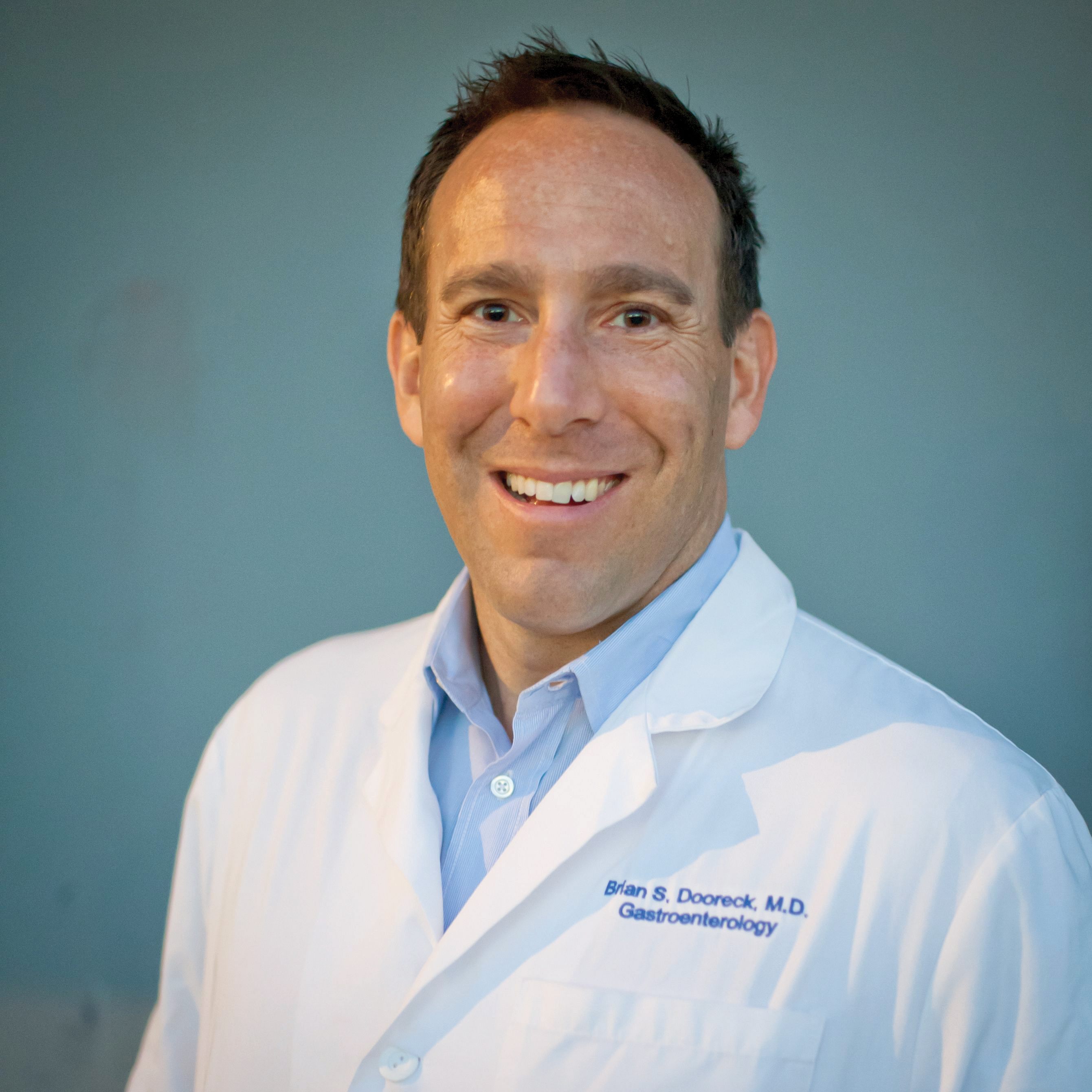
“There are 13,000 of us gastroenterologists in the country, and we diagnosis colorectal cancer 150,000 times a year,” said CRC POP program creator Brian Dooreck, MD, from Memorial Healthcare System in Pembroke Pines, Fla.
When the doctor tells patients the results “their world is turned upside down, they’re shocked, and they don’t pick up much after the word ‘cancer’,” Dr. Dooreck said in an interview.
Both Dr. Dooreck and Dr. Lewis noted that, after going home with a diagnosis of colorectal cancer, a large majority of patients will go online to find information about their diagnosis.
“We know from studies and anecdotal experience that the odds that someone will try to research their own diagnosis are in the 97% range, and then they’re going to run into the pluses and minuses of search engine optimization,” Dr. Lewis said.
As even the most casual Internet user can attest, available medical information can range from the practical to the preposterous, from the National Cancer Institute’s Cancer.gov to a Facebook post on Aunt Tillie’s miracle mayonnaise cure. Helping patients to quickly identify which resources are valuable and trustworthy is the overarching goal of CRC POP, Dr. Dooreck explained.
“What we created with the Colorectal Cancer Provider Outreach Program is that it now allows gastroenterologists to have a conversation with a patient – I can say ‘Now listen, take out your phone, and text the world COLON and send it to 484848.”
Doing so returns a text in a few seconds with the words “You are not alone. You have our support. Here. Now,” and a blue heart emoji, followed by a link that takes the user to a web page with a document containing contact information for the ACS, Colorectal Cancer Alliance, Fight Colorectal Cancer, Colon Cancer Coalition, and Colon Cancer Foundation. Free resources offered by the various organizations include a helpline staffed 24 hours a day (ACS), peer support online or one-to-one and financial assistance (Colorectal Cancer Alliance), access to screening for the under- and uninsured in select areas (Colon Cancer Coalition), and links to a colorectal cancer patient registry (Colon Cancer Foundation).
“I can tell patients ‘Hey listen, go home, call these groups, get on their websites. I’ll call you in a week; call me if you need me. We’re gonna figure this thing out together,’ ” Dr. Dooreck said. “This is a great place to get resources here and now. It’s a very different shift from going home without anything other than a treatment plan.”
No gain – except helping patients
After Dr. Dooreck conceived of CRC POP, in September 2020, he described his plan for consolidating links to free resources in a video conference with the organizations he aimed to include. The organizations immediately agreed, and the text-based service, with technology provided free of charge by the marketing company EZ Texting, went live the following month.
“There’s no hook, there’s no cost, there’s no sale, it’s not monetized. There’s no gain except helping people,” Dr. Dooreck emphasized.
Dr. Lewis agreed: “I think it’s a great initiative, and it helps unify some of the guidance we give these folks.”
Dr. Lewis has the rare perspective of seeing the issue from standpoint of both an oncologist and a patient: Early in his hematology-oncology fellowship at the Mayo Clinic in 2009, he was diagnosed with multiple endocrine neoplasia type 1, and he subsequently underwent surgery to resect pancreatic neuroendocrine tumors.
He says that the buy-in for CRC POP from major support organizations and from gastroenterologists alike is important because most colonoscopies are performed and diagnoses are made in community settings by gastroenterologists who may or may not have formal connections with a cancer center, rather than in large urban or suburban networks affiliated with medical schools.
In most cases, he said, the gastroenterologist makes the CRC diagnosis, and hands the patient off to a surgeon, who may connect with a medical oncologist and/or radiation oncologist depending on the individual patient’s circumstance. This process can take weeks, and in the meantime, patients are left in limbo.
Offering patients multiple trustworthy resources through a simple text message is a particularly appealing part of the CRC POP initiative, and can help patients feel that they are more in control of their care, Dr. Lewis said.
Useful resources, multidisciplinary care
The connection to resources offered by CRC POP is valuable and may be especially helpful for community-based or small gastroenterology practices; on the other hand, large academic medical centers may be able to provide more resources on their own.
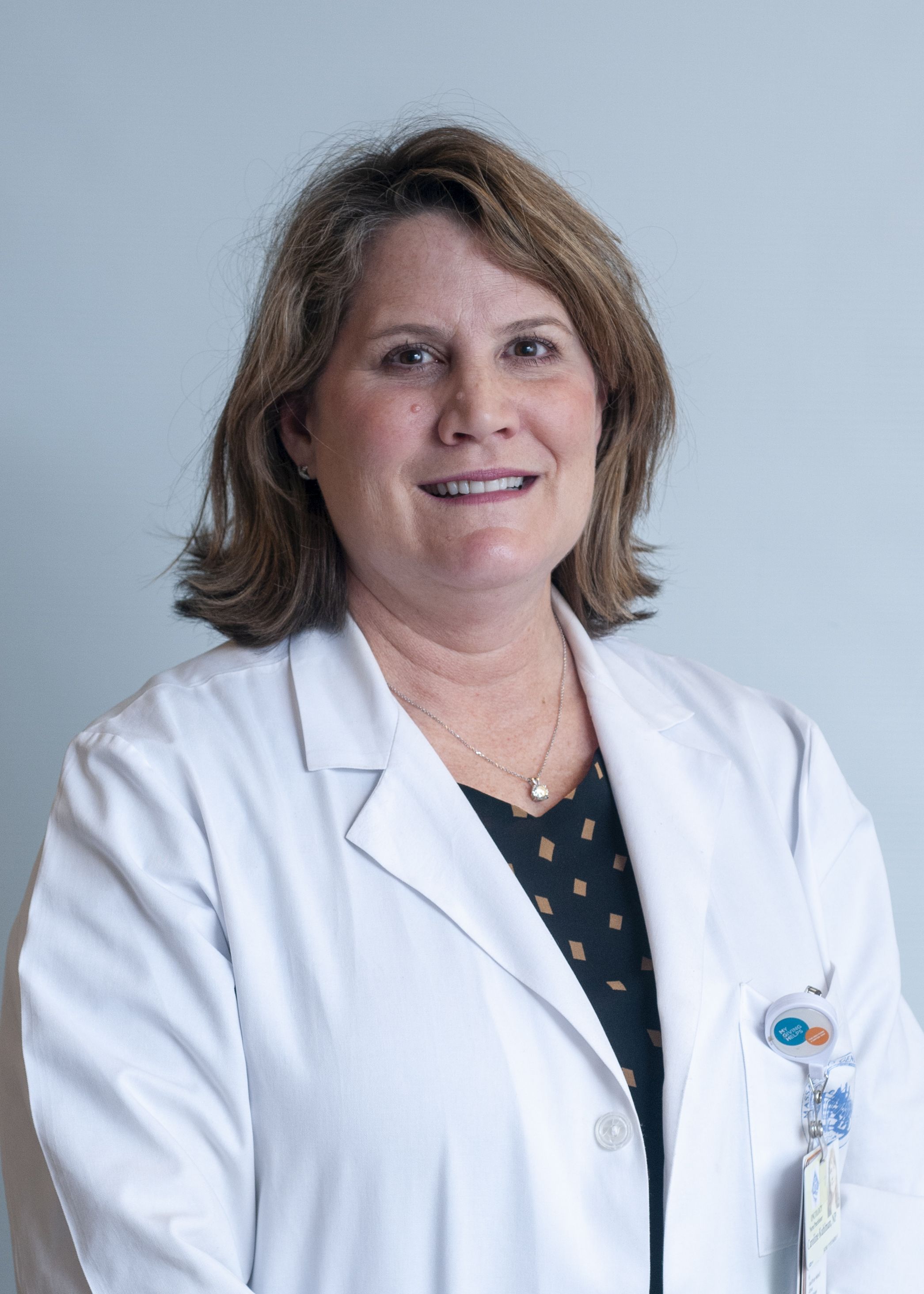
“We have home-grown support services that we make available to patients if they either ask for them or if we ascertain that those services would be important components of their care,” Caroline Kuhlman, a nurse practitioner from The Tucker Gosnell Center for Gastrointestinal Cancers at Massachusetts General Cancer Center in Boston, explained in an interview. “Our approach to a newly diagnosed patient happens in the context of a multidisciplinary visit.”
“Newly diagnosed patients meet with a surgeon, a medical oncologist, sometimes a radiation oncologist if that’s going to be a part their care, and whenever possible during the same outpatient visit. Patients are also provided with written information about colon cancer, and we have a patient resource center that has even more information about support from various organizations,” she said.
Patients can also be referred as needed to other resources within the hospital system, including nutritionists, social workers who can help to determine whether patients could benefit from additional social and financial support, and educational resources such as information sessions on what to expect if they receive chemotherapy.
Similarly, Dr. Lewis said that, at Intermountain Health Care, patients newly diagnosed with cancer are contacted within 24 hours by patient navigators who help them manage concerns and expectations about their care and connect them to resources both in the hospital and the community.
Although their own practices differ in size and scope and in the resources they can offer patients, the clinicians interviewed for this article agreed with the central message and purpose of CRC POP: “You are not alone. You have our support.”
Dr. Lewis, Dr. Dooreck, and Ms. Kuhlman reported having no conflicts of interest relevant to the subjects discussed in this article.
The words “you have colorectal cancer” can concentrate a patient’s mind, but certainly not in the way that the clinician delivering the bad news intends.
“A lot of my patients, frankly, have told me that on the first visit the only thing they really hear is the diagnosis of cancer, confirming a malignancy, and everything else that follows is what I call the ‘2 minutes of terror.’ Everything else gets drowned out, and they don’t hear my comments on diseases and sometimes my hopefully reassuring comments on prognosis,” said Mark A. Lewis, MD, director of the gastrointestinal oncology program at Intermountain Healthcare in Murray, Utah, who is himself a survivor of a rare cancer.
An estimated 150,000 people hear something like “you have colorectal cancer” in the United States each year, according to American Cancer Society estimates.
Even before the diagnosis, the patient, still groggy from sedation after a colonoscopy, may wake up and be told “we’ve found something; I’ll call you in a few days when we get the pathology results.”
You don’t have to be a psychiatrist to understand that times of great emotional upheaval, stress, or uncertainty are not ideal for decision-making, especially when the person who is asked to decide is facing a challenge that may seem overwhelmingly complex.
Many patients’ first thoughts are to go online for information, but that too can be overwhelming. For example, a Google search for the words “colorectal cancer” turns up roughly 134 million results, in six-tenths of a second, no less.
There are of course solid, reliable sources for information out there, and reliable information is a very good place to start, as noted by the staff at the Mayo Clinic in Rochester, Minn.
The Mayo website offers 11 tips with for coping with a cancer diagnosis. First among the recommendations is “get the facts about your cancer diagnosis,” and that’s the inspiration behind CRC POP.
Text COLON to 484848
“There are 13,000 of us gastroenterologists in the country, and we diagnosis colorectal cancer 150,000 times a year,” said CRC POP program creator Brian Dooreck, MD, from Memorial Healthcare System in Pembroke Pines, Fla.
When the doctor tells patients the results “their world is turned upside down, they’re shocked, and they don’t pick up much after the word ‘cancer’,” Dr. Dooreck said in an interview.
Both Dr. Dooreck and Dr. Lewis noted that, after going home with a diagnosis of colorectal cancer, a large majority of patients will go online to find information about their diagnosis.
“We know from studies and anecdotal experience that the odds that someone will try to research their own diagnosis are in the 97% range, and then they’re going to run into the pluses and minuses of search engine optimization,” Dr. Lewis said.
As even the most casual Internet user can attest, available medical information can range from the practical to the preposterous, from the National Cancer Institute’s Cancer.gov to a Facebook post on Aunt Tillie’s miracle mayonnaise cure. Helping patients to quickly identify which resources are valuable and trustworthy is the overarching goal of CRC POP, Dr. Dooreck explained.
“What we created with the Colorectal Cancer Provider Outreach Program is that it now allows gastroenterologists to have a conversation with a patient – I can say ‘Now listen, take out your phone, and text the world COLON and send it to 484848.”
Doing so returns a text in a few seconds with the words “You are not alone. You have our support. Here. Now,” and a blue heart emoji, followed by a link that takes the user to a web page with a document containing contact information for the ACS, Colorectal Cancer Alliance, Fight Colorectal Cancer, Colon Cancer Coalition, and Colon Cancer Foundation. Free resources offered by the various organizations include a helpline staffed 24 hours a day (ACS), peer support online or one-to-one and financial assistance (Colorectal Cancer Alliance), access to screening for the under- and uninsured in select areas (Colon Cancer Coalition), and links to a colorectal cancer patient registry (Colon Cancer Foundation).
“I can tell patients ‘Hey listen, go home, call these groups, get on their websites. I’ll call you in a week; call me if you need me. We’re gonna figure this thing out together,’ ” Dr. Dooreck said. “This is a great place to get resources here and now. It’s a very different shift from going home without anything other than a treatment plan.”
No gain – except helping patients
After Dr. Dooreck conceived of CRC POP, in September 2020, he described his plan for consolidating links to free resources in a video conference with the organizations he aimed to include. The organizations immediately agreed, and the text-based service, with technology provided free of charge by the marketing company EZ Texting, went live the following month.
“There’s no hook, there’s no cost, there’s no sale, it’s not monetized. There’s no gain except helping people,” Dr. Dooreck emphasized.
Dr. Lewis agreed: “I think it’s a great initiative, and it helps unify some of the guidance we give these folks.”
Dr. Lewis has the rare perspective of seeing the issue from standpoint of both an oncologist and a patient: Early in his hematology-oncology fellowship at the Mayo Clinic in 2009, he was diagnosed with multiple endocrine neoplasia type 1, and he subsequently underwent surgery to resect pancreatic neuroendocrine tumors.
He says that the buy-in for CRC POP from major support organizations and from gastroenterologists alike is important because most colonoscopies are performed and diagnoses are made in community settings by gastroenterologists who may or may not have formal connections with a cancer center, rather than in large urban or suburban networks affiliated with medical schools.
In most cases, he said, the gastroenterologist makes the CRC diagnosis, and hands the patient off to a surgeon, who may connect with a medical oncologist and/or radiation oncologist depending on the individual patient’s circumstance. This process can take weeks, and in the meantime, patients are left in limbo.
Offering patients multiple trustworthy resources through a simple text message is a particularly appealing part of the CRC POP initiative, and can help patients feel that they are more in control of their care, Dr. Lewis said.
Useful resources, multidisciplinary care
The connection to resources offered by CRC POP is valuable and may be especially helpful for community-based or small gastroenterology practices; on the other hand, large academic medical centers may be able to provide more resources on their own.
“We have home-grown support services that we make available to patients if they either ask for them or if we ascertain that those services would be important components of their care,” Caroline Kuhlman, a nurse practitioner from The Tucker Gosnell Center for Gastrointestinal Cancers at Massachusetts General Cancer Center in Boston, explained in an interview. “Our approach to a newly diagnosed patient happens in the context of a multidisciplinary visit.”
“Newly diagnosed patients meet with a surgeon, a medical oncologist, sometimes a radiation oncologist if that’s going to be a part their care, and whenever possible during the same outpatient visit. Patients are also provided with written information about colon cancer, and we have a patient resource center that has even more information about support from various organizations,” she said.
Patients can also be referred as needed to other resources within the hospital system, including nutritionists, social workers who can help to determine whether patients could benefit from additional social and financial support, and educational resources such as information sessions on what to expect if they receive chemotherapy.
Similarly, Dr. Lewis said that, at Intermountain Health Care, patients newly diagnosed with cancer are contacted within 24 hours by patient navigators who help them manage concerns and expectations about their care and connect them to resources both in the hospital and the community.
Although their own practices differ in size and scope and in the resources they can offer patients, the clinicians interviewed for this article agreed with the central message and purpose of CRC POP: “You are not alone. You have our support.”
Dr. Lewis, Dr. Dooreck, and Ms. Kuhlman reported having no conflicts of interest relevant to the subjects discussed in this article.
The words “you have colorectal cancer” can concentrate a patient’s mind, but certainly not in the way that the clinician delivering the bad news intends.
“A lot of my patients, frankly, have told me that on the first visit the only thing they really hear is the diagnosis of cancer, confirming a malignancy, and everything else that follows is what I call the ‘2 minutes of terror.’ Everything else gets drowned out, and they don’t hear my comments on diseases and sometimes my hopefully reassuring comments on prognosis,” said Mark A. Lewis, MD, director of the gastrointestinal oncology program at Intermountain Healthcare in Murray, Utah, who is himself a survivor of a rare cancer.
An estimated 150,000 people hear something like “you have colorectal cancer” in the United States each year, according to American Cancer Society estimates.
Even before the diagnosis, the patient, still groggy from sedation after a colonoscopy, may wake up and be told “we’ve found something; I’ll call you in a few days when we get the pathology results.”
You don’t have to be a psychiatrist to understand that times of great emotional upheaval, stress, or uncertainty are not ideal for decision-making, especially when the person who is asked to decide is facing a challenge that may seem overwhelmingly complex.
Many patients’ first thoughts are to go online for information, but that too can be overwhelming. For example, a Google search for the words “colorectal cancer” turns up roughly 134 million results, in six-tenths of a second, no less.
There are of course solid, reliable sources for information out there, and reliable information is a very good place to start, as noted by the staff at the Mayo Clinic in Rochester, Minn.
The Mayo website offers 11 tips with for coping with a cancer diagnosis. First among the recommendations is “get the facts about your cancer diagnosis,” and that’s the inspiration behind CRC POP.
Text COLON to 484848
“There are 13,000 of us gastroenterologists in the country, and we diagnosis colorectal cancer 150,000 times a year,” said CRC POP program creator Brian Dooreck, MD, from Memorial Healthcare System in Pembroke Pines, Fla.
When the doctor tells patients the results “their world is turned upside down, they’re shocked, and they don’t pick up much after the word ‘cancer’,” Dr. Dooreck said in an interview.
Both Dr. Dooreck and Dr. Lewis noted that, after going home with a diagnosis of colorectal cancer, a large majority of patients will go online to find information about their diagnosis.
“We know from studies and anecdotal experience that the odds that someone will try to research their own diagnosis are in the 97% range, and then they’re going to run into the pluses and minuses of search engine optimization,” Dr. Lewis said.
As even the most casual Internet user can attest, available medical information can range from the practical to the preposterous, from the National Cancer Institute’s Cancer.gov to a Facebook post on Aunt Tillie’s miracle mayonnaise cure. Helping patients to quickly identify which resources are valuable and trustworthy is the overarching goal of CRC POP, Dr. Dooreck explained.
“What we created with the Colorectal Cancer Provider Outreach Program is that it now allows gastroenterologists to have a conversation with a patient – I can say ‘Now listen, take out your phone, and text the world COLON and send it to 484848.”
Doing so returns a text in a few seconds with the words “You are not alone. You have our support. Here. Now,” and a blue heart emoji, followed by a link that takes the user to a web page with a document containing contact information for the ACS, Colorectal Cancer Alliance, Fight Colorectal Cancer, Colon Cancer Coalition, and Colon Cancer Foundation. Free resources offered by the various organizations include a helpline staffed 24 hours a day (ACS), peer support online or one-to-one and financial assistance (Colorectal Cancer Alliance), access to screening for the under- and uninsured in select areas (Colon Cancer Coalition), and links to a colorectal cancer patient registry (Colon Cancer Foundation).
“I can tell patients ‘Hey listen, go home, call these groups, get on their websites. I’ll call you in a week; call me if you need me. We’re gonna figure this thing out together,’ ” Dr. Dooreck said. “This is a great place to get resources here and now. It’s a very different shift from going home without anything other than a treatment plan.”
No gain – except helping patients
After Dr. Dooreck conceived of CRC POP, in September 2020, he described his plan for consolidating links to free resources in a video conference with the organizations he aimed to include. The organizations immediately agreed, and the text-based service, with technology provided free of charge by the marketing company EZ Texting, went live the following month.
“There’s no hook, there’s no cost, there’s no sale, it’s not monetized. There’s no gain except helping people,” Dr. Dooreck emphasized.
Dr. Lewis agreed: “I think it’s a great initiative, and it helps unify some of the guidance we give these folks.”
Dr. Lewis has the rare perspective of seeing the issue from standpoint of both an oncologist and a patient: Early in his hematology-oncology fellowship at the Mayo Clinic in 2009, he was diagnosed with multiple endocrine neoplasia type 1, and he subsequently underwent surgery to resect pancreatic neuroendocrine tumors.
He says that the buy-in for CRC POP from major support organizations and from gastroenterologists alike is important because most colonoscopies are performed and diagnoses are made in community settings by gastroenterologists who may or may not have formal connections with a cancer center, rather than in large urban or suburban networks affiliated with medical schools.
In most cases, he said, the gastroenterologist makes the CRC diagnosis, and hands the patient off to a surgeon, who may connect with a medical oncologist and/or radiation oncologist depending on the individual patient’s circumstance. This process can take weeks, and in the meantime, patients are left in limbo.
Offering patients multiple trustworthy resources through a simple text message is a particularly appealing part of the CRC POP initiative, and can help patients feel that they are more in control of their care, Dr. Lewis said.
Useful resources, multidisciplinary care
The connection to resources offered by CRC POP is valuable and may be especially helpful for community-based or small gastroenterology practices; on the other hand, large academic medical centers may be able to provide more resources on their own.
“We have home-grown support services that we make available to patients if they either ask for them or if we ascertain that those services would be important components of their care,” Caroline Kuhlman, a nurse practitioner from The Tucker Gosnell Center for Gastrointestinal Cancers at Massachusetts General Cancer Center in Boston, explained in an interview. “Our approach to a newly diagnosed patient happens in the context of a multidisciplinary visit.”
“Newly diagnosed patients meet with a surgeon, a medical oncologist, sometimes a radiation oncologist if that’s going to be a part their care, and whenever possible during the same outpatient visit. Patients are also provided with written information about colon cancer, and we have a patient resource center that has even more information about support from various organizations,” she said.
Patients can also be referred as needed to other resources within the hospital system, including nutritionists, social workers who can help to determine whether patients could benefit from additional social and financial support, and educational resources such as information sessions on what to expect if they receive chemotherapy.
Similarly, Dr. Lewis said that, at Intermountain Health Care, patients newly diagnosed with cancer are contacted within 24 hours by patient navigators who help them manage concerns and expectations about their care and connect them to resources both in the hospital and the community.
Although their own practices differ in size and scope and in the resources they can offer patients, the clinicians interviewed for this article agreed with the central message and purpose of CRC POP: “You are not alone. You have our support.”
Dr. Lewis, Dr. Dooreck, and Ms. Kuhlman reported having no conflicts of interest relevant to the subjects discussed in this article.
Broken heart syndrome: on the rise, especially in women 50-74
As a pediatric kidney doctor, Elaine S. Kamil, MD, is used to long hours helping children and teens with a variety of issues, some very serious, and also makes time to give back to her specialty.
In late 2013, she was in Washington, D.C., planning a meeting of the American Society of Nephrology. When the organizers decided at the last minute that another session was needed, she stayed late, putting it together. Then she hopped on a plane and returned home to Los Angeles on a Saturday night.
Right after midnight, Dr. Kamil knew something was wrong.
“I had really severe chest pain,” she says. “I have reflux, and I know what that feels like. This was much more intense. It really hurt.” She debated: “Should I wake up my husband?”
Soon, the pain got so bad, she had to.
At the hospital, an electrocardiogram was slightly abnormal, as was a blood test that measures damage to the heart. Next, she got an angiogram, an imaging technique to visualize the heart. Once doctors looked at the image on the screen during the angiogram, they knew the diagnosis: Broken heart syndrome, known medically as takotsubo cardiomyopathy or stress-induced cardiomyopathy. As the name suggests, it’s triggered by extreme stress or loss.
The telltale clue to the diagnosis is the appearance of the walls of the heart’s left ventricle, its main pumping chamber. When the condition is present, the left ventricle changes shape, developing a narrow neck and a round bottom, resembling an octopus pot called takotsubo used by fishermen in Japan, where the condition was first recognized in 1990.
Like most who are affected, Dr. Kamil, now 74, is fine now. She is still actively working, as a researcher and professor emerita at Cedars-Sinai Medical Center and a health sciences clinical professor of pediatrics at UCLA. But she focuses more now on stress reduction.
Study: condition on the rise
New research from Cedars-Sinai suggests that broken heart syndrome, while still not common, is not as rare as once thought. And it’s on the rise, especially among middle-age and older women.
This ‘’middle” group – women ages 50 to 74 – had the greatest rate of increase over the years studied, 2006-2017, says Susan Cheng, MD, lead author of the study, published in the Journal of the American Heart Association. She is the director of the Institute for Research on Healthy Aging at the Smidt Heart Institute at Cedars-Sinai Medical Center.
Dr. Cheng and her team used national hospital inpatient data collected from more than 135,000 men and women diagnosed with the condition during the 12 years of the study. More than 88% of all cases were women, especially in those age 50 or older. When the researchers looked more closely, they found the diagnosis has been increasing at least 6 to 10 times more rapidly for women in the 50-to-74 age group than in any other group.
For every case of the condition in younger women, or in men of all age groups, the researchers found an additional 10 cases for middle-aged women and six additional cases for older women. For example, while the syndrome occurred in 15 younger women per million per year, it occurred in 128 middle aged women per year.
The age groups found most at risk was surprising, says Dr. Cheng, who expected the risk would be highest in the oldest age group of women, those over 75.
While doctors are more aware of the condition now, “it’s not just the increased recognition,” she says. “There is something going on” driving the continual increase. It probably has something to do with environmental changes, she says.
Hormones and hormonal differences between men and women aren’t the whole story either, she says. Her team will study it further, hoping eventually to find who might be more likely to get the condition by talking to those who have had it and collecting clues. “There probably is some underlying genetic predisposition,” she says.
“The neural hormones that drive the flight-or-fight response (such as adrenaline) are definitely elevated,” she says. “The brain and the heart are talking to each other.”
Experts say these surging stress hormones essentially “stun” the heart, affecting how it functions. The question is, what makes women particularly more susceptible to being excessively triggered when exposed to stress? That is unclear, Dr. Cheng says.
While the condition is a frightening experience, ‘’the overall prognosis is much better than having a garden-variety heart attack,” she says.
But researchers are still figuring out long-term outcomes, and she can’t tell patients if they are likely to have another episode.
Research findings reflected in practice
Other cardiologists say they are not surprised by the new findings.
“I think it’s very consistent with what I am seeing clinically,” says Tracy Stevens, MD, a cardiologist at Saint Luke’s Mid America Heart Institute in Kansas City, MO. In the last 5 years, she has diagnosed at least 100 cases, she says. The increase is partly but not entirely due to increased awareness by doctors of the condition, she agrees.
If a postmenopausal woman comes to the hospital with chest pain, the condition is more likely now than in the past to be suspected, says Dr. Stevens, who’s also the medical director of the Muriel I. Kauffman Women’s Heart Center at Saint Luke’s. The octopus pot-like image is hard to miss.
“What we see at the base of the left ventricle is, it is squeezing like crazy, it is ballooning.”
“We probably see at least five to ten a month,” says Kevin Bybee, MD, an associate professor of medicine at the University of Missouri-Kansas City School of Medicine.
The increase in numbers found by the Los Angeles researchers may not even capture the true picture of how many people have gotten this condition, he says. He suspects some women whose deaths are blamed on sudden cardiac death might actually have had broken heart syndrome.
“I have always wondered how many don’t make it to the hospital.”
Dr. Bybee, who’s also medical director of cardiovascular services at St. Luke’s South in Overland Park, KS, became interested in the syndrome during his fellowship at Mayo Clinic when he diagnosed three patients in just 2 months. He and his team published the case histories of seven patients in 2004. Since then, many more reports have been published.
Researchers from Texas used the same national database as the Cedars researchers to look at cases from 2005 to 2014, and also found an increase. But study co-author Abhijeet Dhoble, MD, a cardiologist and associate professor of medicine at UT Health Science Center and Memorial Hermann-Texas Medical Center in Houston, believes more recognition explains most of the increase.
And the pandemic is now playing a role in driving up cases, he says.
“In the last 2 years, we have been noticing increasing numbers of cases, probably due to the pandemic,” he says.
Profiles of cases
Over the years, Dr. Bybee has collected information on what is happening before the heart begins to go haywire.
“Fifteen to twenty percent of the time, there is no obvious trigger,” he says.
Other times, a stressful emotional event, such as the death of a spouse or a severe car accident, can trigger it.
One patient with an extreme fear of public speaking had to give a talk in front of a large group when she was new to a job. Another woman lost money at a casino before it happened, Dr. Bybee says. Yet another patient took her dog out for a walk in the woods, and the dog got caught in a raccoon trap.
Fierce arguments as well as surprise parties have triggered the condition, Dr. Bybee says. Physical problems such as asthma or sepsis, a life-threatening complication of an infection, can also trigger broken heart.
“It’s challenging because this is unpredictable,” he says.
Treatments and recovery
The condition is rarely fatal, say experts from Harvard and Mayo Clinic, but some can have complications such as heart failure.
There are no standard guidelines for treatment, Dr. Dhoble, of Memorial Hermann, says. “We give medications to keep blood pressures in the optimal range.” Doctors may also prescribe lipid-lowering medicines and blood thinner medications. “Most patients recover within 3 to 7 days.”
“Usually within a month, their [heart] function returns to normal,” Dr. Stevens says.
Getting one’s full energy back can take longer, as Dr. Kamil found. “It was about 6 months before I was up to speed.”
Survivors talk
Looking back, Dr. Kamil realizes now how much stress she was under before her episode.
“I took care of chronically ill kids,” she says, and worried about them. “I’m kind of a mother hen.”
Besides patient care and her cross-county meeting planning, she was flying back and forth to Florida to tend to her mother, who had chronic health problems. She was also managing that year’s annual media prize at a San Diego university that she and her husband established after the death of their adult son several years before.
“I was busy with that, and it is a bittersweet experience,” she says.
She is trying to take her cardiologist’s advice to slow down.
“I used to be notorious for saying, ‘I need to get one more thing done,’” she says.
Joanie Simpson says she, too, has slowed down. She was diagnosed with broken heart in 2016, after a cascade of stressful events. Her son was facing back surgery, her son-in-law had lost his job, and her tiny Yorkshire terrier Meha died. And she and her husband, Benny, had issues with their rental property.
Now 66 and retired in Camp Wood, Texas, she has learned to enjoy life and worry a little less. Music is one way.
“We’re Parrotheads,” she says, referencing the nickname given to fans of singer Jimmy Buffett. “We listen to Buffett and to ’60s, ’70s, ’80s music. We dance around the house. We aren’t big tavern goers, so we dance around the living room and hope we don’t fall over the coffee table. So far, so good.”
They have plans to buy a small pontoon boat and go fishing. Benny especially loves that idea, she says, laughing, as he finds it’s the only time she stops talking.
Reducing the what-ifs
Patients have a common question and worry: What if it happens again?
“I definitely worried more about it in the beginning,” Dr. Kamil says. “Could I have permanent heart damage? Will I be a cardiac cripple?” Her worry has eased.
If you suspect the condition, ‘’get yourself to a provider who knows about it,” she says.
Cardiologists are very likely to suspect the condition, Dr. Bybee says, as are doctors working in a large-volume emergency department.
Dr. Stevens, of St. Luke’s, is straightforward, telling her patients what is known and what is not about the condition. She recommends her patients go to cardiac rehab.
“It gives them that confidence to know what they can do,” she says.
She also gives lifestyle advice, suggesting patients get a home blood pressure cuff and use it. She suggests paying attention to good nutrition and exercise and not lifting anything so heavy that grunting is necessary.
Focus on protecting heart health, Dr. Cheng tells patients. She encourages them to find the stress reduction plan that works for them. Most important, she tells patients to understand that it is not their fault.
A version of this article first appeared on WebMD.com.
As a pediatric kidney doctor, Elaine S. Kamil, MD, is used to long hours helping children and teens with a variety of issues, some very serious, and also makes time to give back to her specialty.
In late 2013, she was in Washington, D.C., planning a meeting of the American Society of Nephrology. When the organizers decided at the last minute that another session was needed, she stayed late, putting it together. Then she hopped on a plane and returned home to Los Angeles on a Saturday night.
Right after midnight, Dr. Kamil knew something was wrong.
“I had really severe chest pain,” she says. “I have reflux, and I know what that feels like. This was much more intense. It really hurt.” She debated: “Should I wake up my husband?”
Soon, the pain got so bad, she had to.
At the hospital, an electrocardiogram was slightly abnormal, as was a blood test that measures damage to the heart. Next, she got an angiogram, an imaging technique to visualize the heart. Once doctors looked at the image on the screen during the angiogram, they knew the diagnosis: Broken heart syndrome, known medically as takotsubo cardiomyopathy or stress-induced cardiomyopathy. As the name suggests, it’s triggered by extreme stress or loss.
The telltale clue to the diagnosis is the appearance of the walls of the heart’s left ventricle, its main pumping chamber. When the condition is present, the left ventricle changes shape, developing a narrow neck and a round bottom, resembling an octopus pot called takotsubo used by fishermen in Japan, where the condition was first recognized in 1990.
Like most who are affected, Dr. Kamil, now 74, is fine now. She is still actively working, as a researcher and professor emerita at Cedars-Sinai Medical Center and a health sciences clinical professor of pediatrics at UCLA. But she focuses more now on stress reduction.
Study: condition on the rise
New research from Cedars-Sinai suggests that broken heart syndrome, while still not common, is not as rare as once thought. And it’s on the rise, especially among middle-age and older women.
This ‘’middle” group – women ages 50 to 74 – had the greatest rate of increase over the years studied, 2006-2017, says Susan Cheng, MD, lead author of the study, published in the Journal of the American Heart Association. She is the director of the Institute for Research on Healthy Aging at the Smidt Heart Institute at Cedars-Sinai Medical Center.
Dr. Cheng and her team used national hospital inpatient data collected from more than 135,000 men and women diagnosed with the condition during the 12 years of the study. More than 88% of all cases were women, especially in those age 50 or older. When the researchers looked more closely, they found the diagnosis has been increasing at least 6 to 10 times more rapidly for women in the 50-to-74 age group than in any other group.
For every case of the condition in younger women, or in men of all age groups, the researchers found an additional 10 cases for middle-aged women and six additional cases for older women. For example, while the syndrome occurred in 15 younger women per million per year, it occurred in 128 middle aged women per year.
The age groups found most at risk was surprising, says Dr. Cheng, who expected the risk would be highest in the oldest age group of women, those over 75.
While doctors are more aware of the condition now, “it’s not just the increased recognition,” she says. “There is something going on” driving the continual increase. It probably has something to do with environmental changes, she says.
Hormones and hormonal differences between men and women aren’t the whole story either, she says. Her team will study it further, hoping eventually to find who might be more likely to get the condition by talking to those who have had it and collecting clues. “There probably is some underlying genetic predisposition,” she says.
“The neural hormones that drive the flight-or-fight response (such as adrenaline) are definitely elevated,” she says. “The brain and the heart are talking to each other.”
Experts say these surging stress hormones essentially “stun” the heart, affecting how it functions. The question is, what makes women particularly more susceptible to being excessively triggered when exposed to stress? That is unclear, Dr. Cheng says.
While the condition is a frightening experience, ‘’the overall prognosis is much better than having a garden-variety heart attack,” she says.
But researchers are still figuring out long-term outcomes, and she can’t tell patients if they are likely to have another episode.
Research findings reflected in practice
Other cardiologists say they are not surprised by the new findings.
“I think it’s very consistent with what I am seeing clinically,” says Tracy Stevens, MD, a cardiologist at Saint Luke’s Mid America Heart Institute in Kansas City, MO. In the last 5 years, she has diagnosed at least 100 cases, she says. The increase is partly but not entirely due to increased awareness by doctors of the condition, she agrees.
If a postmenopausal woman comes to the hospital with chest pain, the condition is more likely now than in the past to be suspected, says Dr. Stevens, who’s also the medical director of the Muriel I. Kauffman Women’s Heart Center at Saint Luke’s. The octopus pot-like image is hard to miss.
“What we see at the base of the left ventricle is, it is squeezing like crazy, it is ballooning.”
“We probably see at least five to ten a month,” says Kevin Bybee, MD, an associate professor of medicine at the University of Missouri-Kansas City School of Medicine.
The increase in numbers found by the Los Angeles researchers may not even capture the true picture of how many people have gotten this condition, he says. He suspects some women whose deaths are blamed on sudden cardiac death might actually have had broken heart syndrome.
“I have always wondered how many don’t make it to the hospital.”
Dr. Bybee, who’s also medical director of cardiovascular services at St. Luke’s South in Overland Park, KS, became interested in the syndrome during his fellowship at Mayo Clinic when he diagnosed three patients in just 2 months. He and his team published the case histories of seven patients in 2004. Since then, many more reports have been published.
Researchers from Texas used the same national database as the Cedars researchers to look at cases from 2005 to 2014, and also found an increase. But study co-author Abhijeet Dhoble, MD, a cardiologist and associate professor of medicine at UT Health Science Center and Memorial Hermann-Texas Medical Center in Houston, believes more recognition explains most of the increase.
And the pandemic is now playing a role in driving up cases, he says.
“In the last 2 years, we have been noticing increasing numbers of cases, probably due to the pandemic,” he says.
Profiles of cases
Over the years, Dr. Bybee has collected information on what is happening before the heart begins to go haywire.
“Fifteen to twenty percent of the time, there is no obvious trigger,” he says.
Other times, a stressful emotional event, such as the death of a spouse or a severe car accident, can trigger it.
One patient with an extreme fear of public speaking had to give a talk in front of a large group when she was new to a job. Another woman lost money at a casino before it happened, Dr. Bybee says. Yet another patient took her dog out for a walk in the woods, and the dog got caught in a raccoon trap.
Fierce arguments as well as surprise parties have triggered the condition, Dr. Bybee says. Physical problems such as asthma or sepsis, a life-threatening complication of an infection, can also trigger broken heart.
“It’s challenging because this is unpredictable,” he says.
Treatments and recovery
The condition is rarely fatal, say experts from Harvard and Mayo Clinic, but some can have complications such as heart failure.
There are no standard guidelines for treatment, Dr. Dhoble, of Memorial Hermann, says. “We give medications to keep blood pressures in the optimal range.” Doctors may also prescribe lipid-lowering medicines and blood thinner medications. “Most patients recover within 3 to 7 days.”
“Usually within a month, their [heart] function returns to normal,” Dr. Stevens says.
Getting one’s full energy back can take longer, as Dr. Kamil found. “It was about 6 months before I was up to speed.”
Survivors talk
Looking back, Dr. Kamil realizes now how much stress she was under before her episode.
“I took care of chronically ill kids,” she says, and worried about them. “I’m kind of a mother hen.”
Besides patient care and her cross-county meeting planning, she was flying back and forth to Florida to tend to her mother, who had chronic health problems. She was also managing that year’s annual media prize at a San Diego university that she and her husband established after the death of their adult son several years before.
“I was busy with that, and it is a bittersweet experience,” she says.
She is trying to take her cardiologist’s advice to slow down.
“I used to be notorious for saying, ‘I need to get one more thing done,’” she says.
Joanie Simpson says she, too, has slowed down. She was diagnosed with broken heart in 2016, after a cascade of stressful events. Her son was facing back surgery, her son-in-law had lost his job, and her tiny Yorkshire terrier Meha died. And she and her husband, Benny, had issues with their rental property.
Now 66 and retired in Camp Wood, Texas, she has learned to enjoy life and worry a little less. Music is one way.
“We’re Parrotheads,” she says, referencing the nickname given to fans of singer Jimmy Buffett. “We listen to Buffett and to ’60s, ’70s, ’80s music. We dance around the house. We aren’t big tavern goers, so we dance around the living room and hope we don’t fall over the coffee table. So far, so good.”
They have plans to buy a small pontoon boat and go fishing. Benny especially loves that idea, she says, laughing, as he finds it’s the only time she stops talking.
Reducing the what-ifs
Patients have a common question and worry: What if it happens again?
“I definitely worried more about it in the beginning,” Dr. Kamil says. “Could I have permanent heart damage? Will I be a cardiac cripple?” Her worry has eased.
If you suspect the condition, ‘’get yourself to a provider who knows about it,” she says.
Cardiologists are very likely to suspect the condition, Dr. Bybee says, as are doctors working in a large-volume emergency department.
Dr. Stevens, of St. Luke’s, is straightforward, telling her patients what is known and what is not about the condition. She recommends her patients go to cardiac rehab.
“It gives them that confidence to know what they can do,” she says.
She also gives lifestyle advice, suggesting patients get a home blood pressure cuff and use it. She suggests paying attention to good nutrition and exercise and not lifting anything so heavy that grunting is necessary.
Focus on protecting heart health, Dr. Cheng tells patients. She encourages them to find the stress reduction plan that works for them. Most important, she tells patients to understand that it is not their fault.
A version of this article first appeared on WebMD.com.
As a pediatric kidney doctor, Elaine S. Kamil, MD, is used to long hours helping children and teens with a variety of issues, some very serious, and also makes time to give back to her specialty.
In late 2013, she was in Washington, D.C., planning a meeting of the American Society of Nephrology. When the organizers decided at the last minute that another session was needed, she stayed late, putting it together. Then she hopped on a plane and returned home to Los Angeles on a Saturday night.
Right after midnight, Dr. Kamil knew something was wrong.
“I had really severe chest pain,” she says. “I have reflux, and I know what that feels like. This was much more intense. It really hurt.” She debated: “Should I wake up my husband?”
Soon, the pain got so bad, she had to.
At the hospital, an electrocardiogram was slightly abnormal, as was a blood test that measures damage to the heart. Next, she got an angiogram, an imaging technique to visualize the heart. Once doctors looked at the image on the screen during the angiogram, they knew the diagnosis: Broken heart syndrome, known medically as takotsubo cardiomyopathy or stress-induced cardiomyopathy. As the name suggests, it’s triggered by extreme stress or loss.
The telltale clue to the diagnosis is the appearance of the walls of the heart’s left ventricle, its main pumping chamber. When the condition is present, the left ventricle changes shape, developing a narrow neck and a round bottom, resembling an octopus pot called takotsubo used by fishermen in Japan, where the condition was first recognized in 1990.
Like most who are affected, Dr. Kamil, now 74, is fine now. She is still actively working, as a researcher and professor emerita at Cedars-Sinai Medical Center and a health sciences clinical professor of pediatrics at UCLA. But she focuses more now on stress reduction.
Study: condition on the rise
New research from Cedars-Sinai suggests that broken heart syndrome, while still not common, is not as rare as once thought. And it’s on the rise, especially among middle-age and older women.
This ‘’middle” group – women ages 50 to 74 – had the greatest rate of increase over the years studied, 2006-2017, says Susan Cheng, MD, lead author of the study, published in the Journal of the American Heart Association. She is the director of the Institute for Research on Healthy Aging at the Smidt Heart Institute at Cedars-Sinai Medical Center.
Dr. Cheng and her team used national hospital inpatient data collected from more than 135,000 men and women diagnosed with the condition during the 12 years of the study. More than 88% of all cases were women, especially in those age 50 or older. When the researchers looked more closely, they found the diagnosis has been increasing at least 6 to 10 times more rapidly for women in the 50-to-74 age group than in any other group.
For every case of the condition in younger women, or in men of all age groups, the researchers found an additional 10 cases for middle-aged women and six additional cases for older women. For example, while the syndrome occurred in 15 younger women per million per year, it occurred in 128 middle aged women per year.
The age groups found most at risk was surprising, says Dr. Cheng, who expected the risk would be highest in the oldest age group of women, those over 75.
While doctors are more aware of the condition now, “it’s not just the increased recognition,” she says. “There is something going on” driving the continual increase. It probably has something to do with environmental changes, she says.
Hormones and hormonal differences between men and women aren’t the whole story either, she says. Her team will study it further, hoping eventually to find who might be more likely to get the condition by talking to those who have had it and collecting clues. “There probably is some underlying genetic predisposition,” she says.
“The neural hormones that drive the flight-or-fight response (such as adrenaline) are definitely elevated,” she says. “The brain and the heart are talking to each other.”
Experts say these surging stress hormones essentially “stun” the heart, affecting how it functions. The question is, what makes women particularly more susceptible to being excessively triggered when exposed to stress? That is unclear, Dr. Cheng says.
While the condition is a frightening experience, ‘’the overall prognosis is much better than having a garden-variety heart attack,” she says.
But researchers are still figuring out long-term outcomes, and she can’t tell patients if they are likely to have another episode.
Research findings reflected in practice
Other cardiologists say they are not surprised by the new findings.
“I think it’s very consistent with what I am seeing clinically,” says Tracy Stevens, MD, a cardiologist at Saint Luke’s Mid America Heart Institute in Kansas City, MO. In the last 5 years, she has diagnosed at least 100 cases, she says. The increase is partly but not entirely due to increased awareness by doctors of the condition, she agrees.
If a postmenopausal woman comes to the hospital with chest pain, the condition is more likely now than in the past to be suspected, says Dr. Stevens, who’s also the medical director of the Muriel I. Kauffman Women’s Heart Center at Saint Luke’s. The octopus pot-like image is hard to miss.
“What we see at the base of the left ventricle is, it is squeezing like crazy, it is ballooning.”
“We probably see at least five to ten a month,” says Kevin Bybee, MD, an associate professor of medicine at the University of Missouri-Kansas City School of Medicine.
The increase in numbers found by the Los Angeles researchers may not even capture the true picture of how many people have gotten this condition, he says. He suspects some women whose deaths are blamed on sudden cardiac death might actually have had broken heart syndrome.
“I have always wondered how many don’t make it to the hospital.”
Dr. Bybee, who’s also medical director of cardiovascular services at St. Luke’s South in Overland Park, KS, became interested in the syndrome during his fellowship at Mayo Clinic when he diagnosed three patients in just 2 months. He and his team published the case histories of seven patients in 2004. Since then, many more reports have been published.
Researchers from Texas used the same national database as the Cedars researchers to look at cases from 2005 to 2014, and also found an increase. But study co-author Abhijeet Dhoble, MD, a cardiologist and associate professor of medicine at UT Health Science Center and Memorial Hermann-Texas Medical Center in Houston, believes more recognition explains most of the increase.
And the pandemic is now playing a role in driving up cases, he says.
“In the last 2 years, we have been noticing increasing numbers of cases, probably due to the pandemic,” he says.
Profiles of cases
Over the years, Dr. Bybee has collected information on what is happening before the heart begins to go haywire.
“Fifteen to twenty percent of the time, there is no obvious trigger,” he says.
Other times, a stressful emotional event, such as the death of a spouse or a severe car accident, can trigger it.
One patient with an extreme fear of public speaking had to give a talk in front of a large group when she was new to a job. Another woman lost money at a casino before it happened, Dr. Bybee says. Yet another patient took her dog out for a walk in the woods, and the dog got caught in a raccoon trap.
Fierce arguments as well as surprise parties have triggered the condition, Dr. Bybee says. Physical problems such as asthma or sepsis, a life-threatening complication of an infection, can also trigger broken heart.
“It’s challenging because this is unpredictable,” he says.
Treatments and recovery
The condition is rarely fatal, say experts from Harvard and Mayo Clinic, but some can have complications such as heart failure.
There are no standard guidelines for treatment, Dr. Dhoble, of Memorial Hermann, says. “We give medications to keep blood pressures in the optimal range.” Doctors may also prescribe lipid-lowering medicines and blood thinner medications. “Most patients recover within 3 to 7 days.”
“Usually within a month, their [heart] function returns to normal,” Dr. Stevens says.
Getting one’s full energy back can take longer, as Dr. Kamil found. “It was about 6 months before I was up to speed.”
Survivors talk
Looking back, Dr. Kamil realizes now how much stress she was under before her episode.
“I took care of chronically ill kids,” she says, and worried about them. “I’m kind of a mother hen.”
Besides patient care and her cross-county meeting planning, she was flying back and forth to Florida to tend to her mother, who had chronic health problems. She was also managing that year’s annual media prize at a San Diego university that she and her husband established after the death of their adult son several years before.
“I was busy with that, and it is a bittersweet experience,” she says.
She is trying to take her cardiologist’s advice to slow down.
“I used to be notorious for saying, ‘I need to get one more thing done,’” she says.
Joanie Simpson says she, too, has slowed down. She was diagnosed with broken heart in 2016, after a cascade of stressful events. Her son was facing back surgery, her son-in-law had lost his job, and her tiny Yorkshire terrier Meha died. And she and her husband, Benny, had issues with their rental property.
Now 66 and retired in Camp Wood, Texas, she has learned to enjoy life and worry a little less. Music is one way.
“We’re Parrotheads,” she says, referencing the nickname given to fans of singer Jimmy Buffett. “We listen to Buffett and to ’60s, ’70s, ’80s music. We dance around the house. We aren’t big tavern goers, so we dance around the living room and hope we don’t fall over the coffee table. So far, so good.”
They have plans to buy a small pontoon boat and go fishing. Benny especially loves that idea, she says, laughing, as he finds it’s the only time she stops talking.
Reducing the what-ifs
Patients have a common question and worry: What if it happens again?
“I definitely worried more about it in the beginning,” Dr. Kamil says. “Could I have permanent heart damage? Will I be a cardiac cripple?” Her worry has eased.
If you suspect the condition, ‘’get yourself to a provider who knows about it,” she says.
Cardiologists are very likely to suspect the condition, Dr. Bybee says, as are doctors working in a large-volume emergency department.
Dr. Stevens, of St. Luke’s, is straightforward, telling her patients what is known and what is not about the condition. She recommends her patients go to cardiac rehab.
“It gives them that confidence to know what they can do,” she says.
She also gives lifestyle advice, suggesting patients get a home blood pressure cuff and use it. She suggests paying attention to good nutrition and exercise and not lifting anything so heavy that grunting is necessary.
Focus on protecting heart health, Dr. Cheng tells patients. She encourages them to find the stress reduction plan that works for them. Most important, she tells patients to understand that it is not their fault.
A version of this article first appeared on WebMD.com.
FDA proposes new rule for over-the-counter hearing aids
The action comes nearly 5 years after Congress passed a law to allow over-the-counter sales for people with mild to moderate hearing loss.
Those with severe hearing loss or people under 18 years old would still need to see a doctor or specialist for a hearing device.
In the United States, access to hearing aids can be difficult and expensive. Usually, patients have to go see their health care providers for a prescription. Then, they go to an audiologist, or a hearing aid specialist, to get the devices fitted.
With the proposed rule, patients could skip both of those steps and buy hearing aids in retail stores or online. This would make the process easier and more cost-friendly, as well increase access to specialists for many Americans who don’t have it.
“This allows us to put hearing devices more in reach of communities that have often been left out. Communities of color and the underserved typically and traditionally lacked access to hearing aids,” Xavier Becerra, secretary of the U.S. Department of Health and Human Services, said at a news briefing.
The FDA says it’s unclear exactly when the new products will be in stores, but finalizing the ruling is a top priority.
For new products, the ruling is expected to go into effect 60 days after it is finalized. Current products would have 180 days to make changes, according to the FDA.
The American Academy of Audiology said in a statement that it is reviewing the proposed rules and will provide comments to the FDA. But in July, Angela Shoup, PhD, a professor at the School of Behavioral and Brain Sciences at the University of Texas at Dallas, wrote to Mr. Becerra with concerns about over-the-counter sales of hearing aids.
“While we certainly support efforts to lower costs and improve access to hearing aids, we have grave concerns about the oversimplification of hearing loss and treatment in the advancement of OTC devices,” she wrote.
“It is through involvement of an audiologist that consumers will achieve the best possible outcomes with OTC hearing aids and avoid the risks of under- or untreated hearing loss,” Dr. Shoup said.
This new category would apply to certain air conduction hearing aids, which are worn inside of the ear and improve hearing by boosting sound into the ear canal.
The FDA is proposing labeling requirements for the hearing devices, including warnings, age restrictions, and information on severe hearing loss and other medical conditions that would prompt patients to seek treatment from their doctors.
The FDA said that it would closely monitor the marketplace to make sure companies advertising hearing loss products follow federal regulations.
There are a number of reasons for hearing loss, including exposure to extremely loud noises, aging, and various medical conditions. Approximately 38 million Americans 18 years old and older report having hearing trouble, said Janet Woodcock, MD, acting commissioner of the FDA.
About 20% of people who could benefit from hearing aids are using them, with barriers to access being a major factor, she added.
“Hearing loss can have a profound impact on daily communication, social interaction, and overall health and quality of life for millions of Americans,” Dr. Woodcock said.
The FDA has updated its guidance on hearing devices and personal sound amplification products.
Personal sound amplification products (PSAPs) are nonmedical devices designed to amplify sounds for people with normal hearing and are usually used for activities such as bird-watching and hunting.
Amplification devices are not regulated by the FDA.
A version of this article first appeared on WebMD.com.
The action comes nearly 5 years after Congress passed a law to allow over-the-counter sales for people with mild to moderate hearing loss.
Those with severe hearing loss or people under 18 years old would still need to see a doctor or specialist for a hearing device.
In the United States, access to hearing aids can be difficult and expensive. Usually, patients have to go see their health care providers for a prescription. Then, they go to an audiologist, or a hearing aid specialist, to get the devices fitted.
With the proposed rule, patients could skip both of those steps and buy hearing aids in retail stores or online. This would make the process easier and more cost-friendly, as well increase access to specialists for many Americans who don’t have it.
“This allows us to put hearing devices more in reach of communities that have often been left out. Communities of color and the underserved typically and traditionally lacked access to hearing aids,” Xavier Becerra, secretary of the U.S. Department of Health and Human Services, said at a news briefing.
The FDA says it’s unclear exactly when the new products will be in stores, but finalizing the ruling is a top priority.
For new products, the ruling is expected to go into effect 60 days after it is finalized. Current products would have 180 days to make changes, according to the FDA.
The American Academy of Audiology said in a statement that it is reviewing the proposed rules and will provide comments to the FDA. But in July, Angela Shoup, PhD, a professor at the School of Behavioral and Brain Sciences at the University of Texas at Dallas, wrote to Mr. Becerra with concerns about over-the-counter sales of hearing aids.
“While we certainly support efforts to lower costs and improve access to hearing aids, we have grave concerns about the oversimplification of hearing loss and treatment in the advancement of OTC devices,” she wrote.
“It is through involvement of an audiologist that consumers will achieve the best possible outcomes with OTC hearing aids and avoid the risks of under- or untreated hearing loss,” Dr. Shoup said.
This new category would apply to certain air conduction hearing aids, which are worn inside of the ear and improve hearing by boosting sound into the ear canal.
The FDA is proposing labeling requirements for the hearing devices, including warnings, age restrictions, and information on severe hearing loss and other medical conditions that would prompt patients to seek treatment from their doctors.
The FDA said that it would closely monitor the marketplace to make sure companies advertising hearing loss products follow federal regulations.
There are a number of reasons for hearing loss, including exposure to extremely loud noises, aging, and various medical conditions. Approximately 38 million Americans 18 years old and older report having hearing trouble, said Janet Woodcock, MD, acting commissioner of the FDA.
About 20% of people who could benefit from hearing aids are using them, with barriers to access being a major factor, she added.
“Hearing loss can have a profound impact on daily communication, social interaction, and overall health and quality of life for millions of Americans,” Dr. Woodcock said.
The FDA has updated its guidance on hearing devices and personal sound amplification products.
Personal sound amplification products (PSAPs) are nonmedical devices designed to amplify sounds for people with normal hearing and are usually used for activities such as bird-watching and hunting.
Amplification devices are not regulated by the FDA.
A version of this article first appeared on WebMD.com.
The action comes nearly 5 years after Congress passed a law to allow over-the-counter sales for people with mild to moderate hearing loss.
Those with severe hearing loss or people under 18 years old would still need to see a doctor or specialist for a hearing device.
In the United States, access to hearing aids can be difficult and expensive. Usually, patients have to go see their health care providers for a prescription. Then, they go to an audiologist, or a hearing aid specialist, to get the devices fitted.
With the proposed rule, patients could skip both of those steps and buy hearing aids in retail stores or online. This would make the process easier and more cost-friendly, as well increase access to specialists for many Americans who don’t have it.
“This allows us to put hearing devices more in reach of communities that have often been left out. Communities of color and the underserved typically and traditionally lacked access to hearing aids,” Xavier Becerra, secretary of the U.S. Department of Health and Human Services, said at a news briefing.
The FDA says it’s unclear exactly when the new products will be in stores, but finalizing the ruling is a top priority.
For new products, the ruling is expected to go into effect 60 days after it is finalized. Current products would have 180 days to make changes, according to the FDA.
The American Academy of Audiology said in a statement that it is reviewing the proposed rules and will provide comments to the FDA. But in July, Angela Shoup, PhD, a professor at the School of Behavioral and Brain Sciences at the University of Texas at Dallas, wrote to Mr. Becerra with concerns about over-the-counter sales of hearing aids.
“While we certainly support efforts to lower costs and improve access to hearing aids, we have grave concerns about the oversimplification of hearing loss and treatment in the advancement of OTC devices,” she wrote.
“It is through involvement of an audiologist that consumers will achieve the best possible outcomes with OTC hearing aids and avoid the risks of under- or untreated hearing loss,” Dr. Shoup said.
This new category would apply to certain air conduction hearing aids, which are worn inside of the ear and improve hearing by boosting sound into the ear canal.
The FDA is proposing labeling requirements for the hearing devices, including warnings, age restrictions, and information on severe hearing loss and other medical conditions that would prompt patients to seek treatment from their doctors.
The FDA said that it would closely monitor the marketplace to make sure companies advertising hearing loss products follow federal regulations.
There are a number of reasons for hearing loss, including exposure to extremely loud noises, aging, and various medical conditions. Approximately 38 million Americans 18 years old and older report having hearing trouble, said Janet Woodcock, MD, acting commissioner of the FDA.
About 20% of people who could benefit from hearing aids are using them, with barriers to access being a major factor, she added.
“Hearing loss can have a profound impact on daily communication, social interaction, and overall health and quality of life for millions of Americans,” Dr. Woodcock said.
The FDA has updated its guidance on hearing devices and personal sound amplification products.
Personal sound amplification products (PSAPs) are nonmedical devices designed to amplify sounds for people with normal hearing and are usually used for activities such as bird-watching and hunting.
Amplification devices are not regulated by the FDA.
A version of this article first appeared on WebMD.com.
DIY nerve stimulation effective in episodic migraine
results from a phase 3 study show.
This is great news for headache patients who want to explore nondrug treatment options, said study investigator Deena E. Kuruvilla, MD, neurologist and headache specialist at the Westport Headache Institute, Connecticut.
She added that such devices “aren’t always part of the conversation when we’re discussing preventive and acute treatments with our patients. Making this a regular part of the conversation might be helpful to patients.”
The findings were presented at ANA 2021: 146th Annual Meeting of the American Neurological Association (ANA), which was held online.
A key therapeutic target
The randomized, double-blind trial compared E-TNS with sham stimulation for the acute treatment of migraine.
The E-TNS device (Verum Cefaly Abortive Program) stimulates the supraorbital nerve in the forehead. “This nerve is a branch of the trigeminal nerve, which is thought to be the key player in migraine pathophysiology,” Dr. Kuruvilla noted.
The device has been cleared by the U.S. Food and Drug Administration for acute and preventive treatment of migraine.
During a run-in period before randomization, patients were asked to keep a detailed headache diary and to become comfortable using the trial device to treat an acute migraine attack at home.
The study enrolled 538 adult patients at 10 centers. The patients were aged 18 to 65 years, and they had been having episodic migraines, with or without aura, for at least a year. The participants had to have received a migraine diagnosis before age 50, and they had to be experiencing an attack of migraine 2 to 8 days per month.
The patients used the device only for a migraine of at least moderate intensity that was accompanied by at least one migraine-associated symptom, such as photophobia, phonophobia, or nausea. They were asked not to take rescue medication prior to or during a therapy session.
Study participants applied either neurostimulation or sham stimulation for a continuous 2-hour period within 4 hours of a migraine attack over the 2-month study period.
The two primary endpoints were pain freedom and freedom from the most bothersome migraine-associated symptoms at 2 hours.
Compared to sham treatment, active stimulation was more effective in achieving pain freedom (P = .043) and freedom from the most bothersome migraine-associated symptom (P = .001) at 2 hours.
“So the study did meet both primary endpoints with statistical significance,” said Dr. Kuruvilla.
The five secondary endpoints included pain relief at 2 hours; absence of all migraine-associated symptoms at 2 hours; use of rescue medication within 24 hours; sustained pain freedom at 24 hours; and sustained pain relief at 24 hours.
All but one of these endpoints reached statistical significance, showing superiority for the active intervention. The only exception was in regard to use of rescue medication.
The most common adverse event (AE) was forehead paresthesia, discomfort, or burning, which was more common in the active-treatment group than in the sham-treatment group (P = .009). There were four cases of nausea or vomiting in the active-treatment group and none in the sham-treatment group. There were no serious AEs.
Available over the counter
Both moderators of the headache poster tour that featured this study – Justin C. McArthur, MBBS, from Johns Hopkins University, Baltimore, and Steven Galetta, MD, from NYU Grossman School of Medicine – praised the presentation.
Dr. Galetta questioned whether patients were receiving preventive therapies. Dr. Kuruvilla said that the patients were allowed to enter the trial while taking preventive therapies, including antiepileptic treatments, blood pressure medications, and antidepressants, but that they had to be receiving stable doses.
The investigators didn’t distinguish between participants who were taking preventive therapies and those who weren’t, she said. “The aim was really to look at acute treatment for migraine,” and patients taking such medication “had been stable on their regimen for a pretty prolonged period of time.”
Dr. McArthur asked about the origin of the nausea some patients experienced.
It was difficult to determine whether the nausea was an aspect of an individual patient’s migraine attack or was an effect of the stimulation, said Dr. Kuruvilla. She noted that some patients found the vibrating sensation from the device uncomfortable and that nausea could be associated with pain at the site.
The device costs $300 to $400 (U.S.) and is available over the counter.
Dr. Kuruvilla is a consultant for Cefaly, Neurolief, Theranica, Now What Media, and Kx Advisors. She is on the speakers bureau for AbbVie/Allergan, Amgen/Novartis, Lilly, the American Headache Society, Biohaven, and CME meeting, and she is on an advisory board at AbbVie/Allergan, Lilly, Theranica, and Amgen/Novartis. She is editor and associate editor of Healthline and is an author for WebMD/Medscape, Healthline.
A version of this article first appeared on Medscape.com.
results from a phase 3 study show.
This is great news for headache patients who want to explore nondrug treatment options, said study investigator Deena E. Kuruvilla, MD, neurologist and headache specialist at the Westport Headache Institute, Connecticut.
She added that such devices “aren’t always part of the conversation when we’re discussing preventive and acute treatments with our patients. Making this a regular part of the conversation might be helpful to patients.”
The findings were presented at ANA 2021: 146th Annual Meeting of the American Neurological Association (ANA), which was held online.
A key therapeutic target
The randomized, double-blind trial compared E-TNS with sham stimulation for the acute treatment of migraine.
The E-TNS device (Verum Cefaly Abortive Program) stimulates the supraorbital nerve in the forehead. “This nerve is a branch of the trigeminal nerve, which is thought to be the key player in migraine pathophysiology,” Dr. Kuruvilla noted.
The device has been cleared by the U.S. Food and Drug Administration for acute and preventive treatment of migraine.
During a run-in period before randomization, patients were asked to keep a detailed headache diary and to become comfortable using the trial device to treat an acute migraine attack at home.
The study enrolled 538 adult patients at 10 centers. The patients were aged 18 to 65 years, and they had been having episodic migraines, with or without aura, for at least a year. The participants had to have received a migraine diagnosis before age 50, and they had to be experiencing an attack of migraine 2 to 8 days per month.
The patients used the device only for a migraine of at least moderate intensity that was accompanied by at least one migraine-associated symptom, such as photophobia, phonophobia, or nausea. They were asked not to take rescue medication prior to or during a therapy session.
Study participants applied either neurostimulation or sham stimulation for a continuous 2-hour period within 4 hours of a migraine attack over the 2-month study period.
The two primary endpoints were pain freedom and freedom from the most bothersome migraine-associated symptoms at 2 hours.
Compared to sham treatment, active stimulation was more effective in achieving pain freedom (P = .043) and freedom from the most bothersome migraine-associated symptom (P = .001) at 2 hours.
“So the study did meet both primary endpoints with statistical significance,” said Dr. Kuruvilla.
The five secondary endpoints included pain relief at 2 hours; absence of all migraine-associated symptoms at 2 hours; use of rescue medication within 24 hours; sustained pain freedom at 24 hours; and sustained pain relief at 24 hours.
All but one of these endpoints reached statistical significance, showing superiority for the active intervention. The only exception was in regard to use of rescue medication.
The most common adverse event (AE) was forehead paresthesia, discomfort, or burning, which was more common in the active-treatment group than in the sham-treatment group (P = .009). There were four cases of nausea or vomiting in the active-treatment group and none in the sham-treatment group. There were no serious AEs.
Available over the counter
Both moderators of the headache poster tour that featured this study – Justin C. McArthur, MBBS, from Johns Hopkins University, Baltimore, and Steven Galetta, MD, from NYU Grossman School of Medicine – praised the presentation.
Dr. Galetta questioned whether patients were receiving preventive therapies. Dr. Kuruvilla said that the patients were allowed to enter the trial while taking preventive therapies, including antiepileptic treatments, blood pressure medications, and antidepressants, but that they had to be receiving stable doses.
The investigators didn’t distinguish between participants who were taking preventive therapies and those who weren’t, she said. “The aim was really to look at acute treatment for migraine,” and patients taking such medication “had been stable on their regimen for a pretty prolonged period of time.”
Dr. McArthur asked about the origin of the nausea some patients experienced.
It was difficult to determine whether the nausea was an aspect of an individual patient’s migraine attack or was an effect of the stimulation, said Dr. Kuruvilla. She noted that some patients found the vibrating sensation from the device uncomfortable and that nausea could be associated with pain at the site.
The device costs $300 to $400 (U.S.) and is available over the counter.
Dr. Kuruvilla is a consultant for Cefaly, Neurolief, Theranica, Now What Media, and Kx Advisors. She is on the speakers bureau for AbbVie/Allergan, Amgen/Novartis, Lilly, the American Headache Society, Biohaven, and CME meeting, and she is on an advisory board at AbbVie/Allergan, Lilly, Theranica, and Amgen/Novartis. She is editor and associate editor of Healthline and is an author for WebMD/Medscape, Healthline.
A version of this article first appeared on Medscape.com.
results from a phase 3 study show.
This is great news for headache patients who want to explore nondrug treatment options, said study investigator Deena E. Kuruvilla, MD, neurologist and headache specialist at the Westport Headache Institute, Connecticut.
She added that such devices “aren’t always part of the conversation when we’re discussing preventive and acute treatments with our patients. Making this a regular part of the conversation might be helpful to patients.”
The findings were presented at ANA 2021: 146th Annual Meeting of the American Neurological Association (ANA), which was held online.
A key therapeutic target
The randomized, double-blind trial compared E-TNS with sham stimulation for the acute treatment of migraine.
The E-TNS device (Verum Cefaly Abortive Program) stimulates the supraorbital nerve in the forehead. “This nerve is a branch of the trigeminal nerve, which is thought to be the key player in migraine pathophysiology,” Dr. Kuruvilla noted.
The device has been cleared by the U.S. Food and Drug Administration for acute and preventive treatment of migraine.
During a run-in period before randomization, patients were asked to keep a detailed headache diary and to become comfortable using the trial device to treat an acute migraine attack at home.
The study enrolled 538 adult patients at 10 centers. The patients were aged 18 to 65 years, and they had been having episodic migraines, with or without aura, for at least a year. The participants had to have received a migraine diagnosis before age 50, and they had to be experiencing an attack of migraine 2 to 8 days per month.
The patients used the device only for a migraine of at least moderate intensity that was accompanied by at least one migraine-associated symptom, such as photophobia, phonophobia, or nausea. They were asked not to take rescue medication prior to or during a therapy session.
Study participants applied either neurostimulation or sham stimulation for a continuous 2-hour period within 4 hours of a migraine attack over the 2-month study period.
The two primary endpoints were pain freedom and freedom from the most bothersome migraine-associated symptoms at 2 hours.
Compared to sham treatment, active stimulation was more effective in achieving pain freedom (P = .043) and freedom from the most bothersome migraine-associated symptom (P = .001) at 2 hours.
“So the study did meet both primary endpoints with statistical significance,” said Dr. Kuruvilla.
The five secondary endpoints included pain relief at 2 hours; absence of all migraine-associated symptoms at 2 hours; use of rescue medication within 24 hours; sustained pain freedom at 24 hours; and sustained pain relief at 24 hours.
All but one of these endpoints reached statistical significance, showing superiority for the active intervention. The only exception was in regard to use of rescue medication.
The most common adverse event (AE) was forehead paresthesia, discomfort, or burning, which was more common in the active-treatment group than in the sham-treatment group (P = .009). There were four cases of nausea or vomiting in the active-treatment group and none in the sham-treatment group. There were no serious AEs.
Available over the counter
Both moderators of the headache poster tour that featured this study – Justin C. McArthur, MBBS, from Johns Hopkins University, Baltimore, and Steven Galetta, MD, from NYU Grossman School of Medicine – praised the presentation.
Dr. Galetta questioned whether patients were receiving preventive therapies. Dr. Kuruvilla said that the patients were allowed to enter the trial while taking preventive therapies, including antiepileptic treatments, blood pressure medications, and antidepressants, but that they had to be receiving stable doses.
The investigators didn’t distinguish between participants who were taking preventive therapies and those who weren’t, she said. “The aim was really to look at acute treatment for migraine,” and patients taking such medication “had been stable on their regimen for a pretty prolonged period of time.”
Dr. McArthur asked about the origin of the nausea some patients experienced.
It was difficult to determine whether the nausea was an aspect of an individual patient’s migraine attack or was an effect of the stimulation, said Dr. Kuruvilla. She noted that some patients found the vibrating sensation from the device uncomfortable and that nausea could be associated with pain at the site.
The device costs $300 to $400 (U.S.) and is available over the counter.
Dr. Kuruvilla is a consultant for Cefaly, Neurolief, Theranica, Now What Media, and Kx Advisors. She is on the speakers bureau for AbbVie/Allergan, Amgen/Novartis, Lilly, the American Headache Society, Biohaven, and CME meeting, and she is on an advisory board at AbbVie/Allergan, Lilly, Theranica, and Amgen/Novartis. She is editor and associate editor of Healthline and is an author for WebMD/Medscape, Healthline.
A version of this article first appeared on Medscape.com.
FROM ANA
Why toilet paper is the unofficial symbol of anxiety during COVID
How did toilet paper become the unofficial symbol of anxiety during the pandemic? Empty store shelves are a stark reminder of how COVID-19 has taken a toll on people.

At the beginning of the pandemic, stay-at-home orders drove people to buy large amounts of household goods, especially toilet paper. Demand grew to unforeseen heights in March 2020, with $1.45 billion in toilet paper sales in the 4-week period ending March 29, up 112% from the year before, according to IRI, a Chicago-based market research firm.
As the Delta variant drove a COVID-19 resurgence this summer, market research suggests that almost one in two Americans started stockpiling toilet paper again over fears that supply would run out. The higher demand causes ripples through the retail chain, and a growing number of stores are again facing challenges in stocking toilet paper.
Yet there is plenty for everyone if people don’t stockpile too much, according to paper industry market analyst Ronalds Gonzalez, PhD, an associate professor of conversion economics and sustainability at North Carolina State University, Raleigh.
“As long as people buy what they actually need and don’t get into a panic, there won’t be any issue with the supply of hygienic tissue,” he says, adding that “too much” would equate to stockpiling 6-8 months’ worth of toilet paper, as some people did early in the pandemic.
But retailers are worried that history will repeat itself. In late September 2021, warehouse retail giant Costco told Wall Street analysts that it decided to limit customer purchases of essential items like toilet paper and water. Another retailer, Sam’s Club, began limiting customer purchases of supplies like toilet paper at the end of July.
“We are wired to run with the herd,” says Bradley Klontz, PsyD, an associate professor of practice at Creighton University Heider College of Business, Omaha, N.E., who specializes in financial psychology.
“Quite literally, the last person to get to Costco doesn’t get the toilet paper, so when the herd is running in a certain direction, we feel a biological imperative to not be that last person. That fear of scarcity actually creates the experience of scarcity,” he explains.
The science behind the stockpile
People are collectively alerted by photos shared on social media showing store shelves stripped of toilet paper. Those images triggered consumers to rush out and buy bathroom tissue, even if they didn’t need it – and that herd behavior created toilet paper shortages.
Now, a year and half into the pandemic, people are hypervigilant to danger. Any hint of a possible toilet paper shortage can provoke anxiety and the desire to stockpile.
, says Dr. Klontz. He advises people to take a deep breath before buying extra toilet paper and then assess whether it is truly needed.
Deep in our brains is the limbic system, a group of structures that rules over emotions, motivation, reward, learning, memory, and the fight-or-flight response to stress and danger. When a person senses danger, the brain activates hormones to raise blood pressure and heart rate, increase blood flow, and boost the breath rate, making the body ready to fight or flee under threat.
Once everything settles, the body activates chemicals like dopamine that bring on positive feelings of well-being, rewarding that flight-or-fight response. In this way, the brain powerfully reinforces a key survival instinct.
This sequence of experiences and the brain chemistry behind them may explain why people panic-buy toilet paper.
“With toilet paper, my limbic system starts thinking about a perceived threat to safety,” says Julie Pike, PhD, a psychologist in Chapel Hill, N.C., who specializes in anxiety, hoarding, and posttraumatic stress disorder.
She notes that, in stockpiling toilet paper, “we avoid a perceived threat and then we are chemically rewarded” with dopamine. A storage closet full of toilet paper after a perceived threat of scarcity – no matter how unfounded – brings on that satisfied feeling.
When the market shifted
Paper producers make hygiene paper for two markets: the commercial (think: those big rolls of thin paper used in offices, schools, and restaurants) and the consumer (the soft paper you likely use at home). In the spring of 2020, the commercial market plummeted, and the consumer market skyrocketed.
Generally, the consumer toilet paper market is steady. The average American uses about 57 toilet sheets a day and about 50 pounds annually. Grocery stores and other retailers keep just enough toilet paper on hand to meet this steady demand, meaning panic buying at the start of the pandemic quickly depleted stocks. Paper makers had to change production to meet higher consumer demand and fewer commercial buyers.
By the end of the summer of 2020, toilet paper makers had adjusted for the market shift and caught up with demand, as consumers worked through their stockpiles of paper. But retail inventories remain lean because toilet paper doesn’t carry huge profit margins. For this reason, even healthy stocks remain sensitive to sudden shifts in consumer demand, Dr. Gonzalez says.
“If people buy more than they should, then they are just buying from other people,” creating an unnecessary scarcity of toilet paper, he says.
The supply chain
It is true that the supply chain is under unprecedented strain, leading to higher prices for many goods, says Katie Denis, vice president of research and industry narrative at the Consumer Brands Association, Washington, which represents toilet paper makers Georgia-Pacific and Procter & Gamble. Consumers should expect toilet paper to be available, but there may be fewer options for product sizes, she says.
Still, Dr. Gonzalez says consumers should not worry too much about the global supply chain affecting the domestic toilet paper supply. The raw material for toilet paper production is available domestically, and more than 97% of the supply on U.S. retailer shelves is made in the United States, he says.
In modern society, toilet paper is a primary link to civilization, health, and hygiene. While there is no easy substitute, alternatives do exist A bidet, for example, is a device that can spray water on the genital area. Other options are reusable cloths, sponges, baby wipes, napkins, towels, and washcloths.
Human health and hygiene
“Compared to many other items, toilet paper can’t really be replaced,” says Frank H. Farley, PhD, a professor of psychological studies in education at Temple University, who studies human motivation. “It is a unique consumer item that is perceived to be extremely necessary. In that way, it plays into that survivor mentality, that having it is necessary for survival.”
Being without it can truly seem like an existential threat.
New York City emergency planner Ira Tannenbaum advises families to assess their usage of essential household supplies like toilet paper (you can do so through this toilet paper calculator) and keep at least a 1-week supply on hand in case of emergency. New York City has posted recommendations to families for emergency planning, including the guidance to “avoid panic buying.”
Dr. Pike says she would stockpile a bit more, something that could be done gradually, before there’s a panic. She says that if people are tempted to buy more out of anxiety, they should remind themselves that shortages arise because of panicky purchasing.
“Leave some for other families – other people have children and partners and siblings just like us,” she says.
A version of this article first appeared on WebMD.com.
How did toilet paper become the unofficial symbol of anxiety during the pandemic? Empty store shelves are a stark reminder of how COVID-19 has taken a toll on people.
At the beginning of the pandemic, stay-at-home orders drove people to buy large amounts of household goods, especially toilet paper. Demand grew to unforeseen heights in March 2020, with $1.45 billion in toilet paper sales in the 4-week period ending March 29, up 112% from the year before, according to IRI, a Chicago-based market research firm.
As the Delta variant drove a COVID-19 resurgence this summer, market research suggests that almost one in two Americans started stockpiling toilet paper again over fears that supply would run out. The higher demand causes ripples through the retail chain, and a growing number of stores are again facing challenges in stocking toilet paper.
Yet there is plenty for everyone if people don’t stockpile too much, according to paper industry market analyst Ronalds Gonzalez, PhD, an associate professor of conversion economics and sustainability at North Carolina State University, Raleigh.
“As long as people buy what they actually need and don’t get into a panic, there won’t be any issue with the supply of hygienic tissue,” he says, adding that “too much” would equate to stockpiling 6-8 months’ worth of toilet paper, as some people did early in the pandemic.
But retailers are worried that history will repeat itself. In late September 2021, warehouse retail giant Costco told Wall Street analysts that it decided to limit customer purchases of essential items like toilet paper and water. Another retailer, Sam’s Club, began limiting customer purchases of supplies like toilet paper at the end of July.
“We are wired to run with the herd,” says Bradley Klontz, PsyD, an associate professor of practice at Creighton University Heider College of Business, Omaha, N.E., who specializes in financial psychology.
“Quite literally, the last person to get to Costco doesn’t get the toilet paper, so when the herd is running in a certain direction, we feel a biological imperative to not be that last person. That fear of scarcity actually creates the experience of scarcity,” he explains.
The science behind the stockpile
People are collectively alerted by photos shared on social media showing store shelves stripped of toilet paper. Those images triggered consumers to rush out and buy bathroom tissue, even if they didn’t need it – and that herd behavior created toilet paper shortages.
Now, a year and half into the pandemic, people are hypervigilant to danger. Any hint of a possible toilet paper shortage can provoke anxiety and the desire to stockpile.
, says Dr. Klontz. He advises people to take a deep breath before buying extra toilet paper and then assess whether it is truly needed.
Deep in our brains is the limbic system, a group of structures that rules over emotions, motivation, reward, learning, memory, and the fight-or-flight response to stress and danger. When a person senses danger, the brain activates hormones to raise blood pressure and heart rate, increase blood flow, and boost the breath rate, making the body ready to fight or flee under threat.
Once everything settles, the body activates chemicals like dopamine that bring on positive feelings of well-being, rewarding that flight-or-fight response. In this way, the brain powerfully reinforces a key survival instinct.
This sequence of experiences and the brain chemistry behind them may explain why people panic-buy toilet paper.
“With toilet paper, my limbic system starts thinking about a perceived threat to safety,” says Julie Pike, PhD, a psychologist in Chapel Hill, N.C., who specializes in anxiety, hoarding, and posttraumatic stress disorder.
She notes that, in stockpiling toilet paper, “we avoid a perceived threat and then we are chemically rewarded” with dopamine. A storage closet full of toilet paper after a perceived threat of scarcity – no matter how unfounded – brings on that satisfied feeling.
When the market shifted
Paper producers make hygiene paper for two markets: the commercial (think: those big rolls of thin paper used in offices, schools, and restaurants) and the consumer (the soft paper you likely use at home). In the spring of 2020, the commercial market plummeted, and the consumer market skyrocketed.
Generally, the consumer toilet paper market is steady. The average American uses about 57 toilet sheets a day and about 50 pounds annually. Grocery stores and other retailers keep just enough toilet paper on hand to meet this steady demand, meaning panic buying at the start of the pandemic quickly depleted stocks. Paper makers had to change production to meet higher consumer demand and fewer commercial buyers.
By the end of the summer of 2020, toilet paper makers had adjusted for the market shift and caught up with demand, as consumers worked through their stockpiles of paper. But retail inventories remain lean because toilet paper doesn’t carry huge profit margins. For this reason, even healthy stocks remain sensitive to sudden shifts in consumer demand, Dr. Gonzalez says.
“If people buy more than they should, then they are just buying from other people,” creating an unnecessary scarcity of toilet paper, he says.
The supply chain
It is true that the supply chain is under unprecedented strain, leading to higher prices for many goods, says Katie Denis, vice president of research and industry narrative at the Consumer Brands Association, Washington, which represents toilet paper makers Georgia-Pacific and Procter & Gamble. Consumers should expect toilet paper to be available, but there may be fewer options for product sizes, she says.
Still, Dr. Gonzalez says consumers should not worry too much about the global supply chain affecting the domestic toilet paper supply. The raw material for toilet paper production is available domestically, and more than 97% of the supply on U.S. retailer shelves is made in the United States, he says.
In modern society, toilet paper is a primary link to civilization, health, and hygiene. While there is no easy substitute, alternatives do exist A bidet, for example, is a device that can spray water on the genital area. Other options are reusable cloths, sponges, baby wipes, napkins, towels, and washcloths.
Human health and hygiene
“Compared to many other items, toilet paper can’t really be replaced,” says Frank H. Farley, PhD, a professor of psychological studies in education at Temple University, who studies human motivation. “It is a unique consumer item that is perceived to be extremely necessary. In that way, it plays into that survivor mentality, that having it is necessary for survival.”
Being without it can truly seem like an existential threat.
New York City emergency planner Ira Tannenbaum advises families to assess their usage of essential household supplies like toilet paper (you can do so through this toilet paper calculator) and keep at least a 1-week supply on hand in case of emergency. New York City has posted recommendations to families for emergency planning, including the guidance to “avoid panic buying.”
Dr. Pike says she would stockpile a bit more, something that could be done gradually, before there’s a panic. She says that if people are tempted to buy more out of anxiety, they should remind themselves that shortages arise because of panicky purchasing.
“Leave some for other families – other people have children and partners and siblings just like us,” she says.
A version of this article first appeared on WebMD.com.
How did toilet paper become the unofficial symbol of anxiety during the pandemic? Empty store shelves are a stark reminder of how COVID-19 has taken a toll on people.
At the beginning of the pandemic, stay-at-home orders drove people to buy large amounts of household goods, especially toilet paper. Demand grew to unforeseen heights in March 2020, with $1.45 billion in toilet paper sales in the 4-week period ending March 29, up 112% from the year before, according to IRI, a Chicago-based market research firm.
As the Delta variant drove a COVID-19 resurgence this summer, market research suggests that almost one in two Americans started stockpiling toilet paper again over fears that supply would run out. The higher demand causes ripples through the retail chain, and a growing number of stores are again facing challenges in stocking toilet paper.
Yet there is plenty for everyone if people don’t stockpile too much, according to paper industry market analyst Ronalds Gonzalez, PhD, an associate professor of conversion economics and sustainability at North Carolina State University, Raleigh.
“As long as people buy what they actually need and don’t get into a panic, there won’t be any issue with the supply of hygienic tissue,” he says, adding that “too much” would equate to stockpiling 6-8 months’ worth of toilet paper, as some people did early in the pandemic.
But retailers are worried that history will repeat itself. In late September 2021, warehouse retail giant Costco told Wall Street analysts that it decided to limit customer purchases of essential items like toilet paper and water. Another retailer, Sam’s Club, began limiting customer purchases of supplies like toilet paper at the end of July.
“We are wired to run with the herd,” says Bradley Klontz, PsyD, an associate professor of practice at Creighton University Heider College of Business, Omaha, N.E., who specializes in financial psychology.
“Quite literally, the last person to get to Costco doesn’t get the toilet paper, so when the herd is running in a certain direction, we feel a biological imperative to not be that last person. That fear of scarcity actually creates the experience of scarcity,” he explains.
The science behind the stockpile
People are collectively alerted by photos shared on social media showing store shelves stripped of toilet paper. Those images triggered consumers to rush out and buy bathroom tissue, even if they didn’t need it – and that herd behavior created toilet paper shortages.
Now, a year and half into the pandemic, people are hypervigilant to danger. Any hint of a possible toilet paper shortage can provoke anxiety and the desire to stockpile.
, says Dr. Klontz. He advises people to take a deep breath before buying extra toilet paper and then assess whether it is truly needed.
Deep in our brains is the limbic system, a group of structures that rules over emotions, motivation, reward, learning, memory, and the fight-or-flight response to stress and danger. When a person senses danger, the brain activates hormones to raise blood pressure and heart rate, increase blood flow, and boost the breath rate, making the body ready to fight or flee under threat.
Once everything settles, the body activates chemicals like dopamine that bring on positive feelings of well-being, rewarding that flight-or-fight response. In this way, the brain powerfully reinforces a key survival instinct.
This sequence of experiences and the brain chemistry behind them may explain why people panic-buy toilet paper.
“With toilet paper, my limbic system starts thinking about a perceived threat to safety,” says Julie Pike, PhD, a psychologist in Chapel Hill, N.C., who specializes in anxiety, hoarding, and posttraumatic stress disorder.
She notes that, in stockpiling toilet paper, “we avoid a perceived threat and then we are chemically rewarded” with dopamine. A storage closet full of toilet paper after a perceived threat of scarcity – no matter how unfounded – brings on that satisfied feeling.
When the market shifted
Paper producers make hygiene paper for two markets: the commercial (think: those big rolls of thin paper used in offices, schools, and restaurants) and the consumer (the soft paper you likely use at home). In the spring of 2020, the commercial market plummeted, and the consumer market skyrocketed.
Generally, the consumer toilet paper market is steady. The average American uses about 57 toilet sheets a day and about 50 pounds annually. Grocery stores and other retailers keep just enough toilet paper on hand to meet this steady demand, meaning panic buying at the start of the pandemic quickly depleted stocks. Paper makers had to change production to meet higher consumer demand and fewer commercial buyers.
By the end of the summer of 2020, toilet paper makers had adjusted for the market shift and caught up with demand, as consumers worked through their stockpiles of paper. But retail inventories remain lean because toilet paper doesn’t carry huge profit margins. For this reason, even healthy stocks remain sensitive to sudden shifts in consumer demand, Dr. Gonzalez says.
“If people buy more than they should, then they are just buying from other people,” creating an unnecessary scarcity of toilet paper, he says.
The supply chain
It is true that the supply chain is under unprecedented strain, leading to higher prices for many goods, says Katie Denis, vice president of research and industry narrative at the Consumer Brands Association, Washington, which represents toilet paper makers Georgia-Pacific and Procter & Gamble. Consumers should expect toilet paper to be available, but there may be fewer options for product sizes, she says.
Still, Dr. Gonzalez says consumers should not worry too much about the global supply chain affecting the domestic toilet paper supply. The raw material for toilet paper production is available domestically, and more than 97% of the supply on U.S. retailer shelves is made in the United States, he says.
In modern society, toilet paper is a primary link to civilization, health, and hygiene. While there is no easy substitute, alternatives do exist A bidet, for example, is a device that can spray water on the genital area. Other options are reusable cloths, sponges, baby wipes, napkins, towels, and washcloths.
Human health and hygiene
“Compared to many other items, toilet paper can’t really be replaced,” says Frank H. Farley, PhD, a professor of psychological studies in education at Temple University, who studies human motivation. “It is a unique consumer item that is perceived to be extremely necessary. In that way, it plays into that survivor mentality, that having it is necessary for survival.”
Being without it can truly seem like an existential threat.
New York City emergency planner Ira Tannenbaum advises families to assess their usage of essential household supplies like toilet paper (you can do so through this toilet paper calculator) and keep at least a 1-week supply on hand in case of emergency. New York City has posted recommendations to families for emergency planning, including the guidance to “avoid panic buying.”
Dr. Pike says she would stockpile a bit more, something that could be done gradually, before there’s a panic. She says that if people are tempted to buy more out of anxiety, they should remind themselves that shortages arise because of panicky purchasing.
“Leave some for other families – other people have children and partners and siblings just like us,” she says.
A version of this article first appeared on WebMD.com.
National Academies issue guidance for childhood COVID-19 vaccines
While the U.S. Food and Drug Administration has yet to give the green light to COVID-19 vaccination for children who are under age 12, it is expected that approval will be granted. In anticipation of the FDA’s go-ahead, which is expected in the coming weeks, a new “rapid expert consultation” has identified “actionable guidance” that state and local decision-makers can use to communicate with the public. The goal is to build confidence in and promote the uptake of COVID-19 vaccines, especially for parents who are contemplating vaccinating their children.
They note that key factors in decision-making concern vaccine side effects, the efficacy of the vaccine in children, availability of research in their child’s age group, research conducted by the parents themselves, and recommendations by the child’s health care provider.
“One of the reasons that the COVID vaccine only became available for children 12 and over months after it was approved for adults is that it takes time and many, many trial participants who are closely monitored before the vaccine ever reaches the general public,” said Nusheen Ameenuddin, MD, MPH, MPA, an assistant professor of pediatrics at the Mayo Clinic, Rochester, Minn. “We continue to talk to parents about the fact that the vaccines have been very safe and effective in this group, and even though people are concerned about side effects, they are much milder and less frequent than the effects of the disease itself.”
Dr. Ameenuddin noted that the lack of data in this age group can be concerning for parents. “It’s not like other vaccines which have been available for a long time, and the clinical trial data are still limited for this age group,” she said. “But I think the main point that practitioners need to emphasize is that, even though the vaccine is new, the science for this vaccine has been around for about a decade.”
The unique circumstances of a pandemic, she pointed out, allowed for important information about effectiveness, safety, and side effects to be obtained more quickly from clinical trial data.
“We have really good evidence for kids 12 and over, about safety and effectiveness, and even though children are not small adults and have their own unique physiology, this has provided a good starting point to suggest that kids slightly younger will also respond well to the vaccines,” said Dr. Ameenuddin, who is also chair of the American Academy of Pediatrics Council on Communications and Media. “As we learn more, we can start gathering more information about even younger kids to ensure that the right dosage and spacing of vaccines can provide maximum vaccine effectiveness and protection from disease.”
The guidance was published Oct. 13 by the National Academies of Sciences, Engineering, and Medicine.
The rapid expert consultation was produced through the Societal Experts Action Network, an activity of the National Academies that is sponsored by the NASEM and the Alfred P. Sloan Foundation. The goal of SEAN is to connect researchers in the social, behavioral, and economic sciences with decision-makers to respond to policy questions related to the COVID-19 pandemic.
In their expert consultation, the authors emphasize that vaccination is critical for decreasing transmission and controlling infection, as well as limiting the emergence of future serious variants. As of Oct. 3, 2021, about 65% of the U.S. population had received at least one dose of the vaccine, and the rate has begun to lag in many areas of the country. There are a variety of reasons for vaccine hesitancy, they note, including perception of low risks from COVID-19 or of high risks from COVID-19 vaccines, exposure to media, political agendas, lack of confidence in science, and distrust of the medical establishment. The Pfizer/BioNTech vaccine is currently authorized for emergency use for individuals 12 years of age and older and fully approved for those aged 16 and older, while the Moderna and the Johnson & Johnson vaccines are authorized for emergency use for those 18 years of age and older.
Many children between the ages of 12 and 17 have not been vaccinated, and the major concerns reported by parents include not knowing enough about the long-term effects of the COVID-19 vaccine in children (88%), concerns about children experiencing serious side effects (79%), and concerns that the COVID-19 vaccine might negatively affect future fertility (73%).
The National Academies have previously released two other “rapid expert consultations” which have addressed building vaccine confidence, and both reports provide key strategies for communicating information about COVID-19 vaccines. In this paper, the focus was on communicating with parents to gain confidence in the vaccine and address concerns.
Key points
The key strategies highlighted for communicating with parents include the following:
- Emphasizing safety and efficacy: Parents should be informed about the ongoing research and clinical trials that will answer more questions about the vaccine and that there is continued monitoring for any safety risks. Pointing to the safety data from the clinical trials for 12- to 17-year-olds, and the lack of serious adverse events from the vaccine in this age group may help alleviate concerns.
- CalibriEncouraging parents to talk with a primary care provider: Research shows that parents trust family physicians and other health care practitioners to provide them with accurate information about vaccines. Local, state, and national leaders can provide messaging templates and other resources to health care professionals who are engaged in these conversations.
- Leveraging social networks to influence parents’ vaccination decisions: Parents are influenced by their social network connections. It is important to engage these networks, especially with members of their community who are considered trustworthy and influential. Social networks may also be very diverse, and include family members, friends, coworkers, social media, and members of their religious community.
While the guidance states that different groups of parents will require different messaging, they suggest that communication can begin with a focus on the things that vaccination can accomplish. In addition to preventing infection with COVID-19, it will allow children to attend school in person and participate in extracurricular activities such as sports, without risking their health. “One thing I’ve learned over several years of working with vaccine-hesitant parents is that you have to tailor each approach to the individual,” said Dr. Ameenuddin. “Different people have different concerns, and first and foremost, it’s important to listen.”
For some parents, emphasizing that the more people that can be vaccinated and the sooner it can be done, the sooner everyone can return to a normal life is a good approach, she added. “I think it’s important to emphasize both the individual and communal benefits of vaccines, but that won’t necessarily reach every person with concerns. I think it’s important to find out what is most important to individuals and work from there to find a way to connect with that family to encourage vaccination.”
Dr. Ameenuddin has no disclosures.
While the U.S. Food and Drug Administration has yet to give the green light to COVID-19 vaccination for children who are under age 12, it is expected that approval will be granted. In anticipation of the FDA’s go-ahead, which is expected in the coming weeks, a new “rapid expert consultation” has identified “actionable guidance” that state and local decision-makers can use to communicate with the public. The goal is to build confidence in and promote the uptake of COVID-19 vaccines, especially for parents who are contemplating vaccinating their children.
They note that key factors in decision-making concern vaccine side effects, the efficacy of the vaccine in children, availability of research in their child’s age group, research conducted by the parents themselves, and recommendations by the child’s health care provider.
“One of the reasons that the COVID vaccine only became available for children 12 and over months after it was approved for adults is that it takes time and many, many trial participants who are closely monitored before the vaccine ever reaches the general public,” said Nusheen Ameenuddin, MD, MPH, MPA, an assistant professor of pediatrics at the Mayo Clinic, Rochester, Minn. “We continue to talk to parents about the fact that the vaccines have been very safe and effective in this group, and even though people are concerned about side effects, they are much milder and less frequent than the effects of the disease itself.”
Dr. Ameenuddin noted that the lack of data in this age group can be concerning for parents. “It’s not like other vaccines which have been available for a long time, and the clinical trial data are still limited for this age group,” she said. “But I think the main point that practitioners need to emphasize is that, even though the vaccine is new, the science for this vaccine has been around for about a decade.”
The unique circumstances of a pandemic, she pointed out, allowed for important information about effectiveness, safety, and side effects to be obtained more quickly from clinical trial data.
“We have really good evidence for kids 12 and over, about safety and effectiveness, and even though children are not small adults and have their own unique physiology, this has provided a good starting point to suggest that kids slightly younger will also respond well to the vaccines,” said Dr. Ameenuddin, who is also chair of the American Academy of Pediatrics Council on Communications and Media. “As we learn more, we can start gathering more information about even younger kids to ensure that the right dosage and spacing of vaccines can provide maximum vaccine effectiveness and protection from disease.”
The guidance was published Oct. 13 by the National Academies of Sciences, Engineering, and Medicine.
The rapid expert consultation was produced through the Societal Experts Action Network, an activity of the National Academies that is sponsored by the NASEM and the Alfred P. Sloan Foundation. The goal of SEAN is to connect researchers in the social, behavioral, and economic sciences with decision-makers to respond to policy questions related to the COVID-19 pandemic.
In their expert consultation, the authors emphasize that vaccination is critical for decreasing transmission and controlling infection, as well as limiting the emergence of future serious variants. As of Oct. 3, 2021, about 65% of the U.S. population had received at least one dose of the vaccine, and the rate has begun to lag in many areas of the country. There are a variety of reasons for vaccine hesitancy, they note, including perception of low risks from COVID-19 or of high risks from COVID-19 vaccines, exposure to media, political agendas, lack of confidence in science, and distrust of the medical establishment. The Pfizer/BioNTech vaccine is currently authorized for emergency use for individuals 12 years of age and older and fully approved for those aged 16 and older, while the Moderna and the Johnson & Johnson vaccines are authorized for emergency use for those 18 years of age and older.
Many children between the ages of 12 and 17 have not been vaccinated, and the major concerns reported by parents include not knowing enough about the long-term effects of the COVID-19 vaccine in children (88%), concerns about children experiencing serious side effects (79%), and concerns that the COVID-19 vaccine might negatively affect future fertility (73%).
The National Academies have previously released two other “rapid expert consultations” which have addressed building vaccine confidence, and both reports provide key strategies for communicating information about COVID-19 vaccines. In this paper, the focus was on communicating with parents to gain confidence in the vaccine and address concerns.
Key points
The key strategies highlighted for communicating with parents include the following:
- Emphasizing safety and efficacy: Parents should be informed about the ongoing research and clinical trials that will answer more questions about the vaccine and that there is continued monitoring for any safety risks. Pointing to the safety data from the clinical trials for 12- to 17-year-olds, and the lack of serious adverse events from the vaccine in this age group may help alleviate concerns.
- CalibriEncouraging parents to talk with a primary care provider: Research shows that parents trust family physicians and other health care practitioners to provide them with accurate information about vaccines. Local, state, and national leaders can provide messaging templates and other resources to health care professionals who are engaged in these conversations.
- Leveraging social networks to influence parents’ vaccination decisions: Parents are influenced by their social network connections. It is important to engage these networks, especially with members of their community who are considered trustworthy and influential. Social networks may also be very diverse, and include family members, friends, coworkers, social media, and members of their religious community.
While the guidance states that different groups of parents will require different messaging, they suggest that communication can begin with a focus on the things that vaccination can accomplish. In addition to preventing infection with COVID-19, it will allow children to attend school in person and participate in extracurricular activities such as sports, without risking their health. “One thing I’ve learned over several years of working with vaccine-hesitant parents is that you have to tailor each approach to the individual,” said Dr. Ameenuddin. “Different people have different concerns, and first and foremost, it’s important to listen.”
For some parents, emphasizing that the more people that can be vaccinated and the sooner it can be done, the sooner everyone can return to a normal life is a good approach, she added. “I think it’s important to emphasize both the individual and communal benefits of vaccines, but that won’t necessarily reach every person with concerns. I think it’s important to find out what is most important to individuals and work from there to find a way to connect with that family to encourage vaccination.”
Dr. Ameenuddin has no disclosures.
While the U.S. Food and Drug Administration has yet to give the green light to COVID-19 vaccination for children who are under age 12, it is expected that approval will be granted. In anticipation of the FDA’s go-ahead, which is expected in the coming weeks, a new “rapid expert consultation” has identified “actionable guidance” that state and local decision-makers can use to communicate with the public. The goal is to build confidence in and promote the uptake of COVID-19 vaccines, especially for parents who are contemplating vaccinating their children.
They note that key factors in decision-making concern vaccine side effects, the efficacy of the vaccine in children, availability of research in their child’s age group, research conducted by the parents themselves, and recommendations by the child’s health care provider.
“One of the reasons that the COVID vaccine only became available for children 12 and over months after it was approved for adults is that it takes time and many, many trial participants who are closely monitored before the vaccine ever reaches the general public,” said Nusheen Ameenuddin, MD, MPH, MPA, an assistant professor of pediatrics at the Mayo Clinic, Rochester, Minn. “We continue to talk to parents about the fact that the vaccines have been very safe and effective in this group, and even though people are concerned about side effects, they are much milder and less frequent than the effects of the disease itself.”
Dr. Ameenuddin noted that the lack of data in this age group can be concerning for parents. “It’s not like other vaccines which have been available for a long time, and the clinical trial data are still limited for this age group,” she said. “But I think the main point that practitioners need to emphasize is that, even though the vaccine is new, the science for this vaccine has been around for about a decade.”
The unique circumstances of a pandemic, she pointed out, allowed for important information about effectiveness, safety, and side effects to be obtained more quickly from clinical trial data.
“We have really good evidence for kids 12 and over, about safety and effectiveness, and even though children are not small adults and have their own unique physiology, this has provided a good starting point to suggest that kids slightly younger will also respond well to the vaccines,” said Dr. Ameenuddin, who is also chair of the American Academy of Pediatrics Council on Communications and Media. “As we learn more, we can start gathering more information about even younger kids to ensure that the right dosage and spacing of vaccines can provide maximum vaccine effectiveness and protection from disease.”
The guidance was published Oct. 13 by the National Academies of Sciences, Engineering, and Medicine.
The rapid expert consultation was produced through the Societal Experts Action Network, an activity of the National Academies that is sponsored by the NASEM and the Alfred P. Sloan Foundation. The goal of SEAN is to connect researchers in the social, behavioral, and economic sciences with decision-makers to respond to policy questions related to the COVID-19 pandemic.
In their expert consultation, the authors emphasize that vaccination is critical for decreasing transmission and controlling infection, as well as limiting the emergence of future serious variants. As of Oct. 3, 2021, about 65% of the U.S. population had received at least one dose of the vaccine, and the rate has begun to lag in many areas of the country. There are a variety of reasons for vaccine hesitancy, they note, including perception of low risks from COVID-19 or of high risks from COVID-19 vaccines, exposure to media, political agendas, lack of confidence in science, and distrust of the medical establishment. The Pfizer/BioNTech vaccine is currently authorized for emergency use for individuals 12 years of age and older and fully approved for those aged 16 and older, while the Moderna and the Johnson & Johnson vaccines are authorized for emergency use for those 18 years of age and older.
Many children between the ages of 12 and 17 have not been vaccinated, and the major concerns reported by parents include not knowing enough about the long-term effects of the COVID-19 vaccine in children (88%), concerns about children experiencing serious side effects (79%), and concerns that the COVID-19 vaccine might negatively affect future fertility (73%).
The National Academies have previously released two other “rapid expert consultations” which have addressed building vaccine confidence, and both reports provide key strategies for communicating information about COVID-19 vaccines. In this paper, the focus was on communicating with parents to gain confidence in the vaccine and address concerns.
Key points
The key strategies highlighted for communicating with parents include the following:
- Emphasizing safety and efficacy: Parents should be informed about the ongoing research and clinical trials that will answer more questions about the vaccine and that there is continued monitoring for any safety risks. Pointing to the safety data from the clinical trials for 12- to 17-year-olds, and the lack of serious adverse events from the vaccine in this age group may help alleviate concerns.
- CalibriEncouraging parents to talk with a primary care provider: Research shows that parents trust family physicians and other health care practitioners to provide them with accurate information about vaccines. Local, state, and national leaders can provide messaging templates and other resources to health care professionals who are engaged in these conversations.
- Leveraging social networks to influence parents’ vaccination decisions: Parents are influenced by their social network connections. It is important to engage these networks, especially with members of their community who are considered trustworthy and influential. Social networks may also be very diverse, and include family members, friends, coworkers, social media, and members of their religious community.
While the guidance states that different groups of parents will require different messaging, they suggest that communication can begin with a focus on the things that vaccination can accomplish. In addition to preventing infection with COVID-19, it will allow children to attend school in person and participate in extracurricular activities such as sports, without risking their health. “One thing I’ve learned over several years of working with vaccine-hesitant parents is that you have to tailor each approach to the individual,” said Dr. Ameenuddin. “Different people have different concerns, and first and foremost, it’s important to listen.”
For some parents, emphasizing that the more people that can be vaccinated and the sooner it can be done, the sooner everyone can return to a normal life is a good approach, she added. “I think it’s important to emphasize both the individual and communal benefits of vaccines, but that won’t necessarily reach every person with concerns. I think it’s important to find out what is most important to individuals and work from there to find a way to connect with that family to encourage vaccination.”
Dr. Ameenuddin has no disclosures.
White House unveils plan to combat endocrine-disrupting PFAS pollution
The federal government is stepping up actions to protect Americans from per- and polyfluoroalkyl substances that continue to threaten health through pollution in the air, water, and foods, according to a statement from the White House on Oct. 18.

The comprehensive plan includes efforts to prevent per- and polyfluoroalkyl substances (PFAS) from being released into the air, drinking and ground water, and the food supply chain, according to the statement. Other efforts will expand cleanup and remediation of the impact of PFAS already present in the environment.
PFAS are a category of endocrine-disrupting chemicals (EDCs) that have been used for decades in a range of consumer products including cookware, stain-resistant clothes, fast food wrappers, treatments for carpets and furniture, and firefighting foams. PFAS can be released into the air, and also into surface water, drinking water, and ground water, because of how they are disposed, according to a 2020 report from the Endocrine Society and the International Pollutants Elimination Network. The report suggested that creation of more plastic products will likely increase exposure to PFAS and other EDCs.
The Environmental Protection Agency will take the lead on the Biden administration’s PFAS reduction efforts. The agency announced a PFAS Roadmap, which outlines actions to control PFAS over the next 3 years. The Roadmap’s goals include keeping PFAS out of the environment, holding polluters accountable for their actions, investing in scientific research to learn more about the impact of PFAS on human health, and prioritizing protection for disadvantaged communities. The EPA described its approach to PFAS as three pronged (Research, Restrict, Remediate). Planned actions noted on the EPA website include publication of a national PFAS testing strategy, establishing an improved review process for new PFAS, reviewing existing PFAS, and enhancing reporting to track sources and quantities of PFAS.
White House statement noted that other agencies committed to controlling PFAS include the Department of Defense, which will conduct cleanups and assessments at DOD and National Guard locations; the Food and Drug Administration, which will to expand its food supply testing to estimate dietary exposure to PFAS; and the Department of Agriculture, which is investigating causes and impacts of PFAS in the food system, and supporting research on environmental contaminants including PFAS.
The Department of Homeland Security has conducted an inventory of PFAS use, notably the use of PFAS in firefighting foams, and established an Emerging Contaminants Working Group to remediate PFAS and other contaminants. In addition, the Department of Health & Human Services monitors the evolving science on human health and PFAS and anticipates a report by the Centers for Disease Control and Prevention on the health effects of PFAS exposure, with data from eight states.
The American Chemistry Council (ACC), a trade association for American chemistry companies, issued a statement in response to the EPA’s PFAS Strategic Roadmap in which they supported the value of science-based regulation, but emphasized that PFAS are distinct from one another, and should not be grouped together for regulation purposes.
“According to EPA, approximately 600 PFAS substances are manufactured or in use today, each with its own unique properties and uses, from cellphones to solar panels, for which alternatives are not always available,” according to the ACC statement. “EPA’s Roadmap reinforces the differences between these chemistries and that they should not all be grouped together.” The newly formed Interagency Policy Committee on PFAS will coordinate PFAS response efforts across agencies and “help develop new policy strategies to support research, remediation, and removal of PFAS in communities across the country,” according to the White House statement.
The federal government is stepping up actions to protect Americans from per- and polyfluoroalkyl substances that continue to threaten health through pollution in the air, water, and foods, according to a statement from the White House on Oct. 18.
The comprehensive plan includes efforts to prevent per- and polyfluoroalkyl substances (PFAS) from being released into the air, drinking and ground water, and the food supply chain, according to the statement. Other efforts will expand cleanup and remediation of the impact of PFAS already present in the environment.
PFAS are a category of endocrine-disrupting chemicals (EDCs) that have been used for decades in a range of consumer products including cookware, stain-resistant clothes, fast food wrappers, treatments for carpets and furniture, and firefighting foams. PFAS can be released into the air, and also into surface water, drinking water, and ground water, because of how they are disposed, according to a 2020 report from the Endocrine Society and the International Pollutants Elimination Network. The report suggested that creation of more plastic products will likely increase exposure to PFAS and other EDCs.
The Environmental Protection Agency will take the lead on the Biden administration’s PFAS reduction efforts. The agency announced a PFAS Roadmap, which outlines actions to control PFAS over the next 3 years. The Roadmap’s goals include keeping PFAS out of the environment, holding polluters accountable for their actions, investing in scientific research to learn more about the impact of PFAS on human health, and prioritizing protection for disadvantaged communities. The EPA described its approach to PFAS as three pronged (Research, Restrict, Remediate). Planned actions noted on the EPA website include publication of a national PFAS testing strategy, establishing an improved review process for new PFAS, reviewing existing PFAS, and enhancing reporting to track sources and quantities of PFAS.
White House statement noted that other agencies committed to controlling PFAS include the Department of Defense, which will conduct cleanups and assessments at DOD and National Guard locations; the Food and Drug Administration, which will to expand its food supply testing to estimate dietary exposure to PFAS; and the Department of Agriculture, which is investigating causes and impacts of PFAS in the food system, and supporting research on environmental contaminants including PFAS.
The Department of Homeland Security has conducted an inventory of PFAS use, notably the use of PFAS in firefighting foams, and established an Emerging Contaminants Working Group to remediate PFAS and other contaminants. In addition, the Department of Health & Human Services monitors the evolving science on human health and PFAS and anticipates a report by the Centers for Disease Control and Prevention on the health effects of PFAS exposure, with data from eight states.
The American Chemistry Council (ACC), a trade association for American chemistry companies, issued a statement in response to the EPA’s PFAS Strategic Roadmap in which they supported the value of science-based regulation, but emphasized that PFAS are distinct from one another, and should not be grouped together for regulation purposes.
“According to EPA, approximately 600 PFAS substances are manufactured or in use today, each with its own unique properties and uses, from cellphones to solar panels, for which alternatives are not always available,” according to the ACC statement. “EPA’s Roadmap reinforces the differences between these chemistries and that they should not all be grouped together.” The newly formed Interagency Policy Committee on PFAS will coordinate PFAS response efforts across agencies and “help develop new policy strategies to support research, remediation, and removal of PFAS in communities across the country,” according to the White House statement.
The federal government is stepping up actions to protect Americans from per- and polyfluoroalkyl substances that continue to threaten health through pollution in the air, water, and foods, according to a statement from the White House on Oct. 18.
The comprehensive plan includes efforts to prevent per- and polyfluoroalkyl substances (PFAS) from being released into the air, drinking and ground water, and the food supply chain, according to the statement. Other efforts will expand cleanup and remediation of the impact of PFAS already present in the environment.
PFAS are a category of endocrine-disrupting chemicals (EDCs) that have been used for decades in a range of consumer products including cookware, stain-resistant clothes, fast food wrappers, treatments for carpets and furniture, and firefighting foams. PFAS can be released into the air, and also into surface water, drinking water, and ground water, because of how they are disposed, according to a 2020 report from the Endocrine Society and the International Pollutants Elimination Network. The report suggested that creation of more plastic products will likely increase exposure to PFAS and other EDCs.
The Environmental Protection Agency will take the lead on the Biden administration’s PFAS reduction efforts. The agency announced a PFAS Roadmap, which outlines actions to control PFAS over the next 3 years. The Roadmap’s goals include keeping PFAS out of the environment, holding polluters accountable for their actions, investing in scientific research to learn more about the impact of PFAS on human health, and prioritizing protection for disadvantaged communities. The EPA described its approach to PFAS as three pronged (Research, Restrict, Remediate). Planned actions noted on the EPA website include publication of a national PFAS testing strategy, establishing an improved review process for new PFAS, reviewing existing PFAS, and enhancing reporting to track sources and quantities of PFAS.
White House statement noted that other agencies committed to controlling PFAS include the Department of Defense, which will conduct cleanups and assessments at DOD and National Guard locations; the Food and Drug Administration, which will to expand its food supply testing to estimate dietary exposure to PFAS; and the Department of Agriculture, which is investigating causes and impacts of PFAS in the food system, and supporting research on environmental contaminants including PFAS.
The Department of Homeland Security has conducted an inventory of PFAS use, notably the use of PFAS in firefighting foams, and established an Emerging Contaminants Working Group to remediate PFAS and other contaminants. In addition, the Department of Health & Human Services monitors the evolving science on human health and PFAS and anticipates a report by the Centers for Disease Control and Prevention on the health effects of PFAS exposure, with data from eight states.
The American Chemistry Council (ACC), a trade association for American chemistry companies, issued a statement in response to the EPA’s PFAS Strategic Roadmap in which they supported the value of science-based regulation, but emphasized that PFAS are distinct from one another, and should not be grouped together for regulation purposes.
“According to EPA, approximately 600 PFAS substances are manufactured or in use today, each with its own unique properties and uses, from cellphones to solar panels, for which alternatives are not always available,” according to the ACC statement. “EPA’s Roadmap reinforces the differences between these chemistries and that they should not all be grouped together.” The newly formed Interagency Policy Committee on PFAS will coordinate PFAS response efforts across agencies and “help develop new policy strategies to support research, remediation, and removal of PFAS in communities across the country,” according to the White House statement.
New land mines in your next (and even current) employment contract
Physician employment contracts include some new dangers. This includes physicians taking a new job, but it also includes already-employed doctors who are being asked to resign a new contract that contains new conditions. A number of these new clauses have arisen because of COVID-19. When the pandemic dramatically reduced patient flow, many employers didn’t have enough money to pay doctors and didn’t always have physicians in the right location or practice setting.
Vowing this would never happen again, some employers have rewritten their physician contracts to make it easier to reassign and terminate physicians.
Here are 12 potential land mines in a physician employment contract, some of which were added as a result of the pandemic.
You could be immediately terminated without notice
One outcome of the pandemic is the growing use of “force majeure” clauses, which give the employer the right to reduce your compensation or even terminate you due to a natural disaster, which could include COVID.
“COVID made employers aware of the potential impact of disasters on their operations,” said Dan Shay, a health law attorney at Alice Gosfield & Associates in Philadelphia. “Therefore, even as the threat of COVID abates in many places, employers are continuing to put this provision in the contract.”
What can you do? “One way to get some protection is to rule out a termination without cause in the first year,” said Michael A. Cassidy, a physician contract attorney at Tucker Arensberg in Pittsburgh.
The force majeure clause is less likely to affect salary, but could impact bonus and incentive tied to performance. It’s wise to try to specifically limit how much the force majeure could reduce pay tied to performance, and to be prepared to negotiate that aspect of your contract.
No protections if you’re let go through no fault of your own
You could lose your job if your employer could not generate enough business and has to let some doctors go. This happened quite often in the early days of the COVID pandemic.
In these situations, the doctor has not done anything wrong to prompt the termination, but the restrictive covenant may still apply, meaning that the doctor would have to leave the area to find work.
What can you do? You’re in a good position to get this changed, said Christopher L. Nuland, a solo physician contract attorney in Jacksonville, Fla. “Many employers recognize that it would be draconian to require a restrictive covenant in this case, and they will agree to modify this provision.”
Similarly, the employer may not cover your tail insurance even if you were let go from your work through no fault of your own. Most malpractice policies for employer physicians require buying an extra policy, called a tail, if you leave. In some cases, the employer won’t provide a tail and will make the departing doctor buy it.
In these cases, “try for a compromise, such as stipulating that the party that caused the termination should pay for the tail,” Mr. Nuland said. “The employer may not agree to anything more than that because they want to set up a disincentive against you leaving.”
Employer could unilaterally alter your compensation
Many recent contracts give the employer the option to unilaterally modify compensation, such as changing the base salary or raising the target required for meeting the productivity bonus, said Ericka L. Adler, a physician contract attorney at Roetzel & Andress in Chicago.
Ms. Adler thought this change could have been prompted by employers’ financial problems during the pandemic. In the early months of COVID, many physicians were not making much money for the employer but still had to be paid. So employers added a clause saying they could reduce compensation at any time, she said.
What can you do? Harsh provisions like this often come up in contracts with private equity firms, Mr. Cassidy said. “The contract might say the employer can adjust compensation or even terminate physicians based on productivity or their profitability. And it may say that if they reassign you to a new location and you refuse, they can terminate you.”
“If you can’t get these clauses removed, try to reduce the impact of a termination by providing longer notice periods or by inserting a severance agreement,” Mr. Cassidy said.
Accelerating notice for without-cause terminations
Physicians who are convicted of a felony or other moral issue can usually be terminated immediately. But if you are terminated for other reasons – that is, “without cause” – you are given notice at a certain number of days before you have to leave (typically 60-90 days), so that you have time to find a new job.
Some recent contracts, however, allow for very little notice in without-cause terminations, which allows the employer to fire you in as little as 0 days after providing notice, Ms. Adler said.
“This means that, even if 90 days’ notice is provided in the contract, the employer can decide that your last day will be an earlier date,” she said.
Why is this happening? Ms. Adler said employers want to begin reallocating resources and patients as soon as possible. The problem came to employers’ attention during the COVID pandemic, when they were contractually forced to pay doctors for doing little or nothing during the notice period.
What can you do? Possibly not much, other than attempt to negotiate. “Large employers typically don’t want to drop this provision, but at the least, the doctor needs to understand the risk it creates for them,” she said.
You could be assigned to far-off locations
As patient care needs changed dramatically during the pandemic, employers needed to reassign doctors to new locations.
Some new contracts allow employers to simply inform the doctor that they are changing the work location. However, “you don’t want to be assigned to a new work location that is 50 miles away,” Mr. Nuland said.
What can you do? Mr. Nuland recommended adding new language saying that, if the new assignment is more than 20 miles away, both parties would have to approve it.
You could end up working too many off-hours
“Most employers won’t issue a specific work schedule,” Mr. Nuland said. “They want the flexibility to assign evening or weekend work, and it would be difficult for a young doctor to change this.”
What can you do? Mr. Nuland recommended trying to set some limits. “You can try to limit off-hours work to two times a month or something like that,” she said. And if you need to have a special schedule, such as not working on Fridays, Adler advises that this should be put into the contract.
If you can’t get anything changed in the contract, Mr. Nuland said the next-best thing is to ask employers to tell you specifically what they plan to do with you. “Most employers will give you an informal idea of what’s expected – maybe not an exact schedule, but it’s quite likely they will honor it.”
You wouldn’t be able to work nearby if you left the job
Most contracts have a noncompete clause, also known as a “restrictive covenant,” which prevents employed physicians from working in the area if they left the job.
“Almost every doctor I represent has told me that they’re not concerned about the noncompete clause because, they believe, it is not enforceable anyway,” Ms. Adler said. “This is incorrect.”
Mr. Nuland said the faster pace of job-changing during the pandemic makes it all the more likely that doctors have to deal with a restrictive covenant. At the same time, some employers have been expanding the restriction – either by enlarging the radius where the restriction applies or by making the restriction apply to each of their sites, so that each one has a restricted radius around it.
For example, one contract Mr. Nuland is currently reviewing has a 20-mile radius that in effect becomes a 120-mile radius because the employer is counting four offices.
What can you do? Mr. Nuland advised trying to reduce the impact of the noncompete – for instance, making it apply only to the offices where you worked, or trading more time for less distance. “If you have a 2-year, 20-mile restriction, ask for a 3-year, 10-mile restriction, where the radius could be easier to deal with,” he said.
You might end up with too much call
Contracts rarely detail your call schedule because employers want flexibility to expand call as patient care needs change, but you can try adding some specificity, said Sanja Ord, a physician contract attorney at Greensfelder, Hemker & Gale in St. Louis.
Contracts often use wide-open language to describe call, such as simply making it “subject to the house call policies,” Mr. Cassidy said. Language that is more beneficial to the physician would say that call must be “equal” among “similarly situated” physicians.
But Ms. Ord said even provisions for equal call can turn out to be onerous if there are too few doctors in the call roster, so it’s a good idea to find out just how many doctors will be participating in call.
Still, Adler said even that strategy can’t remove all risk. What happens, she asked, if several physicians participating in call decide to leave? Then you might end up with call every other night.
What can you do? Mr. Cassidy recommends specifying a maximum amount of call – for example, no more frequent than one in four nights.
Physician must pay for reimbursement claw-backs by payers
When auditors for Medicare or other payers find overpayments after the fact, called a ‘claw-back,’ the provider must pay them back. But which provider has to do that – you or your employer?
In many cases, your employer’s billing office may have introduced the error, but there may be a clause in the contract stating that the physician is solely responsible for all claw-backs. That could be costly.
What can you do? Mr. Shay said the clause should state that you have to pay only when it is the result of your own error or omission, and also not when it was made at the direction of the employer.
Some work may be outside of your subspecialty
In some cases, the employer may assign subspecialized doctors to work outside their subspecialty, Mr. Nuland said.
For example, he said he represented an endocrinologist who expected to see only diabetes patients but was assigned to some general internal medicine work as well, and an otolaryngologist client of his who completed a fellowship on facial plastic surgery was expected to do liposuction in a cosmetic surgery group.
What can you do? To prevent this from happening, Mr. Nuland recommends a clause stating that your work will be restricted to your subspecialty.
What the employer promised isn’t in the contract
“Beware of promises that are not in the contract,” Mr. Shay said. “You might feel you can really trust your new boss and what he tells you, but what if that person resigns, or the organization gets a new owner who doesn’t honor unwritten agreements?”
Many contracts have an integration clause, which specifies that the contract constitutes the complete agreement between the two parties, and it nullifies any other oral or written promises made to the physician.
For example, the employer might have promised a relocation bonus and a sign-on bonus, but for some reason it didn’t get into the contract, Ms. Ord said. In those cases, the employer is under no obligation to honor the promise.
What can you do? Mr. Cassidy said it is possible to hold the employer to a commitment made outside the contract. The alternative document, such as an offer letter, has to specifically state that the commitment is protected from the integration clause in the contract, he said, adding: “It is still better to have the commitment put into the contract.”
Contract is simply accepted as is
“Generally, the bigger the employer, the less likely they will alter an agreement just to make you happy,” Mr. Shay said.
But even in these contracts, he said there is still opportunity to fix errors and ambiguities that could harm you later – or even alter a provision if you can’t remove it outright.
The back-and-forth is important, Ms. Adler said. “Negotiation means trying to have some control over your job and your life.”
Mr. Cassidy said a big part of contract review is facing up to the possibility that you may have to resign or be let go.
“Many physicians don’t like to think about leaving when they’re just starting a job, but they need to,” he said. “You need to begin with the end in mind. Think about what would happen if this job didn’t work out.”
A version of this article first appeared on Medscape.com.
Physician employment contracts include some new dangers. This includes physicians taking a new job, but it also includes already-employed doctors who are being asked to resign a new contract that contains new conditions. A number of these new clauses have arisen because of COVID-19. When the pandemic dramatically reduced patient flow, many employers didn’t have enough money to pay doctors and didn’t always have physicians in the right location or practice setting.
Vowing this would never happen again, some employers have rewritten their physician contracts to make it easier to reassign and terminate physicians.
Here are 12 potential land mines in a physician employment contract, some of which were added as a result of the pandemic.
You could be immediately terminated without notice
One outcome of the pandemic is the growing use of “force majeure” clauses, which give the employer the right to reduce your compensation or even terminate you due to a natural disaster, which could include COVID.
“COVID made employers aware of the potential impact of disasters on their operations,” said Dan Shay, a health law attorney at Alice Gosfield & Associates in Philadelphia. “Therefore, even as the threat of COVID abates in many places, employers are continuing to put this provision in the contract.”
What can you do? “One way to get some protection is to rule out a termination without cause in the first year,” said Michael A. Cassidy, a physician contract attorney at Tucker Arensberg in Pittsburgh.
The force majeure clause is less likely to affect salary, but could impact bonus and incentive tied to performance. It’s wise to try to specifically limit how much the force majeure could reduce pay tied to performance, and to be prepared to negotiate that aspect of your contract.
No protections if you’re let go through no fault of your own
You could lose your job if your employer could not generate enough business and has to let some doctors go. This happened quite often in the early days of the COVID pandemic.
In these situations, the doctor has not done anything wrong to prompt the termination, but the restrictive covenant may still apply, meaning that the doctor would have to leave the area to find work.
What can you do? You’re in a good position to get this changed, said Christopher L. Nuland, a solo physician contract attorney in Jacksonville, Fla. “Many employers recognize that it would be draconian to require a restrictive covenant in this case, and they will agree to modify this provision.”
Similarly, the employer may not cover your tail insurance even if you were let go from your work through no fault of your own. Most malpractice policies for employer physicians require buying an extra policy, called a tail, if you leave. In some cases, the employer won’t provide a tail and will make the departing doctor buy it.
In these cases, “try for a compromise, such as stipulating that the party that caused the termination should pay for the tail,” Mr. Nuland said. “The employer may not agree to anything more than that because they want to set up a disincentive against you leaving.”
Employer could unilaterally alter your compensation
Many recent contracts give the employer the option to unilaterally modify compensation, such as changing the base salary or raising the target required for meeting the productivity bonus, said Ericka L. Adler, a physician contract attorney at Roetzel & Andress in Chicago.
Ms. Adler thought this change could have been prompted by employers’ financial problems during the pandemic. In the early months of COVID, many physicians were not making much money for the employer but still had to be paid. So employers added a clause saying they could reduce compensation at any time, she said.
What can you do? Harsh provisions like this often come up in contracts with private equity firms, Mr. Cassidy said. “The contract might say the employer can adjust compensation or even terminate physicians based on productivity or their profitability. And it may say that if they reassign you to a new location and you refuse, they can terminate you.”
“If you can’t get these clauses removed, try to reduce the impact of a termination by providing longer notice periods or by inserting a severance agreement,” Mr. Cassidy said.
Accelerating notice for without-cause terminations
Physicians who are convicted of a felony or other moral issue can usually be terminated immediately. But if you are terminated for other reasons – that is, “without cause” – you are given notice at a certain number of days before you have to leave (typically 60-90 days), so that you have time to find a new job.
Some recent contracts, however, allow for very little notice in without-cause terminations, which allows the employer to fire you in as little as 0 days after providing notice, Ms. Adler said.
“This means that, even if 90 days’ notice is provided in the contract, the employer can decide that your last day will be an earlier date,” she said.
Why is this happening? Ms. Adler said employers want to begin reallocating resources and patients as soon as possible. The problem came to employers’ attention during the COVID pandemic, when they were contractually forced to pay doctors for doing little or nothing during the notice period.
What can you do? Possibly not much, other than attempt to negotiate. “Large employers typically don’t want to drop this provision, but at the least, the doctor needs to understand the risk it creates for them,” she said.
You could be assigned to far-off locations
As patient care needs changed dramatically during the pandemic, employers needed to reassign doctors to new locations.
Some new contracts allow employers to simply inform the doctor that they are changing the work location. However, “you don’t want to be assigned to a new work location that is 50 miles away,” Mr. Nuland said.
What can you do? Mr. Nuland recommended adding new language saying that, if the new assignment is more than 20 miles away, both parties would have to approve it.
You could end up working too many off-hours
“Most employers won’t issue a specific work schedule,” Mr. Nuland said. “They want the flexibility to assign evening or weekend work, and it would be difficult for a young doctor to change this.”
What can you do? Mr. Nuland recommended trying to set some limits. “You can try to limit off-hours work to two times a month or something like that,” she said. And if you need to have a special schedule, such as not working on Fridays, Adler advises that this should be put into the contract.
If you can’t get anything changed in the contract, Mr. Nuland said the next-best thing is to ask employers to tell you specifically what they plan to do with you. “Most employers will give you an informal idea of what’s expected – maybe not an exact schedule, but it’s quite likely they will honor it.”
You wouldn’t be able to work nearby if you left the job
Most contracts have a noncompete clause, also known as a “restrictive covenant,” which prevents employed physicians from working in the area if they left the job.
“Almost every doctor I represent has told me that they’re not concerned about the noncompete clause because, they believe, it is not enforceable anyway,” Ms. Adler said. “This is incorrect.”
Mr. Nuland said the faster pace of job-changing during the pandemic makes it all the more likely that doctors have to deal with a restrictive covenant. At the same time, some employers have been expanding the restriction – either by enlarging the radius where the restriction applies or by making the restriction apply to each of their sites, so that each one has a restricted radius around it.
For example, one contract Mr. Nuland is currently reviewing has a 20-mile radius that in effect becomes a 120-mile radius because the employer is counting four offices.
What can you do? Mr. Nuland advised trying to reduce the impact of the noncompete – for instance, making it apply only to the offices where you worked, or trading more time for less distance. “If you have a 2-year, 20-mile restriction, ask for a 3-year, 10-mile restriction, where the radius could be easier to deal with,” he said.
You might end up with too much call
Contracts rarely detail your call schedule because employers want flexibility to expand call as patient care needs change, but you can try adding some specificity, said Sanja Ord, a physician contract attorney at Greensfelder, Hemker & Gale in St. Louis.
Contracts often use wide-open language to describe call, such as simply making it “subject to the house call policies,” Mr. Cassidy said. Language that is more beneficial to the physician would say that call must be “equal” among “similarly situated” physicians.
But Ms. Ord said even provisions for equal call can turn out to be onerous if there are too few doctors in the call roster, so it’s a good idea to find out just how many doctors will be participating in call.
Still, Adler said even that strategy can’t remove all risk. What happens, she asked, if several physicians participating in call decide to leave? Then you might end up with call every other night.
What can you do? Mr. Cassidy recommends specifying a maximum amount of call – for example, no more frequent than one in four nights.
Physician must pay for reimbursement claw-backs by payers
When auditors for Medicare or other payers find overpayments after the fact, called a ‘claw-back,’ the provider must pay them back. But which provider has to do that – you or your employer?
In many cases, your employer’s billing office may have introduced the error, but there may be a clause in the contract stating that the physician is solely responsible for all claw-backs. That could be costly.
What can you do? Mr. Shay said the clause should state that you have to pay only when it is the result of your own error or omission, and also not when it was made at the direction of the employer.
Some work may be outside of your subspecialty
In some cases, the employer may assign subspecialized doctors to work outside their subspecialty, Mr. Nuland said.
For example, he said he represented an endocrinologist who expected to see only diabetes patients but was assigned to some general internal medicine work as well, and an otolaryngologist client of his who completed a fellowship on facial plastic surgery was expected to do liposuction in a cosmetic surgery group.
What can you do? To prevent this from happening, Mr. Nuland recommends a clause stating that your work will be restricted to your subspecialty.
What the employer promised isn’t in the contract
“Beware of promises that are not in the contract,” Mr. Shay said. “You might feel you can really trust your new boss and what he tells you, but what if that person resigns, or the organization gets a new owner who doesn’t honor unwritten agreements?”
Many contracts have an integration clause, which specifies that the contract constitutes the complete agreement between the two parties, and it nullifies any other oral or written promises made to the physician.
For example, the employer might have promised a relocation bonus and a sign-on bonus, but for some reason it didn’t get into the contract, Ms. Ord said. In those cases, the employer is under no obligation to honor the promise.
What can you do? Mr. Cassidy said it is possible to hold the employer to a commitment made outside the contract. The alternative document, such as an offer letter, has to specifically state that the commitment is protected from the integration clause in the contract, he said, adding: “It is still better to have the commitment put into the contract.”
Contract is simply accepted as is
“Generally, the bigger the employer, the less likely they will alter an agreement just to make you happy,” Mr. Shay said.
But even in these contracts, he said there is still opportunity to fix errors and ambiguities that could harm you later – or even alter a provision if you can’t remove it outright.
The back-and-forth is important, Ms. Adler said. “Negotiation means trying to have some control over your job and your life.”
Mr. Cassidy said a big part of contract review is facing up to the possibility that you may have to resign or be let go.
“Many physicians don’t like to think about leaving when they’re just starting a job, but they need to,” he said. “You need to begin with the end in mind. Think about what would happen if this job didn’t work out.”
A version of this article first appeared on Medscape.com.
Physician employment contracts include some new dangers. This includes physicians taking a new job, but it also includes already-employed doctors who are being asked to resign a new contract that contains new conditions. A number of these new clauses have arisen because of COVID-19. When the pandemic dramatically reduced patient flow, many employers didn’t have enough money to pay doctors and didn’t always have physicians in the right location or practice setting.
Vowing this would never happen again, some employers have rewritten their physician contracts to make it easier to reassign and terminate physicians.
Here are 12 potential land mines in a physician employment contract, some of which were added as a result of the pandemic.
You could be immediately terminated without notice
One outcome of the pandemic is the growing use of “force majeure” clauses, which give the employer the right to reduce your compensation or even terminate you due to a natural disaster, which could include COVID.
“COVID made employers aware of the potential impact of disasters on their operations,” said Dan Shay, a health law attorney at Alice Gosfield & Associates in Philadelphia. “Therefore, even as the threat of COVID abates in many places, employers are continuing to put this provision in the contract.”
What can you do? “One way to get some protection is to rule out a termination without cause in the first year,” said Michael A. Cassidy, a physician contract attorney at Tucker Arensberg in Pittsburgh.
The force majeure clause is less likely to affect salary, but could impact bonus and incentive tied to performance. It’s wise to try to specifically limit how much the force majeure could reduce pay tied to performance, and to be prepared to negotiate that aspect of your contract.
No protections if you’re let go through no fault of your own
You could lose your job if your employer could not generate enough business and has to let some doctors go. This happened quite often in the early days of the COVID pandemic.
In these situations, the doctor has not done anything wrong to prompt the termination, but the restrictive covenant may still apply, meaning that the doctor would have to leave the area to find work.
What can you do? You’re in a good position to get this changed, said Christopher L. Nuland, a solo physician contract attorney in Jacksonville, Fla. “Many employers recognize that it would be draconian to require a restrictive covenant in this case, and they will agree to modify this provision.”
Similarly, the employer may not cover your tail insurance even if you were let go from your work through no fault of your own. Most malpractice policies for employer physicians require buying an extra policy, called a tail, if you leave. In some cases, the employer won’t provide a tail and will make the departing doctor buy it.
In these cases, “try for a compromise, such as stipulating that the party that caused the termination should pay for the tail,” Mr. Nuland said. “The employer may not agree to anything more than that because they want to set up a disincentive against you leaving.”
Employer could unilaterally alter your compensation
Many recent contracts give the employer the option to unilaterally modify compensation, such as changing the base salary or raising the target required for meeting the productivity bonus, said Ericka L. Adler, a physician contract attorney at Roetzel & Andress in Chicago.
Ms. Adler thought this change could have been prompted by employers’ financial problems during the pandemic. In the early months of COVID, many physicians were not making much money for the employer but still had to be paid. So employers added a clause saying they could reduce compensation at any time, she said.
What can you do? Harsh provisions like this often come up in contracts with private equity firms, Mr. Cassidy said. “The contract might say the employer can adjust compensation or even terminate physicians based on productivity or their profitability. And it may say that if they reassign you to a new location and you refuse, they can terminate you.”
“If you can’t get these clauses removed, try to reduce the impact of a termination by providing longer notice periods or by inserting a severance agreement,” Mr. Cassidy said.
Accelerating notice for without-cause terminations
Physicians who are convicted of a felony or other moral issue can usually be terminated immediately. But if you are terminated for other reasons – that is, “without cause” – you are given notice at a certain number of days before you have to leave (typically 60-90 days), so that you have time to find a new job.
Some recent contracts, however, allow for very little notice in without-cause terminations, which allows the employer to fire you in as little as 0 days after providing notice, Ms. Adler said.
“This means that, even if 90 days’ notice is provided in the contract, the employer can decide that your last day will be an earlier date,” she said.
Why is this happening? Ms. Adler said employers want to begin reallocating resources and patients as soon as possible. The problem came to employers’ attention during the COVID pandemic, when they were contractually forced to pay doctors for doing little or nothing during the notice period.
What can you do? Possibly not much, other than attempt to negotiate. “Large employers typically don’t want to drop this provision, but at the least, the doctor needs to understand the risk it creates for them,” she said.
You could be assigned to far-off locations
As patient care needs changed dramatically during the pandemic, employers needed to reassign doctors to new locations.
Some new contracts allow employers to simply inform the doctor that they are changing the work location. However, “you don’t want to be assigned to a new work location that is 50 miles away,” Mr. Nuland said.
What can you do? Mr. Nuland recommended adding new language saying that, if the new assignment is more than 20 miles away, both parties would have to approve it.
You could end up working too many off-hours
“Most employers won’t issue a specific work schedule,” Mr. Nuland said. “They want the flexibility to assign evening or weekend work, and it would be difficult for a young doctor to change this.”
What can you do? Mr. Nuland recommended trying to set some limits. “You can try to limit off-hours work to two times a month or something like that,” she said. And if you need to have a special schedule, such as not working on Fridays, Adler advises that this should be put into the contract.
If you can’t get anything changed in the contract, Mr. Nuland said the next-best thing is to ask employers to tell you specifically what they plan to do with you. “Most employers will give you an informal idea of what’s expected – maybe not an exact schedule, but it’s quite likely they will honor it.”
You wouldn’t be able to work nearby if you left the job
Most contracts have a noncompete clause, also known as a “restrictive covenant,” which prevents employed physicians from working in the area if they left the job.
“Almost every doctor I represent has told me that they’re not concerned about the noncompete clause because, they believe, it is not enforceable anyway,” Ms. Adler said. “This is incorrect.”
Mr. Nuland said the faster pace of job-changing during the pandemic makes it all the more likely that doctors have to deal with a restrictive covenant. At the same time, some employers have been expanding the restriction – either by enlarging the radius where the restriction applies or by making the restriction apply to each of their sites, so that each one has a restricted radius around it.
For example, one contract Mr. Nuland is currently reviewing has a 20-mile radius that in effect becomes a 120-mile radius because the employer is counting four offices.
What can you do? Mr. Nuland advised trying to reduce the impact of the noncompete – for instance, making it apply only to the offices where you worked, or trading more time for less distance. “If you have a 2-year, 20-mile restriction, ask for a 3-year, 10-mile restriction, where the radius could be easier to deal with,” he said.
You might end up with too much call
Contracts rarely detail your call schedule because employers want flexibility to expand call as patient care needs change, but you can try adding some specificity, said Sanja Ord, a physician contract attorney at Greensfelder, Hemker & Gale in St. Louis.
Contracts often use wide-open language to describe call, such as simply making it “subject to the house call policies,” Mr. Cassidy said. Language that is more beneficial to the physician would say that call must be “equal” among “similarly situated” physicians.
But Ms. Ord said even provisions for equal call can turn out to be onerous if there are too few doctors in the call roster, so it’s a good idea to find out just how many doctors will be participating in call.
Still, Adler said even that strategy can’t remove all risk. What happens, she asked, if several physicians participating in call decide to leave? Then you might end up with call every other night.
What can you do? Mr. Cassidy recommends specifying a maximum amount of call – for example, no more frequent than one in four nights.
Physician must pay for reimbursement claw-backs by payers
When auditors for Medicare or other payers find overpayments after the fact, called a ‘claw-back,’ the provider must pay them back. But which provider has to do that – you or your employer?
In many cases, your employer’s billing office may have introduced the error, but there may be a clause in the contract stating that the physician is solely responsible for all claw-backs. That could be costly.
What can you do? Mr. Shay said the clause should state that you have to pay only when it is the result of your own error or omission, and also not when it was made at the direction of the employer.
Some work may be outside of your subspecialty
In some cases, the employer may assign subspecialized doctors to work outside their subspecialty, Mr. Nuland said.
For example, he said he represented an endocrinologist who expected to see only diabetes patients but was assigned to some general internal medicine work as well, and an otolaryngologist client of his who completed a fellowship on facial plastic surgery was expected to do liposuction in a cosmetic surgery group.
What can you do? To prevent this from happening, Mr. Nuland recommends a clause stating that your work will be restricted to your subspecialty.
What the employer promised isn’t in the contract
“Beware of promises that are not in the contract,” Mr. Shay said. “You might feel you can really trust your new boss and what he tells you, but what if that person resigns, or the organization gets a new owner who doesn’t honor unwritten agreements?”
Many contracts have an integration clause, which specifies that the contract constitutes the complete agreement between the two parties, and it nullifies any other oral or written promises made to the physician.
For example, the employer might have promised a relocation bonus and a sign-on bonus, but for some reason it didn’t get into the contract, Ms. Ord said. In those cases, the employer is under no obligation to honor the promise.
What can you do? Mr. Cassidy said it is possible to hold the employer to a commitment made outside the contract. The alternative document, such as an offer letter, has to specifically state that the commitment is protected from the integration clause in the contract, he said, adding: “It is still better to have the commitment put into the contract.”
Contract is simply accepted as is
“Generally, the bigger the employer, the less likely they will alter an agreement just to make you happy,” Mr. Shay said.
But even in these contracts, he said there is still opportunity to fix errors and ambiguities that could harm you later – or even alter a provision if you can’t remove it outright.
The back-and-forth is important, Ms. Adler said. “Negotiation means trying to have some control over your job and your life.”
Mr. Cassidy said a big part of contract review is facing up to the possibility that you may have to resign or be let go.
“Many physicians don’t like to think about leaving when they’re just starting a job, but they need to,” he said. “You need to begin with the end in mind. Think about what would happen if this job didn’t work out.”
A version of this article first appeared on Medscape.com.