User login
MDedge conference coverage features onsite reporting of the latest study results and expert perspectives from leading researchers.
LUCENT-1: Mirikizumab sees phase 3 success in UC treatment
Mirikizumab is the first interleukin (IL) 23p19 to report positive phase 3 results for induction therapy in patients who have moderate to severe ulcerative colitis (UC) and have already been treated with at least one prior therapy.
Compared to placebo, almost a quarter (24.2%) of patients treated with mirikizumab versus 13% of those treated with placebo were in clinical remission at the end of the 12-week LUCENT-1 study. This was the study’s primary endpoint and it was a significant result (P = .00006), study investigator Geert D’Haens, MD, PhD, reported at the 17th congress of the European Crohn’s and Colitis Organisation.
Moreover, mirikizumab met all its secondary endpoints in the trial. At the end of the study almost two-thirds (63.5%) of patients achieved a clinical response (vs. 42.2% in the placebo arm); over one-third (36.3%) exhibited endoscopic remission (vs. 21.1%), and just over a quarter (27.1% vs. 13.9%) showed histologic-endoscopic mucosal improvement, according to a press release. The P values for all comparisons were less than .00001.
Perhaps more importantly from the patient perspective, there was greater symptomatic improvement and less bowel urgency in those treated with mirikizumab versus those randomized to placebo.
“The results confirmed [the] efficacy and safety noted in the phase 2 induction [trials], and supports mirikizumab’s potential as treatment for ulcerative colitis,” said Dr. D’Haens, professor of gastroenterology and hepatology at Amsterdam University Medical Centers.
Dominik Bettenworth, MD, who was not involved in the study, said that “the positive results from the LUCENT-1 trial are an important step towards selective IL-23 inhibition as a new mode of action for the treatment of patients with UC.
“This treatment approach has been shown efficacious and launched in other immune-mediated diseases such as psoriasis,” said Dr. Bettenworth, a specialist in internal medicine and gastroenterology in Münster, Germany.
“Noteworthy, for the first time in a phase 3 trial in IBD, [bowel] urgency has been assessed as a secondary endpoint – a clinical symptom of particular importance for patients with UC,” he added, noting that regarding safety, “the LUCENT-1 trial further confirms the previously observed overall good safety profile of IL-23 inhibitors.”
About mirikizumab and LUCENT-1
Mirikizumab is a humanized monoclonal antibody directed against the p19 subunit of IL-23 and is one of several IL23p19 antibodies currently under investigation for the treatment of IBD.
LUCENT-1 was a multicenter, randomized, double-blind, parallel group, placebo-controlled induction study in just over 1,200 patients aged 18-80 years. For inclusion, patients had to have moderately to severely active UC and had to have received at least one prior therapy, but had an inadequate or loss of response to it or been intolerant of it. Baseline data showed that 40% of patients included had been treated with corticosteroids and 24% with immunomodulators, and any current treatment remained unchanged during the study. Biologic treatment had failed in about 40% of patients and any patient taking such therapy had to discontinue it before participating in the trial.
Patients were randomized to receive 300 mg of mirikizumab or matching placebo, given intravenously at weeks 0, 4, and 8. Dr. D’Haens noted that randomization had been in a 3:1 ratio and had been stratified according to various factors such as biologic failure status, corticosteroid use, baseline disease activity, and region of the world where the patient was recruited.
Better results if biologic naive
Clinical remission was stringently defined as: Mayo stool frequency subscore of zero or one, with a reduction of one point or greater from baseline; no rectal bleeding; and a Mayo endoscopic subscore of zero to one. When looking at this primary endpoint in terms of whether patients had received prior biologic treatment, there was a higher remission rate at week 12 if patients had not previously been given any biologic therapy than if they had, but rates were still higher than placebo (30.9% vs. 15.8% and 15.2% vs. 8.5%, respectively), according to the press release. The P value was less than .001 for both comparisons although the study was not powered to look at these subgroups of patients.
Similarly, for clinical response – which was a decrease in the modified Mayo score of 2 or more points and at least a 30% decrease from initial values, as well as a decrease in rectal bleeding – there were differences between patients who had (54.6% for mirikizumab vs. 29.7% for placebo) and had not (70.1% vs. 50.3%) received a biologic previously (again, P less than .001 for both comparisons).
“Control of bowel function is one of the most debilitating, or one of the most important features for patients with ulcerative colitis,” Dr. D’Haens said when presenting the data on bowel urgency. In the trial there was an improvement in urgency – which was rated by patients – starting as early as week 2, with further improvement seen as the induction period went on.
Mirikizumab safety consistent with other trials
Dr. D’Haens noted that the safety profile of IL23 antibodies was “extremely clean.” As with other trials of mirikizumab, he said, there were similar or lower rates to placebo for many adverse events including any infection (15.1% vs. 14%) and cerebrocardiovascular events (0.6% vs. 0.1%). The overall rate of treatment emergent adverse events was 44.5% vs. 46.1% for mirikizumab and placebo. Notably, there were fewer serious adverse events (2.8% vs. 5.3%.) and discontinuations because of side effects (1.6% vs. 7.2%) in the mirikizumab group.
Are gastroenterologists now spoiled for choice?
Lots of questions followed Dr. D’Haens presentation, many picking up on the high placebo response and remission rates.
“We’ve seen it in a number of trials now,” Dr. D’Haens said. “One of the reasons is that patients are allowed to start corticosteroids as late as 2 weeks before randomization,” he observed. In LUCENT-1, half of the patients that were using steroids were receiving a dose of 20 mg of prednisone.
“Now when you start 20 mg of prednisone 2 weeks before randomization that might have an impact on your placebo readout. So I think that’s a lesson for many more trials in the future,” Dr. D’Haens said,”
A high placebo response rate was not expected and another hypothesis is that maybe additional clinical support for fatigue that was received may have played a role.
Several delegates asked for guidance on where mirikizumab and other IL-23p19 blockers might now fit in the grand scheme of patient treatment.
“It is really nice to have expanding therapeutic options but how will we choose?” said one in the online Q&A. “Which IL23 antagonist should we be using now?” and “Is ustekinumab obsolete in UC?” asked others.
“I think it’s early days to decide where the field is going,” Dr. D’Haens said after his presentation. “We don’t have head-to-head data. In GALAXI, ustekinumab was a reference arm.”
There will be further subanalyses of LUCENT-1 to come, including results from endoscopy and histology investigations, and the maintenance trial LUCENT-2 will also report soon.
“The feeling is that IL23 blockade is more specific, [more] beneficial in inflammatory bowel disease than blocking both IL12 and IL23,” Dr. D’Haens said.
Dr. D’Haens was an investigator in the LUCENT-1 trial and has acted as an adviser to the study’s sponsor, Eli Lilly, among many other big pharma companies. Dr. Bettenworth is on the advisory board or is a consultant for AbbVie, Amgen, Arena, Atheneum, BNG Service GmbH, Bristol Myers Squibb, CED-Service GmbH, Celltrion, Else Kröner-Fresenius-Foundation, Galapagos, Guidepoint, Impulze, Falk Foundation, Ferring, Janssen Cilag, Medical Tribune, MedTriX, MSD, Mylan, Onkowissen, Pharmacosmos, Pfizer, Roche, Sandoz, Takeda, Tetrameros, Thieme, Tillotts Pharma, and Vifor Pharma.
Mirikizumab is the first interleukin (IL) 23p19 to report positive phase 3 results for induction therapy in patients who have moderate to severe ulcerative colitis (UC) and have already been treated with at least one prior therapy.
Compared to placebo, almost a quarter (24.2%) of patients treated with mirikizumab versus 13% of those treated with placebo were in clinical remission at the end of the 12-week LUCENT-1 study. This was the study’s primary endpoint and it was a significant result (P = .00006), study investigator Geert D’Haens, MD, PhD, reported at the 17th congress of the European Crohn’s and Colitis Organisation.
Moreover, mirikizumab met all its secondary endpoints in the trial. At the end of the study almost two-thirds (63.5%) of patients achieved a clinical response (vs. 42.2% in the placebo arm); over one-third (36.3%) exhibited endoscopic remission (vs. 21.1%), and just over a quarter (27.1% vs. 13.9%) showed histologic-endoscopic mucosal improvement, according to a press release. The P values for all comparisons were less than .00001.
Perhaps more importantly from the patient perspective, there was greater symptomatic improvement and less bowel urgency in those treated with mirikizumab versus those randomized to placebo.
“The results confirmed [the] efficacy and safety noted in the phase 2 induction [trials], and supports mirikizumab’s potential as treatment for ulcerative colitis,” said Dr. D’Haens, professor of gastroenterology and hepatology at Amsterdam University Medical Centers.
Dominik Bettenworth, MD, who was not involved in the study, said that “the positive results from the LUCENT-1 trial are an important step towards selective IL-23 inhibition as a new mode of action for the treatment of patients with UC.
“This treatment approach has been shown efficacious and launched in other immune-mediated diseases such as psoriasis,” said Dr. Bettenworth, a specialist in internal medicine and gastroenterology in Münster, Germany.
“Noteworthy, for the first time in a phase 3 trial in IBD, [bowel] urgency has been assessed as a secondary endpoint – a clinical symptom of particular importance for patients with UC,” he added, noting that regarding safety, “the LUCENT-1 trial further confirms the previously observed overall good safety profile of IL-23 inhibitors.”
About mirikizumab and LUCENT-1
Mirikizumab is a humanized monoclonal antibody directed against the p19 subunit of IL-23 and is one of several IL23p19 antibodies currently under investigation for the treatment of IBD.
LUCENT-1 was a multicenter, randomized, double-blind, parallel group, placebo-controlled induction study in just over 1,200 patients aged 18-80 years. For inclusion, patients had to have moderately to severely active UC and had to have received at least one prior therapy, but had an inadequate or loss of response to it or been intolerant of it. Baseline data showed that 40% of patients included had been treated with corticosteroids and 24% with immunomodulators, and any current treatment remained unchanged during the study. Biologic treatment had failed in about 40% of patients and any patient taking such therapy had to discontinue it before participating in the trial.
Patients were randomized to receive 300 mg of mirikizumab or matching placebo, given intravenously at weeks 0, 4, and 8. Dr. D’Haens noted that randomization had been in a 3:1 ratio and had been stratified according to various factors such as biologic failure status, corticosteroid use, baseline disease activity, and region of the world where the patient was recruited.
Better results if biologic naive
Clinical remission was stringently defined as: Mayo stool frequency subscore of zero or one, with a reduction of one point or greater from baseline; no rectal bleeding; and a Mayo endoscopic subscore of zero to one. When looking at this primary endpoint in terms of whether patients had received prior biologic treatment, there was a higher remission rate at week 12 if patients had not previously been given any biologic therapy than if they had, but rates were still higher than placebo (30.9% vs. 15.8% and 15.2% vs. 8.5%, respectively), according to the press release. The P value was less than .001 for both comparisons although the study was not powered to look at these subgroups of patients.
Similarly, for clinical response – which was a decrease in the modified Mayo score of 2 or more points and at least a 30% decrease from initial values, as well as a decrease in rectal bleeding – there were differences between patients who had (54.6% for mirikizumab vs. 29.7% for placebo) and had not (70.1% vs. 50.3%) received a biologic previously (again, P less than .001 for both comparisons).
“Control of bowel function is one of the most debilitating, or one of the most important features for patients with ulcerative colitis,” Dr. D’Haens said when presenting the data on bowel urgency. In the trial there was an improvement in urgency – which was rated by patients – starting as early as week 2, with further improvement seen as the induction period went on.
Mirikizumab safety consistent with other trials
Dr. D’Haens noted that the safety profile of IL23 antibodies was “extremely clean.” As with other trials of mirikizumab, he said, there were similar or lower rates to placebo for many adverse events including any infection (15.1% vs. 14%) and cerebrocardiovascular events (0.6% vs. 0.1%). The overall rate of treatment emergent adverse events was 44.5% vs. 46.1% for mirikizumab and placebo. Notably, there were fewer serious adverse events (2.8% vs. 5.3%.) and discontinuations because of side effects (1.6% vs. 7.2%) in the mirikizumab group.
Are gastroenterologists now spoiled for choice?
Lots of questions followed Dr. D’Haens presentation, many picking up on the high placebo response and remission rates.
“We’ve seen it in a number of trials now,” Dr. D’Haens said. “One of the reasons is that patients are allowed to start corticosteroids as late as 2 weeks before randomization,” he observed. In LUCENT-1, half of the patients that were using steroids were receiving a dose of 20 mg of prednisone.
“Now when you start 20 mg of prednisone 2 weeks before randomization that might have an impact on your placebo readout. So I think that’s a lesson for many more trials in the future,” Dr. D’Haens said,”
A high placebo response rate was not expected and another hypothesis is that maybe additional clinical support for fatigue that was received may have played a role.
Several delegates asked for guidance on where mirikizumab and other IL-23p19 blockers might now fit in the grand scheme of patient treatment.
“It is really nice to have expanding therapeutic options but how will we choose?” said one in the online Q&A. “Which IL23 antagonist should we be using now?” and “Is ustekinumab obsolete in UC?” asked others.
“I think it’s early days to decide where the field is going,” Dr. D’Haens said after his presentation. “We don’t have head-to-head data. In GALAXI, ustekinumab was a reference arm.”
There will be further subanalyses of LUCENT-1 to come, including results from endoscopy and histology investigations, and the maintenance trial LUCENT-2 will also report soon.
“The feeling is that IL23 blockade is more specific, [more] beneficial in inflammatory bowel disease than blocking both IL12 and IL23,” Dr. D’Haens said.
Dr. D’Haens was an investigator in the LUCENT-1 trial and has acted as an adviser to the study’s sponsor, Eli Lilly, among many other big pharma companies. Dr. Bettenworth is on the advisory board or is a consultant for AbbVie, Amgen, Arena, Atheneum, BNG Service GmbH, Bristol Myers Squibb, CED-Service GmbH, Celltrion, Else Kröner-Fresenius-Foundation, Galapagos, Guidepoint, Impulze, Falk Foundation, Ferring, Janssen Cilag, Medical Tribune, MedTriX, MSD, Mylan, Onkowissen, Pharmacosmos, Pfizer, Roche, Sandoz, Takeda, Tetrameros, Thieme, Tillotts Pharma, and Vifor Pharma.
Mirikizumab is the first interleukin (IL) 23p19 to report positive phase 3 results for induction therapy in patients who have moderate to severe ulcerative colitis (UC) and have already been treated with at least one prior therapy.
Compared to placebo, almost a quarter (24.2%) of patients treated with mirikizumab versus 13% of those treated with placebo were in clinical remission at the end of the 12-week LUCENT-1 study. This was the study’s primary endpoint and it was a significant result (P = .00006), study investigator Geert D’Haens, MD, PhD, reported at the 17th congress of the European Crohn’s and Colitis Organisation.
Moreover, mirikizumab met all its secondary endpoints in the trial. At the end of the study almost two-thirds (63.5%) of patients achieved a clinical response (vs. 42.2% in the placebo arm); over one-third (36.3%) exhibited endoscopic remission (vs. 21.1%), and just over a quarter (27.1% vs. 13.9%) showed histologic-endoscopic mucosal improvement, according to a press release. The P values for all comparisons were less than .00001.
Perhaps more importantly from the patient perspective, there was greater symptomatic improvement and less bowel urgency in those treated with mirikizumab versus those randomized to placebo.
“The results confirmed [the] efficacy and safety noted in the phase 2 induction [trials], and supports mirikizumab’s potential as treatment for ulcerative colitis,” said Dr. D’Haens, professor of gastroenterology and hepatology at Amsterdam University Medical Centers.
Dominik Bettenworth, MD, who was not involved in the study, said that “the positive results from the LUCENT-1 trial are an important step towards selective IL-23 inhibition as a new mode of action for the treatment of patients with UC.
“This treatment approach has been shown efficacious and launched in other immune-mediated diseases such as psoriasis,” said Dr. Bettenworth, a specialist in internal medicine and gastroenterology in Münster, Germany.
“Noteworthy, for the first time in a phase 3 trial in IBD, [bowel] urgency has been assessed as a secondary endpoint – a clinical symptom of particular importance for patients with UC,” he added, noting that regarding safety, “the LUCENT-1 trial further confirms the previously observed overall good safety profile of IL-23 inhibitors.”
About mirikizumab and LUCENT-1
Mirikizumab is a humanized monoclonal antibody directed against the p19 subunit of IL-23 and is one of several IL23p19 antibodies currently under investigation for the treatment of IBD.
LUCENT-1 was a multicenter, randomized, double-blind, parallel group, placebo-controlled induction study in just over 1,200 patients aged 18-80 years. For inclusion, patients had to have moderately to severely active UC and had to have received at least one prior therapy, but had an inadequate or loss of response to it or been intolerant of it. Baseline data showed that 40% of patients included had been treated with corticosteroids and 24% with immunomodulators, and any current treatment remained unchanged during the study. Biologic treatment had failed in about 40% of patients and any patient taking such therapy had to discontinue it before participating in the trial.
Patients were randomized to receive 300 mg of mirikizumab or matching placebo, given intravenously at weeks 0, 4, and 8. Dr. D’Haens noted that randomization had been in a 3:1 ratio and had been stratified according to various factors such as biologic failure status, corticosteroid use, baseline disease activity, and region of the world where the patient was recruited.
Better results if biologic naive
Clinical remission was stringently defined as: Mayo stool frequency subscore of zero or one, with a reduction of one point or greater from baseline; no rectal bleeding; and a Mayo endoscopic subscore of zero to one. When looking at this primary endpoint in terms of whether patients had received prior biologic treatment, there was a higher remission rate at week 12 if patients had not previously been given any biologic therapy than if they had, but rates were still higher than placebo (30.9% vs. 15.8% and 15.2% vs. 8.5%, respectively), according to the press release. The P value was less than .001 for both comparisons although the study was not powered to look at these subgroups of patients.
Similarly, for clinical response – which was a decrease in the modified Mayo score of 2 or more points and at least a 30% decrease from initial values, as well as a decrease in rectal bleeding – there were differences between patients who had (54.6% for mirikizumab vs. 29.7% for placebo) and had not (70.1% vs. 50.3%) received a biologic previously (again, P less than .001 for both comparisons).
“Control of bowel function is one of the most debilitating, or one of the most important features for patients with ulcerative colitis,” Dr. D’Haens said when presenting the data on bowel urgency. In the trial there was an improvement in urgency – which was rated by patients – starting as early as week 2, with further improvement seen as the induction period went on.
Mirikizumab safety consistent with other trials
Dr. D’Haens noted that the safety profile of IL23 antibodies was “extremely clean.” As with other trials of mirikizumab, he said, there were similar or lower rates to placebo for many adverse events including any infection (15.1% vs. 14%) and cerebrocardiovascular events (0.6% vs. 0.1%). The overall rate of treatment emergent adverse events was 44.5% vs. 46.1% for mirikizumab and placebo. Notably, there were fewer serious adverse events (2.8% vs. 5.3%.) and discontinuations because of side effects (1.6% vs. 7.2%) in the mirikizumab group.
Are gastroenterologists now spoiled for choice?
Lots of questions followed Dr. D’Haens presentation, many picking up on the high placebo response and remission rates.
“We’ve seen it in a number of trials now,” Dr. D’Haens said. “One of the reasons is that patients are allowed to start corticosteroids as late as 2 weeks before randomization,” he observed. In LUCENT-1, half of the patients that were using steroids were receiving a dose of 20 mg of prednisone.
“Now when you start 20 mg of prednisone 2 weeks before randomization that might have an impact on your placebo readout. So I think that’s a lesson for many more trials in the future,” Dr. D’Haens said,”
A high placebo response rate was not expected and another hypothesis is that maybe additional clinical support for fatigue that was received may have played a role.
Several delegates asked for guidance on where mirikizumab and other IL-23p19 blockers might now fit in the grand scheme of patient treatment.
“It is really nice to have expanding therapeutic options but how will we choose?” said one in the online Q&A. “Which IL23 antagonist should we be using now?” and “Is ustekinumab obsolete in UC?” asked others.
“I think it’s early days to decide where the field is going,” Dr. D’Haens said after his presentation. “We don’t have head-to-head data. In GALAXI, ustekinumab was a reference arm.”
There will be further subanalyses of LUCENT-1 to come, including results from endoscopy and histology investigations, and the maintenance trial LUCENT-2 will also report soon.
“The feeling is that IL23 blockade is more specific, [more] beneficial in inflammatory bowel disease than blocking both IL12 and IL23,” Dr. D’Haens said.
Dr. D’Haens was an investigator in the LUCENT-1 trial and has acted as an adviser to the study’s sponsor, Eli Lilly, among many other big pharma companies. Dr. Bettenworth is on the advisory board or is a consultant for AbbVie, Amgen, Arena, Atheneum, BNG Service GmbH, Bristol Myers Squibb, CED-Service GmbH, Celltrion, Else Kröner-Fresenius-Foundation, Galapagos, Guidepoint, Impulze, Falk Foundation, Ferring, Janssen Cilag, Medical Tribune, MedTriX, MSD, Mylan, Onkowissen, Pharmacosmos, Pfizer, Roche, Sandoz, Takeda, Tetrameros, Thieme, Tillotts Pharma, and Vifor Pharma.
FROM ECCO 2022
Health disparities exist all over rheumatology: What can be done?
Disparities in health care exist in every specialty. In rheumatology, health disparities look like lack of access to care and lack of education on the part of rheumatologists and their patients, according to a speaker at the 2022 Rheumatology Winter Clinical Symposium.
Health disparities can affect people based on their racial or ethnic group, gender, sexual orientation, a mental or physical disability, socioeconomic status, or religion, Alvin Wells, MD, PhD, director of the department of rheumatology at Advocate Aurora Health in Franklin, Wisc., said in his presentation. But a person’s environment also plays a role – “where you live, work, play, and worship.”

Social determinants of health can affect short-term and long-term health outcomes, functioning, and quality of life, he noted. “It’s economic stability, it’s access not only to health care, but also to education. And indeed, in my lifetime, as you know, some individuals weren’t allowed to read and write. They weren’t allowed to go to schools. You didn’t get the same type of education, and so that made a dramatic impact in moving forward with future, subsequent generations.”
In a survey of executives, clinical leaders, and clinicians in NEJM Catalyst Innovations in Care Delivery, 48% said widespread disparities in care delivery were present in their organizations. According to the social psychologist James S. House, PhD, some of these disparities like race/ethnicity, socioeconomic status, genetics, and geography are fixed, while others like psychosocial, medical care/insurance, and environmental hazards are modifiable. While factors like education, work, and location might be modifiable for some patients, others don’t have the ability to make these changes, Dr. Wells explained. “It’s not that easy when you think about it.”
Within rheumatology, racial and ethnic disparities exist in rheumatoid arthritis when it comes to disease activity and use of disease-modifying antirheumatic drugs. Disparities in outcomes based on race and geographic location have also been identified for patients with systemic lupus erythematosus, lupus nephritis, and based on race in osteoarthritis and psoriatic arthritis. “Where people live, where they reside, where their zip code is,” makes a difference for patients with rheumatic diseases, Dr. Wells said.
“We’ve heard at this meeting [about] some amazing drugs in treating our patients, both [for] skin and joint disease, but not everybody has the same kind of access,” he said.
What actions can medical stakeholders take?
Health equity should be a “desirable goal” for patients who experience health disparities, but it needs to be a “continuous effort,” Dr. Wells said. Focusing on the “how” of eliminating disparities should be a focus rather than checking a box.
Pharmacoequity is also a component of health equity, according to Dr. Wells. Where a person lives can affect their health based on their neighborhood’s level of air pollution, access to green space, and food deserts, but where a person lives also affects what parts of the health system they have access to, according to an editorial published in Circulation: Cardiovascular Quality and Outcomes. When patients aren’t taking their medication, it might be because that person doesn’t have easy access to a pharmacy, noted Dr. Wells. “It really kind of blows you away when you look at the data.”
Different stakeholders in medicine can tackle various aspects of this problem. For example, health care organizations and medical schools can make long-term commitments to prioritizing health equality, Dr. Wells said. “You want to make this a part of your practice, your group, or your university. And then once you get a process in place, don’t just check that box and move on. You want to see it. If you haven’t reached your goal, you need to revamp. If you met your goal, how do [you] improve upon that?”
Medical schools can also do better at improving misconceptions about patients of different races and ethnicities. Dr. Wells cited a striking paper published in Proceedings of the National Academy of Sciences of the U.S.A. that compared false beliefs in biological differences between Black and White people held by White laypeople and medical students. The study found that 58% of laypeople and 40% of first-year medical students believed that Black people have thicker skin than White people. “It’s absolutely amazing when you think about what medical schools can do,” he said.
Increased access to care is another area for improvement, Dr. Wells noted. “If you take people who are uninsured and you look at their health once they get Medicare, the gaps begin to close between the different races.”
In terms of individual actions, Dr. Wells noted that researchers and clinicians can help to make clinical trials better represent the overall population. At your practice, “treat all your patients like a VIP.” Instead of being concerned about the cost of a treatment, ask “is your patient worth it?”
“I have one of my patients on Medicaid. She’s on a biologic drug. And one of the VPs of my hospital is on the same drug. We don’t treat them any differently.”
The private sector is also acting, Dr. Wells said. He cited Novartis’ pledge to partner with 26 historically Black colleges to improve disparities in health and education. “We need to see more of that done from corporate America.”
Are there any short-term solutions?
Eric Ruderman, MD, professor of rheumatology at Northwestern University, Chicago, commented that institutions have been forming committees and focus groups, but “not a lot of action.”
“They’re checking boxes,” he said, “which is very frustrating.” What can rheumatologists do in the short term, he asked?
Dr. Wells noted that there has been some success in using a “carrot” model of using payment models to reduce racial disparities. For example, a recent study analyzing the effects of the Comprehensive Care for Joint Replacement model highlighted the need for payment reform that incentivizes clinicians to spend wisely on patient treatment. Under a payment model that rewards clinicians for treating patients cost effectively, “if I do a great job cost effectively, I could just have more of that money back to my group,” he said.
George Martin, MD, a clinical dermatologist practicing in Maui, recalled the disparity in health care he observed as a child growing up in Philadelphia. “There’s really, within the city, there’s two different levels of health care,” he said. “There’s a tremendous disparity in the quality of the physician in hospital, and way out in the community. Because that’s the point of contact. That’s when either you’re going to prescribe a biologic, or [you’re] going to give them some aspirin and tell them go home. That’s where it starts, point of contact.”
Dr. Wells agreed that it is a big challenge, noting that cities also contribute to pollution, crowding, and other factors that adversely impact health care.
“It’s a shared responsibility. How do we solve that?” Dr. Martin asked. “And if you tell me, I’m going to give you a Nobel Prize.”
Dr. Wells reported he is a reviewer for the Journal of Racial and Ethnic Disparities.
Disparities in health care exist in every specialty. In rheumatology, health disparities look like lack of access to care and lack of education on the part of rheumatologists and their patients, according to a speaker at the 2022 Rheumatology Winter Clinical Symposium.
Health disparities can affect people based on their racial or ethnic group, gender, sexual orientation, a mental or physical disability, socioeconomic status, or religion, Alvin Wells, MD, PhD, director of the department of rheumatology at Advocate Aurora Health in Franklin, Wisc., said in his presentation. But a person’s environment also plays a role – “where you live, work, play, and worship.”
Social determinants of health can affect short-term and long-term health outcomes, functioning, and quality of life, he noted. “It’s economic stability, it’s access not only to health care, but also to education. And indeed, in my lifetime, as you know, some individuals weren’t allowed to read and write. They weren’t allowed to go to schools. You didn’t get the same type of education, and so that made a dramatic impact in moving forward with future, subsequent generations.”
In a survey of executives, clinical leaders, and clinicians in NEJM Catalyst Innovations in Care Delivery, 48% said widespread disparities in care delivery were present in their organizations. According to the social psychologist James S. House, PhD, some of these disparities like race/ethnicity, socioeconomic status, genetics, and geography are fixed, while others like psychosocial, medical care/insurance, and environmental hazards are modifiable. While factors like education, work, and location might be modifiable for some patients, others don’t have the ability to make these changes, Dr. Wells explained. “It’s not that easy when you think about it.”
Within rheumatology, racial and ethnic disparities exist in rheumatoid arthritis when it comes to disease activity and use of disease-modifying antirheumatic drugs. Disparities in outcomes based on race and geographic location have also been identified for patients with systemic lupus erythematosus, lupus nephritis, and based on race in osteoarthritis and psoriatic arthritis. “Where people live, where they reside, where their zip code is,” makes a difference for patients with rheumatic diseases, Dr. Wells said.
“We’ve heard at this meeting [about] some amazing drugs in treating our patients, both [for] skin and joint disease, but not everybody has the same kind of access,” he said.
What actions can medical stakeholders take?
Health equity should be a “desirable goal” for patients who experience health disparities, but it needs to be a “continuous effort,” Dr. Wells said. Focusing on the “how” of eliminating disparities should be a focus rather than checking a box.
Pharmacoequity is also a component of health equity, according to Dr. Wells. Where a person lives can affect their health based on their neighborhood’s level of air pollution, access to green space, and food deserts, but where a person lives also affects what parts of the health system they have access to, according to an editorial published in Circulation: Cardiovascular Quality and Outcomes. When patients aren’t taking their medication, it might be because that person doesn’t have easy access to a pharmacy, noted Dr. Wells. “It really kind of blows you away when you look at the data.”
Different stakeholders in medicine can tackle various aspects of this problem. For example, health care organizations and medical schools can make long-term commitments to prioritizing health equality, Dr. Wells said. “You want to make this a part of your practice, your group, or your university. And then once you get a process in place, don’t just check that box and move on. You want to see it. If you haven’t reached your goal, you need to revamp. If you met your goal, how do [you] improve upon that?”
Medical schools can also do better at improving misconceptions about patients of different races and ethnicities. Dr. Wells cited a striking paper published in Proceedings of the National Academy of Sciences of the U.S.A. that compared false beliefs in biological differences between Black and White people held by White laypeople and medical students. The study found that 58% of laypeople and 40% of first-year medical students believed that Black people have thicker skin than White people. “It’s absolutely amazing when you think about what medical schools can do,” he said.
Increased access to care is another area for improvement, Dr. Wells noted. “If you take people who are uninsured and you look at their health once they get Medicare, the gaps begin to close between the different races.”
In terms of individual actions, Dr. Wells noted that researchers and clinicians can help to make clinical trials better represent the overall population. At your practice, “treat all your patients like a VIP.” Instead of being concerned about the cost of a treatment, ask “is your patient worth it?”
“I have one of my patients on Medicaid. She’s on a biologic drug. And one of the VPs of my hospital is on the same drug. We don’t treat them any differently.”
The private sector is also acting, Dr. Wells said. He cited Novartis’ pledge to partner with 26 historically Black colleges to improve disparities in health and education. “We need to see more of that done from corporate America.”
Are there any short-term solutions?
Eric Ruderman, MD, professor of rheumatology at Northwestern University, Chicago, commented that institutions have been forming committees and focus groups, but “not a lot of action.”
“They’re checking boxes,” he said, “which is very frustrating.” What can rheumatologists do in the short term, he asked?
Dr. Wells noted that there has been some success in using a “carrot” model of using payment models to reduce racial disparities. For example, a recent study analyzing the effects of the Comprehensive Care for Joint Replacement model highlighted the need for payment reform that incentivizes clinicians to spend wisely on patient treatment. Under a payment model that rewards clinicians for treating patients cost effectively, “if I do a great job cost effectively, I could just have more of that money back to my group,” he said.
George Martin, MD, a clinical dermatologist practicing in Maui, recalled the disparity in health care he observed as a child growing up in Philadelphia. “There’s really, within the city, there’s two different levels of health care,” he said. “There’s a tremendous disparity in the quality of the physician in hospital, and way out in the community. Because that’s the point of contact. That’s when either you’re going to prescribe a biologic, or [you’re] going to give them some aspirin and tell them go home. That’s where it starts, point of contact.”
Dr. Wells agreed that it is a big challenge, noting that cities also contribute to pollution, crowding, and other factors that adversely impact health care.
“It’s a shared responsibility. How do we solve that?” Dr. Martin asked. “And if you tell me, I’m going to give you a Nobel Prize.”
Dr. Wells reported he is a reviewer for the Journal of Racial and Ethnic Disparities.
Disparities in health care exist in every specialty. In rheumatology, health disparities look like lack of access to care and lack of education on the part of rheumatologists and their patients, according to a speaker at the 2022 Rheumatology Winter Clinical Symposium.
Health disparities can affect people based on their racial or ethnic group, gender, sexual orientation, a mental or physical disability, socioeconomic status, or religion, Alvin Wells, MD, PhD, director of the department of rheumatology at Advocate Aurora Health in Franklin, Wisc., said in his presentation. But a person’s environment also plays a role – “where you live, work, play, and worship.”
Social determinants of health can affect short-term and long-term health outcomes, functioning, and quality of life, he noted. “It’s economic stability, it’s access not only to health care, but also to education. And indeed, in my lifetime, as you know, some individuals weren’t allowed to read and write. They weren’t allowed to go to schools. You didn’t get the same type of education, and so that made a dramatic impact in moving forward with future, subsequent generations.”
In a survey of executives, clinical leaders, and clinicians in NEJM Catalyst Innovations in Care Delivery, 48% said widespread disparities in care delivery were present in their organizations. According to the social psychologist James S. House, PhD, some of these disparities like race/ethnicity, socioeconomic status, genetics, and geography are fixed, while others like psychosocial, medical care/insurance, and environmental hazards are modifiable. While factors like education, work, and location might be modifiable for some patients, others don’t have the ability to make these changes, Dr. Wells explained. “It’s not that easy when you think about it.”
Within rheumatology, racial and ethnic disparities exist in rheumatoid arthritis when it comes to disease activity and use of disease-modifying antirheumatic drugs. Disparities in outcomes based on race and geographic location have also been identified for patients with systemic lupus erythematosus, lupus nephritis, and based on race in osteoarthritis and psoriatic arthritis. “Where people live, where they reside, where their zip code is,” makes a difference for patients with rheumatic diseases, Dr. Wells said.
“We’ve heard at this meeting [about] some amazing drugs in treating our patients, both [for] skin and joint disease, but not everybody has the same kind of access,” he said.
What actions can medical stakeholders take?
Health equity should be a “desirable goal” for patients who experience health disparities, but it needs to be a “continuous effort,” Dr. Wells said. Focusing on the “how” of eliminating disparities should be a focus rather than checking a box.
Pharmacoequity is also a component of health equity, according to Dr. Wells. Where a person lives can affect their health based on their neighborhood’s level of air pollution, access to green space, and food deserts, but where a person lives also affects what parts of the health system they have access to, according to an editorial published in Circulation: Cardiovascular Quality and Outcomes. When patients aren’t taking their medication, it might be because that person doesn’t have easy access to a pharmacy, noted Dr. Wells. “It really kind of blows you away when you look at the data.”
Different stakeholders in medicine can tackle various aspects of this problem. For example, health care organizations and medical schools can make long-term commitments to prioritizing health equality, Dr. Wells said. “You want to make this a part of your practice, your group, or your university. And then once you get a process in place, don’t just check that box and move on. You want to see it. If you haven’t reached your goal, you need to revamp. If you met your goal, how do [you] improve upon that?”
Medical schools can also do better at improving misconceptions about patients of different races and ethnicities. Dr. Wells cited a striking paper published in Proceedings of the National Academy of Sciences of the U.S.A. that compared false beliefs in biological differences between Black and White people held by White laypeople and medical students. The study found that 58% of laypeople and 40% of first-year medical students believed that Black people have thicker skin than White people. “It’s absolutely amazing when you think about what medical schools can do,” he said.
Increased access to care is another area for improvement, Dr. Wells noted. “If you take people who are uninsured and you look at their health once they get Medicare, the gaps begin to close between the different races.”
In terms of individual actions, Dr. Wells noted that researchers and clinicians can help to make clinical trials better represent the overall population. At your practice, “treat all your patients like a VIP.” Instead of being concerned about the cost of a treatment, ask “is your patient worth it?”
“I have one of my patients on Medicaid. She’s on a biologic drug. And one of the VPs of my hospital is on the same drug. We don’t treat them any differently.”
The private sector is also acting, Dr. Wells said. He cited Novartis’ pledge to partner with 26 historically Black colleges to improve disparities in health and education. “We need to see more of that done from corporate America.”
Are there any short-term solutions?
Eric Ruderman, MD, professor of rheumatology at Northwestern University, Chicago, commented that institutions have been forming committees and focus groups, but “not a lot of action.”
“They’re checking boxes,” he said, “which is very frustrating.” What can rheumatologists do in the short term, he asked?
Dr. Wells noted that there has been some success in using a “carrot” model of using payment models to reduce racial disparities. For example, a recent study analyzing the effects of the Comprehensive Care for Joint Replacement model highlighted the need for payment reform that incentivizes clinicians to spend wisely on patient treatment. Under a payment model that rewards clinicians for treating patients cost effectively, “if I do a great job cost effectively, I could just have more of that money back to my group,” he said.
George Martin, MD, a clinical dermatologist practicing in Maui, recalled the disparity in health care he observed as a child growing up in Philadelphia. “There’s really, within the city, there’s two different levels of health care,” he said. “There’s a tremendous disparity in the quality of the physician in hospital, and way out in the community. Because that’s the point of contact. That’s when either you’re going to prescribe a biologic, or [you’re] going to give them some aspirin and tell them go home. That’s where it starts, point of contact.”
Dr. Wells agreed that it is a big challenge, noting that cities also contribute to pollution, crowding, and other factors that adversely impact health care.
“It’s a shared responsibility. How do we solve that?” Dr. Martin asked. “And if you tell me, I’m going to give you a Nobel Prize.”
Dr. Wells reported he is a reviewer for the Journal of Racial and Ethnic Disparities.
FROM RWCS 2022
The importance of a post-COVID wellness program for medical staff
LAS VEGAS – , according to Jon A. Levenson, MD.
“We can learn from previous pandemics and epidemics, which will be important for us going forward from COVID-19,” Dr. Levenson, associate professor of psychiatry at Columbia University Irving Medical Center, New York, said during an annual psychopharmacology update held by the Nevada Psychiatric Association.
During the severe acute respiratory syndrome (SARS) epidemic in 2005, 68% of health care workers reported significant job-related stress, including increased workload, changing work duties, redeployment, shortage of medical supplies, concerns about insufficient personal protective equipment (PPE), lack of safety at work, absence of effective treatment protocols, inconsistent organizational support and information and misinformation from hospital management, and witnessing intense pain, isolation, and loss on a daily basis with few opportunities to take breaks (Psychiatr Serv. 2020 Oct 6. doi: 10.1176/appi.ps.202000274).
Personal concerns associated with psychopathological symptoms included spreading infection to family members; feeling responsibility for family members’ social isolation; self-isolating to avoid infecting family, which can lead to increased loneliness and sadness. “For those who were working remotely, this level of work is hard and challenging,” Dr. Levenson said. “For those who are parents, the 24-hour childcare responsibilities exist on top of work. They often found they can’t unwind with friends.”
Across SARS, MERS, Ebola, and swine flu, a wide range of prevalence in symptoms of distress, stress, anxiety, depressive symptoms, and substance use emerged, he continued. During COVID-19, at least three studies reported significant percentages of distress, depression, anxiety, insomnia, and PTSD among health care workers (JAMA Netw Open. 2020;3[3]:e203976, Front Psychol. 2020 Dec 8;11:608986., and Gen Hosp Psychiatry. Sep-Oct 2020;66:1-8).
“Who is at most-increased risk?” Dr. Levenson asked. “Women; those who are younger and have fewer years of work experience; those working on the front lines such as nurses and advanced practice professionals; and people with preexisting vulnerabilities to psychiatric disorders including anxiety, depression, obsessional symptoms, substance use, suicidal behavior, and impulse control disorders are likely to be especially vulnerable to stress-related symptoms.”
At CUIMC, there were certain “tipping points,” to the vulnerability of health care worker well-being in the early stage of the COVID-19 pandemic, he said, including the loss of an emergency medicine physician colleague from death by suicide. “On the national level there were so many other issues going on such as health care disparities of the COVID-19 infection itself, the murder of George Floyd in Minneapolis, other issues of racial injustice, a tense political climate with an upcoming election at the time, and other factors related to the natural climate concerns,” he said. This prompted several faculty members in the CUIMC department of psychiatry including Claude Ann Mellins, PhD, Laurel S. Mayer, MD, and Lourival Baptista-Neto, MD, to partner with ColumbiaDoctors and New York-Presbyterian Hospital and develop a model of care for health care workers known as CopeColumbia, a virtual program intended to address staff burnout and fatigue, with an emphasis on prevention and promotion of resilience.* It launched in March of 2020 and consists of 1:1 peer support, a peer support group program, town halls/webinars, and an active web site.
The 1:1 peer support sessions typically last 20-30 minutes and provide easy access for all distressed hospital and medical center staff. “We have a phone line staffed by Columbia psychiatrists and psychologists so that a distressed staff member can reach support directly,” he said. The format of these sessions includes a brief discussion of challenges and brainstorming around potential coping strategies. “This is not a psychotherapy session,” Dr. Levenson said. “Each session can be individualized to further assess the type of distress or to implement rating scales such as the Generalized Anxiety Disorder-7 scale to assess for signs and symptoms consistent with GAD. There are options to schedule a second or third peer support session, or a prompt referral within Columbia psychiatry when indicated.”
A typical peer support group meeting lasts about 30 minutes and comprises individual divisions or departments. Some goals of the peer groups are to discuss unique challenges of the work environment and to encourage the members of the group to come up with solutions; to promote team support and coping; to teach resilience-enhancing strategies from empirically based treatments such as CBT, “and to end each meeting with expressions of gratitude and of thanks within the group,” he said.
According to Dr. Levenson, sample questions CopeColumbia faculty use to facilitate coping, include “which coping skills are working for you?”; “Are you able to be present?”; “Have you honored loss with any specific ways or traditions?”; “Do you have any work buddies who support you and vice versa?”; “Can your work community build off each other’s individual strengths to help both the individual and the work group cope optimally?”; and “How can your work team help facilitate each other to best support each other?”
Other aspects of the CopeColumbia program include town halls/grand rounds that range from 30 to 60 minutes in length. “It may be a virtual presentation from a mental health professional on specific aspects of coping such as relaxation techniques,” he said. “The focus is how to manage stress, anxiety, trauma, loss, and grief. It also includes an active Q&A to engage staff participants. The advantage of this format is that you can reach many staff in an entire department.” The program also has an active web site for staff with both internal and external support links including mindfulness, meditation, exercise, parenting suggestions/caregiving, and other resources to promote well-being and resilience for staff and family.
To date, certain themes emerged from the 1:1 and peer support group sessions, including expressions of difficulty adapting to “such a new reality,” compared with the pre-COVID era. “Staff would often express anticipatory anxiety and uncertainty, such as is there going to be another surge of COVID-19 cases, and will there be a change in policies?” Dr. Levenson said. “There was a lot of expression of stress and frustration related to politicizing the virus and public containment strategies, both on a local and national level.”
Staff also mentioned the loss of usual coping strategies because of prolonged social isolation, especially for those doing remote work, and the loss of usual support resources that have helped them in the past. “They also reported delayed trauma and grief reactions, including symptoms of depression, anxiety, and posttraumatic stress,” he said. “Health care workers with children mentioned high levels of stress related to childcare, increased workload, and what seems like an impossible work-life balance.” Many reported exhaustion and irritability, “which could affect and cause tension within the work group and challenges to effective team cohesion,” he said. “There were also stressors related to the impact of racial injustices and the [presidential] election that could exacerbate the impact of COVID-19.”
Dr. Levenson hopes that CopeColumbia serves as a model for other health care systems looking for ways to support the mental well-being of their employees. “We want to promote the message that emotional health should have the same priority level as physical health,” he said. “The term that I like to use is total health. Addressing the well-being of health care workers is critical for a healthy workforce and for delivering high-quality patient care.”
He reported having no relevant financial disclosures related to his presentation.
Correction, 2/28/22: An earlier version of this article misstated Dr. Lourival Baptista-Neto's name.
LAS VEGAS – , according to Jon A. Levenson, MD.
“We can learn from previous pandemics and epidemics, which will be important for us going forward from COVID-19,” Dr. Levenson, associate professor of psychiatry at Columbia University Irving Medical Center, New York, said during an annual psychopharmacology update held by the Nevada Psychiatric Association.
During the severe acute respiratory syndrome (SARS) epidemic in 2005, 68% of health care workers reported significant job-related stress, including increased workload, changing work duties, redeployment, shortage of medical supplies, concerns about insufficient personal protective equipment (PPE), lack of safety at work, absence of effective treatment protocols, inconsistent organizational support and information and misinformation from hospital management, and witnessing intense pain, isolation, and loss on a daily basis with few opportunities to take breaks (Psychiatr Serv. 2020 Oct 6. doi: 10.1176/appi.ps.202000274).
Personal concerns associated with psychopathological symptoms included spreading infection to family members; feeling responsibility for family members’ social isolation; self-isolating to avoid infecting family, which can lead to increased loneliness and sadness. “For those who were working remotely, this level of work is hard and challenging,” Dr. Levenson said. “For those who are parents, the 24-hour childcare responsibilities exist on top of work. They often found they can’t unwind with friends.”
Across SARS, MERS, Ebola, and swine flu, a wide range of prevalence in symptoms of distress, stress, anxiety, depressive symptoms, and substance use emerged, he continued. During COVID-19, at least three studies reported significant percentages of distress, depression, anxiety, insomnia, and PTSD among health care workers (JAMA Netw Open. 2020;3[3]:e203976, Front Psychol. 2020 Dec 8;11:608986., and Gen Hosp Psychiatry. Sep-Oct 2020;66:1-8).
“Who is at most-increased risk?” Dr. Levenson asked. “Women; those who are younger and have fewer years of work experience; those working on the front lines such as nurses and advanced practice professionals; and people with preexisting vulnerabilities to psychiatric disorders including anxiety, depression, obsessional symptoms, substance use, suicidal behavior, and impulse control disorders are likely to be especially vulnerable to stress-related symptoms.”
At CUIMC, there were certain “tipping points,” to the vulnerability of health care worker well-being in the early stage of the COVID-19 pandemic, he said, including the loss of an emergency medicine physician colleague from death by suicide. “On the national level there were so many other issues going on such as health care disparities of the COVID-19 infection itself, the murder of George Floyd in Minneapolis, other issues of racial injustice, a tense political climate with an upcoming election at the time, and other factors related to the natural climate concerns,” he said. This prompted several faculty members in the CUIMC department of psychiatry including Claude Ann Mellins, PhD, Laurel S. Mayer, MD, and Lourival Baptista-Neto, MD, to partner with ColumbiaDoctors and New York-Presbyterian Hospital and develop a model of care for health care workers known as CopeColumbia, a virtual program intended to address staff burnout and fatigue, with an emphasis on prevention and promotion of resilience.* It launched in March of 2020 and consists of 1:1 peer support, a peer support group program, town halls/webinars, and an active web site.
The 1:1 peer support sessions typically last 20-30 minutes and provide easy access for all distressed hospital and medical center staff. “We have a phone line staffed by Columbia psychiatrists and psychologists so that a distressed staff member can reach support directly,” he said. The format of these sessions includes a brief discussion of challenges and brainstorming around potential coping strategies. “This is not a psychotherapy session,” Dr. Levenson said. “Each session can be individualized to further assess the type of distress or to implement rating scales such as the Generalized Anxiety Disorder-7 scale to assess for signs and symptoms consistent with GAD. There are options to schedule a second or third peer support session, or a prompt referral within Columbia psychiatry when indicated.”
A typical peer support group meeting lasts about 30 minutes and comprises individual divisions or departments. Some goals of the peer groups are to discuss unique challenges of the work environment and to encourage the members of the group to come up with solutions; to promote team support and coping; to teach resilience-enhancing strategies from empirically based treatments such as CBT, “and to end each meeting with expressions of gratitude and of thanks within the group,” he said.
According to Dr. Levenson, sample questions CopeColumbia faculty use to facilitate coping, include “which coping skills are working for you?”; “Are you able to be present?”; “Have you honored loss with any specific ways or traditions?”; “Do you have any work buddies who support you and vice versa?”; “Can your work community build off each other’s individual strengths to help both the individual and the work group cope optimally?”; and “How can your work team help facilitate each other to best support each other?”
Other aspects of the CopeColumbia program include town halls/grand rounds that range from 30 to 60 minutes in length. “It may be a virtual presentation from a mental health professional on specific aspects of coping such as relaxation techniques,” he said. “The focus is how to manage stress, anxiety, trauma, loss, and grief. It also includes an active Q&A to engage staff participants. The advantage of this format is that you can reach many staff in an entire department.” The program also has an active web site for staff with both internal and external support links including mindfulness, meditation, exercise, parenting suggestions/caregiving, and other resources to promote well-being and resilience for staff and family.
To date, certain themes emerged from the 1:1 and peer support group sessions, including expressions of difficulty adapting to “such a new reality,” compared with the pre-COVID era. “Staff would often express anticipatory anxiety and uncertainty, such as is there going to be another surge of COVID-19 cases, and will there be a change in policies?” Dr. Levenson said. “There was a lot of expression of stress and frustration related to politicizing the virus and public containment strategies, both on a local and national level.”
Staff also mentioned the loss of usual coping strategies because of prolonged social isolation, especially for those doing remote work, and the loss of usual support resources that have helped them in the past. “They also reported delayed trauma and grief reactions, including symptoms of depression, anxiety, and posttraumatic stress,” he said. “Health care workers with children mentioned high levels of stress related to childcare, increased workload, and what seems like an impossible work-life balance.” Many reported exhaustion and irritability, “which could affect and cause tension within the work group and challenges to effective team cohesion,” he said. “There were also stressors related to the impact of racial injustices and the [presidential] election that could exacerbate the impact of COVID-19.”
Dr. Levenson hopes that CopeColumbia serves as a model for other health care systems looking for ways to support the mental well-being of their employees. “We want to promote the message that emotional health should have the same priority level as physical health,” he said. “The term that I like to use is total health. Addressing the well-being of health care workers is critical for a healthy workforce and for delivering high-quality patient care.”
He reported having no relevant financial disclosures related to his presentation.
Correction, 2/28/22: An earlier version of this article misstated Dr. Lourival Baptista-Neto's name.
LAS VEGAS – , according to Jon A. Levenson, MD.
“We can learn from previous pandemics and epidemics, which will be important for us going forward from COVID-19,” Dr. Levenson, associate professor of psychiatry at Columbia University Irving Medical Center, New York, said during an annual psychopharmacology update held by the Nevada Psychiatric Association.
During the severe acute respiratory syndrome (SARS) epidemic in 2005, 68% of health care workers reported significant job-related stress, including increased workload, changing work duties, redeployment, shortage of medical supplies, concerns about insufficient personal protective equipment (PPE), lack of safety at work, absence of effective treatment protocols, inconsistent organizational support and information and misinformation from hospital management, and witnessing intense pain, isolation, and loss on a daily basis with few opportunities to take breaks (Psychiatr Serv. 2020 Oct 6. doi: 10.1176/appi.ps.202000274).
Personal concerns associated with psychopathological symptoms included spreading infection to family members; feeling responsibility for family members’ social isolation; self-isolating to avoid infecting family, which can lead to increased loneliness and sadness. “For those who were working remotely, this level of work is hard and challenging,” Dr. Levenson said. “For those who are parents, the 24-hour childcare responsibilities exist on top of work. They often found they can’t unwind with friends.”
Across SARS, MERS, Ebola, and swine flu, a wide range of prevalence in symptoms of distress, stress, anxiety, depressive symptoms, and substance use emerged, he continued. During COVID-19, at least three studies reported significant percentages of distress, depression, anxiety, insomnia, and PTSD among health care workers (JAMA Netw Open. 2020;3[3]:e203976, Front Psychol. 2020 Dec 8;11:608986., and Gen Hosp Psychiatry. Sep-Oct 2020;66:1-8).
“Who is at most-increased risk?” Dr. Levenson asked. “Women; those who are younger and have fewer years of work experience; those working on the front lines such as nurses and advanced practice professionals; and people with preexisting vulnerabilities to psychiatric disorders including anxiety, depression, obsessional symptoms, substance use, suicidal behavior, and impulse control disorders are likely to be especially vulnerable to stress-related symptoms.”
At CUIMC, there were certain “tipping points,” to the vulnerability of health care worker well-being in the early stage of the COVID-19 pandemic, he said, including the loss of an emergency medicine physician colleague from death by suicide. “On the national level there were so many other issues going on such as health care disparities of the COVID-19 infection itself, the murder of George Floyd in Minneapolis, other issues of racial injustice, a tense political climate with an upcoming election at the time, and other factors related to the natural climate concerns,” he said. This prompted several faculty members in the CUIMC department of psychiatry including Claude Ann Mellins, PhD, Laurel S. Mayer, MD, and Lourival Baptista-Neto, MD, to partner with ColumbiaDoctors and New York-Presbyterian Hospital and develop a model of care for health care workers known as CopeColumbia, a virtual program intended to address staff burnout and fatigue, with an emphasis on prevention and promotion of resilience.* It launched in March of 2020 and consists of 1:1 peer support, a peer support group program, town halls/webinars, and an active web site.
The 1:1 peer support sessions typically last 20-30 minutes and provide easy access for all distressed hospital and medical center staff. “We have a phone line staffed by Columbia psychiatrists and psychologists so that a distressed staff member can reach support directly,” he said. The format of these sessions includes a brief discussion of challenges and brainstorming around potential coping strategies. “This is not a psychotherapy session,” Dr. Levenson said. “Each session can be individualized to further assess the type of distress or to implement rating scales such as the Generalized Anxiety Disorder-7 scale to assess for signs and symptoms consistent with GAD. There are options to schedule a second or third peer support session, or a prompt referral within Columbia psychiatry when indicated.”
A typical peer support group meeting lasts about 30 minutes and comprises individual divisions or departments. Some goals of the peer groups are to discuss unique challenges of the work environment and to encourage the members of the group to come up with solutions; to promote team support and coping; to teach resilience-enhancing strategies from empirically based treatments such as CBT, “and to end each meeting with expressions of gratitude and of thanks within the group,” he said.
According to Dr. Levenson, sample questions CopeColumbia faculty use to facilitate coping, include “which coping skills are working for you?”; “Are you able to be present?”; “Have you honored loss with any specific ways or traditions?”; “Do you have any work buddies who support you and vice versa?”; “Can your work community build off each other’s individual strengths to help both the individual and the work group cope optimally?”; and “How can your work team help facilitate each other to best support each other?”
Other aspects of the CopeColumbia program include town halls/grand rounds that range from 30 to 60 minutes in length. “It may be a virtual presentation from a mental health professional on specific aspects of coping such as relaxation techniques,” he said. “The focus is how to manage stress, anxiety, trauma, loss, and grief. It also includes an active Q&A to engage staff participants. The advantage of this format is that you can reach many staff in an entire department.” The program also has an active web site for staff with both internal and external support links including mindfulness, meditation, exercise, parenting suggestions/caregiving, and other resources to promote well-being and resilience for staff and family.
To date, certain themes emerged from the 1:1 and peer support group sessions, including expressions of difficulty adapting to “such a new reality,” compared with the pre-COVID era. “Staff would often express anticipatory anxiety and uncertainty, such as is there going to be another surge of COVID-19 cases, and will there be a change in policies?” Dr. Levenson said. “There was a lot of expression of stress and frustration related to politicizing the virus and public containment strategies, both on a local and national level.”
Staff also mentioned the loss of usual coping strategies because of prolonged social isolation, especially for those doing remote work, and the loss of usual support resources that have helped them in the past. “They also reported delayed trauma and grief reactions, including symptoms of depression, anxiety, and posttraumatic stress,” he said. “Health care workers with children mentioned high levels of stress related to childcare, increased workload, and what seems like an impossible work-life balance.” Many reported exhaustion and irritability, “which could affect and cause tension within the work group and challenges to effective team cohesion,” he said. “There were also stressors related to the impact of racial injustices and the [presidential] election that could exacerbate the impact of COVID-19.”
Dr. Levenson hopes that CopeColumbia serves as a model for other health care systems looking for ways to support the mental well-being of their employees. “We want to promote the message that emotional health should have the same priority level as physical health,” he said. “The term that I like to use is total health. Addressing the well-being of health care workers is critical for a healthy workforce and for delivering high-quality patient care.”
He reported having no relevant financial disclosures related to his presentation.
Correction, 2/28/22: An earlier version of this article misstated Dr. Lourival Baptista-Neto's name.
FROM NPA 2022
When is your patient a candidate for ECT?
LAS VEGAS – How do you know when a patient is a candidate for electroconvulsive therapy (ECT)?
In the opinion of Mark S. George, MD, it depends on the level of treatment resistance, other treatments the person may be receiving for severe depression or bipolar disorder, and the level of acuity.

“Acute ECT is also useful for catatonia that does not resolve with benzodiazepines, and it also works well for acute suicidality,” Dr. George, distinguished professor of psychiatry, radiology, and neurology at the Medical University of South Carolina, Charleston, said during an annual psychopharmacology update held by the Nevada Psychiatric Association. “The other reason you would go straight to ECT would be if someone has had good prior ECT response.”
It is lifesaving. Some studies suggests that ECT is effective in Parkinson’s disease and schizophrenia. Antidepressant effects generally take 2-3 weeks, but quicker responses are sometimes seen, especially in patients with bipolar depression.”
In the past 20 years of research studies involving ECT, investigators have discovered that a generalized seizure of adequate duration is necessary for adequate antidepressant effects; reduced therapeutic effects are seen with parietal placement, meaning that proper scalp placement matters; a dose titration over the 12 treatments improves efficacy, and smaller pulse widths are more effective and may result in fewer toxic side effects. “ECT is still relatively spatially crude compared with the other brain stimulation treatments,” said Dr. George, editor-in-chief of Brain Stimulation. “It’s also invasive, requiring repeated anesthesia, and sometimes has possible side effects including impacts on short-term memory.”
An emerging adjunct to ECT is cervical invasive vagus nerve stimulation (VNS) therapy, in which mild electrical pulses applied to the left vagus nerve in the neck send signals to the brain. “Surgeons wrap a wire around the vagus nerve and connect the wire to a generator which is embedded in the chest wall,” Dr. George explained. “The generator sends out a signal through the vagus nerve intermittently. You can program how it does that.”
A device from LivaNova known as the VNS Pulse Model 102 Generator was granted clearance for depression based on a comparative study, but in the absence of class I evidence. The generator is about the size of a quarter, is embedded under the skin, and its battery lasts for 8-10 years. “Patients are given a static magnet to use to turn the device off if they’re having side effects, as a safety precaution,” said Dr. George, a staff physician at the Ralph H. Johnson VA Medical Center in Charleston. “The side effects are mainly stimulation-based and typically decrease over time. There is a low rate of treatment discontinuation and no signal for treatment-related emergence of suicidal ideation/behavior. Sometimes you can get emergent mania or hypermania, but it’s rare. It’s pretty safe, but the insurance companies have been very slow to pay. You only get about 30% remission, this takes several months to years to achieve, and there’s no way to tell who’s going to respond before you place the device.”
However, results from a 5-year observational study of patients with treatment-resistant depression who were treated at 61 sites with VNS or treatment as usual found that the antidepressant effects built over time compared with treatment as usual (Am J Psychiatry 2017;174[7]:640-8). “There is remarkable durability but it’s not very fast,” he said. “It’s three months before you start seeing any differences.”
According to Dr. George, data from an informal registry of Medicare patients who received VNS treatment “did so much better” than untreated patients. “They didn’t need as much ECT and didn’t require as many hospitalizations,” he said. “They weren’t changing medications nearly as much. They found that VNS was saving money and saving people’s lives.” As a result, in September of 2019 LivaNova launched a prospective, multicenter, randomized, controlled, blinded trial of subjects implanted with VNS therapy, called RECOVER. Active treatment and no stimulation control are randomized at least 2 weeks after implantation and observed for 12 months. The study is ongoing with results expected in 2022 or 2023.
Dr. George disclosed that he is a paid consultant for Neurolief, Microtransponder, and Sooma and that he has been a paid consultant for GSK, Cyberonics, NeuroPace, and Jazz. He is an unpaid consultant to Brainsway, Neuronetics, Neostim, Neosync, and Magnus Medical.
LAS VEGAS – How do you know when a patient is a candidate for electroconvulsive therapy (ECT)?
In the opinion of Mark S. George, MD, it depends on the level of treatment resistance, other treatments the person may be receiving for severe depression or bipolar disorder, and the level of acuity.
“Acute ECT is also useful for catatonia that does not resolve with benzodiazepines, and it also works well for acute suicidality,” Dr. George, distinguished professor of psychiatry, radiology, and neurology at the Medical University of South Carolina, Charleston, said during an annual psychopharmacology update held by the Nevada Psychiatric Association. “The other reason you would go straight to ECT would be if someone has had good prior ECT response.”
It is lifesaving. Some studies suggests that ECT is effective in Parkinson’s disease and schizophrenia. Antidepressant effects generally take 2-3 weeks, but quicker responses are sometimes seen, especially in patients with bipolar depression.”
In the past 20 years of research studies involving ECT, investigators have discovered that a generalized seizure of adequate duration is necessary for adequate antidepressant effects; reduced therapeutic effects are seen with parietal placement, meaning that proper scalp placement matters; a dose titration over the 12 treatments improves efficacy, and smaller pulse widths are more effective and may result in fewer toxic side effects. “ECT is still relatively spatially crude compared with the other brain stimulation treatments,” said Dr. George, editor-in-chief of Brain Stimulation. “It’s also invasive, requiring repeated anesthesia, and sometimes has possible side effects including impacts on short-term memory.”
An emerging adjunct to ECT is cervical invasive vagus nerve stimulation (VNS) therapy, in which mild electrical pulses applied to the left vagus nerve in the neck send signals to the brain. “Surgeons wrap a wire around the vagus nerve and connect the wire to a generator which is embedded in the chest wall,” Dr. George explained. “The generator sends out a signal through the vagus nerve intermittently. You can program how it does that.”
A device from LivaNova known as the VNS Pulse Model 102 Generator was granted clearance for depression based on a comparative study, but in the absence of class I evidence. The generator is about the size of a quarter, is embedded under the skin, and its battery lasts for 8-10 years. “Patients are given a static magnet to use to turn the device off if they’re having side effects, as a safety precaution,” said Dr. George, a staff physician at the Ralph H. Johnson VA Medical Center in Charleston. “The side effects are mainly stimulation-based and typically decrease over time. There is a low rate of treatment discontinuation and no signal for treatment-related emergence of suicidal ideation/behavior. Sometimes you can get emergent mania or hypermania, but it’s rare. It’s pretty safe, but the insurance companies have been very slow to pay. You only get about 30% remission, this takes several months to years to achieve, and there’s no way to tell who’s going to respond before you place the device.”
However, results from a 5-year observational study of patients with treatment-resistant depression who were treated at 61 sites with VNS or treatment as usual found that the antidepressant effects built over time compared with treatment as usual (Am J Psychiatry 2017;174[7]:640-8). “There is remarkable durability but it’s not very fast,” he said. “It’s three months before you start seeing any differences.”
According to Dr. George, data from an informal registry of Medicare patients who received VNS treatment “did so much better” than untreated patients. “They didn’t need as much ECT and didn’t require as many hospitalizations,” he said. “They weren’t changing medications nearly as much. They found that VNS was saving money and saving people’s lives.” As a result, in September of 2019 LivaNova launched a prospective, multicenter, randomized, controlled, blinded trial of subjects implanted with VNS therapy, called RECOVER. Active treatment and no stimulation control are randomized at least 2 weeks after implantation and observed for 12 months. The study is ongoing with results expected in 2022 or 2023.
Dr. George disclosed that he is a paid consultant for Neurolief, Microtransponder, and Sooma and that he has been a paid consultant for GSK, Cyberonics, NeuroPace, and Jazz. He is an unpaid consultant to Brainsway, Neuronetics, Neostim, Neosync, and Magnus Medical.
LAS VEGAS – How do you know when a patient is a candidate for electroconvulsive therapy (ECT)?
In the opinion of Mark S. George, MD, it depends on the level of treatment resistance, other treatments the person may be receiving for severe depression or bipolar disorder, and the level of acuity.
“Acute ECT is also useful for catatonia that does not resolve with benzodiazepines, and it also works well for acute suicidality,” Dr. George, distinguished professor of psychiatry, radiology, and neurology at the Medical University of South Carolina, Charleston, said during an annual psychopharmacology update held by the Nevada Psychiatric Association. “The other reason you would go straight to ECT would be if someone has had good prior ECT response.”
It is lifesaving. Some studies suggests that ECT is effective in Parkinson’s disease and schizophrenia. Antidepressant effects generally take 2-3 weeks, but quicker responses are sometimes seen, especially in patients with bipolar depression.”
In the past 20 years of research studies involving ECT, investigators have discovered that a generalized seizure of adequate duration is necessary for adequate antidepressant effects; reduced therapeutic effects are seen with parietal placement, meaning that proper scalp placement matters; a dose titration over the 12 treatments improves efficacy, and smaller pulse widths are more effective and may result in fewer toxic side effects. “ECT is still relatively spatially crude compared with the other brain stimulation treatments,” said Dr. George, editor-in-chief of Brain Stimulation. “It’s also invasive, requiring repeated anesthesia, and sometimes has possible side effects including impacts on short-term memory.”
An emerging adjunct to ECT is cervical invasive vagus nerve stimulation (VNS) therapy, in which mild electrical pulses applied to the left vagus nerve in the neck send signals to the brain. “Surgeons wrap a wire around the vagus nerve and connect the wire to a generator which is embedded in the chest wall,” Dr. George explained. “The generator sends out a signal through the vagus nerve intermittently. You can program how it does that.”
A device from LivaNova known as the VNS Pulse Model 102 Generator was granted clearance for depression based on a comparative study, but in the absence of class I evidence. The generator is about the size of a quarter, is embedded under the skin, and its battery lasts for 8-10 years. “Patients are given a static magnet to use to turn the device off if they’re having side effects, as a safety precaution,” said Dr. George, a staff physician at the Ralph H. Johnson VA Medical Center in Charleston. “The side effects are mainly stimulation-based and typically decrease over time. There is a low rate of treatment discontinuation and no signal for treatment-related emergence of suicidal ideation/behavior. Sometimes you can get emergent mania or hypermania, but it’s rare. It’s pretty safe, but the insurance companies have been very slow to pay. You only get about 30% remission, this takes several months to years to achieve, and there’s no way to tell who’s going to respond before you place the device.”
However, results from a 5-year observational study of patients with treatment-resistant depression who were treated at 61 sites with VNS or treatment as usual found that the antidepressant effects built over time compared with treatment as usual (Am J Psychiatry 2017;174[7]:640-8). “There is remarkable durability but it’s not very fast,” he said. “It’s three months before you start seeing any differences.”
According to Dr. George, data from an informal registry of Medicare patients who received VNS treatment “did so much better” than untreated patients. “They didn’t need as much ECT and didn’t require as many hospitalizations,” he said. “They weren’t changing medications nearly as much. They found that VNS was saving money and saving people’s lives.” As a result, in September of 2019 LivaNova launched a prospective, multicenter, randomized, controlled, blinded trial of subjects implanted with VNS therapy, called RECOVER. Active treatment and no stimulation control are randomized at least 2 weeks after implantation and observed for 12 months. The study is ongoing with results expected in 2022 or 2023.
Dr. George disclosed that he is a paid consultant for Neurolief, Microtransponder, and Sooma and that he has been a paid consultant for GSK, Cyberonics, NeuroPace, and Jazz. He is an unpaid consultant to Brainsway, Neuronetics, Neostim, Neosync, and Magnus Medical.
FROM NPA 2022
‘Superdonor’ samples don’t increase FMT success in ulcerative colitis
The success of fecal microbiota transplantation (FMT) in people with active ulcerative colitis (UC) was not improved by using highly standardized and controlled “superdonor” samples versus control samples, according to results reported at the 17th congress of the European Crohn’s and Colitis Organisation.
Indeed, a similar percentage (10% and 13.9%, respectively; P = .72) of patients achieved combined steroid-free endoscopic and clinical remission at 8 weeks, which was the primary endpoint of the randomized, controlled, RESTORE-UC trial.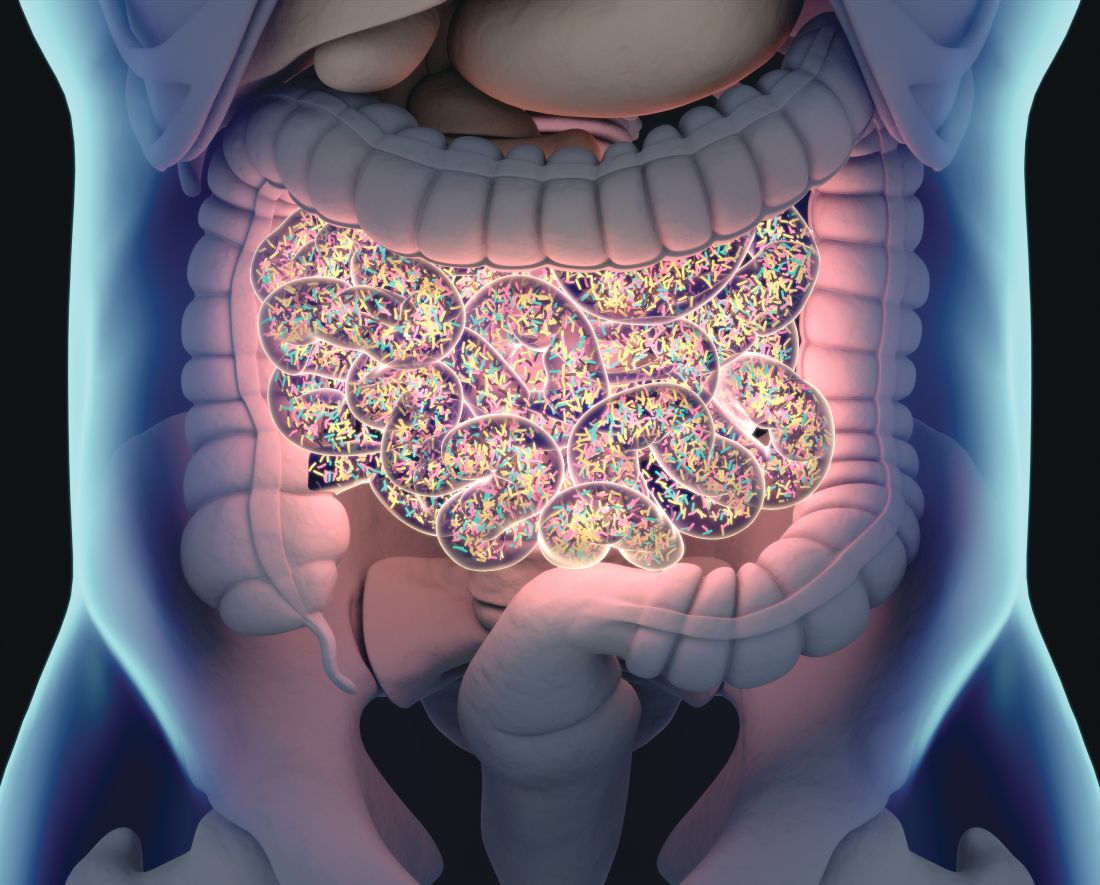
“Maybe we were too bold to say we will go for steroid-free endoscopic remission and response,” said Clara Caenepeel, MD, who was the presenting study investigator. “It’s a very strict endpoint.”
The reasoning for such a strict endpoint, however, was so that the trials’ findings could be compared with some of the other studies that have been done with FMT in UC. Importantly, all those trials have all been positive, making the results of the RESTORE-UC trial at odds with their findings.
“I think in the analysis that we will do now is definitely look at how many steps we went into the right direction,” noted Dr. Caenepeel, who is a doctoral researcher at IBD Leuven (Belgium).
Response to results
Although this is a negative trial, its findings are still important for future work looking at the role of FMT in managing patients with inflammatory bowel disease and identifying the best donor material and ways to deliver it.

While some have suggested it was back to the bench to explore negative results, others such as Michael A. Kamm, MBBS, MD, FRCP, FRACP, congratulated the investigators for undertaking the study, saying that “these studies are very hard to do!”
Dr. Kamm, who is professor of gastroenterology and leads the Kamm Gut Research Group at the University of Melbourne, was part of the Australian team that conducted the FOCUS (Faecal Microbiota Transplantation in Ulcerative Colitis) study. That study used the same primary endpoint of steroid-free endoscopic and clinical remission at 8 weeks but reported positive results – 27% of patients who had FMT versus just 8% of those who had a saline enema as a placebo achieved the endpoint (P = .021). Similarly positive findings have also been reported from five other studies.
“To understand why [RESTORE-UC] study is negative, coming after several positive studies, one needs to explore the differences in study design,” Dr. Kamm observed in an interview. Those differences include how donors were selected, how the FMT was delivered, and how patients were selected.
“All the early studies made no presumption about a favorable donor profile,” Dr. Kamm noted with regard to the selection of donors based on their microbial profile. Moreover “the mode of delivery – sigmoidoscopy without any colonoscopic whole-colon delivery, in contrast to previous studies – as well as patient selection, [with] no information on the anatomical extent of their disease,” could be important.
“There are enough robust positive studies of FMT in ulcerative colitis to believe that this therapy can be effective,” said Dr. Kamm. “Analysis of negative studies like this one should help us to understand what factors are needed to achieve a positive outcome.”
RESTORE-UC trial
“Fecal microbiota transplantation is a new emerging strategy in the treatment of active ulcerative colitis,” Dr. Caenepeel observed during her presentation. At the time the study was started in 2017 there had been four other studies, with “very heterogeneous” designs in terms of the samples used, the placebos given, the delivery of FMT, and the primary endpoints. The idea of superdonor samples also came out of those trials.
So the aim was to try to standardize practice and set up a trial “to examine if we could increase the FMT success rate in our active ulcerative colitis patients by strictly preselecting our donors; by standardized FMT preparation; and a standardized and repeated FMT administration,” Dr. Caenepeel said.
RESTORE-UC was a multicenter, randomized, double-blind, and sham-controlled trial conducted in seven Belgian hospitals. A predefined futility analysis was performed when 66% (n = 72) of the proposed 108 patients had been recruited. Of these, 36 receive autologous FMT and 30 received superdonor FMT.
“We put the emphasis on standardization. This started already with our donor selection,” Dr. Caenepeel said. From a potential 57 healthy donors, 15 were selected and altogether provided more than 500 samples that were then whittled down to the ones that provided the “best” microbial content.
FMT or autologous samples delivered four times – first by sigmoidoscopy and then at weekly intervals by rectal enema. Every patient received the same donor material, Dr. Caenepeel stressed, containing the same enterotype and concentration.
In addition to the primary endpoint of steroid-free endoscopic and clinical remission at Week 8, secondary endpoints included steroid-free clinical remission, steroid-free clinical response, steroid-free endoscopic remission, and steroid-free endoscopic response. Again, however, no significant differences were seen between the two study arms.
Two serious adverse events were seen in the trial, both occurring in the autologous sample group; these were dysuria/constipation and a worsening of colitis that needed surgery.
In discussion, Walter Reinisch, MD, the director of the inflammatory bowel disease study group at the Medical University of Vienna, picked up on why the study may have been negative. He observed that using a steroid-free endoscopic endpoint, where the Mayo score was zero, may have been a factor. A result of 19% at week 8 was not insignificant, he said, observing “if studies from big sponsors would get these results, they would be very happy.”
Perhaps the trials to date have been a little too simplistic by looking at the donor’s microbiota, Dr. Caenepeel. “It goes much further than microbiota,” she said. Thus, future work will perhaps look at the genetics and immunity of those undergoing FMT, she suggested.
Dr. Caenepeel, Dr. Kamm, and Dr. Reinisch had no conflicts of interest to disclose.
The success of fecal microbiota transplantation (FMT) in people with active ulcerative colitis (UC) was not improved by using highly standardized and controlled “superdonor” samples versus control samples, according to results reported at the 17th congress of the European Crohn’s and Colitis Organisation.
Indeed, a similar percentage (10% and 13.9%, respectively; P = .72) of patients achieved combined steroid-free endoscopic and clinical remission at 8 weeks, which was the primary endpoint of the randomized, controlled, RESTORE-UC trial.
“Maybe we were too bold to say we will go for steroid-free endoscopic remission and response,” said Clara Caenepeel, MD, who was the presenting study investigator. “It’s a very strict endpoint.”
The reasoning for such a strict endpoint, however, was so that the trials’ findings could be compared with some of the other studies that have been done with FMT in UC. Importantly, all those trials have all been positive, making the results of the RESTORE-UC trial at odds with their findings.
“I think in the analysis that we will do now is definitely look at how many steps we went into the right direction,” noted Dr. Caenepeel, who is a doctoral researcher at IBD Leuven (Belgium).
Response to results
Although this is a negative trial, its findings are still important for future work looking at the role of FMT in managing patients with inflammatory bowel disease and identifying the best donor material and ways to deliver it.
While some have suggested it was back to the bench to explore negative results, others such as Michael A. Kamm, MBBS, MD, FRCP, FRACP, congratulated the investigators for undertaking the study, saying that “these studies are very hard to do!”
Dr. Kamm, who is professor of gastroenterology and leads the Kamm Gut Research Group at the University of Melbourne, was part of the Australian team that conducted the FOCUS (Faecal Microbiota Transplantation in Ulcerative Colitis) study. That study used the same primary endpoint of steroid-free endoscopic and clinical remission at 8 weeks but reported positive results – 27% of patients who had FMT versus just 8% of those who had a saline enema as a placebo achieved the endpoint (P = .021). Similarly positive findings have also been reported from five other studies.
“To understand why [RESTORE-UC] study is negative, coming after several positive studies, one needs to explore the differences in study design,” Dr. Kamm observed in an interview. Those differences include how donors were selected, how the FMT was delivered, and how patients were selected.
“All the early studies made no presumption about a favorable donor profile,” Dr. Kamm noted with regard to the selection of donors based on their microbial profile. Moreover “the mode of delivery – sigmoidoscopy without any colonoscopic whole-colon delivery, in contrast to previous studies – as well as patient selection, [with] no information on the anatomical extent of their disease,” could be important.
“There are enough robust positive studies of FMT in ulcerative colitis to believe that this therapy can be effective,” said Dr. Kamm. “Analysis of negative studies like this one should help us to understand what factors are needed to achieve a positive outcome.”
RESTORE-UC trial
“Fecal microbiota transplantation is a new emerging strategy in the treatment of active ulcerative colitis,” Dr. Caenepeel observed during her presentation. At the time the study was started in 2017 there had been four other studies, with “very heterogeneous” designs in terms of the samples used, the placebos given, the delivery of FMT, and the primary endpoints. The idea of superdonor samples also came out of those trials.
So the aim was to try to standardize practice and set up a trial “to examine if we could increase the FMT success rate in our active ulcerative colitis patients by strictly preselecting our donors; by standardized FMT preparation; and a standardized and repeated FMT administration,” Dr. Caenepeel said.
RESTORE-UC was a multicenter, randomized, double-blind, and sham-controlled trial conducted in seven Belgian hospitals. A predefined futility analysis was performed when 66% (n = 72) of the proposed 108 patients had been recruited. Of these, 36 receive autologous FMT and 30 received superdonor FMT.
“We put the emphasis on standardization. This started already with our donor selection,” Dr. Caenepeel said. From a potential 57 healthy donors, 15 were selected and altogether provided more than 500 samples that were then whittled down to the ones that provided the “best” microbial content.
FMT or autologous samples delivered four times – first by sigmoidoscopy and then at weekly intervals by rectal enema. Every patient received the same donor material, Dr. Caenepeel stressed, containing the same enterotype and concentration.
In addition to the primary endpoint of steroid-free endoscopic and clinical remission at Week 8, secondary endpoints included steroid-free clinical remission, steroid-free clinical response, steroid-free endoscopic remission, and steroid-free endoscopic response. Again, however, no significant differences were seen between the two study arms.
Two serious adverse events were seen in the trial, both occurring in the autologous sample group; these were dysuria/constipation and a worsening of colitis that needed surgery.
In discussion, Walter Reinisch, MD, the director of the inflammatory bowel disease study group at the Medical University of Vienna, picked up on why the study may have been negative. He observed that using a steroid-free endoscopic endpoint, where the Mayo score was zero, may have been a factor. A result of 19% at week 8 was not insignificant, he said, observing “if studies from big sponsors would get these results, they would be very happy.”
Perhaps the trials to date have been a little too simplistic by looking at the donor’s microbiota, Dr. Caenepeel. “It goes much further than microbiota,” she said. Thus, future work will perhaps look at the genetics and immunity of those undergoing FMT, she suggested.
Dr. Caenepeel, Dr. Kamm, and Dr. Reinisch had no conflicts of interest to disclose.
The success of fecal microbiota transplantation (FMT) in people with active ulcerative colitis (UC) was not improved by using highly standardized and controlled “superdonor” samples versus control samples, according to results reported at the 17th congress of the European Crohn’s and Colitis Organisation.
Indeed, a similar percentage (10% and 13.9%, respectively; P = .72) of patients achieved combined steroid-free endoscopic and clinical remission at 8 weeks, which was the primary endpoint of the randomized, controlled, RESTORE-UC trial.
“Maybe we were too bold to say we will go for steroid-free endoscopic remission and response,” said Clara Caenepeel, MD, who was the presenting study investigator. “It’s a very strict endpoint.”
The reasoning for such a strict endpoint, however, was so that the trials’ findings could be compared with some of the other studies that have been done with FMT in UC. Importantly, all those trials have all been positive, making the results of the RESTORE-UC trial at odds with their findings.
“I think in the analysis that we will do now is definitely look at how many steps we went into the right direction,” noted Dr. Caenepeel, who is a doctoral researcher at IBD Leuven (Belgium).
Response to results
Although this is a negative trial, its findings are still important for future work looking at the role of FMT in managing patients with inflammatory bowel disease and identifying the best donor material and ways to deliver it.
While some have suggested it was back to the bench to explore negative results, others such as Michael A. Kamm, MBBS, MD, FRCP, FRACP, congratulated the investigators for undertaking the study, saying that “these studies are very hard to do!”
Dr. Kamm, who is professor of gastroenterology and leads the Kamm Gut Research Group at the University of Melbourne, was part of the Australian team that conducted the FOCUS (Faecal Microbiota Transplantation in Ulcerative Colitis) study. That study used the same primary endpoint of steroid-free endoscopic and clinical remission at 8 weeks but reported positive results – 27% of patients who had FMT versus just 8% of those who had a saline enema as a placebo achieved the endpoint (P = .021). Similarly positive findings have also been reported from five other studies.
“To understand why [RESTORE-UC] study is negative, coming after several positive studies, one needs to explore the differences in study design,” Dr. Kamm observed in an interview. Those differences include how donors were selected, how the FMT was delivered, and how patients were selected.
“All the early studies made no presumption about a favorable donor profile,” Dr. Kamm noted with regard to the selection of donors based on their microbial profile. Moreover “the mode of delivery – sigmoidoscopy without any colonoscopic whole-colon delivery, in contrast to previous studies – as well as patient selection, [with] no information on the anatomical extent of their disease,” could be important.
“There are enough robust positive studies of FMT in ulcerative colitis to believe that this therapy can be effective,” said Dr. Kamm. “Analysis of negative studies like this one should help us to understand what factors are needed to achieve a positive outcome.”
RESTORE-UC trial
“Fecal microbiota transplantation is a new emerging strategy in the treatment of active ulcerative colitis,” Dr. Caenepeel observed during her presentation. At the time the study was started in 2017 there had been four other studies, with “very heterogeneous” designs in terms of the samples used, the placebos given, the delivery of FMT, and the primary endpoints. The idea of superdonor samples also came out of those trials.
So the aim was to try to standardize practice and set up a trial “to examine if we could increase the FMT success rate in our active ulcerative colitis patients by strictly preselecting our donors; by standardized FMT preparation; and a standardized and repeated FMT administration,” Dr. Caenepeel said.
RESTORE-UC was a multicenter, randomized, double-blind, and sham-controlled trial conducted in seven Belgian hospitals. A predefined futility analysis was performed when 66% (n = 72) of the proposed 108 patients had been recruited. Of these, 36 receive autologous FMT and 30 received superdonor FMT.
“We put the emphasis on standardization. This started already with our donor selection,” Dr. Caenepeel said. From a potential 57 healthy donors, 15 were selected and altogether provided more than 500 samples that were then whittled down to the ones that provided the “best” microbial content.
FMT or autologous samples delivered four times – first by sigmoidoscopy and then at weekly intervals by rectal enema. Every patient received the same donor material, Dr. Caenepeel stressed, containing the same enterotype and concentration.
In addition to the primary endpoint of steroid-free endoscopic and clinical remission at Week 8, secondary endpoints included steroid-free clinical remission, steroid-free clinical response, steroid-free endoscopic remission, and steroid-free endoscopic response. Again, however, no significant differences were seen between the two study arms.
Two serious adverse events were seen in the trial, both occurring in the autologous sample group; these were dysuria/constipation and a worsening of colitis that needed surgery.
In discussion, Walter Reinisch, MD, the director of the inflammatory bowel disease study group at the Medical University of Vienna, picked up on why the study may have been negative. He observed that using a steroid-free endoscopic endpoint, where the Mayo score was zero, may have been a factor. A result of 19% at week 8 was not insignificant, he said, observing “if studies from big sponsors would get these results, they would be very happy.”
Perhaps the trials to date have been a little too simplistic by looking at the donor’s microbiota, Dr. Caenepeel. “It goes much further than microbiota,” she said. Thus, future work will perhaps look at the genetics and immunity of those undergoing FMT, she suggested.
Dr. Caenepeel, Dr. Kamm, and Dr. Reinisch had no conflicts of interest to disclose.
FROM ECCO 2022
Rheumatology patients seek guidance on CBD, cannabis products
Although there is a lack of evidence for use of cannabidiol (CBD) products and cannabis in rheumatology, many patients are using them anyway and want to discuss the use of these products with their rheumatologists, according to a speaker at the 2022 Rheumatology Winter Clinical Symposium.
While cannabis is still regulated as a Schedule I drug in the United States, CBD products are “all over the place,” Orrin Troum, MD, a rheumatologist at the University of Southern California, Los Angeles, said in his presentation. “You can get it at the pharmacy; you can get it at the dispensaries.”
Patients in rheumatology are also increasingly using cannabis across the United States, Dr. Troum said. In an abstract from the 2019 American College of Rheumatology annual meeting, researchers examined data from FORWARD, the National Databank for Rheumatic Diseases, and found 17.6% of 11,006 respondents reported using cannabis in 2017, an increase from 6.3% of respondents in 2014.
“Putting your personal biases aside, you have to be able to discuss this, and I try to do that openly with my patients,” he said.
According to a 2018 report from the World Health Organization, CBD is “generally well tolerated with a good safety profile.” While CBD itself is safe, CBD products offered over the counter as pills, lotions, foods, drinks, shampoos, cosmetics, oils, and other products carry the risk of being manufactured with “unverified contents” because they are not subject to regulatory oversight.
“There may be heavy metals, pesticides, microbes, [and] mycotoxins that are in these substances that you’re recommending to patients,” Dr. Troum said. There may also be tetrahydrocannabinol (THC) in certain CBD products, he added. Other concerns about CBD products include potential drug-drug interactions with medications used in rheumatology, and potential inhibition of drug metabolism through the CYP450 pathway.
Rheumatologists should be careful when recommending CBD products for this reason, Dr. Troum cautioned. In the absence of products approved by the Food and Drug Administration, “try to get at least products that have a good manufacturing practices certification.”
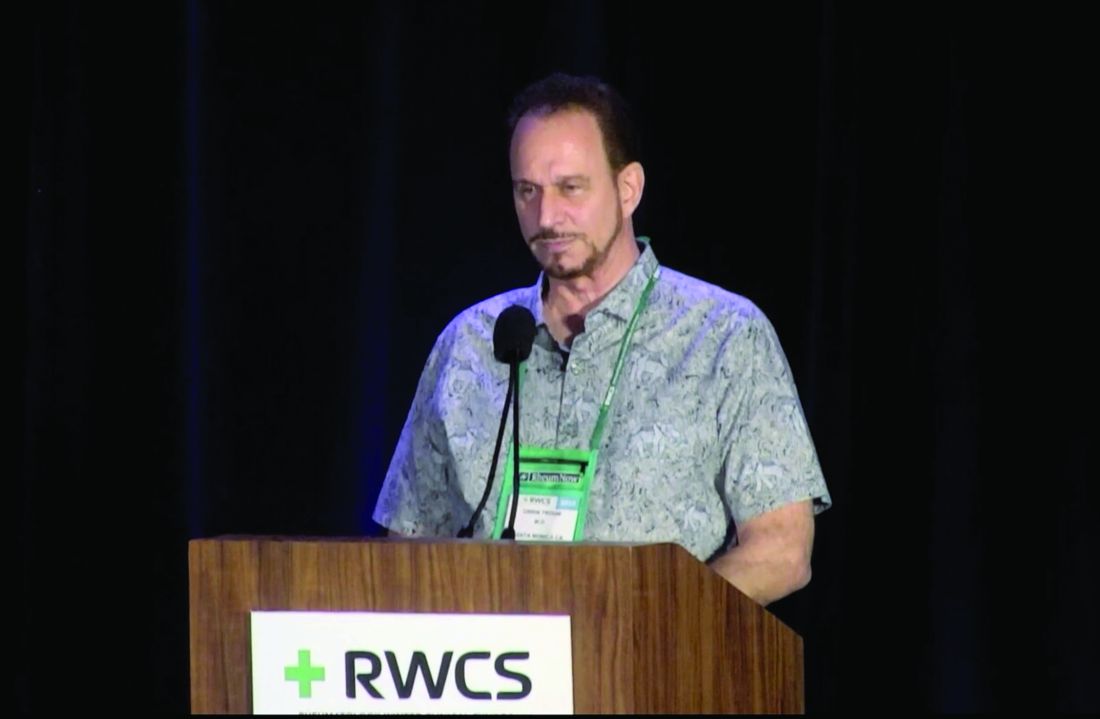
Dr. Troum highlighted the additional problem of dispensaries recommending specific products, and emphasized that treatment shouldn’t be managed by dispensary personnel without a medical background. “Our patients are being promoted this, either from the dispensaries or even in some clinicians’ offices, without the real true knowledge as to what we’re dealing with,” he said.
Evidence of health effects of CBD, cannabis
When it comes to actual evidence of clinical benefit, “I can tell you there’s lacking data for the majority of what we’re being asked every day in our practices,” Dr. Troum said.
The greatest evidence for the health benefits of cannabinoids appears to be for chronic pain, according to a 2017 report from the National Academies of Sciences, Engineering, and Medicine. Within rheumatology, a position statement released by the Canadian Rheumatology Association in 2019 found insufficient evidence to recommend cannabinoids for use in fibromyalgia, osteoarthritis, RA, or back pain, but acknowledged medical cannabis may relieve symptoms based on evidence from other conditions.
There is some preliminary evidence that cannabis can be used as a substitute for opioids when treating chronic pain, to improve symptoms of fibromyalgia and inflammatory bowel disease, and although a trial of patients with Crohn’s disease failed its primary outcome of disease remission, 10 of 11 patients who smoked cigarettes with THC saw significant improvements in clinical outcomes (P = .028).
In RA, “clinical research focusing on the cannabinoids’ disease-modifying qualities is still lacking,” Dr. Troum said, although an active randomized, controlled trial led by researchers at the University of California, Los Angeles, is testing patients for clinical response to CBD. A separate randomized, double-blind, placebo-controlled trial in Denmark is evaluating whether CBD, followed by open-label add-on of THC, improves chronic pain for patients with RA or ankylosing spondylitis.
The lack of data in this area largely has to do with how cannabis is regulated at the federal level and the differing regulations between U.S. states. “There’s a lot of hurdles you have to go through, and therefore, I think, really has decreased the availability of good studies,” he said.
Overarching principles for medical cannabis in rheumatology
For the rheumatologist counseling a patient who either is self-medicating or wants to start using medical cannabis, the Canadian Rheumatology Association created overarching principles as part of their position statement to guide decision-making for clinicians.
First, clinicians should know that cannabis shouldn’t be used as an alternative treatment for standard of care in rheumatology, and the CRA noted that patients aged under 25 years should not use cannabis. CRA also recommended that clinicians try currently available treatment strategies for common reasons patients seek to use medical cannabis, such as pain relief or a sleep aid, before attempting to use medical cannabis. The CRA noted long-term effects of medical cannabis are not known for patients with rheumatic diseases.
In an interview, Arthur Kavanaugh, MD, professor of medicine at the University of California, San Diego, and director of RWCS, said that CBD and cannabis “come up quite frequently” at his clinic. “Many patients have already tried CBD, especially the topical formulation, prior to discussing it with me. In general, I do not dissuade patients from trying CBD, especially topical.”
Typically, he said his practice situation gives him access to a counselor from the anesthesia department with “significant expertise” in dosing and formulations. “It would be great if there were proper controlled trials of specific formulations to allow us to have real scientific data that may help the patients make optimal choices.”
One issue that is brought up by patients is cost. “These preparations can be relatively expensive,” Dr. Kavanaugh said, but noted that this is also a consideration when patients decide to use any therapy.
Dr. Troum reported having financial relationships with eight pharmaceutical companies.
Although there is a lack of evidence for use of cannabidiol (CBD) products and cannabis in rheumatology, many patients are using them anyway and want to discuss the use of these products with their rheumatologists, according to a speaker at the 2022 Rheumatology Winter Clinical Symposium.
While cannabis is still regulated as a Schedule I drug in the United States, CBD products are “all over the place,” Orrin Troum, MD, a rheumatologist at the University of Southern California, Los Angeles, said in his presentation. “You can get it at the pharmacy; you can get it at the dispensaries.”
Patients in rheumatology are also increasingly using cannabis across the United States, Dr. Troum said. In an abstract from the 2019 American College of Rheumatology annual meeting, researchers examined data from FORWARD, the National Databank for Rheumatic Diseases, and found 17.6% of 11,006 respondents reported using cannabis in 2017, an increase from 6.3% of respondents in 2014.
“Putting your personal biases aside, you have to be able to discuss this, and I try to do that openly with my patients,” he said.
According to a 2018 report from the World Health Organization, CBD is “generally well tolerated with a good safety profile.” While CBD itself is safe, CBD products offered over the counter as pills, lotions, foods, drinks, shampoos, cosmetics, oils, and other products carry the risk of being manufactured with “unverified contents” because they are not subject to regulatory oversight.
“There may be heavy metals, pesticides, microbes, [and] mycotoxins that are in these substances that you’re recommending to patients,” Dr. Troum said. There may also be tetrahydrocannabinol (THC) in certain CBD products, he added. Other concerns about CBD products include potential drug-drug interactions with medications used in rheumatology, and potential inhibition of drug metabolism through the CYP450 pathway.
Rheumatologists should be careful when recommending CBD products for this reason, Dr. Troum cautioned. In the absence of products approved by the Food and Drug Administration, “try to get at least products that have a good manufacturing practices certification.”
Dr. Troum highlighted the additional problem of dispensaries recommending specific products, and emphasized that treatment shouldn’t be managed by dispensary personnel without a medical background. “Our patients are being promoted this, either from the dispensaries or even in some clinicians’ offices, without the real true knowledge as to what we’re dealing with,” he said.
Evidence of health effects of CBD, cannabis
When it comes to actual evidence of clinical benefit, “I can tell you there’s lacking data for the majority of what we’re being asked every day in our practices,” Dr. Troum said.
The greatest evidence for the health benefits of cannabinoids appears to be for chronic pain, according to a 2017 report from the National Academies of Sciences, Engineering, and Medicine. Within rheumatology, a position statement released by the Canadian Rheumatology Association in 2019 found insufficient evidence to recommend cannabinoids for use in fibromyalgia, osteoarthritis, RA, or back pain, but acknowledged medical cannabis may relieve symptoms based on evidence from other conditions.
There is some preliminary evidence that cannabis can be used as a substitute for opioids when treating chronic pain, to improve symptoms of fibromyalgia and inflammatory bowel disease, and although a trial of patients with Crohn’s disease failed its primary outcome of disease remission, 10 of 11 patients who smoked cigarettes with THC saw significant improvements in clinical outcomes (P = .028).
In RA, “clinical research focusing on the cannabinoids’ disease-modifying qualities is still lacking,” Dr. Troum said, although an active randomized, controlled trial led by researchers at the University of California, Los Angeles, is testing patients for clinical response to CBD. A separate randomized, double-blind, placebo-controlled trial in Denmark is evaluating whether CBD, followed by open-label add-on of THC, improves chronic pain for patients with RA or ankylosing spondylitis.
The lack of data in this area largely has to do with how cannabis is regulated at the federal level and the differing regulations between U.S. states. “There’s a lot of hurdles you have to go through, and therefore, I think, really has decreased the availability of good studies,” he said.
Overarching principles for medical cannabis in rheumatology
For the rheumatologist counseling a patient who either is self-medicating or wants to start using medical cannabis, the Canadian Rheumatology Association created overarching principles as part of their position statement to guide decision-making for clinicians.
First, clinicians should know that cannabis shouldn’t be used as an alternative treatment for standard of care in rheumatology, and the CRA noted that patients aged under 25 years should not use cannabis. CRA also recommended that clinicians try currently available treatment strategies for common reasons patients seek to use medical cannabis, such as pain relief or a sleep aid, before attempting to use medical cannabis. The CRA noted long-term effects of medical cannabis are not known for patients with rheumatic diseases.
In an interview, Arthur Kavanaugh, MD, professor of medicine at the University of California, San Diego, and director of RWCS, said that CBD and cannabis “come up quite frequently” at his clinic. “Many patients have already tried CBD, especially the topical formulation, prior to discussing it with me. In general, I do not dissuade patients from trying CBD, especially topical.”
Typically, he said his practice situation gives him access to a counselor from the anesthesia department with “significant expertise” in dosing and formulations. “It would be great if there were proper controlled trials of specific formulations to allow us to have real scientific data that may help the patients make optimal choices.”
One issue that is brought up by patients is cost. “These preparations can be relatively expensive,” Dr. Kavanaugh said, but noted that this is also a consideration when patients decide to use any therapy.
Dr. Troum reported having financial relationships with eight pharmaceutical companies.
Although there is a lack of evidence for use of cannabidiol (CBD) products and cannabis in rheumatology, many patients are using them anyway and want to discuss the use of these products with their rheumatologists, according to a speaker at the 2022 Rheumatology Winter Clinical Symposium.
While cannabis is still regulated as a Schedule I drug in the United States, CBD products are “all over the place,” Orrin Troum, MD, a rheumatologist at the University of Southern California, Los Angeles, said in his presentation. “You can get it at the pharmacy; you can get it at the dispensaries.”
Patients in rheumatology are also increasingly using cannabis across the United States, Dr. Troum said. In an abstract from the 2019 American College of Rheumatology annual meeting, researchers examined data from FORWARD, the National Databank for Rheumatic Diseases, and found 17.6% of 11,006 respondents reported using cannabis in 2017, an increase from 6.3% of respondents in 2014.
“Putting your personal biases aside, you have to be able to discuss this, and I try to do that openly with my patients,” he said.
According to a 2018 report from the World Health Organization, CBD is “generally well tolerated with a good safety profile.” While CBD itself is safe, CBD products offered over the counter as pills, lotions, foods, drinks, shampoos, cosmetics, oils, and other products carry the risk of being manufactured with “unverified contents” because they are not subject to regulatory oversight.
“There may be heavy metals, pesticides, microbes, [and] mycotoxins that are in these substances that you’re recommending to patients,” Dr. Troum said. There may also be tetrahydrocannabinol (THC) in certain CBD products, he added. Other concerns about CBD products include potential drug-drug interactions with medications used in rheumatology, and potential inhibition of drug metabolism through the CYP450 pathway.
Rheumatologists should be careful when recommending CBD products for this reason, Dr. Troum cautioned. In the absence of products approved by the Food and Drug Administration, “try to get at least products that have a good manufacturing practices certification.”
Dr. Troum highlighted the additional problem of dispensaries recommending specific products, and emphasized that treatment shouldn’t be managed by dispensary personnel without a medical background. “Our patients are being promoted this, either from the dispensaries or even in some clinicians’ offices, without the real true knowledge as to what we’re dealing with,” he said.
Evidence of health effects of CBD, cannabis
When it comes to actual evidence of clinical benefit, “I can tell you there’s lacking data for the majority of what we’re being asked every day in our practices,” Dr. Troum said.
The greatest evidence for the health benefits of cannabinoids appears to be for chronic pain, according to a 2017 report from the National Academies of Sciences, Engineering, and Medicine. Within rheumatology, a position statement released by the Canadian Rheumatology Association in 2019 found insufficient evidence to recommend cannabinoids for use in fibromyalgia, osteoarthritis, RA, or back pain, but acknowledged medical cannabis may relieve symptoms based on evidence from other conditions.
There is some preliminary evidence that cannabis can be used as a substitute for opioids when treating chronic pain, to improve symptoms of fibromyalgia and inflammatory bowel disease, and although a trial of patients with Crohn’s disease failed its primary outcome of disease remission, 10 of 11 patients who smoked cigarettes with THC saw significant improvements in clinical outcomes (P = .028).
In RA, “clinical research focusing on the cannabinoids’ disease-modifying qualities is still lacking,” Dr. Troum said, although an active randomized, controlled trial led by researchers at the University of California, Los Angeles, is testing patients for clinical response to CBD. A separate randomized, double-blind, placebo-controlled trial in Denmark is evaluating whether CBD, followed by open-label add-on of THC, improves chronic pain for patients with RA or ankylosing spondylitis.
The lack of data in this area largely has to do with how cannabis is regulated at the federal level and the differing regulations between U.S. states. “There’s a lot of hurdles you have to go through, and therefore, I think, really has decreased the availability of good studies,” he said.
Overarching principles for medical cannabis in rheumatology
For the rheumatologist counseling a patient who either is self-medicating or wants to start using medical cannabis, the Canadian Rheumatology Association created overarching principles as part of their position statement to guide decision-making for clinicians.
First, clinicians should know that cannabis shouldn’t be used as an alternative treatment for standard of care in rheumatology, and the CRA noted that patients aged under 25 years should not use cannabis. CRA also recommended that clinicians try currently available treatment strategies for common reasons patients seek to use medical cannabis, such as pain relief or a sleep aid, before attempting to use medical cannabis. The CRA noted long-term effects of medical cannabis are not known for patients with rheumatic diseases.
In an interview, Arthur Kavanaugh, MD, professor of medicine at the University of California, San Diego, and director of RWCS, said that CBD and cannabis “come up quite frequently” at his clinic. “Many patients have already tried CBD, especially the topical formulation, prior to discussing it with me. In general, I do not dissuade patients from trying CBD, especially topical.”
Typically, he said his practice situation gives him access to a counselor from the anesthesia department with “significant expertise” in dosing and formulations. “It would be great if there were proper controlled trials of specific formulations to allow us to have real scientific data that may help the patients make optimal choices.”
One issue that is brought up by patients is cost. “These preparations can be relatively expensive,” Dr. Kavanaugh said, but noted that this is also a consideration when patients decide to use any therapy.
Dr. Troum reported having financial relationships with eight pharmaceutical companies.
FROM RWCS 2022

Meta-analysis favors SubQ infliximab biosimilar over vedolizumab in Crohn’s disease
An infliximab biosimilar (infliximab-axxq) delivered via subcutaneous injection was superior to intravenous vedolizumab (Entyvio) for induction and maintenance therapy of Crohn’s disease (CD), according to a systematic review and meta-analysis from French researchers.
In contrast, the same research showed no significant differences in efficacy between these agents for people with ulcerative colitis (UC).
The subcutaneous injection formulation of infliximab-axxq, also known as CT-P13 SC, is approved by the European Medicines Agency for both CD and UC (Remsima SC). This formulation is not yet approved by the U.S. Food and Drug Administration.
“It’s kind of a small revolution, because now we have access, and in France, we are using a lot of subcutaneous infliximab,” Laurent Peyrin-Biroulet, MD, said during a digital oral presentation at ECCO ‘22 Virtual, the European Crohn’s and Colitis Organisation 2022 Congress. He is ECCO president and a gastroenterologist at University Hospital of Nancy in France.
Dr. Peyrin-Biroulet and colleagues compared the efficacy and safety of the two agents in major randomized controlled trials looking at moderate-to-severe CD or UC from January 2010 to April 2021.
Subcutaneous infliximab-axxq data came from NCT02883452, an ongoing phase 1 study started in 2016. The vedolizumab data come from GEMINI I, II, and III; VISIBLE 1 and 2; and VARSITY trials.
Key findings
In CD, induction efficacy was 79% for subcutaneous infliximab-axxq versus a 45% response for vedolizumab, as measured by the Crohn’s Disease Activity Index-70 (CDAI-70).
In addition, the study showed a 62% induction efficacy for subcutaneous infliximab-axxq versus 36% for vedolizumab on the CDAI-100.
The maintenance response on the CDAI-100 was achieved by 64% of the infliximab-axxq patients versus 47% of the vedolizumab patients.
“You can see better efficacy results of subcutaneous infliximab compared to vedolizumab in CD for both induction and maintenance,” Dr. Peyrin-Biroulet said, adding that what is seen here is probably what has been observed.
Similar results for UC
“We know vedolizumab is a good drug in UC, and there was not a difference between UC and CD,” Dr. Peyrin-Biroulet said.
There were no significant differences between subcutaneous infliximab-axxq and vedolizumab in terms of clinical response for induction (77% vs. 69%, respectively) or clinical response for maintenance (62% vs. 63%, respectively).
Similarly, no significant differences emerged in rates of clinical remission or mucosal healing.
Safety so far
Safety profiles for both agents in both indications were similar over 1 year.
However, Dr. Peyrin-Biroulet shared a caveat about that timeline. “It’s a 1-year follow-up, not a 10-year follow-up with 100,000 patients,” he said. “But still, what we see here is a confirmation of what we see in other analyses. There is not a significant [safety] difference between these two drugs.”
The rate of any adverse event in CD was 76% for subcutaneous infliximab-axxq versus 77% for vedolizumab, for example. Rates of any serious adverse event were 9% and 14%, respectively.
In UC studies, the rate of any adverse event was 67% for subcutaneous infliximab-axxq versus 64% for vedolizumab. Rates of serious adverse events were 12% and 11%, respectively.
Rates of discontinuation over 1 year differed between agents. Five percent of subcutaneous infliximab-axxq participants with CD discontinued treatment as because of lack of efficacy compared with 32% with vedolizumab. In UC participants, discontinuation for the same reason was reported for 3% of subcutaneous infliximab-axxq patients versus 15% of vedolizumab.
Although all participants in the subcutaneous infliximab-axxq trial were anti-tumor necrosis factor treatment naive, some in the vedolizumab may have been previously exposed to such therapy, Dr. Peyrin-Biroulet said. “Subgroup analyses would be need to further explore that.”
“It’s interesting and a clinically relevant piece of work,” said Mark Samaan, MD, session moderator and consultant gastroenterologist at Guy’s and St. Thomas’ NHS Foundation Trust in London, who was not involved in the study.
“The results are in keeping with what one might expect from IV infliximab administration. In that sense, [it is] reassuring that the two routes of administration appear to perform in a broadly similar manner,” Dr. Samaan said.
“So long as adequate exposure is achieved, I wouldn’t have expected route of administration to be a significant determinant of efficacy,” he added.
Dr. Peyrin-Biroulet reports receiving personal fees from Galapagos, AbbVie, Janssen, Genetech, Ferring, Tillots, Pharmacosmos, Celltrion, Takeda, Samsung Bioepis, Alma, Sterna, Nestle, Inotrem, Enterome, Allergen, MSD, Roche, Arena, Gilead, Hikma, Amgen, BMS, Vifor, Norgene, Mylan, Lilly, Fresenius Kabi, Opplian Pharma, Sublimity Therapeutics, Applied Molecular Transport, OSE Immunotherapeutics, Enthera, and Theravance. Dr. Samaan reports receiving advisory fees from Janssen, Takeda, Sandoz, Samsung Bioepis, Galapagos, and AbbVie and lecture fees from Bristol-Myers Squibb, Janssen, Takeda, MSD, Falk, AbbVie, and Galapagos.
A version of this article first appeared on Medscape.com.
An infliximab biosimilar (infliximab-axxq) delivered via subcutaneous injection was superior to intravenous vedolizumab (Entyvio) for induction and maintenance therapy of Crohn’s disease (CD), according to a systematic review and meta-analysis from French researchers.
In contrast, the same research showed no significant differences in efficacy between these agents for people with ulcerative colitis (UC).
The subcutaneous injection formulation of infliximab-axxq, also known as CT-P13 SC, is approved by the European Medicines Agency for both CD and UC (Remsima SC). This formulation is not yet approved by the U.S. Food and Drug Administration.
“It’s kind of a small revolution, because now we have access, and in France, we are using a lot of subcutaneous infliximab,” Laurent Peyrin-Biroulet, MD, said during a digital oral presentation at ECCO ‘22 Virtual, the European Crohn’s and Colitis Organisation 2022 Congress. He is ECCO president and a gastroenterologist at University Hospital of Nancy in France.
Dr. Peyrin-Biroulet and colleagues compared the efficacy and safety of the two agents in major randomized controlled trials looking at moderate-to-severe CD or UC from January 2010 to April 2021.
Subcutaneous infliximab-axxq data came from NCT02883452, an ongoing phase 1 study started in 2016. The vedolizumab data come from GEMINI I, II, and III; VISIBLE 1 and 2; and VARSITY trials.
Key findings
In CD, induction efficacy was 79% for subcutaneous infliximab-axxq versus a 45% response for vedolizumab, as measured by the Crohn’s Disease Activity Index-70 (CDAI-70).
In addition, the study showed a 62% induction efficacy for subcutaneous infliximab-axxq versus 36% for vedolizumab on the CDAI-100.
The maintenance response on the CDAI-100 was achieved by 64% of the infliximab-axxq patients versus 47% of the vedolizumab patients.
“You can see better efficacy results of subcutaneous infliximab compared to vedolizumab in CD for both induction and maintenance,” Dr. Peyrin-Biroulet said, adding that what is seen here is probably what has been observed.
Similar results for UC
“We know vedolizumab is a good drug in UC, and there was not a difference between UC and CD,” Dr. Peyrin-Biroulet said.
There were no significant differences between subcutaneous infliximab-axxq and vedolizumab in terms of clinical response for induction (77% vs. 69%, respectively) or clinical response for maintenance (62% vs. 63%, respectively).
Similarly, no significant differences emerged in rates of clinical remission or mucosal healing.
Safety so far
Safety profiles for both agents in both indications were similar over 1 year.
However, Dr. Peyrin-Biroulet shared a caveat about that timeline. “It’s a 1-year follow-up, not a 10-year follow-up with 100,000 patients,” he said. “But still, what we see here is a confirmation of what we see in other analyses. There is not a significant [safety] difference between these two drugs.”
The rate of any adverse event in CD was 76% for subcutaneous infliximab-axxq versus 77% for vedolizumab, for example. Rates of any serious adverse event were 9% and 14%, respectively.
In UC studies, the rate of any adverse event was 67% for subcutaneous infliximab-axxq versus 64% for vedolizumab. Rates of serious adverse events were 12% and 11%, respectively.
Rates of discontinuation over 1 year differed between agents. Five percent of subcutaneous infliximab-axxq participants with CD discontinued treatment as because of lack of efficacy compared with 32% with vedolizumab. In UC participants, discontinuation for the same reason was reported for 3% of subcutaneous infliximab-axxq patients versus 15% of vedolizumab.
Although all participants in the subcutaneous infliximab-axxq trial were anti-tumor necrosis factor treatment naive, some in the vedolizumab may have been previously exposed to such therapy, Dr. Peyrin-Biroulet said. “Subgroup analyses would be need to further explore that.”
“It’s interesting and a clinically relevant piece of work,” said Mark Samaan, MD, session moderator and consultant gastroenterologist at Guy’s and St. Thomas’ NHS Foundation Trust in London, who was not involved in the study.
“The results are in keeping with what one might expect from IV infliximab administration. In that sense, [it is] reassuring that the two routes of administration appear to perform in a broadly similar manner,” Dr. Samaan said.
“So long as adequate exposure is achieved, I wouldn’t have expected route of administration to be a significant determinant of efficacy,” he added.
Dr. Peyrin-Biroulet reports receiving personal fees from Galapagos, AbbVie, Janssen, Genetech, Ferring, Tillots, Pharmacosmos, Celltrion, Takeda, Samsung Bioepis, Alma, Sterna, Nestle, Inotrem, Enterome, Allergen, MSD, Roche, Arena, Gilead, Hikma, Amgen, BMS, Vifor, Norgene, Mylan, Lilly, Fresenius Kabi, Opplian Pharma, Sublimity Therapeutics, Applied Molecular Transport, OSE Immunotherapeutics, Enthera, and Theravance. Dr. Samaan reports receiving advisory fees from Janssen, Takeda, Sandoz, Samsung Bioepis, Galapagos, and AbbVie and lecture fees from Bristol-Myers Squibb, Janssen, Takeda, MSD, Falk, AbbVie, and Galapagos.
A version of this article first appeared on Medscape.com.
An infliximab biosimilar (infliximab-axxq) delivered via subcutaneous injection was superior to intravenous vedolizumab (Entyvio) for induction and maintenance therapy of Crohn’s disease (CD), according to a systematic review and meta-analysis from French researchers.
In contrast, the same research showed no significant differences in efficacy between these agents for people with ulcerative colitis (UC).
The subcutaneous injection formulation of infliximab-axxq, also known as CT-P13 SC, is approved by the European Medicines Agency for both CD and UC (Remsima SC). This formulation is not yet approved by the U.S. Food and Drug Administration.
“It’s kind of a small revolution, because now we have access, and in France, we are using a lot of subcutaneous infliximab,” Laurent Peyrin-Biroulet, MD, said during a digital oral presentation at ECCO ‘22 Virtual, the European Crohn’s and Colitis Organisation 2022 Congress. He is ECCO president and a gastroenterologist at University Hospital of Nancy in France.
Dr. Peyrin-Biroulet and colleagues compared the efficacy and safety of the two agents in major randomized controlled trials looking at moderate-to-severe CD or UC from January 2010 to April 2021.
Subcutaneous infliximab-axxq data came from NCT02883452, an ongoing phase 1 study started in 2016. The vedolizumab data come from GEMINI I, II, and III; VISIBLE 1 and 2; and VARSITY trials.
Key findings
In CD, induction efficacy was 79% for subcutaneous infliximab-axxq versus a 45% response for vedolizumab, as measured by the Crohn’s Disease Activity Index-70 (CDAI-70).
In addition, the study showed a 62% induction efficacy for subcutaneous infliximab-axxq versus 36% for vedolizumab on the CDAI-100.
The maintenance response on the CDAI-100 was achieved by 64% of the infliximab-axxq patients versus 47% of the vedolizumab patients.
“You can see better efficacy results of subcutaneous infliximab compared to vedolizumab in CD for both induction and maintenance,” Dr. Peyrin-Biroulet said, adding that what is seen here is probably what has been observed.
Similar results for UC
“We know vedolizumab is a good drug in UC, and there was not a difference between UC and CD,” Dr. Peyrin-Biroulet said.
There were no significant differences between subcutaneous infliximab-axxq and vedolizumab in terms of clinical response for induction (77% vs. 69%, respectively) or clinical response for maintenance (62% vs. 63%, respectively).
Similarly, no significant differences emerged in rates of clinical remission or mucosal healing.
Safety so far
Safety profiles for both agents in both indications were similar over 1 year.
However, Dr. Peyrin-Biroulet shared a caveat about that timeline. “It’s a 1-year follow-up, not a 10-year follow-up with 100,000 patients,” he said. “But still, what we see here is a confirmation of what we see in other analyses. There is not a significant [safety] difference between these two drugs.”
The rate of any adverse event in CD was 76% for subcutaneous infliximab-axxq versus 77% for vedolizumab, for example. Rates of any serious adverse event were 9% and 14%, respectively.
In UC studies, the rate of any adverse event was 67% for subcutaneous infliximab-axxq versus 64% for vedolizumab. Rates of serious adverse events were 12% and 11%, respectively.
Rates of discontinuation over 1 year differed between agents. Five percent of subcutaneous infliximab-axxq participants with CD discontinued treatment as because of lack of efficacy compared with 32% with vedolizumab. In UC participants, discontinuation for the same reason was reported for 3% of subcutaneous infliximab-axxq patients versus 15% of vedolizumab.
Although all participants in the subcutaneous infliximab-axxq trial were anti-tumor necrosis factor treatment naive, some in the vedolizumab may have been previously exposed to such therapy, Dr. Peyrin-Biroulet said. “Subgroup analyses would be need to further explore that.”
“It’s interesting and a clinically relevant piece of work,” said Mark Samaan, MD, session moderator and consultant gastroenterologist at Guy’s and St. Thomas’ NHS Foundation Trust in London, who was not involved in the study.
“The results are in keeping with what one might expect from IV infliximab administration. In that sense, [it is] reassuring that the two routes of administration appear to perform in a broadly similar manner,” Dr. Samaan said.
“So long as adequate exposure is achieved, I wouldn’t have expected route of administration to be a significant determinant of efficacy,” he added.
Dr. Peyrin-Biroulet reports receiving personal fees from Galapagos, AbbVie, Janssen, Genetech, Ferring, Tillots, Pharmacosmos, Celltrion, Takeda, Samsung Bioepis, Alma, Sterna, Nestle, Inotrem, Enterome, Allergen, MSD, Roche, Arena, Gilead, Hikma, Amgen, BMS, Vifor, Norgene, Mylan, Lilly, Fresenius Kabi, Opplian Pharma, Sublimity Therapeutics, Applied Molecular Transport, OSE Immunotherapeutics, Enthera, and Theravance. Dr. Samaan reports receiving advisory fees from Janssen, Takeda, Sandoz, Samsung Bioepis, Galapagos, and AbbVie and lecture fees from Bristol-Myers Squibb, Janssen, Takeda, MSD, Falk, AbbVie, and Galapagos.
A version of this article first appeared on Medscape.com.
Combination treatments a must for the war on warts
When counseling patients with warts, Adam Friedman, MD, admits that he feels like a character from “Game of Thrones” since many treatment options are “medieval and painful,” from duct tape occlusion to the stings of liquid nitrogen and salicylic acid.
“We can combine destructive, immunologic, and cytotoxic approaches,” Dr. Friedman, professor and chair of dermatology at George Washington University, Washington, said at the ODAC Dermatology, Aesthetic & Surgical Conference. “It’s not one or the other, we want to be aggressive.
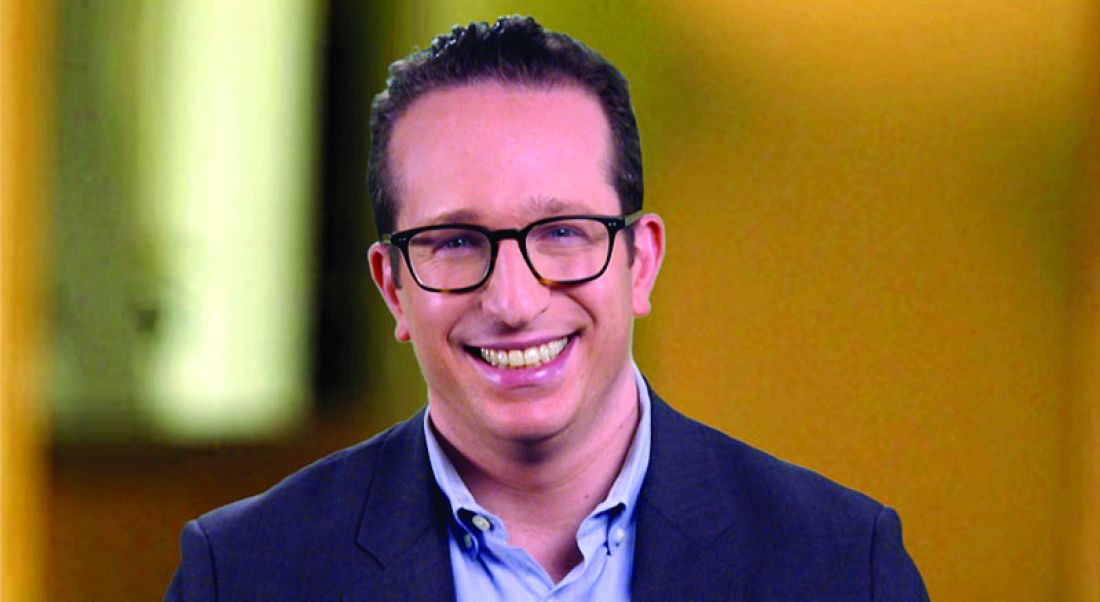
At the initial clinic visit, he advises asking patients how long the warts have been present, because sometimes they will go away within a year or two without treatment. “If someone says, ‘I’ve had these for years,’ you know you’re in for the long haul and you have to be aggressive with their therapy,” Dr. Friedman said. “Sometimes you’ll pick up plantar warts on a full-body skin exam and the patient may say, ‘I really don’t care. Please don’t touch them,’ so it’s important to understand how they are impacting quality of life.”
Patients should also be asked what treatments they have used previously, and it is important to set some realistic expectations and dispel some myths, Dr. Friedman said. “One of the most important things is that you must get these patients back. This is not often a one and done approach; you need to keep hitting them [with therapy], because if you let one infected keratinocyte survive, it’s going to come back and it’s still going to be contagious – more likely for that patient than for anyone else.”
The application of liquid nitrogen is a popular, inexpensive destructive treatment option, with spray canisters that cost about $600. “You have to consider the temperature of the liquid nitrogen spray because melanocytes die at negative 5 degrees Celsius, so you have to be mindful in patients with darker skin tones that you may leave with permanent dyschromia, meaning hypopigmentation or depigmentation when you do this,” he said. Because it is painful, “we’re limited when it comes to treating children with warts who are younger than 9 or 10. I don’t think the Q-tip method or dipping a hemostat in cryogen and touching the tip really works. You’ve got to create a nice ice ball that thaws and kills the infected keratinocytes.”
Dr. Friedman favors a 10-second freeze of the wart, usually for two to three cycles depending on its anatomic location, and he may give patients imiquimod or 5-FU to use at home for 5 nights of the week. A recently published study found that the use of ultrasound gel increases the efficacy of cryotherapy in the treatment of warts.
Another destructive treatment approach is cantharidin 0.7% applied topically in the office. It is believed to activate neutral serine proteases that cause degeneration of the desmosomal plaque, leading to detachment of tonofilaments from desmosomes. Repeat in-office applications within 14-21 days may be necessary for this treatment, which is not approved by the Food and Drug Administration. “It is painless on application unless there’s a break in the skin,” Dr. Friedman said.
For warts on thicker areas such as palms and soles, he often employs combination therapy with cantharidin 1%, salicylic acid 30%, and podophyllotoxin 5%. “This can hurt a little bit, but some patients require only one treatment for cure,” he said. “Efficacy depends on the size of the wart.”
VP-102, a proprietary, drug-device combination product containing cantharidin, 0.7% “is coming down the pike,” Dr. Friedman said. “From the data we have, it seems that pairing with a curette or a #15 blade first gets better penetration, which makes sense. Patients come back every 3-4 weeks for treatment. It is a big investment, but it is worth it. I tell patients it’s not worth starting if you’re not going to see it through. I tell them, ‘we’re going to see a lot of each other until this is clear.’ ”
As for immunomodulatory approaches, imiquimod 5% cream is approved for treating genital and perianal warts. In Dr. Friedman’s clinical experience, it has limited efficacy on keratinized skin unless the surface has been disrupted, “so don’t even waste your time unless you are using some approach to enhance skin penetration,” he advised. “Insurance coverage can be a challenge,” he added.
He recommends application with salicylic acid alternating with imiquimod 5% cream every night at bedtime – under occlusion for thicker skinned areas.
For patients who favor use of natural products, off-label ingenol mebutate is an option. A case series of its use in 17 patients with anogenital warts found that 16 experienced clearance of all warts treated with either 0.05% or 0.015% ingenol mebutate gel. Local irritation occurred within 24-48 hours and lasted 2-5 days.
A natural alternative treatment is Candida albicans skin test antigen (Candin), especially for cases of multiple lesions on the hands and feet, because a field effect can be achieved, Dr. Friedman said. “The idea here is simple. At most, you’re talking about injecting a sentinel wart with 0.3 mL Candin 2-10 times every 3 weeks. The wart may be in a field of warts. That will induce an immune reaction that brings in the cavalry. I find that it works very well but it is painful, so when you’re injecting the feet, get the foot positioned well, because that patient may inadvertently kick you in the face [upon injection].”
Authors of a recent systematic review and meta-analysis highlighted the efficacy for systemic retinoids in the treatment of warts, particularly recalcitrant or recurrent types (Dermatol Ther 2021 34[2]:e14793). “Tazarotene is going to be your best bet if you can get it,” Dr. Friedman said. “If you have to go lower like OTC adapalene or tretinoin, be my guest, but tazarotene works best by slowing down that rapid turnover that the virus is imparting on the basal keratinocyte layer. It can enhance penetration of drug but also thin the warts out.”
Dr. Friedman characterized human papilloma virus (HPV) vaccines, such as Gardasil 9, as “one of the greatest innovations” in the treatment of warts. While indicated as a preventive strategy, “it also works as treatment. I’ve had patients with recalcitrant genital warts who will clear after taking the vaccine. It is something to think about as an adjuvant to everything we do, because it can function as a treatment.”
Another immunologic treatment option is the oral H2-receptor antagonist cimetidine taken 30 mg/kg per day for 3-5 months. “There is mixed evidence of efficacy with this,” Dr. Friedman said. “I tend to use it in cases of innumerable flat warts.”
As for cytotoxic options for treating warts, bleomycin works at 250-1,000 U/mL injected per lesion, with lidocaine. “This is painful to patients both on application and post treatment,” he said. “But it works really well when used properly.”
In one study of 46 patients who received intralesional bleomycin, 74% patients had complete resolution of all warts with an average of 1.7 treatments. About 70% of patients experienced pain that lasted less than 2 days after treatment. In a separate study of patients treated with bleomycin for warts, researchers in India diluted bleomycin with lidocaine to help mitigate some of that pain.
An additional cytotoxic option, 5-FU in formulations of 5% cream/solution or 1% cream, can effectively treat warts. Dr. Friedman typically suggests application to the affected area twice daily for 3-5 weeks. “The cost can be high especially for off-label use,” he said. He noted that Skin Medicinals makes a compounded wart solution composed of 5% 5-FU and salicylic acid 30% solution. A 50 mL container sells for about $50.
Dr. Friedman had no relevant disclosures related to his presentation.
When counseling patients with warts, Adam Friedman, MD, admits that he feels like a character from “Game of Thrones” since many treatment options are “medieval and painful,” from duct tape occlusion to the stings of liquid nitrogen and salicylic acid.
“We can combine destructive, immunologic, and cytotoxic approaches,” Dr. Friedman, professor and chair of dermatology at George Washington University, Washington, said at the ODAC Dermatology, Aesthetic & Surgical Conference. “It’s not one or the other, we want to be aggressive.
At the initial clinic visit, he advises asking patients how long the warts have been present, because sometimes they will go away within a year or two without treatment. “If someone says, ‘I’ve had these for years,’ you know you’re in for the long haul and you have to be aggressive with their therapy,” Dr. Friedman said. “Sometimes you’ll pick up plantar warts on a full-body skin exam and the patient may say, ‘I really don’t care. Please don’t touch them,’ so it’s important to understand how they are impacting quality of life.”
Patients should also be asked what treatments they have used previously, and it is important to set some realistic expectations and dispel some myths, Dr. Friedman said. “One of the most important things is that you must get these patients back. This is not often a one and done approach; you need to keep hitting them [with therapy], because if you let one infected keratinocyte survive, it’s going to come back and it’s still going to be contagious – more likely for that patient than for anyone else.”
The application of liquid nitrogen is a popular, inexpensive destructive treatment option, with spray canisters that cost about $600. “You have to consider the temperature of the liquid nitrogen spray because melanocytes die at negative 5 degrees Celsius, so you have to be mindful in patients with darker skin tones that you may leave with permanent dyschromia, meaning hypopigmentation or depigmentation when you do this,” he said. Because it is painful, “we’re limited when it comes to treating children with warts who are younger than 9 or 10. I don’t think the Q-tip method or dipping a hemostat in cryogen and touching the tip really works. You’ve got to create a nice ice ball that thaws and kills the infected keratinocytes.”
Dr. Friedman favors a 10-second freeze of the wart, usually for two to three cycles depending on its anatomic location, and he may give patients imiquimod or 5-FU to use at home for 5 nights of the week. A recently published study found that the use of ultrasound gel increases the efficacy of cryotherapy in the treatment of warts.
Another destructive treatment approach is cantharidin 0.7% applied topically in the office. It is believed to activate neutral serine proteases that cause degeneration of the desmosomal plaque, leading to detachment of tonofilaments from desmosomes. Repeat in-office applications within 14-21 days may be necessary for this treatment, which is not approved by the Food and Drug Administration. “It is painless on application unless there’s a break in the skin,” Dr. Friedman said.
For warts on thicker areas such as palms and soles, he often employs combination therapy with cantharidin 1%, salicylic acid 30%, and podophyllotoxin 5%. “This can hurt a little bit, but some patients require only one treatment for cure,” he said. “Efficacy depends on the size of the wart.”
VP-102, a proprietary, drug-device combination product containing cantharidin, 0.7% “is coming down the pike,” Dr. Friedman said. “From the data we have, it seems that pairing with a curette or a #15 blade first gets better penetration, which makes sense. Patients come back every 3-4 weeks for treatment. It is a big investment, but it is worth it. I tell patients it’s not worth starting if you’re not going to see it through. I tell them, ‘we’re going to see a lot of each other until this is clear.’ ”
As for immunomodulatory approaches, imiquimod 5% cream is approved for treating genital and perianal warts. In Dr. Friedman’s clinical experience, it has limited efficacy on keratinized skin unless the surface has been disrupted, “so don’t even waste your time unless you are using some approach to enhance skin penetration,” he advised. “Insurance coverage can be a challenge,” he added.
He recommends application with salicylic acid alternating with imiquimod 5% cream every night at bedtime – under occlusion for thicker skinned areas.
For patients who favor use of natural products, off-label ingenol mebutate is an option. A case series of its use in 17 patients with anogenital warts found that 16 experienced clearance of all warts treated with either 0.05% or 0.015% ingenol mebutate gel. Local irritation occurred within 24-48 hours and lasted 2-5 days.
A natural alternative treatment is Candida albicans skin test antigen (Candin), especially for cases of multiple lesions on the hands and feet, because a field effect can be achieved, Dr. Friedman said. “The idea here is simple. At most, you’re talking about injecting a sentinel wart with 0.3 mL Candin 2-10 times every 3 weeks. The wart may be in a field of warts. That will induce an immune reaction that brings in the cavalry. I find that it works very well but it is painful, so when you’re injecting the feet, get the foot positioned well, because that patient may inadvertently kick you in the face [upon injection].”
Authors of a recent systematic review and meta-analysis highlighted the efficacy for systemic retinoids in the treatment of warts, particularly recalcitrant or recurrent types (Dermatol Ther 2021 34[2]:e14793). “Tazarotene is going to be your best bet if you can get it,” Dr. Friedman said. “If you have to go lower like OTC adapalene or tretinoin, be my guest, but tazarotene works best by slowing down that rapid turnover that the virus is imparting on the basal keratinocyte layer. It can enhance penetration of drug but also thin the warts out.”
Dr. Friedman characterized human papilloma virus (HPV) vaccines, such as Gardasil 9, as “one of the greatest innovations” in the treatment of warts. While indicated as a preventive strategy, “it also works as treatment. I’ve had patients with recalcitrant genital warts who will clear after taking the vaccine. It is something to think about as an adjuvant to everything we do, because it can function as a treatment.”
Another immunologic treatment option is the oral H2-receptor antagonist cimetidine taken 30 mg/kg per day for 3-5 months. “There is mixed evidence of efficacy with this,” Dr. Friedman said. “I tend to use it in cases of innumerable flat warts.”
As for cytotoxic options for treating warts, bleomycin works at 250-1,000 U/mL injected per lesion, with lidocaine. “This is painful to patients both on application and post treatment,” he said. “But it works really well when used properly.”
In one study of 46 patients who received intralesional bleomycin, 74% patients had complete resolution of all warts with an average of 1.7 treatments. About 70% of patients experienced pain that lasted less than 2 days after treatment. In a separate study of patients treated with bleomycin for warts, researchers in India diluted bleomycin with lidocaine to help mitigate some of that pain.
An additional cytotoxic option, 5-FU in formulations of 5% cream/solution or 1% cream, can effectively treat warts. Dr. Friedman typically suggests application to the affected area twice daily for 3-5 weeks. “The cost can be high especially for off-label use,” he said. He noted that Skin Medicinals makes a compounded wart solution composed of 5% 5-FU and salicylic acid 30% solution. A 50 mL container sells for about $50.
Dr. Friedman had no relevant disclosures related to his presentation.
When counseling patients with warts, Adam Friedman, MD, admits that he feels like a character from “Game of Thrones” since many treatment options are “medieval and painful,” from duct tape occlusion to the stings of liquid nitrogen and salicylic acid.
“We can combine destructive, immunologic, and cytotoxic approaches,” Dr. Friedman, professor and chair of dermatology at George Washington University, Washington, said at the ODAC Dermatology, Aesthetic & Surgical Conference. “It’s not one or the other, we want to be aggressive.
At the initial clinic visit, he advises asking patients how long the warts have been present, because sometimes they will go away within a year or two without treatment. “If someone says, ‘I’ve had these for years,’ you know you’re in for the long haul and you have to be aggressive with their therapy,” Dr. Friedman said. “Sometimes you’ll pick up plantar warts on a full-body skin exam and the patient may say, ‘I really don’t care. Please don’t touch them,’ so it’s important to understand how they are impacting quality of life.”
Patients should also be asked what treatments they have used previously, and it is important to set some realistic expectations and dispel some myths, Dr. Friedman said. “One of the most important things is that you must get these patients back. This is not often a one and done approach; you need to keep hitting them [with therapy], because if you let one infected keratinocyte survive, it’s going to come back and it’s still going to be contagious – more likely for that patient than for anyone else.”
The application of liquid nitrogen is a popular, inexpensive destructive treatment option, with spray canisters that cost about $600. “You have to consider the temperature of the liquid nitrogen spray because melanocytes die at negative 5 degrees Celsius, so you have to be mindful in patients with darker skin tones that you may leave with permanent dyschromia, meaning hypopigmentation or depigmentation when you do this,” he said. Because it is painful, “we’re limited when it comes to treating children with warts who are younger than 9 or 10. I don’t think the Q-tip method or dipping a hemostat in cryogen and touching the tip really works. You’ve got to create a nice ice ball that thaws and kills the infected keratinocytes.”
Dr. Friedman favors a 10-second freeze of the wart, usually for two to three cycles depending on its anatomic location, and he may give patients imiquimod or 5-FU to use at home for 5 nights of the week. A recently published study found that the use of ultrasound gel increases the efficacy of cryotherapy in the treatment of warts.
Another destructive treatment approach is cantharidin 0.7% applied topically in the office. It is believed to activate neutral serine proteases that cause degeneration of the desmosomal plaque, leading to detachment of tonofilaments from desmosomes. Repeat in-office applications within 14-21 days may be necessary for this treatment, which is not approved by the Food and Drug Administration. “It is painless on application unless there’s a break in the skin,” Dr. Friedman said.
For warts on thicker areas such as palms and soles, he often employs combination therapy with cantharidin 1%, salicylic acid 30%, and podophyllotoxin 5%. “This can hurt a little bit, but some patients require only one treatment for cure,” he said. “Efficacy depends on the size of the wart.”
VP-102, a proprietary, drug-device combination product containing cantharidin, 0.7% “is coming down the pike,” Dr. Friedman said. “From the data we have, it seems that pairing with a curette or a #15 blade first gets better penetration, which makes sense. Patients come back every 3-4 weeks for treatment. It is a big investment, but it is worth it. I tell patients it’s not worth starting if you’re not going to see it through. I tell them, ‘we’re going to see a lot of each other until this is clear.’ ”
As for immunomodulatory approaches, imiquimod 5% cream is approved for treating genital and perianal warts. In Dr. Friedman’s clinical experience, it has limited efficacy on keratinized skin unless the surface has been disrupted, “so don’t even waste your time unless you are using some approach to enhance skin penetration,” he advised. “Insurance coverage can be a challenge,” he added.
He recommends application with salicylic acid alternating with imiquimod 5% cream every night at bedtime – under occlusion for thicker skinned areas.
For patients who favor use of natural products, off-label ingenol mebutate is an option. A case series of its use in 17 patients with anogenital warts found that 16 experienced clearance of all warts treated with either 0.05% or 0.015% ingenol mebutate gel. Local irritation occurred within 24-48 hours and lasted 2-5 days.
A natural alternative treatment is Candida albicans skin test antigen (Candin), especially for cases of multiple lesions on the hands and feet, because a field effect can be achieved, Dr. Friedman said. “The idea here is simple. At most, you’re talking about injecting a sentinel wart with 0.3 mL Candin 2-10 times every 3 weeks. The wart may be in a field of warts. That will induce an immune reaction that brings in the cavalry. I find that it works very well but it is painful, so when you’re injecting the feet, get the foot positioned well, because that patient may inadvertently kick you in the face [upon injection].”
Authors of a recent systematic review and meta-analysis highlighted the efficacy for systemic retinoids in the treatment of warts, particularly recalcitrant or recurrent types (Dermatol Ther 2021 34[2]:e14793). “Tazarotene is going to be your best bet if you can get it,” Dr. Friedman said. “If you have to go lower like OTC adapalene or tretinoin, be my guest, but tazarotene works best by slowing down that rapid turnover that the virus is imparting on the basal keratinocyte layer. It can enhance penetration of drug but also thin the warts out.”
Dr. Friedman characterized human papilloma virus (HPV) vaccines, such as Gardasil 9, as “one of the greatest innovations” in the treatment of warts. While indicated as a preventive strategy, “it also works as treatment. I’ve had patients with recalcitrant genital warts who will clear after taking the vaccine. It is something to think about as an adjuvant to everything we do, because it can function as a treatment.”
Another immunologic treatment option is the oral H2-receptor antagonist cimetidine taken 30 mg/kg per day for 3-5 months. “There is mixed evidence of efficacy with this,” Dr. Friedman said. “I tend to use it in cases of innumerable flat warts.”
As for cytotoxic options for treating warts, bleomycin works at 250-1,000 U/mL injected per lesion, with lidocaine. “This is painful to patients both on application and post treatment,” he said. “But it works really well when used properly.”
In one study of 46 patients who received intralesional bleomycin, 74% patients had complete resolution of all warts with an average of 1.7 treatments. About 70% of patients experienced pain that lasted less than 2 days after treatment. In a separate study of patients treated with bleomycin for warts, researchers in India diluted bleomycin with lidocaine to help mitigate some of that pain.
An additional cytotoxic option, 5-FU in formulations of 5% cream/solution or 1% cream, can effectively treat warts. Dr. Friedman typically suggests application to the affected area twice daily for 3-5 weeks. “The cost can be high especially for off-label use,” he said. He noted that Skin Medicinals makes a compounded wart solution composed of 5% 5-FU and salicylic acid 30% solution. A 50 mL container sells for about $50.
Dr. Friedman had no relevant disclosures related to his presentation.
FROM ODAC 2022
63% of patients with upper tract urothelial carcinoma respond to chemo before surgery
They made the call after finding that 63% of patients (36/57) had a pathologic response to gemcitabine/cisplatin before extirpative surgery, with pathologic response defined as less than pT2NO disease on postoperative pathology. Nineteen percent (11/57) had complete responses, with no evidence of the main tumor (ypT0N0).
The approach has a “favorable pathologic response, is well tolerated ... and thus should be considered a new standard of care option,” said investigators led by Wesley Yip, MD, a urologic oncology fellow at Memorial Sloan Kettering Cancer Center, New York.
There was no comparator arm, but the results are in line with previous reports, including a 2014 investigation that found a 5-year disease specific survival (DSS) of 90.1% and 5-year overall survival (OS) of 80.2% among 31 upper tract urothelial carcinoma patients who received neoadjuvant chemotherapy, versus a 5-year DSS and OS of 57.6% among 81 historical controls.
Presentation moderator Stephen Boorjian, MD, chair of urology at the Mayo Clinic in Rochester, Minn., called the findings “valuable” but noted there’s level 1 evidence for an alternative approach, chemotherapy or nivolumab after surgery for patients with particularly worrisome postop pathology. It makes it tough to know if patients should be treated beforehand or afterwards.
“What do we do?” he asked.
Dr. Yip said it’s an open question at this point but that trials are underway to address the issue. In the meantime, “it’s definitely a multidisciplinary discussion to know what’s best for each patient,” he said. One of the factors that argues for the neoadjuvant approach is that substantially fewer patients are eligible for chemotherapy after nephroureterectomy because of diminished renal function. “Patients who might not be eligible ... are the ones we’d be targeting for” neoadjuvant chemotherapy (NAC), he said.
In the study, gemcitabine 1000 mg/m2 and cisplatin 35 mg/m2 were administered on days 1 and 8 of four 21-day cycles, followed by radical nephroureterectomy or ureterectomy.
Fifty-three of the subjects had high-grade disease by endoscopic biopsy, and the remaining four were enrolled based on imaging and selective cytology. There was no nodal disease on CT within 30 days of neoadjuvant chemotherapy initiation.
Two-year progression-free survival (PFS) was 91% among pathologic responders but only 52% among nonresponders. Every responder was alive at 2 years versus 80% of nonresponders.
Across the entire cohort, 5-year PFS was 61% and 5-year OS 79%; 89.5% of patients were alive at a median follow-up of 3.5 years.
Almost all of the patients completed at least three NAC cycles, and all of them went to surgery, which had a 90-day grade 3 or higher complication rate of 7%.
Sixty-three percent were men, and 95% were White. The median age was 66 years.
The work was funded by the National Institutes of Health and Memorial Sloan Kettering. Dr. Yip had no disclosures. Dr. Boorjian advises ArTara Therapeutics, FerGene, and Ferring.
They made the call after finding that 63% of patients (36/57) had a pathologic response to gemcitabine/cisplatin before extirpative surgery, with pathologic response defined as less than pT2NO disease on postoperative pathology. Nineteen percent (11/57) had complete responses, with no evidence of the main tumor (ypT0N0).
The approach has a “favorable pathologic response, is well tolerated ... and thus should be considered a new standard of care option,” said investigators led by Wesley Yip, MD, a urologic oncology fellow at Memorial Sloan Kettering Cancer Center, New York.
There was no comparator arm, but the results are in line with previous reports, including a 2014 investigation that found a 5-year disease specific survival (DSS) of 90.1% and 5-year overall survival (OS) of 80.2% among 31 upper tract urothelial carcinoma patients who received neoadjuvant chemotherapy, versus a 5-year DSS and OS of 57.6% among 81 historical controls.
Presentation moderator Stephen Boorjian, MD, chair of urology at the Mayo Clinic in Rochester, Minn., called the findings “valuable” but noted there’s level 1 evidence for an alternative approach, chemotherapy or nivolumab after surgery for patients with particularly worrisome postop pathology. It makes it tough to know if patients should be treated beforehand or afterwards.
“What do we do?” he asked.
Dr. Yip said it’s an open question at this point but that trials are underway to address the issue. In the meantime, “it’s definitely a multidisciplinary discussion to know what’s best for each patient,” he said. One of the factors that argues for the neoadjuvant approach is that substantially fewer patients are eligible for chemotherapy after nephroureterectomy because of diminished renal function. “Patients who might not be eligible ... are the ones we’d be targeting for” neoadjuvant chemotherapy (NAC), he said.
In the study, gemcitabine 1000 mg/m2 and cisplatin 35 mg/m2 were administered on days 1 and 8 of four 21-day cycles, followed by radical nephroureterectomy or ureterectomy.
Fifty-three of the subjects had high-grade disease by endoscopic biopsy, and the remaining four were enrolled based on imaging and selective cytology. There was no nodal disease on CT within 30 days of neoadjuvant chemotherapy initiation.
Two-year progression-free survival (PFS) was 91% among pathologic responders but only 52% among nonresponders. Every responder was alive at 2 years versus 80% of nonresponders.
Across the entire cohort, 5-year PFS was 61% and 5-year OS 79%; 89.5% of patients were alive at a median follow-up of 3.5 years.
Almost all of the patients completed at least three NAC cycles, and all of them went to surgery, which had a 90-day grade 3 or higher complication rate of 7%.
Sixty-three percent were men, and 95% were White. The median age was 66 years.
The work was funded by the National Institutes of Health and Memorial Sloan Kettering. Dr. Yip had no disclosures. Dr. Boorjian advises ArTara Therapeutics, FerGene, and Ferring.
They made the call after finding that 63% of patients (36/57) had a pathologic response to gemcitabine/cisplatin before extirpative surgery, with pathologic response defined as less than pT2NO disease on postoperative pathology. Nineteen percent (11/57) had complete responses, with no evidence of the main tumor (ypT0N0).
The approach has a “favorable pathologic response, is well tolerated ... and thus should be considered a new standard of care option,” said investigators led by Wesley Yip, MD, a urologic oncology fellow at Memorial Sloan Kettering Cancer Center, New York.
There was no comparator arm, but the results are in line with previous reports, including a 2014 investigation that found a 5-year disease specific survival (DSS) of 90.1% and 5-year overall survival (OS) of 80.2% among 31 upper tract urothelial carcinoma patients who received neoadjuvant chemotherapy, versus a 5-year DSS and OS of 57.6% among 81 historical controls.
Presentation moderator Stephen Boorjian, MD, chair of urology at the Mayo Clinic in Rochester, Minn., called the findings “valuable” but noted there’s level 1 evidence for an alternative approach, chemotherapy or nivolumab after surgery for patients with particularly worrisome postop pathology. It makes it tough to know if patients should be treated beforehand or afterwards.
“What do we do?” he asked.
Dr. Yip said it’s an open question at this point but that trials are underway to address the issue. In the meantime, “it’s definitely a multidisciplinary discussion to know what’s best for each patient,” he said. One of the factors that argues for the neoadjuvant approach is that substantially fewer patients are eligible for chemotherapy after nephroureterectomy because of diminished renal function. “Patients who might not be eligible ... are the ones we’d be targeting for” neoadjuvant chemotherapy (NAC), he said.
In the study, gemcitabine 1000 mg/m2 and cisplatin 35 mg/m2 were administered on days 1 and 8 of four 21-day cycles, followed by radical nephroureterectomy or ureterectomy.
Fifty-three of the subjects had high-grade disease by endoscopic biopsy, and the remaining four were enrolled based on imaging and selective cytology. There was no nodal disease on CT within 30 days of neoadjuvant chemotherapy initiation.
Two-year progression-free survival (PFS) was 91% among pathologic responders but only 52% among nonresponders. Every responder was alive at 2 years versus 80% of nonresponders.
Across the entire cohort, 5-year PFS was 61% and 5-year OS 79%; 89.5% of patients were alive at a median follow-up of 3.5 years.
Almost all of the patients completed at least three NAC cycles, and all of them went to surgery, which had a 90-day grade 3 or higher complication rate of 7%.
Sixty-three percent were men, and 95% were White. The median age was 66 years.
The work was funded by the National Institutes of Health and Memorial Sloan Kettering. Dr. Yip had no disclosures. Dr. Boorjian advises ArTara Therapeutics, FerGene, and Ferring.
ASCO GU 2022
Tips for managing youth with substance use disorders
LAS VEGAS – Timothy E. Wilens, MD, advised during an annual psychopharmacology update held by the Nevada Psychiatric Association.
“We see high rates of STDs, and we have about 10% of our kids who use opioids who already have hepatitis C,” said Dr. Wilens, who is chief of the division of child & adolescent psychiatry at Massachusetts General Hospital, Boston. “These are kids who may be 16, 17, or 18.”
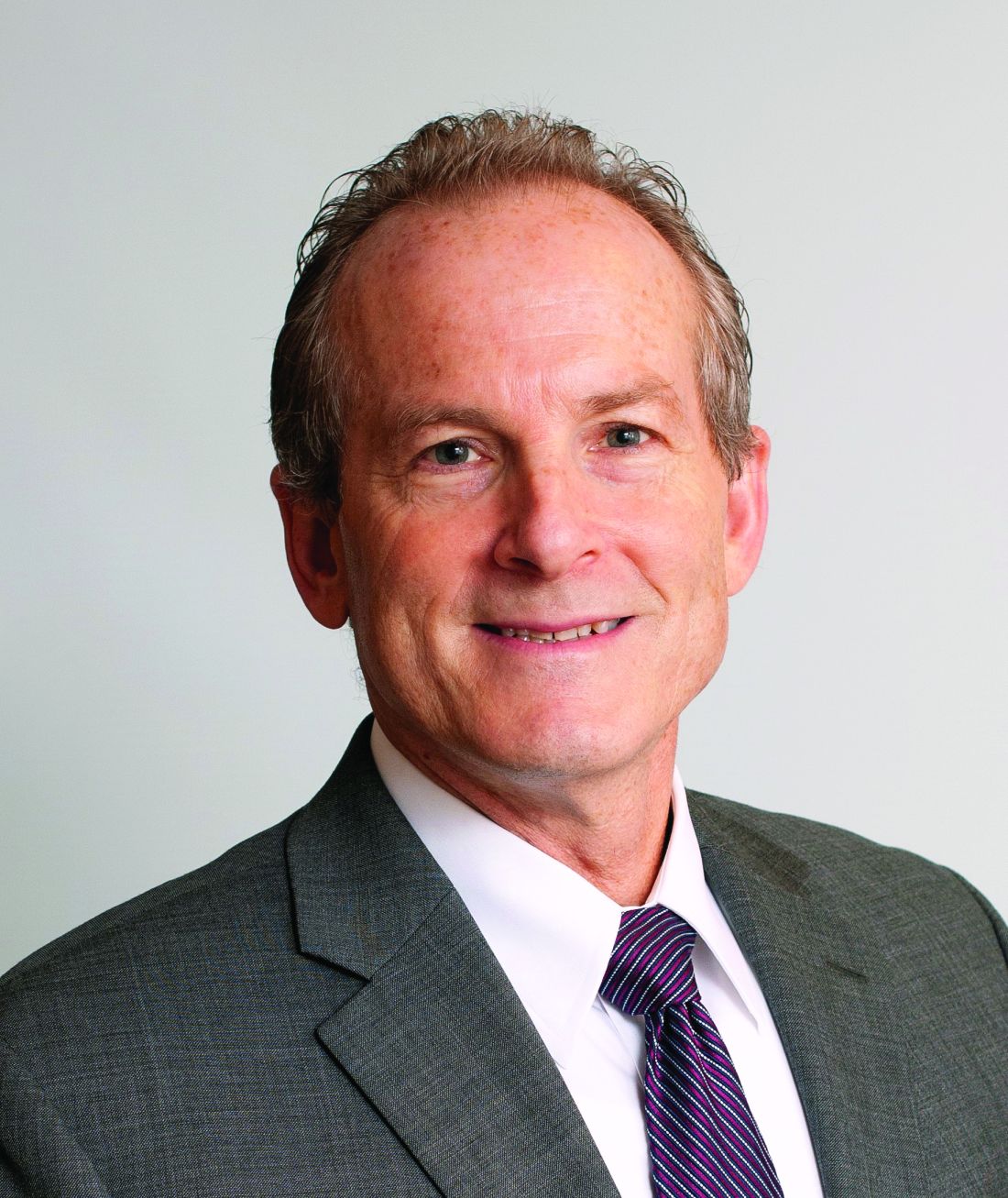
While the CRAFTT Screening Test has been widely used to screen for substance-related risks and problems in adolescents, another more recent option is the Screening to Brief Intervention (S2BI). Both tools collect information about both alcohol and drug use, are supported by strong research, are available for free, and are easy to use, Dr. Wilens said.
After you generate a differential diagnosis for psychiatric/medical symptoms, clinicians should order urine, saliva, or hair toxicology screens. “We don’t recommend that toxicology screens be done by parents; we do the toxicology screens,” he said. “Be careful about certain things like limitations of detection in the case of high-potency benzodiazepines and duration of detection in the case of marijuana use. The other thing is some of our screens can be used qualitatively or quantitatively. Why is that helpful? If you’re following someone who’s on marijuana and they’re cutting back, you can see if use [really] goes down over time.”
In Dr. Wilen’s clinical experience, efforts to stabilize adolescents with substance use disorders are most effective when patients join support groups comprised of other people from similar sociodemographic backgrounds. “There are different self-help philosophies, but when you’re referring, I always tell people: ‘Have the kid look in a mirror.’ So, if you have an LGBTQ patient from the inner city, that person should not be going to an Alcoholics Anonymous meeting of middle-aged persons in the suburbs. That’s not going to work for them. You want them to be with very similar sociodemographic groups if possible.”
Support groups for parents are also helpful. “There are two levels here: Peer groups of parents that help each other with support and find referrals, and there are parent coaching groups, where you have patients work with professionals,” said Dr. Wilens, who is also codirector of the MGH Center for Addiction Medicine. He advises parents to avoid “tough love” as the first step in efforts to help their child. “Tough love is, you throw the kid out of the house because they won’t stop using,” he said. “Where do you think the kid lives if they’re not at home? Where do you think they’re going to go? Maybe to the home of a friend or a family member for 1 or 2 nights but otherwise they’re living on the streets. How do you think they’re going to make a living if they’re living on the streets? They either sell drugs, or they get involved in prostitution. I have worked with more kids who are furious at their parents because they threw them out of the house. I understand where the patients are coming from, but maybe have a graduated exit instead, where the kid has to sleep outside in a camper for 2 nights, or in an isolated room in the house, or to grandma’s house, which smells like mothballs. Have a graduated approach.”
Psychotherapy is the mainstay of treatment and begins with motivational interviewing. To foster a collaborative connection, Dr. Wilens advises clinicians to discuss issues that are problematic instead of focusing on the substance use right off the bat. “Rather than go right to saying, ‘let’s talk about you smoking too much marijuana,’ instead say, ‘what is it you think may be causing the fights with your parents?’ Or, maybe their peer group isn’t accepting them like they used to.”
In his experience, adolescents respond well to goal setting. For example, for patients who say they’re smoking marijuana every day, Dr. Wilens may ask if they can cut back use to three days per week. “I’ll say: ‘I’m going to write this down in the chart,’ ” he said. “They start to work on it. If they come back and they didn’t reach that goal I say: ‘If you can’t cut back it’s okay; I just need to know it.’ ” He also recommends “sobriety sampling” which asks the patient to make a minimal commitment to stop using, for say, 30 days. “Don’t forget to monitor substance use during follow-up meetings.”
According to Dr. Wilens, child psychiatrists can help prevent substance abuse by encouraging discussion within families by the time kids are in fifth grade and encouraging parents to monitor children’s activities, friends, and personal space. “Privacy is a relative term,” he said. “It’s good you’re in their space. Make their beds; go into their bedroom.” He also advises parents to not smoke marijuana behind their kids’ backs. “I love it when parents tell me: ‘They don’t know I smoke marijuana.’ My counter to that is ‘not only do they know, they’re smoking your marijuana.’ ”
He concluded his remarks by encouraging child psychiatrists to advocate for sensible public laws related to marijuana and other substances. “Zero tolerance laws don’t work, because 85% of kids experiment [with drugs],” said Dr. Wilens, who is also professor of psychiatry at Harvard Medical School, Boston. “It works great until it’s your kid or a neighbor’s kid who’s a good kid but gets thrown out of school.”
Dr. Wilens reported that he has received grant support from the National Institutes of Health and the Food and Drug Administration. He has also served as a consultant to Vallon and has a licensing/collaborative agreement with Ironshore and 3D Therapy.
LAS VEGAS – Timothy E. Wilens, MD, advised during an annual psychopharmacology update held by the Nevada Psychiatric Association.
“We see high rates of STDs, and we have about 10% of our kids who use opioids who already have hepatitis C,” said Dr. Wilens, who is chief of the division of child & adolescent psychiatry at Massachusetts General Hospital, Boston. “These are kids who may be 16, 17, or 18.”
While the CRAFTT Screening Test has been widely used to screen for substance-related risks and problems in adolescents, another more recent option is the Screening to Brief Intervention (S2BI). Both tools collect information about both alcohol and drug use, are supported by strong research, are available for free, and are easy to use, Dr. Wilens said.
After you generate a differential diagnosis for psychiatric/medical symptoms, clinicians should order urine, saliva, or hair toxicology screens. “We don’t recommend that toxicology screens be done by parents; we do the toxicology screens,” he said. “Be careful about certain things like limitations of detection in the case of high-potency benzodiazepines and duration of detection in the case of marijuana use. The other thing is some of our screens can be used qualitatively or quantitatively. Why is that helpful? If you’re following someone who’s on marijuana and they’re cutting back, you can see if use [really] goes down over time.”
In Dr. Wilen’s clinical experience, efforts to stabilize adolescents with substance use disorders are most effective when patients join support groups comprised of other people from similar sociodemographic backgrounds. “There are different self-help philosophies, but when you’re referring, I always tell people: ‘Have the kid look in a mirror.’ So, if you have an LGBTQ patient from the inner city, that person should not be going to an Alcoholics Anonymous meeting of middle-aged persons in the suburbs. That’s not going to work for them. You want them to be with very similar sociodemographic groups if possible.”
Support groups for parents are also helpful. “There are two levels here: Peer groups of parents that help each other with support and find referrals, and there are parent coaching groups, where you have patients work with professionals,” said Dr. Wilens, who is also codirector of the MGH Center for Addiction Medicine. He advises parents to avoid “tough love” as the first step in efforts to help their child. “Tough love is, you throw the kid out of the house because they won’t stop using,” he said. “Where do you think the kid lives if they’re not at home? Where do you think they’re going to go? Maybe to the home of a friend or a family member for 1 or 2 nights but otherwise they’re living on the streets. How do you think they’re going to make a living if they’re living on the streets? They either sell drugs, or they get involved in prostitution. I have worked with more kids who are furious at their parents because they threw them out of the house. I understand where the patients are coming from, but maybe have a graduated exit instead, where the kid has to sleep outside in a camper for 2 nights, or in an isolated room in the house, or to grandma’s house, which smells like mothballs. Have a graduated approach.”
Psychotherapy is the mainstay of treatment and begins with motivational interviewing. To foster a collaborative connection, Dr. Wilens advises clinicians to discuss issues that are problematic instead of focusing on the substance use right off the bat. “Rather than go right to saying, ‘let’s talk about you smoking too much marijuana,’ instead say, ‘what is it you think may be causing the fights with your parents?’ Or, maybe their peer group isn’t accepting them like they used to.”
In his experience, adolescents respond well to goal setting. For example, for patients who say they’re smoking marijuana every day, Dr. Wilens may ask if they can cut back use to three days per week. “I’ll say: ‘I’m going to write this down in the chart,’ ” he said. “They start to work on it. If they come back and they didn’t reach that goal I say: ‘If you can’t cut back it’s okay; I just need to know it.’ ” He also recommends “sobriety sampling” which asks the patient to make a minimal commitment to stop using, for say, 30 days. “Don’t forget to monitor substance use during follow-up meetings.”
According to Dr. Wilens, child psychiatrists can help prevent substance abuse by encouraging discussion within families by the time kids are in fifth grade and encouraging parents to monitor children’s activities, friends, and personal space. “Privacy is a relative term,” he said. “It’s good you’re in their space. Make their beds; go into their bedroom.” He also advises parents to not smoke marijuana behind their kids’ backs. “I love it when parents tell me: ‘They don’t know I smoke marijuana.’ My counter to that is ‘not only do they know, they’re smoking your marijuana.’ ”
He concluded his remarks by encouraging child psychiatrists to advocate for sensible public laws related to marijuana and other substances. “Zero tolerance laws don’t work, because 85% of kids experiment [with drugs],” said Dr. Wilens, who is also professor of psychiatry at Harvard Medical School, Boston. “It works great until it’s your kid or a neighbor’s kid who’s a good kid but gets thrown out of school.”
Dr. Wilens reported that he has received grant support from the National Institutes of Health and the Food and Drug Administration. He has also served as a consultant to Vallon and has a licensing/collaborative agreement with Ironshore and 3D Therapy.
LAS VEGAS – Timothy E. Wilens, MD, advised during an annual psychopharmacology update held by the Nevada Psychiatric Association.
“We see high rates of STDs, and we have about 10% of our kids who use opioids who already have hepatitis C,” said Dr. Wilens, who is chief of the division of child & adolescent psychiatry at Massachusetts General Hospital, Boston. “These are kids who may be 16, 17, or 18.”
While the CRAFTT Screening Test has been widely used to screen for substance-related risks and problems in adolescents, another more recent option is the Screening to Brief Intervention (S2BI). Both tools collect information about both alcohol and drug use, are supported by strong research, are available for free, and are easy to use, Dr. Wilens said.
After you generate a differential diagnosis for psychiatric/medical symptoms, clinicians should order urine, saliva, or hair toxicology screens. “We don’t recommend that toxicology screens be done by parents; we do the toxicology screens,” he said. “Be careful about certain things like limitations of detection in the case of high-potency benzodiazepines and duration of detection in the case of marijuana use. The other thing is some of our screens can be used qualitatively or quantitatively. Why is that helpful? If you’re following someone who’s on marijuana and they’re cutting back, you can see if use [really] goes down over time.”
In Dr. Wilen’s clinical experience, efforts to stabilize adolescents with substance use disorders are most effective when patients join support groups comprised of other people from similar sociodemographic backgrounds. “There are different self-help philosophies, but when you’re referring, I always tell people: ‘Have the kid look in a mirror.’ So, if you have an LGBTQ patient from the inner city, that person should not be going to an Alcoholics Anonymous meeting of middle-aged persons in the suburbs. That’s not going to work for them. You want them to be with very similar sociodemographic groups if possible.”
Support groups for parents are also helpful. “There are two levels here: Peer groups of parents that help each other with support and find referrals, and there are parent coaching groups, where you have patients work with professionals,” said Dr. Wilens, who is also codirector of the MGH Center for Addiction Medicine. He advises parents to avoid “tough love” as the first step in efforts to help their child. “Tough love is, you throw the kid out of the house because they won’t stop using,” he said. “Where do you think the kid lives if they’re not at home? Where do you think they’re going to go? Maybe to the home of a friend or a family member for 1 or 2 nights but otherwise they’re living on the streets. How do you think they’re going to make a living if they’re living on the streets? They either sell drugs, or they get involved in prostitution. I have worked with more kids who are furious at their parents because they threw them out of the house. I understand where the patients are coming from, but maybe have a graduated exit instead, where the kid has to sleep outside in a camper for 2 nights, or in an isolated room in the house, or to grandma’s house, which smells like mothballs. Have a graduated approach.”
Psychotherapy is the mainstay of treatment and begins with motivational interviewing. To foster a collaborative connection, Dr. Wilens advises clinicians to discuss issues that are problematic instead of focusing on the substance use right off the bat. “Rather than go right to saying, ‘let’s talk about you smoking too much marijuana,’ instead say, ‘what is it you think may be causing the fights with your parents?’ Or, maybe their peer group isn’t accepting them like they used to.”
In his experience, adolescents respond well to goal setting. For example, for patients who say they’re smoking marijuana every day, Dr. Wilens may ask if they can cut back use to three days per week. “I’ll say: ‘I’m going to write this down in the chart,’ ” he said. “They start to work on it. If they come back and they didn’t reach that goal I say: ‘If you can’t cut back it’s okay; I just need to know it.’ ” He also recommends “sobriety sampling” which asks the patient to make a minimal commitment to stop using, for say, 30 days. “Don’t forget to monitor substance use during follow-up meetings.”
According to Dr. Wilens, child psychiatrists can help prevent substance abuse by encouraging discussion within families by the time kids are in fifth grade and encouraging parents to monitor children’s activities, friends, and personal space. “Privacy is a relative term,” he said. “It’s good you’re in their space. Make their beds; go into their bedroom.” He also advises parents to not smoke marijuana behind their kids’ backs. “I love it when parents tell me: ‘They don’t know I smoke marijuana.’ My counter to that is ‘not only do they know, they’re smoking your marijuana.’ ”
He concluded his remarks by encouraging child psychiatrists to advocate for sensible public laws related to marijuana and other substances. “Zero tolerance laws don’t work, because 85% of kids experiment [with drugs],” said Dr. Wilens, who is also professor of psychiatry at Harvard Medical School, Boston. “It works great until it’s your kid or a neighbor’s kid who’s a good kid but gets thrown out of school.”
Dr. Wilens reported that he has received grant support from the National Institutes of Health and the Food and Drug Administration. He has also served as a consultant to Vallon and has a licensing/collaborative agreement with Ironshore and 3D Therapy.
AT NPA 2022