User login
Bringing you the latest news, research and reviews, exclusive interviews, podcasts, quizzes, and more.
Powered by CHEST Physician, Clinician Reviews, MDedge Family Medicine, Internal Medicine News, and The Journal of Clinical Outcomes Management.
Four-Drug Fixed-Dose Combo for TB Found Noninferior
A four-drug fixed-dose combination regimen for pulmonary tuberculosis was found noninferior to the standard regimen of four separately administered drugs in two of three analyses of data from a clinical trial reported in the April 13 issue of JAMA.
The combo regimen "did not demonstrate full noninferiority" because it met the strict study criteria only in the per-protocol analysis and in a post hoc modified intention-to-treat analysis, but failed to do so in the intention-to-treat analysis. Nevertheless, "the results do support the WHO recommendation for use of fixed-dose combinations because of the potential advantages associated with their administration, compared with separate-drug formulations," said Dr. Christian Lienhardt of the World Health Organization and his associates.
The main advantage is that patients on fixed-dose combo regimens take 3-4 pills per day instead of 9-16 during the first 2 months of treatment. This facilitates adherence, which in turn reduces the risk of developing drug resistance, the researchers noted.
The open-label noninferiority trial was conducted at 11 sites in nine African, Asian, and Latin American countries.
Study subjects were adults with newly diagnosed sputum smear–positive pulmonary tuberculosis who were randomly assigned to receive either separate tablets of rifampin, isoniazid, pyrazinamide, and ethambutol or a single combination tablet of the same drugs every day for an 8-week "intensive" phase of the trial. This was followed by 18 weeks of a combination rifampicin plus isoniazid tablet, three times per week, for both study groups.
Every study subject also received pyridoxine with the study drugs throughout the trial.
The patients were required to attend their treatment facilities and take their drugs under supervision of the medical staff. They were also seen at 2, 3, 5, and 6 months during treatment and at 2-month intervals for up to 30 months during follow-up.
The primary efficacy end point was the proportion of patients with an "unfavorable" outcome, which was defined as bacteriologic failure or relapse within 18 months, treatment change after 5 months because of positive sputum smear results or clinical or radiologic deterioration, or death that was possibly or definitely attributable to active tuberculosis.
In the per-protocol analysis of 591 patients on fixed-dose combo therapy and 579 on standard separate drugs, the proportion of unfavorable outcomes was 6.1% in the first group and 5.4% in the second, a difference that met the criteria for noninferiority.
In the post-hoc modified intention-to-treat analysis of 658 patients on fixed-dose combo therapy and 647 on standard separate drugs, the proportion of unfavorable outcomes was 10.2% in the first group and 9% in the second, a difference that also met the criteria for noninferiority.
However, in the intention-to-treat analysis of 684 patients on fixed-dose combo therapy and 664 on standard separate drugs, the proportion of unfavorable outcomes was 16.7% in the first group and 15.2% in the second, a difference which just missed meeting the criteria for noninferiority, the investigators said (JAMA 2011;305:1415-23).
The number of patients who reported adverse events within the first 2 months of starting treatment was small and similar between the two groups. Most of these events were mild or moderate and "reflected the expected undesirable effects of antituberculosis agents," including nausea, vomiting, diarrhea, rash, pruritus, arthralgia, and myalgia.
This trial was supported by the U.S. Agency for International Development. All the drugs used in this trial were manufactured by Svizera. No financial conflicts of interest were reported.
A four-drug fixed-dose combination regimen for pulmonary tuberculosis was found noninferior to the standard regimen of four separately administered drugs in two of three analyses of data from a clinical trial reported in the April 13 issue of JAMA.
The combo regimen "did not demonstrate full noninferiority" because it met the strict study criteria only in the per-protocol analysis and in a post hoc modified intention-to-treat analysis, but failed to do so in the intention-to-treat analysis. Nevertheless, "the results do support the WHO recommendation for use of fixed-dose combinations because of the potential advantages associated with their administration, compared with separate-drug formulations," said Dr. Christian Lienhardt of the World Health Organization and his associates.
The main advantage is that patients on fixed-dose combo regimens take 3-4 pills per day instead of 9-16 during the first 2 months of treatment. This facilitates adherence, which in turn reduces the risk of developing drug resistance, the researchers noted.
The open-label noninferiority trial was conducted at 11 sites in nine African, Asian, and Latin American countries.
Study subjects were adults with newly diagnosed sputum smear–positive pulmonary tuberculosis who were randomly assigned to receive either separate tablets of rifampin, isoniazid, pyrazinamide, and ethambutol or a single combination tablet of the same drugs every day for an 8-week "intensive" phase of the trial. This was followed by 18 weeks of a combination rifampicin plus isoniazid tablet, three times per week, for both study groups.
Every study subject also received pyridoxine with the study drugs throughout the trial.
The patients were required to attend their treatment facilities and take their drugs under supervision of the medical staff. They were also seen at 2, 3, 5, and 6 months during treatment and at 2-month intervals for up to 30 months during follow-up.
The primary efficacy end point was the proportion of patients with an "unfavorable" outcome, which was defined as bacteriologic failure or relapse within 18 months, treatment change after 5 months because of positive sputum smear results or clinical or radiologic deterioration, or death that was possibly or definitely attributable to active tuberculosis.
In the per-protocol analysis of 591 patients on fixed-dose combo therapy and 579 on standard separate drugs, the proportion of unfavorable outcomes was 6.1% in the first group and 5.4% in the second, a difference that met the criteria for noninferiority.
In the post-hoc modified intention-to-treat analysis of 658 patients on fixed-dose combo therapy and 647 on standard separate drugs, the proportion of unfavorable outcomes was 10.2% in the first group and 9% in the second, a difference that also met the criteria for noninferiority.
However, in the intention-to-treat analysis of 684 patients on fixed-dose combo therapy and 664 on standard separate drugs, the proportion of unfavorable outcomes was 16.7% in the first group and 15.2% in the second, a difference which just missed meeting the criteria for noninferiority, the investigators said (JAMA 2011;305:1415-23).
The number of patients who reported adverse events within the first 2 months of starting treatment was small and similar between the two groups. Most of these events were mild or moderate and "reflected the expected undesirable effects of antituberculosis agents," including nausea, vomiting, diarrhea, rash, pruritus, arthralgia, and myalgia.
This trial was supported by the U.S. Agency for International Development. All the drugs used in this trial were manufactured by Svizera. No financial conflicts of interest were reported.
A four-drug fixed-dose combination regimen for pulmonary tuberculosis was found noninferior to the standard regimen of four separately administered drugs in two of three analyses of data from a clinical trial reported in the April 13 issue of JAMA.
The combo regimen "did not demonstrate full noninferiority" because it met the strict study criteria only in the per-protocol analysis and in a post hoc modified intention-to-treat analysis, but failed to do so in the intention-to-treat analysis. Nevertheless, "the results do support the WHO recommendation for use of fixed-dose combinations because of the potential advantages associated with their administration, compared with separate-drug formulations," said Dr. Christian Lienhardt of the World Health Organization and his associates.
The main advantage is that patients on fixed-dose combo regimens take 3-4 pills per day instead of 9-16 during the first 2 months of treatment. This facilitates adherence, which in turn reduces the risk of developing drug resistance, the researchers noted.
The open-label noninferiority trial was conducted at 11 sites in nine African, Asian, and Latin American countries.
Study subjects were adults with newly diagnosed sputum smear–positive pulmonary tuberculosis who were randomly assigned to receive either separate tablets of rifampin, isoniazid, pyrazinamide, and ethambutol or a single combination tablet of the same drugs every day for an 8-week "intensive" phase of the trial. This was followed by 18 weeks of a combination rifampicin plus isoniazid tablet, three times per week, for both study groups.
Every study subject also received pyridoxine with the study drugs throughout the trial.
The patients were required to attend their treatment facilities and take their drugs under supervision of the medical staff. They were also seen at 2, 3, 5, and 6 months during treatment and at 2-month intervals for up to 30 months during follow-up.
The primary efficacy end point was the proportion of patients with an "unfavorable" outcome, which was defined as bacteriologic failure or relapse within 18 months, treatment change after 5 months because of positive sputum smear results or clinical or radiologic deterioration, or death that was possibly or definitely attributable to active tuberculosis.
In the per-protocol analysis of 591 patients on fixed-dose combo therapy and 579 on standard separate drugs, the proportion of unfavorable outcomes was 6.1% in the first group and 5.4% in the second, a difference that met the criteria for noninferiority.
In the post-hoc modified intention-to-treat analysis of 658 patients on fixed-dose combo therapy and 647 on standard separate drugs, the proportion of unfavorable outcomes was 10.2% in the first group and 9% in the second, a difference that also met the criteria for noninferiority.
However, in the intention-to-treat analysis of 684 patients on fixed-dose combo therapy and 664 on standard separate drugs, the proportion of unfavorable outcomes was 16.7% in the first group and 15.2% in the second, a difference which just missed meeting the criteria for noninferiority, the investigators said (JAMA 2011;305:1415-23).
The number of patients who reported adverse events within the first 2 months of starting treatment was small and similar between the two groups. Most of these events were mild or moderate and "reflected the expected undesirable effects of antituberculosis agents," including nausea, vomiting, diarrhea, rash, pruritus, arthralgia, and myalgia.
This trial was supported by the U.S. Agency for International Development. All the drugs used in this trial were manufactured by Svizera. No financial conflicts of interest were reported.
FROM JAMA
Major Finding: The proportion of unfavorable outcomes was 6.1% in patients taking a four-drug combination tablet (rifampin, isoniazid, pyrazinamide, and ethambutol), compared with 5.4% in those taking standard separate tablets of the same four drugs for the treatment of pulmonary tuberculosis.
Data Source: An open-label, randomized, controlled noninferiority trial that included approximately 1,400 adults in Africa, Asia, and Latin America.
Disclosures: This trial was supported by the U.S. Agency for International Development. All the drugs used in this trial were manufactured by Svizera. No financial conflicts of interest were reported.
Four-Drug Fixed-Dose Combo for TB Found Noninferior
A four-drug fixed-dose combination regimen for pulmonary tuberculosis was found noninferior to the standard regimen of four separately administered drugs in two of three analyses of data from a clinical trial reported in the April 13 issue of JAMA.
The combo regimen "did not demonstrate full noninferiority" because it met the strict study criteria only in the per-protocol analysis and in a post hoc modified intention-to-treat analysis, but failed to do so in the intention-to-treat analysis. Nevertheless, "the results do support the WHO recommendation for use of fixed-dose combinations because of the potential advantages associated with their administration, compared with separate-drug formulations," said Dr. Christian Lienhardt of the World Health Organization and his associates.
The main advantage is that patients on fixed-dose combo regimens take 3-4 pills per day instead of 9-16 during the first 2 months of treatment. This facilitates adherence, which in turn reduces the risk of developing drug resistance, the researchers noted.
The open-label noninferiority trial was conducted at 11 sites in nine African, Asian, and Latin American countries.
Study subjects were adults with newly diagnosed sputum smear–positive pulmonary tuberculosis who were randomly assigned to receive either separate tablets of rifampin, isoniazid, pyrazinamide, and ethambutol or a single combination tablet of the same drugs every day for an 8-week "intensive" phase of the trial. This was followed by 18 weeks of a combination rifampicin plus isoniazid tablet, three times per week, for both study groups.
Every study subject also received pyridoxine with the study drugs throughout the trial.
The patients were required to attend their treatment facilities and take their drugs under supervision of the medical staff. They were also seen at 2, 3, 5, and 6 months during treatment and at 2-month intervals for up to 30 months during follow-up.
The primary efficacy end point was the proportion of patients with an "unfavorable" outcome, which was defined as bacteriologic failure or relapse within 18 months, treatment change after 5 months because of positive sputum smear results or clinical or radiologic deterioration, or death that was possibly or definitely attributable to active tuberculosis.
In the per-protocol analysis of 591 patients on fixed-dose combo therapy and 579 on standard separate drugs, the proportion of unfavorable outcomes was 6.1% in the first group and 5.4% in the second, a difference that met the criteria for noninferiority.
In the post-hoc modified intention-to-treat analysis of 658 patients on fixed-dose combo therapy and 647 on standard separate drugs, the proportion of unfavorable outcomes was 10.2% in the first group and 9% in the second, a difference that also met the criteria for noninferiority.
However, in the intention-to-treat analysis of 684 patients on fixed-dose combo therapy and 664 on standard separate drugs, the proportion of unfavorable outcomes was 16.7% in the first group and 15.2% in the second, a difference which just missed meeting the criteria for noninferiority, the investigators said (JAMA 2011;305:1415-23).
The number of patients who reported adverse events within the first 2 months of starting treatment was small and similar between the two groups. Most of these events were mild or moderate and "reflected the expected undesirable effects of antituberculosis agents," including nausea, vomiting, diarrhea, rash, pruritus, arthralgia, and myalgia.
This trial was supported by the U.S. Agency for International Development. All the drugs used in this trial were manufactured by Svizera. No financial conflicts of interest were reported.
A four-drug fixed-dose combination regimen for pulmonary tuberculosis was found noninferior to the standard regimen of four separately administered drugs in two of three analyses of data from a clinical trial reported in the April 13 issue of JAMA.
The combo regimen "did not demonstrate full noninferiority" because it met the strict study criteria only in the per-protocol analysis and in a post hoc modified intention-to-treat analysis, but failed to do so in the intention-to-treat analysis. Nevertheless, "the results do support the WHO recommendation for use of fixed-dose combinations because of the potential advantages associated with their administration, compared with separate-drug formulations," said Dr. Christian Lienhardt of the World Health Organization and his associates.
The main advantage is that patients on fixed-dose combo regimens take 3-4 pills per day instead of 9-16 during the first 2 months of treatment. This facilitates adherence, which in turn reduces the risk of developing drug resistance, the researchers noted.
The open-label noninferiority trial was conducted at 11 sites in nine African, Asian, and Latin American countries.
Study subjects were adults with newly diagnosed sputum smear–positive pulmonary tuberculosis who were randomly assigned to receive either separate tablets of rifampin, isoniazid, pyrazinamide, and ethambutol or a single combination tablet of the same drugs every day for an 8-week "intensive" phase of the trial. This was followed by 18 weeks of a combination rifampicin plus isoniazid tablet, three times per week, for both study groups.
Every study subject also received pyridoxine with the study drugs throughout the trial.
The patients were required to attend their treatment facilities and take their drugs under supervision of the medical staff. They were also seen at 2, 3, 5, and 6 months during treatment and at 2-month intervals for up to 30 months during follow-up.
The primary efficacy end point was the proportion of patients with an "unfavorable" outcome, which was defined as bacteriologic failure or relapse within 18 months, treatment change after 5 months because of positive sputum smear results or clinical or radiologic deterioration, or death that was possibly or definitely attributable to active tuberculosis.
In the per-protocol analysis of 591 patients on fixed-dose combo therapy and 579 on standard separate drugs, the proportion of unfavorable outcomes was 6.1% in the first group and 5.4% in the second, a difference that met the criteria for noninferiority.
In the post-hoc modified intention-to-treat analysis of 658 patients on fixed-dose combo therapy and 647 on standard separate drugs, the proportion of unfavorable outcomes was 10.2% in the first group and 9% in the second, a difference that also met the criteria for noninferiority.
However, in the intention-to-treat analysis of 684 patients on fixed-dose combo therapy and 664 on standard separate drugs, the proportion of unfavorable outcomes was 16.7% in the first group and 15.2% in the second, a difference which just missed meeting the criteria for noninferiority, the investigators said (JAMA 2011;305:1415-23).
The number of patients who reported adverse events within the first 2 months of starting treatment was small and similar between the two groups. Most of these events were mild or moderate and "reflected the expected undesirable effects of antituberculosis agents," including nausea, vomiting, diarrhea, rash, pruritus, arthralgia, and myalgia.
This trial was supported by the U.S. Agency for International Development. All the drugs used in this trial were manufactured by Svizera. No financial conflicts of interest were reported.
A four-drug fixed-dose combination regimen for pulmonary tuberculosis was found noninferior to the standard regimen of four separately administered drugs in two of three analyses of data from a clinical trial reported in the April 13 issue of JAMA.
The combo regimen "did not demonstrate full noninferiority" because it met the strict study criteria only in the per-protocol analysis and in a post hoc modified intention-to-treat analysis, but failed to do so in the intention-to-treat analysis. Nevertheless, "the results do support the WHO recommendation for use of fixed-dose combinations because of the potential advantages associated with their administration, compared with separate-drug formulations," said Dr. Christian Lienhardt of the World Health Organization and his associates.
The main advantage is that patients on fixed-dose combo regimens take 3-4 pills per day instead of 9-16 during the first 2 months of treatment. This facilitates adherence, which in turn reduces the risk of developing drug resistance, the researchers noted.
The open-label noninferiority trial was conducted at 11 sites in nine African, Asian, and Latin American countries.
Study subjects were adults with newly diagnosed sputum smear–positive pulmonary tuberculosis who were randomly assigned to receive either separate tablets of rifampin, isoniazid, pyrazinamide, and ethambutol or a single combination tablet of the same drugs every day for an 8-week "intensive" phase of the trial. This was followed by 18 weeks of a combination rifampicin plus isoniazid tablet, three times per week, for both study groups.
Every study subject also received pyridoxine with the study drugs throughout the trial.
The patients were required to attend their treatment facilities and take their drugs under supervision of the medical staff. They were also seen at 2, 3, 5, and 6 months during treatment and at 2-month intervals for up to 30 months during follow-up.
The primary efficacy end point was the proportion of patients with an "unfavorable" outcome, which was defined as bacteriologic failure or relapse within 18 months, treatment change after 5 months because of positive sputum smear results or clinical or radiologic deterioration, or death that was possibly or definitely attributable to active tuberculosis.
In the per-protocol analysis of 591 patients on fixed-dose combo therapy and 579 on standard separate drugs, the proportion of unfavorable outcomes was 6.1% in the first group and 5.4% in the second, a difference that met the criteria for noninferiority.
In the post-hoc modified intention-to-treat analysis of 658 patients on fixed-dose combo therapy and 647 on standard separate drugs, the proportion of unfavorable outcomes was 10.2% in the first group and 9% in the second, a difference that also met the criteria for noninferiority.
However, in the intention-to-treat analysis of 684 patients on fixed-dose combo therapy and 664 on standard separate drugs, the proportion of unfavorable outcomes was 16.7% in the first group and 15.2% in the second, a difference which just missed meeting the criteria for noninferiority, the investigators said (JAMA 2011;305:1415-23).
The number of patients who reported adverse events within the first 2 months of starting treatment was small and similar between the two groups. Most of these events were mild or moderate and "reflected the expected undesirable effects of antituberculosis agents," including nausea, vomiting, diarrhea, rash, pruritus, arthralgia, and myalgia.
This trial was supported by the U.S. Agency for International Development. All the drugs used in this trial were manufactured by Svizera. No financial conflicts of interest were reported.
FROM JAMA
Major Finding: The proportion of unfavorable outcomes was 6.1% in patients taking a four-drug combination tablet (rifampin, isoniazid, pyrazinamide, and ethambutol), compared with 5.4% in those taking standard separate tablets of the same four drugs for the treatment of pulmonary tuberculosis.
Data Source: An open-label, randomized, controlled noninferiority trial that included approximately 1,400 adults in Africa, Asia, and Latin America.
Disclosures: This trial was supported by the U.S. Agency for International Development. All the drugs used in this trial were manufactured by Svizera. No financial conflicts of interest were reported.
Intermittent High-Dose Inhaled Corticosteroid Works for Wheezing Toddlers
SAN FRANCISCO – Intermittent courses of high-dose inhaled budesonide were as effective and as safe as daily low-dose inhaled budesonide in wheezing toddlers but exposed them to a lower cumulative dose of the corticosteroid in a year-long study of 278 children.
The two groups did not differ significantly in the frequency of exacerbations that required systemic corticosteroids, the frequency or severity of respiratory tract illness, the number of urgent or emergent visits for care, or other efficacy and safety measures, Dr. Leonard B. Bacharier and his associates reported at the annual meeting of the American Academy of Allergy, Asthma, and Immunology.

Children in the daily low-dose budesonide group, however, were exposed to more than three times the cumulative dose of budesonide, compared with the intermittent high-dose therapy group – 150 mg vs. 46 mg.
The multicenter, randomized, double-blind, placebo-controlled trial, called the Maintenance Versus Intermittent Inhaled Steroids in Wheezing Toddlers (MIST) study, is the last of eight clinical trials performed by the National Heart, Lung, and Blood Institute’s Childhood Asthma Research and Education Network.
The NHLBI’s 2007 "Expert Panel Report 3: Guidelines for Diagnosis and Management of Asthma" recommended using daily low-dose inhaled corticosteroids to treat children who have a positive modified Asthma Predictive Index.
The MIST study is the first to compare the currently recommended daily low-dose regimen with the intermittent high-dose regimen, said Dr. Bacharier of Washington University, St. Louis.
On the basis of the MIST results, Dr. Bacharier and his associates recommended instead that clinicians consider using intermittent high-dose inhaled corticosteroids in the subset of children identified in the MIST study, who were not the most severe asthma cases. They suggested starting a 7-day course of high-dose budesonide early during respiratory tract illnesses in wheezing children who have a positive modified Asthma Predictive Index, have had at least one exacerbation in the past year, use albuterol less than 3 days per week, and have had no more than one night awakening in the prior 2 weeks.
The study enrolled children 12-53 months of age, nearly half of whom were in the lower age range of 12-32 months. All children had a history of at least four wheezing episodes in the prior year (or at least three if they’d had 3 months or more of asthma controller therapy) and a positive modified Asthma Predictive Index. Each child also had at least one severe exacerbation that required systemic corticosteroids or an unscheduled urgent or emergent visit or hospitalization in the previous year.
The study excluded children who had more than two hospitalizations for wheezing or more than six courses of oral corticosteroids.
During a 2-week run-in period, all children used a nebulized placebo nightly and albuterol as needed. During this period, children who had persistent asthma symptoms or who did not follow the protocol for more than 25% of days also were excluded.
The children were then randomized for 52 weeks of therapy. The daily low-dose budesonide group used 0.5 mg of nebulized budesonide once daily at night except during respiratory tract illness, when they switched to "respiratory tract illness kits" that gave them nebulized placebo in the morning and 0.5 mg of budesonide at night for 7 days. The intermittent high-dose budesonide group used nebulized placebo once daily at night except during respiratory tract illness, when their kits gave them 1 mg of budesonide in the morning and at night for 7 days.
Previous studies have shown that daily inhaled corticosteroids have "a small but statistically significant class effect on reducing linear growth in preschool-aged children, which only partially reverses after discontinuation of study treatments," which was a main reason for studying the intermittent-therapy alternative, Dr. Bacharier said.
In the MIST study, children in the daily-therapy group grew an average of 7.76 cm, compared with 8.01 cm in the intermittent-therapy group, but the 0.25-cm greater growth with intermittent therapy was not statistically significant.
There were no significant differences between groups in baseline characteristics, adherence to therapy during the study, declines in levels of exhaled nitric oxide, time to first exacerbation, or time to treatment failure.
The NHLBI funded the study. AstraZeneca provided the budesonide and placebo for the study. Dr. Bacharier has been a consultant for AstraZeneca (which markets budesonide), Merck, and Novartis, and has received honoraria from GlaxoSmithKline.
SAN FRANCISCO – Intermittent courses of high-dose inhaled budesonide were as effective and as safe as daily low-dose inhaled budesonide in wheezing toddlers but exposed them to a lower cumulative dose of the corticosteroid in a year-long study of 278 children.
The two groups did not differ significantly in the frequency of exacerbations that required systemic corticosteroids, the frequency or severity of respiratory tract illness, the number of urgent or emergent visits for care, or other efficacy and safety measures, Dr. Leonard B. Bacharier and his associates reported at the annual meeting of the American Academy of Allergy, Asthma, and Immunology.
Children in the daily low-dose budesonide group, however, were exposed to more than three times the cumulative dose of budesonide, compared with the intermittent high-dose therapy group – 150 mg vs. 46 mg.
The multicenter, randomized, double-blind, placebo-controlled trial, called the Maintenance Versus Intermittent Inhaled Steroids in Wheezing Toddlers (MIST) study, is the last of eight clinical trials performed by the National Heart, Lung, and Blood Institute’s Childhood Asthma Research and Education Network.
The NHLBI’s 2007 "Expert Panel Report 3: Guidelines for Diagnosis and Management of Asthma" recommended using daily low-dose inhaled corticosteroids to treat children who have a positive modified Asthma Predictive Index.
The MIST study is the first to compare the currently recommended daily low-dose regimen with the intermittent high-dose regimen, said Dr. Bacharier of Washington University, St. Louis.
On the basis of the MIST results, Dr. Bacharier and his associates recommended instead that clinicians consider using intermittent high-dose inhaled corticosteroids in the subset of children identified in the MIST study, who were not the most severe asthma cases. They suggested starting a 7-day course of high-dose budesonide early during respiratory tract illnesses in wheezing children who have a positive modified Asthma Predictive Index, have had at least one exacerbation in the past year, use albuterol less than 3 days per week, and have had no more than one night awakening in the prior 2 weeks.
The study enrolled children 12-53 months of age, nearly half of whom were in the lower age range of 12-32 months. All children had a history of at least four wheezing episodes in the prior year (or at least three if they’d had 3 months or more of asthma controller therapy) and a positive modified Asthma Predictive Index. Each child also had at least one severe exacerbation that required systemic corticosteroids or an unscheduled urgent or emergent visit or hospitalization in the previous year.
The study excluded children who had more than two hospitalizations for wheezing or more than six courses of oral corticosteroids.
During a 2-week run-in period, all children used a nebulized placebo nightly and albuterol as needed. During this period, children who had persistent asthma symptoms or who did not follow the protocol for more than 25% of days also were excluded.
The children were then randomized for 52 weeks of therapy. The daily low-dose budesonide group used 0.5 mg of nebulized budesonide once daily at night except during respiratory tract illness, when they switched to "respiratory tract illness kits" that gave them nebulized placebo in the morning and 0.5 mg of budesonide at night for 7 days. The intermittent high-dose budesonide group used nebulized placebo once daily at night except during respiratory tract illness, when their kits gave them 1 mg of budesonide in the morning and at night for 7 days.
Previous studies have shown that daily inhaled corticosteroids have "a small but statistically significant class effect on reducing linear growth in preschool-aged children, which only partially reverses after discontinuation of study treatments," which was a main reason for studying the intermittent-therapy alternative, Dr. Bacharier said.
In the MIST study, children in the daily-therapy group grew an average of 7.76 cm, compared with 8.01 cm in the intermittent-therapy group, but the 0.25-cm greater growth with intermittent therapy was not statistically significant.
There were no significant differences between groups in baseline characteristics, adherence to therapy during the study, declines in levels of exhaled nitric oxide, time to first exacerbation, or time to treatment failure.
The NHLBI funded the study. AstraZeneca provided the budesonide and placebo for the study. Dr. Bacharier has been a consultant for AstraZeneca (which markets budesonide), Merck, and Novartis, and has received honoraria from GlaxoSmithKline.
SAN FRANCISCO – Intermittent courses of high-dose inhaled budesonide were as effective and as safe as daily low-dose inhaled budesonide in wheezing toddlers but exposed them to a lower cumulative dose of the corticosteroid in a year-long study of 278 children.
The two groups did not differ significantly in the frequency of exacerbations that required systemic corticosteroids, the frequency or severity of respiratory tract illness, the number of urgent or emergent visits for care, or other efficacy and safety measures, Dr. Leonard B. Bacharier and his associates reported at the annual meeting of the American Academy of Allergy, Asthma, and Immunology.
Children in the daily low-dose budesonide group, however, were exposed to more than three times the cumulative dose of budesonide, compared with the intermittent high-dose therapy group – 150 mg vs. 46 mg.
The multicenter, randomized, double-blind, placebo-controlled trial, called the Maintenance Versus Intermittent Inhaled Steroids in Wheezing Toddlers (MIST) study, is the last of eight clinical trials performed by the National Heart, Lung, and Blood Institute’s Childhood Asthma Research and Education Network.
The NHLBI’s 2007 "Expert Panel Report 3: Guidelines for Diagnosis and Management of Asthma" recommended using daily low-dose inhaled corticosteroids to treat children who have a positive modified Asthma Predictive Index.
The MIST study is the first to compare the currently recommended daily low-dose regimen with the intermittent high-dose regimen, said Dr. Bacharier of Washington University, St. Louis.
On the basis of the MIST results, Dr. Bacharier and his associates recommended instead that clinicians consider using intermittent high-dose inhaled corticosteroids in the subset of children identified in the MIST study, who were not the most severe asthma cases. They suggested starting a 7-day course of high-dose budesonide early during respiratory tract illnesses in wheezing children who have a positive modified Asthma Predictive Index, have had at least one exacerbation in the past year, use albuterol less than 3 days per week, and have had no more than one night awakening in the prior 2 weeks.
The study enrolled children 12-53 months of age, nearly half of whom were in the lower age range of 12-32 months. All children had a history of at least four wheezing episodes in the prior year (or at least three if they’d had 3 months or more of asthma controller therapy) and a positive modified Asthma Predictive Index. Each child also had at least one severe exacerbation that required systemic corticosteroids or an unscheduled urgent or emergent visit or hospitalization in the previous year.
The study excluded children who had more than two hospitalizations for wheezing or more than six courses of oral corticosteroids.
During a 2-week run-in period, all children used a nebulized placebo nightly and albuterol as needed. During this period, children who had persistent asthma symptoms or who did not follow the protocol for more than 25% of days also were excluded.
The children were then randomized for 52 weeks of therapy. The daily low-dose budesonide group used 0.5 mg of nebulized budesonide once daily at night except during respiratory tract illness, when they switched to "respiratory tract illness kits" that gave them nebulized placebo in the morning and 0.5 mg of budesonide at night for 7 days. The intermittent high-dose budesonide group used nebulized placebo once daily at night except during respiratory tract illness, when their kits gave them 1 mg of budesonide in the morning and at night for 7 days.
Previous studies have shown that daily inhaled corticosteroids have "a small but statistically significant class effect on reducing linear growth in preschool-aged children, which only partially reverses after discontinuation of study treatments," which was a main reason for studying the intermittent-therapy alternative, Dr. Bacharier said.
In the MIST study, children in the daily-therapy group grew an average of 7.76 cm, compared with 8.01 cm in the intermittent-therapy group, but the 0.25-cm greater growth with intermittent therapy was not statistically significant.
There were no significant differences between groups in baseline characteristics, adherence to therapy during the study, declines in levels of exhaled nitric oxide, time to first exacerbation, or time to treatment failure.
The NHLBI funded the study. AstraZeneca provided the budesonide and placebo for the study. Dr. Bacharier has been a consultant for AstraZeneca (which markets budesonide), Merck, and Novartis, and has received honoraria from GlaxoSmithKline.
FROM THE ANNUAL MEETING OF THE AMERICAN ACADEMY OF ALLERGY, ASTHMA, AND IMMUNOLOGY
Major Finding: Wheezing toddlers on intermittent high-dose budesonide or daily low-dose budesonide had similar results regarding frequency of exacerbations that required systemic corticosteroids, frequency or severity of respiratory tract illness, and number of urgent or emergent visits for care.
Data Source: Year-long multicenter, randomized, double-blind, placebo-controlled study of 278 children.
Disclosures: The National Heart, Lung, and Blood Institute funded the study. AstraZeneca provided the budesonide and placebo for the study. Dr. Bacharier has been a consultant for AstraZeneca (which markets budesonide), Merck, and Novartis, and has received honoraria from GlaxoSmithKline.
Doc: When Is It Safe for Me to Fly?
You may get this question from patients with respiratory compromise — from kids with cystic fibrosis to adults who have chronic obstructive pulmonary disease.
So what should you tell them? It depends. Ask where they are going, how long the flight(s) is, and about any previous air travel experiences.
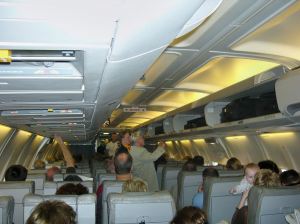
Increased cabin pressure and susceptibilty to micro-organisms in re-circulated air are the two main clinical concerns, said Dr. Susan Millard, a pediatric pulmonologist at Helen DeVos Children’s Hospital in Grand Rapids, Michigan.
Ensure your patient passes a walk test. They will likely need this functional capacity to do some limited walking in the airport and to get through security screening (getting through screening is challenging enough, even without any pulmonary issues).
TSA rules for portable oxygen concentrator use are outlined in the agency’s recommendations for travelers with hidden disabilities.
“Cystic fibrosis patients will ask us to develop a letter, which is especially important if they are going through customs,” Dr. Millard said at a pediatric pulmonology seminar sponsored by the American College of Chest Physicians and the American Academy of Pediatrics in Fort Lauderdale, Fla. Include the patient’s contact information, insurance policy numbers, and physician or clinic telephone numbers. Some airlines require physicians complete a form in advance of the patient’s traveling, so advise your patient to check their airline requirements before ticket purchase, she added.

Waiting at least 6 weeks after lung surgery or major intervention is advised in Eurpoean recommendations on traveling with cystic fibrosis released in December 2010. This consensus statement addresses preparations for travel (e.g., vaccinations, packing medication); important considerations during travel; and issues specific to the immunocompromised. Absolute contraindications for travel also are outlined.
Scientists are looking for ways to reduce every traveler’s exposure to airborne pathogens, Dr. Millard said. For example, one study shows commercially-available biosensors are not sensitive enough to detect airborne biological contaminants, at least not in a meaningful way. You would have to be on a flight with at least seven infected passengers either coughing 20 times per hour or sneezing four times an hour to get the bacteria levels up to detectable levels. And no sensor in the study worked well with airborne viruses.
In the meantime, developing better sensors or screening individual passengers for infectious respiratory illness prior to boarding would be the best approaches, she said.
Also, don’t forget to fasten your seatbelt.
–Damian McNamara (@MedReporter on Twitter)
You may get this question from patients with respiratory compromise — from kids with cystic fibrosis to adults who have chronic obstructive pulmonary disease.
So what should you tell them? It depends. Ask where they are going, how long the flight(s) is, and about any previous air travel experiences.
Increased cabin pressure and susceptibilty to micro-organisms in re-circulated air are the two main clinical concerns, said Dr. Susan Millard, a pediatric pulmonologist at Helen DeVos Children’s Hospital in Grand Rapids, Michigan.
Ensure your patient passes a walk test. They will likely need this functional capacity to do some limited walking in the airport and to get through security screening (getting through screening is challenging enough, even without any pulmonary issues).
TSA rules for portable oxygen concentrator use are outlined in the agency’s recommendations for travelers with hidden disabilities.
“Cystic fibrosis patients will ask us to develop a letter, which is especially important if they are going through customs,” Dr. Millard said at a pediatric pulmonology seminar sponsored by the American College of Chest Physicians and the American Academy of Pediatrics in Fort Lauderdale, Fla. Include the patient’s contact information, insurance policy numbers, and physician or clinic telephone numbers. Some airlines require physicians complete a form in advance of the patient’s traveling, so advise your patient to check their airline requirements before ticket purchase, she added.
Waiting at least 6 weeks after lung surgery or major intervention is advised in Eurpoean recommendations on traveling with cystic fibrosis released in December 2010. This consensus statement addresses preparations for travel (e.g., vaccinations, packing medication); important considerations during travel; and issues specific to the immunocompromised. Absolute contraindications for travel also are outlined.
Scientists are looking for ways to reduce every traveler’s exposure to airborne pathogens, Dr. Millard said. For example, one study shows commercially-available biosensors are not sensitive enough to detect airborne biological contaminants, at least not in a meaningful way. You would have to be on a flight with at least seven infected passengers either coughing 20 times per hour or sneezing four times an hour to get the bacteria levels up to detectable levels. And no sensor in the study worked well with airborne viruses.
In the meantime, developing better sensors or screening individual passengers for infectious respiratory illness prior to boarding would be the best approaches, she said.
Also, don’t forget to fasten your seatbelt.
–Damian McNamara (@MedReporter on Twitter)
You may get this question from patients with respiratory compromise — from kids with cystic fibrosis to adults who have chronic obstructive pulmonary disease.
So what should you tell them? It depends. Ask where they are going, how long the flight(s) is, and about any previous air travel experiences.
Increased cabin pressure and susceptibilty to micro-organisms in re-circulated air are the two main clinical concerns, said Dr. Susan Millard, a pediatric pulmonologist at Helen DeVos Children’s Hospital in Grand Rapids, Michigan.
Ensure your patient passes a walk test. They will likely need this functional capacity to do some limited walking in the airport and to get through security screening (getting through screening is challenging enough, even without any pulmonary issues).
TSA rules for portable oxygen concentrator use are outlined in the agency’s recommendations for travelers with hidden disabilities.
“Cystic fibrosis patients will ask us to develop a letter, which is especially important if they are going through customs,” Dr. Millard said at a pediatric pulmonology seminar sponsored by the American College of Chest Physicians and the American Academy of Pediatrics in Fort Lauderdale, Fla. Include the patient’s contact information, insurance policy numbers, and physician or clinic telephone numbers. Some airlines require physicians complete a form in advance of the patient’s traveling, so advise your patient to check their airline requirements before ticket purchase, she added.
Waiting at least 6 weeks after lung surgery or major intervention is advised in Eurpoean recommendations on traveling with cystic fibrosis released in December 2010. This consensus statement addresses preparations for travel (e.g., vaccinations, packing medication); important considerations during travel; and issues specific to the immunocompromised. Absolute contraindications for travel also are outlined.
Scientists are looking for ways to reduce every traveler’s exposure to airborne pathogens, Dr. Millard said. For example, one study shows commercially-available biosensors are not sensitive enough to detect airborne biological contaminants, at least not in a meaningful way. You would have to be on a flight with at least seven infected passengers either coughing 20 times per hour or sneezing four times an hour to get the bacteria levels up to detectable levels. And no sensor in the study worked well with airborne viruses.
In the meantime, developing better sensors or screening individual passengers for infectious respiratory illness prior to boarding would be the best approaches, she said.
Also, don’t forget to fasten your seatbelt.
–Damian McNamara (@MedReporter on Twitter)
Hyaluronan May Be Marker of Airway Remodeling
SAN FRANCISCO – Increase in sputum hyaluronan may serve as a noninvasive biomarker of airway remodeling in patients with severe asthma, results from a small novel study demonstrated.
While previous studies have shown that hyaluronan and versican are increased in the extracellular matrix of patients with obstructive lung disease, researchers led by Dr. Andrew G. Ayars, a fellow in allergy and immunology at the University of Washington, Seattle, set out to evaluate levels of hyaluronan and versican in sputum supernatants of 17 prednisone-dependent asthmatics who were randomized to either an anti-interleukin-5 antibody (mepolizumab) or placebo for 16 weeks.
In their abstract, which was unveiled during a poster session at the annual meeting of the American Academy of Allergy, Asthma, and Immunology, the researchers stated that hyaluronan is a glycosaminoglycan, which "acts as a vital structural component in connective tissues and is important in cell migration, immune cell adhesion, activation, and intracellular signaling." They described versican as "a large extracellular matrix proteoglycan that is present in a variety of human tissues," noting that it binds to hyaluronan.
Seven patients were treated with mepolizumab (at a dose of 750 mg) and 10 were treated with placebo administered intravenously over a 30-minute period at weeks 2, 6, 10, 14, and 18. Patients underwent a predefined prednisone tapering schedule if they remained exacerbation free at follow-up visits. The researchers performed spirometry and used enzyme-linked immunosorbent assay (ELISA) to measure levels of sputum hyaluronan and versican before and after treatment.
Study participants had a mean age of 56 years in the mepolizumab group and 58 years in the placebo group, and men made up 44% of the mepolizumab group and 73% of the placebo group.
Dr. Ayars and his associates observed a significant increase in sputum hyaluronan in the placebo group following prednisone taper (P = .003). They also observed a significantly lower level of sputum hyaluronan after treatment with mepolizumab vs. treatment with placebo (P = .01).
A numerical, nonsignificant increase in sputum versican was seen in the placebo group, while a numerical, nonsignificant decrease was seen in the mepolizumab group.
Dr. Ayars acknowledged that the findings are preliminary, and said that a current study is underway to test the association in patients with mild asthma treated with 2-4 weeks of inhaled corticosteroids.
Dr. Ayars said that he had no relevant financial conflicts to disclose.
SAN FRANCISCO – Increase in sputum hyaluronan may serve as a noninvasive biomarker of airway remodeling in patients with severe asthma, results from a small novel study demonstrated.
While previous studies have shown that hyaluronan and versican are increased in the extracellular matrix of patients with obstructive lung disease, researchers led by Dr. Andrew G. Ayars, a fellow in allergy and immunology at the University of Washington, Seattle, set out to evaluate levels of hyaluronan and versican in sputum supernatants of 17 prednisone-dependent asthmatics who were randomized to either an anti-interleukin-5 antibody (mepolizumab) or placebo for 16 weeks.
In their abstract, which was unveiled during a poster session at the annual meeting of the American Academy of Allergy, Asthma, and Immunology, the researchers stated that hyaluronan is a glycosaminoglycan, which "acts as a vital structural component in connective tissues and is important in cell migration, immune cell adhesion, activation, and intracellular signaling." They described versican as "a large extracellular matrix proteoglycan that is present in a variety of human tissues," noting that it binds to hyaluronan.
Seven patients were treated with mepolizumab (at a dose of 750 mg) and 10 were treated with placebo administered intravenously over a 30-minute period at weeks 2, 6, 10, 14, and 18. Patients underwent a predefined prednisone tapering schedule if they remained exacerbation free at follow-up visits. The researchers performed spirometry and used enzyme-linked immunosorbent assay (ELISA) to measure levels of sputum hyaluronan and versican before and after treatment.
Study participants had a mean age of 56 years in the mepolizumab group and 58 years in the placebo group, and men made up 44% of the mepolizumab group and 73% of the placebo group.
Dr. Ayars and his associates observed a significant increase in sputum hyaluronan in the placebo group following prednisone taper (P = .003). They also observed a significantly lower level of sputum hyaluronan after treatment with mepolizumab vs. treatment with placebo (P = .01).
A numerical, nonsignificant increase in sputum versican was seen in the placebo group, while a numerical, nonsignificant decrease was seen in the mepolizumab group.
Dr. Ayars acknowledged that the findings are preliminary, and said that a current study is underway to test the association in patients with mild asthma treated with 2-4 weeks of inhaled corticosteroids.
Dr. Ayars said that he had no relevant financial conflicts to disclose.
SAN FRANCISCO – Increase in sputum hyaluronan may serve as a noninvasive biomarker of airway remodeling in patients with severe asthma, results from a small novel study demonstrated.
While previous studies have shown that hyaluronan and versican are increased in the extracellular matrix of patients with obstructive lung disease, researchers led by Dr. Andrew G. Ayars, a fellow in allergy and immunology at the University of Washington, Seattle, set out to evaluate levels of hyaluronan and versican in sputum supernatants of 17 prednisone-dependent asthmatics who were randomized to either an anti-interleukin-5 antibody (mepolizumab) or placebo for 16 weeks.
In their abstract, which was unveiled during a poster session at the annual meeting of the American Academy of Allergy, Asthma, and Immunology, the researchers stated that hyaluronan is a glycosaminoglycan, which "acts as a vital structural component in connective tissues and is important in cell migration, immune cell adhesion, activation, and intracellular signaling." They described versican as "a large extracellular matrix proteoglycan that is present in a variety of human tissues," noting that it binds to hyaluronan.
Seven patients were treated with mepolizumab (at a dose of 750 mg) and 10 were treated with placebo administered intravenously over a 30-minute period at weeks 2, 6, 10, 14, and 18. Patients underwent a predefined prednisone tapering schedule if they remained exacerbation free at follow-up visits. The researchers performed spirometry and used enzyme-linked immunosorbent assay (ELISA) to measure levels of sputum hyaluronan and versican before and after treatment.
Study participants had a mean age of 56 years in the mepolizumab group and 58 years in the placebo group, and men made up 44% of the mepolizumab group and 73% of the placebo group.
Dr. Ayars and his associates observed a significant increase in sputum hyaluronan in the placebo group following prednisone taper (P = .003). They also observed a significantly lower level of sputum hyaluronan after treatment with mepolizumab vs. treatment with placebo (P = .01).
A numerical, nonsignificant increase in sputum versican was seen in the placebo group, while a numerical, nonsignificant decrease was seen in the mepolizumab group.
Dr. Ayars acknowledged that the findings are preliminary, and said that a current study is underway to test the association in patients with mild asthma treated with 2-4 weeks of inhaled corticosteroids.
Dr. Ayars said that he had no relevant financial conflicts to disclose.
FROM THE ANNUAL MEETING OF THE AMERICAN ACADEMY OF ALLERGY, ASTHMA, AND IMMUNOLOGY
Major Finding: In patients with severe asthma who were randomized to either mepolizumab or placebo for 16 weeks, researchers observed a significant increase in sputum hyaluronan in the placebo group following prednisone taper (P = .003). They also observed a significantly lower level of sputum hyaluronan after treatment with mepolizumab vs. treatment with placebo (P = .01).
Data Source: A novel study of 17 prednisone-dependent asthmatics.
Disclosures: Dr. Ayars said that he had no relevant financial conflicts to disclose.
Hyaluronan May Be Marker of Airway Remodeling
SAN FRANCISCO – Increase in sputum hyaluronan may serve as a noninvasive biomarker of airway remodeling in patients with severe asthma, results from a small novel study demonstrated.
While previous studies have shown that hyaluronan and versican are increased in the extracellular matrix of patients with obstructive lung disease, researchers led by Dr. Andrew G. Ayars, a fellow in allergy and immunology at the University of Washington, Seattle, set out to evaluate levels of hyaluronan and versican in sputum supernatants of 17 prednisone-dependent asthmatics who were randomized to either an anti-interleukin-5 antibody (mepolizumab) or placebo for 16 weeks.
In their abstract, which was unveiled during a poster session at the annual meeting of the American Academy of Allergy, Asthma, and Immunology, the researchers stated that hyaluronan is a glycosaminoglycan, which "acts as a vital structural component in connective tissues and is important in cell migration, immune cell adhesion, activation, and intracellular signaling." They described versican as "a large extracellular matrix proteoglycan that is present in a variety of human tissues," noting that it binds to hyaluronan.
Seven patients were treated with mepolizumab (at a dose of 750 mg) and 10 were treated with placebo administered intravenously over a 30-minute period at weeks 2, 6, 10, 14, and 18. Patients underwent a predefined prednisone tapering schedule if they remained exacerbation free at follow-up visits. The researchers performed spirometry and used enzyme-linked immunosorbent assay (ELISA) to measure levels of sputum hyaluronan and versican before and after treatment.
Study participants had a mean age of 56 years in the mepolizumab group and 58 years in the placebo group, and men made up 44% of the mepolizumab group and 73% of the placebo group.
Dr. Ayars and his associates observed a significant increase in sputum hyaluronan in the placebo group following prednisone taper (P = .003). They also observed a significantly lower level of sputum hyaluronan after treatment with mepolizumab vs. treatment with placebo (P = .01).
A numerical, nonsignificant increase in sputum versican was seen in the placebo group, while a numerical, nonsignificant decrease was seen in the mepolizumab group.
Dr. Ayars acknowledged that the findings are preliminary, and said that a current study is underway to test the association in patients with mild asthma treated with 2-4 weeks of inhaled corticosteroids.
Dr. Ayars said that he had no relevant financial conflicts to disclose.
SAN FRANCISCO – Increase in sputum hyaluronan may serve as a noninvasive biomarker of airway remodeling in patients with severe asthma, results from a small novel study demonstrated.
While previous studies have shown that hyaluronan and versican are increased in the extracellular matrix of patients with obstructive lung disease, researchers led by Dr. Andrew G. Ayars, a fellow in allergy and immunology at the University of Washington, Seattle, set out to evaluate levels of hyaluronan and versican in sputum supernatants of 17 prednisone-dependent asthmatics who were randomized to either an anti-interleukin-5 antibody (mepolizumab) or placebo for 16 weeks.
In their abstract, which was unveiled during a poster session at the annual meeting of the American Academy of Allergy, Asthma, and Immunology, the researchers stated that hyaluronan is a glycosaminoglycan, which "acts as a vital structural component in connective tissues and is important in cell migration, immune cell adhesion, activation, and intracellular signaling." They described versican as "a large extracellular matrix proteoglycan that is present in a variety of human tissues," noting that it binds to hyaluronan.
Seven patients were treated with mepolizumab (at a dose of 750 mg) and 10 were treated with placebo administered intravenously over a 30-minute period at weeks 2, 6, 10, 14, and 18. Patients underwent a predefined prednisone tapering schedule if they remained exacerbation free at follow-up visits. The researchers performed spirometry and used enzyme-linked immunosorbent assay (ELISA) to measure levels of sputum hyaluronan and versican before and after treatment.
Study participants had a mean age of 56 years in the mepolizumab group and 58 years in the placebo group, and men made up 44% of the mepolizumab group and 73% of the placebo group.
Dr. Ayars and his associates observed a significant increase in sputum hyaluronan in the placebo group following prednisone taper (P = .003). They also observed a significantly lower level of sputum hyaluronan after treatment with mepolizumab vs. treatment with placebo (P = .01).
A numerical, nonsignificant increase in sputum versican was seen in the placebo group, while a numerical, nonsignificant decrease was seen in the mepolizumab group.
Dr. Ayars acknowledged that the findings are preliminary, and said that a current study is underway to test the association in patients with mild asthma treated with 2-4 weeks of inhaled corticosteroids.
Dr. Ayars said that he had no relevant financial conflicts to disclose.
SAN FRANCISCO – Increase in sputum hyaluronan may serve as a noninvasive biomarker of airway remodeling in patients with severe asthma, results from a small novel study demonstrated.
While previous studies have shown that hyaluronan and versican are increased in the extracellular matrix of patients with obstructive lung disease, researchers led by Dr. Andrew G. Ayars, a fellow in allergy and immunology at the University of Washington, Seattle, set out to evaluate levels of hyaluronan and versican in sputum supernatants of 17 prednisone-dependent asthmatics who were randomized to either an anti-interleukin-5 antibody (mepolizumab) or placebo for 16 weeks.
In their abstract, which was unveiled during a poster session at the annual meeting of the American Academy of Allergy, Asthma, and Immunology, the researchers stated that hyaluronan is a glycosaminoglycan, which "acts as a vital structural component in connective tissues and is important in cell migration, immune cell adhesion, activation, and intracellular signaling." They described versican as "a large extracellular matrix proteoglycan that is present in a variety of human tissues," noting that it binds to hyaluronan.
Seven patients were treated with mepolizumab (at a dose of 750 mg) and 10 were treated with placebo administered intravenously over a 30-minute period at weeks 2, 6, 10, 14, and 18. Patients underwent a predefined prednisone tapering schedule if they remained exacerbation free at follow-up visits. The researchers performed spirometry and used enzyme-linked immunosorbent assay (ELISA) to measure levels of sputum hyaluronan and versican before and after treatment.
Study participants had a mean age of 56 years in the mepolizumab group and 58 years in the placebo group, and men made up 44% of the mepolizumab group and 73% of the placebo group.
Dr. Ayars and his associates observed a significant increase in sputum hyaluronan in the placebo group following prednisone taper (P = .003). They also observed a significantly lower level of sputum hyaluronan after treatment with mepolizumab vs. treatment with placebo (P = .01).
A numerical, nonsignificant increase in sputum versican was seen in the placebo group, while a numerical, nonsignificant decrease was seen in the mepolizumab group.
Dr. Ayars acknowledged that the findings are preliminary, and said that a current study is underway to test the association in patients with mild asthma treated with 2-4 weeks of inhaled corticosteroids.
Dr. Ayars said that he had no relevant financial conflicts to disclose.
FROM THE ANNUAL MEETING OF THE AMERICAN ACADEMY OF ALLERGY, ASTHMA, AND IMMUNOLOGY
Major Finding: In patients with severe asthma who were randomized to either mepolizumab or placebo for 16 weeks, researchers observed a significant increase in sputum hyaluronan in the placebo group following prednisone taper (P = .003). They also observed a significantly lower level of sputum hyaluronan after treatment with mepolizumab vs. treatment with placebo (P = .01).
Data Source: A novel study of 17 prednisone-dependent asthmatics.
Disclosures: Dr. Ayars said that he had no relevant financial conflicts to disclose.
Proper Equipment Key for Handling Anaphylactic Events
SAN FRANCISCO – The best way to prepare for optimal delivery of care to anaphylaxis patients is to make sure you have the proper equipment on hand.
Suggested universal equipment includes a stethoscope and sphygmomanometer, epinephrine, oxygen, IV fluid, tourniquets, syringes, hypodermic needles, and large-bore needles, according to a 2010 practice parameter update developed by the American Academy of Allergy, Asthma, and Immunology; the American College of Allergy, Asthma, and Immunology; and the Joint Council of Allergy, Asthma, and Immunology.

"These should be available in all medical facilities and ready to use at the drop of a hat," Dr. Phillip Lieberman, a chief editor of the practice parameter, said at the annual meeting of the American Academy of Allergy, Asthma, and Immunology.
Depending on the availability of emergency support services, the parameter advises having on hand a one-way valve face mask, oxygen inlet port, diphenhydramine, corticosteroids for IV use, vasopressors, and atropine (J. Allergy Clin. Immunol. 2010;126:477-80). In addition, some clinicians may strongly consider having glucagon available, as well as a defibrillator and oral airway devices.
Prompt recognition of anaphylaxis signs and symptoms is crucial, said Dr. Lieberman of the departments of medicine and pediatrics at the University of Tennessee, Memphis.
"If there is any doubt, it is generally better to administer epinephrine, because a sin of omission in this case exceeds a sin of commission," he said. "The drug in general is safe to use and it very rarely causes any significant side effects."
The parameter also noted that "the more rapid the treatment, the better the outcome. Therefore, personnel in a medical office dealing directly with the patient’s medical care should be familiar with the manifestations of anaphylaxis and be able to recognize an event quickly."
Dr. Lieberman said this means that "you need to charge your medical personnel with the task of being able to recognize symptoms that are early suggestions of an anaphylactic event."
The parameter lists epinephrine and oxygen as the most important therapeutic agents to administer in anaphylaxis. It calls epinephrine "the drug of choice, and the appropriate dose should be administered promptly at the onset of apparent anaphylaxis. In general, treatment in order of importance is: epinephrine, patient position, oxygen, intravenous fluids, nebulized therapy, vasopressors, antihistamines, corticosteroids, and other agents."
Dr. Lieberman disclosed that he is a consultant or paid speaker for Dey, Sanofi-Aventis, Genentech, Ista, Merck-Schering, Teva, Novartis, Meda, and Alcon.
SAN FRANCISCO – The best way to prepare for optimal delivery of care to anaphylaxis patients is to make sure you have the proper equipment on hand.
Suggested universal equipment includes a stethoscope and sphygmomanometer, epinephrine, oxygen, IV fluid, tourniquets, syringes, hypodermic needles, and large-bore needles, according to a 2010 practice parameter update developed by the American Academy of Allergy, Asthma, and Immunology; the American College of Allergy, Asthma, and Immunology; and the Joint Council of Allergy, Asthma, and Immunology.
"These should be available in all medical facilities and ready to use at the drop of a hat," Dr. Phillip Lieberman, a chief editor of the practice parameter, said at the annual meeting of the American Academy of Allergy, Asthma, and Immunology.
Depending on the availability of emergency support services, the parameter advises having on hand a one-way valve face mask, oxygen inlet port, diphenhydramine, corticosteroids for IV use, vasopressors, and atropine (J. Allergy Clin. Immunol. 2010;126:477-80). In addition, some clinicians may strongly consider having glucagon available, as well as a defibrillator and oral airway devices.
Prompt recognition of anaphylaxis signs and symptoms is crucial, said Dr. Lieberman of the departments of medicine and pediatrics at the University of Tennessee, Memphis.
"If there is any doubt, it is generally better to administer epinephrine, because a sin of omission in this case exceeds a sin of commission," he said. "The drug in general is safe to use and it very rarely causes any significant side effects."
The parameter also noted that "the more rapid the treatment, the better the outcome. Therefore, personnel in a medical office dealing directly with the patient’s medical care should be familiar with the manifestations of anaphylaxis and be able to recognize an event quickly."
Dr. Lieberman said this means that "you need to charge your medical personnel with the task of being able to recognize symptoms that are early suggestions of an anaphylactic event."
The parameter lists epinephrine and oxygen as the most important therapeutic agents to administer in anaphylaxis. It calls epinephrine "the drug of choice, and the appropriate dose should be administered promptly at the onset of apparent anaphylaxis. In general, treatment in order of importance is: epinephrine, patient position, oxygen, intravenous fluids, nebulized therapy, vasopressors, antihistamines, corticosteroids, and other agents."
Dr. Lieberman disclosed that he is a consultant or paid speaker for Dey, Sanofi-Aventis, Genentech, Ista, Merck-Schering, Teva, Novartis, Meda, and Alcon.
SAN FRANCISCO – The best way to prepare for optimal delivery of care to anaphylaxis patients is to make sure you have the proper equipment on hand.
Suggested universal equipment includes a stethoscope and sphygmomanometer, epinephrine, oxygen, IV fluid, tourniquets, syringes, hypodermic needles, and large-bore needles, according to a 2010 practice parameter update developed by the American Academy of Allergy, Asthma, and Immunology; the American College of Allergy, Asthma, and Immunology; and the Joint Council of Allergy, Asthma, and Immunology.
"These should be available in all medical facilities and ready to use at the drop of a hat," Dr. Phillip Lieberman, a chief editor of the practice parameter, said at the annual meeting of the American Academy of Allergy, Asthma, and Immunology.
Depending on the availability of emergency support services, the parameter advises having on hand a one-way valve face mask, oxygen inlet port, diphenhydramine, corticosteroids for IV use, vasopressors, and atropine (J. Allergy Clin. Immunol. 2010;126:477-80). In addition, some clinicians may strongly consider having glucagon available, as well as a defibrillator and oral airway devices.
Prompt recognition of anaphylaxis signs and symptoms is crucial, said Dr. Lieberman of the departments of medicine and pediatrics at the University of Tennessee, Memphis.
"If there is any doubt, it is generally better to administer epinephrine, because a sin of omission in this case exceeds a sin of commission," he said. "The drug in general is safe to use and it very rarely causes any significant side effects."
The parameter also noted that "the more rapid the treatment, the better the outcome. Therefore, personnel in a medical office dealing directly with the patient’s medical care should be familiar with the manifestations of anaphylaxis and be able to recognize an event quickly."
Dr. Lieberman said this means that "you need to charge your medical personnel with the task of being able to recognize symptoms that are early suggestions of an anaphylactic event."
The parameter lists epinephrine and oxygen as the most important therapeutic agents to administer in anaphylaxis. It calls epinephrine "the drug of choice, and the appropriate dose should be administered promptly at the onset of apparent anaphylaxis. In general, treatment in order of importance is: epinephrine, patient position, oxygen, intravenous fluids, nebulized therapy, vasopressors, antihistamines, corticosteroids, and other agents."
Dr. Lieberman disclosed that he is a consultant or paid speaker for Dey, Sanofi-Aventis, Genentech, Ista, Merck-Schering, Teva, Novartis, Meda, and Alcon.
EXPERT ANALYSIS FROM THE ANNUAL MEETING OF THE AMERICAN ACADEMY OF ALLERGY, ASTHMA, AND IMMUNOLOGY
Proper Equipment Key for Handling Anaphylactic Events
SAN FRANCISCO – The best way to prepare for optimal delivery of care to anaphylaxis patients is to make sure you have the proper equipment on hand.
Suggested universal equipment includes a stethoscope and sphygmomanometer, epinephrine, oxygen, IV fluid, tourniquets, syringes, hypodermic needles, and large-bore needles, according to a 2010 practice parameter update developed by the American Academy of Allergy, Asthma, and Immunology; the American College of Allergy, Asthma, and Immunology; and the Joint Council of Allergy, Asthma, and Immunology.
"These should be available in all medical facilities and ready to use at the drop of a hat," Dr. Phillip Lieberman, a chief editor of the practice parameter, said at the annual meeting of the American Academy of Allergy, Asthma, and Immunology.
Depending on the availability of emergency support services, the parameter advises having on hand a one-way valve face mask, oxygen inlet port, diphenhydramine, corticosteroids for IV use, vasopressors, and atropine (J. Allergy Clin. Immunol. 2010;126:477-80). In addition, some clinicians may strongly consider having glucagon available, as well as a defibrillator and oral airway devices.
Prompt recognition of anaphylaxis signs and symptoms is crucial, said Dr. Lieberman of the departments of medicine and pediatrics at the University of Tennessee, Memphis.
"If there is any doubt, it is generally better to administer epinephrine, because a sin of omission in this case exceeds a sin of commission," he said. "The drug in general is safe to use and it very rarely causes any significant side effects."
The parameter also noted that "the more rapid the treatment, the better the outcome. Therefore, personnel in a medical office dealing directly with the patient’s medical care should be familiar with the manifestations of anaphylaxis and be able to recognize an event quickly."
Dr. Lieberman said this means that "you need to charge your medical personnel with the task of being able to recognize symptoms that are early suggestions of an anaphylactic event."
The parameter lists epinephrine and oxygen as the most important therapeutic agents to administer in anaphylaxis. It calls epinephrine "the drug of choice, and the appropriate dose should be administered promptly at the onset of apparent anaphylaxis. In general, treatment in order of importance is: epinephrine, patient position, oxygen, intravenous fluids, nebulized therapy, vasopressors, antihistamines, corticosteroids, and other agents."
Dr. Lieberman disclosed that he is a consultant or paid speaker for Dey, Sanofi-Aventis, Genentech, Ista, Merck-Schering, Teva, Novartis, Meda, and Alcon.
SAN FRANCISCO – The best way to prepare for optimal delivery of care to anaphylaxis patients is to make sure you have the proper equipment on hand.
Suggested universal equipment includes a stethoscope and sphygmomanometer, epinephrine, oxygen, IV fluid, tourniquets, syringes, hypodermic needles, and large-bore needles, according to a 2010 practice parameter update developed by the American Academy of Allergy, Asthma, and Immunology; the American College of Allergy, Asthma, and Immunology; and the Joint Council of Allergy, Asthma, and Immunology.
"These should be available in all medical facilities and ready to use at the drop of a hat," Dr. Phillip Lieberman, a chief editor of the practice parameter, said at the annual meeting of the American Academy of Allergy, Asthma, and Immunology.
Depending on the availability of emergency support services, the parameter advises having on hand a one-way valve face mask, oxygen inlet port, diphenhydramine, corticosteroids for IV use, vasopressors, and atropine (J. Allergy Clin. Immunol. 2010;126:477-80). In addition, some clinicians may strongly consider having glucagon available, as well as a defibrillator and oral airway devices.
Prompt recognition of anaphylaxis signs and symptoms is crucial, said Dr. Lieberman of the departments of medicine and pediatrics at the University of Tennessee, Memphis.
"If there is any doubt, it is generally better to administer epinephrine, because a sin of omission in this case exceeds a sin of commission," he said. "The drug in general is safe to use and it very rarely causes any significant side effects."
The parameter also noted that "the more rapid the treatment, the better the outcome. Therefore, personnel in a medical office dealing directly with the patient’s medical care should be familiar with the manifestations of anaphylaxis and be able to recognize an event quickly."
Dr. Lieberman said this means that "you need to charge your medical personnel with the task of being able to recognize symptoms that are early suggestions of an anaphylactic event."
The parameter lists epinephrine and oxygen as the most important therapeutic agents to administer in anaphylaxis. It calls epinephrine "the drug of choice, and the appropriate dose should be administered promptly at the onset of apparent anaphylaxis. In general, treatment in order of importance is: epinephrine, patient position, oxygen, intravenous fluids, nebulized therapy, vasopressors, antihistamines, corticosteroids, and other agents."
Dr. Lieberman disclosed that he is a consultant or paid speaker for Dey, Sanofi-Aventis, Genentech, Ista, Merck-Schering, Teva, Novartis, Meda, and Alcon.
SAN FRANCISCO – The best way to prepare for optimal delivery of care to anaphylaxis patients is to make sure you have the proper equipment on hand.
Suggested universal equipment includes a stethoscope and sphygmomanometer, epinephrine, oxygen, IV fluid, tourniquets, syringes, hypodermic needles, and large-bore needles, according to a 2010 practice parameter update developed by the American Academy of Allergy, Asthma, and Immunology; the American College of Allergy, Asthma, and Immunology; and the Joint Council of Allergy, Asthma, and Immunology.
"These should be available in all medical facilities and ready to use at the drop of a hat," Dr. Phillip Lieberman, a chief editor of the practice parameter, said at the annual meeting of the American Academy of Allergy, Asthma, and Immunology.
Depending on the availability of emergency support services, the parameter advises having on hand a one-way valve face mask, oxygen inlet port, diphenhydramine, corticosteroids for IV use, vasopressors, and atropine (J. Allergy Clin. Immunol. 2010;126:477-80). In addition, some clinicians may strongly consider having glucagon available, as well as a defibrillator and oral airway devices.
Prompt recognition of anaphylaxis signs and symptoms is crucial, said Dr. Lieberman of the departments of medicine and pediatrics at the University of Tennessee, Memphis.
"If there is any doubt, it is generally better to administer epinephrine, because a sin of omission in this case exceeds a sin of commission," he said. "The drug in general is safe to use and it very rarely causes any significant side effects."
The parameter also noted that "the more rapid the treatment, the better the outcome. Therefore, personnel in a medical office dealing directly with the patient’s medical care should be familiar with the manifestations of anaphylaxis and be able to recognize an event quickly."
Dr. Lieberman said this means that "you need to charge your medical personnel with the task of being able to recognize symptoms that are early suggestions of an anaphylactic event."
The parameter lists epinephrine and oxygen as the most important therapeutic agents to administer in anaphylaxis. It calls epinephrine "the drug of choice, and the appropriate dose should be administered promptly at the onset of apparent anaphylaxis. In general, treatment in order of importance is: epinephrine, patient position, oxygen, intravenous fluids, nebulized therapy, vasopressors, antihistamines, corticosteroids, and other agents."
Dr. Lieberman disclosed that he is a consultant or paid speaker for Dey, Sanofi-Aventis, Genentech, Ista, Merck-Schering, Teva, Novartis, Meda, and Alcon.
EXPERT ANALYSIS FROM THE ANNUAL MEETING OF THE AMERICAN ACADEMY OF ALLERGY, ASTHMA, AND IMMUNOLOGY
FDA Approves Gabapentin for Treating Restless Legs Syndrome
The Food and Drug Administration on Apr. 7 announced the approval of an extended-release form of gabapentin for moderate to severe restless legs syndrome.
The drug, known as Horizant (gabapentin enacarbil), is a prodrug of gabapentin. It was developed by XenoPort Inc. of Santa Clara, Calif., and GlaxoSmithKline.
"People with restless legs syndrome can experience considerable distress from their symptoms," said Dr. Russell Katz, director of the FDA’s Division of Neurology Products at the agency’s Center for Drug Evaluation and Research, in a statement. "Horizant provides significant help in treating these symptoms."
According to the National Institute of Neurological Disorders and Stroke, restless legs syndrome (RLS) is a neurologic disorder that is "characterized by unpleasant sensations in the legs and an uncontrollable, and sometimes overwhelming, urge to move them for relief." Mild to moderate cases are treated with lifestyle and behavioral changes. More severe cases warrant therapies such as dopaminergics, benzodiazepines, opioids, and anticonvulsants. Two other drugs were approved for the condition for moderate to severe RLS: Requip (ropinirole) in 2005 and Mirapex (pramipexole) in 2006.
The prevalence and incidence rates of RLS are currently not well known, according to the Restless Legs Syndrome Foundation. There is no cure and symptoms can worsen with age. The manufacturers estimate that 1%-3% of the U.S. population is symptomatic.
RLS remains underrecognized, "and many patients go untreated as a result," said Dr. Atul Pande, senior vice president at GlaxoSmithKline Neurosciences Medicine Development Center. "GSK has been committed to helping patients and healthcare professionals better understand and treat this condition. We are pleased to provide a new treatment" for moderate to severe primary RLS, he said in a statement.
XenoPort CEO Ronald W. Barrett said that Horizant was the "culmination of XenoPort’s efforts to develop a nondopaminergic therapy" for patients with RLS.
Horizant carries a number of risks and contraindications. Even at the once-daily dose of 600 mg, it can cause somnolence and "significant driving impairment," according to GSK and XenoPort. It is an antiepileptic, and that class of drugs has been shown to increase the risk of suicidal thoughts or behaviors. Horizant also increases this risk, and will carry such a warning, said the companies and the FDA. The dosage also needs to be adjusted for patients with renal impairment.
The Food and Drug Administration on Apr. 7 announced the approval of an extended-release form of gabapentin for moderate to severe restless legs syndrome.
The drug, known as Horizant (gabapentin enacarbil), is a prodrug of gabapentin. It was developed by XenoPort Inc. of Santa Clara, Calif., and GlaxoSmithKline.
"People with restless legs syndrome can experience considerable distress from their symptoms," said Dr. Russell Katz, director of the FDA’s Division of Neurology Products at the agency’s Center for Drug Evaluation and Research, in a statement. "Horizant provides significant help in treating these symptoms."
According to the National Institute of Neurological Disorders and Stroke, restless legs syndrome (RLS) is a neurologic disorder that is "characterized by unpleasant sensations in the legs and an uncontrollable, and sometimes overwhelming, urge to move them for relief." Mild to moderate cases are treated with lifestyle and behavioral changes. More severe cases warrant therapies such as dopaminergics, benzodiazepines, opioids, and anticonvulsants. Two other drugs were approved for the condition for moderate to severe RLS: Requip (ropinirole) in 2005 and Mirapex (pramipexole) in 2006.
The prevalence and incidence rates of RLS are currently not well known, according to the Restless Legs Syndrome Foundation. There is no cure and symptoms can worsen with age. The manufacturers estimate that 1%-3% of the U.S. population is symptomatic.
RLS remains underrecognized, "and many patients go untreated as a result," said Dr. Atul Pande, senior vice president at GlaxoSmithKline Neurosciences Medicine Development Center. "GSK has been committed to helping patients and healthcare professionals better understand and treat this condition. We are pleased to provide a new treatment" for moderate to severe primary RLS, he said in a statement.
XenoPort CEO Ronald W. Barrett said that Horizant was the "culmination of XenoPort’s efforts to develop a nondopaminergic therapy" for patients with RLS.
Horizant carries a number of risks and contraindications. Even at the once-daily dose of 600 mg, it can cause somnolence and "significant driving impairment," according to GSK and XenoPort. It is an antiepileptic, and that class of drugs has been shown to increase the risk of suicidal thoughts or behaviors. Horizant also increases this risk, and will carry such a warning, said the companies and the FDA. The dosage also needs to be adjusted for patients with renal impairment.
The Food and Drug Administration on Apr. 7 announced the approval of an extended-release form of gabapentin for moderate to severe restless legs syndrome.
The drug, known as Horizant (gabapentin enacarbil), is a prodrug of gabapentin. It was developed by XenoPort Inc. of Santa Clara, Calif., and GlaxoSmithKline.
"People with restless legs syndrome can experience considerable distress from their symptoms," said Dr. Russell Katz, director of the FDA’s Division of Neurology Products at the agency’s Center for Drug Evaluation and Research, in a statement. "Horizant provides significant help in treating these symptoms."
According to the National Institute of Neurological Disorders and Stroke, restless legs syndrome (RLS) is a neurologic disorder that is "characterized by unpleasant sensations in the legs and an uncontrollable, and sometimes overwhelming, urge to move them for relief." Mild to moderate cases are treated with lifestyle and behavioral changes. More severe cases warrant therapies such as dopaminergics, benzodiazepines, opioids, and anticonvulsants. Two other drugs were approved for the condition for moderate to severe RLS: Requip (ropinirole) in 2005 and Mirapex (pramipexole) in 2006.
The prevalence and incidence rates of RLS are currently not well known, according to the Restless Legs Syndrome Foundation. There is no cure and symptoms can worsen with age. The manufacturers estimate that 1%-3% of the U.S. population is symptomatic.
RLS remains underrecognized, "and many patients go untreated as a result," said Dr. Atul Pande, senior vice president at GlaxoSmithKline Neurosciences Medicine Development Center. "GSK has been committed to helping patients and healthcare professionals better understand and treat this condition. We are pleased to provide a new treatment" for moderate to severe primary RLS, he said in a statement.
XenoPort CEO Ronald W. Barrett said that Horizant was the "culmination of XenoPort’s efforts to develop a nondopaminergic therapy" for patients with RLS.
Horizant carries a number of risks and contraindications. Even at the once-daily dose of 600 mg, it can cause somnolence and "significant driving impairment," according to GSK and XenoPort. It is an antiepileptic, and that class of drugs has been shown to increase the risk of suicidal thoughts or behaviors. Horizant also increases this risk, and will carry such a warning, said the companies and the FDA. The dosage also needs to be adjusted for patients with renal impairment.
Young, Healthy Patients Who Get ARDS May Not Recover Completely
Adults who are relatively young and healthy when they develop acute respiratory distress syndrome may never recover completely, according to a report in the April 7 issue of the New England Journal of Medicine.
In a longitudinal study of 109 survivors of ARDS, patients showed persistent limitations on physical activity, a spectrum of physical and neuropsychological impairments, and reduced quality of life 5 years after discharge from an ICU, even though their pulmonary function had returned to near-normal levels, said Dr. Margaret S. Herridge of Sunnybrook Health Sciences Centre, University of Toronto, and her associates.
To date, the highest-quality prospective studies of long-term outcomes in adult ARDS survivors have been limited to only 2 years of follow-up. Dr. Herridge and her colleagues followed a cohort of 109 patients for 1 year, and 83 of these patients for an additional 4 years, to document longer-term outcomes.
The patients had been treated at four academic medical-surgical ICUs in Toronto in 1998-2001. Their median age was 44 years. More than 80% had been working full time and had zero or only one coexisting condition at the time of hospitalization. Most developed ARDS after contracting pneumonia or sepsis.
None of the study subjects had demonstrable weakness at 5 years, and all attained normal or near-normal results on volumetric and spirometric pulmonary testing. Among the 25 who underwent chest CT imaging at some point during follow-up, the most common finding was minor, nondependent pulmonary fibrotic changes consistent with ventilator-induced lung injury. Only the few patients with bronchiectasis, pulmonary fibrosis, or both on CT examination showed clinically important respiratory symptoms such as cough, sputum production, and exertional dyspnea.
Nevertheless, all the patients said they had residual physical weakness of varying degrees, and all said that their capacity for physical activity was reduced after ARDS. These subjective reports were corroborated by an impaired performance on the 6-minute walk test; the median distance achieved was only 76% of that in an age- and sex-matched control population in the literature.
The mean score on the physical component of the SF-36 also remained approximately one standard deviation below that for an age- and sex-matched control population, indicating increased weakness and reduced ability to engage in physical activity.
The study subjects also had a variety of new or persistent impairments related to physical and neuropsychological disorders with an onset related to the ARDS. These included tracheal stenosis requiring surgical resection and dilation (two patients), disability from heterotopic ossification of the knees and elbows (four patients), frozen shoulder (two patients), vocal cord dysfunction and voice changes (one patient), reactive airway disease (four patients), and dental implants after tooth damage acquired in the ICU (one patient).
One patient was disabled from a bilateral forefoot amputation that was required to treat vasopressor-related necrosis, and two others had sensorineural hearing loss and tinnitus attributed to ototoxic ICU medications.
In addition, 10 patients had cosmesis concerns, which caused social isolation or sexual dysfunction, that were related to medical procedures such as laparotomy; tracheostomy; insertion of chest tubes, central lines, or arterial lines; and burns, striae, and facial scars from prolonged mask ventilation.
More than half of the study subjects reported at least one episode of physician-diagnosed depression, anxiety, or both. One patient had an acute psychotic episode due to ICU-related posttraumatic stress disorder, two had severe agitated depression and agoraphobia, and several had other "substantial" mental health challenges.
Moreover, 27% of the subjects reported new-onset mental health problems such as anxiety, depression, or PTSD in their family members. Job loss, disputes over disability and insurance claims, and social isolation also were commonplace. "Patients often required a gradual transition to work, a modified work schedule, or job retraining," Dr. Herridge and her colleagues wrote (N. Engl. J. Med. 2011;364:1293-304).
Overall, the study results suggest that survivors of ARDS "may have an irreversible decrease in function" and that the process of ICU treatment may entail longer-term outcomes than have been appreciated thus far.
Also, "the finding that relatively young, previously working persons with modest coexisting disorders do not return to baseline levels of health care utilization after an episode of critical illness may have important public health ramifications," they noted.
This study was supported by the Canadian Intensive Care Foundation, the Physician’s Services Incorporated Foundation, and the Ontario Thoracic Society. No conflicts of interest were reported.
Ironically, near-complete recovery of lung function can be expected in the average ARDS survivor, while physical weakness presents the largest burden, said Dr. Jesse B. Hall and Dr. John P. Kress.
The fact that in this study, lung recovery was rapid and sustained "is both remarkable and encouraging" news for patients and their caregivers. Now, strategies to prevent or minimize ICU-acquired weakness are needed, such as early mobilization.
Most of these survivors were gradually able to return to some type of work despite their physical limitations, which "suggests that adaptation to a new handicap was an important part of the recovery process," they noted.
Jesse B. Hall, M.D., and John P. Kress, M.D., are in the section of pulmonary and critical care medicine at the University of Chicago. Dr. Hall reported ties to Hospira and serving as a consultant/witness in legal cases involving product liability, patents, and malpractice. These remarks were taken from their editorial accompanying Dr. Herridge’s report (N. Engl. J. Med. 2011;364:1358-9).
Ironically, near-complete recovery of lung function can be expected in the average ARDS survivor, while physical weakness presents the largest burden, said Dr. Jesse B. Hall and Dr. John P. Kress.
The fact that in this study, lung recovery was rapid and sustained "is both remarkable and encouraging" news for patients and their caregivers. Now, strategies to prevent or minimize ICU-acquired weakness are needed, such as early mobilization.
Most of these survivors were gradually able to return to some type of work despite their physical limitations, which "suggests that adaptation to a new handicap was an important part of the recovery process," they noted.
Jesse B. Hall, M.D., and John P. Kress, M.D., are in the section of pulmonary and critical care medicine at the University of Chicago. Dr. Hall reported ties to Hospira and serving as a consultant/witness in legal cases involving product liability, patents, and malpractice. These remarks were taken from their editorial accompanying Dr. Herridge’s report (N. Engl. J. Med. 2011;364:1358-9).
Ironically, near-complete recovery of lung function can be expected in the average ARDS survivor, while physical weakness presents the largest burden, said Dr. Jesse B. Hall and Dr. John P. Kress.
The fact that in this study, lung recovery was rapid and sustained "is both remarkable and encouraging" news for patients and their caregivers. Now, strategies to prevent or minimize ICU-acquired weakness are needed, such as early mobilization.
Most of these survivors were gradually able to return to some type of work despite their physical limitations, which "suggests that adaptation to a new handicap was an important part of the recovery process," they noted.
Jesse B. Hall, M.D., and John P. Kress, M.D., are in the section of pulmonary and critical care medicine at the University of Chicago. Dr. Hall reported ties to Hospira and serving as a consultant/witness in legal cases involving product liability, patents, and malpractice. These remarks were taken from their editorial accompanying Dr. Herridge’s report (N. Engl. J. Med. 2011;364:1358-9).
Adults who are relatively young and healthy when they develop acute respiratory distress syndrome may never recover completely, according to a report in the April 7 issue of the New England Journal of Medicine.
In a longitudinal study of 109 survivors of ARDS, patients showed persistent limitations on physical activity, a spectrum of physical and neuropsychological impairments, and reduced quality of life 5 years after discharge from an ICU, even though their pulmonary function had returned to near-normal levels, said Dr. Margaret S. Herridge of Sunnybrook Health Sciences Centre, University of Toronto, and her associates.
To date, the highest-quality prospective studies of long-term outcomes in adult ARDS survivors have been limited to only 2 years of follow-up. Dr. Herridge and her colleagues followed a cohort of 109 patients for 1 year, and 83 of these patients for an additional 4 years, to document longer-term outcomes.
The patients had been treated at four academic medical-surgical ICUs in Toronto in 1998-2001. Their median age was 44 years. More than 80% had been working full time and had zero or only one coexisting condition at the time of hospitalization. Most developed ARDS after contracting pneumonia or sepsis.
None of the study subjects had demonstrable weakness at 5 years, and all attained normal or near-normal results on volumetric and spirometric pulmonary testing. Among the 25 who underwent chest CT imaging at some point during follow-up, the most common finding was minor, nondependent pulmonary fibrotic changes consistent with ventilator-induced lung injury. Only the few patients with bronchiectasis, pulmonary fibrosis, or both on CT examination showed clinically important respiratory symptoms such as cough, sputum production, and exertional dyspnea.
Nevertheless, all the patients said they had residual physical weakness of varying degrees, and all said that their capacity for physical activity was reduced after ARDS. These subjective reports were corroborated by an impaired performance on the 6-minute walk test; the median distance achieved was only 76% of that in an age- and sex-matched control population in the literature.
The mean score on the physical component of the SF-36 also remained approximately one standard deviation below that for an age- and sex-matched control population, indicating increased weakness and reduced ability to engage in physical activity.
The study subjects also had a variety of new or persistent impairments related to physical and neuropsychological disorders with an onset related to the ARDS. These included tracheal stenosis requiring surgical resection and dilation (two patients), disability from heterotopic ossification of the knees and elbows (four patients), frozen shoulder (two patients), vocal cord dysfunction and voice changes (one patient), reactive airway disease (four patients), and dental implants after tooth damage acquired in the ICU (one patient).
One patient was disabled from a bilateral forefoot amputation that was required to treat vasopressor-related necrosis, and two others had sensorineural hearing loss and tinnitus attributed to ototoxic ICU medications.
In addition, 10 patients had cosmesis concerns, which caused social isolation or sexual dysfunction, that were related to medical procedures such as laparotomy; tracheostomy; insertion of chest tubes, central lines, or arterial lines; and burns, striae, and facial scars from prolonged mask ventilation.
More than half of the study subjects reported at least one episode of physician-diagnosed depression, anxiety, or both. One patient had an acute psychotic episode due to ICU-related posttraumatic stress disorder, two had severe agitated depression and agoraphobia, and several had other "substantial" mental health challenges.
Moreover, 27% of the subjects reported new-onset mental health problems such as anxiety, depression, or PTSD in their family members. Job loss, disputes over disability and insurance claims, and social isolation also were commonplace. "Patients often required a gradual transition to work, a modified work schedule, or job retraining," Dr. Herridge and her colleagues wrote (N. Engl. J. Med. 2011;364:1293-304).
Overall, the study results suggest that survivors of ARDS "may have an irreversible decrease in function" and that the process of ICU treatment may entail longer-term outcomes than have been appreciated thus far.
Also, "the finding that relatively young, previously working persons with modest coexisting disorders do not return to baseline levels of health care utilization after an episode of critical illness may have important public health ramifications," they noted.
This study was supported by the Canadian Intensive Care Foundation, the Physician’s Services Incorporated Foundation, and the Ontario Thoracic Society. No conflicts of interest were reported.
Adults who are relatively young and healthy when they develop acute respiratory distress syndrome may never recover completely, according to a report in the April 7 issue of the New England Journal of Medicine.
In a longitudinal study of 109 survivors of ARDS, patients showed persistent limitations on physical activity, a spectrum of physical and neuropsychological impairments, and reduced quality of life 5 years after discharge from an ICU, even though their pulmonary function had returned to near-normal levels, said Dr. Margaret S. Herridge of Sunnybrook Health Sciences Centre, University of Toronto, and her associates.
To date, the highest-quality prospective studies of long-term outcomes in adult ARDS survivors have been limited to only 2 years of follow-up. Dr. Herridge and her colleagues followed a cohort of 109 patients for 1 year, and 83 of these patients for an additional 4 years, to document longer-term outcomes.
The patients had been treated at four academic medical-surgical ICUs in Toronto in 1998-2001. Their median age was 44 years. More than 80% had been working full time and had zero or only one coexisting condition at the time of hospitalization. Most developed ARDS after contracting pneumonia or sepsis.
None of the study subjects had demonstrable weakness at 5 years, and all attained normal or near-normal results on volumetric and spirometric pulmonary testing. Among the 25 who underwent chest CT imaging at some point during follow-up, the most common finding was minor, nondependent pulmonary fibrotic changes consistent with ventilator-induced lung injury. Only the few patients with bronchiectasis, pulmonary fibrosis, or both on CT examination showed clinically important respiratory symptoms such as cough, sputum production, and exertional dyspnea.
Nevertheless, all the patients said they had residual physical weakness of varying degrees, and all said that their capacity for physical activity was reduced after ARDS. These subjective reports were corroborated by an impaired performance on the 6-minute walk test; the median distance achieved was only 76% of that in an age- and sex-matched control population in the literature.
The mean score on the physical component of the SF-36 also remained approximately one standard deviation below that for an age- and sex-matched control population, indicating increased weakness and reduced ability to engage in physical activity.
The study subjects also had a variety of new or persistent impairments related to physical and neuropsychological disorders with an onset related to the ARDS. These included tracheal stenosis requiring surgical resection and dilation (two patients), disability from heterotopic ossification of the knees and elbows (four patients), frozen shoulder (two patients), vocal cord dysfunction and voice changes (one patient), reactive airway disease (four patients), and dental implants after tooth damage acquired in the ICU (one patient).
One patient was disabled from a bilateral forefoot amputation that was required to treat vasopressor-related necrosis, and two others had sensorineural hearing loss and tinnitus attributed to ototoxic ICU medications.
In addition, 10 patients had cosmesis concerns, which caused social isolation or sexual dysfunction, that were related to medical procedures such as laparotomy; tracheostomy; insertion of chest tubes, central lines, or arterial lines; and burns, striae, and facial scars from prolonged mask ventilation.
More than half of the study subjects reported at least one episode of physician-diagnosed depression, anxiety, or both. One patient had an acute psychotic episode due to ICU-related posttraumatic stress disorder, two had severe agitated depression and agoraphobia, and several had other "substantial" mental health challenges.
Moreover, 27% of the subjects reported new-onset mental health problems such as anxiety, depression, or PTSD in their family members. Job loss, disputes over disability and insurance claims, and social isolation also were commonplace. "Patients often required a gradual transition to work, a modified work schedule, or job retraining," Dr. Herridge and her colleagues wrote (N. Engl. J. Med. 2011;364:1293-304).
Overall, the study results suggest that survivors of ARDS "may have an irreversible decrease in function" and that the process of ICU treatment may entail longer-term outcomes than have been appreciated thus far.
Also, "the finding that relatively young, previously working persons with modest coexisting disorders do not return to baseline levels of health care utilization after an episode of critical illness may have important public health ramifications," they noted.
This study was supported by the Canadian Intensive Care Foundation, the Physician’s Services Incorporated Foundation, and the Ontario Thoracic Society. No conflicts of interest were reported.
FROM THE NEW ENGLAND JOURNAL OF MEDICINE
Major Finding: Adults who survive acute respiratory distress syndrome may never recover completely even though their pulmonary function returns to normal, because physical and neuropsychological impairment persists.
Data Source: A longitudinal cohort study of 109 adult survivors of ARDS followed for 5 years.
Disclosures: This study was supported by the Canadian Intensive Care Foundation, the Physician’s Services Incorporated Foundation, and the Ontario Thoracic Society. No conflicts of interest were reported.