User login
Bringing you the latest news, research and reviews, exclusive interviews, podcasts, quizzes, and more.
Powered by CHEST Physician, Clinician Reviews, MDedge Family Medicine, Internal Medicine News, and The Journal of Clinical Outcomes Management.
VIDEO: Statins in COPD may focus on subgroups
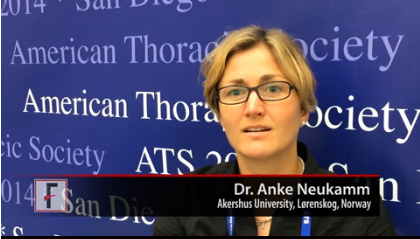
SAN DIEGO – Although statins failed to improve lung function or exacerbations of chronic obstructive pulmonary disease in several large studies presented at an international conference of the American Thoracic Society, a small caveat appeared in a trial by Dr. Anke Neukamm and her associates.
Rosuvastatin improved endothelial function in a subgroup of patients who had high levels of C-reactive protein before treatment, a prespecified analysis found.
Dr. Neukamm of Akershus University, Lørenskog, Norway, explained what her findings might mean for further research into the role of statins in patients with COPD, if any.
Her study was funded by the Norwegian Extra Foundation for Health and Rehabilitation and by AstraZeneca, which makes a brand-name formulation of rosuvastatin. Dr. Neukamm has been a speaker for AstraZeneca.
The video associated with this article is no longer available on this site. Please view all of our videos on the MDedge YouTube channel
On Twitter @sherryboschert
SAN DIEGO – Although statins failed to improve lung function or exacerbations of chronic obstructive pulmonary disease in several large studies presented at an international conference of the American Thoracic Society, a small caveat appeared in a trial by Dr. Anke Neukamm and her associates.
Rosuvastatin improved endothelial function in a subgroup of patients who had high levels of C-reactive protein before treatment, a prespecified analysis found.
Dr. Neukamm of Akershus University, Lørenskog, Norway, explained what her findings might mean for further research into the role of statins in patients with COPD, if any.
Her study was funded by the Norwegian Extra Foundation for Health and Rehabilitation and by AstraZeneca, which makes a brand-name formulation of rosuvastatin. Dr. Neukamm has been a speaker for AstraZeneca.
The video associated with this article is no longer available on this site. Please view all of our videos on the MDedge YouTube channel
On Twitter @sherryboschert
SAN DIEGO – Although statins failed to improve lung function or exacerbations of chronic obstructive pulmonary disease in several large studies presented at an international conference of the American Thoracic Society, a small caveat appeared in a trial by Dr. Anke Neukamm and her associates.
Rosuvastatin improved endothelial function in a subgroup of patients who had high levels of C-reactive protein before treatment, a prespecified analysis found.
Dr. Neukamm of Akershus University, Lørenskog, Norway, explained what her findings might mean for further research into the role of statins in patients with COPD, if any.
Her study was funded by the Norwegian Extra Foundation for Health and Rehabilitation and by AstraZeneca, which makes a brand-name formulation of rosuvastatin. Dr. Neukamm has been a speaker for AstraZeneca.
The video associated with this article is no longer available on this site. Please view all of our videos on the MDedge YouTube channel
On Twitter @sherryboschert
AT ATS 2014
Lessons From Statin Failure in COPD
SAN DIEGO – The failure of statins in the STATCOPE trial to prevent exacerbations of chronic obstructive pulmonary disease isn’t the only important message of the trial, Dr. Gerard J. Criner said in an interview after he presented the findings at an international conference of the American Thoracic Society.
Previous observational studies of statins in COPD that suggested survival benefits from the drugs probably didn’t screen out patients with indications for statin therapy, as STATCOPE (Statins in COPD Exacerbations) did, for a more pristine assessment, said Dr. Criner, professor of medicine and director of the medical intensive care unit and the ventilator rehabilitation unit at Temple University, Philadelphia. The real message may be that clinicians are missing patients who need statins but aren’t getting them, he suggested.
Dr. Criner also shared his take on other important statin trials presented at the meeting. Take a look.
The National Heart, Lung, and Blood Institute and the Canadian Institutes of Health Research funded the STATCOPE trial. The investigators reported financial associations with dozens of companies, including five of Dr. Criner’s coinvestigators who had financial associations with Merck, which makes a brand name formulation of simvastatin.
The video associated with this article is no longer available on this site. Please view all of our videos on the MDedge YouTube channel
On Twitter @sherryboschert
SAN DIEGO – The failure of statins in the STATCOPE trial to prevent exacerbations of chronic obstructive pulmonary disease isn’t the only important message of the trial, Dr. Gerard J. Criner said in an interview after he presented the findings at an international conference of the American Thoracic Society.
Previous observational studies of statins in COPD that suggested survival benefits from the drugs probably didn’t screen out patients with indications for statin therapy, as STATCOPE (Statins in COPD Exacerbations) did, for a more pristine assessment, said Dr. Criner, professor of medicine and director of the medical intensive care unit and the ventilator rehabilitation unit at Temple University, Philadelphia. The real message may be that clinicians are missing patients who need statins but aren’t getting them, he suggested.
Dr. Criner also shared his take on other important statin trials presented at the meeting. Take a look.
The National Heart, Lung, and Blood Institute and the Canadian Institutes of Health Research funded the STATCOPE trial. The investigators reported financial associations with dozens of companies, including five of Dr. Criner’s coinvestigators who had financial associations with Merck, which makes a brand name formulation of simvastatin.
The video associated with this article is no longer available on this site. Please view all of our videos on the MDedge YouTube channel
On Twitter @sherryboschert
SAN DIEGO – The failure of statins in the STATCOPE trial to prevent exacerbations of chronic obstructive pulmonary disease isn’t the only important message of the trial, Dr. Gerard J. Criner said in an interview after he presented the findings at an international conference of the American Thoracic Society.
Previous observational studies of statins in COPD that suggested survival benefits from the drugs probably didn’t screen out patients with indications for statin therapy, as STATCOPE (Statins in COPD Exacerbations) did, for a more pristine assessment, said Dr. Criner, professor of medicine and director of the medical intensive care unit and the ventilator rehabilitation unit at Temple University, Philadelphia. The real message may be that clinicians are missing patients who need statins but aren’t getting them, he suggested.
Dr. Criner also shared his take on other important statin trials presented at the meeting. Take a look.
The National Heart, Lung, and Blood Institute and the Canadian Institutes of Health Research funded the STATCOPE trial. The investigators reported financial associations with dozens of companies, including five of Dr. Criner’s coinvestigators who had financial associations with Merck, which makes a brand name formulation of simvastatin.
The video associated with this article is no longer available on this site. Please view all of our videos on the MDedge YouTube channel
On Twitter @sherryboschert
Monoclonal antibody attacks new asthma target
SAN DIEGO – An investigational human monoclonal antibody suggested a new approach to asthma treatment by showing evidence of anti-inflammatory activity and partial attenuation of early and late asthmatic responses in a proof-of-concept study of 31 patients with mild asthma.
Patients were randomized to intravenous treatment with AMG 157 or placebo for up to 3 months before undergoing allergen-induced challenge and testing. AMG 157 binds human thymic stromal lymphopoietin (TSLP), an epithelial-cell–derived cytokine that might be important in initiating allergic inflammation, and prevents receptor interaction.
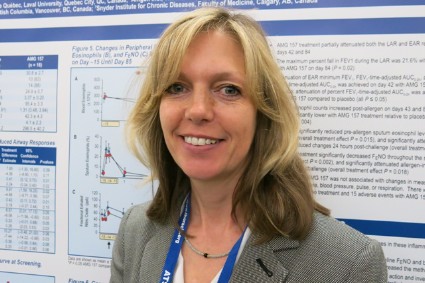
By day 84, the maximum percentage decrease in the forced expiratory volume at 1 second (FEV1) during late asthmatic response (3-7 hours after allergy challenge) was 46% smaller in the treatment group, compared with placebo, a significant difference, Gail M. Gauvreau, Ph.D., and her associates reported at an international conference of the American Thoracic Society.
Among secondary outcomes, the area under the curve (AUC) of the time-adjusted percent decrease in FEV1 during the early asthmatic response was significantly smaller in the treatment group than the control group on day 84. Patients who got AMG 157 showed significantly lower levels of blood and sputum eosinophils before and after allergy challenge and in the fraction of exhaled nitric oxide.
Adverse events were reported in 15 patients on AMG 157 and 12 patients on placebo. No serious adverse events were seen, reported Dr. Gauvreau of the Firestone Institute of Respiratory Health at McMaster University, Hamilton, Ontario.
The study was published online by the New England Journal of Medicine (2014 May 20 [doi:10.1056/NEJMoa1402895]). "This proof-of-concept study suggests that TSLP is a pivotal cytokine not only in allergen-induced airway responses but also in persistent airway inflammation in patients with allergic asthma," the investigators wrote.
The company that is developing AMG 157 has started a phase II clinical trial, Dr. Gauvreau said in an interview at the meeting.
The population of mild asthmatics in the proof-of-concept study are not the kind of patients who might use this treatment, she said, but this potential treatment pathway offers hope for a new therapy for patients with steroid-resistant asthma. "They use an awful lot of resources and costs in terms of hospital emergency room care. They are the folks who have an unmet need to treat their asthma," she said.
Amgen, which is developing AMG 157, funded the study and analyzed the data. Dr. Gauvreau reported financial associations with Amgen and three other companies. Fourteen of her coinvestigators reported financial associations with Amgen and multiple other companies.
The magnitude of the effect of AMG 157 was sizable, similar to what could be achieved in allergen-induced asthma studies by blocking established asthma mediators such as the cysteinyl leukotrienes, Dr. Sven-Erik Dahlén wrote in an editorial accompanying Dr. Gauvreau’s article (N. Engl. J. Med.; 2014 May 20 [doi:10.1056/NEJMe1404737]).
The evidence of an effect from this highly selective anti-thymic stromal lymphopoietin [TSLP] antibody on both the early and late asthmatic responses might be because it directly inhibits interleukin-4 or interleukin-13 (two downstream cytokines induced by TSLP), this study and previous data suggest. There may be two ways to inhibit allergen-induced asthmatic responses, he suggested – direct antagonism of mast-cell mediators to block acute response, or long-term inhibition of regulatory networks. TSLP may be a "master switch" in the signaling between airway epithelium and other inflammatory cascades. Or, it may be part of action by several parallel pathways involving interleukins.
AMG 157 has "earned our respect" in this study, but it’s unclear whether this strategy will succeed in treating patients with asthma, Dr. Dahlén wrote. "We will first have to unravel the biologic mechanisms involved in this unexpected effect of AMG 157 and show why TSLP signaling" contributes to asthmatic responses.
Dr. Dahlén is a professor at the Center for Allergy Research, Institute of Environmental Medicine, Karolinska Institutet, Stockholm. He reported a financial association with AstraZeneca unrelated to this study.
The magnitude of the effect of AMG 157 was sizable, similar to what could be achieved in allergen-induced asthma studies by blocking established asthma mediators such as the cysteinyl leukotrienes, Dr. Sven-Erik Dahlén wrote in an editorial accompanying Dr. Gauvreau’s article (N. Engl. J. Med.; 2014 May 20 [doi:10.1056/NEJMe1404737]).
The evidence of an effect from this highly selective anti-thymic stromal lymphopoietin [TSLP] antibody on both the early and late asthmatic responses might be because it directly inhibits interleukin-4 or interleukin-13 (two downstream cytokines induced by TSLP), this study and previous data suggest. There may be two ways to inhibit allergen-induced asthmatic responses, he suggested – direct antagonism of mast-cell mediators to block acute response, or long-term inhibition of regulatory networks. TSLP may be a "master switch" in the signaling between airway epithelium and other inflammatory cascades. Or, it may be part of action by several parallel pathways involving interleukins.
AMG 157 has "earned our respect" in this study, but it’s unclear whether this strategy will succeed in treating patients with asthma, Dr. Dahlén wrote. "We will first have to unravel the biologic mechanisms involved in this unexpected effect of AMG 157 and show why TSLP signaling" contributes to asthmatic responses.
Dr. Dahlén is a professor at the Center for Allergy Research, Institute of Environmental Medicine, Karolinska Institutet, Stockholm. He reported a financial association with AstraZeneca unrelated to this study.
The magnitude of the effect of AMG 157 was sizable, similar to what could be achieved in allergen-induced asthma studies by blocking established asthma mediators such as the cysteinyl leukotrienes, Dr. Sven-Erik Dahlén wrote in an editorial accompanying Dr. Gauvreau’s article (N. Engl. J. Med.; 2014 May 20 [doi:10.1056/NEJMe1404737]).
The evidence of an effect from this highly selective anti-thymic stromal lymphopoietin [TSLP] antibody on both the early and late asthmatic responses might be because it directly inhibits interleukin-4 or interleukin-13 (two downstream cytokines induced by TSLP), this study and previous data suggest. There may be two ways to inhibit allergen-induced asthmatic responses, he suggested – direct antagonism of mast-cell mediators to block acute response, or long-term inhibition of regulatory networks. TSLP may be a "master switch" in the signaling between airway epithelium and other inflammatory cascades. Or, it may be part of action by several parallel pathways involving interleukins.
AMG 157 has "earned our respect" in this study, but it’s unclear whether this strategy will succeed in treating patients with asthma, Dr. Dahlén wrote. "We will first have to unravel the biologic mechanisms involved in this unexpected effect of AMG 157 and show why TSLP signaling" contributes to asthmatic responses.
Dr. Dahlén is a professor at the Center for Allergy Research, Institute of Environmental Medicine, Karolinska Institutet, Stockholm. He reported a financial association with AstraZeneca unrelated to this study.
SAN DIEGO – An investigational human monoclonal antibody suggested a new approach to asthma treatment by showing evidence of anti-inflammatory activity and partial attenuation of early and late asthmatic responses in a proof-of-concept study of 31 patients with mild asthma.
Patients were randomized to intravenous treatment with AMG 157 or placebo for up to 3 months before undergoing allergen-induced challenge and testing. AMG 157 binds human thymic stromal lymphopoietin (TSLP), an epithelial-cell–derived cytokine that might be important in initiating allergic inflammation, and prevents receptor interaction.
By day 84, the maximum percentage decrease in the forced expiratory volume at 1 second (FEV1) during late asthmatic response (3-7 hours after allergy challenge) was 46% smaller in the treatment group, compared with placebo, a significant difference, Gail M. Gauvreau, Ph.D., and her associates reported at an international conference of the American Thoracic Society.
Among secondary outcomes, the area under the curve (AUC) of the time-adjusted percent decrease in FEV1 during the early asthmatic response was significantly smaller in the treatment group than the control group on day 84. Patients who got AMG 157 showed significantly lower levels of blood and sputum eosinophils before and after allergy challenge and in the fraction of exhaled nitric oxide.
Adverse events were reported in 15 patients on AMG 157 and 12 patients on placebo. No serious adverse events were seen, reported Dr. Gauvreau of the Firestone Institute of Respiratory Health at McMaster University, Hamilton, Ontario.
The study was published online by the New England Journal of Medicine (2014 May 20 [doi:10.1056/NEJMoa1402895]). "This proof-of-concept study suggests that TSLP is a pivotal cytokine not only in allergen-induced airway responses but also in persistent airway inflammation in patients with allergic asthma," the investigators wrote.
The company that is developing AMG 157 has started a phase II clinical trial, Dr. Gauvreau said in an interview at the meeting.
The population of mild asthmatics in the proof-of-concept study are not the kind of patients who might use this treatment, she said, but this potential treatment pathway offers hope for a new therapy for patients with steroid-resistant asthma. "They use an awful lot of resources and costs in terms of hospital emergency room care. They are the folks who have an unmet need to treat their asthma," she said.
Amgen, which is developing AMG 157, funded the study and analyzed the data. Dr. Gauvreau reported financial associations with Amgen and three other companies. Fourteen of her coinvestigators reported financial associations with Amgen and multiple other companies.
SAN DIEGO – An investigational human monoclonal antibody suggested a new approach to asthma treatment by showing evidence of anti-inflammatory activity and partial attenuation of early and late asthmatic responses in a proof-of-concept study of 31 patients with mild asthma.
Patients were randomized to intravenous treatment with AMG 157 or placebo for up to 3 months before undergoing allergen-induced challenge and testing. AMG 157 binds human thymic stromal lymphopoietin (TSLP), an epithelial-cell–derived cytokine that might be important in initiating allergic inflammation, and prevents receptor interaction.
By day 84, the maximum percentage decrease in the forced expiratory volume at 1 second (FEV1) during late asthmatic response (3-7 hours after allergy challenge) was 46% smaller in the treatment group, compared with placebo, a significant difference, Gail M. Gauvreau, Ph.D., and her associates reported at an international conference of the American Thoracic Society.
Among secondary outcomes, the area under the curve (AUC) of the time-adjusted percent decrease in FEV1 during the early asthmatic response was significantly smaller in the treatment group than the control group on day 84. Patients who got AMG 157 showed significantly lower levels of blood and sputum eosinophils before and after allergy challenge and in the fraction of exhaled nitric oxide.
Adverse events were reported in 15 patients on AMG 157 and 12 patients on placebo. No serious adverse events were seen, reported Dr. Gauvreau of the Firestone Institute of Respiratory Health at McMaster University, Hamilton, Ontario.
The study was published online by the New England Journal of Medicine (2014 May 20 [doi:10.1056/NEJMoa1402895]). "This proof-of-concept study suggests that TSLP is a pivotal cytokine not only in allergen-induced airway responses but also in persistent airway inflammation in patients with allergic asthma," the investigators wrote.
The company that is developing AMG 157 has started a phase II clinical trial, Dr. Gauvreau said in an interview at the meeting.
The population of mild asthmatics in the proof-of-concept study are not the kind of patients who might use this treatment, she said, but this potential treatment pathway offers hope for a new therapy for patients with steroid-resistant asthma. "They use an awful lot of resources and costs in terms of hospital emergency room care. They are the folks who have an unmet need to treat their asthma," she said.
Amgen, which is developing AMG 157, funded the study and analyzed the data. Dr. Gauvreau reported financial associations with Amgen and three other companies. Fourteen of her coinvestigators reported financial associations with Amgen and multiple other companies.
AT ATS 2014
Key clinical point: A proof-of-concept study suggests that there may be a new asthma treatment pathway, to be tested next in a phase II clinical trial.
Major finding: The maximum percentage decrease in the FEV1 3-7 hours after allergy challenge was 46% smaller in the treatment group, compared with placebo on day 84 (P = .02)
Data source: A double-blind, placebo-controlled study of 31 patients with mild asthma treated with 3 months of intravenous AMG 157 or placebo assessed after allergen challenge.
Disclosures: Amgen, which is developing AMG 157, funded the study and analyzed the data. Dr. Gauvreau reported financial associations with Amgen and three other companies. Fourteen of her coinvestigators reported financial associations with Amgen and multiple other companies.
VIDEO: Statins flop in COPD, but hope remains
SAN DIEGO – Two randomized, controlled trials presented at the American Thoracic Society international conference reported that statins did not improve pulmonary function or reduce exacerbations in patients with chronic obstructive pulmonary disease. But not everyone has given up on statins.
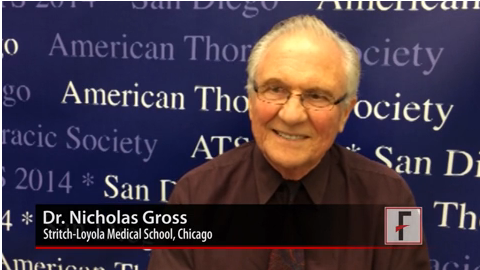
When a drug that showed promise in large observational studies doesn’t pan out in randomized, controlled trials, physicians start looking for subgroups of patients that still might benefit, Dr. Nicholas Gross told us. Hear his perspective on the STATCOPE trial (in which simvastatin did not prevent exacerbations in moderate to severe COPD) and the RODEO trial (in which rosuvastatin improved endothelial function only in a subset of patients with evidence of systemic inflammation.)
Dr. Gross is an emeritus professor of medicine and molecular biochemistry at Stritch-Loyola University, Chicago. He reported having no relevant financial disclosures.
The video associated with this article is no longer available on this site. Please view all of our videos on the MDedge YouTube channel
On Twitter @sherryboschert
SAN DIEGO – Two randomized, controlled trials presented at the American Thoracic Society international conference reported that statins did not improve pulmonary function or reduce exacerbations in patients with chronic obstructive pulmonary disease. But not everyone has given up on statins.
When a drug that showed promise in large observational studies doesn’t pan out in randomized, controlled trials, physicians start looking for subgroups of patients that still might benefit, Dr. Nicholas Gross told us. Hear his perspective on the STATCOPE trial (in which simvastatin did not prevent exacerbations in moderate to severe COPD) and the RODEO trial (in which rosuvastatin improved endothelial function only in a subset of patients with evidence of systemic inflammation.)
Dr. Gross is an emeritus professor of medicine and molecular biochemistry at Stritch-Loyola University, Chicago. He reported having no relevant financial disclosures.
The video associated with this article is no longer available on this site. Please view all of our videos on the MDedge YouTube channel
On Twitter @sherryboschert
SAN DIEGO – Two randomized, controlled trials presented at the American Thoracic Society international conference reported that statins did not improve pulmonary function or reduce exacerbations in patients with chronic obstructive pulmonary disease. But not everyone has given up on statins.
When a drug that showed promise in large observational studies doesn’t pan out in randomized, controlled trials, physicians start looking for subgroups of patients that still might benefit, Dr. Nicholas Gross told us. Hear his perspective on the STATCOPE trial (in which simvastatin did not prevent exacerbations in moderate to severe COPD) and the RODEO trial (in which rosuvastatin improved endothelial function only in a subset of patients with evidence of systemic inflammation.)
Dr. Gross is an emeritus professor of medicine and molecular biochemistry at Stritch-Loyola University, Chicago. He reported having no relevant financial disclosures.
The video associated with this article is no longer available on this site. Please view all of our videos on the MDedge YouTube channel
On Twitter @sherryboschert
AT ATS 2014
VIDEO: Experimental inhaler targets small airways in asthma
SAN DIEGO – An experimental inhalation system could help patients with asthma who are dependent on chronic oral corticosteroid therapy to reduce their doses of these steroids and potentially their side effects.
A phase II/III study suggests the system helped preserve lung function as oral corticosteroids were reduced, by delivering small budesonide to the peripheral lungs to target small airway inflammation in a randomized, controlled study of 199 patients. The study was presented by an employee of the system’s developer.
What we don’t know yet is whether the new system is better than existing technology such as metered dose inhalers for delivering small-molecule medications for asthma, or can be used in conjunction with them, Dr. Sally E. Wenzel told us in an interview.
Dr. Wenzel, professor of medicine at the University of Pittsburgh, does target the small airways when treating some patients. She provided perspective on this strategy and what may lie ahead.
Dr. Wenzel disclosed financial associations with multiple companies involved in asthma medications.
On Twitter @sherryboschert
SAN DIEGO – An experimental inhalation system could help patients with asthma who are dependent on chronic oral corticosteroid therapy to reduce their doses of these steroids and potentially their side effects.
A phase II/III study suggests the system helped preserve lung function as oral corticosteroids were reduced, by delivering small budesonide to the peripheral lungs to target small airway inflammation in a randomized, controlled study of 199 patients. The study was presented by an employee of the system’s developer.
What we don’t know yet is whether the new system is better than existing technology such as metered dose inhalers for delivering small-molecule medications for asthma, or can be used in conjunction with them, Dr. Sally E. Wenzel told us in an interview.
Dr. Wenzel, professor of medicine at the University of Pittsburgh, does target the small airways when treating some patients. She provided perspective on this strategy and what may lie ahead.
Dr. Wenzel disclosed financial associations with multiple companies involved in asthma medications.
On Twitter @sherryboschert
SAN DIEGO – An experimental inhalation system could help patients with asthma who are dependent on chronic oral corticosteroid therapy to reduce their doses of these steroids and potentially their side effects.
A phase II/III study suggests the system helped preserve lung function as oral corticosteroids were reduced, by delivering small budesonide to the peripheral lungs to target small airway inflammation in a randomized, controlled study of 199 patients. The study was presented by an employee of the system’s developer.
What we don’t know yet is whether the new system is better than existing technology such as metered dose inhalers for delivering small-molecule medications for asthma, or can be used in conjunction with them, Dr. Sally E. Wenzel told us in an interview.
Dr. Wenzel, professor of medicine at the University of Pittsburgh, does target the small airways when treating some patients. She provided perspective on this strategy and what may lie ahead.
Dr. Wenzel disclosed financial associations with multiple companies involved in asthma medications.
On Twitter @sherryboschert
AT THE ATS INTERNATIONAL CONFERENCE
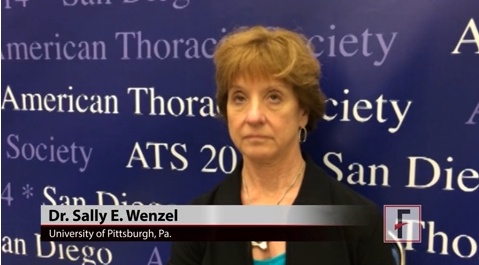
VIDEO: Lessons from statin failure in COPD
SAN DIEGO – The failure of statins in the STATCOPE trial to prevent exacerbations of chronic obstructive pulmonary disease isn’t the only important message of the trial, Dr. Gerard J. Criner said in an interview after he presented the findings at an international conference of the American Thoracic Society.
Previous observational studies of statins in COPD that suggested survival benefits from the drugs probably didn’t screen out patients with indications for statin therapy, as STATCOPE (Statins in COPD Exacerbations) did, for a more pristine assessment, said Dr. Criner, professor of medicine and director of the medical intensive care unit and the ventilator rehabilitation unit at Temple University, Philadelphia. The real message may be that clinicians are missing patients who need statins but aren’t getting them, he suggested.
Dr. Criner also shared his take on other important statin trials presented at the meeting. Take a look.
The National Heart, Lung, and Blood Institute and the Canadian Institutes of Health Research funded the STATCOPE trial. The investigators reported financial associations with dozens of companies, including five of Dr. Criner’s coinvestigators who had financial associations with Merck, which makes a brand name formulation of simvastatin.
The video associated with this article is no longer available on this site. Please view all of our videos on the MDedge YouTube channel
On Twitter @sherryboschert
SAN DIEGO – The failure of statins in the STATCOPE trial to prevent exacerbations of chronic obstructive pulmonary disease isn’t the only important message of the trial, Dr. Gerard J. Criner said in an interview after he presented the findings at an international conference of the American Thoracic Society.
Previous observational studies of statins in COPD that suggested survival benefits from the drugs probably didn’t screen out patients with indications for statin therapy, as STATCOPE (Statins in COPD Exacerbations) did, for a more pristine assessment, said Dr. Criner, professor of medicine and director of the medical intensive care unit and the ventilator rehabilitation unit at Temple University, Philadelphia. The real message may be that clinicians are missing patients who need statins but aren’t getting them, he suggested.
Dr. Criner also shared his take on other important statin trials presented at the meeting. Take a look.
The National Heart, Lung, and Blood Institute and the Canadian Institutes of Health Research funded the STATCOPE trial. The investigators reported financial associations with dozens of companies, including five of Dr. Criner’s coinvestigators who had financial associations with Merck, which makes a brand name formulation of simvastatin.
The video associated with this article is no longer available on this site. Please view all of our videos on the MDedge YouTube channel
On Twitter @sherryboschert
SAN DIEGO – The failure of statins in the STATCOPE trial to prevent exacerbations of chronic obstructive pulmonary disease isn’t the only important message of the trial, Dr. Gerard J. Criner said in an interview after he presented the findings at an international conference of the American Thoracic Society.
Previous observational studies of statins in COPD that suggested survival benefits from the drugs probably didn’t screen out patients with indications for statin therapy, as STATCOPE (Statins in COPD Exacerbations) did, for a more pristine assessment, said Dr. Criner, professor of medicine and director of the medical intensive care unit and the ventilator rehabilitation unit at Temple University, Philadelphia. The real message may be that clinicians are missing patients who need statins but aren’t getting them, he suggested.
Dr. Criner also shared his take on other important statin trials presented at the meeting. Take a look.
The National Heart, Lung, and Blood Institute and the Canadian Institutes of Health Research funded the STATCOPE trial. The investigators reported financial associations with dozens of companies, including five of Dr. Criner’s coinvestigators who had financial associations with Merck, which makes a brand name formulation of simvastatin.
The video associated with this article is no longer available on this site. Please view all of our videos on the MDedge YouTube channel
On Twitter @sherryboschert
AT THE ATS INTERNATIONAL CONFERENCE
Renal protective effect found for acetaminophen in ICU sepsis
SAN DIEGO – Three days of acetaminophen seemed to lower creatinine levels in severely septic patients, suggesting a renoprotective effect, according to results from a phase II study out of Vanderbilt University in Nashville, Tenn.
Investigators there randomized 18 septic ICU patients to acetaminophen 1 g every 6 hours for 3 days and 22 patients to placebo, both delivered by mouth or feeding tube. The patients had all been in the ICU for less than 24 hours, and had detectable levels of plasma cell-free hemoglobin (CFH).
The findings were presented at an international conference of the American Thoracic Society.
CFH has been associated with death in a number of conditions. The iron separates, radicalizes, and causes oxidative injury, especially to the kidneys. Acetaminophen chemically reduces the iron, and has been shown to counter the harm.
In an earlier observational study, the Vanderbilt team found that detectible CFH is common in ICU sepsis patients, as well as elevated plasma levels of F2-isoprostanes, an indicator of oxidative injury. They also observed that CFH was associated with death, and that exposure to acetaminophen seemed to reduce F2-isoprostanes levels and improve survival.
The findings prompted the phase II investigation. The team found that the acetaminophen group had lower levels of F2-isoprostanes on study day 2 (mean 24.9 pg/mL vs. 41.2 pg/mL; P = .022) and lower levels of serum creatinine on study day 3 (mean 1.0 mg/dL vs. 1.3 mg/dL, P = .039). These differences were significant and the renal benefit persisted throughout hospitalization.
Acetaminophen patients overall started with a lower mean baseline creatinine level (1.63 mg/dL vs. 2.06 mg/dL), so the investigators reran their analysis, excluding patients on renal replacement therapy. "The baseline imbalance went away, and the story remained the same: There was still a significant decrease in serum creatinine in the acetaminophen group," said lead investigator Dr. David Janz, a critical care fellow at Vanderbilt.
Despite a favorable trend, acetaminophen did not improve survival, a secondary outcome; one (5.6%) acetaminophen and four (18.2%) placebo patients died (P = .355).
Still, the results are strong enough to suggest that acetaminophen might one day prove to be "a potent intervention to improve sepsis outcomes. Even small creatinine changes are associated with increased length of stay and mortality," Dr. Janz said.
"Our trial contains some negative results" – most notably no significant effect on day 3 F2-isoprostanes levels – but "the consistent reduction in creatinine across a number of different analyses and the biologic plausibility underlying this signal prompt further investigation. We need larger studies that focus on length of stay and mortality," he said.
Acetaminophen patients were slightly younger (50 vs. 58 years), but besides that and the baseline creatinine difference, the groups were well matched. Both had mean Apache II scores in the low 20s. Nine acetaminophen patients (50%) and seven placebo patients (32%) were intubated.
Both groups received a median of 12 study doses. There was no statistical between-group difference in the number of patients whose AST/ALT topped 400 U/L, a stop-point hit by two acetaminophen patients and one placebo patient (P = .599). No one in the acetaminophen group developed a rash.
Patients who had liver disease or who had gotten acetaminophen within 48 hours were among those excluded from the study.
The work was funded by the National Institutes of Health and the American Heart Association. Dr. Janz had no disclosures.
SAN DIEGO – Three days of acetaminophen seemed to lower creatinine levels in severely septic patients, suggesting a renoprotective effect, according to results from a phase II study out of Vanderbilt University in Nashville, Tenn.
Investigators there randomized 18 septic ICU patients to acetaminophen 1 g every 6 hours for 3 days and 22 patients to placebo, both delivered by mouth or feeding tube. The patients had all been in the ICU for less than 24 hours, and had detectable levels of plasma cell-free hemoglobin (CFH).
The findings were presented at an international conference of the American Thoracic Society.
CFH has been associated with death in a number of conditions. The iron separates, radicalizes, and causes oxidative injury, especially to the kidneys. Acetaminophen chemically reduces the iron, and has been shown to counter the harm.
In an earlier observational study, the Vanderbilt team found that detectible CFH is common in ICU sepsis patients, as well as elevated plasma levels of F2-isoprostanes, an indicator of oxidative injury. They also observed that CFH was associated with death, and that exposure to acetaminophen seemed to reduce F2-isoprostanes levels and improve survival.
The findings prompted the phase II investigation. The team found that the acetaminophen group had lower levels of F2-isoprostanes on study day 2 (mean 24.9 pg/mL vs. 41.2 pg/mL; P = .022) and lower levels of serum creatinine on study day 3 (mean 1.0 mg/dL vs. 1.3 mg/dL, P = .039). These differences were significant and the renal benefit persisted throughout hospitalization.
Acetaminophen patients overall started with a lower mean baseline creatinine level (1.63 mg/dL vs. 2.06 mg/dL), so the investigators reran their analysis, excluding patients on renal replacement therapy. "The baseline imbalance went away, and the story remained the same: There was still a significant decrease in serum creatinine in the acetaminophen group," said lead investigator Dr. David Janz, a critical care fellow at Vanderbilt.
Despite a favorable trend, acetaminophen did not improve survival, a secondary outcome; one (5.6%) acetaminophen and four (18.2%) placebo patients died (P = .355).
Still, the results are strong enough to suggest that acetaminophen might one day prove to be "a potent intervention to improve sepsis outcomes. Even small creatinine changes are associated with increased length of stay and mortality," Dr. Janz said.
"Our trial contains some negative results" – most notably no significant effect on day 3 F2-isoprostanes levels – but "the consistent reduction in creatinine across a number of different analyses and the biologic plausibility underlying this signal prompt further investigation. We need larger studies that focus on length of stay and mortality," he said.
Acetaminophen patients were slightly younger (50 vs. 58 years), but besides that and the baseline creatinine difference, the groups were well matched. Both had mean Apache II scores in the low 20s. Nine acetaminophen patients (50%) and seven placebo patients (32%) were intubated.
Both groups received a median of 12 study doses. There was no statistical between-group difference in the number of patients whose AST/ALT topped 400 U/L, a stop-point hit by two acetaminophen patients and one placebo patient (P = .599). No one in the acetaminophen group developed a rash.
Patients who had liver disease or who had gotten acetaminophen within 48 hours were among those excluded from the study.
The work was funded by the National Institutes of Health and the American Heart Association. Dr. Janz had no disclosures.
SAN DIEGO – Three days of acetaminophen seemed to lower creatinine levels in severely septic patients, suggesting a renoprotective effect, according to results from a phase II study out of Vanderbilt University in Nashville, Tenn.
Investigators there randomized 18 septic ICU patients to acetaminophen 1 g every 6 hours for 3 days and 22 patients to placebo, both delivered by mouth or feeding tube. The patients had all been in the ICU for less than 24 hours, and had detectable levels of plasma cell-free hemoglobin (CFH).
The findings were presented at an international conference of the American Thoracic Society.
CFH has been associated with death in a number of conditions. The iron separates, radicalizes, and causes oxidative injury, especially to the kidneys. Acetaminophen chemically reduces the iron, and has been shown to counter the harm.
In an earlier observational study, the Vanderbilt team found that detectible CFH is common in ICU sepsis patients, as well as elevated plasma levels of F2-isoprostanes, an indicator of oxidative injury. They also observed that CFH was associated with death, and that exposure to acetaminophen seemed to reduce F2-isoprostanes levels and improve survival.
The findings prompted the phase II investigation. The team found that the acetaminophen group had lower levels of F2-isoprostanes on study day 2 (mean 24.9 pg/mL vs. 41.2 pg/mL; P = .022) and lower levels of serum creatinine on study day 3 (mean 1.0 mg/dL vs. 1.3 mg/dL, P = .039). These differences were significant and the renal benefit persisted throughout hospitalization.
Acetaminophen patients overall started with a lower mean baseline creatinine level (1.63 mg/dL vs. 2.06 mg/dL), so the investigators reran their analysis, excluding patients on renal replacement therapy. "The baseline imbalance went away, and the story remained the same: There was still a significant decrease in serum creatinine in the acetaminophen group," said lead investigator Dr. David Janz, a critical care fellow at Vanderbilt.
Despite a favorable trend, acetaminophen did not improve survival, a secondary outcome; one (5.6%) acetaminophen and four (18.2%) placebo patients died (P = .355).
Still, the results are strong enough to suggest that acetaminophen might one day prove to be "a potent intervention to improve sepsis outcomes. Even small creatinine changes are associated with increased length of stay and mortality," Dr. Janz said.
"Our trial contains some negative results" – most notably no significant effect on day 3 F2-isoprostanes levels – but "the consistent reduction in creatinine across a number of different analyses and the biologic plausibility underlying this signal prompt further investigation. We need larger studies that focus on length of stay and mortality," he said.
Acetaminophen patients were slightly younger (50 vs. 58 years), but besides that and the baseline creatinine difference, the groups were well matched. Both had mean Apache II scores in the low 20s. Nine acetaminophen patients (50%) and seven placebo patients (32%) were intubated.
Both groups received a median of 12 study doses. There was no statistical between-group difference in the number of patients whose AST/ALT topped 400 U/L, a stop-point hit by two acetaminophen patients and one placebo patient (P = .599). No one in the acetaminophen group developed a rash.
Patients who had liver disease or who had gotten acetaminophen within 48 hours were among those excluded from the study.
The work was funded by the National Institutes of Health and the American Heart Association. Dr. Janz had no disclosures.
AT ATS 2014
Key clinical point: Acetaminophen might protect septic patients’ kidneys.
Major finding: After 3 days, 18 septic ICU patients randomized to acetaminophen had a mean serum creatinine of 1.0 mg/dL; 22 randomized to placebo had a mean serum creatinine of 1.3 mg/dL (P = .039).
Data source: A phase II trial.
Disclosures: The work was funded by the National Institutes of Health and the American Heart Association. The lead investigator had no disclosures.

VIDEO: PTSD common in survivors of critical illness
SAN DIEGO – Following an ICU stay, about one-fourth of critical illness survivors are affected by symptoms of posttraumatic stress disorder, a meta-analysis of studies representing 3,437 patients demonstrated.
During a press briefing at an international conference of the American Thoracic Society, Dr. Ann Parker, a fellow in pulmonary and critical care medicine at Johns Hopkins University, Baltimore, discussed the findings and noted that certain patient-related risk factors influenced the association, including younger age, preexisting mental health problems, and post-ICU memories of frightening experiences in the ICU.
On Twitter @dougbrunk
SAN DIEGO – Following an ICU stay, about one-fourth of critical illness survivors are affected by symptoms of posttraumatic stress disorder, a meta-analysis of studies representing 3,437 patients demonstrated.
During a press briefing at an international conference of the American Thoracic Society, Dr. Ann Parker, a fellow in pulmonary and critical care medicine at Johns Hopkins University, Baltimore, discussed the findings and noted that certain patient-related risk factors influenced the association, including younger age, preexisting mental health problems, and post-ICU memories of frightening experiences in the ICU.
On Twitter @dougbrunk
SAN DIEGO – Following an ICU stay, about one-fourth of critical illness survivors are affected by symptoms of posttraumatic stress disorder, a meta-analysis of studies representing 3,437 patients demonstrated.
During a press briefing at an international conference of the American Thoracic Society, Dr. Ann Parker, a fellow in pulmonary and critical care medicine at Johns Hopkins University, Baltimore, discussed the findings and noted that certain patient-related risk factors influenced the association, including younger age, preexisting mental health problems, and post-ICU memories of frightening experiences in the ICU.
On Twitter @dougbrunk
AT ATS 2014
VIDEO: It's time to focus on less severe sepsis
SAN DIEGO – About half of sepsis-related deaths are in people with normal blood pressure and normal or intermediate serum lactate levels (less than 4 mmol/L) on admission, suggesting that perhaps in some cases, sepsis that could have been extinguished early got out of hand before it was recognized, according to a review of about 7 million adult hospital admissions by Kaiser Permanente researchers.
In other words, even though death rates have come down for patients with severe sepsis, there’s still a ways to go to recognize and treat less severe cases in time. Lead investigator Dr. Vincent Liu of the Kaiser Permanente division of research, Oakland, Calif., explained the problem – and what Kaiser’s doing about it – at an international conference of the American Thoracic Society.
The video associated with this article is no longer available on this site. Please view all of our videos on the MDedge YouTube channel
SAN DIEGO – About half of sepsis-related deaths are in people with normal blood pressure and normal or intermediate serum lactate levels (less than 4 mmol/L) on admission, suggesting that perhaps in some cases, sepsis that could have been extinguished early got out of hand before it was recognized, according to a review of about 7 million adult hospital admissions by Kaiser Permanente researchers.
In other words, even though death rates have come down for patients with severe sepsis, there’s still a ways to go to recognize and treat less severe cases in time. Lead investigator Dr. Vincent Liu of the Kaiser Permanente division of research, Oakland, Calif., explained the problem – and what Kaiser’s doing about it – at an international conference of the American Thoracic Society.
The video associated with this article is no longer available on this site. Please view all of our videos on the MDedge YouTube channel
SAN DIEGO – About half of sepsis-related deaths are in people with normal blood pressure and normal or intermediate serum lactate levels (less than 4 mmol/L) on admission, suggesting that perhaps in some cases, sepsis that could have been extinguished early got out of hand before it was recognized, according to a review of about 7 million adult hospital admissions by Kaiser Permanente researchers.
In other words, even though death rates have come down for patients with severe sepsis, there’s still a ways to go to recognize and treat less severe cases in time. Lead investigator Dr. Vincent Liu of the Kaiser Permanente division of research, Oakland, Calif., explained the problem – and what Kaiser’s doing about it – at an international conference of the American Thoracic Society.
The video associated with this article is no longer available on this site. Please view all of our videos on the MDedge YouTube channel
AT ATS 2014
Pirfenidone preserves vital capacity in idiopathic pulmonary fibrosis
SAN DIEGO – Pirfenidone, an oral antifibrotic therapy not yet for sale in the United States, helped preserve lung function, exercise tolerance, and progression-free survival in patients with idiopathic pulmonary fibrosis, according to phase III results published online May 18 in the New England Journal of Medicine and presented by Dr. Talmadge King Jr. at an international conference of the American Thoracic Society.
The study randomized 278 patients to 2,403 mg of pirfenidone daily and 277 patients to placebo. There were no significant baseline differences between groups; the mean baseline forced vital capacity (FVC) was about 68% of predicted in both arms.

At 52 weeks, 16.5% of pirfenidone patients vs. 31.8% of placebo patients had a decline of 10% or more in their predicted FVC or had died. Conversely, 22.7% of pirfenidone patients vs. 9.7% of placebo patients had no FVC decline. The mean FVC decline from baseline was 235 mL in the pirfenidone group and 428 mL in the placebo group. Also at 52 weeks, fewer pirfenidone patients had a drop of 50 m or more in their 6-minute walk test (16.5% vs. 19.5%). All of the differences were statistically significant, the investigators reported (N. Eng. J. Med. 2014 May 18 [doi: 10.1056/NEJMoa1402582]).
There also were fewer deaths in the pirfenidone group, but the difference was not significant (4.0% vs. 7.2%; P = .10), including three (1.1%) deaths from idiopathic pulmonary fibrosis in the pirfenidone group and seven (2.5%) in the placebo group (P = .23).
Overall, the advantage of pirfenidone "was evident by week 13 and increased throughout the duration of the trial. ... We found that pirfenidone as compared with placebo reduced disease progression in patients with idiopathic pulmonary fibrosis. Treatment was generally safe, had an acceptable side-effect profile, and was associated with fewer deaths," said the investigators, led by Dr. King, chair of the department of medicine at the University of California, San Francisco.
"We enrolled patients with mild to moderate physiological impairment; the degree to which our findings can be generalized to a population of patients with advanced disease is therefore uncertain," they noted.
The study was funded by the California biotech company InterMune to support its Food and Drug Administration application. The company currently markets the agent in Europe and Canada.
It’s the fourth phase III trial for pirfenidone; two of the earlier trials showed an FVC benefit, but a third did not, leading the FDA to request another investigation. To "confirm the effect of pirfenidone," the investigators adjusted their study design to include "centralized procedures for diagnosis, spirometry, and adjudication of deaths" and to enroll patients at higher risk for disease progression. They also limited the trial to 1 year.
Pirfenidone did significantly reduce the risk of death at 1 year when the new results were pooled with results from earlier studies (hazard ratio, 0.52; 95% confidence interval, 0.31-0.87; P = .01).
About 80% of the subjects in both treatment arms were men. The large majority of subjects were white, and about 70% were over age 65.
About 14% of pirfenidone patients and 10.8% of placebo patients quit the study because of side effects, most commonly worsening of idiopathic pulmonary fibrosis in 1.1% of pirfenidone patients and 5.4% of placebo patients. Grade 3 (severe or medically significant but not immediately life-threatening) gastrointestinal adverse events were reported in 5.4% of pirfenidone patients and 1.4% of placebo patients. Grade 3 skin-related adverse events were reported in 1.8% of pirfenidone patients and 0.4% of placebo patients. Liver enzyme elevations three times the normal limit occurred in 2.9% of pirfenidone patients and 0.7% of placebo patients.
Also, six pirfenidone patients discontinued to undergo lung transplant, vs. one placebo patient.
The study was funded by InterMune, the maker of pirfenidone. Dr. King reported personal fees from InterMune and other companies. Three of his 16 coauthors are InterMune employees, and almost all of the rest reported personal payments or grants from the company, as well as other pharmaceutical companies.
SAN DIEGO – Pirfenidone, an oral antifibrotic therapy not yet for sale in the United States, helped preserve lung function, exercise tolerance, and progression-free survival in patients with idiopathic pulmonary fibrosis, according to phase III results published online May 18 in the New England Journal of Medicine and presented by Dr. Talmadge King Jr. at an international conference of the American Thoracic Society.
The study randomized 278 patients to 2,403 mg of pirfenidone daily and 277 patients to placebo. There were no significant baseline differences between groups; the mean baseline forced vital capacity (FVC) was about 68% of predicted in both arms.
At 52 weeks, 16.5% of pirfenidone patients vs. 31.8% of placebo patients had a decline of 10% or more in their predicted FVC or had died. Conversely, 22.7% of pirfenidone patients vs. 9.7% of placebo patients had no FVC decline. The mean FVC decline from baseline was 235 mL in the pirfenidone group and 428 mL in the placebo group. Also at 52 weeks, fewer pirfenidone patients had a drop of 50 m or more in their 6-minute walk test (16.5% vs. 19.5%). All of the differences were statistically significant, the investigators reported (N. Eng. J. Med. 2014 May 18 [doi: 10.1056/NEJMoa1402582]).
There also were fewer deaths in the pirfenidone group, but the difference was not significant (4.0% vs. 7.2%; P = .10), including three (1.1%) deaths from idiopathic pulmonary fibrosis in the pirfenidone group and seven (2.5%) in the placebo group (P = .23).
Overall, the advantage of pirfenidone "was evident by week 13 and increased throughout the duration of the trial. ... We found that pirfenidone as compared with placebo reduced disease progression in patients with idiopathic pulmonary fibrosis. Treatment was generally safe, had an acceptable side-effect profile, and was associated with fewer deaths," said the investigators, led by Dr. King, chair of the department of medicine at the University of California, San Francisco.
"We enrolled patients with mild to moderate physiological impairment; the degree to which our findings can be generalized to a population of patients with advanced disease is therefore uncertain," they noted.
The study was funded by the California biotech company InterMune to support its Food and Drug Administration application. The company currently markets the agent in Europe and Canada.
It’s the fourth phase III trial for pirfenidone; two of the earlier trials showed an FVC benefit, but a third did not, leading the FDA to request another investigation. To "confirm the effect of pirfenidone," the investigators adjusted their study design to include "centralized procedures for diagnosis, spirometry, and adjudication of deaths" and to enroll patients at higher risk for disease progression. They also limited the trial to 1 year.
Pirfenidone did significantly reduce the risk of death at 1 year when the new results were pooled with results from earlier studies (hazard ratio, 0.52; 95% confidence interval, 0.31-0.87; P = .01).
About 80% of the subjects in both treatment arms were men. The large majority of subjects were white, and about 70% were over age 65.
About 14% of pirfenidone patients and 10.8% of placebo patients quit the study because of side effects, most commonly worsening of idiopathic pulmonary fibrosis in 1.1% of pirfenidone patients and 5.4% of placebo patients. Grade 3 (severe or medically significant but not immediately life-threatening) gastrointestinal adverse events were reported in 5.4% of pirfenidone patients and 1.4% of placebo patients. Grade 3 skin-related adverse events were reported in 1.8% of pirfenidone patients and 0.4% of placebo patients. Liver enzyme elevations three times the normal limit occurred in 2.9% of pirfenidone patients and 0.7% of placebo patients.
Also, six pirfenidone patients discontinued to undergo lung transplant, vs. one placebo patient.
The study was funded by InterMune, the maker of pirfenidone. Dr. King reported personal fees from InterMune and other companies. Three of his 16 coauthors are InterMune employees, and almost all of the rest reported personal payments or grants from the company, as well as other pharmaceutical companies.
SAN DIEGO – Pirfenidone, an oral antifibrotic therapy not yet for sale in the United States, helped preserve lung function, exercise tolerance, and progression-free survival in patients with idiopathic pulmonary fibrosis, according to phase III results published online May 18 in the New England Journal of Medicine and presented by Dr. Talmadge King Jr. at an international conference of the American Thoracic Society.
The study randomized 278 patients to 2,403 mg of pirfenidone daily and 277 patients to placebo. There were no significant baseline differences between groups; the mean baseline forced vital capacity (FVC) was about 68% of predicted in both arms.
At 52 weeks, 16.5% of pirfenidone patients vs. 31.8% of placebo patients had a decline of 10% or more in their predicted FVC or had died. Conversely, 22.7% of pirfenidone patients vs. 9.7% of placebo patients had no FVC decline. The mean FVC decline from baseline was 235 mL in the pirfenidone group and 428 mL in the placebo group. Also at 52 weeks, fewer pirfenidone patients had a drop of 50 m or more in their 6-minute walk test (16.5% vs. 19.5%). All of the differences were statistically significant, the investigators reported (N. Eng. J. Med. 2014 May 18 [doi: 10.1056/NEJMoa1402582]).
There also were fewer deaths in the pirfenidone group, but the difference was not significant (4.0% vs. 7.2%; P = .10), including three (1.1%) deaths from idiopathic pulmonary fibrosis in the pirfenidone group and seven (2.5%) in the placebo group (P = .23).
Overall, the advantage of pirfenidone "was evident by week 13 and increased throughout the duration of the trial. ... We found that pirfenidone as compared with placebo reduced disease progression in patients with idiopathic pulmonary fibrosis. Treatment was generally safe, had an acceptable side-effect profile, and was associated with fewer deaths," said the investigators, led by Dr. King, chair of the department of medicine at the University of California, San Francisco.
"We enrolled patients with mild to moderate physiological impairment; the degree to which our findings can be generalized to a population of patients with advanced disease is therefore uncertain," they noted.
The study was funded by the California biotech company InterMune to support its Food and Drug Administration application. The company currently markets the agent in Europe and Canada.
It’s the fourth phase III trial for pirfenidone; two of the earlier trials showed an FVC benefit, but a third did not, leading the FDA to request another investigation. To "confirm the effect of pirfenidone," the investigators adjusted their study design to include "centralized procedures for diagnosis, spirometry, and adjudication of deaths" and to enroll patients at higher risk for disease progression. They also limited the trial to 1 year.
Pirfenidone did significantly reduce the risk of death at 1 year when the new results were pooled with results from earlier studies (hazard ratio, 0.52; 95% confidence interval, 0.31-0.87; P = .01).
About 80% of the subjects in both treatment arms were men. The large majority of subjects were white, and about 70% were over age 65.
About 14% of pirfenidone patients and 10.8% of placebo patients quit the study because of side effects, most commonly worsening of idiopathic pulmonary fibrosis in 1.1% of pirfenidone patients and 5.4% of placebo patients. Grade 3 (severe or medically significant but not immediately life-threatening) gastrointestinal adverse events were reported in 5.4% of pirfenidone patients and 1.4% of placebo patients. Grade 3 skin-related adverse events were reported in 1.8% of pirfenidone patients and 0.4% of placebo patients. Liver enzyme elevations three times the normal limit occurred in 2.9% of pirfenidone patients and 0.7% of placebo patients.
Also, six pirfenidone patients discontinued to undergo lung transplant, vs. one placebo patient.
The study was funded by InterMune, the maker of pirfenidone. Dr. King reported personal fees from InterMune and other companies. Three of his 16 coauthors are InterMune employees, and almost all of the rest reported personal payments or grants from the company, as well as other pharmaceutical companies.
AT ATS 2014
Key clinical point: Pirfenidone looks like a good option for idiopathic pulmonary fibrosis.
Major finding: At 52 weeks, 16.5% of pirfenidone patients vs. 31.8% of placebo patients had a decline of 10% or more in their predicted FVC or had died.
Data source: Randomized, placebo-controlled phase III trial.
Disclosures: The study was funded by InterMune, the maker of pirfenidone. Dr. King reported personal fees from InterMune. Three of his 16 coauthors are InterMune employees, and almost all of the rest reported personal payments or grants from the company.
