User login
Team pinpoints new target for MM therapy
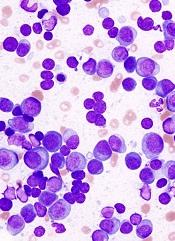
Researchers say they’ve identified a promising therapeutic target for multiple myeloma (MM).
The group first discovered that MM patients have higher expression of proline-rich tyrosine kinase 2 (PYK2), a member of the focal adhesion kinase (FAK) family, compared to healthy individuals.
Then, preclinical experiments revealed that PYK2 plays a role in tumor progression, and inhibiting this kinase can impede MM cell growth.
Yu Zhang, PhD, of the Dana-Farber Cancer Institute in Boston, and colleagues reported these findings in Blood.
Comparing samples from MM patients and healthy controls, the researchers found that PYK2 is highly expressed in MM. The team even detected higher levels of PYK2 in patients with monoclonal gammopathy of unknown significance and smoldering myeloma.
Additional experiments helped the group elucidate PYK2’s role in MM, showing that the kinase promotes tumor progression by modulating the Wnt/β-catenin signaling pathway.
When the researchers inhibited PYK2, they observed a reduction in MM tumor growth in vivo as well as decreased cell proliferation, cell cycle progression, and adhesion ability in vitro.
In contrast, overexpression of PYK2 promoted the malignant phenotype, as evidenced by enhanced tumor growth and reduced survival in mouse models.
Finally, the researchers showed that a FAK/PYK2 inhibitor, VS-4718, inhibited MM cell growth both in vitro and in vivo.
“In addition to this work recently published by our collaborators at the Dana-Farber Cancer Institute, we have been conducting further research and collaborating with scientific leaders to understand the potential of cancer stem cell inhibitors in hematological malignancies,” said Jonathan Pachter, PhD, head of research at Verastem, Inc., the company developing VS-4781.
“We believe that inhibitors of FAK and PYK2, such as VS-4718, may be useful in the treatment of many types of cancer, particularly where there is minimal residual disease with enrichment of cancer stem cells following chemotherapy. We and our collaborators will be presenting additional research at the upcoming American Society of Hematology in December.”
VS-4718 is being evaluated in a phase 1 dose-escalation trial in patients with advanced solid tumors. Another phase 1 trial in hematological malignancies is set to begin in the first quarter of 2015. 
Researchers say they’ve identified a promising therapeutic target for multiple myeloma (MM).
The group first discovered that MM patients have higher expression of proline-rich tyrosine kinase 2 (PYK2), a member of the focal adhesion kinase (FAK) family, compared to healthy individuals.
Then, preclinical experiments revealed that PYK2 plays a role in tumor progression, and inhibiting this kinase can impede MM cell growth.
Yu Zhang, PhD, of the Dana-Farber Cancer Institute in Boston, and colleagues reported these findings in Blood.
Comparing samples from MM patients and healthy controls, the researchers found that PYK2 is highly expressed in MM. The team even detected higher levels of PYK2 in patients with monoclonal gammopathy of unknown significance and smoldering myeloma.
Additional experiments helped the group elucidate PYK2’s role in MM, showing that the kinase promotes tumor progression by modulating the Wnt/β-catenin signaling pathway.
When the researchers inhibited PYK2, they observed a reduction in MM tumor growth in vivo as well as decreased cell proliferation, cell cycle progression, and adhesion ability in vitro.
In contrast, overexpression of PYK2 promoted the malignant phenotype, as evidenced by enhanced tumor growth and reduced survival in mouse models.
Finally, the researchers showed that a FAK/PYK2 inhibitor, VS-4718, inhibited MM cell growth both in vitro and in vivo.
“In addition to this work recently published by our collaborators at the Dana-Farber Cancer Institute, we have been conducting further research and collaborating with scientific leaders to understand the potential of cancer stem cell inhibitors in hematological malignancies,” said Jonathan Pachter, PhD, head of research at Verastem, Inc., the company developing VS-4781.
“We believe that inhibitors of FAK and PYK2, such as VS-4718, may be useful in the treatment of many types of cancer, particularly where there is minimal residual disease with enrichment of cancer stem cells following chemotherapy. We and our collaborators will be presenting additional research at the upcoming American Society of Hematology in December.”
VS-4718 is being evaluated in a phase 1 dose-escalation trial in patients with advanced solid tumors. Another phase 1 trial in hematological malignancies is set to begin in the first quarter of 2015.
Researchers say they’ve identified a promising therapeutic target for multiple myeloma (MM).
The group first discovered that MM patients have higher expression of proline-rich tyrosine kinase 2 (PYK2), a member of the focal adhesion kinase (FAK) family, compared to healthy individuals.
Then, preclinical experiments revealed that PYK2 plays a role in tumor progression, and inhibiting this kinase can impede MM cell growth.
Yu Zhang, PhD, of the Dana-Farber Cancer Institute in Boston, and colleagues reported these findings in Blood.
Comparing samples from MM patients and healthy controls, the researchers found that PYK2 is highly expressed in MM. The team even detected higher levels of PYK2 in patients with monoclonal gammopathy of unknown significance and smoldering myeloma.
Additional experiments helped the group elucidate PYK2’s role in MM, showing that the kinase promotes tumor progression by modulating the Wnt/β-catenin signaling pathway.
When the researchers inhibited PYK2, they observed a reduction in MM tumor growth in vivo as well as decreased cell proliferation, cell cycle progression, and adhesion ability in vitro.
In contrast, overexpression of PYK2 promoted the malignant phenotype, as evidenced by enhanced tumor growth and reduced survival in mouse models.
Finally, the researchers showed that a FAK/PYK2 inhibitor, VS-4718, inhibited MM cell growth both in vitro and in vivo.
“In addition to this work recently published by our collaborators at the Dana-Farber Cancer Institute, we have been conducting further research and collaborating with scientific leaders to understand the potential of cancer stem cell inhibitors in hematological malignancies,” said Jonathan Pachter, PhD, head of research at Verastem, Inc., the company developing VS-4781.
“We believe that inhibitors of FAK and PYK2, such as VS-4718, may be useful in the treatment of many types of cancer, particularly where there is minimal residual disease with enrichment of cancer stem cells following chemotherapy. We and our collaborators will be presenting additional research at the upcoming American Society of Hematology in December.”
VS-4718 is being evaluated in a phase 1 dose-escalation trial in patients with advanced solid tumors. Another phase 1 trial in hematological malignancies is set to begin in the first quarter of 2015.
Hematology drugs on the fast track

Credit: Bill Branson
The US Food and Drug Administration (FDA) has granted fast track designation to two hematology drugs: the monoclonal antibody MOR208 to treat relapsed or refractory diffuse large B-cell lymphoma (DLBCL) and the antifibrotic agent PRM-151 to treat myelofibrosis (MF).
The FDA’s fast track program aims to expedite the development and review of drugs that have the potential to fill an unmet medical need in serious or life-threatening conditions.
MOR208
MOR208 is a humanized monoclonal antibody targeting CD19. It is under development by MorphoSys AG to treat B-cell malignancies. The program is in phase 2 clinical development in chronic lymphocytic leukemia (CLL), acute lymphoblastic leukemia (ALL), and non-Hodgkin lymphoma.
Preclinical research with MOR208 revealed that it can trigger natural killer cell-mediated lysis of ALL cells. The drug had lytic activity against ALL cells from both adult and pediatric patients.
In a phase 1 study, MOR208 exhibited preliminary efficacy in patients with high-risk, heavily pretreated CLL, prompting responses in 67% of patients. Researchers said toxicity was acceptable, but infusion reactions were common.
“First results of our ongoing phase 2 trial, which we will present at this year’s ASH conference in December, have helped to identify diffuse large B-cell lymphoma as a valuable development opportunity for MOR208,” said Arndt Schottelius, chief development officer of MorphoSys AG.
“We are therefore delighted to have received the fast track designation for further development of MOR208 in DLBCL. The more frequent interactions with the FDA that this enables will help us to expedite the development of MOR208 in this particular subset of non-Hodgkin’s lymphoma patients.”
PRM-151
PRM-151 is a recombinant form of an endogenous human protein, pentraxin-2, that is specifically active at the site of tissue damage. PRM-151 is an agonist that acts as a monocyte/macrophage differentiation factor to prevent and potentially reverse fibrosis.
The drug has shown broad anti-fibrotic activity in preclinical models of fibrotic disease, including pulmonary fibrosis, acute and chronic nephropathy, liver fibrosis, and age-related macular degeneration.
PRM-151 has orphan designation in the US for MF and in both the US and European Union for the treatment of idiopathic pulmonary fibrosis.
The FDA’s fast track designation for PRM-151 covers primary MF, post-polycythemia vera MF, and post-essential thrombocythemia MF.
“This designation validates our perspective that there is a clear and compelling need for a novel mechanism for the treatment of myelofibrosis that specifically targets the underlying fibrotic processes of the disease,” said Beth Tréhu, MD, FACP, chief medical officer of Promedior Inc., the company developing PRM-151.
“We will continue to work expeditiously to advance this program through the clinic and look forward to presenting the full data set from the first stage of our phase 2 study later this year.”
Preliminary data from the phase 2 study of PRM-151 demonstrated benefits across all clinically relevant measures of MF, including decreases in bone marrow fibrosis, symptom responses, improvements in hemoglobin and platelets, and reductions in spleen size.
The drug also appeared to be well-tolerated and did not prompt myelosuppression.
Credit: Bill Branson
The US Food and Drug Administration (FDA) has granted fast track designation to two hematology drugs: the monoclonal antibody MOR208 to treat relapsed or refractory diffuse large B-cell lymphoma (DLBCL) and the antifibrotic agent PRM-151 to treat myelofibrosis (MF).
The FDA’s fast track program aims to expedite the development and review of drugs that have the potential to fill an unmet medical need in serious or life-threatening conditions.
MOR208
MOR208 is a humanized monoclonal antibody targeting CD19. It is under development by MorphoSys AG to treat B-cell malignancies. The program is in phase 2 clinical development in chronic lymphocytic leukemia (CLL), acute lymphoblastic leukemia (ALL), and non-Hodgkin lymphoma.
Preclinical research with MOR208 revealed that it can trigger natural killer cell-mediated lysis of ALL cells. The drug had lytic activity against ALL cells from both adult and pediatric patients.
In a phase 1 study, MOR208 exhibited preliminary efficacy in patients with high-risk, heavily pretreated CLL, prompting responses in 67% of patients. Researchers said toxicity was acceptable, but infusion reactions were common.
“First results of our ongoing phase 2 trial, which we will present at this year’s ASH conference in December, have helped to identify diffuse large B-cell lymphoma as a valuable development opportunity for MOR208,” said Arndt Schottelius, chief development officer of MorphoSys AG.
“We are therefore delighted to have received the fast track designation for further development of MOR208 in DLBCL. The more frequent interactions with the FDA that this enables will help us to expedite the development of MOR208 in this particular subset of non-Hodgkin’s lymphoma patients.”
PRM-151
PRM-151 is a recombinant form of an endogenous human protein, pentraxin-2, that is specifically active at the site of tissue damage. PRM-151 is an agonist that acts as a monocyte/macrophage differentiation factor to prevent and potentially reverse fibrosis.
The drug has shown broad anti-fibrotic activity in preclinical models of fibrotic disease, including pulmonary fibrosis, acute and chronic nephropathy, liver fibrosis, and age-related macular degeneration.
PRM-151 has orphan designation in the US for MF and in both the US and European Union for the treatment of idiopathic pulmonary fibrosis.
The FDA’s fast track designation for PRM-151 covers primary MF, post-polycythemia vera MF, and post-essential thrombocythemia MF.
“This designation validates our perspective that there is a clear and compelling need for a novel mechanism for the treatment of myelofibrosis that specifically targets the underlying fibrotic processes of the disease,” said Beth Tréhu, MD, FACP, chief medical officer of Promedior Inc., the company developing PRM-151.
“We will continue to work expeditiously to advance this program through the clinic and look forward to presenting the full data set from the first stage of our phase 2 study later this year.”
Preliminary data from the phase 2 study of PRM-151 demonstrated benefits across all clinically relevant measures of MF, including decreases in bone marrow fibrosis, symptom responses, improvements in hemoglobin and platelets, and reductions in spleen size.
The drug also appeared to be well-tolerated and did not prompt myelosuppression.
Credit: Bill Branson
The US Food and Drug Administration (FDA) has granted fast track designation to two hematology drugs: the monoclonal antibody MOR208 to treat relapsed or refractory diffuse large B-cell lymphoma (DLBCL) and the antifibrotic agent PRM-151 to treat myelofibrosis (MF).
The FDA’s fast track program aims to expedite the development and review of drugs that have the potential to fill an unmet medical need in serious or life-threatening conditions.
MOR208
MOR208 is a humanized monoclonal antibody targeting CD19. It is under development by MorphoSys AG to treat B-cell malignancies. The program is in phase 2 clinical development in chronic lymphocytic leukemia (CLL), acute lymphoblastic leukemia (ALL), and non-Hodgkin lymphoma.
Preclinical research with MOR208 revealed that it can trigger natural killer cell-mediated lysis of ALL cells. The drug had lytic activity against ALL cells from both adult and pediatric patients.
In a phase 1 study, MOR208 exhibited preliminary efficacy in patients with high-risk, heavily pretreated CLL, prompting responses in 67% of patients. Researchers said toxicity was acceptable, but infusion reactions were common.
“First results of our ongoing phase 2 trial, which we will present at this year’s ASH conference in December, have helped to identify diffuse large B-cell lymphoma as a valuable development opportunity for MOR208,” said Arndt Schottelius, chief development officer of MorphoSys AG.
“We are therefore delighted to have received the fast track designation for further development of MOR208 in DLBCL. The more frequent interactions with the FDA that this enables will help us to expedite the development of MOR208 in this particular subset of non-Hodgkin’s lymphoma patients.”
PRM-151
PRM-151 is a recombinant form of an endogenous human protein, pentraxin-2, that is specifically active at the site of tissue damage. PRM-151 is an agonist that acts as a monocyte/macrophage differentiation factor to prevent and potentially reverse fibrosis.
The drug has shown broad anti-fibrotic activity in preclinical models of fibrotic disease, including pulmonary fibrosis, acute and chronic nephropathy, liver fibrosis, and age-related macular degeneration.
PRM-151 has orphan designation in the US for MF and in both the US and European Union for the treatment of idiopathic pulmonary fibrosis.
The FDA’s fast track designation for PRM-151 covers primary MF, post-polycythemia vera MF, and post-essential thrombocythemia MF.
“This designation validates our perspective that there is a clear and compelling need for a novel mechanism for the treatment of myelofibrosis that specifically targets the underlying fibrotic processes of the disease,” said Beth Tréhu, MD, FACP, chief medical officer of Promedior Inc., the company developing PRM-151.
“We will continue to work expeditiously to advance this program through the clinic and look forward to presenting the full data set from the first stage of our phase 2 study later this year.”
Preliminary data from the phase 2 study of PRM-151 demonstrated benefits across all clinically relevant measures of MF, including decreases in bone marrow fibrosis, symptom responses, improvements in hemoglobin and platelets, and reductions in spleen size.
The drug also appeared to be well-tolerated and did not prompt myelosuppression.
Artificial platelets halt bleeding faster

Credit: Andre E.X. Brown
Artificial platelet mimics can halt bleeding in mouse models 65% faster than nature can on its own, a new study has shown.
These platelet-like nanoparticles (PLNs) mimic the shape, size, flexibility, and surface chemistry of real blood platelets.
Researchers believe these design factors together are important for inducing clots to form faster at vascular injury sites while preventing harmful clots from forming indiscriminately elsewhere in the body.
The new technology is reported in ACS Nano.
Study investigator Anirban Sen Gupta, PhD, of Case Western Reserve in Cleveland, Ohio, previously designed peptide-based surface chemistries that mimic the clot-relevant activities of real platelets.
Building on this work, Dr Sen Gupta has now focused on incorporating morphological and mechanical cues that are naturally present in platelets to further refine the design.
“Morphological and mechanical factors influence the margination of natural platelets to the blood vessel wall, and only when they are near the wall can the critical clot-promoting chemical interactions take place,” he said.
These natural cues motivated Dr Sen Gupta to team up with Samir Mitragotri, PhD, of the University of California Santa Barbara, whose lab recently developed albumin-based technologies to make particles that mimic the geometry and mechanical properties of red blood cells and platelets.
Together, the researchers developed PLNs that combine morphological, mechanical, and surface chemical properties of natural platelets.
The team believes this refined design will be able to simulate natural platelet’s ability to collide effectively with larger and softer red blood cells in systemic blood flow. The collisions cause margination—pushing the platelets out of the main flow and closer to the blood vessel wall—increasing the probability of interacting with an injury site.
The surface coatings enable the PLNs to anchor to injury-site-specific proteins, von Willebrand factor and collagen, while inducing the natural and artificial platelets to aggregate faster at the injury site.
When the researchers injected the PLNs in mice, the artificial platelets formed clots at the site of injury 3 times faster than natural platelets alone in control mice.
The ability to interact selectively with injury site proteins, as well as the ability to remain mechanically flexible like natural platelets, enables these PLNs to safely ride through the smallest of blood vessels without causing unwanted clots. PLNs that don’t aggregate in a clot and continue to circulate are metabolized in 1 to 2 days.
The researchers believe their new artificial platelet design may be even more effective in larger-volume blood flows, where margination to the blood vessel wall is more prominent. They expect to soon begin testing those capabilities.
If the PLNs prove effective in humans, they could be used to stem bleeding in patients with clotting disorders, those suffering from traumatic injury, and patients undergoing surgeries.
The technology might also be used to deliver drugs to target sites in patients suffering from atherosclerosis, thrombosis, or other platelet-involved pathologic conditions. Dr Sen Gupta believes the PLNs could even be used to deliver cancer drugs to metastatic tumors that have high platelet interactions.
Credit: Andre E.X. Brown
Artificial platelet mimics can halt bleeding in mouse models 65% faster than nature can on its own, a new study has shown.
These platelet-like nanoparticles (PLNs) mimic the shape, size, flexibility, and surface chemistry of real blood platelets.
Researchers believe these design factors together are important for inducing clots to form faster at vascular injury sites while preventing harmful clots from forming indiscriminately elsewhere in the body.
The new technology is reported in ACS Nano.
Study investigator Anirban Sen Gupta, PhD, of Case Western Reserve in Cleveland, Ohio, previously designed peptide-based surface chemistries that mimic the clot-relevant activities of real platelets.
Building on this work, Dr Sen Gupta has now focused on incorporating morphological and mechanical cues that are naturally present in platelets to further refine the design.
“Morphological and mechanical factors influence the margination of natural platelets to the blood vessel wall, and only when they are near the wall can the critical clot-promoting chemical interactions take place,” he said.
These natural cues motivated Dr Sen Gupta to team up with Samir Mitragotri, PhD, of the University of California Santa Barbara, whose lab recently developed albumin-based technologies to make particles that mimic the geometry and mechanical properties of red blood cells and platelets.
Together, the researchers developed PLNs that combine morphological, mechanical, and surface chemical properties of natural platelets.
The team believes this refined design will be able to simulate natural platelet’s ability to collide effectively with larger and softer red blood cells in systemic blood flow. The collisions cause margination—pushing the platelets out of the main flow and closer to the blood vessel wall—increasing the probability of interacting with an injury site.
The surface coatings enable the PLNs to anchor to injury-site-specific proteins, von Willebrand factor and collagen, while inducing the natural and artificial platelets to aggregate faster at the injury site.
When the researchers injected the PLNs in mice, the artificial platelets formed clots at the site of injury 3 times faster than natural platelets alone in control mice.
The ability to interact selectively with injury site proteins, as well as the ability to remain mechanically flexible like natural platelets, enables these PLNs to safely ride through the smallest of blood vessels without causing unwanted clots. PLNs that don’t aggregate in a clot and continue to circulate are metabolized in 1 to 2 days.
The researchers believe their new artificial platelet design may be even more effective in larger-volume blood flows, where margination to the blood vessel wall is more prominent. They expect to soon begin testing those capabilities.
If the PLNs prove effective in humans, they could be used to stem bleeding in patients with clotting disorders, those suffering from traumatic injury, and patients undergoing surgeries.
The technology might also be used to deliver drugs to target sites in patients suffering from atherosclerosis, thrombosis, or other platelet-involved pathologic conditions. Dr Sen Gupta believes the PLNs could even be used to deliver cancer drugs to metastatic tumors that have high platelet interactions.
Credit: Andre E.X. Brown
Artificial platelet mimics can halt bleeding in mouse models 65% faster than nature can on its own, a new study has shown.
These platelet-like nanoparticles (PLNs) mimic the shape, size, flexibility, and surface chemistry of real blood platelets.
Researchers believe these design factors together are important for inducing clots to form faster at vascular injury sites while preventing harmful clots from forming indiscriminately elsewhere in the body.
The new technology is reported in ACS Nano.
Study investigator Anirban Sen Gupta, PhD, of Case Western Reserve in Cleveland, Ohio, previously designed peptide-based surface chemistries that mimic the clot-relevant activities of real platelets.
Building on this work, Dr Sen Gupta has now focused on incorporating morphological and mechanical cues that are naturally present in platelets to further refine the design.
“Morphological and mechanical factors influence the margination of natural platelets to the blood vessel wall, and only when they are near the wall can the critical clot-promoting chemical interactions take place,” he said.
These natural cues motivated Dr Sen Gupta to team up with Samir Mitragotri, PhD, of the University of California Santa Barbara, whose lab recently developed albumin-based technologies to make particles that mimic the geometry and mechanical properties of red blood cells and platelets.
Together, the researchers developed PLNs that combine morphological, mechanical, and surface chemical properties of natural platelets.
The team believes this refined design will be able to simulate natural platelet’s ability to collide effectively with larger and softer red blood cells in systemic blood flow. The collisions cause margination—pushing the platelets out of the main flow and closer to the blood vessel wall—increasing the probability of interacting with an injury site.
The surface coatings enable the PLNs to anchor to injury-site-specific proteins, von Willebrand factor and collagen, while inducing the natural and artificial platelets to aggregate faster at the injury site.
When the researchers injected the PLNs in mice, the artificial platelets formed clots at the site of injury 3 times faster than natural platelets alone in control mice.
The ability to interact selectively with injury site proteins, as well as the ability to remain mechanically flexible like natural platelets, enables these PLNs to safely ride through the smallest of blood vessels without causing unwanted clots. PLNs that don’t aggregate in a clot and continue to circulate are metabolized in 1 to 2 days.
The researchers believe their new artificial platelet design may be even more effective in larger-volume blood flows, where margination to the blood vessel wall is more prominent. They expect to soon begin testing those capabilities.
If the PLNs prove effective in humans, they could be used to stem bleeding in patients with clotting disorders, those suffering from traumatic injury, and patients undergoing surgeries.
The technology might also be used to deliver drugs to target sites in patients suffering from atherosclerosis, thrombosis, or other platelet-involved pathologic conditions. Dr Sen Gupta believes the PLNs could even be used to deliver cancer drugs to metastatic tumors that have high platelet interactions.
Endometrial cancer
Most practicing gynecologists will diagnose a patient with endometrial cancer at some point during their careers. While referral to a gynecologic oncologist is indicated for treatment of all endometrial cancers, patients will likely have questions for their gynecologists prior to referral. The backbone of prognosis and treatment depends on the type of endometrial cancer (type 1 or type 2) and the stage of the cancer. The basics of endometrial cancer treatment will be reviewed in this article.
Endometrial cancer can be classified into two distinct subgroups based on histology and clinical behavior. Type 1 tumors are the most common type of endometrial cancer, accounting for nearly 80% of endometrial cancers. These tumors have an endometrioid histology and are well-differentiated, gland-forming tumors. The endometrioid tumors are graded by evaluating the gland formation and/or architecture, with grade 1 tumors having less than 5% solid growth and grade 2 tumors having 6%-50% solid growth. They also are graded based on the degree of nuclear atypia (Gynecol. Oncol. 1983;15:10-17).
Type 1 tumors are estrogen driven and less aggressive than their type 2 counterparts. They tend to be more common in overweight or obese patients, patients with longstanding anovulation or polycystic ovarian syndrome (PCOS), or patients placed on unopposed estrogen. Molecularly, type 1 tumors often exhibit mutations in phosphatase and tensin homolog (PTEN), Kras, and beta-catenin. Microsatellite instability with mutations in MSH2, MSH6, MLH1, and PMS2 also has been observed in 20% of sporadic endometrial cancers, as well as women with Lynch syndrome (also known as hereditary nonpolyposis colorectal cancer syndrome) (J. Clin. Oncol. 2006;24:4783-91).
Type 1 tumors are starkly different from type 2 tumors. While type 2 tumors account for 10%-20% of endometrial cancers, they are responsible for the majority of recurrences and deaths. They include serous, clear cell, mucinous, squamous, transitional cell, carcinosarcomas and undifferentiated tumors. More recently, it has been suggested that grade 3 endometrioid carcinomas be grouped with type 2 tumors. The genetic mutations and clinical behavior of grade 3 endometrioid tumors are more consistent with type 2 tumors. Type 2 tumors are more likely to show mutations in p53, aneuploidy, and overexpression of HER2/neu (Gynecol. Oncol. 2008;108:3-9). Type 2 tumors are more likely to present with advanced stage.
While it is important to understand these two categories of endometrial cancers as two distinct clinical entities with markedly different prognosis and outcomes, there is some histologic crossover. Some endometrioid tumors will have a component of serous or clear cell within the tumor. Investigators have found that up to a 10% serous component within an endometrioid tumor can confer a worse prognosis and likely warrants more aggressive treatment (Cancer 2004;101:2214-21).

Given the relatively indolent clinical course of type 1 tumors, preoperative imaging to evaluate for metastatic disease is not indicated without concerning symptoms. Additionally, often women diagnosed with type 1 tumors are able to be fully treated with hysterectomy, and in circumstances of early-stage disease, most patients with these tumors do not need adjuvant treatment with chemotherapy or radiation. Alternatively, type 2 tumors are more aggressive and may warrant additional imaging prior to hysterectomy to evaluate for distant metastasis, as uterine features may not be indicative of metastatic disease. These women will need additional treatment with radiation and likely chemotherapy following comprehensive surgical staging and hysterectomy, given the aggressive nature of their tumors.
Dividing endometrial cancers into these two distinct groups allows providers to appropriately counsel and treat patients. Having an understanding of this distinction can help practicing gynecologists who will most likely make the diagnosis of endometrial cancer within their practice. Any patient with abnormal bleeding or postmenopausal bleeding should be promptly evaluated to facilitate an early diagnosis. Regardless of whether a patient has a type 1 or type 2 tumor, early-stage diagnosis will improve the patient’s prognosis and survival.
Dr. Clark is a chief resident in the department of obstetrics and gynecology at the University of North Carolina at Chapel Hill. Dr. Gehrig is professor and director of gynecologic oncology at the university. Dr. Clark and Dr. Gehrig had no conflicts of interest to disclose.
Most practicing gynecologists will diagnose a patient with endometrial cancer at some point during their careers. While referral to a gynecologic oncologist is indicated for treatment of all endometrial cancers, patients will likely have questions for their gynecologists prior to referral. The backbone of prognosis and treatment depends on the type of endometrial cancer (type 1 or type 2) and the stage of the cancer. The basics of endometrial cancer treatment will be reviewed in this article.
Endometrial cancer can be classified into two distinct subgroups based on histology and clinical behavior. Type 1 tumors are the most common type of endometrial cancer, accounting for nearly 80% of endometrial cancers. These tumors have an endometrioid histology and are well-differentiated, gland-forming tumors. The endometrioid tumors are graded by evaluating the gland formation and/or architecture, with grade 1 tumors having less than 5% solid growth and grade 2 tumors having 6%-50% solid growth. They also are graded based on the degree of nuclear atypia (Gynecol. Oncol. 1983;15:10-17).
Type 1 tumors are estrogen driven and less aggressive than their type 2 counterparts. They tend to be more common in overweight or obese patients, patients with longstanding anovulation or polycystic ovarian syndrome (PCOS), or patients placed on unopposed estrogen. Molecularly, type 1 tumors often exhibit mutations in phosphatase and tensin homolog (PTEN), Kras, and beta-catenin. Microsatellite instability with mutations in MSH2, MSH6, MLH1, and PMS2 also has been observed in 20% of sporadic endometrial cancers, as well as women with Lynch syndrome (also known as hereditary nonpolyposis colorectal cancer syndrome) (J. Clin. Oncol. 2006;24:4783-91).
Type 1 tumors are starkly different from type 2 tumors. While type 2 tumors account for 10%-20% of endometrial cancers, they are responsible for the majority of recurrences and deaths. They include serous, clear cell, mucinous, squamous, transitional cell, carcinosarcomas and undifferentiated tumors. More recently, it has been suggested that grade 3 endometrioid carcinomas be grouped with type 2 tumors. The genetic mutations and clinical behavior of grade 3 endometrioid tumors are more consistent with type 2 tumors. Type 2 tumors are more likely to show mutations in p53, aneuploidy, and overexpression of HER2/neu (Gynecol. Oncol. 2008;108:3-9). Type 2 tumors are more likely to present with advanced stage.
While it is important to understand these two categories of endometrial cancers as two distinct clinical entities with markedly different prognosis and outcomes, there is some histologic crossover. Some endometrioid tumors will have a component of serous or clear cell within the tumor. Investigators have found that up to a 10% serous component within an endometrioid tumor can confer a worse prognosis and likely warrants more aggressive treatment (Cancer 2004;101:2214-21).
Given the relatively indolent clinical course of type 1 tumors, preoperative imaging to evaluate for metastatic disease is not indicated without concerning symptoms. Additionally, often women diagnosed with type 1 tumors are able to be fully treated with hysterectomy, and in circumstances of early-stage disease, most patients with these tumors do not need adjuvant treatment with chemotherapy or radiation. Alternatively, type 2 tumors are more aggressive and may warrant additional imaging prior to hysterectomy to evaluate for distant metastasis, as uterine features may not be indicative of metastatic disease. These women will need additional treatment with radiation and likely chemotherapy following comprehensive surgical staging and hysterectomy, given the aggressive nature of their tumors.
Dividing endometrial cancers into these two distinct groups allows providers to appropriately counsel and treat patients. Having an understanding of this distinction can help practicing gynecologists who will most likely make the diagnosis of endometrial cancer within their practice. Any patient with abnormal bleeding or postmenopausal bleeding should be promptly evaluated to facilitate an early diagnosis. Regardless of whether a patient has a type 1 or type 2 tumor, early-stage diagnosis will improve the patient’s prognosis and survival.
Dr. Clark is a chief resident in the department of obstetrics and gynecology at the University of North Carolina at Chapel Hill. Dr. Gehrig is professor and director of gynecologic oncology at the university. Dr. Clark and Dr. Gehrig had no conflicts of interest to disclose.
Most practicing gynecologists will diagnose a patient with endometrial cancer at some point during their careers. While referral to a gynecologic oncologist is indicated for treatment of all endometrial cancers, patients will likely have questions for their gynecologists prior to referral. The backbone of prognosis and treatment depends on the type of endometrial cancer (type 1 or type 2) and the stage of the cancer. The basics of endometrial cancer treatment will be reviewed in this article.
Endometrial cancer can be classified into two distinct subgroups based on histology and clinical behavior. Type 1 tumors are the most common type of endometrial cancer, accounting for nearly 80% of endometrial cancers. These tumors have an endometrioid histology and are well-differentiated, gland-forming tumors. The endometrioid tumors are graded by evaluating the gland formation and/or architecture, with grade 1 tumors having less than 5% solid growth and grade 2 tumors having 6%-50% solid growth. They also are graded based on the degree of nuclear atypia (Gynecol. Oncol. 1983;15:10-17).
Type 1 tumors are estrogen driven and less aggressive than their type 2 counterparts. They tend to be more common in overweight or obese patients, patients with longstanding anovulation or polycystic ovarian syndrome (PCOS), or patients placed on unopposed estrogen. Molecularly, type 1 tumors often exhibit mutations in phosphatase and tensin homolog (PTEN), Kras, and beta-catenin. Microsatellite instability with mutations in MSH2, MSH6, MLH1, and PMS2 also has been observed in 20% of sporadic endometrial cancers, as well as women with Lynch syndrome (also known as hereditary nonpolyposis colorectal cancer syndrome) (J. Clin. Oncol. 2006;24:4783-91).
Type 1 tumors are starkly different from type 2 tumors. While type 2 tumors account for 10%-20% of endometrial cancers, they are responsible for the majority of recurrences and deaths. They include serous, clear cell, mucinous, squamous, transitional cell, carcinosarcomas and undifferentiated tumors. More recently, it has been suggested that grade 3 endometrioid carcinomas be grouped with type 2 tumors. The genetic mutations and clinical behavior of grade 3 endometrioid tumors are more consistent with type 2 tumors. Type 2 tumors are more likely to show mutations in p53, aneuploidy, and overexpression of HER2/neu (Gynecol. Oncol. 2008;108:3-9). Type 2 tumors are more likely to present with advanced stage.
While it is important to understand these two categories of endometrial cancers as two distinct clinical entities with markedly different prognosis and outcomes, there is some histologic crossover. Some endometrioid tumors will have a component of serous or clear cell within the tumor. Investigators have found that up to a 10% serous component within an endometrioid tumor can confer a worse prognosis and likely warrants more aggressive treatment (Cancer 2004;101:2214-21).
Given the relatively indolent clinical course of type 1 tumors, preoperative imaging to evaluate for metastatic disease is not indicated without concerning symptoms. Additionally, often women diagnosed with type 1 tumors are able to be fully treated with hysterectomy, and in circumstances of early-stage disease, most patients with these tumors do not need adjuvant treatment with chemotherapy or radiation. Alternatively, type 2 tumors are more aggressive and may warrant additional imaging prior to hysterectomy to evaluate for distant metastasis, as uterine features may not be indicative of metastatic disease. These women will need additional treatment with radiation and likely chemotherapy following comprehensive surgical staging and hysterectomy, given the aggressive nature of their tumors.
Dividing endometrial cancers into these two distinct groups allows providers to appropriately counsel and treat patients. Having an understanding of this distinction can help practicing gynecologists who will most likely make the diagnosis of endometrial cancer within their practice. Any patient with abnormal bleeding or postmenopausal bleeding should be promptly evaluated to facilitate an early diagnosis. Regardless of whether a patient has a type 1 or type 2 tumor, early-stage diagnosis will improve the patient’s prognosis and survival.
Dr. Clark is a chief resident in the department of obstetrics and gynecology at the University of North Carolina at Chapel Hill. Dr. Gehrig is professor and director of gynecologic oncology at the university. Dr. Clark and Dr. Gehrig had no conflicts of interest to disclose.

CDC Ebola resources for parents and families
Children’s needs differ significantly from the needs of adults, especially when it comes to handling dire situations like the current Ebola outbreak in West Africa that has resulted in a few cases in the United States.
Children may be at increased risk for developing the infection if they have recently traveled to one of the countries experiencing an outbreak. However, since children are very unlikely to be caregivers or participate in funeral activities that raise the risk of exposure, the chances of a child in the United States developing Ebola is very low, according to the Centers for Disease Control and Prevention. It is important to keep in mind that the virus can be transmitted only through direct contact with an Ebola patient when they are symptomatic.
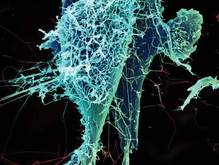
Because information about Ebola can be scary and alarming for children, it is important for parents, schools, and healthcare providers to recognize and address the developmental and psychological needs of children to help them better understand facts about the illness and their risk of exposure. It is also important for health care providers to be prepared just in case the need arises to address a potential Ebola case.
The CDC recommends the following resources to guide families and others who work with children:
1. What You Need to Know About Ebola
2. Ebola: What Parents Need to Know
3. How to Discuss Ebola with Your Children
For schools and child care centers:
Interim U.S. Guidance for Monitoring and Movement of Persons with Potential Ebola Virus Exposure
Children’s needs differ significantly from the needs of adults, especially when it comes to handling dire situations like the current Ebola outbreak in West Africa that has resulted in a few cases in the United States.
Children may be at increased risk for developing the infection if they have recently traveled to one of the countries experiencing an outbreak. However, since children are very unlikely to be caregivers or participate in funeral activities that raise the risk of exposure, the chances of a child in the United States developing Ebola is very low, according to the Centers for Disease Control and Prevention. It is important to keep in mind that the virus can be transmitted only through direct contact with an Ebola patient when they are symptomatic.
Because information about Ebola can be scary and alarming for children, it is important for parents, schools, and healthcare providers to recognize and address the developmental and psychological needs of children to help them better understand facts about the illness and their risk of exposure. It is also important for health care providers to be prepared just in case the need arises to address a potential Ebola case.
The CDC recommends the following resources to guide families and others who work with children:
1. What You Need to Know About Ebola
2. Ebola: What Parents Need to Know
3. How to Discuss Ebola with Your Children
For schools and child care centers:
Interim U.S. Guidance for Monitoring and Movement of Persons with Potential Ebola Virus Exposure
Children’s needs differ significantly from the needs of adults, especially when it comes to handling dire situations like the current Ebola outbreak in West Africa that has resulted in a few cases in the United States.
Children may be at increased risk for developing the infection if they have recently traveled to one of the countries experiencing an outbreak. However, since children are very unlikely to be caregivers or participate in funeral activities that raise the risk of exposure, the chances of a child in the United States developing Ebola is very low, according to the Centers for Disease Control and Prevention. It is important to keep in mind that the virus can be transmitted only through direct contact with an Ebola patient when they are symptomatic.
Because information about Ebola can be scary and alarming for children, it is important for parents, schools, and healthcare providers to recognize and address the developmental and psychological needs of children to help them better understand facts about the illness and their risk of exposure. It is also important for health care providers to be prepared just in case the need arises to address a potential Ebola case.
The CDC recommends the following resources to guide families and others who work with children:
1. What You Need to Know About Ebola
2. Ebola: What Parents Need to Know
3. How to Discuss Ebola with Your Children
For schools and child care centers:
Interim U.S. Guidance for Monitoring and Movement of Persons with Potential Ebola Virus Exposure

FDA: Practice caution when mixing meds and supplements
People often take medications and dietary supplements together without a second thought. But according to the Food and Drug Administration, it may be wise to consider the possible effects of combining the two in order to avoid unintended consequences.
Some dietary supplements affect the potency of prescription and over-the-counter medications by changing the way the drug is absorbed, metabolized, and/or excreted, writes the FDA’s Robert Mozersky. For instance, the herbal supplement St. John’s wort can diminish the effectiveness of several drugs used to treat HIV/AIDS, heart disease, and depression, among others. And warfarin, a blood-thinning drug, may lead to stomach bleeding when combined with other blood thinners such as ginkgo biloba or aspirin.
A Centers for Disease Control and Prevention survey found that 34% of respondents reported taking some kind of dietary supplement with a prescription medicine. It may be fine to take supplements to help with nutrient intake, but dietary supplements should not be used a substitute for healthy foods that contain the same nutrients, the FDA warned.
Additionally, special care should be taken with children, because of variations in metabolism at different ages.
The FDA offers the following tips with regard to medications and dietary supplements:
1. Bring a list of all medications and supplements you are taking along with you to doctor appointments, including details about dosage and frequency.
2. Consult with your doctor before adding a new supplement to your routine.
3. Inform your doctor about any major changes in health status, such as pregnancy, breastfeeding, or surgery.
For more information, visit the FDA website.
People often take medications and dietary supplements together without a second thought. But according to the Food and Drug Administration, it may be wise to consider the possible effects of combining the two in order to avoid unintended consequences.
Some dietary supplements affect the potency of prescription and over-the-counter medications by changing the way the drug is absorbed, metabolized, and/or excreted, writes the FDA’s Robert Mozersky. For instance, the herbal supplement St. John’s wort can diminish the effectiveness of several drugs used to treat HIV/AIDS, heart disease, and depression, among others. And warfarin, a blood-thinning drug, may lead to stomach bleeding when combined with other blood thinners such as ginkgo biloba or aspirin.
A Centers for Disease Control and Prevention survey found that 34% of respondents reported taking some kind of dietary supplement with a prescription medicine. It may be fine to take supplements to help with nutrient intake, but dietary supplements should not be used a substitute for healthy foods that contain the same nutrients, the FDA warned.
Additionally, special care should be taken with children, because of variations in metabolism at different ages.
The FDA offers the following tips with regard to medications and dietary supplements:
1. Bring a list of all medications and supplements you are taking along with you to doctor appointments, including details about dosage and frequency.
2. Consult with your doctor before adding a new supplement to your routine.
3. Inform your doctor about any major changes in health status, such as pregnancy, breastfeeding, or surgery.
For more information, visit the FDA website.
People often take medications and dietary supplements together without a second thought. But according to the Food and Drug Administration, it may be wise to consider the possible effects of combining the two in order to avoid unintended consequences.
Some dietary supplements affect the potency of prescription and over-the-counter medications by changing the way the drug is absorbed, metabolized, and/or excreted, writes the FDA’s Robert Mozersky. For instance, the herbal supplement St. John’s wort can diminish the effectiveness of several drugs used to treat HIV/AIDS, heart disease, and depression, among others. And warfarin, a blood-thinning drug, may lead to stomach bleeding when combined with other blood thinners such as ginkgo biloba or aspirin.
A Centers for Disease Control and Prevention survey found that 34% of respondents reported taking some kind of dietary supplement with a prescription medicine. It may be fine to take supplements to help with nutrient intake, but dietary supplements should not be used a substitute for healthy foods that contain the same nutrients, the FDA warned.
Additionally, special care should be taken with children, because of variations in metabolism at different ages.
The FDA offers the following tips with regard to medications and dietary supplements:
1. Bring a list of all medications and supplements you are taking along with you to doctor appointments, including details about dosage and frequency.
2. Consult with your doctor before adding a new supplement to your routine.
3. Inform your doctor about any major changes in health status, such as pregnancy, breastfeeding, or surgery.
For more information, visit the FDA website.
Anticoagulants sharply increase hematoma risk after thyroid, parathyroid surgery
SAN FRANCISCO – Patients undergoing thyroid or parathyroid surgery have a sharply higher risk of postoperative hematoma if they are on clopidogrel or anticoagulants – even if these agents are stopped in advance – researchers reported at the annual clinical congress of the American College of Surgeons.
“Patients with multiple factors considered high risk for postoperative hematoma formation after parathyroid or thyroid surgery should probably undergo a period of observation,” recommended lead investigator Dr. Sarah C. Oltmann, who at the time of the study was the director of endocrine surgery at Parkland Memorial Hospital, University of Texas Southwestern Medical Center, Dallas.
“The need specifically for anticoagulation in the perioperative period should really be carefully assessed, and decisions regarding their use in the perioperative period need to be made very cautiously,” she added. “This is particularly important when considering the need for an injectable bridge [anticoagulant], and discussions with the patient’s primary care provider or cardiologist should be prompted because obviously a hematoma risk of 11% [seen with injectable anticoagulants] is not insignificant.”
The researchers retrospectively studied 4,514 patients who underwent thyroid or parathyroid surgery at the center between 1994 and 2013. Most of the operations were performed by high-volume surgeons.
Overall, 25% of patients were using an antiplatelet agent and 3% were using an anticoagulant agent, defined in the study as current use or use up to 5-7 days before surgery. “We felt that there may be some alteration of hemostasis both at the time of surgery and in the days following surgery if they were resumed on their home meds,” explained Dr. Oltmann, who is now a clinical instructor of surgery at the University of Wisconsin–Madison.
Overall, 0.5% of patients developed a postoperative hematoma, with the majority of these events occurring in the first 24 hours. Three-fourths of the affected patients had to undergo repeat surgery.
In multivariate analyses, clopidogrel (Plavix) users had 5.6 times the odds of developing a hematoma. But neither lower-dose aspirin (less than 325 mg daily) alone nor higher-dose aspirin alone was associated with this complication.
Hematoma odds were elevated by an even greater extent, 7.5 and 29.5 times, for patients using oral and injectable anticoagulants, respectively. (Subcutaneous heparin was not included among injectable anticoagulants because surgeons at the center seldom use it in this setting, according to Dr. Oltmann.)
Patients also had increased odds of hematoma if they underwent thyroid surgery as compared with parathyroid surgery (odds ratio, 7.9), and had a bilateral procedure as compared with a unilateral one (OR, 4.9).
“Additional studies are needed to better clarify both the risk-benefit ratio of injectable anticoagulation in this patient population and potentially being able to better risk-stratify which patients would be better served with a period of overnight observation,” Dr. Oltmann concluded.

Invited discussant Dr. Raymon H. Grogan, director of the endocrine surgery research program at University of Chicago Medicine, commented, “I think this work represents a level of detail and granularity in regard to anticoagulants that we haven’t seen before in this literature, so it’s really important for us to see these data.
“We tend to get lulled into a false sense of security when we talk about complications related to thyroidectomy because they are so rare. But the truth of the matter is that this is a complication that causes deaths. A recent Nationwide Inpatient Sample study showed that about 1.3% of people who developed a hematoma will actually die in the United States, which is not an insignificant number of people who will die from a complication that’s directly caused by something we’ve done as surgeons,” he said.
Patients often have other risk factors for hematoma, Dr. Grogan noted. Therefore, he wondered, “Who can actually be sent home as a same-day patient after thyroidectomy? … When you combine your … people on these medications, along with all these other risk factors, as well as the risk of significant hypocalcemia postop, it starts to get to the point where, is it really safe to send anyone home the same day after thyroidectomy, given this overwhelming number of different factors that could cause problems?”
“That’s something we all struggle with to a certain degree, trying to be able to best determine who is safe to go home at night and who is not,” Dr. Oltmann replied, noting that risk in the study was greatest for the small proportion of patients on anticoagulants. “So I think a patient who is on some form of anticoagulant, I would definitely have significant reservations about sending home on the same day. They would be somebody I would at least want to keep overnight.”
“As far as the other variables – Graves disease, the size of the tumor, some people would also argue smoking and poorly controlled hypertension – it really becomes a conversation between the surgeon and the patient to know how reliable is the patient, how do you feel the operation went. … Hopefully, the next step is being able to find a way to weigh these different factors to be able to figure out, well, if my patient has A, B, and C, I must observe versus if they don’t, this might be somebody I can send home.”
Another attendee asked, “How do you [handle] aspirin use, given that it’s low risk as seen in your data set? How do you preop the patients, [do you] ask them to stop any low-risk agents, such as aspirin, or if they take the combination of aspirin and Plavix, which one do you hold and which do you continue in your practice?”
“After kind of combing through this data and becoming very familiar with it, I feel very comfortable with continuing aspirin use through the perioperative period,” Dr. Oltmann commented.
“For Plavix, obviously, you just have to juggle the risk-benefit ratio of why they are on that medication,” she said. “I think the most compelling situation is for our patients with atrial fibrillation, with the primary care provider wanting to … have them done on a Lovenox [enoxaparin] bridge, and now having some sort of objective data to get back with them and say, ‘Listen, they have an 11% risk of this really bad complication. Do you really think their risk of stroke trumps that?’ In most patients, that’s not the case, and I think [these data are] finally going to be able to give us some ammunition in that particular battle.”
Dr. Oltmann disclosed that she had no relevant conflicts of interest.
SAN FRANCISCO – Patients undergoing thyroid or parathyroid surgery have a sharply higher risk of postoperative hematoma if they are on clopidogrel or anticoagulants – even if these agents are stopped in advance – researchers reported at the annual clinical congress of the American College of Surgeons.
“Patients with multiple factors considered high risk for postoperative hematoma formation after parathyroid or thyroid surgery should probably undergo a period of observation,” recommended lead investigator Dr. Sarah C. Oltmann, who at the time of the study was the director of endocrine surgery at Parkland Memorial Hospital, University of Texas Southwestern Medical Center, Dallas.
“The need specifically for anticoagulation in the perioperative period should really be carefully assessed, and decisions regarding their use in the perioperative period need to be made very cautiously,” she added. “This is particularly important when considering the need for an injectable bridge [anticoagulant], and discussions with the patient’s primary care provider or cardiologist should be prompted because obviously a hematoma risk of 11% [seen with injectable anticoagulants] is not insignificant.”
The researchers retrospectively studied 4,514 patients who underwent thyroid or parathyroid surgery at the center between 1994 and 2013. Most of the operations were performed by high-volume surgeons.
Overall, 25% of patients were using an antiplatelet agent and 3% were using an anticoagulant agent, defined in the study as current use or use up to 5-7 days before surgery. “We felt that there may be some alteration of hemostasis both at the time of surgery and in the days following surgery if they were resumed on their home meds,” explained Dr. Oltmann, who is now a clinical instructor of surgery at the University of Wisconsin–Madison.
Overall, 0.5% of patients developed a postoperative hematoma, with the majority of these events occurring in the first 24 hours. Three-fourths of the affected patients had to undergo repeat surgery.
In multivariate analyses, clopidogrel (Plavix) users had 5.6 times the odds of developing a hematoma. But neither lower-dose aspirin (less than 325 mg daily) alone nor higher-dose aspirin alone was associated with this complication.
Hematoma odds were elevated by an even greater extent, 7.5 and 29.5 times, for patients using oral and injectable anticoagulants, respectively. (Subcutaneous heparin was not included among injectable anticoagulants because surgeons at the center seldom use it in this setting, according to Dr. Oltmann.)
Patients also had increased odds of hematoma if they underwent thyroid surgery as compared with parathyroid surgery (odds ratio, 7.9), and had a bilateral procedure as compared with a unilateral one (OR, 4.9).
“Additional studies are needed to better clarify both the risk-benefit ratio of injectable anticoagulation in this patient population and potentially being able to better risk-stratify which patients would be better served with a period of overnight observation,” Dr. Oltmann concluded.
Invited discussant Dr. Raymon H. Grogan, director of the endocrine surgery research program at University of Chicago Medicine, commented, “I think this work represents a level of detail and granularity in regard to anticoagulants that we haven’t seen before in this literature, so it’s really important for us to see these data.
“We tend to get lulled into a false sense of security when we talk about complications related to thyroidectomy because they are so rare. But the truth of the matter is that this is a complication that causes deaths. A recent Nationwide Inpatient Sample study showed that about 1.3% of people who developed a hematoma will actually die in the United States, which is not an insignificant number of people who will die from a complication that’s directly caused by something we’ve done as surgeons,” he said.
Patients often have other risk factors for hematoma, Dr. Grogan noted. Therefore, he wondered, “Who can actually be sent home as a same-day patient after thyroidectomy? … When you combine your … people on these medications, along with all these other risk factors, as well as the risk of significant hypocalcemia postop, it starts to get to the point where, is it really safe to send anyone home the same day after thyroidectomy, given this overwhelming number of different factors that could cause problems?”
“That’s something we all struggle with to a certain degree, trying to be able to best determine who is safe to go home at night and who is not,” Dr. Oltmann replied, noting that risk in the study was greatest for the small proportion of patients on anticoagulants. “So I think a patient who is on some form of anticoagulant, I would definitely have significant reservations about sending home on the same day. They would be somebody I would at least want to keep overnight.”
“As far as the other variables – Graves disease, the size of the tumor, some people would also argue smoking and poorly controlled hypertension – it really becomes a conversation between the surgeon and the patient to know how reliable is the patient, how do you feel the operation went. … Hopefully, the next step is being able to find a way to weigh these different factors to be able to figure out, well, if my patient has A, B, and C, I must observe versus if they don’t, this might be somebody I can send home.”
Another attendee asked, “How do you [handle] aspirin use, given that it’s low risk as seen in your data set? How do you preop the patients, [do you] ask them to stop any low-risk agents, such as aspirin, or if they take the combination of aspirin and Plavix, which one do you hold and which do you continue in your practice?”
“After kind of combing through this data and becoming very familiar with it, I feel very comfortable with continuing aspirin use through the perioperative period,” Dr. Oltmann commented.
“For Plavix, obviously, you just have to juggle the risk-benefit ratio of why they are on that medication,” she said. “I think the most compelling situation is for our patients with atrial fibrillation, with the primary care provider wanting to … have them done on a Lovenox [enoxaparin] bridge, and now having some sort of objective data to get back with them and say, ‘Listen, they have an 11% risk of this really bad complication. Do you really think their risk of stroke trumps that?’ In most patients, that’s not the case, and I think [these data are] finally going to be able to give us some ammunition in that particular battle.”
Dr. Oltmann disclosed that she had no relevant conflicts of interest.
SAN FRANCISCO – Patients undergoing thyroid or parathyroid surgery have a sharply higher risk of postoperative hematoma if they are on clopidogrel or anticoagulants – even if these agents are stopped in advance – researchers reported at the annual clinical congress of the American College of Surgeons.
“Patients with multiple factors considered high risk for postoperative hematoma formation after parathyroid or thyroid surgery should probably undergo a period of observation,” recommended lead investigator Dr. Sarah C. Oltmann, who at the time of the study was the director of endocrine surgery at Parkland Memorial Hospital, University of Texas Southwestern Medical Center, Dallas.
“The need specifically for anticoagulation in the perioperative period should really be carefully assessed, and decisions regarding their use in the perioperative period need to be made very cautiously,” she added. “This is particularly important when considering the need for an injectable bridge [anticoagulant], and discussions with the patient’s primary care provider or cardiologist should be prompted because obviously a hematoma risk of 11% [seen with injectable anticoagulants] is not insignificant.”
The researchers retrospectively studied 4,514 patients who underwent thyroid or parathyroid surgery at the center between 1994 and 2013. Most of the operations were performed by high-volume surgeons.
Overall, 25% of patients were using an antiplatelet agent and 3% were using an anticoagulant agent, defined in the study as current use or use up to 5-7 days before surgery. “We felt that there may be some alteration of hemostasis both at the time of surgery and in the days following surgery if they were resumed on their home meds,” explained Dr. Oltmann, who is now a clinical instructor of surgery at the University of Wisconsin–Madison.
Overall, 0.5% of patients developed a postoperative hematoma, with the majority of these events occurring in the first 24 hours. Three-fourths of the affected patients had to undergo repeat surgery.
In multivariate analyses, clopidogrel (Plavix) users had 5.6 times the odds of developing a hematoma. But neither lower-dose aspirin (less than 325 mg daily) alone nor higher-dose aspirin alone was associated with this complication.
Hematoma odds were elevated by an even greater extent, 7.5 and 29.5 times, for patients using oral and injectable anticoagulants, respectively. (Subcutaneous heparin was not included among injectable anticoagulants because surgeons at the center seldom use it in this setting, according to Dr. Oltmann.)
Patients also had increased odds of hematoma if they underwent thyroid surgery as compared with parathyroid surgery (odds ratio, 7.9), and had a bilateral procedure as compared with a unilateral one (OR, 4.9).
“Additional studies are needed to better clarify both the risk-benefit ratio of injectable anticoagulation in this patient population and potentially being able to better risk-stratify which patients would be better served with a period of overnight observation,” Dr. Oltmann concluded.
Invited discussant Dr. Raymon H. Grogan, director of the endocrine surgery research program at University of Chicago Medicine, commented, “I think this work represents a level of detail and granularity in regard to anticoagulants that we haven’t seen before in this literature, so it’s really important for us to see these data.
“We tend to get lulled into a false sense of security when we talk about complications related to thyroidectomy because they are so rare. But the truth of the matter is that this is a complication that causes deaths. A recent Nationwide Inpatient Sample study showed that about 1.3% of people who developed a hematoma will actually die in the United States, which is not an insignificant number of people who will die from a complication that’s directly caused by something we’ve done as surgeons,” he said.
Patients often have other risk factors for hematoma, Dr. Grogan noted. Therefore, he wondered, “Who can actually be sent home as a same-day patient after thyroidectomy? … When you combine your … people on these medications, along with all these other risk factors, as well as the risk of significant hypocalcemia postop, it starts to get to the point where, is it really safe to send anyone home the same day after thyroidectomy, given this overwhelming number of different factors that could cause problems?”
“That’s something we all struggle with to a certain degree, trying to be able to best determine who is safe to go home at night and who is not,” Dr. Oltmann replied, noting that risk in the study was greatest for the small proportion of patients on anticoagulants. “So I think a patient who is on some form of anticoagulant, I would definitely have significant reservations about sending home on the same day. They would be somebody I would at least want to keep overnight.”
“As far as the other variables – Graves disease, the size of the tumor, some people would also argue smoking and poorly controlled hypertension – it really becomes a conversation between the surgeon and the patient to know how reliable is the patient, how do you feel the operation went. … Hopefully, the next step is being able to find a way to weigh these different factors to be able to figure out, well, if my patient has A, B, and C, I must observe versus if they don’t, this might be somebody I can send home.”
Another attendee asked, “How do you [handle] aspirin use, given that it’s low risk as seen in your data set? How do you preop the patients, [do you] ask them to stop any low-risk agents, such as aspirin, or if they take the combination of aspirin and Plavix, which one do you hold and which do you continue in your practice?”
“After kind of combing through this data and becoming very familiar with it, I feel very comfortable with continuing aspirin use through the perioperative period,” Dr. Oltmann commented.
“For Plavix, obviously, you just have to juggle the risk-benefit ratio of why they are on that medication,” she said. “I think the most compelling situation is for our patients with atrial fibrillation, with the primary care provider wanting to … have them done on a Lovenox [enoxaparin] bridge, and now having some sort of objective data to get back with them and say, ‘Listen, they have an 11% risk of this really bad complication. Do you really think their risk of stroke trumps that?’ In most patients, that’s not the case, and I think [these data are] finally going to be able to give us some ammunition in that particular battle.”
Dr. Oltmann disclosed that she had no relevant conflicts of interest.
AT THE ACS CLINICAL CONGRESS
Key clinical point: Clopidogrel and anticoagulants are risk factors for hematoma after thyroid or parathyroid surgery.
Major finding: The odds of hematoma were 5.6 times higher with clopidogrel use and 7.5 and 29.5 times higher with oral and injectable anticoagulant use, respectively.
Data source: A retrospective study of 4,514 patients undergoing thyroid or parathyroid surgery.
Disclosures: Dr. Oltmann disclosed that she had no relevant conflicts of interest.
Team discovers key aspects of HSC development

New research suggests proinflammatory signaling is crucial to the creation of hematopoietic stem cells (HSCs) during embryonic development, a finding that could help scientists reproduce HSCs for therapeutic use.
Researchers discovered that TNFR2, via TNFα, activates the Notch and NF-kB signaling pathways to establish HSC fate, which suggests inflammatory signaling is required for HSC generation.
The group also found that primitive neutrophils are the major source of TNFa. So it seems these cells are crucial to HSC development as well.
The researchers described these findings in Cell.
“The development of some mature cell lineages from iPSCs [induced pluripotent stem cells], such as cardiac and neural, has been reasonably straightforward, but not with HSCs,” said principal investigator David Traver, PhD, of the University of California, San Diego School of Medicine.
“This is likely due, at least in part, to not fully understanding all of the factors used by the embryo to generate HSCs. We believe the discovery that proinflammatory cues are important in vivo will help us recapitulate instruction of HSC fate in vitro from iPSCs.”
For this study, Dr Traver and his colleagues decided to examine the role of TNFα in HSC development, extending previous research by Victoriano Mulero, PhD, of the University of Murcia in Spain.
Dr Mulero reported that TNFα is important in the function of the embryonic vascular system. And, in animal models where TNF function was absent, blood defects resulted.
Raquel Espin-Palazon, PhD, a researcher in Dr Traver’s lab and a former colleague of Dr Mulero’s, determined that TNFα is required for the emergence of HSCs during embryogenesis in zebrafish.
Dr Traver said the finding was completely unexpected because HSCs emerge relatively early in embryonic formation, when the developing organism is considered to be largely sterile and devoid of infection.
“Thus, there was no expectation that proinflammatory signaling would be active at this time or in the blood-forming regions,” Dr Traver said. “Equally surprising, we found that a population of embryonic myeloid cells, which are transient cells produced before HSCs arise, are the producers of the TNFα needed to establish HSC fate.”
“So it turns out that a small subset of myeloid cells that persist for only a few days in development are necessary to help generate the lineal precursors of the entire adult blood-forming system.”
New research suggests proinflammatory signaling is crucial to the creation of hematopoietic stem cells (HSCs) during embryonic development, a finding that could help scientists reproduce HSCs for therapeutic use.
Researchers discovered that TNFR2, via TNFα, activates the Notch and NF-kB signaling pathways to establish HSC fate, which suggests inflammatory signaling is required for HSC generation.
The group also found that primitive neutrophils are the major source of TNFa. So it seems these cells are crucial to HSC development as well.
The researchers described these findings in Cell.
“The development of some mature cell lineages from iPSCs [induced pluripotent stem cells], such as cardiac and neural, has been reasonably straightforward, but not with HSCs,” said principal investigator David Traver, PhD, of the University of California, San Diego School of Medicine.
“This is likely due, at least in part, to not fully understanding all of the factors used by the embryo to generate HSCs. We believe the discovery that proinflammatory cues are important in vivo will help us recapitulate instruction of HSC fate in vitro from iPSCs.”
For this study, Dr Traver and his colleagues decided to examine the role of TNFα in HSC development, extending previous research by Victoriano Mulero, PhD, of the University of Murcia in Spain.
Dr Mulero reported that TNFα is important in the function of the embryonic vascular system. And, in animal models where TNF function was absent, blood defects resulted.
Raquel Espin-Palazon, PhD, a researcher in Dr Traver’s lab and a former colleague of Dr Mulero’s, determined that TNFα is required for the emergence of HSCs during embryogenesis in zebrafish.
Dr Traver said the finding was completely unexpected because HSCs emerge relatively early in embryonic formation, when the developing organism is considered to be largely sterile and devoid of infection.
“Thus, there was no expectation that proinflammatory signaling would be active at this time or in the blood-forming regions,” Dr Traver said. “Equally surprising, we found that a population of embryonic myeloid cells, which are transient cells produced before HSCs arise, are the producers of the TNFα needed to establish HSC fate.”
“So it turns out that a small subset of myeloid cells that persist for only a few days in development are necessary to help generate the lineal precursors of the entire adult blood-forming system.”
New research suggests proinflammatory signaling is crucial to the creation of hematopoietic stem cells (HSCs) during embryonic development, a finding that could help scientists reproduce HSCs for therapeutic use.
Researchers discovered that TNFR2, via TNFα, activates the Notch and NF-kB signaling pathways to establish HSC fate, which suggests inflammatory signaling is required for HSC generation.
The group also found that primitive neutrophils are the major source of TNFa. So it seems these cells are crucial to HSC development as well.
The researchers described these findings in Cell.
“The development of some mature cell lineages from iPSCs [induced pluripotent stem cells], such as cardiac and neural, has been reasonably straightforward, but not with HSCs,” said principal investigator David Traver, PhD, of the University of California, San Diego School of Medicine.
“This is likely due, at least in part, to not fully understanding all of the factors used by the embryo to generate HSCs. We believe the discovery that proinflammatory cues are important in vivo will help us recapitulate instruction of HSC fate in vitro from iPSCs.”
For this study, Dr Traver and his colleagues decided to examine the role of TNFα in HSC development, extending previous research by Victoriano Mulero, PhD, of the University of Murcia in Spain.
Dr Mulero reported that TNFα is important in the function of the embryonic vascular system. And, in animal models where TNF function was absent, blood defects resulted.
Raquel Espin-Palazon, PhD, a researcher in Dr Traver’s lab and a former colleague of Dr Mulero’s, determined that TNFα is required for the emergence of HSCs during embryogenesis in zebrafish.
Dr Traver said the finding was completely unexpected because HSCs emerge relatively early in embryonic formation, when the developing organism is considered to be largely sterile and devoid of infection.
“Thus, there was no expectation that proinflammatory signaling would be active at this time or in the blood-forming regions,” Dr Traver said. “Equally surprising, we found that a population of embryonic myeloid cells, which are transient cells produced before HSCs arise, are the producers of the TNFα needed to establish HSC fate.”
“So it turns out that a small subset of myeloid cells that persist for only a few days in development are necessary to help generate the lineal precursors of the entire adult blood-forming system.”
Agent reverses effects of edoxaban
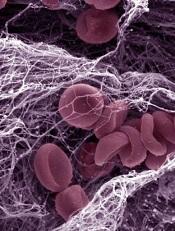
Credit: Kevin MacKenzie
An investigational anticoagulant reversal agent known as PER977 can restore hemostasis following edoxaban administration, according to a phase 1/2 trial.
The study included 80 healthy subjects who received PER977 or placebo 3 hours after they received a dose of edoxaban.
PER977 decreased anticoagulation to within 10% of baseline levels within 10 to 30 minutes of administration, an effect that took 12 to 15 hours in placebo-treated subjects.
Jack Ansell, MD, of Hofstra North Shore–LIJ School of Medicine in Hempstead, New York, and his colleagues reported these results in a letter to NEJM. The research was funded by Perosphere, the company developing PER977.
PER977 is a small molecule that can bind to unfractionated heparin, low-molecular-weight heparin, edoxaban, rivaroxaban, apixaban, and dabigatran. In preclinical studies, PER977 reversed anticoagulation with each of the new oral anticoagulants.
Dr Ansell and his colleagues wanted to determine the safety and efficacy of PER977 when given to healthy subjects after edoxaban. So the team enrolled 80 subjects and gave them placebo or single, escalating doses of PER977 (5 mg to 300 mg) 3 hours after a 60 mg dose of edoxaban.
After edoxaban administration, the mean whole-blood clotting time (WBCT) increased 37% from baseline. In placebo-treated subjects, it took 12 to 15 hours for the mean WBCT to return to within 10% above the baseline level.
In subjects who received PER977 at 100 mg to 300 mg, it took 10 minutes or less to reach the same level. And the WBCT remained within 10% above or below the baseline value for 24 hours, with no rebound and no infusions needed.
The researchers also assessed clots while measuring WBCT to determine the mean fibrin-fiber diameter. They found that edoxaban significantly reduced the mean fibrin-fiber diameter relative to baseline, from about 250 nm to about 125 nm (P<0.001).
But the mean fibrin-fiber diameter was restored to normal 30 minutes after subjects received 100 mg to 300 mg of PER977.
In addition, the researchers saw no evidence of procoagulant activity after PER977 administration, as assessed by levels of D-dimer, prothrombin fragment 1.2, and tissue factor pathway inhibitor.
The team noted a few adverse events that may have been related to PER977, including transient, mild perioral and facial flushing, dysgeusia, and moderate headache.
One subject experienced a moderate muscle cramp and elevation in creatinine phosphokinase levels, but the researchers believe this was not related to PER977.
“[T]he fact that PER977 was shown to be safe, well tolerated, and, most importantly, effective in reversing edoxaban, one of the new factor Xa oral anticoagulants, is a major step forward in developing a readily available and simple-to-use reversal agent for the new oral anticoagulants,” Dr Ansell said.
Credit: Kevin MacKenzie
An investigational anticoagulant reversal agent known as PER977 can restore hemostasis following edoxaban administration, according to a phase 1/2 trial.
The study included 80 healthy subjects who received PER977 or placebo 3 hours after they received a dose of edoxaban.
PER977 decreased anticoagulation to within 10% of baseline levels within 10 to 30 minutes of administration, an effect that took 12 to 15 hours in placebo-treated subjects.
Jack Ansell, MD, of Hofstra North Shore–LIJ School of Medicine in Hempstead, New York, and his colleagues reported these results in a letter to NEJM. The research was funded by Perosphere, the company developing PER977.
PER977 is a small molecule that can bind to unfractionated heparin, low-molecular-weight heparin, edoxaban, rivaroxaban, apixaban, and dabigatran. In preclinical studies, PER977 reversed anticoagulation with each of the new oral anticoagulants.
Dr Ansell and his colleagues wanted to determine the safety and efficacy of PER977 when given to healthy subjects after edoxaban. So the team enrolled 80 subjects and gave them placebo or single, escalating doses of PER977 (5 mg to 300 mg) 3 hours after a 60 mg dose of edoxaban.
After edoxaban administration, the mean whole-blood clotting time (WBCT) increased 37% from baseline. In placebo-treated subjects, it took 12 to 15 hours for the mean WBCT to return to within 10% above the baseline level.
In subjects who received PER977 at 100 mg to 300 mg, it took 10 minutes or less to reach the same level. And the WBCT remained within 10% above or below the baseline value for 24 hours, with no rebound and no infusions needed.
The researchers also assessed clots while measuring WBCT to determine the mean fibrin-fiber diameter. They found that edoxaban significantly reduced the mean fibrin-fiber diameter relative to baseline, from about 250 nm to about 125 nm (P<0.001).
But the mean fibrin-fiber diameter was restored to normal 30 minutes after subjects received 100 mg to 300 mg of PER977.
In addition, the researchers saw no evidence of procoagulant activity after PER977 administration, as assessed by levels of D-dimer, prothrombin fragment 1.2, and tissue factor pathway inhibitor.
The team noted a few adverse events that may have been related to PER977, including transient, mild perioral and facial flushing, dysgeusia, and moderate headache.
One subject experienced a moderate muscle cramp and elevation in creatinine phosphokinase levels, but the researchers believe this was not related to PER977.
“[T]he fact that PER977 was shown to be safe, well tolerated, and, most importantly, effective in reversing edoxaban, one of the new factor Xa oral anticoagulants, is a major step forward in developing a readily available and simple-to-use reversal agent for the new oral anticoagulants,” Dr Ansell said.
Credit: Kevin MacKenzie
An investigational anticoagulant reversal agent known as PER977 can restore hemostasis following edoxaban administration, according to a phase 1/2 trial.
The study included 80 healthy subjects who received PER977 or placebo 3 hours after they received a dose of edoxaban.
PER977 decreased anticoagulation to within 10% of baseline levels within 10 to 30 minutes of administration, an effect that took 12 to 15 hours in placebo-treated subjects.
Jack Ansell, MD, of Hofstra North Shore–LIJ School of Medicine in Hempstead, New York, and his colleagues reported these results in a letter to NEJM. The research was funded by Perosphere, the company developing PER977.
PER977 is a small molecule that can bind to unfractionated heparin, low-molecular-weight heparin, edoxaban, rivaroxaban, apixaban, and dabigatran. In preclinical studies, PER977 reversed anticoagulation with each of the new oral anticoagulants.
Dr Ansell and his colleagues wanted to determine the safety and efficacy of PER977 when given to healthy subjects after edoxaban. So the team enrolled 80 subjects and gave them placebo or single, escalating doses of PER977 (5 mg to 300 mg) 3 hours after a 60 mg dose of edoxaban.
After edoxaban administration, the mean whole-blood clotting time (WBCT) increased 37% from baseline. In placebo-treated subjects, it took 12 to 15 hours for the mean WBCT to return to within 10% above the baseline level.
In subjects who received PER977 at 100 mg to 300 mg, it took 10 minutes or less to reach the same level. And the WBCT remained within 10% above or below the baseline value for 24 hours, with no rebound and no infusions needed.
The researchers also assessed clots while measuring WBCT to determine the mean fibrin-fiber diameter. They found that edoxaban significantly reduced the mean fibrin-fiber diameter relative to baseline, from about 250 nm to about 125 nm (P<0.001).
But the mean fibrin-fiber diameter was restored to normal 30 minutes after subjects received 100 mg to 300 mg of PER977.
In addition, the researchers saw no evidence of procoagulant activity after PER977 administration, as assessed by levels of D-dimer, prothrombin fragment 1.2, and tissue factor pathway inhibitor.
The team noted a few adverse events that may have been related to PER977, including transient, mild perioral and facial flushing, dysgeusia, and moderate headache.
One subject experienced a moderate muscle cramp and elevation in creatinine phosphokinase levels, but the researchers believe this was not related to PER977.
“[T]he fact that PER977 was shown to be safe, well tolerated, and, most importantly, effective in reversing edoxaban, one of the new factor Xa oral anticoagulants, is a major step forward in developing a readily available and simple-to-use reversal agent for the new oral anticoagulants,” Dr Ansell said.
Aspartame, sweetened drinks don’t increase risk of NHL

beverages at the supermarket
Consuming aspartame and drinking sweetened beverages do not increase a person’s risk of developing non-Hodgkin lymphoma (NHL), according to research published in the Journal of Nutrition.
Investigators analyzed information from more than 100,000 men and women in the US.
The results suggested that neither aspartame intake nor the consumption of sugar-sweetened or artificially sweetened beverages were associated with an increased risk of NHL.
Marjorie L. McCullough, SCD, RD, of the American Cancer Society in Atlanta, Georgia, and her colleagues conducted this research, analyzing data from the nutrition cohort of the Cancer Prevention Study II, an assessment of cancer incidence
and mortality in the US.
Study subjects first completed a questionnaire in 1992, noting information related to diet and other lifestyle factors. They completed follow-up questionnaires in 1999 and 2003, which included questions related to the consumption of sugar-sweetened and artificially sweetened beverages, as well as tabletop sweeteners containing aspartame.
Among the 100,442 adult men and women who provided information on diet and lifestyle factors in 1999, there were 1196 NHL cases verified during a 10-year follow-up period.
The investigators assessed the risk of NHL associated with sweetened beverage and aspartame consumption, adjusted for the subjects’ smoking status, body mass index, and history of diabetes.
The analysis revealed that, in women and men combined, there was no association between NHL risk and the consumption of 1 or more servings (355 mL) of artificially sweetened beverages. Compared to nondrinkers, subjects who drank artificially sweetened beverages had a risk ratio (RR) of 0.92 (P=0.14).
Similarly, there was no association between NHL risk and sugar-sweetened beverages. Compared to nondrinkers, the RR for sugar-sweetened beverage drinkers was 1.10 (P=0.62).
Furthermore, subjects’ overall aspartame intake, which was estimated from artificially sweetened carbonated beverage consumption and the use of aspartame packets, was not associated with NHL risk.
The RR was 1.02 (P=0.69) for the top quintile (which had a median aspartame intake of 145 mg per day) vs the bottom quintile (which had a median aspartame intake of 0 mg per day).
The investigators also found that associations between disease and sweetened beverage consumption or aspartame intake were generally null for specific NHL subtypes, including multiple myeloma, diffuse large B-cell lymphoma, chronic lymphocytic leukemia/small lymphocytic lymphoma, follicular lymphoma, and other B-cell lymphomas.
“The study supports the decades of research that have continued to find that aspartame is safe for use in foods and beverages,” said Haley Stevens, PhD, President of the Calorie Control Council. “It also supports the conclusions of the National Cancer Institute, who have determined that aspartame does not increase a person’s risk of developing cancer.”
beverages at the supermarket
Consuming aspartame and drinking sweetened beverages do not increase a person’s risk of developing non-Hodgkin lymphoma (NHL), according to research published in the Journal of Nutrition.
Investigators analyzed information from more than 100,000 men and women in the US.
The results suggested that neither aspartame intake nor the consumption of sugar-sweetened or artificially sweetened beverages were associated with an increased risk of NHL.
Marjorie L. McCullough, SCD, RD, of the American Cancer Society in Atlanta, Georgia, and her colleagues conducted this research, analyzing data from the nutrition cohort of the Cancer Prevention Study II, an assessment of cancer incidence
and mortality in the US.
Study subjects first completed a questionnaire in 1992, noting information related to diet and other lifestyle factors. They completed follow-up questionnaires in 1999 and 2003, which included questions related to the consumption of sugar-sweetened and artificially sweetened beverages, as well as tabletop sweeteners containing aspartame.
Among the 100,442 adult men and women who provided information on diet and lifestyle factors in 1999, there were 1196 NHL cases verified during a 10-year follow-up period.
The investigators assessed the risk of NHL associated with sweetened beverage and aspartame consumption, adjusted for the subjects’ smoking status, body mass index, and history of diabetes.
The analysis revealed that, in women and men combined, there was no association between NHL risk and the consumption of 1 or more servings (355 mL) of artificially sweetened beverages. Compared to nondrinkers, subjects who drank artificially sweetened beverages had a risk ratio (RR) of 0.92 (P=0.14).
Similarly, there was no association between NHL risk and sugar-sweetened beverages. Compared to nondrinkers, the RR for sugar-sweetened beverage drinkers was 1.10 (P=0.62).
Furthermore, subjects’ overall aspartame intake, which was estimated from artificially sweetened carbonated beverage consumption and the use of aspartame packets, was not associated with NHL risk.
The RR was 1.02 (P=0.69) for the top quintile (which had a median aspartame intake of 145 mg per day) vs the bottom quintile (which had a median aspartame intake of 0 mg per day).
The investigators also found that associations between disease and sweetened beverage consumption or aspartame intake were generally null for specific NHL subtypes, including multiple myeloma, diffuse large B-cell lymphoma, chronic lymphocytic leukemia/small lymphocytic lymphoma, follicular lymphoma, and other B-cell lymphomas.
“The study supports the decades of research that have continued to find that aspartame is safe for use in foods and beverages,” said Haley Stevens, PhD, President of the Calorie Control Council. “It also supports the conclusions of the National Cancer Institute, who have determined that aspartame does not increase a person’s risk of developing cancer.”
beverages at the supermarket
Consuming aspartame and drinking sweetened beverages do not increase a person’s risk of developing non-Hodgkin lymphoma (NHL), according to research published in the Journal of Nutrition.
Investigators analyzed information from more than 100,000 men and women in the US.
The results suggested that neither aspartame intake nor the consumption of sugar-sweetened or artificially sweetened beverages were associated with an increased risk of NHL.
Marjorie L. McCullough, SCD, RD, of the American Cancer Society in Atlanta, Georgia, and her colleagues conducted this research, analyzing data from the nutrition cohort of the Cancer Prevention Study II, an assessment of cancer incidence
and mortality in the US.
Study subjects first completed a questionnaire in 1992, noting information related to diet and other lifestyle factors. They completed follow-up questionnaires in 1999 and 2003, which included questions related to the consumption of sugar-sweetened and artificially sweetened beverages, as well as tabletop sweeteners containing aspartame.
Among the 100,442 adult men and women who provided information on diet and lifestyle factors in 1999, there were 1196 NHL cases verified during a 10-year follow-up period.
The investigators assessed the risk of NHL associated with sweetened beverage and aspartame consumption, adjusted for the subjects’ smoking status, body mass index, and history of diabetes.
The analysis revealed that, in women and men combined, there was no association between NHL risk and the consumption of 1 or more servings (355 mL) of artificially sweetened beverages. Compared to nondrinkers, subjects who drank artificially sweetened beverages had a risk ratio (RR) of 0.92 (P=0.14).
Similarly, there was no association between NHL risk and sugar-sweetened beverages. Compared to nondrinkers, the RR for sugar-sweetened beverage drinkers was 1.10 (P=0.62).
Furthermore, subjects’ overall aspartame intake, which was estimated from artificially sweetened carbonated beverage consumption and the use of aspartame packets, was not associated with NHL risk.
The RR was 1.02 (P=0.69) for the top quintile (which had a median aspartame intake of 145 mg per day) vs the bottom quintile (which had a median aspartame intake of 0 mg per day).
The investigators also found that associations between disease and sweetened beverage consumption or aspartame intake were generally null for specific NHL subtypes, including multiple myeloma, diffuse large B-cell lymphoma, chronic lymphocytic leukemia/small lymphocytic lymphoma, follicular lymphoma, and other B-cell lymphomas.
“The study supports the decades of research that have continued to find that aspartame is safe for use in foods and beverages,” said Haley Stevens, PhD, President of the Calorie Control Council. “It also supports the conclusions of the National Cancer Institute, who have determined that aspartame does not increase a person’s risk of developing cancer.”