User login
MS linked to higher rates of hoarding behavior
SEATTLE – according to a small study that appears to be the first of its kind. It is not clear how MS and hoarding may be linked, but study author Joshua Bacon, PhD, an MS researcher and associate professor at New York University, and coauthors suspect that physical limitations are an important factor.
“It is important for clinicians to identify patients who might be hoarders and/or clutterers. It is very likely that this has an impact on the trajectory of their activities of daily living,” he said in an interview prior to the presentation of the study findings at the annual meeting of the Consortium of Multiple Sclerosis Centers.
Dr. Bacon said the study was inspired by his observation that hoarding and cluttering behavior appear to be common among patients with MS. “As I became more interested in it, it became clear there hasn’t been any work on this in the MS population.”
For the new study, Dr. Bacon and colleagues surveyed 139 consecutive patients with MS at the New York University MS Center. The patients had a mean age of 45 years and mean disease duration of 14 years; 71% were female, and 48% were non white. The researchers measured the patients on scales of hoarding behavior (Activities of Daily Living for Hoarding and the Hoarding Rating Scale) and disability (Patient-Determined Disability Steps).
The researchers found that nearly 12% showed signs of clinically significant hoarding behavior, compared with an estimated 5% of the general population (P = .0008). Researchers linked disability and Hoarding Rating Scale to the variability in degree of difficulty in performing activities of daily living (P less than .0001).
Dr. Bacon and colleagues do not believe MS is the direct cause of hoarding behaviors. “There has been no literature on this, and we do not know whether this is connected to the neurological condition,” he said. “I think it has more to do with physical capabilities.”
Patients with MS may have mobility problems that disrupt their ability to organize their homes, he said. “You can’t move things the way you can when you have normal mobility,” he said. “Things can start building up, and it is harder to get yourself out of the mess because you don’t have the wherewithal to move things out of that way.”
As a result, he said, patients may become more isolated if they become embarrassed about inviting people into their homes. To make matters worse, some patients with MS already suffer from social isolation, he said.
He added that some patients with MS may be “clutterers” who do not fit the definition of hoarders but are still affected. “Even cluttering can have an impact on quality of life. You do not have to have the disorder,” he said.
What can be done to help patients who are hoarders or clutterers? Dr. Bacon acknowledged that hoarding behavior is very difficult to treat successfully, but cluttering – a step below hoarding – may be easier to address.
“As therapists, we try to help MS patients confront the debilitating emotional distress that inevitably emerges from the loss of control as disability progresses,” he said. “A central emphasis in therapy is to turn the focus away from the neurological changes and their sequelae that cannot be changed to those facets of their lives over which they can have control and that can be nurtured and strengthened.”
No study funding was reported, and the study authors reported no relevant disclosures.
SEATTLE – according to a small study that appears to be the first of its kind. It is not clear how MS and hoarding may be linked, but study author Joshua Bacon, PhD, an MS researcher and associate professor at New York University, and coauthors suspect that physical limitations are an important factor.
“It is important for clinicians to identify patients who might be hoarders and/or clutterers. It is very likely that this has an impact on the trajectory of their activities of daily living,” he said in an interview prior to the presentation of the study findings at the annual meeting of the Consortium of Multiple Sclerosis Centers.
Dr. Bacon said the study was inspired by his observation that hoarding and cluttering behavior appear to be common among patients with MS. “As I became more interested in it, it became clear there hasn’t been any work on this in the MS population.”
For the new study, Dr. Bacon and colleagues surveyed 139 consecutive patients with MS at the New York University MS Center. The patients had a mean age of 45 years and mean disease duration of 14 years; 71% were female, and 48% were non white. The researchers measured the patients on scales of hoarding behavior (Activities of Daily Living for Hoarding and the Hoarding Rating Scale) and disability (Patient-Determined Disability Steps).
The researchers found that nearly 12% showed signs of clinically significant hoarding behavior, compared with an estimated 5% of the general population (P = .0008). Researchers linked disability and Hoarding Rating Scale to the variability in degree of difficulty in performing activities of daily living (P less than .0001).
Dr. Bacon and colleagues do not believe MS is the direct cause of hoarding behaviors. “There has been no literature on this, and we do not know whether this is connected to the neurological condition,” he said. “I think it has more to do with physical capabilities.”
Patients with MS may have mobility problems that disrupt their ability to organize their homes, he said. “You can’t move things the way you can when you have normal mobility,” he said. “Things can start building up, and it is harder to get yourself out of the mess because you don’t have the wherewithal to move things out of that way.”
As a result, he said, patients may become more isolated if they become embarrassed about inviting people into their homes. To make matters worse, some patients with MS already suffer from social isolation, he said.
He added that some patients with MS may be “clutterers” who do not fit the definition of hoarders but are still affected. “Even cluttering can have an impact on quality of life. You do not have to have the disorder,” he said.
What can be done to help patients who are hoarders or clutterers? Dr. Bacon acknowledged that hoarding behavior is very difficult to treat successfully, but cluttering – a step below hoarding – may be easier to address.
“As therapists, we try to help MS patients confront the debilitating emotional distress that inevitably emerges from the loss of control as disability progresses,” he said. “A central emphasis in therapy is to turn the focus away from the neurological changes and their sequelae that cannot be changed to those facets of their lives over which they can have control and that can be nurtured and strengthened.”
No study funding was reported, and the study authors reported no relevant disclosures.
SEATTLE – according to a small study that appears to be the first of its kind. It is not clear how MS and hoarding may be linked, but study author Joshua Bacon, PhD, an MS researcher and associate professor at New York University, and coauthors suspect that physical limitations are an important factor.
“It is important for clinicians to identify patients who might be hoarders and/or clutterers. It is very likely that this has an impact on the trajectory of their activities of daily living,” he said in an interview prior to the presentation of the study findings at the annual meeting of the Consortium of Multiple Sclerosis Centers.
Dr. Bacon said the study was inspired by his observation that hoarding and cluttering behavior appear to be common among patients with MS. “As I became more interested in it, it became clear there hasn’t been any work on this in the MS population.”
For the new study, Dr. Bacon and colleagues surveyed 139 consecutive patients with MS at the New York University MS Center. The patients had a mean age of 45 years and mean disease duration of 14 years; 71% were female, and 48% were non white. The researchers measured the patients on scales of hoarding behavior (Activities of Daily Living for Hoarding and the Hoarding Rating Scale) and disability (Patient-Determined Disability Steps).
The researchers found that nearly 12% showed signs of clinically significant hoarding behavior, compared with an estimated 5% of the general population (P = .0008). Researchers linked disability and Hoarding Rating Scale to the variability in degree of difficulty in performing activities of daily living (P less than .0001).
Dr. Bacon and colleagues do not believe MS is the direct cause of hoarding behaviors. “There has been no literature on this, and we do not know whether this is connected to the neurological condition,” he said. “I think it has more to do with physical capabilities.”
Patients with MS may have mobility problems that disrupt their ability to organize their homes, he said. “You can’t move things the way you can when you have normal mobility,” he said. “Things can start building up, and it is harder to get yourself out of the mess because you don’t have the wherewithal to move things out of that way.”
As a result, he said, patients may become more isolated if they become embarrassed about inviting people into their homes. To make matters worse, some patients with MS already suffer from social isolation, he said.
He added that some patients with MS may be “clutterers” who do not fit the definition of hoarders but are still affected. “Even cluttering can have an impact on quality of life. You do not have to have the disorder,” he said.
What can be done to help patients who are hoarders or clutterers? Dr. Bacon acknowledged that hoarding behavior is very difficult to treat successfully, but cluttering – a step below hoarding – may be easier to address.
“As therapists, we try to help MS patients confront the debilitating emotional distress that inevitably emerges from the loss of control as disability progresses,” he said. “A central emphasis in therapy is to turn the focus away from the neurological changes and their sequelae that cannot be changed to those facets of their lives over which they can have control and that can be nurtured and strengthened.”
No study funding was reported, and the study authors reported no relevant disclosures.
REPORTING FROM CMSC 2019
Key clinical point: Given the effects of hoarding and cluttering behavior on health and psychological well-being in the general population, these study results highlight the importance of of identifying such behavior in patients with multiple sclerosis and developing effective interventions.
Major finding: Hoarding and cluttering behavior has a significantly higher prevalence in the MS population (11.5%) than in the general population (5%).
Study details: Retrospective review of 139 consecutive patients with MS attending the New York University MS Center.
Disclosures: The authors had nothing to disclose.
What other drugs do patients take when they start MS therapy?
SEATTLE – , according to research presented at the annual meeting of the Consortium of Multiple Sclerosis Centers. The likelihood of particular comorbidities and concomitant medications varies by age and sex, researchers reported.
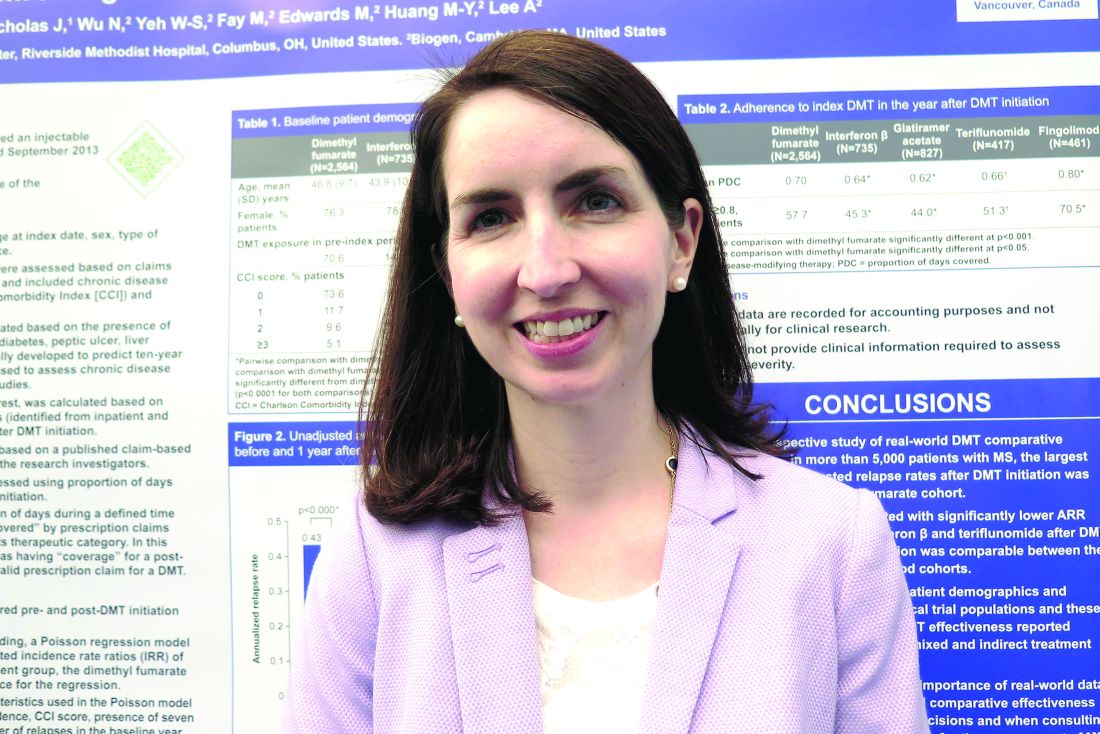
“This may have implications for MS treatment,” said study author Jacqueline Nicholas, MD, MPH, of Ohio Multiple Sclerosis Center in Columbus and her research colleagues. “A better understanding of the effects of comorbidities and concomitant medications on the effectiveness and safety of DMDs is needed to support clinical decision making.”
Researchers have examined comorbidities in patients with MS, but concomitant medication use among patients starting DMDs is poorly understood, the authors said.
To study this question, Dr. Nicholas and colleagues analyzed retrospective administrative claims data from IQVIA’s Real-World Data Adjudicated Claims–U.S. database from Jan. 1, 2010, to June 30, 2017. Their analysis included patients with two or more MS diagnosis claims and at least one DMD claim between Jan. 1, 2011, and June 30, 2015. Eligible patients were aged 18-63 years and had continuous eligibility with commercial insurance 1 year before and 2 years after DMD initiation. In addition, patients had no evidence of DMD use during the 1-year baseline period.
The investigators used International Classification of Diseases, 9th and 10th Revision, Clinical Modification codes and claims to evaluate patients’ comorbidities and concomitant medications during the study period.
The researchers identified 8,251 eligible patients. Patients had a mean age of 43.2 years, and 75.5% were female. Average baseline Charlson comorbidity score was 0.41. In the 2 years after DMD initiation, common comorbid diagnoses were hyperlipidemia (30.0%), hypertension (28.2%), gastrointestinal disorders (26.2%), depression (25.5%), and anxiety (20.1%).
Common concomitant medications included antibiotics (70.6%); analgesics (57.0%); corticosteroids (52.0%); antidepressants (47.7%); anticonvulsants (46.7%); anxiolytics, sedatives, or hypnotics (43.2%); spasticity medications (36.2%); and muscle relaxants (35.4%).
Most comorbidities and many medications, including bladder and antifatigue medications, were more common among patients aged 55 years and older. Hyperlipidemia, hypertension, and diabetes were more likely in males than in females. Females were more likely to have gastrointestinal disease, depression, thyroid disease, anxiety, lung disease, and arthritis. In addition, females were more likely than males to use many of the concomitant medications.
Dr. Nicholas disclosed grant support from EMD Serono. A coauthor is an employee of Health Services Consulting Corporation and received funding from EMD Serono to conduct the study. Other coauthors are employees of EMD Serono.
SEATTLE – , according to research presented at the annual meeting of the Consortium of Multiple Sclerosis Centers. The likelihood of particular comorbidities and concomitant medications varies by age and sex, researchers reported.
“This may have implications for MS treatment,” said study author Jacqueline Nicholas, MD, MPH, of Ohio Multiple Sclerosis Center in Columbus and her research colleagues. “A better understanding of the effects of comorbidities and concomitant medications on the effectiveness and safety of DMDs is needed to support clinical decision making.”
Researchers have examined comorbidities in patients with MS, but concomitant medication use among patients starting DMDs is poorly understood, the authors said.
To study this question, Dr. Nicholas and colleagues analyzed retrospective administrative claims data from IQVIA’s Real-World Data Adjudicated Claims–U.S. database from Jan. 1, 2010, to June 30, 2017. Their analysis included patients with two or more MS diagnosis claims and at least one DMD claim between Jan. 1, 2011, and June 30, 2015. Eligible patients were aged 18-63 years and had continuous eligibility with commercial insurance 1 year before and 2 years after DMD initiation. In addition, patients had no evidence of DMD use during the 1-year baseline period.
The investigators used International Classification of Diseases, 9th and 10th Revision, Clinical Modification codes and claims to evaluate patients’ comorbidities and concomitant medications during the study period.
The researchers identified 8,251 eligible patients. Patients had a mean age of 43.2 years, and 75.5% were female. Average baseline Charlson comorbidity score was 0.41. In the 2 years after DMD initiation, common comorbid diagnoses were hyperlipidemia (30.0%), hypertension (28.2%), gastrointestinal disorders (26.2%), depression (25.5%), and anxiety (20.1%).
Common concomitant medications included antibiotics (70.6%); analgesics (57.0%); corticosteroids (52.0%); antidepressants (47.7%); anticonvulsants (46.7%); anxiolytics, sedatives, or hypnotics (43.2%); spasticity medications (36.2%); and muscle relaxants (35.4%).
Most comorbidities and many medications, including bladder and antifatigue medications, were more common among patients aged 55 years and older. Hyperlipidemia, hypertension, and diabetes were more likely in males than in females. Females were more likely to have gastrointestinal disease, depression, thyroid disease, anxiety, lung disease, and arthritis. In addition, females were more likely than males to use many of the concomitant medications.
Dr. Nicholas disclosed grant support from EMD Serono. A coauthor is an employee of Health Services Consulting Corporation and received funding from EMD Serono to conduct the study. Other coauthors are employees of EMD Serono.
SEATTLE – , according to research presented at the annual meeting of the Consortium of Multiple Sclerosis Centers. The likelihood of particular comorbidities and concomitant medications varies by age and sex, researchers reported.
“This may have implications for MS treatment,” said study author Jacqueline Nicholas, MD, MPH, of Ohio Multiple Sclerosis Center in Columbus and her research colleagues. “A better understanding of the effects of comorbidities and concomitant medications on the effectiveness and safety of DMDs is needed to support clinical decision making.”
Researchers have examined comorbidities in patients with MS, but concomitant medication use among patients starting DMDs is poorly understood, the authors said.
To study this question, Dr. Nicholas and colleagues analyzed retrospective administrative claims data from IQVIA’s Real-World Data Adjudicated Claims–U.S. database from Jan. 1, 2010, to June 30, 2017. Their analysis included patients with two or more MS diagnosis claims and at least one DMD claim between Jan. 1, 2011, and June 30, 2015. Eligible patients were aged 18-63 years and had continuous eligibility with commercial insurance 1 year before and 2 years after DMD initiation. In addition, patients had no evidence of DMD use during the 1-year baseline period.
The investigators used International Classification of Diseases, 9th and 10th Revision, Clinical Modification codes and claims to evaluate patients’ comorbidities and concomitant medications during the study period.
The researchers identified 8,251 eligible patients. Patients had a mean age of 43.2 years, and 75.5% were female. Average baseline Charlson comorbidity score was 0.41. In the 2 years after DMD initiation, common comorbid diagnoses were hyperlipidemia (30.0%), hypertension (28.2%), gastrointestinal disorders (26.2%), depression (25.5%), and anxiety (20.1%).
Common concomitant medications included antibiotics (70.6%); analgesics (57.0%); corticosteroids (52.0%); antidepressants (47.7%); anticonvulsants (46.7%); anxiolytics, sedatives, or hypnotics (43.2%); spasticity medications (36.2%); and muscle relaxants (35.4%).
Most comorbidities and many medications, including bladder and antifatigue medications, were more common among patients aged 55 years and older. Hyperlipidemia, hypertension, and diabetes were more likely in males than in females. Females were more likely to have gastrointestinal disease, depression, thyroid disease, anxiety, lung disease, and arthritis. In addition, females were more likely than males to use many of the concomitant medications.
Dr. Nicholas disclosed grant support from EMD Serono. A coauthor is an employee of Health Services Consulting Corporation and received funding from EMD Serono to conduct the study. Other coauthors are employees of EMD Serono.
REPORTING FROM CMSC 2019
Key clinical point: The effect of comorbidities and concomitant medications on the effectiveness and safety of disease-modifying drugs for multiple sclerosis requires further study.
Major finding: In one analysis, common concomitant medications included antibiotics (70.6%), analgesics (57.0%), corticosteroids (52.0%), antidepressants (47.7%), and anticonvulsants (46.7%).
Study details: An analysis of retrospective administrative claims data from 8,251 patients with MS.
Disclosures: Dr. Nicholas disclosed grant support from EMD Serono. A coauthor is an employee of Health Services Consulting Corporation and received funding from EMD Serono to conduct the study. Other coauthors are employees of EMD Serono.
Anxiety and fatigue impair processing speed in MS
SEATTLE – (MS), according to data described at the annual meeting of the Consortium of Multiple Sclerosis Centers. Increased anxiety is associated with slower processing speed in the context of increasing cognitive fatigue. “This [finding] has implications on development of cognitive remediation strategies, which may aim to target patient fatigue or anxiety to improve processing speed,” said Caroline Altaras, a doctoral candidate at Yeshiva University in New York, and colleagues.
Approximately 90% of patients with MS have fatigue, which can be a highly debilitating symptom. Fatigue often is understood to include motor fatigue (difficulty maintaining physical stamina) and cognitive fatigue (difficulty maintaining mental stamina). MS-related fatigue decreases patients’ quality of life, including cognitive functioning.
Anxiety is a psychiatric comorbidity that is highly prevalent in MS and that has a bidirectional association with fatigue. Anxiety and fatigue independently impair cognitive function.
Impaired processing speed is the most common cognitive impairment among patients with MS. Ms. Altaras and colleagues conducted a study to analyze how anxiety and fatigue interact to affect processing speed in MS. They evaluated total fatigue, cognitive fatigue, and motor fatigue separately. The investigators collected data from 183 patients with MS who had been referred by physicians for neuropsychological testing at the MS Center at Holy Name Medical Center in Teaneck, New Jersey. Researchers measured patients’ anxiety and fatigue using the Hospital Anxiety and Depression Scale (HADS, a self-reported measure) and the Fatigue Scale for Motor and Cognitive Functions (FSMC), which measures cognitive fatigue and motor fatigue. Patients also took the Symbol Digit Modalities Test (SDMT), a neuropsychological measure of processing speed. Ms. Altaras and colleagues created three multivariate general linear models using SPSS 25.0 to test the hypothesized relationships, using fatigue types (cognitive, motor, and total) as separate outcomes. The investigators controlled their analyses for gender, age, and education.
The researchers found a significant interaction effect of cognitive fatigue and anxiety on SDMT score. Specifically, patients with MS and minimal anxiety and cognitive fatigue had similar SDMT performance; as anxiety increased, patients who had increased cognitive fatigue demonstrated worse performance on the SDMT. Ms. Altaras and colleagues observed that SDMT performance improved slightly with worsening anxiety when cognitive fatigue was minimal. Although total fatigue interacted significantly with anxiety to affect SDMT performance, motor fatigue did not, which suggests that the effects of total fatigue largely resulted from cognitive fatigue.
The study had no outside financial support, and the authors reported no disclosures.
SEATTLE – (MS), according to data described at the annual meeting of the Consortium of Multiple Sclerosis Centers. Increased anxiety is associated with slower processing speed in the context of increasing cognitive fatigue. “This [finding] has implications on development of cognitive remediation strategies, which may aim to target patient fatigue or anxiety to improve processing speed,” said Caroline Altaras, a doctoral candidate at Yeshiva University in New York, and colleagues.
Approximately 90% of patients with MS have fatigue, which can be a highly debilitating symptom. Fatigue often is understood to include motor fatigue (difficulty maintaining physical stamina) and cognitive fatigue (difficulty maintaining mental stamina). MS-related fatigue decreases patients’ quality of life, including cognitive functioning.
Anxiety is a psychiatric comorbidity that is highly prevalent in MS and that has a bidirectional association with fatigue. Anxiety and fatigue independently impair cognitive function.
Impaired processing speed is the most common cognitive impairment among patients with MS. Ms. Altaras and colleagues conducted a study to analyze how anxiety and fatigue interact to affect processing speed in MS. They evaluated total fatigue, cognitive fatigue, and motor fatigue separately. The investigators collected data from 183 patients with MS who had been referred by physicians for neuropsychological testing at the MS Center at Holy Name Medical Center in Teaneck, New Jersey. Researchers measured patients’ anxiety and fatigue using the Hospital Anxiety and Depression Scale (HADS, a self-reported measure) and the Fatigue Scale for Motor and Cognitive Functions (FSMC), which measures cognitive fatigue and motor fatigue. Patients also took the Symbol Digit Modalities Test (SDMT), a neuropsychological measure of processing speed. Ms. Altaras and colleagues created three multivariate general linear models using SPSS 25.0 to test the hypothesized relationships, using fatigue types (cognitive, motor, and total) as separate outcomes. The investigators controlled their analyses for gender, age, and education.
The researchers found a significant interaction effect of cognitive fatigue and anxiety on SDMT score. Specifically, patients with MS and minimal anxiety and cognitive fatigue had similar SDMT performance; as anxiety increased, patients who had increased cognitive fatigue demonstrated worse performance on the SDMT. Ms. Altaras and colleagues observed that SDMT performance improved slightly with worsening anxiety when cognitive fatigue was minimal. Although total fatigue interacted significantly with anxiety to affect SDMT performance, motor fatigue did not, which suggests that the effects of total fatigue largely resulted from cognitive fatigue.
The study had no outside financial support, and the authors reported no disclosures.
SEATTLE – (MS), according to data described at the annual meeting of the Consortium of Multiple Sclerosis Centers. Increased anxiety is associated with slower processing speed in the context of increasing cognitive fatigue. “This [finding] has implications on development of cognitive remediation strategies, which may aim to target patient fatigue or anxiety to improve processing speed,” said Caroline Altaras, a doctoral candidate at Yeshiva University in New York, and colleagues.
Approximately 90% of patients with MS have fatigue, which can be a highly debilitating symptom. Fatigue often is understood to include motor fatigue (difficulty maintaining physical stamina) and cognitive fatigue (difficulty maintaining mental stamina). MS-related fatigue decreases patients’ quality of life, including cognitive functioning.
Anxiety is a psychiatric comorbidity that is highly prevalent in MS and that has a bidirectional association with fatigue. Anxiety and fatigue independently impair cognitive function.
Impaired processing speed is the most common cognitive impairment among patients with MS. Ms. Altaras and colleagues conducted a study to analyze how anxiety and fatigue interact to affect processing speed in MS. They evaluated total fatigue, cognitive fatigue, and motor fatigue separately. The investigators collected data from 183 patients with MS who had been referred by physicians for neuropsychological testing at the MS Center at Holy Name Medical Center in Teaneck, New Jersey. Researchers measured patients’ anxiety and fatigue using the Hospital Anxiety and Depression Scale (HADS, a self-reported measure) and the Fatigue Scale for Motor and Cognitive Functions (FSMC), which measures cognitive fatigue and motor fatigue. Patients also took the Symbol Digit Modalities Test (SDMT), a neuropsychological measure of processing speed. Ms. Altaras and colleagues created three multivariate general linear models using SPSS 25.0 to test the hypothesized relationships, using fatigue types (cognitive, motor, and total) as separate outcomes. The investigators controlled their analyses for gender, age, and education.
The researchers found a significant interaction effect of cognitive fatigue and anxiety on SDMT score. Specifically, patients with MS and minimal anxiety and cognitive fatigue had similar SDMT performance; as anxiety increased, patients who had increased cognitive fatigue demonstrated worse performance on the SDMT. Ms. Altaras and colleagues observed that SDMT performance improved slightly with worsening anxiety when cognitive fatigue was minimal. Although total fatigue interacted significantly with anxiety to affect SDMT performance, motor fatigue did not, which suggests that the effects of total fatigue largely resulted from cognitive fatigue.
The study had no outside financial support, and the authors reported no disclosures.
REPORTING FROM CMSC 2019
Key clinical point: Anxiety and fatigue interact to affect processing speed in MS.
Major finding: Cognitive fatigue and anxiety interact to affect performance on the Symbol Digit Modalities Test.
Study details: A prospective study of 183 patients with MS referred for neuropsychological testing.
Disclosures: The study had no outside funding, and the investigators had no disclosures.
MS significantly affects employment and home activities
SEATTLE – according to data presented at the annual meeting of the Consortium of Multiple Sclerosis Centers. The disease appears to prevent people from achieving their full potential at work and at home, largely because of its associated fatigue, said the researchers. “The economic impact of identifying an effective treatment for this symptom of MS cannot be overstated,” said Terrie Livingston, PharmD, head of patient outcomes and solutions at EMD Serono in Wayland, Massachusetts, and colleagues.
The research results from an initiative by the North American Registry for Care and Research in MS (NARCRMS). Since December 2016, NARCRMS has prospectively collected clinical and imaging data, information about patients’ health care economics, and data about the effects of MS on daily life. To examine the economic impact of MS and to help implement health economics outcomes research (HEOR) in decision-making processes, NARCRMS established the HEOR Advisory Group in 2017. The registry created a Health-Related Productivity Questionnaire and Health Resource Utilization Questionnaire, both of which were incorporated into the existing case report forms. Patients complete these questionnaires at enrollment and at annual and exacerbation visits.
As of January 2, 2019, NARCRMS had enrolled 378 people with MS into the registry, and 368 had completed the HEOR case report forms. Among the respondents, 270 (73%) are employed either full or part time. During the week before reporting, 39 respondents (11%) reported that MS kept them from work, 93 (25%) reported that MS affected their work, 105 (29%) reported that MS stopped them from finishing household chores, and 140 (38%) reported that MS affected their household chores. Fatigue was the symptom most commonly reported to affect work and household chores. In the 3 months before reporting, 13 patients (4%) had inpatient hospital stays, 24 patients (7%) visited the ED, 71 patients (19%) visited a general practitioner, and 296 (80%) patients visited a neurologist.
The study had no sponsor. Several of the study authors reported receiving compensation from companies such as Biogen, Celgene, Genentech, Novartis, Sanofi Genzyme, and Teva.
SEATTLE – according to data presented at the annual meeting of the Consortium of Multiple Sclerosis Centers. The disease appears to prevent people from achieving their full potential at work and at home, largely because of its associated fatigue, said the researchers. “The economic impact of identifying an effective treatment for this symptom of MS cannot be overstated,” said Terrie Livingston, PharmD, head of patient outcomes and solutions at EMD Serono in Wayland, Massachusetts, and colleagues.
The research results from an initiative by the North American Registry for Care and Research in MS (NARCRMS). Since December 2016, NARCRMS has prospectively collected clinical and imaging data, information about patients’ health care economics, and data about the effects of MS on daily life. To examine the economic impact of MS and to help implement health economics outcomes research (HEOR) in decision-making processes, NARCRMS established the HEOR Advisory Group in 2017. The registry created a Health-Related Productivity Questionnaire and Health Resource Utilization Questionnaire, both of which were incorporated into the existing case report forms. Patients complete these questionnaires at enrollment and at annual and exacerbation visits.
As of January 2, 2019, NARCRMS had enrolled 378 people with MS into the registry, and 368 had completed the HEOR case report forms. Among the respondents, 270 (73%) are employed either full or part time. During the week before reporting, 39 respondents (11%) reported that MS kept them from work, 93 (25%) reported that MS affected their work, 105 (29%) reported that MS stopped them from finishing household chores, and 140 (38%) reported that MS affected their household chores. Fatigue was the symptom most commonly reported to affect work and household chores. In the 3 months before reporting, 13 patients (4%) had inpatient hospital stays, 24 patients (7%) visited the ED, 71 patients (19%) visited a general practitioner, and 296 (80%) patients visited a neurologist.
The study had no sponsor. Several of the study authors reported receiving compensation from companies such as Biogen, Celgene, Genentech, Novartis, Sanofi Genzyme, and Teva.
SEATTLE – according to data presented at the annual meeting of the Consortium of Multiple Sclerosis Centers. The disease appears to prevent people from achieving their full potential at work and at home, largely because of its associated fatigue, said the researchers. “The economic impact of identifying an effective treatment for this symptom of MS cannot be overstated,” said Terrie Livingston, PharmD, head of patient outcomes and solutions at EMD Serono in Wayland, Massachusetts, and colleagues.
The research results from an initiative by the North American Registry for Care and Research in MS (NARCRMS). Since December 2016, NARCRMS has prospectively collected clinical and imaging data, information about patients’ health care economics, and data about the effects of MS on daily life. To examine the economic impact of MS and to help implement health economics outcomes research (HEOR) in decision-making processes, NARCRMS established the HEOR Advisory Group in 2017. The registry created a Health-Related Productivity Questionnaire and Health Resource Utilization Questionnaire, both of which were incorporated into the existing case report forms. Patients complete these questionnaires at enrollment and at annual and exacerbation visits.
As of January 2, 2019, NARCRMS had enrolled 378 people with MS into the registry, and 368 had completed the HEOR case report forms. Among the respondents, 270 (73%) are employed either full or part time. During the week before reporting, 39 respondents (11%) reported that MS kept them from work, 93 (25%) reported that MS affected their work, 105 (29%) reported that MS stopped them from finishing household chores, and 140 (38%) reported that MS affected their household chores. Fatigue was the symptom most commonly reported to affect work and household chores. In the 3 months before reporting, 13 patients (4%) had inpatient hospital stays, 24 patients (7%) visited the ED, 71 patients (19%) visited a general practitioner, and 296 (80%) patients visited a neurologist.
The study had no sponsor. Several of the study authors reported receiving compensation from companies such as Biogen, Celgene, Genentech, Novartis, Sanofi Genzyme, and Teva.
REPORTING FROM CMSC 2019
Key clinical point: Fatigue is the most common symptom preventing people with MS from completing work or chores.
Major finding: Approximately 28% of people with MS may be underemployed or unemployed.
Study details: An analysis of registry data, including questionnaires for 368 patients with MS.
Disclosures: The study had no sponsor. Dr. Livingston is an employee of EMD Serono.
Alemtuzumab increases the likelihood of disability improvement in MS
Seattle – , according to a pooled analysis presented at the annual meeting of the Consortium of Multiple Sclerosis Centers.
Patients who achieved this outcome had improvement in several functional systems, regardless of their baseline EDSS scores. “These results suggest a broad and prolonged effect of alemtuzumab on disability improvement and a potential for changing the MS disease course,” said Samuel F. Hunter, MD, a neurologist and psychiatrist at the Advanced Neurosciences Institute in Franklin, Tenn., and colleagues.
The researchers’ findings come from their analysis of pooled data from the CARE-MS I and CARE-MS II trials. Those studies indicated that alemtuzumab improved clinical and MRI outcomes over 2 years in relapsing-remitting MS, compared with interferon beta-1a. In a 4-year extension, alemtuzumab’s efficacy was maintained, and 81% of participants continued in the study until year 6. In addition, 34% of alemtuzumab-treated patients in CARE-MS I and 43% of alemtuzumab-treated patients in CARE-MS II achieved 6-month confirmed disability improvement. The relationship between baseline disability levels and the achievement of disability improvement is not well understood, however.
Dr. Hunter and colleagues conducted a pooled analysis of CARE-MS I and CARE-MS II data to evaluate how baseline disability affects improvements in each functional system in patients treated with alemtuzumab over 6 years. In those studies, patients received two 12-mg/day courses of alemtuzumab: a 5-day course at baseline and a 3-day course 12 months later. Additional treatment with alemtuzumab or other disease-modifying therapies was provided as needed during the extension study.
The investigators defined confirmed disability improvement as a decrease of 1 or more points in EDSS score confirmed over 6 months among patients with a baseline EDSS score of 2 or higher. Improvement (i.e., a decrease of 1 or more points) or stability (i.e., no change) in each of the functional system scores was assessed in patients with confirmed disability improvement, stratified by baseline EDSS scores. Patients were grouped according to whether their baseline EDSS scores were 2.0-2.5, 3.0-3.5, 4.0-4.5, 5.0-5.5, or 6.0-6.5.
A total of 208 of 565 patients (37%) achieved 6-month confirmed disability improvement through year 6. This outcome was achieved by the highest percentages of patients with baseline EDSS scores of 4.0-4.5 (57%) and 3.0-3.5 (44%), followed by those with baseline EDSS scores of 5.0-5.5 (28%) and 2.0-2.5 (27%). No patients with baseline EDSS scores of 6.0-6.5 achieved confirmed disability improvement.
At 6 months after onset of confirmed disability improvement, patients within each baseline EDSS group showed stability or improvement in each individual functional system. The proportion of stable or improved patients was 94% or greater in the 2.0-2.5 group, 92% or greater in the 3.0-3.5 group, 88% or greater in the 4.0-4.5 group, and 75% or greater in the 5.0-5.5 group. Between 67% and 76% of patients achieved improvements in two or more functional systems. Improvements were most frequent in the pyramidal (13% to 50%), sensory (42% to 50%), and cerebellar (13% to 55%) functional systems.
Sanofi, Bayer HealthCare Pharmaceuticals supported the study. Dr. Hunter received grants and financial support from AbbVie, Actelion, Acorda, Adamas, Alkermes, Avanir, Bayer HealthCare, Biogen, Novartis, Osmotica, Questcor, Roche, Sanofi, Synthon, and Teva.
SOURCE: Hunter SF et al. CMSC 2019. Abstract DXT08.
Seattle – , according to a pooled analysis presented at the annual meeting of the Consortium of Multiple Sclerosis Centers.
Patients who achieved this outcome had improvement in several functional systems, regardless of their baseline EDSS scores. “These results suggest a broad and prolonged effect of alemtuzumab on disability improvement and a potential for changing the MS disease course,” said Samuel F. Hunter, MD, a neurologist and psychiatrist at the Advanced Neurosciences Institute in Franklin, Tenn., and colleagues.
The researchers’ findings come from their analysis of pooled data from the CARE-MS I and CARE-MS II trials. Those studies indicated that alemtuzumab improved clinical and MRI outcomes over 2 years in relapsing-remitting MS, compared with interferon beta-1a. In a 4-year extension, alemtuzumab’s efficacy was maintained, and 81% of participants continued in the study until year 6. In addition, 34% of alemtuzumab-treated patients in CARE-MS I and 43% of alemtuzumab-treated patients in CARE-MS II achieved 6-month confirmed disability improvement. The relationship between baseline disability levels and the achievement of disability improvement is not well understood, however.
Dr. Hunter and colleagues conducted a pooled analysis of CARE-MS I and CARE-MS II data to evaluate how baseline disability affects improvements in each functional system in patients treated with alemtuzumab over 6 years. In those studies, patients received two 12-mg/day courses of alemtuzumab: a 5-day course at baseline and a 3-day course 12 months later. Additional treatment with alemtuzumab or other disease-modifying therapies was provided as needed during the extension study.
The investigators defined confirmed disability improvement as a decrease of 1 or more points in EDSS score confirmed over 6 months among patients with a baseline EDSS score of 2 or higher. Improvement (i.e., a decrease of 1 or more points) or stability (i.e., no change) in each of the functional system scores was assessed in patients with confirmed disability improvement, stratified by baseline EDSS scores. Patients were grouped according to whether their baseline EDSS scores were 2.0-2.5, 3.0-3.5, 4.0-4.5, 5.0-5.5, or 6.0-6.5.
A total of 208 of 565 patients (37%) achieved 6-month confirmed disability improvement through year 6. This outcome was achieved by the highest percentages of patients with baseline EDSS scores of 4.0-4.5 (57%) and 3.0-3.5 (44%), followed by those with baseline EDSS scores of 5.0-5.5 (28%) and 2.0-2.5 (27%). No patients with baseline EDSS scores of 6.0-6.5 achieved confirmed disability improvement.
At 6 months after onset of confirmed disability improvement, patients within each baseline EDSS group showed stability or improvement in each individual functional system. The proportion of stable or improved patients was 94% or greater in the 2.0-2.5 group, 92% or greater in the 3.0-3.5 group, 88% or greater in the 4.0-4.5 group, and 75% or greater in the 5.0-5.5 group. Between 67% and 76% of patients achieved improvements in two or more functional systems. Improvements were most frequent in the pyramidal (13% to 50%), sensory (42% to 50%), and cerebellar (13% to 55%) functional systems.
Sanofi, Bayer HealthCare Pharmaceuticals supported the study. Dr. Hunter received grants and financial support from AbbVie, Actelion, Acorda, Adamas, Alkermes, Avanir, Bayer HealthCare, Biogen, Novartis, Osmotica, Questcor, Roche, Sanofi, Synthon, and Teva.
SOURCE: Hunter SF et al. CMSC 2019. Abstract DXT08.
Seattle – , according to a pooled analysis presented at the annual meeting of the Consortium of Multiple Sclerosis Centers.
Patients who achieved this outcome had improvement in several functional systems, regardless of their baseline EDSS scores. “These results suggest a broad and prolonged effect of alemtuzumab on disability improvement and a potential for changing the MS disease course,” said Samuel F. Hunter, MD, a neurologist and psychiatrist at the Advanced Neurosciences Institute in Franklin, Tenn., and colleagues.
The researchers’ findings come from their analysis of pooled data from the CARE-MS I and CARE-MS II trials. Those studies indicated that alemtuzumab improved clinical and MRI outcomes over 2 years in relapsing-remitting MS, compared with interferon beta-1a. In a 4-year extension, alemtuzumab’s efficacy was maintained, and 81% of participants continued in the study until year 6. In addition, 34% of alemtuzumab-treated patients in CARE-MS I and 43% of alemtuzumab-treated patients in CARE-MS II achieved 6-month confirmed disability improvement. The relationship between baseline disability levels and the achievement of disability improvement is not well understood, however.
Dr. Hunter and colleagues conducted a pooled analysis of CARE-MS I and CARE-MS II data to evaluate how baseline disability affects improvements in each functional system in patients treated with alemtuzumab over 6 years. In those studies, patients received two 12-mg/day courses of alemtuzumab: a 5-day course at baseline and a 3-day course 12 months later. Additional treatment with alemtuzumab or other disease-modifying therapies was provided as needed during the extension study.
The investigators defined confirmed disability improvement as a decrease of 1 or more points in EDSS score confirmed over 6 months among patients with a baseline EDSS score of 2 or higher. Improvement (i.e., a decrease of 1 or more points) or stability (i.e., no change) in each of the functional system scores was assessed in patients with confirmed disability improvement, stratified by baseline EDSS scores. Patients were grouped according to whether their baseline EDSS scores were 2.0-2.5, 3.0-3.5, 4.0-4.5, 5.0-5.5, or 6.0-6.5.
A total of 208 of 565 patients (37%) achieved 6-month confirmed disability improvement through year 6. This outcome was achieved by the highest percentages of patients with baseline EDSS scores of 4.0-4.5 (57%) and 3.0-3.5 (44%), followed by those with baseline EDSS scores of 5.0-5.5 (28%) and 2.0-2.5 (27%). No patients with baseline EDSS scores of 6.0-6.5 achieved confirmed disability improvement.
At 6 months after onset of confirmed disability improvement, patients within each baseline EDSS group showed stability or improvement in each individual functional system. The proportion of stable or improved patients was 94% or greater in the 2.0-2.5 group, 92% or greater in the 3.0-3.5 group, 88% or greater in the 4.0-4.5 group, and 75% or greater in the 5.0-5.5 group. Between 67% and 76% of patients achieved improvements in two or more functional systems. Improvements were most frequent in the pyramidal (13% to 50%), sensory (42% to 50%), and cerebellar (13% to 55%) functional systems.
Sanofi, Bayer HealthCare Pharmaceuticals supported the study. Dr. Hunter received grants and financial support from AbbVie, Actelion, Acorda, Adamas, Alkermes, Avanir, Bayer HealthCare, Biogen, Novartis, Osmotica, Questcor, Roche, Sanofi, Synthon, and Teva.
SOURCE: Hunter SF et al. CMSC 2019. Abstract DXT08.
REPORTING FROM CMSC 2019
Costs of oral cancer drugs rising faster than inflation
The cost of oral cancer drugs increased by almost 6% over inflation from 2010 to 2018, leading to increases in out-of-pocket costs for Medicare patients despite reductions in the Part D coverage gap, according to an analysis of formulary and pricing data.
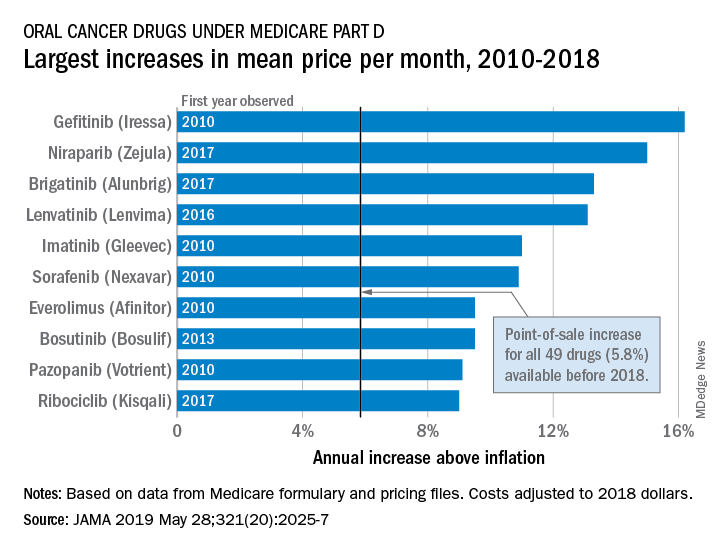
Point-of-sale prices for the 49 oral cancer drugs available before 2018 rose by 40.4% from 2010 to 2018 – an annual increase of 5.8% above the rate of inflation, Stacie B. Dusetzina, PhD, of Vanderbilt University, Nashville, Tenn., and associates reported in JAMA. Another five drugs with data that first became available in 2018 were not included in the cost-increase calculations.
The largest overall increase, 306% (16.2% above inflation per year), belonged to gefitinib (Iressa). Its point-of-sale price rose from $1,960 a month in 2010 to $7,960 in 2018. The award for largest reduction – only two others had a decrease – goes to the only generic available, imatinib. Its monthly cost dropped 44% (–28.1% below inflation per year) from $8,570 in 2016 to $4,822 in 2018, the investigators said (JAMA 2019 May 28;321[20]:2025-7).
Annual out-of-pocket spending for the 13 drugs available for the entire study period increased from $8,794 in 2010 to an expected $10,470 in 2019. Medicare patients’ out-of-pocket costs for those 13 cancer drugs in 2019 are expected to range from $7,220 for lapatinib to $15,472 for lenalidomide, they reported.
“Savings expected through closing the Part D coverage gap or through other policy changes, such as point-of-sale rebates, will be unlikely to offer financial protections to patients needing anticancer drugs. Moreover, because beneficiaries pay a percentage of the drug’s price and have no out-of-pocket spending limits on Part D, even large price decreases may not provide sufficient financial relief to patients requiring long-term anticancer drug use,” Dr. Dusetzina and associates wrote.
The study was supported by the Commonwealth Fund and the Leukemia and Lymphoma Society. The investigators reported receiving grant funding from the study funders.
The cost of oral cancer drugs increased by almost 6% over inflation from 2010 to 2018, leading to increases in out-of-pocket costs for Medicare patients despite reductions in the Part D coverage gap, according to an analysis of formulary and pricing data.
Point-of-sale prices for the 49 oral cancer drugs available before 2018 rose by 40.4% from 2010 to 2018 – an annual increase of 5.8% above the rate of inflation, Stacie B. Dusetzina, PhD, of Vanderbilt University, Nashville, Tenn., and associates reported in JAMA. Another five drugs with data that first became available in 2018 were not included in the cost-increase calculations.
The largest overall increase, 306% (16.2% above inflation per year), belonged to gefitinib (Iressa). Its point-of-sale price rose from $1,960 a month in 2010 to $7,960 in 2018. The award for largest reduction – only two others had a decrease – goes to the only generic available, imatinib. Its monthly cost dropped 44% (–28.1% below inflation per year) from $8,570 in 2016 to $4,822 in 2018, the investigators said (JAMA 2019 May 28;321[20]:2025-7).
Annual out-of-pocket spending for the 13 drugs available for the entire study period increased from $8,794 in 2010 to an expected $10,470 in 2019. Medicare patients’ out-of-pocket costs for those 13 cancer drugs in 2019 are expected to range from $7,220 for lapatinib to $15,472 for lenalidomide, they reported.
“Savings expected through closing the Part D coverage gap or through other policy changes, such as point-of-sale rebates, will be unlikely to offer financial protections to patients needing anticancer drugs. Moreover, because beneficiaries pay a percentage of the drug’s price and have no out-of-pocket spending limits on Part D, even large price decreases may not provide sufficient financial relief to patients requiring long-term anticancer drug use,” Dr. Dusetzina and associates wrote.
The study was supported by the Commonwealth Fund and the Leukemia and Lymphoma Society. The investigators reported receiving grant funding from the study funders.
The cost of oral cancer drugs increased by almost 6% over inflation from 2010 to 2018, leading to increases in out-of-pocket costs for Medicare patients despite reductions in the Part D coverage gap, according to an analysis of formulary and pricing data.
Point-of-sale prices for the 49 oral cancer drugs available before 2018 rose by 40.4% from 2010 to 2018 – an annual increase of 5.8% above the rate of inflation, Stacie B. Dusetzina, PhD, of Vanderbilt University, Nashville, Tenn., and associates reported in JAMA. Another five drugs with data that first became available in 2018 were not included in the cost-increase calculations.
The largest overall increase, 306% (16.2% above inflation per year), belonged to gefitinib (Iressa). Its point-of-sale price rose from $1,960 a month in 2010 to $7,960 in 2018. The award for largest reduction – only two others had a decrease – goes to the only generic available, imatinib. Its monthly cost dropped 44% (–28.1% below inflation per year) from $8,570 in 2016 to $4,822 in 2018, the investigators said (JAMA 2019 May 28;321[20]:2025-7).
Annual out-of-pocket spending for the 13 drugs available for the entire study period increased from $8,794 in 2010 to an expected $10,470 in 2019. Medicare patients’ out-of-pocket costs for those 13 cancer drugs in 2019 are expected to range from $7,220 for lapatinib to $15,472 for lenalidomide, they reported.
“Savings expected through closing the Part D coverage gap or through other policy changes, such as point-of-sale rebates, will be unlikely to offer financial protections to patients needing anticancer drugs. Moreover, because beneficiaries pay a percentage of the drug’s price and have no out-of-pocket spending limits on Part D, even large price decreases may not provide sufficient financial relief to patients requiring long-term anticancer drug use,” Dr. Dusetzina and associates wrote.
The study was supported by the Commonwealth Fund and the Leukemia and Lymphoma Society. The investigators reported receiving grant funding from the study funders.
FROM JAMA
Team sports may mitigate tough childhoods
Individuals who experienced adverse childhood experiences but also played team sports as teens were less likely to have mental health problems in adulthood than those with childhood challenges who did not play sports, based on data from nearly 5,000 individuals.

Physical and mental health problems are more prominent throughout life among those exposed to adverse childhood experiences (ACEs), and physical activity in general and team sports in particular have been shown to improve mental health, wrote Molly C. Easterlin, MD, of the University of California, Los Angeles, and colleagues.
In a study published in JAMA Pediatrics, the researchers used data from the National Longitudinal Study of Adolescent to Adult Health to compare the development of depression, anxiety, or depressive symptoms among those with childhood ACEs who did and did not participate in team sports in adolescence.
Overall, team sports participation was significantly associated with reduced odds of depression (adjusted odds ratio, 0.76), anxiety (aOR, 0.70), and depressive symptoms (aOR, 0.85) in young adulthood for individuals with ACEs, compared with those with ACEs who did not play team sports.
Of 9,668 adolescents in the study, 4,888 individuals reported one or more ACEs and 2,084 reported two or more ACEs. The researchers compared data from the 1994-1995 school year when participants were in grades 7-12 and in 2008 to assess their mental health as young adults (aged 24-32 years).
No significant differences in associations appeared between sports participation and mental health between males and females.
The results were limited by several factors including the study design that did not allow for causality and the potential social desirability bias that might lead to underreporting ACEs, Dr. Easterlin and associates noted.
Nonetheless, “given that participation in team sports was associated with improved adult mental health among those with ACEs, and parents might consider enrolling their children with ACEs in team sports,” they wrote.
Dr. Easterlin is supported by the Cedars-Sinai Medical Center via the UCLA National Clinician Scholars Program. The authors reported no conflicts of interest.
SOURCE: Easterlin MC et al. JAMA Pediatr. 2019 May 28. doi: 10.1001/jamapediatrics.2019.1212.
Approximately half of children suffer an adverse childhood experience (ACE) that can negatively affect their mental health throughout life, and “team sports can be an avenue to interrupt these negative sequelae and address the important public health burden of depression,” wrote Amanda E. Paluch, PhD; Nia Heard-Garris, MD, MSc; and Mercedes R. Carnethon, PhD.
However, a significant socioeconomic disparity in team sports for children continues to grow in the United States, driven in part by a youth sports industry and culture that caters to high-income families looking to improve their children’s performance. “Although unintentional, these expenses leave behind lower-income children,” many of whom may be at increased risk for ACEs, the editorialists noted. Many inexpensive, community-based recreation leagues, especially in low-income areas, are often underfunded and unable to update facilities and attract more participants.
The benefits of team sports appear to go beyond the physical, as the study by Easterlin et al. suggests that feeling accepted and connected as part of a team has an impact on mental health. Also, the winning and losing of sports helps build emotional resilience that carries over to other areas of life, the editorialists added.
“Optimizing the opportunities for sports during adolescence requires relatively few resources and is a low-cost way to improve quality of life and reduce the population burden of mental health disorders, especially for adolescents and young adults with histories of ACEs,” they concluded.
Dr. Paluch and Dr. Carnethon are affiliated with the department of preventive medicine and Dr. Heard-Garris is affiliated with the department of pediatrics at Northwestern University, Chicago. They commented on the study by Easterlin et al (JAMA Pediatr. 2019 May 28. doi:10.1001/jamapediatrics.2019.1209). They reported no conflicts of interest.
Approximately half of children suffer an adverse childhood experience (ACE) that can negatively affect their mental health throughout life, and “team sports can be an avenue to interrupt these negative sequelae and address the important public health burden of depression,” wrote Amanda E. Paluch, PhD; Nia Heard-Garris, MD, MSc; and Mercedes R. Carnethon, PhD.
However, a significant socioeconomic disparity in team sports for children continues to grow in the United States, driven in part by a youth sports industry and culture that caters to high-income families looking to improve their children’s performance. “Although unintentional, these expenses leave behind lower-income children,” many of whom may be at increased risk for ACEs, the editorialists noted. Many inexpensive, community-based recreation leagues, especially in low-income areas, are often underfunded and unable to update facilities and attract more participants.
The benefits of team sports appear to go beyond the physical, as the study by Easterlin et al. suggests that feeling accepted and connected as part of a team has an impact on mental health. Also, the winning and losing of sports helps build emotional resilience that carries over to other areas of life, the editorialists added.
“Optimizing the opportunities for sports during adolescence requires relatively few resources and is a low-cost way to improve quality of life and reduce the population burden of mental health disorders, especially for adolescents and young adults with histories of ACEs,” they concluded.
Dr. Paluch and Dr. Carnethon are affiliated with the department of preventive medicine and Dr. Heard-Garris is affiliated with the department of pediatrics at Northwestern University, Chicago. They commented on the study by Easterlin et al (JAMA Pediatr. 2019 May 28. doi:10.1001/jamapediatrics.2019.1209). They reported no conflicts of interest.
Approximately half of children suffer an adverse childhood experience (ACE) that can negatively affect their mental health throughout life, and “team sports can be an avenue to interrupt these negative sequelae and address the important public health burden of depression,” wrote Amanda E. Paluch, PhD; Nia Heard-Garris, MD, MSc; and Mercedes R. Carnethon, PhD.
However, a significant socioeconomic disparity in team sports for children continues to grow in the United States, driven in part by a youth sports industry and culture that caters to high-income families looking to improve their children’s performance. “Although unintentional, these expenses leave behind lower-income children,” many of whom may be at increased risk for ACEs, the editorialists noted. Many inexpensive, community-based recreation leagues, especially in low-income areas, are often underfunded and unable to update facilities and attract more participants.
The benefits of team sports appear to go beyond the physical, as the study by Easterlin et al. suggests that feeling accepted and connected as part of a team has an impact on mental health. Also, the winning and losing of sports helps build emotional resilience that carries over to other areas of life, the editorialists added.
“Optimizing the opportunities for sports during adolescence requires relatively few resources and is a low-cost way to improve quality of life and reduce the population burden of mental health disorders, especially for adolescents and young adults with histories of ACEs,” they concluded.
Dr. Paluch and Dr. Carnethon are affiliated with the department of preventive medicine and Dr. Heard-Garris is affiliated with the department of pediatrics at Northwestern University, Chicago. They commented on the study by Easterlin et al (JAMA Pediatr. 2019 May 28. doi:10.1001/jamapediatrics.2019.1209). They reported no conflicts of interest.
Individuals who experienced adverse childhood experiences but also played team sports as teens were less likely to have mental health problems in adulthood than those with childhood challenges who did not play sports, based on data from nearly 5,000 individuals.
Physical and mental health problems are more prominent throughout life among those exposed to adverse childhood experiences (ACEs), and physical activity in general and team sports in particular have been shown to improve mental health, wrote Molly C. Easterlin, MD, of the University of California, Los Angeles, and colleagues.
In a study published in JAMA Pediatrics, the researchers used data from the National Longitudinal Study of Adolescent to Adult Health to compare the development of depression, anxiety, or depressive symptoms among those with childhood ACEs who did and did not participate in team sports in adolescence.
Overall, team sports participation was significantly associated with reduced odds of depression (adjusted odds ratio, 0.76), anxiety (aOR, 0.70), and depressive symptoms (aOR, 0.85) in young adulthood for individuals with ACEs, compared with those with ACEs who did not play team sports.
Of 9,668 adolescents in the study, 4,888 individuals reported one or more ACEs and 2,084 reported two or more ACEs. The researchers compared data from the 1994-1995 school year when participants were in grades 7-12 and in 2008 to assess their mental health as young adults (aged 24-32 years).
No significant differences in associations appeared between sports participation and mental health between males and females.
The results were limited by several factors including the study design that did not allow for causality and the potential social desirability bias that might lead to underreporting ACEs, Dr. Easterlin and associates noted.
Nonetheless, “given that participation in team sports was associated with improved adult mental health among those with ACEs, and parents might consider enrolling their children with ACEs in team sports,” they wrote.
Dr. Easterlin is supported by the Cedars-Sinai Medical Center via the UCLA National Clinician Scholars Program. The authors reported no conflicts of interest.
SOURCE: Easterlin MC et al. JAMA Pediatr. 2019 May 28. doi: 10.1001/jamapediatrics.2019.1212.
Individuals who experienced adverse childhood experiences but also played team sports as teens were less likely to have mental health problems in adulthood than those with childhood challenges who did not play sports, based on data from nearly 5,000 individuals.
Physical and mental health problems are more prominent throughout life among those exposed to adverse childhood experiences (ACEs), and physical activity in general and team sports in particular have been shown to improve mental health, wrote Molly C. Easterlin, MD, of the University of California, Los Angeles, and colleagues.
In a study published in JAMA Pediatrics, the researchers used data from the National Longitudinal Study of Adolescent to Adult Health to compare the development of depression, anxiety, or depressive symptoms among those with childhood ACEs who did and did not participate in team sports in adolescence.
Overall, team sports participation was significantly associated with reduced odds of depression (adjusted odds ratio, 0.76), anxiety (aOR, 0.70), and depressive symptoms (aOR, 0.85) in young adulthood for individuals with ACEs, compared with those with ACEs who did not play team sports.
Of 9,668 adolescents in the study, 4,888 individuals reported one or more ACEs and 2,084 reported two or more ACEs. The researchers compared data from the 1994-1995 school year when participants were in grades 7-12 and in 2008 to assess their mental health as young adults (aged 24-32 years).
No significant differences in associations appeared between sports participation and mental health between males and females.
The results were limited by several factors including the study design that did not allow for causality and the potential social desirability bias that might lead to underreporting ACEs, Dr. Easterlin and associates noted.
Nonetheless, “given that participation in team sports was associated with improved adult mental health among those with ACEs, and parents might consider enrolling their children with ACEs in team sports,” they wrote.
Dr. Easterlin is supported by the Cedars-Sinai Medical Center via the UCLA National Clinician Scholars Program. The authors reported no conflicts of interest.
SOURCE: Easterlin MC et al. JAMA Pediatr. 2019 May 28. doi: 10.1001/jamapediatrics.2019.1212.
FROM JAMA PEDIATRICS

HM19: Things we do for no reason
The pediatric version
Presenters
Amit K. Pahwa, MD, FAAP; Nicola Orlov, MD, MPH, FAAP
Workshop title
Things we do for no reason (pediatrics)

Session summary
As he began by stating the Institute of Medicine definition of high-value care (HVC), Amit K. Pahwa, MD, of Johns Hopkins Medicine, Baltimore, described HVC as the best care for the patient, with the optimal result for the circumstances, at the right price. But few pediatric residency programs provide education regarding HVC, with only 11% providing a formal HVC curriculum, as found by a survey of pediatric program directors and chief residents in a study published in 2017.
Dr. Pahwa then provided examples of cases in which HVC could be optimized, including reducing rebound bilirubin levels in neonatal hyperbilirubinemia, giving nasogastric feeds instead of IV hydration in bronchiolitis, reducing unnecessary vital sign checks, and providing apple juice supplemented with liquids of choice instead of more expensive oral electrolyte solutions.
Nicola Orlov, MD, of the University of Chicago presented another illustrative case which highlighted the need to reduce vital sign frequency when appropriate. This was linked to her work at Comer Children’s Hospital on reducing nighttime sleep disruptions in hospitalized children, as part of the SIESTA (Sleep for Inpatients: Empowering Staff to Act) study. This led to a significant reduction in nurse/physician interruptions during the study period.
Key takeaways for HM
- High-value care (HVC) is a key focus of systems improvement in the field of pediatric hospital medicine.
- Educational efforts for all levels of learners is inadequate currently, and needs to be augmented.
- Quality improvement projects to promote HVC can lead not only to reduced costs, but improved quality and patient experience.
Dr. Chang is a pediatric hospitalist at Baystate Children’s Hospital in Springfield, Mass., and is the pediatric editor of The Hospitalist.
The pediatric version
The pediatric version
Presenters
Amit K. Pahwa, MD, FAAP; Nicola Orlov, MD, MPH, FAAP
Workshop title
Things we do for no reason (pediatrics)
Session summary
As he began by stating the Institute of Medicine definition of high-value care (HVC), Amit K. Pahwa, MD, of Johns Hopkins Medicine, Baltimore, described HVC as the best care for the patient, with the optimal result for the circumstances, at the right price. But few pediatric residency programs provide education regarding HVC, with only 11% providing a formal HVC curriculum, as found by a survey of pediatric program directors and chief residents in a study published in 2017.
Dr. Pahwa then provided examples of cases in which HVC could be optimized, including reducing rebound bilirubin levels in neonatal hyperbilirubinemia, giving nasogastric feeds instead of IV hydration in bronchiolitis, reducing unnecessary vital sign checks, and providing apple juice supplemented with liquids of choice instead of more expensive oral electrolyte solutions.
Nicola Orlov, MD, of the University of Chicago presented another illustrative case which highlighted the need to reduce vital sign frequency when appropriate. This was linked to her work at Comer Children’s Hospital on reducing nighttime sleep disruptions in hospitalized children, as part of the SIESTA (Sleep for Inpatients: Empowering Staff to Act) study. This led to a significant reduction in nurse/physician interruptions during the study period.
Key takeaways for HM
- High-value care (HVC) is a key focus of systems improvement in the field of pediatric hospital medicine.
- Educational efforts for all levels of learners is inadequate currently, and needs to be augmented.
- Quality improvement projects to promote HVC can lead not only to reduced costs, but improved quality and patient experience.
Dr. Chang is a pediatric hospitalist at Baystate Children’s Hospital in Springfield, Mass., and is the pediatric editor of The Hospitalist.
Presenters
Amit K. Pahwa, MD, FAAP; Nicola Orlov, MD, MPH, FAAP
Workshop title
Things we do for no reason (pediatrics)
Session summary
As he began by stating the Institute of Medicine definition of high-value care (HVC), Amit K. Pahwa, MD, of Johns Hopkins Medicine, Baltimore, described HVC as the best care for the patient, with the optimal result for the circumstances, at the right price. But few pediatric residency programs provide education regarding HVC, with only 11% providing a formal HVC curriculum, as found by a survey of pediatric program directors and chief residents in a study published in 2017.
Dr. Pahwa then provided examples of cases in which HVC could be optimized, including reducing rebound bilirubin levels in neonatal hyperbilirubinemia, giving nasogastric feeds instead of IV hydration in bronchiolitis, reducing unnecessary vital sign checks, and providing apple juice supplemented with liquids of choice instead of more expensive oral electrolyte solutions.
Nicola Orlov, MD, of the University of Chicago presented another illustrative case which highlighted the need to reduce vital sign frequency when appropriate. This was linked to her work at Comer Children’s Hospital on reducing nighttime sleep disruptions in hospitalized children, as part of the SIESTA (Sleep for Inpatients: Empowering Staff to Act) study. This led to a significant reduction in nurse/physician interruptions during the study period.
Key takeaways for HM
- High-value care (HVC) is a key focus of systems improvement in the field of pediatric hospital medicine.
- Educational efforts for all levels of learners is inadequate currently, and needs to be augmented.
- Quality improvement projects to promote HVC can lead not only to reduced costs, but improved quality and patient experience.
Dr. Chang is a pediatric hospitalist at Baystate Children’s Hospital in Springfield, Mass., and is the pediatric editor of The Hospitalist.

High multimorbidity in axial spondyloarthritis
BIRMINGHAM, ENGLAND – Almost two-thirds of patients with axial spondyloarthritis (axSpA) have more than one medical condition, and these may cluster together, the results of a single-center, cross-sectional study have shown.
Of 419 patients, 61% had multiple conditions, with a median of at least one other condition in addition to axSpA, but some patients had as many as five. The most common other conditions in patients with axSpA were hypertension (19% of patients), depression (16%), and dyspepsia (11%).
In all, 15 clusters of conditions were found, each dominated by one or two conditions in addition to axSpA. The three largest clusters were hypertension and cardiovascular disease (n = 88), anxiety and depression (n = 50), and dyspepsia (n = 31). In the cohort, 69% of the patients were male; the mean age was 45 years.
“Multimorbidity and comorbidity both essentially mean the same thing but from different perspectives,” Sizheng Steven Zhao, MD, said at the annual conference of the British Society for Rheumatology.
“Many of us will be familiar with comorbidity and this is a concept that has one index disease at the center and we consider all other conditions to be coexisting. This is a model you typically see in hospital settings, so you go to see your rheumatologist for your axSpA and your cardiologist for your cardiovascular disease,” he explained.
“From a patient’s perspective, that’s probably a little less helpful to go from specialist to specialist, each only interested in one condition so, quite rightly, there’s been a push towards providing more holistic care with the patient at the center, and this is really encapsulated by the concept of multimorbidity, which is just defined as the coexistence of any two conditions.” The multimorbidity model is particularly suited to a primary care setting rather than a hospital setting, he added.
“Whatever you want to call it, it’s becoming more of a problem,” Dr. Zhao said. There is increasing multimorbidity as people age, and it’s a common problem in those with rheumatic diseases because of shared risk factors, the consequences of systemic inflammation, and how patients are treated.
Prior studies of multimorbidity in axSpA have either been of individual comorbid diseases or counts. Dr. Zhao, a clinical research fellow at Aintree University Hospital in Liverpool, England, and his associates looked at how coexisting conditions might cluster together to provide insight into how these might be better managed collectively in patients with axSpA.
The investigators used an adapted form of the Radner index for determining multimorbidity in patients consecutively seen at the Aintree University Hospital’s rheumatology clinic between 2010 and 2017. The Radner index was adapted to consider 40 chronic conditions, including fibromyalgia and osteoporosis but excluding rheumatic diseases and their extra-articular manifestations.
Dr. Zhao and his colleagues used regression models adjusted for age, gender, symptom duration, smoking status, body mass index, social deprivation, and NSAID use to see what, if any, effect having one of these clusters of multimorbid conditions might have on quality of life, general health, disease activity, and functional impairment measures. Patients with certain clusters of conditions had worse scores, particularly those with coexisting depression and/or anxiety and those with fibromyalgia, irritable bowel syndrome, or both in addition to axSpA.
“These are important conditions to be aware of in the management of axSpA patients,” Dr. Zhao said.
These data are consistent with what has already been published, with between 50% and 60% of patients having other conditions, particularly depression, said consultant rheumatologist Helena Marzo-Ortega, MD, of Leeds Teaching Hospitals NHS Trust, who chaired the session. “These are really important numbers for us to remember in the clinic,” she said.
None of the investigators reported having relevant disclosures.
SOURCE: Zhao S et al., Rheumatology 2019;58(suppl 3), Abstract 035.
BIRMINGHAM, ENGLAND – Almost two-thirds of patients with axial spondyloarthritis (axSpA) have more than one medical condition, and these may cluster together, the results of a single-center, cross-sectional study have shown.
Of 419 patients, 61% had multiple conditions, with a median of at least one other condition in addition to axSpA, but some patients had as many as five. The most common other conditions in patients with axSpA were hypertension (19% of patients), depression (16%), and dyspepsia (11%).
In all, 15 clusters of conditions were found, each dominated by one or two conditions in addition to axSpA. The three largest clusters were hypertension and cardiovascular disease (n = 88), anxiety and depression (n = 50), and dyspepsia (n = 31). In the cohort, 69% of the patients were male; the mean age was 45 years.
“Multimorbidity and comorbidity both essentially mean the same thing but from different perspectives,” Sizheng Steven Zhao, MD, said at the annual conference of the British Society for Rheumatology.
“Many of us will be familiar with comorbidity and this is a concept that has one index disease at the center and we consider all other conditions to be coexisting. This is a model you typically see in hospital settings, so you go to see your rheumatologist for your axSpA and your cardiologist for your cardiovascular disease,” he explained.
“From a patient’s perspective, that’s probably a little less helpful to go from specialist to specialist, each only interested in one condition so, quite rightly, there’s been a push towards providing more holistic care with the patient at the center, and this is really encapsulated by the concept of multimorbidity, which is just defined as the coexistence of any two conditions.” The multimorbidity model is particularly suited to a primary care setting rather than a hospital setting, he added.
“Whatever you want to call it, it’s becoming more of a problem,” Dr. Zhao said. There is increasing multimorbidity as people age, and it’s a common problem in those with rheumatic diseases because of shared risk factors, the consequences of systemic inflammation, and how patients are treated.
Prior studies of multimorbidity in axSpA have either been of individual comorbid diseases or counts. Dr. Zhao, a clinical research fellow at Aintree University Hospital in Liverpool, England, and his associates looked at how coexisting conditions might cluster together to provide insight into how these might be better managed collectively in patients with axSpA.
The investigators used an adapted form of the Radner index for determining multimorbidity in patients consecutively seen at the Aintree University Hospital’s rheumatology clinic between 2010 and 2017. The Radner index was adapted to consider 40 chronic conditions, including fibromyalgia and osteoporosis but excluding rheumatic diseases and their extra-articular manifestations.
Dr. Zhao and his colleagues used regression models adjusted for age, gender, symptom duration, smoking status, body mass index, social deprivation, and NSAID use to see what, if any, effect having one of these clusters of multimorbid conditions might have on quality of life, general health, disease activity, and functional impairment measures. Patients with certain clusters of conditions had worse scores, particularly those with coexisting depression and/or anxiety and those with fibromyalgia, irritable bowel syndrome, or both in addition to axSpA.
“These are important conditions to be aware of in the management of axSpA patients,” Dr. Zhao said.
These data are consistent with what has already been published, with between 50% and 60% of patients having other conditions, particularly depression, said consultant rheumatologist Helena Marzo-Ortega, MD, of Leeds Teaching Hospitals NHS Trust, who chaired the session. “These are really important numbers for us to remember in the clinic,” she said.
None of the investigators reported having relevant disclosures.
SOURCE: Zhao S et al., Rheumatology 2019;58(suppl 3), Abstract 035.
BIRMINGHAM, ENGLAND – Almost two-thirds of patients with axial spondyloarthritis (axSpA) have more than one medical condition, and these may cluster together, the results of a single-center, cross-sectional study have shown.
Of 419 patients, 61% had multiple conditions, with a median of at least one other condition in addition to axSpA, but some patients had as many as five. The most common other conditions in patients with axSpA were hypertension (19% of patients), depression (16%), and dyspepsia (11%).
In all, 15 clusters of conditions were found, each dominated by one or two conditions in addition to axSpA. The three largest clusters were hypertension and cardiovascular disease (n = 88), anxiety and depression (n = 50), and dyspepsia (n = 31). In the cohort, 69% of the patients were male; the mean age was 45 years.
“Multimorbidity and comorbidity both essentially mean the same thing but from different perspectives,” Sizheng Steven Zhao, MD, said at the annual conference of the British Society for Rheumatology.
“Many of us will be familiar with comorbidity and this is a concept that has one index disease at the center and we consider all other conditions to be coexisting. This is a model you typically see in hospital settings, so you go to see your rheumatologist for your axSpA and your cardiologist for your cardiovascular disease,” he explained.
“From a patient’s perspective, that’s probably a little less helpful to go from specialist to specialist, each only interested in one condition so, quite rightly, there’s been a push towards providing more holistic care with the patient at the center, and this is really encapsulated by the concept of multimorbidity, which is just defined as the coexistence of any two conditions.” The multimorbidity model is particularly suited to a primary care setting rather than a hospital setting, he added.
“Whatever you want to call it, it’s becoming more of a problem,” Dr. Zhao said. There is increasing multimorbidity as people age, and it’s a common problem in those with rheumatic diseases because of shared risk factors, the consequences of systemic inflammation, and how patients are treated.
Prior studies of multimorbidity in axSpA have either been of individual comorbid diseases or counts. Dr. Zhao, a clinical research fellow at Aintree University Hospital in Liverpool, England, and his associates looked at how coexisting conditions might cluster together to provide insight into how these might be better managed collectively in patients with axSpA.
The investigators used an adapted form of the Radner index for determining multimorbidity in patients consecutively seen at the Aintree University Hospital’s rheumatology clinic between 2010 and 2017. The Radner index was adapted to consider 40 chronic conditions, including fibromyalgia and osteoporosis but excluding rheumatic diseases and their extra-articular manifestations.
Dr. Zhao and his colleagues used regression models adjusted for age, gender, symptom duration, smoking status, body mass index, social deprivation, and NSAID use to see what, if any, effect having one of these clusters of multimorbid conditions might have on quality of life, general health, disease activity, and functional impairment measures. Patients with certain clusters of conditions had worse scores, particularly those with coexisting depression and/or anxiety and those with fibromyalgia, irritable bowel syndrome, or both in addition to axSpA.
“These are important conditions to be aware of in the management of axSpA patients,” Dr. Zhao said.
These data are consistent with what has already been published, with between 50% and 60% of patients having other conditions, particularly depression, said consultant rheumatologist Helena Marzo-Ortega, MD, of Leeds Teaching Hospitals NHS Trust, who chaired the session. “These are really important numbers for us to remember in the clinic,” she said.
None of the investigators reported having relevant disclosures.
SOURCE: Zhao S et al., Rheumatology 2019;58(suppl 3), Abstract 035.
REPORTING FROM BSR 2019
For borderline personality disorder, less may be more
SAN FRANCISCO – Borderline personality disorder is often treated with long-running psychotherapy, but this could be a disservice to patients. Instead, stepped-care models may offer more benefit in a shorter period of time, conserving resources and potentially expanding the reach of therapeutic interventions.
“There is this legacy of psychoanalysis, this idea that if you’ve had a condition for 20 years, it’s going to take 20 years of therapy to get rid of it – which is not true,” Joel Paris, MD, said in an interview. Dr. Paris moderated a session on stepped-care interventions for borderline personality disorder at the annual meeting of the American Psychiatric Association.
He also pointed out that psychoanalysis can prove self-sustaining: “There’s something to talk about, so it can go on and if there’s money to pay for the service, why stop?”
But psychoanalysis can have diminishing returns, and that in turn can strain resources. “Some people won’t get better or won’t go beyond a certain point. You help them to a certain extent, and then you have to be able to say, ‘That’s enough; stop there. If you get in to bad trouble, you can always come back,’ ” said Dr. Paris, professor of psychiatry at McGill University, Montreal.
That realization has led Dr. McGill to introduce a stepped-care model, which has provided a 12-week program for 15 years. Dr. Paris presented a retrospective look at the program, including 479 patients who received individual and group therapy. The dropout rate was high at 30%, but only 12% of patients returned asking for more therapy. A total of 145 patients deemed to be more chronic or who did not respond to the short-term program had the option of completing additional individual or group therapy over a period of 6-24 months.
“ There are also dropouts; maybe a quarter will not complete the program,” Dr. Paris said. “But that means 75% do, and most of them get better. There’s also good evidence that short therapy can help many people with substance abuse.”
Lois W. Choi-Kain, MD, assistant professor psychiatry at Harvard Medical School, Boston, presented evidence from several studies showing that shorter- and long-term courses of dialectical behavior therapy led to similar improvements, but that brief courses were associated with more rapid improvement. The short course consisted of weekly 1-hour individual sessions, while the longer course involved weekly 2-hour group sessions. The individual approach was associated with an 89% faster improvement in symptoms in the first 3 months (P less than .0001).
These kinds of findings underscore the need for shorter courses of therapy, at least for most patients, in order to conserve resources and broaden the availability of therapy, particularly in less affluent settings. “We saw in today’s symposium that most improvement takes place at the beginning of therapy, and you should quit while you’re ahead,” Dr. Paris said. “You should not try to do impossible things and make everybody into paradigms of mental health.”
Dr. Paris reported no relevant financial disclosures.
SAN FRANCISCO – Borderline personality disorder is often treated with long-running psychotherapy, but this could be a disservice to patients. Instead, stepped-care models may offer more benefit in a shorter period of time, conserving resources and potentially expanding the reach of therapeutic interventions.
“There is this legacy of psychoanalysis, this idea that if you’ve had a condition for 20 years, it’s going to take 20 years of therapy to get rid of it – which is not true,” Joel Paris, MD, said in an interview. Dr. Paris moderated a session on stepped-care interventions for borderline personality disorder at the annual meeting of the American Psychiatric Association.
He also pointed out that psychoanalysis can prove self-sustaining: “There’s something to talk about, so it can go on and if there’s money to pay for the service, why stop?”
But psychoanalysis can have diminishing returns, and that in turn can strain resources. “Some people won’t get better or won’t go beyond a certain point. You help them to a certain extent, and then you have to be able to say, ‘That’s enough; stop there. If you get in to bad trouble, you can always come back,’ ” said Dr. Paris, professor of psychiatry at McGill University, Montreal.
That realization has led Dr. McGill to introduce a stepped-care model, which has provided a 12-week program for 15 years. Dr. Paris presented a retrospective look at the program, including 479 patients who received individual and group therapy. The dropout rate was high at 30%, but only 12% of patients returned asking for more therapy. A total of 145 patients deemed to be more chronic or who did not respond to the short-term program had the option of completing additional individual or group therapy over a period of 6-24 months.
“ There are also dropouts; maybe a quarter will not complete the program,” Dr. Paris said. “But that means 75% do, and most of them get better. There’s also good evidence that short therapy can help many people with substance abuse.”
Lois W. Choi-Kain, MD, assistant professor psychiatry at Harvard Medical School, Boston, presented evidence from several studies showing that shorter- and long-term courses of dialectical behavior therapy led to similar improvements, but that brief courses were associated with more rapid improvement. The short course consisted of weekly 1-hour individual sessions, while the longer course involved weekly 2-hour group sessions. The individual approach was associated with an 89% faster improvement in symptoms in the first 3 months (P less than .0001).
These kinds of findings underscore the need for shorter courses of therapy, at least for most patients, in order to conserve resources and broaden the availability of therapy, particularly in less affluent settings. “We saw in today’s symposium that most improvement takes place at the beginning of therapy, and you should quit while you’re ahead,” Dr. Paris said. “You should not try to do impossible things and make everybody into paradigms of mental health.”
Dr. Paris reported no relevant financial disclosures.
SAN FRANCISCO – Borderline personality disorder is often treated with long-running psychotherapy, but this could be a disservice to patients. Instead, stepped-care models may offer more benefit in a shorter period of time, conserving resources and potentially expanding the reach of therapeutic interventions.
“There is this legacy of psychoanalysis, this idea that if you’ve had a condition for 20 years, it’s going to take 20 years of therapy to get rid of it – which is not true,” Joel Paris, MD, said in an interview. Dr. Paris moderated a session on stepped-care interventions for borderline personality disorder at the annual meeting of the American Psychiatric Association.
He also pointed out that psychoanalysis can prove self-sustaining: “There’s something to talk about, so it can go on and if there’s money to pay for the service, why stop?”
But psychoanalysis can have diminishing returns, and that in turn can strain resources. “Some people won’t get better or won’t go beyond a certain point. You help them to a certain extent, and then you have to be able to say, ‘That’s enough; stop there. If you get in to bad trouble, you can always come back,’ ” said Dr. Paris, professor of psychiatry at McGill University, Montreal.
That realization has led Dr. McGill to introduce a stepped-care model, which has provided a 12-week program for 15 years. Dr. Paris presented a retrospective look at the program, including 479 patients who received individual and group therapy. The dropout rate was high at 30%, but only 12% of patients returned asking for more therapy. A total of 145 patients deemed to be more chronic or who did not respond to the short-term program had the option of completing additional individual or group therapy over a period of 6-24 months.
“ There are also dropouts; maybe a quarter will not complete the program,” Dr. Paris said. “But that means 75% do, and most of them get better. There’s also good evidence that short therapy can help many people with substance abuse.”
Lois W. Choi-Kain, MD, assistant professor psychiatry at Harvard Medical School, Boston, presented evidence from several studies showing that shorter- and long-term courses of dialectical behavior therapy led to similar improvements, but that brief courses were associated with more rapid improvement. The short course consisted of weekly 1-hour individual sessions, while the longer course involved weekly 2-hour group sessions. The individual approach was associated with an 89% faster improvement in symptoms in the first 3 months (P less than .0001).
These kinds of findings underscore the need for shorter courses of therapy, at least for most patients, in order to conserve resources and broaden the availability of therapy, particularly in less affluent settings. “We saw in today’s symposium that most improvement takes place at the beginning of therapy, and you should quit while you’re ahead,” Dr. Paris said. “You should not try to do impossible things and make everybody into paradigms of mental health.”
Dr. Paris reported no relevant financial disclosures.
REPORTING FROM APA 2019