User login
Fluconazole-Resistant Vulvovaginitis Is Emerging
CHICAGO – Even though the numbers remain small, fluconazole-resistant Candida albicans vulvovaginitis appears to be emerging as a thorny clinical problem, one expert suggests.
Since its introduction in 1990 as a prophylactic antifungal agent after bone marrow transplantation, fluconazole (Diflucan) has become established as the dominant therapy for vulvovaginal candidiasis (VVC) worldwide. In North America alone, roughly 8 million cases of recurrent vulvovaginitis are reported annually, with more than 90% due to C. albicans.
"So the possibility of resistance is a tremendous problem and concern," asserted Dr. Jack D. Sobel, chief of the division of infectious diseases and professor of obstetrics and gynecology at Wayne State University in Detroit.
Women with recurrent vulvovaginitis are treated with induction and prolonged, low-dose maintenance fluconazole regimens to achieve an asymptomatic state. Successful control, not cure, is achieved in more than 90%. Susceptibility testing for C. albicans is not standard of care, so there is very little published data on prolonged fluconazole use, Dr. Sobel said at the annual meeting of the Infectious Diseases Society for Obstetrics and Gynecology.
He and his colleagues published the only study to address the issue of resistance, and it failed to identify any evidence of fluconazole resistance in isolates of C. albicans after just 1 year of follow-up (N. Engl. J. Med. 2004;351:876-83).
Clinicians at Wayne State’s Vaginitis Clinic, however, have observed an uptick in the frequency of refractory Candida vulvovaginitis cases in the last 10 years among the more than 500 women with recurrent vulvovaginitis that they follow. The women present either on a maintenance fluconazole regimen with a breakthrough of symptoms accompanied by positive cultures or fail to resolve acute symptomatic vulvovaginitis with multidose fluconazole and have increased minimum inhibitory concentration (MIC) in vitro, Dr. Sobel explained.
A retrospective review of patients referred to the Vaginitis Clinic between 2000 and 2010 revealed 25 patients with clinically refractory fluconazole-resistant vulvovaginitis with confirmed in vitro resistance, with an MIC at least 2 mcg/mL (median 8 mcg/mL).
"Two-thirds of these patients were seen in the last 5 years, so the incidence is increasing," he said.
Eight patients had an MIC of 2 mcg/mL and 17 had MICs ranging from 4-128 mcg/mL. Cross resistance to itraconazole (Sporanox) was present in five women and to ketoconazole (Nizoral) in four.
The cohort consists of married, insured Caucasian women with an average or above average socioeconomic status. Their mean age was 43 years (range 32-56 years). All patients had significant consumption of and recent exposure to fluconazole, with 64% on low-dose, weekly maintenance fluconazole.
Significant risk factors for refractory Candida VVC included more than 10 lifetime sexual partners, recent use of antibiotics, and for mycological failure included increased fluconazole exposure and older age of VVC onset.
Management
Management of refractory VVC is possible, but can be extremely difficult, Dr. Sobel acknowledged.
"When you can’t use fluconazole, the closet is pretty empty," he said.
Dr. Sobel recommends initially using boric acid 600 mg per day for 14 days until an MIC is available. For those with low-level resistance, defined by an MIC of 2-4 mcg/mL, clinicians should increase the fluconazole dose to 150-200 mg twice weekly. Eleven of the 25 patients in the study cohort were controlled on this regimen, with five eventually discontinuing fluconazole.
"In patients with high level resistance, treatment depends on the presence of azole cross-resistance," he said.
Among eight such patients, three were successfully controlled on 200 mg per day of itraconazole, and four of five were controlled on ketoconazole 100 mg per day, both typically for several months. One patient required daily gentian violet for 14 days, with cure, and three patients were controlled on boric acid three times per week.
The novel, oral broad-spectrum antifungal, voriconazole (Vfend) is a possibility, but is rarely used because it is so poorly tolerated, Dr. Sobel said. Audience members questioned whether flucytosine (Ancobon), a synthetic antimycotic, can be employed. Specialty pharmacies can formulate it, but at $1,500 to $2,000 per tube is out of reach for most women.
The antifungal antibiotic nystatin, which was patented back in 1957 as the world’s first antifungal, is a far cheaper alternative, but should be given at 100,000 units daily per vagina only, Dr. Sobel said.
Nystatin also upstaged newer antifungal agents when used to treat vulvovaginal candidiasis caused by Candida glabrata in sequential, prospective clinical trials.
On day 7 to day 14 of follow-up, mycological cure of C. glabrata vulvovaginitis was achieved by 15 of 16 women (94%) treated with a nystatin vaginal suppository, compared with 8 of 19 (42%) given a miconazole nitrate vaginal suppository, 5 of 9 (56%) given oral fluconazole and 7 of 15 (47%) given oral itraconazole.
At day 30 to day 35 of follow-up, mycological cure rates, based on a positive or negative Candida culture, were 94%, 33%, 56% and 40%, respectively.
"Nystatin vaginal suppository could be a therapy choice for vulvovaginal candidiasis caused by Candida glabrata," Dr. Shangrong Fan said.
While C. albicans is the most commonly isolated species, various studies have reported a shift towards infections caused by non-albicans Candida species such as C. glabrata.
The women were enrolled prospectively in separate, sequential, nonrandomized clinical trials and treated with nystatin vaginal suppository at 20 MU per day for 7 days or two 1,200 mg doses of miconazole vaginal suppositories 72 hours apart or oral fluconazole two 150 mg doses 72 hours apart or oral itraconazole 200 mg two times for 1 day.
Dr. Fan, an obstetrician/gynecologist and his colleagues in the department of laboratory sciences at Peking University Shenzhen Hospital in Shenzhen, China, also conducted an in vitro susceptibility study. All strains were identified using the API Candida System and susceptibility testing performed using a commercial (Rosco Diagnostica) agar diffusion method.
The in vitro susceptible rate of C. glabrata on nystatin was 100% (57/57), compared with 90% (51/57) for miconazole, 58% (40/69) for fluconazole, and 87% (58/67) for itraconazole.
The susceptible-dose-dependent rates were 0%, 11%, 39%, and 12%, respectively.
Resistance to nystatin or miconazole was not observed, and occurred in 3% of strains exposed to fluconazole and 1.5% exposed to itraconazole, Dr. Fan said.
Dr. Sobel, Dr. Fan, and their colleagues reported no relevant financial disclosures.
CHICAGO – Even though the numbers remain small, fluconazole-resistant Candida albicans vulvovaginitis appears to be emerging as a thorny clinical problem, one expert suggests.
Since its introduction in 1990 as a prophylactic antifungal agent after bone marrow transplantation, fluconazole (Diflucan) has become established as the dominant therapy for vulvovaginal candidiasis (VVC) worldwide. In North America alone, roughly 8 million cases of recurrent vulvovaginitis are reported annually, with more than 90% due to C. albicans.
"So the possibility of resistance is a tremendous problem and concern," asserted Dr. Jack D. Sobel, chief of the division of infectious diseases and professor of obstetrics and gynecology at Wayne State University in Detroit.
Women with recurrent vulvovaginitis are treated with induction and prolonged, low-dose maintenance fluconazole regimens to achieve an asymptomatic state. Successful control, not cure, is achieved in more than 90%. Susceptibility testing for C. albicans is not standard of care, so there is very little published data on prolonged fluconazole use, Dr. Sobel said at the annual meeting of the Infectious Diseases Society for Obstetrics and Gynecology.
He and his colleagues published the only study to address the issue of resistance, and it failed to identify any evidence of fluconazole resistance in isolates of C. albicans after just 1 year of follow-up (N. Engl. J. Med. 2004;351:876-83).
Clinicians at Wayne State’s Vaginitis Clinic, however, have observed an uptick in the frequency of refractory Candida vulvovaginitis cases in the last 10 years among the more than 500 women with recurrent vulvovaginitis that they follow. The women present either on a maintenance fluconazole regimen with a breakthrough of symptoms accompanied by positive cultures or fail to resolve acute symptomatic vulvovaginitis with multidose fluconazole and have increased minimum inhibitory concentration (MIC) in vitro, Dr. Sobel explained.
A retrospective review of patients referred to the Vaginitis Clinic between 2000 and 2010 revealed 25 patients with clinically refractory fluconazole-resistant vulvovaginitis with confirmed in vitro resistance, with an MIC at least 2 mcg/mL (median 8 mcg/mL).
"Two-thirds of these patients were seen in the last 5 years, so the incidence is increasing," he said.
Eight patients had an MIC of 2 mcg/mL and 17 had MICs ranging from 4-128 mcg/mL. Cross resistance to itraconazole (Sporanox) was present in five women and to ketoconazole (Nizoral) in four.
The cohort consists of married, insured Caucasian women with an average or above average socioeconomic status. Their mean age was 43 years (range 32-56 years). All patients had significant consumption of and recent exposure to fluconazole, with 64% on low-dose, weekly maintenance fluconazole.
Significant risk factors for refractory Candida VVC included more than 10 lifetime sexual partners, recent use of antibiotics, and for mycological failure included increased fluconazole exposure and older age of VVC onset.
Management
Management of refractory VVC is possible, but can be extremely difficult, Dr. Sobel acknowledged.
"When you can’t use fluconazole, the closet is pretty empty," he said.
Dr. Sobel recommends initially using boric acid 600 mg per day for 14 days until an MIC is available. For those with low-level resistance, defined by an MIC of 2-4 mcg/mL, clinicians should increase the fluconazole dose to 150-200 mg twice weekly. Eleven of the 25 patients in the study cohort were controlled on this regimen, with five eventually discontinuing fluconazole.
"In patients with high level resistance, treatment depends on the presence of azole cross-resistance," he said.
Among eight such patients, three were successfully controlled on 200 mg per day of itraconazole, and four of five were controlled on ketoconazole 100 mg per day, both typically for several months. One patient required daily gentian violet for 14 days, with cure, and three patients were controlled on boric acid three times per week.
The novel, oral broad-spectrum antifungal, voriconazole (Vfend) is a possibility, but is rarely used because it is so poorly tolerated, Dr. Sobel said. Audience members questioned whether flucytosine (Ancobon), a synthetic antimycotic, can be employed. Specialty pharmacies can formulate it, but at $1,500 to $2,000 per tube is out of reach for most women.
The antifungal antibiotic nystatin, which was patented back in 1957 as the world’s first antifungal, is a far cheaper alternative, but should be given at 100,000 units daily per vagina only, Dr. Sobel said.
Nystatin also upstaged newer antifungal agents when used to treat vulvovaginal candidiasis caused by Candida glabrata in sequential, prospective clinical trials.
On day 7 to day 14 of follow-up, mycological cure of C. glabrata vulvovaginitis was achieved by 15 of 16 women (94%) treated with a nystatin vaginal suppository, compared with 8 of 19 (42%) given a miconazole nitrate vaginal suppository, 5 of 9 (56%) given oral fluconazole and 7 of 15 (47%) given oral itraconazole.
At day 30 to day 35 of follow-up, mycological cure rates, based on a positive or negative Candida culture, were 94%, 33%, 56% and 40%, respectively.
"Nystatin vaginal suppository could be a therapy choice for vulvovaginal candidiasis caused by Candida glabrata," Dr. Shangrong Fan said.
While C. albicans is the most commonly isolated species, various studies have reported a shift towards infections caused by non-albicans Candida species such as C. glabrata.
The women were enrolled prospectively in separate, sequential, nonrandomized clinical trials and treated with nystatin vaginal suppository at 20 MU per day for 7 days or two 1,200 mg doses of miconazole vaginal suppositories 72 hours apart or oral fluconazole two 150 mg doses 72 hours apart or oral itraconazole 200 mg two times for 1 day.
Dr. Fan, an obstetrician/gynecologist and his colleagues in the department of laboratory sciences at Peking University Shenzhen Hospital in Shenzhen, China, also conducted an in vitro susceptibility study. All strains were identified using the API Candida System and susceptibility testing performed using a commercial (Rosco Diagnostica) agar diffusion method.
The in vitro susceptible rate of C. glabrata on nystatin was 100% (57/57), compared with 90% (51/57) for miconazole, 58% (40/69) for fluconazole, and 87% (58/67) for itraconazole.
The susceptible-dose-dependent rates were 0%, 11%, 39%, and 12%, respectively.
Resistance to nystatin or miconazole was not observed, and occurred in 3% of strains exposed to fluconazole and 1.5% exposed to itraconazole, Dr. Fan said.
Dr. Sobel, Dr. Fan, and their colleagues reported no relevant financial disclosures.
CHICAGO – Even though the numbers remain small, fluconazole-resistant Candida albicans vulvovaginitis appears to be emerging as a thorny clinical problem, one expert suggests.
Since its introduction in 1990 as a prophylactic antifungal agent after bone marrow transplantation, fluconazole (Diflucan) has become established as the dominant therapy for vulvovaginal candidiasis (VVC) worldwide. In North America alone, roughly 8 million cases of recurrent vulvovaginitis are reported annually, with more than 90% due to C. albicans.
"So the possibility of resistance is a tremendous problem and concern," asserted Dr. Jack D. Sobel, chief of the division of infectious diseases and professor of obstetrics and gynecology at Wayne State University in Detroit.
Women with recurrent vulvovaginitis are treated with induction and prolonged, low-dose maintenance fluconazole regimens to achieve an asymptomatic state. Successful control, not cure, is achieved in more than 90%. Susceptibility testing for C. albicans is not standard of care, so there is very little published data on prolonged fluconazole use, Dr. Sobel said at the annual meeting of the Infectious Diseases Society for Obstetrics and Gynecology.
He and his colleagues published the only study to address the issue of resistance, and it failed to identify any evidence of fluconazole resistance in isolates of C. albicans after just 1 year of follow-up (N. Engl. J. Med. 2004;351:876-83).
Clinicians at Wayne State’s Vaginitis Clinic, however, have observed an uptick in the frequency of refractory Candida vulvovaginitis cases in the last 10 years among the more than 500 women with recurrent vulvovaginitis that they follow. The women present either on a maintenance fluconazole regimen with a breakthrough of symptoms accompanied by positive cultures or fail to resolve acute symptomatic vulvovaginitis with multidose fluconazole and have increased minimum inhibitory concentration (MIC) in vitro, Dr. Sobel explained.
A retrospective review of patients referred to the Vaginitis Clinic between 2000 and 2010 revealed 25 patients with clinically refractory fluconazole-resistant vulvovaginitis with confirmed in vitro resistance, with an MIC at least 2 mcg/mL (median 8 mcg/mL).
"Two-thirds of these patients were seen in the last 5 years, so the incidence is increasing," he said.
Eight patients had an MIC of 2 mcg/mL and 17 had MICs ranging from 4-128 mcg/mL. Cross resistance to itraconazole (Sporanox) was present in five women and to ketoconazole (Nizoral) in four.
The cohort consists of married, insured Caucasian women with an average or above average socioeconomic status. Their mean age was 43 years (range 32-56 years). All patients had significant consumption of and recent exposure to fluconazole, with 64% on low-dose, weekly maintenance fluconazole.
Significant risk factors for refractory Candida VVC included more than 10 lifetime sexual partners, recent use of antibiotics, and for mycological failure included increased fluconazole exposure and older age of VVC onset.
Management
Management of refractory VVC is possible, but can be extremely difficult, Dr. Sobel acknowledged.
"When you can’t use fluconazole, the closet is pretty empty," he said.
Dr. Sobel recommends initially using boric acid 600 mg per day for 14 days until an MIC is available. For those with low-level resistance, defined by an MIC of 2-4 mcg/mL, clinicians should increase the fluconazole dose to 150-200 mg twice weekly. Eleven of the 25 patients in the study cohort were controlled on this regimen, with five eventually discontinuing fluconazole.
"In patients with high level resistance, treatment depends on the presence of azole cross-resistance," he said.
Among eight such patients, three were successfully controlled on 200 mg per day of itraconazole, and four of five were controlled on ketoconazole 100 mg per day, both typically for several months. One patient required daily gentian violet for 14 days, with cure, and three patients were controlled on boric acid three times per week.
The novel, oral broad-spectrum antifungal, voriconazole (Vfend) is a possibility, but is rarely used because it is so poorly tolerated, Dr. Sobel said. Audience members questioned whether flucytosine (Ancobon), a synthetic antimycotic, can be employed. Specialty pharmacies can formulate it, but at $1,500 to $2,000 per tube is out of reach for most women.
The antifungal antibiotic nystatin, which was patented back in 1957 as the world’s first antifungal, is a far cheaper alternative, but should be given at 100,000 units daily per vagina only, Dr. Sobel said.
Nystatin also upstaged newer antifungal agents when used to treat vulvovaginal candidiasis caused by Candida glabrata in sequential, prospective clinical trials.
On day 7 to day 14 of follow-up, mycological cure of C. glabrata vulvovaginitis was achieved by 15 of 16 women (94%) treated with a nystatin vaginal suppository, compared with 8 of 19 (42%) given a miconazole nitrate vaginal suppository, 5 of 9 (56%) given oral fluconazole and 7 of 15 (47%) given oral itraconazole.
At day 30 to day 35 of follow-up, mycological cure rates, based on a positive or negative Candida culture, were 94%, 33%, 56% and 40%, respectively.
"Nystatin vaginal suppository could be a therapy choice for vulvovaginal candidiasis caused by Candida glabrata," Dr. Shangrong Fan said.
While C. albicans is the most commonly isolated species, various studies have reported a shift towards infections caused by non-albicans Candida species such as C. glabrata.
The women were enrolled prospectively in separate, sequential, nonrandomized clinical trials and treated with nystatin vaginal suppository at 20 MU per day for 7 days or two 1,200 mg doses of miconazole vaginal suppositories 72 hours apart or oral fluconazole two 150 mg doses 72 hours apart or oral itraconazole 200 mg two times for 1 day.
Dr. Fan, an obstetrician/gynecologist and his colleagues in the department of laboratory sciences at Peking University Shenzhen Hospital in Shenzhen, China, also conducted an in vitro susceptibility study. All strains were identified using the API Candida System and susceptibility testing performed using a commercial (Rosco Diagnostica) agar diffusion method.
The in vitro susceptible rate of C. glabrata on nystatin was 100% (57/57), compared with 90% (51/57) for miconazole, 58% (40/69) for fluconazole, and 87% (58/67) for itraconazole.
The susceptible-dose-dependent rates were 0%, 11%, 39%, and 12%, respectively.
Resistance to nystatin or miconazole was not observed, and occurred in 3% of strains exposed to fluconazole and 1.5% exposed to itraconazole, Dr. Fan said.
Dr. Sobel, Dr. Fan, and their colleagues reported no relevant financial disclosures.
EXPERT ANALYSIS FROM THE ANNUAL MEETING OF THE INFECTIOUS DISEASES SOCIETY FOR OBSTETRICS AND GYNECOLOGY
Pregnancy Outcomes Not Marred by 2009 Flu Pandemic
CHICAGO – H1N1 influenza infection during the 2009 pandemic did not impact pregnancy outcomes in a retrospective cohort study of 887 women.
Subtle differences were observed, however, among women with severe infection or delayed treatment, Dr. Amber Naresh reported at the annual meeting of the Infectious Diseases Society for Obstetrics and Gynecology.
She presented a retrospective cohort study performed at three tertiary care medical centers of all inpatient and outpatient cases of pregnant women with laboratory-confirmed 2009 H1N1 influenza. For each case, five pregnant women who tested negative for H1N1 influenza or were untested were randomly chosen from each site’s database and matched by estimated date of confinement and site.
Based on a preliminary analysis, the 147 H1N1 cases and 740 controls had nearly identical birth weights (average 3,208 g vs. 3,219 g) and gestational ages at delivery (average 38.5 vs. 38.7 weeks).
After the investigators controlled for study site, age, race, multiples, primiparity, medical conditions, and smoking, the cases and controls also had similar rates of the following:
• Term low birth weight (5.6% vs. 3.6%; odds ratio, 1.45).
• Preterm delivery less than 37 weeks’ gestation (13.3% vs. 11.6%; OR, 1.10).
• Premature rupture of membranes (1.7% vs. 2.6%; OR, 0.61).
• Abruption (0.9% vs. 1.2%; OR, 0.49).
• Cesarean section (27.5% vs. 30%; OR, 0.82).
• Induction (36% vs. 39%; OR, 0.83).
• Fetal anomalies (4.7% vs. 4.9%; OR, 1.24).
• Hypertensive disorders of pregnancy (14.3% vs. 13.2%; OR, 0.98).
• Neonatal ICU admission (13% vs. 11%; OR, 1.21).
"There did not appear to be any significant differences in pregnancy outcomes between cases and controls," said Dr. Naresh of Magee-Women’s Hospital of the University of Pittsburgh.
Pregnancy outcomes also did not differ when stratified by trimester, although more infections occurred in the second trimester, followed by the third and first trimesters, she said.
Previous case series have suggested an increased rate of preterm delivery, reaching 30% in an early report of H1N1 influenza in pregnancy and 60% among critically ill women. A recent study also reported lower birth weights among 16 women with proven H1N1 infection, compared with 25 women with influenzalike illness (Am. J. Obstet. Gynecol. 2011;204[suppl. 1]:S58-63), she said.
A subgroup analysis of women in the current study with severe disease, defined as requiring hospitalization, identified a nonsignificant trend for lower birth weight, compared with controls (3,013 g vs. 3,219 g), and lower gestational age (37.9 weeks vs. 38.7 weeks).
The combined outcome of term low birth weight, preterm birth, and abruption was significantly more common among the severe H1N1 cases than controls after study site, age, race, multiples, primiparity, medical conditions, and smoking were controlled for (31.4% vs. 15.7%; OR, 2.45). In addition, more than 30% of women in the severe group had complications, compared with only 15% in the control group, Dr. Naresh said.
The researchers also looked at the influence of early antiviral administration, which has been reported to be associated with fewer maternal ICU admissions and fewer deaths (JAMA 2010;303:1517-25).
Gestational age at delivery was 1 week earlier among the 27 women receiving oseltamivir (Tamiflu) more than 48 hours after symptom onset compared with the 52 women receiving it in less than 48 hours, as recommended by the manufacturer (37.6 weeks vs. 38.6 weeks).
"It’s not clear how clinically significant that is, but it’s interesting nonetheless," Dr. Naresh said.
Birth weights among the delayed- and early-treatment groups were similar at 3,007 g and 3,160 g.
All cases of H1N1 infection were significantly more likely than controls to be black (27% vs. 19%), and to have prepregnancy diabetes (4% vs. 1%), seizure disorder (3.4% vs. 0.8%), and asthma (17% vs. 9%). The average age of the cohort was 28 years.
Limitations of the study are that some of the controls may have had influenza since many were untested and data on specific neonatal outcomes associated with ICU admission were limited.
Dr. Naresh said future steps include a small-for-gestational-age analysis and an evaluation of the role of socioeconomic status and of differences among the three sites: the University of Pittsburgh Medical Center, the University of Colorado at Denver, and the University of Washington Medical Center in Seattle.
Dr. Naresh and her coauthors reported no relevant financial disclosures.
CHICAGO – H1N1 influenza infection during the 2009 pandemic did not impact pregnancy outcomes in a retrospective cohort study of 887 women.
Subtle differences were observed, however, among women with severe infection or delayed treatment, Dr. Amber Naresh reported at the annual meeting of the Infectious Diseases Society for Obstetrics and Gynecology.
She presented a retrospective cohort study performed at three tertiary care medical centers of all inpatient and outpatient cases of pregnant women with laboratory-confirmed 2009 H1N1 influenza. For each case, five pregnant women who tested negative for H1N1 influenza or were untested were randomly chosen from each site’s database and matched by estimated date of confinement and site.
Based on a preliminary analysis, the 147 H1N1 cases and 740 controls had nearly identical birth weights (average 3,208 g vs. 3,219 g) and gestational ages at delivery (average 38.5 vs. 38.7 weeks).
After the investigators controlled for study site, age, race, multiples, primiparity, medical conditions, and smoking, the cases and controls also had similar rates of the following:
• Term low birth weight (5.6% vs. 3.6%; odds ratio, 1.45).
• Preterm delivery less than 37 weeks’ gestation (13.3% vs. 11.6%; OR, 1.10).
• Premature rupture of membranes (1.7% vs. 2.6%; OR, 0.61).
• Abruption (0.9% vs. 1.2%; OR, 0.49).
• Cesarean section (27.5% vs. 30%; OR, 0.82).
• Induction (36% vs. 39%; OR, 0.83).
• Fetal anomalies (4.7% vs. 4.9%; OR, 1.24).
• Hypertensive disorders of pregnancy (14.3% vs. 13.2%; OR, 0.98).
• Neonatal ICU admission (13% vs. 11%; OR, 1.21).
"There did not appear to be any significant differences in pregnancy outcomes between cases and controls," said Dr. Naresh of Magee-Women’s Hospital of the University of Pittsburgh.
Pregnancy outcomes also did not differ when stratified by trimester, although more infections occurred in the second trimester, followed by the third and first trimesters, she said.
Previous case series have suggested an increased rate of preterm delivery, reaching 30% in an early report of H1N1 influenza in pregnancy and 60% among critically ill women. A recent study also reported lower birth weights among 16 women with proven H1N1 infection, compared with 25 women with influenzalike illness (Am. J. Obstet. Gynecol. 2011;204[suppl. 1]:S58-63), she said.
A subgroup analysis of women in the current study with severe disease, defined as requiring hospitalization, identified a nonsignificant trend for lower birth weight, compared with controls (3,013 g vs. 3,219 g), and lower gestational age (37.9 weeks vs. 38.7 weeks).
The combined outcome of term low birth weight, preterm birth, and abruption was significantly more common among the severe H1N1 cases than controls after study site, age, race, multiples, primiparity, medical conditions, and smoking were controlled for (31.4% vs. 15.7%; OR, 2.45). In addition, more than 30% of women in the severe group had complications, compared with only 15% in the control group, Dr. Naresh said.
The researchers also looked at the influence of early antiviral administration, which has been reported to be associated with fewer maternal ICU admissions and fewer deaths (JAMA 2010;303:1517-25).
Gestational age at delivery was 1 week earlier among the 27 women receiving oseltamivir (Tamiflu) more than 48 hours after symptom onset compared with the 52 women receiving it in less than 48 hours, as recommended by the manufacturer (37.6 weeks vs. 38.6 weeks).
"It’s not clear how clinically significant that is, but it’s interesting nonetheless," Dr. Naresh said.
Birth weights among the delayed- and early-treatment groups were similar at 3,007 g and 3,160 g.
All cases of H1N1 infection were significantly more likely than controls to be black (27% vs. 19%), and to have prepregnancy diabetes (4% vs. 1%), seizure disorder (3.4% vs. 0.8%), and asthma (17% vs. 9%). The average age of the cohort was 28 years.
Limitations of the study are that some of the controls may have had influenza since many were untested and data on specific neonatal outcomes associated with ICU admission were limited.
Dr. Naresh said future steps include a small-for-gestational-age analysis and an evaluation of the role of socioeconomic status and of differences among the three sites: the University of Pittsburgh Medical Center, the University of Colorado at Denver, and the University of Washington Medical Center in Seattle.
Dr. Naresh and her coauthors reported no relevant financial disclosures.
CHICAGO – H1N1 influenza infection during the 2009 pandemic did not impact pregnancy outcomes in a retrospective cohort study of 887 women.
Subtle differences were observed, however, among women with severe infection or delayed treatment, Dr. Amber Naresh reported at the annual meeting of the Infectious Diseases Society for Obstetrics and Gynecology.
She presented a retrospective cohort study performed at three tertiary care medical centers of all inpatient and outpatient cases of pregnant women with laboratory-confirmed 2009 H1N1 influenza. For each case, five pregnant women who tested negative for H1N1 influenza or were untested were randomly chosen from each site’s database and matched by estimated date of confinement and site.
Based on a preliminary analysis, the 147 H1N1 cases and 740 controls had nearly identical birth weights (average 3,208 g vs. 3,219 g) and gestational ages at delivery (average 38.5 vs. 38.7 weeks).
After the investigators controlled for study site, age, race, multiples, primiparity, medical conditions, and smoking, the cases and controls also had similar rates of the following:
• Term low birth weight (5.6% vs. 3.6%; odds ratio, 1.45).
• Preterm delivery less than 37 weeks’ gestation (13.3% vs. 11.6%; OR, 1.10).
• Premature rupture of membranes (1.7% vs. 2.6%; OR, 0.61).
• Abruption (0.9% vs. 1.2%; OR, 0.49).
• Cesarean section (27.5% vs. 30%; OR, 0.82).
• Induction (36% vs. 39%; OR, 0.83).
• Fetal anomalies (4.7% vs. 4.9%; OR, 1.24).
• Hypertensive disorders of pregnancy (14.3% vs. 13.2%; OR, 0.98).
• Neonatal ICU admission (13% vs. 11%; OR, 1.21).
"There did not appear to be any significant differences in pregnancy outcomes between cases and controls," said Dr. Naresh of Magee-Women’s Hospital of the University of Pittsburgh.
Pregnancy outcomes also did not differ when stratified by trimester, although more infections occurred in the second trimester, followed by the third and first trimesters, she said.
Previous case series have suggested an increased rate of preterm delivery, reaching 30% in an early report of H1N1 influenza in pregnancy and 60% among critically ill women. A recent study also reported lower birth weights among 16 women with proven H1N1 infection, compared with 25 women with influenzalike illness (Am. J. Obstet. Gynecol. 2011;204[suppl. 1]:S58-63), she said.
A subgroup analysis of women in the current study with severe disease, defined as requiring hospitalization, identified a nonsignificant trend for lower birth weight, compared with controls (3,013 g vs. 3,219 g), and lower gestational age (37.9 weeks vs. 38.7 weeks).
The combined outcome of term low birth weight, preterm birth, and abruption was significantly more common among the severe H1N1 cases than controls after study site, age, race, multiples, primiparity, medical conditions, and smoking were controlled for (31.4% vs. 15.7%; OR, 2.45). In addition, more than 30% of women in the severe group had complications, compared with only 15% in the control group, Dr. Naresh said.
The researchers also looked at the influence of early antiviral administration, which has been reported to be associated with fewer maternal ICU admissions and fewer deaths (JAMA 2010;303:1517-25).
Gestational age at delivery was 1 week earlier among the 27 women receiving oseltamivir (Tamiflu) more than 48 hours after symptom onset compared with the 52 women receiving it in less than 48 hours, as recommended by the manufacturer (37.6 weeks vs. 38.6 weeks).
"It’s not clear how clinically significant that is, but it’s interesting nonetheless," Dr. Naresh said.
Birth weights among the delayed- and early-treatment groups were similar at 3,007 g and 3,160 g.
All cases of H1N1 infection were significantly more likely than controls to be black (27% vs. 19%), and to have prepregnancy diabetes (4% vs. 1%), seizure disorder (3.4% vs. 0.8%), and asthma (17% vs. 9%). The average age of the cohort was 28 years.
Limitations of the study are that some of the controls may have had influenza since many were untested and data on specific neonatal outcomes associated with ICU admission were limited.
Dr. Naresh said future steps include a small-for-gestational-age analysis and an evaluation of the role of socioeconomic status and of differences among the three sites: the University of Pittsburgh Medical Center, the University of Colorado at Denver, and the University of Washington Medical Center in Seattle.
Dr. Naresh and her coauthors reported no relevant financial disclosures.
FROM THE ANNUAL MEETING OF THE INFECTIOUS DISEASES SOCIETY FOR OBSTETRICS AND GYNECOLOGY
Major Finding: Cases and controls had nearly identical birth weights (3,208 g vs. 3,219 g) and gestational ages at delivery (38.5 weeks vs. 38.7 weeks).
Data Source: Retrospective cohort analysis of 147 pregnant patients with 2009 H1N1 influenza and 740 pregnant controls.
Disclosures: Dr. Naresh and her coauthors reported no relevant financial disclosures.
Pediatricians Push Tdap More Than Ob.Gyns.
CHICAGO – Pregnant women were significantly more likely to receive information on pertussis vaccination from their pediatrician than from their obstetrician in a survey of 314 women.
"Multiple opportunities exist for education of obstetricians and gynecologists to improve Tdap vaccination rates in the United States," Dr. Rachel Gutkin said at the annual meeting of the Infectious Diseases Society for Obstetrics and Gynecology.

She reported on 314 pregnant women presenting to an academic perinatal center between March and June 2011 who answered an anonymous, multiple-choice questionnaire regarding their knowledge and opinions on vaccination in general, and Tdap (tetanus toxoid, reduced diphtheria toxoid, and acellular pertussis adsorbed) specifically.
Overall, 218 (69%) of the women had heard about the Tdap booster vaccine, with 76 (24%) women learning about it at their pediatrician’s office and 54 (17%) at their obstetrician’s office.
Just 8% of women learned about Tdap from the Internet, while 19% did so from friends or family, and 17% from TV or radio, said Dr. Gutkin, a resident in the department of obstetrics and gynecology at the University of California, Los Angeles. The remaining 15% learned of it from other sources.
The majority of respondents knew that pertussis is a significant health risk for children (76%) and newborns (86%), and 50% also thought it was a significant health risk for fetuses.
When asked whether they would receive a Tdap vaccination during pregnancy to protect their newborn from whooping cough, 11% said they would if their doctor recommended it, 12% said yes if they knew it was safe, and 66% said they would if both conditions were true. Additionally, 11% said they would not receive Tdap during pregnancy under any circumstances, she said.
Women who discussed Tdap with their obstetrician were nearly five times more likely to be vaccinated than those who did not (odds ratio, 4.93). Only 13% of women who did not discuss Tdap with their ob.gyn. were vaccinated.
Although women were significantly more likely to discuss Tdap with their pediatrician, women were nearly three times more likely to be vaccinated if they were counseled by their ob.gyn. versus their pediatrician (OR, 2.9), Dr. Gutkin reported.
The survey was conducted in California, which in 2010 experienced the largest outbreak of pertussis in 65 years, with 9,120 cases reported, including 10 deaths. Cases peaked in some parts of California in the summer of 2010, but public health officials anticipate that numbers will remain high in 2011.
The respondents were well-educated, with 54% completing college and 32% graduate school. Most had PPO (Preferred Provider Organizations) insurance (91%), and the majority were aged 25-44 years (95%).
Still, almost one-quarter of women were not sure if vaccines in general are safe (22%). Roughly two-thirds were not sure if vaccines are safe in pregnancy (68%) and a full 10% were not sure if vaccines are effective in preventing illness, Dr. Gutkin said.
Women were significantly more likely to have discussed the influenza vaccine with their ob.gyn. than Tdap (47% vs. 19%), and to be vaccinated for influenza than pertussis (42% vs. 18%).
Of note, women were three times more likely to receive Tdap if they had received a flu shot (OR, 3.68).
"Discussion with their ob.gyn. was a significant factor in the acceptance of Tdap and influenza vaccines during pregnancy," she said.
Dr. Gutkin and her colleagues reported no relevant financial disclosures.
CHICAGO – Pregnant women were significantly more likely to receive information on pertussis vaccination from their pediatrician than from their obstetrician in a survey of 314 women.
"Multiple opportunities exist for education of obstetricians and gynecologists to improve Tdap vaccination rates in the United States," Dr. Rachel Gutkin said at the annual meeting of the Infectious Diseases Society for Obstetrics and Gynecology.
She reported on 314 pregnant women presenting to an academic perinatal center between March and June 2011 who answered an anonymous, multiple-choice questionnaire regarding their knowledge and opinions on vaccination in general, and Tdap (tetanus toxoid, reduced diphtheria toxoid, and acellular pertussis adsorbed) specifically.
Overall, 218 (69%) of the women had heard about the Tdap booster vaccine, with 76 (24%) women learning about it at their pediatrician’s office and 54 (17%) at their obstetrician’s office.
Just 8% of women learned about Tdap from the Internet, while 19% did so from friends or family, and 17% from TV or radio, said Dr. Gutkin, a resident in the department of obstetrics and gynecology at the University of California, Los Angeles. The remaining 15% learned of it from other sources.
The majority of respondents knew that pertussis is a significant health risk for children (76%) and newborns (86%), and 50% also thought it was a significant health risk for fetuses.
When asked whether they would receive a Tdap vaccination during pregnancy to protect their newborn from whooping cough, 11% said they would if their doctor recommended it, 12% said yes if they knew it was safe, and 66% said they would if both conditions were true. Additionally, 11% said they would not receive Tdap during pregnancy under any circumstances, she said.
Women who discussed Tdap with their obstetrician were nearly five times more likely to be vaccinated than those who did not (odds ratio, 4.93). Only 13% of women who did not discuss Tdap with their ob.gyn. were vaccinated.
Although women were significantly more likely to discuss Tdap with their pediatrician, women were nearly three times more likely to be vaccinated if they were counseled by their ob.gyn. versus their pediatrician (OR, 2.9), Dr. Gutkin reported.
The survey was conducted in California, which in 2010 experienced the largest outbreak of pertussis in 65 years, with 9,120 cases reported, including 10 deaths. Cases peaked in some parts of California in the summer of 2010, but public health officials anticipate that numbers will remain high in 2011.
The respondents were well-educated, with 54% completing college and 32% graduate school. Most had PPO (Preferred Provider Organizations) insurance (91%), and the majority were aged 25-44 years (95%).
Still, almost one-quarter of women were not sure if vaccines in general are safe (22%). Roughly two-thirds were not sure if vaccines are safe in pregnancy (68%) and a full 10% were not sure if vaccines are effective in preventing illness, Dr. Gutkin said.
Women were significantly more likely to have discussed the influenza vaccine with their ob.gyn. than Tdap (47% vs. 19%), and to be vaccinated for influenza than pertussis (42% vs. 18%).
Of note, women were three times more likely to receive Tdap if they had received a flu shot (OR, 3.68).
"Discussion with their ob.gyn. was a significant factor in the acceptance of Tdap and influenza vaccines during pregnancy," she said.
Dr. Gutkin and her colleagues reported no relevant financial disclosures.
CHICAGO – Pregnant women were significantly more likely to receive information on pertussis vaccination from their pediatrician than from their obstetrician in a survey of 314 women.
"Multiple opportunities exist for education of obstetricians and gynecologists to improve Tdap vaccination rates in the United States," Dr. Rachel Gutkin said at the annual meeting of the Infectious Diseases Society for Obstetrics and Gynecology.
She reported on 314 pregnant women presenting to an academic perinatal center between March and June 2011 who answered an anonymous, multiple-choice questionnaire regarding their knowledge and opinions on vaccination in general, and Tdap (tetanus toxoid, reduced diphtheria toxoid, and acellular pertussis adsorbed) specifically.
Overall, 218 (69%) of the women had heard about the Tdap booster vaccine, with 76 (24%) women learning about it at their pediatrician’s office and 54 (17%) at their obstetrician’s office.
Just 8% of women learned about Tdap from the Internet, while 19% did so from friends or family, and 17% from TV or radio, said Dr. Gutkin, a resident in the department of obstetrics and gynecology at the University of California, Los Angeles. The remaining 15% learned of it from other sources.
The majority of respondents knew that pertussis is a significant health risk for children (76%) and newborns (86%), and 50% also thought it was a significant health risk for fetuses.
When asked whether they would receive a Tdap vaccination during pregnancy to protect their newborn from whooping cough, 11% said they would if their doctor recommended it, 12% said yes if they knew it was safe, and 66% said they would if both conditions were true. Additionally, 11% said they would not receive Tdap during pregnancy under any circumstances, she said.
Women who discussed Tdap with their obstetrician were nearly five times more likely to be vaccinated than those who did not (odds ratio, 4.93). Only 13% of women who did not discuss Tdap with their ob.gyn. were vaccinated.
Although women were significantly more likely to discuss Tdap with their pediatrician, women were nearly three times more likely to be vaccinated if they were counseled by their ob.gyn. versus their pediatrician (OR, 2.9), Dr. Gutkin reported.
The survey was conducted in California, which in 2010 experienced the largest outbreak of pertussis in 65 years, with 9,120 cases reported, including 10 deaths. Cases peaked in some parts of California in the summer of 2010, but public health officials anticipate that numbers will remain high in 2011.
The respondents were well-educated, with 54% completing college and 32% graduate school. Most had PPO (Preferred Provider Organizations) insurance (91%), and the majority were aged 25-44 years (95%).
Still, almost one-quarter of women were not sure if vaccines in general are safe (22%). Roughly two-thirds were not sure if vaccines are safe in pregnancy (68%) and a full 10% were not sure if vaccines are effective in preventing illness, Dr. Gutkin said.
Women were significantly more likely to have discussed the influenza vaccine with their ob.gyn. than Tdap (47% vs. 19%), and to be vaccinated for influenza than pertussis (42% vs. 18%).
Of note, women were three times more likely to receive Tdap if they had received a flu shot (OR, 3.68).
"Discussion with their ob.gyn. was a significant factor in the acceptance of Tdap and influenza vaccines during pregnancy," she said.
Dr. Gutkin and her colleagues reported no relevant financial disclosures.
FROM THE ANNUAL MEETING OF THE INFECTIOUS DISEASES SOCIETY FOR OBSTETRICS AND GYNECOLOGY
Major Finding: Pregnant women were significantly more likely to receive information on pertussis vaccination from their pediatrician than from their obstetrician (24% vs. 17%).
Data Source: Survey of 314 pregnant women presenting to an academic perinatal center between March and June 2011.
Disclosures: Dr. Gutkin and her colleagues reported no relevant financial disclosures.
Flu Vaccine in Pregnancy Benefits Baby, Too
CHICAGO – Influenza vaccination appears to improve neonatal outcomes, but coverage remains inadequate among pregnant women.
Among 1,641 evaluable women delivering at Duke University Hospital during the 2009-2010 influenza season, receipt of any flu vaccination was significantly associated with higher infant birth weight (3,178 grams vs. 2,903 grams) and longer gestational age (38.3 weeks vs. 36.8 weeks, both P values less than .0001).
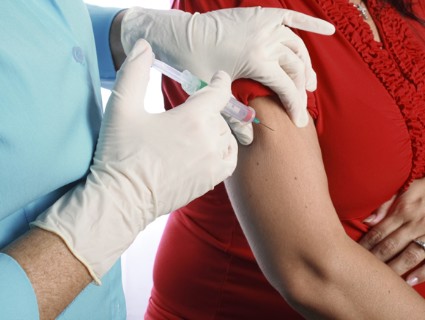
Women who received at least one flu vaccine also were significantly less likely to require an antepartum visit or hospital admission than those who did not (39% vs. 44%, P = .005).
"This information supports prior accumulating data that receipt of a flu vaccine improves not only maternal outcomes, but also birth outcomes," Dr. Kimberly Fortner said at the annual meeting of the Infectious Diseases Society for Obstetrics and Gynecology.
In all, 44% of women in the preliminary analysis received both vaccines in compliance with recommendations, far higher than historical influenza vaccination rates of 12%-34% and comparable to other reports from the season. Another 7% elected no vaccine at all, and 24% of the population had no documented receipt of vaccine in obstetrical records or other electronic medical records.
Uptake of seasonal influenza vaccine was 58% vs. 55% for the 2009 H1N1 influenza vaccine, which is unique among published prior literature.
Even though rates were nearly equal, 24% of women elected to receive only one of the two recommended vaccines, resulting in inadequate coverage, said Dr. Fortner of Duke University Medical Center in Durham, N.C.
The researchers hypothesized that pregnant women may have inappropriate or inadequate vaccination during the 2009-2010 flu season due to issues of vaccine distribution, sensationalism of the H1N1 influenza pandemic, and recommendations by the Centers for Disease Control and Prevention’s Advisory Committee on Immunization Practices that pregnant women receive both the seasonal and H1N1 influenza monovalent vaccines.
The earlier women went in for prenatal care, however, the more likely they were to receive a vaccine, she said.
Mean gestational age at first prenatal visit was significantly lower at 14.8 weeks among women who received the vaccine, compared with 18.6 weeks for women who did not receive any vaccine and 21.2 weeks for those with unknown vaccine status (P less than .0001).
Black women and those with public insurance or no insurance were significantly less likely to receive any vaccine.
In multivariate analysis that adjusted for maternal age, black race, less than a high school education, Medicaid or no insurance, and medical comorbidities, receipt of any influenza vaccine during that season was significantly associated with an estimated 133.7 g increase in birth weight (P = .0003).

The association between flu vaccination and preterm birth is unclear but might be explained by the healthy user effect, unidentified confounders or perhaps influenza behaves differently than other viruses. It may activate the inflammatory cascade in different ways, or perhaps the vaccine translates into different mechanisms that are protective, Dr. Fortner said.
Demographic data available on 1,642 women showed that the study population was diverse, with 31.5% black, 31.5% white, 25% Hispanic, 7% Asian/Pacific Islander, and 5% other. The mean maternal age was 28.7 years, 16% had less than a high school education, 28% had a chronic medical condition such as hypertension, diabetes, asthma, or a thrombotic disorder, and 37% received prenatal care at a public health department. Outcome data was not available for one patient.
The study was funded by the 2010 American College of Obstetricians and Gynecologists/Merck & Company Inc. Research Award on Immunization. Dr. Fortner and her colleagues reported no relevant financial disclosures.
CHICAGO – Influenza vaccination appears to improve neonatal outcomes, but coverage remains inadequate among pregnant women.
Among 1,641 evaluable women delivering at Duke University Hospital during the 2009-2010 influenza season, receipt of any flu vaccination was significantly associated with higher infant birth weight (3,178 grams vs. 2,903 grams) and longer gestational age (38.3 weeks vs. 36.8 weeks, both P values less than .0001).
Women who received at least one flu vaccine also were significantly less likely to require an antepartum visit or hospital admission than those who did not (39% vs. 44%, P = .005).
"This information supports prior accumulating data that receipt of a flu vaccine improves not only maternal outcomes, but also birth outcomes," Dr. Kimberly Fortner said at the annual meeting of the Infectious Diseases Society for Obstetrics and Gynecology.
In all, 44% of women in the preliminary analysis received both vaccines in compliance with recommendations, far higher than historical influenza vaccination rates of 12%-34% and comparable to other reports from the season. Another 7% elected no vaccine at all, and 24% of the population had no documented receipt of vaccine in obstetrical records or other electronic medical records.
Uptake of seasonal influenza vaccine was 58% vs. 55% for the 2009 H1N1 influenza vaccine, which is unique among published prior literature.
Even though rates were nearly equal, 24% of women elected to receive only one of the two recommended vaccines, resulting in inadequate coverage, said Dr. Fortner of Duke University Medical Center in Durham, N.C.
The researchers hypothesized that pregnant women may have inappropriate or inadequate vaccination during the 2009-2010 flu season due to issues of vaccine distribution, sensationalism of the H1N1 influenza pandemic, and recommendations by the Centers for Disease Control and Prevention’s Advisory Committee on Immunization Practices that pregnant women receive both the seasonal and H1N1 influenza monovalent vaccines.
The earlier women went in for prenatal care, however, the more likely they were to receive a vaccine, she said.
Mean gestational age at first prenatal visit was significantly lower at 14.8 weeks among women who received the vaccine, compared with 18.6 weeks for women who did not receive any vaccine and 21.2 weeks for those with unknown vaccine status (P less than .0001).
Black women and those with public insurance or no insurance were significantly less likely to receive any vaccine.
In multivariate analysis that adjusted for maternal age, black race, less than a high school education, Medicaid or no insurance, and medical comorbidities, receipt of any influenza vaccine during that season was significantly associated with an estimated 133.7 g increase in birth weight (P = .0003).
The association between flu vaccination and preterm birth is unclear but might be explained by the healthy user effect, unidentified confounders or perhaps influenza behaves differently than other viruses. It may activate the inflammatory cascade in different ways, or perhaps the vaccine translates into different mechanisms that are protective, Dr. Fortner said.
Demographic data available on 1,642 women showed that the study population was diverse, with 31.5% black, 31.5% white, 25% Hispanic, 7% Asian/Pacific Islander, and 5% other. The mean maternal age was 28.7 years, 16% had less than a high school education, 28% had a chronic medical condition such as hypertension, diabetes, asthma, or a thrombotic disorder, and 37% received prenatal care at a public health department. Outcome data was not available for one patient.
The study was funded by the 2010 American College of Obstetricians and Gynecologists/Merck & Company Inc. Research Award on Immunization. Dr. Fortner and her colleagues reported no relevant financial disclosures.
CHICAGO – Influenza vaccination appears to improve neonatal outcomes, but coverage remains inadequate among pregnant women.
Among 1,641 evaluable women delivering at Duke University Hospital during the 2009-2010 influenza season, receipt of any flu vaccination was significantly associated with higher infant birth weight (3,178 grams vs. 2,903 grams) and longer gestational age (38.3 weeks vs. 36.8 weeks, both P values less than .0001).
Women who received at least one flu vaccine also were significantly less likely to require an antepartum visit or hospital admission than those who did not (39% vs. 44%, P = .005).
"This information supports prior accumulating data that receipt of a flu vaccine improves not only maternal outcomes, but also birth outcomes," Dr. Kimberly Fortner said at the annual meeting of the Infectious Diseases Society for Obstetrics and Gynecology.
In all, 44% of women in the preliminary analysis received both vaccines in compliance with recommendations, far higher than historical influenza vaccination rates of 12%-34% and comparable to other reports from the season. Another 7% elected no vaccine at all, and 24% of the population had no documented receipt of vaccine in obstetrical records or other electronic medical records.
Uptake of seasonal influenza vaccine was 58% vs. 55% for the 2009 H1N1 influenza vaccine, which is unique among published prior literature.
Even though rates were nearly equal, 24% of women elected to receive only one of the two recommended vaccines, resulting in inadequate coverage, said Dr. Fortner of Duke University Medical Center in Durham, N.C.
The researchers hypothesized that pregnant women may have inappropriate or inadequate vaccination during the 2009-2010 flu season due to issues of vaccine distribution, sensationalism of the H1N1 influenza pandemic, and recommendations by the Centers for Disease Control and Prevention’s Advisory Committee on Immunization Practices that pregnant women receive both the seasonal and H1N1 influenza monovalent vaccines.
The earlier women went in for prenatal care, however, the more likely they were to receive a vaccine, she said.
Mean gestational age at first prenatal visit was significantly lower at 14.8 weeks among women who received the vaccine, compared with 18.6 weeks for women who did not receive any vaccine and 21.2 weeks for those with unknown vaccine status (P less than .0001).
Black women and those with public insurance or no insurance were significantly less likely to receive any vaccine.
In multivariate analysis that adjusted for maternal age, black race, less than a high school education, Medicaid or no insurance, and medical comorbidities, receipt of any influenza vaccine during that season was significantly associated with an estimated 133.7 g increase in birth weight (P = .0003).
The association between flu vaccination and preterm birth is unclear but might be explained by the healthy user effect, unidentified confounders or perhaps influenza behaves differently than other viruses. It may activate the inflammatory cascade in different ways, or perhaps the vaccine translates into different mechanisms that are protective, Dr. Fortner said.
Demographic data available on 1,642 women showed that the study population was diverse, with 31.5% black, 31.5% white, 25% Hispanic, 7% Asian/Pacific Islander, and 5% other. The mean maternal age was 28.7 years, 16% had less than a high school education, 28% had a chronic medical condition such as hypertension, diabetes, asthma, or a thrombotic disorder, and 37% received prenatal care at a public health department. Outcome data was not available for one patient.
The study was funded by the 2010 American College of Obstetricians and Gynecologists/Merck & Company Inc. Research Award on Immunization. Dr. Fortner and her colleagues reported no relevant financial disclosures.
FROM THE ANNUAL MEETING OF THE INFECTIOUS DISEASES SOCIETY FOR OBSTETRICS AND GYNECOLOGY
Major Finding: Receipt of any flu vaccination was significantly associated with higher infant birth weight (3,178 gram vs. 2,903 grams) and longer gestational age (38.3 weeks vs. 36.8 weeks, both P less than .0001).
Data Source: Preliminary analysis of 1,641 women delivering at Duke University Hospital during the 2009-2010 influenza season.
Disclosures: The study was funded by the 2010 American College of Obstetricians and Gynecologists/Merck & Company Inc. Research Award on Immunization. Dr. Fortner and her colleagues reported no relevant financial disclosures.
'Mild Association' Found Between Autism, Intra-amniotic Infection
CHICAGO – The risk of autism is mildly increased in women who experience an intra-amniotic infection during labor, according to a study reported at the annual meeting of the Infectious Diseases Society for Obstetrics and Gynecology. A separate study, also reported at the meeting, found no such link, however.
In the first study, a retrospective birth-cohort analysis, the rate of intra-amniotic infection (IAI) was 7.27% among mothers whose children developed autism and 6.51% among those with typically developing children. After adjustment for maternal age, parity, and insurance payer, the risk of having a child with autism was increased 6% in mothers with an intra-amniotic infection (odds ratio, 1.06).

"There’s probably something small going on there," Dr. Cheryl Walker of the University of California, Davis, MIND (Medical Investigation of Neurodevelopmental Disorders) Institute reported.
"We’re putting it out there because there is very little, if any, connection between these specific perinatal birth-related events and autism, but a lot of people are very concerned about them," she added.
The analysis was based on administrative data from 20,206 children with autism and 6,028,353 controls born from January 1991 through December 2001 in California and recorded in the state’s massive Office of Statewide Health Planning and Development (OSHPD) database. IAI, which complicates up to 4% of term deliveries, was identified using the ICD-9 diagnostic code 658.4.
Dr. Walker pointed out that IAI is often underdiagnosed and poorly documented in medical records, leading to under-reporting to OSHPD. In addition, subtle subclinical states cannot be assessed from administrative data.
"Our results likely underestimate a mild association between intra-amniotic infection and autism," she acknowledged.
In contrast, analysis of data from a case-control study called CHARGE found no association between autism and IAI. CHARGE (Childhood Autism Risks from Genetics and the Environment) was launched in 2003, and includes nearly 1,500 patients from northern California, some of whom have autism spectrum disorders and others who are typically developing or have developmental delays but not ASD.
This substudy of CHARGE included only those for whom medical records were available from their births, and analyzed 509 mothers of children with ASD and 325 controls. IAI was evaluated as overt IAI documented in the maternal medical record; covert IAI defined as the presence of at least one IAI symptom of uterine tenderness, foul vaginal discharge, purulent amniotic fluid, and maternal or fetal tachycardia; IAI risk defined on a four-point scale ranging from no risk to overt IAI; and finally, IAI risk with or without the use of antibiotics in labor.
No significant differences were observed between 396 evaluable mothers of children with autism/ASD and 247 mothers of typically developing children in rates of overt IAI (3.9% vs. 4.6%), presence of at least one IAI symptom (9.8% vs. 9.9%), or any IAI risk (20.2% vs. 18.6%), Dr. Walker reported.
Rates also were similar between the autism and typically developing groups for rupture of membranes greater than 18 hours (6.5% vs. 4.1%), antibiotic use in labor (26.3% vs. 22.4%), and any IAI risk without antibiotics (12% vs. 10%).
After adjustment for maternal age, payer, and birth order, IAI risk was similar among mothers of children with autism and those without (adjusted OR, 1.08).
"The neurobiologists tell us that we should be focusing more on the first and second trimesters, so maybe exposure to infection at the time of birth is too late to have much of an effect," Dr. Walker said in an interview. "Most of the neuronal migration has probably occurred by the time of the infection."
In addition, there was the potential for a type II statistical error in the CHARGE study and suboptimal classification of predictors and outcomes in the OSHPD study.
"Case-control designs are great for rare outcomes, but don’t help with rare exposures; and huge administrative data sets help with power at the cost of covariate misclassification," she said.
The studies were prompted by a growing body of evidence that IAI is associated with adverse neurodevelopment and cerebral palsy, and that inflammation plays a role in autism. Many children with autism have altered immune systems; lower levels of circulating immunoglobulin G antibodies; impaired responses to a variety of stimulation assays in vitro, including immunizations; and very unusual natural killer cell function on a variety of levels, Dr. Walker explained.
Dr. Walker reported financial relationships with Merck and Graceway. Her coauthors reported no conflicts.
CHICAGO – The risk of autism is mildly increased in women who experience an intra-amniotic infection during labor, according to a study reported at the annual meeting of the Infectious Diseases Society for Obstetrics and Gynecology. A separate study, also reported at the meeting, found no such link, however.
In the first study, a retrospective birth-cohort analysis, the rate of intra-amniotic infection (IAI) was 7.27% among mothers whose children developed autism and 6.51% among those with typically developing children. After adjustment for maternal age, parity, and insurance payer, the risk of having a child with autism was increased 6% in mothers with an intra-amniotic infection (odds ratio, 1.06).
"There’s probably something small going on there," Dr. Cheryl Walker of the University of California, Davis, MIND (Medical Investigation of Neurodevelopmental Disorders) Institute reported.
"We’re putting it out there because there is very little, if any, connection between these specific perinatal birth-related events and autism, but a lot of people are very concerned about them," she added.
The analysis was based on administrative data from 20,206 children with autism and 6,028,353 controls born from January 1991 through December 2001 in California and recorded in the state’s massive Office of Statewide Health Planning and Development (OSHPD) database. IAI, which complicates up to 4% of term deliveries, was identified using the ICD-9 diagnostic code 658.4.
Dr. Walker pointed out that IAI is often underdiagnosed and poorly documented in medical records, leading to under-reporting to OSHPD. In addition, subtle subclinical states cannot be assessed from administrative data.
"Our results likely underestimate a mild association between intra-amniotic infection and autism," she acknowledged.
In contrast, analysis of data from a case-control study called CHARGE found no association between autism and IAI. CHARGE (Childhood Autism Risks from Genetics and the Environment) was launched in 2003, and includes nearly 1,500 patients from northern California, some of whom have autism spectrum disorders and others who are typically developing or have developmental delays but not ASD.
This substudy of CHARGE included only those for whom medical records were available from their births, and analyzed 509 mothers of children with ASD and 325 controls. IAI was evaluated as overt IAI documented in the maternal medical record; covert IAI defined as the presence of at least one IAI symptom of uterine tenderness, foul vaginal discharge, purulent amniotic fluid, and maternal or fetal tachycardia; IAI risk defined on a four-point scale ranging from no risk to overt IAI; and finally, IAI risk with or without the use of antibiotics in labor.
No significant differences were observed between 396 evaluable mothers of children with autism/ASD and 247 mothers of typically developing children in rates of overt IAI (3.9% vs. 4.6%), presence of at least one IAI symptom (9.8% vs. 9.9%), or any IAI risk (20.2% vs. 18.6%), Dr. Walker reported.
Rates also were similar between the autism and typically developing groups for rupture of membranes greater than 18 hours (6.5% vs. 4.1%), antibiotic use in labor (26.3% vs. 22.4%), and any IAI risk without antibiotics (12% vs. 10%).
After adjustment for maternal age, payer, and birth order, IAI risk was similar among mothers of children with autism and those without (adjusted OR, 1.08).
"The neurobiologists tell us that we should be focusing more on the first and second trimesters, so maybe exposure to infection at the time of birth is too late to have much of an effect," Dr. Walker said in an interview. "Most of the neuronal migration has probably occurred by the time of the infection."
In addition, there was the potential for a type II statistical error in the CHARGE study and suboptimal classification of predictors and outcomes in the OSHPD study.
"Case-control designs are great for rare outcomes, but don’t help with rare exposures; and huge administrative data sets help with power at the cost of covariate misclassification," she said.
The studies were prompted by a growing body of evidence that IAI is associated with adverse neurodevelopment and cerebral palsy, and that inflammation plays a role in autism. Many children with autism have altered immune systems; lower levels of circulating immunoglobulin G antibodies; impaired responses to a variety of stimulation assays in vitro, including immunizations; and very unusual natural killer cell function on a variety of levels, Dr. Walker explained.
Dr. Walker reported financial relationships with Merck and Graceway. Her coauthors reported no conflicts.
CHICAGO – The risk of autism is mildly increased in women who experience an intra-amniotic infection during labor, according to a study reported at the annual meeting of the Infectious Diseases Society for Obstetrics and Gynecology. A separate study, also reported at the meeting, found no such link, however.
In the first study, a retrospective birth-cohort analysis, the rate of intra-amniotic infection (IAI) was 7.27% among mothers whose children developed autism and 6.51% among those with typically developing children. After adjustment for maternal age, parity, and insurance payer, the risk of having a child with autism was increased 6% in mothers with an intra-amniotic infection (odds ratio, 1.06).
"There’s probably something small going on there," Dr. Cheryl Walker of the University of California, Davis, MIND (Medical Investigation of Neurodevelopmental Disorders) Institute reported.
"We’re putting it out there because there is very little, if any, connection between these specific perinatal birth-related events and autism, but a lot of people are very concerned about them," she added.
The analysis was based on administrative data from 20,206 children with autism and 6,028,353 controls born from January 1991 through December 2001 in California and recorded in the state’s massive Office of Statewide Health Planning and Development (OSHPD) database. IAI, which complicates up to 4% of term deliveries, was identified using the ICD-9 diagnostic code 658.4.
Dr. Walker pointed out that IAI is often underdiagnosed and poorly documented in medical records, leading to under-reporting to OSHPD. In addition, subtle subclinical states cannot be assessed from administrative data.
"Our results likely underestimate a mild association between intra-amniotic infection and autism," she acknowledged.
In contrast, analysis of data from a case-control study called CHARGE found no association between autism and IAI. CHARGE (Childhood Autism Risks from Genetics and the Environment) was launched in 2003, and includes nearly 1,500 patients from northern California, some of whom have autism spectrum disorders and others who are typically developing or have developmental delays but not ASD.
This substudy of CHARGE included only those for whom medical records were available from their births, and analyzed 509 mothers of children with ASD and 325 controls. IAI was evaluated as overt IAI documented in the maternal medical record; covert IAI defined as the presence of at least one IAI symptom of uterine tenderness, foul vaginal discharge, purulent amniotic fluid, and maternal or fetal tachycardia; IAI risk defined on a four-point scale ranging from no risk to overt IAI; and finally, IAI risk with or without the use of antibiotics in labor.
No significant differences were observed between 396 evaluable mothers of children with autism/ASD and 247 mothers of typically developing children in rates of overt IAI (3.9% vs. 4.6%), presence of at least one IAI symptom (9.8% vs. 9.9%), or any IAI risk (20.2% vs. 18.6%), Dr. Walker reported.
Rates also were similar between the autism and typically developing groups for rupture of membranes greater than 18 hours (6.5% vs. 4.1%), antibiotic use in labor (26.3% vs. 22.4%), and any IAI risk without antibiotics (12% vs. 10%).
After adjustment for maternal age, payer, and birth order, IAI risk was similar among mothers of children with autism and those without (adjusted OR, 1.08).
"The neurobiologists tell us that we should be focusing more on the first and second trimesters, so maybe exposure to infection at the time of birth is too late to have much of an effect," Dr. Walker said in an interview. "Most of the neuronal migration has probably occurred by the time of the infection."
In addition, there was the potential for a type II statistical error in the CHARGE study and suboptimal classification of predictors and outcomes in the OSHPD study.
"Case-control designs are great for rare outcomes, but don’t help with rare exposures; and huge administrative data sets help with power at the cost of covariate misclassification," she said.
The studies were prompted by a growing body of evidence that IAI is associated with adverse neurodevelopment and cerebral palsy, and that inflammation plays a role in autism. Many children with autism have altered immune systems; lower levels of circulating immunoglobulin G antibodies; impaired responses to a variety of stimulation assays in vitro, including immunizations; and very unusual natural killer cell function on a variety of levels, Dr. Walker explained.
Dr. Walker reported financial relationships with Merck and Graceway. Her coauthors reported no conflicts.
FROM THE ANNUAL MEETING OF THE INFECTIOUS DISEASES SOCIETY FOR OBSTETRICS AND GYNECOLOGY
Major Finding: The adjusted risk of having a child with autism was increased 6% in mothers with an intra-amniotic infection during labor in one study. A second study found no such association.
Data Source: The first study was a retrospective birth-cohort analysis of 20,206 children with autism and 6,028,353 controls. The second study was a case-control study of 509 mothers of children with autism spectrum disorders and 325 controls.
Disclosures: Dr. Walker reported financial relationships with Merck and Graceway. Her coauthors reported no conflicts.