User login
When the DSM-5 is unveiled at the annual meeting of the American Psychiatric Association in May, Dr. David J. Kupfer hopes that clinicians will find a more user-friendly document compared with the DSM-IV.
At the annual meeting of the American College of Psychiatrists, Dr. Kupfer, chair of the DSM-5 task force and professor of psychiatry at the University of Pittsburgh, said the DSM-IV’s organizational structure "failed to reflect shared features or symptoms of related disorders and diagnostic groups, like psychotic disorders with bipolar disorders or internalizing and externalizing disorders. This led us to restructure DSM-5 in a way that better reflects these interrelationships, within and across diagnostic chapters."
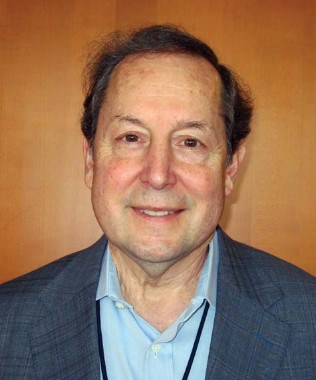
The DSM-IV also was limited, he said, because it promoted a strict categorical approach to making diagnoses, the notion that "either you have it or you don’t," Dr. Kupfer said at the annual meeting of the American College of Psychiatrists. "This tends not to capture the variations of disorders that we see in real life. As a consequence, more ‘not otherwise specified’ designations were used than probably were necessary." Nor did the DSM-IV adequately address lifespan perspective, he said, including variations of symptom presentation across the developmental trajectory, or cultural perspectives. "That’s a deficiency, I think."
The 20-chapter DSM-5 – an 8-year effort that involved input from about 400 clinicians at 13 international conferences – "represents an opportunity to integrate cross-cutting symptomatic descriptions which better reflect the true presentation of disorders and may reduce reliance on ‘not otherwise specified’ diagnoses," Dr. Kupfer said. Its chapter structure, criteria revisions, and text outline "actively address age and development as part of diagnosis and classification," he said. "Culture is similarly discussed more explicitly to bring greater attention to cultural variations in symptom presentations."
Dr. Kupfer described the DSM-5 as a "living document," meaning that it will be more amenable to updates in psychiatry and neuroscience, and less susceptible to becoming outdated, compared with its predecessors. "We do not want to wait for 20 or 25 years for the next change to be made in the DSM," he emphasized. "We want to take advantage of advances that are likely to be made in certain areas of diagnostic nomenclature that can be put into the DSM and give us more objective criteria than we currently have for most of our disorders."
At the meeting, Dr. Kupfer and Dr. Darrel A. Regier, vice chair of the DSM-5 task force, highlighted select changes from DSM-IV that clinicians can expect to find in DSM-5. For example, autism spectrum disorder is now a single diagnosis. "The concern within the clinical and research field was that it was not possible to consistently break out autism, Asperger’s disorder, and pervasive developmental disorder not otherwise specified," said Dr. Regier, director of the American Psychiatric Institute for Research and Education and director of the division of research at the American Psychiatric Association. "There was a universal agreement that this needed to be seen as a spectrum of disorders that would be assessed on the basis of two domains: One was social communication and the other was restricted repetitive behaviors and interests.
"If one would rank people on the basis of their impairment in those two areas, that would be much more informative for guiding treatment and educational programs. That was a critical concern," he said.
The DSM-5 includes the addition of a specifier for all neurodevelopmental disorders associated with known medical or genetic conditions, or environmental factors. Specifiers are also included for specific learning disorders in reading, writing, and math.
In schizophrenia, special treatment of bizarre delusions and special hallucinations in criterion A (characteristic symptoms) has been eliminated. "With DSM-IV, you could get a diagnosis of schizophrenia if you just had bizarre delusions, but research shows that there is very poor reliability in separating bizarre and nonbizarre delusions," Dr. Regier said. Now, at least one psychotic symptom is required for a diagnosis of schizophrenia. "You have to have delusions, hallucinations, or disorganized speech in order to meet criteria," he said.
In a related development, catatonia exists as a specifier for neurodevelopmental, psychotic, mood, and other mental disorders, as well as for catatonia due to another medical condition.
In bipolar disorder, increased energy/activity as a criterion A symptom of hypomania/mania has been included. "Although those aspects have been included as symptoms previously, what is now recommended is that they become part of the criterion A, along with changes in mood," Dr. Kupfer said. The DSM-5 also includes a "with mixed features" specifier for manic, hypomanic, and major depressive episodes, which "better reflects what clinicians see and what they need to diagnose."
Depressive disorders are now organized in a dedicated chapter separate from bipolar and related disorders. In major depressive episode, the bereavement exclusion has been eliminated. "The basic message in the bereavement exclusion from DSM-IV was that we as clinicians could not diagnose major depression during the first 2 months following a bereavement," Dr. Kupfer said. "This would be independent of how the person might be suffering during that 2-month period. The other thing that seemed to be implied, which was very unfortunate, was that a number of people concluded that bereavement may only last 2 months, when in fact all of us know that bereavement often lasts a lot longer than 2 months." The DSM-5 includes a criteria note "that allows one to think about the presence of major depression while someone is also experiencing a significant loss."
Anxiety disorders are now organized in a dedicated chapter separate from other anxiety-related disorders. "With panic attacks" is a specifier for any mental disorder, and panic disorder and agoraphobia have become unlinked.
Another set of changes that were made in the DSM-5 related to either new disorders or in named disorders. For example, disruptive mood dysregulation disorder (DMDD) is a newcomer that addresses presentations of severe, nonepisodic irritability that has contributed to an upsurge of pediatric bipolar disorders. In DMDD, "symptoms overlap with oppositional defiance disorder but are considered more severe," Dr. Kupfer said. Meanwhile, premenstrual dysphoric disorder has been elevated from the appendix to the depressive disorders section of DSM-5, while binge eating disorder has been elevated from the appendix to the feeding and eating disorders section of the document.
Hoarding disorder is another newcomer to the DSM-5. "This is one of major public health significance because every department of public health in every county in the country has to deal with a hoarding issue, whether it’s animal-related or other forms of excessive acquisition," Dr. Regier said.
One change to posttraumatic stress disorder diagnoses includes removal of the A2 criteria, "which was that an individual not only has to be exposed an overwhelming stress but they have to react with horror or disgust," Dr. Regier said. "What was happening is that soldiers who are trained to immediately deal with horrendous experiences would say that their training ‘kicked in.’ They didn’t have the reaction – the A2 criteria – yet they subsequently would have clear criteria for PTSD. There was a need to eliminate that criteria to focus on four symptom clusters that filled out the syndrome." Now, the avoidance/numbing cluster has been divided into two distinct clusters: avoidance and persistent negative alterations in cognition and mood.
Dr. Regier predicted that the DSM-5 will make a significant contribution to assisting clinicians with diagnosing neurocognitive disorders. "An enormous amount of information has emerged in the area of neurocognitive disorders [in terms of] early differentiation of a probable Alzheimer’s disease versus a frontal temporal dementia diagnosis and differentiating dementia with Lewy bodies versus vascular dementia," he said. Going forward, he continued: "I think the biggest challenge is going to be making the distinction between mild dementia and normality. We’re working to develop a computer-assisted neurocognitive test that clinicians can use in their office to do some screening in this area. It would also be helpful for looking at cognitive impairment in schizophrenia. That’s in the future, but it’s an area we know we need to move forward with."
Neither Dr. Kupfer nor Dr. Regier had relevant financial conflicts to disclose.
When the DSM-5 is unveiled at the annual meeting of the American Psychiatric Association in May, Dr. David J. Kupfer hopes that clinicians will find a more user-friendly document compared with the DSM-IV.
At the annual meeting of the American College of Psychiatrists, Dr. Kupfer, chair of the DSM-5 task force and professor of psychiatry at the University of Pittsburgh, said the DSM-IV’s organizational structure "failed to reflect shared features or symptoms of related disorders and diagnostic groups, like psychotic disorders with bipolar disorders or internalizing and externalizing disorders. This led us to restructure DSM-5 in a way that better reflects these interrelationships, within and across diagnostic chapters."
The DSM-IV also was limited, he said, because it promoted a strict categorical approach to making diagnoses, the notion that "either you have it or you don’t," Dr. Kupfer said at the annual meeting of the American College of Psychiatrists. "This tends not to capture the variations of disorders that we see in real life. As a consequence, more ‘not otherwise specified’ designations were used than probably were necessary." Nor did the DSM-IV adequately address lifespan perspective, he said, including variations of symptom presentation across the developmental trajectory, or cultural perspectives. "That’s a deficiency, I think."
The 20-chapter DSM-5 – an 8-year effort that involved input from about 400 clinicians at 13 international conferences – "represents an opportunity to integrate cross-cutting symptomatic descriptions which better reflect the true presentation of disorders and may reduce reliance on ‘not otherwise specified’ diagnoses," Dr. Kupfer said. Its chapter structure, criteria revisions, and text outline "actively address age and development as part of diagnosis and classification," he said. "Culture is similarly discussed more explicitly to bring greater attention to cultural variations in symptom presentations."
Dr. Kupfer described the DSM-5 as a "living document," meaning that it will be more amenable to updates in psychiatry and neuroscience, and less susceptible to becoming outdated, compared with its predecessors. "We do not want to wait for 20 or 25 years for the next change to be made in the DSM," he emphasized. "We want to take advantage of advances that are likely to be made in certain areas of diagnostic nomenclature that can be put into the DSM and give us more objective criteria than we currently have for most of our disorders."
At the meeting, Dr. Kupfer and Dr. Darrel A. Regier, vice chair of the DSM-5 task force, highlighted select changes from DSM-IV that clinicians can expect to find in DSM-5. For example, autism spectrum disorder is now a single diagnosis. "The concern within the clinical and research field was that it was not possible to consistently break out autism, Asperger’s disorder, and pervasive developmental disorder not otherwise specified," said Dr. Regier, director of the American Psychiatric Institute for Research and Education and director of the division of research at the American Psychiatric Association. "There was a universal agreement that this needed to be seen as a spectrum of disorders that would be assessed on the basis of two domains: One was social communication and the other was restricted repetitive behaviors and interests.
"If one would rank people on the basis of their impairment in those two areas, that would be much more informative for guiding treatment and educational programs. That was a critical concern," he said.
The DSM-5 includes the addition of a specifier for all neurodevelopmental disorders associated with known medical or genetic conditions, or environmental factors. Specifiers are also included for specific learning disorders in reading, writing, and math.
In schizophrenia, special treatment of bizarre delusions and special hallucinations in criterion A (characteristic symptoms) has been eliminated. "With DSM-IV, you could get a diagnosis of schizophrenia if you just had bizarre delusions, but research shows that there is very poor reliability in separating bizarre and nonbizarre delusions," Dr. Regier said. Now, at least one psychotic symptom is required for a diagnosis of schizophrenia. "You have to have delusions, hallucinations, or disorganized speech in order to meet criteria," he said.
In a related development, catatonia exists as a specifier for neurodevelopmental, psychotic, mood, and other mental disorders, as well as for catatonia due to another medical condition.
In bipolar disorder, increased energy/activity as a criterion A symptom of hypomania/mania has been included. "Although those aspects have been included as symptoms previously, what is now recommended is that they become part of the criterion A, along with changes in mood," Dr. Kupfer said. The DSM-5 also includes a "with mixed features" specifier for manic, hypomanic, and major depressive episodes, which "better reflects what clinicians see and what they need to diagnose."
Depressive disorders are now organized in a dedicated chapter separate from bipolar and related disorders. In major depressive episode, the bereavement exclusion has been eliminated. "The basic message in the bereavement exclusion from DSM-IV was that we as clinicians could not diagnose major depression during the first 2 months following a bereavement," Dr. Kupfer said. "This would be independent of how the person might be suffering during that 2-month period. The other thing that seemed to be implied, which was very unfortunate, was that a number of people concluded that bereavement may only last 2 months, when in fact all of us know that bereavement often lasts a lot longer than 2 months." The DSM-5 includes a criteria note "that allows one to think about the presence of major depression while someone is also experiencing a significant loss."
Anxiety disorders are now organized in a dedicated chapter separate from other anxiety-related disorders. "With panic attacks" is a specifier for any mental disorder, and panic disorder and agoraphobia have become unlinked.
Another set of changes that were made in the DSM-5 related to either new disorders or in named disorders. For example, disruptive mood dysregulation disorder (DMDD) is a newcomer that addresses presentations of severe, nonepisodic irritability that has contributed to an upsurge of pediatric bipolar disorders. In DMDD, "symptoms overlap with oppositional defiance disorder but are considered more severe," Dr. Kupfer said. Meanwhile, premenstrual dysphoric disorder has been elevated from the appendix to the depressive disorders section of DSM-5, while binge eating disorder has been elevated from the appendix to the feeding and eating disorders section of the document.
Hoarding disorder is another newcomer to the DSM-5. "This is one of major public health significance because every department of public health in every county in the country has to deal with a hoarding issue, whether it’s animal-related or other forms of excessive acquisition," Dr. Regier said.
One change to posttraumatic stress disorder diagnoses includes removal of the A2 criteria, "which was that an individual not only has to be exposed an overwhelming stress but they have to react with horror or disgust," Dr. Regier said. "What was happening is that soldiers who are trained to immediately deal with horrendous experiences would say that their training ‘kicked in.’ They didn’t have the reaction – the A2 criteria – yet they subsequently would have clear criteria for PTSD. There was a need to eliminate that criteria to focus on four symptom clusters that filled out the syndrome." Now, the avoidance/numbing cluster has been divided into two distinct clusters: avoidance and persistent negative alterations in cognition and mood.
Dr. Regier predicted that the DSM-5 will make a significant contribution to assisting clinicians with diagnosing neurocognitive disorders. "An enormous amount of information has emerged in the area of neurocognitive disorders [in terms of] early differentiation of a probable Alzheimer’s disease versus a frontal temporal dementia diagnosis and differentiating dementia with Lewy bodies versus vascular dementia," he said. Going forward, he continued: "I think the biggest challenge is going to be making the distinction between mild dementia and normality. We’re working to develop a computer-assisted neurocognitive test that clinicians can use in their office to do some screening in this area. It would also be helpful for looking at cognitive impairment in schizophrenia. That’s in the future, but it’s an area we know we need to move forward with."
Neither Dr. Kupfer nor Dr. Regier had relevant financial conflicts to disclose.
When the DSM-5 is unveiled at the annual meeting of the American Psychiatric Association in May, Dr. David J. Kupfer hopes that clinicians will find a more user-friendly document compared with the DSM-IV.
At the annual meeting of the American College of Psychiatrists, Dr. Kupfer, chair of the DSM-5 task force and professor of psychiatry at the University of Pittsburgh, said the DSM-IV’s organizational structure "failed to reflect shared features or symptoms of related disorders and diagnostic groups, like psychotic disorders with bipolar disorders or internalizing and externalizing disorders. This led us to restructure DSM-5 in a way that better reflects these interrelationships, within and across diagnostic chapters."
The DSM-IV also was limited, he said, because it promoted a strict categorical approach to making diagnoses, the notion that "either you have it or you don’t," Dr. Kupfer said at the annual meeting of the American College of Psychiatrists. "This tends not to capture the variations of disorders that we see in real life. As a consequence, more ‘not otherwise specified’ designations were used than probably were necessary." Nor did the DSM-IV adequately address lifespan perspective, he said, including variations of symptom presentation across the developmental trajectory, or cultural perspectives. "That’s a deficiency, I think."
The 20-chapter DSM-5 – an 8-year effort that involved input from about 400 clinicians at 13 international conferences – "represents an opportunity to integrate cross-cutting symptomatic descriptions which better reflect the true presentation of disorders and may reduce reliance on ‘not otherwise specified’ diagnoses," Dr. Kupfer said. Its chapter structure, criteria revisions, and text outline "actively address age and development as part of diagnosis and classification," he said. "Culture is similarly discussed more explicitly to bring greater attention to cultural variations in symptom presentations."
Dr. Kupfer described the DSM-5 as a "living document," meaning that it will be more amenable to updates in psychiatry and neuroscience, and less susceptible to becoming outdated, compared with its predecessors. "We do not want to wait for 20 or 25 years for the next change to be made in the DSM," he emphasized. "We want to take advantage of advances that are likely to be made in certain areas of diagnostic nomenclature that can be put into the DSM and give us more objective criteria than we currently have for most of our disorders."
At the meeting, Dr. Kupfer and Dr. Darrel A. Regier, vice chair of the DSM-5 task force, highlighted select changes from DSM-IV that clinicians can expect to find in DSM-5. For example, autism spectrum disorder is now a single diagnosis. "The concern within the clinical and research field was that it was not possible to consistently break out autism, Asperger’s disorder, and pervasive developmental disorder not otherwise specified," said Dr. Regier, director of the American Psychiatric Institute for Research and Education and director of the division of research at the American Psychiatric Association. "There was a universal agreement that this needed to be seen as a spectrum of disorders that would be assessed on the basis of two domains: One was social communication and the other was restricted repetitive behaviors and interests.
"If one would rank people on the basis of their impairment in those two areas, that would be much more informative for guiding treatment and educational programs. That was a critical concern," he said.
The DSM-5 includes the addition of a specifier for all neurodevelopmental disorders associated with known medical or genetic conditions, or environmental factors. Specifiers are also included for specific learning disorders in reading, writing, and math.
In schizophrenia, special treatment of bizarre delusions and special hallucinations in criterion A (characteristic symptoms) has been eliminated. "With DSM-IV, you could get a diagnosis of schizophrenia if you just had bizarre delusions, but research shows that there is very poor reliability in separating bizarre and nonbizarre delusions," Dr. Regier said. Now, at least one psychotic symptom is required for a diagnosis of schizophrenia. "You have to have delusions, hallucinations, or disorganized speech in order to meet criteria," he said.
In a related development, catatonia exists as a specifier for neurodevelopmental, psychotic, mood, and other mental disorders, as well as for catatonia due to another medical condition.
In bipolar disorder, increased energy/activity as a criterion A symptom of hypomania/mania has been included. "Although those aspects have been included as symptoms previously, what is now recommended is that they become part of the criterion A, along with changes in mood," Dr. Kupfer said. The DSM-5 also includes a "with mixed features" specifier for manic, hypomanic, and major depressive episodes, which "better reflects what clinicians see and what they need to diagnose."
Depressive disorders are now organized in a dedicated chapter separate from bipolar and related disorders. In major depressive episode, the bereavement exclusion has been eliminated. "The basic message in the bereavement exclusion from DSM-IV was that we as clinicians could not diagnose major depression during the first 2 months following a bereavement," Dr. Kupfer said. "This would be independent of how the person might be suffering during that 2-month period. The other thing that seemed to be implied, which was very unfortunate, was that a number of people concluded that bereavement may only last 2 months, when in fact all of us know that bereavement often lasts a lot longer than 2 months." The DSM-5 includes a criteria note "that allows one to think about the presence of major depression while someone is also experiencing a significant loss."
Anxiety disorders are now organized in a dedicated chapter separate from other anxiety-related disorders. "With panic attacks" is a specifier for any mental disorder, and panic disorder and agoraphobia have become unlinked.
Another set of changes that were made in the DSM-5 related to either new disorders or in named disorders. For example, disruptive mood dysregulation disorder (DMDD) is a newcomer that addresses presentations of severe, nonepisodic irritability that has contributed to an upsurge of pediatric bipolar disorders. In DMDD, "symptoms overlap with oppositional defiance disorder but are considered more severe," Dr. Kupfer said. Meanwhile, premenstrual dysphoric disorder has been elevated from the appendix to the depressive disorders section of DSM-5, while binge eating disorder has been elevated from the appendix to the feeding and eating disorders section of the document.
Hoarding disorder is another newcomer to the DSM-5. "This is one of major public health significance because every department of public health in every county in the country has to deal with a hoarding issue, whether it’s animal-related or other forms of excessive acquisition," Dr. Regier said.
One change to posttraumatic stress disorder diagnoses includes removal of the A2 criteria, "which was that an individual not only has to be exposed an overwhelming stress but they have to react with horror or disgust," Dr. Regier said. "What was happening is that soldiers who are trained to immediately deal with horrendous experiences would say that their training ‘kicked in.’ They didn’t have the reaction – the A2 criteria – yet they subsequently would have clear criteria for PTSD. There was a need to eliminate that criteria to focus on four symptom clusters that filled out the syndrome." Now, the avoidance/numbing cluster has been divided into two distinct clusters: avoidance and persistent negative alterations in cognition and mood.
Dr. Regier predicted that the DSM-5 will make a significant contribution to assisting clinicians with diagnosing neurocognitive disorders. "An enormous amount of information has emerged in the area of neurocognitive disorders [in terms of] early differentiation of a probable Alzheimer’s disease versus a frontal temporal dementia diagnosis and differentiating dementia with Lewy bodies versus vascular dementia," he said. Going forward, he continued: "I think the biggest challenge is going to be making the distinction between mild dementia and normality. We’re working to develop a computer-assisted neurocognitive test that clinicians can use in their office to do some screening in this area. It would also be helpful for looking at cognitive impairment in schizophrenia. That’s in the future, but it’s an area we know we need to move forward with."
Neither Dr. Kupfer nor Dr. Regier had relevant financial conflicts to disclose.
EXPERT ANALYSIS FROM THE AMERICAN COLLEGE OF PSYCHIATRISTS ANNUAL MEETING