User login
Richard Quinn is an award-winning journalist with 15 years’ experience. He has worked at the Asbury Park Press in New Jersey and The Virginian-Pilot in Norfolk, Va., and currently is managing editor for a leading commercial real estate publication. His freelance work has appeared in The Jewish State, The Hospitalist, The Rheumatologist, ACEP Now, and ENT Today. He lives in New Jersey with his wife and three cats.
Take a Bow
SHM has announced the annual Awards of Excellence to hospitalists on the leading edge of the specialty. The honors recognize accomplishments in education, research, clinical care, service, and quality improvement (QI). The praises are as varied as the recipients: They hail from Wisconsin to Pennsylvania, Minnesota to North Carolina.
This year’s awards, presented at the annual President’s Luncheon at HM09 in Chicago, went to:

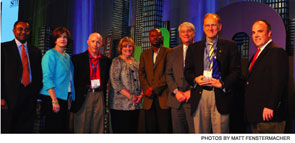
Award for Excellence in Teaching
Eric Howell, MD, FHM
Johns Hopkins Bayview Medical Center, Baltimore
Dr. Howell is an admitted introvert, so one might assume teaching isn’t the most natural application of his medical talents. But when he became chief resident at Johns Hopkins in 1999, he was forced to lead weekly education sessions. The next year, it was weekly didactic classes as an instructor. Five years later, he made assistant professor; this year he moved up again, to associate professor.
“It’s certainly not my fund of knowledge,” Dr. Howell says. “Students and I enjoy interacting because I enjoy it and I make it fun. What little knowledge I have, I pass on well.”
Dr. Howell’s laid-back style—he asks students to call him Eric, although they rarely do—serves him well in the classroom setting. However, the other hats he wears—as Bayview Medical Center’s hospitalist division director and faculty leader at Helen B. Taussig College—limit his teaching time. In a way, it’s what helped him win the award.
“Because I have many other things to do, [teaching] stays special,” says Dr. Howell, who recently joined SHM’s Board of Directors. “It’s a nice reprieve from some of the other high-pressure things, like treating a sick patient, problem-solving for my hospital, or keeping my hospitalist group running.”

Excellence in Research Award
Samir Shah, MD, MSCE, FHM
Children’s Hospital of Philadelphia
Most medical students don’t set out to be hailed as researchers, and Dr. Shah is no exception. Still, in order to graduate from the Yale University School of Medicine, every student has to complete a research project. The research bug bit Dr. Shah, and he stayed an extra year at Yale to pursue teaching and research interests. Now he’s a leading voice for pediatric hospitalists, an assistant professor of pediatrics and epidemiology at the University of Pennsylvania Medical School of Medicine, and an attending physician at Children’s Hospital of Philadelphia.
“It’s the feeling of making a difference not in the life of one child but the lives of many children,” he says. “To say I fundamentally had an impact on the way we view a disease … that’s a different feeling altogether.”
Dr. Shah’s research has focused on improved management of patients with common childhood infections, particularly pneumonia and meningitis. His research is published regularly, and he serves as editor or co-editor for several journals.
“The goal of our research is to influence policy or clinical practice,” Dr Shah says. “Ideally, both.”

Award for Outstanding Service in HM
Eric Siegal, MD, FHM
University of Wisconsin School of Medicine and Public Health, Madison
Dr. Siegal has been the head of SHM’s Public Policy Committee for nearly four years, and while he jokes that no one else is dumb enough to take on the role, it’s exactly that kind of experience that has earned him the society’s “utility infielder award.”
“It’s gotten harder,” Dr. Siegal says of HM advocacy. “Now that people know what SHM is ... it’s going to get a lot harder, in a good way.”
SHM leaders say Dr. Siegal’s grasp of issues is vital as the federal government weighs the most significant healthcare reform in decades and hospitals struggle to balance costs and efficiency against the push to improve quality of care.
In fact, Dr. Siegal’s reputation within the society is so respected he was co-nominated for this year’s service award by Laura Allendorf, SHM’s senior advisor on advocacy and government affairs. Dr. Siegal currently is a critical-care fellow in Madison, and previously served as regional medical director for Cogent Healthcare.
Award for Clinical Excellence
Jerome Siy, MD, FHM
Regions Hospital, Saint Paul, Minn.
Dr. Siy wants to collaborate on pretty much everything. It doesn’t matter if he’s developing an HM platform that employs nearly 50 hospitalists, teaching at the University of Minnesota Medical School, or creating an interdisciplinary program that pulls together hospitalists, ED physicians, and behavioral health doctors.
“Nothing is successful when one person does all the work,” Dr. Siy says. “It doesn’t help just having department heads in a room. You need the people who are actually working.”
Dr. Siy’s work as chief of hospital medicine at Regions drew industry-wide attention, namely for the program he developed to carve out 96 inpatient mental-health beds to streamline intake and discharge processes. And even though he also directs a fellowship program for HealthPartners Medical Group in Saint Paul, Dr. Siy views his award as a testament to his colleagues.
“When you’re part of a team that you really enjoy, the work becomes easier,” Dr. Siy says. “I feel like it’s an acknowledgement of the way we all work together.” TH
Richard Quinn is a freelance writer based in New Jersey.
SHM has announced the annual Awards of Excellence to hospitalists on the leading edge of the specialty. The honors recognize accomplishments in education, research, clinical care, service, and quality improvement (QI). The praises are as varied as the recipients: They hail from Wisconsin to Pennsylvania, Minnesota to North Carolina.
This year’s awards, presented at the annual President’s Luncheon at HM09 in Chicago, went to:
Award for Excellence in Teaching
Eric Howell, MD, FHM
Johns Hopkins Bayview Medical Center, Baltimore
Dr. Howell is an admitted introvert, so one might assume teaching isn’t the most natural application of his medical talents. But when he became chief resident at Johns Hopkins in 1999, he was forced to lead weekly education sessions. The next year, it was weekly didactic classes as an instructor. Five years later, he made assistant professor; this year he moved up again, to associate professor.
“It’s certainly not my fund of knowledge,” Dr. Howell says. “Students and I enjoy interacting because I enjoy it and I make it fun. What little knowledge I have, I pass on well.”
Dr. Howell’s laid-back style—he asks students to call him Eric, although they rarely do—serves him well in the classroom setting. However, the other hats he wears—as Bayview Medical Center’s hospitalist division director and faculty leader at Helen B. Taussig College—limit his teaching time. In a way, it’s what helped him win the award.
“Because I have many other things to do, [teaching] stays special,” says Dr. Howell, who recently joined SHM’s Board of Directors. “It’s a nice reprieve from some of the other high-pressure things, like treating a sick patient, problem-solving for my hospital, or keeping my hospitalist group running.”
Excellence in Research Award
Samir Shah, MD, MSCE, FHM
Children’s Hospital of Philadelphia
Most medical students don’t set out to be hailed as researchers, and Dr. Shah is no exception. Still, in order to graduate from the Yale University School of Medicine, every student has to complete a research project. The research bug bit Dr. Shah, and he stayed an extra year at Yale to pursue teaching and research interests. Now he’s a leading voice for pediatric hospitalists, an assistant professor of pediatrics and epidemiology at the University of Pennsylvania Medical School of Medicine, and an attending physician at Children’s Hospital of Philadelphia.
“It’s the feeling of making a difference not in the life of one child but the lives of many children,” he says. “To say I fundamentally had an impact on the way we view a disease … that’s a different feeling altogether.”
Dr. Shah’s research has focused on improved management of patients with common childhood infections, particularly pneumonia and meningitis. His research is published regularly, and he serves as editor or co-editor for several journals.
“The goal of our research is to influence policy or clinical practice,” Dr Shah says. “Ideally, both.”
Award for Outstanding Service in HM
Eric Siegal, MD, FHM
University of Wisconsin School of Medicine and Public Health, Madison
Dr. Siegal has been the head of SHM’s Public Policy Committee for nearly four years, and while he jokes that no one else is dumb enough to take on the role, it’s exactly that kind of experience that has earned him the society’s “utility infielder award.”
“It’s gotten harder,” Dr. Siegal says of HM advocacy. “Now that people know what SHM is ... it’s going to get a lot harder, in a good way.”
SHM leaders say Dr. Siegal’s grasp of issues is vital as the federal government weighs the most significant healthcare reform in decades and hospitals struggle to balance costs and efficiency against the push to improve quality of care.
In fact, Dr. Siegal’s reputation within the society is so respected he was co-nominated for this year’s service award by Laura Allendorf, SHM’s senior advisor on advocacy and government affairs. Dr. Siegal currently is a critical-care fellow in Madison, and previously served as regional medical director for Cogent Healthcare.
Award for Clinical Excellence
Jerome Siy, MD, FHM
Regions Hospital, Saint Paul, Minn.
Dr. Siy wants to collaborate on pretty much everything. It doesn’t matter if he’s developing an HM platform that employs nearly 50 hospitalists, teaching at the University of Minnesota Medical School, or creating an interdisciplinary program that pulls together hospitalists, ED physicians, and behavioral health doctors.
“Nothing is successful when one person does all the work,” Dr. Siy says. “It doesn’t help just having department heads in a room. You need the people who are actually working.”
Dr. Siy’s work as chief of hospital medicine at Regions drew industry-wide attention, namely for the program he developed to carve out 96 inpatient mental-health beds to streamline intake and discharge processes. And even though he also directs a fellowship program for HealthPartners Medical Group in Saint Paul, Dr. Siy views his award as a testament to his colleagues.
“When you’re part of a team that you really enjoy, the work becomes easier,” Dr. Siy says. “I feel like it’s an acknowledgement of the way we all work together.” TH
Richard Quinn is a freelance writer based in New Jersey.
SHM has announced the annual Awards of Excellence to hospitalists on the leading edge of the specialty. The honors recognize accomplishments in education, research, clinical care, service, and quality improvement (QI). The praises are as varied as the recipients: They hail from Wisconsin to Pennsylvania, Minnesota to North Carolina.
This year’s awards, presented at the annual President’s Luncheon at HM09 in Chicago, went to:
Award for Excellence in Teaching
Eric Howell, MD, FHM
Johns Hopkins Bayview Medical Center, Baltimore
Dr. Howell is an admitted introvert, so one might assume teaching isn’t the most natural application of his medical talents. But when he became chief resident at Johns Hopkins in 1999, he was forced to lead weekly education sessions. The next year, it was weekly didactic classes as an instructor. Five years later, he made assistant professor; this year he moved up again, to associate professor.
“It’s certainly not my fund of knowledge,” Dr. Howell says. “Students and I enjoy interacting because I enjoy it and I make it fun. What little knowledge I have, I pass on well.”
Dr. Howell’s laid-back style—he asks students to call him Eric, although they rarely do—serves him well in the classroom setting. However, the other hats he wears—as Bayview Medical Center’s hospitalist division director and faculty leader at Helen B. Taussig College—limit his teaching time. In a way, it’s what helped him win the award.
“Because I have many other things to do, [teaching] stays special,” says Dr. Howell, who recently joined SHM’s Board of Directors. “It’s a nice reprieve from some of the other high-pressure things, like treating a sick patient, problem-solving for my hospital, or keeping my hospitalist group running.”
Excellence in Research Award
Samir Shah, MD, MSCE, FHM
Children’s Hospital of Philadelphia
Most medical students don’t set out to be hailed as researchers, and Dr. Shah is no exception. Still, in order to graduate from the Yale University School of Medicine, every student has to complete a research project. The research bug bit Dr. Shah, and he stayed an extra year at Yale to pursue teaching and research interests. Now he’s a leading voice for pediatric hospitalists, an assistant professor of pediatrics and epidemiology at the University of Pennsylvania Medical School of Medicine, and an attending physician at Children’s Hospital of Philadelphia.
“It’s the feeling of making a difference not in the life of one child but the lives of many children,” he says. “To say I fundamentally had an impact on the way we view a disease … that’s a different feeling altogether.”
Dr. Shah’s research has focused on improved management of patients with common childhood infections, particularly pneumonia and meningitis. His research is published regularly, and he serves as editor or co-editor for several journals.
“The goal of our research is to influence policy or clinical practice,” Dr Shah says. “Ideally, both.”
Award for Outstanding Service in HM
Eric Siegal, MD, FHM
University of Wisconsin School of Medicine and Public Health, Madison
Dr. Siegal has been the head of SHM’s Public Policy Committee for nearly four years, and while he jokes that no one else is dumb enough to take on the role, it’s exactly that kind of experience that has earned him the society’s “utility infielder award.”
“It’s gotten harder,” Dr. Siegal says of HM advocacy. “Now that people know what SHM is ... it’s going to get a lot harder, in a good way.”
SHM leaders say Dr. Siegal’s grasp of issues is vital as the federal government weighs the most significant healthcare reform in decades and hospitals struggle to balance costs and efficiency against the push to improve quality of care.
In fact, Dr. Siegal’s reputation within the society is so respected he was co-nominated for this year’s service award by Laura Allendorf, SHM’s senior advisor on advocacy and government affairs. Dr. Siegal currently is a critical-care fellow in Madison, and previously served as regional medical director for Cogent Healthcare.
Award for Clinical Excellence
Jerome Siy, MD, FHM
Regions Hospital, Saint Paul, Minn.
Dr. Siy wants to collaborate on pretty much everything. It doesn’t matter if he’s developing an HM platform that employs nearly 50 hospitalists, teaching at the University of Minnesota Medical School, or creating an interdisciplinary program that pulls together hospitalists, ED physicians, and behavioral health doctors.
“Nothing is successful when one person does all the work,” Dr. Siy says. “It doesn’t help just having department heads in a room. You need the people who are actually working.”
Dr. Siy’s work as chief of hospital medicine at Regions drew industry-wide attention, namely for the program he developed to carve out 96 inpatient mental-health beds to streamline intake and discharge processes. And even though he also directs a fellowship program for HealthPartners Medical Group in Saint Paul, Dr. Siy views his award as a testament to his colleagues.
“When you’re part of a team that you really enjoy, the work becomes easier,” Dr. Siy says. “I feel like it’s an acknowledgement of the way we all work together.” TH
Richard Quinn is a freelance writer based in New Jersey.
The Place for Debate
Hospitalists are looking to SHM to provide comanagement guidelines—a basic “rules of engagement”—that could be used to help shape discussion with the specialists and hospital administrators who are central to the process and payment issues surrounding patient care.
Yet many hospitalists are uncomfortable with comanagement, even as the idea continues to gain acceptance nationwide. Those were the takeaways from the Comanagement/Consultative Hospital Medicine Forum at HM09 in Chicago, one of nearly 20 forums that afforded hospitalists more interactive settings to address HM issues.
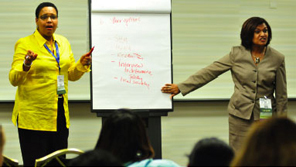
SHM board member Sylvia McKean, MD, FHM, outlined steps HM programs need to consider before they create a comanagement service:
- Identify the need for the service;
- Develop ground rules; and
- Establish measures.
“It’s tough to make a one-size-fits-all,” Dr. McKean, assistant professor of medicine at Brigham and Women’s Hospital in Boston, told one hospitalist who called for SHM to develop a practice model. She did, however, explain that the society has formed a task force to address issues including screening tools, protocols, and reimbursement for services.
Sean Fennessey, MD, of Swedish Medical Center in Seattle, expressed concerns about training, billing, and liability. A new comanagement agreement with the neurosurgery department at Swedish is helping to fund an expansion at his HM group.
“My group is using the phrase ‘physician manager,’ ” Dr. Fennessey said. “We think we would likely be involved in these cases at some point. Maybe we should be involved early on and find the medical issues.”
—Jason Carris
Information Technology
Two dozen hospitalists with a knack for software and a desire to start using it more want SHM to be a leading voice for information technology (IT) in healthcare.
“We’re on board with the idea of IT. … It’s impossible for us to get to high-reliability systems without the IT tools,” said Kendall Rogers, MD, assistant professor at the University of New Mexico School of Medicine and chair of SHM’s IT task force. But “Where is hospitalists’ place at the table?” he asked.
Dr. Rogers and other task force members hope to answer that question in the coming months as they introduce online resources that point HM groups to proven IT systems and Web-based forums to keep the conversation current. The task force hopes to reach out to organizations that are focused on patient safety and QI.
IT Forum participants agreed SHM can educate non-IT-savvy physicians, letting them know the technology is there to help and that new systems rarely come off the shelf without a glitch. Training and software improvements will help alleviate those pressures, Dr. Rogers says. Interactive discussion networks should stimulate evaluation of systems used in HM, allowing peer groups to help each other discover the right fit for their groups.
—Richard Quinn
Value and Competition
“Subsidy” as a dirty word and increased competition from specialists were just a couple of the weighty topics discussed at the Community-Based Hospitalist Forum at HM09 in Chicago.
John Nelson, MD, FHM, FACP, a principal in national hospitalist practice management consulting firm Nelson/Flores Associates and a columnist for The Hospitalist, and Winthrop F. Whitcomb, MD, FHM, a hospitalist at Mercy Medical Center in Springfield, Mass., led a group discussion about issues affecting their groups. Dr. Nelson asked hospitalists if they were dealing with competition from specialists. “Years ago, it was just us,” he said. “No one ever presented the case that their specialty deserved or required special support from the hospital. Now, essentially they all do.”
Jesse Wagner, MD, FHM, a hospitalist at Middlesex Hospital, a 275-bed facility in Middletown, Conn., said hospital administrators need to understand the value of the subsidies they provide HM groups. “I hate the term ‘subsidy.’ It’s not a subsidy because of the value,” Dr. Wagner said. “When I present my administrators with our budget every year, part of the value I present is they don’t have to pay for call for medicine at all because we’re there, we’ll do it. … The hospital’s bottom line is clearly better for having a hospitalist program.” TH
—Stephanie Cajigal
Hospitalists are looking to SHM to provide comanagement guidelines—a basic “rules of engagement”—that could be used to help shape discussion with the specialists and hospital administrators who are central to the process and payment issues surrounding patient care.
Yet many hospitalists are uncomfortable with comanagement, even as the idea continues to gain acceptance nationwide. Those were the takeaways from the Comanagement/Consultative Hospital Medicine Forum at HM09 in Chicago, one of nearly 20 forums that afforded hospitalists more interactive settings to address HM issues.
SHM board member Sylvia McKean, MD, FHM, outlined steps HM programs need to consider before they create a comanagement service:
- Identify the need for the service;
- Develop ground rules; and
- Establish measures.
“It’s tough to make a one-size-fits-all,” Dr. McKean, assistant professor of medicine at Brigham and Women’s Hospital in Boston, told one hospitalist who called for SHM to develop a practice model. She did, however, explain that the society has formed a task force to address issues including screening tools, protocols, and reimbursement for services.
Sean Fennessey, MD, of Swedish Medical Center in Seattle, expressed concerns about training, billing, and liability. A new comanagement agreement with the neurosurgery department at Swedish is helping to fund an expansion at his HM group.
“My group is using the phrase ‘physician manager,’ ” Dr. Fennessey said. “We think we would likely be involved in these cases at some point. Maybe we should be involved early on and find the medical issues.”
—Jason Carris
Information Technology
Two dozen hospitalists with a knack for software and a desire to start using it more want SHM to be a leading voice for information technology (IT) in healthcare.
“We’re on board with the idea of IT. … It’s impossible for us to get to high-reliability systems without the IT tools,” said Kendall Rogers, MD, assistant professor at the University of New Mexico School of Medicine and chair of SHM’s IT task force. But “Where is hospitalists’ place at the table?” he asked.
Dr. Rogers and other task force members hope to answer that question in the coming months as they introduce online resources that point HM groups to proven IT systems and Web-based forums to keep the conversation current. The task force hopes to reach out to organizations that are focused on patient safety and QI.
IT Forum participants agreed SHM can educate non-IT-savvy physicians, letting them know the technology is there to help and that new systems rarely come off the shelf without a glitch. Training and software improvements will help alleviate those pressures, Dr. Rogers says. Interactive discussion networks should stimulate evaluation of systems used in HM, allowing peer groups to help each other discover the right fit for their groups.
—Richard Quinn
Value and Competition
“Subsidy” as a dirty word and increased competition from specialists were just a couple of the weighty topics discussed at the Community-Based Hospitalist Forum at HM09 in Chicago.
John Nelson, MD, FHM, FACP, a principal in national hospitalist practice management consulting firm Nelson/Flores Associates and a columnist for The Hospitalist, and Winthrop F. Whitcomb, MD, FHM, a hospitalist at Mercy Medical Center in Springfield, Mass., led a group discussion about issues affecting their groups. Dr. Nelson asked hospitalists if they were dealing with competition from specialists. “Years ago, it was just us,” he said. “No one ever presented the case that their specialty deserved or required special support from the hospital. Now, essentially they all do.”
Jesse Wagner, MD, FHM, a hospitalist at Middlesex Hospital, a 275-bed facility in Middletown, Conn., said hospital administrators need to understand the value of the subsidies they provide HM groups. “I hate the term ‘subsidy.’ It’s not a subsidy because of the value,” Dr. Wagner said. “When I present my administrators with our budget every year, part of the value I present is they don’t have to pay for call for medicine at all because we’re there, we’ll do it. … The hospital’s bottom line is clearly better for having a hospitalist program.” TH
—Stephanie Cajigal
Hospitalists are looking to SHM to provide comanagement guidelines—a basic “rules of engagement”—that could be used to help shape discussion with the specialists and hospital administrators who are central to the process and payment issues surrounding patient care.
Yet many hospitalists are uncomfortable with comanagement, even as the idea continues to gain acceptance nationwide. Those were the takeaways from the Comanagement/Consultative Hospital Medicine Forum at HM09 in Chicago, one of nearly 20 forums that afforded hospitalists more interactive settings to address HM issues.
SHM board member Sylvia McKean, MD, FHM, outlined steps HM programs need to consider before they create a comanagement service:
- Identify the need for the service;
- Develop ground rules; and
- Establish measures.
“It’s tough to make a one-size-fits-all,” Dr. McKean, assistant professor of medicine at Brigham and Women’s Hospital in Boston, told one hospitalist who called for SHM to develop a practice model. She did, however, explain that the society has formed a task force to address issues including screening tools, protocols, and reimbursement for services.
Sean Fennessey, MD, of Swedish Medical Center in Seattle, expressed concerns about training, billing, and liability. A new comanagement agreement with the neurosurgery department at Swedish is helping to fund an expansion at his HM group.
“My group is using the phrase ‘physician manager,’ ” Dr. Fennessey said. “We think we would likely be involved in these cases at some point. Maybe we should be involved early on and find the medical issues.”
—Jason Carris
Information Technology
Two dozen hospitalists with a knack for software and a desire to start using it more want SHM to be a leading voice for information technology (IT) in healthcare.
“We’re on board with the idea of IT. … It’s impossible for us to get to high-reliability systems without the IT tools,” said Kendall Rogers, MD, assistant professor at the University of New Mexico School of Medicine and chair of SHM’s IT task force. But “Where is hospitalists’ place at the table?” he asked.
Dr. Rogers and other task force members hope to answer that question in the coming months as they introduce online resources that point HM groups to proven IT systems and Web-based forums to keep the conversation current. The task force hopes to reach out to organizations that are focused on patient safety and QI.
IT Forum participants agreed SHM can educate non-IT-savvy physicians, letting them know the technology is there to help and that new systems rarely come off the shelf without a glitch. Training and software improvements will help alleviate those pressures, Dr. Rogers says. Interactive discussion networks should stimulate evaluation of systems used in HM, allowing peer groups to help each other discover the right fit for their groups.
—Richard Quinn
Value and Competition
“Subsidy” as a dirty word and increased competition from specialists were just a couple of the weighty topics discussed at the Community-Based Hospitalist Forum at HM09 in Chicago.
John Nelson, MD, FHM, FACP, a principal in national hospitalist practice management consulting firm Nelson/Flores Associates and a columnist for The Hospitalist, and Winthrop F. Whitcomb, MD, FHM, a hospitalist at Mercy Medical Center in Springfield, Mass., led a group discussion about issues affecting their groups. Dr. Nelson asked hospitalists if they were dealing with competition from specialists. “Years ago, it was just us,” he said. “No one ever presented the case that their specialty deserved or required special support from the hospital. Now, essentially they all do.”
Jesse Wagner, MD, FHM, a hospitalist at Middlesex Hospital, a 275-bed facility in Middletown, Conn., said hospital administrators need to understand the value of the subsidies they provide HM groups. “I hate the term ‘subsidy.’ It’s not a subsidy because of the value,” Dr. Wagner said. “When I present my administrators with our budget every year, part of the value I present is they don’t have to pay for call for medicine at all because we’re there, we’ll do it. … The hospital’s bottom line is clearly better for having a hospitalist program.” TH
—Stephanie Cajigal
Is Anybody Out There?
In a tale all too familiar to HM group leaders, whether they head two- or three-physician services or the large, multistate hospitalist companies, Heather Bellow, MD, FAAP, is trying to recruit a pediatric hospitalist to her midsize Midwest town.
Her sales pitch, though, seems to focus more on the bounties of Lansing, Mich., rather than the work to be done as the fourth full-time member of Sparrow Hospital Inpatient Pediatric Services. Dr. Bellow often talks up the culture, lifestyle, and the vibrant atmosphere Michigan State University provides the community. And yet, she struggles to find new hires.
Her story is the new norm: Group directors outside the nation’s largest markets agree that they often work for months at a time to recruit hospitalists. Some relent and hire a steady string of residents from nearby institutions. Others throw money at the problem, only to lose those well-paid hospitalists to other groups that throw more money at the problem. The problem is particularly acute in secondary- and tertiary-population areas, where hiring managers often find themselves battling each other for the same hospitalists.
“That’s the million-dollar question,” Dr. Bellow says. “How do you find that outside person that’s willing to come to small-town USA? I really don’t know.”
One possible answer: A focused recruitment strategy should be considered its own subspecialty. Highlighting the growing importance of recruitment and retention issues, SHM offered its first recruitment course last month at HM09 in Chicago. More than 300 people attended the session, which looked at the hiring process from both perspectives. In anticipation of high demand, the presentation was one of only a handful of sessions that were held twice during the meeting, allowing those who missed the first-day session to attend the same session on the final day.
“It’s a crazy time in some ways,” says Kirk Mathews, co-founder and CEO of Inpatient Management Inc. in St. Louis. “In challenging times, people often abandon the fundamentals because they feel they’re in desperation mode. Just bring someone in, get a body in there—anything with an MD behind their name.”
Hospitalists looking to recruit to smaller markets say times are getting tougher. The job posting board at HM09—always a popular gathering site—was littered with fliers for practices in smaller markets: Albuquerque, N.M.; Coeur d’Alene, Idaho; Murphy, N.C. Most of the announcements focused on the natural beauty of an area, proximity to surf or sand, or the peaceful lifestyle a community affords. Few focused on compensation, rotation schedules, or whether malpractice insurance and continuing medical education would be reimbursed.
“These ads try to appeal to your life other than medicine,” says Cecelia Wong, MD, a hospitalist with Med One Hospitalist Physicians in Columbus, Ohio.
Rohit Uppal, MD, medical director of the hospitalist program at Grant Medical Center, also in Columbus, says job hopefuls now know they can be picky when it comes to looking at positions in markets struggling to maintain a job candidate pipeline. Dr. Uppal uses a fellowship program as a recruitment tool, but he concedes he’s not in a power position when it comes to negotiation. “We’re not saying ‘Here’s our great hospitalist group, move to Columbus,’ ” he says. “We’re hearing ‘I’m moving to Columbus ... looking to be a hospitalist.’ ”
Sweeten the Pot
Another potential recruiting tool some groups might overlook is physical office space. While many groups search for cost savings by moving to a “virtual office,” don’t underestimate the value a candidate might place in having a nice office to do their paperwork, says Joseph Ming-Wah Li, MD, FHM, SHM board member, director of the hospital medicine program at Harvard Medical School and associate chief of the division of general medicine and primary care at Beth Israel Deaconess Medical Center in Boston. “What does that say to a hospitalist?” Dr. Li asks. “I take them to this nice suite with outside-looking windows—it sends a nice message of how you’re valued at your institution.”
Just don’t tilt too far toward fancy offices and big salaries. Mathews cautions clients not to focus solely on compensation, because it doesn’t solve long-term recruitment issues and might attract candidates only interested in short-term commitments. “It’s not wise to buy loyalty, because then you never know when it’s paid for,” Mathews says. “I’m going to throw a $40,000 signing bonus at this doctor. … Two years from now, somebody else can throw $50,000 at them and they’re gone. It’s not the candidate’s fault. They’re at the smorgasbord table.” TH
Richard Quinn is a freelance writer based in New Jersey.
In a tale all too familiar to HM group leaders, whether they head two- or three-physician services or the large, multistate hospitalist companies, Heather Bellow, MD, FAAP, is trying to recruit a pediatric hospitalist to her midsize Midwest town.
Her sales pitch, though, seems to focus more on the bounties of Lansing, Mich., rather than the work to be done as the fourth full-time member of Sparrow Hospital Inpatient Pediatric Services. Dr. Bellow often talks up the culture, lifestyle, and the vibrant atmosphere Michigan State University provides the community. And yet, she struggles to find new hires.
Her story is the new norm: Group directors outside the nation’s largest markets agree that they often work for months at a time to recruit hospitalists. Some relent and hire a steady string of residents from nearby institutions. Others throw money at the problem, only to lose those well-paid hospitalists to other groups that throw more money at the problem. The problem is particularly acute in secondary- and tertiary-population areas, where hiring managers often find themselves battling each other for the same hospitalists.
“That’s the million-dollar question,” Dr. Bellow says. “How do you find that outside person that’s willing to come to small-town USA? I really don’t know.”
One possible answer: A focused recruitment strategy should be considered its own subspecialty. Highlighting the growing importance of recruitment and retention issues, SHM offered its first recruitment course last month at HM09 in Chicago. More than 300 people attended the session, which looked at the hiring process from both perspectives. In anticipation of high demand, the presentation was one of only a handful of sessions that were held twice during the meeting, allowing those who missed the first-day session to attend the same session on the final day.
“It’s a crazy time in some ways,” says Kirk Mathews, co-founder and CEO of Inpatient Management Inc. in St. Louis. “In challenging times, people often abandon the fundamentals because they feel they’re in desperation mode. Just bring someone in, get a body in there—anything with an MD behind their name.”
Hospitalists looking to recruit to smaller markets say times are getting tougher. The job posting board at HM09—always a popular gathering site—was littered with fliers for practices in smaller markets: Albuquerque, N.M.; Coeur d’Alene, Idaho; Murphy, N.C. Most of the announcements focused on the natural beauty of an area, proximity to surf or sand, or the peaceful lifestyle a community affords. Few focused on compensation, rotation schedules, or whether malpractice insurance and continuing medical education would be reimbursed.
“These ads try to appeal to your life other than medicine,” says Cecelia Wong, MD, a hospitalist with Med One Hospitalist Physicians in Columbus, Ohio.
Rohit Uppal, MD, medical director of the hospitalist program at Grant Medical Center, also in Columbus, says job hopefuls now know they can be picky when it comes to looking at positions in markets struggling to maintain a job candidate pipeline. Dr. Uppal uses a fellowship program as a recruitment tool, but he concedes he’s not in a power position when it comes to negotiation. “We’re not saying ‘Here’s our great hospitalist group, move to Columbus,’ ” he says. “We’re hearing ‘I’m moving to Columbus ... looking to be a hospitalist.’ ”
Sweeten the Pot
Another potential recruiting tool some groups might overlook is physical office space. While many groups search for cost savings by moving to a “virtual office,” don’t underestimate the value a candidate might place in having a nice office to do their paperwork, says Joseph Ming-Wah Li, MD, FHM, SHM board member, director of the hospital medicine program at Harvard Medical School and associate chief of the division of general medicine and primary care at Beth Israel Deaconess Medical Center in Boston. “What does that say to a hospitalist?” Dr. Li asks. “I take them to this nice suite with outside-looking windows—it sends a nice message of how you’re valued at your institution.”
Just don’t tilt too far toward fancy offices and big salaries. Mathews cautions clients not to focus solely on compensation, because it doesn’t solve long-term recruitment issues and might attract candidates only interested in short-term commitments. “It’s not wise to buy loyalty, because then you never know when it’s paid for,” Mathews says. “I’m going to throw a $40,000 signing bonus at this doctor. … Two years from now, somebody else can throw $50,000 at them and they’re gone. It’s not the candidate’s fault. They’re at the smorgasbord table.” TH
Richard Quinn is a freelance writer based in New Jersey.
In a tale all too familiar to HM group leaders, whether they head two- or three-physician services or the large, multistate hospitalist companies, Heather Bellow, MD, FAAP, is trying to recruit a pediatric hospitalist to her midsize Midwest town.
Her sales pitch, though, seems to focus more on the bounties of Lansing, Mich., rather than the work to be done as the fourth full-time member of Sparrow Hospital Inpatient Pediatric Services. Dr. Bellow often talks up the culture, lifestyle, and the vibrant atmosphere Michigan State University provides the community. And yet, she struggles to find new hires.
Her story is the new norm: Group directors outside the nation’s largest markets agree that they often work for months at a time to recruit hospitalists. Some relent and hire a steady string of residents from nearby institutions. Others throw money at the problem, only to lose those well-paid hospitalists to other groups that throw more money at the problem. The problem is particularly acute in secondary- and tertiary-population areas, where hiring managers often find themselves battling each other for the same hospitalists.
“That’s the million-dollar question,” Dr. Bellow says. “How do you find that outside person that’s willing to come to small-town USA? I really don’t know.”
One possible answer: A focused recruitment strategy should be considered its own subspecialty. Highlighting the growing importance of recruitment and retention issues, SHM offered its first recruitment course last month at HM09 in Chicago. More than 300 people attended the session, which looked at the hiring process from both perspectives. In anticipation of high demand, the presentation was one of only a handful of sessions that were held twice during the meeting, allowing those who missed the first-day session to attend the same session on the final day.
“It’s a crazy time in some ways,” says Kirk Mathews, co-founder and CEO of Inpatient Management Inc. in St. Louis. “In challenging times, people often abandon the fundamentals because they feel they’re in desperation mode. Just bring someone in, get a body in there—anything with an MD behind their name.”
Hospitalists looking to recruit to smaller markets say times are getting tougher. The job posting board at HM09—always a popular gathering site—was littered with fliers for practices in smaller markets: Albuquerque, N.M.; Coeur d’Alene, Idaho; Murphy, N.C. Most of the announcements focused on the natural beauty of an area, proximity to surf or sand, or the peaceful lifestyle a community affords. Few focused on compensation, rotation schedules, or whether malpractice insurance and continuing medical education would be reimbursed.
“These ads try to appeal to your life other than medicine,” says Cecelia Wong, MD, a hospitalist with Med One Hospitalist Physicians in Columbus, Ohio.
Rohit Uppal, MD, medical director of the hospitalist program at Grant Medical Center, also in Columbus, says job hopefuls now know they can be picky when it comes to looking at positions in markets struggling to maintain a job candidate pipeline. Dr. Uppal uses a fellowship program as a recruitment tool, but he concedes he’s not in a power position when it comes to negotiation. “We’re not saying ‘Here’s our great hospitalist group, move to Columbus,’ ” he says. “We’re hearing ‘I’m moving to Columbus ... looking to be a hospitalist.’ ”
Sweeten the Pot
Another potential recruiting tool some groups might overlook is physical office space. While many groups search for cost savings by moving to a “virtual office,” don’t underestimate the value a candidate might place in having a nice office to do their paperwork, says Joseph Ming-Wah Li, MD, FHM, SHM board member, director of the hospital medicine program at Harvard Medical School and associate chief of the division of general medicine and primary care at Beth Israel Deaconess Medical Center in Boston. “What does that say to a hospitalist?” Dr. Li asks. “I take them to this nice suite with outside-looking windows—it sends a nice message of how you’re valued at your institution.”
Just don’t tilt too far toward fancy offices and big salaries. Mathews cautions clients not to focus solely on compensation, because it doesn’t solve long-term recruitment issues and might attract candidates only interested in short-term commitments. “It’s not wise to buy loyalty, because then you never know when it’s paid for,” Mathews says. “I’m going to throw a $40,000 signing bonus at this doctor. … Two years from now, somebody else can throw $50,000 at them and they’re gone. It’s not the candidate’s fault. They’re at the smorgasbord table.” TH
Richard Quinn is a freelance writer based in New Jersey.
Quality Commitment
Ehab Hanna, MD, MBBch, FHM, understands better than most why hospitalists are frustrated with all the grand plans to utilize information technology (IT) for streamlining admissions, medical reconciliations, and the discharge process. As assistant chief medical information officer at Eastern Maine Medical Center in Bangor, he spends half his time scouting and assessing the value of new IT platforms and the other half as a front-line hospitalist.
Dr. Hanna and his colleagues are frustrated that software systems promise to deliver electronic medical records (EMR) but freeze up too often, take too long to download files, or can’t handle the functions for which they were developed. But he also knows the future of healthcare hinges on IT as much as anything else—and that done correctly, and probably expensively, it can be a savior.
“Every time we want to come up with a quality-initiative project, we want to ask, ‘What can IT do for us?’ ” Dr. Hanna says. He also acknowledges that “it’s all types of money, whether it be resources, funding, or people to implement [the system]. And there’s physician resistance to it.”
The link between quality and cost is paramount to healthcare and HM. As evidence, the keynote theme of HM09 in Chicago was quality improvement (QI)—defining it, making it a priority, setting up analytical metrics to measure it, and the most difficult step: implementing it. QI projects vary in size, shape, and scope. On one end of the spectrum: hand-washing compliance systems and simple programs to increase the prescription of pneumococcal vaccines. On the laborious and expensive end: EMR system integration with ambulatory care and pharmacy.
Industry leaders agree QI projects must include measurable goals and incentives for success. The flip side is that failure to reach those goals has to include a level of accountability.
One thing is for sure: The choice to focus on patient safety no longer is a choice, it’s a mandate. Patient-safety advocates are barking louder than ever, and the public and politicians are taking note. Medicare reimbursements are increasingly tied to performance measures, a trend that is likely to accelerate in light of recent news that Medicare will sink into the red in just eight years. Many expect that threshold to keep moving closer, too. President Obama has pledged to push major healthcare reform legislation—including a focus on EMR—through Congress. He wants to sign it into law by Labor Day.
On the other hand, there still is a relatively small sample of data on the effectiveness of pay-for-performance contracting in relation to overall patient health. There is a recurring call from many outside the HM field for more independent, empirical data that can pinpoint the quantifiable value of hospitalists. Discussions based on those values could satisfy group leaders, hospital administrators, and government regulators who still use the tried-and-true HM formula: value equals quality divided by cost.
“I see about as many challenges in QI as I do opportunities,” says SHM President Scott Flanders, MD, FHM, director of the hospitalist program at the University of Michigan Health System in Ann Arbor. “Is the horse before the cart? We have spent a lot of time and effort putting in place … programs before understanding the clinical effect.”
Can IT be EZ?
Dr. Hanna says hospitalists would embrace new IT initiatives immediately if they were easier to use. Many hospitalists are frustrated that in their pocket sits a handy, portable device that works in real time as a computer, a phone, a CD player, a GPS tracking device, and a scheduling secretary, yet they can’t use their E&M coding system without encountering constant hiccups, interruptions that take valuable time out of an already crowded 12-hour shift.
“Why isn’t it working like the iPhone?” is a complaint Dr. Hanna says he hears all the time.
One answer is that a number of medical software programs are limited in nature and don’t automatically network well with other systems already in place. User errors and other problems crop up regularly; plus, there isn’t a repository for people to measure different systems against each other. Some SHM leaders are considering a plan to create an online resource for IT vendors, but the society is leery of making recommendations because of potential conflicts of interest.
The Joint Commission, which accredits and certifies more than 15,000 healthcare organizations and programs, has been asked—by Dr. Hanna, among others—if it intends to regulate EMR vendors, which would let hospitalists know which systems are most reliable and useful. Commission President Mark Chassin, MD, MPP, MPH, said after his HM09 keynote address that his agency has no intention of doing so.
—Scott Flanders, MD, FHM, SHM president
“We don’t see [that] as a good message for us to give,” Dr. Chassin said.
IT also can be used in creative ways to spur patient-safety improvements. As hospitalists struggle to increase compliance with hand-hygiene standards, several hospitals have resorted to using video cameras above sinks to track whose hands are clean and whose hands are not clean, Robert Wachter, MD, FHM, said during his plenary address to conclude HM09. Real-time tracking runs through a software program and is displayed on a small, LED screen that hangs from the ceiling. Positive results are praised, while low rates of compliance result in pages to HM and hospital leaders to address hygiene issues. Dr. Wachter, professor and associate chairman of the department of medicine at the University of California at San Francisco Medical Center, chief of the division of hospital medicine, former SHM president and author of the blog “Wachter’s World” (www.wachtersworld), said UCSF hospital executives are considering the video system.
Dr. Wachter also says hospitalists can’t lament the rise of QI and the stricter standards that are attached. Nor can HM complain too loudly about the burdens QI places on them. As hospitalists argue that their value is partly defined by their contributions to hospital quality, they have to expect to be accountable to the claim. “We have positioned ourselves as being leaders in quality and safety,” he says. “This is not going out and being branded. We bring this in. We often say we have two sick patients; one is in front of us, the other is our organization.”
Pay for Performance?
Another largely unanswered question is how valuable pay-for-performance will be in improving patient care, safety, and satisfaction. While most HM contracts include additional compensation based on volume, bonus pay often ignores such measurable outcomes as readmission rates and length of stay.
“Does incentivizing healthcare quality actually improve health?” asks Susan Freeman, MD, chief medical officer at Temple University Hospital in Philadelphia. “It’s really hard to measure things that don’t happen—the myocardial infarction that didn’t happen, the stroke that didn’t happen.”
Active pay-for-performance programs numbered 160 in November 2007, four times the number of programs four years earlier.1 Yet as the concept catches on, the average physician incentive was 2% or less, and it seems to play a small role in how care was delivered.2
A more recent look at the issue concludes that if insurance companies and private employers worked with hospitals and physicians, attitudes toward pay for performance might change. “The amount of incentives available to physicians strongly affected their rate of participation,” say the authors of a May study in the American Journal of Managed Care. “Our analysis suggests that all stakeholders—health plans, physicians, and patients—would benefit from health plans collaborating on their pay-for-performance efforts to maximize physician participation.”3
Russell Holman, MD, FHM, chief operating officer of Cogent Healthcare, says another pay-for-performance concern is that improved quality is not always something that translates quickly into bottom-line savings. In today’s economic environment, in which every dollar spent has to be justified, it can actually be tougher to sell the upfront costs and long-term savings associated with investment in QI projects. “Improving quality is going to take a long time to see the advantages to the healthcare system,” says Dr. Holman, a former SHM president. “It is delayed gratification.”

Is HM Ready?
Dr. Holman says the pay-for-performance solution might end up as more of a hybrid of two reimbursement models, incentive-based pay and the controversial notion of billing bundling. Most hospitalists and HM groups are not entirely comfortable with the bundling idea, in which the hospital receives a lump-sum reimbursement for all services performed for a patient, then shells out payment to the surgeons, hospitalists, nurses, etc. The concept of hospitals as payment intermediaries adds an extra layer of bureaucracy, but the bundling concept appears to be gaining momentum.
While QI projects are the trendy way to measure value, Dr. Chassin points out that physicians need more detailed thresholds to exceed. Such measures as prescribing beta-blockers after myocardial infarction were good first-generation concepts, but better care requires better benchmarks, he says. Dr. Wachter echoes the sentiment, telling HM09 attendees that relying on past successes in QI won’t help hospitalists demonstrate their value or answer the “What have you done for me lately?” demand from hospital administrators.
Dr. Chassin compares healthcare to other high-pressure industries that do much better at controlling mistakes. Some estimates show nearly 100,000 people a year die from medical errors. Why? Many high-risk industries—airlines, nuclear energy, mining—have better quality and safety processes to protect against routine errors that continually plague healthcare (e.g., hospital-acquired infections, operations on the wrong patient).
The responsibility to get better doesn’t belong to one medical group, either. Dr. Chassin says researchers, the Centers for Medicare and Medicaid Services, and trade groups like SHM have to work collaboratively to design benchmarks that can be measured quantitatively. Once those measuring sticks are in place, though, Dr. Chassin believes hospitalists are the first responders who can best identify and solve problems.
“You have to understand the causes of the problems you’re trying to fix,” he says. “Hospitalists are on the front lines.” TH
Richard Quinn is a freelance writer based in New Jersey.
References
- Baker G, Delbanco S. Pay for performance: national perspective. 2006 longitudinal survey results with 2007 market updates. MedVantage Web site. Available at www.medvantage.com/Pdf/2006 NationalP4PStudy.pdf. Accessed May 17, 2009.
- Pearson SD, Schneider EC, Kleinman KP, Colin KL, Singer JA. The impact of pay-for-performance on health care quality in Massachusetts, 2001-2003. Health Aff (Millwood). 2008;27(4):1167-1176.
- De Brantes FS, D’Andrea BG. Physicians respond to pay-for-performance incentives: larger incentives yield greater participation. Am J Manag Care. 2009;15(5):305-310.
Ehab Hanna, MD, MBBch, FHM, understands better than most why hospitalists are frustrated with all the grand plans to utilize information technology (IT) for streamlining admissions, medical reconciliations, and the discharge process. As assistant chief medical information officer at Eastern Maine Medical Center in Bangor, he spends half his time scouting and assessing the value of new IT platforms and the other half as a front-line hospitalist.
Dr. Hanna and his colleagues are frustrated that software systems promise to deliver electronic medical records (EMR) but freeze up too often, take too long to download files, or can’t handle the functions for which they were developed. But he also knows the future of healthcare hinges on IT as much as anything else—and that done correctly, and probably expensively, it can be a savior.
“Every time we want to come up with a quality-initiative project, we want to ask, ‘What can IT do for us?’ ” Dr. Hanna says. He also acknowledges that “it’s all types of money, whether it be resources, funding, or people to implement [the system]. And there’s physician resistance to it.”
The link between quality and cost is paramount to healthcare and HM. As evidence, the keynote theme of HM09 in Chicago was quality improvement (QI)—defining it, making it a priority, setting up analytical metrics to measure it, and the most difficult step: implementing it. QI projects vary in size, shape, and scope. On one end of the spectrum: hand-washing compliance systems and simple programs to increase the prescription of pneumococcal vaccines. On the laborious and expensive end: EMR system integration with ambulatory care and pharmacy.
Industry leaders agree QI projects must include measurable goals and incentives for success. The flip side is that failure to reach those goals has to include a level of accountability.
One thing is for sure: The choice to focus on patient safety no longer is a choice, it’s a mandate. Patient-safety advocates are barking louder than ever, and the public and politicians are taking note. Medicare reimbursements are increasingly tied to performance measures, a trend that is likely to accelerate in light of recent news that Medicare will sink into the red in just eight years. Many expect that threshold to keep moving closer, too. President Obama has pledged to push major healthcare reform legislation—including a focus on EMR—through Congress. He wants to sign it into law by Labor Day.
On the other hand, there still is a relatively small sample of data on the effectiveness of pay-for-performance contracting in relation to overall patient health. There is a recurring call from many outside the HM field for more independent, empirical data that can pinpoint the quantifiable value of hospitalists. Discussions based on those values could satisfy group leaders, hospital administrators, and government regulators who still use the tried-and-true HM formula: value equals quality divided by cost.
“I see about as many challenges in QI as I do opportunities,” says SHM President Scott Flanders, MD, FHM, director of the hospitalist program at the University of Michigan Health System in Ann Arbor. “Is the horse before the cart? We have spent a lot of time and effort putting in place … programs before understanding the clinical effect.”
Can IT be EZ?
Dr. Hanna says hospitalists would embrace new IT initiatives immediately if they were easier to use. Many hospitalists are frustrated that in their pocket sits a handy, portable device that works in real time as a computer, a phone, a CD player, a GPS tracking device, and a scheduling secretary, yet they can’t use their E&M coding system without encountering constant hiccups, interruptions that take valuable time out of an already crowded 12-hour shift.
“Why isn’t it working like the iPhone?” is a complaint Dr. Hanna says he hears all the time.
One answer is that a number of medical software programs are limited in nature and don’t automatically network well with other systems already in place. User errors and other problems crop up regularly; plus, there isn’t a repository for people to measure different systems against each other. Some SHM leaders are considering a plan to create an online resource for IT vendors, but the society is leery of making recommendations because of potential conflicts of interest.
The Joint Commission, which accredits and certifies more than 15,000 healthcare organizations and programs, has been asked—by Dr. Hanna, among others—if it intends to regulate EMR vendors, which would let hospitalists know which systems are most reliable and useful. Commission President Mark Chassin, MD, MPP, MPH, said after his HM09 keynote address that his agency has no intention of doing so.
—Scott Flanders, MD, FHM, SHM president
“We don’t see [that] as a good message for us to give,” Dr. Chassin said.
IT also can be used in creative ways to spur patient-safety improvements. As hospitalists struggle to increase compliance with hand-hygiene standards, several hospitals have resorted to using video cameras above sinks to track whose hands are clean and whose hands are not clean, Robert Wachter, MD, FHM, said during his plenary address to conclude HM09. Real-time tracking runs through a software program and is displayed on a small, LED screen that hangs from the ceiling. Positive results are praised, while low rates of compliance result in pages to HM and hospital leaders to address hygiene issues. Dr. Wachter, professor and associate chairman of the department of medicine at the University of California at San Francisco Medical Center, chief of the division of hospital medicine, former SHM president and author of the blog “Wachter’s World” (www.wachtersworld), said UCSF hospital executives are considering the video system.
Dr. Wachter also says hospitalists can’t lament the rise of QI and the stricter standards that are attached. Nor can HM complain too loudly about the burdens QI places on them. As hospitalists argue that their value is partly defined by their contributions to hospital quality, they have to expect to be accountable to the claim. “We have positioned ourselves as being leaders in quality and safety,” he says. “This is not going out and being branded. We bring this in. We often say we have two sick patients; one is in front of us, the other is our organization.”
Pay for Performance?
Another largely unanswered question is how valuable pay-for-performance will be in improving patient care, safety, and satisfaction. While most HM contracts include additional compensation based on volume, bonus pay often ignores such measurable outcomes as readmission rates and length of stay.
“Does incentivizing healthcare quality actually improve health?” asks Susan Freeman, MD, chief medical officer at Temple University Hospital in Philadelphia. “It’s really hard to measure things that don’t happen—the myocardial infarction that didn’t happen, the stroke that didn’t happen.”
Active pay-for-performance programs numbered 160 in November 2007, four times the number of programs four years earlier.1 Yet as the concept catches on, the average physician incentive was 2% or less, and it seems to play a small role in how care was delivered.2
A more recent look at the issue concludes that if insurance companies and private employers worked with hospitals and physicians, attitudes toward pay for performance might change. “The amount of incentives available to physicians strongly affected their rate of participation,” say the authors of a May study in the American Journal of Managed Care. “Our analysis suggests that all stakeholders—health plans, physicians, and patients—would benefit from health plans collaborating on their pay-for-performance efforts to maximize physician participation.”3
Russell Holman, MD, FHM, chief operating officer of Cogent Healthcare, says another pay-for-performance concern is that improved quality is not always something that translates quickly into bottom-line savings. In today’s economic environment, in which every dollar spent has to be justified, it can actually be tougher to sell the upfront costs and long-term savings associated with investment in QI projects. “Improving quality is going to take a long time to see the advantages to the healthcare system,” says Dr. Holman, a former SHM president. “It is delayed gratification.”
Is HM Ready?
Dr. Holman says the pay-for-performance solution might end up as more of a hybrid of two reimbursement models, incentive-based pay and the controversial notion of billing bundling. Most hospitalists and HM groups are not entirely comfortable with the bundling idea, in which the hospital receives a lump-sum reimbursement for all services performed for a patient, then shells out payment to the surgeons, hospitalists, nurses, etc. The concept of hospitals as payment intermediaries adds an extra layer of bureaucracy, but the bundling concept appears to be gaining momentum.
While QI projects are the trendy way to measure value, Dr. Chassin points out that physicians need more detailed thresholds to exceed. Such measures as prescribing beta-blockers after myocardial infarction were good first-generation concepts, but better care requires better benchmarks, he says. Dr. Wachter echoes the sentiment, telling HM09 attendees that relying on past successes in QI won’t help hospitalists demonstrate their value or answer the “What have you done for me lately?” demand from hospital administrators.
Dr. Chassin compares healthcare to other high-pressure industries that do much better at controlling mistakes. Some estimates show nearly 100,000 people a year die from medical errors. Why? Many high-risk industries—airlines, nuclear energy, mining—have better quality and safety processes to protect against routine errors that continually plague healthcare (e.g., hospital-acquired infections, operations on the wrong patient).
The responsibility to get better doesn’t belong to one medical group, either. Dr. Chassin says researchers, the Centers for Medicare and Medicaid Services, and trade groups like SHM have to work collaboratively to design benchmarks that can be measured quantitatively. Once those measuring sticks are in place, though, Dr. Chassin believes hospitalists are the first responders who can best identify and solve problems.
“You have to understand the causes of the problems you’re trying to fix,” he says. “Hospitalists are on the front lines.” TH
Richard Quinn is a freelance writer based in New Jersey.
References
- Baker G, Delbanco S. Pay for performance: national perspective. 2006 longitudinal survey results with 2007 market updates. MedVantage Web site. Available at www.medvantage.com/Pdf/2006 NationalP4PStudy.pdf. Accessed May 17, 2009.
- Pearson SD, Schneider EC, Kleinman KP, Colin KL, Singer JA. The impact of pay-for-performance on health care quality in Massachusetts, 2001-2003. Health Aff (Millwood). 2008;27(4):1167-1176.
- De Brantes FS, D’Andrea BG. Physicians respond to pay-for-performance incentives: larger incentives yield greater participation. Am J Manag Care. 2009;15(5):305-310.
Ehab Hanna, MD, MBBch, FHM, understands better than most why hospitalists are frustrated with all the grand plans to utilize information technology (IT) for streamlining admissions, medical reconciliations, and the discharge process. As assistant chief medical information officer at Eastern Maine Medical Center in Bangor, he spends half his time scouting and assessing the value of new IT platforms and the other half as a front-line hospitalist.
Dr. Hanna and his colleagues are frustrated that software systems promise to deliver electronic medical records (EMR) but freeze up too often, take too long to download files, or can’t handle the functions for which they were developed. But he also knows the future of healthcare hinges on IT as much as anything else—and that done correctly, and probably expensively, it can be a savior.
“Every time we want to come up with a quality-initiative project, we want to ask, ‘What can IT do for us?’ ” Dr. Hanna says. He also acknowledges that “it’s all types of money, whether it be resources, funding, or people to implement [the system]. And there’s physician resistance to it.”
The link between quality and cost is paramount to healthcare and HM. As evidence, the keynote theme of HM09 in Chicago was quality improvement (QI)—defining it, making it a priority, setting up analytical metrics to measure it, and the most difficult step: implementing it. QI projects vary in size, shape, and scope. On one end of the spectrum: hand-washing compliance systems and simple programs to increase the prescription of pneumococcal vaccines. On the laborious and expensive end: EMR system integration with ambulatory care and pharmacy.
Industry leaders agree QI projects must include measurable goals and incentives for success. The flip side is that failure to reach those goals has to include a level of accountability.
One thing is for sure: The choice to focus on patient safety no longer is a choice, it’s a mandate. Patient-safety advocates are barking louder than ever, and the public and politicians are taking note. Medicare reimbursements are increasingly tied to performance measures, a trend that is likely to accelerate in light of recent news that Medicare will sink into the red in just eight years. Many expect that threshold to keep moving closer, too. President Obama has pledged to push major healthcare reform legislation—including a focus on EMR—through Congress. He wants to sign it into law by Labor Day.
On the other hand, there still is a relatively small sample of data on the effectiveness of pay-for-performance contracting in relation to overall patient health. There is a recurring call from many outside the HM field for more independent, empirical data that can pinpoint the quantifiable value of hospitalists. Discussions based on those values could satisfy group leaders, hospital administrators, and government regulators who still use the tried-and-true HM formula: value equals quality divided by cost.
“I see about as many challenges in QI as I do opportunities,” says SHM President Scott Flanders, MD, FHM, director of the hospitalist program at the University of Michigan Health System in Ann Arbor. “Is the horse before the cart? We have spent a lot of time and effort putting in place … programs before understanding the clinical effect.”
Can IT be EZ?
Dr. Hanna says hospitalists would embrace new IT initiatives immediately if they were easier to use. Many hospitalists are frustrated that in their pocket sits a handy, portable device that works in real time as a computer, a phone, a CD player, a GPS tracking device, and a scheduling secretary, yet they can’t use their E&M coding system without encountering constant hiccups, interruptions that take valuable time out of an already crowded 12-hour shift.
“Why isn’t it working like the iPhone?” is a complaint Dr. Hanna says he hears all the time.
One answer is that a number of medical software programs are limited in nature and don’t automatically network well with other systems already in place. User errors and other problems crop up regularly; plus, there isn’t a repository for people to measure different systems against each other. Some SHM leaders are considering a plan to create an online resource for IT vendors, but the society is leery of making recommendations because of potential conflicts of interest.
The Joint Commission, which accredits and certifies more than 15,000 healthcare organizations and programs, has been asked—by Dr. Hanna, among others—if it intends to regulate EMR vendors, which would let hospitalists know which systems are most reliable and useful. Commission President Mark Chassin, MD, MPP, MPH, said after his HM09 keynote address that his agency has no intention of doing so.
—Scott Flanders, MD, FHM, SHM president
“We don’t see [that] as a good message for us to give,” Dr. Chassin said.
IT also can be used in creative ways to spur patient-safety improvements. As hospitalists struggle to increase compliance with hand-hygiene standards, several hospitals have resorted to using video cameras above sinks to track whose hands are clean and whose hands are not clean, Robert Wachter, MD, FHM, said during his plenary address to conclude HM09. Real-time tracking runs through a software program and is displayed on a small, LED screen that hangs from the ceiling. Positive results are praised, while low rates of compliance result in pages to HM and hospital leaders to address hygiene issues. Dr. Wachter, professor and associate chairman of the department of medicine at the University of California at San Francisco Medical Center, chief of the division of hospital medicine, former SHM president and author of the blog “Wachter’s World” (www.wachtersworld), said UCSF hospital executives are considering the video system.
Dr. Wachter also says hospitalists can’t lament the rise of QI and the stricter standards that are attached. Nor can HM complain too loudly about the burdens QI places on them. As hospitalists argue that their value is partly defined by their contributions to hospital quality, they have to expect to be accountable to the claim. “We have positioned ourselves as being leaders in quality and safety,” he says. “This is not going out and being branded. We bring this in. We often say we have two sick patients; one is in front of us, the other is our organization.”
Pay for Performance?
Another largely unanswered question is how valuable pay-for-performance will be in improving patient care, safety, and satisfaction. While most HM contracts include additional compensation based on volume, bonus pay often ignores such measurable outcomes as readmission rates and length of stay.
“Does incentivizing healthcare quality actually improve health?” asks Susan Freeman, MD, chief medical officer at Temple University Hospital in Philadelphia. “It’s really hard to measure things that don’t happen—the myocardial infarction that didn’t happen, the stroke that didn’t happen.”
Active pay-for-performance programs numbered 160 in November 2007, four times the number of programs four years earlier.1 Yet as the concept catches on, the average physician incentive was 2% or less, and it seems to play a small role in how care was delivered.2
A more recent look at the issue concludes that if insurance companies and private employers worked with hospitals and physicians, attitudes toward pay for performance might change. “The amount of incentives available to physicians strongly affected their rate of participation,” say the authors of a May study in the American Journal of Managed Care. “Our analysis suggests that all stakeholders—health plans, physicians, and patients—would benefit from health plans collaborating on their pay-for-performance efforts to maximize physician participation.”3
Russell Holman, MD, FHM, chief operating officer of Cogent Healthcare, says another pay-for-performance concern is that improved quality is not always something that translates quickly into bottom-line savings. In today’s economic environment, in which every dollar spent has to be justified, it can actually be tougher to sell the upfront costs and long-term savings associated with investment in QI projects. “Improving quality is going to take a long time to see the advantages to the healthcare system,” says Dr. Holman, a former SHM president. “It is delayed gratification.”
Is HM Ready?
Dr. Holman says the pay-for-performance solution might end up as more of a hybrid of two reimbursement models, incentive-based pay and the controversial notion of billing bundling. Most hospitalists and HM groups are not entirely comfortable with the bundling idea, in which the hospital receives a lump-sum reimbursement for all services performed for a patient, then shells out payment to the surgeons, hospitalists, nurses, etc. The concept of hospitals as payment intermediaries adds an extra layer of bureaucracy, but the bundling concept appears to be gaining momentum.
While QI projects are the trendy way to measure value, Dr. Chassin points out that physicians need more detailed thresholds to exceed. Such measures as prescribing beta-blockers after myocardial infarction were good first-generation concepts, but better care requires better benchmarks, he says. Dr. Wachter echoes the sentiment, telling HM09 attendees that relying on past successes in QI won’t help hospitalists demonstrate their value or answer the “What have you done for me lately?” demand from hospital administrators.
Dr. Chassin compares healthcare to other high-pressure industries that do much better at controlling mistakes. Some estimates show nearly 100,000 people a year die from medical errors. Why? Many high-risk industries—airlines, nuclear energy, mining—have better quality and safety processes to protect against routine errors that continually plague healthcare (e.g., hospital-acquired infections, operations on the wrong patient).
The responsibility to get better doesn’t belong to one medical group, either. Dr. Chassin says researchers, the Centers for Medicare and Medicaid Services, and trade groups like SHM have to work collaboratively to design benchmarks that can be measured quantitatively. Once those measuring sticks are in place, though, Dr. Chassin believes hospitalists are the first responders who can best identify and solve problems.
“You have to understand the causes of the problems you’re trying to fix,” he says. “Hospitalists are on the front lines.” TH
Richard Quinn is a freelance writer based in New Jersey.
References
- Baker G, Delbanco S. Pay for performance: national perspective. 2006 longitudinal survey results with 2007 market updates. MedVantage Web site. Available at www.medvantage.com/Pdf/2006 NationalP4PStudy.pdf. Accessed May 17, 2009.
- Pearson SD, Schneider EC, Kleinman KP, Colin KL, Singer JA. The impact of pay-for-performance on health care quality in Massachusetts, 2001-2003. Health Aff (Millwood). 2008;27(4):1167-1176.
- De Brantes FS, D’Andrea BG. Physicians respond to pay-for-performance incentives: larger incentives yield greater participation. Am J Manag Care. 2009;15(5):305-310.
Established, Energized, Engaged
The hospitalist movement has turned the corner from an emerging field to an established specialty some 30,000 strong that will be a change agent for healthcare reform, SHM officials declared today at HM09 in Chicago.
"Hospital medicine is the elephant that stood up," says Larry Wellikson, MD, FHM, CEO of SHM. "We are no longer the new people, the little engine that could. We are a huge force moving through medicine and healthcare—we like to think to good purpose."
Dr. Wellikson's comments punctuated the annual State of HM address, which drew a record crowd of 2,000 at this year's sold-out conference. His comments were bookended by former SHM president Patrick Cawley, MD, FHM, and SHM President Scott Flanders, MD, FHM. All three touted the society's collaborations with other healthcare groups, quality initiatives, and the seemingly endless growth spurt in the field.
The addresses followed the induction of the inaugural class of Fellows in Hospital Medicine. More than 400 of the 514 fellows were in attendance. HM leaders point to the fellowship program as another milestone in cementing HM's place in healthcare. Other plaudits were bestowed upon the society's training programs for patient discharge, the attention paid to the needs of academic hospitalists, and the Public Policy Committee’s work in connecting with congressional leaders who are likely to help President Obama shepherd through major healthcare reforms this summer.
"For a specialty that is so new, we have an absolutely special seat at the table," Dr. Wellikson says. "We are now ready for prime time, ready to lead, and ready to go."
The hospitalist movement has turned the corner from an emerging field to an established specialty some 30,000 strong that will be a change agent for healthcare reform, SHM officials declared today at HM09 in Chicago.
"Hospital medicine is the elephant that stood up," says Larry Wellikson, MD, FHM, CEO of SHM. "We are no longer the new people, the little engine that could. We are a huge force moving through medicine and healthcare—we like to think to good purpose."
Dr. Wellikson's comments punctuated the annual State of HM address, which drew a record crowd of 2,000 at this year's sold-out conference. His comments were bookended by former SHM president Patrick Cawley, MD, FHM, and SHM President Scott Flanders, MD, FHM. All three touted the society's collaborations with other healthcare groups, quality initiatives, and the seemingly endless growth spurt in the field.
The addresses followed the induction of the inaugural class of Fellows in Hospital Medicine. More than 400 of the 514 fellows were in attendance. HM leaders point to the fellowship program as another milestone in cementing HM's place in healthcare. Other plaudits were bestowed upon the society's training programs for patient discharge, the attention paid to the needs of academic hospitalists, and the Public Policy Committee’s work in connecting with congressional leaders who are likely to help President Obama shepherd through major healthcare reforms this summer.
"For a specialty that is so new, we have an absolutely special seat at the table," Dr. Wellikson says. "We are now ready for prime time, ready to lead, and ready to go."
The hospitalist movement has turned the corner from an emerging field to an established specialty some 30,000 strong that will be a change agent for healthcare reform, SHM officials declared today at HM09 in Chicago.
"Hospital medicine is the elephant that stood up," says Larry Wellikson, MD, FHM, CEO of SHM. "We are no longer the new people, the little engine that could. We are a huge force moving through medicine and healthcare—we like to think to good purpose."
Dr. Wellikson's comments punctuated the annual State of HM address, which drew a record crowd of 2,000 at this year's sold-out conference. His comments were bookended by former SHM president Patrick Cawley, MD, FHM, and SHM President Scott Flanders, MD, FHM. All three touted the society's collaborations with other healthcare groups, quality initiatives, and the seemingly endless growth spurt in the field.
The addresses followed the induction of the inaugural class of Fellows in Hospital Medicine. More than 400 of the 514 fellows were in attendance. HM leaders point to the fellowship program as another milestone in cementing HM's place in healthcare. Other plaudits were bestowed upon the society's training programs for patient discharge, the attention paid to the needs of academic hospitalists, and the Public Policy Committee’s work in connecting with congressional leaders who are likely to help President Obama shepherd through major healthcare reforms this summer.
"For a specialty that is so new, we have an absolutely special seat at the table," Dr. Wellikson says. "We are now ready for prime time, ready to lead, and ready to go."
The Future Is Here
The hospital of the future will be smaller and more focused in its clinical care, and it will compete with cutting-edge technology available to patients in their homes, their shopping haunts, and their pharmacies, Narendra Kini, MD, MHA, said today during the pediatric keynote address at HM09 in Chicago.
Dr. Kini, president and CEO of Miami Children's Hospital, says changes affecting hospitalists—such as the automation of routine chores performed by hospitalists and the growth of retail clinics—might be just "whispers" now, but they likely will force fundamental changes in how pediatricians deliver care. And while the individual technologies might not seem like a paradigm shift, new products and procedures like Google Health will create better-educated patients who demand to be partners in their clinical decisions, Dr. Kini adds.
"The technology is irrelevant. What it is is the trends," Dr. Kini says. "When the market demands it, it is here to stay."
But electronic medical records (EMR) and other IT upgrades cost money that many children's hospitals simply don't have in today's economy, says Jeff Bennett, MD, FAAP, FHM, of Kentucky Children's Hospital in Lexington, Ky. "There's a huge cost attached," Dr. Bennett says. "We're talking about massive outlays of money."
Dr. Kini says he understands limitations and doesn't expect pediatric hospitalists or their institutions to adapt immediately. But he wants pediatric HM leaders to start looking at the next 10 years of industry growth to ensure they chart a growth curve.
"You're letting others dictate the parameters of your profession," Dr. Kini says. "You can't let government and payors do that. What does hospital medicine want to be in 2015? You should be answering that now."
The hospital of the future will be smaller and more focused in its clinical care, and it will compete with cutting-edge technology available to patients in their homes, their shopping haunts, and their pharmacies, Narendra Kini, MD, MHA, said today during the pediatric keynote address at HM09 in Chicago.
Dr. Kini, president and CEO of Miami Children's Hospital, says changes affecting hospitalists—such as the automation of routine chores performed by hospitalists and the growth of retail clinics—might be just "whispers" now, but they likely will force fundamental changes in how pediatricians deliver care. And while the individual technologies might not seem like a paradigm shift, new products and procedures like Google Health will create better-educated patients who demand to be partners in their clinical decisions, Dr. Kini adds.
"The technology is irrelevant. What it is is the trends," Dr. Kini says. "When the market demands it, it is here to stay."
But electronic medical records (EMR) and other IT upgrades cost money that many children's hospitals simply don't have in today's economy, says Jeff Bennett, MD, FAAP, FHM, of Kentucky Children's Hospital in Lexington, Ky. "There's a huge cost attached," Dr. Bennett says. "We're talking about massive outlays of money."
Dr. Kini says he understands limitations and doesn't expect pediatric hospitalists or their institutions to adapt immediately. But he wants pediatric HM leaders to start looking at the next 10 years of industry growth to ensure they chart a growth curve.
"You're letting others dictate the parameters of your profession," Dr. Kini says. "You can't let government and payors do that. What does hospital medicine want to be in 2015? You should be answering that now."
The hospital of the future will be smaller and more focused in its clinical care, and it will compete with cutting-edge technology available to patients in their homes, their shopping haunts, and their pharmacies, Narendra Kini, MD, MHA, said today during the pediatric keynote address at HM09 in Chicago.
Dr. Kini, president and CEO of Miami Children's Hospital, says changes affecting hospitalists—such as the automation of routine chores performed by hospitalists and the growth of retail clinics—might be just "whispers" now, but they likely will force fundamental changes in how pediatricians deliver care. And while the individual technologies might not seem like a paradigm shift, new products and procedures like Google Health will create better-educated patients who demand to be partners in their clinical decisions, Dr. Kini adds.
"The technology is irrelevant. What it is is the trends," Dr. Kini says. "When the market demands it, it is here to stay."
But electronic medical records (EMR) and other IT upgrades cost money that many children's hospitals simply don't have in today's economy, says Jeff Bennett, MD, FAAP, FHM, of Kentucky Children's Hospital in Lexington, Ky. "There's a huge cost attached," Dr. Bennett says. "We're talking about massive outlays of money."
Dr. Kini says he understands limitations and doesn't expect pediatric hospitalists or their institutions to adapt immediately. But he wants pediatric HM leaders to start looking at the next 10 years of industry growth to ensure they chart a growth curve.
"You're letting others dictate the parameters of your profession," Dr. Kini says. "You can't let government and payors do that. What does hospital medicine want to be in 2015? You should be answering that now."
Training Time
Vascular access to a chicken, coding guidelines for NPs and PAs, and a new course to earn points toward the American Board of Internal Medicine’s Maintenance of Certification (MOC) program were among the highlights as SHM kicked off its annual meeting today in Chicago.
The first of four days at HM09 started with a slate of seven pre-courses to help hospitalists earn CME credit and provide participants a chance to learn about the latest HM trends. CME sessions included best practices for HM group management, critical-care medicine, approaches to clinical teaching, and the ever-popular didactic forum with hands-on procedures training.
"It's intimidating when you feel like you've gotten behind the curve," says Mark Ault, MD, director of the division of general internal medicine and assistant chairman for clinical affairs of the Department of Medicine at Cedars-Sinai Medical Center in Los Angeles. "It’s energizing to be brought back up" to speed.
An instructor, Dr. Ault was showcasing ultrasound technology in the crowded procedures session where physicians at his station practiced central-line placement on chickens. Attendance at each of the seven pre-courses was high. In fact, the room hosting the critical care program had half a dozen physicians sitting on the floor.
One of the more popular sessions was the certification pre-course, which featured automated keypads and a daylong sampling of board-like questions. Physicians’ answers to the questions—right and wrong—were displayed and discussed between participants and instructors.
Vascular access to a chicken, coding guidelines for NPs and PAs, and a new course to earn points toward the American Board of Internal Medicine’s Maintenance of Certification (MOC) program were among the highlights as SHM kicked off its annual meeting today in Chicago.
The first of four days at HM09 started with a slate of seven pre-courses to help hospitalists earn CME credit and provide participants a chance to learn about the latest HM trends. CME sessions included best practices for HM group management, critical-care medicine, approaches to clinical teaching, and the ever-popular didactic forum with hands-on procedures training.
"It's intimidating when you feel like you've gotten behind the curve," says Mark Ault, MD, director of the division of general internal medicine and assistant chairman for clinical affairs of the Department of Medicine at Cedars-Sinai Medical Center in Los Angeles. "It’s energizing to be brought back up" to speed.
An instructor, Dr. Ault was showcasing ultrasound technology in the crowded procedures session where physicians at his station practiced central-line placement on chickens. Attendance at each of the seven pre-courses was high. In fact, the room hosting the critical care program had half a dozen physicians sitting on the floor.
One of the more popular sessions was the certification pre-course, which featured automated keypads and a daylong sampling of board-like questions. Physicians’ answers to the questions—right and wrong—were displayed and discussed between participants and instructors.
Vascular access to a chicken, coding guidelines for NPs and PAs, and a new course to earn points toward the American Board of Internal Medicine’s Maintenance of Certification (MOC) program were among the highlights as SHM kicked off its annual meeting today in Chicago.
The first of four days at HM09 started with a slate of seven pre-courses to help hospitalists earn CME credit and provide participants a chance to learn about the latest HM trends. CME sessions included best practices for HM group management, critical-care medicine, approaches to clinical teaching, and the ever-popular didactic forum with hands-on procedures training.
"It's intimidating when you feel like you've gotten behind the curve," says Mark Ault, MD, director of the division of general internal medicine and assistant chairman for clinical affairs of the Department of Medicine at Cedars-Sinai Medical Center in Los Angeles. "It’s energizing to be brought back up" to speed.
An instructor, Dr. Ault was showcasing ultrasound technology in the crowded procedures session where physicians at his station practiced central-line placement on chickens. Attendance at each of the seven pre-courses was high. In fact, the room hosting the critical care program had half a dozen physicians sitting on the floor.
One of the more popular sessions was the certification pre-course, which featured automated keypads and a daylong sampling of board-like questions. Physicians’ answers to the questions—right and wrong—were displayed and discussed between participants and instructors.
Continuity of Care for Older Patients Weakens
The continuity of care for older patients decreased substantially from 1996 to 2006, according to a study published last month in the Journal of the American Medical Association (2009;301(16):1671-1680). And while the study period syncs up with the birth and development of HM, the study’s authors attribute only one-third of the decrease to the growth in hospitalist activity.
“In terms of the forces behind the phenomenon, I would not think hospitalists are the fundamental force behind decreasing continuity of care,” says James S. Goodwin, MD, who serves as director of the Sealy Center on Aging at the University of Texas Medical Branch in Galveston. The decrease, Dr. Goodwin says, can be better explained by a push from hospitals for more efficient and effective care at the lowest price possible.
Dr. Goodwin and other researchers analyzed Medicare records for more than 3 million hospital admissions, and concluded that outpatient-to-inpatient continuity with outpatient physicians decreased to 39.8% in 2006 from 50.5% in 1996. Accordingly, the study also found continuity to a primary-care physician (PCP) dropped to 31.9% from 44.3%. Patients with coexisting illnesses and the oldest patients were more likely to have continuity with their outpatient physicians and with their PCPs during hospitalization because of the severity and intricacies of their conditions.
Dr. Goodwin emphasizes that the study was based on a statistical analysis of Medicare data and doesn’t address quality of care issues or how the HM movement has tried to address efficiency concerns. He also acknowledges SHM and group leaders have been pushing quality initiatives in the past several years to improve the care continuum.
“Future research should explore whether the lack of continuity contributes to suboptimal care and whether interventions might ameliorate any detrimental effects of discontinuities,” the authors report.
To learn more about SHM’s quality initiative Project BOOST (Better Outcomes for Older Adults through Safe Transitions), visit www.hospitalmedicine.org/ResourceRoomRedesign/RR_CareTransitions/CT_Home.cfm.
The continuity of care for older patients decreased substantially from 1996 to 2006, according to a study published last month in the Journal of the American Medical Association (2009;301(16):1671-1680). And while the study period syncs up with the birth and development of HM, the study’s authors attribute only one-third of the decrease to the growth in hospitalist activity.
“In terms of the forces behind the phenomenon, I would not think hospitalists are the fundamental force behind decreasing continuity of care,” says James S. Goodwin, MD, who serves as director of the Sealy Center on Aging at the University of Texas Medical Branch in Galveston. The decrease, Dr. Goodwin says, can be better explained by a push from hospitals for more efficient and effective care at the lowest price possible.
Dr. Goodwin and other researchers analyzed Medicare records for more than 3 million hospital admissions, and concluded that outpatient-to-inpatient continuity with outpatient physicians decreased to 39.8% in 2006 from 50.5% in 1996. Accordingly, the study also found continuity to a primary-care physician (PCP) dropped to 31.9% from 44.3%. Patients with coexisting illnesses and the oldest patients were more likely to have continuity with their outpatient physicians and with their PCPs during hospitalization because of the severity and intricacies of their conditions.
Dr. Goodwin emphasizes that the study was based on a statistical analysis of Medicare data and doesn’t address quality of care issues or how the HM movement has tried to address efficiency concerns. He also acknowledges SHM and group leaders have been pushing quality initiatives in the past several years to improve the care continuum.
“Future research should explore whether the lack of continuity contributes to suboptimal care and whether interventions might ameliorate any detrimental effects of discontinuities,” the authors report.
To learn more about SHM’s quality initiative Project BOOST (Better Outcomes for Older Adults through Safe Transitions), visit www.hospitalmedicine.org/ResourceRoomRedesign/RR_CareTransitions/CT_Home.cfm.
The continuity of care for older patients decreased substantially from 1996 to 2006, according to a study published last month in the Journal of the American Medical Association (2009;301(16):1671-1680). And while the study period syncs up with the birth and development of HM, the study’s authors attribute only one-third of the decrease to the growth in hospitalist activity.
“In terms of the forces behind the phenomenon, I would not think hospitalists are the fundamental force behind decreasing continuity of care,” says James S. Goodwin, MD, who serves as director of the Sealy Center on Aging at the University of Texas Medical Branch in Galveston. The decrease, Dr. Goodwin says, can be better explained by a push from hospitals for more efficient and effective care at the lowest price possible.
Dr. Goodwin and other researchers analyzed Medicare records for more than 3 million hospital admissions, and concluded that outpatient-to-inpatient continuity with outpatient physicians decreased to 39.8% in 2006 from 50.5% in 1996. Accordingly, the study also found continuity to a primary-care physician (PCP) dropped to 31.9% from 44.3%. Patients with coexisting illnesses and the oldest patients were more likely to have continuity with their outpatient physicians and with their PCPs during hospitalization because of the severity and intricacies of their conditions.
Dr. Goodwin emphasizes that the study was based on a statistical analysis of Medicare data and doesn’t address quality of care issues or how the HM movement has tried to address efficiency concerns. He also acknowledges SHM and group leaders have been pushing quality initiatives in the past several years to improve the care continuum.
“Future research should explore whether the lack of continuity contributes to suboptimal care and whether interventions might ameliorate any detrimental effects of discontinuities,” the authors report.
To learn more about SHM’s quality initiative Project BOOST (Better Outcomes for Older Adults through Safe Transitions), visit www.hospitalmedicine.org/ResourceRoomRedesign/RR_CareTransitions/CT_Home.cfm.
Nurses Honor New Jersey Hospitalist
Sutharsanam Veerappan, MD, a pediatric hospitalist, learned while on a family vacation to India that his New Jersey hospital had chosen him as 2008's Physician of the Year. So he did what anyone 7,000 miles from work would do: He cut short the family time to receive an honor from his other family.
"Dr. Veerappan just gets it," says Jeanne Whaley, RN, manager of the Maternity and Newborn Care Center at Hunterdon Medical Center (HMC) in Raritan Township, N.J. "He understands what it means to be a team."
HMC nurses say honoring a hospitalist is a testament to how comfortable the staff is with having a full-time hospitalist to rely on, as opposed to the pre-HM model of private-practice doctors making rounds.
Dr. Veerappan, medical director for newborn and pediatric services, is a familiar face in the maternity ward, as well as the pediatrics and emergency departments. He's known for bringing in coffee cake in the mornings, pizza on busy days, and even making accommodations for nursing staff to attend conferences.
Hospitalists aren't "always dashing out to the office," says Ardath Youngblood, RN, MN, a perinatal educator at HMC. "There's a depth of relationship that develops sometimes with a hospitalist because they're around more and available more. It definitely builds teamwork."
—Sutharsanam Veerappan, MD
For his part, Dr. Veerappan shies away from the attention he's been given for receiving the award. He is proud of the accomplishment, but he still views HM as a team sport that involves nurses and physicians from other departments. Still, he acknowledges his constant presence in the hospital affords him advantages in working with both staff and patients.
"The communication is the key part here," Dr. Veerappan says. "When [nurses or patients] have questions, we just show up in the room and answer them."
Sutharsanam Veerappan, MD, a pediatric hospitalist, learned while on a family vacation to India that his New Jersey hospital had chosen him as 2008's Physician of the Year. So he did what anyone 7,000 miles from work would do: He cut short the family time to receive an honor from his other family.
"Dr. Veerappan just gets it," says Jeanne Whaley, RN, manager of the Maternity and Newborn Care Center at Hunterdon Medical Center (HMC) in Raritan Township, N.J. "He understands what it means to be a team."
HMC nurses say honoring a hospitalist is a testament to how comfortable the staff is with having a full-time hospitalist to rely on, as opposed to the pre-HM model of private-practice doctors making rounds.
Dr. Veerappan, medical director for newborn and pediatric services, is a familiar face in the maternity ward, as well as the pediatrics and emergency departments. He's known for bringing in coffee cake in the mornings, pizza on busy days, and even making accommodations for nursing staff to attend conferences.
Hospitalists aren't "always dashing out to the office," says Ardath Youngblood, RN, MN, a perinatal educator at HMC. "There's a depth of relationship that develops sometimes with a hospitalist because they're around more and available more. It definitely builds teamwork."
—Sutharsanam Veerappan, MD
For his part, Dr. Veerappan shies away from the attention he's been given for receiving the award. He is proud of the accomplishment, but he still views HM as a team sport that involves nurses and physicians from other departments. Still, he acknowledges his constant presence in the hospital affords him advantages in working with both staff and patients.
"The communication is the key part here," Dr. Veerappan says. "When [nurses or patients] have questions, we just show up in the room and answer them."
Sutharsanam Veerappan, MD, a pediatric hospitalist, learned while on a family vacation to India that his New Jersey hospital had chosen him as 2008's Physician of the Year. So he did what anyone 7,000 miles from work would do: He cut short the family time to receive an honor from his other family.
"Dr. Veerappan just gets it," says Jeanne Whaley, RN, manager of the Maternity and Newborn Care Center at Hunterdon Medical Center (HMC) in Raritan Township, N.J. "He understands what it means to be a team."
HMC nurses say honoring a hospitalist is a testament to how comfortable the staff is with having a full-time hospitalist to rely on, as opposed to the pre-HM model of private-practice doctors making rounds.
Dr. Veerappan, medical director for newborn and pediatric services, is a familiar face in the maternity ward, as well as the pediatrics and emergency departments. He's known for bringing in coffee cake in the mornings, pizza on busy days, and even making accommodations for nursing staff to attend conferences.
Hospitalists aren't "always dashing out to the office," says Ardath Youngblood, RN, MN, a perinatal educator at HMC. "There's a depth of relationship that develops sometimes with a hospitalist because they're around more and available more. It definitely builds teamwork."
—Sutharsanam Veerappan, MD
For his part, Dr. Veerappan shies away from the attention he's been given for receiving the award. He is proud of the accomplishment, but he still views HM as a team sport that involves nurses and physicians from other departments. Still, he acknowledges his constant presence in the hospital affords him advantages in working with both staff and patients.
"The communication is the key part here," Dr. Veerappan says. "When [nurses or patients] have questions, we just show up in the room and answer them."
Self-Serve SSU Study
When the hospitalist-run short-stay unit (SSU) debuted at Cook County Hospital in Chicago seven years ago, a dearth of clinical research made it difficult to show the efficacy of such programs. Only a handful of such studies existed, and none had been conducted in the U.S. So while the hospitalists behind the nascent Cook County SSU thought their approach worked, Brian Lucas, MD, FHM, MS, wanted more evidentiary proof.
“We accept patients the emergency department sends to us without argument,” says Dr. Lucas, a hospitalist in the Department of Medicine at Cook County. “We wanted to be able to convey to the ED docs with data what kind of patients actually are best suited for the short-stay. We didn’t want it to be anecdotal or based on hunches a couple of us had. … We thought it would be nice to contribute something to the literature.”
Now they have.
Their prospective, observational, cohort study, “A Hospitalist-Run Short Stay Unit: Features that Predict Length-of-Stay and Eventual Admission to Traditional Inpatient Services,” can be found in the May-June Journal of Hospital Medicine. The study found that 79% of 738 eligible patients had successful SSU stays. Success was defined as discharge from the unit within 72 hours without admission to a general hospital unit.
The authors also found that in a multivariable model, the provisional diagnosis of heart failure predicted stays of longer than 72 hours (P=0.007), but risk assessments were unimportant. Patients who received specialty consultations were most likely to need eventual admission, and the likelihood of long stays was inversely proportional to the accessibility of diagnostic tests.
“In our hospital-run SSU, the inaccessibility of diagnostic tests and the need for specialty consultations were the most important predictors of unsuccessful stays,” the authors concluded. “Designs for other SSUs that care for mostly low-risk patients should focus on matching patients’ diagnostic and consultative needs with readily accessible services.”
—Brian Lucas, MD, FHM, MS, hospitalist, Cook County Hospital, Chicago
Dr. Lucas thinks the study could help HM groups establish or refine hospitalist-led SSUs and understand the best way to administer programs. He also points out that minimal funding was needed to complete the review, as the study mostly required the time of participating hospitalists to record their own data.
“Hospitalists are increasingly involved with quality-improvement projects at their hospitals,” Dr. Lucas says. “In order to actually decide whether it’s working right, you need data, and usually data costs a lot of money. In this case, it was free.”
Cook County’s 14-bed SSU was formed in 2002, when the hospital moved into new facilities and reduced its bed count from about 650 to 500. The decreased number of beds led to the short-term unit approach to handle potential overflows and diagnoses that required shorter lengths of stay. Dr. Lucas ran the unit at inception and later handed it off to Rudolf Kumapley, MBChB, its current medical director.
But questions on the operational parameters of the unit arose quickly. What types of admissions should the SSU allow? What risk levels would it focus on? And because one of the main benefits of an SSU is to alleviate pressure and backlogs in the ED, how should the wants of ED physicians be balanced against the success rate of the SSU?
“This was an extremely useful unit,” Dr. Kumapley says, and he thought, “Why don’t we get ourselves some data?”
Study Structure
While ED physicians can be admitted to the SSU without approval of a unit-assigned physician, Cook County’s departments of medicine and emergency medicine have promoted five guidelines for admission, although none are statutory:
- Patients should have anticipated stays of less than 72 hours;
- Patients should not be expected to require traditional inpatient services;
- Patients with provisional cardiovascular diagnoses should be preferentially admitted to the SSU over general medical units;
- No patients should be admitted with a risk level higher than intermediate; and
- Patients shouldn’t require advanced ancillary services, including bedside procedures, time-intensive nursing, and complex social services.
Once the study began, attending physician investigators would interview, examine, and review the health records of enrolled patients within 12 hours of admission to the unit. When diagnoses included possible acute coronary syndrome (ACS) or decompensated heart failure, additional data was gathered. ACS and decompensated heart failure are two of the most common provisional diagnoses admitted to the SSU, in large part because the unit is equipped with continuous telemetry monitors, a treadmill testing laboratory, and other reserved cardiac tests.
“We built an online database that allowed the physicians to enter the data on all of their patients in real time,” Dr. Lucas explains. “We didn’t have any research assistants. We gathered all the data ourselves.”
Length of Stay
Of the 21% of unsuccessful stays, the most common reason was a hospital length of stay (LOS) longer than 72 hours (71% of 156 patients), although the median LOS was 42 hours. Sixty-six patients eventually required traditional inpatient services, nearly half of those after a specialty consult. The study concluded that the types of services patients received during their SSU stays were stronger predictors of success than the patients’ characteristics upon admission.
“I was surprised by some of the findings, in the sense that I’ve worked and I’ve seen the kind of patients that are admitted into ED-run short-stay units … and for the most part, that is observation medicine,” Dr. Lucas says. “I got the immediate sense in our unit you’re actively managing sick patients. They’re just discharged within 72 hours.
“One of the whole reasons to have hospitalists run this unit, as opposed to ED docs, is because the hospital should be able to handle any diagnoses that come their way because they’re handling any diagnoses that come their way upstairs. But the ED doctors are more limited in what they’re able to do.”
Dr. Kumpaley adds that the hospitalist-run SSU works best when there is open communication between ED physicians who are doing the admitting and SSU physicians who must deal with the repercussions of those decisions.
In the case of a hospitalist-run unit, the earlier the two departments start a dialogue, the more successful the unit will be in determining whether patients should be admitted to the SSU in the first place, Dr. Lucas says.
“Every time you have to hand off a patient to a new doctor, there’s risk involved,” he says. “One of the ideas of HM right now is how transitions should be improved upon. The best way to improve on care transitions is to make them unnecessary altogether.” TH
Richard Quinn is a freelance writer based in New Jersey.
When the hospitalist-run short-stay unit (SSU) debuted at Cook County Hospital in Chicago seven years ago, a dearth of clinical research made it difficult to show the efficacy of such programs. Only a handful of such studies existed, and none had been conducted in the U.S. So while the hospitalists behind the nascent Cook County SSU thought their approach worked, Brian Lucas, MD, FHM, MS, wanted more evidentiary proof.
“We accept patients the emergency department sends to us without argument,” says Dr. Lucas, a hospitalist in the Department of Medicine at Cook County. “We wanted to be able to convey to the ED docs with data what kind of patients actually are best suited for the short-stay. We didn’t want it to be anecdotal or based on hunches a couple of us had. … We thought it would be nice to contribute something to the literature.”
Now they have.
Their prospective, observational, cohort study, “A Hospitalist-Run Short Stay Unit: Features that Predict Length-of-Stay and Eventual Admission to Traditional Inpatient Services,” can be found in the May-June Journal of Hospital Medicine. The study found that 79% of 738 eligible patients had successful SSU stays. Success was defined as discharge from the unit within 72 hours without admission to a general hospital unit.
The authors also found that in a multivariable model, the provisional diagnosis of heart failure predicted stays of longer than 72 hours (P=0.007), but risk assessments were unimportant. Patients who received specialty consultations were most likely to need eventual admission, and the likelihood of long stays was inversely proportional to the accessibility of diagnostic tests.
“In our hospital-run SSU, the inaccessibility of diagnostic tests and the need for specialty consultations were the most important predictors of unsuccessful stays,” the authors concluded. “Designs for other SSUs that care for mostly low-risk patients should focus on matching patients’ diagnostic and consultative needs with readily accessible services.”
—Brian Lucas, MD, FHM, MS, hospitalist, Cook County Hospital, Chicago
Dr. Lucas thinks the study could help HM groups establish or refine hospitalist-led SSUs and understand the best way to administer programs. He also points out that minimal funding was needed to complete the review, as the study mostly required the time of participating hospitalists to record their own data.
“Hospitalists are increasingly involved with quality-improvement projects at their hospitals,” Dr. Lucas says. “In order to actually decide whether it’s working right, you need data, and usually data costs a lot of money. In this case, it was free.”
Cook County’s 14-bed SSU was formed in 2002, when the hospital moved into new facilities and reduced its bed count from about 650 to 500. The decreased number of beds led to the short-term unit approach to handle potential overflows and diagnoses that required shorter lengths of stay. Dr. Lucas ran the unit at inception and later handed it off to Rudolf Kumapley, MBChB, its current medical director.
But questions on the operational parameters of the unit arose quickly. What types of admissions should the SSU allow? What risk levels would it focus on? And because one of the main benefits of an SSU is to alleviate pressure and backlogs in the ED, how should the wants of ED physicians be balanced against the success rate of the SSU?
“This was an extremely useful unit,” Dr. Kumapley says, and he thought, “Why don’t we get ourselves some data?”
Study Structure
While ED physicians can be admitted to the SSU without approval of a unit-assigned physician, Cook County’s departments of medicine and emergency medicine have promoted five guidelines for admission, although none are statutory:
- Patients should have anticipated stays of less than 72 hours;
- Patients should not be expected to require traditional inpatient services;
- Patients with provisional cardiovascular diagnoses should be preferentially admitted to the SSU over general medical units;
- No patients should be admitted with a risk level higher than intermediate; and
- Patients shouldn’t require advanced ancillary services, including bedside procedures, time-intensive nursing, and complex social services.
Once the study began, attending physician investigators would interview, examine, and review the health records of enrolled patients within 12 hours of admission to the unit. When diagnoses included possible acute coronary syndrome (ACS) or decompensated heart failure, additional data was gathered. ACS and decompensated heart failure are two of the most common provisional diagnoses admitted to the SSU, in large part because the unit is equipped with continuous telemetry monitors, a treadmill testing laboratory, and other reserved cardiac tests.
“We built an online database that allowed the physicians to enter the data on all of their patients in real time,” Dr. Lucas explains. “We didn’t have any research assistants. We gathered all the data ourselves.”
Length of Stay
Of the 21% of unsuccessful stays, the most common reason was a hospital length of stay (LOS) longer than 72 hours (71% of 156 patients), although the median LOS was 42 hours. Sixty-six patients eventually required traditional inpatient services, nearly half of those after a specialty consult. The study concluded that the types of services patients received during their SSU stays were stronger predictors of success than the patients’ characteristics upon admission.
“I was surprised by some of the findings, in the sense that I’ve worked and I’ve seen the kind of patients that are admitted into ED-run short-stay units … and for the most part, that is observation medicine,” Dr. Lucas says. “I got the immediate sense in our unit you’re actively managing sick patients. They’re just discharged within 72 hours.
“One of the whole reasons to have hospitalists run this unit, as opposed to ED docs, is because the hospital should be able to handle any diagnoses that come their way because they’re handling any diagnoses that come their way upstairs. But the ED doctors are more limited in what they’re able to do.”
Dr. Kumpaley adds that the hospitalist-run SSU works best when there is open communication between ED physicians who are doing the admitting and SSU physicians who must deal with the repercussions of those decisions.
In the case of a hospitalist-run unit, the earlier the two departments start a dialogue, the more successful the unit will be in determining whether patients should be admitted to the SSU in the first place, Dr. Lucas says.
“Every time you have to hand off a patient to a new doctor, there’s risk involved,” he says. “One of the ideas of HM right now is how transitions should be improved upon. The best way to improve on care transitions is to make them unnecessary altogether.” TH
Richard Quinn is a freelance writer based in New Jersey.
When the hospitalist-run short-stay unit (SSU) debuted at Cook County Hospital in Chicago seven years ago, a dearth of clinical research made it difficult to show the efficacy of such programs. Only a handful of such studies existed, and none had been conducted in the U.S. So while the hospitalists behind the nascent Cook County SSU thought their approach worked, Brian Lucas, MD, FHM, MS, wanted more evidentiary proof.
“We accept patients the emergency department sends to us without argument,” says Dr. Lucas, a hospitalist in the Department of Medicine at Cook County. “We wanted to be able to convey to the ED docs with data what kind of patients actually are best suited for the short-stay. We didn’t want it to be anecdotal or based on hunches a couple of us had. … We thought it would be nice to contribute something to the literature.”
Now they have.
Their prospective, observational, cohort study, “A Hospitalist-Run Short Stay Unit: Features that Predict Length-of-Stay and Eventual Admission to Traditional Inpatient Services,” can be found in the May-June Journal of Hospital Medicine. The study found that 79% of 738 eligible patients had successful SSU stays. Success was defined as discharge from the unit within 72 hours without admission to a general hospital unit.
The authors also found that in a multivariable model, the provisional diagnosis of heart failure predicted stays of longer than 72 hours (P=0.007), but risk assessments were unimportant. Patients who received specialty consultations were most likely to need eventual admission, and the likelihood of long stays was inversely proportional to the accessibility of diagnostic tests.
“In our hospital-run SSU, the inaccessibility of diagnostic tests and the need for specialty consultations were the most important predictors of unsuccessful stays,” the authors concluded. “Designs for other SSUs that care for mostly low-risk patients should focus on matching patients’ diagnostic and consultative needs with readily accessible services.”
—Brian Lucas, MD, FHM, MS, hospitalist, Cook County Hospital, Chicago
Dr. Lucas thinks the study could help HM groups establish or refine hospitalist-led SSUs and understand the best way to administer programs. He also points out that minimal funding was needed to complete the review, as the study mostly required the time of participating hospitalists to record their own data.
“Hospitalists are increasingly involved with quality-improvement projects at their hospitals,” Dr. Lucas says. “In order to actually decide whether it’s working right, you need data, and usually data costs a lot of money. In this case, it was free.”
Cook County’s 14-bed SSU was formed in 2002, when the hospital moved into new facilities and reduced its bed count from about 650 to 500. The decreased number of beds led to the short-term unit approach to handle potential overflows and diagnoses that required shorter lengths of stay. Dr. Lucas ran the unit at inception and later handed it off to Rudolf Kumapley, MBChB, its current medical director.
But questions on the operational parameters of the unit arose quickly. What types of admissions should the SSU allow? What risk levels would it focus on? And because one of the main benefits of an SSU is to alleviate pressure and backlogs in the ED, how should the wants of ED physicians be balanced against the success rate of the SSU?
“This was an extremely useful unit,” Dr. Kumapley says, and he thought, “Why don’t we get ourselves some data?”
Study Structure
While ED physicians can be admitted to the SSU without approval of a unit-assigned physician, Cook County’s departments of medicine and emergency medicine have promoted five guidelines for admission, although none are statutory:
- Patients should have anticipated stays of less than 72 hours;
- Patients should not be expected to require traditional inpatient services;
- Patients with provisional cardiovascular diagnoses should be preferentially admitted to the SSU over general medical units;
- No patients should be admitted with a risk level higher than intermediate; and
- Patients shouldn’t require advanced ancillary services, including bedside procedures, time-intensive nursing, and complex social services.
Once the study began, attending physician investigators would interview, examine, and review the health records of enrolled patients within 12 hours of admission to the unit. When diagnoses included possible acute coronary syndrome (ACS) or decompensated heart failure, additional data was gathered. ACS and decompensated heart failure are two of the most common provisional diagnoses admitted to the SSU, in large part because the unit is equipped with continuous telemetry monitors, a treadmill testing laboratory, and other reserved cardiac tests.
“We built an online database that allowed the physicians to enter the data on all of their patients in real time,” Dr. Lucas explains. “We didn’t have any research assistants. We gathered all the data ourselves.”
Length of Stay
Of the 21% of unsuccessful stays, the most common reason was a hospital length of stay (LOS) longer than 72 hours (71% of 156 patients), although the median LOS was 42 hours. Sixty-six patients eventually required traditional inpatient services, nearly half of those after a specialty consult. The study concluded that the types of services patients received during their SSU stays were stronger predictors of success than the patients’ characteristics upon admission.
“I was surprised by some of the findings, in the sense that I’ve worked and I’ve seen the kind of patients that are admitted into ED-run short-stay units … and for the most part, that is observation medicine,” Dr. Lucas says. “I got the immediate sense in our unit you’re actively managing sick patients. They’re just discharged within 72 hours.
“One of the whole reasons to have hospitalists run this unit, as opposed to ED docs, is because the hospital should be able to handle any diagnoses that come their way because they’re handling any diagnoses that come their way upstairs. But the ED doctors are more limited in what they’re able to do.”
Dr. Kumpaley adds that the hospitalist-run SSU works best when there is open communication between ED physicians who are doing the admitting and SSU physicians who must deal with the repercussions of those decisions.
In the case of a hospitalist-run unit, the earlier the two departments start a dialogue, the more successful the unit will be in determining whether patients should be admitted to the SSU in the first place, Dr. Lucas says.
“Every time you have to hand off a patient to a new doctor, there’s risk involved,” he says. “One of the ideas of HM right now is how transitions should be improved upon. The best way to improve on care transitions is to make them unnecessary altogether.” TH
Richard Quinn is a freelance writer based in New Jersey.