User login
Pediatric HIV Admissions Decline, Albeit More Slowly
MINNEAPOLIS – Pediatric HIV admissions continue to decline, but less so than previously reported and mostly in older children, according to an analysis of two national data sets.
Researchers analyzed the Kids’ Inpatient Database (KID) and Nationwide Inpatient Sample (NIS) from 2003 through 2007 for HIV trends across the years including hospitalization rates, changes in length of stay (LOS), and costs. The NIS data are annual and KID data are triennial.
Pediatric admissions for HIV as a primary diagnosis declined from 2003 by 32% in the 2006 KID and by 47% in the 2007 NIS.
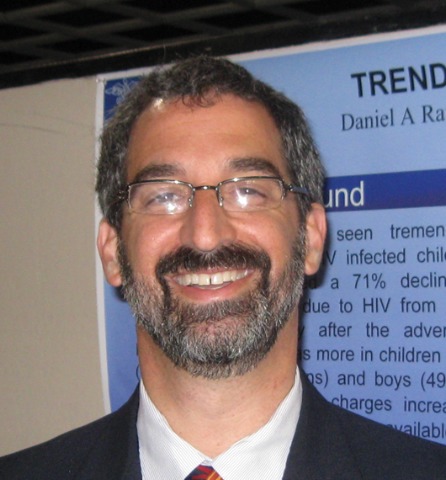
The decrease in admissions for HIV as the principal diagnosis plus secondary conditions, also known as the all-listed diagnosis, was lower at 23% for the 2006 KID and 38% for the 2007 NIS, Dr. Daniel Rauch reported in a poster presentation at the Pediatric Hospital Medicine 2010 meeting.
“We’ve been very successful in identifying kids with HIV and preventing transmission, so that we’re seeing an overall reduction in HIV in the United States,” he said. “The decreased admission volume is also partly due to successful management of HIV by multidisciplinary outpatient teams, which may serve as a model for chronic disease management. The outcome is that less and less children are being hospitalized.”
Efforts have been so successful that in New York City, just five infants were born with HIV last year, noted Dr. Rauch of Mount Sinai School of Medicine and associate director of pediatrics at Elmhurst Hospital Center, both in New York.
The pace of the decline is slower than previously reported. A similar analysis of NIS data documented a 71% decline in hospital use by HIV-infected children from 1994 to 2003, during the advent of highly active antiretroviral therapy (Pediatrics 2007;120:e236-43).
This decrease was more marked among infants and children who were younger than 5 years (94% for boys and 92% for girls), compared with adolescents (47% decrease for boys and 23% increase for girls aged 15-18 years).
By contrast, the current KID data show decreased admissions were more from children older than 4 years, Dr. Rauch said. Among this age group, admissions for HIV as a primary diagnosis and as an all-listed diagnosis were 24% and 33%, compared with 17% and 15%, respectively, among children less than 5 years.
The previously observed decrease in male admissions also has reversed and the male/female ratio now approaches 50%. Boys represented 38% of primary diagnoses in both the 2003 KID and NIS data sets, compared with 44% in the 2006 KID and 2007 NIS, said Dr. Rauch, who could offer no explanation for the finding.
“We have to stay vigilant,” he said. “We can’t let it get away from us.”
For all years, HIV children are hospitalized overwhelmingly in teaching hospitals (more than 81%) and in metropolitan areas (more than 98%).
“The potential downfall there is that they’re only presenting to a few centers now, so the overall skill set of taking care of a child that is HIV positive and is sick is being lost from the general community and only remains in a couple of centers,” he said at the meeting, which was sponsored by the Society of Hospital Medicine, the American Academy of Pediatrics, and the Academic Pediatric Association. “If you don’t care for someone, you lose the skill set.”
Length of hospital stay for HIV as a primary diagnosis varied greatly from 10.8 days in the 2003 NIS to 6.6 days in the 2005 NIS to 12.2 days in the 2007 NIS.
The average cost per admission increased from $15,015 in the 2003 KID to $20,936 in 2006 and from $18,493 in the 2003 NIS to $20,832 in the 2007 NIS. The lowest cost for admission was $13,448 in the 2005 NIS.
Cost per day increased from $1,706 in 2003 to $1,869 in 2006 in the KID data set, but stayed stable in the NIS data set at $1,712 in the 2003 vs. $1,707 in 2007.
Dr. Rauch reports serving as a consultant with Baxter.
MINNEAPOLIS – Pediatric HIV admissions continue to decline, but less so than previously reported and mostly in older children, according to an analysis of two national data sets.
Researchers analyzed the Kids’ Inpatient Database (KID) and Nationwide Inpatient Sample (NIS) from 2003 through 2007 for HIV trends across the years including hospitalization rates, changes in length of stay (LOS), and costs. The NIS data are annual and KID data are triennial.
Pediatric admissions for HIV as a primary diagnosis declined from 2003 by 32% in the 2006 KID and by 47% in the 2007 NIS.
The decrease in admissions for HIV as the principal diagnosis plus secondary conditions, also known as the all-listed diagnosis, was lower at 23% for the 2006 KID and 38% for the 2007 NIS, Dr. Daniel Rauch reported in a poster presentation at the Pediatric Hospital Medicine 2010 meeting.
“We’ve been very successful in identifying kids with HIV and preventing transmission, so that we’re seeing an overall reduction in HIV in the United States,” he said. “The decreased admission volume is also partly due to successful management of HIV by multidisciplinary outpatient teams, which may serve as a model for chronic disease management. The outcome is that less and less children are being hospitalized.”
Efforts have been so successful that in New York City, just five infants were born with HIV last year, noted Dr. Rauch of Mount Sinai School of Medicine and associate director of pediatrics at Elmhurst Hospital Center, both in New York.
The pace of the decline is slower than previously reported. A similar analysis of NIS data documented a 71% decline in hospital use by HIV-infected children from 1994 to 2003, during the advent of highly active antiretroviral therapy (Pediatrics 2007;120:e236-43).
This decrease was more marked among infants and children who were younger than 5 years (94% for boys and 92% for girls), compared with adolescents (47% decrease for boys and 23% increase for girls aged 15-18 years).
By contrast, the current KID data show decreased admissions were more from children older than 4 years, Dr. Rauch said. Among this age group, admissions for HIV as a primary diagnosis and as an all-listed diagnosis were 24% and 33%, compared with 17% and 15%, respectively, among children less than 5 years.
The previously observed decrease in male admissions also has reversed and the male/female ratio now approaches 50%. Boys represented 38% of primary diagnoses in both the 2003 KID and NIS data sets, compared with 44% in the 2006 KID and 2007 NIS, said Dr. Rauch, who could offer no explanation for the finding.
“We have to stay vigilant,” he said. “We can’t let it get away from us.”
For all years, HIV children are hospitalized overwhelmingly in teaching hospitals (more than 81%) and in metropolitan areas (more than 98%).
“The potential downfall there is that they’re only presenting to a few centers now, so the overall skill set of taking care of a child that is HIV positive and is sick is being lost from the general community and only remains in a couple of centers,” he said at the meeting, which was sponsored by the Society of Hospital Medicine, the American Academy of Pediatrics, and the Academic Pediatric Association. “If you don’t care for someone, you lose the skill set.”
Length of hospital stay for HIV as a primary diagnosis varied greatly from 10.8 days in the 2003 NIS to 6.6 days in the 2005 NIS to 12.2 days in the 2007 NIS.
The average cost per admission increased from $15,015 in the 2003 KID to $20,936 in 2006 and from $18,493 in the 2003 NIS to $20,832 in the 2007 NIS. The lowest cost for admission was $13,448 in the 2005 NIS.
Cost per day increased from $1,706 in 2003 to $1,869 in 2006 in the KID data set, but stayed stable in the NIS data set at $1,712 in the 2003 vs. $1,707 in 2007.
Dr. Rauch reports serving as a consultant with Baxter.
MINNEAPOLIS – Pediatric HIV admissions continue to decline, but less so than previously reported and mostly in older children, according to an analysis of two national data sets.
Researchers analyzed the Kids’ Inpatient Database (KID) and Nationwide Inpatient Sample (NIS) from 2003 through 2007 for HIV trends across the years including hospitalization rates, changes in length of stay (LOS), and costs. The NIS data are annual and KID data are triennial.
Pediatric admissions for HIV as a primary diagnosis declined from 2003 by 32% in the 2006 KID and by 47% in the 2007 NIS.
The decrease in admissions for HIV as the principal diagnosis plus secondary conditions, also known as the all-listed diagnosis, was lower at 23% for the 2006 KID and 38% for the 2007 NIS, Dr. Daniel Rauch reported in a poster presentation at the Pediatric Hospital Medicine 2010 meeting.
“We’ve been very successful in identifying kids with HIV and preventing transmission, so that we’re seeing an overall reduction in HIV in the United States,” he said. “The decreased admission volume is also partly due to successful management of HIV by multidisciplinary outpatient teams, which may serve as a model for chronic disease management. The outcome is that less and less children are being hospitalized.”
Efforts have been so successful that in New York City, just five infants were born with HIV last year, noted Dr. Rauch of Mount Sinai School of Medicine and associate director of pediatrics at Elmhurst Hospital Center, both in New York.
The pace of the decline is slower than previously reported. A similar analysis of NIS data documented a 71% decline in hospital use by HIV-infected children from 1994 to 2003, during the advent of highly active antiretroviral therapy (Pediatrics 2007;120:e236-43).
This decrease was more marked among infants and children who were younger than 5 years (94% for boys and 92% for girls), compared with adolescents (47% decrease for boys and 23% increase for girls aged 15-18 years).
By contrast, the current KID data show decreased admissions were more from children older than 4 years, Dr. Rauch said. Among this age group, admissions for HIV as a primary diagnosis and as an all-listed diagnosis were 24% and 33%, compared with 17% and 15%, respectively, among children less than 5 years.
The previously observed decrease in male admissions also has reversed and the male/female ratio now approaches 50%. Boys represented 38% of primary diagnoses in both the 2003 KID and NIS data sets, compared with 44% in the 2006 KID and 2007 NIS, said Dr. Rauch, who could offer no explanation for the finding.
“We have to stay vigilant,” he said. “We can’t let it get away from us.”
For all years, HIV children are hospitalized overwhelmingly in teaching hospitals (more than 81%) and in metropolitan areas (more than 98%).
“The potential downfall there is that they’re only presenting to a few centers now, so the overall skill set of taking care of a child that is HIV positive and is sick is being lost from the general community and only remains in a couple of centers,” he said at the meeting, which was sponsored by the Society of Hospital Medicine, the American Academy of Pediatrics, and the Academic Pediatric Association. “If you don’t care for someone, you lose the skill set.”
Length of hospital stay for HIV as a primary diagnosis varied greatly from 10.8 days in the 2003 NIS to 6.6 days in the 2005 NIS to 12.2 days in the 2007 NIS.
The average cost per admission increased from $15,015 in the 2003 KID to $20,936 in 2006 and from $18,493 in the 2003 NIS to $20,832 in the 2007 NIS. The lowest cost for admission was $13,448 in the 2005 NIS.
Cost per day increased from $1,706 in 2003 to $1,869 in 2006 in the KID data set, but stayed stable in the NIS data set at $1,712 in the 2003 vs. $1,707 in 2007.
Dr. Rauch reports serving as a consultant with Baxter.
From the Pediatric Hospital Medicine 2010 meeting
Job Satisfaction Is High Among Pediatric Hospitalists : Membership in this pediatric subspecialty has increased dramatically in the past 6 years.
Major Finding: Of 222 pediatric hospitalists, 92% reported career satisfaction, and 44% reported adequate mentorship.
Data Source: Anonymous electronic survey of hospitalist members of the American Academy of Pediatrics Section on Hospital Medicine Listserv.
Disclosures: The study was sponsored by the AAP SOHM subcommittee on complex care; survey respondents were eligible for a lottery drawing for a $250 incentive. Dr. Pane reported no conflicts of interest.
MINNEAPOLIS — Job satisfaction runs high among pediatric hospitalists, with a lack of mentorship being one chink in their armamentarium, a study has shown.
Among 222 pediatric hospitalists responding to an anonymous, electronic cross-sectional survey, 92% either agreed or strongly agreed with the following statement: tOverall, I am pleased with my work.” The item received a score of 4.25 on a 5-point Likert scale, with 5 being strongly agree and 1 being strongly disagree.
By contrast, just 44% of respondents agreed or strongly agreed with the statement that “I have adequate mentorship in my career.”
This was the significantly lowest-rated item in the survey with a score of 3.05, coming in below even compensation at 3.43, said lead author Dr. Laurie Pane, who reported the findings during the plenary session at the meeting.
“Lack of mentorship is a significant problem that spans the demographic spectrum,” she said. “Establishing a formal mentorship program may be an effective way for hospitalist groups to improve satisfaction.”
A 2006 white paper on career satisfaction by the Society of Hospital Medicine (SHM) identified four pillars of career satisfaction, with mentorship cropping up as a subset of the community/environment pillar. The other three pillars were reward/recognition, workload/schedule, and autonomy/control.
Dr. Pane noted that the specialty has changed dramatically in the past decade, with membership in the American Academy of Pediatrics Section on Hospital Medicine (AAP SOHM) increasing 380% from 225 members in 2004 to 850 members in 2010.
Dr. Pane, a pediatric hospitalist at Children's National Medical Center in Washington and her colleagues e-mailed the survey to 1,100 AAP SOHM Listserv members between November 2009 and January 2010 in combination with a complex care survey. The response rate was 20%. Respondents were eligible for a lottery drawing for a $250 incentive.
The majority (70%) of respondents were women, 35% had graduated residency within the last 5 years, 63% had been a hospitalist for 5 years or less, 13% had completed a fellowship (primarily in infectious disease or hospital medicine), and 76% held academic appointments.
Practice settings were evenly divided, with 34% practicing at a freestanding academic children's hospital, 34% practicing at a children's hospital or ward within a community hospital, 29% practicing at an academic children's hospital or ward within an adult hospital, and 3% choosing “other.”
The desire for mentorship did not statistically differ by years since graduation, years as a hospitalist, sex, or practice setting, although fellowship graduates did report significantly better mentorship (P = .004), Dr. Pane said at the meeting sponsored by the SHM, the AAP, and the Academic Pediatric Association.
Having adequate mentorship, however, was significantly correlated with overall career satisfaction, having sufficient opportunity to advance in their career, feeling valued by their administration, wishing to remain at their current hospital, and finding their compensation fair (all at a P value of .001 or less).
Lack of mentorship was significantly negatively correlated with planning to change specialty, planning to leave clinical medicine, and finding the volume of work overwhelming.

'Lack of mentorship is a significant problem that spans the demographic spectrum.'
Source DR. PANE
Major Finding: Of 222 pediatric hospitalists, 92% reported career satisfaction, and 44% reported adequate mentorship.
Data Source: Anonymous electronic survey of hospitalist members of the American Academy of Pediatrics Section on Hospital Medicine Listserv.
Disclosures: The study was sponsored by the AAP SOHM subcommittee on complex care; survey respondents were eligible for a lottery drawing for a $250 incentive. Dr. Pane reported no conflicts of interest.
MINNEAPOLIS — Job satisfaction runs high among pediatric hospitalists, with a lack of mentorship being one chink in their armamentarium, a study has shown.
Among 222 pediatric hospitalists responding to an anonymous, electronic cross-sectional survey, 92% either agreed or strongly agreed with the following statement: tOverall, I am pleased with my work.” The item received a score of 4.25 on a 5-point Likert scale, with 5 being strongly agree and 1 being strongly disagree.
By contrast, just 44% of respondents agreed or strongly agreed with the statement that “I have adequate mentorship in my career.”
This was the significantly lowest-rated item in the survey with a score of 3.05, coming in below even compensation at 3.43, said lead author Dr. Laurie Pane, who reported the findings during the plenary session at the meeting.
“Lack of mentorship is a significant problem that spans the demographic spectrum,” she said. “Establishing a formal mentorship program may be an effective way for hospitalist groups to improve satisfaction.”
A 2006 white paper on career satisfaction by the Society of Hospital Medicine (SHM) identified four pillars of career satisfaction, with mentorship cropping up as a subset of the community/environment pillar. The other three pillars were reward/recognition, workload/schedule, and autonomy/control.
Dr. Pane noted that the specialty has changed dramatically in the past decade, with membership in the American Academy of Pediatrics Section on Hospital Medicine (AAP SOHM) increasing 380% from 225 members in 2004 to 850 members in 2010.
Dr. Pane, a pediatric hospitalist at Children's National Medical Center in Washington and her colleagues e-mailed the survey to 1,100 AAP SOHM Listserv members between November 2009 and January 2010 in combination with a complex care survey. The response rate was 20%. Respondents were eligible for a lottery drawing for a $250 incentive.
The majority (70%) of respondents were women, 35% had graduated residency within the last 5 years, 63% had been a hospitalist for 5 years or less, 13% had completed a fellowship (primarily in infectious disease or hospital medicine), and 76% held academic appointments.
Practice settings were evenly divided, with 34% practicing at a freestanding academic children's hospital, 34% practicing at a children's hospital or ward within a community hospital, 29% practicing at an academic children's hospital or ward within an adult hospital, and 3% choosing “other.”
The desire for mentorship did not statistically differ by years since graduation, years as a hospitalist, sex, or practice setting, although fellowship graduates did report significantly better mentorship (P = .004), Dr. Pane said at the meeting sponsored by the SHM, the AAP, and the Academic Pediatric Association.
Having adequate mentorship, however, was significantly correlated with overall career satisfaction, having sufficient opportunity to advance in their career, feeling valued by their administration, wishing to remain at their current hospital, and finding their compensation fair (all at a P value of .001 or less).
Lack of mentorship was significantly negatively correlated with planning to change specialty, planning to leave clinical medicine, and finding the volume of work overwhelming.
'Lack of mentorship is a significant problem that spans the demographic spectrum.'
Source DR. PANE
Major Finding: Of 222 pediatric hospitalists, 92% reported career satisfaction, and 44% reported adequate mentorship.
Data Source: Anonymous electronic survey of hospitalist members of the American Academy of Pediatrics Section on Hospital Medicine Listserv.
Disclosures: The study was sponsored by the AAP SOHM subcommittee on complex care; survey respondents were eligible for a lottery drawing for a $250 incentive. Dr. Pane reported no conflicts of interest.
MINNEAPOLIS — Job satisfaction runs high among pediatric hospitalists, with a lack of mentorship being one chink in their armamentarium, a study has shown.
Among 222 pediatric hospitalists responding to an anonymous, electronic cross-sectional survey, 92% either agreed or strongly agreed with the following statement: tOverall, I am pleased with my work.” The item received a score of 4.25 on a 5-point Likert scale, with 5 being strongly agree and 1 being strongly disagree.
By contrast, just 44% of respondents agreed or strongly agreed with the statement that “I have adequate mentorship in my career.”
This was the significantly lowest-rated item in the survey with a score of 3.05, coming in below even compensation at 3.43, said lead author Dr. Laurie Pane, who reported the findings during the plenary session at the meeting.
“Lack of mentorship is a significant problem that spans the demographic spectrum,” she said. “Establishing a formal mentorship program may be an effective way for hospitalist groups to improve satisfaction.”
A 2006 white paper on career satisfaction by the Society of Hospital Medicine (SHM) identified four pillars of career satisfaction, with mentorship cropping up as a subset of the community/environment pillar. The other three pillars were reward/recognition, workload/schedule, and autonomy/control.
Dr. Pane noted that the specialty has changed dramatically in the past decade, with membership in the American Academy of Pediatrics Section on Hospital Medicine (AAP SOHM) increasing 380% from 225 members in 2004 to 850 members in 2010.
Dr. Pane, a pediatric hospitalist at Children's National Medical Center in Washington and her colleagues e-mailed the survey to 1,100 AAP SOHM Listserv members between November 2009 and January 2010 in combination with a complex care survey. The response rate was 20%. Respondents were eligible for a lottery drawing for a $250 incentive.
The majority (70%) of respondents were women, 35% had graduated residency within the last 5 years, 63% had been a hospitalist for 5 years or less, 13% had completed a fellowship (primarily in infectious disease or hospital medicine), and 76% held academic appointments.
Practice settings were evenly divided, with 34% practicing at a freestanding academic children's hospital, 34% practicing at a children's hospital or ward within a community hospital, 29% practicing at an academic children's hospital or ward within an adult hospital, and 3% choosing “other.”
The desire for mentorship did not statistically differ by years since graduation, years as a hospitalist, sex, or practice setting, although fellowship graduates did report significantly better mentorship (P = .004), Dr. Pane said at the meeting sponsored by the SHM, the AAP, and the Academic Pediatric Association.
Having adequate mentorship, however, was significantly correlated with overall career satisfaction, having sufficient opportunity to advance in their career, feeling valued by their administration, wishing to remain at their current hospital, and finding their compensation fair (all at a P value of .001 or less).
Lack of mentorship was significantly negatively correlated with planning to change specialty, planning to leave clinical medicine, and finding the volume of work overwhelming.
'Lack of mentorship is a significant problem that spans the demographic spectrum.'
Source DR. PANE
School Condom Program Reduced STIs in Males
Major Finding: Rates of gonorrhea and chlamydia among males decreased 47% after implementation of school-based condom availability program, compared with a 23% increase among males attending a school district with no condom program.
Data Source: Observational study in two public school districts, one with and one without a condom availability program.
Disclosures: Dr. Wretzel and her coauthors reported no conflicts of interest.
VANCOUVER, B.C. — A program that provides access to condoms through the school nurse significantly decreased sexually transmitted infections among inner-city high school males, but not among females.
Rates of gonorrhea and chlamydia among males (aged 15-19 years) decreased 47% within 3 years after implementation of the program in the Holyoke, Mass., public schools, compared with a 23% increase observed during the same time period among males attending the nearby Springfield public schools, with a similar socioeconomic status, but no condom program, Dr. Sharon R. Wretzel reported.
Nationally, two-thirds of new gonorrhea and chlamydia diagnoses in 2007 were in 15- to 24-year-olds.
The results are impressive, because both districts lack a comprehensive sexual education program and are based in cities that have some of the highest rates of chlamydia in Massachusetts, at 600 cases per 100,000. The districts also have vied for the dubious honor of having the top two highest teenage pregnancies rates in the state for 4 of the last 5 years, she said.
Unfortunately, sexually transmitted infections (STIs) remained constant at about 3,440 cases per 100,000 among Holyoke girls; they dropped slightly among Springfield girls from a high of 5,280 cases per 100,000 in 2005 to 4,717 per 100,000 in 2008, when the study period ended.
The lack of effect in Holyoke girls could be because teenage girls view condoms as a “male form” of birth control, or—as has been shown in other studies—they do not utilize condom availability programs as often as males do.
There may also be a more “insidious cause,” said Dr. Wretzel, a pediatrician at Baystate Medical Center in Springfield. “If you are a female, you may not have the power in that relationship to be able to state that you are going to use a condom and have the male use a condom every single time. So it may not be shocking that there's not a change in the rate of STIs,” she explained.
The program was implemented by the school district because of the high STI and pregnancy rates in Holyoke; it went through a lengthy debate among parents, students, and school officials before it was approved. This increased discussion in the community could have influenced condom usage outside of the intervention, Dr. Wretzel acknowledged.
Access to condoms at Holyoke was limited, however, in that parents could deny access for their child, and students could get condoms only during school or lunch breaks through the school nurse. They had to receive written educational materials from the nurse and discuss those materials (including how to use a condom) before receiving up to four condoms per visit.
No records were kept on how many students utilized the program or how many condoms were given away, she said. STI rates were derived using public health data.
The study also did not control for the impact of ethnicity on STI rates. There is some debate in the literature over whether Hispanic or black men are more likely to use condoms that are distributed in a condom availability program, Dr. Wretzel explained in an interview.
Nationally, 48% of high school students report that they are sexually active, including 67% of blacks, 52% of Hispanics, and 44% of whites.
Among the 39,765 Holyoke students, 3.7% reported they were black, 41.4% Hispanic and 65.8% white, with adolescents able to self-identify in more than one category.
Among the 151,176 Springfield students, 21% were black, 27.2% Hispanic, and 56.1% white.
Roughly 29% of students at both schools were younger than age 18 years, and one-quarter lived below the poverty level.
The baseline pregnancy rate was 94.8 per 1,000 women at Holyoke and 80.7 per 1,000 women at Springfield. Postintervention pregnancy rates were not evaluated because of many confounding factors that impact teenage pregnancy rates, Dr. Wretzel said.
During a discussion of the study, moderator Dr. Steven Federico, a pediatrician at Denver Health Medical Center, questioned when Massachusetts began using polymerase chain reaction (PCR) assay, as this could have influenced the results.
Massachusetts was using PCR assays of swabs or urine throughout the study period, Dr. Wretzel replied.
An audience member asked if there were plans to survey the girls at Holyoke about barriers to the program, noting that there is a great gender difference surrounding the issue, with boys more likely to view sex as prowess and girls being more embarrassed to access condoms under such strict conditions.
Dr. Wretzel responded that there has been discussion about including ways for girls to negotiate condom use in a relationship as part of the comprehensive sex education program slated to start this fall in the Holyoke schools.
The researchers also are advocating for a condom availability program in Springfield, and are studying schools with similar programs across Massachusetts to see if STI rates follow similar trends, she said.
Major Finding: Rates of gonorrhea and chlamydia among males decreased 47% after implementation of school-based condom availability program, compared with a 23% increase among males attending a school district with no condom program.
Data Source: Observational study in two public school districts, one with and one without a condom availability program.
Disclosures: Dr. Wretzel and her coauthors reported no conflicts of interest.
VANCOUVER, B.C. — A program that provides access to condoms through the school nurse significantly decreased sexually transmitted infections among inner-city high school males, but not among females.
Rates of gonorrhea and chlamydia among males (aged 15-19 years) decreased 47% within 3 years after implementation of the program in the Holyoke, Mass., public schools, compared with a 23% increase observed during the same time period among males attending the nearby Springfield public schools, with a similar socioeconomic status, but no condom program, Dr. Sharon R. Wretzel reported.
Nationally, two-thirds of new gonorrhea and chlamydia diagnoses in 2007 were in 15- to 24-year-olds.
The results are impressive, because both districts lack a comprehensive sexual education program and are based in cities that have some of the highest rates of chlamydia in Massachusetts, at 600 cases per 100,000. The districts also have vied for the dubious honor of having the top two highest teenage pregnancies rates in the state for 4 of the last 5 years, she said.
Unfortunately, sexually transmitted infections (STIs) remained constant at about 3,440 cases per 100,000 among Holyoke girls; they dropped slightly among Springfield girls from a high of 5,280 cases per 100,000 in 2005 to 4,717 per 100,000 in 2008, when the study period ended.
The lack of effect in Holyoke girls could be because teenage girls view condoms as a “male form” of birth control, or—as has been shown in other studies—they do not utilize condom availability programs as often as males do.
There may also be a more “insidious cause,” said Dr. Wretzel, a pediatrician at Baystate Medical Center in Springfield. “If you are a female, you may not have the power in that relationship to be able to state that you are going to use a condom and have the male use a condom every single time. So it may not be shocking that there's not a change in the rate of STIs,” she explained.
The program was implemented by the school district because of the high STI and pregnancy rates in Holyoke; it went through a lengthy debate among parents, students, and school officials before it was approved. This increased discussion in the community could have influenced condom usage outside of the intervention, Dr. Wretzel acknowledged.
Access to condoms at Holyoke was limited, however, in that parents could deny access for their child, and students could get condoms only during school or lunch breaks through the school nurse. They had to receive written educational materials from the nurse and discuss those materials (including how to use a condom) before receiving up to four condoms per visit.
No records were kept on how many students utilized the program or how many condoms were given away, she said. STI rates were derived using public health data.
The study also did not control for the impact of ethnicity on STI rates. There is some debate in the literature over whether Hispanic or black men are more likely to use condoms that are distributed in a condom availability program, Dr. Wretzel explained in an interview.
Nationally, 48% of high school students report that they are sexually active, including 67% of blacks, 52% of Hispanics, and 44% of whites.
Among the 39,765 Holyoke students, 3.7% reported they were black, 41.4% Hispanic and 65.8% white, with adolescents able to self-identify in more than one category.
Among the 151,176 Springfield students, 21% were black, 27.2% Hispanic, and 56.1% white.
Roughly 29% of students at both schools were younger than age 18 years, and one-quarter lived below the poverty level.
The baseline pregnancy rate was 94.8 per 1,000 women at Holyoke and 80.7 per 1,000 women at Springfield. Postintervention pregnancy rates were not evaluated because of many confounding factors that impact teenage pregnancy rates, Dr. Wretzel said.
During a discussion of the study, moderator Dr. Steven Federico, a pediatrician at Denver Health Medical Center, questioned when Massachusetts began using polymerase chain reaction (PCR) assay, as this could have influenced the results.
Massachusetts was using PCR assays of swabs or urine throughout the study period, Dr. Wretzel replied.
An audience member asked if there were plans to survey the girls at Holyoke about barriers to the program, noting that there is a great gender difference surrounding the issue, with boys more likely to view sex as prowess and girls being more embarrassed to access condoms under such strict conditions.
Dr. Wretzel responded that there has been discussion about including ways for girls to negotiate condom use in a relationship as part of the comprehensive sex education program slated to start this fall in the Holyoke schools.
The researchers also are advocating for a condom availability program in Springfield, and are studying schools with similar programs across Massachusetts to see if STI rates follow similar trends, she said.
Major Finding: Rates of gonorrhea and chlamydia among males decreased 47% after implementation of school-based condom availability program, compared with a 23% increase among males attending a school district with no condom program.
Data Source: Observational study in two public school districts, one with and one without a condom availability program.
Disclosures: Dr. Wretzel and her coauthors reported no conflicts of interest.
VANCOUVER, B.C. — A program that provides access to condoms through the school nurse significantly decreased sexually transmitted infections among inner-city high school males, but not among females.
Rates of gonorrhea and chlamydia among males (aged 15-19 years) decreased 47% within 3 years after implementation of the program in the Holyoke, Mass., public schools, compared with a 23% increase observed during the same time period among males attending the nearby Springfield public schools, with a similar socioeconomic status, but no condom program, Dr. Sharon R. Wretzel reported.
Nationally, two-thirds of new gonorrhea and chlamydia diagnoses in 2007 were in 15- to 24-year-olds.
The results are impressive, because both districts lack a comprehensive sexual education program and are based in cities that have some of the highest rates of chlamydia in Massachusetts, at 600 cases per 100,000. The districts also have vied for the dubious honor of having the top two highest teenage pregnancies rates in the state for 4 of the last 5 years, she said.
Unfortunately, sexually transmitted infections (STIs) remained constant at about 3,440 cases per 100,000 among Holyoke girls; they dropped slightly among Springfield girls from a high of 5,280 cases per 100,000 in 2005 to 4,717 per 100,000 in 2008, when the study period ended.
The lack of effect in Holyoke girls could be because teenage girls view condoms as a “male form” of birth control, or—as has been shown in other studies—they do not utilize condom availability programs as often as males do.
There may also be a more “insidious cause,” said Dr. Wretzel, a pediatrician at Baystate Medical Center in Springfield. “If you are a female, you may not have the power in that relationship to be able to state that you are going to use a condom and have the male use a condom every single time. So it may not be shocking that there's not a change in the rate of STIs,” she explained.
The program was implemented by the school district because of the high STI and pregnancy rates in Holyoke; it went through a lengthy debate among parents, students, and school officials before it was approved. This increased discussion in the community could have influenced condom usage outside of the intervention, Dr. Wretzel acknowledged.
Access to condoms at Holyoke was limited, however, in that parents could deny access for their child, and students could get condoms only during school or lunch breaks through the school nurse. They had to receive written educational materials from the nurse and discuss those materials (including how to use a condom) before receiving up to four condoms per visit.
No records were kept on how many students utilized the program or how many condoms were given away, she said. STI rates were derived using public health data.
The study also did not control for the impact of ethnicity on STI rates. There is some debate in the literature over whether Hispanic or black men are more likely to use condoms that are distributed in a condom availability program, Dr. Wretzel explained in an interview.
Nationally, 48% of high school students report that they are sexually active, including 67% of blacks, 52% of Hispanics, and 44% of whites.
Among the 39,765 Holyoke students, 3.7% reported they were black, 41.4% Hispanic and 65.8% white, with adolescents able to self-identify in more than one category.
Among the 151,176 Springfield students, 21% were black, 27.2% Hispanic, and 56.1% white.
Roughly 29% of students at both schools were younger than age 18 years, and one-quarter lived below the poverty level.
The baseline pregnancy rate was 94.8 per 1,000 women at Holyoke and 80.7 per 1,000 women at Springfield. Postintervention pregnancy rates were not evaluated because of many confounding factors that impact teenage pregnancy rates, Dr. Wretzel said.
During a discussion of the study, moderator Dr. Steven Federico, a pediatrician at Denver Health Medical Center, questioned when Massachusetts began using polymerase chain reaction (PCR) assay, as this could have influenced the results.
Massachusetts was using PCR assays of swabs or urine throughout the study period, Dr. Wretzel replied.
An audience member asked if there were plans to survey the girls at Holyoke about barriers to the program, noting that there is a great gender difference surrounding the issue, with boys more likely to view sex as prowess and girls being more embarrassed to access condoms under such strict conditions.
Dr. Wretzel responded that there has been discussion about including ways for girls to negotiate condom use in a relationship as part of the comprehensive sex education program slated to start this fall in the Holyoke schools.
The researchers also are advocating for a condom availability program in Springfield, and are studying schools with similar programs across Massachusetts to see if STI rates follow similar trends, she said.
Pay Still Lags for Pediatric Hospitalists vs. Adult Hospitalists
Major Finding: In fiscal 2009, pediatric hospitalist compensation averaged $168,605 vs. $225,544 for adult hospitalists.
Data Source: Compensation survey of 3,296 hospitalists by the Society of Hospital Medicine and Medical Group Management Association.
Disclosures: Dr. Percelay disclosed no financial conflicts of interest.
MINNEAPOLIS — Compensation for pediatric hospitalists has gone up but continues to lag behind that for hospitalists who treat adults.
The average compensation for a full-time pediatric hospitalist was 75% of their adult counterparts in fiscal 2009 at $168,605 vs. $225,544 for an adult hospitalist, according to a new survey by the Society of Hospital Medicine (SHM) and Medical Group Management Association (MGMA).
Median compensation was $160,038 vs. $215,000, respectively.
For pediatric hospitalists, this represents a 16.6% increase from a total compensation of $144,600 reported in a similar SHM survey in 2007-2008, a time period during which compensation fell from $146,000 in 2005-2006.
During the same time period, however, adult hospitalists saw their total compensation increase 13% from $171,000 in 2005-2006 to $193,300 in 2007-2008.
The salary gap between adult and pediatric hospitalists is correlated to differences in productivity and patient encounters, Dr. Jack M. Percelay explained during a poster presentation of the findings at the meeting.
Pediatric hospitalists, when compared with adult hospitalists, had significantly lower production, as measured by work relative value units (average 2,201 vs. 4,303), and fewer hospital encounters per year (average 1,027 vs. 2,211).
Other factors driving the disparity might include different reimbursement paradigms for pediatric vs. adult hospitalists, regional differences, and the fact that many pediatric hospitalists are employed at academic practices, which traditionally pay less than nonacademic practices. Data were not available for all academic practices—a point Dr. Percelay said could widen the salary gap even further.
The 2009-2010 Hospital Medicine Productivity and Compensation Survey is based on data from 37 pediatric hospital medicine–only practices representing 156 pediatric hospitalists and 390 practices representing 3,140 adult hospitalists.
Previously, the SHM and MGMA conducted their own biennial surveys, but this year the groups worked together and expect to repeat the survey on an annual basis for academic and nonacademic practices, said Dr. Percelay, an SHM board member and pediatric hospitalist with ELMO Pediatrics in New York.
A limitation of the survey is that it represents only 5%-8% of the estimated community of pediatric hospitalists. Still, the groups suggest that by combining their expertise, these data will become the “new gold standard for employers and employees alike.”
The lower reimbursement rate for pediatric hospitalists is not all that surprising, Dr. Percelay said in an interview.
“One of the clear differences structurally is that pediatric hospitalists take care of Medicaid populations and pediatric patients get reimbursed at Medicaid rates.
“That's less than Medicare rates. So we might actually see some difference with health care reform as Medicaid rates are brought up to parity with Medicare rates,” he said.
“The key thing is to look at your individual program to see that you are being appropriately compensated for the work that you do, and that will involve more than just looking at one cell of national data,” the pediatric hospitalist commented.
The survey identified differences in pediatric hospitalist compensation by region, ranging from a high of $172,299 to a low of $166,455. Details on the regions were not revealed, but in the 2007-2008 SHM survey, adult hospitalists in the South and Midwest received more compensation than those in the East and West regions.
The poster presentation provided just a small peek at the full data due to be released this fall that will include information on hospital ownership, staffing model, night coverage, teaching status, and compensation structure.
A comparison study sponsored by the American Academy of Pediatrics section on hospital medicine that uses individual hospitalist responses will provide additional qualitative insight into pediatric hospital medicine practice, Dr. Percelay said at the meeting sponsored by the SHM, the AAP, and the Academic Pediatric Association.
He urged group leaders who did not complete the 2009-2010 survey to register with the SHM at survey@hospitalmedicine.org
Pediatric hospitalists, when compared with adult hospitalists, had significantly lower production, as measured by work relative value units, and fewer hospital encounters per year, Dr. Jack M. Percelay said.
Source Courtesy Jaclyn Artuso
Elsevier Global Medical News
Major Finding: In fiscal 2009, pediatric hospitalist compensation averaged $168,605 vs. $225,544 for adult hospitalists.
Data Source: Compensation survey of 3,296 hospitalists by the Society of Hospital Medicine and Medical Group Management Association.
Disclosures: Dr. Percelay disclosed no financial conflicts of interest.
MINNEAPOLIS — Compensation for pediatric hospitalists has gone up but continues to lag behind that for hospitalists who treat adults.
The average compensation for a full-time pediatric hospitalist was 75% of their adult counterparts in fiscal 2009 at $168,605 vs. $225,544 for an adult hospitalist, according to a new survey by the Society of Hospital Medicine (SHM) and Medical Group Management Association (MGMA).
Median compensation was $160,038 vs. $215,000, respectively.
For pediatric hospitalists, this represents a 16.6% increase from a total compensation of $144,600 reported in a similar SHM survey in 2007-2008, a time period during which compensation fell from $146,000 in 2005-2006.
During the same time period, however, adult hospitalists saw their total compensation increase 13% from $171,000 in 2005-2006 to $193,300 in 2007-2008.
The salary gap between adult and pediatric hospitalists is correlated to differences in productivity and patient encounters, Dr. Jack M. Percelay explained during a poster presentation of the findings at the meeting.
Pediatric hospitalists, when compared with adult hospitalists, had significantly lower production, as measured by work relative value units (average 2,201 vs. 4,303), and fewer hospital encounters per year (average 1,027 vs. 2,211).
Other factors driving the disparity might include different reimbursement paradigms for pediatric vs. adult hospitalists, regional differences, and the fact that many pediatric hospitalists are employed at academic practices, which traditionally pay less than nonacademic practices. Data were not available for all academic practices—a point Dr. Percelay said could widen the salary gap even further.
The 2009-2010 Hospital Medicine Productivity and Compensation Survey is based on data from 37 pediatric hospital medicine–only practices representing 156 pediatric hospitalists and 390 practices representing 3,140 adult hospitalists.
Previously, the SHM and MGMA conducted their own biennial surveys, but this year the groups worked together and expect to repeat the survey on an annual basis for academic and nonacademic practices, said Dr. Percelay, an SHM board member and pediatric hospitalist with ELMO Pediatrics in New York.
A limitation of the survey is that it represents only 5%-8% of the estimated community of pediatric hospitalists. Still, the groups suggest that by combining their expertise, these data will become the “new gold standard for employers and employees alike.”
The lower reimbursement rate for pediatric hospitalists is not all that surprising, Dr. Percelay said in an interview.
“One of the clear differences structurally is that pediatric hospitalists take care of Medicaid populations and pediatric patients get reimbursed at Medicaid rates.
“That's less than Medicare rates. So we might actually see some difference with health care reform as Medicaid rates are brought up to parity with Medicare rates,” he said.
“The key thing is to look at your individual program to see that you are being appropriately compensated for the work that you do, and that will involve more than just looking at one cell of national data,” the pediatric hospitalist commented.
The survey identified differences in pediatric hospitalist compensation by region, ranging from a high of $172,299 to a low of $166,455. Details on the regions were not revealed, but in the 2007-2008 SHM survey, adult hospitalists in the South and Midwest received more compensation than those in the East and West regions.
The poster presentation provided just a small peek at the full data due to be released this fall that will include information on hospital ownership, staffing model, night coverage, teaching status, and compensation structure.
A comparison study sponsored by the American Academy of Pediatrics section on hospital medicine that uses individual hospitalist responses will provide additional qualitative insight into pediatric hospital medicine practice, Dr. Percelay said at the meeting sponsored by the SHM, the AAP, and the Academic Pediatric Association.
He urged group leaders who did not complete the 2009-2010 survey to register with the SHM at survey@hospitalmedicine.org
Pediatric hospitalists, when compared with adult hospitalists, had significantly lower production, as measured by work relative value units, and fewer hospital encounters per year, Dr. Jack M. Percelay said.
Source Courtesy Jaclyn Artuso
Elsevier Global Medical News
Major Finding: In fiscal 2009, pediatric hospitalist compensation averaged $168,605 vs. $225,544 for adult hospitalists.
Data Source: Compensation survey of 3,296 hospitalists by the Society of Hospital Medicine and Medical Group Management Association.
Disclosures: Dr. Percelay disclosed no financial conflicts of interest.
MINNEAPOLIS — Compensation for pediatric hospitalists has gone up but continues to lag behind that for hospitalists who treat adults.
The average compensation for a full-time pediatric hospitalist was 75% of their adult counterparts in fiscal 2009 at $168,605 vs. $225,544 for an adult hospitalist, according to a new survey by the Society of Hospital Medicine (SHM) and Medical Group Management Association (MGMA).
Median compensation was $160,038 vs. $215,000, respectively.
For pediatric hospitalists, this represents a 16.6% increase from a total compensation of $144,600 reported in a similar SHM survey in 2007-2008, a time period during which compensation fell from $146,000 in 2005-2006.
During the same time period, however, adult hospitalists saw their total compensation increase 13% from $171,000 in 2005-2006 to $193,300 in 2007-2008.
The salary gap between adult and pediatric hospitalists is correlated to differences in productivity and patient encounters, Dr. Jack M. Percelay explained during a poster presentation of the findings at the meeting.
Pediatric hospitalists, when compared with adult hospitalists, had significantly lower production, as measured by work relative value units (average 2,201 vs. 4,303), and fewer hospital encounters per year (average 1,027 vs. 2,211).
Other factors driving the disparity might include different reimbursement paradigms for pediatric vs. adult hospitalists, regional differences, and the fact that many pediatric hospitalists are employed at academic practices, which traditionally pay less than nonacademic practices. Data were not available for all academic practices—a point Dr. Percelay said could widen the salary gap even further.
The 2009-2010 Hospital Medicine Productivity and Compensation Survey is based on data from 37 pediatric hospital medicine–only practices representing 156 pediatric hospitalists and 390 practices representing 3,140 adult hospitalists.
Previously, the SHM and MGMA conducted their own biennial surveys, but this year the groups worked together and expect to repeat the survey on an annual basis for academic and nonacademic practices, said Dr. Percelay, an SHM board member and pediatric hospitalist with ELMO Pediatrics in New York.
A limitation of the survey is that it represents only 5%-8% of the estimated community of pediatric hospitalists. Still, the groups suggest that by combining their expertise, these data will become the “new gold standard for employers and employees alike.”
The lower reimbursement rate for pediatric hospitalists is not all that surprising, Dr. Percelay said in an interview.
“One of the clear differences structurally is that pediatric hospitalists take care of Medicaid populations and pediatric patients get reimbursed at Medicaid rates.
“That's less than Medicare rates. So we might actually see some difference with health care reform as Medicaid rates are brought up to parity with Medicare rates,” he said.
“The key thing is to look at your individual program to see that you are being appropriately compensated for the work that you do, and that will involve more than just looking at one cell of national data,” the pediatric hospitalist commented.
The survey identified differences in pediatric hospitalist compensation by region, ranging from a high of $172,299 to a low of $166,455. Details on the regions were not revealed, but in the 2007-2008 SHM survey, adult hospitalists in the South and Midwest received more compensation than those in the East and West regions.
The poster presentation provided just a small peek at the full data due to be released this fall that will include information on hospital ownership, staffing model, night coverage, teaching status, and compensation structure.
A comparison study sponsored by the American Academy of Pediatrics section on hospital medicine that uses individual hospitalist responses will provide additional qualitative insight into pediatric hospital medicine practice, Dr. Percelay said at the meeting sponsored by the SHM, the AAP, and the Academic Pediatric Association.
He urged group leaders who did not complete the 2009-2010 survey to register with the SHM at survey@hospitalmedicine.org
Pediatric hospitalists, when compared with adult hospitalists, had significantly lower production, as measured by work relative value units, and fewer hospital encounters per year, Dr. Jack M. Percelay said.
Source Courtesy Jaclyn Artuso
Elsevier Global Medical News
ASCO: In the Pipeline: IL-21 Active in Metastatic Melanoma
CHICAGO – The novel cytokine interleukin-21 has shown itself to be biologically active with an overall response rate of 22% in first-line metastatic melanoma patients.
Median progression-free survival reached 4.32 months in the phase II, multicenter IND 189 trial involving 40 patients, Dr. Teresa Petrella reported on behalf of the National Cancer Institute of Canada Clinical Trials Group (NCIC CTG).
This finding held up well when it was benchmarked against the widely cited Korn meta-analysis of phase II cooperative group trials in metastatic stage IV melanoma (J. Clin. Oncol. 2008;26:527-34) and 68 historical NCIC CTG melanoma patients who matched the IND 189 study entry criteria. Median progression-free survival was 1.31 months in the Korn analysis and 1.58 months for the NCIC CTG patients, said Dr. Petrella of the Odette Cancer Centre in Toronto.
Age, performance status, and interleukin-21 (IL-21) treatment were significant predictors of progression-free survival in a multivariate analysis among IL-21–treated patients and historical controls that adjusted for prognostic factors.
Based on the findings, study sponsor ZymoGenetics Inc. is planning a phase IIB randomized trial with the NCIC CTG to validate the results, Dr. Petrella said.
Invited discussant Dr. Antoni Ribas of the University of California, Los Angeles, said the response rate was very respectable for a single-agent cytokine in previously untreated metastatic melanoma. The caveat is that the responses seem to be of limited duration.
Nine patients had a partial response by RECIST (Response Evaluation Criteria in Solid Tumors) and CT for the objective response rate of 22.5% and median duration of 5.0 months. In all, 16 patients (40%) had stable disease for a median duration of 5.3 months.
“Two patients had a tail of 1.5 years of progression-free survival, but there was no clear evidence that most of the responses were durable, which questions if this is a memory T-cell response or maybe more of an innate response,” said Dr. Ribas. “I hope that further clinical investigation will address this question.”
IL-21 is a novel cytokine that has multiple immunomodulatory effects including beneficial effects on B cells, natural killer cells, and T cells, in particular CD4 and CD8 T cells. In two phase I, dose-escalation studies of IL-21 in metastatic melanoma, there was evidence of tumor response and immune activation with an eightfold increase in soluble CD25, reflecting lymphocyte activation (J. Clin. Oncol. 2008;26:2034-9; Clin. Cancer Res. 2007;13:3630-6).
The majority of patients in the IND 189 trial received IL-21 30 mcg/kg per day for 5 days on the first, third, and fifth weeks of an 8-week schedule, after dose-limiting toxicities were observed at higher, more frequent dosing.
Overall, IL-21 was well tolerated, with most adverse events being grade 1/2, Dr. Petrella said. The most common of these were fatigue, rash, fever, myalgia, anorexia, chills, and nausea, which were very similar to what was seen in the phase I studies. Seven patients experienced grade 3 rash.
Nine serious adverse events were reported, of which four were possibly, probably, or definitely treatment related. They included one infection with grade 4 neutropenia, two grade 4 liver enzyme elevations, and one second malignancy (acute myeloid leukemia) that occurred 11 months after the patient received only 5 days of interleukin-21 and thus was most likely not related to the treatment, she said.
Most patients had an Eastern Cooperative Oncology Group performance status of 0, 17 had received prior adjuvant immunotherapy with interferon, and 32 had metastases to the lung. Their median age was 56 years. Responses were seen in all sites of disease, and patients continue to be followed.
ZymoGenetics Inc. provided research funds and employs one of the researchers. Dr. Ribas reports honoraria from Amgen Inc. and Roche.
CHICAGO – The novel cytokine interleukin-21 has shown itself to be biologically active with an overall response rate of 22% in first-line metastatic melanoma patients.
Median progression-free survival reached 4.32 months in the phase II, multicenter IND 189 trial involving 40 patients, Dr. Teresa Petrella reported on behalf of the National Cancer Institute of Canada Clinical Trials Group (NCIC CTG).
This finding held up well when it was benchmarked against the widely cited Korn meta-analysis of phase II cooperative group trials in metastatic stage IV melanoma (J. Clin. Oncol. 2008;26:527-34) and 68 historical NCIC CTG melanoma patients who matched the IND 189 study entry criteria. Median progression-free survival was 1.31 months in the Korn analysis and 1.58 months for the NCIC CTG patients, said Dr. Petrella of the Odette Cancer Centre in Toronto.
Age, performance status, and interleukin-21 (IL-21) treatment were significant predictors of progression-free survival in a multivariate analysis among IL-21–treated patients and historical controls that adjusted for prognostic factors.
Based on the findings, study sponsor ZymoGenetics Inc. is planning a phase IIB randomized trial with the NCIC CTG to validate the results, Dr. Petrella said.
Invited discussant Dr. Antoni Ribas of the University of California, Los Angeles, said the response rate was very respectable for a single-agent cytokine in previously untreated metastatic melanoma. The caveat is that the responses seem to be of limited duration.
Nine patients had a partial response by RECIST (Response Evaluation Criteria in Solid Tumors) and CT for the objective response rate of 22.5% and median duration of 5.0 months. In all, 16 patients (40%) had stable disease for a median duration of 5.3 months.
“Two patients had a tail of 1.5 years of progression-free survival, but there was no clear evidence that most of the responses were durable, which questions if this is a memory T-cell response or maybe more of an innate response,” said Dr. Ribas. “I hope that further clinical investigation will address this question.”
IL-21 is a novel cytokine that has multiple immunomodulatory effects including beneficial effects on B cells, natural killer cells, and T cells, in particular CD4 and CD8 T cells. In two phase I, dose-escalation studies of IL-21 in metastatic melanoma, there was evidence of tumor response and immune activation with an eightfold increase in soluble CD25, reflecting lymphocyte activation (J. Clin. Oncol. 2008;26:2034-9; Clin. Cancer Res. 2007;13:3630-6).
The majority of patients in the IND 189 trial received IL-21 30 mcg/kg per day for 5 days on the first, third, and fifth weeks of an 8-week schedule, after dose-limiting toxicities were observed at higher, more frequent dosing.
Overall, IL-21 was well tolerated, with most adverse events being grade 1/2, Dr. Petrella said. The most common of these were fatigue, rash, fever, myalgia, anorexia, chills, and nausea, which were very similar to what was seen in the phase I studies. Seven patients experienced grade 3 rash.
Nine serious adverse events were reported, of which four were possibly, probably, or definitely treatment related. They included one infection with grade 4 neutropenia, two grade 4 liver enzyme elevations, and one second malignancy (acute myeloid leukemia) that occurred 11 months after the patient received only 5 days of interleukin-21 and thus was most likely not related to the treatment, she said.
Most patients had an Eastern Cooperative Oncology Group performance status of 0, 17 had received prior adjuvant immunotherapy with interferon, and 32 had metastases to the lung. Their median age was 56 years. Responses were seen in all sites of disease, and patients continue to be followed.
ZymoGenetics Inc. provided research funds and employs one of the researchers. Dr. Ribas reports honoraria from Amgen Inc. and Roche.
CHICAGO – The novel cytokine interleukin-21 has shown itself to be biologically active with an overall response rate of 22% in first-line metastatic melanoma patients.
Median progression-free survival reached 4.32 months in the phase II, multicenter IND 189 trial involving 40 patients, Dr. Teresa Petrella reported on behalf of the National Cancer Institute of Canada Clinical Trials Group (NCIC CTG).
This finding held up well when it was benchmarked against the widely cited Korn meta-analysis of phase II cooperative group trials in metastatic stage IV melanoma (J. Clin. Oncol. 2008;26:527-34) and 68 historical NCIC CTG melanoma patients who matched the IND 189 study entry criteria. Median progression-free survival was 1.31 months in the Korn analysis and 1.58 months for the NCIC CTG patients, said Dr. Petrella of the Odette Cancer Centre in Toronto.
Age, performance status, and interleukin-21 (IL-21) treatment were significant predictors of progression-free survival in a multivariate analysis among IL-21–treated patients and historical controls that adjusted for prognostic factors.
Based on the findings, study sponsor ZymoGenetics Inc. is planning a phase IIB randomized trial with the NCIC CTG to validate the results, Dr. Petrella said.
Invited discussant Dr. Antoni Ribas of the University of California, Los Angeles, said the response rate was very respectable for a single-agent cytokine in previously untreated metastatic melanoma. The caveat is that the responses seem to be of limited duration.
Nine patients had a partial response by RECIST (Response Evaluation Criteria in Solid Tumors) and CT for the objective response rate of 22.5% and median duration of 5.0 months. In all, 16 patients (40%) had stable disease for a median duration of 5.3 months.
“Two patients had a tail of 1.5 years of progression-free survival, but there was no clear evidence that most of the responses were durable, which questions if this is a memory T-cell response or maybe more of an innate response,” said Dr. Ribas. “I hope that further clinical investigation will address this question.”
IL-21 is a novel cytokine that has multiple immunomodulatory effects including beneficial effects on B cells, natural killer cells, and T cells, in particular CD4 and CD8 T cells. In two phase I, dose-escalation studies of IL-21 in metastatic melanoma, there was evidence of tumor response and immune activation with an eightfold increase in soluble CD25, reflecting lymphocyte activation (J. Clin. Oncol. 2008;26:2034-9; Clin. Cancer Res. 2007;13:3630-6).
The majority of patients in the IND 189 trial received IL-21 30 mcg/kg per day for 5 days on the first, third, and fifth weeks of an 8-week schedule, after dose-limiting toxicities were observed at higher, more frequent dosing.
Overall, IL-21 was well tolerated, with most adverse events being grade 1/2, Dr. Petrella said. The most common of these were fatigue, rash, fever, myalgia, anorexia, chills, and nausea, which were very similar to what was seen in the phase I studies. Seven patients experienced grade 3 rash.
Nine serious adverse events were reported, of which four were possibly, probably, or definitely treatment related. They included one infection with grade 4 neutropenia, two grade 4 liver enzyme elevations, and one second malignancy (acute myeloid leukemia) that occurred 11 months after the patient received only 5 days of interleukin-21 and thus was most likely not related to the treatment, she said.
Most patients had an Eastern Cooperative Oncology Group performance status of 0, 17 had received prior adjuvant immunotherapy with interferon, and 32 had metastases to the lung. Their median age was 56 years. Responses were seen in all sites of disease, and patients continue to be followed.
ZymoGenetics Inc. provided research funds and employs one of the researchers. Dr. Ribas reports honoraria from Amgen Inc. and Roche.
ASCO: String of Lackluster Results in ECOG Melanoma Trials
CHICAGO – A string of disappointing melanoma trials from the Eastern Cooperative Oncology Group left some seeing the proverbial glass as half empty, others as half full in an oral abstract session at the annual meeting of the American Society for Clinical Oncology.
No Benefit from GM-CSF
Updated data from the E4697 phase III cooperative trial in resected stage III and IV melanoma show only a hint of benefit for granulocyte-macrophage colony-stimulating factor (GM-CSF) in the adjuvant setting. The study was unblinded in April 2009, and an analysis reported later that year showed a significant improvement in disease-free survival for GM-CSF vs. placebo (P = .03), but no difference in overall survival.
In the updated analysis, with 86% of full data reported, the difference in disease-free survival at 9.2 months in 375 patients who were given placebo and 11.5 months in 368 patients who received GM-CSF was no longer significant (P = .14), Dr. David Lawson said. Again, there was no difference in overall survival.
GM-CSF also had no significant effect on either survival outcome in HLA A2–positive patients who also received peptide vaccination, said Dr. Lawson of Emory University in Atlanta.
A subset analysis that was stratified by disease stage, however, showed that GM-CSF did significantly improve disease-free survival in 258 patients with stage IV disease (hazard ratio 0.74, P = .04) but not overall survival (HR 0.72, P = .07).
Dr. Lawson said the data are worthy of further investigation and discussion. Invited discussant Dr. Michael S. Sabel of the University of Michigan in Ann Arbor said he is more skeptical, and would only go so far as to say that “you can’t take away the fact that there is some sort of immunologic effect potentially to these cytokines.”
Outcome Unchanged by Helper Peptides
Adding melanoma helper peptides to a multiepitope melanoma vaccination stimulated CD4+ and CD8+ T-cell responses, but did little to improve clinical outcome in the four-arm, phase II E1602 trial.
Patients with stage IV melanoma were vaccinated with 12 class I restricted melanoma peptides (arm A), plus either a tetanus peptide (arm B) or a mixture of six class II melanoma helper peptides (arm C), or with six class II melanoma helper peptides alone. Arm C was stopped early because of a lack of clinical response or disease stabilization.
The best overall response was partial response in 4% of 136 evaluable patients, said Dr. Craig L. Slingluff Jr., head of the surgical oncology division at the University of Virginia in Charlottesville. After a median follow-up of 21.4 months, median overall survival was 11.4 months, with no statistical differences between groups.
The trial can be viewed in two ways: as a success because it met the primary end point of stimulating T cells, but also as a requiem for peptide vaccines because “despite creating this army of antigen-specific T cells, the tumor continues to progress in the great majority of patients,” said invited discussant Dr. Antoni Ribas of the University of California, Los Angeles.
Adding Sorafenib Disappoints
There was little interpretation over the seventh and final analysis of the phase III E2603 trial of sorafenib (Nexavar) in combination with chemotherapy. Sorafenib does not improve overall survival, progression-free survival, or response rate when combined with carboplatin and paclitaxel in metastatic melanoma, reported Dr. Kevin Flaherty of Massachusetts General Hospital in Boston, who just 4 years ago set tongues wagging over sorafenib when he reported an 85% disease control rate in 105 melanoma patients.
Overall survival was 11.3 months, progression-free survival was 4.1 months, and the response rate was 16% with carboplatin/paclitaxel chemotherapy alone, compared with 11.1 months, 4.9 months, and 18%, respectively, for carboplatin/paclitaxel plus sorafenib. None of the differences was significantly different.
“There seem to be no additive effects, at least in melanoma,” said invited discussant Dr. Dirk Schadendorf, director of dermatology at University Hospital Essen (Germany). “What we have learned from the combination with chemotherapy, especially with carboplatin and paclitaxel, is that the progression-free survival time is around 4-5 months, which is interesting in patients who have rapid tumor progression and where you need a regimen to stop disease progression.”
Dr. Lawson reported a consultant/advisory role with Genzyme Corp. Dr. Slingluff reported a consultant/advisory role with and honoraria from Immatics Biotechnologies GmbH, research funding from Berlex Inc./Genzyme and GlaxoSmithKline, and other remuneration from the University of Virginia Patent Foundation. Dr. Ribas reported honoraria from Amgen Inc. and Roche. Dr. Flaherty disclosed no conflicts. Dr. Sabel reported a consultant/advisory role, honoraria, and research funding from Schering-Plough/Merck. Dr. Schadendorf disclosed consultant or advisory roles with AstraZeneca, Bristol-Myers Squibb Co., Plexxikon Inc., Roche, and Schering-Plough Corp., and research funding from Schering-Plough and Bayer-Schering.
CHICAGO – A string of disappointing melanoma trials from the Eastern Cooperative Oncology Group left some seeing the proverbial glass as half empty, others as half full in an oral abstract session at the annual meeting of the American Society for Clinical Oncology.
No Benefit from GM-CSF
Updated data from the E4697 phase III cooperative trial in resected stage III and IV melanoma show only a hint of benefit for granulocyte-macrophage colony-stimulating factor (GM-CSF) in the adjuvant setting. The study was unblinded in April 2009, and an analysis reported later that year showed a significant improvement in disease-free survival for GM-CSF vs. placebo (P = .03), but no difference in overall survival.
In the updated analysis, with 86% of full data reported, the difference in disease-free survival at 9.2 months in 375 patients who were given placebo and 11.5 months in 368 patients who received GM-CSF was no longer significant (P = .14), Dr. David Lawson said. Again, there was no difference in overall survival.
GM-CSF also had no significant effect on either survival outcome in HLA A2–positive patients who also received peptide vaccination, said Dr. Lawson of Emory University in Atlanta.
A subset analysis that was stratified by disease stage, however, showed that GM-CSF did significantly improve disease-free survival in 258 patients with stage IV disease (hazard ratio 0.74, P = .04) but not overall survival (HR 0.72, P = .07).
Dr. Lawson said the data are worthy of further investigation and discussion. Invited discussant Dr. Michael S. Sabel of the University of Michigan in Ann Arbor said he is more skeptical, and would only go so far as to say that “you can’t take away the fact that there is some sort of immunologic effect potentially to these cytokines.”
Outcome Unchanged by Helper Peptides
Adding melanoma helper peptides to a multiepitope melanoma vaccination stimulated CD4+ and CD8+ T-cell responses, but did little to improve clinical outcome in the four-arm, phase II E1602 trial.
Patients with stage IV melanoma were vaccinated with 12 class I restricted melanoma peptides (arm A), plus either a tetanus peptide (arm B) or a mixture of six class II melanoma helper peptides (arm C), or with six class II melanoma helper peptides alone. Arm C was stopped early because of a lack of clinical response or disease stabilization.
The best overall response was partial response in 4% of 136 evaluable patients, said Dr. Craig L. Slingluff Jr., head of the surgical oncology division at the University of Virginia in Charlottesville. After a median follow-up of 21.4 months, median overall survival was 11.4 months, with no statistical differences between groups.
The trial can be viewed in two ways: as a success because it met the primary end point of stimulating T cells, but also as a requiem for peptide vaccines because “despite creating this army of antigen-specific T cells, the tumor continues to progress in the great majority of patients,” said invited discussant Dr. Antoni Ribas of the University of California, Los Angeles.
Adding Sorafenib Disappoints
There was little interpretation over the seventh and final analysis of the phase III E2603 trial of sorafenib (Nexavar) in combination with chemotherapy. Sorafenib does not improve overall survival, progression-free survival, or response rate when combined with carboplatin and paclitaxel in metastatic melanoma, reported Dr. Kevin Flaherty of Massachusetts General Hospital in Boston, who just 4 years ago set tongues wagging over sorafenib when he reported an 85% disease control rate in 105 melanoma patients.
Overall survival was 11.3 months, progression-free survival was 4.1 months, and the response rate was 16% with carboplatin/paclitaxel chemotherapy alone, compared with 11.1 months, 4.9 months, and 18%, respectively, for carboplatin/paclitaxel plus sorafenib. None of the differences was significantly different.
“There seem to be no additive effects, at least in melanoma,” said invited discussant Dr. Dirk Schadendorf, director of dermatology at University Hospital Essen (Germany). “What we have learned from the combination with chemotherapy, especially with carboplatin and paclitaxel, is that the progression-free survival time is around 4-5 months, which is interesting in patients who have rapid tumor progression and where you need a regimen to stop disease progression.”
Dr. Lawson reported a consultant/advisory role with Genzyme Corp. Dr. Slingluff reported a consultant/advisory role with and honoraria from Immatics Biotechnologies GmbH, research funding from Berlex Inc./Genzyme and GlaxoSmithKline, and other remuneration from the University of Virginia Patent Foundation. Dr. Ribas reported honoraria from Amgen Inc. and Roche. Dr. Flaherty disclosed no conflicts. Dr. Sabel reported a consultant/advisory role, honoraria, and research funding from Schering-Plough/Merck. Dr. Schadendorf disclosed consultant or advisory roles with AstraZeneca, Bristol-Myers Squibb Co., Plexxikon Inc., Roche, and Schering-Plough Corp., and research funding from Schering-Plough and Bayer-Schering.
CHICAGO – A string of disappointing melanoma trials from the Eastern Cooperative Oncology Group left some seeing the proverbial glass as half empty, others as half full in an oral abstract session at the annual meeting of the American Society for Clinical Oncology.
No Benefit from GM-CSF
Updated data from the E4697 phase III cooperative trial in resected stage III and IV melanoma show only a hint of benefit for granulocyte-macrophage colony-stimulating factor (GM-CSF) in the adjuvant setting. The study was unblinded in April 2009, and an analysis reported later that year showed a significant improvement in disease-free survival for GM-CSF vs. placebo (P = .03), but no difference in overall survival.
In the updated analysis, with 86% of full data reported, the difference in disease-free survival at 9.2 months in 375 patients who were given placebo and 11.5 months in 368 patients who received GM-CSF was no longer significant (P = .14), Dr. David Lawson said. Again, there was no difference in overall survival.
GM-CSF also had no significant effect on either survival outcome in HLA A2–positive patients who also received peptide vaccination, said Dr. Lawson of Emory University in Atlanta.
A subset analysis that was stratified by disease stage, however, showed that GM-CSF did significantly improve disease-free survival in 258 patients with stage IV disease (hazard ratio 0.74, P = .04) but not overall survival (HR 0.72, P = .07).
Dr. Lawson said the data are worthy of further investigation and discussion. Invited discussant Dr. Michael S. Sabel of the University of Michigan in Ann Arbor said he is more skeptical, and would only go so far as to say that “you can’t take away the fact that there is some sort of immunologic effect potentially to these cytokines.”
Outcome Unchanged by Helper Peptides
Adding melanoma helper peptides to a multiepitope melanoma vaccination stimulated CD4+ and CD8+ T-cell responses, but did little to improve clinical outcome in the four-arm, phase II E1602 trial.
Patients with stage IV melanoma were vaccinated with 12 class I restricted melanoma peptides (arm A), plus either a tetanus peptide (arm B) or a mixture of six class II melanoma helper peptides (arm C), or with six class II melanoma helper peptides alone. Arm C was stopped early because of a lack of clinical response or disease stabilization.
The best overall response was partial response in 4% of 136 evaluable patients, said Dr. Craig L. Slingluff Jr., head of the surgical oncology division at the University of Virginia in Charlottesville. After a median follow-up of 21.4 months, median overall survival was 11.4 months, with no statistical differences between groups.
The trial can be viewed in two ways: as a success because it met the primary end point of stimulating T cells, but also as a requiem for peptide vaccines because “despite creating this army of antigen-specific T cells, the tumor continues to progress in the great majority of patients,” said invited discussant Dr. Antoni Ribas of the University of California, Los Angeles.
Adding Sorafenib Disappoints
There was little interpretation over the seventh and final analysis of the phase III E2603 trial of sorafenib (Nexavar) in combination with chemotherapy. Sorafenib does not improve overall survival, progression-free survival, or response rate when combined with carboplatin and paclitaxel in metastatic melanoma, reported Dr. Kevin Flaherty of Massachusetts General Hospital in Boston, who just 4 years ago set tongues wagging over sorafenib when he reported an 85% disease control rate in 105 melanoma patients.
Overall survival was 11.3 months, progression-free survival was 4.1 months, and the response rate was 16% with carboplatin/paclitaxel chemotherapy alone, compared with 11.1 months, 4.9 months, and 18%, respectively, for carboplatin/paclitaxel plus sorafenib. None of the differences was significantly different.
“There seem to be no additive effects, at least in melanoma,” said invited discussant Dr. Dirk Schadendorf, director of dermatology at University Hospital Essen (Germany). “What we have learned from the combination with chemotherapy, especially with carboplatin and paclitaxel, is that the progression-free survival time is around 4-5 months, which is interesting in patients who have rapid tumor progression and where you need a regimen to stop disease progression.”
Dr. Lawson reported a consultant/advisory role with Genzyme Corp. Dr. Slingluff reported a consultant/advisory role with and honoraria from Immatics Biotechnologies GmbH, research funding from Berlex Inc./Genzyme and GlaxoSmithKline, and other remuneration from the University of Virginia Patent Foundation. Dr. Ribas reported honoraria from Amgen Inc. and Roche. Dr. Flaherty disclosed no conflicts. Dr. Sabel reported a consultant/advisory role, honoraria, and research funding from Schering-Plough/Merck. Dr. Schadendorf disclosed consultant or advisory roles with AstraZeneca, Bristol-Myers Squibb Co., Plexxikon Inc., Roche, and Schering-Plough Corp., and research funding from Schering-Plough and Bayer-Schering.
Switching rhGH Brands Raises Safety Issues
Major Finding: Ninety percent of respondents reported switching a pediatric patient from one growth hormone brand to another, with 50% experiencing repeated switches.
Data Source: Survey of 231 active members of the Lawson Wilkins Pediatric Endocrine Society.
Disclosures: The study was commissioned by the Food and Drug Administration. Dr. Grimberg had no disclosures.
VANCOUVER, B.C. — Switching children from one brand of growth hormone to another, a common occurrence, acan negatively impact overall treatment efficacy and safety, according to a survey of 231 active members of the Lawson Wilkins Pediatric Endocrine Society.
Of 182 respondents, 8% said they observed growth deceleration after a switch. The majority said they thought the reduction was due to lapses in treatment, patient confusion, and dosing errors.
Of 185 respondents, 13% had safety concerns about switches, citing dosing errors and patient confusion. There are different recombinant human growth hormone (rhGH) concentrations, storage requirements and injection devices, with different reconstitution procedures and dosing increments.
Brand switches during pediatric growth hormone treatment are becoming more prevalent now that multiple brands are commercially available and insurance carriers are increasingly adopting formulary preference coverage strategies, Dr. Adda Grimberg, scientific director of the Diagnostic and Research Growth Center at Children's Hospital of Philadelphia, said at the meeting..
“The same child can be started on one brand, be switched to another brand, and be switched again because the growth hormone companies and insurance carriers renegotiate their contracts every 1-2 years,” she said. “It's an ongoing process.”
Ninety percent of all respondents reported switching a pediatric patient from one rhGH product to another, with 50% of these experiencing repeated switches.
At roughly $20,000 a year, the cost of rhGH is and will continue to be a factor behind the brand-switching phenomenon. “Because growth hormone is expensive and used for years, financial pressures are pushing more and more for cost-containing measures like formulary preference strategies and that's created this environment of multiple brand switches, and there are potential downsides that need to be addressed,” she said.
Brand switches also caused patient-family issues, two-thirds of the respondents said. Patients and families are concerned that there may be lapses in treatment, distrust that the new product will be as good as their current brand, and are anxious about being denied coverage and their ability to learn how to use a new device, she said. Physicians reported that two children were unable to use their new device and 10 experienced burning, pain, or stinging with a particular brand.
Physicians and their staff are also feeling the effects of brand switching: More than half of all respondents reported that when a patient is switched from one rhGH brand to another they spend at least 1 hour on device instruction, paperwork, and other activities such as telephone reassurance and follow-up, appeals, and changing rhGH registries.
Concerns have been raised that frequent brand switches may be contributing to an increased incidence of growth hormone immunogenicity. Only three respondents routinely measured anti–growth hormone antibodies, and all three found negative titers both before and after the switch, Dr. Grimberg said.

At roughly $20,000 a year, the cost of rhGH is a major factor behind the brand-switching phenomenon.
Source DR. GRIMBERG
Major Finding: Ninety percent of respondents reported switching a pediatric patient from one growth hormone brand to another, with 50% experiencing repeated switches.
Data Source: Survey of 231 active members of the Lawson Wilkins Pediatric Endocrine Society.
Disclosures: The study was commissioned by the Food and Drug Administration. Dr. Grimberg had no disclosures.
VANCOUVER, B.C. — Switching children from one brand of growth hormone to another, a common occurrence, acan negatively impact overall treatment efficacy and safety, according to a survey of 231 active members of the Lawson Wilkins Pediatric Endocrine Society.
Of 182 respondents, 8% said they observed growth deceleration after a switch. The majority said they thought the reduction was due to lapses in treatment, patient confusion, and dosing errors.
Of 185 respondents, 13% had safety concerns about switches, citing dosing errors and patient confusion. There are different recombinant human growth hormone (rhGH) concentrations, storage requirements and injection devices, with different reconstitution procedures and dosing increments.
Brand switches during pediatric growth hormone treatment are becoming more prevalent now that multiple brands are commercially available and insurance carriers are increasingly adopting formulary preference coverage strategies, Dr. Adda Grimberg, scientific director of the Diagnostic and Research Growth Center at Children's Hospital of Philadelphia, said at the meeting..
“The same child can be started on one brand, be switched to another brand, and be switched again because the growth hormone companies and insurance carriers renegotiate their contracts every 1-2 years,” she said. “It's an ongoing process.”
Ninety percent of all respondents reported switching a pediatric patient from one rhGH product to another, with 50% of these experiencing repeated switches.
At roughly $20,000 a year, the cost of rhGH is and will continue to be a factor behind the brand-switching phenomenon. “Because growth hormone is expensive and used for years, financial pressures are pushing more and more for cost-containing measures like formulary preference strategies and that's created this environment of multiple brand switches, and there are potential downsides that need to be addressed,” she said.
Brand switches also caused patient-family issues, two-thirds of the respondents said. Patients and families are concerned that there may be lapses in treatment, distrust that the new product will be as good as their current brand, and are anxious about being denied coverage and their ability to learn how to use a new device, she said. Physicians reported that two children were unable to use their new device and 10 experienced burning, pain, or stinging with a particular brand.
Physicians and their staff are also feeling the effects of brand switching: More than half of all respondents reported that when a patient is switched from one rhGH brand to another they spend at least 1 hour on device instruction, paperwork, and other activities such as telephone reassurance and follow-up, appeals, and changing rhGH registries.
Concerns have been raised that frequent brand switches may be contributing to an increased incidence of growth hormone immunogenicity. Only three respondents routinely measured anti–growth hormone antibodies, and all three found negative titers both before and after the switch, Dr. Grimberg said.
At roughly $20,000 a year, the cost of rhGH is a major factor behind the brand-switching phenomenon.
Source DR. GRIMBERG
Major Finding: Ninety percent of respondents reported switching a pediatric patient from one growth hormone brand to another, with 50% experiencing repeated switches.
Data Source: Survey of 231 active members of the Lawson Wilkins Pediatric Endocrine Society.
Disclosures: The study was commissioned by the Food and Drug Administration. Dr. Grimberg had no disclosures.
VANCOUVER, B.C. — Switching children from one brand of growth hormone to another, a common occurrence, acan negatively impact overall treatment efficacy and safety, according to a survey of 231 active members of the Lawson Wilkins Pediatric Endocrine Society.
Of 182 respondents, 8% said they observed growth deceleration after a switch. The majority said they thought the reduction was due to lapses in treatment, patient confusion, and dosing errors.
Of 185 respondents, 13% had safety concerns about switches, citing dosing errors and patient confusion. There are different recombinant human growth hormone (rhGH) concentrations, storage requirements and injection devices, with different reconstitution procedures and dosing increments.
Brand switches during pediatric growth hormone treatment are becoming more prevalent now that multiple brands are commercially available and insurance carriers are increasingly adopting formulary preference coverage strategies, Dr. Adda Grimberg, scientific director of the Diagnostic and Research Growth Center at Children's Hospital of Philadelphia, said at the meeting..
“The same child can be started on one brand, be switched to another brand, and be switched again because the growth hormone companies and insurance carriers renegotiate their contracts every 1-2 years,” she said. “It's an ongoing process.”
Ninety percent of all respondents reported switching a pediatric patient from one rhGH product to another, with 50% of these experiencing repeated switches.
At roughly $20,000 a year, the cost of rhGH is and will continue to be a factor behind the brand-switching phenomenon. “Because growth hormone is expensive and used for years, financial pressures are pushing more and more for cost-containing measures like formulary preference strategies and that's created this environment of multiple brand switches, and there are potential downsides that need to be addressed,” she said.
Brand switches also caused patient-family issues, two-thirds of the respondents said. Patients and families are concerned that there may be lapses in treatment, distrust that the new product will be as good as their current brand, and are anxious about being denied coverage and their ability to learn how to use a new device, she said. Physicians reported that two children were unable to use their new device and 10 experienced burning, pain, or stinging with a particular brand.
Physicians and their staff are also feeling the effects of brand switching: More than half of all respondents reported that when a patient is switched from one rhGH brand to another they spend at least 1 hour on device instruction, paperwork, and other activities such as telephone reassurance and follow-up, appeals, and changing rhGH registries.
Concerns have been raised that frequent brand switches may be contributing to an increased incidence of growth hormone immunogenicity. Only three respondents routinely measured anti–growth hormone antibodies, and all three found negative titers both before and after the switch, Dr. Grimberg said.
At roughly $20,000 a year, the cost of rhGH is a major factor behind the brand-switching phenomenon.
Source DR. GRIMBERG
From the annual meeting of the Pediatric Academic Societies
Teens Face Consent Barrier to Getting Vaccinated
VANCOUVER, B.C. — The inability of older adolescents to provide consent for vaccinations creates a barrier to vaccine delivery, research has shown.
In a survey of 280 medical providers from 43 states, 95% said that 17-year-olds “sometimes” or “often” present without a parent. Ten percent reported that this is true for 12-year-olds.
The providers were then asked how likely it was that an unaccompanied minor adolescent in their state would be vaccinated for influenza; combined tetanus, diphtheria, and pertussis (Tdap); and human papillomavirus (HPV) if the vaccines were available for free, the patient was medically eligible, and the parent was not available to consent.
Responses varied by vaccine type, patient age, and clinical setting, said Dr. Carol Ford of the University of North Carolina at Chapel Hill.
If a 17-year-old presented alone for routine care in a private primary care clinic and were due for all three vaccines and “all the stars were lined up for them to get the vaccines,” except that a parent could not be reached, 30% would not get any of the vaccines.
If the same patient presented alone to a private clinic for confidential services, 40% would not get vaccinated. If the unaccompanied minor were 12 years old, 50% would not get influenza or Tdap, and 70% would not get the HPV vaccine, according to the survey. In a public primary care setting, approximately half of 17-year-olds presenting for routine care and 65% of 12-year-olds would not get any vaccines if they were unaccompanied by a parent, she noted.
Between 30% and 50% of health care provider respondents said that an adolescent presenting to a public clinic for confidential services would not get the HPV vaccine and 60%–70% would not get Tdap or influenza vaccines, with variation by age, Dr. Ford said.
“We still have to think hard about how to get all teens vaccinated, but I think that this study really highlights the fact that there are a lot of missed opportunities among these older teens that we could be working on right now,” she said in an interview.
Interventions to increase adolescent vaccinations include strategies such as anticipatory consent for vaccinations at the time of school physical examinations; advance consent for additional doses, as with the three-dose HPV vaccine; and calling parents on cell phones.
Providers must work within the context of legal, ethical, and professional guidelines regarding minor consent, but hospitals and medical sites have a great deal of variety and flexibility regarding the process of documenting consent, Dr. Ford said.
Federal law requires that all heath care providers give vaccine information statements to parents or patients before administering each dose of the vaccines listed in the 2010 vaccine schedule.
The American Academy of Pediatrics believes that physicians have an ethical and legal obligation in most cases to obtain parental permission to undertake recommended medical interventions, and that in many circumstances they should also solicit patient assent when developmentally appropriate (Pediatrics 1995;95:314–7). The AAP also notes that physicians should seek informed consent directly from patients in cases involving emancipated or mature minors with adequate decision-making capacity, or when otherwise permitted by law.
During a discussion of the study, it was noted that most states require patient assent, not consent. Survey respondents would support efforts to allow minors to consent for vaccination at a mean of 14.26 years for Tdap, 14.08 years for influenza, and 13.81 for HPV, according to Dr. Ford.
Disclosures: None was reported.
My Take
A Time for Reflection
A common methodology for quality improvement involves identifying variations and reducing them. Sometimes, the variation is unimportant. Just about any choice of athlete's foot cream works. But pediatricians express passionate arguments in many directions when it comes to vaccines. So a survey showing that 50% of people do something, and 50% don't, should prompt deep reflection.
Surveys don't indicate which practice is better. That requires measuring outcomes. Surveys don't resolve barriers that impede effective care. But surveys can motivate change.
Vaccinating teenagers raises a complex multitude of ethical, legal, and practical problems. A 4-year-old may resist vaccination, but my nurse still administers the shots. Ethically, teenagers are different. Their assent is required. Ideally, both parent and teenager should be present in the office for this informed consent and assent to occur. An unaccompanied teenager in the office poses special problems. The history the teen gives may be incomplete and/or unreliable. Boosters need to be given but there are few well visits during which to accomplish them.
In some circumstances, teenagers can give consent. The law is complex and varies from state to state. Minors typically have the authority to consent to medical care related to sexually transmitted diseases. HPV and hepatitis B vaccines might be included in that. However, there can be practical problems with reimbursement since most teenagers cannot afford to pay for care themselves.
There are also legal intricacies in handling the Vaccine Information Statements. These nuances vary depending on state law, the vaccine type, and in some cases the source of vaccine. Go to
www.cdc.gov/vaccines/pubs/vis/vis-facts.htm#faq
This is an important issue because without following the procedures to the letter, reimbursement for adverse effects may not be available, exposing the physician and the patient to financial risk.
Pediatricians place the patient's needs first, but economics and efficiency are also important when establishing office policy. There are valid reasons why many pediatricians would choose not to vaccinate, or even see, unaccompanied teenagers. But when a survey shows your colleagues have chosen to overcome these reasons and barriers, it should prompt reflection. Could I, and should I, do it in my office as well?
KEVIN POWELL, M.D., PH.D., is a pediatric hospitalist at SSM Cardinal Glennon Children's Medical Center, St. Louis. He said he had no conflicts of interest.

VANCOUVER, B.C. — The inability of older adolescents to provide consent for vaccinations creates a barrier to vaccine delivery, research has shown.
In a survey of 280 medical providers from 43 states, 95% said that 17-year-olds “sometimes” or “often” present without a parent. Ten percent reported that this is true for 12-year-olds.
The providers were then asked how likely it was that an unaccompanied minor adolescent in their state would be vaccinated for influenza; combined tetanus, diphtheria, and pertussis (Tdap); and human papillomavirus (HPV) if the vaccines were available for free, the patient was medically eligible, and the parent was not available to consent.
Responses varied by vaccine type, patient age, and clinical setting, said Dr. Carol Ford of the University of North Carolina at Chapel Hill.
If a 17-year-old presented alone for routine care in a private primary care clinic and were due for all three vaccines and “all the stars were lined up for them to get the vaccines,” except that a parent could not be reached, 30% would not get any of the vaccines.
If the same patient presented alone to a private clinic for confidential services, 40% would not get vaccinated. If the unaccompanied minor were 12 years old, 50% would not get influenza or Tdap, and 70% would not get the HPV vaccine, according to the survey. In a public primary care setting, approximately half of 17-year-olds presenting for routine care and 65% of 12-year-olds would not get any vaccines if they were unaccompanied by a parent, she noted.
Between 30% and 50% of health care provider respondents said that an adolescent presenting to a public clinic for confidential services would not get the HPV vaccine and 60%–70% would not get Tdap or influenza vaccines, with variation by age, Dr. Ford said.
“We still have to think hard about how to get all teens vaccinated, but I think that this study really highlights the fact that there are a lot of missed opportunities among these older teens that we could be working on right now,” she said in an interview.
Interventions to increase adolescent vaccinations include strategies such as anticipatory consent for vaccinations at the time of school physical examinations; advance consent for additional doses, as with the three-dose HPV vaccine; and calling parents on cell phones.
Providers must work within the context of legal, ethical, and professional guidelines regarding minor consent, but hospitals and medical sites have a great deal of variety and flexibility regarding the process of documenting consent, Dr. Ford said.
Federal law requires that all heath care providers give vaccine information statements to parents or patients before administering each dose of the vaccines listed in the 2010 vaccine schedule.
The American Academy of Pediatrics believes that physicians have an ethical and legal obligation in most cases to obtain parental permission to undertake recommended medical interventions, and that in many circumstances they should also solicit patient assent when developmentally appropriate (Pediatrics 1995;95:314–7). The AAP also notes that physicians should seek informed consent directly from patients in cases involving emancipated or mature minors with adequate decision-making capacity, or when otherwise permitted by law.
During a discussion of the study, it was noted that most states require patient assent, not consent. Survey respondents would support efforts to allow minors to consent for vaccination at a mean of 14.26 years for Tdap, 14.08 years for influenza, and 13.81 for HPV, according to Dr. Ford.
Disclosures: None was reported.
My Take
A Time for Reflection
A common methodology for quality improvement involves identifying variations and reducing them. Sometimes, the variation is unimportant. Just about any choice of athlete's foot cream works. But pediatricians express passionate arguments in many directions when it comes to vaccines. So a survey showing that 50% of people do something, and 50% don't, should prompt deep reflection.
Surveys don't indicate which practice is better. That requires measuring outcomes. Surveys don't resolve barriers that impede effective care. But surveys can motivate change.
Vaccinating teenagers raises a complex multitude of ethical, legal, and practical problems. A 4-year-old may resist vaccination, but my nurse still administers the shots. Ethically, teenagers are different. Their assent is required. Ideally, both parent and teenager should be present in the office for this informed consent and assent to occur. An unaccompanied teenager in the office poses special problems. The history the teen gives may be incomplete and/or unreliable. Boosters need to be given but there are few well visits during which to accomplish them.
In some circumstances, teenagers can give consent. The law is complex and varies from state to state. Minors typically have the authority to consent to medical care related to sexually transmitted diseases. HPV and hepatitis B vaccines might be included in that. However, there can be practical problems with reimbursement since most teenagers cannot afford to pay for care themselves.
There are also legal intricacies in handling the Vaccine Information Statements. These nuances vary depending on state law, the vaccine type, and in some cases the source of vaccine. Go to
www.cdc.gov/vaccines/pubs/vis/vis-facts.htm#faq
This is an important issue because without following the procedures to the letter, reimbursement for adverse effects may not be available, exposing the physician and the patient to financial risk.
Pediatricians place the patient's needs first, but economics and efficiency are also important when establishing office policy. There are valid reasons why many pediatricians would choose not to vaccinate, or even see, unaccompanied teenagers. But when a survey shows your colleagues have chosen to overcome these reasons and barriers, it should prompt reflection. Could I, and should I, do it in my office as well?
KEVIN POWELL, M.D., PH.D., is a pediatric hospitalist at SSM Cardinal Glennon Children's Medical Center, St. Louis. He said he had no conflicts of interest.
VANCOUVER, B.C. — The inability of older adolescents to provide consent for vaccinations creates a barrier to vaccine delivery, research has shown.
In a survey of 280 medical providers from 43 states, 95% said that 17-year-olds “sometimes” or “often” present without a parent. Ten percent reported that this is true for 12-year-olds.
The providers were then asked how likely it was that an unaccompanied minor adolescent in their state would be vaccinated for influenza; combined tetanus, diphtheria, and pertussis (Tdap); and human papillomavirus (HPV) if the vaccines were available for free, the patient was medically eligible, and the parent was not available to consent.
Responses varied by vaccine type, patient age, and clinical setting, said Dr. Carol Ford of the University of North Carolina at Chapel Hill.
If a 17-year-old presented alone for routine care in a private primary care clinic and were due for all three vaccines and “all the stars were lined up for them to get the vaccines,” except that a parent could not be reached, 30% would not get any of the vaccines.
If the same patient presented alone to a private clinic for confidential services, 40% would not get vaccinated. If the unaccompanied minor were 12 years old, 50% would not get influenza or Tdap, and 70% would not get the HPV vaccine, according to the survey. In a public primary care setting, approximately half of 17-year-olds presenting for routine care and 65% of 12-year-olds would not get any vaccines if they were unaccompanied by a parent, she noted.
Between 30% and 50% of health care provider respondents said that an adolescent presenting to a public clinic for confidential services would not get the HPV vaccine and 60%–70% would not get Tdap or influenza vaccines, with variation by age, Dr. Ford said.
“We still have to think hard about how to get all teens vaccinated, but I think that this study really highlights the fact that there are a lot of missed opportunities among these older teens that we could be working on right now,” she said in an interview.
Interventions to increase adolescent vaccinations include strategies such as anticipatory consent for vaccinations at the time of school physical examinations; advance consent for additional doses, as with the three-dose HPV vaccine; and calling parents on cell phones.
Providers must work within the context of legal, ethical, and professional guidelines regarding minor consent, but hospitals and medical sites have a great deal of variety and flexibility regarding the process of documenting consent, Dr. Ford said.
Federal law requires that all heath care providers give vaccine information statements to parents or patients before administering each dose of the vaccines listed in the 2010 vaccine schedule.
The American Academy of Pediatrics believes that physicians have an ethical and legal obligation in most cases to obtain parental permission to undertake recommended medical interventions, and that in many circumstances they should also solicit patient assent when developmentally appropriate (Pediatrics 1995;95:314–7). The AAP also notes that physicians should seek informed consent directly from patients in cases involving emancipated or mature minors with adequate decision-making capacity, or when otherwise permitted by law.
During a discussion of the study, it was noted that most states require patient assent, not consent. Survey respondents would support efforts to allow minors to consent for vaccination at a mean of 14.26 years for Tdap, 14.08 years for influenza, and 13.81 for HPV, according to Dr. Ford.
Disclosures: None was reported.
My Take
A Time for Reflection
A common methodology for quality improvement involves identifying variations and reducing them. Sometimes, the variation is unimportant. Just about any choice of athlete's foot cream works. But pediatricians express passionate arguments in many directions when it comes to vaccines. So a survey showing that 50% of people do something, and 50% don't, should prompt deep reflection.
Surveys don't indicate which practice is better. That requires measuring outcomes. Surveys don't resolve barriers that impede effective care. But surveys can motivate change.
Vaccinating teenagers raises a complex multitude of ethical, legal, and practical problems. A 4-year-old may resist vaccination, but my nurse still administers the shots. Ethically, teenagers are different. Their assent is required. Ideally, both parent and teenager should be present in the office for this informed consent and assent to occur. An unaccompanied teenager in the office poses special problems. The history the teen gives may be incomplete and/or unreliable. Boosters need to be given but there are few well visits during which to accomplish them.
In some circumstances, teenagers can give consent. The law is complex and varies from state to state. Minors typically have the authority to consent to medical care related to sexually transmitted diseases. HPV and hepatitis B vaccines might be included in that. However, there can be practical problems with reimbursement since most teenagers cannot afford to pay for care themselves.
There are also legal intricacies in handling the Vaccine Information Statements. These nuances vary depending on state law, the vaccine type, and in some cases the source of vaccine. Go to
www.cdc.gov/vaccines/pubs/vis/vis-facts.htm#faq
This is an important issue because without following the procedures to the letter, reimbursement for adverse effects may not be available, exposing the physician and the patient to financial risk.
Pediatricians place the patient's needs first, but economics and efficiency are also important when establishing office policy. There are valid reasons why many pediatricians would choose not to vaccinate, or even see, unaccompanied teenagers. But when a survey shows your colleagues have chosen to overcome these reasons and barriers, it should prompt reflection. Could I, and should I, do it in my office as well?
KEVIN POWELL, M.D., PH.D., is a pediatric hospitalist at SSM Cardinal Glennon Children's Medical Center, St. Louis. He said he had no conflicts of interest.
Palivizumab May Shorten Hospital Stay, Calif. Data Indicate
Major Finding: The mean length of stay for RSV fell 13% after the introduction of palivizumab, versus a decrease of 3.4% for other causes of infant hospitalization.
Data Source: Retrospective cross-section comparison of two time periods.
Disclosures: Dr. Racine reported no conflicts or external study support.
VANCOUVER, B.C. — The introduction of palivizumab as a preventative treatment for respiratory syncytial virus was associated with a shorter length of hospital stay, a California study showed.
Hospital charges for respiratory syncytial virus (RSV) also increased at a slower pace than for other causes of infant hospitalization, based on a retrospective analysis of California discharges among 3,443,918 infants less than 1 year of age.
The data provide real-world evidence about the impact of palivizumab (Synagis) in the community since its approval in 1998 based on one company-sponsored study, said Dr. Andrew Racine, chief of the general pediatrics section at Albert Einstein College of Medicine in New York City.
“This is important for the following reason: The U.S. sales of palivizumab have gone from about $225 million dollars in 1998 to over $1.5 billion dollars in 2007,” he said. “We're using a lot of this; we might as well know if it's effective.”
Palivizumab costs about $900 a dose, with most at-risk children receiving five doses as prophylaxis. There is no treatment for RSV.
Dr. Racine cautioned that the data are from a single state and were not stratified by risk categories for RSV. In addition, the findings were based on an intent-to-treat analysis and thus may not reflect whether patients actually received the medication. The researchers used data from the California Patient Discharge Database and individual level hospitalization records to compare length of stay and hospitalization costs among infants less than 1 year of age during two time periods—before (1995-1997) and after palivizumab (2005-2007).
The mean length of stay for RSV hospitalizations fell 13% from 3.95 days before palivizumab to 3.43 days after the drug. This compares with a decrease of 3.4% for non-RSV hospitalizations, which went from 3.2 days to 3.09. The difference was statistically significant at a P value less than .001.
Median hospital charges in constant 2007 dollars for an RSV diagnosis increased 20% from $16,060 to $19,390 after palivizumab, while non-RSV charges rose 59% from $11,901 to $18,857 over the two periods. Again the difference was significant at a P value equal to .001.
Session moderator Dr. Esther Chung, of Thomas Jefferson University Hospitals in Philadelphia, said that factors besides length of stay could be driving down RSV hospitalization costs.
Dr. Racine said that lower use of albuterol, corticosteroids, and imaging studies also may have occurred during the second time period, but that these data were not examined and that his own “heartbreaking” experience suggests that these practices continue.
“There are a lot of things we are still doing to these children with this condition that are completely unnecessary and costly,” he said.
A study led by Dr. Caroline B. Hall, whose earlier work led to the approval of palivizumab, reported that 3% of 355 outpatients with confirmed RSV infection received an RSV diagnosis, with 20% of these children diagnosed with bronchiolitis. The researchers estimated that RSV infection results in 1 of 334 hospitalizations among children under age 5 (N. Engl. J. Med. 2009;360:588-98).
Major Finding: The mean length of stay for RSV fell 13% after the introduction of palivizumab, versus a decrease of 3.4% for other causes of infant hospitalization.
Data Source: Retrospective cross-section comparison of two time periods.
Disclosures: Dr. Racine reported no conflicts or external study support.
VANCOUVER, B.C. — The introduction of palivizumab as a preventative treatment for respiratory syncytial virus was associated with a shorter length of hospital stay, a California study showed.
Hospital charges for respiratory syncytial virus (RSV) also increased at a slower pace than for other causes of infant hospitalization, based on a retrospective analysis of California discharges among 3,443,918 infants less than 1 year of age.
The data provide real-world evidence about the impact of palivizumab (Synagis) in the community since its approval in 1998 based on one company-sponsored study, said Dr. Andrew Racine, chief of the general pediatrics section at Albert Einstein College of Medicine in New York City.
“This is important for the following reason: The U.S. sales of palivizumab have gone from about $225 million dollars in 1998 to over $1.5 billion dollars in 2007,” he said. “We're using a lot of this; we might as well know if it's effective.”
Palivizumab costs about $900 a dose, with most at-risk children receiving five doses as prophylaxis. There is no treatment for RSV.
Dr. Racine cautioned that the data are from a single state and were not stratified by risk categories for RSV. In addition, the findings were based on an intent-to-treat analysis and thus may not reflect whether patients actually received the medication. The researchers used data from the California Patient Discharge Database and individual level hospitalization records to compare length of stay and hospitalization costs among infants less than 1 year of age during two time periods—before (1995-1997) and after palivizumab (2005-2007).
The mean length of stay for RSV hospitalizations fell 13% from 3.95 days before palivizumab to 3.43 days after the drug. This compares with a decrease of 3.4% for non-RSV hospitalizations, which went from 3.2 days to 3.09. The difference was statistically significant at a P value less than .001.
Median hospital charges in constant 2007 dollars for an RSV diagnosis increased 20% from $16,060 to $19,390 after palivizumab, while non-RSV charges rose 59% from $11,901 to $18,857 over the two periods. Again the difference was significant at a P value equal to .001.
Session moderator Dr. Esther Chung, of Thomas Jefferson University Hospitals in Philadelphia, said that factors besides length of stay could be driving down RSV hospitalization costs.
Dr. Racine said that lower use of albuterol, corticosteroids, and imaging studies also may have occurred during the second time period, but that these data were not examined and that his own “heartbreaking” experience suggests that these practices continue.
“There are a lot of things we are still doing to these children with this condition that are completely unnecessary and costly,” he said.
A study led by Dr. Caroline B. Hall, whose earlier work led to the approval of palivizumab, reported that 3% of 355 outpatients with confirmed RSV infection received an RSV diagnosis, with 20% of these children diagnosed with bronchiolitis. The researchers estimated that RSV infection results in 1 of 334 hospitalizations among children under age 5 (N. Engl. J. Med. 2009;360:588-98).
Major Finding: The mean length of stay for RSV fell 13% after the introduction of palivizumab, versus a decrease of 3.4% for other causes of infant hospitalization.
Data Source: Retrospective cross-section comparison of two time periods.
Disclosures: Dr. Racine reported no conflicts or external study support.
VANCOUVER, B.C. — The introduction of palivizumab as a preventative treatment for respiratory syncytial virus was associated with a shorter length of hospital stay, a California study showed.
Hospital charges for respiratory syncytial virus (RSV) also increased at a slower pace than for other causes of infant hospitalization, based on a retrospective analysis of California discharges among 3,443,918 infants less than 1 year of age.
The data provide real-world evidence about the impact of palivizumab (Synagis) in the community since its approval in 1998 based on one company-sponsored study, said Dr. Andrew Racine, chief of the general pediatrics section at Albert Einstein College of Medicine in New York City.
“This is important for the following reason: The U.S. sales of palivizumab have gone from about $225 million dollars in 1998 to over $1.5 billion dollars in 2007,” he said. “We're using a lot of this; we might as well know if it's effective.”
Palivizumab costs about $900 a dose, with most at-risk children receiving five doses as prophylaxis. There is no treatment for RSV.
Dr. Racine cautioned that the data are from a single state and were not stratified by risk categories for RSV. In addition, the findings were based on an intent-to-treat analysis and thus may not reflect whether patients actually received the medication. The researchers used data from the California Patient Discharge Database and individual level hospitalization records to compare length of stay and hospitalization costs among infants less than 1 year of age during two time periods—before (1995-1997) and after palivizumab (2005-2007).
The mean length of stay for RSV hospitalizations fell 13% from 3.95 days before palivizumab to 3.43 days after the drug. This compares with a decrease of 3.4% for non-RSV hospitalizations, which went from 3.2 days to 3.09. The difference was statistically significant at a P value less than .001.
Median hospital charges in constant 2007 dollars for an RSV diagnosis increased 20% from $16,060 to $19,390 after palivizumab, while non-RSV charges rose 59% from $11,901 to $18,857 over the two periods. Again the difference was significant at a P value equal to .001.
Session moderator Dr. Esther Chung, of Thomas Jefferson University Hospitals in Philadelphia, said that factors besides length of stay could be driving down RSV hospitalization costs.
Dr. Racine said that lower use of albuterol, corticosteroids, and imaging studies also may have occurred during the second time period, but that these data were not examined and that his own “heartbreaking” experience suggests that these practices continue.
“There are a lot of things we are still doing to these children with this condition that are completely unnecessary and costly,” he said.
A study led by Dr. Caroline B. Hall, whose earlier work led to the approval of palivizumab, reported that 3% of 355 outpatients with confirmed RSV infection received an RSV diagnosis, with 20% of these children diagnosed with bronchiolitis. The researchers estimated that RSV infection results in 1 of 334 hospitalizations among children under age 5 (N. Engl. J. Med. 2009;360:588-98).
Primary Fibrinolysis Lowers Trauma Survival
Major Finding: Mortality was 64% in patients with primary fibrinolysis vs. 29% in those with transient fibrinolysis and 18% with no fibrinolysis.
Data Source: A retrospective analysis of point-of-care testing for primary fibrinolysis in 61 consecutive trauma patients.
Disclosures: Dr. Kashuk and Dr. Hoyt disclosed no conflicts.
CHICAGO — Primary fibrinolysis occurs early after severe injury, and is associated with massive transfusion requirements, the presence of coagulopathy, and hemorrhage-related death.
Primary fibrinolysis also is associated with poor clot strength as measured by rapid thrombelastography “G” value, which has emerged as a rapid point-of-care test for such assessments, said Dr. Jeffry L. Kashuk, lead author of a retrospective analysis of primary fibrinolysis.
Dr. Kashuk reported on 61 consecutive trauma patients treated at Denver Health Medical Center who required transfusion within 6 hours of admission. Penetrating injuries were present in 51% of the patients, and 52% required massive transfusion of more than 10 units. Rapid thrombelastography (r-TEG) was performed by adding tissue factor to uncitrated whole blood.
Primary fibrinolysis (PF) was identified in 11 patients, 34% of whom required massive transfusion. PF was defined by an estimated percent lysis (EPL) greater than 15%, and coagulopathy as clot strength equal to a G value of less than 5.3 dynes/cm
PF occurred early, at a median of 58 minutes postinjury vs. a median of 104 minutes for transient fibrinolysis, said Dr. Kashuk, chief of the acute care surgery section and associate director of the Shock Trauma Center at Penn State University, Hershey.
PF was significantly associated with hypothermia in the emergency department, increased red blood cells, depressed fibrinogen at 1 hour, prolonged partial thromboplastin time in ED and, at 6 hours postinjury, increased international normalized ratio (INR) and lower hemoglobin.
All r-TEG findings were significantly associated with PF and included activated clotting time, clot formation time, alpha angle, maximum amplitude, EPL, and G value—all at a P value less than .0001.
A total of 64% of patients with PF died, compared with 29% with transient fibrinolysis and 18% with no fibrinolysis (P = .027), Dr. Kashuk said.
For every 1U drop in G-value postinjury, the risk of PF increased by more than 30% and death by more than 10%.
In logistic regression analysis, the best clinical variable to predict PF was presenting temperature in the ED, whereas INR and hemoglobin in the ED were the best laboratory predictors. Among r-TEG values, G-value—or clot strength at 1 hour—had a highly significant correlation with PF (P = .02), he said.
“These data warrant renewed emphasis on the precise timing and early diagnosis of fibrinolysis in the injured patient. Such investigations could allow for timely administration of antifibrinolytic agents in this cohort,” he said.
The study is important because it takes comprehensive point-of-care testing using r-TEG to a “new level” and describes the importance and risks of primary fibrinolysis, said invited discussant Dr. David B. Hoyt, executive director of the American College of Surgeons. The findings also suggest there is a specific group of patients with a primary fibrinolytic state that occurs upon presentation and is associated with the sickest patients postinjury.
“This observation is particularly important as it could be the potential target for intervention at a time when our traditional thinking suggests that inhibition of fibrinolysis might potentially be dangerous and actually enhance coagulopathy,” he said. “This is very important work.”
Dr. Hoyt questioned what is thought to be the cause of the primary fibrinolytic state and how practical the r-TEG test is in most trauma centers. Dr. Kashuk said the researchers think fibrinolysis is a normal physiologic response to thrombosis that might be critical for survival under shock and low-flow states. When fibrinolysis is observed early on, it is most likely related to factors associated with shock and endothelial injury rather than to physiologic exhaustion. When consumptive coagulopathy is observed, it follows PF, suggesting that the lytic process is driving the consumption of clotting factors rather than the reverse, he said. Furthermore, because this is happening quite early, there is a window of opportunity for therapy before the consumptive state occurs.
He added that the r-TEG test (Haemonetics Inc.) seems to be the only one rapidly available to both identify and quantify fibrinolysis and that point-of-care testing has the added potential of being able to guide therapy.
Hemorrhagic shock accounts for 50% of deaths worldwide from trauma via exsanguination or postinjury coagulopathy. The mechanistic link between PF and acute coagulopathy of trauma remains to be clearly elucidated, even though the association between PF and shock has been recognized for more than 100 years.
“Fibrinolysis is a complex process, and r-TEG provides us with a blueprint of the clotting process to help decipher this,” Dr. Kashuk said.
Major Finding: Mortality was 64% in patients with primary fibrinolysis vs. 29% in those with transient fibrinolysis and 18% with no fibrinolysis.
Data Source: A retrospective analysis of point-of-care testing for primary fibrinolysis in 61 consecutive trauma patients.
Disclosures: Dr. Kashuk and Dr. Hoyt disclosed no conflicts.
CHICAGO — Primary fibrinolysis occurs early after severe injury, and is associated with massive transfusion requirements, the presence of coagulopathy, and hemorrhage-related death.
Primary fibrinolysis also is associated with poor clot strength as measured by rapid thrombelastography “G” value, which has emerged as a rapid point-of-care test for such assessments, said Dr. Jeffry L. Kashuk, lead author of a retrospective analysis of primary fibrinolysis.
Dr. Kashuk reported on 61 consecutive trauma patients treated at Denver Health Medical Center who required transfusion within 6 hours of admission. Penetrating injuries were present in 51% of the patients, and 52% required massive transfusion of more than 10 units. Rapid thrombelastography (r-TEG) was performed by adding tissue factor to uncitrated whole blood.
Primary fibrinolysis (PF) was identified in 11 patients, 34% of whom required massive transfusion. PF was defined by an estimated percent lysis (EPL) greater than 15%, and coagulopathy as clot strength equal to a G value of less than 5.3 dynes/cm
PF occurred early, at a median of 58 minutes postinjury vs. a median of 104 minutes for transient fibrinolysis, said Dr. Kashuk, chief of the acute care surgery section and associate director of the Shock Trauma Center at Penn State University, Hershey.
PF was significantly associated with hypothermia in the emergency department, increased red blood cells, depressed fibrinogen at 1 hour, prolonged partial thromboplastin time in ED and, at 6 hours postinjury, increased international normalized ratio (INR) and lower hemoglobin.
All r-TEG findings were significantly associated with PF and included activated clotting time, clot formation time, alpha angle, maximum amplitude, EPL, and G value—all at a P value less than .0001.
A total of 64% of patients with PF died, compared with 29% with transient fibrinolysis and 18% with no fibrinolysis (P = .027), Dr. Kashuk said.
For every 1U drop in G-value postinjury, the risk of PF increased by more than 30% and death by more than 10%.
In logistic regression analysis, the best clinical variable to predict PF was presenting temperature in the ED, whereas INR and hemoglobin in the ED were the best laboratory predictors. Among r-TEG values, G-value—or clot strength at 1 hour—had a highly significant correlation with PF (P = .02), he said.
“These data warrant renewed emphasis on the precise timing and early diagnosis of fibrinolysis in the injured patient. Such investigations could allow for timely administration of antifibrinolytic agents in this cohort,” he said.
The study is important because it takes comprehensive point-of-care testing using r-TEG to a “new level” and describes the importance and risks of primary fibrinolysis, said invited discussant Dr. David B. Hoyt, executive director of the American College of Surgeons. The findings also suggest there is a specific group of patients with a primary fibrinolytic state that occurs upon presentation and is associated with the sickest patients postinjury.
“This observation is particularly important as it could be the potential target for intervention at a time when our traditional thinking suggests that inhibition of fibrinolysis might potentially be dangerous and actually enhance coagulopathy,” he said. “This is very important work.”
Dr. Hoyt questioned what is thought to be the cause of the primary fibrinolytic state and how practical the r-TEG test is in most trauma centers. Dr. Kashuk said the researchers think fibrinolysis is a normal physiologic response to thrombosis that might be critical for survival under shock and low-flow states. When fibrinolysis is observed early on, it is most likely related to factors associated with shock and endothelial injury rather than to physiologic exhaustion. When consumptive coagulopathy is observed, it follows PF, suggesting that the lytic process is driving the consumption of clotting factors rather than the reverse, he said. Furthermore, because this is happening quite early, there is a window of opportunity for therapy before the consumptive state occurs.
He added that the r-TEG test (Haemonetics Inc.) seems to be the only one rapidly available to both identify and quantify fibrinolysis and that point-of-care testing has the added potential of being able to guide therapy.
Hemorrhagic shock accounts for 50% of deaths worldwide from trauma via exsanguination or postinjury coagulopathy. The mechanistic link between PF and acute coagulopathy of trauma remains to be clearly elucidated, even though the association between PF and shock has been recognized for more than 100 years.
“Fibrinolysis is a complex process, and r-TEG provides us with a blueprint of the clotting process to help decipher this,” Dr. Kashuk said.
Major Finding: Mortality was 64% in patients with primary fibrinolysis vs. 29% in those with transient fibrinolysis and 18% with no fibrinolysis.
Data Source: A retrospective analysis of point-of-care testing for primary fibrinolysis in 61 consecutive trauma patients.
Disclosures: Dr. Kashuk and Dr. Hoyt disclosed no conflicts.
CHICAGO — Primary fibrinolysis occurs early after severe injury, and is associated with massive transfusion requirements, the presence of coagulopathy, and hemorrhage-related death.
Primary fibrinolysis also is associated with poor clot strength as measured by rapid thrombelastography “G” value, which has emerged as a rapid point-of-care test for such assessments, said Dr. Jeffry L. Kashuk, lead author of a retrospective analysis of primary fibrinolysis.
Dr. Kashuk reported on 61 consecutive trauma patients treated at Denver Health Medical Center who required transfusion within 6 hours of admission. Penetrating injuries were present in 51% of the patients, and 52% required massive transfusion of more than 10 units. Rapid thrombelastography (r-TEG) was performed by adding tissue factor to uncitrated whole blood.
Primary fibrinolysis (PF) was identified in 11 patients, 34% of whom required massive transfusion. PF was defined by an estimated percent lysis (EPL) greater than 15%, and coagulopathy as clot strength equal to a G value of less than 5.3 dynes/cm
PF occurred early, at a median of 58 minutes postinjury vs. a median of 104 minutes for transient fibrinolysis, said Dr. Kashuk, chief of the acute care surgery section and associate director of the Shock Trauma Center at Penn State University, Hershey.
PF was significantly associated with hypothermia in the emergency department, increased red blood cells, depressed fibrinogen at 1 hour, prolonged partial thromboplastin time in ED and, at 6 hours postinjury, increased international normalized ratio (INR) and lower hemoglobin.
All r-TEG findings were significantly associated with PF and included activated clotting time, clot formation time, alpha angle, maximum amplitude, EPL, and G value—all at a P value less than .0001.
A total of 64% of patients with PF died, compared with 29% with transient fibrinolysis and 18% with no fibrinolysis (P = .027), Dr. Kashuk said.
For every 1U drop in G-value postinjury, the risk of PF increased by more than 30% and death by more than 10%.
In logistic regression analysis, the best clinical variable to predict PF was presenting temperature in the ED, whereas INR and hemoglobin in the ED were the best laboratory predictors. Among r-TEG values, G-value—or clot strength at 1 hour—had a highly significant correlation with PF (P = .02), he said.
“These data warrant renewed emphasis on the precise timing and early diagnosis of fibrinolysis in the injured patient. Such investigations could allow for timely administration of antifibrinolytic agents in this cohort,” he said.
The study is important because it takes comprehensive point-of-care testing using r-TEG to a “new level” and describes the importance and risks of primary fibrinolysis, said invited discussant Dr. David B. Hoyt, executive director of the American College of Surgeons. The findings also suggest there is a specific group of patients with a primary fibrinolytic state that occurs upon presentation and is associated with the sickest patients postinjury.
“This observation is particularly important as it could be the potential target for intervention at a time when our traditional thinking suggests that inhibition of fibrinolysis might potentially be dangerous and actually enhance coagulopathy,” he said. “This is very important work.”
Dr. Hoyt questioned what is thought to be the cause of the primary fibrinolytic state and how practical the r-TEG test is in most trauma centers. Dr. Kashuk said the researchers think fibrinolysis is a normal physiologic response to thrombosis that might be critical for survival under shock and low-flow states. When fibrinolysis is observed early on, it is most likely related to factors associated with shock and endothelial injury rather than to physiologic exhaustion. When consumptive coagulopathy is observed, it follows PF, suggesting that the lytic process is driving the consumption of clotting factors rather than the reverse, he said. Furthermore, because this is happening quite early, there is a window of opportunity for therapy before the consumptive state occurs.
He added that the r-TEG test (Haemonetics Inc.) seems to be the only one rapidly available to both identify and quantify fibrinolysis and that point-of-care testing has the added potential of being able to guide therapy.
Hemorrhagic shock accounts for 50% of deaths worldwide from trauma via exsanguination or postinjury coagulopathy. The mechanistic link between PF and acute coagulopathy of trauma remains to be clearly elucidated, even though the association between PF and shock has been recognized for more than 100 years.
“Fibrinolysis is a complex process, and r-TEG provides us with a blueprint of the clotting process to help decipher this,” Dr. Kashuk said.