User login
RSV, Rhinovirus Coinfections Common With Ped Bronchiolitis, Linked to Longer Hospital Stay
BOSTON – Coinfections with both respiratory syncytial virus and rhinovirus were common and associated with increased length of stay in a prospective multicenter study of over 2,000 children under 2 years of age who were hospitalized with bronchiolitis.
The clinical value of testing for an infectious etiology in a child with bronchiolitis is unclear. Indeed, the recommendation is not to test (Pediatrics 2006;118:1774-93). Some argue however, that testing may be useful for the influenza treatment or to identify the beginning of the viral "seasons" and which viruses are circulating, Dr. Jonathan M. Mansbach, a hospitalist physician at Children’s Hospital Boston, said at the annual meeting of the Society for Academic Emergency Medicine.
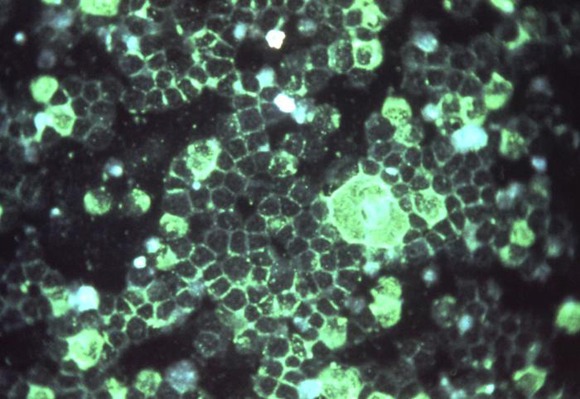
Additionally, Dr. Mansbach said that the 70% frequency of coinfection seen in this study raises questions about the effectiveness of inpatient cohorting by viral etiology, which some researchers contend is of use. Moreover, the findings suggest that hospitals consider adding RV to respiratory viral panels, he said.
The 16-center study enrolled consecutive children between November and March during 2007-2010. Of the total 2,207 children enrolled, 83% were located on the ward while 17% were admitted to the intensive care unit. Of those 377, 42% were intubated or given continuous positive airway pressure. Overall mean length of stay was 2 days. The patients had a median age of 4 months; 59% were male, 61% were white, 24% black, and 15% other races. A third (36%) were of Hispanic ethnicity.
The three most common viral etiologies identified by polymerase chain reaction were RSV-A (43%) RSV-B (30%) and RV (26%). Adenovirus, human metapneumovirus, and the coronaviruses were all 7%-8%, and only 6% of the children had no virus detected. (These figures add up to more than 100 because of a 30% rate of coinfections.) The low-frequency infections did not affect results, so subsequent analysis focused on RSV (subtypes A and B) and RV, Dr. Mansbach said.
Of the 940 children in whom RSV-A was identified, it was the only virus in 66%, while one or more additional viruses were identified in the other 34%. Similarly, 68% of the 664 RSV-B infected patients had only one virus identified, while 32% were coinfected.
Rhinovirus was somewhat different, however, in that just 30% of 564 had only that and 70% had coinfections.
For children with both RSV-A and RSV-B, the likelihood of having a length of stay of 3 or more days did not differ between those who had the single virus infection and those who were coinfected (48% vs. 49%, respectively, for RSV-A, and 47% and 54% for RSV-B). There was a significant difference with rhinovirus, however, with 28% of those with the single infection and 46% with coinfections hospitalized 3 or more days.
After adjustment for age, gender, race, eczema history, intubation history, apnea, retractions, oxygen saturation, oral intake, comorbid medical condition, and site, rhinovirus alone was associated with a lower chance of being hospitalized 3 or more days compared with RSV-A or RSV-B alone (odds ratio 0.4), while RSV-RV co-infections were associated with a significantly greater chance of being hospitalized for that duration compared with RSV-A or RSV-B alone (OR 1.3).
Clustering by site did not affect the results, and in a preliminary analysis, controlling for acute severity as defined by ICU, CPAP, or intubation also did not materially change the results, Dr. Mansbach said.
This study was conducted as part of the Multicenter Airway Research Collaboration (MARC), a program of the Emergency Medicine Network. Pediatric Research in Inpatient Settings sites collaborated with EMNet, Dr. Mansbach said.
Dr. Mansbach stated that he had no relevant financial disclosures.
BOSTON – Coinfections with both respiratory syncytial virus and rhinovirus were common and associated with increased length of stay in a prospective multicenter study of over 2,000 children under 2 years of age who were hospitalized with bronchiolitis.
The clinical value of testing for an infectious etiology in a child with bronchiolitis is unclear. Indeed, the recommendation is not to test (Pediatrics 2006;118:1774-93). Some argue however, that testing may be useful for the influenza treatment or to identify the beginning of the viral "seasons" and which viruses are circulating, Dr. Jonathan M. Mansbach, a hospitalist physician at Children’s Hospital Boston, said at the annual meeting of the Society for Academic Emergency Medicine.
Additionally, Dr. Mansbach said that the 70% frequency of coinfection seen in this study raises questions about the effectiveness of inpatient cohorting by viral etiology, which some researchers contend is of use. Moreover, the findings suggest that hospitals consider adding RV to respiratory viral panels, he said.
The 16-center study enrolled consecutive children between November and March during 2007-2010. Of the total 2,207 children enrolled, 83% were located on the ward while 17% were admitted to the intensive care unit. Of those 377, 42% were intubated or given continuous positive airway pressure. Overall mean length of stay was 2 days. The patients had a median age of 4 months; 59% were male, 61% were white, 24% black, and 15% other races. A third (36%) were of Hispanic ethnicity.
The three most common viral etiologies identified by polymerase chain reaction were RSV-A (43%) RSV-B (30%) and RV (26%). Adenovirus, human metapneumovirus, and the coronaviruses were all 7%-8%, and only 6% of the children had no virus detected. (These figures add up to more than 100 because of a 30% rate of coinfections.) The low-frequency infections did not affect results, so subsequent analysis focused on RSV (subtypes A and B) and RV, Dr. Mansbach said.
Of the 940 children in whom RSV-A was identified, it was the only virus in 66%, while one or more additional viruses were identified in the other 34%. Similarly, 68% of the 664 RSV-B infected patients had only one virus identified, while 32% were coinfected.
Rhinovirus was somewhat different, however, in that just 30% of 564 had only that and 70% had coinfections.
For children with both RSV-A and RSV-B, the likelihood of having a length of stay of 3 or more days did not differ between those who had the single virus infection and those who were coinfected (48% vs. 49%, respectively, for RSV-A, and 47% and 54% for RSV-B). There was a significant difference with rhinovirus, however, with 28% of those with the single infection and 46% with coinfections hospitalized 3 or more days.
After adjustment for age, gender, race, eczema history, intubation history, apnea, retractions, oxygen saturation, oral intake, comorbid medical condition, and site, rhinovirus alone was associated with a lower chance of being hospitalized 3 or more days compared with RSV-A or RSV-B alone (odds ratio 0.4), while RSV-RV co-infections were associated with a significantly greater chance of being hospitalized for that duration compared with RSV-A or RSV-B alone (OR 1.3).
Clustering by site did not affect the results, and in a preliminary analysis, controlling for acute severity as defined by ICU, CPAP, or intubation also did not materially change the results, Dr. Mansbach said.
This study was conducted as part of the Multicenter Airway Research Collaboration (MARC), a program of the Emergency Medicine Network. Pediatric Research in Inpatient Settings sites collaborated with EMNet, Dr. Mansbach said.
Dr. Mansbach stated that he had no relevant financial disclosures.
BOSTON – Coinfections with both respiratory syncytial virus and rhinovirus were common and associated with increased length of stay in a prospective multicenter study of over 2,000 children under 2 years of age who were hospitalized with bronchiolitis.
The clinical value of testing for an infectious etiology in a child with bronchiolitis is unclear. Indeed, the recommendation is not to test (Pediatrics 2006;118:1774-93). Some argue however, that testing may be useful for the influenza treatment or to identify the beginning of the viral "seasons" and which viruses are circulating, Dr. Jonathan M. Mansbach, a hospitalist physician at Children’s Hospital Boston, said at the annual meeting of the Society for Academic Emergency Medicine.
Additionally, Dr. Mansbach said that the 70% frequency of coinfection seen in this study raises questions about the effectiveness of inpatient cohorting by viral etiology, which some researchers contend is of use. Moreover, the findings suggest that hospitals consider adding RV to respiratory viral panels, he said.
The 16-center study enrolled consecutive children between November and March during 2007-2010. Of the total 2,207 children enrolled, 83% were located on the ward while 17% were admitted to the intensive care unit. Of those 377, 42% were intubated or given continuous positive airway pressure. Overall mean length of stay was 2 days. The patients had a median age of 4 months; 59% were male, 61% were white, 24% black, and 15% other races. A third (36%) were of Hispanic ethnicity.
The three most common viral etiologies identified by polymerase chain reaction were RSV-A (43%) RSV-B (30%) and RV (26%). Adenovirus, human metapneumovirus, and the coronaviruses were all 7%-8%, and only 6% of the children had no virus detected. (These figures add up to more than 100 because of a 30% rate of coinfections.) The low-frequency infections did not affect results, so subsequent analysis focused on RSV (subtypes A and B) and RV, Dr. Mansbach said.
Of the 940 children in whom RSV-A was identified, it was the only virus in 66%, while one or more additional viruses were identified in the other 34%. Similarly, 68% of the 664 RSV-B infected patients had only one virus identified, while 32% were coinfected.
Rhinovirus was somewhat different, however, in that just 30% of 564 had only that and 70% had coinfections.
For children with both RSV-A and RSV-B, the likelihood of having a length of stay of 3 or more days did not differ between those who had the single virus infection and those who were coinfected (48% vs. 49%, respectively, for RSV-A, and 47% and 54% for RSV-B). There was a significant difference with rhinovirus, however, with 28% of those with the single infection and 46% with coinfections hospitalized 3 or more days.
After adjustment for age, gender, race, eczema history, intubation history, apnea, retractions, oxygen saturation, oral intake, comorbid medical condition, and site, rhinovirus alone was associated with a lower chance of being hospitalized 3 or more days compared with RSV-A or RSV-B alone (odds ratio 0.4), while RSV-RV co-infections were associated with a significantly greater chance of being hospitalized for that duration compared with RSV-A or RSV-B alone (OR 1.3).
Clustering by site did not affect the results, and in a preliminary analysis, controlling for acute severity as defined by ICU, CPAP, or intubation also did not materially change the results, Dr. Mansbach said.
This study was conducted as part of the Multicenter Airway Research Collaboration (MARC), a program of the Emergency Medicine Network. Pediatric Research in Inpatient Settings sites collaborated with EMNet, Dr. Mansbach said.
Dr. Mansbach stated that he had no relevant financial disclosures.
FROM THE ANNUAL MEETING OF THE SOCIETY FOR ACADEMIC EMERGENCY MEDICINE
Major Finding: Of 564 children infected with rhinovirus, 70% had RSV coinfections. Rhinovirus alone was associated with a lower chance of being hospitalized 3 or more days compared with RSV-A or RSV-B alone (odds ratio 0.4). RSV-RV coinfections were associated with a significantly greater chance of being hospitalized for 3 or more days, compared with RSV-A or RSV-B alone (OR 1.3).
Data Source: Prospective multicenter study of 2,207 children under 2 years of age who were hospitalized for bronchiolitis.
Disclosures: Dr. Mansbach reported no disclosures.
Nasopharyngeal Lactate Dehydrogenase May Predict Bronchiolitis Severity
BOSTON – Higher levels of nasopharyngeal lactate dehydrogenase were associated with decreased odds of hospitalization in a prospective, observational, multicenter cohort study of samples from 277 children under 2 years of age who presented to the emergency department with bronchiolitis.
"Despite identified risk factors for severe disease, the difficulty and uncertainty of determining the appropriate level of supportive care for children with bronchiolitis is well documented by the large variability in hospital admission practices. Admission rates for infants with bronchiolitis are significantly different between pediatric and general EDs and even among pediatric ED attending physicians. There is also wide variation in thresholds for pediatric intensive care unit admission and intubation," said Dr. Jonathan M. Mansbach, a hospitalist physician at Children’s Hospital Boston at the annual meeting of the Society for Academic Emergency Medicine.
Recent studies suggest that lactate dehydrogenase (LDH), a membrane-associated protein released from injured cells that is a marker of inflammatory response, correlates with innate immunity and could therefore be used as a predictor of disease severity. In one recent single-center study of 98 children aged less than 2 years presenting to the ED with bronchiolitis, serum LDH was not predictive of admission, but higher levels of nasopharyngeal LDH were associated with an 81% reduced risk of hospital admission (Pediatrics 2010;125:e225-33).
The current study is part of the larger Multicenter Airway Research Collaboration (MARC), a program of the Emergency Medicine Network. The primary aim of the MARC-25 Virology Study is to describe virology of children presenting to the ED with bronchiolitis using nasopharyngeal aspirate (NPA) samples (Acad. Emerg. Med. 2008;15:111-8).
Nasopharyngeal aspirate samples were collected between December 2005 and March 2006 at 14 centers in 10 states. The 277 children had a median age of 6 months. More than half (61%) were boys; 37% were Hispanic, 31% white, 28% black, and 4% other. The median value of NPA LDH was 7 U/mL but the range was wide, 0-8,400 U/mL. "Nasopharyngeal LDH is a new test. Therefore, when considering the actual values for LDH, please remember that there are no known standards," Dr. Mansbach commented.
Of the study cohort, 45% (125 children) were admitted to the hospital, and of those, 74% (93) were admitted for longer than 24 hours. For the entire 0-8,400 U/mL range, higher LDH values were associated with a lower rate of admission for 24 hours or longer. However, there were two outlier patients. With those two removed, the LDH range dropped to 0-1,000 and the inverse relationship between LDH and admission remained, but there was a blunting of the association at higher levels of LDH.
The rest of the analysis was limited to patients with the two most common viral etiologies, respiratory syncytial virus (64%) and rhinovirus (16%). The low frequency of infections with human metapneumovirus and influenza did not affect the results, he noted.
In the 176 children with RSV, the median LDH values were higher but not significantly higher than in the 101 children without RSV, 8 vs. 4 U/mL (P = .53). However, in the 44 children with rhinovirus, median LDH values were significantly higher than in children without rhinovirus, 14 vs. 5 U/mL (P = .03).
Moving from the first to the third LDH quartile after adjustment for common variables associated with illness severity (age less than 2 months, sex, history of intubation, retractions, oxygen saturation 94% or below), there was a fairly linear drop in the odds of admission. With the quartile of 1.33 U/mL and below as the referent 1.0, those with LDH levels 1.34-6.6 U/mL had an adjusted odds ratio of admission of 0.58 (P = .23, confidence interval 0.24-1.4), while the adjusted odds ratio for those with LDH 6.7-43.2 U/mL was 0.23 (P = .002, confidence interval 0.09-0.58). The difference was no longer significant for LDH of 43.3 U/mL or above (P = .33, 0.28-1.5). Stratification by virus or site did not change the outcomes, Dr. Mansbach added.
"We do not know why the association is blunted at the highest level of LDH, and more research will be needed to sort through this aspect of our findings. Remember that the test still shows that higher levels of LDH are associated with fewer admissions. It was just blunted, with slightly lower magnitude, so it could still be clinically useful," he said in an interview.
Dr. Mansbach stated that he has no conflicts of interest.
BOSTON – Higher levels of nasopharyngeal lactate dehydrogenase were associated with decreased odds of hospitalization in a prospective, observational, multicenter cohort study of samples from 277 children under 2 years of age who presented to the emergency department with bronchiolitis.
"Despite identified risk factors for severe disease, the difficulty and uncertainty of determining the appropriate level of supportive care for children with bronchiolitis is well documented by the large variability in hospital admission practices. Admission rates for infants with bronchiolitis are significantly different between pediatric and general EDs and even among pediatric ED attending physicians. There is also wide variation in thresholds for pediatric intensive care unit admission and intubation," said Dr. Jonathan M. Mansbach, a hospitalist physician at Children’s Hospital Boston at the annual meeting of the Society for Academic Emergency Medicine.
Recent studies suggest that lactate dehydrogenase (LDH), a membrane-associated protein released from injured cells that is a marker of inflammatory response, correlates with innate immunity and could therefore be used as a predictor of disease severity. In one recent single-center study of 98 children aged less than 2 years presenting to the ED with bronchiolitis, serum LDH was not predictive of admission, but higher levels of nasopharyngeal LDH were associated with an 81% reduced risk of hospital admission (Pediatrics 2010;125:e225-33).
The current study is part of the larger Multicenter Airway Research Collaboration (MARC), a program of the Emergency Medicine Network. The primary aim of the MARC-25 Virology Study is to describe virology of children presenting to the ED with bronchiolitis using nasopharyngeal aspirate (NPA) samples (Acad. Emerg. Med. 2008;15:111-8).
Nasopharyngeal aspirate samples were collected between December 2005 and March 2006 at 14 centers in 10 states. The 277 children had a median age of 6 months. More than half (61%) were boys; 37% were Hispanic, 31% white, 28% black, and 4% other. The median value of NPA LDH was 7 U/mL but the range was wide, 0-8,400 U/mL. "Nasopharyngeal LDH is a new test. Therefore, when considering the actual values for LDH, please remember that there are no known standards," Dr. Mansbach commented.
Of the study cohort, 45% (125 children) were admitted to the hospital, and of those, 74% (93) were admitted for longer than 24 hours. For the entire 0-8,400 U/mL range, higher LDH values were associated with a lower rate of admission for 24 hours or longer. However, there were two outlier patients. With those two removed, the LDH range dropped to 0-1,000 and the inverse relationship between LDH and admission remained, but there was a blunting of the association at higher levels of LDH.
The rest of the analysis was limited to patients with the two most common viral etiologies, respiratory syncytial virus (64%) and rhinovirus (16%). The low frequency of infections with human metapneumovirus and influenza did not affect the results, he noted.
In the 176 children with RSV, the median LDH values were higher but not significantly higher than in the 101 children without RSV, 8 vs. 4 U/mL (P = .53). However, in the 44 children with rhinovirus, median LDH values were significantly higher than in children without rhinovirus, 14 vs. 5 U/mL (P = .03).
Moving from the first to the third LDH quartile after adjustment for common variables associated with illness severity (age less than 2 months, sex, history of intubation, retractions, oxygen saturation 94% or below), there was a fairly linear drop in the odds of admission. With the quartile of 1.33 U/mL and below as the referent 1.0, those with LDH levels 1.34-6.6 U/mL had an adjusted odds ratio of admission of 0.58 (P = .23, confidence interval 0.24-1.4), while the adjusted odds ratio for those with LDH 6.7-43.2 U/mL was 0.23 (P = .002, confidence interval 0.09-0.58). The difference was no longer significant for LDH of 43.3 U/mL or above (P = .33, 0.28-1.5). Stratification by virus or site did not change the outcomes, Dr. Mansbach added.
"We do not know why the association is blunted at the highest level of LDH, and more research will be needed to sort through this aspect of our findings. Remember that the test still shows that higher levels of LDH are associated with fewer admissions. It was just blunted, with slightly lower magnitude, so it could still be clinically useful," he said in an interview.
Dr. Mansbach stated that he has no conflicts of interest.
BOSTON – Higher levels of nasopharyngeal lactate dehydrogenase were associated with decreased odds of hospitalization in a prospective, observational, multicenter cohort study of samples from 277 children under 2 years of age who presented to the emergency department with bronchiolitis.
"Despite identified risk factors for severe disease, the difficulty and uncertainty of determining the appropriate level of supportive care for children with bronchiolitis is well documented by the large variability in hospital admission practices. Admission rates for infants with bronchiolitis are significantly different between pediatric and general EDs and even among pediatric ED attending physicians. There is also wide variation in thresholds for pediatric intensive care unit admission and intubation," said Dr. Jonathan M. Mansbach, a hospitalist physician at Children’s Hospital Boston at the annual meeting of the Society for Academic Emergency Medicine.
Recent studies suggest that lactate dehydrogenase (LDH), a membrane-associated protein released from injured cells that is a marker of inflammatory response, correlates with innate immunity and could therefore be used as a predictor of disease severity. In one recent single-center study of 98 children aged less than 2 years presenting to the ED with bronchiolitis, serum LDH was not predictive of admission, but higher levels of nasopharyngeal LDH were associated with an 81% reduced risk of hospital admission (Pediatrics 2010;125:e225-33).
The current study is part of the larger Multicenter Airway Research Collaboration (MARC), a program of the Emergency Medicine Network. The primary aim of the MARC-25 Virology Study is to describe virology of children presenting to the ED with bronchiolitis using nasopharyngeal aspirate (NPA) samples (Acad. Emerg. Med. 2008;15:111-8).
Nasopharyngeal aspirate samples were collected between December 2005 and March 2006 at 14 centers in 10 states. The 277 children had a median age of 6 months. More than half (61%) were boys; 37% were Hispanic, 31% white, 28% black, and 4% other. The median value of NPA LDH was 7 U/mL but the range was wide, 0-8,400 U/mL. "Nasopharyngeal LDH is a new test. Therefore, when considering the actual values for LDH, please remember that there are no known standards," Dr. Mansbach commented.
Of the study cohort, 45% (125 children) were admitted to the hospital, and of those, 74% (93) were admitted for longer than 24 hours. For the entire 0-8,400 U/mL range, higher LDH values were associated with a lower rate of admission for 24 hours or longer. However, there were two outlier patients. With those two removed, the LDH range dropped to 0-1,000 and the inverse relationship between LDH and admission remained, but there was a blunting of the association at higher levels of LDH.
The rest of the analysis was limited to patients with the two most common viral etiologies, respiratory syncytial virus (64%) and rhinovirus (16%). The low frequency of infections with human metapneumovirus and influenza did not affect the results, he noted.
In the 176 children with RSV, the median LDH values were higher but not significantly higher than in the 101 children without RSV, 8 vs. 4 U/mL (P = .53). However, in the 44 children with rhinovirus, median LDH values were significantly higher than in children without rhinovirus, 14 vs. 5 U/mL (P = .03).
Moving from the first to the third LDH quartile after adjustment for common variables associated with illness severity (age less than 2 months, sex, history of intubation, retractions, oxygen saturation 94% or below), there was a fairly linear drop in the odds of admission. With the quartile of 1.33 U/mL and below as the referent 1.0, those with LDH levels 1.34-6.6 U/mL had an adjusted odds ratio of admission of 0.58 (P = .23, confidence interval 0.24-1.4), while the adjusted odds ratio for those with LDH 6.7-43.2 U/mL was 0.23 (P = .002, confidence interval 0.09-0.58). The difference was no longer significant for LDH of 43.3 U/mL or above (P = .33, 0.28-1.5). Stratification by virus or site did not change the outcomes, Dr. Mansbach added.
"We do not know why the association is blunted at the highest level of LDH, and more research will be needed to sort through this aspect of our findings. Remember that the test still shows that higher levels of LDH are associated with fewer admissions. It was just blunted, with slightly lower magnitude, so it could still be clinically useful," he said in an interview.
Dr. Mansbach stated that he has no conflicts of interest.
FROM THE ANNUAL MEETING OF THE SOCIETY FOR ACADEMIC EMERGENCY MEDICINE
Major Finding: Moving from the first to the third LDH quartile after adjustment for common variables associated with illness severity, there was a fairly linear drop in the odds of admission. With the quartile of 1.33 U/mL and below as the referent 1.0, those with LDH levels 1.34-6.6 U/mL had an adjusted odds ratio of admission of 0.58 (P = .23, confidence interval 0.24-1.4), while the adjusted odds ratio for those with LDH 6.7-43.2 U/mL was 0.23 (P = .002, 0.09-0.58). The difference was no longer significant for LDH of 43.3 U/mL or above (P = .33, 0.28-1.5).
Data Source: Prospective, observational, multicenter cohort study of samples from 277 children under 2 years of age who presented to the emergency department with bronchiolitis.
Disclosures: Dr. Mansbach had no disclosures.
Mitral Valve Repair Surgery Shows Low Mortality
NEW YORK - Mitral valve repair surgery was associated with very low operative mortality and acceptable morbidity in a database analysis of 903 patients at 16 centers in Virginia presented at the 2011 Mitral Conclave.
Mitral valve repair (MVR) rather than replacement has become the favored surgical approach for mitral insufficiency over the last 2 decades. The recent emergence of transcatheter approaches to repair has focused attention on the outcomes for surgical approaches. In the EVEREST II trial, published earlier this year, worse short-term outcomes were seen with surgical MVR or replacement, compared with percutaneous MVR using the MitraClip device. Among 279 patients, composite major event rates at 30 days were 15% for percutaneous repair, compared with 48% for surgery (N. Engl. J. Med. 2011;364:1395-406).
The current study was undertaken to analyze contemporary outcomes for surgical mitral repair within a multiinstitutional cohort of patients to better establish a benchmark for future comparisons of treatments for mitral valve insufficiency, Dr. Damien J. LaPar said.
Cardiac surgical data were obtained from the 16 participating centers of the Virginia Cardiac Surgery Quality Initiative, which captures approximately 99% of the state?s cardiac operations. Patient exclusions were the same as in the EVEREST II trial: prior valve operations, endocarditis, and mitral stenosis.
The 903 patients had an average age of 57 years; 41% were women. Heart failure was present in 32%, and severe mitral insufficiency in 82%. Most (85%) of the operations were elective, including reconstruction with annuloplasty in 69%, said Dr. LaPar of the University of Virginia, Charlottesville.
Major adverse events occurred in 29%, a lower percentage than reported in EVEREST II. Atrial fibrillation was the most frequent, in 18%. Renal failure occurred in just 1.3%, stroke in 0.9%, and operative mortality in 1.1%. The mean postoperative length of stay was 6 days.
Multivariate predictors of major adverse events included age, preoperative stroke and immunosuppressive therapy, use of an aortic cross-clamp, and cardiopulmonary bypass times. Factors not significantly associated with major adverse events were female sex, renal failure, prior coronary artery bypass grafting, and ejection fraction.
"These results may help stratify which patients might be best served by emerging approaches to surgery," he said.
This study was funded by a training grant from the National Heart, Lung, and Blood Institute and a research grant from the Thoracic Surgery Foundation for Research and Education. Dr. LaPar stated that he had no disclosures; three of his coinvestigators consult for, and/or received honoraria from Abbott, maker of the MitraClip device used in the study.
NEW YORK - Mitral valve repair surgery was associated with very low operative mortality and acceptable morbidity in a database analysis of 903 patients at 16 centers in Virginia presented at the 2011 Mitral Conclave.
Mitral valve repair (MVR) rather than replacement has become the favored surgical approach for mitral insufficiency over the last 2 decades. The recent emergence of transcatheter approaches to repair has focused attention on the outcomes for surgical approaches. In the EVEREST II trial, published earlier this year, worse short-term outcomes were seen with surgical MVR or replacement, compared with percutaneous MVR using the MitraClip device. Among 279 patients, composite major event rates at 30 days were 15% for percutaneous repair, compared with 48% for surgery (N. Engl. J. Med. 2011;364:1395-406).
The current study was undertaken to analyze contemporary outcomes for surgical mitral repair within a multiinstitutional cohort of patients to better establish a benchmark for future comparisons of treatments for mitral valve insufficiency, Dr. Damien J. LaPar said.
Cardiac surgical data were obtained from the 16 participating centers of the Virginia Cardiac Surgery Quality Initiative, which captures approximately 99% of the state?s cardiac operations. Patient exclusions were the same as in the EVEREST II trial: prior valve operations, endocarditis, and mitral stenosis.
The 903 patients had an average age of 57 years; 41% were women. Heart failure was present in 32%, and severe mitral insufficiency in 82%. Most (85%) of the operations were elective, including reconstruction with annuloplasty in 69%, said Dr. LaPar of the University of Virginia, Charlottesville.
Major adverse events occurred in 29%, a lower percentage than reported in EVEREST II. Atrial fibrillation was the most frequent, in 18%. Renal failure occurred in just 1.3%, stroke in 0.9%, and operative mortality in 1.1%. The mean postoperative length of stay was 6 days.
Multivariate predictors of major adverse events included age, preoperative stroke and immunosuppressive therapy, use of an aortic cross-clamp, and cardiopulmonary bypass times. Factors not significantly associated with major adverse events were female sex, renal failure, prior coronary artery bypass grafting, and ejection fraction.
"These results may help stratify which patients might be best served by emerging approaches to surgery," he said.
This study was funded by a training grant from the National Heart, Lung, and Blood Institute and a research grant from the Thoracic Surgery Foundation for Research and Education. Dr. LaPar stated that he had no disclosures; three of his coinvestigators consult for, and/or received honoraria from Abbott, maker of the MitraClip device used in the study.
NEW YORK - Mitral valve repair surgery was associated with very low operative mortality and acceptable morbidity in a database analysis of 903 patients at 16 centers in Virginia presented at the 2011 Mitral Conclave.
Mitral valve repair (MVR) rather than replacement has become the favored surgical approach for mitral insufficiency over the last 2 decades. The recent emergence of transcatheter approaches to repair has focused attention on the outcomes for surgical approaches. In the EVEREST II trial, published earlier this year, worse short-term outcomes were seen with surgical MVR or replacement, compared with percutaneous MVR using the MitraClip device. Among 279 patients, composite major event rates at 30 days were 15% for percutaneous repair, compared with 48% for surgery (N. Engl. J. Med. 2011;364:1395-406).
The current study was undertaken to analyze contemporary outcomes for surgical mitral repair within a multiinstitutional cohort of patients to better establish a benchmark for future comparisons of treatments for mitral valve insufficiency, Dr. Damien J. LaPar said.
Cardiac surgical data were obtained from the 16 participating centers of the Virginia Cardiac Surgery Quality Initiative, which captures approximately 99% of the state?s cardiac operations. Patient exclusions were the same as in the EVEREST II trial: prior valve operations, endocarditis, and mitral stenosis.
The 903 patients had an average age of 57 years; 41% were women. Heart failure was present in 32%, and severe mitral insufficiency in 82%. Most (85%) of the operations were elective, including reconstruction with annuloplasty in 69%, said Dr. LaPar of the University of Virginia, Charlottesville.
Major adverse events occurred in 29%, a lower percentage than reported in EVEREST II. Atrial fibrillation was the most frequent, in 18%. Renal failure occurred in just 1.3%, stroke in 0.9%, and operative mortality in 1.1%. The mean postoperative length of stay was 6 days.
Multivariate predictors of major adverse events included age, preoperative stroke and immunosuppressive therapy, use of an aortic cross-clamp, and cardiopulmonary bypass times. Factors not significantly associated with major adverse events were female sex, renal failure, prior coronary artery bypass grafting, and ejection fraction.
"These results may help stratify which patients might be best served by emerging approaches to surgery," he said.
This study was funded by a training grant from the National Heart, Lung, and Blood Institute and a research grant from the Thoracic Surgery Foundation for Research and Education. Dr. LaPar stated that he had no disclosures; three of his coinvestigators consult for, and/or received honoraria from Abbott, maker of the MitraClip device used in the study.
MitraClip: Outcomes Not Tied to Specialty
NEW YORK – Outcomes for the MitraClip procedure were similar for cardiologists and cardiac surgeons in an ongoing study of "real-world" use of the percutaneous mitral valve repair system.
The EVEREST II Continued Access Study, known as REALISM, is a prospective, multicenter data analysis of outcomes with the investigational MitraClip System (Abbott), said Dr. Gorav Allawadi, a CT surgeon at the University of Virginia, Charlottesville.
A total of 433 patients were included in the 30-day follow-up analysis; 47 were treated by 6 cardiothoracic surgeons and 386 by interventional cardiologists. Both patient groups had a mean age over 70 years, two-thirds had NYHA Class III or IV, and over half had functional mitral regurgitation. More than half had coronary artery disease, and nearly two-thirds had atrial fibrillation.
MitraClip procedural results were similar for cardiothoracic surgeons and interventional cardiologists, although there was a trend for the surgeons to use more clips. A single clip was implanted in 49% of the surgeon-treated cohort and in 58% of those treated by interventional cardiologists. Two clips were used in 51% of patients treated by surgeons and in 36% of patients treated by interventional cardiologists. (Clips could not be deployed in 6% of the patients treated by interventional cardiologists.) Mean procedural times were similar, 135 minutes for the surgeons versus 145 minutes for the interventional cardiologists. Post-procedure hospital stays averaged 2.5 days in both groups; 90% of patients were discharged home without the need for home health care, Dr. Allawadi reported.
In-hospital complication rates were low and did not differ significantly between the groups. Deaths occurred in 2.1% of the surgeon-treated patients and in 3.4% of the interventional cardiologist-treated patients. Major stroke occurred in 1.3% in patients treated by interventional cardiologists and in none of the surgeon-treated patients.
Outcomes at 30 days were similar, with more than half of both groups achieving 1-plus mitral regurgitation status or better and 90% at 2-plus or below. Similarly, 85% of both groups had improved to NYHA class I or II by 30 days post-procedure.
Dr. Allawadi said that the similarity in outcomes should not discourage a multidisciplinary approach to the treatment of these patients. When the CT surgeon performs the MitraClip procedure at his institution, the cardiologist scrubs as well. And if the interventional cardiologist is doing the procedure, the surgeon is still closely involved.
In response to a question about why the surgeons tended to use more clips, he speculated that it might be because surgeons don’t have as much experience with the device as yet. "We’re still very much on the learning curve."
In May, Abbott undertook a voluntary global recall of MitraClip after receiving three reports of incidents where the radiopaque ring at the tip of the steerable guide catheter detached in the heart following implant. Abbott emphasized that the concern only involves delivery of the device and that patients with previously implanted MitraClip devices are not affected.
Abbott officials expect it will take several months to resume shipments of the system, which is marketed in Europe but is investigational in the U.S. The firm says the recall is not likely to impact anticipated U.S. approval of the device later this year, according to a report in "The Gray Sheet."
Dr. Allawadi disclosed consulting fees and honoraria from Abbott. ☐
Rebecca Kern of "The Gray Sheet" added to this article. "The Gray Sheet" and this publication are both owned by Elsevier.
NEW YORK – Outcomes for the MitraClip procedure were similar for cardiologists and cardiac surgeons in an ongoing study of "real-world" use of the percutaneous mitral valve repair system.
The EVEREST II Continued Access Study, known as REALISM, is a prospective, multicenter data analysis of outcomes with the investigational MitraClip System (Abbott), said Dr. Gorav Allawadi, a CT surgeon at the University of Virginia, Charlottesville.
A total of 433 patients were included in the 30-day follow-up analysis; 47 were treated by 6 cardiothoracic surgeons and 386 by interventional cardiologists. Both patient groups had a mean age over 70 years, two-thirds had NYHA Class III or IV, and over half had functional mitral regurgitation. More than half had coronary artery disease, and nearly two-thirds had atrial fibrillation.
MitraClip procedural results were similar for cardiothoracic surgeons and interventional cardiologists, although there was a trend for the surgeons to use more clips. A single clip was implanted in 49% of the surgeon-treated cohort and in 58% of those treated by interventional cardiologists. Two clips were used in 51% of patients treated by surgeons and in 36% of patients treated by interventional cardiologists. (Clips could not be deployed in 6% of the patients treated by interventional cardiologists.) Mean procedural times were similar, 135 minutes for the surgeons versus 145 minutes for the interventional cardiologists. Post-procedure hospital stays averaged 2.5 days in both groups; 90% of patients were discharged home without the need for home health care, Dr. Allawadi reported.
In-hospital complication rates were low and did not differ significantly between the groups. Deaths occurred in 2.1% of the surgeon-treated patients and in 3.4% of the interventional cardiologist-treated patients. Major stroke occurred in 1.3% in patients treated by interventional cardiologists and in none of the surgeon-treated patients.
Outcomes at 30 days were similar, with more than half of both groups achieving 1-plus mitral regurgitation status or better and 90% at 2-plus or below. Similarly, 85% of both groups had improved to NYHA class I or II by 30 days post-procedure.
Dr. Allawadi said that the similarity in outcomes should not discourage a multidisciplinary approach to the treatment of these patients. When the CT surgeon performs the MitraClip procedure at his institution, the cardiologist scrubs as well. And if the interventional cardiologist is doing the procedure, the surgeon is still closely involved.
In response to a question about why the surgeons tended to use more clips, he speculated that it might be because surgeons don’t have as much experience with the device as yet. "We’re still very much on the learning curve."
In May, Abbott undertook a voluntary global recall of MitraClip after receiving three reports of incidents where the radiopaque ring at the tip of the steerable guide catheter detached in the heart following implant. Abbott emphasized that the concern only involves delivery of the device and that patients with previously implanted MitraClip devices are not affected.
Abbott officials expect it will take several months to resume shipments of the system, which is marketed in Europe but is investigational in the U.S. The firm says the recall is not likely to impact anticipated U.S. approval of the device later this year, according to a report in "The Gray Sheet."
Dr. Allawadi disclosed consulting fees and honoraria from Abbott. ☐
Rebecca Kern of "The Gray Sheet" added to this article. "The Gray Sheet" and this publication are both owned by Elsevier.
NEW YORK – Outcomes for the MitraClip procedure were similar for cardiologists and cardiac surgeons in an ongoing study of "real-world" use of the percutaneous mitral valve repair system.
The EVEREST II Continued Access Study, known as REALISM, is a prospective, multicenter data analysis of outcomes with the investigational MitraClip System (Abbott), said Dr. Gorav Allawadi, a CT surgeon at the University of Virginia, Charlottesville.
A total of 433 patients were included in the 30-day follow-up analysis; 47 were treated by 6 cardiothoracic surgeons and 386 by interventional cardiologists. Both patient groups had a mean age over 70 years, two-thirds had NYHA Class III or IV, and over half had functional mitral regurgitation. More than half had coronary artery disease, and nearly two-thirds had atrial fibrillation.
MitraClip procedural results were similar for cardiothoracic surgeons and interventional cardiologists, although there was a trend for the surgeons to use more clips. A single clip was implanted in 49% of the surgeon-treated cohort and in 58% of those treated by interventional cardiologists. Two clips were used in 51% of patients treated by surgeons and in 36% of patients treated by interventional cardiologists. (Clips could not be deployed in 6% of the patients treated by interventional cardiologists.) Mean procedural times were similar, 135 minutes for the surgeons versus 145 minutes for the interventional cardiologists. Post-procedure hospital stays averaged 2.5 days in both groups; 90% of patients were discharged home without the need for home health care, Dr. Allawadi reported.
In-hospital complication rates were low and did not differ significantly between the groups. Deaths occurred in 2.1% of the surgeon-treated patients and in 3.4% of the interventional cardiologist-treated patients. Major stroke occurred in 1.3% in patients treated by interventional cardiologists and in none of the surgeon-treated patients.
Outcomes at 30 days were similar, with more than half of both groups achieving 1-plus mitral regurgitation status or better and 90% at 2-plus or below. Similarly, 85% of both groups had improved to NYHA class I or II by 30 days post-procedure.
Dr. Allawadi said that the similarity in outcomes should not discourage a multidisciplinary approach to the treatment of these patients. When the CT surgeon performs the MitraClip procedure at his institution, the cardiologist scrubs as well. And if the interventional cardiologist is doing the procedure, the surgeon is still closely involved.
In response to a question about why the surgeons tended to use more clips, he speculated that it might be because surgeons don’t have as much experience with the device as yet. "We’re still very much on the learning curve."
In May, Abbott undertook a voluntary global recall of MitraClip after receiving three reports of incidents where the radiopaque ring at the tip of the steerable guide catheter detached in the heart following implant. Abbott emphasized that the concern only involves delivery of the device and that patients with previously implanted MitraClip devices are not affected.
Abbott officials expect it will take several months to resume shipments of the system, which is marketed in Europe but is investigational in the U.S. The firm says the recall is not likely to impact anticipated U.S. approval of the device later this year, according to a report in "The Gray Sheet."
Dr. Allawadi disclosed consulting fees and honoraria from Abbott. ☐
Rebecca Kern of "The Gray Sheet" added to this article. "The Gray Sheet" and this publication are both owned by Elsevier.
Sepsis Mortality Rate Reduced by Antibiotics Prior to Shock Recognition
BOSTON – Delaying antibiotics until after onset of septic shock was associated with increased mortality in a prospective study of 300 patients who presented to the emergency department with suspected infection and were treated with a quantitative resuscitation protocol.
However, there was no increase in mortality with hourly delays in antibiotics after shock onset up to 3 hours, said Dr. Michael A. Puskarich of the Carolinas Medical Center, Charlotte, N.C.
"When we gave antibiotics before the recognition of shock, patients did better. One of the limitations of that, however, it’s really impossible to predict when you’re seeing the patient when there will be shock recognition. Therefore, our recommendation is still to give broad-spectrum antibiotics as early as possible while not sacrificing hemodynamic resuscitation. However, also based on these data, we cannot support a specific time frame from triage or from shock recognition to suggest a time-to-antibiotic-dose core measure for septic shock at this point," Dr. Puskarich said in an interview.
International guidelines call for administration of broad-spectrum antibiotic therapy within 1 hour of diagnosis of septic shock and severe sepsis without septic shock, as part of a quantitative resuscitation protocol (Crit. Care Med. 2008;36:296-327). These guidelines were based largely on one study that found that effective antimicrobial administration within the first hour of documented hypotension was associated with increased survival to hospital discharge in adult patients with septic shock. Despite a progressive increase in mortality with increasing delays, only 50% of septic shock patients received effective antimicrobial therapy within 6 hours of documented hypotension (Crit. Care Med. 2006;34:1589-96).
The current study was a preplanned secondary analysis of a previously published study designed to test the hypothesis of noninferiority between lactate clearance and central venous oxygen saturation (ScvO2) as goals of early sepsis resuscitation (JAMA 2010;303:739-46). Patients were enrolled from three large, urban, tertiary care emergency departments. Inclusion criteria were suspected infection with two or more systemic inflammatory response syndrome criteria.
All patients received structure resuscitation with targets of central venous pressure 8 mm Hg or greater, a mean arterial pressure 65 mm Hg or greater, and either ScvO2 greater than or equal to 70% or lactate clearance greater than or equal to 10%. Broad-spectrum antibiotics were given according to local institution guidelines, as early as practical in the course of the resuscitation, Dr. Puskarich said at the annual meeting of the Society for Academic Emergency Medicine.
Of the 300 patients who had been randomized to either the lactate or ScvO2 target groups, 9 had received antibiotics prior to arrival and were excluded. Of the remaining 291 patients, 59% (172) received the initial dose of antibiotics after shock onset. Median time from triage to shock recognition was 89 minutes. The patients had a mean age of 62 years, 54% were white, and 53% were male. Median systolic blood pressure was 86 mm Hg, and median venous lactate was 3.3 mmol/L. The median ED sepsis-related organ failure assessment score was 6.
Overall mortality was 55%, and the majority of survivors and nonsurvivors received antibiotics within the same time frame. Patients who received antibiotics after shock recognition were more than twice as likely to die as were those who received them prior to shock recognition, 24% vs. 12%, with an unadjusted odds ratio of 2.3 that remained significant after adjustment for confounders. However, there was no increase in mortality by hourly delays from either triage or shock onset up to 3 hours, Dr. Puskarich reported.
"When early sepsis hemodynamic resuscitation is sufficiently refined, the strength of the association between hourly delays in antibiotic administration and mortality appears to recede. The effect of timing in the most proximal phase of septic shock remains unclear," he concluded.
Dr. Puskarich received grant support from the American Heart Association. The study for which this was a secondary analysis was funded by the National Institutes of Health. He said he had no other relevant financial disclosures.
BOSTON – Delaying antibiotics until after onset of septic shock was associated with increased mortality in a prospective study of 300 patients who presented to the emergency department with suspected infection and were treated with a quantitative resuscitation protocol.
However, there was no increase in mortality with hourly delays in antibiotics after shock onset up to 3 hours, said Dr. Michael A. Puskarich of the Carolinas Medical Center, Charlotte, N.C.
"When we gave antibiotics before the recognition of shock, patients did better. One of the limitations of that, however, it’s really impossible to predict when you’re seeing the patient when there will be shock recognition. Therefore, our recommendation is still to give broad-spectrum antibiotics as early as possible while not sacrificing hemodynamic resuscitation. However, also based on these data, we cannot support a specific time frame from triage or from shock recognition to suggest a time-to-antibiotic-dose core measure for septic shock at this point," Dr. Puskarich said in an interview.
International guidelines call for administration of broad-spectrum antibiotic therapy within 1 hour of diagnosis of septic shock and severe sepsis without septic shock, as part of a quantitative resuscitation protocol (Crit. Care Med. 2008;36:296-327). These guidelines were based largely on one study that found that effective antimicrobial administration within the first hour of documented hypotension was associated with increased survival to hospital discharge in adult patients with septic shock. Despite a progressive increase in mortality with increasing delays, only 50% of septic shock patients received effective antimicrobial therapy within 6 hours of documented hypotension (Crit. Care Med. 2006;34:1589-96).
The current study was a preplanned secondary analysis of a previously published study designed to test the hypothesis of noninferiority between lactate clearance and central venous oxygen saturation (ScvO2) as goals of early sepsis resuscitation (JAMA 2010;303:739-46). Patients were enrolled from three large, urban, tertiary care emergency departments. Inclusion criteria were suspected infection with two or more systemic inflammatory response syndrome criteria.
All patients received structure resuscitation with targets of central venous pressure 8 mm Hg or greater, a mean arterial pressure 65 mm Hg or greater, and either ScvO2 greater than or equal to 70% or lactate clearance greater than or equal to 10%. Broad-spectrum antibiotics were given according to local institution guidelines, as early as practical in the course of the resuscitation, Dr. Puskarich said at the annual meeting of the Society for Academic Emergency Medicine.
Of the 300 patients who had been randomized to either the lactate or ScvO2 target groups, 9 had received antibiotics prior to arrival and were excluded. Of the remaining 291 patients, 59% (172) received the initial dose of antibiotics after shock onset. Median time from triage to shock recognition was 89 minutes. The patients had a mean age of 62 years, 54% were white, and 53% were male. Median systolic blood pressure was 86 mm Hg, and median venous lactate was 3.3 mmol/L. The median ED sepsis-related organ failure assessment score was 6.
Overall mortality was 55%, and the majority of survivors and nonsurvivors received antibiotics within the same time frame. Patients who received antibiotics after shock recognition were more than twice as likely to die as were those who received them prior to shock recognition, 24% vs. 12%, with an unadjusted odds ratio of 2.3 that remained significant after adjustment for confounders. However, there was no increase in mortality by hourly delays from either triage or shock onset up to 3 hours, Dr. Puskarich reported.
"When early sepsis hemodynamic resuscitation is sufficiently refined, the strength of the association between hourly delays in antibiotic administration and mortality appears to recede. The effect of timing in the most proximal phase of septic shock remains unclear," he concluded.
Dr. Puskarich received grant support from the American Heart Association. The study for which this was a secondary analysis was funded by the National Institutes of Health. He said he had no other relevant financial disclosures.
BOSTON – Delaying antibiotics until after onset of septic shock was associated with increased mortality in a prospective study of 300 patients who presented to the emergency department with suspected infection and were treated with a quantitative resuscitation protocol.
However, there was no increase in mortality with hourly delays in antibiotics after shock onset up to 3 hours, said Dr. Michael A. Puskarich of the Carolinas Medical Center, Charlotte, N.C.
"When we gave antibiotics before the recognition of shock, patients did better. One of the limitations of that, however, it’s really impossible to predict when you’re seeing the patient when there will be shock recognition. Therefore, our recommendation is still to give broad-spectrum antibiotics as early as possible while not sacrificing hemodynamic resuscitation. However, also based on these data, we cannot support a specific time frame from triage or from shock recognition to suggest a time-to-antibiotic-dose core measure for septic shock at this point," Dr. Puskarich said in an interview.
International guidelines call for administration of broad-spectrum antibiotic therapy within 1 hour of diagnosis of septic shock and severe sepsis without septic shock, as part of a quantitative resuscitation protocol (Crit. Care Med. 2008;36:296-327). These guidelines were based largely on one study that found that effective antimicrobial administration within the first hour of documented hypotension was associated with increased survival to hospital discharge in adult patients with septic shock. Despite a progressive increase in mortality with increasing delays, only 50% of septic shock patients received effective antimicrobial therapy within 6 hours of documented hypotension (Crit. Care Med. 2006;34:1589-96).
The current study was a preplanned secondary analysis of a previously published study designed to test the hypothesis of noninferiority between lactate clearance and central venous oxygen saturation (ScvO2) as goals of early sepsis resuscitation (JAMA 2010;303:739-46). Patients were enrolled from three large, urban, tertiary care emergency departments. Inclusion criteria were suspected infection with two or more systemic inflammatory response syndrome criteria.
All patients received structure resuscitation with targets of central venous pressure 8 mm Hg or greater, a mean arterial pressure 65 mm Hg or greater, and either ScvO2 greater than or equal to 70% or lactate clearance greater than or equal to 10%. Broad-spectrum antibiotics were given according to local institution guidelines, as early as practical in the course of the resuscitation, Dr. Puskarich said at the annual meeting of the Society for Academic Emergency Medicine.
Of the 300 patients who had been randomized to either the lactate or ScvO2 target groups, 9 had received antibiotics prior to arrival and were excluded. Of the remaining 291 patients, 59% (172) received the initial dose of antibiotics after shock onset. Median time from triage to shock recognition was 89 minutes. The patients had a mean age of 62 years, 54% were white, and 53% were male. Median systolic blood pressure was 86 mm Hg, and median venous lactate was 3.3 mmol/L. The median ED sepsis-related organ failure assessment score was 6.
Overall mortality was 55%, and the majority of survivors and nonsurvivors received antibiotics within the same time frame. Patients who received antibiotics after shock recognition were more than twice as likely to die as were those who received them prior to shock recognition, 24% vs. 12%, with an unadjusted odds ratio of 2.3 that remained significant after adjustment for confounders. However, there was no increase in mortality by hourly delays from either triage or shock onset up to 3 hours, Dr. Puskarich reported.
"When early sepsis hemodynamic resuscitation is sufficiently refined, the strength of the association between hourly delays in antibiotic administration and mortality appears to recede. The effect of timing in the most proximal phase of septic shock remains unclear," he concluded.
Dr. Puskarich received grant support from the American Heart Association. The study for which this was a secondary analysis was funded by the National Institutes of Health. He said he had no other relevant financial disclosures.
FROM THE ANNUAL MEETING OF THE SOCIETY FOR ACADEMIC EMERGENCY MEDICINE
Major Finding: Patients who received antibiotics after shock recognition were more than twice as likely to die as were those who received them prior to shock recognition, 24% vs. 12%, with an unadjusted odds ratio of 2.3 that remained significant after adjustment for confounders.
Data Source: A preplanned secondary analysis of a previously published study designed to test the hypothesis of noninferiority between lactate clearance and central venous oxygen saturation as goals of early sepsis resuscitation in 300 ED patients.
Disclosures: Dr. Puskarich received grant support from the American Heart Association. The previous study was funded by the National Institutes of Health. He said he had no other relevant financial disclosures.
Nurse-Administered Corticosteroids in ED Reduce Admissions for Asthma
BOSTON – Emergency department administration of oral corticosteroids by a triage nurse prior to physician assessment significantly reduced the time to clinical improvement, total time in the ED, and risk of inpatient admission in a study of 644 children who presented with moderate to severe asthma exacerbations.

Medical directives allowing triage nurses to administer bronchodilator therapy are common, but nurse administration of oral corticosteroids has not previously been studied, even though earlier use of these agents in asthma patients with severe exacerbations has been shown to directly affect the risk of hospital admission. "We know that written clinical pathways improve physician ordering of oral steroids in acute asthma exacerbations, but delays to steroid administration are still long," said Dr. Roger L. Zemek, a pediatric emergency physician at Children’s Hospital of Eastern Ontario, Ottawa.
The controlled trial used a "before-after" design, in which a 4-month phase of physician-ordered oral corticosteroids was compared with a 4-month period in which triage nurses administered them. The study was done in a tertiary children’s hospital ED, with an annual patient population of about 60,000 visits a year, of which about 2,500 are for asthma, Dr. Zemek said at the annual meeting of the Society for Academic Emergency Medicine.
Eligible children were those aged 2-17 years who presented to the pediatric ED with a moderate to severe acute asthma exacerbation, with a Pediatric Respiratory Assessment Measure (PRAM) of 4 or greater. The PRAM is a validated scoring system that measures asthma severity based on the patient’s symptoms on a scale of 1-12, with 12 being most severe. It has good nurse-to-nurse and nurse-to-physician interuser reliability, he said.
All of the children had either a prior physician diagnosis of asthma or three or more episodes of wheezing responsive to beta-2 agonists. Of 1,183 children with acute asthma presenting to the ED between September 2009 and May 2010, 644 were classified as having moderate to severe disease. There were 336 children in the physician-ordered phase and 308 in the triage nurse–administered phase. The children were similar in age (mean of about 6 years in both groups). About two-thirds of both groups were boys. Both groups had been experiencing respiratory distress for about a day and a half prior to ED arrival, with an initial average PRAM score of 6.7 (moderate exacerbation).
Other than the timing of oral steroid administration, the children were treated similarly in the ED. Children in the triage nurse–administered phase received steroids at just 30 minutes, compared with 75 minutes in the physician-ordered phase, a highly significant difference.
For the primary outcome, time until clinical improvement as defined by a reduction in initial PRAM score by 3 points, children who received steroids from the triage nurse improved a statistically significant 24 minutes faster (median, 158 minutes) than those treated during the physician-ordered phase (median, 182 minutes). They also improved to "mild" status 51 minutes sooner, with medians of 211 vs. 262 minutes.
Hospital admission was required for 19.0% of the physician group, compared with 11.7% of the triage nurse group, for a significant odds ratio of 0.56. Time to ED discharge was a significant 44 minutes sooner with steroid administration by a triage nurse, at 316 vs. 360 minutes.
Adjustments for a few significant although small differences at baseline in the proportion of patients with a preceding upper respiratory tract infection and in prior use of other asthma medications did not change the results, Dr. Zemek noted.
"While 44 minutes may seem short, when you add that over thousands of visits per year at most pediatric tertiary centers, you’re talking about thousands of hours saved of nursing time [and] physician time," plus money saved from reduced hospital admissions. "If adopted broadly, this strategy to optimize multidisciplinary teams could have large health care implications with regard to reducing the burden of asthma and as a potential solution to overcrowding of our emergency rooms," he commented.
This study was funded by a grant from the Academic Health Sciences Alternate Funding Plan of Ontario. Dr. Zemek stated that he had no additional financial disclosures.
BOSTON – Emergency department administration of oral corticosteroids by a triage nurse prior to physician assessment significantly reduced the time to clinical improvement, total time in the ED, and risk of inpatient admission in a study of 644 children who presented with moderate to severe asthma exacerbations.
Medical directives allowing triage nurses to administer bronchodilator therapy are common, but nurse administration of oral corticosteroids has not previously been studied, even though earlier use of these agents in asthma patients with severe exacerbations has been shown to directly affect the risk of hospital admission. "We know that written clinical pathways improve physician ordering of oral steroids in acute asthma exacerbations, but delays to steroid administration are still long," said Dr. Roger L. Zemek, a pediatric emergency physician at Children’s Hospital of Eastern Ontario, Ottawa.
The controlled trial used a "before-after" design, in which a 4-month phase of physician-ordered oral corticosteroids was compared with a 4-month period in which triage nurses administered them. The study was done in a tertiary children’s hospital ED, with an annual patient population of about 60,000 visits a year, of which about 2,500 are for asthma, Dr. Zemek said at the annual meeting of the Society for Academic Emergency Medicine.
Eligible children were those aged 2-17 years who presented to the pediatric ED with a moderate to severe acute asthma exacerbation, with a Pediatric Respiratory Assessment Measure (PRAM) of 4 or greater. The PRAM is a validated scoring system that measures asthma severity based on the patient’s symptoms on a scale of 1-12, with 12 being most severe. It has good nurse-to-nurse and nurse-to-physician interuser reliability, he said.
All of the children had either a prior physician diagnosis of asthma or three or more episodes of wheezing responsive to beta-2 agonists. Of 1,183 children with acute asthma presenting to the ED between September 2009 and May 2010, 644 were classified as having moderate to severe disease. There were 336 children in the physician-ordered phase and 308 in the triage nurse–administered phase. The children were similar in age (mean of about 6 years in both groups). About two-thirds of both groups were boys. Both groups had been experiencing respiratory distress for about a day and a half prior to ED arrival, with an initial average PRAM score of 6.7 (moderate exacerbation).
Other than the timing of oral steroid administration, the children were treated similarly in the ED. Children in the triage nurse–administered phase received steroids at just 30 minutes, compared with 75 minutes in the physician-ordered phase, a highly significant difference.
For the primary outcome, time until clinical improvement as defined by a reduction in initial PRAM score by 3 points, children who received steroids from the triage nurse improved a statistically significant 24 minutes faster (median, 158 minutes) than those treated during the physician-ordered phase (median, 182 minutes). They also improved to "mild" status 51 minutes sooner, with medians of 211 vs. 262 minutes.
Hospital admission was required for 19.0% of the physician group, compared with 11.7% of the triage nurse group, for a significant odds ratio of 0.56. Time to ED discharge was a significant 44 minutes sooner with steroid administration by a triage nurse, at 316 vs. 360 minutes.
Adjustments for a few significant although small differences at baseline in the proportion of patients with a preceding upper respiratory tract infection and in prior use of other asthma medications did not change the results, Dr. Zemek noted.
"While 44 minutes may seem short, when you add that over thousands of visits per year at most pediatric tertiary centers, you’re talking about thousands of hours saved of nursing time [and] physician time," plus money saved from reduced hospital admissions. "If adopted broadly, this strategy to optimize multidisciplinary teams could have large health care implications with regard to reducing the burden of asthma and as a potential solution to overcrowding of our emergency rooms," he commented.
This study was funded by a grant from the Academic Health Sciences Alternate Funding Plan of Ontario. Dr. Zemek stated that he had no additional financial disclosures.
BOSTON – Emergency department administration of oral corticosteroids by a triage nurse prior to physician assessment significantly reduced the time to clinical improvement, total time in the ED, and risk of inpatient admission in a study of 644 children who presented with moderate to severe asthma exacerbations.
Medical directives allowing triage nurses to administer bronchodilator therapy are common, but nurse administration of oral corticosteroids has not previously been studied, even though earlier use of these agents in asthma patients with severe exacerbations has been shown to directly affect the risk of hospital admission. "We know that written clinical pathways improve physician ordering of oral steroids in acute asthma exacerbations, but delays to steroid administration are still long," said Dr. Roger L. Zemek, a pediatric emergency physician at Children’s Hospital of Eastern Ontario, Ottawa.
The controlled trial used a "before-after" design, in which a 4-month phase of physician-ordered oral corticosteroids was compared with a 4-month period in which triage nurses administered them. The study was done in a tertiary children’s hospital ED, with an annual patient population of about 60,000 visits a year, of which about 2,500 are for asthma, Dr. Zemek said at the annual meeting of the Society for Academic Emergency Medicine.
Eligible children were those aged 2-17 years who presented to the pediatric ED with a moderate to severe acute asthma exacerbation, with a Pediatric Respiratory Assessment Measure (PRAM) of 4 or greater. The PRAM is a validated scoring system that measures asthma severity based on the patient’s symptoms on a scale of 1-12, with 12 being most severe. It has good nurse-to-nurse and nurse-to-physician interuser reliability, he said.
All of the children had either a prior physician diagnosis of asthma or three or more episodes of wheezing responsive to beta-2 agonists. Of 1,183 children with acute asthma presenting to the ED between September 2009 and May 2010, 644 were classified as having moderate to severe disease. There were 336 children in the physician-ordered phase and 308 in the triage nurse–administered phase. The children were similar in age (mean of about 6 years in both groups). About two-thirds of both groups were boys. Both groups had been experiencing respiratory distress for about a day and a half prior to ED arrival, with an initial average PRAM score of 6.7 (moderate exacerbation).
Other than the timing of oral steroid administration, the children were treated similarly in the ED. Children in the triage nurse–administered phase received steroids at just 30 minutes, compared with 75 minutes in the physician-ordered phase, a highly significant difference.
For the primary outcome, time until clinical improvement as defined by a reduction in initial PRAM score by 3 points, children who received steroids from the triage nurse improved a statistically significant 24 minutes faster (median, 158 minutes) than those treated during the physician-ordered phase (median, 182 minutes). They also improved to "mild" status 51 minutes sooner, with medians of 211 vs. 262 minutes.
Hospital admission was required for 19.0% of the physician group, compared with 11.7% of the triage nurse group, for a significant odds ratio of 0.56. Time to ED discharge was a significant 44 minutes sooner with steroid administration by a triage nurse, at 316 vs. 360 minutes.
Adjustments for a few significant although small differences at baseline in the proportion of patients with a preceding upper respiratory tract infection and in prior use of other asthma medications did not change the results, Dr. Zemek noted.
"While 44 minutes may seem short, when you add that over thousands of visits per year at most pediatric tertiary centers, you’re talking about thousands of hours saved of nursing time [and] physician time," plus money saved from reduced hospital admissions. "If adopted broadly, this strategy to optimize multidisciplinary teams could have large health care implications with regard to reducing the burden of asthma and as a potential solution to overcrowding of our emergency rooms," he commented.
This study was funded by a grant from the Academic Health Sciences Alternate Funding Plan of Ontario. Dr. Zemek stated that he had no additional financial disclosures.
FROM THE ANNUAL MEETING OF THE SOCIETY FOR ACADEMIC EMERGENCY MEDICINE
Major Finding: Time until clinical improvement occurred 24 minutes earlier among children who received oral corticosteroids from a triage nurse prior to physician assessment, at 158 minutes compared with 182 minutes.
Data Source: Controlled "before-after" trial of 644 children comparing a 4-month phase of physician-ordered oral corticosteroids vs. 4 months of triage nurse–administered medication.
Disclosures: The study was funded by a grant from the Academic Health Sciences Alternate Funding Plan of Ontario. Dr. Zemek said he had no additional financial disclosures.
High-Intensity Focused Ultrasound Slims Waists
GRAPEVINE, TEX. – High-intensity focused ultrasound body contouring was both objectively and subjectively superior to sham treatment for reducing waist circumference in a randomized controlled trial of 180 adults who sought removal of excess abdominal fat.
"High-intensity focused ultrasound is a noninvasive, effective, and well-tolerated option for body contouring," said Dr. Jeremy B. Green of Skin Care Physicians, Chestnut Hill, Mass.
The patients were enrolled at nine clinical sites. They were aged 18-65 years, with subcutaneous abdominal adipose tissue depth of 2.5 cm or greater but with body mass indexes no greater than 30 kg/m2.
The majority (80%) were white women, with an average weight of 70 kg and BMI of approximately 25 kg/m2. They were randomized to one of three groups: a "low-energy" HIFU dose of 141 J/cm2 (three passes of 47 J/cm2), a "high-energy" dose of 177 J/cm2 (three passes of 59 J/cm2), or a sham control using three passes with 0 J/cm2.
The primary outcome was mean change from baseline waist circumference at 12 weeks post treatment.
In the per protocol population of 168 patients, there were significantly greater least squares mean reductions of 2.5 cm with the high-energy treatment and 2.1 cm with the low-energy treatment, compared with a drop of 1.2 cm in the sham group. (Subjects had agreed not to change their diet or exercise.)
There were also significantly greater waist circumference reductions for the high-energy HIFU at 4 weeks (1.8 cm vs. 0.2 cm with sham) and for both energy levels at week 8 (2.6 cm with high-energy and 2.6 cm with low-energy vs. 0.9 cm with sham).
Significance was achieved for the primary outcome with the high-energy treatment and some of the secondary outcomes in the intent-to-treat population of all 180 enrolled patients, he noted.
Subjective aesthetic assessments by both investigators and patients were consistent with the primary outcome measure. Investigator Global Aesthetic Improvement Scale (GAIS) ratings were significantly improved compared with sham treatments for both energy levels at weeks 4-8.
At 8 weeks, investigators deemed two-thirds of the patients as "much improved" or "improved" with both high- and low-energy HIFU, compared with just 19% for sham treatment, Dr. Green reported.
On patient satisfaction questionnaires, 58% treated with the low-energy and 67% with high-energy HIFU reported being "satisfied" or "very satisfied" at week 12, compared with 48% of those who received sham treatment. The difference was statistically significant for the high-energy HIFU.
Adverse events included pain during and after the procedure, ecchymosis, and edema. Six of the 180 enrolled patients did not complete the treatment because of pain. However, more than two-thirds of each group reported just mild or no pain, and all resolved by 16 days.
Half of the active treatment patients had mild bruising, all of which resolved in 10-14 days. There were no unanticipated adverse events. Clinical laboratory tests did not reveal any abnormalities or fluctuations with regard to lipid profiles, markers of inflammation, coagulation, hepatic or renal function, hematologic assessments, or blood chemistry, he reported.
Patients were compliant in maintaining their pretreatment diet and exercise habits, and there were minimal weight fluctuations during the study.
GRAPEVINE, TEX. – High-intensity focused ultrasound body contouring was both objectively and subjectively superior to sham treatment for reducing waist circumference in a randomized controlled trial of 180 adults who sought removal of excess abdominal fat.
"High-intensity focused ultrasound is a noninvasive, effective, and well-tolerated option for body contouring," said Dr. Jeremy B. Green of Skin Care Physicians, Chestnut Hill, Mass.
The patients were enrolled at nine clinical sites. They were aged 18-65 years, with subcutaneous abdominal adipose tissue depth of 2.5 cm or greater but with body mass indexes no greater than 30 kg/m2.
The majority (80%) were white women, with an average weight of 70 kg and BMI of approximately 25 kg/m2. They were randomized to one of three groups: a "low-energy" HIFU dose of 141 J/cm2 (three passes of 47 J/cm2), a "high-energy" dose of 177 J/cm2 (three passes of 59 J/cm2), or a sham control using three passes with 0 J/cm2.
The primary outcome was mean change from baseline waist circumference at 12 weeks post treatment.
In the per protocol population of 168 patients, there were significantly greater least squares mean reductions of 2.5 cm with the high-energy treatment and 2.1 cm with the low-energy treatment, compared with a drop of 1.2 cm in the sham group. (Subjects had agreed not to change their diet or exercise.)
There were also significantly greater waist circumference reductions for the high-energy HIFU at 4 weeks (1.8 cm vs. 0.2 cm with sham) and for both energy levels at week 8 (2.6 cm with high-energy and 2.6 cm with low-energy vs. 0.9 cm with sham).
Significance was achieved for the primary outcome with the high-energy treatment and some of the secondary outcomes in the intent-to-treat population of all 180 enrolled patients, he noted.
Subjective aesthetic assessments by both investigators and patients were consistent with the primary outcome measure. Investigator Global Aesthetic Improvement Scale (GAIS) ratings were significantly improved compared with sham treatments for both energy levels at weeks 4-8.
At 8 weeks, investigators deemed two-thirds of the patients as "much improved" or "improved" with both high- and low-energy HIFU, compared with just 19% for sham treatment, Dr. Green reported.
On patient satisfaction questionnaires, 58% treated with the low-energy and 67% with high-energy HIFU reported being "satisfied" or "very satisfied" at week 12, compared with 48% of those who received sham treatment. The difference was statistically significant for the high-energy HIFU.
Adverse events included pain during and after the procedure, ecchymosis, and edema. Six of the 180 enrolled patients did not complete the treatment because of pain. However, more than two-thirds of each group reported just mild or no pain, and all resolved by 16 days.
Half of the active treatment patients had mild bruising, all of which resolved in 10-14 days. There were no unanticipated adverse events. Clinical laboratory tests did not reveal any abnormalities or fluctuations with regard to lipid profiles, markers of inflammation, coagulation, hepatic or renal function, hematologic assessments, or blood chemistry, he reported.
Patients were compliant in maintaining their pretreatment diet and exercise habits, and there were minimal weight fluctuations during the study.
GRAPEVINE, TEX. – High-intensity focused ultrasound body contouring was both objectively and subjectively superior to sham treatment for reducing waist circumference in a randomized controlled trial of 180 adults who sought removal of excess abdominal fat.
"High-intensity focused ultrasound is a noninvasive, effective, and well-tolerated option for body contouring," said Dr. Jeremy B. Green of Skin Care Physicians, Chestnut Hill, Mass.
The patients were enrolled at nine clinical sites. They were aged 18-65 years, with subcutaneous abdominal adipose tissue depth of 2.5 cm or greater but with body mass indexes no greater than 30 kg/m2.
The majority (80%) were white women, with an average weight of 70 kg and BMI of approximately 25 kg/m2. They were randomized to one of three groups: a "low-energy" HIFU dose of 141 J/cm2 (three passes of 47 J/cm2), a "high-energy" dose of 177 J/cm2 (three passes of 59 J/cm2), or a sham control using three passes with 0 J/cm2.
The primary outcome was mean change from baseline waist circumference at 12 weeks post treatment.
In the per protocol population of 168 patients, there were significantly greater least squares mean reductions of 2.5 cm with the high-energy treatment and 2.1 cm with the low-energy treatment, compared with a drop of 1.2 cm in the sham group. (Subjects had agreed not to change their diet or exercise.)
There were also significantly greater waist circumference reductions for the high-energy HIFU at 4 weeks (1.8 cm vs. 0.2 cm with sham) and for both energy levels at week 8 (2.6 cm with high-energy and 2.6 cm with low-energy vs. 0.9 cm with sham).
Significance was achieved for the primary outcome with the high-energy treatment and some of the secondary outcomes in the intent-to-treat population of all 180 enrolled patients, he noted.
Subjective aesthetic assessments by both investigators and patients were consistent with the primary outcome measure. Investigator Global Aesthetic Improvement Scale (GAIS) ratings were significantly improved compared with sham treatments for both energy levels at weeks 4-8.
At 8 weeks, investigators deemed two-thirds of the patients as "much improved" or "improved" with both high- and low-energy HIFU, compared with just 19% for sham treatment, Dr. Green reported.
On patient satisfaction questionnaires, 58% treated with the low-energy and 67% with high-energy HIFU reported being "satisfied" or "very satisfied" at week 12, compared with 48% of those who received sham treatment. The difference was statistically significant for the high-energy HIFU.
Adverse events included pain during and after the procedure, ecchymosis, and edema. Six of the 180 enrolled patients did not complete the treatment because of pain. However, more than two-thirds of each group reported just mild or no pain, and all resolved by 16 days.
Half of the active treatment patients had mild bruising, all of which resolved in 10-14 days. There were no unanticipated adverse events. Clinical laboratory tests did not reveal any abnormalities or fluctuations with regard to lipid profiles, markers of inflammation, coagulation, hepatic or renal function, hematologic assessments, or blood chemistry, he reported.
Patients were compliant in maintaining their pretreatment diet and exercise habits, and there were minimal weight fluctuations during the study.
FROM THE ANNUAL MEETING OF THE AMERICAN SOCIETY FOR LASER MEDICINE AND SURGERY
Major Finding: In the per protocol population of 168 patients, there was a significantly greater least squares mean drop of 2.5 cm with the high-energy treatment, compared with a drop of just 1.2 cm in the sham group.
Data Source: A randomized controlled trial of 180 adults with excess abdominal fat.
Disclosures: The study was funded by Medicis Technologies, which manufactures the HIFU device called Liposonix.
Rule Predicts Which ED Patients Need an Immediate ECG
Major Finding: In the validation cohort, this rule was 92.7% sensitive (95% confidence interval, 91.8-93.5), was 74% specific (95% CI, 74.0-74.1), had a positive predictive value of 0.62% (95% CI 0.60-0.64), and had a negative predictive value of 99.98% (95% CI, 99.98-99.98).
Data Source: A statewide public health surveillance system in North Carolina comprising about 8.1 million ED visits during 2007-2008.
Disclosures: This study was funded by the American Heart Association Pharmaceutical Roundtable, the Robert Wood Johnson Foundation, the North Carolina Bio-Preparedness Collaborative, and Department of Homeland Security Office of Health Affairs. Dr. Glickman has no other personal disclosures.
BOSTON – A simple, validated rule based on age and presenting symptoms was highly sensitive at identifying which emergency department patients need an immediate triage 12-lead ECG to identify ST-segment elevation myocardial infarction in a study population of more than 3 million patients.
According to current guidelines from the American College of Cardiology and the American Heart Association, “ECG should be performed within 10 minutes of ED arrival for all patients with chest discomfort or other symptoms suggestive of STEMI” (Circulation 2004;110:588-636). “These are common-sense guidelines, but we often get caught up in the latter part,” said Dr. Seth Glickman of the University of North Carolina at Chapel Hill, noting that about one-third of patients with STEMI do not have a complaint of chest pain.
The study data came from a statewide public health surveillance system in North Carolina comprising about 8.1 million ED visits from 2007-2008. The patients were divided into a derivation cohort in 2007 and a validation cohort in 2008. After the exclusion of those aged 18 years or younger, those with missing data, and all injury, bleeding, or pregnancy-related visits, the final data set included 1,685,633 visits in 2007 and 1,889,545 in 2008.
Of the 6,464 STEMI patients, 78% presented with chest pain. However, this varied dramatically by age. Although more than 90% of the 18- to 49-year-old group diagnosed with STEMI had chest pain, only 53% of those aged 80 years and older did. In contrast, the frequency of other chief complaints increased steadily with age, including dyspnea, syncope, weakness, abdominal pain, and altered mental status, Dr. Glickman said.
Using those factors, the investigators derived the following simplified rule: Immediate ECG is required for patients aged 30 years and older with chest pain; those aged 50 years and older with shortness of breath, altered mental status, upper extremity pain, weakness, or syncope; and patients aged 80 years and older. The rule is meant to identify those who should be prioritized for immediate ECG, not the total group of patients who may ultimately receive one, Dr. Glickman noted.
In the validation cohort, this rule was 92.7% sensitive (95% confidence interval, 91.8-93.5), was 74% specific (CI, 74.0-74.1), had a positive predictive value of 0.62% (CI, 0.60-0.64), and had a negative predictive value of 99.98% (CI, 99.98-99.98).
Regarding the 80-plus population, “clearly, there's an opportunity to use clinical judgment in the rule. But on the flip side, I can say that the chief complaints of the advanced elderly who are diagnosed with STEMI are so across the map that it is challenging to develop a more specific rule,” he said, adding that he and his associates are working on incorporating other elements into the model such as abdominal pain and nausea, which are also common complaints in very elderly patients.
In response to a question about gender, Dr. Glickman said that they tried the rule with and without gender and it performed similarly, even though women are less likely to present with chest pain. “The real dominant factor in the model was age, which trumps gender across the entire spectrum. We thought it would be a lot easier to implement a rule that wasn't gender-specific in the ambulance or the triage setting.”

Using the simplified triage rule, patients aged 30-49 who present with chest pain get immediate ECGs.
Source ©Jochen Tack/Photolibrary
Major Finding: In the validation cohort, this rule was 92.7% sensitive (95% confidence interval, 91.8-93.5), was 74% specific (95% CI, 74.0-74.1), had a positive predictive value of 0.62% (95% CI 0.60-0.64), and had a negative predictive value of 99.98% (95% CI, 99.98-99.98).
Data Source: A statewide public health surveillance system in North Carolina comprising about 8.1 million ED visits during 2007-2008.
Disclosures: This study was funded by the American Heart Association Pharmaceutical Roundtable, the Robert Wood Johnson Foundation, the North Carolina Bio-Preparedness Collaborative, and Department of Homeland Security Office of Health Affairs. Dr. Glickman has no other personal disclosures.
BOSTON – A simple, validated rule based on age and presenting symptoms was highly sensitive at identifying which emergency department patients need an immediate triage 12-lead ECG to identify ST-segment elevation myocardial infarction in a study population of more than 3 million patients.
According to current guidelines from the American College of Cardiology and the American Heart Association, “ECG should be performed within 10 minutes of ED arrival for all patients with chest discomfort or other symptoms suggestive of STEMI” (Circulation 2004;110:588-636). “These are common-sense guidelines, but we often get caught up in the latter part,” said Dr. Seth Glickman of the University of North Carolina at Chapel Hill, noting that about one-third of patients with STEMI do not have a complaint of chest pain.
The study data came from a statewide public health surveillance system in North Carolina comprising about 8.1 million ED visits from 2007-2008. The patients were divided into a derivation cohort in 2007 and a validation cohort in 2008. After the exclusion of those aged 18 years or younger, those with missing data, and all injury, bleeding, or pregnancy-related visits, the final data set included 1,685,633 visits in 2007 and 1,889,545 in 2008.
Of the 6,464 STEMI patients, 78% presented with chest pain. However, this varied dramatically by age. Although more than 90% of the 18- to 49-year-old group diagnosed with STEMI had chest pain, only 53% of those aged 80 years and older did. In contrast, the frequency of other chief complaints increased steadily with age, including dyspnea, syncope, weakness, abdominal pain, and altered mental status, Dr. Glickman said.
Using those factors, the investigators derived the following simplified rule: Immediate ECG is required for patients aged 30 years and older with chest pain; those aged 50 years and older with shortness of breath, altered mental status, upper extremity pain, weakness, or syncope; and patients aged 80 years and older. The rule is meant to identify those who should be prioritized for immediate ECG, not the total group of patients who may ultimately receive one, Dr. Glickman noted.
In the validation cohort, this rule was 92.7% sensitive (95% confidence interval, 91.8-93.5), was 74% specific (CI, 74.0-74.1), had a positive predictive value of 0.62% (CI, 0.60-0.64), and had a negative predictive value of 99.98% (CI, 99.98-99.98).
Regarding the 80-plus population, “clearly, there's an opportunity to use clinical judgment in the rule. But on the flip side, I can say that the chief complaints of the advanced elderly who are diagnosed with STEMI are so across the map that it is challenging to develop a more specific rule,” he said, adding that he and his associates are working on incorporating other elements into the model such as abdominal pain and nausea, which are also common complaints in very elderly patients.
In response to a question about gender, Dr. Glickman said that they tried the rule with and without gender and it performed similarly, even though women are less likely to present with chest pain. “The real dominant factor in the model was age, which trumps gender across the entire spectrum. We thought it would be a lot easier to implement a rule that wasn't gender-specific in the ambulance or the triage setting.”
Using the simplified triage rule, patients aged 30-49 who present with chest pain get immediate ECGs.
Source ©Jochen Tack/Photolibrary
Major Finding: In the validation cohort, this rule was 92.7% sensitive (95% confidence interval, 91.8-93.5), was 74% specific (95% CI, 74.0-74.1), had a positive predictive value of 0.62% (95% CI 0.60-0.64), and had a negative predictive value of 99.98% (95% CI, 99.98-99.98).
Data Source: A statewide public health surveillance system in North Carolina comprising about 8.1 million ED visits during 2007-2008.
Disclosures: This study was funded by the American Heart Association Pharmaceutical Roundtable, the Robert Wood Johnson Foundation, the North Carolina Bio-Preparedness Collaborative, and Department of Homeland Security Office of Health Affairs. Dr. Glickman has no other personal disclosures.
BOSTON – A simple, validated rule based on age and presenting symptoms was highly sensitive at identifying which emergency department patients need an immediate triage 12-lead ECG to identify ST-segment elevation myocardial infarction in a study population of more than 3 million patients.
According to current guidelines from the American College of Cardiology and the American Heart Association, “ECG should be performed within 10 minutes of ED arrival for all patients with chest discomfort or other symptoms suggestive of STEMI” (Circulation 2004;110:588-636). “These are common-sense guidelines, but we often get caught up in the latter part,” said Dr. Seth Glickman of the University of North Carolina at Chapel Hill, noting that about one-third of patients with STEMI do not have a complaint of chest pain.
The study data came from a statewide public health surveillance system in North Carolina comprising about 8.1 million ED visits from 2007-2008. The patients were divided into a derivation cohort in 2007 and a validation cohort in 2008. After the exclusion of those aged 18 years or younger, those with missing data, and all injury, bleeding, or pregnancy-related visits, the final data set included 1,685,633 visits in 2007 and 1,889,545 in 2008.
Of the 6,464 STEMI patients, 78% presented with chest pain. However, this varied dramatically by age. Although more than 90% of the 18- to 49-year-old group diagnosed with STEMI had chest pain, only 53% of those aged 80 years and older did. In contrast, the frequency of other chief complaints increased steadily with age, including dyspnea, syncope, weakness, abdominal pain, and altered mental status, Dr. Glickman said.
Using those factors, the investigators derived the following simplified rule: Immediate ECG is required for patients aged 30 years and older with chest pain; those aged 50 years and older with shortness of breath, altered mental status, upper extremity pain, weakness, or syncope; and patients aged 80 years and older. The rule is meant to identify those who should be prioritized for immediate ECG, not the total group of patients who may ultimately receive one, Dr. Glickman noted.
In the validation cohort, this rule was 92.7% sensitive (95% confidence interval, 91.8-93.5), was 74% specific (CI, 74.0-74.1), had a positive predictive value of 0.62% (CI, 0.60-0.64), and had a negative predictive value of 99.98% (CI, 99.98-99.98).
Regarding the 80-plus population, “clearly, there's an opportunity to use clinical judgment in the rule. But on the flip side, I can say that the chief complaints of the advanced elderly who are diagnosed with STEMI are so across the map that it is challenging to develop a more specific rule,” he said, adding that he and his associates are working on incorporating other elements into the model such as abdominal pain and nausea, which are also common complaints in very elderly patients.
In response to a question about gender, Dr. Glickman said that they tried the rule with and without gender and it performed similarly, even though women are less likely to present with chest pain. “The real dominant factor in the model was age, which trumps gender across the entire spectrum. We thought it would be a lot easier to implement a rule that wasn't gender-specific in the ambulance or the triage setting.”
Using the simplified triage rule, patients aged 30-49 who present with chest pain get immediate ECGs.
Source ©Jochen Tack/Photolibrary
Type 1 Diabetes Intervention Trial Results a Mixed Bag
SAN DIEGO – Several potential approaches are being attempted to slow the autoimmune progression of type 1 diabetes in newly diagnosed patients, with varying degrees of success.
The studies, funded by government agencies, biotechnology companies, and pharmaceutical manufacturers, are in various phases. "We’re testing things in new-onset type 1 diabetes to see whether or not they modify the course of the disease, and to gain insights as to which ones are safe enough to take into prevention studies. ... The field is in a state of flux at the moment," Dr. Jay S. Skyler said in an interview.

Dr. Skyler chairs the National Institutes of Health–funded Type 1 Diabetes TrialNet study group, which sponsored two of the trials that were presented at the annual scientific sessions of the American Diabetes Association and simultaneously published in the Lancet on June 28.
One of those studies, in which new-onset type 1 patients were treated with the antigen glutamic acid decarboxylase (GAD), produced negative results. A total of 145 patients aged 3-45 years who had been diagnosed within the prior 100 days were randomized to either three injections of 20 mcg of GAD formulated with aluminum hydroxide (GAD-alum), two injections of GAD-alum plus one of alum alone, or three injections of alum alone.
At 1 year, the 2-hour area under the curve (AUC) of C-peptide, adjusted for age, sex, and baseline C-peptide value, was 0.412 nmol/L in the GAD-alum group, 0.382 nmol/L in the GAD-alum plus alum group, and 0.413 in the alum-only group. Those differences were not significant (Lancet 2011 June 27 [doi:10.1016/S0140-6736[11]60895-7]).
Importantly, however, there were no adverse events. "What we’ve learned is that some of [the agents being tested] don’t work in new onset diabetes, but they are safe. So, they might work earlier in the disease process for prevention. Whether we need a combination of things to really arrest the disease process is another open question," said Dr. Skyler, professor of medicine, pediatrics, and psychology at the University of Miami.
The other TrialNet study involved abatacept (Bristol Myers Squibb’s Orencia), which modulates T-cell costimulation and prevents full T-cell activation. Orencia is currently on the U.S. market for treating adult rheumatoid arthritis and juvenile idiopathic arthritis. In the study, 112 patients were randomized to treatment with either abatacept (77 patients) or placebo (35 patients) intravenous infusions on days 1, 14, 28, and monthly for a total of 27 infusions over 2 years (Lancet 2011 June 28 [doi:10.1016/S0140-6736[11]60886-6]).
Here, there was a significant difference between groups, with the AUC for C-peptide 59% higher with abatacept than placebo at 2 years, and the estimated delay in C-peptide reduction of 9.6 months. However, despite continued administration of abatacept over 24 months, the decrease in beta-cell function with abatacept was parallel to that with placebo after 6 months of treatment, suggesting that T-cell activation lessens with time, said Dr. Tihamer Orban of Joslin Diabetes Center, Boston.
Two additional drugs under study, teplizumab and otelixizumab, are both anti-CD3 monoclonal antibodies that bind to the surface of T-cells and modulate their action. Two studies of teplizumab were presented. In one phase II study called AbATE (anti-cd3 mAb), 52 type 1 patients aged 8-30 years were given two intravenous courses of the drug 1 year apart, while 25 patients received placebo infusions.
There was a significant retention of C-peptide with teplizumab compared with controls. The teplizumab group had a 45% decrease in beta-cell function over 2 years, compared with a 77% reduction in the untreated group, said Dr. Stephen E. Gitelman, professor of clinical pediatrics at the University of California, San Francisco.
The AbATE trial was sponsored by the Immune Tolerance Network, which is funded by the National Institutes of Health. Funding was also provided by the Juvenile Diabetes Research Foundation.
The other teplizumab trial, Protégé, was funded by MacroGenics. It was a 2-year, phase III, double-blind, placebo-controlled, multinational study, with the combined goal of reducing hemoglobin A1c to less than 6.5% for those newly diagnosed with type 1 diabetes and reducing the amount of insulin needed to less than 0.5 units/kg per day.
The primary end point did not differ between the two groups, with 19.8% in the teplizumab group and 20.4% of placebo patients achieving the combined end point at 1 year, said Dr. Nicole Sherry, director of the Diabetes Center at Massachusetts General Hospital for Children in Boston (Lancet 2011 June 28 [doi:10.1016/S0140-6736[11]60931-8]).
However, 5% of the 513 study patients no longer required insulin at 1 year, compared with none of those who received placebo. Moreover, in a post hoc analysis, C-peptide was preserved or increased in 40% of those who received the 14-day regimen of the drug, compared with just 28% of the placebo group. Children were more likely than were adults to retain C-peptide function, as were patients treated within 6 weeks of diagnosis. Adverse events were similar between the two groups, she noted.
A phase III study of the anti-CD3 drug oteliximab in 240 newly diagnosed type 1 diabetes patients also produced negative findings. The dose – one-sixteenth of that used in previous trials – had been chosen to reduce adverse events seen previously, particularly Epstein-Barr virus activation. The low dose was not effective in preserving C-peptide. This study, dubbed DEFEND, was funded by Tolerx, with support from the Juvenile Diabetes Research Foundation.
"This is clearly an important pathway. Further studies will try to increase that dosage to duplicate the previous efficacy with fewer side effects," said Dr. Peter Gottlieb, professor of medicine and pediatrics at the University of Colorado, Denver.
Another compound under study, DiaPep277, was developed with the goal of preventing beta-cell destruction. Created by the removal of 24 of 500 amino acids from a "heat shock" protein involved in beta-cell destruction via T-cell activation, DiaPep277 had been shown to change destructive T cells into cytokine-secreting protective T-cells in mouse models of type 1 diabetes.
In one phase II study, injections of DiaPep277 in 100 newly diagnosed patients with type 1 diabetes preserved beta-cell insulin secretion for up to 2 years following diagnosis, said Dr. Itamar Raz, professor of medicine and director of the Hadassah Diabetic Center in Jerusalem, Hadassah Hebrew University Hospital.
DiaPep277 is currently in two phase III trials in which beta-cell function, insulin use, and glucose control are being monitored as key outcomes in more than 450 patients per trial. Results for one of the studies are expected by early next year, Dr. Raz said.
Dr. Skyler is an advisory panel and/or board member for a long list of companies that make diabetes-related products. He holds stock in and/or is a shareholder of Amylin Pharmaceuticals, Circulat Biotech, Dexcom, Ideal Life, Inspire Pharmaceuticals, Moerae Matrix, and Tandem Diabetes Care.
Dr. Gitelman and Dr. Sherry stated that they have no disclosures. Dr. Orban serves on the data safety monitoring board for Osiris Therapeutics and is a founding member of Orban Biotechs LLC. Dr. Gottlieb receives research funding from Tolerx, GlaxoSmithKline, MacroGenics, and Diamyd. He has consulted for Eli Lilly, Sanofi-Aventis, and Genentech.
Dr. Raz is a board member of, serves on the advisory panel for, is on the speakers bureau, or is a consultant for AstraZeneca LP, Bristol-Myers Squibb, Novo-Nordisk Pharma Ltd., Roche Pharmaceuticals, and Andromeda.
glutamic acid decarboxylase, GAD, aluminum hydroxide, GAD-alum,
SAN DIEGO – Several potential approaches are being attempted to slow the autoimmune progression of type 1 diabetes in newly diagnosed patients, with varying degrees of success.
The studies, funded by government agencies, biotechnology companies, and pharmaceutical manufacturers, are in various phases. "We’re testing things in new-onset type 1 diabetes to see whether or not they modify the course of the disease, and to gain insights as to which ones are safe enough to take into prevention studies. ... The field is in a state of flux at the moment," Dr. Jay S. Skyler said in an interview.
Dr. Skyler chairs the National Institutes of Health–funded Type 1 Diabetes TrialNet study group, which sponsored two of the trials that were presented at the annual scientific sessions of the American Diabetes Association and simultaneously published in the Lancet on June 28.
One of those studies, in which new-onset type 1 patients were treated with the antigen glutamic acid decarboxylase (GAD), produced negative results. A total of 145 patients aged 3-45 years who had been diagnosed within the prior 100 days were randomized to either three injections of 20 mcg of GAD formulated with aluminum hydroxide (GAD-alum), two injections of GAD-alum plus one of alum alone, or three injections of alum alone.
At 1 year, the 2-hour area under the curve (AUC) of C-peptide, adjusted for age, sex, and baseline C-peptide value, was 0.412 nmol/L in the GAD-alum group, 0.382 nmol/L in the GAD-alum plus alum group, and 0.413 in the alum-only group. Those differences were not significant (Lancet 2011 June 27 [doi:10.1016/S0140-6736[11]60895-7]).
Importantly, however, there were no adverse events. "What we’ve learned is that some of [the agents being tested] don’t work in new onset diabetes, but they are safe. So, they might work earlier in the disease process for prevention. Whether we need a combination of things to really arrest the disease process is another open question," said Dr. Skyler, professor of medicine, pediatrics, and psychology at the University of Miami.
The other TrialNet study involved abatacept (Bristol Myers Squibb’s Orencia), which modulates T-cell costimulation and prevents full T-cell activation. Orencia is currently on the U.S. market for treating adult rheumatoid arthritis and juvenile idiopathic arthritis. In the study, 112 patients were randomized to treatment with either abatacept (77 patients) or placebo (35 patients) intravenous infusions on days 1, 14, 28, and monthly for a total of 27 infusions over 2 years (Lancet 2011 June 28 [doi:10.1016/S0140-6736[11]60886-6]).
Here, there was a significant difference between groups, with the AUC for C-peptide 59% higher with abatacept than placebo at 2 years, and the estimated delay in C-peptide reduction of 9.6 months. However, despite continued administration of abatacept over 24 months, the decrease in beta-cell function with abatacept was parallel to that with placebo after 6 months of treatment, suggesting that T-cell activation lessens with time, said Dr. Tihamer Orban of Joslin Diabetes Center, Boston.
Two additional drugs under study, teplizumab and otelixizumab, are both anti-CD3 monoclonal antibodies that bind to the surface of T-cells and modulate their action. Two studies of teplizumab were presented. In one phase II study called AbATE (anti-cd3 mAb), 52 type 1 patients aged 8-30 years were given two intravenous courses of the drug 1 year apart, while 25 patients received placebo infusions.
There was a significant retention of C-peptide with teplizumab compared with controls. The teplizumab group had a 45% decrease in beta-cell function over 2 years, compared with a 77% reduction in the untreated group, said Dr. Stephen E. Gitelman, professor of clinical pediatrics at the University of California, San Francisco.
The AbATE trial was sponsored by the Immune Tolerance Network, which is funded by the National Institutes of Health. Funding was also provided by the Juvenile Diabetes Research Foundation.
The other teplizumab trial, Protégé, was funded by MacroGenics. It was a 2-year, phase III, double-blind, placebo-controlled, multinational study, with the combined goal of reducing hemoglobin A1c to less than 6.5% for those newly diagnosed with type 1 diabetes and reducing the amount of insulin needed to less than 0.5 units/kg per day.
The primary end point did not differ between the two groups, with 19.8% in the teplizumab group and 20.4% of placebo patients achieving the combined end point at 1 year, said Dr. Nicole Sherry, director of the Diabetes Center at Massachusetts General Hospital for Children in Boston (Lancet 2011 June 28 [doi:10.1016/S0140-6736[11]60931-8]).
However, 5% of the 513 study patients no longer required insulin at 1 year, compared with none of those who received placebo. Moreover, in a post hoc analysis, C-peptide was preserved or increased in 40% of those who received the 14-day regimen of the drug, compared with just 28% of the placebo group. Children were more likely than were adults to retain C-peptide function, as were patients treated within 6 weeks of diagnosis. Adverse events were similar between the two groups, she noted.
A phase III study of the anti-CD3 drug oteliximab in 240 newly diagnosed type 1 diabetes patients also produced negative findings. The dose – one-sixteenth of that used in previous trials – had been chosen to reduce adverse events seen previously, particularly Epstein-Barr virus activation. The low dose was not effective in preserving C-peptide. This study, dubbed DEFEND, was funded by Tolerx, with support from the Juvenile Diabetes Research Foundation.
"This is clearly an important pathway. Further studies will try to increase that dosage to duplicate the previous efficacy with fewer side effects," said Dr. Peter Gottlieb, professor of medicine and pediatrics at the University of Colorado, Denver.
Another compound under study, DiaPep277, was developed with the goal of preventing beta-cell destruction. Created by the removal of 24 of 500 amino acids from a "heat shock" protein involved in beta-cell destruction via T-cell activation, DiaPep277 had been shown to change destructive T cells into cytokine-secreting protective T-cells in mouse models of type 1 diabetes.
In one phase II study, injections of DiaPep277 in 100 newly diagnosed patients with type 1 diabetes preserved beta-cell insulin secretion for up to 2 years following diagnosis, said Dr. Itamar Raz, professor of medicine and director of the Hadassah Diabetic Center in Jerusalem, Hadassah Hebrew University Hospital.
DiaPep277 is currently in two phase III trials in which beta-cell function, insulin use, and glucose control are being monitored as key outcomes in more than 450 patients per trial. Results for one of the studies are expected by early next year, Dr. Raz said.
Dr. Skyler is an advisory panel and/or board member for a long list of companies that make diabetes-related products. He holds stock in and/or is a shareholder of Amylin Pharmaceuticals, Circulat Biotech, Dexcom, Ideal Life, Inspire Pharmaceuticals, Moerae Matrix, and Tandem Diabetes Care.
Dr. Gitelman and Dr. Sherry stated that they have no disclosures. Dr. Orban serves on the data safety monitoring board for Osiris Therapeutics and is a founding member of Orban Biotechs LLC. Dr. Gottlieb receives research funding from Tolerx, GlaxoSmithKline, MacroGenics, and Diamyd. He has consulted for Eli Lilly, Sanofi-Aventis, and Genentech.
Dr. Raz is a board member of, serves on the advisory panel for, is on the speakers bureau, or is a consultant for AstraZeneca LP, Bristol-Myers Squibb, Novo-Nordisk Pharma Ltd., Roche Pharmaceuticals, and Andromeda.
SAN DIEGO – Several potential approaches are being attempted to slow the autoimmune progression of type 1 diabetes in newly diagnosed patients, with varying degrees of success.
The studies, funded by government agencies, biotechnology companies, and pharmaceutical manufacturers, are in various phases. "We’re testing things in new-onset type 1 diabetes to see whether or not they modify the course of the disease, and to gain insights as to which ones are safe enough to take into prevention studies. ... The field is in a state of flux at the moment," Dr. Jay S. Skyler said in an interview.
Dr. Skyler chairs the National Institutes of Health–funded Type 1 Diabetes TrialNet study group, which sponsored two of the trials that were presented at the annual scientific sessions of the American Diabetes Association and simultaneously published in the Lancet on June 28.
One of those studies, in which new-onset type 1 patients were treated with the antigen glutamic acid decarboxylase (GAD), produced negative results. A total of 145 patients aged 3-45 years who had been diagnosed within the prior 100 days were randomized to either three injections of 20 mcg of GAD formulated with aluminum hydroxide (GAD-alum), two injections of GAD-alum plus one of alum alone, or three injections of alum alone.
At 1 year, the 2-hour area under the curve (AUC) of C-peptide, adjusted for age, sex, and baseline C-peptide value, was 0.412 nmol/L in the GAD-alum group, 0.382 nmol/L in the GAD-alum plus alum group, and 0.413 in the alum-only group. Those differences were not significant (Lancet 2011 June 27 [doi:10.1016/S0140-6736[11]60895-7]).
Importantly, however, there were no adverse events. "What we’ve learned is that some of [the agents being tested] don’t work in new onset diabetes, but they are safe. So, they might work earlier in the disease process for prevention. Whether we need a combination of things to really arrest the disease process is another open question," said Dr. Skyler, professor of medicine, pediatrics, and psychology at the University of Miami.
The other TrialNet study involved abatacept (Bristol Myers Squibb’s Orencia), which modulates T-cell costimulation and prevents full T-cell activation. Orencia is currently on the U.S. market for treating adult rheumatoid arthritis and juvenile idiopathic arthritis. In the study, 112 patients were randomized to treatment with either abatacept (77 patients) or placebo (35 patients) intravenous infusions on days 1, 14, 28, and monthly for a total of 27 infusions over 2 years (Lancet 2011 June 28 [doi:10.1016/S0140-6736[11]60886-6]).
Here, there was a significant difference between groups, with the AUC for C-peptide 59% higher with abatacept than placebo at 2 years, and the estimated delay in C-peptide reduction of 9.6 months. However, despite continued administration of abatacept over 24 months, the decrease in beta-cell function with abatacept was parallel to that with placebo after 6 months of treatment, suggesting that T-cell activation lessens with time, said Dr. Tihamer Orban of Joslin Diabetes Center, Boston.
Two additional drugs under study, teplizumab and otelixizumab, are both anti-CD3 monoclonal antibodies that bind to the surface of T-cells and modulate their action. Two studies of teplizumab were presented. In one phase II study called AbATE (anti-cd3 mAb), 52 type 1 patients aged 8-30 years were given two intravenous courses of the drug 1 year apart, while 25 patients received placebo infusions.
There was a significant retention of C-peptide with teplizumab compared with controls. The teplizumab group had a 45% decrease in beta-cell function over 2 years, compared with a 77% reduction in the untreated group, said Dr. Stephen E. Gitelman, professor of clinical pediatrics at the University of California, San Francisco.
The AbATE trial was sponsored by the Immune Tolerance Network, which is funded by the National Institutes of Health. Funding was also provided by the Juvenile Diabetes Research Foundation.
The other teplizumab trial, Protégé, was funded by MacroGenics. It was a 2-year, phase III, double-blind, placebo-controlled, multinational study, with the combined goal of reducing hemoglobin A1c to less than 6.5% for those newly diagnosed with type 1 diabetes and reducing the amount of insulin needed to less than 0.5 units/kg per day.
The primary end point did not differ between the two groups, with 19.8% in the teplizumab group and 20.4% of placebo patients achieving the combined end point at 1 year, said Dr. Nicole Sherry, director of the Diabetes Center at Massachusetts General Hospital for Children in Boston (Lancet 2011 June 28 [doi:10.1016/S0140-6736[11]60931-8]).
However, 5% of the 513 study patients no longer required insulin at 1 year, compared with none of those who received placebo. Moreover, in a post hoc analysis, C-peptide was preserved or increased in 40% of those who received the 14-day regimen of the drug, compared with just 28% of the placebo group. Children were more likely than were adults to retain C-peptide function, as were patients treated within 6 weeks of diagnosis. Adverse events were similar between the two groups, she noted.
A phase III study of the anti-CD3 drug oteliximab in 240 newly diagnosed type 1 diabetes patients also produced negative findings. The dose – one-sixteenth of that used in previous trials – had been chosen to reduce adverse events seen previously, particularly Epstein-Barr virus activation. The low dose was not effective in preserving C-peptide. This study, dubbed DEFEND, was funded by Tolerx, with support from the Juvenile Diabetes Research Foundation.
"This is clearly an important pathway. Further studies will try to increase that dosage to duplicate the previous efficacy with fewer side effects," said Dr. Peter Gottlieb, professor of medicine and pediatrics at the University of Colorado, Denver.
Another compound under study, DiaPep277, was developed with the goal of preventing beta-cell destruction. Created by the removal of 24 of 500 amino acids from a "heat shock" protein involved in beta-cell destruction via T-cell activation, DiaPep277 had been shown to change destructive T cells into cytokine-secreting protective T-cells in mouse models of type 1 diabetes.
In one phase II study, injections of DiaPep277 in 100 newly diagnosed patients with type 1 diabetes preserved beta-cell insulin secretion for up to 2 years following diagnosis, said Dr. Itamar Raz, professor of medicine and director of the Hadassah Diabetic Center in Jerusalem, Hadassah Hebrew University Hospital.
DiaPep277 is currently in two phase III trials in which beta-cell function, insulin use, and glucose control are being monitored as key outcomes in more than 450 patients per trial. Results for one of the studies are expected by early next year, Dr. Raz said.
Dr. Skyler is an advisory panel and/or board member for a long list of companies that make diabetes-related products. He holds stock in and/or is a shareholder of Amylin Pharmaceuticals, Circulat Biotech, Dexcom, Ideal Life, Inspire Pharmaceuticals, Moerae Matrix, and Tandem Diabetes Care.
Dr. Gitelman and Dr. Sherry stated that they have no disclosures. Dr. Orban serves on the data safety monitoring board for Osiris Therapeutics and is a founding member of Orban Biotechs LLC. Dr. Gottlieb receives research funding from Tolerx, GlaxoSmithKline, MacroGenics, and Diamyd. He has consulted for Eli Lilly, Sanofi-Aventis, and Genentech.
Dr. Raz is a board member of, serves on the advisory panel for, is on the speakers bureau, or is a consultant for AstraZeneca LP, Bristol-Myers Squibb, Novo-Nordisk Pharma Ltd., Roche Pharmaceuticals, and Andromeda.
glutamic acid decarboxylase, GAD, aluminum hydroxide, GAD-alum,
glutamic acid decarboxylase, GAD, aluminum hydroxide, GAD-alum,
FROM THE ANNUAL SCIENTIFIC SESSIONS OF THE AMERICAN DIABETES ASSOCIATION
Type 1 Diabetes Intervention Trial Results a Mixed Bag
SAN DIEGO – Several potential approaches are being attempted to slow the autoimmune progression of type 1 diabetes in newly diagnosed patients, with varying degrees of success.
The studies, funded by government agencies, biotechnology companies, and pharmaceutical manufacturers, are in various phases. "We’re testing things in new-onset type 1 diabetes to see whether or not they modify the course of the disease, and to gain insights as to which ones are safe enough to take into prevention studies. ... The field is in a state of flux at the moment," Dr. Jay S. Skyler said in an interview.
Dr. Skyler chairs the National Institutes of Health–funded Type 1 Diabetes TrialNet study group, which sponsored two of the trials that were presented at the annual scientific sessions of the American Diabetes Association and simultaneously published in the Lancet on June 28.
One of those studies, in which new-onset type 1 patients were treated with the antigen glutamic acid decarboxylase (GAD), produced negative results. A total of 145 patients aged 3-45 years who had been diagnosed within the prior 100 days were randomized to either three injections of 20 mcg of GAD formulated with aluminum hydroxide (GAD-alum), two injections of GAD-alum plus one of alum alone, or three injections of alum alone.
At 1 year, the 2-hour area under the curve (AUC) of C-peptide, adjusted for age, sex, and baseline C-peptide value, was 0.412 nmol/L in the GAD-alum group, 0.382 nmol/L in the GAD-alum plus alum group, and 0.413 in the alum-only group. Those differences were not significant (Lancet 2011 June 27 [doi:10.1016/S0140-6736[11]60895-7]).
Importantly, however, there were no adverse events. "What we’ve learned is that some of [the agents being tested] don’t work in new onset diabetes, but they are safe. So, they might work earlier in the disease process for prevention. Whether we need a combination of things to really arrest the disease process is another open question," said Dr. Skyler, professor of medicine, pediatrics, and psychology at the University of Miami.
The other TrialNet study involved abatacept (Bristol Myers Squibb’s Orencia), which modulates T-cell costimulation and prevents full T-cell activation. Orencia is currently on the U.S. market for treating adult rheumatoid arthritis and juvenile idiopathic arthritis. In the study, 112 patients were randomized to treatment with either abatacept (77 patients) or placebo (35 patients) intravenous infusions on days 1, 14, 28, and monthly for a total of 27 infusions over 2 years (Lancet 2011 June 28 [doi:10.1016/S0140-6736[11]60886-6]).
Here, there was a significant difference between groups, with the AUC for C-peptide 59% higher with abatacept than placebo at 2 years, and the estimated delay in C-peptide reduction of 9.6 months. However, despite continued administration of abatacept over 24 months, the decrease in beta-cell function with abatacept was parallel to that with placebo after 6 months of treatment, suggesting that T-cell activation lessens with time, said Dr. Tihamer Orban of Joslin Diabetes Center, Boston.
Two additional drugs under study, teplizumab and otelixizumab, are both anti-CD3 monoclonal antibodies that bind to the surface of T-cells and modulate their action. Two studies of teplizumab were presented. In one phase II study called AbATE (anti-cd3 mAb), 52 type 1 patients aged 8-30 years were given two intravenous courses of the drug 1 year apart, while 25 patients received placebo infusions.
There was a significant retention of C-peptide with teplizumab compared with controls. The teplizumab group had a 45% decrease in beta-cell function over 2 years, compared with a 77% reduction in the untreated group, said Dr. Stephen E. Gitelman, professor of clinical pediatrics at the University of California, San Francisco.
The AbATE trial was sponsored by the Immune Tolerance Network, which is funded by the National Institutes of Health. Funding was also provided by the Juvenile Diabetes Research Foundation.
The other teplizumab trial, Protégé, was funded by MacroGenics. It was a 2-year, phase III, double-blind, placebo-controlled, multinational study, with the combined goal of reducing hemoglobin A1c to less than 6.5% for those newly diagnosed with type 1 diabetes and reducing the amount of insulin needed to less than 0.5 units/kg per day.
The primary end point did not differ between the two groups, with 19.8% in the teplizumab group and 20.4% of placebo patients achieving the combined end point at 1 year, said Dr. Nicole Sherry, director of the Diabetes Center at Massachusetts General Hospital for Children in Boston (Lancet 2011 June 28 [doi:10.1016/S0140-6736[11]60931-8]).
However, 5% of the 513 study patients no longer required insulin at 1 year, compared with none of those who received placebo. Moreover, in a post hoc analysis, C-peptide was preserved or increased in 40% of those who received the 14-day regimen of the drug, compared with just 28% of the placebo group. Children were more likely than were adults to retain C-peptide function, as were patients treated within 6 weeks of diagnosis. Adverse events were similar between the two groups, she noted.
A phase III study of the anti-CD3 drug oteliximab in 240 newly diagnosed type 1 diabetes patients also produced negative findings. The dose – one-sixteenth of that used in previous trials – had been chosen to reduce adverse events seen previously, particularly Epstein-Barr virus activation. The low dose was not effective in preserving C-peptide. This study, dubbed DEFEND, was funded by Tolerx, with support from the Juvenile Diabetes Research Foundation.
"This is clearly an important pathway. Further studies will try to increase that dosage to duplicate the previous efficacy with fewer side effects," said Dr. Peter Gottlieb, professor of medicine and pediatrics at the University of Colorado, Denver.
Another compound under study, DiaPep277, was developed with the goal of preventing beta-cell destruction. Created by the removal of 24 of 500 amino acids from a "heat shock" protein involved in beta-cell destruction via T-cell activation, DiaPep277 had been shown to change destructive T cells into cytokine-secreting protective T-cells in mouse models of type 1 diabetes.
In one phase II study, injections of DiaPep277 in 100 newly diagnosed patients with type 1 diabetes preserved beta-cell insulin secretion for up to 2 years following diagnosis, said Dr. Itamar Raz, professor of medicine and director of the Hadassah Diabetic Center in Jerusalem, Hadassah Hebrew University Hospital.
DiaPep277 is currently in two phase III trials in which beta-cell function, insulin use, and glucose control are being monitored as key outcomes in more than 450 patients per trial. Results for one of the studies are expected by early next year, Dr. Raz said.
Dr. Skyler is an advisory panel and/or board member for a long list of companies that make diabetes-related products. He holds stock in and/or is a shareholder of Amylin Pharmaceuticals, Circulat Biotech, Dexcom, Ideal Life, Inspire Pharmaceuticals, Moerae Matrix, and Tandem Diabetes Care.
Dr. Gitelman and Dr. Sherry stated that they have no disclosures. Dr. Orban serves on the data safety monitoring board for Osiris Therapeutics and is a founding member of Orban Biotechs LLC. Dr. Gottlieb receives research funding from Tolerx, GlaxoSmithKline, MacroGenics, and Diamyd. He has consulted for Eli Lilly, Sanofi-Aventis, and Genentech.
Dr. Raz is a board member of, serves on the advisory panel for, is on the speakers bureau, or is a consultant for AstraZeneca LP, Bristol-Myers Squibb, Novo-Nordisk Pharma Ltd., Roche Pharmaceuticals, and Andromeda.
glutamic acid decarboxylase, GAD, aluminum hydroxide, GAD-alum,
SAN DIEGO – Several potential approaches are being attempted to slow the autoimmune progression of type 1 diabetes in newly diagnosed patients, with varying degrees of success.
The studies, funded by government agencies, biotechnology companies, and pharmaceutical manufacturers, are in various phases. "We’re testing things in new-onset type 1 diabetes to see whether or not they modify the course of the disease, and to gain insights as to which ones are safe enough to take into prevention studies. ... The field is in a state of flux at the moment," Dr. Jay S. Skyler said in an interview.
Dr. Skyler chairs the National Institutes of Health–funded Type 1 Diabetes TrialNet study group, which sponsored two of the trials that were presented at the annual scientific sessions of the American Diabetes Association and simultaneously published in the Lancet on June 28.
One of those studies, in which new-onset type 1 patients were treated with the antigen glutamic acid decarboxylase (GAD), produced negative results. A total of 145 patients aged 3-45 years who had been diagnosed within the prior 100 days were randomized to either three injections of 20 mcg of GAD formulated with aluminum hydroxide (GAD-alum), two injections of GAD-alum plus one of alum alone, or three injections of alum alone.
At 1 year, the 2-hour area under the curve (AUC) of C-peptide, adjusted for age, sex, and baseline C-peptide value, was 0.412 nmol/L in the GAD-alum group, 0.382 nmol/L in the GAD-alum plus alum group, and 0.413 in the alum-only group. Those differences were not significant (Lancet 2011 June 27 [doi:10.1016/S0140-6736[11]60895-7]).
Importantly, however, there were no adverse events. "What we’ve learned is that some of [the agents being tested] don’t work in new onset diabetes, but they are safe. So, they might work earlier in the disease process for prevention. Whether we need a combination of things to really arrest the disease process is another open question," said Dr. Skyler, professor of medicine, pediatrics, and psychology at the University of Miami.
The other TrialNet study involved abatacept (Bristol Myers Squibb’s Orencia), which modulates T-cell costimulation and prevents full T-cell activation. Orencia is currently on the U.S. market for treating adult rheumatoid arthritis and juvenile idiopathic arthritis. In the study, 112 patients were randomized to treatment with either abatacept (77 patients) or placebo (35 patients) intravenous infusions on days 1, 14, 28, and monthly for a total of 27 infusions over 2 years (Lancet 2011 June 28 [doi:10.1016/S0140-6736[11]60886-6]).
Here, there was a significant difference between groups, with the AUC for C-peptide 59% higher with abatacept than placebo at 2 years, and the estimated delay in C-peptide reduction of 9.6 months. However, despite continued administration of abatacept over 24 months, the decrease in beta-cell function with abatacept was parallel to that with placebo after 6 months of treatment, suggesting that T-cell activation lessens with time, said Dr. Tihamer Orban of Joslin Diabetes Center, Boston.
Two additional drugs under study, teplizumab and otelixizumab, are both anti-CD3 monoclonal antibodies that bind to the surface of T-cells and modulate their action. Two studies of teplizumab were presented. In one phase II study called AbATE (anti-cd3 mAb), 52 type 1 patients aged 8-30 years were given two intravenous courses of the drug 1 year apart, while 25 patients received placebo infusions.
There was a significant retention of C-peptide with teplizumab compared with controls. The teplizumab group had a 45% decrease in beta-cell function over 2 years, compared with a 77% reduction in the untreated group, said Dr. Stephen E. Gitelman, professor of clinical pediatrics at the University of California, San Francisco.
The AbATE trial was sponsored by the Immune Tolerance Network, which is funded by the National Institutes of Health. Funding was also provided by the Juvenile Diabetes Research Foundation.
The other teplizumab trial, Protégé, was funded by MacroGenics. It was a 2-year, phase III, double-blind, placebo-controlled, multinational study, with the combined goal of reducing hemoglobin A1c to less than 6.5% for those newly diagnosed with type 1 diabetes and reducing the amount of insulin needed to less than 0.5 units/kg per day.
The primary end point did not differ between the two groups, with 19.8% in the teplizumab group and 20.4% of placebo patients achieving the combined end point at 1 year, said Dr. Nicole Sherry, director of the Diabetes Center at Massachusetts General Hospital for Children in Boston (Lancet 2011 June 28 [doi:10.1016/S0140-6736[11]60931-8]).
However, 5% of the 513 study patients no longer required insulin at 1 year, compared with none of those who received placebo. Moreover, in a post hoc analysis, C-peptide was preserved or increased in 40% of those who received the 14-day regimen of the drug, compared with just 28% of the placebo group. Children were more likely than were adults to retain C-peptide function, as were patients treated within 6 weeks of diagnosis. Adverse events were similar between the two groups, she noted.
A phase III study of the anti-CD3 drug oteliximab in 240 newly diagnosed type 1 diabetes patients also produced negative findings. The dose – one-sixteenth of that used in previous trials – had been chosen to reduce adverse events seen previously, particularly Epstein-Barr virus activation. The low dose was not effective in preserving C-peptide. This study, dubbed DEFEND, was funded by Tolerx, with support from the Juvenile Diabetes Research Foundation.
"This is clearly an important pathway. Further studies will try to increase that dosage to duplicate the previous efficacy with fewer side effects," said Dr. Peter Gottlieb, professor of medicine and pediatrics at the University of Colorado, Denver.
Another compound under study, DiaPep277, was developed with the goal of preventing beta-cell destruction. Created by the removal of 24 of 500 amino acids from a "heat shock" protein involved in beta-cell destruction via T-cell activation, DiaPep277 had been shown to change destructive T cells into cytokine-secreting protective T-cells in mouse models of type 1 diabetes.
In one phase II study, injections of DiaPep277 in 100 newly diagnosed patients with type 1 diabetes preserved beta-cell insulin secretion for up to 2 years following diagnosis, said Dr. Itamar Raz, professor of medicine and director of the Hadassah Diabetic Center in Jerusalem, Hadassah Hebrew University Hospital.
DiaPep277 is currently in two phase III trials in which beta-cell function, insulin use, and glucose control are being monitored as key outcomes in more than 450 patients per trial. Results for one of the studies are expected by early next year, Dr. Raz said.
Dr. Skyler is an advisory panel and/or board member for a long list of companies that make diabetes-related products. He holds stock in and/or is a shareholder of Amylin Pharmaceuticals, Circulat Biotech, Dexcom, Ideal Life, Inspire Pharmaceuticals, Moerae Matrix, and Tandem Diabetes Care.
Dr. Gitelman and Dr. Sherry stated that they have no disclosures. Dr. Orban serves on the data safety monitoring board for Osiris Therapeutics and is a founding member of Orban Biotechs LLC. Dr. Gottlieb receives research funding from Tolerx, GlaxoSmithKline, MacroGenics, and Diamyd. He has consulted for Eli Lilly, Sanofi-Aventis, and Genentech.
Dr. Raz is a board member of, serves on the advisory panel for, is on the speakers bureau, or is a consultant for AstraZeneca LP, Bristol-Myers Squibb, Novo-Nordisk Pharma Ltd., Roche Pharmaceuticals, and Andromeda.
SAN DIEGO – Several potential approaches are being attempted to slow the autoimmune progression of type 1 diabetes in newly diagnosed patients, with varying degrees of success.
The studies, funded by government agencies, biotechnology companies, and pharmaceutical manufacturers, are in various phases. "We’re testing things in new-onset type 1 diabetes to see whether or not they modify the course of the disease, and to gain insights as to which ones are safe enough to take into prevention studies. ... The field is in a state of flux at the moment," Dr. Jay S. Skyler said in an interview.
Dr. Skyler chairs the National Institutes of Health–funded Type 1 Diabetes TrialNet study group, which sponsored two of the trials that were presented at the annual scientific sessions of the American Diabetes Association and simultaneously published in the Lancet on June 28.
One of those studies, in which new-onset type 1 patients were treated with the antigen glutamic acid decarboxylase (GAD), produced negative results. A total of 145 patients aged 3-45 years who had been diagnosed within the prior 100 days were randomized to either three injections of 20 mcg of GAD formulated with aluminum hydroxide (GAD-alum), two injections of GAD-alum plus one of alum alone, or three injections of alum alone.
At 1 year, the 2-hour area under the curve (AUC) of C-peptide, adjusted for age, sex, and baseline C-peptide value, was 0.412 nmol/L in the GAD-alum group, 0.382 nmol/L in the GAD-alum plus alum group, and 0.413 in the alum-only group. Those differences were not significant (Lancet 2011 June 27 [doi:10.1016/S0140-6736[11]60895-7]).
Importantly, however, there were no adverse events. "What we’ve learned is that some of [the agents being tested] don’t work in new onset diabetes, but they are safe. So, they might work earlier in the disease process for prevention. Whether we need a combination of things to really arrest the disease process is another open question," said Dr. Skyler, professor of medicine, pediatrics, and psychology at the University of Miami.
The other TrialNet study involved abatacept (Bristol Myers Squibb’s Orencia), which modulates T-cell costimulation and prevents full T-cell activation. Orencia is currently on the U.S. market for treating adult rheumatoid arthritis and juvenile idiopathic arthritis. In the study, 112 patients were randomized to treatment with either abatacept (77 patients) or placebo (35 patients) intravenous infusions on days 1, 14, 28, and monthly for a total of 27 infusions over 2 years (Lancet 2011 June 28 [doi:10.1016/S0140-6736[11]60886-6]).
Here, there was a significant difference between groups, with the AUC for C-peptide 59% higher with abatacept than placebo at 2 years, and the estimated delay in C-peptide reduction of 9.6 months. However, despite continued administration of abatacept over 24 months, the decrease in beta-cell function with abatacept was parallel to that with placebo after 6 months of treatment, suggesting that T-cell activation lessens with time, said Dr. Tihamer Orban of Joslin Diabetes Center, Boston.
Two additional drugs under study, teplizumab and otelixizumab, are both anti-CD3 monoclonal antibodies that bind to the surface of T-cells and modulate their action. Two studies of teplizumab were presented. In one phase II study called AbATE (anti-cd3 mAb), 52 type 1 patients aged 8-30 years were given two intravenous courses of the drug 1 year apart, while 25 patients received placebo infusions.
There was a significant retention of C-peptide with teplizumab compared with controls. The teplizumab group had a 45% decrease in beta-cell function over 2 years, compared with a 77% reduction in the untreated group, said Dr. Stephen E. Gitelman, professor of clinical pediatrics at the University of California, San Francisco.
The AbATE trial was sponsored by the Immune Tolerance Network, which is funded by the National Institutes of Health. Funding was also provided by the Juvenile Diabetes Research Foundation.
The other teplizumab trial, Protégé, was funded by MacroGenics. It was a 2-year, phase III, double-blind, placebo-controlled, multinational study, with the combined goal of reducing hemoglobin A1c to less than 6.5% for those newly diagnosed with type 1 diabetes and reducing the amount of insulin needed to less than 0.5 units/kg per day.
The primary end point did not differ between the two groups, with 19.8% in the teplizumab group and 20.4% of placebo patients achieving the combined end point at 1 year, said Dr. Nicole Sherry, director of the Diabetes Center at Massachusetts General Hospital for Children in Boston (Lancet 2011 June 28 [doi:10.1016/S0140-6736[11]60931-8]).
However, 5% of the 513 study patients no longer required insulin at 1 year, compared with none of those who received placebo. Moreover, in a post hoc analysis, C-peptide was preserved or increased in 40% of those who received the 14-day regimen of the drug, compared with just 28% of the placebo group. Children were more likely than were adults to retain C-peptide function, as were patients treated within 6 weeks of diagnosis. Adverse events were similar between the two groups, she noted.
A phase III study of the anti-CD3 drug oteliximab in 240 newly diagnosed type 1 diabetes patients also produced negative findings. The dose – one-sixteenth of that used in previous trials – had been chosen to reduce adverse events seen previously, particularly Epstein-Barr virus activation. The low dose was not effective in preserving C-peptide. This study, dubbed DEFEND, was funded by Tolerx, with support from the Juvenile Diabetes Research Foundation.
"This is clearly an important pathway. Further studies will try to increase that dosage to duplicate the previous efficacy with fewer side effects," said Dr. Peter Gottlieb, professor of medicine and pediatrics at the University of Colorado, Denver.
Another compound under study, DiaPep277, was developed with the goal of preventing beta-cell destruction. Created by the removal of 24 of 500 amino acids from a "heat shock" protein involved in beta-cell destruction via T-cell activation, DiaPep277 had been shown to change destructive T cells into cytokine-secreting protective T-cells in mouse models of type 1 diabetes.
In one phase II study, injections of DiaPep277 in 100 newly diagnosed patients with type 1 diabetes preserved beta-cell insulin secretion for up to 2 years following diagnosis, said Dr. Itamar Raz, professor of medicine and director of the Hadassah Diabetic Center in Jerusalem, Hadassah Hebrew University Hospital.
DiaPep277 is currently in two phase III trials in which beta-cell function, insulin use, and glucose control are being monitored as key outcomes in more than 450 patients per trial. Results for one of the studies are expected by early next year, Dr. Raz said.
Dr. Skyler is an advisory panel and/or board member for a long list of companies that make diabetes-related products. He holds stock in and/or is a shareholder of Amylin Pharmaceuticals, Circulat Biotech, Dexcom, Ideal Life, Inspire Pharmaceuticals, Moerae Matrix, and Tandem Diabetes Care.
Dr. Gitelman and Dr. Sherry stated that they have no disclosures. Dr. Orban serves on the data safety monitoring board for Osiris Therapeutics and is a founding member of Orban Biotechs LLC. Dr. Gottlieb receives research funding from Tolerx, GlaxoSmithKline, MacroGenics, and Diamyd. He has consulted for Eli Lilly, Sanofi-Aventis, and Genentech.
Dr. Raz is a board member of, serves on the advisory panel for, is on the speakers bureau, or is a consultant for AstraZeneca LP, Bristol-Myers Squibb, Novo-Nordisk Pharma Ltd., Roche Pharmaceuticals, and Andromeda.
glutamic acid decarboxylase, GAD, aluminum hydroxide, GAD-alum,
glutamic acid decarboxylase, GAD, aluminum hydroxide, GAD-alum,
FROM THE ANNUAL SCIENTIFIC SESSIONS OF THE AMERICAN DIABETES ASSOCIATION