User login
Leaders: Proceduralists Offer Value to Hospital, Challenge for Docs
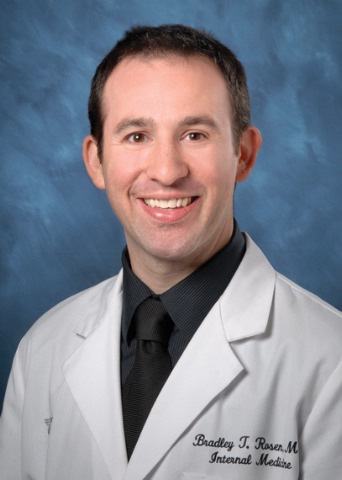
Dr. Bradley T. Rosen can often be spotted around the country helping hospitalists improve their skills in performing procedures. As part of the team working in the Procedure Center at Cedars-Sinai Medical Center in Los Angeles, Dr. Rosen has worked the last several years to help publicize the growing proceduralist movement. The Procedure Center at Cedars-Sinai has been a poster child for the movement, offering a range of services from vascular access to lumbar punctures to percutaneous tracheostomies, and doing it with an overall complication rate of less than 1%.
Dr. Rosen, who also serves as the medical director for the Inpatient Specialty Program, a nonteaching hospitalist team at Cedars-Sinai, shared his thoughts on where the proceduralist movement is likely to go in the future.
HN: There seems to be a strong economic and safety case for having dedicated proceduralists. Why don’t more hospitals do this?
Dr. Rosen: There are a number of barriers to entry for proceduralists. First, there’s an up-front investment in staff and equipment such as an ultrasound machine, as well as the time and money required to make sure that the proceduralists are properly trained on its use. Not all institutions or hospitalist groups are willing or able to shoulder those investments. Second, like any successful new initiative, launching a procedure service requires a strong leader. You need to have someone who is passionate about doing safe, effective procedures, earns the trust of the institution and referring doctors, and knows how to manage complications. And, of course, as with anything in a complex health care environment, there’s always politics. It’s helpful to have administrative support and backing, and you must also be aware of who is currently doing certain procedures and who you might be potentially threatening in terms of their livelihood if you ramp up a procedure service.
HN: What’s the attraction for you in being a proceduralist rather than a traditional hospitalist?
Dr. Rosen: There’s a certain subset of hospitalists that really enjoy doing procedures. Of course, most of the people in medical school who enjoyed working with their hands went into some kind of surgical specialty. However, there’s a subset of us who wanted to do the cognitive work of internal medicine and hospital medicine but who still do enjoy doing procedures. This proceduralist niche is perfect for us. We like the challenge of it, the feeling of being rewarded with a clear beginning and end to doing procedures, the immediate gratification of completing a task and seeing how we have helped a patient. Also, variety is the spice of life—it’s nice to change up the pace of hospitalist work from time to time. I actually believe that many hospitalists enjoy, or used to enjoy, doing procedures, it’s just a matter of whether they have the time, training, and skills to do them safely.
HN: Is there value in recognizing proceduralists as their own subspecialty?
Dr. Rosen: I don’t know if a formal subspecialty is warranted. In a sense, doing these procedures is simply part of the whole process of providing excellent care for a patient. But carving out the proceduralist niche within the hospitalist movement does make a lot of sense, both for patient safety reasons, as well as for the educational benefits. I also believe each institution should have in place meaningful credentialing and proctoring criteria for physicians to perform procedures, which should also include the use of ultrasound for procedural guidance. However, at this time, I do not think a formal subspecialty is necessary to achieve our goals.
HN: You do a lot of teaching on procedural safety. Where are the gaps in knowledge?
Dr. Rosen: The first glaring gap is that most hospitalists are still not that familiar or comfortable with an ultrasound machine. It’s not really something we learn anywhere in our training. It’s traditionally been a radiology thing. But now with ultrasound machines being portable and of higher quality, it’s really a tool that we shouldn’t ignore. It has been said that ultrasound is the stethoscope of the 21st century, but like any new technology, people need to be trained on its proper use and utility in order to reap the benefit. Another area where hospitalists are lacking involves the comfort and confidence to do the procedures safely. That all comes back to proper training on the front end and whether or not they are doing enough of these procedures on an ongoing basis to keep their skills honed.
HN: The emergence of proceduralists has been one of the evolutions in the hospitalist movement. What do you think could be the next big trend in the specialty?
Dr. Rosen: I believe that hospitalists are going to become more and more involved in assisting with safe transitions of care from the acute side to subacute to home. I think we will need to broaden our traditional role of just taking care of hospitalized patients in order to adopt a more patient-centric, longitudinal view of their care. One of the Achilles heels of hospital medicine has always been multiple hand-offs. Every time you hand off, there is a voltage drop of information and this works to the detriment of the patient. Whether it has to do with robust medicine reconciliation, arranging follow-up appointments, doing home visits, providing skilled nursing care, or simply making sure that the patient or family members have someone to call in case of questions, hospitalists will more and more be seen as the team who can, and must, solve these problems. As health care reform, accountable care organizations, and changes in reimbursement work their way through the system, we are going to be held more accountable for quality and outcomes, rather than just RVUs [relative value units]. Hospitalist programs of the future will play an instrumental role in helping patients transition more seamlessly across what has traditionally been inefficient systems involving multiple, fragmented silos of care.
Dr. Bradley T. Rosen can often be spotted around the country helping hospitalists improve their skills in performing procedures. As part of the team working in the Procedure Center at Cedars-Sinai Medical Center in Los Angeles, Dr. Rosen has worked the last several years to help publicize the growing proceduralist movement. The Procedure Center at Cedars-Sinai has been a poster child for the movement, offering a range of services from vascular access to lumbar punctures to percutaneous tracheostomies, and doing it with an overall complication rate of less than 1%.
Dr. Rosen, who also serves as the medical director for the Inpatient Specialty Program, a nonteaching hospitalist team at Cedars-Sinai, shared his thoughts on where the proceduralist movement is likely to go in the future.
HN: There seems to be a strong economic and safety case for having dedicated proceduralists. Why don’t more hospitals do this?
Dr. Rosen: There are a number of barriers to entry for proceduralists. First, there’s an up-front investment in staff and equipment such as an ultrasound machine, as well as the time and money required to make sure that the proceduralists are properly trained on its use. Not all institutions or hospitalist groups are willing or able to shoulder those investments. Second, like any successful new initiative, launching a procedure service requires a strong leader. You need to have someone who is passionate about doing safe, effective procedures, earns the trust of the institution and referring doctors, and knows how to manage complications. And, of course, as with anything in a complex health care environment, there’s always politics. It’s helpful to have administrative support and backing, and you must also be aware of who is currently doing certain procedures and who you might be potentially threatening in terms of their livelihood if you ramp up a procedure service.
HN: What’s the attraction for you in being a proceduralist rather than a traditional hospitalist?
Dr. Rosen: There’s a certain subset of hospitalists that really enjoy doing procedures. Of course, most of the people in medical school who enjoyed working with their hands went into some kind of surgical specialty. However, there’s a subset of us who wanted to do the cognitive work of internal medicine and hospital medicine but who still do enjoy doing procedures. This proceduralist niche is perfect for us. We like the challenge of it, the feeling of being rewarded with a clear beginning and end to doing procedures, the immediate gratification of completing a task and seeing how we have helped a patient. Also, variety is the spice of life—it’s nice to change up the pace of hospitalist work from time to time. I actually believe that many hospitalists enjoy, or used to enjoy, doing procedures, it’s just a matter of whether they have the time, training, and skills to do them safely.
HN: Is there value in recognizing proceduralists as their own subspecialty?
Dr. Rosen: I don’t know if a formal subspecialty is warranted. In a sense, doing these procedures is simply part of the whole process of providing excellent care for a patient. But carving out the proceduralist niche within the hospitalist movement does make a lot of sense, both for patient safety reasons, as well as for the educational benefits. I also believe each institution should have in place meaningful credentialing and proctoring criteria for physicians to perform procedures, which should also include the use of ultrasound for procedural guidance. However, at this time, I do not think a formal subspecialty is necessary to achieve our goals.
HN: You do a lot of teaching on procedural safety. Where are the gaps in knowledge?
Dr. Rosen: The first glaring gap is that most hospitalists are still not that familiar or comfortable with an ultrasound machine. It’s not really something we learn anywhere in our training. It’s traditionally been a radiology thing. But now with ultrasound machines being portable and of higher quality, it’s really a tool that we shouldn’t ignore. It has been said that ultrasound is the stethoscope of the 21st century, but like any new technology, people need to be trained on its proper use and utility in order to reap the benefit. Another area where hospitalists are lacking involves the comfort and confidence to do the procedures safely. That all comes back to proper training on the front end and whether or not they are doing enough of these procedures on an ongoing basis to keep their skills honed.
HN: The emergence of proceduralists has been one of the evolutions in the hospitalist movement. What do you think could be the next big trend in the specialty?
Dr. Rosen: I believe that hospitalists are going to become more and more involved in assisting with safe transitions of care from the acute side to subacute to home. I think we will need to broaden our traditional role of just taking care of hospitalized patients in order to adopt a more patient-centric, longitudinal view of their care. One of the Achilles heels of hospital medicine has always been multiple hand-offs. Every time you hand off, there is a voltage drop of information and this works to the detriment of the patient. Whether it has to do with robust medicine reconciliation, arranging follow-up appointments, doing home visits, providing skilled nursing care, or simply making sure that the patient or family members have someone to call in case of questions, hospitalists will more and more be seen as the team who can, and must, solve these problems. As health care reform, accountable care organizations, and changes in reimbursement work their way through the system, we are going to be held more accountable for quality and outcomes, rather than just RVUs [relative value units]. Hospitalist programs of the future will play an instrumental role in helping patients transition more seamlessly across what has traditionally been inefficient systems involving multiple, fragmented silos of care.
Dr. Bradley T. Rosen can often be spotted around the country helping hospitalists improve their skills in performing procedures. As part of the team working in the Procedure Center at Cedars-Sinai Medical Center in Los Angeles, Dr. Rosen has worked the last several years to help publicize the growing proceduralist movement. The Procedure Center at Cedars-Sinai has been a poster child for the movement, offering a range of services from vascular access to lumbar punctures to percutaneous tracheostomies, and doing it with an overall complication rate of less than 1%.
Dr. Rosen, who also serves as the medical director for the Inpatient Specialty Program, a nonteaching hospitalist team at Cedars-Sinai, shared his thoughts on where the proceduralist movement is likely to go in the future.
HN: There seems to be a strong economic and safety case for having dedicated proceduralists. Why don’t more hospitals do this?
Dr. Rosen: There are a number of barriers to entry for proceduralists. First, there’s an up-front investment in staff and equipment such as an ultrasound machine, as well as the time and money required to make sure that the proceduralists are properly trained on its use. Not all institutions or hospitalist groups are willing or able to shoulder those investments. Second, like any successful new initiative, launching a procedure service requires a strong leader. You need to have someone who is passionate about doing safe, effective procedures, earns the trust of the institution and referring doctors, and knows how to manage complications. And, of course, as with anything in a complex health care environment, there’s always politics. It’s helpful to have administrative support and backing, and you must also be aware of who is currently doing certain procedures and who you might be potentially threatening in terms of their livelihood if you ramp up a procedure service.
HN: What’s the attraction for you in being a proceduralist rather than a traditional hospitalist?
Dr. Rosen: There’s a certain subset of hospitalists that really enjoy doing procedures. Of course, most of the people in medical school who enjoyed working with their hands went into some kind of surgical specialty. However, there’s a subset of us who wanted to do the cognitive work of internal medicine and hospital medicine but who still do enjoy doing procedures. This proceduralist niche is perfect for us. We like the challenge of it, the feeling of being rewarded with a clear beginning and end to doing procedures, the immediate gratification of completing a task and seeing how we have helped a patient. Also, variety is the spice of life—it’s nice to change up the pace of hospitalist work from time to time. I actually believe that many hospitalists enjoy, or used to enjoy, doing procedures, it’s just a matter of whether they have the time, training, and skills to do them safely.
HN: Is there value in recognizing proceduralists as their own subspecialty?
Dr. Rosen: I don’t know if a formal subspecialty is warranted. In a sense, doing these procedures is simply part of the whole process of providing excellent care for a patient. But carving out the proceduralist niche within the hospitalist movement does make a lot of sense, both for patient safety reasons, as well as for the educational benefits. I also believe each institution should have in place meaningful credentialing and proctoring criteria for physicians to perform procedures, which should also include the use of ultrasound for procedural guidance. However, at this time, I do not think a formal subspecialty is necessary to achieve our goals.
HN: You do a lot of teaching on procedural safety. Where are the gaps in knowledge?
Dr. Rosen: The first glaring gap is that most hospitalists are still not that familiar or comfortable with an ultrasound machine. It’s not really something we learn anywhere in our training. It’s traditionally been a radiology thing. But now with ultrasound machines being portable and of higher quality, it’s really a tool that we shouldn’t ignore. It has been said that ultrasound is the stethoscope of the 21st century, but like any new technology, people need to be trained on its proper use and utility in order to reap the benefit. Another area where hospitalists are lacking involves the comfort and confidence to do the procedures safely. That all comes back to proper training on the front end and whether or not they are doing enough of these procedures on an ongoing basis to keep their skills honed.
HN: The emergence of proceduralists has been one of the evolutions in the hospitalist movement. What do you think could be the next big trend in the specialty?
Dr. Rosen: I believe that hospitalists are going to become more and more involved in assisting with safe transitions of care from the acute side to subacute to home. I think we will need to broaden our traditional role of just taking care of hospitalized patients in order to adopt a more patient-centric, longitudinal view of their care. One of the Achilles heels of hospital medicine has always been multiple hand-offs. Every time you hand off, there is a voltage drop of information and this works to the detriment of the patient. Whether it has to do with robust medicine reconciliation, arranging follow-up appointments, doing home visits, providing skilled nursing care, or simply making sure that the patient or family members have someone to call in case of questions, hospitalists will more and more be seen as the team who can, and must, solve these problems. As health care reform, accountable care organizations, and changes in reimbursement work their way through the system, we are going to be held more accountable for quality and outcomes, rather than just RVUs [relative value units]. Hospitalist programs of the future will play an instrumental role in helping patients transition more seamlessly across what has traditionally been inefficient systems involving multiple, fragmented silos of care.
CMS Issues Long-Awaited Proposal on ACOs
After months of deliberation, officials at the Centers for Medicare and Medicaid Services released a proposed rule outlining how physicians, hospitals, and long-term care facilities can work together to form accountable care organizations and share in the savings they achieve for Medicare.
The voluntary program was created under the Affordable Care Act and will begin in Jan. 2012. Under the proposal, accountable care organizations (ACOs) could include physicians in group practice, networks of individual practices, hospitals that employ physicians, and partnerships among these entities, as well as other providers. The idea is for ACOs to be a partnership among a range of physicians, including specialists and primary care providers. However, only primary care providers will be able to form an ACO, according to CMS.
<[stk -1]>According to the proposed rule, providers in the ACO would continue to receive their regular fee-for-service payments under Medicare, but they could also qualify for additional payment if their care resulted in savings to the program. The proposed framework requires that ACOs meet certain quality standards and demonstrate that they have reduced costs in order to be eligible to share in any savings. The proposal outlines 65 quality measures in five quality domains: patient experience, care coordination, patient safety, preventive health, and care of at-risk and frail elderly populations.For qc, not for linking. <http://www.healthcare.gov/news/factsheets/accountablecare03312011a.html > <[etk]>
“ACOs aren’t just a new way to pay for care; they’re a new model for the organization and delivery of the care under Medicare,” Dr. Donald Berwick, CMS administrator, said during a press conference to announce the proposed rule.
Dr. Berwick said he doesn’t know how many ACOs will form under the program, but that the level of interest is “enormous.”
Since the Affordable Care Act was passed last year, the health care com
munity has been buzzing about how ACOs might be structured and if they could succeed in reducing health care costs. Integrated care organizations like Geisinger Health System in Danville, Pa., are considered to have a leg up because their hospital and outpatient care is already coordinated.
But Dr. Berwick said that the proposal allows for ACOs at various levels of development to participate. For example, less developed ACOs can choose to receive only shared savings for 2 years before assuming risk. More mature organizations can assume risk immediately but be eligible for greater levels of shared savings. “Our aim is to create on-ramps that will allow many to participate, depending on the different levels of maturity they are starting with,” Dr. Berwick said.
CMS officials estimate that the program could result in as much as $960 million in Medicare savings over 3 years.
<[stk -3]>Although federal officials said that they expect the coordinated care to pay dividends in savings to Medicare, ACOs will not be set up like HMOs. Medicare beneficiaries will still be able to see their choice of providers under fee-for-service Medicare. Providers will be the ones that enroll in ACOs and must notify patients they are receiving care within an ACO. <[etk]>
In addition to the ACO proposed rule, the Department of Justice and the Federal Trade Commission have also issued guidance on how physicians and hospitals that form an ACO can steer clear of antitrust laws. «http://www.ftc.gov/opp/aco» Officials at the CMS and the Office of the Inspector General have also issued a notice on potential waivers that could be granted in connection with the shared savings program, «http://www.ofr.gov/OFRUpload/OFRData/2011-07884_PI.pdf» and the Internal Revenue Service has issued new guidance for tax-exempt hospitals seeking to participate in the program.«http://www.irs.gov/pub/irs-drop/n-11-20.pdf»
I have checked the following facts in my story: (Please initial each.)
The CMS will be accepting comments on the proposed rule for 60 days<official publication date in the FR is April 7>. The agency also plans a series of open-door forums and listening sessions to explain the proposal and to get feedback from the public.
After months of deliberation, officials at the Centers for Medicare and Medicaid Services released a proposed rule outlining how physicians, hospitals, and long-term care facilities can work together to form accountable care organizations and share in the savings they achieve for Medicare.
The voluntary program was created under the Affordable Care Act and will begin in Jan. 2012. Under the proposal, accountable care organizations (ACOs) could include physicians in group practice, networks of individual practices, hospitals that employ physicians, and partnerships among these entities, as well as other providers. The idea is for ACOs to be a partnership among a range of physicians, including specialists and primary care providers. However, only primary care providers will be able to form an ACO, according to CMS.
<[stk -1]>According to the proposed rule, providers in the ACO would continue to receive their regular fee-for-service payments under Medicare, but they could also qualify for additional payment if their care resulted in savings to the program. The proposed framework requires that ACOs meet certain quality standards and demonstrate that they have reduced costs in order to be eligible to share in any savings. The proposal outlines 65 quality measures in five quality domains: patient experience, care coordination, patient safety, preventive health, and care of at-risk and frail elderly populations.For qc, not for linking. <http://www.healthcare.gov/news/factsheets/accountablecare03312011a.html > <[etk]>
“ACOs aren’t just a new way to pay for care; they’re a new model for the organization and delivery of the care under Medicare,” Dr. Donald Berwick, CMS administrator, said during a press conference to announce the proposed rule.
Dr. Berwick said he doesn’t know how many ACOs will form under the program, but that the level of interest is “enormous.”
Since the Affordable Care Act was passed last year, the health care com
munity has been buzzing about how ACOs might be structured and if they could succeed in reducing health care costs. Integrated care organizations like Geisinger Health System in Danville, Pa., are considered to have a leg up because their hospital and outpatient care is already coordinated.
But Dr. Berwick said that the proposal allows for ACOs at various levels of development to participate. For example, less developed ACOs can choose to receive only shared savings for 2 years before assuming risk. More mature organizations can assume risk immediately but be eligible for greater levels of shared savings. “Our aim is to create on-ramps that will allow many to participate, depending on the different levels of maturity they are starting with,” Dr. Berwick said.
CMS officials estimate that the program could result in as much as $960 million in Medicare savings over 3 years.
<[stk -3]>Although federal officials said that they expect the coordinated care to pay dividends in savings to Medicare, ACOs will not be set up like HMOs. Medicare beneficiaries will still be able to see their choice of providers under fee-for-service Medicare. Providers will be the ones that enroll in ACOs and must notify patients they are receiving care within an ACO. <[etk]>
In addition to the ACO proposed rule, the Department of Justice and the Federal Trade Commission have also issued guidance on how physicians and hospitals that form an ACO can steer clear of antitrust laws. «http://www.ftc.gov/opp/aco» Officials at the CMS and the Office of the Inspector General have also issued a notice on potential waivers that could be granted in connection with the shared savings program, «http://www.ofr.gov/OFRUpload/OFRData/2011-07884_PI.pdf» and the Internal Revenue Service has issued new guidance for tax-exempt hospitals seeking to participate in the program.«http://www.irs.gov/pub/irs-drop/n-11-20.pdf»
I have checked the following facts in my story: (Please initial each.)
The CMS will be accepting comments on the proposed rule for 60 days<official publication date in the FR is April 7>. The agency also plans a series of open-door forums and listening sessions to explain the proposal and to get feedback from the public.
After months of deliberation, officials at the Centers for Medicare and Medicaid Services released a proposed rule outlining how physicians, hospitals, and long-term care facilities can work together to form accountable care organizations and share in the savings they achieve for Medicare.
The voluntary program was created under the Affordable Care Act and will begin in Jan. 2012. Under the proposal, accountable care organizations (ACOs) could include physicians in group practice, networks of individual practices, hospitals that employ physicians, and partnerships among these entities, as well as other providers. The idea is for ACOs to be a partnership among a range of physicians, including specialists and primary care providers. However, only primary care providers will be able to form an ACO, according to CMS.
<[stk -1]>According to the proposed rule, providers in the ACO would continue to receive their regular fee-for-service payments under Medicare, but they could also qualify for additional payment if their care resulted in savings to the program. The proposed framework requires that ACOs meet certain quality standards and demonstrate that they have reduced costs in order to be eligible to share in any savings. The proposal outlines 65 quality measures in five quality domains: patient experience, care coordination, patient safety, preventive health, and care of at-risk and frail elderly populations.For qc, not for linking. <http://www.healthcare.gov/news/factsheets/accountablecare03312011a.html > <[etk]>
“ACOs aren’t just a new way to pay for care; they’re a new model for the organization and delivery of the care under Medicare,” Dr. Donald Berwick, CMS administrator, said during a press conference to announce the proposed rule.
Dr. Berwick said he doesn’t know how many ACOs will form under the program, but that the level of interest is “enormous.”
Since the Affordable Care Act was passed last year, the health care com
munity has been buzzing about how ACOs might be structured and if they could succeed in reducing health care costs. Integrated care organizations like Geisinger Health System in Danville, Pa., are considered to have a leg up because their hospital and outpatient care is already coordinated.
But Dr. Berwick said that the proposal allows for ACOs at various levels of development to participate. For example, less developed ACOs can choose to receive only shared savings for 2 years before assuming risk. More mature organizations can assume risk immediately but be eligible for greater levels of shared savings. “Our aim is to create on-ramps that will allow many to participate, depending on the different levels of maturity they are starting with,” Dr. Berwick said.
CMS officials estimate that the program could result in as much as $960 million in Medicare savings over 3 years.
<[stk -3]>Although federal officials said that they expect the coordinated care to pay dividends in savings to Medicare, ACOs will not be set up like HMOs. Medicare beneficiaries will still be able to see their choice of providers under fee-for-service Medicare. Providers will be the ones that enroll in ACOs and must notify patients they are receiving care within an ACO. <[etk]>
In addition to the ACO proposed rule, the Department of Justice and the Federal Trade Commission have also issued guidance on how physicians and hospitals that form an ACO can steer clear of antitrust laws. «http://www.ftc.gov/opp/aco» Officials at the CMS and the Office of the Inspector General have also issued a notice on potential waivers that could be granted in connection with the shared savings program, «http://www.ofr.gov/OFRUpload/OFRData/2011-07884_PI.pdf» and the Internal Revenue Service has issued new guidance for tax-exempt hospitals seeking to participate in the program.«http://www.irs.gov/pub/irs-drop/n-11-20.pdf»
I have checked the following facts in my story: (Please initial each.)
The CMS will be accepting comments on the proposed rule for 60 days<official publication date in the FR is April 7>. The agency also plans a series of open-door forums and listening sessions to explain the proposal and to get feedback from the public.
Feds' $1-Billion Partnership Project Targets Readmissions, Preventable Conditions
Federal officials are pouring a $1 billion into a new initiative aimed at reducing hospital readmissions and preventable injuries.
The “Partnership for Patients” brings together physicians, nurses, hospitals, patient advocates, insurers, and employers for a 3-year project that will help spread the lessons of successful quality improvement initiatives across the country and provide tools for health care providers.
Many hospitals have already had success in reducing readmissions or nearly eliminating hospital-acquired infections, but those initiatives haven't been adopted widely enough, Health and Human Services Secretary Kathleen Sebelius said at a press conference to launch the Partnership for Patients.
“The challenge is how to figure out how to make these models spread and accelerate this care improvement,” she said.
The goal of the program is to reduce preventable hospital-acquired conditions by 40% compared to 2010 rates by the end of 2013. And officials are also seeking to reduce hospital readmissions within 30 days of discharge by 20% compared to 2010. HHS officials estimate that the quality initiative will save 60,000 lives and up to $35 billion in health care costs, including up to $10 billion for Medicare alone.
The $1 billion investment of federal funds comes from the Affordable Care Act. HHS officials said they were making $500 million available right away through the Community-Based Care Transitions Program to support efforts to improve care transitions between hospitals and physicians in the community. Starting April 12, hospitals and community-based organizations that team up to provide transition services can submit applications to HHS for funding. An additional $500 million will come from the CMS Innovation Center to fund demonstration projects aimed at reducing hospital-acquired conditions.
Under the Partnership for Patients, HHS officials are asking hospitals to focus on nine types of adverse events including drug reactions, pressure ulcers, childbirth complications, and surgical site infections. HHS officials also plan to recruit a group of “pioneer” hospitals that would seek to improve care for all forms of harm and complications, said Dr. Donald Berwick, administrator of the Centers for Medicare and Medicaid Services. Dr. Berwick said these hospitals would go beyond the list of nine conditions and seek to transform themselves into “safer, high reliability organizations.”
“By assembling this partnership and committing to these ambitious goals, we're sending a clear message that we can no longer accept a health care system in which only some Americans get the best possible care,” Ms. Sebelius said.
Federal officials are pouring a $1 billion into a new initiative aimed at reducing hospital readmissions and preventable injuries.
The “Partnership for Patients” brings together physicians, nurses, hospitals, patient advocates, insurers, and employers for a 3-year project that will help spread the lessons of successful quality improvement initiatives across the country and provide tools for health care providers.
Many hospitals have already had success in reducing readmissions or nearly eliminating hospital-acquired infections, but those initiatives haven't been adopted widely enough, Health and Human Services Secretary Kathleen Sebelius said at a press conference to launch the Partnership for Patients.
“The challenge is how to figure out how to make these models spread and accelerate this care improvement,” she said.
The goal of the program is to reduce preventable hospital-acquired conditions by 40% compared to 2010 rates by the end of 2013. And officials are also seeking to reduce hospital readmissions within 30 days of discharge by 20% compared to 2010. HHS officials estimate that the quality initiative will save 60,000 lives and up to $35 billion in health care costs, including up to $10 billion for Medicare alone.
The $1 billion investment of federal funds comes from the Affordable Care Act. HHS officials said they were making $500 million available right away through the Community-Based Care Transitions Program to support efforts to improve care transitions between hospitals and physicians in the community. Starting April 12, hospitals and community-based organizations that team up to provide transition services can submit applications to HHS for funding. An additional $500 million will come from the CMS Innovation Center to fund demonstration projects aimed at reducing hospital-acquired conditions.
Under the Partnership for Patients, HHS officials are asking hospitals to focus on nine types of adverse events including drug reactions, pressure ulcers, childbirth complications, and surgical site infections. HHS officials also plan to recruit a group of “pioneer” hospitals that would seek to improve care for all forms of harm and complications, said Dr. Donald Berwick, administrator of the Centers for Medicare and Medicaid Services. Dr. Berwick said these hospitals would go beyond the list of nine conditions and seek to transform themselves into “safer, high reliability organizations.”
“By assembling this partnership and committing to these ambitious goals, we're sending a clear message that we can no longer accept a health care system in which only some Americans get the best possible care,” Ms. Sebelius said.
Federal officials are pouring a $1 billion into a new initiative aimed at reducing hospital readmissions and preventable injuries.
The “Partnership for Patients” brings together physicians, nurses, hospitals, patient advocates, insurers, and employers for a 3-year project that will help spread the lessons of successful quality improvement initiatives across the country and provide tools for health care providers.
Many hospitals have already had success in reducing readmissions or nearly eliminating hospital-acquired infections, but those initiatives haven't been adopted widely enough, Health and Human Services Secretary Kathleen Sebelius said at a press conference to launch the Partnership for Patients.
“The challenge is how to figure out how to make these models spread and accelerate this care improvement,” she said.
The goal of the program is to reduce preventable hospital-acquired conditions by 40% compared to 2010 rates by the end of 2013. And officials are also seeking to reduce hospital readmissions within 30 days of discharge by 20% compared to 2010. HHS officials estimate that the quality initiative will save 60,000 lives and up to $35 billion in health care costs, including up to $10 billion for Medicare alone.
The $1 billion investment of federal funds comes from the Affordable Care Act. HHS officials said they were making $500 million available right away through the Community-Based Care Transitions Program to support efforts to improve care transitions between hospitals and physicians in the community. Starting April 12, hospitals and community-based organizations that team up to provide transition services can submit applications to HHS for funding. An additional $500 million will come from the CMS Innovation Center to fund demonstration projects aimed at reducing hospital-acquired conditions.
Under the Partnership for Patients, HHS officials are asking hospitals to focus on nine types of adverse events including drug reactions, pressure ulcers, childbirth complications, and surgical site infections. HHS officials also plan to recruit a group of “pioneer” hospitals that would seek to improve care for all forms of harm and complications, said Dr. Donald Berwick, administrator of the Centers for Medicare and Medicaid Services. Dr. Berwick said these hospitals would go beyond the list of nine conditions and seek to transform themselves into “safer, high reliability organizations.”
“By assembling this partnership and committing to these ambitious goals, we're sending a clear message that we can no longer accept a health care system in which only some Americans get the best possible care,” Ms. Sebelius said.
CMS Web Site Adds Hospital-Acquired Condition Data
Patients can now go to Medicare's Hospital Compare Web site to see how hospitals are doing in preventing certain adverse events and infections.
The Centers for Medicare and Medicaid Services is providing data on eight hospital-acquired conditions: vascular catheter–associated bloodstream infections; catheter-associated urinary tract infections; blood incompatibility; pressure ulcers stages III and IV; air embolism; objects left in the patient after surgery; injuries during a hospital stay such as falls and trauma; and manifestations of poor glycemic control.
The CMS began collecting data on these conditions in 2007, and since 2008, Medicare has refused to provide additional payment if one of these conditions occurs during the patient's hospital stay. Each condition is costly and happens frequently during inpatient stays for Medicare patients, according to the agency. The conditions were chosen because Medicare officials consider them to be reasonably preventable through the use of evidence-based guidelines.
Data from October 2008 through June 2010 are available through a downloadable file on the Hospital Compare Web site. Later this year, CMS plans to integrate the data directly into the site framework.
Patients can now go to Medicare's Hospital Compare Web site to see how hospitals are doing in preventing certain adverse events and infections.
The Centers for Medicare and Medicaid Services is providing data on eight hospital-acquired conditions: vascular catheter–associated bloodstream infections; catheter-associated urinary tract infections; blood incompatibility; pressure ulcers stages III and IV; air embolism; objects left in the patient after surgery; injuries during a hospital stay such as falls and trauma; and manifestations of poor glycemic control.
The CMS began collecting data on these conditions in 2007, and since 2008, Medicare has refused to provide additional payment if one of these conditions occurs during the patient's hospital stay. Each condition is costly and happens frequently during inpatient stays for Medicare patients, according to the agency. The conditions were chosen because Medicare officials consider them to be reasonably preventable through the use of evidence-based guidelines.
Data from October 2008 through June 2010 are available through a downloadable file on the Hospital Compare Web site. Later this year, CMS plans to integrate the data directly into the site framework.
Patients can now go to Medicare's Hospital Compare Web site to see how hospitals are doing in preventing certain adverse events and infections.
The Centers for Medicare and Medicaid Services is providing data on eight hospital-acquired conditions: vascular catheter–associated bloodstream infections; catheter-associated urinary tract infections; blood incompatibility; pressure ulcers stages III and IV; air embolism; objects left in the patient after surgery; injuries during a hospital stay such as falls and trauma; and manifestations of poor glycemic control.
The CMS began collecting data on these conditions in 2007, and since 2008, Medicare has refused to provide additional payment if one of these conditions occurs during the patient's hospital stay. Each condition is costly and happens frequently during inpatient stays for Medicare patients, according to the agency. The conditions were chosen because Medicare officials consider them to be reasonably preventable through the use of evidence-based guidelines.
Data from October 2008 through June 2010 are available through a downloadable file on the Hospital Compare Web site. Later this year, CMS plans to integrate the data directly into the site framework.
Medicare Now Accepting 'Meaningful Use' Data : First checks go out in May, but many still face logistical hurdles.
Physicians can now send data to the federal government to qualify for thousands of dollars in bonus payments under the new Medicare electronic health record incentive program.
The program officially began on Jan. 3, but April 18 was the first day that physicians and other eligible providers could submit data on their “meaningful use” of electronic health records (EHRs).
In order to qualify for Medicare incentive payments for 2011, physicians must report on at least 90 days of meaningful use occurring during this calendar year.
Oct. 1, 2011, is the last day that physicians can begin their 90-day reporting period to receive a 2011 incentive payment. The first checks for the Medicare incentive program are expected to go out in May, according to the Centers for Medicare and Medicaid Services.
The incentive program, which was authorized under the 2009 Health Information Technology for Economic and Clinical Health (HITECH) Act, offers payments to physicians who use health information technology to improve patient care.
Federal regulations governing the program spell out how physicians and hospitals can meet standards for the meaningful use of certified EHR technology.
Physicians who meet the criteria are eligible to receive up to $44,000 over a period of 5 years under the Medicare program. Physicians can still receive bonuses if they begin their meaningful use of the technology later, but they must qualify for the program before the end of 2012 to get all the available incentives.
A similar program is in place under the Medicaid program, with physicians eligible to receive up to $64,000 over 6 years for the adoption and use of certified EHR technology.
As part of the attestation process, physicians and other eligible providers must go online to report data on a number of meaningful use and quality measures established by the CMS. Through the online portal, physicians can report the numerator, denominator, and any potential exclusions for the objectives.
They can also attest that they have successfully met the program requirements.
For example, the meaningful use regulations require that providers maintain an up-to-date accounting of current and active diagnoses. To be eligible for incentives, providers must report that more than 80% of all unique patients seen by the provider have at least one entry, or an indicator that no problems are known for the patients. The data must be recorded in a structured format.
“There is a great deal of interest in the meaningful use program,” said William Underwood, a senior associate in the division of medical practice, professionalism, and quality at the American College of Physicians.
But while interest is high, that does not mean physicians will be clamoring to report on meaningful use immediately.
Currently, physicians in both small and large practices are struggling with logistical hurdles, Mr. Underwood said.
For example, there is not a process in place to allow practice administrators to submit meaningful use data to the CMS on behalf of large physician practices. The current set-up requires a physician to report the information. While CMS officials plan to address this, it has not happened yet, Mr. Underwood said.
Some small practices are having difficulty meeting meaningful use thresholds because other entities are not exchanging information with them regarding labs and referrals. And practices of all sizes are waiting for vendors to finish rolling out updates that show they're in compliance with meaningful use certification, he said.
Dr. Steven Waldren, director of the Center for Health IT at the American Academy of Family Physicians, agreed that while some physicians will submit data immediately, a large portion are still trying to figure out what they need to do to meet meaningful use requirements and ensure that their EHR system is certified. It may take until at least October to get a real sense of how many physicians plan to participate, he said.

Oct. 1 is the last day physicians can begin their 90-day reporting for 2011. Some are not yet ready.
Source ©Yanik Chauvin/Istockphoto.Com
Physicians can now send data to the federal government to qualify for thousands of dollars in bonus payments under the new Medicare electronic health record incentive program.
The program officially began on Jan. 3, but April 18 was the first day that physicians and other eligible providers could submit data on their “meaningful use” of electronic health records (EHRs).
In order to qualify for Medicare incentive payments for 2011, physicians must report on at least 90 days of meaningful use occurring during this calendar year.
Oct. 1, 2011, is the last day that physicians can begin their 90-day reporting period to receive a 2011 incentive payment. The first checks for the Medicare incentive program are expected to go out in May, according to the Centers for Medicare and Medicaid Services.
The incentive program, which was authorized under the 2009 Health Information Technology for Economic and Clinical Health (HITECH) Act, offers payments to physicians who use health information technology to improve patient care.
Federal regulations governing the program spell out how physicians and hospitals can meet standards for the meaningful use of certified EHR technology.
Physicians who meet the criteria are eligible to receive up to $44,000 over a period of 5 years under the Medicare program. Physicians can still receive bonuses if they begin their meaningful use of the technology later, but they must qualify for the program before the end of 2012 to get all the available incentives.
A similar program is in place under the Medicaid program, with physicians eligible to receive up to $64,000 over 6 years for the adoption and use of certified EHR technology.
As part of the attestation process, physicians and other eligible providers must go online to report data on a number of meaningful use and quality measures established by the CMS. Through the online portal, physicians can report the numerator, denominator, and any potential exclusions for the objectives.
They can also attest that they have successfully met the program requirements.
For example, the meaningful use regulations require that providers maintain an up-to-date accounting of current and active diagnoses. To be eligible for incentives, providers must report that more than 80% of all unique patients seen by the provider have at least one entry, or an indicator that no problems are known for the patients. The data must be recorded in a structured format.
“There is a great deal of interest in the meaningful use program,” said William Underwood, a senior associate in the division of medical practice, professionalism, and quality at the American College of Physicians.
But while interest is high, that does not mean physicians will be clamoring to report on meaningful use immediately.
Currently, physicians in both small and large practices are struggling with logistical hurdles, Mr. Underwood said.
For example, there is not a process in place to allow practice administrators to submit meaningful use data to the CMS on behalf of large physician practices. The current set-up requires a physician to report the information. While CMS officials plan to address this, it has not happened yet, Mr. Underwood said.
Some small practices are having difficulty meeting meaningful use thresholds because other entities are not exchanging information with them regarding labs and referrals. And practices of all sizes are waiting for vendors to finish rolling out updates that show they're in compliance with meaningful use certification, he said.
Dr. Steven Waldren, director of the Center for Health IT at the American Academy of Family Physicians, agreed that while some physicians will submit data immediately, a large portion are still trying to figure out what they need to do to meet meaningful use requirements and ensure that their EHR system is certified. It may take until at least October to get a real sense of how many physicians plan to participate, he said.
Oct. 1 is the last day physicians can begin their 90-day reporting for 2011. Some are not yet ready.
Source ©Yanik Chauvin/Istockphoto.Com
Physicians can now send data to the federal government to qualify for thousands of dollars in bonus payments under the new Medicare electronic health record incentive program.
The program officially began on Jan. 3, but April 18 was the first day that physicians and other eligible providers could submit data on their “meaningful use” of electronic health records (EHRs).
In order to qualify for Medicare incentive payments for 2011, physicians must report on at least 90 days of meaningful use occurring during this calendar year.
Oct. 1, 2011, is the last day that physicians can begin their 90-day reporting period to receive a 2011 incentive payment. The first checks for the Medicare incentive program are expected to go out in May, according to the Centers for Medicare and Medicaid Services.
The incentive program, which was authorized under the 2009 Health Information Technology for Economic and Clinical Health (HITECH) Act, offers payments to physicians who use health information technology to improve patient care.
Federal regulations governing the program spell out how physicians and hospitals can meet standards for the meaningful use of certified EHR technology.
Physicians who meet the criteria are eligible to receive up to $44,000 over a period of 5 years under the Medicare program. Physicians can still receive bonuses if they begin their meaningful use of the technology later, but they must qualify for the program before the end of 2012 to get all the available incentives.
A similar program is in place under the Medicaid program, with physicians eligible to receive up to $64,000 over 6 years for the adoption and use of certified EHR technology.
As part of the attestation process, physicians and other eligible providers must go online to report data on a number of meaningful use and quality measures established by the CMS. Through the online portal, physicians can report the numerator, denominator, and any potential exclusions for the objectives.
They can also attest that they have successfully met the program requirements.
For example, the meaningful use regulations require that providers maintain an up-to-date accounting of current and active diagnoses. To be eligible for incentives, providers must report that more than 80% of all unique patients seen by the provider have at least one entry, or an indicator that no problems are known for the patients. The data must be recorded in a structured format.
“There is a great deal of interest in the meaningful use program,” said William Underwood, a senior associate in the division of medical practice, professionalism, and quality at the American College of Physicians.
But while interest is high, that does not mean physicians will be clamoring to report on meaningful use immediately.
Currently, physicians in both small and large practices are struggling with logistical hurdles, Mr. Underwood said.
For example, there is not a process in place to allow practice administrators to submit meaningful use data to the CMS on behalf of large physician practices. The current set-up requires a physician to report the information. While CMS officials plan to address this, it has not happened yet, Mr. Underwood said.
Some small practices are having difficulty meeting meaningful use thresholds because other entities are not exchanging information with them regarding labs and referrals. And practices of all sizes are waiting for vendors to finish rolling out updates that show they're in compliance with meaningful use certification, he said.
Dr. Steven Waldren, director of the Center for Health IT at the American Academy of Family Physicians, agreed that while some physicians will submit data immediately, a large portion are still trying to figure out what they need to do to meet meaningful use requirements and ensure that their EHR system is certified. It may take until at least October to get a real sense of how many physicians plan to participate, he said.
Oct. 1 is the last day physicians can begin their 90-day reporting for 2011. Some are not yet ready.
Source ©Yanik Chauvin/Istockphoto.Com
Policy & Practice : Want more health reform news? Subscribe to our podcast – search 'Policy & Practice' in the iTunes store
Mammogram Advice Was Confusing
The most recent recommendations on when to get a mammogram confused close to one-third of women and helped educate only about 6% of them, according to a study published in the American Journal of Preventive Medicine.
In November 2009, the U.S. Preventive Services Task Force offered different recommendations for women aged 40–49, 50–74, and 75 years and over. Months after the task force report, confusion reigned – especially among women 40–49, women who never had had a mammogram, and women who had had their last mammogram more than 2 years ago – the study found.
The researchers surveyed 1,221 women and analyzed news articles and social-media posts on the recommendations. Care in crafting future recommendations and testing messages before releasing them might avert confusion, the researchers said.
States Weighing Abortion Curbs
State legislators around the country introduced 916 measures related to reproductive health in the first 3 months of 2011.
Slightly more than half of the bills aimed to restrict access to abortion, according to an analysis by the Guttmacher Institute. Bills would curb insurance coverage of abortion, restrict abortions after certain gestation points, and require a woman to view ultrasound images of a fetus before an abortion.
As of March 31, seven states had enacted 15 new laws on such issues, including North Dakota's mandate that physicians performing abortions personally inform women of all possible complications. Abortion rights supporters appear to be “playing defense at the state level,” according to the Guttmacher Institute analysis.
Heart Ills Led Maternal Deaths
Cardiovascular disease was the leading cause of women's pregnancy-related deaths 2002–2003 in California, according to an analysis from the state's Department of Public Health. Of the 386 deaths during childbirth or within a year, 98 were directly related to pregnancy or its management. And of those, 20 deaths were due to cardiovascular disease.
Other major causes of pregnancy-related death included preeclampsia and eclampsia, amniotic fluid embolism, obstetric hemorrhage, and sepsis or infection. The state has been conducting a detailed review of maternal deaths because of their dramatic rise from 8.0 per 100,000 live births in 1999 to 14.0 deaths per 100,000 live births in 2008.
A Call for Cultural Sensitivity
The American College of Obstetricians and Gynecologists is offering specific examples of how ob.gyns. should be sensitive to patients' cultural backgrounds. A four-page “committee opinion” in the May issue of Obstetrics & Gynecology lists nine problem scenarios and then offers the “culturally sensitive approach” to each. For instance, the preferred way to deal with a patient's sexual orientation: “The physician uses intake forms that do not assume heterosexuality. The form asks if the patient is sexually active and then asks with men, women, or both …” In a statement, Dr. Maureen G. Phipps, chair of the Committee on Health Care for Underserved Women, said, “Health care should not be one-size-fits-all.”
FDA Device Review Questioned
The Government Accountability Office said that the Food and Drug Administration has not done enough to ensure the efficiency and effectiveness of its recall procedures for high-risk medical devices. Back in January 2009, the GAO hound fault with the 510(k) device-approval process and recalls. The agency is again urging the FDA to quickly issue final rules to more strictly and clearly regulate 510(k) devices. Since the 2009 report, the FDA has published a strategic plan but issued a final rule on only one type of device, the GAO said. The agency is not collecting data that would let it identify risks posed by devices, even though 3,510 were voluntarily recalled for problems in 2005–2009, said the GAO. “Taken together, GAO's preliminary work suggests that the combined effect of these gaps [in the FDA's recall process] may increase the risk that unsafe medical devices could remain on the market,” said the new report.
AIDS-Related Cancers Drop
The incidence of AIDS-related cancers is falling among people infected with HIV, while other cancers are increasing in this population, according to a study from the Centers for Disease Control and Prevention and the National Cancer Institute. Cases of Kaposi sarcoma, non-Hodgkin lymphoma, and invasive cervical cancer – three malignancies regarded as indicators of AIDS – fell from 34,000 in 1991–1995 to about 10,000 in 2001–2005. Antiretroviral therapy emerged between those two periods. However, cases of all other cancers in HIV-infected individuals climbed from 3,000 to 10,000. People with HIV carry an increased risk for Hodgkin lymphoma and anal, lung, and liver cancers, and these four malignancies made up nearly half of all the cancers diagnosed in the HIV-positive population 2001–2005.
Mammogram Advice Was Confusing
The most recent recommendations on when to get a mammogram confused close to one-third of women and helped educate only about 6% of them, according to a study published in the American Journal of Preventive Medicine.
In November 2009, the U.S. Preventive Services Task Force offered different recommendations for women aged 40–49, 50–74, and 75 years and over. Months after the task force report, confusion reigned – especially among women 40–49, women who never had had a mammogram, and women who had had their last mammogram more than 2 years ago – the study found.
The researchers surveyed 1,221 women and analyzed news articles and social-media posts on the recommendations. Care in crafting future recommendations and testing messages before releasing them might avert confusion, the researchers said.
States Weighing Abortion Curbs
State legislators around the country introduced 916 measures related to reproductive health in the first 3 months of 2011.
Slightly more than half of the bills aimed to restrict access to abortion, according to an analysis by the Guttmacher Institute. Bills would curb insurance coverage of abortion, restrict abortions after certain gestation points, and require a woman to view ultrasound images of a fetus before an abortion.
As of March 31, seven states had enacted 15 new laws on such issues, including North Dakota's mandate that physicians performing abortions personally inform women of all possible complications. Abortion rights supporters appear to be “playing defense at the state level,” according to the Guttmacher Institute analysis.
Heart Ills Led Maternal Deaths
Cardiovascular disease was the leading cause of women's pregnancy-related deaths 2002–2003 in California, according to an analysis from the state's Department of Public Health. Of the 386 deaths during childbirth or within a year, 98 were directly related to pregnancy or its management. And of those, 20 deaths were due to cardiovascular disease.
Other major causes of pregnancy-related death included preeclampsia and eclampsia, amniotic fluid embolism, obstetric hemorrhage, and sepsis or infection. The state has been conducting a detailed review of maternal deaths because of their dramatic rise from 8.0 per 100,000 live births in 1999 to 14.0 deaths per 100,000 live births in 2008.
A Call for Cultural Sensitivity
The American College of Obstetricians and Gynecologists is offering specific examples of how ob.gyns. should be sensitive to patients' cultural backgrounds. A four-page “committee opinion” in the May issue of Obstetrics & Gynecology lists nine problem scenarios and then offers the “culturally sensitive approach” to each. For instance, the preferred way to deal with a patient's sexual orientation: “The physician uses intake forms that do not assume heterosexuality. The form asks if the patient is sexually active and then asks with men, women, or both …” In a statement, Dr. Maureen G. Phipps, chair of the Committee on Health Care for Underserved Women, said, “Health care should not be one-size-fits-all.”
FDA Device Review Questioned
The Government Accountability Office said that the Food and Drug Administration has not done enough to ensure the efficiency and effectiveness of its recall procedures for high-risk medical devices. Back in January 2009, the GAO hound fault with the 510(k) device-approval process and recalls. The agency is again urging the FDA to quickly issue final rules to more strictly and clearly regulate 510(k) devices. Since the 2009 report, the FDA has published a strategic plan but issued a final rule on only one type of device, the GAO said. The agency is not collecting data that would let it identify risks posed by devices, even though 3,510 were voluntarily recalled for problems in 2005–2009, said the GAO. “Taken together, GAO's preliminary work suggests that the combined effect of these gaps [in the FDA's recall process] may increase the risk that unsafe medical devices could remain on the market,” said the new report.
AIDS-Related Cancers Drop
The incidence of AIDS-related cancers is falling among people infected with HIV, while other cancers are increasing in this population, according to a study from the Centers for Disease Control and Prevention and the National Cancer Institute. Cases of Kaposi sarcoma, non-Hodgkin lymphoma, and invasive cervical cancer – three malignancies regarded as indicators of AIDS – fell from 34,000 in 1991–1995 to about 10,000 in 2001–2005. Antiretroviral therapy emerged between those two periods. However, cases of all other cancers in HIV-infected individuals climbed from 3,000 to 10,000. People with HIV carry an increased risk for Hodgkin lymphoma and anal, lung, and liver cancers, and these four malignancies made up nearly half of all the cancers diagnosed in the HIV-positive population 2001–2005.
Mammogram Advice Was Confusing
The most recent recommendations on when to get a mammogram confused close to one-third of women and helped educate only about 6% of them, according to a study published in the American Journal of Preventive Medicine.
In November 2009, the U.S. Preventive Services Task Force offered different recommendations for women aged 40–49, 50–74, and 75 years and over. Months after the task force report, confusion reigned – especially among women 40–49, women who never had had a mammogram, and women who had had their last mammogram more than 2 years ago – the study found.
The researchers surveyed 1,221 women and analyzed news articles and social-media posts on the recommendations. Care in crafting future recommendations and testing messages before releasing them might avert confusion, the researchers said.
States Weighing Abortion Curbs
State legislators around the country introduced 916 measures related to reproductive health in the first 3 months of 2011.
Slightly more than half of the bills aimed to restrict access to abortion, according to an analysis by the Guttmacher Institute. Bills would curb insurance coverage of abortion, restrict abortions after certain gestation points, and require a woman to view ultrasound images of a fetus before an abortion.
As of March 31, seven states had enacted 15 new laws on such issues, including North Dakota's mandate that physicians performing abortions personally inform women of all possible complications. Abortion rights supporters appear to be “playing defense at the state level,” according to the Guttmacher Institute analysis.
Heart Ills Led Maternal Deaths
Cardiovascular disease was the leading cause of women's pregnancy-related deaths 2002–2003 in California, according to an analysis from the state's Department of Public Health. Of the 386 deaths during childbirth or within a year, 98 were directly related to pregnancy or its management. And of those, 20 deaths were due to cardiovascular disease.
Other major causes of pregnancy-related death included preeclampsia and eclampsia, amniotic fluid embolism, obstetric hemorrhage, and sepsis or infection. The state has been conducting a detailed review of maternal deaths because of their dramatic rise from 8.0 per 100,000 live births in 1999 to 14.0 deaths per 100,000 live births in 2008.
A Call for Cultural Sensitivity
The American College of Obstetricians and Gynecologists is offering specific examples of how ob.gyns. should be sensitive to patients' cultural backgrounds. A four-page “committee opinion” in the May issue of Obstetrics & Gynecology lists nine problem scenarios and then offers the “culturally sensitive approach” to each. For instance, the preferred way to deal with a patient's sexual orientation: “The physician uses intake forms that do not assume heterosexuality. The form asks if the patient is sexually active and then asks with men, women, or both …” In a statement, Dr. Maureen G. Phipps, chair of the Committee on Health Care for Underserved Women, said, “Health care should not be one-size-fits-all.”
FDA Device Review Questioned
The Government Accountability Office said that the Food and Drug Administration has not done enough to ensure the efficiency and effectiveness of its recall procedures for high-risk medical devices. Back in January 2009, the GAO hound fault with the 510(k) device-approval process and recalls. The agency is again urging the FDA to quickly issue final rules to more strictly and clearly regulate 510(k) devices. Since the 2009 report, the FDA has published a strategic plan but issued a final rule on only one type of device, the GAO said. The agency is not collecting data that would let it identify risks posed by devices, even though 3,510 were voluntarily recalled for problems in 2005–2009, said the GAO. “Taken together, GAO's preliminary work suggests that the combined effect of these gaps [in the FDA's recall process] may increase the risk that unsafe medical devices could remain on the market,” said the new report.
AIDS-Related Cancers Drop
The incidence of AIDS-related cancers is falling among people infected with HIV, while other cancers are increasing in this population, according to a study from the Centers for Disease Control and Prevention and the National Cancer Institute. Cases of Kaposi sarcoma, non-Hodgkin lymphoma, and invasive cervical cancer – three malignancies regarded as indicators of AIDS – fell from 34,000 in 1991–1995 to about 10,000 in 2001–2005. Antiretroviral therapy emerged between those two periods. However, cases of all other cancers in HIV-infected individuals climbed from 3,000 to 10,000. People with HIV carry an increased risk for Hodgkin lymphoma and anal, lung, and liver cancers, and these four malignancies made up nearly half of all the cancers diagnosed in the HIV-positive population 2001–2005.
CMS Proposes Rules for Accountable Care Organizations
After months of deliberation, officials at the Centers for Medicare and Medicaid Services released a proposed rule outlining how physicians, hospitals, and long-term care facilities can work together to form accountable care organizations and share in the savings they achieve for Medicare.
The voluntary program was created under the Affordable Care Act and will begin in January 2012. Under the proposal, accountable care organizations (ACOs) could include physicians in group practice, networks of individual practices, hospitals that employ physicians, and partnerships among these entities, as well as other providers. The idea is for ACOs to be a partnership among a range of physicians, including specialists and primary care providers. However, only primary care providers will be able to form an ACO, according to CMS.
Based on the proposed rule, providers in the ACO would continue to receive their regular fee-for-service payments under Medicare, but they could also qualify for additional payment if their care resulted in savings to the program.
The proposed framework requires that ACOs meet certain quality standards and demonstrate that they have reduced costs in order to be eligible to share in any savings. The proposal outlines 65 quality measures in five quality domains: patient experience, care coordination, patient safety, preventive health, and care of at-risk and frail elderly populations.
Dr. Donald Berwick, CMS administrator, said during a press conference to announce the proposed rule that he doesn't know how many ACOs will form under the program, but that the level of interest is “enormous.”
Since the Affordable Care Act was passed last year, the health care community has been buzzing about how ACOs might be structured and if they could succeed in reducing health care costs. Integrated care organizations like Geisinger Health System in Danville, Pa., are considered to have a leg up because their hospital and outpatient care is already coordinated.
But Dr. Berwick said that the proposal allows for ACOs at various levels of development to participate. For example, less developed ACOs can choose to receive only shared savings for 2 years before assuming risk. More mature organizations can assume risk immediately but be eligible for greater levels of shared savings.
CMS officials estimate that the program could result in as much as $960 million in Medicare savings over 3 years.
Although federal officials said that they expect the coordinated care to pay dividends in savings to Medicare, ACOs will not be set up like HMOs. Medicare beneficiaries will continue to be able to see their choice of providers under fee-for-service Medicare.
Providers will be the ones that enroll in ACOs and must notify patients that they are receiving care within an ACO.
In addition to the ACO proposed rule, the Department of Justice and the Federal Trade Commission have also issued guidance on how physicians and hospitals that form an ACO can steer clear of antitrust laws.
Officials at the CMS and the Office of the Inspector General have also issued a notice on potential waivers that could be granted in connection with the shared savings program, and the Internal Revenue Service has issued new guidance for tax-exempt hospitals seeking to participate in the program.
The CMS will be accepting comments on the proposed rule for 60 days.
The agency also plans a series of open-door forums and listening sessions to explain the proposal and to get feedback from the public.
After months of deliberation, officials at the Centers for Medicare and Medicaid Services released a proposed rule outlining how physicians, hospitals, and long-term care facilities can work together to form accountable care organizations and share in the savings they achieve for Medicare.
The voluntary program was created under the Affordable Care Act and will begin in January 2012. Under the proposal, accountable care organizations (ACOs) could include physicians in group practice, networks of individual practices, hospitals that employ physicians, and partnerships among these entities, as well as other providers. The idea is for ACOs to be a partnership among a range of physicians, including specialists and primary care providers. However, only primary care providers will be able to form an ACO, according to CMS.
Based on the proposed rule, providers in the ACO would continue to receive their regular fee-for-service payments under Medicare, but they could also qualify for additional payment if their care resulted in savings to the program.
The proposed framework requires that ACOs meet certain quality standards and demonstrate that they have reduced costs in order to be eligible to share in any savings. The proposal outlines 65 quality measures in five quality domains: patient experience, care coordination, patient safety, preventive health, and care of at-risk and frail elderly populations.
Dr. Donald Berwick, CMS administrator, said during a press conference to announce the proposed rule that he doesn't know how many ACOs will form under the program, but that the level of interest is “enormous.”
Since the Affordable Care Act was passed last year, the health care community has been buzzing about how ACOs might be structured and if they could succeed in reducing health care costs. Integrated care organizations like Geisinger Health System in Danville, Pa., are considered to have a leg up because their hospital and outpatient care is already coordinated.
But Dr. Berwick said that the proposal allows for ACOs at various levels of development to participate. For example, less developed ACOs can choose to receive only shared savings for 2 years before assuming risk. More mature organizations can assume risk immediately but be eligible for greater levels of shared savings.
CMS officials estimate that the program could result in as much as $960 million in Medicare savings over 3 years.
Although federal officials said that they expect the coordinated care to pay dividends in savings to Medicare, ACOs will not be set up like HMOs. Medicare beneficiaries will continue to be able to see their choice of providers under fee-for-service Medicare.
Providers will be the ones that enroll in ACOs and must notify patients that they are receiving care within an ACO.
In addition to the ACO proposed rule, the Department of Justice and the Federal Trade Commission have also issued guidance on how physicians and hospitals that form an ACO can steer clear of antitrust laws.
Officials at the CMS and the Office of the Inspector General have also issued a notice on potential waivers that could be granted in connection with the shared savings program, and the Internal Revenue Service has issued new guidance for tax-exempt hospitals seeking to participate in the program.
The CMS will be accepting comments on the proposed rule for 60 days.
The agency also plans a series of open-door forums and listening sessions to explain the proposal and to get feedback from the public.
After months of deliberation, officials at the Centers for Medicare and Medicaid Services released a proposed rule outlining how physicians, hospitals, and long-term care facilities can work together to form accountable care organizations and share in the savings they achieve for Medicare.
The voluntary program was created under the Affordable Care Act and will begin in January 2012. Under the proposal, accountable care organizations (ACOs) could include physicians in group practice, networks of individual practices, hospitals that employ physicians, and partnerships among these entities, as well as other providers. The idea is for ACOs to be a partnership among a range of physicians, including specialists and primary care providers. However, only primary care providers will be able to form an ACO, according to CMS.
Based on the proposed rule, providers in the ACO would continue to receive their regular fee-for-service payments under Medicare, but they could also qualify for additional payment if their care resulted in savings to the program.
The proposed framework requires that ACOs meet certain quality standards and demonstrate that they have reduced costs in order to be eligible to share in any savings. The proposal outlines 65 quality measures in five quality domains: patient experience, care coordination, patient safety, preventive health, and care of at-risk and frail elderly populations.
Dr. Donald Berwick, CMS administrator, said during a press conference to announce the proposed rule that he doesn't know how many ACOs will form under the program, but that the level of interest is “enormous.”
Since the Affordable Care Act was passed last year, the health care community has been buzzing about how ACOs might be structured and if they could succeed in reducing health care costs. Integrated care organizations like Geisinger Health System in Danville, Pa., are considered to have a leg up because their hospital and outpatient care is already coordinated.
But Dr. Berwick said that the proposal allows for ACOs at various levels of development to participate. For example, less developed ACOs can choose to receive only shared savings for 2 years before assuming risk. More mature organizations can assume risk immediately but be eligible for greater levels of shared savings.
CMS officials estimate that the program could result in as much as $960 million in Medicare savings over 3 years.
Although federal officials said that they expect the coordinated care to pay dividends in savings to Medicare, ACOs will not be set up like HMOs. Medicare beneficiaries will continue to be able to see their choice of providers under fee-for-service Medicare.
Providers will be the ones that enroll in ACOs and must notify patients that they are receiving care within an ACO.
In addition to the ACO proposed rule, the Department of Justice and the Federal Trade Commission have also issued guidance on how physicians and hospitals that form an ACO can steer clear of antitrust laws.
Officials at the CMS and the Office of the Inspector General have also issued a notice on potential waivers that could be granted in connection with the shared savings program, and the Internal Revenue Service has issued new guidance for tax-exempt hospitals seeking to participate in the program.
The CMS will be accepting comments on the proposed rule for 60 days.
The agency also plans a series of open-door forums and listening sessions to explain the proposal and to get feedback from the public.
Community Health Centers
The Affordable Care Act includes $11 billion in new funding to significantly expand the reach of federally qualified health centers, known as community health centers. The bulk of the funding – $9.5 billion – will be used to fund new health centers and to expand patient capacity at existing centers. Over the next 5 years, that funding is expected to double community health center capacity to about 40 million patients. The first $1 billion in funding is being distributed this year.
Dr. Gary Wiltz, who runs a network of community health centers in rural Louisiana, explains how the new funding and other provisions of the ACA will impact primary care in underserved areas.
Dr. Wiltz: I think it most definitely will. The community health center network has long been advocating for expansion to try to meet the needs of about 60 million people whom we consider disenfranchised because they don't have a regular source of medical care or a medical home.
This funding, if it's fully implemented, will help us to get close to 40 million patients by 2015. We'll have the largest network of primary care providers in the nation. Along with that funding, there is a tripling of funding for the National Health Service Corps, which also will help to address the shortage of primary care providers. But we're certainly not going to solve all of the nation's ills. I think if we continue to invest in building capacity and getting folks good primary, comprehensive preventive care where they live, we can solve some of these problems by getting them out of the emergency department.
RN: Where are the greatest unmet needs?
Dr. Wiltz: One of the things we see a lot in our practice is that people go without care because they don't have insurance. They come in for just acute, episodic care and they do it in the emergency department. They'll seek care in that setting, which is the most expensive care they can get. If you don't have a payer source, it's very difficult to navigate the system. Even if you have insurance, a lot of people don't know how to navigate the system. That's why we want to be their medical home. What we attempt to do is provide a wide array of services in one place.
RN: The ACA also includes funding to develop medical residency programs at community health centers. What is the advantage of offering training through health centers?
Dr. Wiltz: A few years ago, the National Association of Community Health Centers (NACHC) came up with the idea of “growing our own.” I'm an internist, and when I was a resident, there was a lot of the emphasis placed on hospital-based medicine. Outpatient primary care clinics were an afterthought. It wasn't until I got into a community health center setting that I recognized that that's really where you can make a difference. If residents train in our community health centers, then they will have the skill sets to do what we do: provide primary care in a setting with lots of uninsured patients who lack resources. So we came up with the idea of NACHC U. We started with a dental school. Now it's spread to a medical school model. The natural progression was to offer a residency training program. So in the ACA, lawmakers included a provision that's specific to teaching in community health centers. In the last round of funding, several centers received funds. The hope is that we will spread that as time goes on. This introduces residents to primary care where the needs are the greatest. But most importantly, it increases the number of primary care residencies.
RN: Community health centers have been touted as models for providing high-quality, low-cost primary care. What lessons can physicians outside of that system apply to their own practice?
Dr. Wiltz: There's no one magic bullet, so the private sector and the public sector have to work together. Wherever we can collaborate, we want to collaborate. Concerned physicians can get involved in the community to promote good health. For example, they can work with local food stores to make sure patients have healthy choices or improve the places where people go to exercise. But we have the advantage in community health centers because we have resources to bring to bear that you wouldn't have ordinarily in a private practice. We can provide services in one place and offer discounted prices for medications. I have a lot of colleagues who want to be a part of this solution. But the ultimate step will be if those uninsured people have a payer source; then they can be seen by for primary care.
DR. WILTZ is CEO of Teche Action Clinic, a network of seven community health centers based in Franklin, La. He is also the treasurer and a member of the executive committee of the NACHC.

'If residents train in our community health centers, then they will have the skill sets to do what we do.'
Source DR. WILTZ
The Affordable Care Act includes $11 billion in new funding to significantly expand the reach of federally qualified health centers, known as community health centers. The bulk of the funding – $9.5 billion – will be used to fund new health centers and to expand patient capacity at existing centers. Over the next 5 years, that funding is expected to double community health center capacity to about 40 million patients. The first $1 billion in funding is being distributed this year.
Dr. Gary Wiltz, who runs a network of community health centers in rural Louisiana, explains how the new funding and other provisions of the ACA will impact primary care in underserved areas.
Dr. Wiltz: I think it most definitely will. The community health center network has long been advocating for expansion to try to meet the needs of about 60 million people whom we consider disenfranchised because they don't have a regular source of medical care or a medical home.
This funding, if it's fully implemented, will help us to get close to 40 million patients by 2015. We'll have the largest network of primary care providers in the nation. Along with that funding, there is a tripling of funding for the National Health Service Corps, which also will help to address the shortage of primary care providers. But we're certainly not going to solve all of the nation's ills. I think if we continue to invest in building capacity and getting folks good primary, comprehensive preventive care where they live, we can solve some of these problems by getting them out of the emergency department.
RN: Where are the greatest unmet needs?
Dr. Wiltz: One of the things we see a lot in our practice is that people go without care because they don't have insurance. They come in for just acute, episodic care and they do it in the emergency department. They'll seek care in that setting, which is the most expensive care they can get. If you don't have a payer source, it's very difficult to navigate the system. Even if you have insurance, a lot of people don't know how to navigate the system. That's why we want to be their medical home. What we attempt to do is provide a wide array of services in one place.
RN: The ACA also includes funding to develop medical residency programs at community health centers. What is the advantage of offering training through health centers?
Dr. Wiltz: A few years ago, the National Association of Community Health Centers (NACHC) came up with the idea of “growing our own.” I'm an internist, and when I was a resident, there was a lot of the emphasis placed on hospital-based medicine. Outpatient primary care clinics were an afterthought. It wasn't until I got into a community health center setting that I recognized that that's really where you can make a difference. If residents train in our community health centers, then they will have the skill sets to do what we do: provide primary care in a setting with lots of uninsured patients who lack resources. So we came up with the idea of NACHC U. We started with a dental school. Now it's spread to a medical school model. The natural progression was to offer a residency training program. So in the ACA, lawmakers included a provision that's specific to teaching in community health centers. In the last round of funding, several centers received funds. The hope is that we will spread that as time goes on. This introduces residents to primary care where the needs are the greatest. But most importantly, it increases the number of primary care residencies.
RN: Community health centers have been touted as models for providing high-quality, low-cost primary care. What lessons can physicians outside of that system apply to their own practice?
Dr. Wiltz: There's no one magic bullet, so the private sector and the public sector have to work together. Wherever we can collaborate, we want to collaborate. Concerned physicians can get involved in the community to promote good health. For example, they can work with local food stores to make sure patients have healthy choices or improve the places where people go to exercise. But we have the advantage in community health centers because we have resources to bring to bear that you wouldn't have ordinarily in a private practice. We can provide services in one place and offer discounted prices for medications. I have a lot of colleagues who want to be a part of this solution. But the ultimate step will be if those uninsured people have a payer source; then they can be seen by for primary care.
DR. WILTZ is CEO of Teche Action Clinic, a network of seven community health centers based in Franklin, La. He is also the treasurer and a member of the executive committee of the NACHC.
'If residents train in our community health centers, then they will have the skill sets to do what we do.'
Source DR. WILTZ
The Affordable Care Act includes $11 billion in new funding to significantly expand the reach of federally qualified health centers, known as community health centers. The bulk of the funding – $9.5 billion – will be used to fund new health centers and to expand patient capacity at existing centers. Over the next 5 years, that funding is expected to double community health center capacity to about 40 million patients. The first $1 billion in funding is being distributed this year.
Dr. Gary Wiltz, who runs a network of community health centers in rural Louisiana, explains how the new funding and other provisions of the ACA will impact primary care in underserved areas.
Dr. Wiltz: I think it most definitely will. The community health center network has long been advocating for expansion to try to meet the needs of about 60 million people whom we consider disenfranchised because they don't have a regular source of medical care or a medical home.
This funding, if it's fully implemented, will help us to get close to 40 million patients by 2015. We'll have the largest network of primary care providers in the nation. Along with that funding, there is a tripling of funding for the National Health Service Corps, which also will help to address the shortage of primary care providers. But we're certainly not going to solve all of the nation's ills. I think if we continue to invest in building capacity and getting folks good primary, comprehensive preventive care where they live, we can solve some of these problems by getting them out of the emergency department.
RN: Where are the greatest unmet needs?
Dr. Wiltz: One of the things we see a lot in our practice is that people go without care because they don't have insurance. They come in for just acute, episodic care and they do it in the emergency department. They'll seek care in that setting, which is the most expensive care they can get. If you don't have a payer source, it's very difficult to navigate the system. Even if you have insurance, a lot of people don't know how to navigate the system. That's why we want to be their medical home. What we attempt to do is provide a wide array of services in one place.
RN: The ACA also includes funding to develop medical residency programs at community health centers. What is the advantage of offering training through health centers?
Dr. Wiltz: A few years ago, the National Association of Community Health Centers (NACHC) came up with the idea of “growing our own.” I'm an internist, and when I was a resident, there was a lot of the emphasis placed on hospital-based medicine. Outpatient primary care clinics were an afterthought. It wasn't until I got into a community health center setting that I recognized that that's really where you can make a difference. If residents train in our community health centers, then they will have the skill sets to do what we do: provide primary care in a setting with lots of uninsured patients who lack resources. So we came up with the idea of NACHC U. We started with a dental school. Now it's spread to a medical school model. The natural progression was to offer a residency training program. So in the ACA, lawmakers included a provision that's specific to teaching in community health centers. In the last round of funding, several centers received funds. The hope is that we will spread that as time goes on. This introduces residents to primary care where the needs are the greatest. But most importantly, it increases the number of primary care residencies.
RN: Community health centers have been touted as models for providing high-quality, low-cost primary care. What lessons can physicians outside of that system apply to their own practice?
Dr. Wiltz: There's no one magic bullet, so the private sector and the public sector have to work together. Wherever we can collaborate, we want to collaborate. Concerned physicians can get involved in the community to promote good health. For example, they can work with local food stores to make sure patients have healthy choices or improve the places where people go to exercise. But we have the advantage in community health centers because we have resources to bring to bear that you wouldn't have ordinarily in a private practice. We can provide services in one place and offer discounted prices for medications. I have a lot of colleagues who want to be a part of this solution. But the ultimate step will be if those uninsured people have a payer source; then they can be seen by for primary care.
DR. WILTZ is CEO of Teche Action Clinic, a network of seven community health centers based in Franklin, La. He is also the treasurer and a member of the executive committee of the NACHC.
'If residents train in our community health centers, then they will have the skill sets to do what we do.'
Source DR. WILTZ
Patients Can Access Data on Hospital-Acquired Conditions
Patients can now go to Medicare's Hospital Compare Web site to see how hospitals are doing in preventing certain adverse events and infections.
The Centers for Medicare and Medicaid Services is providing data on eight hospital-acquired conditions: vascular catheter-associated bloodstream infections; catheter-associated urinary tract infections; blood incompatibility; pressure ulcers stages III and IV; air embolism; objects left in the patient after surgery; injuries during a hospital stay such as falls and trauma; and manifestations of poor glycemic control.
The CMS began collecting data on these conditions in 2007, and since 2008, Medicare has refused to provide additional payment if one of these conditions occurs during the patient's hospital stay. Each of the eight conditions is costly and happens frequently during inpatient stays for Medicare patients, according to the agency. The conditions were also chosen because Medicare officials consider them to be reasonably preventable through the use of evidence-based guidelines.
Data from October 2008 through June 2010 are available through a downloadable file on the Hospital Compare Web site. The CMS plans to integrate the data directly into the site framework later this year.
Patients can now go to Medicare's Hospital Compare Web site to see how hospitals are doing in preventing certain adverse events and infections.
The Centers for Medicare and Medicaid Services is providing data on eight hospital-acquired conditions: vascular catheter-associated bloodstream infections; catheter-associated urinary tract infections; blood incompatibility; pressure ulcers stages III and IV; air embolism; objects left in the patient after surgery; injuries during a hospital stay such as falls and trauma; and manifestations of poor glycemic control.
The CMS began collecting data on these conditions in 2007, and since 2008, Medicare has refused to provide additional payment if one of these conditions occurs during the patient's hospital stay. Each of the eight conditions is costly and happens frequently during inpatient stays for Medicare patients, according to the agency. The conditions were also chosen because Medicare officials consider them to be reasonably preventable through the use of evidence-based guidelines.
Data from October 2008 through June 2010 are available through a downloadable file on the Hospital Compare Web site. The CMS plans to integrate the data directly into the site framework later this year.
Patients can now go to Medicare's Hospital Compare Web site to see how hospitals are doing in preventing certain adverse events and infections.
The Centers for Medicare and Medicaid Services is providing data on eight hospital-acquired conditions: vascular catheter-associated bloodstream infections; catheter-associated urinary tract infections; blood incompatibility; pressure ulcers stages III and IV; air embolism; objects left in the patient after surgery; injuries during a hospital stay such as falls and trauma; and manifestations of poor glycemic control.
The CMS began collecting data on these conditions in 2007, and since 2008, Medicare has refused to provide additional payment if one of these conditions occurs during the patient's hospital stay. Each of the eight conditions is costly and happens frequently during inpatient stays for Medicare patients, according to the agency. The conditions were also chosen because Medicare officials consider them to be reasonably preventable through the use of evidence-based guidelines.
Data from October 2008 through June 2010 are available through a downloadable file on the Hospital Compare Web site. The CMS plans to integrate the data directly into the site framework later this year.
Drug-Related Adverse Events Soar, Add Cost to Hospital Stays
Drug-related adverse events were reported in 1.9 million hospital stays in 2008, a 52% increase in 5 years, according to figures from the Agency for Healthcare Research and Quality.
The vast majority of hospital stays associated with drug-related injuries and illnesses, nearly 93%, were attributed to allergic or hypersensitivity reactions. A total of 7% of hospital stays were related to medication poisonings caused by accidental drug overdose or taking the wrong drug.
The data include adverse reactions that originated both in and out of the hospital but resulted in a hospital stay. Researchers aimed to exclude stays resulting from illegal drug use or cases where there was evidence that patients were trying to harm themselves.
Corticosteroids topped the list of drugs causing adverse events in 2008. AHRQ data showed that corticosteroids accounted for more than 283,000 events during inpatient stays in 2008. Corticosteroids were linked to 11.8% of drug-related adverse events in 2004, but that figure rose to 13.2% in 2008. Opiates, anticoagulants, and antineoplastic and immunosuppressive drugs were also high on the list in 2008.
Drug-related adverse events also carried a hefty price tag: In 2008, the average hospital stay for cases with any drug-related adverse outcome was $13,600, compared with an average of $9,200 for all stays.
Inpatient drug-related adverse events disproportionately affected older patients. In 2008, 53% of drug-related adverse outcomes in the hospital were among patients aged 65 years and older. About 30% of adverse outcomes occurred among patients aged 45–64 years, about 14% were among patients aged 18–44, and 3% were among children under age 18.
The AHRQ figures are based on data from the 2008 HCUP Nationwide Inpatient Sample, a nationwide database of community hospital stays in the United States.

Source Elsevier Global Medical News
Drug-related adverse events were reported in 1.9 million hospital stays in 2008, a 52% increase in 5 years, according to figures from the Agency for Healthcare Research and Quality.
The vast majority of hospital stays associated with drug-related injuries and illnesses, nearly 93%, were attributed to allergic or hypersensitivity reactions. A total of 7% of hospital stays were related to medication poisonings caused by accidental drug overdose or taking the wrong drug.
The data include adverse reactions that originated both in and out of the hospital but resulted in a hospital stay. Researchers aimed to exclude stays resulting from illegal drug use or cases where there was evidence that patients were trying to harm themselves.
Corticosteroids topped the list of drugs causing adverse events in 2008. AHRQ data showed that corticosteroids accounted for more than 283,000 events during inpatient stays in 2008. Corticosteroids were linked to 11.8% of drug-related adverse events in 2004, but that figure rose to 13.2% in 2008. Opiates, anticoagulants, and antineoplastic and immunosuppressive drugs were also high on the list in 2008.
Drug-related adverse events also carried a hefty price tag: In 2008, the average hospital stay for cases with any drug-related adverse outcome was $13,600, compared with an average of $9,200 for all stays.
Inpatient drug-related adverse events disproportionately affected older patients. In 2008, 53% of drug-related adverse outcomes in the hospital were among patients aged 65 years and older. About 30% of adverse outcomes occurred among patients aged 45–64 years, about 14% were among patients aged 18–44, and 3% were among children under age 18.
The AHRQ figures are based on data from the 2008 HCUP Nationwide Inpatient Sample, a nationwide database of community hospital stays in the United States.
Source Elsevier Global Medical News
Drug-related adverse events were reported in 1.9 million hospital stays in 2008, a 52% increase in 5 years, according to figures from the Agency for Healthcare Research and Quality.
The vast majority of hospital stays associated with drug-related injuries and illnesses, nearly 93%, were attributed to allergic or hypersensitivity reactions. A total of 7% of hospital stays were related to medication poisonings caused by accidental drug overdose or taking the wrong drug.
The data include adverse reactions that originated both in and out of the hospital but resulted in a hospital stay. Researchers aimed to exclude stays resulting from illegal drug use or cases where there was evidence that patients were trying to harm themselves.
Corticosteroids topped the list of drugs causing adverse events in 2008. AHRQ data showed that corticosteroids accounted for more than 283,000 events during inpatient stays in 2008. Corticosteroids were linked to 11.8% of drug-related adverse events in 2004, but that figure rose to 13.2% in 2008. Opiates, anticoagulants, and antineoplastic and immunosuppressive drugs were also high on the list in 2008.
Drug-related adverse events also carried a hefty price tag: In 2008, the average hospital stay for cases with any drug-related adverse outcome was $13,600, compared with an average of $9,200 for all stays.
Inpatient drug-related adverse events disproportionately affected older patients. In 2008, 53% of drug-related adverse outcomes in the hospital were among patients aged 65 years and older. About 30% of adverse outcomes occurred among patients aged 45–64 years, about 14% were among patients aged 18–44, and 3% were among children under age 18.
The AHRQ figures are based on data from the 2008 HCUP Nationwide Inpatient Sample, a nationwide database of community hospital stays in the United States.
Source Elsevier Global Medical News