User login
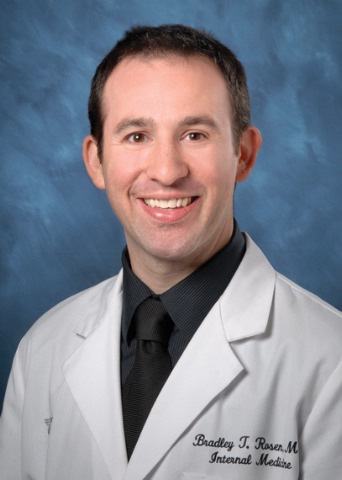
Dr. Bradley T. Rosen can often be spotted around the country helping hospitalists improve their skills in performing procedures. As part of the team working in the Procedure Center at Cedars-Sinai Medical Center in Los Angeles, Dr. Rosen has worked the last several years to help publicize the growing proceduralist movement. The Procedure Center at Cedars-Sinai has been a poster child for the movement, offering a range of services from vascular access to lumbar punctures to percutaneous tracheostomies, and doing it with an overall complication rate of less than 1%.
Dr. Rosen, who also serves as the medical director for the Inpatient Specialty Program, a nonteaching hospitalist team at Cedars-Sinai, shared his thoughts on where the proceduralist movement is likely to go in the future.
HN: There seems to be a strong economic and safety case for having dedicated proceduralists. Why don’t more hospitals do this?
Dr. Rosen: There are a number of barriers to entry for proceduralists. First, there’s an up-front investment in staff and equipment such as an ultrasound machine, as well as the time and money required to make sure that the proceduralists are properly trained on its use. Not all institutions or hospitalist groups are willing or able to shoulder those investments. Second, like any successful new initiative, launching a procedure service requires a strong leader. You need to have someone who is passionate about doing safe, effective procedures, earns the trust of the institution and referring doctors, and knows how to manage complications. And, of course, as with anything in a complex health care environment, there’s always politics. It’s helpful to have administrative support and backing, and you must also be aware of who is currently doing certain procedures and who you might be potentially threatening in terms of their livelihood if you ramp up a procedure service.
HN: What’s the attraction for you in being a proceduralist rather than a traditional hospitalist?
Dr. Rosen: There’s a certain subset of hospitalists that really enjoy doing procedures. Of course, most of the people in medical school who enjoyed working with their hands went into some kind of surgical specialty. However, there’s a subset of us who wanted to do the cognitive work of internal medicine and hospital medicine but who still do enjoy doing procedures. This proceduralist niche is perfect for us. We like the challenge of it, the feeling of being rewarded with a clear beginning and end to doing procedures, the immediate gratification of completing a task and seeing how we have helped a patient. Also, variety is the spice of life—it’s nice to change up the pace of hospitalist work from time to time. I actually believe that many hospitalists enjoy, or used to enjoy, doing procedures, it’s just a matter of whether they have the time, training, and skills to do them safely.
HN: Is there value in recognizing proceduralists as their own subspecialty?
Dr. Rosen: I don’t know if a formal subspecialty is warranted. In a sense, doing these procedures is simply part of the whole process of providing excellent care for a patient. But carving out the proceduralist niche within the hospitalist movement does make a lot of sense, both for patient safety reasons, as well as for the educational benefits. I also believe each institution should have in place meaningful credentialing and proctoring criteria for physicians to perform procedures, which should also include the use of ultrasound for procedural guidance. However, at this time, I do not think a formal subspecialty is necessary to achieve our goals.
HN: You do a lot of teaching on procedural safety. Where are the gaps in knowledge?
Dr. Rosen: The first glaring gap is that most hospitalists are still not that familiar or comfortable with an ultrasound machine. It’s not really something we learn anywhere in our training. It’s traditionally been a radiology thing. But now with ultrasound machines being portable and of higher quality, it’s really a tool that we shouldn’t ignore. It has been said that ultrasound is the stethoscope of the 21st century, but like any new technology, people need to be trained on its proper use and utility in order to reap the benefit. Another area where hospitalists are lacking involves the comfort and confidence to do the procedures safely. That all comes back to proper training on the front end and whether or not they are doing enough of these procedures on an ongoing basis to keep their skills honed.
HN: The emergence of proceduralists has been one of the evolutions in the hospitalist movement. What do you think could be the next big trend in the specialty?
Dr. Rosen: I believe that hospitalists are going to become more and more involved in assisting with safe transitions of care from the acute side to subacute to home. I think we will need to broaden our traditional role of just taking care of hospitalized patients in order to adopt a more patient-centric, longitudinal view of their care. One of the Achilles heels of hospital medicine has always been multiple hand-offs. Every time you hand off, there is a voltage drop of information and this works to the detriment of the patient. Whether it has to do with robust medicine reconciliation, arranging follow-up appointments, doing home visits, providing skilled nursing care, or simply making sure that the patient or family members have someone to call in case of questions, hospitalists will more and more be seen as the team who can, and must, solve these problems. As health care reform, accountable care organizations, and changes in reimbursement work their way through the system, we are going to be held more accountable for quality and outcomes, rather than just RVUs [relative value units]. Hospitalist programs of the future will play an instrumental role in helping patients transition more seamlessly across what has traditionally been inefficient systems involving multiple, fragmented silos of care.
Dr. Bradley T. Rosen can often be spotted around the country helping hospitalists improve their skills in performing procedures. As part of the team working in the Procedure Center at Cedars-Sinai Medical Center in Los Angeles, Dr. Rosen has worked the last several years to help publicize the growing proceduralist movement. The Procedure Center at Cedars-Sinai has been a poster child for the movement, offering a range of services from vascular access to lumbar punctures to percutaneous tracheostomies, and doing it with an overall complication rate of less than 1%.
Dr. Rosen, who also serves as the medical director for the Inpatient Specialty Program, a nonteaching hospitalist team at Cedars-Sinai, shared his thoughts on where the proceduralist movement is likely to go in the future.
HN: There seems to be a strong economic and safety case for having dedicated proceduralists. Why don’t more hospitals do this?
Dr. Rosen: There are a number of barriers to entry for proceduralists. First, there’s an up-front investment in staff and equipment such as an ultrasound machine, as well as the time and money required to make sure that the proceduralists are properly trained on its use. Not all institutions or hospitalist groups are willing or able to shoulder those investments. Second, like any successful new initiative, launching a procedure service requires a strong leader. You need to have someone who is passionate about doing safe, effective procedures, earns the trust of the institution and referring doctors, and knows how to manage complications. And, of course, as with anything in a complex health care environment, there’s always politics. It’s helpful to have administrative support and backing, and you must also be aware of who is currently doing certain procedures and who you might be potentially threatening in terms of their livelihood if you ramp up a procedure service.
HN: What’s the attraction for you in being a proceduralist rather than a traditional hospitalist?
Dr. Rosen: There’s a certain subset of hospitalists that really enjoy doing procedures. Of course, most of the people in medical school who enjoyed working with their hands went into some kind of surgical specialty. However, there’s a subset of us who wanted to do the cognitive work of internal medicine and hospital medicine but who still do enjoy doing procedures. This proceduralist niche is perfect for us. We like the challenge of it, the feeling of being rewarded with a clear beginning and end to doing procedures, the immediate gratification of completing a task and seeing how we have helped a patient. Also, variety is the spice of life—it’s nice to change up the pace of hospitalist work from time to time. I actually believe that many hospitalists enjoy, or used to enjoy, doing procedures, it’s just a matter of whether they have the time, training, and skills to do them safely.
HN: Is there value in recognizing proceduralists as their own subspecialty?
Dr. Rosen: I don’t know if a formal subspecialty is warranted. In a sense, doing these procedures is simply part of the whole process of providing excellent care for a patient. But carving out the proceduralist niche within the hospitalist movement does make a lot of sense, both for patient safety reasons, as well as for the educational benefits. I also believe each institution should have in place meaningful credentialing and proctoring criteria for physicians to perform procedures, which should also include the use of ultrasound for procedural guidance. However, at this time, I do not think a formal subspecialty is necessary to achieve our goals.
HN: You do a lot of teaching on procedural safety. Where are the gaps in knowledge?
Dr. Rosen: The first glaring gap is that most hospitalists are still not that familiar or comfortable with an ultrasound machine. It’s not really something we learn anywhere in our training. It’s traditionally been a radiology thing. But now with ultrasound machines being portable and of higher quality, it’s really a tool that we shouldn’t ignore. It has been said that ultrasound is the stethoscope of the 21st century, but like any new technology, people need to be trained on its proper use and utility in order to reap the benefit. Another area where hospitalists are lacking involves the comfort and confidence to do the procedures safely. That all comes back to proper training on the front end and whether or not they are doing enough of these procedures on an ongoing basis to keep their skills honed.
HN: The emergence of proceduralists has been one of the evolutions in the hospitalist movement. What do you think could be the next big trend in the specialty?
Dr. Rosen: I believe that hospitalists are going to become more and more involved in assisting with safe transitions of care from the acute side to subacute to home. I think we will need to broaden our traditional role of just taking care of hospitalized patients in order to adopt a more patient-centric, longitudinal view of their care. One of the Achilles heels of hospital medicine has always been multiple hand-offs. Every time you hand off, there is a voltage drop of information and this works to the detriment of the patient. Whether it has to do with robust medicine reconciliation, arranging follow-up appointments, doing home visits, providing skilled nursing care, or simply making sure that the patient or family members have someone to call in case of questions, hospitalists will more and more be seen as the team who can, and must, solve these problems. As health care reform, accountable care organizations, and changes in reimbursement work their way through the system, we are going to be held more accountable for quality and outcomes, rather than just RVUs [relative value units]. Hospitalist programs of the future will play an instrumental role in helping patients transition more seamlessly across what has traditionally been inefficient systems involving multiple, fragmented silos of care.
Dr. Bradley T. Rosen can often be spotted around the country helping hospitalists improve their skills in performing procedures. As part of the team working in the Procedure Center at Cedars-Sinai Medical Center in Los Angeles, Dr. Rosen has worked the last several years to help publicize the growing proceduralist movement. The Procedure Center at Cedars-Sinai has been a poster child for the movement, offering a range of services from vascular access to lumbar punctures to percutaneous tracheostomies, and doing it with an overall complication rate of less than 1%.
Dr. Rosen, who also serves as the medical director for the Inpatient Specialty Program, a nonteaching hospitalist team at Cedars-Sinai, shared his thoughts on where the proceduralist movement is likely to go in the future.
HN: There seems to be a strong economic and safety case for having dedicated proceduralists. Why don’t more hospitals do this?
Dr. Rosen: There are a number of barriers to entry for proceduralists. First, there’s an up-front investment in staff and equipment such as an ultrasound machine, as well as the time and money required to make sure that the proceduralists are properly trained on its use. Not all institutions or hospitalist groups are willing or able to shoulder those investments. Second, like any successful new initiative, launching a procedure service requires a strong leader. You need to have someone who is passionate about doing safe, effective procedures, earns the trust of the institution and referring doctors, and knows how to manage complications. And, of course, as with anything in a complex health care environment, there’s always politics. It’s helpful to have administrative support and backing, and you must also be aware of who is currently doing certain procedures and who you might be potentially threatening in terms of their livelihood if you ramp up a procedure service.
HN: What’s the attraction for you in being a proceduralist rather than a traditional hospitalist?
Dr. Rosen: There’s a certain subset of hospitalists that really enjoy doing procedures. Of course, most of the people in medical school who enjoyed working with their hands went into some kind of surgical specialty. However, there’s a subset of us who wanted to do the cognitive work of internal medicine and hospital medicine but who still do enjoy doing procedures. This proceduralist niche is perfect for us. We like the challenge of it, the feeling of being rewarded with a clear beginning and end to doing procedures, the immediate gratification of completing a task and seeing how we have helped a patient. Also, variety is the spice of life—it’s nice to change up the pace of hospitalist work from time to time. I actually believe that many hospitalists enjoy, or used to enjoy, doing procedures, it’s just a matter of whether they have the time, training, and skills to do them safely.
HN: Is there value in recognizing proceduralists as their own subspecialty?
Dr. Rosen: I don’t know if a formal subspecialty is warranted. In a sense, doing these procedures is simply part of the whole process of providing excellent care for a patient. But carving out the proceduralist niche within the hospitalist movement does make a lot of sense, both for patient safety reasons, as well as for the educational benefits. I also believe each institution should have in place meaningful credentialing and proctoring criteria for physicians to perform procedures, which should also include the use of ultrasound for procedural guidance. However, at this time, I do not think a formal subspecialty is necessary to achieve our goals.
HN: You do a lot of teaching on procedural safety. Where are the gaps in knowledge?
Dr. Rosen: The first glaring gap is that most hospitalists are still not that familiar or comfortable with an ultrasound machine. It’s not really something we learn anywhere in our training. It’s traditionally been a radiology thing. But now with ultrasound machines being portable and of higher quality, it’s really a tool that we shouldn’t ignore. It has been said that ultrasound is the stethoscope of the 21st century, but like any new technology, people need to be trained on its proper use and utility in order to reap the benefit. Another area where hospitalists are lacking involves the comfort and confidence to do the procedures safely. That all comes back to proper training on the front end and whether or not they are doing enough of these procedures on an ongoing basis to keep their skills honed.
HN: The emergence of proceduralists has been one of the evolutions in the hospitalist movement. What do you think could be the next big trend in the specialty?
Dr. Rosen: I believe that hospitalists are going to become more and more involved in assisting with safe transitions of care from the acute side to subacute to home. I think we will need to broaden our traditional role of just taking care of hospitalized patients in order to adopt a more patient-centric, longitudinal view of their care. One of the Achilles heels of hospital medicine has always been multiple hand-offs. Every time you hand off, there is a voltage drop of information and this works to the detriment of the patient. Whether it has to do with robust medicine reconciliation, arranging follow-up appointments, doing home visits, providing skilled nursing care, or simply making sure that the patient or family members have someone to call in case of questions, hospitalists will more and more be seen as the team who can, and must, solve these problems. As health care reform, accountable care organizations, and changes in reimbursement work their way through the system, we are going to be held more accountable for quality and outcomes, rather than just RVUs [relative value units]. Hospitalist programs of the future will play an instrumental role in helping patients transition more seamlessly across what has traditionally been inefficient systems involving multiple, fragmented silos of care.