User login
Newer Antiepileptics Appear Safe in First Trimester
First-trimester exposure to the newer generation of antiepileptic drugs – lamotrigine, oxcarbazepine, topiramate, gabapentin, and levetiracetam – does not appear to raise the risk of major birth defects, according to a report in the May 18 issue of JAMA.
In addition, none of these agents was associated with subgroups of major birth defects categorized by organ system, said Ditte Molgaard-Nielsen and Dr. Anders Hviid of the department of epidemiology research, Statens Serum Institut, Copenhagen.
Noting that "there is only sparse information on the teratogenic effects of most of the newly licensed antiepileptic drugs," the researchers assessed the issue using data from national Danish registries of births, prescriptions, and major congenital anomalies for 1996 through 2008. They excluded cases of birth defects associated with chromosomal aberrations; genetic disorders; and known causes, such as fetal alcohol syndrome, and assessed a final cohort of 837,795 live births.
Of these, there were 19,960 major birth defects diagnosed within the first year of life, for an overall rate of 2.4%.
There were 1,532 pregnancies in which the fetus was exposed to lamotrigine, oxcarbazepine, topiramate, gabapentin, or levetiracetam at some time during the first trimester. A total of 49 of these infants (3.2%) were diagnosed as having a major birth defect, compared with 19,911 (2.4%) of the 836,263 unexposed pregnancies.
After the data were adjusted to account for potential confounders such as maternal use of older-generation antiepileptic drugs, which are known to raise the risk by two- to threefold, or a history of birth defects in siblings, exposure to these newer agents was no longer associated with an increased risk of major birth defects, Ms. Molgaard-Nielsen and Dr. Hviid said (JAMA 2011;305:1996-2002).
In a further analysis of the data, the risk of birth defects was found to be unrelated to the use of any of the five newer-generation antiepileptic drugs individually. Another analysis showed that there was no dose-response effect of increasing risk with escalating doses of lamotrigine, the most frequently used of the five drugs.
"We conducted a number of sensitivity analyses to evaluate the robustness of our results, including adjusting for exposure to drugs in the U.S. Food and Drug Administration’s pregnancy categories D and X. ... No association with major birth defects was found in any of these analyses," they noted.
An exploratory analysis examined whether exposure to all of the drugs was associated with major birth defects categorized by the affected organ system. No significantly increased risk was found, except for a fourfold increase in eye defects associated with the use of lamotrigine.
However, this association "is likely a chance finding." The subgroup of infants with eye defects included only four infants, and they were affected by "4 etiologically different eye defects, which argues against a causal association."
The question of whether maternal epilepsy itself is associated with an increased risk of birth defects is still debated. In this study, maternal epilepsy was associated with a moderately increased risk of birth defects, the investigators noted.
Their study was limited in that it did not include any information on spontaneous or induced abortions. "This will bias an association ... toward the null if the birth defect itself increases the risk of induced or spontaneous abortion," they added.
Although this was the largest cohort study to date on this issue, further research with larger sample sizes is needed to delineate the risks of specific birth defects. This study could not exclude minor to moderate excesses in risks of overall birth defects or of specific birth defects, they said.
This study was supported by the Danish Medical Research Council and the Lundbeck Foundation. Ms. Molgaard-Nielsen and Dr. Hviid reported no relevant financial disclosures.
First-trimester exposure to the newer generation of antiepileptic drugs – lamotrigine, oxcarbazepine, topiramate, gabapentin, and levetiracetam – does not appear to raise the risk of major birth defects, according to a report in the May 18 issue of JAMA.
In addition, none of these agents was associated with subgroups of major birth defects categorized by organ system, said Ditte Molgaard-Nielsen and Dr. Anders Hviid of the department of epidemiology research, Statens Serum Institut, Copenhagen.
Noting that "there is only sparse information on the teratogenic effects of most of the newly licensed antiepileptic drugs," the researchers assessed the issue using data from national Danish registries of births, prescriptions, and major congenital anomalies for 1996 through 2008. They excluded cases of birth defects associated with chromosomal aberrations; genetic disorders; and known causes, such as fetal alcohol syndrome, and assessed a final cohort of 837,795 live births.
Of these, there were 19,960 major birth defects diagnosed within the first year of life, for an overall rate of 2.4%.
There were 1,532 pregnancies in which the fetus was exposed to lamotrigine, oxcarbazepine, topiramate, gabapentin, or levetiracetam at some time during the first trimester. A total of 49 of these infants (3.2%) were diagnosed as having a major birth defect, compared with 19,911 (2.4%) of the 836,263 unexposed pregnancies.
After the data were adjusted to account for potential confounders such as maternal use of older-generation antiepileptic drugs, which are known to raise the risk by two- to threefold, or a history of birth defects in siblings, exposure to these newer agents was no longer associated with an increased risk of major birth defects, Ms. Molgaard-Nielsen and Dr. Hviid said (JAMA 2011;305:1996-2002).
In a further analysis of the data, the risk of birth defects was found to be unrelated to the use of any of the five newer-generation antiepileptic drugs individually. Another analysis showed that there was no dose-response effect of increasing risk with escalating doses of lamotrigine, the most frequently used of the five drugs.
"We conducted a number of sensitivity analyses to evaluate the robustness of our results, including adjusting for exposure to drugs in the U.S. Food and Drug Administration’s pregnancy categories D and X. ... No association with major birth defects was found in any of these analyses," they noted.
An exploratory analysis examined whether exposure to all of the drugs was associated with major birth defects categorized by the affected organ system. No significantly increased risk was found, except for a fourfold increase in eye defects associated with the use of lamotrigine.
However, this association "is likely a chance finding." The subgroup of infants with eye defects included only four infants, and they were affected by "4 etiologically different eye defects, which argues against a causal association."
The question of whether maternal epilepsy itself is associated with an increased risk of birth defects is still debated. In this study, maternal epilepsy was associated with a moderately increased risk of birth defects, the investigators noted.
Their study was limited in that it did not include any information on spontaneous or induced abortions. "This will bias an association ... toward the null if the birth defect itself increases the risk of induced or spontaneous abortion," they added.
Although this was the largest cohort study to date on this issue, further research with larger sample sizes is needed to delineate the risks of specific birth defects. This study could not exclude minor to moderate excesses in risks of overall birth defects or of specific birth defects, they said.
This study was supported by the Danish Medical Research Council and the Lundbeck Foundation. Ms. Molgaard-Nielsen and Dr. Hviid reported no relevant financial disclosures.
First-trimester exposure to the newer generation of antiepileptic drugs – lamotrigine, oxcarbazepine, topiramate, gabapentin, and levetiracetam – does not appear to raise the risk of major birth defects, according to a report in the May 18 issue of JAMA.
In addition, none of these agents was associated with subgroups of major birth defects categorized by organ system, said Ditte Molgaard-Nielsen and Dr. Anders Hviid of the department of epidemiology research, Statens Serum Institut, Copenhagen.
Noting that "there is only sparse information on the teratogenic effects of most of the newly licensed antiepileptic drugs," the researchers assessed the issue using data from national Danish registries of births, prescriptions, and major congenital anomalies for 1996 through 2008. They excluded cases of birth defects associated with chromosomal aberrations; genetic disorders; and known causes, such as fetal alcohol syndrome, and assessed a final cohort of 837,795 live births.
Of these, there were 19,960 major birth defects diagnosed within the first year of life, for an overall rate of 2.4%.
There were 1,532 pregnancies in which the fetus was exposed to lamotrigine, oxcarbazepine, topiramate, gabapentin, or levetiracetam at some time during the first trimester. A total of 49 of these infants (3.2%) were diagnosed as having a major birth defect, compared with 19,911 (2.4%) of the 836,263 unexposed pregnancies.
After the data were adjusted to account for potential confounders such as maternal use of older-generation antiepileptic drugs, which are known to raise the risk by two- to threefold, or a history of birth defects in siblings, exposure to these newer agents was no longer associated with an increased risk of major birth defects, Ms. Molgaard-Nielsen and Dr. Hviid said (JAMA 2011;305:1996-2002).
In a further analysis of the data, the risk of birth defects was found to be unrelated to the use of any of the five newer-generation antiepileptic drugs individually. Another analysis showed that there was no dose-response effect of increasing risk with escalating doses of lamotrigine, the most frequently used of the five drugs.
"We conducted a number of sensitivity analyses to evaluate the robustness of our results, including adjusting for exposure to drugs in the U.S. Food and Drug Administration’s pregnancy categories D and X. ... No association with major birth defects was found in any of these analyses," they noted.
An exploratory analysis examined whether exposure to all of the drugs was associated with major birth defects categorized by the affected organ system. No significantly increased risk was found, except for a fourfold increase in eye defects associated with the use of lamotrigine.
However, this association "is likely a chance finding." The subgroup of infants with eye defects included only four infants, and they were affected by "4 etiologically different eye defects, which argues against a causal association."
The question of whether maternal epilepsy itself is associated with an increased risk of birth defects is still debated. In this study, maternal epilepsy was associated with a moderately increased risk of birth defects, the investigators noted.
Their study was limited in that it did not include any information on spontaneous or induced abortions. "This will bias an association ... toward the null if the birth defect itself increases the risk of induced or spontaneous abortion," they added.
Although this was the largest cohort study to date on this issue, further research with larger sample sizes is needed to delineate the risks of specific birth defects. This study could not exclude minor to moderate excesses in risks of overall birth defects or of specific birth defects, they said.
This study was supported by the Danish Medical Research Council and the Lundbeck Foundation. Ms. Molgaard-Nielsen and Dr. Hviid reported no relevant financial disclosures.
FROM JAMA
Major Finding: First-trimester exposure to lamotrigine, oxcarbazepine, topiramate, gabapentin, and levetiracetam did not raise the risk of major birth defects in general or of individual birth defects categorized by organ system.
Data Source: A population-based cohort study of 837,795 live births in Denmark from 1996 through 2008.
Disclosures: This study was supported by the Danish Medical Research Council and the Lundbeck Foundation. Ms. Molgaard-Nielsen and Dr. Hviid reported no relevant financial disclosures.
Many Malignant Lesions Found Incidentally in Referred Patients
A "substantial proportion" of malignant lesions are found incidentally among patients referred to dermatologists for a different lesion flagged by the referring physician or health care professional, according to a report in the May issue of Archives of Dermatology.
In fact, almost half of all the 149 skin cancers identified in a cohort of 400 patients were not the suspect lesions for which the patients had been referred. They were instead found incidentally on other parts of the body by the dermatologist and had been missed by the referring clinician.
This finding calls into question the widespread use of teledermatology for triaging patients with suspected skin cancer lesions. "If the reviewing dermatologist has access only to a digital image of a specific lesion rather than interaction with the patient, other malignant lesions and/or lesions of concern that are outside the field of digital transmission may be overlooked," wrote Dr. Kate V. Viola of Yale University, New Haven, Conn., and her associates.
The investigators were interested in determining the proportion of suspicious lesions that actually turned out to be malignant, so they examined the records of 400 Veterans Affairs patients with a single suspect lesion who were referred to dermatologists at two major academic medical centers and six community-based clinics between 2006 and 2009.
As VA patients, 98% of the cohort comprised older white men. The mean age was 78 years, and 19% of the study subjects had a history of skin cancer.
The referring clinicians included attending physicians and residents in internal medicine, nurse practitioners, and physician assistants.
Most (56%) of the 400 suspicious lesions flagged by these referring clinicians were immediately ruled out as nonmalignant by the dermatologist on clinical examination and did not require biopsy.
A total of 176 index lesions were biopsied, and 88 of them – 22% of the original 400 – proved to be malignant.
Most of the malignancies were basal cell carcinomas (61 lesions), approximately one-fourth were squamous cell carcinomas (21 lesions), and 5 were melanomas.
The dermatologists, however, also identified and biopsied an additional 111 incidental lesions that usually occurred on different parts of the body from the index lesions. Just over half of these incidental lesions (61) proved to be malignant.
"Of great concern, [10%] of the incidental lesions discovered by the dermatologist were melanomas," Dr. Viola and her colleagues noted.
For 12 of these 61 incidental skin cancers (20%), the index lesion had been immediately ruled out as nonmalignant. Thus, if the dermatologists had looked no further than the flagged index lesion, 12 malignancies would never have been found, the investigators said (Arch. Dermatol. 2011;147:556-60).
Most of the melanomas were missed by the referring clinicians, they added.
The study findings clearly demonstrate that assessment of a single specific lesion of concern – which is typical in teledermatology – may lead to "underdiagnosis of clinically significant lesions that are not appreciated by the referring physician. Therefore, teledermatology must not be used as a substitute for a total body skin examination when skin cancer is suspected," the investigators wrote.
Dr. Viola and her associates did not report having any conflicts of interest.
A "substantial proportion" of malignant lesions are found incidentally among patients referred to dermatologists for a different lesion flagged by the referring physician or health care professional, according to a report in the May issue of Archives of Dermatology.
In fact, almost half of all the 149 skin cancers identified in a cohort of 400 patients were not the suspect lesions for which the patients had been referred. They were instead found incidentally on other parts of the body by the dermatologist and had been missed by the referring clinician.
This finding calls into question the widespread use of teledermatology for triaging patients with suspected skin cancer lesions. "If the reviewing dermatologist has access only to a digital image of a specific lesion rather than interaction with the patient, other malignant lesions and/or lesions of concern that are outside the field of digital transmission may be overlooked," wrote Dr. Kate V. Viola of Yale University, New Haven, Conn., and her associates.
The investigators were interested in determining the proportion of suspicious lesions that actually turned out to be malignant, so they examined the records of 400 Veterans Affairs patients with a single suspect lesion who were referred to dermatologists at two major academic medical centers and six community-based clinics between 2006 and 2009.
As VA patients, 98% of the cohort comprised older white men. The mean age was 78 years, and 19% of the study subjects had a history of skin cancer.
The referring clinicians included attending physicians and residents in internal medicine, nurse practitioners, and physician assistants.
Most (56%) of the 400 suspicious lesions flagged by these referring clinicians were immediately ruled out as nonmalignant by the dermatologist on clinical examination and did not require biopsy.
A total of 176 index lesions were biopsied, and 88 of them – 22% of the original 400 – proved to be malignant.
Most of the malignancies were basal cell carcinomas (61 lesions), approximately one-fourth were squamous cell carcinomas (21 lesions), and 5 were melanomas.
The dermatologists, however, also identified and biopsied an additional 111 incidental lesions that usually occurred on different parts of the body from the index lesions. Just over half of these incidental lesions (61) proved to be malignant.
"Of great concern, [10%] of the incidental lesions discovered by the dermatologist were melanomas," Dr. Viola and her colleagues noted.
For 12 of these 61 incidental skin cancers (20%), the index lesion had been immediately ruled out as nonmalignant. Thus, if the dermatologists had looked no further than the flagged index lesion, 12 malignancies would never have been found, the investigators said (Arch. Dermatol. 2011;147:556-60).
Most of the melanomas were missed by the referring clinicians, they added.
The study findings clearly demonstrate that assessment of a single specific lesion of concern – which is typical in teledermatology – may lead to "underdiagnosis of clinically significant lesions that are not appreciated by the referring physician. Therefore, teledermatology must not be used as a substitute for a total body skin examination when skin cancer is suspected," the investigators wrote.
Dr. Viola and her associates did not report having any conflicts of interest.
A "substantial proportion" of malignant lesions are found incidentally among patients referred to dermatologists for a different lesion flagged by the referring physician or health care professional, according to a report in the May issue of Archives of Dermatology.
In fact, almost half of all the 149 skin cancers identified in a cohort of 400 patients were not the suspect lesions for which the patients had been referred. They were instead found incidentally on other parts of the body by the dermatologist and had been missed by the referring clinician.
This finding calls into question the widespread use of teledermatology for triaging patients with suspected skin cancer lesions. "If the reviewing dermatologist has access only to a digital image of a specific lesion rather than interaction with the patient, other malignant lesions and/or lesions of concern that are outside the field of digital transmission may be overlooked," wrote Dr. Kate V. Viola of Yale University, New Haven, Conn., and her associates.
The investigators were interested in determining the proportion of suspicious lesions that actually turned out to be malignant, so they examined the records of 400 Veterans Affairs patients with a single suspect lesion who were referred to dermatologists at two major academic medical centers and six community-based clinics between 2006 and 2009.
As VA patients, 98% of the cohort comprised older white men. The mean age was 78 years, and 19% of the study subjects had a history of skin cancer.
The referring clinicians included attending physicians and residents in internal medicine, nurse practitioners, and physician assistants.
Most (56%) of the 400 suspicious lesions flagged by these referring clinicians were immediately ruled out as nonmalignant by the dermatologist on clinical examination and did not require biopsy.
A total of 176 index lesions were biopsied, and 88 of them – 22% of the original 400 – proved to be malignant.
Most of the malignancies were basal cell carcinomas (61 lesions), approximately one-fourth were squamous cell carcinomas (21 lesions), and 5 were melanomas.
The dermatologists, however, also identified and biopsied an additional 111 incidental lesions that usually occurred on different parts of the body from the index lesions. Just over half of these incidental lesions (61) proved to be malignant.
"Of great concern, [10%] of the incidental lesions discovered by the dermatologist were melanomas," Dr. Viola and her colleagues noted.
For 12 of these 61 incidental skin cancers (20%), the index lesion had been immediately ruled out as nonmalignant. Thus, if the dermatologists had looked no further than the flagged index lesion, 12 malignancies would never have been found, the investigators said (Arch. Dermatol. 2011;147:556-60).
Most of the melanomas were missed by the referring clinicians, they added.
The study findings clearly demonstrate that assessment of a single specific lesion of concern – which is typical in teledermatology – may lead to "underdiagnosis of clinically significant lesions that are not appreciated by the referring physician. Therefore, teledermatology must not be used as a substitute for a total body skin examination when skin cancer is suspected," the investigators wrote.
Dr. Viola and her associates did not report having any conflicts of interest.
FROM ARCHIVES OF DERMATOLOGY
Major Finding: Dermatologists found 111 suspicious lesions incidentally, including 61 malignancies (6 melanomas), while examining patients referred for evaluation of a different suspect lesion.
Data Source: A retrospective cohort study of 400 older white male patients referred by primary care clinicians to dermatologists for evaluation of a single suspicious lesion over a 4-year period.
Disclosures: The investigators did not report having any conflicts of interest.
Many Malignant Lesions Found Incidentally in Referred Patients
A "substantial proportion" of malignant lesions are found incidentally among patients referred to dermatologists for a different lesion flagged by the referring physician or health care professional, according to a report in the May issue of Archives of Dermatology.
In fact, almost half of all the 149 skin cancers identified in a cohort of 400 patients were not the suspect lesions for which the patients had been referred. They were instead found incidentally on other parts of the body by the dermatologist and had been missed by the referring clinician.
This finding calls into question the widespread use of teledermatology for triaging patients with suspected skin cancer lesions. "If the reviewing dermatologist has access only to a digital image of a specific lesion rather than interaction with the patient, other malignant lesions and/or lesions of concern that are outside the field of digital transmission may be overlooked," wrote Dr. Kate V. Viola of Yale University, New Haven, Conn., and her associates.
The investigators were interested in determining the proportion of suspicious lesions that actually turned out to be malignant, so they examined the records of 400 Veterans Affairs patients with a single suspect lesion who were referred to dermatologists at two major academic medical centers and six community-based clinics between 2006 and 2009.
As VA patients, 98% of the cohort comprised older white men. The mean age was 78 years, and 19% of the study subjects had a history of skin cancer.
The referring clinicians included attending physicians and residents in internal medicine, nurse practitioners, and physician assistants.
Most (56%) of the 400 suspicious lesions flagged by these referring clinicians were immediately ruled out as nonmalignant by the dermatologist on clinical examination and did not require biopsy.
A total of 176 index lesions were biopsied, and 88 of them – 22% of the original 400 – proved to be malignant.
Most of the malignancies were basal cell carcinomas (61 lesions), approximately one-fourth were squamous cell carcinomas (21 lesions), and 5 were melanomas.
The dermatologists, however, also identified and biopsied an additional 111 incidental lesions that usually occurred on different parts of the body from the index lesions. Just over half of these incidental lesions (61) proved to be malignant.
"Of great concern, [10%] of the incidental lesions discovered by the dermatologist were melanomas," Dr. Viola and her colleagues noted.
For 12 of these 61 incidental skin cancers (20%), the index lesion had been immediately ruled out as nonmalignant. Thus, if the dermatologists had looked no further than the flagged index lesion, 12 malignancies would never have been found, the investigators said (Arch. Dermatol. 2011;147:556-60).
Most of the melanomas were missed by the referring clinicians, they added.
The study findings clearly demonstrate that assessment of a single specific lesion of concern – which is typical in teledermatology – may lead to "underdiagnosis of clinically significant lesions that are not appreciated by the referring physician. Therefore, teledermatology must not be used as a substitute for a total body skin examination when skin cancer is suspected," the investigators wrote.
Dr. Viola and her associates did not report having any conflicts of interest.
A "substantial proportion" of malignant lesions are found incidentally among patients referred to dermatologists for a different lesion flagged by the referring physician or health care professional, according to a report in the May issue of Archives of Dermatology.
In fact, almost half of all the 149 skin cancers identified in a cohort of 400 patients were not the suspect lesions for which the patients had been referred. They were instead found incidentally on other parts of the body by the dermatologist and had been missed by the referring clinician.
This finding calls into question the widespread use of teledermatology for triaging patients with suspected skin cancer lesions. "If the reviewing dermatologist has access only to a digital image of a specific lesion rather than interaction with the patient, other malignant lesions and/or lesions of concern that are outside the field of digital transmission may be overlooked," wrote Dr. Kate V. Viola of Yale University, New Haven, Conn., and her associates.
The investigators were interested in determining the proportion of suspicious lesions that actually turned out to be malignant, so they examined the records of 400 Veterans Affairs patients with a single suspect lesion who were referred to dermatologists at two major academic medical centers and six community-based clinics between 2006 and 2009.
As VA patients, 98% of the cohort comprised older white men. The mean age was 78 years, and 19% of the study subjects had a history of skin cancer.
The referring clinicians included attending physicians and residents in internal medicine, nurse practitioners, and physician assistants.
Most (56%) of the 400 suspicious lesions flagged by these referring clinicians were immediately ruled out as nonmalignant by the dermatologist on clinical examination and did not require biopsy.
A total of 176 index lesions were biopsied, and 88 of them – 22% of the original 400 – proved to be malignant.
Most of the malignancies were basal cell carcinomas (61 lesions), approximately one-fourth were squamous cell carcinomas (21 lesions), and 5 were melanomas.
The dermatologists, however, also identified and biopsied an additional 111 incidental lesions that usually occurred on different parts of the body from the index lesions. Just over half of these incidental lesions (61) proved to be malignant.
"Of great concern, [10%] of the incidental lesions discovered by the dermatologist were melanomas," Dr. Viola and her colleagues noted.
For 12 of these 61 incidental skin cancers (20%), the index lesion had been immediately ruled out as nonmalignant. Thus, if the dermatologists had looked no further than the flagged index lesion, 12 malignancies would never have been found, the investigators said (Arch. Dermatol. 2011;147:556-60).
Most of the melanomas were missed by the referring clinicians, they added.
The study findings clearly demonstrate that assessment of a single specific lesion of concern – which is typical in teledermatology – may lead to "underdiagnosis of clinically significant lesions that are not appreciated by the referring physician. Therefore, teledermatology must not be used as a substitute for a total body skin examination when skin cancer is suspected," the investigators wrote.
Dr. Viola and her associates did not report having any conflicts of interest.
A "substantial proportion" of malignant lesions are found incidentally among patients referred to dermatologists for a different lesion flagged by the referring physician or health care professional, according to a report in the May issue of Archives of Dermatology.
In fact, almost half of all the 149 skin cancers identified in a cohort of 400 patients were not the suspect lesions for which the patients had been referred. They were instead found incidentally on other parts of the body by the dermatologist and had been missed by the referring clinician.
This finding calls into question the widespread use of teledermatology for triaging patients with suspected skin cancer lesions. "If the reviewing dermatologist has access only to a digital image of a specific lesion rather than interaction with the patient, other malignant lesions and/or lesions of concern that are outside the field of digital transmission may be overlooked," wrote Dr. Kate V. Viola of Yale University, New Haven, Conn., and her associates.
The investigators were interested in determining the proportion of suspicious lesions that actually turned out to be malignant, so they examined the records of 400 Veterans Affairs patients with a single suspect lesion who were referred to dermatologists at two major academic medical centers and six community-based clinics between 2006 and 2009.
As VA patients, 98% of the cohort comprised older white men. The mean age was 78 years, and 19% of the study subjects had a history of skin cancer.
The referring clinicians included attending physicians and residents in internal medicine, nurse practitioners, and physician assistants.
Most (56%) of the 400 suspicious lesions flagged by these referring clinicians were immediately ruled out as nonmalignant by the dermatologist on clinical examination and did not require biopsy.
A total of 176 index lesions were biopsied, and 88 of them – 22% of the original 400 – proved to be malignant.
Most of the malignancies were basal cell carcinomas (61 lesions), approximately one-fourth were squamous cell carcinomas (21 lesions), and 5 were melanomas.
The dermatologists, however, also identified and biopsied an additional 111 incidental lesions that usually occurred on different parts of the body from the index lesions. Just over half of these incidental lesions (61) proved to be malignant.
"Of great concern, [10%] of the incidental lesions discovered by the dermatologist were melanomas," Dr. Viola and her colleagues noted.
For 12 of these 61 incidental skin cancers (20%), the index lesion had been immediately ruled out as nonmalignant. Thus, if the dermatologists had looked no further than the flagged index lesion, 12 malignancies would never have been found, the investigators said (Arch. Dermatol. 2011;147:556-60).
Most of the melanomas were missed by the referring clinicians, they added.
The study findings clearly demonstrate that assessment of a single specific lesion of concern – which is typical in teledermatology – may lead to "underdiagnosis of clinically significant lesions that are not appreciated by the referring physician. Therefore, teledermatology must not be used as a substitute for a total body skin examination when skin cancer is suspected," the investigators wrote.
Dr. Viola and her associates did not report having any conflicts of interest.
FROM ARCHIVES OF DERMATOLOGY
Major Finding: Dermatologists found 111 suspicious lesions incidentally, including 61 malignancies (6 melanomas), while examining patients referred for evaluation of a different suspect lesion.
Data Source: A retrospective cohort study of 400 older white male patients referred by primary care clinicians to dermatologists for evaluation of a single suspicious lesion over a 4-year period.
Disclosures: The investigators did not report having any conflicts of interest.
Many Malignant Lesions Found Incidentally in Referred Patients
A "substantial proportion" of malignant lesions are found incidentally among patients referred to dermatologists for a different lesion flagged by the referring physician or health care professional, according to a new report.
In fact, almost half of all the 149 skin cancers identified in a cohort of 400 patients were not the suspect lesions for which the patients had been referred. They were instead found incidentally on other parts of the body by the dermatologist and had been missed by the referring clinician.
This finding calls into question the widespread use of teledermatology for triaging patients with suspected skin cancer lesions. "If the reviewing dermatologist has access only to a digital image of a specific lesion rather than interaction with the patient, other malignant lesions and/or lesions of concern that are outside the field of digital transmission may be overlooked," wrote Dr. Kate V. Viola of Yale University, New Haven, Conn., and her associates.
The investigators were interested in determining the proportion of suspicious lesions that actually turned out to be malignant, so they examined the records of 400 Veterans Affairs patients with a single suspect lesion who were referred to dermatologists at two major academic medical centers and six community-based clinics between 2006 and 2009.
As VA patients, 98% of the cohort comprised older white men. The mean age was 78 years, and 19% of the study subjects had a history of skin cancer.
The referring clinicians included attending physicians and residents in internal medicine, nurse practitioners, and physician assistants.
Most (56%) of the 400 suspicious lesions flagged by these referring clinicians were immediately ruled out as nonmalignant by the dermatologist on clinical examination and did not require biopsy.
A total of 176 index lesions were biopsied, and 88 of them – 22% of the original 400 – proved to be malignant.
Most of the malignancies were basal cell carcinomas (61 lesions), approximately one-fourth were squamous cell carcinomas (21 lesions), and 5 were melanomas.
The dermatologists, however, also identified and biopsied an additional 111 incidental lesions that usually occurred on different parts of the body from the index lesions. Just over half of these incidental lesions (61) proved to be malignant.
"Of great concern, [10%] of the incidental lesions discovered by the dermatologist were melanomas," Dr. Viola and her colleagues noted.
For 12 of these 61 incidental skin cancers (20%), the index lesion had been immediately ruled out as nonmalignant. Thus, if the dermatologists had looked no further than the flagged index lesion, 12 malignancies would never have been found, the investigators said (Arch. Dermatol. 2011;147:556-60).
Most of the melanomas were missed by the referring clinicians, they added.
The study findings clearly demonstrate that assessment of a single specific lesion of concern – which is typical in teledermatology – may lead to "underdiagnosis of clinically significant lesions that are not appreciated by the referring physician. Therefore, teledermatology must not be used as a substitute for a total body skin examination when skin cancer is suspected," the investigators wrote.
Dr. Viola and her associates did not report having any conflicts of interest.
A "substantial proportion" of malignant lesions are found incidentally among patients referred to dermatologists for a different lesion flagged by the referring physician or health care professional, according to a new report.
In fact, almost half of all the 149 skin cancers identified in a cohort of 400 patients were not the suspect lesions for which the patients had been referred. They were instead found incidentally on other parts of the body by the dermatologist and had been missed by the referring clinician.
This finding calls into question the widespread use of teledermatology for triaging patients with suspected skin cancer lesions. "If the reviewing dermatologist has access only to a digital image of a specific lesion rather than interaction with the patient, other malignant lesions and/or lesions of concern that are outside the field of digital transmission may be overlooked," wrote Dr. Kate V. Viola of Yale University, New Haven, Conn., and her associates.
The investigators were interested in determining the proportion of suspicious lesions that actually turned out to be malignant, so they examined the records of 400 Veterans Affairs patients with a single suspect lesion who were referred to dermatologists at two major academic medical centers and six community-based clinics between 2006 and 2009.
As VA patients, 98% of the cohort comprised older white men. The mean age was 78 years, and 19% of the study subjects had a history of skin cancer.
The referring clinicians included attending physicians and residents in internal medicine, nurse practitioners, and physician assistants.
Most (56%) of the 400 suspicious lesions flagged by these referring clinicians were immediately ruled out as nonmalignant by the dermatologist on clinical examination and did not require biopsy.
A total of 176 index lesions were biopsied, and 88 of them – 22% of the original 400 – proved to be malignant.
Most of the malignancies were basal cell carcinomas (61 lesions), approximately one-fourth were squamous cell carcinomas (21 lesions), and 5 were melanomas.
The dermatologists, however, also identified and biopsied an additional 111 incidental lesions that usually occurred on different parts of the body from the index lesions. Just over half of these incidental lesions (61) proved to be malignant.
"Of great concern, [10%] of the incidental lesions discovered by the dermatologist were melanomas," Dr. Viola and her colleagues noted.
For 12 of these 61 incidental skin cancers (20%), the index lesion had been immediately ruled out as nonmalignant. Thus, if the dermatologists had looked no further than the flagged index lesion, 12 malignancies would never have been found, the investigators said (Arch. Dermatol. 2011;147:556-60).
Most of the melanomas were missed by the referring clinicians, they added.
The study findings clearly demonstrate that assessment of a single specific lesion of concern – which is typical in teledermatology – may lead to "underdiagnosis of clinically significant lesions that are not appreciated by the referring physician. Therefore, teledermatology must not be used as a substitute for a total body skin examination when skin cancer is suspected," the investigators wrote.
Dr. Viola and her associates did not report having any conflicts of interest.
A "substantial proportion" of malignant lesions are found incidentally among patients referred to dermatologists for a different lesion flagged by the referring physician or health care professional, according to a new report.
In fact, almost half of all the 149 skin cancers identified in a cohort of 400 patients were not the suspect lesions for which the patients had been referred. They were instead found incidentally on other parts of the body by the dermatologist and had been missed by the referring clinician.
This finding calls into question the widespread use of teledermatology for triaging patients with suspected skin cancer lesions. "If the reviewing dermatologist has access only to a digital image of a specific lesion rather than interaction with the patient, other malignant lesions and/or lesions of concern that are outside the field of digital transmission may be overlooked," wrote Dr. Kate V. Viola of Yale University, New Haven, Conn., and her associates.
The investigators were interested in determining the proportion of suspicious lesions that actually turned out to be malignant, so they examined the records of 400 Veterans Affairs patients with a single suspect lesion who were referred to dermatologists at two major academic medical centers and six community-based clinics between 2006 and 2009.
As VA patients, 98% of the cohort comprised older white men. The mean age was 78 years, and 19% of the study subjects had a history of skin cancer.
The referring clinicians included attending physicians and residents in internal medicine, nurse practitioners, and physician assistants.
Most (56%) of the 400 suspicious lesions flagged by these referring clinicians were immediately ruled out as nonmalignant by the dermatologist on clinical examination and did not require biopsy.
A total of 176 index lesions were biopsied, and 88 of them – 22% of the original 400 – proved to be malignant.
Most of the malignancies were basal cell carcinomas (61 lesions), approximately one-fourth were squamous cell carcinomas (21 lesions), and 5 were melanomas.
The dermatologists, however, also identified and biopsied an additional 111 incidental lesions that usually occurred on different parts of the body from the index lesions. Just over half of these incidental lesions (61) proved to be malignant.
"Of great concern, [10%] of the incidental lesions discovered by the dermatologist were melanomas," Dr. Viola and her colleagues noted.
For 12 of these 61 incidental skin cancers (20%), the index lesion had been immediately ruled out as nonmalignant. Thus, if the dermatologists had looked no further than the flagged index lesion, 12 malignancies would never have been found, the investigators said (Arch. Dermatol. 2011;147:556-60).
Most of the melanomas were missed by the referring clinicians, they added.
The study findings clearly demonstrate that assessment of a single specific lesion of concern – which is typical in teledermatology – may lead to "underdiagnosis of clinically significant lesions that are not appreciated by the referring physician. Therefore, teledermatology must not be used as a substitute for a total body skin examination when skin cancer is suspected," the investigators wrote.
Dr. Viola and her associates did not report having any conflicts of interest.
FROM ARCHIVES OF DERMATOLOGY
Major Finding: Dermatologists found 111 suspicious lesions incidentally, including 61 malignancies (6 melanomas), while examining patients referred for evaluation of a different suspect lesion.
Data Source: A retrospective cohort study of 400 older white male patients referred by primary care clinicians to dermatologists for evaluation of a single suspicious lesion over a 4-year period.
Disclosures: The investigators did not report having any conflicts of interest.
Skin Biopsy Doesn’t Aid Diagnosis of Delusional Infestation
In patients thought to have delusional infestation, neither skin biopsy nor microscopic examination of patient-provided "specimens" is likely to change the clinical diagnosis, according to a report published online May 16 in the Archives of Dermatology.
Performing such analyses might yield other benefits, such as assuring the patient that he or she is being taken seriously, but clinicians should understand that these procedures do not yield any important objective evidence, wrote Sara A. Hylwa, a visiting medical professional for research, and her associates at the Mayo Clinic in Rochester, Minn.
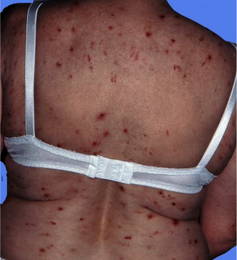
Delusional infestation is characterized by patients’ fixed and false belief that their skin is infested by pathogens. These can be animate, such as "bugs," worms, fungi, or bacteria, or they can be inanimate, such as "fibers," wood chips, or small tubes. Patients with this disorder frequently bring in specimens they have collected as proof of the infestation.
Ms. Hylwa and her colleagues performed what they said was "the first study that has addressed the histologic analysis of skin biopsy specimens and patient-provided specimens from a relatively large number of patients presenting with delusional infestation." They examined the records of all 108 patients treated at the Mayo Clinic for the disorder from 2001 to 2007.
Eighty of these patients underwent skin biopsy, 80 brought in specimens, and 52 had both.
Three-fourths of the patients were women, and mean symptom duration was 2 years (range, 2 weeks to 23 years). The patients reported that they were infested with bugs (79%), worms (20%), eggs of unspecified species (3%), fibers (22%), "specks" (7%), "triangles" (2%), granulous material (2%), and/or one each of the following: thorns, splinters, rotting wood fungus, Styrofoam, glass, car oil, nails, and gel.
None of the 121 biopsies (117 skin, 2 tongue, 1 hair, and 1 muscle) demonstrated evidence of infestation, nor did any patient-provided specimen. And among the dozens of other tests performed, such as stool ova and parasite analysis and skin cultures, none showed any evidence of infestation.
Of the 80 patient-provided specimens, all but two contained only insects that do not infest humans and cutaneous debris such as skin flakes, scabs, crusts, and hair. One stool sample contained an earthworm.
Only one patient-provided specimen proved to contain a true parasite (a pubic louse); however, that patient did not have lice, and pubic lice could not account for the patient’s symptoms, which chiefly involved the fingernails. Another patient provided a tick, but a tick could not have produced the skin eruption seen in that patient, the investigators said (Arch. Dermatol. 2011 May 16 [doi:10.1001/archdermatol.2011.114]).
Interestingly, 61% of patients showed some form of dermatitis on skin biopsy, and almost half had excoriations, ulcerations, or erosions. This high prevalence of dermatitis "raises the possibility that atypical sensations in the skin may be precipitated by a true pathologic condition (dermatitis) and interpreted mistakenly by the patient as insects crawling from the skin," the researchers said.
Similarly, cutaneous crusting and debris from scratches and excoriations might be misinterpreted as pathogens that emerged from the skin.
On the other hand, the dermatitis may have been a result, rather than a cause, of the patient’s belief in infestation. Rubbing and picking at the supposedly infested skin could have resulted in contact dermatitis, and many patients reported that they had applied caustic substances to their skin to "get rid of" the infestation, which could have lead to an irritant or allergic contact dermatitis, Ms. Hylwa and her associates wrote.
The findings raise questions about the value of performing skin biopsies and other procedures in these patients.
"Some have proposed that an alliance with a patient is a justification for a skin biopsy, but is it? What is the outcome following a biopsy? Did it improve the outcome of the interaction with the patient? Were patients more likely to be compliant with therapy following a biopsy?" the researchers asked.
No relevant conflicts of interest were reported.
In patients thought to have delusional infestation, neither skin biopsy nor microscopic examination of patient-provided "specimens" is likely to change the clinical diagnosis, according to a report published online May 16 in the Archives of Dermatology.
Performing such analyses might yield other benefits, such as assuring the patient that he or she is being taken seriously, but clinicians should understand that these procedures do not yield any important objective evidence, wrote Sara A. Hylwa, a visiting medical professional for research, and her associates at the Mayo Clinic in Rochester, Minn.
Delusional infestation is characterized by patients’ fixed and false belief that their skin is infested by pathogens. These can be animate, such as "bugs," worms, fungi, or bacteria, or they can be inanimate, such as "fibers," wood chips, or small tubes. Patients with this disorder frequently bring in specimens they have collected as proof of the infestation.
Ms. Hylwa and her colleagues performed what they said was "the first study that has addressed the histologic analysis of skin biopsy specimens and patient-provided specimens from a relatively large number of patients presenting with delusional infestation." They examined the records of all 108 patients treated at the Mayo Clinic for the disorder from 2001 to 2007.
Eighty of these patients underwent skin biopsy, 80 brought in specimens, and 52 had both.
Three-fourths of the patients were women, and mean symptom duration was 2 years (range, 2 weeks to 23 years). The patients reported that they were infested with bugs (79%), worms (20%), eggs of unspecified species (3%), fibers (22%), "specks" (7%), "triangles" (2%), granulous material (2%), and/or one each of the following: thorns, splinters, rotting wood fungus, Styrofoam, glass, car oil, nails, and gel.
None of the 121 biopsies (117 skin, 2 tongue, 1 hair, and 1 muscle) demonstrated evidence of infestation, nor did any patient-provided specimen. And among the dozens of other tests performed, such as stool ova and parasite analysis and skin cultures, none showed any evidence of infestation.
Of the 80 patient-provided specimens, all but two contained only insects that do not infest humans and cutaneous debris such as skin flakes, scabs, crusts, and hair. One stool sample contained an earthworm.
Only one patient-provided specimen proved to contain a true parasite (a pubic louse); however, that patient did not have lice, and pubic lice could not account for the patient’s symptoms, which chiefly involved the fingernails. Another patient provided a tick, but a tick could not have produced the skin eruption seen in that patient, the investigators said (Arch. Dermatol. 2011 May 16 [doi:10.1001/archdermatol.2011.114]).
Interestingly, 61% of patients showed some form of dermatitis on skin biopsy, and almost half had excoriations, ulcerations, or erosions. This high prevalence of dermatitis "raises the possibility that atypical sensations in the skin may be precipitated by a true pathologic condition (dermatitis) and interpreted mistakenly by the patient as insects crawling from the skin," the researchers said.
Similarly, cutaneous crusting and debris from scratches and excoriations might be misinterpreted as pathogens that emerged from the skin.
On the other hand, the dermatitis may have been a result, rather than a cause, of the patient’s belief in infestation. Rubbing and picking at the supposedly infested skin could have resulted in contact dermatitis, and many patients reported that they had applied caustic substances to their skin to "get rid of" the infestation, which could have lead to an irritant or allergic contact dermatitis, Ms. Hylwa and her associates wrote.
The findings raise questions about the value of performing skin biopsies and other procedures in these patients.
"Some have proposed that an alliance with a patient is a justification for a skin biopsy, but is it? What is the outcome following a biopsy? Did it improve the outcome of the interaction with the patient? Were patients more likely to be compliant with therapy following a biopsy?" the researchers asked.
No relevant conflicts of interest were reported.
In patients thought to have delusional infestation, neither skin biopsy nor microscopic examination of patient-provided "specimens" is likely to change the clinical diagnosis, according to a report published online May 16 in the Archives of Dermatology.
Performing such analyses might yield other benefits, such as assuring the patient that he or she is being taken seriously, but clinicians should understand that these procedures do not yield any important objective evidence, wrote Sara A. Hylwa, a visiting medical professional for research, and her associates at the Mayo Clinic in Rochester, Minn.
Delusional infestation is characterized by patients’ fixed and false belief that their skin is infested by pathogens. These can be animate, such as "bugs," worms, fungi, or bacteria, or they can be inanimate, such as "fibers," wood chips, or small tubes. Patients with this disorder frequently bring in specimens they have collected as proof of the infestation.
Ms. Hylwa and her colleagues performed what they said was "the first study that has addressed the histologic analysis of skin biopsy specimens and patient-provided specimens from a relatively large number of patients presenting with delusional infestation." They examined the records of all 108 patients treated at the Mayo Clinic for the disorder from 2001 to 2007.
Eighty of these patients underwent skin biopsy, 80 brought in specimens, and 52 had both.
Three-fourths of the patients were women, and mean symptom duration was 2 years (range, 2 weeks to 23 years). The patients reported that they were infested with bugs (79%), worms (20%), eggs of unspecified species (3%), fibers (22%), "specks" (7%), "triangles" (2%), granulous material (2%), and/or one each of the following: thorns, splinters, rotting wood fungus, Styrofoam, glass, car oil, nails, and gel.
None of the 121 biopsies (117 skin, 2 tongue, 1 hair, and 1 muscle) demonstrated evidence of infestation, nor did any patient-provided specimen. And among the dozens of other tests performed, such as stool ova and parasite analysis and skin cultures, none showed any evidence of infestation.
Of the 80 patient-provided specimens, all but two contained only insects that do not infest humans and cutaneous debris such as skin flakes, scabs, crusts, and hair. One stool sample contained an earthworm.
Only one patient-provided specimen proved to contain a true parasite (a pubic louse); however, that patient did not have lice, and pubic lice could not account for the patient’s symptoms, which chiefly involved the fingernails. Another patient provided a tick, but a tick could not have produced the skin eruption seen in that patient, the investigators said (Arch. Dermatol. 2011 May 16 [doi:10.1001/archdermatol.2011.114]).
Interestingly, 61% of patients showed some form of dermatitis on skin biopsy, and almost half had excoriations, ulcerations, or erosions. This high prevalence of dermatitis "raises the possibility that atypical sensations in the skin may be precipitated by a true pathologic condition (dermatitis) and interpreted mistakenly by the patient as insects crawling from the skin," the researchers said.
Similarly, cutaneous crusting and debris from scratches and excoriations might be misinterpreted as pathogens that emerged from the skin.
On the other hand, the dermatitis may have been a result, rather than a cause, of the patient’s belief in infestation. Rubbing and picking at the supposedly infested skin could have resulted in contact dermatitis, and many patients reported that they had applied caustic substances to their skin to "get rid of" the infestation, which could have lead to an irritant or allergic contact dermatitis, Ms. Hylwa and her associates wrote.
The findings raise questions about the value of performing skin biopsies and other procedures in these patients.
"Some have proposed that an alliance with a patient is a justification for a skin biopsy, but is it? What is the outcome following a biopsy? Did it improve the outcome of the interaction with the patient? Were patients more likely to be compliant with therapy following a biopsy?" the researchers asked.
No relevant conflicts of interest were reported.
FROM ARCHIVES OF DERMATOLOGY
Major Finding: None of 121 biopsies; 80 patient-provided "specimens"; or the dozens of mycobacterial, fungal, bacterial, and viral tests of skin, tongue, sputum, hair, or muscle performed for 108 patients with delusional infestation yielded any objective evidence of infestation.
Data Source: A review of the medical records of 108 patients treated for delusional infestation at the Mayo Clinic between 2001 and 2007.
Disclosures: No relevant conflicts of interest were reported.
Skin Biopsy Doesn’t Aid Diagnosis of Delusional Infestation
In patients thought to have delusional infestation, neither skin biopsy nor microscopic examination of patient-provided "specimens" is likely to change the clinical diagnosis, according to a report published online May 16 in the Archives of Dermatology.
Performing such analyses might yield other benefits, such as assuring the patient that he or she is being taken seriously, but clinicians should understand that these procedures do not yield any important objective evidence, wrote Sara A. Hylwa, a visiting medical professional for research, and her associates at the Mayo Clinic in Rochester, Minn.
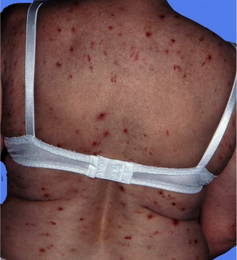
Delusional infestation is characterized by patients’ fixed and false belief that their skin is infested by pathogens. These can be animate, such as "bugs," worms, fungi, or bacteria, or they can be inanimate, such as "fibers," wood chips, or small tubes. Patients with this disorder frequently bring in specimens they have collected as proof of the infestation.
Ms. Hylwa and her colleagues performed what they said was "the first study that has addressed the histologic analysis of skin biopsy specimens and patient-provided specimens from a relatively large number of patients presenting with delusional infestation." They examined the records of all 108 patients treated at the Mayo Clinic for the disorder from 2001 to 2007.
Eighty of these patients underwent skin biopsy, 80 brought in specimens, and 52 had both.
Three-fourths of the patients were women, and mean symptom duration was 2 years (range, 2 weeks to 23 years). The patients reported that they were infested with bugs (79%), worms (20%), eggs of unspecified species (3%), fibers (22%), "specks" (7%), "triangles" (2%), granulous material (2%), and/or one each of the following: thorns, splinters, rotting wood fungus, Styrofoam, glass, car oil, nails, and gel.
None of the 121 biopsies (117 skin, 2 tongue, 1 hair, and 1 muscle) demonstrated evidence of infestation, nor did any patient-provided specimen. And among the dozens of other tests performed, such as stool ova and parasite analysis and skin cultures, none showed any evidence of infestation.
Of the 80 patient-provided specimens, all but two contained only insects that do not infest humans and cutaneous debris such as skin flakes, scabs, crusts, and hair. One stool sample contained an earthworm.
Only one patient-provided specimen proved to contain a true parasite (a pubic louse); however, that patient did not have lice, and pubic lice could not account for the patient’s symptoms, which chiefly involved the fingernails. Another patient provided a tick, but a tick could not have produced the skin eruption seen in that patient, the investigators said (Arch. Dermatol. 2011 May 16 [doi:10.1001/archdermatol.2011.114]).
Interestingly, 61% of patients showed some form of dermatitis on skin biopsy, and almost half had excoriations, ulcerations, or erosions. This high prevalence of dermatitis "raises the possibility that atypical sensations in the skin may be precipitated by a true pathologic condition (dermatitis) and interpreted mistakenly by the patient as insects crawling from the skin," the researchers said.
Similarly, cutaneous crusting and debris from scratches and excoriations might be misinterpreted as pathogens that emerged from the skin.
On the other hand, the dermatitis may have been a result, rather than a cause, of the patient’s belief in infestation. Rubbing and picking at the supposedly infested skin could have resulted in contact dermatitis, and many patients reported that they had applied caustic substances to their skin to "get rid of" the infestation, which could have lead to an irritant or allergic contact dermatitis, Ms. Hylwa and her associates wrote.
The findings raise questions about the value of performing skin biopsies and other procedures in these patients.
"Some have proposed that an alliance with a patient is a justification for a skin biopsy, but is it? What is the outcome following a biopsy? Did it improve the outcome of the interaction with the patient? Were patients more likely to be compliant with therapy following a biopsy?" the researchers asked.
No relevant conflicts of interest were reported.
In patients thought to have delusional infestation, neither skin biopsy nor microscopic examination of patient-provided "specimens" is likely to change the clinical diagnosis, according to a report published online May 16 in the Archives of Dermatology.
Performing such analyses might yield other benefits, such as assuring the patient that he or she is being taken seriously, but clinicians should understand that these procedures do not yield any important objective evidence, wrote Sara A. Hylwa, a visiting medical professional for research, and her associates at the Mayo Clinic in Rochester, Minn.
Delusional infestation is characterized by patients’ fixed and false belief that their skin is infested by pathogens. These can be animate, such as "bugs," worms, fungi, or bacteria, or they can be inanimate, such as "fibers," wood chips, or small tubes. Patients with this disorder frequently bring in specimens they have collected as proof of the infestation.
Ms. Hylwa and her colleagues performed what they said was "the first study that has addressed the histologic analysis of skin biopsy specimens and patient-provided specimens from a relatively large number of patients presenting with delusional infestation." They examined the records of all 108 patients treated at the Mayo Clinic for the disorder from 2001 to 2007.
Eighty of these patients underwent skin biopsy, 80 brought in specimens, and 52 had both.
Three-fourths of the patients were women, and mean symptom duration was 2 years (range, 2 weeks to 23 years). The patients reported that they were infested with bugs (79%), worms (20%), eggs of unspecified species (3%), fibers (22%), "specks" (7%), "triangles" (2%), granulous material (2%), and/or one each of the following: thorns, splinters, rotting wood fungus, Styrofoam, glass, car oil, nails, and gel.
None of the 121 biopsies (117 skin, 2 tongue, 1 hair, and 1 muscle) demonstrated evidence of infestation, nor did any patient-provided specimen. And among the dozens of other tests performed, such as stool ova and parasite analysis and skin cultures, none showed any evidence of infestation.
Of the 80 patient-provided specimens, all but two contained only insects that do not infest humans and cutaneous debris such as skin flakes, scabs, crusts, and hair. One stool sample contained an earthworm.
Only one patient-provided specimen proved to contain a true parasite (a pubic louse); however, that patient did not have lice, and pubic lice could not account for the patient’s symptoms, which chiefly involved the fingernails. Another patient provided a tick, but a tick could not have produced the skin eruption seen in that patient, the investigators said (Arch. Dermatol. 2011 May 16 [doi:10.1001/archdermatol.2011.114]).
Interestingly, 61% of patients showed some form of dermatitis on skin biopsy, and almost half had excoriations, ulcerations, or erosions. This high prevalence of dermatitis "raises the possibility that atypical sensations in the skin may be precipitated by a true pathologic condition (dermatitis) and interpreted mistakenly by the patient as insects crawling from the skin," the researchers said.
Similarly, cutaneous crusting and debris from scratches and excoriations might be misinterpreted as pathogens that emerged from the skin.
On the other hand, the dermatitis may have been a result, rather than a cause, of the patient’s belief in infestation. Rubbing and picking at the supposedly infested skin could have resulted in contact dermatitis, and many patients reported that they had applied caustic substances to their skin to "get rid of" the infestation, which could have lead to an irritant or allergic contact dermatitis, Ms. Hylwa and her associates wrote.
The findings raise questions about the value of performing skin biopsies and other procedures in these patients.
"Some have proposed that an alliance with a patient is a justification for a skin biopsy, but is it? What is the outcome following a biopsy? Did it improve the outcome of the interaction with the patient? Were patients more likely to be compliant with therapy following a biopsy?" the researchers asked.
No relevant conflicts of interest were reported.
In patients thought to have delusional infestation, neither skin biopsy nor microscopic examination of patient-provided "specimens" is likely to change the clinical diagnosis, according to a report published online May 16 in the Archives of Dermatology.
Performing such analyses might yield other benefits, such as assuring the patient that he or she is being taken seriously, but clinicians should understand that these procedures do not yield any important objective evidence, wrote Sara A. Hylwa, a visiting medical professional for research, and her associates at the Mayo Clinic in Rochester, Minn.
Delusional infestation is characterized by patients’ fixed and false belief that their skin is infested by pathogens. These can be animate, such as "bugs," worms, fungi, or bacteria, or they can be inanimate, such as "fibers," wood chips, or small tubes. Patients with this disorder frequently bring in specimens they have collected as proof of the infestation.
Ms. Hylwa and her colleagues performed what they said was "the first study that has addressed the histologic analysis of skin biopsy specimens and patient-provided specimens from a relatively large number of patients presenting with delusional infestation." They examined the records of all 108 patients treated at the Mayo Clinic for the disorder from 2001 to 2007.
Eighty of these patients underwent skin biopsy, 80 brought in specimens, and 52 had both.
Three-fourths of the patients were women, and mean symptom duration was 2 years (range, 2 weeks to 23 years). The patients reported that they were infested with bugs (79%), worms (20%), eggs of unspecified species (3%), fibers (22%), "specks" (7%), "triangles" (2%), granulous material (2%), and/or one each of the following: thorns, splinters, rotting wood fungus, Styrofoam, glass, car oil, nails, and gel.
None of the 121 biopsies (117 skin, 2 tongue, 1 hair, and 1 muscle) demonstrated evidence of infestation, nor did any patient-provided specimen. And among the dozens of other tests performed, such as stool ova and parasite analysis and skin cultures, none showed any evidence of infestation.
Of the 80 patient-provided specimens, all but two contained only insects that do not infest humans and cutaneous debris such as skin flakes, scabs, crusts, and hair. One stool sample contained an earthworm.
Only one patient-provided specimen proved to contain a true parasite (a pubic louse); however, that patient did not have lice, and pubic lice could not account for the patient’s symptoms, which chiefly involved the fingernails. Another patient provided a tick, but a tick could not have produced the skin eruption seen in that patient, the investigators said (Arch. Dermatol. 2011 May 16 [doi:10.1001/archdermatol.2011.114]).
Interestingly, 61% of patients showed some form of dermatitis on skin biopsy, and almost half had excoriations, ulcerations, or erosions. This high prevalence of dermatitis "raises the possibility that atypical sensations in the skin may be precipitated by a true pathologic condition (dermatitis) and interpreted mistakenly by the patient as insects crawling from the skin," the researchers said.
Similarly, cutaneous crusting and debris from scratches and excoriations might be misinterpreted as pathogens that emerged from the skin.
On the other hand, the dermatitis may have been a result, rather than a cause, of the patient’s belief in infestation. Rubbing and picking at the supposedly infested skin could have resulted in contact dermatitis, and many patients reported that they had applied caustic substances to their skin to "get rid of" the infestation, which could have lead to an irritant or allergic contact dermatitis, Ms. Hylwa and her associates wrote.
The findings raise questions about the value of performing skin biopsies and other procedures in these patients.
"Some have proposed that an alliance with a patient is a justification for a skin biopsy, but is it? What is the outcome following a biopsy? Did it improve the outcome of the interaction with the patient? Were patients more likely to be compliant with therapy following a biopsy?" the researchers asked.
No relevant conflicts of interest were reported.
FROM ARCHIVES OF DERMATOLOGY
Major Finding: None of 121 biopsies; 80 patient-provided "specimens"; or the dozens of mycobacterial, fungal, bacterial, and viral tests of skin, tongue, sputum, hair, or muscle performed for 108 patients with delusional infestation yielded any objective evidence of infestation.
Data Source: A review of the medical records of 108 patients treated for delusional infestation at the Mayo Clinic between 2001 and 2007.
Disclosures: No relevant conflicts of interest were reported.
Skin Biopsy Doesn’t Aid Diagnosis of Delusional Infestation
In patients thought to have delusional infestation, neither skin biopsy nor microscopic examination of patient-provided "specimens" is likely to change the clinical diagnosis, according to a report published online May 16 in the Archives of Dermatology.
Performing such analyses might yield other benefits, such as assuring the patient that he or she is being taken seriously, but clinicians should understand that these procedures do not yield any important objective evidence, wrote Sara A. Hylwa, a visiting medical professional for research, and her associates at the Mayo Clinic in Rochester, Minn.
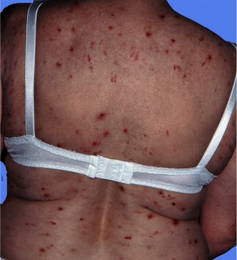
Delusional infestation is characterized by patients’ fixed and false belief that their skin is infested by pathogens. These can be animate, such as "bugs," worms, fungi, or bacteria, or they can be inanimate, such as "fibers," wood chips, or small tubes. Patients with this disorder frequently bring in specimens they have collected as proof of the infestation.
Ms. Hylwa and her colleagues performed what they said was "the first study that has addressed the histologic analysis of skin biopsy specimens and patient-provided specimens from a relatively large number of patients presenting with delusional infestation." They examined the records of all 108 patients treated at the Mayo Clinic for the disorder from 2001 to 2007.
Eighty of these patients underwent skin biopsy, 80 brought in specimens, and 52 had both.
Three-fourths of the patients were women, and mean symptom duration was 2 years (range, 2 weeks to 23 years). The patients reported that they were infested with bugs (79%), worms (20%), eggs of unspecified species (3%), fibers (22%), "specks" (7%), "triangles" (2%), granulous material (2%), and/or one each of the following: thorns, splinters, rotting wood fungus, Styrofoam, glass, car oil, nails, and gel.
None of the 121 biopsies (117 skin, 2 tongue, 1 hair, and 1 muscle) demonstrated evidence of infestation, nor did any patient-provided specimen. And among the dozens of other tests performed, such as stool ova and parasite analysis and skin cultures, none showed any evidence of infestation.
Of the 80 patient-provided specimens, all but two contained only insects that do not infest humans and cutaneous debris such as skin flakes, scabs, crusts, and hair. One stool sample contained an earthworm.
Only one patient-provided specimen proved to contain a true parasite (a pubic louse); however, that patient did not have lice, and pubic lice could not account for the patient’s symptoms, which chiefly involved the fingernails. Another patient provided a tick, but a tick could not have produced the skin eruption seen in that patient, the investigators said (Arch. Dermatol. 2011 May 16 [doi:10.1001/archdermatol.2011.114]).
Interestingly, 61% of patients showed some form of dermatitis on skin biopsy, and almost half had excoriations, ulcerations, or erosions. This high prevalence of dermatitis "raises the possibility that atypical sensations in the skin may be precipitated by a true pathologic condition (dermatitis) and interpreted mistakenly by the patient as insects crawling from the skin," the researchers said.
Similarly, cutaneous crusting and debris from scratches and excoriations might be misinterpreted as pathogens that emerged from the skin.
On the other hand, the dermatitis may have been a result, rather than a cause, of the patient’s belief in infestation. Rubbing and picking at the supposedly infested skin could have resulted in contact dermatitis, and many patients reported that they had applied caustic substances to their skin to "get rid of" the infestation, which could have lead to an irritant or allergic contact dermatitis, Ms. Hylwa and her associates wrote.
The findings raise questions about the value of performing skin biopsies and other procedures in these patients.
"Some have proposed that an alliance with a patient is a justification for a skin biopsy, but is it? What is the outcome following a biopsy? Did it improve the outcome of the interaction with the patient? Were patients more likely to be compliant with therapy following a biopsy?" the researchers asked.
No relevant conflicts of interest were reported.
In patients thought to have delusional infestation, neither skin biopsy nor microscopic examination of patient-provided "specimens" is likely to change the clinical diagnosis, according to a report published online May 16 in the Archives of Dermatology.
Performing such analyses might yield other benefits, such as assuring the patient that he or she is being taken seriously, but clinicians should understand that these procedures do not yield any important objective evidence, wrote Sara A. Hylwa, a visiting medical professional for research, and her associates at the Mayo Clinic in Rochester, Minn.
Delusional infestation is characterized by patients’ fixed and false belief that their skin is infested by pathogens. These can be animate, such as "bugs," worms, fungi, or bacteria, or they can be inanimate, such as "fibers," wood chips, or small tubes. Patients with this disorder frequently bring in specimens they have collected as proof of the infestation.
Ms. Hylwa and her colleagues performed what they said was "the first study that has addressed the histologic analysis of skin biopsy specimens and patient-provided specimens from a relatively large number of patients presenting with delusional infestation." They examined the records of all 108 patients treated at the Mayo Clinic for the disorder from 2001 to 2007.
Eighty of these patients underwent skin biopsy, 80 brought in specimens, and 52 had both.
Three-fourths of the patients were women, and mean symptom duration was 2 years (range, 2 weeks to 23 years). The patients reported that they were infested with bugs (79%), worms (20%), eggs of unspecified species (3%), fibers (22%), "specks" (7%), "triangles" (2%), granulous material (2%), and/or one each of the following: thorns, splinters, rotting wood fungus, Styrofoam, glass, car oil, nails, and gel.
None of the 121 biopsies (117 skin, 2 tongue, 1 hair, and 1 muscle) demonstrated evidence of infestation, nor did any patient-provided specimen. And among the dozens of other tests performed, such as stool ova and parasite analysis and skin cultures, none showed any evidence of infestation.
Of the 80 patient-provided specimens, all but two contained only insects that do not infest humans and cutaneous debris such as skin flakes, scabs, crusts, and hair. One stool sample contained an earthworm.
Only one patient-provided specimen proved to contain a true parasite (a pubic louse); however, that patient did not have lice, and pubic lice could not account for the patient’s symptoms, which chiefly involved the fingernails. Another patient provided a tick, but a tick could not have produced the skin eruption seen in that patient, the investigators said (Arch. Dermatol. 2011 May 16 [doi:10.1001/archdermatol.2011.114]).
Interestingly, 61% of patients showed some form of dermatitis on skin biopsy, and almost half had excoriations, ulcerations, or erosions. This high prevalence of dermatitis "raises the possibility that atypical sensations in the skin may be precipitated by a true pathologic condition (dermatitis) and interpreted mistakenly by the patient as insects crawling from the skin," the researchers said.
Similarly, cutaneous crusting and debris from scratches and excoriations might be misinterpreted as pathogens that emerged from the skin.
On the other hand, the dermatitis may have been a result, rather than a cause, of the patient’s belief in infestation. Rubbing and picking at the supposedly infested skin could have resulted in contact dermatitis, and many patients reported that they had applied caustic substances to their skin to "get rid of" the infestation, which could have lead to an irritant or allergic contact dermatitis, Ms. Hylwa and her associates wrote.
The findings raise questions about the value of performing skin biopsies and other procedures in these patients.
"Some have proposed that an alliance with a patient is a justification for a skin biopsy, but is it? What is the outcome following a biopsy? Did it improve the outcome of the interaction with the patient? Were patients more likely to be compliant with therapy following a biopsy?" the researchers asked.
No relevant conflicts of interest were reported.
In patients thought to have delusional infestation, neither skin biopsy nor microscopic examination of patient-provided "specimens" is likely to change the clinical diagnosis, according to a report published online May 16 in the Archives of Dermatology.
Performing such analyses might yield other benefits, such as assuring the patient that he or she is being taken seriously, but clinicians should understand that these procedures do not yield any important objective evidence, wrote Sara A. Hylwa, a visiting medical professional for research, and her associates at the Mayo Clinic in Rochester, Minn.
Delusional infestation is characterized by patients’ fixed and false belief that their skin is infested by pathogens. These can be animate, such as "bugs," worms, fungi, or bacteria, or they can be inanimate, such as "fibers," wood chips, or small tubes. Patients with this disorder frequently bring in specimens they have collected as proof of the infestation.
Ms. Hylwa and her colleagues performed what they said was "the first study that has addressed the histologic analysis of skin biopsy specimens and patient-provided specimens from a relatively large number of patients presenting with delusional infestation." They examined the records of all 108 patients treated at the Mayo Clinic for the disorder from 2001 to 2007.
Eighty of these patients underwent skin biopsy, 80 brought in specimens, and 52 had both.
Three-fourths of the patients were women, and mean symptom duration was 2 years (range, 2 weeks to 23 years). The patients reported that they were infested with bugs (79%), worms (20%), eggs of unspecified species (3%), fibers (22%), "specks" (7%), "triangles" (2%), granulous material (2%), and/or one each of the following: thorns, splinters, rotting wood fungus, Styrofoam, glass, car oil, nails, and gel.
None of the 121 biopsies (117 skin, 2 tongue, 1 hair, and 1 muscle) demonstrated evidence of infestation, nor did any patient-provided specimen. And among the dozens of other tests performed, such as stool ova and parasite analysis and skin cultures, none showed any evidence of infestation.
Of the 80 patient-provided specimens, all but two contained only insects that do not infest humans and cutaneous debris such as skin flakes, scabs, crusts, and hair. One stool sample contained an earthworm.
Only one patient-provided specimen proved to contain a true parasite (a pubic louse); however, that patient did not have lice, and pubic lice could not account for the patient’s symptoms, which chiefly involved the fingernails. Another patient provided a tick, but a tick could not have produced the skin eruption seen in that patient, the investigators said (Arch. Dermatol. 2011 May 16 [doi:10.1001/archdermatol.2011.114]).
Interestingly, 61% of patients showed some form of dermatitis on skin biopsy, and almost half had excoriations, ulcerations, or erosions. This high prevalence of dermatitis "raises the possibility that atypical sensations in the skin may be precipitated by a true pathologic condition (dermatitis) and interpreted mistakenly by the patient as insects crawling from the skin," the researchers said.
Similarly, cutaneous crusting and debris from scratches and excoriations might be misinterpreted as pathogens that emerged from the skin.
On the other hand, the dermatitis may have been a result, rather than a cause, of the patient’s belief in infestation. Rubbing and picking at the supposedly infested skin could have resulted in contact dermatitis, and many patients reported that they had applied caustic substances to their skin to "get rid of" the infestation, which could have lead to an irritant or allergic contact dermatitis, Ms. Hylwa and her associates wrote.
The findings raise questions about the value of performing skin biopsies and other procedures in these patients.
"Some have proposed that an alliance with a patient is a justification for a skin biopsy, but is it? What is the outcome following a biopsy? Did it improve the outcome of the interaction with the patient? Were patients more likely to be compliant with therapy following a biopsy?" the researchers asked.
No relevant conflicts of interest were reported.
FROM ARCHIVES OF DERMATOLOGY
Major Finding: None of 121 biopsies; 80 patient-provided "specimens"; or the dozens of mycobacterial, fungal, bacterial, and viral tests of skin, tongue, sputum, hair, or muscle performed for 108 patients with delusional infestation yielded any objective evidence of infestation.
Data Source: A review of the medical records of 108 patients treated for delusional infestation at the Mayo Clinic between 2001 and 2007.
Disclosures: No relevant conflicts of interest were reported.
Human Lung Stem Cells Discovered
Researchers believe they have isolated human lung stem cells for the first time, according to a report in the May 12 issue of the New England Journal of Medicine.
Cells from normal human lung tissue obtained from 12 unused donor lungs were identified as stem cells using the stem-cell antigen c-kit, which has been used before to identify cardiac and hematopoietic stem cells.
These lung cells were then expanded and, in a series of in vitro and in vivo studies, the researchers demonstrated the three properties fundamental to stem cells: self-renewal, clonogenicity, and multipotentiality, said Jan Kajstura, Ph.D., of the departments of anesthesia and medicine at Brigham and Women’s Hospital and Harvard Medical School, Boston, and associates.
The undifferentiated cells were nested in niches within the distal airways in the lung samples. Other types of stem cells also typically are located in such anatomical niches, the researchers noted.
In addition to these cells from adult donor lungs, identical cells also were found in lung tissue specimens from nine cases of fetal death.
When the stem cells were transplanted into deliberately injured mouse lungs, they became structurally and functionally integrated into the damaged organs and created human bronchioles, alveoli, and pulmonary vessels within 14 days, Dr. Kajstura and colleagues said (N. Engl. J. Med. 2011 May 12;364:1795-806).
These findings indicate that the lung stem cells might play a crucial role in lung tissue regeneration after injury and in lung tissue homeostasis, they said.
This study was supported by the National Institutes of Health and Cardiocentro Ticino. A patent has been filed for this class of human lung stem cells on behalf of Partners HealthCare (which includes Brigham and Women’s Hospital). Dr. Kajstura reported no conflicts of interest; a coauthor reported ties to Autologous.
If the findings by Dr. Kajstura and colleagues are borne out, this discovery "promises to overcome one of the major hurdles in human lung regeneration: the identification and isolation of a native lung cell that could be used to replenish functioning lung tissue in a patient with lung disease, averting the hazards of allogeneic transplantation or reprogramming," Dr. Harold A. Chapman said.
It is tempting to theorize that such cells also would make appealing "parents" for bioengineered lung tissue, but it’s important to keep in mind that there is no evidence thus far showing that the regenerated bronchioles, alveoli, and pulmonary vessels integrate sufficiently with host vasculature or airways to support perfusion or ventilation, he noted.
While it remains to be seen whether these stem cells "efficiently assemble into a permanent, fully functional unit," Dr. Kajstura’s findings "should energize the field," he added.
Harold A. Chapman, M.D., is in pulmonary and critical care medicine at the University of California, San Francisco. He reported ties to the National Institutes of Health, Fate Therapeutics, and Genzyme. These remarks were taken from his editorial comment accompanying Dr. Kajstura’s report (N. Engl. J. Med. 2011;364:1867-8).
If the findings by Dr. Kajstura and colleagues are borne out, this discovery "promises to overcome one of the major hurdles in human lung regeneration: the identification and isolation of a native lung cell that could be used to replenish functioning lung tissue in a patient with lung disease, averting the hazards of allogeneic transplantation or reprogramming," Dr. Harold A. Chapman said.
It is tempting to theorize that such cells also would make appealing "parents" for bioengineered lung tissue, but it’s important to keep in mind that there is no evidence thus far showing that the regenerated bronchioles, alveoli, and pulmonary vessels integrate sufficiently with host vasculature or airways to support perfusion or ventilation, he noted.
While it remains to be seen whether these stem cells "efficiently assemble into a permanent, fully functional unit," Dr. Kajstura’s findings "should energize the field," he added.
Harold A. Chapman, M.D., is in pulmonary and critical care medicine at the University of California, San Francisco. He reported ties to the National Institutes of Health, Fate Therapeutics, and Genzyme. These remarks were taken from his editorial comment accompanying Dr. Kajstura’s report (N. Engl. J. Med. 2011;364:1867-8).
If the findings by Dr. Kajstura and colleagues are borne out, this discovery "promises to overcome one of the major hurdles in human lung regeneration: the identification and isolation of a native lung cell that could be used to replenish functioning lung tissue in a patient with lung disease, averting the hazards of allogeneic transplantation or reprogramming," Dr. Harold A. Chapman said.
It is tempting to theorize that such cells also would make appealing "parents" for bioengineered lung tissue, but it’s important to keep in mind that there is no evidence thus far showing that the regenerated bronchioles, alveoli, and pulmonary vessels integrate sufficiently with host vasculature or airways to support perfusion or ventilation, he noted.
While it remains to be seen whether these stem cells "efficiently assemble into a permanent, fully functional unit," Dr. Kajstura’s findings "should energize the field," he added.
Harold A. Chapman, M.D., is in pulmonary and critical care medicine at the University of California, San Francisco. He reported ties to the National Institutes of Health, Fate Therapeutics, and Genzyme. These remarks were taken from his editorial comment accompanying Dr. Kajstura’s report (N. Engl. J. Med. 2011;364:1867-8).
Researchers believe they have isolated human lung stem cells for the first time, according to a report in the May 12 issue of the New England Journal of Medicine.
Cells from normal human lung tissue obtained from 12 unused donor lungs were identified as stem cells using the stem-cell antigen c-kit, which has been used before to identify cardiac and hematopoietic stem cells.
These lung cells were then expanded and, in a series of in vitro and in vivo studies, the researchers demonstrated the three properties fundamental to stem cells: self-renewal, clonogenicity, and multipotentiality, said Jan Kajstura, Ph.D., of the departments of anesthesia and medicine at Brigham and Women’s Hospital and Harvard Medical School, Boston, and associates.
The undifferentiated cells were nested in niches within the distal airways in the lung samples. Other types of stem cells also typically are located in such anatomical niches, the researchers noted.
In addition to these cells from adult donor lungs, identical cells also were found in lung tissue specimens from nine cases of fetal death.
When the stem cells were transplanted into deliberately injured mouse lungs, they became structurally and functionally integrated into the damaged organs and created human bronchioles, alveoli, and pulmonary vessels within 14 days, Dr. Kajstura and colleagues said (N. Engl. J. Med. 2011 May 12;364:1795-806).
These findings indicate that the lung stem cells might play a crucial role in lung tissue regeneration after injury and in lung tissue homeostasis, they said.
This study was supported by the National Institutes of Health and Cardiocentro Ticino. A patent has been filed for this class of human lung stem cells on behalf of Partners HealthCare (which includes Brigham and Women’s Hospital). Dr. Kajstura reported no conflicts of interest; a coauthor reported ties to Autologous.
Researchers believe they have isolated human lung stem cells for the first time, according to a report in the May 12 issue of the New England Journal of Medicine.
Cells from normal human lung tissue obtained from 12 unused donor lungs were identified as stem cells using the stem-cell antigen c-kit, which has been used before to identify cardiac and hematopoietic stem cells.
These lung cells were then expanded and, in a series of in vitro and in vivo studies, the researchers demonstrated the three properties fundamental to stem cells: self-renewal, clonogenicity, and multipotentiality, said Jan Kajstura, Ph.D., of the departments of anesthesia and medicine at Brigham and Women’s Hospital and Harvard Medical School, Boston, and associates.
The undifferentiated cells were nested in niches within the distal airways in the lung samples. Other types of stem cells also typically are located in such anatomical niches, the researchers noted.
In addition to these cells from adult donor lungs, identical cells also were found in lung tissue specimens from nine cases of fetal death.
When the stem cells were transplanted into deliberately injured mouse lungs, they became structurally and functionally integrated into the damaged organs and created human bronchioles, alveoli, and pulmonary vessels within 14 days, Dr. Kajstura and colleagues said (N. Engl. J. Med. 2011 May 12;364:1795-806).
These findings indicate that the lung stem cells might play a crucial role in lung tissue regeneration after injury and in lung tissue homeostasis, they said.
This study was supported by the National Institutes of Health and Cardiocentro Ticino. A patent has been filed for this class of human lung stem cells on behalf of Partners HealthCare (which includes Brigham and Women’s Hospital). Dr. Kajstura reported no conflicts of interest; a coauthor reported ties to Autologous.
FROM THE NEW ENGLAND JOURNAL OF MEDICINE
Major Finding: Cells obtained from 12 human donor lungs and 9 cadaveric fetal lungs demonstrated three fundamental properties – self-renewal, clonogenicity, and multipotentiality – indicating that they are lung stem cells with the potential to promote tissue regeneration in patients with lung disease.
Data Source: In vitro and in vivo mouse studies.
Disclosures: This study was supported by the National Institutes of Health and Cardiocentro Ticino. A patent has been filed for this class of human lung stem cells on behalf of Partners HealthCare (which includes Brigham and Women’s Hospital). Dr. Kajstura reported no conflicts of interest; a coauthor reported ties to Autologous.
Human Lung Stem Cells Discovered
Researchers believe they have isolated human lung stem cells for the first time, according to a report in the May 12 issue of the New England Journal of Medicine.
Cells from normal human lung tissue obtained from 12 unused donor lungs were identified as stem cells using the stem-cell antigen c-kit, which has been used before to identify cardiac and hematopoietic stem cells.
These lung cells were then expanded and, in a series of in vitro and in vivo studies, the researchers demonstrated the three properties fundamental to stem cells: self-renewal, clonogenicity, and multipotentiality, said Jan Kajstura, Ph.D., of the departments of anesthesia and medicine at Brigham and Women’s Hospital and Harvard Medical School, Boston, and associates.
The undifferentiated cells were nested in niches within the distal airways in the lung samples. Other types of stem cells also typically are located in such anatomical niches, the researchers noted.
In addition to these cells from adult donor lungs, identical cells also were found in lung tissue specimens from nine cases of fetal death.
When the stem cells were transplanted into deliberately injured mouse lungs, they became structurally and functionally integrated into the damaged organs and created human bronchioles, alveoli, and pulmonary vessels within 14 days, Dr. Kajstura and colleagues said (N. Engl. J. Med. 2011 May 12;364:1795-806).
These findings indicate that the lung stem cells might play a crucial role in lung tissue regeneration after injury and in lung tissue homeostasis, they said.
This study was supported by the National Institutes of Health and Cardiocentro Ticino. A patent has been filed for this class of human lung stem cells on behalf of Partners HealthCare (which includes Brigham and Women’s Hospital). Dr. Kajstura reported no conflicts of interest; a coauthor reported ties to Autologous.
If the findings by Dr. Kajstura and colleagues are borne out, this discovery "promises to overcome one of the major hurdles in human lung regeneration: the identification and isolation of a native lung cell that could be used to replenish functioning lung tissue in a patient with lung disease, averting the hazards of allogeneic transplantation or reprogramming," Dr. Harold A. Chapman said.
It is tempting to theorize that such cells also would make appealing "parents" for bioengineered lung tissue, but it’s important to keep in mind that there is no evidence thus far showing that the regenerated bronchioles, alveoli, and pulmonary vessels integrate sufficiently with host vasculature or airways to support perfusion or ventilation, he noted.
While it remains to be seen whether these stem cells "efficiently assemble into a permanent, fully functional unit," Dr. Kajstura’s findings "should energize the field," he added.
Harold A. Chapman, M.D., is in pulmonary and critical care medicine at the University of California, San Francisco. He reported ties to the National Institutes of Health, Fate Therapeutics, and Genzyme. These remarks were taken from his editorial comment accompanying Dr. Kajstura’s report (N. Engl. J. Med. 2011;364:1867-8).
If the findings by Dr. Kajstura and colleagues are borne out, this discovery "promises to overcome one of the major hurdles in human lung regeneration: the identification and isolation of a native lung cell that could be used to replenish functioning lung tissue in a patient with lung disease, averting the hazards of allogeneic transplantation or reprogramming," Dr. Harold A. Chapman said.
It is tempting to theorize that such cells also would make appealing "parents" for bioengineered lung tissue, but it’s important to keep in mind that there is no evidence thus far showing that the regenerated bronchioles, alveoli, and pulmonary vessels integrate sufficiently with host vasculature or airways to support perfusion or ventilation, he noted.
While it remains to be seen whether these stem cells "efficiently assemble into a permanent, fully functional unit," Dr. Kajstura’s findings "should energize the field," he added.
Harold A. Chapman, M.D., is in pulmonary and critical care medicine at the University of California, San Francisco. He reported ties to the National Institutes of Health, Fate Therapeutics, and Genzyme. These remarks were taken from his editorial comment accompanying Dr. Kajstura’s report (N. Engl. J. Med. 2011;364:1867-8).
If the findings by Dr. Kajstura and colleagues are borne out, this discovery "promises to overcome one of the major hurdles in human lung regeneration: the identification and isolation of a native lung cell that could be used to replenish functioning lung tissue in a patient with lung disease, averting the hazards of allogeneic transplantation or reprogramming," Dr. Harold A. Chapman said.
It is tempting to theorize that such cells also would make appealing "parents" for bioengineered lung tissue, but it’s important to keep in mind that there is no evidence thus far showing that the regenerated bronchioles, alveoli, and pulmonary vessels integrate sufficiently with host vasculature or airways to support perfusion or ventilation, he noted.
While it remains to be seen whether these stem cells "efficiently assemble into a permanent, fully functional unit," Dr. Kajstura’s findings "should energize the field," he added.
Harold A. Chapman, M.D., is in pulmonary and critical care medicine at the University of California, San Francisco. He reported ties to the National Institutes of Health, Fate Therapeutics, and Genzyme. These remarks were taken from his editorial comment accompanying Dr. Kajstura’s report (N. Engl. J. Med. 2011;364:1867-8).
Researchers believe they have isolated human lung stem cells for the first time, according to a report in the May 12 issue of the New England Journal of Medicine.
Cells from normal human lung tissue obtained from 12 unused donor lungs were identified as stem cells using the stem-cell antigen c-kit, which has been used before to identify cardiac and hematopoietic stem cells.
These lung cells were then expanded and, in a series of in vitro and in vivo studies, the researchers demonstrated the three properties fundamental to stem cells: self-renewal, clonogenicity, and multipotentiality, said Jan Kajstura, Ph.D., of the departments of anesthesia and medicine at Brigham and Women’s Hospital and Harvard Medical School, Boston, and associates.
The undifferentiated cells were nested in niches within the distal airways in the lung samples. Other types of stem cells also typically are located in such anatomical niches, the researchers noted.
In addition to these cells from adult donor lungs, identical cells also were found in lung tissue specimens from nine cases of fetal death.
When the stem cells were transplanted into deliberately injured mouse lungs, they became structurally and functionally integrated into the damaged organs and created human bronchioles, alveoli, and pulmonary vessels within 14 days, Dr. Kajstura and colleagues said (N. Engl. J. Med. 2011 May 12;364:1795-806).
These findings indicate that the lung stem cells might play a crucial role in lung tissue regeneration after injury and in lung tissue homeostasis, they said.
This study was supported by the National Institutes of Health and Cardiocentro Ticino. A patent has been filed for this class of human lung stem cells on behalf of Partners HealthCare (which includes Brigham and Women’s Hospital). Dr. Kajstura reported no conflicts of interest; a coauthor reported ties to Autologous.
Researchers believe they have isolated human lung stem cells for the first time, according to a report in the May 12 issue of the New England Journal of Medicine.
Cells from normal human lung tissue obtained from 12 unused donor lungs were identified as stem cells using the stem-cell antigen c-kit, which has been used before to identify cardiac and hematopoietic stem cells.
These lung cells were then expanded and, in a series of in vitro and in vivo studies, the researchers demonstrated the three properties fundamental to stem cells: self-renewal, clonogenicity, and multipotentiality, said Jan Kajstura, Ph.D., of the departments of anesthesia and medicine at Brigham and Women’s Hospital and Harvard Medical School, Boston, and associates.
The undifferentiated cells were nested in niches within the distal airways in the lung samples. Other types of stem cells also typically are located in such anatomical niches, the researchers noted.
In addition to these cells from adult donor lungs, identical cells also were found in lung tissue specimens from nine cases of fetal death.
When the stem cells were transplanted into deliberately injured mouse lungs, they became structurally and functionally integrated into the damaged organs and created human bronchioles, alveoli, and pulmonary vessels within 14 days, Dr. Kajstura and colleagues said (N. Engl. J. Med. 2011 May 12;364:1795-806).
These findings indicate that the lung stem cells might play a crucial role in lung tissue regeneration after injury and in lung tissue homeostasis, they said.
This study was supported by the National Institutes of Health and Cardiocentro Ticino. A patent has been filed for this class of human lung stem cells on behalf of Partners HealthCare (which includes Brigham and Women’s Hospital). Dr. Kajstura reported no conflicts of interest; a coauthor reported ties to Autologous.
FROM THE NEW ENGLAND JOURNAL OF MEDICINE
Major Finding: Cells obtained from 12 human donor lungs and 9 cadaveric fetal lungs demonstrated three fundamental properties – self-renewal, clonogenicity, and multipotentiality – indicating that they are lung stem cells with the potential to promote tissue regeneration in patients with lung disease.
Data Source: In vitro and in vivo mouse studies.
Disclosures: This study was supported by the National Institutes of Health and Cardiocentro Ticino. A patent has been filed for this class of human lung stem cells on behalf of Partners HealthCare (which includes Brigham and Women’s Hospital). Dr. Kajstura reported no conflicts of interest; a coauthor reported ties to Autologous.
Anterior Vaginal Prolapse: Mesh Kit Superior to Colporrhaphy
For repair of anterior vaginal-wall prolapse, the use of a trochar-guided mesh kit was more successful than traditional colporrhaphy on both objective and subjective measures, according to a report in the May 12 issue of the New England Journal of Medicine.
The mesh kit, however, carried higher rates of surgical complications and postoperative adverse events, with twice as many women developing new stress urinary incontinence and more than three times as many reporting dyspareunia in the year following surgery, said Dr. Daniel Altman of Danderyd Hospital and the Karolinska Institutet, Stockholm, and his associates.
The use of trocar-guided mesh kits is widespread, even though "none of the marketed kits have been comprehensively evaluated in comparative trials," they noted.
Dr. Altman and his colleagues performed such a trial, comparing the efficacy and safety of transvaginal mesh repair against colporrhaphy, the current standard of care, in 389 women at 53 hospitals throughout Sweden, Norway, Finland, and Denmark. The 58 surgeons who participated in the study performed a median of three each of the two types of procedures.
The study subjects were randomly assigned in approximately equal numbers to undergo either traditional colporrhaphy or trocar-guided transvaginal mesh repair. They were followed at 2 months and 12 months, giving subjective responses to the Urogenital Distress Inventory (UDI) and the Pelvic Organ Prolapse/Urinary Incontinence Sexual Questionnaire (PISQ-12). In addition, gynecologists objectively assessed postoperative results using the Pelvic Organ Prolapse Quantification (POP-Q) staging system.
One year after surgery, the primary outcome measure – a finding of no prolapse on both subjective and objective assessments – was significantly more frequent in the mesh-repair group (61%) than in the colporrhaphy group (35%). This result was consistent upon further per-protocol analysis, intention-to-treat analysis, and sensitivity analysis, the investigators said (N. Engl. J. Med. 2011;364:1826-36).
At 1 year, the proportion of women in whom support of the anterior vaginal wall was restored to POP-Q stage 0 or 1 was 82% with the mesh kit, compared with 48% with colporrhaphy.
The proportion of women who reported symptoms of vaginal bulging was 75% with the mesh kit, compared with 62% with colporrhaphy.
Urinary symptom scores deteriorated in both groups during the course of the year but did so to a greater degree with colporrhaphy. "At the 1-year assessment, symptoms of stress urinary incontinence were significantly more bothersome in the mesh-repair group ... whereas obstructive symptoms were less bothersome; there were no significant between-group differences in irritative symptoms at 1 year," Dr. Altman and his associates said.
New stress urinary incontinence, however, developed in only 6% of the colporrhaphy group, compared with 12% of the mesh-repair group.
PISQ-12 scores were only modestly improved, compared with baseline scores, and were similar between the two groups.
Pain during sexual intercourse was reported "usually" or "always" by 2% of patients after colporrhaphy and by over 7% of women after transvaginal mesh surgery, yet 40% of the colporrhaphy group and 48% of the mesh-repair group said they were "usually" or "always" satisfied with their sexual relationships.
The mesh-repair group had a significantly longer mean duration of surgery (53 minutes vs. 34 minutes), greater intraoperative blood loss (85 mL vs. 35 mL), a more frequent need for intraoperative cystoscopy, and more bladder perforations (seven vs. one). The rates of excessive blood loss, inguinal pain, and problems emptying the bladder also were higher after mesh repair.
In addition, more patients in the mesh-repair group reported severe pelvic pain at 2 months. And within 1 year, nearly 3% of women who had undergone mesh repair required surgery for stress incontinence and more than 3% required surgical revision because of exposure of the mesh.
"Patients should understand ... that the use of mesh may cause complications even after the immediate postoperative period," the researchers noted.
"Our results highlight the need for a careful evaluation of surgical innovations, which are often widely adopted in the absence of data from clinical trials," they said.
This study was supported by the Swedish Society of Medicine, the Karolinska Institutet, and Ethicon. Dr. Altman reported ties to Gynecare Scandinavia, and Contura. Some of the other investigators reported ties to Gynecare Scandinavia and Ethicon.
For repair of anterior vaginal-wall prolapse, the use of a trochar-guided mesh kit was more successful than traditional colporrhaphy on both objective and subjective measures, according to a report in the May 12 issue of the New England Journal of Medicine.
The mesh kit, however, carried higher rates of surgical complications and postoperative adverse events, with twice as many women developing new stress urinary incontinence and more than three times as many reporting dyspareunia in the year following surgery, said Dr. Daniel Altman of Danderyd Hospital and the Karolinska Institutet, Stockholm, and his associates.
The use of trocar-guided mesh kits is widespread, even though "none of the marketed kits have been comprehensively evaluated in comparative trials," they noted.
Dr. Altman and his colleagues performed such a trial, comparing the efficacy and safety of transvaginal mesh repair against colporrhaphy, the current standard of care, in 389 women at 53 hospitals throughout Sweden, Norway, Finland, and Denmark. The 58 surgeons who participated in the study performed a median of three each of the two types of procedures.
The study subjects were randomly assigned in approximately equal numbers to undergo either traditional colporrhaphy or trocar-guided transvaginal mesh repair. They were followed at 2 months and 12 months, giving subjective responses to the Urogenital Distress Inventory (UDI) and the Pelvic Organ Prolapse/Urinary Incontinence Sexual Questionnaire (PISQ-12). In addition, gynecologists objectively assessed postoperative results using the Pelvic Organ Prolapse Quantification (POP-Q) staging system.
One year after surgery, the primary outcome measure – a finding of no prolapse on both subjective and objective assessments – was significantly more frequent in the mesh-repair group (61%) than in the colporrhaphy group (35%). This result was consistent upon further per-protocol analysis, intention-to-treat analysis, and sensitivity analysis, the investigators said (N. Engl. J. Med. 2011;364:1826-36).
At 1 year, the proportion of women in whom support of the anterior vaginal wall was restored to POP-Q stage 0 or 1 was 82% with the mesh kit, compared with 48% with colporrhaphy.
The proportion of women who reported symptoms of vaginal bulging was 75% with the mesh kit, compared with 62% with colporrhaphy.
Urinary symptom scores deteriorated in both groups during the course of the year but did so to a greater degree with colporrhaphy. "At the 1-year assessment, symptoms of stress urinary incontinence were significantly more bothersome in the mesh-repair group ... whereas obstructive symptoms were less bothersome; there were no significant between-group differences in irritative symptoms at 1 year," Dr. Altman and his associates said.
New stress urinary incontinence, however, developed in only 6% of the colporrhaphy group, compared with 12% of the mesh-repair group.
PISQ-12 scores were only modestly improved, compared with baseline scores, and were similar between the two groups.
Pain during sexual intercourse was reported "usually" or "always" by 2% of patients after colporrhaphy and by over 7% of women after transvaginal mesh surgery, yet 40% of the colporrhaphy group and 48% of the mesh-repair group said they were "usually" or "always" satisfied with their sexual relationships.
The mesh-repair group had a significantly longer mean duration of surgery (53 minutes vs. 34 minutes), greater intraoperative blood loss (85 mL vs. 35 mL), a more frequent need for intraoperative cystoscopy, and more bladder perforations (seven vs. one). The rates of excessive blood loss, inguinal pain, and problems emptying the bladder also were higher after mesh repair.
In addition, more patients in the mesh-repair group reported severe pelvic pain at 2 months. And within 1 year, nearly 3% of women who had undergone mesh repair required surgery for stress incontinence and more than 3% required surgical revision because of exposure of the mesh.
"Patients should understand ... that the use of mesh may cause complications even after the immediate postoperative period," the researchers noted.
"Our results highlight the need for a careful evaluation of surgical innovations, which are often widely adopted in the absence of data from clinical trials," they said.
This study was supported by the Swedish Society of Medicine, the Karolinska Institutet, and Ethicon. Dr. Altman reported ties to Gynecare Scandinavia, and Contura. Some of the other investigators reported ties to Gynecare Scandinavia and Ethicon.
For repair of anterior vaginal-wall prolapse, the use of a trochar-guided mesh kit was more successful than traditional colporrhaphy on both objective and subjective measures, according to a report in the May 12 issue of the New England Journal of Medicine.
The mesh kit, however, carried higher rates of surgical complications and postoperative adverse events, with twice as many women developing new stress urinary incontinence and more than three times as many reporting dyspareunia in the year following surgery, said Dr. Daniel Altman of Danderyd Hospital and the Karolinska Institutet, Stockholm, and his associates.
The use of trocar-guided mesh kits is widespread, even though "none of the marketed kits have been comprehensively evaluated in comparative trials," they noted.
Dr. Altman and his colleagues performed such a trial, comparing the efficacy and safety of transvaginal mesh repair against colporrhaphy, the current standard of care, in 389 women at 53 hospitals throughout Sweden, Norway, Finland, and Denmark. The 58 surgeons who participated in the study performed a median of three each of the two types of procedures.
The study subjects were randomly assigned in approximately equal numbers to undergo either traditional colporrhaphy or trocar-guided transvaginal mesh repair. They were followed at 2 months and 12 months, giving subjective responses to the Urogenital Distress Inventory (UDI) and the Pelvic Organ Prolapse/Urinary Incontinence Sexual Questionnaire (PISQ-12). In addition, gynecologists objectively assessed postoperative results using the Pelvic Organ Prolapse Quantification (POP-Q) staging system.
One year after surgery, the primary outcome measure – a finding of no prolapse on both subjective and objective assessments – was significantly more frequent in the mesh-repair group (61%) than in the colporrhaphy group (35%). This result was consistent upon further per-protocol analysis, intention-to-treat analysis, and sensitivity analysis, the investigators said (N. Engl. J. Med. 2011;364:1826-36).
At 1 year, the proportion of women in whom support of the anterior vaginal wall was restored to POP-Q stage 0 or 1 was 82% with the mesh kit, compared with 48% with colporrhaphy.
The proportion of women who reported symptoms of vaginal bulging was 75% with the mesh kit, compared with 62% with colporrhaphy.
Urinary symptom scores deteriorated in both groups during the course of the year but did so to a greater degree with colporrhaphy. "At the 1-year assessment, symptoms of stress urinary incontinence were significantly more bothersome in the mesh-repair group ... whereas obstructive symptoms were less bothersome; there were no significant between-group differences in irritative symptoms at 1 year," Dr. Altman and his associates said.
New stress urinary incontinence, however, developed in only 6% of the colporrhaphy group, compared with 12% of the mesh-repair group.
PISQ-12 scores were only modestly improved, compared with baseline scores, and were similar between the two groups.
Pain during sexual intercourse was reported "usually" or "always" by 2% of patients after colporrhaphy and by over 7% of women after transvaginal mesh surgery, yet 40% of the colporrhaphy group and 48% of the mesh-repair group said they were "usually" or "always" satisfied with their sexual relationships.
The mesh-repair group had a significantly longer mean duration of surgery (53 minutes vs. 34 minutes), greater intraoperative blood loss (85 mL vs. 35 mL), a more frequent need for intraoperative cystoscopy, and more bladder perforations (seven vs. one). The rates of excessive blood loss, inguinal pain, and problems emptying the bladder also were higher after mesh repair.
In addition, more patients in the mesh-repair group reported severe pelvic pain at 2 months. And within 1 year, nearly 3% of women who had undergone mesh repair required surgery for stress incontinence and more than 3% required surgical revision because of exposure of the mesh.
"Patients should understand ... that the use of mesh may cause complications even after the immediate postoperative period," the researchers noted.
"Our results highlight the need for a careful evaluation of surgical innovations, which are often widely adopted in the absence of data from clinical trials," they said.
This study was supported by the Swedish Society of Medicine, the Karolinska Institutet, and Ethicon. Dr. Altman reported ties to Gynecare Scandinavia, and Contura. Some of the other investigators reported ties to Gynecare Scandinavia and Ethicon.
FROM NEW ENGLAND JOURNAL OF MEDICINE
Major Finding: One year after surgery to repair anterior vaginal-wall prolapse, 61% of women in whom a trochar-guided mesh kit was used showed no prolapse on both subjective and objective measures, compared with only 35% of women who had undergone traditional colporrhaphy.
Data Source: A multicenter randomized controlled trial involving 389 women treated by 58 surgeons at 53 hospitals throughout Sweden, Norway, Finland, and Denmark.
Disclosures: This study was supported by the Swedish Society of Medicine, the Karolinska Institutet, and Ethicon. Dr. Altman reported ties to Gynecare Scandinavia and Contura. Some of the other investigators reported ties to Gynecare Scandinavia and Ethicon.