User login
Four different PCV13 schedules yield similar antibody levels
In a direct comparison of four different schedules of the 13-valent pneumococcal conjugate vaccine, IgG antibody levels following the final booster dose were comparable for all four schedules, according to a report published online Sept. 3 in JAMA.
In what they described as the first randomized controlled trial assessing the immunogenicity of PCV13 in the four different immunization schedules "currently used in most high-income countries," all children vaccinated in all schedules achieved comparably high IgG seroprotection levels. "Therefore, we do not expect a difference in clinical protection against invasive pneumococcal disease," said Dr. Judith Spijkerman of Wilhelmina Children’s Hospital, Utrecht (the Netherlands) University Medical Centre, and her associates.

However, there were some minor differences in immunogenicity among the four schedules. For example, optimal antibody levels were achieved with schedules permitting older age at vaccination, which allows for the infant’s immune system to mature, and with longer intervals between vaccinations, which is important for avidity maturation.
This small difference in the effectiveness of the immune response must be weighed against the need for the earliest possible protection of infants, especially when the infant’s community doesn’t yet offer herd immunity. In such cases, "accelerated immunization schedules, including neonatal vaccinations, are preferred," the investigators noted.
Dr. Spijkerman and her colleagues compared the four vaccine schedules in a single-center study involving 396 healthy term infants. The infants were randomly assigned in equal numbers to receive PCV13 at ages 2, 4, and 6 months; at ages 3 and 5 months; at ages 2, 3, and 4 months; or at ages 2 and 4 months. All then received a final booster dose at age 11.5 months.
The primary endpoint of the study was to determine which, if any, of the four schedules achieved superior immunogenicity 1 month following the booster dose. Immunogenicity was measured by serotype-specific geometric mean concentrations of IgG.
There were no significant differences among the four schedules in IgG GMC at that time, so no schedule demonstrated superiority over another, the investigators said (JAMA 2013 [doi:10.1001/jama.2013.228052]).
Almost all the serotypes for all four schedules showed waning of antibody levels after the primary series of immunizations, and all serotypes showed strong responses to the booster. These ranged from a fourfold increase in IgG for serotype 14 in the 2-, 4-, 6-month schedule to a 22-fold increase for serotype 6B in the 2-, 4-month schedule.
The immunogenicity of the PCV13 vaccines also did not differ according to whether or not the infants received a DTaP-IPV-Hib vaccine at the same time. One month following the final booster dose of PCV13, seroprotection against all of these infections was high (90%-100%) in all the study groups.
However, differences among the four schedules were noted in secondary analyses of the data. Most important, the 2-, 4-, 6-month schedule produced the highest IgG antibody levels, avidity, and opsonophagocytotic activity. And the 3-, 5-month schedule with only two primary doses showed a very similar profile, and differed only in that it produced slightly lower IgG levels for serotypes 6A, 6B, and 23F.
This finding demonstrates that even a 1-month delay – administering the first vaccine at 3 rather than 2 months of age – allows a stronger antibody response because the infant’s immune system matures during that interval. And allowing a 2-month rather than a 1-month interval between doses also induces higher antibody concentrations, as has been demonstrated in previous studies of numerous vaccines, Dr. Spijkerman and her associates said.
Ultimately, "the choice of PCV schedule will require a balance between the need for early protection and maintaining protection between the primary series and the booster, in particular before herd effects offer clinical protection against vaccine serotype disease to as-yet unvaccinated or incompletely vaccinated infants," they said.
The researchers added that this study used IgG immunogenicity as a measure of efficacy because they could not evaluate the most clinically relevant outcome of immunization, which is efficacy against clinically invasive pneumococcal disease. "Efficacy studies are difficult to perform and costly because of sample size requirements and herd effects that may obscure vaccine schedule differences," they noted.
This study was supported by the Dutch Ministry of Health. The PCV13 vaccines were provided by Pfizer. Dr. Spijkerman reported no financial conflicts of interest; her associates reported ties to Pfizer and GlaxoSmithKline.
The comparative trial by Spijkerman and colleagues is reassuring because it shows that a range of dosing schedules provides a robust immune response, said Dr. Katherine L. O’Brien.
"It is good news that pneumococcal conjugate vaccines are adaptable to various dosing schedules and therefore to the demands of vaccine programs across countries," she said.
However, immunogenicity is only one aspect of the vaccine’s biological effects. The medical community should focus squarely on "ensuring that every child is immunized with at least three doses of PCV, beginning early in life and administered in a timely fashion."
Dr. O’Brien is at the International Vaccine Access Center at Johns Hopkins Bloomberg School of Public Health, Baltimore. She reported ties to GlaxoSmithKline, Pfizer, Merck, and Aventis-Pasteur. These remarks were taken from her editorial accompanying Dr. Spijkerman’s report (JAMA 2013;310:911-3).
The comparative trial by Spijkerman and colleagues is reassuring because it shows that a range of dosing schedules provides a robust immune response, said Dr. Katherine L. O’Brien.
"It is good news that pneumococcal conjugate vaccines are adaptable to various dosing schedules and therefore to the demands of vaccine programs across countries," she said.
However, immunogenicity is only one aspect of the vaccine’s biological effects. The medical community should focus squarely on "ensuring that every child is immunized with at least three doses of PCV, beginning early in life and administered in a timely fashion."
Dr. O’Brien is at the International Vaccine Access Center at Johns Hopkins Bloomberg School of Public Health, Baltimore. She reported ties to GlaxoSmithKline, Pfizer, Merck, and Aventis-Pasteur. These remarks were taken from her editorial accompanying Dr. Spijkerman’s report (JAMA 2013;310:911-3).
The comparative trial by Spijkerman and colleagues is reassuring because it shows that a range of dosing schedules provides a robust immune response, said Dr. Katherine L. O’Brien.
"It is good news that pneumococcal conjugate vaccines are adaptable to various dosing schedules and therefore to the demands of vaccine programs across countries," she said.
However, immunogenicity is only one aspect of the vaccine’s biological effects. The medical community should focus squarely on "ensuring that every child is immunized with at least three doses of PCV, beginning early in life and administered in a timely fashion."
Dr. O’Brien is at the International Vaccine Access Center at Johns Hopkins Bloomberg School of Public Health, Baltimore. She reported ties to GlaxoSmithKline, Pfizer, Merck, and Aventis-Pasteur. These remarks were taken from her editorial accompanying Dr. Spijkerman’s report (JAMA 2013;310:911-3).
In a direct comparison of four different schedules of the 13-valent pneumococcal conjugate vaccine, IgG antibody levels following the final booster dose were comparable for all four schedules, according to a report published online Sept. 3 in JAMA.
In what they described as the first randomized controlled trial assessing the immunogenicity of PCV13 in the four different immunization schedules "currently used in most high-income countries," all children vaccinated in all schedules achieved comparably high IgG seroprotection levels. "Therefore, we do not expect a difference in clinical protection against invasive pneumococcal disease," said Dr. Judith Spijkerman of Wilhelmina Children’s Hospital, Utrecht (the Netherlands) University Medical Centre, and her associates.
However, there were some minor differences in immunogenicity among the four schedules. For example, optimal antibody levels were achieved with schedules permitting older age at vaccination, which allows for the infant’s immune system to mature, and with longer intervals between vaccinations, which is important for avidity maturation.
This small difference in the effectiveness of the immune response must be weighed against the need for the earliest possible protection of infants, especially when the infant’s community doesn’t yet offer herd immunity. In such cases, "accelerated immunization schedules, including neonatal vaccinations, are preferred," the investigators noted.
Dr. Spijkerman and her colleagues compared the four vaccine schedules in a single-center study involving 396 healthy term infants. The infants were randomly assigned in equal numbers to receive PCV13 at ages 2, 4, and 6 months; at ages 3 and 5 months; at ages 2, 3, and 4 months; or at ages 2 and 4 months. All then received a final booster dose at age 11.5 months.
The primary endpoint of the study was to determine which, if any, of the four schedules achieved superior immunogenicity 1 month following the booster dose. Immunogenicity was measured by serotype-specific geometric mean concentrations of IgG.
There were no significant differences among the four schedules in IgG GMC at that time, so no schedule demonstrated superiority over another, the investigators said (JAMA 2013 [doi:10.1001/jama.2013.228052]).
Almost all the serotypes for all four schedules showed waning of antibody levels after the primary series of immunizations, and all serotypes showed strong responses to the booster. These ranged from a fourfold increase in IgG for serotype 14 in the 2-, 4-, 6-month schedule to a 22-fold increase for serotype 6B in the 2-, 4-month schedule.
The immunogenicity of the PCV13 vaccines also did not differ according to whether or not the infants received a DTaP-IPV-Hib vaccine at the same time. One month following the final booster dose of PCV13, seroprotection against all of these infections was high (90%-100%) in all the study groups.
However, differences among the four schedules were noted in secondary analyses of the data. Most important, the 2-, 4-, 6-month schedule produced the highest IgG antibody levels, avidity, and opsonophagocytotic activity. And the 3-, 5-month schedule with only two primary doses showed a very similar profile, and differed only in that it produced slightly lower IgG levels for serotypes 6A, 6B, and 23F.
This finding demonstrates that even a 1-month delay – administering the first vaccine at 3 rather than 2 months of age – allows a stronger antibody response because the infant’s immune system matures during that interval. And allowing a 2-month rather than a 1-month interval between doses also induces higher antibody concentrations, as has been demonstrated in previous studies of numerous vaccines, Dr. Spijkerman and her associates said.
Ultimately, "the choice of PCV schedule will require a balance between the need for early protection and maintaining protection between the primary series and the booster, in particular before herd effects offer clinical protection against vaccine serotype disease to as-yet unvaccinated or incompletely vaccinated infants," they said.
The researchers added that this study used IgG immunogenicity as a measure of efficacy because they could not evaluate the most clinically relevant outcome of immunization, which is efficacy against clinically invasive pneumococcal disease. "Efficacy studies are difficult to perform and costly because of sample size requirements and herd effects that may obscure vaccine schedule differences," they noted.
This study was supported by the Dutch Ministry of Health. The PCV13 vaccines were provided by Pfizer. Dr. Spijkerman reported no financial conflicts of interest; her associates reported ties to Pfizer and GlaxoSmithKline.
In a direct comparison of four different schedules of the 13-valent pneumococcal conjugate vaccine, IgG antibody levels following the final booster dose were comparable for all four schedules, according to a report published online Sept. 3 in JAMA.
In what they described as the first randomized controlled trial assessing the immunogenicity of PCV13 in the four different immunization schedules "currently used in most high-income countries," all children vaccinated in all schedules achieved comparably high IgG seroprotection levels. "Therefore, we do not expect a difference in clinical protection against invasive pneumococcal disease," said Dr. Judith Spijkerman of Wilhelmina Children’s Hospital, Utrecht (the Netherlands) University Medical Centre, and her associates.
However, there were some minor differences in immunogenicity among the four schedules. For example, optimal antibody levels were achieved with schedules permitting older age at vaccination, which allows for the infant’s immune system to mature, and with longer intervals between vaccinations, which is important for avidity maturation.
This small difference in the effectiveness of the immune response must be weighed against the need for the earliest possible protection of infants, especially when the infant’s community doesn’t yet offer herd immunity. In such cases, "accelerated immunization schedules, including neonatal vaccinations, are preferred," the investigators noted.
Dr. Spijkerman and her colleagues compared the four vaccine schedules in a single-center study involving 396 healthy term infants. The infants were randomly assigned in equal numbers to receive PCV13 at ages 2, 4, and 6 months; at ages 3 and 5 months; at ages 2, 3, and 4 months; or at ages 2 and 4 months. All then received a final booster dose at age 11.5 months.
The primary endpoint of the study was to determine which, if any, of the four schedules achieved superior immunogenicity 1 month following the booster dose. Immunogenicity was measured by serotype-specific geometric mean concentrations of IgG.
There were no significant differences among the four schedules in IgG GMC at that time, so no schedule demonstrated superiority over another, the investigators said (JAMA 2013 [doi:10.1001/jama.2013.228052]).
Almost all the serotypes for all four schedules showed waning of antibody levels after the primary series of immunizations, and all serotypes showed strong responses to the booster. These ranged from a fourfold increase in IgG for serotype 14 in the 2-, 4-, 6-month schedule to a 22-fold increase for serotype 6B in the 2-, 4-month schedule.
The immunogenicity of the PCV13 vaccines also did not differ according to whether or not the infants received a DTaP-IPV-Hib vaccine at the same time. One month following the final booster dose of PCV13, seroprotection against all of these infections was high (90%-100%) in all the study groups.
However, differences among the four schedules were noted in secondary analyses of the data. Most important, the 2-, 4-, 6-month schedule produced the highest IgG antibody levels, avidity, and opsonophagocytotic activity. And the 3-, 5-month schedule with only two primary doses showed a very similar profile, and differed only in that it produced slightly lower IgG levels for serotypes 6A, 6B, and 23F.
This finding demonstrates that even a 1-month delay – administering the first vaccine at 3 rather than 2 months of age – allows a stronger antibody response because the infant’s immune system matures during that interval. And allowing a 2-month rather than a 1-month interval between doses also induces higher antibody concentrations, as has been demonstrated in previous studies of numerous vaccines, Dr. Spijkerman and her associates said.
Ultimately, "the choice of PCV schedule will require a balance between the need for early protection and maintaining protection between the primary series and the booster, in particular before herd effects offer clinical protection against vaccine serotype disease to as-yet unvaccinated or incompletely vaccinated infants," they said.
The researchers added that this study used IgG immunogenicity as a measure of efficacy because they could not evaluate the most clinically relevant outcome of immunization, which is efficacy against clinically invasive pneumococcal disease. "Efficacy studies are difficult to perform and costly because of sample size requirements and herd effects that may obscure vaccine schedule differences," they noted.
This study was supported by the Dutch Ministry of Health. The PCV13 vaccines were provided by Pfizer. Dr. Spijkerman reported no financial conflicts of interest; her associates reported ties to Pfizer and GlaxoSmithKline.
FROM JAMA
Major finding: All four vaccine schedules induced comparable IgG antibody responses, so no schedule could be deemed superior to the others.
Data source: A single-center study comparing IgG immunogenicity in 396 infants who received the PCV13 vaccine according to the four different schedules currently used in most Western countries.
Disclosures: This study was supported by the Dutch Ministry of Health. The PCV13 vaccines were provided by Pfizer. Dr. Spijkerman reported no financial conflicts of interest; her associates reported ties to Pfizer and GlaxoSmithKline.

Five top hospital-acquired infections cost billions
An estimated 440,000 adult inpatients acquire one of the top five nosocomial infections in the United States every year, according to a report published online Sept. 2 in JAMA Internal Medicine.
The annual cost of these hospital-acquired infections is an estimated $9.8 billion. One-third of these costs are attributable to surgical site infections. One-fourth are due to ventilator-associated pneumonia, and another fourth are due to catheter-associated urinary tract infections, said Dr. Eyal Zimlichman of the Center for Patient Safety Research and Practice, Brigham and Women’s Hospital and Harvard Medical School, Boston.

Other studies have estimated that 55%-75% of hospital-acquired infections are preventable with currently available evidence-based interventions. If hospitals nationwide were to implement these existing interventions, an estimated $5.0-$5.5 billion would be saved annually, and the hospitals themselves would be able to tap into those savings.
"Thus, implementation of readily available strategies has the potential to produce significant bottom-line savings to hospitals," the investigators noted.
Dr. Zimlichman and his colleagues analyzed data from the Centers for Disease Control and Prevention’s National Healthcare Safety Network and from a systematic review of the medical literature to estimate the impact of hospital-acquired infections on the U.S. health care system. They focused on a single year (2009) and the five most common, most costly, most preventable, and most well-monitored infections among adult inpatients: surgical site infection, central line–associated bloodstream infection, catheter-associated urinary tract infection, ventilator-associated pneumonia, and Clostridium difficile infection.
These infections occurred against a background of approximately 34.7 million adults receiving inpatient care in U.S. hospitals, for a total of 165.1 million patient-days. These patients underwent approximately 8 million surgical procedures and were treated with invasive medical devices for approximately 96.2 million days of care, which placed them at risk for hospital-acquired infections.
"On an annual basis, surgical site infections (158,639) and Clostridium difficile infections (133,657) were estimated to be the most frequent hospital-acquired infections nationwide," accounting for 36% and 30% of the total number. Catheter-associated UTIs accounted for another 17%, central line–associated bloodstream infection accounted for 9%, and ventilator-associated pneumonia accounted for 7%, Dr. Zimlichman and his associates wrote (JAMA Intern. Med. 2013 Sept. 2 [doi:10.1001/jamainternmed.2013.9763]).
Surgical site infections contributed the greatest portion (34%) to the $9.8 billion estimated total. Catheter-associated UTIs, while frequent, contributed less than 1% to the total expenditure. Ventilator-associated pneumonia contributed 32%, central line–associated bloodstream infection contributed 19%, and C. difficile contributed 15%.
"Since surgical site infections constitute the largest portion of hospital-acquired infection–related costs nationally, and since less progress has been made in preventing these infections than in other areas of care, research and quality improvement efforts are clearly needed in this area," noted Dr. Zimlichman and his associates.
Even though central line–associated bloodstream infections were relatively infrequent, accounting for less than 10% of the total number, these were the most costly infections on a case-by-case basis. Each case of this infection was estimated to cost $45,814. The subgroup of central line–associated bloodstream infections caused by methicillin-resistant Staphylococcus aureus was even more expensive, at $58,614 per case.
The study findings indicate that although much progress has been made in preventing hospital-acquired infections, "much more remains to be done."
"Our study provides updated, robust, and applicable estimates for resources attributable to the major hospital-acquired infections that continue to plague modern health care systems and create considerable harm to patients," they noted.
The investigators added that their findings underestimate the true health care costs of hospital-acquired infection because this study excluded "not only neonatal and pediatric patients but also patients in non–acute care facilities such as long-term care and dialysis centers."
This study was sponsored by the Texas Medical Institute of Technology in Austin. No financial conflicts of interest were reported.
An estimated 440,000 adult inpatients acquire one of the top five nosocomial infections in the United States every year, according to a report published online Sept. 2 in JAMA Internal Medicine.
The annual cost of these hospital-acquired infections is an estimated $9.8 billion. One-third of these costs are attributable to surgical site infections. One-fourth are due to ventilator-associated pneumonia, and another fourth are due to catheter-associated urinary tract infections, said Dr. Eyal Zimlichman of the Center for Patient Safety Research and Practice, Brigham and Women’s Hospital and Harvard Medical School, Boston.
Other studies have estimated that 55%-75% of hospital-acquired infections are preventable with currently available evidence-based interventions. If hospitals nationwide were to implement these existing interventions, an estimated $5.0-$5.5 billion would be saved annually, and the hospitals themselves would be able to tap into those savings.
"Thus, implementation of readily available strategies has the potential to produce significant bottom-line savings to hospitals," the investigators noted.
Dr. Zimlichman and his colleagues analyzed data from the Centers for Disease Control and Prevention’s National Healthcare Safety Network and from a systematic review of the medical literature to estimate the impact of hospital-acquired infections on the U.S. health care system. They focused on a single year (2009) and the five most common, most costly, most preventable, and most well-monitored infections among adult inpatients: surgical site infection, central line–associated bloodstream infection, catheter-associated urinary tract infection, ventilator-associated pneumonia, and Clostridium difficile infection.
These infections occurred against a background of approximately 34.7 million adults receiving inpatient care in U.S. hospitals, for a total of 165.1 million patient-days. These patients underwent approximately 8 million surgical procedures and were treated with invasive medical devices for approximately 96.2 million days of care, which placed them at risk for hospital-acquired infections.
"On an annual basis, surgical site infections (158,639) and Clostridium difficile infections (133,657) were estimated to be the most frequent hospital-acquired infections nationwide," accounting for 36% and 30% of the total number. Catheter-associated UTIs accounted for another 17%, central line–associated bloodstream infection accounted for 9%, and ventilator-associated pneumonia accounted for 7%, Dr. Zimlichman and his associates wrote (JAMA Intern. Med. 2013 Sept. 2 [doi:10.1001/jamainternmed.2013.9763]).
Surgical site infections contributed the greatest portion (34%) to the $9.8 billion estimated total. Catheter-associated UTIs, while frequent, contributed less than 1% to the total expenditure. Ventilator-associated pneumonia contributed 32%, central line–associated bloodstream infection contributed 19%, and C. difficile contributed 15%.
"Since surgical site infections constitute the largest portion of hospital-acquired infection–related costs nationally, and since less progress has been made in preventing these infections than in other areas of care, research and quality improvement efforts are clearly needed in this area," noted Dr. Zimlichman and his associates.
Even though central line–associated bloodstream infections were relatively infrequent, accounting for less than 10% of the total number, these were the most costly infections on a case-by-case basis. Each case of this infection was estimated to cost $45,814. The subgroup of central line–associated bloodstream infections caused by methicillin-resistant Staphylococcus aureus was even more expensive, at $58,614 per case.
The study findings indicate that although much progress has been made in preventing hospital-acquired infections, "much more remains to be done."
"Our study provides updated, robust, and applicable estimates for resources attributable to the major hospital-acquired infections that continue to plague modern health care systems and create considerable harm to patients," they noted.
The investigators added that their findings underestimate the true health care costs of hospital-acquired infection because this study excluded "not only neonatal and pediatric patients but also patients in non–acute care facilities such as long-term care and dialysis centers."
This study was sponsored by the Texas Medical Institute of Technology in Austin. No financial conflicts of interest were reported.
An estimated 440,000 adult inpatients acquire one of the top five nosocomial infections in the United States every year, according to a report published online Sept. 2 in JAMA Internal Medicine.
The annual cost of these hospital-acquired infections is an estimated $9.8 billion. One-third of these costs are attributable to surgical site infections. One-fourth are due to ventilator-associated pneumonia, and another fourth are due to catheter-associated urinary tract infections, said Dr. Eyal Zimlichman of the Center for Patient Safety Research and Practice, Brigham and Women’s Hospital and Harvard Medical School, Boston.
Other studies have estimated that 55%-75% of hospital-acquired infections are preventable with currently available evidence-based interventions. If hospitals nationwide were to implement these existing interventions, an estimated $5.0-$5.5 billion would be saved annually, and the hospitals themselves would be able to tap into those savings.
"Thus, implementation of readily available strategies has the potential to produce significant bottom-line savings to hospitals," the investigators noted.
Dr. Zimlichman and his colleagues analyzed data from the Centers for Disease Control and Prevention’s National Healthcare Safety Network and from a systematic review of the medical literature to estimate the impact of hospital-acquired infections on the U.S. health care system. They focused on a single year (2009) and the five most common, most costly, most preventable, and most well-monitored infections among adult inpatients: surgical site infection, central line–associated bloodstream infection, catheter-associated urinary tract infection, ventilator-associated pneumonia, and Clostridium difficile infection.
These infections occurred against a background of approximately 34.7 million adults receiving inpatient care in U.S. hospitals, for a total of 165.1 million patient-days. These patients underwent approximately 8 million surgical procedures and were treated with invasive medical devices for approximately 96.2 million days of care, which placed them at risk for hospital-acquired infections.
"On an annual basis, surgical site infections (158,639) and Clostridium difficile infections (133,657) were estimated to be the most frequent hospital-acquired infections nationwide," accounting for 36% and 30% of the total number. Catheter-associated UTIs accounted for another 17%, central line–associated bloodstream infection accounted for 9%, and ventilator-associated pneumonia accounted for 7%, Dr. Zimlichman and his associates wrote (JAMA Intern. Med. 2013 Sept. 2 [doi:10.1001/jamainternmed.2013.9763]).
Surgical site infections contributed the greatest portion (34%) to the $9.8 billion estimated total. Catheter-associated UTIs, while frequent, contributed less than 1% to the total expenditure. Ventilator-associated pneumonia contributed 32%, central line–associated bloodstream infection contributed 19%, and C. difficile contributed 15%.
"Since surgical site infections constitute the largest portion of hospital-acquired infection–related costs nationally, and since less progress has been made in preventing these infections than in other areas of care, research and quality improvement efforts are clearly needed in this area," noted Dr. Zimlichman and his associates.
Even though central line–associated bloodstream infections were relatively infrequent, accounting for less than 10% of the total number, these were the most costly infections on a case-by-case basis. Each case of this infection was estimated to cost $45,814. The subgroup of central line–associated bloodstream infections caused by methicillin-resistant Staphylococcus aureus was even more expensive, at $58,614 per case.
The study findings indicate that although much progress has been made in preventing hospital-acquired infections, "much more remains to be done."
"Our study provides updated, robust, and applicable estimates for resources attributable to the major hospital-acquired infections that continue to plague modern health care systems and create considerable harm to patients," they noted.
The investigators added that their findings underestimate the true health care costs of hospital-acquired infection because this study excluded "not only neonatal and pediatric patients but also patients in non–acute care facilities such as long-term care and dialysis centers."
This study was sponsored by the Texas Medical Institute of Technology in Austin. No financial conflicts of interest were reported.
FROM JAMA INTERNAL MEDICINE
Major finding: There were an estimated 440,000 hospital-acquired infections among adult inpatients in 2009, and total health care costs directly associated with these infections were estimated to be $9.8 billion.
Data source: An analysis of data from the CDC’s National Healthcare Safety Network in 2009 and from a review of the literature published in 1986 through 2013 regarding hospital-acquired infections in the United States.
Disclosures: This study was sponsored by the Texas Medical Institute of Technology in Austin. No financial conflicts of interest were reported.
Macitentan cuts morbidity, mortality in PAH
Macitentan reduced morbidity and mortality in patients who had pulmonary arterial hypertension in an industry-sponsored phase III clinical trial, chiefly by slowing progression of the disease, according to a report published online Aug. 29 in the New England Journal of Medicine.
Two doses of macitentan, a dual endothelin receptor antagonist developed by altering the structure of bosentan to enhance efficacy and safety, were tested against placebo in 742 patients treated at 151 medical centers in 39 countries. The study subjects were patients aged 12 and older who had idiopathic or heritable pulmonary arterial hypertension (PAH), or PAH related to connective tissue disease, repaired congenital systemic-to-pulmonary shunts, HIV infection, drug use, or toxin exposure, said Dr. Tomás Pulido of Ignacio Chavez National Heart Institute, Mexico City, and his associates in SERAPHIN (Study With an Endothelin Receptor Antagonist in Pulmonary Arterial Hypertension to Improve Clinical Outcome).
The study subjects were randomly assigned to receive 3-mg macitentan (250 patients), 10-mg macitentan (242 patients), or placebo (250 patients) once daily for a median treatment period of 115 weeks. The primary end point, a composite of a PAH event or death from any cause, was reached by 38% of patients receiving 3-mg macitentan and 31% of those receiving 10-mg macitentan, compared with 46% of patients receiving placebo.
Rates of hospitalization or death due to PAH also were significantly lower in patients who received active treatment, at 26% for 3-mg macitentan and 21% for 10-mg macitentan, compared with 34% for placebo. Six-minute walk distance increased by 7.4 m with 3-mg macitentan and by 12.5 m with 10-mg macitentan, but decreased by 9.4 m with placebo, the investigators said (N. Engl. J. Med. 2013 Aug. 29 [doi:10.1056/NEJMoa1213917]).
Similarly, WHO heart failure functional class improved in 20% of patients receiving 3-mg macitentan and 22% of those receiving 10-mg macitentan, compared with only 13% of those receiving placebo. And patients in both active treatment groups showed significant reductions in pulmonary vascular resistance as well as significant increases in the cardiac index, compared with those in the placebo group.
SERAPHIN was funded by Actelion Pharmaceuticals. Dr. Pulido reported ties to Actelion, Pfizer, Eli Lilly, Bayer, United Therapeutics, and Gilead, and his associates reported ties to numerous industry sources.
Macitentan reduced morbidity and mortality in patients who had pulmonary arterial hypertension in an industry-sponsored phase III clinical trial, chiefly by slowing progression of the disease, according to a report published online Aug. 29 in the New England Journal of Medicine.
Two doses of macitentan, a dual endothelin receptor antagonist developed by altering the structure of bosentan to enhance efficacy and safety, were tested against placebo in 742 patients treated at 151 medical centers in 39 countries. The study subjects were patients aged 12 and older who had idiopathic or heritable pulmonary arterial hypertension (PAH), or PAH related to connective tissue disease, repaired congenital systemic-to-pulmonary shunts, HIV infection, drug use, or toxin exposure, said Dr. Tomás Pulido of Ignacio Chavez National Heart Institute, Mexico City, and his associates in SERAPHIN (Study With an Endothelin Receptor Antagonist in Pulmonary Arterial Hypertension to Improve Clinical Outcome).
The study subjects were randomly assigned to receive 3-mg macitentan (250 patients), 10-mg macitentan (242 patients), or placebo (250 patients) once daily for a median treatment period of 115 weeks. The primary end point, a composite of a PAH event or death from any cause, was reached by 38% of patients receiving 3-mg macitentan and 31% of those receiving 10-mg macitentan, compared with 46% of patients receiving placebo.
Rates of hospitalization or death due to PAH also were significantly lower in patients who received active treatment, at 26% for 3-mg macitentan and 21% for 10-mg macitentan, compared with 34% for placebo. Six-minute walk distance increased by 7.4 m with 3-mg macitentan and by 12.5 m with 10-mg macitentan, but decreased by 9.4 m with placebo, the investigators said (N. Engl. J. Med. 2013 Aug. 29 [doi:10.1056/NEJMoa1213917]).
Similarly, WHO heart failure functional class improved in 20% of patients receiving 3-mg macitentan and 22% of those receiving 10-mg macitentan, compared with only 13% of those receiving placebo. And patients in both active treatment groups showed significant reductions in pulmonary vascular resistance as well as significant increases in the cardiac index, compared with those in the placebo group.
SERAPHIN was funded by Actelion Pharmaceuticals. Dr. Pulido reported ties to Actelion, Pfizer, Eli Lilly, Bayer, United Therapeutics, and Gilead, and his associates reported ties to numerous industry sources.
Macitentan reduced morbidity and mortality in patients who had pulmonary arterial hypertension in an industry-sponsored phase III clinical trial, chiefly by slowing progression of the disease, according to a report published online Aug. 29 in the New England Journal of Medicine.
Two doses of macitentan, a dual endothelin receptor antagonist developed by altering the structure of bosentan to enhance efficacy and safety, were tested against placebo in 742 patients treated at 151 medical centers in 39 countries. The study subjects were patients aged 12 and older who had idiopathic or heritable pulmonary arterial hypertension (PAH), or PAH related to connective tissue disease, repaired congenital systemic-to-pulmonary shunts, HIV infection, drug use, or toxin exposure, said Dr. Tomás Pulido of Ignacio Chavez National Heart Institute, Mexico City, and his associates in SERAPHIN (Study With an Endothelin Receptor Antagonist in Pulmonary Arterial Hypertension to Improve Clinical Outcome).
The study subjects were randomly assigned to receive 3-mg macitentan (250 patients), 10-mg macitentan (242 patients), or placebo (250 patients) once daily for a median treatment period of 115 weeks. The primary end point, a composite of a PAH event or death from any cause, was reached by 38% of patients receiving 3-mg macitentan and 31% of those receiving 10-mg macitentan, compared with 46% of patients receiving placebo.
Rates of hospitalization or death due to PAH also were significantly lower in patients who received active treatment, at 26% for 3-mg macitentan and 21% for 10-mg macitentan, compared with 34% for placebo. Six-minute walk distance increased by 7.4 m with 3-mg macitentan and by 12.5 m with 10-mg macitentan, but decreased by 9.4 m with placebo, the investigators said (N. Engl. J. Med. 2013 Aug. 29 [doi:10.1056/NEJMoa1213917]).
Similarly, WHO heart failure functional class improved in 20% of patients receiving 3-mg macitentan and 22% of those receiving 10-mg macitentan, compared with only 13% of those receiving placebo. And patients in both active treatment groups showed significant reductions in pulmonary vascular resistance as well as significant increases in the cardiac index, compared with those in the placebo group.
SERAPHIN was funded by Actelion Pharmaceuticals. Dr. Pulido reported ties to Actelion, Pfizer, Eli Lilly, Bayer, United Therapeutics, and Gilead, and his associates reported ties to numerous industry sources.
FROM THE NEW ENGLAND JOURNAL OF MEDICINE
Major Finding: Composite rates of a PAH event or death from any cause were only 38% for 3-mg macitentan and 31% for 10-mg macitentan, compared with 46% for placebo.
Data Source: A phase III randomized, double-blind clinical trial involving patients with PAH who were treated for a median of 115 weeks using daily oral 3-mg macitentan (250 subjects), 10-mg macitentan (242 subjects), or placebo (250 subjects).
Disclosures: SERAPHIN was funded by Actelion Pharmaceuticals. Dr. Pulido reported ties to Actelion, Pfizer, Eli Lilly, Bayer, United Therapeutics, and Gilead, and his associates reported ties to numerous industry sources.
Sofosbuvir combo effective in unresponsive HCV
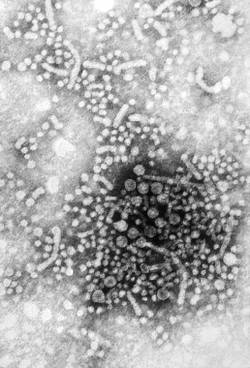
A 6-month course of the antiviral drug sofosbuvir plus low-dose ribavirin was effective against chronic hepatitis C type 1 in a phase II study predominantly involving patients who had unfavorable predictors of treatment response.
The combination therapy yielded sustained virologic response rates ranging from 48% to 68% in a study population with high prevalences of black race, HCV genotype 1a, advanced liver fibrosis, and obesity, said Dr. Anuoluwapo Osinusi of the National Institute of Allergy and Infectious Diseases, Bethesda, Md., and her associates.
The findings of the small, single-center, open-label study, published online Aug. 27 in JAMA, "are preliminary in nature and require further evaluation in larger studies," the investigators noted.
Several recent studies have demonstrated that interferon-free drug regimens composed solely of directly acting antiviral agents can be effective against chronic HCV type 1, but patients who have certain unfavorable host and viral traits have been underrepresented in these studies.
Noting that it is crucial for such research to involve the "populations most affected by the disease," Dr. Osinusi and her colleagues assessed the safety and efficacy of sofosbuvir in a two-part randomized, controlled trial involving patients who had newly diagnosed, liver biopsy–proven chronic HCV type 1 for which they had never been treated (JAMA 2013 Aug. 27 [doi:10.1001/jama.2013.109309]).
In the study’s proof-of-concept portion, 10 patients who had early to moderate liver fibrosis were treated for 24 weeks with 400 mg/day of sofosbuvir plus weight-based daily doses of ribavirin. In the second, randomized portion of the study, 50 patients with any stage of fibrosis, including compensated cirrhosis, were randomly assigned to receive the same dose of sofosbuvir plus either weight-based ribavirin or low-dose ribavirin for 24 weeks.
Fifty patients (83%) were black, and 29 (48%) were obese. Fourteen (23%) had advanced liver disease and 37 (62%) had high HCV RNA levels at baseline. In comparison, in previous studies the prevalence of black race was 7%-15%, that of obesity was 22%, and that of advanced liver disease was 9%-20%, the researchers said.
All the patients showed a rapid decline in HCV RNA with treatment, and 24 patients in each group achieved total viral suppression within 1 month of beginning treatment. That was accompanied by a rapid improvement in alanine aminotransferase levels, with 77% of patients showing normalized levels within 1 week and 98% showing normalized levels within 2 weeks. The pattern was similar for aspartate aminotransferase levels.
The primary study endpoint was the proportion of patients who had an undetectable HCV viral load 6 months after completing treatment. That endpoint was reached by 68% of patients who took sofosbuvir plus weight-based doses of ribavirin, and by 48% of those who took sofosbuvir plus low doses of ribavirin, the investigators said.
Twenty-nine patients underwent liver biopsy before and after treatment, and 27 of them (93%) showed a large improvement in inflammation. On a 15-point scale of inflammation, the median decline was 5 points.
There were no cases of viral breakthrough during therapy, and HCV deep sequencing in a subgroup of patients detected none of the genetic mutations known to be associated with resistance to sofosbuvir.
"The combination of sofosbuvir and ribavirin was safe and well tolerated, with no death or discontinuation of treatment due to adverse events. The most frequent adverse events were headache, anemia, fatigue, and nausea, the severity of which ranged from mild to moderate," Dr. Osinusi and her associates said.
In an exploratory analysis of viral kinetics-pharmacodynamics, patients who subsequently relapsed showed a significantly slower loss rate of infectious virus at the beginning of treatment. "The mechanism of viral relapse in these participants remains elusive, and future research will be focused on identifying the biological basis for incomplete clearance of HCV in [such] patients," they added.
"This study demonstrates the efficacy of an interferon-free regimen in a traditionally difficult-to-treat population," Dr. Osinusi and her colleagues said. That is encouraging, because HCV treatment is now evolving from interferon-based combination therapy to "an all-oral, interferon-free, directly acting antiviral agent regimen," they added.
The National Cancer Institute, the National Institute of Allergy and Infectious Diseases, and the German Research Foundation funded the study. Pharmasset Pharmaceuticals and Gilead Sciences provided the sofosbuvir and scientific assistance. Dr. Osinusi reported no financial conflicts of interest; her associates reported ties to Abbott, Gilead, Merck, Novartis, Roche Pharma, and Vertex Pharmaceuticals.
A 6-month course of the antiviral drug sofosbuvir plus low-dose ribavirin was effective against chronic hepatitis C type 1 in a phase II study predominantly involving patients who had unfavorable predictors of treatment response.
The combination therapy yielded sustained virologic response rates ranging from 48% to 68% in a study population with high prevalences of black race, HCV genotype 1a, advanced liver fibrosis, and obesity, said Dr. Anuoluwapo Osinusi of the National Institute of Allergy and Infectious Diseases, Bethesda, Md., and her associates.
The findings of the small, single-center, open-label study, published online Aug. 27 in JAMA, "are preliminary in nature and require further evaluation in larger studies," the investigators noted.
Several recent studies have demonstrated that interferon-free drug regimens composed solely of directly acting antiviral agents can be effective against chronic HCV type 1, but patients who have certain unfavorable host and viral traits have been underrepresented in these studies.
Noting that it is crucial for such research to involve the "populations most affected by the disease," Dr. Osinusi and her colleagues assessed the safety and efficacy of sofosbuvir in a two-part randomized, controlled trial involving patients who had newly diagnosed, liver biopsy–proven chronic HCV type 1 for which they had never been treated (JAMA 2013 Aug. 27 [doi:10.1001/jama.2013.109309]).
In the study’s proof-of-concept portion, 10 patients who had early to moderate liver fibrosis were treated for 24 weeks with 400 mg/day of sofosbuvir plus weight-based daily doses of ribavirin. In the second, randomized portion of the study, 50 patients with any stage of fibrosis, including compensated cirrhosis, were randomly assigned to receive the same dose of sofosbuvir plus either weight-based ribavirin or low-dose ribavirin for 24 weeks.
Fifty patients (83%) were black, and 29 (48%) were obese. Fourteen (23%) had advanced liver disease and 37 (62%) had high HCV RNA levels at baseline. In comparison, in previous studies the prevalence of black race was 7%-15%, that of obesity was 22%, and that of advanced liver disease was 9%-20%, the researchers said.
All the patients showed a rapid decline in HCV RNA with treatment, and 24 patients in each group achieved total viral suppression within 1 month of beginning treatment. That was accompanied by a rapid improvement in alanine aminotransferase levels, with 77% of patients showing normalized levels within 1 week and 98% showing normalized levels within 2 weeks. The pattern was similar for aspartate aminotransferase levels.
The primary study endpoint was the proportion of patients who had an undetectable HCV viral load 6 months after completing treatment. That endpoint was reached by 68% of patients who took sofosbuvir plus weight-based doses of ribavirin, and by 48% of those who took sofosbuvir plus low doses of ribavirin, the investigators said.
Twenty-nine patients underwent liver biopsy before and after treatment, and 27 of them (93%) showed a large improvement in inflammation. On a 15-point scale of inflammation, the median decline was 5 points.
There were no cases of viral breakthrough during therapy, and HCV deep sequencing in a subgroup of patients detected none of the genetic mutations known to be associated with resistance to sofosbuvir.
"The combination of sofosbuvir and ribavirin was safe and well tolerated, with no death or discontinuation of treatment due to adverse events. The most frequent adverse events were headache, anemia, fatigue, and nausea, the severity of which ranged from mild to moderate," Dr. Osinusi and her associates said.
In an exploratory analysis of viral kinetics-pharmacodynamics, patients who subsequently relapsed showed a significantly slower loss rate of infectious virus at the beginning of treatment. "The mechanism of viral relapse in these participants remains elusive, and future research will be focused on identifying the biological basis for incomplete clearance of HCV in [such] patients," they added.
"This study demonstrates the efficacy of an interferon-free regimen in a traditionally difficult-to-treat population," Dr. Osinusi and her colleagues said. That is encouraging, because HCV treatment is now evolving from interferon-based combination therapy to "an all-oral, interferon-free, directly acting antiviral agent regimen," they added.
The National Cancer Institute, the National Institute of Allergy and Infectious Diseases, and the German Research Foundation funded the study. Pharmasset Pharmaceuticals and Gilead Sciences provided the sofosbuvir and scientific assistance. Dr. Osinusi reported no financial conflicts of interest; her associates reported ties to Abbott, Gilead, Merck, Novartis, Roche Pharma, and Vertex Pharmaceuticals.
A 6-month course of the antiviral drug sofosbuvir plus low-dose ribavirin was effective against chronic hepatitis C type 1 in a phase II study predominantly involving patients who had unfavorable predictors of treatment response.
The combination therapy yielded sustained virologic response rates ranging from 48% to 68% in a study population with high prevalences of black race, HCV genotype 1a, advanced liver fibrosis, and obesity, said Dr. Anuoluwapo Osinusi of the National Institute of Allergy and Infectious Diseases, Bethesda, Md., and her associates.
The findings of the small, single-center, open-label study, published online Aug. 27 in JAMA, "are preliminary in nature and require further evaluation in larger studies," the investigators noted.
Several recent studies have demonstrated that interferon-free drug regimens composed solely of directly acting antiviral agents can be effective against chronic HCV type 1, but patients who have certain unfavorable host and viral traits have been underrepresented in these studies.
Noting that it is crucial for such research to involve the "populations most affected by the disease," Dr. Osinusi and her colleagues assessed the safety and efficacy of sofosbuvir in a two-part randomized, controlled trial involving patients who had newly diagnosed, liver biopsy–proven chronic HCV type 1 for which they had never been treated (JAMA 2013 Aug. 27 [doi:10.1001/jama.2013.109309]).
In the study’s proof-of-concept portion, 10 patients who had early to moderate liver fibrosis were treated for 24 weeks with 400 mg/day of sofosbuvir plus weight-based daily doses of ribavirin. In the second, randomized portion of the study, 50 patients with any stage of fibrosis, including compensated cirrhosis, were randomly assigned to receive the same dose of sofosbuvir plus either weight-based ribavirin or low-dose ribavirin for 24 weeks.
Fifty patients (83%) were black, and 29 (48%) were obese. Fourteen (23%) had advanced liver disease and 37 (62%) had high HCV RNA levels at baseline. In comparison, in previous studies the prevalence of black race was 7%-15%, that of obesity was 22%, and that of advanced liver disease was 9%-20%, the researchers said.
All the patients showed a rapid decline in HCV RNA with treatment, and 24 patients in each group achieved total viral suppression within 1 month of beginning treatment. That was accompanied by a rapid improvement in alanine aminotransferase levels, with 77% of patients showing normalized levels within 1 week and 98% showing normalized levels within 2 weeks. The pattern was similar for aspartate aminotransferase levels.
The primary study endpoint was the proportion of patients who had an undetectable HCV viral load 6 months after completing treatment. That endpoint was reached by 68% of patients who took sofosbuvir plus weight-based doses of ribavirin, and by 48% of those who took sofosbuvir plus low doses of ribavirin, the investigators said.
Twenty-nine patients underwent liver biopsy before and after treatment, and 27 of them (93%) showed a large improvement in inflammation. On a 15-point scale of inflammation, the median decline was 5 points.
There were no cases of viral breakthrough during therapy, and HCV deep sequencing in a subgroup of patients detected none of the genetic mutations known to be associated with resistance to sofosbuvir.
"The combination of sofosbuvir and ribavirin was safe and well tolerated, with no death or discontinuation of treatment due to adverse events. The most frequent adverse events were headache, anemia, fatigue, and nausea, the severity of which ranged from mild to moderate," Dr. Osinusi and her associates said.
In an exploratory analysis of viral kinetics-pharmacodynamics, patients who subsequently relapsed showed a significantly slower loss rate of infectious virus at the beginning of treatment. "The mechanism of viral relapse in these participants remains elusive, and future research will be focused on identifying the biological basis for incomplete clearance of HCV in [such] patients," they added.
"This study demonstrates the efficacy of an interferon-free regimen in a traditionally difficult-to-treat population," Dr. Osinusi and her colleagues said. That is encouraging, because HCV treatment is now evolving from interferon-based combination therapy to "an all-oral, interferon-free, directly acting antiviral agent regimen," they added.
The National Cancer Institute, the National Institute of Allergy and Infectious Diseases, and the German Research Foundation funded the study. Pharmasset Pharmaceuticals and Gilead Sciences provided the sofosbuvir and scientific assistance. Dr. Osinusi reported no financial conflicts of interest; her associates reported ties to Abbott, Gilead, Merck, Novartis, Roche Pharma, and Vertex Pharmaceuticals.
FROM JAMA
Major Finding: Sixty-eight percent of patients who took sofosbuvir plus weight-based doses of ribavirin and 48% of those who took sofosbuvir plus low doses of ribavirin had an undetectable HCV viral load 6 months after completing treatment.
Data Source: A single-center, randomized, open-label, phase II clinical trial involving 60 treatment-naive patients who had chronic hepatitis C type 1 and were treated with sofosbuvir for 6 months.
Disclosures: The National Cancer Institute, the National Institute of Allergy and Infectious Diseases, and the German Research Foundation funded the study. Pharmasset Pharmaceuticals and Gilead Sciences provided the sofosbuvir and scientific assistance. Dr. Osinusi reported no financial conflicts of interest; her associates reported ties to Abbott, Gilead, Merck, Novartis, Roche Pharma, and Vertex Pharmaceuticals.
Ultrasound Helped Reveal High-risk Thyroid Nodules
Earn 0.25 hours AMA PRA Category 1 credit: Read this article, and click the link at the end to take the post-test.
Thyroid nodules that include microcalcifications, are larger than 2 cm in size, and have an entirely solid composition on ultrasound imaging are the most likely to be cancerous, according to a report published online Aug. 26 in JAMA Internal Medicine.
A patient’s risk of having primary thyroid cancer ranges from 0.2% when a nodule’s ultrasound image has none of the three characteristics to 1.8% if a nodule has one of the characteristics, 6.2% if a nodule has two of the characteristics, and 96% if a nodule has all three characteristics, said Dr. Rebecca Smith-Bindman of the department of radiology and biomedical imaging, University of California, San Francisco, and her associates.
"Ours is the first study, to our knowledge, that permits estimating this risk," they noted (JAMA Intern. Med. 2013 Aug. 26 [doi:10.1001/jamainternmed.2013.9245]).
Thyroid nodules are extremely common, but almost all of them are benign, so it is crucial to identify which ones may be malignant and to biopsy them, and to avoid subjecting low-risk patients to unnecessary biopsy.
To determine which features on ultrasound correspond with cancer risk, Dr. Smith-Bindman and her colleagues performed a retrospective case-control study involving 8,806 consecutive patients who underwent 11,618 thyroid ultrasound examinations at the university from January 2000 through March 2005.
The patients who were found to have primary thyroid cancer during up to 7 years of follow-up were identified using data in a comprehensive cancer registry. Those 96 patients were matched for age, sex, and year of ultrasound examination to 369 control subjects who did not have primary thyroid cancer.
Two of the researchers who were blinded to the subjects’ cancer status independently assessed the number and size of all the thyroid nodules that were imaged in the study population and performed a detailed analysis of numerous ultrasound characteristics that might possibly correlate with the presence of malignancy. The agreement between those two reviewers in the categorization of the specific ultrasound image characteristics was "good to outstanding."
"We considered many nodule characteristics endorsed by other authors, but when put into the multiple-predictor models, most of the characteristics were not significantly associated with cancer risk," the researchers said.
In the initial univariable analysis of the data, several ultrasonographic traits were significantly associated with the likelihood that a thyroid nodule harbored cancer.
Microcalcifications had the strongest association with malignancy: They were found in 38.2% of cancerous nodules, compared with only 5.4% of benign nodules. Thus, if microcalcifications were present in a nodule, the chances were seven times greater that the nodule was cancerous, Dr. Smith-Bindman and her coworkers reported.
In the study analysis, the size of the nodule on ultrasound also correlated with cancer risk, with the odds of malignancy increasing as nodule size increased. A size of 2 cm appeared to be a good cutoff point, because nodules larger than 2 cm were much more likely than nodules smaller than 1 cm to be cancerous, with an odds ratio of 3.1.
Several other characteristics correlated with cancer risk in the analysis, but did so to a lesser degree. Coarse calcifications, solid (vs. cystic or mixed) nodule composition, hyperechoic nodule echogenicity, central vascularity, ill-defined or lobulated nodule margins, and taller-than-wide nodule shape all raised the risk of malignancy, with odds ratios ranging from 1.6 to 2.9.
Traits not associated with cancer risk included rim calcifications, comet-tail artifacts, peripheral vascularity, and the presence of a "halo," they said.
In a multivariable analysis, only three nodule characteristics remained significantly associated with cancer risk. The presence of microcalcifications had an odds ratio of 8.1, size larger than 2 cm had an odds ratio of 3.6, and an entirely solid composition had an odds ratio of 4.0, Dr. Smith-Bindman and her associates said.
The findings remained robust through a series of sensitivity analyses.
The investigators found that performing a biopsy only if two of the three characteristics were present would yield a much greater diagnostic sensitivity and specificity than the current practice of biopsying all thyroid nodules larger than 5 mm.
"Compared with existing guidelines ... adoption of this more stringent rule requiring two abnormal [ultrasound] characteristics to prompt biopsy would reduce unnecessary biopsies by 90% while maintaining a low risk of cancer [0.5%] in patients in whom biopsy is deferred," they wrote.
In contrast, requiring all three nodule characteristics to be present before performing a biopsy would detect only a small proportion of thyroid cancers, they added.
In the study, simple cysts never indicated the presence of cancer. Such thyroid cysts should be considered "essentially never malignant" and should not be biopsied, Dr. Smith-Bindman and her associates said.
"The main strength of our study is the large sample size and the linkage of the cohort with data from a comprehensive cancer registry, which allows accurate assessment of the true underlying prevalence of cancer," the researchers noted.
The overall prevalence of primary thyroid cancer was 1.5% in the study population. In contrast, most previous studies have cited a prevalence rate closer to 20%. "All previous studies have inflated the association between nodule characteristics and cancer risk because they limited their analyses to nodules that underwent biopsy," the investigators said.
The National Cancer Institute and the University of California, San Francisco, supported the study. No financial conflicts of interest were reported.
To earn 0.25 hours AMA PRA Category 1 credit after reading this article, take the post-test here.
Earn 0.25 hours AMA PRA Category 1 credit: Read this article, and click the link at the end to take the post-test.
Thyroid nodules that include microcalcifications, are larger than 2 cm in size, and have an entirely solid composition on ultrasound imaging are the most likely to be cancerous, according to a report published online Aug. 26 in JAMA Internal Medicine.
A patient’s risk of having primary thyroid cancer ranges from 0.2% when a nodule’s ultrasound image has none of the three characteristics to 1.8% if a nodule has one of the characteristics, 6.2% if a nodule has two of the characteristics, and 96% if a nodule has all three characteristics, said Dr. Rebecca Smith-Bindman of the department of radiology and biomedical imaging, University of California, San Francisco, and her associates.
"Ours is the first study, to our knowledge, that permits estimating this risk," they noted (JAMA Intern. Med. 2013 Aug. 26 [doi:10.1001/jamainternmed.2013.9245]).
Thyroid nodules are extremely common, but almost all of them are benign, so it is crucial to identify which ones may be malignant and to biopsy them, and to avoid subjecting low-risk patients to unnecessary biopsy.
To determine which features on ultrasound correspond with cancer risk, Dr. Smith-Bindman and her colleagues performed a retrospective case-control study involving 8,806 consecutive patients who underwent 11,618 thyroid ultrasound examinations at the university from January 2000 through March 2005.
The patients who were found to have primary thyroid cancer during up to 7 years of follow-up were identified using data in a comprehensive cancer registry. Those 96 patients were matched for age, sex, and year of ultrasound examination to 369 control subjects who did not have primary thyroid cancer.
Two of the researchers who were blinded to the subjects’ cancer status independently assessed the number and size of all the thyroid nodules that were imaged in the study population and performed a detailed analysis of numerous ultrasound characteristics that might possibly correlate with the presence of malignancy. The agreement between those two reviewers in the categorization of the specific ultrasound image characteristics was "good to outstanding."
"We considered many nodule characteristics endorsed by other authors, but when put into the multiple-predictor models, most of the characteristics were not significantly associated with cancer risk," the researchers said.
In the initial univariable analysis of the data, several ultrasonographic traits were significantly associated with the likelihood that a thyroid nodule harbored cancer.
Microcalcifications had the strongest association with malignancy: They were found in 38.2% of cancerous nodules, compared with only 5.4% of benign nodules. Thus, if microcalcifications were present in a nodule, the chances were seven times greater that the nodule was cancerous, Dr. Smith-Bindman and her coworkers reported.
In the study analysis, the size of the nodule on ultrasound also correlated with cancer risk, with the odds of malignancy increasing as nodule size increased. A size of 2 cm appeared to be a good cutoff point, because nodules larger than 2 cm were much more likely than nodules smaller than 1 cm to be cancerous, with an odds ratio of 3.1.
Several other characteristics correlated with cancer risk in the analysis, but did so to a lesser degree. Coarse calcifications, solid (vs. cystic or mixed) nodule composition, hyperechoic nodule echogenicity, central vascularity, ill-defined or lobulated nodule margins, and taller-than-wide nodule shape all raised the risk of malignancy, with odds ratios ranging from 1.6 to 2.9.
Traits not associated with cancer risk included rim calcifications, comet-tail artifacts, peripheral vascularity, and the presence of a "halo," they said.
In a multivariable analysis, only three nodule characteristics remained significantly associated with cancer risk. The presence of microcalcifications had an odds ratio of 8.1, size larger than 2 cm had an odds ratio of 3.6, and an entirely solid composition had an odds ratio of 4.0, Dr. Smith-Bindman and her associates said.
The findings remained robust through a series of sensitivity analyses.
The investigators found that performing a biopsy only if two of the three characteristics were present would yield a much greater diagnostic sensitivity and specificity than the current practice of biopsying all thyroid nodules larger than 5 mm.
"Compared with existing guidelines ... adoption of this more stringent rule requiring two abnormal [ultrasound] characteristics to prompt biopsy would reduce unnecessary biopsies by 90% while maintaining a low risk of cancer [0.5%] in patients in whom biopsy is deferred," they wrote.
In contrast, requiring all three nodule characteristics to be present before performing a biopsy would detect only a small proportion of thyroid cancers, they added.
In the study, simple cysts never indicated the presence of cancer. Such thyroid cysts should be considered "essentially never malignant" and should not be biopsied, Dr. Smith-Bindman and her associates said.
"The main strength of our study is the large sample size and the linkage of the cohort with data from a comprehensive cancer registry, which allows accurate assessment of the true underlying prevalence of cancer," the researchers noted.
The overall prevalence of primary thyroid cancer was 1.5% in the study population. In contrast, most previous studies have cited a prevalence rate closer to 20%. "All previous studies have inflated the association between nodule characteristics and cancer risk because they limited their analyses to nodules that underwent biopsy," the investigators said.
The National Cancer Institute and the University of California, San Francisco, supported the study. No financial conflicts of interest were reported.
To earn 0.25 hours AMA PRA Category 1 credit after reading this article, take the post-test here.
Earn 0.25 hours AMA PRA Category 1 credit: Read this article, and click the link at the end to take the post-test.
Thyroid nodules that include microcalcifications, are larger than 2 cm in size, and have an entirely solid composition on ultrasound imaging are the most likely to be cancerous, according to a report published online Aug. 26 in JAMA Internal Medicine.
A patient’s risk of having primary thyroid cancer ranges from 0.2% when a nodule’s ultrasound image has none of the three characteristics to 1.8% if a nodule has one of the characteristics, 6.2% if a nodule has two of the characteristics, and 96% if a nodule has all three characteristics, said Dr. Rebecca Smith-Bindman of the department of radiology and biomedical imaging, University of California, San Francisco, and her associates.
"Ours is the first study, to our knowledge, that permits estimating this risk," they noted (JAMA Intern. Med. 2013 Aug. 26 [doi:10.1001/jamainternmed.2013.9245]).
Thyroid nodules are extremely common, but almost all of them are benign, so it is crucial to identify which ones may be malignant and to biopsy them, and to avoid subjecting low-risk patients to unnecessary biopsy.
To determine which features on ultrasound correspond with cancer risk, Dr. Smith-Bindman and her colleagues performed a retrospective case-control study involving 8,806 consecutive patients who underwent 11,618 thyroid ultrasound examinations at the university from January 2000 through March 2005.
The patients who were found to have primary thyroid cancer during up to 7 years of follow-up were identified using data in a comprehensive cancer registry. Those 96 patients were matched for age, sex, and year of ultrasound examination to 369 control subjects who did not have primary thyroid cancer.
Two of the researchers who were blinded to the subjects’ cancer status independently assessed the number and size of all the thyroid nodules that were imaged in the study population and performed a detailed analysis of numerous ultrasound characteristics that might possibly correlate with the presence of malignancy. The agreement between those two reviewers in the categorization of the specific ultrasound image characteristics was "good to outstanding."
"We considered many nodule characteristics endorsed by other authors, but when put into the multiple-predictor models, most of the characteristics were not significantly associated with cancer risk," the researchers said.
In the initial univariable analysis of the data, several ultrasonographic traits were significantly associated with the likelihood that a thyroid nodule harbored cancer.
Microcalcifications had the strongest association with malignancy: They were found in 38.2% of cancerous nodules, compared with only 5.4% of benign nodules. Thus, if microcalcifications were present in a nodule, the chances were seven times greater that the nodule was cancerous, Dr. Smith-Bindman and her coworkers reported.
In the study analysis, the size of the nodule on ultrasound also correlated with cancer risk, with the odds of malignancy increasing as nodule size increased. A size of 2 cm appeared to be a good cutoff point, because nodules larger than 2 cm were much more likely than nodules smaller than 1 cm to be cancerous, with an odds ratio of 3.1.
Several other characteristics correlated with cancer risk in the analysis, but did so to a lesser degree. Coarse calcifications, solid (vs. cystic or mixed) nodule composition, hyperechoic nodule echogenicity, central vascularity, ill-defined or lobulated nodule margins, and taller-than-wide nodule shape all raised the risk of malignancy, with odds ratios ranging from 1.6 to 2.9.
Traits not associated with cancer risk included rim calcifications, comet-tail artifacts, peripheral vascularity, and the presence of a "halo," they said.
In a multivariable analysis, only three nodule characteristics remained significantly associated with cancer risk. The presence of microcalcifications had an odds ratio of 8.1, size larger than 2 cm had an odds ratio of 3.6, and an entirely solid composition had an odds ratio of 4.0, Dr. Smith-Bindman and her associates said.
The findings remained robust through a series of sensitivity analyses.
The investigators found that performing a biopsy only if two of the three characteristics were present would yield a much greater diagnostic sensitivity and specificity than the current practice of biopsying all thyroid nodules larger than 5 mm.
"Compared with existing guidelines ... adoption of this more stringent rule requiring two abnormal [ultrasound] characteristics to prompt biopsy would reduce unnecessary biopsies by 90% while maintaining a low risk of cancer [0.5%] in patients in whom biopsy is deferred," they wrote.
In contrast, requiring all three nodule characteristics to be present before performing a biopsy would detect only a small proportion of thyroid cancers, they added.
In the study, simple cysts never indicated the presence of cancer. Such thyroid cysts should be considered "essentially never malignant" and should not be biopsied, Dr. Smith-Bindman and her associates said.
"The main strength of our study is the large sample size and the linkage of the cohort with data from a comprehensive cancer registry, which allows accurate assessment of the true underlying prevalence of cancer," the researchers noted.
The overall prevalence of primary thyroid cancer was 1.5% in the study population. In contrast, most previous studies have cited a prevalence rate closer to 20%. "All previous studies have inflated the association between nodule characteristics and cancer risk because they limited their analyses to nodules that underwent biopsy," the investigators said.
The National Cancer Institute and the University of California, San Francisco, supported the study. No financial conflicts of interest were reported.
To earn 0.25 hours AMA PRA Category 1 credit after reading this article, take the post-test here.
FROM JAMA INTERNAL MEDICINE

Ultrasound helped reveal high-risk thyroid nodules
Thyroid nodules that include microcalcifications, are larger than 2 cm in size, and have an entirely solid composition on ultrasound imaging are the most likely to be cancerous, according to a report published online Aug. 26 in JAMA Internal Medicine.
A patient’s risk of having primary thyroid cancer ranges from 0.2% when a nodule’s ultrasound image has none of the three characteristics to 1.8% if a nodule has one of the characteristics, 6.2% if a nodule has two of the characteristics, and 96% if a nodule has all three characteristics, said Dr. Rebecca Smith-Bindman of the department of radiology and biomedical imaging, University of California, San Francisco, and her associates.
"Ours is the first study, to our knowledge, that permits estimating this risk," they noted (JAMA Intern. Med. 2013 Aug. 26 [doi:10.1001/jamainternmed.2013.9245]).
Thyroid nodules are extremely common, but almost all of them are benign, so it is crucial to identify which ones may be malignant and to biopsy them, and to avoid subjecting low-risk patients to unnecessary biopsy.

To determine which features on ultrasound correspond with cancer risk, Dr. Smith-Bindman and her colleagues performed a retrospective case-control study involving 8,806 consecutive patients who underwent 11,618 thyroid ultrasound examinations at the university from January 2000 through March 2005.
The patients who were found to have primary thyroid cancer during up to 7 years of follow-up were identified using data in a comprehensive cancer registry. Those 96 patients were matched for age, sex, and year of ultrasound examination to 369 control subjects who did not have primary thyroid cancer.
Two of the researchers who were blinded to the subjects’ cancer status independently assessed the number and size of all the thyroid nodules that were imaged in the study population and performed a detailed analysis of numerous ultrasound characteristics that might possibly correlate with the presence of malignancy. The agreement between those two reviewers in the categorization of the specific ultrasound image characteristics was "good to outstanding."
"We considered many nodule characteristics endorsed by other authors, but when put into the multiple-predictor models, most of the characteristics were not significantly associated with cancer risk," the researchers said.
In the initial univariable analysis of the data, several ultrasonographic traits were significantly associated with the likelihood that a thyroid nodule harbored cancer.
Microcalcifications had the strongest association with malignancy: They were found in 38.2% of cancerous nodules, compared with only 5.4% of benign nodules. Thus, if microcalcifications were present in a nodule, the chances were seven times greater that the nodule was cancerous, Dr. Smith-Bindman and her coworkers reported.
In the study analysis, the size of the nodule on ultrasound also correlated with cancer risk, with the odds of malignancy increasing as nodule size increased. A size of 2 cm appeared to be a good cutoff point, because nodules larger than 2 cm were much more likely than nodules smaller than 1 cm to be cancerous, with an odds ratio of 3.1.
Several other characteristics correlated with cancer risk in the analysis, but did so to a lesser degree. Coarse calcifications, solid (vs. cystic or mixed) nodule composition, hyperechoic nodule echogenicity, central vascularity, ill-defined or lobulated nodule margins, and taller-than-wide nodule shape all raised the risk of malignancy, with odds ratios ranging from 1.6 to 2.9.
Traits not associated with cancer risk included rim calcifications, comet-tail artifacts, peripheral vascularity, and the presence of a "halo," they said.
In a multivariable analysis, only three nodule characteristics remained significantly associated with cancer risk. The presence of microcalcifications had an odds ratio of 8.1, size larger than 2 cm had an odds ratio of 3.6, and an entirely solid composition had an odds ratio of 4.0, Dr. Smith-Bindman and her associates said.
The findings remained robust through a series of sensitivity analyses.
The investigators found that performing a biopsy only if two of the three characteristics were present would yield a much greater diagnostic sensitivity and specificity than the current practice of biopsying all thyroid nodules larger than 5 mm.
"Compared with existing guidelines ... adoption of this more stringent rule requiring two abnormal [ultrasound] characteristics to prompt biopsy would reduce unnecessary biopsies by 90% while maintaining a low risk of cancer [0.5%] in patients in whom biopsy is deferred," they wrote.
In contrast, requiring all three nodule characteristics to be present before performing a biopsy would detect only a small proportion of thyroid cancers, they added.
In the study, simple cysts never indicated the presence of cancer. Such thyroid cysts should be considered "essentially never malignant" and should not be biopsied, Dr. Smith-Bindman and her associates said.
"The main strength of our study is the large sample size and the linkage of the cohort with data from a comprehensive cancer registry, which allows accurate assessment of the true underlying prevalence of cancer," the researchers noted.
The overall prevalence of primary thyroid cancer was 1.5% in the study population. In contrast, most previous studies have cited a prevalence rate closer to 20%. "All previous studies have inflated the association between nodule characteristics and cancer risk because they limited their analyses to nodules that underwent biopsy," the investigators said.
The National Cancer Institute and the University of California, San Francisco, supported the study. No financial conflicts of interest were reported.
Thyroid nodules that include microcalcifications, are larger than 2 cm in size, and have an entirely solid composition on ultrasound imaging are the most likely to be cancerous, according to a report published online Aug. 26 in JAMA Internal Medicine.
A patient’s risk of having primary thyroid cancer ranges from 0.2% when a nodule’s ultrasound image has none of the three characteristics to 1.8% if a nodule has one of the characteristics, 6.2% if a nodule has two of the characteristics, and 96% if a nodule has all three characteristics, said Dr. Rebecca Smith-Bindman of the department of radiology and biomedical imaging, University of California, San Francisco, and her associates.
"Ours is the first study, to our knowledge, that permits estimating this risk," they noted (JAMA Intern. Med. 2013 Aug. 26 [doi:10.1001/jamainternmed.2013.9245]).
Thyroid nodules are extremely common, but almost all of them are benign, so it is crucial to identify which ones may be malignant and to biopsy them, and to avoid subjecting low-risk patients to unnecessary biopsy.
To determine which features on ultrasound correspond with cancer risk, Dr. Smith-Bindman and her colleagues performed a retrospective case-control study involving 8,806 consecutive patients who underwent 11,618 thyroid ultrasound examinations at the university from January 2000 through March 2005.
The patients who were found to have primary thyroid cancer during up to 7 years of follow-up were identified using data in a comprehensive cancer registry. Those 96 patients were matched for age, sex, and year of ultrasound examination to 369 control subjects who did not have primary thyroid cancer.
Two of the researchers who were blinded to the subjects’ cancer status independently assessed the number and size of all the thyroid nodules that were imaged in the study population and performed a detailed analysis of numerous ultrasound characteristics that might possibly correlate with the presence of malignancy. The agreement between those two reviewers in the categorization of the specific ultrasound image characteristics was "good to outstanding."
"We considered many nodule characteristics endorsed by other authors, but when put into the multiple-predictor models, most of the characteristics were not significantly associated with cancer risk," the researchers said.
In the initial univariable analysis of the data, several ultrasonographic traits were significantly associated with the likelihood that a thyroid nodule harbored cancer.
Microcalcifications had the strongest association with malignancy: They were found in 38.2% of cancerous nodules, compared with only 5.4% of benign nodules. Thus, if microcalcifications were present in a nodule, the chances were seven times greater that the nodule was cancerous, Dr. Smith-Bindman and her coworkers reported.
In the study analysis, the size of the nodule on ultrasound also correlated with cancer risk, with the odds of malignancy increasing as nodule size increased. A size of 2 cm appeared to be a good cutoff point, because nodules larger than 2 cm were much more likely than nodules smaller than 1 cm to be cancerous, with an odds ratio of 3.1.
Several other characteristics correlated with cancer risk in the analysis, but did so to a lesser degree. Coarse calcifications, solid (vs. cystic or mixed) nodule composition, hyperechoic nodule echogenicity, central vascularity, ill-defined or lobulated nodule margins, and taller-than-wide nodule shape all raised the risk of malignancy, with odds ratios ranging from 1.6 to 2.9.
Traits not associated with cancer risk included rim calcifications, comet-tail artifacts, peripheral vascularity, and the presence of a "halo," they said.
In a multivariable analysis, only three nodule characteristics remained significantly associated with cancer risk. The presence of microcalcifications had an odds ratio of 8.1, size larger than 2 cm had an odds ratio of 3.6, and an entirely solid composition had an odds ratio of 4.0, Dr. Smith-Bindman and her associates said.
The findings remained robust through a series of sensitivity analyses.
The investigators found that performing a biopsy only if two of the three characteristics were present would yield a much greater diagnostic sensitivity and specificity than the current practice of biopsying all thyroid nodules larger than 5 mm.
"Compared with existing guidelines ... adoption of this more stringent rule requiring two abnormal [ultrasound] characteristics to prompt biopsy would reduce unnecessary biopsies by 90% while maintaining a low risk of cancer [0.5%] in patients in whom biopsy is deferred," they wrote.
In contrast, requiring all three nodule characteristics to be present before performing a biopsy would detect only a small proportion of thyroid cancers, they added.
In the study, simple cysts never indicated the presence of cancer. Such thyroid cysts should be considered "essentially never malignant" and should not be biopsied, Dr. Smith-Bindman and her associates said.
"The main strength of our study is the large sample size and the linkage of the cohort with data from a comprehensive cancer registry, which allows accurate assessment of the true underlying prevalence of cancer," the researchers noted.
The overall prevalence of primary thyroid cancer was 1.5% in the study population. In contrast, most previous studies have cited a prevalence rate closer to 20%. "All previous studies have inflated the association between nodule characteristics and cancer risk because they limited their analyses to nodules that underwent biopsy," the investigators said.
The National Cancer Institute and the University of California, San Francisco, supported the study. No financial conflicts of interest were reported.
Thyroid nodules that include microcalcifications, are larger than 2 cm in size, and have an entirely solid composition on ultrasound imaging are the most likely to be cancerous, according to a report published online Aug. 26 in JAMA Internal Medicine.
A patient’s risk of having primary thyroid cancer ranges from 0.2% when a nodule’s ultrasound image has none of the three characteristics to 1.8% if a nodule has one of the characteristics, 6.2% if a nodule has two of the characteristics, and 96% if a nodule has all three characteristics, said Dr. Rebecca Smith-Bindman of the department of radiology and biomedical imaging, University of California, San Francisco, and her associates.
"Ours is the first study, to our knowledge, that permits estimating this risk," they noted (JAMA Intern. Med. 2013 Aug. 26 [doi:10.1001/jamainternmed.2013.9245]).
Thyroid nodules are extremely common, but almost all of them are benign, so it is crucial to identify which ones may be malignant and to biopsy them, and to avoid subjecting low-risk patients to unnecessary biopsy.
To determine which features on ultrasound correspond with cancer risk, Dr. Smith-Bindman and her colleagues performed a retrospective case-control study involving 8,806 consecutive patients who underwent 11,618 thyroid ultrasound examinations at the university from January 2000 through March 2005.
The patients who were found to have primary thyroid cancer during up to 7 years of follow-up were identified using data in a comprehensive cancer registry. Those 96 patients were matched for age, sex, and year of ultrasound examination to 369 control subjects who did not have primary thyroid cancer.
Two of the researchers who were blinded to the subjects’ cancer status independently assessed the number and size of all the thyroid nodules that were imaged in the study population and performed a detailed analysis of numerous ultrasound characteristics that might possibly correlate with the presence of malignancy. The agreement between those two reviewers in the categorization of the specific ultrasound image characteristics was "good to outstanding."
"We considered many nodule characteristics endorsed by other authors, but when put into the multiple-predictor models, most of the characteristics were not significantly associated with cancer risk," the researchers said.
In the initial univariable analysis of the data, several ultrasonographic traits were significantly associated with the likelihood that a thyroid nodule harbored cancer.
Microcalcifications had the strongest association with malignancy: They were found in 38.2% of cancerous nodules, compared with only 5.4% of benign nodules. Thus, if microcalcifications were present in a nodule, the chances were seven times greater that the nodule was cancerous, Dr. Smith-Bindman and her coworkers reported.
In the study analysis, the size of the nodule on ultrasound also correlated with cancer risk, with the odds of malignancy increasing as nodule size increased. A size of 2 cm appeared to be a good cutoff point, because nodules larger than 2 cm were much more likely than nodules smaller than 1 cm to be cancerous, with an odds ratio of 3.1.
Several other characteristics correlated with cancer risk in the analysis, but did so to a lesser degree. Coarse calcifications, solid (vs. cystic or mixed) nodule composition, hyperechoic nodule echogenicity, central vascularity, ill-defined or lobulated nodule margins, and taller-than-wide nodule shape all raised the risk of malignancy, with odds ratios ranging from 1.6 to 2.9.
Traits not associated with cancer risk included rim calcifications, comet-tail artifacts, peripheral vascularity, and the presence of a "halo," they said.
In a multivariable analysis, only three nodule characteristics remained significantly associated with cancer risk. The presence of microcalcifications had an odds ratio of 8.1, size larger than 2 cm had an odds ratio of 3.6, and an entirely solid composition had an odds ratio of 4.0, Dr. Smith-Bindman and her associates said.
The findings remained robust through a series of sensitivity analyses.
The investigators found that performing a biopsy only if two of the three characteristics were present would yield a much greater diagnostic sensitivity and specificity than the current practice of biopsying all thyroid nodules larger than 5 mm.
"Compared with existing guidelines ... adoption of this more stringent rule requiring two abnormal [ultrasound] characteristics to prompt biopsy would reduce unnecessary biopsies by 90% while maintaining a low risk of cancer [0.5%] in patients in whom biopsy is deferred," they wrote.
In contrast, requiring all three nodule characteristics to be present before performing a biopsy would detect only a small proportion of thyroid cancers, they added.
In the study, simple cysts never indicated the presence of cancer. Such thyroid cysts should be considered "essentially never malignant" and should not be biopsied, Dr. Smith-Bindman and her associates said.
"The main strength of our study is the large sample size and the linkage of the cohort with data from a comprehensive cancer registry, which allows accurate assessment of the true underlying prevalence of cancer," the researchers noted.
The overall prevalence of primary thyroid cancer was 1.5% in the study population. In contrast, most previous studies have cited a prevalence rate closer to 20%. "All previous studies have inflated the association between nodule characteristics and cancer risk because they limited their analyses to nodules that underwent biopsy," the investigators said.
The National Cancer Institute and the University of California, San Francisco, supported the study. No financial conflicts of interest were reported.
FROM JAMA INTERNAL MEDICINE
Major Finding: Three nodule characteristics were significantly associated with cancer risk: presence of microcalcifications (odds ratio, 8.1), size larger than 2 cm (OR, 3.6), and an entirely solid composition (OR, 4.0).
Data Source: A retrospective case-control study involving 8,806 consecutive patients who underwent 11,618 ultrasound thyroid examinations at a single medical center in a 5-year period.
Disclosures: The National Cancer Institute and the University of California, San Francisco, supported the study. No financial conflicts of interest were reported.

Interferon-free regimens effective for hepatitis C virus genotype 1
An interferon-free regimen of faldaprevir, deleobuvir, and ribavirin proved to be effective in a phase II clinical trial involving 362 patients with previously untreated chronic hepatitis C virus genotype 1 infection, according to a report published in the New England Journal of Medicine.
The new combination therapy achieved sustained virologic response rates of 52%-69% 12 weeks after treatment was completed, reported Dr. Stefan Zeuzem of Johann Wolfgang Goethe University Medical Center, Frankfurt am Main (Germany), and his associates (N. Engl. J. Med. 2013;369:630-9).

Those sustained virologic response rates compare well with rates of 68%-75% reported in phase III trials of the regimen of pegylated interferon, ribavirin, and telaprevir or boceprevir that is the current standard of care, the investigators noted.
The new, interferon-free regimen may offer an advantage over the standard of care by avoiding interferon’s detrimental effects on white-cell and platelet counts, they said.
The open-label trial, sponsored by Boehringer Ingelheim, enrolled patients at 48 medical centers in Europe, Australia, and New Zealand. They were randomly assigned to one of five treatment groups with various dosages of the protease inhibitor faldaprevir and the nonnucleoside polymerase inhibitor deleobuvir, with or without the addition of daily ribavirin. Treatment intervals of 16, 28, and 40 weeks were tested.
The primary efficacy endpoint was a sustained virologic response (an undetectable plasma level of hepatitis C virus [HCV] RNA) 12 weeks after the completion of treatment. That endpoint was achieved in 52%-69% of patients with several combinations of faldaprevir, deleobuvir, and ribavirin, and with all treatment durations, Dr. Zeuzem and his colleagues said.
The treatment response rate was not affected by the duration of therapy in most groups. However, the relapse rate was markedly higher in the subgroup of patients with HCV genotype 1a who received only 16 weeks of therapy (41%), compared with those who received 28 weeks (0%) or 40 weeks (6%).
In contrast, relapse rates among patients with HCV genotype 1b were consistently low across all treatment durations, suggesting that 16 weeks of treatment may be sufficient for this subgroup of patients, the researchers said.
The groups who did not receive ribavirin showed high rates of both virologic breakthrough during treatment and relapse after treatment was completed. This has been reported in other studies of interferon-free regimens without ribavirin, and indicates that ribavirin is a necessary component of such regimens, they said.
There were small, nonsignificant differences in response rates according to the dosage of deleobuvir. However, the rate of premature discontinuation among patients who did not have a sustained virologic response 12 weeks after the completion of therapy was significantly higher among those who took deleobuvir three times per day (15%) than in those who took it twice per day (4%).
Adverse events were extremely common, affecting 94% of patients. Nine percent reported severe adverse events, including rash (six patients) and anemia (two patients).
Gastrointestinal effects (nausea, diarrhea, and vomiting) and dermatologic effects (pruritus, maculopapular rash, photosensitivity reaction, and dry skin) were the most frequently reported, and they were particularly common during the first week of treatment. That may be because patients received high loading doses at the start of therapy.
Jaundice also was reported and was attributed to increased levels of bilirubin. Faldaprevir is known to inhibit bilirubin metabolism and likely contributed to the 67 cases in the study.
"Substantial reductions in red-cell, white-cell, and platelet counts are the most prohibitive side effects of interferon-based treatments for HCV infection," but were uncommon in the study, Dr. Zeuzem and his associates said.
However, the study was limited because it didn’t include an interferon-receiving control group, and the finding regarding cell counts should be interpreted with caution, they added.
Boehringer Ingelheim funded the trial, monitored the study, collected data, performed the statistical analyses, and helped write the report.
An interferon-free regimen of faldaprevir, deleobuvir, and ribavirin proved to be effective in a phase II clinical trial involving 362 patients with previously untreated chronic hepatitis C virus genotype 1 infection, according to a report published in the New England Journal of Medicine.
The new combination therapy achieved sustained virologic response rates of 52%-69% 12 weeks after treatment was completed, reported Dr. Stefan Zeuzem of Johann Wolfgang Goethe University Medical Center, Frankfurt am Main (Germany), and his associates (N. Engl. J. Med. 2013;369:630-9).
Those sustained virologic response rates compare well with rates of 68%-75% reported in phase III trials of the regimen of pegylated interferon, ribavirin, and telaprevir or boceprevir that is the current standard of care, the investigators noted.
The new, interferon-free regimen may offer an advantage over the standard of care by avoiding interferon’s detrimental effects on white-cell and platelet counts, they said.
The open-label trial, sponsored by Boehringer Ingelheim, enrolled patients at 48 medical centers in Europe, Australia, and New Zealand. They were randomly assigned to one of five treatment groups with various dosages of the protease inhibitor faldaprevir and the nonnucleoside polymerase inhibitor deleobuvir, with or without the addition of daily ribavirin. Treatment intervals of 16, 28, and 40 weeks were tested.
The primary efficacy endpoint was a sustained virologic response (an undetectable plasma level of hepatitis C virus [HCV] RNA) 12 weeks after the completion of treatment. That endpoint was achieved in 52%-69% of patients with several combinations of faldaprevir, deleobuvir, and ribavirin, and with all treatment durations, Dr. Zeuzem and his colleagues said.
The treatment response rate was not affected by the duration of therapy in most groups. However, the relapse rate was markedly higher in the subgroup of patients with HCV genotype 1a who received only 16 weeks of therapy (41%), compared with those who received 28 weeks (0%) or 40 weeks (6%).
In contrast, relapse rates among patients with HCV genotype 1b were consistently low across all treatment durations, suggesting that 16 weeks of treatment may be sufficient for this subgroup of patients, the researchers said.
The groups who did not receive ribavirin showed high rates of both virologic breakthrough during treatment and relapse after treatment was completed. This has been reported in other studies of interferon-free regimens without ribavirin, and indicates that ribavirin is a necessary component of such regimens, they said.
There were small, nonsignificant differences in response rates according to the dosage of deleobuvir. However, the rate of premature discontinuation among patients who did not have a sustained virologic response 12 weeks after the completion of therapy was significantly higher among those who took deleobuvir three times per day (15%) than in those who took it twice per day (4%).
Adverse events were extremely common, affecting 94% of patients. Nine percent reported severe adverse events, including rash (six patients) and anemia (two patients).
Gastrointestinal effects (nausea, diarrhea, and vomiting) and dermatologic effects (pruritus, maculopapular rash, photosensitivity reaction, and dry skin) were the most frequently reported, and they were particularly common during the first week of treatment. That may be because patients received high loading doses at the start of therapy.
Jaundice also was reported and was attributed to increased levels of bilirubin. Faldaprevir is known to inhibit bilirubin metabolism and likely contributed to the 67 cases in the study.
"Substantial reductions in red-cell, white-cell, and platelet counts are the most prohibitive side effects of interferon-based treatments for HCV infection," but were uncommon in the study, Dr. Zeuzem and his associates said.
However, the study was limited because it didn’t include an interferon-receiving control group, and the finding regarding cell counts should be interpreted with caution, they added.
Boehringer Ingelheim funded the trial, monitored the study, collected data, performed the statistical analyses, and helped write the report.
An interferon-free regimen of faldaprevir, deleobuvir, and ribavirin proved to be effective in a phase II clinical trial involving 362 patients with previously untreated chronic hepatitis C virus genotype 1 infection, according to a report published in the New England Journal of Medicine.
The new combination therapy achieved sustained virologic response rates of 52%-69% 12 weeks after treatment was completed, reported Dr. Stefan Zeuzem of Johann Wolfgang Goethe University Medical Center, Frankfurt am Main (Germany), and his associates (N. Engl. J. Med. 2013;369:630-9).
Those sustained virologic response rates compare well with rates of 68%-75% reported in phase III trials of the regimen of pegylated interferon, ribavirin, and telaprevir or boceprevir that is the current standard of care, the investigators noted.
The new, interferon-free regimen may offer an advantage over the standard of care by avoiding interferon’s detrimental effects on white-cell and platelet counts, they said.
The open-label trial, sponsored by Boehringer Ingelheim, enrolled patients at 48 medical centers in Europe, Australia, and New Zealand. They were randomly assigned to one of five treatment groups with various dosages of the protease inhibitor faldaprevir and the nonnucleoside polymerase inhibitor deleobuvir, with or without the addition of daily ribavirin. Treatment intervals of 16, 28, and 40 weeks were tested.
The primary efficacy endpoint was a sustained virologic response (an undetectable plasma level of hepatitis C virus [HCV] RNA) 12 weeks after the completion of treatment. That endpoint was achieved in 52%-69% of patients with several combinations of faldaprevir, deleobuvir, and ribavirin, and with all treatment durations, Dr. Zeuzem and his colleagues said.
The treatment response rate was not affected by the duration of therapy in most groups. However, the relapse rate was markedly higher in the subgroup of patients with HCV genotype 1a who received only 16 weeks of therapy (41%), compared with those who received 28 weeks (0%) or 40 weeks (6%).
In contrast, relapse rates among patients with HCV genotype 1b were consistently low across all treatment durations, suggesting that 16 weeks of treatment may be sufficient for this subgroup of patients, the researchers said.
The groups who did not receive ribavirin showed high rates of both virologic breakthrough during treatment and relapse after treatment was completed. This has been reported in other studies of interferon-free regimens without ribavirin, and indicates that ribavirin is a necessary component of such regimens, they said.
There were small, nonsignificant differences in response rates according to the dosage of deleobuvir. However, the rate of premature discontinuation among patients who did not have a sustained virologic response 12 weeks after the completion of therapy was significantly higher among those who took deleobuvir three times per day (15%) than in those who took it twice per day (4%).
Adverse events were extremely common, affecting 94% of patients. Nine percent reported severe adverse events, including rash (six patients) and anemia (two patients).
Gastrointestinal effects (nausea, diarrhea, and vomiting) and dermatologic effects (pruritus, maculopapular rash, photosensitivity reaction, and dry skin) were the most frequently reported, and they were particularly common during the first week of treatment. That may be because patients received high loading doses at the start of therapy.
Jaundice also was reported and was attributed to increased levels of bilirubin. Faldaprevir is known to inhibit bilirubin metabolism and likely contributed to the 67 cases in the study.
"Substantial reductions in red-cell, white-cell, and platelet counts are the most prohibitive side effects of interferon-based treatments for HCV infection," but were uncommon in the study, Dr. Zeuzem and his associates said.
However, the study was limited because it didn’t include an interferon-receiving control group, and the finding regarding cell counts should be interpreted with caution, they added.
Boehringer Ingelheim funded the trial, monitored the study, collected data, performed the statistical analyses, and helped write the report.
FROM THE NEW ENGLAND JOURNAL OF MEDICINE
Major finding: The primary efficacy endpoint – a sustained virologic response (an undetectable plasma level of HCV RNA) 12 weeks after the completion of treatment – was achieved in 52%-69% of patients with several combinations of faldaprevir, deleobuvir, and ribavirin, and with all treatment durations.
Data source: A phase II randomized, open-label clinical trial comparing various regimens of faldaprevir plus deleobuvir with or without ribavirin in 362 treatment-naive patients who had chronic HCV-1.
Disclosures: Boehringer Ingelheim funded the trial, monitored the study, collected data, performed the statistical analyses, and helped write the report.

Finasteride use in prevention not linked to higher mortality
Men who took finasteride to prevent prostate cancer as part of a randomized clinical trial that ended in 2003 had the same long-term mortality as did those who took placebo, according to a report published online Aug. 14 in the New England Journal of Medicine.
The 15-year survival was approximately 78% in both groups, said Dr. Ian M. Thompson Jr. of the Cancer Research and Therapy Center, University of Texas Health Science Center at San Antonio, and his associates.
"The use of finasteride over a period of 7 years in a general population of men with a median age at study entry of 63.2 years reduced the risk of prostate cancer but did not significantly affect mortality. This reduction in risk was due entirely to a relative reduction of 43% in the risk of low-grade cancer among men receiving finasteride, as compared with placebo," the researchers wrote

The original randomized controlled study, the Prostate Cancer Prevention Trial, enrolled 18,882 men in 1994-1997 and followed them regularly for the development of the disease. Approximately half were randomly assigned to take the 5-alpha-reductase inhibitor finasteride and half to take placebo for 7 years. Data collection and prostate-cancer assessments continued for up to 10 years for most of the study participants.
In the initial analysis of the data in 2004, finasteride had reduced the relative risk of prostate cancer by 24.8%. However, it also appeared to raise the relative risk of high-grade tumors by 26.9%.
In 2011, the Food & Drug Administration mandated labeling changes for all 5-alpha-reductase inhibitors, stating that the drugs are not approved for use as preventives and they may raise the risk of high-grade prostate cancers.
Finasteride likely reduced prostate-specific antigen (PSA) levels in men who had benign enlargement of the prostate, causing the prostate to shrink. This is probably the reason why the drug improved the sensitivity of PSA testing, prostate biopsy, and digital rectal examination for the detection of high-grade disease, Dr. Thompson and his colleagues said.
"Despite multiple analyses suggesting that [such] detection bias accounted, at least in part, for the observed increase in the rate of high-grade tumors in the finasteride group, concern regarding this potential risk has all but eliminated the use of finasteride for prostate-cancer prevention," they noted.
Dr. Thompson and his associates reasoned that if the increase in high-grade prostate cancers wasn’t just an artifact of detection but in fact reflected finasteride-induced tumors "some increase in mortality among men receiving finasteride should become obvious during long-term follow-up." They therefore performed a post hoc analysis of long-term survival in the study population "to seek any evidence of an increased risk of death among men in the finasteride group, since such an increase would be a potentially accurate indicator of an increase in the risk of high-grade (and hence more lethal) cancer."
Long-term follow-up was hampered by the fact that many of the study centers closed, and direct contact with many participants was lost. The Social Security Death Index was used to assess the subjects’ survival status through 2011. The cause of death was not available for most of the men, so prostate-cancer-specific mortality could not be assessed. In addition, "since the total number of high-grade cancers was small and there were only a total of 177 deaths in this subgroup, there was not enough information to formally test noninferiority," the researchers said.
Nevertheless, they found that prostate cancer developed in 10.5% of the finasteride group and 14.9% of the placebo group, confirming that finasteride significantly reduced the risk of the disease.
A total of 3.5% of the tumors in the finasteride group and 3% in the placebo group were high-grade cancers.
Fifteen-year survival was 78% with finasteride and 78.2% with placebo, a nonsignificant difference. The median age at which prostate cancer was diagnosed also was the same in both groups: 70 years, the researchers said (N. Engl. J. Med. 2013 Aug. 14;369:603-10).
"Although the prevention of these tumors did not appear to reduce overall mortality, increased diagnosis of low-grade prostate cancer is a problematic byproduct of PSA testing, in that treatment adds little, if any, benefit and in that all forms of therapy cause considerable burden to the patient and to society," they concluded.
This study was funded by the National Cancer Institute. Merck provided the finasteride and placebo for the PCPT but wasn\'t involved in the design, oversight, data analysis, or decision to publish that trial. Dr. Thompson reported ties to Ferring and is listed as an inventor on 2 patent applications concerning prostate cancer and erectile dysfunction. One of his associates reported being a consultant for Amgen and Eli Lilly.
Men who took finasteride to prevent prostate cancer as part of a randomized clinical trial that ended in 2003 had the same long-term mortality as did those who took placebo, according to a report published online Aug. 14 in the New England Journal of Medicine.
The 15-year survival was approximately 78% in both groups, said Dr. Ian M. Thompson Jr. of the Cancer Research and Therapy Center, University of Texas Health Science Center at San Antonio, and his associates.
"The use of finasteride over a period of 7 years in a general population of men with a median age at study entry of 63.2 years reduced the risk of prostate cancer but did not significantly affect mortality. This reduction in risk was due entirely to a relative reduction of 43% in the risk of low-grade cancer among men receiving finasteride, as compared with placebo," the researchers wrote
The original randomized controlled study, the Prostate Cancer Prevention Trial, enrolled 18,882 men in 1994-1997 and followed them regularly for the development of the disease. Approximately half were randomly assigned to take the 5-alpha-reductase inhibitor finasteride and half to take placebo for 7 years. Data collection and prostate-cancer assessments continued for up to 10 years for most of the study participants.
In the initial analysis of the data in 2004, finasteride had reduced the relative risk of prostate cancer by 24.8%. However, it also appeared to raise the relative risk of high-grade tumors by 26.9%.
In 2011, the Food & Drug Administration mandated labeling changes for all 5-alpha-reductase inhibitors, stating that the drugs are not approved for use as preventives and they may raise the risk of high-grade prostate cancers.
Finasteride likely reduced prostate-specific antigen (PSA) levels in men who had benign enlargement of the prostate, causing the prostate to shrink. This is probably the reason why the drug improved the sensitivity of PSA testing, prostate biopsy, and digital rectal examination for the detection of high-grade disease, Dr. Thompson and his colleagues said.
"Despite multiple analyses suggesting that [such] detection bias accounted, at least in part, for the observed increase in the rate of high-grade tumors in the finasteride group, concern regarding this potential risk has all but eliminated the use of finasteride for prostate-cancer prevention," they noted.
Dr. Thompson and his associates reasoned that if the increase in high-grade prostate cancers wasn’t just an artifact of detection but in fact reflected finasteride-induced tumors "some increase in mortality among men receiving finasteride should become obvious during long-term follow-up." They therefore performed a post hoc analysis of long-term survival in the study population "to seek any evidence of an increased risk of death among men in the finasteride group, since such an increase would be a potentially accurate indicator of an increase in the risk of high-grade (and hence more lethal) cancer."
Long-term follow-up was hampered by the fact that many of the study centers closed, and direct contact with many participants was lost. The Social Security Death Index was used to assess the subjects’ survival status through 2011. The cause of death was not available for most of the men, so prostate-cancer-specific mortality could not be assessed. In addition, "since the total number of high-grade cancers was small and there were only a total of 177 deaths in this subgroup, there was not enough information to formally test noninferiority," the researchers said.
Nevertheless, they found that prostate cancer developed in 10.5% of the finasteride group and 14.9% of the placebo group, confirming that finasteride significantly reduced the risk of the disease.
A total of 3.5% of the tumors in the finasteride group and 3% in the placebo group were high-grade cancers.
Fifteen-year survival was 78% with finasteride and 78.2% with placebo, a nonsignificant difference. The median age at which prostate cancer was diagnosed also was the same in both groups: 70 years, the researchers said (N. Engl. J. Med. 2013 Aug. 14;369:603-10).
"Although the prevention of these tumors did not appear to reduce overall mortality, increased diagnosis of low-grade prostate cancer is a problematic byproduct of PSA testing, in that treatment adds little, if any, benefit and in that all forms of therapy cause considerable burden to the patient and to society," they concluded.
This study was funded by the National Cancer Institute. Merck provided the finasteride and placebo for the PCPT but wasn\'t involved in the design, oversight, data analysis, or decision to publish that trial. Dr. Thompson reported ties to Ferring and is listed as an inventor on 2 patent applications concerning prostate cancer and erectile dysfunction. One of his associates reported being a consultant for Amgen and Eli Lilly.
Men who took finasteride to prevent prostate cancer as part of a randomized clinical trial that ended in 2003 had the same long-term mortality as did those who took placebo, according to a report published online Aug. 14 in the New England Journal of Medicine.
The 15-year survival was approximately 78% in both groups, said Dr. Ian M. Thompson Jr. of the Cancer Research and Therapy Center, University of Texas Health Science Center at San Antonio, and his associates.
"The use of finasteride over a period of 7 years in a general population of men with a median age at study entry of 63.2 years reduced the risk of prostate cancer but did not significantly affect mortality. This reduction in risk was due entirely to a relative reduction of 43% in the risk of low-grade cancer among men receiving finasteride, as compared with placebo," the researchers wrote
The original randomized controlled study, the Prostate Cancer Prevention Trial, enrolled 18,882 men in 1994-1997 and followed them regularly for the development of the disease. Approximately half were randomly assigned to take the 5-alpha-reductase inhibitor finasteride and half to take placebo for 7 years. Data collection and prostate-cancer assessments continued for up to 10 years for most of the study participants.
In the initial analysis of the data in 2004, finasteride had reduced the relative risk of prostate cancer by 24.8%. However, it also appeared to raise the relative risk of high-grade tumors by 26.9%.
In 2011, the Food & Drug Administration mandated labeling changes for all 5-alpha-reductase inhibitors, stating that the drugs are not approved for use as preventives and they may raise the risk of high-grade prostate cancers.
Finasteride likely reduced prostate-specific antigen (PSA) levels in men who had benign enlargement of the prostate, causing the prostate to shrink. This is probably the reason why the drug improved the sensitivity of PSA testing, prostate biopsy, and digital rectal examination for the detection of high-grade disease, Dr. Thompson and his colleagues said.
"Despite multiple analyses suggesting that [such] detection bias accounted, at least in part, for the observed increase in the rate of high-grade tumors in the finasteride group, concern regarding this potential risk has all but eliminated the use of finasteride for prostate-cancer prevention," they noted.
Dr. Thompson and his associates reasoned that if the increase in high-grade prostate cancers wasn’t just an artifact of detection but in fact reflected finasteride-induced tumors "some increase in mortality among men receiving finasteride should become obvious during long-term follow-up." They therefore performed a post hoc analysis of long-term survival in the study population "to seek any evidence of an increased risk of death among men in the finasteride group, since such an increase would be a potentially accurate indicator of an increase in the risk of high-grade (and hence more lethal) cancer."
Long-term follow-up was hampered by the fact that many of the study centers closed, and direct contact with many participants was lost. The Social Security Death Index was used to assess the subjects’ survival status through 2011. The cause of death was not available for most of the men, so prostate-cancer-specific mortality could not be assessed. In addition, "since the total number of high-grade cancers was small and there were only a total of 177 deaths in this subgroup, there was not enough information to formally test noninferiority," the researchers said.
Nevertheless, they found that prostate cancer developed in 10.5% of the finasteride group and 14.9% of the placebo group, confirming that finasteride significantly reduced the risk of the disease.
A total of 3.5% of the tumors in the finasteride group and 3% in the placebo group were high-grade cancers.
Fifteen-year survival was 78% with finasteride and 78.2% with placebo, a nonsignificant difference. The median age at which prostate cancer was diagnosed also was the same in both groups: 70 years, the researchers said (N. Engl. J. Med. 2013 Aug. 14;369:603-10).
"Although the prevention of these tumors did not appear to reduce overall mortality, increased diagnosis of low-grade prostate cancer is a problematic byproduct of PSA testing, in that treatment adds little, if any, benefit and in that all forms of therapy cause considerable burden to the patient and to society," they concluded.
This study was funded by the National Cancer Institute. Merck provided the finasteride and placebo for the PCPT but wasn\'t involved in the design, oversight, data analysis, or decision to publish that trial. Dr. Thompson reported ties to Ferring and is listed as an inventor on 2 patent applications concerning prostate cancer and erectile dysfunction. One of his associates reported being a consultant for Amgen and Eli Lilly.
FROM THE NEW ENGLAND JOURNAL OF MEDICINE
Major finding: At 15-years, survival was 78% with finasteride and 78.2% with placebo, a nonsignificant difference, and the median age at prostate cancer diagnosis was 70 years in both groups.
Data Source: A post hoc analysis of follow-up findings from participants in the Prostate Cancer Prevention Trial in which 9,423 men took finasteride and 9,457 took placebo for 7 years.
Disclosures: This study was funded by the National Cancer Institute. Merck provided the finasteride and placebo for the PCPT but wasn't involved in the design, oversight, data analysis, or decision to publish that trial. Dr. Thompson reported ties to Ferring and is listed as an inventor on two patent applications concerning prostate cancer and erectile dysfunction. One of his associates reported being a consultant for Amgen and Eli Lilly.

Early surgery vs. watchful waiting for flail mitral leaflets
In patients who have asymptomatic or minimally symptomatic mitral valve regurgitation as a result of flail mitral leaflets, early surgery yields markedly better survival, lower risk of heart failure, and equivalent rates of atrial fibrillation, compared with watchful waiting, according to a report published online August 13 in JAMA.
Overall long-term mortality is approximately 40% lower and HF risk is approximately 60% lower for early surgery than for watchful waiting. Moreover, these benefits persist for up to 20 years and are seen across every important subgroup of patients, said Dr. Rakesh M. Suri of the Mayo Clinic, Rochester, Minn., and his associates.
These are the findings of a series of analyses of data from an international registry of consecutive patients diagnosed in routine clinical practice – the largest study in the world of the comparative effectiveness of early surgery vs. watchful waiting in patients without traditional indications for immediate surgery. The study results "emanate from institutions that together provide a very high rate of mitral valve repair (more than 90%) with low operative mortality, emphasizing that such results might also be achieved in routine practice at many advanced repair centers," the investigators noted.
Despite the safety and efficacy of current surgical correction of flail mitral leaflets, clinicians disagree as to the best approach for patients who have no or minimal HF symptoms, a left ventricular ejection fraction of 60% or more, and a left ventricular end-systolic diameter of 40 mm or more. Those who support watchful waiting consider the consequences of uncorrected mitral regurgitation to be benign, especially when weighed against the potential morbidity and mortality of early surgical intervention. In particular, North American guidelines favor early surgery while European guidelines favor watchful waiting.
The Mitral Regurgitation International Database (MIDA) – a registry of patients at two tertiary care centers in France, two in Italy, one in Belgium, and one in the United States – provided an ideal study population to compare the two approaches. For their study, Dr. Suri and his associates examined data for 1,021 of these patients who had been diagnosed in 1980-2004 and followed for up to 25 years (mean follow-up, 10.3 years).
This study included only patients who had no ischemic mitral regurgitation and no significant concomitant aortic valve disease, congenital heart disease, mitral stenosis, or previous valve surgery.
A total of 446 of these patients underwent early surgery (within 30 days of diagnosis) and 575 had watchful waiting at the discretion of their treating physicians. Importantly, 339 (59%) of the watchful-waiting group eventually were advised by their cardiologists to undergo valve repair, at a median of 1.65 years after diagnosis.
Overall, there were 319 deaths during follow-up.
The primary end points of this study were all-cause mortality at 5, 10, and 20 years.
In the initial, unadjusted analysis, survival was 95%, 86%, and 63%, respectively, with early surgery. In contrast, survival was significantly lower with watchful waiting, at 84% at 5 years, 69% at 10 years, and 41% at 20 years, the researchers said (JAMA 2013; 310:609-16 [doi:10.1001/jama.2013.8643]).
The large survival benefit with early surgery was confirmed in a multivariable analysis that adjusted for patient age, sex, comorbidities, and the presence of subtle symptoms.
To account for differences between the two study groups in the propensity to undergo surgery, the investigators performed an analysis of the data in a set of 648 patients who were matched for age, comorbidities, and other factors. This analysis also showed a similar and distinct survival advantage with early surgery. Several subgroup analyses also confirmed the results.
Secondary end points were the incidence of heart failure and the onset of new atrial fibrillation during follow-up.
A total of 167 patients had at least one episode of HF. The rates were 7% with early surgery and 23% with watchful waiting at 10 years, and 10% vs. 35% at 20 years, showing a clear advantage for early surgery.
This strong advantage persisted in further analyses of the propensity-matched patients and in all other subgroups examined, at all time points examined.
New-onset AF developed in 227 patients overall. The rate was slightly higher in the early-surgery group during the immediate postoperative period but decreased thereafter and was equivalent between the two study groups at 5, 10, and 20 years.
"Long-term, the results are coherent by all methods used (direct comparison, adjusted comparison, propensity score matching, inverse probability weighing) that early surgical correction of mitral valve regurgitation was associated with a significant survival benefit (total mortality decrement of approximately 40%) and diminished HF risk (reduction of approximately 60%)," Dr. Suri and his associates wrote.
Dr. Suri reported ties to Edwards Lifesciences, Sorin Group, St. Jude Medical, and Abbott. His associates reported ties to Edwards Lifesciences, Valtech, and Abbott Vascular.

|
|
The findings by Dr. Suri and his associates indicate that it may be more beneficial to offer early surgery rather than wait for symptom onset or classic indications for intervention, said Dr. Catherine M. Otto.
"However, if surgical risk is high or if the likelihood of valve repair is low, it remains uncertain whether early surgical intervention is appropriate in the asymptomatic patient with severe mitral regurgitation due to a flail leaflet when LV size and systolic function are normal. Although the majority of these patients will develop clear indications for valve surgery within 2 years, it may be reasonable to postpone the risks of having an intervention and having a prosthetic valve as long as possible," she said.
Catherine M. Otto. M.D., is with the division of cardiology at the University of Washington, Seattle. She reported no financial conflicts of interest. These remarks were taken from her editorial (JAMA 2013;310:587-8) accompanying Dr. Suri’s report.
|
|
|
The findings by Dr. Suri and his associates indicate that it may be more beneficial to offer early surgery rather than wait for symptom onset or classic indications for intervention, said Dr. Catherine M. Otto.
"However, if surgical risk is high or if the likelihood of valve repair is low, it remains uncertain whether early surgical intervention is appropriate in the asymptomatic patient with severe mitral regurgitation due to a flail leaflet when LV size and systolic function are normal. Although the majority of these patients will develop clear indications for valve surgery within 2 years, it may be reasonable to postpone the risks of having an intervention and having a prosthetic valve as long as possible," she said.
Catherine M. Otto. M.D., is with the division of cardiology at the University of Washington, Seattle. She reported no financial conflicts of interest. These remarks were taken from her editorial (JAMA 2013;310:587-8) accompanying Dr. Suri’s report.
|
|
|
The findings by Dr. Suri and his associates indicate that it may be more beneficial to offer early surgery rather than wait for symptom onset or classic indications for intervention, said Dr. Catherine M. Otto.
"However, if surgical risk is high or if the likelihood of valve repair is low, it remains uncertain whether early surgical intervention is appropriate in the asymptomatic patient with severe mitral regurgitation due to a flail leaflet when LV size and systolic function are normal. Although the majority of these patients will develop clear indications for valve surgery within 2 years, it may be reasonable to postpone the risks of having an intervention and having a prosthetic valve as long as possible," she said.
Catherine M. Otto. M.D., is with the division of cardiology at the University of Washington, Seattle. She reported no financial conflicts of interest. These remarks were taken from her editorial (JAMA 2013;310:587-8) accompanying Dr. Suri’s report.
In patients who have asymptomatic or minimally symptomatic mitral valve regurgitation as a result of flail mitral leaflets, early surgery yields markedly better survival, lower risk of heart failure, and equivalent rates of atrial fibrillation, compared with watchful waiting, according to a report published online August 13 in JAMA.
Overall long-term mortality is approximately 40% lower and HF risk is approximately 60% lower for early surgery than for watchful waiting. Moreover, these benefits persist for up to 20 years and are seen across every important subgroup of patients, said Dr. Rakesh M. Suri of the Mayo Clinic, Rochester, Minn., and his associates.
These are the findings of a series of analyses of data from an international registry of consecutive patients diagnosed in routine clinical practice – the largest study in the world of the comparative effectiveness of early surgery vs. watchful waiting in patients without traditional indications for immediate surgery. The study results "emanate from institutions that together provide a very high rate of mitral valve repair (more than 90%) with low operative mortality, emphasizing that such results might also be achieved in routine practice at many advanced repair centers," the investigators noted.
Despite the safety and efficacy of current surgical correction of flail mitral leaflets, clinicians disagree as to the best approach for patients who have no or minimal HF symptoms, a left ventricular ejection fraction of 60% or more, and a left ventricular end-systolic diameter of 40 mm or more. Those who support watchful waiting consider the consequences of uncorrected mitral regurgitation to be benign, especially when weighed against the potential morbidity and mortality of early surgical intervention. In particular, North American guidelines favor early surgery while European guidelines favor watchful waiting.
The Mitral Regurgitation International Database (MIDA) – a registry of patients at two tertiary care centers in France, two in Italy, one in Belgium, and one in the United States – provided an ideal study population to compare the two approaches. For their study, Dr. Suri and his associates examined data for 1,021 of these patients who had been diagnosed in 1980-2004 and followed for up to 25 years (mean follow-up, 10.3 years).
This study included only patients who had no ischemic mitral regurgitation and no significant concomitant aortic valve disease, congenital heart disease, mitral stenosis, or previous valve surgery.
A total of 446 of these patients underwent early surgery (within 30 days of diagnosis) and 575 had watchful waiting at the discretion of their treating physicians. Importantly, 339 (59%) of the watchful-waiting group eventually were advised by their cardiologists to undergo valve repair, at a median of 1.65 years after diagnosis.
Overall, there were 319 deaths during follow-up.
The primary end points of this study were all-cause mortality at 5, 10, and 20 years.
In the initial, unadjusted analysis, survival was 95%, 86%, and 63%, respectively, with early surgery. In contrast, survival was significantly lower with watchful waiting, at 84% at 5 years, 69% at 10 years, and 41% at 20 years, the researchers said (JAMA 2013; 310:609-16 [doi:10.1001/jama.2013.8643]).
The large survival benefit with early surgery was confirmed in a multivariable analysis that adjusted for patient age, sex, comorbidities, and the presence of subtle symptoms.
To account for differences between the two study groups in the propensity to undergo surgery, the investigators performed an analysis of the data in a set of 648 patients who were matched for age, comorbidities, and other factors. This analysis also showed a similar and distinct survival advantage with early surgery. Several subgroup analyses also confirmed the results.
Secondary end points were the incidence of heart failure and the onset of new atrial fibrillation during follow-up.
A total of 167 patients had at least one episode of HF. The rates were 7% with early surgery and 23% with watchful waiting at 10 years, and 10% vs. 35% at 20 years, showing a clear advantage for early surgery.
This strong advantage persisted in further analyses of the propensity-matched patients and in all other subgroups examined, at all time points examined.
New-onset AF developed in 227 patients overall. The rate was slightly higher in the early-surgery group during the immediate postoperative period but decreased thereafter and was equivalent between the two study groups at 5, 10, and 20 years.
"Long-term, the results are coherent by all methods used (direct comparison, adjusted comparison, propensity score matching, inverse probability weighing) that early surgical correction of mitral valve regurgitation was associated with a significant survival benefit (total mortality decrement of approximately 40%) and diminished HF risk (reduction of approximately 60%)," Dr. Suri and his associates wrote.
Dr. Suri reported ties to Edwards Lifesciences, Sorin Group, St. Jude Medical, and Abbott. His associates reported ties to Edwards Lifesciences, Valtech, and Abbott Vascular.
In patients who have asymptomatic or minimally symptomatic mitral valve regurgitation as a result of flail mitral leaflets, early surgery yields markedly better survival, lower risk of heart failure, and equivalent rates of atrial fibrillation, compared with watchful waiting, according to a report published online August 13 in JAMA.
Overall long-term mortality is approximately 40% lower and HF risk is approximately 60% lower for early surgery than for watchful waiting. Moreover, these benefits persist for up to 20 years and are seen across every important subgroup of patients, said Dr. Rakesh M. Suri of the Mayo Clinic, Rochester, Minn., and his associates.
These are the findings of a series of analyses of data from an international registry of consecutive patients diagnosed in routine clinical practice – the largest study in the world of the comparative effectiveness of early surgery vs. watchful waiting in patients without traditional indications for immediate surgery. The study results "emanate from institutions that together provide a very high rate of mitral valve repair (more than 90%) with low operative mortality, emphasizing that such results might also be achieved in routine practice at many advanced repair centers," the investigators noted.
Despite the safety and efficacy of current surgical correction of flail mitral leaflets, clinicians disagree as to the best approach for patients who have no or minimal HF symptoms, a left ventricular ejection fraction of 60% or more, and a left ventricular end-systolic diameter of 40 mm or more. Those who support watchful waiting consider the consequences of uncorrected mitral regurgitation to be benign, especially when weighed against the potential morbidity and mortality of early surgical intervention. In particular, North American guidelines favor early surgery while European guidelines favor watchful waiting.
The Mitral Regurgitation International Database (MIDA) – a registry of patients at two tertiary care centers in France, two in Italy, one in Belgium, and one in the United States – provided an ideal study population to compare the two approaches. For their study, Dr. Suri and his associates examined data for 1,021 of these patients who had been diagnosed in 1980-2004 and followed for up to 25 years (mean follow-up, 10.3 years).
This study included only patients who had no ischemic mitral regurgitation and no significant concomitant aortic valve disease, congenital heart disease, mitral stenosis, or previous valve surgery.
A total of 446 of these patients underwent early surgery (within 30 days of diagnosis) and 575 had watchful waiting at the discretion of their treating physicians. Importantly, 339 (59%) of the watchful-waiting group eventually were advised by their cardiologists to undergo valve repair, at a median of 1.65 years after diagnosis.
Overall, there were 319 deaths during follow-up.
The primary end points of this study were all-cause mortality at 5, 10, and 20 years.
In the initial, unadjusted analysis, survival was 95%, 86%, and 63%, respectively, with early surgery. In contrast, survival was significantly lower with watchful waiting, at 84% at 5 years, 69% at 10 years, and 41% at 20 years, the researchers said (JAMA 2013; 310:609-16 [doi:10.1001/jama.2013.8643]).
The large survival benefit with early surgery was confirmed in a multivariable analysis that adjusted for patient age, sex, comorbidities, and the presence of subtle symptoms.
To account for differences between the two study groups in the propensity to undergo surgery, the investigators performed an analysis of the data in a set of 648 patients who were matched for age, comorbidities, and other factors. This analysis also showed a similar and distinct survival advantage with early surgery. Several subgroup analyses also confirmed the results.
Secondary end points were the incidence of heart failure and the onset of new atrial fibrillation during follow-up.
A total of 167 patients had at least one episode of HF. The rates were 7% with early surgery and 23% with watchful waiting at 10 years, and 10% vs. 35% at 20 years, showing a clear advantage for early surgery.
This strong advantage persisted in further analyses of the propensity-matched patients and in all other subgroups examined, at all time points examined.
New-onset AF developed in 227 patients overall. The rate was slightly higher in the early-surgery group during the immediate postoperative period but decreased thereafter and was equivalent between the two study groups at 5, 10, and 20 years.
"Long-term, the results are coherent by all methods used (direct comparison, adjusted comparison, propensity score matching, inverse probability weighing) that early surgical correction of mitral valve regurgitation was associated with a significant survival benefit (total mortality decrement of approximately 40%) and diminished HF risk (reduction of approximately 60%)," Dr. Suri and his associates wrote.
Dr. Suri reported ties to Edwards Lifesciences, Sorin Group, St. Jude Medical, and Abbott. His associates reported ties to Edwards Lifesciences, Valtech, and Abbott Vascular.
FROM JAMA
Major finding: Survival at 5, 10, and 20 years was 95%, 86%, and 63%, respectively, with early surgery, compared with 84%, 69%, and 41%, respectively, with watchful waiting.
Data source: Serial analyses of data on 1,021 patients with asymptomatic or minimally symptomatic mitral valve regurgitation caused by flail mitral leaflets who were advised to undergo early repair (446 subjects) or watchful waiting (575 subjects) and were followed for up to 25 years.
Disclosures: Dr. Suri reported ties to Edwards Lifesciences, Sorin Group, St. Jude Medical, and Abbott. His associates reported ties to Edwards Lifesciences, Valtech, and Abbott Vascular.

Best CRT outcomes with LBBB and prolonged QRS
In a large, real-world population of patients who underwent cardiac resynchronization therapy-defibrillator implantation, those who had left bundle-branch block and a QRS duration of 150 ms or more had the best outcomes, according to a report published online August 13 in JAMA.
Patients with left bundle-branch block (LBBB) and a long QRS duration had the lowest mortality risk and the lowest rates of all-cause, cardiovascular, and heart failure readmissions, while patients without LBBB and with a QRS duration of 120-149 ms "consistently had the greatest risks of adverse outcomes," said Dr. Pamela N. Peterson of the Denver Health Medical Center and her associates.
These findings "are particularly notable, given that both LBBB and prolonged QRS duration have been shown to be independent predictors of mortality among patients with left ventricular systolic dysfunction without CRT [cardiac resynchronization therapy]," the investigators said.
The results support the use of QRS morphology and duration to identify which patients can expect the greatest benefit from CRT-D implantation, they noted.
Even though current guidelines recommend selecting patients for CRT based primarily on their QRS morphology and duration, these recommendations are based primarily on meta-analyses and subgroup analyses of clinical trials that only considered these two factors separately. The only study to evaluate the combination of QRS morphology and duration "did not assess meaningful patient outcomes," so the utility of these recommendations in real-world practice hasn’t been clear, Dr. Peterson and her colleagues wrote.
They examined the issue using information from the National Cardiovascular Data Registry’s ICD database. They assessed outcomes in 24,169 Medicare fee-for-service patients who underwent CRT-D implantation in a 3-year period, between 2006 and 2009.
Only patients with a QRS interval of 120 ms or longer were included. The mean age of these study subjects was 75 years. Most (90%) were white and 68% were men.
Comorbid conditions were common, including hypertension (78% of patients), ischemic heart disease (65%), diabetes (38%), atrial fibrillation or flutter (32%), and chronic lung disease (23%). The majority of patients (61%) had not had coronary artery bypass graft surgery.
Most patients (83%) had New York Heart Association class III heart failure symptoms. A total of 67% had LBBB, and 55% had a QRS duration of 150 ms or longer.
Overall mortality was 0.8% at 30 days, 9.2% at 1 year, and 25.9% at 3 years. Overall rates of all-cause readmission were 10.2% at 30 days and 43.3% at 1 year. Rates of heart failure readmission were 2.2% at 30 days and 12.3% at 1 year.
In an unadjusted analysis of the data, rates of all adverse outcomes were significantly lower among patients who had LBBB and a QRS duration of 150 ms or more, the investigators said (JAMA 2013; 310:617-26; [doi:10.1001/jama.2013.8641]).
After the data were adjusted to account for numerous demographic and clinical factors, this difference remained robust. Patients who had LBBB and a QRS duration of 150 ms or greater had a 3-year mortality risk of 21%, compared with 27% for those with LBBB and QRS duration of 120-149 ms. Those with no LBBB and QRS duration of 150 ms or greater had an adjusted 3-year mortality risk of 31%), and patients with no LBBB and QRS durations of 120-149 ms had a 3-year risk of 32%. All differences were significant.
Patients with no LBBB and a long QRS duration, those with LBBB and a short QRS duration, and those with no LBBB and a short QRS duration consistently had higher risks of all adverse outcomes.
"Our real-world data add to the increasing body of evidence that patients with LBBB have better outcomes after CRT," Dr. Peterson and her associates said.
This study was supported by the U.S. Agency for Healthcare Research and Quality and the American College of Cardiology Foundation. Dr. Peterson reported serving as a consultant for Merck, and her associates reported numerous ties to industry sources.
In a large, real-world population of patients who underwent cardiac resynchronization therapy-defibrillator implantation, those who had left bundle-branch block and a QRS duration of 150 ms or more had the best outcomes, according to a report published online August 13 in JAMA.
Patients with left bundle-branch block (LBBB) and a long QRS duration had the lowest mortality risk and the lowest rates of all-cause, cardiovascular, and heart failure readmissions, while patients without LBBB and with a QRS duration of 120-149 ms "consistently had the greatest risks of adverse outcomes," said Dr. Pamela N. Peterson of the Denver Health Medical Center and her associates.
These findings "are particularly notable, given that both LBBB and prolonged QRS duration have been shown to be independent predictors of mortality among patients with left ventricular systolic dysfunction without CRT [cardiac resynchronization therapy]," the investigators said.
The results support the use of QRS morphology and duration to identify which patients can expect the greatest benefit from CRT-D implantation, they noted.
Even though current guidelines recommend selecting patients for CRT based primarily on their QRS morphology and duration, these recommendations are based primarily on meta-analyses and subgroup analyses of clinical trials that only considered these two factors separately. The only study to evaluate the combination of QRS morphology and duration "did not assess meaningful patient outcomes," so the utility of these recommendations in real-world practice hasn’t been clear, Dr. Peterson and her colleagues wrote.
They examined the issue using information from the National Cardiovascular Data Registry’s ICD database. They assessed outcomes in 24,169 Medicare fee-for-service patients who underwent CRT-D implantation in a 3-year period, between 2006 and 2009.
Only patients with a QRS interval of 120 ms or longer were included. The mean age of these study subjects was 75 years. Most (90%) were white and 68% were men.
Comorbid conditions were common, including hypertension (78% of patients), ischemic heart disease (65%), diabetes (38%), atrial fibrillation or flutter (32%), and chronic lung disease (23%). The majority of patients (61%) had not had coronary artery bypass graft surgery.
Most patients (83%) had New York Heart Association class III heart failure symptoms. A total of 67% had LBBB, and 55% had a QRS duration of 150 ms or longer.
Overall mortality was 0.8% at 30 days, 9.2% at 1 year, and 25.9% at 3 years. Overall rates of all-cause readmission were 10.2% at 30 days and 43.3% at 1 year. Rates of heart failure readmission were 2.2% at 30 days and 12.3% at 1 year.
In an unadjusted analysis of the data, rates of all adverse outcomes were significantly lower among patients who had LBBB and a QRS duration of 150 ms or more, the investigators said (JAMA 2013; 310:617-26; [doi:10.1001/jama.2013.8641]).
After the data were adjusted to account for numerous demographic and clinical factors, this difference remained robust. Patients who had LBBB and a QRS duration of 150 ms or greater had a 3-year mortality risk of 21%, compared with 27% for those with LBBB and QRS duration of 120-149 ms. Those with no LBBB and QRS duration of 150 ms or greater had an adjusted 3-year mortality risk of 31%), and patients with no LBBB and QRS durations of 120-149 ms had a 3-year risk of 32%. All differences were significant.
Patients with no LBBB and a long QRS duration, those with LBBB and a short QRS duration, and those with no LBBB and a short QRS duration consistently had higher risks of all adverse outcomes.
"Our real-world data add to the increasing body of evidence that patients with LBBB have better outcomes after CRT," Dr. Peterson and her associates said.
This study was supported by the U.S. Agency for Healthcare Research and Quality and the American College of Cardiology Foundation. Dr. Peterson reported serving as a consultant for Merck, and her associates reported numerous ties to industry sources.
In a large, real-world population of patients who underwent cardiac resynchronization therapy-defibrillator implantation, those who had left bundle-branch block and a QRS duration of 150 ms or more had the best outcomes, according to a report published online August 13 in JAMA.
Patients with left bundle-branch block (LBBB) and a long QRS duration had the lowest mortality risk and the lowest rates of all-cause, cardiovascular, and heart failure readmissions, while patients without LBBB and with a QRS duration of 120-149 ms "consistently had the greatest risks of adverse outcomes," said Dr. Pamela N. Peterson of the Denver Health Medical Center and her associates.
These findings "are particularly notable, given that both LBBB and prolonged QRS duration have been shown to be independent predictors of mortality among patients with left ventricular systolic dysfunction without CRT [cardiac resynchronization therapy]," the investigators said.
The results support the use of QRS morphology and duration to identify which patients can expect the greatest benefit from CRT-D implantation, they noted.
Even though current guidelines recommend selecting patients for CRT based primarily on their QRS morphology and duration, these recommendations are based primarily on meta-analyses and subgroup analyses of clinical trials that only considered these two factors separately. The only study to evaluate the combination of QRS morphology and duration "did not assess meaningful patient outcomes," so the utility of these recommendations in real-world practice hasn’t been clear, Dr. Peterson and her colleagues wrote.
They examined the issue using information from the National Cardiovascular Data Registry’s ICD database. They assessed outcomes in 24,169 Medicare fee-for-service patients who underwent CRT-D implantation in a 3-year period, between 2006 and 2009.
Only patients with a QRS interval of 120 ms or longer were included. The mean age of these study subjects was 75 years. Most (90%) were white and 68% were men.
Comorbid conditions were common, including hypertension (78% of patients), ischemic heart disease (65%), diabetes (38%), atrial fibrillation or flutter (32%), and chronic lung disease (23%). The majority of patients (61%) had not had coronary artery bypass graft surgery.
Most patients (83%) had New York Heart Association class III heart failure symptoms. A total of 67% had LBBB, and 55% had a QRS duration of 150 ms or longer.
Overall mortality was 0.8% at 30 days, 9.2% at 1 year, and 25.9% at 3 years. Overall rates of all-cause readmission were 10.2% at 30 days and 43.3% at 1 year. Rates of heart failure readmission were 2.2% at 30 days and 12.3% at 1 year.
In an unadjusted analysis of the data, rates of all adverse outcomes were significantly lower among patients who had LBBB and a QRS duration of 150 ms or more, the investigators said (JAMA 2013; 310:617-26; [doi:10.1001/jama.2013.8641]).
After the data were adjusted to account for numerous demographic and clinical factors, this difference remained robust. Patients who had LBBB and a QRS duration of 150 ms or greater had a 3-year mortality risk of 21%, compared with 27% for those with LBBB and QRS duration of 120-149 ms. Those with no LBBB and QRS duration of 150 ms or greater had an adjusted 3-year mortality risk of 31%), and patients with no LBBB and QRS durations of 120-149 ms had a 3-year risk of 32%. All differences were significant.
Patients with no LBBB and a long QRS duration, those with LBBB and a short QRS duration, and those with no LBBB and a short QRS duration consistently had higher risks of all adverse outcomes.
"Our real-world data add to the increasing body of evidence that patients with LBBB have better outcomes after CRT," Dr. Peterson and her associates said.
This study was supported by the U.S. Agency for Healthcare Research and Quality and the American College of Cardiology Foundation. Dr. Peterson reported serving as a consultant for Merck, and her associates reported numerous ties to industry sources.
FROM JAMA
Major finding: Patients with LBBB and a prolonged QRS interval (150 ms or more) had the lowest mortality at 1 month, 1 year, and 3 years, as well as the lowest rates of hospital readmission for all causes, cardiovascular causes, and heart failure.
Data source: A retrospective cohort study of outcomes in 24,169 Medicare fee-for-service beneficiaries in a national ICD registry who underwent CRT-D implantation in a 3-year period.
Disclosures: This study was supported by the U.S. Agency for Healthcare Research and Quality and the American College of Cardiology Foundation. Dr. Peterson reported serving as a consultant for Merck, and her associates reported numerous ties to industry sources.