User login
Team corrects SCD mutation with iPS cells

Credit: James Thomson
Using induced pluripotent stem (iPS) cells, researchers have corrected the genetic alteration that causes sickle cell disease (SCD).
The corrected stem cells were coaxed in vitro into immature red blood cells that then turned on a normal version of the gene.
The researchers caution that the work is years away from clinical use in patients, but it should provide tools for developing gene therapies for SCD and a variety of other hematologic disorders.
“We’re now one step closer to developing a combination cell and gene therapy method that will allow us to use patients’ own cells to treat them,” said lead study author Linzhao Cheng, PhD, of The Johns Hopkins School of Medicine.
Using an adult patient at The Johns Hopkins Hospital as their first case, the researchers isolated the patient’s bone marrow cells. After generating iPS cells from the bone marrow, the team put a normal copy of the hemoglobin gene in place of the defective one using genetic engineering techniques.
The researchers sequenced the DNA from 300 different samples of iPS cells to identify those that contained correct copies of the hemoglobin gene and found 4. Three of these iPS cell lines didn’t pass muster in subsequent tests.
“The beauty of iPS cells is that we can grow a lot of them and then coax them into becoming cells of any kind, including red blood cells,” Dr Cheng said.
In their process, his team converted the corrected iPS cells into immature red blood cells by giving them growth factors. Further testing showed that the normal hemoglobin gene was turned on properly in these cells, although at less than half of normal levels.
“We think these immature red blood cells still behave like embryonic cells and, as a result, are unable to turn on high enough levels of the adult hemoglobin gene,” Dr Cheng said. “We next have to learn how to properly convert these cells into mature red blood cells.”
This research was recently published online in Blood. 
Credit: James Thomson
Using induced pluripotent stem (iPS) cells, researchers have corrected the genetic alteration that causes sickle cell disease (SCD).
The corrected stem cells were coaxed in vitro into immature red blood cells that then turned on a normal version of the gene.
The researchers caution that the work is years away from clinical use in patients, but it should provide tools for developing gene therapies for SCD and a variety of other hematologic disorders.
“We’re now one step closer to developing a combination cell and gene therapy method that will allow us to use patients’ own cells to treat them,” said lead study author Linzhao Cheng, PhD, of The Johns Hopkins School of Medicine.
Using an adult patient at The Johns Hopkins Hospital as their first case, the researchers isolated the patient’s bone marrow cells. After generating iPS cells from the bone marrow, the team put a normal copy of the hemoglobin gene in place of the defective one using genetic engineering techniques.
The researchers sequenced the DNA from 300 different samples of iPS cells to identify those that contained correct copies of the hemoglobin gene and found 4. Three of these iPS cell lines didn’t pass muster in subsequent tests.
“The beauty of iPS cells is that we can grow a lot of them and then coax them into becoming cells of any kind, including red blood cells,” Dr Cheng said.
In their process, his team converted the corrected iPS cells into immature red blood cells by giving them growth factors. Further testing showed that the normal hemoglobin gene was turned on properly in these cells, although at less than half of normal levels.
“We think these immature red blood cells still behave like embryonic cells and, as a result, are unable to turn on high enough levels of the adult hemoglobin gene,” Dr Cheng said. “We next have to learn how to properly convert these cells into mature red blood cells.”
This research was recently published online in Blood.
Credit: James Thomson
Using induced pluripotent stem (iPS) cells, researchers have corrected the genetic alteration that causes sickle cell disease (SCD).
The corrected stem cells were coaxed in vitro into immature red blood cells that then turned on a normal version of the gene.
The researchers caution that the work is years away from clinical use in patients, but it should provide tools for developing gene therapies for SCD and a variety of other hematologic disorders.
“We’re now one step closer to developing a combination cell and gene therapy method that will allow us to use patients’ own cells to treat them,” said lead study author Linzhao Cheng, PhD, of The Johns Hopkins School of Medicine.
Using an adult patient at The Johns Hopkins Hospital as their first case, the researchers isolated the patient’s bone marrow cells. After generating iPS cells from the bone marrow, the team put a normal copy of the hemoglobin gene in place of the defective one using genetic engineering techniques.
The researchers sequenced the DNA from 300 different samples of iPS cells to identify those that contained correct copies of the hemoglobin gene and found 4. Three of these iPS cell lines didn’t pass muster in subsequent tests.
“The beauty of iPS cells is that we can grow a lot of them and then coax them into becoming cells of any kind, including red blood cells,” Dr Cheng said.
In their process, his team converted the corrected iPS cells into immature red blood cells by giving them growth factors. Further testing showed that the normal hemoglobin gene was turned on properly in these cells, although at less than half of normal levels.
“We think these immature red blood cells still behave like embryonic cells and, as a result, are unable to turn on high enough levels of the adult hemoglobin gene,” Dr Cheng said. “We next have to learn how to properly convert these cells into mature red blood cells.”
This research was recently published online in Blood.
Eculizumab gets accelerated approval for aHUS
The US Food and Drug Administration (FDA) has granted accelerated approval for eculizumab (Soliris) to treat patients with atypical hemolytic uremic syndrome (aHUS).
This rare and chronic disease can lead to renal failure and is associated with an increased risk of death and stroke. It accounts for 5% to 10% of all cases of hemolytic uremic syndrome and disproportionately affects children.
Eculizumab is a targeted therapy that works by inhibiting proteins that play a role in aHUS. The FDA granted accelerated approval for eculizumab based on data suggesting the drug likely confers a clinical benefit for patients with aHUS.
The FDA’s Accelerated Approval Program allows for earlier approval of drugs that treat serious conditions and fill an unmet medical need based on a surrogate endpoint that is thought to predict clinical benefit. The makers of eculizumab, Alexion Pharmaceuticals, are still required to conduct research to confirm the anticipated clinical benefit.
If this research indicates that eculizumab does provide a clinical benefit, the FDA will grant traditional approval for the drug. If research suggests eculizumab does not provide a clinical benefit, the FDA has regulatory procedures in place that could lead to removing the drug from the market.
There are no other FDA-approved treatments for aHUS. The safety and efficacy of the current standard treatment, plasma therapy (plasma exchange or fresh frozen plasma infusion), have not been studied in well-controlled trials.
Researchers have examined the safety and efficacy of eculizumab in 2 single-arm trials of 37 adult and adolescent patients with aHUS and 1 retrospective study of 19 pediatric and 11 adult patients with aHUS.
Patients treated with eculizumab in these studies experienced a favorable improvement in kidney function, including elimination of the requirement for dialysis in several patients who did not respond to plasma therapy.
Patients treated with eculizumab also exhibited improvement in platelet counts and other blood parameters that correlate with aHUS disease activity.
The most common side effects included hypertension, diarrhea, headache, anemia, vomiting, nausea, upper respiratory and urinary tract infections, and leukopenia.
Eculizumab will continue to be available only through a restricted program. Prescribers must enroll in a registration program and provide a medication guide to patients who receive the drug.
Eculizumab is marketed as Soliris by Alexion Pharmaceuticals, located in Cheshire, Connecticut. 
The US Food and Drug Administration (FDA) has granted accelerated approval for eculizumab (Soliris) to treat patients with atypical hemolytic uremic syndrome (aHUS).
This rare and chronic disease can lead to renal failure and is associated with an increased risk of death and stroke. It accounts for 5% to 10% of all cases of hemolytic uremic syndrome and disproportionately affects children.
Eculizumab is a targeted therapy that works by inhibiting proteins that play a role in aHUS. The FDA granted accelerated approval for eculizumab based on data suggesting the drug likely confers a clinical benefit for patients with aHUS.
The FDA’s Accelerated Approval Program allows for earlier approval of drugs that treat serious conditions and fill an unmet medical need based on a surrogate endpoint that is thought to predict clinical benefit. The makers of eculizumab, Alexion Pharmaceuticals, are still required to conduct research to confirm the anticipated clinical benefit.
If this research indicates that eculizumab does provide a clinical benefit, the FDA will grant traditional approval for the drug. If research suggests eculizumab does not provide a clinical benefit, the FDA has regulatory procedures in place that could lead to removing the drug from the market.
There are no other FDA-approved treatments for aHUS. The safety and efficacy of the current standard treatment, plasma therapy (plasma exchange or fresh frozen plasma infusion), have not been studied in well-controlled trials.
Researchers have examined the safety and efficacy of eculizumab in 2 single-arm trials of 37 adult and adolescent patients with aHUS and 1 retrospective study of 19 pediatric and 11 adult patients with aHUS.
Patients treated with eculizumab in these studies experienced a favorable improvement in kidney function, including elimination of the requirement for dialysis in several patients who did not respond to plasma therapy.
Patients treated with eculizumab also exhibited improvement in platelet counts and other blood parameters that correlate with aHUS disease activity.
The most common side effects included hypertension, diarrhea, headache, anemia, vomiting, nausea, upper respiratory and urinary tract infections, and leukopenia.
Eculizumab will continue to be available only through a restricted program. Prescribers must enroll in a registration program and provide a medication guide to patients who receive the drug.
Eculizumab is marketed as Soliris by Alexion Pharmaceuticals, located in Cheshire, Connecticut.
The US Food and Drug Administration (FDA) has granted accelerated approval for eculizumab (Soliris) to treat patients with atypical hemolytic uremic syndrome (aHUS).
This rare and chronic disease can lead to renal failure and is associated with an increased risk of death and stroke. It accounts for 5% to 10% of all cases of hemolytic uremic syndrome and disproportionately affects children.
Eculizumab is a targeted therapy that works by inhibiting proteins that play a role in aHUS. The FDA granted accelerated approval for eculizumab based on data suggesting the drug likely confers a clinical benefit for patients with aHUS.
The FDA’s Accelerated Approval Program allows for earlier approval of drugs that treat serious conditions and fill an unmet medical need based on a surrogate endpoint that is thought to predict clinical benefit. The makers of eculizumab, Alexion Pharmaceuticals, are still required to conduct research to confirm the anticipated clinical benefit.
If this research indicates that eculizumab does provide a clinical benefit, the FDA will grant traditional approval for the drug. If research suggests eculizumab does not provide a clinical benefit, the FDA has regulatory procedures in place that could lead to removing the drug from the market.
There are no other FDA-approved treatments for aHUS. The safety and efficacy of the current standard treatment, plasma therapy (plasma exchange or fresh frozen plasma infusion), have not been studied in well-controlled trials.
Researchers have examined the safety and efficacy of eculizumab in 2 single-arm trials of 37 adult and adolescent patients with aHUS and 1 retrospective study of 19 pediatric and 11 adult patients with aHUS.
Patients treated with eculizumab in these studies experienced a favorable improvement in kidney function, including elimination of the requirement for dialysis in several patients who did not respond to plasma therapy.
Patients treated with eculizumab also exhibited improvement in platelet counts and other blood parameters that correlate with aHUS disease activity.
The most common side effects included hypertension, diarrhea, headache, anemia, vomiting, nausea, upper respiratory and urinary tract infections, and leukopenia.
Eculizumab will continue to be available only through a restricted program. Prescribers must enroll in a registration program and provide a medication guide to patients who receive the drug.
Eculizumab is marketed as Soliris by Alexion Pharmaceuticals, located in Cheshire, Connecticut.
Study supports lifting lifetime ban on MSM
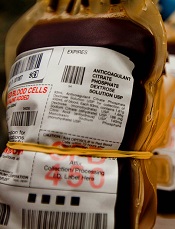
Photo by Juan D. Alfonso
The lifetime ban on blood donation from men who have sex with men (MSM) has been lifted in England, Wales, and Scotland.
Beginning in November, MSM in these countries can donate blood if they have not engaged in sexual activity within the past 12 months. A study published September 8 on bmj.com helped inform this decision.
Several other countries previously lifted the lifetime ban instituted in the 1980s and introduced deferment periods instead. For example, MSM in South Africa must defer blood donation 6 months after sexual activity. And MSM in Australia, Sweden, and Japan must wait 12 months.
The changes to policy in these countries—along with advances in blood screening techniques and knowledge of HIV—prompted calls for Great Britain to revise its blood donor policy.
So Kaye Wellings, of London School of Hygiene and Tropical Medicine, and her colleagues decided to assess the possible effects of revising the policy, as well as past compliance with the lifetime ban. The results of their study were used to inform the policy review conducted by the Advisory Committee on the Safety of Blood, Tissues, and Organs.
Between April 2009 and June 2010, Wellings’s team surveyed 1028 men in Britain who reported having any sexual contact with other men. Of those surveyed, 10.6% reported donating blood since having penetrative sex with a man, and 2.5% had done so in the past 12 months.
The men cited various reasons for not complying with the ban. They believed themselves to be at low risk of having HIV, had confidentiality concerns, did not understand the ban, or thought the ban unfair.
To gain more insight, Wellings and her colleagues conducted interviews with 30 MSMs—19 who had complied with the lifetime ban on blood donation and 11 who had not.
Many of these men considered the lifetime ban to be unfair, discriminatory, and lacking a clear rationale. However, they generally viewed a 1-year deferral rule as feasible and acceptable.
This prompted Wellings and her colleagues to conclude that MSM might be more likely to comply with a 1-year deferral rule than a lifetime ban. And compliance might improve further with better communication, improved confidentiality measures, and clear explanations of the rationale behind the rule.
Photo by Juan D. Alfonso
The lifetime ban on blood donation from men who have sex with men (MSM) has been lifted in England, Wales, and Scotland.
Beginning in November, MSM in these countries can donate blood if they have not engaged in sexual activity within the past 12 months. A study published September 8 on bmj.com helped inform this decision.
Several other countries previously lifted the lifetime ban instituted in the 1980s and introduced deferment periods instead. For example, MSM in South Africa must defer blood donation 6 months after sexual activity. And MSM in Australia, Sweden, and Japan must wait 12 months.
The changes to policy in these countries—along with advances in blood screening techniques and knowledge of HIV—prompted calls for Great Britain to revise its blood donor policy.
So Kaye Wellings, of London School of Hygiene and Tropical Medicine, and her colleagues decided to assess the possible effects of revising the policy, as well as past compliance with the lifetime ban. The results of their study were used to inform the policy review conducted by the Advisory Committee on the Safety of Blood, Tissues, and Organs.
Between April 2009 and June 2010, Wellings’s team surveyed 1028 men in Britain who reported having any sexual contact with other men. Of those surveyed, 10.6% reported donating blood since having penetrative sex with a man, and 2.5% had done so in the past 12 months.
The men cited various reasons for not complying with the ban. They believed themselves to be at low risk of having HIV, had confidentiality concerns, did not understand the ban, or thought the ban unfair.
To gain more insight, Wellings and her colleagues conducted interviews with 30 MSMs—19 who had complied with the lifetime ban on blood donation and 11 who had not.
Many of these men considered the lifetime ban to be unfair, discriminatory, and lacking a clear rationale. However, they generally viewed a 1-year deferral rule as feasible and acceptable.
This prompted Wellings and her colleagues to conclude that MSM might be more likely to comply with a 1-year deferral rule than a lifetime ban. And compliance might improve further with better communication, improved confidentiality measures, and clear explanations of the rationale behind the rule.
Photo by Juan D. Alfonso
The lifetime ban on blood donation from men who have sex with men (MSM) has been lifted in England, Wales, and Scotland.
Beginning in November, MSM in these countries can donate blood if they have not engaged in sexual activity within the past 12 months. A study published September 8 on bmj.com helped inform this decision.
Several other countries previously lifted the lifetime ban instituted in the 1980s and introduced deferment periods instead. For example, MSM in South Africa must defer blood donation 6 months after sexual activity. And MSM in Australia, Sweden, and Japan must wait 12 months.
The changes to policy in these countries—along with advances in blood screening techniques and knowledge of HIV—prompted calls for Great Britain to revise its blood donor policy.
So Kaye Wellings, of London School of Hygiene and Tropical Medicine, and her colleagues decided to assess the possible effects of revising the policy, as well as past compliance with the lifetime ban. The results of their study were used to inform the policy review conducted by the Advisory Committee on the Safety of Blood, Tissues, and Organs.
Between April 2009 and June 2010, Wellings’s team surveyed 1028 men in Britain who reported having any sexual contact with other men. Of those surveyed, 10.6% reported donating blood since having penetrative sex with a man, and 2.5% had done so in the past 12 months.
The men cited various reasons for not complying with the ban. They believed themselves to be at low risk of having HIV, had confidentiality concerns, did not understand the ban, or thought the ban unfair.
To gain more insight, Wellings and her colleagues conducted interviews with 30 MSMs—19 who had complied with the lifetime ban on blood donation and 11 who had not.
Many of these men considered the lifetime ban to be unfair, discriminatory, and lacking a clear rationale. However, they generally viewed a 1-year deferral rule as feasible and acceptable.
This prompted Wellings and her colleagues to conclude that MSM might be more likely to comply with a 1-year deferral rule than a lifetime ban. And compliance might improve further with better communication, improved confidentiality measures, and clear explanations of the rationale behind the rule.
Research indicates apixaban is superior to warfarin
A large-scale trial showed that the anticoagulant apixaban was more effective than warfarin in preventing stroke and systemic embolism in patients with atrial fibrillation. Moreover, apixaban resulted in substantially less bleeding and lower mortality.
These results were presented at the European Society of Cardiology Congress in Paris on August 28 and published simultaneously online in The New England Journal of Medicine.
The study was funded by the makers of apixaban, Bristol-Myers Squibb, Co. and Pfizer Inc.
The trial, called ARISTOTLE, included 18,201 patients from 1034 clinical sites in 39 countries. Patients were randomized to receive either apixaban or warfarin at 5 mg twice daily for an average of 1.8 years.
“[W]hen compared to warfarin..., apixaban resulted in an additional 21% relative reduction in stroke or systemic embolism,” said lead study author Christopher B. Granger, MD, of Duke University. “It also resulted in a 31% relative reduction in major bleeding, as well as an 11% relative reduction in overall mortality.”
The improvement in stroke prevention was statistically significant (P = 0.011), as was the lower rate of major bleeding (P < 0.001) and the lower mortality (P = 0.047). Hemorrhagic stroke was reduced by about 50%.
The benefits of stroke reduction and lower rates of bleeding were consistent across all major subgroups and despite the heterogeneity that exists in the quality of warfarin use across the world, according to John Alexander, MD, a study co-author and Duke cardiologist.
The number of events prevented per 1000 people, which indicate absolute risk reduction, was also impressive, Dr Alexander said. Apixaban prevented 6 patients from having a stroke, 15 patients from having major bleeding, and 8 patients from dying.
“There is an enormous unmet need for treatment of patients at risk for stroke associated with atrial fibrillation,” Dr Granger said. “Only about half of patients who should be treated are being treated. The disparity exists because warfarin treatment has several limitations.”
These limitations include regular blood tests to monitor and adjust warfarin dose, as well as the need to avoid certain foods and medications that interfere with warfarin's efficacy. Warfarin has also been shown to increase bleeding risk, including intracranial hemorrhage.
“Our study indicates treatment with apixaban is more effective than warfarin in preventing stroke, without the need for anticoagulation monitoring,” said the study committee's co-chair Lars Wallentin, MD, of the Uppsala Clinical Research Center University Hospital in Sweden.
The study also shows apixaban is safer than warfarin, Dr Wallentin said. “Our findings show a single dose of apixaban accomplishes the same stroke prevention goal as adjusted-dose warfarin, with a substantially lower risk of all types of bleeding across different ages and with lower rates of discontinuation.”
Though these results suggest apixaban is a promising drug, it is important to note that other studies of apixaban have produced mixed results.
A study published in The New England Journal of Medicine on July 24 showed that apixaban increased major bleeding in patients with acute coronary syndrome, without reducing recurrent ischemic events.
A study presented at the American Stroke Association’s International Stroke Conference 2011 found apixaban to be “far superior” to aspirin at preventing stroke in atrial fibrillation patients who could not use vitamin K antagonists.
The ADVANCE-2 study suggested apixaban was more effective at preventing venous thromboembolism than enoxaparin in patients who had elective total knee replacement surgery. However, the earlier ADVANCE study indicated apixaban was not more effective than enoxaparin.
And a study presented at the European Society of Cardiology Conference in 2008 found that apixaban lowered the incidence of heart attack, stroke, chest pain, or death from cardiovascular problems when compared to placebo. However, the drug did not lower the incidence significantly, and it caused major bleeding when administered at high doses.
A large-scale trial showed that the anticoagulant apixaban was more effective than warfarin in preventing stroke and systemic embolism in patients with atrial fibrillation. Moreover, apixaban resulted in substantially less bleeding and lower mortality.
These results were presented at the European Society of Cardiology Congress in Paris on August 28 and published simultaneously online in The New England Journal of Medicine.
The study was funded by the makers of apixaban, Bristol-Myers Squibb, Co. and Pfizer Inc.
The trial, called ARISTOTLE, included 18,201 patients from 1034 clinical sites in 39 countries. Patients were randomized to receive either apixaban or warfarin at 5 mg twice daily for an average of 1.8 years.
“[W]hen compared to warfarin..., apixaban resulted in an additional 21% relative reduction in stroke or systemic embolism,” said lead study author Christopher B. Granger, MD, of Duke University. “It also resulted in a 31% relative reduction in major bleeding, as well as an 11% relative reduction in overall mortality.”
The improvement in stroke prevention was statistically significant (P = 0.011), as was the lower rate of major bleeding (P < 0.001) and the lower mortality (P = 0.047). Hemorrhagic stroke was reduced by about 50%.
The benefits of stroke reduction and lower rates of bleeding were consistent across all major subgroups and despite the heterogeneity that exists in the quality of warfarin use across the world, according to John Alexander, MD, a study co-author and Duke cardiologist.
The number of events prevented per 1000 people, which indicate absolute risk reduction, was also impressive, Dr Alexander said. Apixaban prevented 6 patients from having a stroke, 15 patients from having major bleeding, and 8 patients from dying.
“There is an enormous unmet need for treatment of patients at risk for stroke associated with atrial fibrillation,” Dr Granger said. “Only about half of patients who should be treated are being treated. The disparity exists because warfarin treatment has several limitations.”
These limitations include regular blood tests to monitor and adjust warfarin dose, as well as the need to avoid certain foods and medications that interfere with warfarin's efficacy. Warfarin has also been shown to increase bleeding risk, including intracranial hemorrhage.
“Our study indicates treatment with apixaban is more effective than warfarin in preventing stroke, without the need for anticoagulation monitoring,” said the study committee's co-chair Lars Wallentin, MD, of the Uppsala Clinical Research Center University Hospital in Sweden.
The study also shows apixaban is safer than warfarin, Dr Wallentin said. “Our findings show a single dose of apixaban accomplishes the same stroke prevention goal as adjusted-dose warfarin, with a substantially lower risk of all types of bleeding across different ages and with lower rates of discontinuation.”
Though these results suggest apixaban is a promising drug, it is important to note that other studies of apixaban have produced mixed results.
A study published in The New England Journal of Medicine on July 24 showed that apixaban increased major bleeding in patients with acute coronary syndrome, without reducing recurrent ischemic events.
A study presented at the American Stroke Association’s International Stroke Conference 2011 found apixaban to be “far superior” to aspirin at preventing stroke in atrial fibrillation patients who could not use vitamin K antagonists.
The ADVANCE-2 study suggested apixaban was more effective at preventing venous thromboembolism than enoxaparin in patients who had elective total knee replacement surgery. However, the earlier ADVANCE study indicated apixaban was not more effective than enoxaparin.
And a study presented at the European Society of Cardiology Conference in 2008 found that apixaban lowered the incidence of heart attack, stroke, chest pain, or death from cardiovascular problems when compared to placebo. However, the drug did not lower the incidence significantly, and it caused major bleeding when administered at high doses.
A large-scale trial showed that the anticoagulant apixaban was more effective than warfarin in preventing stroke and systemic embolism in patients with atrial fibrillation. Moreover, apixaban resulted in substantially less bleeding and lower mortality.
These results were presented at the European Society of Cardiology Congress in Paris on August 28 and published simultaneously online in The New England Journal of Medicine.
The study was funded by the makers of apixaban, Bristol-Myers Squibb, Co. and Pfizer Inc.
The trial, called ARISTOTLE, included 18,201 patients from 1034 clinical sites in 39 countries. Patients were randomized to receive either apixaban or warfarin at 5 mg twice daily for an average of 1.8 years.
“[W]hen compared to warfarin..., apixaban resulted in an additional 21% relative reduction in stroke or systemic embolism,” said lead study author Christopher B. Granger, MD, of Duke University. “It also resulted in a 31% relative reduction in major bleeding, as well as an 11% relative reduction in overall mortality.”
The improvement in stroke prevention was statistically significant (P = 0.011), as was the lower rate of major bleeding (P < 0.001) and the lower mortality (P = 0.047). Hemorrhagic stroke was reduced by about 50%.
The benefits of stroke reduction and lower rates of bleeding were consistent across all major subgroups and despite the heterogeneity that exists in the quality of warfarin use across the world, according to John Alexander, MD, a study co-author and Duke cardiologist.
The number of events prevented per 1000 people, which indicate absolute risk reduction, was also impressive, Dr Alexander said. Apixaban prevented 6 patients from having a stroke, 15 patients from having major bleeding, and 8 patients from dying.
“There is an enormous unmet need for treatment of patients at risk for stroke associated with atrial fibrillation,” Dr Granger said. “Only about half of patients who should be treated are being treated. The disparity exists because warfarin treatment has several limitations.”
These limitations include regular blood tests to monitor and adjust warfarin dose, as well as the need to avoid certain foods and medications that interfere with warfarin's efficacy. Warfarin has also been shown to increase bleeding risk, including intracranial hemorrhage.
“Our study indicates treatment with apixaban is more effective than warfarin in preventing stroke, without the need for anticoagulation monitoring,” said the study committee's co-chair Lars Wallentin, MD, of the Uppsala Clinical Research Center University Hospital in Sweden.
The study also shows apixaban is safer than warfarin, Dr Wallentin said. “Our findings show a single dose of apixaban accomplishes the same stroke prevention goal as adjusted-dose warfarin, with a substantially lower risk of all types of bleeding across different ages and with lower rates of discontinuation.”
Though these results suggest apixaban is a promising drug, it is important to note that other studies of apixaban have produced mixed results.
A study published in The New England Journal of Medicine on July 24 showed that apixaban increased major bleeding in patients with acute coronary syndrome, without reducing recurrent ischemic events.
A study presented at the American Stroke Association’s International Stroke Conference 2011 found apixaban to be “far superior” to aspirin at preventing stroke in atrial fibrillation patients who could not use vitamin K antagonists.
The ADVANCE-2 study suggested apixaban was more effective at preventing venous thromboembolism than enoxaparin in patients who had elective total knee replacement surgery. However, the earlier ADVANCE study indicated apixaban was not more effective than enoxaparin.
And a study presented at the European Society of Cardiology Conference in 2008 found that apixaban lowered the incidence of heart attack, stroke, chest pain, or death from cardiovascular problems when compared to placebo. However, the drug did not lower the incidence significantly, and it caused major bleeding when administered at high doses.
FDA grants accelerated approval for brentuximab vedotin
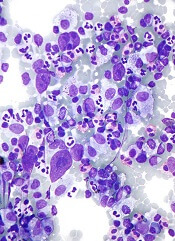
The US Food and Drug Administration (FDA) has granted accelerated approval for brentuximab vedotin (Adcetris) to treat patients with Hodgkin lymphoma (HL) and systemic anaplastic large-cell lymphoma (sALCL).
The drug can now be used to treat HL patients after the failure of autologous stem cell transplant (ASCT) or, in patients who are not ASCT candidates, after they fail at least 2 prior multiagent chemotherapy regimens.
Brentuximab vedotin can also be used to treat patients with sALCL after the failure of at least 1 prior multiagent chemotherapy regimen.
About accelerated approval
The FDA instituted its accelerated approval program to allow for earlier approval of drugs that treat serious conditions and fill an unmet medical need. The approval is based on a surrogate endpoint that is not a measure of clinical benefit.
Drug companies are still required to conduct studies to confirm the anticipated clinical benefit. If these confirmatory trials suggest the drug actually provides a clinical benefit, the FDA grants traditional approval for the drug. If the confirmatory trial does not show a clinical benefit, FDA has regulatory procedures in place that could lead to removing the drug from the market.
Brentuximab vedotin in HL
Accelerated approval for the HL indication was based on a single-arm, multicenter trial to evaluate the objective response rate of brentuximab vedotin as a single agent. The 102 patients enrolled in the trial had CD30-positive HL that relapsed following ASCT.
Brentuximab vedotin prompted an overall response rate in these patients of 73%, with a median response duration of 6.7 months.
Thirty-two percent of patients achieved a complete remission, with a median duration of 20.5 months. Forty percent of patients achieved a partial remission, with a median duration of 3.5 months.
Brentuximab vedotin in sALCL
Accelerated approval for the treatment of sALCL was based on a single-arm, multicenter trial as well. The study included 58 patients with CD30-positive sALCL who had previously received frontline, multiagent chemotherapy treatment.
The primary efficacy endpoint of overall response rate was achieved in 86% of sALCL patients, with a median duration of 12.6 months.
Fifty-seven percent of patients achieved a complete remission, with a median duration of 13.2 months. Twenty-nine percent of patients achieved a partial response, with a median duration of 2.1 months.
The recommended dose and schedule for both indications is 1.8 mg/kg given intravenously over 30 minutes every 3 weeks. Treatment may last a total of 16 cycles, or until disease progresses or toxicity becomes unacceptable.
The agent, manufactured by Seattle Genetics under the trade name Adcetris, is the first new treatment for HL to be approved by the FDA since 1977 and the first to be indicated for sALCL.
The US Food and Drug Administration (FDA) has granted accelerated approval for brentuximab vedotin (Adcetris) to treat patients with Hodgkin lymphoma (HL) and systemic anaplastic large-cell lymphoma (sALCL).
The drug can now be used to treat HL patients after the failure of autologous stem cell transplant (ASCT) or, in patients who are not ASCT candidates, after they fail at least 2 prior multiagent chemotherapy regimens.
Brentuximab vedotin can also be used to treat patients with sALCL after the failure of at least 1 prior multiagent chemotherapy regimen.
About accelerated approval
The FDA instituted its accelerated approval program to allow for earlier approval of drugs that treat serious conditions and fill an unmet medical need. The approval is based on a surrogate endpoint that is not a measure of clinical benefit.
Drug companies are still required to conduct studies to confirm the anticipated clinical benefit. If these confirmatory trials suggest the drug actually provides a clinical benefit, the FDA grants traditional approval for the drug. If the confirmatory trial does not show a clinical benefit, FDA has regulatory procedures in place that could lead to removing the drug from the market.
Brentuximab vedotin in HL
Accelerated approval for the HL indication was based on a single-arm, multicenter trial to evaluate the objective response rate of brentuximab vedotin as a single agent. The 102 patients enrolled in the trial had CD30-positive HL that relapsed following ASCT.
Brentuximab vedotin prompted an overall response rate in these patients of 73%, with a median response duration of 6.7 months.
Thirty-two percent of patients achieved a complete remission, with a median duration of 20.5 months. Forty percent of patients achieved a partial remission, with a median duration of 3.5 months.
Brentuximab vedotin in sALCL
Accelerated approval for the treatment of sALCL was based on a single-arm, multicenter trial as well. The study included 58 patients with CD30-positive sALCL who had previously received frontline, multiagent chemotherapy treatment.
The primary efficacy endpoint of overall response rate was achieved in 86% of sALCL patients, with a median duration of 12.6 months.
Fifty-seven percent of patients achieved a complete remission, with a median duration of 13.2 months. Twenty-nine percent of patients achieved a partial response, with a median duration of 2.1 months.
The recommended dose and schedule for both indications is 1.8 mg/kg given intravenously over 30 minutes every 3 weeks. Treatment may last a total of 16 cycles, or until disease progresses or toxicity becomes unacceptable.
The agent, manufactured by Seattle Genetics under the trade name Adcetris, is the first new treatment for HL to be approved by the FDA since 1977 and the first to be indicated for sALCL.
The US Food and Drug Administration (FDA) has granted accelerated approval for brentuximab vedotin (Adcetris) to treat patients with Hodgkin lymphoma (HL) and systemic anaplastic large-cell lymphoma (sALCL).
The drug can now be used to treat HL patients after the failure of autologous stem cell transplant (ASCT) or, in patients who are not ASCT candidates, after they fail at least 2 prior multiagent chemotherapy regimens.
Brentuximab vedotin can also be used to treat patients with sALCL after the failure of at least 1 prior multiagent chemotherapy regimen.
About accelerated approval
The FDA instituted its accelerated approval program to allow for earlier approval of drugs that treat serious conditions and fill an unmet medical need. The approval is based on a surrogate endpoint that is not a measure of clinical benefit.
Drug companies are still required to conduct studies to confirm the anticipated clinical benefit. If these confirmatory trials suggest the drug actually provides a clinical benefit, the FDA grants traditional approval for the drug. If the confirmatory trial does not show a clinical benefit, FDA has regulatory procedures in place that could lead to removing the drug from the market.
Brentuximab vedotin in HL
Accelerated approval for the HL indication was based on a single-arm, multicenter trial to evaluate the objective response rate of brentuximab vedotin as a single agent. The 102 patients enrolled in the trial had CD30-positive HL that relapsed following ASCT.
Brentuximab vedotin prompted an overall response rate in these patients of 73%, with a median response duration of 6.7 months.
Thirty-two percent of patients achieved a complete remission, with a median duration of 20.5 months. Forty percent of patients achieved a partial remission, with a median duration of 3.5 months.
Brentuximab vedotin in sALCL
Accelerated approval for the treatment of sALCL was based on a single-arm, multicenter trial as well. The study included 58 patients with CD30-positive sALCL who had previously received frontline, multiagent chemotherapy treatment.
The primary efficacy endpoint of overall response rate was achieved in 86% of sALCL patients, with a median duration of 12.6 months.
Fifty-seven percent of patients achieved a complete remission, with a median duration of 13.2 months. Twenty-nine percent of patients achieved a partial response, with a median duration of 2.1 months.
The recommended dose and schedule for both indications is 1.8 mg/kg given intravenously over 30 minutes every 3 weeks. Treatment may last a total of 16 cycles, or until disease progresses or toxicity becomes unacceptable.
The agent, manufactured by Seattle Genetics under the trade name Adcetris, is the first new treatment for HL to be approved by the FDA since 1977 and the first to be indicated for sALCL.
Rivaroxaban noninferior to warfarin in AF patients
A large, multicenter, randomized study of 14, 264 patients at risk for stroke with nonvalvular atrial fibrillation (AF) found the factor Xa inhibitor rivaroxaban to be noninferior to warfarin for preventing stroke or systemic embolism.
The ROCKET AF investigators, who reported the results online August 10 in The New England Journal of Medicine, detected no significant difference between rivaroxaban and warfarin in the rates of major or nonmajor clinically relevant bleeding.
Investigators at 1178 study sites in 45 countries randomly assigned the patients to receive either fixed-dose rivaroxaban at 20 mg daily or adjusted-dose warfarin to a target of INR 2.0 – 3.0. Patients with a creatinine clearance of 30-49 mL/minute received a rivaroxaban dose of 15 mg daily.
Patients in both arms of the intent-to-treat population were a median age of 73 years and about 40% were women. The patients had considerable rates of coexisting conditions, including 90.5% with hypertension, 62.5% with heart failure, and 54.8% who had had a previous stroke, embolism, or transient ischemic attack.
After a median treatment duration of 590 days, the primary efficacy analysis showed188 patients (1.7% per year) in the rivaroxaban group had a stroke or systemic embolism, compared with 241 patients (2.2% per year) in the warfarin group (P<0.001 for noninferiority).
Rates of major bleeding were similar in the 2 groups—3.6% with rivaroxaban and 3.4% with warfarin (P=0.58). Major and clinically relevant nonmajor bleeding occurred in 1475 (14.9%) rivaroxaban-treated patients and 1449 (14.5%) warfarin-treated patients (P=0.44). Intracranial and fatal bleeding occurred less often in the rivaroxaban group.
The investigators noted that the warfarin-treated patients were in therapeutic range a mean of 55% of the time. However, the efficacy of rivaroxaban was as favorable in those centers with the best INR control as it was in those with inferior control.
Lead author Manesh R. Patel, MD, of Duke University School of Medicine in North Carolina, said, “Warfarin has been a standard treatment for decades, but requires a rigorous monitoring schedule to ensure therapeutic dosing levels, and is subject to the potential of food and drug interactions that present treatment obstacles for patients and doctors alike.”
He indicated that the result of the trial “have convincingly shown rivaroxaban to be an alternative to warfarin in treating patients with atrial fibrillation, and importantly, with no increase in bleeding.”
The study was funded by Johnson & Johnson and Bayer.
ROCKET AF stands for Rivaroxaban Once Daily Oral Direct Factor Xa Inhibition Compared with Vitamin K Antagonist for Prevention of Stroke and Embolism Trial in Atrial Fibrillation.
A large, multicenter, randomized study of 14, 264 patients at risk for stroke with nonvalvular atrial fibrillation (AF) found the factor Xa inhibitor rivaroxaban to be noninferior to warfarin for preventing stroke or systemic embolism.
The ROCKET AF investigators, who reported the results online August 10 in The New England Journal of Medicine, detected no significant difference between rivaroxaban and warfarin in the rates of major or nonmajor clinically relevant bleeding.
Investigators at 1178 study sites in 45 countries randomly assigned the patients to receive either fixed-dose rivaroxaban at 20 mg daily or adjusted-dose warfarin to a target of INR 2.0 – 3.0. Patients with a creatinine clearance of 30-49 mL/minute received a rivaroxaban dose of 15 mg daily.
Patients in both arms of the intent-to-treat population were a median age of 73 years and about 40% were women. The patients had considerable rates of coexisting conditions, including 90.5% with hypertension, 62.5% with heart failure, and 54.8% who had had a previous stroke, embolism, or transient ischemic attack.
After a median treatment duration of 590 days, the primary efficacy analysis showed188 patients (1.7% per year) in the rivaroxaban group had a stroke or systemic embolism, compared with 241 patients (2.2% per year) in the warfarin group (P<0.001 for noninferiority).
Rates of major bleeding were similar in the 2 groups—3.6% with rivaroxaban and 3.4% with warfarin (P=0.58). Major and clinically relevant nonmajor bleeding occurred in 1475 (14.9%) rivaroxaban-treated patients and 1449 (14.5%) warfarin-treated patients (P=0.44). Intracranial and fatal bleeding occurred less often in the rivaroxaban group.
The investigators noted that the warfarin-treated patients were in therapeutic range a mean of 55% of the time. However, the efficacy of rivaroxaban was as favorable in those centers with the best INR control as it was in those with inferior control.
Lead author Manesh R. Patel, MD, of Duke University School of Medicine in North Carolina, said, “Warfarin has been a standard treatment for decades, but requires a rigorous monitoring schedule to ensure therapeutic dosing levels, and is subject to the potential of food and drug interactions that present treatment obstacles for patients and doctors alike.”
He indicated that the result of the trial “have convincingly shown rivaroxaban to be an alternative to warfarin in treating patients with atrial fibrillation, and importantly, with no increase in bleeding.”
The study was funded by Johnson & Johnson and Bayer.
ROCKET AF stands for Rivaroxaban Once Daily Oral Direct Factor Xa Inhibition Compared with Vitamin K Antagonist for Prevention of Stroke and Embolism Trial in Atrial Fibrillation.
A large, multicenter, randomized study of 14, 264 patients at risk for stroke with nonvalvular atrial fibrillation (AF) found the factor Xa inhibitor rivaroxaban to be noninferior to warfarin for preventing stroke or systemic embolism.
The ROCKET AF investigators, who reported the results online August 10 in The New England Journal of Medicine, detected no significant difference between rivaroxaban and warfarin in the rates of major or nonmajor clinically relevant bleeding.
Investigators at 1178 study sites in 45 countries randomly assigned the patients to receive either fixed-dose rivaroxaban at 20 mg daily or adjusted-dose warfarin to a target of INR 2.0 – 3.0. Patients with a creatinine clearance of 30-49 mL/minute received a rivaroxaban dose of 15 mg daily.
Patients in both arms of the intent-to-treat population were a median age of 73 years and about 40% were women. The patients had considerable rates of coexisting conditions, including 90.5% with hypertension, 62.5% with heart failure, and 54.8% who had had a previous stroke, embolism, or transient ischemic attack.
After a median treatment duration of 590 days, the primary efficacy analysis showed188 patients (1.7% per year) in the rivaroxaban group had a stroke or systemic embolism, compared with 241 patients (2.2% per year) in the warfarin group (P<0.001 for noninferiority).
Rates of major bleeding were similar in the 2 groups—3.6% with rivaroxaban and 3.4% with warfarin (P=0.58). Major and clinically relevant nonmajor bleeding occurred in 1475 (14.9%) rivaroxaban-treated patients and 1449 (14.5%) warfarin-treated patients (P=0.44). Intracranial and fatal bleeding occurred less often in the rivaroxaban group.
The investigators noted that the warfarin-treated patients were in therapeutic range a mean of 55% of the time. However, the efficacy of rivaroxaban was as favorable in those centers with the best INR control as it was in those with inferior control.
Lead author Manesh R. Patel, MD, of Duke University School of Medicine in North Carolina, said, “Warfarin has been a standard treatment for decades, but requires a rigorous monitoring schedule to ensure therapeutic dosing levels, and is subject to the potential of food and drug interactions that present treatment obstacles for patients and doctors alike.”
He indicated that the result of the trial “have convincingly shown rivaroxaban to be an alternative to warfarin in treating patients with atrial fibrillation, and importantly, with no increase in bleeding.”
The study was funded by Johnson & Johnson and Bayer.
ROCKET AF stands for Rivaroxaban Once Daily Oral Direct Factor Xa Inhibition Compared with Vitamin K Antagonist for Prevention of Stroke and Embolism Trial in Atrial Fibrillation.
Brd4: Potential new target in AML
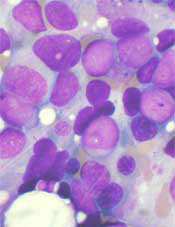
Researchers at Cold Spring Harbor Laboratory (CSHL) and 5 other laboratories may have identified a new drug target for the treatment of acute myeloid leukemia (AML).
They pinpointed a protein called Brd4, which contains a distinct region known as bromodomain and is a member of the BET protein family, known for regulating gene expression.
A new drug candidate that inhibits Brd4 was able to suppress AML in experimental models.
“The drug candidate not only displays remarkable anti-leukemia activity in aggressive disease models and against cells derived from patients with diverse, genetic subtypes of AML, but is also minimally toxic to non-cancerous cells,” said Chris Vakoc, MD, PhD, leader of the study at CSHL.
“The drug is currently being developed for therapeutic use for cancer patients by Tensha Therapeutics and is expected to enter clinical trials within 2 years.”
The team used RNAi screening in an AML murine model. The RNAi screen introduced small hairpin-shaped pieces of RNA (shRNA) that encode epigenetic proteins into mice that harbor leukemia-causing mutations.
The mice in this study carried the oncogene Nras and rearranged forms of the MLL gene, both of which are mutations often found in patients whose leukemia is resistant to standard chemotherapy.
The drinking water for the mice was also supplemented with doxycyline.
“Inducing shRNA that shuts down a gene required for the survival of leukemic cells can lead to complete disease remission,” said Johannes Zuber, MD, former postdoctoral researcher at CSHL. “This ability to use shRNA to simulate the effect of an anti-cancer drug illustrates the power of this approach.”
The team also identified another potential target in AML called Myb. The team found that suppressing the activity of Myb also eliminated AML in mice. The team screened more than 1000 shRNAs targeting 243 known epigenetic regulators of chromatin.
They homed in on Brd4 as a target and found that suppressing the protein led to the most dramatic changes in AML. The cell cycle was arrested, the leukemic cells died, leukemia progression was delayed, and the mice survived longer.
Previously, James Bradner, MD, at Dana-Farber Cancer Institute in Boston, and his research team had developed a small molecule inhibitor of Brd4 called JQ1. The two groups collaborated, reproducing the antileukemic effects in the Brd4 shRNA experiments. They consider JQ1 to be an ideal drug candidate.
Their findings were published online in Nature.
Researchers at Cold Spring Harbor Laboratory (CSHL) and 5 other laboratories may have identified a new drug target for the treatment of acute myeloid leukemia (AML).
They pinpointed a protein called Brd4, which contains a distinct region known as bromodomain and is a member of the BET protein family, known for regulating gene expression.
A new drug candidate that inhibits Brd4 was able to suppress AML in experimental models.
“The drug candidate not only displays remarkable anti-leukemia activity in aggressive disease models and against cells derived from patients with diverse, genetic subtypes of AML, but is also minimally toxic to non-cancerous cells,” said Chris Vakoc, MD, PhD, leader of the study at CSHL.
“The drug is currently being developed for therapeutic use for cancer patients by Tensha Therapeutics and is expected to enter clinical trials within 2 years.”
The team used RNAi screening in an AML murine model. The RNAi screen introduced small hairpin-shaped pieces of RNA (shRNA) that encode epigenetic proteins into mice that harbor leukemia-causing mutations.
The mice in this study carried the oncogene Nras and rearranged forms of the MLL gene, both of which are mutations often found in patients whose leukemia is resistant to standard chemotherapy.
The drinking water for the mice was also supplemented with doxycyline.
“Inducing shRNA that shuts down a gene required for the survival of leukemic cells can lead to complete disease remission,” said Johannes Zuber, MD, former postdoctoral researcher at CSHL. “This ability to use shRNA to simulate the effect of an anti-cancer drug illustrates the power of this approach.”
The team also identified another potential target in AML called Myb. The team found that suppressing the activity of Myb also eliminated AML in mice. The team screened more than 1000 shRNAs targeting 243 known epigenetic regulators of chromatin.
They homed in on Brd4 as a target and found that suppressing the protein led to the most dramatic changes in AML. The cell cycle was arrested, the leukemic cells died, leukemia progression was delayed, and the mice survived longer.
Previously, James Bradner, MD, at Dana-Farber Cancer Institute in Boston, and his research team had developed a small molecule inhibitor of Brd4 called JQ1. The two groups collaborated, reproducing the antileukemic effects in the Brd4 shRNA experiments. They consider JQ1 to be an ideal drug candidate.
Their findings were published online in Nature.
Researchers at Cold Spring Harbor Laboratory (CSHL) and 5 other laboratories may have identified a new drug target for the treatment of acute myeloid leukemia (AML).
They pinpointed a protein called Brd4, which contains a distinct region known as bromodomain and is a member of the BET protein family, known for regulating gene expression.
A new drug candidate that inhibits Brd4 was able to suppress AML in experimental models.
“The drug candidate not only displays remarkable anti-leukemia activity in aggressive disease models and against cells derived from patients with diverse, genetic subtypes of AML, but is also minimally toxic to non-cancerous cells,” said Chris Vakoc, MD, PhD, leader of the study at CSHL.
“The drug is currently being developed for therapeutic use for cancer patients by Tensha Therapeutics and is expected to enter clinical trials within 2 years.”
The team used RNAi screening in an AML murine model. The RNAi screen introduced small hairpin-shaped pieces of RNA (shRNA) that encode epigenetic proteins into mice that harbor leukemia-causing mutations.
The mice in this study carried the oncogene Nras and rearranged forms of the MLL gene, both of which are mutations often found in patients whose leukemia is resistant to standard chemotherapy.
The drinking water for the mice was also supplemented with doxycyline.
“Inducing shRNA that shuts down a gene required for the survival of leukemic cells can lead to complete disease remission,” said Johannes Zuber, MD, former postdoctoral researcher at CSHL. “This ability to use shRNA to simulate the effect of an anti-cancer drug illustrates the power of this approach.”
The team also identified another potential target in AML called Myb. The team found that suppressing the activity of Myb also eliminated AML in mice. The team screened more than 1000 shRNAs targeting 243 known epigenetic regulators of chromatin.
They homed in on Brd4 as a target and found that suppressing the protein led to the most dramatic changes in AML. The cell cycle was arrested, the leukemic cells died, leukemia progression was delayed, and the mice survived longer.
Previously, James Bradner, MD, at Dana-Farber Cancer Institute in Boston, and his research team had developed a small molecule inhibitor of Brd4 called JQ1. The two groups collaborated, reproducing the antileukemic effects in the Brd4 shRNA experiments. They consider JQ1 to be an ideal drug candidate.
Their findings were published online in Nature.
New antiplatelet agent approved by FDA
The US Food and Drug Administration (FDA) has approved the antiplatelet agent ticagrelor for reducing thrombotic events in patients with acute coronary syndromes.
The FDA based its decision on results of the PLATO trial, which compared ticagrelor to clopidogrel.
Some 9.8% of patients treated with ticagrelor experienced cardiovascular death, myocardial infarction, or stroke at 12 months compared to 11.7% of patients treated with clopidogrel, which amounted to a relative risk reduction of 16% (P<0.001).
The product label includes a boxed warning that aspirin doses above 100 mg per day decrease the effectiveness of the medication and should be avoided.
For more information on the approval, visit FDA.gov.
The US Food and Drug Administration (FDA) has approved the antiplatelet agent ticagrelor for reducing thrombotic events in patients with acute coronary syndromes.
The FDA based its decision on results of the PLATO trial, which compared ticagrelor to clopidogrel.
Some 9.8% of patients treated with ticagrelor experienced cardiovascular death, myocardial infarction, or stroke at 12 months compared to 11.7% of patients treated with clopidogrel, which amounted to a relative risk reduction of 16% (P<0.001).
The product label includes a boxed warning that aspirin doses above 100 mg per day decrease the effectiveness of the medication and should be avoided.
For more information on the approval, visit FDA.gov.
The US Food and Drug Administration (FDA) has approved the antiplatelet agent ticagrelor for reducing thrombotic events in patients with acute coronary syndromes.
The FDA based its decision on results of the PLATO trial, which compared ticagrelor to clopidogrel.
Some 9.8% of patients treated with ticagrelor experienced cardiovascular death, myocardial infarction, or stroke at 12 months compared to 11.7% of patients treated with clopidogrel, which amounted to a relative risk reduction of 16% (P<0.001).
The product label includes a boxed warning that aspirin doses above 100 mg per day decrease the effectiveness of the medication and should be avoided.
For more information on the approval, visit FDA.gov.
Rivaroxaban approved for thromboembolic events
The US Food and Drug Administration (FDA) approved rivaroxaban to reduce the risk of deep vein thrombosis (DVT) and pulmonary embolism after knee or hip replacement surgery.
Clinical studies evaluated the use of rivaroxaban in more than 6,000 patients. The studies found rivaroxaban to be more effective than enoxaparin at preventing venous thromboembolic events in both hip and knee replacement patients.
The FDA recommends that people undergoing knee replacement surgery take the medication for 12 days, 35 days for those undergoing hip replacement. The most common side effect was bleeding.
The drug was approved July 1. For more information, please visit the FDA website.
The US Food and Drug Administration (FDA) approved rivaroxaban to reduce the risk of deep vein thrombosis (DVT) and pulmonary embolism after knee or hip replacement surgery.
Clinical studies evaluated the use of rivaroxaban in more than 6,000 patients. The studies found rivaroxaban to be more effective than enoxaparin at preventing venous thromboembolic events in both hip and knee replacement patients.
The FDA recommends that people undergoing knee replacement surgery take the medication for 12 days, 35 days for those undergoing hip replacement. The most common side effect was bleeding.
The drug was approved July 1. For more information, please visit the FDA website.
The US Food and Drug Administration (FDA) approved rivaroxaban to reduce the risk of deep vein thrombosis (DVT) and pulmonary embolism after knee or hip replacement surgery.
Clinical studies evaluated the use of rivaroxaban in more than 6,000 patients. The studies found rivaroxaban to be more effective than enoxaparin at preventing venous thromboembolic events in both hip and knee replacement patients.
The FDA recommends that people undergoing knee replacement surgery take the medication for 12 days, 35 days for those undergoing hip replacement. The most common side effect was bleeding.
The drug was approved July 1. For more information, please visit the FDA website.
FDA explains dabigatran dose approval
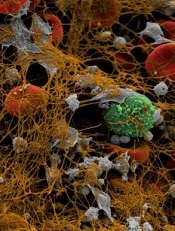
Credit: Andre E.X. Brown
The medical community was surprised when the Food and Drug Administration (FDA) approved the higher dose of dabigatran and not the lower dose last October for patients with atrial fibrillation.
Now three reviewers from the FDA’s Center for Drug Evaluation and Research explain how the data gave them no other choice. Their account is published as a Perspective piece in the April 13 issue of The New England Journal of Medicine.
The FDA based its approval on the multicenter, active-control Randomized Evaluation of Long-term Anticoagulation Therapy (RE-LY) trial. It was designed to show the noninferiority of dabigatran, either 110 mg or 150 mg, compared to warfarin in reducing the risk of stroke and systemic embolism in patients with nonvalvular atrial fibrillation.
The study investigators found both dosages to be noninferior to warfarin. However, the 150-mg regimen was significantly superior to both warfarin (P=0.0001) and the 110-mg dose (P=0.004).
The FDA review team attempted to identify subsets within the RE-LY patient population that might benefit more from the lower dose. They focused on elderly patients, patients with renal function impairment, and those with previous bleeding episodes.
And in fact, the FDA reviewers said they were “unable to find any population for whom the availability of a lower dose would improve dabigatran’s benefit-risk profile.”
In the elderly, the rate of stroke or embolism was lower with the 150-mg dose, although the rate of major bleeding was higher. However, the reviewers assumed that “most people would agree...that the irreversible effects of strokes and emboli have greater clinical significance than nonfatal bleeding.”
In the subset of patients with moderate renal impairment, the rate of stroke or embolism with 150-mg was about half that of the lower-dose group and the rate of bleeding was similar. Patients with severe renal impairment were excluded from the trial.
And for those patients at higher risk for bleeding because of previous hemorrhage, they experienced similar rates of hemorrhage in both dabigatran groups and the warfarin group.
The review team commented, “[I]t appeared clear that most, if not all, patients should receive the higher dose.”
The review team pointed out that the noninferiority of the lower dose of dabigatran was less strong when it was compared with warfarin dosing that was well managed, which, they added, “is not always achieved.”
“Ultimately,” they said, the decision to approve only the higher dose “was based on our inability to identify any subgroup in which use of the lower dose would not represent a substantial disadvantage.”
The Perspective piece was written by B. Nhi Beasley, PharmD, Ellis F. Unger, MD, and Robert Temple, MD.
Credit: Andre E.X. Brown
The medical community was surprised when the Food and Drug Administration (FDA) approved the higher dose of dabigatran and not the lower dose last October for patients with atrial fibrillation.
Now three reviewers from the FDA’s Center for Drug Evaluation and Research explain how the data gave them no other choice. Their account is published as a Perspective piece in the April 13 issue of The New England Journal of Medicine.
The FDA based its approval on the multicenter, active-control Randomized Evaluation of Long-term Anticoagulation Therapy (RE-LY) trial. It was designed to show the noninferiority of dabigatran, either 110 mg or 150 mg, compared to warfarin in reducing the risk of stroke and systemic embolism in patients with nonvalvular atrial fibrillation.
The study investigators found both dosages to be noninferior to warfarin. However, the 150-mg regimen was significantly superior to both warfarin (P=0.0001) and the 110-mg dose (P=0.004).
The FDA review team attempted to identify subsets within the RE-LY patient population that might benefit more from the lower dose. They focused on elderly patients, patients with renal function impairment, and those with previous bleeding episodes.
And in fact, the FDA reviewers said they were “unable to find any population for whom the availability of a lower dose would improve dabigatran’s benefit-risk profile.”
In the elderly, the rate of stroke or embolism was lower with the 150-mg dose, although the rate of major bleeding was higher. However, the reviewers assumed that “most people would agree...that the irreversible effects of strokes and emboli have greater clinical significance than nonfatal bleeding.”
In the subset of patients with moderate renal impairment, the rate of stroke or embolism with 150-mg was about half that of the lower-dose group and the rate of bleeding was similar. Patients with severe renal impairment were excluded from the trial.
And for those patients at higher risk for bleeding because of previous hemorrhage, they experienced similar rates of hemorrhage in both dabigatran groups and the warfarin group.
The review team commented, “[I]t appeared clear that most, if not all, patients should receive the higher dose.”
The review team pointed out that the noninferiority of the lower dose of dabigatran was less strong when it was compared with warfarin dosing that was well managed, which, they added, “is not always achieved.”
“Ultimately,” they said, the decision to approve only the higher dose “was based on our inability to identify any subgroup in which use of the lower dose would not represent a substantial disadvantage.”
The Perspective piece was written by B. Nhi Beasley, PharmD, Ellis F. Unger, MD, and Robert Temple, MD.
Credit: Andre E.X. Brown
The medical community was surprised when the Food and Drug Administration (FDA) approved the higher dose of dabigatran and not the lower dose last October for patients with atrial fibrillation.
Now three reviewers from the FDA’s Center for Drug Evaluation and Research explain how the data gave them no other choice. Their account is published as a Perspective piece in the April 13 issue of The New England Journal of Medicine.
The FDA based its approval on the multicenter, active-control Randomized Evaluation of Long-term Anticoagulation Therapy (RE-LY) trial. It was designed to show the noninferiority of dabigatran, either 110 mg or 150 mg, compared to warfarin in reducing the risk of stroke and systemic embolism in patients with nonvalvular atrial fibrillation.
The study investigators found both dosages to be noninferior to warfarin. However, the 150-mg regimen was significantly superior to both warfarin (P=0.0001) and the 110-mg dose (P=0.004).
The FDA review team attempted to identify subsets within the RE-LY patient population that might benefit more from the lower dose. They focused on elderly patients, patients with renal function impairment, and those with previous bleeding episodes.
And in fact, the FDA reviewers said they were “unable to find any population for whom the availability of a lower dose would improve dabigatran’s benefit-risk profile.”
In the elderly, the rate of stroke or embolism was lower with the 150-mg dose, although the rate of major bleeding was higher. However, the reviewers assumed that “most people would agree...that the irreversible effects of strokes and emboli have greater clinical significance than nonfatal bleeding.”
In the subset of patients with moderate renal impairment, the rate of stroke or embolism with 150-mg was about half that of the lower-dose group and the rate of bleeding was similar. Patients with severe renal impairment were excluded from the trial.
And for those patients at higher risk for bleeding because of previous hemorrhage, they experienced similar rates of hemorrhage in both dabigatran groups and the warfarin group.
The review team commented, “[I]t appeared clear that most, if not all, patients should receive the higher dose.”
The review team pointed out that the noninferiority of the lower dose of dabigatran was less strong when it was compared with warfarin dosing that was well managed, which, they added, “is not always achieved.”
“Ultimately,” they said, the decision to approve only the higher dose “was based on our inability to identify any subgroup in which use of the lower dose would not represent a substantial disadvantage.”
The Perspective piece was written by B. Nhi Beasley, PharmD, Ellis F. Unger, MD, and Robert Temple, MD.