User login
Secukinumab may slow structural ankylosing spondylitis progression
LONDON – Long-term treatment with the interleukin 17A inhibitor secukinumab showed suggestive evidence of inhibiting structural progression of spinal disease in 168 patients with ankylosing spondylitis, the first time any evidence for an effect like this has been seen with a biologic drug or any other agent used to treat ankylosing spondylitis.
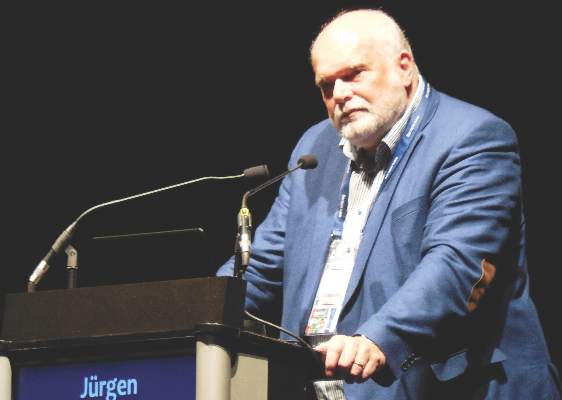
However, the effect occurred in uncontrolled, 2-year open-label treatment of patients originally enrolled in one of the secukinumab pivotal trials, and the analysis did not include comparison against a historical control group, caveats that demand confirmation of this effect in additional studies, Dr. Jürgen Braun said at the European Congress of Rheumatology.
In a second, unrelated study, the oral Janus kinase inhibitor tofacitinib showed promising efficacy for controlling clinical symptoms in patients with active ankylosing spondylitis (AS) during 12 weeks of treatment in a placebo-controlled, dose-ranging phase II study.
The open-label secukinumab extension study involved patients who had been enrolled in the MEASURE 1 study, one of the pivotal trials that had established secukinumab as safe and effective for improving the clinical status of patients with active AS. The primary endpoint of MEASURE 1 had been the percentage of patients achieving at least a 20% improvement in their Assessment of Spondyloarthritis international Society (ASAS20) response after 16 weeks of treatment (New Engl J Med. 2015 Dec 24;373[26]:2534-48).
Based in part on these data the Food and Drug Administration approved secukinumab (Cosentyx) for the treatment of ankylosing spondylitis in January 2016. The new data reported by Dr. Braun assessed the level of spinal pathology in a subgroup of the MEASURE 1 patients when measured by radiography using the modified Stoke Ankylosing Spondylitis Spine Score (mSASSS) at baseline and after 104 weeks on secukinumab treatment.
Patients in MEASURE 1 who began on active treatment received 10 mg/kg intravenous secukinumab for 4 weeks, followed by subcutaneous dosages of either 75 mg or 150 mg every 4 weeks for 104 weeks. His analysis also included some patients who entered MEASURE 1 in the placebo group and then switched to open-label, subcutaneous secukinumab treatment after 16 or 24 weeks on placebo.
Analysis of 168 patients who started on intravenous secukinumab and later received any subcutaneous secukinumab treatment out to 104 weeks showed an average increase in mSASSS of 0.30 after 104 weeks when compared against their baseline scores, reported Dr. Braun, professor and medical director of the Ruhr Rheumatology Center of the University of Bochum, Germany.
Among an additional 89 patients who began in the placebo group and then switched to subcutaneous secukinumab, the average change in mSASSS from baseline to 104 weeks was 0.54. By comparison, Dr. Braun noted that AS patients treated with a tumor necrosis factor inhibitor have shown 2-year progression in their mSASSS of about 0.8-0.9, and AS patients not treated with an active biologic drug have shown 2-year mSASSS progression of about 1.0.

A second analysis of the data reported by Dr. Braun showed that among the 168 patients treated for the full 104 weeks with secukinumab about 80% showed no mSASSS progression, but about 20% did have some level of detectable mSASSS progression.
The phase II study of tofacitinib (Xeljanz) randomized 208 patients with active AS to either tofacitinib at daily dosages of 2 mg bid, 5 mg bid, 10 mg bid, or placebo. The study’s primary endpoint was their ASAS20 response after 12 weeks that underwent a Bayesian Emax model analysis to estimate incremental efficacy when compared against placebo.
The primary efficacy analysis showed the greatest EmaxASAS20 response among patients treated with 5 mg bid daily, 63%, which was about 23% above the placebo level, reportedDr. Désirée van der Heijde, professor of rheumatology at the Leiden University Medical Center, The Netherlands. The absolute ASAS20 response rate of the 52 patients randomized to this tofacitinib dosage was about 81%, about 40% higher than the response rate seen in the 51 patients in the placebo arm.
All dosages of tofacitinib tested were well tolerated, with safety data similar to what has previously been shown for tofacitinib, a drug that has Food and Drug Administration approval for treating rheumatoid arthritis.
On Twitter @mitchelzoler
The results on radiographic progression in ankylosing spondylitis patients who continued on secukinumab treatment for 104 weeks suggest for the first time that a biologic drug can reduce radiographic progression of ankylosing spondylitis. This effect has not been seen in patients treated with a tumor necrosis factor inhibitor. The results showed that roughly 80% of the patients maintained for 2 years on secukinumab did not have radiographic progression, although the results also showed that about 20% of these patients did have detectable radiographic progression.
This analysis has several limitations and caveats. The study did not include a control group, not even a historical control group, and it involved open-label treatment. In addition, the treatment effect observed was very close to the level of a measurement error. It would help to compare these results with a historic control group, or to run a new study that compares the effect of secukinumab on long-term radiographic progression directly with the effect of treatment with a tumor necrosis factor inhibitor.
Because of these limitations the results of this analysis are of limited immediate value. Prior results have shown that clinically the efficacy of secukinumab for treating ankylosing spondylitis is more or less the same as the efficacy of various tumor necrosis factor inhibitors. If an additional effect from secukinumab on slowing radiographic progression in these patients were proven, it would be of clear added value, but further study is needed to show this.
The phase II study assessing the impact of tofacitinib, an oral Janus kinase inhibitor, on the clinical activity of ankylosing spondylitis shows promise for this drug in this setting. Currently, the only biologic drugs with proven activity in patients with ankylosing spondylitis are tumor necrosis factor inhibitors and the interleukin 17A inhibitor secukinumab. The data reported by Dr. van der Heijde show that tofacitinib is a good candidate to move to a phase III trial. In this phase II trial the activity seen with 5 mg bid of tofacitinib for reducing disease activity was more or less the same as has been seen with other active biologic drugs.
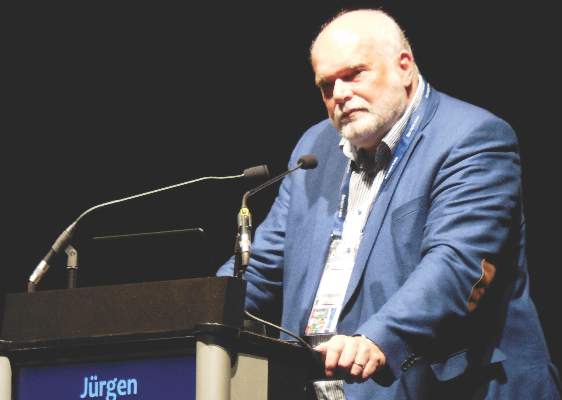
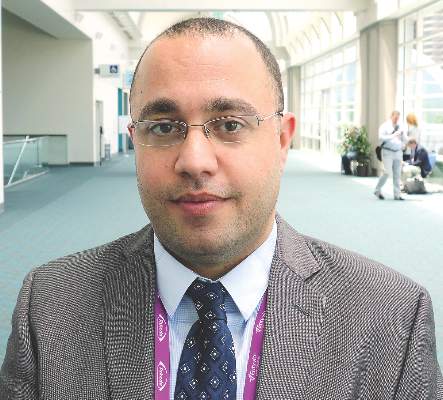
Dr. Denis Poddubnyy is a professor of rheumatology and head of rheumatology at the Benjamin Franklin campus of Charité Medical University in Berlin. He made these comments in an interview. He has been a consultant to Novartis and to Pfizer and to several other drug companies.
The video associated with this article is no longer available on this site. Please view all of our videos on the MDedge YouTube channel
The results on radiographic progression in ankylosing spondylitis patients who continued on secukinumab treatment for 104 weeks suggest for the first time that a biologic drug can reduce radiographic progression of ankylosing spondylitis. This effect has not been seen in patients treated with a tumor necrosis factor inhibitor. The results showed that roughly 80% of the patients maintained for 2 years on secukinumab did not have radiographic progression, although the results also showed that about 20% of these patients did have detectable radiographic progression.
This analysis has several limitations and caveats. The study did not include a control group, not even a historical control group, and it involved open-label treatment. In addition, the treatment effect observed was very close to the level of a measurement error. It would help to compare these results with a historic control group, or to run a new study that compares the effect of secukinumab on long-term radiographic progression directly with the effect of treatment with a tumor necrosis factor inhibitor.
Because of these limitations the results of this analysis are of limited immediate value. Prior results have shown that clinically the efficacy of secukinumab for treating ankylosing spondylitis is more or less the same as the efficacy of various tumor necrosis factor inhibitors. If an additional effect from secukinumab on slowing radiographic progression in these patients were proven, it would be of clear added value, but further study is needed to show this.
The phase II study assessing the impact of tofacitinib, an oral Janus kinase inhibitor, on the clinical activity of ankylosing spondylitis shows promise for this drug in this setting. Currently, the only biologic drugs with proven activity in patients with ankylosing spondylitis are tumor necrosis factor inhibitors and the interleukin 17A inhibitor secukinumab. The data reported by Dr. van der Heijde show that tofacitinib is a good candidate to move to a phase III trial. In this phase II trial the activity seen with 5 mg bid of tofacitinib for reducing disease activity was more or less the same as has been seen with other active biologic drugs.
Dr. Denis Poddubnyy is a professor of rheumatology and head of rheumatology at the Benjamin Franklin campus of Charité Medical University in Berlin. He made these comments in an interview. He has been a consultant to Novartis and to Pfizer and to several other drug companies.
The video associated with this article is no longer available on this site. Please view all of our videos on the MDedge YouTube channel
The results on radiographic progression in ankylosing spondylitis patients who continued on secukinumab treatment for 104 weeks suggest for the first time that a biologic drug can reduce radiographic progression of ankylosing spondylitis. This effect has not been seen in patients treated with a tumor necrosis factor inhibitor. The results showed that roughly 80% of the patients maintained for 2 years on secukinumab did not have radiographic progression, although the results also showed that about 20% of these patients did have detectable radiographic progression.
This analysis has several limitations and caveats. The study did not include a control group, not even a historical control group, and it involved open-label treatment. In addition, the treatment effect observed was very close to the level of a measurement error. It would help to compare these results with a historic control group, or to run a new study that compares the effect of secukinumab on long-term radiographic progression directly with the effect of treatment with a tumor necrosis factor inhibitor.
Because of these limitations the results of this analysis are of limited immediate value. Prior results have shown that clinically the efficacy of secukinumab for treating ankylosing spondylitis is more or less the same as the efficacy of various tumor necrosis factor inhibitors. If an additional effect from secukinumab on slowing radiographic progression in these patients were proven, it would be of clear added value, but further study is needed to show this.
The phase II study assessing the impact of tofacitinib, an oral Janus kinase inhibitor, on the clinical activity of ankylosing spondylitis shows promise for this drug in this setting. Currently, the only biologic drugs with proven activity in patients with ankylosing spondylitis are tumor necrosis factor inhibitors and the interleukin 17A inhibitor secukinumab. The data reported by Dr. van der Heijde show that tofacitinib is a good candidate to move to a phase III trial. In this phase II trial the activity seen with 5 mg bid of tofacitinib for reducing disease activity was more or less the same as has been seen with other active biologic drugs.
Dr. Denis Poddubnyy is a professor of rheumatology and head of rheumatology at the Benjamin Franklin campus of Charité Medical University in Berlin. He made these comments in an interview. He has been a consultant to Novartis and to Pfizer and to several other drug companies.
The video associated with this article is no longer available on this site. Please view all of our videos on the MDedge YouTube channel
LONDON – Long-term treatment with the interleukin 17A inhibitor secukinumab showed suggestive evidence of inhibiting structural progression of spinal disease in 168 patients with ankylosing spondylitis, the first time any evidence for an effect like this has been seen with a biologic drug or any other agent used to treat ankylosing spondylitis.
However, the effect occurred in uncontrolled, 2-year open-label treatment of patients originally enrolled in one of the secukinumab pivotal trials, and the analysis did not include comparison against a historical control group, caveats that demand confirmation of this effect in additional studies, Dr. Jürgen Braun said at the European Congress of Rheumatology.
In a second, unrelated study, the oral Janus kinase inhibitor tofacitinib showed promising efficacy for controlling clinical symptoms in patients with active ankylosing spondylitis (AS) during 12 weeks of treatment in a placebo-controlled, dose-ranging phase II study.
The open-label secukinumab extension study involved patients who had been enrolled in the MEASURE 1 study, one of the pivotal trials that had established secukinumab as safe and effective for improving the clinical status of patients with active AS. The primary endpoint of MEASURE 1 had been the percentage of patients achieving at least a 20% improvement in their Assessment of Spondyloarthritis international Society (ASAS20) response after 16 weeks of treatment (New Engl J Med. 2015 Dec 24;373[26]:2534-48).
Based in part on these data the Food and Drug Administration approved secukinumab (Cosentyx) for the treatment of ankylosing spondylitis in January 2016. The new data reported by Dr. Braun assessed the level of spinal pathology in a subgroup of the MEASURE 1 patients when measured by radiography using the modified Stoke Ankylosing Spondylitis Spine Score (mSASSS) at baseline and after 104 weeks on secukinumab treatment.
Patients in MEASURE 1 who began on active treatment received 10 mg/kg intravenous secukinumab for 4 weeks, followed by subcutaneous dosages of either 75 mg or 150 mg every 4 weeks for 104 weeks. His analysis also included some patients who entered MEASURE 1 in the placebo group and then switched to open-label, subcutaneous secukinumab treatment after 16 or 24 weeks on placebo.
Analysis of 168 patients who started on intravenous secukinumab and later received any subcutaneous secukinumab treatment out to 104 weeks showed an average increase in mSASSS of 0.30 after 104 weeks when compared against their baseline scores, reported Dr. Braun, professor and medical director of the Ruhr Rheumatology Center of the University of Bochum, Germany.
Among an additional 89 patients who began in the placebo group and then switched to subcutaneous secukinumab, the average change in mSASSS from baseline to 104 weeks was 0.54. By comparison, Dr. Braun noted that AS patients treated with a tumor necrosis factor inhibitor have shown 2-year progression in their mSASSS of about 0.8-0.9, and AS patients not treated with an active biologic drug have shown 2-year mSASSS progression of about 1.0.
A second analysis of the data reported by Dr. Braun showed that among the 168 patients treated for the full 104 weeks with secukinumab about 80% showed no mSASSS progression, but about 20% did have some level of detectable mSASSS progression.
The phase II study of tofacitinib (Xeljanz) randomized 208 patients with active AS to either tofacitinib at daily dosages of 2 mg bid, 5 mg bid, 10 mg bid, or placebo. The study’s primary endpoint was their ASAS20 response after 12 weeks that underwent a Bayesian Emax model analysis to estimate incremental efficacy when compared against placebo.
The primary efficacy analysis showed the greatest EmaxASAS20 response among patients treated with 5 mg bid daily, 63%, which was about 23% above the placebo level, reportedDr. Désirée van der Heijde, professor of rheumatology at the Leiden University Medical Center, The Netherlands. The absolute ASAS20 response rate of the 52 patients randomized to this tofacitinib dosage was about 81%, about 40% higher than the response rate seen in the 51 patients in the placebo arm.
All dosages of tofacitinib tested were well tolerated, with safety data similar to what has previously been shown for tofacitinib, a drug that has Food and Drug Administration approval for treating rheumatoid arthritis.
On Twitter @mitchelzoler
LONDON – Long-term treatment with the interleukin 17A inhibitor secukinumab showed suggestive evidence of inhibiting structural progression of spinal disease in 168 patients with ankylosing spondylitis, the first time any evidence for an effect like this has been seen with a biologic drug or any other agent used to treat ankylosing spondylitis.
However, the effect occurred in uncontrolled, 2-year open-label treatment of patients originally enrolled in one of the secukinumab pivotal trials, and the analysis did not include comparison against a historical control group, caveats that demand confirmation of this effect in additional studies, Dr. Jürgen Braun said at the European Congress of Rheumatology.
In a second, unrelated study, the oral Janus kinase inhibitor tofacitinib showed promising efficacy for controlling clinical symptoms in patients with active ankylosing spondylitis (AS) during 12 weeks of treatment in a placebo-controlled, dose-ranging phase II study.
The open-label secukinumab extension study involved patients who had been enrolled in the MEASURE 1 study, one of the pivotal trials that had established secukinumab as safe and effective for improving the clinical status of patients with active AS. The primary endpoint of MEASURE 1 had been the percentage of patients achieving at least a 20% improvement in their Assessment of Spondyloarthritis international Society (ASAS20) response after 16 weeks of treatment (New Engl J Med. 2015 Dec 24;373[26]:2534-48).
Based in part on these data the Food and Drug Administration approved secukinumab (Cosentyx) for the treatment of ankylosing spondylitis in January 2016. The new data reported by Dr. Braun assessed the level of spinal pathology in a subgroup of the MEASURE 1 patients when measured by radiography using the modified Stoke Ankylosing Spondylitis Spine Score (mSASSS) at baseline and after 104 weeks on secukinumab treatment.
Patients in MEASURE 1 who began on active treatment received 10 mg/kg intravenous secukinumab for 4 weeks, followed by subcutaneous dosages of either 75 mg or 150 mg every 4 weeks for 104 weeks. His analysis also included some patients who entered MEASURE 1 in the placebo group and then switched to open-label, subcutaneous secukinumab treatment after 16 or 24 weeks on placebo.
Analysis of 168 patients who started on intravenous secukinumab and later received any subcutaneous secukinumab treatment out to 104 weeks showed an average increase in mSASSS of 0.30 after 104 weeks when compared against their baseline scores, reported Dr. Braun, professor and medical director of the Ruhr Rheumatology Center of the University of Bochum, Germany.
Among an additional 89 patients who began in the placebo group and then switched to subcutaneous secukinumab, the average change in mSASSS from baseline to 104 weeks was 0.54. By comparison, Dr. Braun noted that AS patients treated with a tumor necrosis factor inhibitor have shown 2-year progression in their mSASSS of about 0.8-0.9, and AS patients not treated with an active biologic drug have shown 2-year mSASSS progression of about 1.0.
A second analysis of the data reported by Dr. Braun showed that among the 168 patients treated for the full 104 weeks with secukinumab about 80% showed no mSASSS progression, but about 20% did have some level of detectable mSASSS progression.
The phase II study of tofacitinib (Xeljanz) randomized 208 patients with active AS to either tofacitinib at daily dosages of 2 mg bid, 5 mg bid, 10 mg bid, or placebo. The study’s primary endpoint was their ASAS20 response after 12 weeks that underwent a Bayesian Emax model analysis to estimate incremental efficacy when compared against placebo.
The primary efficacy analysis showed the greatest EmaxASAS20 response among patients treated with 5 mg bid daily, 63%, which was about 23% above the placebo level, reportedDr. Désirée van der Heijde, professor of rheumatology at the Leiden University Medical Center, The Netherlands. The absolute ASAS20 response rate of the 52 patients randomized to this tofacitinib dosage was about 81%, about 40% higher than the response rate seen in the 51 patients in the placebo arm.
All dosages of tofacitinib tested were well tolerated, with safety data similar to what has previously been shown for tofacitinib, a drug that has Food and Drug Administration approval for treating rheumatoid arthritis.
On Twitter @mitchelzoler
AT THE EULAR 2016 CONGRESS
Key clinical point: Ankylosing spondylitis patients maintained on open-label secukinumab treatment for 2 years showed a low level of structural spinal progression in an uncontrolled study. Also, in a placebo-controlled phase II study, 12 weeks’ treatment of patients with active ankylosing spondylitis with 5 mg tofacitinib bid led to significant clinical responses, compared with placebo.
Major finding: Little to no radiographic progression occurred in about 80% of ankylosing spondylitis patients maintained on secukinumab for 104 weeks.
Data source: The secukinumab study involved an open-label, nonrandomized extension of treatment in 168 of the 371 patients originally enrolled in MEASURE 1. The tofacitinib study included 208 patients.
Disclosures: Patients in the secukinumab study had been enrolled in MEASURE 1, a study sponsored by Novartis, the company that markets secukinumab (Cosentyx). Dr. Braun has been a consultant to Novartis, and several other drug companies, and three of his coauthors are Novartis employees. The tofacitinib study was sponsored by Pfizer, the company that markets tofacitinib (Xeljanz). Dr. van der Heijde has been a consultant to Pfizer and several other drug companies, and five of her coauthors are Pfizer employees.
VIDEO: The ins and outs of JAK ihibitors for alopecia
NEWPORT BEACH, CALIF. – The promise of Janus kinase (JAK) inhibitors for alopecia seems to be holding up in the practice of Dr. Natasha Mesinkovska, a dermatologist at the University of California, Irvine.
There’s been much excitement about JAK inhibitors since Yale researchers reported in 2014 that tofacitinib (Xeljanz), a JAK inhibitor approved in the United States for rheumatoid arthritis, appeared to grow a full head of hair, plus body hair, in an essentially hairless 25-year-old man with plaque psoriasis. JAK inhibitors have been under investigation for alopecia ever since. Meanwhile, they are being used off label for hair loss around the country.
In her own practice, Dr. Mesinkovska estimates that about two-thirds of patients have some degree of hair regrowth, with particularly satisfying results in men. About 40 of her alopecia patients have opted for JAK inhibitors so far.
In an interview at the Summit in Aesthetic Medicine, Dr. Mesinkovska shared her insights and tips, as well as promising alopecia results for the psoriasis biologic ustekinumab (Stelara), an interleukin-12 and -23 antagonist. “This is a very exciting time for alopecia areata,” she said.
The Summit in Aesthetic Medicine is held by the Global Academy for Medical Education. Global Academy and this news organization are owned by the same company.
The video associated with this article is no longer available on this site. Please view all of our videos on the MDedge YouTube channel
NEWPORT BEACH, CALIF. – The promise of Janus kinase (JAK) inhibitors for alopecia seems to be holding up in the practice of Dr. Natasha Mesinkovska, a dermatologist at the University of California, Irvine.
There’s been much excitement about JAK inhibitors since Yale researchers reported in 2014 that tofacitinib (Xeljanz), a JAK inhibitor approved in the United States for rheumatoid arthritis, appeared to grow a full head of hair, plus body hair, in an essentially hairless 25-year-old man with plaque psoriasis. JAK inhibitors have been under investigation for alopecia ever since. Meanwhile, they are being used off label for hair loss around the country.
In her own practice, Dr. Mesinkovska estimates that about two-thirds of patients have some degree of hair regrowth, with particularly satisfying results in men. About 40 of her alopecia patients have opted for JAK inhibitors so far.
In an interview at the Summit in Aesthetic Medicine, Dr. Mesinkovska shared her insights and tips, as well as promising alopecia results for the psoriasis biologic ustekinumab (Stelara), an interleukin-12 and -23 antagonist. “This is a very exciting time for alopecia areata,” she said.
The Summit in Aesthetic Medicine is held by the Global Academy for Medical Education. Global Academy and this news organization are owned by the same company.
The video associated with this article is no longer available on this site. Please view all of our videos on the MDedge YouTube channel
NEWPORT BEACH, CALIF. – The promise of Janus kinase (JAK) inhibitors for alopecia seems to be holding up in the practice of Dr. Natasha Mesinkovska, a dermatologist at the University of California, Irvine.
There’s been much excitement about JAK inhibitors since Yale researchers reported in 2014 that tofacitinib (Xeljanz), a JAK inhibitor approved in the United States for rheumatoid arthritis, appeared to grow a full head of hair, plus body hair, in an essentially hairless 25-year-old man with plaque psoriasis. JAK inhibitors have been under investigation for alopecia ever since. Meanwhile, they are being used off label for hair loss around the country.
In her own practice, Dr. Mesinkovska estimates that about two-thirds of patients have some degree of hair regrowth, with particularly satisfying results in men. About 40 of her alopecia patients have opted for JAK inhibitors so far.
In an interview at the Summit in Aesthetic Medicine, Dr. Mesinkovska shared her insights and tips, as well as promising alopecia results for the psoriasis biologic ustekinumab (Stelara), an interleukin-12 and -23 antagonist. “This is a very exciting time for alopecia areata,” she said.
The Summit in Aesthetic Medicine is held by the Global Academy for Medical Education. Global Academy and this news organization are owned by the same company.
The video associated with this article is no longer available on this site. Please view all of our videos on the MDedge YouTube channel
EXPERT ANALYSIS FROM THE SUMMIT IN AESTHETIC MEDICINE

VIDEO: Dr. William A. Gradishar and Dr. Hope S. Rugo discuss #ASCO16
CHICAGO – Do anthracyclines still have a role in treating breast cancer? What are the implications for resistance of extending adjuvant aromatase inhibitors to 10 years or beyond? How best to treat women with metastatic hormone receptor–positive breast cancer, in light of findings on CDK 4/6 and mTOR inhibitors? Does sequence matter? In the case of HER2-positive disease, can a trastuzumab biosimilar be as effective as trastuzumab? And does a regimen with TDM-1 do more than reduce toxicity?
Dr. William A. Gradishar and Dr. Hope S. Rugo reflect on these questions and more in a video roundtable at the annual meeting of the American Society of Clinical Oncology.
Dr. William A. Gradishar is the Betsy Bramsen Professor of Breast Oncology at Northwestern University, Chicago. He had no disclosures to report. Dr. Hope S. Rugo is professor of medicine at the University of California, San Francisco. She disclosed she is on the Speakers’ Bureau for Genomic Health and receives research funding (institutional) from Plexxikon, Macrogenics, OBI Pharma, Eisai, Pfizer, Novartis, Lilly, GlaxoSmithKline, Genentech, Celsion, Nektar, and Merck.
The video associated with this article is no longer available on this site. Please view all of our videos on the MDedge YouTube channel
lnikolaides@frontlinemedcom.com
On Twitter @NikolaidesLaura
CHICAGO – Do anthracyclines still have a role in treating breast cancer? What are the implications for resistance of extending adjuvant aromatase inhibitors to 10 years or beyond? How best to treat women with metastatic hormone receptor–positive breast cancer, in light of findings on CDK 4/6 and mTOR inhibitors? Does sequence matter? In the case of HER2-positive disease, can a trastuzumab biosimilar be as effective as trastuzumab? And does a regimen with TDM-1 do more than reduce toxicity?
Dr. William A. Gradishar and Dr. Hope S. Rugo reflect on these questions and more in a video roundtable at the annual meeting of the American Society of Clinical Oncology.
Dr. William A. Gradishar is the Betsy Bramsen Professor of Breast Oncology at Northwestern University, Chicago. He had no disclosures to report. Dr. Hope S. Rugo is professor of medicine at the University of California, San Francisco. She disclosed she is on the Speakers’ Bureau for Genomic Health and receives research funding (institutional) from Plexxikon, Macrogenics, OBI Pharma, Eisai, Pfizer, Novartis, Lilly, GlaxoSmithKline, Genentech, Celsion, Nektar, and Merck.
The video associated with this article is no longer available on this site. Please view all of our videos on the MDedge YouTube channel
lnikolaides@frontlinemedcom.com
On Twitter @NikolaidesLaura
CHICAGO – Do anthracyclines still have a role in treating breast cancer? What are the implications for resistance of extending adjuvant aromatase inhibitors to 10 years or beyond? How best to treat women with metastatic hormone receptor–positive breast cancer, in light of findings on CDK 4/6 and mTOR inhibitors? Does sequence matter? In the case of HER2-positive disease, can a trastuzumab biosimilar be as effective as trastuzumab? And does a regimen with TDM-1 do more than reduce toxicity?
Dr. William A. Gradishar and Dr. Hope S. Rugo reflect on these questions and more in a video roundtable at the annual meeting of the American Society of Clinical Oncology.
Dr. William A. Gradishar is the Betsy Bramsen Professor of Breast Oncology at Northwestern University, Chicago. He had no disclosures to report. Dr. Hope S. Rugo is professor of medicine at the University of California, San Francisco. She disclosed she is on the Speakers’ Bureau for Genomic Health and receives research funding (institutional) from Plexxikon, Macrogenics, OBI Pharma, Eisai, Pfizer, Novartis, Lilly, GlaxoSmithKline, Genentech, Celsion, Nektar, and Merck.
The video associated with this article is no longer available on this site. Please view all of our videos on the MDedge YouTube channel
lnikolaides@frontlinemedcom.com
On Twitter @NikolaidesLaura
EXPERT ANALYSIS FROM THE 2016 ASCO ANNUAL MEETING
VIDEO: How to treat vascular birthmarks
NEWPORT BEACH, CALIF. – A combination of propranolol and laser is more effective than propranolol alone for infantile hemangiomas, and rapamycin can improve pulse die laser results for port wine stains.
Meanwhile, lasers hurt, so general anesthesia is in order for children as long as they’re older than 6 months.
Those are just a few of the pearls Dr. Kristen Kelly, a University of California, Irvine, professor of dermatology and surgery, shared at the Summit in Aesthetic Medicine. Dr. Kelly explained the latest developments in an interview at the conference, held by Global Academy for Medical Education.
Global Academy and this news organization are owned the same company.
The video associated with this article is no longer available on this site. Please view all of our videos on the MDedge YouTube channel
NEWPORT BEACH, CALIF. – A combination of propranolol and laser is more effective than propranolol alone for infantile hemangiomas, and rapamycin can improve pulse die laser results for port wine stains.
Meanwhile, lasers hurt, so general anesthesia is in order for children as long as they’re older than 6 months.
Those are just a few of the pearls Dr. Kristen Kelly, a University of California, Irvine, professor of dermatology and surgery, shared at the Summit in Aesthetic Medicine. Dr. Kelly explained the latest developments in an interview at the conference, held by Global Academy for Medical Education.
Global Academy and this news organization are owned the same company.
The video associated with this article is no longer available on this site. Please view all of our videos on the MDedge YouTube channel
NEWPORT BEACH, CALIF. – A combination of propranolol and laser is more effective than propranolol alone for infantile hemangiomas, and rapamycin can improve pulse die laser results for port wine stains.
Meanwhile, lasers hurt, so general anesthesia is in order for children as long as they’re older than 6 months.
Those are just a few of the pearls Dr. Kristen Kelly, a University of California, Irvine, professor of dermatology and surgery, shared at the Summit in Aesthetic Medicine. Dr. Kelly explained the latest developments in an interview at the conference, held by Global Academy for Medical Education.
Global Academy and this news organization are owned the same company.
The video associated with this article is no longer available on this site. Please view all of our videos on the MDedge YouTube channel
EXPERT ANALYSIS FROM THE SUMMIT IN AESTHETIC MEDICINE

VIDEO: Endoscopic pyloromyotomy works for gastroparesis when meds don’t
SAN DIEGO – Gastric peroral endoscopic myotomy, a novel procedure for gastroparesis, restored gastric emptying in 30 refractory patients at Johns Hopkins University, Baltimore, and elsewhere in the largest series to date for the technique.
Drug therapy had failed, and Botox injections and transpyloric stenting weren’t helping much. On gastric emptying scans (GES), patients had around 40% of solid meals in their stomachs at 4 hours. Their gastroparesis was related mostly to diabetes and postoperative complications, but about a quarter of the cases were idiopathic.
Twenty-six patients (87%) responded to gastric peroral endoscopic myotomy (G-POEM) during a median follow-up of 5.5 months. Nausea, vomiting, and abdominal pain resolved or improved in most. On repeat GES in 17 patients, emptying time normalized in about half and improved in a third. Overall, patients had 17% of solid meals in their stomachs at 4 hours. G-POEM took an average of 72 minutes, and patients were in the hospital for about 3 days. One patient in the series developed pneumoperitoneum, and another had a prepyloric ulcer.
“The problem with transpyloric stents is that they migrate,” said investigator Dr. Mouen A. Khashab, director of therapeutic endoscopy at Johns Hopkins University. “G-POEM offers a permanent solution with few side effects. You have to be good at doing POEM in the esophagus first, as a prerequisite.”
In an interview at the annual Digestive Disease Week, Dr. Khashab explained the procedure in detail, as well as how he incorporates it into his practice and the patient population most likely to benefit.
SAN DIEGO – Gastric peroral endoscopic myotomy, a novel procedure for gastroparesis, restored gastric emptying in 30 refractory patients at Johns Hopkins University, Baltimore, and elsewhere in the largest series to date for the technique.
Drug therapy had failed, and Botox injections and transpyloric stenting weren’t helping much. On gastric emptying scans (GES), patients had around 40% of solid meals in their stomachs at 4 hours. Their gastroparesis was related mostly to diabetes and postoperative complications, but about a quarter of the cases were idiopathic.
Twenty-six patients (87%) responded to gastric peroral endoscopic myotomy (G-POEM) during a median follow-up of 5.5 months. Nausea, vomiting, and abdominal pain resolved or improved in most. On repeat GES in 17 patients, emptying time normalized in about half and improved in a third. Overall, patients had 17% of solid meals in their stomachs at 4 hours. G-POEM took an average of 72 minutes, and patients were in the hospital for about 3 days. One patient in the series developed pneumoperitoneum, and another had a prepyloric ulcer.
“The problem with transpyloric stents is that they migrate,” said investigator Dr. Mouen A. Khashab, director of therapeutic endoscopy at Johns Hopkins University. “G-POEM offers a permanent solution with few side effects. You have to be good at doing POEM in the esophagus first, as a prerequisite.”
In an interview at the annual Digestive Disease Week, Dr. Khashab explained the procedure in detail, as well as how he incorporates it into his practice and the patient population most likely to benefit.
SAN DIEGO – Gastric peroral endoscopic myotomy, a novel procedure for gastroparesis, restored gastric emptying in 30 refractory patients at Johns Hopkins University, Baltimore, and elsewhere in the largest series to date for the technique.
Drug therapy had failed, and Botox injections and transpyloric stenting weren’t helping much. On gastric emptying scans (GES), patients had around 40% of solid meals in their stomachs at 4 hours. Their gastroparesis was related mostly to diabetes and postoperative complications, but about a quarter of the cases were idiopathic.
Twenty-six patients (87%) responded to gastric peroral endoscopic myotomy (G-POEM) during a median follow-up of 5.5 months. Nausea, vomiting, and abdominal pain resolved or improved in most. On repeat GES in 17 patients, emptying time normalized in about half and improved in a third. Overall, patients had 17% of solid meals in their stomachs at 4 hours. G-POEM took an average of 72 minutes, and patients were in the hospital for about 3 days. One patient in the series developed pneumoperitoneum, and another had a prepyloric ulcer.
“The problem with transpyloric stents is that they migrate,” said investigator Dr. Mouen A. Khashab, director of therapeutic endoscopy at Johns Hopkins University. “G-POEM offers a permanent solution with few side effects. You have to be good at doing POEM in the esophagus first, as a prerequisite.”
In an interview at the annual Digestive Disease Week, Dr. Khashab explained the procedure in detail, as well as how he incorporates it into his practice and the patient population most likely to benefit.
AT DDW® 2016
VIDEO: Direct-to-patient study empowers patients, accelerates research
CHICAGO – The Metastatic Breast Cancer Project is an innovative direct-to-patient initiative that allows metastatic breast cancer patients from around the country – often found through social media – to enroll themselves into a research study, primary investigator Dr. Nikhil Wagle said at the annual meeting of the American Society of Clinical Oncology.
Patients interested in participating can visit the project’s website and consent themselves into the study. Patients then fill out a questionnaire about their cancer and their treatments and provide a saliva sample using an at-home kit. Meanwhile, researchers obtain medical records and collect portions of stored tumor samples if available. The overarching goal of the project is to expedite metastatic breast cancer (MBC) genomics research by gaining access to a larger pool of patients with MBC and to generate novel research questions. Over 1,100 patients have already enrolled in the study, and many of them fall into groups of patients – such as those with extraordinary response to treatment or those of racial/ethnic minorities – that are normally challenging to capture in traditional studies.
In a video interview, Dr. Wagle of the Dana-Farber Cancer Institute in Boston and the Broad Institute in Cambridge, Mass., summarizes the unique benefits of the project and discusses future plans, which include gathering patient genomic data from blood biopsy samples and expanding the project to other types of cancers.
The video associated with this article is no longer available on this site. Please view all of our videos on the MDedge YouTube channel
CHICAGO – The Metastatic Breast Cancer Project is an innovative direct-to-patient initiative that allows metastatic breast cancer patients from around the country – often found through social media – to enroll themselves into a research study, primary investigator Dr. Nikhil Wagle said at the annual meeting of the American Society of Clinical Oncology.
Patients interested in participating can visit the project’s website and consent themselves into the study. Patients then fill out a questionnaire about their cancer and their treatments and provide a saliva sample using an at-home kit. Meanwhile, researchers obtain medical records and collect portions of stored tumor samples if available. The overarching goal of the project is to expedite metastatic breast cancer (MBC) genomics research by gaining access to a larger pool of patients with MBC and to generate novel research questions. Over 1,100 patients have already enrolled in the study, and many of them fall into groups of patients – such as those with extraordinary response to treatment or those of racial/ethnic minorities – that are normally challenging to capture in traditional studies.
In a video interview, Dr. Wagle of the Dana-Farber Cancer Institute in Boston and the Broad Institute in Cambridge, Mass., summarizes the unique benefits of the project and discusses future plans, which include gathering patient genomic data from blood biopsy samples and expanding the project to other types of cancers.
The video associated with this article is no longer available on this site. Please view all of our videos on the MDedge YouTube channel
CHICAGO – The Metastatic Breast Cancer Project is an innovative direct-to-patient initiative that allows metastatic breast cancer patients from around the country – often found through social media – to enroll themselves into a research study, primary investigator Dr. Nikhil Wagle said at the annual meeting of the American Society of Clinical Oncology.
Patients interested in participating can visit the project’s website and consent themselves into the study. Patients then fill out a questionnaire about their cancer and their treatments and provide a saliva sample using an at-home kit. Meanwhile, researchers obtain medical records and collect portions of stored tumor samples if available. The overarching goal of the project is to expedite metastatic breast cancer (MBC) genomics research by gaining access to a larger pool of patients with MBC and to generate novel research questions. Over 1,100 patients have already enrolled in the study, and many of them fall into groups of patients – such as those with extraordinary response to treatment or those of racial/ethnic minorities – that are normally challenging to capture in traditional studies.
In a video interview, Dr. Wagle of the Dana-Farber Cancer Institute in Boston and the Broad Institute in Cambridge, Mass., summarizes the unique benefits of the project and discusses future plans, which include gathering patient genomic data from blood biopsy samples and expanding the project to other types of cancers.
The video associated with this article is no longer available on this site. Please view all of our videos on the MDedge YouTube channel
AT THE 2016 ASCO ANNUAL MEETING

Webcast: Oral contraceptives and breast cancer: What’s the risk?
Access Dr. Burkman's Webcasts on contraception:
- Factors that contribute to overall contraceptive efficacy and risks
- Obesity and contraceptive efficacy and risks
- How to use the CDC's online tools to manage complex cases in contraception
Helpful resource for your practice:
Access Dr. Burkman's Webcasts on contraception:
- Factors that contribute to overall contraceptive efficacy and risks
- Obesity and contraceptive efficacy and risks
- How to use the CDC's online tools to manage complex cases in contraception
Helpful resource for your practice:
Access Dr. Burkman's Webcasts on contraception:
- Factors that contribute to overall contraceptive efficacy and risks
- Obesity and contraceptive efficacy and risks
- How to use the CDC's online tools to manage complex cases in contraception
Helpful resource for your practice:

VIDEO: Immune checkpoint inhibitor is efficacious as first-line therapy for advanced bladder cancer
CHICAGO – Atezolizumab, an antibody that targets PD-L1, achieves a median survival of 14.8 months in cisplatin-ineligible patients with locally advanced or metastatic urothelial carcinoma, according to findings of the IMvigor210 trial’s cohort 1. Researchers presented the findings this week at the annual meeting of the American Society of Clinical Oncology.
In an interview at the meeting, lead author Dr. Arjun Vasant Balar of the department of medicine at the New York University Langone Medical Center and director of genitourinary medical oncology at the NYU Perlmutter Cancer Center, discussed the study and its implications. In particular, he weighed in on key issues, such as whether PD-L1 status predicts benefit and where atezolizumab may ultimately fit into the treatment armamentarium for this disease.
The video associated with this article is no longer available on this site. Please view all of our videos on the MDedge YouTube channel
On Twitter @OncologyPractic
CHICAGO – Atezolizumab, an antibody that targets PD-L1, achieves a median survival of 14.8 months in cisplatin-ineligible patients with locally advanced or metastatic urothelial carcinoma, according to findings of the IMvigor210 trial’s cohort 1. Researchers presented the findings this week at the annual meeting of the American Society of Clinical Oncology.
In an interview at the meeting, lead author Dr. Arjun Vasant Balar of the department of medicine at the New York University Langone Medical Center and director of genitourinary medical oncology at the NYU Perlmutter Cancer Center, discussed the study and its implications. In particular, he weighed in on key issues, such as whether PD-L1 status predicts benefit and where atezolizumab may ultimately fit into the treatment armamentarium for this disease.
The video associated with this article is no longer available on this site. Please view all of our videos on the MDedge YouTube channel
On Twitter @OncologyPractic
CHICAGO – Atezolizumab, an antibody that targets PD-L1, achieves a median survival of 14.8 months in cisplatin-ineligible patients with locally advanced or metastatic urothelial carcinoma, according to findings of the IMvigor210 trial’s cohort 1. Researchers presented the findings this week at the annual meeting of the American Society of Clinical Oncology.
In an interview at the meeting, lead author Dr. Arjun Vasant Balar of the department of medicine at the New York University Langone Medical Center and director of genitourinary medical oncology at the NYU Perlmutter Cancer Center, discussed the study and its implications. In particular, he weighed in on key issues, such as whether PD-L1 status predicts benefit and where atezolizumab may ultimately fit into the treatment armamentarium for this disease.
The video associated with this article is no longer available on this site. Please view all of our videos on the MDedge YouTube channel
On Twitter @OncologyPractic
AT THE 2016 ASCO ANNUAL MEETING
VIDEO: Dr. Maurie Markman says time to challenge established paradigms in cancer research
CHICAGO – When it comes to the tradition of waiting only for phase III randomized trial data to guide cancer treatment, it’s time to accept that things have changed, according to Dr. Maurie Markman.
“We don’t need a randomized trial to answer every question. That era is over, and we’ve got to get over it,” Dr. Markman of Cancer Treatment Centers of American in Boca Raton, Fla., said in a video interview at the annual meeting of the American Society of Clinical Oncology.
The new era is one of “big data,” and it requires a collective effort across the specialty to help guide treatment; ASCO’s CancerLinQ project is a good example, he said.
Dr. Markman tackled the topic of “Challenging Established Paradigms” as the invited discussant for four abstracts presented during a gynecologic cancer abstract session at the meeting, addressing phase II findings from the OV21/PETROC study of intraperitoneal (IP) versus intravenous chemotherapy after neoadjuvant chemotherapy and optimal debulking surgery in epithelial ovarian cancer, a phase II study of IP carboplatin plus intravenous dose-dense paclitaxel in patients with suboptimally debulked epithelial ovarian or primary peritoneal carcinoma, the phase III MITO8 study looking at prolonging the platinum-free interval in certain patients with ovarian cancer, and a phase II study of everolimus, letrozole, and metformin in women with advanced/recurrent endometrial cancer.
In a video interview he provides a brief summary of the “important and incredibly provocative” study findings, along with his take on their value for current practice, and he offers a vision for how new paradigms can change practice going forward.
Dr. Markman is a consultant or adviser for Amgen, BIND Biosciences, Boehringer Ingelheim, Celgene, Eisai, Genentech, and Hana BioSciences.
The video associated with this article is no longer available on this site. Please view all of our videos on the MDedge YouTube channel
CHICAGO – When it comes to the tradition of waiting only for phase III randomized trial data to guide cancer treatment, it’s time to accept that things have changed, according to Dr. Maurie Markman.
“We don’t need a randomized trial to answer every question. That era is over, and we’ve got to get over it,” Dr. Markman of Cancer Treatment Centers of American in Boca Raton, Fla., said in a video interview at the annual meeting of the American Society of Clinical Oncology.
The new era is one of “big data,” and it requires a collective effort across the specialty to help guide treatment; ASCO’s CancerLinQ project is a good example, he said.
Dr. Markman tackled the topic of “Challenging Established Paradigms” as the invited discussant for four abstracts presented during a gynecologic cancer abstract session at the meeting, addressing phase II findings from the OV21/PETROC study of intraperitoneal (IP) versus intravenous chemotherapy after neoadjuvant chemotherapy and optimal debulking surgery in epithelial ovarian cancer, a phase II study of IP carboplatin plus intravenous dose-dense paclitaxel in patients with suboptimally debulked epithelial ovarian or primary peritoneal carcinoma, the phase III MITO8 study looking at prolonging the platinum-free interval in certain patients with ovarian cancer, and a phase II study of everolimus, letrozole, and metformin in women with advanced/recurrent endometrial cancer.
In a video interview he provides a brief summary of the “important and incredibly provocative” study findings, along with his take on their value for current practice, and he offers a vision for how new paradigms can change practice going forward.
Dr. Markman is a consultant or adviser for Amgen, BIND Biosciences, Boehringer Ingelheim, Celgene, Eisai, Genentech, and Hana BioSciences.
The video associated with this article is no longer available on this site. Please view all of our videos on the MDedge YouTube channel
CHICAGO – When it comes to the tradition of waiting only for phase III randomized trial data to guide cancer treatment, it’s time to accept that things have changed, according to Dr. Maurie Markman.
“We don’t need a randomized trial to answer every question. That era is over, and we’ve got to get over it,” Dr. Markman of Cancer Treatment Centers of American in Boca Raton, Fla., said in a video interview at the annual meeting of the American Society of Clinical Oncology.
The new era is one of “big data,” and it requires a collective effort across the specialty to help guide treatment; ASCO’s CancerLinQ project is a good example, he said.
Dr. Markman tackled the topic of “Challenging Established Paradigms” as the invited discussant for four abstracts presented during a gynecologic cancer abstract session at the meeting, addressing phase II findings from the OV21/PETROC study of intraperitoneal (IP) versus intravenous chemotherapy after neoadjuvant chemotherapy and optimal debulking surgery in epithelial ovarian cancer, a phase II study of IP carboplatin plus intravenous dose-dense paclitaxel in patients with suboptimally debulked epithelial ovarian or primary peritoneal carcinoma, the phase III MITO8 study looking at prolonging the platinum-free interval in certain patients with ovarian cancer, and a phase II study of everolimus, letrozole, and metformin in women with advanced/recurrent endometrial cancer.
In a video interview he provides a brief summary of the “important and incredibly provocative” study findings, along with his take on their value for current practice, and he offers a vision for how new paradigms can change practice going forward.
Dr. Markman is a consultant or adviser for Amgen, BIND Biosciences, Boehringer Ingelheim, Celgene, Eisai, Genentech, and Hana BioSciences.
The video associated with this article is no longer available on this site. Please view all of our videos on the MDedge YouTube channel
AT THE 2016 ASCO ANNUAL MEETING
VIDEO: CPX-351 ‘new standard of care’ for older patients with secondary AML
CHICAGO – The investigational drug CPX-351 (Vyxeos) may become the new standard of care for older patients with secondary acute myeloid leukemia (AML), based on data presented at the annual meeting of the American Society of Clinical Oncology.
CPX-351 significantly improved overall survival, event-free survival, and treatment response without an increase in 60-day mortality or in the frequency and severity of adverse events as compared to the standard 7+3 regimen of cytarabine and daunorubicin.
In a video interview, primary investigator Dr. Jeffrey Lancet of H. Lee Moffitt Cancer Center & Research Institute, Tampa, Fla., discusses the data to be presented to the Food and Drug Administration for approval of the drug, and why the liposomal formulation of cytarabine and daunorubicin achieved superior results in these difficult to treat patients.
The video associated with this article is no longer available on this site. Please view all of our videos on the MDedge YouTube channel
On Twitter @maryjodales
CHICAGO – The investigational drug CPX-351 (Vyxeos) may become the new standard of care for older patients with secondary acute myeloid leukemia (AML), based on data presented at the annual meeting of the American Society of Clinical Oncology.
CPX-351 significantly improved overall survival, event-free survival, and treatment response without an increase in 60-day mortality or in the frequency and severity of adverse events as compared to the standard 7+3 regimen of cytarabine and daunorubicin.
In a video interview, primary investigator Dr. Jeffrey Lancet of H. Lee Moffitt Cancer Center & Research Institute, Tampa, Fla., discusses the data to be presented to the Food and Drug Administration for approval of the drug, and why the liposomal formulation of cytarabine and daunorubicin achieved superior results in these difficult to treat patients.
The video associated with this article is no longer available on this site. Please view all of our videos on the MDedge YouTube channel
On Twitter @maryjodales
CHICAGO – The investigational drug CPX-351 (Vyxeos) may become the new standard of care for older patients with secondary acute myeloid leukemia (AML), based on data presented at the annual meeting of the American Society of Clinical Oncology.
CPX-351 significantly improved overall survival, event-free survival, and treatment response without an increase in 60-day mortality or in the frequency and severity of adverse events as compared to the standard 7+3 regimen of cytarabine and daunorubicin.
In a video interview, primary investigator Dr. Jeffrey Lancet of H. Lee Moffitt Cancer Center & Research Institute, Tampa, Fla., discusses the data to be presented to the Food and Drug Administration for approval of the drug, and why the liposomal formulation of cytarabine and daunorubicin achieved superior results in these difficult to treat patients.
The video associated with this article is no longer available on this site. Please view all of our videos on the MDedge YouTube channel
On Twitter @maryjodales
AT THE 2016 ASCO ANNUAL MEETING
