User login
Official Newspaper of the American College of Surgeons
Pharmacogenomics for pain meds promising but not ready
BOSTON – Genetic tests for pain treatment efficacy are being marketed in the United States and Australia, but one expert argues that they are not ready for use in clinical practice.
There is evidence that variability in patient response to opioids is due to pharmacogenomics that define drug metabolism and receptor activity, but it is just one factor that cannot yet be teased out from others, according to a summary by one expert at the International Conference on Opioids.

“My view is that commercialization of current genetic tests of pain treatment efficacy with opioids is somewhat premature. Evidence is limited, and I think regulation is necessary,” said Dr. Andrew Somogyi, professor in clinical and experimental pharmacology, University of Adelaide (Australia).
Progress has been made in identifying genetic factors that influence response to opioids, but there are two barriers to clinically useful tools, according to Dr. Somogyi. One is that clinical utility has yet to be proven for any test in a well-designed trial. The other is that even if pharmacogenomics features are relevant, the quality of commercial tests must be validated.
There are now at least two companies marketing genetic tests to guide selection of analgesics in the United States as well as one in Australia, but Dr. Somogyi said that neither the U.S. Food and Drug Administration nor the Australian Therapeutic Goods Administration provides any regulatory oversight. He noted that prices for the testing vary, but he believes that there is no evidence that analgesia can be improved by acting on test results.
As an example, he noted that the company in Australia employs genetic predictors of CYP2D6 function, an enzyme important to opioid metabolism, to estimate benefit from this class of analgesics. However, published studies have not yet generated compelling evidence that this is clinically relevant for either improving pain control or avoiding adverse events.
In the case of oxycodone, studies comparing poor metabolizers to ultra-rapid metabolizers do show important differences in experimental models of pain, but “clinical studies have really shown no effect,” Dr. Somogyi said.
He drew the same conclusion about CYP2D6 function in regard to the effects of codeine and the variants in the OPRM1 gene and their effect on the Mu receptor and response to morphine. In all cases, there are studies to suggest genetic differences are meaningful in experimental models, but no evidence from a clinical study to show that acting on this information changes outcome or otherwise improves care.
Although he acknowledged that it is tempting to believe pharmacogenetics can explain the well-known variability in response to analgesics, “other factors are just swamping these pharmacogenetics variables,” Dr. Somogyi maintained. Not least of these other factors are the psychosocial factors that influence response to pain stimuli.
This does not preclude an eventual role for pharmacogenetics in the selection of analgesics. Dr. Somogyi, who has been working in this area for several decades, outlined a broad array of promising areas of research. It is the current clinical application of pharmacogenetics with which Dr. Somogyi took issue. He criticized many of the marketing claims made on behalf of available tests, which he considers unsubstantiated.
Deferring to the expertise of Dr. Somogyi, Dr. Paul A. Sloan, professor and vice chair for research, University of Kentucky, Lexington, said he found the perspective compelling. In an interview, Dr. Sloan, cochair of the 2015 ICOO meeting, reported that he knows of no one using pharmacogenetics testing to guide analgesic choice, and he reiterated Dr. Somogyi’s concerns about the need to validate the quality of tests as a part of an effort to confirm their viability as clinical tools.
Dr. Somogyi reported having no financial disclosures.
BOSTON – Genetic tests for pain treatment efficacy are being marketed in the United States and Australia, but one expert argues that they are not ready for use in clinical practice.
There is evidence that variability in patient response to opioids is due to pharmacogenomics that define drug metabolism and receptor activity, but it is just one factor that cannot yet be teased out from others, according to a summary by one expert at the International Conference on Opioids.
“My view is that commercialization of current genetic tests of pain treatment efficacy with opioids is somewhat premature. Evidence is limited, and I think regulation is necessary,” said Dr. Andrew Somogyi, professor in clinical and experimental pharmacology, University of Adelaide (Australia).
Progress has been made in identifying genetic factors that influence response to opioids, but there are two barriers to clinically useful tools, according to Dr. Somogyi. One is that clinical utility has yet to be proven for any test in a well-designed trial. The other is that even if pharmacogenomics features are relevant, the quality of commercial tests must be validated.
There are now at least two companies marketing genetic tests to guide selection of analgesics in the United States as well as one in Australia, but Dr. Somogyi said that neither the U.S. Food and Drug Administration nor the Australian Therapeutic Goods Administration provides any regulatory oversight. He noted that prices for the testing vary, but he believes that there is no evidence that analgesia can be improved by acting on test results.
As an example, he noted that the company in Australia employs genetic predictors of CYP2D6 function, an enzyme important to opioid metabolism, to estimate benefit from this class of analgesics. However, published studies have not yet generated compelling evidence that this is clinically relevant for either improving pain control or avoiding adverse events.
In the case of oxycodone, studies comparing poor metabolizers to ultra-rapid metabolizers do show important differences in experimental models of pain, but “clinical studies have really shown no effect,” Dr. Somogyi said.
He drew the same conclusion about CYP2D6 function in regard to the effects of codeine and the variants in the OPRM1 gene and their effect on the Mu receptor and response to morphine. In all cases, there are studies to suggest genetic differences are meaningful in experimental models, but no evidence from a clinical study to show that acting on this information changes outcome or otherwise improves care.
Although he acknowledged that it is tempting to believe pharmacogenetics can explain the well-known variability in response to analgesics, “other factors are just swamping these pharmacogenetics variables,” Dr. Somogyi maintained. Not least of these other factors are the psychosocial factors that influence response to pain stimuli.
This does not preclude an eventual role for pharmacogenetics in the selection of analgesics. Dr. Somogyi, who has been working in this area for several decades, outlined a broad array of promising areas of research. It is the current clinical application of pharmacogenetics with which Dr. Somogyi took issue. He criticized many of the marketing claims made on behalf of available tests, which he considers unsubstantiated.
Deferring to the expertise of Dr. Somogyi, Dr. Paul A. Sloan, professor and vice chair for research, University of Kentucky, Lexington, said he found the perspective compelling. In an interview, Dr. Sloan, cochair of the 2015 ICOO meeting, reported that he knows of no one using pharmacogenetics testing to guide analgesic choice, and he reiterated Dr. Somogyi’s concerns about the need to validate the quality of tests as a part of an effort to confirm their viability as clinical tools.
Dr. Somogyi reported having no financial disclosures.
BOSTON – Genetic tests for pain treatment efficacy are being marketed in the United States and Australia, but one expert argues that they are not ready for use in clinical practice.
There is evidence that variability in patient response to opioids is due to pharmacogenomics that define drug metabolism and receptor activity, but it is just one factor that cannot yet be teased out from others, according to a summary by one expert at the International Conference on Opioids.
“My view is that commercialization of current genetic tests of pain treatment efficacy with opioids is somewhat premature. Evidence is limited, and I think regulation is necessary,” said Dr. Andrew Somogyi, professor in clinical and experimental pharmacology, University of Adelaide (Australia).
Progress has been made in identifying genetic factors that influence response to opioids, but there are two barriers to clinically useful tools, according to Dr. Somogyi. One is that clinical utility has yet to be proven for any test in a well-designed trial. The other is that even if pharmacogenomics features are relevant, the quality of commercial tests must be validated.
There are now at least two companies marketing genetic tests to guide selection of analgesics in the United States as well as one in Australia, but Dr. Somogyi said that neither the U.S. Food and Drug Administration nor the Australian Therapeutic Goods Administration provides any regulatory oversight. He noted that prices for the testing vary, but he believes that there is no evidence that analgesia can be improved by acting on test results.
As an example, he noted that the company in Australia employs genetic predictors of CYP2D6 function, an enzyme important to opioid metabolism, to estimate benefit from this class of analgesics. However, published studies have not yet generated compelling evidence that this is clinically relevant for either improving pain control or avoiding adverse events.
In the case of oxycodone, studies comparing poor metabolizers to ultra-rapid metabolizers do show important differences in experimental models of pain, but “clinical studies have really shown no effect,” Dr. Somogyi said.
He drew the same conclusion about CYP2D6 function in regard to the effects of codeine and the variants in the OPRM1 gene and their effect on the Mu receptor and response to morphine. In all cases, there are studies to suggest genetic differences are meaningful in experimental models, but no evidence from a clinical study to show that acting on this information changes outcome or otherwise improves care.
Although he acknowledged that it is tempting to believe pharmacogenetics can explain the well-known variability in response to analgesics, “other factors are just swamping these pharmacogenetics variables,” Dr. Somogyi maintained. Not least of these other factors are the psychosocial factors that influence response to pain stimuli.
This does not preclude an eventual role for pharmacogenetics in the selection of analgesics. Dr. Somogyi, who has been working in this area for several decades, outlined a broad array of promising areas of research. It is the current clinical application of pharmacogenetics with which Dr. Somogyi took issue. He criticized many of the marketing claims made on behalf of available tests, which he considers unsubstantiated.
Deferring to the expertise of Dr. Somogyi, Dr. Paul A. Sloan, professor and vice chair for research, University of Kentucky, Lexington, said he found the perspective compelling. In an interview, Dr. Sloan, cochair of the 2015 ICOO meeting, reported that he knows of no one using pharmacogenetics testing to guide analgesic choice, and he reiterated Dr. Somogyi’s concerns about the need to validate the quality of tests as a part of an effort to confirm their viability as clinical tools.
Dr. Somogyi reported having no financial disclosures.
EXPERT ANALYSIS AT ICOO2015

Cholecystectomy guideline adherence reduces biliary pancreatitis recurrence
WASHINGTON – Performed when recommended, cholecystecomy significantly decreases the risk of near-term rehospitalization for acute biliary pancreatitis, results of a retrospective study indicate.
Among more than 23,000 patients with mild to moderate acute biliary pancreatitis, less than 2% of those who underwent cholecystectomy within 30 days, as recommended under American Gastroenterological Association guidelines, were rehospitalized for pancreatitis within 6 months. In contrast, nearly 17% of patients who had cholecystectomy after 1 month or never had it were back in the hospital within half a year, said Dr. Ayesha Kamal, a postdoctoral research fellow at the Johns Hopkins Hospital in Baltimore.
“Cholecystectomy prevents future hospitalization for biliary pancreatitis,” she said at the annual Digestive Disease Week.
The study, based on claims data, also showed that adherence to AGA guidelines is fairly high, on the order of 75%, she said.
Acute pancreatitis is one of the most common gastrointestinal diseases in the United States, accounting for about 300,000 hospitalizations in 2009, at a total cost of about $2.6 billion. Gallstone disease is the most common cause of acute pancreatitis, responsible for an estimated 40% of all cases, she said.
Guidelines from the AGA and other organizations recommend cholecystectomy either during the same hospitalization for acute biliary pancreatitis, or within 4 weeks. To see whether clinicians were adhering to the AGA guidelines and whether the guideline-recommended timing of cholecystectomy made a difference, Dr. Kamal and colleagues analyzed data from the MarketScan Commercial Claims & Encounters database, which includes individual-level clinical utilization data for both inpatient and outpatient visits paid for by employer-sponsored health plans.
They looked at data both on patients who were treated in accordance with guidelines (first hospitalization for mild to moderate acute biliary pancreatitis, with cholecystectomy performed either on the day of hospitalization or within 30 days), and outside of the guidelines (no cholecystectomy, or cholecystectomy performed later than 30 days after the index hospitalization).
They assessed recurrences within 30 days of follow-up by International Classification of Diseases, 9th Revision (ICD-9) codes for acute pancreatitis and gallstone disease.
Combing through 8.8 million adult inpatient encounters for acute biliary pancreatitis, they excluded those patients with a diagnosis of severe or chronic pancreatitis, alcohol abuse, less than 30 days of follow-up, deaths during hospitalization, discharge to hospice, and those with a length of stay longer than 30 days.
This left them with a final cohort of 23,515 patients with mild to moderate acute biliary pancreatitis.
They found that 61% of patients had cholecystectomy during their initial hospitalizations, and an additional 14% had the surgery during a subsequent hospitalization within 30 days. Of the remaining patients, 7% had cholecystectomies after 30 days, and 18% never had one.
Among patients treated under the guidelines, 1.3% who had their gallbladders removed during the initial hospitalization had a pancreatitis recurrence within 6 months, and 0.2% had a recurrence more than 6 months later.
In contrast, 36.7% of patients who had a cholecystectomy more than a month after their first hospitalization for pancreatitis had a recurrence within 6 months, and 4.5% had a recurrence after 6 months.
Among patients who never underwent cholecystectomy, the respective recurrence rates were 5.4% and 1.1%.
“One in six patients who did not receive a cholecystectomy within 30 days will be hospitalized again within 6 months,” Dr. Kamal said.
She acknowledged that the study was limited by the authors’ inability to confirm acute biliary pancreatitis with chart review, and by the limitations of the database, which is confined to adults younger than 65 with employer-sponsored medical plans.
In the question and answer portion of the presentation, Dr. Nirav Thosani, a gastroenterologist at Memorial Hermann Hospital in Houston, noted that ICD-9 codes do not distinguish between different types of pancreatitis.
“It might be possible that those patients who never had cholecystectomy never had acute biliary pancreatitis, or some other reason for acute pancreatitis, and that’s the reason for the rehospitalization,” he said.
Dr. Kamal replied that they tried to control for other causes of pancreatitis by including ICD-9 codes for gallstone disease and by excluding patients with diagnoses of alcohol abuse.
The study funding source was not disclosed. Dr. Kamal and Dr. Thosani reported having no relevant disclosures.
WASHINGTON – Performed when recommended, cholecystecomy significantly decreases the risk of near-term rehospitalization for acute biliary pancreatitis, results of a retrospective study indicate.
Among more than 23,000 patients with mild to moderate acute biliary pancreatitis, less than 2% of those who underwent cholecystectomy within 30 days, as recommended under American Gastroenterological Association guidelines, were rehospitalized for pancreatitis within 6 months. In contrast, nearly 17% of patients who had cholecystectomy after 1 month or never had it were back in the hospital within half a year, said Dr. Ayesha Kamal, a postdoctoral research fellow at the Johns Hopkins Hospital in Baltimore.
“Cholecystectomy prevents future hospitalization for biliary pancreatitis,” she said at the annual Digestive Disease Week.
The study, based on claims data, also showed that adherence to AGA guidelines is fairly high, on the order of 75%, she said.
Acute pancreatitis is one of the most common gastrointestinal diseases in the United States, accounting for about 300,000 hospitalizations in 2009, at a total cost of about $2.6 billion. Gallstone disease is the most common cause of acute pancreatitis, responsible for an estimated 40% of all cases, she said.
Guidelines from the AGA and other organizations recommend cholecystectomy either during the same hospitalization for acute biliary pancreatitis, or within 4 weeks. To see whether clinicians were adhering to the AGA guidelines and whether the guideline-recommended timing of cholecystectomy made a difference, Dr. Kamal and colleagues analyzed data from the MarketScan Commercial Claims & Encounters database, which includes individual-level clinical utilization data for both inpatient and outpatient visits paid for by employer-sponsored health plans.
They looked at data both on patients who were treated in accordance with guidelines (first hospitalization for mild to moderate acute biliary pancreatitis, with cholecystectomy performed either on the day of hospitalization or within 30 days), and outside of the guidelines (no cholecystectomy, or cholecystectomy performed later than 30 days after the index hospitalization).
They assessed recurrences within 30 days of follow-up by International Classification of Diseases, 9th Revision (ICD-9) codes for acute pancreatitis and gallstone disease.
Combing through 8.8 million adult inpatient encounters for acute biliary pancreatitis, they excluded those patients with a diagnosis of severe or chronic pancreatitis, alcohol abuse, less than 30 days of follow-up, deaths during hospitalization, discharge to hospice, and those with a length of stay longer than 30 days.
This left them with a final cohort of 23,515 patients with mild to moderate acute biliary pancreatitis.
They found that 61% of patients had cholecystectomy during their initial hospitalizations, and an additional 14% had the surgery during a subsequent hospitalization within 30 days. Of the remaining patients, 7% had cholecystectomies after 30 days, and 18% never had one.
Among patients treated under the guidelines, 1.3% who had their gallbladders removed during the initial hospitalization had a pancreatitis recurrence within 6 months, and 0.2% had a recurrence more than 6 months later.
In contrast, 36.7% of patients who had a cholecystectomy more than a month after their first hospitalization for pancreatitis had a recurrence within 6 months, and 4.5% had a recurrence after 6 months.
Among patients who never underwent cholecystectomy, the respective recurrence rates were 5.4% and 1.1%.
“One in six patients who did not receive a cholecystectomy within 30 days will be hospitalized again within 6 months,” Dr. Kamal said.
She acknowledged that the study was limited by the authors’ inability to confirm acute biliary pancreatitis with chart review, and by the limitations of the database, which is confined to adults younger than 65 with employer-sponsored medical plans.
In the question and answer portion of the presentation, Dr. Nirav Thosani, a gastroenterologist at Memorial Hermann Hospital in Houston, noted that ICD-9 codes do not distinguish between different types of pancreatitis.
“It might be possible that those patients who never had cholecystectomy never had acute biliary pancreatitis, or some other reason for acute pancreatitis, and that’s the reason for the rehospitalization,” he said.
Dr. Kamal replied that they tried to control for other causes of pancreatitis by including ICD-9 codes for gallstone disease and by excluding patients with diagnoses of alcohol abuse.
The study funding source was not disclosed. Dr. Kamal and Dr. Thosani reported having no relevant disclosures.
WASHINGTON – Performed when recommended, cholecystecomy significantly decreases the risk of near-term rehospitalization for acute biliary pancreatitis, results of a retrospective study indicate.
Among more than 23,000 patients with mild to moderate acute biliary pancreatitis, less than 2% of those who underwent cholecystectomy within 30 days, as recommended under American Gastroenterological Association guidelines, were rehospitalized for pancreatitis within 6 months. In contrast, nearly 17% of patients who had cholecystectomy after 1 month or never had it were back in the hospital within half a year, said Dr. Ayesha Kamal, a postdoctoral research fellow at the Johns Hopkins Hospital in Baltimore.
“Cholecystectomy prevents future hospitalization for biliary pancreatitis,” she said at the annual Digestive Disease Week.
The study, based on claims data, also showed that adherence to AGA guidelines is fairly high, on the order of 75%, she said.
Acute pancreatitis is one of the most common gastrointestinal diseases in the United States, accounting for about 300,000 hospitalizations in 2009, at a total cost of about $2.6 billion. Gallstone disease is the most common cause of acute pancreatitis, responsible for an estimated 40% of all cases, she said.
Guidelines from the AGA and other organizations recommend cholecystectomy either during the same hospitalization for acute biliary pancreatitis, or within 4 weeks. To see whether clinicians were adhering to the AGA guidelines and whether the guideline-recommended timing of cholecystectomy made a difference, Dr. Kamal and colleagues analyzed data from the MarketScan Commercial Claims & Encounters database, which includes individual-level clinical utilization data for both inpatient and outpatient visits paid for by employer-sponsored health plans.
They looked at data both on patients who were treated in accordance with guidelines (first hospitalization for mild to moderate acute biliary pancreatitis, with cholecystectomy performed either on the day of hospitalization or within 30 days), and outside of the guidelines (no cholecystectomy, or cholecystectomy performed later than 30 days after the index hospitalization).
They assessed recurrences within 30 days of follow-up by International Classification of Diseases, 9th Revision (ICD-9) codes for acute pancreatitis and gallstone disease.
Combing through 8.8 million adult inpatient encounters for acute biliary pancreatitis, they excluded those patients with a diagnosis of severe or chronic pancreatitis, alcohol abuse, less than 30 days of follow-up, deaths during hospitalization, discharge to hospice, and those with a length of stay longer than 30 days.
This left them with a final cohort of 23,515 patients with mild to moderate acute biliary pancreatitis.
They found that 61% of patients had cholecystectomy during their initial hospitalizations, and an additional 14% had the surgery during a subsequent hospitalization within 30 days. Of the remaining patients, 7% had cholecystectomies after 30 days, and 18% never had one.
Among patients treated under the guidelines, 1.3% who had their gallbladders removed during the initial hospitalization had a pancreatitis recurrence within 6 months, and 0.2% had a recurrence more than 6 months later.
In contrast, 36.7% of patients who had a cholecystectomy more than a month after their first hospitalization for pancreatitis had a recurrence within 6 months, and 4.5% had a recurrence after 6 months.
Among patients who never underwent cholecystectomy, the respective recurrence rates were 5.4% and 1.1%.
“One in six patients who did not receive a cholecystectomy within 30 days will be hospitalized again within 6 months,” Dr. Kamal said.
She acknowledged that the study was limited by the authors’ inability to confirm acute biliary pancreatitis with chart review, and by the limitations of the database, which is confined to adults younger than 65 with employer-sponsored medical plans.
In the question and answer portion of the presentation, Dr. Nirav Thosani, a gastroenterologist at Memorial Hermann Hospital in Houston, noted that ICD-9 codes do not distinguish between different types of pancreatitis.
“It might be possible that those patients who never had cholecystectomy never had acute biliary pancreatitis, or some other reason for acute pancreatitis, and that’s the reason for the rehospitalization,” he said.
Dr. Kamal replied that they tried to control for other causes of pancreatitis by including ICD-9 codes for gallstone disease and by excluding patients with diagnoses of alcohol abuse.
The study funding source was not disclosed. Dr. Kamal and Dr. Thosani reported having no relevant disclosures.
Key clinical point: Cholecystectomy within 30 days of acute biliary pancreatitis protects against recurrence.
Major finding: Among patients treated under AGA guidelines, only 1.3% who had their gallbladders removed during the initial hospitalization had a pancreatitis recurrence within 6 months, and 0.2% had a recurrence more than 6 months later.
Data source: Retrospective cohort study of 23,515 patients with acute biliary pancreatitis in claims database.
Disclosures: The study funding source was not disclosed. Dr. Kamal and Dr. Thosani reported having no relevant disclosures.
Be aware of ‘gotcha’ clauses in managed care contracts
CHICAGO – Too often, physicians sign managed care contracts without negotiating or truly understanding all the terms. The complex clauses – or lack thereof – can come back to bite doctors in the form of delayed payments, sudden policy changes, and termination woes, health law attorney Mark S. Kopson warned at conference held by the American Bar Association.
To avoid these unwelcome surprises, prepare for contract discussions well before the conversation starts, Mr. Kopson advised.

“Don’t go into any negotiation unless you know two things. The first is what your starting position will be and, equally if not more important, is what is your ultimate line in the sand?” said Mr. Kopson, who practices in Bloomfield Hills, Mich. “If you go in there not knowing those answers, you’re liable to give away the store or not get what you really need.”
One major “gotcha” is an insurer that does not reveal upfront that it is not the actual payer, Mr. Kopson said. Some national companies that enter into contracts with doctors are basically network aggregators that negotiate price discounts but then sell the network to the health insurance marketplace, he explained. Physicians later realize their contract states that the company is not responsible for paying claims and that the doctor does not have a contract directly with the payer.
“This is a really big issue that I’ve been seeing more and more frequently,” Mr. Kopson said at the meeting. “If you don’t have a direct contract with the payer, you have the possibility of not being able to force payment obligations against the responsible party.”
Specify in your contract that the plan must require the payer to pay, he said. That way, if a payer fails to pay, the plan has breached its contract obligation.
Contract terms that involve medical necessity also can lead to frustration if not properly negotiated. In some cases, the fine print states that medical necessity will be determined by the plan’s medical director or otherwise will be ultimately decided by the payer. Instead, include language specifying that a treating physician’s professional opinion will be entitled to great deference if medical necessity comes into question, Mr. Kopson said.
The process surrounding clean claims is often overlooked by physicians during contract negotiations, he added. The “gotcha” occurs when a plan retains full control over how contested claims are handled.
“If you don’t adequately address this in the contract, you wind up with the payer taking multiple bites of the apple,” Mr. Kopson said.
Make sure to clarify parameters for how long insurers have to request additional information about a claim and whether they must pay a portion of the claim that is being contested, he advised. Include a firm time line of when payers must complete their review and address payment after the requested information is provided.
Another critical issue: changes to the contract. In some cases, doctors enter into a contract with a plan and then the plan decides some details aren’t working out and makes changes. The physician later learns that the contract language allowed the plan to make unilateral changes. In other instances, a plan institutes new products and doctors learn that they had only a certain timeframe to opt out.
To avoid these situations, specify during contract negotiations that policies in conflict with the contract are prohibited, that contract changes can only be made bilaterally, and that unless you directly opt-in to new products, you will not participate.
Mr. Kopson encouraged physicians to have a solid exit strategy in their contracts and to ensure terms regarding contract termination are clearly understood. Clearly defined criteria around “cause” for termination are imperative, he said. Additionally, if a plan alleges a termination breach, require it to send a written notice to a specific person/title and ensure that the notice also is provided to counsel.
The bottom line: To avoid trouble later, strongly negotiate at the start of a managed care contract, Mr. Kopson said.
“If you don’t ask, if you don’t negotiate it in there, you’re not going to have that weapon,” he said.
On Twitter @legal_med
CHICAGO – Too often, physicians sign managed care contracts without negotiating or truly understanding all the terms. The complex clauses – or lack thereof – can come back to bite doctors in the form of delayed payments, sudden policy changes, and termination woes, health law attorney Mark S. Kopson warned at conference held by the American Bar Association.
To avoid these unwelcome surprises, prepare for contract discussions well before the conversation starts, Mr. Kopson advised.
“Don’t go into any negotiation unless you know two things. The first is what your starting position will be and, equally if not more important, is what is your ultimate line in the sand?” said Mr. Kopson, who practices in Bloomfield Hills, Mich. “If you go in there not knowing those answers, you’re liable to give away the store or not get what you really need.”
One major “gotcha” is an insurer that does not reveal upfront that it is not the actual payer, Mr. Kopson said. Some national companies that enter into contracts with doctors are basically network aggregators that negotiate price discounts but then sell the network to the health insurance marketplace, he explained. Physicians later realize their contract states that the company is not responsible for paying claims and that the doctor does not have a contract directly with the payer.
“This is a really big issue that I’ve been seeing more and more frequently,” Mr. Kopson said at the meeting. “If you don’t have a direct contract with the payer, you have the possibility of not being able to force payment obligations against the responsible party.”
Specify in your contract that the plan must require the payer to pay, he said. That way, if a payer fails to pay, the plan has breached its contract obligation.
Contract terms that involve medical necessity also can lead to frustration if not properly negotiated. In some cases, the fine print states that medical necessity will be determined by the plan’s medical director or otherwise will be ultimately decided by the payer. Instead, include language specifying that a treating physician’s professional opinion will be entitled to great deference if medical necessity comes into question, Mr. Kopson said.
The process surrounding clean claims is often overlooked by physicians during contract negotiations, he added. The “gotcha” occurs when a plan retains full control over how contested claims are handled.
“If you don’t adequately address this in the contract, you wind up with the payer taking multiple bites of the apple,” Mr. Kopson said.
Make sure to clarify parameters for how long insurers have to request additional information about a claim and whether they must pay a portion of the claim that is being contested, he advised. Include a firm time line of when payers must complete their review and address payment after the requested information is provided.
Another critical issue: changes to the contract. In some cases, doctors enter into a contract with a plan and then the plan decides some details aren’t working out and makes changes. The physician later learns that the contract language allowed the plan to make unilateral changes. In other instances, a plan institutes new products and doctors learn that they had only a certain timeframe to opt out.
To avoid these situations, specify during contract negotiations that policies in conflict with the contract are prohibited, that contract changes can only be made bilaterally, and that unless you directly opt-in to new products, you will not participate.
Mr. Kopson encouraged physicians to have a solid exit strategy in their contracts and to ensure terms regarding contract termination are clearly understood. Clearly defined criteria around “cause” for termination are imperative, he said. Additionally, if a plan alleges a termination breach, require it to send a written notice to a specific person/title and ensure that the notice also is provided to counsel.
The bottom line: To avoid trouble later, strongly negotiate at the start of a managed care contract, Mr. Kopson said.
“If you don’t ask, if you don’t negotiate it in there, you’re not going to have that weapon,” he said.
On Twitter @legal_med
CHICAGO – Too often, physicians sign managed care contracts without negotiating or truly understanding all the terms. The complex clauses – or lack thereof – can come back to bite doctors in the form of delayed payments, sudden policy changes, and termination woes, health law attorney Mark S. Kopson warned at conference held by the American Bar Association.
To avoid these unwelcome surprises, prepare for contract discussions well before the conversation starts, Mr. Kopson advised.
“Don’t go into any negotiation unless you know two things. The first is what your starting position will be and, equally if not more important, is what is your ultimate line in the sand?” said Mr. Kopson, who practices in Bloomfield Hills, Mich. “If you go in there not knowing those answers, you’re liable to give away the store or not get what you really need.”
One major “gotcha” is an insurer that does not reveal upfront that it is not the actual payer, Mr. Kopson said. Some national companies that enter into contracts with doctors are basically network aggregators that negotiate price discounts but then sell the network to the health insurance marketplace, he explained. Physicians later realize their contract states that the company is not responsible for paying claims and that the doctor does not have a contract directly with the payer.
“This is a really big issue that I’ve been seeing more and more frequently,” Mr. Kopson said at the meeting. “If you don’t have a direct contract with the payer, you have the possibility of not being able to force payment obligations against the responsible party.”
Specify in your contract that the plan must require the payer to pay, he said. That way, if a payer fails to pay, the plan has breached its contract obligation.
Contract terms that involve medical necessity also can lead to frustration if not properly negotiated. In some cases, the fine print states that medical necessity will be determined by the plan’s medical director or otherwise will be ultimately decided by the payer. Instead, include language specifying that a treating physician’s professional opinion will be entitled to great deference if medical necessity comes into question, Mr. Kopson said.
The process surrounding clean claims is often overlooked by physicians during contract negotiations, he added. The “gotcha” occurs when a plan retains full control over how contested claims are handled.
“If you don’t adequately address this in the contract, you wind up with the payer taking multiple bites of the apple,” Mr. Kopson said.
Make sure to clarify parameters for how long insurers have to request additional information about a claim and whether they must pay a portion of the claim that is being contested, he advised. Include a firm time line of when payers must complete their review and address payment after the requested information is provided.
Another critical issue: changes to the contract. In some cases, doctors enter into a contract with a plan and then the plan decides some details aren’t working out and makes changes. The physician later learns that the contract language allowed the plan to make unilateral changes. In other instances, a plan institutes new products and doctors learn that they had only a certain timeframe to opt out.
To avoid these situations, specify during contract negotiations that policies in conflict with the contract are prohibited, that contract changes can only be made bilaterally, and that unless you directly opt-in to new products, you will not participate.
Mr. Kopson encouraged physicians to have a solid exit strategy in their contracts and to ensure terms regarding contract termination are clearly understood. Clearly defined criteria around “cause” for termination are imperative, he said. Additionally, if a plan alleges a termination breach, require it to send a written notice to a specific person/title and ensure that the notice also is provided to counsel.
The bottom line: To avoid trouble later, strongly negotiate at the start of a managed care contract, Mr. Kopson said.
“If you don’t ask, if you don’t negotiate it in there, you’re not going to have that weapon,” he said.
On Twitter @legal_med
EXPERT ANALYSIS FROM THE PHYSICIANS LEGAL ISSUES CONFERENCE

Register now for ACS NSQIP meeting
Online registration for the 2015 American College of Surgeons National Surgical Quality Improvement Program (ACS NSQIP®) Conference, July 25−28, at the Chicago Hilton, IL, is now open. [http://www.acsnsqipconference.org/] Conference space is limited. The registration fee will be waived for the first two registrants from enrolled ACS NSQIP and Pediatric sites. This waiver does not apply to medical students, residents, and participants in the Metabolic and Bariatric Surgery Accreditation and Quality Improvement Program. View the agenda at: http://www.acsnsqipconference.org/wp-content/uploads/2015/05/ Agenda_05_07_15.pdf.
Best-selling author Marcus Engel, MS, will deliver a keynote speech, The Other End of the Stethoscope. As a college freshman, Mr. Engel was blinded and nearly killed after being struck by a drunk driver. Following two years of rehabilitation, more than 300 hours of reconstructive facial surgery, and a multitude of life changes, Mr. Engel brings a unique perspective to patient care. Many nursing schools nationwide have used his presentation to teach the fundamentals of caregiving. He is working on his fifth book, Narrative Nursing, to help nurses overcome compassion fatigue and burnout.
Attendees at this 10th ACS NSQIP National Conference will enjoy a wide range of informative workshops, interactive general and breakout sessions on quality improvement, and abundant networking opportunities. For details regarding registration, contact Registration Services at 312-202-5244, or registration@facs.org. For questions about the conference, contact ACS NSQIP staff at 312-202-5261 or nsqipconference@facs.org.
Online registration for the 2015 American College of Surgeons National Surgical Quality Improvement Program (ACS NSQIP®) Conference, July 25−28, at the Chicago Hilton, IL, is now open. [http://www.acsnsqipconference.org/] Conference space is limited. The registration fee will be waived for the first two registrants from enrolled ACS NSQIP and Pediatric sites. This waiver does not apply to medical students, residents, and participants in the Metabolic and Bariatric Surgery Accreditation and Quality Improvement Program. View the agenda at: http://www.acsnsqipconference.org/wp-content/uploads/2015/05/ Agenda_05_07_15.pdf.
Best-selling author Marcus Engel, MS, will deliver a keynote speech, The Other End of the Stethoscope. As a college freshman, Mr. Engel was blinded and nearly killed after being struck by a drunk driver. Following two years of rehabilitation, more than 300 hours of reconstructive facial surgery, and a multitude of life changes, Mr. Engel brings a unique perspective to patient care. Many nursing schools nationwide have used his presentation to teach the fundamentals of caregiving. He is working on his fifth book, Narrative Nursing, to help nurses overcome compassion fatigue and burnout.
Attendees at this 10th ACS NSQIP National Conference will enjoy a wide range of informative workshops, interactive general and breakout sessions on quality improvement, and abundant networking opportunities. For details regarding registration, contact Registration Services at 312-202-5244, or registration@facs.org. For questions about the conference, contact ACS NSQIP staff at 312-202-5261 or nsqipconference@facs.org.
Online registration for the 2015 American College of Surgeons National Surgical Quality Improvement Program (ACS NSQIP®) Conference, July 25−28, at the Chicago Hilton, IL, is now open. [http://www.acsnsqipconference.org/] Conference space is limited. The registration fee will be waived for the first two registrants from enrolled ACS NSQIP and Pediatric sites. This waiver does not apply to medical students, residents, and participants in the Metabolic and Bariatric Surgery Accreditation and Quality Improvement Program. View the agenda at: http://www.acsnsqipconference.org/wp-content/uploads/2015/05/ Agenda_05_07_15.pdf.
Best-selling author Marcus Engel, MS, will deliver a keynote speech, The Other End of the Stethoscope. As a college freshman, Mr. Engel was blinded and nearly killed after being struck by a drunk driver. Following two years of rehabilitation, more than 300 hours of reconstructive facial surgery, and a multitude of life changes, Mr. Engel brings a unique perspective to patient care. Many nursing schools nationwide have used his presentation to teach the fundamentals of caregiving. He is working on his fifth book, Narrative Nursing, to help nurses overcome compassion fatigue and burnout.
Attendees at this 10th ACS NSQIP National Conference will enjoy a wide range of informative workshops, interactive general and breakout sessions on quality improvement, and abundant networking opportunities. For details regarding registration, contact Registration Services at 312-202-5244, or registration@facs.org. For questions about the conference, contact ACS NSQIP staff at 312-202-5261 or nsqipconference@facs.org.
Study cites ACS NSQIP as exemplary clinical data registry
According to results from a study published April 24 online in the Journal for Healthcare Quality, the American College of Surgeons National Surgical Quality Improvement Program (ACS NSQIP®) is one of few exemplary clinical data registries currently in use.
The researchers evaluated 153 registries that contained health service and disease outcomes data and found most of the others failed to measure and track outcomes in a meaningful way (http://goo.gl/fOV4Ju).
Data from the ACS NSQIP registry have generated valuable insights about surgical infections, transformed practice, and improved patient outcomes, according to Martin A. Makary, MD, MPH, FACS, senior study investigator and professor of surgery at Johns Hopkins, Baltimore.
Study authors said the hallmarks of a good registry include data that account for differences in patient case complexity across hospitals, broad hospital participation, meaningful measurement of complications, independent data collection, and open access to hospital performance for taxpayer-funded registries.
Investigators found that most other registries studied offered poor data monitoring and reporting, which the investigators said detracts from national efforts to study disease, guide patient choice of optimal treatments, formulate health policies, and track physician and hospital performance.
Dr. Makary noted most registries were underdeveloped, underfunded, and often not based on sound scientific methodology.
According to Heather Lyu, MD, lead author of the study and a research fellow at Johns Hopkins, exemplary registries illustrate the power to improve outcomes and inform best practices.
According to results from a study published April 24 online in the Journal for Healthcare Quality, the American College of Surgeons National Surgical Quality Improvement Program (ACS NSQIP®) is one of few exemplary clinical data registries currently in use.
The researchers evaluated 153 registries that contained health service and disease outcomes data and found most of the others failed to measure and track outcomes in a meaningful way (http://goo.gl/fOV4Ju).
Data from the ACS NSQIP registry have generated valuable insights about surgical infections, transformed practice, and improved patient outcomes, according to Martin A. Makary, MD, MPH, FACS, senior study investigator and professor of surgery at Johns Hopkins, Baltimore.
Study authors said the hallmarks of a good registry include data that account for differences in patient case complexity across hospitals, broad hospital participation, meaningful measurement of complications, independent data collection, and open access to hospital performance for taxpayer-funded registries.
Investigators found that most other registries studied offered poor data monitoring and reporting, which the investigators said detracts from national efforts to study disease, guide patient choice of optimal treatments, formulate health policies, and track physician and hospital performance.
Dr. Makary noted most registries were underdeveloped, underfunded, and often not based on sound scientific methodology.
According to Heather Lyu, MD, lead author of the study and a research fellow at Johns Hopkins, exemplary registries illustrate the power to improve outcomes and inform best practices.
According to results from a study published April 24 online in the Journal for Healthcare Quality, the American College of Surgeons National Surgical Quality Improvement Program (ACS NSQIP®) is one of few exemplary clinical data registries currently in use.
The researchers evaluated 153 registries that contained health service and disease outcomes data and found most of the others failed to measure and track outcomes in a meaningful way (http://goo.gl/fOV4Ju).
Data from the ACS NSQIP registry have generated valuable insights about surgical infections, transformed practice, and improved patient outcomes, according to Martin A. Makary, MD, MPH, FACS, senior study investigator and professor of surgery at Johns Hopkins, Baltimore.
Study authors said the hallmarks of a good registry include data that account for differences in patient case complexity across hospitals, broad hospital participation, meaningful measurement of complications, independent data collection, and open access to hospital performance for taxpayer-funded registries.
Investigators found that most other registries studied offered poor data monitoring and reporting, which the investigators said detracts from national efforts to study disease, guide patient choice of optimal treatments, formulate health policies, and track physician and hospital performance.
Dr. Makary noted most registries were underdeveloped, underfunded, and often not based on sound scientific methodology.
According to Heather Lyu, MD, lead author of the study and a research fellow at Johns Hopkins, exemplary registries illustrate the power to improve outcomes and inform best practices.
HHS says wrong coding leads to millions in physician overpayments
The U.S. Department of Health and Human Services (HHS) Office of Inspector General (OIG) found that many physicians billed incorrect place-of-service codes on Medicare Part B claims paid by Medicare contractors. These errors led to approximately $33.4 million in improper payments from January 2010 through September 2012. Specifically, services provided in the facility setting, such as an ambulatory surgery center or hospital outpatient department, were improperly coded as if they were performed in the non-institution or “office” setting. This miscoding resulted in overpayments because Medicare pays a higher rate for services provided in the non-facility setting.
The OIG urged the Centers for Medicare & Medicaid Services to direct its contractors to:
• Initiate immediate recovery of $7.3 million in potential overpayments
• Monitor the recovery of $7.1 million from 87 physicians who said they would refund their overpayments
• Recover $19 million in potential overpayments identified through a computer match
• Educate physicians and billing personnel about the importance of internal controls to ensure proper place-of-service coding
• Expand and strengthen efforts to perform coordinated data matches of non-facility-coded physician services and facility claims in order to identify physician services that are vulnerable to place-of-service miscoding
• Improve overpayment recovery efforts
More information and the OIG report are available on the HHS website at https://oig.hhs.gov/oas/reports/region1/11300506.pdf.
The U.S. Department of Health and Human Services (HHS) Office of Inspector General (OIG) found that many physicians billed incorrect place-of-service codes on Medicare Part B claims paid by Medicare contractors. These errors led to approximately $33.4 million in improper payments from January 2010 through September 2012. Specifically, services provided in the facility setting, such as an ambulatory surgery center or hospital outpatient department, were improperly coded as if they were performed in the non-institution or “office” setting. This miscoding resulted in overpayments because Medicare pays a higher rate for services provided in the non-facility setting.
The OIG urged the Centers for Medicare & Medicaid Services to direct its contractors to:
• Initiate immediate recovery of $7.3 million in potential overpayments
• Monitor the recovery of $7.1 million from 87 physicians who said they would refund their overpayments
• Recover $19 million in potential overpayments identified through a computer match
• Educate physicians and billing personnel about the importance of internal controls to ensure proper place-of-service coding
• Expand and strengthen efforts to perform coordinated data matches of non-facility-coded physician services and facility claims in order to identify physician services that are vulnerable to place-of-service miscoding
• Improve overpayment recovery efforts
More information and the OIG report are available on the HHS website at https://oig.hhs.gov/oas/reports/region1/11300506.pdf.
The U.S. Department of Health and Human Services (HHS) Office of Inspector General (OIG) found that many physicians billed incorrect place-of-service codes on Medicare Part B claims paid by Medicare contractors. These errors led to approximately $33.4 million in improper payments from January 2010 through September 2012. Specifically, services provided in the facility setting, such as an ambulatory surgery center or hospital outpatient department, were improperly coded as if they were performed in the non-institution or “office” setting. This miscoding resulted in overpayments because Medicare pays a higher rate for services provided in the non-facility setting.
The OIG urged the Centers for Medicare & Medicaid Services to direct its contractors to:
• Initiate immediate recovery of $7.3 million in potential overpayments
• Monitor the recovery of $7.1 million from 87 physicians who said they would refund their overpayments
• Recover $19 million in potential overpayments identified through a computer match
• Educate physicians and billing personnel about the importance of internal controls to ensure proper place-of-service coding
• Expand and strengthen efforts to perform coordinated data matches of non-facility-coded physician services and facility claims in order to identify physician services that are vulnerable to place-of-service miscoding
• Improve overpayment recovery efforts
More information and the OIG report are available on the HHS website at https://oig.hhs.gov/oas/reports/region1/11300506.pdf.
ACS and NIH address disparities in surgical care
As part of a unique, collaborative effort to address disparities in health care, the American College of Surgeons (ACS) and the National Institutes of Health’s (NIH’s) National Institute on Minority Health and Health Disparities (NIMHD) presented the first Symposium on Surgical Disparities Research, May 7-8, in Bethesda, MD. (Find more information about NIMHD at http://www.nimhd.nih.gov/.) Invited thought leaders from throughout the nation attended this meeting to discuss disparities in surgical care, outcomes, and treatment. Leading the program were ACS Past-President L.D. Britt, MD, MPH, DSc(Hon), FACS, FCCM, FRCSEng(Hon), FRCSEd(Hon), FWACS(Hon), FRCSI(Hon), FCS(SA)(Hon), FRCS(Glasg)(Hon), Chair, ACS Committee on Optimal Access; and Irene Dankwa-Mullan, MD, MPH, Acting Deputy Director, Extramural Programs, NIMHD.
The symposium centered on five cross-cutting themes that have been identified as determinants of disparities in surgical outcomes: 1) patient and host factors, 2) systemic factors and access issues, 3) clinical care and quality, 4) provider factors, and 5) postoperative care and rehabilitation. Subject matter experts gave presentations on each topic, and attendees generated research questions and concerns related to each topic, which were then used to develop a set of recommendations on national priorities in surgical disparities research.
Keynote speakers at the symposium included:
• Atul Gawande, MD, MPH, FACS, general surgeon, Brigham and Women’s Hospital; professor, Harvard School of Public Health and Harvard Medical School; and executive director, Ariadne Labs, Boston, MA
• ACS Past-President Carlos A. Pellegrini, MD, FACS, FRCSI(Hon), The Henry N. Harkins Professor and Chair, department of surgery, and chair of the board, Institute for Simulation and Interprofessional Studies, University of Washington, Seattle
• Jonathan Woodson, MD, FACS, Assistant Secretary of Defense for Health Affairs, Washington, DC
Other speakers included leaders from the ACS, the NIH, other government agencies, and leading academic institutions. Details about the symposium will be published in the Bulletin, which can be accessed at http://bulletin.facs.org.
As part of a unique, collaborative effort to address disparities in health care, the American College of Surgeons (ACS) and the National Institutes of Health’s (NIH’s) National Institute on Minority Health and Health Disparities (NIMHD) presented the first Symposium on Surgical Disparities Research, May 7-8, in Bethesda, MD. (Find more information about NIMHD at http://www.nimhd.nih.gov/.) Invited thought leaders from throughout the nation attended this meeting to discuss disparities in surgical care, outcomes, and treatment. Leading the program were ACS Past-President L.D. Britt, MD, MPH, DSc(Hon), FACS, FCCM, FRCSEng(Hon), FRCSEd(Hon), FWACS(Hon), FRCSI(Hon), FCS(SA)(Hon), FRCS(Glasg)(Hon), Chair, ACS Committee on Optimal Access; and Irene Dankwa-Mullan, MD, MPH, Acting Deputy Director, Extramural Programs, NIMHD.
The symposium centered on five cross-cutting themes that have been identified as determinants of disparities in surgical outcomes: 1) patient and host factors, 2) systemic factors and access issues, 3) clinical care and quality, 4) provider factors, and 5) postoperative care and rehabilitation. Subject matter experts gave presentations on each topic, and attendees generated research questions and concerns related to each topic, which were then used to develop a set of recommendations on national priorities in surgical disparities research.
Keynote speakers at the symposium included:
• Atul Gawande, MD, MPH, FACS, general surgeon, Brigham and Women’s Hospital; professor, Harvard School of Public Health and Harvard Medical School; and executive director, Ariadne Labs, Boston, MA
• ACS Past-President Carlos A. Pellegrini, MD, FACS, FRCSI(Hon), The Henry N. Harkins Professor and Chair, department of surgery, and chair of the board, Institute for Simulation and Interprofessional Studies, University of Washington, Seattle
• Jonathan Woodson, MD, FACS, Assistant Secretary of Defense for Health Affairs, Washington, DC
Other speakers included leaders from the ACS, the NIH, other government agencies, and leading academic institutions. Details about the symposium will be published in the Bulletin, which can be accessed at http://bulletin.facs.org.
As part of a unique, collaborative effort to address disparities in health care, the American College of Surgeons (ACS) and the National Institutes of Health’s (NIH’s) National Institute on Minority Health and Health Disparities (NIMHD) presented the first Symposium on Surgical Disparities Research, May 7-8, in Bethesda, MD. (Find more information about NIMHD at http://www.nimhd.nih.gov/.) Invited thought leaders from throughout the nation attended this meeting to discuss disparities in surgical care, outcomes, and treatment. Leading the program were ACS Past-President L.D. Britt, MD, MPH, DSc(Hon), FACS, FCCM, FRCSEng(Hon), FRCSEd(Hon), FWACS(Hon), FRCSI(Hon), FCS(SA)(Hon), FRCS(Glasg)(Hon), Chair, ACS Committee on Optimal Access; and Irene Dankwa-Mullan, MD, MPH, Acting Deputy Director, Extramural Programs, NIMHD.
The symposium centered on five cross-cutting themes that have been identified as determinants of disparities in surgical outcomes: 1) patient and host factors, 2) systemic factors and access issues, 3) clinical care and quality, 4) provider factors, and 5) postoperative care and rehabilitation. Subject matter experts gave presentations on each topic, and attendees generated research questions and concerns related to each topic, which were then used to develop a set of recommendations on national priorities in surgical disparities research.
Keynote speakers at the symposium included:
• Atul Gawande, MD, MPH, FACS, general surgeon, Brigham and Women’s Hospital; professor, Harvard School of Public Health and Harvard Medical School; and executive director, Ariadne Labs, Boston, MA
• ACS Past-President Carlos A. Pellegrini, MD, FACS, FRCSI(Hon), The Henry N. Harkins Professor and Chair, department of surgery, and chair of the board, Institute for Simulation and Interprofessional Studies, University of Washington, Seattle
• Jonathan Woodson, MD, FACS, Assistant Secretary of Defense for Health Affairs, Washington, DC
Other speakers included leaders from the ACS, the NIH, other government agencies, and leading academic institutions. Details about the symposium will be published in the Bulletin, which can be accessed at http://bulletin.facs.org.
New Cancer Surgery manual available
The American College of Surgeons (ACS) and the Alliance for Clinical Trials in Oncology (Alliance) present the first comprehensive, evidence-based examination of cancer surgery techniques that are critical to achieve optimal outcomes in a cancer operation. Operative Standards for Cancer Surgery, published in June by Wolters Kluwer, is a unique manual that focuses on best practices for breast, colon, lung, and pancreatic surgery, describing the surgical procedures that occur between skin incision and skin closure that directly affect cancer outcomes. The effort to develop a manual that details the critical elements of cancer surgery was first envisioned by Heidi Nelson, MD, FACS, Fred C. Andersen Professor and vice-chair, research, department of surgery, Mayo Clinic, Rochester, MN.
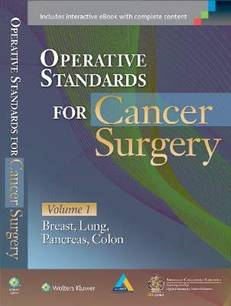
The textbook has been the main focus of the Cancer Care Standards Development Committee for the last three years, led by Kelly Hunt, MD, FACS, professor, department of surgical oncology, division of surgery, and chief, breast surgical oncology section, department of surgical oncology, University of Texas MD Anderson Cancer Center, Houston, and Program Director of the Alliance/ACS Clinical Research Program.
The manual provides concrete recommendations based on evidence of the proper conduct of operations and detailed information on the oncologic principles, avoidable pitfalls, and the quality of the evidence supporting the recommendations. Randomized trials have not addressed all components of operations within each disease site, Operative Standards draws on the experience and consensus opinion of the experts writing the individual chapters. Identifying the lack of evidence on certain topics has been an unintended consequence of writing this manual, and has galvanized the authors to establish standards. More than 120 surgeons contributed to the publication of this first edition, making it the best resource available on the proper conduct of an operation for cancer of the breast, colon, lung, and pancreas.
The authors describe several common but important operative procedures within each disease site. The manual focuses on oncologic fundamentals and critical elements in the conduct of the operation and intraoperative decision-making but it is not a surgical atlas. In addition, the participants identify controversies and pose several key questions that are analyzed with a systematic review of current literature. These questions might serve as the basis for a new clinical trial within each disease site. A leadership committee consisting of a section editor, a methodologist, and an art/illustrations editor reviewed each disease group. Surgeons with expertise in each disease site were recruited from national societies and cooperative groups to ensure broad representation. The authors also invited international experts to participate in each section. Much of the initial work was accomplished through conference calls followed by collaborative writing over a period of one-and-a-half years. This work culminated with a textbook, which will also be available online.
Anticipating continued evolution in surgical oncology, these initial four disease site sections will be updated every two to three years. Planning is already under way for the second edition of this manual and will include procedures in melanoma, gastric cancer, esophageal cancer, rectal cancer, and thyroid cancer.
Operative Standards for Cancer Surgery is available to order at http://www.lww.com/acs. Purchasers of the print edition will also receive the bundled interactive eBook edition, offering tablet, smartphone, or online access.
The American College of Surgeons (ACS) and the Alliance for Clinical Trials in Oncology (Alliance) present the first comprehensive, evidence-based examination of cancer surgery techniques that are critical to achieve optimal outcomes in a cancer operation. Operative Standards for Cancer Surgery, published in June by Wolters Kluwer, is a unique manual that focuses on best practices for breast, colon, lung, and pancreatic surgery, describing the surgical procedures that occur between skin incision and skin closure that directly affect cancer outcomes. The effort to develop a manual that details the critical elements of cancer surgery was first envisioned by Heidi Nelson, MD, FACS, Fred C. Andersen Professor and vice-chair, research, department of surgery, Mayo Clinic, Rochester, MN.
The textbook has been the main focus of the Cancer Care Standards Development Committee for the last three years, led by Kelly Hunt, MD, FACS, professor, department of surgical oncology, division of surgery, and chief, breast surgical oncology section, department of surgical oncology, University of Texas MD Anderson Cancer Center, Houston, and Program Director of the Alliance/ACS Clinical Research Program.
The manual provides concrete recommendations based on evidence of the proper conduct of operations and detailed information on the oncologic principles, avoidable pitfalls, and the quality of the evidence supporting the recommendations. Randomized trials have not addressed all components of operations within each disease site, Operative Standards draws on the experience and consensus opinion of the experts writing the individual chapters. Identifying the lack of evidence on certain topics has been an unintended consequence of writing this manual, and has galvanized the authors to establish standards. More than 120 surgeons contributed to the publication of this first edition, making it the best resource available on the proper conduct of an operation for cancer of the breast, colon, lung, and pancreas.
The authors describe several common but important operative procedures within each disease site. The manual focuses on oncologic fundamentals and critical elements in the conduct of the operation and intraoperative decision-making but it is not a surgical atlas. In addition, the participants identify controversies and pose several key questions that are analyzed with a systematic review of current literature. These questions might serve as the basis for a new clinical trial within each disease site. A leadership committee consisting of a section editor, a methodologist, and an art/illustrations editor reviewed each disease group. Surgeons with expertise in each disease site were recruited from national societies and cooperative groups to ensure broad representation. The authors also invited international experts to participate in each section. Much of the initial work was accomplished through conference calls followed by collaborative writing over a period of one-and-a-half years. This work culminated with a textbook, which will also be available online.
Anticipating continued evolution in surgical oncology, these initial four disease site sections will be updated every two to three years. Planning is already under way for the second edition of this manual and will include procedures in melanoma, gastric cancer, esophageal cancer, rectal cancer, and thyroid cancer.
Operative Standards for Cancer Surgery is available to order at http://www.lww.com/acs. Purchasers of the print edition will also receive the bundled interactive eBook edition, offering tablet, smartphone, or online access.
The American College of Surgeons (ACS) and the Alliance for Clinical Trials in Oncology (Alliance) present the first comprehensive, evidence-based examination of cancer surgery techniques that are critical to achieve optimal outcomes in a cancer operation. Operative Standards for Cancer Surgery, published in June by Wolters Kluwer, is a unique manual that focuses on best practices for breast, colon, lung, and pancreatic surgery, describing the surgical procedures that occur between skin incision and skin closure that directly affect cancer outcomes. The effort to develop a manual that details the critical elements of cancer surgery was first envisioned by Heidi Nelson, MD, FACS, Fred C. Andersen Professor and vice-chair, research, department of surgery, Mayo Clinic, Rochester, MN.
The textbook has been the main focus of the Cancer Care Standards Development Committee for the last three years, led by Kelly Hunt, MD, FACS, professor, department of surgical oncology, division of surgery, and chief, breast surgical oncology section, department of surgical oncology, University of Texas MD Anderson Cancer Center, Houston, and Program Director of the Alliance/ACS Clinical Research Program.
The manual provides concrete recommendations based on evidence of the proper conduct of operations and detailed information on the oncologic principles, avoidable pitfalls, and the quality of the evidence supporting the recommendations. Randomized trials have not addressed all components of operations within each disease site, Operative Standards draws on the experience and consensus opinion of the experts writing the individual chapters. Identifying the lack of evidence on certain topics has been an unintended consequence of writing this manual, and has galvanized the authors to establish standards. More than 120 surgeons contributed to the publication of this first edition, making it the best resource available on the proper conduct of an operation for cancer of the breast, colon, lung, and pancreas.
The authors describe several common but important operative procedures within each disease site. The manual focuses on oncologic fundamentals and critical elements in the conduct of the operation and intraoperative decision-making but it is not a surgical atlas. In addition, the participants identify controversies and pose several key questions that are analyzed with a systematic review of current literature. These questions might serve as the basis for a new clinical trial within each disease site. A leadership committee consisting of a section editor, a methodologist, and an art/illustrations editor reviewed each disease group. Surgeons with expertise in each disease site were recruited from national societies and cooperative groups to ensure broad representation. The authors also invited international experts to participate in each section. Much of the initial work was accomplished through conference calls followed by collaborative writing over a period of one-and-a-half years. This work culminated with a textbook, which will also be available online.
Anticipating continued evolution in surgical oncology, these initial four disease site sections will be updated every two to three years. Planning is already under way for the second edition of this manual and will include procedures in melanoma, gastric cancer, esophageal cancer, rectal cancer, and thyroid cancer.
Operative Standards for Cancer Surgery is available to order at http://www.lww.com/acs. Purchasers of the print edition will also receive the bundled interactive eBook edition, offering tablet, smartphone, or online access.
New Cancer Surgery Manual From ACS and Alliance for Clinical Trials in Oncology
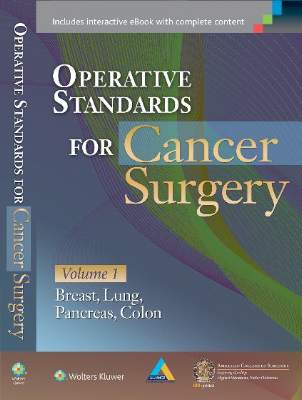
The American College of Surgeons (ACS) and the Alliance for Clinical Trials in Oncology (Alliance) present the first comprehensive, evidence-based examination of cancer surgery techniques that are critical to achieve optimal outcomes in a cancer operation. Operative Standards for Cancer Surgery, published in June by Wolters Kluwer, is a unique manual that focuses on best practices for breast, colon, lung, and pancreatic surgery, describing the surgical procedures that occur between skin incision and skin closure that directly affect cancer outcomes. The effort to develop a manual that details the critical elements of cancer surgery was first envisioned by Heidi Nelson, MD, FACS, Fred C. Andersen Professor and vice-chair, research, department of surgery, Mayo Clinic, Rochester, MN.
The textbook has been the main focus of the Cancer Care Standards Development Committee for the past three years, led by Kelly Hunt, MD, FACS, professor, department of surgical oncology, division of surgery, and chief, breast surgical oncology section, department of surgical oncology, University of Texas MD Anderson Cancer Center, Houston, and Program Director of the Alliance/ACS Clinical Research Program..
The manual provides concrete recommendations based on evidence of the proper conduct of operations and detailed information on the oncologic principles, avoidable pitfalls, and the quality of the evidence supporting the recommendations. Randomized trials have not addressed all components of operations within each disease site, Operative Standards draws on the experience and consensus opinion of the experts writing the individual chapters. Identifying the lack of evidence on certain topics has been an unintended consequence of writing this manual, and has galvanized the authors to establish standards. More than 120 surgeons contributed to the publication of this first edition, making it the best resource available on the proper conduct of an operation for cancer of the breast, colon, lung, and pancreas.
The manual authors describe several common but important operative procedures within each disease site. The manual focuses on oncologic fundamentals and critical elements in the conduct of the operation and intraoperative decision-making and is not a surgical atlas. In addition, the participants identify controversies and pose several key questions that are analyzed with a systematic review of current literature. These questions might serve as the basis for a new clinical trial within each disease site. A leadership committee consisting of a section editor, a methodologist, and an art/illustrations editor reviewed each disease group. Surgeons with expertise in each disease site were recruited from national societies and cooperative groups to ensure broad representation. The authors also invited international experts to participate in each section. Much of the initial work was accomplished through conference calls followed by collaborative writing over a period of one-and-a-half years. This work culminated with a textbook, which will also be available online.
Anticipating continued evolution in surgical oncology, these initial four disease site sections will be updated every two to three years. Planning is already underway for the second edition of this manual and will include procedures in melanoma, gastric cancer, esophageal cancer, rectal cancer, and thyroid cancer.
Operative Standards for Cancer Surgery is available to order at http://www.lww.com/acs. Purchasers of the print edition will also receive the bundled interactive eBook edition, offering tablet, smartphone, or online access.
The American College of Surgeons (ACS) and the Alliance for Clinical Trials in Oncology (Alliance) present the first comprehensive, evidence-based examination of cancer surgery techniques that are critical to achieve optimal outcomes in a cancer operation. Operative Standards for Cancer Surgery, published in June by Wolters Kluwer, is a unique manual that focuses on best practices for breast, colon, lung, and pancreatic surgery, describing the surgical procedures that occur between skin incision and skin closure that directly affect cancer outcomes. The effort to develop a manual that details the critical elements of cancer surgery was first envisioned by Heidi Nelson, MD, FACS, Fred C. Andersen Professor and vice-chair, research, department of surgery, Mayo Clinic, Rochester, MN.
The textbook has been the main focus of the Cancer Care Standards Development Committee for the past three years, led by Kelly Hunt, MD, FACS, professor, department of surgical oncology, division of surgery, and chief, breast surgical oncology section, department of surgical oncology, University of Texas MD Anderson Cancer Center, Houston, and Program Director of the Alliance/ACS Clinical Research Program..
The manual provides concrete recommendations based on evidence of the proper conduct of operations and detailed information on the oncologic principles, avoidable pitfalls, and the quality of the evidence supporting the recommendations. Randomized trials have not addressed all components of operations within each disease site, Operative Standards draws on the experience and consensus opinion of the experts writing the individual chapters. Identifying the lack of evidence on certain topics has been an unintended consequence of writing this manual, and has galvanized the authors to establish standards. More than 120 surgeons contributed to the publication of this first edition, making it the best resource available on the proper conduct of an operation for cancer of the breast, colon, lung, and pancreas.
The manual authors describe several common but important operative procedures within each disease site. The manual focuses on oncologic fundamentals and critical elements in the conduct of the operation and intraoperative decision-making and is not a surgical atlas. In addition, the participants identify controversies and pose several key questions that are analyzed with a systematic review of current literature. These questions might serve as the basis for a new clinical trial within each disease site. A leadership committee consisting of a section editor, a methodologist, and an art/illustrations editor reviewed each disease group. Surgeons with expertise in each disease site were recruited from national societies and cooperative groups to ensure broad representation. The authors also invited international experts to participate in each section. Much of the initial work was accomplished through conference calls followed by collaborative writing over a period of one-and-a-half years. This work culminated with a textbook, which will also be available online.
Anticipating continued evolution in surgical oncology, these initial four disease site sections will be updated every two to three years. Planning is already underway for the second edition of this manual and will include procedures in melanoma, gastric cancer, esophageal cancer, rectal cancer, and thyroid cancer.
Operative Standards for Cancer Surgery is available to order at http://www.lww.com/acs. Purchasers of the print edition will also receive the bundled interactive eBook edition, offering tablet, smartphone, or online access.
The American College of Surgeons (ACS) and the Alliance for Clinical Trials in Oncology (Alliance) present the first comprehensive, evidence-based examination of cancer surgery techniques that are critical to achieve optimal outcomes in a cancer operation. Operative Standards for Cancer Surgery, published in June by Wolters Kluwer, is a unique manual that focuses on best practices for breast, colon, lung, and pancreatic surgery, describing the surgical procedures that occur between skin incision and skin closure that directly affect cancer outcomes. The effort to develop a manual that details the critical elements of cancer surgery was first envisioned by Heidi Nelson, MD, FACS, Fred C. Andersen Professor and vice-chair, research, department of surgery, Mayo Clinic, Rochester, MN.
The textbook has been the main focus of the Cancer Care Standards Development Committee for the past three years, led by Kelly Hunt, MD, FACS, professor, department of surgical oncology, division of surgery, and chief, breast surgical oncology section, department of surgical oncology, University of Texas MD Anderson Cancer Center, Houston, and Program Director of the Alliance/ACS Clinical Research Program..
The manual provides concrete recommendations based on evidence of the proper conduct of operations and detailed information on the oncologic principles, avoidable pitfalls, and the quality of the evidence supporting the recommendations. Randomized trials have not addressed all components of operations within each disease site, Operative Standards draws on the experience and consensus opinion of the experts writing the individual chapters. Identifying the lack of evidence on certain topics has been an unintended consequence of writing this manual, and has galvanized the authors to establish standards. More than 120 surgeons contributed to the publication of this first edition, making it the best resource available on the proper conduct of an operation for cancer of the breast, colon, lung, and pancreas.
The manual authors describe several common but important operative procedures within each disease site. The manual focuses on oncologic fundamentals and critical elements in the conduct of the operation and intraoperative decision-making and is not a surgical atlas. In addition, the participants identify controversies and pose several key questions that are analyzed with a systematic review of current literature. These questions might serve as the basis for a new clinical trial within each disease site. A leadership committee consisting of a section editor, a methodologist, and an art/illustrations editor reviewed each disease group. Surgeons with expertise in each disease site were recruited from national societies and cooperative groups to ensure broad representation. The authors also invited international experts to participate in each section. Much of the initial work was accomplished through conference calls followed by collaborative writing over a period of one-and-a-half years. This work culminated with a textbook, which will also be available online.
Anticipating continued evolution in surgical oncology, these initial four disease site sections will be updated every two to three years. Planning is already underway for the second edition of this manual and will include procedures in melanoma, gastric cancer, esophageal cancer, rectal cancer, and thyroid cancer.
Operative Standards for Cancer Surgery is available to order at http://www.lww.com/acs. Purchasers of the print edition will also receive the bundled interactive eBook edition, offering tablet, smartphone, or online access.
Hartford Consensus III focuses on first responders
The Joint Committee to Create a National Policy to Enhance Survivability from Intentional Mass-Casualty and Active Shooter Events, founded by the American College of Surgeons (ACS), held its third Hartford Consensus meeting April 14, 2015, in Hartford, CT. Chaired by ACS Regent Lenworth M. Jacobs, Jr., MD, MPH, FACS, professor of surgery; director, Trauma Institute; and vice-president of academic affairs, Hartford Hospital, the meeting focused on implementation of strategies for effective hemorrhage control.
The full Hartford Consensus III report will be published in the July issue of the Bulletin. Briefly, however, the Hartford Consensus III centers on strategies for preparing individuals at the scene of a mass-casualty event to serve as immediate responders using the group’s THREAT system. THREAT involves the following:
• Threat suppression
• Hemorrhage control
• Rapid Extrication to safety
• Assessment by medical providers
• Transport to definitive care
The Hartford Consensus calls for a seamless, integrated response from the following groups:
• Immediate responders: Individuals present at the incident
• Professional first responders: Law enforcement, emergency medical service personnel, firefighters, and rescue workers
• Trauma professionals: Hospitalists; emergency department physicians, nurses, and technicians; and trauma surgeons
Empowering immediate responders
An emphasis of the Hartford Consensus III is on empowering the public to provide lifesaving, first-line care. The Hartford Consensus III also calls for educating individuals and communities about the use of effective external hemorrhage control techniques and for ensuring access to bleeding control bags in public places in the same way that automatic external defibrillators are now accessible to the public. For example, the document calls for extending Good Samaritan protections to individuals who use tourniquets and lifesaving devices to control the bleeding of victims at mass-casualty events.
A number of ACS Fellows in addition to Dr. Jacobs participated in the Hartford Consensus III.
ACS Fellow participants in Hartford Consensus III
.5 Richard Carmona, MD, MPH, FACS, 17th U.S. Surgeon General
Alasdair K. T. Conn, MD, FACS, FRCSC, chief emeritus, department of emergency medicine, Massachusetts General Hospital, Boston
Alexander Eastman, MD, MPH, FACS, Major Cities Police Chiefs Association; chief of trauma, Parkland Memorial Hospital, University of Texas Southwestern Medical Center, Houston
Lenworth M. Jacobs, Jr., MD, MPH, FACS, professor of surgery; director, Trauma Institute; and vice-president of academic affairs, Hartford Hospital
John Holcomb, MD, FACS, chief, division of acute care surgery, University of Texas Health Science Center at Houston
Norman McSwain, MD, FACS, medical director, prehospital trauma life support, Tulane University, New Orleans, LA
Peter Rhee, MD, MPH, FACS, professor of surgery, department of surgery, University of Arizona, Tucson
Ronald Stewart, MD, FACS, Chair, ACS Committee on Trauma; chair, department of surgery, University of Texas Health Science Center at San Antonio
ACS President Andrew L. Warshaw, MD, FACS, FRCSEd(Hon), surgeon-in-chief emeritus, Massachusetts General Hospital, and the W. Gerald Austen Distinguished Professor of Surgery, Harvard Medical School, Boston
Leonard Weireter, MD, FACS, Vice-Chair, ACS Committee on Trauma; Arthur and Marie Kirk Family Professor of Surgery, Eastern Virginia Medical School, Norfolk
Jonathan Woodson, MD, FACS, Assistant Secretary of Defense for Health Affairs, U.S. Department of Defense, Washington, DC
The Joint Committee to Create a National Policy to Enhance Survivability from Intentional Mass-Casualty and Active Shooter Events, founded by the American College of Surgeons (ACS), held its third Hartford Consensus meeting April 14, 2015, in Hartford, CT. Chaired by ACS Regent Lenworth M. Jacobs, Jr., MD, MPH, FACS, professor of surgery; director, Trauma Institute; and vice-president of academic affairs, Hartford Hospital, the meeting focused on implementation of strategies for effective hemorrhage control.
The full Hartford Consensus III report will be published in the July issue of the Bulletin. Briefly, however, the Hartford Consensus III centers on strategies for preparing individuals at the scene of a mass-casualty event to serve as immediate responders using the group’s THREAT system. THREAT involves the following:
• Threat suppression
• Hemorrhage control
• Rapid Extrication to safety
• Assessment by medical providers
• Transport to definitive care
The Hartford Consensus calls for a seamless, integrated response from the following groups:
• Immediate responders: Individuals present at the incident
• Professional first responders: Law enforcement, emergency medical service personnel, firefighters, and rescue workers
• Trauma professionals: Hospitalists; emergency department physicians, nurses, and technicians; and trauma surgeons
Empowering immediate responders
An emphasis of the Hartford Consensus III is on empowering the public to provide lifesaving, first-line care. The Hartford Consensus III also calls for educating individuals and communities about the use of effective external hemorrhage control techniques and for ensuring access to bleeding control bags in public places in the same way that automatic external defibrillators are now accessible to the public. For example, the document calls for extending Good Samaritan protections to individuals who use tourniquets and lifesaving devices to control the bleeding of victims at mass-casualty events.
A number of ACS Fellows in addition to Dr. Jacobs participated in the Hartford Consensus III.
ACS Fellow participants in Hartford Consensus III
.5 Richard Carmona, MD, MPH, FACS, 17th U.S. Surgeon General
Alasdair K. T. Conn, MD, FACS, FRCSC, chief emeritus, department of emergency medicine, Massachusetts General Hospital, Boston
Alexander Eastman, MD, MPH, FACS, Major Cities Police Chiefs Association; chief of trauma, Parkland Memorial Hospital, University of Texas Southwestern Medical Center, Houston
Lenworth M. Jacobs, Jr., MD, MPH, FACS, professor of surgery; director, Trauma Institute; and vice-president of academic affairs, Hartford Hospital
John Holcomb, MD, FACS, chief, division of acute care surgery, University of Texas Health Science Center at Houston
Norman McSwain, MD, FACS, medical director, prehospital trauma life support, Tulane University, New Orleans, LA
Peter Rhee, MD, MPH, FACS, professor of surgery, department of surgery, University of Arizona, Tucson
Ronald Stewart, MD, FACS, Chair, ACS Committee on Trauma; chair, department of surgery, University of Texas Health Science Center at San Antonio
ACS President Andrew L. Warshaw, MD, FACS, FRCSEd(Hon), surgeon-in-chief emeritus, Massachusetts General Hospital, and the W. Gerald Austen Distinguished Professor of Surgery, Harvard Medical School, Boston
Leonard Weireter, MD, FACS, Vice-Chair, ACS Committee on Trauma; Arthur and Marie Kirk Family Professor of Surgery, Eastern Virginia Medical School, Norfolk
Jonathan Woodson, MD, FACS, Assistant Secretary of Defense for Health Affairs, U.S. Department of Defense, Washington, DC
The Joint Committee to Create a National Policy to Enhance Survivability from Intentional Mass-Casualty and Active Shooter Events, founded by the American College of Surgeons (ACS), held its third Hartford Consensus meeting April 14, 2015, in Hartford, CT. Chaired by ACS Regent Lenworth M. Jacobs, Jr., MD, MPH, FACS, professor of surgery; director, Trauma Institute; and vice-president of academic affairs, Hartford Hospital, the meeting focused on implementation of strategies for effective hemorrhage control.
The full Hartford Consensus III report will be published in the July issue of the Bulletin. Briefly, however, the Hartford Consensus III centers on strategies for preparing individuals at the scene of a mass-casualty event to serve as immediate responders using the group’s THREAT system. THREAT involves the following:
• Threat suppression
• Hemorrhage control
• Rapid Extrication to safety
• Assessment by medical providers
• Transport to definitive care
The Hartford Consensus calls for a seamless, integrated response from the following groups:
• Immediate responders: Individuals present at the incident
• Professional first responders: Law enforcement, emergency medical service personnel, firefighters, and rescue workers
• Trauma professionals: Hospitalists; emergency department physicians, nurses, and technicians; and trauma surgeons
Empowering immediate responders
An emphasis of the Hartford Consensus III is on empowering the public to provide lifesaving, first-line care. The Hartford Consensus III also calls for educating individuals and communities about the use of effective external hemorrhage control techniques and for ensuring access to bleeding control bags in public places in the same way that automatic external defibrillators are now accessible to the public. For example, the document calls for extending Good Samaritan protections to individuals who use tourniquets and lifesaving devices to control the bleeding of victims at mass-casualty events.
A number of ACS Fellows in addition to Dr. Jacobs participated in the Hartford Consensus III.
ACS Fellow participants in Hartford Consensus III
.5 Richard Carmona, MD, MPH, FACS, 17th U.S. Surgeon General
Alasdair K. T. Conn, MD, FACS, FRCSC, chief emeritus, department of emergency medicine, Massachusetts General Hospital, Boston
Alexander Eastman, MD, MPH, FACS, Major Cities Police Chiefs Association; chief of trauma, Parkland Memorial Hospital, University of Texas Southwestern Medical Center, Houston
Lenworth M. Jacobs, Jr., MD, MPH, FACS, professor of surgery; director, Trauma Institute; and vice-president of academic affairs, Hartford Hospital
John Holcomb, MD, FACS, chief, division of acute care surgery, University of Texas Health Science Center at Houston
Norman McSwain, MD, FACS, medical director, prehospital trauma life support, Tulane University, New Orleans, LA
Peter Rhee, MD, MPH, FACS, professor of surgery, department of surgery, University of Arizona, Tucson
Ronald Stewart, MD, FACS, Chair, ACS Committee on Trauma; chair, department of surgery, University of Texas Health Science Center at San Antonio
ACS President Andrew L. Warshaw, MD, FACS, FRCSEd(Hon), surgeon-in-chief emeritus, Massachusetts General Hospital, and the W. Gerald Austen Distinguished Professor of Surgery, Harvard Medical School, Boston
Leonard Weireter, MD, FACS, Vice-Chair, ACS Committee on Trauma; Arthur and Marie Kirk Family Professor of Surgery, Eastern Virginia Medical School, Norfolk
Jonathan Woodson, MD, FACS, Assistant Secretary of Defense for Health Affairs, U.S. Department of Defense, Washington, DC