User login
Monoclonal antibody could improve treatment of ALL

Credit: Linda Bartlett
Preclinical research suggests the B-cell activating receptor (BAFF-R) may be a promising therapeutic target for treatment-resistant leukemia.
A monoclonal antibody (mAb) that targets BAFF-R overcame resistance to nilotinib and enhanced the efficacy of both nilotinib and vincristine in vitro.
The mAb, called B-1239, also demonstrated antileukemic effects in mouse models, when given alone. But it did not appear to improve upon the effects of nilotinib when given in combination.
Nora Heisterkamp, PhD, of Children’s Hospital Los Angeles in California, and her colleagues reported these findings in Molecular Cancer Therapeutics.
In a previous study, the researchers had shown that BAFF-R is expressed on pre-B ALL cells but not on their normal counterparts.
“We’ve now demonstrated that BAFF-R is a strong potential therapeutic target for treating chemotherapy-resistant leukemia cells, without damaging healthy cells,” Dr Heisterkamp said.
She and her colleagues began this research by generating pre-B ALL cells from the bone marrow of wild-type mice and BAFF-R-null mice with a retroviral vector carrying the BCR/ABL oncogene. They found that wild-type pre-B-ALL cells expressed high levels of BAFF-R.
The team then treated both wild-type and BAFF-R-deficient leukemic cells with nilotinib. The wild-type cells developed resistance to nilotinib in 9 to 10 days, but the BAFF-R-deficient cells were eradicated by treatment.
The researchers next tested the effects of B-1239, a human codon-optimized anti-BAFF-R mAb. B-1239 bound to BAFF-R on both Ph-positive and Ph-negative ALL cells in vitro, and the mAb inhibited BAFF-R in a dose-dependent manner.
In pre-B-ALL cells, B-1239 alone had little effect on cell viability or proliferation. However, when combined with vincristine or nilotinib, B-1239 reduced cell count and viability more than either agent alone.
The researchers also found that B-1239 stimulated natural killer cell-mediated cytotoxicity in patient-derived ALL cells. And the mAb stimulated phagocytosis by macrophages.
Finally, Dr Heisterkamp and her colleagues tested B-1239 in mice transplanted with TXL2 cells. Mice received human IgG, B-1239 alone, nilotinib alone, or nilotinib and B-1239.
At 12 days after the last treatment, leukemia cell numbers in the circulation of control mice and B-1239-treated mice were comparable.
However, B-1239-treated mice showed significant inhibition of ALL cell growth in the bone marrow and spleen, when compared to control mice. mAb-treated mice also had significantly lower spleen weights than controls.
Nilotinib alone also significantly reduced the ALL cell burden in the peripheral blood, spleen, and bone marrow, when compared to controls. But there was no significant difference in these measures between mice that received nilotinib alone or nilotinib plus B-1239.
Nevertheless, Dr Heisterkamp and her colleagues said they will continue to evaluate the use of B-1239 for the treatment of ALL. 
Credit: Linda Bartlett
Preclinical research suggests the B-cell activating receptor (BAFF-R) may be a promising therapeutic target for treatment-resistant leukemia.
A monoclonal antibody (mAb) that targets BAFF-R overcame resistance to nilotinib and enhanced the efficacy of both nilotinib and vincristine in vitro.
The mAb, called B-1239, also demonstrated antileukemic effects in mouse models, when given alone. But it did not appear to improve upon the effects of nilotinib when given in combination.
Nora Heisterkamp, PhD, of Children’s Hospital Los Angeles in California, and her colleagues reported these findings in Molecular Cancer Therapeutics.
In a previous study, the researchers had shown that BAFF-R is expressed on pre-B ALL cells but not on their normal counterparts.
“We’ve now demonstrated that BAFF-R is a strong potential therapeutic target for treating chemotherapy-resistant leukemia cells, without damaging healthy cells,” Dr Heisterkamp said.
She and her colleagues began this research by generating pre-B ALL cells from the bone marrow of wild-type mice and BAFF-R-null mice with a retroviral vector carrying the BCR/ABL oncogene. They found that wild-type pre-B-ALL cells expressed high levels of BAFF-R.
The team then treated both wild-type and BAFF-R-deficient leukemic cells with nilotinib. The wild-type cells developed resistance to nilotinib in 9 to 10 days, but the BAFF-R-deficient cells were eradicated by treatment.
The researchers next tested the effects of B-1239, a human codon-optimized anti-BAFF-R mAb. B-1239 bound to BAFF-R on both Ph-positive and Ph-negative ALL cells in vitro, and the mAb inhibited BAFF-R in a dose-dependent manner.
In pre-B-ALL cells, B-1239 alone had little effect on cell viability or proliferation. However, when combined with vincristine or nilotinib, B-1239 reduced cell count and viability more than either agent alone.
The researchers also found that B-1239 stimulated natural killer cell-mediated cytotoxicity in patient-derived ALL cells. And the mAb stimulated phagocytosis by macrophages.
Finally, Dr Heisterkamp and her colleagues tested B-1239 in mice transplanted with TXL2 cells. Mice received human IgG, B-1239 alone, nilotinib alone, or nilotinib and B-1239.
At 12 days after the last treatment, leukemia cell numbers in the circulation of control mice and B-1239-treated mice were comparable.
However, B-1239-treated mice showed significant inhibition of ALL cell growth in the bone marrow and spleen, when compared to control mice. mAb-treated mice also had significantly lower spleen weights than controls.
Nilotinib alone also significantly reduced the ALL cell burden in the peripheral blood, spleen, and bone marrow, when compared to controls. But there was no significant difference in these measures between mice that received nilotinib alone or nilotinib plus B-1239.
Nevertheless, Dr Heisterkamp and her colleagues said they will continue to evaluate the use of B-1239 for the treatment of ALL.
Credit: Linda Bartlett
Preclinical research suggests the B-cell activating receptor (BAFF-R) may be a promising therapeutic target for treatment-resistant leukemia.
A monoclonal antibody (mAb) that targets BAFF-R overcame resistance to nilotinib and enhanced the efficacy of both nilotinib and vincristine in vitro.
The mAb, called B-1239, also demonstrated antileukemic effects in mouse models, when given alone. But it did not appear to improve upon the effects of nilotinib when given in combination.
Nora Heisterkamp, PhD, of Children’s Hospital Los Angeles in California, and her colleagues reported these findings in Molecular Cancer Therapeutics.
In a previous study, the researchers had shown that BAFF-R is expressed on pre-B ALL cells but not on their normal counterparts.
“We’ve now demonstrated that BAFF-R is a strong potential therapeutic target for treating chemotherapy-resistant leukemia cells, without damaging healthy cells,” Dr Heisterkamp said.
She and her colleagues began this research by generating pre-B ALL cells from the bone marrow of wild-type mice and BAFF-R-null mice with a retroviral vector carrying the BCR/ABL oncogene. They found that wild-type pre-B-ALL cells expressed high levels of BAFF-R.
The team then treated both wild-type and BAFF-R-deficient leukemic cells with nilotinib. The wild-type cells developed resistance to nilotinib in 9 to 10 days, but the BAFF-R-deficient cells were eradicated by treatment.
The researchers next tested the effects of B-1239, a human codon-optimized anti-BAFF-R mAb. B-1239 bound to BAFF-R on both Ph-positive and Ph-negative ALL cells in vitro, and the mAb inhibited BAFF-R in a dose-dependent manner.
In pre-B-ALL cells, B-1239 alone had little effect on cell viability or proliferation. However, when combined with vincristine or nilotinib, B-1239 reduced cell count and viability more than either agent alone.
The researchers also found that B-1239 stimulated natural killer cell-mediated cytotoxicity in patient-derived ALL cells. And the mAb stimulated phagocytosis by macrophages.
Finally, Dr Heisterkamp and her colleagues tested B-1239 in mice transplanted with TXL2 cells. Mice received human IgG, B-1239 alone, nilotinib alone, or nilotinib and B-1239.
At 12 days after the last treatment, leukemia cell numbers in the circulation of control mice and B-1239-treated mice were comparable.
However, B-1239-treated mice showed significant inhibition of ALL cell growth in the bone marrow and spleen, when compared to control mice. mAb-treated mice also had significantly lower spleen weights than controls.
Nilotinib alone also significantly reduced the ALL cell burden in the peripheral blood, spleen, and bone marrow, when compared to controls. But there was no significant difference in these measures between mice that received nilotinib alone or nilotinib plus B-1239.
Nevertheless, Dr Heisterkamp and her colleagues said they will continue to evaluate the use of B-1239 for the treatment of ALL.
Team says antioxidant has no effect on cancer risk, overall health

Contrary to previous findings, a new study suggests the antioxidant resveratrol is not associated with improvements in health, including reducing the risk of cancer.
Researchers found that Italians who consumed a diet rich in resveratrol—a compound in red wine, dark chocolate, and berries—lived no longer than and were just as likely to develop cardiovascular disease or cancer as Italians who consumed smaller amounts of the antioxidant.
However, the investigators said unknown compounds in these foods and drinks may still confer health benefits.
“The story of resveratrol turns out to be another case where you get a lot of hype about health benefits that doesn’t stand the test of time,” said study author Richard D. Semba, MD, MPH, of the Johns Hopkins University School of Medicine in Baltimore, Maryland.
“The thinking was that certain foods are good for you because they contain resveratrol. We didn’t find that at all.”
Dr Semba and his colleagues recounted their findings in JAMA Internal Medicine.
Their study included 783 subjects, all of whom were older than 65 years of age. Participants were part of the Aging in the Chianti Region study, conducted from 1998 to 2009 in 2 Italian villages where supplement use is uncommon and the consumption of red wine is the norm. The subjects were not on any prescribed diet.
The researchers wanted to determine if diet-related resveratrol levels were associated with inflammation, cancer, cardiovascular disease, and death. So they collected urine samples from study participants and used advanced mass spectrometry to analyze the samples for metabolites of resveratrol.
After accounting for such factors as age and gender, the investigators found that subjects with the highest concentration of resveratrol metabolites were no less likely to have died of any cause than subjects with the lowest levels of resveratrol in their urine.
Likewise, the concentration of resveratrol was not associated with inflammatory markers (serum CRP, IL-6, IL-1β,TNF), cardiovascular disease, or cancer rates.
During 9 years of follow-up, 268 participants (34.3%) died. From the lowest to the highest quartile of baseline total urinary resveratrol metabolites, the proportion of subjects who died from all causes was 34.4%, 31.6%, 33.5%, and 37.4%, respectively (P=0.67).
Of the 734 participants who were free of cancer at enrollment, 34 (4.6%) developed cancer during follow-up. The proportions of subjects with incident cancer from the lowest to the highest quartiles of resveratrol were 4.4%, 4.9%, 5.0%, and 4.3%, respectively (P=0.98).
Of the 639 subjects who were free of cardiovascular disease at enrollment, 174 (27.2%) developed cardiovascular disease during follow-up. The proportions of participants with incident cardiovascular disease from the lowest to the highest quartiles of resveratrol were 22.3%, 29.6%, 28.4%, and 28.0%, respectively (P=0.44).
Despite these negative results, Dr Semba noted that studies have shown the consumption of red wine, dark chocolate, and berries does reduce inflammation in some people and still appears to protect the heart.
“It’s just that the benefits, if they are there, must come from other polyphenols or substances found in those foodstuffs,” he said. “These are complex foods, and all we really know from our study is that the benefits are probably not due to resveratrol.”
Contrary to previous findings, a new study suggests the antioxidant resveratrol is not associated with improvements in health, including reducing the risk of cancer.
Researchers found that Italians who consumed a diet rich in resveratrol—a compound in red wine, dark chocolate, and berries—lived no longer than and were just as likely to develop cardiovascular disease or cancer as Italians who consumed smaller amounts of the antioxidant.
However, the investigators said unknown compounds in these foods and drinks may still confer health benefits.
“The story of resveratrol turns out to be another case where you get a lot of hype about health benefits that doesn’t stand the test of time,” said study author Richard D. Semba, MD, MPH, of the Johns Hopkins University School of Medicine in Baltimore, Maryland.
“The thinking was that certain foods are good for you because they contain resveratrol. We didn’t find that at all.”
Dr Semba and his colleagues recounted their findings in JAMA Internal Medicine.
Their study included 783 subjects, all of whom were older than 65 years of age. Participants were part of the Aging in the Chianti Region study, conducted from 1998 to 2009 in 2 Italian villages where supplement use is uncommon and the consumption of red wine is the norm. The subjects were not on any prescribed diet.
The researchers wanted to determine if diet-related resveratrol levels were associated with inflammation, cancer, cardiovascular disease, and death. So they collected urine samples from study participants and used advanced mass spectrometry to analyze the samples for metabolites of resveratrol.
After accounting for such factors as age and gender, the investigators found that subjects with the highest concentration of resveratrol metabolites were no less likely to have died of any cause than subjects with the lowest levels of resveratrol in their urine.
Likewise, the concentration of resveratrol was not associated with inflammatory markers (serum CRP, IL-6, IL-1β,TNF), cardiovascular disease, or cancer rates.
During 9 years of follow-up, 268 participants (34.3%) died. From the lowest to the highest quartile of baseline total urinary resveratrol metabolites, the proportion of subjects who died from all causes was 34.4%, 31.6%, 33.5%, and 37.4%, respectively (P=0.67).
Of the 734 participants who were free of cancer at enrollment, 34 (4.6%) developed cancer during follow-up. The proportions of subjects with incident cancer from the lowest to the highest quartiles of resveratrol were 4.4%, 4.9%, 5.0%, and 4.3%, respectively (P=0.98).
Of the 639 subjects who were free of cardiovascular disease at enrollment, 174 (27.2%) developed cardiovascular disease during follow-up. The proportions of participants with incident cardiovascular disease from the lowest to the highest quartiles of resveratrol were 22.3%, 29.6%, 28.4%, and 28.0%, respectively (P=0.44).
Despite these negative results, Dr Semba noted that studies have shown the consumption of red wine, dark chocolate, and berries does reduce inflammation in some people and still appears to protect the heart.
“It’s just that the benefits, if they are there, must come from other polyphenols or substances found in those foodstuffs,” he said. “These are complex foods, and all we really know from our study is that the benefits are probably not due to resveratrol.”
Contrary to previous findings, a new study suggests the antioxidant resveratrol is not associated with improvements in health, including reducing the risk of cancer.
Researchers found that Italians who consumed a diet rich in resveratrol—a compound in red wine, dark chocolate, and berries—lived no longer than and were just as likely to develop cardiovascular disease or cancer as Italians who consumed smaller amounts of the antioxidant.
However, the investigators said unknown compounds in these foods and drinks may still confer health benefits.
“The story of resveratrol turns out to be another case where you get a lot of hype about health benefits that doesn’t stand the test of time,” said study author Richard D. Semba, MD, MPH, of the Johns Hopkins University School of Medicine in Baltimore, Maryland.
“The thinking was that certain foods are good for you because they contain resveratrol. We didn’t find that at all.”
Dr Semba and his colleagues recounted their findings in JAMA Internal Medicine.
Their study included 783 subjects, all of whom were older than 65 years of age. Participants were part of the Aging in the Chianti Region study, conducted from 1998 to 2009 in 2 Italian villages where supplement use is uncommon and the consumption of red wine is the norm. The subjects were not on any prescribed diet.
The researchers wanted to determine if diet-related resveratrol levels were associated with inflammation, cancer, cardiovascular disease, and death. So they collected urine samples from study participants and used advanced mass spectrometry to analyze the samples for metabolites of resveratrol.
After accounting for such factors as age and gender, the investigators found that subjects with the highest concentration of resveratrol metabolites were no less likely to have died of any cause than subjects with the lowest levels of resveratrol in their urine.
Likewise, the concentration of resveratrol was not associated with inflammatory markers (serum CRP, IL-6, IL-1β,TNF), cardiovascular disease, or cancer rates.
During 9 years of follow-up, 268 participants (34.3%) died. From the lowest to the highest quartile of baseline total urinary resveratrol metabolites, the proportion of subjects who died from all causes was 34.4%, 31.6%, 33.5%, and 37.4%, respectively (P=0.67).
Of the 734 participants who were free of cancer at enrollment, 34 (4.6%) developed cancer during follow-up. The proportions of subjects with incident cancer from the lowest to the highest quartiles of resveratrol were 4.4%, 4.9%, 5.0%, and 4.3%, respectively (P=0.98).
Of the 639 subjects who were free of cardiovascular disease at enrollment, 174 (27.2%) developed cardiovascular disease during follow-up. The proportions of participants with incident cardiovascular disease from the lowest to the highest quartiles of resveratrol were 22.3%, 29.6%, 28.4%, and 28.0%, respectively (P=0.44).
Despite these negative results, Dr Semba noted that studies have shown the consumption of red wine, dark chocolate, and berries does reduce inflammation in some people and still appears to protect the heart.
“It’s just that the benefits, if they are there, must come from other polyphenols or substances found in those foodstuffs,” he said. “These are complex foods, and all we really know from our study is that the benefits are probably not due to resveratrol.”
90 US healthcare professionals charged with fraud

Credit: NIH
As a result of Medicare Fraud Strike Force operations in 6 US cities, 90 healthcare professionals have been charged with fraud.
These individuals—doctors, nurses, healthcare company owners, and others—are accused of participating in Medicare fraud schemes involving approximately $260 million in false billings.
They have been charged with various crimes, including conspiracy to commit healthcare fraud, violations of the anti-kickback statutes, and money laundering.
According to court documents, the defendants allegedly participated in schemes to submit claims to Medicare for treatments that were medically unnecessary and often never provided.
In many cases, court documents allege that patient recruiters, Medicare beneficiaries, and other co-conspirators were paid cash kickbacks in return for supplying beneficiary information to providers so the providers could then submit fraudulent bills to Medicare for services that were medically unnecessary or never performed.
“[T]he crimes charged represent the face of healthcare fraud today—doctors billing for services that were never rendered, supply companies providing motorized wheelchairs that were never needed, recruiters paying kickbacks to get Medicare billing numbers of patients,” said Acting Assistant Attorney General David O’Neil.
Case details
In Miami, Florida, 50 defendants were charged for their alleged participation in various fraud schemes involving approximately $65.5 million in false billings for home healthcare and mental health services, as well as pharmacy fraud.
Two of these defendants were charged in connection with a $23 million pharmacy kickback and laundering scheme. Court documents allege that the defendants solicited kickbacks from a pharmacy owner for Medicare beneficiary information, which was used to bill for drugs that were never dispensed.
The kickbacks were concealed as bi-weekly payments under a sham services contract and were laundered through shell entities owned by the defendants.
Eleven individuals were charged by the Medicare Strike Force in Houston, Texas. Five Houston-area physicians were charged with conspiring to bill Medicare for medically unnecessary home health services. According to court documents, the defendant doctors were paid by 2 co-conspirators to sign off on home healthcare services that were not necessary and often never provided.
Eight defendants were charged in Los Angeles, California, for their roles in schemes to defraud Medicare of approximately $32 million.
One doctor was charged for causing almost $24 million in losses to Medicare through his own fraudulent billing and referrals for durable medical equipment, including more than 1000 expensive power wheelchairs, and home health services that were not medically necessary and frequently not provided.
In Detroit, Michigan, 7 defendants were charged for their roles in fraud schemes involving approximately $30 million in false claims for medically unnecessary services, including home health services, psychotherapy, and infusion therapy.
Four of these individuals were charged in a $28 million fraud scheme, where a physician billed for expensive tests, physical therapy, and injections that were not necessary and not provided.
Court documents allege that when the physician’s billings raised red flags, he was put on payment review by Medicare. He was allegedly able to continue his scheme and evade detection by continuing to bill using the billing information of other Medicare providers, sometimes without their knowledge.
In Tampa, Florida, 7 individuals were charged in a variety of schemes, ranging from fraudulent physical therapy billings to a scheme involving millions of dollars in physician services and tests that never occurred.
Five of these individuals were charged for their alleged roles in a $12 million healthcare fraud and money laundering scheme that involved billing Medicare using names of beneficiaries from Miami-Dade County for services purportedly provided in Tampa-area clinics, 280 miles away. The defendants then allegedly laundered the proceeds through a number of transactions involving several shell entities.
In Brooklyn, New York, the Strike Force announced an indictment against Syed Imran Ahmed, MD, in connection with his alleged $85 million scheme involving billings for surgeries that never occurred. Dr Ahmed had been arrested last month and charged by complaint. He is now charged with healthcare fraud and making false statements.
The Brooklyn Strike Force also charged 6 other individuals, including a physician and 2 billers who allegedly concocted a $14.4 million scheme in which they recruited elderly Medicare beneficiaries and billed Medicare for medically unnecessary vitamin infusions, diagnostic tests, and physical and occupational therapy supposedly provided to these patients.
The cases are being prosecuted and investigated by Medicare Fraud Strike Force teams comprised of attorneys from the Fraud Section of the Justice Department’s Criminal Division and from the US Attorney’s Offices for the Southern District of Florida, the Eastern District of Michigan, the Eastern District of New York, the Southern District of Texas, the Central District of California, the Middle District of Louisiana, the Northern District of Illinois and the Middle District of Florida; and agents from the Federal Bureau of Investigation, Department of Health and Human Services (HHS)-Office of Inspector General (OIG), and state Medicaid Fraud Control Units.
About the Medicare Fraud Strike Force
This is the seventh national Medicare fraud takedown in Medicare Fraud Strike Force history. The Strike Force’s operations are part of the Health Care Fraud Prevention & Enforcement Action Team (HEAT), a joint initiative announced in May 2009 between the Department of Justice and the HHS to focus their efforts to prevent and deter fraud and enforce current anti-fraud laws around the country.
Since their inception in March 2007, Strike Force operations in 9 locations have charged almost 1900 defendants who collectively have falsely billed the Medicare program for almost $6 billion.
In addition, the Centers for Medicare & Medicaid Services, working in conjunction with HHS-OIG, has suspended enrollments of high-risk providers in 5 Strike Force locations and has removed more than 17,000 providers from the Medicare program since 2011.
The joint Department of Justice and HHS Medicare Fraud Strike Force is a multi-agency team of federal, state, and local investigators designed to combat Medicare fraud through the use of Medicare data analysis techniques and an increased focus on community policing.
To learn more, visit www.stopmedicarefraud.gov.
Credit: NIH
As a result of Medicare Fraud Strike Force operations in 6 US cities, 90 healthcare professionals have been charged with fraud.
These individuals—doctors, nurses, healthcare company owners, and others—are accused of participating in Medicare fraud schemes involving approximately $260 million in false billings.
They have been charged with various crimes, including conspiracy to commit healthcare fraud, violations of the anti-kickback statutes, and money laundering.
According to court documents, the defendants allegedly participated in schemes to submit claims to Medicare for treatments that were medically unnecessary and often never provided.
In many cases, court documents allege that patient recruiters, Medicare beneficiaries, and other co-conspirators were paid cash kickbacks in return for supplying beneficiary information to providers so the providers could then submit fraudulent bills to Medicare for services that were medically unnecessary or never performed.
“[T]he crimes charged represent the face of healthcare fraud today—doctors billing for services that were never rendered, supply companies providing motorized wheelchairs that were never needed, recruiters paying kickbacks to get Medicare billing numbers of patients,” said Acting Assistant Attorney General David O’Neil.
Case details
In Miami, Florida, 50 defendants were charged for their alleged participation in various fraud schemes involving approximately $65.5 million in false billings for home healthcare and mental health services, as well as pharmacy fraud.
Two of these defendants were charged in connection with a $23 million pharmacy kickback and laundering scheme. Court documents allege that the defendants solicited kickbacks from a pharmacy owner for Medicare beneficiary information, which was used to bill for drugs that were never dispensed.
The kickbacks were concealed as bi-weekly payments under a sham services contract and were laundered through shell entities owned by the defendants.
Eleven individuals were charged by the Medicare Strike Force in Houston, Texas. Five Houston-area physicians were charged with conspiring to bill Medicare for medically unnecessary home health services. According to court documents, the defendant doctors were paid by 2 co-conspirators to sign off on home healthcare services that were not necessary and often never provided.
Eight defendants were charged in Los Angeles, California, for their roles in schemes to defraud Medicare of approximately $32 million.
One doctor was charged for causing almost $24 million in losses to Medicare through his own fraudulent billing and referrals for durable medical equipment, including more than 1000 expensive power wheelchairs, and home health services that were not medically necessary and frequently not provided.
In Detroit, Michigan, 7 defendants were charged for their roles in fraud schemes involving approximately $30 million in false claims for medically unnecessary services, including home health services, psychotherapy, and infusion therapy.
Four of these individuals were charged in a $28 million fraud scheme, where a physician billed for expensive tests, physical therapy, and injections that were not necessary and not provided.
Court documents allege that when the physician’s billings raised red flags, he was put on payment review by Medicare. He was allegedly able to continue his scheme and evade detection by continuing to bill using the billing information of other Medicare providers, sometimes without their knowledge.
In Tampa, Florida, 7 individuals were charged in a variety of schemes, ranging from fraudulent physical therapy billings to a scheme involving millions of dollars in physician services and tests that never occurred.
Five of these individuals were charged for their alleged roles in a $12 million healthcare fraud and money laundering scheme that involved billing Medicare using names of beneficiaries from Miami-Dade County for services purportedly provided in Tampa-area clinics, 280 miles away. The defendants then allegedly laundered the proceeds through a number of transactions involving several shell entities.
In Brooklyn, New York, the Strike Force announced an indictment against Syed Imran Ahmed, MD, in connection with his alleged $85 million scheme involving billings for surgeries that never occurred. Dr Ahmed had been arrested last month and charged by complaint. He is now charged with healthcare fraud and making false statements.
The Brooklyn Strike Force also charged 6 other individuals, including a physician and 2 billers who allegedly concocted a $14.4 million scheme in which they recruited elderly Medicare beneficiaries and billed Medicare for medically unnecessary vitamin infusions, diagnostic tests, and physical and occupational therapy supposedly provided to these patients.
The cases are being prosecuted and investigated by Medicare Fraud Strike Force teams comprised of attorneys from the Fraud Section of the Justice Department’s Criminal Division and from the US Attorney’s Offices for the Southern District of Florida, the Eastern District of Michigan, the Eastern District of New York, the Southern District of Texas, the Central District of California, the Middle District of Louisiana, the Northern District of Illinois and the Middle District of Florida; and agents from the Federal Bureau of Investigation, Department of Health and Human Services (HHS)-Office of Inspector General (OIG), and state Medicaid Fraud Control Units.
About the Medicare Fraud Strike Force
This is the seventh national Medicare fraud takedown in Medicare Fraud Strike Force history. The Strike Force’s operations are part of the Health Care Fraud Prevention & Enforcement Action Team (HEAT), a joint initiative announced in May 2009 between the Department of Justice and the HHS to focus their efforts to prevent and deter fraud and enforce current anti-fraud laws around the country.
Since their inception in March 2007, Strike Force operations in 9 locations have charged almost 1900 defendants who collectively have falsely billed the Medicare program for almost $6 billion.
In addition, the Centers for Medicare & Medicaid Services, working in conjunction with HHS-OIG, has suspended enrollments of high-risk providers in 5 Strike Force locations and has removed more than 17,000 providers from the Medicare program since 2011.
The joint Department of Justice and HHS Medicare Fraud Strike Force is a multi-agency team of federal, state, and local investigators designed to combat Medicare fraud through the use of Medicare data analysis techniques and an increased focus on community policing.
To learn more, visit www.stopmedicarefraud.gov.
Credit: NIH
As a result of Medicare Fraud Strike Force operations in 6 US cities, 90 healthcare professionals have been charged with fraud.
These individuals—doctors, nurses, healthcare company owners, and others—are accused of participating in Medicare fraud schemes involving approximately $260 million in false billings.
They have been charged with various crimes, including conspiracy to commit healthcare fraud, violations of the anti-kickback statutes, and money laundering.
According to court documents, the defendants allegedly participated in schemes to submit claims to Medicare for treatments that were medically unnecessary and often never provided.
In many cases, court documents allege that patient recruiters, Medicare beneficiaries, and other co-conspirators were paid cash kickbacks in return for supplying beneficiary information to providers so the providers could then submit fraudulent bills to Medicare for services that were medically unnecessary or never performed.
“[T]he crimes charged represent the face of healthcare fraud today—doctors billing for services that were never rendered, supply companies providing motorized wheelchairs that were never needed, recruiters paying kickbacks to get Medicare billing numbers of patients,” said Acting Assistant Attorney General David O’Neil.
Case details
In Miami, Florida, 50 defendants were charged for their alleged participation in various fraud schemes involving approximately $65.5 million in false billings for home healthcare and mental health services, as well as pharmacy fraud.
Two of these defendants were charged in connection with a $23 million pharmacy kickback and laundering scheme. Court documents allege that the defendants solicited kickbacks from a pharmacy owner for Medicare beneficiary information, which was used to bill for drugs that were never dispensed.
The kickbacks were concealed as bi-weekly payments under a sham services contract and were laundered through shell entities owned by the defendants.
Eleven individuals were charged by the Medicare Strike Force in Houston, Texas. Five Houston-area physicians were charged with conspiring to bill Medicare for medically unnecessary home health services. According to court documents, the defendant doctors were paid by 2 co-conspirators to sign off on home healthcare services that were not necessary and often never provided.
Eight defendants were charged in Los Angeles, California, for their roles in schemes to defraud Medicare of approximately $32 million.
One doctor was charged for causing almost $24 million in losses to Medicare through his own fraudulent billing and referrals for durable medical equipment, including more than 1000 expensive power wheelchairs, and home health services that were not medically necessary and frequently not provided.
In Detroit, Michigan, 7 defendants were charged for their roles in fraud schemes involving approximately $30 million in false claims for medically unnecessary services, including home health services, psychotherapy, and infusion therapy.
Four of these individuals were charged in a $28 million fraud scheme, where a physician billed for expensive tests, physical therapy, and injections that were not necessary and not provided.
Court documents allege that when the physician’s billings raised red flags, he was put on payment review by Medicare. He was allegedly able to continue his scheme and evade detection by continuing to bill using the billing information of other Medicare providers, sometimes without their knowledge.
In Tampa, Florida, 7 individuals were charged in a variety of schemes, ranging from fraudulent physical therapy billings to a scheme involving millions of dollars in physician services and tests that never occurred.
Five of these individuals were charged for their alleged roles in a $12 million healthcare fraud and money laundering scheme that involved billing Medicare using names of beneficiaries from Miami-Dade County for services purportedly provided in Tampa-area clinics, 280 miles away. The defendants then allegedly laundered the proceeds through a number of transactions involving several shell entities.
In Brooklyn, New York, the Strike Force announced an indictment against Syed Imran Ahmed, MD, in connection with his alleged $85 million scheme involving billings for surgeries that never occurred. Dr Ahmed had been arrested last month and charged by complaint. He is now charged with healthcare fraud and making false statements.
The Brooklyn Strike Force also charged 6 other individuals, including a physician and 2 billers who allegedly concocted a $14.4 million scheme in which they recruited elderly Medicare beneficiaries and billed Medicare for medically unnecessary vitamin infusions, diagnostic tests, and physical and occupational therapy supposedly provided to these patients.
The cases are being prosecuted and investigated by Medicare Fraud Strike Force teams comprised of attorneys from the Fraud Section of the Justice Department’s Criminal Division and from the US Attorney’s Offices for the Southern District of Florida, the Eastern District of Michigan, the Eastern District of New York, the Southern District of Texas, the Central District of California, the Middle District of Louisiana, the Northern District of Illinois and the Middle District of Florida; and agents from the Federal Bureau of Investigation, Department of Health and Human Services (HHS)-Office of Inspector General (OIG), and state Medicaid Fraud Control Units.
About the Medicare Fraud Strike Force
This is the seventh national Medicare fraud takedown in Medicare Fraud Strike Force history. The Strike Force’s operations are part of the Health Care Fraud Prevention & Enforcement Action Team (HEAT), a joint initiative announced in May 2009 between the Department of Justice and the HHS to focus their efforts to prevent and deter fraud and enforce current anti-fraud laws around the country.
Since their inception in March 2007, Strike Force operations in 9 locations have charged almost 1900 defendants who collectively have falsely billed the Medicare program for almost $6 billion.
In addition, the Centers for Medicare & Medicaid Services, working in conjunction with HHS-OIG, has suspended enrollments of high-risk providers in 5 Strike Force locations and has removed more than 17,000 providers from the Medicare program since 2011.
The joint Department of Justice and HHS Medicare Fraud Strike Force is a multi-agency team of federal, state, and local investigators designed to combat Medicare fraud through the use of Medicare data analysis techniques and an increased focus on community policing.
To learn more, visit www.stopmedicarefraud.gov.
Cell phone records aid fight against malaria

Credit: James Gathany
Data that tracks cell phone activity can help us more accurately target antimalaria interventions, according to a paper published in Malaria Journal.
Researchers used anonymized cell phone records to measure population movements within Namibia, Africa, over a year.
By combining this data with information about malaria cases, topography, and climate, the group was able to identify geographical “hotspots” of the disease and design targeted plans for its elimination.
“If we are to eliminate this disease, we need to deploy the right measures in the right place, but figures on human movement patterns in endemic regions are hard to come by and often restricted to local travel surveys and census-based migration data,” said study author Andrew Tatem, PhD, of the University of Southampton in the UK.
“Our study demonstrates that the rapid global proliferation of mobile phones now provides us with an opportunity to study the movement of people, using sample sizes running in to millions. This data, combined with disease-case-based mapping, can help us plan where and how to intervene.”
Dr Tatem and his colleagues looked at anonymized Call Data Records from 2010 to 2011, provided by Mobile Telecommunications Limited. The data represented 9 billion communications from 1.19 million unique subscribers, around 52% of the population of Namibia.
The researchers analyzed aggregated movements of phone users between urban areas and urban and rural areas, in conjunction with data based on rapid diagnostic testing of malaria and information on the climate, environment, and topography of the country.
In this way, the team identified communities that were strongly connected by relatively higher levels of population movement. They quantified the net export and import of travelers and mapped malaria infection risks by region.
The researchers said these malaria risk maps can aid the design of targeted interventions to reduce the number of malaria cases exported to other regions and help manage the risk of infection in places that import the disease.
In fact, the maps have already helped the Namibia National Vector-borne Diseases Control Programme improve their targeting of malaria interventions to communities most at risk.
Specifically, the maps prompted the organization to target insecticide-treated bed net distribution in the Omusati, Kavango, and Zambezi regions in 2013.
“The importation of malaria from outside a country will always be a crucial focus of disease control programs, but movement of the disease within countries is also of huge significance,” Dr Tatem said. “Understanding the human element of this movement should be a critical component when designing elimination strategies—to help target resources most efficiently.”
“The use of mobile phone data is one example of how new technologies are overcoming past problems of quantifying and gaining a better understanding of human movement patterns in relation to disease control.”
Credit: James Gathany
Data that tracks cell phone activity can help us more accurately target antimalaria interventions, according to a paper published in Malaria Journal.
Researchers used anonymized cell phone records to measure population movements within Namibia, Africa, over a year.
By combining this data with information about malaria cases, topography, and climate, the group was able to identify geographical “hotspots” of the disease and design targeted plans for its elimination.
“If we are to eliminate this disease, we need to deploy the right measures in the right place, but figures on human movement patterns in endemic regions are hard to come by and often restricted to local travel surveys and census-based migration data,” said study author Andrew Tatem, PhD, of the University of Southampton in the UK.
“Our study demonstrates that the rapid global proliferation of mobile phones now provides us with an opportunity to study the movement of people, using sample sizes running in to millions. This data, combined with disease-case-based mapping, can help us plan where and how to intervene.”
Dr Tatem and his colleagues looked at anonymized Call Data Records from 2010 to 2011, provided by Mobile Telecommunications Limited. The data represented 9 billion communications from 1.19 million unique subscribers, around 52% of the population of Namibia.
The researchers analyzed aggregated movements of phone users between urban areas and urban and rural areas, in conjunction with data based on rapid diagnostic testing of malaria and information on the climate, environment, and topography of the country.
In this way, the team identified communities that were strongly connected by relatively higher levels of population movement. They quantified the net export and import of travelers and mapped malaria infection risks by region.
The researchers said these malaria risk maps can aid the design of targeted interventions to reduce the number of malaria cases exported to other regions and help manage the risk of infection in places that import the disease.
In fact, the maps have already helped the Namibia National Vector-borne Diseases Control Programme improve their targeting of malaria interventions to communities most at risk.
Specifically, the maps prompted the organization to target insecticide-treated bed net distribution in the Omusati, Kavango, and Zambezi regions in 2013.
“The importation of malaria from outside a country will always be a crucial focus of disease control programs, but movement of the disease within countries is also of huge significance,” Dr Tatem said. “Understanding the human element of this movement should be a critical component when designing elimination strategies—to help target resources most efficiently.”
“The use of mobile phone data is one example of how new technologies are overcoming past problems of quantifying and gaining a better understanding of human movement patterns in relation to disease control.”
Credit: James Gathany
Data that tracks cell phone activity can help us more accurately target antimalaria interventions, according to a paper published in Malaria Journal.
Researchers used anonymized cell phone records to measure population movements within Namibia, Africa, over a year.
By combining this data with information about malaria cases, topography, and climate, the group was able to identify geographical “hotspots” of the disease and design targeted plans for its elimination.
“If we are to eliminate this disease, we need to deploy the right measures in the right place, but figures on human movement patterns in endemic regions are hard to come by and often restricted to local travel surveys and census-based migration data,” said study author Andrew Tatem, PhD, of the University of Southampton in the UK.
“Our study demonstrates that the rapid global proliferation of mobile phones now provides us with an opportunity to study the movement of people, using sample sizes running in to millions. This data, combined with disease-case-based mapping, can help us plan where and how to intervene.”
Dr Tatem and his colleagues looked at anonymized Call Data Records from 2010 to 2011, provided by Mobile Telecommunications Limited. The data represented 9 billion communications from 1.19 million unique subscribers, around 52% of the population of Namibia.
The researchers analyzed aggregated movements of phone users between urban areas and urban and rural areas, in conjunction with data based on rapid diagnostic testing of malaria and information on the climate, environment, and topography of the country.
In this way, the team identified communities that were strongly connected by relatively higher levels of population movement. They quantified the net export and import of travelers and mapped malaria infection risks by region.
The researchers said these malaria risk maps can aid the design of targeted interventions to reduce the number of malaria cases exported to other regions and help manage the risk of infection in places that import the disease.
In fact, the maps have already helped the Namibia National Vector-borne Diseases Control Programme improve their targeting of malaria interventions to communities most at risk.
Specifically, the maps prompted the organization to target insecticide-treated bed net distribution in the Omusati, Kavango, and Zambezi regions in 2013.
“The importation of malaria from outside a country will always be a crucial focus of disease control programs, but movement of the disease within countries is also of huge significance,” Dr Tatem said. “Understanding the human element of this movement should be a critical component when designing elimination strategies—to help target resources most efficiently.”
“The use of mobile phone data is one example of how new technologies are overcoming past problems of quantifying and gaining a better understanding of human movement patterns in relation to disease control.”
MRD test can predict HSCT outcomes in ALL patients
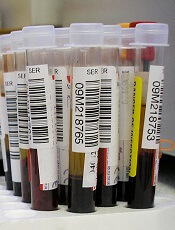
Credit: Graham Colm
A method of measuring minimal residual disease (MRD) can predict transplant outcomes in adults with acute lymphoblastic leukemia (ALL), according to a study published in Biology of Blood and Marrow Transplantation.
Researchers used the test, called LymphoSIGHT, to evaluate MRD in patient blood samples.
The test successfully predicted both relapse and survival and detected evidence of disease a median of 3 months prior to relapse.
This research was conducted by Aaron C. Logan, MD, PhD, of the University of California, San Francisco, and his colleagues. It was sponsored by Sequenta, Inc., makers of the LymphoSIGHT test.
The researchers used LymphoSIGHT to analyze 237 blood samples from 29 adults who underwent allogeneic hematopoietic stem cell transplant (HSCT) to treat ALL.
The LymphoSIGHT test consists of a 2-step process. First, cancer cell DNA sequences are identified in a diagnostic sample. Follow-up samples are then screened for these sequences to detect MRD.
The results, which are generated in 7 days using Sequenta’s CLIA-certified laboratory, are provided in a report that shows a patient’s MRD status and level, as well as MRD trends over time.
The researchers found the test could quantify MRD in 93% of patients. MRD positivity was defined as more than 1 leukemia cell per 1 million white blood cells.
Patients who were MRD-positive before HSCT conditioning were significantly more likely than MRD-negative patients to relapse after transplant (hazard ratio=7.7, P=0.003).
And patients who were MRD-positive in the first 90 days after transplant had a significantly higher risk of relapse than patients who were MRD-negative (hazard ratio=14; P<0.0001).
Patients who were MRD-positive at any point after HSCT (17 of 25 evaluable patients) all relapsed and died from their disease. Their median survival was 359 days (range, 85-1991 days). The median lead-time from MRD detection to clinical relapse was 89 days (range, 0-207 days).
Of the 8 patients who remained MRD-negative, 6 were still alive at a median of 1853 days post-HSCT (range, 1641-2732). Two patients died from complications of graft-vs-host disease, without evidence of leukemia recurrence.
The researchers said these results suggest the LymphoSIGHT test can help physicians understand treatment responses and patient prognoses, as well as guide treatment decisions.
Credit: Graham Colm
A method of measuring minimal residual disease (MRD) can predict transplant outcomes in adults with acute lymphoblastic leukemia (ALL), according to a study published in Biology of Blood and Marrow Transplantation.
Researchers used the test, called LymphoSIGHT, to evaluate MRD in patient blood samples.
The test successfully predicted both relapse and survival and detected evidence of disease a median of 3 months prior to relapse.
This research was conducted by Aaron C. Logan, MD, PhD, of the University of California, San Francisco, and his colleagues. It was sponsored by Sequenta, Inc., makers of the LymphoSIGHT test.
The researchers used LymphoSIGHT to analyze 237 blood samples from 29 adults who underwent allogeneic hematopoietic stem cell transplant (HSCT) to treat ALL.
The LymphoSIGHT test consists of a 2-step process. First, cancer cell DNA sequences are identified in a diagnostic sample. Follow-up samples are then screened for these sequences to detect MRD.
The results, which are generated in 7 days using Sequenta’s CLIA-certified laboratory, are provided in a report that shows a patient’s MRD status and level, as well as MRD trends over time.
The researchers found the test could quantify MRD in 93% of patients. MRD positivity was defined as more than 1 leukemia cell per 1 million white blood cells.
Patients who were MRD-positive before HSCT conditioning were significantly more likely than MRD-negative patients to relapse after transplant (hazard ratio=7.7, P=0.003).
And patients who were MRD-positive in the first 90 days after transplant had a significantly higher risk of relapse than patients who were MRD-negative (hazard ratio=14; P<0.0001).
Patients who were MRD-positive at any point after HSCT (17 of 25 evaluable patients) all relapsed and died from their disease. Their median survival was 359 days (range, 85-1991 days). The median lead-time from MRD detection to clinical relapse was 89 days (range, 0-207 days).
Of the 8 patients who remained MRD-negative, 6 were still alive at a median of 1853 days post-HSCT (range, 1641-2732). Two patients died from complications of graft-vs-host disease, without evidence of leukemia recurrence.
The researchers said these results suggest the LymphoSIGHT test can help physicians understand treatment responses and patient prognoses, as well as guide treatment decisions.
Credit: Graham Colm
A method of measuring minimal residual disease (MRD) can predict transplant outcomes in adults with acute lymphoblastic leukemia (ALL), according to a study published in Biology of Blood and Marrow Transplantation.
Researchers used the test, called LymphoSIGHT, to evaluate MRD in patient blood samples.
The test successfully predicted both relapse and survival and detected evidence of disease a median of 3 months prior to relapse.
This research was conducted by Aaron C. Logan, MD, PhD, of the University of California, San Francisco, and his colleagues. It was sponsored by Sequenta, Inc., makers of the LymphoSIGHT test.
The researchers used LymphoSIGHT to analyze 237 blood samples from 29 adults who underwent allogeneic hematopoietic stem cell transplant (HSCT) to treat ALL.
The LymphoSIGHT test consists of a 2-step process. First, cancer cell DNA sequences are identified in a diagnostic sample. Follow-up samples are then screened for these sequences to detect MRD.
The results, which are generated in 7 days using Sequenta’s CLIA-certified laboratory, are provided in a report that shows a patient’s MRD status and level, as well as MRD trends over time.
The researchers found the test could quantify MRD in 93% of patients. MRD positivity was defined as more than 1 leukemia cell per 1 million white blood cells.
Patients who were MRD-positive before HSCT conditioning were significantly more likely than MRD-negative patients to relapse after transplant (hazard ratio=7.7, P=0.003).
And patients who were MRD-positive in the first 90 days after transplant had a significantly higher risk of relapse than patients who were MRD-negative (hazard ratio=14; P<0.0001).
Patients who were MRD-positive at any point after HSCT (17 of 25 evaluable patients) all relapsed and died from their disease. Their median survival was 359 days (range, 85-1991 days). The median lead-time from MRD detection to clinical relapse was 89 days (range, 0-207 days).
Of the 8 patients who remained MRD-negative, 6 were still alive at a median of 1853 days post-HSCT (range, 1641-2732). Two patients died from complications of graft-vs-host disease, without evidence of leukemia recurrence.
The researchers said these results suggest the LymphoSIGHT test can help physicians understand treatment responses and patient prognoses, as well as guide treatment decisions.
Group finds CAR T-cell therapy can fight MM
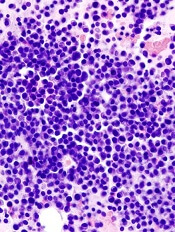
showing multiple myeloma
Results of preclinical research indicate chimeric antigen receptor (CAR) T cells are effective against multiple myeloma (MM).
Researchers generated CAR T cells that target CS1, a molecule found on more than 95% of MM cells.
When injected in mice, these T cells could locate and destroy MM cells.
Jianhua Yu, PhD, of The Ohio State University Comprehensive Cancer Center in Columbus, and his colleagues reported these results in Clinical Cancer Research.
“[O]ur study shows that we can modify T lymphocytes to target CS1 and that these cells efficiently destroy human multiple myeloma cells,” Dr Yu said.
“An important possible advantage to this approach is that these therapeutic T cells have the potential to replicate in the body, and, therefore, they might suppress tumor growth and prevent relapse for a prolonged period.”
Dr Yu and his colleagues used cell lines and cells from MM patients to produce CAR T cells targeting CS1. These cells could be expanded in the lab, and they efficiently recognized and eradicated MM cells in vitro and in vivo.
Compared to control T cells, the CAR T cells better recognized MM cells that overexpressed CS1, and they became more activated following the recognition.
In mice, the CAR T cells greatly reduced the tumor burden and prolonged overall survival. All mice that received CAR T cells were alive 44 days after treatment, compared to 29% and 17% of the mice in the study’s 2 control groups.
“Despite current drugs and use of bone marrow transplantation, multiple myeloma is still incurable, and almost all patients eventually relapse,” said study author Craig Hofmeister, MD, MPH, also of The Ohio State University Comprehensive Cancer Center.
“This study presents a novel strategy for treating multiple myeloma, and we hope to bring it to patients as part of a phase 1 clinical trial as soon as possible.”
showing multiple myeloma
Results of preclinical research indicate chimeric antigen receptor (CAR) T cells are effective against multiple myeloma (MM).
Researchers generated CAR T cells that target CS1, a molecule found on more than 95% of MM cells.
When injected in mice, these T cells could locate and destroy MM cells.
Jianhua Yu, PhD, of The Ohio State University Comprehensive Cancer Center in Columbus, and his colleagues reported these results in Clinical Cancer Research.
“[O]ur study shows that we can modify T lymphocytes to target CS1 and that these cells efficiently destroy human multiple myeloma cells,” Dr Yu said.
“An important possible advantage to this approach is that these therapeutic T cells have the potential to replicate in the body, and, therefore, they might suppress tumor growth and prevent relapse for a prolonged period.”
Dr Yu and his colleagues used cell lines and cells from MM patients to produce CAR T cells targeting CS1. These cells could be expanded in the lab, and they efficiently recognized and eradicated MM cells in vitro and in vivo.
Compared to control T cells, the CAR T cells better recognized MM cells that overexpressed CS1, and they became more activated following the recognition.
In mice, the CAR T cells greatly reduced the tumor burden and prolonged overall survival. All mice that received CAR T cells were alive 44 days after treatment, compared to 29% and 17% of the mice in the study’s 2 control groups.
“Despite current drugs and use of bone marrow transplantation, multiple myeloma is still incurable, and almost all patients eventually relapse,” said study author Craig Hofmeister, MD, MPH, also of The Ohio State University Comprehensive Cancer Center.
“This study presents a novel strategy for treating multiple myeloma, and we hope to bring it to patients as part of a phase 1 clinical trial as soon as possible.”
showing multiple myeloma
Results of preclinical research indicate chimeric antigen receptor (CAR) T cells are effective against multiple myeloma (MM).
Researchers generated CAR T cells that target CS1, a molecule found on more than 95% of MM cells.
When injected in mice, these T cells could locate and destroy MM cells.
Jianhua Yu, PhD, of The Ohio State University Comprehensive Cancer Center in Columbus, and his colleagues reported these results in Clinical Cancer Research.
“[O]ur study shows that we can modify T lymphocytes to target CS1 and that these cells efficiently destroy human multiple myeloma cells,” Dr Yu said.
“An important possible advantage to this approach is that these therapeutic T cells have the potential to replicate in the body, and, therefore, they might suppress tumor growth and prevent relapse for a prolonged period.”
Dr Yu and his colleagues used cell lines and cells from MM patients to produce CAR T cells targeting CS1. These cells could be expanded in the lab, and they efficiently recognized and eradicated MM cells in vitro and in vivo.
Compared to control T cells, the CAR T cells better recognized MM cells that overexpressed CS1, and they became more activated following the recognition.
In mice, the CAR T cells greatly reduced the tumor burden and prolonged overall survival. All mice that received CAR T cells were alive 44 days after treatment, compared to 29% and 17% of the mice in the study’s 2 control groups.
“Despite current drugs and use of bone marrow transplantation, multiple myeloma is still incurable, and almost all patients eventually relapse,” said study author Craig Hofmeister, MD, MPH, also of The Ohio State University Comprehensive Cancer Center.
“This study presents a novel strategy for treating multiple myeloma, and we hope to bring it to patients as part of a phase 1 clinical trial as soon as possible.”
FDA study suggests dabigatran’s pros outweigh cons

Credit: Darren Baker
After reviewing data from more than 134,000 patients, researchers at the US Food and Drug Administration (FDA) have concluded that dabigatran has a favorable risk-benefit profile.
Their research showed that, compared to warfarin, dabigatran decreased the risk of stroke, death, and intracranial hemorrhage in patients with atrial fibrillation.
On the other hand, dabigatran increased the risk of gastrointestinal bleeding, and the risk of myocardial infarction was similar for the 2 drugs.
This study was part of the FDA’s ongoing review of dabigatran. The agency has been investigating the safety of dabigatran since 2011, following reports of serious bleeding events associated with the drug.
A previous FDA study, announced in 2012, suggested dabigatran does not pose an increased risk of serious bleeding when compared to warfarin. But other studies have provided conflicting results, so the FDA decided to conduct additional research.
This study included information from more than 134,000 Medicare patients, aged 65 years or older. The researchers compared dabigatran and warfarin, evaluating the risk of ischemic stroke, intracranial hemorrhage, major gastrointestinal bleeding, myocardial infarction, and death.
The FDA said this study is based on a much larger and older patient population than those used in the agency’s earlier review of post-market data, and researchers employed a more sophisticated analytical method to capture and analyze the events of concern.
The data showed that, among new users of anticoagulants, dabigatran was associated with a lower risk of ischemic stroke, intracranial hemorrhage, and death, when compared to warfarin.
The incidence rate of ischemic stroke per 1000 person-years was 11.3 among dabigatran users and 13.9 among warfarin users (hazard ratio [HR]=0.80).
The incidence of intracranial hemorrhage was 3.3 and 9.6, respectively (HR=0.34). And the incidence of death was 32.6 and 37.8, respectively (HR=0.86).
The study also showed an increased risk of major gastrointestinal bleeding with the use of dabigatran compared to warfarin. The incidence rate per 1000 person-years was 34.2 and 26.5, respectively (HR=1.28).
The risk of myocardial infarction was similar for the 2 drugs. The incidence rate per 1000 person-years was 15.7 for dabigatran users and 16.9 for warfarin users (HR=0.92).
These results, except with regard to myocardial infarction, are consistent with the clinical trial results that provided the basis for dabigatran’s approval.
The FDA said these findings suggest dabigatran has a favorable risk-benefit profile, so the agency has made no changes to the drug’s current label or recommendations for use.
The FDA is planning to publish detailed data from this study. Until then, some information is available on the agency’s website.
The FDA said it will continue to investigate the reasons for differences in major gastrointestinal bleeding rates for dabigatran and warfarin. And it will continue reviewing anticoagulant use and the risk of bleeding.
Credit: Darren Baker
After reviewing data from more than 134,000 patients, researchers at the US Food and Drug Administration (FDA) have concluded that dabigatran has a favorable risk-benefit profile.
Their research showed that, compared to warfarin, dabigatran decreased the risk of stroke, death, and intracranial hemorrhage in patients with atrial fibrillation.
On the other hand, dabigatran increased the risk of gastrointestinal bleeding, and the risk of myocardial infarction was similar for the 2 drugs.
This study was part of the FDA’s ongoing review of dabigatran. The agency has been investigating the safety of dabigatran since 2011, following reports of serious bleeding events associated with the drug.
A previous FDA study, announced in 2012, suggested dabigatran does not pose an increased risk of serious bleeding when compared to warfarin. But other studies have provided conflicting results, so the FDA decided to conduct additional research.
This study included information from more than 134,000 Medicare patients, aged 65 years or older. The researchers compared dabigatran and warfarin, evaluating the risk of ischemic stroke, intracranial hemorrhage, major gastrointestinal bleeding, myocardial infarction, and death.
The FDA said this study is based on a much larger and older patient population than those used in the agency’s earlier review of post-market data, and researchers employed a more sophisticated analytical method to capture and analyze the events of concern.
The data showed that, among new users of anticoagulants, dabigatran was associated with a lower risk of ischemic stroke, intracranial hemorrhage, and death, when compared to warfarin.
The incidence rate of ischemic stroke per 1000 person-years was 11.3 among dabigatran users and 13.9 among warfarin users (hazard ratio [HR]=0.80).
The incidence of intracranial hemorrhage was 3.3 and 9.6, respectively (HR=0.34). And the incidence of death was 32.6 and 37.8, respectively (HR=0.86).
The study also showed an increased risk of major gastrointestinal bleeding with the use of dabigatran compared to warfarin. The incidence rate per 1000 person-years was 34.2 and 26.5, respectively (HR=1.28).
The risk of myocardial infarction was similar for the 2 drugs. The incidence rate per 1000 person-years was 15.7 for dabigatran users and 16.9 for warfarin users (HR=0.92).
These results, except with regard to myocardial infarction, are consistent with the clinical trial results that provided the basis for dabigatran’s approval.
The FDA said these findings suggest dabigatran has a favorable risk-benefit profile, so the agency has made no changes to the drug’s current label or recommendations for use.
The FDA is planning to publish detailed data from this study. Until then, some information is available on the agency’s website.
The FDA said it will continue to investigate the reasons for differences in major gastrointestinal bleeding rates for dabigatran and warfarin. And it will continue reviewing anticoagulant use and the risk of bleeding.
Credit: Darren Baker
After reviewing data from more than 134,000 patients, researchers at the US Food and Drug Administration (FDA) have concluded that dabigatran has a favorable risk-benefit profile.
Their research showed that, compared to warfarin, dabigatran decreased the risk of stroke, death, and intracranial hemorrhage in patients with atrial fibrillation.
On the other hand, dabigatran increased the risk of gastrointestinal bleeding, and the risk of myocardial infarction was similar for the 2 drugs.
This study was part of the FDA’s ongoing review of dabigatran. The agency has been investigating the safety of dabigatran since 2011, following reports of serious bleeding events associated with the drug.
A previous FDA study, announced in 2012, suggested dabigatran does not pose an increased risk of serious bleeding when compared to warfarin. But other studies have provided conflicting results, so the FDA decided to conduct additional research.
This study included information from more than 134,000 Medicare patients, aged 65 years or older. The researchers compared dabigatran and warfarin, evaluating the risk of ischemic stroke, intracranial hemorrhage, major gastrointestinal bleeding, myocardial infarction, and death.
The FDA said this study is based on a much larger and older patient population than those used in the agency’s earlier review of post-market data, and researchers employed a more sophisticated analytical method to capture and analyze the events of concern.
The data showed that, among new users of anticoagulants, dabigatran was associated with a lower risk of ischemic stroke, intracranial hemorrhage, and death, when compared to warfarin.
The incidence rate of ischemic stroke per 1000 person-years was 11.3 among dabigatran users and 13.9 among warfarin users (hazard ratio [HR]=0.80).
The incidence of intracranial hemorrhage was 3.3 and 9.6, respectively (HR=0.34). And the incidence of death was 32.6 and 37.8, respectively (HR=0.86).
The study also showed an increased risk of major gastrointestinal bleeding with the use of dabigatran compared to warfarin. The incidence rate per 1000 person-years was 34.2 and 26.5, respectively (HR=1.28).
The risk of myocardial infarction was similar for the 2 drugs. The incidence rate per 1000 person-years was 15.7 for dabigatran users and 16.9 for warfarin users (HR=0.92).
These results, except with regard to myocardial infarction, are consistent with the clinical trial results that provided the basis for dabigatran’s approval.
The FDA said these findings suggest dabigatran has a favorable risk-benefit profile, so the agency has made no changes to the drug’s current label or recommendations for use.
The FDA is planning to publish detailed data from this study. Until then, some information is available on the agency’s website.
The FDA said it will continue to investigate the reasons for differences in major gastrointestinal bleeding rates for dabigatran and warfarin. And it will continue reviewing anticoagulant use and the risk of bleeding.
Study links warfarin dosing and dementia

SAN FRANSICO—New research suggests bleeds and thrombosis are not the only adverse effects of improper warfarin dosing.
The study showed an increased risk of dementia among patients with atrial fibrillation whose warfarin doses were outside the therapeutic range for an extended period of time.
Jared Bunch, MD, of the Intermountain Medical Center Heart Institute in Murray, Utah, and his colleagues presented this finding at the 2014 Annual Heart Rhythm Society Scientific Session (PO05-169).
Previous research suggested that patients with atrial fibrillation had an increased risk of developing dementia. But the cause of that association
was unknown.
“[W]e now know that if warfarin doses are consistently too high or too low, one of the long-term consequences can be brain damage,” Dr Bunch said. “This points to the possibility that dementia in atrial fibrillation patients is partly due to small, repetitive clots and/or bleeds in the brain.”
To make this connection, the researchers analyzed data from 2693 atrial fibrillation patients receiving warfarin. The team evaluated the relationship between dementia and the percentage of time that patients’ warfarin doses were within the therapeutic range (international normalized ratio of 2 to 3).
In all, 4.1% of patients (n=111) were diagnosed with dementia. This included senile dementia (n=37, 1.4%), vascular dementia (n=8, 0.3%), and Alzheimer’s dementia (n=66, 2.4%).
The researchers’ analysis (adjusted for the risk of stroke and bleeding) revealed that the more time a patient’s warfarin dosages were outside the therapeutic range, the greater his risk of developing dementia.
Specifically, patients within the therapeutic range less than 25% of the time were 4.6 times more likely to develop dementia than patients within range more than 75% of the time.
Patients within the therapeutic range 25% to 50% of the time were 4.1 times more likely to develop dementia. And patients within the therapeutic range 51% to 75% of the time were 2.5 times more likely to develop dementia.
“Our results from the study tell us 2 things,” Dr Bunch said. “With careful use of anticoagulation medications, the dementia risk can be reduced.
Patients on warfarin need very close follow-up in specialized anticoagulation centers, if possible, to ensure their blood levels are within the recommended levels more often.”
“Second, these results also point to a potential new long-term consequence of dependency on long-term anticoagulation medications. In this regard, stroke prevention therapies do not require long-term anticoagulation medications, and reducing the use of these drugs will hopefully lower
dementia risk.”
SAN FRANSICO—New research suggests bleeds and thrombosis are not the only adverse effects of improper warfarin dosing.
The study showed an increased risk of dementia among patients with atrial fibrillation whose warfarin doses were outside the therapeutic range for an extended period of time.
Jared Bunch, MD, of the Intermountain Medical Center Heart Institute in Murray, Utah, and his colleagues presented this finding at the 2014 Annual Heart Rhythm Society Scientific Session (PO05-169).
Previous research suggested that patients with atrial fibrillation had an increased risk of developing dementia. But the cause of that association
was unknown.
“[W]e now know that if warfarin doses are consistently too high or too low, one of the long-term consequences can be brain damage,” Dr Bunch said. “This points to the possibility that dementia in atrial fibrillation patients is partly due to small, repetitive clots and/or bleeds in the brain.”
To make this connection, the researchers analyzed data from 2693 atrial fibrillation patients receiving warfarin. The team evaluated the relationship between dementia and the percentage of time that patients’ warfarin doses were within the therapeutic range (international normalized ratio of 2 to 3).
In all, 4.1% of patients (n=111) were diagnosed with dementia. This included senile dementia (n=37, 1.4%), vascular dementia (n=8, 0.3%), and Alzheimer’s dementia (n=66, 2.4%).
The researchers’ analysis (adjusted for the risk of stroke and bleeding) revealed that the more time a patient’s warfarin dosages were outside the therapeutic range, the greater his risk of developing dementia.
Specifically, patients within the therapeutic range less than 25% of the time were 4.6 times more likely to develop dementia than patients within range more than 75% of the time.
Patients within the therapeutic range 25% to 50% of the time were 4.1 times more likely to develop dementia. And patients within the therapeutic range 51% to 75% of the time were 2.5 times more likely to develop dementia.
“Our results from the study tell us 2 things,” Dr Bunch said. “With careful use of anticoagulation medications, the dementia risk can be reduced.
Patients on warfarin need very close follow-up in specialized anticoagulation centers, if possible, to ensure their blood levels are within the recommended levels more often.”
“Second, these results also point to a potential new long-term consequence of dependency on long-term anticoagulation medications. In this regard, stroke prevention therapies do not require long-term anticoagulation medications, and reducing the use of these drugs will hopefully lower
dementia risk.”
SAN FRANSICO—New research suggests bleeds and thrombosis are not the only adverse effects of improper warfarin dosing.
The study showed an increased risk of dementia among patients with atrial fibrillation whose warfarin doses were outside the therapeutic range for an extended period of time.
Jared Bunch, MD, of the Intermountain Medical Center Heart Institute in Murray, Utah, and his colleagues presented this finding at the 2014 Annual Heart Rhythm Society Scientific Session (PO05-169).
Previous research suggested that patients with atrial fibrillation had an increased risk of developing dementia. But the cause of that association
was unknown.
“[W]e now know that if warfarin doses are consistently too high or too low, one of the long-term consequences can be brain damage,” Dr Bunch said. “This points to the possibility that dementia in atrial fibrillation patients is partly due to small, repetitive clots and/or bleeds in the brain.”
To make this connection, the researchers analyzed data from 2693 atrial fibrillation patients receiving warfarin. The team evaluated the relationship between dementia and the percentage of time that patients’ warfarin doses were within the therapeutic range (international normalized ratio of 2 to 3).
In all, 4.1% of patients (n=111) were diagnosed with dementia. This included senile dementia (n=37, 1.4%), vascular dementia (n=8, 0.3%), and Alzheimer’s dementia (n=66, 2.4%).
The researchers’ analysis (adjusted for the risk of stroke and bleeding) revealed that the more time a patient’s warfarin dosages were outside the therapeutic range, the greater his risk of developing dementia.
Specifically, patients within the therapeutic range less than 25% of the time were 4.6 times more likely to develop dementia than patients within range more than 75% of the time.
Patients within the therapeutic range 25% to 50% of the time were 4.1 times more likely to develop dementia. And patients within the therapeutic range 51% to 75% of the time were 2.5 times more likely to develop dementia.
“Our results from the study tell us 2 things,” Dr Bunch said. “With careful use of anticoagulation medications, the dementia risk can be reduced.
Patients on warfarin need very close follow-up in specialized anticoagulation centers, if possible, to ensure their blood levels are within the recommended levels more often.”
“Second, these results also point to a potential new long-term consequence of dependency on long-term anticoagulation medications. In this regard, stroke prevention therapies do not require long-term anticoagulation medications, and reducing the use of these drugs will hopefully lower
dementia risk.”
FDA approves octocog alfa for adults with hemophilia A

The US Food and Drug Administration (FDA) has approved a new indication for the recombinant antihemophilic factor VIII product octocog alfa (Kogenate).
It is now approved for routine prophylaxis to prevent or reduce the frequency of bleeding episodes in adults with hemophilia A.
Octocog alfa was already FDA-approved for the control and prevention of bleeding episodes in adults and children with hemophilia A, for perioperative management in adults and children with hemophilia A, as routine prophylaxis in children with hemophilia A, and to reduce the risk of joint damage in children without pre-existing joint damage.
The FDA’s latest approval is based on data from the SPINART study, in which patients were randomized to receive prophylactic octocog alfa or on-demand treatment. The study was sponsored by Bayer Healthcare, the company developing octocog alfa.
“In Bayer’s SPINART study, adult patients with hemophilia A on the prophylactic regimen experienced significantly fewer bleeding events than those using on-demand treatment,” said Marilyn Manco-Johnson, MD, principal investigator of the study and director at of the Mountain States Regional Hemophilia and Thrombosis Center at the University of Colorado at Denver and Health Sciences Center.
Results of the SPINART study were presented at the World Federation of Hemophilia 2012 World Congress and published in The Journal of Thrombosis and Haemostasis.
The study included 84 patients, ages 15 to 50, with hemophilia A. They were randomized to a prophylaxis regimen of 25 IU/kg 3 times per week (n=42) or on-demand treatment (n=42). Escalation by 5 IU/kg (to 30 or 35 IU/kg maximum) was allowed for subjects with 12 or more annual bleeds after 1 and 2 years.
Patients were stratified based on target joints (presence/absence) and the number of bleeding events in the previous 6 months (≥15 vs <15 annualized bleeds).
Patients who received prophylaxis experienced significantly fewer bleeds (P<0.0001) than patients treated on demand, regardless of factors such as age, bleeding history, and the presence or absence of target joints.
The ratio of the mean bleeding frequency was 15.2 (P<0.0001) for on-demand vs prophylaxis, indicating that patients who received on-demand treatment experienced, on average, 15.2 times as many bleeds as patients treated prophylactically.
The mean annualized bleed rates (bleeds/subject/year) were 37 in the on-demand group versus 2 in the prophylaxis group. The median annualized bleed rate in the on-demand group was 33 versus 0 in the prophylaxis group.
Fifty-two percent (22/42) of prophylaxis subjects experienced no bleeding, and 29% (12/42) of prophylaxis subjects experienced 1 to 2 bleeds during the follow-up period.
Adverse events were consistent with the existing safety profile for octocog alfa. The most common adverse reactions (≥4%) were inhibitor formation in previously untreated and minimally treated patients, skin-related hypersensitivity reactions (eg, rash, pruritus), infusion-site reactions (eg, inflammation, pain), and infections associated with a central venous access device.
Serious adverse reactions associated with octocog alfa include systemic hypersensitivity reactions—bronchospastic reactions and/or hypotension and anaphylaxis—and the development of high-titer inhibitors necessitating alternative treatments to factor VIII.
For more details on octocog alfa, see the full prescribing information.
The US Food and Drug Administration (FDA) has approved a new indication for the recombinant antihemophilic factor VIII product octocog alfa (Kogenate).
It is now approved for routine prophylaxis to prevent or reduce the frequency of bleeding episodes in adults with hemophilia A.
Octocog alfa was already FDA-approved for the control and prevention of bleeding episodes in adults and children with hemophilia A, for perioperative management in adults and children with hemophilia A, as routine prophylaxis in children with hemophilia A, and to reduce the risk of joint damage in children without pre-existing joint damage.
The FDA’s latest approval is based on data from the SPINART study, in which patients were randomized to receive prophylactic octocog alfa or on-demand treatment. The study was sponsored by Bayer Healthcare, the company developing octocog alfa.
“In Bayer’s SPINART study, adult patients with hemophilia A on the prophylactic regimen experienced significantly fewer bleeding events than those using on-demand treatment,” said Marilyn Manco-Johnson, MD, principal investigator of the study and director at of the Mountain States Regional Hemophilia and Thrombosis Center at the University of Colorado at Denver and Health Sciences Center.
Results of the SPINART study were presented at the World Federation of Hemophilia 2012 World Congress and published in The Journal of Thrombosis and Haemostasis.
The study included 84 patients, ages 15 to 50, with hemophilia A. They were randomized to a prophylaxis regimen of 25 IU/kg 3 times per week (n=42) or on-demand treatment (n=42). Escalation by 5 IU/kg (to 30 or 35 IU/kg maximum) was allowed for subjects with 12 or more annual bleeds after 1 and 2 years.
Patients were stratified based on target joints (presence/absence) and the number of bleeding events in the previous 6 months (≥15 vs <15 annualized bleeds).
Patients who received prophylaxis experienced significantly fewer bleeds (P<0.0001) than patients treated on demand, regardless of factors such as age, bleeding history, and the presence or absence of target joints.
The ratio of the mean bleeding frequency was 15.2 (P<0.0001) for on-demand vs prophylaxis, indicating that patients who received on-demand treatment experienced, on average, 15.2 times as many bleeds as patients treated prophylactically.
The mean annualized bleed rates (bleeds/subject/year) were 37 in the on-demand group versus 2 in the prophylaxis group. The median annualized bleed rate in the on-demand group was 33 versus 0 in the prophylaxis group.
Fifty-two percent (22/42) of prophylaxis subjects experienced no bleeding, and 29% (12/42) of prophylaxis subjects experienced 1 to 2 bleeds during the follow-up period.
Adverse events were consistent with the existing safety profile for octocog alfa. The most common adverse reactions (≥4%) were inhibitor formation in previously untreated and minimally treated patients, skin-related hypersensitivity reactions (eg, rash, pruritus), infusion-site reactions (eg, inflammation, pain), and infections associated with a central venous access device.
Serious adverse reactions associated with octocog alfa include systemic hypersensitivity reactions—bronchospastic reactions and/or hypotension and anaphylaxis—and the development of high-titer inhibitors necessitating alternative treatments to factor VIII.
For more details on octocog alfa, see the full prescribing information.
The US Food and Drug Administration (FDA) has approved a new indication for the recombinant antihemophilic factor VIII product octocog alfa (Kogenate).
It is now approved for routine prophylaxis to prevent or reduce the frequency of bleeding episodes in adults with hemophilia A.
Octocog alfa was already FDA-approved for the control and prevention of bleeding episodes in adults and children with hemophilia A, for perioperative management in adults and children with hemophilia A, as routine prophylaxis in children with hemophilia A, and to reduce the risk of joint damage in children without pre-existing joint damage.
The FDA’s latest approval is based on data from the SPINART study, in which patients were randomized to receive prophylactic octocog alfa or on-demand treatment. The study was sponsored by Bayer Healthcare, the company developing octocog alfa.
“In Bayer’s SPINART study, adult patients with hemophilia A on the prophylactic regimen experienced significantly fewer bleeding events than those using on-demand treatment,” said Marilyn Manco-Johnson, MD, principal investigator of the study and director at of the Mountain States Regional Hemophilia and Thrombosis Center at the University of Colorado at Denver and Health Sciences Center.
Results of the SPINART study were presented at the World Federation of Hemophilia 2012 World Congress and published in The Journal of Thrombosis and Haemostasis.
The study included 84 patients, ages 15 to 50, with hemophilia A. They were randomized to a prophylaxis regimen of 25 IU/kg 3 times per week (n=42) or on-demand treatment (n=42). Escalation by 5 IU/kg (to 30 or 35 IU/kg maximum) was allowed for subjects with 12 or more annual bleeds after 1 and 2 years.
Patients were stratified based on target joints (presence/absence) and the number of bleeding events in the previous 6 months (≥15 vs <15 annualized bleeds).
Patients who received prophylaxis experienced significantly fewer bleeds (P<0.0001) than patients treated on demand, regardless of factors such as age, bleeding history, and the presence or absence of target joints.
The ratio of the mean bleeding frequency was 15.2 (P<0.0001) for on-demand vs prophylaxis, indicating that patients who received on-demand treatment experienced, on average, 15.2 times as many bleeds as patients treated prophylactically.
The mean annualized bleed rates (bleeds/subject/year) were 37 in the on-demand group versus 2 in the prophylaxis group. The median annualized bleed rate in the on-demand group was 33 versus 0 in the prophylaxis group.
Fifty-two percent (22/42) of prophylaxis subjects experienced no bleeding, and 29% (12/42) of prophylaxis subjects experienced 1 to 2 bleeds during the follow-up period.
Adverse events were consistent with the existing safety profile for octocog alfa. The most common adverse reactions (≥4%) were inhibitor formation in previously untreated and minimally treated patients, skin-related hypersensitivity reactions (eg, rash, pruritus), infusion-site reactions (eg, inflammation, pain), and infections associated with a central venous access device.
Serious adverse reactions associated with octocog alfa include systemic hypersensitivity reactions—bronchospastic reactions and/or hypotension and anaphylaxis—and the development of high-titer inhibitors necessitating alternative treatments to factor VIII.
For more details on octocog alfa, see the full prescribing information.
Drug delivery vehicle has antimyeloma effects

Credit: PNAS
Researchers have discovered that a solvent used as a drug delivery vehicle has antimyeloma properties.
The team found that N-methyl-2-pyrrolidone (NMP)—long-regarded a basic, stable, and inactive solvent—affects the growth and survival of multiple myeloma (MM) cells and stimulates the immune system to kill these tumors.
Jake Shortt, MBChB, PhD, of the Peter MacCallum Cancer Centre in Melbourne, Australia, described these findings in Cell Reports.
“[W]e found NMP effectively ‘reprograms’ myeloma cells by targeting a class of gene-regulating proteins,” Dr Shortt said. “This reprogramming reawakens thousands of genes that have been silenced in the cancer cells, immediately stopping the myeloma cells from growing, while activating the immune system to respond to the cancer.”
The researchers were surprised by this discovery because they had been using NMP as a vehicle to deliver drugs in mouse models of MM.
“In a routine experiment in 2010, Dr Shortt noticed our preclinical models of myeloma were responding to the control dose of NMP, which was surprising, as this control dose contained none of the novel cancer agents we were actually testing,” said study author Ricky Johnstone, PhD, also of the Peter MacCallum Cancer Centre.
Specifically, the researchers were using NMP as a drug delivery vehicle in mice transplanted with Vk*MYC MM tumors. And they consistently observed antitumor activity in vehicle-only control mice.
The team saw responses to NMP in mice transplanted with multiple, independently derived myelomas; namely, delayed paraprotein progression and improved survival in aggressive clones and sustained regressions in more indolent disease.
Further investigation revealed that NMP is an acetylated lysine mimetic and bromodomain ligand. And NMP shares molecular targets with lenalidomide, including cMYC and IRF4.
Unlike lenalidomide, NMP showed CRBN-independent activity. NMP induced similar growth arrest in CRBN-knockdown MM cells and lenalidomide-resistant MM cells.
Based on these findings, the researchers are planning a phase 1 trial of NMP, which is due to start later this year. The team noted that, because safe levels of NMP in humans are already well-established, the study is in the advanced planning stage.
“We’re at an advantage with this trial because we can immediately start at dosage levels within those recommended under occupational health and safety guidelines,” said David Ritchie, MBChB, PhD, a professor at the Peter MacCallum Cancer Centre and chief investigator of the phase 1 trial.
“It is extremely exciting to have this new insight into NMP, which is comparatively cost-effective and plentiful, compared to novel treatments developed by pharmaceutical companies, and hopefully holds promise for new or improved treatments in other cancer types.”
Credit: PNAS
Researchers have discovered that a solvent used as a drug delivery vehicle has antimyeloma properties.
The team found that N-methyl-2-pyrrolidone (NMP)—long-regarded a basic, stable, and inactive solvent—affects the growth and survival of multiple myeloma (MM) cells and stimulates the immune system to kill these tumors.
Jake Shortt, MBChB, PhD, of the Peter MacCallum Cancer Centre in Melbourne, Australia, described these findings in Cell Reports.
“[W]e found NMP effectively ‘reprograms’ myeloma cells by targeting a class of gene-regulating proteins,” Dr Shortt said. “This reprogramming reawakens thousands of genes that have been silenced in the cancer cells, immediately stopping the myeloma cells from growing, while activating the immune system to respond to the cancer.”
The researchers were surprised by this discovery because they had been using NMP as a vehicle to deliver drugs in mouse models of MM.
“In a routine experiment in 2010, Dr Shortt noticed our preclinical models of myeloma were responding to the control dose of NMP, which was surprising, as this control dose contained none of the novel cancer agents we were actually testing,” said study author Ricky Johnstone, PhD, also of the Peter MacCallum Cancer Centre.
Specifically, the researchers were using NMP as a drug delivery vehicle in mice transplanted with Vk*MYC MM tumors. And they consistently observed antitumor activity in vehicle-only control mice.
The team saw responses to NMP in mice transplanted with multiple, independently derived myelomas; namely, delayed paraprotein progression and improved survival in aggressive clones and sustained regressions in more indolent disease.
Further investigation revealed that NMP is an acetylated lysine mimetic and bromodomain ligand. And NMP shares molecular targets with lenalidomide, including cMYC and IRF4.
Unlike lenalidomide, NMP showed CRBN-independent activity. NMP induced similar growth arrest in CRBN-knockdown MM cells and lenalidomide-resistant MM cells.
Based on these findings, the researchers are planning a phase 1 trial of NMP, which is due to start later this year. The team noted that, because safe levels of NMP in humans are already well-established, the study is in the advanced planning stage.
“We’re at an advantage with this trial because we can immediately start at dosage levels within those recommended under occupational health and safety guidelines,” said David Ritchie, MBChB, PhD, a professor at the Peter MacCallum Cancer Centre and chief investigator of the phase 1 trial.
“It is extremely exciting to have this new insight into NMP, which is comparatively cost-effective and plentiful, compared to novel treatments developed by pharmaceutical companies, and hopefully holds promise for new or improved treatments in other cancer types.”
Credit: PNAS
Researchers have discovered that a solvent used as a drug delivery vehicle has antimyeloma properties.
The team found that N-methyl-2-pyrrolidone (NMP)—long-regarded a basic, stable, and inactive solvent—affects the growth and survival of multiple myeloma (MM) cells and stimulates the immune system to kill these tumors.
Jake Shortt, MBChB, PhD, of the Peter MacCallum Cancer Centre in Melbourne, Australia, described these findings in Cell Reports.
“[W]e found NMP effectively ‘reprograms’ myeloma cells by targeting a class of gene-regulating proteins,” Dr Shortt said. “This reprogramming reawakens thousands of genes that have been silenced in the cancer cells, immediately stopping the myeloma cells from growing, while activating the immune system to respond to the cancer.”
The researchers were surprised by this discovery because they had been using NMP as a vehicle to deliver drugs in mouse models of MM.
“In a routine experiment in 2010, Dr Shortt noticed our preclinical models of myeloma were responding to the control dose of NMP, which was surprising, as this control dose contained none of the novel cancer agents we were actually testing,” said study author Ricky Johnstone, PhD, also of the Peter MacCallum Cancer Centre.
Specifically, the researchers were using NMP as a drug delivery vehicle in mice transplanted with Vk*MYC MM tumors. And they consistently observed antitumor activity in vehicle-only control mice.
The team saw responses to NMP in mice transplanted with multiple, independently derived myelomas; namely, delayed paraprotein progression and improved survival in aggressive clones and sustained regressions in more indolent disease.
Further investigation revealed that NMP is an acetylated lysine mimetic and bromodomain ligand. And NMP shares molecular targets with lenalidomide, including cMYC and IRF4.
Unlike lenalidomide, NMP showed CRBN-independent activity. NMP induced similar growth arrest in CRBN-knockdown MM cells and lenalidomide-resistant MM cells.
Based on these findings, the researchers are planning a phase 1 trial of NMP, which is due to start later this year. The team noted that, because safe levels of NMP in humans are already well-established, the study is in the advanced planning stage.
“We’re at an advantage with this trial because we can immediately start at dosage levels within those recommended under occupational health and safety guidelines,” said David Ritchie, MBChB, PhD, a professor at the Peter MacCallum Cancer Centre and chief investigator of the phase 1 trial.
“It is extremely exciting to have this new insight into NMP, which is comparatively cost-effective and plentiful, compared to novel treatments developed by pharmaceutical companies, and hopefully holds promise for new or improved treatments in other cancer types.”