User login
FDA expands approved use of ibrutinib in CLL

Credit: Steven Harbour
The US Food and Drug Administration (FDA) has expanded the approved use of ibrutinib (Imbruvica) in patients with chronic lymphocytic leukemia (CLL).
The agency previously granted the drug accelerated approval to treat CLL patients who had received at least 1 prior therapy.
Now, the FDA has granted ibrutinib full approval for that indication and expanded the drug’s approved use to include previously treated and untreated CLL patients with 17p deletion.
The FDA’s decision to grant ibrutinib accelerated approval in CLL was based on the drug’s ability to elicit responses in previously treated patients.
Recent trial results have shown the drug can improve survival rates in CLL, which signifies a clinical benefit and allows the FDA to grant ibrutinib full approval.
Ibrutinib in CLL: Trial results
The expanded approval for ibrutinib is based on results of the phase 3 RESONATE trial, which were presented at this year’s ASCO and EHA meetings.
The trial included 391 previously treated patients, 127 of whom had 17p deletion. Patients were randomized to receive ibrutinib or the anti-CD20 monoclonal antibody ofatumumab until disease progression or unacceptable toxicity.
The trial was stopped early after a pre-planned interim analysis showed that ibrutinib-treated patients experienced a 78% reduction in the risk of disease progression or death.
At the time of interim analysis, the patients’ median time on study was 9.4 months. The best overall response among evaluable patients was 78% in the ibrutinib arm and 11% in the ofatumumab arm.
Ibrutinib significantly prolonged progression-free and overall survival. The median progression-free survival was 8.1 months in the ofatumumab arm and was not reached in the ibrutinib arm (P<0.0001). The median overall survival was not reached in either arm, but the hazard ratio was 0.434 (P=0.0049).
Of the 127 patients with 17p deletion, those treated with ibrutinib experienced a 75% reduction in the risk of disease progression or death.
Adverse events occurred in 99% of patients in the ibrutinib arm and 98% of those in the ofatumumab arm. Grade 3/4 events occurred in 51% and 39%, respectively.
Atrial fibrillation, bleeding-related events, diarrhea, and arthralgia were more common in the ibrutinib arm. Infusion-related reactions, peripheral sensory neuropathy, urticaria, night sweats, and pruritus were more common in the ofatumumab arm.
Ibrutinib in development
Ibrutinib is being studied alone and in combination with other treatments in several hematologic malignancies, including CLL, mantle cell lymphoma (MCL), Waldenstrom’s macroglobulinemia, diffuse large B-cell lymphoma, follicular lymphoma, and multiple myeloma.
Before the FDA granted ibrutinib accelerated approval in CLL, the agency granted the drug accelerated approval for use in previously treated MCL patients. Studies to verify ibrutinib’s clinical benefit in MCL are ongoing.
The European Medicines Agency’s Committee for Medicinal Products for Human Use has recommended marketing authorization for ibrutinib to treat adults with relapsed or refractory MCL.
The committee has also recommended the drug for adults with CLL who have received at least 1 prior therapy and CLL patients with 17p deletion or TP53 mutation who cannot receive chemo-immunotherapy.
Ibrutinib is already approved in Israel for the treatment of adults with MCL who have received at least 1 prior therapy.
Ibrutinib is under development by Janssen Biotech and Pharmacyclics, Inc. The companies co-market ibrutinib in the US, but Janssen markets (or will market) ibrutinib in the rest of the world. 
Credit: Steven Harbour
The US Food and Drug Administration (FDA) has expanded the approved use of ibrutinib (Imbruvica) in patients with chronic lymphocytic leukemia (CLL).
The agency previously granted the drug accelerated approval to treat CLL patients who had received at least 1 prior therapy.
Now, the FDA has granted ibrutinib full approval for that indication and expanded the drug’s approved use to include previously treated and untreated CLL patients with 17p deletion.
The FDA’s decision to grant ibrutinib accelerated approval in CLL was based on the drug’s ability to elicit responses in previously treated patients.
Recent trial results have shown the drug can improve survival rates in CLL, which signifies a clinical benefit and allows the FDA to grant ibrutinib full approval.
Ibrutinib in CLL: Trial results
The expanded approval for ibrutinib is based on results of the phase 3 RESONATE trial, which were presented at this year’s ASCO and EHA meetings.
The trial included 391 previously treated patients, 127 of whom had 17p deletion. Patients were randomized to receive ibrutinib or the anti-CD20 monoclonal antibody ofatumumab until disease progression or unacceptable toxicity.
The trial was stopped early after a pre-planned interim analysis showed that ibrutinib-treated patients experienced a 78% reduction in the risk of disease progression or death.
At the time of interim analysis, the patients’ median time on study was 9.4 months. The best overall response among evaluable patients was 78% in the ibrutinib arm and 11% in the ofatumumab arm.
Ibrutinib significantly prolonged progression-free and overall survival. The median progression-free survival was 8.1 months in the ofatumumab arm and was not reached in the ibrutinib arm (P<0.0001). The median overall survival was not reached in either arm, but the hazard ratio was 0.434 (P=0.0049).
Of the 127 patients with 17p deletion, those treated with ibrutinib experienced a 75% reduction in the risk of disease progression or death.
Adverse events occurred in 99% of patients in the ibrutinib arm and 98% of those in the ofatumumab arm. Grade 3/4 events occurred in 51% and 39%, respectively.
Atrial fibrillation, bleeding-related events, diarrhea, and arthralgia were more common in the ibrutinib arm. Infusion-related reactions, peripheral sensory neuropathy, urticaria, night sweats, and pruritus were more common in the ofatumumab arm.
Ibrutinib in development
Ibrutinib is being studied alone and in combination with other treatments in several hematologic malignancies, including CLL, mantle cell lymphoma (MCL), Waldenstrom’s macroglobulinemia, diffuse large B-cell lymphoma, follicular lymphoma, and multiple myeloma.
Before the FDA granted ibrutinib accelerated approval in CLL, the agency granted the drug accelerated approval for use in previously treated MCL patients. Studies to verify ibrutinib’s clinical benefit in MCL are ongoing.
The European Medicines Agency’s Committee for Medicinal Products for Human Use has recommended marketing authorization for ibrutinib to treat adults with relapsed or refractory MCL.
The committee has also recommended the drug for adults with CLL who have received at least 1 prior therapy and CLL patients with 17p deletion or TP53 mutation who cannot receive chemo-immunotherapy.
Ibrutinib is already approved in Israel for the treatment of adults with MCL who have received at least 1 prior therapy.
Ibrutinib is under development by Janssen Biotech and Pharmacyclics, Inc. The companies co-market ibrutinib in the US, but Janssen markets (or will market) ibrutinib in the rest of the world.
Credit: Steven Harbour
The US Food and Drug Administration (FDA) has expanded the approved use of ibrutinib (Imbruvica) in patients with chronic lymphocytic leukemia (CLL).
The agency previously granted the drug accelerated approval to treat CLL patients who had received at least 1 prior therapy.
Now, the FDA has granted ibrutinib full approval for that indication and expanded the drug’s approved use to include previously treated and untreated CLL patients with 17p deletion.
The FDA’s decision to grant ibrutinib accelerated approval in CLL was based on the drug’s ability to elicit responses in previously treated patients.
Recent trial results have shown the drug can improve survival rates in CLL, which signifies a clinical benefit and allows the FDA to grant ibrutinib full approval.
Ibrutinib in CLL: Trial results
The expanded approval for ibrutinib is based on results of the phase 3 RESONATE trial, which were presented at this year’s ASCO and EHA meetings.
The trial included 391 previously treated patients, 127 of whom had 17p deletion. Patients were randomized to receive ibrutinib or the anti-CD20 monoclonal antibody ofatumumab until disease progression or unacceptable toxicity.
The trial was stopped early after a pre-planned interim analysis showed that ibrutinib-treated patients experienced a 78% reduction in the risk of disease progression or death.
At the time of interim analysis, the patients’ median time on study was 9.4 months. The best overall response among evaluable patients was 78% in the ibrutinib arm and 11% in the ofatumumab arm.
Ibrutinib significantly prolonged progression-free and overall survival. The median progression-free survival was 8.1 months in the ofatumumab arm and was not reached in the ibrutinib arm (P<0.0001). The median overall survival was not reached in either arm, but the hazard ratio was 0.434 (P=0.0049).
Of the 127 patients with 17p deletion, those treated with ibrutinib experienced a 75% reduction in the risk of disease progression or death.
Adverse events occurred in 99% of patients in the ibrutinib arm and 98% of those in the ofatumumab arm. Grade 3/4 events occurred in 51% and 39%, respectively.
Atrial fibrillation, bleeding-related events, diarrhea, and arthralgia were more common in the ibrutinib arm. Infusion-related reactions, peripheral sensory neuropathy, urticaria, night sweats, and pruritus were more common in the ofatumumab arm.
Ibrutinib in development
Ibrutinib is being studied alone and in combination with other treatments in several hematologic malignancies, including CLL, mantle cell lymphoma (MCL), Waldenstrom’s macroglobulinemia, diffuse large B-cell lymphoma, follicular lymphoma, and multiple myeloma.
Before the FDA granted ibrutinib accelerated approval in CLL, the agency granted the drug accelerated approval for use in previously treated MCL patients. Studies to verify ibrutinib’s clinical benefit in MCL are ongoing.
The European Medicines Agency’s Committee for Medicinal Products for Human Use has recommended marketing authorization for ibrutinib to treat adults with relapsed or refractory MCL.
The committee has also recommended the drug for adults with CLL who have received at least 1 prior therapy and CLL patients with 17p deletion or TP53 mutation who cannot receive chemo-immunotherapy.
Ibrutinib is already approved in Israel for the treatment of adults with MCL who have received at least 1 prior therapy.
Ibrutinib is under development by Janssen Biotech and Pharmacyclics, Inc. The companies co-market ibrutinib in the US, but Janssen markets (or will market) ibrutinib in the rest of the world.
Should donor blood be screened for HEV?
Credit: Daniel Gay
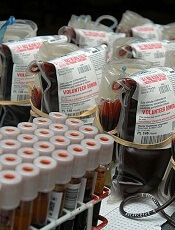
Roughly 1 in 3000 English blood donors have hepatitis E virus (HEV) in their plasma, according to research published in The Lancet.
This suggests that about 1200 HEV-containing blood components may be transfused in England every year.
“HEV genotype 3 infections are widespread in the English population, including blood donors,” said study author Richard Tedder, MB ChB, of National Health Service Blood and Transplant in London.
“We estimate that between 80,000 and 100,000 human HEV infections are likely to have occurred in England during the year of our study.”
These figures seem to indicate a need for screening blood donations. But Dr Tedder and his colleagues found evidence suggesting a low overall burden of harm from transfusion-transmitted HEV.
The researchers retrospectively screened 225,000 individual blood donations collected in south east England between October 2012 and September 2013 for HEV RNA.
Seventy-nine donors—about 1 in 2848—were infected with genotype 3 HEV, which can spread directly from animals to humans. The 79 donations had been used to prepare 129 blood components, 62 of which had been transfused.
Follow-up of 43 exposed recipients showed that transmission had occurred in 18 (42%) patients.
Immunosuppression extended the duration of viremia in these patients, but 3 cleared their infection following a change in immunosuppressive therapy or after receiving ribavirin.
Ten of the patients developed prolonged or persistent infection. Transaminitis was common, and 1 patient developed hepatitis.
“Although rarely causing any acute illness, hepatitis E infections may become persistent in immunosuppressed patients, putting them at risk of future chronic liver disease, and a policy is needed to identify these persistently infected patients and provide them with appropriate antiviral treatment,” Dr Tedder said.
“However, our study indicates that the overall burden of harm resulting from transfusion-transmitted HEV is slight. Although, on a clinical basis alone, there appears no pressing need at this time for blood donations to be screened, a broader discussion over harm mitigation is now required.”
A related comment article in The Lancet suggested there is, in fact, a need for the systematic screening of blood components.
“The potential clinical results of blood-borne HEV infection should not be downplayed; in particular, the risk of serious complications and death exists,” wrote Jean-Michel Pawlotsky, MD, PhD, of Hôpital Henri Mondor in Créteil, France.
“Thus, on the basis of [the current] and other studies, I believe that systematic screening of blood components for markers of hepatitis E infection should be implemented in areas where HEV is endemic (eg, the European Union), based on HEV RNA detection.”
Credit: Daniel Gay
Roughly 1 in 3000 English blood donors have hepatitis E virus (HEV) in their plasma, according to research published in The Lancet.
This suggests that about 1200 HEV-containing blood components may be transfused in England every year.
“HEV genotype 3 infections are widespread in the English population, including blood donors,” said study author Richard Tedder, MB ChB, of National Health Service Blood and Transplant in London.
“We estimate that between 80,000 and 100,000 human HEV infections are likely to have occurred in England during the year of our study.”
These figures seem to indicate a need for screening blood donations. But Dr Tedder and his colleagues found evidence suggesting a low overall burden of harm from transfusion-transmitted HEV.
The researchers retrospectively screened 225,000 individual blood donations collected in south east England between October 2012 and September 2013 for HEV RNA.
Seventy-nine donors—about 1 in 2848—were infected with genotype 3 HEV, which can spread directly from animals to humans. The 79 donations had been used to prepare 129 blood components, 62 of which had been transfused.
Follow-up of 43 exposed recipients showed that transmission had occurred in 18 (42%) patients.
Immunosuppression extended the duration of viremia in these patients, but 3 cleared their infection following a change in immunosuppressive therapy or after receiving ribavirin.
Ten of the patients developed prolonged or persistent infection. Transaminitis was common, and 1 patient developed hepatitis.
“Although rarely causing any acute illness, hepatitis E infections may become persistent in immunosuppressed patients, putting them at risk of future chronic liver disease, and a policy is needed to identify these persistently infected patients and provide them with appropriate antiviral treatment,” Dr Tedder said.
“However, our study indicates that the overall burden of harm resulting from transfusion-transmitted HEV is slight. Although, on a clinical basis alone, there appears no pressing need at this time for blood donations to be screened, a broader discussion over harm mitigation is now required.”
A related comment article in The Lancet suggested there is, in fact, a need for the systematic screening of blood components.
“The potential clinical results of blood-borne HEV infection should not be downplayed; in particular, the risk of serious complications and death exists,” wrote Jean-Michel Pawlotsky, MD, PhD, of Hôpital Henri Mondor in Créteil, France.
“Thus, on the basis of [the current] and other studies, I believe that systematic screening of blood components for markers of hepatitis E infection should be implemented in areas where HEV is endemic (eg, the European Union), based on HEV RNA detection.”
Credit: Daniel Gay
Roughly 1 in 3000 English blood donors have hepatitis E virus (HEV) in their plasma, according to research published in The Lancet.
This suggests that about 1200 HEV-containing blood components may be transfused in England every year.
“HEV genotype 3 infections are widespread in the English population, including blood donors,” said study author Richard Tedder, MB ChB, of National Health Service Blood and Transplant in London.
“We estimate that between 80,000 and 100,000 human HEV infections are likely to have occurred in England during the year of our study.”
These figures seem to indicate a need for screening blood donations. But Dr Tedder and his colleagues found evidence suggesting a low overall burden of harm from transfusion-transmitted HEV.
The researchers retrospectively screened 225,000 individual blood donations collected in south east England between October 2012 and September 2013 for HEV RNA.
Seventy-nine donors—about 1 in 2848—were infected with genotype 3 HEV, which can spread directly from animals to humans. The 79 donations had been used to prepare 129 blood components, 62 of which had been transfused.
Follow-up of 43 exposed recipients showed that transmission had occurred in 18 (42%) patients.
Immunosuppression extended the duration of viremia in these patients, but 3 cleared their infection following a change in immunosuppressive therapy or after receiving ribavirin.
Ten of the patients developed prolonged or persistent infection. Transaminitis was common, and 1 patient developed hepatitis.
“Although rarely causing any acute illness, hepatitis E infections may become persistent in immunosuppressed patients, putting them at risk of future chronic liver disease, and a policy is needed to identify these persistently infected patients and provide them with appropriate antiviral treatment,” Dr Tedder said.
“However, our study indicates that the overall burden of harm resulting from transfusion-transmitted HEV is slight. Although, on a clinical basis alone, there appears no pressing need at this time for blood donations to be screened, a broader discussion over harm mitigation is now required.”
A related comment article in The Lancet suggested there is, in fact, a need for the systematic screening of blood components.
“The potential clinical results of blood-borne HEV infection should not be downplayed; in particular, the risk of serious complications and death exists,” wrote Jean-Michel Pawlotsky, MD, PhD, of Hôpital Henri Mondor in Créteil, France.
“Thus, on the basis of [the current] and other studies, I believe that systematic screening of blood components for markers of hepatitis E infection should be implemented in areas where HEV is endemic (eg, the European Union), based on HEV RNA detection.”
Mouse model shows epigenetic changes drive cancer

Credit: Aaron Logan
Researchers say they’ve created a mouse model that provides the first in vivo evidence that epigenetic alterations alone can cause cancer.
They described the work in The Journal of Clinical Investigation.
“We knew that epigenetic changes are associated with cancer but didn’t know whether these were a cause or consequence of cancer,” said study author Lanlan Shen, MD, PhD, of Baylor College of Medicine in Houston, Texas.
“Developing this new approach for ‘epigenetic engineering’ allowed us to test whether DNA methylation changes alone can drive cancer.”
Dr Shen and her colleagues focused on p16, a gene that normally functions to prevent cancer but is commonly methylated in a range of cancers. They devised an approach to engineer DNA methylation specifically to the mouse p16 promoter.
As intended, the engineered p16 promoter acted as a “methylation magnet.” As the mice reached adulthood, gradually increasing p16 methylation led to a higher incidence of spontaneous cancers and reduced survival.
“This is not only the first in vivo evidence that epigenetic alteration alone can cause cancer,” Dr Shen said.
“This also has profound implications for future studies because epigenetic changes are potentially reversible. Our findings therefore both provide hope for new epigenetic therapies and validate a novel approach for testing them.”
Dr Shen also noted that this new approach could be widely useful because there are many other genes and diseases connected to epigenetics.
Just as genetic engineering has become a standard approach for studying how genetic mutations cause disease, epigenetic engineering will enable functional studies of epigenetics.
Credit: Aaron Logan
Researchers say they’ve created a mouse model that provides the first in vivo evidence that epigenetic alterations alone can cause cancer.
They described the work in The Journal of Clinical Investigation.
“We knew that epigenetic changes are associated with cancer but didn’t know whether these were a cause or consequence of cancer,” said study author Lanlan Shen, MD, PhD, of Baylor College of Medicine in Houston, Texas.
“Developing this new approach for ‘epigenetic engineering’ allowed us to test whether DNA methylation changes alone can drive cancer.”
Dr Shen and her colleagues focused on p16, a gene that normally functions to prevent cancer but is commonly methylated in a range of cancers. They devised an approach to engineer DNA methylation specifically to the mouse p16 promoter.
As intended, the engineered p16 promoter acted as a “methylation magnet.” As the mice reached adulthood, gradually increasing p16 methylation led to a higher incidence of spontaneous cancers and reduced survival.
“This is not only the first in vivo evidence that epigenetic alteration alone can cause cancer,” Dr Shen said.
“This also has profound implications for future studies because epigenetic changes are potentially reversible. Our findings therefore both provide hope for new epigenetic therapies and validate a novel approach for testing them.”
Dr Shen also noted that this new approach could be widely useful because there are many other genes and diseases connected to epigenetics.
Just as genetic engineering has become a standard approach for studying how genetic mutations cause disease, epigenetic engineering will enable functional studies of epigenetics.
Credit: Aaron Logan
Researchers say they’ve created a mouse model that provides the first in vivo evidence that epigenetic alterations alone can cause cancer.
They described the work in The Journal of Clinical Investigation.
“We knew that epigenetic changes are associated with cancer but didn’t know whether these were a cause or consequence of cancer,” said study author Lanlan Shen, MD, PhD, of Baylor College of Medicine in Houston, Texas.
“Developing this new approach for ‘epigenetic engineering’ allowed us to test whether DNA methylation changes alone can drive cancer.”
Dr Shen and her colleagues focused on p16, a gene that normally functions to prevent cancer but is commonly methylated in a range of cancers. They devised an approach to engineer DNA methylation specifically to the mouse p16 promoter.
As intended, the engineered p16 promoter acted as a “methylation magnet.” As the mice reached adulthood, gradually increasing p16 methylation led to a higher incidence of spontaneous cancers and reduced survival.
“This is not only the first in vivo evidence that epigenetic alteration alone can cause cancer,” Dr Shen said.
“This also has profound implications for future studies because epigenetic changes are potentially reversible. Our findings therefore both provide hope for new epigenetic therapies and validate a novel approach for testing them.”
Dr Shen also noted that this new approach could be widely useful because there are many other genes and diseases connected to epigenetics.
Just as genetic engineering has become a standard approach for studying how genetic mutations cause disease, epigenetic engineering will enable functional studies of epigenetics.
CHMP recommends ibrutinib for CLL, MCL

The European Medicines Agency’s Committee for Medicinal Products for Human Use (CHMP) is recommending marketing authorization for ibrutinib (Imbruvica).
The committee is endorsing the Bruton’s tyrosine kinase (BTK) inhibitor for use in adults with relapsed or refractory mantle cell lymphoma (MCL) and certain adults with chronic lymphocytic leukemia (CLL).
This includes untreated CLL patients with 17p deletion or TP53 mutation who cannot receive chemo-immunotherapy and patients who have received at least 1 prior therapy.
The European Commission will take the CHMP’s opinion into account when deciding whether to authorize the commercialization of ibrutinib in the European Union.
The CHMP based its recommendations on data from 2 CLL studies—the phase 3 RESONATE trial (PCYC-1112) and a phase 1b/2 trial (PCYC-1102)—as well as a phase 2 trial (PCYC-1104) in MCL.
RESONATE trial
Results of RESONATE were recently presented at the 2014 EHA Congress. The trial included 391 patients with relapsed or refractory CLL or small lymphocytic lymphoma (SLL).
Patients were randomized to receive ibrutinib (n=195) or ofatumumab (n=196). Patients in the ofatumumab arm were allowed to cross over to ibrutinib if they progressed (n=57). The median time on study was 9.4 months.
The best overall response rate was higher in the ibrutinib arm than the ofatumumab arm, at 78% and 11%, respectively. And ibrutinib significantly prolonged progression-free survival. The median was 8.1 months in the ofatumumab arm and was not reached in the ibrutinib arm (P<0.0001).
Ibrutinib significantly prolonged overall survival as well. The median overall survival was not reached in either arm, but the hazard ratio was 0.434 (P=0.0049).
Adverse events occurred in 99% of patients in the ibrutinib arm and 98% of those in the ofatumumab arm. Grade 3/4 events occurred in 51% and 39%, respectively.
Atrial fibrillation, bleeding-related events, diarrhea, and arthralgia were more common in the ibrutinib arm. Infusion-related reactions, peripheral sensory neuropathy, urticaria, night sweats, and pruritus were more common in the ofatumumab arm.
PCYC-1102: Ibrutinib in CLL/SLL
Results of this phase 1b/2 trial were published in The Lancet Oncology in January. The trial enrolled 29 patients with previously untreated CLL and 2 with SLL.
They received 28-day cycles of once-daily ibrutinib at 420 mg or 840 mg. The 840 mg dose was discontinued after enrollment had begun because the doses showed comparable activity.
After a median follow-up of 22.1 months, 71% of patients achieved an objective response. Four patients (13%) had a complete response. The median time to response was 1.9 months.
Study investigators did not establish whether ibrutinib confers improvements in survival or disease-related symptoms.
Common adverse events included diarrhea (68%), nausea (48%), fatigue (32%), peripheral edema (29%), hypertension (29%), dizziness (26%), dyspepsia (26%), upper respiratory tract infection (26%), arthralgia (23%), constipation (23%), urinary tract infection (23%), and vomiting (23%).
Grade 3 adverse events included diarrhea (13%), fatigue (3%), hypertension (6%), dizziness (3%), urinary tract infection (3%), headache (3%), back pain (3%), and neutropenia (3%). One patient (3%) had grade 4 thrombocytopenia.
PCYC-1104 trial: Ibrutinib in MCL
Results of this trial were presented at ASH 2012 and published in NEJM in 2013. The NEJM data included 111 patients who received ibrutinib at 560 mg daily in continuous, 28-day cycles until disease progression.
The overall response rate was 68%, with a complete response rate of 21% and a partial response rate of 47%. With an estimated median follow-up of 15.3 months, the estimated median response duration was 17.5 months.
The estimated progression-free survival was 13.9 months, and the overall survival was not reached. The estimated rate of overall survival was 58% at 18 months.
Common nonhematologic adverse events included diarrhea (50%), fatigue (41%), nausea (31%), peripheral edema (28%), dyspnea (27%), constipation (25%), upper respiratory tract infection (23%), vomiting (23%), and decreased appetite (21%). The most common grade 3, 4, or 5 infection was pneumonia (6%).
Grade 3 and 4 hematologic adverse events included neutropenia (16%), thrombocytopenia (11%), and anemia (10%). Grade 3 bleeding events occurred in 5 patients.
About ibrutinib
Ibrutinib works by inhibiting BTK, a protein involved in mediating the cellular signaling pathways that control B-cell maturation and survival. In malignant B cells, there is excessive signaling through the B-cell receptor signaling pathway, which includes BTK.
Ibrutinib forms a strong covalent bond with BTK, which inhibits the excessive transmission of cell survival signals within the malignant B cells and stops their excessive build-up in protected environmental areas such as the lymph nodes.
Ibrutinib is being studied alone and in combination with other treatments in several hematologic malignancies, including CLL, MCL, Waldenstrom’s macroglobulinemia, diffuse large B-cell lymphoma, follicular lymphoma, and multiple myeloma.
Ibrutinib received accelerated approval from the US Food and Drug Administration in November 2013 to treat MCL. The drug received accelerated approval in February 2014 to treat CLL patients who have received at least 1 prior therapy.
Ibrutinib is also approved in Israel for the treatment of adults with MCL who have received at least 1 prior therapy.
Ibrutinib is under development by Janssen and Pharmacyclics. The companies co-market ibrutinib in the US, but, pending the drug’s approval, Janssen will market ibrutinib in the rest of the world.
The European Medicines Agency’s Committee for Medicinal Products for Human Use (CHMP) is recommending marketing authorization for ibrutinib (Imbruvica).
The committee is endorsing the Bruton’s tyrosine kinase (BTK) inhibitor for use in adults with relapsed or refractory mantle cell lymphoma (MCL) and certain adults with chronic lymphocytic leukemia (CLL).
This includes untreated CLL patients with 17p deletion or TP53 mutation who cannot receive chemo-immunotherapy and patients who have received at least 1 prior therapy.
The European Commission will take the CHMP’s opinion into account when deciding whether to authorize the commercialization of ibrutinib in the European Union.
The CHMP based its recommendations on data from 2 CLL studies—the phase 3 RESONATE trial (PCYC-1112) and a phase 1b/2 trial (PCYC-1102)—as well as a phase 2 trial (PCYC-1104) in MCL.
RESONATE trial
Results of RESONATE were recently presented at the 2014 EHA Congress. The trial included 391 patients with relapsed or refractory CLL or small lymphocytic lymphoma (SLL).
Patients were randomized to receive ibrutinib (n=195) or ofatumumab (n=196). Patients in the ofatumumab arm were allowed to cross over to ibrutinib if they progressed (n=57). The median time on study was 9.4 months.
The best overall response rate was higher in the ibrutinib arm than the ofatumumab arm, at 78% and 11%, respectively. And ibrutinib significantly prolonged progression-free survival. The median was 8.1 months in the ofatumumab arm and was not reached in the ibrutinib arm (P<0.0001).
Ibrutinib significantly prolonged overall survival as well. The median overall survival was not reached in either arm, but the hazard ratio was 0.434 (P=0.0049).
Adverse events occurred in 99% of patients in the ibrutinib arm and 98% of those in the ofatumumab arm. Grade 3/4 events occurred in 51% and 39%, respectively.
Atrial fibrillation, bleeding-related events, diarrhea, and arthralgia were more common in the ibrutinib arm. Infusion-related reactions, peripheral sensory neuropathy, urticaria, night sweats, and pruritus were more common in the ofatumumab arm.
PCYC-1102: Ibrutinib in CLL/SLL
Results of this phase 1b/2 trial were published in The Lancet Oncology in January. The trial enrolled 29 patients with previously untreated CLL and 2 with SLL.
They received 28-day cycles of once-daily ibrutinib at 420 mg or 840 mg. The 840 mg dose was discontinued after enrollment had begun because the doses showed comparable activity.
After a median follow-up of 22.1 months, 71% of patients achieved an objective response. Four patients (13%) had a complete response. The median time to response was 1.9 months.
Study investigators did not establish whether ibrutinib confers improvements in survival or disease-related symptoms.
Common adverse events included diarrhea (68%), nausea (48%), fatigue (32%), peripheral edema (29%), hypertension (29%), dizziness (26%), dyspepsia (26%), upper respiratory tract infection (26%), arthralgia (23%), constipation (23%), urinary tract infection (23%), and vomiting (23%).
Grade 3 adverse events included diarrhea (13%), fatigue (3%), hypertension (6%), dizziness (3%), urinary tract infection (3%), headache (3%), back pain (3%), and neutropenia (3%). One patient (3%) had grade 4 thrombocytopenia.
PCYC-1104 trial: Ibrutinib in MCL
Results of this trial were presented at ASH 2012 and published in NEJM in 2013. The NEJM data included 111 patients who received ibrutinib at 560 mg daily in continuous, 28-day cycles until disease progression.
The overall response rate was 68%, with a complete response rate of 21% and a partial response rate of 47%. With an estimated median follow-up of 15.3 months, the estimated median response duration was 17.5 months.
The estimated progression-free survival was 13.9 months, and the overall survival was not reached. The estimated rate of overall survival was 58% at 18 months.
Common nonhematologic adverse events included diarrhea (50%), fatigue (41%), nausea (31%), peripheral edema (28%), dyspnea (27%), constipation (25%), upper respiratory tract infection (23%), vomiting (23%), and decreased appetite (21%). The most common grade 3, 4, or 5 infection was pneumonia (6%).
Grade 3 and 4 hematologic adverse events included neutropenia (16%), thrombocytopenia (11%), and anemia (10%). Grade 3 bleeding events occurred in 5 patients.
About ibrutinib
Ibrutinib works by inhibiting BTK, a protein involved in mediating the cellular signaling pathways that control B-cell maturation and survival. In malignant B cells, there is excessive signaling through the B-cell receptor signaling pathway, which includes BTK.
Ibrutinib forms a strong covalent bond with BTK, which inhibits the excessive transmission of cell survival signals within the malignant B cells and stops their excessive build-up in protected environmental areas such as the lymph nodes.
Ibrutinib is being studied alone and in combination with other treatments in several hematologic malignancies, including CLL, MCL, Waldenstrom’s macroglobulinemia, diffuse large B-cell lymphoma, follicular lymphoma, and multiple myeloma.
Ibrutinib received accelerated approval from the US Food and Drug Administration in November 2013 to treat MCL. The drug received accelerated approval in February 2014 to treat CLL patients who have received at least 1 prior therapy.
Ibrutinib is also approved in Israel for the treatment of adults with MCL who have received at least 1 prior therapy.
Ibrutinib is under development by Janssen and Pharmacyclics. The companies co-market ibrutinib in the US, but, pending the drug’s approval, Janssen will market ibrutinib in the rest of the world.
The European Medicines Agency’s Committee for Medicinal Products for Human Use (CHMP) is recommending marketing authorization for ibrutinib (Imbruvica).
The committee is endorsing the Bruton’s tyrosine kinase (BTK) inhibitor for use in adults with relapsed or refractory mantle cell lymphoma (MCL) and certain adults with chronic lymphocytic leukemia (CLL).
This includes untreated CLL patients with 17p deletion or TP53 mutation who cannot receive chemo-immunotherapy and patients who have received at least 1 prior therapy.
The European Commission will take the CHMP’s opinion into account when deciding whether to authorize the commercialization of ibrutinib in the European Union.
The CHMP based its recommendations on data from 2 CLL studies—the phase 3 RESONATE trial (PCYC-1112) and a phase 1b/2 trial (PCYC-1102)—as well as a phase 2 trial (PCYC-1104) in MCL.
RESONATE trial
Results of RESONATE were recently presented at the 2014 EHA Congress. The trial included 391 patients with relapsed or refractory CLL or small lymphocytic lymphoma (SLL).
Patients were randomized to receive ibrutinib (n=195) or ofatumumab (n=196). Patients in the ofatumumab arm were allowed to cross over to ibrutinib if they progressed (n=57). The median time on study was 9.4 months.
The best overall response rate was higher in the ibrutinib arm than the ofatumumab arm, at 78% and 11%, respectively. And ibrutinib significantly prolonged progression-free survival. The median was 8.1 months in the ofatumumab arm and was not reached in the ibrutinib arm (P<0.0001).
Ibrutinib significantly prolonged overall survival as well. The median overall survival was not reached in either arm, but the hazard ratio was 0.434 (P=0.0049).
Adverse events occurred in 99% of patients in the ibrutinib arm and 98% of those in the ofatumumab arm. Grade 3/4 events occurred in 51% and 39%, respectively.
Atrial fibrillation, bleeding-related events, diarrhea, and arthralgia were more common in the ibrutinib arm. Infusion-related reactions, peripheral sensory neuropathy, urticaria, night sweats, and pruritus were more common in the ofatumumab arm.
PCYC-1102: Ibrutinib in CLL/SLL
Results of this phase 1b/2 trial were published in The Lancet Oncology in January. The trial enrolled 29 patients with previously untreated CLL and 2 with SLL.
They received 28-day cycles of once-daily ibrutinib at 420 mg or 840 mg. The 840 mg dose was discontinued after enrollment had begun because the doses showed comparable activity.
After a median follow-up of 22.1 months, 71% of patients achieved an objective response. Four patients (13%) had a complete response. The median time to response was 1.9 months.
Study investigators did not establish whether ibrutinib confers improvements in survival or disease-related symptoms.
Common adverse events included diarrhea (68%), nausea (48%), fatigue (32%), peripheral edema (29%), hypertension (29%), dizziness (26%), dyspepsia (26%), upper respiratory tract infection (26%), arthralgia (23%), constipation (23%), urinary tract infection (23%), and vomiting (23%).
Grade 3 adverse events included diarrhea (13%), fatigue (3%), hypertension (6%), dizziness (3%), urinary tract infection (3%), headache (3%), back pain (3%), and neutropenia (3%). One patient (3%) had grade 4 thrombocytopenia.
PCYC-1104 trial: Ibrutinib in MCL
Results of this trial were presented at ASH 2012 and published in NEJM in 2013. The NEJM data included 111 patients who received ibrutinib at 560 mg daily in continuous, 28-day cycles until disease progression.
The overall response rate was 68%, with a complete response rate of 21% and a partial response rate of 47%. With an estimated median follow-up of 15.3 months, the estimated median response duration was 17.5 months.
The estimated progression-free survival was 13.9 months, and the overall survival was not reached. The estimated rate of overall survival was 58% at 18 months.
Common nonhematologic adverse events included diarrhea (50%), fatigue (41%), nausea (31%), peripheral edema (28%), dyspnea (27%), constipation (25%), upper respiratory tract infection (23%), vomiting (23%), and decreased appetite (21%). The most common grade 3, 4, or 5 infection was pneumonia (6%).
Grade 3 and 4 hematologic adverse events included neutropenia (16%), thrombocytopenia (11%), and anemia (10%). Grade 3 bleeding events occurred in 5 patients.
About ibrutinib
Ibrutinib works by inhibiting BTK, a protein involved in mediating the cellular signaling pathways that control B-cell maturation and survival. In malignant B cells, there is excessive signaling through the B-cell receptor signaling pathway, which includes BTK.
Ibrutinib forms a strong covalent bond with BTK, which inhibits the excessive transmission of cell survival signals within the malignant B cells and stops their excessive build-up in protected environmental areas such as the lymph nodes.
Ibrutinib is being studied alone and in combination with other treatments in several hematologic malignancies, including CLL, MCL, Waldenstrom’s macroglobulinemia, diffuse large B-cell lymphoma, follicular lymphoma, and multiple myeloma.
Ibrutinib received accelerated approval from the US Food and Drug Administration in November 2013 to treat MCL. The drug received accelerated approval in February 2014 to treat CLL patients who have received at least 1 prior therapy.
Ibrutinib is also approved in Israel for the treatment of adults with MCL who have received at least 1 prior therapy.
Ibrutinib is under development by Janssen and Pharmacyclics. The companies co-market ibrutinib in the US, but, pending the drug’s approval, Janssen will market ibrutinib in the rest of the world.
CHMP recommends idelalisib for CLL, FL
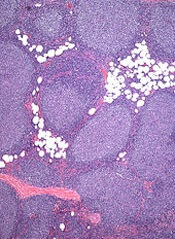
Days after gaining approval for 3 indications in the US, idelalisib (Zydelig) has earned a positive opinion from the European Medicine Agency’s Committee for Medicinal Products for Human Use (CHMP).
The CHMP is recommending the PI3K delta inhibitor for the treatment of chronic lymphocytic leukemia (CLL) and follicular lymphoma (FL).
If approved, the drug would be used as monotherapy for adults with FL that is refractory to 2 prior lines of treatment.
Idelalisib would also be used in combination with rituximab for adults with CLL who have received at least 1 prior therapy or as first-line treatment in CLL patients who have 17p deletion or TP53 mutation and cannot receive chemo-immunotherapy.
The CHMP’s recommendation for idelalisib (150 mg film-coated tablets) will be reviewed by the European Commission, which has the authority to approve medicines for use in the 28 countries of the European Union.
The CHMP’s positive opinion of idelalisib is based on data from 2 clinical trials—Study 116 and Study 101-09.
Study 116: Idelalisib in CLL
This phase 3 trial was stopped early because idelalisib had a significant impact on progression-free survival.
The study included 220 CLL patients who could not receive chemotherapy. Half were randomized to receive idelalisib plus rituximab, and the other half were randomized to rituximab plus placebo.
Patients in the idelalisib arm had a much higher overall response rate than patients in the placebo arm—81% and 13%, respectively (P<0.001). But all responses were partial.
At 24 weeks, the rate of progression-free survival was 93% in the idelalisib arm and 46% in the placebo arm (P<0.001). The median progression-free survival was 5.5 months in the placebo arm and not reached in the idelalisib arm (P<0.001).
At 12 months, the overall survival rate was 92% in the idelalisib arm and 80% in the placebo arm (P=0.02).
Most adverse events, in either treatment arm, were grade 2 or lower. The most common events in the idelalisib arm were pyrexia, fatigue, nausea, chills, and diarrhea. In the placebo arm, the most common events were infusion-related reactions, fatigue, cough, nausea, and dyspnea.
There were more serious adverse events in the idelalisib arm than in the placebo arm—40% and 35%, respectively. The most frequent serious events were pneumonia, pyrexia, and febrile neutropenia (in both treatment arms).
Study 101-09: Idelalisib in FL
In this phase 2 trial, idelalisib was given as a single agent to patients with indolent non-Hodgkin lymphoma who were refractory to rituximab and chemotherapy containing an alkylating agent.
In the 72 patients with FL, the overall response rate was 54%, and the complete response rate was 8%. The median duration of response was not reached (range, 0-14.8 months).
Improvements in patient survival or disease-related symptoms have not been established.
The most common grade 3 or higher adverse events were neutropenia (27%), elevations in aminotransferase levels (13%), diarrhea (13%), and pneumonia (7%).
About idelalisib
Idelalisib is an oral inhibitor of PI3K delta, a protein that plays a role in the activation, proliferation, and viability of B cells. PI3K delta signaling is active in many B-cell leukemias and lymphomas, and, by inhibiting the protein, idelalisib blocks several cellular signaling pathways that drive B-cell viability.
Idelalisib is being developed by Gilead Sciences. On July 23, the drug received US Food and Drug Administration approval for use in combination with rituximab to treat patients with relapsed CLL who cannot receive rituximab alone. The agency also granted idelalisib accelerated approval to treat patients with relapsed FL or small lymphocytic lymphoma who have received at least 2 prior systemic therapies.
Days after gaining approval for 3 indications in the US, idelalisib (Zydelig) has earned a positive opinion from the European Medicine Agency’s Committee for Medicinal Products for Human Use (CHMP).
The CHMP is recommending the PI3K delta inhibitor for the treatment of chronic lymphocytic leukemia (CLL) and follicular lymphoma (FL).
If approved, the drug would be used as monotherapy for adults with FL that is refractory to 2 prior lines of treatment.
Idelalisib would also be used in combination with rituximab for adults with CLL who have received at least 1 prior therapy or as first-line treatment in CLL patients who have 17p deletion or TP53 mutation and cannot receive chemo-immunotherapy.
The CHMP’s recommendation for idelalisib (150 mg film-coated tablets) will be reviewed by the European Commission, which has the authority to approve medicines for use in the 28 countries of the European Union.
The CHMP’s positive opinion of idelalisib is based on data from 2 clinical trials—Study 116 and Study 101-09.
Study 116: Idelalisib in CLL
This phase 3 trial was stopped early because idelalisib had a significant impact on progression-free survival.
The study included 220 CLL patients who could not receive chemotherapy. Half were randomized to receive idelalisib plus rituximab, and the other half were randomized to rituximab plus placebo.
Patients in the idelalisib arm had a much higher overall response rate than patients in the placebo arm—81% and 13%, respectively (P<0.001). But all responses were partial.
At 24 weeks, the rate of progression-free survival was 93% in the idelalisib arm and 46% in the placebo arm (P<0.001). The median progression-free survival was 5.5 months in the placebo arm and not reached in the idelalisib arm (P<0.001).
At 12 months, the overall survival rate was 92% in the idelalisib arm and 80% in the placebo arm (P=0.02).
Most adverse events, in either treatment arm, were grade 2 or lower. The most common events in the idelalisib arm were pyrexia, fatigue, nausea, chills, and diarrhea. In the placebo arm, the most common events were infusion-related reactions, fatigue, cough, nausea, and dyspnea.
There were more serious adverse events in the idelalisib arm than in the placebo arm—40% and 35%, respectively. The most frequent serious events were pneumonia, pyrexia, and febrile neutropenia (in both treatment arms).
Study 101-09: Idelalisib in FL
In this phase 2 trial, idelalisib was given as a single agent to patients with indolent non-Hodgkin lymphoma who were refractory to rituximab and chemotherapy containing an alkylating agent.
In the 72 patients with FL, the overall response rate was 54%, and the complete response rate was 8%. The median duration of response was not reached (range, 0-14.8 months).
Improvements in patient survival or disease-related symptoms have not been established.
The most common grade 3 or higher adverse events were neutropenia (27%), elevations in aminotransferase levels (13%), diarrhea (13%), and pneumonia (7%).
About idelalisib
Idelalisib is an oral inhibitor of PI3K delta, a protein that plays a role in the activation, proliferation, and viability of B cells. PI3K delta signaling is active in many B-cell leukemias and lymphomas, and, by inhibiting the protein, idelalisib blocks several cellular signaling pathways that drive B-cell viability.
Idelalisib is being developed by Gilead Sciences. On July 23, the drug received US Food and Drug Administration approval for use in combination with rituximab to treat patients with relapsed CLL who cannot receive rituximab alone. The agency also granted idelalisib accelerated approval to treat patients with relapsed FL or small lymphocytic lymphoma who have received at least 2 prior systemic therapies.
Days after gaining approval for 3 indications in the US, idelalisib (Zydelig) has earned a positive opinion from the European Medicine Agency’s Committee for Medicinal Products for Human Use (CHMP).
The CHMP is recommending the PI3K delta inhibitor for the treatment of chronic lymphocytic leukemia (CLL) and follicular lymphoma (FL).
If approved, the drug would be used as monotherapy for adults with FL that is refractory to 2 prior lines of treatment.
Idelalisib would also be used in combination with rituximab for adults with CLL who have received at least 1 prior therapy or as first-line treatment in CLL patients who have 17p deletion or TP53 mutation and cannot receive chemo-immunotherapy.
The CHMP’s recommendation for idelalisib (150 mg film-coated tablets) will be reviewed by the European Commission, which has the authority to approve medicines for use in the 28 countries of the European Union.
The CHMP’s positive opinion of idelalisib is based on data from 2 clinical trials—Study 116 and Study 101-09.
Study 116: Idelalisib in CLL
This phase 3 trial was stopped early because idelalisib had a significant impact on progression-free survival.
The study included 220 CLL patients who could not receive chemotherapy. Half were randomized to receive idelalisib plus rituximab, and the other half were randomized to rituximab plus placebo.
Patients in the idelalisib arm had a much higher overall response rate than patients in the placebo arm—81% and 13%, respectively (P<0.001). But all responses were partial.
At 24 weeks, the rate of progression-free survival was 93% in the idelalisib arm and 46% in the placebo arm (P<0.001). The median progression-free survival was 5.5 months in the placebo arm and not reached in the idelalisib arm (P<0.001).
At 12 months, the overall survival rate was 92% in the idelalisib arm and 80% in the placebo arm (P=0.02).
Most adverse events, in either treatment arm, were grade 2 or lower. The most common events in the idelalisib arm were pyrexia, fatigue, nausea, chills, and diarrhea. In the placebo arm, the most common events were infusion-related reactions, fatigue, cough, nausea, and dyspnea.
There were more serious adverse events in the idelalisib arm than in the placebo arm—40% and 35%, respectively. The most frequent serious events were pneumonia, pyrexia, and febrile neutropenia (in both treatment arms).
Study 101-09: Idelalisib in FL
In this phase 2 trial, idelalisib was given as a single agent to patients with indolent non-Hodgkin lymphoma who were refractory to rituximab and chemotherapy containing an alkylating agent.
In the 72 patients with FL, the overall response rate was 54%, and the complete response rate was 8%. The median duration of response was not reached (range, 0-14.8 months).
Improvements in patient survival or disease-related symptoms have not been established.
The most common grade 3 or higher adverse events were neutropenia (27%), elevations in aminotransferase levels (13%), diarrhea (13%), and pneumonia (7%).
About idelalisib
Idelalisib is an oral inhibitor of PI3K delta, a protein that plays a role in the activation, proliferation, and viability of B cells. PI3K delta signaling is active in many B-cell leukemias and lymphomas, and, by inhibiting the protein, idelalisib blocks several cellular signaling pathways that drive B-cell viability.
Idelalisib is being developed by Gilead Sciences. On July 23, the drug received US Food and Drug Administration approval for use in combination with rituximab to treat patients with relapsed CLL who cannot receive rituximab alone. The agency also granted idelalisib accelerated approval to treat patients with relapsed FL or small lymphocytic lymphoma who have received at least 2 prior systemic therapies.
LMWH ineffective in pregnant women with thrombophilia

Credit: Ninan Matthews
Low-molecular-weight heparin (LMWH) does not reduce complications in pregnant women with thrombophilia, according to a study published in The Lancet.
Thrombophilia increases the risk of pregnancy-associated venous thromboembolism (VTE), pregnancy loss, and placenta-mediated pregnancy complications.
For years, physicians have believed that daily antepartum injections of LMWH can reduce these complications, but results of a randomized trial suggest this is not the case.
The LMWH dalteparin provided no positive benefits for mothers or their children. In fact, the study indicated that LMWH could actually cause pregnant women minor harm by increasing the risk of bleeding, increasing the rate of induced labor, and reducing access to anesthesia during childbirth.
“These results mean that many women around the world can save themselves a lot of unnecessary pain during pregnancy,” said study author Marc Rodger, MD, of the Ottawa Hospital Research Institute in Canada.
“While I wish we could have shown that LMWH prevents complications, we actually proved it doesn’t help. However, I’m very glad that we can now spare these women all those unnecessary needles.”
To assess the safety and efficacy of LMWH, Dr Rodger and his colleagues analyzed 289 pregnant women with thrombophilia who were at an increased risk of VTE or had previous placenta-mediated pregnancy complications.
The subjects were randomized to no treatment (n=143) or antepartum prophylactic doses of dalteparin (n=146)—5000 IU once daily up to 20 weeks’ gestation and twice daily thereafter until at least 37 weeks’ gestation.
Some patients crossed over during treatment. So for the on-treatment and safety analyses, there were 143 patients in the dalteparin arm and 141 in the control arm.
Patients met the primary efficacy endpoint if they experienced 1 or more of the following: severe or early onset pre-eclampsia, a small-for-gestational-age infant (birthweight <10th percentile), pregnancy loss, or VTE.
Results showed that dalteparin did not reduce the incidence of this composite outcome in either the intent-to-treat analysis or the on-treatment analysis.
In the intent-to-treat analysis, 17.1% (25/146) of patients in the dalteparin arm met the endpoint, as did 18.9% (27/143) of those in the control arm. In the on-treatment analysis, 19.6% (28/143) of patients in the dalteparin arm met the endpoint, as did 17% (24/141) of those in the control arm.
The safety analysis revealed no significant difference in the incidence of major bleeding between the dalteparin and control arms—2.1% (3/143) and 1.4% (2/141), respectively.
Minor bleeding was more common in the dalteparin arm than the control arm, occurring in 19.6% (28/143) and 9.2% (13/141) of patients, respectively (P=0.01).
Dr Rodger said he hopes these results will prompt physicians to stop prescribing LMWH to pregnant women with thrombophilia and/or previous pregnancy complications when it isn’t warranted.
“These findings allow us to move on, to pursue other potentially effective methods for treating pregnant women with thrombophilia and/or complications from placenta blood clots,” he said.
He and his colleagues noted, however, that patients with one type of thrombophilia—anti-phospholipid antibodies—may benefit from anticoagulant therapy, as it can prevent recurrent pregnancy loss.
Furthermore, some women should take low-dose aspirin while pregnant to help prevent pregnancy complications. And all women with thrombophilia should receive anticoagulant therapy to prevent thrombosis after delivery.
So it seems that some pregnant women might still benefit from taking anticoagulants, but this requires further study.
Credit: Ninan Matthews
Low-molecular-weight heparin (LMWH) does not reduce complications in pregnant women with thrombophilia, according to a study published in The Lancet.
Thrombophilia increases the risk of pregnancy-associated venous thromboembolism (VTE), pregnancy loss, and placenta-mediated pregnancy complications.
For years, physicians have believed that daily antepartum injections of LMWH can reduce these complications, but results of a randomized trial suggest this is not the case.
The LMWH dalteparin provided no positive benefits for mothers or their children. In fact, the study indicated that LMWH could actually cause pregnant women minor harm by increasing the risk of bleeding, increasing the rate of induced labor, and reducing access to anesthesia during childbirth.
“These results mean that many women around the world can save themselves a lot of unnecessary pain during pregnancy,” said study author Marc Rodger, MD, of the Ottawa Hospital Research Institute in Canada.
“While I wish we could have shown that LMWH prevents complications, we actually proved it doesn’t help. However, I’m very glad that we can now spare these women all those unnecessary needles.”
To assess the safety and efficacy of LMWH, Dr Rodger and his colleagues analyzed 289 pregnant women with thrombophilia who were at an increased risk of VTE or had previous placenta-mediated pregnancy complications.
The subjects were randomized to no treatment (n=143) or antepartum prophylactic doses of dalteparin (n=146)—5000 IU once daily up to 20 weeks’ gestation and twice daily thereafter until at least 37 weeks’ gestation.
Some patients crossed over during treatment. So for the on-treatment and safety analyses, there were 143 patients in the dalteparin arm and 141 in the control arm.
Patients met the primary efficacy endpoint if they experienced 1 or more of the following: severe or early onset pre-eclampsia, a small-for-gestational-age infant (birthweight <10th percentile), pregnancy loss, or VTE.
Results showed that dalteparin did not reduce the incidence of this composite outcome in either the intent-to-treat analysis or the on-treatment analysis.
In the intent-to-treat analysis, 17.1% (25/146) of patients in the dalteparin arm met the endpoint, as did 18.9% (27/143) of those in the control arm. In the on-treatment analysis, 19.6% (28/143) of patients in the dalteparin arm met the endpoint, as did 17% (24/141) of those in the control arm.
The safety analysis revealed no significant difference in the incidence of major bleeding between the dalteparin and control arms—2.1% (3/143) and 1.4% (2/141), respectively.
Minor bleeding was more common in the dalteparin arm than the control arm, occurring in 19.6% (28/143) and 9.2% (13/141) of patients, respectively (P=0.01).
Dr Rodger said he hopes these results will prompt physicians to stop prescribing LMWH to pregnant women with thrombophilia and/or previous pregnancy complications when it isn’t warranted.
“These findings allow us to move on, to pursue other potentially effective methods for treating pregnant women with thrombophilia and/or complications from placenta blood clots,” he said.
He and his colleagues noted, however, that patients with one type of thrombophilia—anti-phospholipid antibodies—may benefit from anticoagulant therapy, as it can prevent recurrent pregnancy loss.
Furthermore, some women should take low-dose aspirin while pregnant to help prevent pregnancy complications. And all women with thrombophilia should receive anticoagulant therapy to prevent thrombosis after delivery.
So it seems that some pregnant women might still benefit from taking anticoagulants, but this requires further study.
Credit: Ninan Matthews
Low-molecular-weight heparin (LMWH) does not reduce complications in pregnant women with thrombophilia, according to a study published in The Lancet.
Thrombophilia increases the risk of pregnancy-associated venous thromboembolism (VTE), pregnancy loss, and placenta-mediated pregnancy complications.
For years, physicians have believed that daily antepartum injections of LMWH can reduce these complications, but results of a randomized trial suggest this is not the case.
The LMWH dalteparin provided no positive benefits for mothers or their children. In fact, the study indicated that LMWH could actually cause pregnant women minor harm by increasing the risk of bleeding, increasing the rate of induced labor, and reducing access to anesthesia during childbirth.
“These results mean that many women around the world can save themselves a lot of unnecessary pain during pregnancy,” said study author Marc Rodger, MD, of the Ottawa Hospital Research Institute in Canada.
“While I wish we could have shown that LMWH prevents complications, we actually proved it doesn’t help. However, I’m very glad that we can now spare these women all those unnecessary needles.”
To assess the safety and efficacy of LMWH, Dr Rodger and his colleagues analyzed 289 pregnant women with thrombophilia who were at an increased risk of VTE or had previous placenta-mediated pregnancy complications.
The subjects were randomized to no treatment (n=143) or antepartum prophylactic doses of dalteparin (n=146)—5000 IU once daily up to 20 weeks’ gestation and twice daily thereafter until at least 37 weeks’ gestation.
Some patients crossed over during treatment. So for the on-treatment and safety analyses, there were 143 patients in the dalteparin arm and 141 in the control arm.
Patients met the primary efficacy endpoint if they experienced 1 or more of the following: severe or early onset pre-eclampsia, a small-for-gestational-age infant (birthweight <10th percentile), pregnancy loss, or VTE.
Results showed that dalteparin did not reduce the incidence of this composite outcome in either the intent-to-treat analysis or the on-treatment analysis.
In the intent-to-treat analysis, 17.1% (25/146) of patients in the dalteparin arm met the endpoint, as did 18.9% (27/143) of those in the control arm. In the on-treatment analysis, 19.6% (28/143) of patients in the dalteparin arm met the endpoint, as did 17% (24/141) of those in the control arm.
The safety analysis revealed no significant difference in the incidence of major bleeding between the dalteparin and control arms—2.1% (3/143) and 1.4% (2/141), respectively.
Minor bleeding was more common in the dalteparin arm than the control arm, occurring in 19.6% (28/143) and 9.2% (13/141) of patients, respectively (P=0.01).
Dr Rodger said he hopes these results will prompt physicians to stop prescribing LMWH to pregnant women with thrombophilia and/or previous pregnancy complications when it isn’t warranted.
“These findings allow us to move on, to pursue other potentially effective methods for treating pregnant women with thrombophilia and/or complications from placenta blood clots,” he said.
He and his colleagues noted, however, that patients with one type of thrombophilia—anti-phospholipid antibodies—may benefit from anticoagulant therapy, as it can prevent recurrent pregnancy loss.
Furthermore, some women should take low-dose aspirin while pregnant to help prevent pregnancy complications. And all women with thrombophilia should receive anticoagulant therapy to prevent thrombosis after delivery.
So it seems that some pregnant women might still benefit from taking anticoagulants, but this requires further study.
Optimal HSCT donors often elusive, study suggests

Credit: Chad McNeeley
New research suggests a majority of US patients who need unrelated hematopoietic stem cell transplants can find a suitable donor on the Be The Match Registry.
However, the likelihood of finding an 8/8 HLA-matched adult donor is often low, particularly for patients of diverse ethnic or racial backgrounds.
And finding a 6/6 HLA-matched cord blood donor is a long shot regardless of race or ethnicity, although patients younger than 20 years of age have better odds.
These findings appear in NEJM.
“This research confirms that physicians should identify the best available donor with minimal delay,” said study author Dennis Confer, MD, chief medical officer at National Marrow Donor Program/Be the Match in Minneapolis.
“Transplant should not be postponed in anticipation of finding a perfect match. Using a suitable match reflects current clinical practice.”
Dr Confer and his colleagues built population-based genetic models for 21 racial and ethnic groups to predict the likelihood of identifying a suitable adult or cord blood donor for each group.
The researchers used data on HLA genotypes and cord blood unit cell doses from the National Marrow Donor Program’s Be the Match registry, which included 10,759,087 adult donors and 186,166 cord blood units at the end of 2012.
The team found the likelihood of identifying an 8/8 HLA-matched donor is highest for white patients of European descent, at 75%, but it’s only 46% for white patients of Middle Eastern or North African descent.
For black Americans of all ethnic backgrounds, the probability of finding an 8/8 matched donor ranges from 16% (the lowest figure) to 19%.
And figures range from 27% to 57% for Hispanics, Asians, Pacific Islanders, and Native Americans (which includes individuals from the Caribbean and North, Central, and South America).
The likelihood of identifying a 7/8 matched donor is, again, highest for white patients of European descent, at 97%. And it’s 90% for white patients of Middle Eastern or North African descent.
For black Americans of all ethnic backgrounds, the likelihood of finding a 7/8 matched donor ranges from 66% (the lowest figure) to 76%. And it ranges from 72% to 91% for Hispanics, Asians, Pacific Islanders, and Native Americans.
The probability of identifying a 6/6 cord blood match is low for all racial/ethnic groups, but age plays a role. For patients age 20 and older, figures range from 1%—for both African and black Caribbean patients—to 17% for white Europeans. For patients younger than 20, figures range from 6% to 38% for the same groups.
For patients 20 and older, the likelihood of finding a 5/6 cord blood match ranges from 23% for African patients to 66% for white Europeans. And for the younger age group, the figures range from 56% to 87% for the same groups.
“We cannot yet find a suitably matched and available donor for every patient,” Dr Confer noted. “So we cannot slow down our efforts to expand the registry and fund more research to overcome these challenges.”
“To find a match for all patients, it is critical that those who join the registry remain committed to donate when called, and that we continue to add people to the Be The Match Registry for racial and ethnic groups of highest need.”
Credit: Chad McNeeley
New research suggests a majority of US patients who need unrelated hematopoietic stem cell transplants can find a suitable donor on the Be The Match Registry.
However, the likelihood of finding an 8/8 HLA-matched adult donor is often low, particularly for patients of diverse ethnic or racial backgrounds.
And finding a 6/6 HLA-matched cord blood donor is a long shot regardless of race or ethnicity, although patients younger than 20 years of age have better odds.
These findings appear in NEJM.
“This research confirms that physicians should identify the best available donor with minimal delay,” said study author Dennis Confer, MD, chief medical officer at National Marrow Donor Program/Be the Match in Minneapolis.
“Transplant should not be postponed in anticipation of finding a perfect match. Using a suitable match reflects current clinical practice.”
Dr Confer and his colleagues built population-based genetic models for 21 racial and ethnic groups to predict the likelihood of identifying a suitable adult or cord blood donor for each group.
The researchers used data on HLA genotypes and cord blood unit cell doses from the National Marrow Donor Program’s Be the Match registry, which included 10,759,087 adult donors and 186,166 cord blood units at the end of 2012.
The team found the likelihood of identifying an 8/8 HLA-matched donor is highest for white patients of European descent, at 75%, but it’s only 46% for white patients of Middle Eastern or North African descent.
For black Americans of all ethnic backgrounds, the probability of finding an 8/8 matched donor ranges from 16% (the lowest figure) to 19%.
And figures range from 27% to 57% for Hispanics, Asians, Pacific Islanders, and Native Americans (which includes individuals from the Caribbean and North, Central, and South America).
The likelihood of identifying a 7/8 matched donor is, again, highest for white patients of European descent, at 97%. And it’s 90% for white patients of Middle Eastern or North African descent.
For black Americans of all ethnic backgrounds, the likelihood of finding a 7/8 matched donor ranges from 66% (the lowest figure) to 76%. And it ranges from 72% to 91% for Hispanics, Asians, Pacific Islanders, and Native Americans.
The probability of identifying a 6/6 cord blood match is low for all racial/ethnic groups, but age plays a role. For patients age 20 and older, figures range from 1%—for both African and black Caribbean patients—to 17% for white Europeans. For patients younger than 20, figures range from 6% to 38% for the same groups.
For patients 20 and older, the likelihood of finding a 5/6 cord blood match ranges from 23% for African patients to 66% for white Europeans. And for the younger age group, the figures range from 56% to 87% for the same groups.
“We cannot yet find a suitably matched and available donor for every patient,” Dr Confer noted. “So we cannot slow down our efforts to expand the registry and fund more research to overcome these challenges.”
“To find a match for all patients, it is critical that those who join the registry remain committed to donate when called, and that we continue to add people to the Be The Match Registry for racial and ethnic groups of highest need.”
Credit: Chad McNeeley
New research suggests a majority of US patients who need unrelated hematopoietic stem cell transplants can find a suitable donor on the Be The Match Registry.
However, the likelihood of finding an 8/8 HLA-matched adult donor is often low, particularly for patients of diverse ethnic or racial backgrounds.
And finding a 6/6 HLA-matched cord blood donor is a long shot regardless of race or ethnicity, although patients younger than 20 years of age have better odds.
These findings appear in NEJM.
“This research confirms that physicians should identify the best available donor with minimal delay,” said study author Dennis Confer, MD, chief medical officer at National Marrow Donor Program/Be the Match in Minneapolis.
“Transplant should not be postponed in anticipation of finding a perfect match. Using a suitable match reflects current clinical practice.”
Dr Confer and his colleagues built population-based genetic models for 21 racial and ethnic groups to predict the likelihood of identifying a suitable adult or cord blood donor for each group.
The researchers used data on HLA genotypes and cord blood unit cell doses from the National Marrow Donor Program’s Be the Match registry, which included 10,759,087 adult donors and 186,166 cord blood units at the end of 2012.
The team found the likelihood of identifying an 8/8 HLA-matched donor is highest for white patients of European descent, at 75%, but it’s only 46% for white patients of Middle Eastern or North African descent.
For black Americans of all ethnic backgrounds, the probability of finding an 8/8 matched donor ranges from 16% (the lowest figure) to 19%.
And figures range from 27% to 57% for Hispanics, Asians, Pacific Islanders, and Native Americans (which includes individuals from the Caribbean and North, Central, and South America).
The likelihood of identifying a 7/8 matched donor is, again, highest for white patients of European descent, at 97%. And it’s 90% for white patients of Middle Eastern or North African descent.
For black Americans of all ethnic backgrounds, the likelihood of finding a 7/8 matched donor ranges from 66% (the lowest figure) to 76%. And it ranges from 72% to 91% for Hispanics, Asians, Pacific Islanders, and Native Americans.
The probability of identifying a 6/6 cord blood match is low for all racial/ethnic groups, but age plays a role. For patients age 20 and older, figures range from 1%—for both African and black Caribbean patients—to 17% for white Europeans. For patients younger than 20, figures range from 6% to 38% for the same groups.
For patients 20 and older, the likelihood of finding a 5/6 cord blood match ranges from 23% for African patients to 66% for white Europeans. And for the younger age group, the figures range from 56% to 87% for the same groups.
“We cannot yet find a suitably matched and available donor for every patient,” Dr Confer noted. “So we cannot slow down our efforts to expand the registry and fund more research to overcome these challenges.”
“To find a match for all patients, it is critical that those who join the registry remain committed to donate when called, and that we continue to add people to the Be The Match Registry for racial and ethnic groups of highest need.”
Resistance to malaria drug explained

Credit: Robert Boston
Researchers have uncovered a way in which the malaria parasite Plasmodium falciparum becomes resistant to an investigational drug called fosmidomycin.
The team reported this finding in Nature Communications.
The malaria parasite makes a class of molecules called isoprenoids, which play multiple roles in keeping organisms healthy.
Fosmidomycin can be used to block isoprenoid synthesis and kill the malaria parasite.
But over time, the drug often becomes less effective.
“In trials testing fosmidomycin, the malaria parasite returned in more than half the children by the end of the study,” said Audrey R. Odom, MD, PhD, of the Washington University School of Medicine in St Louis, Missouri.
“We wanted to know how the parasite is getting around the drug. How can it manage to live even though the drug is suppressing these compounds that are necessary for life?”
Using sequencing technology, she and her colleagues compared the genetics of malaria parasites that responded to the drug to the genetics of parasites that were resistant to it.
This revealed mutations in a gene called PfHAD1. With dysfunctional PfHAD1, malaria is resistant to fosmidomycin.
“The PfHAD1 protein is completely unstudied,” Dr Odom said. “It’s a member of a larger family of proteins, and there are almost no biological functions assigned to them.”
Dr Odom’s team showed that, in malaria parasites, the PfHAD1 protein normally slows down the synthesis of isoprenoids. In other words, when present, PfHAD1 is doing the same job as the drug, slowing isoprenoid manufacturing.
Since isoprenoids are necessary for life, it’s not clear why the organism would purposefully slow down isoprenoid production.
“We don’t know why the protein puts the brakes on under normal conditions; perhaps simply because it’s an energetically expensive pathway,” Dr Odom said. “But loss of PfHAD1 releases the brakes, increasing the pathway’s activity, so that even when the drug is there, it doesn’t kill the cells.”
Therefore, Dr Odom and her colleagues believe isoprenoid synthesis is an attractive drug target for malaria.
Credit: Robert Boston
Researchers have uncovered a way in which the malaria parasite Plasmodium falciparum becomes resistant to an investigational drug called fosmidomycin.
The team reported this finding in Nature Communications.
The malaria parasite makes a class of molecules called isoprenoids, which play multiple roles in keeping organisms healthy.
Fosmidomycin can be used to block isoprenoid synthesis and kill the malaria parasite.
But over time, the drug often becomes less effective.
“In trials testing fosmidomycin, the malaria parasite returned in more than half the children by the end of the study,” said Audrey R. Odom, MD, PhD, of the Washington University School of Medicine in St Louis, Missouri.
“We wanted to know how the parasite is getting around the drug. How can it manage to live even though the drug is suppressing these compounds that are necessary for life?”
Using sequencing technology, she and her colleagues compared the genetics of malaria parasites that responded to the drug to the genetics of parasites that were resistant to it.
This revealed mutations in a gene called PfHAD1. With dysfunctional PfHAD1, malaria is resistant to fosmidomycin.
“The PfHAD1 protein is completely unstudied,” Dr Odom said. “It’s a member of a larger family of proteins, and there are almost no biological functions assigned to them.”
Dr Odom’s team showed that, in malaria parasites, the PfHAD1 protein normally slows down the synthesis of isoprenoids. In other words, when present, PfHAD1 is doing the same job as the drug, slowing isoprenoid manufacturing.
Since isoprenoids are necessary for life, it’s not clear why the organism would purposefully slow down isoprenoid production.
“We don’t know why the protein puts the brakes on under normal conditions; perhaps simply because it’s an energetically expensive pathway,” Dr Odom said. “But loss of PfHAD1 releases the brakes, increasing the pathway’s activity, so that even when the drug is there, it doesn’t kill the cells.”
Therefore, Dr Odom and her colleagues believe isoprenoid synthesis is an attractive drug target for malaria.
Credit: Robert Boston
Researchers have uncovered a way in which the malaria parasite Plasmodium falciparum becomes resistant to an investigational drug called fosmidomycin.
The team reported this finding in Nature Communications.
The malaria parasite makes a class of molecules called isoprenoids, which play multiple roles in keeping organisms healthy.
Fosmidomycin can be used to block isoprenoid synthesis and kill the malaria parasite.
But over time, the drug often becomes less effective.
“In trials testing fosmidomycin, the malaria parasite returned in more than half the children by the end of the study,” said Audrey R. Odom, MD, PhD, of the Washington University School of Medicine in St Louis, Missouri.
“We wanted to know how the parasite is getting around the drug. How can it manage to live even though the drug is suppressing these compounds that are necessary for life?”
Using sequencing technology, she and her colleagues compared the genetics of malaria parasites that responded to the drug to the genetics of parasites that were resistant to it.
This revealed mutations in a gene called PfHAD1. With dysfunctional PfHAD1, malaria is resistant to fosmidomycin.
“The PfHAD1 protein is completely unstudied,” Dr Odom said. “It’s a member of a larger family of proteins, and there are almost no biological functions assigned to them.”
Dr Odom’s team showed that, in malaria parasites, the PfHAD1 protein normally slows down the synthesis of isoprenoids. In other words, when present, PfHAD1 is doing the same job as the drug, slowing isoprenoid manufacturing.
Since isoprenoids are necessary for life, it’s not clear why the organism would purposefully slow down isoprenoid production.
“We don’t know why the protein puts the brakes on under normal conditions; perhaps simply because it’s an energetically expensive pathway,” Dr Odom said. “But loss of PfHAD1 releases the brakes, increasing the pathway’s activity, so that even when the drug is there, it doesn’t kill the cells.”
Therefore, Dr Odom and her colleagues believe isoprenoid synthesis is an attractive drug target for malaria.
Biosimilar can treat chemo-induced anemia

Credit: Rhoda Baer
A biosimilar of the erythropoiesis-stimulating agent epoetin alfa can elicit responses in patients with chemotherapy-induced anemia, according to a study published in BMC Cancer.
The agent, epoetin zeta (Retacrit), produced a hemoglobin (Hb) response in more than 80% of patients at 3- and 6-month time points.
Response rates were similar in patients with hematologic malignancies and those with solid tumors.
And the rate of clinically significant adverse events was low. This included thromboembolic events, bleeding, infection, local intolerability, and increased blood pressure.
Mauricette Michallet, MD, PhD, of Centre Hospitalier Lyon in France, and her colleagues conducted this study, known as ORHEO. It was sponsored by Hospira, the makers of epoetin zeta.
The researchers evaluated 2310 adult patients with chemotherapy-induced anemia (Hb<11 g/dL). Patients had solid tumors (n=1838), lymphomas (n=301), or multiple myeloma (n=171).
Patients were taking a number of treatments aside from epoetin zeta and chemotherapy. This included intravenous iron (10%), oral iron (16%), antithrombotic agents (12%), folates (7%), vitamin B (4%), and other vitamins (2%). An additional 17% of patients were reported as being on “other treatments.”
In all, 99.9% of patients received epoetin zeta. The primary endpoint was the rate of response.
Response was defined as an increase in Hb levels to at least 10 g/dL since enrollment, an increase in Hb levels of at least 1 g/dL since enrollment, or reaching target Hb levels set at the start of study, without any blood transfusions in the 3 weeks prior to measurement. In patients with baseline Hb levels of at least 10 g/dL, only those who reached their Hb target or had an increase greater than 1 g/dL were considered responders.
Eighty-two percent of patients achieved a response at 3 months, and 87% had a response at 6 months. The overall mean change in Hb level was 1.52 ± 1.61 at 3 months and 1.72 ± 1.61 g/dL at 6 months. The rate of transfusion was 9% at 3 months and 6% at 6 months.
Between enrollment and month 6, 1202 patients discontinued epoetin zeta. Forty percent stopped because Hb levels were met, 27% stopped because they were stopping or changing chemotherapy, 15% stopped for both of the aforementioned reasons, 11% stopped because epoetin zeta was ineffective, and 2% stopped due to adverse events.
Seventeen percent of patients experienced an adverse event, including thromboembolic events (4%), infection (5%), bleeding (2%), local intolerability (0.2%), increased blood pressure (2%), and “other” events (9%).
Epoetin zeta was approved in Europe in 2007. For epoetin biosimilars to gain approval in the European Union, companies must agree to conduct post-marketing studies.
Credit: Rhoda Baer
A biosimilar of the erythropoiesis-stimulating agent epoetin alfa can elicit responses in patients with chemotherapy-induced anemia, according to a study published in BMC Cancer.
The agent, epoetin zeta (Retacrit), produced a hemoglobin (Hb) response in more than 80% of patients at 3- and 6-month time points.
Response rates were similar in patients with hematologic malignancies and those with solid tumors.
And the rate of clinically significant adverse events was low. This included thromboembolic events, bleeding, infection, local intolerability, and increased blood pressure.
Mauricette Michallet, MD, PhD, of Centre Hospitalier Lyon in France, and her colleagues conducted this study, known as ORHEO. It was sponsored by Hospira, the makers of epoetin zeta.
The researchers evaluated 2310 adult patients with chemotherapy-induced anemia (Hb<11 g/dL). Patients had solid tumors (n=1838), lymphomas (n=301), or multiple myeloma (n=171).
Patients were taking a number of treatments aside from epoetin zeta and chemotherapy. This included intravenous iron (10%), oral iron (16%), antithrombotic agents (12%), folates (7%), vitamin B (4%), and other vitamins (2%). An additional 17% of patients were reported as being on “other treatments.”
In all, 99.9% of patients received epoetin zeta. The primary endpoint was the rate of response.
Response was defined as an increase in Hb levels to at least 10 g/dL since enrollment, an increase in Hb levels of at least 1 g/dL since enrollment, or reaching target Hb levels set at the start of study, without any blood transfusions in the 3 weeks prior to measurement. In patients with baseline Hb levels of at least 10 g/dL, only those who reached their Hb target or had an increase greater than 1 g/dL were considered responders.
Eighty-two percent of patients achieved a response at 3 months, and 87% had a response at 6 months. The overall mean change in Hb level was 1.52 ± 1.61 at 3 months and 1.72 ± 1.61 g/dL at 6 months. The rate of transfusion was 9% at 3 months and 6% at 6 months.
Between enrollment and month 6, 1202 patients discontinued epoetin zeta. Forty percent stopped because Hb levels were met, 27% stopped because they were stopping or changing chemotherapy, 15% stopped for both of the aforementioned reasons, 11% stopped because epoetin zeta was ineffective, and 2% stopped due to adverse events.
Seventeen percent of patients experienced an adverse event, including thromboembolic events (4%), infection (5%), bleeding (2%), local intolerability (0.2%), increased blood pressure (2%), and “other” events (9%).
Epoetin zeta was approved in Europe in 2007. For epoetin biosimilars to gain approval in the European Union, companies must agree to conduct post-marketing studies.
Credit: Rhoda Baer
A biosimilar of the erythropoiesis-stimulating agent epoetin alfa can elicit responses in patients with chemotherapy-induced anemia, according to a study published in BMC Cancer.
The agent, epoetin zeta (Retacrit), produced a hemoglobin (Hb) response in more than 80% of patients at 3- and 6-month time points.
Response rates were similar in patients with hematologic malignancies and those with solid tumors.
And the rate of clinically significant adverse events was low. This included thromboembolic events, bleeding, infection, local intolerability, and increased blood pressure.
Mauricette Michallet, MD, PhD, of Centre Hospitalier Lyon in France, and her colleagues conducted this study, known as ORHEO. It was sponsored by Hospira, the makers of epoetin zeta.
The researchers evaluated 2310 adult patients with chemotherapy-induced anemia (Hb<11 g/dL). Patients had solid tumors (n=1838), lymphomas (n=301), or multiple myeloma (n=171).
Patients were taking a number of treatments aside from epoetin zeta and chemotherapy. This included intravenous iron (10%), oral iron (16%), antithrombotic agents (12%), folates (7%), vitamin B (4%), and other vitamins (2%). An additional 17% of patients were reported as being on “other treatments.”
In all, 99.9% of patients received epoetin zeta. The primary endpoint was the rate of response.
Response was defined as an increase in Hb levels to at least 10 g/dL since enrollment, an increase in Hb levels of at least 1 g/dL since enrollment, or reaching target Hb levels set at the start of study, without any blood transfusions in the 3 weeks prior to measurement. In patients with baseline Hb levels of at least 10 g/dL, only those who reached their Hb target or had an increase greater than 1 g/dL were considered responders.
Eighty-two percent of patients achieved a response at 3 months, and 87% had a response at 6 months. The overall mean change in Hb level was 1.52 ± 1.61 at 3 months and 1.72 ± 1.61 g/dL at 6 months. The rate of transfusion was 9% at 3 months and 6% at 6 months.
Between enrollment and month 6, 1202 patients discontinued epoetin zeta. Forty percent stopped because Hb levels were met, 27% stopped because they were stopping or changing chemotherapy, 15% stopped for both of the aforementioned reasons, 11% stopped because epoetin zeta was ineffective, and 2% stopped due to adverse events.
Seventeen percent of patients experienced an adverse event, including thromboembolic events (4%), infection (5%), bleeding (2%), local intolerability (0.2%), increased blood pressure (2%), and “other” events (9%).
Epoetin zeta was approved in Europe in 2007. For epoetin biosimilars to gain approval in the European Union, companies must agree to conduct post-marketing studies.
BI denies allegations about dabigatran

Credit: CDC
A series of papers published in The BMJ have raised concerns about the anticoagulant dabigatran (Pradaxa).
The papers claim the company developing dabigatran has underreported events associated with the drug and withheld data showing that monitoring and dose adjustment could improve the safety of dabigatran without compromising its efficacy.
The company, Boehringer Ingelheim (BI), has denied these allegations.
“During the course of litigation involving Pradaxa, specifically hand-picked fragments of our robust internal discussions were made available to the media by external parties, which resulted in a gross distortion of the facts about Pradaxa and Boehringer Ingelheim,” said John Smith, a regional medical director at BI.
“As a result, some media reports have wrongfully suggested that BI purposefully suppressed data and have questioned the company’s ethics in efforts to alert regulators, healthcare professionals, and patients of the risks associated with Pradaxa. Some reports have even accused BI of improper trial conduct. All of these allegations are absolutely false . . . .”
Concerns about the RE-LY trial
One of the papers published in The BMJ, “Concerns over data in key dabigatran trial,” said the design and oversight of the RE-LY trial were poor.
The trial compared dabigatran at 110 mg or 150 mg twice daily to dose-adjusted warfarin in patients with atrial fibrillation. Results suggested dabigatran was noninferior, and in some cases superior, to warfarin.
The BMJ article said the open-label design of this trial allowed for bias. And events—such as bleeding and myocardial infarctions—have been misreported.
The article also suggested that reviews by BI have failed to uncover all of the inaccuracies in the trial data, and all of the information has not been released—either to regulators or the public.
BI refuted these claims, saying regulators found RE-LY’s design “robust and valid.” And although reviews have uncovered inaccuracies, the results have not affected the trial’s conclusions.
In fact, the US Food and Drug Administration (FDA) “reaffirmed the positive efficacy-safety profile of Pradaxa” when it reviewed data from more than 134,000 patients.
BI also said it has provided the FDA and the European Medicines Agency (EMA) with the complete data set, and both regulators have affirmed the conclusions of the trial.
Allegations of withheld data
Another article in The BMJ, “Dabigatran: how the drug company withheld important analyses,” suggested BI withheld information indicating that monitoring and dose adjustment could improve the safety of dabigatran.
The article said the company did not provide regulators with data showing a 5.5-fold variation in plasma levels among dabigatran-treated patients. And the company withheld data garnered from analyses calculating how many major bleeds could be prevented by dose adjustment.
The analyses suggested that monitoring and dose adjustment could reduce major bleeds by 30% to 40% compared with well-controlled warfarin. And the adjustment would have little or no effect on the risk of ischemic stroke.
BI conceded that, in 2012, company scientists performed exploratory simulations with mathematical models to understand whether dose adjustments based on plasma concentrations might further improve the efficacy and safety profile of dabigatran.
However, the initial hypothesis “could not be supported when applied to the actual clinical data from the RE-LY population.” So the company did not supply the data to the FDA or EMA.
Furthermore, “the totality of scientific evidence does not support dosing decisions for Pradaxa based solely on blood levels.” Instead, the company said that patient characteristics such as age, kidney function, and certain medications are the critical factors that contribute to the risk of bleeding.
The role of regulators, physicians, and patients
A third article in The BMJ, “Dabigatran, bleeding, and the regulators,” investigated the role the FDA and the EMA have played in all this.
The author said the EMA has made information, tests, and varying strengths of dabigatran available to promote safer use of the drug.
The FDA, on the other hand, has focused on efficacy rather than reducing the risk of bleeding. The agency approved only the 150-mg dose of the drug and has not approved a plasma-level diagnostic test.
The BMJ also published an editorial titled “The trouble with dabigatran.” It suggested that doctors and patients should “tread carefully” due to emerging risks associated with the drug. 
Credit: CDC
A series of papers published in The BMJ have raised concerns about the anticoagulant dabigatran (Pradaxa).
The papers claim the company developing dabigatran has underreported events associated with the drug and withheld data showing that monitoring and dose adjustment could improve the safety of dabigatran without compromising its efficacy.
The company, Boehringer Ingelheim (BI), has denied these allegations.
“During the course of litigation involving Pradaxa, specifically hand-picked fragments of our robust internal discussions were made available to the media by external parties, which resulted in a gross distortion of the facts about Pradaxa and Boehringer Ingelheim,” said John Smith, a regional medical director at BI.
“As a result, some media reports have wrongfully suggested that BI purposefully suppressed data and have questioned the company’s ethics in efforts to alert regulators, healthcare professionals, and patients of the risks associated with Pradaxa. Some reports have even accused BI of improper trial conduct. All of these allegations are absolutely false . . . .”
Concerns about the RE-LY trial
One of the papers published in The BMJ, “Concerns over data in key dabigatran trial,” said the design and oversight of the RE-LY trial were poor.
The trial compared dabigatran at 110 mg or 150 mg twice daily to dose-adjusted warfarin in patients with atrial fibrillation. Results suggested dabigatran was noninferior, and in some cases superior, to warfarin.
The BMJ article said the open-label design of this trial allowed for bias. And events—such as bleeding and myocardial infarctions—have been misreported.
The article also suggested that reviews by BI have failed to uncover all of the inaccuracies in the trial data, and all of the information has not been released—either to regulators or the public.
BI refuted these claims, saying regulators found RE-LY’s design “robust and valid.” And although reviews have uncovered inaccuracies, the results have not affected the trial’s conclusions.
In fact, the US Food and Drug Administration (FDA) “reaffirmed the positive efficacy-safety profile of Pradaxa” when it reviewed data from more than 134,000 patients.
BI also said it has provided the FDA and the European Medicines Agency (EMA) with the complete data set, and both regulators have affirmed the conclusions of the trial.
Allegations of withheld data
Another article in The BMJ, “Dabigatran: how the drug company withheld important analyses,” suggested BI withheld information indicating that monitoring and dose adjustment could improve the safety of dabigatran.
The article said the company did not provide regulators with data showing a 5.5-fold variation in plasma levels among dabigatran-treated patients. And the company withheld data garnered from analyses calculating how many major bleeds could be prevented by dose adjustment.
The analyses suggested that monitoring and dose adjustment could reduce major bleeds by 30% to 40% compared with well-controlled warfarin. And the adjustment would have little or no effect on the risk of ischemic stroke.
BI conceded that, in 2012, company scientists performed exploratory simulations with mathematical models to understand whether dose adjustments based on plasma concentrations might further improve the efficacy and safety profile of dabigatran.
However, the initial hypothesis “could not be supported when applied to the actual clinical data from the RE-LY population.” So the company did not supply the data to the FDA or EMA.
Furthermore, “the totality of scientific evidence does not support dosing decisions for Pradaxa based solely on blood levels.” Instead, the company said that patient characteristics such as age, kidney function, and certain medications are the critical factors that contribute to the risk of bleeding.
The role of regulators, physicians, and patients
A third article in The BMJ, “Dabigatran, bleeding, and the regulators,” investigated the role the FDA and the EMA have played in all this.
The author said the EMA has made information, tests, and varying strengths of dabigatran available to promote safer use of the drug.
The FDA, on the other hand, has focused on efficacy rather than reducing the risk of bleeding. The agency approved only the 150-mg dose of the drug and has not approved a plasma-level diagnostic test.
The BMJ also published an editorial titled “The trouble with dabigatran.” It suggested that doctors and patients should “tread carefully” due to emerging risks associated with the drug.
Credit: CDC
A series of papers published in The BMJ have raised concerns about the anticoagulant dabigatran (Pradaxa).
The papers claim the company developing dabigatran has underreported events associated with the drug and withheld data showing that monitoring and dose adjustment could improve the safety of dabigatran without compromising its efficacy.
The company, Boehringer Ingelheim (BI), has denied these allegations.
“During the course of litigation involving Pradaxa, specifically hand-picked fragments of our robust internal discussions were made available to the media by external parties, which resulted in a gross distortion of the facts about Pradaxa and Boehringer Ingelheim,” said John Smith, a regional medical director at BI.
“As a result, some media reports have wrongfully suggested that BI purposefully suppressed data and have questioned the company’s ethics in efforts to alert regulators, healthcare professionals, and patients of the risks associated with Pradaxa. Some reports have even accused BI of improper trial conduct. All of these allegations are absolutely false . . . .”
Concerns about the RE-LY trial
One of the papers published in The BMJ, “Concerns over data in key dabigatran trial,” said the design and oversight of the RE-LY trial were poor.
The trial compared dabigatran at 110 mg or 150 mg twice daily to dose-adjusted warfarin in patients with atrial fibrillation. Results suggested dabigatran was noninferior, and in some cases superior, to warfarin.
The BMJ article said the open-label design of this trial allowed for bias. And events—such as bleeding and myocardial infarctions—have been misreported.
The article also suggested that reviews by BI have failed to uncover all of the inaccuracies in the trial data, and all of the information has not been released—either to regulators or the public.
BI refuted these claims, saying regulators found RE-LY’s design “robust and valid.” And although reviews have uncovered inaccuracies, the results have not affected the trial’s conclusions.
In fact, the US Food and Drug Administration (FDA) “reaffirmed the positive efficacy-safety profile of Pradaxa” when it reviewed data from more than 134,000 patients.
BI also said it has provided the FDA and the European Medicines Agency (EMA) with the complete data set, and both regulators have affirmed the conclusions of the trial.
Allegations of withheld data
Another article in The BMJ, “Dabigatran: how the drug company withheld important analyses,” suggested BI withheld information indicating that monitoring and dose adjustment could improve the safety of dabigatran.
The article said the company did not provide regulators with data showing a 5.5-fold variation in plasma levels among dabigatran-treated patients. And the company withheld data garnered from analyses calculating how many major bleeds could be prevented by dose adjustment.
The analyses suggested that monitoring and dose adjustment could reduce major bleeds by 30% to 40% compared with well-controlled warfarin. And the adjustment would have little or no effect on the risk of ischemic stroke.
BI conceded that, in 2012, company scientists performed exploratory simulations with mathematical models to understand whether dose adjustments based on plasma concentrations might further improve the efficacy and safety profile of dabigatran.
However, the initial hypothesis “could not be supported when applied to the actual clinical data from the RE-LY population.” So the company did not supply the data to the FDA or EMA.
Furthermore, “the totality of scientific evidence does not support dosing decisions for Pradaxa based solely on blood levels.” Instead, the company said that patient characteristics such as age, kidney function, and certain medications are the critical factors that contribute to the risk of bleeding.
The role of regulators, physicians, and patients
A third article in The BMJ, “Dabigatran, bleeding, and the regulators,” investigated the role the FDA and the EMA have played in all this.
The author said the EMA has made information, tests, and varying strengths of dabigatran available to promote safer use of the drug.
The FDA, on the other hand, has focused on efficacy rather than reducing the risk of bleeding. The agency approved only the 150-mg dose of the drug and has not approved a plasma-level diagnostic test.
The BMJ also published an editorial titled “The trouble with dabigatran.” It suggested that doctors and patients should “tread carefully” due to emerging risks associated with the drug.