User login
Switzerland approves drug to treat MCL

Credit: CDC
Swissmedic, the regulatory authority for Switzerland, has granted
approval for lenalidomide (Revlimid) to treat patients with
relapsed or refractory mantle cell lymphoma (MCL) after prior therapy
that included bortezomib and chemotherapy or rituximab.
This is the third approval of lenalidomide for MCL worldwide. The drug is also approved for this indication in the US and Israel.
Swissmedic’s decision to approve the drug was based on results of the phase 2 EMERGE study (MCL-001).
In this trial, researchers evaluated lenalidomide (25 mg once a day on days 1-21 of each 28-day cycle) in 134 MCL patients who had received prior treatment with rituximab, cyclophosphamide, an anthracycline (or mitoxantrone), and bortezomib alone or in combination.
The overall response rate (the primary endpoint) was 28% (37/134), and the complete response rate was 7% (10/134). The median duration of response was 16.6 months (95% CI, 7.7-26.7).
The most common grade 3/4 adverse events reported in at least 5% of patients were neutropenia (43%), thrombocytopenia (28%), anemia (11%), pneumonia (9%), fatigue (7%), leukopenia (7%), febrile neutropenia (6%), diarrhea (6%), and dyspnea (6%).
“MCL is a rare B-cell lymphoma of the elderly that usually responds quite well to first-line treatment,” said Christoph Renner, MD, of Onkozentrum Hirslanden Zürich.
“However, even intensive treatment does not prevent relapse in the majority of patients, and new therapeutic options are needed. Therefore, having access to lenalidomide, an immunomodulatory drug with a well-known safety profile, will definitely enrich our therapeutic armamentarium.”
Lenalidomide is already approved in Switzerland for use in combination
with dexamethasone to treat patients with multiple myeloma who have
received at least one previous treatment.
The drug is also
approved to treat patients with transfusion-dependent anemia due to low-
or intermediate-risk-1 myelodysplastic syndrome associated with a 5q
deletion, with or without additional cytogenetic abnormalities.
Lenalidomide is under development by Celgene International Sàrl, a wholly owned subsidiary of Celgene Corporation. 
Credit: CDC
Swissmedic, the regulatory authority for Switzerland, has granted
approval for lenalidomide (Revlimid) to treat patients with
relapsed or refractory mantle cell lymphoma (MCL) after prior therapy
that included bortezomib and chemotherapy or rituximab.
This is the third approval of lenalidomide for MCL worldwide. The drug is also approved for this indication in the US and Israel.
Swissmedic’s decision to approve the drug was based on results of the phase 2 EMERGE study (MCL-001).
In this trial, researchers evaluated lenalidomide (25 mg once a day on days 1-21 of each 28-day cycle) in 134 MCL patients who had received prior treatment with rituximab, cyclophosphamide, an anthracycline (or mitoxantrone), and bortezomib alone or in combination.
The overall response rate (the primary endpoint) was 28% (37/134), and the complete response rate was 7% (10/134). The median duration of response was 16.6 months (95% CI, 7.7-26.7).
The most common grade 3/4 adverse events reported in at least 5% of patients were neutropenia (43%), thrombocytopenia (28%), anemia (11%), pneumonia (9%), fatigue (7%), leukopenia (7%), febrile neutropenia (6%), diarrhea (6%), and dyspnea (6%).
“MCL is a rare B-cell lymphoma of the elderly that usually responds quite well to first-line treatment,” said Christoph Renner, MD, of Onkozentrum Hirslanden Zürich.
“However, even intensive treatment does not prevent relapse in the majority of patients, and new therapeutic options are needed. Therefore, having access to lenalidomide, an immunomodulatory drug with a well-known safety profile, will definitely enrich our therapeutic armamentarium.”
Lenalidomide is already approved in Switzerland for use in combination
with dexamethasone to treat patients with multiple myeloma who have
received at least one previous treatment.
The drug is also
approved to treat patients with transfusion-dependent anemia due to low-
or intermediate-risk-1 myelodysplastic syndrome associated with a 5q
deletion, with or without additional cytogenetic abnormalities.
Lenalidomide is under development by Celgene International Sàrl, a wholly owned subsidiary of Celgene Corporation.
Credit: CDC
Swissmedic, the regulatory authority for Switzerland, has granted
approval for lenalidomide (Revlimid) to treat patients with
relapsed or refractory mantle cell lymphoma (MCL) after prior therapy
that included bortezomib and chemotherapy or rituximab.
This is the third approval of lenalidomide for MCL worldwide. The drug is also approved for this indication in the US and Israel.
Swissmedic’s decision to approve the drug was based on results of the phase 2 EMERGE study (MCL-001).
In this trial, researchers evaluated lenalidomide (25 mg once a day on days 1-21 of each 28-day cycle) in 134 MCL patients who had received prior treatment with rituximab, cyclophosphamide, an anthracycline (or mitoxantrone), and bortezomib alone or in combination.
The overall response rate (the primary endpoint) was 28% (37/134), and the complete response rate was 7% (10/134). The median duration of response was 16.6 months (95% CI, 7.7-26.7).
The most common grade 3/4 adverse events reported in at least 5% of patients were neutropenia (43%), thrombocytopenia (28%), anemia (11%), pneumonia (9%), fatigue (7%), leukopenia (7%), febrile neutropenia (6%), diarrhea (6%), and dyspnea (6%).
“MCL is a rare B-cell lymphoma of the elderly that usually responds quite well to first-line treatment,” said Christoph Renner, MD, of Onkozentrum Hirslanden Zürich.
“However, even intensive treatment does not prevent relapse in the majority of patients, and new therapeutic options are needed. Therefore, having access to lenalidomide, an immunomodulatory drug with a well-known safety profile, will definitely enrich our therapeutic armamentarium.”
Lenalidomide is already approved in Switzerland for use in combination
with dexamethasone to treat patients with multiple myeloma who have
received at least one previous treatment.
The drug is also
approved to treat patients with transfusion-dependent anemia due to low-
or intermediate-risk-1 myelodysplastic syndrome associated with a 5q
deletion, with or without additional cytogenetic abnormalities.
Lenalidomide is under development by Celgene International Sàrl, a wholly owned subsidiary of Celgene Corporation.
FDA grants drug orphan designation for aHUS
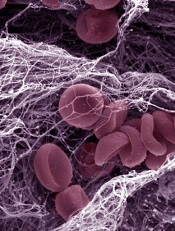
Credit: Kevin MacKenzie
The US Food and Drug Administration (FDA) has granted orphan drug designation for CCX168, an oral inhibitor targeting the receptor for the complement protein C5a, to treat atypical hemolytic uremic syndrome (aHUS).
This rare but life-threatening disease causes inflammation of the blood vessels and thrombus formation throughout the body.
Patients with aHUS are at constant risk of sudden and progressive damage to, and failure of, vital organs. Roughly 10% to 15% of patients die in the initial, acute phase of aHUS.
The majority of patients—up to 70%—develop end-stage kidney failure requiring dialysis. And 1 in 5 patients has aHUS affecting organs other than the kidneys, most commonly the brain or heart.
“Given the life-threatening nature of aHUS, we are very pleased with the granting of orphan drug designation for CCX168 in this disease,” said Thomas J. Schall, PhD, president and chief executive officer of ChemoCentryx, Inc., the company developing CCX168.
ChemoCentryx has generated positive preclinical data that suggest an important role of C5a receptor inhibition in reducing microvasculature thrombosis formation in aHUS.
The company plans to initiate a phase 2 proof-of-concept study in patients with aHUS by the end of 2014.
CCX168 is also in phase 2 development for the treatment of anti-neutrophil cytoplasmic antibody-associated vasculitis.
The orphan designation for CCX168 will provide ChemoCentryx with a 7-year period of US marketing exclusivity if the drug is approved to treat aHUS, tax credits for clinical research costs, the ability to apply for annual grant funding, clinical research trial design assistance, and the waiver of prescription drug user fees.
Credit: Kevin MacKenzie
The US Food and Drug Administration (FDA) has granted orphan drug designation for CCX168, an oral inhibitor targeting the receptor for the complement protein C5a, to treat atypical hemolytic uremic syndrome (aHUS).
This rare but life-threatening disease causes inflammation of the blood vessels and thrombus formation throughout the body.
Patients with aHUS are at constant risk of sudden and progressive damage to, and failure of, vital organs. Roughly 10% to 15% of patients die in the initial, acute phase of aHUS.
The majority of patients—up to 70%—develop end-stage kidney failure requiring dialysis. And 1 in 5 patients has aHUS affecting organs other than the kidneys, most commonly the brain or heart.
“Given the life-threatening nature of aHUS, we are very pleased with the granting of orphan drug designation for CCX168 in this disease,” said Thomas J. Schall, PhD, president and chief executive officer of ChemoCentryx, Inc., the company developing CCX168.
ChemoCentryx has generated positive preclinical data that suggest an important role of C5a receptor inhibition in reducing microvasculature thrombosis formation in aHUS.
The company plans to initiate a phase 2 proof-of-concept study in patients with aHUS by the end of 2014.
CCX168 is also in phase 2 development for the treatment of anti-neutrophil cytoplasmic antibody-associated vasculitis.
The orphan designation for CCX168 will provide ChemoCentryx with a 7-year period of US marketing exclusivity if the drug is approved to treat aHUS, tax credits for clinical research costs, the ability to apply for annual grant funding, clinical research trial design assistance, and the waiver of prescription drug user fees.
Credit: Kevin MacKenzie
The US Food and Drug Administration (FDA) has granted orphan drug designation for CCX168, an oral inhibitor targeting the receptor for the complement protein C5a, to treat atypical hemolytic uremic syndrome (aHUS).
This rare but life-threatening disease causes inflammation of the blood vessels and thrombus formation throughout the body.
Patients with aHUS are at constant risk of sudden and progressive damage to, and failure of, vital organs. Roughly 10% to 15% of patients die in the initial, acute phase of aHUS.
The majority of patients—up to 70%—develop end-stage kidney failure requiring dialysis. And 1 in 5 patients has aHUS affecting organs other than the kidneys, most commonly the brain or heart.
“Given the life-threatening nature of aHUS, we are very pleased with the granting of orphan drug designation for CCX168 in this disease,” said Thomas J. Schall, PhD, president and chief executive officer of ChemoCentryx, Inc., the company developing CCX168.
ChemoCentryx has generated positive preclinical data that suggest an important role of C5a receptor inhibition in reducing microvasculature thrombosis formation in aHUS.
The company plans to initiate a phase 2 proof-of-concept study in patients with aHUS by the end of 2014.
CCX168 is also in phase 2 development for the treatment of anti-neutrophil cytoplasmic antibody-associated vasculitis.
The orphan designation for CCX168 will provide ChemoCentryx with a 7-year period of US marketing exclusivity if the drug is approved to treat aHUS, tax credits for clinical research costs, the ability to apply for annual grant funding, clinical research trial design assistance, and the waiver of prescription drug user fees.
Exposure to hookah smoke may raise risk of blood cancers

Credit: Steven Damron
A new study indicates that individuals exposed to hookah smoke have an increase in the uptake of benzene, a substance linked to the development of hematologic malignancies.
Levels of S-phenylmercapturic acid (SPMA), a metabolite of benzene, were more than 4 times higher after study subjects smoked a hookah than before they did.
And non-smoking subjects experienced a nearly 3-fold increase in SPMA levels after they visited a hookah lounge.
Nada Kassem, RN, DrPH, of San Diego State University in California, and her colleagues reported these findings in Cancer Epidemiology, Biomarkers & Prevention.
“Hookah smoking involves the use of burning charcoal that is needed to heat the hookah tobacco to generate the smoke that the smoker inhales,” Dr Kassem explained.
“In addition to inhaling toxicants and carcinogens found in the hookah tobacco smoke, hookah smokers and non-smokers who socialize with hookah smokers also inhale large quantities of charcoal combustion-generated toxic and carcinogenic emissions.”
To gain more insight into the dangers of hookah smoke, Dr Kassem and her colleagues analyzed levels of SPMA in the urine of 105 hookah smokers and 103 non-smokers.
The team obtained urine samples the morning of and the morning after participants attended a hookah-only smoking event at a hookah lounge or a private home.
SPMA levels in hookah smokers increased 4.2-fold after smoking at a hookah lounge (P<0.001) and increased 1.9-fold after smoking in a private home (P=0.003).
Non-smokers’ SPMA levels increased 2.6-fold after attending a social event in a hookah lounge (P=0.055).
However, non-smokers had similarly high levels of SPMA before and after attending hookah events in a private home (P=0.933). This suggests these subjects had chronic exposure to benzene before the study, according to Dr Kassem.
Regardless, she and her colleagues said the study’s results suggest hookah smoke increases the uptake of benzene, which has been linked to a range of hematologic malignancies, particularly acute myeloid leukemia.
“In contrast to what is believed, hookah tobacco smoking is not a safe alternative to smoking other forms of tobacco,” Dr Kassem said.
She and her colleagues noted that there is no safe level of exposure to benzene. And this suggests a need for interventions to reduce or prevent the use of hookahs, limit hookah-related exposure to toxic substances, and include hookah smoking in clean indoor air legislation.
Credit: Steven Damron
A new study indicates that individuals exposed to hookah smoke have an increase in the uptake of benzene, a substance linked to the development of hematologic malignancies.
Levels of S-phenylmercapturic acid (SPMA), a metabolite of benzene, were more than 4 times higher after study subjects smoked a hookah than before they did.
And non-smoking subjects experienced a nearly 3-fold increase in SPMA levels after they visited a hookah lounge.
Nada Kassem, RN, DrPH, of San Diego State University in California, and her colleagues reported these findings in Cancer Epidemiology, Biomarkers & Prevention.
“Hookah smoking involves the use of burning charcoal that is needed to heat the hookah tobacco to generate the smoke that the smoker inhales,” Dr Kassem explained.
“In addition to inhaling toxicants and carcinogens found in the hookah tobacco smoke, hookah smokers and non-smokers who socialize with hookah smokers also inhale large quantities of charcoal combustion-generated toxic and carcinogenic emissions.”
To gain more insight into the dangers of hookah smoke, Dr Kassem and her colleagues analyzed levels of SPMA in the urine of 105 hookah smokers and 103 non-smokers.
The team obtained urine samples the morning of and the morning after participants attended a hookah-only smoking event at a hookah lounge or a private home.
SPMA levels in hookah smokers increased 4.2-fold after smoking at a hookah lounge (P<0.001) and increased 1.9-fold after smoking in a private home (P=0.003).
Non-smokers’ SPMA levels increased 2.6-fold after attending a social event in a hookah lounge (P=0.055).
However, non-smokers had similarly high levels of SPMA before and after attending hookah events in a private home (P=0.933). This suggests these subjects had chronic exposure to benzene before the study, according to Dr Kassem.
Regardless, she and her colleagues said the study’s results suggest hookah smoke increases the uptake of benzene, which has been linked to a range of hematologic malignancies, particularly acute myeloid leukemia.
“In contrast to what is believed, hookah tobacco smoking is not a safe alternative to smoking other forms of tobacco,” Dr Kassem said.
She and her colleagues noted that there is no safe level of exposure to benzene. And this suggests a need for interventions to reduce or prevent the use of hookahs, limit hookah-related exposure to toxic substances, and include hookah smoking in clean indoor air legislation.
Credit: Steven Damron
A new study indicates that individuals exposed to hookah smoke have an increase in the uptake of benzene, a substance linked to the development of hematologic malignancies.
Levels of S-phenylmercapturic acid (SPMA), a metabolite of benzene, were more than 4 times higher after study subjects smoked a hookah than before they did.
And non-smoking subjects experienced a nearly 3-fold increase in SPMA levels after they visited a hookah lounge.
Nada Kassem, RN, DrPH, of San Diego State University in California, and her colleagues reported these findings in Cancer Epidemiology, Biomarkers & Prevention.
“Hookah smoking involves the use of burning charcoal that is needed to heat the hookah tobacco to generate the smoke that the smoker inhales,” Dr Kassem explained.
“In addition to inhaling toxicants and carcinogens found in the hookah tobacco smoke, hookah smokers and non-smokers who socialize with hookah smokers also inhale large quantities of charcoal combustion-generated toxic and carcinogenic emissions.”
To gain more insight into the dangers of hookah smoke, Dr Kassem and her colleagues analyzed levels of SPMA in the urine of 105 hookah smokers and 103 non-smokers.
The team obtained urine samples the morning of and the morning after participants attended a hookah-only smoking event at a hookah lounge or a private home.
SPMA levels in hookah smokers increased 4.2-fold after smoking at a hookah lounge (P<0.001) and increased 1.9-fold after smoking in a private home (P=0.003).
Non-smokers’ SPMA levels increased 2.6-fold after attending a social event in a hookah lounge (P=0.055).
However, non-smokers had similarly high levels of SPMA before and after attending hookah events in a private home (P=0.933). This suggests these subjects had chronic exposure to benzene before the study, according to Dr Kassem.
Regardless, she and her colleagues said the study’s results suggest hookah smoke increases the uptake of benzene, which has been linked to a range of hematologic malignancies, particularly acute myeloid leukemia.
“In contrast to what is believed, hookah tobacco smoking is not a safe alternative to smoking other forms of tobacco,” Dr Kassem said.
She and her colleagues noted that there is no safe level of exposure to benzene. And this suggests a need for interventions to reduce or prevent the use of hookahs, limit hookah-related exposure to toxic substances, and include hookah smoking in clean indoor air legislation.
Map helps predict new cancer genes
Credit: Mount Sinai Hospital
Researchers say they’ve created the largest-scale map of direct interactions between proteins encoded by the human genome, and this has revealed dozens of genes that may be involved in cancers.
This human interactome map describes about 14,000 direct interactions between proteins.
The map is about 30% larger than previous maps and contains more high-quality interactions than have come from all previous studies combined, according to the researchers.
Frederick Roth, PhD, of the University of Toronto and Mount Sinai Hospital in Ontario, Canada, and his colleagues described their map in Cell.
First, the researchers identified protein interactions via lab experiments. Then, they used computer modelling to zoom in on proteins that connect to one or more other cancer proteins.
“We show, really for the first time, that cancer proteins are more likely to interconnect with one another than they are to connect to randomly chosen non-cancer proteins,” Dr Roth said.
“Once you see that proteins associated to the same disease are more likely to connect to each other, now you can use this network of interactions as a prediction tool to find new cancer proteins and the genes they encode.”
For example, two known cancer genes encoded two proteins that interacted with CTBP2, a protein encoded at a location tied to prostate cancer, which can spread to nearby lymph nodes. These two proteins are implicated in lymphoid tumors, suggesting that CTBP2 plays a role in the development of lymphoid tumors.
Using their predictive method, the researchers found that 60 of their predicted cancer genes fit into a known cancer pathway.
The study also revealed that the network of protein interactions in humans covers a much broader range of genes than some past research has suggested.
Dr Roth said studies often focus on “popular” proteins that have already been linked to disease or are interesting for other reasons, and this has created a bias in our understanding of protein interactions.
“One major conclusion of the paper is that when you look systematically for interactions, you find them everywhere,” he said.
He and his colleagues believe that knowledge of protein interactions is likely to inform worldwide efforts to sequence and interpret cancer genomes.
Credit: Mount Sinai Hospital
Researchers say they’ve created the largest-scale map of direct interactions between proteins encoded by the human genome, and this has revealed dozens of genes that may be involved in cancers.
This human interactome map describes about 14,000 direct interactions between proteins.
The map is about 30% larger than previous maps and contains more high-quality interactions than have come from all previous studies combined, according to the researchers.
Frederick Roth, PhD, of the University of Toronto and Mount Sinai Hospital in Ontario, Canada, and his colleagues described their map in Cell.
First, the researchers identified protein interactions via lab experiments. Then, they used computer modelling to zoom in on proteins that connect to one or more other cancer proteins.
“We show, really for the first time, that cancer proteins are more likely to interconnect with one another than they are to connect to randomly chosen non-cancer proteins,” Dr Roth said.
“Once you see that proteins associated to the same disease are more likely to connect to each other, now you can use this network of interactions as a prediction tool to find new cancer proteins and the genes they encode.”
For example, two known cancer genes encoded two proteins that interacted with CTBP2, a protein encoded at a location tied to prostate cancer, which can spread to nearby lymph nodes. These two proteins are implicated in lymphoid tumors, suggesting that CTBP2 plays a role in the development of lymphoid tumors.
Using their predictive method, the researchers found that 60 of their predicted cancer genes fit into a known cancer pathway.
The study also revealed that the network of protein interactions in humans covers a much broader range of genes than some past research has suggested.
Dr Roth said studies often focus on “popular” proteins that have already been linked to disease or are interesting for other reasons, and this has created a bias in our understanding of protein interactions.
“One major conclusion of the paper is that when you look systematically for interactions, you find them everywhere,” he said.
He and his colleagues believe that knowledge of protein interactions is likely to inform worldwide efforts to sequence and interpret cancer genomes.
Credit: Mount Sinai Hospital
Researchers say they’ve created the largest-scale map of direct interactions between proteins encoded by the human genome, and this has revealed dozens of genes that may be involved in cancers.
This human interactome map describes about 14,000 direct interactions between proteins.
The map is about 30% larger than previous maps and contains more high-quality interactions than have come from all previous studies combined, according to the researchers.
Frederick Roth, PhD, of the University of Toronto and Mount Sinai Hospital in Ontario, Canada, and his colleagues described their map in Cell.
First, the researchers identified protein interactions via lab experiments. Then, they used computer modelling to zoom in on proteins that connect to one or more other cancer proteins.
“We show, really for the first time, that cancer proteins are more likely to interconnect with one another than they are to connect to randomly chosen non-cancer proteins,” Dr Roth said.
“Once you see that proteins associated to the same disease are more likely to connect to each other, now you can use this network of interactions as a prediction tool to find new cancer proteins and the genes they encode.”
For example, two known cancer genes encoded two proteins that interacted with CTBP2, a protein encoded at a location tied to prostate cancer, which can spread to nearby lymph nodes. These two proteins are implicated in lymphoid tumors, suggesting that CTBP2 plays a role in the development of lymphoid tumors.
Using their predictive method, the researchers found that 60 of their predicted cancer genes fit into a known cancer pathway.
The study also revealed that the network of protein interactions in humans covers a much broader range of genes than some past research has suggested.
Dr Roth said studies often focus on “popular” proteins that have already been linked to disease or are interesting for other reasons, and this has created a bias in our understanding of protein interactions.
“One major conclusion of the paper is that when you look systematically for interactions, you find them everywhere,” he said.
He and his colleagues believe that knowledge of protein interactions is likely to inform worldwide efforts to sequence and interpret cancer genomes.
FDA OKs use of system to treat Ebola convalescent plasma

Credit: Cristina Granados
The US Food and Drug Administration (FDA) has accepted a clinical protocol to make the INTERCEPT Blood System available to treat plasma collected from Ebola survivors.
Transfusion of blood or plasma from recovered Ebola patients can be of benefit in patients with acute Ebola infections, but recovered patients may carry undetected pathogens such as malaria, which is where the INTERCEPT Blood System for plasma comes in.
The system is used for the preparation and storage of whole blood-derived and apheresis plasma (fresh or recently thawed). It can inactivate a range of viruses, bacteria, and parasites to reduce the risk of transmission via transfusion.
“The INTERCEPT pathogen inactivation process can diminish the risk of other pathogens that may contaminate the plasma of valuable Ebola convalescent donors and will provide a new therapeutic resource for patients with Ebola,” said Laurence Corash, MD, senior vice president and chief medical officer of Cerus Corporation, the company developing the INTERCEPT system.
The INTERCEPT Blood System for plasma does not have FDA approval. The agency has approved use of the system via an investigational device exemption (IDE). This allows for early access to a device not yet approved in the US when no satisfactory alternative is available to treat patients with serious or life-threatening conditions.
Under this IDE, investigators at Emory University will collect Ebola convalescent plasma from recovered patients and use the INTERCEPT system for onsite pathogen inactivation.
Following testing for Ebola antibodies at the Centers for Disease Control and Prevention, the treated plasma will be stored at Emory for use with future patients. If needed, Emory will also supply the treated plasma for use at other Ebola treatment centers, such as the University of Nebraska Medical Center.
To further increase the availability of convalescent plasma, Cerus and the trial investigators are collaborating with the American Red Cross and America’s Blood Centers to create a national network of plasma collection sites to access recovered Ebola patients.
“Having a supply of convalescent plasma that has been through pathogen inactivation is critical to making this therapy readily available as new Ebola patients are diagnosed and urgently require treatment,” said Anne Winkler, MD, principal investigator for the study and an assistant professor at the Emory University School of Medicine in Atlanta, Georgia.
The World Health Organization recently identified convalescent plasma as a potentially promising experimental approach to treat Ebola, issuing interim guidance suggesting how the plasma should be sourced and supplied.
The Bill & Melinda Gates Foundation recently announced a $5.7 million commitment to support efforts in Guinea and other Ebola-affected countries to scale up the production and evaluation of potential therapies for people infected with the Ebola virus, including convalescent plasma treated with pathogen inactivation.
Funding is being provided to Clinical Research Management, Inc., and an array of private sector partners to study Ebola convalescent plasma that will be collected through mobile donation units fully equipped with apheresis plasma collection systems and the INTERCEPT Blood System for plasma.
The INTERCEPT platelet and plasma systems have been approved for use in Europe for 8 years and are used in 20 countries. License applications for the systems are under FDA review, with an approval decision expected in 2015.
The FDA recently accepted Cerus’s clinical protocol to make the INTERCEPT Blood System for platelets available under an IDE to regions in the US and its territories with outbreaks of Chikungunya and dengue virus.
Credit: Cristina Granados
The US Food and Drug Administration (FDA) has accepted a clinical protocol to make the INTERCEPT Blood System available to treat plasma collected from Ebola survivors.
Transfusion of blood or plasma from recovered Ebola patients can be of benefit in patients with acute Ebola infections, but recovered patients may carry undetected pathogens such as malaria, which is where the INTERCEPT Blood System for plasma comes in.
The system is used for the preparation and storage of whole blood-derived and apheresis plasma (fresh or recently thawed). It can inactivate a range of viruses, bacteria, and parasites to reduce the risk of transmission via transfusion.
“The INTERCEPT pathogen inactivation process can diminish the risk of other pathogens that may contaminate the plasma of valuable Ebola convalescent donors and will provide a new therapeutic resource for patients with Ebola,” said Laurence Corash, MD, senior vice president and chief medical officer of Cerus Corporation, the company developing the INTERCEPT system.
The INTERCEPT Blood System for plasma does not have FDA approval. The agency has approved use of the system via an investigational device exemption (IDE). This allows for early access to a device not yet approved in the US when no satisfactory alternative is available to treat patients with serious or life-threatening conditions.
Under this IDE, investigators at Emory University will collect Ebola convalescent plasma from recovered patients and use the INTERCEPT system for onsite pathogen inactivation.
Following testing for Ebola antibodies at the Centers for Disease Control and Prevention, the treated plasma will be stored at Emory for use with future patients. If needed, Emory will also supply the treated plasma for use at other Ebola treatment centers, such as the University of Nebraska Medical Center.
To further increase the availability of convalescent plasma, Cerus and the trial investigators are collaborating with the American Red Cross and America’s Blood Centers to create a national network of plasma collection sites to access recovered Ebola patients.
“Having a supply of convalescent plasma that has been through pathogen inactivation is critical to making this therapy readily available as new Ebola patients are diagnosed and urgently require treatment,” said Anne Winkler, MD, principal investigator for the study and an assistant professor at the Emory University School of Medicine in Atlanta, Georgia.
The World Health Organization recently identified convalescent plasma as a potentially promising experimental approach to treat Ebola, issuing interim guidance suggesting how the plasma should be sourced and supplied.
The Bill & Melinda Gates Foundation recently announced a $5.7 million commitment to support efforts in Guinea and other Ebola-affected countries to scale up the production and evaluation of potential therapies for people infected with the Ebola virus, including convalescent plasma treated with pathogen inactivation.
Funding is being provided to Clinical Research Management, Inc., and an array of private sector partners to study Ebola convalescent plasma that will be collected through mobile donation units fully equipped with apheresis plasma collection systems and the INTERCEPT Blood System for plasma.
The INTERCEPT platelet and plasma systems have been approved for use in Europe for 8 years and are used in 20 countries. License applications for the systems are under FDA review, with an approval decision expected in 2015.
The FDA recently accepted Cerus’s clinical protocol to make the INTERCEPT Blood System for platelets available under an IDE to regions in the US and its territories with outbreaks of Chikungunya and dengue virus.
Credit: Cristina Granados
The US Food and Drug Administration (FDA) has accepted a clinical protocol to make the INTERCEPT Blood System available to treat plasma collected from Ebola survivors.
Transfusion of blood or plasma from recovered Ebola patients can be of benefit in patients with acute Ebola infections, but recovered patients may carry undetected pathogens such as malaria, which is where the INTERCEPT Blood System for plasma comes in.
The system is used for the preparation and storage of whole blood-derived and apheresis plasma (fresh or recently thawed). It can inactivate a range of viruses, bacteria, and parasites to reduce the risk of transmission via transfusion.
“The INTERCEPT pathogen inactivation process can diminish the risk of other pathogens that may contaminate the plasma of valuable Ebola convalescent donors and will provide a new therapeutic resource for patients with Ebola,” said Laurence Corash, MD, senior vice president and chief medical officer of Cerus Corporation, the company developing the INTERCEPT system.
The INTERCEPT Blood System for plasma does not have FDA approval. The agency has approved use of the system via an investigational device exemption (IDE). This allows for early access to a device not yet approved in the US when no satisfactory alternative is available to treat patients with serious or life-threatening conditions.
Under this IDE, investigators at Emory University will collect Ebola convalescent plasma from recovered patients and use the INTERCEPT system for onsite pathogen inactivation.
Following testing for Ebola antibodies at the Centers for Disease Control and Prevention, the treated plasma will be stored at Emory for use with future patients. If needed, Emory will also supply the treated plasma for use at other Ebola treatment centers, such as the University of Nebraska Medical Center.
To further increase the availability of convalescent plasma, Cerus and the trial investigators are collaborating with the American Red Cross and America’s Blood Centers to create a national network of plasma collection sites to access recovered Ebola patients.
“Having a supply of convalescent plasma that has been through pathogen inactivation is critical to making this therapy readily available as new Ebola patients are diagnosed and urgently require treatment,” said Anne Winkler, MD, principal investigator for the study and an assistant professor at the Emory University School of Medicine in Atlanta, Georgia.
The World Health Organization recently identified convalescent plasma as a potentially promising experimental approach to treat Ebola, issuing interim guidance suggesting how the plasma should be sourced and supplied.
The Bill & Melinda Gates Foundation recently announced a $5.7 million commitment to support efforts in Guinea and other Ebola-affected countries to scale up the production and evaluation of potential therapies for people infected with the Ebola virus, including convalescent plasma treated with pathogen inactivation.
Funding is being provided to Clinical Research Management, Inc., and an array of private sector partners to study Ebola convalescent plasma that will be collected through mobile donation units fully equipped with apheresis plasma collection systems and the INTERCEPT Blood System for plasma.
The INTERCEPT platelet and plasma systems have been approved for use in Europe for 8 years and are used in 20 countries. License applications for the systems are under FDA review, with an approval decision expected in 2015.
The FDA recently accepted Cerus’s clinical protocol to make the INTERCEPT Blood System for platelets available under an IDE to regions in the US and its territories with outbreaks of Chikungunya and dengue virus.
Compounds can target Ras pathway
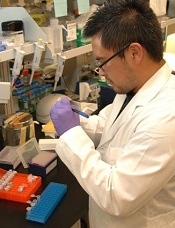
Credit: NIH
A newly identified class of compounds recognize a key target in the Ras signaling pathway and could therefore prove useful in treating a range of malignancies, according to research published in Chemistry & Biology.
The lead compound, NSC-658497, targeted the catalytic activation of Ras by an enzyme called SOS1.
NSC-658497 blocked SOS1-mediated molecular signaling in the Ras pathway that causes rapid cell proliferation, tumor development, and cancer.
“While Ras pathway activation is a dominant event happening in many diseases, so far, the immediate signaling module of the Ras pathway has been difficult to target,” said study author Yi Zheng, PhD, of Cincinnati Children’s Hospital in Ohio.
“Most strategies for treatment have been geared toward hitting molecular effectors that are farther downstream. In this study, we have identified synthetic compounds that specifically recognize the catalytic pocket of SOS1 and demonstrated that they are effective inhibitors of Ras signaling in cells. This establishes a novel targeting approach for cancers and Rasopathies that is useful in developing therapeutics.”
Rasopathies include a group of 9 developmental syndromes that are caused by mutations in the Ras pathway (Noonan, LEOPARD, hereditary Gingival fibromatosis type 1, Capillary malformation-AV malformation, Neurofibromatosis type 1, Legius, Costello, Cardio-facio-cutaneous, and autoimmune lymphoproliferative syndromes).
Dysregulation of the Ras pathway (including its SOS1 catalytic activator) is also linked to a number of malignancies, such as breast, pancreatic, and cervical cancers, as well as leukemia.
To find compounds that could target the Ras pathway, Dr Zheng and his colleagues tested 30,000 synthetic molecular compounds in a database maintained by the National Cancer Institute.
The researchers looked for the compounds’ ability to dock with the catalytic site of SOS1, which led them to identify NSC-658497 and derivatives as lead candidates for the development of a prospective drug.
The team then tested NSC-658497 in cell lines of mouse fibroblasts and prostate cancer. These experiments showed the compound successfully blocked SOS1-to-Ras signaling and the proliferation of cancer cells.
Dr Zheng said one of the researchers’ next steps is to transform NSC-658497 into a drug that can be administered to a living organism so the team can begin testing the inhibitor in mouse models of different Rasopathies and cancers.
One of the targeted approaches the researchers plan to explore is whether NSC-658497 might be most promising in individuals who have a subset of disease in which SOS1 is significantly overexpressed or mutated.
Credit: NIH
A newly identified class of compounds recognize a key target in the Ras signaling pathway and could therefore prove useful in treating a range of malignancies, according to research published in Chemistry & Biology.
The lead compound, NSC-658497, targeted the catalytic activation of Ras by an enzyme called SOS1.
NSC-658497 blocked SOS1-mediated molecular signaling in the Ras pathway that causes rapid cell proliferation, tumor development, and cancer.
“While Ras pathway activation is a dominant event happening in many diseases, so far, the immediate signaling module of the Ras pathway has been difficult to target,” said study author Yi Zheng, PhD, of Cincinnati Children’s Hospital in Ohio.
“Most strategies for treatment have been geared toward hitting molecular effectors that are farther downstream. In this study, we have identified synthetic compounds that specifically recognize the catalytic pocket of SOS1 and demonstrated that they are effective inhibitors of Ras signaling in cells. This establishes a novel targeting approach for cancers and Rasopathies that is useful in developing therapeutics.”
Rasopathies include a group of 9 developmental syndromes that are caused by mutations in the Ras pathway (Noonan, LEOPARD, hereditary Gingival fibromatosis type 1, Capillary malformation-AV malformation, Neurofibromatosis type 1, Legius, Costello, Cardio-facio-cutaneous, and autoimmune lymphoproliferative syndromes).
Dysregulation of the Ras pathway (including its SOS1 catalytic activator) is also linked to a number of malignancies, such as breast, pancreatic, and cervical cancers, as well as leukemia.
To find compounds that could target the Ras pathway, Dr Zheng and his colleagues tested 30,000 synthetic molecular compounds in a database maintained by the National Cancer Institute.
The researchers looked for the compounds’ ability to dock with the catalytic site of SOS1, which led them to identify NSC-658497 and derivatives as lead candidates for the development of a prospective drug.
The team then tested NSC-658497 in cell lines of mouse fibroblasts and prostate cancer. These experiments showed the compound successfully blocked SOS1-to-Ras signaling and the proliferation of cancer cells.
Dr Zheng said one of the researchers’ next steps is to transform NSC-658497 into a drug that can be administered to a living organism so the team can begin testing the inhibitor in mouse models of different Rasopathies and cancers.
One of the targeted approaches the researchers plan to explore is whether NSC-658497 might be most promising in individuals who have a subset of disease in which SOS1 is significantly overexpressed or mutated.
Credit: NIH
A newly identified class of compounds recognize a key target in the Ras signaling pathway and could therefore prove useful in treating a range of malignancies, according to research published in Chemistry & Biology.
The lead compound, NSC-658497, targeted the catalytic activation of Ras by an enzyme called SOS1.
NSC-658497 blocked SOS1-mediated molecular signaling in the Ras pathway that causes rapid cell proliferation, tumor development, and cancer.
“While Ras pathway activation is a dominant event happening in many diseases, so far, the immediate signaling module of the Ras pathway has been difficult to target,” said study author Yi Zheng, PhD, of Cincinnati Children’s Hospital in Ohio.
“Most strategies for treatment have been geared toward hitting molecular effectors that are farther downstream. In this study, we have identified synthetic compounds that specifically recognize the catalytic pocket of SOS1 and demonstrated that they are effective inhibitors of Ras signaling in cells. This establishes a novel targeting approach for cancers and Rasopathies that is useful in developing therapeutics.”
Rasopathies include a group of 9 developmental syndromes that are caused by mutations in the Ras pathway (Noonan, LEOPARD, hereditary Gingival fibromatosis type 1, Capillary malformation-AV malformation, Neurofibromatosis type 1, Legius, Costello, Cardio-facio-cutaneous, and autoimmune lymphoproliferative syndromes).
Dysregulation of the Ras pathway (including its SOS1 catalytic activator) is also linked to a number of malignancies, such as breast, pancreatic, and cervical cancers, as well as leukemia.
To find compounds that could target the Ras pathway, Dr Zheng and his colleagues tested 30,000 synthetic molecular compounds in a database maintained by the National Cancer Institute.
The researchers looked for the compounds’ ability to dock with the catalytic site of SOS1, which led them to identify NSC-658497 and derivatives as lead candidates for the development of a prospective drug.
The team then tested NSC-658497 in cell lines of mouse fibroblasts and prostate cancer. These experiments showed the compound successfully blocked SOS1-to-Ras signaling and the proliferation of cancer cells.
Dr Zheng said one of the researchers’ next steps is to transform NSC-658497 into a drug that can be administered to a living organism so the team can begin testing the inhibitor in mouse models of different Rasopathies and cancers.
One of the targeted approaches the researchers plan to explore is whether NSC-658497 might be most promising in individuals who have a subset of disease in which SOS1 is significantly overexpressed or mutated.
Therapy delivers long-term benefits in hemophilia B

Credit: University College
London Hospitals
A novel gene therapy can provide lasting clinical improvement for men with severe hemophilia B, according to research published in NEJM.
In a study of 10 men, the therapy increased factor IX levels, reduced bleeding episodes, and decreased the use of prophylactic factor IX concentrate. The therapy also allowed some patients to adopt a more active lifestyle.
Four patients experienced temporary increases in liver enzymes, but none reported late toxic effects at a median follow-up of 3 years.
“The data we are reporting mark a paradigm shift in treatment of hemophilia B and lay the groundwork for curing this major bleeding disorder,” said study author Amit Nathwani, MBChB, PhD, of the University College London Cancer Institute in the UK.
“The results also provide a solid platform for developing this gene transfer approach for treatment of other disorders, ranging from other congenital clotting deficiencies like hemophilia A to inborn errors of metabolism such as phenylketonuria.”
The therapy consists of a serotype 8 pseudotyped, self-complementary adeno-associated virus (AAV8) vector expressing a codon-optimized factor IX transgene (scAAV2/8-LP1-hFIXco).
Dr Nathwani and his colleagues tested scAAV2/8-LP1-hFIXco in 10 men with severe hemophilia B to determine the durability of transgene expression, the vector dose-response relationship, and the level of persistent or late toxicity.
Six of the patients had been enrolled in a phase 1 dose-escalation trial, with 2 patients each receiving a low, intermediate, or high dose of the therapy. The other 4 patients received the high dose (2 × 10¹² vector genomes per kg of body weight). Patients received scAAV2/8-LP1-hFIXco as a single infusion.
Factor IX levels rose in all 10 men following the infusion and have remained stable for a median of 3.2 years (range, 1.5 to 4.3 years).
Overall, episodes of spontaneous bleeding declined 90%. The use of factor IX replacement therapy dropped about 92% in the first 12 months after treatment with scAAV2/8-LP1-hFIXco.
In the 6 participants who received the highest dose of therapy, factor IX levels increased from less than 1% of normal levels to 5% or more.
The increase transformed their disease from severe to mild and enabled participation in sports such as soccer without the need for factor IX replacement therapy or an increase in the risk of bleeding.
Episodes of spontaneous bleeding and the use of factor IX replacement therapy declined for these patients more than 94% in the next 12 months.
Liver enzymes rose in 4 of the 6 patients who received the highest dose of scAAV2/8-LP1-hFIXco, possibly due to an immune response against the vector. The men had no symptoms and remained otherwise healthy. Their liver enzymes returned to the normal range following brief treatment with steroids.
“This study provides the first clear demonstration of the long-term safety and efficacy of gene therapy,” said study author Andrew Davidoff, MD, of St Jude Children’s Research Hospital in Memphis, Tennessee.
“The results so far have made a profound difference in the lives of study participants by dramatically reducing their risk of bleeding.”
Prior to receiving scAAV2/8-LP1-hFIXco, 7 of the men received factor IX replacement therapy at least once a week to prevent bleeding episodes. Others used replacement therapy as needed to halt bleeding or prior to surgeries.
Since joining the trial, 4 of these men ended the routine factor IX injections. And none have suffered spontaneous bleeding despite increased physical activity.
“Some patients have not required clotting factor injections for more than 4 years, which has been life-changing,” Dr Nathwani said.
The researchers estimated that overall spending on factor IX replacement therapy for study participants is down more than $2.5 million.
Twelve men have now joined this ongoing phase 1/2 trial. Half were treated at the University College London and half at St. Jude.
Discussions are underway about expanding the trial to include younger patients with hemophilia B. Meanwhile, work continues to improve and expand use of the vector for the treatment of hemophilia A.
Credit: University College
London Hospitals
A novel gene therapy can provide lasting clinical improvement for men with severe hemophilia B, according to research published in NEJM.
In a study of 10 men, the therapy increased factor IX levels, reduced bleeding episodes, and decreased the use of prophylactic factor IX concentrate. The therapy also allowed some patients to adopt a more active lifestyle.
Four patients experienced temporary increases in liver enzymes, but none reported late toxic effects at a median follow-up of 3 years.
“The data we are reporting mark a paradigm shift in treatment of hemophilia B and lay the groundwork for curing this major bleeding disorder,” said study author Amit Nathwani, MBChB, PhD, of the University College London Cancer Institute in the UK.
“The results also provide a solid platform for developing this gene transfer approach for treatment of other disorders, ranging from other congenital clotting deficiencies like hemophilia A to inborn errors of metabolism such as phenylketonuria.”
The therapy consists of a serotype 8 pseudotyped, self-complementary adeno-associated virus (AAV8) vector expressing a codon-optimized factor IX transgene (scAAV2/8-LP1-hFIXco).
Dr Nathwani and his colleagues tested scAAV2/8-LP1-hFIXco in 10 men with severe hemophilia B to determine the durability of transgene expression, the vector dose-response relationship, and the level of persistent or late toxicity.
Six of the patients had been enrolled in a phase 1 dose-escalation trial, with 2 patients each receiving a low, intermediate, or high dose of the therapy. The other 4 patients received the high dose (2 × 10¹² vector genomes per kg of body weight). Patients received scAAV2/8-LP1-hFIXco as a single infusion.
Factor IX levels rose in all 10 men following the infusion and have remained stable for a median of 3.2 years (range, 1.5 to 4.3 years).
Overall, episodes of spontaneous bleeding declined 90%. The use of factor IX replacement therapy dropped about 92% in the first 12 months after treatment with scAAV2/8-LP1-hFIXco.
In the 6 participants who received the highest dose of therapy, factor IX levels increased from less than 1% of normal levels to 5% or more.
The increase transformed their disease from severe to mild and enabled participation in sports such as soccer without the need for factor IX replacement therapy or an increase in the risk of bleeding.
Episodes of spontaneous bleeding and the use of factor IX replacement therapy declined for these patients more than 94% in the next 12 months.
Liver enzymes rose in 4 of the 6 patients who received the highest dose of scAAV2/8-LP1-hFIXco, possibly due to an immune response against the vector. The men had no symptoms and remained otherwise healthy. Their liver enzymes returned to the normal range following brief treatment with steroids.
“This study provides the first clear demonstration of the long-term safety and efficacy of gene therapy,” said study author Andrew Davidoff, MD, of St Jude Children’s Research Hospital in Memphis, Tennessee.
“The results so far have made a profound difference in the lives of study participants by dramatically reducing their risk of bleeding.”
Prior to receiving scAAV2/8-LP1-hFIXco, 7 of the men received factor IX replacement therapy at least once a week to prevent bleeding episodes. Others used replacement therapy as needed to halt bleeding or prior to surgeries.
Since joining the trial, 4 of these men ended the routine factor IX injections. And none have suffered spontaneous bleeding despite increased physical activity.
“Some patients have not required clotting factor injections for more than 4 years, which has been life-changing,” Dr Nathwani said.
The researchers estimated that overall spending on factor IX replacement therapy for study participants is down more than $2.5 million.
Twelve men have now joined this ongoing phase 1/2 trial. Half were treated at the University College London and half at St. Jude.
Discussions are underway about expanding the trial to include younger patients with hemophilia B. Meanwhile, work continues to improve and expand use of the vector for the treatment of hemophilia A.
Credit: University College
London Hospitals
A novel gene therapy can provide lasting clinical improvement for men with severe hemophilia B, according to research published in NEJM.
In a study of 10 men, the therapy increased factor IX levels, reduced bleeding episodes, and decreased the use of prophylactic factor IX concentrate. The therapy also allowed some patients to adopt a more active lifestyle.
Four patients experienced temporary increases in liver enzymes, but none reported late toxic effects at a median follow-up of 3 years.
“The data we are reporting mark a paradigm shift in treatment of hemophilia B and lay the groundwork for curing this major bleeding disorder,” said study author Amit Nathwani, MBChB, PhD, of the University College London Cancer Institute in the UK.
“The results also provide a solid platform for developing this gene transfer approach for treatment of other disorders, ranging from other congenital clotting deficiencies like hemophilia A to inborn errors of metabolism such as phenylketonuria.”
The therapy consists of a serotype 8 pseudotyped, self-complementary adeno-associated virus (AAV8) vector expressing a codon-optimized factor IX transgene (scAAV2/8-LP1-hFIXco).
Dr Nathwani and his colleagues tested scAAV2/8-LP1-hFIXco in 10 men with severe hemophilia B to determine the durability of transgene expression, the vector dose-response relationship, and the level of persistent or late toxicity.
Six of the patients had been enrolled in a phase 1 dose-escalation trial, with 2 patients each receiving a low, intermediate, or high dose of the therapy. The other 4 patients received the high dose (2 × 10¹² vector genomes per kg of body weight). Patients received scAAV2/8-LP1-hFIXco as a single infusion.
Factor IX levels rose in all 10 men following the infusion and have remained stable for a median of 3.2 years (range, 1.5 to 4.3 years).
Overall, episodes of spontaneous bleeding declined 90%. The use of factor IX replacement therapy dropped about 92% in the first 12 months after treatment with scAAV2/8-LP1-hFIXco.
In the 6 participants who received the highest dose of therapy, factor IX levels increased from less than 1% of normal levels to 5% or more.
The increase transformed their disease from severe to mild and enabled participation in sports such as soccer without the need for factor IX replacement therapy or an increase in the risk of bleeding.
Episodes of spontaneous bleeding and the use of factor IX replacement therapy declined for these patients more than 94% in the next 12 months.
Liver enzymes rose in 4 of the 6 patients who received the highest dose of scAAV2/8-LP1-hFIXco, possibly due to an immune response against the vector. The men had no symptoms and remained otherwise healthy. Their liver enzymes returned to the normal range following brief treatment with steroids.
“This study provides the first clear demonstration of the long-term safety and efficacy of gene therapy,” said study author Andrew Davidoff, MD, of St Jude Children’s Research Hospital in Memphis, Tennessee.
“The results so far have made a profound difference in the lives of study participants by dramatically reducing their risk of bleeding.”
Prior to receiving scAAV2/8-LP1-hFIXco, 7 of the men received factor IX replacement therapy at least once a week to prevent bleeding episodes. Others used replacement therapy as needed to halt bleeding or prior to surgeries.
Since joining the trial, 4 of these men ended the routine factor IX injections. And none have suffered spontaneous bleeding despite increased physical activity.
“Some patients have not required clotting factor injections for more than 4 years, which has been life-changing,” Dr Nathwani said.
The researchers estimated that overall spending on factor IX replacement therapy for study participants is down more than $2.5 million.
Twelve men have now joined this ongoing phase 1/2 trial. Half were treated at the University College London and half at St. Jude.
Discussions are underway about expanding the trial to include younger patients with hemophilia B. Meanwhile, work continues to improve and expand use of the vector for the treatment of hemophilia A.
Hydroxyurea proves comparable to transfusion in SCD

Credit: St Jude Children’s
Research Hospital
Treatment with hydroxyurea is a comparable alternative to blood transfusions for reducing the risk of stroke in children with sickle cell disease (SCD), according to the National Heart Lung and Blood Institute (NHLBI).
Early results of the phase 3 TWiTCH trial showed that daily doses of hydroxyurea lower the transcranial Doppler (TCD) blood velocity in children with SCD to a similar degree as blood transfusions, thereby decreasing the risk of stroke.
Based on these findings, the NHLBI has terminated the trial early, about a year before it was originally scheduled to end.
“Early results indicate that TWiTCH is a success,” said Russell E. Ware, MD, PhD, principal investigator of the study and director of hematology at Cincinnati Children’s Hospital Medical Center.
“A group of outside experts has been reviewing the TWiTCH data every few months to ensure the safety of children in the clinical trial and to monitor the data. This group met recently and, after careful consideration of the interim data results, recommended that the study be stopped since hydroxyurea worked as well as transfusions to lower TCD velocities.”
The NHLBI said it cannot release results from the TWiTCH trial, but some details are available. Researchers enrolled 121 children between the ages of 4 and 16 who had SCD and abnormally elevated TCD velocities.
Half of patients received transfusions, and the other half received daily hydroxyurea, which has not yet been approved for children with SCD.
The clinical data-collection portion of the study was originally scheduled for the 24-month mark, but collection was stopped after only half of the children completed the treatment phase.
At the first interim analysis, a data and safety monitoring board found that hydroxyurea was not inferior to regular blood transfusions in lowering TCD velocities. And the board said the strength of the statistical finding was unlikely to change with the collection of additional data.
After reviewing the board’s recommendation, the NHLBI decided to end the study early, as the primary endpoint had been met.
Study participants have been notified about the trial’s ending, and they will have the opportunity to receive the care they feel is best suited for them.
“No child should ever suffer a stroke, which is why it was so important for the NHLBI to support the TWiTCH trial,” said Gary Gibbons, MD, director of the NHLBI. “This critical research finding opens the door to more treatment options for clinicians trying to prevent strokes in children living with the sickle cell disease.”
Credit: St Jude Children’s
Research Hospital
Treatment with hydroxyurea is a comparable alternative to blood transfusions for reducing the risk of stroke in children with sickle cell disease (SCD), according to the National Heart Lung and Blood Institute (NHLBI).
Early results of the phase 3 TWiTCH trial showed that daily doses of hydroxyurea lower the transcranial Doppler (TCD) blood velocity in children with SCD to a similar degree as blood transfusions, thereby decreasing the risk of stroke.
Based on these findings, the NHLBI has terminated the trial early, about a year before it was originally scheduled to end.
“Early results indicate that TWiTCH is a success,” said Russell E. Ware, MD, PhD, principal investigator of the study and director of hematology at Cincinnati Children’s Hospital Medical Center.
“A group of outside experts has been reviewing the TWiTCH data every few months to ensure the safety of children in the clinical trial and to monitor the data. This group met recently and, after careful consideration of the interim data results, recommended that the study be stopped since hydroxyurea worked as well as transfusions to lower TCD velocities.”
The NHLBI said it cannot release results from the TWiTCH trial, but some details are available. Researchers enrolled 121 children between the ages of 4 and 16 who had SCD and abnormally elevated TCD velocities.
Half of patients received transfusions, and the other half received daily hydroxyurea, which has not yet been approved for children with SCD.
The clinical data-collection portion of the study was originally scheduled for the 24-month mark, but collection was stopped after only half of the children completed the treatment phase.
At the first interim analysis, a data and safety monitoring board found that hydroxyurea was not inferior to regular blood transfusions in lowering TCD velocities. And the board said the strength of the statistical finding was unlikely to change with the collection of additional data.
After reviewing the board’s recommendation, the NHLBI decided to end the study early, as the primary endpoint had been met.
Study participants have been notified about the trial’s ending, and they will have the opportunity to receive the care they feel is best suited for them.
“No child should ever suffer a stroke, which is why it was so important for the NHLBI to support the TWiTCH trial,” said Gary Gibbons, MD, director of the NHLBI. “This critical research finding opens the door to more treatment options for clinicians trying to prevent strokes in children living with the sickle cell disease.”
Credit: St Jude Children’s
Research Hospital
Treatment with hydroxyurea is a comparable alternative to blood transfusions for reducing the risk of stroke in children with sickle cell disease (SCD), according to the National Heart Lung and Blood Institute (NHLBI).
Early results of the phase 3 TWiTCH trial showed that daily doses of hydroxyurea lower the transcranial Doppler (TCD) blood velocity in children with SCD to a similar degree as blood transfusions, thereby decreasing the risk of stroke.
Based on these findings, the NHLBI has terminated the trial early, about a year before it was originally scheduled to end.
“Early results indicate that TWiTCH is a success,” said Russell E. Ware, MD, PhD, principal investigator of the study and director of hematology at Cincinnati Children’s Hospital Medical Center.
“A group of outside experts has been reviewing the TWiTCH data every few months to ensure the safety of children in the clinical trial and to monitor the data. This group met recently and, after careful consideration of the interim data results, recommended that the study be stopped since hydroxyurea worked as well as transfusions to lower TCD velocities.”
The NHLBI said it cannot release results from the TWiTCH trial, but some details are available. Researchers enrolled 121 children between the ages of 4 and 16 who had SCD and abnormally elevated TCD velocities.
Half of patients received transfusions, and the other half received daily hydroxyurea, which has not yet been approved for children with SCD.
The clinical data-collection portion of the study was originally scheduled for the 24-month mark, but collection was stopped after only half of the children completed the treatment phase.
At the first interim analysis, a data and safety monitoring board found that hydroxyurea was not inferior to regular blood transfusions in lowering TCD velocities. And the board said the strength of the statistical finding was unlikely to change with the collection of additional data.
After reviewing the board’s recommendation, the NHLBI decided to end the study early, as the primary endpoint had been met.
Study participants have been notified about the trial’s ending, and they will have the opportunity to receive the care they feel is best suited for them.
“No child should ever suffer a stroke, which is why it was so important for the NHLBI to support the TWiTCH trial,” said Gary Gibbons, MD, director of the NHLBI. “This critical research finding opens the door to more treatment options for clinicians trying to prevent strokes in children living with the sickle cell disease.”
EZH2 inhibitor is active in NHL with wild-type EZH2
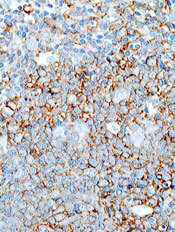
BARCELONA—A small molecule inhibitor of EZH2 has shown “encouraging” activity in patients with advanced non-Hodgkin lymphoma (NHL), according to researchers.
In a phase 1 study, 4 of 10 heavily pretreated NHL patients responded to the drug, E7438 (also known as EPZ6438), with 1 patient achieving a complete response.
And E7438’s activity was not dependent upon the presence of an EZH2 mutation, as all 4 patients had wild-type EZH2.
The drug also demonstrated activity in a patient with a malignant rhabdoid tumor in the brain.
“In this study, responses were seen in patients with lymphoma who were refractory to, or relapsed after, prior standard treatments, as well as in a patient with a malignant disease for which there is no available standard medical treatment [rhabdoid tumor in the brain],” said study investigator Vincent Ribrag, MD, of Institut Gustave Roussy in Villejuif, France.
Dr Ribrag and his colleagues also found E7438 to be well-tolerated. There were no grade 3 adverse events and only 1 grade 4 event at the maximum dose level.
The researchers presented these data at the 26th EORTC-NCI-AACR Symposium on Molecular Targets and Cancer Therapeutics as abstract LBA6. Investigators from Esai and Epizyme, the companies developing E7438, were involved in this trial.
The study included 24 patients who ranged in age from 24 to 84. Twelve patients had solid tumor malignancies, and 12 had NHL. Six patients had diffuse large B-cell lymphoma (DLBCL), 5 had follicular lymphoma (FL), and 1 had marginal zone lymphoma.
All of the patients were heavily pretreated. Fourteen had received between 2 and 4 prior therapies, and 9 had received more than 4 prior treatments.
E7438 was given in 5 dosing cohorts: 100 mg BID (n=6), 200 mg BID (n=3), 400 mg BID (n=3), 800 mg BID (n=6), and 1600 mg BID (n=6).
‘Encouraging activity’
Twenty patients were evaluable for efficacy as of October 20. Among the 10 patients with solid tumor malignancies, 1 responded. The patient with an INI1-deficient malignant rhabdoid tumor achieved a partial response and remains on study.
Four of the 10 evaluable NHL patients achieved a partial response or better, including 1 complete response. Responses were seen across a range of doses, up to the 800 mg BID dose.
Among the 5 evaluable DLBCL patients, 3 achieved a partial response or better. One patient with a partial response subsequently evolved to a complete response upon continued treatment and remains on study at 41 weeks of treatment. One of the 2 patients who achieved a partial response remains on study.
Among the 4 evaluable patients with FL, 1 achieved a partial response and remains on study. Three FL patients achieved stable disease, and 2 of these patients remain on study.
The patient with marginal zone lymphoma achieved stable disease and remains on study.
Confirmatory sequencing in a central lab showed that all 10 NHL patients who were evaluable for efficacy had wild-type EZH2, and responses were observed in both germinal center and non-germinal center lymphoma.
“These results provide encouraging evidence of antitumor activity with [E7438] . . . , including the potential for responses to improve with continued treatment,” said Peter Ho, MD, PhD, chief development officer at Epizyme.
“Given the clinical activity we saw in both wild-type EZH2 and non-germinal center lymphoma patients, our plan for the first phase 2 NHL study is to evaluate EPZ-6438 in DLBCL and FL patients with and without EZH2 mutations.”
‘Little toxicity’
All 24 patients were evaluable for safety and tolerability. The majority of adverse events were grade 1 or 2. Events occurring in more than 10% of patients included asthenia, decreased appetite, and nausea.
The only grade 3/4 treatment-related adverse event was grade 4 thrombocytopenia in 1 patient who received the drug at 1600 mg, which met the criteria for a dose-limiting toxicity.
There were no adverse events that required treatment withdrawal or dose reduction. However, 3 events resulted in dose interruption.
“The maximum tolerated dose was not reached because there was little toxicity observed,” Dr Ribrag said. “Since we saw that the drug was active at doses lower than the maximum dose of 1600 mg twice a day, the dose used for the phase 2 trials planned for 2015 may be lower.”
E7438 was rapidly absorbed and eliminated, with a terminal half-life of 3 to 6 hours. In addition, H3K27Me3 inhibition in the skin, a marker of biologic activity, correlated to treatment exposure, with near maximal inhibition predicted by pharmacokinetic exposure at 800 mg.
Currently, a phase 2 dose of 800 mg BID is under consideration. A final recommendation for the phase 2 dose will be approved by a data monitoring committee based on efficacy, safety, and pharmacokinetic/pharmacodynamic parameters.
BARCELONA—A small molecule inhibitor of EZH2 has shown “encouraging” activity in patients with advanced non-Hodgkin lymphoma (NHL), according to researchers.
In a phase 1 study, 4 of 10 heavily pretreated NHL patients responded to the drug, E7438 (also known as EPZ6438), with 1 patient achieving a complete response.
And E7438’s activity was not dependent upon the presence of an EZH2 mutation, as all 4 patients had wild-type EZH2.
The drug also demonstrated activity in a patient with a malignant rhabdoid tumor in the brain.
“In this study, responses were seen in patients with lymphoma who were refractory to, or relapsed after, prior standard treatments, as well as in a patient with a malignant disease for which there is no available standard medical treatment [rhabdoid tumor in the brain],” said study investigator Vincent Ribrag, MD, of Institut Gustave Roussy in Villejuif, France.
Dr Ribrag and his colleagues also found E7438 to be well-tolerated. There were no grade 3 adverse events and only 1 grade 4 event at the maximum dose level.
The researchers presented these data at the 26th EORTC-NCI-AACR Symposium on Molecular Targets and Cancer Therapeutics as abstract LBA6. Investigators from Esai and Epizyme, the companies developing E7438, were involved in this trial.
The study included 24 patients who ranged in age from 24 to 84. Twelve patients had solid tumor malignancies, and 12 had NHL. Six patients had diffuse large B-cell lymphoma (DLBCL), 5 had follicular lymphoma (FL), and 1 had marginal zone lymphoma.
All of the patients were heavily pretreated. Fourteen had received between 2 and 4 prior therapies, and 9 had received more than 4 prior treatments.
E7438 was given in 5 dosing cohorts: 100 mg BID (n=6), 200 mg BID (n=3), 400 mg BID (n=3), 800 mg BID (n=6), and 1600 mg BID (n=6).
‘Encouraging activity’
Twenty patients were evaluable for efficacy as of October 20. Among the 10 patients with solid tumor malignancies, 1 responded. The patient with an INI1-deficient malignant rhabdoid tumor achieved a partial response and remains on study.
Four of the 10 evaluable NHL patients achieved a partial response or better, including 1 complete response. Responses were seen across a range of doses, up to the 800 mg BID dose.
Among the 5 evaluable DLBCL patients, 3 achieved a partial response or better. One patient with a partial response subsequently evolved to a complete response upon continued treatment and remains on study at 41 weeks of treatment. One of the 2 patients who achieved a partial response remains on study.
Among the 4 evaluable patients with FL, 1 achieved a partial response and remains on study. Three FL patients achieved stable disease, and 2 of these patients remain on study.
The patient with marginal zone lymphoma achieved stable disease and remains on study.
Confirmatory sequencing in a central lab showed that all 10 NHL patients who were evaluable for efficacy had wild-type EZH2, and responses were observed in both germinal center and non-germinal center lymphoma.
“These results provide encouraging evidence of antitumor activity with [E7438] . . . , including the potential for responses to improve with continued treatment,” said Peter Ho, MD, PhD, chief development officer at Epizyme.
“Given the clinical activity we saw in both wild-type EZH2 and non-germinal center lymphoma patients, our plan for the first phase 2 NHL study is to evaluate EPZ-6438 in DLBCL and FL patients with and without EZH2 mutations.”
‘Little toxicity’
All 24 patients were evaluable for safety and tolerability. The majority of adverse events were grade 1 or 2. Events occurring in more than 10% of patients included asthenia, decreased appetite, and nausea.
The only grade 3/4 treatment-related adverse event was grade 4 thrombocytopenia in 1 patient who received the drug at 1600 mg, which met the criteria for a dose-limiting toxicity.
There were no adverse events that required treatment withdrawal or dose reduction. However, 3 events resulted in dose interruption.
“The maximum tolerated dose was not reached because there was little toxicity observed,” Dr Ribrag said. “Since we saw that the drug was active at doses lower than the maximum dose of 1600 mg twice a day, the dose used for the phase 2 trials planned for 2015 may be lower.”
E7438 was rapidly absorbed and eliminated, with a terminal half-life of 3 to 6 hours. In addition, H3K27Me3 inhibition in the skin, a marker of biologic activity, correlated to treatment exposure, with near maximal inhibition predicted by pharmacokinetic exposure at 800 mg.
Currently, a phase 2 dose of 800 mg BID is under consideration. A final recommendation for the phase 2 dose will be approved by a data monitoring committee based on efficacy, safety, and pharmacokinetic/pharmacodynamic parameters.
BARCELONA—A small molecule inhibitor of EZH2 has shown “encouraging” activity in patients with advanced non-Hodgkin lymphoma (NHL), according to researchers.
In a phase 1 study, 4 of 10 heavily pretreated NHL patients responded to the drug, E7438 (also known as EPZ6438), with 1 patient achieving a complete response.
And E7438’s activity was not dependent upon the presence of an EZH2 mutation, as all 4 patients had wild-type EZH2.
The drug also demonstrated activity in a patient with a malignant rhabdoid tumor in the brain.
“In this study, responses were seen in patients with lymphoma who were refractory to, or relapsed after, prior standard treatments, as well as in a patient with a malignant disease for which there is no available standard medical treatment [rhabdoid tumor in the brain],” said study investigator Vincent Ribrag, MD, of Institut Gustave Roussy in Villejuif, France.
Dr Ribrag and his colleagues also found E7438 to be well-tolerated. There were no grade 3 adverse events and only 1 grade 4 event at the maximum dose level.
The researchers presented these data at the 26th EORTC-NCI-AACR Symposium on Molecular Targets and Cancer Therapeutics as abstract LBA6. Investigators from Esai and Epizyme, the companies developing E7438, were involved in this trial.
The study included 24 patients who ranged in age from 24 to 84. Twelve patients had solid tumor malignancies, and 12 had NHL. Six patients had diffuse large B-cell lymphoma (DLBCL), 5 had follicular lymphoma (FL), and 1 had marginal zone lymphoma.
All of the patients were heavily pretreated. Fourteen had received between 2 and 4 prior therapies, and 9 had received more than 4 prior treatments.
E7438 was given in 5 dosing cohorts: 100 mg BID (n=6), 200 mg BID (n=3), 400 mg BID (n=3), 800 mg BID (n=6), and 1600 mg BID (n=6).
‘Encouraging activity’
Twenty patients were evaluable for efficacy as of October 20. Among the 10 patients with solid tumor malignancies, 1 responded. The patient with an INI1-deficient malignant rhabdoid tumor achieved a partial response and remains on study.
Four of the 10 evaluable NHL patients achieved a partial response or better, including 1 complete response. Responses were seen across a range of doses, up to the 800 mg BID dose.
Among the 5 evaluable DLBCL patients, 3 achieved a partial response or better. One patient with a partial response subsequently evolved to a complete response upon continued treatment and remains on study at 41 weeks of treatment. One of the 2 patients who achieved a partial response remains on study.
Among the 4 evaluable patients with FL, 1 achieved a partial response and remains on study. Three FL patients achieved stable disease, and 2 of these patients remain on study.
The patient with marginal zone lymphoma achieved stable disease and remains on study.
Confirmatory sequencing in a central lab showed that all 10 NHL patients who were evaluable for efficacy had wild-type EZH2, and responses were observed in both germinal center and non-germinal center lymphoma.
“These results provide encouraging evidence of antitumor activity with [E7438] . . . , including the potential for responses to improve with continued treatment,” said Peter Ho, MD, PhD, chief development officer at Epizyme.
“Given the clinical activity we saw in both wild-type EZH2 and non-germinal center lymphoma patients, our plan for the first phase 2 NHL study is to evaluate EPZ-6438 in DLBCL and FL patients with and without EZH2 mutations.”
‘Little toxicity’
All 24 patients were evaluable for safety and tolerability. The majority of adverse events were grade 1 or 2. Events occurring in more than 10% of patients included asthenia, decreased appetite, and nausea.
The only grade 3/4 treatment-related adverse event was grade 4 thrombocytopenia in 1 patient who received the drug at 1600 mg, which met the criteria for a dose-limiting toxicity.
There were no adverse events that required treatment withdrawal or dose reduction. However, 3 events resulted in dose interruption.
“The maximum tolerated dose was not reached because there was little toxicity observed,” Dr Ribrag said. “Since we saw that the drug was active at doses lower than the maximum dose of 1600 mg twice a day, the dose used for the phase 2 trials planned for 2015 may be lower.”
E7438 was rapidly absorbed and eliminated, with a terminal half-life of 3 to 6 hours. In addition, H3K27Me3 inhibition in the skin, a marker of biologic activity, correlated to treatment exposure, with near maximal inhibition predicted by pharmacokinetic exposure at 800 mg.
Currently, a phase 2 dose of 800 mg BID is under consideration. A final recommendation for the phase 2 dose will be approved by a data monitoring committee based on efficacy, safety, and pharmacokinetic/pharmacodynamic parameters.
FDA grants drug orphan designation for AML
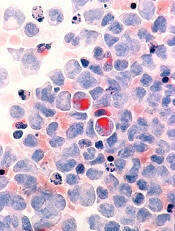
Credit: Lance Liotta
The US Food and Drug Administration (FDA) has granted orphan drug designation for the Axl inhibitor BGB324 to treat acute myeloid leukemia (AML).
BGB324 is a highly selective small molecule inhibitor of the Axl receptor tyrosine kinase. It blocks the epithelial-mesenchymal transition, a key driver in drug resistance and metastasis.
BerGenBio, the company developing BGB324, has estimated that more than 50% of AML patients have elevated levels of Axl.
And a study published in Blood last year showed that Axl inhibition by BGB324 prompts antileukemic activity in FLT3-mutated and FLT3-wild-type AML.
Earlier this month, BerGenBio said the first patient had been dosed in its multicenter phase 1b trial of BGB324 in patients with AML.
The primary goal of this 2-part trial is to investigate the safety and tolerability of BGB324 as a single agent and in combination with cytarabine. Secondary endpoints include clinical response and assessment of novel biomarkers.
The study will be conducted at 6 sites in Norway, Germany, and the US. BerGenBio expects data from this trial to be available in 2015.
The FDA’s orphan designation will provide BerGenBio with access to various development incentives for BGB324.
This includes tax credits for qualified clinical testing, exemption from prescription drug user fees for BGB324 in AML, and 7 years of market exclusivity in the US upon FDA approval.
Credit: Lance Liotta
The US Food and Drug Administration (FDA) has granted orphan drug designation for the Axl inhibitor BGB324 to treat acute myeloid leukemia (AML).
BGB324 is a highly selective small molecule inhibitor of the Axl receptor tyrosine kinase. It blocks the epithelial-mesenchymal transition, a key driver in drug resistance and metastasis.
BerGenBio, the company developing BGB324, has estimated that more than 50% of AML patients have elevated levels of Axl.
And a study published in Blood last year showed that Axl inhibition by BGB324 prompts antileukemic activity in FLT3-mutated and FLT3-wild-type AML.
Earlier this month, BerGenBio said the first patient had been dosed in its multicenter phase 1b trial of BGB324 in patients with AML.
The primary goal of this 2-part trial is to investigate the safety and tolerability of BGB324 as a single agent and in combination with cytarabine. Secondary endpoints include clinical response and assessment of novel biomarkers.
The study will be conducted at 6 sites in Norway, Germany, and the US. BerGenBio expects data from this trial to be available in 2015.
The FDA’s orphan designation will provide BerGenBio with access to various development incentives for BGB324.
This includes tax credits for qualified clinical testing, exemption from prescription drug user fees for BGB324 in AML, and 7 years of market exclusivity in the US upon FDA approval.
Credit: Lance Liotta
The US Food and Drug Administration (FDA) has granted orphan drug designation for the Axl inhibitor BGB324 to treat acute myeloid leukemia (AML).
BGB324 is a highly selective small molecule inhibitor of the Axl receptor tyrosine kinase. It blocks the epithelial-mesenchymal transition, a key driver in drug resistance and metastasis.
BerGenBio, the company developing BGB324, has estimated that more than 50% of AML patients have elevated levels of Axl.
And a study published in Blood last year showed that Axl inhibition by BGB324 prompts antileukemic activity in FLT3-mutated and FLT3-wild-type AML.
Earlier this month, BerGenBio said the first patient had been dosed in its multicenter phase 1b trial of BGB324 in patients with AML.
The primary goal of this 2-part trial is to investigate the safety and tolerability of BGB324 as a single agent and in combination with cytarabine. Secondary endpoints include clinical response and assessment of novel biomarkers.
The study will be conducted at 6 sites in Norway, Germany, and the US. BerGenBio expects data from this trial to be available in 2015.
The FDA’s orphan designation will provide BerGenBio with access to various development incentives for BGB324.
This includes tax credits for qualified clinical testing, exemption from prescription drug user fees for BGB324 in AML, and 7 years of market exclusivity in the US upon FDA approval.