User login
FDA approves first anti-CD19 drug
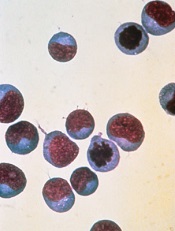
Credit: NIAID
The US Food and Drug Administration (FDA) has granted accelerated approval for blinatumomab (Blincyto) to treat adults with relapsed or refractory Philadelphia chromosome-negative precursor B-cell acute lymphoblastic leukemia (ALL).
Blinatumomab is a bispecific T-cell engager (BiTE®) antibody construct designed to direct the body’s T cells against target cells expressing CD19, a protein found on the surface of B cells.
Blinatumomab is the first anti-CD19 drug to receive FDA approval. It will be available as a 35 mcg single-use vial.
“Immunotherapies, especially Blincyto with its unique mechanism of action, are particularly promising for patients with leukemia,” said Richard Pazdur, MD, director of the Office of Hematology and Oncology Products in the FDA’s Center for Drug Evaluation and Research.
“Recognizing the potential of this novel therapy, the FDA worked proactively with the sponsor under our breakthrough therapy designation program to facilitate the approval of this novel agent.”
Approval details
The FDA granted blinatumomab accelerated approval based on clinical data showing the drug has an effect on a surrogate endpoint reasonably likely to predict clinical benefit to patients.
Before granting the drug full approval, the FDA is requiring that blinatumomab’s manufacturer, Amgen, conduct a study to verify that the drug improves survival in patients with relapsed or refractory Philadelphia-negative precursor B-cell ALL.
Blinatumomab was approved with a boxed warning detailing the risk of cytokine release syndrome and neurological toxicities. The FDA also approved the drug with a Risk Evaluation and Mitigation Strategy, which consists of a communication plan to inform healthcare providers about the serious risks and the potential for preparation and administration errors.
Blinatumomab was approved more than 5 months ahead of the date the FDA was scheduled to complete review of the drug’s application (May 19, 2015).
The agency had granted blinatumomab breakthrough therapy designation, priority review, and orphan product designation because Amgen demonstrated through preliminary clinical evidence that the drug may offer a substantial improvement over available therapies.
That evidence came in the form of a phase 2 study, the results of which were presented at the 19th Congress of the European Hematology Association (EHA) in June.
Trial results
Researchers evaluated blinatumomab monotherapy in 189 patients with relapsed or refractory B-cell ALL and a median age of 39 (range, 18-79). The patients received blinatumomab by continuous intravenous infusion—4 weeks on and 2 weeks off—for up to 5 cycles.
Thirty-three percent of patients achieved a complete remission, and 9% achieved a complete remission with partial hematologic recovery. Seventy-one percent of these patients were negative for minimal residual disease.
The median relapse-free survival was 5.9 months.
Major toxicities were related to cytokine release syndrome, but cytopenias and central nervous system events were also common. The most frequent adverse events were pyrexia (59%), headache (35%), and febrile neutropenia (29%).
The most frequent grade 3 or higher adverse events were febrile neutropenia (26%), anemia (15%), and neutropenia (15%). Two percent of patients had grade 3 or higher cytokine release syndrome.
The most common grade 3 or higher nervous system events were headache (4%), encephalopathy (3%), and ataxia (2%). Three patients (2%) had grade 5 events considered treatment-related—2 with sepsis and 1 with Candida infection. 
Credit: NIAID
The US Food and Drug Administration (FDA) has granted accelerated approval for blinatumomab (Blincyto) to treat adults with relapsed or refractory Philadelphia chromosome-negative precursor B-cell acute lymphoblastic leukemia (ALL).
Blinatumomab is a bispecific T-cell engager (BiTE®) antibody construct designed to direct the body’s T cells against target cells expressing CD19, a protein found on the surface of B cells.
Blinatumomab is the first anti-CD19 drug to receive FDA approval. It will be available as a 35 mcg single-use vial.
“Immunotherapies, especially Blincyto with its unique mechanism of action, are particularly promising for patients with leukemia,” said Richard Pazdur, MD, director of the Office of Hematology and Oncology Products in the FDA’s Center for Drug Evaluation and Research.
“Recognizing the potential of this novel therapy, the FDA worked proactively with the sponsor under our breakthrough therapy designation program to facilitate the approval of this novel agent.”
Approval details
The FDA granted blinatumomab accelerated approval based on clinical data showing the drug has an effect on a surrogate endpoint reasonably likely to predict clinical benefit to patients.
Before granting the drug full approval, the FDA is requiring that blinatumomab’s manufacturer, Amgen, conduct a study to verify that the drug improves survival in patients with relapsed or refractory Philadelphia-negative precursor B-cell ALL.
Blinatumomab was approved with a boxed warning detailing the risk of cytokine release syndrome and neurological toxicities. The FDA also approved the drug with a Risk Evaluation and Mitigation Strategy, which consists of a communication plan to inform healthcare providers about the serious risks and the potential for preparation and administration errors.
Blinatumomab was approved more than 5 months ahead of the date the FDA was scheduled to complete review of the drug’s application (May 19, 2015).
The agency had granted blinatumomab breakthrough therapy designation, priority review, and orphan product designation because Amgen demonstrated through preliminary clinical evidence that the drug may offer a substantial improvement over available therapies.
That evidence came in the form of a phase 2 study, the results of which were presented at the 19th Congress of the European Hematology Association (EHA) in June.
Trial results
Researchers evaluated blinatumomab monotherapy in 189 patients with relapsed or refractory B-cell ALL and a median age of 39 (range, 18-79). The patients received blinatumomab by continuous intravenous infusion—4 weeks on and 2 weeks off—for up to 5 cycles.
Thirty-three percent of patients achieved a complete remission, and 9% achieved a complete remission with partial hematologic recovery. Seventy-one percent of these patients were negative for minimal residual disease.
The median relapse-free survival was 5.9 months.
Major toxicities were related to cytokine release syndrome, but cytopenias and central nervous system events were also common. The most frequent adverse events were pyrexia (59%), headache (35%), and febrile neutropenia (29%).
The most frequent grade 3 or higher adverse events were febrile neutropenia (26%), anemia (15%), and neutropenia (15%). Two percent of patients had grade 3 or higher cytokine release syndrome.
The most common grade 3 or higher nervous system events were headache (4%), encephalopathy (3%), and ataxia (2%). Three patients (2%) had grade 5 events considered treatment-related—2 with sepsis and 1 with Candida infection.
Credit: NIAID
The US Food and Drug Administration (FDA) has granted accelerated approval for blinatumomab (Blincyto) to treat adults with relapsed or refractory Philadelphia chromosome-negative precursor B-cell acute lymphoblastic leukemia (ALL).
Blinatumomab is a bispecific T-cell engager (BiTE®) antibody construct designed to direct the body’s T cells against target cells expressing CD19, a protein found on the surface of B cells.
Blinatumomab is the first anti-CD19 drug to receive FDA approval. It will be available as a 35 mcg single-use vial.
“Immunotherapies, especially Blincyto with its unique mechanism of action, are particularly promising for patients with leukemia,” said Richard Pazdur, MD, director of the Office of Hematology and Oncology Products in the FDA’s Center for Drug Evaluation and Research.
“Recognizing the potential of this novel therapy, the FDA worked proactively with the sponsor under our breakthrough therapy designation program to facilitate the approval of this novel agent.”
Approval details
The FDA granted blinatumomab accelerated approval based on clinical data showing the drug has an effect on a surrogate endpoint reasonably likely to predict clinical benefit to patients.
Before granting the drug full approval, the FDA is requiring that blinatumomab’s manufacturer, Amgen, conduct a study to verify that the drug improves survival in patients with relapsed or refractory Philadelphia-negative precursor B-cell ALL.
Blinatumomab was approved with a boxed warning detailing the risk of cytokine release syndrome and neurological toxicities. The FDA also approved the drug with a Risk Evaluation and Mitigation Strategy, which consists of a communication plan to inform healthcare providers about the serious risks and the potential for preparation and administration errors.
Blinatumomab was approved more than 5 months ahead of the date the FDA was scheduled to complete review of the drug’s application (May 19, 2015).
The agency had granted blinatumomab breakthrough therapy designation, priority review, and orphan product designation because Amgen demonstrated through preliminary clinical evidence that the drug may offer a substantial improvement over available therapies.
That evidence came in the form of a phase 2 study, the results of which were presented at the 19th Congress of the European Hematology Association (EHA) in June.
Trial results
Researchers evaluated blinatumomab monotherapy in 189 patients with relapsed or refractory B-cell ALL and a median age of 39 (range, 18-79). The patients received blinatumomab by continuous intravenous infusion—4 weeks on and 2 weeks off—for up to 5 cycles.
Thirty-three percent of patients achieved a complete remission, and 9% achieved a complete remission with partial hematologic recovery. Seventy-one percent of these patients were negative for minimal residual disease.
The median relapse-free survival was 5.9 months.
Major toxicities were related to cytokine release syndrome, but cytopenias and central nervous system events were also common. The most frequent adverse events were pyrexia (59%), headache (35%), and febrile neutropenia (29%).
The most frequent grade 3 or higher adverse events were febrile neutropenia (26%), anemia (15%), and neutropenia (15%). Two percent of patients had grade 3 or higher cytokine release syndrome.
The most common grade 3 or higher nervous system events were headache (4%), encephalopathy (3%), and ataxia (2%). Three patients (2%) had grade 5 events considered treatment-related—2 with sepsis and 1 with Candida infection.
Study shows long-term survival improvements in blood cancers

Credit: Rhoda Baer
A new study suggests that half of all people recently diagnosed with cancer in England and Wales should survive their disease for at least 10 years, whereas, 40 years ago, only about a quarter of cancer patients could expect the same.
The research, published in The Lancet, showed significant improvements in long-term cancer survival rates from 1971 to 2011, particularly among patients with hematologic malignancies.
Unfortunately, the outlook for some malignancies remained extremely poor over the period studied.
“Although survival for some cancers has improved dramatically over the past 40 years, others are lagging far behind,” said Manuela Quaresma, of the London School of Hygiene & Tropical Medicine in the UK.
“More investment is urgently needed to improve early diagnosis and provide the best treatment, including more specialist surgeons for poor-prognosis cancers like lung cancer, which have shown little or no evidence of improvement in long-term survival (5 and 10 years after diagnosis) over the past 40 years.”
Quaresma and her colleagues analyzed survival trends for more than 7 million adults (aged 15 to 99 years) diagnosed with one of 21 common cancers in England and Wales between 1971 and 2011, and followed up to the end of 2012.
The researchers observed an increase in 10-year survival for all cancers combined. Twenty-four percent of patients diagnosed in 1971-1972 survived at least 10 years. And 49.8% of patients diagnosed in 2010-2011 are expected to survive at least 10 years.
The data revealed substantial improvements for patients with hematologic malignancies as well. For Hodgkin lymphoma, the 10-year survival rate rose from 47.7% for patients diagnosed in 1971-1972 to 80% for those diagnosed in 2010-2011.
For non-Hodgkin lymphoma, the 10-year survival rate increased from 22% to 63.1%. For multiple myeloma, it rose from 6.2% to 32.6%. And for leukemia, it rose from 6.9% to 46.1%.
The researchers noted that the most recent 10-year survival estimates are above 70% for cancers of the breast, prostate, testis, and uterus, as well as for melanoma and Hodgkin lymphoma. Furthermore, improvements in survival are greatest for these cancers.
Unfortunately, several other malignancies continue to have poor long-term survival. For cancers of the brain, stomach, lung, esophagus, and pancreas, 10-year survival after diagnosis is still below 15% for patients diagnosed in 2010-2011.
“These 5 cancers impose a huge public health burden, both because they are common and because they are often diagnosed at a late stage, when they are much harder to treat,” said study author Bernard Rachet, MD, PhD, of the London School of Hygiene & Tropical Medicine.
Dr Rachet also noted that this research confirms a persistent “age gap” in survival between younger and older patients for all cancers.
“Even after we have adjusted for the fact that older people have much higher death rates from other diseases than younger people, elderly cancer patients are doing worse for all cancers,” he said.
“This problem is particularly marked in the UK. In other countries, the age gap in cancer survival has become much narrower over the last 15 to 20 years than in England and Wales.” 
Credit: Rhoda Baer
A new study suggests that half of all people recently diagnosed with cancer in England and Wales should survive their disease for at least 10 years, whereas, 40 years ago, only about a quarter of cancer patients could expect the same.
The research, published in The Lancet, showed significant improvements in long-term cancer survival rates from 1971 to 2011, particularly among patients with hematologic malignancies.
Unfortunately, the outlook for some malignancies remained extremely poor over the period studied.
“Although survival for some cancers has improved dramatically over the past 40 years, others are lagging far behind,” said Manuela Quaresma, of the London School of Hygiene & Tropical Medicine in the UK.
“More investment is urgently needed to improve early diagnosis and provide the best treatment, including more specialist surgeons for poor-prognosis cancers like lung cancer, which have shown little or no evidence of improvement in long-term survival (5 and 10 years after diagnosis) over the past 40 years.”
Quaresma and her colleagues analyzed survival trends for more than 7 million adults (aged 15 to 99 years) diagnosed with one of 21 common cancers in England and Wales between 1971 and 2011, and followed up to the end of 2012.
The researchers observed an increase in 10-year survival for all cancers combined. Twenty-four percent of patients diagnosed in 1971-1972 survived at least 10 years. And 49.8% of patients diagnosed in 2010-2011 are expected to survive at least 10 years.
The data revealed substantial improvements for patients with hematologic malignancies as well. For Hodgkin lymphoma, the 10-year survival rate rose from 47.7% for patients diagnosed in 1971-1972 to 80% for those diagnosed in 2010-2011.
For non-Hodgkin lymphoma, the 10-year survival rate increased from 22% to 63.1%. For multiple myeloma, it rose from 6.2% to 32.6%. And for leukemia, it rose from 6.9% to 46.1%.
The researchers noted that the most recent 10-year survival estimates are above 70% for cancers of the breast, prostate, testis, and uterus, as well as for melanoma and Hodgkin lymphoma. Furthermore, improvements in survival are greatest for these cancers.
Unfortunately, several other malignancies continue to have poor long-term survival. For cancers of the brain, stomach, lung, esophagus, and pancreas, 10-year survival after diagnosis is still below 15% for patients diagnosed in 2010-2011.
“These 5 cancers impose a huge public health burden, both because they are common and because they are often diagnosed at a late stage, when they are much harder to treat,” said study author Bernard Rachet, MD, PhD, of the London School of Hygiene & Tropical Medicine.
Dr Rachet also noted that this research confirms a persistent “age gap” in survival between younger and older patients for all cancers.
“Even after we have adjusted for the fact that older people have much higher death rates from other diseases than younger people, elderly cancer patients are doing worse for all cancers,” he said.
“This problem is particularly marked in the UK. In other countries, the age gap in cancer survival has become much narrower over the last 15 to 20 years than in England and Wales.”
Credit: Rhoda Baer
A new study suggests that half of all people recently diagnosed with cancer in England and Wales should survive their disease for at least 10 years, whereas, 40 years ago, only about a quarter of cancer patients could expect the same.
The research, published in The Lancet, showed significant improvements in long-term cancer survival rates from 1971 to 2011, particularly among patients with hematologic malignancies.
Unfortunately, the outlook for some malignancies remained extremely poor over the period studied.
“Although survival for some cancers has improved dramatically over the past 40 years, others are lagging far behind,” said Manuela Quaresma, of the London School of Hygiene & Tropical Medicine in the UK.
“More investment is urgently needed to improve early diagnosis and provide the best treatment, including more specialist surgeons for poor-prognosis cancers like lung cancer, which have shown little or no evidence of improvement in long-term survival (5 and 10 years after diagnosis) over the past 40 years.”
Quaresma and her colleagues analyzed survival trends for more than 7 million adults (aged 15 to 99 years) diagnosed with one of 21 common cancers in England and Wales between 1971 and 2011, and followed up to the end of 2012.
The researchers observed an increase in 10-year survival for all cancers combined. Twenty-four percent of patients diagnosed in 1971-1972 survived at least 10 years. And 49.8% of patients diagnosed in 2010-2011 are expected to survive at least 10 years.
The data revealed substantial improvements for patients with hematologic malignancies as well. For Hodgkin lymphoma, the 10-year survival rate rose from 47.7% for patients diagnosed in 1971-1972 to 80% for those diagnosed in 2010-2011.
For non-Hodgkin lymphoma, the 10-year survival rate increased from 22% to 63.1%. For multiple myeloma, it rose from 6.2% to 32.6%. And for leukemia, it rose from 6.9% to 46.1%.
The researchers noted that the most recent 10-year survival estimates are above 70% for cancers of the breast, prostate, testis, and uterus, as well as for melanoma and Hodgkin lymphoma. Furthermore, improvements in survival are greatest for these cancers.
Unfortunately, several other malignancies continue to have poor long-term survival. For cancers of the brain, stomach, lung, esophagus, and pancreas, 10-year survival after diagnosis is still below 15% for patients diagnosed in 2010-2011.
“These 5 cancers impose a huge public health burden, both because they are common and because they are often diagnosed at a late stage, when they are much harder to treat,” said study author Bernard Rachet, MD, PhD, of the London School of Hygiene & Tropical Medicine.
Dr Rachet also noted that this research confirms a persistent “age gap” in survival between younger and older patients for all cancers.
“Even after we have adjusted for the fact that older people have much higher death rates from other diseases than younger people, elderly cancer patients are doing worse for all cancers,” he said.
“This problem is particularly marked in the UK. In other countries, the age gap in cancer survival has become much narrower over the last 15 to 20 years than in England and Wales.”
Drug gets orphan designation for MM & CLL/SLL
The European Medicines Agency (EMA) has granted orphan drug designation for selinexor (KPT-330) to treat multiple myeloma (MM) and chronic lymphocytic leukemia (CLL)/small lymphocytic lymphoma (SLL), including Richter’s transformation.
Selinexor previously received orphan designation from both the EMA and the US Food and Drug Administration to treat patients with acute myeloid leukemia and those with diffuse large B-cell lymphoma.
Orphan designation is granted to promote the development of drugs that target rare, life-threatening or debilitating conditions and are expected to provide a significant therapeutic advantage over existing treatments.
Orphan designation qualifies a company—in this case, Karyopharm Therapeutics Inc.—for benefits that include targeted scientific advice from the EMA regarding drug development and 10 years of market exclusivity following the drug’s approval.
About selinexor
Selinexor (KPT-330) is a first-in-class, oral selective inhibitor of nuclear export (SINE) compound. Selinexor functions by inhibiting the nuclear export protein XPO1 (also called CRM1).
This leads to the accumulation of tumor suppressor proteins in the cell nucleus, which subsequently reinitiates and amplifies their tumor suppressor function. This is thought to prompt apoptosis in cancer cells while largely sparing normal cells.
Selinexor has shown promise in an ongoing phase 1 study of patients with a range of hematologic malignancies. Results of this trial were presented at the 2014 ASCO Annual Meeting.
At that point, the study included 51 patients who had received selinexor across 8 dose levels, ranging from 3 mg/m2 to 60 mg/m2.
Among the 43 patients evaluable for response, the overall response rate was 28%, and the complete response rate was 5%.
Most adverse events were gastrointestinal in nature, and most of them were grade 1 or 2. The most common adverse events were nausea, anorexia, and fatigue.
There were 3 dose-limiting toxicities, including 1 MM patient with grade 4 thrombocytopenia, 1 follicular lymphoma patient with grade 4 thrombocytopenia, and 1 CLL patient with grade 2 fatigue.
The European Medicines Agency (EMA) has granted orphan drug designation for selinexor (KPT-330) to treat multiple myeloma (MM) and chronic lymphocytic leukemia (CLL)/small lymphocytic lymphoma (SLL), including Richter’s transformation.
Selinexor previously received orphan designation from both the EMA and the US Food and Drug Administration to treat patients with acute myeloid leukemia and those with diffuse large B-cell lymphoma.
Orphan designation is granted to promote the development of drugs that target rare, life-threatening or debilitating conditions and are expected to provide a significant therapeutic advantage over existing treatments.
Orphan designation qualifies a company—in this case, Karyopharm Therapeutics Inc.—for benefits that include targeted scientific advice from the EMA regarding drug development and 10 years of market exclusivity following the drug’s approval.
About selinexor
Selinexor (KPT-330) is a first-in-class, oral selective inhibitor of nuclear export (SINE) compound. Selinexor functions by inhibiting the nuclear export protein XPO1 (also called CRM1).
This leads to the accumulation of tumor suppressor proteins in the cell nucleus, which subsequently reinitiates and amplifies their tumor suppressor function. This is thought to prompt apoptosis in cancer cells while largely sparing normal cells.
Selinexor has shown promise in an ongoing phase 1 study of patients with a range of hematologic malignancies. Results of this trial were presented at the 2014 ASCO Annual Meeting.
At that point, the study included 51 patients who had received selinexor across 8 dose levels, ranging from 3 mg/m2 to 60 mg/m2.
Among the 43 patients evaluable for response, the overall response rate was 28%, and the complete response rate was 5%.
Most adverse events were gastrointestinal in nature, and most of them were grade 1 or 2. The most common adverse events were nausea, anorexia, and fatigue.
There were 3 dose-limiting toxicities, including 1 MM patient with grade 4 thrombocytopenia, 1 follicular lymphoma patient with grade 4 thrombocytopenia, and 1 CLL patient with grade 2 fatigue.
The European Medicines Agency (EMA) has granted orphan drug designation for selinexor (KPT-330) to treat multiple myeloma (MM) and chronic lymphocytic leukemia (CLL)/small lymphocytic lymphoma (SLL), including Richter’s transformation.
Selinexor previously received orphan designation from both the EMA and the US Food and Drug Administration to treat patients with acute myeloid leukemia and those with diffuse large B-cell lymphoma.
Orphan designation is granted to promote the development of drugs that target rare, life-threatening or debilitating conditions and are expected to provide a significant therapeutic advantage over existing treatments.
Orphan designation qualifies a company—in this case, Karyopharm Therapeutics Inc.—for benefits that include targeted scientific advice from the EMA regarding drug development and 10 years of market exclusivity following the drug’s approval.
About selinexor
Selinexor (KPT-330) is a first-in-class, oral selective inhibitor of nuclear export (SINE) compound. Selinexor functions by inhibiting the nuclear export protein XPO1 (also called CRM1).
This leads to the accumulation of tumor suppressor proteins in the cell nucleus, which subsequently reinitiates and amplifies their tumor suppressor function. This is thought to prompt apoptosis in cancer cells while largely sparing normal cells.
Selinexor has shown promise in an ongoing phase 1 study of patients with a range of hematologic malignancies. Results of this trial were presented at the 2014 ASCO Annual Meeting.
At that point, the study included 51 patients who had received selinexor across 8 dose levels, ranging from 3 mg/m2 to 60 mg/m2.
Among the 43 patients evaluable for response, the overall response rate was 28%, and the complete response rate was 5%.
Most adverse events were gastrointestinal in nature, and most of them were grade 1 or 2. The most common adverse events were nausea, anorexia, and fatigue.
There were 3 dose-limiting toxicities, including 1 MM patient with grade 4 thrombocytopenia, 1 follicular lymphoma patient with grade 4 thrombocytopenia, and 1 CLL patient with grade 2 fatigue.
NICE offers conditional support for eculizumab

Credit: Globovision
The UK’s National Institute for Health and Care Excellence (NICE) has issued a final draft guidance recommending eculizumab (Soliris) for funding to treat atypical hemolytic uremic syndrome (aHUS).
However, the agency has a few requirements. Eculizumab use must be coordinated through an expert center.
And monitoring systems must record the number of people with aHUS, the number who receive eculizumab, and the dose and duration of treatment.
NICE is also requiring a national protocol for starting and stopping eculizumab for clinical reasons and a research program with robust methods to evaluate when stopping treatment or dose adjustment might occur.
“[A NICE advisory] committee accepted that eculizumab is a step change in the management of aHUS and can be considered a significant innovation for a disease with a high unmet clinical need,” said NICE Chief Executive Sir Andrew Dillon.
“Eculizumab offers people with aHUS the possibility of avoiding end-stage renal failure, dialysis, and kidney transplantation, as well as other organ damage. The drug is, however, very expensive. The committee felt that the budget impact of eculizumab would be lower if the potential for dose adjustment and stopping treatment was explored.”
“This is reflected in the draft guidance, which recommends eculizumab should be funded only if important conditions are met, including the development of rules for starting and stopping treatment for clinical reasons. In the meantime, NHS England and the company [developing the drug, Alexion Pharmaceuticals] should consider what opportunities might exist to reduce the cost of eculizumab to the NHS.”
Eculizumab: Dosing, cost, and benefit
Eculizumab is given intravenously in adults as initial treatment at a dose of 900 mg for 4 weeks, then as maintenance treatment at a dose of 1200 mg on week 5, and then every 12 to 16 days. The summary of product characteristics for eculizumab states that “treatment is recommended to continue for a patient’s lifetime, unless discontinuation of treatment is clinically indicated.”
Eculizumab costs £3150 per 30 ml vial (excluding value-added tax). The net budget impact of eculizumab based on the company’s predicted rate of uptake over a 5-year period is confidential.
However, to allow consultees and commentators to properly engage in the consultation process, NICE has prepared an illustration of the possible budget impact of eculizumab for aHUS, using information available in the public domain.
NICE’s estimate is based on a treatment cost of £340,200 per adult patient in the first year (based on the acquisition cost of the drug and the recommended dosing for an adult), and assumes a patient cohort of 170, as estimated by NHS England in its interim commissioning policy.
If it is assumed that all of these adult patients with aHUS are treated with eculizumab, the budget impact for the first year would be £57.8 million.
If an additional 20 new patients are treated the following year (based on a worldwide incidence of 0.4 per million), the budget impact will rise to £62.5 million in year 2, assuming all new patients are treated and all existing patients continue to be treated at the maintenance cost of £327,600 per year.
Using the same assumptions, the budget impact will rise to £69 million in year 3 (190 existing and 20 new patients), £75 million in year 4 (210 existing and 20 new patients), and £82 million in year 5 (230 existing and 20 new patients).
NHS England has indicated that the amount of the budget allocated for highly specialized services in 2013/2014 was £544 million, and the spending on high-cost drugs was £156 million.
The advisory committee acknowledged that the company’s estimate of the incremental cost of eculizumab compared with standard care was considerable and that incremental costs estimated by the evidence review group were higher still (results are confidential).
The company estimated that eculizumab produced 25.22 additional quality-adjusted life-years (QALYs) per patient compared with standard care. Although the QALYs estimated in the evidence review group’s analysis were markedly lower than those calculated by the company, both analyses produced substantial QALY gains of a magnitude that is rarely seen for any new drug treatment.
NICE has not yet issued final guidance on eculizumab in aHUS. The draft guidance is now with consultees, including the company, healthcare professionals, and patient/carer organizations, who have the opportunity to appeal against the draft recommendations.
Final guidance on the use of eculizumab to treat aHUS is expected in January 2015.
Credit: Globovision
The UK’s National Institute for Health and Care Excellence (NICE) has issued a final draft guidance recommending eculizumab (Soliris) for funding to treat atypical hemolytic uremic syndrome (aHUS).
However, the agency has a few requirements. Eculizumab use must be coordinated through an expert center.
And monitoring systems must record the number of people with aHUS, the number who receive eculizumab, and the dose and duration of treatment.
NICE is also requiring a national protocol for starting and stopping eculizumab for clinical reasons and a research program with robust methods to evaluate when stopping treatment or dose adjustment might occur.
“[A NICE advisory] committee accepted that eculizumab is a step change in the management of aHUS and can be considered a significant innovation for a disease with a high unmet clinical need,” said NICE Chief Executive Sir Andrew Dillon.
“Eculizumab offers people with aHUS the possibility of avoiding end-stage renal failure, dialysis, and kidney transplantation, as well as other organ damage. The drug is, however, very expensive. The committee felt that the budget impact of eculizumab would be lower if the potential for dose adjustment and stopping treatment was explored.”
“This is reflected in the draft guidance, which recommends eculizumab should be funded only if important conditions are met, including the development of rules for starting and stopping treatment for clinical reasons. In the meantime, NHS England and the company [developing the drug, Alexion Pharmaceuticals] should consider what opportunities might exist to reduce the cost of eculizumab to the NHS.”
Eculizumab: Dosing, cost, and benefit
Eculizumab is given intravenously in adults as initial treatment at a dose of 900 mg for 4 weeks, then as maintenance treatment at a dose of 1200 mg on week 5, and then every 12 to 16 days. The summary of product characteristics for eculizumab states that “treatment is recommended to continue for a patient’s lifetime, unless discontinuation of treatment is clinically indicated.”
Eculizumab costs £3150 per 30 ml vial (excluding value-added tax). The net budget impact of eculizumab based on the company’s predicted rate of uptake over a 5-year period is confidential.
However, to allow consultees and commentators to properly engage in the consultation process, NICE has prepared an illustration of the possible budget impact of eculizumab for aHUS, using information available in the public domain.
NICE’s estimate is based on a treatment cost of £340,200 per adult patient in the first year (based on the acquisition cost of the drug and the recommended dosing for an adult), and assumes a patient cohort of 170, as estimated by NHS England in its interim commissioning policy.
If it is assumed that all of these adult patients with aHUS are treated with eculizumab, the budget impact for the first year would be £57.8 million.
If an additional 20 new patients are treated the following year (based on a worldwide incidence of 0.4 per million), the budget impact will rise to £62.5 million in year 2, assuming all new patients are treated and all existing patients continue to be treated at the maintenance cost of £327,600 per year.
Using the same assumptions, the budget impact will rise to £69 million in year 3 (190 existing and 20 new patients), £75 million in year 4 (210 existing and 20 new patients), and £82 million in year 5 (230 existing and 20 new patients).
NHS England has indicated that the amount of the budget allocated for highly specialized services in 2013/2014 was £544 million, and the spending on high-cost drugs was £156 million.
The advisory committee acknowledged that the company’s estimate of the incremental cost of eculizumab compared with standard care was considerable and that incremental costs estimated by the evidence review group were higher still (results are confidential).
The company estimated that eculizumab produced 25.22 additional quality-adjusted life-years (QALYs) per patient compared with standard care. Although the QALYs estimated in the evidence review group’s analysis were markedly lower than those calculated by the company, both analyses produced substantial QALY gains of a magnitude that is rarely seen for any new drug treatment.
NICE has not yet issued final guidance on eculizumab in aHUS. The draft guidance is now with consultees, including the company, healthcare professionals, and patient/carer organizations, who have the opportunity to appeal against the draft recommendations.
Final guidance on the use of eculizumab to treat aHUS is expected in January 2015.
Credit: Globovision
The UK’s National Institute for Health and Care Excellence (NICE) has issued a final draft guidance recommending eculizumab (Soliris) for funding to treat atypical hemolytic uremic syndrome (aHUS).
However, the agency has a few requirements. Eculizumab use must be coordinated through an expert center.
And monitoring systems must record the number of people with aHUS, the number who receive eculizumab, and the dose and duration of treatment.
NICE is also requiring a national protocol for starting and stopping eculizumab for clinical reasons and a research program with robust methods to evaluate when stopping treatment or dose adjustment might occur.
“[A NICE advisory] committee accepted that eculizumab is a step change in the management of aHUS and can be considered a significant innovation for a disease with a high unmet clinical need,” said NICE Chief Executive Sir Andrew Dillon.
“Eculizumab offers people with aHUS the possibility of avoiding end-stage renal failure, dialysis, and kidney transplantation, as well as other organ damage. The drug is, however, very expensive. The committee felt that the budget impact of eculizumab would be lower if the potential for dose adjustment and stopping treatment was explored.”
“This is reflected in the draft guidance, which recommends eculizumab should be funded only if important conditions are met, including the development of rules for starting and stopping treatment for clinical reasons. In the meantime, NHS England and the company [developing the drug, Alexion Pharmaceuticals] should consider what opportunities might exist to reduce the cost of eculizumab to the NHS.”
Eculizumab: Dosing, cost, and benefit
Eculizumab is given intravenously in adults as initial treatment at a dose of 900 mg for 4 weeks, then as maintenance treatment at a dose of 1200 mg on week 5, and then every 12 to 16 days. The summary of product characteristics for eculizumab states that “treatment is recommended to continue for a patient’s lifetime, unless discontinuation of treatment is clinically indicated.”
Eculizumab costs £3150 per 30 ml vial (excluding value-added tax). The net budget impact of eculizumab based on the company’s predicted rate of uptake over a 5-year period is confidential.
However, to allow consultees and commentators to properly engage in the consultation process, NICE has prepared an illustration of the possible budget impact of eculizumab for aHUS, using information available in the public domain.
NICE’s estimate is based on a treatment cost of £340,200 per adult patient in the first year (based on the acquisition cost of the drug and the recommended dosing for an adult), and assumes a patient cohort of 170, as estimated by NHS England in its interim commissioning policy.
If it is assumed that all of these adult patients with aHUS are treated with eculizumab, the budget impact for the first year would be £57.8 million.
If an additional 20 new patients are treated the following year (based on a worldwide incidence of 0.4 per million), the budget impact will rise to £62.5 million in year 2, assuming all new patients are treated and all existing patients continue to be treated at the maintenance cost of £327,600 per year.
Using the same assumptions, the budget impact will rise to £69 million in year 3 (190 existing and 20 new patients), £75 million in year 4 (210 existing and 20 new patients), and £82 million in year 5 (230 existing and 20 new patients).
NHS England has indicated that the amount of the budget allocated for highly specialized services in 2013/2014 was £544 million, and the spending on high-cost drugs was £156 million.
The advisory committee acknowledged that the company’s estimate of the incremental cost of eculizumab compared with standard care was considerable and that incremental costs estimated by the evidence review group were higher still (results are confidential).
The company estimated that eculizumab produced 25.22 additional quality-adjusted life-years (QALYs) per patient compared with standard care. Although the QALYs estimated in the evidence review group’s analysis were markedly lower than those calculated by the company, both analyses produced substantial QALY gains of a magnitude that is rarely seen for any new drug treatment.
NICE has not yet issued final guidance on eculizumab in aHUS. The draft guidance is now with consultees, including the company, healthcare professionals, and patient/carer organizations, who have the opportunity to appeal against the draft recommendations.
Final guidance on the use of eculizumab to treat aHUS is expected in January 2015.
FDA grants drug orphan designation for AML
The US Food and Drug Administration (FDA) has granted orphan drug designation for Actimab-A, an alpha radiolabeled antibody, to treat patients over the age of 60 who are newly diagnosed with acute myeloid leukemia (AML).
Actimab-A consists of the CD33 antibody lintuzumab linked to the actinium-225 payload. The product is currently under investigation in a multicenter, phase 1/2 trial of elderly AML patients.
The company developing Actimab-A, Actinium Pharmaceuticals, Inc., recently announced positive interim data from this trial.
Nine patients were evaluable. They had a median age of 76 (range, 73-81) and intermediate- or poor-risk cytogenetics.
The median overall survival was 5.4 months (range, 2.2-24 months), but survival was better for the 7 patients who had secondary AML. These patients had a median overall survival of 9.1 months from study entry (range, 2.3-24 months).
Two secondary AML patients lived longer than 12 months, and the longest surviving patient lived more than 24 months.
Two dosing levels of Actimab-A have been evaluated to date (0.5 or 1.0 μCi/kg/fraction), and the study is ongoing at higher doses until the maximum tolerated dose is reached.
Actinium expects additional data from this trial to be available in 2015.
“The FDA’s decision to grant orphan drug status for Actimab-A is a significant milestone for the company and recognizes the need for innovative new approaches to treat AML,” said Kaushik J. Dave, PhD, President and CEO of Actinium.
“The designation will provide Actinium access to various development benefits and financial incentives from the agency, including an exemption from prescription drug user fees for Actimab-A for this indication and, if the drug receives marketing approval, it will enjoy 7 years of market exclusivity in the United States.”
The US Food and Drug Administration (FDA) has granted orphan drug designation for Actimab-A, an alpha radiolabeled antibody, to treat patients over the age of 60 who are newly diagnosed with acute myeloid leukemia (AML).
Actimab-A consists of the CD33 antibody lintuzumab linked to the actinium-225 payload. The product is currently under investigation in a multicenter, phase 1/2 trial of elderly AML patients.
The company developing Actimab-A, Actinium Pharmaceuticals, Inc., recently announced positive interim data from this trial.
Nine patients were evaluable. They had a median age of 76 (range, 73-81) and intermediate- or poor-risk cytogenetics.
The median overall survival was 5.4 months (range, 2.2-24 months), but survival was better for the 7 patients who had secondary AML. These patients had a median overall survival of 9.1 months from study entry (range, 2.3-24 months).
Two secondary AML patients lived longer than 12 months, and the longest surviving patient lived more than 24 months.
Two dosing levels of Actimab-A have been evaluated to date (0.5 or 1.0 μCi/kg/fraction), and the study is ongoing at higher doses until the maximum tolerated dose is reached.
Actinium expects additional data from this trial to be available in 2015.
“The FDA’s decision to grant orphan drug status for Actimab-A is a significant milestone for the company and recognizes the need for innovative new approaches to treat AML,” said Kaushik J. Dave, PhD, President and CEO of Actinium.
“The designation will provide Actinium access to various development benefits and financial incentives from the agency, including an exemption from prescription drug user fees for Actimab-A for this indication and, if the drug receives marketing approval, it will enjoy 7 years of market exclusivity in the United States.”
The US Food and Drug Administration (FDA) has granted orphan drug designation for Actimab-A, an alpha radiolabeled antibody, to treat patients over the age of 60 who are newly diagnosed with acute myeloid leukemia (AML).
Actimab-A consists of the CD33 antibody lintuzumab linked to the actinium-225 payload. The product is currently under investigation in a multicenter, phase 1/2 trial of elderly AML patients.
The company developing Actimab-A, Actinium Pharmaceuticals, Inc., recently announced positive interim data from this trial.
Nine patients were evaluable. They had a median age of 76 (range, 73-81) and intermediate- or poor-risk cytogenetics.
The median overall survival was 5.4 months (range, 2.2-24 months), but survival was better for the 7 patients who had secondary AML. These patients had a median overall survival of 9.1 months from study entry (range, 2.3-24 months).
Two secondary AML patients lived longer than 12 months, and the longest surviving patient lived more than 24 months.
Two dosing levels of Actimab-A have been evaluated to date (0.5 or 1.0 μCi/kg/fraction), and the study is ongoing at higher doses until the maximum tolerated dose is reached.
Actinium expects additional data from this trial to be available in 2015.
“The FDA’s decision to grant orphan drug status for Actimab-A is a significant milestone for the company and recognizes the need for innovative new approaches to treat AML,” said Kaushik J. Dave, PhD, President and CEO of Actinium.
“The designation will provide Actinium access to various development benefits and financial incentives from the agency, including an exemption from prescription drug user fees for Actimab-A for this indication and, if the drug receives marketing approval, it will enjoy 7 years of market exclusivity in the United States.”
Targeting enzyme can eliminate CSCs in AML
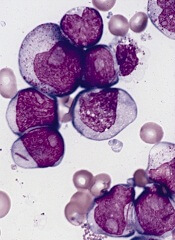
Inhibiting the enzyme 5-lipoxygenase (5-LO) can eradicate cancer stem cell-like cells (CSCs) in acute myeloid leukemia (AML), according to a preclinical study
published in Cancer Research.
Previous research suggested the enzyme is needed to maintain CSCs in chronic myeloid leukemia.
So investigators theorized that 5-LO could be a therapeutic target for AML, as CSCs are thought to cause the spread and relapse of this disease.
To test that theory, the team evaluated the effects of 5-LO inhibition in a PML/RARα-positive model of AML. As a model of CSCs, they used Sca-1+/lin− murine hematopoietic stem and progenitor cells (HSPCs), which were retrovirally transduced with PML/RARα.
The researchers targeted 5-LO genetically and pharmacologically. And they found that 5-LO inhibition interfered with the aberrant stem cell capacity of PML/RARα-expressing HSPCs.
Inhibiting 5-LO also inhibited Wnt signaling, which has been shown to be critical for CSC maintenance.
Additional investigation revealed that inhibition of Wnt signaling and CSCs was due to the generation of a catalytically inactive form of 5-LO, which hindered nuclear translocation of β-catenin.
Considering these results together, as well as evidence that CSCs mediate AML relapse, the investigators concluded that eradicating CSCs via 5-LO inhibition may offer a new treatment approach for AML.
“These results form the basis for a possible use of the 5-lipoxygenase inhibitors as stem cell therapy for a sustainable cure for acute myeloid leukemia,” said Martin Ruthardt, MD, of Goethe University in Frankfurt, Germany. “But this must firstly be studied further in preclinical and clinical studies in humans.”
“We are now in the process of examining the molecular mechanism in more detail in order to find out how the inhibitors precisely work on the leukemia stem cells,” added Thorsten Jürgen Maier, MD, PhD, of Goethe University and Aarhus University in Denmark. “We very much hope that our results will be of benefit for leukemia patients.”
Inhibiting the enzyme 5-lipoxygenase (5-LO) can eradicate cancer stem cell-like cells (CSCs) in acute myeloid leukemia (AML), according to a preclinical study
published in Cancer Research.
Previous research suggested the enzyme is needed to maintain CSCs in chronic myeloid leukemia.
So investigators theorized that 5-LO could be a therapeutic target for AML, as CSCs are thought to cause the spread and relapse of this disease.
To test that theory, the team evaluated the effects of 5-LO inhibition in a PML/RARα-positive model of AML. As a model of CSCs, they used Sca-1+/lin− murine hematopoietic stem and progenitor cells (HSPCs), which were retrovirally transduced with PML/RARα.
The researchers targeted 5-LO genetically and pharmacologically. And they found that 5-LO inhibition interfered with the aberrant stem cell capacity of PML/RARα-expressing HSPCs.
Inhibiting 5-LO also inhibited Wnt signaling, which has been shown to be critical for CSC maintenance.
Additional investigation revealed that inhibition of Wnt signaling and CSCs was due to the generation of a catalytically inactive form of 5-LO, which hindered nuclear translocation of β-catenin.
Considering these results together, as well as evidence that CSCs mediate AML relapse, the investigators concluded that eradicating CSCs via 5-LO inhibition may offer a new treatment approach for AML.
“These results form the basis for a possible use of the 5-lipoxygenase inhibitors as stem cell therapy for a sustainable cure for acute myeloid leukemia,” said Martin Ruthardt, MD, of Goethe University in Frankfurt, Germany. “But this must firstly be studied further in preclinical and clinical studies in humans.”
“We are now in the process of examining the molecular mechanism in more detail in order to find out how the inhibitors precisely work on the leukemia stem cells,” added Thorsten Jürgen Maier, MD, PhD, of Goethe University and Aarhus University in Denmark. “We very much hope that our results will be of benefit for leukemia patients.”
Inhibiting the enzyme 5-lipoxygenase (5-LO) can eradicate cancer stem cell-like cells (CSCs) in acute myeloid leukemia (AML), according to a preclinical study
published in Cancer Research.
Previous research suggested the enzyme is needed to maintain CSCs in chronic myeloid leukemia.
So investigators theorized that 5-LO could be a therapeutic target for AML, as CSCs are thought to cause the spread and relapse of this disease.
To test that theory, the team evaluated the effects of 5-LO inhibition in a PML/RARα-positive model of AML. As a model of CSCs, they used Sca-1+/lin− murine hematopoietic stem and progenitor cells (HSPCs), which were retrovirally transduced with PML/RARα.
The researchers targeted 5-LO genetically and pharmacologically. And they found that 5-LO inhibition interfered with the aberrant stem cell capacity of PML/RARα-expressing HSPCs.
Inhibiting 5-LO also inhibited Wnt signaling, which has been shown to be critical for CSC maintenance.
Additional investigation revealed that inhibition of Wnt signaling and CSCs was due to the generation of a catalytically inactive form of 5-LO, which hindered nuclear translocation of β-catenin.
Considering these results together, as well as evidence that CSCs mediate AML relapse, the investigators concluded that eradicating CSCs via 5-LO inhibition may offer a new treatment approach for AML.
“These results form the basis for a possible use of the 5-lipoxygenase inhibitors as stem cell therapy for a sustainable cure for acute myeloid leukemia,” said Martin Ruthardt, MD, of Goethe University in Frankfurt, Germany. “But this must firstly be studied further in preclinical and clinical studies in humans.”
“We are now in the process of examining the molecular mechanism in more detail in order to find out how the inhibitors precisely work on the leukemia stem cells,” added Thorsten Jürgen Maier, MD, PhD, of Goethe University and Aarhus University in Denmark. “We very much hope that our results will be of benefit for leukemia patients.”
HHS and NIH aim to make more trial results public

Credit: Esther Dyson
The US Department of Health and Human Services (HHS) has proposed a rule that would require more public disclosure of clinical trial results.
The Notice of Proposed Rulemaking (NPRM) adds to current requirements for submitting trial information to ClinicalTrials.gov.
Most notably, the rule would require the submission of summary results from studies of products not yet approved by the US Food and Drug Administration
(FDA).
The National Institutes of Health (NIH) have created a draft policy that would extend similar reporting requirements to all clinical trials funded by NIH.
About the NPRM: Who, what, and when
The NPRM details new procedures for meeting the requirements established by the Food and Drug Administration Amendments Act of 2007 (FDAAA) to improve public access to clinical trial information.
The proposed rule specifies how information about a clinical trial would need to be submitted to ClinicalTrials.gov. It would not affect requirements for the design or conduct of clinical trials or for the data that must be collected during these trials.
The rule would apply to controlled, interventional studies of drugs, biological products, and devices that are regulated by the FDA. This excludes phase 1 studies of drugs and biological products and feasibility studies of devices.
In general, clinical trials of products regulated by the FDA will meet one or more of the following criteria: include one or more sites in the US; study a product manufactured in the US or its territories and exported for use in a trial outside the US; or be conducted under an FDA investigational new drug application or investigational device exemption.
The NPRM would require the parties responsible for applicable clinical trials—such as the sponsor or a designated principal investigator—to register the trial at ClinicalTrials.gov no later than 21 days after enrolling the first participant.
Registration consists of submitting 4 categories of data elements that are specified in the NPRM: 1) descriptive information, 2) recruitment information, 3) location and contact information, and 4) administrative information.
The parties responsible for the trial would also be required to submit a summary of the study’s results to ClinicalTrials.gov, generally no later than 12 months after trial completion.
However, the NPRM includes procedures for delaying results submission and for requesting extensions to the results submission deadline for good cause.
NIH policy: Extending the NPRM
The proposed NIH policy would make requirements in the NPRM applicable to all NIH-funded awardees and investigators conducting clinical trials, regardless of study phase, type of intervention, or whether they are subject to the rules proposed in the NPRM.
NIH awardees would be expected to ensure submission to ClinicalTrials.gov of the same type of registration and results information, and in the same timeframes, as responsible parties whose trials are subject to the FDAAA and the regulations proposed in the NPRM.
For clinical trials subject to only the proposed NIH policy (not the FDAAA), the NIH would post submitted information, in general, no later than 30 days after it is submitted.
An NIH-funded clinical trial that is also subject to FDAAA would need to have only one entry in ClinicalTrials.gov containing its registration and results information.
Open for comment
The public may comment on any aspect of the NPRM or the proposed NIH policy.
Written comments on the NPRM should be submitted to docket number NIH-2011-0003 at www.regulations.gov. Commenters should indicate the specific section of the NPRM to which each comment refers.
Written comments on the proposed NIH policy should be submitted to the Office of Clinical Research and Bioethics Policy, Office of Science Policy, NIH, via email at clinicaltrials.disseminationpolicy@mail.nih.gov, mail at 6705 Rockledge Drive, Suite 750, Bethesda, MD 20892, or fax at 301-496-9839.
Credit: Esther Dyson
The US Department of Health and Human Services (HHS) has proposed a rule that would require more public disclosure of clinical trial results.
The Notice of Proposed Rulemaking (NPRM) adds to current requirements for submitting trial information to ClinicalTrials.gov.
Most notably, the rule would require the submission of summary results from studies of products not yet approved by the US Food and Drug Administration
(FDA).
The National Institutes of Health (NIH) have created a draft policy that would extend similar reporting requirements to all clinical trials funded by NIH.
About the NPRM: Who, what, and when
The NPRM details new procedures for meeting the requirements established by the Food and Drug Administration Amendments Act of 2007 (FDAAA) to improve public access to clinical trial information.
The proposed rule specifies how information about a clinical trial would need to be submitted to ClinicalTrials.gov. It would not affect requirements for the design or conduct of clinical trials or for the data that must be collected during these trials.
The rule would apply to controlled, interventional studies of drugs, biological products, and devices that are regulated by the FDA. This excludes phase 1 studies of drugs and biological products and feasibility studies of devices.
In general, clinical trials of products regulated by the FDA will meet one or more of the following criteria: include one or more sites in the US; study a product manufactured in the US or its territories and exported for use in a trial outside the US; or be conducted under an FDA investigational new drug application or investigational device exemption.
The NPRM would require the parties responsible for applicable clinical trials—such as the sponsor or a designated principal investigator—to register the trial at ClinicalTrials.gov no later than 21 days after enrolling the first participant.
Registration consists of submitting 4 categories of data elements that are specified in the NPRM: 1) descriptive information, 2) recruitment information, 3) location and contact information, and 4) administrative information.
The parties responsible for the trial would also be required to submit a summary of the study’s results to ClinicalTrials.gov, generally no later than 12 months after trial completion.
However, the NPRM includes procedures for delaying results submission and for requesting extensions to the results submission deadline for good cause.
NIH policy: Extending the NPRM
The proposed NIH policy would make requirements in the NPRM applicable to all NIH-funded awardees and investigators conducting clinical trials, regardless of study phase, type of intervention, or whether they are subject to the rules proposed in the NPRM.
NIH awardees would be expected to ensure submission to ClinicalTrials.gov of the same type of registration and results information, and in the same timeframes, as responsible parties whose trials are subject to the FDAAA and the regulations proposed in the NPRM.
For clinical trials subject to only the proposed NIH policy (not the FDAAA), the NIH would post submitted information, in general, no later than 30 days after it is submitted.
An NIH-funded clinical trial that is also subject to FDAAA would need to have only one entry in ClinicalTrials.gov containing its registration and results information.
Open for comment
The public may comment on any aspect of the NPRM or the proposed NIH policy.
Written comments on the NPRM should be submitted to docket number NIH-2011-0003 at www.regulations.gov. Commenters should indicate the specific section of the NPRM to which each comment refers.
Written comments on the proposed NIH policy should be submitted to the Office of Clinical Research and Bioethics Policy, Office of Science Policy, NIH, via email at clinicaltrials.disseminationpolicy@mail.nih.gov, mail at 6705 Rockledge Drive, Suite 750, Bethesda, MD 20892, or fax at 301-496-9839.
Credit: Esther Dyson
The US Department of Health and Human Services (HHS) has proposed a rule that would require more public disclosure of clinical trial results.
The Notice of Proposed Rulemaking (NPRM) adds to current requirements for submitting trial information to ClinicalTrials.gov.
Most notably, the rule would require the submission of summary results from studies of products not yet approved by the US Food and Drug Administration
(FDA).
The National Institutes of Health (NIH) have created a draft policy that would extend similar reporting requirements to all clinical trials funded by NIH.
About the NPRM: Who, what, and when
The NPRM details new procedures for meeting the requirements established by the Food and Drug Administration Amendments Act of 2007 (FDAAA) to improve public access to clinical trial information.
The proposed rule specifies how information about a clinical trial would need to be submitted to ClinicalTrials.gov. It would not affect requirements for the design or conduct of clinical trials or for the data that must be collected during these trials.
The rule would apply to controlled, interventional studies of drugs, biological products, and devices that are regulated by the FDA. This excludes phase 1 studies of drugs and biological products and feasibility studies of devices.
In general, clinical trials of products regulated by the FDA will meet one or more of the following criteria: include one or more sites in the US; study a product manufactured in the US or its territories and exported for use in a trial outside the US; or be conducted under an FDA investigational new drug application or investigational device exemption.
The NPRM would require the parties responsible for applicable clinical trials—such as the sponsor or a designated principal investigator—to register the trial at ClinicalTrials.gov no later than 21 days after enrolling the first participant.
Registration consists of submitting 4 categories of data elements that are specified in the NPRM: 1) descriptive information, 2) recruitment information, 3) location and contact information, and 4) administrative information.
The parties responsible for the trial would also be required to submit a summary of the study’s results to ClinicalTrials.gov, generally no later than 12 months after trial completion.
However, the NPRM includes procedures for delaying results submission and for requesting extensions to the results submission deadline for good cause.
NIH policy: Extending the NPRM
The proposed NIH policy would make requirements in the NPRM applicable to all NIH-funded awardees and investigators conducting clinical trials, regardless of study phase, type of intervention, or whether they are subject to the rules proposed in the NPRM.
NIH awardees would be expected to ensure submission to ClinicalTrials.gov of the same type of registration and results information, and in the same timeframes, as responsible parties whose trials are subject to the FDAAA and the regulations proposed in the NPRM.
For clinical trials subject to only the proposed NIH policy (not the FDAAA), the NIH would post submitted information, in general, no later than 30 days after it is submitted.
An NIH-funded clinical trial that is also subject to FDAAA would need to have only one entry in ClinicalTrials.gov containing its registration and results information.
Open for comment
The public may comment on any aspect of the NPRM or the proposed NIH policy.
Written comments on the NPRM should be submitted to docket number NIH-2011-0003 at www.regulations.gov. Commenters should indicate the specific section of the NPRM to which each comment refers.
Written comments on the proposed NIH policy should be submitted to the Office of Clinical Research and Bioethics Policy, Office of Science Policy, NIH, via email at clinicaltrials.disseminationpolicy@mail.nih.gov, mail at 6705 Rockledge Drive, Suite 750, Bethesda, MD 20892, or fax at 301-496-9839.
Drug dubbed ‘breakthrough’ for AL amyloidosis

The US Food and Drug Administration (FDA) has granted breakthrough therapy designation for the oral proteasome inhibitor ixazomib (MLN9708) to treat relapsed or refractory systemic light-chain (AL) amyloidosis.
This is the first proteasome inhibitor and the first investigational therapy for AL amyloidosis to receive breakthrough designation.
Ixazomib already has orphan drug designation in the US and the European Union for this indication and to treat multiple myeloma (MM).
The FDA’s breakthrough therapy designation is intended to expedite the development and review of new medicines to treat serious or life-threatening conditions. Compounds given the designation receive more intensive FDA guidance on an efficient drug development program and an enhanced agency commitment of senior personnel.
Breakthrough therapy designation requires preliminary clinical evidence indicating the drug may demonstrate substantial improvement on a clinically significant endpoint (or endpoints) over available therapies.
The data used to support this designation for ixazomib came from a phase 1 trial that is set to be presented at the 2014 ASH Annual Meeting as abstract 3450.
The development program for ixazomib in AL amyloidosis progressed directly from a phase 1 to a phase 3 clinical trial, TOURMALINE-AL1. Ixazomib is the first oral proteasome inhibitor to enter phase 3 clinical trials, and 4 global phase 3 trials are ongoing:
- TOURMALINE-MM1, an investigation of ixazomib vs placebo in combination with lenalidomide and dexamethasone in relapsed and/or refractory MM
- TOURMALINE-AL1, an investigation of ixazomib plus dexamethasone in patients with relapsed or refractory AL amyloidosis
- TOURMALINE-MM2, an investigation of ixazomib vs placebo in combination with lenalidomide and dexamethasone in patients with newly diagnosed MM
- TOURMALINE-MM3, an investigation of ixazomib vs placebo as maintenance therapy in patients with newly diagnosed MM following induction therapy and autologous stem cell transplant.
For additional information on the ongoing phase 3 studies, visit www.tourmalinetrials.com or www.clinicaltrials.gov. Ixazomib is under development by Millennium: the Takeda Oncology Company.
The US Food and Drug Administration (FDA) has granted breakthrough therapy designation for the oral proteasome inhibitor ixazomib (MLN9708) to treat relapsed or refractory systemic light-chain (AL) amyloidosis.
This is the first proteasome inhibitor and the first investigational therapy for AL amyloidosis to receive breakthrough designation.
Ixazomib already has orphan drug designation in the US and the European Union for this indication and to treat multiple myeloma (MM).
The FDA’s breakthrough therapy designation is intended to expedite the development and review of new medicines to treat serious or life-threatening conditions. Compounds given the designation receive more intensive FDA guidance on an efficient drug development program and an enhanced agency commitment of senior personnel.
Breakthrough therapy designation requires preliminary clinical evidence indicating the drug may demonstrate substantial improvement on a clinically significant endpoint (or endpoints) over available therapies.
The data used to support this designation for ixazomib came from a phase 1 trial that is set to be presented at the 2014 ASH Annual Meeting as abstract 3450.
The development program for ixazomib in AL amyloidosis progressed directly from a phase 1 to a phase 3 clinical trial, TOURMALINE-AL1. Ixazomib is the first oral proteasome inhibitor to enter phase 3 clinical trials, and 4 global phase 3 trials are ongoing:
- TOURMALINE-MM1, an investigation of ixazomib vs placebo in combination with lenalidomide and dexamethasone in relapsed and/or refractory MM
- TOURMALINE-AL1, an investigation of ixazomib plus dexamethasone in patients with relapsed or refractory AL amyloidosis
- TOURMALINE-MM2, an investigation of ixazomib vs placebo in combination with lenalidomide and dexamethasone in patients with newly diagnosed MM
- TOURMALINE-MM3, an investigation of ixazomib vs placebo as maintenance therapy in patients with newly diagnosed MM following induction therapy and autologous stem cell transplant.
For additional information on the ongoing phase 3 studies, visit www.tourmalinetrials.com or www.clinicaltrials.gov. Ixazomib is under development by Millennium: the Takeda Oncology Company.
The US Food and Drug Administration (FDA) has granted breakthrough therapy designation for the oral proteasome inhibitor ixazomib (MLN9708) to treat relapsed or refractory systemic light-chain (AL) amyloidosis.
This is the first proteasome inhibitor and the first investigational therapy for AL amyloidosis to receive breakthrough designation.
Ixazomib already has orphan drug designation in the US and the European Union for this indication and to treat multiple myeloma (MM).
The FDA’s breakthrough therapy designation is intended to expedite the development and review of new medicines to treat serious or life-threatening conditions. Compounds given the designation receive more intensive FDA guidance on an efficient drug development program and an enhanced agency commitment of senior personnel.
Breakthrough therapy designation requires preliminary clinical evidence indicating the drug may demonstrate substantial improvement on a clinically significant endpoint (or endpoints) over available therapies.
The data used to support this designation for ixazomib came from a phase 1 trial that is set to be presented at the 2014 ASH Annual Meeting as abstract 3450.
The development program for ixazomib in AL amyloidosis progressed directly from a phase 1 to a phase 3 clinical trial, TOURMALINE-AL1. Ixazomib is the first oral proteasome inhibitor to enter phase 3 clinical trials, and 4 global phase 3 trials are ongoing:
- TOURMALINE-MM1, an investigation of ixazomib vs placebo in combination with lenalidomide and dexamethasone in relapsed and/or refractory MM
- TOURMALINE-AL1, an investigation of ixazomib plus dexamethasone in patients with relapsed or refractory AL amyloidosis
- TOURMALINE-MM2, an investigation of ixazomib vs placebo in combination with lenalidomide and dexamethasone in patients with newly diagnosed MM
- TOURMALINE-MM3, an investigation of ixazomib vs placebo as maintenance therapy in patients with newly diagnosed MM following induction therapy and autologous stem cell transplant.
For additional information on the ongoing phase 3 studies, visit www.tourmalinetrials.com or www.clinicaltrials.gov. Ixazomib is under development by Millennium: the Takeda Oncology Company.
NICE expands use of ESAs in cancer patients
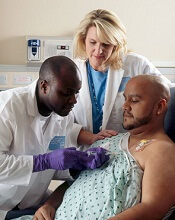
chemotherapy
Credit: Rhoda Baer
The UK’s National Institute for Health and Care Excellence (NICE) has updated its guidance to expand the use of erythropoiesis-stimulating agents (ESAs) in cancer patients.
In 2008, NICE issued a guidance recommending ESAs as a possible treatment for certain patients with anemia caused by cancer treatment.
Now, NICE has updated the recommendations to expand the use of ESAs—epoetin alfa, beta, theta, and zeta, as well as darbepoetin alfa—to all other indications within their UK marketing authorizations.
“A lot of people with cancer having chemotherapy will become anemic,” noted Carole Longson, director of the Centre for Health Technology Evaluation at NICE.
“Managing anemia often requires extra trips to the hospital and can significantly affect a person’s quality of life. This updated final guidance recommends more options, epoetin and darbepoetin, that are both clinically and cost-effective and which also significantly improve quality of life for people who develop anemia whilst having cancer therapy.”
The 2008 NICE guidance recommended erythropoietin analogues with iron injections as a possible treatment for anemia caused by cancer treatment only in:
- Women receiving platinum-based chemotherapy for cancer of the ovaries who have a blood hemoglobin level of 8 g/100 mL or lower
- Patients who have very severe anemia and cannot receive blood transfusions.
NICE’s updated final guidance recommends using darbepoetin alfa and epoetin alfa, beta, theta, and zeta within their marketing authorizations as an option for treating anemia in cancer patients undergoing chemotherapy.
Epoetin alfa (Eprex, Janssen-Cilag, and Binocrit, Sandoz), and epoetin zeta (Retacrit, Hospira UK) have UK marketing authorization to treat anemia and to reduce transfusion requirements in adult patients receiving chemotherapy for solid tumors, malignant lymphoma, or multiple myeloma, who are at risk of transfusion as assessed by the patients’ general status (eg, cardiovascular status, pre-existing anemia at the start of chemotherapy).
Binocrit and Retacrit are both biosimilar medicines referenced to Eprex. Eprex, Binocrit, and Retacrit are available in pre-filled syringes at net prices of £5.53, £4.33, and £5.66 per 1000 units, respectively.
Epoetin beta (NeoRecormon, Roche Products) and epoetin theta (Eporatio, Teva UK) have UK marketing authorization to treat symptomatic anemia in adult patients with non-myeloid malignancies who are receiving chemotherapy.
NeoRecormon is available in a pre-filled syringe at a net price of £3.51 per 500 units, and Eporatio is available in a pre-filled syringe at a net price of £5.99 per 1000 units.
Darbepoetin alfa (Aranesp, Amgen) has UK marketing authorization to treat symptomatic anemia in adult cancer patients with non-myeloid malignancies who are receiving chemotherapy. Aranesp is available in a pre-filled syringe at a net price of £14.68 per 10 micrograms.
Costs (excluding value-added tax) may vary in different settings because of negotiated procurement discounts.
chemotherapy
Credit: Rhoda Baer
The UK’s National Institute for Health and Care Excellence (NICE) has updated its guidance to expand the use of erythropoiesis-stimulating agents (ESAs) in cancer patients.
In 2008, NICE issued a guidance recommending ESAs as a possible treatment for certain patients with anemia caused by cancer treatment.
Now, NICE has updated the recommendations to expand the use of ESAs—epoetin alfa, beta, theta, and zeta, as well as darbepoetin alfa—to all other indications within their UK marketing authorizations.
“A lot of people with cancer having chemotherapy will become anemic,” noted Carole Longson, director of the Centre for Health Technology Evaluation at NICE.
“Managing anemia often requires extra trips to the hospital and can significantly affect a person’s quality of life. This updated final guidance recommends more options, epoetin and darbepoetin, that are both clinically and cost-effective and which also significantly improve quality of life for people who develop anemia whilst having cancer therapy.”
The 2008 NICE guidance recommended erythropoietin analogues with iron injections as a possible treatment for anemia caused by cancer treatment only in:
- Women receiving platinum-based chemotherapy for cancer of the ovaries who have a blood hemoglobin level of 8 g/100 mL or lower
- Patients who have very severe anemia and cannot receive blood transfusions.
NICE’s updated final guidance recommends using darbepoetin alfa and epoetin alfa, beta, theta, and zeta within their marketing authorizations as an option for treating anemia in cancer patients undergoing chemotherapy.
Epoetin alfa (Eprex, Janssen-Cilag, and Binocrit, Sandoz), and epoetin zeta (Retacrit, Hospira UK) have UK marketing authorization to treat anemia and to reduce transfusion requirements in adult patients receiving chemotherapy for solid tumors, malignant lymphoma, or multiple myeloma, who are at risk of transfusion as assessed by the patients’ general status (eg, cardiovascular status, pre-existing anemia at the start of chemotherapy).
Binocrit and Retacrit are both biosimilar medicines referenced to Eprex. Eprex, Binocrit, and Retacrit are available in pre-filled syringes at net prices of £5.53, £4.33, and £5.66 per 1000 units, respectively.
Epoetin beta (NeoRecormon, Roche Products) and epoetin theta (Eporatio, Teva UK) have UK marketing authorization to treat symptomatic anemia in adult patients with non-myeloid malignancies who are receiving chemotherapy.
NeoRecormon is available in a pre-filled syringe at a net price of £3.51 per 500 units, and Eporatio is available in a pre-filled syringe at a net price of £5.99 per 1000 units.
Darbepoetin alfa (Aranesp, Amgen) has UK marketing authorization to treat symptomatic anemia in adult cancer patients with non-myeloid malignancies who are receiving chemotherapy. Aranesp is available in a pre-filled syringe at a net price of £14.68 per 10 micrograms.
Costs (excluding value-added tax) may vary in different settings because of negotiated procurement discounts.
chemotherapy
Credit: Rhoda Baer
The UK’s National Institute for Health and Care Excellence (NICE) has updated its guidance to expand the use of erythropoiesis-stimulating agents (ESAs) in cancer patients.
In 2008, NICE issued a guidance recommending ESAs as a possible treatment for certain patients with anemia caused by cancer treatment.
Now, NICE has updated the recommendations to expand the use of ESAs—epoetin alfa, beta, theta, and zeta, as well as darbepoetin alfa—to all other indications within their UK marketing authorizations.
“A lot of people with cancer having chemotherapy will become anemic,” noted Carole Longson, director of the Centre for Health Technology Evaluation at NICE.
“Managing anemia often requires extra trips to the hospital and can significantly affect a person’s quality of life. This updated final guidance recommends more options, epoetin and darbepoetin, that are both clinically and cost-effective and which also significantly improve quality of life for people who develop anemia whilst having cancer therapy.”
The 2008 NICE guidance recommended erythropoietin analogues with iron injections as a possible treatment for anemia caused by cancer treatment only in:
- Women receiving platinum-based chemotherapy for cancer of the ovaries who have a blood hemoglobin level of 8 g/100 mL or lower
- Patients who have very severe anemia and cannot receive blood transfusions.
NICE’s updated final guidance recommends using darbepoetin alfa and epoetin alfa, beta, theta, and zeta within their marketing authorizations as an option for treating anemia in cancer patients undergoing chemotherapy.
Epoetin alfa (Eprex, Janssen-Cilag, and Binocrit, Sandoz), and epoetin zeta (Retacrit, Hospira UK) have UK marketing authorization to treat anemia and to reduce transfusion requirements in adult patients receiving chemotherapy for solid tumors, malignant lymphoma, or multiple myeloma, who are at risk of transfusion as assessed by the patients’ general status (eg, cardiovascular status, pre-existing anemia at the start of chemotherapy).
Binocrit and Retacrit are both biosimilar medicines referenced to Eprex. Eprex, Binocrit, and Retacrit are available in pre-filled syringes at net prices of £5.53, £4.33, and £5.66 per 1000 units, respectively.
Epoetin beta (NeoRecormon, Roche Products) and epoetin theta (Eporatio, Teva UK) have UK marketing authorization to treat symptomatic anemia in adult patients with non-myeloid malignancies who are receiving chemotherapy.
NeoRecormon is available in a pre-filled syringe at a net price of £3.51 per 500 units, and Eporatio is available in a pre-filled syringe at a net price of £5.99 per 1000 units.
Darbepoetin alfa (Aranesp, Amgen) has UK marketing authorization to treat symptomatic anemia in adult cancer patients with non-myeloid malignancies who are receiving chemotherapy. Aranesp is available in a pre-filled syringe at a net price of £14.68 per 10 micrograms.
Costs (excluding value-added tax) may vary in different settings because of negotiated procurement discounts.
Mutations indicate predisposition to blood cancers
Credit: Graham Colm
Two teams of researchers have identified somatic mutations that increase the likelihood a person will develop a hematologic malignancy.
This “pre-malignant” stage was detected simply by sequencing DNA from blood samples.
The researchers found that subjects carrying certain mutations had more than 10 times the risk of developing a hematologic malignancy than individuals without the mutations. And the risk increased with age.
Steven McCarroll, PhD, of Harvard Medical School in Boston, Massachusetts, and Benjamin Ebert, MD, PhD, also of Harvard Medical School, reported these findings in NEJM.
Both research teams looked at somatic mutations in DNA samples collected from the blood of subjects who had not been diagnosed with cancer or blood disorders.
Taking two very different approaches, the teams found that a surprising percentage of individuals had acquired a subset of the somatic mutations present in hematologic malignancies. And subjects with the mutations were more likely to develop these cancers.
This pre-malignant state was rare in individuals under the age of 40. But it appeared with increasing frequency with each decade of life, ultimately appearing in more than 10% of individuals over the age of 70.
The researchers believe these early mutations lie in wait for follow-on, cooperating mutations that, when they occur in the same cells as the earlier mutations, drive the cells toward cancer. The majority of mutations occurred in just 3 genes: DNMT3A, TET2, and ASXL1.
Dr Ebert’s group
Dr Ebert and his colleagues had hypothesized that, since hematologic malignancies increase with age, it might be possible to detect early somatic mutations that could be initiating the disease process, and these mutations might increase with age.
The researchers looked specifically at 160 genes known to be recurrently mutated in hematologic malignancies, using genetic data derived from approximately 17,000 blood samples originally obtained for studies on the genetics of type 2 diabetes.
The team found a roughly 11-fold increase in the risk of hematologic malignancy among subjects with the subset of somatic mutations linked to blood cancers. And there was a clear association between age and the frequency of these mutations.
Men were slightly more likely to have the mutations than women, and Hispanics were slightly less likely to have the mutations than other racial/ethnic groups.
The researchers also found an association between the presence of this pre-malignant state and the risk of overall mortality independent of malignancy. Individuals with the mutations had a higher risk of type 2 diabetes, coronary heart disease, and ischemic stroke as well.
However, additional research will be needed to determine the nature of these associations.
Dr McCarroll’s group
Dr McCarroll and his colleagues discovered the same phenomenon while trying to determine whether somatic mutations contribute to the risk of developing schizophrenia.
The team studied roughly 12,000 DNA samples from patients with schizophrenia and bipolar disorder, as well as healthy controls, searching across the whole genome at all of the protein-coding genes for patterns in somatic mutations.
The somatic mutations were concentrated in a handful of genes that turned out to be cancer genes.
So the researchers used electronic medical records to follow the patients’ medical histories, finding that subjects with these acquired mutations had a nearly 13-fold higher risk of developing a hematologic malignancy than subjects without the mutations.
The team conducted follow-up analyses on tumor samples from 2 patients who had progressed from this pre-malignant state to cancer. In both cases, the cancer developed from the same cells that had harbored the initiating mutations years earlier.
“The fact that both teams converged on strikingly similar findings, using very different approaches and looking at DNA from very different sets of patients, has given us great confidence in the results,” said study author Giulio Genovese, PhD, of the Broad Institute of MIT and Harvard in Cambridge, Massachusetts.
Next steps
The researchers emphasized that there is no clinical benefit today for testing for this pre-malignant state, as there are no treatments currently available that would address this condition in otherwise healthy people.
However, they said the results open the door to entirely new directions for research, toward early detection and even prevention of hematologic malignancies.
“The results demonstrate a way to identify high-risk cohorts—people who are at much higher than average risk of progressing to cancer—which could be a population for clinical trials of future prevention strategies,” Dr McCarroll said. “The abundance of these mutated cells could also serve as a biomarker—like LDL cholesterol is for cardiovascular disease—to test the effects of potential prevention therapies in clinical trials.”
Dr Ebert added, “A new focus of investigation will now be to develop interventions that might decrease the likelihood that individuals with these mutations will go on to develop overt malignancies, or therapeutic strategies to decrease mortality from other conditions that may be instigated by these mutations.”
This research is set to be presented on December 9 at the 56th ASH Annual Meeting in San Francisco.
Credit: Graham Colm
Two teams of researchers have identified somatic mutations that increase the likelihood a person will develop a hematologic malignancy.
This “pre-malignant” stage was detected simply by sequencing DNA from blood samples.
The researchers found that subjects carrying certain mutations had more than 10 times the risk of developing a hematologic malignancy than individuals without the mutations. And the risk increased with age.
Steven McCarroll, PhD, of Harvard Medical School in Boston, Massachusetts, and Benjamin Ebert, MD, PhD, also of Harvard Medical School, reported these findings in NEJM.
Both research teams looked at somatic mutations in DNA samples collected from the blood of subjects who had not been diagnosed with cancer or blood disorders.
Taking two very different approaches, the teams found that a surprising percentage of individuals had acquired a subset of the somatic mutations present in hematologic malignancies. And subjects with the mutations were more likely to develop these cancers.
This pre-malignant state was rare in individuals under the age of 40. But it appeared with increasing frequency with each decade of life, ultimately appearing in more than 10% of individuals over the age of 70.
The researchers believe these early mutations lie in wait for follow-on, cooperating mutations that, when they occur in the same cells as the earlier mutations, drive the cells toward cancer. The majority of mutations occurred in just 3 genes: DNMT3A, TET2, and ASXL1.
Dr Ebert’s group
Dr Ebert and his colleagues had hypothesized that, since hematologic malignancies increase with age, it might be possible to detect early somatic mutations that could be initiating the disease process, and these mutations might increase with age.
The researchers looked specifically at 160 genes known to be recurrently mutated in hematologic malignancies, using genetic data derived from approximately 17,000 blood samples originally obtained for studies on the genetics of type 2 diabetes.
The team found a roughly 11-fold increase in the risk of hematologic malignancy among subjects with the subset of somatic mutations linked to blood cancers. And there was a clear association between age and the frequency of these mutations.
Men were slightly more likely to have the mutations than women, and Hispanics were slightly less likely to have the mutations than other racial/ethnic groups.
The researchers also found an association between the presence of this pre-malignant state and the risk of overall mortality independent of malignancy. Individuals with the mutations had a higher risk of type 2 diabetes, coronary heart disease, and ischemic stroke as well.
However, additional research will be needed to determine the nature of these associations.
Dr McCarroll’s group
Dr McCarroll and his colleagues discovered the same phenomenon while trying to determine whether somatic mutations contribute to the risk of developing schizophrenia.
The team studied roughly 12,000 DNA samples from patients with schizophrenia and bipolar disorder, as well as healthy controls, searching across the whole genome at all of the protein-coding genes for patterns in somatic mutations.
The somatic mutations were concentrated in a handful of genes that turned out to be cancer genes.
So the researchers used electronic medical records to follow the patients’ medical histories, finding that subjects with these acquired mutations had a nearly 13-fold higher risk of developing a hematologic malignancy than subjects without the mutations.
The team conducted follow-up analyses on tumor samples from 2 patients who had progressed from this pre-malignant state to cancer. In both cases, the cancer developed from the same cells that had harbored the initiating mutations years earlier.
“The fact that both teams converged on strikingly similar findings, using very different approaches and looking at DNA from very different sets of patients, has given us great confidence in the results,” said study author Giulio Genovese, PhD, of the Broad Institute of MIT and Harvard in Cambridge, Massachusetts.
Next steps
The researchers emphasized that there is no clinical benefit today for testing for this pre-malignant state, as there are no treatments currently available that would address this condition in otherwise healthy people.
However, they said the results open the door to entirely new directions for research, toward early detection and even prevention of hematologic malignancies.
“The results demonstrate a way to identify high-risk cohorts—people who are at much higher than average risk of progressing to cancer—which could be a population for clinical trials of future prevention strategies,” Dr McCarroll said. “The abundance of these mutated cells could also serve as a biomarker—like LDL cholesterol is for cardiovascular disease—to test the effects of potential prevention therapies in clinical trials.”
Dr Ebert added, “A new focus of investigation will now be to develop interventions that might decrease the likelihood that individuals with these mutations will go on to develop overt malignancies, or therapeutic strategies to decrease mortality from other conditions that may be instigated by these mutations.”
This research is set to be presented on December 9 at the 56th ASH Annual Meeting in San Francisco.
Credit: Graham Colm
Two teams of researchers have identified somatic mutations that increase the likelihood a person will develop a hematologic malignancy.
This “pre-malignant” stage was detected simply by sequencing DNA from blood samples.
The researchers found that subjects carrying certain mutations had more than 10 times the risk of developing a hematologic malignancy than individuals without the mutations. And the risk increased with age.
Steven McCarroll, PhD, of Harvard Medical School in Boston, Massachusetts, and Benjamin Ebert, MD, PhD, also of Harvard Medical School, reported these findings in NEJM.
Both research teams looked at somatic mutations in DNA samples collected from the blood of subjects who had not been diagnosed with cancer or blood disorders.
Taking two very different approaches, the teams found that a surprising percentage of individuals had acquired a subset of the somatic mutations present in hematologic malignancies. And subjects with the mutations were more likely to develop these cancers.
This pre-malignant state was rare in individuals under the age of 40. But it appeared with increasing frequency with each decade of life, ultimately appearing in more than 10% of individuals over the age of 70.
The researchers believe these early mutations lie in wait for follow-on, cooperating mutations that, when they occur in the same cells as the earlier mutations, drive the cells toward cancer. The majority of mutations occurred in just 3 genes: DNMT3A, TET2, and ASXL1.
Dr Ebert’s group
Dr Ebert and his colleagues had hypothesized that, since hematologic malignancies increase with age, it might be possible to detect early somatic mutations that could be initiating the disease process, and these mutations might increase with age.
The researchers looked specifically at 160 genes known to be recurrently mutated in hematologic malignancies, using genetic data derived from approximately 17,000 blood samples originally obtained for studies on the genetics of type 2 diabetes.
The team found a roughly 11-fold increase in the risk of hematologic malignancy among subjects with the subset of somatic mutations linked to blood cancers. And there was a clear association between age and the frequency of these mutations.
Men were slightly more likely to have the mutations than women, and Hispanics were slightly less likely to have the mutations than other racial/ethnic groups.
The researchers also found an association between the presence of this pre-malignant state and the risk of overall mortality independent of malignancy. Individuals with the mutations had a higher risk of type 2 diabetes, coronary heart disease, and ischemic stroke as well.
However, additional research will be needed to determine the nature of these associations.
Dr McCarroll’s group
Dr McCarroll and his colleagues discovered the same phenomenon while trying to determine whether somatic mutations contribute to the risk of developing schizophrenia.
The team studied roughly 12,000 DNA samples from patients with schizophrenia and bipolar disorder, as well as healthy controls, searching across the whole genome at all of the protein-coding genes for patterns in somatic mutations.
The somatic mutations were concentrated in a handful of genes that turned out to be cancer genes.
So the researchers used electronic medical records to follow the patients’ medical histories, finding that subjects with these acquired mutations had a nearly 13-fold higher risk of developing a hematologic malignancy than subjects without the mutations.
The team conducted follow-up analyses on tumor samples from 2 patients who had progressed from this pre-malignant state to cancer. In both cases, the cancer developed from the same cells that had harbored the initiating mutations years earlier.
“The fact that both teams converged on strikingly similar findings, using very different approaches and looking at DNA from very different sets of patients, has given us great confidence in the results,” said study author Giulio Genovese, PhD, of the Broad Institute of MIT and Harvard in Cambridge, Massachusetts.
Next steps
The researchers emphasized that there is no clinical benefit today for testing for this pre-malignant state, as there are no treatments currently available that would address this condition in otherwise healthy people.
However, they said the results open the door to entirely new directions for research, toward early detection and even prevention of hematologic malignancies.
“The results demonstrate a way to identify high-risk cohorts—people who are at much higher than average risk of progressing to cancer—which could be a population for clinical trials of future prevention strategies,” Dr McCarroll said. “The abundance of these mutated cells could also serve as a biomarker—like LDL cholesterol is for cardiovascular disease—to test the effects of potential prevention therapies in clinical trials.”
Dr Ebert added, “A new focus of investigation will now be to develop interventions that might decrease the likelihood that individuals with these mutations will go on to develop overt malignancies, or therapeutic strategies to decrease mortality from other conditions that may be instigated by these mutations.”
This research is set to be presented on December 9 at the 56th ASH Annual Meeting in San Francisco.