User login
Finding could help docs tailor treatment for myeloid leukemias
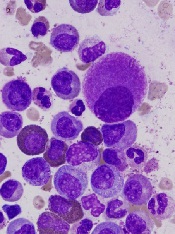
PHILADELPHIA—New research suggests that stiffness in the extracellular matrix (ECM) can predict how leukemias will respond to therapy.
Using a 3D model, investigators demonstrated that ECM stiffness can affect treatment response in both chronic and acute myeloid leukemia.
The researchers believe that correcting for the matrix effect could give hematologists a new tool for personalizing leukemia treatment.
The team presented this research at the 2014 ASCB/IFCB meeting (poster 429).
Jae-Won Shin, PhD, and David Mooney, PhD, both of Harvard University, knew that myeloid leukemia subtypes are defined by distinct genetic mutations and the activation of known signaling pathways.
But the investigators wanted to see if changes in matrix stiffness played a part in cancer cell proliferation and if myeloid leukemia subtypes could be sorted out by their responses.
The researchers built a 3D hydrogel system with tunable stiffness and attempted to evaluate how relative stiffness of the surrounding ECM affected the resistance of human myeloid leukemias to chemotherapeutic drugs.
They found, for example, that chronic myeloid leukemias (CMLs) grown in their viscous 3D gel system were more resistant to the tyrosine kinase inhibitor imatinib than those cultured in a rigid matrix.
Using this and other data from their variable ECM system, the team screened libraries of small-molecule drugs, identifying a subset of drugs they say are more likely to be effective against CML, regardless of the surrounding matrix.
By correcting for the matrix effect, Drs Shin and Mooney believe their novel approach to drug screening could more precisely tailor chemotherapy to a patient’s individual malignancy.
The investigators’ 3D hydrogel system allowed them to vary the stiffness of the matrix and uncover different growth patterns, which they used to profile different leukemia subtypes.
They also looked at a cellular signaling pathway, protein kinase B (AKT), known to be involved in mechanotransduction and therefore sensitive to stiffness in different leukemia subtypes.
They discovered that CML cells in the 3D hydrogel were resistant to an AKT inhibitor, while acute myeloid leukemia cells grown in the same conditions were responsive to the drug, supporting their idea that a tunable matrix system could be a way to sort out leukemia subtypes by drug resistance. 
PHILADELPHIA—New research suggests that stiffness in the extracellular matrix (ECM) can predict how leukemias will respond to therapy.
Using a 3D model, investigators demonstrated that ECM stiffness can affect treatment response in both chronic and acute myeloid leukemia.
The researchers believe that correcting for the matrix effect could give hematologists a new tool for personalizing leukemia treatment.
The team presented this research at the 2014 ASCB/IFCB meeting (poster 429).
Jae-Won Shin, PhD, and David Mooney, PhD, both of Harvard University, knew that myeloid leukemia subtypes are defined by distinct genetic mutations and the activation of known signaling pathways.
But the investigators wanted to see if changes in matrix stiffness played a part in cancer cell proliferation and if myeloid leukemia subtypes could be sorted out by their responses.
The researchers built a 3D hydrogel system with tunable stiffness and attempted to evaluate how relative stiffness of the surrounding ECM affected the resistance of human myeloid leukemias to chemotherapeutic drugs.
They found, for example, that chronic myeloid leukemias (CMLs) grown in their viscous 3D gel system were more resistant to the tyrosine kinase inhibitor imatinib than those cultured in a rigid matrix.
Using this and other data from their variable ECM system, the team screened libraries of small-molecule drugs, identifying a subset of drugs they say are more likely to be effective against CML, regardless of the surrounding matrix.
By correcting for the matrix effect, Drs Shin and Mooney believe their novel approach to drug screening could more precisely tailor chemotherapy to a patient’s individual malignancy.
The investigators’ 3D hydrogel system allowed them to vary the stiffness of the matrix and uncover different growth patterns, which they used to profile different leukemia subtypes.
They also looked at a cellular signaling pathway, protein kinase B (AKT), known to be involved in mechanotransduction and therefore sensitive to stiffness in different leukemia subtypes.
They discovered that CML cells in the 3D hydrogel were resistant to an AKT inhibitor, while acute myeloid leukemia cells grown in the same conditions were responsive to the drug, supporting their idea that a tunable matrix system could be a way to sort out leukemia subtypes by drug resistance.
PHILADELPHIA—New research suggests that stiffness in the extracellular matrix (ECM) can predict how leukemias will respond to therapy.
Using a 3D model, investigators demonstrated that ECM stiffness can affect treatment response in both chronic and acute myeloid leukemia.
The researchers believe that correcting for the matrix effect could give hematologists a new tool for personalizing leukemia treatment.
The team presented this research at the 2014 ASCB/IFCB meeting (poster 429).
Jae-Won Shin, PhD, and David Mooney, PhD, both of Harvard University, knew that myeloid leukemia subtypes are defined by distinct genetic mutations and the activation of known signaling pathways.
But the investigators wanted to see if changes in matrix stiffness played a part in cancer cell proliferation and if myeloid leukemia subtypes could be sorted out by their responses.
The researchers built a 3D hydrogel system with tunable stiffness and attempted to evaluate how relative stiffness of the surrounding ECM affected the resistance of human myeloid leukemias to chemotherapeutic drugs.
They found, for example, that chronic myeloid leukemias (CMLs) grown in their viscous 3D gel system were more resistant to the tyrosine kinase inhibitor imatinib than those cultured in a rigid matrix.
Using this and other data from their variable ECM system, the team screened libraries of small-molecule drugs, identifying a subset of drugs they say are more likely to be effective against CML, regardless of the surrounding matrix.
By correcting for the matrix effect, Drs Shin and Mooney believe their novel approach to drug screening could more precisely tailor chemotherapy to a patient’s individual malignancy.
The investigators’ 3D hydrogel system allowed them to vary the stiffness of the matrix and uncover different growth patterns, which they used to profile different leukemia subtypes.
They also looked at a cellular signaling pathway, protein kinase B (AKT), known to be involved in mechanotransduction and therefore sensitive to stiffness in different leukemia subtypes.
They discovered that CML cells in the 3D hydrogel were resistant to an AKT inhibitor, while acute myeloid leukemia cells grown in the same conditions were responsive to the drug, supporting their idea that a tunable matrix system could be a way to sort out leukemia subtypes by drug resistance.
A new standard of care for relapsed MM?
SAN FRANCISCO—Trial results suggest a 3-drug regimen could represent a new standard of care for relapsed multiple myeloma (MM), according to a speaker at the 2014 ASH Annual Meeting.
In the phase 3 ASPIRE trial, patients who received combination carfilzomib, lenalidomide, and dexamethasone (KRd) had superior progression-free survival compared to patients who received only lenalidomide and dexamethasone (Rd).
There was a trend toward improved overall survival with KRd as well.
Patients who received KRd did experience more adverse events (AEs), but fewer patients discontinued treatment due to AEs in the KRd arm than in the Rd arm.
Keith Stewart, MBChB, of the Mayo Clinic in Arizona, presented these results at the meeting as abstract 79. The data were published in The New England Journal of Medicine as well. The trial was sponsored by Onyx Pharmaceuticals, Inc., the company developing carfilzomib.
ASPIRE included 792 patients with relapsed MM who had received 1 to 3 prior treatment regimens. Patients were randomized to treatment with KRd (n=396) or Rd (n=396), and baseline characteristics were similar between the arms.
“There was a slight preponderance of patients over the age of 65 in the Rd arm of the trial,” Dr Stewart noted. “Conversely, there were more patients on the Rd arm of the trial who had lower-risk cytogenetics.”
“Patients were also well-balanced for baseline exposure to prior therapies. Prior therapies included transplant in 55% of patients, bortezomib in two-thirds of patients, and lenalidomide in 20% of patients—again, equal in both arms of the trial.”
All patients received a standard dosing schedule of lenalidomide (25 mg on days 1-21) and low-dose dexamethasone (40 mg on days 1, 8, 15, and 22).
Patients in the KRd arm also received carfilzomib (20 mg/m2 on days 1 and 2 of cycle 1 and 27 mg/m2 thereafter). They received a 10-minute infusion of the drug on days 1, 2, 8, 9, 15, and 16. Carfilzomib was not given on days 8 and 9 in cycles 13 to 18 and not administered beyond 18 cycles.
‘Unprecedented’ results
The study’s primary endpoint was progression-free survival. And results showed progression-free survival was significantly longer in the KRd arm than in the Rd arm—26.3 months and 17.6 months, respectively (hazard ratio=0.69; P<0.0001).
“Progression-free survival was significantly improved by 8.7 months with KRd,” Dr Stewart noted. “In a phase 3 clinical trial setting, this is unprecedented.”
“In all prespecified subgroups, the advantage of KRd in progression-free survival was maintained. That includes age, international staging system, and prior exposure to either bortezomib or lenalidomide, or both drugs.”
The secondary endpoints of the trial were overall survival, overall response rate, duration of response, health-related quality of life, and safety.
The data for median overall survival are not yet mature based on the prespecified statistical boundary at the interim analysis (P=0.005). However, there was a trend in favor of KRd (hazard ratio, 0.79; P=0.018).
The overall response rate was 87.1% with KRd and 66.7% with Rd (P<0.0001), and the complete response rates were 14.1% and 4.3%, respectively (P<0.001). The median duration of response was 28.6 months and 21.2 months, respectively.
In addition, KRd improved global health-related quality of life compared with Rd over 18 cycles of treatment (P=0.0001).
‘Reassuring’ toxicity data
“In the discussion of adverse events,” Dr Stewart said, “it’s important to note that the median treatment duration was 88 weeks with KRd and 57 weeks with Rd.”
Most patients in each arm experienced at least one AE—96.9% in the KRd arm and 97.2% in the RD arm.
In the KRd arm, 7.7% of patients died while still on treatment or within 30 days of receiving their last dose of treatment, as did 8.5% of patients in the Rd arm. The percentage of deaths attributable to AEs was 6.9% in both arms.
The rates of treatment discontinuation were 69.9% in the KRd arm and 77.9% in the Rd arm. More patients discontinued treatment due to disease progression—39.8% in the KRd arm and 50.1% in the Rd arm—than to AEs—15.3% in the KRd arm and 17.7% in the Rd arm.
The most common grade 3 or higher hematologic treatment-emergent AEs (in the KRd and Rd arms, respectively) were neutropenia (29.6% vs 26.5%), anemia (17.9% vs 17.2%), and thrombocytopenia (16.6% vs 12.3%).
The most common grade 3 or higher nonhematologic treatment-emergent AEs (in the KRd and Rd arms, respectively) were hypokalemia (9.4% vs 4.9%), fatigue (7.7% vs 6.4%), and diarrhea (3.8% vs 4.1%).
Other treatment-emergent AEs of any grade (in the KRd and Rd arms, respectively) included dyspnea (19.4% vs 14.9%), hypertension (14.3% vs 6.9%), acute renal failure (8.4% vs 7.2%), cardiac failure (6.4% vs 4.1%), ischemic heart disease (5.9% vs 4.6%), and peripheral neuropathy (17.1% vs 17.0%).
“The results [are] very reassuring with respect to cardiac and renal events, which were reported at rates consistent with, or even lower than, those reported in prior studies of single-agent carfilzomib or more heavily pretreated patients,” Dr Stewart said.
“Based on the results of this phase 3 trial, I think it’s fair to say that KRd could represent a new standard of care in relapsed multiple myeloma.”
SAN FRANCISCO—Trial results suggest a 3-drug regimen could represent a new standard of care for relapsed multiple myeloma (MM), according to a speaker at the 2014 ASH Annual Meeting.
In the phase 3 ASPIRE trial, patients who received combination carfilzomib, lenalidomide, and dexamethasone (KRd) had superior progression-free survival compared to patients who received only lenalidomide and dexamethasone (Rd).
There was a trend toward improved overall survival with KRd as well.
Patients who received KRd did experience more adverse events (AEs), but fewer patients discontinued treatment due to AEs in the KRd arm than in the Rd arm.
Keith Stewart, MBChB, of the Mayo Clinic in Arizona, presented these results at the meeting as abstract 79. The data were published in The New England Journal of Medicine as well. The trial was sponsored by Onyx Pharmaceuticals, Inc., the company developing carfilzomib.
ASPIRE included 792 patients with relapsed MM who had received 1 to 3 prior treatment regimens. Patients were randomized to treatment with KRd (n=396) or Rd (n=396), and baseline characteristics were similar between the arms.
“There was a slight preponderance of patients over the age of 65 in the Rd arm of the trial,” Dr Stewart noted. “Conversely, there were more patients on the Rd arm of the trial who had lower-risk cytogenetics.”
“Patients were also well-balanced for baseline exposure to prior therapies. Prior therapies included transplant in 55% of patients, bortezomib in two-thirds of patients, and lenalidomide in 20% of patients—again, equal in both arms of the trial.”
All patients received a standard dosing schedule of lenalidomide (25 mg on days 1-21) and low-dose dexamethasone (40 mg on days 1, 8, 15, and 22).
Patients in the KRd arm also received carfilzomib (20 mg/m2 on days 1 and 2 of cycle 1 and 27 mg/m2 thereafter). They received a 10-minute infusion of the drug on days 1, 2, 8, 9, 15, and 16. Carfilzomib was not given on days 8 and 9 in cycles 13 to 18 and not administered beyond 18 cycles.
‘Unprecedented’ results
The study’s primary endpoint was progression-free survival. And results showed progression-free survival was significantly longer in the KRd arm than in the Rd arm—26.3 months and 17.6 months, respectively (hazard ratio=0.69; P<0.0001).
“Progression-free survival was significantly improved by 8.7 months with KRd,” Dr Stewart noted. “In a phase 3 clinical trial setting, this is unprecedented.”
“In all prespecified subgroups, the advantage of KRd in progression-free survival was maintained. That includes age, international staging system, and prior exposure to either bortezomib or lenalidomide, or both drugs.”
The secondary endpoints of the trial were overall survival, overall response rate, duration of response, health-related quality of life, and safety.
The data for median overall survival are not yet mature based on the prespecified statistical boundary at the interim analysis (P=0.005). However, there was a trend in favor of KRd (hazard ratio, 0.79; P=0.018).
The overall response rate was 87.1% with KRd and 66.7% with Rd (P<0.0001), and the complete response rates were 14.1% and 4.3%, respectively (P<0.001). The median duration of response was 28.6 months and 21.2 months, respectively.
In addition, KRd improved global health-related quality of life compared with Rd over 18 cycles of treatment (P=0.0001).
‘Reassuring’ toxicity data
“In the discussion of adverse events,” Dr Stewart said, “it’s important to note that the median treatment duration was 88 weeks with KRd and 57 weeks with Rd.”
Most patients in each arm experienced at least one AE—96.9% in the KRd arm and 97.2% in the RD arm.
In the KRd arm, 7.7% of patients died while still on treatment or within 30 days of receiving their last dose of treatment, as did 8.5% of patients in the Rd arm. The percentage of deaths attributable to AEs was 6.9% in both arms.
The rates of treatment discontinuation were 69.9% in the KRd arm and 77.9% in the Rd arm. More patients discontinued treatment due to disease progression—39.8% in the KRd arm and 50.1% in the Rd arm—than to AEs—15.3% in the KRd arm and 17.7% in the Rd arm.
The most common grade 3 or higher hematologic treatment-emergent AEs (in the KRd and Rd arms, respectively) were neutropenia (29.6% vs 26.5%), anemia (17.9% vs 17.2%), and thrombocytopenia (16.6% vs 12.3%).
The most common grade 3 or higher nonhematologic treatment-emergent AEs (in the KRd and Rd arms, respectively) were hypokalemia (9.4% vs 4.9%), fatigue (7.7% vs 6.4%), and diarrhea (3.8% vs 4.1%).
Other treatment-emergent AEs of any grade (in the KRd and Rd arms, respectively) included dyspnea (19.4% vs 14.9%), hypertension (14.3% vs 6.9%), acute renal failure (8.4% vs 7.2%), cardiac failure (6.4% vs 4.1%), ischemic heart disease (5.9% vs 4.6%), and peripheral neuropathy (17.1% vs 17.0%).
“The results [are] very reassuring with respect to cardiac and renal events, which were reported at rates consistent with, or even lower than, those reported in prior studies of single-agent carfilzomib or more heavily pretreated patients,” Dr Stewart said.
“Based on the results of this phase 3 trial, I think it’s fair to say that KRd could represent a new standard of care in relapsed multiple myeloma.”
SAN FRANCISCO—Trial results suggest a 3-drug regimen could represent a new standard of care for relapsed multiple myeloma (MM), according to a speaker at the 2014 ASH Annual Meeting.
In the phase 3 ASPIRE trial, patients who received combination carfilzomib, lenalidomide, and dexamethasone (KRd) had superior progression-free survival compared to patients who received only lenalidomide and dexamethasone (Rd).
There was a trend toward improved overall survival with KRd as well.
Patients who received KRd did experience more adverse events (AEs), but fewer patients discontinued treatment due to AEs in the KRd arm than in the Rd arm.
Keith Stewart, MBChB, of the Mayo Clinic in Arizona, presented these results at the meeting as abstract 79. The data were published in The New England Journal of Medicine as well. The trial was sponsored by Onyx Pharmaceuticals, Inc., the company developing carfilzomib.
ASPIRE included 792 patients with relapsed MM who had received 1 to 3 prior treatment regimens. Patients were randomized to treatment with KRd (n=396) or Rd (n=396), and baseline characteristics were similar between the arms.
“There was a slight preponderance of patients over the age of 65 in the Rd arm of the trial,” Dr Stewart noted. “Conversely, there were more patients on the Rd arm of the trial who had lower-risk cytogenetics.”
“Patients were also well-balanced for baseline exposure to prior therapies. Prior therapies included transplant in 55% of patients, bortezomib in two-thirds of patients, and lenalidomide in 20% of patients—again, equal in both arms of the trial.”
All patients received a standard dosing schedule of lenalidomide (25 mg on days 1-21) and low-dose dexamethasone (40 mg on days 1, 8, 15, and 22).
Patients in the KRd arm also received carfilzomib (20 mg/m2 on days 1 and 2 of cycle 1 and 27 mg/m2 thereafter). They received a 10-minute infusion of the drug on days 1, 2, 8, 9, 15, and 16. Carfilzomib was not given on days 8 and 9 in cycles 13 to 18 and not administered beyond 18 cycles.
‘Unprecedented’ results
The study’s primary endpoint was progression-free survival. And results showed progression-free survival was significantly longer in the KRd arm than in the Rd arm—26.3 months and 17.6 months, respectively (hazard ratio=0.69; P<0.0001).
“Progression-free survival was significantly improved by 8.7 months with KRd,” Dr Stewart noted. “In a phase 3 clinical trial setting, this is unprecedented.”
“In all prespecified subgroups, the advantage of KRd in progression-free survival was maintained. That includes age, international staging system, and prior exposure to either bortezomib or lenalidomide, or both drugs.”
The secondary endpoints of the trial were overall survival, overall response rate, duration of response, health-related quality of life, and safety.
The data for median overall survival are not yet mature based on the prespecified statistical boundary at the interim analysis (P=0.005). However, there was a trend in favor of KRd (hazard ratio, 0.79; P=0.018).
The overall response rate was 87.1% with KRd and 66.7% with Rd (P<0.0001), and the complete response rates were 14.1% and 4.3%, respectively (P<0.001). The median duration of response was 28.6 months and 21.2 months, respectively.
In addition, KRd improved global health-related quality of life compared with Rd over 18 cycles of treatment (P=0.0001).
‘Reassuring’ toxicity data
“In the discussion of adverse events,” Dr Stewart said, “it’s important to note that the median treatment duration was 88 weeks with KRd and 57 weeks with Rd.”
Most patients in each arm experienced at least one AE—96.9% in the KRd arm and 97.2% in the RD arm.
In the KRd arm, 7.7% of patients died while still on treatment or within 30 days of receiving their last dose of treatment, as did 8.5% of patients in the Rd arm. The percentage of deaths attributable to AEs was 6.9% in both arms.
The rates of treatment discontinuation were 69.9% in the KRd arm and 77.9% in the Rd arm. More patients discontinued treatment due to disease progression—39.8% in the KRd arm and 50.1% in the Rd arm—than to AEs—15.3% in the KRd arm and 17.7% in the Rd arm.
The most common grade 3 or higher hematologic treatment-emergent AEs (in the KRd and Rd arms, respectively) were neutropenia (29.6% vs 26.5%), anemia (17.9% vs 17.2%), and thrombocytopenia (16.6% vs 12.3%).
The most common grade 3 or higher nonhematologic treatment-emergent AEs (in the KRd and Rd arms, respectively) were hypokalemia (9.4% vs 4.9%), fatigue (7.7% vs 6.4%), and diarrhea (3.8% vs 4.1%).
Other treatment-emergent AEs of any grade (in the KRd and Rd arms, respectively) included dyspnea (19.4% vs 14.9%), hypertension (14.3% vs 6.9%), acute renal failure (8.4% vs 7.2%), cardiac failure (6.4% vs 4.1%), ischemic heart disease (5.9% vs 4.6%), and peripheral neuropathy (17.1% vs 17.0%).
“The results [are] very reassuring with respect to cardiac and renal events, which were reported at rates consistent with, or even lower than, those reported in prior studies of single-agent carfilzomib or more heavily pretreated patients,” Dr Stewart said.
“Based on the results of this phase 3 trial, I think it’s fair to say that KRd could represent a new standard of care in relapsed multiple myeloma.”
Mouse model reveals insight into CLL relapse

Researchers say they have discovered why patients with chronic lymphocytic leukemia (CLL) often relapse.
Using a mouse model, the team demonstrated that crosstalk between leukemic cells and a group of stromal cells in the spleen is crucial for tumor growth.
The group also found a way to prevent leukemic cell proliferation and stop the cells from entering the spleen, thereby identifying new targets for future therapies in CLL.
Kristina Heinig, of Max Delbrück Center for Molecular Medicine in Berlin, Germany, and her colleagues reported these findings in Cancer Discovery.
The team theorized that the processes that normally regulate the migration of B lymphocytes into the B-cell follicle are also the reason for the migration of leukemia cells into the lymphoid organs. Hence, within the B-cell follicle, the survival and growth of malignant B cells may depend on the contact of leukemia cells with follicular dendritic cells (FDCs).
The researchers validated this theory with their mouse model. They found the chemokine CXCL13 and its receptor, CXCR5, on the surface of the leukemia cells are needed to ensure that leukemia cells can reach the spleen. With the aid of this homing receptor, the cancer cells are lured into the B-cell follicle of the spleen, where the FDCs secrete CXCL13.
When the researchers blocked CXCR5 in the mice, the leukemia cells could no longer migrate into the stromal cell niche and proliferated much more slowly.
In a second step, the group studied the consequences of the interaction between malignant B cells and the FDCs in the B-cell follicle. They found the close contact between the leukemia cells and the FDC network stimulates the cancer cells to increasingly produce another signaling substance, lymphotoxin.
The lymphotoxin binds to the lymphotoxin-beta receptor on the FDCs, which then increasingly secrete CXCL13. This creates a positive feedback loop because CXCL13 plays a major role in the recruitment of leukemia cells in the B-cell follicles.
The FDCs also provide growth factors that promote the proliferation of leukemia cells in the stromal niche.
When the researchers inhibited the binding of the lymphotoxin to the lymphotoxin-beta receptor on the FDCs with an immunologically active substance, they were able to end this ping-pong match between leukemia cells and the FDCs and dramatically reduce tumor growth.
The team thus identified two different targets that may complement the chemotherapy currently used to treat CLL. The first is blocking the chemokine/homing receptor CXCR5 on the leukemia cells, which prevents the cancer cells from lodging in the B-cell follicle.
The second is blocking the lymphotoxin-beta receptor on the FDCs so the reciprocal crosstalk between the leukemia cells and the FDCs is interrupted and tumor development is reduced.
From the results of their study, the researchers infer that chemotherapies already in clinical use combined with immune therapies that interrupt the crosstalk between leukemia cells and the FDCs may be beneficial.
This combination could prevent the residual leukemia cells that have escaped chemotherapy or radiation therapy from recovering in the stromal cell niche and from triggering a relapse.
Researchers say they have discovered why patients with chronic lymphocytic leukemia (CLL) often relapse.
Using a mouse model, the team demonstrated that crosstalk between leukemic cells and a group of stromal cells in the spleen is crucial for tumor growth.
The group also found a way to prevent leukemic cell proliferation and stop the cells from entering the spleen, thereby identifying new targets for future therapies in CLL.
Kristina Heinig, of Max Delbrück Center for Molecular Medicine in Berlin, Germany, and her colleagues reported these findings in Cancer Discovery.
The team theorized that the processes that normally regulate the migration of B lymphocytes into the B-cell follicle are also the reason for the migration of leukemia cells into the lymphoid organs. Hence, within the B-cell follicle, the survival and growth of malignant B cells may depend on the contact of leukemia cells with follicular dendritic cells (FDCs).
The researchers validated this theory with their mouse model. They found the chemokine CXCL13 and its receptor, CXCR5, on the surface of the leukemia cells are needed to ensure that leukemia cells can reach the spleen. With the aid of this homing receptor, the cancer cells are lured into the B-cell follicle of the spleen, where the FDCs secrete CXCL13.
When the researchers blocked CXCR5 in the mice, the leukemia cells could no longer migrate into the stromal cell niche and proliferated much more slowly.
In a second step, the group studied the consequences of the interaction between malignant B cells and the FDCs in the B-cell follicle. They found the close contact between the leukemia cells and the FDC network stimulates the cancer cells to increasingly produce another signaling substance, lymphotoxin.
The lymphotoxin binds to the lymphotoxin-beta receptor on the FDCs, which then increasingly secrete CXCL13. This creates a positive feedback loop because CXCL13 plays a major role in the recruitment of leukemia cells in the B-cell follicles.
The FDCs also provide growth factors that promote the proliferation of leukemia cells in the stromal niche.
When the researchers inhibited the binding of the lymphotoxin to the lymphotoxin-beta receptor on the FDCs with an immunologically active substance, they were able to end this ping-pong match between leukemia cells and the FDCs and dramatically reduce tumor growth.
The team thus identified two different targets that may complement the chemotherapy currently used to treat CLL. The first is blocking the chemokine/homing receptor CXCR5 on the leukemia cells, which prevents the cancer cells from lodging in the B-cell follicle.
The second is blocking the lymphotoxin-beta receptor on the FDCs so the reciprocal crosstalk between the leukemia cells and the FDCs is interrupted and tumor development is reduced.
From the results of their study, the researchers infer that chemotherapies already in clinical use combined with immune therapies that interrupt the crosstalk between leukemia cells and the FDCs may be beneficial.
This combination could prevent the residual leukemia cells that have escaped chemotherapy or radiation therapy from recovering in the stromal cell niche and from triggering a relapse.
Researchers say they have discovered why patients with chronic lymphocytic leukemia (CLL) often relapse.
Using a mouse model, the team demonstrated that crosstalk between leukemic cells and a group of stromal cells in the spleen is crucial for tumor growth.
The group also found a way to prevent leukemic cell proliferation and stop the cells from entering the spleen, thereby identifying new targets for future therapies in CLL.
Kristina Heinig, of Max Delbrück Center for Molecular Medicine in Berlin, Germany, and her colleagues reported these findings in Cancer Discovery.
The team theorized that the processes that normally regulate the migration of B lymphocytes into the B-cell follicle are also the reason for the migration of leukemia cells into the lymphoid organs. Hence, within the B-cell follicle, the survival and growth of malignant B cells may depend on the contact of leukemia cells with follicular dendritic cells (FDCs).
The researchers validated this theory with their mouse model. They found the chemokine CXCL13 and its receptor, CXCR5, on the surface of the leukemia cells are needed to ensure that leukemia cells can reach the spleen. With the aid of this homing receptor, the cancer cells are lured into the B-cell follicle of the spleen, where the FDCs secrete CXCL13.
When the researchers blocked CXCR5 in the mice, the leukemia cells could no longer migrate into the stromal cell niche and proliferated much more slowly.
In a second step, the group studied the consequences of the interaction between malignant B cells and the FDCs in the B-cell follicle. They found the close contact between the leukemia cells and the FDC network stimulates the cancer cells to increasingly produce another signaling substance, lymphotoxin.
The lymphotoxin binds to the lymphotoxin-beta receptor on the FDCs, which then increasingly secrete CXCL13. This creates a positive feedback loop because CXCL13 plays a major role in the recruitment of leukemia cells in the B-cell follicles.
The FDCs also provide growth factors that promote the proliferation of leukemia cells in the stromal niche.
When the researchers inhibited the binding of the lymphotoxin to the lymphotoxin-beta receptor on the FDCs with an immunologically active substance, they were able to end this ping-pong match between leukemia cells and the FDCs and dramatically reduce tumor growth.
The team thus identified two different targets that may complement the chemotherapy currently used to treat CLL. The first is blocking the chemokine/homing receptor CXCR5 on the leukemia cells, which prevents the cancer cells from lodging in the B-cell follicle.
The second is blocking the lymphotoxin-beta receptor on the FDCs so the reciprocal crosstalk between the leukemia cells and the FDCs is interrupted and tumor development is reduced.
From the results of their study, the researchers infer that chemotherapies already in clinical use combined with immune therapies that interrupt the crosstalk between leukemia cells and the FDCs may be beneficial.
This combination could prevent the residual leukemia cells that have escaped chemotherapy or radiation therapy from recovering in the stromal cell niche and from triggering a relapse.
Health Canada approves ibrutinib for CLL
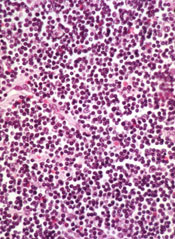
Health Canada recently approved the Bruton tyrosine kinase inhibitor ibrutinib (Imbruvica) for the treatment of chronic lymphocytic leukemia (CLL).
The drug can now be used to treat CLL patients, including those with 17p deletion, who have received at least one prior therapy. It can also be used as frontline treatment in CLL patients with 17p deletion.
Health Canada’s approval of ibrutinib is based on results of the phase 3 RESONATE trial, which were presented at this year’s ASCO and EHA meetings.
The trial included 391 previously treated patients, 127 of whom had 17p deletion. Patients were randomized to receive ibrutinib or the anti-CD20 monoclonal antibody ofatumumab until disease progression or unacceptable toxicity.
The trial was stopped early after a pre-planned interim analysis showed that ibrutinib-treated patients experienced a 78% reduction in the risk of disease progression or death.
At the time of interim analysis, the patients’ median time on study was 9.4 months. The best overall response among evaluable patients was 78% in the ibrutinib arm and 11% in the ofatumumab arm.
Ibrutinib significantly prolonged progression-free and overall survival. The median progression-free survival was 8.1 months in the ofatumumab arm and was not reached in the ibrutinib arm (P<0.0001). The median overall survival was not reached in either arm, but the hazard ratio was 0.434 (P=0.0049).
Of the 127 patients with 17p deletion, those treated with ibrutinib experienced a 75% reduction in the risk of disease progression or death.
Adverse events occurred in 99% of patients in the ibrutinib arm and 98% of those in the ofatumumab arm. Grade 3/4 events occurred in 51% and 39%, respectively.
Atrial fibrillation, bleeding-related events, diarrhea, and arthralgia were more common in the ibrutinib arm. Infusion-related reactions, peripheral sensory neuropathy, urticaria, night sweats, and pruritus were more common in the ofatumumab arm.
Ibrutinib is being developed by Cilag GmbH International (a member of the Janssen Pharmaceutical Companies) and Pharmacyclics, Inc. Janssen will commercialize the drug in Canada, and Janssen affiliates will commercialize it around the world, except in the US, where Pharmacyclics and Janssen Biotech, Inc. co-market it.
Health Canada recently approved the Bruton tyrosine kinase inhibitor ibrutinib (Imbruvica) for the treatment of chronic lymphocytic leukemia (CLL).
The drug can now be used to treat CLL patients, including those with 17p deletion, who have received at least one prior therapy. It can also be used as frontline treatment in CLL patients with 17p deletion.
Health Canada’s approval of ibrutinib is based on results of the phase 3 RESONATE trial, which were presented at this year’s ASCO and EHA meetings.
The trial included 391 previously treated patients, 127 of whom had 17p deletion. Patients were randomized to receive ibrutinib or the anti-CD20 monoclonal antibody ofatumumab until disease progression or unacceptable toxicity.
The trial was stopped early after a pre-planned interim analysis showed that ibrutinib-treated patients experienced a 78% reduction in the risk of disease progression or death.
At the time of interim analysis, the patients’ median time on study was 9.4 months. The best overall response among evaluable patients was 78% in the ibrutinib arm and 11% in the ofatumumab arm.
Ibrutinib significantly prolonged progression-free and overall survival. The median progression-free survival was 8.1 months in the ofatumumab arm and was not reached in the ibrutinib arm (P<0.0001). The median overall survival was not reached in either arm, but the hazard ratio was 0.434 (P=0.0049).
Of the 127 patients with 17p deletion, those treated with ibrutinib experienced a 75% reduction in the risk of disease progression or death.
Adverse events occurred in 99% of patients in the ibrutinib arm and 98% of those in the ofatumumab arm. Grade 3/4 events occurred in 51% and 39%, respectively.
Atrial fibrillation, bleeding-related events, diarrhea, and arthralgia were more common in the ibrutinib arm. Infusion-related reactions, peripheral sensory neuropathy, urticaria, night sweats, and pruritus were more common in the ofatumumab arm.
Ibrutinib is being developed by Cilag GmbH International (a member of the Janssen Pharmaceutical Companies) and Pharmacyclics, Inc. Janssen will commercialize the drug in Canada, and Janssen affiliates will commercialize it around the world, except in the US, where Pharmacyclics and Janssen Biotech, Inc. co-market it.
Health Canada recently approved the Bruton tyrosine kinase inhibitor ibrutinib (Imbruvica) for the treatment of chronic lymphocytic leukemia (CLL).
The drug can now be used to treat CLL patients, including those with 17p deletion, who have received at least one prior therapy. It can also be used as frontline treatment in CLL patients with 17p deletion.
Health Canada’s approval of ibrutinib is based on results of the phase 3 RESONATE trial, which were presented at this year’s ASCO and EHA meetings.
The trial included 391 previously treated patients, 127 of whom had 17p deletion. Patients were randomized to receive ibrutinib or the anti-CD20 monoclonal antibody ofatumumab until disease progression or unacceptable toxicity.
The trial was stopped early after a pre-planned interim analysis showed that ibrutinib-treated patients experienced a 78% reduction in the risk of disease progression or death.
At the time of interim analysis, the patients’ median time on study was 9.4 months. The best overall response among evaluable patients was 78% in the ibrutinib arm and 11% in the ofatumumab arm.
Ibrutinib significantly prolonged progression-free and overall survival. The median progression-free survival was 8.1 months in the ofatumumab arm and was not reached in the ibrutinib arm (P<0.0001). The median overall survival was not reached in either arm, but the hazard ratio was 0.434 (P=0.0049).
Of the 127 patients with 17p deletion, those treated with ibrutinib experienced a 75% reduction in the risk of disease progression or death.
Adverse events occurred in 99% of patients in the ibrutinib arm and 98% of those in the ofatumumab arm. Grade 3/4 events occurred in 51% and 39%, respectively.
Atrial fibrillation, bleeding-related events, diarrhea, and arthralgia were more common in the ibrutinib arm. Infusion-related reactions, peripheral sensory neuropathy, urticaria, night sweats, and pruritus were more common in the ofatumumab arm.
Ibrutinib is being developed by Cilag GmbH International (a member of the Janssen Pharmaceutical Companies) and Pharmacyclics, Inc. Janssen will commercialize the drug in Canada, and Janssen affiliates will commercialize it around the world, except in the US, where Pharmacyclics and Janssen Biotech, Inc. co-market it.
People often dismiss cancer symptoms, survey suggests

Credit: NIH
People could be putting their lives at risk by dismissing potential warning signs of cancer as less serious symptoms, according to a study published in PLOS ONE.
In a survey of about 1700 people, more than half of respondents said they had experienced at least
one red-flag cancer “alarm” symptom—such as persistent, unexplained pain or an unexplained lump—during the previous 3 months, but
only 2% of them thought cancer was a possible cause.
The survey had been sent to people aged 50 and older who were registered with 3 London general practices. The questionnaire listed 17 symptoms, including 10 widely publicized potential cancer warning signs, such as an unexplained cough, bleeding, and a persistent change in bowel or bladder habits.
Cancer was not mentioned, but the survey asked which of the symptoms subjects had experienced, what they thought caused them, if they were concerned that symptoms were serious, and whether they had consulted their doctor.
Of the 1724 subjects who responded, 53% had experienced at least one cancer “alarm” symptom in the previous 3 months.
This included unexplained cough or hoarseness; persistent change in bowel habits; persistent, unexplained pain; persistent change in bladder habits; unexplained lump; a change in the appearance of a mole; a sore that does not heal; unexplained bleeding; unexplained weight loss; and persistent difficulty swallowing.
Persistent cough (20%) and persistent change in bowel habits (18%) were the most common symptoms. Difficulty swallowing and unexplained weight loss (both 4%) were least common.
Overall, subjects appraised the cancer warning “alarm” symptoms as more serious than “non-alarm” symptoms, such as sore throat and feeling tired. Fifty-nine percent of respondents said they contacted a doctor about their “alarm” symptoms.
However, subjects rarely attributed potential signs of cancer to the disease, putting them down to other reasons, such as age, infection, arthritis, piles, and cysts.
“Most people with potential warning symptoms don’t have cancer, but some will, and others may have other diseases that would benefit from early attention,” said study author Katriina Whitaker, PhD, of University College London in the UK.
“That’s why it’s important that these symptoms are checked out, especially if they don’t go away. But people could delay seeing a doctor if they don’t acknowledge cancer as a possible cause. It’s worrying that even the more obvious warning symptoms, such as unexplained lumps or changes to the appearance of a mole, were rarely attributed to cancer, although they are often well recognized in surveys that assess the public’s knowledge of the disease.”
“Even when people thought warning symptoms might be serious, cancer didn’t tend to spring to mind. This might be because people were frightened and reluctant to mention cancer, thought cancer wouldn’t happen to them, or believed other causes were more likely.”
Credit: NIH
People could be putting their lives at risk by dismissing potential warning signs of cancer as less serious symptoms, according to a study published in PLOS ONE.
In a survey of about 1700 people, more than half of respondents said they had experienced at least
one red-flag cancer “alarm” symptom—such as persistent, unexplained pain or an unexplained lump—during the previous 3 months, but
only 2% of them thought cancer was a possible cause.
The survey had been sent to people aged 50 and older who were registered with 3 London general practices. The questionnaire listed 17 symptoms, including 10 widely publicized potential cancer warning signs, such as an unexplained cough, bleeding, and a persistent change in bowel or bladder habits.
Cancer was not mentioned, but the survey asked which of the symptoms subjects had experienced, what they thought caused them, if they were concerned that symptoms were serious, and whether they had consulted their doctor.
Of the 1724 subjects who responded, 53% had experienced at least one cancer “alarm” symptom in the previous 3 months.
This included unexplained cough or hoarseness; persistent change in bowel habits; persistent, unexplained pain; persistent change in bladder habits; unexplained lump; a change in the appearance of a mole; a sore that does not heal; unexplained bleeding; unexplained weight loss; and persistent difficulty swallowing.
Persistent cough (20%) and persistent change in bowel habits (18%) were the most common symptoms. Difficulty swallowing and unexplained weight loss (both 4%) were least common.
Overall, subjects appraised the cancer warning “alarm” symptoms as more serious than “non-alarm” symptoms, such as sore throat and feeling tired. Fifty-nine percent of respondents said they contacted a doctor about their “alarm” symptoms.
However, subjects rarely attributed potential signs of cancer to the disease, putting them down to other reasons, such as age, infection, arthritis, piles, and cysts.
“Most people with potential warning symptoms don’t have cancer, but some will, and others may have other diseases that would benefit from early attention,” said study author Katriina Whitaker, PhD, of University College London in the UK.
“That’s why it’s important that these symptoms are checked out, especially if they don’t go away. But people could delay seeing a doctor if they don’t acknowledge cancer as a possible cause. It’s worrying that even the more obvious warning symptoms, such as unexplained lumps or changes to the appearance of a mole, were rarely attributed to cancer, although they are often well recognized in surveys that assess the public’s knowledge of the disease.”
“Even when people thought warning symptoms might be serious, cancer didn’t tend to spring to mind. This might be because people were frightened and reluctant to mention cancer, thought cancer wouldn’t happen to them, or believed other causes were more likely.”
Credit: NIH
People could be putting their lives at risk by dismissing potential warning signs of cancer as less serious symptoms, according to a study published in PLOS ONE.
In a survey of about 1700 people, more than half of respondents said they had experienced at least
one red-flag cancer “alarm” symptom—such as persistent, unexplained pain or an unexplained lump—during the previous 3 months, but
only 2% of them thought cancer was a possible cause.
The survey had been sent to people aged 50 and older who were registered with 3 London general practices. The questionnaire listed 17 symptoms, including 10 widely publicized potential cancer warning signs, such as an unexplained cough, bleeding, and a persistent change in bowel or bladder habits.
Cancer was not mentioned, but the survey asked which of the symptoms subjects had experienced, what they thought caused them, if they were concerned that symptoms were serious, and whether they had consulted their doctor.
Of the 1724 subjects who responded, 53% had experienced at least one cancer “alarm” symptom in the previous 3 months.
This included unexplained cough or hoarseness; persistent change in bowel habits; persistent, unexplained pain; persistent change in bladder habits; unexplained lump; a change in the appearance of a mole; a sore that does not heal; unexplained bleeding; unexplained weight loss; and persistent difficulty swallowing.
Persistent cough (20%) and persistent change in bowel habits (18%) were the most common symptoms. Difficulty swallowing and unexplained weight loss (both 4%) were least common.
Overall, subjects appraised the cancer warning “alarm” symptoms as more serious than “non-alarm” symptoms, such as sore throat and feeling tired. Fifty-nine percent of respondents said they contacted a doctor about their “alarm” symptoms.
However, subjects rarely attributed potential signs of cancer to the disease, putting them down to other reasons, such as age, infection, arthritis, piles, and cysts.
“Most people with potential warning symptoms don’t have cancer, but some will, and others may have other diseases that would benefit from early attention,” said study author Katriina Whitaker, PhD, of University College London in the UK.
“That’s why it’s important that these symptoms are checked out, especially if they don’t go away. But people could delay seeing a doctor if they don’t acknowledge cancer as a possible cause. It’s worrying that even the more obvious warning symptoms, such as unexplained lumps or changes to the appearance of a mole, were rarely attributed to cancer, although they are often well recognized in surveys that assess the public’s knowledge of the disease.”
“Even when people thought warning symptoms might be serious, cancer didn’t tend to spring to mind. This might be because people were frightened and reluctant to mention cancer, thought cancer wouldn’t happen to them, or believed other causes were more likely.”
Breast cancer drug could treat MPNs, AML

Credit: CDC
Tamoxifen, a drug used to treat breast cancer, may be effective against myeloproliferative neoplasms (MPNs) and acute myeloid leukemia (AML) as well, according to research published in Cell Stem Cell.
The study showed that estrogens regulate the survival, proliferation, and self-renewal of stem cells that give rise to MPNs and AML.
Tamoxifen, which targets estrogen receptors, prevented JAK2V617F-induced MPNs in mice and enhanced the effects of chemotherapy against MLL-AF9-induced AML.
“In this study, we demonstrate that tamoxifen has specific effects on certain cells in the bone marrow: the hematopoietic stem cells and their immediate descendants, known as multipotent progenitors,” explained study author Abel Sánchez-Aguilera, PhD, of Centro Nacional de Investigaciones Cardiovasculares (CNIC) in Madrid.
The researchers found that, unlike in breast cancer, where tamoxifen blocks the action of estrogens, in blood cells, the drug acts by imitating the function of the hormone.
Tamoxifen induced apoptosis in short-term hematopoietic stem cells (HSCs) and multipotent progenitors. But in quiescent, long-term HSCs, the drug prompted proliferation and partial loss of function, which was reversible.
Tamoxifen also prevented polycythemia vera-like MPN from developing in mice with HSCs expressing JAK2V617F. The drug prevented MPN-associated neutrophilia and thrombocytosis; alleviated the early increase in red cell counts, hemoglobin, and hematocrit; decreased bone marrow megakaryocytes; and reduced MPN-associated splenomegaly.
Tamoxifen worked by restoring normal levels of apoptosis in mutant cells. It also prompted apoptosis of human JAK2V617F+ hematopoietic stem and progenitor cells (HSPCs) in a xenograft model.
In these models, tamoxifen caused little alteration in the rest of the blood cells, which were maintained at normal levels even after prolonged treatment with the drug.
“Our results suggest that tamoxifen, at a similar dose used for the treatment of other diseases, might be useful to treat myeloproliferative neoplasms at various stages, without being toxic to normal blood cells,” said study author Simón Méndez-Ferrer, PhD, also of CNIC.
In addition, tamoxifen enhanced the effects of conventional chemotherapy on cancerous cells in mice with MLL-AF9-induced AML.
Tamoxifen- and vehicle-treated mice had similar numbers of MLL-AF9+ cells and HSPCs shortly after chemotherapy. But tamoxifen delayed the reappearance of circulating leukemic cells after chemotherapy.
Tamoxifen-treated mice had fewer leukemic cells in the bone marrow, spleen, and blood, although they ultimately died of their disease.
Nevertheless, the researchers concluded that tamoxifen could be a feasible treatment option for patients with MPNs or AML. And the fact that tamoxifen is already approved for clinical use increases the chances of these results leading to a clinical trial.
Credit: CDC
Tamoxifen, a drug used to treat breast cancer, may be effective against myeloproliferative neoplasms (MPNs) and acute myeloid leukemia (AML) as well, according to research published in Cell Stem Cell.
The study showed that estrogens regulate the survival, proliferation, and self-renewal of stem cells that give rise to MPNs and AML.
Tamoxifen, which targets estrogen receptors, prevented JAK2V617F-induced MPNs in mice and enhanced the effects of chemotherapy against MLL-AF9-induced AML.
“In this study, we demonstrate that tamoxifen has specific effects on certain cells in the bone marrow: the hematopoietic stem cells and their immediate descendants, known as multipotent progenitors,” explained study author Abel Sánchez-Aguilera, PhD, of Centro Nacional de Investigaciones Cardiovasculares (CNIC) in Madrid.
The researchers found that, unlike in breast cancer, where tamoxifen blocks the action of estrogens, in blood cells, the drug acts by imitating the function of the hormone.
Tamoxifen induced apoptosis in short-term hematopoietic stem cells (HSCs) and multipotent progenitors. But in quiescent, long-term HSCs, the drug prompted proliferation and partial loss of function, which was reversible.
Tamoxifen also prevented polycythemia vera-like MPN from developing in mice with HSCs expressing JAK2V617F. The drug prevented MPN-associated neutrophilia and thrombocytosis; alleviated the early increase in red cell counts, hemoglobin, and hematocrit; decreased bone marrow megakaryocytes; and reduced MPN-associated splenomegaly.
Tamoxifen worked by restoring normal levels of apoptosis in mutant cells. It also prompted apoptosis of human JAK2V617F+ hematopoietic stem and progenitor cells (HSPCs) in a xenograft model.
In these models, tamoxifen caused little alteration in the rest of the blood cells, which were maintained at normal levels even after prolonged treatment with the drug.
“Our results suggest that tamoxifen, at a similar dose used for the treatment of other diseases, might be useful to treat myeloproliferative neoplasms at various stages, without being toxic to normal blood cells,” said study author Simón Méndez-Ferrer, PhD, also of CNIC.
In addition, tamoxifen enhanced the effects of conventional chemotherapy on cancerous cells in mice with MLL-AF9-induced AML.
Tamoxifen- and vehicle-treated mice had similar numbers of MLL-AF9+ cells and HSPCs shortly after chemotherapy. But tamoxifen delayed the reappearance of circulating leukemic cells after chemotherapy.
Tamoxifen-treated mice had fewer leukemic cells in the bone marrow, spleen, and blood, although they ultimately died of their disease.
Nevertheless, the researchers concluded that tamoxifen could be a feasible treatment option for patients with MPNs or AML. And the fact that tamoxifen is already approved for clinical use increases the chances of these results leading to a clinical trial.
Credit: CDC
Tamoxifen, a drug used to treat breast cancer, may be effective against myeloproliferative neoplasms (MPNs) and acute myeloid leukemia (AML) as well, according to research published in Cell Stem Cell.
The study showed that estrogens regulate the survival, proliferation, and self-renewal of stem cells that give rise to MPNs and AML.
Tamoxifen, which targets estrogen receptors, prevented JAK2V617F-induced MPNs in mice and enhanced the effects of chemotherapy against MLL-AF9-induced AML.
“In this study, we demonstrate that tamoxifen has specific effects on certain cells in the bone marrow: the hematopoietic stem cells and their immediate descendants, known as multipotent progenitors,” explained study author Abel Sánchez-Aguilera, PhD, of Centro Nacional de Investigaciones Cardiovasculares (CNIC) in Madrid.
The researchers found that, unlike in breast cancer, where tamoxifen blocks the action of estrogens, in blood cells, the drug acts by imitating the function of the hormone.
Tamoxifen induced apoptosis in short-term hematopoietic stem cells (HSCs) and multipotent progenitors. But in quiescent, long-term HSCs, the drug prompted proliferation and partial loss of function, which was reversible.
Tamoxifen also prevented polycythemia vera-like MPN from developing in mice with HSCs expressing JAK2V617F. The drug prevented MPN-associated neutrophilia and thrombocytosis; alleviated the early increase in red cell counts, hemoglobin, and hematocrit; decreased bone marrow megakaryocytes; and reduced MPN-associated splenomegaly.
Tamoxifen worked by restoring normal levels of apoptosis in mutant cells. It also prompted apoptosis of human JAK2V617F+ hematopoietic stem and progenitor cells (HSPCs) in a xenograft model.
In these models, tamoxifen caused little alteration in the rest of the blood cells, which were maintained at normal levels even after prolonged treatment with the drug.
“Our results suggest that tamoxifen, at a similar dose used for the treatment of other diseases, might be useful to treat myeloproliferative neoplasms at various stages, without being toxic to normal blood cells,” said study author Simón Méndez-Ferrer, PhD, also of CNIC.
In addition, tamoxifen enhanced the effects of conventional chemotherapy on cancerous cells in mice with MLL-AF9-induced AML.
Tamoxifen- and vehicle-treated mice had similar numbers of MLL-AF9+ cells and HSPCs shortly after chemotherapy. But tamoxifen delayed the reappearance of circulating leukemic cells after chemotherapy.
Tamoxifen-treated mice had fewer leukemic cells in the bone marrow, spleen, and blood, although they ultimately died of their disease.
Nevertheless, the researchers concluded that tamoxifen could be a feasible treatment option for patients with MPNs or AML. And the fact that tamoxifen is already approved for clinical use increases the chances of these results leading to a clinical trial.
NICE reconsiders obinutuzumab for CLL

Credit: Linda Bartlett
The UK’s National Institute for Health and Care Excellence (NICE) has issued a draft guidance that recommends obinutuzumab, marketed by Roche as Gazyvaro, for certain patients with untreated chronic lymphocytic leukemia (CLL).
In an earlier preliminary guidance, NICE said it could not recommend the drug due to uncertainties in the company’s submission.
In response, Roche submitted revised cost-effectiveness analyses and a patient access scheme.
This prompted NICE to recommend obinutuzumab in combination with chlorambucil as an option for adults with untreated CLL who have comorbidities that make them ineligible for full-dose fludarabine-based therapy.
But NICE is only recommending this as an option if bendamustine-based therapy has been deemed unsuitable and if Roche provides obinutuzumab with the discount agreed in the patient access scheme.
“We are pleased that Roche responded to our consultation and provided further analyses to allow us to propose recommending obinutuzumab as a treatment option for untreated chronic lymphocytic leukemia,” said Carole Longson, director of the Centre for Health Technology Evaluation at NICE.
“Half of the people who need treatment for their condition are not able to use the standard first-line treatment of fludarabine combination therapy. NICE recommends alternative treatment with bendamustine, but there are some patients for whom this is also unsuitable. Obinutuzumab is a clinically effective treatment which is associated with fewer adverse events and provides another option to help prevent people’s disease from progressing.”
NICE recommends obinutuzumab on the basis that Roche provides the treatment to the National Health Service (NHS) at a reduced price. The company has agreed with the Department of Health that the size of the discount is to be confidential.
The list price of obinutuzumab is £3312 per 1000 mg vial (excluding value-added tax). According to Roche, a course of treatment costs £26,496 (£9936 for cycle 1 and £3312 for cycles 2 to 6, excluding tax).
Consultees, including the company, healthcare professionals, and members of the public, have until Tuesday, January 6, 2015, to comment on the preliminary recommendations via the NICE website.
NICE has not yet issued the final guidance to the NHS. Until then, NHS bodies should make decisions locally on the funding of specific treatments.
Credit: Linda Bartlett
The UK’s National Institute for Health and Care Excellence (NICE) has issued a draft guidance that recommends obinutuzumab, marketed by Roche as Gazyvaro, for certain patients with untreated chronic lymphocytic leukemia (CLL).
In an earlier preliminary guidance, NICE said it could not recommend the drug due to uncertainties in the company’s submission.
In response, Roche submitted revised cost-effectiveness analyses and a patient access scheme.
This prompted NICE to recommend obinutuzumab in combination with chlorambucil as an option for adults with untreated CLL who have comorbidities that make them ineligible for full-dose fludarabine-based therapy.
But NICE is only recommending this as an option if bendamustine-based therapy has been deemed unsuitable and if Roche provides obinutuzumab with the discount agreed in the patient access scheme.
“We are pleased that Roche responded to our consultation and provided further analyses to allow us to propose recommending obinutuzumab as a treatment option for untreated chronic lymphocytic leukemia,” said Carole Longson, director of the Centre for Health Technology Evaluation at NICE.
“Half of the people who need treatment for their condition are not able to use the standard first-line treatment of fludarabine combination therapy. NICE recommends alternative treatment with bendamustine, but there are some patients for whom this is also unsuitable. Obinutuzumab is a clinically effective treatment which is associated with fewer adverse events and provides another option to help prevent people’s disease from progressing.”
NICE recommends obinutuzumab on the basis that Roche provides the treatment to the National Health Service (NHS) at a reduced price. The company has agreed with the Department of Health that the size of the discount is to be confidential.
The list price of obinutuzumab is £3312 per 1000 mg vial (excluding value-added tax). According to Roche, a course of treatment costs £26,496 (£9936 for cycle 1 and £3312 for cycles 2 to 6, excluding tax).
Consultees, including the company, healthcare professionals, and members of the public, have until Tuesday, January 6, 2015, to comment on the preliminary recommendations via the NICE website.
NICE has not yet issued the final guidance to the NHS. Until then, NHS bodies should make decisions locally on the funding of specific treatments.
Credit: Linda Bartlett
The UK’s National Institute for Health and Care Excellence (NICE) has issued a draft guidance that recommends obinutuzumab, marketed by Roche as Gazyvaro, for certain patients with untreated chronic lymphocytic leukemia (CLL).
In an earlier preliminary guidance, NICE said it could not recommend the drug due to uncertainties in the company’s submission.
In response, Roche submitted revised cost-effectiveness analyses and a patient access scheme.
This prompted NICE to recommend obinutuzumab in combination with chlorambucil as an option for adults with untreated CLL who have comorbidities that make them ineligible for full-dose fludarabine-based therapy.
But NICE is only recommending this as an option if bendamustine-based therapy has been deemed unsuitable and if Roche provides obinutuzumab with the discount agreed in the patient access scheme.
“We are pleased that Roche responded to our consultation and provided further analyses to allow us to propose recommending obinutuzumab as a treatment option for untreated chronic lymphocytic leukemia,” said Carole Longson, director of the Centre for Health Technology Evaluation at NICE.
“Half of the people who need treatment for their condition are not able to use the standard first-line treatment of fludarabine combination therapy. NICE recommends alternative treatment with bendamustine, but there are some patients for whom this is also unsuitable. Obinutuzumab is a clinically effective treatment which is associated with fewer adverse events and provides another option to help prevent people’s disease from progressing.”
NICE recommends obinutuzumab on the basis that Roche provides the treatment to the National Health Service (NHS) at a reduced price. The company has agreed with the Department of Health that the size of the discount is to be confidential.
The list price of obinutuzumab is £3312 per 1000 mg vial (excluding value-added tax). According to Roche, a course of treatment costs £26,496 (£9936 for cycle 1 and £3312 for cycles 2 to 6, excluding tax).
Consultees, including the company, healthcare professionals, and members of the public, have until Tuesday, January 6, 2015, to comment on the preliminary recommendations via the NICE website.
NICE has not yet issued the final guidance to the NHS. Until then, NHS bodies should make decisions locally on the funding of specific treatments.
FDA approves first drug for polycythemia vera

Credit: AFIP
The US Food and Drug Administration (FDA) has expanded the approved use of ruxolitinib (Jakafi) to include treatment of patients with polycythemia vera (PV).
This is the first drug approved by the FDA for this condition.
Ruxolitinib can now be used to treat PV patients who have an inadequate response to hydroxyurea or cannot tolerate the drug.
The FDA said the approval of ruxolitinib for PV patients will help decrease splenomegaly and the need for phlebotomy.
“The approval of Jakafi for polycythemia vera underscores the importance of developing drugs matched to our increasing knowledge of the mechanisms of diseases,” said Richard Pazdur, MD, director of the Office of Hematology and Oncology Products in the FDA’s Center for Drug Evaluation and Research.
“The trial used to evaluate Jakafi confirmed clinically meaningful reductions in spleen size and the need for phlebotomies to control the disease.”
Results from that study, the phase 3 RESPONSE trial, were presented at the 2014 ASCO Annual Meeting. RESPONSE was funded by Incyte Corporation, the company developing ruxolitinib.
The trial included 222 patients who had PV for at least 24 weeks. All patients had an inadequate response to or could not tolerate hydroxyurea, had undergone a phlebotomy procedure, and exhibited an enlarged spleen.
They were randomized to receive ruxolitinib at a starting dose of 10 mg twice daily or best available therapy (BAT) as determined by the investigator on a participant-by-participant basis. The ruxolitinib dose was adjusted as needed throughout the study.
The study was designed to measure the reduced need for phlebotomy beginning at week 8 and continuing through week 32, in addition to at least a 35% reduction in spleen volume at week 32.
Twenty-one percent of ruxolitinib-treated patients met this endpoint, compared to 1% of patients who received BAT. At week 32, 77% of patients on ruxolitinib and 20% on BAT achieved hematocrit control or spleen reduction.
Ruxolitinib was generally well-tolerated, but 3.6% of patients discontinued treatment due to adverse events, compared to 1.8% of patients on BAT.
The most common events associated with ruxolitinib were anemia and thrombocytopenia. The most common non-hematologic events were headache, diarrhea, fatigue, dizziness, constipation, and shingles.
The FDA reviewed ruxolitinib’s use for PV under the agency’s priority review program because, at the time the application was submitted, the drug demonstrated the potential to be a significant improvement over available therapy. Ruxolitinib also received orphan product designation.
Ruxolitinib is currently approved in more than 60 countries for patients with myelofibrosis (MF). In 2011, the FDA approved the drug to treat patients with intermediate or high-risk MF, including primary MF, post-PV MF, and post-essential thrombocythemia MF.
Credit: AFIP
The US Food and Drug Administration (FDA) has expanded the approved use of ruxolitinib (Jakafi) to include treatment of patients with polycythemia vera (PV).
This is the first drug approved by the FDA for this condition.
Ruxolitinib can now be used to treat PV patients who have an inadequate response to hydroxyurea or cannot tolerate the drug.
The FDA said the approval of ruxolitinib for PV patients will help decrease splenomegaly and the need for phlebotomy.
“The approval of Jakafi for polycythemia vera underscores the importance of developing drugs matched to our increasing knowledge of the mechanisms of diseases,” said Richard Pazdur, MD, director of the Office of Hematology and Oncology Products in the FDA’s Center for Drug Evaluation and Research.
“The trial used to evaluate Jakafi confirmed clinically meaningful reductions in spleen size and the need for phlebotomies to control the disease.”
Results from that study, the phase 3 RESPONSE trial, were presented at the 2014 ASCO Annual Meeting. RESPONSE was funded by Incyte Corporation, the company developing ruxolitinib.
The trial included 222 patients who had PV for at least 24 weeks. All patients had an inadequate response to or could not tolerate hydroxyurea, had undergone a phlebotomy procedure, and exhibited an enlarged spleen.
They were randomized to receive ruxolitinib at a starting dose of 10 mg twice daily or best available therapy (BAT) as determined by the investigator on a participant-by-participant basis. The ruxolitinib dose was adjusted as needed throughout the study.
The study was designed to measure the reduced need for phlebotomy beginning at week 8 and continuing through week 32, in addition to at least a 35% reduction in spleen volume at week 32.
Twenty-one percent of ruxolitinib-treated patients met this endpoint, compared to 1% of patients who received BAT. At week 32, 77% of patients on ruxolitinib and 20% on BAT achieved hematocrit control or spleen reduction.
Ruxolitinib was generally well-tolerated, but 3.6% of patients discontinued treatment due to adverse events, compared to 1.8% of patients on BAT.
The most common events associated with ruxolitinib were anemia and thrombocytopenia. The most common non-hematologic events were headache, diarrhea, fatigue, dizziness, constipation, and shingles.
The FDA reviewed ruxolitinib’s use for PV under the agency’s priority review program because, at the time the application was submitted, the drug demonstrated the potential to be a significant improvement over available therapy. Ruxolitinib also received orphan product designation.
Ruxolitinib is currently approved in more than 60 countries for patients with myelofibrosis (MF). In 2011, the FDA approved the drug to treat patients with intermediate or high-risk MF, including primary MF, post-PV MF, and post-essential thrombocythemia MF.
Credit: AFIP
The US Food and Drug Administration (FDA) has expanded the approved use of ruxolitinib (Jakafi) to include treatment of patients with polycythemia vera (PV).
This is the first drug approved by the FDA for this condition.
Ruxolitinib can now be used to treat PV patients who have an inadequate response to hydroxyurea or cannot tolerate the drug.
The FDA said the approval of ruxolitinib for PV patients will help decrease splenomegaly and the need for phlebotomy.
“The approval of Jakafi for polycythemia vera underscores the importance of developing drugs matched to our increasing knowledge of the mechanisms of diseases,” said Richard Pazdur, MD, director of the Office of Hematology and Oncology Products in the FDA’s Center for Drug Evaluation and Research.
“The trial used to evaluate Jakafi confirmed clinically meaningful reductions in spleen size and the need for phlebotomies to control the disease.”
Results from that study, the phase 3 RESPONSE trial, were presented at the 2014 ASCO Annual Meeting. RESPONSE was funded by Incyte Corporation, the company developing ruxolitinib.
The trial included 222 patients who had PV for at least 24 weeks. All patients had an inadequate response to or could not tolerate hydroxyurea, had undergone a phlebotomy procedure, and exhibited an enlarged spleen.
They were randomized to receive ruxolitinib at a starting dose of 10 mg twice daily or best available therapy (BAT) as determined by the investigator on a participant-by-participant basis. The ruxolitinib dose was adjusted as needed throughout the study.
The study was designed to measure the reduced need for phlebotomy beginning at week 8 and continuing through week 32, in addition to at least a 35% reduction in spleen volume at week 32.
Twenty-one percent of ruxolitinib-treated patients met this endpoint, compared to 1% of patients who received BAT. At week 32, 77% of patients on ruxolitinib and 20% on BAT achieved hematocrit control or spleen reduction.
Ruxolitinib was generally well-tolerated, but 3.6% of patients discontinued treatment due to adverse events, compared to 1.8% of patients on BAT.
The most common events associated with ruxolitinib were anemia and thrombocytopenia. The most common non-hematologic events were headache, diarrhea, fatigue, dizziness, constipation, and shingles.
The FDA reviewed ruxolitinib’s use for PV under the agency’s priority review program because, at the time the application was submitted, the drug demonstrated the potential to be a significant improvement over available therapy. Ruxolitinib also received orphan product designation.
Ruxolitinib is currently approved in more than 60 countries for patients with myelofibrosis (MF). In 2011, the FDA approved the drug to treat patients with intermediate or high-risk MF, including primary MF, post-PV MF, and post-essential thrombocythemia MF.
Surgery duration linked to VTE risk

Credit: Piotr Bodzek
New research suggests that, as the duration of surgery increases, so does the risk of venous thromboembolism (VTE).
Compared with a surgical procedure of average duration, patients who underwent the longest procedures had a 1.27-fold increase in the risk of developing a VTE.
In 3 of the most common procedures—gall bladder removal, appendectomy, and gastric bypass—surgery duration was a significant, independent risk factor for VTE.
Though these results suggest an association between surgical time and VTE, the researchers said they could not confirm a causal relationship.
John Y.S. Kim, MD, of Northwestern University’s Feinberg School of Medicine in Chicago, and his colleagues reported these findings in JAMA Surgery.
The researchers analyzed data from the American College of Surgeons National Surgical Quality Improvement Program to examine the association between surgical duration and the incidence of VTE.
The study included more than 1.4 million patients who had surgery under general anesthesia at 315 US hospitals from 2005 to 2011.
A total of 13,809 patients (0.96%) had a postoperative VTE, with 10,198 (0.71%) developing deep vein thrombosis and 4772 (0.33%) developing a pulmonary embolism.
The rates of each of these events consistently increased with the duration of the surgical procedure.
The researchers divided patients into 5 quintiles representing surgery duration. In the first quintile (representing the relatively shortest procedures), there were 2033 VTEs. This was followed by 2278 in the second quintile, 2478 in the third, 2960 in the fourth, and 4060 in the fifth.
Compared with the third quintile (which served as a reference), the odds ratio (OR) for developing VTE in the first quintile was 0.86 (P<0.01). In the second quintile, the OR was 0.98 (P=0.39). The fourth and fifth quintiles had ORs of 1.10 and 1.27, respectively (P<0.001 for both).
The association between VTE incidence and the longest procedures was significant in 82% of 1000 bootstrap samples. In this analysis, there was a significant association (P<0.001) between surgery duration and VTE for gynecologic, neurologic, otolaryngologic, urologic, and vascular procedures.
In each of the 3 most common procedures, surgery duration was a significant, independent risk factor for VTE. A 1-hour increase in surgical time carried an OR of 1.18 for gall bladder removal, 1.18
for appendectomy, and 1.26 for gastric bypass (P<0.05 for all).
The researchers said these results appear to validate the widely held, but not previously substantiated, belief that longer operations are associated with a higher risk of VTE. This information could help improve VTE risk modeling, enhance thromboprophylaxis guidelines, and better inform surgical decision making.
Credit: Piotr Bodzek
New research suggests that, as the duration of surgery increases, so does the risk of venous thromboembolism (VTE).
Compared with a surgical procedure of average duration, patients who underwent the longest procedures had a 1.27-fold increase in the risk of developing a VTE.
In 3 of the most common procedures—gall bladder removal, appendectomy, and gastric bypass—surgery duration was a significant, independent risk factor for VTE.
Though these results suggest an association between surgical time and VTE, the researchers said they could not confirm a causal relationship.
John Y.S. Kim, MD, of Northwestern University’s Feinberg School of Medicine in Chicago, and his colleagues reported these findings in JAMA Surgery.
The researchers analyzed data from the American College of Surgeons National Surgical Quality Improvement Program to examine the association between surgical duration and the incidence of VTE.
The study included more than 1.4 million patients who had surgery under general anesthesia at 315 US hospitals from 2005 to 2011.
A total of 13,809 patients (0.96%) had a postoperative VTE, with 10,198 (0.71%) developing deep vein thrombosis and 4772 (0.33%) developing a pulmonary embolism.
The rates of each of these events consistently increased with the duration of the surgical procedure.
The researchers divided patients into 5 quintiles representing surgery duration. In the first quintile (representing the relatively shortest procedures), there were 2033 VTEs. This was followed by 2278 in the second quintile, 2478 in the third, 2960 in the fourth, and 4060 in the fifth.
Compared with the third quintile (which served as a reference), the odds ratio (OR) for developing VTE in the first quintile was 0.86 (P<0.01). In the second quintile, the OR was 0.98 (P=0.39). The fourth and fifth quintiles had ORs of 1.10 and 1.27, respectively (P<0.001 for both).
The association between VTE incidence and the longest procedures was significant in 82% of 1000 bootstrap samples. In this analysis, there was a significant association (P<0.001) between surgery duration and VTE for gynecologic, neurologic, otolaryngologic, urologic, and vascular procedures.
In each of the 3 most common procedures, surgery duration was a significant, independent risk factor for VTE. A 1-hour increase in surgical time carried an OR of 1.18 for gall bladder removal, 1.18
for appendectomy, and 1.26 for gastric bypass (P<0.05 for all).
The researchers said these results appear to validate the widely held, but not previously substantiated, belief that longer operations are associated with a higher risk of VTE. This information could help improve VTE risk modeling, enhance thromboprophylaxis guidelines, and better inform surgical decision making.
Credit: Piotr Bodzek
New research suggests that, as the duration of surgery increases, so does the risk of venous thromboembolism (VTE).
Compared with a surgical procedure of average duration, patients who underwent the longest procedures had a 1.27-fold increase in the risk of developing a VTE.
In 3 of the most common procedures—gall bladder removal, appendectomy, and gastric bypass—surgery duration was a significant, independent risk factor for VTE.
Though these results suggest an association between surgical time and VTE, the researchers said they could not confirm a causal relationship.
John Y.S. Kim, MD, of Northwestern University’s Feinberg School of Medicine in Chicago, and his colleagues reported these findings in JAMA Surgery.
The researchers analyzed data from the American College of Surgeons National Surgical Quality Improvement Program to examine the association between surgical duration and the incidence of VTE.
The study included more than 1.4 million patients who had surgery under general anesthesia at 315 US hospitals from 2005 to 2011.
A total of 13,809 patients (0.96%) had a postoperative VTE, with 10,198 (0.71%) developing deep vein thrombosis and 4772 (0.33%) developing a pulmonary embolism.
The rates of each of these events consistently increased with the duration of the surgical procedure.
The researchers divided patients into 5 quintiles representing surgery duration. In the first quintile (representing the relatively shortest procedures), there were 2033 VTEs. This was followed by 2278 in the second quintile, 2478 in the third, 2960 in the fourth, and 4060 in the fifth.
Compared with the third quintile (which served as a reference), the odds ratio (OR) for developing VTE in the first quintile was 0.86 (P<0.01). In the second quintile, the OR was 0.98 (P=0.39). The fourth and fifth quintiles had ORs of 1.10 and 1.27, respectively (P<0.001 for both).
The association between VTE incidence and the longest procedures was significant in 82% of 1000 bootstrap samples. In this analysis, there was a significant association (P<0.001) between surgery duration and VTE for gynecologic, neurologic, otolaryngologic, urologic, and vascular procedures.
In each of the 3 most common procedures, surgery duration was a significant, independent risk factor for VTE. A 1-hour increase in surgical time carried an OR of 1.18 for gall bladder removal, 1.18
for appendectomy, and 1.26 for gastric bypass (P<0.05 for all).
The researchers said these results appear to validate the widely held, but not previously substantiated, belief that longer operations are associated with a higher risk of VTE. This information could help improve VTE risk modeling, enhance thromboprophylaxis guidelines, and better inform surgical decision making.
ASH adds practices to Choosing Wisely list

Credit: Rhoda Baer
The American Society of Hematology (ASH) has released a second list of 5 commonly used tests, treatments, and procedures that physicians and patients should question in certain circumstances.
The additional items join an initial list of practices released last year as part of the Choosing Wisely® campaign, an initiative of the ABIM Foundation that aims to prompt conversations between patients and physicians about the necessity and potential harm of certain procedures.
These new “practices to question” are also highlighted in a manuscript published in Blood, which further describes the methods for developing the list and the evidentiary basis of the recommendations.
The new recommendations include:
- Don’t treat with an anticoagulant for more than 3 months in a patient with a first venous thromboembolism occurring in the setting of a major transient risk factor.
- Don’t routinely transfuse patients with sickle cell disease for chronic anemia or uncomplicated pain crisis without an appropriate clinical indication.
- Don’t perform baseline or routine surveillance CT scans in patients with asymptomatic, early stage chronic lymphocytic leukemia.
- Don’t test or treat for suspected heparin-induced thrombocytopenia (HIT) in patients with a low pre-test probability of HIT.
- Don’t treat patients with immune thrombocytopenic purpura in the absence of bleeding or a very low platelet count.
The second Choosing Wisely list was developed using a rigorous evidence-based methodology that incorporated suggestions from ASH members and prioritized avoiding harm to patients above all other considerations.
“Unnecessary treatments or tests not only add waste to the healthcare system, but, in some cases, they also expose our patients to a risk of harm,” said Lisa Hicks, MD, of St Michael’s Hospital and the University of Toronto and chair of the ASH Choosing Wisely Task Force.
“ASH developed its second Choosing Wisely list to help hematologists manage the utilization and delivery of patient-care resources, and the society encourages hematologists to consider these recommendations in all facets of their work, including patient care, teaching, innovation, and research.”
The dominant guiding principle for ASH’s list is the concept of avoiding harm. The four other established guiding principles of ASH’s involvement in the Choosing Wisely campaign are strength of evidence, aggregate cost, frequency, and making recommendations within the purview of hematology. This year, the task force added a sixth overarching principle of potential impact in the field.
“Choosing Wisely set out to stimulate conversations about waste and overuse in our healthcare system,” said Richard J. Baron, MD, President and CEO of the ABIM Foundation.
“We’ve been fortunate to be joined in this effort by many dedicated partners—including ASH—who have committed to addressing unnecessary care in their specialty. ASH’s second Choosing Wisely list gives clinicians and patients a new and important tool to help inform their conversations about what care is best for the patient.” 
Credit: Rhoda Baer
The American Society of Hematology (ASH) has released a second list of 5 commonly used tests, treatments, and procedures that physicians and patients should question in certain circumstances.
The additional items join an initial list of practices released last year as part of the Choosing Wisely® campaign, an initiative of the ABIM Foundation that aims to prompt conversations between patients and physicians about the necessity and potential harm of certain procedures.
These new “practices to question” are also highlighted in a manuscript published in Blood, which further describes the methods for developing the list and the evidentiary basis of the recommendations.
The new recommendations include:
- Don’t treat with an anticoagulant for more than 3 months in a patient with a first venous thromboembolism occurring in the setting of a major transient risk factor.
- Don’t routinely transfuse patients with sickle cell disease for chronic anemia or uncomplicated pain crisis without an appropriate clinical indication.
- Don’t perform baseline or routine surveillance CT scans in patients with asymptomatic, early stage chronic lymphocytic leukemia.
- Don’t test or treat for suspected heparin-induced thrombocytopenia (HIT) in patients with a low pre-test probability of HIT.
- Don’t treat patients with immune thrombocytopenic purpura in the absence of bleeding or a very low platelet count.
The second Choosing Wisely list was developed using a rigorous evidence-based methodology that incorporated suggestions from ASH members and prioritized avoiding harm to patients above all other considerations.
“Unnecessary treatments or tests not only add waste to the healthcare system, but, in some cases, they also expose our patients to a risk of harm,” said Lisa Hicks, MD, of St Michael’s Hospital and the University of Toronto and chair of the ASH Choosing Wisely Task Force.
“ASH developed its second Choosing Wisely list to help hematologists manage the utilization and delivery of patient-care resources, and the society encourages hematologists to consider these recommendations in all facets of their work, including patient care, teaching, innovation, and research.”
The dominant guiding principle for ASH’s list is the concept of avoiding harm. The four other established guiding principles of ASH’s involvement in the Choosing Wisely campaign are strength of evidence, aggregate cost, frequency, and making recommendations within the purview of hematology. This year, the task force added a sixth overarching principle of potential impact in the field.
“Choosing Wisely set out to stimulate conversations about waste and overuse in our healthcare system,” said Richard J. Baron, MD, President and CEO of the ABIM Foundation.
“We’ve been fortunate to be joined in this effort by many dedicated partners—including ASH—who have committed to addressing unnecessary care in their specialty. ASH’s second Choosing Wisely list gives clinicians and patients a new and important tool to help inform their conversations about what care is best for the patient.”
Credit: Rhoda Baer
The American Society of Hematology (ASH) has released a second list of 5 commonly used tests, treatments, and procedures that physicians and patients should question in certain circumstances.
The additional items join an initial list of practices released last year as part of the Choosing Wisely® campaign, an initiative of the ABIM Foundation that aims to prompt conversations between patients and physicians about the necessity and potential harm of certain procedures.
These new “practices to question” are also highlighted in a manuscript published in Blood, which further describes the methods for developing the list and the evidentiary basis of the recommendations.
The new recommendations include:
- Don’t treat with an anticoagulant for more than 3 months in a patient with a first venous thromboembolism occurring in the setting of a major transient risk factor.
- Don’t routinely transfuse patients with sickle cell disease for chronic anemia or uncomplicated pain crisis without an appropriate clinical indication.
- Don’t perform baseline or routine surveillance CT scans in patients with asymptomatic, early stage chronic lymphocytic leukemia.
- Don’t test or treat for suspected heparin-induced thrombocytopenia (HIT) in patients with a low pre-test probability of HIT.
- Don’t treat patients with immune thrombocytopenic purpura in the absence of bleeding or a very low platelet count.
The second Choosing Wisely list was developed using a rigorous evidence-based methodology that incorporated suggestions from ASH members and prioritized avoiding harm to patients above all other considerations.
“Unnecessary treatments or tests not only add waste to the healthcare system, but, in some cases, they also expose our patients to a risk of harm,” said Lisa Hicks, MD, of St Michael’s Hospital and the University of Toronto and chair of the ASH Choosing Wisely Task Force.
“ASH developed its second Choosing Wisely list to help hematologists manage the utilization and delivery of patient-care resources, and the society encourages hematologists to consider these recommendations in all facets of their work, including patient care, teaching, innovation, and research.”
The dominant guiding principle for ASH’s list is the concept of avoiding harm. The four other established guiding principles of ASH’s involvement in the Choosing Wisely campaign are strength of evidence, aggregate cost, frequency, and making recommendations within the purview of hematology. This year, the task force added a sixth overarching principle of potential impact in the field.
“Choosing Wisely set out to stimulate conversations about waste and overuse in our healthcare system,” said Richard J. Baron, MD, President and CEO of the ABIM Foundation.
“We’ve been fortunate to be joined in this effort by many dedicated partners—including ASH—who have committed to addressing unnecessary care in their specialty. ASH’s second Choosing Wisely list gives clinicians and patients a new and important tool to help inform their conversations about what care is best for the patient.”